
Tauranga Boys’ College
Bay of Plenty
Tauranga Boys’ College Curriculum
238 subjects available for 2026/2027.
Subjects for Year 8 Students
10 Practical Skills
PSKPractical Skills in the Workshop. For Learning Support Students only.
10 Supported English
ENSHEnglish for students in the Learning Support Programme only.
10 Supported Mathematics
MASHMaths for Learning Support students only
10 Supported Physical Education
PESHPhysical Education for Learning Support students only.
11 Establishing Independence
56EIA programme for Learning Support students, which is based around basic cooking skills as well as life skills.
11 Practical Skills
PSKPractical Skills in the Workshop. For Learning Support Students only.
11 Supported English
ENSHEnglish for students in the Learning Support Programme only.
11 Supported Mathematics
MASHMaths for Learning Support students only
11 Supported Physical Education
PESHPhysical Education for Learning Support students only.
12 Establishing Independence
56EIA programme for Learning Support students, which is based around basic cooking skills as well as life skills.
12 Practical Skills
PSKPractical Skills in the Workshop. For Learning Support Students only.
12 Supported English
ENSHEnglish for students in the Learning Support Programme only.
12 Supported Mathematics
MASHMaths for Learning Support students only
12 Supported Physical Education
PESHPhysical Education for Learning Support students only.
13 Establishing Independence
56EIA programme for Learning Support students, which is based around basic cooking skills as well as life skills.
13 Practical Skills
PSKPractical Skills in the Workshop. For Learning Support Students only.
13 Supported English
ENSHEnglish for students in the Learning Support Programme only.
13 Supported Mathematics
MASHMaths for Learning Support students only
13 Supported Physical Education
PESHPhysical Education for Learning Support students only.
9 Agricultural & Horticultural Science
9AGHIntroduction to New Zealand commercial livestock, crops, and plants.
Get hands-on and learn where our food comes from! In Year 9 Agriculture & Horticulture, students explore livestock production and beef farming, including caring for and managing animals. Students will also learn about sowing seeds, growing and harvesting crops, and have the opportunity to grow their own kai.
This is a practical, hands-on course where students get outside and develop skills that can be used at home, on the farm, or in future careers in agriculture and horticulture.


9 Art
9ARTThis is a practical option that is designed to improve creativity and skills in drawing, painting, and printmaking. Students produce original works in a variety of different media. Offered through to Year 13.


9 Athlete Development Programme
9ADP9ADP: Junior Athlete Development
10-week option course
9ADP is designed for students who are motivated to improve their athletic ability and reach their sporting potential. This course focuses on developing fundamental movement competency skills that form the foundation for long-term athletic development.
The programme introduces students to key physical and movement principles through a mix of practical sessions and guided instruction. Emphasis is placed on improving coordination, speed, agility, strength, and general athleticism in a supportive and challenging environment.
This course is ideal for students who are serious about sport, show potential in their chosen code(s), and are considering progressing into the Year 10 and 11 Athlete Development Programmes.
The course fee is $100, which contributes to the external costs of the strength and conditioning programme.
Please note: This is a practical-based course and full participation is expected.
9 Business Studies
9BUSWant to understand how money really works and learn how to turn a great idea into a successful business? Year 9 Business Studies is a practical and engaging course designed to give you the financial and business skills you will use throughout your life.
We explore the New Zealand financial education curriculum through fun, relevant and hands-on activities. You will learn how to manage your money, create a budget, understand income and tax, make smart decisions about saving and investing, and understand the risks and responsibilities associated with debt.
But it’s not just about managing money! You will also discover what it takes to become a successful entrepreneur. You will develop your own business ideas, learn how businesses operate, explore marketing and innovation, and develop the skills needed to turn an idea into an opportunity.
Whether you dream of starting your own business, becoming financially independent, or simply want to be smarter with your money, Year 9 Business Studies will give you practical skills and knowledge that you can use both now and in the future.
9 Carving - Bone
9CABThe general aim of this course is to introduce students to the wonderful world of Whakairo Wheua. The course is designed to provide students with opportunities to develop a skillbase required for whakairo whilst also being sensitive to the cultural significance of the forms being created and the tikanga behind certain rituals. This is a one term option that leads into Year 10 Whakairo Wheua (10CAB) next year and further enhancement of the skills learnt in year 9.
9 Carving - Wood
9CARThe aim of this course is to provide students with opportunities to develop basic chisel skills.
Students will learn about 2-3 whakarei (traditional Māori surface patterning), their symbolic representations, how to draw them, apply them to wood and carve them. Whakarei will then be applied to a carving representing ‘whānau’
This is a one term option that leads into Year 10 Whakairo Rākau (10CAR) next year and further enhancement of the skills learnt in year 9.
9 Design
9DESThis course focuses on providing students the opportunity to explore digital based outcomes with a focus on developing ideas from Photography to Digital Design and into Marketing. Students will think creatively, problem solve and critique their own work and that of their peers.
9 Design & Visual Communication
9DVCYear 9 Design & Visual Communication
Get ready to bring your ideas to life! In this hands-on, creative course, you’ll explore the exciting world of design through two engaging projects.
First, you’ll dive into Spatial Design, creating your very own Lake Cabin. You’ll learn essential design drawing skills and techniques, then take your concept into the digital world by building it in 3D using CAD software. Finally, you’ll see your design come to life through 3D printing.
Next, you’ll shift gears into Product Design, taking on the challenge of designing and building a high-performance glider. You’ll follow the full design process—from sketching ideas to refining your concept—before laser-cutting your glider and testing it to achieve maximum flight distance.
This course is all about creativity, problem-solving, and innovation. You’ll gain skills in design thinking, technical drawing, 3D modelling, and digital fabrication, while having fun designing projects you can actually hold, test, and improve.
Students will begin developing the essential design drawing skills and knowledge used in fields such as architecture, product design, engineering, and computer-aided design (CAD)—skills they will continue to build and master right through to Year 13.
9 Digital Technologies
9DGTThis option uses Minecraft Makecode & python to teach the basics of computer programming. Students learn to analyse and solve problems. They create simple, fun games and become more confident computer users.
9 Drama
9DRA"Drama is so much fun! We get to learn up on our feet, rather than being stuck sitting at desks.
This year we got to do skits, use costumes, make puppets, play games and heaps more."
Students will work together cooperatively in groups to devise, develop and present a variety of dramas in front of their classmates. It will focus on the following strands taken from the Drama curriculum:
- Investigate the functions, purposes, and technologies of drama in cultural and historical contexts.
- Select and use techniques and relevant technologies to develop drama practice.
- Use conventions to structure drama.
- Initiate and refine ideas with others to plan and develop drama.
- Present and respond to drama, identifying ways in which elements, techniques, conventions, and technologies create meaning in their own and others' work.
Students will develop confidence in presenting to an audience, and become increasingly audience aware. They will explore how to use body, voice, space, and movement to take on and sustain a role.
9 English
9ENGWelcome to the Tauranga Boys’ College English Department.
English is the study, use, and enjoyment of the English language and literature written in the English language.
In English, students learn to break apart the literature and language of others in order to understand the power that language has to enrich and shape their lives.
By understanding how language works, students are then able to make good language choices in a range of areas in their own lives to achieve their goals.
ENGLISH - How we communicate
ORAL LanguageVISUAL LanguageWRITTEN LanguageListening/SpeakingViewing/ PresentingReading/WritingE.g., Songs, speeches, radio shows, podcastE.g., Films, music videos, Video games, posters, signs, brochuresE.g., Books, magazines, newspapers, online articles
9 Establishing Independence
56EIA programme for Learning Support students, which is based around basic cooking skills as well as life skills.
9 Film Studies
9FILGet ready for an awesome journey into the world of film-making! In this course, we'll dive into everything you've ever wanted to know about movies. From exciting stories and how they're put together, to analysing how movies look and sound, we've got you covered. Ever wondered what happens behind the scenes? We'll show you the magic of film production through film-making tasks, while exploring different genres such as action, superhero and sci-fi. By the end, you'll be a pro at understanding films and creating cinematography moments. Join us for a course that's all about the amazing world of movies – see you in class!
9 Food Technology
9FTCThe Year 9 Food Technology program introduces students to essential culinary skills, practical food safety, and creative meal design through three hands-on, engaging units. Throughout the course, students develop confidence in the kitchen by translating foundational food science and hygiene theory into practical, delicious meals. This option involves two practical and three theory lessons per week.

9 Health and Physical Education
9HPEOur Junior Health Programme strives to develop better men and give them the tools to make informed decisions around current teenage issues as well as providing a good foundation of Physical Education theoretical Knowledge. We do this through a ‘Learning Through Doing’ approach as often as possible, to maximise boys engagement.
Our primary focus is to develop ‘Goodman Values’ where students are taught, and given opportunities to develop, a range of personal qualities that will enable them to lead positive and productive lives.
We also address relevant teenage topics, that our young men will be increasingly exposed to, as they begin their teenage years. We give them the tools to make informed decisions, and positive choices, in a modern world.
9 Industry Trades
9ITRThis one Term option serves as an introduction into our Trades based options that progress from Year 9 to Year 13 and provide a meaningful pathway into tertiary study, trade and industry.
Our focus is to introduce students to safe working practices in our workshop setting, to teach the skills required for them to complete a manageable practical project to a high standard and to develop their sense of pride in their work.
Example projects from the current year group that are Engineering based include the manufacture of a small screwdriver set and a handmade ring made from a coin. Wood based projects have consisted of Battle Spinning tops, lamintaed keyrings and chopping boards.
9 Japanese
9JPNAn introduction to the fascinating language and culture of one of New Zealand’s most important trading partners. Offered through to Year 13.


9 Māori Performing Arts
9MPAMāori Performing Arts provides an opportunity for students to be introduced to haka (traditional Māori war dance), mau rākau (traditional war dance using Māori weaponry), waiata, moteatea (songs and chants) including also an introduction to the pōwhiri process.
9 Mathematics
9MATWelcome to Mathematics at Tauranga Boys’ College. This course is based on Phase 4 of the NZ Curriculum. In Phase 4 (years 9 -10) the focus is on having a purpose and being empathetic and resilient. The aim of this course is to develop Mathematical thinking, improve numeracy applications and enhance problem-solving strategies.
There are many important links between Mathematics and the world around us. Our aim is to engage learning and progression so students can see these links for themselves.
Number - the basic life skills of budgeting, wealth, and purchasing.
Algebra - creating code and formula to find solutions.
Geometry - shapes, and angles are everywhere.
Probability - discovering the various possible outcomes.
Measurement - applying Number skills to practical problems.
Statistics - using data to make informed choices.
9 Music
9MUSA chance to explore the pathways possible in the study of music. Students will get a taster in the performance area with the opportunity to learn an instrument or take singing lessons, no prior lessons are required. Basic aural, theory and analysis are covered. Students will also begin to experiment creating and recording their own original music using recording and notation software.
9 Philosophy
9PHIThis is a general introduction to Philosophy. The idea is to find out about some of the thinkers, ideas, topics and activities that Philosophy is based on, and to answer some intriguing questions.
At TBC Philosophy is offered up to Level 3 NCEA and university level.
9 Practical Skills
PSKPractical Skills in the Workshop. For Learning Support Students only.
9 Reading Support
9RDGThis is an option which helps support and accelerate under-developed reading and comprehension skills. Students with a low reading age will be required to take this course. Over the course of 10 weeks we engage with a variety of reading material, from articles, song lyrics and stories, to film transcripts and subtitles. The aim of this course is to supplement students' work in other classes and to learn to read for enjoyment.

9 Science
9SCIYear 9 Science provides students with a broad introduction to the living, material, physical, and Earth sciences. The programme is practical and hands-on, encouraging curiosity, critical thinking, and an evidence-based approach to understanding the world.
Students investigate scientific ideas through experiments, modelling, research, and problem-solving. They learn to work collaboratively, communicate their findings, and apply their knowledge to real-world contexts — building the Key Competencies of Thinking, Using language, symbols, and texts, and Participating and contributing.
Assessment activities throughout the year include:
- Research reports on scientific issues, such as human impacts on ecosystems
- Practical investigations using fair testing methods and analysing results
- Formal tests at the end of each unit
- A two-hour end-of-year exam covering all major science topics studied
By the end of the course, students will have developed a strong foundation for further study in science. They will be able to plan and carry out investigations, interpret and present scientific information, and link their learning to everyday life.
9 Social Studies
9SSTWelcome to the Year 9 Social Studies programme. I sincerely hope that you enjoy Social Studies. We do aim as a department to improve the students knowledge and skills. The aim will be to deliver a curriculum that is interesting, informative, and relevant. The key concepts are based upon the New Zealand curriculum and its achievement objectives. This year, you can expect some homework tasks, to be given projects to complete, and weekly quizzes on key word used in Social Studies.
9 Spanish
9SPAAn introduction to the flamboyant language that will be of increasing importance to New Zealand’s commercial future. Offered through to Year 13.


9 Supported English
ENSHEnglish for students in the Learning Support Programme only.
9 Supported Mathematics
MASHMaths for Learning Support students only
9 Supported Physical Education
PESHPhysical Education for Learning Support students only.
9 Te Reo Māori
9MAOMāori Language is acquired from the curriculum level 4 strands of listening, reading, writing and speaking.
Topics range from whānau (family), whakapapa (genealogy), kōrero pūrākau (local tribal stories), ngā atua Māori (the Māori gods), Matariki (celebrating the Māori new year) and te huarere (the weather). The course also covers the protocols of local iwi and marae etiquette through the College Aronui Marae.
Subjects for Year 9 Students
10 Agricultural & Horticultural Science
10AGH


A practical introduction to Agricultural and Horticultural science. This half-year course includes:
- Outside activities.
- All-day trip to farm and orchard.
- Livestock production.
- Vegetable production.


10 Art
10ARTStudents will build and refine fundamental art-making skills across a diverse range of practical outcomes. Learning is engaging and skill-focused, designed to connect directly with students' interests while establishing strong creative foundations.
What You Will Experience
- Core Skill Development: Build confidence through foundational techniques in drawing, painting, mixed media, sculpture, and printmaking.


- Urban Environment Sculptures: Explore the urban environment by designing and constructing detailed 3D mini-city settings.
- Cultural & Contemporary Art: Engage with contemporary Māori art practices, blending traditional roots with modern visual storytelling.
- Street Art & Modern Media: Dive into the world of street art, exploring stencils, spray techniques, and bold graphic design.

10 Basketball - Athlete Development Programme
10ADBThis programme allows Basketball Players to develop their motor skills, decision making and sporting resilience through strength and conditioning sessions and in game like situations.
Five sessions per week:
- Two periods focus on strength and conditioning
- Two periods of basketball coaching/skill development with basketball coach
- One period focus on character session (fitness)
The course fee is $120, which contributes to the external costs of the strength and conditioning programme.
Maximum of only 30 students
Students can only select ONE ADP option in Year Ten.
10 Business Studies
10BUSThis course introduces students to key financial literacy required in society today. Concepts like budgeting, saving, investing for retirement, debt and financial planning will be explored to make them confident in using money wisely. It also offers an introduction to the NCEA subjects of Economics, Accounting, and Business Studies. Students will learn the key concepts of each course that are required for further study at a senior level, and will be given an opportunity to plan and run a small business activity.
10 Carving - Bone
10CABThis course is designed to provide students with the opportunity to further expand on skills learnt in year 9. We will delve deeper into the tikanga of whakairo using whakarei (surface designs) and pūrākau (stories), and students will produce taonga that they can be proud of.
10 Carving - Wood
10CARExtension of basic carving skills leading to decorative wall hangings, surface patterns, weaponry etc. Extension also of tikanga and processes that are integral to the production of whakairo. Leads to Whakairo - Level 1.
10 Cricket - Athlete Development Programme
10ADCThis programme allows players of cricket to develop their motor skills, decision making and sporting resilience through strength and conditioning sessions and in game like situations.
Five sessions per week:
- Two periods focus on strength and conditioning
- Two periods of cricket coaching/skill development
- One period focus on character session (fitness)
The course fee is $120, which contributes to the external costs of the strength and conditioning programme.
Maximum of only 30 students
Students can only select ONE ADP option in Year Ten.
10 Design
10DESStudents will expand skills and understanding in design and composition of digital media, which includes photography, digital imagery and typography. Students will develop ideas between multiple design outcomes through a creative and innovative approach. Current tasks include students creating their own digital pepeha, logo design and branding outcomes. A fun, hands on a practical class.
10 Design & Visual Communication
10DVCYear 10 Design & Visual Communication
Step up your design game and take your creative ideas further! This course builds on your design skills through two exciting, hands-on projects that combine imagination with real-world making.
You’ll begin with Product Design, where your challenge is to create a unique toy vehicle. Starting with research and brainstorming, you’ll develop and refine your ideas through sketching, model-making, and precision technical drawing. Using CAD software, you’ll digitally model your design before producing it as a high-quality 3D-printed prototype—a custom creation you can proudly display.
In the second project, you’ll move into Spatial Design, imagining and designing your very own dream modern house. You’ll explore architectural drawing techniques, experiment with proportion and layout, and master visual communication skills to present your ideas with impact. Your vision will be transformed into a detailed 3D CAD model, then produced through laser cutting to create an accurate and professional architectural model.
By the end of the year, you’ll have strengthened your skills in design thinking, visual communication, technical drawing, CAD modelling, and digital fabrication. These are core skills used in architecture, product design, engineering, and other creative industries—and they’ll set you up perfectly for senior Design & Visual Communication courses right through to Year 13.
10 Digital Technologies
10DGTDigital Technologies is the study of how computers work; how they can be programmed; and how they can be used to manage, process and present information.
In the 10DT course students will learn a range of practical computer skills including:
• Website development (using HTML & CSS)
• Game Design (using GDevelop)
• Programming (using Python).
10 Drama
10DRAAn intensive course of study for those students interested in becoming more effective and confident communicators. Boys will develop audience awareness, and learn how to create scenes which are well structured with engaging characters. They will have the opportunity to explore film acting and theatre performance. Students will start to explore the changing world of theatre, recognising and using features from a range of performance contexts, including live TV, street performances, and traditional stage contexts.
Student voice: "Drama is so much fun! It's an easy way to learn - up on your feet, doing, rather than being stuck at a desk.
We do TV Sitcoms, games, dress up in costumes and heaps more."
. This course covers the following strands of the Drama Curriculum at Level 5:
- Investigate the characteristics, purposes, and function of drama in a range of contexts.
- Select and use techniques, conventions, and relevant technologies for specific drama purposes.
- Select and refine ideas to develop drama for specific purposes.
- Present and respond to drama and describe how drama combine elements, techniques, conventions, and technologies to create structure and meaning in their own and others' work.
10 Economics Accelerate
10BAThis course provides accelerated Year 10 students with the opportunity to complete the Year 11 Economics curriculum early. This allows students who are interested in Accounting to select Accounting in Year 11, while still having completed both core Commerce subjects by the end of Year 11. This pathway also makes better use of the limited elective spaces available in students’ Year 11 timetables and provides greater flexibility in their subject choices.
The course covers the fundamentals of how markets work through the concepts of supply and demand. It also broadens their knowledge of how the NZ Economy functions through a brief study in Macroeconomics. Students will be well prepared for the NZCE, Level 2 Economics course.
10 English
10ENGEnglish is the study, use, and enjoyment of the English language and literature written in the English language.
Building on the skills learned in Year 9, students will continue to peer under the hood of literature and language in all its forms in order to build their own language toolbox.
By understanding how language works, students are able to communicate effectively with others, make good language choices in a range of areas in their own lives, and achieve their goals in all subject areas.
This is a compulsory course in Year 10.
Students will be placed in appropriate classes according to their reading and writing curriculum levels.
ENGLISH - How we communicate
ORAL LanguageVISUAL LanguageWRITTEN LanguageListening/SpeakingViewing/ PresentingReading/WritingE.g., Songs, speeches, radio shows, podcastE.g., Films, music videos, Video games, posters, signs, brochuresE.g., Books, magazines, newspapers, online articles
10 Film Studies
10FILGet ready for an awesome journey into the world of film-making! In this course, we'll dive into everything you've ever wanted to know about movies. From exciting stories and how they're put together, to analysing what goes into visual storytelling. Ever wondered what happens behind the scenes? We'll show you the magic of film production through film-making tasks, while exploring different genres such as action, superhero and sci-fi. By the end, you'll be a pro at understanding films, talking about them, and even writing scripts. Join us for a course that's all about the amazing world of movies – see you in class!
10 Food Technology
10FTCThis exciting semester course will fully equip students to become proficient with planning, cooking, and serving a wide range of dishes.
Year 10 Food Technology is an action-packed, hands-on course designed to build confidence in the kitchen while introducing students to the exciting world of food science and technology. Through practical cooking labs and classroom exploration, students develop foundational kitchen techniques, explore global flavors, and learn how food powers the body and mind.


Year 10 boys cooking one of the exciting weekly recipes

10 Football - Athlete Development Programme
10ADFThis programme allows players of football to develop their motor skills, decision making and sporting resilience through strength and conditioning sessions and in game like situations.
Five sessions per week:
- Two periods focus on strength and conditioning
- Two periods of football coaching/skill development
- One period focus on character session (fitness)
The course fee is $120, which contributes to the external costs of the strength and conditioning programme.
Maximum of only 32 students.
Due to the high volume of interest in this course, preference will be given to students currently representing the school in the Junior A team, followed by Junior Development teams. Selection will be made in conjunction with Mr. Jim Burtenshaw, Director of Football.
Students can only select ONE ADP option in Year Ten.
10 Health & Physical Education
10HPEPhysical Education is the study of critical “learn through doing” physical education issues facing our young people using physical activity as the medium.
This is a compulsory subject at Year 10. Students with a genuine interest in sport and physical activity are encouraged to also select Athlete Development Programme (10ADP) as one of their options.
10 History Inquiry
10HISBased around the Inquiry learning process to develop Research skills, this option will cover various topics from the Origins of Sports to professionalism and the high-powered marketing force it is today. It will develop the skills required to meet the needs of NCEA subjects such as Classics, Psychology, Geography and History.
10 Hockey - Athlete Development Programme
10ADHThis programme allows players of hockey to develop their motor skills, decision making and sporting resilience through strength and conditioning sessions and in game like situations.
Five sessions per week:
- Two periods focus on strength and conditioning
- Two periods of coaching/skill development
- One period focus on character session (fitness)
The course fee is $120, which contributes to the external costs of the strength and conditioning programme.
Maximum of only 15 students
Students can only select ONE ADP option in Year Ten.
10 Industry Trades
10ITRThis course has been developed for those students who are more kinaesthetic learners. It is industry- focused, teaching skills, processes with an emphasis on Health and Safety through the completion of prescribed practical projects. Knowledge and skills gained will assist them to be more successful in senior trade-related courses in the future.
Projects are either Wood or Metal based depending on timetabling and student subject selection. To date students have built Gaming chairs and scooters.
10 Japanese
10JPNYear 10 Japanese is an extension of the introductory course taught in Year 9. It is a language acquisition course, where students learn to the hiragana script and then they learn how to talk about school life, activities they do, families and daily activities and revise how to talk about the weather.
By the end of the course they will be ready to advance to 'intermediate' level of Japanese language.
There will also be a number of class trips to the 101 Asian supermarket.


10 Māori Performing Arts
10MPAStudents will be able to extend their understanding, demonstrate knowledge in the art of performing haka (war dance), mau rākau (weaponry), moteatea and waiata.
10 Mathematics
10MATThis course is based on the NZ Curriculum Levels 3, 4 and 5 (CL3/4/5). This course aims to develop Mathematical thinking, improve numeracy applications and enhance problem-solving strategies.
There are many important links between Mathematics and the world around us. We aim to engage learning and progression so students can see these links for themselves.
Number - the basic life skills of budgeting, wealth, and purchasing.
Algebra - creating code and formula to find solutions.
Geometry - shapes, and angles are everywhere.
Probability - discovering the various possible outcomes.
Measurement - applying Number skills to practical problems.
Statistics - using data to make informed choices.
GEOMETRY - shapes, and angles are everywhere.
PROBABILITY - discovering the various possible outcomes.MEASUREMENT - applying Number skills to practical problems.
NUMBER - the basic life skills of budgeting, wealth, and purchasing.STATISTICS - understanding the world around you through data.
10 Music
10MUSA chance to further explore the pathways possible if a student has a strong interest in music. Students will prepare and rehearse performances with the opportunity to learn an instrument or take singing lessons, no prior lessons are required. Aural, theory and analysis skills are developed in preparation for Year 11 Music. Students will also create and record their own original music using recording and notation software.
10 Philosophy
10PHIThis course is a continuation from Year 9 Philosophy and a bridge to Year 11 Philosophy. There is a focus on developing logic and critical thinking. The content is from a range of philosophical areas and you, the student, will help guide the discussion. The teacher will help you to develop thinking skills and improve your reasoning around a broad range of topics.
10 Practical Skills
PSKPractical Skills in the Workshop. For Learning Support Students only.
10 Product Technology
10PTCY10 Product Technology focuses on innovation, design, and developing the skills and knowledge needed at year 11.
Students will use new technologies such as Onshape software, 3D Printing and Laser Cutting to design, develop, prototype, print / cut and test their own personalized leather wallet and 3D printed digital alarm clock.
It is people in this innovative industry that are currently developing many exciting new products that will continue to improve how we live and how we do things. Product Technology provides for both academic and vocational pathways, with direct links into industry as well as tertiary education.
Below is an example of a Leather Wallet that has been designed, lazer cut and hand stitched.


Preview
10 Puzzles and Ciphers
10PZCAre you ready to crack codes, solve puzzles, and build something you can actually lock? Mathematical Puzzles and Ciphers is a creative and hands-on math elective that blends logic, critical thinking, and real-world problem solving. Students will dive into the world of ciphers, number patterns, logic games, and mathematical puzzles from ancient codes to modern encryption.
Throughout the course, students will:
- Explore classic puzzles (Sudoku, logic grids, Kakuro) and design their own
- Learn the mathematics behind famous ciphers like Caesar, Vigenère, and RSA encryption
- Investigate modular arithmetic, prime numbers, and number theory through code-breaking challenges
- Apply geometry, measurement, and spatial reasoning to design and 3D print a functional lock box
- Collaborate in teams to develop escape room-style challenges and interactive mathematical mysteries
The culminating project: each student will create a custom-designed 3D-printed lock box that incorporates at least one mathematical puzzle or cipher as the key to unlock it.
Why take this course?
If you're looking for a math class that’s different, creative, interactive, and rooted in problem-solving. This course will keep your mind engaged and your hands busy. Perfect for aspiring engineers, game designers, or anyone who enjoys thinking outside the box... or unlocking one.
10 Rugby - Athlete Development Programme
10ADRThis programme allows players of rugby to develop their motor skills, decision making and sporting resilience through strength and conditioning sessions and in game like situations.
Five sessions per week:
- Two periods focus on strength and conditioning
- Two periods of rugby coaching/skill development with rugby coach
- One period focus on character session (fitness)
The course fee is $120, which contributes to the external costs of the strength and conditioning programme.
Maximum of only 50 students.
Students can only select ONE ADP option in Year Ten.
10 Science
10SCIYear 10 Science builds on the foundations from Year 9, developing a deeper understanding of the living, physical, and Earth sciences. Students engage in practical, hands-on learning that encourages curiosity, critical thinking, and evidence-based explanations of the world around them.
Across the year, students explore Chemistry, Physics, Biology, and Planet Earth & Beyond, while continuing to develop their skills in scientific investigation and problem-solving. Learning activities include experiments, research, modelling, and data analysis, allowing students to make connections between theory and real-world contexts.
The programme supports the Key Competencies of Thinking, Using language, symbols, and texts, and Participating and contributing. Students learn to question, analyse information, and communicate their findings clearly, working both independently and collaboratively.
Assessment activities include:
- Research reports on scientific issues
- Practical investigations following fair testing and data interpretation
- End-of-unit tests to check understanding
- A two-hour end-of-year exam covering all major science topics studied
By the end of Year 10, students will have strengthened their understanding of key scientific ideas and developed the skills needed to succeed in senior science courses.
10 Social Studies
10SSTSocial Studies learning area is about how societies work and how people participate and interact with their beliefs, each other and their environment.
This is a compulsory course at Year 10.
10 Spanish
10SPAYear 10 Spanish is an extension to the introductory course taught in Year 9. It is a language acquisition course, where students learn to use simple language to greet and sustain interaction with others in Spanish. Students exchange personal information about themselves and their families, talk about their likes and dislikes, discuss their school life, and say what they do in their leisure time.


10 STEM
10STMThis course is designed to support Science and technical understanding, being essential skills for the modern world. STEM equips students with critical thinking, problem-solving and technical skills. As the demand for STEM-related jobs grow, preparation is vital.
Through this course we will examine and explore the science behind the electrical systems in New Zealand as well as modeling and testing the technology underpinning this vital infrastructure.
We will also use programming and robotics skills to understand the increasingly technical and integrated nature of the electrical industry.
10 Summer - Athlete Development Programme
10ADSThis programme allows players of summer sports to develop their motor skills, decision making and sporting resilience through strength and conditioning sessions and in game like situations.
Five sessions per week:
- Two periods focus on strength and conditioning
- Two periods of coaching/skill development
- One period focus on character session (fitness)
The course fee is $120, which contributes to the external costs of the strength and conditioning programme.
Maximum of only 30 students
Students must be playing a sport for the school.
Students can only select ONE ADP option in Year Ten.
10 Supported English
ENSHEnglish for students in the Learning Support Programme only.
10 Supported Mathematics
MASHMaths for Learning Support students only
10 Supported Physical Education
PESHPhysical Education for Learning Support students only.
10 Te Reo Māori
10MAOMāori Language is acquired from the curriculum level 5 strands of listening, reading, writing and speaking.
Topics range from whānau (family), whakapapa (genealogy), kōrero pūrākau (local tribal stories), ngā pakanga o mua (historical wars of the past), ngā atua Māori (the Māori gods), Matariki (celebrating the Māori new year) and te huarere (the weather). The course also covers the protocols of local iwi and marae etiquette through the College Aronui Marae and field trips.
10 Volleyball - Athlete Development Programme
10ADVThis programme allows players of volleyball to develop their motor skills, decision making and sporting resilience through strength and conditioning sessions and in game like situations.
Five sessions per week:
- Two periods focus on strength and conditioning
- Two periods of coaching/skill development
- One period focus on character session (fitness)
The course fee is $120, which contributes to the external costs of the strength and conditioning programme.
Maximum of only 15 students
Students can only select ONE ADP option in Year Ten.
10 Winter - Athlete Development Programme
10ADWThis programme allows players of winter sports to develop their motor skills, decision making and sporting resilience through strength and conditioning sessions and in game like situations.
Five sessions per week:
- Two periods focus on strength and conditioning
- Two periods of coaching/skill development of winter based sports
- One period focus on character session (fitness)
The course fee is $120, which contributes to the external costs of the strength and conditioning programme.
Maximum of only 30 students
Students must be playing a sport for the school.
Students can only select ONE ADP option in Year Ten.
11 Establishing Independence
56EIA programme for Learning Support students, which is based around basic cooking skills as well as life skills.
11 Practical Skills
PSKPractical Skills in the Workshop. For Learning Support Students only.
11 Supported English
ENSHEnglish for students in the Learning Support Programme only.
11 Supported Mathematics
MASHMaths for Learning Support students only
11 Supported Physical Education
PESHPhysical Education for Learning Support students only.
12 Establishing Independence
56EIA programme for Learning Support students, which is based around basic cooking skills as well as life skills.
12 Practical Skills
PSKPractical Skills in the Workshop. For Learning Support Students only.
12 Supported English
ENSHEnglish for students in the Learning Support Programme only.
12 Supported Mathematics
MASHMaths for Learning Support students only
12 Supported Physical Education
PESHPhysical Education for Learning Support students only.
13 Establishing Independence
56EIA programme for Learning Support students, which is based around basic cooking skills as well as life skills.
13 Practical Skills
PSKPractical Skills in the Workshop. For Learning Support Students only.
13 Supported English
ENSHEnglish for students in the Learning Support Programme only.
13 Supported Mathematics
MASHMaths for Learning Support students only
13 Supported Physical Education
PESHPhysical Education for Learning Support students only.
9 Establishing Independence
56EIA programme for Learning Support students, which is based around basic cooking skills as well as life skills.
9 Practical Skills
PSKPractical Skills in the Workshop. For Learning Support Students only.
9 Supported English
ENSHEnglish for students in the Learning Support Programme only.
9 Supported Mathematics
MASHMaths for Learning Support students only
9 Supported Physical Education
PESHPhysical Education for Learning Support students only.
Intensive English (ESOL)
10IEIntensive English offered to students for whom English is not their first language. Students in this class have limited English language skills. Students may choose this option alongside their core English class to develop and reinforce their English language skills and support other curriculum areas.
Subjects for Year 10 Students
10 Establishing Independence
56EIA programme for Learning Support students, which is based around basic cooking skills as well as life skills.
10 Practical Skills
PSKPractical Skills in the Workshop. For Learning Support Students only.
10 Supported English
ENSHEnglish for students in the Learning Support Programme only.
10 Supported Mathematics
MASHMaths for Learning Support students only
10 Supported Physical Education
PESHPhysical Education for Learning Support students only.
11 Academic English (11ACE)
11ACEThis course is for students for whom English is not their first language. It offers the opportunity to work towards IGCSE English Language in an environment suited to second language speakers.
This course allows learners to:
- develop the ability to communicate clearly, accurately and effectively when speaking and writing
- learn how to use a wide range of vocabulary, and the correct grammar, spelling and punctuation
- develop a personal style and an awareness of the audience being addressed.
Note: All tasks and assessments are designed to develop the skills, understanding and ability of students to prepare for both the literacy prerequisite examination and the end of year Cambridge IGCSE English - First Language (0500) Reading and Writing examinations. The completed examinations are marked externally. The Cambridge IGCSE English First Language examinations are highly regarded, internationally recognised qualifications.
11 Accounting
11ACCAccounting is the study of how we communicate financial information to individuals and businesses to help their decision-making.
This course aims to promote knowledge and understanding of financial information for individuals, community organisations and businesses, and enable students to apply financial knowledge and skills to practical situations. Understanding the basic financial principles allows individuals to make informed decisions in life.
The stereotype of a pencil pushing accountant hunched over a calculator scribbling sums couldn't be be more inaccurate in todays world. Successful accountants today are leaders in any industry because they are:
- innovative.
- good with money.
- confident decision makers.
As a result, they have transferable, strongly valued skills that make them exceptional and visionary business leaders.
FAQ
Q. What is the difference between Accounting and Economics?
Even though they are both “businessy” subjects, they are completely different.
Decision making in business can be assisted using financial information.
Accounting helps us to understand financial information and make important decisions like improving profitability or investment decisions. Topics include; Xero, Cashflow, Spreadsheeting, Forecasting, Financial Documents and of course Financial Statements.
Economics is more about the environment that our business operates in. Studying this subject helps you to understand how the markets work that you sell your product to, and how the economy around you impacts your business.
Q. Can I do both?
Yes. If you have space in your timetable, students find that they complement each other really well and are completely different to each other. None of the material overlaps.
Q. Can I move between subjects over 3 years?
Yes, they can be picked up at any stage, if you are dedicated enough to catch up on the content from the previous years.
Q. Where does it lead to?
Both subjects operate in the context of the “real world” and are highly relevant to what is actually happening “out there”.
Many Year 13 students that go on to tertiary study, study a Business/Commerce degree. These require both Economics and Accounting in the first year, thus the student is well positioned to move to the tertiary level content.
For those that don’t carry on to tertiary study, the learning and knowledge about the way in which the economy/business works and how both individuals and organisations can make good financial decisions is invaluable. As are the practical skills developed in both courses.
Q. Are Accounting and Economics becoming redundant with the improvement of software to complete many jobs previously completed manually?
No. While software may complete many jobs more quickly and accurately than in the past, this has shifted the work of accountants and economists into consulting and advocate roles where a deeper understanding of the underlying concepts is essential. Sound commerce advice will always be in need.
11 Agricultural and Horticultural Science
11AGH
11AGH is a Primary ITO Trades Academy program:
- Unit Standards.
- 26 Level 2 credits.
- The primary ITO program runs for two years which leads to the NZ Certificate in Primary Industry Skills (Level 2).


11AGH is part of the Year 11 Te Punga course:
- 10% Water supply system.
- 20% Plant growth, fencing knots and wire joins
- 50% Safe work practice & Livestock behaviour.
- 20% External examination.
11AGH has 2 all-day visits to farms and orchards.


In 2028, the 11AGH program splits into two different pathways:
- Pathway 1 - Skills - Primary Industry Trades Academy second year with work placement.
- Pathway 2 - Academic - Achievement Standards (NCEA level 2).
If you have any further questions - please contact Miss Carter by email [email protected]
11 Athlete Development
11ADPThis course is by selection. Students selected for this course will be decided by Mr Hyett. Priority will be for those students that have been selected for Junior 1st and 2nd teams and individual athletes who are competing to a high standard in their chosen sport. Selection is also based on attitude and effort in the Year 10 Athlete Development course.
11ADP is for students who have a genuine interest in improving their sporting performance and who show promise in their chosen sport(s). This course follows on from the sport specific Year 10 Athlete Development half year options. This programme has an emphasis on building a foundation for athletic performance for students to feed into TBC 1st teams.
The course is a combination of theory and practical and endeavours to teach students about Physical Education concepts and apply these to improve sporting performance.
This course is made up of five periods a week. Two of these are strength and conditioning sessions and three theory-based lessons focusing on IGCSE PE. The strength and conditioning sessions are a compulsory requirement of this course.
The cost of this course is $170. $120 covers the external costs of the strength and conditioning programme and $50 for specific activities related to units of work such as ten-pin bowling during the Sport Psychology unit.
You cannot select both PHE1 and 11ADP.
11 Biology
11BIOBiology is the study of living things and their interactions with each other and their environment.
• Biological skills
• Animal systems


• Micro-organisms
• Genetics


11 Bone Carving
11CABA course for students keen to study Bone Carving at a senior level. There will be an opportunity to further skills in drawing, design, tikanga whakairo and indigenous art forms. Students will develop the skills and processes required for the production of various taonga and for NCEA Level 2 the following year.
11 Building Related Trades
11BRT•Practical wood program based on four projects using a range of modern and traditional construction methods. An introduction to modern equipment and fittings.
•Development of practical skills.
•A focus on industry and trade-related assessments including health and safety, understanding tools and workshop machine use, specifications and construction techniques and processes.
Will be undertaken in a wood based workshop.
11 Chemistry & Physics
11CPHContent:
•Mechanics (Motion, Forces and Energy)
•Atoms and Ions, Neutralisation and Rates of Reaction
•Electricity and Magnetism
•Practical Investigations
11 Creative Cooking
11HOCYear 11 Creative Cooking is the perfect introduction to all the essentials and know-how you need to start cooking as a professional.
Year 11 Creative Cooking is the ultimate hands-on guide to mastering essential kitchen skills and learning to cook like a pro. Designed around practical, everyday cooking, this course gives you the confidence and know-how to prepare great food safely and efficiently. You’ll build a solid foundation in hygiene, kitchen safety, and essential culinary terminology while mastering core techniques, including knife care, egg and cheese cookery, fresh fruit and vegetable prep, and frying and grilling with meats. Whether you're cooking for yourself, sharing meals with family, or preparing for life after school, you’ll walk away with valuable skills you can use for a lifetime.


Click the links below to see examples of the Hospitality related courses offered by institutes we partner with here in NZ.
https://www.toiohomai.ac.nz/study/subject/culinary-arts%2C-food-and-beverage
Day in the Life at Toi Ohomai | Culinary Arts
https://www.qrc.ac.nz/student-life/queenstown/
11 Design
11DESDesign is the study of photography, design, computer generated art, electronic media and film. It is through a combination of these forms we communicate, learn about ourselves and make meaning of the world.
Level One Design in 2024 will seek to provide opportunity for students to experience and experiment with a range of digital media as they work towards an end of year showcase exhibition.
Learning will/could include:
1. Animation Design 

2. Branding: Logo Design and Marketing for the exhibition.
3. Collage and Digital Montage- the use of photography to deconstruct and reconstruct design ideas.
4. The way in which design is viewed and valued and how the context of the work changes this.

11 Design & Visual Communication
11DVCYear 11 Design & Visual Communication
This course focuses on nurturing a more mature and independent approach that will level up your design and drawing skills in a creative nature. Through three engaging real-life scenarios, students will first tackle the "Life-Saving Drone” brief followed by the “Life-Saving Tower" brief. Using a design process students will visually communicate their ideas through design drawing skills and CAD (Computer Aided Design) drawings to come up with a final solution to both the Product and spatial design projects. The third project is the "Classic Kiwi Beach Bach" brief, where they'll design a beachfront dwelling and produce a 3D CAD representation with 2D floor plans. The year concludes with students selecting their best work from the three project and showcase them in a digital portfolio. Assessments cover design drawing skills, freehand sketching, CAD drawings, Graphics Practice, design thinking and presentation techniques such as 3D modelling, video fly-throughs and design boards.
11 Digital Technologies
11DGTDigital Technologies is the study of how computers work; how they can be programmed; and how they can be used to manage, process and present information.
The DGT1 course focuses on:
• Website development (using HTML and CSS)
• Computer Hardware
• Programming (using Python and PyGame)
• AI Development - Using AI to guide code and design development
Digital Technologies opens doors to endless possibilities in the ever-evolving world of computing. Whether you aspire to become a web developer, a computer hardware expert, or a programming virtuoso, this course will equip you with the fundamental skills and knowledge to thrive in the digital landscape.
Get ready to embark on a captivating journey of discovery and creativity with Digital Technologies. Embrace the challenges, embrace the excitement, and embrace the future of computing. Welcome aboard!
11 Drama
11DRATheatre Studies and Film Acting
This course is for students wanting to develop presentation skills and confidence in performing in front of their peers and others. The course enhances practical skills, such as working as a group to realise a common goal, while also promoting interpretative, reflective, and evaluative practice, resulting in improved literacy. This course supports the learning in Media Studies, Visual Arts, Music, and English.
Curriculum Level Six
Understanding Drama in Context
(UC)
Developing Practical Knowledge in Drama
(PK)
Developing Ideas in Drama
(DI)
Communicating and Interpreting in Drama
(CI)
Demonstrate an awareness that drama serves a variety of purposes in their lives and in their communities.
Explore the elements of role, focus, action, tension, time, and space through dramatic play.
Contribute and develop ideas in drama, using personal experience and imagination.
Share drama through informal presentation and respond to ways in which drama tells stories and conveys ideas in their own and others’ work.
11 Economics
11ECOStudents will study:
•Economic decision making of consumers and producers.
•What is the market system and how in free market economies, prices set by the interaction of supply and demand allocate scarce resources.
•The New Zealand Economy and gain insight into how it works.
By studying economics, students will consider how New Zealanders are affected by the economic decision-making of individuals, communities, businesses, and government agencies in New Zealand and overseas.
Economics students explore decisions that directly affect their lives, such as:
- whether to do homework or go to a movie
- extract mineral resources today or save them for the future
- charge the full price or subsidise education to make it more accessible.
- remove GST on fresh fruit and vegetables.
Course fee of $30 covers the Elearneconomics online learning resource, and the field trip to Waihi Mine to study producer decisions.
Q. What is the difference between Accounting and Economics?
Even though they are both “businessy” subjects, they are completely different.
Decision making in business can be assisted using financial information.
Accounting helps us to understand financial information and make important decisions like improving profitability or investment decisions. Topics include; Xero, Cashflow, Spreadsheeting, Forecasting, Financial Documents and of course Financial Statements.
Economics is more about the environment that our business operates in. Studying this subject helps you to understand how the markets work that you sell your product to, and how the economy around you impacts your business.
Q. Can I do both?
Yes. If you have space in your timetable, students find that they complement each other really well and are completely different to each other. None of the achievement standards overlap.
Q. Can I move between subjects over 3 years?
Yes, they can be picked up at any stage, if you are dedicated enough to catch up on the content from the previous years.
Q. Where does it lead to?
Both subjects operate in the context of the “real world” and are highly relevant to what is actually happening “out there”.
Many Year 13 students that go on to tertiary study, study a Business/Commerce degree. These require both Economics and Accounting in the first year, thus the student is well positioned to move to the tertiary level content.
For those that don’t carry on to tertiary study, the learning and knowledge about the way in which the economy/business works and how both individuals and organisations can make good financial decisions is invaluable. As are the practical skills developed in both courses.
11 Engineering Trades
11ETR- A largely practical course based on two major projects that come together to form a single practical outcome.
- The first of these projects is predetermined and students will learn to interpret Engineering drawings in the manufacture of a 2 Stroke Compressed Air Engine.
- The second project involves student research and design and will form the presentation base for their engine.
- This course requires the use of a range of materials and is an introduction to modern processes, equipment and methods.
- This course is undertaken in an Engineering Workshop.
11 English
11ENGStudents will undertake a rich program of learning, integrating Cambridge IGCSE First Language while preparing students for the rigours of Level 2 NCEA. English offers candidates the opportunity to respond with understanding to an array of texts during the course as a whole. Candidates will use these texts to inform and inspire their own writing and write in a range of text types for different purposes and audiences. Candidates are encouraged to become appreciative and critical readers, writers, speakers, and listeners.
Cambridge IGCSE First Language English allows learners to:
•develop the ability to communicate clearly, accurately and effectively when speaking and writing
•learn how to use a wide range of vocabulary, and the correct grammar, spelling and punctuation
•develop a personal style and an awareness of the audience being addressed.
This is a compulsory course in Year 11. Students will be placed in appropriate classes according to their reading and writing levels.
11 Establishing Independence
56EIA programme for Learning Support students, which is based around basic cooking skills as well as life skills.
11 Geography
11GEO

Geography is about the relationship between people and the natural world. It is about the world around us, how people experience It, and how people remake the world.
Geography develops lifelong skills, including:
- An understanding of the process which affect physical and human environments.
- An understanding of place on a local, regional, and global scale.
- The ability to use and understand geographical data and information.
- An understanding of how communities around the world are affected and constrained by difference environments.
- The ability to view and understand the real world application of scientific study and theory, with particular focus on the natural world and the relationship with people.
- The ability to apply their own personal experiences in a geographic context and understand how they personally can influence local, regional and global events.


11 History
11HISClick on this!
History is the study of events and people who have shaped the world we live in.
- Origins of World War Two and New Zealand's involvement.
- 9/11 and Terrorism
- Film in History
- Civil Rights in the US
11 Intensive English (11ESE)
11ESEThis course is for students for whom English is not their first language. It offers the opportunity to learn and develop the English language in an environment suited to second language speakers.
This course allows learners to:
- develop the ability to communicate clearly, accurately and effectively when speaking and writing
- learn how to use a wide range of vocabulary, and the correct grammar, spelling and punctuation
- develop a personal style and an awareness of the audience being addressed.
- Work towards developing the necessary skills required to pass the literacy corequisite exams
Note: All tasks and assessments are designed to develop the skills, understanding and ability of students to prepare for both the literacy prerequisite examination and the end of year Cambridge English - Second Language examination.
11 Japanese
11JPNTe Punga Japanese is a language acquisition course designed for students to learn to talk about themselves and their immediate environment (family, friends, school, home, etc).
Students learn to use a range of Japanese language and how to read and write Katakana and about 50 Kanji characters.
By the end of the year students will be ready to advance to senior Japanese.
There will also be a number of class trips throughout the year to the 101 Asian supermarket.


11 Māori Performing Arts
11MPAThis course provides an all round experience in the world of māori performing arts and. Students will demonstrate knowledge in the art of performing haka, moteatea, mau rākau (Māori weaponry), and creating traditional māori kākahu (performance wear). There is also an opportunity to represent our kura in the cultural competition that is the Super 8 Kapa Haka contest.
11 Mathematics
11MATTe Punga Mathematics is based on the NZC Phase 5. For this reason students need a strong mathematical foundation from Phase 4 (Year 10). Taking Te Punga Mathematics will enable students to:
✓ develop their understanding of the mathematical concepts and methods
✓ solve problems and interpret findings
✓ become experienced in a wide range of mathematical processes
✓ develop skills like time management, communication and digital literacy
Te Punga Mathematics will develop mathematical knowledge as a key life skill, and as a basis for more advanced study.
The course aims to build learners’ confidence by helping them develop a feel for numbers, patterns and relationships, and places a strong emphasis on solving problems and presenting and interpreting results. Learners also gain an understanding of how to communicate and reason using mathematical concepts.
11 Media Studies
11MDSIn the captivating realm of Media Studies, students have the opportunity to explore and specialize in various specific mediums, such as social media, film, journalism, advertising, and television. In 2024, students will embark on a journey that delves into the ever-evolving landscape of technology and the pervasive influence of social media. In an era where media literacy has become crucial, this course aims to equip students with the necessary skills and critical thinking abilities to thrive in a media rich environment.
The course will dive into the development of social media, tracing its origins and examining its profound impact on society. Students will engage in critical analysis, evaluating their own personal use of this widespread technology. They will explore its benefits, drawbacks, and ethical considerations, fostering a comprehensive understanding of social media's role in shaping our lives.
Additionally, students will venture into the world of filmmaking from both analytical and production perspectives. Through analysis, they will develop a discerning eye for cinematography and visual storytelling. This exploration will enable students to gain essential creative skills, allowing them to unravel the complexities of cinematic techniques and their impact on narrative delivery. As budding filmmakers, students will have the opportunity to cultivate their own unique style, channeling their creativity and honing their storytelling abilities.
11 Music
11MUSIn year 11 Music students will work towards presenting a portfolio of live performance and recorded original compositions. Students will build core skills and knowledge in order to achieve this, these include listening, analysis and understanding music theory. We also investigate a range of music from different social and historical contexts in order to better understand creative influences and processes.
11 Pacific Studies
11PACThis course will focus on Pacific culture and arts. Students will undertake written assessment in terms of researching aspects of pacific indigenous culture, societies and indigenous knowledge. This is a great course for students to explore their cultural heritage and further their knowledge into the journey of Pacific islanders.

The course provides a great space for Pacific discussion around traditional practice, modern Pacific issues and life as a Pacific islander in New Zealand.

The historical aspect of Pacific Studies sees students visit age old traditions such as land diving in Vanuatu and unpacks how these eventually changed to become modern society as we know it.

Overall, this course allows students to have a greater understanding around Pacific Island practices, problems and issues to give them a greater understanding about how the Pacific islands came to be.
11 Philosophy
11PHIPhilosophy is the study of problems concerning existence, knowledge, values, reason, the mind, and language. The focus is on critical thinking and deepening your thinking on topics of personal interest. There is an emphasis on students guiding the discussion and learning.
Students will have some choice in the context of the tasks they are assessed against based on their personal interests.
11 Physical Education
11PHE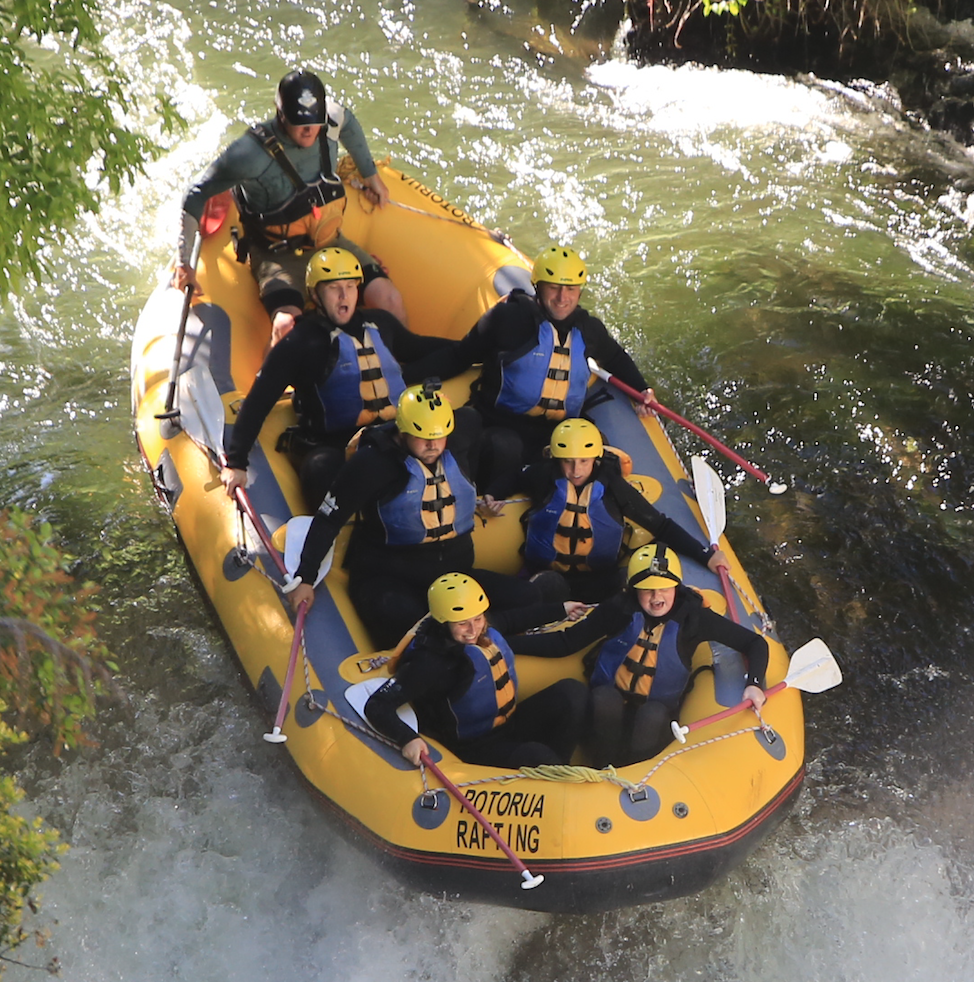
Aspects of the course:
Practical in nature - 3 sessions per week.
Great balance of 'learning' and 'doing'.
Foundation for academic senior PE courses.
Interpersonal skills a significant component of course.
Highlights include:
Rotorua Day Trip (White Water Rafting and Mt Biking)
Flag Football Tournament
Racket Sports Term 3
Academic foundation of Anatomy, Biomechanics, Exercise Physiology and Skill Learning
NB - Students may not take 11PHE in conjunction with 11ADP.
11 Practical Science
11SCPThis course involves study from the specialist areas of Physics, Chemistry and Earth and Space Science to provide students with a background to understand everyday Science, prepare for the workforce or to choose further study pathways (secondary and tertiary).
Students will need a digital device.
11 Practical Skills
PSKPractical Skills in the Workshop. For Learning Support Students only.
11 Product Technology
11PTCYear 11 Product Technology involves:
Inventing/developing exciting new prototypes to address real needs that exist within our community. Innovation is a key component going forward in most aspects of life and is the foundation of this course.
•Students will identify an opportunity to develop their own individual product.
•They then follow a design process to develop a prototype of it.
•Students will manufacture this in the school’s workshops using a range of technologies such as CNC, Hand tools, and machining.
•This course involves both academic and practical components.
•Pathway to tertiary/university courses in Engineering, Design, Technology and Product Development
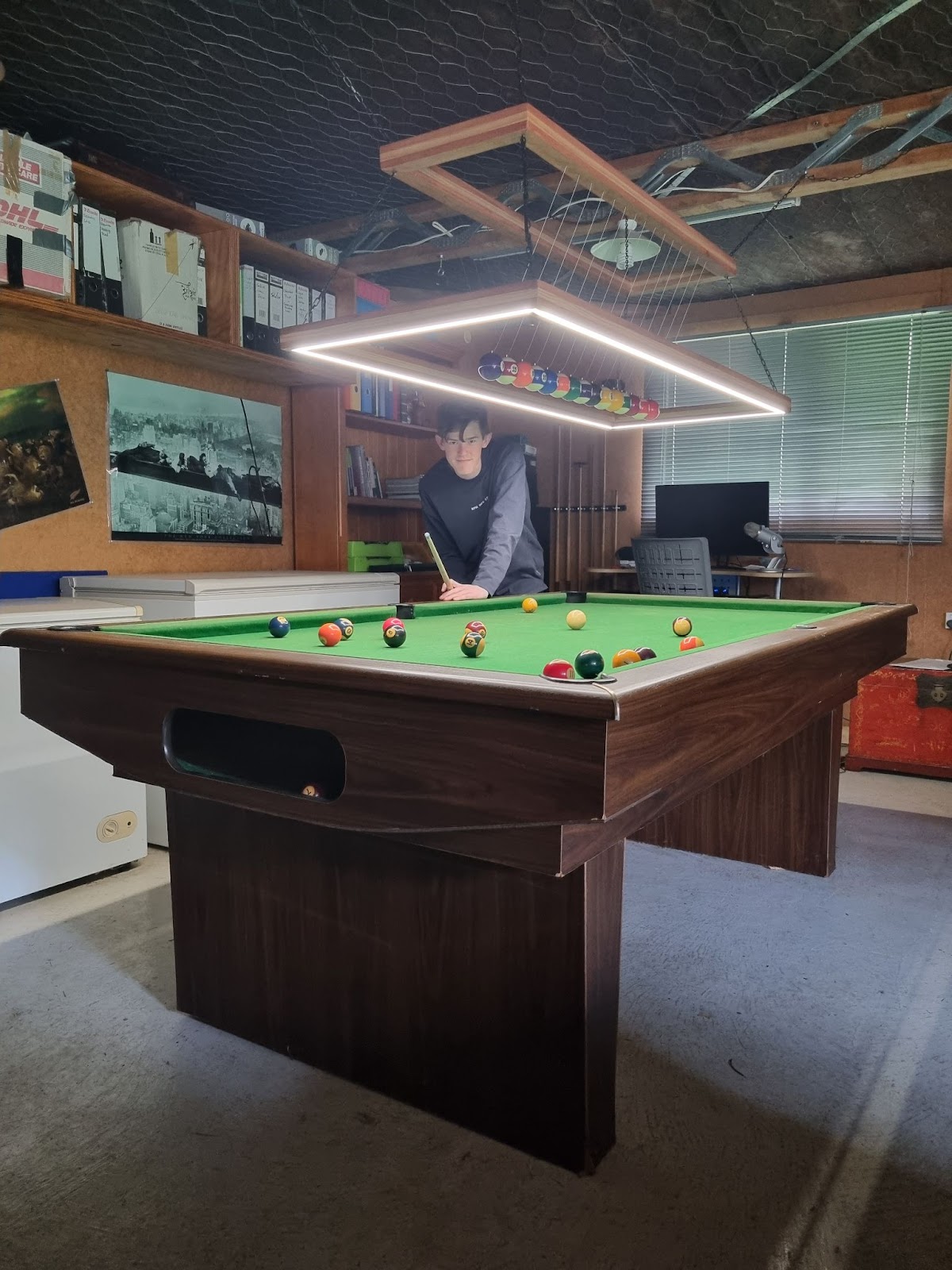
Here are some examples of lighting projects our Y11 PTC students have developed.

Course Overview
Assessment
1
2
3
4
Assess Weight
10%
20%
20%
50%
Description
Skills Manual
Workshop competency/skills
Project 1
Skills, Materials, Design process, modeling.
Quality Product with a quality finish
Concept Design & Build
Finalize concept
Research
Model
Develop and Build
11PTC Portfolio
Lamp Build - 20%
Project
Reflections - 10%
Health / Safety - 20%
Grade %
/ 10
/ 20
/ 20
/ 50
11 Psychology
11PSYAn introduction to Psychology. Psychology is the study of the brain and behaviour. The goal is an understanding of human behaviour and influencing factors—both external and internal—upon our mental and emotional processes. Key issues faced by psychologists will be looked at. These include depression; community mental health; and what makes great athletes. Some debates that will be explored include: nature vs nurture. It will also cover famous Psychology experiments.


11 Science
11SCIThis course involves study from the specialist areas of Biology, Chemistry and Physics to provide students with a Science background to understand everyday Science, prepare for the workforce or to choose further study pathways (secondary and tertiary) in all specialist areas. It is compulsory for all students take a Science subject in Year 11.
The course will include Mechanics (Motion, Forces, and Energy), investigations, Chemical Reactions (Atoms and Ions, Neutralisation and Rates of Reaction) and Biology (DNA and Cells, Genetic Variation, Diffusion, Photosynthesis and Respiration and Enzymes).
11 Social Studies
11SST
The NEW Social Studies Level One course will allow students to have a taste of all the main subjects we offer in the Humanities Curriculum Area – Geography, History and Psychology. All three of those subjects will be available as a Level Two option if students decide to take Level One Social Studies. Each term will have a subject focus followed by an assessment based on that subject’s key topic.
The key learning outcomes will be to develop literacy and researching skills throughout the year, so our students are competent with their literacy ability as they head in to NCEA Level Two.
The course will aim to provide students with wider timeframes to develop meaningful pieces of work with the emphasis being on creating quality work rather than rushed work to meet deadlines.
The key topics and their assessments weighting are listed below:
Geography (10%) – Natural Disasters and Skills
Psychology (20%) – Psychology Approaches
History – (20%) – Rise of Adolf Hitler and World War Two
Research Project (50%) – A chosen topic to research, Create a presentation as well as a written essay/report on that topic.


11 Spanish
11SPATe Punga Spanish is a language acquisition course designed for students to learn to talk about themselves and their immediate environment (family, friends, school, home, etc). Students use a range of simple Spanish language and expressions to convey information, ideas and opinions.


11 STEM
11STMThis course presents an ideal pathway for students considering careers in STEM, covering essentials skills in the electrical and programming sphere.
Additionally, those aspiring to pursue advanced studies in Physics will find this course to be a solid foundation for the level 2 and 3 Physics electrical paper.
Our curriculum delves into the fundamental principles of circuits, encompassing their functionality, design, and basic electronic component theory. Practical learning experiences complement theoretical concepts, including soldering exercises, voltage and current measurement techniques in circuits, and the fabrication of printed circuit boards.
In the second term, our focus shifts to programming fundamentals. Beginning with an introduction to the Scratch programming language, students will engage in creating various projects such as electronic dice and simple games. Additionally, we'll explore Python programming, undertaking larger projects such as developing a line-following robot.
In the third term, our exploration extends to household wiring structures and electrical safety devices, including RCDs and breakers. Core theoretical concepts such as electric fields, magnetism, and the motor effect will be investigated, providing students with a comprehensive understanding of electrical systems and their applications.
11 STEM (exemption only)
11STMXAfter you have selected your compulsory Year 11 Science you can choose 11 STEM as an additional Subject from the Other Learning Area.
If you wish this to be your only science option you can request an exemption.
Please note, you will need to explain in detail why you would like to take this as your only science option.
This will be submitted for approval with the Head of Science.
This course presents an ideal pathway for students considering careers in STEM, covering essentials skills in the electrical and programming sphere.
Additionally, those aspiring to pursue advanced studies in Physics will find this course to be a solid foundation for the level 2 and 3 Physics electrical paper.
Our curriculum delves into the fundamental principles of circuits, encompassing their functionality, design, and basic electronic component theory. Practical learning experiences complement theoretical concepts, including soldering exercises, voltage and current measurement techniques in circuits, and the fabrication of printed circuit boards.
In the second term, our focus shifts to programming fundamentals. Beginning with an introduction to the Scratch programming language, students will engage in creating various projects such as electronic dice and simple games. Additionally, we'll explore Python programming, undertaking larger projects such as developing a line-following robot.
In the third term, our exploration extends to household wiring structures and electrical safety devices, including RCDs and breakers. Core theoretical concepts such as electric fields, magnetism, and the motor effect will be investigated, providing students with a comprehensive understanding of electrical systems and their applications.
11 Supported English
ENSHEnglish for students in the Learning Support Programme only.
11 Supported Mathematics
MASHMaths for Learning Support students only
11 Supported Physical Education
PESHPhysical Education for Learning Support students only.
11 Te Reo Māori
11MAOA full year course for students who want to develop their Māori language and gain formal qualifications. It covers most aspects of the language and tikanga Māori.
Summative / Formative Assessments that students will undertake during the year:
•Listening test
•Oral test
•Creative writing test
•Mid-year exam
•End-year exam (prep for external exams – Pānui and Tuhituhi)
•NZQA external exam for Pānui and Tuhituhi
11 Visual Art
11ARTStudents in Level One Painting learn basic drawing, painting and mark making methods to develop their own art making abilities. A highlight for our students is the design and painting of their own skateboard deck!
The course is largely practical and allows for students to develop their own creativity, problem solving and collaboration.
- Drawing and Painting techniques
- Skatebard Deck outcome or another finished hang ready piece
- Printmaking
- Folio board

11 Wood Carving
11CARAt this carving level, the student will gain the knowledge and skills required to successfully earn Level 2 credits for the National Certificate of Educational Achievement next year.
Our primary goal for the year is to significantly broaden the student’s knowledge and skills base. This involves fostering research skills, enhancing drawing skills essential for crafting a successful carving design, and refining manual skills.
A substantial part of this year will be based on the completion of a project that requires the student to make a sustained investigation and present a finished carved artwork.
11AGH (exemption only)
11AGHXAfter you have selected your compulsory Year 11 Science you can choose 11AGH as an additional Subject from the Other Learning Area.
If you wish this to be your only science option you can request an exemption.
Please note, you will need to explain in detail why you would like to take this as your only science option.
This will be submitted for approval with the Head of Science.
11AGH is a Primary ITO Trades Academy program:
- Unit Standards.
- 26 Level 2 credits.
- The primary ITO program runs for two years which leads to the NZ Certificate in Primary Industry Skills (Level 2).
11AGH is part of the Year 11 Te Punga course:
- 10% Water supply system.
- 20% Plant growth, fencing knots and wire joins
- 50% Safe work practice & Livestock behaviour.
- 20% External examination.
11AGH has 2 all-day visits to farms and orchards.
In 2028, the 11AGH program splits into two different pathways:
- Pathway 1 - Skills - Primary Industry Trades Academy second year with work placement.
- Pathway 2 - Academic - Achievement Standards (NCEA level 2).
If you have any further questions - please contact Miss Carter by email [email protected]
12 Establishing Independence
56EIA programme for Learning Support students, which is based around basic cooking skills as well as life skills.
12 Practical Skills
PSKPractical Skills in the Workshop. For Learning Support Students only.
12 Supported English
ENSHEnglish for students in the Learning Support Programme only.
12 Supported Mathematics
MASHMaths for Learning Support students only
12 Supported Physical Education
PESHPhysical Education for Learning Support students only.
13 Establishing Independence
56EIA programme for Learning Support students, which is based around basic cooking skills as well as life skills.
13 Practical Skills
PSKPractical Skills in the Workshop. For Learning Support Students only.
13 Supported English
ENSHEnglish for students in the Learning Support Programme only.
13 Supported Mathematics
MASHMaths for Learning Support students only
13 Supported Physical Education
PESHPhysical Education for Learning Support students only.
9 Establishing Independence
56EIA programme for Learning Support students, which is based around basic cooking skills as well as life skills.
9 Practical Skills
PSKPractical Skills in the Workshop. For Learning Support Students only.
9 Supported English
ENSHEnglish for students in the Learning Support Programme only.
9 Supported Mathematics
MASHMaths for Learning Support students only
9 Supported Physical Education
PESHPhysical Education for Learning Support students only.
Biology 2
BIO2


Biology is the study of living things and their interactions with each other and their environment.
- Biochemistry experiments
- Comparison of the nutrition of wild animals such as the crocodile, great white shark, blue whale etc
- Ecology, treetops ziplining field trip and pest control
- Cell processes
- Genetic variation
Chemistry 2
CHE2Level 2 Chemistry
Why Study Chemistry?
Ever wondered why ice floats, how batteries generate power, or why some substances react instantly while others take years? Level 2 Chemistry uncovers how matter behaves at the atomic level.
It is a foundational subject for careers in medicine, engineering, environmental science, veterinary science, forensic science, and technology—giving you a strong mix of practical laboratory techniques and high-level analytical skills.
What You’ll Cover
Internal Assessments (Hands-On Lab Focus)
- AS 91162 (Chem 2.2) – Quantitative Analysis: Ions in Solution (3 Credits)
- The Pitch: Play chemical detective in the lab.
- Summary: Learn how to identify unknown ions in aqueous solutions through precipitation reactions. You will carry out wet chemistry, observe distinct colour changes and precipitates, write balanced net ionic equations, and justify your deductions using solubility rules
- AS 91167 (Chem 2.7) – Oxidation-Reduction (REDOX) Processes (3 Credits)
- The Pitch: The chemistry powering batteries, corrosion, and energy transfer.
- Summary: Explore how electrons move between chemical species. You will investigate practical REDOX reactions, track changes in oxidation numbers, identify oxidising and reducing agents, and write balanced half-equations.
External Examinations (End-of-Year)
- AS 91164 (Chem 2.4) – Bonding, Structure, Properties and Energy (5 Credits)
- The Pitch: Why materials behave the way they do.
- Summary: Connect atomic-scale bonding and molecular shapes to real-world properties like melting points, electrical conductivity, and solubility. You will also study thermochemistry—measuring energy changes during chemical reactions and phase changes.
- AS 91165 (Chem 2.5) – Organic Chemistry (4 Credits)
- The Pitch: The chemistry of fuels, plastics, food, and life.
- Summary: Dive into the diverse world of carbon molecules. You will name, draw, and classify different functional groups (alkanes, alkenes, haloalkanes, alcohols, and carboxylic acids), predict structural isomers, and explain their key chemical reactions.
- AS 91166 (Chem 2.6) – Chemical Reactivity (4 Credits)
- The Pitch: Controlling reaction speeds and chemical balances.
- Summary: Understand why reactions happen and how to control them. You will explore collision theory (how temperature, concentration, surface area, and catalysts alter rates of reaction), chemical equilibrium dynamics (Kc), and fundamental acid-base behaviour (pH).
Classical Studies 2
CLS2Classical Studies involves the study of aspects of Ancient Greek and Roman History, Art and Literature.
•Roman and Greek Literature
•Roman Art and Architecture
•Ancient Roman History and Philosophy
Economics 2
ECO2By studying economics, students will consider how New Zealanders are affected by the economic decision-making of individuals, communities, businesses, and government agencies in New Zealand and overseas.
They will:
- develop an understanding of the New Zealand economy and the policies that the Government uses to manage it
- make sense of economic problems that they may be facing, now and in the future
- make connections between New Zealand’s economy and the global economy.
Students will understand why New Zealand consumers may experience price increases for products, such as cheese and butter, if local producers are exporting goods such as dairy produce for increasing returns.
Students will be challenged to find solutions to current macro-economic issues, such as unemployment, poverty, low economic growth, inflation, overuse of natural resources, and trade balances.
Geography 2
GEO2
Geography is about the relationship between people and the natural world. It is about the world around us, how people experience It, and how people remake the world.
Geography develops lifelong skills, including:
- An understanding of the process which affect physical and human environments.
- An understanding of place on a local, regional, and global scale.
- The ability to use and understand geographical data and information.
- An understanding of how communities around the world are affected and constrained by different environments.
- The ability to explore the relationships and connections between people and both natural and cultural environments.
- The ability to view and understand the real-world application of scientific study and theory with particular focus on the natural world and the relationship with people.
- The ability to apply their own personal experiences in a geographic context and understand how they personally can influence local, regional, and global events.
Students learn to think spatially and use maps, visual images and new technologies, including geographical information systems (GIS) to obtain, present, and analyse information
History 2
HIS2Click on this!
History is the study of events and people who have shaped the world we live in.
In Level 2 History we look at -
- The 1960's: music, politics, conflict, and the space race.
- The Holocaust
- NZ- A History of Protest
- Conspiracy Theories
Intensive English (ESOL)
10IEIntensive English offered to students for whom English is not their first language. Students in this class have limited English language skills. Students may choose this option alongside their core English class to develop and reinforce their English language skills and support other curriculum areas.
Mathematics 2
MAT2This course is designed for students who wish to continue Mathematics at Level 2. It involves a combination of Algebra, Statistics and Probability. There is one External Assessment. The topics covered are:
• Systems of Equations (Algebra)
• Trigonometric Relationships (Algebra)
• Informal Inference (Statistics)
• Coordinate Geometry (Algebra)
• Networks (Algebra)
• Probability (Probability External Examination)
Most of these topics link to the mathematics in trades, business
Mathematics with Calculus 2
MAC2In a range of meaningful contexts, students will be engaged in thinking mathematically.
Students will solve problems and model situations that require them to apply algebraic, graphical, geometric and calculus techniques.
Students that choose this course can also take MAS2 (Statistics) as an option.
Philosophy 2
PHI2Philosophy is the study of problems concerning existence, knowledge, values, reason, the mind, and language. The focus is on critical thinking and deepening your thinking on topics of personal interest. There is an emphasis on students guiding the discussion and learning.
Students will be able to gain 18 credits and will have some choice about which standards they will be assessed against based on their personal interests.
Physics - Level 2
PHY2Physics is the study of the relationship between matter and energy.
Physicists attempt to understand the fundamental mathematical relationships that govern natural phenomena and apply those relationships to interesting problems. The main reason to study physics is because you are curious about how the world works. In addition to that knowledge, you gain a set of incredibly useful skills that make you attractive to a wide range of employers.
This course trains you to become a competent problem solver. You will learn to break down a problem into its component parts and apply mathematics, computing, data analysis, and experimental techniques to arrive at a solution. We also emphasize technical writing and presentation skills, as well as working in teams.
Topics covered at Level 2:
•Mechanics
•Electricity and Electromagnetism
•Waves (Foundational for Level 3)
•Atomic and nuclear physics
•Practical investigations
•Application of Physics
Psychology 2
PSY2Psychology is a subject focussed on explaining behaviour. The main focus of Psychology Level Two is addiction issues. Topic studied will include: Examine the different psychological approaches used to explain addiction, and examine how psychological debate has changed on addiction over time. This course will introduce some key psychology concepts. It will also involve designing and carrying out an experiment. Social psychology and the Psychology of Sport will also be covered.
https://www.canterbury.ac.nz/study/subjects/psychology/

Statistics & Modelling 2
MAS2In a range of meaningful contexts, students will be engaged in thinking mathematically. Students will solve problems and model situations that require them to apply statistical and probability techniques.
Students who choose this course can also take MAC2 (Calculus) as an option.
Subjects for Year 11 Students
10 Establishing Independence
56EIA programme for Learning Support students, which is based around basic cooking skills as well as life skills.
10 Practical Skills
PSKPractical Skills in the Workshop. For Learning Support Students only.
10 Supported English
ENSHEnglish for students in the Learning Support Programme only.
10 Supported Mathematics
MASHMaths for Learning Support students only
10 Supported Physical Education
PESHPhysical Education for Learning Support students only.
11 Academic English (11ACE)
11ACEThis course is for students for whom English is not their first language. It offers the opportunity to work towards IGCSE English Language in an environment suited to second language speakers.
This course allows learners to:
- develop the ability to communicate clearly, accurately and effectively when speaking and writing
- learn how to use a wide range of vocabulary, and the correct grammar, spelling and punctuation
- develop a personal style and an awareness of the audience being addressed.
Note: All tasks and assessments are designed to develop the skills, understanding and ability of students to prepare for both the literacy prerequisite examination and the end of year Cambridge IGCSE English - First Language (0500) Reading and Writing examinations. The completed examinations are marked externally. The Cambridge IGCSE English First Language examinations are highly regarded, internationally recognised qualifications.
11 Establishing Independence
56EIA programme for Learning Support students, which is based around basic cooking skills as well as life skills.
11 Intensive English (11ESE)
11ESEThis course is for students for whom English is not their first language. It offers the opportunity to learn and develop the English language in an environment suited to second language speakers.
This course allows learners to:
- develop the ability to communicate clearly, accurately and effectively when speaking and writing
- learn how to use a wide range of vocabulary, and the correct grammar, spelling and punctuation
- develop a personal style and an awareness of the audience being addressed.
- Work towards developing the necessary skills required to pass the literacy corequisite exams
Note: All tasks and assessments are designed to develop the skills, understanding and ability of students to prepare for both the literacy prerequisite examination and the end of year Cambridge English - Second Language examination.
11 Practical Science
11SCPThis course involves study from the specialist areas of Physics, Chemistry and Earth and Space Science to provide students with a background to understand everyday Science, prepare for the workforce or to choose further study pathways (secondary and tertiary).
Students will need a digital device.
11 Practical Skills
PSKPractical Skills in the Workshop. For Learning Support Students only.
11 Supported English
ENSHEnglish for students in the Learning Support Programme only.
11 Supported Mathematics
MASHMaths for Learning Support students only
11 Supported Physical Education
PESHPhysical Education for Learning Support students only.
12 Establishing Independence
56EIA programme for Learning Support students, which is based around basic cooking skills as well as life skills.
12 Practical Skills
PSKPractical Skills in the Workshop. For Learning Support Students only.
12 Supported English
ENSHEnglish for students in the Learning Support Programme only.
12 Supported Mathematics
MASHMaths for Learning Support students only
12 Supported Physical Education
PESHPhysical Education for Learning Support students only.
13 Establishing Independence
56EIA programme for Learning Support students, which is based around basic cooking skills as well as life skills.
13 Practical Skills
PSKPractical Skills in the Workshop. For Learning Support Students only.
13 Supported English
ENSHEnglish for students in the Learning Support Programme only.
13 Supported Mathematics
MASHMaths for Learning Support students only
13 Supported Physical Education
PESHPhysical Education for Learning Support students only.
9 Establishing Independence
56EIA programme for Learning Support students, which is based around basic cooking skills as well as life skills.
9 Practical Skills
PSKPractical Skills in the Workshop. For Learning Support Students only.
9 Supported English
ENSHEnglish for students in the Learning Support Programme only.
9 Supported Mathematics
MASHMaths for Learning Support students only
9 Supported Physical Education
PESHPhysical Education for Learning Support students only.
Academic English (ACEG2)
ACEG2This course is suitable for students for whom English is not their first language. It offers the opportunity to achieve English Achievement Standards in an environment suited to second language speakers. Students will have the opportunity over two years (Year 12 and 13) to gain their UE literacy credits. Where English language skills are very low, students will be offered the opportunity to complete English Language assessment standards to support their achievement of each NCEA level.
Accounting 2
ACC2Accounting is the study of how we communicate financial information to businesses/organisations to help their decision-making.
This course aims to promote knowledge and understanding of Accounting as a financial language for individuals, community organisations and businesses, and enable students to apply financial knowledge and skills to practical situations.
The stereotype of a pencil pushing accountant hunched over a calculator scribbling sums couldn't be be more inaccurate in todays world.
Accountants are innovative.
Accountants are good with money.
Accountants are business advisors.
As a result, they have transferable, strongly valued skills that make them exceptional and visionary business leaders.
One in four CEOs is a Chartered Accountant and 55% of CEOs have a Finance Background
FAQ
Q. What is the difference between Accounting and Economics?
Even though they are both “businessy” subjects, they are completely different.
Decision making in business can be assisted using financial information.
Accounting helps us to understand financial information and make important decisions like improving profitability or investment decisions. Topics include; Xero, Cashflow, Spreadsheeting, Forecasting, Financial Documents and of course Financial Statements.
Economics is more about the environment that our business operates in. Studying this subject helps you to understand how the markets work that you sell your product to, and how the economy around you impacts your business.
Q. Can I do both?
Yes. If you have space in your timetable, students find that they complement each other really well and are completely different to each other. None of the achievement standards overlap.
Q. Can I move between subjects over 3 years?
Yes, they can be picked up at any stage, if you are dedicated enough to catch up on the content from the previous years.
Q. Where does it lead to?
Both subjects operate in the context of the “real world” and are highly relevant to what is actually happening “out there”.
Many Year 13 students that go on to tertiary study, study a Business/Commerce degree. These require both Economics and Accounting in the first year, thus the student is well positioned to move to the tertiary level content.
For those that don’t carry on to tertiary study, the learning and knowledge about the way in which the economy/business works and how both individuals and organisations can make good financial decisions is invaluable. As are the practical skills developed in both courses.
Q. Are Accounting and Economics becoming redundant with the improvement of software to complete many jobs previously completed manually?
No. While software may complete many jobs more quickly and accurately than in the past, this has shifted the work of accountants and economists into consulting and advocate roles where a deeper understanding of the underlying concepts is essential. Sound commerce advice will always be in need.
Accounting 3
ACC3Accounting is the study of how we communicate financial information to businesses/organisations to help their decision-making.
- This course will promote knowledge and understanding of Accounting as a financial language for partnerships and companies, which may be service, trading or manufacturing businesses.
- Provides a foundation for any commercial study at a tertiary level – (BCom, BMS, BFin)
- ALL four standards must be completed to use this course for UE.
FAQ
Q. What is the difference between Accounting and Economics?
Even though they are both “businessy” subjects, they are completely different.
Decision making in business can be assisted using financial information.
Accounting helps us to understand financial information and make important decisions like improving profitability or investment decisions. Topics include; Xero, Cashflow, Spreadsheeting, Forecasting, Financial Documents and of course Financial Statements.
Economics is more about the environment that our business operates in. Studying this subject helps you to understand how the markets work that you sell your product to, and how the economy around you impacts your business.
Q. Can I do both?
Yes. If you have space in your timetable, students find that they complement each other really well and are completely different to each other. None of the achievement standards overlap.
Q. Can I move between subjects over 3 years?
Yes, they can be picked up at any stage, if you are dedicated enough to catch up on the content from the previous years.
Q. Where does it lead to?
Both subjects operate in the context of the “real world” and are highly relevant to what is actually happening “out there”.
Many Year 13 students that go on to tertiary study, study a Business/Commerce degree. These require both Economics and Accounting in the first year, thus the student is well positioned to move to the tertiary level content.
For those that don’t carry on to tertiary study, the learning and knowledge about the way in which the economy/business works and how both individuals and organisations can make good financial decisions is invaluable. As are the practical skills developed in both courses.
Q. Why accelerate study of Economics?
Students that have completed the Accelerate Business Studies course in Year 10 are able to enter the Level 2 Economics course in Year 11 and the Level 3 Economics course in Year 12. This allows them to study the University of Waikato Economics course in Year 13. This will cross-credit to a university commerce degree.
Q. Are Accounting and Economics becoming redundant with the improvement of software to complete many jobs previously completed manually?
No. While software may complete many jobs more quickly and accurately than in the past, this has shifted the work of accountants and economists into consulting and advocate roles where a deeper understanding of the underlying concepts is essential. Sound commerce advice will always be in need.
Agricultural and Horticultural Science 2
AGH2


Achievement Standards - 20 credits:
- Academic.
- Leading to Year 13 and University.
- Industry visits.
- Three Internals (12 credits).
- Two Externals (8 credits).


If you have further questions about the subject, please email Miss Carter [email protected]
Athlete Development 2
ADP2ADP2 – Athlete Development Programme (Year 12)
ADP2 is a continuation of the Athlete Development Programme and builds on the foundation established in 11ADP. This course is designed for students with a strong commitment to improving their sporting performance and who are already performing at a high level in their chosen sport(s).
The programme aims to further develop physical capabilities, tactical understanding, and knowledge of key Physical Education concepts. Students will deepen their understanding of biomechanics, training principles, skill learning, and sport psychology, with an emphasis on applying this knowledge to enhance individual and team performance.
Course Structure:
- Five lessons per week:
• Two compulsory Strength and Conditioning sessions led by qualified coaches
• Three theory-based lessons aligned with NCEA Level 2 Physical Education content
Course Selection:
Entry into ADP2 is by selection. Students will be selected by Mr Hyett, with preference given to those:
- Who have successfully completed 11ADP
- Competing in a 1st or 2nd team or at a high level in their sport
- Who demonstrate a strong work ethic, positive attitude, and commitment to athletic development
This course is ideal for students aspiring to represent Tauranga Boys' College at the highest level or pursue opportunities in high-performance sport.
Note: Students cannot take PHE2 alongside ADP2.
This course offers 16 NCEA Level 2 credits.
The course fee is $120, which contributes to the external costs of the strength and conditioning programme.
Biology 2
BIO2Biology is the study of living things and their interactions with each other and their environment.
- Biochemistry experiments
- Comparison of the nutrition of wild animals such as the crocodile, great white shark, blue whale etc
- Ecology, treetops ziplining field trip and pest control
- Cell processes
- Genetic variation
Biology 3
BIO3- Gene editing using CRISPR Technology
- Thermoregulation during extreme sporting events
- Experiments on the heart rate of water fleas
- Animal behaviour and plant responses
- Human evolution


Bone Carving 2
CAB2The aim of the year is to extend the student’s knowledge and skills base. Encouraging the development of research skills, the extension of drawing skills necessary for the development of a successful carving design. Students will acquire traditional knowledge that will aid them to produce appropriate taonga for a wide range of kaupapa.
Building Related Trades 2
BRT2•Practical wood programme based on individual and team projects, using a range of Carpentry and Joinery skills.
•A focus on practical Building and Joinery industry-related assessments – eg safety, machine use, construction skills.
•Development of practical hand tool skills and modern machine use.
Will be undertaken 1/2 on building site and 1/2 in a wood based workshop.
Business Studies 2
BUS2The study of business is about how individuals and groups of people organise, plan, and act to create and develop goods and services to satisfy customers.
The knowledge and skills gained in Business Studies, and exposure to enterprise culture, can help shape “creative, energetic, and enterprising” young people who will contribute to New Zealand’s economic future.
In Business Studies, students develop their understanding of business theory and practices in a range of relevant contexts, through experiential approaches to learning.
Chemistry 2
CHE2Level 2 Chemistry
Why Study Chemistry?
Ever wondered why ice floats, how batteries generate power, or why some substances react instantly while others take years? Level 2 Chemistry uncovers how matter behaves at the atomic level.
It is a foundational subject for careers in medicine, engineering, environmental science, veterinary science, forensic science, and technology—giving you a strong mix of practical laboratory techniques and high-level analytical skills.
What You’ll Cover
Internal Assessments (Hands-On Lab Focus)
- AS 91162 (Chem 2.2) – Quantitative Analysis: Ions in Solution (3 Credits)
- The Pitch: Play chemical detective in the lab.
- Summary: Learn how to identify unknown ions in aqueous solutions through precipitation reactions. You will carry out wet chemistry, observe distinct colour changes and precipitates, write balanced net ionic equations, and justify your deductions using solubility rules
- AS 91167 (Chem 2.7) – Oxidation-Reduction (REDOX) Processes (3 Credits)
- The Pitch: The chemistry powering batteries, corrosion, and energy transfer.
- Summary: Explore how electrons move between chemical species. You will investigate practical REDOX reactions, track changes in oxidation numbers, identify oxidising and reducing agents, and write balanced half-equations.
External Examinations (End-of-Year)
- AS 91164 (Chem 2.4) – Bonding, Structure, Properties and Energy (5 Credits)
- The Pitch: Why materials behave the way they do.
- Summary: Connect atomic-scale bonding and molecular shapes to real-world properties like melting points, electrical conductivity, and solubility. You will also study thermochemistry—measuring energy changes during chemical reactions and phase changes.
- AS 91165 (Chem 2.5) – Organic Chemistry (4 Credits)
- The Pitch: The chemistry of fuels, plastics, food, and life.
- Summary: Dive into the diverse world of carbon molecules. You will name, draw, and classify different functional groups (alkanes, alkenes, haloalkanes, alcohols, and carboxylic acids), predict structural isomers, and explain their key chemical reactions.
- AS 91166 (Chem 2.6) – Chemical Reactivity (4 Credits)
- The Pitch: Controlling reaction speeds and chemical balances.
- Summary: Understand why reactions happen and how to control them. You will explore collision theory (how temperature, concentration, surface area, and catalysts alter rates of reaction), chemical equilibrium dynamics (Kc), and fundamental acid-base behaviour (pH).
Chemistry 3
CHE3Level 3 Chemistry
Why Study Chemistry?
Level 3 Chemistry takes you deeper into the fundamental mechanics of the universe—from predicting how molecules interact to determining the structure of unknown compounds.
It builds critical thinking, analytical reasoning, and practical skills essential for university pathways in medicine, engineering, pharmacy, veterinary science, environmental technology, and broader science degrees.
Course Pathways
To cater to different tertiary goals, this course offers flexible assessment pathways:
- Organic Pathway: Focuses on advanced carbon chemistry, synthesis, and reaction mechanisms—ideal for medicine, biochemistry, pharmacy, and chemical engineering.
- Applied / Environmental Pathway: Replaces the Organic external with a contextual research internal—ideal for environmental science, geology, general science, or students seeking a non-organic focus.
What You’ll Cover
Core Internal Assessments (Practical & Analytical)
- AS 91168 (Chem 3.2) – Spectroscopy: Structure Determination (3 Credits)
- The Pitch: Become an analytical molecular detective.
- Summary: Learn how chemists map out and identify unknown molecules without looking directly at them. You will interpret data from mass spectrometry, infrared (IR) spectroscopy, and 13C nuclear magnetic resonance (NMR) spectroscopy to solve structural puzzles.
- AS 91173 (Chem 3.7) – Oxidation-Reduction (REDOX) Processes (3 Credits)
- The Pitch: Electrochemistry, commercial batteries, and industrial energy.
- Summary: Take your REDOX knowledge to an advanced level by investigating electrochemical and electrolytic cells. You will use standard reduction potentials ($E^\circ$) to predict reaction spontaneity, analyse industrial processes like electroplating, and balance complex equations.
Pathway Options (Select One)
- Option A: AS 91171 (Chem 3.5) – Properties of Organic Compounds (5 Credits – External Exam)
- The Pitch: Advanced carbon chemistry, synthesis, and polymers.
- Summary: Expand your organic toolkit to include optical isomers, aldehydes, ketones, esters, acyl chlorides, amides, and amino acids. You will design multi-step reaction pathways, predict reaction products, and investigate polymers.
- Option B: AS 91389 (Chem 3.3) – Chemical Processes in the World Around Us (3 Credits – Internal Assessment)
- The Pitch: Apply chemistry to real-world environmental and industrial issues.
- Summary: Research and evaluate real-world chemical processes (such as ocean acidification, atmospheric chemistry, or industrial extraction). You will analyze the underlying chemical principles and evaluate their environmental or societal impacts.
Core External Examinations (End-of-Year)
- AS 91170 (Chem 3.4) – Thermochemical Principles and Properties of Particles (5 Credits)
- The Pitch: Atomic architecture, periodic trends, and the drivers of reaction.
- Summary: Explore electron configurations (including subshells), expanded octet molecular shapes, and periodic trends like electronegativity and ionic radii. You will also calculate enthalpy changes, analyse intermolecular forces, and explore entropy and spontaneity ($\Delta S$ and $\Delta G$).
- AS 91172 (Chem 3.6) – Equilibrium Principles in Aqueous Systems (5 Credits)
- The Pitch: The quantitative math behind solubility, acids, and buffers.
- Summary: Master the calculations governing solutions in dynamic balance. You will determine the solubility of sparingly soluble salts ($K_\mathrm{sp}$), construct titration curves, calculate the pH of weak acids and bases, and explain how buffer solutions resist changes in pH.
Classical Studies 2
CLS2Classical Studies involves the study of aspects of Ancient Greek and Roman History, Art and Literature.
•Roman and Greek Literature
•Roman Art and Architecture
•Ancient Roman History and Philosophy
Classical Studies 3
CLS3Classical Studies involves the study of aspects of Ancient Greek and Roman History, Art and Literature.
•Roman and Greek Literature
•Roman Art and Architecture
•Ancient Roman History and Philosophy
Contemporary Music 2
CMU2Contemporary Music is focused on music production, this includes utilising technology to sequence, record and mix music. Students will also specialise in either composition or performance. In most cases students will design a project centered around composing and recording two original pieces of music. This could look like:
- Write, perform and record two songs to submit for RockQuest, Chamber Music Contest or Jazz Festival
- Write, perform and record two songs to release on Spotify or YouTube
Design & Visual Communication 2
DVC2Year 12 Design & Visual Communication
This course builds upon the foundation laid in Y11 and aims to enhance your design capabilities. With guidance, this course encourages students to build on the ability to work independently, developing an understanding of working to project timelines and workflow. Students explore practices specific to product design and spatial design through two projects, customised to reflect their personal interests. Students are challenged to examine in detail solutions to these design briefs. The work done in these projects contributes to internally assessed standards as well as an external portfolio. Assessments provoke students to develop a deeper understanding of design drawing and presentation skills, freehand sketching, graphics practice, CAD drawings in 3D modelling and 2D working drawings, along with a thorough depth of design thinking.
Design 2
DES2Design at Level Two requires students to generate and develop ideas in response to a topical issue. The learning involved includes being able to think creatively, problem solve, work collaboratively and to show the progression of an idea across multiple outcomes.
This course is largely practical, equipping students with knowledge and skills to apply at Level Three. Students will complete the following assessments:
1. Identify a real world context to base their work around. Research and explore this context to understand what they are designing and for who.
2. Generate and develop ideas across a related series of work within Logo Design, Poster Design and Poster Design.
 3. Produce a resolved series of work to present as a portfolio for the end of year submission.


Digital Technologies 2
DGT2Digital Technologies is the study of how computers work; how they can be programmed; and how they can be used to manage, process and present information.
The DGT2 course focuses on:
• Further website design (using HTML, CSS, PHP and Javascript)
• Database design (using SQL)
• Further programming (using Python - Pygame, Java, C++, C#)
• Computer Science topics (e.g. binary, ASCII, UniCode, data compression, data encryption)
This course builds upon the skills and knowledge learnt in the DGT1 course. The course requires students to be self-motivated and to work independently.
2028 Digital Technology Trip - USA - Silicon Valley
• Year 12 & 13 Digital Technology Students
• Term 3/4 Holidays
Drama 2
DRA2• Research the purposes of production, performance, and technologies of drama in a range of contexts, including New Zealand drama
• Explore how drama reflects our cultural diversity
• Select and refine the use of techniques, conventions, and technologies in specific dramatic forms
• Research, Critically evaluate, and refine ideas to develop drama in specific dramatic forms
• Rehearse and perform works in a range of dramatic forms
• Respond to and make critical judgments about rehearsal processes and performances
An example of credits available is listed below.
Economics 2
ECO2By studying economics, students will consider how New Zealanders are affected by the economic decision-making of individuals, communities, businesses, and government agencies in New Zealand and overseas.
They will:
- develop an understanding of the New Zealand economy and the policies that the Government uses to manage it
- make sense of economic problems that they may be facing, now and in the future
- make connections between New Zealand’s economy and the global economy.
Students will understand why New Zealand consumers may experience price increases for products, such as cheese and butter, if local producers are exporting goods such as dairy produce for increasing returns.
Students will be challenged to find solutions to current macro-economic issues, such as unemployment, poverty, low economic growth, inflation, overuse of natural resources, and trade balances.
Economics 3
ECO3Economics examines the choices people make about the use of limited resources to satisfy unlimited wants.
Economics helps to explain and predict how goods and services will be produced and consumed. It will tell you who gets what, how, and why.
Economics explores issues of:
- sustainability (efficient use of scarce resources)
- enterprise (identifying profit-maximising levels of output)
- citizenship (economic decisions affecting New Zealand society)
- globalisation (the benefits of international trade).
Economists are interested in the factors that influence the well being of people and aim to find solutions to improve people’s standard of living.
Course Fees of $20 covers the Elearneconomics online learning resource.
FAQ.
What is the difference between Accounting and Economics?
Even though they are both “businessy” subjects, they are completely different.
Decision making in business can be assisted using financial information.
Accounting helps us to understand financial information and make important decisions like improving profitability or investment decisions. Topics include; Xero, Cashflow, Spreadsheeting, Forecasting, Financial Documents and of course Financial Statements.
Economics is more about the environment that our business operates in. Studying this subject helps you to understand how the markets work that you sell your product to, and how the economy around you impacts your business.
Q. Can I do both?
Yes. If you have space in your timetable, students find that they complement each other really well and are completely different to each other. None of the achievement standards overlap.
Q. Can I move between subjects over 3 years?
Yes, they can be picked up at any stage, if you are dedicated enough to catch up on the content from the previous years.
Q. Where does it lead to?
Both subjects operate in the context of the “real world” and are highly relevant to what is actually happening “out there”.
Many Year 13 students that go on to tertiary study, study a Business/Commerce degree. These require both Economics and Accounting in the first year, thus the student is well positioned to move to the tertiary level content.
For those that don’t carry on to tertiary study, the learning and knowledge about the way in which the economy/business works and how both individuals and organisations can make good financial decisions is invaluable. As are the practical skills developed in both courses.
Q. Why accelerate study of Economics?
Students that have completed the Accelerate Business Studies course in Year 10 are able to enter the Level 2 Economics course in Year 11 and the Level 3 Economics course in Year 12. This allows them to study the University of Waikato Economics course in Year 13. This will cross-credit to a university commerce degree.
Q. Are Accounting and Economics becoming redundant with the improvement of software to complete many jobs previously completed manually?
No. While software may complete many jobs more quickly and accurately than in the past, this has shifted the work of accountants and economists into consulting and advocate roles where a deeper understanding of the underlying concepts is essential. Sound commerce advice will always be in need.
Engineering Trades 2
ETR2•Practical and theory programme based on a single major project, using a range of modern and traditional construction methods.
•Development of practical hand tool skills and modern machine use.
This course features four theory assessments, all are unit standard assessments and have a total credit value of 18 credits.
Standards and assessments are subject to change as standards become obsolete or are superseded.
This course is undertaken in an Engineering Workshop.
English 2
ENG2English is about developing effective communication skills, including written, spoken, and visual language. It is also about enriching our understanding of ourselves and our society by connecting with literature, history, society, and human nature. Language is vital to create understanding of ourselves, others, and the world around us.

English Accelerated 2
6AENThe Accelerated English course challenges students to consider how their perspectives, opinions, and knowledge connect with texts. Within this course there is a focus on developing effective communication skills, including written, spoken, and visual language. It is also about enriching our understanding of ourselves and our society by connecting with literature, history, society, and human nature. There is an extended text component of the course wherein students can use these skills developed throughout the year to connect the text to both self and society.

English Extension 2
ENX2The Extension English course is about developing effective communication skills within written, spoken, and visual language. There is a focus on connecting literature with society in order to take ideas out of the vacuum of the text. Extrapolating these ideas allows us to enrich our understanding of the world around us, as well as our place in it. There is an extended text component to this course, wherein you will be challenged to consider these connections between text, self, and society.

English Extension 3
ENX3Extension English aims to prepare students for the rigor of academic writing. This course develops the research and critical thinking required for tertiary study. The ability to critically evaluate texts, sources, and perspectives will be gained through the exploration of both modern and traditional texts. Students will be encouraged to challenge themselves to think beyond their own experience and to recognise the place of literature as a reflection of society. Our boys will be supported in developing their own voice as well as their self-management skills.

English with Literacy Level 2
ENL2This course is aimed at students who intend to start a trade or an apprenticeship, study at polytech, or who have yet to decide what they intend to do but want to further their understanding of literacy. This course will offer students the chance to gain Literacy through internal assessments and encourages students to better understand New Zealand by exploring topics such as: future pathways, taxation, the New Zealand Police, lineage, filling out forms, and motor vehicle laws.
Gateway 2
GTW2This class is for the engineers, automotive mechanics, bakers, bricklayers, plumbers, electricians, chefs, and community service workers—all the people who are the true backbone of New Zealand's economy. Our mission is simple: to make our young men work ready, give them hands-on work experience, and help them find jobs.
Gateway caters to a wide range of industries, including traditional building trades, automotive engineering, hospitality, and community services. Designed for Year 12 students, the programme provides a direct head start into industry, with a high proportion of our students securing full-time employment and transitioning into apprenticeships early as a result of their placements. While Gateway is offered through to Year 13, many of our students take full advantage of these workforce opportunities as soon as they arise.
We are looking for the guys who want to work with their hands, are not scared of hard work, and are ready to represent the school with pride in a professional environment. We look after our Gateway lads and support them every step of the way, helping with essential equipment and funding key qualifications including First Aid Certificates, workplace health and safety qualifications, and driver's licences.
Requirement: If you are selecting Gateway, you must be willing to undertake a weekly work placement during the school year.
Term Themes
- Term 1: Getting Work Ready
- Term 2: Looking After Your Finances (Financial Literacy)
- Term 3: Preparing for the Future
- Term 4: Transition & Completion
Industry & Employer Partners
We are fortunate to have partnerships with a wide range of businesses and providers across Tauranga Moana. It is these partners who provide the real value for our Gateway students.
In many cases, students who enrol in Gateway already have family connections with workplaces willing to provide their work experience, but that is by no means compulsory. Below is a list of just a few of the industries and companies we have worked with:
Industry SectorKey Employer Partners
Aviation & Logistics
JNP Aviation Training (Pilots & Ground Operations), Mainfreight (Freight, Trucking & Supply Chain)
Engineering & Heavy Transport
Domett Truck & Trailer (Welding & Fabrication), Tauranga Diesel Specialists, AB Equipment, Intertruck
Electrical, Plumbing & Trades
AJ's Electrical, Coast Electrical, Helix Electrical, Guild and Spence, Harrison Plumbing, Laser Plumbing, Aotea Electrical, Plumbing & Security, Secta Security, Three Ducks Solutions, Tree Wise Men, Full Circle.
Building & Construction
Livingstone Building, JBH Builders, LT McGuinness Builders, Bay Building Solutions
Automotive Workshops
Farmer Auto Village, Tauranga Motor Group, Bay European, Mount Auto Repairs, plus 10+ local automotive shops
Marine, Hospitality & Community
Marra Marine, Super Yacht Coatings, Good Neighbour, Tauranga Citizens Club, local service & hospitality providers.
Primary IndustriesGroPlus, Katikati Orchard Services, Puketiro Farms, Midsom Farms, Hawk Limited.
We encourage applications from students who want to get involved in industries or businesses that are not on the list. In this case we can find work placements for students and are happy to communicate with new companies that students really want to work at. For example we currently have more than 10 students doing their placement at different automotive shops throughout Tauranga. Furthermore, students are able to work one day a week with a suitable connection found by friends or family.
For more information about Gateway please see the TBC Careerwise Website


General Science 2
SCI2General Science
Year 12 General Science is designed for students who want a broad understanding of science without specialising. It covers key concepts from Biology, Chemistry, Physics, and Earth Science, with a focus on practical investigations, real-world applications, and scientific thinking.
Students will explore topics such as energy, motion, chemical reactions, ecosystems, and adaptations. The course develops skills in planning investigations, analysing data, and explaining scientific ideas using evidence.
Assessment includes a mix of internal and one external achievement standard (AS 91191), suited to students aiming for Level 2 NCEA success. This course is ideal for learners who enjoy science and want to keep their future pathways open, whether for further study or vocational options.
Geography 2
GEO2Geography is about the relationship between people and the natural world. It is about the world around us, how people experience It, and how people remake the world.
Geography develops lifelong skills, including:
- An understanding of the process which affect physical and human environments.
- An understanding of place on a local, regional, and global scale.
- The ability to use and understand geographical data and information.
- An understanding of how communities around the world are affected and constrained by different environments.
- The ability to explore the relationships and connections between people and both natural and cultural environments.
- The ability to view and understand the real-world application of scientific study and theory with particular focus on the natural world and the relationship with people.
- The ability to apply their own personal experiences in a geographic context and understand how they personally can influence local, regional, and global events.
Students learn to think spatially and use maps, visual images and new technologies, including geographical information systems (GIS) to obtain, present, and analyse information
Geography 3
GEO3


Geography is about the relationship between people and the natural world. It is about the world around us, how people experience It, and how people remake the world.
Geography develops lifelong skills, including:
- An understanding of the process which affect physical and human environments.
- An understanding of place on a local, regional, and global scale.
- The ability to use and understand geographical data and information.
- An understanding of how communities around the world are affected and constrained by different environments.
- The ability to explore the relationships and connections between people and both natural and cultural environments.
- The ability to view and understand the real-world application of scientific study and
theory with particular focus on the natural world and the relationship with people.
- The ability to apply their own personal experiences in a geographic context and understand how they personally can influence local, regional, and global events.
Students learn to think spatially and use maps, visual images and new technologies, including geographical information systems (GIS) to obtain, present, and analyse information.
History 2
HIS2Click on this!
History is the study of events and people who have shaped the world we live in.
In Level 2 History we look at -
- The 1960's: music, politics, conflict, and the space race.
- The Holocaust
- NZ- A History of Protest
- Conspiracy Theories
History 3
HIS3History is the study of events and people who have shaped the world we live in.
Level 3 History is a broad survey course and will cover:
•The Cold War and the Nuclear Age
•NZ Land Wars
•Prohibition and the 1920's
•The US Civil War
https://docs.google.com/document/d/1i5VUS6Fpp3xJYQQq6aVsGdoFYnrhhT3dS7ZTjISkmd8/edit
Hospitality & Catering 2
HOC2The New Zealand Certificate in Cookery (Level 2)
HOC2 is a hands-on introductory course designed to build practical cooking and hospitality skills for any environment. Whether you are aiming for a career in the kitchen, building life skills, or preparing for further study, you will master essential food preparation, safe food handling, and advanced cooking techniques.


 International plated meal


 Fun times in HOC2


You can participate in the Level 2 Barista STAR programme and gain your Level 2 Barista Certificate.
Click the links below to see examples of the Hospitality related courses offered by institutes we partner with here in NZ.
https://www.toiohomai.ac.nz/study/subject/culinary-arts%2C-food-and-beverage
Day in the Life at Toi Ohomai | Culinary Arts
https://www.qrc.ac.nz/student-life/tai-tokerau/
https://www.qrc.ac.nz/student-life/queenstown/

Experience QRC - Queenstown and Paihia
Opportunity for our TBC boys to join the Careers week with other students from around NZ
Japanese 2
JPN2Level 2 Japanese is a language acquisition course designed to consolidate and enhance students' skills beyond intermediate level. Students learn to communicate more broadly about people, activities and places and things.
There is a significant increase in the amount and complexity of vocabulary and language features taught at this level. The central focus is on learning to express ideas and opinions, enabling comparisons between lifestyles and cultures in both New Zealand and Japan.
Students also learn and consolidate their use of Japanese Kanji characters.
There will also be a number of class trips throughout the year to the 101 Asian supermarket.


Māori Performing Arts 2
MPA2This course is intended for students who would like to extend their understanding and demonstrate knowledge in the art of performing haka, mau rākau (Māori weaponry), and traditional māori kākahu. There is also an opportunity to represent our kura in the cultural competition that is the Super 8 Kapa Haka contest.
Mathematics 2
MAT2This course is designed for students who wish to continue Mathematics at Level 2. It involves a combination of Algebra, Statistics and Probability. There is one External Assessment. The topics covered are:
• Systems of Equations (Algebra)
• Trigonometric Relationships (Algebra)
• Informal Inference (Statistics)
• Coordinate Geometry (Algebra)
• Networks (Algebra)
• Probability (Probability External Examination)
Most of these topics link to the mathematics in trades, business
Mathematics with Calculus 2
MAC2In a range of meaningful contexts, students will be engaged in thinking mathematically.
Students will solve problems and model situations that require them to apply algebraic, graphical, geometric and calculus techniques.
Students that choose this course can also take MAS2 (Statistics) as an option.
Mathematics with Calculus 3
MAC3Calculus is a branch of mathematics which helps us understand changes between values that are related by a function. For example, if you had one formula telling how much money you got every day, calculus would help you understand related formulas like how much money you have in total, and whether you are getting more money or less than you used to. All these formulas are functions of time, and so that is one way to think of calculus — studying functions of time.
There are two different types of calculus. Differential calculus divides things into small (different) pieces and tells us how they change from one moment to the next, while Integral calculus joins (integrates) the small pieces together and tells us how much of something is made, overall, by a series of changes.
Calculus is the mathematical study of continuous change, in the same way that geometry is the study of shape and algebra is the study of generalisations of arithmetic operations.
The Level 3 Calculus course is designed for students interested in physics, astronomy, biology, engineering, economics, architecture, medicine and sociology.
The course focuses on the following topics;
•Trigonometry (Internal)
•Complex numbers (External)
•Differentiation (External)
•Integration (External)
Media Studies 2
MDS2
Media Studies at Level Two allows students to delve into film making and the other forms of media that they engage with on a daily basis, helping them gain a better understanding of media-saturated society that we live in. This course builds on a lot of the learning in Level One Media Studies, however having done Level One Media Studies is not a requirement. Students will look at how representations are formed in the media. They will also analyse the influence that a specific film genre can have on society. They will write, plan and produce their own original piece of film.
•Representations in the media
•Film genre study
•Write a screenplay
•Plan and design a blueprint for a short film.
•Produce a short film.
Music 2
MUS2Music in Year 12 is an in depth study of performance, composition, music theory and analysis. Senior students are expected to be taking regular instrumental or vocal tuition, this can be at school or privately. The level of difficulty for performance is that you are in your 4th year of study on your instrument or voice. Students are encouraged to explore their specialist area of interest, commonly this is performance or composition, this can be in any style. Students are also encouraged to get involved in extra curricular groups such as Choir, Big Band, Chamber Music or Rock Groups.
Outdoor Education 2
ODE2Outdoor Education is the study of adventure pursuits, development of inter-personal skills and personal qualities. The course covers a wide range of outdoor activities and the teaching and learning takes place in the outdoor environment. The course covers the following topics;
Surfing
Mountain Biking / Risk Management
Bushcraft / Tramping
Swimming/Beach Safety
Adventure Based Learning
Archery / Clay bird shooting
High ropes
Along with these topics the course has 3 overnight camps which students go on. They are; Waihi Surf Camp, Tramping and Bushcraft Skills Camp and Mountain Bike Camp in the Redwoods. By completing the course students also develop:
Interpersonal Skills
Leadership Skills
Resilience
Problem Solving Skills
Team Work
Pacific Studies 2
PAC2This course has a focus around Pacific island society and everything that encompasses it. There are vast opportunities to look at topics such as business development, traditional practices, current issues facing the Pacific and many more. Throughout the course students will be challenged to research online for answers but to also have conversations with leaders in their community. This is good practice in terms of acquiring primary information and sourcing information that is current and true. This in turn should give students greater knowledge towards their subject and allow for will greater weighting in their assessments.

Students will have a greater understanding towards traditional practice and the significance of this in Pacific island society.

There are also aspects of tourism that are explored and how over time they have become somewhat of a lifeline for many Pacific island nations. Students will brainstorm how Pacific islanders have adapted to factors such as the Covid-19 pandemic through aspects such as entrepreneurship also.

Students also explore traditional root crops and the significance that they play in everyday Pacific island society. This covers aspects such as the preparation for planting, the weeding and cleaning of the crop to the eventual harvesting and selling of it.
Philosophy 2
PHI2Philosophy is the study of problems concerning existence, knowledge, values, reason, the mind, and language. The focus is on critical thinking and deepening your thinking on topics of personal interest. There is an emphasis on students guiding the discussion and learning.
Students will be able to gain 18 credits and will have some choice about which standards they will be assessed against based on their personal interests.
Philosophy 3
PHI3This course is a continuation of Philosophy in the junior school at a more advanced level and preparation for University Philosophy in Year 13. It is the study of problems concerning existence, knowledge, values, reason, the mind, and language. The focus is on critical thinking and deepening your thinking on topics of personal interest. There is an emphasis on students guiding the discussion and learning.
Students will be able to gain 18 credits and will have some choice about which standards they will be assessed against based on their personal interests.
Photography 2
PHO2This practical, hands on course provides students the opportunity to learn creatively through the lens of a camera! Each student chooses their own theme to base their work on and develop their ideas.
Processes and procedures involved with digital photography including
•Camera use
•Printing
•Photoshop and digital manipulation


The year culminates in a Folio submission.
Physical Education 2
PHE2The PHE2 course continues with the Physical Education Department's philosophy of 'Learn through doing'.
During the year students will experience a mix of practical and theory periods during the week.
Aspects of the course:
Develop 'Skill Learning' through either Volleyball or Basketball.
Learn how to set a training (weights) programme and complete this programme in the gym.
Experience a Mountain Bike Day Trip ('Performance' and 'Social Responsibility' standards)
Understand and demonstrate Social Responsibility through a range of practical concepts
Performance of physical skills (4 Credits) including Volleyball, Basketball, Mountain Biking, Squash & Lawn Bowls
Learn about Leadership and Coaching and 'teach' at a local Primary School.
This is a theory based course, taught practically as often as possible.
Students may not take PHE2 in conjunction with ADP2.
Physics - Level 2
PHY2Physics is the study of the relationship between matter and energy.
Physicists attempt to understand the fundamental mathematical relationships that govern natural phenomena and apply those relationships to interesting problems. The main reason to study physics is because you are curious about how the world works. In addition to that knowledge, you gain a set of incredibly useful skills that make you attractive to a wide range of employers.
This course trains you to become a competent problem solver. You will learn to break down a problem into its component parts and apply mathematics, computing, data analysis, and experimental techniques to arrive at a solution. We also emphasize technical writing and presentation skills, as well as working in teams.
Topics covered at Level 2:
•Mechanics
•Electricity and Electromagnetism
•Waves (Foundational for Level 3)
•Atomic and nuclear physics
•Practical investigations
•Application of Physics
Physics - Level 3
PHY3Physics is the study of the relationship between matter and energy.
Physicists attempt to understand the fundamental mathematical relationships that govern natural phenomena and apply those relationships to interesting problems. The main reason to study physics is because you are curious about how the world works. In addition to that knowledge, you gain a set of incredibly useful skills that make you attractive to a wide range of employers.
This course trains you to become a competent problem solver. You will learn to break down a problem into its component parts and apply mathematics, computing, data analysis, and experimental techniques to arrive at a solution. We also emphasize technical writing and presentation skills, as well as working in teams.
Topics covered at Level 3:
•Modern Physics
•Standing waves, the Doppler effect, wave interference
•Translation, circular motion, rotation and simple harmonic motion
•Practical investigations
•Internal resistance, capacitors, Inductors and AC circuits.
Primary ITO - Trades Academy (Farming & Horticulture)
PITO2Check out the Primary ITO Youtube video

Primary ITO – Trades Academy (Farming & Horticulture)
If you see your future working on the land, the Primary ITO programme could be the perfect fit. This course offers pathways in both Agriculture (farming) and Horticulture (orchards and crops), blending practical skills with academic learning.
The primary industries sector offers a huge range of career opportunities—whether you enjoy hands-on, outdoor work producing some of New Zealand’s finest meat, fruit, and vegetables, or you’re interested in applying science and technology to improve the way we grow and farm. The skills you learn will be useful in everyday life and transferable to many careers, whether you choose to work in the Primary Industries or not.
At the College
You’ll have access to our specialist Primary Trades teaching area, a purpose-built facility designed for learning outside the traditional classroom. Here, you will:
- Plant, maintain, and harvest crops
- Design and assemble water supply systems, including irrigation
- Learn and practise farm fencing skills and tool use
Beyond the College
You’ll take part in practical learning experiences such as safe motorbike and ATV operation and visits to regional events, including the National Agricultural Field Days.
Work Placement
A key requirement of this course is a ten-day work placement. This gives you the chance to extend your learning, gain valuable industry experience, and make an informed decision about your future career pathway.
What’s Expected of You
This course is for students who are willing to work hard and take pride in seeing the results of their effort. Physical work is part of the job—but so is the satisfaction of real achievement.
Printmaking - Level 2
PRI2Students are supported to create a range of Print based outcomes, utilising wood, lino and etching processes. This is a great option for students who have experience in Carving or other traditional methods of art making. We welcome any student who is keen to give this class a go.


Product Technology 2
PTC2
Product Technology Level 2 involves:
The building of a rocket stove "heat source". Students will cut, weld and assemble a basic rocket stove that will serve as a heat source for their project.
Students will then research and design the use for their project in conjunction with their stakeholder, and produce a conceptual design.
The conceptual design will then be used to build the prototype, which will be trialled and evaluated.
Students will gain engineering and building skills, such as welding, turning, milling, and wood working along with fundamental skills associated with good design and product development.
This course will appeal to students who enjoy taking ownership in what they are building, working with stakeholders to get the best possible solution to a problem. It will prepare them well for both Tertiary Education as well as Industry.
Here is an example of a product that our year 12 boys have designed, built and trialled this year.


Psychology 2
PSY2Psychology is a subject focussed on explaining behaviour. The main focus of Psychology Level Two is addiction issues. Topic studied will include: Examine the different psychological approaches used to explain addiction, and examine how psychological debate has changed on addiction over time. This course will introduce some key psychology concepts. It will also involve designing and carrying out an experiment. Social psychology and the Psychology of Sport will also be covered.
https://www.canterbury.ac.nz/study/subjects/psychology/
Psychology 3
PSY3A rapidly developing field, Psychology is the scientific study of human behaviour and its biological and mental processes, supplemented by investigations of animal behaviour. Psychologists systematically test ideas and beliefs against theories that are measurable and observable.
The course will cover what causes violence, the Stanford Prison experiment, prejudice, and theories on memory.
Note that this course offers Level 3 achievement standards, and Psychology is an approved subject for university entrance.
Science 2 (Internally assessed)
SCP2Welcome to an exciting journey into the world of Practical Science! This Level 2 course is designed specifically for boys, offering a dynamic and hands-on exploration of Biology, Chemistry, and Earth and Space Science. Engaging with real-world applications, this course aims to foster a deep understanding of scientific principles while honing practical skills.
A follow-on from Level 1 course 11SCI or 11SCP. Suitable for students who have done the internal course or students not taking Level 2 Chemistry, Biology or Physics and is internally assessed.
Course Content:
- Drawing Microscopic Images: Develop precision in scientific illustration by learning to draw microscopic images. This practical skill not only enhances observation but also forms a valuable tool for documenting scientific findings.
- Education for Sustainability: Explore the intricate relationship between human activity and the biophysical environment. Students will investigate how our actions impact natural systems, focusing on the consequences these have on sustainability. This will involve a field trip to a local beach.
- Chemical Ions in Solution: Unravel the mysteries of chemical ions in solution. Through hands-on experiments, students will explore the behaviour of ions in different chemical environments, gaining insights into the fundamental properties of matter.
- Geological Processes: Embark on a geological expedition, examining the forces that shape our planet. From volcanic eruptions to the slow grind of tectonic plates, students will understand the processes that have shaped Earth's surface over millions of years. This will involve a local field trip around various sites within the Taupō Volcanic Region.
- Extreme Marine Environments: Journey to the depths of the ocean and explore extreme marine environments. From hydrothermal vents to polar ice caps, students will investigate the unique adaptations of marine life and understand the challenges posed by these environments.
This course provides a solid foundation for those considering careers in various scientific fields. Potential vocational pathways include:
- Marine Biology: Explore the depths of the ocean and study marine life, contributing to the conservation and understanding of aquatic ecosystems.
- Laboratory Technician: Develop skills in experimental design, data analysis, and scientific instrumentation, preparing for roles in research and development.
- Environmental Science: Gain insights into the impact of human activities on the environment and explore sustainable solutions to global challenges.
- Geological Exploration: Apply knowledge of geological processes to careers in mineral exploration, environmental consulting, or geological surveying.
Throughout the course you can expect to acquire a solid scientific foundation but also develop critical thinking, problem-solving, and teamwork skills essential for success in any future endeavour. Join us on this thrilling scientific journey, where curiosity meets discovery!
There will be a course cost of $30pp to cover the two field trips.
Secondary Tertiary (STP)
STP2See what STP looks like in practice:
This course is designed for boys who learn best by doing. STP gets students out of the traditional classroom and into hands-on, team-based environments to develop real-world practical skills and industry knowledge. Because STP covers three timetable lines, it represents a significant and rewarding commitment: one line focuses on Building and Construction, one line on Welding and Fabrication, and one line on Personal Development and Career Growth.
Tertiary Partnerships & Course Selection STP students earn the privilege and responsibility of spending one full day per week offsite experiencing tertiary education. Tauranga Boys' College makes a significant financial investment in every successful student to fully cover the tuition costs of these programmes. Boys select one provider option that aligns with their career goals:
- Toi Ohomai Institute of Technology: Automotive, Building & Construction, Engineering, or Farming & Agriculture.
- Skills Trades Training (formerly ETCO): Level 2 Spark Your Potential Electrical Engineering course.
Practical Projects
- Construction Site: Students work collaboratively on the school build site to construct a full-scale major project (The Garden Shed).
- Technology Workshop: Students develop welding and metal fabrication techniques, culminating in building their own portable barbecue and utensil set.
Future Pathways STP builds the technical capability, maturity, and personal confidence needed to transition directly from Year 12 into a trade apprenticeship, full-time employment, or further tertiary study. It gives students a genuine opportunity to test-drive a tertiary pathway while still supported at school. Returning for Year 13 is an option for students who demonstrate exceptional commitment and work ethic throughout the year.
NCEA Level 2 Credits & Assessment Students can achieve up to 50 credits within the STP structure, supplemented by their remaining three school subjects (aiming for ~18 credits each to reach the 60 credits needed for Level 2):
- Tertiary Partner Component (Toi Ohomai / Skills Trade Training): Approximately 25 credits.
- STP Class Lines: Up to 25 credits, combining classroom assessments, practical building-related trade projects, and valuable external micro-credentials.
Industry Qualifications & Licensing Support To ensure boys enter the workforce job-ready, STP includes essential trade qualifications and driver licensing support:
- Workplace Certificates: Comprehensive First Aid certification, Health & Safety, Working at Heights/Confined Spaces and Forklift licensing.
- Learner's Licence Module: A dedicated Term 1 learning module with AA visiting school directly so boys can sit and pass their Learner's licence on-site.
- Restricted Driver Licence: Fast-tracked driver licensing support in partnership with Drivers Ed, including on-site driver lessons.
Spanish 2
SPA2Level 2 Spanish is a language acquisition course designed to consolidate and enhance student's skills beyond the elementary level. Students learn to communicate more comprehensively around themes encompassing their families, food, schools, sports and hobbies. There is a significant increase in the amount and complexity of vocabulary and language features taught at this level, with a central focus on learning to express ideas and opinions, making comparisons between lifestyles and culture in both New Zealand and Spain.

Statistics & Modelling 2
MAS2In a range of meaningful contexts, students will be engaged in thinking mathematically. Students will solve problems and model situations that require them to apply statistical and probability techniques.
Students who choose this course can also take MAC2 (Calculus) as an option.
Statistics & Modelling 3
MAS3MAS3 is a Level 3 course for academic students seeking to experience and learn higher level statistical knowledge, concepts and skills. University Statistics is a natural progression for successful students in this course.
There are two Internally Assessed Achievement Standards, and three Externally Assessed Achievement Standards in this course that offer 20 credits in total.
Students choosing this course option may also choose to do the Statistics Scholarship Examination as part of the External Examinations.
The two Internal Achievement Standards , Time Series and Formal Inference, focus on the analysis of data and forming a conclusion based on the Statistical Enquiry Cycle. The assessments are based on investigations of data in real life contextual situations. Data is analysed using computer technology and the students interpretation of results in a formal statistical report is the basis for assessment in these Achievement Standards.
Two of the three External Achievement Standards in this course, Probability Concepts and Probability Distributions, explore methods of estimating the likelihood of an event taking place in a wide range of contextual situations using specialised techniques and a deeper understanding of Mathematical concepts, ideas, and processes.
The last External Achievement Standard, Evaluating Statistical Reports, focuses on developing skills that will enable students to critically assess the reliability of statistical information in many types of published media reports.
STEM 2
STM2Level 2 Electronics offers an advanced exploration of electronics theory, delving deeper into fundamental concepts. A primary focus is an in-depth examination of atomic structure and its role in the properties of conductors, insulators, and semiconductors. Additionally, the course entails a detailed analysis of electronic components, emphasizing their specifications and suitability for circuit design.
Furthermore, the course encompasses the study of solving complex circuits, applying Kirchhoff's laws to determine current, voltage, and power calculations. This analytical approach equips students with the skills to tackle intricate electronic systems with confidence.
Complementing the theoretical aspects are practical components aimed at hands-on learning experiences. Students will have the opportunity to design and fabricate their own printed circuit boards, as well as gain proficiency in soldering through the assembly of various circuits and projects. Notably, a key project involves constructing a power supply, which will be used for powering future projects in the course.
Te Reo Māori 2
MAO2This course offers intermediate stage Māori language oral and written, for students who have already studied and completed Māori at Level 1. It is the study of language in greater depth with an emphasis on oral and written Māori.
Summative / Formative Assessments that students will undertake during the year:
•Listening test
•Oral test
•Creative writing test
•Mid-year exam
•End-year exam (prep for external exams – Panui)
•NZQA external exam for Panui and Tuhituhi
Te Reo Māori 3
MAO3This course offers intermediate stage Māori language oral and written, for students who have already studied and completed Māori at Level 2. It is the study of language in greater depth with an emphasis on oral and written Māori.
Summative / Formative Assessments that students will undertake during the year:
•Listening test
•Oral test
•Creative writing test
•Mid-year exam
•End-year exam (prep for external exams – Pānui)
•NZQA external exam for Pānui and Tuhituhi
Visual Art 2
ART2This practical, hands on course builds for students skills and knowledge in creativity, collaboration and problem solving. Students identify and develop their own art making style as they explore a subject matter or theme that interests them.
Students explore a range of Artists working in both historical and contemporary art making practices.


Wood Carving 2
CAR2At this level the student will be working towards gaining Level Two credits for the National Certificate of Educational Achievement.
The work completed throughout the year will be internally assessed and externally moderated.
The aim of the year is to provide an environment where students can use the skills developed in the previous year and explore themes that are of personal significance. The student will be encouraged to produce a body of work that contains research, drawings and carved work. The student will be given greater freedom to pursue a pathway through Whakairo that is significant to them. There will be a process of negotiation and review that supports the student’s investigations.
Subjects for Year 12 Students
10 Establishing Independence
56EIA programme for Learning Support students, which is based around basic cooking skills as well as life skills.
10 Practical Skills
PSKPractical Skills in the Workshop. For Learning Support Students only.
10 Supported English
ENSHEnglish for students in the Learning Support Programme only.
10 Supported Mathematics
MASHMaths for Learning Support students only
10 Supported Physical Education
PESHPhysical Education for Learning Support students only.
11 Establishing Independence
56EIA programme for Learning Support students, which is based around basic cooking skills as well as life skills.
11 Practical Skills
PSKPractical Skills in the Workshop. For Learning Support Students only.
11 Supported English
ENSHEnglish for students in the Learning Support Programme only.
11 Supported Mathematics
MASHMaths for Learning Support students only
11 Supported Physical Education
PESHPhysical Education for Learning Support students only.
12 Establishing Independence
56EIA programme for Learning Support students, which is based around basic cooking skills as well as life skills.
12 Practical Skills
PSKPractical Skills in the Workshop. For Learning Support Students only.
12 Supported English
ENSHEnglish for students in the Learning Support Programme only.
12 Supported Mathematics
MASHMaths for Learning Support students only
12 Supported Physical Education
PESHPhysical Education for Learning Support students only.
13 Academic English (ACEG3)
ACEG3This course is suitable for students for whom English is not their first language. It offers the opportunity to achieve English Achievement Standards in an environment suited to second language speakers. Students will have the opportunity to complete their University Entrance literacy credits. Where English language skills are very low, students will be offered the opportunity to complete some English Language unit standards to support their achievement of each NCEA level. Some students may also be working on level two English credits.
13 Establishing Independence
56EIA programme for Learning Support students, which is based around basic cooking skills as well as life skills.
13 Practical Skills
PSKPractical Skills in the Workshop. For Learning Support Students only.
13 Supported English
ENSHEnglish for students in the Learning Support Programme only.
13 Supported Mathematics
MASHMaths for Learning Support students only
13 Supported Physical Education
PESHPhysical Education for Learning Support students only.
9 Establishing Independence
56EIA programme for Learning Support students, which is based around basic cooking skills as well as life skills.
9 Practical Skills
PSKPractical Skills in the Workshop. For Learning Support Students only.
9 Supported English
ENSHEnglish for students in the Learning Support Programme only.
9 Supported Mathematics
MASHMaths for Learning Support students only
9 Supported Physical Education
PESHPhysical Education for Learning Support students only.
Academic English (ACEG2)
ACEG2This course is suitable for students for whom English is not their first language. It offers the opportunity to achieve English Achievement Standards in an environment suited to second language speakers. Students will have the opportunity over two years (Year 12 and 13) to gain their UE literacy credits. Where English language skills are very low, students will be offered the opportunity to complete English Language assessment standards to support their achievement of each NCEA level.
Academic Study - Full Year
SDYFAcademic Study is a supervised study for Year 13 and Accelerate students only. You must have good attendance, a white shirt, and be enrolled in at least three subjects with external exams.
Accounting 3
ACC3Accounting is the study of how we communicate financial information to businesses/organisations to help their decision-making.
- This course will promote knowledge and understanding of Accounting as a financial language for partnerships and companies, which may be service, trading or manufacturing businesses.
- Provides a foundation for any commercial study at a tertiary level – (BCom, BMS, BFin)
- ALL four standards must be completed to use this course for UE.
FAQ
Q. What is the difference between Accounting and Economics?
Even though they are both “businessy” subjects, they are completely different.
Decision making in business can be assisted using financial information.
Accounting helps us to understand financial information and make important decisions like improving profitability or investment decisions. Topics include; Xero, Cashflow, Spreadsheeting, Forecasting, Financial Documents and of course Financial Statements.
Economics is more about the environment that our business operates in. Studying this subject helps you to understand how the markets work that you sell your product to, and how the economy around you impacts your business.
Q. Can I do both?
Yes. If you have space in your timetable, students find that they complement each other really well and are completely different to each other. None of the achievement standards overlap.
Q. Can I move between subjects over 3 years?
Yes, they can be picked up at any stage, if you are dedicated enough to catch up on the content from the previous years.
Q. Where does it lead to?
Both subjects operate in the context of the “real world” and are highly relevant to what is actually happening “out there”.
Many Year 13 students that go on to tertiary study, study a Business/Commerce degree. These require both Economics and Accounting in the first year, thus the student is well positioned to move to the tertiary level content.
For those that don’t carry on to tertiary study, the learning and knowledge about the way in which the economy/business works and how both individuals and organisations can make good financial decisions is invaluable. As are the practical skills developed in both courses.
Q. Why accelerate study of Economics?
Students that have completed the Accelerate Business Studies course in Year 10 are able to enter the Level 2 Economics course in Year 11 and the Level 3 Economics course in Year 12. This allows them to study the University of Waikato Economics course in Year 13. This will cross-credit to a university commerce degree.
Q. Are Accounting and Economics becoming redundant with the improvement of software to complete many jobs previously completed manually?
No. While software may complete many jobs more quickly and accurately than in the past, this has shifted the work of accountants and economists into consulting and advocate roles where a deeper understanding of the underlying concepts is essential. Sound commerce advice will always be in need.
Agricultural & Horticultural Science 3
AGH3


Level 3 Agricultural and Horticultural Science:
- 2 Internals and 2 Externals.
- 19 credits in total.
- University Entrance (UE) credits:
- 3.2 = 6 credit internal - reading and writing literacy.
- 3.4 = 4 credit external - reading and writing literacy.
- 3.5 = 5 credit external - reading and writing literacy.
Industry trips in Terms 1 and 2 with a Massey University Visit (two nights).


If you have further questions about the subject, please email Miss Carter - [email protected].nz
Athlete Development 3
ADP3ADP3 – Athlete Development Programme (Year 13)
ADP3 is the final stage of the Athlete Development Programme and is designed for students who are currently performing, or are on track to perform, at a high level in their chosen sport. This includes selection in a Tauranga Boys' College 1st or 2nd team, or individual athletes competing at a regional or national level.
Building on the foundation developed in 11ADP and 12ADP2, this course focuses on refining performance through advanced application of training, biomechanics, sport psychology, and athlete self-management. Students are expected to demonstrate a high level of personal responsibility, commitment, and leadership in their sporting development.
Course Structure:
- Five lessons per week:
• Two compulsory Strength and Conditioning sessions led by qualified coaches
• Three theory-based lessons focused on NCEA Level 3 Physical Education content
• Additional learning opportunities such as sport psychology workshops and a nutritional seminar to support high-performance development
Course Selection:
Entry into ADP3 is by selection only. Final decisions are made by Mr Hyett in consultation with First Team coaches. Selection is based on:
- Involvement in a school 1st or 2nd team, or equivalent high-level competition
- Performance, effort, and commitment in previous ADP courses
- A demonstrated attitude aligned with high-performance sport
This course is ideal for students aiming to maximise their athletic potential and pursue sport beyond secondary school, whether through tertiary pathways, scholarships, or representative sport.
Credits and Fees:
- 16 NCEA Level 3 credits are offered in this course (due to the practical S&C component)
- The course fee is $120, which contributes to the external costs of the strength and conditioning programme.
Note: Students cannot take PHE3 alongside ADP3.
Biology - University & NZ Schol.
UBIO100 Level Biology paper from The University of Waikato, BIOEB101-23A(SEC) - Concepts of Biology; or New Zealand Scholarship Biology.
Biology 2
BIO2Biology is the study of living things and their interactions with each other and their environment.
- Biochemistry experiments
- Comparison of the nutrition of wild animals such as the crocodile, great white shark, blue whale etc
- Ecology, treetops ziplining field trip and pest control
- Cell processes
- Genetic variation
Biology 3
BIO3- Gene editing using CRISPR Technology
- Thermoregulation during extreme sporting events
- Experiments on the heart rate of water fleas
- Animal behaviour and plant responses
- Human evolution
Bone Carving 3
CAB3At this level the student will be working towards gaining Level Three credits for the National Certificate of Educational Achievement.
The work completed throughout the year will be internally assessed and externally moderated.
The aim of the year is to provide an environment where students can use the skills developed in the previous year and explore themes that are of personal significance. The student will be encouraged to produce a body of work that contains research, drawings and carved work. The student will be given greater freedom to pursue a pathway through Whakairo that is significant to them. There will be a process of negotiation and review that supports the student’s investigations.
A course for students keen to study Bone Carving at a senior level. There will be an opportunity to learn skills in drawing, design and bone sculpture.


Building Related Trades 3
BRT3In Partnership with BCITO
•A building industry based programme with a practical building project, theory unit standards and regular industry input.
•Students in small groups build a portable cabin following a full build process.
The Practical Build Project has a building site context away from the workshops.
Students visit industry sites to support their learning throughout the year.
Work experience is supported for students that identify a trade in view of starting an apprenticeship and employment.
This subject is 10 periods per week and in such takes 2 subject lines.
Maximum of 42 unit standard credits available.
Business Studies 2
BUS2The study of business is about how individuals and groups of people organise, plan, and act to create and develop goods and services to satisfy customers.
The knowledge and skills gained in Business Studies, and exposure to enterprise culture, can help shape “creative, energetic, and enterprising” young people who will contribute to New Zealand’s economic future.
In Business Studies, students develop their understanding of business theory and practices in a range of relevant contexts, through experiential approaches to learning.
Business Studies 3
BUS3The study of business is about how individuals and groups of people organise, plan, and act to create and develop goods and services to satisfy customers.
The knowledge and skills gained in business studies, and exposure to enterprise culture, can help shape “creative, energetic, and enterprising” young people who will contribute to New Zealand’s economic future.
In business studies, students develop their understanding of business theory and practices in a range of relevant contexts, through experiential approaches to learning.
Topics include:
- Develop a marketing plan
- Analyse future proofing strategies to ensure long term viability of a business
- Analyse a current Human Resource Issue and how it affects business
- How does a product meet market needs through innovation
- Complex Business Problems (external)
- Opportunity to compete in the Lion Foundation Young Enterprise Scheme
Cafe Arts 3
CAF3This specialty creative program has been designed to extend the student's level 2 skills and create a strong base for many career paths in the Hospitality sector. Cafe Arts 3 covers everything from barista training, full cafe customer service skills, preparation, cooking, plating, presentation, and serving of food.
A unique new option to become more industry real with frequent onsite work experience in your very own onsite cafe, Caffeine Crew.
A cafe and culinary education will introduce you to the secrets and skills of professional kitchens and open up all kinds of opportunities.
Career Culinary Pathway - watch to see how to reach your culinary career.
Micro Café & Customer Service
This exciting new addition invites you to be part of the Caffeine Crew team!
The aim of this level 3 micro-credential is to provide learners with employability skills and to enable students to be work ready. Learners will develop communication and problem-solving skills, and self-management and time management strategies to successfully function in the workplace environment. An opportunity for students to get real hands-on experience – serving in a café and working with customers and get assessed on the skills that they will learn along the way.


.


Gain your Licence Controller Qualification (LCQ)

The LCQ is a certificate that shows you have knowledge of the Sale and Supply of Alcohol Act (2012), and the host responsibility skills to be a manager of a licensed premise.
Experience being a Culinary student for a day - Toi ohomai

US 17288 Prepare and present espresso beverages for service in your very own CAFFIENE CREW


Being a barista can be fascinating and rewarding - Click on this link to see
Click the links below to see examples of the Hospitality related courses offered by institutes we partner with here in NZ.
https://www.op.ac.nz/programmes/nzqa/bachelor-of-culinary-arts/
https://www.toiohomai.ac.nz/study/subject/culinary-arts%2C-food-and-beverage
Day in the Life at Toi Ohomai | Culinary Arts
https://www.qrc.ac.nz/student-life/queenstown/


Experience QRC - Queenstown
Travel opportunity available each year for selected interested students to visit as a possible career pathway.
Calculus - University Calculus
UMACThis course is for students who have completed MAC3 and have gained a Merit in each of the three Externals
The UMAC course is run through the University of Waikato. The paper is called "Engineering Maths and Modelling". The course counts toward a University of Waikato degree.
There is an expectation that students in this course will also enter into Scholarship Calculus.
Chemistry - University or NZ Schol.
UCHENZ Scholarship Chemistry; or 100 Level Chemistry paper from The University of Waikato, CHEM102B(SEC) - Chemical Reactivity.
Chemistry 2
CHE2Level 2 Chemistry
Why Study Chemistry?
Ever wondered why ice floats, how batteries generate power, or why some substances react instantly while others take years? Level 2 Chemistry uncovers how matter behaves at the atomic level.
It is a foundational subject for careers in medicine, engineering, environmental science, veterinary science, forensic science, and technology—giving you a strong mix of practical laboratory techniques and high-level analytical skills.
What You’ll Cover
Internal Assessments (Hands-On Lab Focus)
- AS 91162 (Chem 2.2) – Quantitative Analysis: Ions in Solution (3 Credits)
- The Pitch: Play chemical detective in the lab.
- Summary: Learn how to identify unknown ions in aqueous solutions through precipitation reactions. You will carry out wet chemistry, observe distinct colour changes and precipitates, write balanced net ionic equations, and justify your deductions using solubility rules
- AS 91167 (Chem 2.7) – Oxidation-Reduction (REDOX) Processes (3 Credits)
- The Pitch: The chemistry powering batteries, corrosion, and energy transfer.
- Summary: Explore how electrons move between chemical species. You will investigate practical REDOX reactions, track changes in oxidation numbers, identify oxidising and reducing agents, and write balanced half-equations.
External Examinations (End-of-Year)
- AS 91164 (Chem 2.4) – Bonding, Structure, Properties and Energy (5 Credits)
- The Pitch: Why materials behave the way they do.
- Summary: Connect atomic-scale bonding and molecular shapes to real-world properties like melting points, electrical conductivity, and solubility. You will also study thermochemistry—measuring energy changes during chemical reactions and phase changes.
- AS 91165 (Chem 2.5) – Organic Chemistry (4 Credits)
- The Pitch: The chemistry of fuels, plastics, food, and life.
- Summary: Dive into the diverse world of carbon molecules. You will name, draw, and classify different functional groups (alkanes, alkenes, haloalkanes, alcohols, and carboxylic acids), predict structural isomers, and explain their key chemical reactions.
- AS 91166 (Chem 2.6) – Chemical Reactivity (4 Credits)
- The Pitch: Controlling reaction speeds and chemical balances.
- Summary: Understand why reactions happen and how to control them. You will explore collision theory (how temperature, concentration, surface area, and catalysts alter rates of reaction), chemical equilibrium dynamics (Kc), and fundamental acid-base behaviour (pH).
Chemistry 3
CHE3Level 3 Chemistry
Why Study Chemistry?
Level 3 Chemistry takes you deeper into the fundamental mechanics of the universe—from predicting how molecules interact to determining the structure of unknown compounds.
It builds critical thinking, analytical reasoning, and practical skills essential for university pathways in medicine, engineering, pharmacy, veterinary science, environmental technology, and broader science degrees.
Course Pathways
To cater to different tertiary goals, this course offers flexible assessment pathways:
- Organic Pathway: Focuses on advanced carbon chemistry, synthesis, and reaction mechanisms—ideal for medicine, biochemistry, pharmacy, and chemical engineering.
- Applied / Environmental Pathway: Replaces the Organic external with a contextual research internal—ideal for environmental science, geology, general science, or students seeking a non-organic focus.
What You’ll Cover
Core Internal Assessments (Practical & Analytical)
- AS 91168 (Chem 3.2) – Spectroscopy: Structure Determination (3 Credits)
- The Pitch: Become an analytical molecular detective.
- Summary: Learn how chemists map out and identify unknown molecules without looking directly at them. You will interpret data from mass spectrometry, infrared (IR) spectroscopy, and 13C nuclear magnetic resonance (NMR) spectroscopy to solve structural puzzles.
- AS 91173 (Chem 3.7) – Oxidation-Reduction (REDOX) Processes (3 Credits)
- The Pitch: Electrochemistry, commercial batteries, and industrial energy.
- Summary: Take your REDOX knowledge to an advanced level by investigating electrochemical and electrolytic cells. You will use standard reduction potentials ($E^\circ$) to predict reaction spontaneity, analyse industrial processes like electroplating, and balance complex equations.
Pathway Options (Select One)
- Option A: AS 91171 (Chem 3.5) – Properties of Organic Compounds (5 Credits – External Exam)
- The Pitch: Advanced carbon chemistry, synthesis, and polymers.
- Summary: Expand your organic toolkit to include optical isomers, aldehydes, ketones, esters, acyl chlorides, amides, and amino acids. You will design multi-step reaction pathways, predict reaction products, and investigate polymers.
- Option B: AS 91389 (Chem 3.3) – Chemical Processes in the World Around Us (3 Credits – Internal Assessment)
- The Pitch: Apply chemistry to real-world environmental and industrial issues.
- Summary: Research and evaluate real-world chemical processes (such as ocean acidification, atmospheric chemistry, or industrial extraction). You will analyze the underlying chemical principles and evaluate their environmental or societal impacts.
Core External Examinations (End-of-Year)
- AS 91170 (Chem 3.4) – Thermochemical Principles and Properties of Particles (5 Credits)
- The Pitch: Atomic architecture, periodic trends, and the drivers of reaction.
- Summary: Explore electron configurations (including subshells), expanded octet molecular shapes, and periodic trends like electronegativity and ionic radii. You will also calculate enthalpy changes, analyse intermolecular forces, and explore entropy and spontaneity ($\Delta S$ and $\Delta G$).
- AS 91172 (Chem 3.6) – Equilibrium Principles in Aqueous Systems (5 Credits)
- The Pitch: The quantitative math behind solubility, acids, and buffers.
- Summary: Master the calculations governing solutions in dynamic balance. You will determine the solubility of sparingly soluble salts ($K_\mathrm{sp}$), construct titration curves, calculate the pH of weak acids and bases, and explain how buffer solutions resist changes in pH.
Classical Studies 2
CLS2Classical Studies involves the study of aspects of Ancient Greek and Roman History, Art and Literature.
•Roman and Greek Literature
•Roman Art and Architecture
•Ancient Roman History and Philosophy
Classical Studies 3
CLS3Classical Studies involves the study of aspects of Ancient Greek and Roman History, Art and Literature.
•Roman and Greek Literature
•Roman Art and Architecture
•Ancient Roman History and Philosophy
Contemporary Music 3
CMU3Contemporary Music is focused on music production, this includes utilising technology to sequence, record and mix music. Students will also specialise in either composition or performance. In most cases students will design a project centered around composing and recording three original pieces of music. This could look like:
- Write, perform and record three songs to submit for RockQuest, Chamber Music Contest or Jazz Festival
- Write, perform and record three songs to release on Spotify or YouTube
Design 3
DES3Level Three Design asks students to identify a real world problem or issue that can then form the basis of their design. Students learn how to create a brand that effectively communicates and develops designs for a purpose.
•Solving a design problem and preparing a folio presentation
•Computer skills •Digital camera / electronic manipulation•Type and image•Promotional material

Digital Technologies 3
DGT3Digital Technologies is the study of how computers work; how they can be programmed; and how they can be used to manage, process and present information.
The DGT3 course focuses on:
• Advanced website design (using HTML, CSS, PHP and JavaScript)
• Advanced database design (using SQL)
• Advanced programming (using Unity, Java, C++, C#)
• Project Management
• Advanced Computer Science topics (e.g. computer graphics, algorithm tractability)
This course builds upon the skills and knowledge learnt in the DGT2 course. It is aimed at those looking to gain experience in programming and website development. A large component of the course is self-directed and requires students to be highly motivated.
2028 Digital Technology Trip - USA - Silicon Valley
• Year 12 & 13 Digital Technology Students
• Term 3/4 Holidays
Drama 3
DRA3• Research, analyse, and critically evaluate how drama, including New Zealand drama, interprets, records, or challenges social and cultural discourse.
• Research, analyse and integrate elements, techniques, conventions, and technologies in dramatic forms for specific purposes.
• Research, critically valuate, and refine ideas to create original drama work.
• Analyse, rehearse, and perform works in a range of dramatic forms, assuming a variety of artistic or technical responsibilities.
• Reflect on and critically evaluate a wide range of works and performances.
An example of credits available is listed below.
Economics - University or NZ Schol.
UECOThis course is for students who have enrolled in New Zealand Scholarship Economics; or 100 Level University Economics from The University of Waikato, ECONS101-19A - Business Economics and the New Zealand Economy.
Economics 3
ECO3Economics examines the choices people make about the use of limited resources to satisfy unlimited wants.
Economics helps to explain and predict how goods and services will be produced and consumed. It will tell you who gets what, how, and why.
Economics explores issues of:
- sustainability (efficient use of scarce resources)
- enterprise (identifying profit-maximising levels of output)
- citizenship (economic decisions affecting New Zealand society)
- globalisation (the benefits of international trade).
Economists are interested in the factors that influence the well being of people and aim to find solutions to improve people’s standard of living.
Course Fees of $20 covers the Elearneconomics online learning resource.
FAQ.
What is the difference between Accounting and Economics?
Even though they are both “businessy” subjects, they are completely different.
Decision making in business can be assisted using financial information.
Accounting helps us to understand financial information and make important decisions like improving profitability or investment decisions. Topics include; Xero, Cashflow, Spreadsheeting, Forecasting, Financial Documents and of course Financial Statements.
Economics is more about the environment that our business operates in. Studying this subject helps you to understand how the markets work that you sell your product to, and how the economy around you impacts your business.
Q. Can I do both?
Yes. If you have space in your timetable, students find that they complement each other really well and are completely different to each other. None of the achievement standards overlap.
Q. Can I move between subjects over 3 years?
Yes, they can be picked up at any stage, if you are dedicated enough to catch up on the content from the previous years.
Q. Where does it lead to?
Both subjects operate in the context of the “real world” and are highly relevant to what is actually happening “out there”.
Many Year 13 students that go on to tertiary study, study a Business/Commerce degree. These require both Economics and Accounting in the first year, thus the student is well positioned to move to the tertiary level content.
For those that don’t carry on to tertiary study, the learning and knowledge about the way in which the economy/business works and how both individuals and organisations can make good financial decisions is invaluable. As are the practical skills developed in both courses.
Q. Why accelerate study of Economics?
Students that have completed the Accelerate Business Studies course in Year 10 are able to enter the Level 2 Economics course in Year 11 and the Level 3 Economics course in Year 12. This allows them to study the University of Waikato Economics course in Year 13. This will cross-credit to a university commerce degree.
Q. Are Accounting and Economics becoming redundant with the improvement of software to complete many jobs previously completed manually?
No. While software may complete many jobs more quickly and accurately than in the past, this has shifted the work of accountants and economists into consulting and advocate roles where a deeper understanding of the underlying concepts is essential. Sound commerce advice will always be in need.
Electronics 3
ELT3This course offers a rigorous exploration of Technology and Science, delving into its intricate technical aspects. Tailored for students contemplating careers in electronics engineering, mechatronics, electrical technicians and many other pathways in the STEM field.
Topics covered include computer logic and logic circuits, where students will tackle various logic gate problems, honing their problem-solving skills and gaining a deeper understanding of digital systems.
Furthermore, the course focuses on the development of programming abilities. Students will engage in creating an integrated demonstrative product aimed at autonomously monitoring and managing a greenhouse, providing practical application of programming skills within an electronic context.
A critical aspect of the curriculum involves a detailed examination of semiconductor manufacturing processes and structures. This knowledge serves as a basis for the analysis of circuits employing semiconductor devices, allowing students to comprehend the functioning of electronic systems at a fundamental level.
Additionally, students will explore the Bohr's model of the atom and band structure, culminating in a research project centered around the function of light-emitting diodes (LEDs). This project provides an opportunity for students to apply theoretical concepts to real-world scenarios, fostering a deeper appreciation for the practical applications of Electronics principles.
Students will also study atmospheric science, investigating the of processes of pressure systems, ciruclation, climate and atmosphere componsistion.
Overall, this course offers a comprehensive and enriching educational experience, equipping students with the skills and knowledge necessary to excel in the dynamic field of STEM
Engineering Trades 3
ETR3This course is centred on two practical projects covering two separate disciplines.
Each unit requires the theory aspects to be completed alongside it.
The first is a complex practical that involves the precision machining of 3 components to make an assembly. It incorporates 3 different materials and a range of procedures that include external and internal thread screw-cutting and machining matching, locking tapers and complex milling operations.
The second practical is a fabrication project, manufacturing a free standing smokeless burner. This involves the cutting, shaping, forming, welding and riveting of materials.
There are two theory assessments that are incorporated into these two practical projects. These are both unit standards and have a combined credit value of 14 credits.
Course content is subject to change as standards become obsolete or are superseded.
This course undertaken in an Engineering Workshop.
English 3
ENG3English at this level brings together the attributes developed in previous years. The course integrates literature with the skills of critical thinking and analysis. Students will engage in all of the essential strands of the English Curriculum. The tasks enable our young men to personalise their learning, enabling them to translate knowledge across curriculum areas. Students will finish this course with a better ability to understand and shape language so that they can think critically as adults.

English Extension 3
ENX3Extension English aims to prepare students for the rigor of academic writing. This course develops the research and critical thinking required for tertiary study. The ability to critically evaluate texts, sources, and perspectives will be gained through the exploration of both modern and traditional texts. Students will be encouraged to challenge themselves to think beyond their own experience and to recognise the place of literature as a reflection of society. Our boys will be supported in developing their own voice as well as their self-management skills.
English with Literacy Level 3
ENL3English with Literacy Level 3 is a course is for students who intend to move into the trades, get an apprenticeship, study at polytech, or get a job. It will improve literacy skills and encourage an understanding of the outside world so that students can function effectively in NZ society. There is opportunity for choice and independent learning plans within the course to best meet student needs and interests.
Gateway 3
GTW3Gateway is for the lads that make the working world work. The future builders, airport ground crew, plumbers, engineers, fabricators, hospitality staff, tourism operators, farmers, and pretty much anything else in between. This course is for those who want to be apprentices in any industry from baking and butchery to building and plumbing. The main aim is to provide students with work experience that is relevant to a career pathway they want to follow. Alongside that, we support students to get relevant tickets including forklift licences, workplace health and safety tickets, and other entry level qualifications that they will need in the workplace.
Listed below are some of the programmes and employers that we hope to work with in 2027:
- JNP Aviation: Learn about how to become ground crew for Air NZ. Based at Tauranga Airport, this 20 credit qualification sets you up perfectly for work in ground crew operations and is also extremely helpful for those looking to become licensed aircraft mechanics, flight crew, or pilots. These are industry level qualifications.
- MITO: The Motor Industry Training Organisation Level 3 Gateway qualification offers standards that will reduce the amount of paperwork that you have to do in order to complete your apprenticeship. The Level 3 program is only available to those who have completed Level 2 first, but it is possible to do both in one year. These are industry level qualifications.
- Tourism Operations with Service IQ: This program places students at Waimarino Waterpark where they will achieve entry level tourism qualifications.
- Building and construction with Safety N' Action: Achieve entry level tickets in the building industry including safety at heights and working in confined spaces. These are industry level qualifications.
- Transport and logistics with Safety N' Action: Age restrictions make it difficult for us to offer heavy vehicle licenses, but we have worked with Safety N' Action to put together a program that includes industry level qualifications around handling dangerous goods and loading heavy vehicles.
- Hospitality and service industry: We offer industry level courses in bartending, barista skills, and customer service for those who want to work in hospitality.
- Sports coaching and refereeing with The Learning Place: For those who are already coaching junior sports teams or refereeing, these programs help you build and develop your skill set.
- Choose your own adventure. Got another career that you want to follow? Come and see the Pathways team and we can almost definitely work something out.
All of the programmes above are subject to availability, but as long as we work together to secure relevant work experience, we can always make something happen.
Any enquiries please contact:
- Gateway Manager: Maryann Grainger [email protected].
- Teacher in Charge of Gateway: Michelle Stanley [email protected]
For more information about Gateway please see our TBC Careerwise Website


Geography 2
GEO2Geography is about the relationship between people and the natural world. It is about the world around us, how people experience It, and how people remake the world.
Geography develops lifelong skills, including:
- An understanding of the process which affect physical and human environments.
- An understanding of place on a local, regional, and global scale.
- The ability to use and understand geographical data and information.
- An understanding of how communities around the world are affected and constrained by different environments.
- The ability to explore the relationships and connections between people and both natural and cultural environments.
- The ability to view and understand the real-world application of scientific study and theory with particular focus on the natural world and the relationship with people.
- The ability to apply their own personal experiences in a geographic context and understand how they personally can influence local, regional, and global events.
Students learn to think spatially and use maps, visual images and new technologies, including geographical information systems (GIS) to obtain, present, and analyse information
Geography 3
GEO3Geography is about the relationship between people and the natural world. It is about the world around us, how people experience It, and how people remake the world.
Geography develops lifelong skills, including:
- An understanding of the process which affect physical and human environments.
- An understanding of place on a local, regional, and global scale.
- The ability to use and understand geographical data and information.
- An understanding of how communities around the world are affected and constrained by different environments.
- The ability to explore the relationships and connections between people and both natural and cultural environments.
- The ability to view and understand the real-world application of scientific study and
theory with particular focus on the natural world and the relationship with people.
- The ability to apply their own personal experiences in a geographic context and understand how they personally can influence local, regional, and global events.
Students learn to think spatially and use maps, visual images and new technologies, including geographical information systems (GIS) to obtain, present, and analyse information.
History 2
HIS2Click on this!
History is the study of events and people who have shaped the world we live in.
In Level 2 History we look at -
- The 1960's: music, politics, conflict, and the space race.
- The Holocaust
- NZ- A History of Protest
- Conspiracy Theories
History 3
HIS3History is the study of events and people who have shaped the world we live in.
Level 3 History is a broad survey course and will cover:
•The Cold War and the Nuclear Age
•NZ Land Wars
•Prohibition and the 1920's
•The US Civil War
https://docs.google.com/document/d/1i5VUS6Fpp3xJYQQq6aVsGdoFYnrhhT3dS7ZTjISkmd8/edit
Japanese 2
JPN2Level 2 Japanese is a language acquisition course designed to consolidate and enhance students' skills beyond intermediate level. Students learn to communicate more broadly about people, activities and places and things.
There is a significant increase in the amount and complexity of vocabulary and language features taught at this level. The central focus is on learning to express ideas and opinions, enabling comparisons between lifestyles and cultures in both New Zealand and Japan.
Students also learn and consolidate their use of Japanese Kanji characters.
There will also be a number of class trips throughout the year to the 101 Asian supermarket.
Japanese 3
JPN3Level 3 Japanese is an advanced language acquisition course designed for students with previous experience of Japanese. In this course, students further develop their ability to communicate in Japanese through the study of language, themes and texts. With an emphasis on Japanese culture and society, in familiar and less familiar contexts, students describe situations, narrate events, make comparisons, explain problems, and state and support their personal opinions on a variety of topics relating to course content. Students also continue to learn and consolidate their use of Japanese Kanji characters.
There will also be a number of class trips throughout the year to the 101 Asian supermarket.


Level 3 Design & Visual Communication - Spatial Design
DVS3Level 3 Design and Visual Communication – Spatial Design (DVS3)
DVS3 is a full-year Spatial Design course. If you're more interested in Product Design, consider choosing DVP3 instead.
(You can pick both DVS3 & DVP3)
This course supports NCEA Level 3 and Scholarship, with a strong focus on deepening students' design thinking. Students will develop their own design brief based on authentic, real-world situations within a Spatial Design context.
The core project involves designing a Transportation Hub (e.g. Ferry Terminal) that responds to a localised Tauranga context. Students will take their concept from initial idea through to a finalised solution. They will also have the option to either:
- Develop their Transportation Hub using Computer-Aided Design (CAD), or
- Use CAD to design a residential home instead.
Throughout the course, emphasis is placed on presenting ideas visually with clarity, maturity, and a professional finish. Students will gain a strong understanding of Design and Visual Communication (DVC), including the design language and literacy needed to communicate effectively in future careers.
The year concludes with students curating and presenting a selection of their strongest design work in a format that is both professional and engaging.
Level 3 Design and Visual Communication - Product Design
DVP3Level 3 Design and Visual Communication – Product Design (DVP3)
DVP3 is a full-year Product Design course. If you're more interested in Spatial Design, consider choosing DVS3 instead.
This course covers NCEA Level 3 and Scholarship, deepening students' design thinking by developing their own design brief based on authentic needs within a Product Design context.
Students will design and develop an innovative transportation device (e.g. E-bike) that responds to a specific user, environment, or local Tauranga context. The design journey will take students from early concept ideation through to a resolved and refined final design solution.
Students will explore functional and aesthetic aspects of transport design, with the option to communicate their design through physical prototyping, detailed visual presentations, or advanced CAD modelling. Emphasis is placed on applying critical thinking, user-centred design principles, and professional-level visual communication techniques.
The course fosters a mature and sophisticated design process, supporting students to build a comprehensive understanding of Design and Visual Communication (DVC), and to develop the design language and literacy needed for future study or industry pathways.
The year culminates in a curated presentation of their most resolved design work — showcasing innovation, technical skill, and the ability to communicate compelling design outcomes.
Examples of Transportation device:

Māori Performing Arts 3
MPA3This course is intended for students who would like to extend their understanding and demonstrate knowledge in the art of performing haka, mau rākau (Maori weaponry) and lead into scholarship papers for Māori performing arts.
Mathematics 3
MAT3This Level 3 course enables students to gain University Entrance.
Semester 1 has three Internal Assessments from the Mathematics and Statistics strand.
Statistics:
Using the Statistical Methods and the 'Statistical Enquiry Cycle', investigate real-life contextual situations involving analysis of data leading to conclusions.
Students carry out investigations in Time Series (4 credits), Formal Inference (4 credits), and Simultaneous Equations (3 credits) where students find a meeting point for three equations.
Mathematics with Calculus 3
MAC3Calculus is a branch of mathematics which helps us understand changes between values that are related by a function. For example, if you had one formula telling how much money you got every day, calculus would help you understand related formulas like how much money you have in total, and whether you are getting more money or less than you used to. All these formulas are functions of time, and so that is one way to think of calculus — studying functions of time.
There are two different types of calculus. Differential calculus divides things into small (different) pieces and tells us how they change from one moment to the next, while Integral calculus joins (integrates) the small pieces together and tells us how much of something is made, overall, by a series of changes.
Calculus is the mathematical study of continuous change, in the same way that geometry is the study of shape and algebra is the study of generalisations of arithmetic operations.
The Level 3 Calculus course is designed for students interested in physics, astronomy, biology, engineering, economics, architecture, medicine and sociology.
The course focuses on the following topics;
•Trigonometry (Internal)
•Complex numbers (External)
•Differentiation (External)
•Integration (External)
Media Studies 3
MDS3The media exerts an enormous amount of influence and dictates many of our fashions, trends and tastes. In this course you will analyse how the media represents us. You will also use a range of digital technologies to write, plan and produce your own short film. This course blends both theory and practice. It also includes a field trip to the Hobbiton film set.
- Analyse how New Zealand and New Zealanders are represented in the media
- Explore the relationship between a media genre and society
- Write an original screenplay based on a genre of your choice
- Plan and design a blueprint to create an original short film
- Produce your own short film
Music 3
MUS3Music in Year 13 is a continuation of in depth study in performance, composition, music theory and analysis. There is an opportunity to specialise in specific areas of interest and course design can be co constructed in most cases. Senior students are expected to be taking regular instrumental or vocal tuition, this can be at school or privately. The level of difficulty for performance is that you are in your 5th year of study on your instrument or voice. It is common for most senior Music students to be involved in extra curricular groups such as Choir, Big Band, Chamber Music or Rock Groups.
Online University (Full Year)
UOLASee Miss Ibbitson to find out what papers are available. To do this course, you would need to select ONE or TWO papers. This will be completed during a study line.

The University of Waikato, Unistart programme, gives students the opportunity to take University papers while at secondary school.
These papers are delivered entirely online and are 100% internally assessed (there is no exam).
Fees-free: The Unistart Programme does not affect fees-free eligibility for full-time study the following year.
You can choose ONE of the following papers for the FIRST Half of the Year:
Subject
Paper code
Paper title
Climate ChangeCLIMT101-(NET)
Introduction to Climate Change Science
Computer Science
Introduction to Programming
Digital learning
Developing Digital Fluency
Forensic PsychologyCRSCI101-(NET)
Introduction to Security and Crime Science
Health, Sport and Human Performance
Understanding Hauora, Health and Wellbeing
International Languages and Cultures
Intermediate Spanish 1
Language and Literacy Education
Writing for Academic Success (availability is subject to approval)
Māori and Indigenous Studies
He Hīnātore ki te Ao Māori: Introducing the Māori World
Māori Education
Huarahi Mātauranga Māori: Historical and Contemporary Approaches to Māori Education
Māori Language/Te Reo Māori
Te Reo Māori: Intermediate 2
MusicMUSIC140-(NET)
Audio Tech: Communication and Creativity
Screen and Media
MEDIA100-(NET)
Understanding Visual Media
You can choose ONE of the following papers for the SECOND Half of the Year:
You can choose ONE of the following papers:
Arts and Social SciencesARTSC105-(NET)
Language in Context
ARTSC106-(NET)
Critical Social Science Research: The Crisis of Climate Change
Computer ScienceCOMPX102-(SEC)
Object-Oriented Programming
Education and Society
The New Zealand Educational Context
Forensic Psychology
FPSYC101-(NET)
Introduction to Forensic and Criminological Psychology
Geography
Sustainable Geographies
Health, Sport and Human PerformanceSDCOA101-(NET)
Sport, Culture and Development: Trends and Issues
HMDEV100-(NET)
Lifespan Development
International Languages and Cultures
SPNSH232-(NET)
Intermediate Spanish 2
Language and Literacy Education
Writing for Academic Success (availability is subject to approval)
Māori and Indigenous Studies
He Hīnātore ki te Ao Māori: Introducing the Māori World
Music
Composition 1
Outdoor Education 3
ODE3Course Description: Outdoor Education combines adventure pursuits with theoretical learning to develop students' safety management, interpersonal communication, and leadership capabilities. The curriculum integrates practical local sessions with immersive multi-day camps to foster resilience and strategic decision-making.
Program Highlights:
- Double Period Modules: Surfing at The Mount, Rock Climbing, and local Mountain Biking trail rides.
- Day Excursions: Redwoods Mountain Biking and a Rogaine navigation event.
- Overnight Camps:
- 3-day Surf Camp
- 2-day Timber Trail Mountain Bike Trip
- 5-day Hillary Outdoors Tongariro Expedition (8th–13th August)
Pacific Studies 3
PAC3This course will focus on Pacific culture, aspects of Pacific society, Pacific indigenous practices, and Pacific arts. Students will undertake written assessments in terms of researching various aspects of Pacific island culture.
At the Year 13 level, students are required to work towards a hypothesis with each individual standard. In order for students to have the best amount of information available, they are encouraged to look deeply into their topic. This can be done through online search engines, in and around Pacific island articles and literature, but also through one or more recorded interviews with individuals that have experience with the topic.

Aspects of transport are a popular topic to investigate, as students look at the practicality of transport in the Pacific and some of the issues that arise from this.

Tourism is always a topic under deep discussion as students look at the sustainability of it and how it has coped through times such as the pandemic.
The unit standards found below under 'Assessment Details' represent a full year of Pacific Studies.
Philosophy - University
UPHIThis course allows students to take Level 3 NCEA Philosophy; and 100 Level Philosophy paper/s from The University of Waikato: PHILO106-19A(NET)Social and Moral Philosophy, PHIL103-17A - Critical Reasoning, LEGAL105-19A(NET) Introduction to New Zealand Law and Society, IRSST103-19A(NET) Introduction to International Relations and IRSST104-19B(NET) Introduction to International Security.
The university papers are 2 term semester courses and the options are outlined below. Students may take achievement standards in A or B Semester if they wish to take only 1 University paper. The Achievement standard course can be viewed in The Level 3 Philosophy option.
Philosophy 3
PHI3This course is a continuation of Philosophy in the junior school at a more advanced level and preparation for University Philosophy in Year 13. It is the study of problems concerning existence, knowledge, values, reason, the mind, and language. The focus is on critical thinking and deepening your thinking on topics of personal interest. There is an emphasis on students guiding the discussion and learning.
Students will be able to gain 18 credits and will have some choice about which standards they will be assessed against based on their personal interests.
Photography 3
PHO3Processes and procedures involved with digital photography and the generating, analysing and clarifying of ideas within the confines of a theme.
The year culminates in a folio submission where students present a body of work for marking.


 All camera equipment is provided for student use.

Physical Education 3
PHE3The PHE3 course continues with the Physical Education Department's philosophy of 'Learn through doing'.
During the year students will experience a mix of practical and theory periods during the week.
Practical activities include:
- Completing athletics 5 star practical, experiencing a range of physical activities during our "Wellbeing Wednesday" sessions to help make strategies for lifelong involvement, Completing a Functional training programme, Competing in the Secondary Schools Tough Guy Challenge in Rotorua, and practical Squash trainings/games.
Students are assessed on the following topics:
- Evaluate a current trend, issue or physical activity event in relation to the impact on NZ Society.
- Get assessed in the practical performance of a choice of Athletics, Squash, and/or the students' sport of choice.
- Appraising their Functional training programme
- Appraisal of athletics event
- Evaluate past physical activity experiences and make strategies for lifelong involvement
Physics - Level 2
PHY2Physics is the study of the relationship between matter and energy.
Physicists attempt to understand the fundamental mathematical relationships that govern natural phenomena and apply those relationships to interesting problems. The main reason to study physics is because you are curious about how the world works. In addition to that knowledge, you gain a set of incredibly useful skills that make you attractive to a wide range of employers.
This course trains you to become a competent problem solver. You will learn to break down a problem into its component parts and apply mathematics, computing, data analysis, and experimental techniques to arrive at a solution. We also emphasize technical writing and presentation skills, as well as working in teams.
Topics covered at Level 2:
•Mechanics
•Electricity and Electromagnetism
•Waves (Foundational for Level 3)
•Atomic and nuclear physics
•Practical investigations
•Application of Physics
Physics - Level 3
PHY3Physics is the study of the relationship between matter and energy.
Physicists attempt to understand the fundamental mathematical relationships that govern natural phenomena and apply those relationships to interesting problems. The main reason to study physics is because you are curious about how the world works. In addition to that knowledge, you gain a set of incredibly useful skills that make you attractive to a wide range of employers.
This course trains you to become a competent problem solver. You will learn to break down a problem into its component parts and apply mathematics, computing, data analysis, and experimental techniques to arrive at a solution. We also emphasize technical writing and presentation skills, as well as working in teams.
Topics covered at Level 3:
•Modern Physics
•Standing waves, the Doppler effect, wave interference
•Translation, circular motion, rotation and simple harmonic motion
•Practical investigations
•Internal resistance, capacitors, Inductors and AC circuits.
Physics - University and NZ Schol.
UPHY100 Level Physics paper from The Victoria University of Wellington, PHYS101 - Introduction to Physics or PHYS142 - Calculus based Physics
PHYS142 (Semester 2) covers topics in electrostatics and will also cover mechanics (circular and harmonic motion) and required math concepts (differential equations and integration).
Term 1 & 2 will cover practising exam problems, laboratory work and demonstrations relevant to Scholarship Physics.
Students that do not meet the perquisites for PHYS142 will be enrolled in PHYS101 (Semester 1) provided that they meet those prerequisites
Terms 3 & 4 will cover practising exam problems, laboratory work and demonstrations relevant to Scholarship Physics and gaining better grades for the level 3 externals.
Plates with Purpose 3
PWP3
Plates with Purpose is an advanced culinary course built for seniors getting ready for life after school. Learn how to cook budget-friendly meals for a busy student lifestyle, master the art of weekly meal prep, and scale up your kitchen skills to actively support food initiatives across both our campus and the local community.
Grounded in the spirit of Manaakitanga, this course equips you to use hospitality and food to care for others and genuinely give back.
Beyond individual cooking skills, you will lead an active, student-run campus service project. Working as a kitchen team, you’ll design menus, manage budgets, and execute onsite catering for campus causes and student events, gaining real leadership experience while giving back to your school community.
This course is designed for students who are community-minded, collaborative, and strong team players. Because Plates with Purpose is built around real world catering and community service, you must be ready to work closely with your peers in high-energy kitchen environments. If you take pride in serving others, enjoy group work, and want to make a real impact on our school community while building essential life skills, this programme is for you. Raising awareness about food insecurity and getting healthier food into the hands those who need it the most.


Freshly baked items


Printmaking - Level 3
PRI3Students are supported to create a range of Print based outcomes, utilising wood, lino and etching processes. This is a great option for students who have experience in Carving or other traditional methods of art making. We welcome any student who is keen to give this class a go.
Product Technology 3
PTC3Product Technology Level 3 involves inventing/developing exciting new prototypes to address real needs and opportunities that exist within our local community.
•Students are expected to work with stakeholders and outside experts to develop an innovative product prototype, to solve a given problem.
•At this level, products have to be fit for purpose technically, environmentally, and socially.
•Students self-manage their design and development process, and demonstrate advanced skills using modern workshop technologies.
•Innovation and risk-taking are encouraged in this advanced course.
•This course involves both academic and practical components
•Pathway to tertiary courses in Engineering, Design, Technology and Product Development
Below is an example of a Level 3 project that was designed and built using a 3d printer, laser cutter and various workshop skills, for a community group.

Psychology 3
PSY3A rapidly developing field, Psychology is the scientific study of human behaviour and its biological and mental processes, supplemented by investigations of animal behaviour. Psychologists systematically test ideas and beliefs against theories that are measurable and observable.
The course will cover what causes violence, the Stanford Prison experiment, prejudice, and theories on memory.
Note that this course offers Level 3 achievement standards, and Psychology is an approved subject for university entrance.
Science 3 (Internally Assessed)
SCI3Welcome to the captivating world of Earth and Space Science! This Level 3 course is designed to engage the curious minds of boys, in an exploration of the wonders of our planet and the vastness of the cosmos. Buckle up for a journey that not only nurtures scientific curiosity but also equips young scientists with valuable skills for their future. This is a follow on from SCP2 and students who no longer wish to continue with Level 3 Physics, Chemistry or Biology; OR students who would enjoy a Level 3 Science course.
Subject UE approved and internally assessed.
Course Content:
Astronomy and the Search for Extraterrestrial Life: Embark on a cosmic journey as we delve into the mysteries of the universe. From understanding the mechanics of our solar system to contemplating the possibility of life beyond Earth, students will explore the latest developments in astronomy and astrobiology. Prepare for mind-expanding discussions on the potential for life elsewhere in our solar system!
Geological Dating: Unearth the secrets of Earth's history through the study of geological dating. Students will learn the techniques used to unravel the timeline of our planet's evolution, including radiometric dating and stratigraphic analysis. Discover how rocks and fossils tell the story of millions of years. This will involve a trip to The University of Waikato: Hamilton site.
Ocean Acidification: Dive into the crucial topic of ocean acidification and its impact on marine ecosystems. Explore the causes and consequences of changing ocean chemistry, and engage in discussions about potential solutions. This section of the course will empower students to become informed stewards of our planet's oceans.
Socio-Scientific Issues: Science isn't just about facts—it's about understanding and addressing real-world challenges, related to the Waihi Gold Mine. Through discussions and projects, students will explore the intersection of science and society. Topics may include climate change, resource management, and ethical considerations in scientific advancements. This includes a field trip to Waihi Gold Mine.
Practical Investigation on Slope Stability: Get hands-on with practical applications of Earth and Space Science! Students will conduct a real-world investigation on slope stability, applying their knowledge to assess and mitigate geological risks. This practical component fosters critical thinking and problem-solving skills. This includes a field trip to Waihi Gold Mine.
Possible Vocational Pathways:
Upon completion of this course, students will be well-prepared for various vocational pathways, including:
- Geology and Earth Sciences: Pursue a career as a geologist, environmental scientist, or geological engineer, contributing to the understanding and sustainable management of Earth's resources.
- Astronomy and Astrophysics: Ignite a passion for the cosmos and explore careers in astronomy, astrophysics, or space exploration, contributing to humanity's understanding of the universe.
- Environmental Management: Take on the challenge of safeguarding our planet by pursuing a career in environmental management, where knowledge of Earth systems is vital for sustainable practices.
Join us on this thrilling journey of discovery, where the mysteries of the universe meet the practical applications of science!
There will be a course cost of $45pp to cover the two field trips.
Spanish 2
SPA2Level 2 Spanish is a language acquisition course designed to consolidate and enhance student's skills beyond the elementary level. Students learn to communicate more comprehensively around themes encompassing their families, food, schools, sports and hobbies. There is a significant increase in the amount and complexity of vocabulary and language features taught at this level, with a central focus on learning to express ideas and opinions, making comparisons between lifestyles and culture in both New Zealand and Spain.
Spanish 3
SPA3Level 3 Spanish is an advanced language acquisition course designed for students with previous experience in Spanish studies. In this course, students further develop their ability to communicate in Spanish through the study of language, themes and texts. With an emphasis on culture and society, in familiar and less familiar contexts, students describe situations, narrate events, make comparisons, explore social issues, and state and support their personal opinions on a variety of topics relating to course content.


Sports Studies 3
SPO3Take control of your Year 13 timetable with SPO3 - a Level 3 course built around flexibility, freedom, and your personal goals. Based off-site at the Devoy Squash & Fitness Centre, this option gives you the space to train, play, or study on your own terms.
Why Choose SPO3?
- Gym & Fitness Access: Work on your own fitness goals using full gym facilities during school hours.
- Squash & Recreation: Hit the courts, hone your skills, and play competitive or casual squash.
- Built-in Study Time: Use class periods to catch up on assignments, prepare for exams, or clear your workload.
- Prime Off-Campus Setup: Train in a dedicated sports facility right down the road from school.
Your Credits, Your Choice
- Up to 14 Level 3 Credits Available (4 Achievement Standards, 10 Unit Standards).
- Zero Pressure: Need extra Level 3 credits? Complete the assessments. Already got the credits you need? Skip the paperwork and use the time strictly to train, play, and study.
Course Essentials
- Course Fee: $70 (Covers facility hireage plus your own squash racquet and balls).
- Subject Compatibility: Can be taken in addition to any other Physical Education option.
Ready to lock in a subject that works around you? See Mr Hyett to add SPO3 to your course selection.
Statistics - University Statistics
UMASThis course is run through the University of Victoria. The name of the course is "Statistics in Practice".
Students who pass this course should be able to:
- Identify and interpret differences between different data types.
- Choose, construct and interpret appropriate visual and numerical data summaries for each data type.
- Explain and apply concepts of probability, random variables and probability distributions.
- Explain and apply the concept of sampling variability.
- Pose and test a hypothesis to answer a research question of interest on specified univariate and bivariate data types; and interpret the results of the hypothesis test plus associated confidence intervals.
- Use statistical software to summarise, display and analyse data.
A scientific or graphics calculator is highly recommended for the final in-person exam.
There is no required text for STAT 193. Course notes will be provided.
Assessments
- Final in-person written examMark: 40%
- Online quizzes (weekly)Mark: 30%
- Assignments (x3) - writtenMark: 30%
Statistics & Modelling 3
MAS3MAS3 is a Level 3 course for academic students seeking to experience and learn higher level statistical knowledge, concepts and skills. University Statistics is a natural progression for successful students in this course.
There are two Internally Assessed Achievement Standards, and three Externally Assessed Achievement Standards in this course that offer 20 credits in total.
Students choosing this course option may also choose to do the Statistics Scholarship Examination as part of the External Examinations.
The two Internal Achievement Standards , Time Series and Formal Inference, focus on the analysis of data and forming a conclusion based on the Statistical Enquiry Cycle. The assessments are based on investigations of data in real life contextual situations. Data is analysed using computer technology and the students interpretation of results in a formal statistical report is the basis for assessment in these Achievement Standards.
Two of the three External Achievement Standards in this course, Probability Concepts and Probability Distributions, explore methods of estimating the likelihood of an event taking place in a wide range of contextual situations using specialised techniques and a deeper understanding of Mathematical concepts, ideas, and processes.
The last External Achievement Standard, Evaluating Statistical Reports, focuses on developing skills that will enable students to critically assess the reliability of statistical information in many types of published media reports.
Te Reo Māori 3
MAO3This course offers intermediate stage Māori language oral and written, for students who have already studied and completed Māori at Level 2. It is the study of language in greater depth with an emphasis on oral and written Māori.
Summative / Formative Assessments that students will undertake during the year:
•Listening test
•Oral test
•Creative writing test
•Mid-year exam
•End-year exam (prep for external exams – Pānui)
•NZQA external exam for Pānui and Tuhituhi
Visual Art 3
ART3This practical, hands on course builds for students skills and knowledge in creativity, collaboration and problem solving. Students identify and develop their own art making style as they explore a subject matter or theme that interests them.
•Drawing
 •Painting•Folio presentation

Wood Carving 3
CAR3In Whakairo, at this level the student will be working towards gaining Level Three credits for the National Certificate of Educational Achievement.
The aim as in the previous year’s course is to provide an environment where students can use the skills developed and explore themes that are of personal significance. The student will be encouraged to produce a body of work that contains research, drawings and carved work. The student will be given greater freedom to pursue a pathway through Whakairo that is significant to them. There will be a process of negotiation and review that supports the student’s investigations.
Subjects for Year 13 Students
10 Establishing Independence
56EIA programme for Learning Support students, which is based around basic cooking skills as well as life skills.
10 Practical Skills
PSKPractical Skills in the Workshop. For Learning Support Students only.
10 Supported English
ENSHEnglish for students in the Learning Support Programme only.
10 Supported Mathematics
MASHMaths for Learning Support students only
10 Supported Physical Education
PESHPhysical Education for Learning Support students only.
11 Establishing Independence
56EIA programme for Learning Support students, which is based around basic cooking skills as well as life skills.
11 Practical Skills
PSKPractical Skills in the Workshop. For Learning Support Students only.
11 Supported English
ENSHEnglish for students in the Learning Support Programme only.
11 Supported Mathematics
MASHMaths for Learning Support students only
11 Supported Physical Education
PESHPhysical Education for Learning Support students only.
12 Establishing Independence
56EIA programme for Learning Support students, which is based around basic cooking skills as well as life skills.
12 Practical Skills
PSKPractical Skills in the Workshop. For Learning Support Students only.
12 Supported English
ENSHEnglish for students in the Learning Support Programme only.
12 Supported Mathematics
MASHMaths for Learning Support students only
12 Supported Physical Education
PESHPhysical Education for Learning Support students only.
13 Academic English (ACEG3)
ACEG3This course is suitable for students for whom English is not their first language. It offers the opportunity to achieve English Achievement Standards in an environment suited to second language speakers. Students will have the opportunity to complete their University Entrance literacy credits. Where English language skills are very low, students will be offered the opportunity to complete some English Language unit standards to support their achievement of each NCEA level. Some students may also be working on level two English credits.
13 Establishing Independence
56EIA programme for Learning Support students, which is based around basic cooking skills as well as life skills.
13 Practical Skills
PSKPractical Skills in the Workshop. For Learning Support Students only.
13 Supported English
ENSHEnglish for students in the Learning Support Programme only.
13 Supported Mathematics
MASHMaths for Learning Support students only
13 Supported Physical Education
PESHPhysical Education for Learning Support students only.
9 Establishing Independence
56EIA programme for Learning Support students, which is based around basic cooking skills as well as life skills.
9 Practical Skills
PSKPractical Skills in the Workshop. For Learning Support Students only.
9 Supported English
ENSHEnglish for students in the Learning Support Programme only.
9 Supported Mathematics
MASHMaths for Learning Support students only
9 Supported Physical Education
PESHPhysical Education for Learning Support students only.
Academic Study - Full Year
SDYFAcademic Study is a supervised study for Year 13 and Accelerate students only. You must have good attendance, a white shirt, and be enrolled in at least three subjects with external exams.
Accounting 3
ACC3Accounting is the study of how we communicate financial information to businesses/organisations to help their decision-making.
- This course will promote knowledge and understanding of Accounting as a financial language for partnerships and companies, which may be service, trading or manufacturing businesses.
- Provides a foundation for any commercial study at a tertiary level – (BCom, BMS, BFin)
- ALL four standards must be completed to use this course for UE.
FAQ
Q. What is the difference between Accounting and Economics?
Even though they are both “businessy” subjects, they are completely different.
Decision making in business can be assisted using financial information.
Accounting helps us to understand financial information and make important decisions like improving profitability or investment decisions. Topics include; Xero, Cashflow, Spreadsheeting, Forecasting, Financial Documents and of course Financial Statements.
Economics is more about the environment that our business operates in. Studying this subject helps you to understand how the markets work that you sell your product to, and how the economy around you impacts your business.
Q. Can I do both?
Yes. If you have space in your timetable, students find that they complement each other really well and are completely different to each other. None of the achievement standards overlap.
Q. Can I move between subjects over 3 years?
Yes, they can be picked up at any stage, if you are dedicated enough to catch up on the content from the previous years.
Q. Where does it lead to?
Both subjects operate in the context of the “real world” and are highly relevant to what is actually happening “out there”.
Many Year 13 students that go on to tertiary study, study a Business/Commerce degree. These require both Economics and Accounting in the first year, thus the student is well positioned to move to the tertiary level content.
For those that don’t carry on to tertiary study, the learning and knowledge about the way in which the economy/business works and how both individuals and organisations can make good financial decisions is invaluable. As are the practical skills developed in both courses.
Q. Why accelerate study of Economics?
Students that have completed the Accelerate Business Studies course in Year 10 are able to enter the Level 2 Economics course in Year 11 and the Level 3 Economics course in Year 12. This allows them to study the University of Waikato Economics course in Year 13. This will cross-credit to a university commerce degree.
Q. Are Accounting and Economics becoming redundant with the improvement of software to complete many jobs previously completed manually?
No. While software may complete many jobs more quickly and accurately than in the past, this has shifted the work of accountants and economists into consulting and advocate roles where a deeper understanding of the underlying concepts is essential. Sound commerce advice will always be in need.
Agricultural & Horticultural Science 3
AGH3Level 3 Agricultural and Horticultural Science:
- 2 Internals and 2 Externals.
- 19 credits in total.
- University Entrance (UE) credits:
- 3.2 = 6 credit internal - reading and writing literacy.
- 3.4 = 4 credit external - reading and writing literacy.
- 3.5 = 5 credit external - reading and writing literacy.
Industry trips in Terms 1 and 2 with a Massey University Visit (two nights).
If you have further questions about the subject, please email Miss Carter - [email protected].nz
Biology - University & NZ Schol.
UBIO100 Level Biology paper from The University of Waikato, BIOEB101-23A(SEC) - Concepts of Biology; or New Zealand Scholarship Biology.
Biology 3
BIO3- Gene editing using CRISPR Technology
- Thermoregulation during extreme sporting events
- Experiments on the heart rate of water fleas
- Animal behaviour and plant responses
- Human evolution
Business Studies 3
BUS3The study of business is about how individuals and groups of people organise, plan, and act to create and develop goods and services to satisfy customers.
The knowledge and skills gained in business studies, and exposure to enterprise culture, can help shape “creative, energetic, and enterprising” young people who will contribute to New Zealand’s economic future.
In business studies, students develop their understanding of business theory and practices in a range of relevant contexts, through experiential approaches to learning.
Topics include:
- Develop a marketing plan
- Analyse future proofing strategies to ensure long term viability of a business
- Analyse a current Human Resource Issue and how it affects business
- How does a product meet market needs through innovation
- Complex Business Problems (external)
- Opportunity to compete in the Lion Foundation Young Enterprise Scheme
Calculus - University Calculus
UMACThis course is for students who have completed MAC3 and have gained a Merit in each of the three Externals
The UMAC course is run through the University of Waikato. The paper is called "Engineering Maths and Modelling". The course counts toward a University of Waikato degree.
There is an expectation that students in this course will also enter into Scholarship Calculus.
Chemistry - University or NZ Schol.
UCHENZ Scholarship Chemistry; or 100 Level Chemistry paper from The University of Waikato, CHEM102B(SEC) - Chemical Reactivity.
Chemistry 2
CHE2Level 2 Chemistry
Why Study Chemistry?
Ever wondered why ice floats, how batteries generate power, or why some substances react instantly while others take years? Level 2 Chemistry uncovers how matter behaves at the atomic level.
It is a foundational subject for careers in medicine, engineering, environmental science, veterinary science, forensic science, and technology—giving you a strong mix of practical laboratory techniques and high-level analytical skills.
What You’ll Cover
Internal Assessments (Hands-On Lab Focus)
- AS 91162 (Chem 2.2) – Quantitative Analysis: Ions in Solution (3 Credits)
- The Pitch: Play chemical detective in the lab.
- Summary: Learn how to identify unknown ions in aqueous solutions through precipitation reactions. You will carry out wet chemistry, observe distinct colour changes and precipitates, write balanced net ionic equations, and justify your deductions using solubility rules
- AS 91167 (Chem 2.7) – Oxidation-Reduction (REDOX) Processes (3 Credits)
- The Pitch: The chemistry powering batteries, corrosion, and energy transfer.
- Summary: Explore how electrons move between chemical species. You will investigate practical REDOX reactions, track changes in oxidation numbers, identify oxidising and reducing agents, and write balanced half-equations.
External Examinations (End-of-Year)
- AS 91164 (Chem 2.4) – Bonding, Structure, Properties and Energy (5 Credits)
- The Pitch: Why materials behave the way they do.
- Summary: Connect atomic-scale bonding and molecular shapes to real-world properties like melting points, electrical conductivity, and solubility. You will also study thermochemistry—measuring energy changes during chemical reactions and phase changes.
- AS 91165 (Chem 2.5) – Organic Chemistry (4 Credits)
- The Pitch: The chemistry of fuels, plastics, food, and life.
- Summary: Dive into the diverse world of carbon molecules. You will name, draw, and classify different functional groups (alkanes, alkenes, haloalkanes, alcohols, and carboxylic acids), predict structural isomers, and explain their key chemical reactions.
- AS 91166 (Chem 2.6) – Chemical Reactivity (4 Credits)
- The Pitch: Controlling reaction speeds and chemical balances.
- Summary: Understand why reactions happen and how to control them. You will explore collision theory (how temperature, concentration, surface area, and catalysts alter rates of reaction), chemical equilibrium dynamics (Kc), and fundamental acid-base behaviour (pH).
Chemistry 3
CHE3Level 3 Chemistry
Why Study Chemistry?
Level 3 Chemistry takes you deeper into the fundamental mechanics of the universe—from predicting how molecules interact to determining the structure of unknown compounds.
It builds critical thinking, analytical reasoning, and practical skills essential for university pathways in medicine, engineering, pharmacy, veterinary science, environmental technology, and broader science degrees.
Course Pathways
To cater to different tertiary goals, this course offers flexible assessment pathways:
- Organic Pathway: Focuses on advanced carbon chemistry, synthesis, and reaction mechanisms—ideal for medicine, biochemistry, pharmacy, and chemical engineering.
- Applied / Environmental Pathway: Replaces the Organic external with a contextual research internal—ideal for environmental science, geology, general science, or students seeking a non-organic focus.
What You’ll Cover
Core Internal Assessments (Practical & Analytical)
- AS 91168 (Chem 3.2) – Spectroscopy: Structure Determination (3 Credits)
- The Pitch: Become an analytical molecular detective.
- Summary: Learn how chemists map out and identify unknown molecules without looking directly at them. You will interpret data from mass spectrometry, infrared (IR) spectroscopy, and 13C nuclear magnetic resonance (NMR) spectroscopy to solve structural puzzles.
- AS 91173 (Chem 3.7) – Oxidation-Reduction (REDOX) Processes (3 Credits)
- The Pitch: Electrochemistry, commercial batteries, and industrial energy.
- Summary: Take your REDOX knowledge to an advanced level by investigating electrochemical and electrolytic cells. You will use standard reduction potentials ($E^\circ$) to predict reaction spontaneity, analyse industrial processes like electroplating, and balance complex equations.
Pathway Options (Select One)
- Option A: AS 91171 (Chem 3.5) – Properties of Organic Compounds (5 Credits – External Exam)
- The Pitch: Advanced carbon chemistry, synthesis, and polymers.
- Summary: Expand your organic toolkit to include optical isomers, aldehydes, ketones, esters, acyl chlorides, amides, and amino acids. You will design multi-step reaction pathways, predict reaction products, and investigate polymers.
- Option B: AS 91389 (Chem 3.3) – Chemical Processes in the World Around Us (3 Credits – Internal Assessment)
- The Pitch: Apply chemistry to real-world environmental and industrial issues.
- Summary: Research and evaluate real-world chemical processes (such as ocean acidification, atmospheric chemistry, or industrial extraction). You will analyze the underlying chemical principles and evaluate their environmental or societal impacts.
Core External Examinations (End-of-Year)
- AS 91170 (Chem 3.4) – Thermochemical Principles and Properties of Particles (5 Credits)
- The Pitch: Atomic architecture, periodic trends, and the drivers of reaction.
- Summary: Explore electron configurations (including subshells), expanded octet molecular shapes, and periodic trends like electronegativity and ionic radii. You will also calculate enthalpy changes, analyse intermolecular forces, and explore entropy and spontaneity ($\Delta S$ and $\Delta G$).
- AS 91172 (Chem 3.6) – Equilibrium Principles in Aqueous Systems (5 Credits)
- The Pitch: The quantitative math behind solubility, acids, and buffers.
- Summary: Master the calculations governing solutions in dynamic balance. You will determine the solubility of sparingly soluble salts ($K_\mathrm{sp}$), construct titration curves, calculate the pH of weak acids and bases, and explain how buffer solutions resist changes in pH.
Design 3
DES3Level Three Design asks students to identify a real world problem or issue that can then form the basis of their design. Students learn how to create a brand that effectively communicates and develops designs for a purpose.
•Solving a design problem and preparing a folio presentation
•Computer skills•Digital camera / electronic manipulation•Type and image•Promotional material
Digital Technologies 3
DGT3Digital Technologies is the study of how computers work; how they can be programmed; and how they can be used to manage, process and present information.
The DGT3 course focuses on:
• Advanced website design (using HTML, CSS, PHP and JavaScript)
• Advanced database design (using SQL)
• Advanced programming (using Unity, Java, C++, C#)
• Project Management
• Advanced Computer Science topics (e.g. computer graphics, algorithm tractability)
This course builds upon the skills and knowledge learnt in the DGT2 course. It is aimed at those looking to gain experience in programming and website development. A large component of the course is self-directed and requires students to be highly motivated.
2028 Digital Technology Trip - USA - Silicon Valley
• Year 12 & 13 Digital Technology Students
• Term 3/4 Holidays
Drama 3
DRA3• Research, analyse, and critically evaluate how drama, including New Zealand drama, interprets, records, or challenges social and cultural discourse.
• Research, analyse and integrate elements, techniques, conventions, and technologies in dramatic forms for specific purposes.
• Research, critically valuate, and refine ideas to create original drama work.
• Analyse, rehearse, and perform works in a range of dramatic forms, assuming a variety of artistic or technical responsibilities.
• Reflect on and critically evaluate a wide range of works and performances.
An example of credits available is listed below.
Economics - University or NZ Schol.
UECOThis course is for students who have enrolled in New Zealand Scholarship Economics; or 100 Level University Economics from The University of Waikato, ECONS101-19A - Business Economics and the New Zealand Economy.
Economics 3
ECO3Economics examines the choices people make about the use of limited resources to satisfy unlimited wants.
Economics helps to explain and predict how goods and services will be produced and consumed. It will tell you who gets what, how, and why.
Economics explores issues of:
- sustainability (efficient use of scarce resources)
- enterprise (identifying profit-maximising levels of output)
- citizenship (economic decisions affecting New Zealand society)
- globalisation (the benefits of international trade).
Economists are interested in the factors that influence the well being of people and aim to find solutions to improve people’s standard of living.
Course Fees of $20 covers the Elearneconomics online learning resource.
FAQ.
What is the difference between Accounting and Economics?
Even though they are both “businessy” subjects, they are completely different.
Decision making in business can be assisted using financial information.
Accounting helps us to understand financial information and make important decisions like improving profitability or investment decisions. Topics include; Xero, Cashflow, Spreadsheeting, Forecasting, Financial Documents and of course Financial Statements.
Economics is more about the environment that our business operates in. Studying this subject helps you to understand how the markets work that you sell your product to, and how the economy around you impacts your business.
Q. Can I do both?
Yes. If you have space in your timetable, students find that they complement each other really well and are completely different to each other. None of the achievement standards overlap.
Q. Can I move between subjects over 3 years?
Yes, they can be picked up at any stage, if you are dedicated enough to catch up on the content from the previous years.
Q. Where does it lead to?
Both subjects operate in the context of the “real world” and are highly relevant to what is actually happening “out there”.
Many Year 13 students that go on to tertiary study, study a Business/Commerce degree. These require both Economics and Accounting in the first year, thus the student is well positioned to move to the tertiary level content.
For those that don’t carry on to tertiary study, the learning and knowledge about the way in which the economy/business works and how both individuals and organisations can make good financial decisions is invaluable. As are the practical skills developed in both courses.
Q. Why accelerate study of Economics?
Students that have completed the Accelerate Business Studies course in Year 10 are able to enter the Level 2 Economics course in Year 11 and the Level 3 Economics course in Year 12. This allows them to study the University of Waikato Economics course in Year 13. This will cross-credit to a university commerce degree.
Q. Are Accounting and Economics becoming redundant with the improvement of software to complete many jobs previously completed manually?
No. While software may complete many jobs more quickly and accurately than in the past, this has shifted the work of accountants and economists into consulting and advocate roles where a deeper understanding of the underlying concepts is essential. Sound commerce advice will always be in need.
Electronics 3
ELT3This course offers a rigorous exploration of Technology and Science, delving into its intricate technical aspects. Tailored for students contemplating careers in electronics engineering, mechatronics, electrical technicians and many other pathways in the STEM field.
Topics covered include computer logic and logic circuits, where students will tackle various logic gate problems, honing their problem-solving skills and gaining a deeper understanding of digital systems.
Furthermore, the course focuses on the development of programming abilities. Students will engage in creating an integrated demonstrative product aimed at autonomously monitoring and managing a greenhouse, providing practical application of programming skills within an electronic context.
A critical aspect of the curriculum involves a detailed examination of semiconductor manufacturing processes and structures. This knowledge serves as a basis for the analysis of circuits employing semiconductor devices, allowing students to comprehend the functioning of electronic systems at a fundamental level.
Additionally, students will explore the Bohr's model of the atom and band structure, culminating in a research project centered around the function of light-emitting diodes (LEDs). This project provides an opportunity for students to apply theoretical concepts to real-world scenarios, fostering a deeper appreciation for the practical applications of Electronics principles.
Students will also study atmospheric science, investigating the of processes of pressure systems, ciruclation, climate and atmosphere componsistion.
Overall, this course offers a comprehensive and enriching educational experience, equipping students with the skills and knowledge necessary to excel in the dynamic field of STEM
English 3
ENG3English at this level brings together the attributes developed in previous years. The course integrates literature with the skills of critical thinking and analysis. Students will engage in all of the essential strands of the English Curriculum. The tasks enable our young men to personalise their learning, enabling them to translate knowledge across curriculum areas. Students will finish this course with a better ability to understand and shape language so that they can think critically as adults.
Gateway 3
GTW3Gateway is for the lads that make the working world work. The future builders, airport ground crew, plumbers, engineers, fabricators, hospitality staff, tourism operators, farmers, and pretty much anything else in between. This course is for those who want to be apprentices in any industry from baking and butchery to building and plumbing. The main aim is to provide students with work experience that is relevant to a career pathway they want to follow. Alongside that, we support students to get relevant tickets including forklift licences, workplace health and safety tickets, and other entry level qualifications that they will need in the workplace.
Listed below are some of the programmes and employers that we hope to work with in 2027:
- JNP Aviation: Learn about how to become ground crew for Air NZ. Based at Tauranga Airport, this 20 credit qualification sets you up perfectly for work in ground crew operations and is also extremely helpful for those looking to become licensed aircraft mechanics, flight crew, or pilots. These are industry level qualifications.
- MITO: The Motor Industry Training Organisation Level 3 Gateway qualification offers standards that will reduce the amount of paperwork that you have to do in order to complete your apprenticeship. The Level 3 program is only available to those who have completed Level 2 first, but it is possible to do both in one year. These are industry level qualifications.
- Tourism Operations with Service IQ: This program places students at Waimarino Waterpark where they will achieve entry level tourism qualifications.
- Building and construction with Safety N' Action: Achieve entry level tickets in the building industry including safety at heights and working in confined spaces. These are industry level qualifications.
- Transport and logistics with Safety N' Action: Age restrictions make it difficult for us to offer heavy vehicle licenses, but we have worked with Safety N' Action to put together a program that includes industry level qualifications around handling dangerous goods and loading heavy vehicles.
- Hospitality and service industry: We offer industry level courses in bartending, barista skills, and customer service for those who want to work in hospitality.
- Sports coaching and refereeing with The Learning Place: For those who are already coaching junior sports teams or refereeing, these programs help you build and develop your skill set.
- Choose your own adventure. Got another career that you want to follow? Come and see the Pathways team and we can almost definitely work something out.
All of the programmes above are subject to availability, but as long as we work together to secure relevant work experience, we can always make something happen.
Any enquiries please contact:
- Gateway Manager: Maryann Grainger [email protected].
- Teacher in Charge of Gateway: Michelle Stanley [email protected]
For more information about Gateway please see our TBC Careerwise Website
Māori Performing Arts 3
MPA3This course is intended for students who would like to extend their understanding and demonstrate knowledge in the art of performing haka, mau rākau (Maori weaponry) and lead into scholarship papers for Māori performing arts.
Mathematics 3
MAT3This Level 3 course enables students to gain University Entrance.
Semester 1 has three Internal Assessments from the Mathematics and Statistics strand.
Statistics:
Using the Statistical Methods and the 'Statistical Enquiry Cycle', investigate real-life contextual situations involving analysis of data leading to conclusions.
Students carry out investigations in Time Series (4 credits), Formal Inference (4 credits), and Simultaneous Equations (3 credits) where students find a meeting point for three equations.
Mathematics with Calculus 3
MAC3Calculus is a branch of mathematics which helps us understand changes between values that are related by a function. For example, if you had one formula telling how much money you got every day, calculus would help you understand related formulas like how much money you have in total, and whether you are getting more money or less than you used to. All these formulas are functions of time, and so that is one way to think of calculus — studying functions of time.
There are two different types of calculus. Differential calculus divides things into small (different) pieces and tells us how they change from one moment to the next, while Integral calculus joins (integrates) the small pieces together and tells us how much of something is made, overall, by a series of changes.
Calculus is the mathematical study of continuous change, in the same way that geometry is the study of shape and algebra is the study of generalisations of arithmetic operations.
The Level 3 Calculus course is designed for students interested in physics, astronomy, biology, engineering, economics, architecture, medicine and sociology.
The course focuses on the following topics;
•Trigonometry (Internal)
•Complex numbers (External)
•Differentiation (External)
•Integration (External)
Media Studies 3
MDS3The media exerts an enormous amount of influence and dictates many of our fashions, trends and tastes. In this course you will analyse how the media represents us. You will also use a range of digital technologies to write, plan and produce your own short film. This course blends both theory and practice. It also includes a field trip to the Hobbiton film set.
- Analyse how New Zealand and New Zealanders are represented in the media
- Explore the relationship between a media genre and society
- Write an original screenplay based on a genre of your choice
- Plan and design a blueprint to create an original short film
- Produce your own short film
Music 3
MUS3Music in Year 13 is a continuation of in depth study in performance, composition, music theory and analysis. There is an opportunity to specialise in specific areas of interest and course design can be co constructed in most cases. Senior students are expected to be taking regular instrumental or vocal tuition, this can be at school or privately. The level of difficulty for performance is that you are in your 5th year of study on your instrument or voice. It is common for most senior Music students to be involved in extra curricular groups such as Choir, Big Band, Chamber Music or Rock Groups.
Online University (Full Year)
UOLASee Miss Ibbitson to find out what papers are available. To do this course, you would need to select ONE or TWO papers. This will be completed during a study line.
The University of Waikato, Unistart programme, gives students the opportunity to take University papers while at secondary school.
These papers are delivered entirely online and are 100% internally assessed (there is no exam).
Fees-free: The Unistart Programme does not affect fees-free eligibility for full-time study the following year.
You can choose ONE of the following papers for the FIRST Half of the Year:
Subject
Paper code
Paper title
Climate ChangeCLIMT101-(NET)
Introduction to Climate Change Science
Computer Science
Introduction to Programming
Digital learning
Developing Digital Fluency
Forensic PsychologyCRSCI101-(NET)
Introduction to Security and Crime Science
Health, Sport and Human Performance
Understanding Hauora, Health and Wellbeing
International Languages and Cultures
Intermediate Spanish 1
Language and Literacy Education
Writing for Academic Success (availability is subject to approval)
Māori and Indigenous Studies
He Hīnātore ki te Ao Māori: Introducing the Māori World
Māori Education
Huarahi Mātauranga Māori: Historical and Contemporary Approaches to Māori Education
Māori Language/Te Reo Māori
Te Reo Māori: Intermediate 2
MusicMUSIC140-(NET)
Audio Tech: Communication and Creativity
Screen and Media
MEDIA100-(NET)
Understanding Visual Media
You can choose ONE of the following papers for the SECOND Half of the Year:
You can choose ONE of the following papers:
Arts and Social SciencesARTSC105-(NET)
Language in Context
ARTSC106-(NET)
Critical Social Science Research: The Crisis of Climate Change
Computer ScienceCOMPX102-(SEC)
Object-Oriented Programming
Education and Society
The New Zealand Educational Context
Forensic Psychology
FPSYC101-(NET)
Introduction to Forensic and Criminological Psychology
Geography
Sustainable Geographies
Health, Sport and Human PerformanceSDCOA101-(NET)
Sport, Culture and Development: Trends and Issues
HMDEV100-(NET)
Lifespan Development
International Languages and Cultures
SPNSH232-(NET)
Intermediate Spanish 2
Language and Literacy Education
Writing for Academic Success (availability is subject to approval)
Māori and Indigenous Studies
He Hīnātore ki te Ao Māori: Introducing the Māori World
Music
Composition 1
Outdoor Education 3
ODE3Course Description: Outdoor Education combines adventure pursuits with theoretical learning to develop students' safety management, interpersonal communication, and leadership capabilities. The curriculum integrates practical local sessions with immersive multi-day camps to foster resilience and strategic decision-making.
Program Highlights:
- Double Period Modules: Surfing at The Mount, Rock Climbing, and local Mountain Biking trail rides.
- Day Excursions: Redwoods Mountain Biking and a Rogaine navigation event.
- Overnight Camps:
- 3-day Surf Camp
- 2-day Timber Trail Mountain Bike Trip
- 5-day Hillary Outdoors Tongariro Expedition (8th–13th August)
Philosophy - University
UPHIThis course allows students to take Level 3 NCEA Philosophy; and 100 Level Philosophy paper/s from The University of Waikato: PHILO106-19A(NET)Social and Moral Philosophy, PHIL103-17A - Critical Reasoning, LEGAL105-19A(NET) Introduction to New Zealand Law and Society, IRSST103-19A(NET) Introduction to International Relations and IRSST104-19B(NET) Introduction to International Security.
The university papers are 2 term semester courses and the options are outlined below. Students may take achievement standards in A or B Semester if they wish to take only 1 University paper. The Achievement standard course can be viewed in The Level 3 Philosophy option.
Photography 3
PHO3Processes and procedures involved with digital photography and the generating, analysing and clarifying of ideas within the confines of a theme.
The year culminates in a folio submission where students present a body of work for marking.
All camera equipment is provided for student use.
Physics - Level 2
PHY2Physics is the study of the relationship between matter and energy.
Physicists attempt to understand the fundamental mathematical relationships that govern natural phenomena and apply those relationships to interesting problems. The main reason to study physics is because you are curious about how the world works. In addition to that knowledge, you gain a set of incredibly useful skills that make you attractive to a wide range of employers.
This course trains you to become a competent problem solver. You will learn to break down a problem into its component parts and apply mathematics, computing, data analysis, and experimental techniques to arrive at a solution. We also emphasize technical writing and presentation skills, as well as working in teams.
Topics covered at Level 2:
•Mechanics
•Electricity and Electromagnetism
•Waves (Foundational for Level 3)
•Atomic and nuclear physics
•Practical investigations
•Application of Physics
Physics - Level 3
PHY3Physics is the study of the relationship between matter and energy.
Physicists attempt to understand the fundamental mathematical relationships that govern natural phenomena and apply those relationships to interesting problems. The main reason to study physics is because you are curious about how the world works. In addition to that knowledge, you gain a set of incredibly useful skills that make you attractive to a wide range of employers.
This course trains you to become a competent problem solver. You will learn to break down a problem into its component parts and apply mathematics, computing, data analysis, and experimental techniques to arrive at a solution. We also emphasize technical writing and presentation skills, as well as working in teams.
Topics covered at Level 3:
•Modern Physics
•Standing waves, the Doppler effect, wave interference
•Translation, circular motion, rotation and simple harmonic motion
•Practical investigations
•Internal resistance, capacitors, Inductors and AC circuits.
Physics - University and NZ Schol.
UPHY100 Level Physics paper from The Victoria University of Wellington, PHYS101 - Introduction to Physics or PHYS142 - Calculus based Physics
PHYS142 (Semester 2) covers topics in electrostatics and will also cover mechanics (circular and harmonic motion) and required math concepts (differential equations and integration).
Term 1 & 2 will cover practising exam problems, laboratory work and demonstrations relevant to Scholarship Physics.
Students that do not meet the perquisites for PHYS142 will be enrolled in PHYS101 (Semester 1) provided that they meet those prerequisites
Terms 3 & 4 will cover practising exam problems, laboratory work and demonstrations relevant to Scholarship Physics and gaining better grades for the level 3 externals.
Product Technology 3
PTC3Product Technology Level 3 involves inventing/developing exciting new prototypes to address real needs and opportunities that exist within our local community.
•Students are expected to work with stakeholders and outside experts to develop an innovative product prototype, to solve a given problem.
•At this level, products have to be fit for purpose technically, environmentally, and socially.
•Students self-manage their design and development process, and demonstrate advanced skills using modern workshop technologies.
•Innovation and risk-taking are encouraged in this advanced course.
•This course involves both academic and practical components
•Pathway to tertiary courses in Engineering, Design, Technology and Product Development
Below is an example of a Level 3 project that was designed and built using a 3d printer, laser cutter and various workshop skills, for a community group.
Psychology 3
PSY3A rapidly developing field, Psychology is the scientific study of human behaviour and its biological and mental processes, supplemented by investigations of animal behaviour. Psychologists systematically test ideas and beliefs against theories that are measurable and observable.
The course will cover what causes violence, the Stanford Prison experiment, prejudice, and theories on memory.
Note that this course offers Level 3 achievement standards, and Psychology is an approved subject for university entrance.
Sports Studies 3
SPO3Take control of your Year 13 timetable with SPO3 - a Level 3 course built around flexibility, freedom, and your personal goals. Based off-site at the Devoy Squash & Fitness Centre, this option gives you the space to train, play, or study on your own terms.
Why Choose SPO3?
- Gym & Fitness Access: Work on your own fitness goals using full gym facilities during school hours.
- Squash & Recreation: Hit the courts, hone your skills, and play competitive or casual squash.
- Built-in Study Time: Use class periods to catch up on assignments, prepare for exams, or clear your workload.
- Prime Off-Campus Setup: Train in a dedicated sports facility right down the road from school.
Your Credits, Your Choice
- Up to 14 Level 3 Credits Available (4 Achievement Standards, 10 Unit Standards).
- Zero Pressure: Need extra Level 3 credits? Complete the assessments. Already got the credits you need? Skip the paperwork and use the time strictly to train, play, and study.
Course Essentials
- Course Fee: $70 (Covers facility hireage plus your own squash racquet and balls).
- Subject Compatibility: Can be taken in addition to any other Physical Education option.
Ready to lock in a subject that works around you? See Mr Hyett to add SPO3 to your course selection.
Statistics - University Statistics
UMASThis course is run through the University of Victoria. The name of the course is "Statistics in Practice".
Students who pass this course should be able to:
- Identify and interpret differences between different data types.
- Choose, construct and interpret appropriate visual and numerical data summaries for each data type.
- Explain and apply concepts of probability, random variables and probability distributions.
- Explain and apply the concept of sampling variability.
- Pose and test a hypothesis to answer a research question of interest on specified univariate and bivariate data types; and interpret the results of the hypothesis test plus associated confidence intervals.
- Use statistical software to summarise, display and analyse data.
A scientific or graphics calculator is highly recommended for the final in-person exam.
There is no required text for STAT 193. Course notes will be provided.
Assessments
- Final in-person written examMark: 40%
- Online quizzes (weekly)Mark: 30%
- Assignments (x3) - writtenMark: 30%
Statistics & Modelling 3
MAS3MAS3 is a Level 3 course for academic students seeking to experience and learn higher level statistical knowledge, concepts and skills. University Statistics is a natural progression for successful students in this course.
There are two Internally Assessed Achievement Standards, and three Externally Assessed Achievement Standards in this course that offer 20 credits in total.
Students choosing this course option may also choose to do the Statistics Scholarship Examination as part of the External Examinations.
The two Internal Achievement Standards , Time Series and Formal Inference, focus on the analysis of data and forming a conclusion based on the Statistical Enquiry Cycle. The assessments are based on investigations of data in real life contextual situations. Data is analysed using computer technology and the students interpretation of results in a formal statistical report is the basis for assessment in these Achievement Standards.
Two of the three External Achievement Standards in this course, Probability Concepts and Probability Distributions, explore methods of estimating the likelihood of an event taking place in a wide range of contextual situations using specialised techniques and a deeper understanding of Mathematical concepts, ideas, and processes.
The last External Achievement Standard, Evaluating Statistical Reports, focuses on developing skills that will enable students to critically assess the reliability of statistical information in many types of published media reports.
Visual Art 3
ART3This practical, hands on course builds for students skills and knowledge in creativity, collaboration and problem solving. Students identify and develop their own art making style as they explore a subject matter or theme that interests them.
•Drawing•Painting•Folio presentation
Wood Carving 3
CAR3In Whakairo, at this level the student will be working towards gaining Level Three credits for the National Certificate of Educational Achievement.
The aim as in the previous year’s course is to provide an environment where students can use the skills developed and explore themes that are of personal significance. The student will be encouraged to produce a body of work that contains research, drawings and carved work. The student will be given greater freedom to pursue a pathway through Whakairo that is significant to them. There will be a process of negotiation and review that supports the student’s investigations.