
Whangarei Girls’ High School
Northland
Whangarei Girls’ High School Curriculum
219 subjects available for 2026/2027.
Subjects for Year 8 Students
Year 9 Pasifika Dance
9PASCelebrate culture, rhythm, and creativity in this exciting term-long course! Designed for all experience levels, students will use traditional Pasifika dance styles to learn choreography, collaborate in teams, and build confidence as they start their high school journey. The term wraps up with an unforgettable experience: performing for family and friends in our school Dance Concert, complete with full costumes and lighting in our purpose-built Dance Theatre.
Learning Opportunities
In this course you will:
Develop these skills:- Team work
- Choreography - creating Dances using your own favourite styles or others’ dance styles
- Communication
- Technique - including flexibility, strength and fitness
- Collaboration
- Working with others using movement challenges
- Resilience
- Explore and learn various dance genres/styles
- Literacy skills (writing and research)

Subjects for Year 9 Students
Subject Specific - Year 10
10SUBSPSubject Specific
Students select subject specific on the enrolment form if they are new to Whangārei Girls' High School or on Schoolpoint if they are a current student.
English, Mathematics, Science, Social Studies, Physical Education and Health are all taught in separate classes. Each learning area covers the learning objectives from the New Zealand Curriculum.
Students will be with a different group of students for each core subject and option subjects.
In each of the core classes students will be taught to think critically, work collaboratively and develop their creativity, communication skills and digital literacy. They will work individually, in groups and as a class. Students will learn a wide range of content across these subjects and make links to the community. Students will be encouraged to be active participants in their learning. Teachers provide timely feedback and feedforward to students and their whānau about their learning journey.
We aim to provide student centred learning environments for all classes, where students are taught by teachers who differentiate the learning to meet the needs of individual students.
Google Classroom is used throughout the school, giving students access to their learning during and outside the timetabled class.
SWITCH - Year 10
10SWITCHStudents select SWITCH on the enrolment form if they are new to Whangārei Girls' High School or on School Point if they are a current student.
SWITCH is an exciting, integrated learning programme grounded in STEAMM (Science, Technology, English, Arts, Mathematics, and Mātauranga Māori). Students explore big ideas all connected to the NZ Curriculum, with rich tasks and explicit teaching informed by the science of learning.
The SWITCH programme is student-centred and relationship-based and encourages hands-on, real-world learning. Students work in groups with experienced teachers, accessing Science labs, Health and PE facilities and specialist rooms as needed.
Learning is inquiry-based, fostering critical thinking, creativity, collaboration, and leadership. A close partnership with Enviroschools supports environmental learning and meaningful community action.
Year 10 Art
10ARTThis course is designed to give you creative agency, allowing you to drive your own inquiry project, build your own unique artistic voice within the theme of manaakitanga and whanaungatanga, and combine your favourite techniques into a final, high-quality mixed media artwork.
You will learn the tikanga of our Art Department… how we respect the space, the tools, and each other's mahi. You will also build a strong foundation by exploring the work of both contemporary Māori and international artist models, using their techniques to inspire your own ideas. Whether you want to refine your skills or discover new strengths in drawing, painting, and printmaking or sculpture, this course will challenge you to think like a real artist.
Learning Opportunities
In this course you will need to:
Develop these skills:Explore this content:
- Creativity: You will be challenged to think of alternative solutions, use your own art-making experience to inform your next steps, learn about colour theory, re-interpret imagery and apply media confidently
- Critically analyse artist models and use images to describe and express your ideas
- Decision Making: You will focus on a range of art-making styles, select artist models that inspire you and make decisions about media, composition and technique
- Memorabilia - Personal exploration of meaningful objects (Favourite things, family heirlooms, old family photos, collectables)
- Time Management: Use time management skills to meet deadlines over a long term project
- Nature - Celebration of New Zealand's Natural Environment (Places, People, Animals, Plants)
- Visual Literacy: Critically analyse artist models and use images to describe and express your ideas
- Portraiture - Print and Paint. Using compositional devices to combine people, places and objects

Year 10 Dance
10DNCThis course gives you the opportunity to try out a huge range of different dance styles while learning the basics of choreography. Working in pairs and groups, you will learn to push your boundaries, solve creative movement challenges, and discover how to express your own ideas through movement. Alongside the practical work, you will dive into dance theory. Learning how to watch, analyse, and write about the meaning behind different dances. The highlight of each term is the opportunity to perform for friends and family in our Dance Concerts. You will get to experience the full excitement of a live show, including costume and lighting rehearsals in our purpose-built Dance Theatre.
Learning Opportunities
In this course you will need to:
Develop these skills:Explore this content:
- Teamwork & Collaboration: Learn how to communicate your ideas clearly and work collaboratively with your classmates
- Choreography: Learn how to create your own original dances using your favorite styles and new movements
- Resilience: Build the confidence to take creative risks, try new moves, and bounce back from challenges
- Master the vital building blocks of choreography to make your dances visually interesting
- Research & Critical Writing: Develop your literacy skills by learning how to research, analyse, and write about different dance styles
- Technique: Improve your body placement, strength, flexibility, and overall fitness
- Ensemble Skills: Learn how to work and move cohesively with others to tackle fun movement challenges
- Performance: Build your stage presence and confidence by performing live in front of an audience
- Dance Theory & Analysis: Look at a variety of dance styles to analyse how they work, and learn how to write about the meaning behind the movements


Year 10 Digital Art
10DARWelcome to Year 10 Digital Art! This course is designed for future photographers, graphic designers, filmmakers, and digital artists. You are given creative agency to respond to exciting design briefs and drive your own digital inquiry projects.
To set you up for success, we start with the essential building blocks of the digital world. Learn the tikanga of our digital equipment and studio spaces. You will also look closely at how contemporary Māori and international digital artists use visual language to tell powerful stories. Using these artists as your foundation, you will master professional tools like Adobe Photoshop, Wacom drawing tablets, and moving-image software to bring your ideas to life.
Learning Opportunities
In this course you will need to:
Develop these skills:Explore this content:- Creative Problem Solving: You will be challenged to develop a range of ideas, draw inspiration from the world around you, listen to feedback from others and use this to inform your own ideas. Learn how to take a real-world design brief and develop multiple alternative solutions
- Digital Drawing, Design, Photography, Moving Image
- Workflow Management: Develop essential digital habits, from file organisation and asset management to meeting project deadlines
- Cultural Context: Understand how contemporary Māori and global designers weave cultural identity and narrative into digital spaces
- Visual Literacy: In responding to a design brief, you will need to consider how your work is received by others and understand how to use signs and symbols to enhance your final work
- Type and Digital Manipulation: Design your own type-face!
- Digital Literacy: Master industry-standard software (Adobe Creative Suite) and hardware (Wacom tablets, DSLR cameras)
- Video Reel: Moving video techniques for an artist of their choice
Inquiry: Waycom, Drawing and Photography to create personal artwork for display


Year 10 Digital Technologies
10DGTThis course combines creativity with digital design and technical problem-solving. Students will create their own interactive story or game while designing original characters and graphics. They will learn skills in 2D digital illustration and 3D voxel modelling. They will use simple code and visual effects to bring their projects to life. Students will also design a promotional web page to showcase their work while learning about design principles and intellectual property. This course empowers students to grow from digital consumers into confident digital creators.
Learning Opportunities
In this course you will need to:
Develop these skills:Explore this content:- Design Literacy: Apply principles of layout, colour, and typography
- Game/Interactive Story Development: Creating custom digital assets and building interactive experiences
- Digital Skills: Organise files and use specialist software, including Photoshop, MagicaVoxel, Twine, or Scratch
- 2D Digital Illustration and 3D Modelling: Designing original characters and graphics
- Critical Thinking: Test, debug, and improve digital solutions
- Digital Design: Designing engaging interfaces, graphics, and web pages that provide a positive user experience (UX)
- Collaboration: Work effectively in teams and share responsibilities
- Digital Ethics: Understanding copyright and sourcing media lawfully
- Creative Thinking: Generate and refine original ideas

Year 10 Drama
10DRAIn this course, through games and warm-up activities, students will be reminded of the basics of drama. This unit is followed by a strong focus on IMPROVISATION and the skills required to become adept at it. Improvisational skills, together with an understanding of NARRATIVE STRUCTURE are used for the DEVISING of plays in groups.
Students are taught the conventions of SCRIPTWRITING in order to convert their devised play into script form, ready for REHEARSAL and PERFORMANCE.
The public performance, if it goes ahead, will require students to be available for at least 2 rehearsals and 2 performances outside of normal school hours.
In conjunction with the performance, students also become familiar with basic STAGE TECHNOLOGIES such as lighting, sound, set, costume and make-up.
All in all, the Year 10 Drama course is challenging, hugely satisfying and lots of fun. It will give you a strong indication of what to expect at senior level and whether or not the subject suits you.
Develop these skills:
Explore this content:
- Personal confidence
- Use of space
- Collaborative group skills
- The importance of observation
- Creativity
- Group focus
- Flexibility
- Improvisation
- Leadership
- Developing character
- Initiative
- Scriptwriting
- Productivity
- Rehearsal
- Social skills
- Technical production
- Physical, emotional and behavioural self-awareness
- Performance
- Listening and speaking skills
- Individual and collective responsibility
- Self discipline
- Technical understanding
Year 10 Enterprise Business
10ENTEver wondered what it takes to turn a brilliant idea into a thriving reality? Welcome to the ultimate launchpad for future leaders, creatives, and changemakers. Being enterprising isn’t just about making money—it’s about finding your voice, solving problems, and building the confidence to back yourself. In this course, you won’t just sit at a desk and read about business; you will build one!
Start by participating in team challenges and practising the skills necessary to be successful in business - product creation, researching the market, financial record keeping, marketing strategy and managing risk. Then take responsibility for your own business venture while the teacher acts as facilitator and guide.
Finally, launch your product at the “WGHS Dragons’ Den” where financial risk and return are all part of the valuable learning experience.
Learning Opportunities
In this course you will need to:
Develop these skills:Explore this content:- Creative thinking to see opportunities and innovate
- Discover enterprising characteristics
- Collaboration with students who bring different strengths and abilities to build the business
- Add value to resources so they can be used to create income and/or benefit our community
- Management of resources including time, money and people
- Business planning
- Making decisions and solving team challenges
- Organise and run a business
- Presenting a marketing pitch and making sales
- Create a brand identity and market a product
- Evaluate business project and distribute funds

Year 10 French
10FRAIn 10 French students learn to communicate in spoken and written French about everyday aspects of their lives. Key topics include using numbers (up to the millions), dates, time, talking about themselves, describing people both physically and emotionally, and ordering food at a restaurant. Students develop their communication skills by working collaboratively in pairs and small groups. They also use technology and information to support their learning. As they begin to understand that language reflects a way of thinking, students develop cross-cultural awareness and gain insight into the cultures of the French-speaking world.
Learning Opportunities
In this course you will need to:
Develop these skills:Explore this content:- Communication skills - How to speak, listen, read and write in simple French
- Numbers: From 0 up to the millions to talk about dates, times and money
- Information Use Skills - How to choose which words best suit your communication goal
- Introducing yourself: name, last name, where are you from, where do you live, your address, your phone number, your email, your age and your birthday
- Technology Use skills - How to use digital tools to help your language learning
- Describe people: What do they look like? How are their personalities?
- Systems thinking skills - Notice the patterns in the language and how the different way of expressing ideas reflects a different cultural viewpoint
- Order food at a restaurant: interact with at a restaurant and order food, drinks, ask for a table/reservation, ask for the bill, etc.

Year 10 Materials and Processing Technology - Food Technology
10FDTWelcome to Year 10 Food Technology! You will explore how technology, food safety, and culture all come together to shape the food we eat.
Throughout the term, the focus shifts from just following recipes to managing your own work, explaining your choices, and solving problems. You will learn how ingredients function, how to check that food is safe and high-quality, and how to design healthy foods that meet specific project briefs.
Learning Opportunities
In this course you will need to:
Develop these skills:Explore this content:- Critical Thinking & Problem-Solving
Students will analyse how ingredients react and troubleshoot when processes don't go as planned
- How Ingredients function
Look into how different ingredients mix, change, and react when cooked or processed, and how these changes affect the final food product
- Adaptability & Cultural Awareness
Students will learn to adapt their personal preferences to respect traditional cultural styles and prioritise environmental sustainability
- Quality Control & Explaining Your Choices
Follow food safety standards and use evidence to explain why you chose certain ingredients, tools, and designs to fit what your consumers need
- Self-Management & Independence
Students will need to work independently, manage their time and resources efficiently, and stay accountable to safety standards
- Evaluation
Analyse feedback from results and make informed decisions for refinement of overall fitness for purpose
- Communication & Justification
Students will build strong communication and critical reasoning skills by using evidence to explain and justify their design choices to meet stakeholder needs

Year 10 Materials and Processing Technology - Hard Materials Technology
10HMTThis course explores Product and Design, focusing on developing creative and practical skills. Students work through the design process, applying their research to explore design ideas and ultimately create a quality final product. Students will learn about machine safety, setup and use so that they are confident and capable in the workshop.
Learning Opportunities
In this course you will need to:
Develop these skills:Explore this content:- Creativity - Students create innovative design ideas/solutions, exploring creative existing solutions to enhance their own outcomes
- Use the design process to work through a design brief
- Critical thinking skills, being able to analyse, reason, solve problems, plan, organise and make sound decisions in their work
- Develop competencies in workshop and machine safety
- Use workshop technologies in the design and manufacturing of a solution
- Students will gain an understanding of angles, tolerances, measurement, scale, ergonomics and presentation skills
- Use time management strategies to ensure students can manage resources, support and materials


Year 10 Materials and Processing Technology - Textiles Technology
10TXTDesigning from a brief to challenge and extend design thinking. Building solid foundation skills and knowledge to expand on in the senior courses.
At the end of this course students will have a drawstring bag and sweatshirt they have designed and constructed.
Students will develop skills and confidence in a range of applied textile design and construction techniques.
Developing and extending existing skills, students will complete a skills-based, functional project incorporating a complex applied design. This unit provides foundational preparation for the Textiles Technology (Years 11–13) curriculum by addressing the knowledge and practice requirements in the Materials Technology strands.
Learning Opportunities
In this course you will need to:
Develop these skills:Explore this content:- Creativity - Students create innovative and original design ideas/solutions
- Applied Design: Where students will learn screen printing, stencilling, appliqué and machine embroidery and use these in innovative ways
- Critical Thinking – Students engage with the design process, undertaking in-depth research and textile experimentation to inform their construction choices and final outcome
- Construction: Students develop their garment construction skills through making bags and hoodies
- Technology use - Students will be able to use technology and equipment, understanding the tools, components and processes. Screen time is limited to the research phases and then to document and present the design folio

Year 10 Money Smart
10MSMReady to level up from just managing pocket money to mastering real-world independence? Year 10 Money Smart is designed to give you the ultimate financial survival skills. From learning how to navigate the reality of flatting and understanding how taxation works, to testing whether products actually do what they claim, this course prepares you for the challenges of adult life. You will dive into virtual investments, learn how to spot good vs. bad debt, and find out how the law protects you as a consumer. Finally, learn how to convert currency for overseas purchases and plan your dream holiday abroad.
Learning Opportunities
In this course you will need to:
Develop these skills:Explore this content:- Calculating interest on savings and borrowing options
- How to be a consumer and be ethical
- Balancing a budget
- What is involved in going flatting and what financial decisions need to be made
- Converting currencies
- Consumer Guarantees Act, Fair Trading Act and taking a case to the disputes tribunal
- Conducting research
- Investigate savings and borrowing options
- Creating tables and graphs
- Learn about investing for the future
- Interpreting information and drawing conclusions to make balanced financial decisions
- Convert $NZ into overseas currency

Year 10 Music
10MUSThroughout this course students will further develop their instrumental and musicianship skills both as a whole class and in smaller groups. Students will perform pieces of music as part of a group. There will be an opportunity to learn an instrument by taking lessons on one of the following instruments: Guitar/Bass, Piano, Vocals, Drums, Strings, Winds.
IMPORTANT: THIS IS A PERFORMING ARTS COURSE. STUDENTS ARE EXPECTED TO PERFORM IN FRONT OF AN AUDIENCE ON A CHOSEN INSTRUMENT.
Learning Opportunities
In this course you will need to:
Develop these skills:Explore this content:- Collaborative skills - learning to work together effectively towards a common goal
- Learn to play an instrument as part of a group
- Throughout this course students will further develop their instrumental and musicianship skills both as a whole class and in smaller groups. Students will perform pieces of music as part of a group. There will be an opportunity to learn an instrument by taking lessons on one of the following instruments: Guitar/Bass, Piano, Vocals, Drums, Strings, Winds
- Rehearse pieces to present to an audience
- IMPORTANT - THIS IS A PERFORMING ARTS COURSE. STUDENTS ARE EXPECTED TO PERFORM IN FRONT OF AN AUDIENCE ON A CHOSEN INSTRUMENT
- Reflect on the rehearsal and performance process
- Information use - understand, create and interpret musical scores and notation to be realised in a performance on a chosen instrument
- Use music technology to create a piece of music
- Critical thinking skills - listening to and analysing music recordings and scores and making sense of music in a performance context


Year 10 Outdoor Education
10OEDThe 1-term, Year 10 Outdoor Education programme provides students with engaging, hands-on experiences that support their physical, social, and emotional development. Extending the Outdoor Education component of the new Phase 4 Health & Physical Education Curriculum, the course emphasises personal growth, leadership, decision-making, a deeper understanding of self and others, as well as environmental stewardship (kaitiakitanga) through outdoor and adventure-based learning.
Throughout the course, students will participate in a variety of activities that could include campcraft, rock climbing, team-building challenges, tree planting, bush survival, mountain biking, kayaking, snorkelling or other outdoor pursuits. These experiences are designed to develop interpersonal skills, foster quality relationships, and build confidence and resilience in diverse environments.
This course could involve 2 1-day trips or a 2-day overnight camping experience. By selecting Outdoor Education, it is expected that students will participate in these out of school events.
Learning Opportunities
In this course you will need to:
Students will develop knowledge and practices in:- Adventure Based Learning - Participate in cooperative groups, contribute fairly to the task, communicate effectively and show respect to others
- Outdoor Leadership - Guide peers through an outdoor experience that enables growth and enjoyment
- Environmental Care - Encourage environmental stewardship (kaitiakitanga) and connection to local communities through participation in outdoor experiences and class activities
- Safe & Responsible Participation - Understanding of risk management and the development of safe behaviours and skills by participating in a range of outdoor activities in a variety of contexts
Other Information:
Individual courses will teach the same knowledge and practices but may use different contexts depending on the term the option occurs, weather, student group or staff expertise


Year 10 Pasifika Pathways - Through Dance and Storytelling
10PAS‘O le tagata ma lona aiga, o la tagata ma lona faasinomaga’: Every person has a family, every person has an identity.
Celebrate Pasifika cultures. Move your body. Tell your story.
This course honours the diverse cultures of the Pacific by exploring traditional and contemporary Pasifika dance forms, histories, and worldviews. Students will learn about the migration journeys of Pacific peoples, explore their values and identity through art, geography, music, movement and patterns, and develop an appreciation for the powerful role of performance in storytelling and cultural preservation.
Who is this course for?
This course is for Year 10 students especially for those with an interest in dance, culture and creative expression.
Learning Opportunities
In this course you will need to:
Develop these skills:Explore this content:- Dance and Performance confidence
- Mastering movement, exploring how movement communicates ideas and emotions and presenting dances in small groups
- Cultural understanding
- Understanding the significance of traditions. Looking at differences and similarities across Pacific nations
- Relationship building
- Connecting with others who share or are learning about Pacific backgrounds
- Critical thinking
- Learning about the Pacific region, mapping migration, interpreting tattoos, art, music and dance and investigating stories and customs
- Creativity in communication
- Designing your own cultural patterns in art, dance, storytelling or music
- Self- awareness and cultural identity
- Journaling your experience and participating in talanoa to share ideas
- Participating in group activities to learn about cultural storytelling, create dance, costume, art and writing to grow pride, understanding and connection to your own and other Pacific cultures
Focus Areas:
- Introduction to key Pacific nations (Sāmoa, Tonga, Cook Islands, Niue, Tokelau, Fiji, Tuvalu)
- Migration stories: movement across Moana-nui-a-Kiwa (The Great Ocean)
- Understanding tatau/tātatau and cultural markings: identity, family, genealogy
- Dance focus: Traditional dance forms – basic steps, posture, group work
- Learning a dance from one Pacific nation

Year 10 Primary Industries
10PRIGet ready to see how big business, high-tech engineering, and science power New Zealand’s primary industries! In Year 10, you will step into the roles of a farm consultant, a scientist, and an exporter through three main areas:
High-Tech Dairy Farming: You will look at how traditional farms are changing into smart farms. You'll study how robotic milking systems and smart cow collars (like Halter) track animal health 24/7. You will also look at the bigger picture: how this technology changes the types of jobs available on a farm, and how farmers protect local waterways from fertiliser runoff.
Soil Chemistry in the Māra Kai: You will level up from basic gardening to real agricultural science. You'll test the soil chemistry in our 11 garden beds using pH kits, figure out how to fix sour or acidic soil using lime or sulfur, and learn how to maximise plant growth inside the glasshouse.
Honey Processing & Global Trade: You will act as a quality control scientist by using tools like refractometers to test harvested honey. You'll also melt and change raw beeswax into cool products like lip balms or food wraps. Finally, you will explore how Northland products are sold to the world and how global rules and trade deals affect local profits
Learning Opportunities
In this course you will need to:
Develop these skills:Explore this content:- Agritech & Systems Analysis: Comparing automated and traditional dairy platforms across variables of Quality, Quantity, Timing, and Economics
- Automated vs. Traditional Dairy: Smart collars, data dashboards, capital depreciation, and the evolution of agricultural workforce literacy
- Biochemical Soil Profiling: Conducting chemical soil testing to manage pH scales (acids and bases) and maximise crop optimisation
- Macro-Environmental Footprints: Interpreting datasets to assess human impacts, carbon miles, and industrial supply chain overheads
- Materials Engineering & QC: Utilising optical refractometers to ensure moisture compliance under 18% and applying precise temperature control workflows to refine raw wax
- Apiculture Export Economics: Mapping international distribution, tariffs, and Ministry for Primary Industries (MPI) chemical marker regulations for exported honey
- Resource Debate & Critique: Evaluating geographic, social, and indigenous perspectives (Kaitiakitanga) regarding environmental sustainability tensions


Year 10 Spanish
10SPAIn 10 Spanish students learn to communicate in spoken and written Spanish about everyday aspects of their lives. Key topics include using numbers (up to the millions), dates, time, talking about themselves, describing people both physically and emotionally, and ordering food at a restaurant. Students develop their communication skills by working collaboratively in pairs and small groups. They also use technology and information to support their learning. As they begin to understand that language reflects a way of thinking, students develop cross-cultural awareness and gain insight into the cultures of the Spanish-speaking world.
Learning Opportunities
In this course you will need to:
Develop these skills:Explore this content:- Communication skills - How to speak, listen, read and write in simple Spanish
- Numbers - From 0 up to the millions to talk about dates, times and money
- Information Use skills - How to choose which words best suit your communication goal
- Introducing yourself - Name, last name, where are you from, where do you live, your address, your phone number, your email, your age and your birthday
- Technology Use skills - How to use digital tools to help your language learning
- Describe people - What do they look like? How are their personalities?
- Systems thinking skills - Notice the patterns in the language and how the different way of expressing ideas reflects a different cultural viewpoint
- Order food at a restaurant - Interact at a restaurant and order food, drinks, ask for a table/reservation, ask for the bill, etc.
Year 10 Spatial and Product Design
10SPTReady to innovate? This course is all about creative problem-solving and hands-on making. First, you'll dive into product design by inventing and making your own chocolates and custom packaging. Then, you'll shift to spatial design—exploring interior styling, model making, and digital tools to create the ultimate tiny home. If you want a class where you actually get to build, style, and taste your assignments, this is it!
Learning Opportunities
In this course you will need to:
Develop these skills:Explore this content:- Creativity - Students will explore innovative design ideas/solutions incorporating fabrics
- They also learn freehand drawing and digital skills which allow them to communicate and present design ideas in response to a given brief
- Using information - Use the design process to develop ideas and explore options
- Architectural design - Students explore tiny homes, amazing spaces, tree house etc. Looking at interior design, landscape design and architecture
- Presentation skills - Digital modelling, 3D printing, vacuum forming, laser cutting, rapid prototyping etc
- Product design - chocolate making - students work from design through to a packaged solution

Year 10 Te Ao Haka
10HAKAThis programme is designed for Year 10 students who are developing their skills in Te Ao Haka or have prior introductory performance experience. The course focuses on building a strong, clear foundation in the discipline by focusing on intermediate body movements, understanding complex rhythms, and learning structured group performance elements. Instruction focuses on refining physical control, expanding performance vocabulary, and understanding how group formations combine. Through regular practice, the course establishes stage confidence, precision, and familiarity with the foundational components of performance.
Learning Opportunities
In this course you will need to:
Develop these skills:Explore this content:- Foundational movement skills to execute structured stances, specific footwork, and precise physical expressions
- Foundations of Movement and Posture: Learning the core alignment rules, weight distribution, and standard hand and foot mechanics that form the base of Te Ao Haka
- Rhythmic and timing skills to internalise beats, manage tempo shifts, and respond to performance cues
- Core Disciplines and Structured Items: Introduction to performance pieces within core categories such as action songs and specific haka styles
- Spatial and group awareness to maintain alignment, follow formations, and synchronise movements with an ensemble
- Performance Dynamics and Expression: Practising the integration of vocal projection, distinct facial expressions, and controlled physical energy to deliver a cohesive and structured group performance
- Expressive performance skills to project the voice, control breathing, and utilise facial expressions to convey specific standard emotions
- Analytical skills to observe, replicate, and recall choreographed movement sequences and group patterns


Year 10 Te Reo Māori
10REOThis intermediate-level programme is designed for students to build on their existing knowledge of Te Reo Māori. The course focuses on strengthening communication skills, expanding vocabulary, and introducing more detailed sentence structures. Students will move beyond simple, one-word answers or fixed phrases, learning how to connect ideas, give reasons, and describe events in their wider world. By participating in regular interactive activities, students will increase their fluency and grow more comfortable using Te Reo Māori in different school and social contexts.
All students who take Te Reo Māori will participate in our in-school Manu Kōrero event.
Learning Opportunities
In this course you will need to:
Develop these skills:Explore this content:
- Expressive speaking skills to initiate conversations, ask follow-up questions, and talk about past or future events in Te Reo Māori
- Te Reo Āmio (Travel and Holidays): Talking about past holidays, weekend trips, and future travel plans. You will learn how to describe different destinations, types of transport, activities you did, and discuss the weather in Te Reo Māori
- Focused listening skills to understand the main ideas and specific details in longer spoken passages and classroom discussions
- Te Reo Hokohoko (Shopping and Recipes): Navigating everyday transactions such as buying food, asking for prices, and discussing clothing or items you want to purchase. You will also learn how to follow, read, and write simple recipes, including naming ingredients, kitchen tools, and cooking instructions in Te Reo Māori
- Independent reading skills to understand short stories, descriptions, and instructions containing familiar vocabulary and structures
- Everyday Communication: Expanding on daily interactions by learning how to make invitations, accept or decline offers, describe the weather in relation to activities, and express a wider range of emotions and opinions in Te Reo Māori
- Connected writing skills to link thoughts together using basic conjunctions to create short paragraphs in Te Reo Māori
- Cultural awareness skills to use appropriate language styles and protocols for different everyday interactions and situations

Year 10 Toi Māori (Māori Art)
10TOIThis Year 10 programme builds on the core principles, processes, and creative forms of Toi Māori. The course deeper explores how customary designs, materials, and methods connect, advancing from basic structural layouts to more intricate combinations. Instruction centres on refining technical control and developing a detailed understanding of complex traditional patterns and practical techniques, expanding coordination, precision, and familiarity with intermediate components of Toi Māori.
Learning Opportunities
In this course you will need to:
Develop these skills:Explore this content:- Advanced practical skills to manipulate complex customary materials and implement detailed techniques accurately
- Adapting and laying out detailed patterns like Te Tai Tokerau kōwhaiwhai designs, focusing on strict precision, symmetry, and structural balance across larger formats
- Expanded visual literacy to adapt, interpret, and apply intricate traditional design systems and pattern variations
- Executing multi-layered projects in areas such as taamoko, raranga, advanced or whakairo, covering material preparation and the pūrākau behind each form
- Technical coordination to manage multi-step material processes while maintaining the established protocols of the craft
- Mastering fine finishing techniques, edge neatness, and structural integrity to ensure the completed work meets high technical standards and maintains the discipline's integrity
- Collaborative abilities to lead and contribute to collective mahi, coordinating techniques across larger group projects
- Enhanced expressive capability to combine form, layering, and texture to reflect nuanced concepts, whakapapa, and cultural narratives


Subjects for Year 10 Students
Year 11 Accounting
11ACCThe focus of this course is learning to process, report and analyse financial information. Students will learn how to describe the financial viability of a business and analyse a personal budget to achieve a personal financial goal. They will master how to manipulate spreadsheets in order to prepare personal budgets and business financial statements.
Learning Opportunities
In this course you will need to:
Develop these skills:Explore this content:- Technology - Understand and use spreadsheets to prepare a personal budget and to classify/code, report and analyse financial information for a business
- How to classify a budget scenario into weekly, monthly and annual categories to calculate Surplus or Deficit
- Critical Thinking - Interpret the information from a business website then analyse and interpret financial information for a business, and make recommendations
- How to classify the trial balance into appropriate categories and prepare financial statements
- Communication skills - Analyse a business’ performance
- How to evaluate an organisation OR in-class scenario to assess the survival of the business into the future
- Information use - Develop understanding and describe actions to sustain business viability
- How to summarise and present information from a Business Investigation field trip

Year 11 Art Design
11ARTDAre you interested in advertising, business and art? Then Art Design is the course for you. Use your interest in illustration, digital drawing and ‘hands-on’ techniques to create eye-catching design solutions that can be found in the real world. Students will develop an understanding of how to use the Adobe Creative Suite. The initial focus will be on using the ‘design process’ to develop an understanding of design imagery, then students will apply this knowledge to create their own designs, including publication, moving and image elements. Students will produce work using a theme reflecting their own personal interests, hobbies or whānau.
Learning Opportunities
In this course you will need to:
Develop these skills:Explore this content:- Creativity - You will be challenged to develop a range of ideas, draw inspiration from the world around you, listen to feedback from others and use this to inform your own ideas
- Illustration - (drawing, waycom, painting, printing)
- Decision Making - You will use the ‘design process’ to develop ideas and make decisions about successful design solutions
- Adobe Photoshop - for image-manipulation.
- Digital Literacy - Use digital design tools to complete your finished publication: Google Suite and Adobe Creative Suite
- Exploration of layout and book design elements - Type and Image (front cover, printing specifications, double page spread). Students will complete a high quality finished publication of their choice along with a digital workbook documenting their research, ideas and process
- Visual Literacy - In responding to a design brief, you will need to consider how your work is received by others and understand how to convey your ideas to others through your choice of design elements
- Packaging Design - Graphic elements on a 3D form (logo, pattern and type). Students will create a finished product and product photoshoot to complete that can be used as a part of social media advertising campaign
- Moving Image Elements - Students will learn to make elements of their design move for an advanced outcome

Year 11 Art Illustration
11ARTIThis course will develop students' ability to use a wide range of digital and practical media to learn the design process toward a final outcome. Students' work through a range of drawing media (ink, spray paint, pen etc) and digital media (Photography, wacom drawing etc) to develop a design to apply to a Snowboard, Skateboard or Surfboard Deck. Students will develop all of their own imagery based on the theme of the Whangārei Urban Environment. Students will go on a field trip to observe local street art murals as part of their design process.
Learning Opportunities
In this course you will need to:
Develop these skills:Explore this content:- Creativity: You will be challenged to think of alternative solutions, use your own art-making experience to inform your next steps, use colour with flair, re-interpret imagery in your own way and apply media in diverse ways
- "Whangārei Urban Environment" You will develop your own subject matter and ideas relating to this overarching topic by visiting sites of interest in Whangārei and accessing online source material
- Decision Making: You will focus on your favourite art-making style, select artist models that inspire you and make decisions about media, composition and technique
- Pencil, charcoal, pen, ink, watercolour paint, acrylic paint, mixed media, digital: Waycom
- Time Management: Use time management skills to meet deadlines
- Workbook: Collect inspiration and complete a range of media tests and sketched ideas in preparation for your final outcome
- Visual Literacy: Use images to describe and express your ideas. Your work will relate to your own interpretation of the set theme
- Skate/Snow/Surf Board Design: Using your favourite way of working, design in a board design that incorporates combines a range of imagery


Year 11 Art Photography
11ARTPThis course is designed for students who are interested in developing experience using the school digital SLR cameras to create beautiful photographs! Capture light and shadows in interesting ways and show your unique perspective on the world. Students will go on a photography field trip to take photos in a local ngahere. They will then use the school specialist studio space and edit using Adobe Photoshop to create high-quality, eye-catching, current Photography. Initial focus will be on using camera settings to explore focus, angle of view, shutter speed and lighting.
Learning Opportunities
In this course you will need to:
Develop these skills:Explore this content:- Creativity - You will be challenged to extend your ideas, draw inspiration from existing photographers, test and experiment with a wide range of camera functions, lighting and editing techniques
- You will select your own props to photograph within the specialist studio space
- Decision Making - You will apply the photographic process, associated language and terminology and apply them to make decisions to inform the development of your own photographic practice
- Learn about how your photos relate to each other and communicate your kaupapa
- Digital Literacy -Use Adobe Photography programmes to edit, create multiple image constructions, and record your ideas
- Depth of Field, Shutter Speed, Lighting and Multiple Image construction
- Collaboration - Develop your collaboration skills as you work together to complete photoshoots. Learn to work with a model and assistants as you capture your imagery
- Explore a range of lighting gear to take your photography to the next level!
- Work with a crew of your classmates to manage your model, props, lights and backdrops

Year 11 Art Visual
11ARTVStudents will engage with the local environment of Whangārei Heads and the school’s tūrangawaewae, drawing subject matter from their personal worlds. Through hands-on experimentation, they will develop technical skills across a variety of art-making media. Guided by contemporary art practices, students will explore a chosen sub-theme of either identity or environment to creatively develop and refine their ideas into a finished painted outcome.
Learning Opportunities
In this course you will need to:
Develop these skills:Explore this content:- Creativity: You will be challenged to think of alternative solutions, use your own art-making experience to inform your next steps, use media with flair, re-interpret imagery in your own way, and apply media in diverse ways
- Drawing, Etching, Watercolour, Cyanotype, acrylic paint, collage, Photo manipulation
- Decision Making: You will focus on extending your media knowledge, select artist models that extend your learning and make decisions about media, scale and technique
- Finished final work, along with your documentation of research, ideas and process in a workbook
- Interpersonal Skills: You may work with others to develop your ideas and work together to achieve a final outcome
- Visual Literacy: Use images to describe and express your ideas. Your work will relate to your own interpretation of the set theme

Year 11 Classical Studies - Behind the Veil: Love, Power and Gender in Ancient Greece
11CLAGStep into the world of ancient Greece and discover how myths, love stories, and legends reveal the roles and expectations of men and women. In Behind the Veil, we’ll explore the cultural values behind myths of love, revenge, loyalty, and betrayal. From powerful gods to rebellious teenagers and tragic lovers, this course will help you uncover how the ancient Greeks understood gender - and how these ideas still echo in today’s world. You’ll learn to analyse ancient myths and social structures while developing critical thinking skills about identity, power, and society.
Learning Opportunities
In this course you will need to:
Develop these skills:Explore this content:- Reading and writing - how to plan and write extended essays. Students will read selected texts from Greek plays and literature with the teacher and examine how the ideas and values of Ancient Greece are evident in the text. All assessments are written and it is strongly recommended that students are confident in their writing
- Dive into the wild love life of Zeus to uncover how ancient myths reveal Greek ideas about masculinity, power, and the place of mortal women
- Critical thinking - exploring ideas from ancient society and how these are reflected in modern society
- Get swept up in tragic and passionate tales of love, loss, and longing, where gods and mortals alike face the dangers of desire and the limits of devotion
- Communication skills - contributing to group and class discussions. Classics is a discussion based subject and students will learn through class and group discussions to develop their critical thinking of the content. Written communication is also important for success in this subject
- Follow legendary heroes like Achilles, Hercules, Theseus, and Perseus to discover how their relationships, loyalties, and heartbreaks shaped their identities and legacies
- Research skills - how to research credible information and integrate this into your written work. This is important for the assessments as well as class work
- Meet powerful and complex women like Medea, Pandora, Antigone, and Penelope as you explore how the Greeks viewed women as either ideal role models - or dangerous rebels
- Step into the world of Athens and Sparta to see how gender roles, rights, and expectations shaped everyday life in two rival Greek societies
- Choose your favourite mythological couple and investigate what their story says about love, power, and the roles of men and women in the ancient world

Year 11 Classical Studies - Rome Revealed: Gods, Games, and the Chains of Power
11CLARRome Revealed takes you deep inside the social world of ancient Rome - where power ruled every part of life. From elite households to steamy bathhouses, from blood-soaked arenas to temple altars, you'll explore who held control, who didn’t, and how class, gender, and tradition shaped everyone’s place in society. You’ll investigate powerful Roman institutions like religion, the military, and public entertainment - uncovering how they united the empire, kept people in line, and reflected Roman values. Just like today’s fans pack stadiums or stream UFC fights, Romans filled arenas to watch brutal spectacles that blurred the lines between sport, fame, and control. Whether you're fascinated by gladiators, gods, or the gritty details of daily life, this course reveals the systems behind the spectacle - and how echoes of Roman power still shape what we watch and who we celebrate today.
Learning Opportunities
In this course you will need to:
Develop these skills:Explore this content:- Reading and writing - how to plan and write extended essays. All assessments are written and it is strongly recommended that students are confident in their writing
- Power, Privilege, and People: Inside Roman Society - Ever wondered what made Roman society tick? In this topic, you'll uncover who had the power - and who didn’t. From senators to slaves, children to citizens, you’ll explore the rules, roles, and realities that shaped people’s lives in ancient Rome. Learn how class, law, and tradition controlled every part of Roman identity - and why some people were born to rule while others were born to obey
- Critical thinking - exploring social structures from an ancient society and how these were maintained and challenged
- Home Truths: Life in a Roman Villa - Step into the Roman household and get to know the real drama of ancient family life. Who was in charge? Who had no say? Meet the domineering paterfamilias, obedient wives, hard working slaves, and privileged sons - all living under one roof. You’ll uncover how gender, class, and family honour created a strict (and sometimes brutal) social order behind closed doors
- Communication skills - contributing to group and class discussions. Classics is a discussion based subject and students will learn through class and group discussions to develop their critical thinking of the content. Written communication is also important for success in this subject
- Blood in the Arena: Gladiators and Roman Entertainment - Step into the roar of the Colosseum and experience the savage spectacle of Roman bloodsports. You’ll dive deep into the world of gladiators - heroes to some, slaves to most - and explore what these brutal shows reveal about Roman values, control, and entertainment. Just as fans today pack stadiums or stream MMA and boxing to watch modern fighters clash, Romans flocked to arenas to see violence, skill, and spectacle. Who fought, who watched, and what did it all really mean?
- Research Skills - how to research credible information and integrate this into your written work. This is important for the assessments as well as class work
- Gods, Games, and Glory: Institutions That Shaped Rome - What united Romans from all walks of life? - Religion, the arena, and the army. Discover how the gods were worshipped from home altars to grand temples, how violent games kept the crowd entertained (and under control), and how the military built - and held - the empire. These institutions were more than traditions: they were tools of power and identity
- Bathhouses: Rome’s Social Melting Pot? - Welcome to the Roman bathhouse - where the rules of society might just have slipped away. Or did they? In this topic, you’ll explore whether these steamy, lively public spaces were truly places of freedom and equality… or whether Rome’s deep divides followed people even into the hot pools. Expect gossip, luxury, and maybe even scandal

Year 11 Creative Digital Technologies
11CDTThis course allows students to explore a variety of digital technologies before choosing one to develop into a major project. Students first gain experience in creating different types of digital outcomes, such as visual novels, game art, 3D modelling, and websites. With that foundation in place, students have the creative freedom to design a concept of their own. They hone their skills as they apply the design process of testing and improvements, taking their project from an initial idea to a completed outcome.
Learning Opportunities
In this course you will need to:
Develop these skills:Explore this content:- Digital Technologies: Build confidence and skills using a range of digital tools and processes
- A project of your choice: Choose from game design, character art, coding, interactive fiction, 3D modelling, animation, or programming
- Creative Thinking: Use imagination to develop original ideas and outcomes
- Learn relevant conventions and techniques: Gain an understanding of the tools and practices suited to your chosen project
- Design Process: Explore options, develop concepts, test and evaluate ideas and outcomes
- Software applications may include: Photoshop, Ren'py, Twine, Blender, Godot, Scratch, HTML & CSS, any other suitable apps of your choice
- User Considerations: Consider users or audiences and design with their needs in mind
- Computational Thinking: Apply problem-solving to code, test, and debug programmes

Year 11 Dance Essentials
11DANEGet ready to expand your skills, collaborate, and create. In this course, you will explore a variety of dance styles through both practical workshops and research tasks. Working closely with your peers, you will learn to overcome creative challenges as you develop your own choreography, technique, and dance knowledge. The highlight of the semester is the opportunity to perform for friends and family in our Dance Concerts. You will experience the full excitement of a live production, including costume and lighting rehearsals in our purpose-built Dance Theatre.
Planning your year? If you want to take a full year of Dance, make sure to choose both this Dance Essentials course and the Year 11 Delve Deeper Dance course.
Learning Opportunities
In this course you will need to:
Develop these skills:Explore this content:- Team work
- Choreography - Create original movement sequences designed to meet specific briefs
- Communication
- Technique - Improve your body placement, strength, flexibility and fitness
- Collaboration
- Ensemble skills - Develop spatial awareness and learn to move as a group
- Resilience
- Performance - Build confidence by showcasing your work live in front of an audience
- Literary skills (writing and research)
- Dance Analysis - Explore and analyse a diverse range of dance genres and styles
- Confidence
- Performance


Year 11 Delve Deeper Dance
11DANDDDesigned for students wanting to expand on the knowledge gained in Dance Essentials, this course takes your technique, performance, and choreographic skills to the next level. Through a highly collaborative process, you will explore a wider range of cultural, traditional, and current dance styles, while even gaining opportunities to lead and teach others.
In this course, you will challenge your creativity by producing choreography inspired by a variety of stimuli. Working in pairs, groups, and as a whole class, you will co-construct a major piece for performance. You will also develop your critical thinking skills by analysing professional dance works, researching your own areas of interest, and using a written and digital portfolio to reflect on your artistic growth. This course culminates in the exciting opportunity to perform for friends and family in our Dance Concerts.
Prerequisite: To take this course, you must also select the Dance Essentials course to ensure you have a full year of Dance.
Learning Opportunities
In this course you will need to:
Develop these skills:Explore this content:- Team work
- Choreography - Creating movement sequences to express personal and cultural ideas
- Communication
- Exploring a range of genres and using your own favourite styles to create choreography and performances pieces
- Collaboration
- Performance skills - Learn dances, refine techniques, rehearse to develop performance qualities including confidence, facial expressions and energy to entertain an audience
- Resilience
- Analysis of a variety of dance genres/styles including New Zealand and overseas choreographers
- Literary skills (writing and research)

Year 11 Design and Visual Communication - Amazing Spaces
11DVCAStudents work through the design process to solve an architectural design brief. They will explore design history and visual communication methods to create quality outcomes for an audience.
Learning Opportunities
In this course you will need to:
Develop these skills:Explore this content:- Creativity - Students create innovative design ideas/solutions and display divergent thinking. This can be seen in the presentation of spatial solutions
- Explore architecture - looking at interior, exterior and landscape design
- Communication - Develop presentation skills using a variety of media - rendering chalk, rapid markers, the Adobe Suite, Homebyme, Sketchup, digital and physical modelling
- Work with a design brief and site, looking at where the sun rises and sets, etc
- Using information - Use the design process to develop ideas, learning about ergonomics, scale, materials and construction
- Research famous architects from NZ and abroad
- Tiny homes, container architecture, 3D modelling
- Careers Pathways

Year 11 Design and Visual Communication - Design and Manufacturing
11DVCDStudents work through the design process to solve a range of product design briefs.
They will explore design thinking and production methods to create quality outcomes.
Learning Opportunities
In this course you will need to:
Develop these skills:Explore this content:- Creativity - Students create innovative design ideas/solutions and display divergent thinking. This can be seen in presentation of product design briefs
- Explore Product design, looking at design and production techniques
- Communication - Develop presentation skills using a variety of media - rapid markers, the Adobe Suite, modelling and prototyping
- Work with a design brief and potential clients, exploring constraints and opportunities relevant to their needs
- Using information - Use the design process to develop ideas, learning about ergonomics, scale, materials and construction
- Jewellery, furniture, sustainability, upcycling, printing, laser cutting and resin and casting
- Careers Pathways

Year 11 Drama
11DRAIn this full year course, students will experience four main units of work:
- Apply Drama Techniques In A Dramatic Context
- Devising a scene to realise an intention
- Perform an acting role in a scripted production
- Read and present scenes from a selection of New Zealand Plays
These units will involve improvisation, research, physical and vocal awareness activities and a focus on local history. The devising unit will involve an NCEA Level 2 Assessment Standard worth 5 credits.
Learning Opportunities
In this course you will need to:
- Creativity
- Shakespearean text
- Personal confidence
- Local stories
- Collaborative group skills
- A selection of scenes from New Zealand plays
- Physical, emotional and behavioural self-awareness
- Rehearsal leading to participation in a performance of a major production
- Listening and speaking skills
- Devising
- Individual and collective responsibility
- Improvisation
- Self discipline
- Structuring for narrative
- Critical thinking
- Flexibility
- Social skills


Year 11 Early Childhood Development
11ECDIn Early Childhood Development, students prepare for the responsibilities and tasks of a babysitter. They will develop their abilities in carrying out the care practices required for young children, from infants to school-age. They will investigate how babies and young children develop and what can affect their development (including foetal) and their health. Students will create a resource of benefit to new mums and bubs.
Learning Opportunities
In this course you will need to:
Develop these skills:Explore this content:- Care Practice skills- bathing, nappy changing, feeding
- Explore the responsibilities of a babysitter and tasks you need to perform
- Collaborative group skills
- Caring for young children infant to school age- examine their basic needs
- Adaptability, initiative and creativity in dealing with the changing needs of young children
- Child Development and what can affect the development of a foetus and a young child
- Basic First Aid
- Childhood illnesses and diseases that can affect young children
- Creativity in making a resource suitable either for a new mum to use or for bubs
- Basic First aid for young children
- Developing resources that are useful for new mums and suitable to be used by/with babies


Year 11 Economics
11ECOUnlock the power to shape your future with Year 11 Economics! This isn't just a course; it's your toolkit for mastering the world of economic decision-making. Learn how big organisations operate. Use financial tools to evaluate major purchases like a pro. Understand how business items like company vehicles can become strategic assets rather than just another expense.
Experience business decisions in action with a field trip to Bank St McDonald’s! Get an insider’s look at how a global giant makes producer decisions, maximises every resource, and drives productivity to stay at the top of the game. Its real-world relevance that you can see, touch, and apply.
A key part of the course is considering an organisation's purpose (pūtake) and the views of its stakeholders. You'll explore different types of organisations, including whānau, hapū, iwi, clubs, charities, and businesses.
Finally, take control of the market by understanding the fundamental forces of demand and supply. Learn the psychology of buyer and seller behaviour and use it to predict how markets move. Empower yourself with the knowledge to make smarter financial decisions and own your economic future!
Learning Opportunities
In this course you will need to:
Develop these skills:Explore this content:- Apply critical thinking to analyse and communicate financial and economic ideas
- Understand different types of organisations (e.g., whānau, hapū, iwi, clubs, charities, businesses), their reason for being (pūtake), and how needs, issues, or opportunities prompt financial decisions
- Interpret information, including financial data and models, to draw reasoned conclusions
- Explore options available to organisations and learn to use financial tools (such as SWOT, budgets, cost-benefit analysis)
- Understand and evaluate decision-making processes, considering stakeholders and consequences
- Understand who stakeholders are (e.g, employees, customers, whānau)
- Utilise financial tools and economic concepts or models to support decision-making and understanding
- Learn fundamental economic models like supply and demand, and discover how buyers and sellers interact in the market

Year 11 English
11ENGIn 11 English, students will explore their own identity and how this is shaped by their experiences, their whānau and the people and environment around them. This course encourages students to think about texts as windows or mirrors. They will use critical thinking skills as they unpack and analyse the ideas within a range of texts. Students will explore different forms of writing and learn how to target particular audiences in an effective way. Students will also consider the power of words- how language is used to manipulate, persuade and educate us.
Learning Opportunities
In this course you will need to:
Develop these skills:Explore this content:- Essay writing skills - how to independently write a structured essay that addresses a studied text
- Read an extended text and learn the elements of a novel
- Analytical skills - how to interpret texts and unpack the complex ideas within them
- Use our understanding of these elements to write a literacy essay based on the literature that has been explored
- Reading skills - read a range of text types, to build understanding and an appreciation of reading for pleasure
- Make links and connections with society and the wider world around us
- Literature and film analysis - looking between and beyond what is seen on the surface
- Become familiar with different language techniques and styles so that writing will always fit the audience
- Thinking about how and why language is used for a given purpose
- Understand how consistent word choice and imagery can build mood and atmosphere
- Develop written personal voice in a range of genres
Year 11 English with Literacy
11ENGLThis full year course is designed for students who will benefit from a closely scaffolded approach to their senior English studies. Year 10 English teachers will speak to students who would benefit from choosing this option. Students will focus on the key skills of Reading and Writing, in particular. This course is intended to help prepare students for the Reading and Writing co-requisite assessments at the end of Term 2.
Learning Opportunities
In this course you will need to:
Develop these skills:Explore this content:- Express ideas in writing for a variety of purposes and audiences
- Storytelling in film, poetry, short stories and a novel
- Read written texts for meaning, as well as for fun
- Spelling, punctuation and paragraphing
- Locate information to answer a question
- Write poetry and/or lyrics
- Fill in forms and write a CV




Year 11 Enterprise
11ENTBAre you ready to turn your wildest flavour ideas into a real-world, profitable business? Welcome to Year 11 Enterprise, where you step out of the classroom and into the shoes of a budding entrepreneur!
This course is your launchpad for innovation. Using design thinking and creative problem-solving, you won’t just make ice cream—you’ll create your own brand. From mapping out your target market’s deepest cravings to decoding the psychology of a hype-building marketing campaign, you will learn how to build a business from the ground up.
But we don't just keep things on paper. You will master the financial blueprint of a startup: running market research, calculating margins, and engineering a pricing strategy built to win.
Finally, the ultimate test of your business acumen: The WGHS Market Day! You and your team will launch your brand, run your own live food stall, compete for customers, and handle the pressure of a fast-paced trading day. Will your brand become the next cult-favorite?
Dream it. Design it. Create it. Profit!
Learning Opportunities
In this course you will need to:
Develop these skills:Explore this content:- Thinking creatively, design thinking, and innovation techniques
- Idea generation techniques and product development
- Critical thinking including problem solving strategies and decision making approaches
- Team challenges to create and innovate
- Personal qualities of integrity, initiative and responsibility as well as interpersonal skills of teamwork, responding to customer need and respecting differences
- Market segmentation and customer profiles
- Market Research and Marketing Strategy
- Business planning tools
- Carry out a business activity

Year 11 Food and Nutrition
11FNTYr 11 Food and Nutrition encourages students to explore key concepts of nutrition, hauora and different models of health. Students will gain a deeper understanding of New Zealand food culture and eating patterns so that comparisons can be made with other countries from around the globe. Lifelong cookery skills will also be developed using a variety of techniques along with interpersonal skills, time management and communication, while preparing a range of different dishes.
Learning Opportunities
In this course you will need to:
Develop these skills:Explore this content:- Applied academic skills - research, interpret and demonstrate knowledge in a written report
- Develop understanding of essential nutrients and their function in the body
- Critical thinking skills - compare, contrast and explain different cultural influences on eating patterns
- Demonstrate knowledge of a model of health to explore how sharing food impacts our well-being
- Interpersonal skills - collaborate and communicate effectively in theory and practical classes
- Discover how the different dimensions of hauora interact and influence one another
- Practical cookery skills - develop confidence in a variety of cookery techniques, enhance knife skills and time management while preparing nutritious meals
- Explore NZ food culture - attitudes, beliefs and practices that surround the production and consumption of food in NZ and their impact on hauora
- Research and practice different cookery techniques
Other information:
Year 11 classes have 2 practical classes per timetable cycle.


Year 11 French - Beginners' Practical French
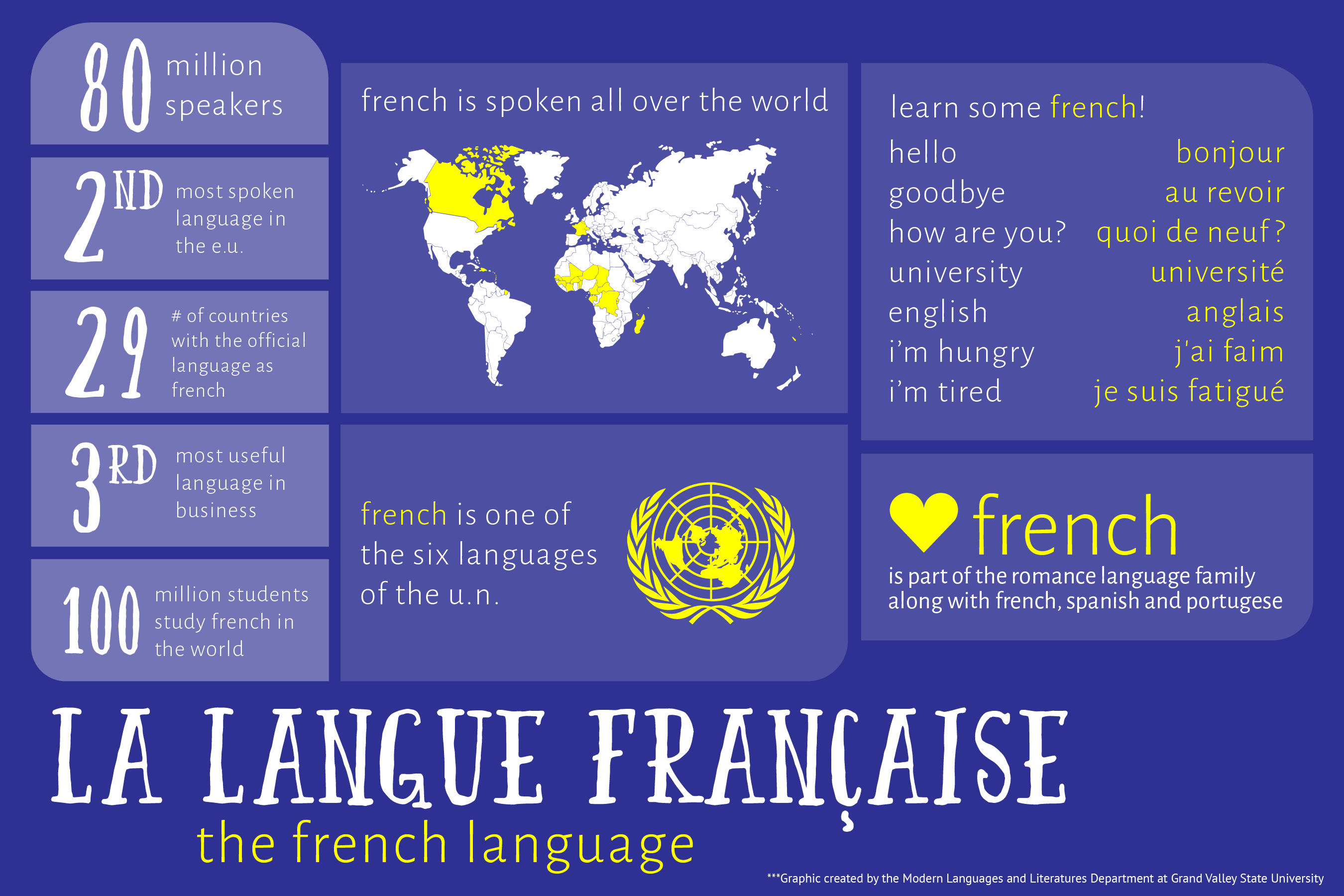
11FREPIn 11 Beginners’ Practical French students will begin exploring the French language by learning to express ideas in the present, past, and future. They will develop the ability to describe and discuss aspects of their own lives, such as daily routines, family, school, home, memories, and future plans. Through engaging with a wide range of vocabulary and everyday expressions, students will build confidence in communicating their personal ideas and experiences in French.
Learning Opportunities
In this course you will need to:
Develop these skills:Explore this content:- Communication skills - Learn how to read and write about experiences in the present, future and past in French
- Describe your own context in French – including your routine, family, school, hobbies and house
- Information Use skills - Choose the most appropriate words and structures to achieve your communication goals, and organise them into authentic, accurate French sentences
- Express personal opinions and preferences
- Technology Use skills - Use digital tools to research, organise, and present your learning about French language and culture
- Talk about your future plans
- Systems thinking skills - Recognise and apply language patterns to improve your accuracy and fluency
- Describe past events, such as a memory
Year 11 French NCEA Pathway (full year)
11FREIn 11 French NCEA Pathway, students will continue to strengthen their spoken and written communication skills in French. They will begin to explore language beyond the present tense, enabling them to express more complex ideas in both the past and future. Students will learn to describe and discuss topics related to their own lives, such as their daily routines, families, schools, homes, hobbies, memories, and future plans. Through exposure to a wider range of vocabulary and expressions across various everyday contexts, they will gain greater confidence in expressing personal ideas and experiences in French. Alongside language development, students will also deepen their cross-cultural understanding by exploring the close relationship between language and culture.
Learning Opportunities
In this course you will need to:
Develop these skills:Explore this content:- Communication skills - Learn how to speak, listen, read, and write in increasingly complex French, including using the past and future tenses to express more detailed and personal ideas
- Compare aspects of your life in New Zealand with life in French-speaking countries, expressing similarities and differences in French
- Information Use skills - Choose the most appropriate words and structures to achieve your communication goals, and organise them into authentic, accurate French sentences
- Describe and discuss your own context in French – including your routine, family, school, house and hobbies
- Technology Use skills - Use digital tools to research, organise, and present your learning about French language and culture
- Express personal opinions, preferences, and emotions
- Systems thinking skills - Recognise and apply language patterns to improve your accuracy and fluency. Strengthen your understanding of how language and culture are connected
- Talk about your future plans
- Describe past events, such as holidays or meaningful experiences
- Give instructions and advice in culturally appropriate ways
Year 11 Geography
11GEOGeography is the study of places and relationships between people and their environments. Geographers are cross-curricular thinkers that seek to understand where things are found, why they are there and how they change over time. Geography is a Science based subject - with a human element.
Learning Opportunities
In this course you will need to:
Develop these skills:Explore this content:- Collaboration - Students will work in groups at times
- Geographic Skills - including local field work and research
- Communication - Share thoughts and listen to others. To continue to develop both written and verbal communication skills
- Online Digital Tools - such as Google Earth and virtual reality
- Critical Thinking - To think critically about people’s differing perspectives in relation to Sustainable Environments and Geographic Issues
- Understanding Sustainable Environments - Tourism at the Poor Knights including an optional one day field trip
- Research Techniques
- Extreme Natural Events - Learn about earthquakes, volcanoes and tsunami


Year 11 Health - Introduction to the Human Body
11HPEBThis course will provide an opportunity to learn about human anatomy and physiology. It is purely human and will provide a stepping stone to the Year 12 Health Science course, or you can just take it because you are fascinated by the human body and how it works. We will cover the basic anatomy and physiology of all the body systems and will be led by your interests.
Learning Opportunities
In this course you will need to:
Develop these skills:Explore this content:- Research skills
- The basic structure and function of the following body systems:
- Cells, tissues and organisation
- The musculoskeletal system
- The cardiovascular and respiratory systems
- The nervous system
- The Integumentary system
- The lymphatic system
- The endocrine system
- The urinary and reproductive systems
- Collaboration
- Critical thinking and deeper understanding
- Understanding basic scientific knowledge that can be applied


Year 11 Health - Meaningful Connections
11HLTCIn Meaningful Connections students will develop and build on their interpersonal skills and learn how to apply these in healthy relationships. For example; effective communication, decision making, assertiveness and problem solving. Students will learn about the potential issues that surround intimate relationships and how to minimise potential risk. For example; safer sex practices (consent, contraception, STIs), health enhancing decision making and managing media influences.
Learning Opportunities
In this course you will need to:
Develop these skills:Explore this content:- Interpersonal skills - develop and build on interpersonal skills to use in relationships with others
- Understand the decision making model (what influences decision making, the consequences of various decisions and how to make health enhancing decisions to support wellbeing)
- Collaboration - develop collaborative skills through group challenges and tasks
- Interpersonal skills - students will develop their communication skills (assertiveness, listening, expressing opinions, decision making and problem solving) through practical and written activities
- Communication - develop the ability to communicate effectively and assertively in a range of situations
- Learn about safer sex practices to promote positive sexuality (consent, contraception, sexual health services, positive communication and media influences)
- Critical thinking skills - exploring the bigger picture of current health issues
- Health enhancing decision making skills


Year 11 Health - Mental Health Matters
11HLTMWant to know how to improve your overall wellbeing to get the most out of life? Almost half of people in New Zealand will experience mental distress or illness in their lifetime. In the ‘Mental Health Matters’ course students will explore mental health issues in relation to themselves and others. Students will learn about and develop a range of strategies to enhance and strengthen all four dimensions of Hauora. Using the framework of Te Whare Tapa Wha and the Five Ways to Wellbeing actions, you will gain the knowledge and understanding of how to make these changes in your life.
Learning Opportunities
In this course you will need to:
Develop these skills:Explore this content:- Written and oral communication skills
- Students will explore Hauora and The Five Ways to Wellbeing as two key models of health used in NZ
- Collaborative group skills - develop collaborative skills through group planning and implementation
- Students will learn about resilience, risk and protective factors and how to manage and support their mental health through a range of practical strategies
- Goal setting and self management
- Students will participate and reflect on a range of strategies used to support mental health. For example; mindfulness, meditation, yoga, breath work, physical activity and more
- Critical thinking - exploring the bigger picture of factors that influence your own health and how to deal with these

Year 11 Health - New Zealand Health Issues
11HLTIThe ‘New Zealand Health Issues’ course explores current NZ Health Issues. Students will develop and apply the use of critical thinking skills to analyse what is causing a range of health issues, what are the consequences on societal and individual well being and what strategies could be used to address the issue chosen. Students will learn how to take action to promote health by planning and implementing a health promotional campaign in relation to a chosen health issue.
Learning Opportunities
In this course you will need to:
Develop these skills:Explore this content:- Critical thinking skills - exploring the bigger picture of current health issues
- Current and relevant NZ Health issues e.g. adolescent alcohol and drug use, mental health (anxiety, stress and depression) relationships and sexuality, family harm
- Attitudes and values - understand and accept a range of attitudes and values in relation to health
- Explore the relevant factors that are influencing the issue(s)
- Decision making - build on the ability to make health enhancing decisions for yourself and others
- Explore the potential impacts of the issue(s) on wellbeing
- Develop research skills and statistical analysis
- Explore and recommend strategies to bring about equitable health outcomes in relation to the issue(s)
- Interpersonal skills - develop and build on interpersonal skills to use in the school and community
- Work collaboratively, applying interpersonal skills in small groups to create a range of promotional material to promote their chosen health issue

Year 11 History - Hitler: Monster or Madman?
11HISMThis half year course focuses on the dark years of Germany 1933 to 1945. Explore how and why Austrian born Adolf Hitler so easily took power; how and why he tried to reshape Germany and why there was so little resistance. Explore how racial theories drove the Nazis to breed Aryan “superhumans” and to slaughter communities believed to be inferior, leading inevitably to a war that spread across the globe and deeply impacted us here in NZ. A key focus is the Holocaust- the Nazi attempt to destroy an entire people and the recent disturbing trend of Holocaust denial.
Learning Opportunities
In this course you will need to:
Develop these skills:Explore this content:- Critical thinking- using logic, interpreting information to create understanding, identifying patterns and trends
- Why were the Germans and Hitler so resentful over their loss in WWI?
- Information literacy- identifying fact and opinion, making judgements about the quality of information, assessing the reliability of different sources of information such as websites
- How did Hitler rise so quickly to power in the 1930s?
- Communication skills- communicating effectively in a variety of formats: for example in small group and full class discussions; written work; visual formats
- How did Hitler impact how ordinary Germans lived?
- What were some of Hitler’s key ideas?
- Why did Hitler start World War Two and why did NZ get involved?
- What role did Hitler’s racial theories play in how he ruled over Germany and the territories he conquered?
- What was the Holocaust and why is it important today?
- What impact did WWII have on New Zealand?


Year 11 History - Rise up! Revolutions of Blood, Iron, and Freedom
11HISRWelcome to chaos, rebellion, and radical change. This course dives into the massive, world-shattering turning points that built the reality we live in today. You’ll investigate how ordinary people stood up and challenged the ultimate power, rewriting the rules - from bloody street battles that toppled ancient empires, to the chaotic shift from quiet fields to roaring factories, to the modern movements that fought for total personal freedom. Get ready to explore how these radical uprisings shattered the old ways of life and completely flipped society upside down.
Learning Opportunities
In this course you will need to:
Develop these skills:Explore this content:- Critical thinking- Using logic, interpreting information to create understanding, identifying patterns and trends
- The French Revolution: Headless monarchs, angry mobs, and the ultimate fight for freedom. Dive into one of history's bloodiest and most dramatic rebellions as everyday citizens overthrew a centuries-old monarchy to demand liberty, equality and brotherhood
- Information literacy- Identifying fact versus opinion, making judgements about the quality of information, and assessing how reliable different sources (like websites) really are
- The Industrial Revolution: The leap from fields to factories. Discover how a massive explosion of steam, iron and machinery completely transformed human life, creating modern cities, incredible wealth, and intense new struggles for workers
- Communication skills- Learning to communicate effectively across a variety of formats, including small group and full class discussions, written assignments and visual presentations
- The Sexual Revolution: Dive into the radical 20th century shift that shattered long-standing taboos, challenged traditional relationship norms, and sparked an era of personal liberation, fundamentally changing how society views love, autonomy and freedom
- The American or Russian Revolution: Unpack the fiery beginnings of a new nation or the violent collapse of an old empire, exploring how citizens united to overthrow their rulers and build a completely different society from the ground up


Year 11 Hospitality
11HOSIn 11 Hospitality students use applied academic skills to demonstrate knowledge about ingredients to form well balanced meals. Students will critically analyse creative ideas to develop skills in planning, organising and time management in order to present safe and original dishes.
Learning Opportunities
In this course you will need to:
Develop these skills:Explore this content:- Creativity- use knowledge of cookery techniques and ingredients to design meals
- Demonstrate food safety knowledge and practices
- Critical thinking- analyse and apply knowledge to meal planning to fit a set criteria
- Explore meal development
- Applied academic skills- read and interpret information, write and change recipes, negotiate pros and cons to problem solve and meet success criteria
- Apply seasonality philosophy
- Resource management- manage time, ingredients, class wide collaboration, planning tools and internet research
- Discover local NZ food producers and their impact on the local hospitality industry
- Develop culinary skills in a range of cookery techniques
- Demonstrate knife management and safety
Other Information:
2 practical lessons per timetable cycle.
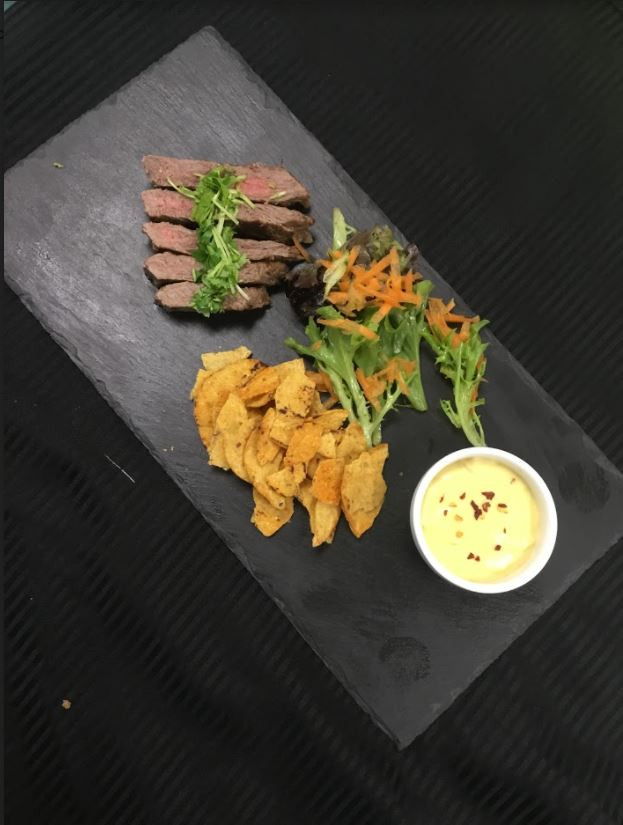
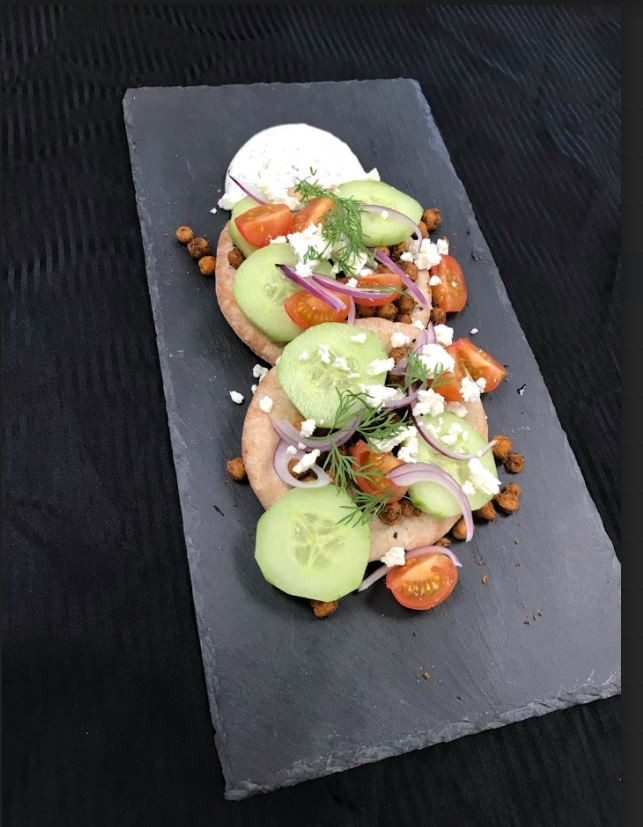


Year 11 Māori Studies
11MAOSMāori Studies explores Māori knowledge systems and how they inform ways of living, understanding, and interacting within te ao Māori. At Level 1, tauira are introduced to foundational understandings of tikanga and mātauranga Māori through guided, practical, and shared learning experiences.
Tauira develop awareness of how tikanga provides guidance for behaviour, responsibility, and relationships with people, place, and environment. Learning occurs through participation in structured contexts where Māori knowledge is experienced and applied.
All students who take Māori Studies will participate in learning experiences that require application of tikanga within shared and practical contexts.
Learning Opportunities
In this course you will need to:
Develop these skills:Explore this content:- Recognising tikanga as guidance for behaviour and practice
- Rongoā Māori and approaches to wellbeing
- Participating in shared learning grounded in mātauranga Māori
- Tikanga relating to gathering, preparation, and sharing of kai
- Developing awareness of responsibility to people, place, and environment
- Relationships with freshwater, moana, and whenua
- Applying tikanga within guided practical contexts
- Historical impacts on Māori knowledge systems and practice
- Working collaboratively in supported learning situations
- Migration traditions from Hawaiki and the settling of Aotearoa as foundational pūrākau of identity and whakapapa
- Reflecting on learning through experience and participation

Year 11 Mathematics - Applications of Mathematics
11MATAThis course allows students to develop their understanding across a broad range of mathematics and statistics. Students will solve problems relevant to life in Aotearoa and the Pacific and in mathematical contexts. Students will complete a statistical investigation using the PPDAC cycle and learn to interpret statistical information. Students who have not yet achieved the Numeracy co-requisite will have the opportunity to prepare for the CAA in this course.
Learning Opportunities
In this course you will need to:
Develop these skills:Explore this content:- Develop their ability to make meaning of mathematical and statistical symbols, equations, expressions, and graphs
- Solve problems with right angled triangles using Pythagoras’ Theorem and Trigonometry
- Explain working and reasoning when solving mathematical or statistical problems
- Complete a Statistical Investigation using the PPDAC cycle for a multivariate data set
- Interpret and communicate mathematical and statistical ideas for varied purposes including solving problems
- Develop their understanding of chance and how we can model situations involving probability
- Use metric units to find perimeter, area and volume to solve measurement problems in context
- Describe and create geometrical representations
- Use number skills to solve problems
- Develop statistical literacy and interpret statistical reports
Year 11 Mathematics - Elements of Mathematics
11MATEThis course allows students to develop their understanding across a broad range of mathematics and statistics. Students will solve problems relevant to life in Aotearoa and the Pacific and in mathematical contexts. Students will complete a statistical investigation using the PPDAC cycle. Students will develop their ability to use algebra as a tool to generalise and reason.
Learning Opportunities
In this course you will need to:
Develop these skills:Explore this content:- Develop your ability to make meaning of mathematical and statistical symbols, equations, expressions, and graphs
- Develop your understanding of algebraic notation and expressions
- Explain working and reasoning when solving mathematical or statistical problems
- Manipulate algebraic expressions using shared norms
- Interpret and communicate mathematical and statistical ideas for varied purposes including solving problems
- Solve problems using a set of linear equations, tables and graphs in a real world context
- Solve problems involving quadratic equations and their graphical representations
- Solve problems with right angled triangles using Pythagoras’ Theorem and Trigonometry
- Complete a Statistical Investigation using the PPDAC cycle for a multivariate data set
- Develop their understanding of chance and how we can model situations involving probability
- Use metric units to find perimeter, area and volume to solve measurement problems in context
- Describe and create geometrical representations
- Use number skills to solve problems
Year 11 Mathematics - Numeracy
11MATNThis is a year-long course and students will have the opportunity to prepare to sit the CAA in Term 2 as well as completing the 2 internal achievement standards. This course is suitable for students who have not achieved the Numeracy co-requisite in Year 10.
Learning Opportunities
In this course you will need to:
Develop these skills:Explore this content:- Use and analyse information
- Use metric conversions and simple calculations to solve measurement problems
- Solve problems
- Solve number problems with percentages, decimals and simple fractions
- Communicate solutions in context
- Can interpret statistical information and graphs and communicate conclusions
- Can interpret a graph involving simple relationships between quantities
- Use a scale to determine distances and interpret directions
- Understand various representations of 3D shapes
Year 11 Money Smart
11MSMReady to get smart about your money and your future? Year 11 Money Smart is designed to help you develop the financial awareness needed to use your money wisely and understand the future consequences of your financial choices. This practical course looks at essential concepts like personal incomes, how they are earned, and understanding basic employment rights and contracts. We'll delve into the world of credit and debt, exploring what debt actually is, whether all debt is bad, and importantly, how you can manage your debt. We'll also look at credit providers – who provides credit to you or your whānau?
Money Smart also covers the benefits of saving and explores various investment options available to help increase personal wealth. You'll learn about options like KiwiSaver, shares, and property, understanding them in terms of risk, reward, and the length of time involved. The course also looks at insurance concepts.
From unlocking the secrets of KiwiSaver and smart investing in shares and property, to mastering the art of savings and insurance, you'll walk away with real-world skills that give you a massive head start in life. Stop wondering about your financial future—start shaping it!
Learning Opportunities
In this course you will need to:
Develop these skills:Explore this content:- Practice making reasoned and rational financial decisions
- Investigate what debt is and how to manage it effectively
- Strengthen your ability to communicate financial ideas and opinions through critical thinking
- Understand credit and the different types of credit providers
- Build a basic understanding and interpretation of financial terms
- Explore various savings and investment options, including KiwiSaver, shares, and property
- Gain practical experience by buying and selling shares in a virtual world
- Understand how different saving and investment options provide future financial benefits
- Examine insurance concepts
- Look at personal incomes and basic employment rights


Year 11 Music - Create
11MUSCIn this course students will focus on learning how to create, edit and record music. Students will create a series of recordings of song arrangements, an original song, a remix or music for a motion picture. Students will learn to use a variety of software applications including Garageband, Audacity, Soundplant and Ableton Live. The course will be delivered through interactive workshops, group and individual work. Students are expected to present a portfolio of recordings to be presented to an audience throughout the course.
Learning Opportunities
In this course you will need to:
Develop these skills:Explore this content:- Collaborative skills - learning to work together effectively towards a common goal
- Learn to rehearse and prepare music for recording
- Communication skills - develop listening, negotiation and interpersonal skills through the rehearsal process
- Learn to record, edit and mix sound and music to create a recording
- Information use - understand and interpret musical scores and notation to be realised in a performance on a chosen instrument
- Reflect on the rehearsal and recording process
- Critical thinking skills - listening to and analysing music recordings and scores and making sense of music in a recording context
- Develop music technology, sound editing and compositional skills for a variety of contexts
Year 11 Music - History and Theory of Music
11MUSHIn this course students will focus on gaining a deeper understanding of where styles and genres of music come from throughout histories and different cultures as well as a further understanding of the building blocks of music (ie: scales, chords, rhythm, texture and song structure) which can then be applied to songwriting, composition or interpreting scores and chord sheets of pieces of music in preparation for performance.
Learning Opportunities
In this course you will need to:
Develop these skills:Explore this content:- Collaborative skills - learning to work together effectively towards a common goal
- Work in small groups to research and present on a historical/cultural/social aspect of music
- Communication skills - develop listening, negotiation and interpersonal skills through analysing music and researching and presenting on music topics
- Learn to read and write music for producing songs, compositions and better understanding pieces of music to prepare for performance
- Information use - understand and interpret musical scores and notation
- Critically reflect, think and engage in discussions about styles and genres of music
- Critical thinking skills - listening to and analysing music recordings and scores and making sense of music in a variety of cultural contexts
Year 11 Music - Instrumental
11MUSIIn this course students will focus on performing on their instrument of choice. They will be expected to perform as a soloist and as a member of a group. There will be opportunities to perform in a variety of settings including class, end-of-term concerts, lunchtime concerts and outside of school. Students will be given class time to practise and will be given regular weekly lessons on an instrument of choice.
IMPORTANT: THIS IS A PERFORMING ARTS COURSE. STUDENTS ARE EXPECTED TO PERFORM IN FRONT OF AN AUDIENCE ON A CHOSEN INSTRUMENT.
Learning Opportunities
In this course you will need to:
Develop these skills:Explore this content:- Collaborative skills - learning to work together effectively towards a common goal
- Learn to perform both as part of a group and solo
- Communication skills - develop listening, negotiation and interpersonal skills through the rehearsal process
- Rehearse pieces to present to an audience
- Information use - understand and interpret musical scores and notation to be realised in a performance on a chosen instrument
- Reflect on the rehearsal and performance process
- Critical thinking skills - listening to and analysing music recordings and scores and making sense of music in a performance context
- Develop instrumental technique to further your musicianship skills on a chosen instrument
Year 11 Music - Vocal
11MUSVIn this course students will focus on performing with their voice. There will be class time to practise and have individual or small group tuition. Students will prepare to present both solo and group performance pieces with their voice. There will be opportunities to perform in a variety of settings including class, end-of-term concerts, lunchtime concerts and outside of school.
IMPORTANT: THIS IS A PERFORMING ARTS COURSE. STUDENTS ARE EXPECTED TO PERFORM IN FRONT OF AN AUDIENCE AS A SINGER OR RAPPER.
Learning Opportunities
In this course you will need to:
Develop these skills:Explore this content:- Collaborative skills - learning to work together effectively towards a common goal
- Learn to sing both as part of a group and solo
- Communication skills - develop listening, negotiation and interpersonal skills through the rehearsal process
- Rehearse pieces to present to an audience
- Information use - understand and interpret musical scores and notation to be realised in a performance on a chosen instrument
- Reflect on the rehearsal and performance process
- Critical thinking skills - listening to and analysing music recordings and scores and making sense of music in a performance context
- Develop vocal technique to further your musicianship skills as a singer
Year 11 Outdoor Education
11OEDThe Year 11 Outdoor Education course offers students a dynamic, hands-on learning experience that supports key competencies and learning outcomes aligned with Level 6 of the New Zealand Curriculum. The course promotes physical, social, and personal development through a variety of outdoor and experiential learning activities, including camping, rock climbing, and adventure-based learning.
Students will engage in event planning and delivery, focusing on risk management and safety practices in outdoor settings. These experiences encourage the development of interpersonal skills, such as teamwork, communication, and leadership, while also fostering quality relationships and a deeper understanding of self and others.
Through reflective practice and collaborative learning, students are supported to make informed decisions, manage challenges, and develop confidence in unfamiliar environments. The course encourages students to explore their personal identity and values in relation to others, linking strongly to a vision of developing confident, connected, actively involved lifelong learners.
This course involves 3 1-day trips and a 2-day overnight camping experience. By selecting Outdoor Education, it is expected that students will participate in these out of school events.
Learning Opportunities
In this course you will need to:
Develop these skills:Explore this content:- Self management - developing strategies to manage self through challenging outdoor contexts and understanding impacts on participation. This includes organisation, setting goals, seeking knowledge and motivation
- Moana Unit: Sea kayaking/snorkelling/sailing, boating skills, investigating the marine environment, safety management and key ideas for kaitiakitanga. These activities will have a competency based assessment during EOTC trips that will involve managing self and showing care for the environment. Students will reflect on their actions and their impact on their own participation and our environments
- Interpersonal Skills- participate in cooperative groups, contribute fairly to the task, communicate effectively and show respect to others
- Ngahere & Rock Climbing Unit: Rock Climbing, Navigation and tramping skills with a focus on learning about safety management and working as a team in different environments. This includes tramping, camp craft, cooking and environmental care. Knowledge around our native flora and fauna and traditional uses. Students will learn about core bushcraft skills to build on in Levels 2 and 3 Outdoor Education
- Leadership - participate as team leaders or effective team members in project assignments and organise work to meet goals and team roles
- Kaitiakitanga: Environmental awareness and care will be incorporated into all trips and students will be required to demonstrate good environmental practices. Students will investigate Kaitiakitanga and follow Leave No Trace Principles during the course
- Developing a growth mindset - participate in challenging outdoor activities with a positive mindset and overcoming personal difficulties
- Movement and technical skills in a range of contexts - demonstrate skills in sea kayaking, coasteering, tramping and team building activities


Year 11 Pasifika Dance - Culture and Creative Expression
11PAS‘O le tagata ma lona aiga, o la tagata ma lona faasinomaga’: Every person has a family, every person has an identity.
Explore Pasifika heritage. Create a Performance. Express your story.
This course explores the richness, resilience and diversity of Pacific cultures through art, storytelling, history, and creative expression. Students will explore how Pacific peoples share identity, values, migration stories and contemporary issues through a range of cultural forms including patterns and markings, visual art, dance, spoken word, and performance.
Students will connect with their own identities, learn about the geography and histories of Moana-nui-a-Kiwa (the Pacific Ocean), and create original works that express who they are and where they come from. Students can work through movement, art, spoken word, research, or digital storytelling to reflect their learning.
Learning Opportunities
In this course you will need to:
Develop these skills:Explore this content:- Dance and Performance confidence
- Explore Pacific design, tātatau, tapa, dance and song as cultural carriers
- Cultural understanding
- Create a project (e.g. art, short film, performance, or presentation) that tells a personal or cultural story
- Relationship building
- Examine real-world events such as the Dawn Raids or the Polynesian Panthers
- Critical thinking
- Explore the role of rangatahi (youth) in sustaining and reshaping cultural traditions
- Creativity in communication
- Research a cultural figure, event, or movement significant to Pacific people in NZ or the wider Moana
- Self- awareness and cultural identity
Opportunities:
Perform at or attend Auckland ASB Polyfest. Visit the University of Auckland or other universities to look at further education opportunities. Participate in workshops with external organisations. Attend performances in the local area and Auckland. Listen to guest speakers and watch guest performers.


Year 11 Physical Education - Education Training Programmes
11PEDTThis course is focused on an individual fitness and exercise programme. This may include a sports improvement programme or fitness programme. The lessons will be a mix of practical and classroom. This course would suit students who enjoy participating in individual programmes, being self motivated, being active, learning how to improve their fitness or an aspect of their own health. They will set individual goals, create a training programme and complete that training programme so need to be self motivated and goal orientated.
Learning Opportunities
In this course you will need to:
Develop these skills:Explore this content:- Interpersonal skills
- Goal Setting and Sport Psychology
- Leadership
- Wellbeing/Hauora
- Developing a growth mindset
- Performance Improvement
- Effective communication
- Fitness Programmes
- Collaboration
- Principles of training
- Citizenship
- Methods of training
- Self Management


Year 11 Physical Education - Māori tākaro (Māori games)
11PEDMWant to do a practical PE course with a te ao Māori perspective? This course will include practical activities through a Mātauranga lens. In this course, you will learn about the history of a range of Māori games and activities, apply a Te Whare Tapa Wha perspective to physical activity and learn and apply Māori cultural ideas to physical activity. Students will have the opportunity for tuākana/tēina, through teaching and leading games, and working with the teacher to co-construct the unit of learning. The values of kotahitanga and rangatiratanga will be woven into the course.
Learning Opportunities
In this course you will need to:
Develop these skills:Explore this content:- Tuākana/tēina
- Understand the whakapapa (genealogy) behind a range of Māori games and activities e.g. Kī o Rahi, Ti Uru, Hoopu, Tapu Ae
- Mātauranga Māori and tikanga Māori in relation to PE
- Develop and encourage hauora as well as leadership skills
- Mindfulness (linked to wairua)
- Apply tuākana/tēina by leading groups
- Kotahitanga and Interpersonal skills (collaboration, cooperation, leadership, effective communication)
- How kotahitanga and rangatiratanga are promoted in movement
- Movement skills in a range of contexts
- Interpersonal skills (tatū/negotiation, collaboration, cooperation, leadership, effective communication)


Year 11 Physical Education - Practical Physical Education
11PEDPIn this course, students develop understanding about interpersonal skills and apply them in a range of physical/practical contexts while working together with others. This is a practical course where they will be participating in a range of individual and team sports/games to be exposed to movement concepts/strategies and further their understanding on how their interpersonal skills can impact performance. They will also explore how movement and different activities can impact their wellbeing, through a model such as Te Whare Tapa Wha.
Learning Opportunities
In this course you will need to:
Develop these skills:Explore this content:- Interpersonal skills
- Interpersonal Skills; these are the skills needed to effectively work in a team/group to be successful e.g. effective communication
- Leadership
- Experience a range of sports/games to be more exposed to movement concepts/strategies
- Developing a growth mindset
- The impact of physical activity on wellbeing, through a model such as Te Whare Tapa Wha
- Effective communication
- Collaboration
- Citizenship
- Movement skills in a range of contexts

Year 11 Physical Education - Sports Management
11PEDSMYou will learn about the varying aspects that make up a sport or physical activity whilst working very closely with community organisations. This is a practical course that would suit students who are interested in providing positive opportunities for all abilities, enjoy learning about additional aspects of a sport or events, contributing, working with others and being involved in events to assist others.
Learning Opportunities
In this course you will need to:
Develop these skills:Explore this content:- Giving to others
- This practical course will include: a range of physical activities, coaching, umpiring or officiating, interpersonal skills, leadership and event management etc
- Working with community
- Coaching
- Umpiring
- Officiating
- Interpersonal skills
- Leadership
- Event management
- This provides vital skills to organise a sporting event
Other information:
Develop a CV of volunteer work and experiences as well as gaining some qualifications in umpiring/coaching, etc.

Year 11 Physical Education - Sports Science
11PEDSSIn the Year 11 Sports Science course, students develop an in-depth understanding of what influences the body during movement. This includes biomechanical and physiological functioning. Students will learn about the science behind how their body moves/functions in physical settings and how to be more effective in their sport. Explore how an athlete becomes a better performer in their chosen sport/interest. This course is predominantly classroom based with some practical application of learning.
Learning Opportunities
In this course you will need to:
Develop these skills:Explore this content:- Developing a growth mindset
- Socio-cultural - aspects that influence movement e.g. whānau, hapu or iwi, accessibility, gender, racism and media
- Collaboration
- Biophysical - aspects that influence movement e.g. anatomy, biomechanics, exercise physiology, sports psychology, skill acquisition, nutrition
- Analysis of body movements and functions
- Te ao Māori - aspects that influence movement e.g. ways creation narratives, pūrākau, and values inform tikanga and participation in movement, the body and tapu, connection between movement and te taiao
- Critical thinking
- Students will explore sports science data, testing and analysis, injuries, technology and training methods
- How the body moves for optimum performance

Year 11 Primary Industries
11PRIThis course dives into plant and animal life processes within New Zealand's horticultural and agricultural sector, teaching you to make informed decisions for their management. You'll discover why plant-based production is crucial to our economy and how managing plant life cycles boosts output and supports prosperity.
As part of this unit, students will gain practical skills vital for the primary sector, including wire knots, setting up temporary electric fences, preparing seed beds, irrigation, planting seedlings, and safely using spray packs.
We'll explore the importance and manipulation of life processes in primary production. A key focus is the impact of management practices on plant or animal production, fostering sustainable and profitable horticulture and agriculture. We'll then visit a range of horticultural and agricultural sites to see these concepts in action.
Learning Opportunities
In this course you will need to:
Develop these skills:Explore this content:- Working with others
- The relevance of production to people and place, including how mātauranga Māori links people to production, and the influence of environmental, social, cultural, and economic factors
- Self management in a safe environment
- Importance and manipulation of life processes in primary production
- Planning and organising
- Practical skills related to primary industries
Year 11 Product and Design - Design and Construct
11PADĀkonga will design unique projects while using the design process. They will learn how to use a wide range of tools and machines, both traditional and modern and develop an understanding of materials, construction methods, machine use, safety and computer programmes. Ākonga will construct a bespoke outcome to demonstrate their design knowledge and technical skill.
Learning Opportunities
In this course you will need to:
Develop these skills:Explore this content:- Creativity - ākonga will create innovative design ideas/solutions, exploring creative existing solutions to enhance their own outcomes
- Use the design process to work through a design brief
- Critical thinking skills - being able to analyse, reason, solve problems, plan, organise, and make sound decisions in their work
- Use digital technologies in the design & manufacturing of a solution - illustrator, Vcarve, sketchup
- Use workshop technologies in the design & manufacturing of a solution
- Develop competencies in workshop and machine safety
- Ākonga will gain an understanding of angles, tolerances, measurement, grouping, wastage, costing, machine setup, xyz axis, scale, ergonomics, workshop safety, presentation skills
- Use time management strategies to ensure students can manage resources, support and materials


Year 11 Science - Biology
11SCIBIn this course, students will explore the diversity of life, ranging from single celled bacteria to more complex species. They will investigate the life processes of microorganisms and the beneficial and harmful effects that they have on the human body. We consider DNA as the basis for genetic inheritance and how to track inheritance. Students investigate the source of variation and how variation can impact a population. Students will learn about gene technology and how scientists use this technology. This course aims to develop students’ research skills as they independently find and process information about disease in humans, and will build their ability to communicate effectively in written form as preparation for senior biology.
Learning Opportunities
In this course you will need to:
Develop these skills:Explore this content:- Reading & writing - how to interpret texts to build understanding and communicate this in written form
- The diversity of life: From bacteria to fungi, plants to animals - what are the links between these diverse life forms? How have they adapted to the challenges of life?
- Research skills- independently finding and processing information to develop and share knowledge
- Different types of microorganisms (bacteria, fungi, viruses) and their way of life, including culturing samples
- Beneficial and harmful effects of microorganisms on the human body, including disease-causing pathogens
- DNA as the universal code shared by all living things, exploring how traits are passed on in a species and how changes to DNA affect offspring
- Use knowledge of genetics and advances in technology to identify genetic relationships through the use of gene tracking methodology
Year 11 Science - Chemistry
11SCICIn Year 11 Chemistry students will explore key chemistry concepts and reactions. This course will encourage student critical thinking and problem-solving within the practical context of chemical reactions and atomic structure and bonding. Students will also have the opportunity to sit and gain credits in a Level 2 Chemistry Internal assessment.
Learning Opportunities
In this course you will need to:
Develop these skills:Explore this content:- Scientific skills - develop key ideas and apply these to a range of contexts, interpret results, and carry out investigations
- Atomic Structure and Bonding - the foundation of all chemical reactions
- Critical thinking - making connections between core chemistry ideas and how these can be applied, understanding links between evidence and theory
- Multiple types of chemical reactions will be explored and undertaken to understand how particles behave in different contexts. Including redox, acids and bases, solubility, and combustion reactions
- Practical laboratory skills - understand how to undertake reactions safely in the laboratory and carry out experiments to collect data
- Experimental Design - learning how to create and critique their own experiments

Year 11 Science - Earth and Space
11SCIESIn this course, students will investigate the formation and structure of the Earth, focusing on how plate tectonics shape the planet and lead to natural events such as earthquakes, volcanoes, and tsunamis. They will learn about how the environment is affected by these interacting systems and the science behind climate change.
Students will also explore the origins of the solar system and examine how astronomical bodies influence life on Earth. Topics include the causes of tides, the phases of the Moon, the seasons, eclipses, and the cycle of day and night.
Learning Opportunities
In this course you will need to:
Develop these skills:Explore this content:- Scientific skills - how to develop, carry out, and interpret the results of scientific investigations
- Explore how Earth was formed and how its surface continues to change over time due to plate tectonics
- Reading & writing - how to interpret texts to build understanding and communicate this in written form
- Understand how convection currents in the mantle drive the movement of tectonic plates, leading to earthquakes, volcanoes, and other natural hazards
- Research skills- independently finding and processing information to develop and share knowledge
- Learn how scientists monitor geological events and how communities can prepare for and respond to natural disasters
- The science behind climate change and the factors that influence the environment
- How the sun, moon, and other astronomical objects influence life on Earth through phenomena such as day and night, tides, seasons, eclipses, and solstices
- Explore what conditions on Earth allowed the formation and continued evolution of life
- Understand what is considered an extreme environment and link adaptations to the conditions found there
Year 11 Science - Physics
11SCIPThis course introduces fundamental physics concepts such as energy, forces, motion, waves, and electricity. A central focus is on how physics helps us understand the energy involved in motion, position, heat, and electrical circuits. These core ideas provide a strong foundation for NCEA Level 2 and Level 3 Physics.
Students will explore how forces influence motion and how energy helps explain everyday objects and interactions. They'll investigate static and direct current (DC) electricity to better understand the technology and circuits in their homes and devices. The study of waves will highlight how physics applies to sound, musical instruments, Earth and space science, and even medical imaging.
Through hands-on experiments, investigations, and a variety of presentation formats, students will develop a deeper understanding of key physics principles. They will also complete exam-style assessments to prepare for future success in physics.
Learning Opportunities
In this course you will need to:
Develop these skills:Explore this content:- Experimental investigation and analysis
- Fundamental concepts of energy including:
- Energy transfer and transformation
- The conservation of energy
- Different forms of energy: heat, electrical, and mechanical
- Critical thinking and problem solving
- Forces and motion, including:
- The relationship between forces and movement
- Types of forces such as gravity, support forces, force pairs, and
the difference between balanced and unbalanced forces
- Mathematical reasoning and algebraic thinking
- Electricity and the movement of electrical charge including:
- Static electricity
- Direct current (DC) electricity
- Basic principles of electromagnetism
- Physics exam technique
- Waves as a means of energy transfer including:
- Mechanical waves (e.g. sound)
- Electromagnetic waves (e.g. light)
- How waves travel through matter and through the vacuum of space
- The application of physics in everyday life, including:
- Technological innovations
- Naturally occurring physical phenomena
Year 11 Social Studies - Inquiry - Exile and Extremism
11SSTIIn 11 Social Studies, students explore current social issues and are encouraged to actively critique and participate in the world around them. This course focuses on people, rights, responsibilities and consequences of different interactions. It aims to develop students’ ability to research into a contemporary social issue, think and write critically, compare differing perspectives and to forge their own informed, knowledge based perspective.
Senior Social Studies is a University Approved Subject and offers University Literacy Credits in Years 12 and 13. This is a great subject for students thinking about going into law, journalism, United Nations, NGO and activism work, social work, politics & government or similar career choices.
Note - We run two different courses in Year 11. You can choose either Social Studies Inquiry or Social Studies Perspectives - or, you might like to do both courses. Social Studies Inquiry has an internal assessment and Social Studies Perspectives has an external assessment.
Learning Opportunities
In this course you will need to:
Develop these skills:Explore this content:- Communication - Communicating individual ideas and opinions relevant to differing contexts
In this course we start by unpacking genocide: how entire groups are targeted and their culture erased, such as the fate of the Rohingya people in Myanmar or the Uyghur people in China. We also try to understand why the world so often stays silent on these issues
- Research Skills - Finding and analysing primary and secondary sources. Disseminating between fact and opinion, by using multiple sources of information
Then we confront fascism, looking at how extreme ideas, fear, and power can lead to dangerous obedience, and what that looks like in the modern world. We question whether contemporary statements that the modern world is falling into fascism are correct. For example, you might ask if ICE is really the fascist organisation it is often portrayed as
- Critical thinking - Evaluating the connections between evidence and ideas, identifying patterns and constructing knowledge
The assessment gives you the chance to inquire into your own questions about these topics. You will get to investigate different opinions on a social issue and actions people take to support or oppose changes in society
- Creativity - Exploring different solutions to the issues faced by individuals and groups in society

Year 11 Social Studies - Perspectives - Manipulation and Migration
11SSTPIn 11 Social Studies, students explore current social issues and are encouraged to actively critique and participate in the world around them. This course focuses on people, rights, responsibilities and consequences of different interactions. It aims to develop students’ ability to think and write critically, compare differing perspectives and to forge their own informed, knowledge based perspective.
Senior Social Studies is a University Approved Subject and offers University Literacy Credits in Years 12 and 13. This is a great subject for students thinking about going into law, journalism, United Nations, NGO and activism work, social work, politics & government or similar career choices.
Note - We run two different courses in Year 11. You can choose either Social Studies Inquiry or Social Studies Perspectives - or, you might like to do both courses. Social Studies Inquiry has an internal assessment and Social Studies Perspectives has an external assessment, with opportunity for an extra internal assessment for those who would like that option.
Learning Opportunities
In this course you will need to:
Develop these skills:Explore this content:- Communication - Communicating individual ideas and opinions relevant to differing contexts
In Perspectives we will explore different ideological responses to social issues, and the different ways people respond to these issues
- Information use - Disseminating between fact and opinion, by using multiple sources of information
We dig into how manipulation, fear and a need for belonging keep people trapped, through exploring cults. We ask why people join cults, and why can’t they leave? We investigate the damage cults can do to individuals and communities
- Critical thinking - Evaluating the connections between evidence and ideas, identifying patterns and constructing knowledge
Then it’s all about escape: why people run for their lives, and how the world helps—or shuts the door to migrants. Investigation includes looking at human rights abuses around the world, including those against asylum seekers and refugees
- Creativity - Exploring different solutions to the issues faced by individuals and groups in society

Year 11 Spanish - Beginners' Practical Spanish
11SPAPIn 11 Beginners’ Practical Spanish students will begin exploring the Spanish language by learning to express ideas in the present, past, and future. They will develop the ability to describe and discuss aspects of their own lives, such as daily routines, family, school, home, memories, and future plans. Through engaging with a wide range of vocabulary and everyday expressions, students will build confidence in communicating their personal ideas and experiences in Spanish.
Learning Opportunities
In this course you will need to:
Develop these skills:Explore this content:- Communication skills - Learn how to read and write about experiences in the present, future and past in Spanish
- Describe your own context in Spanish – including your routine, family, school, house and hobbies
- Information Use skills - Choose the most appropriate words and structures to achieve your communication goals, and organise them into authentic, accurate Spanish sentences
- Express personal opinions and preferences
- Technology Use skills - Use digital tools to research, organise, and present your learning about Spanish language and culture
- Talk about your future plans
- Systems thinking skills - Recognise and apply language patterns to improve your accuracy and fluency
- Describe past events, such as a memory
Year 11 Spanish - NCEA Pathway
11SPAIn 11 Spanish NCEA Pathway, students will continue to strengthen their spoken and written communication skills in Spanish. They will begin to explore language beyond the present tense, enabling them to express more complex ideas in both the past and future. Students will learn to describe and discuss topics related to their own lives, such as their daily routines, families, schools, homes, hobbies, memories, and future plans. Through exposure to a wider range of vocabulary and expressions across various everyday contexts, they will gain greater confidence in expressing personal ideas and experiences in Spanish. Alongside language development, students will also deepen their cross-cultural understanding by exploring the close relationship between language and culture.
"It is highly encouraged to have taken year 10 Spanish"
Learning Opportunities
In this course you will need to:
Develop these skills:Explore this content:- Communication skills - Learn how to speak, listen, read, and write in increasingly complex Spanish, including using the past and future tenses to express more detailed and personal ideas
- Compare aspects of your life in New Zealand with life in Spanish-speaking countries, expressing similarities and differences in Spanish
- Information Use skills - Choose the most appropriate words and structures to achieve your communication goals, and organise them into authentic, accurate Spanish sentences
- Describe and discuss your own context in Spanish – including your routine, family, school, house and hobbies
- Technology Use skills - Use digital tools to research, organise, and present your learning about Spanish language and culture
- Express personal opinions, preferences, and emotions
- Systems thinking skills - Recognise and apply language patterns to improve your accuracy and fluency. Strengthen your understanding of how language and culture are connected
- Talk about your future plans
- Describe past events, such as holidays or meaningful experiences
- Give instructions and advice in culturally appropriate ways
Year 11 Te Ao Haka
11HAKATe Ao Haka expresses te ao Māori through Ngā mahi a Rēhia, kōrero tuku iho, mātauranga Māori, and the unique traditions and narratives of Ngā iwi o Whangārei and Te Rau Aroha. At Level 1, tauira develop foundational knowledge and skills within Te Ao Haka through participation in a range of disciplines and practices. Emphasis is placed on building confidence, understanding tikanga, and developing the skills required to perform with purpose and authenticity.
Tauira will explore the meaning and significance behind performance practices while strengthening connections to whakapapa, identity, and te ao Māori. Through active participation and reflection, tauira will begin to recognise their own growth and contribution within Te Ao Haka.
Learning Opportunities
In this course you will need to:
Develop these skills:Explore this content:- Demonstrating foundational performance skills in Ngā mahi a Rēhia
- Introduction to Ngā mahi a Rēhia and the purpose of Te Ao Haka within te ao Māori
- Developing confidence in movement, posture, expression, and voice
- Foundational movement, posture, expression, and vocal techniques
- Applying tikanga and kawa within Te Ao Haka settings
- Waiata, haka, mōteatea, and other forms of Māori performance practice
- Understanding and using basic Māori performance conventions
- Tikanga and kawa within Te Ao Haka settings
- Working collaboratively and contributing positively within a rōpū
- Whakapapa and identity connections through performance
- Building understanding of whakapapa and cultural narratives
- Kōrero tuku iho and narratives connected to Ngā iwi o Whangārei and Te Rau Aroha
- Reflecting on personal participation and growth
- The role of Te Ao Haka in expressing culture, identity, and belonging
- Personal reflection and development through participation


Year 11 Te Reo Māori
11REOTe Reo Māori expresses te ao Māori through kōrero, tuhituhi, whakarongo, and pānui, grounded in mātauranga Māori and the identities of iwi and hapori. At Level 1, tauira build foundational competence in Te Reo Māori through everyday communication, basic sentence structures, and simple interactions in familiar contexts.
Tauira develop confidence in using te reo in structured and supported environments, while beginning to understand tikanga and cultural contexts that shape language use. Emphasis is placed on participation, repetition, and building positive attitudes towards language learning.
All students who take Te Reo Māori will participate in our in-school Manu Kōrero event.
Learning Opportunities
In this course you will need to:
Develop these skills:Explore this content:- Using basic sentence structures and vocabulary in Te Reo Māori
- Basic greetings, introductions, and farewells
- Engaging in simple conversations and guided interactions
- Personal information (whānau, whakapapa basics, interests)
- Understanding and responding to familiar spoken language
- Everyday classroom language and instructions
- Reading and writing simple texts in te reo Māori
- Simple sentence structures (present tense focus)
- Pronunciation and correct use of sounds and macrons
- Introduction to tikanga and cultural concepts through language
- Participating in paired and group language activities
- Familiar stories, waiata, and simple texts in Te Reo Māori
- Beginning reflection on language learning progress
- Listening and speaking in structured classroom contexts

Year 11 Textile and Fashion Technology - Drawing and Design Thinking
11TFTDThis course will explore the boundaries of the most creative end of the textile fashion industry. Inspired by avant garde fashion designers, students will follow the design process and implement STEAM thinking to develop their ideas into reality. At the end of this course students will have designed and created a unique streetwear outcome that showcases their creativity.
Learning Opportunities
In this course you will need to:
Develop these skills:Explore this content:- Creativity - Students create innovative design ideas/solutions
- Traditional textile techniques - spinning, dying, weaving etc
- Technological process which involves research, planning, time management, design, construction and a final evaluation which measures how well the solution meets the brief of the client
- Handcrafted textile techniques - printing & embroidery
- Technology use - students will be able to use technology and equipment, understanding the tools, components and systems
- Contemporary textile techniques - modern digital printing techniques
- Time Management - Use time management strategies to ensure students can manage resources, support and materials
- Product development - students will apply skills developed into fabric and then a garment

Year 11 Textile and Fashion Technology - Technical Skills
11TFTSStudents will grow their confidence working in the textile workshop and developing techniques to create quality textile projects. This practical course will cover the fundamentals of sewing and garment construction, including fabric and pattern selection, basic modification and construction techniques. Students can adapt and embellish their garments to suit their individual needs, and end this course with a high quality garment they have made to fit them to take home.
Learning Opportunities
In this course you will need to:
Develop these skills:Explore this content:- Creativity - Students create innovative design ideas/solutions
- Reverse engineering- working from a finished product they will observe, analyse and problem solve to make an exact replica of their starting product. This is a short project which gets students used to the workroom and to get them looking at how things are made and finished to inform their own practice
- Technological process which involves research, planning, time management, design, construction and a final evaluation which measures how well the solution meets the brief of the client
- Students will select their own commercial pattern to work from based on their skill level and aesthetic tastes. They will each learn the language / terms used in the instructions and follow them to make a well finished and functional outcome
- Technology use - students will be able to use technology and equipment, understanding the tools, components and systems
- Students will analyse the physical and functional attributes of the garment in relation to their individual needs and make adaptations and embellishments to suit
- Time Management - Use time management strategies to ensure students can manage resources, support and materials

Year 11 Toi Māori
11TOIToi Māori expresses te ao Māori through creative practice, mātauranga Māori, and the traditions of Ngā iwi o Whangārei and Te Rau Aroha. At Level 1, tauira are introduced to foundational skills in Toi Māori through Te Whare Pora and Taonga Pūoro practices, with a focus on tikanga tukutuku and rāranga.
Tauira develop understanding of cultural processes, materials, and tikanga associated with toi Māori. Emphasis is placed on guided practice, basic technique development, and respectful engagement with mātauranga Māori.
All students who take Toi Māori will participate in a toi Māori exhibition where their mahi is shared and celebrated as part of Matariki celebrations.
Learning Opportunities
In this course you will need to:
Develop these skills:Explore this content:- Developing foundational rāranga and tukutuku techniques
- Tikanga tukutuku and tikanga of Te Whare Pora
- Understanding tikanga of Te Whare Pora
- Introduction to rāranga techniques
- Creating woven taonga including waka wairua and other rāranga forms
- Creation of at least three woven taonga
- Working through structured weaving processes with guidance
- Development of tukutuku panels
- Using harakeke and materials safely and appropriately
- Cultural narratives and symbolism within weaving practice
- Beginning to understand cultural meaning within tukutuku patterns
- Introduction to toi Māori materials and their whakapapa
- Reflecting on creative process and learning


Year 11 Tourism
11TOUIn Year 11 Tourism students will explore the tourism industry. They will learn about the different tourist types, where they go and why. They will also explore career pathways and work roles in the tourism industry and learn about industry expectations. This is a half year course and is designed so that the students will feel confident to choose Level 2 Tourism.
Learning Opportunities
In this course you will need to:
Develop these skills:Explore this content:- Interpersonal Skills – collaboration, self-directed learning, effective communication, and how to contribute positively
- Popular Tourist Destinations – use google maps to showcase popular landmarks, attractions, and activities
- Personal Qualities – self-responsibility, self-discipline and a willingness to learn
- Event Design - plan an event that meets the needs of a ‘client’
- Workplace Qualities – time management, to use a variety of sources to gain information, to use technology appropriately and to problem solve
- Plan a Resort - design a resort that meets the needs of a particular tourist type
- Mapping and Data Interpretation Skills
- Off on a ‘Famil’ - organise a dream holiday
- Research Skills
- Wonders of the world - create marketing material

Subjects for Year 11 Students
Level 2 Academy - Cafe and Bakery Trades
2ACBUnlock your potential in the vibrant hospitality industry with our Academy's programme, leading to the New Zealand Certificate in Hospitality Level Two. This course will empower you with sought-after hospitality experience and all the essential skills required for a thriving career in cafes or bakeries. Beyond core hospitality training, you'll also gain vital First Aid and Workplace Health & Safety certificates. Our unique blended learning approach combines engaging in school instruction with invaluable real-world workplace learning at NorthTec, ensuring you're fully prepared for your future career.
This course selection takes up two option lines. Participating in an academy requires you to also take either English or Enterprise as your third option. Fully funded places within this academy are open to domestic students only, fees will apply to international fee paying students. As the unit standards overlap, students can not select 2HOS alongside this academy.
Learning Opportunities
In this course you will need to:
Develop these skills:Explore this content:- Plan and organise your time to balance the NorthTec experience alongside your school responsibilities
- Food handling skills in a range of contexts
- Demonstrate professionalism by being an active listener and seeking clarification when required
- Cafe and Bakery skills within a workplace context
- Take initiative when in the workplace to make the most out of the opportunity
- Barista and front of house service skills in a range of contexts

Level 2 Academy - Primary Industries
2ACPThis academy provides focused training on the industry standards and practical skills essential for a successful career in the primary industries. You'll gain hands-on experience in critical areas such as fence construction, safe operation of all-terrain vehicles (ATVs), light utility vehicles (LUVs), and tractors. The curriculum also covers crucial techniques for livestock handling and pest control.
Students will also complete vital Outdoor First Aid and Workplace Health & Safety certifications. This programme equips you with the competencies and confidence needed for primary sector roles.
This course selection takes up two option lines. Participating in an academy requires you to also take either English or Enterprise as your third option. Fully funded places within this academy are open to domestic students only, fees will apply to international fee paying students.
Learning Opportunities
In this course you will need to:
Develop these skills:Explore this content:- Manages resources such as time and materials
- Practical skills relevant to the primary sector such as fence construction, pest control, tractors and ATV
- Understands teamwork and works with others
- Gain valuable workplace skills such as learners license, first aid and health and safety
- Practical skills relevant to working in the primary industries
- Gain knowledge of a primary industry that suits the students pathway
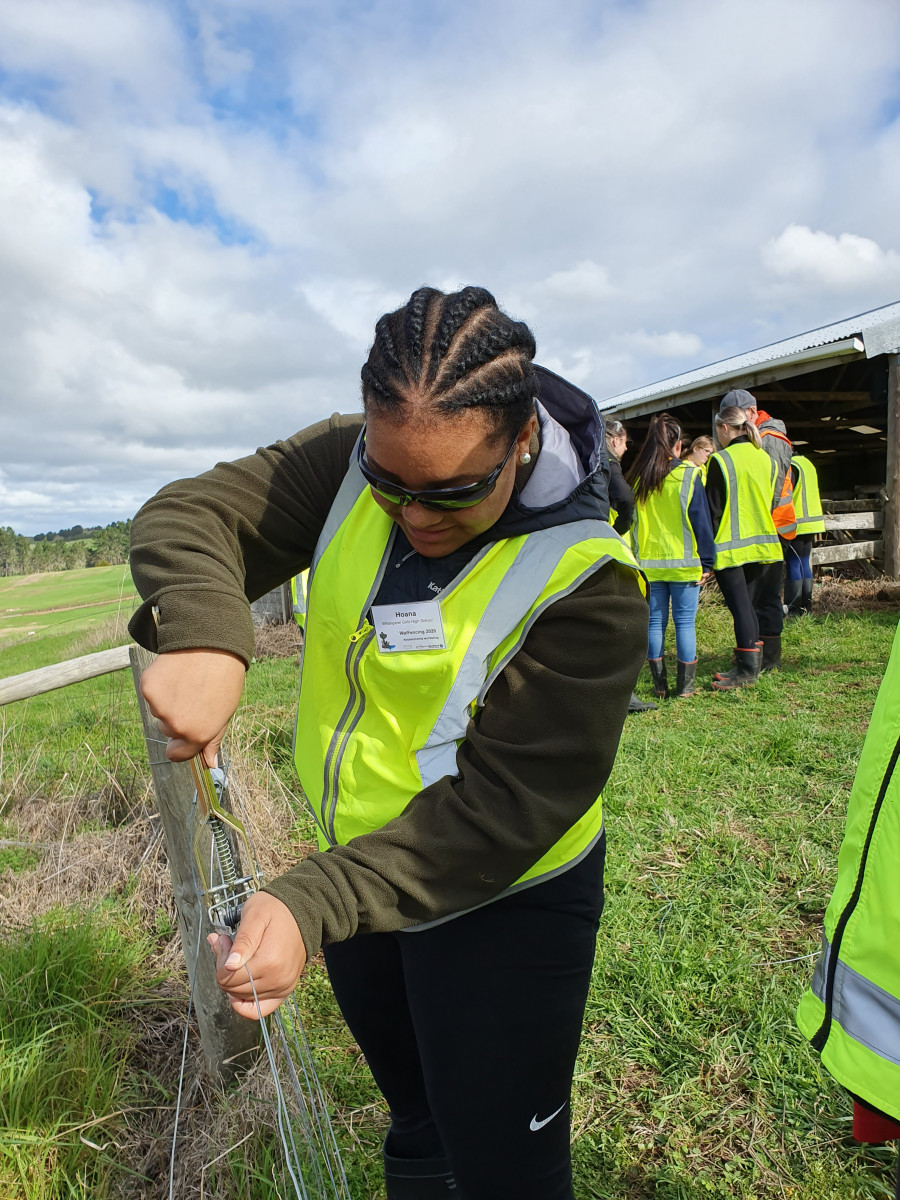


Level 2 Academy - Product and Design
2ACTThis academy provides students with the opportunity to gain valuable hands-on experience in the workshop to complete a range of projects. These projects include making a waka ama paddle, a furniture unit with drawers and doors and a dining table with bench seats. Students will gain experience working with a wide range of tools, including MIG welding. Students will also complete a first aid course and workplace health and safety.
This course takes up two option lines. Participating in an academy requires you to also take either English or Enterprise as your third option. Fully funded places within this academy are open to domestic students only, fees will apply to international fee paying students.
Learning Opportunities
In this course you will need to:
Develop these skills:Explore this content:- Taking responsibility for professional growth - through active listening, seeking clarification and understanding when needed
- Develop competencies in workshop and machine safety
- Managing resources to create the projects to complete the industry standards
- Use time management strategies to ensure students can manage resources, support and materials
- Demonstrates responsibility to complete the requirements for the Industry Based Standards
- Workplace visits and trade specific events to explore a range trade careers
- Use workshop technologies in the design & manufacturing of a solution

Level 2 Academy - Toi Māori: Tupu Pūkare
2ACMĀkonga will be able to explore the elements of māori design in a bilingual environment. Ākonga will follow tīkanga and work with a range of construction materials, such as wood, resin and other mediums, to complete Toi Māori projects. Students will also complete a first aid course and workplace health and safety.
This course will take two option lines. Participating in an academy requires you to also take either Te Reo, Te Ao Haka, English or Enterprise as your third option. Fully funded places within this academy are open to domestic students only, fees will apply to international fee paying students.
Learning Opportunities
In this course you will need to:
Develop these skills:Explore this content:- Ākonga will develop their creativity through understanding the range of materials and apply Te ao Māori concepts to develop a taonga
- Workshop technology to develop skills for various industries in the trades
- Ākonga will differentiate between multiple approaches and assess options to make decisions to develop a taonga
- Developing and producing whakairo using appropriate tikanga
- Ākonga will be able to work collaboratively in a workshop environment to ensure all ākonga are able to complete their taonga
- Working safely in a workshop environment
- Elements of Māori Art and design from a mātauranga māori perspective (traditions)


Level 2 Accounting
2ACCStudents will further their understanding of the financial world as it affects businesses and develop skills that will enable them to cope with the complexities of modern financial management.
Learning Opportunities
In this course you will need to:
Develop these skills:Explore this content:- Technology use- Process accounting information using an accounting software package
- How financial information is coded, recorded and presented in a computerised perpetual inventory system
- Information use- Process financial information for an entity’s Accounts Receivable subsystem
- Accounts Receivable subsystem- Process transactions in a subsidiary ledger and prepare a report analysing the subsystem
- Information use- Process financial information for an entity’s Inventory subsystem
- Inventory subsystem- Process transactions in a subsidiary ledger and prepare a report analysing the subsystem
- Information use- Prepare and understand Financial Statements
- How to prepare Balance Day adjustments and Financial Statements for Income, Position and Cash Flow
- Critical Thinking- evaluate a businesses ability to sustain financial viability
- How to prepare Balance Day adjustments and Financial Statements for Income, Position and Cash Flow


Level 2 Art Design
2DESDesign is the perfect subject for all creatives! Digital designers, painters and illustrators can use their individual skills to succeed in this subject.
Students will develop an understanding of visual communication methods and an appreciation of contemporary Design practice, continuing to develop their skills using Adobe Creative Suite and the design process. Students will be required to maintain a visual/digital diary which documents their design process, application of artist models, image making and development of ideas. They will produce work for two internal design briefs, which will lead to the 2 x A1 folio boards.
Learning Opportunities
In this course you will need to:
Develop these skills:Explore this content:- Creativity - You will be challenged to develop a range of ideas, draw inspiration from the world around you, listen to feedback from others and use this to inform your own ideas
- Deliver an advertising campaign to promote awareness about a business of your choice. You will use your design skills to promote this business through various design briefs
- Decision Making - You will understand the design process, associated language and terminology and apply it to make decisions about successful design solutions
- Illustration and Photography to develop imagery for use in own design solutions
- Digital Literacy - Understand and apply Adobe Design Suite skills - Photoshop & InDesign. Effectively use the computer, scanner, printer and digital camera. Create and manipulate graphic images and text
- Logo Design, Poster Design and Own Choice: Publication, App, Promotional material
- Visual Literacy - In responding to a design brief, you will need to consider how your work is received by others and understand how to appeal to a target audience and make work that is fit for purpose.
- Explore successful design solutions by looking at advertising in the media today.

Level 2 Art History
2ARHLevel Two Art History looks specifically at iconic contemporary artists from around the world! Open your eyes to the possibilities of the weird and wonderful through an investigation of all things new in Art. Look, debate, blog, make art, consider your own opinions! Art History incorporates practical art-making tasks to better understand art techniques and ideas. Develop your literacy and abstract thinking skills when investigating and understanding Art ideas and themes.
Learning Opportunities
In this course you will need to:
Develop these skills:Explore this content:- Problem Solving:
- How do you look at Art?
- What is Art about?
- How is it made?
- Learn the tools to solve the puzzle!
- Contemporary Diversity:
- Communication:
- Debate about art with your classmates!
- Challenge traditional ideas!
- Form your own opinions!
- Express your thoughts, convincingly!
- The Value of Art:
- Who decides how much art is worth?
- How does art become famous?
- Do we have to like the same art?
- Thinking Critically:
- Make connections between art and real world politics!
- Consider how self expression is important to you and others
- Personal Opinion:
Visit a range of Art Galleries and write a blog about the art you love, the art you hate, or the art you just don't understand!
- Applied Academic Skills:
- Research, Investigate, Communicate through a variety of written responses
- Media and Process:
Learn how art is made and what it can be made out of!
- Real World Experience:
Visit galleries and have new experiences in a range of art institutions
- Artist Film:
Collaborate with an Artist to produce a film in the style of their art. Take your Art History skills into a practical setting! Lights, Camera, Action!

Level 2 Art Visual
2ARTVExplore practical art-making techniques based on your own imaginary or real ‘Object, Person, Place.’ Students will study the works of a range of contemporary artists. They will learn to apply the artists’ ideas, processes, procedures, materials and techniques to their subject matter in the development of ideas and the making of personal artworks. The focus of this course is on drawing, painting and extension into some alternative media, presented and assessed on 2 x A1 Folio Boards.
Learning Opportunities
In this course you will need to:
Develop these skills:Explore this content:- Creativity: You will be challenged to use media in a variety of ways, explore different compositional structures, learn through experimentation, be prepared to take visual risks
- “Object, Place and Person ”
You will explore treasured objects, people and places (real or imagined). A visual exploration of subject matter and drawing/painting/alternative art-making conventions
- Decision Making: You will use your research to make decisions about media, scale, technique and subject matter. You will listen to others and take on board advice to improve outcomes
- Drawing, Painting, Print-making, Digital Drawing/Painting (Waycom)
- Time Management: Use time management skills to meet deadlines
- You will research, select and use ideas found in Artist Models work
- Visual Literacy: Use images to describe and express your ideas. Your work will relate to your own interpretation of the set theme
- You will need to source your own imagery, either from observation, google images, books or your own photographs

Level 2 Biology - Cells and Genetics
2BIOCGIn Level 2 Biology - Cells and Genetics, students explore complex ideas of life processes and genetic inheritance. This course encourages critical thinking as students consider the key concept of “form matching function”, and will develop their ability to interpret text and write effectively in order to communicate their understanding.
Learning Opportunities
In this course you will need to:
Develop these skills:Explore this content:- Scientific skills - how to develop, carry out, and interpret the results of scientific investigations
- Cells are the basic unit of all living things - what are they and how do they work? Consider processes including cellular respiration, photosynthesis, and DNA replication
- Reading & writing - how to interpret texts to build understanding and communicate this in written form
- The code for building us (and all of life) is hidden in our DNA; how are traits inherited? How do our genes determine what we look like? Where does variation between individuals come from?
- Critical thinking - evaluating the connections between evidence and ideas
- Life is diverse and difficult - how have different groups of animals adapted to overcome their challenges?
Level 2 Biology - Skills and Adaptations
2BIOSAIn this course students will learn how to use microscopes to investigate cellular structures and functions. Students will study the inheritance of traits and variation in genetics. They will design and carry out investigations and develop skills in interpreting text, critical thinking and writing discussions to convey their ideas.
NOTE: This course is not eligible for Excellence subject endorsement
Learning Opportunities
In this course you will need to:
Develop these skills:Explore this content:- Scientific skills - how to develop, carry out, and interpret the results of scientific investigations. How to use a microscope and complete biological drawings
- Cells - these are the basic building blocks of life. Explore these under the microscope and look at processes that occur including transport of materials
- Reading & writing - how to interpret texts to build understanding and communicate this in written form
- Issues for society - microbes and vaccination. Explore biological ideas and critically evaluate information presented to the public
- Critical thinking - evaluating the connections between evidence and ideas. Distinguishing fact from opinion
- Variation - how is variation created in a species? How is it inherited?
Level 2 Chemistry with Reactivity
2CHERThis course will cover key chemical knowledge including structure and bonding of atoms, organic chemistry, chemical reactivity and reduction and oxidation chemistry. Students will be able to explain these concepts and use chemistry conventions to support their understanding. Students will undertake practical experiments to gather observations and support this with chemical reaction understanding.
Learning Opportunities
In this course you will need to:
Develop these skills:Explore this content:- Scientific skills - develop key ideas and apply these to a range of contexts, interpret results and carry out investigations
- Atomic structure and Bonding, the foundation of all chemical reactions
- Critical thinking - making connections between core ideas and how these can be applied, understanding links between evidence and theory
- Multiple types of chemical reactions will be explored to understand how atoms and molecules behave, bond and react in different contexts
- Practical laboratory skills - understand how to undertake reactions safely in the laboratory and carry out experiments to collect data
- Organic chemistry reactions and identification
- Chemical reactivity including rates of reactions, equilibrium and acids and bases
Level 2 Chemistry with Titrations
2CHETThis course will cover key chemical knowledge including structure and bonding of atoms, organic chemistry, analytical titrations, and identification and reduction and oxidation chemistry. Students will be able to explain these concepts and use chemistry conventions to support their understanding. Students will undertake practical experiments to gather observations and support this with chemical reaction understanding.
Learning Opportunities
In this course you will need to:
Develop these skills:Explore this content:- Scientific skills - develop key ideas and apply these to a range of contexts, interpret results and carry out investigations
- Atomic structure and Bonding-the foundation of all chemical reactions
- Critical thinking - making connections between core ideas and how these can be applied, understanding links between evidence and theory
- Multiple types of chemical reactions will be explored to understand how atoms and molecules behave, bond and react in different contexts
- Practical laboratory skills - understand how to undertake reactions safely in the laboratory and carry out experiments to collect data
- Qualitative analysis methods will be used to identify the concentration of substances present in consumer products
- Reduction and oxidation chemistry
- Organic chemistry reactions and identification
Level 2 Classical Studies
2CLAStep back in time to the thrilling worlds of Ancient Greece and Rome through epic journeys, devastating natural disasters, and stunning visual arts. In this course, you will follow the legendary hero Odysseus as he battles monsters, faces temptations, and navigates the interference of tricky gods on his wild journey home. You will also uncover the daily lives of ancient Romans by exploring the perfectly preserved ruins, artefacts, and structures of Pompeii and Herculaneum, famously buried by the eruption of Mount Vesuvius in 79AD. Finally, you will learn to read the ancient world through its magnificent art and architecture, discovering what grand temples, houses, mosaics, and frescoes reveal about ancient myths, social status, and values. This course offers both reading and writing credits, perfect for students who want to sharpen their literacy skills while uncovering the secrets of history's greatest stories.
Learning Opportunities
In this course you will need to:
Develop these skills:Explore this content:- Reading and writing: Learn how to plan and write extended essays. You will read chapters of the Iliad and the Odyssey with the teacher and examine how the ideas and values of Ancient Greece are evident in the text
- The Big Bang! (2.3): Discover the eruption of Mount Vesuvius in 79AD, which buried the towns of Pompeii and Herculaneum. You will study the eruption and the preserved artifacts, including bones, food, houses, and water structures, providing a fascinating window into Ancient Roman life
- Critical thinking: Explore ideas from ancient society and how these are reflected in modern society
- Homer's Odyssey (2.1): Follow Odysseus on his wild journey home, filled with monsters, temptations, and tricky gods. At the heart of this epic is the exploration of home, loyalty, and what constitutes a true hero
- Communication skills: Contribute to group and class discussions. Classics is a discussion-based subject and you will learn through these discussions to develop your critical thinking of the content. Written communication is also important for success in this subject
- Art and Architecture of the Ancient World (2.2 and 2.5): Discover the art and architecture of the Greeks and Romans through temples, houses, mosaics, and frescoes. You will learn how these buildings and images reveal important insights into myth, social status, and ancient values
- Research Skills: Learn how to research credible information and integrate this into your written work, which is important for both assessments and classwork

Level 2 Creative Digital Technologies
2CDTThis course focuses on the creative design process, while also developing students’ problem solving, digital skills, and project management capabilities. Students will plan and create their own digital project in an area of interest, such as game design, 3D modelling, graphics and character design, animation or websites.
In the first part of the course, students will generate ideas, research user needs, learn about relevant digital conventions, and build the skills needed for their chosen area. They will then develop their project-testing, refining, and managing their work to produce a final outcome. All credits are earned through students' project work.
Learning Opportunities
In this course you will need to:
Develop these skills:Explore this content:- Digital technologies: Develop confidence and advanced skills
- Game or visual novel
- Game graphics and characters
- 3D modelling or virtual reality apps
- Animation and motion graphics
- Websites or apps
- Alternative digital project proposals are welcome for consideration
- Creativity: Explore possibilities and innovate
- Design process: Generate ideas, develop, test, evaluate, and improve outcomes
- User focus: Understand user needs and use feedback to improve the design
- Project management: Plan and manage the development of a digital project
- Computer science (if selected): Apply problem solving to code, test and debug programs

Level 2 Dance
2DNCThis course is designed to take your skills to the next level. You will strengthen your technique, develop your own choreography style, and bring your ideas to life on stage.
Key areas of learning include:
- Choreography: Learn to choreograph group and solo dances that communicate a clear intention, concept, or message.
- Performance: Refine your technique, body placement, and fitness as you rehearse and perform contrasting theatre, social, or ethnic dance styles.
- Dance Perspectives: Develop your critical thinking skills by analysing professional dance works and studying the cultural and historical contexts of different dance genres.
A highlight of each term is the opportunity to showcase your learning live in front of friends and family. You will experience the full production process, taking part in professional lighting and costume rehearsals in our purpose-built Dance Theatre.
Learning Opportunities
In this course you will need to:
Develop these skills:Explore this content:
- Team work
- Choreography: Design original solo or group choreography that communicates a clear concept
- Learn to communicate ideas, listen actively, and work collaboratively with others
- Technique: Refine your physical control, body placement, strength, and flexibility
- Resilience
- Ensemble Skills: Develop advanced spatial awareness and learn to move with unity alongside peers
- Build the confidence to take creative risks, problem-solve, and overcome physical or performance challenges
- Performance Skills: Strengthen your stage presence as you perform a variety of contrasting dance works
- Literary skills: Develop your ability to analyse, research, and write critically about dance contexts and professional choreography
- Analyse a professional dance work by evaluating its choreographic features, technologies, and meaning


Level 2 Design and Visual Communication
2DVCStudents work through the design process to solve an architectural or product problem in the community. They will explore design history and visual communication methods to create quality outcomes for an audience.
Learning Opportunities
In this course you will need to:
Develop these skills:Explore this content:- Creativity - Students create innovative design ideas/solutions and display divergent thinking. This can be seen in presentations, spatial and product design briefs
- Explore Spatial design - interior, exterior and landscape design
- Communication - Develop presentation skills using a variety of media - rendering chalk, rapid markers, the Adobe Suite, Sketchup, digital and physical modelling
- Students will develop an understanding of product design and prototyping, including areas such as lighting, jewellery, or furniture
- Using information - Use the design process to develop ideas and explore options
- Presentation design, including layout
- Work with a design brief and site
- Modelling - 3D digital and physical

Level 2 Drama
2DRAAt the start of this full year course, students will enjoy a short unit focused on developing group cohesion using advanced theatre games and warm-up activities. They will use theatre presentation skills throughout the year, beginning with a close study of the work of a particular playwright, which will include a detailed look at changes in New Zealand society over the period of the 20th century and, particularly the late 70s to the early 90s.
By way of RESEARCH, IMPROVISATION and/or SCRIPT WRITING, students will prepare an issue based presentation which they will PERFORM to a public audience. This unit carries 5 LEVEL 3 NCEA credits. The public performance, if it goes ahead, will require students to be available for at least 2 rehearsals and 2 performances outside of normal school hours.
In conjunction with the performance, students also further develop their use of STAGE TECHNOLOGIES such as lighting, sound, set, costume and make-up. There will be a strong focus on the USE OF VOICE, BODY, MOVEMENT and SPACE during a DRAMA TECHNIQUES UNIT that also involves performance of a scene to an audience.
Learning Opportunities
In this course you will need to:
Develop these skills:Explore this content:- Creativity
- The study of a New Zealand playwright
- Personal confidence
- Social issues relevant to the students
- Collaborative group skills
- Drama techniques
- Physical, emotional and behavioural self-awareness
- A range of plays and playwrights
- Communication skills using voice and body
- Analysis of live performance
- Individual and collective responsibility
- Theatre form or genre
- Self discipline
- Technical production
- Technology literacy
- Rehearsal and performance
- Script writing skills
- Flexibility
- Initiative
- Productivity

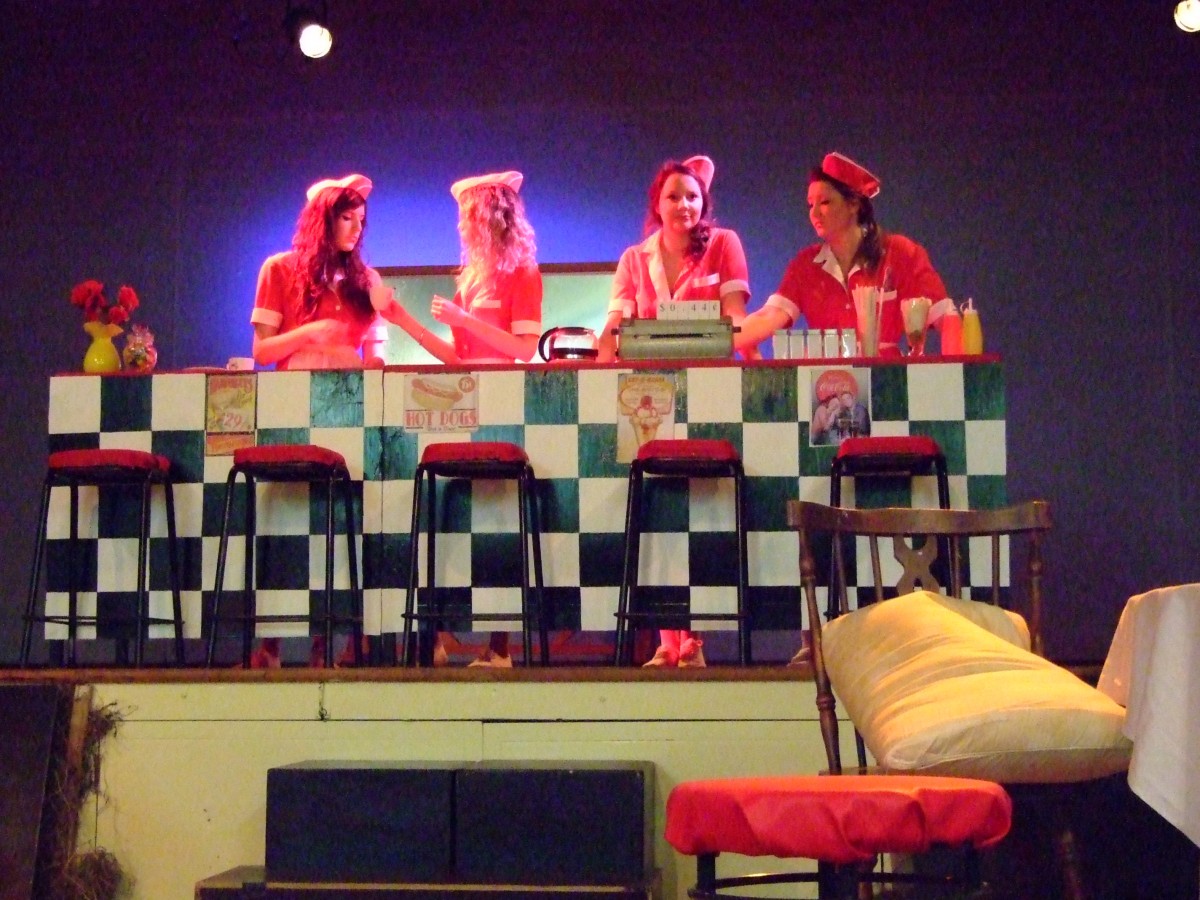
Level 2 Early Childhood Development
2ECDThis course focuses on preparing students for a range of workplaces. It equips students with the desired employability skills and a knowledge of the basic needs, nutrition, health, and well-being of young children. This ensures they have skills in basic hygiene practices, and how to care for children, particularly newborns to school age, as well as an understanding of the agencies that support tamariki and their whānau, and some of the theories behind child development and their needs. They have the opportunity to experience a two-day placement in an ECE setting as part of this developing understanding.
Learning Opportunities
In this course you will need to:
Develop these skills:Explore this content:- Care Practical Skills - Working with young children- Practical, how to care for young children
- Explore the basic needs of children from infant to school age and demonstrate the care practice techniques associated. Explain the health and safety aspects that must be considered when dealing with young children
- Workplace Qualities – time management, using a variety of sources to gain information, using technology appropriately and problem solving
- Explore the requirements to keep young children well by examining hygiene practices, health, and wellbeing
- Personal Qualities – self-responsibility, self-discipline, and a willingness to learn. Professional behaviour and presentation, work-ready skills. With the opportunity to demonstrate these within the classroom, on courses, and in a placement at an Early Childhood centre
- Examine the theories around keeping children safe by looking at attachment theory, the types of early childhood centres found in New Zealand, and the agencies that are available to support young children and their whānau
- Interpersonal Skills – collaboration, self-directed learning, effective communication, and how to contribute positively within the classroom setting and in a placement with staff and students in an Early childhood setting
- Explore the requirements of any workplace with professional behaviour and presentation in theory and a placement in a centre
- All skills are transferable to a range of workplaces and settings outside of Early Childhood

Level 2 Economics
2ECOCurious about the forces shaping the world around you? Level 2 Economics offers insights into some of today's most important issues. This course explores a range of significant economic topics, including employment, economic growth, inflation, and international trade - the very engines that drive our global society.
By mastering the fundamental 'cause and effect' relationships and evaluating government policies, you will discover exactly how these dynamics shape the New Zealand economy and influence the lives of every individual and family. Studying Economics gives you the power to not only understand the challenges faced by a modern society but to actively participate in the outcomes. Step into a world of opportunity and become a change-maker with the insights only an understanding of Economics can provide.
Learning Opportunities
In this course you will need to:
Develop these skills:Explore this content:- Learn to communicate economic ideas and opinions effectively using critical thinking
- How does unemployment affect not just individuals, but our entire society?
- Gain experience using economic models to understand complex systems
- We'll tackle the question: Why are prices rising?
- Improve your ability to interpret information and draw informed conclusions
- Understand the reasons why the Government cannot simply print more money
- Build an understanding of different perspectives surrounding economic issues and policies
- Discover how the Government attempts to influence the economy
- Consider critically: Is economic growth really that important?



Level 2 English Academy
2ENGACEThis English course aims to provide learners with a senior level, literacy-rich course that is vocationally focused. This course is targeted at Level 2 students enrolled in either a within-school or external Academy-style programme. This course will be closely tied to set short courses in line with the foci of each Academy.
Learning Opportunities
In this course you will need to:
Develop these skills:Explore this content:- Employ critical information literacy to research a controversial topic
- Self-selected online sources in an area of personal interest
- Thinking about how and why language is used for a given purpose
- Develop a portfolio of writing, thematically linked to texts
- Develop written personal voice in a range of genres including creative memoir and report writing
- Make links and connections with society and the wider world around us
Level 2 English Discovery of Analysis
2ENGDOAThis English course aims to provide learners with a meaningful senior entry point into thinking deeply about why and how language is used by different authors for a variety of purposes. Alongside exploring written and visual texts, students will be offered personalised learning opportunities to explore and make informed interpretations of aspects of the human condition as well as develop their own writing skills.
Learning Opportunities
In this course you will need to:
Develop these skills:Explore this content:- Employ critical information literacy to research a controversial topic
- Self-selected online sources in an area of personal interest
- Literature & film analysis - looking between and beyond what is seen on the surface
- A variety of written and visual texts - usually a novel or short stories and film
- Thinking about how and why language is used for a given purpose
- Develop a portfolio of writing, thematically linked to texts
- Identify and use a range of academic literary tools
- Film terminology and ability to closely view visual texts
- Develop written personal voice in a range of genres including creative memoir and academic literary essay
- Make links and connections with society and the wider world around us


Level 2 English Journeys Through Unfamiliar Texts
2ENGJUTThis English course aims to provide learners with an academic understanding and appreciation of language genres, audiences and purposes. Students will work with a variety of thematically linked texts, and are encouraged to read widely and make philosophical connections with themselves and the world around them.
Learning Opportunities
In this course you will need to:
Develop these skills:Explore this content:- Literature & film analysis - looking between and beyond what is seen on the surface
- Thematic study of extended written text - various genres
- Thinking critically about how and why language is used for a given purpose
- Visual text - usually feature film
- Identify and use a range of academic literary tools
- Various short unfamiliar texts which could include NZ poetry, fictional prose & persuasive opinion pieces
- Develop written personal voice in a range of genres including creative memoir and academic literary essay
- Literary and filmic devices used by authors
- Make links and connections with society and the wider world around us




Level 2 Enterprise Business
2ENTReady to find your voice, lead with confidence, and build something that actually matters?
This isn’t your typical sit-and-listen class. Level 2 Enterprise is your creative launchpad - a space where you call the shots and bring your biggest ideas to life. Whether you want to team up with your friends or shine solo, you’ll channel your passion into designing a business aimed at lifting up your community and improving wellbeing.
From sketching your first mood boards to creating a real product from scratch, you’ll experience the thrill of building a brand you’re proud of and selling it at two live markets. Plus, you’ll step onto the stage at the prestigious Young Enterprise Scheme (YES), pitching your vision to inspiring mentors and competing for regional or national recognition.
Discover your potential, back yourself, and launch a business that is uniquely yours!
Learning Opportunities
In this course you will need to:
Develop these skills:Explore this content:- Personal qualities of initiative, flexibility, integrity, responsibility and professionalism
- Different types of social enterprise where business tools are used to address a social need
- Management of resources including time, money and people
- Generating a business idea, planning and making it happen for your enterprise venture
- Maintaining effective relationships through collaboration, teamwork, leadership, manaakitanga, and shared vision
- Internal factors that affect business success such as leadership, organisational structure, production methods and the role of corporate social responsibility
- Communicate visually, verbally and in writing
- The different ways people are motivated and how these motivation theories are applied in a workplace


Level 2 Film and Media
2FMEDThis course covers content from both Media Studies and Visual Art. Students will learn how to tell a story through the camera, they will learn how to enhance footage through editing, using graphics, narration, sound and setting mood and narrative with lighting and colour correction. Students will produce two large scale moving image presentations where they will need to research, plan, shoot and edit to complete their moving images, working in collaboration for the best results.
Learning Opportunities
In this course you will need to:
Develop these skills:Explore this content:- Creativity: You will be challenged to extend your ideas, draw inspiration from existing film makers, use camera, lighting and editing techniques and use the skills of others in completing your moving image productions
- Camera Angle: Focus, angle of view, depth of field, rule of thirds, transitions
- Decision Making: You will plan, make use of associated language and terminology specific to each genre, test a range of camera techniques, consider narration and moving graphics for a quality moving image production
- Techniques: Timelapse, slow motion, stop motion, motion blur
- Digital Literacy: Use Adobe Photoshop Timeline, Rush, Premiere Pro to edit and create cohesion in your final works
- Studio: Camera techniques with school supplied cameras and lighting, including Green Screen
- Time Management: Use the allocated time and set deadlines to manage your work output and receive quality feed-forward on your developing inquiry
- Student Directed Short Film: Collaborative Inquiry based assessment (Research, plan and make)
- Collaboration: Develop your collaboration skills as you work together to complete photoshoots. Learn to work with a model and assistants as you capture your imagery
- Music Video: Individual Inquiry (Research, plan and make) using own choice of music and artist model
- Work with a crew of your classmates to manage your model, props, lights and backdrops

Level 2 Food and Nutrition
2FNTFood and Nutrition enables students to develop an understanding of the nutritional factors that influence the well-being of individuals, their families and the wider community. Students will use critical thinking, research and report writing skills to demonstrate their understanding of the nutritional context they are exploring. Practical skills will be built on by practising a variety of cookery techniques, using effective communication and interpersonal skills to prepare nutritious meals with seasonal produce to enhance well-being.
Learning Opportunities
In this course you will need to:
Develop these skills:Explore this content:- Applied academic skills - read, interpret and demonstrate knowledge in a written report for all internal assessments
- Sustainable food practices - evaluating sustainable practices such as growing vegetable gardens, buying locally, food preserving and making evidence based judgements about how sustainable they really are
- Critical thinking skills - analysing nutritional issues and the consequences on personal and societal well-being
- Nutritional needs - analysing issues and creating strategies for people with a specific nutritional need such as food allergies, sports nutrition and maternal nutrition
- Advanced practical cookery skills - developing competence in a variety of techniques, knife skills and interpersonal skills while preparing nutritious meals
- Nutritional issue - analyse beliefs, attitudes and practices related to the nutritional issue of obesity for families in New Zealand
- Communication skills - collaboration requires effective communication in both practical and theory lessons
- Determinants of health - analyse the relationship between well-being, food choices and the determinants of health


Level 2 French
2FREIn 2027 students choosing this subject could be working through Te Kura - The Correspondence School. To be successful in Year 12 Level 2 French via Te Kura you would need to have completed a full year 11 French NCEA course or equivalent. During this option line you would be required to work independently online and log in to access your work. You will need self-discipline to ensure that you use your independent time appropriately and complete all set work on time. Your Te Kura teacher will communicate with you online to provide help and feedback.
Learning Opportunities
In this course you will need to:
Develop these skills:Explore this content:- Communication skills - how to speak, listen, read and write in more complex French, including future possibilities and events which might happen
- The content is decided by Te Kura, but typical topics in the past have included:
- The environment
- Tourism - positives and negatives
- The world of work
- Teenage life in an online environment
- The French-speaking world - “La Francophonie"
- Information Use skills - how to choose which words best suit your communication goal and how to arrange them in authentic French sentences
- Technology Use skills - how to use digital tools to inform, organise and present your language learning
- Systems thinking skills - learn a range of patterns in the language and apply them effectively to communicate. Continue to develop cultural understanding through comparisons with your own and French culture
Level 2 Geography
2GEOGeography is the study of places and relationships between people and their environments. Geographers are cross-curricular thinkers that seek to understand where things are found, why they are there and how they change over time.
Learning Opportunities
In this course you will need to:
Develop these skills:Explore this content:- Collaboration - Students will work in groups when doing field work
- Geographic Skills - including local field work and research
- Communication - Share thoughts and listen to others. To continue to develop both written and verbal communication skills
- A Large Natural Environment - Tongariro Volcanic Region including physical and human aspects
- Critical Thinking - To think critically about people’s differing perspectives in relation to Sustainable Environments and Geographic Issues
- Current Geographic Issue - Conflicting values over use of land e.g. Does Whāngarei need to move the airport?
- Field Work and Research Techniques
- Research - What new business would you like to see at the Town Basin?
- Global Patterns - Volcanic activity across the globe and the impact on people
Field Trip: There is a possibility for a trip to Tongariro and Waitomo.


Level 2 Health Education
2HLTIn Level 2 Health students will develop knowledge around the underlying concepts of health and apply this to relevant NZ Health issues. Students will explore techniques for managing change and resilience, gender and sexuality issues, a selected NZ Health issue and participate in the planning and implementation of a health promotion campaign.
Learning Opportunities
In this course you will need to:
Develop these skills:Explore this content:- Critical thinking skills - apply critical thinking skills by looking at the bigger picture
- Evaluate factors that influence people's ability to manage change (resilience, risk and protective factors, strategies)
- Attitudes and values - explore a range of attitudes and values in relation to health issues
- Explore a range of gender and sexuality issues that influence health
- Decision making - learn about strategies to address key issues in health and how these relate to health enhancing decision making skills
- Explore a selected adolescent health issue (what factors influence the issue, what are the consequences in relation to wellbeing and what strategies would reduce harm)
- Collaborative group skills - develop collaborative skills through group planning and implementation of a health promotion campaign
- Participate in the planning and implementation of a health promotion campaign to analyse its effectiveness


Level 2 Health Science
2HLTSCThis course is designed with the students' wants/needs in mind.This course will provide an opportunity to learn about human anatomy and physiology. It is a course for students wanting to progress with a career in the health sector, whether it is to become a nurse, physiotherapist, occupational therapist or health and nutrition specialist, sport scientist etc. It is a ‘learning’ course that will create great foundation knowledge for a 1st year health science paper. Whilst the focus is on learning students will have an opportunity to gain some achievement standard credits if they require them.
Learning Opportunities
In this course you will need to:
Develop these skills:Explore this content:- Understanding base scientific knowledge that can be applied
- The basic structure, function and integration of the following body systems:
- Cells, tissues and organisational anatomy
- The musculoskeletal system
- The cardiovascular system
- The nervous system
- The digestive system
- The endocrine system
- The integumentary system
- The lymphatic system
- The urinary system
- The reproductive system
- Critical thinking and deeper understanding
- Research skills
- Collaboration


Level 2 History
2HISThis course focuses on some of the most contested and significant events of the 20th Century, both in Aotearoa New Zealand and across the wider world. You will delve into the realm of famous conspiracies and mysteries, learning to assess evidence and uncover the truth behind historical cover-ups. The course also explores the impact of global conflicts, examining New Zealand's role and experiences during World War II, the tense global standoff of the Cold War, and the passionate protest movements sparked by New Zealand's involvement in the Vietnam War.
Learning Opportunities
In this course you will need to:
Develop these skills:Explore this content:- Critical thinking: reasoning, interpreting information, explaining, identifying patterns and trends, synthesising information, making judgements based on evidence
- Conspiracies and Mysteries: Uncover the details behind the tragic Air New Zealand Erebus crash and investigate the theories of a cover-up. You will also examine the shocking assassination of President John F. Kennedy, assessing how well the famous conspiracy theories hold up against the available evidence
- Information literacy: identifying fact and opinion, making judgements about the quality of information, assessing the reliability of different sources of information such as websites
- New Zealand in World War II (2.2 and 2.5): Focus on New Zealand's involvement in the Second World War. This topic explores the experiences of New Zealanders at war and the profound impact the conflict had on the nation
- Communication skills: communicating effectively in a variety of formats: for example in small group and full class discussions; written work; visual formats
- The Cold War and the Cuban Missile Crisis: Step into the tense decades of the Cold War, exploring the ideological battle between superpowers. You will specifically examine the Cuban Missile Crisis, a pivotal moment when the world stood on the brink of nuclear war
- The Vietnam War (2.4 and 2.5): Investigate the complexities of the Vietnam War and its impact. A key focus will be on the strong protest movement that arose against New Zealand's involvement in the conflict, changing the nation's political landscape


Level 2 Hospitality
2HOSIn Level 2 Hospitality students use applied academic skills to demonstrate knowledge about ingredients to form well balanced meals. Students will critically analyse creative ideas to develop skills in planning, organising and time management in order to present safe and original dishes.
Learning Opportunities
In this course you will need to:
Develop these skills:Explore this content:- Cookery methods and techniques- a range of different disciplines using a range of ingredients to complete successful dishes that meet industry standards
- Demonstrate food safety knowledge and practices
- Interpersonal skills- collaborative team work when practising for assessments, responding to client needs, demonstrating leadership in planning and executing dishes
- Explore International influence on cuisine
- Resource management- Manage time, ingredients, equipment while negotiating with staff while using research skills, devices and classmates to complete assessment criteria
- Develop cookery techniques to cover a wide range of ingredients and methods
- Applied academic skills- read, write, interpret, discern and apply knowledge of food safety, cookery techniques and cultural influences
- Develop strategies for safe knife use, storage and maintenance



Level 2 Māori Studies
2MAOSAt Level 2, tauira develop deeper understanding of how Māori knowledge systems inform roles, responsibilities, and relationships within whānau, marae, and community contexts.
Learning focuses on the application of tikanga in practice-based contexts where tauira take increased responsibility for their participation and contribution. Manaakitanga, respect, and collective responsibility are central to engagement in learning.
All students who take Māori Studies will participate in learning experiences that require application of tikanga within shared and practical contexts.
Learning Opportunities
In this course you will need to:
Develop these skills:Explore this content:- Applying tikanga within structured cultural and social contexts
- Whānau roles and responsibilities within marae contexts
- Demonstrating manaakitanga in practice-based situations
- Tikanga associated with wharekai practice
- Understanding roles and responsibilities within cultural settings
- Tikanga associated with marae processes and care for tūpāpaku
- Responding appropriately within tikanga-based environments
- Tauira develop and deliver guided communication about significant places, people, and narratives using te ao Māori perspectives and appropriate tikanga
- Contributing to shared outcomes in group contexts
- Tauira apply correct tikanga in the preparation, handling, and serving of kai within wharekai contexts, demonstrating manaakitanga and responsibility
- Reflecting on role, responsibility, and participation


Level 2 Mathematics with Applications for Numeracy
2MANNumeracy is the ability to understand the mathematics and Statistics we need in everyday life. Numeracy is also an important aspect of gaining any NCEA qualification. This course will develop the understanding of students in a range of practical mathematics applications which will support their success in the Numeracy CAA. There will also be the opportunity to gain Numeracy via additional standards as an alternative to the CAA.
Note: This course is intended as a pathway to Numeracy and does not prepare students for study in Level 3 Mathematics or Statistics courses.
Learning Opportunities
In this course you will need to:
Develop these skills:Explore this content:- Use and analyse information
- Solve problems using critical paths
- Develop an understanding of the metric system and its applications
- Complete a statistical investigation
- Understand how to choose the mathematics required to solve a problem
- Solve problems using Networks
- Develop the ability to explain and justify an answer
- Use rules to solve problems with sequences
- Solve problems
- Write a set of equations to solve problems with Simultaneous equations
Level 2 Mathematics with Calculus
2MATCThis course provides the opportunity for students to deepen their understanding of algebra and learn the basics of calculus. Students also learn about trigonometry, probability and complete a statistical investigation. Mathematics with Calculus is designed for those students who may wish to pursue Mathematics or subjects that use Mathematics at a tertiary level.
Learning Opportunities
In this course you will need to:
Develop these skills:Explore this content:- Critical thinking - Be able to illustrate your mathematical thinking visually and to demonstrate mathematical curiosity by asking mathematical questions
- Develop your understanding of algebraic notation, expressions to solve contextual algebraic problems
- Reasons - be able to demonstrate a set of logical steps to their solution
- Uses the sine and cosine rule, area of triangles, sectors and segments to solve problems involving non right angled triangles
- Solve problems
- Use calculus to understand problems involving rates of change and gradient
- Investigates chance and data through probability models and a statistical investigation
Level 2 Mathematics with Statistics
2MATSThe ability to understand and interpret data is increasingly valued. This course allows students to complete statistical investigations, simulations and develop their understanding of chance and probability.
Learning Opportunities
In this course you will need to:
Develop these skills:Explore this content:- Critical thinking- Be able to illustrate your mathematical thinking visually and to demonstrate mathematical curiosity by asking mathematical questions
- Investigates chance and data through probability models, simulations and a statistical investigation
- Use and analyse information
- Uses the sine and cosine rule to solve problems in non-right angled triangles
- Solve problems
- Solve problems using Networks
Level 2 Music
2MUSIn Level 2 Music students will have the opportunity to specialise in areas of group and solo performance, composition and music research and analysis. Most students will be encouraged to take part in a large-scale senior music concert towards the end of the year.
IMPORTANT: THIS IS A PERFORMING ARTS COURSE. STUDENTS ARE EXPECTED TO PERFORM IN FRONT OF AN AUDIENCE ON A CHOSEN INSTRUMENT.
Learning Opportunities
In this course you will need to:
Develop these skills:Explore this content:- Collaborative skills - learning to work together effectively towards a common goal
- Learn to rehearse and then perform both as part of a group and solo to an audience
- Communication skills - develop listening, negotiation and interpersonal skills through the rehearsal process
- Reflect on the rehearsal and performance process
- Information use - understand and interpret musical scores and notation to be realised in a performance on a chosen instrument
- Develop instrumental, vocal and compositional techniques
- Critical thinking skills - listening to and analysing music recordings and scores and making sense of music in a performance context
- Develop research, writing and presentation skills on an aspect of New Zealand Music
- Develop skills in supporting and leading music activities with younger children (optional)


Level 2 Outdoor Education
2OEDThe Year 12 Outdoor Education programme offers students a rich and challenging opportunity to develop their personal and social capabilities through practical outdoor experiences and theoretical inquiry. Aligned with Level 7 of the New Zealand Curriculum in Health and Physical Education, this course promotes learning in the strands of Personal Health and Physical Development, Relationships with Other People, and Healthy Communities and Environments.
Throughout the year, students will participate in a range of outdoor activities, including camping expeditions, a multi-day sea kayaking journey, mountain biking, bush survival, surfing, rock climbing, white water rafting, alpine skills and adventure based learning activities, which are used as contexts for learning about risk management, personal growth, and environmental responsibility. A key focus is on successful event planning, where students learn to design and implement outdoor experiences, considering logistics, safety, and group needs.
Students will critically examine and apply group processes, learning how to analyse the effective functioning of teams and their own contribution to group success. Emphasis is placed on building quality relationships through collaboration, communication, and mutual support, which reflects a focus on developing positive interpersonal skills.
A core theme of the course is knowing about self and others—students are encouraged to reflect on their own values, strengths, and identity, and to understand diverse perspectives within their peer group. This supports personal development and enhances social awareness, helping students to become confident, connected, and lifelong learners.
Overall, Year 12 Outdoor Education empowers students to take responsibility for themselves and others, fosters leadership, and nurtures an appreciation for Aotearoa New Zealand’s unique natural environments.
This course involves 5 1-day trips, a 2-day overnight sea kayaking/camping experience and a weeklong Central North Island Expedition across the year. By selecting Outdoor Education, it is expected that students will participate in all of these out of school events.
Learning Opportunities
In this course you will need to:
Develop these skills:Explore this content:- Safety management - identify and develop plans to manage risks and hazards that impact our physical and emotional safety in a range of outdoor contexts
- Skills for Sea Kayaking: Investigate weather, equipment and technical skills for sea kayaking. Plan for and participate in an 1-day and overnight sea kayak trips
- Self management - develop strategies to manage self through challenging outdoor contexts. This includes personal responsibility, organisation, setting goals, seeking knowledge and motivation
- Bush survival skills: Gain knowledge around outdoor safety and Search and Rescue in NZ. Learn key skills and knowledge to successfully survive overnight in the outdoors
- Leadership - participate as team leaders or effective team members in physical contexts, organise work to meet goals and allocate team roles
- Mountain Biking: Develop the skills required to successfully ride grade 2 mountain bike trails at a range of venues
- Movement and technical skills in a range of contexts - demonstrate technical skills in sea kayaking, bush survival, surfing, rock climbing and mountain biking
- Group Processes: Investigate how groups develop over time while participating in challenging team activities
- Mountain Expedition: Participate in a week-long mountain adventure to test leadership, group performance and explore the impacts of personal behaviours on activity outcomes
- Skills for Surfing: Performance in surfing skills over 2 days on the Tutukaka coast
- Rock Climbing: Learn basic skills for rock climbing movement and performance


Level 2 Pasifika Dance - Culture and Creative Expression
2PAS‘O le tagata ma lona aiga, o la tagata ma lona faasinomaga’: Every person has a family, every person has an identity.
Explore Pasifika heritage. Create a Performance. Express your story.
This course explores the richness, resilience and diversity of Pacific cultures through art, storytelling, history, and creative expression. Students will explore how Pacific peoples share identity, values, migration stories and contemporary issues through a range of cultural forms including tātatau (tattoo), visual art, dance, spoken word, and performance.
Students will connect with their own identities, learn about the geography and histories of Moana-nui-a-Kiwa (the Pacific Ocean), and create original works that express who they are and where they come from. Students can work through movement, art, spoken word, research, or digital storytelling to reflect their learning.
.
Learning Opportunities
In this course you will need to:
Develop these skills:Explore this content:- Dance and Performance confidence
- Explore Pacific design, tātatau, tapa, dance and song as cultural carriers
- Cultural understanding
- Create a project (e.g. art, short film, performance, or presentation) that tells a personal or cultural story
- Relationship building
- Examine real-world events such as the Dawn Raids or the Polynesian Panthers
- Critical thinking
- Explore the role of rangatahi (youth) in sustaining and reshaping cultural traditions
- Creativity in communication
- Research a cultural figure, event, or movement significant to Pacific people in NZ or the wider Moana
- Self- awareness and cultural identity
Opportunities:
Perform at or attend Auckland ASB Polyfest. Visit the University of Auckland or other universities to look at further education opportunities. Participate in workshops with external organisations. Attend performances in the local area and Auckland. Listen to guest speakers and watch guest performers.
Level 2 Photography
2PHOBeautiful black and white photography or levitating surrealism… explore it all in Level Two Photography! In this course, students are encouraged to select an individual kaupapa of interest to them. Students will develop an understanding of visual communication methods and an appreciation of contemporary Photography practice, continuing to develop their skills using Adobe Creative Suite and the photographic process. Students will be required to maintain a visual/digital diary which documents their design process, application of artist models, image making and development of ideas. They will produce work for two internal photographic proposals, which will lead to the 2 x A1 folio boards.
Learning Opportunities
In this course you will need to:
Develop these skills:Explore this content:- Creativity: You will be challenged to extend your ideas, draw inspiration from existing photographers, test and experiment with a wide range of camera functions, lighting and editing techniques
- You will select your own kaupapa and style to develop a Photographic body of work. ‘Bring a Pūrakau to life’ and tell a story close to you!
- Decision Making: You will apply the photographic process, associated language and terminology and apply it to make decisions to inform the development of your own photographic practice
- Learn about the different approaches to Photography including, Fine Art, Documentary and Surrealism
- Digital Literacy: Use Adobe Photography programmes to edit, create multiple image constructions, and record your ideas
- Depth of Field, Shutter Speed, Lighting, Multiple Image construction, Projection, Sculptural photography, digital and hand crafted manipulations
- Time Management: Use the allocated time and set deadlines to manage your work output and receive quality feedback on your developing inquiry
- Use the specialist studio and lighting gear to take your Photography to the next level!
- Collaboration: Develop your collaboration skills as you work together to complete photoshoots. Learn to work with a model and assistants as you capture your imagery
- Work with a crew of your classmates to manage your model, props, lights and backdrops

Level 2 Physical Education
2PEDIn Level 2 Physical Education, students explore physical, psychological and social influences on performance and understanding of physical activity and sport. They explore these concepts through both practical experience and theoretical settings, covering a range of topics. This course is made up of a combination of both practical and classroom based learning with the assessments requiring report writing skills to evaluate the practical experiences.
Learning Opportunities
In this course you will need to:
Develop these skills:Explore this content:- Interpersonal skills
- Biophysical principles related to the learning of physical skills
- Leadership
- Performing a physical skill in an applied setting
- Developing a growth mindset
- Socio-ecological perspective of a sporting event, physical activity or festival
- Effective communication
- Leadership strategies that contribute to the effective functioning of a group
- Collaboration
- Citizenship
- Movement skills in a range of contexts
- Analysis of body movements and skill learning


Level 2 Physical Education - Sports Management
2PEDSMYou will be working in a highly responsible environment and within a high trust model with the community group/sporting organisation you are interested in working with. This will be an individualised programme where you can explore your particular passions within Sports Management. High self management skills are required.
Learning Opportunities
In this course you will need to:
Develop these skills:Explore this content:- Working with the community
- Involvement with community members
- Coaching
- This practical course will include: a range of physical activities, coaching, umpiring, officiating, interpersonal skills, leadership and event management etc
- Umpiring
- This course provides vital skills to organise, manage, officiate a sporting event
- Officiating
- Explore areas of interest to you within the Sports Management field - directly with the community organisations
- Interpersonal skills
- Possible Gateway involvement
- Leadership
- Event management
- Interaction with adults including meetings, phone calls, email
- Personal growth and confidence
Other information:
Develop a CV of volunteer work and experiences as well as gaining some qualifications in umpiring/coaching, etc and building a culture of volunteer work and relationships with community members which can lead onto possible future pathways.


Level 2 Physics
2PHYStudents will develop an understanding of important models, laws and theories of physics. They will learn how to explain concepts and use relevant equations to calculate unknown quantities. Students will carry out experiments, apply their knowledge, and solve problems.
Learning Opportunities
In this course you will need to:
Develop these skills:Explore this content:- Critical thinking
- Radiation and radioactivity
- Organisation and time management
- Mechanics - forces: how and why things move
- Mathematical reasoning
- How mechanics applies to sports
- Effective Communication
- Electricity including electric fields
- Research
- Electromagnetism and magnetic fields
Level 2 Primary Industries
2PRIThis Level 2 course provides an in-depth exploration of New Zealand's Primary Industries, a cornerstone of the national economy. Students will investigate fundamental concepts including commercial reproductive techniques, the dynamics of livestock behaviour in commercial production, and the significant influence of management practices on the growth and development of both plants and livestock. A critical component of the course involves analysing the environmental impacts of locally produced primary products, promoting a holistic and sustainable perspective on the industry.
Learning Opportunities
In this course you will need to:
Develop these skills:Explore this content:- Scientific Procedures
- Demonstrate understanding of how management practices influence livestock and plant growth and development
- Think Critically
- Demonstrate understanding of interactions between livestock behaviour and NZ commercial management practices
- Analyse Information
- Demonstrate understanding of reproductive techniques used in commercial production
- Conveys information in writing
- Report on the environmental impacts of producing a local primary product
Level 2 Product and Design
2PADĀkonga will work through the design process to design and manufacture a bespoke furniture outcome. They will explore existing design solutions and study the work of established designers to inform their own design practice. Throughout the year, ākonga will develop and apply a range of construction methods. This course focuses on building technical skills and refining craftsmanship through practical, hands-on learning.
Learning Opportunities
In this course you will need to:
Develop these skills:Explore this content:- Creativity - Ākonga creates innovative design ideas/solutions, exploring creative solutions to enhance their own outcomes
- Use the design process to work through a design brief
- Critical thinking skills- being able to analyse, reason, solve problems, plan, organise, and make sound decisions in their work
- Use Digital Technologies in the design and manufacturing of a solution - CNC and laser
- Use workshop technologies in the design and manufacturing of a solution
- Research of existing solutions and suitable materials to make informed decisions
- Develop competencies in workshop and machine safety
- Use time management strategies to ensure ākonga can manage resources, support, and materials


Level 2 Psychology
2PSYCThis course introduces students to the differing perspectives in psychology and how these are used to understand human thoughts and behaviour. This involves learning about a range of psychological approaches, conducting psychological research and examining fields of psychological practice, as well as understanding ethical issues in psychological research.
Learning Opportunities
In this course you will need to:
Develop these skills:Explore this content:- Critical thinking- critically analysing information. Making links to other contexts and being able to apply theory to different contexts beyond presenting information
- Variety of psychological approaches such as: biological, psychodynamic, cognitive, behavioural, humanistic, and cultural psychology
- Scientific skills- researching a variety of texts, interpreting results and carrying out your own scientific investigation
- The process and execution of psychological research
- Reading & Writing- reading and interpreting scientific research. Learning to write scientifically and concisely
- Variety of psychological fields such as: forensic, clinical, social, sport, and health psychology
- Analysing, solving problems and evaluating outcomes
- Ethical issues in psychological research


Level 2 Science - General
2SCIGThis course aims to expose students to ways that science is used in a range of fields in our local area. They will learn how science applies to the world around us and gain practical science skills.
Learning Opportunities
In this course you will need to:
Develop these skills:Explore this content:- Reading & writing - how to interpret texts to build understanding and communicate this in written form
- How different geological processes have shaped the local area
- Critical thinking - evaluating the connections between evidence and ideas
- Planning and carrying out a scientific investigation
- Scientific literacy - know and understand key terms and ideas across science disciplines
- How our local native species have evolved
- Investigating in Science - plan, carry out, and analyse data from an experiment
- Understanding chemical reactions
Level 2 Social Studies - Civics and Sociology
2SSTIn L2 Social Studies students will critically examine social and political issues in Aotearoa and around the world. This course looks at different perspectives on social issues and examines how these shape society. We will explore how people respond to issues and the actions people take to challenge or change existing systems and processes in society. Students will also get the opportunity to take their own action to challenge or support a social issue or policy.
Contexts and topics are contemporary and can be decided between the class and teacher as the year progresses and new issues arise. Examples of topics from previous years include ICE protests in the USA, #MeToo, Feminism & Meninism, Toxic Masculinity, Crime & Punishment, Impacts of Social Media, book bans and sentencing for crimes in NZ.
Senior Social Studies is a University Approved Subject and offers University Literacy Credits in Years 12 and 13. This is a great subject for students thinking about going into law, journalism, social work, politics & government or similar career choices.
Learning Opportunities
In this course you will:
Develop these skills:Explore this content:- Communication - Communicating individual ideas and opinions relevant to differing contexts
- Crime & punishment - How can we best approach crime in our society? Are harsh penalties better than restorative processes?
- Information use - Disseminating between fact and opinion, by using multiple sources of information
- Social media - How does social media impact on our individual and collective wellbeing? How does it change our culture? Should our use of social media be restricted or banned?
- Critical thinking - Evaluating the connections between evidence and ideas, identifying patterns, and constructing knowledge
- Current Social issues - student choice of an issue that is affecting people, and opportunity to take action supporting or opposing this
- Creativity - Exploring different solutions to the issues faced by individuals and groups in society


Level 2 Spanish
2SPAIn 2027 students choosing this subject could be working through Te Kura - The Correspondence School. To be successful in Level 2 Spanish via Te Kura you would need to have completed a full year 11 Spanish NCEA course or equivalent. During this option line you would be required to work independently online and log in to access your work. You will need self-discipline to ensure that you use your independent time appropriately and complete all set work on time. Your Te Kura teacher will communicate with you online to provide help and feedback.
Learning Opportunities
In this course you will need to:
Develop these skills:Explore this content:- Communication skills - how to speak, listen, read and write in more complex Spanish, including future possibilities and events which might happen
- The content is decided by Te Kura, but typical topics in the past have included:
- The environment
- Tourism - positives and negatives
- The world of work
- Teenage life in an online environment
- The Spanish-speaking world - “El Mundo Hispanohablante”
- Information Use skills - how to choose which words best suit your communication goal and how to arrange them in authentic Spanish sentences
- Technology Use skills - how to use digital tools to inform, organise and present your language learning
- Systems thinking skills - learn a range of patterns in the language and apply them effectively to communicate. Continue to develop cultural understanding through comparisons with your own and Spanish/Hispanic culture
Level 2 Te Ao Haka
2HAKATe Ao Haka expresses te ao Māori through Ngā mahi a Rēhia, kōrero tuku iho, mātauranga Māori, and the unique traditions and narratives of Ngā iwi o Whangārei and Te Rau Aroha. At Level 2, tauira strengthen and extend their knowledge and skills within Te Ao Haka through the application of multiple disciplines and performance practices. Emphasis is placed on developing greater control, confidence, and understanding while performing with increasing expression and authenticity.
Tauira will deepen their understanding of whakapapa, tikanga, and iwi narratives and begin to explore the significance and purpose of Te Ao Haka within wider contexts. Through participation and reflection, tauira will consider their personal development and contribution within Te Ao Haka.
Learning Opportunities
In this course you will need to:
Develop these skills:Explore this content:
- Applying performance skills across multiple disciplines of Ngā mahi a Rēhia
- Further exploration of Ngā mahi a Rēhia and Māori performance practices
- Demonstrating increased control, precision, and confidence in performance
- Development and application of movement, vocal, and expressive techniques
- Strengthening understanding and application of tikanga and kawa
- Whakapapa, tikanga, and cultural narratives within Te Ao Haka
- Analysing the purpose and meaning behind performance practices
- Kōrero tuku iho and iwi perspectives from Ngā iwi o Whangārei and Te Rau Aroha
- Collaborating effectively and contributing to collective performance outcomes
- The significance and purpose of Te Ao Haka in different contexts
- Making connections between Te Ao Haka, whakapapa, and identity
- Relationships between performance, identity, and mātauranga Māori
- Reflecting on strengths, challenges, and personal development
- Collaborative practice and contribution within a rōpū environment
- Reflection on personal growth and contribution


Level 2 Te Reo Māori
2REOTe Reo Māori at Level 2 builds on foundational skills and strengthens tauira ability to communicate with greater independence and accuracy across a wider range of contexts. Language use becomes more extended, with increased emphasis on understanding meaning, structure, and cultural context.
Tauira develop confidence in using te reo in structured and supported environments, while deepening understanding of tikanga, iwi perspectives, and language as a living expression of identity. Emphasis is placed on participation, repetition, and building positive attitudes towards language learning.
All students who take Te Reo Māori will participate in our in-school Manu Kōrero event.
Learning Opportunities
In this course you will need to:
Develop these skills:Explore this content:- Constructing more complex sentences using Te Reo Māori
- Expanded vocabulary and sentence structures (present and past)
- Engaging in extended conversations and interactions
- Describing events, experiences, and people in more detail
- Understanding and responding to a range of spoken texts
- Waiata, pūrākau, and iwi narratives in Te Reo Māori
- Reading and writing structured texts in te reo Māori
- Tikanga Māori expressed through language use
- Applying correct grammar and sentence patterns
- Instructional, descriptive, and narrative texts
- Using language with increasing independence and fluency
- Listening to and interpreting spoken language in varied contexts
- Reflecting on language, identity, and cultural meaning
- Introduction to formal and informal language registers

Level 2 Textiles and Fashion Technology
2TFTLevel 2 Textiles & Fashion Technology is a STEAM-focused subject, combining Art/Design with the Science, Technology, Engineering, and Mathematics of materials and construction. Students will complete 2 units of work this year. The first unit focuses on refining technical skills and an understanding of their implementation. The second design centred unit is grounded in project-based learning, requiring students to be independent, life-long learners who continually look for new ways to resolve challenges through complex technological processes.
Learning Opportunities
In this course you will need to:
Develop these skills:Explore this content:- Creativity - Students create innovative design ideas/solutions
- Pattern drafting, preparation and alterations
- Technological process which involves research, planning, time management, design, construction and a final evaluation which measures how well the solution meets the brief of the client
- Fashion design, structural and decorative design
- Technology use - students will be able to use their devices and equipment, understanding the tools, components and systems
- Skills & Construction techniques
- Time Management - Use time management strategies to ensure students can manage resources, support and materials
- Fabric testing.
- Research & development
- Opportunities include, exhibitions, events, competitions and additional courses

Level 2 Toi Māori
2TOIToi Māori expresses te ao Māori through creative practice, mātauranga Māori, tikanga, and the traditions of Ngā iwi o Whangārei and Te Rau Aroha. At Level 2, tauira extend their knowledge, skills, and understanding of Toi Māori through sustained engagement with Taonga Pūoro and Te Whare Pora practices.
Tauira develop increasing independence in creative practice while strengthening their ability to apply techniques with accuracy and purpose. Emphasis is placed on developing control, consistency, and confidence in making, alongside the ability to make informed creative decisions.
All students who take Toi Māori will participate in a toi Māori exhibition where their mahi is shared and celebrated as part of Matariki celebrations.
Learning Opportunities
In this course you will need to:
Develop these skills:Explore this content:- Applying and refining practical skills in Toi Māori practices
- Making and using Taonga Pūoro
- Demonstrating increased accuracy, control, and consistency in making
- Decorative enhancement of taonga through painting and carving
- Working with growing independence in creative processes
- Creation of adornment-based taonga
- Making informed decisions in the selection and use of materials and techniques
- Cultural narratives and whakapapa of Taonga Pūoro
- Understanding and communicating cultural meaning in creative work
- Development of design ideas and creative outcomes in Toi Māori
- Reflecting on process, intent, and learning development

,
Level 2 Tourism
2TOULearning Opportunities
In this course you will need to:
Develop these skills:Explore this content:- Interpersonal Skills – collaboration, self-directed learning, effective communication, and how to contribute positively
- The different types of tourists, their reasons for travel and their product and service needs
- The different career pathways in the industry
- Popular places, landmarks, attractions and activities from around the world
- How tourism can have positive and negative impacts on the environment
- How businesses operate and change to meet tourist’s needs and demands
- The social and cultural impacts of tourism
- Personal Qualities – self-responsibility, self-discipline and a willingness to learn
- Workplace Qualities – time management, to use a variety of sources to gain information, to use technology appropriately and to problem solve
- Mapping and Data Interpretation
- Research Skills

Subjects for Year 12 Students
Level 3 Academy - Product and Design
3ACTIn this hands-on subject, students will gain valuable knowledge and practical experience using a wide range of industry-standard tools and machinery. Participants will take their ideas from concept to completion, fully designing and developing diverse projects tailored to meet the specific needs of real-world stakeholders. Our students tackle ambitious, high-quality builds. Past projects have included: Custom-built bookshelves, Queen-size bed frames and fully functional boats. To ensure all students are industry-ready, those who did not attend an academy in Year 12 will also have the opportunity to earn valuable certifications: MIG Welding Course, First Aid Certification and Health & Safety Courses.
This course selection takes up two option lines, you are also required to select a 3ENG or 3ENT alongside this academy. Fully funded places within this academy are open to domestic students only, fees will apply to international fee paying students.
Learning Opportunities
In this course you will need to:
Develop these skills:Explore this content:- Taking responsibility for professional growth - through active listening, seeking clarification and understanding when needed
- Develop competencies in workshop and machine safety
- Managing resources to create the projects to complete the industry standards
- Use time management strategies to ensure students can manage resources, support and materials
- Demonstrates responsibility to complete the requirements for the Industry Based Standards
- Workplace visits and trade specific events to explore a range of trade careers
- Use workshop technologies in the design & manufacturing of a solution
Level 3 Accounting*
3ACCThe partnership and company business forms are introduced in terms of processing (general journal entries and ledger accounts) and financial statements are prepared in the format applicable to the entity. The analysis and interpretation focus is on external users. A new Accounting concept of Job Costing for manufacturing and service businesses is introduced.
Learning Opportunities
In this course you will need to:
Develop these skills:Explore this content:- Information use- classify/code, report and process financial information for Partnerships, Companies and Job Costing
- How and why to prepare Financial Statements for a Company
- Applied academic skills- Prepare and explain accounting entries for Partnerships, Companies and Manufacturing Job Cost subsystem
- Prepare and explain accounting entries for Partnerships and Manufacturing Job Cost subsystem
- Critical Thinking- interpret Financial Statements using percentages and ratios and evaluate the financial viability of an organisation
- Research and prepare a formal report that comprehensively interprets a listed company’s financial report and justifies a recommendation for an external user. The report will examine Financial Performance, Liquidity and Cash Management, and Market Analysis. XERO is the in class example
- Interpersonal skills- group collaboration using research skills
- How to develop Collaboration within the Business workplace environment


Level 3 Art Design*
3DESDesign is the perfect subject for all creatives! Digital designers, painters and illustrators can use their individual skills to succeed in this subject. Students will be required to maintain a visual/digital diary which documents their generation of ideas, design process, application of artist models, image making and development of ideas. Students will select a topic of their own choice and, using a selection of design briefs, create a body of design work which will be presented on 3 x A1 folio boards for external assessment.
Learning Opportunities
In this course you will need to:
Develop these skills:Explore this content:- Creativity: You will be challenged to extend your ideas, draw inspiration from existing designers, and test and experiment with a wide range of media and techniques
- You will select your own ‘Social Issue’ or ‘Business’ to develop an advertising campaign that either creates awareness or for promotion
- Decision Making: You will apply the design process to make decisions about successful design solutions. By identifying a problem, you will solve it using this process
- Use illustration, photography and typographic design solutions to develop imagery for use in own inquiry
- Digital Literacy - Understand and apply Adobe Design Suite - Photoshop, InDesign, Illustrator. Create and manipulate images and text
- Logo Design, Corporate Branding (Business card, letterhead, stickers, t-shirt) and Own Choice: Publication, App, Website, Spatial Design, 3-D Promotional Material
- Time Management - Use the allocated time and set deadlines to manage your work output and receive quality feedback on your developing inquiry
- Explore successful design solutions by looking at advertising and the media today along with contemporary designers from NZ and beyond


Level 3 Art History*
3ARHLevel Three Art History focuses on Modern American Art and the iconic artists that changed the game! Art mirrors the world around it, how was history recorded and shaped by its artist. Investigate art issues and theories, and form your own opinions about famous, controversial artworks. Learn by looking, debating, thinking, making, and considering!
Learning Opportunities
In this course you will need to:
Develop these skills:Explore this content:- Problem Solving:
- How do you look at Art?
- What is Art about?
- How is it made?
- Learn the tools to solve the puzzle!
- Modern American Art:
Modern art threw out all the traditional rules. Now Art can be a urinal, paint thrown on a canvas, or a photocopy! Navigate and explore the weird new art world of New York!
- Communication:
- Debate about art with your classmates!
- Challenge traditional ideas!
- Form your own opinions!
- Express your thoughts, convincingly!
- Abstract Expressionism:
But I could do that! When art lacks skill how can it possibly be worth so much money? Explore the value of art and how an Op Shop find could be worth $50 Million dollars
- Thinking Critically:
- Make connections between art and real world politics!
- Consider how self expression is important to you and others
- Pop Art:
The radical scene of the 1960’s changed how we viewed art. Learn about Andy Warhol and other Pop Artists who created their own brand of art inspired by movie stars and the New York nightlife
- Applied Academic Skills:
Research, Investigate, Communicate through a variety of written responses
- Feminist Art:
Raise your consciousness of inequality! Explore how these radical feminist artists challenged the patriarchy with their controversial expressions of art
- Real World Experience:

Level 3 Art Painting*
3PAIStudents will develop an understanding of contemporary art-making processes, procedures, materials and techniques through the in-depth study of artists' working methods and ideas in the field of painting. Students demonstrate their understanding of these methods and ideas by applying them to their work, achieving originality in their personal artworks.
In this course you will need to:
Develop these skills:Explore this content:- Creativity: You will be challenged to use media in a variety of ways, explore different compositional structures, learn through experimentation, and be prepared to take visual risks
- “Own Choice”
You will select your own theme and visually explore connected subject matter. You will use a range of methods and media
3 x A1 Folio Boards
- Decision Making: You will use your research to make decisions about media, scale, technique and subject matter. Listen to others and take on board advice to improve outcomes
- Drawing, Painting, Printmaking, Digital Drawing/Painting (Wacom)
- Time Management: Use time management skills to meet deadlines
- You will research, select and use ideas found in Artist Models work
- Visual Literacy: Use images to describe and express your ideas. Your work will relate to your interpretation of the set theme
- You will need to source your imagery, either from observation, books or your photographs


Level 3 Biology*
3BIOIn this course students continue to develop their understanding of biological systems, responses, adaptations and evolution. This course encourages critical thinking as students discuss the mechanisms for responses to the environment and the adaptive advantages of key features. It will further develop their ability to interpret texts and write effectively in order to communicate their understanding.
Learning Opportunities
In this course you will need to:
Develop these skills:Explore this content:- Reading & writing - how to interpret texts to build understanding and communicate this in written form
- How does the human body ensure that blood glucose levels remain within safe levels?
- Critical thinking - evaluating the connections between evidence and ideas
- How can we use research skills and biological knowledge to evaluate issues facing society today and form our own opinions?
- Time management
- How do plants and animals respond to their environment in order to ensure survival and reproductive success?
- Research skills in finding and analysing information
- How has evidence been interpreted to provide an ever-changing picture of how humans evolved from ape-like ancestors over millions of years?
Level 3 Chemistry*
3CHEMThis course will cover key chemical knowledge including thermochemistry, the bonding and reactions of atoms and ions, organic chemistry, spectroscopy and electrochemical cells and applications of these. Students will be able to explain these concepts and use chemistry conventions to support their understanding. Students will undertake analysis and interpretation of data and support this with chemical reaction understanding.
Learning Opportunities
In this course you will need to:
Develop these skills:Explore this content:- Scientific skills - develop key ideas and apply these to a range of contexts, analyse and interpret results
- Atomic structure and Bonding-the foundation of all chemical reactions
- Critical thinking - making connections between core ideas and how these can be applied, understanding links between evidence and theory
- Multiple types of chemical reactions will be explored to understand how atoms and molecules behave, bond, and react in different contexts
- Problem-solving - using data and evidence to interpret information and link these ideas together to determine a solution
- Organic chemistry reactions and identification
- Spectroscopic analysis of organic molecules
- Electrochemical and electrolytic redox cells
Level 3 Classical Studies*
3CLAStep into a world where gods interfere in human lives, leaders rewrite history, and ancient beliefs still echo in today's world. This course is for students ready to think critically, explore deeply, and challenge their understanding of how mythology, power, and ideology shaped the ancient world, and how those ideas still influence us. You will study the big ideas of the ancient Greeks and Romans, ranging from religion and death to epic heroes, political propaganda, and gender roles. This course gives you the freedom to shape your learning, as the class will vote on which topics to study for both internals and two of the three externals.
Learning Opportunities
In this course you will need to:
Develop these skills:Explore this content:- Reading and writing: Learn how to plan and write extended essays, and examine how the ideas and values of Ancient Rome are evident in the Aeneid
Throughout the year, you will explore a variety of rich historical and mythological content:
- Ideology of the Classical World (3.4 Internal): The class will choose to study either Roman Religion, exploring rituals, household worship, and the relationship with the divine, or Greek Death and the Afterlife, examining views on the soul, the underworld, and myths like Hades and Persephone
- Influence Across Time (3.5 Internal): You will explore either The Lasting Legacy of the Amazons, analysing gender roles and rebellion through warrior women myths, or Heroes Across Time, tracing the evolution of heroes from the Greek Achilles and Roman Aeneas to the modern Maximus from Gladiator
- Virgil's Aeneid (3.1 External): Dive into the epic story of Aeneas fleeing the ruins of Troy to found Rome, exploring his complex love affair with Queen Dido, divine intervention, and what makes a model Roman hero
- Greek Vases (3.2 External): Learn to "read" ancient Greek pottery and iconography to understand everyday life, social customs, and myths
- Key Historical Figure (3.3 External): The class will vote to unpack the political strategies, military conquests, and propaganda of a legendary leader: either Alexander, Julius Caesar, or Augustus
- Critical thinking: Explore ideas from ancient society and how these are reflected in modern society
- Communication skills: Contribute to group and class discussions to develop your critical thinking of the content, and improve your written communication
- Research Skills: Learn how to research credible information and integrate this into your written work for assessments and class activities

Level 3 Creative Digital Technologies*
3CDTThis course is designed for students ready to extend their digital skills and push their creative boundaries. Students will improve their digital design abilities while mastering project development and management techniques.
Students will take ownership of their own projects, guiding them from initial concepts to polished final outcomes. By applying user experience principles, they will learn to test, refine, and effectively manage their creative developments. All credits are achieved through practical project work, supported by a detailed documentation of the whole process.
Learning Opportunities
In this course you will need to:
Develop these skills:Explore this content:- Digital technologies: Develop confidence and advanced skills.
- Game or visual novel
- Game graphics and characters
- 3D modelling or virtual reality apps
- Animation and motion graphics
- Websites or apps
- Alternative digital project proposals are welcome for consideration.
- Creativity: Explore possibilities and innovate.
- Design process: Generate ideas, develop, test, and improve outcomes
- Project management: Plan and manage the development of a digital project
- User experience: Understand UX principles and apply feedback to improve usability
- Computer science (if selected): Apply problem solving to code, test and debug programs

Level 3 Dance*
3DNCThis course is designed to challenge and inspire you. You will sharpen your technique, find your own unique style, and bring your ideas to life on stage, preparing you for university and future creative pathways.
Throughout the year, you will work both independently and collaboratively to lead projects and solve complex creative problems. Key areas of learning include:
- Choreography: Design and produce original choreography that communicates a deeply considered concept or abstract theme.
- Performance: Master technical skills and performance stamina across a repertoire of contrasting dance styles.
- Dance Analysis: Critically analyse professional dance work.
- A highlight of each term is the opportunity to showcase your work live in front of friends and family. You will lead the production process, taking part in professional lighting and costume rehearsals in our purpose-built Dance Theatre.
Learning Opportunities
In this course you will need to:
Develop these skills:Explore this content:- Leadership & Teamwork: Learn to lead creative projects, direct your peers, and work together to bring a shared vision to life
- Choreography: Produce original solo or group choreography based on an independent concept or brief
- Creative Thinking: Develop your own ideas, solve problems, and learn how to express themes through movement
- Ensemble Skills: Lead and collaborate within a group to ensure precise, cohesive performance dynamics
- Self-Management & Resilience: Manage your own rehearsal schedules, take creative risks, and build the confidence to overcome performance challenges
- Performance Skills
- Research & Writing: Learn how to analyse professional choreography
- Dance Analysis (3.7 External): Critically analyse a professional dance performance


Level 3 Design and Visual Communication*
3DVCStudents work individually through the design process to solve an architectural or product problem in the community. They will explore design history and visual communication methods to create quality outcomes for an audience.
Learning Opportunities
In this course you will need to:
Develop these skills:Explore this content:- Creativity - Students create innovative design ideas/solutions and display divergent thinking. This can be seen in presentations, spatial and product design briefs
- Explore spatial or product design, looking at influential architects and designers from the past
- Communication - Develop presentation skills using a variety of media - rendering chalk, rapid markers, the Adobe Suite, Sketchup, digital and physical modelling
- Present design ideas in an exhibition
- Using information - Use the design process to develop ideas and explore options
- Work with a design brief and site, exploring constraints and opportunities relevant to client needs
- Use the design process to work through a design brief
- Students leave with a portfolio of design work

Level 3 Drama - Performing Arts Technology
3PATThis course will offer students the opportunity to select at least TWO substantial Performing Arts Technology units from the following possibilities:
- Set design
- Costume design
- Make-up design and application
- Lighting Design
- Sound production and management
- Stage management
In conjunction with these, all students will also be required to take a third unit involving the learning and use of Set Construction skills.
Learning Opportunities
In this course you will need to:
- Visual communication skills
- The study of a range of plays and playwrights. Close study of a stage play
- Creative design
- Social, political, religious, geographical influences within the historical setting of the plays and scenes students design for
- Close reading skills
- Workplace safety
- Collaborative group skills
- Practical theatre production
- Organisational skills
- On the job experience outside of school
- Leadership skills
- Individual and collective responsibility
- Self discipline
- Technical Production
Level 3 Drama*
3DRAThis course will offer students a range of NCEA units, some of which are compulsory but most of which will be a matter of student choice. Students will be involved with the rehearsal and performance of a large scale production, the further development of drama techniques, and the deep analysis of a live performance.
Scripting and directing options may be available to those interested.
Students will also have the opportunity to earn Performing Arts Technology credits by way of selecting Set, Costume, Make-Up and/or Lighting design units in conjunction with the Graduation Production. Stage-Management is also offered. (See Drama - Level 3 PAT for details of these standards).
Learning Opportunities
In this course you will need to:
Develop these skills:Explore this content:- Creativity
- The study of a range of plays and playwrights
- Information literacy
- Social, political, religious, geographical influences within the historical setting of the plays and scenes they perform
- Personal confidence
- Drama techniques
- Collaborative group skills
- Analysis of live performance
- Physical, emotional and behavioural self-awareness
- Theatre form or genre
- Communication skills using voice and body
- Technical production
- Individual and collective responsibility
- Rehearsal and performance
- Self discipline
- Technical production
- Script writing skills
- Productivity
Level 3 Early Childhood Development
3ECDIn Early Childhood Development, this course includes an opportunity to explore the ECE curriculum Te Whāriki and age-related nutritional needs of young children, including preparing a menu and a meal. It is supported by the theories of child development from newborn to school age, on how to develop responsive and reciprocal relationships, and provide safe environments for young children. Students will also develop their understanding of health related conditions and communicable diseases that affect young children, what services are there to support them, and knowledge of related services and types of early childhood centres. They will put their learning into practice in a placement in an ECE centre.
Learning Opportunities
In this course you will need to:
Develop these skills:Explore this content:- Interpersonal Skills - collaboration, self-directed learning, effective communication skills- paraphrasing, reflecting, questioning
- Use knowledge to develop meal plans and a meal based on the age-related nutritional needs of young children
- Workplace Qualities – time management, to use a variety of sources to gain information, to use technology appropriately and to problem solve. Adaptability, initiative and creativity in the context of dealing with the changing needs of young children
- Investigate the variety of services and centres in Early Childhood
- Personal Qualities – self-responsibility, self-discipline and a willingness to learn. Professional behaviour and presentation, work ready skills
- Develop Responsive and Reciprocal Relationships with young children and how to keep them safe in an ECE environment through theory and a placement in a centre
- Safe Practice skills- auditory and visual scanning, positioning, modelling, prompting and guiding
- Describe Te Whāriki. An introduction to education and care of children in an early childhood setting
- The skills of facilitating, scaffolding, negotiating and responding in developing reciprocal relationships
- Investigate health issues and factors that can influence mokopuna/children's health and holistic wellbeing; describe practices to protect and promote the health and holistic wellbeing of mokopuna/children in an early childhood setting, and reflect on the importance of these in meeting mokopuna/children’s basic needs
- Food planning and preparation for young children in keeping with guidelines.
- Demonstrate and describe professional behaviours expected of an early childhood educator; and describe and reflect on the use of strategies to manage professional image, personal health, and wellbeing in an early childhood setting.
- All skills are transferable to a range of work places and settings outside of Early Childhood


Level 3 Economics*
3ECOUnlock the power to decode the world around you. Level 3 Economics is more than just a subject; it’s an essential toolkit for any Year 13 student ready to master the forces that shape our lives. You won’t just study business and prices—you’ll gain an analytical edge by mastering economic models that reveal the "why" behind resource allocation and real-world market structures.
Step into the driver’s seat of economic decision making. This course empowers you to critique government intervention and understand exactly where markets flourish and where they fail, exploring critical issues like pollution, public goods, and inequality. By analysing how different market structures—from perfect competition to powerful monopolies—operate, you will develop a sharp perspective on how policy influences human and corporate behavior.
Whether you are heading toward a career in business, law, politics, or sustainability, Level 3 Economics prepares you for the future with advanced skills that are in high demand.
Learning Opportunities
In this course you will need to:
Develop these skills:Explore Key Economic Questions & Concepts:- Think critically about what motivates consumers, the strategies firms use, and the responses of the Government
- Discover the concept of marginal analysis and how comparing extra cost with extra benefit helps answer seemingly simple questions with economic significance, like "What's the big deal about an extra scoop of ice cream?"
- Observe trends and patterns in data and use them to draw conclusions about the costs and revenues of producers
- Investigate complex questions about pricing and profits, such as "Why are petrol prices so high?" and to what extent firms can influence prices to maximise profits
- Gain proficiency in using economic models to help predict, analyse, and explain market behaviour
- Examine real-world issues like housing, asking questions like "Who would benefit most from a rental subsidy?"
- Develop your ability to analyse information and ideas and make reasoned recommendations on government actions, and communicate these effectively both in writing and verbally
- Explore the crucial role of the Government when markets fail, asking "What interventions are necessary?" and understanding why things like tobacco taxes exist

Level 3 English Appreciation of Literature and Language*
3ENGALLThis is a course which enables students to build on their interests and develop their strengths by targeting preferred areas of the curriculum or to catch up on literacy requirements for University Entry or general tertiary study. Students will have the opportunity to complete coursework for assessment that they may have missed in Level 2 alongside those aiming for high achievement at Level 3.
Learning Opportunities
In this course you will need to:
Develop these skills:Explore this content:- Develop written personal voice in a range of genres including creative writing and academic literary essay.
- In-depth study of a written text- Katherine Mansfield, Patricia Grace, Owen Marshall, Kathryn Stockett, as examples.
- Think critically about how language techniques can convey meaning in a range of texts
- Visual text- feature length film
- Write about a theme in depth, using evidence to show how different texts represent it
- Explore a range of writing genres, and develop sustained writing for a portfolio
- Develop confidence in discussing aspects of language and literature
- Co-construct with teacher further courses in visual or oral texts according to strengths and interests


Level 3 English Exploring the Human Condition *
3ENGEHCThis is a course which encourages students to delve deeply into what makes humans ‘tick’. Through a range of extended written and visual texts, students will explore how humans respond to external influences. Students will have opportunities to curate a writing portfolio, to respond to critical writing around a chosen theme, and to prepare for external examinations in written text and film.
Learning Opportunities
In this course you will need to:
Develop these skills:Explore this content:- Develop written personal voice in a range of genres including creative non-fiction and academic literary essay
- In-depth study of a written text- either Shakespearean tragedy or dystopian
- Think critically about how and why language is used for a given purpose
- Visual text- feature length film
- Read, and critique, a range of critics’ articles associated with their studied written text
- Explore a range of writing genres, and develop sustained writing for a portfolio
- Engage in rich discussion
- What makes a speech effective? Compose and deliver seminar to peer group


Level 3 Enterprise Business and Marketing*
3ENTForget the textbooks. Welcome to the boardroom!
Level 3 Enterprise is not a traditional business class - it's a hands-on, high-octane experiential course where you turn your passion project into a real-world business. You won't just learn business theories; you will test them with your own money, your own products, and your own reputation.
Over the course of the year, you will design, fund, and operate an innovative and sustainable business from scratch. Along the way, you will master the art of the hustle, and go head-to-head with the brightest young minds in the ultimate proving ground: The Young Enterprise Scheme (YES) competition.
If you choose to do the external examination, you will investigate how internal factors interact within New Zealand businesses that operate in a global context.
Course Description
In this course you will need to:
Develop these skills:Explore this content:- Collaborate to develop a concept, respond to customer needs and demonstrate initiative, flexibility, integrity and professionalism
- Types of innovation and development of an innovative culture
- Manage resources including people, time and money with a total quality management focus
- Design thinking to identify a need and prototype a solution
- Creative and critical thinking to make decisions and solve problems in a business and marketing context
- Business planning and management to organise production and monitor finances
- Communicate visually, verbally and in writing
- Market research and validation
- Plan, carry out and evaluate a business activity
- Market strategy and plan for action
- Pitch your business idea in a regional and potentially national business competition
- Operating a NZ business in a global context
- Change management strategies and methods of quality control and assurance
- Intellectual property
Other information:
All students who complete the Young Enterprise Scheme will receive the YES micro-credential. The purpose of the micro-credential is to develop 21st century skills in New Zealand's rangatahi by providing an opportunity to set up and run a business in a real-world context.

Level 3 Film and Media
3FMEDThis course builds upon the knowledge gained in the Level 2 Film and Media course by offering students greater creative license to produce film and media products in the genre they have enjoyed working with most: Animation, Film (Narrative, Documentary, Experimental), and Advertising. This is a practical course focusing on film-making and extending their skills using editing techniques to create specific effects and enhance narratives. Their two finished media products will be produced whilst working in collaboration with ‘Outlook for Someday’ and ‘OnScreen’ - two industry-based companies that run workshops and competitions for secondary school students.
Learning Opportunities
In this course you will need to:
Develop these skills:Explore this content:- Creativity: You will be challenged to extend your ideas, draw inspiration from existing filmmakers, use camera, lighting and editing techniques and use the skills of others in completing your moving image productions
- Techniques: Timelapse, slow motion, stop motion, motion blur
- Decision Making: You will plan, make use of associated language and terminology specific to each genre, test a range of camera techniques, consider narration and moving graphics for a quality moving image production
- Studio: Camera techniques with school-supplied cameras and lighting
- Digital Literacy: Use Adobe Photoshop Timeline, Rush, and Premiere Pro to edit and create cohesion in your final works
- Green Screen: Using studio equipment and green screen technology to enhance footage
- Time Management: Use the allocated time and set deadlines to manage your work output and receive quality feedback on your developing inquiry
- Student Directed Film: Inquiry-based assessment for Outlook for Someday and/or On Screen (Research, plan and make)
- Collaboration: Develop your collaboration skills as you work together to complete photoshoots. Learn to work with a model and assistants as you capture your imagery
- Advertising Campaign: Inquiry-based assessment, developing a range of promotional media products (Animations, Pop-up, Reels, Website)
- Work with a crew of your classmates to manage your model, props, Lights and backdrops


Level 3 Food and Nutrition*
3FNTFood and Nutrition encourages students to analyse current issues and theories of nutrition through critical thinking, research and report writing. Students will investigate major influences on eating patterns, food ethics and the impact of food advertising on food choice and well-being. Competence will be developed in a variety of cookery techniques, communication and interpersonal skills while preparing nutritious meals.
Learning Opportunities
In this course you will need to:
Develop these skills:Explore this content:- Critical thinking skills - critically analyse different viewpoints/messages and challenge these ideas with evidence
- Influence of multinational food corporations - exploring the practices McDonalds use to influence food choices and eating patterns in New Zealand
- Advanced practical cookery skills - developing competence in a variety of techniques, knife skills and interpersonal skills while preparing nutritious meals
- Investigate a nutritional issue affecting the well-being of New Zealand
- Applied academic skills - read, interpret and demonstrate knowledge in a written report for all internal assessments
- Ethical dilemma - analyse a food related ethical dilemma and discover the impact of this on societal well-being
- Communication skills - collaboration requires effective communication in both practical and theory lessons
- Food advertising - analyse food advertising by exploring key techniques used in advertising in order to identify the messages being used to influence food choices and well-being


Level 3 French*
3FREIn 2027 students choosing this subject would be working through Te Kura - The Correspondence School. To be successful in Level 3 French via Te Kura you would need to have completed a full year 11 course and achieved Level 2 NCEA French or equivalent. During this option line you would be required to work independently online and log in to access your work. Your Te Kura teacher will communicate with you online to provide help and feedback.
Learning Opportunities
In this course you will need to:
Develop these skills:Explore this content:- Communication skills - how to speak, listen, read and write in more complex French, including hypothetical, global and abstract ideas
- The content would be decided by Te Kura. However, typical Year 13 topics are:
- The changing nature of family/Women’s role
- Refugees/migrants/racism/religious freedom
- Natural disasters/Climate change
- University life/Gap Year/Career pathways
- Relationship issues
- Information Use skills - how to choose which words best suit your communication goal and how to arrange them in effective French sentences
- Technology Use skills - how to use digital tools to access, organize and present your language learning
- Critical Thinking - analyse and critique aspects of French culture
- Systems thinking skills - learn a range of patterns in the language and apply them effectively to communicate. Continue to develop cultural understanding through comparisons with your own and French culture
Level 3 Geography*
3GEOGeography is the study of places and relationships between people and their environments. Geographers are cross-curricular thinkers that seek to understand where things are found, why they are there and how they change over time.
Learning Opportunities
In this course you will need to:
Develop these skills:Explore this content:- Collaborative - Students will work in groups when doing field work
- Geographic Skills - Including local field work and research
- Communication - Share thoughts and listen to others. To continue to develop both written and verbal communication skills
- Current Geographic Issue - Conflicting values over use of land or resources
- Critical Thinking - To think critically about people’s differing perspectives in relation to Sustainable Environments and Geographic Issues
- How a cultural process shapes an environment - Studying Tourism at Waitomo
- Field Work and Research Techniques
- Research - e.g. The popularity of freedom camping
- Global Patterns - The pattern of volcanic activity
Field trip: There is a possibility for a trip to Tongariro and Waitomo


Level 3 Health Education*
3HLTAre you interested in what is affecting your own, others and societies health and wellbeing from a wider perspective? In Level Three Health Education students will apply a broader perspective of the underlying concepts of health (hauora, socio-ecological perspective, health promotion and attitudes and values) to a range of national and international health issues.
Learning Opportunities
In this course you will need to:
Develop these skills:Explore this content:- Critical thinking skills - exploring the bigger picture of health and determinants of health
- National and international health issues. For example; drug and alcohol use and sexual and reproductive health and culture and gender issues
- Communication and Collaborative skills
- Learn about and compare a range of NZ Health practices. For example; Conventional Medicine, Complementary and Integrative Medicine and / or Traditional Medicines
- Attitudes and values - understand and accept a range of attitudes and values in relation to health and wellbeing
- Learn about ethical foundations and apply these principles to a selected NZ ethical issue. For example abortion, assisted dying and immunisation
- Written and oral skills (researching, referencing and presenting information)


Level 3 History*
3HISThis course dives into how powerful individuals can shape history and impact their communities long term. We investigate how a range of famous and infamous English and Russian rulers have used their power in the past. We ask whether they are villains or virtuous, and how their gender and ethnicity strengthened or weakened their rule. From well-loved Tudor Queen Elizabeth I’s rule of England as “Gloriana” to murderous Stalin’s brutal rule in the communist USSR, learn how and why rulers gained, held onto, and sometimes even lost, their power (and their lives).
Beyond these rulers, the course explores the 28th Māori Battalion in World War II in terms of the call to serve, brotherhood, battle, and the lasting legacy of the Battalion, which provides a context for the first internal. Additionally, Stalin's handling of the brutal Ukrainian famine is the context for the second internal.
Learning Opportunities
In this course you will need to:
Develop these skills:Explore this content:- Critical thinking: reasoning, interpreting information, analysing, identifying patterns and trends, synthesising information, making judgements based on evidence
- Power and Leadership: We ask whether these leaders are villains or virtuous, and how their gender and ethnicity strengthened or weakened their rule
- Information literacy: identifying fact and opinion, making judgements about the quality of information, assessing the reliability of different sources of information such as websites
- English/British and Russian Rulers: You will explore at least four key monarchs, tsars, and dictators. This spans from the well-loved Tudor Queen Elizabeth I's rule of England as "Gloriana" to murderous Stalin's brutal rule in the communist USSR. Other rulers explored may include Tsar Ivan the Terrible, Tudor monarch Henry VIII, Mary Queen of Scots, Tsar Peter the Great of Russia, Queen Victoria empress of the British Empire, and Nicholas II the ill-fated last Russian Tsar
- Communication skills: communicating effectively in a variety of formats: for example in small group and full class discussions; written work; visual formats
- The 28th Māori Battalion in World War II: This topic provides a context for the first internal. You will explore the Battalion in terms of the call to serve, brotherhood, battle, and the lasting legacy of the Battalion
- The Ukrainian Famine: Stalin's handling of the brutal Ukrainian famine is the context for the second internal


Level 3 Hospitality
3HOSIn Level 3 Hospitality students will develop interpersonal relationships in order to implement research and time management skills to negotiate and plan a wide variety of dishes that demonstrate practical cookery techniques. Students will develop knowledge of culinary terms and cookery methods across a wide range of ingredients.
Learning Opportunities
In this course you will need to:
Develop these skills:Explore this content:- Personal qualities- negotiate with classmates and teachers to plan and execute challenging dishes. Working together to cater for a wide range of dietary needs
- Cookery methods and techniques over a wide variety of ingredients
- Resource management- organise time, ingredients, budget, seasonality and information to complete all practical assessment opportunities
- Food safety practices and knowledge
- Information use and management- discern and research information from appropriate websites/blogs/videos/books to deepen culinary terminology and ingredient knowledge
- Culinary terminology and application over a wider range of ingredients
- Technology use- manage devices to successfully display and present information researched. Use correct cookery equipment to maximise cookery techniques
- Origins of coffee and coffee production


Level 3 Māori Studies
3MAOSAt Level 3, tauira engage in independent practice and leadership within tikanga-based contexts. Learning focuses on the application and upholding of Māori knowledge systems in complex cultural situations where responsibility and accuracy are essential.
Tauira demonstrate increasing autonomy and begin to take leadership roles within tikanga-based environments, showing awareness of how actions affect people, place, and process.
All students who take Māori Studies will take part in learning experiences that reflect leadership and responsibility within marae and community contexts.
In this course you will need to:
Develop these skills:Explore this content:- Leading within tikanga-based contexts
- Leadership roles within whānau and marae contexts
- Applying tikanga with accuracy and integrity
- Hāngi preparation and execution within correct tikanga
- Working independently in cultural settings
- Roles and responsibilities within tangihanga
- Understanding and fulfilling cultural roles and responsibilities
- Tauira guide and communicate information about significant places and narratives with cultural accuracy and appropriate tikanga
- Communicating appropriately in formal contexts
- Tauira explore and demonstrate understanding of the role and tikanga of karanga, including responsibility, voice, and relationships between groups
- Reflecting critically on identity, role, and responsibility

Level 3 Mathematics and Statistics*
3MATSStudents will develop their understanding of statistical data, completing bivariate and time series investigations and learning to evaluate statistical reports. They will use mathematical applications to answer problems with linear programming and simultaneous equations.
Learning Opportunities
In this course you will need to:
Develop these skills:Explore this content:- Critical thinking - Be able to illustrate your mathematical thinking visually and to demonstrate mathematical curiosity by asking mathematical questions
- Investigates bivariate and inference investigations data by completing an investigation using the PPDAC cycles
- Use and analyse information
- Solve problems using linear programming and Simultaneous equations
- Solve problems
- Evaluate statistical reports
Level 3 Mathematics with Calculus*
3MATCThis course is for students who wish to study calculus and algebra in greater depth. Students will develop their understanding of differentiation and integration and their applications. They will extend their knowledge of algebra into complex numbers.
Learning Opportunities
In this course you will need to:
Develop these skills:Explore this content:- Critical thinking- Be able to illustrate your mathematical thinking visually and to demonstrate mathematical curiosity by asking mathematical questions
- Develop your understanding of algebraic notation and expressions including complex numbers
- Reason - Be able to demonstrate a set of logical steps to their solution
- Draw and interpret trigonometric graphs
- Solve problems
- Use calculus to understand problems involving rates of change and gradient
- Solve problems using integration
Level 3 Mathematics with Statistics and Probability*
3MASPThe ability to understand and interpret data is increasingly valued today. Students in this course will complete statistical investigations and develop their understanding of probability and probability distributions.
Learning Opportunities
In this course you will need to:
Develop these skills:Explore this content:- Critical thinking- Be able to illustrate your mathematical thinking visually and to demonstrate mathematical curiosity by asking mathematical questions
- Investigates bivariate and multivariate data by completing an investigation using the PPDAC cycles
- Use and analyse information
- Solve problems using linear programming and simultaneous equations
- Solve problems
- Develop concepts of probability
Level 3 Music*
3MUSIn Level 3 Music students will have the opportunity to specialise in areas of group and solo performance, composition, songwriting and music research and analysis. Most students will be encouraged to take part in a large-scale senior music concert towards the end of the year.
IMPORTANT: THIS IS A PERFORMING ARTS COURSE. STUDENTS ARE EXPECTED TO PERFORM IN FRONT OF AN AUDIENCE ON A CHOSEN INSTRUMENT.
Learning Opportunities
In this course you will need to:
Develop these skills:Explore this content:- Collaborative skills - learning to work together effectively towards a common goal
- Learn to rehearse and then perform both as part of a group and solo to an audience
- Communication skills - develop listening, negotiation and interpersonal skills through the rehearsal process
- Reflect on the rehearsal and performance process
- Information use - understand and interpret musical scores and notation to be realised in a performance on a chosen instrument
- Develop instrumental, vocal and compositional techniques
- Critical thinking skills - listening to and analysing music recordings and scores and making sense of music in a performance context
- Develop research, writing and presentation skills on a Music topic of your choice
- Develop skills in supporting and leading music activities with younger children (optional)
Level 3 Outdoor Education
3OEDThe Year 13 Outdoor Education course is an engaging and challenging programme designed to develop students’ personal and social capabilities through outdoor experiences, aligned with Level 8 of the New Zealand Curriculum. The course emphasises self-awareness, leadership, teamwork, and responsible decision-making in a range of outdoor contexts.
Students will participate in activities such as sea kayaking, multi-day camping expeditions, mountain biking and the planning and execution of successful outdoor events. These experiences foster quality relationships, build resilience, and deepen understanding of self and others—key strands of the Health and Physical Education learning area.
By planning and reflecting on their experiences, students engage with the achievement objective to "plan, implement, and critically evaluate strategies to meet their own and others’ needs in a range of contexts." The course also provides opportunities for students to demonstrate leadership, manage risk, and contribute to group goals, helping them become confident, connected, and actively involved lifelong learners.
Through this programme, students will not only gain practical outdoor skills but also develop critical competencies that prepare them for life beyond school.
This course involves 2 1-day trips, a 3-day overnight sea kayaking/camping expedition, a 4-day overnight tramping/camping expedition, and a 2-day overnight mountain biking trip across the year. By selecting Outdoor Education, it is expected that students will participate in all of these out of school events. The 15 credit Unit Standard offered in this course requires students to plan for, attend and actively participate, and evaluate all planned events.
Learning Opportunities
In this course you will need to:
Develop these skills:Explore this content:- Critical thinking and Safety management - Challenge assumptions around safety in the outdoors, identify and develop plans to manage risks and hazards that impact our physical and emotional safety, analyse safety management plans in a range of outdoor contexts
- Investigate safety management issues for a range of outdoor activities to encourage safe and meaningful participation
- Leadership and Planning - demonstrate leadership and effective team roles, planning and organising your own outdoor journeys, allocate team roles and develop a deeper understanding of styles of leadership to use for outdoor activities. Evaluate participation in trips
- Plan for, participate in and evaluate participation in multi-day sea kayaking, tramping and mountain biking expeditions
- Self management - develop strategies to manage self through challenging outdoor contexts. Devise strategies to successfully meet outdoor activity goals. This includes, personal responsibility, organisation, setting goals, seeking knowledge and motivation
- Place based investigations to connect students with the environments we explore during the programme
- Movement and technical skills in a range of contexts - demonstrate technical skills in sea kayaking, tramping, mountain biking and rock climbing
- Learn technical skills in a range of challenging outdoor activities that enable students to develop the skills required for life-long participation in a range of outdoor activities
Other information:
L3 Outdoor Education offers 27 unit standard credits


Level 3 Pasifika Dance - Culture and Creative Expression
3PAS‘O le tagata ma lona aiga, o la tagata ma lona faasinomaga’: Every person has a family, every person has an identity.
Explore Pasifika heritage. Create a Performance. Express your story.
This course explores the richness, resilience and diversity of Pacific cultures through art, storytelling, history, and creative expression. Students will explore how Pacific peoples share identity, values, migration stories and contemporary issues through a range of cultural forms including tātatau (tattoo), visual art, dance, spoken word, and performance.
Students will connect with their own identities, learn about the geography and histories of Moana-nui-a-Kiwa (the Pacific Ocean), and create original works that express who they are and where they come from. Students can work through movement, art, spoken word, research, or digital storytelling to reflect their learning.
Learning Opportunities
In this course you will need to:
Develop these skills:Explore this content:- Dance and Performance confidence
- Explore Pacific design, tātatau, tapa, dance and song as cultural carriers
- Cultural understanding
- Create a project (e.g. art, short film, performance, or presentation) that tells a personal or cultural story
- Relationship building
- Examine real-world events such as the Dawn Raids or the Polynesian Panthers
- Critical thinking
- Explore the role of rangatahi (youth) in sustaining and reshaping cultural traditions
- Creativity in communication
- Research a cultural figure, event, or movement significant to Pacific people in NZ or the wider Moana
- Self-awareness and cultural identity
Opportunities:
Perform at or attend Auckland ASB Polyfest. Visit the University of Auckland or other universities to look at further education opportunities. Participate in workshops with external organisations. Attend performances in the local area and Auckland. Listen to guest speakers and watch guest performers.

Level 3 Photography*
3PHOLevel Three Photography puts students in the driver's seat of their own ideas, themes and camera! Extension lighting and studio techniques are opened up to Level Three students to produce highly polished finished artworks. Work collaboratively as a team to help others and gain help with your own photoshoots. Students will maintain a visual/digital diary which documents their generation of ideas, photographic techniques, application of artist models, final imagery and development of ideas. Students will select a kaupapa of their own choice that they are passionate about and, using a variety of photographic approaches, create a body of Photography work which will be presented on 3 x A1 folio boards for external assessment.
Learning Opportunities
In this course you will need to:
Develop these skills:Explore this content:- Creativity: You will be challenged to extend your ideas, draw inspiration from existing photographers, test and experiment with a wide range of camera functions, lighting and editing techniques
- You will select your own approach to the overarching theme of “Whakapapa’’ to develop a Photographic body of work
This could include your culture, hobbies, connections to place/whenua, personal identity, memories etc
- Decision Making: You will apply the photographic process, associated language and terminology and use it to make decisions to inform the development of your own photographic practice
- Use Photography complex studio and camera techniques to develop imagery to explore ideas and communicate about your kaupapa. Use the specialist equipment in Photography to the next level!
- Digital Literacy: Use Adobe Photography programmes to edit, create multiple image constructions, and record your ideas
- Depth of Field, Shutter Speed, Lighting, Multiple Image construction, Projection, Sculptural photography, digital and hand-crafted manipulations
- Time Management: Use the allocated time and set deadlines to manage your work output and receive quality feed-forward on your developing inquiry
- Learn about Fine Art Photography printing techniques
- Collaboration: Learn to work with a model and assistants as you capture your imagery
- Work with a crew of your classmates to manage your model, props, Lights and backdrops

Level 3 Physical Education - Sports Management*
3PEDSMYou will be working in a highly responsible environment and within a high trust model with the community group/sporting organisation you are interested in working with. This will be an individualised programme where you can explore your particular passions within Sports Management. High self management skills are required.
Learning Opportunities
In this course you will need to:
Develop these skills:Explore this content:- Working with the community.
- Involvement with community members.
- Coaching
- This practical course will include: a range of physical activities, coaching, umpiring, officiating, interpersonal skills, leadership and event management, etc
- Umpiring
- This course provides vital skills to organise, manage, officiate a sporting event
- Officiating
- Explore areas of interest to you within the Sports Management field - directly with the community organisations
- Interpersonal skills
- Possible Gateway involvement
- Leadership
- Event management
- Interaction with adults including meetings, phone calls, email
- Personal growth and confidence
Other information:
Develop a CV of volunteer work and experiences as well as gaining some qualifications in umpiring/coaching, etc and building a culture of volunteer work and relationships with community members which can lead onto possible future pathways.


Level 3 Physical Education*
3PEDLevel Three Physical Education is about developing physical skills and experiencing enjoyment by participating in movement. Through movement, we develop a range of capabilities, learn why and how people move, and understand what influences our own and others’ movements. This programme is designed for each student to apply knowledge to find out what works for them as an individual.
The PHYSICAL and the EDUCATION is connected through a fairly even mix of practical and classroom based lessons.
Learning Opportunities
In this course you will need to:
Develop these skills:Explore this content:- Analysis of a physical skill through biomechanics, motor skill learning and functional anatomy
- Physical activity - Evaluate physical activity experiences to date in order to devise strategies for future involvement
- Personal performance
- Practical performance improvement
- Interpersonal skills and leadership
- Training programme - develop the skills required to plan and evaluate an effective training programme
- Self Management
- Physical skill analysis - motor skill learning, biomechanics and functional anatomy to improve a skill
- Critical thinking
- Sociology - explore current trends in physical activity and analyse the impact on societal wellbeing
- Report writing skills
- Training programme


Level 3 Physics*
3PHYIn this course, students will deepen their understanding of key physics models, laws, and theories that explain how the natural world works. They will learn to describe and predict the behaviour of systems, from everyday objects to atomic particles and even planetary-scale phenomena. Through practical investigations, students will develop and test theoretical relationships and refine their ability to use both mathematical equations and scientific concepts to communicate their understanding effectively.
Learning Opportunities
In this course you will need to:
Develop these skills:Explore this content:- Critical and analytical thinking
- Mechanical systems - the interactions between everyday matter can be predicted and modelled
- Problem solving
- Wave systems - waves carry energy and their behaviour can be used to our benefit
- Investigative and experimental analysis
- Electrical systems - understanding electromagnetism helps create technological advances
- Mathematical reasoning
- Modern physics - exploring the quantum nature of matter
Level 3 Primary Industries*
3PRIFocusing on Apiculture (Bees) as its key practical component, this course provides an in-depth understanding of primary industry economics, market forces and market requirements. Students will undertake an investigation into consumer preferences for honey, research and explore profitability drivers for this primary product, and analyse how market forces influence supply and demand. Practical learning directly involves utilising our on-site beehives and is supported by an integrated Unit Standard.
This course offers two clear pathways: Achievement Standards for University Entrance, or a self directed Unit Standard pathway (through Telford) for students seeking a more vocational learning approach.
Learning Opportunities
In this course you will need to:
Develop these skills:Explore this content:- Beekeeping & Hive Management: Practical skills in apiculture, including working with on-site beehives
- Practical Apiculture: Hands-on learning and management of beehives
- Market & Economic Analysis: Ability to research consumer preferences, profitability drivers, and market forces (supply/demand)
- Primary Industry Economics: Research into consumer preferences, profitability drivers, and market forces (supply and demand) within primary production
- Applied Research: Skills in undertaking investigations and applying findings to real-world primary industry contexts
- Examining the specific product attributes demanded by elite markets, including quality, quantity, proportionality, and timing
Level 3 Product and Design Technology*
3PADĀkonga will develop bespoke products through design and development. Successful designs can be manufactured that meet the ākonga’s specifications. Ākonga will be able to design and make tangible high-quality products in the workshop that serve a purpose.
Learning Opportunities
In this course you will need to:
Develop these skills:Explore this content:- Creativity - Ākonga create innovative design ideas/solutions
- Ākonga has the opportunity to show off their own personal design skills
- The technological process involves research, planning, time management, design, construction, and a final evaluation which measures how well the solution/product meets the client's brief
- Ākonga explores various design ideas refining their concepts towards their final outcome
- Use knowledge attained and use it in a technology setting
- Opportunities to push the boundaries in design and manufacturer of high quality outcomes
- Time Management - Use time management strategies to ensure ākonga can manage resources, supports, and materials
- Work with high quality materials and top quality machines
- Understand the concepts and processes employed in materials development and evaluation and the implications of these for the design, development, maintenance, and disposal of technological products
- Opportunities include, exhibitions, events, competitions and additional courses


Level 3 Psychology*
3PSYCThis course enables students to gain a deeper understanding of human behaviour and the way in which we think and behave and the factors that influence us. Students will look at how psychological approaches can interact to explain behaviour more holistically, specifically through the lens of cognitive-behavioural theory and biological theory. Students will learn about clinical and forensic psychology and some of the theories utilised by psychologists practising in these fields. Students will conduct independent research based on a chosen psychological theory, and dive deep into ethical issues in psychological practice.
Learning Opportunities
In this course you will need to:
Develop these skills:Explore this content:- Critical thinking- critically analysing information. Making links to other contexts and being able to apply theory to different contexts beyond presenting information
- Variety of psychological approaches such as: psychodynamic, cognitive, behavioural, humanistic, social, indigenous and biological psychology
- Scientific skills- researching a variety of texts, interpreting results and carrying out your own scientific investigation
- The process and execution of psychological research
- Reading and Writing- reading and interpreting scientific research. Learning to write scientifically and concisely
- Explore the psychological fields of forensic and clinical psychology, theories used by psychologists within these fields and the implications of these for society
- Analysing, solving problems, evaluating outcomes and their impacts in societal contexts
- Examining ethical issues in psychological practice


Level 3 Science - General*
3SCIGStudents will develop a broad range of science knowledge and skills. The course content is flexible and can fit around the needs of the students, drawing from Earth and Space Science, Biology, Chemistry, and Physics.
Students will engage in experiments, write detailed reports, and analyse scientific information.
Learning Opportunities
In this course you will need to:
Develop these skills:Explore this content:- Systems thinking: Integrating ideas to understand and analyse complex issues
- Life on other planets: Investigate the conditions required for life beyond Earth and evaluate scientific evidence related to astrobiology
- Reading and writing: Interpreting scientific texts to build understanding and clearly communicate ideas in writing
- Sound and light: Understand the physics of waves and how sound and light behave in different environments
- Critical thinking: Evaluating the relationships between evidence and concepts to make informed judgments
- Chemical analysis: Learn techniques used in chemical forensics and environmental monitoring through real-world investigations
- Scientific literacy: Gaining a solid grasp of key terms and concepts across multiple science disciplines
- Planning, carrying out and reporting on a scientific investigation
Level 3 Social Studies - Civics and Sociology *
3SSTIn L3 Social Studies students will critically examine social and political issues in Aotearoa and around the world. This course looks at different perspectives on social issues and examines how these shape society. We will explore how people respond to issues and the actions people take to challenge or change existing systems and processes in society. Students will also get the opportunity to take their own action to challenge or support a social issue or policy.
Contexts and topics are contemporary and can be decided between the class and teacher as the year progresses and new issues arise. Examples of topics from previous years include ICE protests in the USA, Human Rights in Iran, Feminism & Meninism, Black Lives Matter, Pro-life/Pro-choice, and Genocide in Myanmar. This is a great subject for students thinking about going into law, journalism, social work, politics & government or similar career choices.
Senior Social Studies is a University Approved Subject and offers University Literacy Credits in both reading and writing. This is a great subject for students thinking about going into law, journalism, United Nations, NGO and activism work, social work, politics & government or similar career choices.
Learning Opportunities
In this course you will need to:
Develop these skills:Explore this content:- Communication - Communicating individual ideas and opinions relevant to differing contexts
- Protests in Iran - Exploring the civil unrest and protests against the government of Iran associated with women’s rights and the death in police custody of Mahsa Amini in 2022
- Information use - Disseminating between fact and opinion, by using multiple sources of information
- Contemporary social issues to be decided by students and the teacher. Examples might include:
- Current international, political and/or cultural conflicts and wars
- Human Rights (e.g. indigenous, gender, youth, worker, minority groups, asylum seekers)
- Law changes (e.g. abortion laws)
- Social media
- Mental and social health issues
- Critical thinking - Evaluating the connections between evidence and ideas, identifying patterns, and constructing knowledge
- Creativity - Exploring different solutions to the issues faced by individuals and groups in society


Level 3 Spanish*
3SPAIn 2027 students choosing this subject would be working through Te Kura - The Correspondence School. To be successful in Level 3 Spanish via Te Kura you would need to have completed a full year 11 course and achieved Level 2 NCEA Spanish or equivalent. During this option line you would be required to work independently on line and log in to access your work. Your Te Kura teacher will communicate with you online to provide help and feedback.
Learning Opportunities
In this course you will need to:
Develop these skills:Explore this content:- Communication skills - how to speak, listen, read and write in more complex Spanish, including hypothetical, global and abstract ideas
- The content would be decided by Te Kura. However, typical Year 13 topics are:
- The changing nature of family/Women’s role
- Refugees/migrants/racism/religious freedom
- Natural disasters/Climate change
- University life/Gap Year/Career pathways
- Relationship issues
- Information Use skills - how to choose which words best suit your communication goal and how to arrange them in effective Spanish sentences
- Technology Use skills - how to use digital tools to access, organize and present your language learning
- Critical Thinking - analyse and critique aspects of Spanish/Hispanic culture
- Systems thinking skills - learn a range of patterns in the language and apply them effectively to communicate. Continue to develop cultural understanding through comparisons with your own and Spanish/Hispanic culture
Level 3 Te Ao Haka*
3HAKATe Ao Haka expresses te ao Māori through Ngā mahi a Rēhia, kōrero tuku iho, mātauranga Māori, and the unique traditions and narratives of Ngā iwi o Whangārei and Te Rau Aroha. At Level 3, tauira deepen and refine their understanding and application of Te Ao Haka through the mastery of multiple disciplines and performance practices. Emphasis is placed on demonstrating precision, control, and authenticity while expressing the elements of ihi, wehi, and wana that bring life and meaning to performance.
Learning within this course extends beyond performance alone. Tauira will engage with whakapapa, tikanga, and iwi narratives that strengthen understanding of the purpose and significance of Te Ao Haka within te ao Māori. Through participation, reflection, and critical consideration of their own journey, tauira will examine their personal growth, contribution, and development within Te Ao Haka.
Learning Opportunities
In this course you will need to:
Develop these skills:Explore this content:- Demonstrating mastery and refinement across multiple disciplines of Ngā mahi a Rēhia
- Advanced exploration and application of Ngā mahi a Rēhia disciplines
- Performing with precision, authenticity, and expression of ihi, wehi, and wana
- The expression of ihi, wehi, and wana within performance practice
- Applying advanced understanding of tikanga and cultural practices
- Whakapapa, tikanga, and mātauranga Māori as foundations of Te Ao Haka
- Critically examining the significance and purpose of Te Ao Haka
- Deeper examination of kōrero tuku iho and iwi-specific narratives from Ngā iwi o Whangārei and Te Rau Aroha
- Strengthening leadership and contribution within a rōpū setting
- The purpose, significance, and evolving nature of Te Ao Haka within te ao Māori
- Making deeper connections between whakapapa, identity, and mātauranga Māori
- Connections between performance practice, identity, leadership, and cultural expression
- Reflecting critically on personal growth and development within Te Ao Haka
- Critical reflection on personal development and contribution within Te Ao Haka
- Leadership and collective responsibility within performance settings


Level 3 Te Reo Māori *
3REOTe Reo Māori at Level 3 deepens tauira ability to use the language with confidence, accuracy, and purpose across a range of complex contexts. Language is used as a tool for critical expression, identity, and connection to te ao Māori, iwi narratives, and contemporary issues.
Tauira demonstrate increasing fluency and control in speaking, writing, listening, and reading, while critically engaging with meaning, intent, and cultural significance embedded within language use. Emphasis is placed on participation, repetition, and building positive attitudes towards language learning.
All students who take Te Reo Māori will participate in our in-school Manu Kōrero event.
Learning Opportunities
In this course you will need to:
Develop these skills:Explore this content:- Using Te Reo Māori fluently across a range of contexts
- Advanced sentence structures and language patterns
- Constructing complex and varied sentence structures
- Formal and informal language registers
- Engaging in sustained conversations and discussions
- Analysis of pūrākau, waiata, and iwi narratives
- Analysing and interpreting written and spoken texts
- Contemporary issues explored through Te Reo Māori
- Producing coherent and structured written texts
- Persuasive, explanatory, and reflective texts
- Using language intentionally for effect and meaning
- Oral presentations and structured discussions
- Critically reflecting on language, identity, and culture
- Language as a representation of identity, worldview, and whakapapa

Level 3 Textiles and Fashion Technology*
3TFTLevel 3 Textiles & Fashion Technology is a STEAM-focused subject, combining Art/Design with the Science, Technology, Engineering, and Mathematics of materials and construction. This course is grounded in project-based learning, requiring students to be independent, life-long learners who continually look for new ways to resolve design challenges. Students will engage in complex technological processes, guided through a comprehensive design thinking process that encourages testing, trialing techniques, and manipulation of materials, while embracing problem-solving and learning from mistakes to develop a unique and high-quality final product.
Learning Opportunities
In this course you will need to:
Develop these skills:Explore this content:- Creativity - Students create innovative design ideas/solutions
- Pattern Drafting - Extends and develops students' knowledge of pattern drafting. Past projects have included custom fitted ball dresses, 5 pocket designer jeans and shift dresses with design features
- Technological process which involves research, planning, time management, design, construction and a final evaluation which measures how well the solution meets the brief of the client
- Starting from an experience, students explore a range of design ideas refining their concepts towards their final outcome. This is an open brief where students can create in their genre of choice
- Technology use - students will be able to use technology and equipment, understanding the tools, components and systems
- Opportunities include, exhibitions, events, competitions and additional courses
- Self-management - Students implement time management strategies to effectively oversee resources, materials, and support systems

Level 3 Toi Māori
3TOIToi Māori expresses te ao Māori through advanced creative practice, mātauranga Māori, tikanga, and the traditions of Ngā iwi o Whangārei and Te Rau Aroha. At Level 3, tauira extend and deepen their expertise in Toi Māori through self-directed practice and critical engagement with artistic and cultural knowledge.
Tauira demonstrate a high level of independence, refinement, and intentionality in their creative work. Emphasis is placed on the integration of cultural understanding with technical skill, and the ability to communicate meaning through Toi Māori practice.
All students who take Toi Māori will participate in a toi Māori exhibition where their mahi is shared and celebrated as part of Matariki celebrations.
Learning Opportunities
In this course you will need to:
Develop these skills:Explore this content:- Demonstrating advanced technical skill and refinement in Toi Māori practice
- Taonga Pūoro kōrero tuku iho and advanced practice
- Working independently with sustained focus and purpose
- Creation of complex taonga forms
- Applying tikanga and mātauranga Māori with depth and understanding
- Advanced design development and symbolism in Toi Māori
- Making deliberate and informed creative decisions
- Contemporary and traditional expressions of Toi Māori practice
- Communicating cultural meaning through artistic practice
- Critically reflecting on process, identity, and creative intent


Level 3 Tourism
3TOUIn Level 3 students study tourism with a view to possible employment or further study in the industry when they leave school. They will learn about the different tourist types, where they go and why. They will also explore career pathways and work roles in the tourism industry and learn about industry expectations.
Learning Opportunities
In this course you will need to:
Develop these skills:Explore this content:- Interpersonal Skills – collaboration, self-directed learning, effective communication and how to contribute positively
- The following topics will be covered:
- NZ
- Australia
- Pacific Islands
Learn about popular places, landmarks, attractions, and activities around the world
- Personal Qualities – self-responsibility, self-discipline and a willingness to learn
- Workplace Qualities – time management, to use a variety of sources to gain information, to use technology appropriately and to problem solve
- Mapping and Data Interpretation
- Research Skills

Level 3 Whakairo (Carving)
3WHAWhakairo at Level 3 develops tauira into more independent and refined practice, where carving is carried out with greater accuracy, intention, and cultural understanding. Practice is guided by tikanga whakairo and the responsibility of expressing kōrero tuku iho through carved form.
Tauira strengthen technical ability while deepening understanding of whakapapa, symbolism, and the meaning carried within whakairo practice. Emphasis is placed on refinement, independence, and cultural integrity in making.
All students who take Whakairo will participate in a toi Māori exhibition where their mahi is shared and celebrated as part of Matariki celebrations.
Learning Opportunities
In this course you will need to:
Develop these skills:Explore this content:- Refining whakairo techniques with increased accuracy
- Advanced whakairo processes and practices
- Working with growing independence in carving practice
- Development of kete hue and complex carved works
- Applying tikanga whakairo consistently
- Advanced surface design, symbolism, and pattern in whakairo
- Interpreting and expressing cultural narratives through form
- Kōrero tuku iho connected to taonga and carving traditions
- Developing refined design, structure, and surface detail
- Contemporary and traditional expressions of whakairo practice
- Reflecting critically on process, identity, and meaning


Level 2 Academy - Cafe and Bakery Trades
2ACBUnlock your potential in the vibrant hospitality industry with our Academy's programme, leading to the New Zealand Certificate in Hospitality Level Two. This course will empower you with sought-after hospitality experience and all the essential skills required for a thriving career in cafes or bakeries. Beyond core hospitality training, you'll also gain vital First Aid and Workplace Health & Safety certificates. Our unique blended learning approach combines engaging in school instruction with invaluable real-world workplace learning at NorthTec, ensuring you're fully prepared for your future career.
This course selection takes up two option lines. Participating in an academy requires you to also take either English or Enterprise as your third option. Fully funded places within this academy are open to domestic students only, fees will apply to international fee paying students. As the unit standards overlap, students can not select 2HOS alongside this academy.
Learning Opportunities
In this course you will need to:
Develop these skills:Explore this content:- Plan and organise your time to balance the NorthTec experience alongside your school responsibilities
- Food handling skills in a range of contexts
- Demonstrate professionalism by being an active listener and seeking clarification when required
- Cafe and Bakery skills within a workplace context
- Take initiative when in the workplace to make the most out of the opportunity
- Barista and front of house service skills in a range of contexts
Level 2 Academy - Primary Industries
2ACPThis academy provides focused training on the industry standards and practical skills essential for a successful career in the primary industries. You'll gain hands-on experience in critical areas such as fence construction, safe operation of all-terrain vehicles (ATVs), light utility vehicles (LUVs), and tractors. The curriculum also covers crucial techniques for livestock handling and pest control.
Students will also complete vital Outdoor First Aid and Workplace Health & Safety certifications. This programme equips you with the competencies and confidence needed for primary sector roles.
This course selection takes up two option lines. Participating in an academy requires you to also take either English or Enterprise as your third option. Fully funded places within this academy are open to domestic students only, fees will apply to international fee paying students.
Learning Opportunities
In this course you will need to:
Develop these skills:Explore this content:- Manages resources such as time and materials
- Practical skills relevant to the primary sector such as fence construction, pest control, tractors and ATV
- Understands teamwork and works with others
- Gain valuable workplace skills such as learners license, first aid and health and safety
- Practical skills relevant to working in the primary industries
- Gain knowledge of a primary industry that suits the students pathway
Level 2 Academy - Product and Design
2ACTThis academy provides students with the opportunity to gain valuable hands-on experience in the workshop to complete a range of projects. These projects include making a waka ama paddle, a furniture unit with drawers and doors and a dining table with bench seats. Students will gain experience working with a wide range of tools, including MIG welding. Students will also complete a first aid course and workplace health and safety.
This course takes up two option lines. Participating in an academy requires you to also take either English or Enterprise as your third option. Fully funded places within this academy are open to domestic students only, fees will apply to international fee paying students.
Learning Opportunities
In this course you will need to:
Develop these skills:Explore this content:- Taking responsibility for professional growth - through active listening, seeking clarification and understanding when needed
- Develop competencies in workshop and machine safety
- Managing resources to create the projects to complete the industry standards
- Use time management strategies to ensure students can manage resources, support and materials
- Demonstrates responsibility to complete the requirements for the Industry Based Standards
- Workplace visits and trade specific events to explore a range trade careers
- Use workshop technologies in the design & manufacturing of a solution
Level 2 Academy - Toi Māori: Tupu Pūkare
2ACMĀkonga will be able to explore the elements of māori design in a bilingual environment. Ākonga will follow tīkanga and work with a range of construction materials, such as wood, resin and other mediums, to complete Toi Māori projects. Students will also complete a first aid course and workplace health and safety.
This course will take two option lines. Participating in an academy requires you to also take either Te Reo, Te Ao Haka, English or Enterprise as your third option. Fully funded places within this academy are open to domestic students only, fees will apply to international fee paying students.
Learning Opportunities
In this course you will need to:
Develop these skills:Explore this content:- Ākonga will develop their creativity through understanding the range of materials and apply Te ao Māori concepts to develop a taonga
- Workshop technology to develop skills for various industries in the trades
- Ākonga will differentiate between multiple approaches and assess options to make decisions to develop a taonga
- Developing and producing whakairo using appropriate tikanga
- Ākonga will be able to work collaboratively in a workshop environment to ensure all ākonga are able to complete their taonga
- Working safely in a workshop environment
- Elements of Māori Art and design from a mātauranga māori perspective (traditions)
Level 2 Accounting
2ACCStudents will further their understanding of the financial world as it affects businesses and develop skills that will enable them to cope with the complexities of modern financial management.
Learning Opportunities
In this course you will need to:
Develop these skills:Explore this content:- Technology use- Process accounting information using an accounting software package
- How financial information is coded, recorded and presented in a computerised perpetual inventory system
- Information use- Process financial information for an entity’s Accounts Receivable subsystem
- Accounts Receivable subsystem- Process transactions in a subsidiary ledger and prepare a report analysing the subsystem
- Information use- Process financial information for an entity’s Inventory subsystem
- Inventory subsystem- Process transactions in a subsidiary ledger and prepare a report analysing the subsystem
- Information use- Prepare and understand Financial Statements
- How to prepare Balance Day adjustments and Financial Statements for Income, Position and Cash Flow
- Critical Thinking- evaluate a businesses ability to sustain financial viability
- How to prepare Balance Day adjustments and Financial Statements for Income, Position and Cash Flow
Level 2 Art Design
2DESDesign is the perfect subject for all creatives! Digital designers, painters and illustrators can use their individual skills to succeed in this subject.
Students will develop an understanding of visual communication methods and an appreciation of contemporary Design practice, continuing to develop their skills using Adobe Creative Suite and the design process. Students will be required to maintain a visual/digital diary which documents their design process, application of artist models, image making and development of ideas. They will produce work for two internal design briefs, which will lead to the 2 x A1 folio boards.
Learning Opportunities
In this course you will need to:
Develop these skills:Explore this content:- Creativity - You will be challenged to develop a range of ideas, draw inspiration from the world around you, listen to feedback from others and use this to inform your own ideas
- Deliver an advertising campaign to promote awareness about a business of your choice. You will use your design skills to promote this business through various design briefs
- Decision Making - You will understand the design process, associated language and terminology and apply it to make decisions about successful design solutions
- Illustration and Photography to develop imagery for use in own design solutions
- Digital Literacy - Understand and apply Adobe Design Suite skills - Photoshop & InDesign. Effectively use the computer, scanner, printer and digital camera. Create and manipulate graphic images and text
- Logo Design, Poster Design and Own Choice: Publication, App, Promotional material
- Visual Literacy - In responding to a design brief, you will need to consider how your work is received by others and understand how to appeal to a target audience and make work that is fit for purpose.
- Explore successful design solutions by looking at advertising in the media today.
Level 2 Art History
2ARHLevel Two Art History looks specifically at iconic contemporary artists from around the world! Open your eyes to the possibilities of the weird and wonderful through an investigation of all things new in Art. Look, debate, blog, make art, consider your own opinions! Art History incorporates practical art-making tasks to better understand art techniques and ideas. Develop your literacy and abstract thinking skills when investigating and understanding Art ideas and themes.
Learning Opportunities
In this course you will need to:
Develop these skills:Explore this content:- Problem Solving:
- How do you look at Art?
- What is Art about?
- How is it made?
- Learn the tools to solve the puzzle!
- Contemporary Diversity:
- Communication:
- Debate about art with your classmates!
- Challenge traditional ideas!
- Form your own opinions!
- Express your thoughts, convincingly!
- The Value of Art:
- Who decides how much art is worth?
- How does art become famous?
- Do we have to like the same art?
- Thinking Critically:
- Make connections between art and real world politics!
- Consider how self expression is important to you and others
- Personal Opinion:
Visit a range of Art Galleries and write a blog about the art you love, the art you hate, or the art you just don't understand!
- Applied Academic Skills:
- Research, Investigate, Communicate through a variety of written responses
- Media and Process:
Learn how art is made and what it can be made out of!
- Real World Experience:
Visit galleries and have new experiences in a range of art institutions
- Artist Film:
Collaborate with an Artist to produce a film in the style of their art. Take your Art History skills into a practical setting! Lights, Camera, Action!
Level 2 Art Visual
2ARTVExplore practical art-making techniques based on your own imaginary or real ‘Object, Person, Place.’ Students will study the works of a range of contemporary artists. They will learn to apply the artists’ ideas, processes, procedures, materials and techniques to their subject matter in the development of ideas and the making of personal artworks. The focus of this course is on drawing, painting and extension into some alternative media, presented and assessed on 2 x A1 Folio Boards.
Learning Opportunities
In this course you will need to:
Develop these skills:Explore this content:- Creativity: You will be challenged to use media in a variety of ways, explore different compositional structures, learn through experimentation, be prepared to take visual risks
- “Object, Place and Person ”
You will explore treasured objects, people and places (real or imagined). A visual exploration of subject matter and drawing/painting/alternative art-making conventions
- Decision Making: You will use your research to make decisions about media, scale, technique and subject matter. You will listen to others and take on board advice to improve outcomes
- Drawing, Painting, Print-making, Digital Drawing/Painting (Waycom)
- Time Management: Use time management skills to meet deadlines
- You will research, select and use ideas found in Artist Models work
- Visual Literacy: Use images to describe and express your ideas. Your work will relate to your own interpretation of the set theme
- You will need to source your own imagery, either from observation, google images, books or your own photographs
Level 2 Biology - Cells and Genetics
2BIOCGIn Level 2 Biology - Cells and Genetics, students explore complex ideas of life processes and genetic inheritance. This course encourages critical thinking as students consider the key concept of “form matching function”, and will develop their ability to interpret text and write effectively in order to communicate their understanding.
Learning Opportunities
In this course you will need to:
Develop these skills:Explore this content:- Scientific skills - how to develop, carry out, and interpret the results of scientific investigations
- Cells are the basic unit of all living things - what are they and how do they work? Consider processes including cellular respiration, photosynthesis, and DNA replication
- Reading & writing - how to interpret texts to build understanding and communicate this in written form
- The code for building us (and all of life) is hidden in our DNA; how are traits inherited? How do our genes determine what we look like? Where does variation between individuals come from?
- Critical thinking - evaluating the connections between evidence and ideas
- Life is diverse and difficult - how have different groups of animals adapted to overcome their challenges?
Level 2 Biology - Skills and Adaptations
2BIOSAIn this course students will learn how to use microscopes to investigate cellular structures and functions. Students will study the inheritance of traits and variation in genetics. They will design and carry out investigations and develop skills in interpreting text, critical thinking and writing discussions to convey their ideas.
NOTE: This course is not eligible for Excellence subject endorsement
Learning Opportunities
In this course you will need to:
Develop these skills:Explore this content:- Scientific skills - how to develop, carry out, and interpret the results of scientific investigations. How to use a microscope and complete biological drawings
- Cells - these are the basic building blocks of life. Explore these under the microscope and look at processes that occur including transport of materials
- Reading & writing - how to interpret texts to build understanding and communicate this in written form
- Issues for society - microbes and vaccination. Explore biological ideas and critically evaluate information presented to the public
- Critical thinking - evaluating the connections between evidence and ideas. Distinguishing fact from opinion
- Variation - how is variation created in a species? How is it inherited?
Level 2 Chemistry with Reactivity
2CHERThis course will cover key chemical knowledge including structure and bonding of atoms, organic chemistry, chemical reactivity and reduction and oxidation chemistry. Students will be able to explain these concepts and use chemistry conventions to support their understanding. Students will undertake practical experiments to gather observations and support this with chemical reaction understanding.
Learning Opportunities
In this course you will need to:
Develop these skills:Explore this content:- Scientific skills - develop key ideas and apply these to a range of contexts, interpret results and carry out investigations
- Atomic structure and Bonding, the foundation of all chemical reactions
- Critical thinking - making connections between core ideas and how these can be applied, understanding links between evidence and theory
- Multiple types of chemical reactions will be explored to understand how atoms and molecules behave, bond and react in different contexts
- Practical laboratory skills - understand how to undertake reactions safely in the laboratory and carry out experiments to collect data
- Organic chemistry reactions and identification
- Chemical reactivity including rates of reactions, equilibrium and acids and bases
Level 2 Chemistry with Titrations
2CHETThis course will cover key chemical knowledge including structure and bonding of atoms, organic chemistry, analytical titrations, and identification and reduction and oxidation chemistry. Students will be able to explain these concepts and use chemistry conventions to support their understanding. Students will undertake practical experiments to gather observations and support this with chemical reaction understanding.
Learning Opportunities
In this course you will need to:
Develop these skills:Explore this content:- Scientific skills - develop key ideas and apply these to a range of contexts, interpret results and carry out investigations
- Atomic structure and Bonding-the foundation of all chemical reactions
- Critical thinking - making connections between core ideas and how these can be applied, understanding links between evidence and theory
- Multiple types of chemical reactions will be explored to understand how atoms and molecules behave, bond and react in different contexts
- Practical laboratory skills - understand how to undertake reactions safely in the laboratory and carry out experiments to collect data
- Qualitative analysis methods will be used to identify the concentration of substances present in consumer products
- Reduction and oxidation chemistry
- Organic chemistry reactions and identification
Level 2 Classical Studies
2CLAStep back in time to the thrilling worlds of Ancient Greece and Rome through epic journeys, devastating natural disasters, and stunning visual arts. In this course, you will follow the legendary hero Odysseus as he battles monsters, faces temptations, and navigates the interference of tricky gods on his wild journey home. You will also uncover the daily lives of ancient Romans by exploring the perfectly preserved ruins, artefacts, and structures of Pompeii and Herculaneum, famously buried by the eruption of Mount Vesuvius in 79AD. Finally, you will learn to read the ancient world through its magnificent art and architecture, discovering what grand temples, houses, mosaics, and frescoes reveal about ancient myths, social status, and values. This course offers both reading and writing credits, perfect for students who want to sharpen their literacy skills while uncovering the secrets of history's greatest stories.
Learning Opportunities
In this course you will need to:
Develop these skills:Explore this content:- Reading and writing: Learn how to plan and write extended essays. You will read chapters of the Iliad and the Odyssey with the teacher and examine how the ideas and values of Ancient Greece are evident in the text
- The Big Bang! (2.3): Discover the eruption of Mount Vesuvius in 79AD, which buried the towns of Pompeii and Herculaneum. You will study the eruption and the preserved artifacts, including bones, food, houses, and water structures, providing a fascinating window into Ancient Roman life
- Critical thinking: Explore ideas from ancient society and how these are reflected in modern society
- Homer's Odyssey (2.1): Follow Odysseus on his wild journey home, filled with monsters, temptations, and tricky gods. At the heart of this epic is the exploration of home, loyalty, and what constitutes a true hero
- Communication skills: Contribute to group and class discussions. Classics is a discussion-based subject and you will learn through these discussions to develop your critical thinking of the content. Written communication is also important for success in this subject
- Art and Architecture of the Ancient World (2.2 and 2.5): Discover the art and architecture of the Greeks and Romans through temples, houses, mosaics, and frescoes. You will learn how these buildings and images reveal important insights into myth, social status, and ancient values
- Research Skills: Learn how to research credible information and integrate this into your written work, which is important for both assessments and classwork
Level 2 Creative Digital Technologies
2CDTThis course focuses on the creative design process, while also developing students’ problem solving, digital skills, and project management capabilities. Students will plan and create their own digital project in an area of interest, such as game design, 3D modelling, graphics and character design, animation or websites.
In the first part of the course, students will generate ideas, research user needs, learn about relevant digital conventions, and build the skills needed for their chosen area. They will then develop their project-testing, refining, and managing their work to produce a final outcome. All credits are earned through students' project work.
Learning Opportunities
In this course you will need to:
Develop these skills:Explore this content:- Digital technologies: Develop confidence and advanced skills
- Game or visual novel
- Game graphics and characters
- 3D modelling or virtual reality apps
- Animation and motion graphics
- Websites or apps
- Alternative digital project proposals are welcome for consideration
- Creativity: Explore possibilities and innovate
- Design process: Generate ideas, develop, test, evaluate, and improve outcomes
- User focus: Understand user needs and use feedback to improve the design
- Project management: Plan and manage the development of a digital project
- Computer science (if selected): Apply problem solving to code, test and debug programs
Level 2 Dance
2DNCThis course is designed to take your skills to the next level. You will strengthen your technique, develop your own choreography style, and bring your ideas to life on stage.
Key areas of learning include:
- Choreography: Learn to choreograph group and solo dances that communicate a clear intention, concept, or message.
- Performance: Refine your technique, body placement, and fitness as you rehearse and perform contrasting theatre, social, or ethnic dance styles.
- Dance Perspectives: Develop your critical thinking skills by analysing professional dance works and studying the cultural and historical contexts of different dance genres.
A highlight of each term is the opportunity to showcase your learning live in front of friends and family. You will experience the full production process, taking part in professional lighting and costume rehearsals in our purpose-built Dance Theatre.
Learning Opportunities
In this course you will need to:
Develop these skills:Explore this content:
- Team work
- Choreography: Design original solo or group choreography that communicates a clear concept
- Learn to communicate ideas, listen actively, and work collaboratively with others
- Technique: Refine your physical control, body placement, strength, and flexibility
- Resilience
- Ensemble Skills: Develop advanced spatial awareness and learn to move with unity alongside peers
- Build the confidence to take creative risks, problem-solve, and overcome physical or performance challenges
- Performance Skills: Strengthen your stage presence as you perform a variety of contrasting dance works
- Literary skills: Develop your ability to analyse, research, and write critically about dance contexts and professional choreography
- Analyse a professional dance work by evaluating its choreographic features, technologies, and meaning
Level 2 Design and Visual Communication
2DVCStudents work through the design process to solve an architectural or product problem in the community. They will explore design history and visual communication methods to create quality outcomes for an audience.
Learning Opportunities
In this course you will need to:
Develop these skills:Explore this content:- Creativity - Students create innovative design ideas/solutions and display divergent thinking. This can be seen in presentations, spatial and product design briefs
- Explore Spatial design - interior, exterior and landscape design
- Communication - Develop presentation skills using a variety of media - rendering chalk, rapid markers, the Adobe Suite, Sketchup, digital and physical modelling
- Students will develop an understanding of product design and prototyping, including areas such as lighting, jewellery, or furniture
- Using information - Use the design process to develop ideas and explore options
- Presentation design, including layout
- Work with a design brief and site
- Modelling - 3D digital and physical
Level 2 Drama
2DRAAt the start of this full year course, students will enjoy a short unit focused on developing group cohesion using advanced theatre games and warm-up activities. They will use theatre presentation skills throughout the year, beginning with a close study of the work of a particular playwright, which will include a detailed look at changes in New Zealand society over the period of the 20th century and, particularly the late 70s to the early 90s.
By way of RESEARCH, IMPROVISATION and/or SCRIPT WRITING, students will prepare an issue based presentation which they will PERFORM to a public audience. This unit carries 5 LEVEL 3 NCEA credits. The public performance, if it goes ahead, will require students to be available for at least 2 rehearsals and 2 performances outside of normal school hours.
In conjunction with the performance, students also further develop their use of STAGE TECHNOLOGIES such as lighting, sound, set, costume and make-up. There will be a strong focus on the USE OF VOICE, BODY, MOVEMENT and SPACE during a DRAMA TECHNIQUES UNIT that also involves performance of a scene to an audience.
Learning Opportunities
In this course you will need to:
Develop these skills:Explore this content:- Creativity
- The study of a New Zealand playwright
- Personal confidence
- Social issues relevant to the students
- Collaborative group skills
- Drama techniques
- Physical, emotional and behavioural self-awareness
- A range of plays and playwrights
- Communication skills using voice and body
- Analysis of live performance
- Individual and collective responsibility
- Theatre form or genre
- Self discipline
- Technical production
- Technology literacy
- Rehearsal and performance
- Script writing skills
- Flexibility
- Initiative
- Productivity
Level 2 Early Childhood Development
2ECDThis course focuses on preparing students for a range of workplaces. It equips students with the desired employability skills and a knowledge of the basic needs, nutrition, health, and well-being of young children. This ensures they have skills in basic hygiene practices, and how to care for children, particularly newborns to school age, as well as an understanding of the agencies that support tamariki and their whānau, and some of the theories behind child development and their needs. They have the opportunity to experience a two-day placement in an ECE setting as part of this developing understanding.
Learning Opportunities
In this course you will need to:
Develop these skills:Explore this content:- Care Practical Skills - Working with young children- Practical, how to care for young children
- Explore the basic needs of children from infant to school age and demonstrate the care practice techniques associated. Explain the health and safety aspects that must be considered when dealing with young children
- Workplace Qualities – time management, using a variety of sources to gain information, using technology appropriately and problem solving
- Explore the requirements to keep young children well by examining hygiene practices, health, and wellbeing
- Personal Qualities – self-responsibility, self-discipline, and a willingness to learn. Professional behaviour and presentation, work-ready skills. With the opportunity to demonstrate these within the classroom, on courses, and in a placement at an Early Childhood centre
- Examine the theories around keeping children safe by looking at attachment theory, the types of early childhood centres found in New Zealand, and the agencies that are available to support young children and their whānau
- Interpersonal Skills – collaboration, self-directed learning, effective communication, and how to contribute positively within the classroom setting and in a placement with staff and students in an Early childhood setting
- Explore the requirements of any workplace with professional behaviour and presentation in theory and a placement in a centre
- All skills are transferable to a range of workplaces and settings outside of Early Childhood
Level 2 Economics
2ECOCurious about the forces shaping the world around you? Level 2 Economics offers insights into some of today's most important issues. This course explores a range of significant economic topics, including employment, economic growth, inflation, and international trade - the very engines that drive our global society.
By mastering the fundamental 'cause and effect' relationships and evaluating government policies, you will discover exactly how these dynamics shape the New Zealand economy and influence the lives of every individual and family. Studying Economics gives you the power to not only understand the challenges faced by a modern society but to actively participate in the outcomes. Step into a world of opportunity and become a change-maker with the insights only an understanding of Economics can provide.
Learning Opportunities
In this course you will need to:
Develop these skills:Explore this content:- Learn to communicate economic ideas and opinions effectively using critical thinking
- How does unemployment affect not just individuals, but our entire society?
- Gain experience using economic models to understand complex systems
- We'll tackle the question: Why are prices rising?
- Improve your ability to interpret information and draw informed conclusions
- Understand the reasons why the Government cannot simply print more money
- Build an understanding of different perspectives surrounding economic issues and policies
- Discover how the Government attempts to influence the economy
- Consider critically: Is economic growth really that important?
Level 2 English Discovery of Analysis
2ENGDOAThis English course aims to provide learners with a meaningful senior entry point into thinking deeply about why and how language is used by different authors for a variety of purposes. Alongside exploring written and visual texts, students will be offered personalised learning opportunities to explore and make informed interpretations of aspects of the human condition as well as develop their own writing skills.
Learning Opportunities
In this course you will need to:
Develop these skills:Explore this content:- Employ critical information literacy to research a controversial topic
- Self-selected online sources in an area of personal interest
- Literature & film analysis - looking between and beyond what is seen on the surface
- A variety of written and visual texts - usually a novel or short stories and film
- Thinking about how and why language is used for a given purpose
- Develop a portfolio of writing, thematically linked to texts
- Identify and use a range of academic literary tools
- Film terminology and ability to closely view visual texts
- Develop written personal voice in a range of genres including creative memoir and academic literary essay
- Make links and connections with society and the wider world around us
Level 2 English Journeys Through Unfamiliar Texts
2ENGJUTThis English course aims to provide learners with an academic understanding and appreciation of language genres, audiences and purposes. Students will work with a variety of thematically linked texts, and are encouraged to read widely and make philosophical connections with themselves and the world around them.
Learning Opportunities
In this course you will need to:
Develop these skills:Explore this content:- Literature & film analysis - looking between and beyond what is seen on the surface
- Thematic study of extended written text - various genres
- Thinking critically about how and why language is used for a given purpose
- Visual text - usually feature film
- Identify and use a range of academic literary tools
- Various short unfamiliar texts which could include NZ poetry, fictional prose & persuasive opinion pieces
- Develop written personal voice in a range of genres including creative memoir and academic literary essay
- Literary and filmic devices used by authors
- Make links and connections with society and the wider world around us
Level 2 Enterprise Business
2ENTReady to find your voice, lead with confidence, and build something that actually matters?
This isn’t your typical sit-and-listen class. Level 2 Enterprise is your creative launchpad - a space where you call the shots and bring your biggest ideas to life. Whether you want to team up with your friends or shine solo, you’ll channel your passion into designing a business aimed at lifting up your community and improving wellbeing.
From sketching your first mood boards to creating a real product from scratch, you’ll experience the thrill of building a brand you’re proud of and selling it at two live markets. Plus, you’ll step onto the stage at the prestigious Young Enterprise Scheme (YES), pitching your vision to inspiring mentors and competing for regional or national recognition.
Discover your potential, back yourself, and launch a business that is uniquely yours!
Learning Opportunities
In this course you will need to:
Develop these skills:Explore this content:- Personal qualities of initiative, flexibility, integrity, responsibility and professionalism
- Different types of social enterprise where business tools are used to address a social need
- Management of resources including time, money and people
- Generating a business idea, planning and making it happen for your enterprise venture
- Maintaining effective relationships through collaboration, teamwork, leadership, manaakitanga, and shared vision
- Internal factors that affect business success such as leadership, organisational structure, production methods and the role of corporate social responsibility
- Communicate visually, verbally and in writing
- The different ways people are motivated and how these motivation theories are applied in a workplace
Level 2 Film and Media
2FMEDThis course covers content from both Media Studies and Visual Art. Students will learn how to tell a story through the camera, they will learn how to enhance footage through editing, using graphics, narration, sound and setting mood and narrative with lighting and colour correction. Students will produce two large scale moving image presentations where they will need to research, plan, shoot and edit to complete their moving images, working in collaboration for the best results.
Learning Opportunities
In this course you will need to:
Develop these skills:Explore this content:- Creativity: You will be challenged to extend your ideas, draw inspiration from existing film makers, use camera, lighting and editing techniques and use the skills of others in completing your moving image productions
- Camera Angle: Focus, angle of view, depth of field, rule of thirds, transitions
- Decision Making: You will plan, make use of associated language and terminology specific to each genre, test a range of camera techniques, consider narration and moving graphics for a quality moving image production
- Techniques: Timelapse, slow motion, stop motion, motion blur
- Digital Literacy: Use Adobe Photoshop Timeline, Rush, Premiere Pro to edit and create cohesion in your final works
- Studio: Camera techniques with school supplied cameras and lighting, including Green Screen
- Time Management: Use the allocated time and set deadlines to manage your work output and receive quality feed-forward on your developing inquiry
- Student Directed Short Film: Collaborative Inquiry based assessment (Research, plan and make)
- Collaboration: Develop your collaboration skills as you work together to complete photoshoots. Learn to work with a model and assistants as you capture your imagery
- Music Video: Individual Inquiry (Research, plan and make) using own choice of music and artist model
- Work with a crew of your classmates to manage your model, props, lights and backdrops
Level 2 Food and Nutrition
2FNTFood and Nutrition enables students to develop an understanding of the nutritional factors that influence the well-being of individuals, their families and the wider community. Students will use critical thinking, research and report writing skills to demonstrate their understanding of the nutritional context they are exploring. Practical skills will be built on by practising a variety of cookery techniques, using effective communication and interpersonal skills to prepare nutritious meals with seasonal produce to enhance well-being.
Learning Opportunities
In this course you will need to:
Develop these skills:Explore this content:- Applied academic skills - read, interpret and demonstrate knowledge in a written report for all internal assessments
- Sustainable food practices - evaluating sustainable practices such as growing vegetable gardens, buying locally, food preserving and making evidence based judgements about how sustainable they really are
- Critical thinking skills - analysing nutritional issues and the consequences on personal and societal well-being
- Nutritional needs - analysing issues and creating strategies for people with a specific nutritional need such as food allergies, sports nutrition and maternal nutrition
- Advanced practical cookery skills - developing competence in a variety of techniques, knife skills and interpersonal skills while preparing nutritious meals
- Nutritional issue - analyse beliefs, attitudes and practices related to the nutritional issue of obesity for families in New Zealand
- Communication skills - collaboration requires effective communication in both practical and theory lessons
- Determinants of health - analyse the relationship between well-being, food choices and the determinants of health
Level 2 French
2FREIn 2027 students choosing this subject could be working through Te Kura - The Correspondence School. To be successful in Year 12 Level 2 French via Te Kura you would need to have completed a full year 11 French NCEA course or equivalent. During this option line you would be required to work independently online and log in to access your work. You will need self-discipline to ensure that you use your independent time appropriately and complete all set work on time. Your Te Kura teacher will communicate with you online to provide help and feedback.
Learning Opportunities
In this course you will need to:
Develop these skills:Explore this content:- Communication skills - how to speak, listen, read and write in more complex French, including future possibilities and events which might happen
- The content is decided by Te Kura, but typical topics in the past have included:
- The environment
- Tourism - positives and negatives
- The world of work
- Teenage life in an online environment
- The French-speaking world - “La Francophonie"
- Information Use skills - how to choose which words best suit your communication goal and how to arrange them in authentic French sentences
- Technology Use skills - how to use digital tools to inform, organise and present your language learning
- Systems thinking skills - learn a range of patterns in the language and apply them effectively to communicate. Continue to develop cultural understanding through comparisons with your own and French culture
Level 2 Geography
2GEOGeography is the study of places and relationships between people and their environments. Geographers are cross-curricular thinkers that seek to understand where things are found, why they are there and how they change over time.
Learning Opportunities
In this course you will need to:
Develop these skills:Explore this content:- Collaboration - Students will work in groups when doing field work
- Geographic Skills - including local field work and research
- Communication - Share thoughts and listen to others. To continue to develop both written and verbal communication skills
- A Large Natural Environment - Tongariro Volcanic Region including physical and human aspects
- Critical Thinking - To think critically about people’s differing perspectives in relation to Sustainable Environments and Geographic Issues
- Current Geographic Issue - Conflicting values over use of land e.g. Does Whāngarei need to move the airport?
- Field Work and Research Techniques
- Research - What new business would you like to see at the Town Basin?
- Global Patterns - Volcanic activity across the globe and the impact on people
Field Trip: There is a possibility for a trip to Tongariro and Waitomo.
Level 2 Health Education
2HLTIn Level 2 Health students will develop knowledge around the underlying concepts of health and apply this to relevant NZ Health issues. Students will explore techniques for managing change and resilience, gender and sexuality issues, a selected NZ Health issue and participate in the planning and implementation of a health promotion campaign.
Learning Opportunities
In this course you will need to:
Develop these skills:Explore this content:- Critical thinking skills - apply critical thinking skills by looking at the bigger picture
- Evaluate factors that influence people's ability to manage change (resilience, risk and protective factors, strategies)
- Attitudes and values - explore a range of attitudes and values in relation to health issues
- Explore a range of gender and sexuality issues that influence health
- Decision making - learn about strategies to address key issues in health and how these relate to health enhancing decision making skills
- Explore a selected adolescent health issue (what factors influence the issue, what are the consequences in relation to wellbeing and what strategies would reduce harm)
- Collaborative group skills - develop collaborative skills through group planning and implementation of a health promotion campaign
- Participate in the planning and implementation of a health promotion campaign to analyse its effectiveness
Level 2 Health Science
2HLTSCThis course is designed with the students' wants/needs in mind.This course will provide an opportunity to learn about human anatomy and physiology. It is a course for students wanting to progress with a career in the health sector, whether it is to become a nurse, physiotherapist, occupational therapist or health and nutrition specialist, sport scientist etc. It is a ‘learning’ course that will create great foundation knowledge for a 1st year health science paper. Whilst the focus is on learning students will have an opportunity to gain some achievement standard credits if they require them.
Learning Opportunities
In this course you will need to:
Develop these skills:Explore this content:- Understanding base scientific knowledge that can be applied
- The basic structure, function and integration of the following body systems:
- Cells, tissues and organisational anatomy
- The musculoskeletal system
- The cardiovascular system
- The nervous system
- The digestive system
- The endocrine system
- The integumentary system
- The lymphatic system
- The urinary system
- The reproductive system
- Critical thinking and deeper understanding
- Research skills
- Collaboration
Level 2 History
2HISThis course focuses on some of the most contested and significant events of the 20th Century, both in Aotearoa New Zealand and across the wider world. You will delve into the realm of famous conspiracies and mysteries, learning to assess evidence and uncover the truth behind historical cover-ups. The course also explores the impact of global conflicts, examining New Zealand's role and experiences during World War II, the tense global standoff of the Cold War, and the passionate protest movements sparked by New Zealand's involvement in the Vietnam War.
Learning Opportunities
In this course you will need to:
Develop these skills:Explore this content:- Critical thinking: reasoning, interpreting information, explaining, identifying patterns and trends, synthesising information, making judgements based on evidence
- Conspiracies and Mysteries: Uncover the details behind the tragic Air New Zealand Erebus crash and investigate the theories of a cover-up. You will also examine the shocking assassination of President John F. Kennedy, assessing how well the famous conspiracy theories hold up against the available evidence
- Information literacy: identifying fact and opinion, making judgements about the quality of information, assessing the reliability of different sources of information such as websites
- New Zealand in World War II (2.2 and 2.5): Focus on New Zealand's involvement in the Second World War. This topic explores the experiences of New Zealanders at war and the profound impact the conflict had on the nation
- Communication skills: communicating effectively in a variety of formats: for example in small group and full class discussions; written work; visual formats
- The Cold War and the Cuban Missile Crisis: Step into the tense decades of the Cold War, exploring the ideological battle between superpowers. You will specifically examine the Cuban Missile Crisis, a pivotal moment when the world stood on the brink of nuclear war
- The Vietnam War (2.4 and 2.5): Investigate the complexities of the Vietnam War and its impact. A key focus will be on the strong protest movement that arose against New Zealand's involvement in the conflict, changing the nation's political landscape
Level 2 Hospitality
2HOSIn Level 2 Hospitality students use applied academic skills to demonstrate knowledge about ingredients to form well balanced meals. Students will critically analyse creative ideas to develop skills in planning, organising and time management in order to present safe and original dishes.
Learning Opportunities
In this course you will need to:
Develop these skills:Explore this content:- Cookery methods and techniques- a range of different disciplines using a range of ingredients to complete successful dishes that meet industry standards
- Demonstrate food safety knowledge and practices
- Interpersonal skills- collaborative team work when practising for assessments, responding to client needs, demonstrating leadership in planning and executing dishes
- Explore International influence on cuisine
- Resource management- Manage time, ingredients, equipment while negotiating with staff while using research skills, devices and classmates to complete assessment criteria
- Develop cookery techniques to cover a wide range of ingredients and methods
- Applied academic skills- read, write, interpret, discern and apply knowledge of food safety, cookery techniques and cultural influences
- Develop strategies for safe knife use, storage and maintenance
Level 2 Māori Studies
2MAOSAt Level 2, tauira develop deeper understanding of how Māori knowledge systems inform roles, responsibilities, and relationships within whānau, marae, and community contexts.
Learning focuses on the application of tikanga in practice-based contexts where tauira take increased responsibility for their participation and contribution. Manaakitanga, respect, and collective responsibility are central to engagement in learning.
All students who take Māori Studies will participate in learning experiences that require application of tikanga within shared and practical contexts.
Learning Opportunities
In this course you will need to:
Develop these skills:Explore this content:- Applying tikanga within structured cultural and social contexts
- Whānau roles and responsibilities within marae contexts
- Demonstrating manaakitanga in practice-based situations
- Tikanga associated with wharekai practice
- Understanding roles and responsibilities within cultural settings
- Tikanga associated with marae processes and care for tūpāpaku
- Responding appropriately within tikanga-based environments
- Tauira develop and deliver guided communication about significant places, people, and narratives using te ao Māori perspectives and appropriate tikanga
- Contributing to shared outcomes in group contexts
- Tauira apply correct tikanga in the preparation, handling, and serving of kai within wharekai contexts, demonstrating manaakitanga and responsibility
- Reflecting on role, responsibility, and participation
Level 2 Mathematics with Calculus
2MATCThis course provides the opportunity for students to deepen their understanding of algebra and learn the basics of calculus. Students also learn about trigonometry, probability and complete a statistical investigation. Mathematics with Calculus is designed for those students who may wish to pursue Mathematics or subjects that use Mathematics at a tertiary level.
Learning Opportunities
In this course you will need to:
Develop these skills:Explore this content:- Critical thinking - Be able to illustrate your mathematical thinking visually and to demonstrate mathematical curiosity by asking mathematical questions
- Develop your understanding of algebraic notation, expressions to solve contextual algebraic problems
- Reasons - be able to demonstrate a set of logical steps to their solution
- Uses the sine and cosine rule, area of triangles, sectors and segments to solve problems involving non right angled triangles
- Solve problems
- Use calculus to understand problems involving rates of change and gradient
- Investigates chance and data through probability models and a statistical investigation
Level 2 Mathematics with Statistics
2MATSThe ability to understand and interpret data is increasingly valued. This course allows students to complete statistical investigations, simulations and develop their understanding of chance and probability.
Learning Opportunities
In this course you will need to:
Develop these skills:Explore this content:- Critical thinking- Be able to illustrate your mathematical thinking visually and to demonstrate mathematical curiosity by asking mathematical questions
- Investigates chance and data through probability models, simulations and a statistical investigation
- Use and analyse information
- Uses the sine and cosine rule to solve problems in non-right angled triangles
- Solve problems
- Solve problems using Networks
Level 2 Music
2MUSIn Level 2 Music students will have the opportunity to specialise in areas of group and solo performance, composition and music research and analysis. Most students will be encouraged to take part in a large-scale senior music concert towards the end of the year.
IMPORTANT: THIS IS A PERFORMING ARTS COURSE. STUDENTS ARE EXPECTED TO PERFORM IN FRONT OF AN AUDIENCE ON A CHOSEN INSTRUMENT.
Learning Opportunities
In this course you will need to:
Develop these skills:Explore this content:- Collaborative skills - learning to work together effectively towards a common goal
- Learn to rehearse and then perform both as part of a group and solo to an audience
- Communication skills - develop listening, negotiation and interpersonal skills through the rehearsal process
- Reflect on the rehearsal and performance process
- Information use - understand and interpret musical scores and notation to be realised in a performance on a chosen instrument
- Develop instrumental, vocal and compositional techniques
- Critical thinking skills - listening to and analysing music recordings and scores and making sense of music in a performance context
- Develop research, writing and presentation skills on an aspect of New Zealand Music
- Develop skills in supporting and leading music activities with younger children (optional)
Level 2 Outdoor Education
2OEDThe Year 12 Outdoor Education programme offers students a rich and challenging opportunity to develop their personal and social capabilities through practical outdoor experiences and theoretical inquiry. Aligned with Level 7 of the New Zealand Curriculum in Health and Physical Education, this course promotes learning in the strands of Personal Health and Physical Development, Relationships with Other People, and Healthy Communities and Environments.
Throughout the year, students will participate in a range of outdoor activities, including camping expeditions, a multi-day sea kayaking journey, mountain biking, bush survival, surfing, rock climbing, white water rafting, alpine skills and adventure based learning activities, which are used as contexts for learning about risk management, personal growth, and environmental responsibility. A key focus is on successful event planning, where students learn to design and implement outdoor experiences, considering logistics, safety, and group needs.
Students will critically examine and apply group processes, learning how to analyse the effective functioning of teams and their own contribution to group success. Emphasis is placed on building quality relationships through collaboration, communication, and mutual support, which reflects a focus on developing positive interpersonal skills.
A core theme of the course is knowing about self and others—students are encouraged to reflect on their own values, strengths, and identity, and to understand diverse perspectives within their peer group. This supports personal development and enhances social awareness, helping students to become confident, connected, and lifelong learners.
Overall, Year 12 Outdoor Education empowers students to take responsibility for themselves and others, fosters leadership, and nurtures an appreciation for Aotearoa New Zealand’s unique natural environments.
This course involves 5 1-day trips, a 2-day overnight sea kayaking/camping experience and a weeklong Central North Island Expedition across the year. By selecting Outdoor Education, it is expected that students will participate in all of these out of school events.
Learning Opportunities
In this course you will need to:
Develop these skills:Explore this content:- Safety management - identify and develop plans to manage risks and hazards that impact our physical and emotional safety in a range of outdoor contexts
- Skills for Sea Kayaking: Investigate weather, equipment and technical skills for sea kayaking. Plan for and participate in an 1-day and overnight sea kayak trips
- Self management - develop strategies to manage self through challenging outdoor contexts. This includes personal responsibility, organisation, setting goals, seeking knowledge and motivation
- Bush survival skills: Gain knowledge around outdoor safety and Search and Rescue in NZ. Learn key skills and knowledge to successfully survive overnight in the outdoors
- Leadership - participate as team leaders or effective team members in physical contexts, organise work to meet goals and allocate team roles
- Mountain Biking: Develop the skills required to successfully ride grade 2 mountain bike trails at a range of venues
- Movement and technical skills in a range of contexts - demonstrate technical skills in sea kayaking, bush survival, surfing, rock climbing and mountain biking
- Group Processes: Investigate how groups develop over time while participating in challenging team activities
- Mountain Expedition: Participate in a week-long mountain adventure to test leadership, group performance and explore the impacts of personal behaviours on activity outcomes
- Skills for Surfing: Performance in surfing skills over 2 days on the Tutukaka coast
- Rock Climbing: Learn basic skills for rock climbing movement and performance
Level 2 Photography
2PHOBeautiful black and white photography or levitating surrealism… explore it all in Level Two Photography! In this course, students are encouraged to select an individual kaupapa of interest to them. Students will develop an understanding of visual communication methods and an appreciation of contemporary Photography practice, continuing to develop their skills using Adobe Creative Suite and the photographic process. Students will be required to maintain a visual/digital diary which documents their design process, application of artist models, image making and development of ideas. They will produce work for two internal photographic proposals, which will lead to the 2 x A1 folio boards.
Learning Opportunities
In this course you will need to:
Develop these skills:Explore this content:- Creativity: You will be challenged to extend your ideas, draw inspiration from existing photographers, test and experiment with a wide range of camera functions, lighting and editing techniques
- You will select your own kaupapa and style to develop a Photographic body of work. ‘Bring a Pūrakau to life’ and tell a story close to you!
- Decision Making: You will apply the photographic process, associated language and terminology and apply it to make decisions to inform the development of your own photographic practice
- Learn about the different approaches to Photography including, Fine Art, Documentary and Surrealism
- Digital Literacy: Use Adobe Photography programmes to edit, create multiple image constructions, and record your ideas
- Depth of Field, Shutter Speed, Lighting, Multiple Image construction, Projection, Sculptural photography, digital and hand crafted manipulations
- Time Management: Use the allocated time and set deadlines to manage your work output and receive quality feedback on your developing inquiry
- Use the specialist studio and lighting gear to take your Photography to the next level!
- Collaboration: Develop your collaboration skills as you work together to complete photoshoots. Learn to work with a model and assistants as you capture your imagery
- Work with a crew of your classmates to manage your model, props, lights and backdrops
Level 2 Physical Education
2PEDIn Level 2 Physical Education, students explore physical, psychological and social influences on performance and understanding of physical activity and sport. They explore these concepts through both practical experience and theoretical settings, covering a range of topics. This course is made up of a combination of both practical and classroom based learning with the assessments requiring report writing skills to evaluate the practical experiences.
Learning Opportunities
In this course you will need to:
Develop these skills:Explore this content:- Interpersonal skills
- Biophysical principles related to the learning of physical skills
- Leadership
- Performing a physical skill in an applied setting
- Developing a growth mindset
- Socio-ecological perspective of a sporting event, physical activity or festival
- Effective communication
- Leadership strategies that contribute to the effective functioning of a group
- Collaboration
- Citizenship
- Movement skills in a range of contexts
- Analysis of body movements and skill learning
Level 2 Physical Education - Sports Management
2PEDSMYou will be working in a highly responsible environment and within a high trust model with the community group/sporting organisation you are interested in working with. This will be an individualised programme where you can explore your particular passions within Sports Management. High self management skills are required.
Learning Opportunities
In this course you will need to:
Develop these skills:Explore this content:- Working with the community
- Involvement with community members
- Coaching
- This practical course will include: a range of physical activities, coaching, umpiring, officiating, interpersonal skills, leadership and event management etc
- Umpiring
- This course provides vital skills to organise, manage, officiate a sporting event
- Officiating
- Explore areas of interest to you within the Sports Management field - directly with the community organisations
- Interpersonal skills
- Possible Gateway involvement
- Leadership
- Event management
- Interaction with adults including meetings, phone calls, email
- Personal growth and confidence
Other information:
Develop a CV of volunteer work and experiences as well as gaining some qualifications in umpiring/coaching, etc and building a culture of volunteer work and relationships with community members which can lead onto possible future pathways.
Level 2 Physics
2PHYStudents will develop an understanding of important models, laws and theories of physics. They will learn how to explain concepts and use relevant equations to calculate unknown quantities. Students will carry out experiments, apply their knowledge, and solve problems.
Learning Opportunities
In this course you will need to:
Develop these skills:Explore this content:- Critical thinking
- Radiation and radioactivity
- Organisation and time management
- Mechanics - forces: how and why things move
- Mathematical reasoning
- How mechanics applies to sports
- Effective Communication
- Electricity including electric fields
- Research
- Electromagnetism and magnetic fields
Level 2 Primary Industries
2PRIThis Level 2 course provides an in-depth exploration of New Zealand's Primary Industries, a cornerstone of the national economy. Students will investigate fundamental concepts including commercial reproductive techniques, the dynamics of livestock behaviour in commercial production, and the significant influence of management practices on the growth and development of both plants and livestock. A critical component of the course involves analysing the environmental impacts of locally produced primary products, promoting a holistic and sustainable perspective on the industry.
Learning Opportunities
In this course you will need to:
Develop these skills:Explore this content:- Scientific Procedures
- Demonstrate understanding of how management practices influence livestock and plant growth and development
- Think Critically
- Demonstrate understanding of interactions between livestock behaviour and NZ commercial management practices
- Analyse Information
- Demonstrate understanding of reproductive techniques used in commercial production
- Conveys information in writing
- Report on the environmental impacts of producing a local primary product
Level 2 Product and Design
2PADĀkonga will work through the design process to design and manufacture a bespoke furniture outcome. They will explore existing design solutions and study the work of established designers to inform their own design practice. Throughout the year, ākonga will develop and apply a range of construction methods. This course focuses on building technical skills and refining craftsmanship through practical, hands-on learning.
Learning Opportunities
In this course you will need to:
Develop these skills:Explore this content:- Creativity - Ākonga creates innovative design ideas/solutions, exploring creative solutions to enhance their own outcomes
- Use the design process to work through a design brief
- Critical thinking skills- being able to analyse, reason, solve problems, plan, organise, and make sound decisions in their work
- Use Digital Technologies in the design and manufacturing of a solution - CNC and laser
- Use workshop technologies in the design and manufacturing of a solution
- Research of existing solutions and suitable materials to make informed decisions
- Develop competencies in workshop and machine safety
- Use time management strategies to ensure ākonga can manage resources, support, and materials
Level 2 Psychology
2PSYCThis course introduces students to the differing perspectives in psychology and how these are used to understand human thoughts and behaviour. This involves learning about a range of psychological approaches, conducting psychological research and examining fields of psychological practice, as well as understanding ethical issues in psychological research.
Learning Opportunities
In this course you will need to:
Develop these skills:Explore this content:- Critical thinking- critically analysing information. Making links to other contexts and being able to apply theory to different contexts beyond presenting information
- Variety of psychological approaches such as: biological, psychodynamic, cognitive, behavioural, humanistic, and cultural psychology
- Scientific skills- researching a variety of texts, interpreting results and carrying out your own scientific investigation
- The process and execution of psychological research
- Reading & Writing- reading and interpreting scientific research. Learning to write scientifically and concisely
- Variety of psychological fields such as: forensic, clinical, social, sport, and health psychology
- Analysing, solving problems and evaluating outcomes
- Ethical issues in psychological research
Level 2 Science - General
2SCIGThis course aims to expose students to ways that science is used in a range of fields in our local area. They will learn how science applies to the world around us and gain practical science skills.
Learning Opportunities
In this course you will need to:
Develop these skills:Explore this content:- Reading & writing - how to interpret texts to build understanding and communicate this in written form
- How different geological processes have shaped the local area
- Critical thinking - evaluating the connections between evidence and ideas
- Planning and carrying out a scientific investigation
- Scientific literacy - know and understand key terms and ideas across science disciplines
- How our local native species have evolved
- Investigating in Science - plan, carry out, and analyse data from an experiment
- Understanding chemical reactions
Level 2 Social Studies - Civics and Sociology
2SSTIn L2 Social Studies students will critically examine social and political issues in Aotearoa and around the world. This course looks at different perspectives on social issues and examines how these shape society. We will explore how people respond to issues and the actions people take to challenge or change existing systems and processes in society. Students will also get the opportunity to take their own action to challenge or support a social issue or policy.
Contexts and topics are contemporary and can be decided between the class and teacher as the year progresses and new issues arise. Examples of topics from previous years include ICE protests in the USA, #MeToo, Feminism & Meninism, Toxic Masculinity, Crime & Punishment, Impacts of Social Media, book bans and sentencing for crimes in NZ.
Senior Social Studies is a University Approved Subject and offers University Literacy Credits in Years 12 and 13. This is a great subject for students thinking about going into law, journalism, social work, politics & government or similar career choices.
Learning Opportunities
In this course you will:
Develop these skills:Explore this content:- Communication - Communicating individual ideas and opinions relevant to differing contexts
- Crime & punishment - How can we best approach crime in our society? Are harsh penalties better than restorative processes?
- Information use - Disseminating between fact and opinion, by using multiple sources of information
- Social media - How does social media impact on our individual and collective wellbeing? How does it change our culture? Should our use of social media be restricted or banned?
- Critical thinking - Evaluating the connections between evidence and ideas, identifying patterns, and constructing knowledge
- Current Social issues - student choice of an issue that is affecting people, and opportunity to take action supporting or opposing this
- Creativity - Exploring different solutions to the issues faced by individuals and groups in society
Level 2 Spanish
2SPAIn 2027 students choosing this subject could be working through Te Kura - The Correspondence School. To be successful in Level 2 Spanish via Te Kura you would need to have completed a full year 11 Spanish NCEA course or equivalent. During this option line you would be required to work independently online and log in to access your work. You will need self-discipline to ensure that you use your independent time appropriately and complete all set work on time. Your Te Kura teacher will communicate with you online to provide help and feedback.
Learning Opportunities
In this course you will need to:
Develop these skills:Explore this content:- Communication skills - how to speak, listen, read and write in more complex Spanish, including future possibilities and events which might happen
- The content is decided by Te Kura, but typical topics in the past have included:
- The environment
- Tourism - positives and negatives
- The world of work
- Teenage life in an online environment
- The Spanish-speaking world - “El Mundo Hispanohablante”
- Information Use skills - how to choose which words best suit your communication goal and how to arrange them in authentic Spanish sentences
- Technology Use skills - how to use digital tools to inform, organise and present your language learning
- Systems thinking skills - learn a range of patterns in the language and apply them effectively to communicate. Continue to develop cultural understanding through comparisons with your own and Spanish/Hispanic culture
Level 2 Te Reo Māori
2REOTe Reo Māori at Level 2 builds on foundational skills and strengthens tauira ability to communicate with greater independence and accuracy across a wider range of contexts. Language use becomes more extended, with increased emphasis on understanding meaning, structure, and cultural context.
Tauira develop confidence in using te reo in structured and supported environments, while deepening understanding of tikanga, iwi perspectives, and language as a living expression of identity. Emphasis is placed on participation, repetition, and building positive attitudes towards language learning.
All students who take Te Reo Māori will participate in our in-school Manu Kōrero event.
Learning Opportunities
In this course you will need to:
Develop these skills:Explore this content:- Constructing more complex sentences using Te Reo Māori
- Expanded vocabulary and sentence structures (present and past)
- Engaging in extended conversations and interactions
- Describing events, experiences, and people in more detail
- Understanding and responding to a range of spoken texts
- Waiata, pūrākau, and iwi narratives in Te Reo Māori
- Reading and writing structured texts in te reo Māori
- Tikanga Māori expressed through language use
- Applying correct grammar and sentence patterns
- Instructional, descriptive, and narrative texts
- Using language with increasing independence and fluency
- Listening to and interpreting spoken language in varied contexts
- Reflecting on language, identity, and cultural meaning
- Introduction to formal and informal language registers
Level 2 Textiles and Fashion Technology
2TFTLevel 2 Textiles & Fashion Technology is a STEAM-focused subject, combining Art/Design with the Science, Technology, Engineering, and Mathematics of materials and construction. Students will complete 2 units of work this year. The first unit focuses on refining technical skills and an understanding of their implementation. The second design centred unit is grounded in project-based learning, requiring students to be independent, life-long learners who continually look for new ways to resolve challenges through complex technological processes.
Learning Opportunities
In this course you will need to:
Develop these skills:Explore this content:- Creativity - Students create innovative design ideas/solutions
- Pattern drafting, preparation and alterations
- Technological process which involves research, planning, time management, design, construction and a final evaluation which measures how well the solution meets the brief of the client
- Fashion design, structural and decorative design
- Technology use - students will be able to use their devices and equipment, understanding the tools, components and systems
- Skills & Construction techniques
- Time Management - Use time management strategies to ensure students can manage resources, support and materials
- Fabric testing.
- Research & development
- Opportunities include, exhibitions, events, competitions and additional courses
Level 2 Toi Māori
2TOIToi Māori expresses te ao Māori through creative practice, mātauranga Māori, tikanga, and the traditions of Ngā iwi o Whangārei and Te Rau Aroha. At Level 2, tauira extend their knowledge, skills, and understanding of Toi Māori through sustained engagement with Taonga Pūoro and Te Whare Pora practices.
Tauira develop increasing independence in creative practice while strengthening their ability to apply techniques with accuracy and purpose. Emphasis is placed on developing control, consistency, and confidence in making, alongside the ability to make informed creative decisions.
All students who take Toi Māori will participate in a toi Māori exhibition where their mahi is shared and celebrated as part of Matariki celebrations.
Learning Opportunities
In this course you will need to:
Develop these skills:Explore this content:- Applying and refining practical skills in Toi Māori practices
- Making and using Taonga Pūoro
- Demonstrating increased accuracy, control, and consistency in making
- Decorative enhancement of taonga through painting and carving
- Working with growing independence in creative processes
- Creation of adornment-based taonga
- Making informed decisions in the selection and use of materials and techniques
- Cultural narratives and whakapapa of Taonga Pūoro
- Understanding and communicating cultural meaning in creative work
- Development of design ideas and creative outcomes in Toi Māori
- Reflecting on process, intent, and learning development
,
Level 2 Tourism
2TOULearning Opportunities
In this course you will need to:
Develop these skills:Explore this content:- Interpersonal Skills – collaboration, self-directed learning, effective communication, and how to contribute positively
- The different types of tourists, their reasons for travel and their product and service needs
- The different career pathways in the industry
- Popular places, landmarks, attractions and activities from around the world
- How tourism can have positive and negative impacts on the environment
- How businesses operate and change to meet tourist’s needs and demands
- The social and cultural impacts of tourism
- Personal Qualities – self-responsibility, self-discipline and a willingness to learn
- Workplace Qualities – time management, to use a variety of sources to gain information, to use technology appropriately and to problem solve
- Mapping and Data Interpretation
- Research Skills