
Wairarapa College
Wellington
Wairarapa College Curriculum
187 subjects available for 2026/2027.
Subjects for Year 8 Students
9 Drama 1 Perform Scripted Scenes
9DRA2Have you ever wondered where the characters of villains, heroes, heroines, and slapstick clowns come from? In this course, students will learn where our stock characters come from and how that influences all the characters we see in film, television, and on stage today. Students will learn how to walk and move as each character, create their own scenes and have the chance to create their own mask for their character.
- Develop performance, comedic devising and improvisational skills
- Practice acting techniques
- Develop and refine competent performance and script writing skills
- Develop practical skills required for costume and prop making

9 Drama 2 Improvisation and Devising
9DRA1You will learn what it takes to develop your performance skills: confidence, understanding of the innate structure and nature of storytelling that must be present and naturally occurs. In the second half of the semester, you will have the opportunity to develop a short play and perform to a local primary school. Many roles will be available, including behind the scenes.
SKILLS:
- Develop improvisational skills and practise acting techniques
- Develop confidence in performance skills
- Develop knowledge and understanding of the many parts required to put on a successful show

9 English: Heroes and Villains
9ENG1
Meet the legends, question the labels, and decide for yourself who’s truly heroic.
From ancient myths to modern novels, literature is full of heroes and villains who shape our ideas of good and evil. In this course, you’ll read stories from different times and cultures to explore what makes a hero or a villain, and who gets to decide. You’ll also examine how your own real-life hero’s story matches or breaks the steps of Joseph Campbell’s Hero’s Journey.
What makes someone a hero or a villain, and who decides?
Explore the world of heroes and villains and consider how they have been portrayed throughout the ages.
All junior English courses develop the skills of reading and writing. This course also includes presenting and making meaning of visual texts.
9 English: I Will Survive
9ENG3
Test your wits and courage through gripping tales of strength and determination.
Survival stories in literature show us how people face big challenges and keep going when things get tough. From novels to poems and films, we’ll explore characters who battle nature, danger, or themselves. What do these stories tell us about courage, hope, and clever thinking? How might these lessons help us in our own lives?
What does it take to survive and overcome challenges?
All junior English courses develop the skills of reading and writing. This course also includes presenting and making meaning of visual texts.
9 English: Making Waves
9ENG4
What makes people challenge rules, protest injustice, and fight for change? In Making Waves, you will explore powerful texts, speeches, articles, films, and stories that examine protest, resistance, and standing up for what matters. You'll investigate how individuals and groups have used their voices to influence society and create change, analyse persuasive language, and develop your own voice as a writer, thinker, and advocate for issues you care about.
What will you stand up for?
All junior English courses develop the skills of reading and writing. This course also includes presenting and making meaning of visual texts.
9 English: Tell us a story!
9ENG2
Discover the magic of stories, and how they can change the way we see the world.
Stories are everywhere; in books, poems, and plays from many cultures and times. In this course, we’ll explore why people tell stories and how literature can change the way we see ourselves and others. You’ll read different kinds of stories and talk about what they teach us about feelings, choices, and understanding. We’ll ask: How do stories make us feel? What can they teach us about right and wrong? And how do they connect us to people far away or from long ago?
Why do we tell stories, and what can they help us understand about ourselves and others?
All junior English courses develop the skills of reading and writing. This course also includes presenting and making meaning of visual texts.
9 Everyday Maths 1
9MAT1Yr 9 Everyday Maths
Full Year
This course will cover ALL strands of the NZ Curriculum: Number , Algebra , Patterns & Graphing , Statistics , Measurement , Geometry , Probability.
It will, where feasible and practicable, include themes and contextual work in each strand (topic) that relate to everyday life.

9 Maths on the Move 2
9MAT2Yr 9 Maths on the Move
Full Year
This course will cover ALL strands of the NZ Curriculum: Number , Algebra , Patterns & Graphing , Statistics , Measurement , Geometry , Probability.
It will, where feasible and practicable, include themes and contextual work in each strand (topic) that relate to dynamic movement, sports ball paths, transport, flight, music & dance etc

9 Planet Maths 3
9MAT3Yr 9 Planet Maths
Full Year
This course will cover ALL strands of the NZ Curriculum: Number , Algebra , Patterns & Graphing , Statistics , Measurement , Geometry , Probability.
It will, where feasible and practicable, include themes and contextual work in each strand (topic) that relate to Earth and the solar system in which we orbit.

Apprentice Chef
9FNT2Love cooking and ready to level up your skills?
Apprentice Chef puts you in the kitchen to cook, create, and work like a professional chef.
Learn about industry-style techniques, nutrition and take on exciting culinary challenges in a fast-paced, hands-on environment.

Creative Design & Visual Communication (Yr 9)
9DVC1Context:
Unlock your creativity and master the art of visual storytelling! This course introduces students to the fundamentals of design and visual communication through hands-on projects and interactive lessons. Students will explore various techniques such as freehand drawing, rendering, and digital design using industry-standard software.
Key Topics Covered:
- Introduction to Design Principles: Learn the basics of design elements and principles, including line, shape, color, texture, balance, and contrast.
- Freehand Drawing and Sketching: Develop skills in freehand drawing, perspective, and sketching techniques to visually communicate ideas.
- Rendering Techniques: Explore different rendering methods to create realistic and expressive drawings.
- Technical Drawing: Understand the basics of technical drawing, including orthographic projection, isometric drawing and perspective drawing.
- Design Process: Learn about the design process from concept development to final presentation, including brainstorming, research, and prototyping.
- Visual Communication: Study the principles of visual communication and how to effectively convey messages through design.
- Collaborative Projects: Work on group projects to develop teamwork and communication skills, simulating real-world design scenarios.
Assessment:
- Portfolio: Compile a portfolio of your work throughout the course, showcasing your progress and creativity.
- Projects: Complete individual and group projects that demonstrate your understanding of design principles and techniques.
- Presentations: Present your design concepts and projects to the class, developing your public speaking and presentation skills.
Outcomes: By the end of the course, students will have developed a strong foundation in design principles, problem-solving skills, and the ability to communicate ideas visually. Whether you’re interested in product design, architecture, or graphic design, this course will equip you with the skills to bring your ideas to life.

Disasters
9SS3Earthquakes, tropical cyclones, tsunamis, volcanic eruptions, pandemics, climate change - dangerous but really exciting to learn about! This course looks into both natural disasters and disasters caused by humans. You will explore where they occur, why they happen, the impacts of disasters on people and the environment, and how we can be ready for them. Also, you will learn about current events, mapping and graphing skills.

Draw, Paint, Make
9VAR3Learn how to use paint, drawing media, and digital tools to create pictures. You will use inks, dyes, acrylic paint, drawing materials, digital tools, and specific art-making techniques. Learn how to extend your ideas onto different surfaces and you may develop them into 3D. You will view and respond to themes in art and artworks from a range of Aotearoa/New Zealand and international artists.


Electronics and Mechantronics
9DIT2Electronics and Mechantronics 
All Junior digital technology courses at Wairarapa College have been designed to be both inclusive and ambitious, with a strong focus on developing digital technologies capabilities. The content has been created for a wide audience, ensuring young learners with no previous experience can engage with digital technologies in ways that are accessible, relevant, and meaningful.
All Junior Units aim to empower learners to become collaborative, critical thinkers and capable digital technology creators who can problem solve, question, iterate, and make informed decisions about their digital outcomes.
Ever wondered how a game controller knows when you press a button, or how a robot decides where to move?
That's electronics and mechatronics working together. It's the secret behind phones, drones, video games, cars, and robots.
In this course, you'll get to build real circuits, wire up sensors that can detect light and movement, and combine motors and gears to make machines that actually do stuff.
You don't need to know anything to start. Sign up and start building awesome stuff.
UNIT 1 - Introduction

Learn about Thomas Edison – the fella that invented the light bulb.
Learn about Nikola Tesla – NOT the fella that invented the car !
Learn why these guys, and a few others, are important in the field of electronics.
Investigate LEDs / Transistors / Computers / Television & Radio / AC vs DC / Batteries
UNIT 2 - Electronics Deep Dive

In this unit you will become an expert on one specific area of electronics by investigating the history, technology, and milestones of a key electronic innovation.
Then you will present your findings to the class.
UNIT 3 - Copper Circuits

You will learn the fundamentals of a circuit and what components are needed for that.
You will build a few circuits with copper tape and add some LED's.
UNIT 4 - Night Light Project

In this project, you’ll design and build a small house with an automatic nightlight.
During the day, the light stays off—but when it gets dark, the light turns on by itself!
You’ll explore basic electronics using a light-dependent resistor (LDR), and combine this with design and construction skills to make a practical and creative product.
You’ll learn how sensors work, how to solder components, and how to plan and build a housing that looks great and works well.
UNIT 5 - Microbit
 The micro: bit is a versatile microprocessor that can be coded to move a robot. In addition, it can measure temperature, light, sound, send messages, and more.
You will investigate the myriad of possibilities, culminating with a project to showcase your knowledge of how to use it with a servo.
UNIT 6 - Programming
 Moving on from Block Programming, you will learn how to use Turtle and then Python.
Python is a fundamental programming language that provides a basis for learning coding syntax and sequencing. With this, you will be better placed to learn other coding languages.
UNIT 7 - mBot Robot
 This little fella has a bunch of devices attached.
 You will learn how to control all of these using code to make the mBot move and sense objects as it goes. A bit like a driverless car today - only you can't sit in it!
UNIT 8 - Electronics - Simple circuits & breadboard projects
 Initially, you will learn how to wire up simple circuits with a breadbaord and some basic components.
Later, you will move on to using the Kitronik micro:bit kit to make more advanced circuits.
UNIT 9 - Soldering
 Soldering is like having a superpower: it lets you join metal with heat, allowing electricity to flow and bringing your inventions to life.
 By the end of this unit, you will put your new skills to the test by building your very own working electronic gadget.
UNIT 10 - Design and build a solar powered buggy

Learn about sustainability via the use of solar energy.
Using Tinkercard, you will design the body and wheels for the buggy.
Use a solar cell and motor to drive the buggy.
Who can make the fastest one !
Energy and Particles: The Building Blocks of the Universe
9SCI2
English as an Additional Language
EAL

Urdu: سلام (Salaam)
Hindi: नमस्ते (Namaste) or हेलो (Hello)
Gujarati: હેલો (Hello) or નમસ્તે (Namaste)
Hebrew: שלום (Shalom)
Filipino (Tagalog): Kamusta or Hello
Japanese: こんにちは (Konnichiwa)
Chinese (Mandarin): 你好 (Nǐ hǎo)
Dutch: Hallo
Cambodian: សួស្តី (Sursdey)
Yr 9 -13
The EAL (English as an Additional Language) course at Wairarapa College is designed to support students whose first language is not English.
This program focuses on developing students' English language skills across reading, writing, listening, and speaking. This will help them achieve academic success and integrate effectively into the school community.
The curriculum is tailored to individual proficiency levels, ensuring tailored learning experiences. Students engage in interactive lessons that build vocabulary, grammar, and cultural understanding, to help them within their mainstream subjects and social interactions. Additionally, the course includes outdoor group activities and experiences.
The goal is to foster both language fluency and confidence, empowering students to fully participate and excel in their educational journey. NCEA credits will be offered as appropriate within the senior program.
Experimental
9VAR1Learn how to create artworks using experimental techniques in response to a theme. You will look at artists and art movements that experiment in different types of media this could include printmaking, painting, digital, collage and drawing. You will gain skills and knowledge in composing artworks, developing visual ideas in response to a theme and media skills. We all about experimenting and looking for unpredictable creative solutions.

Exploring Aotearoa
9SS4
Food Design
9FNT1Got a great idea for a food product? Could you create the next big food trend?
In Food Design, you'll experiment, create, and innovate as you explore how new foods are developed.
From food trends and sustainability to product design and practical cooking, you'll learn how to turn an idea into a product people want to buy.

Grow Local, Sell Global
9AGR3What factors influence the food we grow, where and how we grow it, and to whom we sell it?
You will show your understanding of the location of agricultural and horticultural production and how these influence the choice of crop or livestock.

Grow Local, Sell Global 2022 - Donating 400kg of potatoes to the Masterton food bank which they harvested
Learning Opportunities
- You will show your understanding of the pūtake and location of agricultural and horticultural production, and how these influence the choice of crop or livestock.
- Understand how soil is formed, the reasons for soil differences, and how to manage soil in a sustainable way.
- Describe various soil management practices.
- Explain the function of the different parts of plants.
- Identify and explain how different management practices effect the growth of plants.
- Propagate a range of plants from both seeds and cuttings.
- Investigate Māori farming techniques and plant uses. This will include plant species and purpose, and an understanding of how Māori used the lunar calendar for planting, harvesting and gathering kaimoana.
- Understand the aspects of planning a garden.
- How and where our food is sold.
Grow Your Cash and Minimise Debt
9COM1Can you afford not to learn about money?
Make good life choices, be financially literate!
Make your money grow and stay out of financial trouble!
In this course, we explore a range of options and their risks, in relation to returns, from opening a simple bank account, through to investing in the share market and lots in between. There are lots of opportunities for you to work on your own ideas and projects.
You will learn a wide range of financial skills and will be able to recognise good investment opportunities, as well as being able to navigate away from poor investments and scams.
Credit: the good, the bad and the ugly
Where does borrowed money come from and how expensive is it really to borrow?
How do credit cards work and how expensive are they?
Learn some crucial financial literacy skills so that you understand the world of debt. Understanding debt empowers you to make informed decisions when deciding whether or not to take on debt.


Hauora - Who Am I? (WAI)
9PEH4
Healthy, Happy Livestock
9AGR2Livestock are an integral part of farming in New Zealand. They provide us with a range of useful products but they must be looked after.
In this course you will look at the knowledge required and management practices used by farmers to maintain the health and wellbeing of livestock to produce at their best.
This course will utilise our school farm, and local vets.

Wairarapa College Farm - Cattle at the gate 2022
Learning Opportunities
- Understand the anatomy and physiology of ruminant and non-ruminant farm animals.
- Identify important livestock species farmed in New Zealand and be able to describe their whakapapa and how that can be altered through genetics and selection.
- Identify the characteristics between healthy and unhealthy animals.
- Explain management practices that maintain the health of livestock.
- Be confident at handling livestock in the yards and being able to administer a range of medical interventions.
- Supplement feed both young and mature livestock.
- Awareness of current animal welfare practices.
Japanese 1 White Belt
9JAP1
Japanese White Belt
This is an introductory course for ākonga who have done little or no Japanese before.
You will learn basic greetings, how to speak about and respond to questions about yourself and about things that are familiar to you. You’ll begin to learn some of the Japanese writing systems.
Topics are based around student interest and are interwoven with cultural aspects such as food, anime, manga, and pop culture. There are many interactive aspects through games and role play, and some digital content.
Making Stuff! A Year 9 Product Design Course
9PDE2Making stuff is a half-year course designed for Year 9 students to explore the fundamentals of woodworking. Students will learn essential skills such as tool handling, safety procedures, and basic joinery techniques. Through hands-on projects, including the creation of a simple wooden box, students will gain practical experience in measuring, cutting, and finishing wood. The course also covers woodworking machines, sustainability and design principles, culminating in a final project that showcases their craftsmanship. This course fosters creativity, precision, and an appreciation for the art of woodworking.
Part 1: Introduction to Woodworking
- Week 1-2: Introduction to Woodworking Tools and Safety
- Understanding different types of woodworking tools
- Safety procedures and proper tool handling
- Week 3-4: Basic Woodworking Techniques
- Measuring, marking, and cutting wood
- Introduction to joinery techniques
- Week 5-6: Project 1: Simple Wooden Box
- Designing and planning the project
- Constructing and finishing the box
- Week 7-8: Wood Types and Properties
- Identifying different types of wood
- Understanding wood properties and their applications
- Week 9-10: Finishing Techniques
Part 2: Intermediate Woodworking
- Week 1-2: Advanced Joinery Techniques
- Mortise and tenon joints
- Dovetail joints
- Week 3-4: Project 2: Small Furniture Piece (e.g., stool or shelf)
- Designing and planning the project
- Constructing and finishing the piece
- Week 5-6: Woodworking Machines
- Introduction to woodworking machines (e.g., lathe, bandsaw)
- Safety and operation procedures
- Week 7-8: Woodworking Design Principles
- Basics of design and aesthetics in woodworking
- Sketching and planning projects
- Week 9-10: Final Project and Exhibition Preparation
- Students design and plan their own projects
- Constructing and finishing the project
Assessment
- Projects: 70%
- Class Participation: 30%
This programme focuses on providing a solid foundation in woodworking skills and techniques, while still allowing for creativity and practical application through projects.


Materials and Product Design (Yr 9)
9PDE1The aim of this course is to act as an introduction to Materials Technology. Working in the college workshops, you will use a variety of materials and techniques, to make projects which will be assessed and taken home. You will learn how these materials can be safely shaped, formed, joined and finished to produce items of high quality. There will be a requirement to actively engage in design work, theory (written work) related to tools, machinery, processes, safety and materials
mission:create_innovate( )
9DIT1mission:create_innovate( )
All Junior digital technology courses at Wairarapa College have been designed to be both inclusive and ambitious, with a strong focus on developing digital technologies capabilities. The content has been created for a wide audience, ensuring young learners with no previous experience can engage with digital technologies in ways that are accessible, relevant, and meaningful.
All Junior Units aim to empower learners to become collaborative, critical thinkers and capable digital technology creators who can problem solve, question, iterate, and make informed decisions about their digital outcomes.


Learn how to use a computer to make things you can see, hear and share.
Learn the basics of computer science and apply your creativity across an array of digital technologies.
UNITS - Exciting units are available to help you experience a wide range of digital technologies. Develop your creativity whilst learning digital skills.
Keyboard skills will be practised at the beginning of each lesson to help develop your typing speed and dexterity.
UNIT - Game Making Basics.
Block-based coding with Scratch.

UNIT - 2D animation
Learn how to use open-source software to make a short animation.

UNIT - Learn how to use open-source software to make and edit a short movie.

UNIT - Digital Audio.
Make some noise.
String together some pre-made beats to make your own tunes.

UNIT - Image Manipulation
Using GIMP for creative effects

UNIT - Pamphlet Making.
Layout & design in Publisher 2

UNIT - HTML and CSS.
Learn this code and build a simple website.

UNIT - Bitmaps and Binary Art.
Utilise computer science to draw simple images.

UNIT - 3D Printing.
Learn CAD and then design and print a small project

UNIT - Minecraft.
Basic World designs and challenges

UNIT - Micro:bits.
How to program a microcontroller.
Attach code devices.

UNIT - Binary.
How computers count with electricity

UNIT - ChatGPT and Copilot basics.
Getting Ai to work effectively for you.

UNIT - Cyber Security Savvy.
How to stay safe online
 Image Caption
UNIT - Google Skills
Learn about bookmarks, Drive and Syncing.

Money Smart - Looking After Your Cash and Living Within Your Income
9COM2Can you afford not to learn about money? Make good life choices, be financially literate!
The big question: How do you plan a budget and live within your income? Keep out of financial trouble!
The main idea is to learn how to manage money and income wisely and improve your financial literacy. You will be investigating people’s spending habits and priorities, as well as different ways of receiving and paying for goods and services. This course will enable you to prepare budgets and plan for saving.
Earning an income is also a big theme here. What are the different types of income that can be earned? How do income tax and GST work and how they affect our cash? You will become financially savvy after studying Money Smart. There will be lots of opportunities for you to work on your own ideas and projects, play Monopoly and watch Dragons Den. This is a 'hands on' financial literacy course.


Music: Practical Music YR9
9MUS3Learn what it takes to be a successful musician! Students will learn and develop practical instrumental skills on one of the following instruments:
- voice
- guitar
- keyboard
- drums
- bass guitar
This course will focus on teaching students to understand and express meaning through music. The aim of junior Music at Wairarapa College is to develop student understanding of musical techniques, genre features, and the role of music in local and international communities. Music elements and notation knowledge is developed throughout the semester. Students will learn through written notation, improvisation, experimentation, and repetition, as well as engage with music and look deeply into music from diverse times and cultures.
Students will develop skills in music literacy and instrumental techniques required to play with accuracy and appropriate musical style. Students will listen and respond to New Zealand Music and have the opportunity to create and play their own musical compositions. Students will also explore how best to practice in a group and perform in a band.
Music develops confidence, creativity and communication as students learn how to present themselves confidently in performance and communicate and problem solve in small groups.
SKILLS
- Develop instrumental skills and techniques
- explore and experience musical ensemble skills
- Develop and refine performance skills
- Recognize and understand features of Music styles from New Zealand and around the world
- Use music elements and conventions to create original music

Music: Song & Voice YR9
9MUS1What does it takes to be a great singer? During this course students will develop and refine their skills as vocalists as part of a singing group, as well as build individual vocal technique. Students will explore correct techniques used by singers from a variety of styles and genres. Students will learn about vocal health and best practice. Students will work as a group to perform a varied repertoire of songs.
This course will focus on teaching students to understand and express meaning through song. The aim of junior Singing as a course at Wairarapa College is to develop student understanding of musical techniques, genre features, and the role of a range of singing styles across music genres. Music elements and notation knowledge is developed throughout the semester. Students will learn through written notation, improvisation, experimentation, and technical drills, as well as engage with music and engage with music from diverse times and cultures.
SKILLS
- students will learn to be confident in their singing voice, and be able to demonstrate proper vocal techniques
- Students will learn to read vocal music, including note reading, rhythms, and expression
- Students will develop to practical choral and group elements, such as ensemble singing, blend, and vocal techniques.
- Students will sing, rehearse and perform a range of music styles and genres in an ensemble.
- Students will grow a love and appreciation for music and its influence in our society
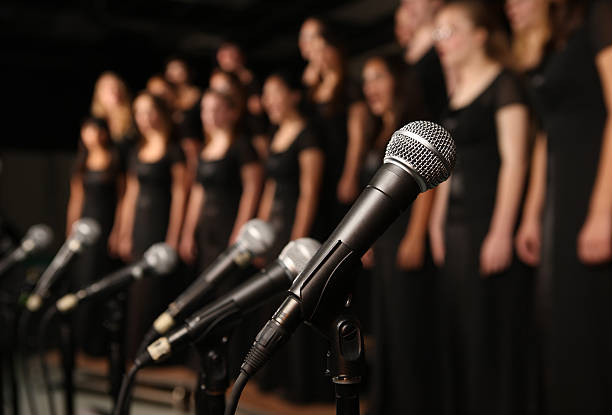
Performing Arts Academy YR9
9PAR1The Performing Arts Academy course will focus on students developing an understanding of arts-specific elements, conventions and skills across a range of Performing Arts forms. Students will connect with and experience performance subject matter through in-class, workshops, guest presentations, and field trips. During the semester, student participation and engagement in creative processes will allow them to refine their skills and realise their potential as aspiring artists.
SKILLS
- Specialist group tuition and in class workshops
- Goal Setting
- Time Management
- Rehearsal processes and ensemble etiquette
- Performance strategies
- Practice techniques
- Critical reflection and improvement
- Teamwork and effective communication
- Dealing with Success and Failure
- Reflect on creative practices in order to improve upon your artistry
IMPORTANT INFORMATION FOR APPLICANTS : You will also need to fill in our Performing Arts Academy registration form in order to be placed in this course. Fill in the form by clicking this link:

Practical Agriculture
9AGR1Learn best practice when handling livestock, fencing, driving a tractor with implements, agrichemicals and chainsaw safety. In this course you will develop practical skill sets suited to working on farm.

Wairarapa College Woolshed - Student learning how to shear
Learning Opportunities
- Build awareness of Health and Safety requirements in a rural workplace.
- Identify and provide solutions to potential on-farm hazards.
- Investigate employer/employee responsibilities.
- Gain practical skills in handling livestock.
- Use a range of implements on a tractor.
- Safely use a range of agrichemicals.
- Fencing and building skills.
Sculpt It
9VAR2How does sculpture make the ordinary extraordinary?
In this unit, you will explore how sculpture can transform the ordinary into the extraordinary. Inspired by artists like Jeff Koons, Neil Dawson, Claes Oldenburg and Maiangi Waitai, you will create sculptures of superheros, animals, everyday objects and design digital sculptures using SketchUp or Tinker cad. You will then bring your digital creations to life by 3D printing your design. This course will challenge you to see and shape the world in new ways through both traditional and digital techniques. By the end of the semester, you will have created a portfolio of 3D artwork (drawings, painting sculpture) that responds to the question "How does sculpture make the ordinary extraordinary?".


Sports Academy – Pathway to Performance (P2P)
9SPA1

Link for Year 9 Sports Academy Application via waicol.nz: https://docs.google.com/forms/d/e/1FAIpQLScHCJkkrv_vk8pkwU1KmH_4GtsMXkRnsXEMFDySiRVrJ_XzHA/viewform
T.E.A.M Together Everyone Achieves More
9PEH2
Te Reo 1 Poutama Tuatahi
9MAO1Te Reo Maori

1 Poutama Tuatahi
Nau mai, haere mai ki te Poutama Tuatahi o te reo Māori i te Kāreti o Wairarapa!
Welcome to Step One of your Māori Language journey at Wairarapa College!
The aim of this course is to provide you with the foundation you need to begin to communicate in te reo Māori.
By the end of the course, you will be able to:
- Recite karakia
- Develop an awareness of the processes involved in language learning
- Begin to develop listening, speaking, reading and writing skills in the Māori Language
- Design and deliver your own personal pepeha

The Design Studio: Applied Design & Innovation
9TXD2"Design the Fabric. Create the Product. Make it Your Own."
Textiles Design Studio: Applied Design & Innovation is a creative, hands-on textiles course where students explore how original designs can transform fabric into unique and purposeful products. Students will learn how designers use colour, pattern, imagery, and surface decoration techniques to create textiles that are visually engaging and personally meaningful.
Throughout the course, students will follow the design process to investigate ideas, develop concepts, and apply their own designs directly onto fabric. Using techniques such as screen printing, tie dyeing, appliqué, fabric painting, stencil printing, embroidery, and other textile embellishment methods, students will experiment with a range of applied design processes to personalise textiles and create distinctive fabric surfaces.
Students will then use their decorated fabrics to design and construct innovative textile products that respond to a design brief. Emphasis is placed on creativity, experimentation, craftsmanship, and the application of design thinking to produce products that are both functional and aesthetically appealing.
By the end of the course, students will have developed their skills as textile designers and makers, creating a portfolio of design work and a finished textile product that showcases their individual creativity and understanding of applied textile design.
What You Will Learn
- How to apply the design process to develop creative textile products.
- Ways to create original designs inspired by personal interests, culture, nature, and contemporary trends.
- Techniques for decorating and personalising fabric, including screen printing, tie dyeing, and appliqué.
- How to select suitable materials and design techniques for a specific purpose.
- Construction skills to transform designed fabrics into finished products.
- How to evaluate and refine designs to improve outcomes.
Possible Products
Students may create products such as:
- Tote bags
- Cushion covers
- Storage solutions
- Accessories
- Wall hangings
- Decorative textile items
- Lifestyle and personal-use products
The Human Machine (THM)
9PEH3
The Sewing Studio: Design, Create & Construct
9TXD1Imagine it. Design it. Create it."
The Sewing Studio: Design, Create & Construct is a hands-on textiles course that encourages students to transform creative ideas into innovative textile products. Through the design process, students will learn how designers identify a need, develop ideas, test solutions, and create products that are both functional and visually appealing.
Students will explore a range of textile materials, tools, and techniques while developing confidence in sewing and construction. They will learn how to communicate ideas through design, experiment with materials and processes, and apply practical construction skills to bring their designs to life.
By following the design process from concept to completion, students will design and construct a textile product that reflects their creativity, problem-solving skills, and growing understanding of textiles technology.
Course Aims
Students will:
- Develop creative thinking and design skills.
- Learn how to follow the design process to create innovative textile products.
- Build confidence using textile tools, equipment, and materials.
- Develop sewing and construction skills.
- Learn to plan, manage, and evaluate a textile project.
- Create a high-quality textile product that meets a design brief.
The Web of Life: Understanding Science from the Ground Up
9SCI1
Treasures of the Māori World
9MAO2Treasures of the Māori World
Nau mai, haere mai, welcome to Nga taonga o te ao Māori-Treasures of the Māori World
The aim of this course is to introduce you to some of the marvels of the Māori culture.
By the end of the course, you will be able to:
- Name the parts of the marae
- Explain the purpose and stages of pōhiri ceremony
- Learn how to make poi
- Visit either a local sight of significance, a marae or a museum
- Examined closely and actually touch a number treasures/artifacts of the Māori world including traditional items of jewelry, house hold implements, weapons, musical instruments, ceremonial pieces and clothing made with traditional technics and materials as well as kiwi feather items
- And, you get to research the item you most enjoyed learning about. It could be..


Subjects for Year 9 Students
10 Drama 1 Perform Scenes from Scripts
10DRA2Have you ever wondered where the characters of villains, heroes, heroines, and slapstick clowns come from? In this course, students will learn where our stock characters come from and how that influences all the characters we see in film, television, and on stage today. Students will learn how to walk and move as each character, create their own scenes and have the chance to create their own mask for their character.
- Develop performance, comedic devising and improvisational skills
- Practice acting techniques
- Develop and refine competent performance and script writing skills
- Develop practical skills required for costume and prop making

10 Drama 2 Improvisation and Devising
10DRA1You will learn what it takes to develop your performance skills: confidence, understanding of the innate structure and nature of storytelling that must be present and naturally occurs. In the second half of the semester, you will have the opportunity to develop a short play and perform to a local primary school. Many roles will be available, including behind the scenes.
SKILLS:
- Develop improvisational skills and practise acting techniques
- Develop confidence in performance skills
- Develop knowledge and understanding of the many parts required to put on a successful show
10 English: Blood, Sweat, and Tears
10ENG2
Discover the stories behind the score.
Sport may seem like just a game, but literature often shows us how it can become a powerful way to protest and inspire change. In this course, we’ll dive into stories that use sports as a backdrop to explore issues like justice, courage, and standing up for what’s right.
How can sport be a stage for protest, progress, and change?
Is sport really “just a game,” or something more?
All junior English courses develop the skills of reading and writing. This course also includes presenting and making meaning of visual texts.
Teaching and learning in this course will prepare students for the NCEA Literacy Co-requisite Common Assessment Activities (CAAs).
10 English: Conflict and Resolution
10ENG1
Explore why we fight — and how we find peace.
From family arguments to epic battles, conflict appears again and again in literature. In this course, we’ll read stories and poems that show how people handle conflict and work toward resolution. We’ll explore different ways writers imagine war, protest, negotiation, and peace, and think about what we can learn from their stories.
Why do we fight, and what is the best way to resolve disputes?
All junior English courses develop the skills of reading and writing. This course also includes presenting and making meaning of visual texts.
Teaching and learning in this course will prepare students for the NCEA Literacy Co-requisite Common Assessment Activities (CAAs).
10 English: Shakespeare and other Classics
10ENG4
Uncover the timeless words and ideas that still speak to us today.
Some stories are so powerful that people keep reading and performing them hundreds of years later. In this course, we’ll read Shakespeare’s plays and other classic works to discover why their themes still matter today. We’ll explore big ideas like love, jealousy, ambition, and courage, and see how these stories connect to our lives now.
Why do some stories stand the test of time?
All junior English courses develop the skills of reading and writing. This course also includes presenting and making meaning of visual texts.
Teaching and learning in this course will prepare students for the NCEA Literacy Co-requisite Common Assessment Activities (CAAs).
10 English: Truth and Lies
10ENG3

Uncover the tricky world where truth and lies collide.
Literature is full of stories that challenge what’s true and what’s not. We’ll explore novels, plays, films, and poems where characters bend the truth, tell lies, or discover hidden secrets. What do these stories teach us about honesty, trust, and the power of words? How can stories shape what people believe?
Is truth always honest, and are lies always wrong?
All junior English courses develop the skills of reading and writing. This course also includes presenting and making meaning of visual texts.
Teaching and learning in this course will prepare students for the NCEA Literacy Co-requisite Common Assessment Activities (CAAs).
10 Everyday Maths 1
10MAT1Yr 10 Everyday Maths
Full Year
This course will cover ALL strands of the NZ Curriculum: Number , Algebra , Patterns & Graphing , Statistics , Measurement , Geometry , Probability.
It will, where feasible and practicable, include themes and contextual work in each strand (topic) that relate to everyday life.

10 Maths on the Move 2
10MAT2Yr 10 Maths on the Move
Full Year
This course will cover ALL strands of the NZ Curriculum: Number , Algebra , Patterns & Graphing , Statistics , Measurement , Geometry , Probability.
It will, where feasible and practicable, include themes and contextual work in each strand (topic) that relate to dynamic movement, sports ball paths, transport, flight, music & dance etc

10 Planet Maths 3
10MAT3Yr 10 Planet Maths
Full Year
This course will cover ALL strands of the NZ Curriculum: Number , Algebra , Patterns & Graphing , Statistics , Measurement , Geometry , Probability.
It will, where feasible and practicable, include themes and contextual work in each strand (topic) that relate to Earth and the solar system in which we orbit.

All Roads Lead To Rome
10SS5This course is a good introduction to Classics. The flyer below details what will be studied in this course:

Be Your Own Boss - Being an Entrepreneur
10COM2Would you like to be your own boss and Make Money ?
Learn how the stock Market Works and how to make cash
How can you set up your own business and make a profit?
We Show you how to set up your own business or buy one
Watching Dragons Den and Shark Tank are vital to this course as you will learn the real language of business and then apply this to your own business. This is a hands on, practical business course where you will learn to run a business, and create and understand financial accounts.
Basic accounting skills are mastered as students learn how to understand Financial information and then use it to make good business decisions.
Aspects of the share market are also taught so we can learn how the big companies operate and how we can buy shares in them.


Begin your Tradie Journey (Yr 10)
10PDE1


This course incorporates both design and practical elements and is open to all students. It provides the opportunity to develop a broad knowledge of material use, techniques and skills in a workshop.
While taking this course you will design and manufacture several projects using a variety of materials including wood, metal and acrylic. In addition to using traditional tools and machinery, there will also be a focus on implementing new technologies at this level to prepare you for NCEA. These include CAD/CAM, CNC routing, laser cutting and 3D printing.
Begin your Tradie Journey aims to give you an appreciation of design and a broad skills base. This subject leads on to a variety of University Entrance and/or Vocational courses involving design, materials, and manufacturing in Years 11, 12, and 13.
Build it. Code it
10DIT1
Nope - NOT Mr Swallow but a problem solver, who is naturally curious, likes gadgets, enjoys tinkering and creating things, hopefully like yourself. And Mr Swallow!
If that's all true, then this course is for you.
Some of the THINKING and PLANNING will be done for you. But the BUILDING will be up to you.
Electronics and programming are the focus of this course.
There will be an opportunity to gain four L1 credits by completing Unit Standards in Web and Excel.
ELECTRONICS
Learn the basics of electronic terminology and simple systems that make stuff go when you press the ON button.
Because we are all like control and want things to move as we desire, you will learn some basic coding to ensure the various robots you will use will go where you want them to.


SOLDERING
All that electronic stuff needs a circuit and circuits need solder. You will learn how to do some simple soldering and you'll be rewarded for your efforts with devices that move, buzzers that beep and lights that flash.


CODE THE DRONE
You will learn how to control a small drone with code.

PYTHON CODING
Learn the basics of this coding language and carry on with it in Year 11 if you have a desire to learn more.
Celebrity Chef
10FNT3Cook, plate, and impress!
Take your culinary skills to the next level as you create restaurant-quality dishes, explore international cuisines, and master advanced cooking techniques.
Develop the confidence, creativity, and flair needed to cook like the pros through exciting practical challenges.
As the main assessment, you'll work as part of a team to plan, prepare, and run a Pop-Up Restaurant, serving guests and experiencing the fast-paced world of professional hospitality.


Create it, Make it
10DIT2
ChatGPT is all the rage at the moment. Did you know that it is almost three years old and that other Ai models are better?
You will learn how to use ChatGPT to your advantage as well as a number of other Ai tools to make some cool images.

Affinity makes some excellent software. You will make use of their applications to create a brochure or poster of your choice. In addition there is an opportunity to gain 2 credits making publications using Microsoft Publisher.

There will be an opportunity to create a game using drag and drop code blocks - a bit like Scratch.
Make an audio track for a dance or backing music for a film.

Learn how to use a spreadsheet as a simple database and to track your finances.
Learn three-dimensional design software. Then design and 3D print a simple toy that can be clipped together.
Skills learnt in this course will serve you well should you want to do CAD design or make 3D prints in your senior years.

Creative Design & Visual Communication (Yr 10)
10DVC1Context:
Unlock your creativity and master the art of visual storytelling! This course introduces students to the fundamentals of design and visual communication through hands-on projects and interactive lessons. Students will explore various techniques such as freehand drawing, rendering, and digital design using industry-standard software.
Key Topics Covered:
- Introduction to Design Principles: Learn the basics of design elements and principles, including line, shape, color, texture, balance, and contrast.
- Freehand Drawing and Sketching: Develop skills in freehand drawing, perspective, and sketching techniques to visually communicate ideas.
- Rendering Techniques: Explore different rendering methods to create realistic and expressive drawings.
- Technical Drawing: Understand the basics of technical drawing, including orthographic projection, isometric drawing, and dimensioning.
- Design Process: Learn about the design process from concept development to final presentation, including brainstorming, research, and prototyping.
- Visual Communication: Study the principles of visual communication and how to effectively convey messages through design.
- Collaborative Projects: Work on group projects to develop teamwork and communication skills, simulating real-world design scenarios.
Assessment:
- Portfolio: Compile a portfolio of your work throughout the course, showcasing your progress and creativity.
- Projects: Complete individual and group projects that demonstrate your understanding of design principles and techniques.
- Presentations: Present your design concepts and projects to the class, developing your public speaking and presentation skills.
Outcomes: By the end of the course, students will have developed a strong foundation in design principles, problem-solving skills, and the ability to communicate ideas visually. Whether you’re interested in product design, architecture, or graphic design, this course will equip you with the skills to bring your ideas to life.


Defending Aotearoa
10SS1Defending Aotearoa builds on the ideas and knowledge gained from the year 9 Exploring Aotearoa course.
In this course students explore current war and conflict, historic war in New Zealand and New Zealand's participation in global warfare. Contexts for this include the NZ wars and WW1. Students will also explore how New Zealanders have defended their right to protest and will explore different scenarios where protest has been used to make change. Contexts for this include the Springbok Tour, Dawn Raids and Nuclear Free NZ.
Students will also learn key social science skills, such as understanding different perspectives, and will have opportunities to develop their literacy and numeracy skills. Looking into current events is also a component of this course.
This course is a compulsory course all year 10 students must take as it includes elements of the compulsory Aotearoa Histories Curriculum.

English as an Additional Language
EALUrdu: سلام (Salaam)
Hindi: नमस्ते (Namaste) or हेलो (Hello)
Gujarati: હેલો (Hello) or નમસ્તે (Namaste)
Hebrew: שלום (Shalom)
Filipino (Tagalog): Kamusta or Hello
Japanese: こんにちは (Konnichiwa)
Chinese (Mandarin): 你好 (Nǐ hǎo)
Dutch: Hallo
Cambodian: សួស្តី (Sursdey)
Yr 9 -13
The EAL (English as an Additional Language) course at Wairarapa College is designed to support students whose first language is not English.
This program focuses on developing students' English language skills across reading, writing, listening, and speaking. This will help them achieve academic success and integrate effectively into the school community.
The curriculum is tailored to individual proficiency levels, ensuring tailored learning experiences. Students engage in interactive lessons that build vocabulary, grammar, and cultural understanding, to help them within their mainstream subjects and social interactions. Additionally, the course includes outdoor group activities and experiences.
The goal is to foster both language fluency and confidence, empowering students to fully participate and excel in their educational journey. NCEA credits will be offered as appropriate within the senior program.
Faster, Higher, Stronger (FHS)
10PEH3
Food Fusion
10FNT2Have you got what it takes to create the festival's most popular food?
In Food Innovation you will explore trending foods, test new ideas, and create delicious recipes from scratch.
As part of the Street Food Festival, you'll become a food entrepreneur by designing, producing, promoting, and selling your own street food creation.
Will customers be lining up for your product?

From Sparks to Speed – The Science of Motion and Energy
10SCI1
Grow Local, Sell Global
10AGR3What factors influence the food we grow, where and how we grow it, and to whom we sell it?
You will be able to show your understanding of the location of agricultural and horticultural production and how these influence the choice of crop or livestock.

Grow Local, Sell Global 2022 - Donating 400kg of potatoes to the Masterton food bank which they harvested
Learning Opportunities
- You will show your understanding of the pūtake and location of agricultural and horticultural production, and how these influence the choice of crop or livestock.
- Understand how soil is formed, the reasons for soil differences, and how to manage soil in a sustainable way.
- Describe various soil management practices.
- Explain the function of the different parts of plants.
- Identify and explain how different management practices effect the growth of plants.
- Propagate a range of plants from both seeds and cuttings.
- Investigate Māori farming techniques and plant uses. This will include plant species and purpose, and an understanding of how Māori used the lunar calendar for planting, harvesting and gathering kaimoana.
- Understand the aspects of planning a garden.
- How and where our food is sold.
Healthy, Happy Livestock
10AGR2Livestock are an integral part of farming in New Zealand. They provide us with a range of useful products but they must be looked after.
In this course you will look at the knowledge required and management practices used by farmers to maintain the health and wellbeing of livestock to produce at their best.
This course will utilise our school farm, livestock and local vets.

Wairarapa College Farm - Cattle at the gate 2022
Learning Opportunities
- Understand the anatomy and physiology of ruminant and non-ruminant farm animals.
- Identify important livestock species farmed in New Zealand and be able to describe their whakapapa and how that can be altered through genetics and selection.
- Identify the characteristics between healthy and unhealthy animals.
- Explain management practices that maintain the health of livestock.
- Be confident at handling livestock in the yards and being able to administer a range of medical interventions.
- Supplement feed both young and mature livestock.
- Awareness of current animal welfare practices.
Human Rights
10SS3
Lead the Way (LTW)
10PEH2
Making Stuff! A Year 10 Product Design Course
10PDE2Making Stuff!
Course Description:
Making Stuff is a half-year Year 10 programme that builds on the foundational skills learnt in Year 9 product design. This can be taken without having studied product design in year 9.
The programme works on woodworking techniques, including joinery, the use of hand tools and simple woodworking machines. Students will design and make projects to enhance their workshop skills and creativity. The emphasis is on safety, sustainability and precision in using hand tools and simple machines. The development of skills will help to build a deeper appreciation for designing and making things in a workshop environment.
Making Stuff Programme
Term 1: Woodworking Techniques
- Week 1-2: Review of Year 9 Skills
- Quick recap of basic woodworking techniques and safety
- Assessment of individual skill levels
- Week 3-4: Complex Joinery Techniques
- Advanced joinery methods (e.g., dovetail, box joints)
- Practical applications in projects
- Week 5-6: Project 1: Advanced Wooden Box
- Designing and planning the project
- Constructing and finishing the box
- Week 7-8: Woodworking Machines and Power Tools
- In-depth training on machines (e.g., bandsaw)
- Safety and operation procedures
- Week 9-10: Project 2: Small Furniture Piece (e.g., stool or shelf)
- Designing and planning the project
- Constructing and finishing the piece
Term 2: Furniture Making and Creative Projects
- Week 1-2: Design Principles and Planning
- Basics of furniture design and ergonomics
- Sketching and planning furniture projects
- Week 3-4: Project 3: Small Furniture Item (e.g., chair, table)
- Designing and planning the project
- Constructing and finishing the item
- Week 5-6: Woodworking Design Principles
- Basics of design and aesthetics in woodworking
- Sketching and planning projects
- Week 7-8: Project 4: Creative Woodworking Item
- Designing and planning the project
- Constructing and finishing the item
- Week 9-10: Finishing any remaining work and reviewing the semesters work. Looking at next years options available in Materials Technology.
Assessment
- Projects: 70%
Class Participation: 30%

Media Literacy
10MST1Media Literacy is a new course for 2027. It will run as a semester course and is open for any students who want to know more about how to navigate the digital world they now inhabit. Media Literacy was born out of a concern about the way people's screen time impacts their behavior, their beliefs and their interactions with the world around them. The intention for this course is to provide students with the skills to be able to recognize misinformation, fake news, rabbit holes (the internet version) and to recognize the impact their social media interactions can have on their beliefs, attitudes and mental health.
The rise in mental health concerns among young people—often linked to negative experiences on social media—cannot be overlooked. Issues such as cyberbullying, online harassment, exclusion from group chats, and pressure to maintain a certain digital image can deeply affect students’ emotional well-being. This class is designed to play a preventive role by teaching students how to recognize harmful online behaviors, respond safely, and support peers who may be struggling. It would also encourage more conscious and empathetic use of digital platforms, which is essential for creating a positive and inclusive school environment.
Mind, Body and Soul (MBS)
10PEH4
Music: Practical Music YR10
10MUS3What does it takes to be a successful musician! Students will continue to develop and refine practical instrumental skills that they began learning in Practical Music 101 on one of the following instruments:
- voice
- guitar
- keyboard
- drums
- bass guitar
Students will continue to develop and refine their music literacy knowledge and instrumental techniques required to play with accuracy, confidence and the appropriate musical style. Students will listen to and analyse New Zelaand Music and create and play musical compositions with increased sophistication. Students will also add to their understanding of how best to practice in a group and perform in a band with increased confidence.
This course will focus on teaching students to understand and express meaning through music. The aim of junior Music at Wairarapa College is to develop student understanding of musical techniques, genre features, and the role of music in local and international communities. Music elements and notation knowledge is developed and extended throughout the semester. Students will learn through written notation, improvisation, experimentation, and repetition, as well as engage with music and look deeply into music from diverse times and cultures.
Music develops confidence, creativity and communication as students learn how to present themselves confidently in performance and communicate and problem solve in small groups.
SKILLS
- Develop and refine instrumental skills and techniques
- develop musical ensemble skills
- Refine performance skills and techniques
- Analyse and reflect on Music styles from New Zealand and around the world
- Use music elements and conventions in more sophisticated and innovative to create original music
Music: Song & Voice YR10
10MUS1What does it takes to be a great singer? During this course students will develop and refine their skills as vocalists as part of a singing group, as well as build individual vocal technique. Students will explore correct techniques used by singers from a variety of styles and genres. Students will learn about vocal health and best practice. Students will work as a group to perform a varied repertoire of songs.
This course will focus on teaching students to understand and express meaning through song. The aim of junior Singing as a course at Wairarapa College is to develop student understanding of musical techniques, genre features, and the role of a range of singing styles across music genres. Music elements and notation knowledge is developed throughout the semester. Students will learn through written notation, improvisation, experimentation, and technical drills, as well as engage with music and engage with music from diverse times and cultures.
SKILLS
- students will learn to be confident in their singing voice, and be able to demonstrate proper vocal techniques
- Students will learn to read vocal music, including note reading, rhythms, and expression
- Students will develop to practical choral and group elements, such as ensemble singing, blend, and vocal techniques.
- Students will sing, rehearse and perform a range of music styles and genres in an ensemble.
- Students will grow a love and appreciation for music and its influence in our society
Nature’s Code – How DNA Shapes the Living World
10SCI2
Performing Arts Academy YR 10
10PAR1The Performing Arts Academy course will focus on students developing an understanding of arts-specific elements, conventions and skills across a range of Performing Arts forms. Students will connect with and experience performance subject matter through in-class, workshops, guest presentations, and field trips. During the semester, student participation and engagement in creative processes will allow them to refine their skills and realise their potential as aspiring artists.
SKILLS
- Specialist group tuition and in class workshops
- Goal Setting
- Time Management
- Rehearsal processes and ensemble etiquette
- Performance strategies
- Practice techniques
- Critical reflection and improvement
- Teamwork and effective communication
- Dealing with Success and Failure
- Reflect on creative practices in order to improve upon your artistry
If you did not take this course in 2026 You will also need to fill in our Performing Arts Academy registration form in order to be placed in this course. Fill in the form by clicking this link:
Practical Agriculture
10AGR1Learn best practice when handling livestock, fencing, driving a tractor with implements, agrichemicals and chainsaw safety. In this course you will develop practical skill sets suited to working on farm.

Wairarapa College Woolshed - Student learning how to shear
Learning Opportunities
- Build awareness of Health and Safety requirements in a rural workplace.
- Identify and provide solutions to potential on-farm hazards.
- Investigate employer/employee responsibilities.
- Gain practical skills in handling livestock.
- Use a range of implements on a tractor.
- Safely use a range of agrichemicals.
- Fencing and building skills.
Smart Shoppers - Consumer Law
10COM1Can you afford not to learn about money ?
How much will that loan really cost me ?
Make good life choices, be financially literate !
Can you return things that you bought from a shop if you change your mind?
Does the shop have to give you a refund?
If something goes wrong with something you buy, can you get your money back?
What is a contract and what does it mean?
You will gain an understanding and awareness of your rights and responsibilities, and this is particularly important when borrowing money. Consumer and business law is used to teach these ideas and concepts. You will share your own experiences as you will all have bought goods or services. There will be lots of opportunities for you to work on your own ideas and projects. By the end of this course, you will have become a 'clever consumer' and a 'sharp shopper'.


Sports Academy – Better Never Stops (BNS)
10SPA1

Link for Year 10 Sports Academy Application vww.waicol.nz:
https://docs.google.com/forms/d/e/1FAIpQLSfI0eqM8kCsayLgVJ6zxzsrn0EUJH3ZG_Vqq0iT1Ibq2N4uRw/viewform
Streetwear: Concept to Creation : "Wear Your Story. Design Your Identity."
10TXD2Year 10 Textiles – "Wear Your Story. Design Your Identity."
Semester 2 Course
Course Overview:
Streetwear: Concept to Creation is a creative, design-focused textiles course where students explore the world of contemporary streetwear and fashion design. Through the design process, students will investigate how clothing can communicate identity, culture, interests, values, and personal style.
You'll bring your ideas to life by creating a streetwear garment that tells your story and showcases who you are through fashion and design. Throughout the project, students will develop practical textile construction skills while applying design thinking, problem-solving, and project management strategies to bring their ideas to life.
By the end of the course, students will have produced a professionally presented design portfolio and a completed streetwear garment that showcases their understanding of the design process, technical skills, and personal expression.
Key Learning Areas
- Exploring identity through fashion and design
- Researching contemporary streetwear culture and trends
- Applying the design process from concept to creation
- Developing fashion illustration and design communication skills
- Experimenting with textile materials and techniques
- Constructing a wearable streetwear garment
- Evaluating design decisions and final outcomes
Course Motto
"Wear Your Story. Design Your Identity."

Te Reo 2 Poutama Tuarua
10MAO1Te Reo Maori

Poutama Tuarua 2
Nau mai, haere mai ki te Poutama Tuarua o te reo Māori i te Kāreti o Wairarapa!
Welcome to Step Two of your Māori Language journey at Wairarapa College!
The aim of this course is to extend the foundation set in Poutama Tuatahi (1) so that students are able to understand Te Reo Māori that contains well-rehearsed sentence patterns and familiar vocabulary.
By the end of the course, you will be able to:
- Interact appropriately in predictable exchanges using the Māori Language
- Acquire skills to draw whakapapa (genealogical charts/family trees)
- Communicate about yourself and your family
- Further develop listening, speaking, reading and writing skills in Te Reo Maori
Te Reo 3 Poutama Tuatoru
10MAO2Te Reo Maori

Poutama Tuatoru 3
Nau mai, haere mai ki te Poutama Tuatoru o te reo Māori i te Kāreti o Wairarapa!
Welcome to Step Three of your Māori Language journey at Wairarapa College!
The aim of this course is to extend the foundation set in Poutama (1) and (2) so that you are exposed to a wide range of language on familiar topics relevant to your life.
By the end of the course, you will be able to:
- Use a range of graphic language to describe yourself, friends, family and strangers
- Design an advert in Te Reo Māori fit for a real estate magazine to sell the house of your dreams
- Demonstrate an understanding of some common tikanga Māori
- Further enhance your listening, speaking, reading and writing skills in Te Reo Māori
Toi Whenua: Art of the Land
10VAR2Toi means art, and whenua means land.
The course focus is on creating art that is about or connected to the land and the people who inhabit it. The art we will create will focus on this question: How can art reflect the connection between people and the land in Aotearoa New Zealand? You will create a series of drawings, paintings, and prints. We will draw inspiration from a range of Aotearoa New Zealand and international artists to guide us in using new techniques.

Treasures of the Māori World
9MAO2Treasures of the Māori World
Nau mai, haere mai, welcome to Nga taonga o te ao Māori-Treasures of the Māori World
The aim of this course is to introduce you to some of the marvels of the Māori culture.
By the end of the course, you will be able to:
- Name the parts of the marae
- Explain the purpose and stages of pōhiri ceremony
- Learn how to make poi
- Visit either a local sight of significance, a marae or a museum
- Examined closely and actually touch a number treasures/artifacts of the Māori world including traditional items of jewelry, house hold implements, weapons, musical instruments, ceremonial pieces and clothing made with traditional technics and materials as well as kiwi feather items
- And, you get to research the item you most enjoyed learning about. It could be..
Tūrangawaewae: A Place to Stand
10VAR1

Tūrangawaewae is a fundamental and powerful Māori concept that literally means "a place to stand." It represents a place where one has rights of residence and belonging through kinship and whakapapa (genealogy). The theme of this unit is "people in place," focusing on our connection to a location and how that place shapes our identity.
The art we will create will focus on this question: How does the place you belong to shape who you are? You will use a sketchbook to study artists, explore techniques, and generate ideas for a final artwork. Each artwork will draw on what shapes your identity, this could include portraits, landscapes, buildings, patterns, etc. We will draw inspiration from a range of Aotearoa New Zealand and international artists to guide us in using new techniques.
Wearable Art: Concept to Creation : Design & Innovation
10TXD1Year 10 Textiles –Wearable Art: From Concept to Creation
Textiles: From Concept to Creation is a design-focused textiles course that guides students through the complete design process, from identifying a brief and generating ideas to developing, producing, and evaluating a finished textile outcome. Students will explore textile materials, techniques, and technologies while developing creative thinking, problem-solving, and practical making skills. The course emphasizes the role of the designer and encourages students to create innovative and purposeful textile products that respond to a design need or opportunity.
Key Learning Focus:
Key Learning Focus
- Explore themes, stories, and creative influences to inspire original design ideas.
- Experiment with materials, textures, construction techniques, and textile technologies.
- Develop and refine your own design concepts through research, sketching, sampling, and prototyping.
- Investigate the exciting world of wearable art and design a unique textile outcome, with the potential to create a garment for entry into the Toi Wearable Art Awards.
- Plan, create, and construct a bold, innovative, and performance-ready piece that brings your vision to life.
- Present your work and evaluate your design process, celebrating creativity, craftsmanship, and personal expression.


Subjects for Year 10 Students
Achievement Standards On Line Course
11ONLINEOnline Course. This is not a subject in its own right. Rather, this is a platform that allows you to take a subject not currently offered at Wairarapa College or you cannot take due to a timetabling clash.
Selecting this option does not automatically guarantee you a place in an online subject. You must be able to prove you are capable of meeting the requirements of online learning.
Please check these websites for the subject lists:
https://www.kotuiako.school.nz/(Preferred option)
https://www.tekura.school.nz/lp
Students wishing to take a class through Te Kura must speak to Mr Hurndell first.
Once you select this as an option you will receive a form from Mr. Wallis asking you to identify the online subject you wish to take. If you do not have a subject in mind - do not select this option. It is important you fill this form out as soon as possible or you risk not being put into your class.
English as an Additional Language
EALUrdu: سلام (Salaam)
Hindi: नमस्ते (Namaste) or हेलो (Hello)
Gujarati: હેલો (Hello) or નમસ્તે (Namaste)
Hebrew: שלום (Shalom)
Filipino (Tagalog): Kamusta or Hello
Japanese: こんにちは (Konnichiwa)
Chinese (Mandarin): 你好 (Nǐ hǎo)
Dutch: Hallo
Cambodian: សួស្តី (Sursdey)
Yr 9 -13
The EAL (English as an Additional Language) course at Wairarapa College is designed to support students whose first language is not English.
This program focuses on developing students' English language skills across reading, writing, listening, and speaking. This will help them achieve academic success and integrate effectively into the school community.
The curriculum is tailored to individual proficiency levels, ensuring tailored learning experiences. Students engage in interactive lessons that build vocabulary, grammar, and cultural understanding, to help them within their mainstream subjects and social interactions. Additionally, the course includes outdoor group activities and experiences.
The goal is to foster both language fluency and confidence, empowering students to fully participate and excel in their educational journey. NCEA credits will be offered as appropriate within the senior program.
Level 1 Food Technology : Food Innovation
11FNTHave you ever wondered how your favourite snacks are created, tested, and made successful?
In Food Technology, you'll become a food innovator, designing and developing products for real people and real situations.
Learn practical food preparation skills while experimenting with ingredients, materials, and techniques to create exciting new food products.
You'll explore current food trends, nutrition, and sustainability, gather feedback from stakeholders, and use the technological design process to refine your ideas.
If you enjoy being creative, solving problems, and working hands-on, this course will give you the skills to turn great ideas into delicious realities.

Level 1 Hospitality : Industry Skills
11HOSEver wondered what it's like to work in a café, restaurant, or catering business?
Get a taste of the hospitality industry. Build the practical skills used every day in cafés, restaurants, and catering businesses. Learn food preparation, how to meet customer needs, food safety, and professional workplace practices while gaining confidence in a range of hands-on hospitality experiences.

NCEA Level 1 Agriculture
11AGHThis course develops students’ knowledge of primary production practices in New Zealand and the impact on our environment.
Students will study aspects of livestock and soil management which will include opportunities to develop particular practical farming skills. Students also explore the reasons for the location of New Zealand's primary industries and the importance behind environmentally sustainable farming practices.
Topics Covered
- Livestock life processes and management practices
- Geographic distribution of primary production in New Zealand
- Develop practical skills used in agricultural production
- Understand how soil properties are managed in primary production systems
- Sustainability considerations that influence primary production management practices

Wairarapa College Farm 2021 - Ewes and lambs on chicory after docking
NCEA Level 1 Art
11VARStudents develop their understanding, knowledge, and skill in the Visual Arts through a body of work (artworks) in a range of media (painting, drawing). The course focuses on generating, developing, and extending ideas in drawing, printmaking, collage and painting in response to various themes based on established practice (artist models).

NCEA Level 1 Commerce
11COMCommerce is a combination of Economics, Accounting and Business studies. Students will learn the language of business and understand how Whanau, communities and organisations are interdependent. We complete case studies on businesses and see how society benefits through innovation, enterprise and kaitiakitanga. If you are interested in running your own business or are wanting to study Accounting and Economics at a higher level, then this is the course for you. We will complete 3 Achievement Standards, 2 internals and 1 external. Lots of fun, business conversations and ideas.

NCEA Level 1 Design and Visual Communication
11DVCDesign and Visual Communication is where students can develop their creativity, learn about the practice of designing (initiation and developing ideas), make qualitative judgments (informed decisions on aesthetic and functional aspects of design), and develop a range of drawing (visual communication) skills. Level one will be about teaching the student the fundamentals of design through spatial and product design.
DVC students can gain 15 credits by creating their design portfolio throughout the year in level one. The student’s portfolio will comprise three projects. In the first project, DVC students will explore the design vocabulary by researching te Ao Maori design and a chosen designer to produce an outdoor experience for Wairarapa College. Project two involves RENDERING the outcome from the first project. Finally, in project three, students will apply what they have learned in projects one and two to explore the principles of spatial design.
At the end of this course, the students will gain the following skills:
-Research and file management
-Design Fundamentals
-Sketching Skills
-Rendering skills
-Basic CAD skills through exploring how to use Sketchup or similar software
Advanced and gifted students have the opportunity to do level two standards, but the HOD (Head of Department) must approve it.
For more information on the standards that the student will complete during this course, visit this link. This website breaks down the requirement for achieving each standard and gives a detailed overview of each standard.


NCEA Level 1 Digital Technology
11DITThree papers will be taken, each worth 5 credits.
- Learn how to program.
- Create a digital media outcome
- Learn how interfaces are designed so humans can better interact with digital devices. (EXTERNAL paper)
Each paper will take about eight weeks to complete. Once all three papers are completed, any spare time gives a student a fantastic chance to create a project of their choosing, or even begin the Year 12 course.
The media outcome provides a great opportunity to develop or build an outcome of your choice. Nothing is set in concrete and you have complete freedom with this paper. Examples of choices are electronics, 3D printing, digital audio, animation, CAD design, game design, game making, database, posters and other media, or web development. if you have something else in mind, there is a strong chance you could do that; just speak with the teacher.
The external paper will be taken late in Term 4.
INTERNAL PAPERS
PAPER 1 - 92004: Create a computer program
You will learn Python and with that construct a program that performs a specified task. The beginnings of this were taught in Year 10. But you will revise all of that again and develop your knowledge further so you can create a flexible and robust computer program.

PAPER 2 - 92005: Develop a digital technologies outcome
This paper allows you to explore the wide area of digital outcomes. Anything that is produced on a computer is a digital outcome. What do you want to make? You have full control over what the outcome is - your choice, not the teacher's choice.

EXTERNAL PAPER
PAPER 3 - 92006: Demonstrate understanding of usability in human-computer interfaces
Human-Computer Interaction focuses on designing technology in ways that are user-friendly, effective, and considerate of how people naturally think and behave. So you will look at a bunch of devices (microwave, websites, mobile phone, for instance), to understand why they have been designed the way they are to make it dead easy for us to use.

PROGRAMMER / GAME MAKER - If you are serious about one or both of these then it is recommended that you FIRST take a ONE YEAR online programming course via Kotui Ako. This is taken at school and will cover levels 1, 2 and 3 programming papers (92004+91896+91906) in Python. Yes! Pass Level 2 and Level 3 in Year 11. Four students have achieved this already in previous years.
From there you will be in a much stronger position to make a game in Year 12 and 13.
You CAN game make in Year 11, but programming skills will help you make a better game. Hence, Paper 1 'Create A Computer Program', is done first, in Term 1.
If you do choose the Kotui Ako course, in Year 11 and successfully complete it, then in Year 12 add to your programming skills by learning Java. You'll be on your way to a large salary in a few years !

NCEA Level 1 Drama
11DRAThe course builds on the basics from Year 10. Students should have a strong understanding of Drama and have the confidence to perform on stage. The emphasis is on acting, group work, learning a theatre form and script learning. Each standard is worth 5 credits.
Drama 1.1 Explore the function of theatre Aotearoa.
Drama 1.2 Participate in creative strategies to create a drama.
Drama 1.3 Use Drama techniques to perform a scripted role for an audience (Major production students)
Drama 1.4 Respond to a drama performance

NCEA Level 1 English
11ENG
How do stories from different places help us understand the world and ourselves?
Taking an exciting thematic approach to learning about language and literature, this course will immerse you in a range of stories and contexts from Aotearoa and beyond. You will develop your interest in texts and ideas while building the skills needed to understand and respond to different kinds of writing.
Teaching and learning in this course will also prepare you for the NCEA Literacy Co-requisite Common Assessment Activities (CAAs) and help you gain confidence in reading and writing. Completing this course means you will be ready to continue your learning journey in English at Levels 2 and 3.
To allow for flexibility and differentiation, classes work within the digital platform, ‘Microsoft Teams’. This complements teaching and learning within and beyond the classroom. All students are encouraged to bring a device to use in class, as well as at home.
NCEA Level 1 Geography
11GEOGeography is the study of places and the relationships between people and their environments. Geographers explore both the physical properties of Earth’s surface and the human societies spread across it. Geography seeks to understand where things are found, why they are there, how they develop and change over time and why should we care.
Level One Geography, this year, provides students the opportunity to sit the refreshed Geography NCEA standards. We will explore te taiao (our environment/physical surroundings) at different scales, local, national and global.
We will study river processes and carry out research. This will involve a field trip to our local rivers. We will investigate the spatial distribution of earthquakes. We will also look into current issues impacting New Zealand and/or Pacific societies such as sea level rise.
This course also allows students to develop geographic skills such as mapping, graphing, longitude and latitude, resource interpretation and GIS.
For further information talk to Ms Lindsay.

NCEA Level 1 Health: Better Health, Better Tomorrow
11HED
NCEA Level 1 History
11HISUnlock the past and shape your future with NCEA Level 1 History! Explore key events that changed the world, and develop critical thinking, research, and analytical skills. History helps you understand the world we live in today, challenges your perspective, and prepares you for a future full of possibilities. Whether you're passionate about understanding global events or just curious about how societies have evolved, History offers an engaging and insightful journey that will enrich your learning and set you up for success.
Possible contexts include:
- The Origins of World War Two
- The Impact World War Two on New Zealand
- The Black Civil Rights Movement in the USA
- A perspectives study of an event from our own history


NCEA Level 1 Information and Communication Technology
11ICTStudents will design their own course taken from 9 available standards. They will aim towards 14 credits from a rich mix of standards that allows for individual learning and choice.
Examples of choices are: keyboard skills, basic block-based coding and a range of Microsoft Office skills.
Papers taken each term are governed by student choice, which the teacher will help you design.
There are eight available INTERNAL papers and one compulsory EXTERNAL paper. The external paper is taken at the end of Term 4. Admission to this paper is dependent upon the successful completion of any four Unit Standards.
Note - this is an easier option than the Achieved Standards. Papers can be passed much sooner and a range of credits from two to five obtained. They can be passed sooner a students follow well-written chaptered tutorials.
NCEA Level 1 Mathematics GENERAL
11MATGA full year course comprising three (3) of the new Level 1 NCEA Achievement Standards, one external and two internals, all within the National Curriculum Framework. This course has softer algebra and just the single external exam.
NCEA Level 1 Mathematics STEM
11MATSA full year course comprising at least three of the new Level 1 NCEA Achievement Standards, all within the National Curriculum Framework. It is hoped that all students would attempt both external exams. This course will have the rigour of more algebra and would suit students who have a STEM (Science, Technology, Engineering, Mathematics) career in mind.
NCEA Level 1 Music
11MUSMusic engages us creatively and challenges us intellectually. Our Level One Music course offers a diverse musical education which fosters a love of music in a variety contexts and perspectives. Students are taught analytical, compositional, and performance-based knowledge along with the use of contemporary practices. Students will engage with a diverse range of musical styles, genres, and traditions to broaden their ability to develop musical expression and skills. Students will be taught how to refine musical technique and develop framework for both interpreting AND responding to music (informed by theory and practice). Music leads to pathways in music and related industries, including performance, composition ,music therapy, production and musicology.
Students build strong relationships with their peers through ensemble work and develop key capabilities like communication skills, self management and organisational skills which leads to students having a wide range of employable skills.
Whether you are wanting to study music for the sheer love of it, or pursue a career in music production, technology, management, composing, performing or education - in fact any vocation in which you are required to use creative or critical thinking skills music is a sound choice.
Students are strongly recommended to have taken a JUNIOR MUSIC COURSE at year 9 and/or 10 and be enrolled in school instrumental/vocal lessons or be learning an instrument privately.
Career Pathways in Music and Related Industries
Engineering World
- Sound Engineer
- Acoustic Specialist
- Studio facility designer
- AV integration engineer
Commerce, Law and Society
- Music Industry Manager
- Entertainment Marketing Specialist
- Events & Touring Coordinator
- Copyright/ Licensing Assistant (Music)
Creative & Cultural Industries
- Performer (Instrumental/ Vocal)
- Composer
- Songwriter
- Music Producer
- Orchestra Musician
- Film/Theatre Composer
Digital & Data Systems
- Music Software Developer
- Audio Programming Engineer (games, apps)
- Sound Designer
- Music Technology Specialist
Food & Primary Systems
- Live Event Performer
- Cultural Event Musician
- Rural Arts Coordinator and manager
- Music/art therapist in rural health
Health & Human Sciences
- Music Therapist
- Special Learning needs Music educator
- Music Psychologist
- Public Health Program developer
Natural & Environmental Sciences
- Documentary / Media Composer
- Bio-acoustic researcher
- Acoustic ecologist
- Underwater acoustic technician
Public Service, Security & Global Affairs
- Public Ceremony & State Events Performer
- Military Musician
- Cultural policy advisor
- Arts and Culture policy analyst
- Director of Music
- Primary School Music educator
- Secondary School Music educator
- Music professor
- Music tutor
NCEA Level 1 Pathways to Building
11PTBPathways to Building Level 1: is a BCITO introductory course for students interested in the building industry. It has been developed primarily for use in secondary schools to attract students to careers in building or related trades or professions. The course provides students with a well-balanced, practically oriented course that develops lifelong skills when working with wood and a range of associated workshop and site machinery, stimulating self-esteem, confidence and pride in paying attention to detail of the finished product. Throughout the program there is a strong safety element focusing on correct use of equipment and safety gear.
BCITO is the Industry Training Organisation who manage the qualifications.


NCEA Level 1 Pathways to Engineering
11PTELevel 1 Pathways to Engineering students will develop their understanding of the design process and technological practice by producing a seating project. Students will need to keep a record of the making of their project including photos of them in the workshop. The portfolio of their work will be done in PowerPoint.
Written booklets provided by Competenz are an essential component of this course. Booklets and a completed project need to be finished before any credits can be gained in this subject.
This course has an emphasis on developing a broad range of Engineering techniques and practices alongside product design techniques and manufacturing skills.
Students will learn to work with a variety of equipment including CNC plasma table, metal rollers, metal benders, cutting machines, milling machines, metal lathes, welders, and Engineering hand tools.
Subject Expectations:
Attend each lesson without fail. Be ready to work. Apply yourself to the best of your ability. Being close enough or near enough is not good enough. Take pride in your work or expect to have to redo it.
Safety:
Workshop safety protocols must be adhered to. Repeat offending may result in removal from this course on safety grounds, (Danger to self and or others).
Personal Protection Equipment (PPE): Students must wear covered shoes in the workshops. All other Personal Protection Equipment i.e dust coats, eye, and ear protection are available as necessary.


NCEA Level 1 PE: Healthy Mind, Healthy Body
11PED2
NCEA Level 1 PE: Move Your Body, Shape Your Future
11PED1
NCEA Level 1 PE: Sports Academy - Pathway to Podium
11SPA

Link to Year 11 Sports Academy Application via waicol.nz: https://docs.google.com/forms/d/e/1FAIpQLSeH7kQAJbRdXY78OQrRwMlVhN8boacy2BYeTJ9edHAJfn96fQ/viewform
NCEA Level 1 Practical Agriculture
11AGPThe programme aims to ensure that at the end of the two years of study learners have a combination of practical skills and theoretical knowledge that will enable them to continue to make informed choices about their career options in the primary sector.
Safe work practices aim to equip students with the skills required to safely complete the practical production standards and ensure that learners maintain personal safety in a primary production workplace. Health and wellbeing is also embedded in the programme.
Graduates of this programme will have the skills and knowledge to obtain entry level roles in the primary sector.
After 2 years of study, if all the correct units are completed to a satisfactory standard. The student will gain a National Qualification - New Zealand Certificate in Primary Industries Skills (Level 2).

Wairarapa College Farm - Docking 2020
After selecting this course. The students will go through an interview process as there is a limited number of spaces.
NCEA Level 1 Science for Life
11SCIL
NCEA Level 1 Science General
11SCIG
This course prepares students for the senior science courses of Biology, Chemistry and Physics.
NCEA Level 1 Te Ao Haka
11TAH

Te Ao Haka is a culturally responsive art form, providing opportunities for all ākonga to engage in Māori culture, language and traditional practice. Te Ao Haka is founded on traditional knowledge, but is progressive in the development and evolution of the art form.
Intrinsic to Te Ao Haka are culture, language and identity. Te Ao Haka is a vehicle used to wānanga and communicate culture, tikanga, knowledge systems and iwi traditions. Te Ao Haka is enabling and centres around the importance of family, marae, iwi, hapū and waka through connection with the past, present and future. This belonging gives ākonga a purpose to strive towards and achieve to their full potential, including empowering them to have fun and enjoy the performing arts.
Ākonga who engage with Te Ao Haka recognise that pride in their culture also comes with a responsibility to create a positive space for others to continue expressing themselves in developing their craft. Therefore, ākonga are able to understand their contributions to the art form.
Big Ideas
Ko te reo Māori me ōna tikanga te tūāpapa o Te Ao Haka
Significant Learning at Levels 6-8 of the New Zealand Curriculum
Level 1
Level 2
Level 3
Te Ao Haka is born of its context
Students will learn that Te Ao Haka is born of its contexts – its taiao, atua and kōrero tuku iho.
Students will explore how innovation and creativity in Te Ao Haka is informed by interpretation of context.
Students will understand that meaningful performance is an expression of context.
Students will explore the idea of Te Ao Haka having local dialects - in movement, style, language and content.
Students will explore how Te Ao Haka is influenced by time (past, present and future).
Students will analyse the influence of time, space and context on performance.
Students will explore how Te Ao Haka is influenced by place (local, national, global).
Narratives are the catalyst for all composition
Students will learn about Te Ao Haka narratives and how they connect to te ao Māori.
Students will explore how narratives evolve and are shaped by local and outside influences.
Students will develop and utilise deep understanding of narrative to enhance their performance.
Students will learn that narratives are taonga and are a direct link to tīpuna.
Students will explore how creativity and innovation can be used to link the past and the present through narratives.
Students will understand how the narratives of the past can empower them to shape the future.
He taonga tuku iho
Students will learn that Te Ao Haka is a vehicle for all students to access Māori culture, language and practice.
Students will explore their own connection to Māori culture, language, and practice through Te Ao Haka.
Students will use connection to and experience of Māori culture, language and practice to enhance and embody performance.
Students will learn that Te Ao Haka affirms Māori culture, language, tikanga, identity, knowledge and iwi traditions.
Students will explore their own role in the promotion and sharing of te ao Māori.
Students will be empowered to champion te ao Māori through Te Ao Haka.
Students will learn that meaningful engagement with Te Ao Haka stems from an understanding of its origins and foundations.
Students will explore the way Te Ao Haka is progressive in the development and evolution of the art form.
Students will contribute their own knowledge and whakaaro to the art form.
Te Ao Haka is uniquely and recognisably Māori
Students will learn to identify the unique tikanga and reo features of Te Ao Haka and begin to use them in practice.
Students will use their knowledge of the unique tikanga and reo features to explore their creativity within Te Ao Haka.
Students will refine their understanding and use of the unique tikanga and reo features through performance.
Students will learn that Te Ao Haka is a uniquely Māori art form, built on Māori culture and identity.
Students will develop their creativity and imagination through a uniquely Māori art form.
Students will express themselves through performance of a uniquely Māori art form.
Te Ao Haka can only be truly understood through performance
Students will learn the key skills of performance.
Students will explore creativity in performance.
Students will refine their skills in performance.
Students will learn about the relationship between performance and community.
Students will explore their role as a member of a Te Ao Haka community.
Students will refine their leadership skills, knowledge, and tikanga within Te Ao Haka.
Students will identify components, elements and features of performance through observation.
Students will explore their point of view through observing components, elements and features of performance.
Students will express their perspective as an observer of performance.
NCEA Level 1 Te Reo Maori
11MAOTE REO MĀORI NCEA Level One
Nau mai haere mai ki te taumata tuatahi i te Te Kāreti o Wairarapa! Most students in this course have taken Māori language at Y9 and Y10. The focus of this course is to further increase your understanding of the language and to enable you to express yourself in a variety of ways. This course offers Three achievement standards. You can achieve a total of 14 credits in NCEA Te Reo Maori Level 1. (10 credits assessed internally – 4 credits assessed externally) Internally assessed standards are worked on in class time and at home and are marked by the school and moderated. Externally assessed standards are achieved by successfully completing a national assessment designed and marked externally.
NCEA Level 1 Textiles and Design
11TXDThis course provides students with opportunities to develop knowledge, skills, and capabilities in Textile Technology through the authentic design process, experimentation and construction. Students will work towards gaining 10 Level 1 Internal credits and 5 Level 1 External credits
Throughout the year, students will undertake two major design and make assignments that require them to follow the technological design process. They will identify opportunities, develop design ideas, and use stakeholder feedback to inform and justify decision making as their products evolve. Students will investigate and experiment with a range of materials, components, and textile techniques to determine the most appropriate choices for creating products that are fit for purpose.
The course encourages creativity, innovation, and critical thinking while developing practical textile construction skills. Students will learn to evaluate designs, refine outcomes, and communicate their technological practice effectively.
To achieve Course Endorsement, students are required to complete the external assessment and achieve a grade of Merit or Excellence. Students will be supported to develop the research, practical, and evaluative skills necessary for success in both internal and external assessments.
Achievement Standards:
- AS92012: Demonstrate understanding of the use of technologies in society (Internal, 5 credits)
- AS92013: Demonstrate understanding of sustainable practices in the development of a technological outcome (Internal, 5 credits)
- AS92014: Demonstrate understanding of sustainable practices in the development of a Materials and Processing Technology design 5 credits
This course is ideal for students who are interested in fashion, design, textiles, sustainability, and developing practical problem-solving skills through technology.
NCEA Level 1 Toi Māori
11TOINCEA Level 1 Toi Māori
TE AO TAWHITO - MANA TŪPUNA
“Ehara i te mea poka hou mai, nō Hawaiki mai anō”
“It is not a new thing that just appeared, it came from Hawaiki”
This course is intended to help rangatahi Māori, those who identify as Māori and anyone with an interest in Toi Māori achieve success academically and spiritually while producing visual artwork that is intrinsically linked to Māori culture and whakapapa.
Tauira explore tribal styles, patterns and their meaning within whakairo and kowhaiwhai. They then apply this knowledge to a kaupapa of their choosing, based on whakapapa, tupuna or historical event specific to them. They produce a series of works over term one and two depicting this kaupapa in various media (drawing, painting and small sculptural work).
In term three, all tauira come together as a whānau to produce a painted Pou depicting tupuna appropriate to Te Tapere Nui a Whatonga, the wharenui at Wairarapa College, or a similar mural piece for the kura grounds.


Subjects for Year 11 Students
Achievement Standards On Line Course
12ONLINEOnline Course. This is not a subject in its own right. Rather, this is a platform that allows you to take a subject not currently offered at Wairarapa College or you cannot take due to a timetabling clash.
Selecting this option does not automatically guarantee you a place in an online subject. You must be able to prove you are capable of meeting the requirements of online learning.
Please check these websites for the subject lists:
https://www.kotuiako.school.nz/(Preferred option)
https://www.tekura.school.nz/lp
Students wishing to take a class through Te Kura must speak to Mr Hurndell first.
Once you select this as an option you will receive a form from Mr. Wallis asking you to identify the online subject you wish to take. If you do not have a subject in mind - do not select this option. It is important you fill this form out as soon as possible or you risk not being put into your class.
English as an Additional Language
EALUrdu: سلام (Salaam)
Hindi: नमस्ते (Namaste) or हेलो (Hello)
Gujarati: હેલો (Hello) or નમસ્તે (Namaste)
Hebrew: שלום (Shalom)
Filipino (Tagalog): Kamusta or Hello
Japanese: こんにちは (Konnichiwa)
Chinese (Mandarin): 你好 (Nǐ hǎo)
Dutch: Hallo
Cambodian: សួស្តី (Sursdey)
Yr 9 -13
The EAL (English as an Additional Language) course at Wairarapa College is designed to support students whose first language is not English.
This program focuses on developing students' English language skills across reading, writing, listening, and speaking. This will help them achieve academic success and integrate effectively into the school community.
The curriculum is tailored to individual proficiency levels, ensuring tailored learning experiences. Students engage in interactive lessons that build vocabulary, grammar, and cultural understanding, to help them within their mainstream subjects and social interactions. Additionally, the course includes outdoor group activities and experiences.
The goal is to foster both language fluency and confidence, empowering students to fully participate and excel in their educational journey. NCEA credits will be offered as appropriate within the senior program.
Level 2 Food Technology : Design & Development
12FNTDid you know your sense of smell contributes up to 80% of what you experience as flavour? That's why food developers consider aroma just as carefully as taste.
Have you ever wondered what makes a food product successful?
Level 2 Food Technology is all about experimenting, creating, and improving. You'll explore how food products are developed through testing, trialling, and practical investigation, discovering how small changes can have a big impact on the final outcome.
Learn to think like a food designer as you generate ideas, gather stakeholder feedback, and use evidence to refine your products. Through hands-on practical work, you'll investigate ingredients, develop advanced food preparation skills, and explore the cause-and-effect relationship between the choices you make and the results you achieve.
If you enjoy being creative, working hands-on, and solving problems, this course will challenge you to turn good ideas into great products.

Level 2 Hospitality & Catering
12HOSHave you got what it takes to thrive in the world of hospitality?
Take your hospitality skills to the next level. Develop industry-standard food preparation, barista skills and service techniques while exploring catering, event planning, and customer experiences.
You'll work to prepare and serve food for real-world hospitality situations, building valuable skills for future employment.

NCEA Level 2 Accounting
12ACCHere you learn the language of business and finance. You will analyse different businesses to report on their financial performance. Studying level 1 Commerce is not required. If you are thinking about tertiary study in business, or running your own business, you will need an understanding of Accounting. Learn the language of business and money.

NCEA Level 2 Agriculture
12AGHThis course develops students’ knowledge of how primary production practices can be manipulated to increase yields on New Zealand farms and understand how these production practices affect the environment.
Students will study livestock growth and development. This will involve a practical component from effectively handling livestock to administering a range of animal health treatments. Students will also gain an understanding of techniques used to modify plant production and the environmental impacts of farming systems and how farmers manage these.
Topics Covered
- New Zealand Plant Production
- Handling and treatment of livestock
- Livestock growth and development
- Assist with handling and moving livestock
- Environmental impact of the production of a locally produced primary product

Wairarapa College Farm - Cows in front of cattle yards 2022
NCEA Level 2 Biology
12BIO
NCEA Level 2 Chemistry
12CHE
This course consolidates and builds on chemistry concepts introduced in Years 9, 10 and 11. There is a large practical component of the course covering quantitative and qualitative analysis of samples. Theoretical concepts covered include - structure and properties of solids, thermochemistry, organic chemistry and equilibrium, and acid-base chemistry.
NCEA Level 2 Classical Studies
12CLS
You can pick up Classics in Year 12. With a mixture of subjects and plenty of variety, this course is designed to give an insight into the lives of ancient Greeks and Romans through texts, traditions, art and architecture. Topics include a Greek tragic play by Sophocles, the eruption of Vesuvius, the art and architecture of Pompeii, and Roman daily life – where they lived, what they ate and how they were entertained. Students also complete an individual research project about the links between a modern film or text and the classical world.
NCEA Level 2 Design and Visual Communication
12DVCDesign and Visual Communication is where students can develop their creativity, learn about the practice of designing (initiation and developing ideas), make qualitative judgements (informed decisions on aesthetic and functional aspects of design) and develop a range of drawing (visual communication) skills. Level two will be about teaching the student about the fundamentals of design through spatial and product design.
DVC students can gain up to 18 credits by creating their design portfolio throughout the year in level two. The student’s portfolio will comprise three projects. In the first project, DVC students will explore the design vocabulary by researching about a chosen design era. Then, in the second project, students will apply the design vocabulary they have learned in project one to generate a spatial design for an intended Youth Hub or similar. Finally, at project three, students will apply what they have learned in project one and two to explore the principles of product design. A final portfolio of the best project work will be submitted Externally in Term 4.
At the end of this course the students will gain the following skills:
-Research and file management
-Design Fundamentals
-Sketching Skills
-Rendering skills
-Basic CAD skills through exploring how to use Sketchup or similar software
- How to create and present a portfolio


NCEA Level 2 Digital Technology
12DITA similar format in Year 12 to the previous Year 11 course format, where there is freedom of choice to explore your digital preference.
Students will design their own course taken from 8 available standards. They will aim towards 14 credits from a rich mix of standards that allows for individual learning and development of digital technology of their choice.
Examples of choices are: electronics, programming in python, 3D printing, digital audio, animation, CAD design or web development, amongst others.
Papers taken each term are governed by student choice. Put your own course together based upon what you would like to explore in digital technology. This can be further developing something you did in Year 9, 10 or 11. Or, you can start on a new venture and explore something you've never done previously. It's up to you.
There are eight available INTERNAL papers and one compulsory EXTERNAL paper. The external paper will be taken at the end of Term 3.
INTERNAL PAPERS
91890: Conduct an inquiry to propose a digital technologies outcome (6 credits)
The proposal could include any digital technology outcome. This includes data management, digital media, programming, electronics and computer systems. You come up with an idea and follow a process to propose how it might be achieved. There is no need to actually make what you propose.
91891: Apply conventions to develop a design for a digital technologies outcome (3 credits)
The design could include any digital technology outcome. This includes data management, digital media, programming, electronics and computer systems.
91892: Use advanced techniques to develop a database (4 credits)
Students may use a range of data management applications, as long as they are suitable for the end user and purpose.
91893: Use advanced techniques to develop a digital media outcome (4 credits)
Students may use a range of digital media applications, as long as they are suitable for the end user and purpose. 3D, HTML, Electronics and Digital audio are a few examples of possible outcomes. It is possible to further develop what might have been done in Year 11 or simply start something new.
91894: Use advanced techniques to develop an electronics outcome (6 credits)
This standard requires students to use a programmable microprocessor. An Arduino will be used and a wide choice of outcomes are available.
91895: Use advanced techniques to develop a network (4 credits)
This standard has you building a simple network using PC's, a switch, a hub and network protocols.
91896: Use advanced programming techniques to develop a computer program (6 credits)
The language used for this standard is Python. Students must use variables storing at least two different data types in their program. A program should also include sequence, selection, input, produce output and uses two or more advanced programming techniques
91897: Use advanced processes to develop a digital technologies outcome (6 credits)
The development could include any digital technology outcome. This includes data management, digital media, programming, electronics and computer systems.
EXTERNAL PAPER - This is a compulsory paper
91898: Demonstrate understanding of a key aspect of a computer science concept (3 credits)

The topic offered changes from year to year (according to NCEA directive), and includes such areas as Computer Vision, Cyber Security, Encryption, Error Control, and Complexity. Students are examined on just one topic.
PROGRAMMER If you have not done programming before (or even if you have), and you are serious about being a programmer or software engineer, then you can take a ONE YEAR online programming course via Kotui Ako. This is taken at school and will cover levels 1, 2 and 3 programming papers (92004+91896+91906) in Python. Yes! Pass Level 2 and Level 3 in Year 12.
If you do choose the Kotui Ako course and successfully complete it, then in Year 13 add to your programming skills by learning Java. With Python and Java at Level 3 you'll be so much more employable.

NCEA Level 2 Drama
12DRANCEA Level 2 Drama The course builds on from Year 11. Students should have a strong interest in all aspects of Drama and have the confidence to perform on stage. The emphasis is on group work, learning a theatre form (Elizabethan/Shakespearean) and performing often advanced scripts.
Drama 2.1 develops and builds on Drama Techniques. This requires students to read, research and develop a scene in a small groups and apply Drama Techniques. They will perform their scene to the class.
Drama 2.2 and 2.4 This is a combined Internal Assessment and requires students to devise a piece of theatre on a key idea or event and in the theatre form of Physical Theatre. Students will learn how to devise using Physical Theatre conventions and use these to communicate their key idea and intention.
Drama 2.5 requires students to examine the work of a playwright. They present this information to the class and perform and analyze how a scene from a playwright's work communicates their key idea, and techniques and conventions of the theatre form.
Drama 2.3 requires students to discuss a drama theatre form in reference to a text in an exam setting.

NCEA Level 2 Economics
12ECOAt Level 2 students will start to gain an in-depth understanding of how financial markets work in the global economy. There are many opportunities for inquiry learning, where students research the solutions to “everyday” economic questions, using the internet.

NCEA Level 2 English
12ENG This course focuses on strengthening your reading, writing, and communication skills to prepare you for success in Level 2 and beyond. You will work closely with your English teacher to create a learning programme that builds on your strengths and helps you develop strategies for understanding and presenting ideas clearly.
While there are no formal prerequisites, you should have met the requirements for Level 1 Literacy, be able to read and write independently with minimal support and be ready to engage with externally assessed standards (exams).
Classes use the digital platform Microsoft Teams to support flexible and differentiated learning both in and beyond the classroom. Students are encouraged to bring a device to use in class and at home.
Students could gain the University Entrance literacy requirements from this course.
NCEA Level 2 Geography
12GEOGeography is the study of places and the relationships between people and their environments. Geographers explore both the physical properties of Earth’s surface and the human societies spread across it. Geography seeks to understand where things are found, why they are there, how they develop and change over time and why should we care.
If you did not take level 1 Geography, you can still pick up this course at level 2. This course is a combination of internal and external assessments. It includes an overnight field trip to Tongaririo National Park. Here you gather data for your research internal, focused on the changes that occur in alpine environments. This course also looks at the distribution pattern of volcanoes and the impact volcanoes have on people. The issue of 1080 poison use in New Zealand or something similar is also explored.
We use the Tongaririo Volcanic Center as our case study area for the large natural landscapes external (4 credits) and there is a geography skills paper external too (4 credits).

NCEA Level 2 Health
12HED
NCEA Level 2 History
12HISHistory invites students to ask, and helps them answer, today’s questions by engaging with the past and imagining and speculating on possible futures. It is a course in which teaches students vital research, essay writing and analytical skills required for tertiary study. Students investigate political, economic and social history of New Zealand/Aotearoa, and the wider world.
Contexts in this course could include:
- Student Choice of Research Topic
-Optional topics: Russian Revolution, Impact of World War One on Aotearoa or Cold War Politics
- Perspectives of Vietnam and War (1946-1975)
- An event or concept from New Zealand/Aotearoa's History

NCEA Level 2 Information and Communication Technology
12ICTStudents will design their own course taken from 7 available INTERNAL standards. They will aim towards 14 credits from a rich mix of standards that allows for individual learning and choice.
Microsoft Office skills are the main focus of this course, but there is an opportunity for those interested in the workings of a PC to explore that and also to study the difference in digital images.

NCEA Level 2 Mathematics GENERAL
12MATGA full year course comprising six Level 2 NCEA Achievement Standards, five internal and one external, all within the National Curriculum Framework. There is less emphasis on algebra in this course and there are 17 credits available in total.
NCEA Level 2 Mathematics STEM
12MATSA full year course comprising five Level 2 NCEA Achievement Standards, two internal and three externals, all within the National Curriculum Framework. This course would be for students wishing to progress to Year 13 Calculus, but also on to Year 13 Statistics. There are 21 credits available in this course.
NCEA Level 2 Media Studies
12MSTMedia shapes the world around us, influencing our thoughts, feelings and actions.
Whether it’s the news we watch and read or the billboards we see, to the content we scroll through on social media, we’re constantly exposed to different kinds of media. Encompassing everything from journalism and communications to advertising to screen production, media’s a varied, creative field, full of career opportunities.
If you spend time on your phone, or in front of a computer screen, then this is a subject you should seriously consider taking. Media Studies is an engaging subject that will prepare you for future challenges in an information and screen rich society. There are two aspects to this course. The practical component and the theory component. Some standards are essay-based, others are not. The course will be made up of a combination of achievement standards after consultation with the class.
People with strong media literacy skills are highly valued and sought after by employers in a vast array of industries ranging from media industries such as journalism, film and television creators, through to commercial organizations looking to utilize the world of social media to their commercial advantage.
Media Studies explores the production, consumption, and content of a range of media. You can explore the ethics of misinformation and/or fake news and the impact of AI on your media consumption as well as your understanding of the world around you. You will explore the characteristics of these media and their social, cultural, political, ethical and economic implications. At Wairarapa College, Media Studies is an engaging, hands-on subject that will allow you to explore many areas of Media. There is the opportunity to work individually and/or as part of a team if that is how you prefer to work.
Media Studies: Plan, Create, Learn - enjoy.
NCEA Level 2 Music
12MUSThe L2 Year 12 Music course builds on creative strengths and focuses on developing fluency and confidence in technical skills, performance, composition, music studies and music technology. Students are required to create and perform music in a number of opportunities offered throughout the year.
Music engages us creatively and challenges us intellectually. Our Level Two Music course offers a diverse musical education which fosters a love of music in a variety contexts and perspectives. Students will continue to develop analytical, compositional, and performance-based knowledge along with the use of a wide range of contemporary practices. Students will respond in depth to a diverse range of musical styles, genres, and traditions to broaden their ability to develop increasingly advanced musical expression and skills. Students will develop their competetance in a higher level musical techniques and develop framework for both interpreting AND responding to music (informed by theory and practice). Music leads to pathways in music and related industries, including performance, composition ,music therapy, production and musicology and more (see table below).
Whether you are wanting to study music for the sheer love of it, or pursue a career in music production, technology, management, composing, performing or education - in fact any vocation in which you are required to use creative or critical thinking skills music is a sound choice.
Students are strongly recommended to be enrolled in school instrumental/vocal lessons or be learning an instrument privately.
Career Pathways in Music and Related Industries
Engineering World
- Sound Engineer
- Acoustic Specialist
- Studio facility designer
- AV integration engineer
Commerce, Law and Society
- Music Industry Manager
- Entertainment Marketing Specialist
- Events & Touring Coordinator
- Copyright/ Licensing Assistant (Music)
Creative & Cultural Industries
- Performer (Instrumental/ Vocal)
- Composer
- Songwriter
- Music Producer
- Orchestra Musician
- Film/Theatre Composer
Digital & Data Systems
- Music Software Developer
- Audio Programming Engineer (games, apps)
- Sound Designer
- Music Technology Specialist
Food & Primary Systems
- Live Event Performer
- Cultural Event Musician
- Rural Arts Coordinator and manager
- Music/art therapist in rural health
Health & Human Sciences
- Music Therapist
- Special Learning needs Music educator
- Music Psychologist
- Public Health Program developer
Natural & Environmental Sciences
- Documentary / Media Composer
- Bio-acoustic researcher
- Acoustic ecologist
- Underwater acoustic technician
Public Service, Security & Global Affairs
- Public Ceremony & State Events Performer
- Military Musician
- Cultural policy advisor
- Arts and Culture policy analyst
- Director of Music
- Primary School Music educator
- Secondary School Music educator
- Music professor
- Music tutor
NCEA Level 2 Painting
12PNTStudents extend their understanding, knowledge, and skill in Visual Art through developing a body of work (artworks) within painting in response to independently chosen theme/idea. The course focuses on students developing a proposition, independently researching, and generating ideas based on traditional and contemporary artist models. The course extends students’ prior learning in NCEA Level One Visual Art.


NCEA Level 2 Pathway to Work
12PTWStudents will study modules on career options, job applications, wellbeing, life-skills, and financial services.
This course is a partnership between student, school, employer, and the Tertiary Education Commission (TEC). Students are required to commit to a minimum of 10 weeks work experience (one day/week) in term 2 and 3, and to complete the required work related Health and Safety courses.
Students will have an individual course plan, based around the industry they are interested in and/or will complete the generic courses available.
This subject provides an opportunity for students to explore their individual career pathway towards work.
The emphasis on personal development and work-related skills can be advantageous to increase students’ employment experience, confidence and opportunities.
This is a Unit Standard course, so credits count towards NCEA Level 2 but not endorsement.

NCEA Level 2 Pathways to Building
12PTBThis course is a combination of practical projects and Unit Standard Workbooks provided by the Building and Construction Industry Training Organisation BCITO Website. The workbooks provide the credits for this programme; however the practical projects must be completed in support of the written work to achieve each Unit Standard
Factors that could result in not achieving:
Projects:
To complete this programme you will need to finish 2 projects.
Job specifications (plans) will be provided. Materials have been selected and will also be provided as necessary.
Expectations:
Attend each lesson without fail. Be ready to work. Apply yourself to the best of your ability. Being close enough or near enough is not good enough. Take pride in your work or expect to have to redo it.
Safety:
Workshop safety protocols must be adhered to. Repeat offending may result in removal from this course on safety grounds, (Danger to self and or others).
Personal Protection Equipment (PPE): Students must wear covered shoes in the workshops. All other Personal Protection Equipment i.e aprons, eye, and ear protection are available as necessary.


NCEA Level 2 Pathways to Engineering
12PTELevel 2 Pathways to Engineering is a course that is designed to cater to a range of students and offers a selection of Unit Standards.
Students are able to negotiate a course of between 10 and 20 credits that can be adapted to meet individual interests and talents.
Students will gain specialized knowledge and experience during the design and manufacture of their projects. Students will have a wide range of project options and will be encouraged to incorporate components made using a CNC router, CNC plasma table, or CNC laser cutter to complement parts made using traditional methods in order to increase student scope and interest.
The knowledge and skills learned should assist students in making informed choices about further education and career options in a wide range of technology-related fields.
Subject Expectations:
Attend each lesson without fail. Be ready to work. Apply yourself to the best of your ability. Being close enough or near enough is not good enough. Take pride in your work or expect to have to redo it.
Safety:
Workshop safety protocols must be adhered to. Repeat offending may result in removal from this course on safety grounds, (Danger to self and or others).
Personal Protection Equipment (PPE): Students must wear covered shoes in the workshops. All other Personal Protection Equipment i.e dust coats, eye, and ear protection are available as necessary.

NCEA Level 2 Physical Education
12PED
NCEA Level 2 Physics
12PHY
This course extends on concepts covered in NCEA Level 1 Physics. The Internal component of the course is aimed at familiarising students with skills and practices required when working in a laboratory and includes analysis of data and an extended practical investigation. The External component provides a sound basis in the fundamental concepts of Physics including mechanics, electricity, light and wave phenomena. This will benefit all students wishing to pursue a career in the Sciences.
NCEA Level 2 Practical Agriculture
12AGPThe programme aims to ensure that at the end of the two years of study learners have a combination of practical skills and theoretical knowledge that will enable them to continue to make informed choices about their career options in the primary sector.
Graduates of this programme will have the skills and knowledge to obtain entry level roles in the primary sector.
Safe work practices aim to equip students with the skills required to safely complete the practical production standards and ensure that learners maintain personal safety in a primary production workplace. Health and wellbeing is also embedded in the programme.
After 2 years of study, if all the correct units are completed to a satisfactory standard. The student will gain a National Qualification - New Zealand Certificate in Primary Industries Skills (Level 2).

Wairarapa College Farm - A student learning how to operate a digger 2022
NCEA Level 2 Psychology
12PSYThis course of study is for students who are curious about people, why we do what we do – our mind and behaviours. In Psychology, you will learn how to question, explore different psychological approaches and how they explain phobias, delve into research methods, examine the different fields of psychological practice, and understand the impact of bias in psychological research. Along the way, you will gain new insights into yourself and others.
NCEA Level 2 Science
12SCI
This course is provided to help students gain Level two Science credits. The credits can then be used to enter many courses outside of the college. This course does not lead to Level 3 Physics, Biology or Chemistry.
NCEA Level 2 Sport Academy
12SPA
Year 12 Sports Academy Application via waicol.nz: https://docs.google.com/forms/d/e/1FAIpQLSdZBvmKRO3rcxH4CIbsKqBQzKxpuawDaMAxPyu9wlVIrdCzvA/viewform
NCEA Level 2 Sports Studies
12SPO
NCEA Level 2 Te Ao Haka
12TAH
Te Ao Haka is a culturally responsive art form, providing opportunities for all ākonga to engage in Māori culture, language and traditional practice. Te Ao Haka is founded on traditional knowledge, but is progressive in the development and evolution of the art form.
Intrinsic to Te Ao Haka are culture, language and identity. Te Ao Haka is a vehicle used to wānanga and communicate culture, tikanga, knowledge systems and iwi traditions. Te Ao Haka is enabling and centres around the importance of family, marae, iwi, hapū and waka through connection with the past, present and future. This belonging gives ākonga a purpose to strive towards and achieve to their full potential, including empowering them to have fun and enjoy the performing arts.
Ākonga who engage with Te Ao Haka recognise that pride in their culture also comes with a responsibility to create a positive space for others to continue expressing themselves in developing their craft. Therefore, ākonga are able to understand their contributions to the art form.
Big Ideas
Ko te reo Māori me ōna tikanga te tūāpapa o Te Ao Haka
Significant Learning at Levels 6-8 of the New Zealand Curriculum
Level 1
Level 2
Level 3
Te Ao Haka is born of its context
Students will learn that Te Ao Haka is born of its contexts – its taiao, atua and kōrero tuku iho.
Students will explore how innovation and creativity in Te Ao Haka is informed by interpretation of context.
Students will understand that meaningful performance is an expression of context.
Students will explore the idea of Te Ao Haka having local dialects - in movement, style, language and content.
Students will explore how Te Ao Haka is influenced by time (past, present and future).
Students will analyse the influence of time, space and context on performance.
Students will explore how Te Ao Haka is influenced by place (local, national, global).
Narratives are the catalyst for all composition
Students will learn about Te Ao Haka narratives and how they connect to te ao Māori.
Students will explore how narratives evolve and are shaped by local and outside influences.
Students will develop and utilise deep understanding of narrative to enhance their performance.
Students will learn that narratives are taonga and are a direct link to tīpuna.
Students will explore how creativity and innovation can be used to link the past and the present through narratives.
Students will understand how the narratives of the past can empower them to shape the future.
He taonga tuku iho
Students will learn that Te Ao Haka is a vehicle for all students to access Māori culture, language and practice.
Students will explore their own connection to Māori culture, language, and practice through Te Ao Haka.
Students will use connection to and experience of Māori culture, language and practice to enhance and embody performance.
Students will learn that Te Ao Haka affirms Māori culture, language, tikanga, identity, knowledge and iwi traditions.
Students will explore their own role in the promotion and sharing of te ao Māori.
Students will be empowered to champion te ao Māori through Te Ao Haka.
Students will learn that meaningful engagement with Te Ao Haka stems from an understanding of its origins and foundations.
Students will explore the way Te Ao Haka is progressive in the development and evolution of the art form.
Students will contribute their own knowledge and whakaaro to the art form.
Te Ao Haka is uniquely and recognisably Māori
Students will learn to identify the unique tikanga and reo features of Te Ao Haka and begin to use them in practice.
Students will use their knowledge of the unique tikanga and reo features to explore their creativity within Te Ao Haka.
Students will refine their understanding and use of the unique tikanga and reo features through performance.
Students will learn that Te Ao Haka is a uniquely Māori art form, built on Māori culture and identity.
Students will develop their creativity and imagination through a uniquely Māori art form.
Students will express themselves through performance of a uniquely Māori art form.
Te Ao Haka can only be truly understood through performance
Students will learn the key skills of performance.
Students will explore creativity in performance.
Students will refine their skills in performance.
Students will learn about the relationship between performance and community.
Students will explore their role as a member of a Te Ao Haka community.
Students will refine their leadership skills, knowledge, and tikanga within Te Ao Haka.
Students will identify components, elements and features of performance through observation.
Students will explore their point of view through observing components, elements and features of performance.
Students will express their perspective as an observer of performance.
NCEA Level 2 Te Reo Maori
12MAOTE REO MĀORI NCEA Level Two
Nau mai haere mai ki te taumata tuarua i te Te Kāreti o Wairarapa!
Most students in this course have successfully completed NCEA L1 Māori Language. The focus of this course is to further increase your understanding of the language and to enable you to express yourself in a variety of genre or writing styles. The contexts in which you will develop these skills continue to be based on your daily life experiences eg. marae, kura and kainga. This course offers Three achievement standards. You can achieve a total of 18 credits in NCEA Te Reo Maori Level 2. (12 credits assessed internally – 6 credits assessed externally) Internally assessed standards are worked on in class time and at home and are marked by the school and moderated externally. Externally assessed standards are achieved by successfully completing an end of year external exam.
Standard
Descriptor
Assessment
Credit value
Date of assessment
AS91285
2.2 Kōrero kia whakamahi i te reo o te ao torotoro
Internal
6
Portfolio complete Term 3, week 10
AS91287
2.4 Tuhi i te reo o te ao torotoro
External
6 (UE LIT)
End of Year External Exam
AS91288
2.5 Waihanga tuhinga auaha, i te reo o te ao torotoro
Internal
6 (UE LIT)
Portfolio complete Term 3, week 10

NCEA Level 2 Textiles and Design
12TXDStudents will develop skills and knowledge in Fashion Illustration, Patternmaking, Garment Construction, and the Design process. Students’ individual programs will allow them to work towards gaining 16 level 2 credits. Students will have to submit an external and achieve merit or excellence to gain course endorsement. External options will be discussed on an individual basis.


 -
- 
NCEA Level 2 Toi Māori
12TOINCEA Level 2 Toi Māori
TE AO TAWHITO - MANA TŪPUNA
“Ehara i te mea poka hou mai, nō Hawaiki mai anō”
“It is not a new thing that just appeared, it came from Hawaiki”
This course is intended to help rangatahi Māori, those who identify as Māori and anyone with an interest in Toi Māori achieve success academically and spiritually while producing visual artwork that is intrinsically linked to Māori culture and whakapapa.
Tauira explore tribal styles, patterns and their meaning within whakairo and kowhaiwhai. They then apply this knowledge to a kaupapa of their choosing, based on whakapapa, tupuna or historical event specific to them. They produce a series of works over term one and two depicting this kaupapa in various media (drawing, painting and small sculptural work).
In term three, all tauira come together as a whānau to produce a painted Pou depicting tupuna appropriate to Te Tapere Nui a Whatonga, the wharenui at Wairarapa College, or a similar mural piece for the kura grounds.


NCEA Level 2 Vocational Training for the Workplace
12VOCStudents must be enrolled in a UCOL Uskills course to take this option.
Students complete a careers unit in vocational training order to explore their future direction.
This course is designed to enhance the students’ experience by providing support to find a pathway of vocational training into their chosen career.
In addition to vocational courses there is also a focus on modules of wellbeing, financial management and career planning.
Students will attend at least one day a week on an off-site course at UCOL in their area of interest through the U-Skills academy or U-Skills Tertiary Pathways programme.
This is a Unit Standard course, so credits count towards NCEA Level 2 but not endorsement. Credits attached to 12VOC are in addition to the credits gained at UCOL

Year 12 Aviation
12AVI
Overview
Wairarapa College is exploring an exciting partnership with the Wairarapa Aero Club and Service IQ to offer an Aviation Pathway for students. This initiative will allow a select group of senior students to study the PPL (Private Pilot Licence) ground theory course and to undertake sufficient dual instruction to achieve their first solo flight.
Objectives
- Provide students with a clear, structured pathway into aviation.
- Support youth interested in flight training, aeronautics, and aerospace.
- Partner with regional aviation providers to reduce barriers to entry.
- Build employability, confidence, and real-world technical skills.
At least 6 (aged 16 or older) Students will be selected for this programme. The course will provide approximately 20 hours flying time. Students can contact instructors for additional hours at their cost.
This is an NZQA accredited course and students can gain up to 20 Level 3 credits.
Please note: the cost of this course ranges from $4000 to $6500.

Subjects for Year 12 Students
Achievement Standards On Line Course
13ONLINEOnline Course. This is not a subject in its own right. Rather, this is a platform that allows you to take a subject not currently offered at Wairarapa College or you cannot take due to a timetabling clash.
Selecting this option does not automatically guarantee you a place in an online subject. You must be able to prove you are capable of meeting the requirements of online learning.
Please check these websites for the subject lists:
https://www.kotuiako.school.nz/(Preferred option)
https://www.tekura.school.nz/lp
Students wishing to take a class through Te Kura must speak to Mr Hurndell first.
Once you select this as an option you will receive a form from Mr. Wallis asking you to identify the online subject you wish to take. If you do not have a subject in mind - do not select this option. It is important you fill this form out as soon as possible or you risk not being put into your class.
English as an Additional Language
EALUrdu: سلام (Salaam)
Hindi: नमस्ते (Namaste) or हेलो (Hello)
Gujarati: હેલો (Hello) or નમસ્તે (Namaste)
Hebrew: שלום (Shalom)
Filipino (Tagalog): Kamusta or Hello
Japanese: こんにちは (Konnichiwa)
Chinese (Mandarin): 你好 (Nǐ hǎo)
Dutch: Hallo
Cambodian: សួស្តី (Sursdey)
Yr 9 -13
The EAL (English as an Additional Language) course at Wairarapa College is designed to support students whose first language is not English.
This program focuses on developing students' English language skills across reading, writing, listening, and speaking. This will help them achieve academic success and integrate effectively into the school community.
The curriculum is tailored to individual proficiency levels, ensuring tailored learning experiences. Students engage in interactive lessons that build vocabulary, grammar, and cultural understanding, to help them within their mainstream subjects and social interactions. Additionally, the course includes outdoor group activities and experiences.
The goal is to foster both language fluency and confidence, empowering students to fully participate and excel in their educational journey. NCEA credits will be offered as appropriate within the senior program.
Level 3 Food Technology : Future Food Innovator
13FNTDid you know some of the world's most popular foods were created by accident! Chocolate chip cookies, potato chips, and even ice cream cones all started as unexpected discoveries before becoming global favourites.
Have you ever wondered if your next idea could become the next food innovation?
Level 3 Food Technology is where creativity meets real-world problem-solving. A university approved subject you will investigate food-related opportunities and challenges, design innovative solutions, and develop products that meet the needs of real people.
Using research, testing, stakeholder feedback, and evaluation, you'll refine your ideas and justify your decisions as your products evolve from concept to reality. Along the way, you'll build advanced practical skills while exploring how food innovation can make a positive impact on individuals, communities, and the environment.
If you're curious, creative, and ready to think like a food innovator, this course is for you.

Level 3 Hospitality : Future Chef
13HOSReady to turn your passion into a profession?
Future Chef is designed for students considering a career in hospitality, culinary arts, or food service.
Refine advanced cookery skills, develop professional kitchen practices, and create high-quality dishes while experiencing the challenges and rewards of the hospitality industry.
This is a great opportunity to leave college with industry level barista skills and health and safety qualifications to add to your CV.

NCEA Level 3 Accounting
13ACCDeveloping knowledge from previous study and applying it to Partnerships, Companies, Management decision-making and costing analysis. If you haven’t studied Accounting before and you are interested, come and talk to Mr Jones to see if this course is for you. If you go on to study business at University, you will have to study Accounting in your first year. Lots of enquiry learning using the internet.

NCEA Level 3 Agriculture
13AGHThis course develops students’ understanding of how market forces affect supply and demand for New Zealand primary products and how the production process meets the market requirements for these products. Students will learn about the profitability of a chosen primary product, the impact of market forces and how primary production impacts on the environment.
Topics Covered
- Production process
- Investigation of an aspect of primary production
- Market forces
- Industry profitability research
- Environmental issues

Wairarapa College Farm - Lambs ready for sale 2021
NCEA Level 3 Biology
13BIO
NCEA Level 3 Calculus
13MTCA full year course comprising five (5) Level 3 NCEA Achievement Standards, 2 internal and 3 externals, all within the National Curriculum Framework. This course offers 24 credits and is a very algebra-based course.
NCEA Level 3 Chemistry
13CHE
This course extends on concepts covered in NCEA Level 2 Chemistry. The Internal component of the course is aimed at familiarising students with skills and practices required when working in a laboratory and includes analysis of spectroscopic data and an extended practical investigation. The External component provides a sound basis in the fundamental concepts of Chemistry, including periodic trends, thermochemistry, organic chemistry and aqueous solutions. This will benefit all students wishing to pursue a career in the Sciences.
NCEA Level 3 Classical Studies
13CLS
You can pick up this subject in Year 13. Learn about the lives of ancient Greeks and Romans through texts, traditions, art and architecture. Topics include myths and legends; religions, philosophies and rituals, like sacrifice and marriage; a comic play by Aristophanes; and Roman art and architecture, including the Colosseum where the gladiators fought. Students also complete two projects on Roman cults and a mythological figure in art through the ages.
NCEA Level 3 Design and Visual Communication
13DVCDesign and Visual Communication is where students can develop their creativity, learn about the practice of designing (initiation and developing ideas), make qualitative judgements (informed decisions on aesthetic and functional aspects of design) and develop a range of drawing (visual communication) skills.
Y13 is all about developing the skills learned in y12 and y11. In this course, they are expected to work independently on a spatial or product design project for the whole year. The student also has the opportunity to create their dream project and develop design skills. These skills may include the following:
- Research and file management.
- Design and Graphics Fundamentals.
- Sketching Skills.
- Rendering skills.
- Basic CAD skills through exploring how to use Sketchup or similar software.
- Presentation.
- Traditional or Digital Prototyping.
In this course, the student has the opportunity to collect up to 22 credits, but they are only required to complete 16 credits. The student also has an opportunity to apply for a scholarship paper, for more information and examples for scholarships please refer to the linked websites.


NCEA Level 3 Digital Technology
13DITStudents will design their own course taken from 9 available standards. They will aim towards 14 credits from a rich mix of standards that allows for individual learning and development of a digital technology of their choice.
As with previous years, example choices are: electronics, programming in python, 3D printing, media creations, digital audio, animation, CAD design or web development, amongst others.
Papers taken each term are governed by student choice. Put your own course together based upon what you would like to explore in digital technology. This can be further developing something you did in previous years. Or, you can start on a new venture and explore something you've never done before. It's up to you.
There are eight available INTERNAL papers and one EXTERNAL paper. The external paper is aimed at students wanting to pursue a career in some aspect of computer science. They will take the external paper but the remaining students have the option of not taking the paper. The external exam is at the end of Term 3.
INTERNAL PAPERS
91900: Conduct a critical enquiry to propose a digital technologies outcome (6 credits)
Similar to Year 12, a deeper inquiry is conducted to propose a potential digital technology outcome. This includes data management, digital media, programming, electronics and computer systems. You come up with an idea and follow a process to propose how it might be achieved. There is no need to actually make what you propose.

91891: Apply user experience methodologies to develop a design for a digital technologies outcome (3 credits)
This paper asks for an investigation into methods used to design user interfaces for digital technologies. UX design is a major industry today.

91902: Use complex techniques to develop a database (4 credits)
Here you will design and structure data to organise, query and present it for a specific purpose. Data integrity and testing procedures are need to be demonstrated.

91903: Use complex techniques to develop a digital media outcome (4 credits)
Have fun developing any digital technology outcome of your choice, whilst demonstrating complex techniques.

91904: Use complex techniques to develop an electronics outcome (6 credits)
The ability to test, modify and debug an electronic device you build whilst explaining the behaviour and function of what is made, are all requirements.

91905: Use complex techniques to develop a network (4 credits)
This standard ask you to explain networking concepts and the tools, procedures, protocols and techniques used when installing and configuring hardware (including peripherals) and software.

91906: Use complex programming techniques to develop a computer program (6 credits)
The language used for this standard is Python. Students must use variables to store at least two different data types in their program. The final program should use two or more complex programming techniques and include a GUI to enter and output data.

91907: Use complex processes develop a digital technologies outcome (6 credits)
The development could include any digital technology outcome, such as digital media, programming, electronics and computer systems. this paper helps develop your project management skills as well as creating an outcome. You don't have to create a new outcome as you can use what you developed in paper 91903 for this standard too.

PROGRAMMER / GAME MAKER - If you are serious about one or both of these then it is recommended you take a ONE YEAR online programming course via Volcanics, which is taken at school. This will cover levels 1, 2 and 3 programming papers (92004+91896+91906) in Python. You can not use the Level 1 and 2 credits towards your Level 3 course, but from here you will be in a much stronger position to make a game once you enter tertiary level education.
It is not recommended you game make in Year 13 without programming skills. However, Game Making is not completely off the table as a digital technology option.

EXTERNAL PAPER - This is not a compulsory paper and is aimed at students going onto some aspect of tertiary computer science.
91908: Analyse an area of computer science (3 credits)
The topic offered changes from year to year (according to NCEA directive), and includes such areas as Computer Vision, Cyber Security, Complexity, Formal Languages and Computer Graphics. Students are examined on just one topic.

NCEA Level 3 Drama
13DRAStudents should have a strong interest in all aspects of Drama and have the desire to perform at all times on stage. The emphasis is on personal (monologue) and smaller group work, learning two theatre forms (New Zealand Theatre and Epic Theatre) and performing complex scripts at an advanced level.
Drama 3.1 develops and builds on Drama Techniques. This requires students to read, research and develop a scene in a small groups and apply Drama Techniques. They will perform their scene to the class.
Drama 3.2 and 3.4 This is a combined Internal Assessment and requires students to devise a piece of theatre on a key idea or event and in the theatre form of Epic Theatre. Students will learn how to devise using Epic Theatre conventions and use these to communicate their key idea and intention.
Drama 3.5 requires students to examine the work of a playwright. They present this information to the class and perform and analyze how a scene from a playwright's work communicates their key idea, and techniques and conventions of the theatre form.
Drama 3.3 requires students to discuss a drama theatre form in reference to a text in an exam setting.

NCEA Level 3 Economics
13ECOThis course involves an in-depth analysis of how the economy works and how it affects different groups within society. By gaining this level of understanding, students are more able to make sense of the financial and business world. Lots of enquiry based learning using the internet. If you go on to study business at university, you will have to study Economics in your first year, so a level 3 understanding will be very helpful. Level 3 Economics is topical, interesting and thought provoking.

NCEA Level 3 English
13ENG Challenge yourself to think critically and engage deeply with complex texts.
This course is designed for highly motivated students who enjoy reading a wide range of challenging texts and engaging deeply with ideas. If you can write well-organised essays independently and are aiming for university, this course offers the academic rigour you need.
You will work closely with your English teacher to create a learning programme tailored to your interests and strengths, helping you develop skills that will support success across all your subjects.
Please note: this course is demanding and may not be the right fit for everyone. It requires dedication, strong reading and writing skills, and the ability to work independently. Critical thinking and analysis are key components of the course.
To support flexible learning and differentiation, classes use the digital platform Microsoft Teams, allowing you to learn both in and beyond the classroom. Students are encouraged to bring a device to use in class and at home.
This could be one of your approved courses that meets the requirements for University Entrance.
NCEA Level 3 Geography
13GEOGeography is the study of places and the relationships between people and their environments. Geographers explore both the physical properties of Earth’s surface and the human societies spread across it. Geography seeks to understand where things are found, why they are there, how they develop and change over time and why should we care.
You can pick up Level 3 Geography without having done any geography before, but please note it does require competent literacy skills. If you took Geography at level 2 and did not have much success then I would not recommend continuing with is at level 3.
In this course we explore coastal processes using Castlepoint Beach and Riverdale Beach as our case study environments. You will visit these beaches as part of this topic and gather data.
You will also look at a global pattern. The topic for this is guided by the teacher. Some of the global patterns we have looked at in the past include the pattern of diamonds, Covid19 and human trafficking and mega cities. You will also investigate a current geographic issue of choice.
We use the Castlepoint Coastal Environment as our case study for the Natural Processes exam alongside a geography skills paper.

NCEA Level 3 Grow, Feed, Protect
13GFPThe programme involves learning theory and practical skills with qualified industry tutors on selected farms/sites, as well as gaining valuable industry and career advice.
Students will spend one day a week out of school with an external primary trade’s academy tutor.
Students who are accepted for this course will only be able to complete 4 other options at school, with Year 12 and 13 Gateway not being available due to the amount of time out of other classes.

NCEA Level 3 Health
13HED
NCEA Level 3 History
13HISThis course develops students’ research and writing skills through the study of significant historical events. Students learn to find, correctly reference, examine and evaluate sources as well as write evidence-based arguments. They explore how historical events are interpreted differently over time, gaining insight into the values and contexts that shape these views. By critically assessing evidence and perspectives, students develop discernment and independent thinking.
- An investigation into an event of significance to New Zealanders - student choice.
- Early Contact and Race Relations in Aotearoa (1769-1840)
- Hiroshima and the Atomic Bomb


NCEA Level 3 Information and Communication Technology
13ICTStudents will design their own course taken from 6 available INTERNAL standards. They will aim towards 14 credits from a rich mix of standards that allows for individual learning and choice.
Microsoft Office skills are a main focus of this course, but there is an opportunity for those interested to look at networking and making a website.
You probably already know how to use Microsoft Word, but this course will expose you to learning many other hidden features of the application as well as how to correctly lay out documents.

NCEA Level 3 Mathematics
13MATA full year course comprising five (5) Level 3 NCEA Achievement Standards, 4 internal and 1 external, all within the National Curriculum Framework. The course only offers 16 credits and has a softer algebra requirement. Students cannot take 13MAT in conjunction with 13MTS or 13MTC.
NCEA Level 3 Media Studies
13MSTIt's okay of you didn't take level 2 Media, you can still take it at level 3.
Media shapes the world around us, influencing our thoughts, feelings and actions.
Whether it’s the news we watch and read or the billboards we see, to the content we scroll through on social media, we’re constantly exposed to different kinds of media. Encompassing everything from journalism and communications to advertising to screen production, media’s a varied, creative field, full of career opportunities.
If you spend time on your phone, or in front of a computer screen, then this is a subject you should seriously consider taking. Media Studies is an engaging subject that will prepare you for future challenges in an information and screen rich society. There are two aspects to this course. The practical component and the theory component. Some standards are essay-based, others are not. The course will be made up of a combination of achievement standards after consultation with the class.
People with strong media literacy skills are highly valued and sought after by employers in a vast array of industries ranging from media industries such as journalism, film and television creators, through to commercial organizations looking to utilize the world of social media to their commercial advantage.
If you spend time on your phone, or in front of a computer screen, then this is a subject you should seriously consider taking. Media Studies is a fun and engaging subject that will prepare you for future challenges in an information and screen rich society. There are two aspects to this course: the practical component and the theory component. Some standards are essay-based, others are not. The course will be made up of a combination of achievement standards after consultation with the class.
Media Studies explores the production, consumption, and content of a range of media. You can explore the ethics of misinformation and/or fake news and the impact of AI on your media consumption as well as your understanding of the world around you. You will explore the characteristics of these media and their social, cultural, political, ethical and economic implications. At Wairarapa College, Media Studies is an engaging, hands-on subject that will allow you to explore areas of the Media. There is the opportunity to work individually and/or as part of a team if that is how you prefer to work.
Media Studies: Plan, Create, Learn - enjoy.
NCEA Level 3 Music
13MUS13MUS – NCEA Level 3 Music (University Entrance Approved)
This course builds on creative strengths and offers a range of standards that allow students to focus on developing more advanced skills in performance, composition, music studies and music technology. It is performance based and students also create original music/songs. The expectation will be that students are involved in a range performance opportunities at school.
Music engages us creatively and challenges us intellectually. Our Level Three Music course offers a diverse musical education which brings together the culmination of senior school music learning and practice.. Students will continue to develop analytical, compositional, and performance-based knowledge along with the use of a wide range of increasingly complex contemporary practices. Students will respond with maturity to a diverse range of musical styles, genres, and traditions to hone their ability to develop increasingly sophisticated musical expression and skills. Students will develop their fluency in advanced level musical techniques and refine in depth frameworks for both interpreting AND responding to music (informed by theory and practice). Music leads to pathways in music and related industries, including performance, composition ,music therapy, production and musicology and more (see table below).
Whether you are wanting to study music for the sheer love of it, or pursue a career in music production, technology, management, composing, performing or education - in fact any vocation in which you are required to use creative or critical thinking skills music is a sound choice.
Students are strongly recommended to be enrolled in school instrumental/vocal lessons or be learning an instrument privately.
Career Pathways in Music and Related Industries
Engineering World
- Sound Engineer
- Acoustic Specialist
- Studio facility designer
- AV integration engineer
Commerce, Law and Society
- Music Industry Manager
- Entertainment Marketing Specialist
- Events & Touring Coordinator
- Copyright/ Licensing Assistant (Music)
Creative & Cultural Industries
- Performer (Instrumental/ Vocal)
- Composer
- Songwriter
- Music Producer
- Orchestra Musician
- Film/Theatre Composer
Digital & Data Systems
- Music Software Developer
- Audio Programming Engineer (games, apps)
- Sound Designer
- Music Technology Specialist
Food & Primary Systems
- Live Event Performer
- Cultural Event Musician
- Rural Arts Coordinator and manager
- Music/art therapist in rural health
Health & Human Sciences
- Music Therapist
- Special Learning needs Music educator
- Music Psychologist
- Public Health Program developer
Natural & Environmental Sciences
- Documentary / Media Composer
- Bio-acoustic researcher
- Acoustic ecologist
- Underwater acoustic technician
Public Service, Security & Global Affairs
- Public Ceremony & State Events Performer
- Military Musician
- Cultural policy advisor
- Arts and Culture policy analyst
- Director of Music
- Primary School Music educator
- Secondary School Music educator
- Music professor
- Music tutor
NCEA Level 3 Painting
13PNTStudents independently develop original ideas to research and develop into a body of work (artworks). The course focuses on producing highly refined artworks reflective of an in depth understanding of ideas within painting practice.


NCEA Level 3 Pathway to Work
13PTWThis course is a partnership between student, school, employer, and the Tertiary Education Commission (TEC).
Students are required to undertake a minimum of 10 weeks work experience (one day/week) and to complete the required Health and Safety courses.
Where possible students will have an individual course plan, based around the industry they are interested in and/or will complete the generic courses available.
Students are expected to attend off site or/and on-site health and safety courses.
This subject provides an opportunity for students to explore and gain experience in their individual career pathway.
This is a Unit Standard course, so credits count towards NCEA Level 3 but not endorsement.

NCEA Level 3 Pathways to Building
13PTBThis course is for students who are seriously considering a career in the building industry and allied trades. Students need to select and plan the completion of one major project or a series of smaller tasks that require a complex level of skills. Project examples include bedside cabinets, dog kennels, small garden sheds, and children’s playhouses.
A sound level of competency in the use of workshop tools and equipment is expected.
A commitment to work consistently throughout the year is essential. The project choice needs to be selected in consultation with the teacher and caregivers. Project costs beyond the $70.00 course fee must be paid for by the student.
All safety rules regarding dress and behaviour must be complied with.
NCEA Level 3 Pathways to Engineering
13PTEStudents will continue to deepen their understanding of the design process gained in Level 1 and 2 PTE and further their technological skills by producing a multi-materials product and an accompanying presentation (SeeSaw) of their design and practical work.
This course has an emphasis on students selecting and using advanced Engineering techniques and practices to design, construct and problem-solve to create a product of their own.
Students will continue to improve and expand their knowledge and abilities using a variety of equipment including 3D modeling software, CNC equipment (Laser Cutter, Plasma Table, Router), metal lathes, welders, and Engineering hand and power tools.


NCEA Level 3 Physical Education
13PED
NCEA Level 3 Physics
13PHY
In Physics, you will investigate physical phenomena (in the areas of mechanics, electricity, electromagnetism, waves and modern physics) and produce qualitative and quantitative explanations for a variety of unfamiliar situations.
NCEA Level 3 Psychology
13PSYThis course is designed for students interested in understanding people, our behaviours, and the workings of the mind. You will explore various psychological approaches to addiction, investigate research methods, and examine the influence of bias in psychology. While taking last year's course can provide a helpful foundation, it is not a prerequisite. Throughout, you'll uncover new perspectives on yourself and others.
NCEA Level 3 Sports Academy - Sport Leadership
13SPA

This is a UE approved course.
Year 13 Sports Academy Application via waicol.nz:
https://docs.google.com/forms/d/e/1FAIpQLSe5Rnihad_sBMjg-j6eGwWmhCKyaZSXv-79zmTw_PH9jFlxYw/viewform
NCEA Level 3 Sports Studies
13SPO
NCEA Level 3 Statistics
13MTSA full year course comprising six (6) Level 3 NCEA Achievement Standards, three internal and three externals, all within the National Curriculum Framework. There are 24 credits available in this course.
NCEA Level 3 Te Ao Haka
13TAH
Te Ao Haka is a culturally responsive art form, providing opportunities for all ākonga to engage in Māori culture, language and traditional practice. Te Ao Haka is founded on traditional knowledge, but is progressive in the development and evolution of the art form.
Intrinsic to Te Ao Haka are culture, language and identity. Te Ao Haka is a vehicle used to wānanga and communicate culture, tikanga, knowledge systems and iwi traditions. Te Ao Haka is enabling and centres around the importance of family, marae, iwi, hapū and waka through connection with the past, present and future. This belonging gives ākonga a purpose to strive towards and achieve to their full potential, including empowering them to have fun and enjoy the performing arts.
Ākonga who engage with Te Ao Haka recognise that pride in their culture also comes with a responsibility to create a positive space for others to continue expressing themselves in developing their craft. Therefore, ākonga are able to understand their contributions to the art form.
Big Ideas
Ko te reo Māori me ōna tikanga te tūāpapa o Te Ao Haka
Significant Learning at Levels 6-8 of the New Zealand Curriculum
Level 1
Level 2
Level 3
Te Ao Haka is born of its context
Students will learn that Te Ao Haka is born of its contexts – its taiao, atua and kōrero tuku iho.
Students will explore how innovation and creativity in Te Ao Haka is informed by interpretation of context.
Students will understand that meaningful performance is an expression of context.
Students will explore the idea of Te Ao Haka having local dialects - in movement, style, language and content.
Students will explore how Te Ao Haka is influenced by time (past, present and future).
Students will analyse the influence of time, space and context on performance.
Students will explore how Te Ao Haka is influenced by place (local, national, global).
Narratives are the catalyst for all composition
Students will learn about Te Ao Haka narratives and how they connect to te ao Māori.
Students will explore how narratives evolve and are shaped by local and outside influences.
Students will develop and utilise deep understanding of narrative to enhance their performance.
Students will learn that narratives are taonga and are a direct link to tīpuna.
Students will explore how creativity and innovation can be used to link the past and the present through narratives.
Students will understand how the narratives of the past can empower them to shape the future.
He taonga tuku iho
Students will learn that Te Ao Haka is a vehicle for all students to access Māori culture, language and practice.
Students will explore their own connection to Māori culture, language, and practice through Te Ao Haka.
Students will use connection to and experience of Māori culture, language and practice to enhance and embody performance.
Students will learn that Te Ao Haka affirms Māori culture, language, tikanga, identity, knowledge and iwi traditions.
Students will explore their own role in the promotion and sharing of te ao Māori.
Students will be empowered to champion te ao Māori through Te Ao Haka.
Students will learn that meaningful engagement with Te Ao Haka stems from an understanding of its origins and foundations.
Students will explore the way Te Ao Haka is progressive in the development and evolution of the art form.
Students will contribute their own knowledge and whakaaro to the art form.
Te Ao Haka is uniquely and recognisably Māori
Students will learn to identify the unique tikanga and reo features of Te Ao Haka and begin to use them in practice.
Students will use their knowledge of the unique tikanga and reo features to explore their creativity within Te Ao Haka.
Students will refine their understanding and use of the unique tikanga and reo features through performance.
Students will learn that Te Ao Haka is a uniquely Māori art form, built on Māori culture and identity.
Students will develop their creativity and imagination through a uniquely Māori art form.
Students will express themselves through performance of a uniquely Māori art form.
Te Ao Haka can only be truly understood through performance
Students will learn the key skills of performance.
Students will explore creativity in performance.
Students will refine their skills in performance.
Students will learn about the relationship between performance and community.
Students will explore their role as a member of a Te Ao Haka community.
Students will refine their leadership skills, knowledge, and tikanga within Te Ao Haka.
Students will identify components, elements and features of performance through observation.
Students will explore their point of view through observing components, elements and features of performance.
Students will express their perspective as an observer of performance.
NCEA Level 3 Te Reo Maori
13MAOTE REO MĀORI NCEA Level Three
Nau mai haere mai ki te taumata tuatoru i te Te Kāreti o Wairarapa!
Most students in this course have successfully completed NCEA L2 Māori Language The focus of this course is to enable students to carry out their own research and write up and speak about the information they have gathered. Genre may include, but are not limited to, Mihimihi, Narrative (story telling), Personal writing, Descriptive writing, Giving instructions/directions, Conversations. You can achieve a total of 18 credits in NCEA Te Reo Maori Level 1. (12 credits assessed internally – 6 credits assessed externally) Internally assessed standards are worked on in class time and at home and are marked by the school and moderated externally. Externally assessed standards are achieved by successfully completing an end of year external exam.
Standard
Descriptor
Assessment
Credit value
Date of assessment
AS91651
3.2 Kōrero kia whakamahi i te reo o Māori o te ao whānui
Internal
6
Portfolio complete, term 3, week 10
AS91653
3.4 Tuhi i te reo Māori o te ao whānui
External
6 (UE LIT)
End of year exam
AS91654
3.5 Waihanga tuhinga whai take i te reo Māori o te ao whānui
Internal
6 (UE LIT)
Portfolio complete, term 3, week 10

NCEA Level 3 Textiles and Design
13TXD
Students will develop skills and knowledge in Fashion Illustration, Pattern-making, Garment Construction and the Design process. Student’s individual programs will allow them to work towards gaining 16 level 3 credits. Students will have to submit and external and achieve a merit or excellence to gain course endorsement. External option will be discussed on an individual basis.


NCEA Level 3 Toi Māori
13TOINCEA Level 3 Toi Māori
TE AO TAWHITO - MANA TŪPUNA
“Ehara i te mea poka hou mai, nō Hawaiki mai anō”
“It is not a new thing that just appeared, it came from Hawaiki”
This course is intended to help rangatahi Māori, those who identify as Māori and anyone with an interest in Toi Māori achieve success academically and spiritually while producing visual artwork that is intrinsically linked to Māori culture and whakapapa.
Tauira explore tribal styles, patterns and their meaning within whakairo and kowhaiwhai. They then apply this knowledge to a kaupapa of their choosing, based on whakapapa, tupuna or historical event specific to them. They produce a series of works over term one and two depicting this kaupapa in various media (drawing, painting and small sculptural work).
In term three, all tauira come together as a whānau to produce a painted Pou depicting tupuna appropriate to Te Tapere Nui a Whatonga, the wharenui at Wairarapa College, or a similar mural piece for the kura grounds.


NCEA Level 3 Tourism
13TOULevel 3 Tourism students complete two obligatory standards that focus on Tourism Māori and New Zealand as a tourist destination. They can then select from a range of standards.
This course questions New Zealanders’ understanding of the importance of Māori place names with demonstrating correct pronunciation; the significance and importance of natural and man-made constructions in Te Ao Māori and how that is used in Tourism. Students will research tourist attractions, plan itineraries and gain knowledge on how to enhance tourists' experiences while travelling. You will be able to learn about NZ as a tourist destination, travelling in Pacific Island countries, world geography in relation to tourism.
Kiwis pride themselves on their big OE or gap year so Tourism is a great opportunity to help students prepare for future trips abroad and/or investigate career options they may be interested in. Many students are already involved in Tourism through part time work such as hospitality and even the supermarket, tourists buy food and coffee!
This is a Unit Standard course, so credits count towards NCEA Level 3 but not endorsement.
Studying Travel and Tourism could provide you with the foundation skills to kick start your new career.
NCEA Level 3 Vocational Training for the Workplace
13VOCStudents must be enrolled in a UCOL Uskills course to select this 13VOC course.
Students complete a careers unit in order to explore their future direction.
The course supports students to find a pathway of additional vocational training into their chosen career.
In addition to vocational courses there are modules on communication skills, financial management and essential workplace skills.
We work with a variety of outside providers and there is an option of completing industry-based unit standard courses.
There is an expectation that students will attend at least one day a week on an off-site course at UCOL in the area of their choice, through the U-Skills academy or U-Skills Tertiary Pathways programme.
This is a Unit Standard course, so credits count towards NCEA Level 3 but not endorsement. Credits attached to 13VOC are in addition to the credits gained at UCOL

Year 13 Aviation
13AVIOverview
Wairarapa College is exploring an exciting partnership with the Wairarapa Aero Club and Service IQ to offer an Aviation Pathway for students. This initiative will allow a select group of senior students to study the PPL (Private Pilot Licence) ground theory course and to undertake sufficient dual instruction to achieve their first solo flight.
Objectives
- Provide students with a clear, structured pathway into aviation.
- Support youth interested in flight training, aeronautics, and aerospace.
- Partner with regional aviation providers to reduce barriers to entry.
- Build employability, confidence, and real-world technical skills.
At least 6 (aged 16 or older) students will be selected for this programme. The course will provide approximately 20 hours flying time. Students can contact instructors for additional hours at their cost.
This is an NZQA accredited course and students can gain up to 20 Level 3 credits.
Please note: the cost of this course ranges from $4000 to $6000

Subjects for Year 13 Students
English as an Additional Language
EALUrdu: سلام (Salaam)
Hindi: नमस्ते (Namaste) or हेलो (Hello)
Gujarati: હેલો (Hello) or નમસ્તે (Namaste)
Hebrew: שלום (Shalom)
Filipino (Tagalog): Kamusta or Hello
Japanese: こんにちは (Konnichiwa)
Chinese (Mandarin): 你好 (Nǐ hǎo)
Dutch: Hallo
Cambodian: សួស្តី (Sursdey)
Yr 9 -13
The EAL (English as an Additional Language) course at Wairarapa College is designed to support students whose first language is not English.
This program focuses on developing students' English language skills across reading, writing, listening, and speaking. This will help them achieve academic success and integrate effectively into the school community.
The curriculum is tailored to individual proficiency levels, ensuring tailored learning experiences. Students engage in interactive lessons that build vocabulary, grammar, and cultural understanding, to help them within their mainstream subjects and social interactions. Additionally, the course includes outdoor group activities and experiences.
The goal is to foster both language fluency and confidence, empowering students to fully participate and excel in their educational journey. NCEA credits will be offered as appropriate within the senior program.