
Naenae College
Wellington
Naenae College Curriculum
133 subjects available for 2026/2027.
Subjects for Year 8 Students
Year 10 Senior / Junior ELL
ESOLESOL (English for Speakers of Other Languages) course is designed to support students whose first language is not English. This course aims to develop students' English language proficiency, focusing on the four key language skills: listening, speaking, reading, and writing.
Year 9 Compulsory Digital Technologies
9CDITAll Year 9 students enrolled at Naenae College will do this one-term course during the year. It is a compulsory requirement.
We use computers for school work, entertainment, shopping and much more. Understanding how computers work and how to use different computer applications is essential in our increasingly digital world. This course covers the basics of using a computer as well as an introduction to coding, creating animations and web pages.
We will learn to:
- Manage files and folders
- Use a keyboard efficiently
- Create a simple animation
- Create and publish a web page
- Do simple coding
Year 9 Compulsory Māori
9CMAOAll Year 9 students enrolled at Naenae College will do this one-term course during the year. It is a compulsory requirement.
Year 9 Compulsory Māori is an introduction course to Te Reo Māori (language). We will learn Te Reo through korero (speaking), whakarongo (listening), pānui (reading), tuhituhi (writing), whakaaturanga (presenting), haka (dance) and waiata (song).
We will learn to:
- Greet, farewell, acknowledge people, and respond to greetings and acknowledgements
- Introduce yourself and others and respond to introductions
- Identify numbers, days of the week, months, and dates
- Say your iwi, hapū, mountain, river, hometown, and place of origin
- Recognise the sounds of Māori alphabet letters, letter combinations, intonation, and stress patterns.
Year 9 Drama
9DRAYear 9 Drama is a performance subject with students creating original stories. Students will develop creative thinking through short units of work designed to improve their storytelling skills. Students will gain self-confidence being in front of an audience, while also being introduced to the technical aspects of Drama and how they work.
We will learn to:
- Character Creation - use given information along with your own creativity to create a unique and detailed character within a given world/context
- Devising - create an engaging original story that is clearly communicated through group planning and presentation
- Performance skills - 3-5 minute production scene that will be directed by the teacher and presented to an audience
- Tech skills - explore different backstage areas in drama before focusing on one area to complete a design assessment
Year 9 English
9ENGThe Year 9 English course focuses on developing students' skills in reading, writing, speaking, listening, and viewing. Students will explore a variety of texts, while learning to discuss key themes and ideas. The course will have an emphasis on building students reading and writing skills in preparation for the requirements of senior courses.
Year 9 Food Technology
9FDSAre you interested in learning about food, and developing skills?
Whether you’re an aspiring Gordon Ramsay or have never stepped into a kitchen before, this course has something for you. You’ll begin by learning essential practical techniques and foundational knowledge to help you succeed in food preparation. From there, you’ll explore healthy eating and learn how to develop and adapt meals to improve their nutritional value.
We will learn to:
- Understand the importance of accurate weighing and measuring.
- Use equipment in the kitchen effectively and safely.
- Increase confidence, independence and skills when working with food.
- Make recommendations to improve the nutritional value of meals.
Year 9 Hard Materials Technology
9TECYear 9 Hard Materials Technology (Hard Tech) is a course designed to give student a chance to learn and practice skills used in traditional woodworking, with a focus on traditional wood joinery. Students are encouraged to take this course even if they have no prior experience in woodworking. Throughout the two terms, students will be taught how to use a variety of hand tools and some select power tools safely and responsibly, including how to care for them. Students are encouraged to practice Manaakitanga, by trying hard, learning form mistakes, and persevering, all the while respecting the tools, materials, and their and others' work.
We will learn to:
- Identify the names and uses of various basic shop tools.
- Demonstrate skills and techniques required to craft straightforward and appealing items.
- Demonstrate skills and techniques for sanding and applying a finish to our projects.
- Apply essential safety principles for working in a workshop sett
Year 9 Japanese
9JPNThis course will explore up to two of the three Japanese writing systems—hiragana and katakana—and introduce students to Japanese vocabulary and sentence structure. Students will learn how to introduce themselves, their whānau and whakapapa, and hold simple conversations on topics such as weather and school.
We will learn:
- Reading - recognising the alphabet symbols of the Japanese language and connecting them to their phonetic sounds.
- Speaking - constructing simple sentences in the target language and verbalising.
- Listening - understanding instructions or (informal) greetings
- Writing - develop an understanding of the symbols to create written texts.
Year 9 Mathematics
9MATThis course is designed to support students as they build a strong foundation in Phase 4 of the Mathematics and Statistics curriculum. Through the three key strands, Number and Algebra, Measurement and Geometry, and Statistics and Probability, students will develop critical thinking, mathematical reasoning, and essential problem-solving skills. The concepts and techniques learned in this course will prepare students for more advanced mathematics in Year 10.
Year 9 Media Studies
9MEDMedia Studies is about learning how media industries create products and stories to entertain, inform and persuade us. You will learn about how the media affects our lives, how and why products are made, and how to create your own.
In this course:
- We will learn about misinformation and disinformation.
- We will learn how to write our own fake news stories.
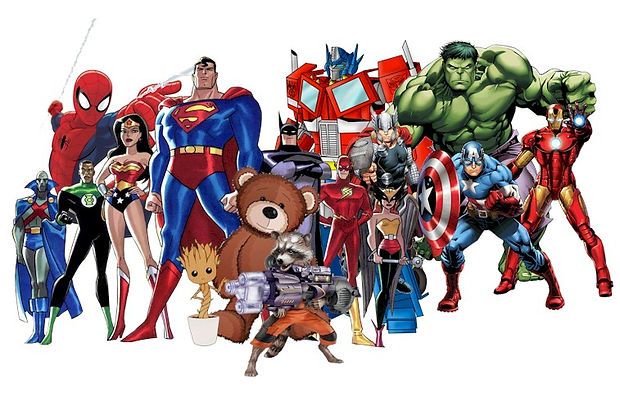
- We will learn about the Superhero film and television genre and use this understanding of codes and conventions to create our own superheroes.
- We will create a script and poster/ trailer for the opening and origin story of our original superheroes.

Year 9 Music
9MUSYear 9 Music is a foundation course that runs for two terms. You will explore the basics of how music is made, written, and performed in different styles. You will also get hands-on experience with a range of instruments, including drums, guitar, and piano, and start building the skills you need to perform and create your own music.
We will learn to:
- Perform a song to the class (in a small group or individually)
- Compose music for a purpose
- Research and present a project on a musician or band
- Develop our aural skills by analysing songs, scales and chords (major/minor) and intervals
- Identify and describe music terms, symbols and basic notation
Year 9 Outdoor Education
9OEDThe Year 9 Outdoor Education program is designed to introduce students to a range of outdoor activities and experiences that fosters personal and social development and develops an awareness of our environments. Students will develop their ability to work together and build collaborative relationships in an outdoor setting.
We will learn to:
- Navigate using map and compass skills
- Prepare for tramps and go on short hikes
- Develop camping skills, such as lighting fires and cooking meals on the fire
- Participate in team-building activities
- Explore the natural environment
Year 9 Physical Education and Health
9PEHYear 9 Science
9SCIYear 9 Services Academy
9SVCADYServices Academy provides an introduction to the discipline, training and fitness skills needed for the armed forces. At Year 9, it is about providing opportunities for you to push your boundaries, find new physical and mental limits, to encourage teamwork, discipline, and competitiveness and to develop confident, self-initiating, motivated, physically fit potential leaders and role models.
As part of the programme, you will be issued a Services Academy polo shirt and black trousers/shorts. You will also attend a boxing session at Naenae Boxing Academy each week.
Year 9 Social Studies
9SSTSocial Studies is core subject Naenae College. Our ākonga learn about the world around them and how society functions. This is through natural phenomenon and important events. Through Social Studies, students learn life skills including: how to participate in society, understanding different perspectives, how to interpret information and construct an argument, and overall, how to manage themselves.
In Year 9, students learn about topics including:
- Our local Naenae and Lower Hutt history and environment
- Migration and its fundamental role in Aotearoa
- War and national identity
- Economies
You will need:
- 2B5 Exercise Book
- Pack coloured pencils
- Gluestick
- Ruler
Year 9 Visual Art
9ARTWelcome to Year 9 Art! If you choose this option course, you will be working on a number of taster projects to develop skills in Drawing, Printmaking, Sculpture and Painting. These are the essential skills for future years of Art.
We will learn to:
- Express ideas creatively in relation to a given theme, focusing on your own interests, culture and identity.
- Develop literacy skills through Art Vocabulary while studying established artists and how they make artwork.
- Bring out your own creative ideas through compositional and experimental studies.
Subjects for Year 9 Students
Year 10 Business Studies
10BUSThis Year 10 Business Studies course introduces the knowledge and skills needed for entrepreneurship & financial responsibility. Students will gain an understanding of how financial systems work in our society and how those systems can be used to their benefit. Students will have a chance to earn NCEA credits by completing a Level 1 Commerce standard.
You will learn about:
- Economic Concepts: Including needs and wants, factors of production, market research and taxation.
- Money: Income, including types of income and foreign exchange skills, and budgeting.
- Business Enterprise: Work in a group to create your own business, starting with an idea, business plan, and market research.
- Economic Analysis: Making judgments on financial decisions and the impact they have on our communities.
- Consumer Law and Organisations: How and why individuals and groups seek to safeguard the rights of consumers.

Year 10 Design
10DESThis course will enable students to explore Design to create digital works. You will learn a range of Photoshop and Illustrator skills to develop Artwork, Learn about Visual Communication through various ideas, themes and Briefs.
Students wanting to take Year 11 Design must take this course.
Alternatively, if you wish to take a full year of Digital Art, you must choose Photography as your second junior option (highly recommended).
We will learn to:
- Use a digital camera, scanner, and digital drawing tablet to create and edit images.
- Understand copyright and build a personal image bank of textures and photos for future projects.
- Apply the design process — from reading and creating briefs to researching, sketching concepts, developing ideas, and producing final artworks to solve creative challenges.
- Create a range of design projects such as logos, magazine covers, and other class-based design challenges.
- Use Adobe Photoshop and Illustrator, manage files effectively, and understand printing processes to prepare for Year 11 Design and Photography.
Year 10 Digital Technologies
10DITWe use Digital Technologies in work, play and to create new “stuff” for others to use. Students will use various software applications to design, develop and test various digital outcomes. These include web pages, computer games/stories, animations and databases.
We will learn to:
- Code a digital story/game using Scratch.
- Create web pages and animations.
- Manage data using a database.
- Being smart and safe on the internet.
- Understand how computers and digital data works.
Year 10 Drama
10DRAYear 10 Drama builds on the performance skills from Year 9. Students will develop creative thinking through scene studies and then use this knowledge to improve their storytelling skills in performances. Students will then be involved with an in-class production, which they will perform to invited friends and whanau.
This subject ties in well with Entertainment and Event Technologies. If you would like to do a full year of theatre-related subjects, it is highly recommended that you also choose Entertainment and Event Technologies as your second junior option.
We will learn to:
- Study a scene from a play and learn about themes, characters, setting, and the playwright.
- Apply Drama techniques, elements, and conventions through devised performance.
- Build on acting skills through scenes in a production.
Year 10 English
10ENGThe Year 10 English course builds on the foundations of Year 9, further developing students' reading, writing, speaking, listening, and viewing skills. Students will engage with a range of texts, deepening their ability to interpret themes, characters, and language techniques. Writing tasks will focus on refining structure, clarity, and style across different genres. Literacy skills is a strong focus for Year 10 as students approach NCEA and the requirements to pass the Common Assessment Activities.
Year 10 Entertainment and Event Technologies
10EVTThis course is for students interested in the theatre and film industry, particularly in designing and/or constructing event technologies such as lighting, props and scenery, costumes, and makeup. It is ideal for creative thinkers and problem solvers who enjoy practical learning and have an interest in design, art, or theatre.
This subject ties in well with Drama. If you would like to do a full year of theatre-related subjects, it is highly recommended that you also choose Drama as your second junior option.
We will learn to:
- Set up and connect lighting fixtures, use the lighting board, and plan or run a scene.
- Sew basic designs, use a sewing machine, and create a small project with these skills.
- Apply safe makeup practices, design a makeup look, and practise one event-style makeup technique.
- Experiment with different materials and tools to design and create a small project.
Year 10 Food Technology
10FDSThis course will explore the food and cooking techniques of different cultures as a way to broaden the knowledge of learners' understanding and skills in food, and also as a way to reflect the multicultural character of the school. As well as increasing understanding of food safety, students will look at what fusion food is and then design and develop their own dish, bringing together two cultural foods.
We will learn to:
- Understand how different cultures have contributed to the food we eat in New Zealand.
- Develop new skills in the kitchen, understand key parts of a recipe and know how to work safely and independently.
- Develop initial ideas and produce a final product.
- Understand some of the factors that may affect foods.
Year 10 Hard Materials Technology
10TECYear 10 Hard Materials Technology (Hard Tech) is designed to allow students to learn and practise skills used in traditional woodworking, with a focus on wood joinery. While this course builds on the learning from Year 9 Hard Tech, students are welcome to join even if they have no prior experience.
Throughout the two terms, students will learn to use a variety of hand tools and selected power tools safely and responsibly, including how to care for them.
Students are encouraged to demonstrate manaakitanga by working hard, learning from mistakes, persevering through challenges, and showing respect for the tools, materials, and the work of themselves and others.
We will learn to:
- Identify the names and uses of several carpentry tools.
- Apply the skills and techniques necessary to mark out timber for cutting.
- Apply the skills and techniques necessary to cut several different wood joints accurately.
- Use tools safely and effectively.
Year 10 High Performance Sports
10HPSThe Year 10 High Performance Sports course will look at different aspects that will prepare students for senior Physical Education studies. Topics covered will include functional anatomy, biomechanics, exercise physiology and application of movement strategies.
We will learn to:
- Understand how the body moves through functional anatomy.
- Apply biomechanics to improve movement and performance.
- Explore how the body works during exercise through exercise physiology.
- Use movement strategies to enhance physical performance and technique.
Year 10 Japanese
10JPNThis course will explore up to two of the three Japanese writing systems—hiragana and katakana—and introduce students to Japanese vocabulary and sentence structure. Students will learn how to introduce themselves, their whānau and whakapapa, and hold simple conversations on topics such as weather and school.
As this is a newly added subject, Year 10 will be treated as an extension of Year 9, with overlapping topics and knowledge. The programme will also extend students’ abilities to communicate ideas in the target language and begin to recognise and write simple kanji (Chinese characters).
We will learn:
- Reading - recognising the alphabet symbols of the Japanese language and connecting them to their phonetic sounds.
- Speaking - constructing simple sentences in the target language and verbalising.
- Listening - understanding instructions or (informal) greetings
- Writing - develop an understanding of the symbols to create written texts.
Year 10 Mathematics
10MATThis course aims to deepen students’ understanding and application of Phase 4 Mathematics and Statistics content. It develops logical problem-solving skills and the ability to apply mathematical knowledge to real-world contexts, while building the strong foundation needed for success in senior Mathematics. Students will explore key mathematical and statistical concepts across three strands: Number and Algebra, Measurement and Geometry, and Statistics and Probability.
Year 10 Media Studies
10MEDYear 10 Media Studies builds on the skills taught in Year 9 Media Studies. There is a focus on analysing the Dystopian film genre and relating it to our current society, as well as looking at video games as texts and as an industry. We will continue to look at misinformation and manipulation in the media and how it affects us. Creating media products is also a significant aspect of this course.
In this course:
- We will study the Dystopian film genre and create a Swedish film scene from one of our texts, applying film production techniques.
- We will look at the history of video games, then design individual proposals for an original video game.
- We will continue to look at the impact of misinformation, image manipulation, and AI in the news and social media, particularly on how it impacts young people.

/cdn.vox-cdn.com/uploads/chorus_image/image/69560180/crime_docs_ringer_illo.0.jpeg)
Year 10 Music
10MUSYear 10 Music builds on what you learned in Year 9 and gets you ready for Year 11. You will explore how music is made, written, and performed in different styles while improving your skills in performing, composing, listening, and music theory. You’ll also take part in weekly group lessons on your chosen instrument, including drums, guitar, bass guitar, vocals, or piano. There are limited spots for cello, violin, viola, saxophone, and flute in this half-year course.
We will learn:
- Performance: Play or sing songs to the class, both in groups and solo
- Composition: Make your own music using a Digital Audio Workstation
- Music Works: Research and present a project on a music genre you like
- Aural Skills: Train your ear through song analysis, scales, chords, and intervals
- Theory Skills: Learn musical terms, symbols, and how to read and write music
Year 10 Photography
10PHOThis course enables students to explore Photography and create digital works. You will learn to use a range of camera and photography techniques, as well as develop skills in Adobe Photoshop to produce artwork and visually communicate your ideas.
Students who wish to take Year 11 Photography must complete this course.
Alternatively, if you would like to take a full year of Digital Art, you should also choose Year 10 Design as your second junior option (highly recommended).
We will learn to:
- Use a digital camera and plan photo shoots using photography conventions to tell visual stories.
- Work on class projects that explore a range of photographic challenges.
- Develop skills in Adobe Photoshop and Lightroom, along with effective file management and printing processes.
- Build the foundational skills needed for success in Year 11 Design and Photography.
Year 10 Physical Education and Health
10PEHYear 10 Physical Education and Health are two of the core subjects taught in the junior school.
Year 10 Samoan
10SAMThis course is perfect for beginners or anyone wanting to strengthen their foundation in Gagana Sāmoa.
In Term 1, students will learn the basics such as the alphabet, pronunciation, vocabulary, and sentence structure.
In Terms 2, 3, and 4, students will explore a series of Samoan legends and historical stories. These texts help build confidence in reading, writing, listening, and speaking, while also deepening understanding of Samoan culture, values, and identity.
This course is an excellent introduction for students who are new to Gagana Sāmoa, and it provides solid preparation for Level 1 in the following year. Students are welcome to join this course even if they haven’t taken Gagana Sāmoa before.
Year 10 Science
10SCIYear 10 Senior / Junior ELL
ESOLESOL (English for Speakers of Other Languages) course is designed to support students whose first language is not English. This course aims to develop students' English language proficiency, focusing on the four key language skills: listening, speaking, reading, and writing.
Year 10 Services Academy
10SVCADYThe Services Academy is underpinned by a military philosophy of discipline and structured learning. It incorporates drill exercises, fitness and outdoor activities and provides students with opportunities for self-development and leadership. After completing this course, students will have a solid base from which to continue with the Services Academy at Year 11. The course leads on to Level 1 Services Academy.
We will learn to:
- Recognise and effectively manage emotions.
- Actively contribute in team settings, such as drill.
- Foster a positive classroom engagement.
- Practice Whanaungatanga (Relationships) and Manaakitanga (Caring) by supporting peers and the school community.
- Maintain high attendance and work on boosting self-confidence and discipline.
Year 10 Social Studies
10SSTSocial Studies is core subject Naenae College. Our ākonga learn about the world around them and how society functions. This is through natural phenomenon and important events. Through Social Studies, students learn life skills including: how to participate in society, understanding different perspectives, how to interpret information and construct an argument, and overall, how to manage themselves.
In Year 10, students learn about topics including:
- Te Tiriti o Waitangi
- Sustainability
- Vulnerable Cities
- Governments
Our Year 10 course is a foundational course for our Senior Social Science subjects:
- Geography
- History
- Media Studies
- Psychology
- Sociology
Students will need:
- 2B5 Exercise Book
- Pack coloured pencils
- Gluestick
- Ruler
Year 10 STEM
10STEMSTEM stands for Science, Technology, Engineering and Mathematics.
This course lets you explore the exciting world of renewable energy, sustainability, and environmental solutions through both theory and hands-on projects. You’ll learn about sustainable energy sources, biogas production, composting, solar energy systems, and ways to reduce waste and plastic pollution to help create a cleaner, greener future. By combining science, technology, and design, you’ll use creative and critical thinking to develop real-world solutions to environmental challenges.
We will learn to:
- Explore renewable energy and sustainability, using science and technology to find cleaner, greener solutions for the future.
- Carry out biogas experiments that turn kitchen waste into usable gas energy and see how this works in real life.
- Learn how composting turns food and garden waste into natural fertiliser to reduce waste and support healthy gardens.
- Investigate how solar panels work and compare on-grid and off-grid solar systems through hands-on mini projects.
- Build practical STEM skills in science, design, and environmental problem-solving to prepare for future studies in sustainability, engineering, or STEM.
Year 10 Te Ao Māori
10TAMOur Te Ao Māori course– meaning “the Māori world” – builds on Year 9 learning and extends students’ knowledge of te reo Māori, tikanga (customs), and cultural identity through collaborative performance.
In the first half of the year, students will explore pūrākau (Māori stories), cultural practices, perform a haka and waiata to discover the cultural significance and metaphors within te reo Māori.
In the second half, students will strengthen their understanding of the Māori language, pronunciation, vocabulary, and sentence structure. Developing confidence in speaking, listening, reading, and writing, while deepening knowledge of key phrases and tikanga in a meaningful, action-based way.
This course welcomes all students, including those with no prior te reo Māori or performing experience.
Year 10 Visual Art
10ARTThis course aims to develop and extend practical art-making skills introduced in Year 9. Students will explore wet and dry media techniques to produce tone through mark-making using watercolour, Indian ink, paint, and other dry media. They will also explore their identity through cultural and personal imagery, using skateboard art as a way to tell their story.
We will learn to:
- Use marking-making and blending techniques effectively.
- Apply brush and wet media, and understand the effects of dark vs. light tones.
- Brainstorm and understand image representation, including iconography and symbolism.
- Understand the art-making process and practice patience as it takes time to improve.
- Produce balanced compositions in our artwork.
Subjects for Year 10 Students
Level 1 Design
DES100This course explores Design and Photography catered for students who want to engage in digital art making. In this course students will create a body of work that visually communicates imagery related to a chosen theme. Students will learn fundamental Design and some photography skills. In addition they will develop an understanding of visual elements that will better equip them moving into the Level 2 DEP200 course. It is recommended that students have their own digital drawing tablet as resources are limited. If students choose this course they can not do ART100, as they are assessed against the same standards.
Level 1 Digital Technologies
DIT100We use digital technologies to do our work, communicate, and entertain. We also use it to create new "stuff" for others. At Level 1, students will design, develop and evaluate digital outcomes. These include web pages (digital media), databases (managing information) and interactive games (programming). This course will also cover concepts of Digital Technologies. Applications used include Excel, Access, Photoshop, Notepad++ and Scratch.
Level 1 Drama
DRA100This course has a major practical component where students will work together in groups to communicate characters, ideas, and stories through public performances. They will also explore different Drama styles and learn important key features that make each style unique. This course builds teamwork, creativity, confidence, and communication skills. Participation in public evening showcases is required.
Level 1 English
ENG100Level 1 NCEA English introduces students to a broad range of texts and essential language skills. The course focuses on developing reading, writing, and oral communication abilities through the study of literature, film, and language. Students will learn to analyse and respond to different texts, enhancing their understanding of themes, characters, and language techniques. Assessments include internal and external assessments that measure students' proficiency in comprehension, text analysis, and writing. This level lays a strong foundation for further study in English and cultivates thinking and effective communication skills.
Level 1 English as an Additional Language
EAL012This course is suited for students who speak English as a second language or come from a background where English is not the main language used at home.
This course aims to strengthen basic English skills in reading, writing, speaking, and listening at Levels One and Two. Students are mostly assessed through English Language Unit Standards appropriate to their language proficiency.
Level 1 Event Technology
EVT100In this course, you will explore the purpose of production technology in performance and learn how to follow a design plan to create work for a range of performance contexts. You will develop practical skills in props, costume, makeup, lighting, and production support before completing three achievement standards for credits. Along the way, you will build your creativity, time management, and collaboration skills while working with others. Participation in one evening showcase is required.
Level 1 Gagana Sāmoa
SAM100This course builds on the knowledge and skills gained in Year 10, helping students further develop their ability to communicate ideas, opinions, and personal experiences in Gagana Sāmoa. Students will explore topics such as family, church, school and the important roles they play in each.
The course also introduces cultural practices like tautua (service), fa’aaloalo (respect) and everyday Samoan customs. Hands-on cultural learning is included throughout the year, such as participating in the ‘ava ceremony, learning formal greetings, and understanding the “aga o lufilufiga ma talisuaga”.
Students will complete two internal and two external assessments, earning up to 20 NCEA Level 1 credits.
This course is open to all students, even if you did not take Gagana Sāmoa in Year 10.
Level 1 Geography
GEO100Geography is the study of how people interact with the environment. In this exciting Level 1 Geography course, you'll explore fascinating topics like earthquakes in Aotearoa and beyond, microclimates around the school and Hutt Valley, along with Geographic issues in the Pacific. You'll also learn how to create maps and use data to solve geographic problems. The course includes upskilling in mapping and graphing, which will help you visually represent and analyse geographic information. Plus, you'll have the opportunity to go out and conduct real-world geographic research. This course is perfect for developing your research, analysis, and technical skills while discovering more about the world around you.

Level 1 History
HIS100History is all about exploring the past to understand how it shapes our world today. In this subject, you will cover exciting topics like the Vietnam War, the atomic bombings during World War Two, and the 1981 Springbok Tour. We will also offer a Level 2 Art History standard to help students get a head start on Level 2 credits. You will also have the flexibility to choose topics for assessments that interest you. Students will learn how to gather and assess historical sources and engage in readings and research. This course requires reading and writing skills, so be prepared to dive into detailed research and analysis.

Level 1 Hospitality
HOS100This course is an introduction to food preparation and safety in the hospitality industry. It has a mixture of practical and theory assessments. Students will study basic food safety and be introduced to food preparation techniques used in a commercial setting. Topics include various food groups, baking, hot finger foods, and mocktails.
Level 1 Mathematics
MAT100This course focuses on developing students' understanding of mathematical concepts and their application to abstract and real-world situations. Students will explore a variety of approaches to problem-solving and learn to use effective means for modelling, analysing and interpreting patterns and relationships. MAT100 consists of four Achievement Standards and will prepare students for further studies in Calculus and Statistics in years 12 and 13.
Level 1 Media Studies
MED100
Level 1 Media Studies will look at how Media interacts with Society. You will create marketing campaigns to accompany your research into media issues while exploring how the internet and globalisation have made media industries more significant than ever before, as well as creating Podcasts and analysing media narratives.
Level 1 Music
MUS100In this Level 1 Music course, students will establish a solid foundation in music through Performance, Composition, Theory, and Music Technology. You will enhance your solo and group performance skills on your primary instrument or voice, develop your music theory and listening abilities, use a Digital Audio Workstation such as Soundtrap or Bandlab, and create an original composition. Success in NCEA Music requires regular lessons with an instrumental or vocal teacher, either at school or externally. Additionally, you will have multiple opportunities to perform throughout the year.
Level 1 Numeracy
NUM100This course is designed to develop core mathematical skills that are relevant to a range of real-world situations. It supports students in building confidence with everyday mathematics while expanding their understanding to successfully achieve the ten numeracy credits available through Common Assessment Activities.
Level 1 Painting
ARP100This course offers the opportunity for students to explore their identity through a Matauranga Maori lens - 'Ko Wai Au?' Students will make connections to their identity through the concepts of pepeha, whakapapa (genealogy), turangawaewae (Where we are from), kaitiakitanga (Guardianship) and taonga (precious gifts/items/family heirlooms) in their whānau and how they contribute to telling their story. If students choose this course they can not do DES100, as they are assessed against the same standards.
Level 1 Pasifika Performing Arts (Dance)
PPA100
This is an introductory Dance course with a focus on Pacific dance styles. Students will learn how to communicate stories, important messages, and cultural ideas through movement. You will explore both traditional and modern Pacific dance forms such as 'ura Kūki 'Āirani, siva Sāmoa, faiva FakaTonga, and hiva Tokelau.
Throughout the course, you will build your confidence as a performer and work closely with others to create and improve your own choreography. This means coming up with your own dance moves and helping your group shape a complete dance. You’ll also take part in rehearsals, class discussions, and cultural events that will grow your understanding of dance vocabulary and the meaning behind each style.
To succeed in this course, you need to be open to sharing your ideas, working as a team, and trying new things. If you are not prepared for this kind of hands-on, creative learning, you may find it challenging. It is compulsory that you participate in Poly Club as this will help to develop your leadership skills in dance.
Level 1 Photography
PHO100This course explores Photography and is catered for students who want to engage in digital art making. In this course students will create a body of work that visually communicates imagery related to a chosen theme. Students will learn fundamental Design and basic photography skills. In addition they will develop an understanding of visual elements that will better equip them moving into the Level 2 DEP200 course. Students will be exploring their identity through a Matauranga Maori lens - 'Ko Wai Au?' Students will make connections to their identity through the concepts of pepeha, whakapapa (genealogy), turangawaewae (Where we are from), kaitiakitanga (Guardianship) and taonga (precious gifts/items/family heirlooms) in their whānau and how they contribute to telling their story.
It is recommended that students have their own digital drawing tablet as resources are limited. If students choose this course they can not do ART100 or PHO100, as they are assessed against the same standards.
Level 1 Physical Education
PED100In the level one Physical Education course, students will make connections between the knowledge they gain in the classroom with their efforts and performances in practical activities. Students will be asked to demonstrate and apply movement strategies in applied settings as well as demonstrate an understanding of the influence of personal movement on hauora. Movement in different contexts will be explored throughout the year. This course is designed for students who are wanting to pursue a tertiary education pathway.
Level 1 Science - Climate Change
SCI100Students will develop their understanding of the impacts of climate change, such as food security, sustainable energy and sea-level rising. The course includes concepts such tiakitanga and incorporates matauranga Maori. This course enables a pathways into Biology, Chemistry and Physics in Year 12 and 13. Upto 20 NCEA Level 1 Credits are available through external and internal assessments.
The areas of Science studied in this course will be;
- Science knowledge is contested and refined over time
- Science uses different inquiry approaches to develop understanding
- Science uses subject-specific literacy to communicate knowledge
- Science-based information can be used in decision making and action
Level 1 Science - Environmental Science
ESC100Students will develop their understanding of how Science can be used to investigate issues and provide solutions in the local area. Learners will develop their understanding of science investigation techniques and how to communicate results to a wider audience. The course includes concepts such tiakitanga and incorporates matauranga Maori. A total of 15 Credits are gained through internal assessments. This course prepares students for SCI200 and careers including; nursing, agriculture, construction, network engineering and ecology.
The areas of Science studied in this course will be;
- Science knowledge is contested and refined over time
- Science uses different inquiry approaches to develop understanding
- Science uses subject-specific literacy to communicate knowledge
- Science-based information can be used in decision making and action
Level 1 Services Academy
SVCADY1This participatory Services course encompasses various physical activities, risk management, meeting activity standards, fitness principles application, goal setting, basic first aid, and outdoor confidence building, Students enhance individual performance, practice self-management in teamwork, improve fitness via diverse training, connect body function knowledge to activity, and develop leadership skills.
Level 1 Te Ao Haka
TAH100At Level 1, Te Ao Haka introduces students to the foundations of Māori Performing Arts, building knowledge of tikanga, whakapapa, taiao, and te reo Māori. Students learn basic skills in disciplines such as waiata, haka, poi, and mōteatea, focusing on timing, expression, and working together as a group. They explore the stories and cultural meaning behind performances while developing confidence in presenting to an audience. This course encourages creativity, collaboration, and a strong sense of cultural identity, preparing students for the deeper learning offered in Level 2 Te Ao Haka.
Level 1 Technology - Hard Materials
TEC100Students in Level 1 Hard Materials Technology will learn to layout and cut traditional wooden joinery to construct a Tool Tote and a Mortise and Tenon Stool. This will involve reading and interpreting project plans, and using a range of different hand tools plus some power tools. This course places an emphasis on safe workshop practice.
Year 10 Senior / Junior ELL
ESOLESOL (English for Speakers of Other Languages) course is designed to support students whose first language is not English. This course aims to develop students' English language proficiency, focusing on the four key language skills: listening, speaking, reading, and writing.
Subjects for Year 11 Students
Level 1 Drama
DRA100This course has a major practical component where students will work together in groups to communicate characters, ideas, and stories through public performances. They will also explore different Drama styles and learn important key features that make each style unique. This course builds teamwork, creativity, confidence, and communication skills. Participation in public evening showcases is required.
Level 1 English
ENG100Level 1 NCEA English introduces students to a broad range of texts and essential language skills. The course focuses on developing reading, writing, and oral communication abilities through the study of literature, film, and language. Students will learn to analyse and respond to different texts, enhancing their understanding of themes, characters, and language techniques. Assessments include internal and external assessments that measure students' proficiency in comprehension, text analysis, and writing. This level lays a strong foundation for further study in English and cultivates thinking and effective communication skills.
Level 1 English as an Additional Language
EAL012This course is suited for students who speak English as a second language or come from a background where English is not the main language used at home.
This course aims to strengthen basic English skills in reading, writing, speaking, and listening at Levels One and Two. Students are mostly assessed through English Language Unit Standards appropriate to their language proficiency.
Level 1 Event Technology
EVT100In this course, you will explore the purpose of production technology in performance and learn how to follow a design plan to create work for a range of performance contexts. You will develop practical skills in props, costume, makeup, lighting, and production support before completing three achievement standards for credits. Along the way, you will build your creativity, time management, and collaboration skills while working with others. Participation in one evening showcase is required.
Level 1 Mathematics
MAT100This course focuses on developing students' understanding of mathematical concepts and their application to abstract and real-world situations. Students will explore a variety of approaches to problem-solving and learn to use effective means for modelling, analysing and interpreting patterns and relationships. MAT100 consists of four Achievement Standards and will prepare students for further studies in Calculus and Statistics in years 12 and 13.
Level 1 Numeracy
NUM100This course is designed to develop core mathematical skills that are relevant to a range of real-world situations. It supports students in building confidence with everyday mathematics while expanding their understanding to successfully achieve the ten numeracy credits available through Common Assessment Activities.
Level 1 Photography
PHO100This course explores Photography and is catered for students who want to engage in digital art making. In this course students will create a body of work that visually communicates imagery related to a chosen theme. Students will learn fundamental Design and basic photography skills. In addition they will develop an understanding of visual elements that will better equip them moving into the Level 2 DEP200 course. Students will be exploring their identity through a Matauranga Maori lens - 'Ko Wai Au?' Students will make connections to their identity through the concepts of pepeha, whakapapa (genealogy), turangawaewae (Where we are from), kaitiakitanga (Guardianship) and taonga (precious gifts/items/family heirlooms) in their whānau and how they contribute to telling their story.
It is recommended that students have their own digital drawing tablet as resources are limited. If students choose this course they can not do ART100 or PHO100, as they are assessed against the same standards.
Level 1 Te Ao Haka
TAH100At Level 1, Te Ao Haka introduces students to the foundations of Māori Performing Arts, building knowledge of tikanga, whakapapa, taiao, and te reo Māori. Students learn basic skills in disciplines such as waiata, haka, poi, and mōteatea, focusing on timing, expression, and working together as a group. They explore the stories and cultural meaning behind performances while developing confidence in presenting to an audience. This course encourages creativity, collaboration, and a strong sense of cultural identity, preparing students for the deeper learning offered in Level 2 Te Ao Haka.
Level 2 and 3 Digital Media: Animation and Game Design
TRCTECLevel 2 / 3 Digital Media: Animation and Game Design. 31 credits. (2 days per week)
Animation and Game Design is the field of study and industry that focuses on creating animated content and designing video games using digital tools and technologies. This discipline combines creative skills, storytelling, and technical knowledge to produce engaging visual experiences for various platforms, including films, television, websites, mobile devices, and gaming consoles.
Students who gain the most from this course are those who are willing to experiment and work outside their comfort zones to create highly conceptual and imaginative works.
Level 2 and 3 Trades Academy Farming industry
TRFARMPrimary ITO - Farming industry
Level 2 and 3 (1 day a week)
The primary industry uses our country’s natural resources—land, plants, water, and dairy farming. This course offers a broad range of learning opportunities in various primary industries, including:
- Horticulture
- Hard landscaping
- Seafood
- Sheep and beef farming
- Arboriculture
- Primary sector
- Sports turf
- Pest eradication.
Level 2 and 3 Trades Academy Papa Taiao Tides and Tracks
TRECARPapa Taiao - Level 2 and 3 Taiohi Taiao Tides and Tracks. (1 day per week)
28 credits.
Suitable for Level 2 and 3
A student who successfully completes this course will be able to:
● Demonstrate skills in restoration in freshwater, forest and/or ocean environments.
● Demonstrate skills in sustainability such as effective storytelling to inspire and educate for sustainability.
● Work on an urban farm growing food using sustainable farming methods
● Develop the skills to plan and implement a project that makes your school/city/world more sustainable.
● Develop the skills to work effectively in a team to complete restoration and project work.
● Gain confidence working outdoors through activities such as waka, hiking, bushcraft (Fire
and shelter making)
Level 2 and 3 Trades Academy Papa Taiao Traps and Trails
TRTIDPapa Taiao Traps and Trails. 24 L2 and L3 credits. (1 day)
The Trades Academy’s Predator Control and Conservation course (Level 2 and 3) is a hands-on, field-based program where students learn trapping, baiting, and monitoring techniques to protect native biodiversity, while developing teamwork and leadership skills. It offers NCEA Level 2 and 3 credits and pathways into conservation, pest control, and environmental careers.
Level 2 Art Painting
ARP200This course develops your Level 1 Art skills, focusing on painting mediums. Students study artists' techniques through research and practical standards, applying these to their own work. Completing artwork as homework is crucial to meet the level's expectations. While most students will complete an external folio, an additional internal Achievement Standard is available for those who wish to do a fully internal course.
Please see Mr. Ferguson if you want to do ARP200 but have not done DEP100 or ART100.
Level 2 Biology
BIO200Biology is the science that focuses on the study of life and living organisms. In this course you will delve deeper into the fascinating world of living organisms and their interactions with the environment. Find out how our cells carry out processes to keep us alive, explore the role of genetics in our environment and investigate why the Takahe survives better in some places than others. This course could lead to employment opportunities in many areas including; medicine, health, agriculture and ecology. This course offers upto 22 NCEA credits at level 2.
Key components of this course are:
● Life processes at the cellular level
● Genetic variation and change
● Ecological communities
● Designing an investigation on Osmosis.
Level 2 Calculus
MAC200This course focuses on developing advanced algebra skills to solve complex real-world problems. In addition, students will learn foundational Calculus and graphical methods. It is intended to prepare students for Year 13 Calculus and tertiary studies requiring a sound mathematical understanding.
Level 2 Chemistry
CHE200Unlock the mysteries of matter with this engaging Chemistry course! This curriculum introduces students to the fundamental principles of chemistry, bridging the gap between theory and practical application. Over the course of the year, students will explore the building blocks of matter, chemical reactions, and the periodic table's essential elements. Students will engage in hands-on laboratory experiments to reinforce theoretical concepts and develop practical skills. This course prepares learners for careers including; engineering, forensics, analytical chemistry, food science, toxicology, medicine and pharmacology. Learners can achieve upto 20 NCEA Level 2 credits in this subject.
Key components of this course are;
- Inorganic chemistry and energetics
- Organic chemistry
- Chemical reactivity
- Oxidation and reduction chemistry
Level 2 Design
DES200Students who choose this course will be responding to a variety of briefs using Design principles learned in Level 1, along with their own creative skills. Students will continue to use the Adobe Creative Suite in this course. This will help to further develop their Adobe Photoshop skills to create digital artworks.
Having access to a computer or laptop at home with Photoshop is an advantage as well as havng access to a drawing tablet is recommended but not essential to being able to take this course.
*** While most of the work is gudied, this course mosty self-directed which requires a lot of creative independance and a commitment to regular homework, because it is essential to producing the quantity and quality of work required at this level. ***
Please see Mr. Ferguson if you want to to take DES200, but you have not taken Painting, Photography or Design before.
Level 2 Digital Technologies
DIT200At Level 2, students will learn to use advanced techniques to design, develop and evaluate digital outcomes. These include web pages (digital media), databases (managing data) and interactive games (programming). This course will also cover advanced concepts of digital technologies. Applications used include Excel, Access, Photoshop, Notepad++ and Animate/ActionScript.
If you did not do DIT100, please see Mr. Yeo for a chat see if you can do DIT200.
Level 2 Drama
DRA200This course has a major practical component where students will work together in groups to communicate characters, ideas, and stories through public performances. They will also explore different Drama styles and learn important key features that make each style unique. This course builds teamwork, creativity, confidence, and communication skills. Participation in public evening showcases is required.
Level 2 English
ENG200Level 2 NCEA English is designed to build on the skills developed in Level 1, enhancing students' abilities in reading, writing, and critical analysis. The course covers a range of texts, including literature and film, encouraging students to think deeply about themes, character development, and language techniques. Assessments include both internal and external exams, focusing on written and oral communication and text analysis. This course prepares students for further academic study and develops essential skills for effective communication and critical thinking in everyday life. You should take this course if you have gained Level One Literacy.
Level 2 English as an Additional Language
EAL234This course aims to further develop basic English skills in reading, writing, speaking and listening. Students are assessed through English Language Unit Standards at the level of the student's proficiency. Some Year 13 students needing UE Literacy credits may opt to undertake independent research English for Academic Purposes Unit Standards
Level 2 Events Technology
EVT200In this course, you will deepen your skills in two production areas that you explored in EVT100 and apply them in real-world contexts. You will also develop your creativity by designing original technical elements for performance. Throughout the course, you will build your leadership, communication, and time-management skills while responding to creative challenges. There will also be opportunities to participate in events outside of school.
Level 2 Gagana Sāmoa
SAM200In this course, students move beyond basic conversation to justify their ideas in Gagana Sāmoa across a range of real-life and cultural contexts. The course explores key Samoan values, customs, and community practices in greater depth while continuing to build fluency in both writing and speaking. Students also gain confidence in using the language in both formal and informal situations. Cultural experiences throughout the year include preparing and serving during a fa’alavelave, delivering speeches, and taking on traditional roles in family events.
The course offers two internal and two external assessments, earning up to 20 NCEA Level 2 credits, with an optional 4 credit internal available for students who need extra credits.
This course is open to all students, even if you did not take Gagana Sāmoa in Year 11.
Level 2 Geography
GEO200This Level 2 Geography course will allow you to explore topics related to the environment, sustainability, and the relationship between people and places. You'll also get to choose an independent research topic to explore. You'll also learn how to create electronic maps and use data to solve geographic problems.
Geography at Level 2 will help you develop important skills in research, analysis, and using technology to understand the world around you. You'll need to manage your time well and be ready for both independent and group work.

Level 2 History
HIS200In Level 2 History, you'll explore in-depth topics such as the Second South African War, global genocides, and the US Civil Rights Movement. You will have the flexibility to research any historical topic you wish for your assessments. You will gain skills in research, source analysis, and making historical judgements. History at Level 2 is a literacy-heavy course, so bring along your strong reading and writing skills.
Level 2 History offers both University Reading and Writing credits.

Level 2 Hospitality
HOS200This course is designed to further students’ skill and give experience to prepare them for the hospitality industry. It has a mixture of practical and theory assessments and students are required to partake in catering as part of the course and assessment. Students will look at food preparation as well as food and beverage service.
Level 2 Māori and Pasifika Voices
MPV200Maori and Pasifika Voices is a Level 2 English course that focuses on exploring Māori and Pasifika texts and topics. We will analyse these texts using cultural perspectives to deepen our understanding. You will also have the opportunity to create your own stories or interpretations through creative writing, essays, static or moving images, or oral presentations.
Level 2 Media Studies
MED200
Level 2 Media Studies explores representation and ethics in the media. As you learn about media industries, you will plan and make your own media product, as well as the introduction to your own adventure narrative script, which ties into our external study of the making of The Mandalorian. The external and script both have U.E. Literacy writing credits attached to them.
Level 2 Music
MUS200In this Level 2 Music course, you can choose to focus on either Performance or Composition. Performance students will develop their solo and group performance skills on their primary instrument, with the goal of performing two solo pieces and participating in a group performance. Regular lessons and daily practice are essential for success in this area.
Composition students will refine their compositional skills and create two significant pieces. All students will also research a topic related to New Zealand music, enhance their music theory knowledge, and prepare for an external exam. Additionally, there are optional standards available for further exploration.
Please see Ms. Lee if you want to take MUS200 but have not done MUS100.
Level 2 Pasifika Performing Arts (Dance)
PPA200
This is a Level 2 Dance course that deepens your understanding of Pacific dance styles and the stories they carry. You will continue to explore both traditional and contemporary forms such as 'ura Kūki 'Āirani, siva Sāmoa, faiva FakaTonga, and hiva Tokelau—while learning how dance can express identity, values, and cultural perspectives.
As a developing dancer, you will take more creative leadership in choreography, contributing original movement ideas and shaping group work with greater purpose and intention. You’ll refine your performance skills, respond to feedback, and explore how dance can be used to communicate powerful messages to an audience. You will be expected to contribute to some of the choreography pieces alongside our Level 3 PPA students for our Term 2 showcases, Multicultural Day and HuttFest.
To succeed in this course, you need to take initiative, collaborate respectfully, and be willing to experiment and reflect. If you are prepared to step up and challenge yourself creatively, this course will help you grow as both a dancer and storyteller.
Level 2 Pathways to Employment
PEM200Pathways to Employment helps you build essential workplace skills while earning credits at NCEA Level 2 through various employability unit standards. The programme includes STAR courses from external providers to explore career options and tertiary education. STAR courses are short courses at polytechnics or private training providers specifically designed for secondary school students. Courses give students an introduction to training for a particular trade or skill. They range in length from a single day, several days in a row or one day a week for up to two terms.
Students may also gain work experience through placements, depending on their academic performance, attendance, and interest in a particular trade. You'll receive support in creating a career plan and academic pathway to achieve NCEA Level 2 and/or Level 3.
Upon completion, you'll have documented evidence of your employability skills, demonstrating your readiness for the workforce or further training.
The programme will be tailored to align with your goals, especially if you plan to enter the workforce after Year 12 or 13. It’s ideal for students who want to keep their options open or are unsure about their tertiary pathways.
Level 2 Photography
PHO200Level 2 Photography teaches you how to look at the world through a creative lens and build a powerful visual voice. Moving beyond automatic settings, you will master manual camera control, creative lighting, and digital editing using industry-standard software. Guided by traditional and contemporary artist models, you will choose a personal theme and systematically develop your ideas into a unique, cohesive body of work.
*** While most of the work is gudied, this course mosty self-directed which requires a lot of creative independance and a commitment to regular homework, because it is essential to producing the quantity and quality of work required at this level. ***
Level 2 Physical Education
PED200The Level 2 Physical Education course focuses on advanced physical education, suited for those interested in pursuing a tertiary education pathway. Students will make connections between the knowledge they gain in the classroom with their efforts and performances in practical activities. The course will cover biophysical principles, leadership strategies, quality movement, as well as a focus on outdoor education activities.
Level 2 Physics
PHY200In this course, you will explore electricity, light, and mechanics, using mathematics to make predictions and solve problems in these areas. You will also develop practical skills to investigate each topic and use mathematics to predict outcomes and solve problems. This course is ideal for students with strong calculus or algebra skills or those planning to pursue further study at Level 3 or university. This subject leads to careers including; astronomy, computer science, meteorology, renewable energy, aerospace, design and architecture. This course leads to upto 23 NCEA Level 2 credits.
Level 2 Psychology
PSY200Level 2 Psychology is an internal-only course where you’ll explore four main approaches selected from biological, behavioural, cognitive, humanistic, psychodynamic, and socio-cultural, to gain a deeper understanding of psychology. You’ll dive into the basics of psychological research, including designing and conducting an experiment, analysing data, and addressing ethical considerations. The course also includes key areas, like mental health and the impacts of social interactions on behaviour. You will also engage with a study in addiction and psychological debates to broaden your understanding of the field.
Level 2 Psychology offers University Reading credits.

Level 2 Science
SCI200This course covers standards from Biology, Chemistry, Physics and Earth Science, exploring topics related to life, the universe, and our place in it. It aims to build confidence and understanding in Physical Science while enhancing the ability to express scientific ideas. Students will also learn to apply scientific concepts to everyday life.
The areas of Science studied in this course will be;
- Variation in species through adaptations.
- Animal responses to extreme conditions.
- How optical fibres move information quickly over the internet.
- Developments in chemicals such as detergents and soaps
- How to carry out scientific investigations.
Level 2 Services Academy
SVCADY2This course equips students with life skills, motivation, vocational training, and team-building abilities to confidently integrate into the community. It emphasises adventure-based learning for personal and social development, communication, and teamwork.
Students learn leadership and group dynamics, gaining confidence through outdoor activities like survival skills, tramping, and camping. They maintain fitness levels and experience military life, acquiring military skills. Life Skills 101 covers profiling, CV creation, financial management, and basic knowledge of property, business, shares. Note: Induction Course attendance in Term 1 is necessary for ongoing participation in the Services Academy. Exception requires approval from the Service Academy Director.
Level 2 Sociology
SOC200Sociology is all about studying how societies work and how people interact with each other. Students will complete Senior Social Studies NZQA standards. In this Level 2 Sociology course, you'll explore topics like human rights abuses in North Korea, government investigations, social movements for change, and the situation of the Uyghurs in China. You'll learn how to research and analyse these issues to understand their impact on people and communities. This engaging course involves group work to enact your own social actions and a drive to understand the world around you.
Level 2 Sociology offers University Reading credits.

Level 2 Statistics
MAS200This course focuses on developing students' understanding of data analysis and their ability to integrate statistical features with contextual knowledge. Students will learn to interpret information, evaluate arguments, and deal with chance, which will allow them to assess statistical information encountered on a day-to-day basis.
Level 2 Te Ao Haka
TAH200At Level 2, Te Ao Haka develops students’ skills and knowledge in Māori Performing Arts, building confidence in performance and understanding of tikanga, whakapapa, taiao, and te reo Māori. Students learn how to tell stories through movement, waiata, haka, and other disciplines, showing expression, timing, and ensemble coordination. They will explore the cultural meaning behind each performance, work as part of a group, and take on some responsibility in leadership or support roles. This course helps students grow their creativity, teamwork, and cultural identity while preparing them for the more advanced skills and leadership opportunities offered in Level 3 Te Ao Haka.
Level 2 Technology - Hard Materials
TEC200Level 2 Hard Materials Technology involves the construction of two outdoor furniture projects. Students develop a deeper understanding of timber and other building materials while constructing items containing angles and somewhat complex designs. Throughout this process, students will be asked to consider in detail the hand tools that they are using in their work.
Level 2 Trades Academy Baking and Cafe Services
TRCSERLevel 2 Cafe Services. 40 credits (2 days a week)
This programme is designed to give students basic skills and experience both in the kitchen and behind the counter in a café environment. Graduates may be able to gain employment in an entry level position in the industry. The programme is predominantly practical in nature and includes sought after inclusions such as Food and Safety, knife handling skills, basic methods of cookery, customer interaction and counter service as well as espresso, tea and cold beverage production. Alongside the physical skills learned, students develop life skills such as time management and nutrition through to personal presentation and ironing their uniform.
Level 2 Trades Academy Construction (Mixed Trades)
TRCONSLevel 2 Construction (Mix trades) 49 credits (2 days per week)
You will have the opportunity to learn a wide range of skills in the fields of Construction including: Plumbing, Painting and Electrical trades.
This will include Health and Safety, workshop practice, the chance to work on projects and how to use hand tools safely.
Each trade offers an insight into the techniques, range of work and both employment and further study opportunities. You will also learn some beneficial communication skills, required to work within the Trades and how to present yourself for the industry.
Level 2 Trades Academy Engineering and Automotive
TRENGRLevel 2 Engineering and Automotive. 43 credits (2 days per week)
You will have the opportunity to learn a wide range of skills in the fields of either the Engineering or Automotive trades. This will include Health and Safety, workshop practice, the chance to work on projects and how to use hand tools safely. These trades offer an insight into the techniques, range of work and both employment and further study opportunities. You will also learn some beneficial communication skills, required to work within the Trades and how to present yourself for the motor industry.
Level 2 Trades Academy Health Pathways
TRAHEA2Health Pathways – Level 2 (22 credits). (1 day)
Gain valuable skills and knowledge in the health sector. This course covers injury prevention, understanding people’s rights, mental wellbeing, communication, interventions to support people across different life stages, and overall health and wellbeing.
Level 2 Trades Academy Salon Environment
TRSALOLevel 2 Salon environment. 41 credits. (2 days per week)
You will learn an exciting range of skills in the fields of hairdressing, beauty therapy and make-up artistry. Hairstyling, including cleansing, treatments and massage, different blow-drying techniques, hair-ups and how to use hot tools effectively. In the beauty therapy realm, you will learn all about the skin and skin nutrition, beauty routine, eyebrow tidying and basic day make-up then onto some make-up artistry skills for each of the features and an introduction to the world of special effects. You’ll also learn some of the crucial communication skills required to carry out services and how to present yourself for the industry.
Level 3 Trades Academy Barbering
TRBAR3Level 3 Barbering. 38 credits (2days per week) L3.
Kick start your barbering skills and learn from the best in town. You’ll learn all about the barbering trade, its origins, how to talk to customers, initial cutting techniques, beards, moustaches and other skills that will lead you onto the level 4 barbering programme where you can become a fully qualified, commercial barber.
Level 3 Trades Academy Early Childhood Education
TRECENZMA Level 3 Early Childhood Education. 28 Credits L3 (1 day per week)
For Level 2 & 3 students – get hands-on experience, have fun, explore your passion for Early Childhood, and discover the career pathways this industry offers. Learn practical skills like communication, teamwork, creativity, problem-solving, and how to build positive relationships with tamariki through trust, respect, kindness, and play.
Level 3 Trades Academy Health Science (Anatomy and Physiology)
TRHSC3Level 3 Health Science (Anatomy and Physiology) 21 credits (One day a week) Suitable for L2 and L3 students.
This course is a Level 3 and Level 4 course in anatomy and physiology of the human body. It is designed to give a pathway for students to follow further study in health or prepare them for careers in the health field. Students will build their knowledge from microbiology up through to the systems of the body. This will involve theory and practical learning both as individuals and groups. This course would be recommended for students who are serious about studying in a health-related field or to follow a career in the health industry.
Study Period 01
STUDYStudy Period: This is an exemption only option allocated by whānau Heads (and DP's). You would have to be recommended by you LAR teacher to be given this option.
UCOL Infrastructure Level 2 & 3
UCOLINDiscover if a career in wastewater, stormwater, electricity or road networks is right for you, while still in secondary school.
New Zealand needs skilled workers to maintain vital resources we all use - wastewater, stormwater, electricity and road networks. This programme is designed to give you core skills and knowledge for the industry.
Over the course of a year, you will complete units towards a nationally recognised qualification and gain hands-on skills that employers value. Your practical skills will enable you to safely work on infrastructure works sites ranging from civil works, rural construction, surfacing operations and underground utilities.
Based at the quarry in Featherston this course runs for two days a week. Transport is arranged by UCOL from Lowerhutt and safety uniforms supplied. Credits available: 41 Level 2 Credits for Level 2 Programme and 60 credits for Level 3 Programme.
Year 10 Senior / Junior ELL
ESOLESOL (English for Speakers of Other Languages) course is designed to support students whose first language is not English. This course aims to develop students' English language proficiency, focusing on the four key language skills: listening, speaking, reading, and writing.
Subjects for Year 12 Students
Level 1 English
ENG100Level 1 NCEA English introduces students to a broad range of texts and essential language skills. The course focuses on developing reading, writing, and oral communication abilities through the study of literature, film, and language. Students will learn to analyse and respond to different texts, enhancing their understanding of themes, characters, and language techniques. Assessments include internal and external assessments that measure students' proficiency in comprehension, text analysis, and writing. This level lays a strong foundation for further study in English and cultivates thinking and effective communication skills.
Level 1 Numeracy
NUM100This course is designed to develop core mathematical skills that are relevant to a range of real-world situations. It supports students in building confidence with everyday mathematics while expanding their understanding to successfully achieve the ten numeracy credits available through Common Assessment Activities.
Level 1 Te Ao Haka
TAH100At Level 1, Te Ao Haka introduces students to the foundations of Māori Performing Arts, building knowledge of tikanga, whakapapa, taiao, and te reo Māori. Students learn basic skills in disciplines such as waiata, haka, poi, and mōteatea, focusing on timing, expression, and working together as a group. They explore the stories and cultural meaning behind performances while developing confidence in presenting to an audience. This course encourages creativity, collaboration, and a strong sense of cultural identity, preparing students for the deeper learning offered in Level 2 Te Ao Haka.
Level 2 and 3 Digital Media: Animation and Game Design
TRCTECLevel 2 / 3 Digital Media: Animation and Game Design. 31 credits. (2 days per week)
Animation and Game Design is the field of study and industry that focuses on creating animated content and designing video games using digital tools and technologies. This discipline combines creative skills, storytelling, and technical knowledge to produce engaging visual experiences for various platforms, including films, television, websites, mobile devices, and gaming consoles.
Students who gain the most from this course are those who are willing to experiment and work outside their comfort zones to create highly conceptual and imaginative works.
Level 2 and 3 Trades Academy Farming industry
TRFARMPrimary ITO - Farming industry
Level 2 and 3 (1 day a week)
The primary industry uses our country’s natural resources—land, plants, water, and dairy farming. This course offers a broad range of learning opportunities in various primary industries, including:
- Horticulture
- Hard landscaping
- Seafood
- Sheep and beef farming
- Arboriculture
- Primary sector
- Sports turf
- Pest eradication.
Level 2 and 3 Trades Academy Papa Taiao Tides and Tracks
TRECARPapa Taiao - Level 2 and 3 Taiohi Taiao Tides and Tracks. (1 day per week)
28 credits.
Suitable for Level 2 and 3
A student who successfully completes this course will be able to:
● Demonstrate skills in restoration in freshwater, forest and/or ocean environments.
● Demonstrate skills in sustainability such as effective storytelling to inspire and educate for sustainability.
● Work on an urban farm growing food using sustainable farming methods
● Develop the skills to plan and implement a project that makes your school/city/world more sustainable.
● Develop the skills to work effectively in a team to complete restoration and project work.
● Gain confidence working outdoors through activities such as waka, hiking, bushcraft (Fire
and shelter making)
Level 2 and 3 Trades Academy Papa Taiao Traps and Trails
TRTIDPapa Taiao Traps and Trails. 24 L2 and L3 credits. (1 day)
The Trades Academy’s Predator Control and Conservation course (Level 2 and 3) is a hands-on, field-based program where students learn trapping, baiting, and monitoring techniques to protect native biodiversity, while developing teamwork and leadership skills. It offers NCEA Level 2 and 3 credits and pathways into conservation, pest control, and environmental careers.
Level 2 Calculus
MAC200This course focuses on developing advanced algebra skills to solve complex real-world problems. In addition, students will learn foundational Calculus and graphical methods. It is intended to prepare students for Year 13 Calculus and tertiary studies requiring a sound mathematical understanding.
Level 2 Chemistry
CHE200Unlock the mysteries of matter with this engaging Chemistry course! This curriculum introduces students to the fundamental principles of chemistry, bridging the gap between theory and practical application. Over the course of the year, students will explore the building blocks of matter, chemical reactions, and the periodic table's essential elements. Students will engage in hands-on laboratory experiments to reinforce theoretical concepts and develop practical skills. This course prepares learners for careers including; engineering, forensics, analytical chemistry, food science, toxicology, medicine and pharmacology. Learners can achieve upto 20 NCEA Level 2 credits in this subject.
Key components of this course are;
- Inorganic chemistry and energetics
- Organic chemistry
- Chemical reactivity
- Oxidation and reduction chemistry
Level 2 Drama
DRA200This course has a major practical component where students will work together in groups to communicate characters, ideas, and stories through public performances. They will also explore different Drama styles and learn important key features that make each style unique. This course builds teamwork, creativity, confidence, and communication skills. Participation in public evening showcases is required.
Level 2 English as an Additional Language
EAL234This course aims to further develop basic English skills in reading, writing, speaking and listening. Students are assessed through English Language Unit Standards at the level of the student's proficiency. Some Year 13 students needing UE Literacy credits may opt to undertake independent research English for Academic Purposes Unit Standards
Level 2 Events Technology
EVT200In this course, you will deepen your skills in two production areas that you explored in EVT100 and apply them in real-world contexts. You will also develop your creativity by designing original technical elements for performance. Throughout the course, you will build your leadership, communication, and time-management skills while responding to creative challenges. There will also be opportunities to participate in events outside of school.
Level 2 Hospitality
HOS200This course is designed to further students’ skill and give experience to prepare them for the hospitality industry. It has a mixture of practical and theory assessments and students are required to partake in catering as part of the course and assessment. Students will look at food preparation as well as food and beverage service.
Level 2 Photography
PHO200Level 2 Photography teaches you how to look at the world through a creative lens and build a powerful visual voice. Moving beyond automatic settings, you will master manual camera control, creative lighting, and digital editing using industry-standard software. Guided by traditional and contemporary artist models, you will choose a personal theme and systematically develop your ideas into a unique, cohesive body of work.
*** While most of the work is gudied, this course mosty self-directed which requires a lot of creative independance and a commitment to regular homework, because it is essential to producing the quantity and quality of work required at this level. ***
Level 2 Statistics
MAS200This course focuses on developing students' understanding of data analysis and their ability to integrate statistical features with contextual knowledge. Students will learn to interpret information, evaluate arguments, and deal with chance, which will allow them to assess statistical information encountered on a day-to-day basis.
Level 2 Te Ao Haka
TAH200At Level 2, Te Ao Haka develops students’ skills and knowledge in Māori Performing Arts, building confidence in performance and understanding of tikanga, whakapapa, taiao, and te reo Māori. Students learn how to tell stories through movement, waiata, haka, and other disciplines, showing expression, timing, and ensemble coordination. They will explore the cultural meaning behind each performance, work as part of a group, and take on some responsibility in leadership or support roles. This course helps students grow their creativity, teamwork, and cultural identity while preparing them for the more advanced skills and leadership opportunities offered in Level 3 Te Ao Haka.
Level 2 Technology - Hard Materials
TEC200Level 2 Hard Materials Technology involves the construction of two outdoor furniture projects. Students develop a deeper understanding of timber and other building materials while constructing items containing angles and somewhat complex designs. Throughout this process, students will be asked to consider in detail the hand tools that they are using in their work.
Level 2 Trades Academy Engineering and Automotive
TRENGRLevel 2 Engineering and Automotive. 43 credits (2 days per week)
You will have the opportunity to learn a wide range of skills in the fields of either the Engineering or Automotive trades. This will include Health and Safety, workshop practice, the chance to work on projects and how to use hand tools safely. These trades offer an insight into the techniques, range of work and both employment and further study opportunities. You will also learn some beneficial communication skills, required to work within the Trades and how to present yourself for the motor industry.
Level 2 Trades Academy Salon Environment
TRSALOLevel 2 Salon environment. 41 credits. (2 days per week)
You will learn an exciting range of skills in the fields of hairdressing, beauty therapy and make-up artistry. Hairstyling, including cleansing, treatments and massage, different blow-drying techniques, hair-ups and how to use hot tools effectively. In the beauty therapy realm, you will learn all about the skin and skin nutrition, beauty routine, eyebrow tidying and basic day make-up then onto some make-up artistry skills for each of the features and an introduction to the world of special effects. You’ll also learn some of the crucial communication skills required to carry out services and how to present yourself for the industry.
Level 3 Art Painting
ARP300This course builds on skills developed in Level 2 Art, with students exploring Painting mediums. Through research and practical achievement standards will study a variety of techniques used by established artists, using this knowledge to inform and extend their own work. Commitment to regular homework is essential in order to produce the quantity and quality of work required at this level. While the majority of students in this option will complete an external folio, there is an additional internal achievement standard available to those students who wish to do a fully internal course.
Please see Mr. Ferguson if you want to take ARP300 but have not done DEP200 or ARP200.
Level 3 Biology
BIO300This course covers the study of living things, including genes, cells, genetics, plants, animals, and evolution. It is designed for students interested in deepening their knowledge of biological sciences or pursuing further studies in this field after school. This course prepares learners for a range of pathways including; nursing, medicine, agriculture,physiotherapy, ecology, veterinary science, and genetics. This course offers up to 20 NCEA credits.
Key components of this course are;
- Evolution and speciation
- Homeostasis in organisms
- Human evolution
- Genetics
Level 3 Calculus
MAC300This course focuses on advanced Mathematics and Calculus concepts along with their application to complex problems. It is designed to prepare students for a multitude of university studies that rely on sound mathematical understanding, such as Engineering, Physics and Economics.
Level 3 Chemistry
CHE300Chemistry is the study of matter and the changes it undergoes. Students will improve their understanding of the composition and properties of matter, the changes it undergoes, and the energy involved. You will use your knowledge of the fundamental properties of chemistry to make sense of the world. This course is designed for students who want to further their knowledge of Chemical Sciences or study them further after leaving school.This course prepares learners for careers including; engineering, materials science, analytical chemistry, food science,brewing, forensics, toxicology, medicine and pharmacology. Learners can achieve upto 20 NCEA Level 3 credits in this subject.
Key components of this course are;
- Particles and thermochemistry
- Organic chemistry
- Aqueous chemistry and equilibria
- Spectroscopy
- REDOX reactions
Level 3 Design
DES300Creative, practical based Design is extensively explored and developed in this course. Students are required to respond to a variety of briefs from Promotion and Marketing to Character Design and development. You will be using Design principles learned in Level 2, along with their own creative skills to fulfill each assessment. Having access to a computer or laptop at home with Photoshop is an advantage as well as havng access to a drawing tablet is recommended but not essential to being able to take this course.
*** While most of the work is gudied, this course mosty self-directed which requires a lot of creative independance and a commitment to regular homework, because it is essential to producing the quantity and quality of work required at this level. ***
Please see Mr. Ferguson if you want to do DEP300 but have not done ARP200 or DEP200.
Level 3 Digital Technologies
DIT300At Level 3, students will consolidate and build on their learning to design, develop and evaluate digital outcomes. These include web pages (digital media), relational databases (managing data) and interactive games (programming). Some students may be assessed using Unit Standards. Applications used include Excel, Access, Photoshop, Notepad++ and Animate/ActionScript.
If you did not do DIT200, please see Mr. Yeo for a chat see if you can do DIT300.
Level 3 Drama
DRA300This course is focused around performance and using complex performance skills and features to communicate effectively to a live audience. This course will provide leadership opportunities for students to take control of their own learning and make choices that they believe is appropriate for their character or story. Students will be required to undertake longer and more serious scenes that will get them to explore a wider range of emotions and motivations. Participation in public evening showcases is required.
Level 3 English
ENG300Level 3 NCEA English aims to refine students' analytical and communication skills. The course involves in-depth study of various texts, including films and short stories, fostering advanced critical thinking and interpretive abilities. Students will engage in both internal and external assessments, which focus on sophisticated text analysis, research, and perceptive judgements. This level emphasises independence in learning and the ability to construct and articulate complex ideas effectively.
Level 3 Events Technology
EVT300This course will see the students focus on one technical area for the entire year. Students will work on designing and creating multiple different elements based on performance contexts in and outside of school. This course requires students to dive deep into their area and use time exploring, experimenting, and refining work to develop a portfolio of work that will effectively communicate the purpose of the context. Participation in events inside and outside of school is required.
Level 3 Gagana Sāmoa
SAM300This advanced course is designed for students ready to explore complex ideas relating to Samoan identity, customs, and communication. It continues to refine written and oral language skills while encouraging students to express and analyse more advanced cultural concepts.
Whether students are fluent speakers or still developing their language ability, this course will challenge and grow their confidence and understanding of Gagana Sāmoa.
Practical learning includes preparing fa’alupega (chiefly greetings), presenting formal speeches, and leading or participating in ‘ava ceremonies and traditional service roles.
Students will complete two internal and two external assessments, earning up to 20 NCEA Level 3 credits.
This course is a University Entrance Approved Subject and also offers an optional 3 credit internal for those needing extra support.
This course is open to all students, even if you did not take Gagana Sāmoa in Year 12.
Level 3 Gateway
GAT300Gateway offers you structured workplace learning across various industries and businesses while you continue your school studies. This programme provides hands-on, practical experience, enhancing your employability skills and facilitating a smooth transition from school to work.
You can earn 21+ Level 3 credits from both generic unit standards and standards specific to your chosen industry. You will attend a work placement one day a week for at least 10 weeks, with travel costs and safety gear provided. Gateway is ideal for reliable, responsible students who:
a) are looking to move into the world of work at the end of their school career, OR
b) want to explore specific career industries and pathways before moving on to further study.
Gateway experiences equip students with essential entry-level skills for the workplace, making them well-prepared for part-time work while pursuing tertiary studies.
Entry into Gateway requires an application form submitted in Term 3, followed by an interview before the year's end. Your attendance record and attitude towards learning will be considered. Please note, that you must go through the interview process with Ms Siencyn as part of your application for the course. Choosing this option for Course Selection DOES NOT guarantee your place in the programme.
For more information, see Ms Siencyn at the Careers office or email her at [email protected].
Level 3 Geography
GEO300In this Level 3 Geography course, you'll dive into intriguing topics like coral reefs, analysing Aotearoa music festivals such as Rhythm and Vines, and using maps to study different spaces. Along with this, you will be able to plan and partake in your own, peer-driven geographic research project. While Level 2 Geography is a helpful background, it's not required. New students should be ready to upskill their geographic skills through independent study in the first few weeks of learning. The course will also involve creating maps and analysing data to solve geographic problems, helping you build both practical and analytical skills.
Geography Level 3 is a University Entrance subject, offering both University Reading and Writing credits.

Level 3 History
HIS300Level 3 History asks the big questions: Who decides what we remember as history? Why do historians interpret the past differently? What is considered reliable evidence? In this course, students will learn how to think like a historian using the skills of causality, source analysis, research, and critical reflection. Our topics are the Cold War, the colonisation of the Hutt Valley, and 9/11. These are all events that have shaped Aotearoa in profound and lasting ways. This is a heavy literacy subject, so be prepared for lots of reading and writing, but also great class debates around concepts such as politics, the economy, ideology, and justice. Level 2 History is not a prerequisite.
This class also provides Level 4 Scholarship History. This is an advanced course for those who love History and are up for a challenge! Scholarship History consists of a weekly reading and tutorial to prepare for the scholarship exam. Students will look at historical events through a political, philosophical, and theoretical lens, and become familiar with the historiography of a particular theme. Previous themes have been the role of the individual, communism, and treaties and indigenous peoples. All students taking Level 3 History are welcome.
History Level 3 is a University Entrance subject, offering both University Reading and Writing credits.

Level 3 Hospitality
HOS300This course gives students real-life experience in working in the hospitality industry. Students will partake in food and beverage service as well as food preparation for various school events. Students will learn about managing food hazards, coffee origins, and making pickles, chutneys, and preserves. The course also covers culinary terms and espresso preparation. This is not a university approved subject.
Level 3 Māori and Pasifika Voices
MPV300Level 3 Māori and Pasifika Voices is a Level 3 English course. It builds on the skills you learned in Level 2 English by learning to be critical of the Māori and Pasifika stories and the perspectives about Māori and Pasifika people they portray to audiences. You will learn specific cultural lenses to argue about the texts we study and the texts you will investigate independently. You can also create your own stories or understandings about texts through creative writing, essay writing, static or moving images or an oral presentation. Students who did literacy-rich subjects will be prioritised for this course.
This is a UE-approved course and serves as an alternative to ENG300 Level 3 English.
If you have chosen ENG300, you should not pick MPV300 as an option or a backup option, as both courses offer the same Achievement Standards, except for the external examinations.
Level 3 Media Studies
MED300
As a University Entrance approved subject, Level Three Media Studies enhances your critical thinking and research skills, as you explore a new development in the media and representations in the NZ media. You will script, plan, and make a media product of your choice, and study the rise of the Superhero genre post-9/11, and how genres are tied to the society it is produced in. The script provides U.E. Literacy writing credits, while the external provides 4 credits which could be for reading or writing.
This is an University Entrance approved subject.
Level 3 Music
MUS300In this Level 3 Music course, students will select either Performance or Composition as their primary focus. Performance students will prepare and present two recitals, each lasting approximately 6 minutes, and participate in two group performances. Regular lessons on your instrument or voice and daily dedicated practice are necessary for success in this area.
Composition students will create three pieces of music, either for a specific event or inspired by artwork such as a painting, photograph, or scene from a play. All students will conduct in-depth research on a music topic of their choice. Additionally, students will demonstrate leadership by organizing school music events. Throughout the year, there will be numerous performance opportunities.
Optional standards are available for further exploration.
Please see Ms. Lee if you want to take MUS300 but have not done MUS200.
Level 3 Pasifika Performing Arts (Dance)
PPA300
This course builds on the skills developed at Level 2 but with a focus on developing dance and music leadership for a dance group. As a class, you will be learning how to develop choreography for a group, create and organise music and songs for your performances, and make decisions about your overall performance.
Level 3 PPA students will take the lead in some lessons, so you must be prepared to work collaboratively with others to lead effectively.
You’ll also complete a solo or duet performance to demonstrate your ability to perform with control, expression, and cultural integrity. This course expects you to critically reflect on your creative choices and decisions.
You will be given the opportunity to be on the choreography team for our dance showcases for Term 2 (Multicultural Day and HuttFest), either as a choreographer or instructor of the decided choreography by the team. You will be expected to choreograph your dance pieces, so it is essential that you can craft and develop a dance piece based on a topic or stimulus when required.
Level 3 Photography
PHO300This course offers an in-depth exploration of creative, practical-based photography where you will continue to build a visual voice. Students will select a personal theme to investigate, applying and refining the photography principles learned in Level 2. Guided by traditional and contemporary artist models, you will use industry-standard digital editing software and advanced camera skills to systematically develop your ideas into a unique, cohesive body of work.
Having your own DLSR Camera is advised but not essential to be able to do this course.
Please see Mr. Ferguson or Ms. Eberlein if you want to do PHO300 but have not done ARP200 or DEP200.
*** While most of the work is gudied, this course mosty self-directed which requires a lot of creative independance and a commitment to regular homework, because it is essential to producing the quantity and quality of work required at this level. ***
Level 3 Physical Education
PED300The Level 3 Physical Education course focuses on advanced physical education, suited for those interested in pursuing a tertiary education pathway. Students will make connections between the knowledge they gain in the classroom with their efforts and performances in practical activities. The course includes evaluating performance programs, leadership strategies, quality movement, and strategies for lifelong well-being. There is also an outdoor education component.
Level 3 Physics
PHY300Physics is the study of light, heat, sound, electricity, magnetism, waves, forces, and motion, all unified by the concept of energy, which transforms from one form to another without loss. By studying physics, students gain insight into the interactions within the physical world and how these interactions can be represented. This course is designed for students who wish to deepen their knowledge of physical sciences or pursue further studies in this field after school. Priority will be given to students who have completed PHY200 or MAT201. This course is essential for students wishing to study engineering and recommended for those applying for Health Sciences.
Level 3 Psychology
PSY300This advanced course offers a more in-depth analysis of the reasons for our behaviour, like how our bodies affect our minds. You will do focused research using at least two different methods and critically explore the nature vs nurture debate in today’s psychological theories. We will also look at how biases can influence the accuracy of these theories. Psychology at Level 3 is a literacy-heavy subject, meaning you’ll do a lot of reading and writing. To succeed, you’ll need good time management skills for completing research projects and be ready for more independent learning.
Psychology Level 3 is a University Entrance subject, offering both University Reading and Writing credits.

Level 3 Sociology
SOC300This Level 3 Sociology course will focus on how social actions can shape policy. Students will complete Senior Social Studies NZQA standards. Topics include youth movements like 350 Pacific, the Israel-Palestine conflict, and the protection of te reo Māori. Students will also engage with government processes to influence a policy of their choice. This course will help you understand and evaluate the impact of social actions and policies on communities.
Sociology Level 3 is a University Entrance subject, with both University Reading and Writing credits available.

Level 3 Statistics & Modelling
MAS300This course focuses on complex statistical processes, including collection, analysis, and interpretation of data. Students will develop their critical thinking and analytic skills, formulate an investigation, and write and critique formal reports. The course is designed to prepare students for a multitude of university studies that rely on sound statistical understanding.
Level 3 Te Ao Haka
TAH300At Level 3, Te Ao Haka builds on what students learned in Level 2, encouraging them to take more ownership and leadership in Māori Performing Arts. Students deepen their understanding of whakapapa, taiao, tikanga, and te reo Māori, and use these in more detailed and meaningful ways in their performances. They will refine their skills across different disciplines, take on important leadership or support roles, and reflect on their own learning journey. The course supports students to perform with cultural integrity, creativity, and confidence, while preparing them for future opportunities in cultural, creative, and community spaces.
Level 3 Technology - Hard Materials
TEC300Level 3 Hard Materials Technology involves the construction of projects with relatively complex designs. Students will learn about building materials and assembly processes while developing their skills in reading and interpreting plans, woodworking techniques, and using power tools–skills that are easily transferable to the professional trades.
Although ready-made project plans will be provided, self-motivated, creative students may enjoy the potential for original design offered by this course.
Level 3 Trades Academy Barbering
TRBAR3Level 3 Barbering. 38 credits (2days per week) L3.
Kick start your barbering skills and learn from the best in town. You’ll learn all about the barbering trade, its origins, how to talk to customers, initial cutting techniques, beards, moustaches and other skills that will lead you onto the level 4 barbering programme where you can become a fully qualified, commercial barber.
Level 3 Trades Academy Early Childhood Education
TRECENZMA Level 3 Early Childhood Education. 28 Credits L3 (1 day per week)
For Level 2 & 3 students – get hands-on experience, have fun, explore your passion for Early Childhood, and discover the career pathways this industry offers. Learn practical skills like communication, teamwork, creativity, problem-solving, and how to build positive relationships with tamariki through trust, respect, kindness, and play.
Level 3 Trades Academy Health Science (Anatomy and Physiology)
TRHSC3Level 3 Health Science (Anatomy and Physiology) 21 credits (One day a week) Suitable for L2 and L3 students.
This course is a Level 3 and Level 4 course in anatomy and physiology of the human body. It is designed to give a pathway for students to follow further study in health or prepare them for careers in the health field. Students will build their knowledge from microbiology up through to the systems of the body. This will involve theory and practical learning both as individuals and groups. This course would be recommended for students who are serious about studying in a health-related field or to follow a career in the health industry.
Study Period 01
STUDYStudy Period: This is an exemption only option allocated by whānau Heads (and DP's). You would have to be recommended by you LAR teacher to be given this option.
UCOL Infrastructure Level 2 & 3
UCOLINDiscover if a career in wastewater, stormwater, electricity or road networks is right for you, while still in secondary school.
New Zealand needs skilled workers to maintain vital resources we all use - wastewater, stormwater, electricity and road networks. This programme is designed to give you core skills and knowledge for the industry.
Over the course of a year, you will complete units towards a nationally recognised qualification and gain hands-on skills that employers value. Your practical skills will enable you to safely work on infrastructure works sites ranging from civil works, rural construction, surfacing operations and underground utilities.
Based at the quarry in Featherston this course runs for two days a week. Transport is arranged by UCOL from Lowerhutt and safety uniforms supplied. Credits available: 41 Level 2 Credits for Level 2 Programme and 60 credits for Level 3 Programme.
Year 10 Senior / Junior ELL
ESOLESOL (English for Speakers of Other Languages) course is designed to support students whose first language is not English. This course aims to develop students' English language proficiency, focusing on the four key language skills: listening, speaking, reading, and writing.
Subjects for Year 13 Students
Level 2 and 3 Digital Media: Animation and Game Design
TRCTECLevel 2 / 3 Digital Media: Animation and Game Design. 31 credits. (2 days per week)
Animation and Game Design is the field of study and industry that focuses on creating animated content and designing video games using digital tools and technologies. This discipline combines creative skills, storytelling, and technical knowledge to produce engaging visual experiences for various platforms, including films, television, websites, mobile devices, and gaming consoles.
Students who gain the most from this course are those who are willing to experiment and work outside their comfort zones to create highly conceptual and imaginative works.
Level 2 and 3 Trades Academy Farming industry
TRFARMPrimary ITO - Farming industry
Level 2 and 3 (1 day a week)
The primary industry uses our country’s natural resources—land, plants, water, and dairy farming. This course offers a broad range of learning opportunities in various primary industries, including:
- Horticulture
- Hard landscaping
- Seafood
- Sheep and beef farming
- Arboriculture
- Primary sector
- Sports turf
- Pest eradication.
Level 2 English as an Additional Language
EAL234This course aims to further develop basic English skills in reading, writing, speaking and listening. Students are assessed through English Language Unit Standards at the level of the student's proficiency. Some Year 13 students needing UE Literacy credits may opt to undertake independent research English for Academic Purposes Unit Standards
Level 3 Biology
BIO300This course covers the study of living things, including genes, cells, genetics, plants, animals, and evolution. It is designed for students interested in deepening their knowledge of biological sciences or pursuing further studies in this field after school. This course prepares learners for a range of pathways including; nursing, medicine, agriculture,physiotherapy, ecology, veterinary science, and genetics. This course offers up to 20 NCEA credits.
Key components of this course are;
- Evolution and speciation
- Homeostasis in organisms
- Human evolution
- Genetics
Level 3 Chemistry
CHE300Chemistry is the study of matter and the changes it undergoes. Students will improve their understanding of the composition and properties of matter, the changes it undergoes, and the energy involved. You will use your knowledge of the fundamental properties of chemistry to make sense of the world. This course is designed for students who want to further their knowledge of Chemical Sciences or study them further after leaving school.This course prepares learners for careers including; engineering, materials science, analytical chemistry, food science,brewing, forensics, toxicology, medicine and pharmacology. Learners can achieve upto 20 NCEA Level 3 credits in this subject.
Key components of this course are;
- Particles and thermochemistry
- Organic chemistry
- Aqueous chemistry and equilibria
- Spectroscopy
- REDOX reactions
Level 3 English
ENG300Level 3 NCEA English aims to refine students' analytical and communication skills. The course involves in-depth study of various texts, including films and short stories, fostering advanced critical thinking and interpretive abilities. Students will engage in both internal and external assessments, which focus on sophisticated text analysis, research, and perceptive judgements. This level emphasises independence in learning and the ability to construct and articulate complex ideas effectively.
Level 3 Physics
PHY300Physics is the study of light, heat, sound, electricity, magnetism, waves, forces, and motion, all unified by the concept of energy, which transforms from one form to another without loss. By studying physics, students gain insight into the interactions within the physical world and how these interactions can be represented. This course is designed for students who wish to deepen their knowledge of physical sciences or pursue further studies in this field after school. Priority will be given to students who have completed PHY200 or MAT201. This course is essential for students wishing to study engineering and recommended for those applying for Health Sciences.
Level 3 Services Academy
SVCADY3This is a LAR programme (only.) Students in this programme have indicated they will apply for the New Zealand Defence Force.
Note: See Mr Haehae for entry into this LAR.
Entry Requirements:
a. Qualification standards depends on Service arm, and trade selection
b. Must apply for the NZDF
c. Previous Services Academy experience is desirable but not necessary
d. Can apply at 17 yo but must be seventeen and a half before accepted for entry
e. Director's approval.
Level 3 Technology - Hard Materials
TEC300Level 3 Hard Materials Technology involves the construction of projects with relatively complex designs. Students will learn about building materials and assembly processes while developing their skills in reading and interpreting plans, woodworking techniques, and using power tools–skills that are easily transferable to the professional trades.
Although ready-made project plans will be provided, self-motivated, creative students may enjoy the potential for original design offered by this course.
Level 3 Trades Academy Early Childhood Education
TRECENZMA Level 3 Early Childhood Education. 28 Credits L3 (1 day per week)
For Level 2 & 3 students – get hands-on experience, have fun, explore your passion for Early Childhood, and discover the career pathways this industry offers. Learn practical skills like communication, teamwork, creativity, problem-solving, and how to build positive relationships with tamariki through trust, respect, kindness, and play.
Study Period 01
STUDYStudy Period: This is an exemption only option allocated by whānau Heads (and DP's). You would have to be recommended by you LAR teacher to be given this option.
Year 10 Senior / Junior ELL
ESOLESOL (English for Speakers of Other Languages) course is designed to support students whose first language is not English. This course aims to develop students' English language proficiency, focusing on the four key language skills: listening, speaking, reading, and writing.