
Hutt Valley High School
Wellington
Hutt Valley High School Curriculum
161 subjects available for 2026/2027.
Subjects for Year 8 Students
Year 9 Art - Two Terms
9ARTThis course aims to develop students' understanding of art processes and techniques, as well as how other artists use these to produce artworks. Students are encouraged to explore visual ideas in practical art-making activities that utilise a variety of different media and techniques including: drawing, painting, design and printmaking.
This course is for students with an interest in communicating visual ideas, imagination and creative thinking, as well as developing organisational and fine motor skills. Students will also develop an appreciation for a variety of art forms through the study of other artists’ work.
Art students develop creativity, empathy, imagination, resilience, forward thinking…and organisational skills. They are creative, curious and imaginative, collaborative and able to relate well to people from diverse backgrounds, patient, self-motivated, disciplined and entrepreneurial, confident, enthusiastic, flexible and able to work under pressure.
Year 9 Dance - Two Terms
9DANCStudents learn techniques in different disciplines of dance such as: Jazz, Rock n Roll, Musical Theatre and Contemporary dance. Students will have the opportunity to showcase and choreograph their own dance works.
Year 9 Design and Visual Communication - Two Terms
9DVCOIn Year 9, Design and Visual Communication (DVCO) introduces students to the foundations of design thinking and visual communication. They explore freehand sketching, instrumental drawing, and rendering to communicate ideas creatively. Students begin building spatial awareness, problem-solving, and critical thinking skills, which are transferable to all areas of learning and future work.
Students are encouraged to experiment, take creative risks, and reflect on their process. They are introduced to key design principles and start building confidence in presenting ideas, setting a strong foundation for further study.

Year 9 Digital Technology - Two Terms
9DTECIn this course, students learn how to create digital projects while learning how to think like a computer scientist. They’ll explore programming, web development, illustration, animation, and sticker design. This course allows students to dive deeper into these concepts compared to the shorter one-term course.
Click here to visit the 9DTEC website for more information



Year 9 Drama - Two Terms
9DRAMThis course is an introduction to the major components of drama. The first half of the programme is made up of units on improvisation, and working from script. The second half sees students devise, perform and film their own short dramas.
Year 9 French - Two Terms
9FREN
In this course, open to students with no prior to little knowledge of the language, students get a taste of the French language and culture.
This course enables students to communicate basically in French across the 4 language skills: reading, listening, speaking and writing. They learn how to understand and share personal information about themselves, their family, their surroundings, their likes and dislikes in present tense. They also get familiar with French cultural norms and as the year goes by, explore French traditions and celebrations.
This course runs for 4 hours per week for 2 Terms.
Year 9 Japanese - Two Terms
9JAPAThis is an introductory course for students who are interested in learning Japanese. Emphasis is placed on how to communicate in everyday natural Japanese and develop an understanding of the Japanese culture.
By the end of the course, students will be able to communicate about themselves, family and friends, likes and dislikes and basic daily routine. They will also learn useful phrases and expressions to help communicate naturally in Japanese. Students will also learn to read and write the Hiragana alphabet as well as some Kanji characters.
Students have the opportunity to interact with Japanese students from our sister-school, Suginami High School when they visit HVHS as part of our biannual exchange. In the senior school, they will also be able to travel to Japan on our HVHS school trip which we offer every 2 years.
This course runs for four hours per week for Two Terms.
Year 9 Music - Two Terms
9MUSCMusic focuses on teaching students to understand and express meaning through sound. It develops students’ understanding of musical techniques, genre features, and the role of music in shaping a sense of belonging and community.
This course covers a wide variety of musical aspects including:
- guitar skills
- keyboard skills
- solo performance - own instrument
- music history
- listening skills
- music notation and theory
- music technology
- composing
Students taking this course will be encouraged to learn an instrument through the free school music itinerant scheme, or from private tutors. Please email [email protected] regarding inquiries about lessons with itinerant teachers at school, or see the school website for further information. No prior knowledge or experience is required in this course.
Year 9 Product Design Hard Materials in the Workshop - Two Terms
9PTHM9PTHM is a two term course where students will learn basic designing skills to create a personalised speaker. This speaker will be designed within a theme of the student’s choice.
The main focuses of this project are:
- To give students a good introduction and build confidence using workshop equipment.
- Understand and practice specific woodworking joints
- Use Adobe Illustrator / Techsoft 2D Design to create a design to be laser cut.
- Follow basic soldering instructions to create a functional Bluetooth speaker

Year 9 Product Design Mixed Materials in the Creative Lab - Two Terms
9PTMMThis course will be taught in our creative lab (not a traditional hard materials workshop).
The course focuses on students learning to work with soft and various mixed materials to make textile projects.
As part of the design process, students will learn computer software like Adobe Illustrator and Tech Soft to design a print for fabric, which can then be dye sublimation printed. They will design shapes or patterns to be cut out on our laser cutter and 3D print accessories, like a custom-designed button or accessory for a textile project.
Students will learn how to design and then produce a pattern for a textile project. They will also learn the skills of hand stitching, applique, and using a sewing machine in combination with computer software.


Year 9 Spanish - Two Terms
9SPAN

Hutt Valley High School Spanish Students in Spain.
This is an introductory course suitable to students with little to no prior learning in Spanish. It runs for four spells a week during two terms.
Students will learn to interact with others in Spanish and exchange personal information. An emphasis is placed on listening and speaking, but we also develop skills in reading and writing. The course also touches on general cultural information relating to the Hispanic world.
Year 9 Te Reo Māori - Two Terms
9MAORThis course is open to students with no prior to little knowledge of the language, students get a taste of Te Reo and Tikanga Māori.
This course enables students to communicate basically in Te Reo Māori across the 4 language skills: reading, listening, speaking and writing. They learn how to understand and share personal information about themselves and their whakapapa.
This course runs for 4 hours per week for 2 Terms.
Subjects for Year 9 Students
Foundation English Language
ELAFThis class is for English Language learners at beginner level from any year level. The class develops language confidence in reading, writing, listening and speaking. If students are ready they can do Level 1 English language unit standards.
Year 10 Art
10ARTStudents will develop their understanding of art processes and techniques, as well as how artists use these to produce artworks. Students will experience a wide range of media and techniques with links to the study of art works, artists and art movements. This includes a variety of different media such as drawing, painting, design, photography, printmaking and sculpture. This course will help to prepare students for both Year 11 Art courses. It will build on the skills and knowledge learned in the Year 9 Art courses.
This course is for students with an interest in exploring visual ideas, and creative processes so that they can express their visual ideas with intention. Students will refine their work through cycles of experimentation and revision and respond to the artistic choices of others.
Art students develop creativity, empathy, imagination, resilience, forward thinking…and organisational skills. They are creative, curious and imaginative, collaborative and able to relate well to people from diverse backgrounds, patient, self-motivated, disciplined and entrepreneurial, confident, enthusiastic, flexible and able to work under pressure.
Please note the voluntary contribution for this course is $20 to cover take home materials and other resources.
Year 10 Dance
10DANCAn extension of the Year 9 option. Through in-class workshops students will develop an understanding of the elements and conventions used in dance, choreography and a variety of dance styles such as Musical Theatre, Hip-Hop, Contemporary dance and Rock and Roll. This programme gives students the opportunity to strengthen their skills and ability, learn about dance as an expressive art form through different mediums, and showcase their dance works.
Year 10 Design and Visual Communication
10DVCOIn Year 10, students build on their foundational skills, developing a deeper understanding of design processes and visual communication techniques. They are introduced to more complex drawing systems such as perspective and isometric drawing, while beginning to explore how design responds to specific contexts and users' needs. Creative thinking, technical skills, and an understanding of functional and aesthetic considerations are strengthened throughout practical projects.
Students start to apply critical and analytical skills to their own work and that of others, learning how to refine their ideas and problem-solve through the design process. As with all levels of DVCO, Year 10 students continue to develop transferable skills, creativity, innovation, visual literacy, and critical reflection, which can be applied across a wide range of academic disciplines and future career pathways.

Please note the voluntary contribution for this course is $30 to cover classroom resources.
Year 10 Digital Technology
10DTECThis course explores a range of digital topics, allowing students to design and develop their digital projects. Through hands-on projects, students will develop practical computer skills.
Some of the topics covered include:
• Programming with Game Lab
• Virtual Reality
• 3D modelling
• Image manipulation with Photoshop
• 2D illustration with Adobe Illustrator
• Animation
• Computer Science concepts
To look in more detail at what the course involves have a look at the 10DTEC website
This course is highly recommended for students wishing to study Year 11 Digital Technology and/ or Computer Science in Year 12.
Examples of student work from the WebVR project
Please note the voluntary contribution for this course is $20 to cover classroom resources.
Year 10 Drama
10DRAMAn extension of the Year 9 option. Students will complete units in improvisation, working from script, mask making and performance, and devising theatre. There is also a major production unit, where all students will have an acting role in a public evening performance.
Year 10 English
10ENGLThis course will involve the study of texts such as novels, plays, films, non-fiction, poems, and short stories.
Throughout the year, students will closely analyse films, poetry, and short stories. They will produce creative writing, formal writing, speeches and literature essays.
Throughout the year, there will also be a focus on learning writing mechanics and grammar skills. These are the building blocks of learning across all subjects.
Year 10 English Language
10ELANThis class is for year 10 students who speak English as an additional language and who are still developing their academic language skills. In this class students will develop language skills in reading, writing, listening and speaking for social and academic purposes. This class supports learning towards achieving the CAA literacy tests in the future.
Year 10 English Language Literacy
10ELITThis class is for year 10 students who speak English as an additional language and who are still developing their academic language skills. In this class students will develop language skills in reading, writing, listening and speaking for social and academic purposes. This class also teaches skills needed to achieve the CAA literacy tests.
Year 10 Food
10FOODIf this course is over-subscribed, the principal will select students from those who have selected using a random number generator.
Year 10 food is a course created from aspects of the technology curriculum, the health/home economics curriculum, and practical skills that can lead into senior food courses.
When asked what food is, most year 10's will say 'yummy'. We explore what this means and investigate the psychology of eating. We look at how colour, taste, smell, texture, fat, sugar, and fermentation can all affect how we think and feel about food and eating.
We learn practical skills in cookery and baking, which will help our understanding of how ingredients, equipment, and cooking techniques can all affect the final product. We learn these skills through 2 dedicated skills units: baking (biscuit design and development), and breakfast (roasting, frying, poaching, and baking). Food safety, hygiene, and knife skills/safety are taught throughout these units of work.
We learn about how food is valued and viewed in different countries around the world, and the societal, cultural, religious, economic, and environmental impacts on food preferences in these countries.
We bring together the learning from all of the topics and use it to inform our designs for a Fusion Burger Competition. Whilst reflecting on what is happening in our local communities by following the WOAP burger on a plate.
Students are allowed to pursue their own passions and to bring learning from other subjects to inform their food projects. These independent projects encourage students to be creative about how food informs every part of life and to utilise skills and knowledge from other subjects with those learned in food.
Please note: The voluntary contribution for this course is $240 to cover the cost of ingredients.
Year 10 French
10FREN
In this course, students build on what they have learned in Year 9.
In Year 10, the focus is to develop student's French language repertoire and communicate about their personal life and interests across the four language skills: reading, listening, speaking and writing. Students learn how to talk about their hobbies, daily routine, town, home or eating habits while sharing their opinion. Each topic gives the opportunity to compare and contrast NZ and French customs and cultural norms. Students also start to communicate in future and past tense.
Year 10 students have the opportunity to sit the French DELF A1 exam.
This course runs for the whole year.
Year 10 Japanese
10JAPAThis course builds on the initial language skills introduced in Year 9 Japanese. Students learn to communicate simple ideas and information on a number of everyday contexts. They will develop their ability to read, write, comprehend oral language and speak, strengthen their awareness of key grammatical concepts in Japanese, and broaden their vocabulary. Students also explore the cultural dimensions related to the topics of linguistic study. Students continue to develop their knowledge of the Japanese writing system and learn to read and write Katakana as well as up to 20 Kanji characters. Students are encouraged to use spoken Japanese as much as possible.
Students have the opportunity to participate in the NZ Schools Japanese Trivia Quiz and Regional Speech competition throughout the year.
We have an exchange with our sister-school, Suginami High School, Tokyo, giving our students an opportunity to build inter-cultural relationships while developing confidence to communicate in Japanese.
We offer a trip to Japan every 2 years, for 2 weeks. Priority for this trip will be given to students who are in Year 11, Year 12 and Year 13, and studying Japanese.
This is a full year course with 3 hours per week.
Year 10 Mathematics
10MATHThe Year 10 Mathematics programme covers all aspects of the New Zealand Curriculum from levels 4 to 6.
The year is broken into 8 sections, 2 per term.
Term 1 - Topic 1 - 10.1 Number: Rounding, Indices, Standard Form, Percentages, GST, Ratio & Proportion
Term 1 - Topic 2 - 10.2 Measurement: Area, Volume, Surface Area, Circles, Cylinders, Prisms, Plans & Elevations and Nets
Term 2 - Topic 1 - 10.3 Statistics: Charts, Quartiles & Box Plots. Numeracy CAA preparation
Term 2 - Topic 2 - 10.4 Number & Algebra: Percentages, Indices, Expressions, Expanding, Factorising & Quadratics
Term 3 - Topic 1 - 10.5 Geometry: Angles, Polygons, Pythagoras & Trigonometry
Term 3 - Topic 1 - 10.6 Algebra: Equations, Inequations, Quadratics, Formulae & Algebraic Fractions
Term 4 - Topic 1 - 10.7 Patterns & Graphs: Linear Graphs, Parabolas, Quadratic Patterns, Modelling and Transforming functions
Term 4 - Topic 2 - 10.8 Probability Experiments
After each unit there is an informal end of topic test that covers what has been taught so understanding and overall progress can be established.
Students will have the opportunity to complete US32406 Numeracy Co-requisite during Year 10.
An extension opportunity exists for Year 10 students who want to accelerate their learning. Students can work independently to study 1.4 Demonstrate Mathematical Reasoning. A workbook can be purchased to support the learning and provide practice.
Year 10 Music
10MUSCMusic focuses on teaching students to understand and express meaning through sound. It develops students’ understanding of musical techniques, genre features, and the role of music in shaping a sense of belonging and community.
It is anticipated that TWO Music courses will run in Year 10: Music, and Concert Band Music. Your Deans will ask you to express a preference when making your subject option choice.
Year 10 Music covers: guitar skills, keyboard skills, solo performance - own instrument, music history, listening skills, music notation and theory, music technology, composing
Year 10 Concert Band covers: learning a band instrument such as Flute, Clarinet, Alto and Tenor Saxophone, Trumpet, Trombone, Percussion. No prior experience or ability to read music is required! The class will rehearse at least twice a week, and prepare for performances throughout the year. Other topics include: Video Game music and composition, composing using digital tools, Songwriting, Music notation.
Students taking these courses will be encouraged to learn an instrument through the free school music itinerant scheme, or from private tutors, and be part of a school ensemble. Please email [email protected] regarding inquiries about lessons with itinerant teachers at school, or see the school website for further information. No prior knowledge or experience is required in this course.
Music students develop interpersonal and communication skills: leading/participating in small and large groups, understanding group dynamics, attuned and sensitive listening skills, excellent verbal and written skills; problem solving, attention to detail, organisational skills and time management.
Year 10 Physical Education and Health
10PEHLThe course consists of three lessons a week: two are practicals and one theory. The practical units covered at this level include: adventure based learning, & strategic group work through a number of activities in various settings. The theory lessons include: nutrition, anatomy, dealing with bullying, drug education, mental health, relationships and sexuality,
Year 10 Product Design Technology - Hard Materials
10PTHM10PTHM is a year-long course that has been designed to give students an experience of working with hard materials to produce a range of outcomes. During these projects, students will learn the following skills:
- Basic construction techniques
- Soldering and basic electronics
- Following the design process
- Designing to a brief
- Model making
- Outcome development
Students will have the opportunity to learn design software like Adobe Illustrator, Techsoft, 2D Design and Fusion 360 to enhance their product outcomes with the use of a laser cutter, 3D printer or CNC router.
Throughout all projects, students will get a good understanding of producing a portfolio to showcase their work, working with stakeholders and being creative.
Please note the voluntary contribution for this course is $120 to cover classroom resources.

Year 10 Product Design Technology - Mixed Materials
10PTMMYear 10 Mixed Materials in the Creative Lab
This course will be taught out of our creative lab (not a traditional hard materials workshop).
The year long course has been designed to give students an experience in a range of mixed materials, including producing:
- Textile outcomes
- Pewter Casting
- Garment pattern making and construction
Students will have the opportunity to learn how to produce and develop a design within Adobe Illustrator, enabling them to create their own textile outcome through cutting fabric or printing onto it.
They will then design a mold for a piece of jewellery which is cut out on the Laser Cutter and used to cast Pewter.
Students will finish the year by undertaking pattern making to manufacture their own textile outcome.
Within all three outcomes, students will utilise the design process to understand how to meet stakeholder needs, generate creative and innovative ideas, incorporate computer design software, and evaluate and refine their work.
Please note the voluntary contribution for this course is $80 to cover classroom resources.

Year 10 Science
10SCIEAll Year 10 students work in specialised science laboratories with topics grouped into units. The units put new science concepts into contexts familiar to most students.
Timata ao tukupū (Origins of the Universe) is about how the universe was created, about elements and the periodic table as well as electricity. In te ngahere (the forest) you will learn about plant reproduction and uses. Take a journey to the centre of the earth in mātai aronuku (geology and landforms) as you learn about the structure of the earth and become familiar with the unique geology of NZ and around the Hutt Valley and Wellington. In this exciting unit you will learn about volcanoes and earthquakes.
Te Tinana (The body) is about how your body functions this includes learning about different systems in the body like the digestive and respiratory system, we will also cover food chemistry and healthy eating.
Students will learn about the local environment, chemistry and physics and how their bodies work. Students are encouraged to bring laptops or tablets to class in order to access web based information and activities.
Year 10 Social Studies
10SOCISocial Studies is about how societies work in order to create critical, active, informed, and responsible citizens. We aim to give students a taste of each of our senior Social Science subjects through a broad range of topics. Our senior subjects include Accounting, Business Studies, Classical Studies, Economics, Geography, History, and Tourism. This year's compulsory topic in Year 10 is ‘Contested Space: Te Whanganui-a-tara’, which explores aspects of the history of our region and Te Āti Awa’s place in Te Awakairangi/Hutt Valley and other Mana Whenua of the Wellington region. Themes covered in other Social Studies topics include:
- Business and Innovation
- Understanding Aotearoa/New Zealand’s history
- Significant global events, past and present
- Political systems, including our own
- Exploring different geographies and environments
- How past cultures influence the present
- Understanding Aotearoa/New Zealand’s place in the world
Assessment includes, Interpreting Sources, Communicating Information, Research, and Perspectives.
Please note there may be voluntary contributions for this course for any education outside of the classroom (EOTC) trips taken during the year.
Year 10 Spanish
10SPANHutt Valley High School Spanish Students in Spain
This full year course builds on the initial language skills introduced in Year 9. Students learn how to communicate simple ideas and information in a number of everyday contexts. We develop their ability to read, write, comprehend oral language and speak, strengthen their awareness of key grammatical concepts in Spanish, and broaden their vocabulary. Students also explore the cultural dimensions related to the topics of linguistic study.
Year 10 Sport
10SPORWHAT IS 10 SPORT & HOW IS IT DIFFERENT FROM Y9 & Y10 PE & HEALTH?
- WHERE Y9 & Y10 PE & HEALTH THEORY IS GEARED TOWARDS GENERAL HEALTH TOPICS, Y10 SPORT FOCUS’S AROUND THE THEORY & SKILLS INVOLVED IN SPORT & PHYSICAL ACTIVITY
- THE COURSE FOLLOWS A 1 THEORY, 2 PRACTICAL LESSONS PER WEEK FORMAT
WHO IS 10 SPORT FOR?
ANY STUDENTS WHO:
- ARE INVOLVED IN SPORT OR PHYSICAL ACTIVITY IN OR OUT OF SCHOOL
- SEE SPORT & RECREATION BEING A POSSIBLE CAREER CHOICE
- ARE THINKING OF TAKING SENIOR PHYSICAL EDUCATION
- WANT TO LEARN NEW SKILLS, GROW THEIR LEADERSHIP, CHALLENGE THEMSELVES & INTERACT WITH OTHERS IN A POSITIVE ATMOSPHERE
WHAT IS IN THE COURSE?
THE COURSE IS TAUGHT AROUND 4 MAIN THEMES:
- LEADERSHIP & COACHING
- SKILL LEARNING
- FITNESS MANAGEMENT
- EVENT MANAGEMENT
LEADERSHIP & COACHING
TOPICS INCLUDE:
- WHAT IS LEADERSHIP?
- WHAT QUALITIES/SKILLS MAKE A GOOD LEADER?
- PLANNING & RUNNING AN EFFECTIVE SESSION
WORKING TOWARDS:
- SURVIVOR TRIBE CHALLENGE
- COACHING A GROUP OF YEAR 9 STUDENTS
SKILL LEARNING
TOPICS INCLUDE:
- STAGES OF LEARNING
- TYPES OF PRACTICE
- FACTORS THAT AFFECT PRACTICE
- SPORTS PSYCHOLOGY
WORKING TOWARDS:
- PERFORMING A 3-BALL JUGGLING ROUTINE
FITNESS MANAGEMENT
TOPICS INCLUDE:
- INTRO TO HUMAN ANATOMY & PHYSIOLOGY
- COMPONENTS, METHODS & PRINCIPLES OF TRAINING
- SPORTS NUTRITION
WORKING TOWARDS:
CROSSFIT TEAM CHALLENGE
EVENT MANAGEMENT
TOPICS INCLUDE:
- SIGNIFICANCE OF SPORT IN SOCIETY
- HOW TO EFFECTIVELY PLAN & RUN A SPORTING EVENT
WORKING TOWARDS:
PLANNING, RUNNING & COMPETING IN A INTER-CLASS 10 SPORT OLYMPICS
WHAT DO CURRENT & FORMER Y10 SPORT STUDENTS SAY?
“I LOVED COACHING THE YEAR 9’s, AS IT WAS REWARDING & ALLOWED ME TO DEMONSTRATE LEADERSHIP”
“I NEVER THOUGHT I WOULD LEARN HOW TO JUGGLE, HAVE BEEN ABLE TO TEACH MY FAMILY WHICH IS REALLY COOL”
“I LOVED LEARNING ABOUT THE BODY & HOW I CAN IMPROVE MY OWN PERFORMANCE”
“REALLY COOL SUBJECT. AM SO MUCH MORE CONFIDENT IN WORKING WITH OTHERS & SHARING IDEAS”
Year 10 Te Reo Māori
10MAORIn this course, students build on what they have learned in Year 9.
In Year 10, the focus is to develop student's Te Reo Maori and communicate about their personal life and interests across the four language skills: reading, listening, speaking and writing. The emphasis is on expression, interaction and personalising with language to equip those who are wanting to advance on to senior Te Reo Maori classes.
This course runs for the whole year.
Subjects for Year 10 Students
Foundation English Language
ELAFThis class is for English Language learners at beginner level from any year level. The class develops language confidence in reading, writing, listening and speaking. If students are ready they can do Level 1 English language unit standards.
NCEA Chinese Mandarin
13CHIN
This course is for Chinese speaking students. It is a bilingual language class where we encourage students to maintain literacy in their home language and foster their cultural identify. This class reinforces students' language skills, culture understanding and build up geography and history knowledge about China. The class is open for any student in Year 11-13 who has the equivalent Chinese language ability. NCEA credits are offered in listening, speaking, reading and writing for Year 12 and 13, while one achievement standard will be offered for Year 11.
Year 11 Accounting & Personal Finance
11ACCOThis course aims to provide students with an understanding of personal finance and small business accounting. Accounting is the financial language used by individuals, community organisations and businesses.
This course is for everyone, not just future accountants. Students will develop their financial knowledge and accounting skills that can be used in most areas of future employment, future courses in Commerce and in their day-to-day lives.
Financial knowledge covered:

Accounting Skills developed during the course:
- Processing and maintaining financial records
- Preparing financial statements
- Interpreting financial information
- Use financial and non-financial information to inform decision making
- Introduction to using Xero for businesses
The stereotype of a pencil pushing accountant hunched over a calculator scribbling sums couldn't be be more inaccurate in today's world.

- Accounting students have transferable, strongly valued skills that help make them exceptional and visionary business leaders
- Accountants are innovative
- Accountants are good with money
- Accountants are business advisors
- 25% of CEOs are Chartered Accountants and 55% of CEOs have a Finance background
Please note there is a voluntary contribution of $10 for this course to cover classroom materials.
Year 11 Art
11ARTIn 11 Art, students will explore and experiment with a range of drawing, painting and printmaking techniques and styles for use in the presentation of their ideas. Students will generate and develop a body of work that investigates a local and personal theme. Students will document their ideas and processes in a workbook, as well as produce final outcomes - drawings, paintings, prints - for exhibition in a body of work.
This course is for students who wish to deepen their understanding of discipline-specific knowledge and practices that enable them to take artistic risks. Students will explore how to construct increasingly complex works of art as responses to historical, social, cultural, and political contexts.
Art students develop creativity, empathy, imagination, resilience, forward thinking…and organisational skills. They are creative, curious and imaginative, collaborative and able to relate well to people from diverse backgrounds, patient, self-motivated, disciplined and entrepreneurial, confident, enthusiastic, flexible and able to work under pressure.
Please note the voluntary contribution for this course is $35 to cover take home materials and other resources.
Year 11 Art - Photography and Design
11ARDPThis course will introduce students to a range of photography and design skills, techniques and processes for use in the presentation of ideas. Students will explore and experiment with these processes and techniques in order to produce artworks from and about their local environment.
Students will develop an understanding of a variety of digital tools including the digital SLR camera, Photoshop, Illustrator and InDesign. Students will generate, develop and refine ideas in response to their interpretation of established practice (artists' works) while demonstrating knowledge of photographic and design conventions.
This course is for students who wish to explore the mediums of photography and design in the presentation of their visual ideas. Students will explore how to construct increasingly complex works of art as responses to environmental, historical, social, cultural, and political contexts.
Art students develop creativity, empathy, imagination, resilience, forward thinking…and organisational skills. They are creative, curious and imaginative, collaborative and able to relate well to people from diverse backgrounds, patient, self-motivated, disciplined and entrepreneurial, confident, enthusiastic, flexible and able to work under pressure.
Please note there is a voluntary contribution of $30 for this course to cover take home materials and other resources.
Year 11 Business Studies
11BUSIYear 11 Business Studies
This course bridges the gap between classroom theory and real-world execution. You won't just study how businesses work (business formation, function and management of a small businesses, employment) but you'll design a marketing strategy, and run a genuine product-based business at the HVHS Market Evening!
Topics you'll cover
- People Power: Mastering the Workforce
Learn how businesses find, select, and keep top talent. More importantly, you will look at business through the lens of a job seeker to build your own personal employability. Key Focus: Understanding the recruitment process, mastering motivation theories, and crafting professional resumés and interview techniques.
- Marketing Masters: Influencing Consumers
Discover how companies figure out exactly what customers want and how to convince them to buy it. Key Focus: Conducting secondary competitor research, creating and distributing live digital surveys, and analyzing data to deploy the 4 Ps of the Marketing Mix (Product, Price, Place, and Promotion).
- The HVHS Market Evening: Real-World Business
The ultimate hands-on challenge. You will step into the role of a business owner, working in a team to take a real product to a live market environment. Key Focus: Assigning corporate roles, selecting a charity, bidding for a market stall, managing tight production lines, implementing strict money controls, and reviewing your financial success based on real customer feedback.
- Price Determination: The Money Metrics (NCEA AS92029)
Dive into the financial strategies that keep an organization alive and profitable for an NCEA Level 1 paper. Key Focus: Analyzing fixed and variable costs, finding your break-even point through Cost-Volume-Profit (CVP) analysis, choosing smart pricing strategies, and learning how to pivot your business when unexpected market shocks hit.
High-value skills you will develop
This course intentionally builds the "Key Competencies" and values that universities and modern workplaces demand:
- Employability & Communication: Interview confidence, professional networking, and clear data presentation.
- Collaborative Leadership: Managing yourself while working effectively in a team, respecting diversity, and resolving group conflict.
- Financial Literacy: Practical cash management, budget forecasting, and corporate risk evaluation.
- Ethical Innovation: Learning how to balance business growth with community participation, integrity, and ecological sustainabilty.
The Reality Check: Course Expectations
- Accountability Matters: Because the Market Evening relies heavily on teamwork, your daily activity and individual portfolio contributions will be actively tracked via Google Docs.
- Deadlines are Strict: You must bring energy, reliability, and commitment from day one!
- Funds for business: You will need a small amount of start up capital (money $10- $30), to start your Market Evening business. The idea being, this would be reimbursed through the successful sale of your products.
The course includes one internal NCEA Level 1 examination, and is a stepping stone in business that leads to taking a Commerce course at university.
Please note the voluntary contribution for this course is $25 to cover course materials. There may be additional contributions to cover the cost of any education outside of the classroom (EOTC) trips taken during the year.
Year 11 Classical Studies (Ancient History)
11CLASClassical Studies (Ancient History) learns skills through the study of ancient civilizations such as Ancient Greece, Ancient Rome, the Egyptians and a range of other cultures (Aztecs, Vikings etc.)
By exploring their social life, mythology, legends, art, history, literature and religion students learn how people of the past lived and how the past continues to influence the present. This course contains one internal History Achievement Standard.
• Skills
There are a range of skills taught and practiced throughout this course. These skills are transferable to other courses and areas. They include:
- Identifying patterns, similarities and differences.
- Communicating knowledge through a variety of visual, verbal and written media.
- Writing skills and the ability to communicate clearly.
- Research and analytical skills.
• Society and your place in the world.
Where would you fit into the ancient world? What was the life of a slave like? Why would it be better to be a woman in Sparta rather than in Ancient Athens? How did different cultures organize their societies? Who had power and influence and what determined that? We will be looking at a number of societies throughout the year.


• Myths, Monsters and Heroes.
You will look at a range of gods and engage in comparative mythology to find similarities and differences between ancient cultures. Secondly, we will examine a number of famous heroes from Norse, Maori and Ancient Greek cultures and how the idea of a hero has changed from the ancient to the modern world. We will extend our study of a hero or god by looking at how his story has been shown through film in the modern era. You will also have the opportunity to look at a culture of your choice.


• A blast from the past
The ancient world had many famous disasters with examples including the eruptions of Tarawera and Mt Vesuvius. We will look at how these disasters unfolded, their impacts and what the buried city of Pompeii reveals about Roman culture.


• Let me entertain you...
Twelve-course meals with roasted dormice, anyone? Bathing with 5000 other people? Leaping over raging bulls? Tragic plays that make you cry and comedy that makes you laugh? Sports with swords and wild animals. Looking at entertainment is a fascinating way of exploring the social structure and the values of different cultures through to the modern era.


• Till death do us part...
Death rituals reveal a lot about different cultures. We will be exploring how different cultures deal with death, honoring their lost ones and their ideas/philosophies around what happens after you pass on. We will look at aspects such as Ancient Egyptian and Maori rituals, Viking ship burials, Mycenaean tombs, and the Greek and the Egyptian underworld.


Year 11 Dance
11DANCBy exploring contrasting dance and movement forms, students will develop technical dance skills, strength, flexibility and creativity whilst learning about rhythmical patterns and movement combinations. Students will have the opportunity to create their own choreography, learn movement sequences from specialised tutors and showcase their dance work within the school community.
Year 11 Design and Visual Communication
11DVCOYear 11 marks students’ first year of NCEA assessment, where they produce evidence of their ability to develop and communicate design ideas through a structured design process. Students work on more complex, real-world design scenarios that require deeper consideration of cultural, environmental, and functional factors. They learn to research, ideate, develop, and visually communicate design outcomes with increasing independence and sophistication.
At this level, students enhance their ability to interpret briefs, present design ideas in compelling ways, and reflect critically on their work. The transferable skills they build, are design thinking, creative problem-solving, project management, and communication, are valuable assets for any academic or professional future, laying strong foundations for success in both design-related and non-design fields.
Please note there is a voluntary contribution of $30 for this course to cover classroom resources.

Year 11 Digital Technology
11DTECDigital Technologies (11DTEC)
This course empowers students to expand their digital expertise by exploring core areas of digital technology, enabling them to design and create innovative digital solutions. Students will:
- Develop Digital Media Skills: Learn fundamental media skills to produce media outcomes, including coding a website using HTML and CSS. Past student projects include,
- Programming Fundamentals: Build problem-solving abilities and programming skills by developing computer programs using JavaScript. Examples of Year 11 student work include,
- Explore Human-Computer Interaction (HCI): Throughout the year, students will investigate the principles of Human-Computer Interaction and learn to apply these concepts to their digital creations.
- Understand Computer Hardware: Gain an understanding of the components and functions of computer hardware.
- Animation: Explore the principles and techniques of animation, developing creative animated outcomes.
- Discover Artificial Intelligence (AI): Examine the fundamentals of Artificial Intelligence, including how AI works, its various applications, and the ethical considerations surrounding its development and use.
The Digital Media and Programming units are portfolio-based, while the Human-Computer Interaction (HCI) unit is externally assessed for NCEA.
This course provides a strong foundation for further study and leads to university entrance-approved courses. For more detailed information, please visit the technology website: https://sites.google.com/hvhs.school.nz/technology/DTEC/11DTEC?authuser=0
Please note there is a voluntary contribution of $20 for this course to cover classroom resources.

Year 11 Drama
11DRAMStudents participate in a number of group acting experiences including acting for film, collaborating with their peers in a self-directed stage scene, and participating in a full class production performed in the evening to a public audience.
Year 11 English
11ENGLThis course will continue to develop and stretch students in reading, writing, listening, speaking, viewing and presenting. Students will complete studies of extended texts (play/novel), a film, and short texts (short stories and/or poetry) over the course of the year.
Students will complete two NCEA Level One Assessments in this course: an internal writing assessment and an external on language analysis.
Year 11 English Language
11ELANThis class is for English Language Learners who are still developing their English language skills. Students will increase their vocabulary, grammar knowledge and confidence in listening, reading, writing and speaking. This class offers English Language Unit Standards for NCEA credits at level 1 and 2.
Year 11 English Language Literacy
11ELITThis class is for English Language Learners who are starting Level 1 of NCEA. Students should be at a more advanced level of English language but may not have passed any of the CAA tests yet. In this class students will develop language and literacy skills needed to pass the co requisite Level 1 literacy and numeracy standards. This class also offers English Language Unit Standards for NCEA credits at level 2 and 3.
Year 11 English through Exercise
11ENGESuccess, commitment, teamwork and perseverance are terms heavily linked with sport and Physical Education. Yet, from Moneyball to Shoe Dog, these ideas are also found in a number of books and films studied in English. The purpose of this course is to engage you in literature and literacy through texts that explore sporting contexts.
The course will use sport as a context for learning to enhance your listening, reading, viewing, speaking, writing, and presenting skills.
Students will complete two NCEA Level One Assessments in this course: an internal writing assessment and an external on language analysis.
Year 11 English: Myths, Magic and Monsters
11ENGMStories inform our present and influence our future; they delve into various aspects of the human condition and help to explain the inexplicable.
Through film and a variety of written and visual texts, our Myths, Magic, and Monsters course will explore these diverse stories from Aotearoa and beyond to help us better understand ourselves and the world around us. This course will use pūrākau, myths, and fantasy as context for learning to enhance achievement. It is a full English course, and as such, offers opportunities for listening, reading, viewing, speaking, writing, and presenting.
Students will complete two NCEA Level One Assessments in this course: an internal writing assessment and an external on language analysis.
Year 11 Food
11FOODYear 11 Food
Year 11 Food Technology / Hospitality
Course Outline — 2027
Course Overview
This outline covers the four Year 11 units for 2027. Term 2, 3 and 4 dates are confirmed by Hutt Valley High School. Term 1 2027 dates are indicative and pending School Board approval; the Year 10–13 first day (Mon 1 Feb 2027) is estimated from the 2026 pattern, as HVHS has only published the Year 9 start date (Thu 28 Jan) and the term-end date (Fri 9 Apr) for Term 1 2027 so far — confirm this once the school finalises it.
Term / Weeks
Unit / Focus
Details
Key Date
Term 1
Weeks 1–9
Cultural Influences on Food Choices in Aotearoa NZ
Weeks 1–5: Chinese cultural influence. Weeks 6–9: traditional Māori culture. Final assessment: students choose either Chinese or Māori influence, design an original dish, and justify their design in a short essay.
Assessed Wk 9
Tue 30 Mar –
Fri 2 Apr 2027
Term 2
Weeks 1–6
Nutrition & Healthy Eating — Demonstrate Understanding of an Individual's Food Needs
5–6 week unit (20–24 lessons: theory + practical). Students plan a 5-day meal plan for a chosen teenager, cook a day's meals, and write a 500–1000 word nutritional justification.
Assessed Wk 6
Mon 31 May –
Fri 4 Jun 2027
Term 3
Weeks 1–4
MasterChef Competition — Preparation
Research, recipe design, and two rounds of recipe trials in student pairs (Entrée / Main / Dessert by class).
Mon 19 Jul –
Fri 13 Aug 2027
Term 3
Week 5
MasterChef Competition — Judging Day
60-minute cook, presentation to judges (parents/teachers), evaluation and feedback.
Mon 16 –
Fri 20 Aug 2027
Term 3
Weeks 5–10
Whānau Feast — Recipes & Service Skills, plus Food Safety & Hygiene (US 167)
Students learn and practise the Whānau Feast recipes and service skills; food safety and hygiene knowledge (US 167) is assessed in Week 10.
Mon 16 Aug –
Fri 24 Sep 2027
Term 3
Week 10
Food Safety & Hygiene (US 167) — Written Knowledge Check
In-class written task (Task 1: illness & contamination, pests, critical temperature limits), completed ahead of the Whānau Feast cooking night. The practical component of US 167 is observed live during the cooking night (see Term 4, Week 4).
Mon 20 –
Fri 24 Sep 2027
Term 4
Weeks 1–3
Whānau Feast — Final Preparation
Menu finalisation, mise en place planning, rehearsal and logistics ahead of the feast.
Mon 11 Oct –
Fri 29 Oct 2027
Term 4
Week 4
Whānau Feast — Cooking Night & Service Night (Assessment Portfolio, 15 credits)
Real hospitality event assessed live across two evenings. Cooking night: US 167 Food Safety (4 cr), US 13285 Knife Handling (2 cr), US 13280 Fruit & Vegetable Cuts (2 cr). Service night: US 14434 Prepare/Clear Service Areas (3 cr), US 14436 Provide Table Service (4 cr).
Mon 1 –
Fri 5 Nov 2027
Whānau Feast Assessment Portfolio — Unit Standards (15 credits)
Assessed live across two evenings: a cooking night and a service night. Students may be awarded each standard independently.
US
Title
Credits
Night
167
Practise food safety methods in a food business under supervision
4
Cooking
13285
Handle and maintain knives in a commercial kitchen
2
Cooking
13280
Prepare fruit and vegetable cuts in a commercial kitchen
2
Cooking
14434
Prepare and clear areas for table service for a commercial hospitality establishment
3
Service
14436
Provide table service for a commercial hospitality establishment
4
Service
Please note there is a voluntary contribution of $150 for this course to cover the cost of ingredients.
Year 11 Foundation Economics
11ECONYear 11 Foundation Economics: Introduction to Economics and the New Zealand Economy
Ever wondered why prices fluctuate, how a global crisis impacts your household, or how the government influences your daily spending power? Economics isn't just about money—it’s the study of choice. This course is designed to give you a foundational understanding of how the New Zealand economy works, how it connects to the global stage, and how you can make informed decisions in a rapidly changing world.
Through the lens of economic principles, students will gain an understanding of how domestic and global markets operate and how various sectors, such as households, firms, banks, and government, interact with each other.
Core topics you will explore
The year is packed with real-world case studies, field trips, and interactive models. You will cover:
- The power of decision making: Learn the fundamentals of scarcity, choices, and opportunity costs.
- Economic systems & philosophies: Compare market, mixed, and command economies, and look at famous Keynesian vs. Monetarist viewpoints.
- The New Zealand landscape: Analyze a snapshot of the Kiwi economy, exploring our primary, secondary, and tertiary sectors, alongside public and private producers.
- Market mechanics: Master market equilibrium, the goods and services market, and the resource/ factor markets.
- Economic crises & shocks: Look back at major historical disruptions like the Great Depression and the 2008 Global Financial Crisis to see how governments respond to a crash.
- The big picture (Macroeconomics): Understand inflation, economic growth, the foreign exchange (Forex) market, international trade, and how the government uses fiscal and monetary policy.
- Financial interdependence: Dive into how money flows between entities in the New Zealand economy.
Skills you will master
Economics trains your brain to think like a strategist. The four key skill brackets you will develop include:
- Decision-making skills: Learn how to weigh up alternatives based on opportunity costs and flow ons, and evaluate the consequences of your choices.
- Statistical & graphical skills: Gain confidence interpreting data, and constructing economic models.
- Investigative skills: Learn how to read data, process information, interpret real-world results, and present clear conclusions.
- Critical thinking: Move past simple memorization to evaluate how a single economic event triggers a massive wave of direct and flow-on effects across society.
By the end of this course, students will have a good understanding of the basic concepts and theories of economics, as well as the practical applications of these principles in real-world scenarios. Whether pursuing a career in economic analysis, finance, business, or public policy, this course is an essential steppingstone towards a deeper understanding of the global economy and the economic forces that shape our world.
Please note there may be voluntary contributions for this course for any education outside of the classroom (EOTC) trips taken during the year.

Year 11 French
11FRENIn this course students learn how to share information, ideas and opinions in French in everyday contexts spanning the past, present and future. Topics include family relationships, arranging to go out, sharing childhood memories or relating a past trip.
Each year, Year 11 students attend the NZ French Film festival. They also have the opportunity to sit the French DELF A1 or A2 exam.
A trip to a French-speaking country is organised every 3 years and is open to students from Year 13, 12 and 11.
This course runs for the whole year.
Year 11 Furniture and Construction (BCITO)
11FTEC


Year 11 Furniture and Construction assessed against BCITO
For 2026 we will be offering a Furniture and Construction course using BCITO standards.
This course will continue to be a practical, heavy course with theory work that goes alongside what the students are making.
This course offers students an opportunity to produce a furniture outcome using construction standards. It develops students' skills in joining, manufacturing, and finishing timber, as well as their understanding of working drawings and how to produce a cutting list.
It is a trade-related course designed to introduce students to the skills and knowledge required to pursue a career in the construction industry, such as Joinery, Building, Construction, Carpentry, Flooring, etc.
Students will learns skills in:
Accuracy in marking out timber:
- Working in mm, students will learn to follow a working drawing
- Students will learn to use a variety of hand tools for marking out to ensure accuracy.
Joining timber:
- To create wider sections with a biscuit machine.
- To create intricate wood joints like dovetail joints, mortice and tenon, housing joints, and halving joints.
Finishing timber:
- To create a natural finish.
- To create a high-quality finish so that the furniture item is ready to be sold or used.
This course prepares students for trade based apprenticeships. We recommend this to be a 2 year course with students continuing the course on into Year 12, building on skills learnt at year 11. See the BCITO link below for more information.
https://bcito.org.nz/
Please note there is a voluntary contribution of $140 for this course to cover classroom resources.


Year 11 Geography
11GEOG
Course Description
Welcome to Year 11 Geography! This course explores the vibrant, interconnected relationship between people and the environment. Throughout the year, you will investigate how natural processes shape our planet and how human choices impact the sustainability of our world.
From global issues to local landscapes, you will develop critical thinking, mapping, and research skills to better understand the challenges facing our global and local communities.
What You Will Study:
- Global Environments & Sustainability: Discover the journey of Cacao production across the world, and dive into the cultural and environmental significance of the Ganga (Ganges) River to understand real-world sustainability.
- Extreme Natural Events & Processes: Explore the powerful forces of tectonics (earthquakes and volcanic eruptions) alongside dynamic river processes that carve out our landscapes.
- Population and Energy Challenges: Examine pressing global and New Zealand population issues, and look toward the future by analyzing sustainable energy generation, with a specific focus on solar power.
- Geographic Research & Fieldwork: Geography happens outside the classroom! This course includes the exciting possibility of a local field trip and a days field trip outside of the Wellington region to see geographic processes in action.
Please note: There may be a voluntary contribution for this course to the costs of a local field trip.
Assessment Details
This course prepares you for the new NCEA Level 1 Geography framework, combining internal rich tasks with external assessment.
- External Assessment: Students will sit the Level 1 external exam: A.S. 91935 (v4) - Geography 1.4: Demonstrate understanding of decision-making in response to a geographic challenge in the wider Pacific region (5 Credits).
Year 11 History
11HISTYear 11 History introduces students to studying History and becoming historians. The 'big picture' of World History and key historical concepts will be introduced before focusing on two major themes: 'Fighting For Freedom' - people protesting injustice, and 'A World at War' - the causes and consequences of conflict. These themes will be supported by our 'Aotearoa Archive' - contexts involving New Zealanders.
Important concepts in the study of History include: historical evidence, historical significance, historical perspectives, causes and consequences, continuity and change, historical ethics. Each big idea will be introduced and then revisited during the teaching of the major themes (see below).

This part of the course will introduce key developments and moments in world history using historical markers like 'age', 'period', and 'civilisation' to give students a sense of how topics fit into the bigger picture.

Why and how have people had to fight to gain basic civil rights? Why and how have some people resisted this? Contexts could include: 'Deeds not Words!' (Votes for Women), 'End Apartheid Now!' (the Sharpeville Massacre and Soweto Riots), 'I Have a Dream!' (the Black Civil Rights Movement - Montgomery Bus Boycott, Little Rock, Selma).


What are the causes of different conflicts? What consequences have different conflicts had? How has conflict changed? How has it stayed the same? Contexts could include: a Religious conflict e.g. the Crusades; a conflict of Independence e.g. the USA; a Revolutionary conflict e.g. China; a Civil conflict e.g. England or America; a World wide conflict e.g. World War I and/or World War II; an Ideological conflict e.g. the Cold War; conflict as a response to terrorism e.g. the 'War on Terror' e.g. 9/11 and the invasion of Afghanistan.
Also, the Aotearoa Archive: Kiwis in Conflict - includes a field trip to Te Papa and the National War Memorial and a possible 2 day field trip to the Army Museum at Waiouru.
 Please note: There may be a voluntary contribution requested for this course to cover the costs of a local field trip.
Year 11 Japanese
11JAPAThis is a full year course which builds on the learning from Year 9 and 10 Japanese and develops students' ability to communicate in all major time frames (present, past, and future) related to a range of everyday contexts, such as school life, family experiences, travel and future plans.
Students in Year 11 Japanese may have the opportunity to participate in an international trip to Japan - overseas trips are organised regularly with our sister school in Tokyo, Suginami High School, although priority is given to students in Years 12 or 13.
Students continue to develop their hiragana and katakana writing skills and learn up to 50 Kanji characters.
Students will complete one External NCEA achievement standard. Alongside the one NCEA standard, there will be a variety of assessments used to develop all language skills: listening, reading, writing and speaking.
This course runs for 4 hours per week for the whole year.
Year 11 Mathematical Methods
11MATMStudents studying 11MATM will study a mixture of Number, Algebra, Graphs, Measurement, Geometry and Statistics throughout the academic year.
11MATM students will study similar material as the students studying 11MATR with an extra Internal standard available as an alternative pathway to Numeracy.
Each topic will be followed by an in class informal assessment to gauge progress.
There are two NCEA standards. One in Term One and the second in Term Three
NCEA Level 1 Mathematics & Statistics 1.1 - Explore data using a statistical enquiry process (91944)
Year 11 Mathematical Reasoning
11MATRStudents studying 11MATR will study a mixture of Number, Algebra, Graphs, Measurement, Geometry and Statistics throughout the academic year.
11MATR students will study similar material as the students studying 11MATM with the major difference being the form of assessment being undertaken.
Each topic will be followed by an in-class informal assessment to gauge progress.
The final assessment of the year with be an External Examination in the NCEA Exam window in November/December.
The paper will cover a range of abstract questions from Algebra, Graphs, Measurement & Geometry
NCEA Level 1 Mathematics & Statistics 1.4 - Demonstrate Mathematical Reasoning (91947)
Year 11 Mechanical Engineering (ITO)
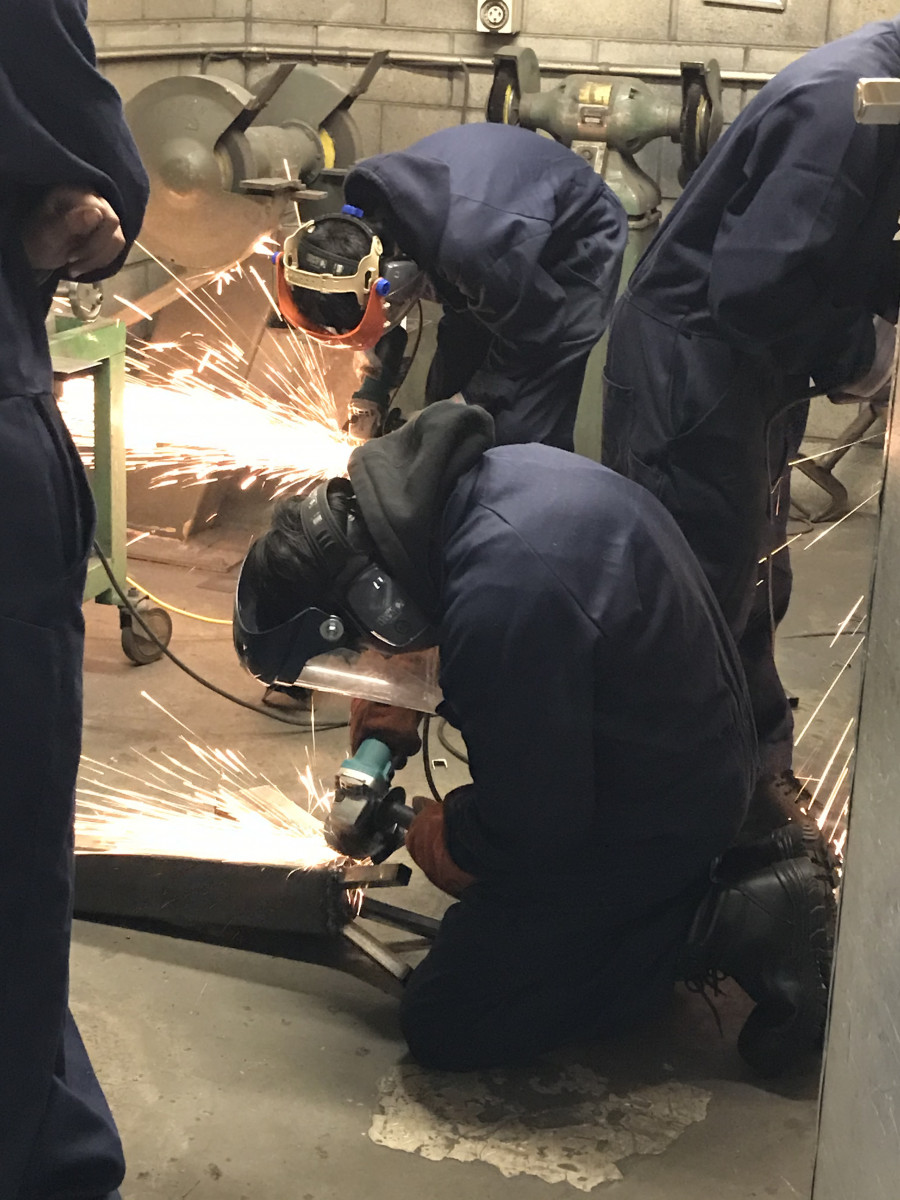
11MTECThis is a workshop based course in which students undertake a number of practical projects while developing metalworking skills and processes in:
• Engineering Measurement
• Mechanical Engineering Technology
This course prepares students for trade based apprenticeships and leads onto the Year 12 and 13 Engineering courses. See the Competenz link below for more information.
Please note: This is not an automotive course and there is a voluntary contribution of $140 for this course to cover classroom resources.



Year 11 Media Studies
11MEDAMedia Studies offers an academic and exciting field of study. 11Media balances sociology with media production to give students a working knowledge around how to read, critique and create a range of media products.
Students will be engaging in a genre study, devising a short scene that will be made into a short film, and a unit on advertising where they will plan and produce their own ads.
Media Studies students explore media’s relationship to society and consider how messages may be communicated through various media. In a world where our media use drives so many of our every-day interactions, understanding the role it plays in our lives has never been more important.
This course leads to L2 and L3 Media Studies, and is a university entrance approved subject.
Year 11 Music
11MUSCStudents will develop skills, building on prior knowledge and experience of music, and will deepen their musical appreciation, understanding and passion in the subject. Students will develop confidence by engaging in opportunities to perform, compose, analyse and share musical skills.
Performance skills - Students will develop practice on their chosen instrument and will build on their performance skills as a soloist and in a group.
Composition - Students will learn the fundamental skills of creating music by building a composition portfolio.
Musical contexts - Students will study set works from a variety styles and develop their understanding of musical concepts and contexts. Students will gain five NCEA Level 1 credits from this part of the course.
Music skills - This area will look at building students' musicianship and skills through a number of practical tasks throughout the year. Music Technology skills will also be developed.
Year 11 Physical Education
11PEHLThe course has a balance of physical activity and theory. The practical components of the Year 11 course include a a variety of sports, Sports Performance, Coaching, Outdoor Ed components and an emphasis on positive interactions with those around you. Participation in both theory & practical lessons is a necessity to take the course.
The theory sessions support these activities and also include Anatomy, Bio-mechanics, Exercise Physiology, Leadership, Risk Analysis, Skill Learning & Sports Sociology. Students will be assessed in a number of different ways throughout the year to check understanding & readiness for Level 2 Physical Education. Students will sit one Level 1 Achievement Standard (5 credits), which will be confirmed at the start of next year.
In this course you will use all of these skills in harmony to develop concepts that are applicable in all walks of life.
Please note there is a voluntary contribution of $20 for this course to cover classroom resources and there may be additional contributions depending on the assessment selected by a student e.g. overnight camp versus no-cost school based option. Parents will be notified of potential costs in advance and for permission for their child to participate.
Year 11 Product Design Technology - Hard Materials
11PTEC11PTEC is a full year course in which students develop creativity through ideation, design and manufacture a product to tell a story and build on specific workshop skills. The course covers areas such as:
- Research
- Designing to fit a Brief
- Basic Technical Drawing
- Material Testing
- Health and Safety Considerations
- Construction Skills
- Evaluation
This course has been set up to give students the opportunity to develop the skills necessary to be successful at senior school and has 3 projects.
The first project, Design without Make, requires the students to be as creative as possible in designing or redesigning a unique product.
Building on from the Design without Make project, students will move onto the only Achievement Standard of the course - “Tell me a Story”. For this project, students are required to design and build a purposeful outcome to fit a brief of their choice. Their designs will be centred around stakeholder feedback and testing materials to find suitable choices.
The third project of the year is mainly construction. In this project, students will develop more specific workshop skills to expand their understanding of what is possible in the built environment.
Note: This course leads to university entrance approved subjects and there is a voluntary contribution of $140 for this course to cover classroom resources.

Year 11 Product Design Technology - Mixed Materials
11PTMMYear 11 Product Design Mixed Materials
This hands-on course is perfect for students who enjoy working with textiles, soft materials, and mixed media. Building on the Year 9 and 10 Product Design Mixed Materials courses, it offers a practical, creative pathway into senior Product Design and Technology subjects.
Students will explore a range of design processes - generating ideas, prototyping, and evaluating outcomes.
Students will learn construction and material manipulation techniques, such as sewing and fabric dying, and consider the environmental and cultural impact of their material choices.
Projects will be shaped by student interests, but they could include manu tukutuku (kite-making), Printmaking design using custom-made materials, or fashion design.
The Level One Achievement standard used for this course is still being confirmed, but the focus will remain on student-led, project-based learning and support future learning into UE-approved senior courses.
Please note there is a voluntary contribution of $80 for this course to cover classroom resources.

Year 11 Science
11SCIEThis Year 11 Science course covers key aspects of biology, chemistry and physics and uses these to deepen our understanding of the world. Biology will focus on cell structure, genetics and populations. Chemistry will focus on atomic structure, properties of solids, reaction rates and acid and base reactions. Physics will focus on energy changes, mechanics, and electrical circuits.
Students will complete one Level 1 NCEA external assessment in term 4. Other parts of the course will be marked against the NZ curriculum levels each term.
Please note: The Year 11 SciPad workbooks are available for purchase to support study for the external assessment. These can be purchased from the Resource Centre.
Year 11 Science & Sustainability
11SCISThis course extends on content covered in the science course and takes a holistic approach to science and sustainability. There will be a focus on using scientific knowledge and thinking to investigate atmospheric chemistry, biodiversity, ecology, communication, electricity and biomechanics.
Throughout the course there will be many issues explored through the lens of controversies, disinformation and conspiracies. We’ll look at the science related to vaccinations, the Earth’s changing climate, biodiversity and pest control in Aotearoa, and low-level radiation from 5G communications. The course begins with looking at conspiracy theories before tackling the big issues. We’ll also look at the incredible diversity of endemic species in NZ.
Students will complete one Level 1 NCEA internal assessment. Other parts of the course will be assessed against the NZ curriculum. This course is of equal difficulty to the 11SCIE course, and prepares students for all senior science courses.
Year 11 Spanish
11SPANHutt Valley High School Spanish Students in Spain.
This is a full year course which develops students' ability to communicate in all major time frames (present, past, and future) related to a range of everyday contexts, such as school life, family experiences, and future plans.
Students in Year 11 Spanish may have the opportunity to participate in an international trip to a Spanish-speaking destination - overseas trips are organised regularly, though priority is given to students in Years 12 or 13.
Year 11 Supported Learning
11SUPPSupported Learning is a programme for Year 11 and above students who need a more structured, supported environment for their learning. In–class Learning Support Assistant guidance is available.
There is a focus on developing written and spoken literacy skills in functional contexts.
Students are able to achieve Level 1 credits in life-skills related topics. This also counts towards the NZQA Level 1 Certificate in Skills for Living.


Year 11 Te Āra
11TEARThe Te Āra course develops Te Ao Māori through the exploration of Māori concepts, issues and practices. Students will gain unit standards at Level 1, 2 or 3, depending on a student's prior learning, individual strengths, experiences and interests. The course will be based in Hotuwaipara, the school marae.
Possible fields of study may include: Tikanga, Manaaki Marae, Māori Tourism, Mau Rakau, Nga Mahi a Te Whare Pora.
Year 11 Te Reo Māori
11MAORStudents develop their listening, speaking, reading and writing skills to a standard that enables them to manage their tasks in preparation for NCEA assessments. Topics include: tikanga Māori, kawa o te marae, whanau, health and urban living. Students also study the traditional and contemporary Māori culture of Aotearoa.
Students will complete one Internal and one external NCEA achievement standard.
Subjects for Year 11 Students
Foundation English Language
ELAFThis class is for English Language learners at beginner level from any year level. The class develops language confidence in reading, writing, listening and speaking. If students are ready they can do Level 1 English language unit standards.
Level 2 Accounting
12ACCOThis course aims to further develop students financial literacy; enabling students to develop the knowledge and skills to manage the financial affairs of businesses with an emphasis on sub-systems.
Students will cover the following Accounting practices:
• Processing Accounting information
• Reporting financial information
• Interpreting financial information and making decisions
• Developing digital literacy by learning how to use the Xero Accounting software program

These are necessary skills for most areas of future employment or future courses in Commerce.
Please note: The voluntary contribution for this course is $25 to cover the online learning environment. A workbook is also available to purchase from the Resource Centre and is strongly recommended.
Level 2 Art Design
12ARDEIn 12 Art Design, Students will produce work in response to a graphic design brief, using handmade and digital processes to generate, develop, extend and regenerate ideas in a variety of format outcomes such as logo design, packaging, poster design, digital platform (app/web page format) or magazine/ leaflet cover/spreads.
Students will apply and extend their design skills and techniques using new and familiar tools such as digital SLR cameras, Photoshop, Illustrator and InDesign. Internally assessed standards acknowledge processes and techniques, as well as the development of ideas. The externally assessed standard is on two A1 panel folio panels, and is an edited selection of their work in response to their brief.
This course is for students who have an interest in Design and illustration, who enjoy exploring visual ideas and how they can be communicated for a particular purpose.
Art students develop creativity, empathy, imagination, resilience, forward thinking…and organisational skills. They are creative, curious and imaginative, collaborative and able to relate well to people from diverse backgrounds, patient, self-motivated, disciplined and entrepreneurial, confident, enthusiastic, flexible and able to work under pressure.
Please note: The voluntary contribution for this course is $30 to cover take home materials and other resources.
Level 2 Art Painting
12ARPAThis course will enable students to develop their skills in drawing and painting. Students will research established practice (other artists' methods and ideas) and use this to develop, extend and regenerate ideas and techniques in their own work. Internally assessed standards acknowledge processes and techniques, as well as the development of ideas. The externally assessed standard is on two A1 panel folio panels, and is an edited selection of their work in response to their own proposition.
This course is for students who wish to explore art-making in greater depth in the mediums of dry and wet media - drawing and painting.
Art students develop creativity, empathy, imagination, resilience, forward thinking…and organisational skills. They are creative, curious and imaginative, collaborative and able to relate well to people from diverse backgrounds, patient, self-motivated, disciplined and entrepreneurial, confident, enthusiastic, flexible and able to work under pressure.
Please note: The voluntary contribution for this course is $45 to cover take home materials and other resources.
Level 2 Art Photography
12ARPHThis course will enable students to develop their skills in photographic image making. Students will research established practice (other artists' works) and use it to develop ideas and techniques in their own work. They will extend their understanding of tools and techniques through the use of digital slr cameras, and Photoshop. Internally assessed standards acknowledge processes and techniques, as well as the development of ideas. The externally assessed standard is on two A1 panel folio panels, and is an edited selection of their work in response to their own proposition
This course is for students who wish to explore the art-making potential of the photographic medium, in all its forms and devices, from phone cameras to Digital SLRs. Students can explore diverse photographic genres, from staged to documentary.
Art students develop creativity, empathy, imagination, resilience, forward thinking…and organisational skills. They are creative, curious and imaginative, collaborative and able to relate well to people from diverse backgrounds, patient, self-motivated, disciplined and entrepreneurial, confident, enthusiastic, flexible and able to work under pressure.
Please note: The voluntary contribution for this course is $50 to cover take home materials and other resources.
Level 2 Biology
12BIOLThis subject involves the study of living things. It includes:
- Gene expression - how genes work
- Genetic variation & change - how populations change over time
- Carry out a practical investigation - cell transport
- Learn about gas exchange in different taxonomic groups - including dissections
- Ecology - how communities of species interact (learnt with optional assessment)
- Cell biology - structure and key processes (learnt but not assessed)
An optional trip to Petone Beach will happen in Term 2.
Please note: a voluntary contribution is requested for students attending any school trips for this course. A workbook set is available to be purchased from the Resource Centre.
Level 2 Business Studies
12BUSIStep into the world of Commerce and discover what it takes to build a successful enterprise. Year 12 Business Studies bridges the gap between academic theory and real-world application. Students will explore how large-scale companies operate nationally, while simultaneously working in teams to design, launch, and review their own physical business activity.
Why study 12BUSI?
This course is designed to build critical personal and professional capabilities that serve students well across all subjects, tertiary study, and future employment:
- Collaborative leadership: Developing teamwork, compromise, and collective decision-making skills.
- Problem solving & innovation: Learning to identify gaps in the market and innovate creative solutions.
- Critical thinking: Evaluating the consequences of operational decisions on a business's long-term success.
What will I learn?
The Level 2 curriculum shifts focus toward large businesses (companies with national significance or more than 20 employees). Key areas of study include:
- Internal operations: Understanding organizational structures, production processes, and corporate social responsibility (CSR).
- External influences: How legal, political, and technological changes impact business operations in New Zealand.
- The people side of business: Exploring motivational theory to understand what drives productivity and positive workplace culture.
- Market research: Learning how to scientifically gather primary and secondary data to predict consumer behaviour.
What will I actually do? (The 'Carry Out' business activity)
The highlight of the 12BUSI course is the group business activity which aims to raise funds for a local community cause. Working under teacher guidance within a community or school context, students will:
- Pitch an idea: Conduct market research to find a viable product or service opportunity.
- Create a business plan: Establish budgets, marketing strategies, and operational roles.
- Go to market: Execute their business plan in real life, managing actual production and sales.
- Review and refine: Analyze their financial and operational outcomes, learning how to adapt a business model based on real customer feedback.
Course expectations: This subject offers a fantastic balance of practical experience and academic rigor. Because the primary assessment is a collaborative group project, success depends on high levels of personal accountability, reliable participation, and strong communication with peers.
Please note: A course contribution of $30 is requested to cover workbooks and classroom materials. There may also be an additional course contribution requested to cover the costs of a field trip.

Level 2 Calculus
12CALC12CALC is essential for students intending to study an algebra & calculus focused pathway, 13CALC. It will also help students studying 13STAT or 13MATH.
Students studying 12CALC will study five NCEA standards throughout the year.
2.4 Trigonometry - Internal Assessment task over two lessons
2.14 Systems of Equations - Internal Assessment task over two lessons
2.2 Graphical Methods - Internal Assessment task over two lessons
2.6 Algebra - External Assessment in the NCEA Exam window in November/December
2.7 Calculus - External Assessment in the NCEA Exam window in November/December
Level 2 Chemistry
12CHEMThis course offers students an overview of Chemistry which covers the following topics: structure and bonding, energy changes, REDOX reactions, organic compounds, qualitative chemistry and principles of chemical reactivity, Due to the nature of the chemicals used in this class students will be required to wear closed-toe shoes for all practical work.
This course is an important building block for anyone who is considering studying Chemistry, Engineering, Health Sciences or Nursing at University.
Level 2 Classical Studies (Ancient History)
12CLASLevel 2 Classical Studies (Ancient History) is the study of the ancient civilization of Greece. By exploring the social life, mythology, legends, art, history, literature and religion of these city states students learn how people of the past lived and how the past continues to influence the present.
The course offers two internal and two external assessments which also contribute toward UE reading/writing credits.
• Skills
There are a range of skills taught and practiced throughout this course. These skills are transferable to other courses and areas. They include:
- Identifying patterns, similarities and differences.
- Communicating knowledge through a variety of visual, verbal and written media.
- Writing skills and the ability to communicate clearly.
- Research and analytical skills.
During the year you will study:
• I'm holding out for a Hero...
What makes a person a hero? We will study the big heroes of Greek mythology eg Herakles, Perseus and Theseus and look at their origins, actions and monsters that made them famous. They will be compared to modern day heroes to see if our values have changed over the centuries. We will also look at how these heroes are presented in modern media.


• The Trojan War/ The Odyssey
What happens to the heroes from the greatest of all ancient wars? Detailing Odysseus' ten year journey to return to his homeland The Odyssey is one of the most famous action adventures of all time. It contains episodes of fame, beautiful goddesses, monsters, and revenge.


• The City/Art of Athens
The most famous city state of the Ancient Greeks and how it convinced themselves and others that they were the greatest of them all. Ancient Athens was a city that innovated in areas of politics, commerce, art and culture and they had no problem about making this clear to all others.

• The Persian Wars
What do you do when a reported one million foreign troops invade your homeland? The ultimate underdog story where a small set of city states battle for freedom against a massive foe. Learn about the tactics, defeats and victories and how it lead to the meteoric rise of one city to greatness.
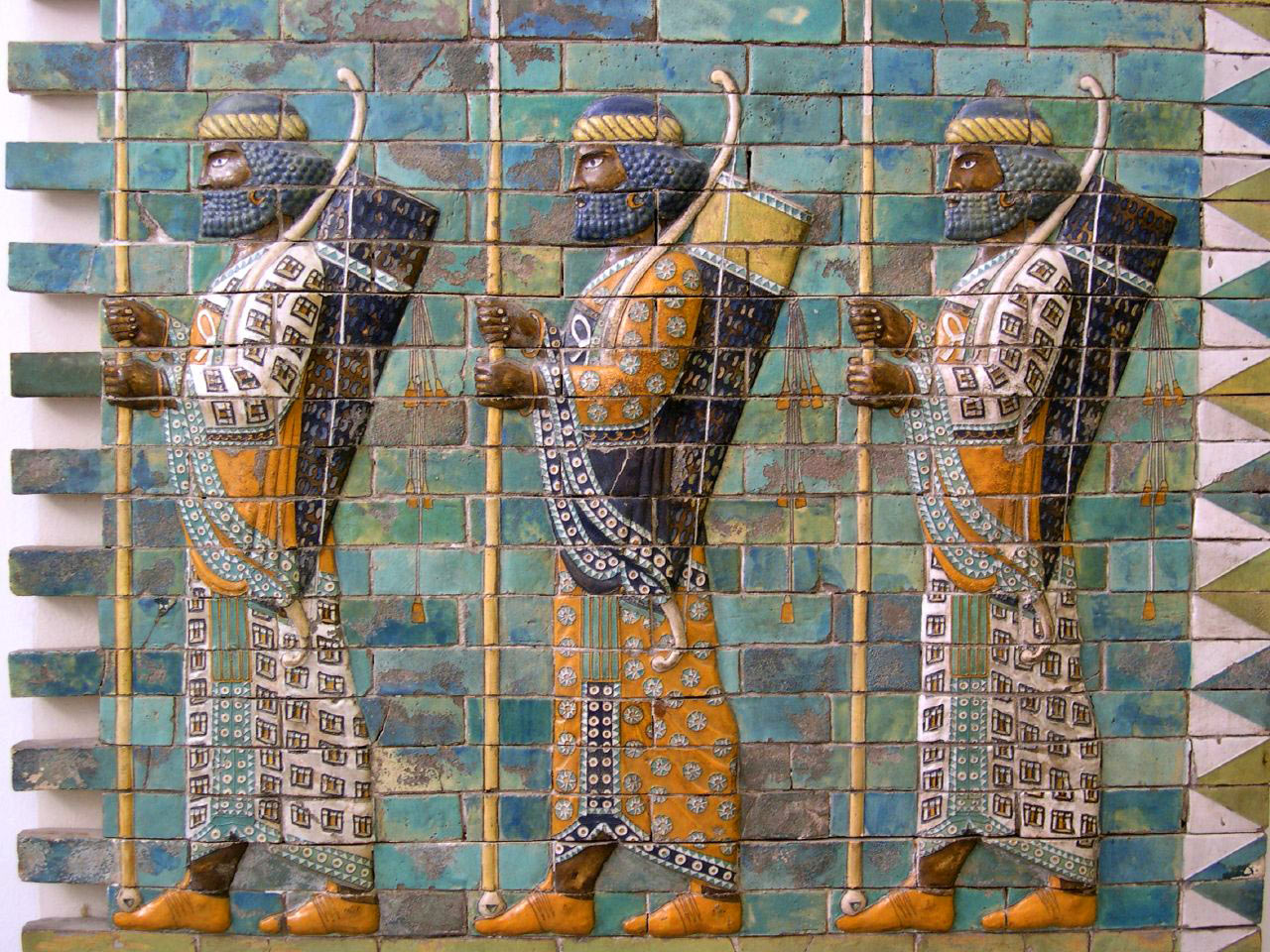
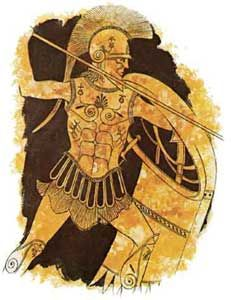
Please note: There may be a voluntary contribution requested for students attending any field trips for this course.
Level 2 Computer Science
12COMPStudents who complete this course will gain an in-depth knowledge of the fundamental principles in advanced Computer Programming, Computer Science, Networking and cloud-based Databasing. Knowledge of programming principles will give students an insight into software development across a range of disciplines and lead to careers in all areas of Information and Communications Technology as well as many other fields of study.
Examples of student work - https://sites.google.com/hvhs.school.nz/technology/COMP/12COMP/programming/exemplars
For more information about the course visit the course website - https://sites.google.com/hvhs.school.nz/technology/COMP/12COMP?authuser=0
Note: This course leads to University Entrance approved subjects, the standards below may change based on the new Digital Technology standards being introduced by NZQA. The voluntary contribution for this course is $20 to cover classroom resources.

Level 2 Dance
12DANCStudents will explore a variety of dance disciplines such as:
• Performance
• Mastery of technical skill in various dance forms
• Production technologies
• Devising and choreography techniques
This course focuses on performance and artistic expression. It is an extension of the Year 11 Dance course. By exploring contrasting dance forms, students will develop new technical dance skills, strength, extension, flexibility and body awareness. In addition to this, students will refine their performance technique and expand on their creative ideas and expression.
Level 2 Design and Visual Communication
12DVCO


In Year 12, students tackle advanced design projects that demand greater originality, depth of thought, and technical execution. They extend their skills in conceptual development, iterative design, and advanced visual communication techniques, including digital and physical modelling. Students are expected to research widely, think critically about user needs and societal context, and demonstrate a personal design perspective in their work.
Creative and transferable skills are further strengthened, with an emphasis on resilience, independent inquiry, and the ability to critique and improve their own design practice. Students are prepared not only for excellence in NCEA Level 2 but also for future tertiary study or employment pathways, gaining the confidence to apply design processes and innovative thinking across many areas of life and work.
Please note: The voluntary contribution for this course is $30 to cover classroom resources.
Level 2 Digital Technology
12DTECThis course provides students with an in-depth understanding of advanced concepts and procedures in Digital Media using a range of recognised industry-standard software applications. The course covers a range of digital media areas such as:
- 3D Modelling with Blender
- Virtual reality
- Animation
- Image Manipulation
- Web Design
Students develop their own projects in these areas while learning about how Design and Usability principles can be applied to enhance their designs. Project management tools and techniques are also taught and used to project manage projects.
Students will complete two digital media projects over the course of the year.
For more information about level 2 Digital Technology, visit the course website - https://sites.google.com/hvhs.school.nz/technology/DTEC/12DTEC
Note: This course leads to university entrance-approved subjects; the standards below may change based on the new Digital Technology standards being introduced by NZQA. The voluntary contribution for this course is $30 to cover classroom resources including an Adobe CC License.
Examples of student work


Level 2 Drama
12DRAMStudents participate in a number of group acting experiences, including devising and performing their own theatre pieces, demonstrating knowledge of a theatre form, and participating in a major class production.
Level 2 Economics
12ECONWhy do interest rates rise? Why does inflation make everything more expensive? How do trade agreements affect jobs and businesses in New Zealand?
Year 12 Economics helps students understand the forces that shape the world around them. Economics is the study of how individuals, businesses, and governments make decisions about . It provides students with the tools to analyse current events, understand economic issues, and make informed decisions in everyday life.
Throughout the year, students explore major issues affecting the New Zealand economy, including economic growth, inflation, international trade, and government economic policies. Using real-world examples, current events, statistics, and economic models, students investigate how economic decisions impact households, businesses, workers, consumers, and the wider community.
Economics develops valuable skills that are highly sought after by employers and tertiary institutions. Students learn to think critically, analyse data, interpret graphs and statistics, conduct research, evaluate evidence, and make well-reasoned decisions. These skills are transferable across a wide range of subjects, careers, and life situations.
Students who study Economics gain a deeper understanding of important issues such as:
- The cost of living and inflation
- Employment and economic growth
- International trade and globalisation
- Government policies and their impacts
- Financial decision-making and opportunity cost
- How economic events affect different groups in society
Economics provides excellent preparation for further study in areas such as Commerce, Business, Finance, Accounting, Law, Public Policy, International Relations, Data Analytics, and Economics at university level.
Career pathways linked to Economics include:
- Economist
- Financial Analyst
- Accountant
- Business Manager
- Banker
- Investment Advisor
- Policy Analyst
- Market Researcher
- Government Advisor
- Entrepreneur
- Lawyer
Whether students are interested in business, politics, finance, international affairs, or simply understanding how the world works, Economics provides practical knowledge and analytical skills that will benefit them throughout their lives. Students use economic models and statistics to make sense of these issues and develop practical skills for making informed decisions about saving, borrowing, and investing. The course builds the foundation and develops skills for further study in economics or other related fields in commerce.
Assessment Information:
- Internal Assessments (6 credit): Analyse current economic events and impacts of government policies to address these impacts.
- External Assessments (18 credits): Typically covers key macroeconomic concepts such as inflation, economic growth, and international trade and a Level 3 standard that covers all of these topics.
- Total Credits: Approximately 18 NCEA Level 2 credits and 6 NCEA Level 3 credits at level 3.
Pathways and Opportunities:
Studying Level 2 Economics opens doors to a wide range of future pathways, including:
- University Courses: Commerce, Economics, Business, Finance, Public Policy, International Relations, and more
- Careers: Business Analyst, Policy Advisor, Economist, Financial Planner, Investment Analyst, Marketing Specialist, and roles in bank, government, or international organization.
- Skills Gained: Critical thinking, decision-making, data analysis, communication, and a understanding of how the economy affects individuals and society.

Level 2 Electronics
12ELECThis course combines hands-on work and theory. Students will learn how the basic electronic components work and what they do in a circuit. Students will use a multi-meter, and understand markings and ratings of components.
Students will draw component layout diagrams, and etch PCBs and solder the components on. This knowledge is used to design electronic circuits and build them into finished products.
Please note: The voluntary contribution for this course is $40 to cover classroom resources.

Level 2 English
12ENGLYear 12 English
Students will continue to focus on reading, writing, listening, speaking and viewing skills. They will be trained in how to develop logical written arguments in response to their literature studies. All students will study several written texts and a film over the course of the year. Students will complete a connections task and create a portfolio of crafted writing, which will be internally assessed for 10 credits. There is also an optional speech.
Reading and writing will make up the biggest components of this course. In particular, students will be expected to develop analytical skills during their literature studies.
Students will be enrolled in two external assessments, each worth 4 credits, with the option of a third. A third external (2.3) is optional and offers a further 4 UE Literacy credits
There is an opportunity to gain 10 writing and 4 reading credits.
Note: If you are looking to attend Auckland University, you need to gain a minimum of 17 English credits at Level 2 and/or 3.
Level 2 English Language
12ELANThis class is for students studying at Level 2 who are consolidating their English language learning. This class supports language development in listening, reading, writing and speaking. Students will be supported to improve their vocabulary, grammar and overall confidence communicating in English. Students from 12ELAN can go on to take 13ELAN the following year.
Level 2 English Language Literacy
12ELITThis class is for students studying at Level 2 who are advanced in their English language learning. This class supports language development and builds academic language and literacy skills. It also prepares students for gaining university entrance (UE) literacy in the following year. The standards done in this class offer an alternative to students sitting the CAAs so if you still need to pass the co requisite literacy at Level 1, then this class is for you. Students from 12ELIT go on to take 13ELIT.
Level 2 Food and Nutrition
12FOODThere are 4 units offered at this level which allow students to investigate and analyse ideas around food preferences and food choices. Students will gain greater understanding of how relationships, beliefs, attitudes, sustainability, and nutrition can impact our health and well-being.
The course will be delivered through both practical cooking and theory lessons, guest speakers, and trips.
Please note: The voluntary contribution for this course is $180 to cover the cost of ingredients.
Level 2 French
12FRENThis course builds on students' linguistic skills in listening, speaking, reading and writing, and develops their ability to communicate in French, not just about themselves and their own experiences, but on topics relevant to the wider community. They also focus on expressing their opinions and justifying them in range of contexts.
Students who are curious about the French society and culture and who want to extend their ability to communicate more fluently will enjoy this course. A variety of themes are covered such as the rights and responsibilities of teenagers, future plans, new technology and the environment. We are also always keeping a eye on current affairs and news in the French world.
Year 12 students have the opportunity to sit the French DELF A2 or B1 exam.
A trip to a French-speaking country is organised every 3 years and is open to students from Year 13, 12 and 11.
This course runs for the whole year.
Level 2 Furniture and Construction (BCITO)
12FTEC


Year 12 Furniture with Construction assessed against BCITO
For 2026, we will be offering a Furniture with Construction course using BCITO standards and one Competenz standard. This course builds on skills learnt in Year 11 Furniture but is not essential if a student has completed it previously. Students will learn more complex ways of joining timber to produce high-quality outcomes.
The course continues to be a practical, heavy course with theory work that links to projects being made.
If students have taken the Level 1 course, it builds on those skills learnt. If students have not completed the Level 1 course, they are given the opportunity to develop new skills through practice work and then build on them.
The skills students will learn and develop are:
Plan and monitor the construction of a project - keeping a manufacturing diary of construction and understand the importance of quality control at each stage to ensure a product is well-made and meets the specifications.
Accuracy in marking out timber - working in mm and using a range of tools to ensure accuracy in manufacturing.
Joining of timber - working with a range of tools and equipment to produce well made joints in furniture construction.
Finishing of timber - working with abrasives appropriate for the timber to produce professional finished furniture that is ready to use or sell.
Health and Safety in the workshop.
Students will use these skills to manufacture a small cupboard/bedside table.
The course is a trade-related course designed to build students' skills and knowledge to allow them to pursue careers in the construction industry, such as Joinery, Building, Construction, Carpentry, Flooring, etc.
See the BCITO link for more information - https://bcito.org.nz/
Please note: The voluntary contribution for this course is $140 to cover classroom resources.


Level 2 Geography
12GEOGCourse Description
Welcome to Level 2 Geography! This course builds directly on the foundational critical thinking, spatial awareness, and environment-interaction skills developed in Level 1. It is designed for students who are curious about global dynamics, passionate about human rights, and eager to get outside the classroom to experience fieldwork firsthand.
Throughout the year, you will look at the world through a dual lens—examining both complex human environments and dynamic natural landscapes. You will develop highly transferable skills, including spatial and data analysis, primary research methodologies, and the ability to critically evaluate sensitive contemporary social issues.
What You Will Study:
- Geographic Field Research (Tongariro National Park): Discover what it takes to map and measure the environment. You will venture into the field on an immersive 4-day field trip to collect primary data around vegetation variations in this iconic alpine landscape.

- Large Natural Landscapes (Tongariro Volcanic Centre): Dive deep into the formation and characteristics of one of New Zealand's most spectacular environments. You will study the tectonic, volcanic, and climatic processes that shape this landscape, alongside how people interact with and perceive it.
- Global Geographic Patterns (HIV / AIDS): Zoom out to look at global health trends. You will trace the spatial distribution of HIV / AIDS worldwide, analyzing the complex socio-economic, political, and environmental factors driving its spread, as well as the profound impacts it leaves on global communities.
- Contemporary Geographic Issues (Gloriavale): Turn your analytical eye toward human geography closer to home. You will critically examine the geographic issue of human rights and labor rights within the isolated community of Gloriavale, uncovering the friction between individual freedoms, community values, and legal frameworks.
- Geographic Skills: Sharpen your technical toolkit. You will master resource-based geographic skills, including interpreting complex topographic maps, analyzing graphs, deciphering satellite imagery, and applying geographic concepts to unfamiliar environments.
Please note: The voluntary contribution for this course is $320 (approximately) to cover the cost of the field trip to Tongariro National Park.
Assessment Details
This course offers a balanced mix of internal research opportunities and external exam preparation, totaling 19 credits toward NCEA Level 2.
Level 2 History
12HISTYear 12 History builds on ideas and skills introduced in Year 11 (conducting research, interpreting sources, communicating key historical ideas, understanding historical perspectives, essay writing). In Year 12 we focus more on the historical forces and movements that shaped the 19th and 20th centuries including: Revolution, War, Imperialism/Colonialism, Nationalism, Communism, Fascism. These will be explored through four topics.
 Students choose a revolution, revolt, rebellion, civil war, uprising, mutiny - for research. For example: the French Revolution, American Civil War, Indian Mutiny, Haitian Slave Revolt, Easter Rebellion, Russian Revolution, Warsaw Ghetto Uprising, Cuban Revolution, Hungarian Uprising etc. This topic is used for an internal assessment worth 4 credits.
Aotearoa Archive: New Zealand ‘rebellions’ can also be researched - the Northern Rebellion or Flagstaff War; the Invasion of the Waikato; The East Coast War - Te Kooti.

 A study of one or both Vietnam Wars. The first includes: French imperialism, Vietnamese nationalism, Ho Chi Minh, the Viet Minh, the First Indochina War, Dien Bien Phu, the Geneva Conference, Vietnam divided. The second: Communist North Vietnam, the South Vietnamese ‘domino’, Ngo Dinh Diem's dictatorship, the Viet Cong, the Buddhist Crisis, the Gulf of Tonkin ‘incident’, U.S. involvement in the Second Vietnam War (including the My Lai Massacre, Tet Offensive, protest movement). This is preparation for an internal or external achievement standard worth 5 credits.
Aotearoa Archive: This topic includes New Zealand’s involvement in the Vietnam War and its significance to Zealanders.

 Did you know that New Zealand was responsible for allowing influenza into Samoa in 1918 and that this killed 20% of the population? Or that on ‘Black Saturday’ 1929, New Zealand police opened fire on a peaceful demonstration killing eleven Samoans? This is a study of the New Zealand colonial (mis)administration of Samoa and the impacts it had, including the formation of the Mau and Samoan calls for independence. Preparation for an internal or external achievement standard worth 5 credits.

 In the New Zealand Wars Taranaki experienced more conflict than any other area. This is a study of New Zealand colonialism and Taranaki Iwi responses. It will include some or all of: the Waitara Purchase and First Taranaki War 1860-1, Te Ua Haumene and Pai Marire, the New Zealand Settlements Act 1865 (raupatu - land confiscation), the invasion of South Taranaki 1865-6, Titokowaru’s War 1868-9, and Te Whiti o Rongomai and Parihaka 1881. Preparation for an internal assessment worth 5 credits.
This topic includes a 3-4 day field trip to Taranaki to explore battle fields, museums, memorials and other historic sites. Please note: there may be a voluntary contribution requested to cover the cost of this field trip.

Level 2 Horticulture
12HORTYEAR 12 HORTICULTURE
In this course you will learn the basics of naming and identifying key features of plants, as well as using a few pieces of identification software.
We will also explore practical skills like planting a bed of flowers/vegetables, as well as creating new plants from cuttings. Throughout the course you get to practice a bit of photography and diary keeping. This course leads to L3 horticulture, but can be used to learn core skills for plant growing that could be applied to university courses in landscaping, botany, floristry or a side hustle growing house plants! Note - There are 20 credits available, but they are not UE credits.
 Planting a Dianthus flower
 Some of the pests in our garden!
 Planting lettuce - with variety!
 A newborn thyme plant seedling - ready to sell or plant!
 A completed Dianthus garden bed
Level 2 Hospitality
12HOSPHospitality in year 12 teaches students skills and allows them to gain credits for a career in the Hospitality industry. The credits offered are unit standards, not achievements, so will count towards Level 2 but not towards University Entrance (UE).
The Hospitality credits achieved by Year 11 students in 2025, form half of the 'National Certificate in Cookery', the second half of the credits are offered in the Year 12 Hospitality course. This does not mean that there is a pre-requisite for Year 12 Hospitality, just that students picking up Hospitality for the first time can achieve the offered credits but not the 'National Certificate'.
Hospitality is predominately a practical subject, students will cook on average 3 times a week, with one theory lesson a week to fill in assessment forms, recipe planning and competition preparation.
Students will be taught the following standards over the course of the year: frying, baking, roasting, fruit and vegetable cuts, knife skills, sandwiches, salads, handle and maintain knives, espresso and mocktails. There are food safety/hygiene requirements in place for this course.
Please note: The voluntary contribution for this course is $240 to cover the cost of ingredients.
Level 2 Japanese
12JAPAThis full year course builds on students' linguistic skills in listening, speaking, reading and writing, and develops their ability to communicate in Japanese, not just about themselves and their own experiences, but on topics relevant to the wider community. They also focus on expressing their opinions and justifying them in range of contexts. The cultural dimension will be woven through the variety of contexts chosen for the year.
Students are encouraged to take two NCEA internal assessments in two NCEA external assessments.
Students have the opportunity to opportunity to interact with native speakers from our sister school, Suginami High School, in Tokyo as part of our biannual exchange programme to and from Japan. We offer a trip to Japan every two years for 2 weeks. Priority for this trip will be given to students who are in Year 12 and Year 13, and studying Japanese.
Level 2 Mathematics
12MATH12STAT is a general Mathematics course with a slight focus on Statistics, it leads directly to either 13STAT or 13MATH at Level 3.
Students studying 12STAT will study six NCEA standards throughout the year.
2.4 Trigonometry - Internal Assessment task over two lessons
2.3 Sequences & Series - Internal Assessment task over two lessons
2.13 Simulations - Internal Assessment task over two lessons
2.9 Informal Inference - Internal Assessment task written as a report over one week
2.5 Networks - Internal Assessment task over two lessons
2.12 Probability - External Assessment in the NCEA Exam window in November/December
Level 2 Mechanical Engineering (ITO)
12MTECThis is an engineering workshop based course in which students undertake a number of practical projects while developing metalworking skills and processes. This course prepares students for trade based apprenticeships in the engineering industry.
For more information about the assessment criteria see the Competenz link below.
Please note: This is not an automotive course, and there is a voluntary contribution of $150 for this course to cover classroom resources.


Level 2 Media Studies
12MEDAIn our media saturated world, being able to decode, understand and create media content is becoming a vital skill. Media Studies combines sociology, psychology, film making, critical theory and history to give students a subject that is academically challenging, exciting, engaging and relevant. Students will study representations of gender and sexuality in the media; engage in a genre study, looking through history at the events that shape society's engagement with media texts; and plan, script and create a New Zealand music video. This is a challenging and exciting programme which culminates in our annual Media Studies Film Awards, The Hoscars.
Level 2 Music
12MUSCStudents will select their own course of study from:
• solo performance
• solo performance on a second instrument
• group performance
• composition
• aural
• score reading
• instrumentation
• New Zealand music investigation
Assessment will be selected from these standards based on individual interests and skills they wish to develop. This course is for students who wish to further their musical knowledge and experiences.
Music students develop interpersonal and communication skills: leading/participating in small and large groups, understanding group dynamics, attuned and sensitive listening skills, excellent verbal and written skills; problem solving, attention to detail, organisational skills and time management.
Level 2 Music Performance
12MUPRThis is a largely practical course and students will select their own course of study and standards from the following topics:
- solo performance
- solo performance on a second instrument
- group performance
- composition
- NZ music investigation
Assessment will be selected from these topics based on individual interests and skills they wish to develop. This course is for students who want to develop their performance skills, and musical competency.
Music students develop interpersonal and communication skills: leading/participating in small and large groups, understanding group dynamics, attuned and sensitive listening skills, excellent verbal and written skills; problem solving, attention to detail, organisational skills and time management.
Level 2 Pathways
12PATHLevel 2 Pathways
This course focuses on pathway and career planning, supporting students to explore and prepare for life beyond school. Students will build workplace literacy by developing an understanding of their interests, strengths, and key skills, alongside workplace expectations, behaviours, and communication skills that contribute to success across a range of environments.
The course also supports the development of the knowledge and capabilities needed for future pathways, including employment, apprenticeships, and further study. Students will build confidence, independence, and the ability to make informed decisions about their future.
Students will have the opportunity to participate in the Gateway Programme and/or a work experience placement. In many cases, this provides opportunities to complete and be assessed against industry-based standards. Students will also complete a workplace health and safety course to support their readiness for work experience and employment.
Optional Pathway Opportunities
This course also provides access to specialist pathway opportunities that are not typically available within the formal school curriculum. Programmes are tailored to individual student interests and career goals, allowing for a more personalised learning experience.
Current pathway options may include:
- Wellington Trades Academy
- Aviation
- Motor Industry Training Organisation (MITO) micro-credential
- Building & Construction Industry Training Organisation (BCITO) micro-credential
Students may also explore other approved pathway opportunities in consultation with the Careers team.
Students interested in this course should speak with Nicole Arnell or email [email protected] to make an appointment to discuss their pathway ideas.
Please note: The voluntary contribution for this course is $30 to cover classroom resources.
Level 2 Physical Education
12PEHLAkonga should have keen interest in physical activity and sports and enthusiasm to participate in practical lessons, some success at NCEA level 1 is advised.
This course offers a range of different opportunities to explore the outdoors, and utilise our local sporting and exercise facilities where students will experience a range of different topics in the field of physical education.
Activities may include but not limited to: Turbo Touch, Aquathon, Cycling, Hiking, Camping, Volleyball, Table Tennis, Netball, Basketball, Juggling
Students who choose not to go on camp will be required to complete a school based activity *
PLEASE NOTE: Assessments are made up of mainly achievement standards with opportunities for some unit standard assessment. Although there are a number of different standards students can take, students will only be allowed to select up to a maximum of 20 credits during the year. Standards will be selected on the basis of student interest and availability of teaching resources.
Learning is done through, in and about physical activity via theory and practical lessons.
Areas of focus are Outdoor Education, Fitness/Training, Sociocultural aspects and Leadership.
Please note there is a voluntary contribution of $30 for this course to cover classroom resources, and there may be additional contributions depending on the assessment selected by a student e.g. overnight camp versus no-cost school based option. Parents will be notified of potential costs in advance and for permission for their child to participate.
Level 2 Physics
12PHYSIn Year 12 Physics we cover the following concepts:
Practical skills and the use of graphs for the analysis of data.
Mechanics:
• Kinematics – straight line and vector motion, relative motion
• Dynamics – force and momentum
• Circular and projectile motion
• Work, energy and power
Electricity and Electromagnetism:
• Electric Fields
• DC Circuits
• Magnetism
• Electromagnetism
Atoms and Radioactivity:
• Atomic Models
• Radioactivity
• Nuclear Reactions
Waves:
• Light as a particle - reflection and refraction
• Light as a wave - reflection, refraction, diffraction and interference
This course is an important building block for anyone who is considering studying Engineering or Health Science at University.
Level 2 Product Design Technology
12PTEC12PTEC is a full year course in which students design and develop an innovative outcome which incorporates resin and other mixed materials. The course covers areas such as:
- Research and Design
- Material Testing and Processing
- Health and Safety Considerations
- Advanced Workshop Skills
- Evaluation and Further Development
During the course, students will design and manufacture a product to fit a brief of their own choosing, this will be guided by stakeholder feedback, testing, trialling and development. Throughout the process, students are required to create a portfolio of evidence to showcase their development, testing and manufacture.
This year, students will only be making 1 final product. This allows students to spend enough time exploring ways to design and construct their product. Given that one of the standards assesses students’ practical skills, only building 1 product allows them to produce something to a high standard. It also allows students the opportunity to build something they are proud of.
12PTEC builds on foundational skills and knowledge developed through 11PTEC and explores more complex procedures, explanations and reasoning.
Note: This course is university entrance approved, and a voluntary contribution of $140 is requested for this course to help cover the cost of classroom resources.

Level 2 Spanish
12SPANHutt Valley High School Spanish Students in Spain.
This full year course builds on the linguistic skills covered in Year 11, and further develops students' ability to communicate in Spanish, not just about themselves and their own experiences, but on topics relevant to the wider community. Students also begin to move from expressing concrete ideas and information to more nuanced communicative functions such as suggestion, advice-giving and speculation. The cultural dimension of language-learning will be woven through the variety of contexts chosen for the year.
Year 12 students with an interest in the wider world, curiosity to learn about Hispanic culture and the desire to develop their communicative skills, general literacy, memory, and problem-solving ability should consider selecting this course.
Students studying Spanish in Year 12 may have the opportunity to participate in a trip to a Spanish-speaking destination.
Level 2 Te Āra
12TEARThe Te Āra course develops Te Ao Māori through the exploration of Māori concepts, issues and practices. Students will gain unit standards at Level 1, 2 or 3, depending on a student's prior learning, individual strengths, experiences and interests. The course will be based in Hotuwaipara, the school marae.
Possible fields of study may include: Tikanga, Manaaki Marae, Māori Tourism, Mau Rakau, Nga Mahi a Te Whare Pora.
Level 2 Te Reo Māori
12MAORStudents develop their listening, speaking, reading and writing skills to communicate in Te Reo Māori, not just about themselves and their own experiences, but on topics relevant to the wider community. They also focus on expressing their opinions and justifying them in range of contexts.
Level 2 Tourism
12TOUR
Skills are still relevant in the post pandemic globally booming tourism industry.
The core topics in Year 12 Tourism include the study of:
- Tourist characteristics and needs
- New Zealand as a tourist destination
- Work roles in the tourist industry
- World tourist destinations
- Business of tourism
- Social and cultural impacts of tourism
This is not an endorsed course.


Develop a strategy for an organisation that will contribute to a sustainable future
NCEA Chinese Mandarin
13CHINThis course is for Chinese speaking students. It is a bilingual language class where we encourage students to maintain literacy in their home language and foster their cultural identify. This class reinforces students' language skills, culture understanding and build up geography and history knowledge about China. The class is open for any student in Year 11-13 who has the equivalent Chinese language ability. NCEA credits are offered in listening, speaking, reading and writing for Year 12 and 13, while one achievement standard will be offered for Year 11.
Year 11 English Language
11ELANThis class is for English Language Learners who are still developing their English language skills. Students will increase their vocabulary, grammar knowledge and confidence in listening, reading, writing and speaking. This class offers English Language Unit Standards for NCEA credits at level 1 and 2.
Year 11 English Language Literacy
11ELITThis class is for English Language Learners who are starting Level 1 of NCEA. Students should be at a more advanced level of English language but may not have passed any of the CAA tests yet. In this class students will develop language and literacy skills needed to pass the co requisite Level 1 literacy and numeracy standards. This class also offers English Language Unit Standards for NCEA credits at level 2 and 3.
Year 11 Supported Learning
11SUPPSupported Learning is a programme for Year 11 and above students who need a more structured, supported environment for their learning. In–class Learning Support Assistant guidance is available.
There is a focus on developing written and spoken literacy skills in functional contexts.
Students are able to achieve Level 1 credits in life-skills related topics. This also counts towards the NZQA Level 1 Certificate in Skills for Living.
Year 12 Study
12STUDYFor those students who are wishing to study 5 subjects only.
Subjects for Year 12 Students
Foundation English Language
ELAFThis class is for English Language learners at beginner level from any year level. The class develops language confidence in reading, writing, listening and speaking. If students are ready they can do Level 1 English language unit standards.
Level 2 English Language
12ELANThis class is for students studying at Level 2 who are consolidating their English language learning. This class supports language development in listening, reading, writing and speaking. Students will be supported to improve their vocabulary, grammar and overall confidence communicating in English. Students from 12ELAN can go on to take 13ELAN the following year.
Level 2 English Language Literacy
12ELITThis class is for students studying at Level 2 who are advanced in their English language learning. This class supports language development and builds academic language and literacy skills. It also prepares students for gaining university entrance (UE) literacy in the following year. The standards done in this class offer an alternative to students sitting the CAAs so if you still need to pass the co requisite literacy at Level 1, then this class is for you. Students from 12ELIT go on to take 13ELIT.
Level 2 Te Āra
12TEARThe Te Āra course develops Te Ao Māori through the exploration of Māori concepts, issues and practices. Students will gain unit standards at Level 1, 2 or 3, depending on a student's prior learning, individual strengths, experiences and interests. The course will be based in Hotuwaipara, the school marae.
Possible fields of study may include: Tikanga, Manaaki Marae, Māori Tourism, Mau Rakau, Nga Mahi a Te Whare Pora.
Level 3 Accounting
13ACCOThe course enables students to extend their Accounting knowledge and skills to manage the financial affairs of businesses with an emphasis on partnerships, companies and manufacturing entities. Students will cover the following Accounting practices:
- Processing: gather and sort financial information that can be used to prepare financial records and statements
- Reporting: prepare financial statements for a variety of users to provide information about their financial performance and position
- Decision-making: demonstrate understanding of job-cost sub-systems
Please note: Workbooks are available to purchase from the Resource Centre. Purchase is strongly recommended.
Level 3 Art Design
13ARDEStudents will produce a body of work, around a topic of their choice, which uses traditional and contemporary design practice to clarify, extend and regenerate ideas. They will further extend their design skills and techniques by investigating and applying a range of handmade and digital processes, and tools such as digital SLR camera, Photoshop, Illustrator and InDesign. Internally assessed standards acknowledge processes and techniques, as well as the development of ideas. The externally assessed standard is on three A1 panel folio panels, and is a curated selection of their work in response to their own brief.
This course is for students who wish to work on an extended brief of their own topic through the medium of design. It is a UE subject.
Art students develop creativity, empathy, imagination, resilience, forward thinking…and organisational skills. They are creative, curious and imaginative, collaborative and able to relate well to people from diverse backgrounds, patient, self-motivated, disciplined and entrepreneurial, confident, enthusiastic, flexible and able to work under pressure.
Art Careers:
Artist - self employed, Arts Administrator, Curator, Arts Educator/ Teacher, Exhibition Technician, 3d animator, Fashion Designer, Graphic Designer, Interior Designer, Makeup Artist, Textile Designer, Web Designer, Illustrator, Web Developer, Architect, Landscape Architect, Product Designer, Art Historian, Art Dealer, Journalist, Art Therapist, Exhibit Designer, Muralist, Culinary Artist, Film Professional, Cinematographer, Arts advisors and funding coordinators for government and local body agencies, Design and marketing coordinator, Marketing assistant, Video editor, Social media content creator, Exhibitions Officer, Technical writer, Librarian, Graphics Administrator, Visual Merchandiser, Community arts worker… learning in art subjects supports creative thinking and problem solving; applicable to any vocation.
Please note: The voluntary contribution for this course is $30 to cover take home materials and other resources.
Level 3 Art History
13ARHIWe live in a visual world, and the ability to make sense of what we see and experience is a highly valued skill in contemporary culture. Images are a window onto the world, both past and present. Students of Art History explore the creation and contexts of art and artworks from history and the present day.
A programme of study will be selected from the following standards -
Style in art works
Meaning in art
Media and processes in art works
Research an art history topic
Values placed on art works
Analyse texts
A theory in art
This course is for students who enjoy discovery and inquiry, and who wish to develop skills in research, analysis and writing. Achievement standards can contribute to UE Literacy.
Gallery and museum visits are an integral part of this course, and students will have opportunities to become familiar with exhibitions and collections at the Dowse Gallery, Lower Hutt.
Art Careers:
Artist - self employed, Arts Administrator, Curator, Arts Educator/ Teacher, Exhibition Technician, 3d animator, Fashion Designer, Graphic Designer, Interior Designer, Makeup Artist, Textile Designer, Web Designer, Illustrator, Web Developer, Architect, Landscape Architect, Product Designer, Art Historian, Art Dealer, Journalist, Art Therapist, Exhibit Designer, Muralist, Culinary Artist, Film Professional, Cinematographer, Arts advisors and funding coordinators for government and local body agencies, Design and marketing coordinator, Marketing assistant, Video editor, Social media content creator, Exhibitions Officer, Technical writer, Librarian, Graphics Administrator, Visual Merchandiser, Community arts worker… learning in art subjects supports creative thinking and problem solving; applicable to any vocation.
Please note: The voluntary contribution for this course is $26 to cover classroom resources.
Level 3 Art Painting
13ARPAStudents will produce a body of work, around a topic of their choice, which uses traditional and contemporary Painting practice to clarify, extend and regenerate ideas. They will further extend their drawing and painting skills and techniques by investigating other artists’ works, and applying a range of dry and wet media processes in the production of their ideas. Internally assessed standards acknowledge processes and techniques, as well as the development of ideas. The externally assessed standard is on three A1 panel folio panels, and is a curated selection of their work in response to their own proposition.
This course is for students who wish to explore their chosen theme or topic in depth through the medium of paint. It is a UE subject.
Art students develop creativity, empathy, imagination, resilience, forward thinking…and organisational skills. They are creative, curious and imaginative, collaborative and able to relate well to people from diverse backgrounds, patient, self-motivated, disciplined and entrepreneurial, confident, enthusiastic, flexible and able to work under pressure.
Art Careers:
Artist - self employed, Arts Administrator, Curator, Arts Educator/ Teacher, Exhibition Technician, 3d animator, Fashion Designer, Graphic Designer, Interior Designer, Makeup Artist, Textile Designer, Web Designer, Illustrator, Web Developer, Architect, Landscape Architect, Product Designer, Art Historian, Art Dealer, Journalist, Art Therapist, Exhibit Designer, Muralist, Culinary Artist, Film Professional, Cinematographer, Arts advisors and funding coordinators for government and local body agencies, Design and marketing coordinator, Marketing assistant, Video editor, Social media content creator, Exhibitions Officer, Technical writer, Librarian, Graphics Administrator, Visual Merchandiser, Community arts worker… learning in art subjects supports creative thinking and problem solving; applicable to any vocation.
Please note: The voluntary contribution for this course is $50 to cover take home materials and other resources.
Level 3 Art Photography
13ARPHStudents will produce a body of work, around a topic of their choice, which uses traditional and contemporary Photography practice to clarify, extend and regenerate ideas. They will further extend their photographic image-making skills and techniques by investigating and applying a range of relevant photographic processes, such as DSLR camera skills and editing in Photoshop, in the production of their ideas. Internally assessed standards acknowledge processes and techniques, as well as the development of ideas. The externally assessed standard is on three A1 panel folio panels, and is a curated selection of their work in response to their own proposition.
This course is for students who wish to explore their chosen theme or topic in depth through the medium of photography. It is a UE subject.
Art students develop creativity, empathy, imagination, resilience, forward thinking…and organisational skills. They are creative, curious and imaginative, collaborative and able to relate well to people from diverse backgrounds, patient, self-motivated, disciplined and entrepreneurial, confident, enthusiastic, flexible and able to work under pressure.
Art Careers:
Artist - self employed, Arts Administrator, Curator, Arts Educator/ Teacher, Exhibition Technician, 3d animator, Fashion Designer, Graphic Designer, Interior Designer, Makeup Artist, Textile Designer, Web Designer, Illustrator, Web Developer, Architect, Landscape Architect, Product Designer, Art Historian, Art Dealer, Journalist, Art Therapist, Exhibit Designer, Muralist, Culinary Artist, Film Professional, Cinematographer, Arts advisors and funding coordinators for government and local body agencies, Design and marketing coordinator, Marketing assistant, Video editor, Social media content creator, Exhibitions Officer, Technical writer, Librarian, Graphics Administrator, Visual Merchandiser, Community arts worker… learning in art subjects supports creative thinking and problem solving; applicable to any vocation.
Please note: The voluntary contribution for this course is $65 to cover take home materials and other resources. It is highly recommended that students have access to a digital SLR camera. Students should request further information from the Head of the Learning Area before purchasing cameras.
Level 3 Biology
13BIOLThis subject involves the study of living things. It includes:
- Plants and animals – behavior and responses to environmental factors.
- Human Evolution – trends in the development of Homo sapiens.
- Homeostasis - how humans maintain a constant temperature in different environments.
- Human manipulation of genetic material- Cloning, Selective Breeding, Transgenesis.
Please note: An optional trip to Wellington Zoo to observe animal behaviour will take place in September, and a voluntary contribution will requested to cover the cost of this school trip.
Level 3 Business Studies
13BUSICash, competition and credits are all available in Year 13 Business Studies.
Gain the skills to lead, innovate, and thrive in the modern economy as an entrepreneur. 13BUSI takes learning beyond the textbook, offering students a unique blend of academic theory and practical business experience. It is designed to foster the "enterprising spirit" that is vital to New Zealand's economic future, where students will run their own business and get to keep the profits.
Why study Business Studies?
This course focuses on developing versatile, transferable skills that prepare students for both University and future career success.
Students will develop:
- Resilience & initiative: Learning how to adapt, problem-solve, and navigate real-world challenges.
- Core competencies: Mastering negotiation, strategic decision-making, and professional communication.
- Financial capability: Gaining critical insight into financial management, budgeting, and commercial awareness.
What Will I Learn?
A central component of the internal assessment is entirely hands-on. Students will participate in the prestigious Lion Foundation Young Enterprise Scheme (YES), applying classroom theory to a real commercial venture.
Working in teams, students will:
- Form a real company: Brainstorm, research, and pitch a viable business proposition.
- Launch a product or service: Design, manufacture, and market a genuine product or service to the public.
- Manage financial outcomes: Maintain financial records, manage a working budget, and evaluate actual profit or loss.
YES run four challenges throughout the year, to compete against over 5,000 students across NZ, that complements your NCEA work. These come with prizes, cash and experiences of which HVHS has had a large amount of success.
The external assessment curriculum explores how businesses operate within both the New Zealand market and the wider global economy. Key themes include:
- Globalisation: How Kiwi businesses expand overseas and navigate international markets.
- Management & structure: Understanding business formation, organizational functions, and effective teamwork.
- Sustainability & citizenship: Learning how modern enterprises balance profitability with social and environmental responsibility.
Course Expectations: While students will engage in rigorous academic research and written reports, this course requires a high level of personal responsibility and teamwork. Success depends on active, reliable participation in day-to-day business operations.
Please note: The voluntary contribution for this course is $35 to cover workbooks and classroom materials. The entry fee for YES (Young Enterprise Scheme) is $45 and can be expensed to the student's YES business.
Level 3 Calculus
13CALCThis course is a University Entrance Approved Calculus course for those students planning to study Engineering, Sciences, Commerce, and Computer Science.
It consists of five NCEA standards:
3.15 - Systems of Equations - Internal assessment over one lesson
3.3 - Trigonometry - Internal assessment over two lessons
3.2 - Conic Sections - Internal assessment over two lessons
3.6 - Differentiation - External NCEA examination in the NCEA exam window in November/December
3.7 - Integration - External NCEA examination in the NCEA exam window in November/December
Students who wish to study the Algebra of Complex Numbers as the third External paper will need to attend Scholarship Calculus lessons to learn the material.
Level 3 Chemistry
13CHEMThis course delves into the world of Chemistry in more depth. In this course you will look at: oxidation-reduction reactions, structure and bonding, thermochemical principles, equilibrium of aqueous solutions, organic reactions and properties and the use of spectroscopic data.
This course is an important building block for anyone who is considering studying Chemistry, Engineering, Health Science or Nursing at University.
Due to the nature of the chemicals used students are required to wear closed-toe shoes for all practical lessons.
Level 3 Classical Studies
13CLASYear 13 Classical Studies is the study of the ancient civilization of Rome and explores its art, history, entertainment, literature, religion and philosophy. We analyse how the Emperors established power, maintained control and communicated their values to others. Students also learn how the past continues to influence the present.
This year we study:
• Power and Politics
What is an emperor and how did that concept develop? This year we look at how you use a cult of personality to become the sole ruler of an empire and the propaganda Augustus, the first emperor of Rome used to convince others that he was the man for the job.


• Virgil’s Aeneid
Virgil's Aeneid is one of the most famous epic stories in history. We study one of the most famous Roman heroes looking at the conflicts, love stories and journeys through exotic places that shaped who he became. We also look at how legends are used as propaganda.


• War, what is it good for?
The way the world has viewed war has changed markedly throughout the eras. We look at attitudes towards war throughout the ages and specifically how it was used by the emperors for control and bringing culture to the world.


• Roman Art and Architecture/Roman Entertainment
How art and architecture communicated messages and entertained the masses to keep them in check.


Level 3 Computer Science
13COMPStudents who complete this course will gain an in-depth knowledge of the fundamental principles in complex Computer Programming, Computer Science, Networking and cloud based Databasing. Knowledge of programming principles will give students an insight into software development across a range of disciplines and lead to careers in all areas of Information and Communications Technology as well as many other fields of study.
Examples of student work - https://sites.google.com/hvhs.school.nz/technology/COMP/13COMP/programming/exemplars
For more detailed information on what the course involves visit the course website - https://sites.google.com/hvhs.school.nz/technology/COMP/13COMP?authuser=0
Note: This course is University Entrance approved, and the voluntary contribution for this course is $20 to cover classroom resources.
Level 3 Dance
13DANCStudents will explore a variety of dance disciplines. This is a performance-based course with a focus on creation and composition. Through collective and active participation, students will up-skill in a range of dance styles and refine their practical technique. This programme offers opportunities to teach peers, and also to perform within a variety of school contexts.
Level 3 Design and Visual Communication
13DVCOYear 13 DVCO represents the culmination of students' design and communication learning, showcasing their ability to manage a complex, self-directed design project. Students undertake highly personalised briefs where they are challenged to demonstrate expertise in design thinking, spatial awareness, ergonomic consideration, and cultural relevance. They are expected to present comprehensive and professional visual communication outcomes, using a combination of digital and traditional techniques.
Throughout the year, students refine sophisticated creative, critical, and practical skills that are directly transferable to university study and the workforce. Year 13 DVC prepares students to become confident, independent thinkers who can use design as a powerful tool to innovate, solve problems, and communicate across a wide range of industries and disciplines.
Please note: The voluntary contribution for this course is $30 to cover classroom resources.

Level 3 Digital Technology
13DTECDigital Technologies (DTEC) - Year 13
This course offers students an in-depth understanding of complex concepts and procedures in digital media, utilising a range of recognised industry-standard software applications. Students will engage in a year-long project with a real-life client, independently developing a project of their choice. Potential project focus areas include Animation, Image Manipulation, Web Design, 3D Modelling, and/or Brand Identity Package creation.
Throughout the course, students will also explore:
- UX Design Methodologies: Learn and apply various user experience (UX) design principles and methodologies to create effective and user-centred digital solutions.
- Agile Project Management: Gain practical experience with agile project management techniques, fostering efficient and collaborative development processes.
This course is approved for university entrance.
For more details about what is covered in the course, please visit the technology website: Year 13 Digital Technologies Course.
Please note: The voluntary contribution for this course is $30 to cover classroom resources including Adobe CC License.
Level 3 Drama
13DRAMStudents participate in a number of group acting experiences including devising and performing their own theatre pieces, using drama techniques to communicate meaning in performance, and performing a substantial role in the significant class production.
Level 3 Economics
13ECONLevel 3 Economics: Understanding Markets and the Role of Government
This course provides a strong foundation in microeconomic theory, ideal for students interested in pursuing a Commerce or a Business degree at university. You’ll explore how markets function, why prices fluctuate, and how these changes affect households and firms differently. Learn how businesses calculate costs, determine profits, and make decisions to maximise profit or minimise loss. Key economic ideas include, elasticity of demand, impacts of government policies, market competitions to name a few.
A key focus is the role of government in promoting efficiency and fairness in the economy. You’ll examine real-world scenarios where market outcomes may not be optimal and understand when and how government intervention can improve outcomes.
Why Choose Economics?
Through practical application of microeconomic models, you’ll gain analytical tools to assess the impact of economic events and policy decisions. Economics is highly respected by universities and employers worldwide because it trains your brain to think critically and strategically. In this course, you will develop:
- Analytical power: Learn how to look past political headlines and analyze the actual data and cause-and-effect of global events.
- Strategic decision-making: Understand how businesses price their products and outmaneuver competitors.
- Strong communication: Master the art of building logical, evidence-based arguments—a crucial skill for university-level writing.
Assessment: Two internal and two external assessments provide opportunities to apply your learning and demonstrate understanding.
Whether you’re planning a future in Commerce, Public Policy or simply want to make smarter financial and life decisions, this course will elevate your economic literacy and critical thinking.

Level 3 Electronics
13ELECThis course is for students with an interest in electronics. It covers the areas required for people looking for jobs in the various electrical, electronic, engineering and telecommunications industries.
We are making and programming micro-controller circuits with advanced semi-conductors. We're using digital and analogue data, and learn about logic circuits.
Students will learn what semi-conductor devices are made from and how that allows their functioning; They examine typical circuits for the semi-conductor devices we investigate; use wireless radio; and build a high class specification electronic product of their own design, ideally to solve a real world issue.
An independent working attitude is needed, as the course is very project based.
Please note: The voluntary contribution for this course is $40 to cover classroom resources.

Level 3 English
13ENGLStudents will continue to focus on reading, writing, listening, speaking and viewing skills. They will be trained in developing logical written arguments in response to their literature studies. All students will study two written texts and a film throughout the year. Students will complete a research task and create a portfolio of crafted writing, which will be internally assessed for 10 credits. There is also an optional speech.
Students will be enrolled in two external assessments, each worth 4 credits, with the option of a third.
This is a UE-approved course. You can earn 10 writing and 8 reading credits.
Note: If you are looking to attend Auckland University, you need to gain a minimum of 17 English credits at Level 2 and/or 3.
Level 3 English Internal
13ENGILevel 3 English Internal is a course for those who may be looking for a University Entrance option without having to complete external examinations.
Students will continue to focus on reading, writing, listening, speaking and viewing skills. They will be prepared to write essays responding to connections between texts and studied films. Students will also complete a research task and a speech.
All assessments are Achievement Standards. The course offers 14 credits, including 4 reading credits. There is an option for writing credits if needed.
Note: If you are looking to attend Auckland University, you need to gain a minimum of 17 English credits at Level 2 and/or 3.
Level 3 English Language
13ELANThis class is for English language learners who are consolidating their English language skills. A range of credits are available at all levels of NCEA. If students show readiness they will also be supported to achieve the CAA literacy tests. This class is for year 13 students who do not require UE entrance for their chosen pathway. The course focuses on confidence communicating in English through speaking and writing and develops listening and reading skills for a range of tertiary study options.
Level 3 English Language Literacy
13ELITThis class is for advanced English language learners who want to achieve the university entrance literacy requirements for New Zealand universities. Students also develop skills needed for university study. These skills include note-taking, research methods, paraphrasing and summarising, referencing and academic writing style. Students must have passed the co requisite Level 1 literacy standards to enter this class.
Level 3 Food and Health
13FOODLevel 3 Food and health focuses on critical thinking about food-related issues that impact New Zealand families, communities, and global wellbeing. You’ll explore food from both a practical and social perspective, with opportunities to cook, create, investigate, and debate real-world food concerns. You’ll have at least one practical cooking lesson per week to support your learning and apply your ideas hands-on. The course is an approved subject for university entrance and is an endorsed subject.
Please note: The voluntary contribution for this course is $150 to cover the cost of ingredients.
Level 3 French
13FRENIn this course, students further develop their communicative skills in French, refine their ability to share their opinions as well as explore the perspective of others through debating with their classmates or writing essays or articles.
Students who are curious about the French society and culture, who want to extend their ability to communicate more fluently and who like discussing social issues will enjoy this course. A variety of themes are covered such as the working world, immigration in France, stereotypes vs cultural specificities and a film study. We are also always keeping a eye on current affairs and news in the French world.
Year 13 students have the opportunity to sit the French DELF B1 and exceptionally B2 exam.
A trip to a French-speaking country is organised every 3 years and is open to students from Year 13, 12 and 11.
This course runs for the whole year.
Level 3 Furniture and Construction
13FTEC
Year 13 Furniture and Construction is assessed against ITO (Competenz)
In this course, students will design and construct a larger furniture item — a wooden side unit. A working drawing will be provided, outlining the key requirements for assessment. Students who wish to develop their own design, while still meeting these criteria, are encouraged to do so.
Key skills developed include:
- Producing solid wood shelving
- Assembling cabinet doors
As a trade-focused Level 3 course, students are expected to demonstrate independence and confidence in the workshop from the outset. However, introductory tasks are available to help those new to furniture making develop essential foundational skills.
The main project is skills-intensive and involves the use of a variety of hand tools, machines, and workshop equipment. Students who have completed the Level 2 course will build on their prior learning. Those new to the subject will have opportunities to gain and strengthen their practical abilities before progressing further.
Assessment areas include:
- Precision in tool and machinery use
- Safe workshop practices
- Quality and finish of the completed product
- Independent and confident working
Credits gained contribute to the New Zealand Certificate in Furniture Making and can lead into trade-based apprenticeship pathways. For more information, visit the Competenz website - http://www.competenz.org.nz/
Please note: The voluntary contribution for this course is $140 to cover classroom resources.

Level 3 Geography
13GEOGCourse Description
Welcome to Level 3 Geography! This course represents the pinnacle of secondary geography, expanding directly upon the critical thinking, data analysis, and environmental-interaction frameworks developed in previous years. It is tailored for students who are passionate about exploring complex global challenges, evaluating human rights issues, and carrying out advanced academic research.
Throughout the year, you will look at the world through an analytical, scholarly lens—examining the delicate balance between cultural perspectives, economic forces, and the physical environment. Level 3 Geography emphasizes deep analysis, asking you to look beyond surface-level patterns to uncover root causes, systemic dynamics, and future trajectories. This course refines critical data-literacy and decision-making skills that are highly transferable to university study and professional careers.
What You Will Study:
- Advanced Geographic Research (Rotorua Businesses): Take full control of your learning by planning, executing, and analyzing primary research. You will collect field data during an immersive 4-day field trip to Rotorua to evaluate how local businesses operate, interact, and adapt within their spatial environment.

- Contemporary Geographic Issues (Human Trafficking): Analyze a highly sensitive and critical social phenomenon. You will unpack the geographic nature and driving forces behind global human trafficking, evaluate its severe impacts, and critically assess potential solutions and courses of action to resolve it.

- Global Geographic Topics (Modern Maritime Piracy): Zoom out to analyze global distribution trends. You will track the spatial patterns of modern-day maritime piracy, examining the complex factors that give rise to it and the cascading impacts it inflicts on both people and places globally.

- Cultural Process & Environment (Tourism Development in Rotorua): Examine how the cultural process of tourism has shaped and transformed Rotorua over time. You will analyze how this landscape has evolved, the driving forces behind its development, and the friction between economic priorities, human perceptions, and environmental sustainability.
- Complex Geographic Skills: Master the full toolkit of geographic methods. You will analyze, integrate, and synthesize multifaceted resources—including advanced topographic maps, complex data arrays, and specialized geographic concepts—to solve complex problems in an essay-based analysis of a given skills booklet.
Please note: There is a voluntary contribution of $400 (approx.) for this course to cover the costs of the field trip to Rotorua.
Level 3 History
13HISTYear 13 History builds on the skills and ideas introduced in Year 11 and developed in Year 12. The Year 13 programme focuses on:
- ‘Turning Points’ i.e. 20th century events which have led to significant changes in the world.
- Historiography i.e. the historical debate around these turning points - what historians have to say.
- Analysing historical sources.
 This topic explores the evolution of Nazi anti-Semitism from 1933 to 1945. It includes a history of anti-Semitism, 19th century eugenics, the situation in Weimar Germany, Hitler’s anti-Semitism, early anti-Semitic measures, the Nuremberg Laws, Kristallnacht, the invasion of Poland; the Einsatzgruppen, the Ghettos, the T4 Programme, the invasion of Russia, the Wannsee Conference, and the death camps. The historical debate around just how intentional or haphazard the road to genocide actually was, is also covered.
Preparation for an internal assessment worth 5 credits.
Aotearoa Archive: This topic includes a day trip to Wellington to visit the Holocaust Centre and Museum. Students will participate in a range of seminars including the relevance of anti-Semitism and the Holocaust to New Zealand (below right).

 For 45 years the USA and the USSR were engaged in a ‘cold war’. Why this happened and what forms the Cold war took will be explored before focusing on why the Cold War ended. Several factors were at play including the inefficiency of Soviet Communism, new leadership in both countries (Reagan and Gorbachev) and ‘people power’ movements in the Eastern Bloc countries. There is a rich historical debate about the most important reasons why the Cold War ended.
Analysing the historical debate will be preparation for an internal assessment worth 5 credits.

 Until 9/11, the Munich Massacre was the most important terrorist event in modern history. In 1972 at the Munich Olympics, eight members of Black September penetrated the Olympic village killing two of the Israeli team and taking nine others hostage. Eventually the West German police attempted a rescue but this failed. All of the Israelis, five of the terrorists and one policeman were killed. This topic focuses on the causes and consequences of this turning point in terrorism.
Preparation for an external achievement standard worth 6 credits.


Analysing historical sources is preparation for an external achievement standard worth 4 credits. Papers are almost always about New Zealand contexts. They have included Truby King and the Plunket Society, the cartoonist David Low, Blackbirding (literally slavery) in the Pacific, the miraculous survival of the crew of the Rose Noelle, the experiences of Chinese and Dalmatian immigrants in nineteenth century New Zealand. How to analyse historical sources will be developed with several opportunities for practice and feedback.

Please note: There may be a voluntary contribution requested for students attending any field trips for this course.
Level 3 Horticulture
13HORTYEAR 13 HORTICULTURE
In this course we will explore flowering plants, taking a closer look at why different flowers can be used for different garden planting. Also included in this course is a big practical standard (10 credits) where we will use the garden space to grow a range of seeds (of your choice) to produce a crop of seedlings. At the further end of the year, these is an optional standard worth 5 credits. This standard explores the structure of plants, and what adaptations they have to cope in different environments.
 An example of a plant identification slide
 A year 13 watering a seedling tray
 A year 13 harvesting carrot seeds from the plots
Level 3 Japanese
13JAPAThis is a full year course where students further develop their communicative skills in Japanese, exploring the language needed to discuss social issues and relevant topics. The focus is on encouraging the expression of ideas and the ability to engage with the perspectives of others. The cultural dimensions of each context will also be explored as students compare Japan to New Zealand. Students further develop their writing skills in the three main alphabets learning to read and write up to 100 Kanji.
Students are encouraged to complete two NCEA internals and two NCEA Level 3 externals from the list below.
Students who have a high level of Japanese may sit scholarship and extra tutorials can be organised to assist those students.
Students have the opportunity to opportunity to interact with native speakers from our sister school, Suginami High School, in Tokyo as part of our biannual exchange programme to and from Japan. We offer a trip to Japan every two years. Priority for this trip will be given to students who are in Year 12 and Year 13, and studying Japanese.
This course runs for 4 hours per week for the whole year.
Level 3 Mathematics
13MATHThis course is a University Entrance Approved general mathematics course covering aspects of Statistics and Mathematics
It covers 6 Internal Assessments:
3.4 - Critical Path Analysis - Internal assessment over two lessons
3.11 - Statistical Experiments - Internal assessment as a report written over one week
3.8 - Time Series Analysis - Internal assessment as a report written over one week
3.2 - Linear Programming - Internal assessment over two lessons
3.9 - Bivariate Measurement Data - Internal assessment as a report written over one week
3.15 - Systems of Equations - Internal assessment over two lessons
This course has no external examination and therefore students studying it can not be awarded an individual subject endorsement but it can contribute to an overall Level 3 endorsement.
Level 3 Mechanical Engineering
13MTECThis is an engineering workshop based course in which students undertake a number of practical projects with a small amount of supporting theory tasks. The projects will incorporate material manipulation skills to produce square to round transitions and conical shapes in sheet metal, plus focus on close tolerance machining applications. This course prepares students for trade based apprenticeships in the engineering industry.
See the Competenz link below for more information on the courses that are provided.
Please note: This is not an automotive course, and there is a voluntary contribution of $150 requested to cover the cost of classroom resources.


Level 3 Media Studies
13MEDAIn our media saturated world, being able to decode, understand and create media content is becoming a vital skill. Media Studies combines sociology, psychology, film making, critical theory and history to give students a subject that is academically challenging, exciting, engaging and relevant. Students will engage in a genre study, looking through history at the events that shape society's engagement with media texts. They will also plan, script and create a short film in a genre of their choice. This is a challenging and exciting programme which culminates in our annual Media Studies Film Awards, The Hoscars.
Level 3 Music
13MUSCThis is an advanced practical and theory music course. Students will continue to enrich their music making practices by selecting their own course of study from the following:
- Solo performances and programming
- Solo performance on a second instrument
- Group performances
- Composition
- Songwriting
- Musical research
- Arranging
- Harmonic and tonal analysis
Assessment will be selected from these standards based on individual interests and skills they wish to develop. This course is for students who wish to further their musical knowledge and experiences. This is a UE course.
Music students develop interpersonal and communication skills: leading/participating in small and large groups, understanding group dynamics, attuned and sensitive listening skills, excellent verbal and written skills; problem solving, attention to detail, organisational skills and time management.
Artist, Session Musician, Instrumental Teacher, Orchestra Musician, Songwriter, Composer for Video Games, Media Music Composer, Music Producer, Studio Maintenance Engineer, Music Recording / Mixing Engineer, Mastering Engineer, Assistant Recording Technician, Live Event Technician, DJ, Festival Coordinator, Event Manager, Artist Liaison, Music Manager, A&R Assistant, Sync Assistant, Project Co-ordinator, Member Services Representative, Research Officer, Music Data Administrator, Royalties Assistant, Copyright Assistant, Metadata Coordinator, Accountant, Digital Marketing Manager, Press Assistant, Music Therapist… or you could just enjoy making music, playing an instrument and listening to music as part of your life!
Level 3 Music Performance
13MUPRThis is an advanced practical music performance course where students will develop their music-making practice by selecting at least three of the following topics and assessments.
- Solo performances
- Solo performance on a second instrument
- Group performances
- Songwriting
Music students develop interpersonal and communication skills: leading/participating in small and large groups, understanding group dynamics, attuned and sensitive listening skills, excellent verbal and written skills; problem solving, attention to detail, organisational skills and time management.
Careers in Music:
Artist, Session Musician, Instrumental Teacher, Orchestra Musician, Songwriter, Composer for Video Games, Media Music Composer, Music Producer, Studio Maintenance Engineer, Music Recording / Mixing Engineer, Mastering Engineer, Assistant Recording Technician, Live Event Technician, DJ, Festival Coordinator, Event Manager, Artist Liaison, Music Manager, A&R Assistant, Sync Assistant, Project Co-ordinator, Member Services Representative, Research Officer, Music Data Administrator, Royalties Assistant, Copyright Assistant, Metadata Coordinator, Accountant, Digital Marketing Manager, Press Assistant, Music Therapist… or you could just enjoy making music, playing an instrument and listening to music as part of your life!
Level 3 Pathways
13PATHLevel 3 Pathways
This course focuses on enhancing workplace literacy, alongside future planning and preparation for leaving school.
Students complete a community-based project that simulates working as part of a team in a real job. They develop valuable employability skills, gain industry-recognised certificates, and are supported to make informed decisions about their career pathways. This course is ideal for students exploring both trades and tertiary options.
Students will have the opportunity to participate in the Gateway Programme and/or an extended work experience placement. In many cases, this provides opportunities to complete and be assessed against industry-based standards. Students will also complete a workplace health and safety course, as well as a first aid course, to support their readiness for work experience and employment.
Optional Pathway Opportunities
This course also provides access to specialist pathway opportunities that are not typically available within the formal school curriculum. Programmes are tailored to individual student interests and career goals, allowing for a more personalised learning experience.
Current pathway options may include:
- University papers through Victoria University of Wellington, University of Canterbury, and other providers
- Wellington Trades Academy
- Aviation - PPL papers through IAANZ
- Motor Industry Training Organisation (MITO) micro-credential
- Building & Construction Industry Training Organisation (BCITO) micro-credential
- Plumbing industry standards
- Electrical industry standards
- Primary industry standards
Students may also explore other approved pathway opportunities in consultation with the Careers team.
Students interested in this course should speak with Nicole Arnell or email [email protected] to make an appointment to discuss their pathway ideas.
Please note: The voluntary contribution for this course is $30 to cover classroom resources.
Level 3 Physical Education
13PEHLThe course offers a flexible and diverse learning experience. All assessments will be internally assessed Achievement Standards.
Throughout the year, students will be challenged to explore societal beliefs within Aotearoa and challenge assumptions around physical activity and well-being.
There is a strong practical element to the course, including coaching at Hutt Central and a camp to the Tararua ranges.
This subject offers opportunities to build skills in areas such as Leadership, Risk Analysis and Biophysical Principles.
Please note: There is a voluntary contribution of $20 for this course to cover the cost of classroom resources. There may be additional contributions depending on the assessment selected by a student e.g. overnight camp versus no-cost school based option. Parents will be notified of potential costs in advance and for permission for their child to participate.


Level 3 Physics
13PHYSIn Year 13 Physics we cover the following concepts:
Practical skills and the use of error values in experiments. This is done as an optional part of the course.
Mechanics:
• Momentum and Centre of Mass
• Circular Motion and Forces
• Rotational Motion
• Simple Harmonic Motion
Waves:
• Waves Systems and Interference
• Standing Waves
• Doppler Effect
Modern Physics:
• The Photoelectric Effect
• The Bohr Model of the Atom
• Fission, Fusion and Binding Energy
Electricity:
• DC circuits
• Capacitors
• Electromagnetic Induction
• AC circuits
This course is an important building block for anyone who is considering studying Engineering (all types) at tertiary level, Physics and Health Sciences at university. It also contains important theory and mathematical skills that are needed for completing registration as an electrician.
Level 3 Product Design Technology
13PTEC13PTEC is a full year course in which students design and develop an innovative outcome which incorporates CNC (Computer Numerically Controlled) and other resistant materials. The course covers areas such as:
- Research and Design
- Material Testing and Processing
- Sustainability
- Health and Safety Considerations
- Complex Workshop Skills
- Computer Aided Design
- Evaluation and Further Development
During the course, students will design and manufacture a product to fit a brief of their own choosing, this will be guided by stakeholder feedback, testing, trialing and development. Throughout the process, students are required to create a portfolio of evidence to showcase their development, testing and manufacture. Within this portfolio, students must explore and incorporate Computer Aided Design / Computer Aided Manufacture (CAD/CAM) into their project. Some ways students can do this include using:
- 3D Printer
- Laser Cutter
- CNC Router
- Plasma Cutter
This year, students will only be making 1 final product. This allows students to spend enough time exploring ways to design and subsequently construct their product. Given that one of the standards assesses students’ practical skills, only building 1 product allows them to produce something to a high standard. It also allows students the opportunity to build something they are proud of.
13PTEC builds on skills and knowledge developed through 12PTEC and explores more complex procedures, explanations and reasoning.
Note: This course is university entrance approved. Also note: The voluntary contribution for this course is $150 to cover classroom resources.

Level 3 Spanish
13SPANHutt Valley High School Spanish Students in Spain.
In this full year course, students further develop their communicative skills in Spanish, delving into the language needed to discuss social issues as well as ideas introduced in short, adapted novels and films. The focus is on encouraging the expression of ideas and the ability to engage with the perspectives of others. The cultural dimensions of each context will also be explored.
Year 13 students with an interest in the wider world, curiosity to learn more about Hispanic culture and the desire to develop their communicative skills, general literacy, memory, and problem-solving ability should consider selecting this course.
Students at this level may have the opportunity to participate in an overseas trip to a Spanish-speaking destination. If such a trip is running during that year, Year 13 students will be given priority.
Level 3 Statistics & Probability
13STATThis course is a University Entrance Approved Statistics course focused solely on Level 3 Statistics and Probability.
It consists of five NCEA standards:
3.10 - Statistical Inference - Internal assessment as a report written over one week
3.8 - Time Series Analysis - Internal assessment as a report written over one week
3.9 - Bivariate Measurement Data - Internal assessment as a report written over one week
3.13 - Probability Concepts - External NCEA Examination during the NCEA Exam window in November/December
3.14 - Probability Distributions - External NCEA Examination during the NCEA Exam window in November/December
Students wishing to study statistics focused degree subjects should consider taking this course.
Level 3 Te Reo Māori
13MAORIn Year 13, students refine their communication skills in order to share their ideas and develop an informed opinion on a range of historical and contemporary issues. Students interested in continuing their Te Reo Māori journey and who want to extend their ability to communicate with greater fluency will enjoy this course.
Level 3 Tourism
13TOUR
Tourism in Year 13 is a course designed for students planning a career in the tourism industry, or wishing to experience the world through travel. This course builds on, and develops the essential tourism industry skills and knowledge gained within the Year 12 Tourism course. These skills are highly relevant in the post-pandemic globally booming tourism industry.
This course focuses on gaining content knowledge of Australia and the South Pacific as visitor destinations. Students will also learn how to promote Rotorua as a New Zealand tourist destination. There is a possible four-day optional field trip to Rotorua to enrich students' understanding of Rotorua as a tourist destination.
Course organisers are looking into the possibility of offering one relevant Achievement Standard looking at how a tourist organisation can contribute to a sustainable future.
Please note: A voluntary contribution of $400 is requested to cover the cost of the field trip to Rotorua.


NCEA Chinese Mandarin
13CHINThis course is for Chinese speaking students. It is a bilingual language class where we encourage students to maintain literacy in their home language and foster their cultural identify. This class reinforces students' language skills, culture understanding and build up geography and history knowledge about China. The class is open for any student in Year 11-13 who has the equivalent Chinese language ability. NCEA credits are offered in listening, speaking, reading and writing for Year 12 and 13, while one achievement standard will be offered for Year 11.
Year 11 English Language
11ELANThis class is for English Language Learners who are still developing their English language skills. Students will increase their vocabulary, grammar knowledge and confidence in listening, reading, writing and speaking. This class offers English Language Unit Standards for NCEA credits at level 1 and 2.
Year 11 English Language Literacy
11ELITThis class is for English Language Learners who are starting Level 1 of NCEA. Students should be at a more advanced level of English language but may not have passed any of the CAA tests yet. In this class students will develop language and literacy skills needed to pass the co requisite Level 1 literacy and numeracy standards. This class also offers English Language Unit Standards for NCEA credits at level 2 and 3.
Year 11 Supported Learning
11SUPPSupported Learning is a programme for Year 11 and above students who need a more structured, supported environment for their learning. In–class Learning Support Assistant guidance is available.
There is a focus on developing written and spoken literacy skills in functional contexts.
Students are able to achieve Level 1 credits in life-skills related topics. This also counts towards the NZQA Level 1 Certificate in Skills for Living.
Subjects for Year 13 Students
Foundation English Language
ELAFThis class is for English Language learners at beginner level from any year level. The class develops language confidence in reading, writing, listening and speaking. If students are ready they can do Level 1 English language unit standards.
Level 3 English Internal
13ENGILevel 3 English Internal is a course for those who may be looking for a University Entrance option without having to complete external examinations.
Students will continue to focus on reading, writing, listening, speaking and viewing skills. They will be prepared to write essays responding to connections between texts and studied films. Students will also complete a research task and a speech.
All assessments are Achievement Standards. The course offers 14 credits, including 4 reading credits. There is an option for writing credits if needed.
Note: If you are looking to attend Auckland University, you need to gain a minimum of 17 English credits at Level 2 and/or 3.
Level 3 English Language
13ELANThis class is for English language learners who are consolidating their English language skills. A range of credits are available at all levels of NCEA. If students show readiness they will also be supported to achieve the CAA literacy tests. This class is for year 13 students who do not require UE entrance for their chosen pathway. The course focuses on confidence communicating in English through speaking and writing and develops listening and reading skills for a range of tertiary study options.
Level 3 English Language Literacy
13ELITThis class is for advanced English language learners who want to achieve the university entrance literacy requirements for New Zealand universities. Students also develop skills needed for university study. These skills include note-taking, research methods, paraphrasing and summarising, referencing and academic writing style. Students must have passed the co requisite Level 1 literacy standards to enter this class.
NCEA Chinese Mandarin
13CHINThis course is for Chinese speaking students. It is a bilingual language class where we encourage students to maintain literacy in their home language and foster their cultural identify. This class reinforces students' language skills, culture understanding and build up geography and history knowledge about China. The class is open for any student in Year 11-13 who has the equivalent Chinese language ability. NCEA credits are offered in listening, speaking, reading and writing for Year 12 and 13, while one achievement standard will be offered for Year 11.
Year 11 Supported Learning
11SUPPSupported Learning is a programme for Year 11 and above students who need a more structured, supported environment for their learning. In–class Learning Support Assistant guidance is available.
There is a focus on developing written and spoken literacy skills in functional contexts.
Students are able to achieve Level 1 credits in life-skills related topics. This also counts towards the NZQA Level 1 Certificate in Skills for Living.