
Sacred Heart College (Lower Hutt)
Wellington
Sacred Heart College (Lower Hutt) Curriculum
122 subjects available for 2026/2027.
Subjects for Year 8 Students
Year 9 Gagana Sāmoa
9SAMYear 9 Gagana Sāmoa is part of the languages rotation.
In this crash course, students will learn basic Gagana Sāmoa. The focus is on learning about basic Samoan structures and oral features of the language.
Verbal Topics included but not limited to:
Samoan Alphabet - sounds and phonics
Sign of the Cross in gagana Sāmoa
Basic Greetings
Self-introduction
Lord's Prayer recital
Basic counting from 1 - 100
Language to describe family members and friends
Year 9 Religious Studies
9RSTReligious Studies is at the heart of our school at Sacred Heart. Students are introduced to the meaning of the Catholic faith and its relevance for today. All students are invited to participate in the Religious Studies classroom, and students are not expected to have a thorough understanding of the Catholic faith already.
In Term 1, students are introduced to the history and values of their new school. They will then be introduced to the person of Jesus - his life and teachings.
In Term 2, students will learn about the early Church that developed following Jesus' death and resurrection, as well as the early Catholic Church in Aotearoa.
In Term 3, they will then learn about the seasons of the Church and about the concept of the sacred more generally in both the Catholic faith and across other religions.
In Term 4, students explore the Judeo-Christian creation story, as well as creation stories from a variety of cultures around the world.
Year 9 Science
9SCIThe course introduces students to the Nature of Science including investigation and reporting. A range of relevant contexts is used aimed at understanding the world around us.
The four Nature of Science strands - Investigating in Science, Participating and Contributing, Communicating in Science and Understanding About Science are covered in the following topics:
Introduction to Science
Particles and States of Matter
Energy
Space
Human Body
Plants
Year 9 Social Studies
9SOSStudents will investigate the diverse cultures of Aotearoa/New Zealand, consider their heritage as individuals in our society, the special place and values of Māori and other cultures, that give our country its unique character and national identity. We investigate decisions about resources and sustainability, how different systems of government are organised and impact people's lives, and how modern developments affect people and society. Students will gain an understanding of what it means to be a Global Citizen, and how they can take part in their own society as informed individuals. By the end of the year, they will be considering their futures as individuals, as well as the futures of New Zealand and the world.
Themes cover material from the Social Sciences and the Aotearoa New Zealand's Histories curricula.
Theme One - Our Place in the World
Theme Two - Actions and Reactions
Theme Three - Preparing for the Future
Assessment tasks will take a variety of forms including tests, research projects, creative model making, pair activities and posters.
Social Sciences skills will be taught during the year such as essay writing, conducting research, creating timelines, interpreting political cartoons, creating maps, and understanding where places and landforms are found. Current Events quizzes will also take place on a regular basis.
A field trip to Koraunui Marae in Stokes Valley in Term 4 is a key part of the Social Studies programme.
Subjects for Year 9 Students
Year 10 Business Studies
10BUSStudents get an introduction to economic concepts, accounting practices, and business studies. We do this by exploring the history of economics, fast fashion, the Chernobyl Disaster, scams and cryptocurrency, ethical business practices and more! We also help set students up for a secure financial future by learning about Financial Literacy. And last, but not least, students will get to be real entrepreneurs and develop a product to sell at the SHC Market day!
Year 10 Digital Technology
10DTCWelcome to Year 10 Digital Technology!
Get ready for a year of creativity, innovation, and hands-on learning! In this course, you’ll explore a wide range of digital tools and discover the exciting pathways available in Digital Technology at Sacred Heart College for Years 11–13.
What will you be doing?
Throughout the year, you’ll design and build your own digital projects using different software and hardware. This includes:
- Creating your own websites
- Editing videos
- Making Digital art
- Designing 3D models for print / architecture / animation
- Making simple games
- Exploring coding and computer science concepts
Why does this matter?
Creating digital media outcomes is important because digital content is part of everyday life and many future careers. Students will explore a range of media formats, including areas like social media and influencing, to understand how digital products are created and used in the real world. This course helps prepare students for both senior digital technology learning and future job pathways by building their skills, creativity, and confidence in using digital tools.
The Big Finale: Tech Fair!
At the end of the year, you’ll showcase your skills in a Tech Fair. You’ll create your own project using the tools and techniques you’ve learned with the digital media outcome you wanted to explore. You will have 3 weeks to plan and create your project before showcasing it in a lunch time tech fair.
By the end of the course, you will:
- Feel confident using a range of digital tools
- Create high-quality digital media projects
- Be ready to succeed in NCEA Level 1 Digital Technology
- Build on what you learned in Year 9 and take it to the next level
Year 10 English
10ENGDuring Year 10 English you will focus on the theme: Expand your Horizons. You will develop your skills in text studies and language studies.
You will read and study written (novels, poems, stories, non-fiction), oral (speeches) and visual (film) texts as well as taking part in our reading awards programme.
You will create texts like stories, speeches, poems, static and moving images.
Topics
- Language Studies
- Text Studies
- Creating Texts
- Novel Study
- Short Stories
- Poetry
- Film Study
- Speeches
- Static Images


Year 10 Fashion & Design
10FDTDo you want to find out how to design clothes and other fabric items?
Do you want to apply your own designs onto fabric?
This is a practical course for students interested in all types of fabric and clothing design. The course includes developing creativity, learning about different fabrics, colour, making a pattern from measurements and improving sewing techniques. Students enjoy the freedom to create a range of products, and experiment with fabric decoration techniques such as screen printing, hand or machine embroidery, patchwork and applique. Each student has the opportunity to explore their own interest in fashion and to develop their own sense of style. Students will complete three practical projects with supporting design work.
Topics include:
Use screenprint and embroidery techniques to personalise your fabric and create your own hoodie.
Developing confidence and skills by designing and making an introductory item.
Make cushions to represent your own culture from fabrics designed by you.
Year 10 Food & Nutrition
10FNTThis course includes aspects of both the Technology and Health Curricula. Practical work is an important part of the year's programme. Course fees cover the costs associated with practical work.
Topics include:
Food Safety/ Introduction to the Foods Room
Healthy Eating for Teenagers
Sports Nutrition
Culture and Food - The Food Truck
Festival foods
Year 10 Gagana Sāmoa
10SAMTālofa lava! This course is for students who want to begin learning Sāmoan or who already speak Sāmoan.
The course develops students’ abilities to communicate in interactive, dialogic Samoan through speaking, reading and writing. The course revolves mainly around the language of songs, food preparation as well as daily nuances, both formal “t” and informal “k” used at home, school and or church.
O lēnei matā’upu e atia’e ai le tomai ma le iloa o le fānau e fa’asoa i le gagana tautala, o le gagana o aso uma e ala i le fa’alogo, tautala, faitau ma le tusitusi. E patino le taga’i i le gagana e fa’aaogā i pese ma fatuga, gasesega o taumafa, fa’apea ai le gagana ma vaogagana e aofia ai le tautala lelei i le “t” po’o le gagana o aso uma e fa’aogā ai le gagana “k”. O le ‘a su’esu’eina ai le gagana e fa’aaogā i le ‘āiga, ā’oga ma le lotu.
The topics are:
• 'Āiga - Family
• Describing People
• Celebrations
• Times and Daily Routines
• Ā'oga -School
• Mea'ai ma mea'inu taumafa - Food and Drink
Successful completion of this course will lead to NCEA Levels 1, 2, and 3 Gagana Sāmoa.
 .
.

Year 10 Health & Physical Education
10PED
In Year 10 Physical Education and Health, students will be provided with the opportunity to build on their existing knowledge, while being exposed to new and different sports and activities in a context that is values driven. Students will have more autonomy of their own learning, designing their own games and developing their interpersonal skills to lead and support the participation of others in physical activity. Students will be given the opportunity to test their skills, learn something new and appreciate the importance of caring for their body, now and for the future.
Year 10 students will attend two Physical Education lessons and one Health Lesson per week.
PE topics:
Promoting whanaungatanga and kotahitanga through invasion games (netball, football, capture the flag, tough rugby, basketball and ultimate frisbee)
Developing rangatiratanga through designing your own games.
Whakapakari Tinana - Giving strength to the body.
Māori movement - ki o rahi.
Maramatanga - Working towards a purpose, participation in all aspects - Participating in and leading a sport for our year 10 sports day.
Health topics:
Mana
Promoting positive sexuality
Making healthy decisions around substances.
Healthy communities and environments.

Year 10 History
10HISThis course is a whirlwind tour through key historical events, starting with ancient times and moving right through to the present. It is suitable for any student who has an interest in the past, and in developing their research, comprehension, and writing skills. Within each theme, students will have choice in terms of which aspects of the content they wish to complete their assessments on. We will cover four broad themes of study:
Theme 1 Ancients Alive - looking at societies from the distant past including the Greeks, Romans, Egyptian and Mayans.
Theme 2 History Mysteries - looking at conspiracies and mysteries from the past e.g Who killed the Princes in the Tower? What happened to Flight MH370? Why do 'things' disappear over the Bermuda Triangle?
Theme 3 Murder and mayhem - investigation into various rulers e.g. Genghis Khan, Henry VIII and how their rule impacted their subjects
Theme 4 Medical Adventures - looking at how the treatment of disease has changed over time specifically though investigating pandemics
Students will have the opportunity to develop skills that will be benefit all areas of future studying including: research skills, paragraph and essay writing, referencing, and will have the chance to be assessed in various ways including: portfolios, museum displays, creating artefacts and report writing.
Please talk to your Social Studies teacher, or Mrs Peszynski (E14) or Mrs Laidler (E11) if you have questions about this course.
Year 10 Japanese
10JAPThe Year 10 Japanese course builds on what you learnt in Year 9.
This year you will learn to read and write hiragana and katakana. You will develop all four language skills; reading, writing, listening and speaking. You will also learn about Japanese culture in relation to the topics covered during the year.
The topics are:
•Family
•Describing People
•Houses
•Times and Daily Routines
•School
•Food and Drink
•My Town
Successful completion of this course will lead to NCEA Level One Japanese.


Year 10 Māori (Te Reo)
10MAOTopics include:
Recounting activities with Family Friends and the Community. this topic will also include whakatauki( Proverb) Maori Myths and Legends, Tetahi Haerenga, Marae Protocol. The students also have the opportunity to attend the Manu Korero Speech competitions.
Topics
Oku Mahi i te Kainga...My Home and my Family.
Hakinakina_Sport
Matariki
Tōku Whanau
Tōku Kura...My school.
Te Whakapaoho..Broadcasting
Te Marae....
Nga Korero Purakau..A well known legend from this area.
Toku Haerenga...My journey in Te Reo Maori.

Year 10 Mathematics
10MATThis course covers key areas of mathematics including number, measurement, trigonometry, algebra, probability, and statistics. Students will develop mathematical thinking, problem-solving skills, and the ability to apply concepts in a range of contexts, progressing through the relevant progress descriptors in preparation for NCEA Level 1. Students will also have the opportunity to work towards the Numeracy co-requisite unit standard.
Year 10 Performing Arts
10PASThis course provides students with the opportunity to explore everything that the Performing Arts have to offer!
In Term 1, students develop an understanding of the purpose of the Performing Arts through exploring the power of storytelling in different contexts and cultures.
In Term 2, students learn how to develop their ideas using different styles of music and drama by writing their own songs and creating their own scripts.
In Term 3, students develop their performance skills by preparing a piece for performance as part of a Battle of the Bands competition.
In Term 4, students develop their literacy skills through a research project exploring different adaptations of plays and movies. They also continue to build their performance skills as they showcase their best work from the year for whānau and friends in an end-of-year performance.
Year 10 Performing Arts provides students with a broad introduction to the Performing Arts, allowing them to access a range of pathways in the senior school. It also provides opportunities for students to express their culture and learn about other cultures through the Performing Arts
Year 10 Religious Studies
10RSTThis course builds on what students have learnt at Year 9 and prepares them for NCEA Level 1 the following year.
Students begin the year by learning about some of our Heros of Faith in Aotearoa. We will look at those individuals who had a huge impact on our countries history and on our faith. In Term Two we will look at the different Images of God we come across in the Bible - Old and New Testament. We will also be focusing on the story of Exodus and some key parables in the New Testament. Then in Term Three students will explore the concept of Sinfulness and reflect on ways Catholics have sought to improve their world through Catholic Social Teaching. Finally, students explore the concept of journey in relation to key religious individuals from a range of world religions, including Judaism, Buddhism and Islam.
Year 10 Science
10SCIThe course develops a further understanding of the Nature of Science.
The overall focus is Science in the Media: Information, Interpretation and Evaluation.
Topics include:
Kitiakitanga
Electricity
Forces
Atomic structure & Metal reactions
Planet Earth
Medical Science
Year 10 Social Studies
10SOSStudents will build on the skills and knowledge developed in Year 9 Social Studies by continuing to work towards progress outcomes expected by the end of Year 10 under the Social Sciences curriculum as well as Aotearoa New Zealand's Histories curriculum. Global Citizenship continues to be a central to our study of Social Studies with each theme having clear links to: the Universal Declaration of Human Rights, Te Tiriti o Waitangi, the Global Goals, the UN Rights of the the Child and the New Zealand Human Rights Act.
The course is taught across three broad themes which encompass past and present case studies and encourage students to think about the their future world.
The three themes:
Fighting for Rights - Understanding what human rights are and how and why people and groups have sought them throughout history, including cases studies of the Stolen Generation in Australian, New Zealand's relationship with the Pacific, and social actions taken in response to climate change.
The Movement of Many - Understanding why people and groups have moved form place to place and the impact this has on people and places, including looking at the settlement of Aoteoaroa/NZ and settlement in and around Te Awakairangi/the Hutt Valley.
Conflict- Understanding how and why NZ's participation in and commemoration of international wars have changed over time, as well as looking at wars within New Zealand such as the Musket Wars, and the New Zealand Wars.
Skills developed include: mapping, current events, problem solving and critical thinking, research, essay and paragraph writing, precis sketching. These skills help to prepare students to continue with any Social Science course at Level 1 such as: Social Justice Studies, Geography, History, and Commerce.

Year 10 Visual Art
10ARTYear 10 Art develops creative and technical skills through experimentation with art ideas. Practical work will cover a variety of media, processes and procedures, including drawing, painting, print-making, sculpture and photography. A three-dimensional activity will be undertaken and basic camera skills and photography conventions will be covered. Year 10 Art enables students to learn how to communicate, interpret and understand the Visual Arts. This is vital preparation for NCEA Level 1 Visual Art and Photography or Painting courses which are offered in Year 12 and 13.
Topics
Art in a cultural context
Flax weaving
Design conventions
Pasifika art
Sculptural forms
Photography
Subjects for Year 10 Students
ESOL: English Language (ESL123)
ESL123This is an English course for students who speak other languages.
Maybe you speak Tongan, Hindi, Tagalog, Arabic or other languages at home, then this is the course for you.
You will get support for reading and writing to help you complete the work in your other options. You will also gain ESOL Unit Standards in practical and academic skills. See the list below for what is on offer in 2027.

Futures 1,2,3
FUT123This course is all about You! You will follow your own individual program, working on the particular skills that you need beyond school. Activities will be chosen to match the specific learning needs and interests of those in the class. We will do some group projects and trips, but the majority of the work is based on what you would like to do, or need to do, to be successful.
This is a non NCEA class designed to help and support students who may have learning difficulties, additional educational needs, or who have Ministry funding.
Students who are completing the SPEC alternative pathway to NCEA, or who have been advised to be on this pathway, are encouraged to take this class. These students can work on the Level One Certificate in Skills for Living for Supported Learners or the Level One Certificate in Foundation Skills.
South Pacific Educational Courses Ltd - South Pacific Educational Courses
Click this link to find out more about the Level One certificates.

Level 1 Commerce (COM101)
COM101A foundation course introducing students to the skills and concepts relating to Accounting, Business Studies and Economics. Students develop the ability to use financial tools to aid business decision making, explore how businesses decide prices and explore how different sectors of the NZ economy are interconnected. You don’t need to have studied Business Studies before to join us!
Term 1 will focus on an organisation’s decisionmaking process and how decisions are influenced by values and impact stakeholders. This is in preparation for the first internal completed at the end of Term 1.
Term 2 will focus on financial tools an organisation uses in price determination. Students will develop skills and familiarity with preparing Income Statements, completing Cost-Volume-Profit Analysis and learning about Supply and Demand. This is in preparation for the second internal which will be completed by the end of Term 2.Term 3 will also focus on the external assessment which requires engaging with stimulus material based on a case study.
This course will offer 1 external standard and 2 internal standards.
If you have any questions about this course please talk to Mr Wade-Smith (E20).
Level 1 Design and Photography (DAP101)
DAP101In Level 1 DAP students will be provided with opportunities to explore a variety of media and techniques with a focus on photography and design. Students will develop skills in using a digital SLR camera and up-to-date software packages like adobe photoshop and In-design to gain a foundation in both photography and design. Students will learn how established designers and photographers have used different conventions in their work and how they might develop their own work. The rational for DAP101 is to give students the skills and tools to complete courses in either Design or Photography or both in Year 12.
Level 1 Developing Music (MUS101)
MUS101This general course further develops the basic musical skill and knowledge learned in the junior school. The learning is suited to students who wish to perform, compose, and explore technology, and who also want to learn how to apply the essentials of theory and musicianship. Students will be offered the opportunity to build upon their foundational music skills by completing the following:
Applying music skills in a style (1.1 – AS91948, Internal, 5 credits) – Students build a foundational understanding of musical literacy, developing their aural skills alongside practical and theoretical skills, and learn to apply and combine these in keeping with a chosen music style. Students choose how they demonstrate this: recreating a song of their choice in a DAW, learning a short piece of music by ear and performing it, or conducting a small ensemble.
Solo or group performance (1.2 – AS91949, Internal, 5 credits) – Students are encouraged to explore the fundamentals of different genres, start developing technique on their instrument, and begin exploring the expressive qualities required to communicate with an audience.
Composition portfolio (1.4 – AS91951, External, 5 credits) – Students will develop their inner ear, aesthetic judgement, and their ability to shape musical ideas to communicate simple narratives and emotions through an original composition.

Level 1 Digital Technology Communication (DTC101)
DTC101Welcome to DTG 101: Dive into the World of Digital Technologies!
Embark on an exhilarating journey into the digital realm with DTG 101, where you'll explore:
- Software Programming
- Electronic Environments and Embedded Systems
- Digital Information Systems
- Digital Media
Develop computational thinking skills, design and create digital outcomes, and understand how computers represent and process data. You'll choose the digital media projects that excite you most, whether it's creating a website, designing a 3D model, developing a game, or producing a short animation. Build on your junior year skills or start fresh with our basics on using computers and essential programs.
Highlights:
- Interactive Learning: Adapt to new digital challenges with a deep understanding of existing and emerging technologies.
- Innovative Creation: Become an informed user and creator of technology.
- User-Centered Design: Practice manaakitanga and kaitiakitanga, focusing on the impact of your digital solutions on people.
- Choice and Flexibility: Tailor your learning experience by choosing your preferred digital media outcomes.
- Skill Building: Build on past skills or learn computer basics and essential programs from scratch.
Transform your digital skills, become a tech-savvy innovator, and make a lasting impact in the world of Digital Technologies with DTG 101!
Level 1 Drama (DRA101)
DRA101Level 1 Drama is part of a scaffolded approach to Drama (a five year journey from Year 9-13).
Internal assessments:
Internals will be performed over the course of the year to a live audience.
- Devising: students work in groups to create their own pieces using Drama Elements, Conventions and Technologies.
- Theatre Aotearoa: students will perform a scene that shows understanding of the function of Theatre Aotearoa. Theatre Aotearoa has developed through an intermix of cultural identities, perspectives, and practices, including contributions by Māori, Pacific, Pākehā, and other practitioners. Theatre Aotearoa includes drama set in Aotearoa New Zealand, as well as work made by New Zealanders within international settings
External assessment:
- Techniques: an assessment done in pairs or threes that explores students' use of Voice, Body, Movement and Space to create a character and perform a scene.
Throughout the course of the year the skills that students learn will ensure they are prepared for Levels 2 and 3, but also encourage life skills such as: creativity, confidence, collaboration, time management, accountability, and conflict resolution.
Level 1 English (ENG101)
ENG101This course is focused on three big questions:
- Who am I and where do I come from?
- How does my view of the world change as I come of age?
- How does my use of language help define who I am?
You will gain 15 credits by completing the assessments listed below. These assessments include language and literature study as well as writing, reading and presenting.
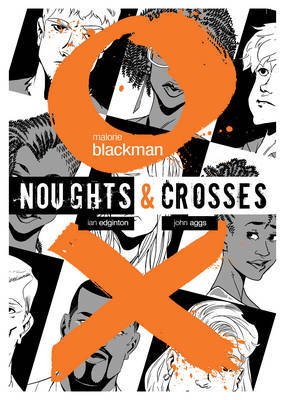
Some of the possible texts are shown below:


Level 1 Fashion Create (FAS121)
FAS121Are you interested in learning how to design and create textile items
Are you interested in examining your own or another culture and creating textile prints and garments that reflect this?
This is a practical-based course for students interested in fabric decoration techniques, fashion design and garment construction or for those who love to design and sew as a creative outlet. Students will learn how to adapt simple patterns to create new styles and work with different fabrics to create fashion items. Each student has the opportunity to explore their own interest in fashion and to develop their own sense of style. Students will complete two practical projects with supporting design work and experimentation with materials and techniques.
Projects include:
Making pyjamas or other item for an authentic context
Designing and experimentation using different materials and techniques to meet a brief.
The course consists of Level 1 Achievement Standards and also provides the opportunity for endorsement.
Level 1 Food & Nutrition (FNT101)
FNT101Students are assessed using Health Studies Achievement Standards. In this subject we teach these standards from a Food and Nutrition perspective. Students should choose either Level 1 Health or Level 1 Food Nutrition (not both) as both subjects assess using the same NCEA Standards.
Gaining and developing the student’s practical skills to promote healthy eating are integral in this Year 11 Course.
In this course you will learn how to make informed decisions about food and make wise choices that contribute to your own health and well-being.
Course fees cover the costs associated with weekly practical lessons and individual practical assessments.
Level 1 Gagana Sāmoa (SAM101)
SAM101Gagana Sāmoa
This learning language course is designed to meet the wide and varied needs of Sāmoan language learners through communicative use of all FOUR strands of any learning language – listening, speaking, reading and writing. The course develops students’ ability to communicate information, ideas and opinions in Sāmoan in different situations. Students will develop their understanding of spoken and written Sāmoan through study of self, identity and family as overarching ideas. Note that for level one Gagana Sāmoa, the emphasis is largely on building blocks of language structures rather than focusing on the cultural conventions of the language.
O lenei matā’upu e ati’ae ai le tomai o alo ma fānau e ala i le fa’aaogāina o le gagana tautala/ aso uma e aofia ai le fa’alogo, tautala, faitau ma le tusitusi. E mafai ai e alo ma fānau ona fa’asoa fa’amatalaga, māfaufauga ma manatu e fa’aaogā ai le Gagana Sāmoa i nofoaga ‘ese’ese. O le ‘ā mafai e alo ma fānau ona fa’alautele lo latou silafia i le gagana tusitusi ma vaogagana e fa’aaogā i le ‘āiga. O ni isi o matāupu e aofia ai lou tagata, o le fa’asinomaga ma le tāua o le ‘āiga. E lē fa’amamafaina le a’oa’oina o le aganuu ae e aofia uma pe a a’oa’oina gagana faigōfie, tau amata mo le fanau i le tausaga 11.

Level 1 Geography: Aotearoa and the Pacific (GEO101)
GEO101Geography is the study of te taiao (natural and cultural environments) and the interconnections within. We consider the question "What Is Where, Why There, and Why Care?" (Charles F. Gritzner (2002), Journal of Geography, 101:1, 38-40) so we can make sense of place.
Te taiao consists of all things that make up the surrounding environment. This includes features such as rivers, mountains, people, buildings, and infrastructure. Te taiao can exist at different scales and can be located wherever we place ourselves. Students who are interested in learning more about our natural environment shapes society both here in and in the Pacific Islands would enjoy this course. By understanding how the environment shapes the Pacific, students are better able to understand and explore solutions to the challenges faced in the 21st century.
In this course, you will get a chance to explore the natural environment through two field trips to Wellington bases sites. Features of te taiao are all closely interconnected, including people. We stand in te taiao and are all part of it. Therefore, in Geography, we attempt to consider geographic issues holistically.
Case studies may include:
- Our wild weather: impact of the climate on NZ coastal communities and the Pacific Islands e.g. cyclones on the East Coast, cyclones in the Solomon Islands and Vanuatu,
- Our rising seas: sea level rises in Kirbaiti, Tuvalu and the Marshall Islands
- Our shaky isles – investigations of earthquakes, volcanoes, and tsunamis including a case study of the 2009 Samoa earthquake and tsunami, and the 2022 Hunga Tonga–Hunga Haʻapai eruption
This course is fully internally assessed and students will complete 10 credits from Geography achievement standards and 5 credits from Pacific Studies unit standards. Feel free to talk to your Social Studies teacher, or Mr Findlay in E18, about this course.

Level 1 Health - Hauora Tahi (HEA101)
HEA101
In level 1 Health, students will learn the importance and understanding of the concept of hauora / health and wellbeing and how it relates to individuals, whānau, communities, and the surrounding environment. Students will learn that there can be diverse ways of understanding hauora, influenced by a person’s values, cultures, experiences, identities, and worldview.
Students will learn relevant models of health that are reflective of the diverse cultural backgrounds and experiences of ākonga across Aotearoa New Zealand and the Pacific. They will explore how values like kaitiakitanga, manaakitanga and whanaungatanga are fundamental to health and wellbeing and that hauora is more than a matter of personal choice and individual responsibility. This course also has a strong focus on social justice and how positive health outcomes for all people and communities are only possible when inequities are addressed, and all members of society are treated fairly.
Students will learn how to gain the confidence to analyse differing perspectives and messages about mental health, relationships, and sexuality, supporting their ability to make positive, health enhancing decisions for now and the future.
Common themes and topics studied include, culture and identity, promoting positive sexual health, understanding ethical dilemmas related to health situations, positive decision making in health related situations, building positive self confidence and self-esteem, and strengthening positive relationships.


Level 1 History: Big Decisions, Big Century (HIS101)
HIS101This course has a history focus looking at key decisions and events of the 20th century. Students will explore the roles of individuals, groups and governments in decision making, and consider how 20th century decisions have continued to impact society today.
Case studies focus on causes and consequences, exploring perspectives and the significance of key events. Case studies will include: the significance of the Civil Rights Movement in the USA, the atomic bombing of Hiroshima and Nagasaki, the decision to protest in the 1970s and 1980s (e.g) Dawn Raids, the occupation of Bastion Point, the 1975 Hikoi, the bombing of the Rainbow Warrior). There will be some choice in terms of which case studies the students' wish to focus on.
All of these cases studies will be explored within the wider context of other actions, ideas and movements of the 20th Century. Students will develop writing and research skills, including how to engage with and question different source materials and examining their relevance and limitations.
Enjoy a field trip to Wellington to explore Parliament and Pukeahu as sites of national significance.
15 credits made up of 2 internal assessments and 1 external assessment. The internal assessments are based on case studies completed in class and are done over several periods. The external assessment is completed in the NZQA end of year examinations.
Students considering Year 12 History or Year 12 Classical Studies are encouraged to take this course (or Year 11 Social Justice Studies) in order to develop the necessary skills.
NOTE: This course cannot be taken in conjunction with SJS 101: Social Justice Studies due to some overlap in assessments.
 1985: Bombing of the Rainbow Warrior
 1968: Mexico City Olympic Games
Level 1 Hospitality (HOS101)
HOS101Level 1 Hospitality is a practical food course where the main focus is raising the individual skill level to that needed for preparing and cooking food at a basic level within the hospitality industry.
Students written work and practical skills are assessed by Unit Standards.
Level 1 Japanese (JAP101)
JAP101Level 1 Japanese
This course builds on learning undertaken in Year 10 Japanese and aims to consolidate basic reading, writing, listening and speaking skills.
The units are contextually based covering topics such as:
- shopping and restaurants
- travel and directions
- school life
- health
- everyday life
- hobbies and holidays
You will need to have studied Japanese in Year 10 or equivalent .

Level 1 Mathematics for Living (MAL101)
MAL101This course is for students who need to consolidate their mathematical understanding. Students will use mathematical and statistical approaches to solving problems in a range of meaningful situations. Students will work towards achieving the Numeracy corequisite required for NCEA Level 1. Students will be invited into this course by the Mathematics department based on results from year 10. This course does not lead on to a Level 2 Mathematics course.
Level 1 Mathematics with Algebra (MAT101)
MAT101This course covers Number, Measurement, Geometry, Algebra, Graphing and Trigonometry and supports many other school subjects requiring an understanding of mathematics. Students who enjoy Algebra and are interested in a career in the sciences, engineering, architecture or design should choose this course. A graphics calculator is highly recommended for this course. The Mathematics Department recommends the Casio brand.
Level 1 Mathematics with Statistics (MAS101)
MAS101This course includes Numeracy skills, Measurement and Geometry, Probability and Statistics, and supports many other school subjects that require an understanding of mathematics. There is an emphasis on analysing statistical information, including conducting investigations and writing reports.
Level 1 Pathways (PAT101)
PAT101This course will assist you to develop the skills required to move successfully beyond school and into employment. Get ready to embrace the adventure and challenges that lie ahead. Set goals. Know how to reach them. Develop skills that will stay with you for life. You will gain an understanding of your legal rights in the work place, consumer rights and the community services available to you. You will also have the opportunity to complete barista training (learning about coffee and how to make it) and you will gain a Sacred Heart College Certificate in Barista Skills. You will also create a thorough CV to help you on your employment journey.
This course is designed for students who may struggle in main stream subjects. Placement in this class will be done in consultation with your Dean and Ms Baird from Supported Learning. This course offers Unit Standards and all units of work are internally assessed and provide credits towards NCEA Level One.

Level 1 PE, Sport and the Great Outdoors (PEO101)
PEO101
The PEO101 course is a combination of practical and theory work and offers students the opportunity to participate in a variety of physical activities in the context of PE, sport and outdoor education. Students will partake in a variety of physical activities including ki o rahi, rock climbing, cooperative games, netball, kayaking, tramping, volleyball and mountain biking to name a few! All activities require students to be physically active, which contributes to their overall health and well-being.
Students will participate in a wide range of group activities that will help develop their ability to work within a team, further developing their interpersonal skills whilst building connections with others. During the course, students will be required to reflect on their participation in these activities, to enhance their understanding of the important role physical activity plays in our lives.
Students will learn in and about a range of movement contexts, learning how the body works, and ways to maintain and enhance physical experiences. Our aim is to provide students with the opportunity to experience fun and exciting activities and learn valuable skills that will inspire them to participate in lifelong physical activity.
Students will also get to experience activities outside of the classroom including, a day of kayaking and rock climbing at Fergs, Rock and Kayak, an overnight camp/tramp into the Orongorongo Valley and mountain biking at Wainuiomata Mountain Biking Park.
This course will help students prepare for both the level 2 Physical Education and Outdoor Education courses.
In Year 11 PE, Sport and the Great Outdoors the work is assessed in a variety of contexts, including practical demonstrations, orally and written presentations/reflections. There is no end of year exam associated with this course.


Level 1 Religious Studies (RST101)
RST101This course is a compulsory course for all Year 11 students at Sacred Heart College. The course can have up to 15 credits overall and will count as part of NCEA Level One as normal.
The course begins with a focus on the religious characteristics of Catholicism. Students will learn about different characteristics of the Catholic faith, such as key beliefs and rituals, ethics, sacred texts etc. Students will also be learning about key characteristics of the Jewish faith later in the year in order to prepare for an end of year exam comparing and contrasting the Jewish and Catholic faiths.
Two other topics are taught throughout the year, each accompanied with an internal assessment. One topic covers the development of the Sisters of Compassion, exploring their work, key influences and impact on Aotearoa. The other topic focuses on the origins and key messages of the Gospel of Luke.
Level 1 Science for Living (SFL101)
SFL101Science for Living is an internally assessed course aimed at students who perform well in practical tasks. The course covers microscopes, how microbes are used in food production and a socio-scientific issue.
This course does NOT allow students to progress into Biology, Chemistry or Physics at Level 2.
Students who select this course must get approval from the HOD- Ms Williams.
Level 1 Science for the Future (SCI101)
SCI101Science involves people investigating the living, physical, material, and technological parts of their environment and making sense of them in logical and creative ways. Using systematic and creative processes of investigation, scientists produce a constantly changing body of knowledge and make an important contribution to shaping our world.
Science for the Future consists of one externally assessed standard - Biology plus two internally assessed standards - Physics and Chemistry. The course is designed to give students the opportunity to aim high and excel in science.
This course MUST be selected if students wish to study Chemistry, Physics, Biology, and/or Earth and Space Science at Levels 2 and 3.
Level 1 Social Justice Studies (SJS101)
SJS101This Social Sciences course has an overarching theme of social justice which will be explored using historical and contemporary case studies, and combines assessments from both the social studies and history learning areas.
This is a completely internally assessed course meaning there is no examination at the end of the year.
The first part of the year will focus on the skills associated with history. The concepts of social justice and social action will be explored by using primary sources relating to at some of these case studies: the formation of the Polynesian Panthers, the formation of Nga Tamatoa, the 1981 Springbok Tour protests, and the anti Nuclear movement. These groups and events will be also viewed through an international lens and the class will have the opportunity to decide which case studies they wish to focus on.
The second part of the year will focus on contemporary society, first by looking at the global flows of ideas, people, and objects and how they interact with and influence present societies and possible futures. Case studies will include the exploration of the impact of Fast Fashion on the environment, producers, consumers and of course workers, and time permitting the impact of Artificial Intelligence on people and the environment.
Finally, students will explore the significance of a global event which has shaped our world by exploring how significance is defined and determined. Possible case studies include: the fall of the Berlin Wall, the 9/11 Terror attacks.
This is an integrated course where students complete 15 internally assessed credits (5 credits from Social Studies and 10 credits from History). Students will develop their inquiry skills, their ability to use the internet for research, their ability to evaluate sources, their ability to describe a range of viewpoints on controversial issues, and their ability to form their own arguments.
All assessments will be completed in class time throughout the year. You cannot do Year 11 History if you are doing this course as there is some overlap in assessments.
If you have questions please discuss this course with your Social Studies teacher, or Mrs Peszynski in E14.
 How ethical is the fashion industry?
Level 1 Te Reo Māori (MAO101)
MAO101Tōku Oranga - My Life - Te Reo
In this course you will study:
- my life at home
- school
- my hobbies
- Revitilisation of Te Reo Maori
- travel
- sports.
This course allows you to choose 15 credits from the standards listed below. It will continue from your Te Reo Māori experience in Year 10 and build to Level 2 Te Reo Māori.
Level 1 Visual Art (VAF101)
VAF101This course offers the same assessments to those in Level 1 Design and Photography, so it's important to note that students cannot take VAF101 and DAP101
This Level 1 Visual Arts course enables students to further develop their creativity and provides opportunities for them to extend their interests in painting and sculpture. Students will learn how to generate, develop, refine and modify their own ideas around a theme and teacher directed programmes. Artist models will be researched to understand processes and procedures to assist students in expanding ideas using a range of mixed media. Students will be able to explore a variety of cultural contexts and produce a portfolio of finished paintings and drawings.
This course is recommended for students wishing to take Level 2 Painting and/or Level 2 Photography.
Level 1, 2, 3 Te Ao Haka (TAH123)
TAH123This course will cover a range of elements from throughout Te Ao Haka. This is a multilevel course. At Level 1 students will demonstrate their knowledge and skills of performance components. Level 2 students will look at demonstrating knowledge and skills of moteatea, waiata a ringa, poi and haka wahine. Level 3 students will perform a Maori performing arts bracket and learn about powhiri. Students will be assessed at the appropriate skill level on 12-18 credits from the options listed below.

Subjects for Year 11 Students
ESOL: English Language (ESL123)
ESL123This is an English course for students who speak other languages.
Maybe you speak Tongan, Hindi, Tagalog, Arabic or other languages at home, then this is the course for you.
You will get support for reading and writing to help you complete the work in your other options. You will also gain ESOL Unit Standards in practical and academic skills. See the list below for what is on offer in 2027.
Futures 1,2,3
FUT123This course is all about You! You will follow your own individual program, working on the particular skills that you need beyond school. Activities will be chosen to match the specific learning needs and interests of those in the class. We will do some group projects and trips, but the majority of the work is based on what you would like to do, or need to do, to be successful.
This is a non NCEA class designed to help and support students who may have learning difficulties, additional educational needs, or who have Ministry funding.
Students who are completing the SPEC alternative pathway to NCEA, or who have been advised to be on this pathway, are encouraged to take this class. These students can work on the Level One Certificate in Skills for Living for Supported Learners or the Level One Certificate in Foundation Skills.
South Pacific Educational Courses Ltd - South Pacific Educational Courses
Click this link to find out more about the Level One certificates.
Level 1, 2, 3 Te Ao Haka (TAH123)
TAH123This course will cover a range of elements from throughout Te Ao Haka. This is a multilevel course. At Level 1 students will demonstrate their knowledge and skills of performance components. Level 2 students will look at demonstrating knowledge and skills of moteatea, waiata a ringa, poi and haka wahine. Level 3 students will perform a Maori performing arts bracket and learn about powhiri. Students will be assessed at the appropriate skill level on 12-18 credits from the options listed below.
Level 2 Accounting & Business Enterprise (ABE202)
ABE202In this course students learn about the language of business, investigate practical applications for aspiring small business owners and develop skills in personal financial literacy. We look at decision making and future proofing with the aim of businesses becoming more sustainable.
This course has a commerce theme combining Achievement Standards and Unit Standards from the Accounting, Business Studies, Agribusiness and Financial literacy domains. It provides a pathway for students wishing to continue with their studies of accounting, and for those who are interested in business studies and developing practice financial literacy skills and want to pick it up for the first time.
Students are offered between 14 and 18 credits in this course, depending on their future goals, interests and abilities. Capable students can get a subject endorsement in Accounting from this course and students intending on doing Level 3 Accounting are strongly recommended to take this course.

Level 2 and 3 Gagana Sāmoa (SAM203)
SAM203Level 2 Sāmoan is a learning language course designed to meet the wide and varied needs of Sāmoan language learners. The course further develops students’ ability to communicate and justify information, ideas and opinions in a variety of genuine contexts. Students will further explore topics covered in level 1 Sāmoan as well as beginning to explore and justify ideas relating to cultural customs. At this level, the emphasis is on both accuracy and fluency aspects of conversational Sāmoan.
O lenei matā’upu e ati’ae ai le tomai o alo ma fānau ‘ina ‘ia fa’asoa ma fa’alauiloa ātili fa’amatalaga, māfaufauga ma manatu e fa’aaogā ai le Gagana Sāmoa i nofoaga ‘ese’ese. O le ‘ā mafai e alo ma fānau ona su’esu’e atili i ālāfua sa a’oa’oina i le tausaga sefulutasi ma ‘āmata vā’ili’ili ai finagalo e fa’atatau i tū ma agaifanua.
Level 3 Sāmoan is a learning language course designed to meet the wide and varied needs of Sāmoan language learners especially those who intend to study the target language in its full essence, looking at the socio-cultural aspects of the language. This is also ideal for those who wish to study towards a qualification in Sāmoan Studies or Pacific Studies at tertiary level. Students will learn to explore and justify ideas and perspectives in spoken and written Sāmoan. They will support or challenge the views of others. Students will have an in-depth focus on events of cultural significance to Sāmoan life, explore perspectives around the concept of “tautua” in the matai system, and the changes and challenges of aganu’u Sāmoa that Sāmoans in New Zealand face.
O le ‘ā a’oa’oina le fānau ‘e su’esu’e ma vā’ili’ili mafaufauga ma lagona i le gagana tautala ma le tusitusi. O le ‘ā mafai ‘ona lagolago pe tete’e i finagalo ‘o isi. O le ‘a va’ava’ai toto’a i sauniga ‘ese’ese e tāua i le olaga Sāmoa, ‘e aofia ai le su’esu’e i manatu ma lagona fa’aalia i le tautua ma le fa’amatai, tainane o suiga ma lu’itau o le aganu’u o lo’o feagai ma i latou o lo’o alala i Niusila nei.
This is a multi-level course so you will be assessed at the appropriate level. You can gain 14-18 credits from the standards listed below and can enter into both internal and external.

Level 2 Classical Studies: Greek Heroes & the Rise of Rome (CLA202)
CLA202
Greek Heroes and the Rise of Rome
This Social Science course will be assessed against the national achievement standards with credits gained towards NCEA Level Two. It is a mix of internally and externally assessed standards.
Theme One: Key aspects of ancient Greek civilisation will be investigated. This will include, The Trojan War and the history of Greece; the literature and ideas of Homer; and the relationship between an aspect of ancient Greece and an aspect of modern life through Margaret Atwood’s Penelopiad.
Theme Two: Investigating Ancient Rome - including key aspects of life in ancient Roman society, concentrating on the life and battles of Julius Caesar.
This is an Achievement Standard Course with credits from the Classical Studies area. Students will attempt two internal assessments and one or two external assessments (determined during the year). Students will gain between 14 and 20 credits from this course.

Level 2 Design (DES202)
DES202Our Design course in the Visual Arts focuses on some of the following areas: logos, magazine spreads and covers, posters and other brand concepts. Students are encouraged to be innovative and to build on their prior knowledge of art and design techniques studied in either Level 1 Visual Art or Level 1 Design and Photography, finding creative and innovative ways to present ideas and capture audiences. Students will be encouraged to push the boundaries of the media they use, developing their own style in their design work. Students will study the work of established designers and artists to inspire their own work and gain an insight into the nature of graphic design in the world. Teaching will encourage students to be self-directed and independent learners who will take ownership of their own portfolio of work. A range of approaches will be used including sketching, collage, photography, digital processes, found materials and installation work.
Design will enable students, who have an interest in the creative industries, to use industry standard software packages and will prepare them for a future in a range of Design careers. Students will be expected to ideally have their own laptop running the Adobe Suite for use in this subject.
Level 2 Digital Technology Communication (DTC202)
DTC202Unleash Your Creativity in Digital Media Design and Become Your Own Digital Influencer!
In today's world, an online presence is essential for any business, artist, or organization. The internet connects us to a vast global audience. But what will that presence look like?
In this exciting course, you'll become a digital media designer, director, and developer, creating an online advertisement for your chosen business, artist, or community group. Your project could take the form of an immersive website, an interactive app, a video game, or a dynamic social media campaign, all aimed at promoting their activity or product to their target audience. Plus, with the skills you gain, you can even become your own digital influencer!
You’ll harness digital technology skills and processes to design and develop promotional materials for an artist, activity, or group within your local community. Develop a digital media outcome using tools for web design, app development, game creation, and more. Manage your project's development with essential project management tools and techniques.
Highlights:
- Dynamic Roles: Step into the roles of designer, director, and developer to create stunning digital media.
- Versatile Media: Choose from immersive websites, interactive apps, video games, or social media campaigns to promote your subject.
- Hands-On Learning: Use web design, app development, and game creation skills to bring your vision to life.
- Project Management: Learn to manage your project's development from start to finish.
- Expansive Opportunities: Beyond traditional media, explore the limitless possibilities of digital technology.
- Influencer Potential: Gain the skills to become your own digital influencer and build a unique online presence.
Technology is evolving rapidly, creating new jobs, opportunities, and study pathways. Our Digital Technology (DTC) classes have evolved too, now focusing on decision-making, web and app development, game design software, crafting plans, seeking stakeholder feedback, and evaluating digital tools and platforms for their fitness for purpose.
Join us in this course to explore the limitless possibilities of digital media design and make a lasting impact on your audience!
Level 2 Drama (DRA202)
DRA202Level 2 Drama is part of a scaffolded approach to Drama (a five year journey from Year 9-13).
Internal assessments:
Internals will be performed over the course of the year to a live audience.
- Techniques: an assessment done in pairs or threes that explores students' use of Voice, Body, Movement and Space to create a character and perform a scene
- Devising: students work in groups to create their own pieces using Drama Elements, Conventions and Technologies.
- Theatre Form: students will perform a scene that shows understanding of traditional character types and storylines, and learn how modern theatre has been influenced by the past through the study of Elizabethan Theatre (Shakespeare).
External assessments:
The NCEA Drama exam is written, and students will have one paper to complete.
- Theatre Form: demonstrate an academic understanding of Elizabethan Theatre
Throughout the course of the year the skills that students learn will ensure they are prepared for Level 3, but also encourage life skills such as: creativity, confidence, collaboration, time management, accountability, and conflict resolution.
Students will gain UE Literacy Reading credits in this course, and can also access UE Literacy Writing credits if needed.
Level 2 English: (ENG202)
ENG202"Be yourself. Everybody else is already taken" - Oscar Wilde
This English course uses literature and language to investigate how people tell stories and how important stories are for identity and growth. You will explore ideas about change and development in poems, short stories, films and novels. The course also includes a writing portfolio and text connections task.
This course is made up of 10 internal and 8 external credits.
You will need 10 Level 1 English credits to be accepted into this course. This course is for students who enjoy reading and writing.
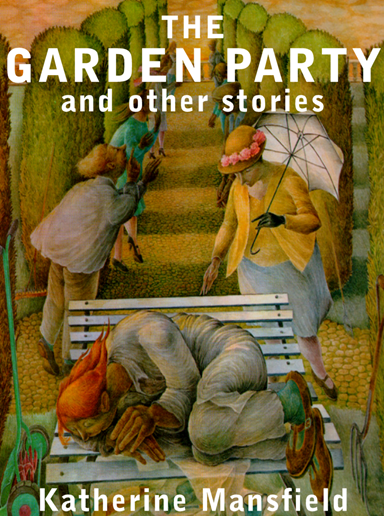
Some of the possible text studies are shown below.


Level 2 English: Visual (ENV202)
ENV202This course is based on visual language. In this course you can showcase your viewing and presenting and skills. You will also produce a writing portfolio.
There are 12 credits from internal assessments and 4 credits from an external assessment.
You will view a number of films and create a range of images.

Level 2 Fashion Style (FAS202)
FAS202This is a practical-based course which aims to teach you a wide range of skills- how to use a commercial pattern to create a garment, how to make that garment, how to use surface design techniques to personalise your clothes. You will have the opportunity to further improve your confidence in design, sewing and construction.
Each student has the opportunity to explore their own interest in fashion and to develop their own sense of style.
Projects include:
Creating a skirt based on a design concept
Using applied design
Creating a non wearable textile item
The course consists of a combination of Level 2 Achievement Standards and some unit standards if required
Level 2 Food & Nutrition (FNT202)
FNT202Students will study a variety of topics that include current nutritional issues, sustainable food practices, nutritional needs of a specified group (eg people requiring a gluten free diet), health promotion and hauora/well-being.
In Term 3 some level 2 Cookery Unit standards will be assessed, as well as preparation towards the external exam
Gaining and developing the student’s practical skills to promote healthy eating are integral in this Year 12 Course.
Course fees cover the costs associated with weekly practical lessons.
Level 2 Geography: Mega Cities & Mountains (GEO202)
GEO202Mega Cities and Mountains

This Social Science course has a Geography focus. It will be assessed against the National Achievement Standards with credits gained towards NCEA Level 2.
The course covers various geographic topics and concepts relating to Explaining Natural Environments and conducting Geographic Research at Tongariro National Park, Geographic concepts and Skills; and Urban patterns Geographic Issues and Global Patterns in Mega Cities.
Students will attain their credits by a programme of internal and external assessment. 14 credits (8 Externally assessed).
Fieldwork
In 2027 we plan to study a coastal area for the research and large natural environment standards. This will likely be with the Year 13 Geography class and will be a full day trip.
Level 2 Health - Hauora Rua (HEA202)
HEA202
In level 2 Health Education, students will develop the competencies to become confident, connected, actively involved, lifelong learners, ready to contribute to the future well-being of New Zealand. In this course they will explore a broad range of health issues, analysing factors that influence hauora, the consequences of these and recommending strategies to address the issues.
Students will learn to evaluate the impacts that social and cultural factors have on relationships, in particular, the impacts of stereotyping and discrimination against individuals on the basis of their gender, ethnicity, age, economic background, sexual orientation, cultural beliefs, or differing abilities. Students will analyse a wide range of adolescent health issues that affect young people within our community and use health promotion models to recommend strategies to address these issues. In this course, students will learn about the determinants of health and be able to analyse the health and wellbeing of society through the application of a socio-ecological perspective. Knowledge gained in this course can be applied to real life situations, supporting students be positive, contributing members of society.
Common themes and topics studied include resilience, gender and sexual identity, health promotion within our school community and analysing common adolescent health issues including stress, alcohol use and misuse, conflict within relationships, negative body image, drug use, poor sexual reproductive health and food related issues.

Level 2 History: Our Pacific Neighbours (HIS202)
HIS202This is a history course with a focus on our Pacific neighbours. We explore the themes of nationalism and colonisaton in the Pacific with a focus on: The US annexation of Hawai'i and New Zealand's Administration of Samoa.
The study of Hawai'i will look at how and why the nation was annexed by the United States and the impact this had on Hawaiians.
The study of Samoa will look at why Samoa was of international interest in the late 1800s, the impact of German and US colonization, and the 1914 New Zealand invasion. The focus will be in on New Zealand’s administration from mandate to independence including looking at the impact of the Mau Movement who fought for 'Samoa mo Samoa', the disastrous influenza pandemic and atrocities of Black Saturday.
Students will have opportunity to debate, examine events in terms of cause, consequence, and perspective and will have the chance to complete an independent research project to further develop their ability to analyse and evaluate the usefulness and reliability of sources.
Students with an interest in History and a desire to improve their writing, and research skills should consider this course.
19 credits from the history subject area are offered (two internals, two externals) in this course. If students do not achieve the first Achievement Standard internal assessment, there is an opportunity to complete a Unit Standard programme using standards from the Pacific Studies domain.
High achieving students will have the opportunity to attempt the Scholarship History examination. Those wishing to pursue Level 3 History: Genocide in the 20th Century are strongly recommended to complete this course.
Level 2 Japanese (JAP202)
JAP202Level 2 Japanese
Through this course you will continue to develop the core skills for learning languages: listening, reading, communicating through writing and speaking, and presenting. You have mastered Hiragana and Katakana so you will also be learning more kanji in this course. Topics include holidays and leisure, daily life including customs and culture in Japan, food, education, popular culture and student life. There are 2 internal assessments (writing portfolio and speech) and 2 external assessments. Total 19 credits.
Level 2 Mathematics with Calculus (MAC202)
MAC202This course covers Algebra, Graphing, Calculus and Trigonometry. This course supports many other school subjects that require an understanding of mathematics and is suitable for students wishing to pursue careers in engineering, economics, health sciences, architecture and design, software engineering, physics, technology, modelling, and mathematics. A graphics calculator is essential for this course. A Casio Graphical Calculator will be beneficial.
Level 2 Mathematics with Statistics (MAS202)
MAS202This course includes trigonometry, networks and probability as well as providing students with an opportunity to develop their analytical skills, report writing and researching skills in a statistics context. If you are planning to study any of the biological, social or sports sciences in the future then this course is for you. A graphics calculator is essential for this course. The Mathematics Department recommends the Casio.
Level 2 Outdoor Education: The Great NZ Outdoors - Akoranga i Waho Rua (OED202)
OED202
In this course students will build on the basic skills learnt in Year 11 that are required to participate safely and confidently in outdoor education activities. These include risk assessment and management, analysing group processes in physical activity, and how to be socially responsible when participating in outdoor education activities. Participation in all activities will be compulsory.
We are incredibly lucky to live in a country with so many outdoor adventure experiences on our doorstep, however many of our students don’t get the opportunity to experience these adventures for a variety of reasons. Outdoor adventure is such a huge part of New Zealand culture and something we should all have the opportunity to experience.
In Year 12 Outdoor Education, you will be exposed to more challenging outdoor education activities, such as an overnight mountain bike/camping trip, and a ski/snowboard trip. You will learn the necessary skills and knowledge to participate actively and confidently in these activities. Students will also lead an outdoor adventure for a group of younger students.
All activities require a base level of fitness and a positive attitude. Not only will you have the opportunity to experience fun and exciting activities, you will also be learning valuable skills such as being socially responsible, understanding group processes in outdoor adventure, developing leadership skills, and assessing and managing risk in a challenging outdoor environment.
Having the opportunity to initially experience the outdoors in a safe, school environment will give you the confidence to continue these activities out of school. The valuable, initial experience will develop knowledge and understanding of the outdoors that can be shared with family and peers.
Outdoor education is growing in NZ, the industry is becoming a focal point and more jobs are becoming available for young people.
Students can select both Level 2 Outdoor Education, Physical Education and Sport Studies but must understand there is some overlap in the standards assessed.
Please note there are limited spaces available in the Year 12 Outdoor Education course. Students who aren't successful in their selection for this course will be placed in the Year 12 Physical Education course instead.

Level 2 Pacific Performing Arts (PPA202)
PPA202This course provides students with the opportunity to develop and explore an understanding of the performing arts in a pacific context. In this course students will develop an understanding of the pacific performing arts through the mediums of choreography, traditional pacific instruments, and an analysis of pacific performing artists. Students will be offered opportunities to create and perform dances/music at events such as HuttFest, language week celebrations, and other events supporting the college and/or the local community.

Students will be assessed on programme of 18 - 22 credits from the options listed below.


Level 2 Painting (PNT202)
PNT202Level 2 Painting will build on creative processes and techniques that were introduced in the Level 1 Visual Art courses. Students will explore a variety of media and visual elements to develop and express ideas and communicate these in a more personalized program of study. Two internal assessments allow students to identify and generate their own individual ideas. These ideas and themes are then further explored and developed for the submission of a two-panel external folio.
Level 2 Pathways (PAT202)
PAT202Leaving school and being work ready does not have to be as challenging, confusing and worrying as you think. This course will help you to develop the skills and knowledge needed to successfully transition into the workforce or further study.
Explore your options and develop a plan. Refine your CV, become job search savvy, ace an interview, understand your rights and responsibilities, and develop the confidence to assert yourself. Mastering these skills will help you to become work ready.
During the year, you will also have the opportunity to participate in one of the school’s GATEWAY programs, gaining valuable work experience and the opportunity to earn up to 22 additional credits. To be eligible for GATEWAY you will need a strong work ethic and excellent attendance. Selection is by application and interview.
Current GATEWAY programs include The Warehouse Red Shirts in Schools and Woolworths SEEDS.
All units of work are internally assessed and contribute credits towards NCEA Level 2.

Level 2 Photography (PHO202)
PHO202In a technological-savvy generation that uses photography daily on social media it’s not surprising that the subject has become popular within the creative industries. Level 2 Photography will teach students the conventions of photography and how to develop a series of ideas influenced by established photographic artists as models of best practice. Students will experiment with processes and procedures and be guided through researching, exploring, generating and clarifying their own ideas. There will be two internal assessments based around photographic conventions and developing ideas and a two-panel external folio towards the end of the school year.
Level 2 Physical Education - Mātauranga Tinana Rua (PED202)
PED202
This course is a combination of practical and theory work. It will cover various aspects of Physical Education including training methods, anatomy, biomechanics, skill learning, sports psychology, physiology, and leadership roles. Students also spend 2 days skiing at Whakapapa, and study risk management.
Year 12 Physical Education provides students with the opportunities to learn in, through and about human movement in a way that is practically driven. Students will learn how to apply biophysical principles to movement to improve sports performance and general wellbeing. This course will encourage students to think critically about the role physical activity, sport and recreation plays in their lives, enabling them to make healthy and informed decisions for now and the future. Students will learn the skills necessary to lead and implement a physical activity for younger students, developing interpersonal skills, including group leadership and management, while building connections with others in their community. A highlight of the year is the ski trip, providing students with an opportunity to experience physical activity in a unique outdoor environment, applying risk management strategies learnt in theory to a practical real-life context. Year 12 PE offers students the opportunity to build resilience, step out of their comfort zone in an environment that is fun, exciting and practically driven.
These assessments cater to learner’s understanding of the content and can be flexible in a way that students have an option to complete either an achievement standard or a unit standard or both.
There are no external assessments or exams.
Year 12 Physical Education the work is assessed in a variety of ways that include practical, written, verbal, presentations and demonstrations allowing students to demonstrate their understanding in a variety of contexts.
Students can select both Level 2 Physical Education, Outdoor Education and Sport Studies but must understand there is some overlap in the standards assessed.

Level 2 Religious Studies (RST201)
RST201This course is compulsory for all Year 12 students. There are three main topic areas covered; World Religions, Architecture, and Scripture.
In Term One, students will learn about key beliefs within Islam and either Hinduism of Catholicism (depending on their teacher) in relation to the ultimate question, "How is God revealed." At the conclusion of the topic students will complete an internal assessment in which they will be asked to explain some of the key beliefs they have learnt about, as well as explore the similarities and differences between the two religions.
In Term Two, students will study key changes to Church architecture throughout history and some of the reasons behind them. There is a particular focus on the Second Vatican Council of the 1960s, which resulted is sweeping changes to Catholic architecture.
In Term Three, students study central themes of the Bible and what these themes might mean for us today.
All assessments are internal based with 18 credits available overall.
Level 2 Science - Biology (BIO201)
BIO201Biology is a fascinating subject, relevant to many careers.
In Level 2 Biology students learn about the unique ecology of Aotearoa and the impact we have on this.
They investigate essential processes at the cellular level in plants and animals through a variety of practical work.
Students also build on the knowledge of genetics and variation gained in level 1 science, investigating patterns of inheritance and studying population genetics.
Level 2 Science - Chemistry I (CHE230)
CHE230In Senior Chemistry, students study the materials that make up all matter around us, the properties of these substances and the way they change. This allows us to understand the chemistry going on in the world around us, such as in the foods we eat, the metals and plastics we use, the fuels we burn and the medicines we take to be healthy.
Chemistry can be described as the 'central science', as an understanding of chemistry is closely related to a range of other science disciplines (e.g. biology, medicine, engineering and environmental sciences). As a school subject, Chemistry complements both Biology and Physics; Biology as it helps to understand the chemical processes that occur in living things, and Physics as both subjects involve the study of the behaviour of matter.
Studying chemistry is important as it helps us learn about the world that we live in. An understanding of chemistry allows us to make educated choices about the materials, products and foods that we use. Chemistry allows us to understand and solve key problems facing our Earth today, like climate change, the use of water, food shortages, antibiotic resistance and curing diseases.
What pathways does Senior Chemistry lead to?
Studying Chemistry at school leads on to a range of science and health related qualifications and careers. Examples include: Analytical Chemist, Nursing, Laboratory Technician, Medicine, Pharmacy, Chemical Engineering, Forensic Science and Environmental Science
What will be covered in the Senior Chemistry Program?
In this course students will develop their basic chemical understanding gained through NCEA Level 1 Science. This involves both a theoretical understanding of chemical concepts and practical skills. It is foundational course that can open pathways outside into the workforce. Gives students an understanding of everyday chemicals and the positive impacts on chemistry.The topics covered include organic chemistry, methods of analyzing substances and properties of common substances
An emphasis on practical work develops laboratory and research techniques as well as illustrating the theoretical ideas. Chemistry supports most careers in Science. This course provides the opportunity to gain credits towards the numeracy requirements for University Entrance.
Level 2 Science - Earth & Space Science (ESS201)
ESS201Earth Science explores the geological processes that shape Aotearoa and cause extreme earth events such as volcanic eruptions, earthquakes, and tsunamis that are experienced here. Students will carry out a practical earth science investigation.
In space, we examine the challenges faced by humans when exploring space.
Students will choose an earth and space science issue to examine. They will investigate differing points of view and evaluate how these points of view on the issue are presented.
The topics covered are:
- Extreme Earth Events - Volcanic eruption, earthquakes and tsunamis
- An Earth Science Investigation
- Humans in Space - Life on the International Space Station
- An Earth Science or Space Issue - Students may choose a suitable issue
This course leads to ESS 301.
Level 2 Science - Physics (PHY201)
PHY201This is the core year 12 Physics course based around two significant external standards that develop the skills required to analyse and make predictions about the world around us. We will describe objects within gravitational fields in Newton’s terms of forces, motion and energy, as well as explore the behaviour of static electrical charge, electric circuits and the connection between electricity and magnetism. A written report internal on the mechanics of collisions provides an opportunity for revision of the external mechanics standard for credits. Two practical Internal Investigation (2.1 and 3.1 combined) of a mathematical non-linear relationship. This course is recommended / required for continuing study in a health science, engineering, computing or physics field.
Level 2 Sports Studies: - Hākinakina (SPO202)
SPO202
The activities in this course the students will participate in a variety of sports and activities. The course includes practical and theory sessions covering anatomy, physiology, coaching, leadership and concepts of fitness and training methods. This course is Unit Standard based.
In Level 2 Sport Studies you will be exposed to a wide variety of sport and physical learning experiences. They learn the basics of anatomy and biomechanics as a foundation for knowledge about physical movement. You will gain beginner skills in an unfamiliar sport then have the opportunity to apply these skills to a coaching environment.
You learn about how to be a coach and how to create a learning experience centered around the needs of the participants. In this course, you have the opportunity to participate in a variety of physical activities and will learn about the risk management strategies that are involved when planning and completing a challenging outdoor activity.
A unit standard course option provides those who are enthusiastic about sport and physical activity with an element of theory to go alongside the practical nature of the course. It encourages you to remain involved in sport and physical activity which is becoming increasingly important as involvement in regular physical activity among young people declines.
Students can select both Level 2 Sport Studies, Outdoor Education and Physical Activity but must understand there is some overlap in the standards assessed.

Level 2 Sustainable Societies & Futures (SUS202)
SUS202Sustainable Societies and Futures
This Social Sciences course is a fully internally assessed and uses a mix of achievement standard and unit standards.
It is a mixture of Level Two NCEA Achievement and Unit standards offered, from a variety of interesting subjects including – Education for Sustainability, Journalism, Art History, Conservation Strategies, and Legal Studies. There are a total of 7 Achievement Standard credits and 10 Unit Standard credits available.
The focus for this course will be Global Citizenship, NZ society, rights, responsibilities, ideas, and environmental and political issues. Issues will be examined from a Global, National, Local, and personal level.
Topics may include: climate change and damage to the environment, reducing, reusing and recycling, pandemics, the United Nations and New Zealand, the treatment of women, human rights, social justice, social action, the law, crime and local issues. Views, values and perspectives are a key focus of this course.
Fieldwork includes: A study of Wellington Sculpture in its physical environment. Cost: train fare to Wellington
Level 2 Te Reo Māori (MAO202)
MAO202YEAR 12 Course
TOPICS.
Topics include:
Topics
- Te Ao Māori (The Māori World): Exploration of Tikanga Maori
- Kōrero Tuku Iho (History and Narrative): Social history, including Hawaiki, waka migrations, and atua.
- Ōku Wawata : My dreams and aspirations
- Tetahi Haerenga
- Tetahi Tangata Rongonui
- Personal and Community Expression: For the external writing portfolio, students will choose topics that reflect a "rangatahi and wider world perspective"
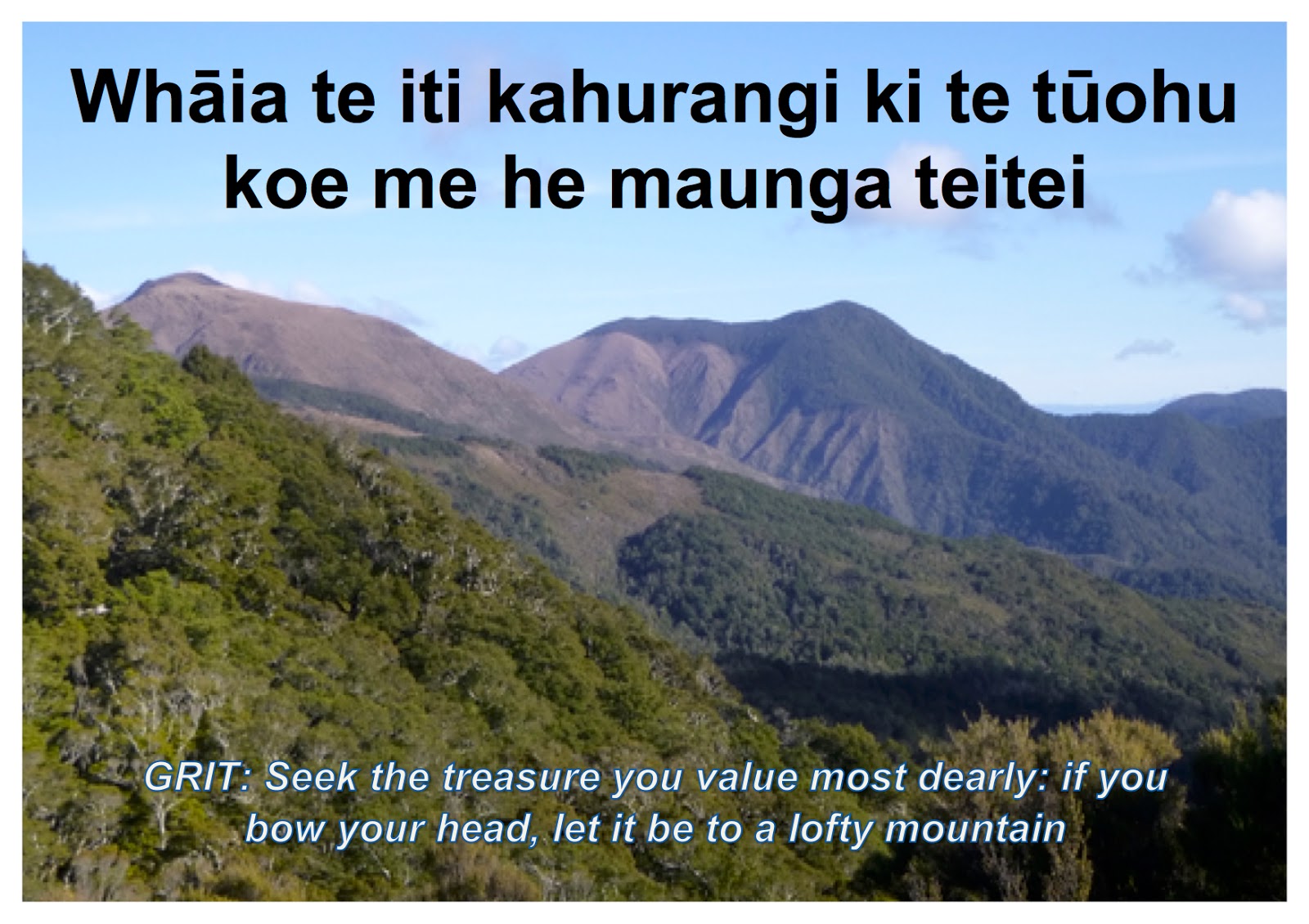
Level 2 Understanding Music (MUS202)
MUS202This achievement standards* course provides students with the opportunity to build on their foundational music skills, deepening their understanding and appreciation of music. The course is suited to students who wish to perform, compose, and explore a range of music technologies, while also developing their knowledge of music theory and music in its social context.
Students will be supported to select a combination of compulsory and optional achievement standards across the following areas:
Solo and group performance – Students are encouraged to develop their understanding of different genres, build sound instrumental or vocal techniques, and refine the expressive skills needed to communicate effectively with an audience.
Composition portfolios – Students develop their inner ear, aesthetic judgement, and ability to communicate more complex ideas, narratives, and emotions through music.
Analysis of musical scores and aural extracts – Students build strong musical literacy and develop their ability to analyse and discuss the application of theoretical concepts in both written and aural contexts.
Instrumentation – Students apply their understanding of music theory by arranging or reinterpreting a piece of music for an ensemble of their choosing.
Research of a New Zealand music topic – Students explore the role of music within New Zealand society, while developing their research and communication skills to present their findings to an audience.
Some Music Technology (recording and electronic production) credits (unit standards) are also available for students who are interested.
Level 2, 3 Trades Academy (TRA232)
TRA232Want to stay at school but try your hand at a trade? Trades Academy lets you enjoy the best of both worlds. Enjoy the benefits of staying at school while learning practical, hands-on, skills for your career.
The Wellington Trades Academy (WTA) is a partnership between school and Whitireia WelTec, NZMA and NZIS. Students participating in the program spend either one or two days a week at the Trades Academy, where they are coached by industry professionals, learning authentic, career based, practical skills. The remainder of the week is spent in school, following an adapted school timetable.
Trades Academy courses are packed with experiential learning opportunities to build confidence, leadership, and essential employability skills, helping to set students up on a positive pathway to future employment or further study. Current courses offered by the Trades Academy Whitireia Weltech include Construction Trades, Creative Technologies, Salon Environment, Engineering and Automotive, Barbering, Human Anatomy, Cookery, and Cafe Service.
In 2027 we are also excited to offer Trades placements at NZMA - Health Care Skills and Early Childhood, and the New Zealand Institute of Sport - Pre Police or Uniformed Services
Students interested in applying for Trades Academy must select this class.
It is very important to note that choosing this course as part of your selection does not guarantee you a place at WTA, there is an application process that must be completed and a selection process completed by the Polytech. Acceptance is usually confirmed or denied by WTA in October. Having a backup subject is very important.

Level 2,3 Numeracy
NUM23This course is only for students in Year 12 or Year 13 who do not have the Numeracy corequisite and are not taking a Level 2 Mathematics or Statistics course. Students will work towards the CAA and from Mathematics standards.
Level 3 Te Reo Māori (MAO303)
MAO303Te Whakaūtanga i Te Reo - To Be Surrounded By Te Reo
This Te Reo Māori course will look at:
Matauranga Māori,
Te tiriti o Waitangi,
The revitalization of Te Reo Māori –
A political Māori view,
tribal ancestry as well as global and internal issues with Maori.
It is a valuable pathway for Te Reo Māori students as they look at wider issues before their transition to tertiary study or the community. A total of 18-24 credits will be assessed from the options listed below according to the skills of each student.

Subjects for Year 12 Students
ESOL: English Language (ESL123)
ESL123This is an English course for students who speak other languages.
Maybe you speak Tongan, Hindi, Tagalog, Arabic or other languages at home, then this is the course for you.
You will get support for reading and writing to help you complete the work in your other options. You will also gain ESOL Unit Standards in practical and academic skills. See the list below for what is on offer in 2027.
Futures 1,2,3
FUT123This course is all about You! You will follow your own individual program, working on the particular skills that you need beyond school. Activities will be chosen to match the specific learning needs and interests of those in the class. We will do some group projects and trips, but the majority of the work is based on what you would like to do, or need to do, to be successful.
This is a non NCEA class designed to help and support students who may have learning difficulties, additional educational needs, or who have Ministry funding.
Students who are completing the SPEC alternative pathway to NCEA, or who have been advised to be on this pathway, are encouraged to take this class. These students can work on the Level One Certificate in Skills for Living for Supported Learners or the Level One Certificate in Foundation Skills.
South Pacific Educational Courses Ltd - South Pacific Educational Courses
Click this link to find out more about the Level One certificates.
Level 1, 2, 3 Te Ao Haka (TAH123)
TAH123This course will cover a range of elements from throughout Te Ao Haka. This is a multilevel course. At Level 1 students will demonstrate their knowledge and skills of performance components. Level 2 students will look at demonstrating knowledge and skills of moteatea, waiata a ringa, poi and haka wahine. Level 3 students will perform a Maori performing arts bracket and learn about powhiri. Students will be assessed at the appropriate skill level on 12-18 credits from the options listed below.
Level 2 and 3 Gagana Sāmoa (SAM203)
SAM203Level 2 Sāmoan is a learning language course designed to meet the wide and varied needs of Sāmoan language learners. The course further develops students’ ability to communicate and justify information, ideas and opinions in a variety of genuine contexts. Students will further explore topics covered in level 1 Sāmoan as well as beginning to explore and justify ideas relating to cultural customs. At this level, the emphasis is on both accuracy and fluency aspects of conversational Sāmoan.
O lenei matā’upu e ati’ae ai le tomai o alo ma fānau ‘ina ‘ia fa’asoa ma fa’alauiloa ātili fa’amatalaga, māfaufauga ma manatu e fa’aaogā ai le Gagana Sāmoa i nofoaga ‘ese’ese. O le ‘ā mafai e alo ma fānau ona su’esu’e atili i ālāfua sa a’oa’oina i le tausaga sefulutasi ma ‘āmata vā’ili’ili ai finagalo e fa’atatau i tū ma agaifanua.
Level 3 Sāmoan is a learning language course designed to meet the wide and varied needs of Sāmoan language learners especially those who intend to study the target language in its full essence, looking at the socio-cultural aspects of the language. This is also ideal for those who wish to study towards a qualification in Sāmoan Studies or Pacific Studies at tertiary level. Students will learn to explore and justify ideas and perspectives in spoken and written Sāmoan. They will support or challenge the views of others. Students will have an in-depth focus on events of cultural significance to Sāmoan life, explore perspectives around the concept of “tautua” in the matai system, and the changes and challenges of aganu’u Sāmoa that Sāmoans in New Zealand face.
O le ‘ā a’oa’oina le fānau ‘e su’esu’e ma vā’ili’ili mafaufauga ma lagona i le gagana tautala ma le tusitusi. O le ‘ā mafai ‘ona lagolago pe tete’e i finagalo ‘o isi. O le ‘a va’ava’ai toto’a i sauniga ‘ese’ese e tāua i le olaga Sāmoa, ‘e aofia ai le su’esu’e i manatu ma lagona fa’aalia i le tautua ma le fa’amatai, tainane o suiga ma lu’itau o le aganu’u o lo’o feagai ma i latou o lo’o alala i Niusila nei.
This is a multi-level course so you will be assessed at the appropriate level. You can gain 14-18 credits from the standards listed below and can enter into both internal and external.
Level 2 Mathematics with Calculus (MAC202)
MAC202This course covers Algebra, Graphing, Calculus and Trigonometry. This course supports many other school subjects that require an understanding of mathematics and is suitable for students wishing to pursue careers in engineering, economics, health sciences, architecture and design, software engineering, physics, technology, modelling, and mathematics. A graphics calculator is essential for this course. A Casio Graphical Calculator will be beneficial.
Level 2 Mathematics with Statistics (MAS202)
MAS202This course includes trigonometry, networks and probability as well as providing students with an opportunity to develop their analytical skills, report writing and researching skills in a statistics context. If you are planning to study any of the biological, social or sports sciences in the future then this course is for you. A graphics calculator is essential for this course. The Mathematics Department recommends the Casio.
Level 2 Pacific Performing Arts (PPA202)
PPA202This course provides students with the opportunity to develop and explore an understanding of the performing arts in a pacific context. In this course students will develop an understanding of the pacific performing arts through the mediums of choreography, traditional pacific instruments, and an analysis of pacific performing artists. Students will be offered opportunities to create and perform dances/music at events such as HuttFest, language week celebrations, and other events supporting the college and/or the local community.
Students will be assessed on programme of 18 - 22 credits from the options listed below.
Level 2, 3 Trades Academy (TRA232)
TRA232Want to stay at school but try your hand at a trade? Trades Academy lets you enjoy the best of both worlds. Enjoy the benefits of staying at school while learning practical, hands-on, skills for your career.
The Wellington Trades Academy (WTA) is a partnership between school and Whitireia WelTec, NZMA and NZIS. Students participating in the program spend either one or two days a week at the Trades Academy, where they are coached by industry professionals, learning authentic, career based, practical skills. The remainder of the week is spent in school, following an adapted school timetable.
Trades Academy courses are packed with experiential learning opportunities to build confidence, leadership, and essential employability skills, helping to set students up on a positive pathway to future employment or further study. Current courses offered by the Trades Academy Whitireia Weltech include Construction Trades, Creative Technologies, Salon Environment, Engineering and Automotive, Barbering, Human Anatomy, Cookery, and Cafe Service.
In 2027 we are also excited to offer Trades placements at NZMA - Health Care Skills and Early Childhood, and the New Zealand Institute of Sport - Pre Police or Uniformed Services
Students interested in applying for Trades Academy must select this class.
It is very important to note that choosing this course as part of your selection does not guarantee you a place at WTA, there is an application process that must be completed and a selection process completed by the Polytech. Acceptance is usually confirmed or denied by WTA in October. Having a backup subject is very important.
Level 2,3 Numeracy
NUM23This course is only for students in Year 12 or Year 13 who do not have the Numeracy corequisite and are not taking a Level 2 Mathematics or Statistics course. Students will work towards the CAA and from Mathematics standards.
Level 3 Accounting & Business Enterprise (ABE303)
ABE303In this Social Sciences course students will complete a broad study of finance with an Accounting focus. There will be a focus on financial decisions for Companies and Partnerships and looking at issues that may impact the efficient operation of businesses. This is a commerce based course with standards are from the Accounting and Business Studies domains.
The programme of asssessment will be finalised at the start of the year, based on student ability, goals and interests. Students will aim to complete between 14 to 18 credits from the list below based on student interest and ability.
14 credits can be gained from the Accounting subject area for those intending on University study, or those wanting to use this subject to gain University Entrance.

Level 3 Civics (CIV303)
CIV303The Level Three Civic course is aimed at those students who may struggle with mainstream subjects and enjoy a more real world, practical focus. Students will complete Unit Standards and are able to gain 21 credits towards their Level Three qualification.
Students in this course will investigate the Law, how it is made, how it is enforced, and how it impacts on people's lives, the consequences of crime, our rights and responsibilities as workers and young people, how we vote and take part in the community as active citizens, social action, career planning, financial literacy, and how societies works within NZ and overseas.
Legal Studies standards are a key component of this course.
This course is designed to be taken alongside PAT303 and Tourism to give students the skills they need to succeed in the workforce when they leave school.
All units of work are internally assessed and contribute credits towards NCEA Level 3.
Level Three Civics is not an approved subject for University Entrance as the assessments are Unit Standards.

Level 3 Classical Studies: Greek Art & Roman Philosophers (CLA303)
CLA303Greek Art and Roman Philosophers
This Social Science course will be assessed against the national achievement standards with credits gained towards NCEA Level 3. It will investigate a variety of topics from Ancient Greece and the Roman Empire. Achievement Standards from Level 3 Classical Studies will be offered.
Theme One will examine life in Ancient Rome, including the evaluation of Roman philosophic ideas about death and the afterlife.
Theme Two will cover the Ancient Greek myths, and the portrayal of these fascinating stories and heroes on Greek Vases. The influence of Greek Art on modern art will be investigated, for example the work of NZ artist Marion Maguire.
Theme Three will examine Greek Drama.
Students are able to get University Entrance in this subject. Scholarship Classical Studies is also an option for students who are interested in working toward this in addition to their Level three studies.

Level 3 Design (DES303)
DES303Level 3 Design builds on the knowledge, skills and techniques that students have gained in completing a Level 2 course in Design. Students will continue to use the work of selected designers and artists to inform and inspire their own progress. At Level 3 students are expected to be able to take greater ownership and responsibility for their work and teaching will facilitate and nurture an independent style of learning. A range of approaches to Design will continue to include sketching, collage, photography, digital processes, found materials and installation work and the use of industry standard software will be extended.
Level 3 Design is a University Entrance approved subject and students will be expected to ideally have their own laptop running the Adobe Suite
Level 3 Digital Technology Communication (DTC303)
DTC303Take Your Digital Skills to the Next Level with Our Year-Long Project!
This course builds on the knowledge gained from Year 11 and 12 courses, allowing you to specialize in your chosen area of digital technology. You'll embark on an exciting year-long project that involves inquiry, proposal, design, development, and reflection on your chosen digital outcome.
Highlights:
- Year-Long Project: Dive deep into a project of your choice, showcasing your creativity and technical skills.
- Comprehensive Learning: Engage in all stages of digital creation, from inquiry and proposal to design, development, and reflection.
- Versatile Media: Use different forms of digital media, such as video games, short animations, interactive websites, and many more. You have the freedom to let your creativity shine!
- Time Management: Develop essential time management skills to ensure the successful completion of your project.
- Curiosity and Innovation: Harness your curiosity to explore new ideas and technologies, driving the creation of your unique projects.
- Achievement Standards: Complete three internally assessed achievement standards and one externally assessed standard. The external assessment is essential for course endorsement.
- University Entrance Credits: Gain valuable credits towards the literacy and numeracy requirements for University Entrance.
Whether you're passionate about web design, game development, app creation, or another digital field, this course offers the perfect opportunity to develop your expertise and make a significant impact with your digital outcomes. Join us and take your digital skills to new heights!
Level 3 Drama (DRA303)
DRA303Level 3 Drama is part of a scaffolded approach to Drama (a five year journey from Year 9-13).
Internal assessments:
Internals will be performed over the course of the year to a live audience.
- Techniques: an assessment done in pairs that explores students' use of Voice, Body, Movement and Space to create a character and perform a scene
- Devising: students work either individually or in pairs to create their own pieces using Drama Elements, Conventions and Technologies.
- Theatre Form: students will perform a scene from 'Antigone' that shows understanding of traditional character types and storylines, and learn how modern theatre has been influenced by the past through the study of Greek Theatre.
External assessments:
The NCEA Drama exam is written, and students will have one paper to complete.
- Theatre Form: students will demonstrate an academic understanding of Greek Theatre, with reference to the play 'Antigone'.
Throughout the course of the year the skills that students learn will ensure they are prepared for Tertiary study but also encourage life skills such as: creativity, confidence, collaboration, time management, accountability, and conflict resolution.
This is an approved UE subject, and students can also gain UE Literacy Reading and Writing credits.
Level 3 English (ENG303)
ENG303The 21st Century has brought about unprecedented change. We have witnessed the progression of the internet, artificial intelligence, a truly global society and the rise of social media. But how much have human beings truly changed? The course looks into both classics and modern literature to find out if we have changed as much we may think. This course leads to consideration of the human condition and considers how we relate to others. The study of literature and language in this course includes research, a writing portfolio as well as visual and written text study.
This English course offers 18 credits; 10 internal and 8 external from the standards listed below.
You will need to have gained 6 credits in Year 12 English from the Writing Portfolio standard to choose this course.
You will need to enjoy reading to enjoy this course.
Some of the possible text studies are shown below.
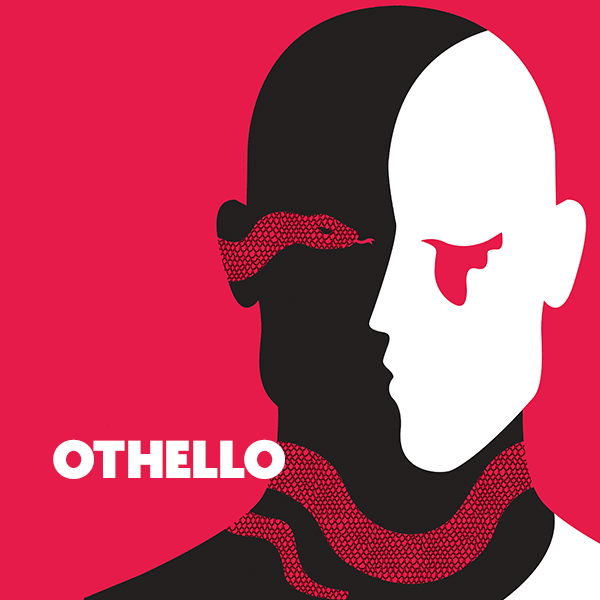


Level 3 Fashion Design (FAS303)
FAS303Do you love to sew; make things; create new fashion designs; or hand embroidery?
This is a practical-based course which provides students with the opportunity to create a range of products using fabric.
Students will learn how to use applied design techniques to personalise a garment, advanced procedures to construct a range of garments and how to draft patterns to create the perfect fit.
Each student has the opportunity to explore their own interest in fashion and to develop their own sense of style. Students will complete three major practical projects with supporting design work.
Topics include:
- Garment construction - jacket
- Applied textile design - surface design
- Draft patterns - skirt or trousers
The course consists of Level 3 Achievement Standards and provides the opportunity for endorsement.
Students have the opportunity to enter regional and national competitions
Level 3 Food & Nutrition (FNT303)
FNT303This course follows Level 8 of the Health and PE Curriculum. Students will investigate and evaluate wider community issues relating to food, nutrition and the determinants of health.
Topics covered include:
- Investigate a nutritional issue affecting the well-being of New Zealand society
- Investigate conflicting nutritional information about a given topic
- Create an action plan related to a nutritional issue
- Investigate the influence of multinational food corporations on eating patterns in New Zealand.
- Some Hospitality Unit Standards may also be included in the course depending on the need and ability of students.
Level 3 Geography: From City to Sea (GEO303)
GEO303From City to Sea
This Social Science course has a Geography focus. It will be assessed against the National Achievement Standards with credits gained towards Level 3 NCEA. It is a mix of internally and externally assessed standards which can be used as an approved subject for UE.
The course will cover various geographic topics including:
- Analyzing Natural Processes and Conducting Geographic Research at the Kapiti Coast
- Geographic Concepts and skills
- Study of a Contemporary Geographic event
- Geographic issues, and issues with a global human rights focus

In 2027 we plan to study a coastal area for the research and natural processes standards. This will likely be with the Year 12 Geography class and will be a full day trip.
Level 3 Health - Hauora Toru (HEA303)
HEA303Health is an important part of our country and the world, in this course you will have the opportunity to explore a variety of up to date topics and gain knowledge and understanding of the issues that surround us. You will also research and develop strategies to explore ways of assisting these issues for the communities in New Zealand.
As a result of learning at this level students will be able to:
Explain why some health-related situations are a concern for communities or the whole population of a country or region.
Analyse critically how the determinants of health affect well-being in relation to an identified health issue.
Explore global health issues
Recommend and justify strategies that reflect the values of social justice.
Topics may include: Alcohol and other drug use in NZ, issues related to sexuality, euthanasia, immunisation, life style changes (diet and exercise), teenage pregnancy, and global health inequities.
Level 3 History of Art: 20th Century Art, Architecture & Design (HAR303)
HAR30320th Century Art, Architecture and Design
This Level Three Social Science course has a 20th Century Art History focus. The main area of study will be Modern Art, Design and Architecture from 1900 to 1960. We will also investigate key NZ Art works from 1940-2000, and Contemporary Diversity, innovative works created after 2000.These topics cover a range of artistic styles, meanings, theories, and media. The reasons why these artworks continue to be valued by society will also be investigated.
This course will appeal to students interested in art and design, and may be creative themselves. But it will but also suit students who are interested in the history of the 20th Century and the vast array technological, economic, political, and societal changes that occurred in during this time.
We will see works first hand by visiting Wellington and Lower Hutt Galleries, and by travelling to Napier to investigate the value of Art Deco architecture and design to the region.
Scholarship Art History is also an option for students who are interested in working toward this in addition to their Level three studies.


Level 3 History: Genocide in the 20th Century (HIS303)
HIS303This Social Science course has a History focus where students complete a study of Genocide in the 20th Century with specific case studies focussing on the causes and consequences of the Holocaust (1933-1945) and the Rwandan Genocide (1994). Holocaust historian Yehuda Bauer argues: "Every genocide is specific. I cannot talk about Rwanda without talking about Hutu and Tutsi. I can’t deal with the Armenians without dealing with Turks, Armenians, Greeks, Assyrians, the whole area. Every genocide is specific. It’s the specificity that is universal."
Students will engage with primary sources, and historical debate to develop informed, evidence based arguments and be exposed to what hatred can do to individuals and societies. The lessons learned can be applied to the 21st century where the need for toleration and understanding in a diverse world are essential.
Students will also have the opportunity to pursue their own interests in by completing research into a self selected historical event or movement with a local history focus. A need to better understand our own history is central to creating a tolerant and informed 21st century New Zealand.
Students are offered up to 20 credits from the History subject area in this University Entrance approved course.
Students considering tertiary study would benefit from this course as the skills focus on: developing research techniques including how to navigate sources and determine their authenticity, usefulness and reliability, learning to write succinctly, learning to structure academic essays, analysing and prioritising evidence to support an argument and learning to read and summarise large amounts of text.
High achieving students have the opportunity to attempt Scholarship History which will involve additional study before school on a Tuesday morning before school on a theme yet to be determined by NZQA. The 20226 theme was 'the relationship between employers, employees and the state 1870-1940'.


Level 3 Japanese
JAP303Level 3 Japanese
In this course students learn to communicate about current issues in the wider world as they affect New Zealand and Japan. Students are expected to develop their mastery of language skills to a more advanced level. Themes include working life, the media and the environment.
Level 3 Mastering Music (MUS303)
MUS303This Achievement Standards course offers a range of standards from both the Music Studies and Practical Music domains. Up to 50 credits are available to choose from, and students will be guided to design a personalised course of approximately 14–20 credits.
As students have the flexibility to collaboratively shape their learning programme, a high level of organisation, initiative, and responsibility is expected.
Students will have the opportunity to develop their musical skills through a combination of:
Solo and group performance – Students are encouraged to explore a range of genres, further develop technical skill on their instrument or voice, and present mature and expressive performances.
Composition and songwriting portfolios – Students develop their inner ear, aesthetic judgement, and ability to communicate complex ideas, narratives, and emotions through music.
Analysis of musical scores and aural extracts – Students strengthen their musical literacy and examine the application of theoretical concepts in both written and aural contexts.
Research into a music topic – Students investigate the role of music in society, including the impact of context on the creation and development of music, while developing advanced research and presentation skills.
Some Music Technology (recording and electronic production) credits (unit standards) are also available for students who are interested.
This is a University Entrance approved subject. Tertiary providers also recommend Music for students interested in pathways such as Law, Education, Music, or the Arts. Students can also gain Reading and Writing credits towards UE Literacy through this course.
Level 3 Mathematics with Calculus (MAC303)
MAC303This course is for for students with an interest in the continued study of mathematics, the physical sciences, engineering, architecture and design, technology, modelling or any field in which analysis is an important tool. There are three main areas of study: differentiation, integration and trigonometry. Algebra is included in all areas. A graphics calculator is essential for this course. The Mathematics Department recommends the Casio.
Level 3 Mathematics with Statistics (MAS303)
MAS303This course will cover the theory and practice of statistical processes. The course is appropriate for students interested in the quantitative aspects of the biological and social sciences, medicine, commerce, administration, or any field in which collection, analysis, modelling and interpretation of data is important. The internal aspects of this course involves researching and will be taught using computer-based technology, such as online statistical graphing software, spreadsheets and graphical calculators.
Level 3 Outdoor Education - Akoranga i Waho Toru (OED303)
OED303
In this course students will build on the skills learnt in Year 11 and Year 12 that are required to participate safely and confidently in more challenging outdoor education activities. These include risk assessment and management, leadership in outdoor adventure, and how to devise appropriate strategies to achieve the physical activity outcome of a multi-day tramp in Tararua Forest Park. Participation in all activities will be compulsory.
We are incredibly lucky to live in a country with so many outdoor adventure experiences on our doorstep, however many of our students don’t get the opportunity to experience these adventures for a variety of reasons. Outdoor adventure is such a huge part of New Zealand culture and something we should all have the opportunity to experience.
In Year 13 Outdoor Education, you will be exposed to more challenging outdoor education activities and will have the opportunity to take on leadership roles within some of these activities (trips and activities yet to be finalised). You will learn the necessary skills and knowledge to participate actively and confidently in less familiar environments,
All activities require a base level of fitness and a positive attitude. Not only will you have the opportunity to experience fun and exciting activities, you will also be learning valuable skills to build confidence leading family and peers in these activities.
Having the opportunity to initially experience the outdoors in a safe, school environment will give you the confidence to continue these activities out of school. The valuable, initial experience will develop knowledge and understanding of the outdoors that can be shared with family and peers.
Year 13 Outdoor Education is a university approved subject and there are no external assessments or end of year exams associated with this course.
Students can select both Level 3 Outdoor Education, Physical Education and Sport Studies but must understand there is some overlap in the standards assessed.
Please note there are limited spaces available in the Year 13 Outdoor Education course. Students who aren't successful in their selection for this course will be placed in the Year 13 Physical Education course instead.

Level 3 Pacific Performing Arts (PPA303)
PPA303This course provides students with the opportunity to develop and explore an understanding of the performing arts in a pacific context. In this course students will develop an understanding of the pacific performing arts through the mediums of choreography, traditional pacific instruments, and an analysis of pacific performing artists. Students will be offered opportunities to create and perform dances/music at events such as HuttFest, language week celebrations, and other events supporting the college and/or the local community.
Students will be assessed at the appropriate skill level on 18 - 22 credits from the options listed below.
Level 3 Painting (PNT303)
PNT303Level 3 Painting is strongly focused on contemporary painting methods and ideas. A high level of creativity and personal investment is fostered as the course allows students to further explore their practical knowledge, ability to generate ideas, and their understanding of the conventions and constraints of several forms of painting through a variety of artworks. Students will generate an individually conceived theme and produce a significant body of original work. Critical, reflective and creative thinking skills, independent approaches to problem solving and self-directed learning, essential for tertiary study, are promoted and developed.
Level 3 Painting is a University Entrance approved subject.
Level 3 Pathways (PAT303)
PAT303School’s out!.... Where to now? Get ready to embrace the next chapter of your journey.
This course is for those who are planning to enter the workforce or who are unsure of their next steps. What are the possibilities? Explore the options. Set goals and make a start on reaching them. Get ready to embrace the adventure that lies ahead of you.
All units of work are internally assessed and contribute credits towards NCEA Level 3. This class would work well alongside CIV303, and TOU303.
PATHWAYS 303 is not an approved subject for University Entrance.

Level 3 Photography (PHO303)
PHO303Level 3 Photography will build on the skills and techniques gained at Level 2 and enable students to extend their knowledge of the conventions of photography and their practical knowledge. Students will be guided through generating an individually conceived theme and produce a body of original work based around key photographic artist models. A high level of creativity and personal investment is therefore required. Critical, reflective and creative thinking skills, independent approaches to problem solving and self-directed learning, essential for tertiary study, are promoted.
Level 3 Photography is a University Entrance approved subject.
Level 3 Physical Education - Mātauranga Tinana Toru (PED303)
PED303
This course is a combination of practical and theory work that offers students the opportunity to learn about the significant role physical activity and sport plays in our lives. Through movement they will develop the physical skills and capabilities to devise strategies that contribute to lifelong wellbeing. Students will examine physical activity and look at ways we can enhance performance in a physical activity of their choice. This course provides students with the opportunity to develop their leadership skills, and explore ways we can enhance sports performance and enjoyment. Students will learn that through movement, we develop a range of capabilities, and develop an understanding of what influences our own and others’ participation in movement experiences. Students will participate in an outdoor activity and analyse safety management issues related to the activity and devise strategies to manage these safety issues.
Students can expect to learn in and through a range of movement experiences including badminton, swimming, waka ama, volleyball, and ki o rahi to name a few.
This is a university approved course and there are not external assessments or end of year exams associated with this course.
Students can select both Level 3 Physical Education, Outdoor Education and Sport Studies but must understand there is some overlap in the standards assessed.
Level 3 Psychology (PSY303)
PSY303This Social Science course offers a mixture of three internally and one externally assessed standards from the psychology domain. Psychology is the scientific study of human cognition, emotion, and action.
This course has a human rights focus where students will explore ideologies – what people believe and why and how these shape current events, issues and actions in our world. Students will examine what drives people to take action in response to big issues impact our world.
Themes include:
Crime and Cognition - looking at why people behave the way they do, investigating gun culture.
Research in Psychology - investigating famous cases and looking at how this research has impacted society.
Psychology in the Real World - investigating careers in psychology and how people's beliefs and bias impact women and minority groups.
Owing to the nature of the assessments, in order to achieve success in this course students need to have gained 12 or more credits in Level 2 Mathematics or Statistics and a literacy rich Social Science subject such as Level 2 History, Classical Studies or Geography
This is a University Entrance approved course. Students can gain 16 credits internally, and 3 credits externally from this course.
Level 3 Religious Studies (RST301)
RST301This course is compulsory for all Year 13 students. Religious Studies is at the heart of the character of our school, and is a defining component of all Catholic schools cross New Zealand. The topics you will be studying are designed to continue to deepen your knowledge of the Catholic Church, the world, and your place and responsibility in both.
The course covers twoLevel 3 Achievement Standards. The first course explores contemporary ethical issues in on our world and the different ways the Catholic Church have responded to these issues. The second gives students a deeper understanding of the meanings of particular books of scripture, shedding light on the different ways they can be interpreted.
Overall, 12 credits, all internally assessed, are available to students.
Level 3 Science - Chemistry II (CHE303)
CHE303In Senior Chemistry, students study the materials that make up all matter around us, the properties of these substances and the way they change. This allows us to understand the chemistry going on in the world around us, such as in the foods we eat, the metals and plastics we use, the fuels we burn and the medicines we take to be healthy.
The importance of Senior Chemistry
Chemistry can be described as the 'central science', as an understanding of chemistry is closely related to a range of other science disciplines (e.g. biology, medicine, engineering and environmental sciences). As a school subject, Chemistry complements both Biology and Physics; Biology as it helps to understand the chemical processes that occur in living things, and Physics as both subjects involve the study of the behaviour of matter.
Studying chemistry is important as it helps us learn about the world that we live in. An understanding of chemistry allows us to make educated choices about the materials, products and foods that we use. Chemistry allows us to understand and solve key problems facing our Earth today, like climate change, the use of water, food shortages, antibiotic resistance and curing diseases.
What pathways does Senior Chemistry lead to?
Studying Chemistry at school leads on to a range of science and health related qualifications and careers. Examples include: Analytical Chemist, Nursing, Laboratory Technician, Medicine, Pharmacy, Chemical Engineering, Forensic Science and Environmental Science.
Students need to be aware that some tertiary courses require students to have passed the three externals for entry. Level 3 Organic is offered as part of Level 2 course.
What will be covered in the Senior Chemistry Programmes?
Level 3 Chemistry:
This course builds on what was learnt in Level 2 Chemistry, covering the topics of organic chemistry, spectroscopy, redox, practical investigations, thermochemistry and aqueous systems, which will be important in first year tertiary courses in a range of disciplines. The chemistry of ‘everyday life’ will be a focus throughout.
Highly motivated and dedicated Level 3 students have the opportunity to prepare for Scholarship Chemistry at Sacred Heart College. This course develops the topics studied in Year 12. The course emphasises the relationship of chemistry to everyday life and explains common practices in terms of particle interaction. Chemistry is fundamental to Health Sciences, Forensic Science and Engineering. This course provides the opportunity to gain credits towards the numeracy requirements for University Entrance.
Level 3 Science - Biology (BIO303)
BIO303The Biology 303 course covers plant responses, animal behaviour and human biological and cultural evolution. As part of their animal behaviour study students will carry out an investigation at the Wellington Zoo. Students will learn about homeostasis in humans and research a socio-scientific issue of their choice.
Level 3 Science - Earth and Space Science (ESS301)
ESS301This course looks at planet Earth and the Universe. Understanding how the Earth systems (Oceans, atmosphere, biosphere, geosphere) are inter-related and how “man” interacts with these. The standards are taken from the Earth and Space Science learning area allows a variety of contexts to be studied.
The course looks at current issues that are relevant to NZ and our Pacific neighbours eg formation of life in outer space, plant growth, sea level rise, and how changes in climate are affecting human life.
Level 3 Science - Physics (PHY303)
PHY303A development of the topics studied in Year 12 Physics with the introduction of Simple Harmonic Motion, Waves and AC Electricity. The emphasis is on a practical, descriptive approach as well as a mathematical one, linking physics to everyday life (the mathematical level is not beyond that completed in NCEA Level 2 Mathematics). Physics is fundamental to Health Sciences, Engineering and Technology.
Students can selected to complete either the internal AS91522 or AS91527 instead of one of the externals.
Students need to be aware that some tertiary courses require students to have passed the three externals for entry.
Level 3 Sports Studies - Te Kaiārahi Tākaro (SPO303)
SPO303
Level 3 Sport s Studies students will participate in a variety of sports and activities, will gain knowledge in nutrition, injury prevention and coaching. Students are exposed to a wide variety of physical learning experiences in a practically driven context, providing quality learning experiences in, through and around movement experiences.
Students will enhance their learning in physical movement while having the opportunity to participate in a variety of physical activities. Students will learn the knowledge to help them identify and prevent injuries and risks and hazards within a number of sport and physical activity experiences. Students will use their sporting expertise to plan and lead beginner level sporting experiences for our junior students.
This course is in alignment with the New Zealand Curriculum and students will become confident, actively involved, and lifelong learners. Sport helps you develop the skills, knowledge and competencies to a live healthy and physically active live at school and for life beyond school, while also allowing students to relieve their academic stress and anxiety.
In Level 3 Sports Studies the learning is assessed in a variety of ways that may include practical demonstration, written, verbal and presentations, allowing for differing learning abilities.
Students can select both Level 3 Sport Studies, Physical Education and Outdoor Education but must understand there is some overlap in the standards assessed.

Level 3 Te Reo Māori (MAO303)
MAO303Te Whakaūtanga i Te Reo - To Be Surrounded By Te Reo
This Te Reo Māori course will look at:
Matauranga Māori,
Te tiriti o Waitangi,
The revitalization of Te Reo Māori –
A political Māori view,
tribal ancestry as well as global and internal issues with Maori.
It is a valuable pathway for Te Reo Māori students as they look at wider issues before their transition to tertiary study or the community. A total of 18-24 credits will be assessed from the options listed below according to the skills of each student.
Level 3 Tourism (TOU303)
TOU303Level Three Tourism provides you with the opportunity to learn about the Tourism and Travel industries and the many different career pathways that are available within the sector. In 2026 the focus will be on visitor destinations that are close to home; New Zealand and the South Pacific.
A fieldtrip to Rotorua will provide a valuable insight into the industry and the impact tourism has on communities.
There has never been a better time to study Tourism. The borders have reopened and the industry is seeking a skilled, productive and capable workforce over the course of the next few years as they respond to changes to the industry.
This subject leads to tertiary-based courses in tourism at private providers, including some polytechnics and universities. Tourism is not an approved subject for University Entrance.
This subject would work well with PAT303 and CIV303.


Subjects for Year 13 Students
Futures 1,2,3
FUT123This course is all about You! You will follow your own individual program, working on the particular skills that you need beyond school. Activities will be chosen to match the specific learning needs and interests of those in the class. We will do some group projects and trips, but the majority of the work is based on what you would like to do, or need to do, to be successful.
This is a non NCEA class designed to help and support students who may have learning difficulties, additional educational needs, or who have Ministry funding.
Students who are completing the SPEC alternative pathway to NCEA, or who have been advised to be on this pathway, are encouraged to take this class. These students can work on the Level One Certificate in Skills for Living for Supported Learners or the Level One Certificate in Foundation Skills.
South Pacific Educational Courses Ltd - South Pacific Educational Courses
Click this link to find out more about the Level One certificates.
Level 1, 2, 3 Te Ao Haka (TAH123)
TAH123This course will cover a range of elements from throughout Te Ao Haka. This is a multilevel course. At Level 1 students will demonstrate their knowledge and skills of performance components. Level 2 students will look at demonstrating knowledge and skills of moteatea, waiata a ringa, poi and haka wahine. Level 3 students will perform a Maori performing arts bracket and learn about powhiri. Students will be assessed at the appropriate skill level on 12-18 credits from the options listed below.
Level 2 Mathematics with Calculus (MAC202)
MAC202This course covers Algebra, Graphing, Calculus and Trigonometry. This course supports many other school subjects that require an understanding of mathematics and is suitable for students wishing to pursue careers in engineering, economics, health sciences, architecture and design, software engineering, physics, technology, modelling, and mathematics. A graphics calculator is essential for this course. A Casio Graphical Calculator will be beneficial.
Level 2 Mathematics with Statistics (MAS202)
MAS202This course includes trigonometry, networks and probability as well as providing students with an opportunity to develop their analytical skills, report writing and researching skills in a statistics context. If you are planning to study any of the biological, social or sports sciences in the future then this course is for you. A graphics calculator is essential for this course. The Mathematics Department recommends the Casio.
Level 3 Civics (CIV303)
CIV303The Level Three Civic course is aimed at those students who may struggle with mainstream subjects and enjoy a more real world, practical focus. Students will complete Unit Standards and are able to gain 21 credits towards their Level Three qualification.
Students in this course will investigate the Law, how it is made, how it is enforced, and how it impacts on people's lives, the consequences of crime, our rights and responsibilities as workers and young people, how we vote and take part in the community as active citizens, social action, career planning, financial literacy, and how societies works within NZ and overseas.
Legal Studies standards are a key component of this course.
This course is designed to be taken alongside PAT303 and Tourism to give students the skills they need to succeed in the workforce when they leave school.
All units of work are internally assessed and contribute credits towards NCEA Level 3.
Level Three Civics is not an approved subject for University Entrance as the assessments are Unit Standards.
Level 3 Design (DES303)
DES303Level 3 Design builds on the knowledge, skills and techniques that students have gained in completing a Level 2 course in Design. Students will continue to use the work of selected designers and artists to inform and inspire their own progress. At Level 3 students are expected to be able to take greater ownership and responsibility for their work and teaching will facilitate and nurture an independent style of learning. A range of approaches to Design will continue to include sketching, collage, photography, digital processes, found materials and installation work and the use of industry standard software will be extended.
Level 3 Design is a University Entrance approved subject and students will be expected to ideally have their own laptop running the Adobe Suite
Level 3 History of Art: 20th Century Art, Architecture & Design (HAR303)
HAR30320th Century Art, Architecture and Design
This Level Three Social Science course has a 20th Century Art History focus. The main area of study will be Modern Art, Design and Architecture from 1900 to 1960. We will also investigate key NZ Art works from 1940-2000, and Contemporary Diversity, innovative works created after 2000.These topics cover a range of artistic styles, meanings, theories, and media. The reasons why these artworks continue to be valued by society will also be investigated.
This course will appeal to students interested in art and design, and may be creative themselves. But it will but also suit students who are interested in the history of the 20th Century and the vast array technological, economic, political, and societal changes that occurred in during this time.
We will see works first hand by visiting Wellington and Lower Hutt Galleries, and by travelling to Napier to investigate the value of Art Deco architecture and design to the region.
Scholarship Art History is also an option for students who are interested in working toward this in addition to their Level three studies.
Level 3 Japanese
JAP303Level 3 Japanese
In this course students learn to communicate about current issues in the wider world as they affect New Zealand and Japan. Students are expected to develop their mastery of language skills to a more advanced level. Themes include working life, the media and the environment.
Level 3 Mastering Music (MUS303)
MUS303This Achievement Standards course offers a range of standards from both the Music Studies and Practical Music domains. Up to 50 credits are available to choose from, and students will be guided to design a personalised course of approximately 14–20 credits.
As students have the flexibility to collaboratively shape their learning programme, a high level of organisation, initiative, and responsibility is expected.
Students will have the opportunity to develop their musical skills through a combination of:
Solo and group performance – Students are encouraged to explore a range of genres, further develop technical skill on their instrument or voice, and present mature and expressive performances.
Composition and songwriting portfolios – Students develop their inner ear, aesthetic judgement, and ability to communicate complex ideas, narratives, and emotions through music.
Analysis of musical scores and aural extracts – Students strengthen their musical literacy and examine the application of theoretical concepts in both written and aural contexts.
Research into a music topic – Students investigate the role of music in society, including the impact of context on the creation and development of music, while developing advanced research and presentation skills.
Some Music Technology (recording and electronic production) credits (unit standards) are also available for students who are interested.
This is a University Entrance approved subject. Tertiary providers also recommend Music for students interested in pathways such as Law, Education, Music, or the Arts. Students can also gain Reading and Writing credits towards UE Literacy through this course.
Level 3 Mathematics with Calculus (MAC303)
MAC303This course is for for students with an interest in the continued study of mathematics, the physical sciences, engineering, architecture and design, technology, modelling or any field in which analysis is an important tool. There are three main areas of study: differentiation, integration and trigonometry. Algebra is included in all areas. A graphics calculator is essential for this course. The Mathematics Department recommends the Casio.
Level 3 Mathematics with Statistics (MAS303)
MAS303This course will cover the theory and practice of statistical processes. The course is appropriate for students interested in the quantitative aspects of the biological and social sciences, medicine, commerce, administration, or any field in which collection, analysis, modelling and interpretation of data is important. The internal aspects of this course involves researching and will be taught using computer-based technology, such as online statistical graphing software, spreadsheets and graphical calculators.
Level 3 Pathways (PAT303)
PAT303School’s out!.... Where to now? Get ready to embrace the next chapter of your journey.
This course is for those who are planning to enter the workforce or who are unsure of their next steps. What are the possibilities? Explore the options. Set goals and make a start on reaching them. Get ready to embrace the adventure that lies ahead of you.
All units of work are internally assessed and contribute credits towards NCEA Level 3. This class would work well alongside CIV303, and TOU303.
PATHWAYS 303 is not an approved subject for University Entrance.
Level 3 Science - Chemistry II (CHE303)
CHE303In Senior Chemistry, students study the materials that make up all matter around us, the properties of these substances and the way they change. This allows us to understand the chemistry going on in the world around us, such as in the foods we eat, the metals and plastics we use, the fuels we burn and the medicines we take to be healthy.
The importance of Senior Chemistry
Chemistry can be described as the 'central science', as an understanding of chemistry is closely related to a range of other science disciplines (e.g. biology, medicine, engineering and environmental sciences). As a school subject, Chemistry complements both Biology and Physics; Biology as it helps to understand the chemical processes that occur in living things, and Physics as both subjects involve the study of the behaviour of matter.
Studying chemistry is important as it helps us learn about the world that we live in. An understanding of chemistry allows us to make educated choices about the materials, products and foods that we use. Chemistry allows us to understand and solve key problems facing our Earth today, like climate change, the use of water, food shortages, antibiotic resistance and curing diseases.
What pathways does Senior Chemistry lead to?
Studying Chemistry at school leads on to a range of science and health related qualifications and careers. Examples include: Analytical Chemist, Nursing, Laboratory Technician, Medicine, Pharmacy, Chemical Engineering, Forensic Science and Environmental Science.
Students need to be aware that some tertiary courses require students to have passed the three externals for entry. Level 3 Organic is offered as part of Level 2 course.
What will be covered in the Senior Chemistry Programmes?
Level 3 Chemistry:
This course builds on what was learnt in Level 2 Chemistry, covering the topics of organic chemistry, spectroscopy, redox, practical investigations, thermochemistry and aqueous systems, which will be important in first year tertiary courses in a range of disciplines. The chemistry of ‘everyday life’ will be a focus throughout.
Highly motivated and dedicated Level 3 students have the opportunity to prepare for Scholarship Chemistry at Sacred Heart College. This course develops the topics studied in Year 12. The course emphasises the relationship of chemistry to everyday life and explains common practices in terms of particle interaction. Chemistry is fundamental to Health Sciences, Forensic Science and Engineering. This course provides the opportunity to gain credits towards the numeracy requirements for University Entrance.
Level 3 Science - Biology (BIO303)
BIO303The Biology 303 course covers plant responses, animal behaviour and human biological and cultural evolution. As part of their animal behaviour study students will carry out an investigation at the Wellington Zoo. Students will learn about homeostasis in humans and research a socio-scientific issue of their choice.
Level 3 Science - Earth and Space Science (ESS301)
ESS301This course looks at planet Earth and the Universe. Understanding how the Earth systems (Oceans, atmosphere, biosphere, geosphere) are inter-related and how “man” interacts with these. The standards are taken from the Earth and Space Science learning area allows a variety of contexts to be studied.
The course looks at current issues that are relevant to NZ and our Pacific neighbours eg formation of life in outer space, plant growth, sea level rise, and how changes in climate are affecting human life.