
Onslow College
Wellington
Onslow College Curriculum
128 subjects available for 2026/2027.
Subjects for Year 8 Students
Arts (Y09)
9ART
The arts are a tool for supporting our wellbeing - being creative and collaborative are key skills for expressing ourselves and processing our environment. Using Te Whare Tapa Whā as a framework, the Year 9 Arts Programme takes you through a termly rotation of Dance, Drama, Music and Visual Art to hone these skills. The programme is designed for students of all capabilities and experiences and prepares you for taking any of the arts in Year 10. Each rotation has a focus on each aspect of Te Whare Tapa Whā and Taha Wairua (the spiritual) will encompass art forms. For without spirit and heart, what is the purpose of art?
English (Y09)
9ENG


Students will focus on exploring a range of different texts with an emphasis on building confidence in reading, writing, and presenting as well as creative and critical thinking. Students will study a novel, short stories, a play, short films, poetry and multimedia texts. The course will offer a number of opportunities for students to create their own written, oral and/or visual texts.
French (Y09)
9FREThis course gives students a basic knowledge of the French language and French culture. By the end of the course students will be able to have simple interactions in French with their teacher and classmates, understand simple texts in French, and reflect on some of the differences differences between the language and culture of France and those of Aotearoa New Zealand.


Hauora (Y09)
9HAUIn Hauora, students will learn how to improve mental, physical, spiritual and social wellbeing across several units in the year. Students begin the year by exploring the concept of Kotahitanga and learn how to create a unified and supportive class learning environment. Students will learn how to make healthy choices around vaping, smoking, drugs and alcohol, as well as sexuality and relationships. Students will look at skills and strategies that effect success in physical activity and the impacts that this has to wellbeing. Students will also learn about the concept of Ako, exploring strategies to be able to teach and learn from each other.
Japanese (Y09)
9JAP
This course gives students a basic knowledge of the Japanese language and culture. By the end of the course students will be able to have simple interactions in Japanese, understand simple texts in Japanese, learn the Japanese alphabet, and reflect on some of the differences differences between the language and culture of Japan and those of Aotearoa New Zealand.


Literacy (Y09)
9LITStudents will work through essential reading and writing skills, which will help support their literacy across curriculum areas. Students will practice decoding texts, reading for understanding, and a variety of writing skills. This course is designed to support students with the necessary skills for literacy-specific assessments as they move into Year 10 and the senior school. 


Mathematics (Y09)
9MATIn Year 9, students will explore a range of mathematical topics with an emphasis on developing problem-solving skills, logical reasoning, and mathematical literacy. The curriculum includes integers, fractions, decimals, and percentages under Number and Algebra; patterns, unit conversions, and the calculation of area and perimeter of triangles and quadrilaterals under Geometry and Measurement; and simple probability problems along with data collection and analysis using the PPDAC cycle under Statistics and Probability. Technology is used throughout the course to support and deepen students' mathematical understanding. Additionally, the programme integrates with the Careers Department to help students observe how maths is applied in various professions. As part of this initiative, students will have the opportunity to visit local workplaces two times during the year to see mathematics in action. This course provides a strong foundation for the Year 10 MAT programme.
Numeracy (Y09)
9NUMStudents will learn numeracy skills that will enable them to function well at work and in the community. The Numeracy standard requires ākonga to master the mathematics and statistics content ideas at Level 4 of the New Zealand Curriculum and interweave these content ideas with mathematical and statistical process ideas.
The content covered will be Number, Spatial properties and relationships, mathematical relationships, location and navigation, measurement, statistics and data and elements of chance. The process ideas include formulating and using mathematical and statistical approaches to solving problems in a range of meaningful situations, and explaining the reasonableness of mathematical and statistical responses in context
Students will prepare for attempting the numeracy assessment in year 10.
Rumaki Teina (Y09-10)
TEIRumaki Teina is for students who are already confident in their understanding and use of Te Reo Māori, have been already learning in an immersion environment or are wanting to learn Te Reo Māori through a form of greater immersion in the language.
Students will explore the Te Reo Māori through various contexts including; Te Tiriti o Waitangi and He Whakaputanga. Students will learn how to use their language in a fashion that gives mana to their whaanau and whakapapa. Also this is a language subject, this course will help students develop their tuakiritanga so that they can walk confidently as Māori.
Science (Y09)
9SCIIn Year 9 Science, you'll explore big ideas that help us understand the world around us. You’ll start by learning how to work safely in the lab and build your practical science skills. Then you'll dive into the world of particles to see what materials are made of and how we use them.
You’ll also look at how people navigated the Pacific Ocean using natural clues like the stars, weather, and waves. Later in the year, you’ll investigate how we can make homes warmer and healthier using energy. Finally, you’ll explore ecosystems and how living things survive and adapt in their environments—and what happens when humans get involved.
Each topic includes hands-on activities and projects to help you show what you’ve learned in creative ways. Science in Year 9 is all about curiosity, teamwork, and discovering how things work!


Spanish (Y09)
9SPAThis course gives students a basic knowledge of the Spanish language and Hispanic cultures. By the end of the course students will be able to have simple interactions in Spanish with their teacher and classmates, understand simple texts in Spanish, and reflect on some of the differences differences between the language and cultures of Spanish-speaking countries and those of Aotearoa New Zealand.


Te Ao Tangata Social Science (Y09)
9TAT
Me tiro whakamuri, kia anga whakamua. If we want to shape Aotearoa New Zealand's future, start with the past.
In Year 9 Te Ao Tangata | Social Sciences teaching is structured around four strands:
- History focuses on interpreting the past through significant events, cultures, and changes over time. It develops student understanding of how historians use evidence and concepts such as causation, significance, and change to explain how societies have developed.
- Civics and Society focuses on how democratic systems work and how people participate in civic life.
- Geography focuses on how people interact with physical and human environments. It develops student understanding of the nature and distribution of places, and the concept of sustainability.
- Economic Activity focuses on how financial and economic systems operate. It develops student understanding of personal finance, business and government roles.
Te Reo Māori (Y09)
9MRIStudents will learn how to write, comprehend and hold basic conversations in Te Reo Māori, including learning to greet, talk about your family, talk about their school, teachers, subjects, describe your favorite sport and talk about what is happening in the world around them. Students will learn karakia and mihi. This course will provide a basic introduction to Te Reo Māori, Te Ao Māori, and create a pathway towards fluency in Te Reo Māori and be a great step in to Year 10 Te Reo Māori.
Technology (Y09)
9TEC


Students will develop both manual and digital skills and techniques within the areas of Design and Visual Communication (graphics), Design Technology (hard materials), Digital Technologies, and Fashion and Textile Design. This will enable students to discover how they can express their ideas through a design process in response to a design brief.
Students will research, ideate, experiment, develop, respond to feedback, and reflect to improve and refine their ideas within a design process. This will result in a series of meaningful outcomes from soft toys to wooden utensils and 3D printed or laser printed board game designs
This course will prepare students for Architecture and Product Design, Construction and Design, Digital Technologies, Fashion and Textile Design at Year 10. These subjects lead to an array of pathways at university level such as Architecture, Interior Architecture, Landscape Architecture, Urban Planning, Building Science, Project Management, Industrial Design, Design for Social Innovation, Interaction Design, Computer Science, Software Engineering, Software Development, Animation and Visual Effects Design, Media Design and Fashion Design.
Subjects for Year 9 Students
Architecture & Product Design (Y10)
10APDStudents will learn to explore and develop a range of creative design ideas responding to an architecture or product design brief. They will respond to users' needs and reflect on their design thinking to improve and refine their design ideas. Students will learn visual communication skills and techniques, such as drawing, drafting, 3D modelling and rendering to communicate and showcase their designs.
Yr 10 students will explore the design world of shoe design and tiny homes throughout the year.
This course flows onto Year 11 Architecture & Product Design (NCEA Level 1 DVC) and leads pathways at university level in the areas of architecture, product design, industrial design, engineering, construction, interior design, landscape architecture, and urban planning.


Art (Y10)
10ART
Visual Arts / Toi Ataata in Year 10 introduces students to a range of artistic practices, including drawing, print-making, painting, design, sculpture and photography. Students will engage in creating and sharing, as well as participating in all areas.
The goal of this course is to explore techniques and open up creative horizons. Students of all skill levels are welcome.
The course will set the students up with the knowledge and skills required for senior art courses.
Commerce (Y10)
10COM


10COM is a course that explores the world of Commerce, and how it impacts our everyday lives here in Aotearoa. The course has four main topics.
First is Consumer Studies, which explores the laws that apply when you buy a good or service, and what rights you have. Second is Business Studies, which looks at how marketing works to get a consumer to buy a product. Third is Economics, which looks at demand and supply, and how events impact different sectors of the economy, including us as households. Finally, we have Accounting, which explores financial decision making for both individuals and organisations.
All of these topics also give you a taste of what is coming up later in Senior Commerce subjects.
Construction & Design (Y10)
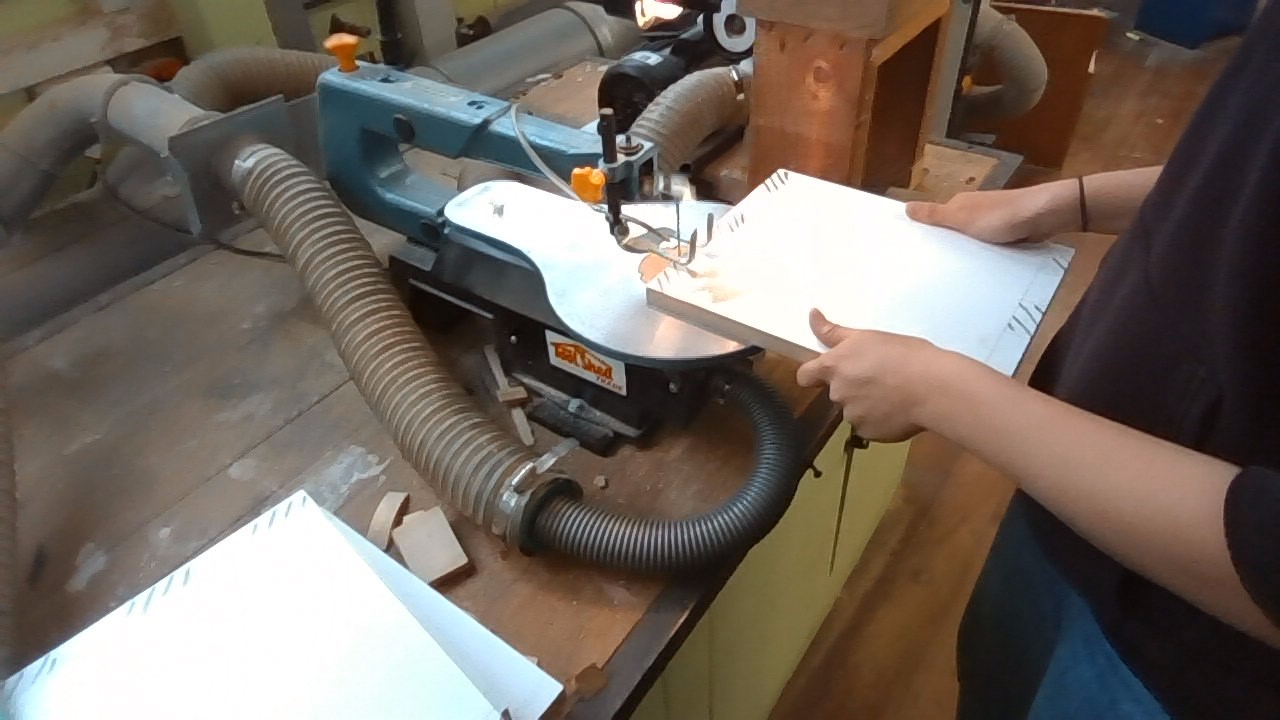
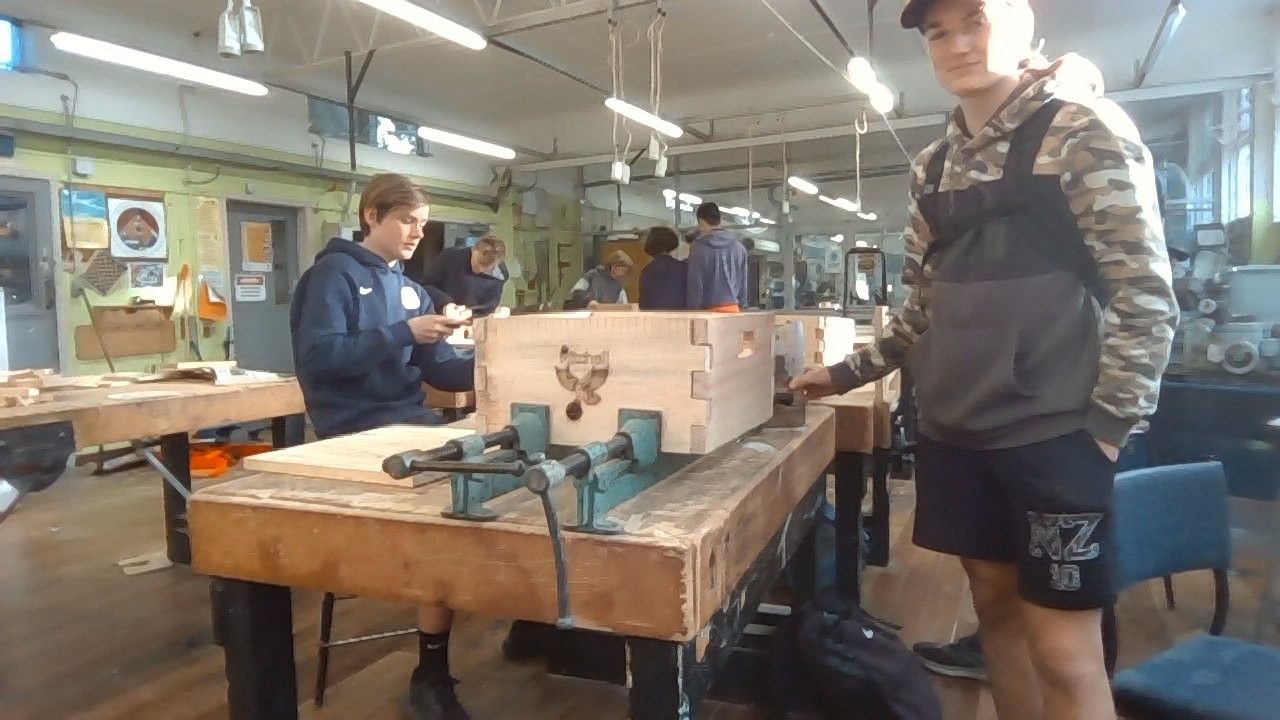
10CRDThis course will encompass hands-on, creative learning that encourages ākonga to explore the strands of the technology curriculum through the design and creation of fit-for-purpose outcomes. This prepares ākonga for Construction and Design at NCEA Level 1 and leads to pathways at university level in the areas of construction, engineering and industrial design.
Ākonga will develop knowledge about materials as well as manual and digital material manipulation techniques and processes which are intrinsic to their application and use. This enables ākonga to create a wide range of outcomes in response to a need or opportunity.
Ākonga will develop an understanding of sustainable practices through research and application while learning to plan projects and develop specifications through design concepts and the use of briefs.

Digital Technologies (Y10)
10DITĀkonga will learn new skills from the digital world while continuing to refine their understanding of the technological process. This includes:
- web design (HTML and CSS)
- Game Design (Blockchain / Javascript Coding)
- graphic design and 3D modelling (Inkscape, Krita, Blender)
- video editing (Shotcut, OBS Studio, Minecraft Education)
All projects are brief-based, with students having a lot of choice with their projects. Some projects involve group work.
Ākonga work on the school computers provided in the Room 8 and Room 10 labs. They may use their personal devices when doing homework. It is recommended that they bring a pair of headphones.
This course prepares ākonga for Year 11 Digital Technologies which further develops their understanding of the digital development process to create a digital media outcome of their choice, and learn basic programming in the Swift programming language.

Drama (Y10)
10DRAYear 10 Drama and Performing Arts
Students will explore the world of performing arts, through creating, performing, workshopping and lots of drama games! This involves learning about drama, improvisation and acting techniques.
Students will spend time learning to work collaboratively as well as expanding on and building individual skills.
Students finding, developing and strengthening key creative and performance skills are core to this course.
We encourage partnership and investing in whakapapa, your friends, peers and community.
We support what you bring, your mana and your ability.


English (Y10)
10ENG

Students will explore a range of different texts, including novels, short stories, poetry, films and non-fiction, to develop their skills in reading, writing, speaking, and presenting as well as creative and critical thinking. Students will study a range of texts throughout the year and respond in a variety of ways. This course will provide a number of opportunities for students to create their own written, oral or visual texts.


English Language
ELLThis course is for migrant, refugee, and international students whose first language is not English. It is designed to support students in learning English as well as assisting them to achieve in their mainstream NCEA subjects at levels 1 - 3.
Students will be assessed against the English Language Learning Progressions (ELLP) and assigned an English Language Class at an appropriate level to support their language learning. There are classes at Foundation, Elementary, Intermediate and Advanced levels. Senior students of any level will be supported to achieve NCEA English credits in English Language. Students in year 10 - 13 at intermediate to advanced levels will be supported to achieve the CAA literacy requirements for NCEA.
ELA is an alternative English class for year 12 - 13 EL students who may struggle with achieving NCEA English level 2. Students will be supported to achieve University Entrance literacy requirements in reading and writing and will be offered 14 - 17 credits in Internal English standards. Students must be at least ELLP 3 (late intermediate to advanced level) to be included in ELA. Students can select ELA instead of English in year 12 but this should first be discussed with their English teacher and/or English Language teacher.


Fashion & Textiles Design (Y10)
10FTDStudents will explore the fundamentals of fashion design and develop practical skills in sewing, fabric selection, pattern making and garment construction. Students will experiment with colour, textiles and sustainability while developing their own creative designs and learning to express their individuality through fashion. This course will provide a strong foundation for further study in Fashion and Textiles and encourage students to develop their creativity, confidence and practical skills. 

Food & Society (Y10)
10FSOFood and Society aims to give ākonga an appreciation of the technological cycle through the context of food and empowers them to become more informed about how food relates to society in Aotearoa and beyond. Students will learn essential skills such as food safety, food preparation, self management, planning, and group working.
Ākonga will work from a design brief to develop practical food outcomes. This will include knowledge of ingredients and techniques, and the formation of initial concepts through to completed prototypes. Ākonga will experiment, develop, respond to feedback, and reflect on their design thinking to improve and refine food projects which they create in the kitchen.
This course will encompass ideation, exploration, progression, and communication of food related projects and outcomes within the areas of food technology. This prepares ākonga for Food and Society at NCEA Levels 1 to 3. This can lead to pathways at tertiary level in the fields of Food Technology, Health and Nutrition, Culinary Design, Food Services and Hospitality.


French (Y10)
10FREBuilding on the French they studied in year 9, students will learn how to communicate about familiar topics such as family and friends, travel and leisure activities, school life, daily routines, meals and food. Through simple stories, songs and videos they will broaden their understanding of French culture and daily life. Please note that this course is designed for students who have already taken a year of French. Students wishing to pick up French for the first time in year 10 should make an appointment to speak to the Language Learning Area Leader or the subject teacher.

Hauora (Y10)
10HAUIn Hauora, students will learn how to improve mental, physical, spiritual and social wellbeing across several units in the year. Students will explore a range of health topics including mental health, sexuality and relationships, as well as factors that influence healthily choices. Classes will examine a physiology unit, learning about the effects of exercise on the human body over time. Students will also explore the concept of Rangatiratanga through creating and leading a sports tournament. There is also a cultural games unit, where students examine tikanga, pūrākau and how history and culture can influence sport and how this can impact spiritual wellbeing. The year will end with a Ki-o-rahi tournament.
Japanese (Y10)
10JAPBuilding on the Japanese they already know, students will learn how to communicate about familiar topics such as daily routines, friends and family, likes and dislikes, shopping, meals and food, school life, travel and leisure activities. Through simple stories, songs and videos they will also broaden their understanding of Japanese culture and traditional customs and events. They will learn to write in Katakana and will become familiar with Kanji.
This course is designed for students who have already taken a year of Japanese. Students wishing to pick up the language for the first time in year 10 should seek guidance from the Head of Languages or the subject teacher.


Kawa & Tikanga (Y10)
10KATKawa and Tikanga (Y10) is a compulsory Year 10 course. It covers a general and practical study of kawa (protocols) of the marae, in both a traditional and contemporary context in line with our school values of Manaakitanga, Kaitiakitanga, Whanaungatanga.
Students will learn about the pōwhiri and the marae procedure, customs, organisation and protocols through participation in activities on the soon to be, school marae.
Although there will be an element of Te Reo Māori, this is not a language focussed course and so the pathway forward does not lead to NCEA Level 1 Te Reo Māori, but, it can lead towards a background knowledge of tikanga and kawa within Onslow College. Students who are interested in studying Te Reo Māori should choose 10MRI as an option this year.


Literacy (Y10)
10LITStudents will develop their confidence and skills in reading and writing. Students will complete activities to improve their reading comprehension and inference skills, and to practise writing clearly and accurately in a variety of forms, especially nonfiction. This course will assist students in preparing for literacy-specific assessments, and will support student literacy across a variety of subject areas.


Mathematics (Y10)
10MATIn Year 10, the Mathematics course continues to build upon the foundational concepts introduced in year 9 and lays the groundwork for more advanced mathematical topics in subsequent years. The curriculum aims to further develop students' mathematical skills, problem-solving abilities, and mathematical literacy. Students will learn to solve problems involving advanced operations on rational numbers, algebraic expressions, solve linear equations, graph linear and non-linear functions and use algebraic techniques to solve problems under Number and Algebra, learn about triangles and parallel lines, trigonometry, area, perimeter and volume for more complex shapes under Geometry and Measurement, solve problems involving conditional probability and learn advanced data analysis including multivariate data under Statistics and Probability. There will be a variety of methods to assess the student's learning throughout the year. This course leads to the year 11 MAT course.
Music (Y10)
10MUS
Students will explore the world of music, through listening, creating and recreating.
Students will spend time learning to work collaboratively as well as expanding on and building individual skills.
Students finding, developing and strengthening key creative and performance skills are core to this course.
We encourage digital music creation and performance alongside tried and true traditional methods.
We encourage partnership and investing in whakapapa, your friends, peers and community.
We support what you bring, your mana and your ability.
We support and learn from the tikanga involved in pūoro, taonga pūoro and te ao Māori.
Numeracy (Y10)
10NUMThis course is designed to prepare students for the Numeracy Common Assessment Activity (CAA).
Students will build on numeracy skills from Year 9 along with practice tasks that mirror the types of problems found in the Common Assessment Activity. These sessions will also include Numeracy investigations that encourage critical thinking and practical application of mathematical concepts. Through consistent practice and targeted investigations, students will develop the skills and confidence needed to succeed in the Numeracy CAA. They will also be able to apply their knowledge in context to support the use of Numeracy skills across the curriculum.
Rumaki Teina (Y09-10)
TEIRumaki Teina is for students who are already confident in their understanding and use of Te Reo Māori, have been already learning in an immersion environment or are wanting to learn Te Reo Māori through a form of greater immersion in the language.
Students will explore the Te Reo Māori through various contexts including; Te Tiriti o Waitangi and He Whakaputanga. Students will learn how to use their language in a fashion that gives mana to their whaanau and whakapapa. Also this is a language subject, this course will help students develop their tuakiritanga so that they can walk confidently as Māori.
Science (Y10)
10SCIYear 10 Science
Welcome to Year 10 Science at Onslow College!
Year 10 Science builds on Year 9 through practical investigations, models and evidence. Students explore how the body stays alive, how chemicals react, how Earth’s systems affect climate, and how forces control movement.
Topic
Big ideas
Weeks
Keeping Us Alive
Explore how materials move around the body, how the body responds to change, and how disease, immunity and medicine affect health.
10
Changing Matter
Use atomic theory to explain acids and bases, displacement reactions and reaction rates, then apply these ideas to real-world processes.
10
Our Changing Planet
Explore how Earth’s spheres interact through the carbon cycle, and how combustion and human activity contribute to climate change.
10
Forces and Flow
Use Newton’s laws to explain motion, then investigate fluids and pressure in sport, transport and engineering.
10
Spanish (Y10)
10SPABuilding on the Spanish they already know, students will learn how to communicate about familiar topics such as family and friends, travel and leisure activities, school and home life, daily routines, meals and food. Through simple stories, songs and videos they will broaden their understanding of Hispanic culture and daily life.
Please note that this course is designed for students who have already taken a year of Spanish. Students wishing to take up Spanish for the first time in Year 10 should seek guidance from the Head of Languages or the subject teacher.
Te Ao Tangata Social Science (Y10)
10TAT
Me tiro whakamuri, kia anga whakamua. If we want to shape Aotearoa New Zealand's future, start with the past.
In Year 10 Te Ao Tangata | Social Sciences teaching is structured around four strands:
- History focuses on interpreting the past through significant events, cultures, and changes over time. It develops student understanding of how historians use evidence and concepts such as causation, significance, and change to explain how societies have developed.
- Civics and Society focuses on how democratic systems work and how people participate in civic life. It develops student understanding of rights, responsibilities, laws, the role of te Tiriti o Waitangi | the Treaty of Waitangi, and how to engage respectfully with diverse perspectives and public issues.
- Geography focuses on how people interact with physical and human environments. It develops student understanding of the nature and distribution of places, and the concept of sustainability. It teaches students how to use spatial tools, and data to interpret environments, patterns, and perspectives.
- Economic Activity focuses on how financial and economic systems operate. It develops student understanding of personal finance, business and government roles, and New Zealand’s economy in a global context.
Te Reo Māori (Y10)
10MRIStudents will continue their Te Reo Māori learning journey, advancing from basic conversation to describing and talking about ideas, relationships, plans and opinions. Students will learn pepeha, mihi and tikanga The course prepares students of Te Reo Māori for NCEA Te Reo Māori, and leadership roles in the school, Kapa Haka and Ngā Manu Kōrero.
Subjects for Year 10 Students
Architecture & Product Design (Y11)
11APDIn Year 11 Architecture and Product Design (formerly DVC), students will learn to explore a range of design ideas that address specific issues. They will develop skills and techniques such as freehand drawing, drafting, and both physical and digital 3D modeling to give form and expression to their ideas in response to design briefs.
Students will experiment, develop, respond to feedback, and reflect on their design thinking to enhance and refine the product and spatial design ideas they propose. The course encompasses investigation, ideation, exploration, progression, and communication of design ideas into potential outcomes.
Year 11 Architecture and Product Design, students will have the opportunity to design for the community, share ideas, and meet with professionals in the field.
11APD is an excellent starting point to exploring the design world and what it offers. It prepares students for Architecture and Product Design at NCEA Level 2 and offers pathways to university-level studies in areas such as Architecture, Product Design, Furniture Design, Industrial Design, Graphic Design, Visual Communication Design, Construction, Engineering, Interior Design, Landscape Design, Urban Planning, and more.

Art (Y11)
11ART
This course will give students the opportunity to experiment with art from a range of creative disciplines (eg: painting, print making, sculpture, photography, design etc). Students will use artmaking techniques (sketching, collage, photography, etc) to research and learn from influential artists. They will also learn how to create a body of work (a presentation of their pieces of artwork) in their chosen area.
Students have the opportunity to engage in education opportunities outside of the classroom, with a trip to Te Papa.
Commerce (Y11)
11COM

Do you have an interest in product development, the money behind it and how to survive in the economy?
11COM will provide tauira with a chance to learn business theory then apply their learning by carrying out a business activity. Throughout the course students will have the opportunity to develop skills associated with Economics, Business Studies and Accounting. The learning outcome being that students build their innovation and enterprising capabilities.
Economic skills within the course will specifically look to supply and demand (market equilibrium), opportunity cost and the circular flow model. Students will be able to identify the impacts of government decisions such as taxation, subsidies and price controls. Business Studies skills will specifically look to stakeholder influence/impact, marketing and production. Tauira will then form companies, where they will plan, produce and sell a product/service at the annual school market evening. Accounting skills will specifically look to developing knowledge of real-world skills to manage the financial affairs of individuals, community organisations and small businesses - such as budgets, return on investment, income statements and cost-benefit analysis. Tauira will learn skills which directly relate to real jobs all over the world.
Construction & Design (Y11)
11CADThis course will encompass hands-on, creative learning that encourages ākonga to explore the strands of the technology curriculum through the design and creation of fit-for-purpose outcomes. This prepares ākonga for Design Technology at NCEA Level 2 and leads to pathways at university level in the areas of Construction, Engineering and Industrial Design.
Ākonga will develop knowledge about materials, techniques, and processes which are intrinsic to their application and use in order to create outcomes that address a need or opportunity.
Ākonga will develop an understanding of sustainable practices through research and application while learning to plan projects and develop specifications through design concepts and the use of briefs.


Digital Technologies (Y11)
11DITThis course offers a taster of two pathways: digital design and programming.
First, ākonga design and develop a digital outcome to address a problem or opportunity in our community. This includes:
- choosing a media product to create (website, graphic design, 3D model)
- creating a design with pencil-and-paper, then transferring the design to digital
- developing the outcome, testing it works, gathering feedback from peers
- delivering a completed outcome and explaining its suitability
Then, ākonga develop their programming knowledge from Year 10 by learning the Swift programming language. This includes:
- learning basic programming concepts such as data types, Boolean maths, conditional statements, loops, and functions
- testing and debugging the program to detect and fix errors in their code
- delivering a functional computer program according to a specified brief
Finally, ākonga learn about human-computer interaction (HCI), focusing on the design of digital tools such as programs, apps, and websites. This includes:
- learning about the 10 Usability Heuristics by Jakob Nielsen
- applying these heuristics to different interfaces and evaluating their effectiveness
- considering how interfaces may need adapting for te ao Māori (the Māori worldview) to better meet the needs of more users
This course will prepare ākonga to make a choice between Level 2 Software Engineering and Level 2 Digital Media & Design. Ākonga are also free to take both courses.

Drama (Y11)
11DRAStudents will be given the opportunity to explore Theatre Aotearoa, learn drama techniques and use creative strategies to devise a drama. Students will also be given opportunities to perform in front of a live audience. This course will provide students with a broad introduction to Drama performance and a safe and supportive environment they are encouraged to be creative and innovative. It aims to foster confidence and the ability to work collaboratively. 
English (Y11)
11ENG
Students will examine a range of written, visual and spoken texts to develop their understanding of how and why these texts were created. Students will improve their writing skills through different tasks where they will create both formal and creative pieces. This course will develop the fundamental communication skills of reading, writing, speaking and presenting.


English Language
ELLThis course is for migrant, refugee, and international students whose first language is not English. It is designed to support students in learning English as well as assisting them to achieve in their mainstream NCEA subjects at levels 1 - 3.
Students will be assessed against the English Language Learning Progressions (ELLP) and assigned an English Language Class at an appropriate level to support their language learning. There are classes at Foundation, Elementary, Intermediate and Advanced levels. Senior students of any level will be supported to achieve NCEA English credits in English Language. Students in year 10 - 13 at intermediate to advanced levels will be supported to achieve the CAA literacy requirements for NCEA.
ELA is an alternative English class for year 12 - 13 EL students who may struggle with achieving NCEA English level 2. Students will be supported to achieve University Entrance literacy requirements in reading and writing and will be offered 14 - 17 credits in Internal English standards. Students must be at least ELLP 3 (late intermediate to advanced level) to be included in ELA. Students can select ELA instead of English in year 12 but this should first be discussed with their English teacher and/or English Language teacher.
Fashion & Textiles Design (Y11)
11FTDStudents will explore the fundamentals of fashion design and develop practical skills in sewing, fabric selection, pattern making and garment construction. Students will use the design process to create their own fashion outcomes while exploring sustainability and developing their creative skills. This course will provide a strong foundation for Level 2 Fashion Design and future pathways in Fashion, Textiles and Costume Design. 


Food & Society (Y11)
11FSOFood and Society aims to give ākonga an appreciation of the technological cycle through the context of food and empowers them to become more informed about how food relates to society in Aotearoa and beyond. Students will learn essential skills such as food safety, food preparation, self management, planning, and group working.
Ākonga will develop knowledge about materials, techniques, and processes which are intrinsic to their application and use in order to create outcomes within the area of Food Technology.
Ākonga will develop an understanding of sustainable practices through research and application while learning to plan projects and develop specifications through design concepts and the use of briefs.
This course will encompass hands-on, creative learning that encourages ākonga to explore the strands of the technology curriculum through the design and creation of fit-for-purpose outcomes. This prepares ākonga for Food and Society at NCEA Level 2 and leads pathways at university level in the area of Food Technology.


French (Y11)
11FREDesigned for students who have completed 12 to 18 months of prior French study, this course builds confidence and fluency in one of the world's most widely spoken languages. Students will refine their reading, writing, listening, and speaking abilities through topics tailored to young people, such as daily routines, family, school, and leisure activities. Alongside developing grammatical precision and communicative skills, students will explore the rich cultural tapestry of the Francophonie.
It is recommended that students take a minimum of three of the four achievement standards available for this course.


Geography (Y11)
11GEOGeography is a social science which will develop understandings about global environments, population, tropical cyclones, volcanoes, and rivers, as well as resource management and decision-making in the wider Pacific, by using maps, photographs, satellite images, and Geographic Information Systems (GIS). Students will carry out practical investigations of the environment and the human activity within it on a field trip to the Waiwhetū Stream. Students will explore geographic decision-making through multiple viewpoints, including te ao Māori perspectives. This course will develop an understanding of natural and cultural environments and issues of sustainability, and flow in to Level 2 Geography and Biology.


Health and Recreation (Y11)
11HEAThis is a course for students who love social, outdoors based physical activity and health. This course combines Outdoor Education and Health into a fun and exciting experience. The course is made up of 1 PE standard, 1 Science standard and 1 Health standard. Students choose physical activities and consider how these impact on our wellbeing. In 2025 the class chose disc golf, where we did a road trip around Wellington visiting different courses. Students will also explore walks around Wellington and go on a 2 day tramp. Health topics are also covered, including alcohol and drugs, safe sex practice and mental wellbeing. Lessons are both practical and classroom based.
If students enjoy competitive sport, then Sports Performance may be a more suitable option. Students can take both Health and Recreation and Sports Performance courses, as different standards are used for assessment in each course.
History (Y11)
11HISIn Level 1 History, students will examine a range of case studies to provide a broad understanding of historical contexts and be introduced to foundational skills for young historians, including strong critical thinking, writing, and text analysis skills. Assessments specifically focus on primary source analysis, conceptual understanding, and understanding different perspectives on historical narratives.
The three topics that make up this course are:
Rangatohe Ātete | Protest Movements - This topic will draw on a wide range of short case studies, mainly focusing on the American Civil Rights Movement and Māori Renaissance. These are designed to offer high engagement and cater to student interest.
Maumaharatanga | Significance - This topic looks at what makes an event 'significant' using a provided framework. Students will look at Parihaka and Gallipoli as their main case studies, with some mini case studies offered to develop breadth of understanding. Within these, there is the flexibility for students to learn about topics of specific interest to them and their whakapapa.
Tirohanga | Perspectives - This topic encourags ākonga to engage with perspectives on a historical context. Students will be able to select their topic from those covered in the course, allowing students to write to their strengths.
Both internals offer students a choice of topics and presentation modes to meet their interests. The course is structured to gain an appreciation of how the past has shaped modern-day situations and values, as well as helping students develop skills for future history courses and cross-disciplinary skills for other subjects, especially in the social sciences.
Japanese (Y11)
11JAPThis course will appeal to students who already studied Japanese in Year 10 and who are keen to deepen their knowledge of a fascinating language and culture. Students will develop their ability to read and write texts in Hiragana and Katakana, as well as some Kanji, and will become more adept at communicating about topics of immediate relevance to young people such as home and family, friends, daily life, school, interests and outings. Three of the four available achievement standards will be formally assessed during the course.


Māori Performing Arts (Y11-13)
MPAIn Māori Performing Arts this year students will be working towards achieving NZQA Unit Standards level 1, Level 2, Level 3 Maori Performing Arts, Level 1 to 3 Mau Rakau. When a Unit Standard is passed credits are awarded that will contribute to the National Certificate of Educational Achievement (NCEA) certificate.
The whole course is internally assessed. There is no external assessment for this course. All Unit Standards are summative assessments. There is limited opportunity for further assessment, this is subject to Teacher’s discretion.
Students are required to demonstrate practical skills as well as maintain an ordered record of notes and information that will be evidence of knowledge. Students are required to complete and submit written research assignments as well.
All performances will be video recorded and all written assignments will be stored as evidence and submitted to NZQA for External Moderation.
Mathematics (Y11)
11MATStudents will learn topics such as number, algebra, geometry, statistics, probability, and trigonometry, focusing on developing foundational mathematical skills and problem-solving abilities. This course will equip students with effective means for investigating, interpreting, explaining and making sense of the world in which they live and will flow into level 2 Maths or level 2 Statistics.
Music (Y11)
11MUS
Students will develop music skills through creative opportunities. Students will gain confidence in the performance of music, the creation/composition of music, and understanding of music styles. Music is great at building manaakitanga, empathy with others and fosters the ability to collaborate and work with other people. This course will prepare students for Level 2 Music and foster students' passion for and understanding of music.
Any instrument and ability is welcome, including voice, the use of DAWs (Digital Audio Workstation) and taonga pūoro. If you don't have an instrument you will be required to start having lessons either through the schools program or privately. We can help you catch you up, but it will require focus and hard work.
Rumaki Tuakana (Y11-13)
TUATuakana Te Reo Māori represents the pinnacle of Te Reo Māori learning, designed for students who have completed a Te Reo Māori Level 2 (L2) or a Te Reo Māori Level 3 (L3) programme. These students should be advanced or deeply immersed in the language. This course is ideal for those with a very high level of understanding in both spoken and written Te Reo Māori or who have come from a Kura Kaupapa, Full immersion background. In Tuakana, students will thrive as they engage with advanced language structures, explore complex cultural concepts, and refine their fluency. This subject is perfect for those ready to challenge themselves and further solidify their mastery of Te Reo Māori at the highest level.
Science (Y11)
11SCIStudents will explore key concepts in Physics, Biology, Chemistry and Earth & Space Science through hands-on investigations and real-world contexts.
Students will complete assessments based on motion and forces, microbes, and human impact on Earth systems, building skills in scientific thinking and inquiry.
This course offers 15 internal NCEA Level 1 credits, with no external Science exam. It prepares students for Year 12 Science options and pathways into health, engineering, environmental science and beyond.
Topic
Big ideas
Credits
Microbes and the Environment
Bacteria, fungi, pathogens and their roles in ecosystems, health and sustainability.
5
Physics Investigations
Motion, forces, pressure and energy explored through practical investigations.
5
Human-Induced Change
Atomic structure, carbon compounds and how human activity changes Earth systems.
5
Spanish (Y11)
11SPAThis course will appeal to students who already have 18 months of Spanish behind them and who are keen to become more fluent in one of the world’s most spoken languages. Students will develop their reading, listening, writing and speaking skills through the study of topics of immediate relevance to young people such as home and family, friends, daily life, school, interests and outings. Students will learn to talk about the past and the future as well as the present, and they will develop their knowledge of the Spanish-speaking world. Three of the four available achievement standards will be formally assessed during the course.
Sport Performance (Y11)
11PEDThis course is for students who love competitive sports and will suit students keen to learn about factors that improve sports performance. Students will learn about a range of important strategies and skills required in sport, and be assessed on how well they apply these in a class sports tournament. The year starts with a Waka Ama trip to start the class thinking along the lines of applying kotahitanga, teamwork, communication and leadership to build on performance success. Students can also learn about a range of factors that improve performance including nutrition, psychology, physiology and biomechanics. This foundational knowledge will help students understand how to implement training programs, which a large focus of Physical Education at Level 2. Lessons are both practical and classroom based.
If students enjoy less competitive physical activity, then Health and Recreation may be a more suitable option. Students can take both Health and Recreation and Sports Performance courses, as different standards are used for assessment in each course.
Supported Study (Y11)
11SSUSupported Study is an option for students to select in place of a 6th subject. In supported study you will have the opportunity to work on tasks, projects and assessments from your other subjects. The teacher in this class will work with you to set some goals around what your focus is for each class. They will also support you to track your progress throughout the year.
Any students who wish to select this option should have a discussion with their whānau, Ako teacher and Dean. As part of these discussions, consideration needs to be given to the structure of your Year 11 programme and where your Level 1 credits as well as Literacy and Numeracy will come from.
Te Reo Māori (Y11)
11MRIStudents will learn the basics of te reo Māori and enhance their abiltiy to interactively speak, listen, read and write. Students will learn how to express their opinions and intentions and talk about their relationships with the people and world around them. This course will teach our history, our stories, our traditions and our tikanga an prepare students for leadership roles in the school, kapa haka and Ngā Manu Kōrero. Tūwhitia te hopo! Arohatia te reo Māori!
“Ko te reo te taikura o te whakaao mārama”
Language is the key to understanding
-Te Wharehuia Milroy
Te reo Māori is the key to understanding the Māori world. Te Reo Māori lays the foundation of communicative skills and cultural knowledge to enable students to be bilingual and bicultural with an appreciation and consideration of a Māori worldview.
Te Reo Māori is taught to a highly diverse group of students, in many different contexts, including Māori students who are taking the opportunity to reclaim their heritage language and culture and non-Māori beginning their journey into the Māori world that will strengthen the bicultural and bilingual fabric of Aotearoa New Zealand.
Wāhine Sports Performance (Y11)
11PEWThis is a Sports Performance course for females, with the same learning and content as the 11PED Sports Performance course. Wāhine can choose to take either 11PED or 11PEW.
The course is for students who wish to participate in a girls only environment and who love to compete in and learn about competitive sport. Students will learn about a range of important strategies and skills required in sport, and be assessed on how well they apply these in a class sports tournament. The year starts with a Waka Ama trip to start the class thinking along the lines of applying kotahitanga, teamwork, communication and leadership to build on performance success. Students can also learn about a range of factors that improve performance including nutrition, psychology, physiology and biomechanics. This foundational knowledge will help students understand how to implement training programs, which a large focus of Physical Education at Level 2. Lessons are both practical and classroom based.
If students enjoy less competitive physical activity, then Health and Recreation may be a more suitable option. Students can take both Health and Recreation and Sports Performance courses, as different standards are used for assessment in each course.
Subjects for Year 11 Students
Accounting (Y12)
12ACCDo you enjoy solving problems, analysing information, and understanding how businesses make financial decisions?
Y12 Accounting provides students with the opportunity to develop practical accounting knowledge and apply it to real-world business situations. Throughout the year, students will learn how businesses record, process, and report financial information while developing the skills needed to make informed financial decisions.
Students will prepare and interpret financial information, investigate accounts receivable and inventory systems, and explore how accounting information supports effective business decision-making. They will also examine contemporary accounting issues, considering how technology, ethics, sustainability, and other external factors influence businesses today. The course develops financial literacy, analytical thinking, and problem-solving skills that provide an excellent foundation for further study and careers in accounting, business, finance, and many other industries.
Architecture & Product Design (Y12)
12APDIn Year 12 Architecture and Product Design (formerly DVC), students will learn to explore design ideas that address specific issues. They will develop skills and techniques such as freehand drawing, drafting, and both physical and digital 3D modeling to give form and expression to their ideas in response to design briefs.
Students will experiment, develop, respond to feedback, and reflect on their design thinking to enhance and refine the product and spatial design ideas they propose. The course encompasses investigation, ideation, exploration, progression, and communication of design ideas into potential outcomes.
Year 12 Architecture and Product Design, students will have the opportunity to design for their community, share ideas, and meet with professionals in the field.
12 APD allows you to explore the design world and experience what it offers. It prepares students for Architecture and Product Design at NCEA Level 3 and offers pathways to university-level studies in areas such as Architecture, Product Design, Industrial Design, Graphic Design, Visual Communication Design, Construction, Engineering, Interior Design, Landscape Design, Urban Planning, and more.

Art Design (Y12)
12ADEArt Design allows students to explore a range of ideas and techniques relevant to the world of Graphic Design. This may include website, app, poster, logo, game, and many more design outcomes. Students will learn the history, principles, and basics of design, through one of two options of potential course plans.
The first option is project-based, meaning students are able to do multiple smaller projects using internals only. This allows for opportunities to explore multiple ideas and experimenting with a variety techniques. It also means students can integrate with other subjects through passion projects.
The second option is folio-based, and involves working on one larger project across the year with at least one internal and an external.
Students from both options have opportunity to exhibit their work.
This course will help students gain a broad understanding of visual design techniques and will flow into Level 3 Art Design.
Art Paint/Print/Sculpt (Y12)
12ART
This course is for students who want to explore their creativity and see what the world of Fine Arts is about. It provides students with the option of two potential paths:
The first option is project-based, meaning students are able to do multiple smaller projects using internals only. This allows for customisation of the program and flexibility with what art practice a student uses (eg. painting, printmaking, sculpture). It also means students can integrate with other subjects through passion projects.
The second option is folio-based, and involves working on one larger project across the year with at least one internal and an external. Students will specialise in one art area (painting, printmaking, or sculpture), allowing them to go in-depth with their investigation and experimentation.
Students from both options have opportunity to exhibit their work.
Art Photography (Y12)
12APHThis course introduces students to the world of creative photography. They will be able to learn how to use digital cameras and lighting equipment to make their creative vision come to life. Students will explore a range of ideas and techniques within photographic practice.
Students will work through a creative process to produce a body of work that explores themes, processes, and methods based on a personal proposal. This course will help students gain a broad understanding of photographic techniques and conventions and will flow into Level 3 Art Photography.
Biology (Y12)
12BIOStudents will investigate the interconnectedness of living things at the organism and ecosystem level. Using an understanding of DNA, cells and gene expression, we explore the different ways living things carry out life processes at the cellular level. Students will learn a variety of skills including microscopy, carrying out investigations, and how to think critically about social-scientific issues. This course will give students a foundational understanding of biology and help them link to other disciplines in science, as well as lead to level 3 Biology.


Business Studies (Y12)
12BUS


Have you ever considered starting your own business?
This course aims to develop the understanding of the complex world that businesses operate in. It will look at the internal and external factors impacting businesses. A significant part of the year involves forming a company and offering a product/service for sale within a wider community context.
Tauira will also learn theories about motivation and how successful New Zealand businesses motivate their staff. This typically involves a trip to Wellington Zoo to hear from their Education team and other important members.

Complementary subjects include Accounting and Economics.
Chemistry (Y12)
12CHEYear 12 Chemistry
Year 12 Chemistry explores how atoms, bonding, energy and reactions explain the materials and technologies around us. Students develop practical, problem-solving and scientific communication skills through experiments and real-world applications.
Topics include redox, structure and bonding, titration, chemical reactivity and current chemical technologies. The course offers up to 19 NCEA Level 2 credits and prepares students for Year 13 Chemistry and pathways in health, engineering, environmental science, food science and technology.
Topic
What you will explore
Credits
Assessment
Redox
Electron transfer, oxidation numbers and redox reactions.
3
Internal
Structure, Bonding and Energy
How particles, bonding and structure determine properties and energy changes.
5
External
Quantitative Chemistry (Titration)
Use titration to determine the concentration of a chemical sample.
4
Internal practical investigation
Reactivity
Equilibrium, acids and bases, solubility and reaction behaviour.
4
External
Chemical Technology
Chemistry behind the development of a current technology.
3
Optional report
Classical Studies (Y12)
12CLSClassics is a fascinating cross-disciplinary subject which contains elements of Art History, Literature, History, Politics, Mythology, Drama and Philosophy. In the level 2 course, students will examine the history and influences of Classical world through a range of case studies including a comparative study of Greek mythology and Māori Purakau, Athenian art and architecture, Roman society, politics and the assassination of Julius Caesar. Students will analyse primary classical evidence from ancient sources to identify and explore significant ideas, events and influences of the classical world. This course will develop students’ knowledge and understanding of the classical world as well as their academic research and writing skills and will lead to level 3 Classics.
Construction & Design (Y12)
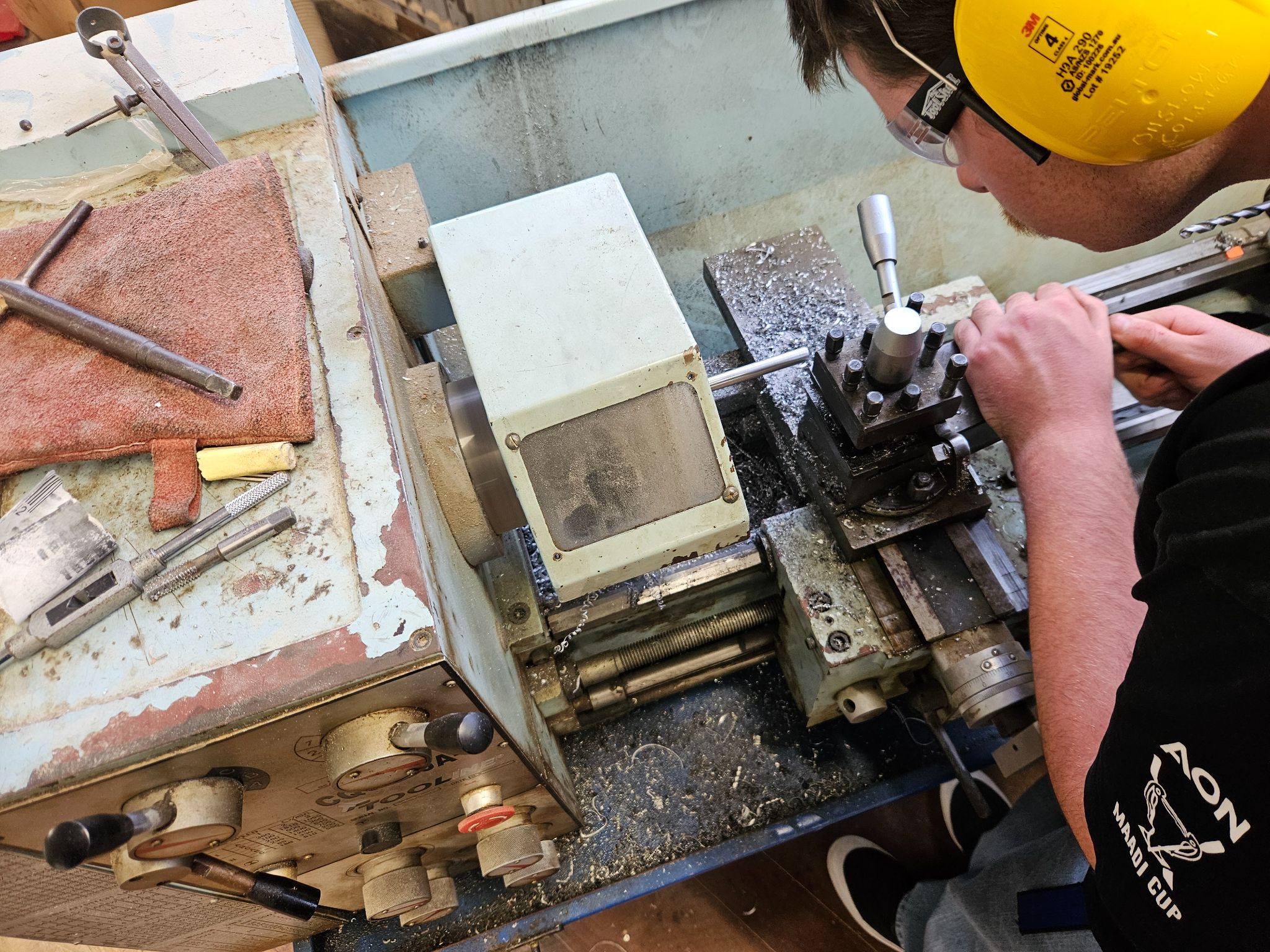
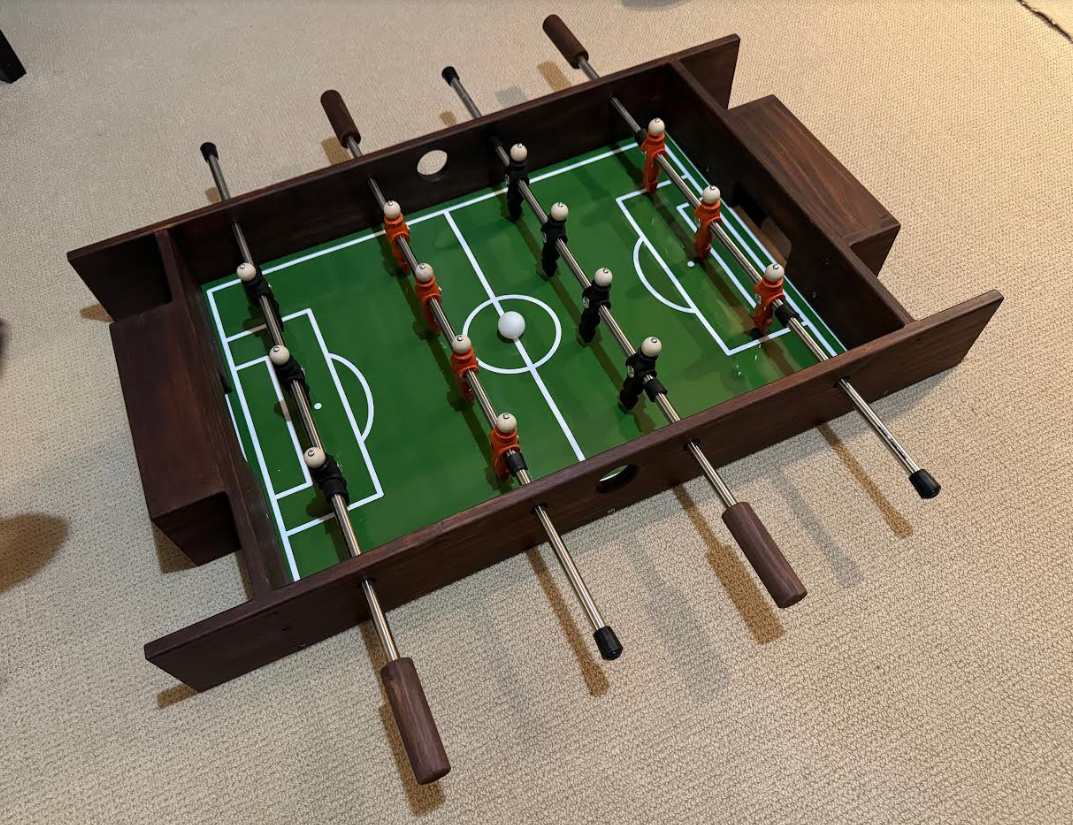
12CADThis course will encompass hands-on, creative learning that encourages ākonga to explore the strands of the technology curriculum through the design and creation of fit-for-purpose outcomes. This prepares ākonga for Design Technology at NCEA Level 3 and leads to pathways at university level in the areas of Construction, Engineering and Industrial Design.
Ākonga will continue to develop knowledge about materials, techniques, and processes which are intrinsic to their application and use in order to strengthen their understanding of how to create outcomes that address a need or opportunity.
Ākonga will develop an understanding of sustainable practices through research and application while learning to plan projects and develop specifications through design concepts and the use of briefs.


Digital Media & Design (Y12)
12DMDĀkonga will work in groups to conduct an inquiry. This involves:
- researching a real-world problem to solve or opportunity to address
- determining what the outcome needs to do
- exploring what the end users require in terms of accessibility, cost, etc.
- iteratively designing and developing an outcome
In this course, ākonga choose what kind of outcome will be appropriate for their project and self-learn industry standard tools, with support from the kaiako. In the past, students have chosen to learn:
- free and open source software (FOSS) such as Krita, Inkscape, Blender, Godot
- industry tools such as Figma, Canva, Affinity, DaVinci Resolve, Unity
This course prepares ākonga for Level 3 Digital Project Management and also embeds skills useful for Art Design, Media Studies, and career pathways in communications.
Ākonga who take Level 2 Software Engineering are encouraged to take this course at the same time.

Drama (Y12)
12DRAA practical course covering a variety of Drama concepts. Students will build on the skills and knowledge learnt from year 11. They will work in a collaborative environment and are encouraged to take risks and stretch their creative thinking. There is a focus on pushing performance skills through the exploration of dramatic action.
Students will take four internally assessed standards where they will create original work, use drama techniques in performance and perform a substantial role in a significant performance.

- learning how to structure, create, write and perform original work
- learning how to structure, create, write and perform original work
Economics (Y12)
12ECOThis Level 2 Economics course provides a comprehensive introduction to understanding how resources are allocated in society. Key economic concepts and models, focus on analysing inflation, growth, unemployment, trade and the interaction between government policies and contemporary economic issues. Through engaging assessments, students will develop the skills to critically evaluate and understand these fundamental economic experiences.
This knowledge will enable students to analyse and interpret economic trends, providing a strong foundation for further studies in economics or related fields, as well as a practical understanding of economic principles applicable to everyday life.
Complementary subjects include Business Studies and Accounting.
English (Y12)
12ENGStudents will examine a range of texts, both written and visual, to develop their analytical skills and understanding of how and why these texts are created. Students will develop their writing skills through different tasks, both formal and creative, and have the opportunity to write and present a speech. This course provides all the necessary Level 2 University Entrance Literacy credits, and flows into Level 3 English.


English Language
ELLThis course is for migrant, refugee, and international students whose first language is not English. It is designed to support students in learning English as well as assisting them to achieve in their mainstream NCEA subjects at levels 1 - 3.
Students will be assessed against the English Language Learning Progressions (ELLP) and assigned an English Language Class at an appropriate level to support their language learning. There are classes at Foundation, Elementary, Intermediate and Advanced levels. Senior students of any level will be supported to achieve NCEA English credits in English Language. Students in year 10 - 13 at intermediate to advanced levels will be supported to achieve the CAA literacy requirements for NCEA.
ELA is an alternative English class for year 12 - 13 EL students who may struggle with achieving NCEA English level 2. Students will be supported to achieve University Entrance literacy requirements in reading and writing and will be offered 14 - 17 credits in Internal English standards. Students must be at least ELLP 3 (late intermediate to advanced level) to be included in ELA. Students can select ELA instead of English in year 12 but this should first be discussed with their English teacher and/or English Language teacher.
Fashion & Textiles Design (Y12)
12FTDStudents will develop advanced practical and design skills through a range of Fashion and Textiles projects, exploring fashion history, sustainable design and the creation of fit-for-purpose outcomes. Students will develop their own ideas through research, design development and practical construction. This course will prepare students for Level 3 Fashion Design and future pathways in Fashion, Textiles and Costume Design. 


Food & Society (Y12)
12FSOFood and Society aims to give ākonga an appreciation of the technological cycle through the context of food and empowers them to become more informed about how food relates to society in Aotearoa and beyond. Students will learn essential skills such as food safety, food preparation, self management, planning, and group working.
Ākonga will continue to develop knowledge about materials, techniques, and processes which are intrinsic to their application and use in order to strengthen their understanding of how to create outcomes within the area of food technology.
Ākonga will develop an understanding of sustainable practices through research and application while learning to plan projects and develop specifications through design concepts and the use of briefs.
This course will encompass hands-on, creative learning that encourages ākonga to explore the strands of the technology curriculum through the design and creation of fit-for-purpose outcomes. This prepares ākonga for Food and Society at NCEA Level 3 and leads pathways at university level in the area of Food Technology.


French (Y12)
12FREBuilding on the foundations established in Year 11, Level 2 French advances students toward authentic language fluency and cultural competence. This course equips students to express nuanced perspectives on themes central to contemporary youth—including career aspirations, social issues, and travel. Through interactive listening, speaking, and written tasks, students will refine their language precision and deepen their understanding of Francophone cultures around the world. Level 2 French develops critical communication skills, creative thinking, and a valuable global mindset for future academic and professional endeavors.
Students will be assessed on four of the five standards offered.


Geography (Y12)
12GEOGeography straddles the natural sciences and humanities. Students will develop understanding about spatial patterns and interrelationships between people and their environments, through topics such as volcanism, the sustainability of North Island ski fields, the outbreak of the Covid-19 pandemic and patterns of homicide in Chicago. Students will learn to think spatially and critically by using maps, satellite images, graphs, and Geographic Information Systems (GIS) to obtain, analyse, and present information. Students will have the opportunity to visit the volcanic landscape of Mt Ruapehu on a 3 day trip. This course will develop a deeper understanding of patterns, interactions and processes in natural and cultural environments and flow into Level 3 Geography and Power & Resistance.


Health Professional Studies (Y12)
12HEAThis course will suit students interested in a career as a Health professional (eg: doctors, nurses, counselors, psychologists). The course will look at range of adolescent health issues such as alcohol, drugs, sexual health and mental health. We will also look at factors that help/prevent people from being affected by these issues. Students will take action by promoting health within the school and critique how health messages are presented to the public.
If students are aiming to attend med school at university, they must also complete 2 other Science courses.
History (Y12)
12HISThis L2 History course examines a range of case studies related to the Cold war, and the shaping of the world post WW2 continuing up to 9/11 and the “War on Terror”. This includes a broad survey of events of the cold war, Aotearoa's protest movements such as our anti-nuclear stance. There is a focus on "how the past affects the present" with an examination of how past events that have ongoing impacts and have shaped the modern world. Alongside the all-class case studies, there is also a substantial element of student choice to follow their specific interests by selecting an independent research topic. The course will develop students' critical thinking, source analysis and formal writing skills.
Japanese (Y12)
12JAPThis course builds on the knowledge and skills that students gained in year 11. The course will give students the ability to communicate appropriately in Japanese about topics of interest to young people such as relationships, education, future plans, leisure activities and travel. Students will continue to develop their oral fluency, their listening skills and their ability to read and write Hiragana, Katakana and Kanji and will deepen their understanding and knowledge of Japanese culture. Students will be assessed on three of the five standard, and can sit a fourth standard on request.
Māori Performing Arts (Y11-13)
MPAIn Māori Performing Arts this year students will be working towards achieving NZQA Unit Standards level 1, Level 2, Level 3 Maori Performing Arts, Level 1 to 3 Mau Rakau. When a Unit Standard is passed credits are awarded that will contribute to the National Certificate of Educational Achievement (NCEA) certificate.
The whole course is internally assessed. There is no external assessment for this course. All Unit Standards are summative assessments. There is limited opportunity for further assessment, this is subject to Teacher’s discretion.
Students are required to demonstrate practical skills as well as maintain an ordered record of notes and information that will be evidence of knowledge. Students are required to complete and submit written research assignments as well.
All performances will be video recorded and all written assignments will be stored as evidence and submitted to NZQA for External Moderation.
Mathematics (Y12)
12MATStudents will learn to analyse graphs, solve problems involving angles and distances, solve real-world problems involving Algebra and Calculus, understand abstract concepts, and prepare for advanced mathematics. Students will develop critical thinking, problem-solving, and analytical skills that are valuable in various academic and professional pursuits. This course will lay the foundation for the year 13 Calculus course, scientific research, engineering, and other math-intensive fields.
Mathematics with Statistics (Y12)
12MSTStudents will learn techniques for collecting and organizing data, analysing and interpreting data sets using graphical displays and making conclusions or predictions about a population based on sample data. They will relate their learning to the real world informed by research. Students will also learn about fundamental principles of probability, including calculating probabilities of events and understanding concepts like independent and dependent events, and conditional probability. This course will give students problem-solving skills that are transferable to other areas of study and everyday life.
Media Studies (Y12)
12MEDStudents will look at representation and audience theory, the media’s role in society, the relationship between a media product and its audience, and pursue areas of their own interest within media. Students will put theory into practice in their own media production of either a magazine article or music video, and transfer media literacy skills across different subjects. This course will help them to see beyond the screen and read between the lines – to become ‘media literate’.


Music (Y12)
12MUS
Students will gain substantial performance, composition and research skills through a range of creative opportunities. Students will have the opportunity to choose from a range of standards to play to their strengths and also to what interests them, whether that be music technology and DAW through to orchestral to acoustic to a combination of the above.
This is a flexible course that offers students a unique musical experience.
Because of this, each year can look quite different. Below is an example of how the year may look.
This course will lead into Level 3 Music.
Outdoor Education (Y12)
12OEDThis is a course for students who are passionate about the outdoors. Students will experience the outdoors through participating in a range of activities including, tramping, mountain biking and rock climbing. Students will complete an outdoor specific first aid course at the beginning of the year. Students will build their self confidence and social responsibility by reflecting on how their experiences impact on others and the environment, as well as taking part in a social action that contributes to the community.
Physical Education (Y12)
12PEDThis course is for students who love physical activity and wish to look at a range of ways that physical activity is used in our lives. The year starts by looking at Leadership, with students creating a coaching plan, and learning how to coach junior students at Onslow College. Students will then learn how to create an in-depth training programme for themselves in their chosen sport. This involves learning about a range of methods of training, and what effects these have on the body. Students will also look at how sports events impact our society, including a trip to a major sports game (previous years have been the FIFA women's world cup in 2024 and an All Blacks vs South Africa in 2025). Lessons are both practical and classroom based.
Physics (Y12)
12PHXThis course investigates the rules governing the physical world. In Physics we seek to understand why and how the world functions. We break this down into different areas:
Mechanics - Investigating motion and how this is linked to energy and forces
Electromagnetism - Investigating electrical charge and how it interacts with circuits and electric and magnetic fields.
Practical Physics - Conducting experiments to find relationships between different variables and concepts
Atomic and Nuclear Physics - Investigating radioactivity, atomic models and mass-energy equivalence. We link these concepts to how they are used in society


Rumaki Tuakana (Y11-13)
TUATuakana Te Reo Māori represents the pinnacle of Te Reo Māori learning, designed for students who have completed a Te Reo Māori Level 2 (L2) or a Te Reo Māori Level 3 (L3) programme. These students should be advanced or deeply immersed in the language. This course is ideal for those with a very high level of understanding in both spoken and written Te Reo Māori or who have come from a Kura Kaupapa, Full immersion background. In Tuakana, students will thrive as they engage with advanced language structures, explore complex cultural concepts, and refine their fluency. This subject is perfect for those ready to challenge themselves and further solidify their mastery of Te Reo Māori at the highest level.
Science and Society (Y12)
12SCIStudents will explore the areas of Science that are likely to shape society in the future or have a large impact on ourselves personally. The course will cover a range of scientific areas (Biology, Chemistry, Physics, Earth and Space Science) while preparing students to become scientifically literate citizens. This course will lead to Science and Society (Y13).
Students will aim to complete 4 or 5 Internal standards based on their interest and/or what are current scientific issues relevant to New Zealand. An idea of topics that have been looked at in class are:
1. How will humans live on Mars - The Science behind the challenges of living there.
2. Genetic engineering and the future - How humans, plants and animals will have their genes edited for medicine and food production.
3. Nuclear power - How Nuclear power currently works and how it could in the future to save the planet from climate change.
4. Where did the moon come from? - Exploring scientific theories of the moon's creation and how they have changed as new scientific evidence comes to light.
5. Car Safety (Optional) - How cars have been designed to lower injuries and deaths and the physics principles behind this.


Software Engineering (Y12)
12SWEĀkonga will further develop their programming skills, learn to design and build relational databases, and use project management techniques to develop an outcome of their choice. Finally, they dive into an area of computer science and examine its impact on society.
Skills and knowledge learnt at this level include:
- advanced programming techniques such as functions that accept parameters and return values, multi-dimensional arrays, and basic object-oriented programming
- designing relational databases including their tables, data types, and constraints; then, implementing these designs in LibreOffice Base
- learning real-world project management techniques such as the Agile methodology, project boards, version control with Git, and collaborative skills to work in pairs
This course leads to the Level 3 programme, with skills relevant to academic degrees in Software Engineering and Computer Science, as well as vocational qualifications in Information and Communication Technology.
Ākonga may also take Level 2 Digital Media & Design at the same time in order to foster important transferable skills such as time and relationship management.

Spanish (Y12)
12SPAThis course builds on the knowledge and skills that students gained in year 11. The course will give students the ability to communicate in Spanish about topics of interest to young people such as relationships, education, future plans, leisure activities and travel. Students will continue to develop their oral and written fluency and their listening skills, and will deepen their understanding and knowledge of Spanish culture.
Supported Study (Y12)
12SSUSupported Study is an option for students to select in place of a 6th subject. In supported study you will have the opportunity to work on tasks, projects and assessments from your other subjects. The teacher in this class will work with you to set some goals around what your focus is for each class. They will also support you to track your progress throughout the year.
Any students who wish to select this option should have a discussion with their whānau, Ako teacher and Dean. As part of these discussions, consideration needs to be given to the structure of your Year 12 programme and any Literacy and Numeracy requirements.
Te Reo Māori (Y12)
12MRIStudents will learn how to communicate about past-times, ambitions, opinions and intentions. Students will use whakataukī, kīwaha, kupu whakarite, and other facets as we do this. This course will teach about our history, our stories, our traditions and our tikanga and how these connect with the topic being taught. Students are expected to have an extended understanding of Te Reo Māori and also being able to work independently. Whakapakaritia tō mōhiotanga! Kia kaha ki te kōrero Māori!
Wāhine Physical Education (Y12)
12PEWThis is a Physical Education course for females, with the same learning and content as the 12PED Physical Education course. Wāhine can choose to take either 12PED or 12PEW.
This course is for students who love physical activity and wish to look at a range of ways that physical activity is used in our lives. The year starts by looking at Leadership, with students creating a coaching plan. Students will then learn how to create an in-depth training programme for themselves in their chosen sport. This involves learning about a range of methods of training, and what effects these have on the body. Students will also look at how sports events impact our society, including a trip to a major sports game (previous years have been the FIFA women's world cup in 2024 and an All Blacks vs South Africa in 2025 and All Blacks v Italy in 2026). Lessons are both practical and classroom based.
Subjects for Year 12 Students
Accounting (Y13)
13ACCDo you enjoy analysing businesses, solving financial or business problems, and using information to make strategic decisions?
13 Accounting provides students with the opportunity to apply accounting knowledge to real-world business situations. Throughout the year, students will investigate how accounting information supports business planning, decision-making, and long-term success.
Students will prepare financial information for partnerships, investigate job costing and management accounting techniques, and analyse the financial performance of New Zealand businesses using published annual reports. They will develop the skills to evaluate business performance, make informed recommendations, and communicate financial information to a range of users. The course provides an excellent foundation for further study and careers in accounting, business, finance, economics, and management.
Architecture & Product Design (Y13)
13APDIn Year 13 Architecture and Product Design (formally DVC), students will be challenged by advanced briefs addressing specific chosen issues. Students will explore ideation, innovative thinking, design solutions and presentation techniques. Students will further develop skills and techniques such as freehand drawing, drafting, and both physical and digital 3D modeling to discover how to give form and expression to their ideas in response to design briefs.
Year 13 Architecture and Product Design Students will have the opportunity to share ideas, exhibit projects and connect with professionals in the field. Students may also have the chance to enter into Scholarships to support them for their future. 13 APD will have the opportunity to go on a Architecture and Design Trip, visiting a Architecture & Design firm as well as getting a tour of a university to explore potential career pathways.
13 APD allows you to develop and build a design portfolio of your own work.This subject offers pathways to university-level studies in areas such as Architecture, Product Design, Industrial Design, Graphic Design, Visual Communication Design, Construction, Engineering, Interior Design, Landscape Design, Urban Planning, and more.


 Cross Curricula Assessment Opportunities
I3
Art Design (Y13)
13ADEStudents will explore design ideas and techniques through their own chosen projects. Students will investigate a wide range of approaches to visual design through research and practical experimentation. This is done through one of two potential options.
The first option is project-based, meaning students are able to do multiple smaller projects using internals only. This allows for opportunities to explore multiple ideas and experimenting with a variety techniques. It also means students can integrate with other subjects through passion projects.
The second option is folio-based, and involves working on one larger project across the year with at least one internal and an external.
This course will give students the opportunity to develop and extend their ideas toward their own independent design practice.
Cross Curricula Assessment OpportunitiesStudents create a design for a media product that meets the requirements of a brief. They will also show understanding of conventions of design.
Internal8
3.2 or 3.5 Design & 3.2 Power and Resistance
Students can conduct a social inquiry and design a poster that responds to this.Internal10
Art Paint/Print/Sculpt (Y13)
13ART
This course is for students who want to further expand on their skills and explore the world of Fine Arts. It provides students with the option of two potential paths:
The first option is project-based, meaning students are able to do multiple smaller projects using internals only. This allows for opportunities to explore multiple ideas and experimenting with a variety techniques. It also means students can integrate with other subjects through passion projects. Students are also able to customise their program to include internals across the different art practices (painting, printmaking, and sculpture). Note: If students want this as a UE subject, they need 14 credits in ONE art practice.
The second option is folio-based, and involves working on one larger project across the year with at least one internal and an external. Students will specialise in one art area (painting, printmaking, or sculpture), allowing them to go in-depth with their investigation and experimentation.
Students from both options have opportunity to exhibit their work.
Cross Curricula Assessment OpportunitiesArt Photography (Y13)
13APHThis course helps students continue to develop in the world of creative photography. They will be able to use digital cameras and lighting equipment to make their creative vision come to life.
Students will explore photographic ideas and techniques in-depth to build a body of work based around a personal proposal. Students will investigate a wide range of approaches to image making through research and practical experimentation. This course will give students the opportunity to develop and extend their ideas toward their own independent art practice.
Cross Curricula Assessment Opportunities3.2 or 3.5
Photography
& 3.2 Power and Resistance
Students can conduct a social inquiry and develop a photographic response to it.
Internal10
Biology (Y13)
13BIOStudents will explore interactions and behaviours of organisms in response to both their external and internal environments. We study the evolutionary mechanisms that contribute to biodiversity and the ways humans use biological knowledge for our benefit. We also examine and evaluate current scientific evidence for our own evolution. Students will learn how to write coherently and accurately about biological ideas and processes. As well as, how to carry out your practical investigation, analyse data and relate ideas to a wide range of biological contexts. This course opens many career opportunities and is at the heart of many health, social, economic and environmental issues.


 Cross Curricula Assessment Opportunities
Business Studies (Y13)
13BUS
Still passionate about running a business?
As a continuation from Level 2 business, this course aims to build upon knowledge of mid-size organisations and the practical experiences from previous learning. Students in Year 13 will focus on larger global businesses and conglomerates. They will experience a practical element, enhanced by working alongside the Young Enterprise Scheme, who guide students through establishing and running a business enterprise. The course gives key insights into workplace practices, giving tauira skills that employers desire.


Complementary subjects include Accounting and Economics.
Chemistry (Y13)
13CHEYear 13 Chemistry
Year 13 Chemistry develops a deeper understanding of how molecules react, how energy changes drive processes, and how chemical evidence is used to identify substances. Students work with advanced models, practical investigations and real-world applications.
Topics include redox, thermochemistry, spectroscopy, organic chemistry and chemical processes in the world around us. The course prepares students for tertiary study and pathways in medicine, health sciences, engineering, biochemistry, pharmacy, environmental science and related fields.
Topic
What you will explore
Credits
Assessment
Redox Processes
Electrochemical cells, oxidation states and electron transfer.
3
Internal
Thermochemistry
Energy changes, entropy, intermolecular forces and particle properties.
5
External
Spectroscopy
Use mass spectrometry, infrared and NMR data to identify compounds.
3
Internal
Organic Chemistry
Structure, reactions and properties of organic compounds.
5
External
Chemical Processes
Analyse chemistry involved in a process in the world around us.
4
Optional report
Classical Studies (Y13)
13CLSClassics is a fascinating cross-disciplinary subject which contains elements of Art History, Literature, History, Politics, Mythology, Drama and Philosophy. The main case studies in the Level 3 course focus on Alexander the Great, the influence of Greek art, Greek and Roman philosophy, the development of democracy and comedic theatre.
Students will develop critical thinking skills, primary source analysis skills and strong formal writing skills.
This course will develop students’ knowledge and understanding of the classical world as well as their academic research and writing skills, key inter-disciplinary skills for those pursuing further study in Classics or other humanities subjects.
Cross Curricula Assessment OpportunitiesInternal 11Classics 3.5 & English 3.5Content learned about the lasting influences of the Classical World on contemporary New Zealand could be used as the basis for speech writing in English 3.5
Internal 9
Construction & Design (Y13)
13CADĀkonga will continue to develop knowledge about materials, techniques, and processes which are intrinsic to their application and use in order to strengthen their understanding of how to create outcomes that address a need or opportunity.
Ākonga will develop an understanding of sustainable practices through research and application while learning to plan projects and develop specifications through design concepts and the use of briefs.
This course will encompass hands-on, creative learning that encourages ākonga to explore the strands of the technology curriculum through the design and creation of fit-for-purpose outcomes. This prepares ākonga for pathways at university level in the areas of Construction, Engineering and Industrial Design.

 Cross Curricula Assessment Oportunities
I3
Digital Media & Design (Y13)
13DMDĀkonga will work in groups to conduct an inquiry. This involves:
- investigating an issue to solve or cause to fight for that will improve a situation for others
- carrying out real-world research using online, offline, and in-person sources (interviews, surveys, etc.)
- propose a suitable digital outcome, in the form of a multi-page website, computer program, podcast, video series, or digital art
Their project should embody the spirit of Te Raukura, an important symbol to the tribes who affiliate to the Taranaki Whānui rohe such as Te Ati Awa. Encapsulated in the form of a white feather, this represents spiritual, physical, and communal harmony and unity.
Following that, ākonga investigate industry-standard tools and techniques relevant to their chosen digital domain(s), design, and develop an outcome. Stepping up from Level 2, ākonga aim to create a professional-level outcome that meets real-world industry standards.
Ākonga learn to manage their time with project management tools and build relationships using collaboration tools. They will also evolve their written or spoken communication skills to target the specific audiences of their outcomes.
This course will prepare ākonga for a wide range of courses at university level across the design and digital media landscape. Ākonga who take Level 3 Software Engineering are encouraged to take this course concurrently.
 StandardsOutlineTypeTotal CreditsEnglish 3.5Students present a seminar on a topic of their choice. Ideas need to be at a suitable level
Internal3English 3.6Students create a series of images combined with words to explore an idea
Internal3
Drama (Y13)
13DRAThis course will build upon the skills and competencies learned in the level one and two courses. We also offer a scholarship exam as extension learning. Students will work in a collegial yet challenging environment where they are encouraged to extend themselves and push their creative limits. There is a focus on pushing performance and reflective skills through the use of intensive workshops.
Students can create work that is political and relevant and incorporates learning and research from other subjects to enable cross curricular assessment opportunities
Cross Curricula Assessment OpportunitiesStandards
Outline
Type
Total Credits
3.2 Drama
&
3.7 Geography
Students could devise a drama based around a topic at a global scale. The research they do for Geography can be used for the devised drama and vice versa.
Internal
8 credits
3.2 Drama
&
3.2 History
Students could devise a drama based around their analysis of an historical event or place of significance. The research they do for History can be used for the devised drama and vice versa.
Internal
10 credits
3.4 & 3.2 Drama Combined
&
3.7 Geography
Students can devise a piece of work in a particular theatre form (Epic Theatre). This can be a political piece which utilises the research from their study of a topic at a global scale. e.g climate crisis.
Internal
12 credits
3.4 & 3.2 Drama Combined
&
3.2 History
Students can devise a piece of work in a particular theatre form (Epic Theatre). This can be a political piece which utilises the research from their analysis of an historical event or place of significance.
Internal
15 credits
Economics (Y13)
13ECOStudents will deepen their understanding of key concepts in both microeconomics and macroeconomics, exploring how resources are allocated in society. Through comprehensive assessments, you will develop a strong grasp of demand and supply, market efficiency, equity of income/wealth, government interventions, and macroeconomic influences on the New Zealand economy.
This course will equip you with valuable insights into the complexities of the economy, enabling you to make informed decisions and contribute to economic analysis and policymaking about out standards of living. Part of this will be consuming food in our Kai Cafe as part of our ECO 3.3 unit.
Complementary subjects include Business Studies and Accounting.
English (Y13)
13ENGStudents will examine a range of texts, both written and visual, to strengthen their critical thinking skills as well as how to develop a clear and convincing argument. Students will have the opportunity to design their own assessment structure from the set of Achievement Standards listed. This course will enable students to follow their interests, develop their academic writing, and look critically at how the texts we read and watch provide a commentary on the world we live in.


 Cross Curricula Assessment Opportunities
3.5 English
3.1 Health
For 3.5 English, students create and deliver a fluent and coherent oral text which develops, sustains, and structures ideas. They can use information and content from their 3.1 Health standard for this presentation.
Internal8
3.2 Earth, Space and Science
3.4 English
For 3.2 Earth, Space and Science, students explore the issue of sea level rise and write a report. They can use this information for one of their pieces for their 3.4 Writing Folio in English.
Internal103.5 Physics, 3.7 Physics 3.5 English
Students explore the history and possibilities of solar power in New Zealand. They can use this information and content for their Oral Presentation in English.
Internal9
3.2 Media
3.8 English
For 3.2 Media students develop two readings of a media text. They can adapt this work for 3.8 English which involves analysing one text in-depth using a theory or hypothesis. Internal7
English Language
ELLThis course is for migrant, refugee, and international students whose first language is not English. It is designed to support students in learning English as well as assisting them to achieve in their mainstream NCEA subjects at levels 1 - 3.
Students will be assessed against the English Language Learning Progressions (ELLP) and assigned an English Language Class at an appropriate level to support their language learning. There are classes at Foundation, Elementary, Intermediate and Advanced levels. Senior students of any level will be supported to achieve NCEA English credits in English Language. Students in year 10 - 13 at intermediate to advanced levels will be supported to achieve the CAA literacy requirements for NCEA.
ELA is an alternative English class for year 12 - 13 EL students who may struggle with achieving NCEA English level 2. Students will be supported to achieve University Entrance literacy requirements in reading and writing and will be offered 14 - 17 credits in Internal English standards. Students must be at least ELLP 3 (late intermediate to advanced level) to be included in ELA. Students can select ELA instead of English in year 12 but this should first be discussed with their English teacher and/or English Language teacher.
Fashion & Textiles Design (Y13)
13FTDStudents will explore advanced Fashion, Textiles and Design skills through three major projects focused on Textile Design, Pattern Drafting and Fashion Design. Students will develop creative and innovative outcomes for an end-of-year Mini Collection, supported by research and design evidence. This course will prepare students for tertiary study and a wide range of national and international pathways in Fashion, Textile and Costume Design. 


I3
Food & Society (Y13)
13FSOFood and Society aims to give ākonga an appreciation of the technological cycle through the context of food and empowers them to become more informed about how food relates to society in Aotearoa and beyond. Students will learn essential skills such as food safety, food preparation, self management, planning, and group working.
Ākonga will continue to develop knowledge about materials, techniques, and processes which are intrinsic to their application and use in order to strengthen their understanding of how to create outcomes within the area of food technology.
Ākonga will develop an understanding of sustainable practices through research and application while learning to plan projects and develop specifications through design concepts and the use of briefs.
This course will encompass hands-on, creative learning that encourages ākonga to explore the strands of the technology curriculum through the design and creation of fit-for-purpose outcomes. This prepares ākonga for pathways at university level in the area of Food Technology.


Internal3
French (Y13)
13FREThis course consolidates, expands, and refines the skills developped in Year 12, advancing students toward sophisticated, spontaneous expression and reflective, independent communication skills. Through authentic listening, speaking, and written analysis, students will explore contemporary social issues - developing the ability to formulate structured arguments, justify personal positions, and critically analyze opposing perspectives. Level 3 French reinforces critical communication skills, creative thinking, and a valuable global mindset for future academic and professional endeavors.
Students will be assessed on four of the five standards offered and entrance into NCEA Scholarship French is determined on a case-by-case basis through consultation with the teacher.


Geography (Y13)
13GEOGeography is the bridge between the sciences and humanities. In a world where human activity is having a significant impact on the planet’s natural environments, students will learn about issues of local and global significance: event management of a music festival, exploring plastic pollution of our oceans, and researching aspects of coastal geomorphology.
Students will learn about characteristics of natural and cultural environments, as well as evaluate the significance of actions through socio-cultural, economic, environmental and political lenses.
If you identify as a 'natural science' or as a 'humanities' student, Year 13 Geography develops complementary skills and knowledge across all these domains. This course will provide foundational skills for those wanting to study geography at tertiary level, while also providing a range of inter-disciplinary skills and aptitudes useful in the sciences and humanities.
Cross Curricula Assessment OpportunitiesInternal 6Geo 3.6 & Music 3.4 or 3.11Content learned about a contemporary geographic issue could be used as the basis for one of the three compositions required in Music 3.4 or songwriting in Music 3.11.
Internal 11Geo 3.6 & Visual Arts
Content learned about a contemporary geographic issue could be used as source of inspiration for any one of the Visual Arts standards.
Internal 7
Health Professional Studies (Y13)
13HEAThis course will suit students interested in a career in the Health profession (eg: doctors, nurses, counselors, psychologists). The course will have a range of guest speakers, including doctors, nurses and the NZ drug Foundation. Students begin the year by visiting Waiwhetu and learning about Māori Health Equity. In Term 2, students learn about Ethics in health and explore topics around reproduction, euthanasia, legalisation of cannabis and abortion. Students will learn about a range of health conditions, and different philosophies on treating health issues, including a bush walk to learn about Māori Cultural healing. This course will give students a understanding of modern issues that health practitioners should have a strong foundation in. If students are aiming to attend med school at university, they must also complete 2 other Science courses.
Cross Curricula Assessment Opportunities3.5 EnglishThe ethical issues or Māori health equity issues covered in these Health standards can be used a speech contexts for this English standardInternal103.1 / 3.4 Health
3.4 EnglishThe writing completed during these Health standards can be used as part of a writing portfolio for this English standard Internal113.4 Health
3.4 + 3.5 Social Studies (Power and Resistance)The understanding of the ethical issue explored for this Health standard is transferable to the social actions explored in these Social Studies standards.
Internal143.1 Health
3.6 HistoryThe understanding of colonization discussed during the Māori heath equity lessons for this Health standard provide knowledge towards this History external.
Internal / External11
History (Y13)
13HISStudents will examine a broad range of case studies from Aotearoa and global history based around the forces and trends of European imperialism and the indigenous experience from 1500 to the modern day. There is a particular focus on Aotearoa’s experience of colonization in the 19th Century. Other case studies covered could include the Atlantic slave trade, Opium Wars, the contested history of the Tasmanian genocide, the Raj and Indian war of independence, the roots of capitalism, and the causes and effects of the industrial revolution amongst others. There is flexibility in the selected case studies to respond to class and individual interests to create an engaging course which aims to give both a broad understanding of key events over the last 300 years which have shaped the modern world, and also an in-depth understanding of Aotearoa's own colonial past.
Students will develop an understanding of historical forces and trends, historiography and the contested nature of historical narratives and conduct an inquiry on a self-selected topic related to an historic event that connects to their own whakapapa.
This course will provide foundational skills for those wanting to study history at tertiary level, while also providing a range of inter-disciplinary skills and aptitudes useful in a range of fields.
Cross Curricula Assessment OpportunitiesInternal 8History 3.1 & Te Reo Māori 3.2Content learned about a significant historical event or place could be used as the basis for 'We Will Remember Them' speech writing in Te Reo Māori 3.2
Internal 9
Japanese (Y13)
13JAPStudents will further develop their fluency in reading, writing, speaking and listening. Course content will cover topical issues, and students will learn to express and justify their opinions and challenge the opinions of others. Students will be assessed in three of the five standards, with the opportunity to do a fourth standard by request.

Internal6Japanese 3.5/English 3.4A student may adapt and expand on one or both of their Japanese written portfolio pieces as part of their English written portfolio which develops, sustains and structures ideas.
Internal12
Māori Performing Arts (Y11-13)
MPAIn Māori Performing Arts this year students will be working towards achieving NZQA Unit Standards level 1, Level 2, Level 3 Maori Performing Arts, Level 1 to 3 Mau Rakau. When a Unit Standard is passed credits are awarded that will contribute to the National Certificate of Educational Achievement (NCEA) certificate.
The whole course is internally assessed. There is no external assessment for this course. All Unit Standards are summative assessments. There is limited opportunity for further assessment, this is subject to Teacher’s discretion.
Students are required to demonstrate practical skills as well as maintain an ordered record of notes and information that will be evidence of knowledge. Students are required to complete and submit written research assignments as well.
All performances will be video recorded and all written assignments will be stored as evidence and submitted to NZQA for External Moderation.
Mathematics with Calculus (Y13)
13MACStudents will learn to form and use trigonometric, simultaneous, polynomial and other nonlinear equations and interpret solutions in context. They will also learn to choose and apply a variety of differentiation and Integration techniques to functions and relations using both analytical and numerical methods. This course will open pathways for students in the field of STEM subjects. Students intending to go to Auckland University to do engineering are required to take an additional external - Complex Numbers, along with the Differentiation and Integration standards.
Cross Curricula Assessment OpportunitiesMedia Studies (Y13)
13MED


Students will look at film and audience theory, media’s role in society and pursue areas of their own interest within media. Students will learn how media messages are a construction of reality, not reality itself through the study of Reality Televison and representation in the Media, and will put theory into practice in their own media production of short films or magazine articles. This course will help students to transfer media literacy skills across different subjects and see beyond the screen.
Cross Curricula Assessment OpportunitiesEnglish 3.7For Media 3.2, students will develop two readings of a media text using theoretical ideas. One of these can then be adapted to English 3.7 where they explore a text in-depth drawing on a theory. Internal7Media 3.3
English 3.4For Media 3.3, students will explore the media representation of an aspect of New Zealand society. This can then be re-purposed for one piece in their English 3.4 Writing Folio. Internal10
Music (Y13)
13MUS
Students will explore music in depth by communicating and creating through performance and composition/songwriting. They will have the opportunity to earn credits from choosing across a wide range of standards including investigative and research standards.
In Year 13 music, students have the ability to specialise or keep their approach broad, or both.
This course will lead to a variety of pathways including commercial music, performance and composition study, teaching, music therapy, law and beyond!
So what could a possible Year 13 course look like:
- Solo Performance (8) + Second Instrument Performance (3) + Group Performance (4) = 15 credits
- Solo Performance (8) + Research (6) = 14 credits
- Composition (8) + Arrangement (4) + Songwriting (8) = 20 credits
- Music Analysis (4) + Music Analysis External (4) + Research (6) = 14 credits
There are other options too, depending on what your focus is!
Cross Curricula Assessment Opportunities& one other
This Music Research assessment involves students researching any Music Topic of their choosing. This can be related to any other subject and similar research work can be used for both standards. Here are some examples of overlap with other internal assessments:
- Classics 3.5 - Demonstrate understanding of the lasting influences of the classical world on other cultures across time
- Health 3.1 - Analyse a New Zealand health issue
- English 3.5 - Create and deliver a fluent and coherent oral text which develops, sustains, and structures ideas
& L3 History &
L3 LanguagesThis involves students writing three songs exploring identity. Through this, students could make connections with significant events, such as protests, that they may learn about in Level 3 History (3.1 and 3.2). Students can also write songs in any language and use these for their L3 language standards where they must challenge the opinions of others. For Music, students must provide an English translation.
Internal3.11 music internal is worth 8 credits, so depends on which internal you partner with15020 MPA
&
3.3 Music
Students learn one piece for their “perform whakaraka” assessment. Partnered with another waiata, students can use both songs for their Group Performance assessment.
** 3.3 Music can also work for Kapa Haka students who do the 32955 set (e.g. their set for St. Brigid’s or the Regional Kapa Haka competition). However, there are some changes that will need to be made. Please speak with a music teacher about how this could work.
Internal10Outdoor Education (Y13)
13OEDThis is a course for students who love the great outdoors. Students will experience the outdoors through participating in a range of activities including tramping, surfing and the Tough Guy, Tough Gal challenge. Students will analyse safety issues for a physical activity, before creating and refining their own strategies in a multi-day tramp. This is designed for student to develop the knowledge required to gain further education and work in the outdoor industry, and the skills to enjoy the outdoors in their own personal lives. This course uses Physical Education standards, meaning students can gain University Entrance through this course.
3.5 EnglishThe outdoor event or issue explored in this PE unit can be used as a speech context for this English standard.Internal83.1 / 3.5 PEThe written work completed in this PE unit can make up part of the writing portfolio for this English standard.Internal10
Physical Education (Y13)
13PEDThis course will suit students who are keen to learn skills to help them with their physical activity experiences in the future. Students will create a successful sports training programme by understanding 10 key principles that can be applied to any sport. A trip to the NZ Campus of Innovation and Sport (NZCIS) will help students understand how these training principles apply in the real world of sport. Students will also learn how how to apply a range of leadership skills that will help with working in sports teams or in coaching others. This unit helps students reflect on what has shaped our physically active lives and how physical activity will continue to enhance our lives in the future, professionally or personally.
Cross Curricula Assessment Opportunities3.5 EnglishThe issue or event explored in this PE can be used as a context for a speech for this English standardInternal83.1 / 3.5 PE
3.4 EnglishThe written work completed for these PE standards can be used as written work towards the portfolio of writing for this English standard Internal10
Physics (Y13)
13PHXStudents will explore four areas of Physics; Mechanics, Electromagnetism, Modern Physics and Waves. Students will develop their science capabilities, relating more sophisticated physics Concepts to the world around them. This course will give students a rounded understanding of physics principals and how they relate to the world and society as well as preparing students for more advanced study.
Cross Curricula Assessment OpportunitiesInternal Artifact6 + 3 + 3 = 12
Power & Resistance (Y13)
13PWR“Where there is power, there is resistance” - Michel Foucault.
In this course we start by introducing Sociology, which is the study of society, social behaviours, and institutions. It examines how individuals interact, power relations in society, and cultural norms. It helps us understand inequalities, and human behaviour.
Students examine the causes and effects of current social issues that relate to identity, culture, and organisation, and learn to take actions to influence policy at national, local, or organisational level. Specifically, planning and delivering a social campaign of their choice, in which they will explore being critical, active, and responsible citizens. They investigate how individuals, communities, and societies respond to change and how ideas about society develop over time; doing this by researching points of views, values and ideologies, including Feminism, Racism, Neo-Liberalism and Surveillance Society. Any student interested in human rights, social justice, philosophy and public policy should consider Power & Resistance.
Cross Curricula Assessment OpportunitiesInternal 12PWR 3.4 or 3.5 & Health 3.4 Critical Social Inquiry and/or campaigns of social action to change policy may be supported by ethical issues learned in the Health 3.4. standard.
Internal9
Rumaki Tuakana (Y11-13)
TUATuakana Te Reo Māori represents the pinnacle of Te Reo Māori learning, designed for students who have completed a Te Reo Māori Level 2 (L2) or a Te Reo Māori Level 3 (L3) programme. These students should be advanced or deeply immersed in the language. This course is ideal for those with a very high level of understanding in both spoken and written Te Reo Māori or who have come from a Kura Kaupapa, Full immersion background. In Tuakana, students will thrive as they engage with advanced language structures, explore complex cultural concepts, and refine their fluency. This subject is perfect for those ready to challenge themselves and further solidify their mastery of Te Reo Māori at the highest level.
Science and Society (Y13)
13SCIStudents will explore topical areas of Science that will help them to make informed decisions and think critically about the role science can play in society around personal actions, policy and general decision making. The course will draw from a range of scientific areas (Biology, Chemistry, Physics, Earth and Space Science). This course provides University entrance and would also facilitate the appropriate credits for certain trades.
Students will aim to complete 4 or 5 Internal standards based on their interests. As a class we will explore what ideas are both topical and interesting so the course can change and offer choices each year. Ideas covered in 2026 were:
1. Exploring a variety of challenges and solutions to climate change and the flow on effects that these solutions may have.
2. Looking at the role solar panels currently play and could play in the future for individual household, Onslow College and New Zealand.
3. Exploring pre-human global climate events, how scientists have been able to track these and what the implications could be for the future.
4. Explore aspects of astronomy / space travel such as evidence for the 'Big Bang', Life cycles of Stars, the search for habitable planets.
Software Engineering (Y13)
13SWEĀkonga will further refine their programming, relational database, and project management skills. They will also research and evaluate an area of computer science.
Skills and knowledge learnt at this level include:
- complex programming techniques such as object-oriented programming, learning to use third-party libraries and frameworks
- learning SQL to manage data in a database
- using an object-relational mapping library to help automate the transfer of data from a database to a computer program, and vice-versa
- using project management tools and techniques to manage a project with significant technical constraints
This course will prepare ākonga for further academic study in the fields of Software Engineering, Computer Science, as well as vocational qualifications in Information and Communication Technology.
Ākonga may also take Level 3 Digital Media & Design concurrently in order to foster important transferable skills such as time and relationship management.

Internal3
Spanish (Y13)
13SPAStudents will further develop their fluency in reading, writing, speaking and listening. Course content will cover topical issues, and students will learn to express and justify their opinions and challenge the opinions of others. Students will be assessed in four of the five standards.
Cross Curricula Assessment OpportunitiesInternal6Spanish 3.5/Spanish 3.4A student may adapt and expand on one or both of their Spanish written portfolio pieces as part of their English written portfolio which develops, sustains and structures ideas.
Internal12
Statistics (Y13)
13MSTStudents will learn to analyze and interpret quantitative data. They will explore probability, sampling and confidence intervals along with the analysis of bivariate and time series data. This course will support any area of study at the tertiary level, especially the biological sciences, social sciences, and commerce.
Cross Curricula Assessment OpportunitiesTe Reo Māori (Y13)
13MRITe Reo Māori is the primary mode of communication at this level. Students are researching, and presenting ideas about their world and issues which affect them from the past, present and future. There are three internal assessments the students will be doing during the year, Whakarongo (Listening and comprehension), Kōrero (a spoken speech), and Waihanga tuhinga (internal essay writing). Our senior students are the leaders of te reo Māori, and all facets of Māori in the school and they are exercising tino rangatiratanga to bring transformative change in Te Tari Māori and Onslow College. They are developing their oratory skills on the Ngā Manu Kōrero and Kapa Haka stage. Kia mau, kia māia, kia ita ki tō huarahi ki te ao Māori! Manawatia te reo Māori!
Cross Curricula Assessment OpportunitiesHIS 3.2: Analyse an historical event, or place, of significance to New Zealanders. "NZ/Pacific Involvement in WW1"
Internal5Wāhine Physical Education (Y13)
13PEWThis is a Physical Education course for females, with the same learning and content as the 13PED Physical Education course. Wāhine can choose to take either 13PED or 13PEW.
The course is for students who wish to participate in a girls only environment and are keen to learn skills to help them with their physical activity experiences in the future. Students will create a successful sports training programme by understanding 10 key principles that can be applied to any sport. A trip to the NZ Campus of Innovation and Sport (NZCIS) will help students understand how these training principles apply in the real world of sport. Students will also learn how how to apply a range of leadership skills that will help with working in sports teams or in coaching others. This will include learning how to coach students at Rāroa Intermediate School during school time. This course helps students reflect on what has shaped our physically active lives and how physical activity will continue to enhance our lives in the future, professionally or personally.
Cross Curricula Assessment Opportunities3.5 EnglishThe issue or event explored in this PE can be used as a context for a speech for this English standardInternal83.1 / 3.5 PE
3.4 EnglishThe written work completed for these PE standards can be used as written work towards the portfolio of writing for this English standard Internal10
Subjects for Year 13 Students
English Language
ELLThis course is for migrant, refugee, and international students whose first language is not English. It is designed to support students in learning English as well as assisting them to achieve in their mainstream NCEA subjects at levels 1 - 3.
Students will be assessed against the English Language Learning Progressions (ELLP) and assigned an English Language Class at an appropriate level to support their language learning. There are classes at Foundation, Elementary, Intermediate and Advanced levels. Senior students of any level will be supported to achieve NCEA English credits in English Language. Students in year 10 - 13 at intermediate to advanced levels will be supported to achieve the CAA literacy requirements for NCEA.
ELA is an alternative English class for year 12 - 13 EL students who may struggle with achieving NCEA English level 2. Students will be supported to achieve University Entrance literacy requirements in reading and writing and will be offered 14 - 17 credits in Internal English standards. Students must be at least ELLP 3 (late intermediate to advanced level) to be included in ELA. Students can select ELA instead of English in year 12 but this should first be discussed with their English teacher and/or English Language teacher.
Rumaki Tuakana (Y11-13)
TUATuakana Te Reo Māori represents the pinnacle of Te Reo Māori learning, designed for students who have completed a Te Reo Māori Level 2 (L2) or a Te Reo Māori Level 3 (L3) programme. These students should be advanced or deeply immersed in the language. This course is ideal for those with a very high level of understanding in both spoken and written Te Reo Māori or who have come from a Kura Kaupapa, Full immersion background. In Tuakana, students will thrive as they engage with advanced language structures, explore complex cultural concepts, and refine their fluency. This subject is perfect for those ready to challenge themselves and further solidify their mastery of Te Reo Māori at the highest level.