
Marlborough Boys’ College
Marlborough
Marlborough Boys’ College Curriculum
184 subjects available for 2026/2027.
Subjects for Year 8 Students
English for Speakers of Other Languages
ESLFESOL - This course is designed for students for whom English is a second language. Students will study grammar, reading, writing, listening and speaking in English with a focus on a variety of familiar topics and contexts. A variety of assessments are offered at different levels, so that learners can be assessed at the appropriate level for their English.
The ESOL programme provides English language learning through three classes taught at different levels. ESOL classes focus on the four language learning areas of Speaking, Reading, Writing and Listening.
Students learn the grammar of the English language and develop their language skills in authentic learning contexts.
All senior classes provide opportunities to gain credits through assessments at the three NCEA levels.
Additional ESOL learning is available in the ELRC tutor groups, where students with high ESOL needs can receive extra English language support.

English for Speakers of Other Languages
ESLJESOL - This course is designed for students for whom English is a second language. Students will study grammar, reading, writing, listening and speaking in English with a focus on a variety of familiar topics and contexts. A variety of assessments are offered at different levels, so that learners can be assessed at the appropriate level for their English.
The ESOL programme provides English language learning through three classes taught at different levels. ESOL classes focus on the four language learning areas of Speaking, Reading, Writing and Listening.
Students learn the grammar of the English language and develop their language skills in authentic learning contexts.
All senior classes provide opportunities to gain credits through assessments at the three NCEA levels.
Additional ESOL learning is available in the ELRC tutor groups, where students with high ESOL needs can receive extra English language support.
Year 9 Agriculture and Technology - Ahuwhenua-Hangarau
AgT001This STEM Ag Tech course combines growing plants and technology. Students will learn about growing plants (lettuce and microgreens) and grow these in a hydroponics system and in a mini greenhouse designed by student groups. Students will use probes and technology to measure certain conditions of their greenhouses.

Students would learn about the following:
- Photosynthesis
- Seed structure and germination
- Plant structure
- Agribusiness- consumer preference, product quality, quantity and timing
- Ag technology- probes, various technology used in kiwifruit, grapes, apples etc
- Technology design process- question, plan and design, build and create, test, analyse, reflect and improve

Students will also design a plant seed label using 3d printers.


Year 9 Art
Art001ART001 Year 9 Art
 This one term course develops students existing visual art skills through a series of exciting hands-on projects. Students will extend their art knowledge and capability while learning about the Elements and Principles of Art. This is achieved through a range of fun activities involving drawing, painting, pattern, colour, composition and some three-dimensional art.
Making and Creating
o Using purposeful experimentation, planning tools (e.g. process journals, compositional studies), and feedback (e.g. in pairs, groups, informal and formal critiques) to support the ongoing development, reflection, and refinement of ideas as part of the creative process
o Creating artworks using symbolic forms, texture, and materials, referencing conventions specific to the discipline they are following (design, painting, photography, printmaking, sculpture)
Observing and responding
o Using visual arts terminology to interpret artworks and communicate intention, considering how materials, symbols, and presentation shape meaning
o Artworks communicate intention through the use of visual arts terminology, including materials, techniques, symbols, text, and presentation methods that shape meaning.
Year 9 Career Development
CDV001
Career Development: This course is designed to give students the knowledge of how to select and research a career that matches their skills, interests and study interests. Students use the Careers NZ and the new Tahatū website to predict careers that may be of interest to them. They will then be assessed on their ability research two of these career pathways.
The last part of the course the students will investigate what makes a good employee and what they can do to make themselves more employable.
Year 9 Computer science
CSC001CSC001 Computer Science Year 9


This is a one term course which focuses on computer science skills, with a strong focus on programming. It leads to further study in the Digital Technology area. Students can take both the Year 9 Computer Science and Year 9 Digital Technology modules.
CSC001 covers the following modules:
Python programming Game project:
- Sequencing, input, output, looping, conditionals, functions, variables
- Designing, testing, and debugging algorithms
- Creating testing tables
- Applying decomposition to design simple procedures that isolate tasks
Cyber Security
- Why and how we should protect data.
Data representation
- Converting small numbers between decimal and binary and explaining how characters are stored
- Comparing simple algorithmic solutions for clarity and efficiency
Futures literacies
- Applying AI tools to create or adapt simple applications, explaining how data and algorithms shape their behaviour
- Evaluating intelligent systems for fairness, reliability, and unintended consequences
Year 9 Digital Technology
DTY001DTY001 Digital Technology Year 9 - Infographic Design with Adobe Creative Suite

This is a one term course. Students can take both Computer Science and Digital Technology in Year 9.
The course will focus on learning skills leading towards NCEA in the senior school.
Create an infographic
Students will investigate a topic of personal interest and transform complex information into an engaging visual infographic using Photoshop or free software applications such as Gimp. Topics may include cars, motorbikes, hunting, diving, rugby players, world statistics, environmental issues, music, gaming, local culture, or other areas students are passionate about.
Students will begin by researching their chosen topic and collecting relevant facts, statistics, images, and data from reliable digital sources. They will learn how digital information is created, stored, organised, and shared while considering ethical and legal responsibilities such as copyright, attribution, privacy, intellectual property, and cultural considerations. Students will also develop an understanding of metadata, file formats, compression, and how these factors affect image quality, storage requirements, compatibility, and retrieval.
Throughout the project, students will use Photoshop or Gimp to design and create a professional infographic that communicates information clearly and effectively. They will explore interface and media design principles including layout, typography, colour, contrast, hierarchy, and accessibility. Students will learn that design choices influence how information is interpreted and that effective visual communication helps audiences understand complex data quickly and accurately.
Data visualisation
A major focus of the unit is data visualisation. Students will analyse information and select appropriate methods to present it, such as graphs, charts, timelines, icon arrays, maps, and visual comparisons. They will examine how different chart types, scales, colours, labels, and layouts can influence meaning and interpretation. Students will justify their design decisions and explain how their infographic communicates information to its intended audience.
As part of the design process, students will identify stakeholders and seek feedback throughout the development of their infographic. Stakeholders may include classmates, teachers, family members, or members of the wider community who represent the intended audience. Students will present draft versions of their work, gather feedback about clarity, accuracy, visual appeal, and effectiveness, and use this information to refine and improve their final design. This iterative process reflects the way professional designers develop digital outcomes.
File management
Students will also practise responsible digital management by organising files, managing storage, using secure settings, creating backups, and maintaining strong digital citizenship practices. They will collaborate using shared digital tools and maintain accurate records of sources and image attributions.
By the end of the unit, students will have produced a polished infographic that transforms complex information into a clear and engaging digital outcome. They will demonstrate skills in research, data analysis, visual communication, digital design, stakeholder engagement, and the effective use of Gimp while developing an understanding of how technology and design work together to communicate information in the modern world.
Year 9 Drama
Dra001
This course is an introduction to exploring and creating drama through participation in games, activities, challenges, and performances.
Students will build their knowledge of drama techniques to grow their skills as a performer, as well as their creative problem solving and collaborative skills.
Students who complete this course will have had the opportunity to learn about different theatre styles, grow their confidence and will be well prepared to take drama at year 10 and beyond. They will become experts at working in groups and have opportunities to develop as a leader.
Assessments:
- Demonstrate knowledge of a theatre form
- Devise a short drama
- Perform a scripted drama


Year 9 English
Eng001English is the study of language and literature

Welcome to English at MBC!
English in Year 9 is a foundation course that focuses on core skills to develop confident and independent learners. We focus on reading and literacy skills to provide base understanding of how language works in a variety of contexts and develop writing skills to be able to communicate these learnings and ideas to others.
The programme supports student interest where practicable and differentiates both in learning tasks and ability in order to support all learners.
As per the New Zealand Curriculum document "English is the study, use, and enjoyment of the English language and its literature, communicated orally, visually, and in writing, for a range of purposes and audiences and in a variety of text forms. Learning English encompasses learning the language, learning through the language, and learning about the language."
Students will be assessed using common progress descriptors based on informed decisions for the Reading element of Text Studies (Textural and Critical Analysis element), and for the Writing element of Language Studies (Crafting Texts element). The common progress descriptors, Emerging, Developing, Consolidating, Proficient, and Exceeding will be used. This will be reported mid-year and at the end of the year to help identify progress.
Progress Descriptor
Emerging: Needs significant support
Developing: Can complete work with extra help
Consolidating: Largely self-sufficient but needs the occasional check-in
Proficient: Self-sufficient and knows what he’s doing
Exceeding: Skills are advanced and continue to evolve
Students are also tested twice in the year using SMART reading tools, to help us gauge reading progress.
We look forward to taking you on a learning journey through English.
Year 9 Food Technology
FTY001Year 9 Food Technology – Skills for Life
Year 9 Food Technology offers students a hands-on introduction to cooking, nutrition, and food safety while encouraging creativity and cultural exploration. Across two engaging modules, students develop valuable life skills through practical and theory-based learning.
In the first five weeks, students focus on nutrition and kitchen safety, learning essential skills such as correct knife techniques, hygiene procedures, and safe food handling. They explore macro nutrients and micro nutrients, discover how food impacts health and well-being, and prepare simple, nutritious meals. This unit supports students in making informed choices about what they eat.
The second half of the course centres on a Heritage Food Project. Students research their family’s cultural food traditions, explore traditional ingredients, and recreate a dish that reflects their heritage. This project enhances students’ planning, time management, and presentation skills while fostering pride in their identity and cultural background.
Māori tikanga and values are woven throughout the course, reinforcing respect for food, people, and the environment. Students also reflect on personal well-being using the hauora model, linking food to mental, physical, social, and spiritual health.
This course provides a strong foundation for further study in Food Technology and Hospitality and equips students with essential skills for life beyond school.


Year 9 German - Option
Ger001Let’s Start German
Experience the fun of learning German and the rewards of being able to communicate with others in a new language. You will discover similarities and differences between German-speaking cultures and your own, and explore an area of personal interest to you.
- This course will give you a basic introduction to German language and culture and provide you with a greater appreciation of
your own. - You will learn vocabulary building through listening to German and speaking, reading and writing German.
- You will learn to grasp simple spoken and written German and to carry out everyday language functions such as asking for
and giving information, expressing likes and dislikes, and describing things, and people. You will also be playing games using
German. - You will also learn something of the culture of German-speaking people in order to gain an understanding of and respect for
their way of life.
The topics covered in Year 9 include
Hallo! – greetings and introductions (myself and my friends), Meine Familie - family , In der Schule – at school, Essen und Trinken – foods and drinks, Meine Freizeit – free time
Learning languages broadens your vocabularly, your mind and your experiences.
Year 9 Mathematics / Pāngarau
Mat001Our junior courses are based on studying the three strands of Mathematics and Statistics.
• Number and Algebra
• Space (Geometry and Measurement)
• Statistics
In studying these strands and the connections between them, students develop the ability to think creatively, critically, strategically, and logically. They learn problem-solving skills and how to interpret and communicate the solutions to these problems.
All of the courses at the junior level prepare the students for further study in the senior school, including the achievement of the numeracy requirements at NCEA Level One. These courses' teaching incorporates the values and key competencies as outlined in the NZ Curriculum.
Homework is an expectation to complete 1 - 1.5 hours weekly.
Year 9 Mechatronics
MCH001Mechatronic systems combine mechanical, structural, electronic, and embedded components to automate actions in response to inputs.
This course has been designed to introduce you to Mechatronics to create innovative new devices. Almost every system you see and use daily (i.e smartphones, cars, air conditioning units, etc.) use mechatronics systems to operate and solve tasks on their own. You will study basic electronic components, how they work, and how to put them together to create your own original mechatronics solution to a given problem using an Arduino/Raspberry Pi microcontroller.

Year 9 Music
Mus001This course is designed for absolute beginners, but it also caters for those with advanced skills. Students learn guitar, ukulele, keyboard and bass guitar.
Those who wish to progress to Year 10 Music are encouraged to undertake instrument tuition, and various small group tuitions are available through the College. Students often find their strengths in vocal, brass, saxophone and guitar performance, and they are welcomed into the College performance groups.


Year 9 Physical Education
PEH001The emphasis is on developing large motor movement skills centered on activities that also promote fitness and exercise as fun. Consequently, the major games or sports codes have been de-emphasised to accommodate individual skill learning through a wide range of topics and activities.
Practical topics taught through the year also have an emphasis on personal and social responsibility. How to work successfully with other people in a team setting and how to support and encourage others.
Some theory will be used to reinforce practical work and introduce the students to concepts related to fitness and healthy developments. Students also undergo an extensive personal testing programme, with results recorded.
Health Education will see students cover such topics as Hauora, nutrition and positive relationships.
Year 9 Science - Mātauranga Pūtaiao
Sci001We need people to be creative, critical thinkers and find innovative solutions to problems. As a subject, science helps you investigate systemically and it will help you to develop a clearer understanding of aspects of the world around you. It's not just about becoming a scientist (although being one is pretty cool!), science enables you to understand how the world works and ideas on how to fix it.
A good scientist asks questions such as:
- What did I see?
- What might that mean?
- How can I check that?
- What evidence do I have?
- How many times was the experiment repeated?
- How were the measurements taken?
- How confident am I of their accuracy?
- Would these results always be true?
Aspects of digital technology are covered in all our science topics. Practical work is also an essential part of the course and you are expected to learn a variety of skills.
Our course topics currently (we are in the process of updating them!) include:
- Being a Scientist – Kaiputaiao

- Astrobiology – Mātai Arorangi Me Te Koiora
- Food - Kai
- Air that we breathe - Hāngia Hau Takiwā
- Seeing is believing - Ā-Kanohi Te Kitenga
- Engineering - Pūkaha

But we are constantly working on developing new ones.
Year 9 Social Studies
SoS001The Social Sciences learning area is about how societies work and how people can participate as critical active, informed and responsible citizens. (The New Zealand Curriculum 2007).
Our junior course is based on the study of the four key strands of the Social Sciences: Identity Culture and Organisation, Continuity and Change, Economic World, Place, and Environment. We also learn about Aotearoa New Zealand histories.
These strands are examined through a series of study topics based on the key subject areas of the Social Studies:
Geography, History, Economics, Accounting, and Classical Studies.
Our Year 9 topics include:
- Pacific Islands
- Money and Inequalities
- Mighty Marlborough
- Migration

Year 9 Spatial and Product Design
SAP001Welcome to Spatial and Product Design! Where the future architects and tradesmen will thrive! You will look at real-world problems and find suitable solutions by using the technology design process. This will be a project-based learning subject, for Year 9, this project will be centred around designing and creating a 100m2 3-bedroom house!
Students in this subject will be drawing, making 3D computer models, using architectural software (Archicad), testing ideas, using 3D printers & the laser cutter, evaluating, refining and getting feedback from stakeholders on their solutions to create their final design outcome.
The skills we develop in this class will help students understand floor plans, designing to a brief, analysing and applying feedback.
This subject is carried right through until Year 13 and will be useful for those who would like to go into the building industry, as throughout the years you will learn about building code, how to read floor plans, how to use industry standard software and to problem solve.


Spatial and Product Design skills are excellent skills to have and can be used in a variety of careers, including many of the Trades, Architecture, Engineering, and Product Design.
Some skills that may be covered include:
- 3D printing
- Laser cutting
- Freehand sketching/crating
- Forms and Shapes
- Introduction to rendering
- Creative thinking
- Problem-solving
- Instrumental drawing
- Introduction to a one-point & two-point perspective
- Rendering - Shading, shadows, and textures
- Light and dark. Tonal change.
- Different Media and Modes
- Introduction to Archicad.
- And other cool design equipment.
Year 9 Te Ao Māori
Mao001In Te Ao Māori year 9 ākonga / students are introduced to the Māori world through te reo/language, pūrakau/stories and kēmu/games. You will gain basic knowledge of karakia, and everyday words that allow you to create a platform for fundamental conversational skills as well as learning about Wairau iwi history and Māori history generally. This course runs for one term and is not the three term te reo Māori course which you need to take for year 10 reo Māori.
Topics include:
Aotearoa Histories
Whakapapa
Māori culture

Kaiako: Whaea Diane St Claire
Year 9 Te Reo Māori
REO001Nau mai, haere mai - welcome!
Te Whakatōtanga - Novice - beginning to use te reo Māori - is a beginners course in tikanga and reo Māori and Aotearoa Histories – Māori language, culture and history.
A foundational course, year 9 te reo Māori covers the basics of the grammar and vocabulary, giving students opportunities to practice the skills of listening, reading, writing and speaking te reo Māori. Basic conversational reo, mihimihi (introductions), pepeha, karakia and waiata will be included. Cultural concepts and practices, tikanga and kawa, are inseparable from language and will be learnt along the language journey. Māori history will be viewed through a range of lenses: culture and identity, rangatiratanga, tūrangawaewae & taiao - place and environment, and umanga, economic activities.
Whāinga - Goal: - Novice / Tauhou: learn basic words and phrases, practise speaking, and build confidence.
Kaiako: Whaea Diane St Claire

Year 9 Woodwork
WWK001Year 9 Woodwork: Personalised Clock Design and Manufacture
In this Technology project, students will design and manufacture a unique working clock that reflects their own interests, hobbies, culture, passions, or personal identity. Through the design process, students will investigate how products can be both functional and visually appealing while meeting the needs of a user.
Students will learn how selecting appropriate tools, materials, and joining methods is essential for producing outcomes that are safe, durable, and fit for purpose. They will explore the characteristics of a range of materials, considering factors such as appearance, performance, strength, sustainability, and user experience. Students will investigate how material choices influence the way people interact with products and how designers use both traditional and modern materials to create innovative solutions.
Using a combination of digital and practical manufacturing techniques, students will develop their designs through sketching, planning, prototyping, and testing. They will create components using CNC laser cutting technology and combine these with traditional workshop processes including bandsaw work, drilling, sanding, painting, assembly, and finishing. Students will learn how layered construction techniques can be used to add depth, detail, and visual impact to their clock designs.
Throughout the project, students will develop construction skills by choosing and using tools, materials, and joining techniques that best suit their design requirements. They will test and evaluate the effectiveness of construction methods during manufacture and make improvements where required. Students will measure and mark materials accurately, select materials based on their performance properties, and consider environmental impacts when making design decisions.
Collaboration will be an important part of the project. Students will work alongside others to plan construction tasks, test materials, solve problems, and share feedback. Through this process, they will learn how teamwork, communication, and reflection contribute to improved outcomes and higher-quality products.
Health and safety will be a key focus throughout the project. Students will develop safe workshop practices while learning the correct operation of hand tools, power tools, machinery, and digital fabrication equipment. They will understand the importance of risk management, safe working procedures, and responsible tool use when manufacturing products.
Students will also explore examples of innovation and explore how thoughtful design, material selection, and problem-solving can create practical solutions that improve people's lives.
The final outcome will be a fully functioning personalised clock that showcases students' creativity, technical skills, craftsmanship, and understanding of design and manufacturing processes. By the end of the project, students will have developed confidence using a range of tools and technologies while creating a high-quality product that reflects their interests, identity, and growing engineering capability.

Subjects for Year 9 Students
English for Speakers of Other Languages
ESLFESOL - This course is designed for students for whom English is a second language. Students will study grammar, reading, writing, listening and speaking in English with a focus on a variety of familiar topics and contexts. A variety of assessments are offered at different levels, so that learners can be assessed at the appropriate level for their English.
The ESOL programme provides English language learning through three classes taught at different levels. ESOL classes focus on the four language learning areas of Speaking, Reading, Writing and Listening.
Students learn the grammar of the English language and develop their language skills in authentic learning contexts.
All senior classes provide opportunities to gain credits through assessments at the three NCEA levels.
Additional ESOL learning is available in the ELRC tutor groups, where students with high ESOL needs can receive extra English language support.
English for Speakers of Other Languages
ESLJESOL - This course is designed for students for whom English is a second language. Students will study grammar, reading, writing, listening and speaking in English with a focus on a variety of familiar topics and contexts. A variety of assessments are offered at different levels, so that learners can be assessed at the appropriate level for their English.
The ESOL programme provides English language learning through three classes taught at different levels. ESOL classes focus on the four language learning areas of Speaking, Reading, Writing and Listening.
Students learn the grammar of the English language and develop their language skills in authentic learning contexts.
All senior classes provide opportunities to gain credits through assessments at the three NCEA levels.
Additional ESOL learning is available in the ELRC tutor groups, where students with high ESOL needs can receive extra English language support.
Year 10 Agriculture and Horticulture
AGH010Year 10 Agriculture Course
This one-term course delves into the diverse primary industries in New Zealand. Thanks to the country's varied climatic conditions and extensive coastline, New Zealand can produce a wide range of products, including avocados, kiwifruit, grapes, mussels, salmon, beef, dairy cows, chickens, pigs, and pine trees. Students will explore the cultivation and production of these products, gaining insights into how these products are grown. It also investigates how consumer preferences or the processing of the product may influence the attributes of some of these products.

We will explore the structure of soil and its impact on the growth of primary products. Students will examine why certain crops and animals thrive in different regions of New Zealand and how the unique characteristics of each region influence agricultural practices. Students will have the opportunity to sample various primary products as we discuss consumer preferences and the innovations that have transformed the agriculture industry.
Students will germinate their own seeds or propagate plants. We will grow them both outdoors and in our small hydroponic kits to compare growth in different environments.

This course will broaden your understanding of primary products that are produced in New Zealand.
Year 10 Art (Camera and Sculpture)
CAS010CAS010 — Camera and Sculpt 2027 This one term course introduces students to contemporary photography
and sculpture through the construction of miniature scenes, dioramas, and
narrative-based environments. Students work collaboratively to design, build,
sculpt, photograph, and document imaginative stories using materials such as
clay, plasticine, found objects, and miniature figures. The course focuses on
experimentation, planning, storytelling, photography conventions, and creative
problem solving while developing both practical and reflective art-making
skills.
This one term course introduces students to contemporary photography
and sculpture through the construction of miniature scenes, dioramas, and
narrative-based environments. Students work collaboratively to design, build,
sculpt, photograph, and document imaginative stories using materials such as
clay, plasticine, found objects, and miniature figures. The course focuses on
experimentation, planning, storytelling, photography conventions, and creative
problem solving while developing both practical and reflective art-making
skills.
Making and Creating
o Art-making is an iterative process that involves planning, experimentation, and reflection to develop and refine creative ideas.
o Individual interpretation and personal creativity are encouraged.
o Students will make art and learn using materials (pencil, camera, 3-dimensional media), techniques (photography, diorama design and construction), elements (line, colour, texture, space, form, tonal value), and art principles which will help shape student creativity.
o Exploring and applying materials, techniques, and compositional strategies to support creative intention and engage viewers
Observing and Responding
o Artworks communicate intention through the use of visual arts terminology, including materials, techniques, symbols, text, and presentation methods that shape meaning.
o Using visual arts terminology to interpret artworks and communicate intention, considering how materials, symbols, and presentation shape meaning
The course will provide many of the skills needed in senior school and allows for preferential entry into Level 1 Art. This leads towards courses at Level 2 & Level 3 - Design, Painting, Photography and Printmaking.
Year 10 Art (Digital)
DAr010DAR010 — Digital Art and Photography

This course introduces students to digital photography, image editing, and visual communication using Adobe Photoshop and Lightroom. Students develop photography and digital editing skills through practical workshops and creative design tasks including posters, advertisements, and album covers using their own photography. Students follow a design process involving planning, experimentation, reflection, and justification of creative decisions while developing technical and compositional skills in contemporary digital media.
Make and Create
o Planning, reflection, and development of ideas are a part of the creative process.
o Refining and adjusting art-making through iterative experimentation and reflection, responding to materials, conventions, and cultural influences
Observe and Respond
o Artworks communicate intention through the use of visual arts terminology, including materials, techniques, symbols, text, and presentation methods that shape meaning.
o Analysing artworks considering diverse contexts, exploring how artists use conventions to reflect narratives, power, and cultural affirmation
Year 10 Art (Paint and Print)
PAP010PAP010 — Paint and Print
 This course is a one term semester (1 term).
PAP010 introduces students to studio art practices through painting and printmaking. Students explore the elements and principles of art using a range of practical activities including blended backgrounds, landscape painting, mono printing, pattern work, observational drawing, and photography-based compositions. The course encourages experimentation, technical skill development, compositional thinking, and reflective practice through practical workbook activities and process development.
Making and Creating
o Visual arts processes (planning, developing, refining) across two fields of ART - Painting and Printmaking.
o Individual interpretation and personal creativity are encouraged.
o Students will make art and learn using materials (pencil, acrylic paint, pastel, watercolour, printmaking ink, Indian ink), techniques (blending, layering, woodcut carving, printmaking), elements (line, colour, texture, space, form, tonal value), and principles which shape student's creative outlets.
Observing and Responding
o Using visual arts terminology to interpret artworks and communicate intention, considering how materials, symbols, and presentation shape meaning
o Artworks communicate intention through the use of visual arts terminology, including materials, techniques, symbols, text, and presentation methods that shape meaning.
The course will provide the skills needed in senior school and allows for preferential entry into Level 1 Art. This leads towards courses at Level 2 & Level 3 - Design, Painting, Photography and Printmaking.
Year 10 Awata Sport Passion
ASP010Is sport your “Passion”? Awata aims to provide an extension opportunity for students, for whom “Their sport is their passion”. This course aims to develop the whole sportsman by learning about methods of training, skill development, nutrition, goal setting as well as training the fundamental skills needed to improve and excel in that sport. By studying these strands and the connections between them, students develop the ability to think strategically and creatively. They will learn time management skills, independent training and how to best prepare for their chosen sport. If you select this course you will be required to complete an application form as spaces are limited.
Year 10 Computer Science
CSC010CSC010 Computer Science

Computer science is the study of computers and computational systems. It is a broad field which includes everything from the programming algorithms that make up software to how software interacts with hardware. This course has a strong focus on programming. It leads to Digital Technology in the following years.
Students can take both the Year 10 Computer Science and Year 10 Digital Technology modules.
We strongly encourage students to study Digital Technology in the senior school.
This one term course will focus on learning skills, theory and concepts in Digital Technology. These skills will help prepare students for NCEA in the senior school. The topics we will focus on include
- Learn Python to create a game construction project
- Algorithmic efficiency
- Sorting and searching algorithms
- Application and analysis of Artificial Intelligence tools
Year 10 Core Music
Mus010MUS010 Music Year 10

This course builds music reading, writing, listening, and performance skills through practical and collaborative learning experiences. Students learn to notate music of up to eight bars using MuseScore while developing confidence reading and writing music. Students respond to a variety of music styles and performances and build performance skills through both solo and group work, including rehearsing, performing, and working together as part of an ensemble.
Music Theory
o Staff notation of music using muse score up to 8 bars.
- Students recognising the use, or absence, of chord I to end a musical phrase
Listening and responding
o Respond to a variety of music genres
- Identifying musical form, harmonic structure, and expressive features in short works
Performing
o Perform on the key board, guitar and using voice.
o Perform as members of a group in a rockband.
Year 10 Digital Illustration
DIL010DIL010 — Digital Illustration
 Character Design by David Kegg
  Artwork for game 'Time Blender'
This one term course introduces students to digital illustration and visual storytelling using Adobe Illustrator.
Students learn industry-standard digital art skills including image trace, pen and pencil tools, live paint, layering, and digital composition. Students apply these skills to create original cartoon characters, narrative sequences, and illustrated scenes while developing creative ideas, technical confidence, and visual communication skills. The course also provides a pathway into senior Art and Design programmes.
Make and Create
o Creative decisions are shaped by technical choices and guided by intention, materials, and context.
o Developing media control through intentional processes and practice-based routines to support technical and expressive decisions
Observe and Respond
o Creating artworks that express personal or collective identity, drawing on symbolic references and cultural contexts
o Using visual arts terminology to interpret artworks and communicate intention, considering how materials, symbols, and presentation shape meaning
Year 10 Digital Technology
DTY010DTY010 Digital Technology - School Event Branding Project
This is a one term course. Students can take both the Year 10 Digital Technology and Computer Science courses.

Visual Identity Package
In this Digital Technologies course, students will experience working individually and collaboratively as a design team to develop a complete visual identity package for a school event. Possible events may include Athletics Day, a Cultural Festival, a School Production, Sports Tournament, TTrades Fair, House Competition, Formal, Graduation, Community Celebration, or another school-based event. Students will create a range of professional digital assets that communicate a consistent message and visual identity to their intended audience.
Working from a design brief, students will identify the purpose of the event, define the target audience, and establish branding requirements. They will research existing event branding and analyse how visual communication can influence audience engagement and participation. Students will then develop a visual identity that can include but not limited to a logo, event poster, social media graphics, event ticket and website banner. Throughout the project, they will apply design principles such as layout, typography, colour, hierarchy, readability, and accessibility to create a cohesive and effective brand.
File formatting
A key focus of this unit is understanding how digital technologies support collaboration and project management. Students will use cloud-based platforms and shared digital environments to organise, store, and manage project files. They will learn how operating systems and digital platforms manage users, permissions, updates, backups, and security settings. Students will experiment with different forms of file compression. They will configure accounts, manage file permissions, create backups, and justify decisions that balance usability, security, and collaboration.
Workflows
Students will develop professional workflows commonly used in industry. Using shared folders, version history, naming conventions, metadata, and asset libraries, they will organise digital resources and ensure work can be easily tracked, updated, and reused. Teams will allocate responsibilities, monitor project progress, and regularly report against the requirements of the design brief. Throughout the process, students will gain an understanding of how effective project management contributes to successful digital outcomes.
Usability Heuristics
Human-Computer Interaction (HCI) and inclusive design will play an important role throughout the project. Students will investigate Jakob Nielsen's usability heuristics and apply these principles when evaluating their designs. Through user testing and stakeholder feedback, students will assess how effectively their branding materials communicate information and meet the needs of diverse users. They will make improvements to typography, colour contrast, layout, readability, and accessibility to ensure their designs are inclusive and user-friendly.
Students will also explore how digital content is created, managed, and delivered across different platforms. They will select appropriate file formats, optimise file sizes, and test their digital assets for compatibility across devices and screen sizes. Students will consider how delivery channels such as websites, social media platforms, printed materials, and digital displays influence design decisions and audience engagement.
Legal and ethical responsibilities will be embedded throughout the project. Students will learn to use images, fonts, graphics, and other digital assets responsibly by considering copyright, licensing, attribution, consent, privacy, and cultural considerations. They will maintain records of sources and demonstrate ethical digital citizenship practices when creating and sharing content.
The final outcome will be a complete event branding package consisting of a logo, event poster, social media campaign graphics, event ticket, and website banner. Students will present their branding package to stakeholders, gather feedback, and refine their designs before submitting their final solution and porfolio of work. They will justify their design decisions and explain how usability, accessibility, collaboration, and audience needs influenced the development of their final outcome.
By the end of the course, students will have developed skills in project management, collaborative workflows, cloud-based technologies, digital design, usability testing, accessibility, file management, and professional communication. They will experience working in a way that mirrors modern design and marketing teams while creating a meaningful digital outcome for a real school event.

Year 10 Drama
Dra010
Drama Year 10
This course is open for any student to take.
Students will utilize a variety of strategies to devise and perform their own piece of drama in groups. They will explore a particular theatre form and learn the conventions and techniques particular to the style. They will work with a script in small and larger groups, developing their collaborative skills as well as their individual ability to use drama techniques to create convincing characters in performance.
This course is designed to prepare students for senior drama as well as developing transferable skills they can utilize both in and out of school, particularly in creative, collaborative industries.
Assessments:
- Demonstrate knowledge of a theatre form
- Apply drama techniques in performance
- Perform a scripted role

Year 10 Electronics and Mechatronics
MCH010This course builds upon the year 9 MCH course. You will systems thiking and systems engineering and work towards solving real-world problems using electronics and/or mechatronics.
Mechatronic systems combine mechanical, structural, electronic, and embedded components to automate actions in response to inputs. Almost every system you see and use daily (i.e smartphones, cars, air conditioning units, etc.) use mechatronics systems to operate and solve tasks on their own. You will study basic electronic components, how they work, and how to put them together to create your own original mechatronics solution to a given problem using an Arduino/Raspberry Pi microcontroller.
You will need a laptop (PC or Mac) for this option. There may also be optional (non-compulsory) software purchases to enrich the learning and content creation.

Year 10 Engineering Workshop Skills
EWS010The aim of this one-term course is to engage you in Metal Technology. It acts as a foundation for Yr11and NCEA Level 1 Engineering and/or Materials Technology. There are 3 projects and you will use a variety of different techniques to make them.

This course will give you the opportunity to work with metal for the production of your technological outcomes (spinning top, bottle opener, and pencil box). You will learn how a selection of metals can be shaped, formed, joined, and finished to produce items of high quality.

You are required to work hard and make the most of being in the workshop. At the end of the term, you will be able to decide whether you are keen to pursue some of the new skills that you have learned this year. 
Year 10 English
Eng010English is the study of language and literature

English in Year 10 aims to provide learning opportunities to enable students to be successful in developing their language and communication skills.
The programme is based around student interest to promote engagement as we explore between, beyond and around language. The learners will continue to develop their reading and dissemination skills as they unpack a range of different text types and contexts. They will further develop their writing skills in a portfolio that includes both creative and formal writing opportunities and practice their presentation skills in a variety of contexts.
Our classes are all of mixed ability, and we encourage ako in groups to further develop collaboration, team work and leadership which are all 21st century learning skills. Extension opportunities are also available for those that like to challenge themselves with further learning.
Year 10 Financial Management
FMC010The focus of this course is designed to introduce students to life skills to help them with budgeting, planning for the future, and making wise choices with their finances. Students will also learn about their legal rights and responsibilities when purchasing goods and services. This course will cover the Consumer Guarantees Act & Fair-Trade Act and an introduction to basic financial and economic concepts.
This course runs for 10 weeks and is usually offered 2 or 3 times during each year depending on student numbers.

Year 10 Food Technology
FTY010

Year 10 Food Technology – Exploring Culinary Identity and Nutrition
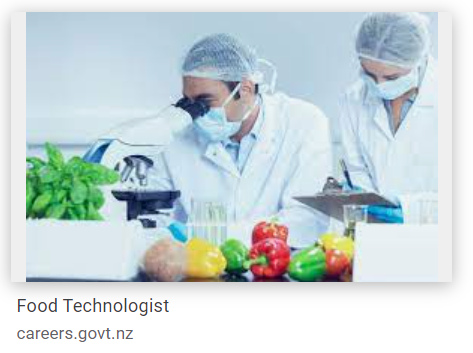
In Year 10 Food Technology, students extend their cooking skills, nutritional knowledge, and cultural awareness through two engaging and practical 5-week modules.
The first module focuses on nutrition and dietary needs, where students explore special diets (e.g. allergies, intolerances, vegetarianism), nutritional content, and safe food handling. Through practical cooking sessions, they improve knife skills, understand cooking methods, and learn how food impacts health. Students apply this knowledge by preparing meals that reflect healthy and inclusive choices.
In the second module, students take on the role of young chefs in a NZ Chef Case Study Project. They research a New Zealand chef of their choice, create a case study, and develop a dish inspired by that chef. This includes planning, budgeting, adapting recipes to serve one, and presenting their final dish professionally. Practical sessions build independence and creativity while promoting time management, food safety, and cultural pride.
Māori tikanga and values are woven throughout, with a focus on respect for food, sustainability, and identity. Students reflect on hauora (well-being) and their dreams for the future.
This course prepares students for senior hospitality, supports career exploration, and empowers lifelong healthy eating.
Year 10 Geography
Geo010This is an optional one-term course designed to give students an understanding of what geography is and how we study it in the senior school. Students are introduced to Natural and Cultural Geography and the key concepts of patterns, processes, change, interaction, perception, and sustainability. Our overall theme is the amazing places and people of our world. We go from place to place, continent to continent learning about the grandeur and variation of our environments and people.

Year 10 German
Ger010Ger010: Let’s Explore German
Enjoyed German last year?
Have fun building your language skills further and discovering more of the German culture through a wide range of activities. You will be challenged in a competitive yet supportive classroom environment. You will also have the opportunity to use your language meaningfully in communicating with language learners from another school.
Topics include: My town, holidays, media, sport and money, Grimm fairy tales.
Year 10 Health Education
Hea010Year 10 Health is a 1 term course that looks at the following topics
-Drugs and Alchohol
-Mental health
-Body image and social media
-Relationships, sexuality education
Mostly discussion based where real life situations and scenarios are analyzed and discussed.
Year 10 History - tāhuhu kōrero
His010Who was Napoleon? What were a Motte and Bailey? Why did rugby become New Zealand’s national sport? The history course is designed as a one-term introduction where questions such as these may be answered. The class includes an examination of historical evidence and an expectation that students will analyze the evidence. As a class, the students will choose two of several topics of study. Topics could include New Zealand sport, Medieval Europe, New Zealand at War, The French Revolution, The Tudors, or a topic of interest at the time. Students will be assessed on their ability to complete a research assignment, and knowledge of historical facts.
Above: The Tower of London
Above: An altered photo to show a First World War scene

Above: Cartoon depicting the success of the 1905 All Blacks
Year 10 Mathematics/Pāngarau
Mat010Our junior courses are based on the study of the three strands of Mathematics and Statistics:
• Number and Algebra
•Space (Geometry and Measurement)
• Statistics
In studying these strands, and the connections between them, students develop the ability to think creatively, critically, strategically and logically. They learn problem-solving skills and how to interpret and communicate the solutions to these problems. All the courses at the junior level prepare the students for further study in the Senior school, including the achievement of the numeracy requirements at NCEA Level one. These courses' teaching incorporates the values and key competencies as outlined in the NZ Curriculum.
Homework is 1 - 1.5 hours weekly.
Students who are continuing to progress towards curriculum level 4P at the end of their Year 9 may be placed in NUM010 instead of MAT010 by their Year 9 Mathematics teacher.
Year 10 Media Studies
Med010MEDIA STUDIES YEAR 10

This one term course develops skills in media production and analysis of media texts.
Students must work in a team to produce a short movie.
Students study film techniques, genre skills, the use of images in the media and media coverage of an event.
Students are encouraged to critically evaluate social media sites.
Year 10 Physical Education
PEd010Year 10 Science - Mātauranga Pūtaiao
Sci010Science involves you in investigating the living, physical, material, and technological components of the environment and making sense of them in logical and creative ways.
It helps you investigate systemically, and it will help you to develop a clearer understanding of aspects of the world around you.
Practical work is an essential part of the course.
The topics you will study include:
- Ecology
- Atoms and Elements
- Forces and Motion
- Genetics and Medicine
- Acids and Bases
- Simple Machines
- Electricity
Year 10 Sex Education: I DO give permission
SexEdYesSex Education in Health: I DO give permission
Year 10 Sex Education: I DO NOT give permission
SexEdNoSex Education in Health: I DO NOT give permission
Year 10 Social Studies
SoS010The social sciences learning area is about how societies work and how people can participate as critical, active, informed and responsible citizens) The New Zealand Curriculum, 2007).
Our junior curriculum is based on the study of the four key strands of the Social Sciences. Identity, Culture, and Organisation, Continuity and Change, Economic World, Place, and Environment.
These strands are examined through a series of study topics based on the key subject areas of the Social Sciences, Geography, History, Economics, Accounting, and Classical Studies. Our Year 10 topics include:
• Government
• Human Impact on the Environment
• Nation Creation
• Human Rights
• Business Enterprise
• Our World Views
Anzacs
Year 10 Spatial and Product Design
SAP010Welcome to Spatial and Product Design! Where the future architects and tradesmen will thrive! You will look at real-world problems and find suitable solutions by using the technology design process. This will be a project-based learning subject, for Year 10, this project will be centred around designing and creating a 1-bedroom loft apartment!
Students in this subject will be drawing, making 3D computer models, using architectural software (Archicad), testing ideas, using 3D printers & the laser cutter, evaluating, refining and getting feedback from stakeholders on their solutions to create their final design outcome.
The skills we develop in this class will help students understand floor plans, designing to a brief, analysing and applying feedback.
This subject is carried right through until Year 13 and will be useful for those who would like to go into the building industry, as throughout the years you will learn about building code, how to read floor plans, how to use industry standard software and to problem solve.


Spatial and Product Design skills are excellent skills to have and can be used in a variety of careers including many of the Trades, Architecture, Engineering, and Product Design.
Some skills that may be covered include:
- 3D printing
- Laser cutting
- Freehand sketching/crating
- Forms and Shapes
- Introduction to rendering
- Creative thinking
- Problem-solving
- Instrumental drawing
- Introduction to a one-point & two-point perspective
- Rendering - Shading, shadows, and textures
- Light and dark. Tonal change.
- Different Media and Modes
- Introduction to Archicad.
- And other cool design equipment.
Year 10 Specialist Art
SAr010SAR010 Specialist Art

This two-term course provides students with the opportunity to extend and develop technical skills, explore a variety of materials and processes, and build confidence in generating, refining, and communicating visual ideas.
The Specialist Art course allows the extension of skills in drawing, design, photography, and painting skills. Students will also be involved in woodblock printmaking and clay work. Collaborative tasks, such as mural art, may also be offered.
Through experimentation, artist research, and sustained artmaking, students create a larger body of work while developing an understanding of composition, colour, pattern, symbolism, and visual conventions. The course encourages creativity, reflection, and the development of individual artistic style through both independent and guided studio practice. The Specialist Art option is a course where students with some natural artistic talent may extend their abilities.
Making and creating
Visual arts processes (planning, developing, refining) across two fields of ART - Painting and Printmaking.
o Individual interpretation and personal creativity are encouraged.
o Students will make art and learn using a wide range of materials (pencil, camera, acrylic paint, spray paint, pastel, watercolour, printmaking ink, Indian ink), techniques (layering, blending, photography, design skills, printmaking), elements of art (line, colour, texture, space, form, tonal value), and compositional principles which will guide student's creativity.
o Understanding that creative decisions are shaped by technical choices and self directed by intention, materials, and context.
Observing and responding
o Exploration of personal and symbolic forms such as portrait, motifs, icons, patterns, and culturally significant imagery carry meaning beyond decoration, referencing beliefs, people, places, and encoded knowledge.
o Creation of artworks that respond to significant cultural, social, or historical contexts, using symbolism, form, and composition to communicate meaning
o Using visual arts terminology to interpret artworks and communicate intention, considering how materials, symbols, and presentation shape meaning
The course will provide the skills needed in senior school and allows for preferential entry into Level 1 Art. This leads towards courses at Level 2 & Level 3 - Design, Painting, Photography and Printmaking.
o Additional opportunities may extend beyond the Specialist Art course, such as collaboration with senior students on a designed mural project. Both individual and collaborative assignments are offered.
o Field trips for plein air experiences/outdoor artmaking, sculpture installation and gallery visits add another dimension to this course.

Year 10 Specialist Art allows students to prepare for NCEA Level 1, 2 and 3 in the Visual Arts. Year 10 Core Art allows students to prepare for NCEA Level 1, 2 and 3 in the Visual Arts.

Level 1 NCEA folio
Year 10 Specialist Music
SMu010SMU010 Year 10

This course is a pathway to MUS100.
Students develop skills in solo and group performances, as well as creating original music.
Team work is an essential component of the course.
Students should be on their second year of instrument tuition.
Year 10 Sport and Fitness
SPF010The goal of the Sport and Fitness option subject is to work with students who are motivated and keen to develop as athletes and as people. We use the vehicle of fitness to teach values such as resilience and perseverance. Our main drive is around getting more physically fit and also learning how important staying active is to our mental, social and spiritual Hauora. I will introduce you to training methods and teach you how to get the best out of your body. Some examples of things we have done in the past are.
-Gym training sessions
-Fitness circuits
-Interval training sessions
-Spin classes (on bikes) at the stadium
-Cross fit and F45 workouts
-Plyometric and speed training sessions
-Endurance training sessions

Year 10 Te Ao Haka
TAH010Year 10 Te Ao Haka is for ākonga (students) keen on kapa haka to learn more about the art form and develop their practice. Available for Term 4 only, and possibly via Te Waharoa year 10 class, ākonga will be learning with the NCEA level students for the first four weeks of the term, after which we will explore foundational knowledge and ideas in and about Te Ao Haka. Our practice focus will be on learning more about haka, mōteatea and waiata ā-ringa from our local region, the Wairau. There will be an opportunity to complete the first NCEA 1 standard on key features in Te Ao Haka, and, if ready the performance standard.

Kaiako: Whaea Delyn Day
Year 10 Te Reo Māori
Reo010Nau mai, haere mai - welcome!
Year 10 te reo Māori builds on knowledge gained in Year 9, covering grammar and vocabulary required for the Emergent levels of the new draft junior Te Reo Māori curriculum. Ākonga (students) are given as many opportunities as possible to practice the skills of conversation, listening, reading, writing and speaking te reo Māori. Cultural concepts and practices, tikanga and kawa, are inseparable from language and will be learnt along the language journey.
Aotearoa Histories is included from 2025: Māori history will be viewed through a range of lenses: local iwi and identity, rangatiratanga, tūrangawaewae & taiao - place and environment, and umanga, economic activities. Class will also learn karakia and waiata/haka and ākonga are encouraged to participate in Ngā Manu Kōrero and Noho Reo Term 1 at a local Marae.
Becoming more confident in using a range of language learning strategies ākonga will learn to communicate to:
- Use pepeha and mihi to express identity, whenua, whakapapa.
- Understand dialectal differences (e.g., ahau/au/awau; tūtuna/tīpuna).
- Communicate about possession using A/O category structures
- Understand Māori worldview of time as non-linear and cyclical.
- Communicate about events across past, present, and future using tense markers (i, kei te, ka)
- Communicate likes/dislikes with justifications, acknowledging collective values.
- Communicate cost, quantity, quality, and travel modes.
- Describe weather and seasons using maramataka-informed understandings.
- Use kīwaha to add cultural richness and emotion.
Kaiako: Whaea Diane St Claire

Year 10 Te Waharoa
TWa010Te Waharoa year 10 will be offered in Term 4 only and provides a Mātauranga Māori focus for learners, representing the beginning of the journey from the ‘gateway’ towards the whare tipuna of the marae. This course is ideal for students with a passion for Māori knowledge and culture. Students choose their topic area, including whakairo, and can complete NCEA 1 standards. For the first four weeks of Term 4, year 10 students will be in class with the NCEA level students before they leave for externals.
Course Content
Te Waharoa draws on the NCEA unit standards based on tikanga (culture) and mātauranga (knowledge) Māori. The course is flexible and can be tailored to students’ interests. It draws from standards and resources that focus on a wide range of areas, both modern and traditional, such as Taonga Pūoro, Whakairo, New Māori Music, Mau Rākau, Reo Māori Media, Māori Tourism, and Manaaki Marae. Standards listed below are an indicative sample of what is available.
Kaiako: Whaea Delyn Day; Matua Riki Palatchie

Year 10 Woodwork - Custom Wooden Speaker Design and Manufacture
WWK010Custom Wooden Speaker Design and Manufacture

In this Technology project, students will design, manufacture, and test a custom wooden speaker system that combines engineering, craftsmanship, and creative design. Students will investigate how speaker enclosure design, material selection, construction techniques, and finishing processes influence sound quality, durability, aesthetics, and user experience.
Students will follow the technological design process to research, develop, prototype, test, and refine a speaker design based on a chosen user and purpose. Through sketching, modelling, and evaluation, they will explore how different enclosure shapes, sizes, and construction methods can enhance sound performance while creating a visually appealing product.
A key focus of the project will be the selection and application of advanced construction techniques, tools, and joinery methods. Students will learn how engineering decisions must align with design intent, material properties, and user needs to create high-quality and durable outcomes. Using a combination of traditional workshop practices and digital manufacturing technologies, students will construct a layered wooden speaker enclosure using CNC machining, drilling, shaping, assembly, sanding, and finishing processes.
Students will investigate the acoustic properties of materials and test how enclosure design influences sound projection, resonance, and audio quality. Through ongoing testing and evaluation, they will refine their construction methods and optimise their designs to improve performance and appearance.
Creative expression will be incorporated through custom CNC-engraved details, laser-cut features, pyrography (wood burning), surface treatments, and finishing techniques that reflect individual interests and design themes. Students will learn how decorative features can enhance a product while maintaining functionality and structural integrity.
Sustainability will be embedded throughout the project. Students will consider responsible material selection, efficient use of resources, product lifespan, repairability, and waste reduction. They will explore how engineering decisions affect environmental impact and how products can be designed for long-term performance and durability.
Health and safety will be a major component of the course. Students will develop confidence using workshop tools, machinery, and digital manufacturing equipment while following safe operating procedures and risk management practices.
The final outcome will be a fully functioning custom speaker system that demonstrates technical skill, engineering knowledge, creativity, craftsmanship, and an understanding of how construction techniques, materials, and design decisions influence product performance. By the end of the project, students will have developed advanced workshop skills while producing a unique product that combines technology, design, and innovation.

Subjects for Year 10 Students
English for Speakers of Other Languages
ESLSESOL - This course is designed for students for whom English is a second language. Students will study grammar, reading, writing, listening and speaking in English with a focus on a variety of familiar topics and contexts. A variety of assessments are offered at different levels, so that learners can be assessed at the appropriate level for their English.
The ESOL programme provides English language learning through three classes taught at different levels. ESOL classes focus on the four language learning areas of Speaking, Reading, Writing and Listening.
Students learn the grammar of the English language and develop their language skills in authentic learning contexts.
All senior classes provide opportunities to gain credits through assessments at the three NCEA levels.
Additional ESOL learning is available in the ELRC tutor groups, where students with high ESOL needs can receive extra English language support.
English for Speakers of Other Languages
ESLFESOL - This course is designed for students for whom English is a second language. Students will study grammar, reading, writing, listening and speaking in English with a focus on a variety of familiar topics and contexts. A variety of assessments are offered at different levels, so that learners can be assessed at the appropriate level for their English.
The ESOL programme provides English language learning through three classes taught at different levels. ESOL classes focus on the four language learning areas of Speaking, Reading, Writing and Listening.
Students learn the grammar of the English language and develop their language skills in authentic learning contexts.
All senior classes provide opportunities to gain credits through assessments at the three NCEA levels.
Additional ESOL learning is available in the ELRC tutor groups, where students with high ESOL needs can receive extra English language support.
English for Speakers of Other Languages
ESLJESOL - This course is designed for students for whom English is a second language. Students will study grammar, reading, writing, listening and speaking in English with a focus on a variety of familiar topics and contexts. A variety of assessments are offered at different levels, so that learners can be assessed at the appropriate level for their English.
The ESOL programme provides English language learning through three classes taught at different levels. ESOL classes focus on the four language learning areas of Speaking, Reading, Writing and Listening.
Students learn the grammar of the English language and develop their language skills in authentic learning contexts.
All senior classes provide opportunities to gain credits through assessments at the three NCEA levels.
Additional ESOL learning is available in the ELRC tutor groups, where students with high ESOL needs can receive extra English language support.
NCEA L1 - English with a Literacy Focus
ENG1LLiteracy Focus
This course focuses on supporting students to successfully develop their literacy skills which are vital for success in the workplace. Fundamentally this course will explore the eight key strands of the English Curriculum around a range of visual and written texts that are relevant and contextualised and writing based on authentic contexts. This course focuses on developing programmes based on the individual needs of the student.
Assessment will be on a when-ready basis and will be targeted to student need and engagement. This course is not credit-focused, but rather will support and develop those students who may find English challenging.
This course will also support the new Literacy Common Assessment activity which is now a requirement in terms of achieving NCEA.
Please note that there are no external examinations in this course and it is not subject endorse-able.
NCEA L1 Agriculture and Horticulture - Ahuwhenua me te Ahuone
AGH1This course delves into the diverse primary industries in New Zealand, with a particular focus on the critical role of soil. Students will examine soil structure and sustainable management practices to ensure productivity. The course also covers the cultivation and production of primary products, exploring the specific regions in New Zealand where they thrive and the environmental impacts—both positive and negative—of primary industries.
Students will work on a shared 1.8x1.8m garden plot. During terms 1, 2, and 4, we will cultivate a variety of vegetables and sunflowers. In term 2/ 3, we will plant a green manure crop, which will be dug into the soil to improve its fertility. Students will be responsible for all aspects of garden management, including cultivation, fertilisation, weeding, watering, and harvesting the crops.

NCEA L1 ART
ART1In 2024, the new NCEA Level 1 standards were introduced. We offer all four standards. Each standard is worth 5 credits; 20 credits total.
The first two standards are assessed Internally by the teachers. The other two standards are Externally verified.
Visual Arts students explore, refine, and communicate their own artistic ideas by responding to how art expresses identity, culture, ethnicity, ideas, feelings, moods, beliefs, political viewpoints, and personal perspectives. Through engaging in the visual arts, students learn how to discern, participate in, and celebrate their own and others' visual worlds.
Visual Arts literacy is developed through creativity and connection, inquiry and production, challenge and invention, and transformation and empowerment. Students create and respond to works using curiosity, collaboration, courage, critical thinking, and creativity. They confidently use iterative and cyclical processes of practising, selecting, reflecting, editing, and refining to create a cohesive and fluent artistic expression or body of work. By learning to identify Visual Arts conventions, students will also understand how these conventions communicate meanings through intention within established practice.
Students at Levels 6-8 of The New Zealand Curriculum engage with contexts that are typically broad, deep, and large in scale, and extend beyond personal experience. The contexts involve multiple interacting elements, contested ideas, provocative or nuanced interpretations, and require sustained engagement to understand. Students need to make sense of theoretical models and frameworks in order to make sense of the context(s) and apply them to their own work.
Example of a Level 1 Art - External submission
NCEA L1 Chemistry & Biological Science - Mātai Matū me te Mātauranga Koiora
BCS1In this course you will be given opportunities to build Biology and Chemistry knowledge related to contexts relevant to Te Tauihu-o-te-waka/Marlborough region.
We begin the course by making a variety of foodstuffs and beverages, through which you will learn how humans and microbes interact and how you can apply this knowledge to real life contexts. Our focus will then turn to developing an understanding of the chemical reactions that occur in the environment around us in Te Tauihu-o-te-waka /Marlborough region.
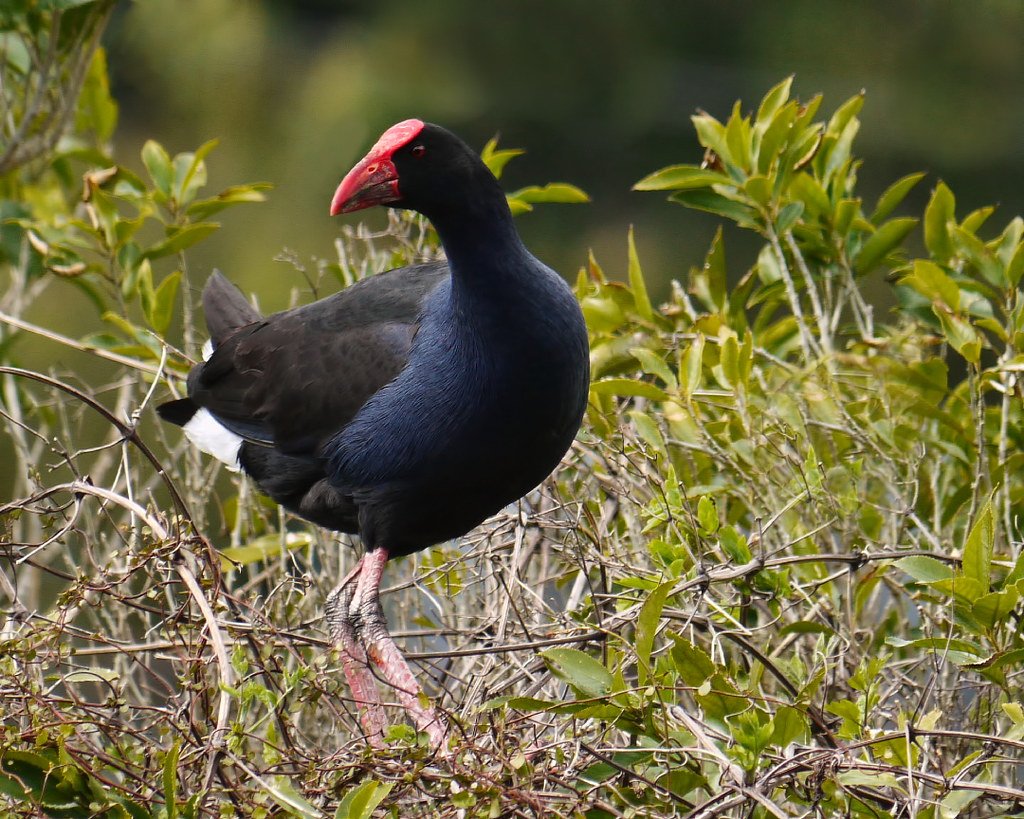
In term three, we will move our focus towards investigating the hauora/health of the Ōpaoa river, by learning how different investigative approaches can help us to answer our research questions.
Lastly, you will develop your understanding of genetic variation by understanding its sources, such as mutation or sexual reproduction, and its nature within individuals or populations. This learning also includes evaluating gene tracking methodologies to identify genetic relationships using conservation case studies from Te Tauihu-o-te-waka /Marlborough region.


NCEA L1 Classical Studies
CLS1
The influence of the classical world is everywhere. Whether it be Nike shoes, democracy, the law, language, religion, art and architecture, the Olympics, mythology, comedy and drama… the classics are foundational to western thought and culture.
Classics is the ultimate multi-disciplinary subject. You will learn about art, history, drama, and archaeology. You will be challenged to face the major problems the ancients and moderns have faced: war, politics and religion, resistance to unjust leaders- civil disobedience, hospitality abuse, how to handle grumpy old men and more.
Step back in time and explore the fascinating civilisations that shaped the foundations of Western culture. Year 11 Classics offers an exciting journey through the ancient Mediterranean world, introducing students to the Mycenaeans, Greeks, and Romans. Through mythology, archaeology, and historical discoveries, students uncover the stories, beliefs, and achievements of these remarkable societies.
The topics we study at Year 11
ANCIENT CIVILISATIONS
Explore the cultures that influenced Greek and Roman society
- Investigate archaeological discoveries and historical evidence
- Discover how ancient peoples lived, worshipped, and understood their world
How have modern interpretations of The Iliad influenced contemporary understandings of heroism


GODS, HEROES AND ART
- Examine legendary figures such as Zeus, Athena, and Heracles
- Explore how myths have been represented in art from the ancient world through to the Renaissance and modern times
- Develop visual analysis skills, discovering how art reflects a society's values and beliefs


PILGRIMAGE & SACRED SPACES
- Investigate two of history's most important sacred destinations: Delphi and Jerusalem
- Learn why people travelled to consult Apollo's oracle, and why Jerusalem became a centre of faith for millions
- Explore how pilgrimage has shaped communities, beliefs, and personal identity across time


The artwork below by former student, Keelin Bell, gives a contemporary take on the story of Icarus.

Art and Architecture - The relationship between form and function: is beauty in the eye of the beholder? Students could explore the concept of art and aesthetics by generating focusing questions based on art historical criteria, for example, design and style, form and function, and viewer response.

NCEA L1 Commerce
COM1Commerce
Making informed decisions, both financial and non-financial, is crucial for sustainable use of resources and creating positive outcomes for everyone involved. We'll explore how financial decisions made by individuals, families, communities and organisations are all interconnected, and how our actions can affect the world around us.
We'll also focus on the concept of kaitiakitanga - the idea that we are caretakers of our environment and have a responsibility to protect it. Through entrepreneurship and innovation, we can create a better future for all.
We'll delve into the exciting world of tauhokohoko, or commerce, and discover how it shapes our society. You'll learn about marketing, advertising, and selling goods and services. Plus, you'll develop important skills like critical thinking, problem-solving, and teamwork.
Students will participate in the BP Business Challenge during term one. Here is the link to information about this course


They will also bring a product to market at the annual school market day.


Key Knowledge to be covered:
Our course covers a range of skills that will help you understand how decisions are made, and how they impact both individuals and society as a whole.
You'll learn about the importance of Māori, Indigenous Pacific knowledges and other perspectives in shaping decision-making. We'll teach you how to use concepts, models and financial statements to communicate information, and you'll understand how scarcity affects decision-making.
You'll also discover how pūtake (foundations) inform financial and non-financial decision-making, and how organisations can empower themselves and their communities through rangatiratanga (self-determination). We'll explore how prices are affected by decision-making and how collaboration through talanoa and wānanga can lead to innovation and resolution.
You'll gain insight into what's necessary for organisations to be financially viable and how external factors can impact them. And we'll teach you how to use financial management tools to assist decision-making for financial viability.
So, come and join us on this exciting journey to gain skills that will help you understand the world around you!

NCEA L1 Construction
CON1This course is aimed at developing fine woodworking skills through the production of a number of projects. The focus of the course is hands-on and practical and is based around hand tools. Fixed machines and portable hand tools will be used as and when appropriate.
This course involves a health and safety assignment followed by two practical projects. The projects you will make are;
● A tool box
● A table
The course will consist of developing the design principles of aesthetics and function, woodworking skills and joinery.
Level 1 - Construction Assessments
The course is assessed by a mixture of theory and practical work. It uses the BCATS (Building, Construction and Allied Trade Skills) unit standards. This course provides the opportunity to gain 17 credits at Level 1.
Endorsement
There is no subject endorsement from this course.
Requirements for Entry into Year 12
To gain entry into the Level 2 woodworking course a student must gain at least 14 credits at Level 1 including the Health and Safety unit and demonstrate competent use of machinery.
NCEA L1 Digital Technology
DTY1DTY1 Digital Technology Level 1


This is a full-year course. It is designed for those planning to progress in business computing, computer science or information management.
Digital Technologies focuses on building student capability to apply technological ideas within a digital environment. Digital Technologies is a broad subject that covers many domains.
Students will develop computational thinking skills and the ability to design and develop digital outcomes.
There is a huge shortage of basic IT skills in the workforce, and students with good Digital Technologies skills are valued. Students who wish to go to study Computer Science at University can discover rewarding and well-paid careers.
Topics taught:
- Create a computer program in Python
- Develop a website
- Demonstrate usability in human-computer interfaces
- Design a website
NCEA L1 Electronics and Mechatronics
RTY1
Year 11 Robotics – Designing the Future
In this hands-on course, students will explore the exciting world of robotics by designing, building, and programming robotic systems to solve real-world problems. Students will develop core programming skills, learn how to plan, implement, program, and test robotic creations. They will use physical computing platforms such as Arduino or Raspberry Pi to create an original robotic solution and apply structured processes to develop and test electronic environments. The course promotes critical thinking, problem-solving, and creativity, providing a solid foundation for future studies in Digital Technologies, Electronics, and Engineering.

NCEA L1 Employment Skills
ESK1
A course to provide readiness for employment and is aimed at students who are likely to enter the local work force. All students complete Core Skills Unit Standards at Level 1. The program has been designed around enabling students to make an easy transition from school to the workforce. Students can select this subject but preference will be given to students who have been recommended by their Dean.
NCEA L1 English - A Focus on Sport
ENG1S"Sports do not build character, they reveal it!" John Wooden

If you enjoy watching, playing, analysing or researching the history of sport, then this is the course for you. This course focuses on sports' place in our society, history and future. How has sport shaped or changed our society? How has it developed the culture of our communities?
This course explores key thinking and communication skills through texts based primarily around sports themes. We do this through a mixture of Achievement and Unit standards.
English as a subject area focuses on the two key strands – making meaning and creating meaning. We focus on communication through a range of texts and mediums to reflect societal changes and 21st Century learning foci. English encompasses learning the language, using the language and thinking beyond the language through authentic learning contexts.
Specifically, this involves learners being willing to have their ideas challenged; to developing their own ideas and opinions through critical literacy and working on the skills required to be confident using their own personal voice, all through a sports-based lens.
This course will support literacy in 2026.
.
NCEA L1 English - People, Places and Purpose
ENG1PPeople, Places and Purpose
This Level 1 English course is designed for learners who sometimes find English challenging. The theme is deliberately loose to enable learners to come at it from their own personal interests and world view. A core theme will be co-constructed with students at the start of the year based around these general concepts.
This course combines both a literacy support and the two new internal achievement assessments. This will enable students to gain literacy in 2026 through either the CAA's (Common Assessment Activity) or achievement standards.
Learning will focus on a wide range of reading, writing, listening and viewing activities designed to support learners to become confident communicators.
NCEA L1 English - Truth and Lies
ENG1TTruth and Lies
In the Level 1 English course Truth and Lies, you'll explore how language and media shape what we believe—and what we don’t. Through critical reading, listening, watching, and discussion, you’ll learn to spot propaganda, identify bias, and test the authenticity of everyday messages. You’ll practice media literacy—the skill of evaluating sources, decoding persuasive tactics, and questioning truths presented in news, social media, documentaries, and fiction.
This course will also look at satire and how it too can be used as a tool to reinforce propaganda messages by those who seek to control others. We will explore a wide range of different contexts for this fascinating course.
NCEA L1 English - War, What is it Good For?
ENG1W
The war genre has been, and still is, a popular one in literature. It is fascinating to trace the changing portrayal of war through the ages - from Alfred, Lord Tennyson's 'glorious' Charge of the Light Brigade published in 1854, right through to David Ayer's harrowing second world war film Fury, which graphically reveals "what a man can do to another man."
So, if you enjoy war stories - be it films, short stories, novels, poetry or non-fiction texts - then this is the course for you.
We may also touch on the rebel - the need to fight back against oppression and the likelihood of success. Conflict between humans is a given, but how do we behave during this conflict is the question.
English as a subject area focuses on the two key strands – making meaning and creating meaning. We focus on communication through a range of texts and mediums to reflect societal changes and 21st Century learning foci. English encompasses learning the language, using the language and thinking beyond the language through authentic learning contexts.
Specifically, this involves learners being willing to have their ideas challenged; to developing their own ideas and opinions through critical literacy and working on the skills required to be confident using their own personal voice.
NCEA L1 General Engineering
GEN1Suited to students who have a general interest in Engineering or who wish to undertake engineering related occupations.
The course is designed to cover 24 Credits from pre trade Competenz papers.


NCEA L1 Geography
GEO1
Welcome to Geography! Geographers tell us why things happen, where they happen. In this course, we will explore the relationship between people and te taiao. Te taiao connects people and people connect to te taiao. We will learn how natural processes shape te taiao and how tikanga informs the relationships between tangata and te taiao. We will also examine how perspectives and power influence te taiao.
In addition, we will be studying the following key places and events: The Taylor River, The Canterbury Earthquakes, , Coastal features and Deltas, Megacities and more.

NCEA L1 History - tāhuhu kōrero
HIS1
History ask students, and helps them answer, today’s question by engaging with the past and imagining and speculating on possible futures. We present students with dilemmas, choices and beliefs of the past.
- Introduction to historical concepts - who was to blame?
- Consider the sinking of Titanic, JFK assassination and other controversial events.
- New Zealand in WW2
- Inspiring Change - Martin Luther King and Whina Cooper
- Historical concepts
- Springbok Tours
- What's in a name?
You will be mainly studying topics from the twentieth century, though with a few older events considered. It was a century of great triumphs and great tragedies. By the end of the year you will understand how segregation in the United States was broken down. You will learn how World War II broke out, engulfed the world and was hugely significant to New Zealanders. You may also get to go on a field trip to Wellington either in HIS 100 or HIS 200. MBC has organised several trips to Europe in the past and plan to in the future. In 2023, students have the opportunity to travel to the USA.
History is made up of people and no doubt you will have heard of some of the most famous from the 20th Century such as Hitler, Mussolini, Churchill and Roosevelt. However, you may not have heard of – Angela Davis, Peter Fraser, Georges Clemenceau, Robert Muldoon, Stokely Carmichael and David Lloyd-George.
Besides learning about these events and people you will also pick up some useful skills. By the end of the course, you will be able to:
- Assess the significance of historical events and the significance of historical evidence
- Gather and select information from a variety of sources (books, posters, pictures, documents, films, tapes, video, computers, cartoons, maps, graphs, diagrams)
- recognise specific points of view, bias and propaganda
- understand and analyse historical relationships ie. cause and effect, continuity and change
- recall historical material in context
- present information effectively ie. in debates, role plays, panels, timelines, posters, reports, articles, paragraphs, essays
- present an argument and support it with well-chosen evidence and reasoned conclusions
These skills are highly valued by employers. The ability to communicate your ideas clearly is vital in all areas of life. Some of the main areas History students have found employment have included law, the media, government departments, teaching, public relations and business.
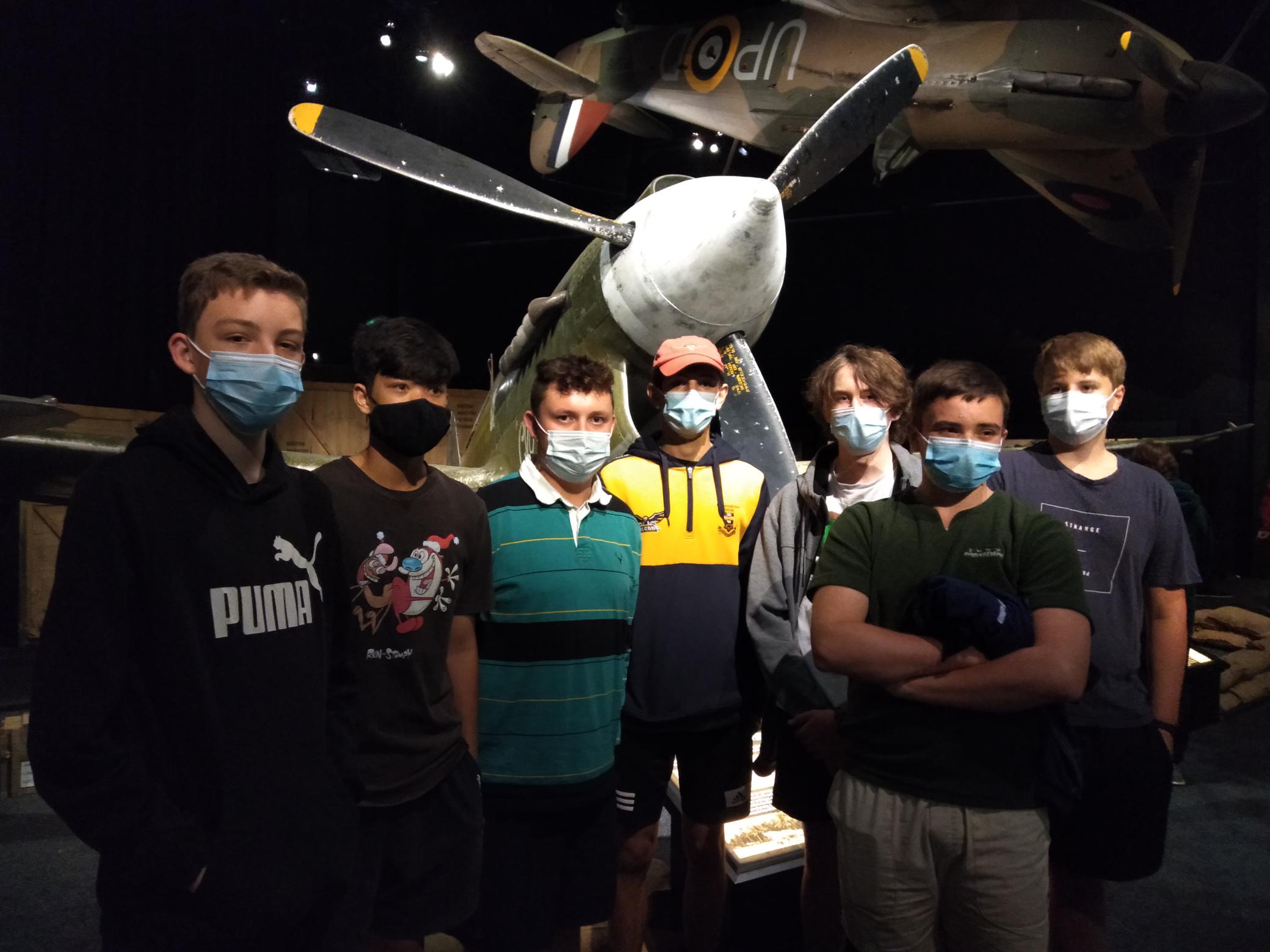
Figure 1: MBC students at Omaka Aviation Heritage Centre, 2022
Figure 2 MBC Students at the Palace of Versailles, France 2017

Figure 3: MBC Students on the USS Alabama 2023
NCEA L1 Hospitality Studies / Chef Training
HOS1Hospitality Studies/Chef Training:
This course has a high practical emphasis, as well as theoretical work. You will demonstrate your knowledge about the different topics by using textbooks and completing unit standard question papers. Practical skills are taught in both single and double periods where you will use taught skills to prepare and present food according to the unit standard studying at the time.
Industry cooking standards are applied where meal planning, adapting and developing, and food presentation all plays a part.
The unit standards achieved contribute towards polytechnic and apprenticeship qualifications and NCEA.


NCEA L1 Mathematics for Numeracy
MaN1MaN - (previously known as MaI) This course is designed to help students gain numeracy at level one. The course is composed of three internal assessments and no externals. In conjunction with the internal assessments AS 91944- Bivariate data in term one and AS 91945- Measurement Number and Algebra in term 2, we have a specific focus on the CAA assessments (national literacy and numeracy assessments).
These assessments are offered twice throughout the year, once at the beginning of term two and the other at the end of term three. For the four weeks leading up to these assessments, we will focus specifically on the skills required for these assessments. Numbers are limited to this course. In addition to this, we will be offering two Achievement Standards on Personal Income and Budgeting, US28087 and US24697.
Please be aware that there is No Pathway into level two Mathematics from this course.
NCEA L1 Mathematics with Algebra
MaA1The NCEA L1 Mathematics course is designed to give students a broad general mathematics base and covers the complete level six curriculum. Students wishing to continue with NCEA level two must meet the following prerequisites;
L2 Mathematics - achieve 10 credits including AS91945.
L2 Mathematics with Calculus - achieve 10 credits including AS91947 - Demonstrate mathematical reasoning and AS91945 - Use mathematical methods to explore problems that relate to life in Aotearoa New Zealand or the Pacific
NCEA L1 Mathematics with Statistics
MaS1The NCEA L1 Mathematics course is designed to give students a broad general mathematics base and covers the complete level six curriculum. Students wishing to continue with NCEA level two must meet the following prerequisites;
L2 Statistics - achieve 10 credits including AS91944 - Explore data using a statistical enquiry process and AS91947 - demonstrate mathematical reasoning.
NCEA L1 Media Studies
Med1MED1 Level 1
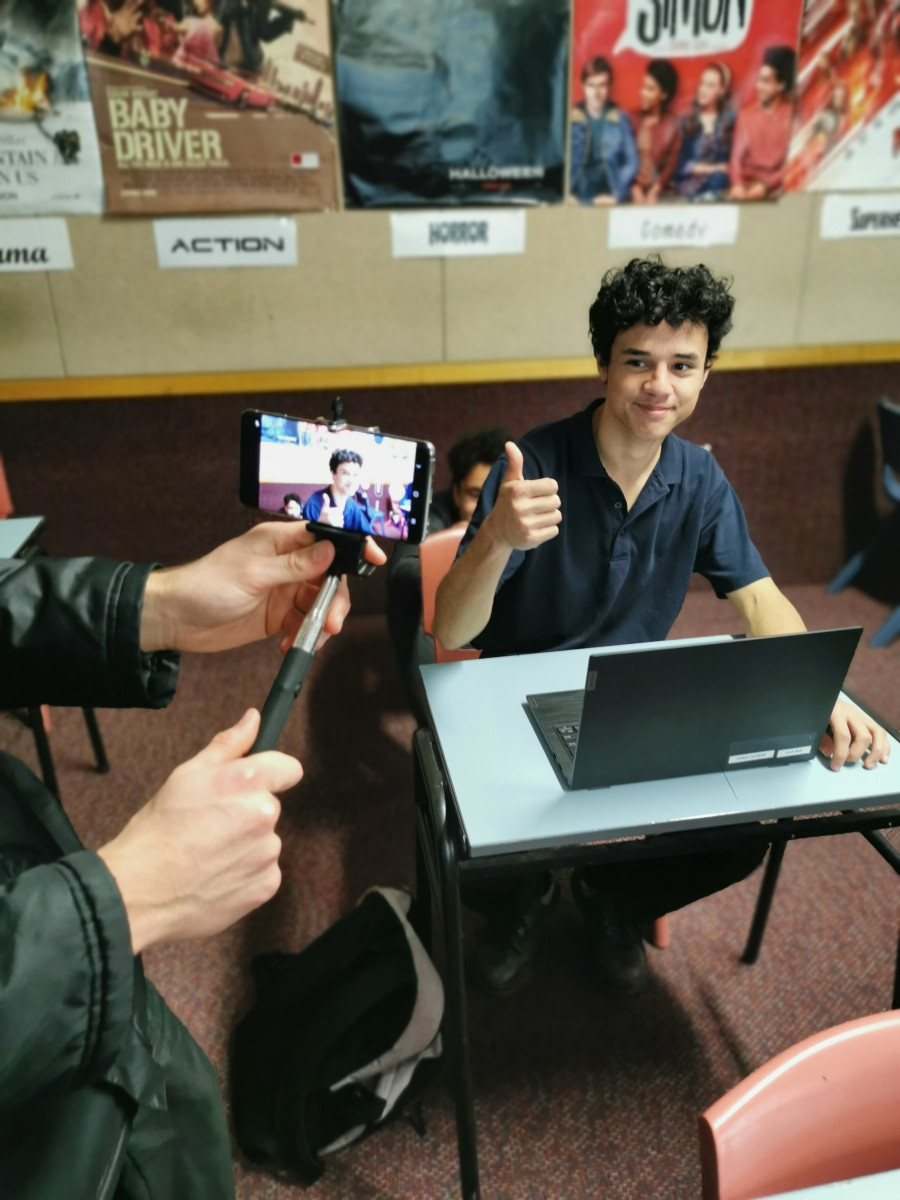
- This course is designed to develop critical media literacy skills in students by providing learning around contemporary social issues on an international, national, and local level.
- Students explore differing perspectives and presentation of information.
- They develop opportunities to grow their own skills in covering personal issues of interest in the local community.
NCEA L1 Music
Mus1MUS1 Music Level 1

Music is a rich part of the diverse cultures of Aotearoa New Zealand. It is a vital part of life for many communities and is an art form that can be used to express histories, knowledge bases, local contexts, language, and aspirations.
Through music, learners can develop a deeper understanding of themselves, and explore different contexts and kaupapa. Students can build confidence as artists by bringing their own experiences and cultures to their music making.
This is a general course for students interested in a career in the various music industries or entertainment fields. It develops skills in
- solo performance,
- group performances,
- composition
- notation dictation
- reading and analysing orchestral music.
Students should be on their third year of instrumental tuition.

NCEA L1 Performance Dance
PDP1
Performance Dance is a subject in which dance and the arts are pivotal in providing a space where students can confidently navigate their cultural identity.
Dance is an embodied language. In dance education, ākonga learn to communicate through movement and interpret meaning from movement. Learning in Dance supports ākonga to expand the ways they express ideas, feelings, values, and beliefs, as well as how they understand those of others. Ākonga develop literacy in dance as they learn about, and extend their skills in movement, performance, and choreography.
Dance is a way of strengthening relationships. Personal experiences and identities are valid and valued components of learning in Dance, which supports whanaungatanga. Working as a collective emphasises core values of fa'aaloalo/faka’apa’apa, aro’a, tautua, and kuleana, which nurture vā in learning spaces. These values are fundamental to positive learning experiences that will support ākonga in Dance. Dance supports ākonga to develop relational skills they can take beyond the learning environment, such as collaboration, communication, teamwork, and problem-solving. At the same time, ākonga will also develop confidence and a deeper awareness of their own identities.
Dance is always evolving as innovations develop from or alongside dance forms and practices. Dance can be seen as a social and historical artefact reflecting the culture from which it descends.
NCEA L1 Physical Education
PEd1This course is an introduction to senior Physical Education and is a mix of practical (70%) and theory (30%) work.
We complete 4 Achievement Standards which focus on a range of topics:
- Practical movement strategies
- Strategies that promote Interpersonal skills and Kotahitanga
- Influences on effort and participation in relation to Hauora (Wellbeing)
- Sport Science and it's influences on movement within Aotearoa and the Pacific
We have tried to make this course as practical as possible with the majority of theory being taught through a practical context to ensure we maintain a focus on academic achievement. Based on student numbers and results, this is one of the most successful and enjoyable courses in the school.


NCEA L1 Physics, Earth & Space Science - Mātai Ahupūngao me te Pūtaio Tuarangi
ESP1This Level 1 Science course brings together physics and Earth & space science to help you understand how the world works.
You’ll explore big ideas like energy, forces, oceans, and space, while building skills in observation, research, and problem-solving. Learn how science explains everyday things—from cars to the movement of planets—and how it connects to real-world issues.
You’ll also explore mātauranga Māori, understanding how the taiao (natural world) is dynamic and interconnected.
If you’re curious about how things work and want to develop practical, real-world science skills, this course is for you.


NCEA L1 Spatial and Product Design
SAP1Spatial and Product Design at Level 1 is really your starting point, building upon the basic skills that you have acquired at years 9 and 10 to enable you to produce the standard of work required for moving forward. A variety of standards are on offer tapping into the skills that you will acquire. Both freehand and CAD work are encouraged.
Throughout the year, you will complete a single design portfolio centred on a real-world design brief. Your project will involve designing a dedicated hangout and study space for Year 11 students to use during break times and after school. You will be responsible for planning the layout of the space, designing the exterior environment, and selecting appropriate materials, finishes, and landscaping features.
As part of the project, you will also design either a dining table and chair set or a couch and coffee table to complement your space. Using Archicad, you will create a detailed 3D model of your design and produce high-quality rendered visuals to communicate your ideas effectively.
This portfolio-based course provides opportunities to develop skills in spatial design, product design, visual communication, and digital modelling, with a total of 15 NCEA Level 1 credits available through the completion of the project.
Spatial and Product Design skills are excellent skills to have and can be used in a variety of careers, including many of the Trades, Architecture, Engineering, and Product Design.
Some skills that may be covered include:
- 3D printing
- Laser cutting
- Freehand sketching/crating
- Forms and Shapes
- Introduction to rendering
- Creative thinking
- Problem-solving
- Instrumental drawing
- Introduction to a one-point & two-point perspective
- Rendering - Shading, shadows, and textures
- Light and dark. Tonal change.
- Different Media and Modes
- Introduction to Archicad.
- And other cool design equipment.
NCEA L1 Te Ao Haka
TAH1Kia ora
At Level 6 of the curriculum, ākonga in Te Ao Haka discover, identify, access, and explore foundational knowledge and ideas in and about Te Ao Haka. Te Ao Haka helps you develop a range of skills and dispositions that enable you to become a life-long learner and equips you for future success. It is a chance to learn and explore more about haka, mōteatea and waiata ā-ringa. Ākonga who take this course are keen members of the school Kapa Haka. There are two performance standards in this course which ākonga complete when they are ready. The course is likely to be multi-level with NCEA 2 & 3 ākonga.
Through practising the arts of Te Ao Haka you become a proud, confident, disciplined, resilient, accountable, hardworking, committed, and humble leader who is able to work collaboratively. The skills of manaaki, tiaki, aroha, whakapono, aumangea, tiaki wā, and tōngakingaki will provide lifelong learning for you. Ākonga who engage with Te Ao Haka recognise that pride in their culture also comes with a responsibility to create a positive space for others to continue expressing themselves in developing their craft.
Kaiako: Whaea Delyn Day
NCEA L1 Te Reo Māori
Reo1Te Puāwaitanga
NCEA L1 Te Reo Māori follows learning objectives laid out above in the New Zealand curriculum for Te Reo Māori, building on the language skills gained in year 10:
6.1 give and follow instructions
6.2 communicate about problems and solutions
6.3 communicate about immediate plans, hopes, wishes and intentions
6.4 communicate in formal situations.
A focus on vocabulary and grammar learning is essential. We do this through as many different modes as possible including online games, speaking and listening tasks, reading and writing. A mixture of fun and hard graft!
You will continue to discover that the five main language skills necessary for effective communication, namely listening, speaking, reading, writing and cultural awareness, are interrelated, and this will be reflected in the teaching and learning programme for Te Reo Māori.
Te Reo Māori skills will be developed through a range of topics relating to your world and to te reo Māori in your world. Te Reo Māori Language Revitalisation and Wairau Iwi narratives are key course themes. Other Kaupapa (themes) may include, Te Marae, Te Kāinga, Te Ao Taiohi, Hākinakina, ANZAC, Matariki, Wairau.
As part of the Māori language revitalisation effort you are expected to take part in special events such as Ngā Manu Kōrero, and will learn supporting karakia, mōteatea and waiata, as well as learn about local Iwi and pūrākau. Please also plan to attend two Noho Reo / te reo Māori workshops from a Thursday morning through to Friday afternoon in Term 1 and Term 3. The learning programme is adapted to individual ākongā progress, levels, and needs. Unit Standards will be offered where an ākonga is not ready to successfully complete the Achievement Standards. Pānui, whakarongo, and kōrero practice will give ākonga opportunities to learn how to express their daily activities and interests in te reo Māori. Language revitalisation strategies
By working towards the NCEA Level 1 Achievement Standards you will develop the ability to communicate about your daily life, past and present, your hopes and aspirations for the future and give opinions related to events in your life. You will also be given the opportunity to complete te reo Māori unit standards if preferred.
Te Tika o te reo Māori
You will learn language structures and correct application of vocabulary, as well as punctuation, which are all encompassed by grammar that ensures quality communication.
Focus: You will communicate ideas with emerging accuracy.
Te Rere o te reo Māori
You will learn aspects of pronunciation, stress, intonation and the rhythm of the language, with an aim to be fluid and fluent. This big idea also involves a wide range of phrases and strategies for organising ideas for communication.
Focus: Students will use language strategies to develop their fluency in Te Reo Māori and communicate ideas with emerging fluency.
Te Māori o te reo Māori
The course has a focus on aspects of Māori worldviews that reflect the way Māori perceive their environment, practise customs and uphold values, and express ideas to maintain cultural integrity of the language.
Focus: You will identify Māori principles embedded in the words and structures of the language.
Te Ora o te reo Māori
You will learn about the sustainability of the language into the future through engaging in critical analysis of language change and the implementation of language revitalisation strategies to ensure the language continues to thrive throughout the upcoming generations.
Focus: You will learn about past and present impacts on the vitality of te reo Māori.
Significant Learning
• understand your contribution to the revitalisation of the language for the good of the collective
• connect with others outside the classroom to explore and learn from the community and from examples of Māori success
• practice and enjoy experimenting with a wide range of spoken, written, and visual communication in te reo Māori
• explore the key values of Māori culture and Māori principles embedded in the language
• explore how language and culture affect, and work together in, communication.
Whāinga - Goal
By the end of level 6, students can converse with te reo Māori speakers in familiar social situations and cope with some less familiar ones. They can use basic Māori language patterns spontaneously. They show a willingness to experiment with new language and to read independently. They can write short passages, personal letters, and simple formal letters in te reo Māori. Students are increasingly confident in using a range of strategies for learning te reo Māori and for communicating with others in predominantly Māori social contexts. (Page 49, Te Aho Arataki Marau mō te Ako i Te Reo Māori: Kura Auraki)
Kaiako: Whaea Delyn Day
NCEA L1 Te Waharoa Whakairo
Wah1NCEA 1 Te Waharoa Whakairo is a course for students who are passionate about Māori carving, culture and history. The course offers students an opportunity to delve deep into the art of whakairo and study examples. The class is a tuakana teina model with students from all NCEA levels.
Te Waharoa draws on the NCEA whakairo unit standards based on tikanga (culture) and mātauranga (knowledge) Māori related to whakairo. Te Waharoa involves self-directed research, with teacher support and guidance, and/or group projects which utilise the wealth of knowledge that can be found in books and online, as well as recognising the learning students gain from wānanga outside of school, and learnings from their whānau etc.
In 2027 a practical whakairo (carving) course is offered to students interested in learning more about Māori design and then applying it. The course is flexible and can be tailored to students’ interests. It draws from standards and resources that focus on a wide range of areas, both modern and traditional whakairo . Standards listed below are an indicative sample of what is available.
Kaiako: Matua Riki Palatchie
NCEA Level 1 German
Ger1Year 11 German
This course covers reading, speaking, listening and writing. A total of 20 NCEA Level 1 credits will be assessed through both internal and external achievement standards. Emphasis will be on effective communication, oral and written work. The following themes will be explored throughout the year:
- Important people in my life
- Where I live
- Learning is fun
- My free time/my day
- My favourite places
- Food and health
- Travel and holidays
Cultural aspects of German-speaking countries will also be studied and incorporated into the programme (lifestyle, history, geography, traditions and customs). Vocabulary learning will be a vital part of this course in preparation of the external examinations.
Level 1 German is a prerequisite for Level 2 and Level 3 work in Year 12 and 13, and subsequent university study. It may be helpful to gain employment in many different areas, such as the tourist industry, the Ministry of Affairs, or the electronics/engineering fields.
NCEA Level 1 Health Education
Hea1NCEA Level 1 Health Education
Health is about the wellbeing of individuals, whānau and communities. It is about developing an understanding of the factors that influence the health of these groups. Health Studies covers food and nutrition, mental health, and relationships and sexuality in relation to the hauora of individuals, whānau, and communities. Year 11 Health will investigate and explore a range of health and wellbeing models, develop understanding of decision making and how to apply these to health related situations. As well as this, students will gain knowledge of how we can be influenced by factors that affect our wellbeing and investigate strategies that we can use and develop to overcome the corresponding issues on a personal, interpersonal and community level.
Year 11 Health will offer a balance of conversational and interactive activities whilst being a literacy rich course that can develop your critical thinking, problem solving abilities and exposure to new perspectives, ideas and information.
Students who study this course will learn a variety of real life skills that can be transferred to many aspects of their lives outside of school. The interactive and discussion-based nature of the subject makes it an enjoyable learning environment for students.


Subjects for Year 11 Students
English for Speakers of Other Languages
ESLSESOL - This course is designed for students for whom English is a second language. Students will study grammar, reading, writing, listening and speaking in English with a focus on a variety of familiar topics and contexts. A variety of assessments are offered at different levels, so that learners can be assessed at the appropriate level for their English.
The ESOL programme provides English language learning through three classes taught at different levels. ESOL classes focus on the four language learning areas of Speaking, Reading, Writing and Listening.
Students learn the grammar of the English language and develop their language skills in authentic learning contexts.
All senior classes provide opportunities to gain credits through assessments at the three NCEA levels.
Additional ESOL learning is available in the ELRC tutor groups, where students with high ESOL needs can receive extra English language support.
English for Speakers of Other Languages
ESLFESOL - This course is designed for students for whom English is a second language. Students will study grammar, reading, writing, listening and speaking in English with a focus on a variety of familiar topics and contexts. A variety of assessments are offered at different levels, so that learners can be assessed at the appropriate level for their English.
The ESOL programme provides English language learning through three classes taught at different levels. ESOL classes focus on the four language learning areas of Speaking, Reading, Writing and Listening.
Students learn the grammar of the English language and develop their language skills in authentic learning contexts.
All senior classes provide opportunities to gain credits through assessments at the three NCEA levels.
Additional ESOL learning is available in the ELRC tutor groups, where students with high ESOL needs can receive extra English language support.
English for Speakers of Other Languages
ESLJESOL - This course is designed for students for whom English is a second language. Students will study grammar, reading, writing, listening and speaking in English with a focus on a variety of familiar topics and contexts. A variety of assessments are offered at different levels, so that learners can be assessed at the appropriate level for their English.
The ESOL programme provides English language learning through three classes taught at different levels. ESOL classes focus on the four language learning areas of Speaking, Reading, Writing and Listening.
Students learn the grammar of the English language and develop their language skills in authentic learning contexts.
All senior classes provide opportunities to gain credits through assessments at the three NCEA levels.
Additional ESOL learning is available in the ELRC tutor groups, where students with high ESOL needs can receive extra English language support.
Level 2 Pasifika Community Construction
PCC2Level 2 Pasifika Community Construction
This practical, hands-on course provides students with the opportunity to serve their community while gaining valuable construction skills and achieving NCEA Level 2 Unit Standard credits.
Students will work on authentic projects that support our MBC campus, local churches, whānau, and the wider community. Through the design and construction of planter boxes, seating, storage solutions, and other community-focused projects, students will develop practical workshop skills while making a positive contribution to those around them.
Community and service are the foundations of this course. Students will learn the value of teamwork, responsibility, craftsmanship, and giving back through meaningful projects that have a real impact.
Assessment is flexible and designed to allow students to demonstrate their strengths. Evidence may be gathered through practical work, verbal assessment, observations, photographs, and written tasks, providing multiple pathways to success. Students have the opportunity to gain 14 or more Level 2 credits while developing valuable life and employment skills.
Previous Level 1 workshop experience is desirable; however, it is not essential. An introduction to workshop safety, hand tools, machinery, and construction techniques will be provided as part of the course.
Students enrolling in this course should bring a positive attitude, a willingness to serve others, excellent behaviour, and a commitment to contributing to the community. If you enjoy practical learning, working with your hands, and making a difference, this course is for you.
Course Highlights
- Gain 14+ Level 2 Unit Standard credits
- Build practical projects for the school and wider community
- Develop workshop and construction skills
- Learn safe use of tools and machinery
- Contribute to community and service initiatives
- Flexible assessment opportunities, including verbal assessment
- Develop teamwork, communication, and employability skills
Bring your sense of service, your willingness to learn, and your commitment to excellence and be ready to succeed in this rewarding practical course.
NCEA L1 Mathematics with Algebra
MaA1The NCEA L1 Mathematics course is designed to give students a broad general mathematics base and covers the complete level six curriculum. Students wishing to continue with NCEA level two must meet the following prerequisites;
L2 Mathematics - achieve 10 credits including AS91945.
L2 Mathematics with Calculus - achieve 10 credits including AS91947 - Demonstrate mathematical reasoning and AS91945 - Use mathematical methods to explore problems that relate to life in Aotearoa New Zealand or the Pacific
NCEA L1 Mathematics with Statistics
MaS1The NCEA L1 Mathematics course is designed to give students a broad general mathematics base and covers the complete level six curriculum. Students wishing to continue with NCEA level two must meet the following prerequisites;
L2 Statistics - achieve 10 credits including AS91944 - Explore data using a statistical enquiry process and AS91947 - demonstrate mathematical reasoning.
NCEA L1 Te Ao Haka
TAH1Kia ora
At Level 6 of the curriculum, ākonga in Te Ao Haka discover, identify, access, and explore foundational knowledge and ideas in and about Te Ao Haka. Te Ao Haka helps you develop a range of skills and dispositions that enable you to become a life-long learner and equips you for future success. It is a chance to learn and explore more about haka, mōteatea and waiata ā-ringa. Ākonga who take this course are keen members of the school Kapa Haka. There are two performance standards in this course which ākonga complete when they are ready. The course is likely to be multi-level with NCEA 2 & 3 ākonga.
Through practising the arts of Te Ao Haka you become a proud, confident, disciplined, resilient, accountable, hardworking, committed, and humble leader who is able to work collaboratively. The skills of manaaki, tiaki, aroha, whakapono, aumangea, tiaki wā, and tōngakingaki will provide lifelong learning for you. Ākonga who engage with Te Ao Haka recognise that pride in their culture also comes with a responsibility to create a positive space for others to continue expressing themselves in developing their craft.
Kaiako: Whaea Delyn Day
NCEA L1 Te Waharoa Whakairo
Wah1NCEA 1 Te Waharoa Whakairo is a course for students who are passionate about Māori carving, culture and history. The course offers students an opportunity to delve deep into the art of whakairo and study examples. The class is a tuakana teina model with students from all NCEA levels.
Te Waharoa draws on the NCEA whakairo unit standards based on tikanga (culture) and mātauranga (knowledge) Māori related to whakairo. Te Waharoa involves self-directed research, with teacher support and guidance, and/or group projects which utilise the wealth of knowledge that can be found in books and online, as well as recognising the learning students gain from wānanga outside of school, and learnings from their whānau etc.
In 2027 a practical whakairo (carving) course is offered to students interested in learning more about Māori design and then applying it. The course is flexible and can be tailored to students’ interests. It draws from standards and resources that focus on a wide range of areas, both modern and traditional whakairo . Standards listed below are an indicative sample of what is available.
Kaiako: Matua Riki Palatchie
NCEA L2 Accounting
Acc2
- Accounting gives students the tools to make real life financial decisions in a constantly changing and uncertain world.
- Accounting is the process of preparing and communicating financial information to a wide range of users.
- Accounting enhances financial literacy.
- Accounting helps individuals and organizations to be accountable to stakeholders for their actions.

NCEA L2 Agriculture and Horticulture - Ahuwhenua me te Ahuone
AGH2Agriculture and Horticulture
A course suited to those interested in pursuing a career in Agriculture/Horticulture. It contains both Achievement Standards and Unit Standards so we can cater the course for an academic or workplace pathway.
The course includes:
- Environmental Impacts of Primary Production
- Management Practices and how they affect animal behaviours
- Safe Operation of a Tractor, Quadbike and Motorbike
- Sowing and monitoring seeds
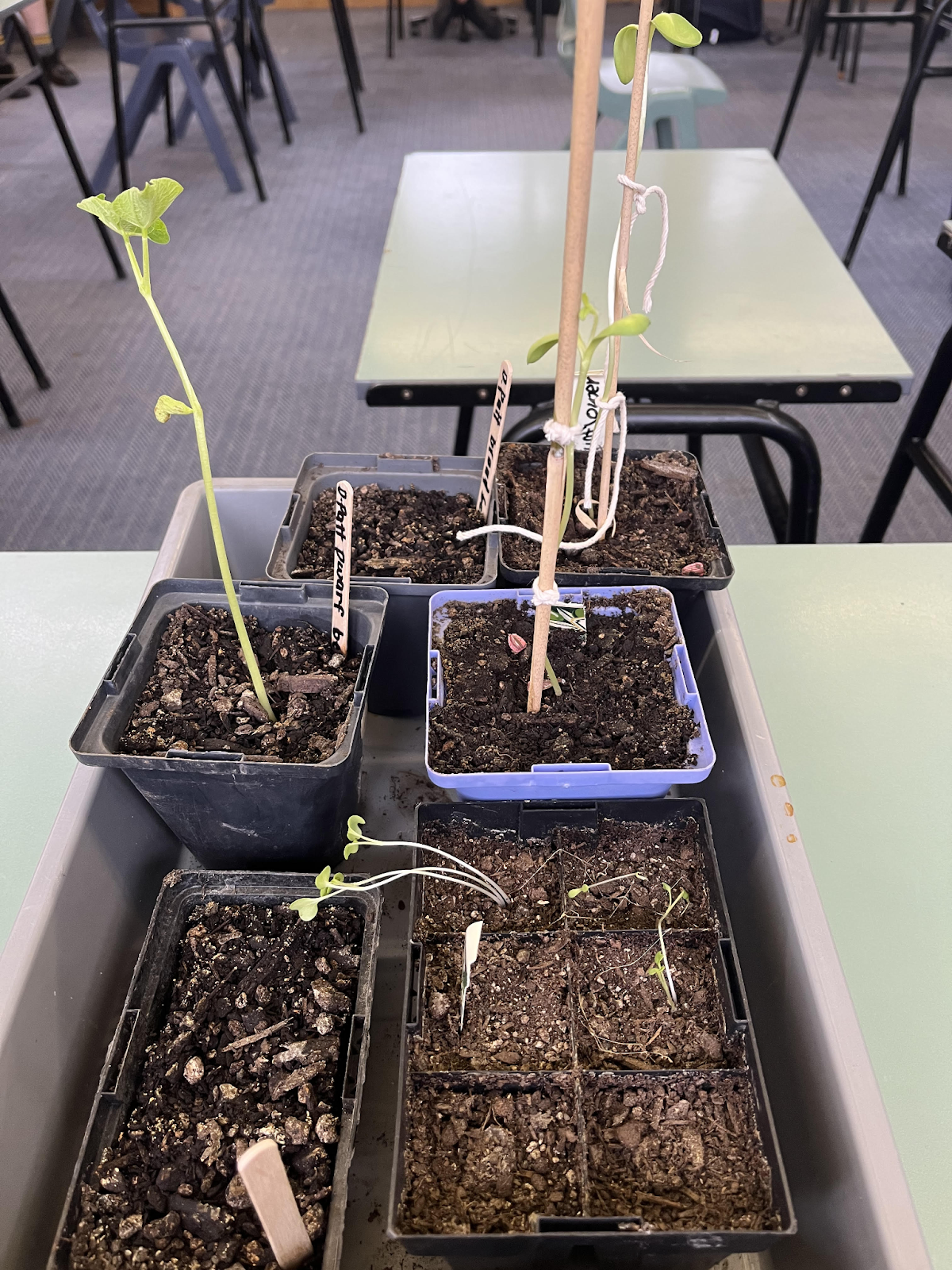
NCEA L2 Basketball Academy
BAc2This is a multi-level course suited to students who are passionate about sport, specifically, Basketball. All of the learning taking place during the course will be in a Basketball context. We plan to complete units of work based around Basketball skills, both physical and tactical, Basketball fitness, Basketball coaching, Refereeing and event management. The course will be a mix of practical and class based work with the motivation to keep things as hands on and practical as possible.
What a particular week in this course may look like is, two sessions based on developing the physical and tactical skills associated with Basketball, effectively, Basketball training sessions. One session based specifically on the fitness required for Basketball and one class based session working through whatever unit we are currently working on, event management etc.
The vision for this course is to offer learning in a context the students are passionate about, in turn, increasing their overall motivation to be at school. As well as the obvious benefits of students being more engaged, the second motivation is to develop the game of Basketball further at the school in order to start being more competitive against some of the major Basketball schools in the country. Basketball is a growing sport in New Zealand and we want to take the opportunity to jump on that train. This year we currently have 32 school teams involving around 230 students.
Students who select this course will need to go through an application process in order for us to select students we feel will gain the most out of this course and spots are limited. If you have any questions or need further information on this course then please see me at school or e-mail me on [email protected].nz

NCEA L2 Biology - Mātauranga Koiora
Bio2The study of life itself, level 2 Biology explores the theories and principles involved in living systems, in all their intricate beauty. Topics you will learn about include: cell structure and function, ecology, genetics and evolution, plant and animal adaptations as well as practical biology and research skills. By the end of the course, you will know about the principles of genetics, cell reproduction, natural selection, evolutionary theory, plant and animal interactions, and more.

You will gain an understanding of how society makes decisions about scientific issues, as well some of the ways in which the scientific community contributes to the success of the economy and society.
All students go to Rotoiti Lodge towards the start of term 2 to carry out practical investigations and learn about some of the wonderful flora and fauna of Te Wai Pounamu.

If you are interested in understanding how we evolved, finding out how cells – “little bags of water with things dissolved in them” – carry out so many different processes in a seemingly effortless fashion, tracking down natural resources, the true impacts of pollution on the natural world, or animal care and conservation programmes, to name a few, then this is your subject.
NCEA L2 Business Enterprise
BNT2“Entrepreneurship is about turning what excites you in life into capital, so you can do more of it and move forward with it” (Richard Branson)
In Level 2 Business Enterprise students will have the opportunity to set up and run a small business. It is a great opportunity to test your ideas, realise uniqueness, develop strengths, learn about enterprise and possibly make a profit.
We join the national YES Program which offers many opportunities for regional and national competitions and prizes along with a wealth of information to support your journey in Business Enterprise during the year. YES Program
At the same time, you will earn a qualification in business practice and gain valuable practical experience. In Business Enterprise you will work as part of your own company.

NCEA L2 Career Development
CDV2
This is a Unit Standard course developed to assist students to develop a career interest. Students will undertake work that informs them about health and safety in the workplace, employee rights and responsibilities, pathway exploration, as well as giving them skills on how to manage their career.
Students will also receive information and can gain credits through a series of driver education lessons.
They can also select courses or Unit Standards from external providers that match their career interests, however this is dependent on their ability to complete the core work.
The Career Development Course has predominantly been designed for students who want to do Gateway. Gateway students have the opportunity to try a career that matches their interests, but must complete some compulsory papers before they go on placement.
Placements are made by the Gateway Liaison in consultation with the student, the student's caregivers, potential employers and the Gateway Coordinator. Gateway students are expected to gain 20 credits that relate to their work placement.
This course can also be for students who have an interest in Diversity in the Workplace, Legal Studies, Travel and Tourism, Consumer Law or Financial Capability.
NCEA L2 Chemistry - Mātai Matū
Che2Chemistry is the study of the composition of matter and the changes in composition that this matter undergoes. We do experiments to describe what matter looks like and does and then we learn how to use chemical principles to explain and discuss why matter behaves in this way.
This course is for students who wish to develop their thinking skills, their ability to engage in logical argument, laboratory skills and their understanding of the microstructure and behaviour of matter and chemical systems as they learn about the chemicals and chemical reactions.
Topics you will learn about include:
Atomic structure and bonding - how atoms behave and bond together to make new molecules
Organic chemistry - carrying out reactions to change organic chemicals from one type to another and to identify unknown solutions
Redox reactions - carrying out experiments to observe the movement of electrons between chemicals
Qualitative analysis - experimenting to find the chemicals in different substances
Factors that affect the rate of chemical reactions - experimenting to control the speed of chemical reactions
Chemical equilibrium - experimenting to find ways to control chemical reactions
Acids, bases and pH - building an understanding of chemical reactions in water
How chemistry, technology and government regulations have driven the development of current technology
By the end of the course you will know about the principles of...
- Atomic structure and bonding
- Oxidation, reduction, addition, substitution, elimination and acid base reactions
- IUPAC nomenclature of a variety of organic molecules
- Collision theory
- Catalysis
- Le Chatelier's principle
- pH and acid-base strength
- Stoichiometry
- Incomplete and complete combustion
...and you will have built and had the opportunity to communicate your understanding of
- the implications of chemicals and chemical reactions
- how chemistry, technology and government regulations have driven the development of current technology
NCEA L2 Classical Studies
CLS2
The influence of the classical world is everywhere. Whether it be Nike shoes, democracy, the law, language, religion, art and architecture, the Olympics, mythology, comedy and drama… the classics are foundational to western thought and culture.
Classics is the ultimate multi-disciplinary subject. You will learn about art, history, drama, engineering and archaeology. You will be challenged to face the major problems the ancients and moderns have faced: war, politics and religion, resistance to unjust leaders- civil disobedience, hospitality abuse, how to handle grumpy old men and more.
We discuss similarities and differences between Aotearoa and antiquity and gain insight into our own times.
The way the Greeks and Romans responded to the major concerns of their day “challenge, inspire and resonate with us now.”
The topics we study at Year 12 are:
Ideas and Values of the classical world - This is a great introductory topic especially with students who may not have done Classical Studies in Year 11 and pick it up this year. Journey into the world of Ancient Greek mythology through The Iliad OR The Odyssey, two epic poems traditionally attributed to Homer. The Iliad explores the events of the Trojan War, focusing on themes of honour, courage, and conflict, while The Odyssey follows the hero Odysseus on his long and perilous journey home. These timeless stories provide valuable insights into Greek values, beliefs, and the enduring power of storytelling. We then demonstrate how the classical world has influenced other cultures through the films, the Odyssey and Troy.


The Acropolis and the Parthenon- Discover the wonders of Ancient Greece through the study of the Acropolis, the sacred hill that overlooks Athens. At the heart of this remarkable site stands the Parthenon, a magnificent temple dedicated to the goddess Athena. By exploring its architecture, art, and historical significance, students gain insight into ancient Greek beliefs, achievements, and lasting influence on the modern world.

The battle of Gaugamela - Explore one of the most decisive battles in ancient history: the Battle of Gaugamela (331 BCE). Fought between Alexander the Great and the Persian king Darius III, this epic clash showcased Alexander’s brilliant military strategy and leadership. The battle led to the collapse of the Persian Empire and established Alexander as one of history’s greatest conquerors, shaping the future of the ancient world.
OR
The Battles of Marathon (490 BCE) and Salamis (480 BCE) were two of the most important Greek victories against the Persian Empire. At Marathon, the Athenians defeated a larger Persian army, proving that Persia could be beaten and protecting Athens from conquest. Ten years later, at Salamis, the Greek fleet under Themistocles won a decisive naval victory in the narrow straits near Athens, forcing the Persian king Xerxes to retreat and helping preserve the independence of the Greek city-states

Greek art and architecture - For most of us, architecture is easy to take for granted. Its everywhere in our daily lives—sometimes elegant, other times shabby, but generally ubiquitous. How often do we stop to examine and contemplate its form and style? Stopping for that contemplation offers not only the opportunity to understand one’s daily surroundings, but also to appreciate the connection that exists between architectural forms in our own time and those from the past. Architectural tradition and design has the ability to link disparate cultures together over time and space—and this is certainly true of the legacy of architectural forms created by the ancient Greeks.

NCEA L2 Construction
Con2L2 Construction Student Guide 2027
This course enables you to learn intermediate woodworking skills using hand tools, portable power tools and machinery.
This course involves a health and safety assignment followed by two practical projects. The projects you will make are;
● A dart board
● A children’s chair

Each of the projects involves an element of design to meet your personal needs/desires.
Level 2 - Construction Assessments
The course is assessed by a mixture of theory and practical work. It uses the BCATS (Building, Construction and Allied Trade Skills) unit standards. This course provides the opportunity to gain 21 credits at Level 2.
NCEA L2 Design
Des2DES2 Level 2 Visual Arts Design
 Visual Arts Design (DES2) is is a full year course and is NCEA List A approved.
It provides skills and understanding suitable for L2 Visual Arts Design and as a precursor for L3 Design. To endorse in Design, students must complete the 12-credit portfolio.
Students will develop a wide range of skills in graphic art design. Digital art opportunities work alongside the traditional paper based artworks.
There are 4 achievement standards; 3 INTERNALS and 1 EXTERNAL with a total of 24 credits available.
This is a course designed for students interested in developing Design skills in a visual format. Students will work to develop the ability to process ideas as a designer. Design thinking provides a structured process that helps innovators break free of counterproductive tendencies that thwart innovation.
- Freehand and digital drawing skills
- Finishing tools including Adobe applications (Photoshop, Illustrator, InDesign)
- Graphic design processes
- Basic photography
- Research & Design Principles
- Layout and composition
 Visual Arts Design folios in a student exhibition at the main gallery in Blenheim 'Te Kahu o Waipuna - Marlborough Art Gallery'.
NCEA L2 Digital Technology
DTY2DTY2 Digital Technology Level 2
This is a full-year course. It further develops the students’ ability to create a digital product based on a brief for a client, using project management tools successfully and iteratively improving the outcome.
This course opens the way to a wide variety of careers and interests. The achievement standards contribute to awards in creative industries, manufacturing and technology and services industries vocational pathways
This is a general course designed for those planning to progress in business computing or tertiary study. It focuses on desktop publishing, developing a website, programming with Python and the computer science of error control.
There is a huge shortage of basic IT skills in the workforce. Students who wish to further their computing skills are in high demand in the workforce.
Coding has become a significant way of learning with students using many different programming software tools to solve real life problems. Students who wish to go to study Computer Science or Engineering at University can discover rewarding and well-paid careers.
Topics taught:
Use advanced processes to develop a digital technologies outcome
- Use advanced techniques to develop a website
- Programming with Python
- External: Computer science topic (Varies annually)

NCEA L2 Economics
Eco2
In Level 2 Economics students will consider how New Zealanders are affected by the economic decision-making of individuals, communities, businesses and government agencies in New Zealand and overseas. The focus is on current Economics in New Zealand using models and concepts to consider the impacts of economic events.
Students will study the following topics:
Analyse Inflation
Analyse Economic Growth
Understand Government policies and their impact on the NZ Economy
Analyse Unemployment
Analyse special interest topics eg. Housing, trade, tourism,
Students will also have the opportunity to travel to Wellington to visit places of Economic importance. This may include Parliament, Treasury, Reserve Bank, Trade me, Sharsies etc.


NCEA L2 Electronics and Mechatronics
MCH2This course will build on the knowledge gained in the L1 Electronics and Mechatronics course.
Students undertaking this course will expand their knowledge of electronic components to include discrete, passive, active, and electromechanical types. They will program their robots implementing logic and feedback in programming control structures. They will design and evaluate their own original robots assessing efficiency across mechanical and electronic components.

NCEA L2 English - Big Brother is Watching
Eng2BENGLISH 2B = Big Brother is Watching!
Are we being constantly monitored? Should we be worried?
Out of control governments have been a rich source of fiction, allowing the reader or viewer to grapple with the impossibility of conforming to over-controlling laws or rebelling and facing the consequences,
Is it our duty to oppose an evil leader? How far can we go?
The skills developed throughout the year will enable you to deepen both your written and oral communication skills as well as complement other Level 2 subjects that involve report writing.
This course does provide University Entrance Literacy requirements.
NCEA L2 English - Communication Focus
Eng2CEnglish - Communication Focus
The world relies on communication

This course provides students with a contextualized project-based course for the purpose of achieving NCEA Level 2. This course is tailored for those students who are about to embark on apprenticeships or entering into the work force and require practical correspondence skills: writing formal letters, work place reports, engaging in group tasks and gaining confidence in interviews.
This course does not provide University Entrance Literacy.
NCEA L2 English - Holding out for a hero
Eng2HHolding out for a hero
What makes someone a hero?
Is it wearing flash lycra?
Is it wearing a cape and being able to fly?
Is is bravery in the face of adversity?
Why do we keep turning to superheroes to save the world—even in fiction? And do we need superheroes—or just need to believe in them? Take a dive into the superhero genre to explore ideas about humanity, morality, identity, and the line between hero and villain. Examine how superheroes reflect the best and worst of society, and what their popularity reveals about our hopes, fears, and expectations.
NCEA L2 English - The Road to Redemption
Eng2RENGLISH 2R - The Road to Redemption

Have you ever done something you've regretted? Can we ever make up for our mistakes? Authors have been struggling with this concept for centuries. Think novels such as Crime and Punishment, Les Misérables and The Kite Runner. Think films such as The Shawshank Redemption, Atonement and Gran Torino.
But why the fascination with this particular aspect of the human condition? This course firstly looks at, and tries to answer the question: why are we so driven to redeem our mistakes?
Linked closely to this idea of redemption - and another key idea that will underpin the course - is the idea of determination. In particular, we'll look at what real determination looks like - having the courage to stand up for what you believe in, the courage to carry through what you believe to be right.
This course does provide University Entrance Literacy requirements.
NCEA L2 English - What does it mean to be a man?
Eng2WWhat does it mean to be a man?
The role of men in society has changed - no longer is the male the sole breadwinner and provider for the family. No longer does the male solely decide what channel is on the tv and no longer is the female responsible for bringing up the children, cooking, cleaning and domesticity.
The media has very definite ideas about the role of men in society, but are a few deciding the fates of many? Should we let influencers, journalists and celebrities decide which direction society takes? Or should we be able to control our own destiny?
This course focuses on texts (both written and visual) that looks at the changing status of men in a variety of contexts. It offers both internal and external assessments and will provide University Entrance Literacy.
This course incorporates research and analysis and develops writing skills over a number of different genres, reading for meaning and finally culminates in two external assessments.
The skills developed throughout the year will enable you to deepen both your written and oral communication skills as well as complement other level 2 subjects that involve researching and report writing.
If you despise reading, then this is probably not the course for you as the expectation is that you will develop a critical lens through exposure to a wide range of different 'angles' for our topic.
NCEA L2 Forestry - Ngāherehere
For2In this course, you will gain knowledge and skills essential for working in New Zealand's Forestry Industry. The course will cover:
Safe Work Practices: You will learn the requirements for safe work practices, using the Approved Code of Practice for Forestry. This includes familiarizing yourself with the rules and regulations specific to the forestry sector.
Commercial Forestry Operations: Students will learn how commercial forestry works, including the processes involved from planting to harvesting and processing into the final product.
Chainsaw Safety: Chainsaws are vital tools for foresters. You will receive hands-on training on how to use them safely and effectively, adhering to best practices and safety guidelines.
This course is designed to provide you with the practical skills and theoretical knowledge needed to work in New Zealand's forestry industry, ensuring you are well-prepared for a career in this field.


NCEA L2 General Engineering
GEn2
This course is suited to students who have a general interest in Engineering or who wish to undertake engineering related occupations.
Safe use and care for dimensional engineering equipment. Joining metals using welding. Trade calculations.
The course can lead you to engineering related occupations and tertiary engineering courses.
The majority of this course will be based around making a Hibachi.
NCEA L2 Geography
Geo2
Geography is the study of interactions between different elements of the environment. These interactions occur between natural and cultural (human) elements of our planet. Geography is an opportunity to ask why and how things happen in our world.
studies include:
- Global Inequalities
- The South Island High Country
- Population change as a global issue
- Lake Rotoiti field trip
- Crime in Chicago

NCEA L2 History - tāhuhu kōrero
His2History connects students with the wider world. Students engage with history at personal, local and international levels. They investigate the histories of their communities,
No doubt you have a great thirst for knowledge, are keen to expand your brain power, and crave intellectual debate of the highest calibre. Or you may just need to fill up your timetable. Either way you should have a great year.
As History teachers, we are passionate about our subject and what it can do for you. There are a number of reasons why taking History is a good idea. You will understand more about why our world is the way it is today. After all, you cannot know who you are or know where we may be heading as a nation, if you do not know your past. History is made up of some incredibly interesting characters and stories. For example, how the leg of a table saved Hitler’s life, or how taking a wrong turn led to World War One.
The course will be co-constructed between the students and the teacher. The broad context is the conflicts of the past are of significance today.
- The first topic will be New Zealand in World War I.
- The other topics will be negotiated between the teacher and students. In the last few years we have studied:
- The Holocaust,
- Communist China,
- US War of Independance
- The Vietnam War.

Figure 1: MBC students and teachers at Gallipoli 2014

Figure 2: MBC students at Parliament 2021

Figure 3: MBC & MGC students at Capitol, Washington D.C. 2023
NCEA L2 Hono - Connect/Dive
Hon2If you love diving, or want to start your diving journey then this course is for you.
Hono (Connect) is a course based around the ocean, boating and diving. The purpose of this course is around connection. Connection to the ocean, connection to important areas in Marlborough, connection with traditional ways to harvest and prepare Kai Moana, connection with whānau and the community and connection with local industry groups.
If selecting this course, you will complete 3 compulsory units.
1) Harvesting and preparing Kai Moana
2) Coast guard day skippers course
3) Weather analysis
You will also have the opportunity to work with the Blenheim Dive Centre and gain either your PADI open water SCUBA (tanks) dive certificate and then move on to your PADI SCUBA Advanced dive certificate or your PADI free dive certificate and then move onto your PADI Freedive Advanced dive certificate.
We have made this course as hands on as possible and there will be a mixture of class based learning, breath hold theory and training in class, dive training in the stadium pool, boat trips in the sounds, spearfishing trips and open water diving.
We will also be working with industry groups such as Marine Farming Industry to learn how their industry runs. There may be further opportunities in these industries if students want to pursue.

NCEA L2 Hospitality Studies
Hos2

Food Technology in Year 12 provides students with the opportunity to achieve Industry Training Unit Standards in Cookery and Hospitality. The Service IQ unit standard workbooks provide the assessment tasks. Students are to study the assessment information and ask the teacher to clarify any points. These unit standards contribute towards tertiary qualifications and many are studied at tertiary institutes and for modern apprenticeships. There are opportunities for students to gain part time employment in the hospitality industry this year and in Year 13. Students will need to participate in catering for events on a few occasions.
Field trips to food and hospitality industries in Marlborough enhance knowledge of food production, special dietary requirements and food service skills.
NCEA L2 Mathematics
Mat2This NCEA level two (curriculum level 7) Mathematics course covers algebra, coordinate geometry, trigonometry, networks and sequences and series. It provides a solid foundation for those wishing to take Mathematics at NCEA level three.
NCEA L2 Mathematics with Calculus
MaC2This NCEA level two (curriculum level 7) Mathematics course covers Algebra, graphing (linear and non-linear), Trigonometry and Calculus and provides a solid foundation for those wishing to take Calculus at NCEA level three.
NCEA L2 Media Studies
Med2This is a general course for students interested in film production, film study and analysis of the media. It focuses on the following topics:
Representation and stereotypes in media
Script writing
Planning & creating a film
Film genre


NCEA L2 Music
Mus2MUS2 Music Year 12
This is a general course for students interested in a career in the various music industries or entertainment fields. Students should be in their fourth year of instrumental tuition. It develops skills in the following areas:
- Solo performance
- Group performances
- Composition
- Notation dictations
- Transpositions and modulations

NCEA L2 Outdoor Education 200
OED200This is a practical course for students who enjoy the Outdoors and/or who wish to pursue a career in the Outdoor Industry.
Snorkelling/diving/Spearfishing
Ski-ing/Snowboarding
Bushcraft & Survival
Kayaking
Camping
Mountain Biking

NCEA L2 Painting
Ptg2PTG2 Painting Level 2
This is a full year course.
It provides skills and understanding suitable for Level 2 Painting and as a precursor for Level 3 Painting. To endorse in Painting, students must complete the 12-credit portfolio.
This is a course designed for students keen to develop their Painting and general art skills. Many students will choose to extend painting skills in media such as acrylic and oil paint, while others look to upskill in digital painting.
- Printmaking, including woodcut and engraving, may also be offered in this course.
- Observational and freehand drawing skills extended and students may also wish to draw digitally.
- The painting process will support the development of research and thinking skills.
- Students will choose their own ideas and themes to explore in this course.
In PTG2, a 12 credit - 2 panel folio will be produced.
The planning and successful production of the external folio will allow for 12 external credits to be completed and 'course endorsement'.
With teacher guidance, every student will produce their own range of ideas and artworks. It will often reflect their interests and aspirations.
 Level 2 folio - Campbell Earle
 Level 2 folio - Keelin Bell
NCEA L2 Performance Dance
PDP2
Performance Dance is a subject in which dance and the arts are pivotal in providing a space where students can confidently navigate their cultural identity.
This is a full-year course specialising in Pasifika dance skills. Students demonstrate techniques and movements associated with Pasifika dance genres or styles or that include personal ways of moving. They demonstrate the skilled use of balance, accurate use of space, timing, and energy.
The intended outcomes of the subject are:
The students will achieve NZQA qualifications in dance. They will experience success through their culture and heritage. Students will be confident pursuing pathways in their culture, art, and heritage and can confidently lead in all areas of their learning journey. It will be underpinned by the New Zealand Curriculum, focusing on critical thinking skills, a culture of ako, managing self, participating and contributing to the group, and expressing themselves through language, song, and dance.
This is a full-year course specialising in Pasifika dance skills. Students perform an ethnic dance to communicate a comprehensive understanding of the dance style, conveying the emotional content of the style. They demonstrate an in-depth understanding of the stylistic requirements.
NCEA L2 Photography
Pht2PHT2 Photography Year 12
This is a full year course.
It provides skills and understanding suitable for Level 2 Photography and as a precursor for Level 3.
To endorse in Photography, students must complete the 12-credit portfolio.
Introduction to the course includes the development of skills in photography and art thinking. Students are encouraged to draw from their environment and make artworks recognizing the conventions used in photographic practice. Use of studio lighting, time lapse and various indoor and outdoor photoshoots is expected.
Additionally, a research project with L1 Literacy credits attached, may be completed. All developing skills lead towards the 12 credit folio.
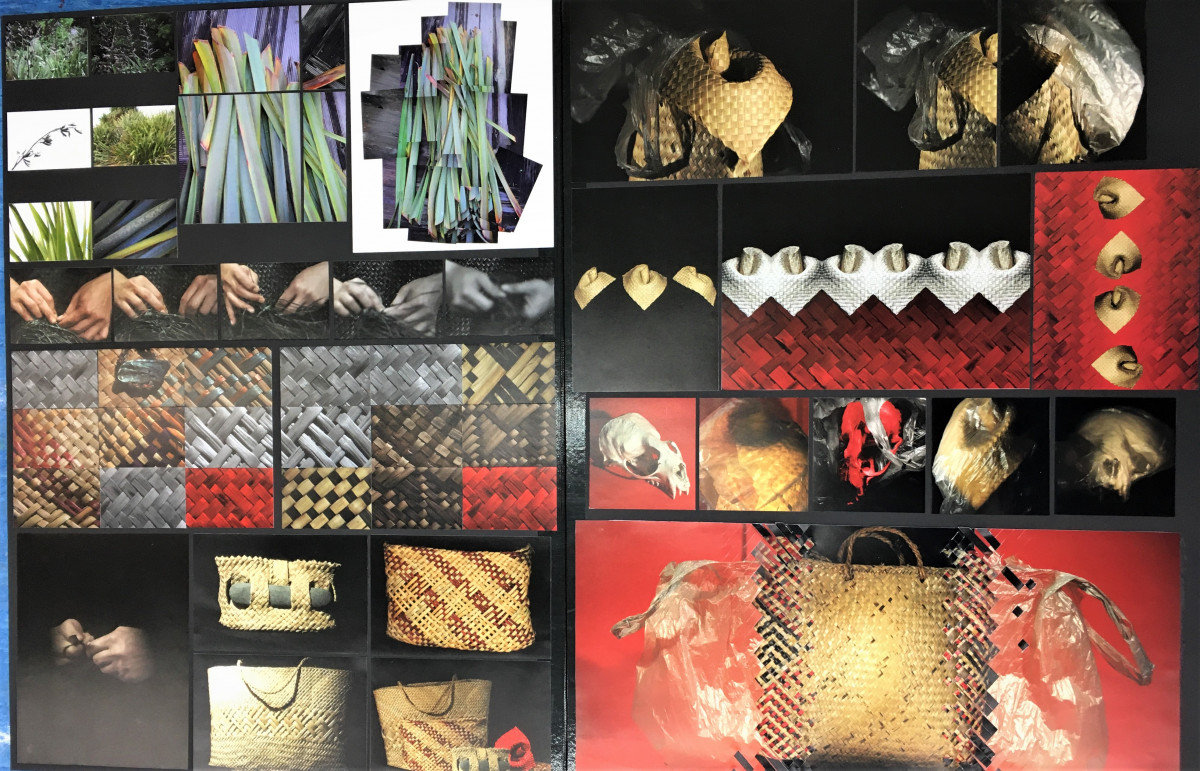
The two panel folio (12 credits) is an External standard thus course endorsement is available.
NCEA L2 Physical Education
PEd2This course will suit those interested in pursuing an interest or career in sport and recreation. It has a strong academic focus along with a variety of practical work.
Skill Learning - What does it take to learn a new skill?
Social responsibility - How do you get the best out of your Team?
Risk management - How to manage risk in the outdoors? What are the Health and Safety requirements?
Practical (Kayak Roll, Badminton, Badminton, Snow sport, Fitness training, Lawn Bowls )
Kayak camp - In Murchison on the Buller river.
Kayak roll - Learn to roll a kayak.
Biomechanics - analyzing our movements using video. From there we investigate ways we can be more effective during exercise and sports movement
Exercise Physiology - looking at body's responses to physical activity. How the body adapts to physical activity over time? How can we train in the most effective way?
Coaching - leadership unit where we look at different types of leadership and apply them to coaching at St Marys

NCEA L2 Physics - Mātai Ahupūngao
Phy2The study of nature and the properties of matter and energy, level 2 Physics explores the theories and principles involved in the physical world, in all its glory. We try to understand how the universe behaves so we can make predictions about our world.
Topics you will learn about include:
The forces involved in the physical world. such as gravity and tension. Projectile motion involved in everything from the movement of rockets to rugby balls. Linear motion of vehicles and objects moving in a straight line, like you are running towards your physics lesson. Momentum and its applications like collisions and explosions. Conservation of energy between the two major forms of energy, stored energy and the energy of movement and torque or balancing forces on a beam or on bridges.
Static electricity which is when electric charge does not move. The principles of DC electricity which is the electricity we use in simple circuits with batteries. Electric fields which the electric force charged particles experience and move in. Using electrical components to build circuits like electric motors and generators. Electromagnetism where electricity creates magnetic force and also the other way round. What makes up the atom and how that relates to nuclear radiation.
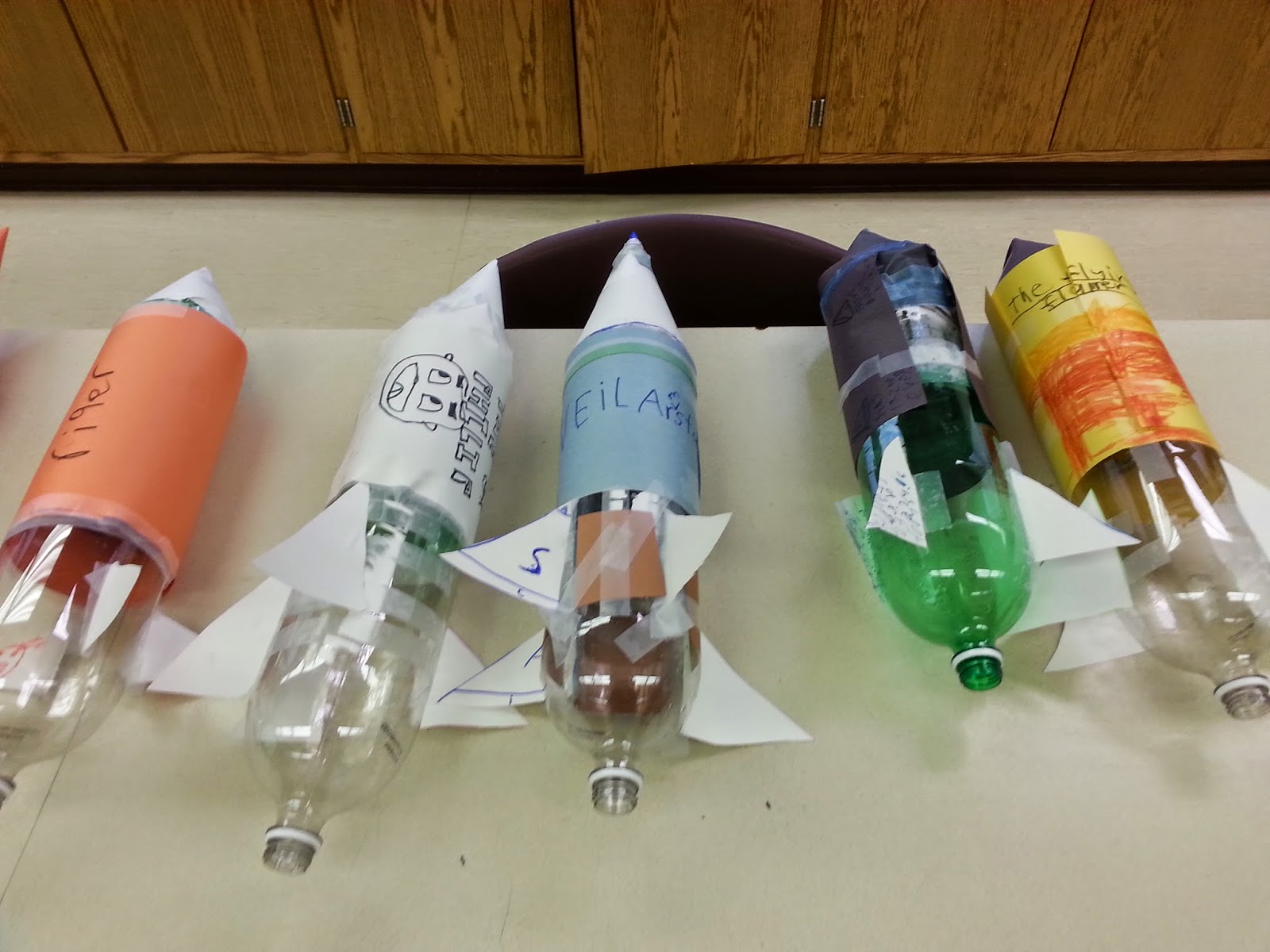
All students experience using experimental data to explore and analyze the relationship between physical properties in the universe. Like the conservation of momentum like the skateboarder below.

By the end of the course, you will know about the principles of
Using equations to calculate how fast you are going, how far you are travelling and how your speed is changing. Energy conservation between different forms of energy like electricity and sound. Momentum conservation when objects collide or explode. Vectors calculations used for sailing or rocketry. Projectile motion to predict how rockets move, or objects fall and balancing forces like weight and tension on a bridge with torque and equilibrium.

Building simple circuits where electrons are used to different tasks. Electric charge of particles and how they form. Creating electricity with magnets and magnetic forces with electricity. What voltage, current and resistance means when discussing electrical circuits.
You will also develop and understanding of how atoms break up to create radiation and what is inside an atom.

If you are interested in trying to understand the physical world through experiment, then this is your subject!
NCEA L2 Psychology - Mātai Hinengaro
Psy2Psychology is the scientific study of behaviour and mental processes. This course will introduce you to the fundamental principles of psychology and their applications in everyday life.

Whatever career you choose to follow, a background in psychology will enhance your employability. Studying psychology can help you understand yourself and other people by learning about aspects of human behaviour that will help you in daily life, including:
- Your interactions with others
- Your learning and memory performance
- Your ability to cope with pressure
- Your understanding of the causes of psychological disorders
Psychology is a science and the defining feature of any science is the objective approach that is used to advance our knowledge. In psychology, we use this scientific approach to learn about behaviour and mental life. This course provides excellent training in analytic thinking and understanding of how the brain works that are applicable to a broad range of careers.

In the course you will explore:
1. The scientific nature of psychology
2. Research methods in psychology
3. The debate on nature vs. nurture (which also ties in with Level 2 Biology)
4. Introduction to some of the major psychological approaches:
- Behavioural
- Cognitive
- Psychodynamic
- Biological
- Sociocultural (including Te Ao Māori world view)
5. Cognitive processes (perception, attention, memory, and learning)
6. Ethical considerations in psychological research, including both historical and current examples
7. Applications of psychology in various fields (e.g., education, health, sports)
8. Conspiracy theories: psychological factors behind their formation and spread as well as how to stop falling for them.
Throughout, you will engage in discussions, watch and analyse videos to identify psychology in use and learn to critically evaluate psychological research. By the end of the year, you will have a solid foundation in psychological principles and their real-world applications, including an understanding of how psychology intersects with current issues like conspiracy theories.
Please be aware that we do discuss psychological issues and this may include some topics that could be disturbing.
We also watch a number of video resources and TV series with a psychological perspective (fact and fiction).
NCEA L2 Rugby Academy
RAc2Rugby Academy (RAC) is a practical course for those who aspire to play rugby at a high level, are wanting to improve their skill level and game understanding, and also gain an insight into the demands of a high performance environment. The Semester A course includes the following components:
Rugby Skill Development
Physical Fitness Training
Self Management
Social Responsibility


NCEA L2 Spatial and Product Design
SAP2Welcome to Level 2 Spatial & Product Design! This course is designed to inspire and challenge students as they explore the world of design through a series of engaging projects. Students will have the opportunity to develop their technical and creative skills while working on a project to design a beach house located in Rarangi!
Throughout the year students will design and develop a beach house located in Rarangi, this will include going to the site, anaylising the site, looking into different design eras and movements to help influence their design which they then will produce CAD drawings of. Later in the year students will then emback to create and design and develop a light design which they then will model!
To wrap the year up students will create a poster presention of their design which will then be placed on display at our exhibition!
Skills Learned
- Technical Drawing: Students will master the art of creating precise working drawings that effectively communicate the technical aspects of their designs. This skill emphasizes accuracy and attention to detail, ensuring that students can convey their ideas clearly and professionally.
- Historical and Cultural Design Insights: By studying various design movements and eras, students will gain insights into how historical and cultural contexts influence design. They will apply these characteristics to their own projects, enriching their design process with informed creativity.
- Spatial Design: Students will develop innovative and functional spatial designs, thinking critically about the use of space in their projects. This skill encourages students to meet specific needs and constraints through thoughtful design.
- Visual Communication: Effective communication is key in design. Students will learn various visual communication techniques to create compelling presentations of their designs. This skill helps students articulate their ideas visually, making their designs accessible and engaging to others.
This course offers a comprehensive exploration of design principles and practices, preparing students for further studies or careers in design-related fields. Join us in Level 2 Spatial & Product design and bring your creative visions to life!
NCEA L2 Sport Studies
SPS2This course is suited to students who are passionate about sport. Whether it be participating in sport, sports administration and organisation, building confidence through a sport based leadership program or just having a subject that is a bit more hands on, this could be the course for you.
We complete a mixture of Achievement and Unit Standards at Level 2 and 3 with a focus around skills needed both in the sports industry and in life.
Team building/team spirit. In this course students are going to be expected to lead groups, support and encourage others and basically work together as a well oiled unit. To achieve this the class will participate in 2 weeks of team building in order to break down barriers and some together as a collective unit.
Skill learning. Students will participate in a section of skill learning in a sport the class decides.
Communication skills. Students will be looking into group dynamics and breaking down how groups and teams work together. Looking at skills such as communication and leadership styles.
Sports organisation/administration. In groups, students will be in charge of running lunch time sports events. They will need to advertise, organise, run and review their event
Learning the skills required in the fitness industry. We are 100% focused on giving students the tools required in group training, personal training, and planning effective gym programs.
Teaching correct and effective stretching techniques. Students are required to run group fitness sessions with their group. This includes, dynamic stretching, warm up, workout, warm down and static stretching
Planning and reviewing personal gym programs. Through their terms work down at Stadium 2000 gym facility, students are required to plan out their own personal gym sessions, complete these sessions and then review them.

NCEA L2 Statistics
MaS2This NCEA level two (curriculum level 7) Statistics course covers probability theory, networks, questionnaire and experiment design and delivery and report evaluation. It provides the necessary foundation for those wishing to take Statistics at NCEA level three.
NCEA L2 Sustainable Marine Science - Pūtaiao Moana Pūmau
SMS2A course aimed at developing an understanding of the biology of selected marine species with a focus on aquaculture and the factors which influence sustainable marine farming.
- Fish species and their identification
- Use of microscopes
- Oyster Biology and Farming
- Mussel Biology and Farming
- Patterns in seafood communities


Skills that are useful across the Biological Sciences will be practiced including dissection of marine species, microscope use, measuring the size of populations of marine species. This course is particularly significant for students who would like a careers in aquaculture, fisheries compliance or the fishing industry.
NCEA L2 Te Ao Haka
TAH2At Level 7 (NCEA 2), you will explore your own creativity, based on your grounding in Te Ao Haka. You will innovate and experiment within Te Ao Haka and explore your own role and connections. You will learn how to interpret context and the importance of Māori narratives and local context to the expression of Te Ao Haka items. There are two performance based standards in this course which ākonga will complete as they are ready. Through studying Te Ao Haka you will develop your own connection to Māori culture, language, and practice through Te Ao Haka. The course is likely to be multi-level with NCEA 1 & 3 ākonga.
Kaiako: Whaea Delyn Day

NCEA L2 Te Reo Māori
Reo2Nau mai haere mai!
By the end of year 12 te reo Māori, Level 7, the aim is for students to:
- 1. understand much of what other speakers say and much of what is written in te reo Māori about a range of topics across a range of spoken text types, formal and informal.
- 2. distinguish between facts and opinions and recognise intentions to persuade and influence.
- 3. Write in te reo Māori about a range of topics, using words and expressions that are appropriate for the purpose and intended audience.
- 4. Begin to use language to entertain and persuade as well as to inform.
The above objectives are achieved by continuing on the journey of building a broad vocabulary and an accurate knowledge of grammar through various modes including online games, speaking tasks in class, reading and writing, some fun and some hard graft. Work and practice at home is necessary to enhance learning!
By completing the NCEA Level 2 te reo you will develop the ability to communicate about your own and others' perspectives and give informed opinions on topics from within the wider community.
Students are also expected to take part in special events such as Ngā Manu Kōrero, Te Kaiaotanga o Te Reo Māori, and will learn supporting Haka, Waiata, Karakia & Mōteatea. Please also plan to attend the two day Wānanga Reo / reo Māori workshops Thursday morning to Friday afternoon in Term 3.
NCEA 2 reo Māori is based on Level 7 of Te Aho Arataki Marau mo te Ako i Te Reo Māori
Kaiako: Whaea Delyn Day

NCEA L2 Te Waharoa
Wah2NCEA L2 Te Waharoa is a course for students who are passionate about Māori culture and history. It offers students an opportunity to delve deep into researching traditional and modern Māori knowledge and cultural concepts. Also included may be field trips locally and occasional guest speakers. The class is a tuakana teina model with students from all NCEA levels.
Te Waharoa draws on the NCEA unit standards based on tikanga (culture) and mātauranga (knowledge) Māori. The course is flexible and can be tailored to students’ interests but in Term 1 all ākonga will focus on extending their knowledge of Te Tiriti o Waitangi. When ready to work independently ākonga may choose their area of study. The course draws on mātauranga Māori resources that focus on a wide range of areas, both modern and traditional, such as Taonga Pūoro, Whakairo, New Māori Music, Mau Rākau, Māori Media, Māori Tourism, Pacific Migration, the Environment, and Manaaki Marae. Standards listed below are an indicative sample of what is available.
Kaiako: Whaea Diane St Claire

NCEA L2 Te Waharoa Whakairo
Wak2NCEA 2 Te Waharoa Whakairo is a course for students who are passionate about Māori carving, culture and history. The course offers students an opportunity to delve deep into the art of whakairo and study examples. The class is a tuakana teina model with students from NCEA 1 & 2 Levels.
Te Waharoa draws on the NCEA whakairo unit standards based on tikanga (culture) and mātauranga (knowledge) Māori related to whakairo. Te Waharoa involves self-directed research, with teacher support and guidance, and/or group projects which utilise the wealth of knowledge that can be found in books and online, as well as recognising the learning students gain from wānanga outside of school, and learnings from their whānau etc.
In 2027 a practical whakairo (carving) course is offered to students interested in learning more about Māori design, function, and value, and then applying it. The course is flexible and can be tailored to students’ interests. It draws from standards and resources that focus on a wide range of areas, both modern and traditional whakairo . Standards listed below are an indicative sample of what is available.
Kaiako: Matua Riki Palatchie
NCEA L2 Top of the South Trades Academy (NMIT) (NOT a separate course - optional part of doing a Careers Development course)
TRa2NTop of the South Trades Academy delivered by NMIT.
NMIT Marlborough Campus
Standards offer vary depending on which course of study is undertaken. Students must apply for these courses and we cannot guarantee a place. Collect application forms from the Careers and Transition Department Term 3.
Courses offered every Thursday at the NMIT Marlborough Campus are:
Automotive Engineering
Aviation Engineering (Based at Woodbourne)
Salon Skills - Hair Design and Beauty Therapy
Green Pathways - Primary Industry Fundamentals (replaces Wine Cellar Operations)
Nelson Campus
Courses offered at NMIT Nelson Campus
Mechanical Engineering, Carpentry and Joinery, Electrical, Hairdressing, Hospitality, Creative Design for Hair and Make Up, Sport and Exercise, Art and Design, Digital Technology, Health and Support Services. Students are transported over to Nelson on Fridays. Please note the transport leaves very early at 6.45am and so students who arrive at Marlborough Boys' College by bus will arrive too late to catch the NMIT bus.

NCEA L2 Top of the South Trades Academy: Whenua iti (NOT a separate subject - included on top of chosen courses)
TRa2WWHENUA ITI COURSES ARE BLOCK COURSES AND DO NOT COUNT AS ONE OF A STUDENTS SIX SUBJECTS. STUDENTS MUST COMPLETE AN ONLINE APPLICATION FORM.

Top of the South Trades Academy Whenua Iti.
The courses offered by Whenua Iti are block courses. These are 4 week long courses that usually start at the Whenua Iti Outdoors Centre, just out of Motueka. Students taking these courses must select 6 subjects as the block courses do not count as a line in the students timetable. Travel arrangements are made by Whenua Iti so these is no cost to the student. Students can select from the following courses:
Adventure Tourism Leadership
Manaaki Tāpoi
Tourism Operations
Service Industries Internships
Environmental Science
Predator Control and Conservation
Emergency and Response
Application forms are available from the Careers Office.
NCEA L3 Te Ao Haka
TAH3At Level 8, ākonga refine their analysis of Te Ao Haka and their performance abilities. You become more confident to effectively express narrative and embody narrative meanings in your performance, learning about the influence of time, space and context on performance. A willingness to engage with te reo Māori narratives in te reo Māori or via translation is important to achieving success in this course. Ākonga explore the connections between Te Ao Haka disciplines, mātauranga Māori and the life skills Te Ao Haka develops in performers looking at the benefits for themselves, others, and Te Ao Māori. Year 13 ākonga will develop leadership skills and become effective tuākana in the multi-year NCEA Te Ao Haka class. The course is likely to be multi-level with NCEA 1 & 2 ākonga.
Kaiako: Whaea Delyn Day

NCEA Level 2 English Literacy
ENG2LThis course is designed to support students in consolidating their literacy skills in readiness for the workplace. It will explore some familiar areas, such as personal responses to text and the close viewing of visual texts.
It will also involve the development of skills essential to practical literacy in the world beyond school such as writing personal and business correspondence (letters and emails) and writing short reports. An additional part will have an element of awareness of internet content.
Assessment will take place when students are prepared and the course will focus on skills development, allowing students to maintain their literacy skills (useful for all areas of study). There will be some flexibility with the delivery of standards to cater for individual student needs as required.
This course will not provide all university entrance literacy credits.
Please note that there are no external examinations in this course and it is not subject endorse-able.
NCEA Level 2 German
Ger2Year 12 German
In this course, we explore the lives of young people today in both New Zealand and German-speaking countries.
The aim is to strengthen your communication skills in German, deepen your understanding of German-speaking cultures, and reflect on how these compare with your own everyday experiences here at MBC.
You will build on the skills developed in Year 11, working with more complex texts and using increasingly sophisticated German in both spoken and written forms. Topics will focus on areas relevant to young people, including relationships, travel, future plans, traditional stories and fairytales, and healthy living.
Students must have completed Level 1 German. Exceptions may be made in consultation with Mr. Cameron.
NCEA Level 2 Health Education
Hea2NCEA Level 2 Health Education
Level 2 Health Education explores the ways in which individuals, communities, and society influence wellbeing. This course builds on Level 1 and encourages students to think critically about health issues that affect young people today. Students will develop a deeper understanding of hauora (wellbeing), relationships, identity, social influences, and decision-making.
Throughout the year, students examine topics such as mental health, sexuality and relationships, body image, resilience, and ethical issues in health. The course focuses on understanding how personal choices are shaped by social, cultural, and environmental factors, and how individuals can take action to promote positive wellbeing for themselves and others.
Achievement Standards in Level 2 Health Education are internally and externally assessed and involve a range of activities, including research, discussions, case studies, and reflective writing. Students will be encouraged to express ideas confidently, analyse social issues, and evaluate possible solutions.
This subject is well suited to students who:
- Enjoy discussing real-life issues and current topics
- Are interested in people and how society influences behaviour
- Want to develop critical thinking and communication skills
- Are considering future pathways in health, education, social services, or community work
Level 2 Health Education provides valuable life skills and supports students to become informed, responsible, and active members of their communities.
NCEA Level 2 Sports Academy
SpA2NCEA Level 2 Sports Academy
Do you love sport? Do you want time to develop your skills and fitness for your chosen sport, while learning about aspects of sport science to further improve, all during your school day? If so the Senior Sports Academy course could be for you.
This is a multi-level (year 12 and 13) course for students who are committed sportsmen and are looking to excel in a particular sport, using their main sport as a context for learning in the areas listed below.
This course has been developed as a continuation of the Awata – Sports Passion program into the senior school. A major focus for each year level is on developing leadership, mental resilience, and building a well-rounded athlete that is well prepared for life after school in their chosen sport.
The courses cover aspects applicable to multiple sporting areas (nutrition, psychology, health, and physiology) and looks to give students an understanding of a potential sport/life/career. In addition to credits offered, students will also cover some non-assessed areas to supplement the courses, for example, social media training, lifestyle balance, time management, injury rehabilitation and strength & conditioning.
This course will also aim to cover additional topics such as: • Sport Psychology • Mental Preparation • Fitness Testing • Nutrition and Supplementation • Drug Testing
The students selected for these courses will have applied or been selected to enter this course, as they are strong athletes in their chosen sports and have displayed determination for success, a great work ethic and strong leadership skills. Through these courses we will look to further develop these skills and give students a unique learning environment that uses sport as a conduit, to engage and motivate the students to learn and develop and make the most of their sporting opportunities during their time at MBC and beyond.
A typical week in Sports Academy will see a student in class for one theory lesson, one lesson conducting personalised strength and conditioning and two lessons working on skill development for their particular sport. This schedule will be adapted depending on the season of your particular sport.
Year 12 English - Echoes of the Pacific
ENG2POur cultural identity stands at the very core of who we are. It shapes how we view the world and the type of people we become. Understanding the cultural contentedness of our Pasifika heritage is an important part of the puzzle and this English course will open your eyes to a wealth of knowledge.
If you are interested in indigenous knowledge and the cultural heritage of the Pacific, then this is the course for you. It offers a range of different learning opportunities that focus on research skills, presentation skills, artistic skills, reading and writing skills.
This course offers a mixture of achievement and unit standard assessments in both the English and Social Studies domains. Please note that this course does not fulfill the university entrance literacy requirement.
Subjects for Year 12 Students
English for Speakers of Other Languages
ESLSESOL - This course is designed for students for whom English is a second language. Students will study grammar, reading, writing, listening and speaking in English with a focus on a variety of familiar topics and contexts. A variety of assessments are offered at different levels, so that learners can be assessed at the appropriate level for their English.
The ESOL programme provides English language learning through three classes taught at different levels. ESOL classes focus on the four language learning areas of Speaking, Reading, Writing and Listening.
Students learn the grammar of the English language and develop their language skills in authentic learning contexts.
All senior classes provide opportunities to gain credits through assessments at the three NCEA levels.
Additional ESOL learning is available in the ELRC tutor groups, where students with high ESOL needs can receive extra English language support.
English for Speakers of Other Languages
ESLFESOL - This course is designed for students for whom English is a second language. Students will study grammar, reading, writing, listening and speaking in English with a focus on a variety of familiar topics and contexts. A variety of assessments are offered at different levels, so that learners can be assessed at the appropriate level for their English.
The ESOL programme provides English language learning through three classes taught at different levels. ESOL classes focus on the four language learning areas of Speaking, Reading, Writing and Listening.
Students learn the grammar of the English language and develop their language skills in authentic learning contexts.
All senior classes provide opportunities to gain credits through assessments at the three NCEA levels.
Additional ESOL learning is available in the ELRC tutor groups, where students with high ESOL needs can receive extra English language support.
English for Speakers of Other Languages
ESLJESOL - This course is designed for students for whom English is a second language. Students will study grammar, reading, writing, listening and speaking in English with a focus on a variety of familiar topics and contexts. A variety of assessments are offered at different levels, so that learners can be assessed at the appropriate level for their English.
The ESOL programme provides English language learning through three classes taught at different levels. ESOL classes focus on the four language learning areas of Speaking, Reading, Writing and Listening.
Students learn the grammar of the English language and develop their language skills in authentic learning contexts.
All senior classes provide opportunities to gain credits through assessments at the three NCEA levels.
Additional ESOL learning is available in the ELRC tutor groups, where students with high ESOL needs can receive extra English language support.
Interchange Environmental Sustainability - Te Whakapūmautanga Taiao
MGCESU

Students will explore local sustainability issues in conservation, farming, marine, school and viticulture through a series of guest speakers and field trips. They will then engage with specialists in the community as stakeholders and/or mentors to undertake meaningful action of their choice. They will learn about the interconnectedness of the natural world and humans part in it, as well as environmental challenges that are facing the world and explore solutions to sustainability challenges.
Note: Field trips are an integral part of this course and it is expected that all students attend these.
This course is only available on interchange at Marlborough Girls College
NCEA L2 Biology - Mātauranga Koiora
Bio2The study of life itself, level 2 Biology explores the theories and principles involved in living systems, in all their intricate beauty. Topics you will learn about include: cell structure and function, ecology, genetics and evolution, plant and animal adaptations as well as practical biology and research skills. By the end of the course, you will know about the principles of genetics, cell reproduction, natural selection, evolutionary theory, plant and animal interactions, and more.
You will gain an understanding of how society makes decisions about scientific issues, as well some of the ways in which the scientific community contributes to the success of the economy and society.
All students go to Rotoiti Lodge towards the start of term 2 to carry out practical investigations and learn about some of the wonderful flora and fauna of Te Wai Pounamu.
If you are interested in understanding how we evolved, finding out how cells – “little bags of water with things dissolved in them” – carry out so many different processes in a seemingly effortless fashion, tracking down natural resources, the true impacts of pollution on the natural world, or animal care and conservation programmes, to name a few, then this is your subject.
NCEA L2 Mathematics
Mat2This NCEA level two (curriculum level 7) Mathematics course covers algebra, coordinate geometry, trigonometry, networks and sequences and series. It provides a solid foundation for those wishing to take Mathematics at NCEA level three.
NCEA L2 Mathematics with Calculus
MaC2This NCEA level two (curriculum level 7) Mathematics course covers Algebra, graphing (linear and non-linear), Trigonometry and Calculus and provides a solid foundation for those wishing to take Calculus at NCEA level three.
NCEA L2 Outdoor Education 200
OED200This is a practical course for students who enjoy the Outdoors and/or who wish to pursue a career in the Outdoor Industry.
Snorkelling/diving/Spearfishing
Ski-ing/Snowboarding
Bushcraft & Survival
Kayaking
Camping
Mountain Biking
NCEA L2 Rugby Academy
RAc2Rugby Academy (RAC) is a practical course for those who aspire to play rugby at a high level, are wanting to improve their skill level and game understanding, and also gain an insight into the demands of a high performance environment. The Semester A course includes the following components:
Rugby Skill Development
Physical Fitness Training
Self Management
Social Responsibility
NCEA L2 Statistics
MaS2This NCEA level two (curriculum level 7) Statistics course covers probability theory, networks, questionnaire and experiment design and delivery and report evaluation. It provides the necessary foundation for those wishing to take Statistics at NCEA level three.
NCEA L2 Te Ao Haka
TAH2At Level 7 (NCEA 2), you will explore your own creativity, based on your grounding in Te Ao Haka. You will innovate and experiment within Te Ao Haka and explore your own role and connections. You will learn how to interpret context and the importance of Māori narratives and local context to the expression of Te Ao Haka items. There are two performance based standards in this course which ākonga will complete as they are ready. Through studying Te Ao Haka you will develop your own connection to Māori culture, language, and practice through Te Ao Haka. The course is likely to be multi-level with NCEA 1 & 3 ākonga.
Kaiako: Whaea Delyn Day
NCEA L2 Te Waharoa
Wah2NCEA L2 Te Waharoa is a course for students who are passionate about Māori culture and history. It offers students an opportunity to delve deep into researching traditional and modern Māori knowledge and cultural concepts. Also included may be field trips locally and occasional guest speakers. The class is a tuakana teina model with students from all NCEA levels.
Te Waharoa draws on the NCEA unit standards based on tikanga (culture) and mātauranga (knowledge) Māori. The course is flexible and can be tailored to students’ interests but in Term 1 all ākonga will focus on extending their knowledge of Te Tiriti o Waitangi. When ready to work independently ākonga may choose their area of study. The course draws on mātauranga Māori resources that focus on a wide range of areas, both modern and traditional, such as Taonga Pūoro, Whakairo, New Māori Music, Mau Rākau, Māori Media, Māori Tourism, Pacific Migration, the Environment, and Manaaki Marae. Standards listed below are an indicative sample of what is available.
Kaiako: Whaea Diane St Claire
NCEA L2 Te Waharoa Whakairo
Wak2NCEA 2 Te Waharoa Whakairo is a course for students who are passionate about Māori carving, culture and history. The course offers students an opportunity to delve deep into the art of whakairo and study examples. The class is a tuakana teina model with students from NCEA 1 & 2 Levels.
Te Waharoa draws on the NCEA whakairo unit standards based on tikanga (culture) and mātauranga (knowledge) Māori related to whakairo. Te Waharoa involves self-directed research, with teacher support and guidance, and/or group projects which utilise the wealth of knowledge that can be found in books and online, as well as recognising the learning students gain from wānanga outside of school, and learnings from their whānau etc.
In 2027 a practical whakairo (carving) course is offered to students interested in learning more about Māori design, function, and value, and then applying it. The course is flexible and can be tailored to students’ interests. It draws from standards and resources that focus on a wide range of areas, both modern and traditional whakairo . Standards listed below are an indicative sample of what is available.
Kaiako: Matua Riki Palatchie
NCEA L3 Accounting
Acc3At Level 3 this course will familiarise students with accounting practices relating to partnerships and companies. It also gives them the skills to understand the annual reports of a company and to make justified decisions for a business.
It is a practical course which will provide background knowledge for future study at a tertiary level and combines very well with L3 Business
In Accounting this year you will:
- Research a company’s financial records and prepare a report for users.
- Use data to reach a decision about costing and profit.
- Process and prepare accounts for a partnership. Prepare a company’s financial statements.
The career prospects for accountants according to Careers NZ are good as Accountants are in high demand.
NCEA L3 Agriculture and Horticulture - Ahuwhenua me te Ahuone
AGH3Agriculture and Horticulture Level 3 offers standards for those students who wish to use the course as a University Entrance subject or as a Unit Standard based course with a Primary Industry focus. Students will need to have self-management skills to keep themselves on task to complete set work.
Those students wishing to do achievement standards have 3 standards which enable them to get UE subject endorsement. Two papers will require independent work and research skills that requires students to collate information from multiple sources to write a report. Students must also correctly reference their sources. The third achievement standard is an external exam that looks at New Zealand primary production environmental issue- the exact topic changes every year.
The Unit Standard based course provides a selection of standards from many primary industries. Options include standards looking at animal anatomy, bee keeping, forestry and working dogs. Students will have workbooks that will need to be completed prior to an assessment. These students will also do an external achievement standard that looks at a New Zealand primary production environmental issue- the exact topic changes every year.


NCEA L3 Basketball Academy
BAc3This is a multi-level course suited to students who are passionate about sport, specifically, Basketball. All of the learning taking place during the year will be in a Basketball context. We plan to complete units of work based around Basketball skills, both physical and tactical, event management, Basketball refereeing, Basketball coaching and Basketball fitness. The course will be a mix of practical and class based work with the motivation to keep things as hands on and practical as possible.
What a particular week in this course may look like is, two sessions based on developing the physical and tactical skills associated with Basketball, effectively, Basketball training sessions. One session based specifically on the fitness required for Basketball and one class based session working through whatever unit we are currently working on, event management etc
The vision for this course is to offer learning in a context the students are passionate about, in turn, increasing their overall motivation to be at school. As well as the obvious benefits of students being more engaged. The second motivation is to develop the game of Basketball further at the school in order to start being more competitive against some of the major Basketball schools in the country. Basketball is a growing sport in New Zealand and we want to take the opportunity to jump on that train. This year we currently have 25 school teams involving around 230 students.
Students who select this course will need to go through an application process in order for us to select students we feel will gain the most out of this course and spots are limited. If you have any questions or need further information on this course then please see me at school or e-mail me on [email protected].nz
NCEA L3 Biology - Mātauranga Koiora
Bio3The study of life itself, level 3 Biology builds upon level 2 exploring the theories and principles involved in living systems, in all their intricate beauty. Topics you will learn about include: plant and animal responses and genetic variation and evolution, as well as practical biology and research skills. By the end of the course you will know about the principles of genetics, computational biology, natural selection, evolutionary theory, phylogenetics, animal behavioural responses to zeitgebers, how plants respond to environmental triggers and more.

You will gain an understanding of how society makes decisions about scientific issues, as well some of the ways in which the scientific community contributes to the success of the economy and society.
If you are interested in recent developments in genetic engineering or disease prevention, understanding how we evolved, finding out how about animal and plant interactions as well as care and conservation programmes, to name a few, then this is your subject.
All students go to Mistletoe Bay at the end of term 2 to carry out a practical investigation and learning about some of the wonderful flora and fauna of the marine environment of Te Wai Pounamu.

NCEA L3 Business Enterprise
BNT3In Level 3 Business Enterprise students will have the opportunity to set up and run a small business. It is a great opportunity to test your ideas, realise uniqueness, develop strengths, learn about enterprise and possibly make a profit.
At the same time, you will earn a qualification in business practice and gain valuable practical experience.
In Business Enterprise you will work as part of your own company.
Do you have a great idea that you want to pursue? Do you want to work collaboratively or as part of a team to see your great idea come to fruition? Do you have a passion for designing, planning, developing products and services to make a positive difference in our world? We invite you to to do this in Business Enterprise. We are here to support you find your true potential in Business. Come and join the team.
“Twenty years from now you will be more disappointed by the things that you didn’t do than by the ones you did do. So throw off the bowlines. Sail away from the safe harbor. Catch the trade winds in your sails. Explore. Dream. Discover.” Mark Twain
“Try not to become a man of success. Rather become a man of value.” - Albert Einstein:

NCEA L3 Calculus
MaC3This NCEA level three (curriculum level 8) Calculus course covers algebra, integration, differentiation, complex numbers and possibly conic sections. It provides students with the knowledge to pursue Calculus at the university level.
NCEA L3 Career Development
CDV3
This is a Unit Standard course developed to assist students to develop a career interest. Students will undertake work that informs them further about health and safety in the workplace, pathway planning, as well as looking at financial literacy.
Students will also receive information and can gain credits through a series of driver education lessons.
They can also select courses or Unit Standards from external providers that match their career interests, however this is dependent on their ability to complete the core work first.
The Career Development Course has predominantly been designed for students who want to do Gateway and gain some work experience as part of their school program of learning. Gateway students have the opportunity to try a career that matches their interests, but must complete some compulsory papers before they go on placement.
Placements are made by the Gateway Liaison in consultation with the student, the student's caregivers, potential employers and the Gateway Coordinator. Gateway students are expected to gain 20 credits that relate to their work placement.
This course is not limited to students wanting to do Gateway and can also be for those who have an interest in Diversity, Legal Studies, Travel and Tourism, Consumer Law or Financial Capability.
NCEA L3 Chemistry - Mātai Matū
Che3
Chemistry is a fascinating subject because of its history, the beauty of its logic and its multitude of applications.
Chemistry is the study of the composition of matter and the changes in composition that this matter undergoes. We do experiments to describe what matter looks like and does and then we learn how to use chemical principles to explain and discuss why matter behaves in this way.
This Chemistry course is for students keen to extend the development of their thinking skills, ability to engage in logical argument, laboratory skills and their understanding of chemistry and for those who plan to study science or any form of applied science at tertiary level.
This course provides opportunities for students to design their own unique course according to their abilities and aspirations and, if you are doing the course as a Year 12 student, the opportunity to compete for a place on the New Zealand team for the international Chemistry Olympiad.
Topics you will learn about include:
- Redox processes in batteries - you will set up electrochemical and electrolytic cells to observe them working and you will understand the chemical reactions that occur batteries and rechargeable cells in them.
- Thermochemistry - you will observe temperature changes when chemical reactions occur
- Physical properties of materials - you will experiment to find the properties of different types of materials and then relate these to the materials' microstructure
- Spectroscopy - you will learn to use analysis graphs to identify unknown chemicals
- The chemistry of acids, bases, soluble and insoluble salts and buffers - carry out experiments on aqueous solutions and discover the links between the observations, the microstructure of the solutions, ocean acidification, ocean and coastal ecosystems.
- How to synthesis and analyse organic compounds
By the end of the course you will be able to
- use the principles of lone electron pair repulsion to draw electron configurations of atoms and structures of molecules and predict and justify their physical properties
- predict and justify whether a reaction is spontaneous and non spontaneous
- understand the implications of a material's structure on its chemical and physical properties
- calculate the enthalpy change of a reaction from book and experimental values
- use 12C NMR, Infrared and mass spectroscopy to identify unknown organic molecules
- predict chemical reactions that occur in a cell from Redox Potential values
- evaluate the validity of an aqueous chemical experiment
- use equilibrium, pH, Ka, Kb, pka, pK and Ks values in the context of strong and weak acids and bases, buffers and salt solutions
- carry out Redox, precipitation and acid - base titrations, draw acid -base titration curves and justify indicator choices
NCEA L3 Classical Studies
CLS3
The influence of the classical world is everywhere. Whether it be Nike shoes, democracy, the law, language, religion, art and architecture, the Olympics, mythology, comedy and drama… the classics are foundational to western thought and culture.
Classics is the ultimate multi-disciplinary subject. You will learn about art, history, drama, engineering and archaeology. You will be challenged to face the major problems the ancients and moderns have faced: war, politics and religion, resistance to unjust leaders- civil disobedience, hospitality abuse, how to handle grumpy old men and more.
We discuss similarities and differences between Aotearoa and antiquity and gain insight into our own times.
The way the Greeks and Romans responded to the major concerns of their day “challenge, inspire and resonate with us now.”
There are only two topics we cover in Year 13. Each topic covers one internal assessment and one external assessment. They are:
The Odyssey: Set sail on one of the greatest adventures of the ancient world. Homer’s Odyssey follows the hero Odysseus as he faces monsters, temptations, and the wrath of the gods on his long journey home. Students will explore the themes, characters, and myths that have inspired storytellers for thousands of years. For the internal we look at the Odyssey across time with Art from the Renaissance period and then Christopher Nolan's popular film "the Odyssey"
OR
The Aeneid: an epic poem written by the Roman poet Virgil. It tells the story of Aeneas, a Trojan hero who escapes the fall of Troy and journeys to Italy, where he becomes the legendary ancestor of the Romans. Along the way, he faces many challenges, including storms, battles, and the tragic love of Queen Dido of Carthage. The poem celebrates Roman values such as duty, courage, and sacrifice, and explains the mythical origins of Rome.

Alexander The Great - The leader who really did change to world forever. Our study focuses on his leadership and the challenges he faced in administering his vast empire. He may have only lived a short life, but he lived it to the max. Alexander the Great (356-323 BCE) was one of history's most influential military leaders and rulers. Becoming king of Macedonia at just 20 years old, he built a vast empire stretching from Greece and Egypt to India. Renowned for his military genius, leadership, and ambition, Alexander spread Greek culture across three continents, shaping the development of the ancient world. His achievements continue to fascinate historians and students alike, making him a key figure in the study of ancient civilisations, warfare, leadership, and cultural exchange.
Ideal for students interested in history, politics, leadership, and the impact of influential individuals on world events.
For the internal assessment, we also explore his Policy of Fusion and its impact it had on the Macedonians and Greeks, and its failed attempt to bring nations together under one rule.

OR
you will explore the life and impact of Augustus, the first emperor of Rome. After years of civil war and political chaos, Augustus transformed Rome into one of the most powerful empires the world has ever seen. Through clever leadership, military success, and powerful propaganda, he established a period of peace and stability known as the Pax Romana.

NCEA L3 Construction
Con3This course builds upon the skills acquired in CON2 in readiness for moving you to the next stage in your lives outside school; the Construction industry of today. You will be taking industry based standards that will hold you in good stead for getting an apprenticeship or further training in the Building and Construction Industry.
Projects are designed around the skills that you need to acquire and the tools and machinery that you master while learning about buildings and construction practices.
This course is primarily workshop based however, there is quite a step up to Level 3 and you will be expected to show your design skills and show creativity.

You will design and make a project in the workshop and workshop area. You will need to be self motivated and show initiative in your work.
Your project will be to design and make a chicken coop.
What will I learn?
■ advanced woodworking skills
■ development of creativity and design skills
Level 3 - Construction Assessments
This course is assessed by a mixture of theory and practical work. The course provides the opportunity to gain 28 credits at Level 3.
NCEA L3 Design
Des3DES3 Design Level 3
This course is UE List A approved. There a 4 standards; 3 x INTERNAL each worth 4 credits and 1 x EXTERNAL worth 14 credits.
This is a course designed for students keen to further develop their existing Design and general art skills. It is an advanced course where design skills in media, both digital and hand-drawn, are carefully honed towards Merit and Excellence. The main focus in 'Visual Art - Design' is the graphic design processes.
- Freehand and digital drawing skills
- Finishing tools including Adobe applications (Photoshop, Illustrator, InDesign)
- Graphic design processes
- Basic photography
- Research & Design Principles
- Layout and composition
Students may also choose to upskill in a range of Adobe products including Photoshop, InDesign and Illustrator.
The design process is very structured and clear; concepts, developments, final. The design principles will appeal to the most creative student and also the most clinically minded. Design process will support the development of research and higher order thinking skills. Students will choose their own ideas, conceptual premise and theme to explore in this course.
The EXTERNAL standard is a14 credit - 3 panel portfolio.
The planning and successful production of the external folio will allow for possible 'course endorsement'.
With teacher guidance, every student will produce their own range of ideas and artworks. It will often reflect their interests and aspirations.
 Level 3 Design student researching and developing ideas in his workbook
Each folio is unique and the student programme is personalized to the suit the individual. It is their ideas and conceptual journey which must be supported by the kaiako / teacher.

Scholarship, an exam beyond Level 3, is available in this discipline; Design. Students will 'opt in' and gain regular support and guidance.
This is available for anyone who is keen to do what it takes to succeed in a Visual Arts Scholarship submission. We have had many Excellences, Scholarships and Outstanding Scholarships over the recent years. The 'exam' is completed concurrently with the Level 3 years work. Essentially, all the gathered workbook information is distilled down to eight A3 pages of inter-connected essence which are submitted in November. (an example page is below)

NCEA L3 Digital Technology
DTY3DTY3 Digital Technology Level 3
The course further develops the students’ ability to create digital products based on a brief for a client, using project management tools successfully and iteratively improving the outcome.
This course opens the way to a wide variety of careers and interests. The achievement standards contribute to awards in creative industries, manufacturing and technology and services industries vocational pathways
This is a general course designed for those planning to progress in business computing or tertiary study.
There is a huge shortage of basic IT skills in the workforce. Students who wish to further their computing skills are in high demand in the workforce.
Coding has become a significant way of learning with students using many different programming software tools to solve real life problems. Students who wish to go to study Computer Science or Engineering at University can discover rewarding and well-paid careers.
Topics taught:
- Use complex processes to produce a digital outcome
- Make a complex website
- Programming with Python
- External: Computer science topic ( varies annually )

NCEA L3 Economics
Eco3In Level 3 Economics, students will compare and contrast economic decisions affecting New Zealand in contexts in which resources are scarce and use analytical tools to present justified recommendations about resource issues.
Understand market Equilibrium.
Efficiency of different market structures.
Micro economic concepts.
Demonstrate understanding of Government intervention to correct market failures.
Some current good examples in NZ currently include:
The housing market.
Covid response for businesses, consumers, international travel, healthcare....
Demerit goods such as alcohol, cigarettes.....
Merit goods such as vaccines, education....
Environmentally friendly and sustainable practices.
International trade - tariffs etc.
Students will also have the opportunity to travel to Wellington to visit places of Economic importance. This may include Parliament, Treasury, Reserve Bank, Trade me, Sharsies etc.

NCEA L3 English - Communication
Eng3CThis course offers students the opportunity to gain University Entrance Literacy through a range of internal Achievement Standards. These include responding to texts, writing portfolio and information literacy. This course is designed to allow students to work through these assessments at their own pace with the option to add unit standards in the second half of the year.
Choice around topics and areas of interest is a core focus.
This course is recommended for those students with a genuine desire to achieve their literacy requirements. It is a student-driven course that rewards motivated and engaged students.
NCEA L3 English - Eye in the Sky
Eng3EThe title of this course comes from a film by the same name - a thought-provoking film that looks (amongst other things) at the morality of the military using drones - piloted thousands of kilometers away - to kill the enemy.
This course will focus initially on the concept of morality, with a particular focus on the morality of war - if there is such a thing!
Carrying on with the war theme, the course will also focus on the idea of the horrors of war - both physical and psychological. In particular, we'll look at the desensitization to death and killing that occurs in war, the slow moral decline of soldiers in battle and the PTSD that so many face during and after war.
NCEA L3 English - One eye open
Eng3WEnglish - One Eye Open
Are you blind to the truth?

Have we really thought it through?

Whichever text you choose, the focus is on critical evaluation - namely, identifying and understanding the 'why' element.
This full year course develops critical thinking and communication skills around a range of written texts. Students will complete internal and external achievement assessments developed around these texts, so this course ideally suits confident readers. The course focuses on both providing students with the opportunity to gain NCEA Level 3 credits, but also further developing core language skills required at both university and in the workplace. Students will engage in a research project through a literary lens, make connections between texts, close view a film, write in a variety of different genres, and showcase critical evaluation skills through an external essay.
Student choice is encouraged where practical, and part of the development of critical thinking skills is to enable students to connect their own world view about the material we engage in and with.
NCEA L3 General Engineering
GEn3General Engineering
This course is suited to students who have a general interest in Engineering or who wish to undertake engineering related occupations.
At level 3 there is a higher requirement of independence and showcasing skills from previous years.
Year 13 focus is around fine engineering and more advanced machining and milling process.
The course can lead you to engineering related occupations and tertiary engineering courses.


NCEA L3 Geography
Geo3At Level 3 this course focusses on a small number of geographic case studies and ask students to comprehensively study the patterns, processes and interactions that take place within those environments.
- The Wairau Valley
- Tourism in Bali
- Accessibility at MBC study
- Contemporary Geographic Issue
- Global Geographic Study
NCEA L3 History
His3History world-wide, is a subject that is going through something of a renaissance at the moment, as employers seek people who can think on their feet, show initiative, and are creative thinkers. Many jobs require analytical and research skills. Both are fundamental to the study of History.
Students taking this course will deepen their critical understanding of issues important to our nation and others. They will increase their knowledge of human behaviour and their understanding of different lifestyles and viewpoints. They will observe how individuals and forces can influence the course of events. They will be able to start to see the big picture and understand why.
Topics:
1. New Zealand in the 19th Century
A crucial period in New Zealand’s history was the period when Maori and the outside world came into increasing contact 1820 – 1850. During this time the Treaty of Waitangi was signed and thousands of British settlers arrived. An understanding of this period is needed by many professions in New Zealand today. This period is extremely relevant to history students in Marlborough as a great deal of early contact happened here.
From 1840 - 1900, relatively large numbers of migrants came to New Zealand. These immigrants shaped New Zealand in ways that are still of huge significance to our society today. Our laws, culture and landscape were all changed, as were the lives of the people who came here to create a new nation.
You will have the opportunity to delve into this crucial stage in New Zealand’s history by choosing the aspect that interests you. You will conduct research and produce a report analysing an issue in New Zealand history.
2. US Civil War
The American Civil War was fought between the North and the South 1861-1865 and it is a deeply ingrained part of the culture of many Americans today. It is usually seen as being triggered by the election of Abraham Lincoln as President in 1860. Lincoln wanted to end slavery and keep the Union together.

MBC students at the Royal Naval College, Greenwich, London, 2017

MBC students at White's Bay Cable Station 2021

MBC & MGC students at Gettysburg, USA, 2023
NCEA L3 Hono - Connect/Dive
Hon3If you love diving, or want to start your diving journey then this course is for you.
Hono (Connect) is a course based around the ocean, boating and diving. The purpose of this course is around connection. Connection to the ocean, connection to important areas in Marlborough, connection with traditional ways to harvest and prepare Kai Moana, connection with whānau and the community and connection with local industry groups.
If selecting this course, you will complete 3 compulsory units.
1) Harvesting and preparing Kai Moana
2) Coast guard day skippers course
3) Weather analysis
You will also have the opportunity to work with the Blenheim Dive Centre and gain either your PADI open water SCUBA (tanks) dive certificate and then move on to your PADI SCUBA Advanced dive certificate or your PADI free dive certificate and then move onto your PADI Freedive Advanced dive certificate.
We have made this course as hands on as possible and there will be a mixture of class based learning, breath hold theory and training in class, dive training in the stadium pool, boat trips in the sounds, spearfishing trips and open water diving.
We will also be working with industry groups such as Marine Farming Industry to learn how their industry runs. There may be further opportunities in these industries if students want to pursue.
NCEA L3 Hospitality
Hos3
Food Technology in Year 13 provides students with the opportunity to achieve Industry Training Unit Standards in Cookery. The service I Q unit standard workbooks provide assessment tasks. Demonstrations, student research and presentation of seminars to the group, sensory taste testing and investigations are some of the delivery techniques used to teach skills and knowledge. Chefs, guest speakers, visits and work experience may contribute to the programme. Students are to study the assessment information and ask the teacher to clarify any points if necessary. These unit standards contribute towards chef training-cookery and bakery tertiary qualifications.
Vocational Pathways:
Cookery qualifications through apprenticeships and studies at Polytechnics and University.
These unit standards apply to the Services Industry Sector vocational pathway.
NCEA L3 Mathematics
Mat3This NCEA L3 (curriculum level 8) Mathematics course covers probability concepts, critical paths and project management, time series data analysis, algebra, and Bivariate data. It provides students with the knowledge to pursue commerce, business or arts at the university level.
NCEA L3 Media Studies
Med3This is a full year general course for students interested in film production, film study and analysis of the media. It focuses on the following topics:
Planning and creating a film
Film analysis
Media representation
Media and society
Genre analysis
NCEA L3 Music
Mus3MUS3 Music Level 3
This is a full year general course for students interested in a career in the various music industries or entertainment fields. Students should be on their fifth year of instrumental tuition.
Students make choices about the topics and assessments they wish to study for, based on their individual strengths, skills and interests. Generally, the course focuses on the following topics:
- Solo performance
- Group performances
- Composition
- Notation dictations
- Roman Numeral, four part harmony writing
Students are encouraged to enrol for Music Scholarship.

NCEA L3 Outdoor Education 300
OED300This is a practical course for students who enjoy the Outdoors and/or who wish to pursue a career in the Outdoor industry.
Sea Kayaking
Ski-ing/Snowboarding
Bushcraft & Survival
River Crossing
Plus 1 Outdoor Pursuit of your choice

NCEA L3 Painting
Ptg3Level 3 Painting - PTG3 - University Entrance and List A approved
This is a course designed for students keen to further develop their existing Painting and general art skills. It is an advanced course where painting skills in media such as acrylic and oil paint are carefully honed towards Merit and Excellence. Students may also choose to upskill in digital painting.
Mixed media and some sculpture are also encouraged as students explore their choice of ideas. Observational and freehand drawing skills extended and students may also wish to draw digitally.
The painting process will also support the development of research and higher order thinking skills which may be applied at Scholarship level. Students will choose their own ideas, conceptual premise and theme to explore in this course.

Panel 2 of a Level 3 folio submission related to an identical twin finding their individual identity.
The External, is a portfolio submission worth 14 credits. This 3 panel portfolio is Externally assessed. The planning and successful production of this external submission will allow for 'course endorsement'.
With teacher guidance, every student will produce their own range of ideas and artworks using paint as the primary medium. These artworks will most often reflect interests and aspirations of the student.
Level 3 Painting - A senior student researching and developing ideas in his workbook.
Each folio is unique and the student programme is personalized to the suit the individual. It is their ideas and conceptual journey which must be supported by the kaiako / teacher.

Scholarship, an exam beyond Level 3, is available in this discipline; Painting. Students will 'opt in' and gain regular support and guidance. This is available for anyone who is keen to do what it takes to succeed in a Visual Arts Scholarship submission. We have had many Excellences, Scholarships and Outstanding Scholarships over the recent years. The 'exam' is completed concurrently with the Level 3 years work. Essentially all the gathered workbook information is distilled down to eight A3 pages of inter-connected essence which are submitted in November. (an example page is below)
NCEA L3 Performance Dance
PDP3
Performance Dance is a subject in which dance and the arts are pivotal in providing a space where students can confidently navigate their cultural identity.
This is a full-year course specialising in Pasifika dance skills. Students demonstrate techniques and movements associated with Pasifika dance genres or styles or that include personal ways of moving. They demonstrate the skilled use of balance, accurate use of space, timing, and energy.
The students will achieve NZQA qualifications in dance. They will experience success through their culture and heritage. Students will be confident pursuing pathways in their culture, art, and heritage and can confidently lead in all areas of their learning journey. It will be underpinned by the New Zealand Curriculum, focusing on critical thinking skills, a culture of ako, managing self, participating and contributing to the group, and expressing themselves through language, song, and dance.
NCEA L3 Photography
Pht3Level 3 Photography - PHT3
University Entrance and List A approved
Introduction to the course includes the development of skills in photography and art thinking. Students are encouraged to draw from their environment and make artworks recognizing the conventions used in photographic practice. Use of studio lighting, time lapse and various indoor and outdoor photoshoots is expected.
All standards are designed to develop further skills and understanding which ultimately lead towards the 14 credit portfolio.
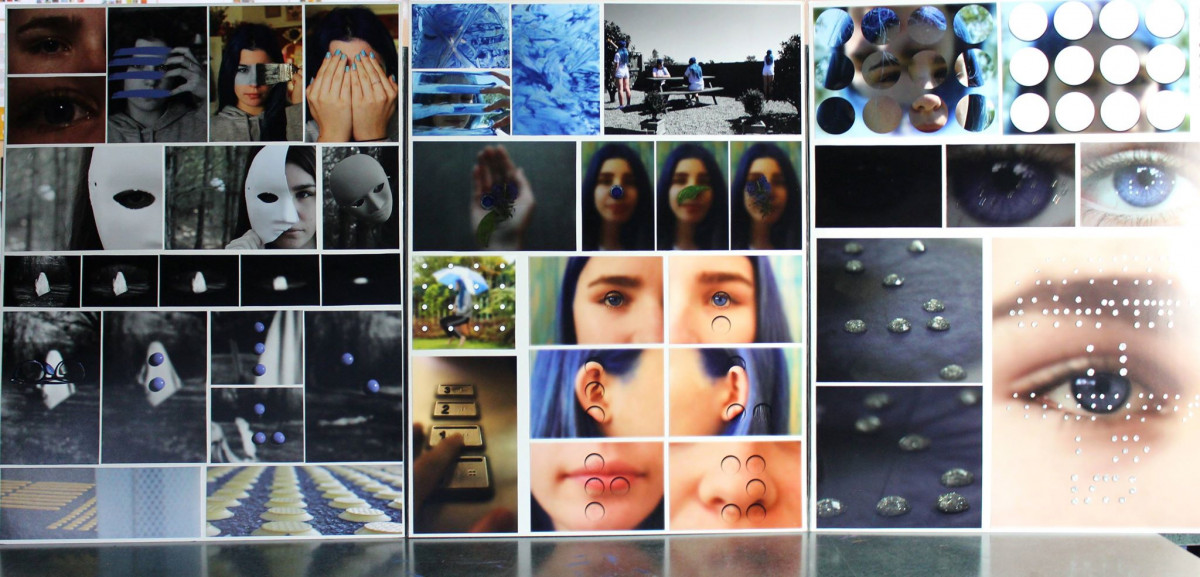
The 14 credit, 3 panel folio will be produced by those who are choose PHT3. The planning and successful production of this external folio will allow for 'course endorsement'.
With teacher guidance, every student will produce their own range of ideas and artworks. It will generally reflect their interests and aspirations.
Each folio is unique and the student programme is personalized to the suit the individual. It is their ideas and conceptual journey which must be supported by the kaiako / teacher.
Level 3 - Student researching and developing ideas in his workbook
Scholarship, an exam beyond Level 3, is available in this discipline; Photography. Students will 'opt in' and gain regular support and guidance. This is available for anyone who is keen to do what it takes to succeed in a Visual Arts Scholarship submission. We have had many Excellences, Scholarships and Outstanding Scholarships over the recent years. The 'exam' is completed concurrently with the Level 3 years work. Essentially all the gathered workbook information is distilled down to eight A3 pages of inter-connected essence which are submitted in November. (an example page is below)
NCEA L3 Physical Education
PEd3This course includes both theory and practical elements. It will suit students interested in sport, wanting to study sport further, or moving into a sport based career.
-Hauora/wellbeing - Looking at how yours or others well-being can be affected using the Te where Tapa Whā model. You will reflect on how Physical Active has impacted your well-being
-Skill Acquisition and Sports Psychology - This is a career that every professional sports team or individual has. We look at how the mind plays big part in everything we do.
-Exercise Physiology - Looking at body's responses to physical activity. How the body adapts to physical activity over time? How can we train in the most effective way?
-Biomechanical Analysis - analyzing our movements using video. From there we investigate ways we can be more effective during exercise and sports movement
-Volleyball in conjunction with theory work.
-Mountain Biking Camp - Investigate/Plan the Health and Safety requirements for Mountain Biking on the Queen Charlotte track.
There is the option to do Achievement Standard As 3.5 which looks at an issue in Sport. This standard allows you to achieve 4 reading credits for literacy.


NCEA L3 Physics - Mātai Ahupūngao
Phy3The study of the universe itself, level 3 Physics builds upon level 2 exploring the theories and principles involved in the physical world, in all its intricate beauty. Topics you will learn about include simple harmonic motion, as well as practical experimental and research skills. By the end of the course, you will gain a deeper understanding about the principles of wave, mechanical systems, electronic systems, nuclear and atomic physics and much more. Below is an example of the course content with regard to electrical systems.
You will gain an understanding of modern physics and the real reason Einstein got his PhD!
Capacitor Lab
If you are interested in the application of scientific theories in the physical world, understanding how the world works, finding out how about interaction between physical concepts like magnetism and electricity as well as how this has impacted the world, then this is your subject.

NCEA L3 Psychology - Mātai Hinengaro
Psy3Building on the foundations laid in Year 12, the NCEA Level 3 Psychology course is designed to deepen your understanding of psychological concepts and develop advanced analytical and research skills. This course will prepare you for higher education and careers in psychology and related fields by focusing on critical thinking, in-depth analysis, and independent research.

Psychology at this level emphasizes the application of psychological knowledge to real-world situations and the development of research skills. You will learn to analyze complex psychological theories, evaluate research methodologies, and conduct your own investigations. This course will enhance your ability to:
- Critically analyze and compare different psychological approaches
- Evaluate the impact of psychological research on society
- Develop and execute independent research projects
- Apply psychological principles to contemporary issues
The skills you develop in this course are highly transferable and will be valuable in a wide range of academic and professional contexts.
The course is structured around four key L3 Psychology standards:
Analyzing Psychological Approaches
You will:
- Examine various psychological theories and models in depth
- Analyze how different approaches interact and influence our understanding of human behaviour
- Develop skills in comparing and contrasting psychological perspectives
- Apply multiple psychological approaches to complex behavioural phenomena
Research Analysis
This involves:
- In-depth study of a pivotal piece of psychological research
- Exploration of the historical context and contemporary relevance of the chosen research
- Analysis of research methodologies and their strengths and limitations
- Evaluation of the societal impacts of significant psychological studies
Issue Analysis (optional standard)
In this section, you will:
- Critically evaluate a significant current issue in psychological practice
- Explore the ethical implications of psychological research and practice
- Develop skills in argumentation and evidence-based reasoning
- Prepare for the external examination, which will focus on this component
Psychological Investigation
This is a psychology experiment that allows you to:
- Choose a psychological topic of personal interest for in-depth investigation
- Develop a research plan through consultation with your teacher
- Execute your research project, collecting and analyzing data
- Present your findings in a formal research report
Throughout the course, you will engage in discussions, debates, and presentations that will help you articulate complex psychological concepts and their real-world applications. We will also view a number of video resources, including TV series, movies and documentaries that have a psychological element.By the end of the year, you will have a sophisticated understanding of psychological principles and practices, as well as valuable experience in conducting independent research.
Scholarship
There is a new scholarship available in Psychology. This will be suitable for ākonga who are achieving at the excellence level.
NCEA L3 Rugby Academy
RAc3Rugby Academy (RAC) is a practical course for those who aspire to play rugby at a high level, want to improve their skill level and game understanding and also gain an insight into the demands of a high-performance environment. The course includes the following components:
Rugby Skill Development
Physical Fitness Training
Practical Coaching


NCEA L3 Spatial and Product Design
SAP3
Welcome to Level 3 Spatial & Product Design! This is a design course for students wishing to pursue a career or for those who wish to go on to tertiary education within the fields of Architecture, Product Design and Engineering, etc.
This year the choice is yours to choose what you would like to spealise in! Product design or Spatial design - The choice is yours!
For spatial design, you will be tasked with designing an exhibition space for Rangitane o Wairua located at the Wairau Bar. For the product you will be creating your own product of your choice picked from your life to improve!
For both projects, you will then be tasked to display your work in our very own exhibition at the end of the year!
The course contains:
- Freehand design sketching.
- CAD Skills
- Advanced rendering techniques.
- Design presentation.
- Product design development.
- Design evaluation.
- Developing the skills of divergent and convergent thinking in design work.
This is a University Entrance subject.
NCEA L3 Sport Studies
SPS3This course is suited to students who are passionate about sport. Whether it be participating in sport and sports coaching, developing leadership, communication and organisational skills through a sporting lens or learning about the fitness industry and what it takes to be a personal trainer, this could be the course for you.
Our major focus is sports coaching which we develop through a mixture of theory based lessons and practical application of coaching skills. We discuss and analyze other coaches, learn from each other and have a go ourselves. The class will progress from teaching a more laid back recreation lesson to coaching a group in a sport of your choice for a full session.
We complete unit standards based around the skills of coaching
-Run a rec lesson. Students are required to plan and then teach the class for a recreation lesson. Students must show leadership and communication skills to manage their group. Once the lesson is complete students must reflect on and review their lesson.
-Plan and run a coaching session of your choice.
-Review your coaching session
We complete several Unit Standards at Level 3 with a focus around skills required in the fitness industry
All of these units are completed at the Stadium 2000 gym complex
-Teaching correct and effective stretching techniques. Students are required to run group fitness sessions with their group. this includes, dynamic stretching, warm up, workout, warm down and static stretching
-Planning and reviewing personal gym programs. Through their terms work down at Stadium 2000 gym facility, students are required to plan out their own personal gym sessions, complete these sessions and then review them.
-The science behind the body and how it works. Students will look into the anatomy and physiology of the human body in order to make better decisions around their training plans and sessions.

NCEA L3 Statistics
MaS3This NCEA level three (curriculum level 8) Statistics course covers probability concepts and distributions, time series and bivariate data analysis and report evaluation. It provides students with the knowledge to pursue Statistics at the university level.
NCEA L3 Sustainable Marine Science - Pūtaiao Moana Pūmau
SMS3A course aimed at continuing to develop an understanding of the biology of selected marine species with a focus on aquaculture and the factors which influence sustainable marine farming.

Study species include salmon, paua, kōura and kina. Students will learn how to monitor seafood species populations and how living and non-living factors affect them. Students will develop an understanding of the interactions between different species in the marine ecosystem.
Skills that are useful across the Biological Sciences will be practiced including dissection of marine species, microscope use, measuring the size of populations of marine species. This course is particularly significant for students who would like a career in aquaculture, fisheries compliance, or the fishing industry.

NCEA L3 Te Ao Haka
TAH3At Level 8, ākonga refine their analysis of Te Ao Haka and their performance abilities. You become more confident to effectively express narrative and embody narrative meanings in your performance, learning about the influence of time, space and context on performance. A willingness to engage with te reo Māori narratives in te reo Māori or via translation is important to achieving success in this course. Ākonga explore the connections between Te Ao Haka disciplines, mātauranga Māori and the life skills Te Ao Haka develops in performers looking at the benefits for themselves, others, and Te Ao Māori. Year 13 ākonga will develop leadership skills and become effective tuākana in the multi-year NCEA Te Ao Haka class. The course is likely to be multi-level with NCEA 1 & 2 ākonga.
Kaiako: Whaea Delyn Day
NCEA L3 Te Reo Māori
Reo3In NCEA L3 Te Reo Māori ākonga develop the ability to research, inquire, create, evaluate, and communicate about topical issues, national and/or international, in te reo Māori. You will demonstrate skills in listening, reading, writing, showing/demonstrating, watching, and speaking te reo Māori through a range of local, national and global topics. You are expected to revise and augment your learning outside of the classroom.
Ākonga are expected to take part in special events such as Ngā Manu Kōrero and will learn supporting Haka, Waiata, Karakia & Mōteatea. Please also plan to attend two Wānanga Reo / te reo Māori workshops from a Thursday morning through to Friday afternoon in Term 3.
Throughout the course and by completing the Achievement Standards, Ākonga learn how to:
8.1 communicate about certainty and uncertainty, possibility and probability
8.2 develop an argument or point of view, with reasons
8.3 recount a series of events to inform, persuade or entertain
8.4 communicate the same information in different ways for different audiences
8.5 respond to selected and adapted texts in te reo Māori that are about te reo and tikanga Māori, for example, texts from recorded speeches, literature, film, newspapers, magazines, television, video, DVD and radio.
Whāinga - Goals
By the end of level 8, you can take part in general conversation with speakers of te reo Māori, understand most of what is said, and contribute relevant comments. You can explain and discuss many of your own ideas and opinions and may use te reo Māori creatively. You can read a variety of authentic te reo Māori materials and write expressively for a range of purposes. You use a range of strategies to help you to learn te reo Māori effectively, and demonstrate a high level of fluency for a learner of te reo Māori as a second language (Ministry of Education, 2009).
NCEA 3 Te Reo Māori is based on Level 8 of Te Aho Arataki Marau mo te Ako i Te Reo Māori. This course is a University Entrance Subject, and includes credits towards UE Literacy.
Kaiako: Whaea Delyn Day
NCEA L3 Te Waharoa
Wah3A course for students who are passionate about Māori culture and history, Te Waharoa NCEA L3 offers students an opportunity to delve deep into researching traditional and modern Māori knowledge and cultural concepts. Also included may be field trips locally and occasional guest speakers. This course provides a Mātauranga Māori focus for learners. The class is a tuakana teina model with students from all NCEA levels.
Te Waharoa draws on the NCEA unit standards based on tikanga (culture) and mātauranga (knowledge) Māori. The course is flexible and can be tailored to students’ interests. It draws from standards and resources that focus on a wide range of areas, both modern and traditional, such as Taonga Pūoro, Whakairo, New Māori Music, Mau Rākau, Reo Māori Media, Māori Tourism, Māori History, the Environment, and Manaaki Marae. Standards listed below are an indicative sample of what is available.
Kaiako: Whaea Arihiana Edmonds, Whaea Delyn Day

NCEA L3 Top of the South Trades Academy (NMIT) (NOT a separate course - optional part of doing a Careers Development course) (Co
Tra3NTop of the South Trades Academy delivered by NMIT.
NMIT Marlborough Campus
Standards offer vary depending on which course of study is undertaken. Students must apply for these courses and we cannot guarantee a place. Collect application forms from the Careers and Transition Department Term 3.
Courses offered every Thursday at the NMIT Marlborough Campus are:
Automotive Engineering
Aviation Engineering (Based at Woodbourne)
Salon Skills - Hair Design and Beauty Therapy
Green Pathways - Primary Industry Fundamentals (replaces Wine Cellar Operations)
Nelson Campus
Courses offered at NMIT Nelson Campus
Mechanical Engineering, Carpentry and Joinery, Electrical, Hairdressing, Hospitality, Creative Design for Hair and Make Up, Sport and Exercise, Art and Design, Digital Technology, Health and Support Services. Students are transported over to Nelson on Fridays. Please note the transport leaves very early at 6.45am and so students who arrive at Marlborough Boys' College by bus will arrive too late to catch the NMIT bus.
NCEA L3 Top of the South Trades Academy: Whenua iti (NOT a separate subject - included on top of chosen courses) (Copy)
Tra3WWHENUA ITI COURSES ARE BLOCK COURSES AND DO NOT COUNT AS ONE OF A STUDENTS SIX SUBJECTS. STUDENTS MUST COMPLETE AN ONLINE APPLICATION FORM through the TOTSA Website.
Top of the South Trades Academy Whenua Iti.
The courses offered by Whenua Iti are block courses. These are 4 week long courses that usually start at the Whenua Iti Outdoors Centre, just out of Motueka. Students taking these courses must select 6 subjects as the block courses do not count as a line in the students timetable. Travel arrangements are made by Whenua Iti so these is no cost to the student. Students can select from the following courses:
Adventure Tourism Leadership
Manaaki Tāpoi
Tourism Operations
Service Industries Internships
Environmental Science
Predator Control and Conservation
Emergency and Response
.Application forms are available from the Careers and Transition off
NCEA Level 2 English Literacy
ENG2LThis course is designed to support students in consolidating their literacy skills in readiness for the workplace. It will explore some familiar areas, such as personal responses to text and the close viewing of visual texts.
It will also involve the development of skills essential to practical literacy in the world beyond school such as writing personal and business correspondence (letters and emails) and writing short reports. An additional part will have an element of awareness of internet content.
Assessment will take place when students are prepared and the course will focus on skills development, allowing students to maintain their literacy skills (useful for all areas of study). There will be some flexibility with the delivery of standards to cater for individual student needs as required.
This course will not provide all university entrance literacy credits.
Please note that there are no external examinations in this course and it is not subject endorse-able.
NCEA Level 2 Sports Academy
SpA2NCEA Level 2 Sports Academy
Do you love sport? Do you want time to develop your skills and fitness for your chosen sport, while learning about aspects of sport science to further improve, all during your school day? If so the Senior Sports Academy course could be for you.
This is a multi-level (year 12 and 13) course for students who are committed sportsmen and are looking to excel in a particular sport, using their main sport as a context for learning in the areas listed below.
This course has been developed as a continuation of the Awata – Sports Passion program into the senior school. A major focus for each year level is on developing leadership, mental resilience, and building a well-rounded athlete that is well prepared for life after school in their chosen sport.
The courses cover aspects applicable to multiple sporting areas (nutrition, psychology, health, and physiology) and looks to give students an understanding of a potential sport/life/career. In addition to credits offered, students will also cover some non-assessed areas to supplement the courses, for example, social media training, lifestyle balance, time management, injury rehabilitation and strength & conditioning.
This course will also aim to cover additional topics such as: • Sport Psychology • Mental Preparation • Fitness Testing • Nutrition and Supplementation • Drug Testing
The students selected for these courses will have applied or been selected to enter this course, as they are strong athletes in their chosen sports and have displayed determination for success, a great work ethic and strong leadership skills. Through these courses we will look to further develop these skills and give students a unique learning environment that uses sport as a conduit, to engage and motivate the students to learn and develop and make the most of their sporting opportunities during their time at MBC and beyond.
A typical week in Sports Academy will see a student in class for one theory lesson, one lesson conducting personalised strength and conditioning and two lessons working on skill development for their particular sport. This schedule will be adapted depending on the season of your particular sport.
NCEA Level 3 Sports Academy
SpA3NCEA Level 3 Sports Academy
Do you love sport? Do you want time to develop your skills and fitness for your chosen sport, while learning about aspects of sport science to further improve, all during your school day? If so the Senior Sports Academy course could be for you.
This is a multi-level (year 12 and 13) course for students who are committed sportsmen and are looking to excel in a particular sport, using their main sport as a context for learning in the areas listed below.
This course has been developed as a continuation of the Awata – Sports Passion program into the senior school. A major focus for each year level is on developing leadership, mental resilience, and building a well-rounded athlete that is well prepared for life after school in their chosen sport.
The courses cover aspects applicable to multiple sporting areas (nutrition, psychology, health, and physiology) and looks to give students an understanding of a potential sport/life/career. In addition to credits offered, students will also cover some non-assessed areas to supplement the courses, for example, social media training, lifestyle balance, time management, injury rehabilitation and strength & conditioning.
This course will also aim to cover additional topics such as: • Sport Psychology • Mental Preparation • Fitness Testing • Nutrition and Supplementation • Drug Testing
The students selected for these courses will have applied or been selected to enter this course, as they are strong athletes in their chosen sports and have displayed determination for success, a great work ethic and strong leadership skills. Through these courses we will look to further develop these skills and give students a unique learning environment that uses sport as a conduit, to engage and motivate the students to learn and develop and make the most of their sporting opportunities during their time at MBC and beyond.
A typical week in Sports Academy will see a student in class for one theory lesson, one lesson conducting personalised strength and conditioning and two lessons working on skill development for their particular sport. This schedule will be adapted depending on the season of your particular sport.
Study line
StudyIf you are studying 5 UE approved subjects you may apply for a study line.
Year 12 English - Echoes of the Pacific
ENG2POur cultural identity stands at the very core of who we are. It shapes how we view the world and the type of people we become. Understanding the cultural contentedness of our Pasifika heritage is an important part of the puzzle and this English course will open your eyes to a wealth of knowledge.
If you are interested in indigenous knowledge and the cultural heritage of the Pacific, then this is the course for you. It offers a range of different learning opportunities that focus on research skills, presentation skills, artistic skills, reading and writing skills.
This course offers a mixture of achievement and unit standard assessments in both the English and Social Studies domains. Please note that this course does not fulfill the university entrance literacy requirement.
Subjects for Year 13 Students
Interchange Environmental Sustainability - Te Whakapūmautanga Taiao
MGCESUStudents will explore local sustainability issues in conservation, farming, marine, school and viticulture through a series of guest speakers and field trips. They will then engage with specialists in the community as stakeholders and/or mentors to undertake meaningful action of their choice. They will learn about the interconnectedness of the natural world and humans part in it, as well as environmental challenges that are facing the world and explore solutions to sustainability challenges.
Note: Field trips are an integral part of this course and it is expected that all students attend these.
This course is only available on interchange at Marlborough Girls College
NCEA L2 Mathematics
Mat2This NCEA level two (curriculum level 7) Mathematics course covers algebra, coordinate geometry, trigonometry, networks and sequences and series. It provides a solid foundation for those wishing to take Mathematics at NCEA level three.
NCEA L3 Accounting
Acc3At Level 3 this course will familiarise students with accounting practices relating to partnerships and companies. It also gives them the skills to understand the annual reports of a company and to make justified decisions for a business.
It is a practical course which will provide background knowledge for future study at a tertiary level and combines very well with L3 Business
In Accounting this year you will:
- Research a company’s financial records and prepare a report for users.
- Use data to reach a decision about costing and profit.
- Process and prepare accounts for a partnership. Prepare a company’s financial statements.
The career prospects for accountants according to Careers NZ are good as Accountants are in high demand.
NCEA L3 Agriculture and Horticulture - Ahuwhenua me te Ahuone
AGH3Agriculture and Horticulture Level 3 offers standards for those students who wish to use the course as a University Entrance subject or as a Unit Standard based course with a Primary Industry focus. Students will need to have self-management skills to keep themselves on task to complete set work.
Those students wishing to do achievement standards have 3 standards which enable them to get UE subject endorsement. Two papers will require independent work and research skills that requires students to collate information from multiple sources to write a report. Students must also correctly reference their sources. The third achievement standard is an external exam that looks at New Zealand primary production environmental issue- the exact topic changes every year.
The Unit Standard based course provides a selection of standards from many primary industries. Options include standards looking at animal anatomy, bee keeping, forestry and working dogs. Students will have workbooks that will need to be completed prior to an assessment. These students will also do an external achievement standard that looks at a New Zealand primary production environmental issue- the exact topic changes every year.
NCEA L3 Basketball Academy
BAc3This is a multi-level course suited to students who are passionate about sport, specifically, Basketball. All of the learning taking place during the year will be in a Basketball context. We plan to complete units of work based around Basketball skills, both physical and tactical, event management, Basketball refereeing, Basketball coaching and Basketball fitness. The course will be a mix of practical and class based work with the motivation to keep things as hands on and practical as possible.
What a particular week in this course may look like is, two sessions based on developing the physical and tactical skills associated with Basketball, effectively, Basketball training sessions. One session based specifically on the fitness required for Basketball and one class based session working through whatever unit we are currently working on, event management etc
The vision for this course is to offer learning in a context the students are passionate about, in turn, increasing their overall motivation to be at school. As well as the obvious benefits of students being more engaged. The second motivation is to develop the game of Basketball further at the school in order to start being more competitive against some of the major Basketball schools in the country. Basketball is a growing sport in New Zealand and we want to take the opportunity to jump on that train. This year we currently have 25 school teams involving around 230 students.
Students who select this course will need to go through an application process in order for us to select students we feel will gain the most out of this course and spots are limited. If you have any questions or need further information on this course then please see me at school or e-mail me on [email protected].nz
NCEA L3 Biology - Mātauranga Koiora
Bio3The study of life itself, level 3 Biology builds upon level 2 exploring the theories and principles involved in living systems, in all their intricate beauty. Topics you will learn about include: plant and animal responses and genetic variation and evolution, as well as practical biology and research skills. By the end of the course you will know about the principles of genetics, computational biology, natural selection, evolutionary theory, phylogenetics, animal behavioural responses to zeitgebers, how plants respond to environmental triggers and more.
You will gain an understanding of how society makes decisions about scientific issues, as well some of the ways in which the scientific community contributes to the success of the economy and society.
If you are interested in recent developments in genetic engineering or disease prevention, understanding how we evolved, finding out how about animal and plant interactions as well as care and conservation programmes, to name a few, then this is your subject.
All students go to Mistletoe Bay at the end of term 2 to carry out a practical investigation and learning about some of the wonderful flora and fauna of the marine environment of Te Wai Pounamu.
NCEA L3 Business Enterprise
BNT3In Level 3 Business Enterprise students will have the opportunity to set up and run a small business. It is a great opportunity to test your ideas, realise uniqueness, develop strengths, learn about enterprise and possibly make a profit.
At the same time, you will earn a qualification in business practice and gain valuable practical experience.
In Business Enterprise you will work as part of your own company.
Do you have a great idea that you want to pursue? Do you want to work collaboratively or as part of a team to see your great idea come to fruition? Do you have a passion for designing, planning, developing products and services to make a positive difference in our world? We invite you to to do this in Business Enterprise. We are here to support you find your true potential in Business. Come and join the team.
“Twenty years from now you will be more disappointed by the things that you didn’t do than by the ones you did do. So throw off the bowlines. Sail away from the safe harbor. Catch the trade winds in your sails. Explore. Dream. Discover.” Mark Twain
“Try not to become a man of success. Rather become a man of value.” - Albert Einstein:
NCEA L3 Calculus
MaC3This NCEA level three (curriculum level 8) Calculus course covers algebra, integration, differentiation, complex numbers and possibly conic sections. It provides students with the knowledge to pursue Calculus at the university level.
NCEA L3 Career Development
CDV3This is a Unit Standard course developed to assist students to develop a career interest. Students will undertake work that informs them further about health and safety in the workplace, pathway planning, as well as looking at financial literacy.
Students will also receive information and can gain credits through a series of driver education lessons.
They can also select courses or Unit Standards from external providers that match their career interests, however this is dependent on their ability to complete the core work first.
The Career Development Course has predominantly been designed for students who want to do Gateway and gain some work experience as part of their school program of learning. Gateway students have the opportunity to try a career that matches their interests, but must complete some compulsory papers before they go on placement.
Placements are made by the Gateway Liaison in consultation with the student, the student's caregivers, potential employers and the Gateway Coordinator. Gateway students are expected to gain 20 credits that relate to their work placement.
This course is not limited to students wanting to do Gateway and can also be for those who have an interest in Diversity, Legal Studies, Travel and Tourism, Consumer Law or Financial Capability.
NCEA L3 Chemistry - Mātai Matū
Che3
Chemistry is a fascinating subject because of its history, the beauty of its logic and its multitude of applications.
Chemistry is the study of the composition of matter and the changes in composition that this matter undergoes. We do experiments to describe what matter looks like and does and then we learn how to use chemical principles to explain and discuss why matter behaves in this way.
This Chemistry course is for students keen to extend the development of their thinking skills, ability to engage in logical argument, laboratory skills and their understanding of chemistry and for those who plan to study science or any form of applied science at tertiary level.
This course provides opportunities for students to design their own unique course according to their abilities and aspirations and, if you are doing the course as a Year 12 student, the opportunity to compete for a place on the New Zealand team for the international Chemistry Olympiad.
Topics you will learn about include:
- Redox processes in batteries - you will set up electrochemical and electrolytic cells to observe them working and you will understand the chemical reactions that occur batteries and rechargeable cells in them.
- Thermochemistry - you will observe temperature changes when chemical reactions occur
- Physical properties of materials - you will experiment to find the properties of different types of materials and then relate these to the materials' microstructure
- Spectroscopy - you will learn to use analysis graphs to identify unknown chemicals
- The chemistry of acids, bases, soluble and insoluble salts and buffers - carry out experiments on aqueous solutions and discover the links between the observations, the microstructure of the solutions, ocean acidification, ocean and coastal ecosystems.
- How to synthesis and analyse organic compounds
By the end of the course you will be able to
- use the principles of lone electron pair repulsion to draw electron configurations of atoms and structures of molecules and predict and justify their physical properties
- predict and justify whether a reaction is spontaneous and non spontaneous
- understand the implications of a material's structure on its chemical and physical properties
- calculate the enthalpy change of a reaction from book and experimental values
- use 12C NMR, Infrared and mass spectroscopy to identify unknown organic molecules
- predict chemical reactions that occur in a cell from Redox Potential values
- evaluate the validity of an aqueous chemical experiment
- use equilibrium, pH, Ka, Kb, pka, pK and Ks values in the context of strong and weak acids and bases, buffers and salt solutions
- carry out Redox, precipitation and acid - base titrations, draw acid -base titration curves and justify indicator choices
NCEA L3 Classical Studies
CLS3The influence of the classical world is everywhere. Whether it be Nike shoes, democracy, the law, language, religion, art and architecture, the Olympics, mythology, comedy and drama… the classics are foundational to western thought and culture.
Classics is the ultimate multi-disciplinary subject. You will learn about art, history, drama, engineering and archaeology. You will be challenged to face the major problems the ancients and moderns have faced: war, politics and religion, resistance to unjust leaders- civil disobedience, hospitality abuse, how to handle grumpy old men and more.
We discuss similarities and differences between Aotearoa and antiquity and gain insight into our own times.
The way the Greeks and Romans responded to the major concerns of their day “challenge, inspire and resonate with us now.”
There are only two topics we cover in Year 13. Each topic covers one internal assessment and one external assessment. They are:
The Odyssey: Set sail on one of the greatest adventures of the ancient world. Homer’s Odyssey follows the hero Odysseus as he faces monsters, temptations, and the wrath of the gods on his long journey home. Students will explore the themes, characters, and myths that have inspired storytellers for thousands of years. For the internal we look at the Odyssey across time with Art from the Renaissance period and then Christopher Nolan's popular film "the Odyssey"
OR
The Aeneid: an epic poem written by the Roman poet Virgil. It tells the story of Aeneas, a Trojan hero who escapes the fall of Troy and journeys to Italy, where he becomes the legendary ancestor of the Romans. Along the way, he faces many challenges, including storms, battles, and the tragic love of Queen Dido of Carthage. The poem celebrates Roman values such as duty, courage, and sacrifice, and explains the mythical origins of Rome.
Alexander The Great - The leader who really did change to world forever. Our study focuses on his leadership and the challenges he faced in administering his vast empire. He may have only lived a short life, but he lived it to the max. Alexander the Great (356-323 BCE) was one of history's most influential military leaders and rulers. Becoming king of Macedonia at just 20 years old, he built a vast empire stretching from Greece and Egypt to India. Renowned for his military genius, leadership, and ambition, Alexander spread Greek culture across three continents, shaping the development of the ancient world. His achievements continue to fascinate historians and students alike, making him a key figure in the study of ancient civilisations, warfare, leadership, and cultural exchange.
Ideal for students interested in history, politics, leadership, and the impact of influential individuals on world events.
For the internal assessment, we also explore his Policy of Fusion and its impact it had on the Macedonians and Greeks, and its failed attempt to bring nations together under one rule.
OR
you will explore the life and impact of Augustus, the first emperor of Rome. After years of civil war and political chaos, Augustus transformed Rome into one of the most powerful empires the world has ever seen. Through clever leadership, military success, and powerful propaganda, he established a period of peace and stability known as the Pax Romana.
NCEA L3 Construction
Con3This course builds upon the skills acquired in CON2 in readiness for moving you to the next stage in your lives outside school; the Construction industry of today. You will be taking industry based standards that will hold you in good stead for getting an apprenticeship or further training in the Building and Construction Industry.
Projects are designed around the skills that you need to acquire and the tools and machinery that you master while learning about buildings and construction practices.
This course is primarily workshop based however, there is quite a step up to Level 3 and you will be expected to show your design skills and show creativity.
You will design and make a project in the workshop and workshop area. You will need to be self motivated and show initiative in your work.
Your project will be to design and make a chicken coop.
What will I learn?
■ advanced woodworking skills
■ development of creativity and design skills
Level 3 - Construction Assessments
This course is assessed by a mixture of theory and practical work. The course provides the opportunity to gain 28 credits at Level 3.
NCEA L3 Design
Des3DES3 Design Level 3
This course is UE List A approved. There a 4 standards; 3 x INTERNAL each worth 4 credits and 1 x EXTERNAL worth 14 credits.
This is a course designed for students keen to further develop their existing Design and general art skills. It is an advanced course where design skills in media, both digital and hand-drawn, are carefully honed towards Merit and Excellence. The main focus in 'Visual Art - Design' is the graphic design processes.
- Freehand and digital drawing skills
- Finishing tools including Adobe applications (Photoshop, Illustrator, InDesign)
- Graphic design processes
- Basic photography
- Research & Design Principles
- Layout and composition
Students may also choose to upskill in a range of Adobe products including Photoshop, InDesign and Illustrator.
The design process is very structured and clear; concepts, developments, final. The design principles will appeal to the most creative student and also the most clinically minded. Design process will support the development of research and higher order thinking skills. Students will choose their own ideas, conceptual premise and theme to explore in this course.
The EXTERNAL standard is a14 credit - 3 panel portfolio.
The planning and successful production of the external folio will allow for possible 'course endorsement'.
With teacher guidance, every student will produce their own range of ideas and artworks. It will often reflect their interests and aspirations.
Level 3 Design student researching and developing ideas in his workbook
Each folio is unique and the student programme is personalized to the suit the individual. It is their ideas and conceptual journey which must be supported by the kaiako / teacher.
Scholarship, an exam beyond Level 3, is available in this discipline; Design. Students will 'opt in' and gain regular support and guidance.
This is available for anyone who is keen to do what it takes to succeed in a Visual Arts Scholarship submission. We have had many Excellences, Scholarships and Outstanding Scholarships over the recent years. The 'exam' is completed concurrently with the Level 3 years work. Essentially, all the gathered workbook information is distilled down to eight A3 pages of inter-connected essence which are submitted in November. (an example page is below)
NCEA L3 Digital Technology
DTY3DTY3 Digital Technology Level 3
The course further develops the students’ ability to create digital products based on a brief for a client, using project management tools successfully and iteratively improving the outcome.
This course opens the way to a wide variety of careers and interests. The achievement standards contribute to awards in creative industries, manufacturing and technology and services industries vocational pathways
This is a general course designed for those planning to progress in business computing or tertiary study.
There is a huge shortage of basic IT skills in the workforce. Students who wish to further their computing skills are in high demand in the workforce.
Coding has become a significant way of learning with students using many different programming software tools to solve real life problems. Students who wish to go to study Computer Science or Engineering at University can discover rewarding and well-paid careers.
Topics taught:
- Use complex processes to produce a digital outcome
- Make a complex website
- Programming with Python
- External: Computer science topic ( varies annually )
NCEA L3 Economics
Eco3In Level 3 Economics, students will compare and contrast economic decisions affecting New Zealand in contexts in which resources are scarce and use analytical tools to present justified recommendations about resource issues.
Understand market Equilibrium.
Efficiency of different market structures.
Micro economic concepts.
Demonstrate understanding of Government intervention to correct market failures.
Some current good examples in NZ currently include:
The housing market.
Covid response for businesses, consumers, international travel, healthcare....
Demerit goods such as alcohol, cigarettes.....
Merit goods such as vaccines, education....
Environmentally friendly and sustainable practices.
International trade - tariffs etc.
Students will also have the opportunity to travel to Wellington to visit places of Economic importance. This may include Parliament, Treasury, Reserve Bank, Trade me, Sharsies etc.
NCEA L3 English - Communication
Eng3CThis course offers students the opportunity to gain University Entrance Literacy through a range of internal Achievement Standards. These include responding to texts, writing portfolio and information literacy. This course is designed to allow students to work through these assessments at their own pace with the option to add unit standards in the second half of the year.
Choice around topics and areas of interest is a core focus.
This course is recommended for those students with a genuine desire to achieve their literacy requirements. It is a student-driven course that rewards motivated and engaged students.
NCEA L3 English - Eye in the Sky
Eng3EThe title of this course comes from a film by the same name - a thought-provoking film that looks (amongst other things) at the morality of the military using drones - piloted thousands of kilometers away - to kill the enemy.
This course will focus initially on the concept of morality, with a particular focus on the morality of war - if there is such a thing!
Carrying on with the war theme, the course will also focus on the idea of the horrors of war - both physical and psychological. In particular, we'll look at the desensitization to death and killing that occurs in war, the slow moral decline of soldiers in battle and the PTSD that so many face during and after war.
NCEA L3 English - One eye open
Eng3WEnglish - One Eye Open
Are you blind to the truth?
Have we really thought it through?
Whichever text you choose, the focus is on critical evaluation - namely, identifying and understanding the 'why' element.
This full year course develops critical thinking and communication skills around a range of written texts. Students will complete internal and external achievement assessments developed around these texts, so this course ideally suits confident readers. The course focuses on both providing students with the opportunity to gain NCEA Level 3 credits, but also further developing core language skills required at both university and in the workplace. Students will engage in a research project through a literary lens, make connections between texts, close view a film, write in a variety of different genres, and showcase critical evaluation skills through an external essay.
Student choice is encouraged where practical, and part of the development of critical thinking skills is to enable students to connect their own world view about the material we engage in and with.
NCEA L3 General Engineering
GEn3General Engineering
This course is suited to students who have a general interest in Engineering or who wish to undertake engineering related occupations.
At level 3 there is a higher requirement of independence and showcasing skills from previous years.
Year 13 focus is around fine engineering and more advanced machining and milling process.
The course can lead you to engineering related occupations and tertiary engineering courses.
NCEA L3 Geography
Geo3At Level 3 this course focusses on a small number of geographic case studies and ask students to comprehensively study the patterns, processes and interactions that take place within those environments.
- The Wairau Valley
- Tourism in Bali
- Accessibility at MBC study
- Contemporary Geographic Issue
- Global Geographic Study
NCEA L3 History
His3History world-wide, is a subject that is going through something of a renaissance at the moment, as employers seek people who can think on their feet, show initiative, and are creative thinkers. Many jobs require analytical and research skills. Both are fundamental to the study of History.
Students taking this course will deepen their critical understanding of issues important to our nation and others. They will increase their knowledge of human behaviour and their understanding of different lifestyles and viewpoints. They will observe how individuals and forces can influence the course of events. They will be able to start to see the big picture and understand why.
Topics:
1. New Zealand in the 19th Century
A crucial period in New Zealand’s history was the period when Maori and the outside world came into increasing contact 1820 – 1850. During this time the Treaty of Waitangi was signed and thousands of British settlers arrived. An understanding of this period is needed by many professions in New Zealand today. This period is extremely relevant to history students in Marlborough as a great deal of early contact happened here.
From 1840 - 1900, relatively large numbers of migrants came to New Zealand. These immigrants shaped New Zealand in ways that are still of huge significance to our society today. Our laws, culture and landscape were all changed, as were the lives of the people who came here to create a new nation.
You will have the opportunity to delve into this crucial stage in New Zealand’s history by choosing the aspect that interests you. You will conduct research and produce a report analysing an issue in New Zealand history.
2. US Civil War
The American Civil War was fought between the North and the South 1861-1865 and it is a deeply ingrained part of the culture of many Americans today. It is usually seen as being triggered by the election of Abraham Lincoln as President in 1860. Lincoln wanted to end slavery and keep the Union together.
MBC students at the Royal Naval College, Greenwich, London, 2017
MBC students at White's Bay Cable Station 2021
MBC & MGC students at Gettysburg, USA, 2023
NCEA L3 Hono - Connect/Dive
Hon3If you love diving, or want to start your diving journey then this course is for you.
Hono (Connect) is a course based around the ocean, boating and diving. The purpose of this course is around connection. Connection to the ocean, connection to important areas in Marlborough, connection with traditional ways to harvest and prepare Kai Moana, connection with whānau and the community and connection with local industry groups.
If selecting this course, you will complete 3 compulsory units.
1) Harvesting and preparing Kai Moana
2) Coast guard day skippers course
3) Weather analysis
You will also have the opportunity to work with the Blenheim Dive Centre and gain either your PADI open water SCUBA (tanks) dive certificate and then move on to your PADI SCUBA Advanced dive certificate or your PADI free dive certificate and then move onto your PADI Freedive Advanced dive certificate.
We have made this course as hands on as possible and there will be a mixture of class based learning, breath hold theory and training in class, dive training in the stadium pool, boat trips in the sounds, spearfishing trips and open water diving.
We will also be working with industry groups such as Marine Farming Industry to learn how their industry runs. There may be further opportunities in these industries if students want to pursue.
NCEA L3 Hospitality
Hos3Food Technology in Year 13 provides students with the opportunity to achieve Industry Training Unit Standards in Cookery. The service I Q unit standard workbooks provide assessment tasks. Demonstrations, student research and presentation of seminars to the group, sensory taste testing and investigations are some of the delivery techniques used to teach skills and knowledge. Chefs, guest speakers, visits and work experience may contribute to the programme. Students are to study the assessment information and ask the teacher to clarify any points if necessary. These unit standards contribute towards chef training-cookery and bakery tertiary qualifications.
Vocational Pathways:
Cookery qualifications through apprenticeships and studies at Polytechnics and University.
These unit standards apply to the Services Industry Sector vocational pathway.
NCEA L3 Mathematics
Mat3This NCEA L3 (curriculum level 8) Mathematics course covers probability concepts, critical paths and project management, time series data analysis, algebra, and Bivariate data. It provides students with the knowledge to pursue commerce, business or arts at the university level.
NCEA L3 Media Studies
Med3This is a full year general course for students interested in film production, film study and analysis of the media. It focuses on the following topics:
Planning and creating a film
Film analysis
Media representation
Media and society
Genre analysis
NCEA L3 Music
Mus3MUS3 Music Level 3
This is a full year general course for students interested in a career in the various music industries or entertainment fields. Students should be on their fifth year of instrumental tuition.
Students make choices about the topics and assessments they wish to study for, based on their individual strengths, skills and interests. Generally, the course focuses on the following topics:
- Solo performance
- Group performances
- Composition
- Notation dictations
- Roman Numeral, four part harmony writing
Students are encouraged to enrol for Music Scholarship.
NCEA L3 Outdoor Education 300
OED300This is a practical course for students who enjoy the Outdoors and/or who wish to pursue a career in the Outdoor industry.
Sea Kayaking
Ski-ing/Snowboarding
Bushcraft & Survival
River Crossing
Plus 1 Outdoor Pursuit of your choice
NCEA L3 Painting
Ptg3Level 3 Painting - PTG3 - University Entrance and List A approved
This is a course designed for students keen to further develop their existing Painting and general art skills. It is an advanced course where painting skills in media such as acrylic and oil paint are carefully honed towards Merit and Excellence. Students may also choose to upskill in digital painting.
Mixed media and some sculpture are also encouraged as students explore their choice of ideas. Observational and freehand drawing skills extended and students may also wish to draw digitally.
The painting process will also support the development of research and higher order thinking skills which may be applied at Scholarship level. Students will choose their own ideas, conceptual premise and theme to explore in this course.
Panel 2 of a Level 3 folio submission related to an identical twin finding their individual identity.
The External, is a portfolio submission worth 14 credits. This 3 panel portfolio is Externally assessed. The planning and successful production of this external submission will allow for 'course endorsement'.
With teacher guidance, every student will produce their own range of ideas and artworks using paint as the primary medium. These artworks will most often reflect interests and aspirations of the student.
Level 3 Painting - A senior student researching and developing ideas in his workbook.
Each folio is unique and the student programme is personalized to the suit the individual. It is their ideas and conceptual journey which must be supported by the kaiako / teacher.
Scholarship, an exam beyond Level 3, is available in this discipline; Painting. Students will 'opt in' and gain regular support and guidance. This is available for anyone who is keen to do what it takes to succeed in a Visual Arts Scholarship submission. We have had many Excellences, Scholarships and Outstanding Scholarships over the recent years. The 'exam' is completed concurrently with the Level 3 years work. Essentially all the gathered workbook information is distilled down to eight A3 pages of inter-connected essence which are submitted in November. (an example page is below)
NCEA L3 Performance Dance
PDP3Performance Dance is a subject in which dance and the arts are pivotal in providing a space where students can confidently navigate their cultural identity.
This is a full-year course specialising in Pasifika dance skills. Students demonstrate techniques and movements associated with Pasifika dance genres or styles or that include personal ways of moving. They demonstrate the skilled use of balance, accurate use of space, timing, and energy.
The students will achieve NZQA qualifications in dance. They will experience success through their culture and heritage. Students will be confident pursuing pathways in their culture, art, and heritage and can confidently lead in all areas of their learning journey. It will be underpinned by the New Zealand Curriculum, focusing on critical thinking skills, a culture of ako, managing self, participating and contributing to the group, and expressing themselves through language, song, and dance.
NCEA L3 Photography
Pht3Level 3 Photography - PHT3
University Entrance and List A approved
Introduction to the course includes the development of skills in photography and art thinking. Students are encouraged to draw from their environment and make artworks recognizing the conventions used in photographic practice. Use of studio lighting, time lapse and various indoor and outdoor photoshoots is expected.
All standards are designed to develop further skills and understanding which ultimately lead towards the 14 credit portfolio.
The 14 credit, 3 panel folio will be produced by those who are choose PHT3. The planning and successful production of this external folio will allow for 'course endorsement'.
With teacher guidance, every student will produce their own range of ideas and artworks. It will generally reflect their interests and aspirations.
Each folio is unique and the student programme is personalized to the suit the individual. It is their ideas and conceptual journey which must be supported by the kaiako / teacher.
Level 3 - Student researching and developing ideas in his workbook
Scholarship, an exam beyond Level 3, is available in this discipline; Photography. Students will 'opt in' and gain regular support and guidance. This is available for anyone who is keen to do what it takes to succeed in a Visual Arts Scholarship submission. We have had many Excellences, Scholarships and Outstanding Scholarships over the recent years. The 'exam' is completed concurrently with the Level 3 years work. Essentially all the gathered workbook information is distilled down to eight A3 pages of inter-connected essence which are submitted in November. (an example page is below)
NCEA L3 Physical Education
PEd3This course includes both theory and practical elements. It will suit students interested in sport, wanting to study sport further, or moving into a sport based career.
-Hauora/wellbeing - Looking at how yours or others well-being can be affected using the Te where Tapa Whā model. You will reflect on how Physical Active has impacted your well-being
-Skill Acquisition and Sports Psychology - This is a career that every professional sports team or individual has. We look at how the mind plays big part in everything we do.
-Exercise Physiology - Looking at body's responses to physical activity. How the body adapts to physical activity over time? How can we train in the most effective way?
-Biomechanical Analysis - analyzing our movements using video. From there we investigate ways we can be more effective during exercise and sports movement
-Volleyball in conjunction with theory work.
-Mountain Biking Camp - Investigate/Plan the Health and Safety requirements for Mountain Biking on the Queen Charlotte track.
There is the option to do Achievement Standard As 3.5 which looks at an issue in Sport. This standard allows you to achieve 4 reading credits for literacy.
NCEA L3 Physics - Mātai Ahupūngao
Phy3The study of the universe itself, level 3 Physics builds upon level 2 exploring the theories and principles involved in the physical world, in all its intricate beauty. Topics you will learn about include simple harmonic motion, as well as practical experimental and research skills. By the end of the course, you will gain a deeper understanding about the principles of wave, mechanical systems, electronic systems, nuclear and atomic physics and much more. Below is an example of the course content with regard to electrical systems.
You will gain an understanding of modern physics and the real reason Einstein got his PhD!
Capacitor Lab
If you are interested in the application of scientific theories in the physical world, understanding how the world works, finding out how about interaction between physical concepts like magnetism and electricity as well as how this has impacted the world, then this is your subject.
NCEA L3 Rugby Academy
RAc3Rugby Academy (RAC) is a practical course for those who aspire to play rugby at a high level, want to improve their skill level and game understanding and also gain an insight into the demands of a high-performance environment. The course includes the following components:
Rugby Skill Development
Physical Fitness Training
Practical Coaching
NCEA L3 Spatial and Product Design
SAP3
Welcome to Level 3 Spatial & Product Design! This is a design course for students wishing to pursue a career or for those who wish to go on to tertiary education within the fields of Architecture, Product Design and Engineering, etc.
This year the choice is yours to choose what you would like to spealise in! Product design or Spatial design - The choice is yours!
For spatial design, you will be tasked with designing an exhibition space for Rangitane o Wairua located at the Wairau Bar. For the product you will be creating your own product of your choice picked from your life to improve!
For both projects, you will then be tasked to display your work in our very own exhibition at the end of the year!
The course contains:
- Freehand design sketching.
- CAD Skills
- Advanced rendering techniques.
- Design presentation.
- Product design development.
- Design evaluation.
- Developing the skills of divergent and convergent thinking in design work.
This is a University Entrance subject.
NCEA L3 Sport Studies
SPS3This course is suited to students who are passionate about sport. Whether it be participating in sport and sports coaching, developing leadership, communication and organisational skills through a sporting lens or learning about the fitness industry and what it takes to be a personal trainer, this could be the course for you.
Our major focus is sports coaching which we develop through a mixture of theory based lessons and practical application of coaching skills. We discuss and analyze other coaches, learn from each other and have a go ourselves. The class will progress from teaching a more laid back recreation lesson to coaching a group in a sport of your choice for a full session.
We complete unit standards based around the skills of coaching
-Run a rec lesson. Students are required to plan and then teach the class for a recreation lesson. Students must show leadership and communication skills to manage their group. Once the lesson is complete students must reflect on and review their lesson.
-Plan and run a coaching session of your choice.
-Review your coaching session
We complete several Unit Standards at Level 3 with a focus around skills required in the fitness industry
All of these units are completed at the Stadium 2000 gym complex
-Teaching correct and effective stretching techniques. Students are required to run group fitness sessions with their group. this includes, dynamic stretching, warm up, workout, warm down and static stretching
-Planning and reviewing personal gym programs. Through their terms work down at Stadium 2000 gym facility, students are required to plan out their own personal gym sessions, complete these sessions and then review them.
-The science behind the body and how it works. Students will look into the anatomy and physiology of the human body in order to make better decisions around their training plans and sessions.
NCEA L3 Statistics
MaS3This NCEA level three (curriculum level 8) Statistics course covers probability concepts and distributions, time series and bivariate data analysis and report evaluation. It provides students with the knowledge to pursue Statistics at the university level.
NCEA L3 Sustainable Marine Science - Pūtaiao Moana Pūmau
SMS3A course aimed at continuing to develop an understanding of the biology of selected marine species with a focus on aquaculture and the factors which influence sustainable marine farming.
Study species include salmon, paua, kōura and kina. Students will learn how to monitor seafood species populations and how living and non-living factors affect them. Students will develop an understanding of the interactions between different species in the marine ecosystem.
Skills that are useful across the Biological Sciences will be practiced including dissection of marine species, microscope use, measuring the size of populations of marine species. This course is particularly significant for students who would like a career in aquaculture, fisheries compliance, or the fishing industry.
NCEA L3 Te Ao Haka
TAH3At Level 8, ākonga refine their analysis of Te Ao Haka and their performance abilities. You become more confident to effectively express narrative and embody narrative meanings in your performance, learning about the influence of time, space and context on performance. A willingness to engage with te reo Māori narratives in te reo Māori or via translation is important to achieving success in this course. Ākonga explore the connections between Te Ao Haka disciplines, mātauranga Māori and the life skills Te Ao Haka develops in performers looking at the benefits for themselves, others, and Te Ao Māori. Year 13 ākonga will develop leadership skills and become effective tuākana in the multi-year NCEA Te Ao Haka class. The course is likely to be multi-level with NCEA 1 & 2 ākonga.
Kaiako: Whaea Delyn Day
NCEA L3 Te Reo Māori
Reo3In NCEA L3 Te Reo Māori ākonga develop the ability to research, inquire, create, evaluate, and communicate about topical issues, national and/or international, in te reo Māori. You will demonstrate skills in listening, reading, writing, showing/demonstrating, watching, and speaking te reo Māori through a range of local, national and global topics. You are expected to revise and augment your learning outside of the classroom.
Ākonga are expected to take part in special events such as Ngā Manu Kōrero and will learn supporting Haka, Waiata, Karakia & Mōteatea. Please also plan to attend two Wānanga Reo / te reo Māori workshops from a Thursday morning through to Friday afternoon in Term 3.
Throughout the course and by completing the Achievement Standards, Ākonga learn how to:
8.1 communicate about certainty and uncertainty, possibility and probability
8.2 develop an argument or point of view, with reasons
8.3 recount a series of events to inform, persuade or entertain
8.4 communicate the same information in different ways for different audiences
8.5 respond to selected and adapted texts in te reo Māori that are about te reo and tikanga Māori, for example, texts from recorded speeches, literature, film, newspapers, magazines, television, video, DVD and radio.
Whāinga - Goals
By the end of level 8, you can take part in general conversation with speakers of te reo Māori, understand most of what is said, and contribute relevant comments. You can explain and discuss many of your own ideas and opinions and may use te reo Māori creatively. You can read a variety of authentic te reo Māori materials and write expressively for a range of purposes. You use a range of strategies to help you to learn te reo Māori effectively, and demonstrate a high level of fluency for a learner of te reo Māori as a second language (Ministry of Education, 2009).
NCEA 3 Te Reo Māori is based on Level 8 of Te Aho Arataki Marau mo te Ako i Te Reo Māori. This course is a University Entrance Subject, and includes credits towards UE Literacy.
Kaiako: Whaea Delyn Day
NCEA L3 Te Waharoa
Wah3A course for students who are passionate about Māori culture and history, Te Waharoa NCEA L3 offers students an opportunity to delve deep into researching traditional and modern Māori knowledge and cultural concepts. Also included may be field trips locally and occasional guest speakers. This course provides a Mātauranga Māori focus for learners. The class is a tuakana teina model with students from all NCEA levels.
Te Waharoa draws on the NCEA unit standards based on tikanga (culture) and mātauranga (knowledge) Māori. The course is flexible and can be tailored to students’ interests. It draws from standards and resources that focus on a wide range of areas, both modern and traditional, such as Taonga Pūoro, Whakairo, New Māori Music, Mau Rākau, Reo Māori Media, Māori Tourism, Māori History, the Environment, and Manaaki Marae. Standards listed below are an indicative sample of what is available.
Kaiako: Whaea Arihiana Edmonds, Whaea Delyn Day
Study line
StudyIf you are studying 5 UE approved subjects you may apply for a study line.
Year 12 English - Echoes of the Pacific
ENG2POur cultural identity stands at the very core of who we are. It shapes how we view the world and the type of people we become. Understanding the cultural contentedness of our Pasifika heritage is an important part of the puzzle and this English course will open your eyes to a wealth of knowledge.
If you are interested in indigenous knowledge and the cultural heritage of the Pacific, then this is the course for you. It offers a range of different learning opportunities that focus on research skills, presentation skills, artistic skills, reading and writing skills.
This course offers a mixture of achievement and unit standard assessments in both the English and Social Studies domains. Please note that this course does not fulfill the university entrance literacy requirement.