
Burnside High School
Canterbury
Burnside High School Curriculum
224 subjects available for 2026/2027.
Subjects for Year 8 Students
Junior Te Ao Haka
JTAHTe Ao Haka

This course introduces students to the rich world of Māori performing arts.
Students of Te Ao Haka develop a range of skills and dispositions that enable them to become life-long learners and equip them for future success.
Te Ao Haka embodies several dispositions, giving ākonga the opportunity to grow into proud, confident, disciplined, resilient, accountable, hard working, committed, humble leaders who are able to work collaboratively. The skills of manaaki, tiaki, aroha, whakapono, aumangea, tiaki wā and tōngakingaki will provide lifelong learning for ākonga.
For many learners, Te Ao Haka provides access to te reo Māori that they have not previously had. Te Ao Haka encourages and facilitates learning about reo ā-waha as well as reo ā-tinana, allowing students to expand their skills as communicators.
- Concepts of whakapapa and taiao, and of place space and time
- To communicate narratives.
- To engage with tikanga, reo, and Māori culture and identity.
- Performance as an intrinsic component of Te Ao Haka.
This is a preparatory course for Senior Te Ao Haka.

The course will operate as a 2 year programme so students can choose it in both Yr 9 and 10 but learn different things each year.
Year 1:
Students will learn the pūrākau associated with te ao haka, the significant atua and the whakapapa of the key features.
They will learn kapa haka items alongside the history of those items: the composers, the reasons, and their significance.
Year 2: Students will learn about waiata and haka from their own whakapapa, or the region they are from/live in.
They will learn kapa haka items alongside the history of those items: the composers, the reasons, and their significance.
Both year levels will perform in the Ngāhau section of the Tūhono Festival as a kapa.

Year 09 Digital Technologies
9DGTDigital Technologies
Digital Technologies is an exciting area that leads into the lucrative IT industry which is seeing massive growth and development! People skilled in this area are highly sort after as every industry has IT involved..... lots of opportunities.
Students are introduced to a variety of skills and knowledge across a range of Digital Technologies and will apply them to a personal project. Assessment is related directly to the evidence produced by a student while completing a project. Students are encouraged to help each other with learning technical skills, and will prepare them for any of the senior DT courses.
Areas covered are:
- Coding in Scratch
- Graphic Design
- Image Creation
- Independent Design Project
Students will develop a wider skill set in:
- Project management and communication skills
- Problem solving individually and in teams
- Creative expression
- Algorithmic/computational thinking
- Designing and developing digital outcomes
- Establishing fundamental digital skills (specialist language symbols and texts)
- Collaborative documents and advanced Google Drive
- Information Management
Feel free to check out our Year 09 Digital Technologies Course for more course information.
This course is well supported with cutting-edge equipment including laser cutters, CnC machines, 3D printers, resin printers, vacuum formers, airbrushes, Wacom Cintiq 16" drawing tablets, vinyl cutters, furnace to smelter and industry standard software such as Blender, Adobe Cloud and Fusion 360.
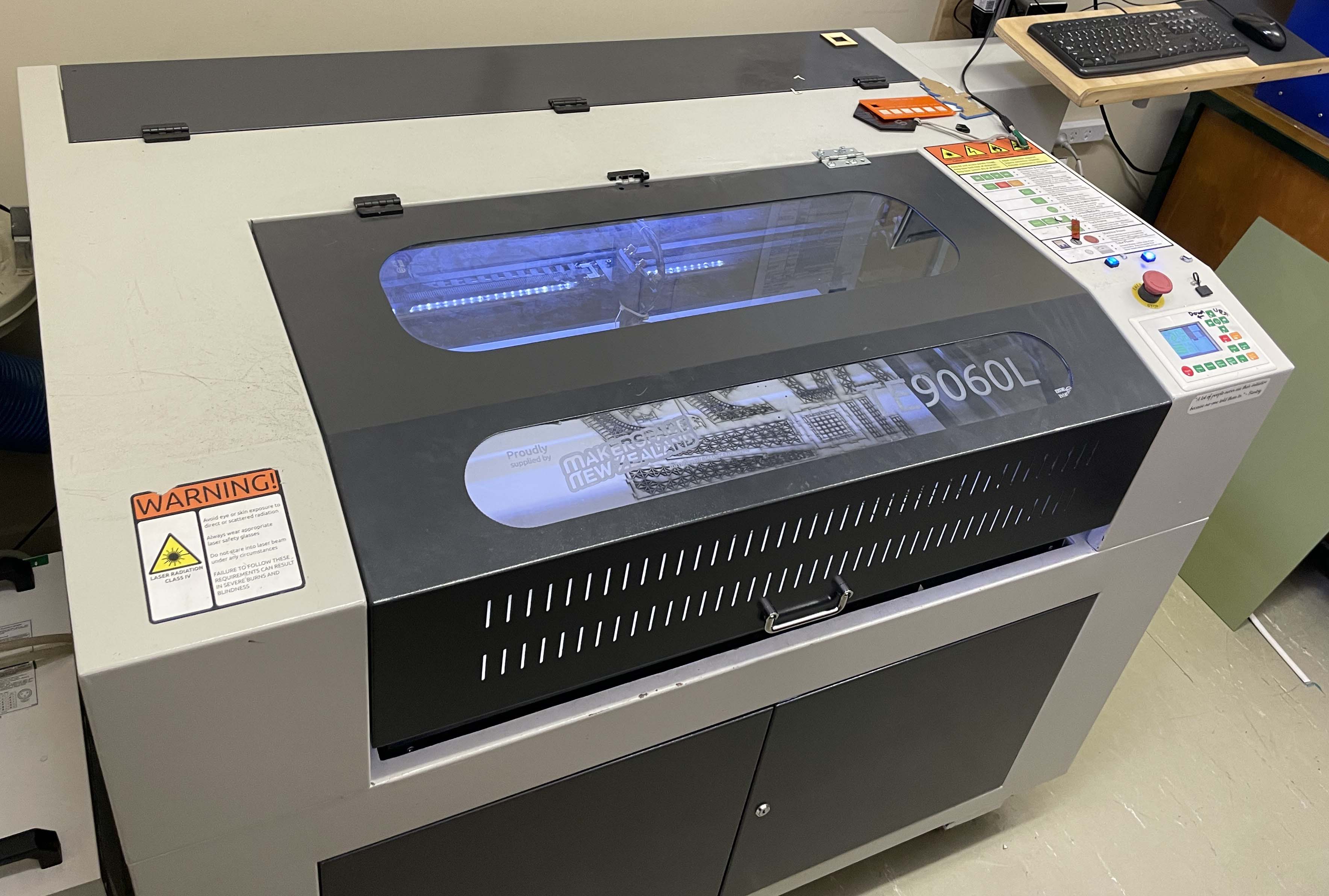
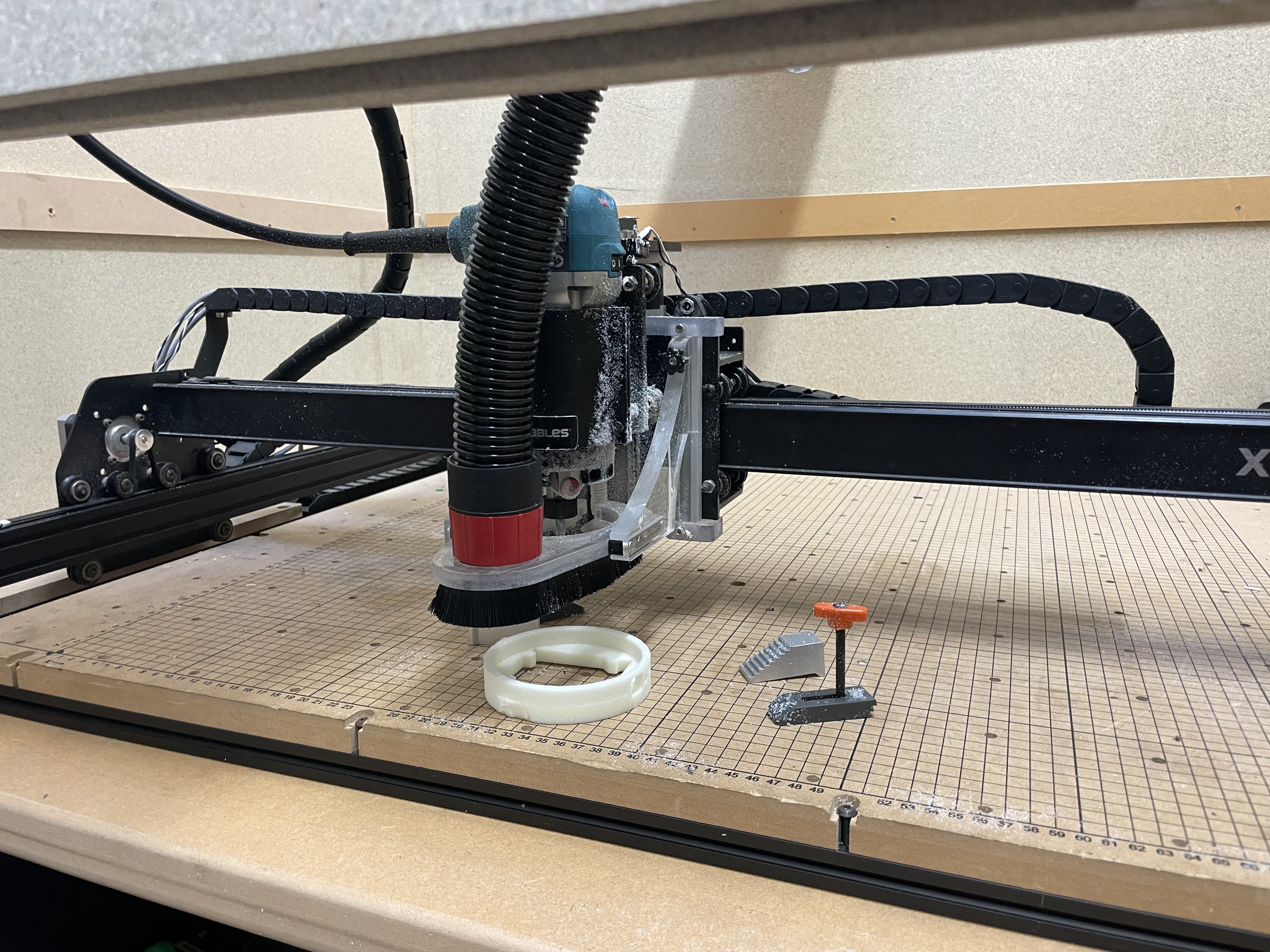


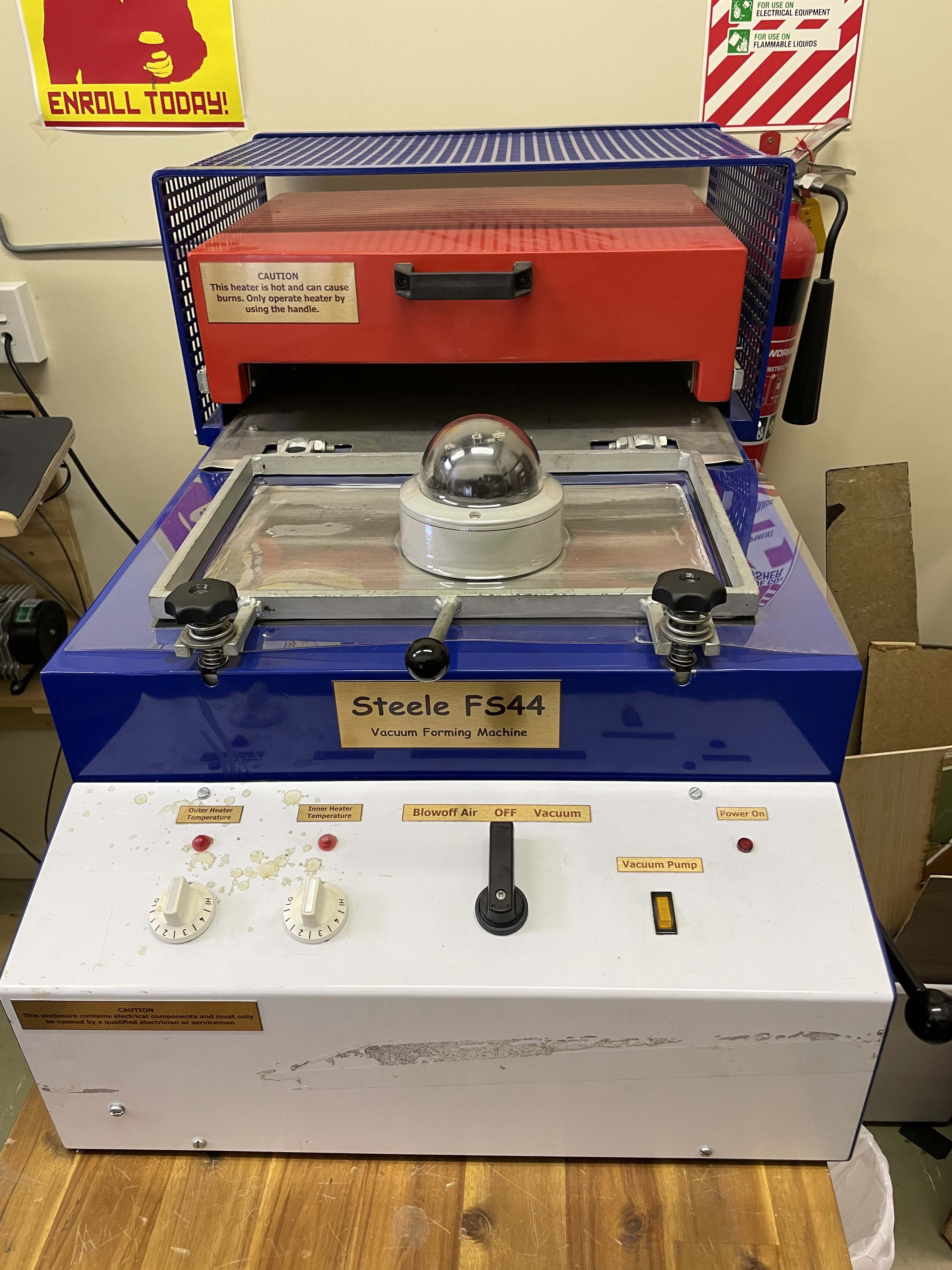

Below are a range of examples of students work.
Year 09 Electronics
9ELTY9 Electronics Technology
Y9 Electronics Technology is a practical, hands-on introductory course where students discover how electronic systems work by building, testing, and programming a range of electronic projects. No previous experience is required.
Students develop practical skills in soldering, circuit construction, testing, fault-finding, and the safe use of workshop equipment. They investigate the nature of electronics, learn about common electronic components and their functions, and build and test simple electronic circuits.
Students are also introduced to programming using PICAXE microcontrollers, learning how software controls electronic systems through projects such as programmable traffic lights and railway crossings.
This course provides students with a practical introduction to electronics and prepares them for further study in the Year 10 Electronics Technology course.
This is an optional one-semester Year 9 course.
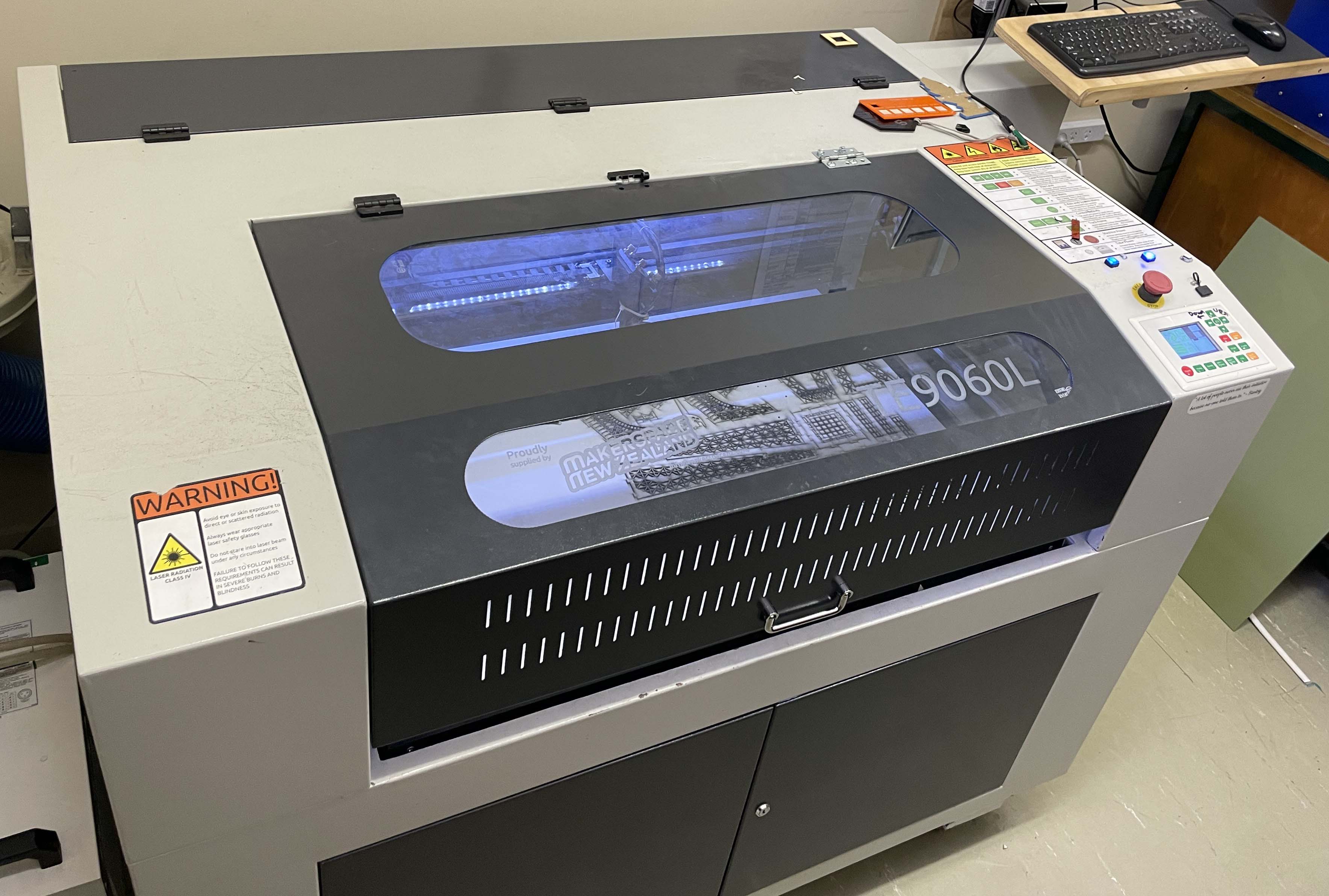
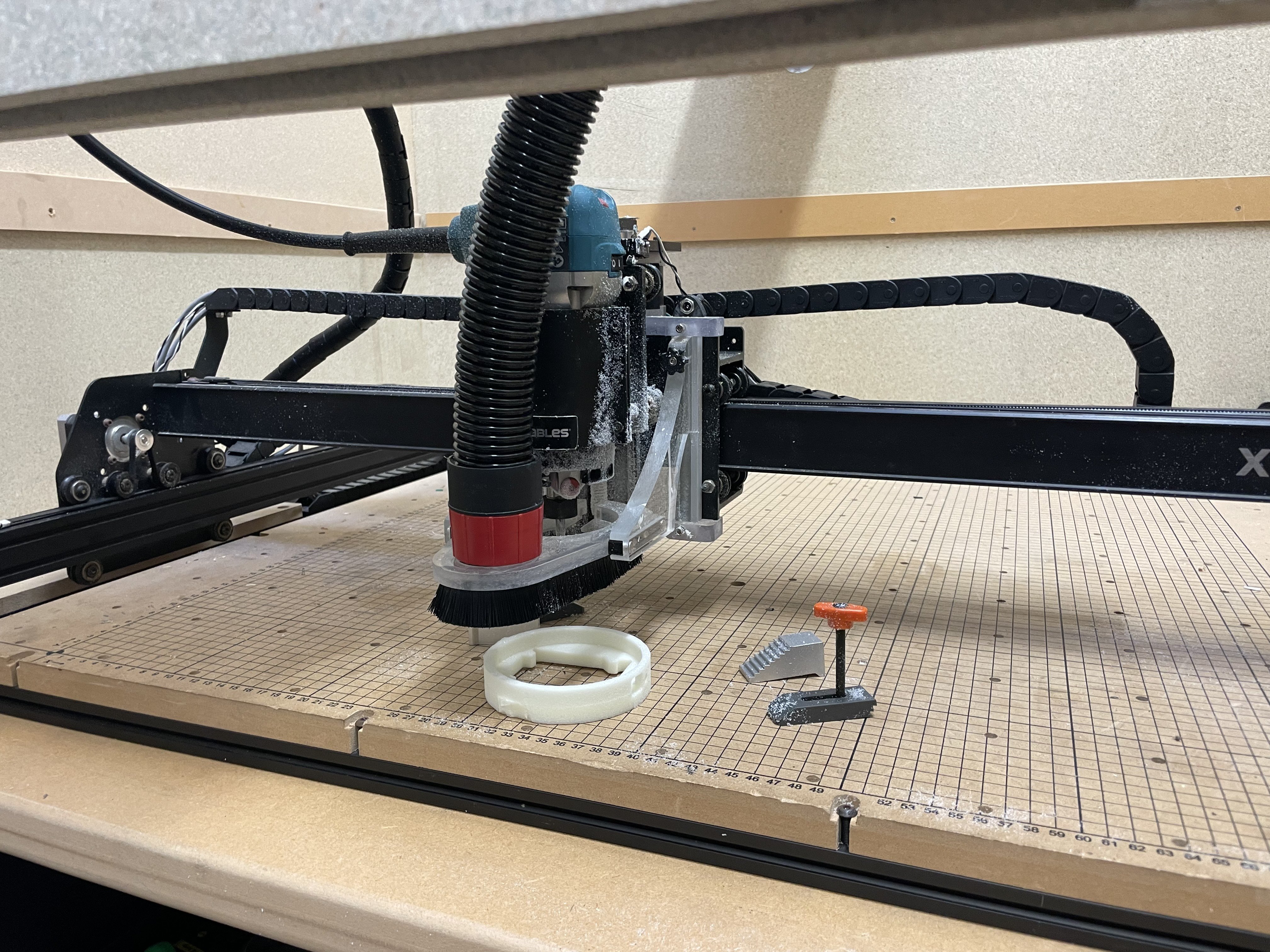
Students have access to a dedicated Electronics Laboratory equipped with professional electronics equipment, laser cutters, 3D printers, CNC machinery, and other digital fabrication tools.


Students have access to Laser cutters, 3D Printers, Vacuum Formers and CNC machining.


Year 9 Chinese Full Year
9MNFMandarin Full Year Course. The Year 9 full year course focuses on building communicative skills in Chinese Mandarin in all essential areas of listening, speaking, reading and writing. Cultural competency and some modern and historical content is also covered.
Students will make some real headway in Chinese Mandarin in Year 9, including learning to read approximately 130 Chinese characters. Therefore, it is essential for students planning to study Year 10 Chinese the following year to take the full year course in Year 9.
Year 9 Chinese Half Year
9MNHMandarin Half Year Course. The Year 9 half year course focuses on building communicative skills in Chinese Mandarin in all essential areas of listening, speaking, reading and writing. Cultural competency and some modern and historical content is also covered.
Students planning to study Year 10 Chinese the following year should not take the half year course. It is essential that they take the full year course in Year 9 in order to prepare appropriately for Year 10.
Year 9 Dance
9DNCYear 9 Dance: Express, Create, and Perform
Welcome to Year 9 Dance! This dynamic course is designed to introduce you to the exciting world of movement, performance, and choreography. Whether you already take dance classes outside of school or simply love to stay active and creative, this subject offers a vibrant space to develop your talents, collaborate with peers, and build your confidence.
Course Overview
Throughout the year, you will explore both the practical and creative sides of dance. Vocabulary and terminology will be integrated into every unit to help you speak, think, and perform like a professional.
You will focus on four key areas:
- Features of Dance Styles: Explore and celebrate the unique characteristics of a variety of dance genres.
- Elements of Dance: Learn the fundamental building blocks of movement and how to use them effectively.
- Choreography: Discover the art of composition and learn how to design your own original routines.
- Performance Techniques: Master the skills needed to project focus, energy, and expression on stage.
Skills You Will Develop
Dance is about much more than just learning steps. This course is designed to help you grow as an individual by fostering essential life skills, including:
- Creativity & Imagination: Learning to think outside the box and express ideas visually.
- Self-Management: Developing discipline, focus, and time-management through physical practice.
- Interpersonal Skills: Building strong communication and teamwork skills by collaborating on group pieces.
- Confidence: Overcoming performance anxiety and finding pride in your personal achievements.
This course is open to all students- NO elite background required! It is the perfect fit if you:
- Enjoy being active and prefer hands-on, practical learning.
- Have a passion for performing or want to explore your creative side.
- Already study dance as an extra-curricular activity and want to expand your knowledge, try new styles, and add choreography to your toolkit.
Ready to take the stage? Choose Year 9 Dance to challenge yourself, get moving, and create something unforgettable this year!


Year 9 Drama
9DRA
DRAMA Y9
Drama in Y9 offers an introduction to Drama and is a half year course. It will allow the students to explore ideas Dramatically, to boost confidence levels and to work on the way that you relate and Work with others.
This course will include:
- Introduction to Drama and the Drama techniques of Voice, Body, Movement and Space
- Improvisation
- Mime and Movement
- Chorus Work and a small introduction to Shakespeare


Year 9 English
9ENGThis is a compulory course in Year 9.
Year 9 English follows Phase 4 of the new New Zealand curriculum. The intention of the Burnside High School Junior English programme is to help students develop knowledge and enthusiasm for English language and literature in all its forms. We aim to promote independent readers and constructors of oral, written and visual texts.
Students will study a range of written and visual texts. They will develop their understanding of literature, along with close reading skills. They will be expected to write in a range of styles. Developing an understanding of visual language, including film, is a component of the course. Oral communication is another important skill area focused on in the course.
The programme will cover the English curriculum and will include the following activities:
- Writing skills –following the Writing Process to create a range of creative and formal pieces.
- Reading skills – including personal reading, reading comprehension and thinking critically about a variety of text forms including novels, short stories, poetry, drama, Shakespeare and film.
- Presenting skills - studying and producing visual and digital texts.
- Giving a speech in a public situation and fine tuning listening and communication skills.
Year 9 Fashion & Textiles Design Technology
9TTT
Year 9 Fashion & Textiles Design introduces students to the core concepts, critical thinking skills, and practical applications of Fashion & Textiles Design. This two-term course is designed to foster curiosity while building the academic and technical understanding required for success in senior Textiles courses. Students will engage in a dynamic mix of practical projects and deep inquiry into the making process, focusing on innovation, critical thinking, and problem-solving to create unique design outcomes with sustainability at the core.
Course Overview
Considerable emphasis is placed upon developing an understanding of the processes, machinery, and safety procedures involved in textile construction. Students will build foundational practical skills, including pattern layout, precision cutting, and garment construction, while learning to use a range of industrial tools and machinery creatively.
A key focus of the curriculum is helping students systematically translate their creative ideas into functional, wearable pieces. Throughout the course, students will gain confidence in prototyping, technological modelling, and design evaluation, developing a versatile skill set that leads directly to the full-year program in Year 10 Fashion & Textiles Design.
Key Contexts & Projects
Students will explore textile skills and design techniques through a variety of hands-on, brief-driven contexts:
- Hands on sewing machine skills.
- Sustainable Surface Design for an Accessory: Students will explore the environmental side of fashion by creating their own bespoke fabric from recycled plastics.
- Garment Construction: Students will build foundational making skills and creative confidence by sewing a pair of trousers.
Why Study This Subject?
In Textiles Technology, students are inspired by a project-based curriculum that balances robust theory with a heavy practical component. By first mastering basic sewing skills on introductory garments, students rapidly build the confidence needed to explore advanced, independent creative techniques.
The course builds high-value, transferable skills like technical problem-solving, project management, and sustainability awareness. This course serves as the first step toward senior NCEA pathways and future career opportunities across the global fashion, design, and creative technology industries.

*No prior experience required
Year 9 Food Technology
9FDT
Year 9 Food Technology
Food Technology is a semesterised subject that will enable students to:
- Investigate a food-related issue and formulate designs that address this, utilising the technological design process
- Learn to use a range of food production equipment
- Apply the knowledge and skills they have learned to manufacture a food product they design
- Develop safe working practices in a kitchen environment
Food Technology allows students to learn about technology from the context of food. The course includes safe food handling and food preparation skills. The nutritional function of food is also explored.
Students will undertake technological practice to design and process food products and make decisions based on creative and critical thinking. They will gain an understanding of ingredient functionality and investigate food practices that reflect diverse cultural contexts.
This course leads to courses in Food Technology at Year 10, and Food Technology, Food and Nutrition, and Hospitality courses in the senior school.
Future career opportunities include all aspects of the food technology, food sciences, restaurant, and hospitality industries.
NOTE: Students are expected to provide some perishable foods for practical lessons. Details of this will be on a Practical Planner to help assist the organisation of this.
Year 9 French - Half Year
9FRHFrench - Half Year
This is a half year course is an introduction to French. Emphasis is based on speaking and the basics of French grammar and writing skills are also introduced. Students who are enjoying the first semester course and are progressing well are encouraged to continue in the full year course.
Language learning is linked with an appreciation of the country, geography customs and of course food. The aim is to be able to understand and be understood in basic French.
Topics studied include :
- greetings,
- food,
- the classroom,
- telling the time,
- introducing family
- describing yourself and friends
- pets,
- your home
- countries
- the weather.
Year 9 French- Full Year
9FRFFrench - Full Year.
This course is designed for students who who intend continuing with French in Year 10. By the end of the course students will be able to express themselves at a basic level in French in every day situations . The customs, food music and way of life will also be studied in this course.
Topics studied are :
- Greetings
- The classroom
- Descriptions of self, family, home,pets
- Shopping
- Food
- Leisure activities
- Holidays
- Cafes and Restaurants
- Countries and nationalities
- Sport
- Culture
Why learn French?
Studying French helps the students understand different customs and ways of life helping them to compare with and understand their own culture. It helps them improve their ability to express themselves and communicate clearly with others and benefit from meeting foreigners and travelling overseas.
Learning French may help students gain jobs in tourism, government companies, trade and enterprise, importing, exporting companies, marketing, diplomacy, law and finance.
Year 9 Health and Physical Education
9PEIn Health and Physical Education, the focus is on the well-being of the students themselves, of other people, and of society through learning in health-related and movement contexts.
Through learning and by accepting challenges in health related and movement contexts, students reflect on the nature of well-being and how to promote it. As they develop resilience and a sense of personal and social responsibility, they are increasingly able to take responsibility for themselves and contribute to the wellbeing of those around them, of their communities, of their environments (including natural environments), and of the wider society. Health and Physical Education makes a significant contribution to the well-being of students beyond the classroom.
We cover a range of topics across the two years of this compulsory course (Year 9 and 10) that are both practical and theory based.
Year 9 Japanese- Full Year
9JPFThis course is designed for students who intend continuing with Japanese in Year 10 and beyond and goes in to more depth than the half year course.
Students will master the hiragana Japanese writing system, learn a few kanji and develop an understanding of the basic grammar system on which to base further study.
The emphasis is on effective communication and students will practise listening, speaking, reading and writing each period.
The main topics covered are:
Self-introduction
My Friends
My Family
My Town
My Week
Eating & Drinking.
By the end of the year students will be able to communicate about many daily situations, such as greetings, introducing themselves, family members and friends, counting, telephone numbers, describing your city or town, eating and drinking, likes and dislikes, weekly routines and after school activities.
The study of Japanese culture is an integral part of the course.
Why this subject?
By studying Japanese, students will not only be able to communicate more effectively with Japanese speakers, they will also have a sound understanding of Japanese culture and the philosophy behind their thoughts, actions and behaviour. This will help students understand their own language and culture in greater depth.
An Asian language, such as Japanese, is so different from English that it makes for a fascinating learning experience.
All of the Key Competencies in the New Zealand Curriculum, Managing Self, Relating to Others, Thinking, Using Language, Symbols and Texts and Participating and Contributing, are an important part of the study of any second language.
Year 9 Japanese-Half Year
9JPHThis course is designed for beginners who do not intend continuing with Japanese in Year 10 and beyond.
It is an introduction to basic Japanese with an emphasis on communication. Students will practise the language skills of listening, speaking, reading and writing. The basic hiragana writing system will also be introduced.
By the end of the course they will be able to communicate about a number of daily situations, such as greetings, introducing themselves, telephone numbers and describing friends.
The study of Japanese culture is an integral part of the course.
Year 9 Key Competency Program
9KCPThe Key Competency Programme, by South Pacific Educational Courses (SPEC), is an future-focused curriculum designed for supported learners. For Year 9 students operating academically at Levels 1–2 of the New Zealand Curriculum, this course provides a personalised, structured framework to build essential independent living, social, and functional literacy skills. This course explicitly develops the New Zealand Curriculum Key Competencies: Thinking, Managing Self, Relating to Others, Using Language, Symbols and Texts, and Participating and Contributing. Students are taught functional literacy and numeracy embedded Functional Literacy and Numeracy naturally within real-life, everyday contexts like budgeting, decoding community signs, and instructional reading.
Year 9 Literacy
9LITYear 9 Literacy is a step-by-step course designed to build strong reading and writing skills. Through Structured Literacy methods students are explicitly taught how the English language works. The course uses The Writing Revolution (TWR), which breaks writing down into clear, manageable steps. Students start by mastering great sentences before moving on to clear paragraphs and essays. Alongside this, students build critical comprehension skills through dual reading, sharing the reading of complex texts with a peer or teacher to unpack vocabulary and deepen understanding. This builds the communication skills and confidence needed to succeed at secondary school and prepare for future NCEA assessments.
Year 9 Mathematics
9MATThis course continues the stands of the curriculum taught in Year 8 Mathematics.The bulk of the course is at Phase 4 of the New Zealand Curriculum. Topics that follow directly from Year 8 are Number, Algebra, Graphs, Measurement, Geometry, Probability and Statistics.
There is a strong emphasis on Algebra and Number.These are important branches of Mathematics which continue to Year 13 and beyond.
A good grounding in Year 9 Mathematics is essential for success in Year 10 and Senior Mathematics.
A scientific calculator is essential in Year 9 Mathematics.This is a compulory course in Year 9.
Year 9 Music
9MUOThe 9MUO course is aimed at those students who are interested in learning music, but have less musical experience than those applying for 9PMU. It is not necessary for 9MUO students to have played an instrument prior to joining the school. The course runs for one semester (two terms), and provides an introduction to Music Theory, and Aural, together with a range of practical units that focus on different instrumental skills, e.g Guitar, Keyboard, Tuned Percussion and Drums. Students also study aspects of musical history, e.g. Rock Music Through the Decades, and have the opportunity to create their own music using software such as Band Lab. All students whose PMU applications are unsuccessful are automatically placed in the 9MUO course.
Year 9 Numeracy
9NUMYear 9 Numeracy is a course designed to build strong mathematical thinking and boost confidence. Operating alongside a student’s mainstream mathematics class, this program provides the extra time, tools, and explicit teaching needed to master foundational mathematical concepts. The course uses a highly structured, evidence-based approach that breaks complex ideas down into clear, manageable steps. Students start by filling in learning gaps around basic number properties and calculations, which directly supports and strengthens the work they are doing in their regular math lessons.
Year 9 Performance Music
9PMUPerformance Music (9PMU) at Burnside High School – Course Content and Structure
Please apply using the form in your enrolment pack. Please note you must still choose 2 Arts subjects in SchoolPoint in addition to your application.
For many years Burnside High School has offered a very successful course for Performance Music students. This full-year course runs in each school Division, North, South and West. Entry is by application only, providing an outline of the student’s musical experience, and successful applicants are placed within a form class comprising PMU students only. THERE IS NO AUDITION REQUIRED FOR PERFORMANCE MUSIC. Each 9PMU class has a music specialist as both their form teacher and Music class teacher for the year.
Students seeking entry to the 9PMU course should be already learning an instrument (or voice) and be actively involved in music at their primary/intermediate school. A unique feature of this course is that practical music ensembles i.e Junior Strings, Junior Concert Band, Junior Jazz Band, Junior Performance Choir, Junior Percussion Ensemble and Junior Guitar Ensemble are timetabled into the school day (for one period each week) for all Performance Music students. PMU students are placed into one of these ensembles based on the information provided on their application form. Academically, it is expected that the Performance Music Classes will be at the same above-average level in each Division. Please note that the school reserves the right to place students where we think the students will function best in their learning.
Aside from the performance aspects of this course, students cover the following areas of musical study:
- Music History
- Music Theory
- General Musicianship - Keyboard skills
- Aural
- Composition
Year 9 Science
9SCIScience is a way of investigating, understanding, and explaining our natural, physical world and the wider universe. It involves generating and testing ideas, gathering evidence, and communicating ideas in order to develop scientific knowledge, understanding and explanations.
Science is able to inform problem solving and decision making in many areas of life. Many of the major challenges and opportunities that confront our world need to be approached from a scientific perspective. These outcomes are pursued through the following major contexts: Living World, Material World, Physical World and Planet Earth and Beyond.
The course involves a significant amount of practical work so students learn content through investigations and experiencing science first hand. There are individual components to the course but also project based work to explore the Nature of Science: how scientists work, what science is and how investigations are carried out to gain valid, reliable results.
The Year 9 Science programme gives students the necessary skills for continuing on in the Science Faculty. This is a compulsory course in Year 9.
Year 9 Social Science
9SOCSocial Science is about how societies work and how people can participate in them. In Year 9 you will learn about people, places, cultures, histories and the economic world both in and beyond New Zealand.
The course that you will study in 2027 is divided into three topics:
Ko wai tatou (Who we are) - Exploring the different cultures in our school, community and in New Zealand. Looking at our history to see what makes us kiwis?
Equal/Unequal World - Exploring our rights, responsibilities and reasons why we have inequality in our communities, NZ and the World and what can be done to close the gap!
Staying Alive - Exploring past, future and current challenges and crises that NZ and the world faces or has faced.
Project Based Learning/Social Action - students will undertake a research project by using inquiry skills and working collaboratively to address a human rights issue/problem that may occur locally, nationally or around the world.
Through studying all of these topics you will develop your understanding of the world around you and how to participate in society as an informed and active citizen. You will develop inquiry skills, be able to understand and use a wide variety of information and data, and improve your ability to present an argument. You will explore the past, present and future so you can solve problems that are important to you.
Year 9 Spanish- full year
9SPFIn this course, students will be introduced to the language and culture of Spanish-speaking countries. The emphasis is on developing authentic communication skills, and in particular learning to understand and speak Spanish in real life situations. Writing, reading and grammar skills are also introduced.
The cultures, geography and customs of Spanish-speaking countries will be incorporated into the course to encourage comparisons.
By the end of the year, students will be able to communicate about:
- Getting acquainted
- Likes and dislikes
- Leisure activities
- School
- Family and pets
- Food and drink
- Town and city
Why this subject?
Learning Spanish helps you to understand your own language and culture by comparing and contrasting. You will improve your ability to express yourself and to communicate with others. You will gain confidence by trying out something new and taking risks. Spanish is one of the most widely spoken languages in the world and being able to communicate with other Spanish speakers makes you more connected globally.
Learning Spanish, the world's second most spoken language, may help you to gain employment in government departments, tourism, international trading and teaching.
Year 9 Spanish- Half Year
9SPHSpanish- Semester course
The Year 9 Spanish Half Year course introduces students to the language. Emphasis is placed on verbal communication but the basics of Spanish grammar and writing skills are also covered.
Learning a foreign language involves getting to know about the cultural aspects and traditions of the country where the language is spoken. The cultures, geography and customs of Spanish-speaking countries will be incorporated into the course to encourage comparisons.
Students will learn to talk about topics of personal interest such as themselves, their family, pets and school.
Note: Even with half a year of Spanish, it is possible to continue with Spanish at Year 10 level and beyond
Year 9 Te Reo Māori - Full Year
9TRFTe Reo Māori is one of the official languages in Aotearoa, and supports the skills of learning other languages. Tikanga and Te Reo are interwoven together throughout this course and learning the language will enrich and broaden the understanding of Te Ao Māori as well as develop a sense of pride and understanding of Aotearoa’s unique culture. This course covers the skills of listening, reading, writing and speaking, from a beginner’s level, and is suitable for all students. Topics that are covered are relevant to the student’s everyday world, and this is expanded on in Year 10. Students are taught through a myriad of activities including interactive games in the classroom and online resources.
Through NCEA students are able to gain their literacy credits through Te Reo Māori.
Year 9 Te Reo Maori - Half Year
9TRHAs well as a full year 9 Course, Te Reo Māori is offered as a half year option too. The half year option follows the same progression as the full year course.
Te Reo Māori is one of the official languages in Aotearoa, and supports the skills of learning other languages. Tikanga and the Reo are interwoven together throughout this course and learning the language will enrich and broaden the understanding of Te Ao Māori as well as develop a sense of pride and understanding of Aotearoa’s unique culture. This course covers the skills of listening, reading, writing and speaking, from a beginner’s level, and is suitable for all students. Topics that are covered are relevant to the student’s everyday world, and this is expanded on in Year 10. Students are taught through a myriad of activities including interactive games in the classroom and online resources.
In future years, through NCEA, students are able to gain their literacy credits through Te Reo Māori.
Year 9 Visual Art
9ARTStudents will focus on the practical areas of drawing, painting, sculpture, design, printmaking and photography. Students will use a wide range of media and techniques throughout the semester course. Considerable emphasis is placed upon developing an understanding of the processes and procedures of how and why Art is made.
Students will learn how to see and think about Art. They will examine the work of a range of established artists and use them as models to generate and develop ideas in a systematic and meaningful way. This course leads on to a full year programme of study in Year 10 Art.
Visual Art
Subjects for Year 9 Students
Junior Te Ao Haka
JTAHTe Ao Haka
This course introduces students to the rich world of Māori performing arts.
Students of Te Ao Haka develop a range of skills and dispositions that enable them to become life-long learners and equip them for future success.
Te Ao Haka embodies several dispositions, giving ākonga the opportunity to grow into proud, confident, disciplined, resilient, accountable, hard working, committed, humble leaders who are able to work collaboratively. The skills of manaaki, tiaki, aroha, whakapono, aumangea, tiaki wā and tōngakingaki will provide lifelong learning for ākonga.
For many learners, Te Ao Haka provides access to te reo Māori that they have not previously had. Te Ao Haka encourages and facilitates learning about reo ā-waha as well as reo ā-tinana, allowing students to expand their skills as communicators.
- Concepts of whakapapa and taiao, and of place space and time
- To communicate narratives.
- To engage with tikanga, reo, and Māori culture and identity.
- Performance as an intrinsic component of Te Ao Haka.
This is a preparatory course for Senior Te Ao Haka.
The course will operate as a 2 year programme so students can choose it in both Yr 9 and 10 but learn different things each year.
Year 1:
Students will learn the pūrākau associated with te ao haka, the significant atua and the whakapapa of the key features.
They will learn kapa haka items alongside the history of those items: the composers, the reasons, and their significance.
Year 2: Students will learn about waiata and haka from their own whakapapa, or the region they are from/live in.
They will learn kapa haka items alongside the history of those items: the composers, the reasons, and their significance.
Both year levels will perform in the Ngāhau section of the Tūhono Festival as a kapa.
Te Ao Haka
10hkaTe Ao Haka
This course introduces students to the rich world of Māori performing arts. Students will take part in the same programme as senior students, engaging in haka, waiata-ā-ringa, mōteatea, poi, and whakawātea, as well as exploring the tikanga and pūrākau that underpin these disciplines.
Note: Year 10 students will not complete NCEA assessments but will build foundational knowledge and skills to prepare for future study in NCEA Te Ao Haka.
What Will I Learn?
- Concepts of whakapapa and taiao, and of place space and time
- To communicate narratives.
- To engage with tikanga, reo, and Māori culture and identity.
- Performance as an intrinsic component of Te Ao Haka.
Year 10 Art Design Photography
10ADPStudents will produce digital art based in Design and Photography practice within a visual art context. Students will focus on the practical areas of graphic design, illustration (with an emphasis on character design), and photography. They will explore a wide range of traditional and digital media, developing technical skills while learning to use industry-level software. The course emphasises how design and photography are used to communicate ideas, tell stories, and solve visual problems.
Students will learn to see and think like designers and photographers. By studying the work of established creatives, they will develop their own ideas in a purposeful, imaginative, and informed way. This course leads into the full-year Year 11 Art Design Photography course and the more specialist Visual Arts subjects in Year 12 and 13.

Year 10 Business, Economics & Accounting
10BEA
Business Economics and Accounting (BEA) is a combined introductory course that sets out a pathway to the individual disciplines of Commerce, Business Studies, Economics and Accounting. The course teaches students how organisations are managed through the decisions they make, recording of financial data and how they are formed, run and respond to external local and international influences.
Students are taught concepts and ideas, through real world examples and case studies that enrich the students' understanding of the world around them.
The Economics and Business sections are delivered through Schoology.
By the end of the Business section students will be able to:
- identify business opportunities and describe the process of starting a small business
- understand management, marketing and production planning
- appreciate the legal and ethical responsibilities of running a business
By the end of the Economics section students will be able to:
- use the supply and demand model to show how prices are determined.
- explain types of income, welfare and taxes, and calculate income tax.
- make investment decisions related to bank deposits, kiwisaver, shares.
By the end of the Accounting section students will be able to:
- process transactions using the accounting equation and the double-entry process through to preparing a trial balance
- prepare an Income Statement and Balance Sheet
- interpret a business's results and make recommendations
Year 10 Chinese
10MNCMandarin Chinese. This course will build on previous learning in Year 9. Students will continue to develop skills in listening, speaking, reading and writing. By the end of the Year students will have a working knowledge of around 250 Chinese characters. They will also learn cultural norms which allow them to communicate appropriately in Chinese Mandarin. Some modern and historical culture is also included in the course.
Year 10 Dance
10DNCYear 10 Dance
Dance at Year 10 builds on the skills and techniques introduced in Year 9 around performance and choreography. You do not need to have studied Dance in Year 9 to take this course, all passion and skill levels are welcome! Students will develop unique ideas to create original dance works while learning a variety of exciting new styles and techniques.
Topics Covered in Year 10 Dance
- Diverse Dance Styles: Immerse yourself in a wide range of genres, including Hip Hop, Contemporary, Musical Theatre, and cultural storytelling through the Samoan Sasa.
- Choreography Foundations & Elements of Dance: Learn the core building blocks of choreography to design, structure, and express your own creative ideas.
- Performance Techniques: Build your stage presence, technical precision, and confidence in front of an audience. You even get to perform with our Senior dancers in our annual sold out DANCE SHOWCASE.
- Dance Video Editing: Step behind the lens to discover how to film, cut, and edit dance movement for the digital screen.
Why Choose This Course?
If you have a passion for movement, love being imaginative, and enjoy hands-on, practical learning, this is the course for you. Year 10 classes also have the amazing opportunity to be involved and perform in the Senior Dance Showcase. Beyond the studio steps, Year 10 Dance helps you develop essential life skills:
- Self-Management & Confidence: Push your boundaries and build belief in your own abilities.
- Interpersonal & Collaboration Skills: Work closely with peers to co-create and perform.
- Creativity: Learn to think outside the box and express yourself uniquely.
Future Pathways: Year 10 Dance sets a strong foundation for senior schooling, leading directly into NCEA Dance across Levels 1, 2, and 3 (which is a University Entrance, UE, approved subject).


Year 10 Design and Visual Communication
10DVCDesign and Visual Communication (DVC) develops creative and problem solving skills. It involves students completing individual design projects that cover both Product Design and Architecture. Through research, ideation, and visual communication techniques such as freehand sketching, instrumental drawing, and digital modelling (CAD), students learn to communicate and refine their design ideas effectively. Students will also learn to produce rapid prototypes and/or models of their completed designs using traditional methods as well as 3D printers and laser cutting.
This course builds strong foundations for NCEA Level 1 Achievement Standards in DVC, fostering skills in visual literacy, communication, problem-solving, and design thinking. Students who enjoy drawing, and real-world problem-solving will find this course highly engaging and future-focused. DVC progresses through to Level 3 which is a UE approved subject. It is a subject that has strong career and vocational links in architecture, product design, engineering and construction.
This is a Year 10 optional course.
Year 10 Digital Technologies
10DGTDigital Technologies is an exciting area that leads into the lucrative IT industry which is seeing massive growth and development! People skilled in this area are highly sort after as every industry has IT involved..... lots of opportunities.
Students are introduced to a variety of skills and knowledge across a range of Digital Technologies and will apply them to a personal project. Assessment is related directly to the evidence produced by a student while completing a project. Students are encouraged to help each other with learning technical skills, and will prepare them for any of the senior DT courses.
Areas covered are:
- Coding in Python
- Graphic Design
- Image Creation
- Green Screens
- 3D Modelling and Printing
- Laser cutting
- Motion Graphics
- Web design
- Video editing
- Computer Science
- 3D Modelling & Animation
- Virtual Reality
- Game Development
- Independent Project
Students will develop a wider skill set in:
- Project management and communication skills
- Problem solving individually and in teams
- Creative expression
- Algorithmic/computational thinking
- Designing and developing digital outcomes
- Establishing fundamental digital skills (specialist language symbols and texts)
- Collaborative documents and advanced Google Drive
- Information Management
This is a Year 10 optional course. Feel free to check out our Year 10 Digital Technologies Course for more course information.
This course is well supported with cutting-edge equipment including laser cutters, CnC machines, 3D printers, resin printers, vacuum formers, airbrushes, Wacom Cintiq 16" drawing tablets, vinyl cutters, furnace to smelter and industry standard software such as Blender, Adobe Cloud and Fusion 360.

Below are a range of examples of students work.


Year 10 Drama
10DRAYear 10 Drama
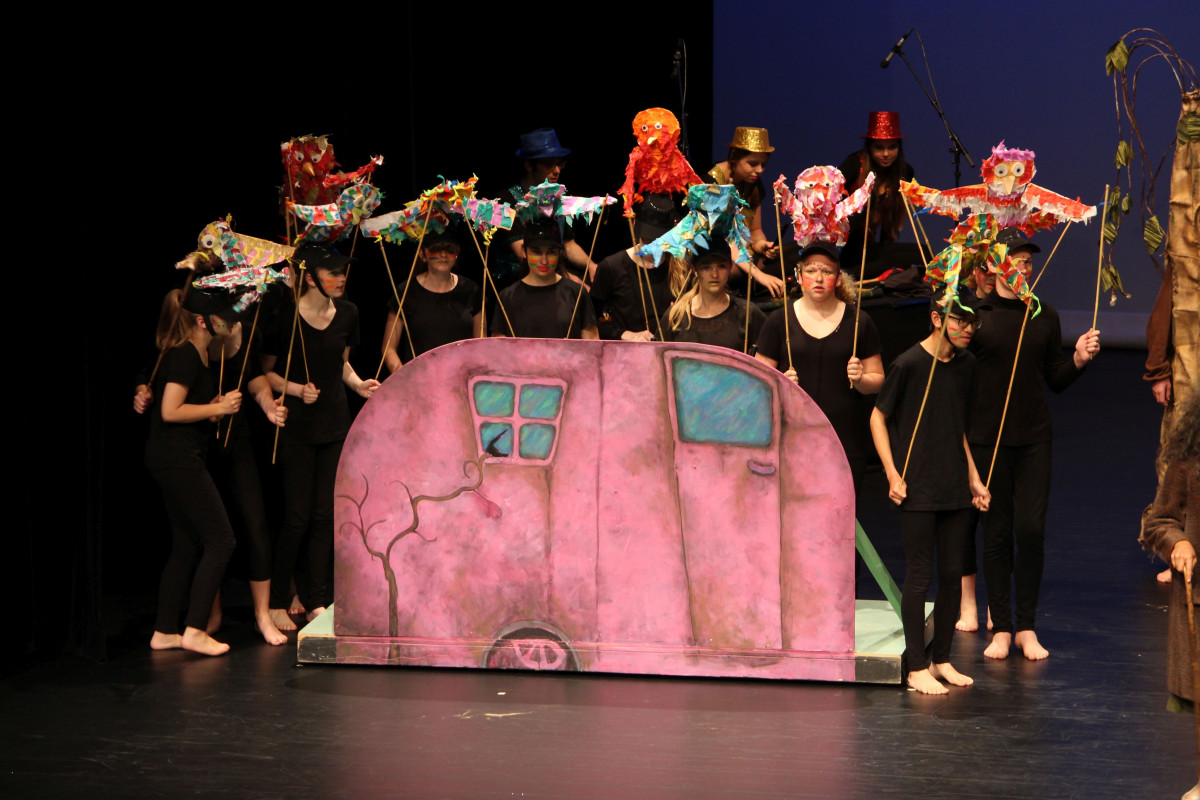
Students who have an interest in being creative and imaginative, working in groups and learning new skills by being involved in practical activities should take this course. This is general drama course with a strong focus on group performance. It aims to build on and develop the basic skills covered by the Year 9 course. The written work is incorporated in each topic and supports each new skill as it is learned.
This course is designed to prepare students for NCEA Drama study in the senior school.
Topics included in Year 10 Drama are:
▪ Theatre Form ▪ Improvisation ▪ Text exploration ▪ Devising
Students who are interested may also like to get involved in:
- Shakespeare Festival ▪ Theatresports ▪ Junior Drama Club
Year 10 Drama leads on to NCEA drama in the senior school. It develops communication skills, builds self confidence, encourages leadership and creativity. Later there are a variety of university degrees, diplomas and specialist Performing Arts Schools that may be of interest to some students. Studying Drama develops skills which are widely sought after by employers.
This is a Year 10 optional course.



Year 10 Electronics and Mechatronics
10DTEY10 Electronics Technology
Electronics Technology is a practical, hands-on course that introduces students to the foundations of electronics, engineering design, and digital technologies. Students learn how electronic systems work by designing, building, testing, and evaluating a range of electronic projects.
Throughout the course, students develop practical skills in soldering, circuit construction, testing, fault-finding, and the safe use of workshop equipment. They investigate electronic components and their functions, build and test circuits using breadboards and simulation software, and gain experience using modern fabrication technologies including 3D printing and laser cutting.
Students also learn basic programming and microcontroller systems using Arduino, exploring how hardware and software work together through sensors, switches, LEDs, motors, and other electronic devices.
The course includes an introduction to computer systems, where students learn about hardware components, subsystems, operating systems, networking, and the setup and configuration of a small computer network.
Practical projects include electronic kits, a Bluetooth speaker, Arduino-based systems, and an independent technology project. The course provides an excellent foundation for further study in Electronics, Mechatronics, Engineering, Digital Technologies, and Robotics.
This is a Year 10 optional course.
Students have access to a dedicated Electronics Laboratory equipped with professional electronics equipment, laser cutters, 3D printers, CNC machinery, and other digital fabrication tools.
Students have access to Laser cutters, 3D Printers, Vacuum Formers and CNC machining.
Year 10 English
10ENGThis is a compulory course in Year 10.
Year 10 English follows Phase 4 of the new New Zealand curriculum. The intention of the Burnside High School Junior English programme is to help students develop knowledge and enthusiasm for English language and literature in all its forms. We aim to promote independent readers and constructors of oral, written and visual texts.
Students will study a range of written and visual texts. They will develop their understanding of literature, along with close reading skills. They will be expected to write in a range of styles. Developing an understanding of visual language, including film, is a component of the course. Oral communication is another important skill area focused on in the course.
The programme will cover the English curriculum and will include the following activities:
- Writing skills –following the Writing Process to create a range of creative and formal pieces.
- Reading skills – including personal reading, reading comprehension and thinking critically about a variety of text forms including novels, short stories, poetry, drama, Shakespeare and film.
- Presenting skills - studying and producing visual and digital texts.
- Giving a speech in a public situation and fine tuning listening and communication skills.
Year 10 Environmental Science
10SCEYr 10 Environmental Science will appeal to those students who are passionate about Planet Earth!
Students can learn about a wide range of local and global environmental issues with a particular emphasis on our Horticulture and Agriculture industries. Students will use the classroom, the school garden area and Te Uru, our forest, to develop practical skills and an understanding of:
- Plant propagation (with an emphasis on native species).
- Landscaping with native plant species.
- Global & NZ environmental issues from a science perspective
- Soil health and organic gardening and permaculture principles
- Agriculture and Horticulture industries and their impact on the environment.
- Plant pest and disease control (including invasive pest species).
Burnside High School has an Environmental Group (over 300 students in 2026) which is very active in physically changing our local school environment and there is a growing interest and awareness at BHS of environmental issues facing all New Zealanders. In response to this, the Yr 10 Environmental Science course offers students with an interest in the environment to learn basic practical skills as well as the opportunity to complete project work and engage in the science and social aspects of the issues (E.g. global climate change, species loss and other NZ environmental issues) in the classroom. This course offers an excellent background to achievement standards covered in senior Sciences, especially Biology and Geography.
This is a Year 10 optional course.
Year 10 Fashion & Textile Design Technology
10TTT
Year 10 Fashion & Textiles Design builds on the foundational concepts introduced in junior textiles, this full-year course is designed to transition students from guided construction to independent, intentional design. Year 10 Fashion & Textiles Design fosters a dynamic mix of advanced practical skills and critical inquiry. Students will dive deep into the design process, focusing on innovation, problem-solving, and client-driven briefs to create unique, high-quality textile outcomes with sustainability and technology at the core.
Course Overview
Considerable emphasis is placed on mastering advanced material processes, industrial machinery workflows, and studio safety procedures. Students will refine their practical expertise in pattern layout, precision cutting, and garment construction while learning to leverage a range of creative technologies.
A key focus of the curriculum is helping students systematically translate their original concepts into professional, functional pieces. Throughout the year, students will build substantial confidence in prototyping, technological modelling, design evaluation, and portfolio documentation, developing a versatile skill set that prepares them for senior NCEA pathways.
Advanced Technology & Equipment
Students have access to a state-of-the-art design studio equipped with industry-standard tools, bridging the gap between traditional craft and modern innovation:
- Innovative digital design software
- Laser cutters and high-precision Cricut cutting machines
- Computer-guided embroidery machinery
- Photosensitive multi-layered screen printing setups
- Industrial-quality sewing machines and overlockers
Key Contexts & Projects
Students will explore textile design techniques through a variety of hands-on, brief-driven units:
- Applied Design: Students explore surface manipulation and textile artistry, mastering techniques such as printing, appliqué, tie-dye, and machine embroidery to work with fabric in a highly creative way.
- Sportswear & Garment Construction: Students elevate their technical garment construction skills by designing and manufacturing a high-quality street wear item. This project integrates a research assignment focusing on global sportswear trends, textiles performance, and functionality.
Why Study This Subject?
In Textiles Technology, students are inspired by a project-based curriculum that perfectly balances robust academic theory with a heavy practical component. By taking ownership of advanced, independent design techniques, students build high-value, transferable skills like project management, technical problem-solving, commercial awareness, and digital literacy.
Pathways to the Future
This course serves as the vital gateway to senior NCEA Level 1, 2, and 3 Fashion & Textiles Design courses. Beyond secondary school, this pathway opens doors to diverse career opportunities across the global clothing, design, and creative technology industries, including:
- Apparel, Fashion, and Textile Design
- Commercial Fashion Buying, Merchandising, and Brand Management
- Costume Design for Film and Theatre
- Sustainable Fashion Strategy and 3D Digital Design
- Interior Design, Product Development, and Project Management
*No prior experience required
Year 10 Food Technology
10FDT

Year 10 Food Technology
Students will begin the year with a recap on Food and Kitchen Safety and demonstrate their knowledge and practice through a practical assessment. They will learn the importance of monitoring a quality assurance system to create safe food.
They will gain an understanding of the significance of creating a nutritionally sound product to suit a school environment. To achieve this, students will adapt recipes using a health promotion resource to process a fit-for -purpose outcome (a Canteen Food Item of their choice).
Students will work from a design brief to develop practical food outcomes. This will include Food Product Design and will involve the knowledge of ingredients and formulation of initial concepts through to completed prototypes. Knowledge, experimentation, and practical skills will be emphasised throughout the course. Students will gain an understanding of food properties using Food Experiments.
Students will explore Sustainable Practices and culturally responsible customs through kaitiakitanga and gain an understanding of their importance in today's world. This allows them to manage resources and think about the global issue of food security.
Food Technology aims to give the student an appreciation of the technological cycle through the food context. Students will also develop essential skills in safe food preparation and wise food choices for nutritional benefit.
This subject leads to courses in Food Technology in Year 11, and also Food and Nutrition, and Hospitality courses in the senior school. Career opportunities include all aspects of Food Technology, culinary design, nutritional health, food services, and hospitality industries.
NOTE: Students are expected to provide some perishable foods for practical lessons. Details of this will be made available on a Practical Planner to help with the organisation of this.
This is a full-year Year 10 option course.
Year 10 French
10FREThis is a development of Year 9 French and the continued emphasis is on effective communication both oral and written. The skills learned in Year 9 will be reinforced and further developed to enable you to cope with the French language and culture in more complex situations. Amongst many other things you will learn to give information about yourself and other people, make purchases in shops and order and pay for meals in restaurants as well as talk about past activities.
Through studying French, students will gain a good understanding of a foreign culture and learn to communicate in a foreign language. They gain a much better understanding of their own culture and language and it helps communication with foreigners abroad or here in New Zealand. Learning French may open doors in Technology,Tourism, Hospitality, Importing and Exporting firms and Customs industries, and widen career prospects and promote international goodwill.
This course is an entry requirement for Year 11 French and subsequently also for Years 12 and 13. Learning French may help you gain jobs in computer firms, foreign trading companies,tourist companies,Government Departments and teaching. French language and culture have helped to influence the world in terms of History, Art, Literature, Design, Science and Technology.
This is a Year 10 optional course.
Year 10 Health and Physical Education
10PEHealth and Physical Education in Year 10 is aimed at Level 5 of the New Zealand Curriculum. There is a strong emphasis on developing practical and interpersonal skills. In Junior Physical Education classes the key concepts are developed in and through physical activity, whilst in Health the key concepts are taught and developed through engaging the students in relevant discussions and letting them question and understand their outlook on relevant health issues.
Students will learn the importance of developing a balanced lifestyle, also investigating ways to improve both skills and fitness in a safe and productive way. Interpersonal and practical skills can become life long and provide excellent building blocks for future years, not only in Health and Physical Education, but in other areas of study and life. An outcome for students is that they are more confident in their own ability and have confidence in trying new activities and understand the link between physical activity and well being.
Year 10 Japanese
10JAPThe language learnt in Year 9 will be developed further. Emphasis is still on the skills of communication. Students will learn katakana writing system, more kanji and grammatical structures and extend their vocabulary so that they can communicate about the New Zealand lifestyle in Japanese. Knowledge of Japanese culture is also expanded, and students will have the chance to use their Japanese language skills if involved in the Burnside‑Fukuoka Japanese exchange scheme.
By studying Japanese students will gain insights into Asia not usually available to speakers of English. They will become more broad-minded, employable people. New Zealand has strong economic ties with Japan, still one of our largest trading partners. New Zealanders who can speak Japanese and understand Japanese culture are advantaged in many areas such as business, tourism, trade and industry, and government departments.
Year 10 Japanese is an entry requirement for Year 11 Japanese.
Year 10 Key Competency Program
10KCPThis course runs over two or three years and aims to develop the skills needed for vocational pathways and life-long learning. It does this by focusing on key competency development which contributes to a substantive portfolio of student work.
Skills for Living students follow an individualised programme of learning around interest modules that encourage student agency and the application of authentic and transferable life-skills. Students will demonstrate personal growth, self management, strategies in personal safety, be able to relate well to others, be involved in the setting of learning goals, use thinking skills and demonstrate a range of literacy and numeracy for everyday living to successfully achieve the New Zealand Certificate in Skills for Living for Supported Learners. This is a NZQA and employer recognised qualification.
Year 10 Literacy
10LITYear 10 Literacy is a targeted intervention programme designed to accelerate the development of core communication skills. This course provides a structured, high-support learning environment for students requiring explicit instruction in reading comprehension, structural writing, and language mechanics. The primary objective is to close specific learning gaps and ensure students achieve the the skills necessary to sit the CAA co-requisite exams. This course builds on from Year 9 Literacy, however this class is not a pre-requisite.
Year 10 Mathematics
10MATThis course continues the stands of the curriculum taught in Year 9 Mathematics.The bulk of the course is at level 5 of the New Zealand Curriculum. Topics that follow directly from Year 9 are Number, Algebra, Graphs, Measurement, Geometry, Probability and Statistics.
A new topic is Trigonometry. This is an important branch of Mathematics which continues to Year 13 and beyond.
Students will also meet quadratic equations, and their graphs, for the first time in Year 10.
A good grounding in Year 10 Mathematics is essential for success in NCEA Level 1, or Cambridge IGCSE, in Year 11.
A scientific calculator is essential in Year 10 Mathematics.This is a compulory course in Year 10.
Year 10 Multi Materials Technology
10MTTYear 10 Multi-Materials Technology offers a blend of hands-on practical learning and inquiry-based design thinking. Working with a wide range of materials—including wood, metal, plastics, and textiles—students gain confidence in using tools, machines, and processes safely and effectively. Alongside skill-building in the workshop, students are guided through the technological process: identifying a need or opportunity, researching and generating ideas, modelling, testing, and refining their concepts.
Designs are driven by the learner, encouraging ownership, creativity, and meaningful engagement. Students are supported to develop outcomes that reflect both functional and aesthetic considerations, and to think critically about the impact of their design decisions on users, the environment, and society.
The course promotes collaboration, innovation, and problem-solving, laying a strong foundation for future study in technology, design, and engineering. It builds toward NCEA Level 1 Technology Achievement Standards by developing key skills in planning, production, evaluation, and design communication.
Ideal for students who enjoy making, thinking creatively, and solving real-world problems, this course offers the opportunity to create high-quality, personalised outcomes while building essential skills for future learning and life.
This is a Year 10 optional course.
Year 10 Music
10MUOThis course covers Music History, Ensemble Performance, Solo Performance, Music Literacy (Theory), Music Technology and Composition and provides a natural progression for students currently studying 9PMU or 9MUO. Students applying for this course will be encouraged to continue on to Year 11 Cambridge Music or Year 11 NCEA Contemporary Music and are taught in classes at an appropriate level for their ability. It is not necessary to have studied Music in Year 9 to study Music in Year 10, however you must be learning an instrument or voice with an itinerant or private teacher.
Course content includes:
Ensemble Performance: Junior String Orchestra, Junior Concert Band, Junior Jazz Band, Junior Performance Choir, Junior Percussion Ensemble, Junior Rock Band and Junior Guitar Ensemble.
Written units covering a range of musical genres and history.
Theory skills: Teaching will be at a level appropriate to each class and will focus on progression through the Burnside High School Music Theory Course (there are 15 levels of achievement with level 15 being equivalent to NCEA Level 1)
Composition skills: Students will complete two compositions. This work will include the use of Music Technology (Bandlab, Sibelius)
Students in 10MUO also have access to Itinerant Music Tuition, with a large range of instruments on offer. Students not yet learning an instrument but wishing to study Music in Year 10 should see Mr Petch as soon as possible to arrange lessons beginning in term three of year 9.
This course is an appropriate choice for students who want to further their musical experience, who are committed musicians, and who are interested in studying Music at Year 11 and beyond.
This course is compulsory for all SMP (Specialist Music Programme) students.
Year 10 Science
10SCIScience is a way of investigating, understanding, and explaining our natural, physical world and the wider universe. It involves generating and testing ideas, gathering evidence, and communicating ideas in order to develop scientific knowledge, understanding and explanations.
Science is able to inform problem solving and decision making in many areas of life. Many of the major challenges and opportunities that confront our world need to be approached from a scientific perspective. These outcomes are pursued through the following major contexts: Living World, Material World, Physical World and Planet Earth and Beyond. Building on what has been covered in our Year 9 programme.
The course involves a significant amount of practical work so students learn content through investigations and experiencing Science first hand. There are individual components to the course but also project based work to explore the Nature of Science: how scientists work, what science is and how investigations are carried out to gain valid, reliable results.
The Year 10 Science programme gives students the necessary skills for continuing on in the Science Faculty. This is a compulsory course in Year 10.
Year 10 Social Science
10SOCThe Social Sciences are about people, society and how we interact with our environments. The Year 10 Social Science course will continue to develop ideas and understanding in a range of different contexts. It will involve learning more about New Zealand but also about the wider world.
The course in 2027 is divided into three topics of about a term and a bit each:
Power to the People
A civics topic that explores NZ's and other countries systems of government and how power and control can be used sensibly, but also how it can be abused.
The Day After Tomorrow
Examining ideas of environmental, social and economic sustainability.
Technology through Time
Exploring technology and how it has shaped societies in the past, present and future.
Through studying these topics students will develop research skills, develop their conceptual understandings, be able to understand a wide variety of information, learn more about the world around them, improve their ability to present an argument, focus on the impacts of decision making and understand values, viewpoints and perspectives.
Each of these topics will be assessed and reported on during the year. Each unit of work will be assessed with a common assessment task. Teachers will also collect assessment information throughout the unit to help give feedback on where students strengths are and how they could improve their learning.
In the senior school, many of students will choose to study at least one of the Social Science subjects. At Year 11, these are Travel and Tourism, Geography, Classics, History and Commerce. In Year 12 and 13 further options include Business Studies, Accounting, Economics, Tourism and Legal Studies.
This is a compulsory course in Year 10.
Year 10 Spanish
10SPNSpanish in Year 10 continues to explore the Spanish language and the cultures of the Spanish-speaking world. The language skills introduced in Year 9 Spanish are reinforced and further developed. In Year 10 the past and near future tenses are introduced to enable you to cope with every day life in Spanish-speaking countries and to communicate with other speakers of Spanish both in New Zealand and overseas. Through learning about other Spanish-speaking countries and their cultures you will form comparisons with your own culture and discover more about your own native language.
Year 10 Spanish is an entry requirement for Year 11 Spanish. It lays the foundation for the reading and writing skills essential for NCEA Level 1, and subsequently also for Years 12 and 13. Learning Spanish, the world's second most spoken language, may help to gain jobs in government departments, tourism, international trading and teaching.
The following topics and vocabulary will be covered:
- Talking about past holidays
- Young people's lives
- Food, meals and eating out in cafes/restaurants
- Planning activities with friends
- Sporting events
- Asking for directions
- Describing a town
Year 10 Te Reo Maori
10MAOYear 10 Māori continues to explore the aspects of Māori life and culture, combined with developing the skills of mastering the Māori language, both oral and written. Students will acquire skills that will enable them to read, write and speak about topics of interest to themselves. This will provide them with a solid foundation in preparation for Year 11. There will be opportunities throughout the year to experience and enhance their knowledge of the culture.
Year 10 Māori is an entry requirement for Year 11 Māori. Students are able to obtain their NCEA literacy credits in Year 11 in Te Reo Māori.
Year 10 Visual Art
10ARTStudents will focus on the practical areas of drawing, painting, sculpture, design, printmaking and photography. Students will use a wide range of media and techniques throughout the year. Considerable emphasis is placed upon developing an understanding of the processes and procedures of how and why Art is made.
Students will examine the work of a range of established artists and use them as models to generate and develop ideas in a systematic and meaningful way. This will result in the completion of a 2 Panel folio. This course leads on to Year 11 Art and the more specialist Visual Arts subjects in the Year 12 and 13.
This is a Year 10 full year optional course.
Please click this link to see more about this course-
Year 9 Literacy
9LITYear 9 Literacy is a step-by-step course designed to build strong reading and writing skills. Through Structured Literacy methods students are explicitly taught how the English language works. The course uses The Writing Revolution (TWR), which breaks writing down into clear, manageable steps. Students start by mastering great sentences before moving on to clear paragraphs and essays. Alongside this, students build critical comprehension skills through dual reading, sharing the reading of complex texts with a peer or teacher to unpack vocabulary and deepen understanding. This builds the communication skills and confidence needed to succeed at secondary school and prepare for future NCEA assessments.
Year 9 Numeracy
9NUMYear 9 Numeracy is a course designed to build strong mathematical thinking and boost confidence. Operating alongside a student’s mainstream mathematics class, this program provides the extra time, tools, and explicit teaching needed to master foundational mathematical concepts. The course uses a highly structured, evidence-based approach that breaks complex ideas down into clear, manageable steps. Students start by filling in learning gaps around basic number properties and calculations, which directly supports and strengthens the work they are doing in their regular math lessons.
Subjects for Year 10 Students
Cambridge Level 1 (iGCSE) Art
11ACMCambridge IGCSE Art and Design (0400)
You will also earn 15 credits toward Level 1 Visual Arts NCEA.
Who is this for?
- Ideally, students who have completed Year 10 Art and consistently achieved Excellence grades
- Students who enjoy creative work and are motivated to manage independent projects
- Students who have not taken Year 10 Art may still gain entry by submitting a portfolio of work for approval – students will need to contact Ms Sandes (Head of Faculty) directly.
What is the course about?
This is an internationally recognised art course that develops your skills in drawing, painting, printmaking, and creative thinking. It helps you build a portfolio of your own artwork and prepares you for future studies or careers in art and design.
Why choose this course?
- It’s a globally recognised qualification valued by universities worldwide.
- It teaches important skills like problem-solving, creativity, and visual communication.
- It supports both creative and academic paths.
Course Structure:
- Full Year Course
- Two components, each worth 50% of your final grade:
- Component ONE: Coursework Portfolio: You explore a theme (like “Identity” or “Environment”) through drawing, painting, research, and final artworks.
- Component TWO: Externally Set Assignment (Exam): You choose a question from Cambridge’s exam paper, prepare for 8 weeks, then complete a final artwork during an 8-hour supervised exam.

Assessment:
- Graded A* to G by Cambridge International examiners based on your portfolio and exam work.
- You will also earn 15 credits toward Level 1 Visual Arts NCEA.
Cambridge Level 1 (iGCSE) Music
11MUOThe 11MUO course follows the Cambridge Exam syllabus (iGCSE). In addition, students taking Cambridge Music in 11MUO will automatically collect all relevant NCEA INTERNAL credits listed below as much of the course content is able to be cross-credited ie no additional work or assessment is required.
The Cambridge Music syllabus comprises the following elements:
Performance - 30%. Two pieces of solo performance and one group performance are required. These are internally assessed and externally moderated by Cambridge examiners.
Composing - 30%. Two contrasting compositions must be completed. These are internally assessed and externally moderated by Cambridge examiners
Listening - 40%. An externally assessed listening/written exam.
Following external moderation and assessment, one holistic grade for the course will be awarded by the Cambridge Examination Board in the range A*-E
Full details of the Cambridge iGCSE can be found here:
https://www.cambridgeinternational.org/programmes-and-qualifications/cambridge-igcse-music-0410/
Students selecting this course are required to take weekly lessons on their instrument in addition to the classroom lessons. These lessons may be accessed through the school's Itinerant Music Teachers' scheme (free of charge) or with a private tutor outside of school (paid lessons). Please ask any of the Music Department staff for advice and help if you are unsure about your suitability for this course.
Level 1 Commerce
11COMM
NCEA Level 1 Commerce is a new course that includes aspects of all three of the foundational subjects; accounting, business studies and economics. Achievement Standards have been written to assess the new Commerce subject so students will need knowledge from each of the three foundation subject to be able to earn high NCEA grades.
Important skills that will students will develop through this course are the ability to:
• develop skills which allow them to work through real-life problems or opportunities
• recognise that models (eg. supply and demand, circular flow) and concepts (eg income statements, pricing strategies, cost-benefit analysis) can be used to support predictions about the impacts of real world decisions
• develop the capacity to interpret financial and non-financial information which relates to everyday life and the running of businesses
• learn to think about real-life problems or opportunities by considering the perspectives of the stakeholders and the organisations affected by decision made about them
• understand that the economy is a complex collection of interdependent financial entities that are being affected simultaneously by real world events.
Topics
This is the first year of offering the L1 Commerce option so the topics below are intended to give a general indication of the course.
1. "The Role of Financial Decision-Making in Business Sustainability"?
 The context for this topic will be a small to medium sized enterprises (SME).
- Introduction: Define financial decision-making and sustainability in business.
- Key Concepts: Break down concepts like business sustainability, sensible decision-making, stakeholder perspectives and consequences of a decision
- Case Studies & Examples: Discuss businesses that have successfully integrated financial decision-making with sustainability
- Hands-on Exercise: Group activity where students have to make a financial decision for a fictional company.
2. “Why Does a Cup of Coffee Cost $5?”. Understanding the strategies behind everyday prices”
In this topic we will use everyday products as examples
- Understand the role of prices in a market economy: Supply & demand basics
- Explore Pricing Theory: Learn the classic concepts like cost-plus pricing, competitive pricing,
- Cost Structures and Inputs - For example what are the costs of a Cup of Coffee?: Fixed vs. variable costs, cost of raw materials: beans, water, milk, sugar, labor, rent, equipment
- Consumer Psychology: Learn how perceived value, scarcity, and branding influence pricing decisions. Why do people pay more for the same product based on brand recognition?
- Case Studies: Use real-world examples (e.g., Uber's surge pricing, airline ticket pricing algorithms, or Amazon's personalized pricing) to show how pricing is dynamic and responsive to market conditions

3. "The Ripple Effect of (Global) Events on Interdependent Financial Entities"?
 In this topic real world events will be used to illustrate interdependent financial relationships
- Introduction to Interdependence : Learn how businesses don’t operate in isolation. Instead, they are all interlinked with suppliers, customers, investors, and partners.
- Key Financial Relationships: Discuss different types of interdependent relationships: between buyers and suppliers, parent companies and subsidiaries, banks and borrowers, etc.
- Case Study 1 : The COVID-19 Pandemic: Look at how global shutdowns and supply chain disruptions impacted companies in different sectors (tech, retail, logistics) and how they were financially connected to each other.
- Simulate an Event: Have students engage in a scenario where a major event happens (like Warriors play a game at Te Kaha Stadium in Christchurch / Ōtautahi ). Then, students will work in groups to trace how this event would affect various entities within the economy
“talking Commerce out of class will help you when you doing in class Commerce activities and assessments”

NCEA Assessments
Level 1 Commerce in 2026 will be assessed by 3 achievement standards ; 2 internal and 1 external

The NCEA standards being assessed are:
- Commerce 1.1 (92028 v4)
Demonstrate understanding of an organisation’s financial decision-making (5 credits)
- assessed towards end of Term 1/ start Term 2 - Commerce 1.2 (92029 v4)
Demonstrate understanding of price determination for an organisation (5 credits)
- assessed early in Term 3 - Commerce 1.3 (92030v3)
Demonstrate understanding of how entities with interdependent financial relationships are affected by an event (5 credits)
- assessed digitally in end year exam window (November 2026)
NCEA Level 1 Hospitality Food Studies
11HFS
Hospitality: Year 11 Food Studies
This course utilises mostly Cookery Level 2 Unit Standards and 1 Cookery Level 1 Unit Standard. It will offer you the opportunity to experience working in a commercial kitchen environment, with a strong focus on strengthening food preparation and life skills, with students usually cooking 3-4 times per week.
This course will equip you with the necessary knowledge to gain great foundational skills that can set you up for future vocational opportunities.
The Year 11 Hospitality Food Studies programme is assessed against six cookery Unit Standards totalling 15 credits. When you gain credits from a Unit Standard, the credits contribute to your NCEA. Unit Standards have only one level of competency – standards are either competent or not yet competent.
Work throughout the year will be internally assessed through mostly practical tasks and one theory test. There is no external assessment or exam for this course.
Topics Covered;
- Food Safety
- Salads
- Sandwiches
- Knives
- Poaching
- Baking
This course option is partially funded by the Government Secondary Tertiary Alignment Resource (STAR).
After 11HFS, you can choose Level 2 Hospitality subjects: Food Studies and/or Food & Beverage.
NOTE: Students are expected to provide some perishable foods for practical lessons. Details of this will be made available on a Practical Ingredients Planner each term, to help with the organisation of this.
NCEA Level 1 Building and Construction
11TCBLevel 1 Building and Construction introduces students to core practical skills and knowledge relevant to the construction industry. Using the BCITO (Building and Construction Industry Training Organisation) Unit Standards framework, the course focuses on developing hands-on competency in a safe and supportive workshop environment.
Students will learn how to interpret plans, measure and mark out materials accurately, and use a variety of hand and power tools safely. They will work with common building materials such as timber, fixings, and sheet products, gaining confidence in basic construction techniques and workshop practices.
Throughout the course, students complete an outdoor decking project that builds essential trade skills and understanding of industry expectations. The program culminates in a small student-designed project, where learners apply their skills to plan and construct a functional item. This project encourages problem-solving, initiative, and attention to detail, simulating real-world trade practice.
Assessment is based on selected Level 1 BCITO Unit Standards, contributing credits toward NCEA and forming a foundation for future learning in construction, carpentry, or other trade-related pathways.
This course is ideal for students who enjoy practical work, working with tools and materials, and are considering a future in the building and construction industry.
NCEA Level 1 Chinese Mandarin
11MNCThis course develops communication skills in Chinese Mandarin through reading, writing, listening and speaking. Cultural knowledge in terms of how to communicate appropriately in Chinese society is also an important aspect of the course. By the end of the course students will be able to communicate information, ideas and opinions on a range of topics or personal relevance in Chinese Mandarin . Students will also master approximately 370 Chinese characters.
NCEA Level 1 Classical Studies
11CLS
 "The aim of Classics is not only to discover or uncover the ancient world... Its aim is to also define and debate our relationship to that world."
Mary Beard
Why Classical Studies?
Classics is an enthralling journey through the ancient worlds of Greece and Rome. It is a rich subject giving you a taste of literature, art, history, mythology, religion, society and politics. Ancient Greece and Rome also form the foundations of Western Civilization and continues to influence modern society and culture. It is engaging and relevant for our students and the global world we live in. Classics is suitable for students who enjoys variety in their learning.
The course is both challenging and exciting and is designed to interest students of different abilities and cultural backgrounds. In 2027, Classics will offer Unit standards, which will count towards Level 1, NCEA. In each assessment you will be able to gain Achieved, Merit and Excellence grades. Most importantly, through Classics students will build deep, transferable critical thinking and communication skills, that provide a strong platform for study within the senior school and beyond.
It provides:
- Literacy rich environment
- Cultural enrichment
- Diverse areas of study
- Understanding of the origins of western civilization
Essential skills developed through the course:
- Source analysis
- Evidence based argument
- Academic writing and literacy
- Communication, organization and research
- Critical and creative thinking
Year 11 Classical Studies helps build a toolkit of skills which prepare students for all future study
What to expect from Classical Studies in 2027:
It's All Greek to Me: Start the year by unleashing the wild world of ancient myths, tracking legendary heroes, vengeful gods, and terrifying monsters to show you how these thrilling stories still secretly run the show in our modern movies, games, and everyday lives.
Once Upon a Time in Athens: Explore the fascinating reality of daily life Ancient Athens investigating who really held the power, how men, women, and foreigners interacted, and what it was truly like to live in this divided society.
Scandal in Rome: Dissect the infamous life and rule of the Roman Emperor Nero, weighing his scandalous and deviant behavior to determine if he was truly one of history’s greatest villains or merely a maligned ruler shaped by his mother's cutthroat power games.
Fact or Fiction in the Trojan War: Plunge into the epic clash of Achilles, Hector, and Helen of Troy, challenging you to decode the evidence to trace the full saga and solve history's ultimate mystery: was the wooden horse real, or is it all just a myth?
For the Fear of God! The Olympian Gods in Rome: Welcome to the paranoid and spectacular world of Roman religion, where a single missed sacrifice could trigger the wrath of Jupiter. Discover everyday Romans relationship with the gods, and how they bargained, partied, and prayed to keep the meddling gods on their side.
"Classics is about building knowledge and developing critical thinking, not passing on information"
Associate Professor of Classics, Canterbury University
Education Outside the Classroom:
- Visits to the Classical Antiquities Museum (TEECE) to engage in the programmes offered for students through the University of Canterbury. This enables students to get hands on with ancient artifacts and connect with subject experts.
- There may also be an opportunity to join the Classics Tour to Greece and Rome in 2028. In the past this has been a memorable experience for many students taking Classical Studies at Burnside.

BHS Tour to Greece and Italy 2025
At the Colosseum
NCEA Level 1 Contemporary Music
11MUCThe 11MUC course consists of a combination of NCEA Level 1 internally and externally assessed standards that focus on the musical disciplines of: Solo Performance, Group Performance, Composition, Aural and the study of Music Works. Students selecting this course must be an instrumentalist or vocalist with a preference for working in the Contemporary Music genre and enjoy collaborative performing and composing/songwriting in small groups (bands within the class). Students selecting this course are required to take weekly lessons on their instrument in addition to the classroom lessons. These lessons may be accessed through the school's Itinerant Music Teachers' scheme (free of charge) or with a private tutor outside of school (paid lessons). Please ask any of the Music Department staff for advice and help if you are unsure about your suitability for this course.
NCEA Level 1 Dance
11DNCLevel 1 Dance
Step into the spotlight and unleash your creative potential! Level 1 Dance is an exciting, high-energy course designed to introduce you to the vibrant world of movement, performance, and choreography. If you love to express yourself through motion and want to build your confidence both on and off the stage, this course offers the perfect foundation. You will explore a dynamic range of dance styles, developing your physical technique while discovering the fundamentals of choreographic artistry.
Beyond learning routines, you will step behind the scenes to understand dance as a powerful form of communication. This highly practical course bridges the gap between physical execution and creative reflection, allowing you to showcase your growth through live performance and personal expression.
Course Highlights:
- Foundational Technique: Explore a diverse variety of dance genres to build your physical strength, coordination, and stylistic versatility on the floor.
- Creative Collaboration: Partner with your classmates to unlock the secrets of choreography. You will learn how to use essential dance elements and devices to design and structure your own original group sequences.
- Performance-Driven Internals: Bring your hard work to life on the stage! All internal assessments are entirely performance-based, culminating in our major Term 3 Dance Showcase—the ultimate performance event of the year.
- Personalised Choreographic Analysis: Turn the lens on your own artistry. For your mid-Term 3 external assessment, you will create a reflective portfolio analyzing the meaning, structure, and creative choices behind your own choreographed work.
Begin your artistic journey, find your rhythm, and discover the power of your unique creative voice- welcome to Level 1 Dance!


NCEA Level 1 Design and Visual Communication
11DVCYear 11 Design and Visual Communication (DVC) introduces students to the principles of design focused on real-world, user-centred outcomes. Assessed using NCEA Level 1 Achievement Standards, the course supports students to explore and respond to authentic design briefs in a variety of contexts, including architecture, interior design, product design, and landscape design.
Students will complete two major design projects, each developed for a specific client or target audience rather than for themselves. Through these projects, learners will engage in the full design process—exploring design heritage (Aotearoa and International), researching needs, generating and developing ideas, and using a range of visual communication techniques to present their thinking. The course emphasises creative thinking where students are encouraged to consider the function, aesthetics, sustainability, and cultural relevance of their designs. Drawing skills, both freehand and instrumental, along with digital modelling tools, are used to visually express and refine concepts.
This course builds a strong foundation for further study in Level 2 DVC and supports future pathways in architecture, industrial design, urban planning, and other creative and technical design industries.
NCEA Level 1 Digital Technologies - Artificial Intelligence
11DTAThis course is designed for students who already have strong technical skills using computers and who want to extend their established Digital Technologies capability into high-end, high-quality digital and creative outcomes. It is aimed at students who are confident working independently, willing to experiment with new technologies, and interested in using artificial intelligence as a tool for innovation, design, development, production, and entrepreneurship.
Students will explore how AI and generative technologies can be used to support the creation of professional digital outcomes, including websites, apps, games, animations, films, music, branding, digital media campaigns, chatbots, automated workflows, and interactive outcomes. A key focus of the course is helping students use these tools to develop real-world outcomes, such as building webpages for their own business ideas, launching digital products, creating media for distribution, or developing entrepreneurial projects that could be shared with an authentic audience.
Students will develop an understanding of the underlying structures, base knowledge, and technical principles that shape how AI systems work, rather than treating them as simple content-generation tools. This will include exploring how AI models are trained, how they generate responses, how they use or process data, and what happens to user input when interacting with different AI platforms. Students will investigate the wider implications of AI, including social, ethical, cultural, environmental, legal, privacy, and economic costs.
They will also learn to make deliberate choices about when, why, and how to use AI tools, developing more effective and responsible workflows through sophisticated prompting, clear constraints, purposeful iteration, critical evaluation, and informed human judgement.
Students will be expected to familiarise themselves with, compare, evaluate, and develop high levels of understanding across a wide range of AI tools and platforms. These may include ChatGPT, Claude, Gemini, Microsoft Copilot, Perplexity AI, Midjourney, Adobe Firefly, Runway, Canva Magic Studio, Leonardo AI, Luma AI, Suno, ElevenLabs, GitHub Copilot, Cursor, Replit AI, Bolt.new, Lovable, Notion AI, Descript, Otter.ai, and Zapier AI, Flux AI, Edge Impulse etc.
Students will also be expected to have a technical foundation (you understand the technology and can troubleshoot), across established digital technologies software and production tools. These may include Blender, Python, C++, HTML, CSS, JavaScript, CAD platforms such as Fusion 360 or Onshape, Adobe Creative Suite tools, or open-source equivalents such as GIMP, Inkscape, Krita, Audacity, DaVinci Resolve, Godot, and other specialist software.
This technical foundation will allow students to move beyond simply generating AI outputs and instead use AI in conjunction with relevant software and tools as part of a wider professional workflow for designing, developing, refining, testing, and launching high-quality digital, creative, and technological outcomes.
The course will require students to think critically about where AI is useful, where it fails, and where human creativity, judgement, ethics, and technical skill remain essential. Students will use AI not as a replacement for learning, but as a powerful set of tools to accelerate design, improve productivity, support creativity, and create outcomes that are polished, purposeful, and future-focused.

NCEA Level 1 Digital Technologies - Interactive Game Design
11DTGNCEA Level 1 Digital Technologies - Interactive Game Design
This is a Digital Technologies Course for students who wish to specialise in Game Design.
Students will have an introduction to game design principle, level design, play testing, 3D and 2D game art and programming.
This course is referred to as a STEAM course, a Science, Technology, Engineering, Arts, and Maths composite course. Students will have the opportunity to create games for multiple platforms including PC, Mac, Android, and Virtual Reality using industry standard software and tools.
Students will be required to work collaboratively on game development projects throughout the year and will be expected to create a game from concept though to delivery using skills they have learned in:
- Project Management
- Level Design
- Game art creation
- Programming
As well as preparing you for further study within this growing industry, the course provides a useful stepping stone into computer science or software engineering.
“The New Zealand game industry topped one billion dollars of revenue for the first time in history during 2026. Many Universities have realised this opportunity and are now offering courses that prepare students for work within the industry including the brand new Bachelors of Digital Screen majoring in Game Design at the University of Canterbury.”
Students should have an interest in making games, computing, programming or art.
It is recommended that you are able to work well in a team, enjoy solving problems and are highly motivated
Click the links below for examples of previous student projects.


NCEA Level 1 Digital Technologies - Product & Digital Media
11DTMNCEA Level 1 Digital Technologies - Product & Digital Design
The 11 Product and Digital Design course will be assessed using NCEA Level 1 standards, while delivering content aligned with the Cambridge IGCSE Design & Technology curriculum.
This dual-focus approach provides a strong foundation for students who may wish to progress to Cambridge AS and A Level Cambridge Design & Technology (9705) & Digital Media & Design (9481) in Years 12 and 13.
At Year 12 and 13, the Product and Digital Design courses will continue to draw from both the NCEA and Cambridge curricula, offering flexible learning and multiple assessment pathways to support a wide range of learner goals.
Product & Digital Design is a course for students who wish to work on a project that is driven by their own interests. The range of contexts, project options and technical skills are wide and primarily driven by the students previous experiences with software and machinery.
This is an exciting course as it brings together a range of learning areas such as creative design, science, engineering, business studies, digital media, computing, electronics, materials technologies and entrepreneurship in a project-based learning environment.
Outcomes designed and developed vary and can include but are not limited to:
- Web development
- Software development
- Animation
- 3D modelling
- Film / Video Production
- Graphic Design
- Virtual / Augmented Reality
- 3D Design for Manufacture
- Game Design
This course is well supported with cutting-edge equipment including laser cutters, CnC machines, 3D printers, resin printers, vacuum formers, airbrushes, Wacom Cintiq 16" drawing tablets, vinyl cutters, furnace to smelter and industry standard software such as Blender, Adobe Cloud and Fusion 360.
Students will follow the design thinking and agile processes where they will:
- define a project of interest
- project manage the project
- create a design
- identify and develop skills relevant to their project
- problem solve
- develop an outcome using an iterative process
- work with a wide range of people throughout the project as required i.e. other students, teachers, other professional adults, .
Students are also encouraged to enter competitions such as Bright Awards, BrightSparks, Science & Technology Fair, Inspire Foundation, Callaghan Innovation along with any other competitions available. This course is a good foundation for the UC Product Design course or the new UC Digital Screen Campus .
The standards used for assessment draw from the Technology - Digital Technologies domain, are negotiable, and will be customised to suit individual student projects. If a student is taking more than one Digital course they will work through alternative Technology standards and this will be sorted at the start of the course.
Feel free to check out our Product & Digital Design Website for more course information.
Below are a range of examples of students work.


NCEA Level 1
NCEA Level 1 Digital Technologies - Software Engineering and Computer Science
11DTPNCEA Level 1 Digital Technologies - Software Engineering and Computer Science
The 11DTP course will be assessed using NCEA Level 1 standards, while delivering content aligned with the Cambridge IGCSE Computer Science (0478) curriculum.
This dual-focus approach provides a strong foundation for students who may wish to progress to Cambridge AS and A Level Cambridge Computer Science in Years 12 and 13.
At Year 12 and 13, the DTP courses will continue to draw from both the NCEA and Cambridge curricula, offering flexible learning and multiple assessment pathways to support a wide range of learner goals.
This is a foundation Digital Technologies course for students who wish to specialise in Computer Science with a focus on programming, database, and algorithmic thinking.
Student learning in Year 11 will center around basic skills development including;
- Functional programming (using Python)
- Database creation and management
- Computer Science knowledge and concepts.
- Web Development in HTML and CSS
Students will be encouraged to compete in the range of programming competitions available throughout the year.
Students will develop their programming skills to problem solve a range of problems.
When people think of Computer Science they often just think of programming, but there are many more aspects to the field including interaction design, communications and networks, software design, computer security, information systems, big data, machine learning, graphics, operating systems, educational systems, artificial intelligence, and embedded systems (processors that are embedded in everything from mobile phones to cars). All of these areas are experiencing rapid growth both in Aotearoa New Zealand and internationally, and there is a strong demand for Computer Science.
NCEA Level 1


NCEA Level 1 Drama
11DRANCEA Level 1
The aims of this course are for students to develop communication skills, self-confidence, creativity and team-building through a wide range of performance forms and styles. The students will be involved in creating improvised, devised and scripted drama for performance to a range of different audiences.
Students will participate in creative strategies to create a Drama which will incorporate the use of theatre technologies. which will be shared with family and friends.
The students will also look at the beginning of modern theater with a focus on Greek Tragedy conventions. Which they will use to devise a performance set in a modern context.
They will take part in the live performance of a comedy play, where parents and friends are able to support them as members of the audience.
The students will develop an awareness of themselves as well as how they fit into New Zealand and the global community.


NCEA Level 1 Electronics and Mechatronics
11DTENCEA Level 1 - Electronics and Mechatronics
Interested in electronics, robotics, automation, and engineering? This hands-on STEM course provides students with a strong foundation in electronics and electrical systems while developing practical design and problem-solving skills.
Students learn the fundamental concepts that underpin modern technology, including electrical circuits, electronic components, measurement techniques, analog and digital systems, sensors, actuators, and microcontrollers. They then apply this knowledge through a range of practical investigations and engineering projects.
A major component of the course involves designing, constructing, and programming an autonomous robot using an engineering design process. Students investigate, prototype, test, and refine solutions while developing skills in electronics assembly, soldering, programming, 3D modelling, 3D printing, laser cutting, and digital fabrication.
The course encourages creativity, critical thinking, collaboration, and project management, providing an excellent foundation for further study in Electronics, Mechatronics, Engineering, Digital Technologies, and other STEM-related fields.

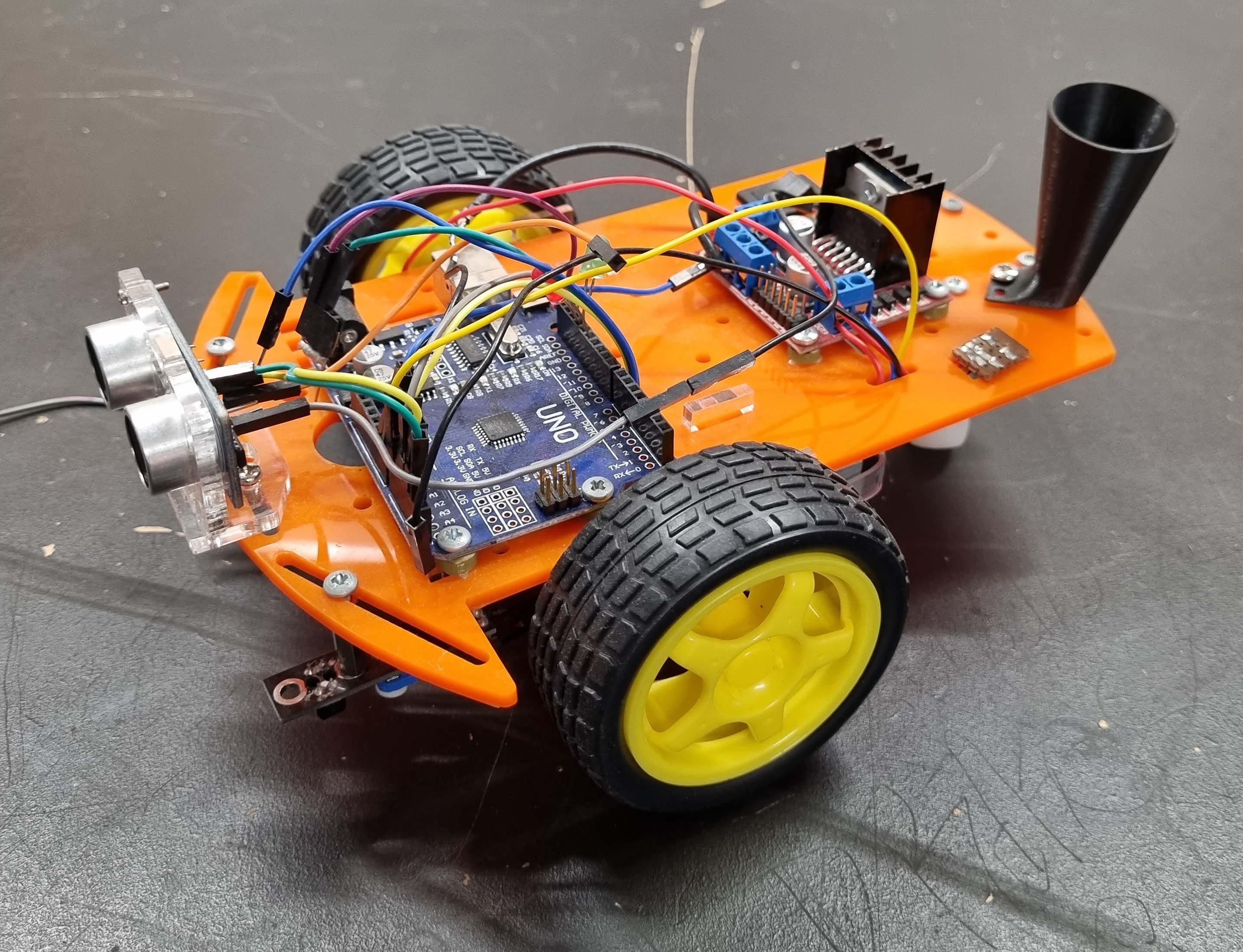
Students have access to a dedicated Electronics Laboratory equipped with professional electronics equipment, laser cutters, 3D printers, CNC machinery, and other digital fabrication tools.
Students have access to Laser cutters, 3D Printers, Vacuum Formers and CNC machining.
NCEA Level 1 Employment Skills
11EMPThis course develops employability skills and offers the opportunity to develop students' career pathways and the skills needed to succeed in the workplace.
This course will allow students to engage in a self-directed learning plan with emphasis on job-seeking skills, the responsibilities and expectations of both a good employee and a good employer, and employment trends. Other topics include income, taxation, budgeting, communication skills, and working in a team.
Students in this course will be enrolled in up to 20 credits of unit standard assessments.
This course requires Dean approval.
NCEA Level 1 Engineering
11TENThis Level 1 Engineering course provides students with a hands-on introduction to mechanical engineering using the Competenz ITO Unit Standards framework. Designed for students working towards NCEA Level 1, the course focuses on developing foundational workshop skills and understanding core engineering processes.
Students will gain practical experience with industry-standard tools, materials, and techniques in a safe and structured environment. Emphasis is placed on accurate measurement, technical drawing interpretation, metalwork fabrication, and mechanical assembly. Throughout the course, students will work through a series of guided tasks that build essential skills in preparation for real-world engineering environments.
The program culminates in a small student-led project, where learners apply their skills to design and produce a functional item. This project encourages initiative, problem-solving, and project planning, while reinforcing the importance of quality finish and workplace safety.
Assessment is competency-based, with students being assessed against selected Level 1 Unit Standards from Competenz. This enables learners to earn credits towards NCEA while building a foundation for future pathways in engineering, trades, or further vocational training.
The course is ideal for students who enjoy practical learning, are interested in how things work, and are considering careers in mechanical engineering, fabrication, or related industries.
NCEA Level 1 English
11ENGEnglish is compulsory in Year 11.
During term 3, students will be asked to inform their English teacher which course they would like to be entered for in year 11. They will have a choice between 11ENX, 11ENA, 11ENJ or 11ENM. The descriptions for these courses are below and teachers will go through these with the students. Please have a discussion at home about which course appeals.
Treasures of the World 11ENX
In this course you will explore the greats from the world of literature, from the streets and palaces of Elizabethan England to the pounamu filled rivers of Aotearoa New Zealand. Award winning films that have graced the red carpets of Hollywood and inspirational rhetoric from the world’s most influential speakers also make up this course. You will explore the best the world has to offer and create texts of your own - who knows… maybe you will write the next Classic!
Active and Adventurous English! 11ENA
The world is full of inspirational people who have faced extreme challenges in both the sporting world and survival in the harshest of landscapes the planet has to offer. In this course you will explore the stories of these amazing people through words and film. This course will amaze and inspire you, challenging you along the way to create your own amazing texts and images.
Social Justice Warriors 11ENJ
Social Justice warriors abound in the world we live in and their stories of resilience and bravery are inspirational and awe inspiring. From the dreams of Martin Luther King to the wero given to world leaders from Eco-Warriors everywhere, you will explore a range of articles, speeches, film and writing which highlight the seemingly insurmountable challenges faced by many people. Their stories will inspire. Will you take up the cause and challenge?
Exploring English through a Media Lens 11ENM
We live in a media-saturated world, where the media’s influence is profound and controlling. Often it is the media that tells us what to think, feel, believe and want. In this course you will explore a range of films, TV shows, articles, speeches and literature, to discover the role that the media plays in your own life. As a student of Media and English, you will learn to question what you see, hear and read. You will also have the opportunity to make a short media product.
NCEA Level 1 Fashion & Textile Design Technology
11TTT
NCEA Level 1 Textiles & Fashion Design: The Foundations of Creative Making
This introductory course is designed to transition students from basic sewing to intentional design and construction. NCEA Level 1 Fashion & Textiles Design focuses on building technical confidence, understanding the properties of different materials, techniques & processes, and learning how to translate ideas into a finished garment.
Course Overview
The curriculum emphasises the language of fashion, teaching students how to read patterns, master machinery safely, and develop a disciplined approach to the design process. It provides the essential scaffolding required for students to progress into the more autonomous projects of Level 2 and Level 3.
Key Highlights
Industry Standard Mentorship: Students benefit from a program led by an educator with International experience in London and New Zealand Fashion Weeks, ensuring that even at the introductory level, students are learning professional habits and industry standards.
Core Construction Skills: The course provides a rigorous introduction to industrial quality sewing machines and equipment, focusing on precision, garment durability, and professional finishing techniques.
Foundational Fashion Illustration: Students are introduced to the art of fashion illustration, learning how to communicate their design ideas on paper through basic drawing and technical annotations before they begin sewing.
Introduction to Creative Technology: Students explore the balance of craft and technology, with introductory access to digital tools such as Cricut design, laser cutters and computer guided embroidery to enhance their design projects.
Material Exploration: Students will learn to identify various fabric types and their uses, exploring surface design techniques like dyeing and fabric manipulation to create unique textures.
Pathways to Success
Academic Achievement: Students work toward a structured selection of NCEA Achievement Standard credits, establishing a strong academic record and a clear understanding of the NCEA assessment process.
The Design Process: Participants learn the importance of documentation, keeping design logs that track their progress from initial inspiration to final construction, a skill vital for all future design pathways.
Building Creative Confidence: Whether interested in personal making or a future career in the creative industries, Level 1 provides the versatile technical and problem solving skills needed to succeed in a hands on environment.
By the conclusion of the year, students will be capable makers, ready to define their own creative aesthetic at Level 2 & 3 Fashion & Textiles Design.
*No prior experience required
NCEA Level 1 Food and Nutrition
11FDN


Level 1 Food and Nutrition: Health, Practical Food Skills, and
Well-being
Nutrition shapes how we feel, think, and perform every day. But with so much conflicting advice on social media and the internet, knowing what is actually good for you can be challenging.
Level 1 Food and Nutrition gives you the tools to cut through the noise. This course combines the science of well-being with hands-on kitchen experience, teaching you essential life skills to look after yourself, your whānau, and your friends.
? What to Expect: Theory Meets the Kitchen
This course balances academic knowledge with practical, hands-on learning so you can apply what you learn immediately.
- Regular Practical Lessons: On average, you will be in the kitchen once a week, building your culinary skills.
- A Smart Credit Combination: This course offers a unique advantage. You will be assessed using a mix of Level 1 Health Studies standards and Level 1 Hospitality Unit Standards, giving you a diverse range of credits.
? Core Skills You Will Build
Throughout the year, you will explore how food impacts both individuals and society through several key areas:
- Food and Hauora: Investigate the direct relationship between nutrition and your holistic health—mental, physical, and emotional.
- Culinary Confidence: Learn to plan, prepare, cook, and serve healthy, balanced meals designed specifically for teenagers and families.
- Exploring Cultural Foods: Discover how diverse cultures, heritages, and traditions shape our relationship with food, while learning to prepare a variety of traditional and contemporary cultural dishes.
- Consumer Savvy: Become an informed shopper by learning how to accurately read food labels and see past clever marketing and packaging.
- Kitchen Safety: Master professional food hygiene and safe handling strategies that are valuable in any kitchen environment.
- Understanding Influences: Examine the wider social and environmental factors that shape why people choose the foods they do.
⚠️ Important Course Selection Notes
Before adding this subject to your line-up, please keep the following in mind:
Course Restrictions: Because this subject covers a significant portion of the Health curriculum, you cannot take both Level 1 Food and Nutrition AND 11 Health Studies. You must choose one.
Looking for a Different Focus? If you prefer a course more centred on the design and technology aspects of food, take a look at Hospitality: Food Technology.
If you want a subject that offers a mix of practical cooking, critical thinking, and real-world value, Level 1 Food and Nutrition is an excellent choice for your timetable.
NCEA Level 1 Food Technology
11FDT
Year 11 Food Technology
This is a practically orientated course that combines the practical aspects of cookery with Food Innovation and Technology, such as methods of cookery skills, food processing, and food product design. The course integrates Level 1 Food Technology Achievement Standards, with 16 credits being achievable, which is highly supportive of achieving NCEA subject endorsement.
The course will enable students to gain insight into the food industry and also equip students with practical skills in a commercial kitchen environment, which can be applied in a variety of future study or employment situations. Students will cook twice per week.
Please note that this course utilises NCEA Level 1 Materials and Processing Technology Achievement Standards. If you choose to enrol on this course alongside other technology subjects that also assess the same standards (Textiles, Engineering, and Digital Technologies), you will only be able to be assessed against one internal Achievement Standard and one external Achievement Standard. The teachers will do their best to ensure other assessments are offered in order to help provide another opportunity to gain NCEA credits.
Topics Include:
- Food product development with authentic contexts
- Understanding the importance of transforming and manipulating ingredients
- Baked goods concept design
- Ingredient and technique testing of fit-for-purpose outcomes
- Understanding sustainable practices through kaitiakitanga
- Food safety
- Product testing

Students will be required to supply some perishable food ingredients for practical lessons. A Practical Ingredients Planner will be available each term to help with the organisation of this.
NB See also: Food and Nutrition for another food-based course option
NCEA Level 1
NCEA Level 1 French
11FRENCEA Level 1
At this level students will be assessed in reading and listening skills in the examination at the end of the year and their internal assessment skills are a speaking and writing portfolio. Students will be able to express more complex ideas and information .
The language skills practised include communicating about past events, communicating feelings and opinions, describing and comparing places and people, talking about problems and solutions, expressing intentions and hopes.
The topics covered are:
- the social life of an adolescent
- health and fitness
- jobs and careers, holidays
- happiness, human rights and my priorities.
Oral and written expression are assessed internally during the year, listening and reading skills are assessed in the external examination at the end of the year.
The students can also sit an international French qualification - DELF- which is recognised globally and valid for their lifetime.

NCEA Level 1 Geography
11GEO"The study of geography is about more than just memorizing places on a map. It's about understanding the complexity of our world, appreciating the diversity of cultures that exists across continents. And in the end, it's about using all that knowledge to help bridge divides and bring people together". Barack Obama

"What is where, why there, and why care?"
The statement above incorporates all essential elements recognised as being fundamental to geography.
Geography is the dynamic science of place and space, offering profound insights into the intricate connections between humanity and the environment. Within a geographic context, "space" refers to distinct portions of Earth's surface. Location, place, area, region, territory, distribution, and pattern are all closely linked spatial concepts. The COVID-19 pandemic vividly showcased the power and critical importance of geography. Through iconic map-based dashboards, it revealed that geography, encompassing location, provides the framework necessary to comprehend our complex world.
This course empowers you to adopt an informed and analytical perspective on our ever-changing planet and your role within it. By appreciating the relevance of geography, you will recognise its widespread presence in current events. From watching the news, you will grasp that nearly every issue intertwines with geography in some manner. Geography lies at the heart of crucial contemporary debates. For instance, when examining climate change through a geographic lens, you will explore the physical factors driving the problem alongside the cultural factors shaping human responses.
One of the remarkable aspects of geography is its cross-disciplinary nature. It not only opens doors to a diverse range of career opportunities but also cultivates a set of highly transferable skills. Throughout this course, you will develop your capacity for inquiry, collaboration, problem-solving, decision-making, critical evaluation, and digital literacy. Additionally, you will have the chance to apply your learning beyond the classroom, engaging in authentic experiences such as fieldwork. These opportunities will deepen your skill set and expand your horizons for future career paths.
The essence of this subject is all about a sustainable future, and therefore, much of the course is underpinned by the United Nations sustainable development goals.

Topics in Year 11 include the following:
• Oh the places you'll go - Location creates the essential context, no matter the topic. Gain a solid foundation in geographic concepts while making connections to real-world examples, such as the globalisation of fashion, global warming issues, and fresh water quality.
• Nature's Fury - "While natural disasters capture headlines and national attention short-term, the work of recovery and rebuilding is long-term". Sylvia Mathews Burwell. Compare geological hazards (earthquakes, volcanoes, tsunamis) and hydro-meteorological hazards (cyclones and floods) in both local and international settings. Analyse location, scale, frequency, sequence, and magnitude of these events. While we can’t predict when earthquakes will occur in New Zealand, scientific research indicates there is a 75% probability of an Alpine Fault earthquake occurring in the next 50 years, and that there is a 4 out of 5 chance that it will be a magnitude 8+ event. Learn about New Zealand's plate boundaries, faults, risk, impacts, planning and preparing.
• Food Futures - “Fights over food and water are going to be the most significant direct impacts of climate change in the next five to ten years.” Jim Yong Kim - World Bank. Delve into the future of food and its global implications. With the world population expected to reach 10 billion by 2050, explore the spatial distribution of food resources, examining natural and cultural factors influencing these patterns. Investigate national and regional food production and distribution in New Zealand, acknowledging customary resource management and culturally significant food sources. Recognise disparities in food production, consumption, and distribution, including issues of malnutrition, obesity, food waste, and changing food trends such as factory farming, genetic modification, organic food, fast food, plant-based diets, conscious consumerism, and food ethics.
• Location, Location, Location - “First we shape the cities – then they shape us.” Jan Gehl - Urban Visionary. Study the process of global urbanisation in various contexts, such as Christchurch, Auckland, Melbourne, Dubai, London, New York, Detroit, Singapore, Venice, Copenhagen, and Cape Town. Examine patterns, causes, and demands of urban growth. Explore topics like migration to cities, push and pull factors, urban sprawl, slum development, and forced changes. Inquire about the future of cities, including megacities, urban renewal, sustainable city design trends, and challenges related to environmental and geopolitical issues. Learn about urban regeneration and change in the suburb of Addington.
• Population Dynamics - Why are females living for longer than males in every country? Learn about the fascinating world of population geography, including population distribution and density, composition, migration, mobility, change over time, and sustainability. Investigate global connections and ageing population issues, drawing inspiration from innovative approaches used in countries like Finland and Japan, such as remote care revolution, virtual visits, and rent-a-family. Apply future-thinking and problem-solving to New Zealand's ageing population issue. Reflect on the significance of overpopulation and its consequences.
• ICT Geography - Unlocking Location Data. Harness the power of geospatial technologies to gather location information, providing insights into a wide range of issues. Utilise subject-specific applications like GIS (Geographic Information Systems), GPS technology, Google Earth Pro, Drone UAV technology, Google My Maps, satellite images, and data recording techniques during fieldwork, enabling data-driven analysis, predictions, and decision-making.
• Geography at the movies - Applying Geographic Perspectives. Explore the intersection of geography and cinema, examining films through a geographic lens to gain unique perspectives on the world around us.
 11 Geography students on the Addington field trip 2026
Please email or see a member of the Geography team with any further questions:
Ms Lee (LOD) - Mr Gibson (GBB) - Miss McCoy (MCE) - Mr Green (GRC)
NCEA Level 1 German
11GERThis course covers reading, speaking, listening and writing. Credits in speaking and writing will be internally assessed. Emphasis will be on effective communication, oral and written work. The themes will be directed by the curriculum and cover such areas as:
- Important people in my life
- Where I live
- Learning is fun
- My free time/my day
- My favourite places
- Food and health
- Travel and holidays
Cultural aspects of German-speaking countries will also be studied and incorporated into the programme (lifestyle, history, geography, traditions and customs).
Level 1 German is a prerequisite for Level 2 and Level 3 work in Year 12 and 13, and subsequent university study. It may be helpful to gain employment in many different areas, such as the tourist industry, the Ministry of Affairs, or the electronics/engineering fields.
You are also encouraged to sit the international benchmark examinations for German (A1, A2) from the European Framework. These examinations take place at the end of Term 3.
NCEA Level 1 Health Education
11HEA
Health Education is based around these four Key Health Concepts which underpin all levels of the Health Curriculum, and are embedded within all of the topics that we cover in this senior health course.

Year 11 Health will investigate and explore a range of health and wellbeing models, develop understanding of decision making and how to apply these to health related situations. As well as this, students will gain knowledge of how we can be influenced by factors that affect our wellbeing and investigate strategies that we can use and develop to overcome the corresponding issues on a personal, interpersonal and community level.
This course offers students an opportunity to gain 15 credits at Level One which sets up a great foundation of knowledge that can be transferred across many subject areas. This course is a great introduction to the Health Physical Education curriculum area and leads on well to Level Two Health, Physical Education, Outdoor Pursuits, Sports Leadership & Performance and Food and Nutrition.
Students who study this course will learn a variety of real life skills that can be transferred to many aspects of their lives outside of school. The interactive and discussion-based nature of the subject makes it an enjoyable learning environment for all students.
NCEA Level 1 History
11HIS
“If you tell a big enough lie and tell it frequently enough, it will be believed."
- Adolf Hitler, dictator of Nazi Germany (1933 - 45)
Those who have a passion for delving into the lives of individuals and the eras they lived in will find History captivating. History serves a practical purpose by enhancing our comprehension of our own society, the world, and our individual roles within it. This subject equips individuals with the skills necessary to gather, process, interpret, and present written information effectively. In our increasingly information-driven society, the ability to adapt and handle diverse sources of information has become more crucial than ever before.
Skills: While Level 1 History covers topics that hold significant importance in our lives, the primary goal is to learn and apply skills that have wide-ranging applications in both everyday life and various careers. Many professions benefit from the intellectual skills cultivated through the study of History. These include the fields of law, such as the police, journalism, psychology, and aspects of private business like management.
These skills encompass:
- Distinguishing between fact and fiction: The capacity to analyze various forms of information, such as written articles, photographs, cartoons, and websites, and make judgments regarding their reliability and trustworthiness.
- Effective communication: The ability to construct clear, concise, and well-structured paragraphs and reports.
- Understanding different perspectives: Also known as 'point of view', this skill involves comprehending how an individual or group's position or stance has been influenced by factors such as religion, country of origin, education level, or ethnic background.
- Analysis: The invaluable skill of analysing and prioritising information, crucial for decision-making in numerous careers.
This course covers significant events from modern world history that continue to impact our lives today.
Introductory Topic: 'Kaiapoi Pā': This four-week topic introduces students to the essential skills required in Level 1 History through the exploration of the significant Ngāi Tahu settlement of Kaiapoi Pā (c.1670 – 1831). Students will learn to identify primary and secondary resources, develop formal paragraph writing skills, evaluate the reliability and usefulness of sources, and understand and explain different perspectives. In addition to these critical skills, students will also gain knowledge about Ngāi Tahu, including the reasons behind their choice of Kaiapoi as a settlement, the settlement's appearance, and the events leading to its destruction by a North Island iwi in 1832. As part of this topic, students will participate in a half-day field trip to Kaiapoi Pā in Term 1.
The two main topics are as follows:
20th Century Global Conflict: This topic primarily focuses on the causes of World War II, a global conflict that lasted from 1939 to 1945 and stands as the deadliest in human history, claiming over 70 million lives, including over 12 000 New Zealand military personnel. The study will delve into the interwar years between the conclusion of World War I (or 'The Great War') in 1918 and the outbreak of World War II hostilities in 1939, including the United States' entry into the war in 1941. By examining this period, students will understand Adolf Hitler's significant influence in igniting the conflict and how democratic nations responded to his aggressive and confrontational policies. However, students will learn that the war's origins were not solely attributed to Hitler; they were rooted in the decline of the old empires of Britain and France, and the rise of ambitious new powers like Germany, Italy, and Japan, which sought to establish vast empires of their own. This topic will also cover why New Zealand declared war in 1939 and the country's contributions to World War II.
20th Century Civil Rights: The civil rights movements in mid-20th century America aimed to secure legal equality and access to fundamental rights for African Americans. African American men and women, alongside white allies, organized and led this movement. While significant progress was made, the struggle for equality continues into the 21st century, as exemplified by the global 'Black Lives Matter' movement. Students will learn how individuals and groups in the 20th century pursued their goals through legal means, petitions, and nonviolent protests. They will study prominent figures such as Dr. Martin Luther King Jr. and Malcolm X, who fought for equality, as well as individuals and groups like the Ku Klux Klan who opposed African Americans' pursuit of equality. The topic also includes a thought-provoking examination of the controversial 'Dawn Raids' that took place in New Zealand during the 1970s, considered by some to be the most overtly racist attack on Pacific peoples in the country's history.
Assessments:
- Researching a significant historical event: This internal assessment requires students to select a significant historic event that occurred between approximately 1900 and 2010. Students will engage in research using a variety of primary sources that will be analysed in terms of reliability, bias and usefulness.
- 'Dawn Raids' internal assessment report: As part of the '20th Century Civil Rights' topic, students will research and write a report on the significance of the 'Dawn Raids' that occurred in New Zealand during the mid-1970s. This event, which reflects a dark chapter in the country's history regarding race relations, involved the government authorizing immigration and police personnel to arrest individuals suspected of overstaying their work or travel visas, with many of those targeted being from neighboring Pasifika countries.
- Perspectives writing: In both main topics students will learn about a variety of events involving different perspectives. This assessment will involve writing about two different perspectives from a chosen event. Note: This assessment will be practiced in Term 1, then again in the August School exams and finally in Term 4 during the November NCEA exams.
Any questions about Year 11 History then please see or email:
Mr. Coster (css), Mrs. Maguire (mrs), Mr. Land (jll), Mr. Johnston (jhs), Mr. Malthus (mtj) or Ms. Findlay (fda)
NCEA Level 1 Japanese
11JAPThis Japanese course is a combination of four language skills: listening, reading, writing and speaking. Cultural knowledge is also an integral part of the course. There is one internally assessed standard to complete for Speaking and/or Writing.
In written work at Level 1, being able to read, understand and write Japanese script is very important. The emphasis is on communicating in Japanese, both spoken and written. By the end of this course, the students’ oral Japanese will be good enough to enable them to engage in simple but meaningful conversation with native Japanese speakers.
The main topics to be covered are:
- “My City”: town and getting around, describing people, describing homes, sport activities
- “My Friend’s Birthday”: shopping, families, leisure activities, eating and drinking
- “Holiday Trip”: weather and seasons, times and dates, daily routines, health, travel and holidays
- “Japanese Schools”: school life, formal and informal introductions
Hosting a Japanese student as part of Burnside High School’s Japanese exchange programme gives students a real opportunity to use and practise Japanese.
By Studying Japanese, students will gain an understanding of a foreign culture very different to that of New Zealand. Level 1 Japanese is a prerequisite for Level 2 and 3 Japanese in Years 12 and 13. Japanese can be continued in full time courses at tertiary institutes such as Ara or universities. Many fields of employment both in New Zealand and overseas require people who have skills in Japanese language e.g. tourism (travel companies and hotels), Internal and External Affairs, and private enterprises (importing and exporting companies).
NCEA Level 1 Mathematics
11MATMathematics is compulsory in Year 11 and you will be placed into one of the following options dependent on achievement:
11MAG - Mathematics Numeracy
Designed for students who have difficulty with Mathematics, 11MAG is focussed on attaining Numeracy through internally assessed Achievement Standards.
The entire course is internally assessed.
11MAT - Mathematics
Students study Mathematics in the New Zealand curriculum. This course is a continuation of the study of mathematical processes, number, measurement, geometry, algebra and statistics. 11MAT is a full Year 11 Mathematics course which enables students to proceed to Year 12 Mathematics. It allows students to achieve both the 10 credits required for Level 1 Numeracy and University Entrance numeracy.
11MAX - Mathematics Extension
Students in this course cover all of the material covered in the 11MAT course. During the year students will complete one NCEA internal assessment. They also sit one externally assessed standards which is the same as the 11MAT course. Students will only sit 10 Level 1 NCEA Credits.
In addition, students in this course study the Cambridge International IGCSE curriculum and sit the IGCSE (extended curriculum) examination.
NCEA Level 1 Multi Materials Technology
11MTTLevel 1 Multi-Materials Technology is an inquiry-based program that encourages creative and critical thinking through hands-on design and problem-solving. Aligned with the New Zealand Curriculum and assessed using NCEA Level 1 Achievement Standards, the course challenges students to design and develop authentic, functional outcomes using a variety of materials such as wood, metal, plastics, and textiles.
Students explore a range of design approaches including user-centred design, iterative prototyping, and sustainable practices. The program fosters innovation by guiding learners through the technological process—identifying a need or opportunity, conducting research, generating and testing ideas, and producing a final outcome that meets a real-world brief.
Projects are student-led and reflect individual interests and contexts, allowing for personalised learning and meaningful engagement. Throughout the course, students develop key skills in planning, modelling, stakeholder consultation, and evaluating outcomes for fitness for purpose. Ideal for creative problem-solvers, this course supports pathways into senior technology, design, and engineering courses, and future careers in design, trades, or innovation-focused industries.
NCEA Level 1 Physical Education
11PEDMovement underpins almost every aspect of our lives. From getting around, to expressing ourselves and maintaining a healthy lifestyle. This course is an introduction to exploring those concepts around the importance of movement and its effects on our minds, bodies, culture and relationships through the medium of Sport and Physical activity.
We undertake a wide range of practical activities throughout the year in a number of different environments with the aim of making the learning experience as rich as possible. The course allows pupils to pick up NCEA credits whilst also showing the various pathways available within our area at school and beyond.
Students will investigate a range of topics throughout the year including;
- How movement can impact on personal wellbeing and Hauora
- Embracing Kotahitanga using interpersonal skills and using these to create collective action for the benefit of movement.
- Exploring how the structure and function of the body influences wellbeing and the ability to move, as well as the importance of participation in physical activity.
- Understanding how Te ao Maori concepts and Socio-cultural factors contribute and impact movement and physical activity.
- Demonstrating a variety of effective movement strategies to improve performance in a range of Physical activities.
Learning to Surf Trip to Matuku Takotako (Sumner Beach)


NCEA Level 1 Practical Computing
11PCENCEA Level 1 Practical Computing
This course is offered as a combined Year 11 and 12 programme. Students may select it at either level; however, those in Year 12 should only choose this course if they have not previously completed it in Year 11.
This course will provide an opportunity for students who wish to enhance their basic understanding of digital literacy and computing software packages as a bridge to further secondary or tertiary study, or to obtain basic computer competency for job skills. The course offers a range of Unit Standards across:
- Data Entry (Students will learn to enter information efficiently)
- Word Processing, Image manipulation and Spreadsheets
- Effective Digital Communication in the Workplace Presentation Skills
- Computer Management Competencies
Students who complete the course will be able to develop a Curriculum Vitae as they complete the modules of the course.
This course offers a pathway to Official Microsoft Certification as well as NZQA Unit Standard Assessment.
NCEA Level 1
NCEA Level 1 Samoan
SA1000Samoan Level 1
This course is run online through Te Kura and follows Learning Languages in the New Zealand Curriculum up to Level 6 and has an emphasis on
communicating in Samoan. The course prepares you to gain 20 credits towards NCEA Level 1. There are two internal
standards worth 10 credits and two external standards worth 10 credits.
NCEA Level 1 Science
11SCINot only is Science a subject required to continue along many career pathways, it provides all students with knowledge of the world around us and the ability to think critically about ideas and explanations for everyday events. As Science moves us forward into the 21st century, the skills learned in this subject will enable students to participate and contribute to our future society in a confident and knowledgeable manner.
This course follows the requirements of Level 6 Science in the New Zealand Curriculum. In broad terms, these are the development of the understanding of the Nature of Science and the attainment of scientific facts and principles in the four contextual strands - Living World, Material World, Physical World and Planet Earth and Beyond.
Science is compulsory at Year 11. Successfully completing this course will enable students to take any of the senior Science courses in Year 12. Students will be placed into a Year 11 Science class based on their Year 10 results.
This course consists of three standards selected from the four listed below. The standards cover aspects of Biology, Chemistry, Physics and Earth and Space Science.
NCEA Level 1 Spanish
11SPNYear 11 Spanish is an extension and consolidation of Years 9 and 10. Students will develop their understanding of how the Spanish language works by learning more complex language and grammar. The emphasis is on developing authentic communication skills, and in particular learning to understand and speak Spanish in real life situations. The four skills reading, writing, listening and speaking are continued at this level though a theme-based approach.
Language learning is closely linked to life and customs such as geography, cities and cultural festivals in Spanish-speaking countries.
By the end of Year 11, learners can interact with Spanish speakers in familiar social situations and cope with some less familiar ones. They can use basic language patterns spontaneously. They can show a willingness to experiment with the language and to read independently. They can write short passages and personal emails.
The themes will be directed by the curriculum and cover such areas as:
- Daily life
- Jobs and your future
- Diet and healthy lifestyle
- Travel and holidays
- My town/my favourite place
Level 1 Spanish is a prerequisite for Level 2 and Level 3 work in Years 12 and 13, and subsequently university study.
The students can also sit an international Spanish qualification - DELE - which is recognised globally and valid for their lifetime.
NCEA Level 1 Te Reo Māori
11MAOThis course contains literacy credits.
This course builds and expands upon all aspects of the Year 10 course. Skills in listening, speaking, reading and writing Māori are further developed. Students are taught to be able to:
Write and read Māori compositions using different writing styles, such as narrative, descriptive, dialogue and forming notices, directions and reports.
Listen and give spoken instructions for a variety of scenarios
Students will study culture, traditions, social controls, customs and physical structures present in Te Ao Māori - all of which will enhance the student’s ability to converse and communicate in Te Reo Maori.
The course enables students to use and understand Māori in everyday situations by developing listening, speaking, reading and writing skills. Students will develop skills in Māori cultural expression through crafts and music for enjoyment, creativity and social involvement. Māori is available at NCEA Level 2 in Year 12 and at Level 3 in Year 13. Many careers in government and tourism regard knowledge of Maori as a useful qualification. Students are to complete the listening, writing and reading components of the course. Additional credits are available.
NCEA Level 1 Visual Art
11ARTStudents will work on an individually lead programme based around a theme of their choosing. Students will study a range of artist models and apply the knowledge, skills and techniques learned into their own practical work. They will produce work in Sculpture, Drawing, Painting and Printmaking. Students will complete three Achievement Standards during the year. Please note that both 11ADP and 11ART offer the same external standards. If you select both you will gain a maximum of 15 credits.
Year 11 Art leads directly to the senior specialist Art disciplines of Design, Photography, Painting, Sculpture, and Printmaking.
NCEA Level 1
Please click on the link for more information about this course-

NCEA Level 1 Visual Arts Design and Photography
11ADPLove taking photos, creating digital artwork, or expressing ideas visually? Year 11 Design and Photography is a creative course where students explore both design and photography within a visual arts context.
Students will investigate the work of artists, designers, and photographers, learning how visual artists communicate ideas and tell stories through images. Using this knowledge as inspiration, students will develop their own practical work while building skills in photography, design, illustration, digital image-making, creative thinking, and visual communication.
Throughout the year, students will experiment with a range of techniques and approaches in Adobe Illustrator and Adobe Photoshop, creating original work that reflects their own interests and creative ideas. The course encourages exploration, problem-solving, and the development of a personal visual style.
Students will complete three NCEA achievement standards during the year. This includes a process-based bookwork project (1) alongside a folio of final work (2) and a Mini Zine publication (3).
Year 11 Design and Photography provides an excellent foundation for senior Visual Arts pathways, leading directly into Level 2 and 3 Design, Photography, Painting, Sculpture, and Printmaking.
Please note: both 11ADP and 11ART assess the same NCEA standards. Students who choose both courses can gain a maximum of 15 credits from these standards only.
Click the link below for more information about this course.
Yr 11 Design and Photography Course Slideshow

NZ Certificate in Foundation Skills
CFSThe New Zealand Certificate in Foundation Skills is a course that aims to develop and extend a student’s own subject interests and critical thinking. Students learn to develop focus, meet deadlines and direct their own learning projects. The course content focuses on citizenship, goal setting and work preparation, and the interest modules provide great scope for cross curricular work, research and communication. Numeracy components within some of these modules develop the skills needed for making good financial decisions in life.
Students will begin the New Zealand Certificate in Foundation Skills qualification in Year 10 or Year 11 with the aim to complete this Certificate the following year (600 notional hours in total).
Skills For Living
SFLThis course runs over two or three years and aims to develop the skills needed for vocational pathways and life-long learning. It does this by focusing on key competency development which contributes to a substantive portfolio of student work.
Skills for Living students follow an individualised programme of learning around interest modules that encourage student agency and the application of authentic and transferable life-skills. Students will demonstrate personal growth, self management, strategies in personal safety, be able to relate well to others, be involved in the setting of learning goals, use thinking skills and demonstrate a range of literacy and numeracy for everyday living to successfully achieve the New Zealand Certificate in Skills for Living for Supported Learners. This is a NZQA and employer recognised qualification.
Te Ao Haka
11tahTe Ao Haka
Learning Area: Te Ao Māori / Performing Arts
Course Code: 11TAH
Qualification: NCEA Level 1
Prerequisites: None (Level 1 Literacy recommended)
Course Description:
This course provides students with foundational skills in Māori performing arts and kapa haka. Students will explore traditional and contemporary performance styles, while learning about the cultural, historical, and social context of Māori performance.
What Will I Learn?
At Level 6 of the curriculum, students in Te Ao Haka discover, identify, access, and explore foundational knowledge and ideas in and about Te Ao Haka.
- Concepts of whakapapa and taiao, and of place space and time.
- To communicate narratives.
- To engage with tikanga, reo, and Māori culture and identity.
- Performance as an intrinsic component of Te Ao Haka.
Te Ao Haka
10hkaTe Ao Haka
This course introduces students to the rich world of Māori performing arts. Students will take part in the same programme as senior students, engaging in haka, waiata-ā-ringa, mōteatea, poi, and whakawātea, as well as exploring the tikanga and pūrākau that underpin these disciplines.
Note: Year 10 students will not complete NCEA assessments but will build foundational knowledge and skills to prepare for future study in NCEA Te Ao Haka.
What Will I Learn?
- Concepts of whakapapa and taiao, and of place space and time
- To communicate narratives.
- To engage with tikanga, reo, and Māori culture and identity.
- Performance as an intrinsic component of Te Ao Haka.
Year 11 Literacy
11LITYear 11 Literacy is a highly structured pathway designed for students who require continued, intensive support to secure the NCEA Literacy Co-requisite qualifications. Following directly from the Year 10 Literacy course, this programme maintains a low student-to-teacher ratio to provide explicit, scaffolded instruction. The primary objective is to requisite building functional communication skills to enhance learning in all school subjects.
Subjects for Year 11 Students
13 Literacy
LITThe course is for Year 13 students who do not yet have NCEA Level 1 Literacy. Students require Level 1 Literacy for NCEA Levels 1, 2 and 3. This course will provide students with targeted preparation for the Literacy corequisites, and also the opportunity to work on Level 1 or 2 internal assessments that will also provide them with literacy credits via the alternate pathways.
Cambridge Level 2 (AS) Art
12ACMCambridge International AS Level Art & Design (9479)

Who is this course for?
Students who are highly motivated, independent learners with a strong commitment to developing a personal art practice.
What is the course about?
Cambridge AS Level Art & Design is an internationally recognised qualification that extends students’ technical, conceptual, and critical thinking skills in visual art. The course encourages students to develop an independent body of work through sustained investigation, experimentation, and refinement of ideas.
Students explore a wide range of media and processes while developing a personal artistic direction. The course supports pathways into university study, design, fine arts, architecture, creative industries, and other visually focused careers.
Why choose this course?
- It is an internationally recognised qualification valued by universities and tertiary institutions worldwide.
- It develops advanced creative thinking, research, analysis, and visual communication skills.
- It provides excellent preparation for further Cambridge A Level study or tertiary art and design programmes.
- Students may also gain Level 2 NCEA Visual Arts credits alongside their Cambridge qualification.
Course Structure:
Two components contribute toward the AS qualification:
Component ONE: Coursework Portfolio
Students develop a sustained body of practical and investigative work based on personal themes and ideas. This includes research, experimentation, artist studies, developmental work, and resolved artworks.
Component TWO: Externally Set Assignment
Students respond to a Cambridge examination paper by selecting one starting point, completing a period of preparation, and producing a final practical outcome during a supervised examination.
Assessment:
- Graded A to E by Cambridge International examiners based on portfolio and examination work.
- Students may also gain selected Level 2 NCEA Visual Arts credits through internally assessed standards connected to the course.
Students are strongly encouraged to also take 12APA to supplement this course.
In 2028 Cambridge A Level (level 3) will be offered as the ongoing progression
Cambridge Level 2 (AS) Music
12MUOThe 12MUO course follows the Cambridge Exam syllabus (AS). In addition, students taking Cambridge Music in 12MUO will automatically collect all relevant NCEA INTERNAL credits listed below as much of the course content is able to be cross-credited ie no additional work or assessment is required.
The Cambridge Music syllabus comprises the following elements:
Performance/Composing - 40%. One recital containing two contrasting pieces is required for the solo performance component. This is internally assessed and externally moderated by Cambridge examiners. Two contrasting compositions must be completed. These are internally assessed and externally moderated by Cambridge examiners
Listening - 60%. An externally assessed listening/written exam, based on the study of prescribed set music works.
Following external moderation and assessment, one holistic grade for the course will be awarded by the Cambridge Examination Board in the range A*-E
Full details of the Cambridge AS course can be found online.
Students selecting this course are required to take weekly lessons on their instrument in addition to the classroom lessons. These lessons may be accessed through the school's Itinerant Music Teachers' scheme (free of charge) or (preferably) with a private tutor outside of school (paid lessons). Please ask any of the Music Department staff for advice and help if you are unsure about your suitability for this course.
NCEA Level 2 Accounting
12ACC
Accounting at Level 2 looks in detail at two subsystems within a trading business, including recording, documentation, internal controls and processing through ledger accounts. Commercial software is used and students will also prepare and analyse final accounts in terms of profitability, financial stability and management effectiveness. Anyone aspiring to a position of responsibility in any field will benefit from an understanding of accounting subsystems for budgeting, accountability and control as well as understanding final accounting reports as investors, employees or other interested parties.
Accounting concepts for a sole proprietor
A study of users and their uses of accounting reports, and the qualitative characteristics, notions and assumptions underpinning those reports
Accounting Processing
Using commercial accounting software, the setting up and operation of a computerised accounting system
Accounting for subsystems of a trading firm
An in-depth accounting study of Inventory and Accounts Receivable
Note: this covers two Achievement Standards. Students are only required to complete one, but may chose to do both.
Preparing financial reports
Completing balance day adjustments and preparing an Income Statement, Balance Sheet, and Cashflow Statement.
Interpreting accounting information
Calculating analysis measures, describing trends, identifying links and making recommendations

NCEA Level 2 Art History
12ARH "Fine art is knowledge made visible" - Gustave Courbet
Art History explores how art reflects the values, ideas, and developments of the time through the study of key artworks (painting, sculpture, architecture, design) and the artists who made them.
Students with an interest in the visual arts, classics, history, and culture will gain skills in visual literacy and critical thinking that can be applied to a broad range of tertiary studies. These include architecture, art and design, visual communication, and working in the film industry.
Students will be encouraged to make connections to their own world and contemporary culture.
No practical art skills are required to study Art History! The course is designed to both engage and extend students with no prior knowledge of the subject. In addition to the range of academic benefits gained, Art History is culturally enriching and leads to a lifetime of art appreciation.
Students can choose an internal-only course or a combination of internal and external assessment.
2027 Course
Towards Modernism (c1780–1900)
In this course, students will learn about:
- the French Revolution and the dramatic changes in art and society that followed throughout the 19th century.
- famous French paintings, sculpture, and architecture
- important architectural and engineering developments
- technological and cultural developments and influences, e.g., the advent of photography, Japanese art
- ideas and philosophies of the 19th century, including theories of Charles Darwin and Karl Marx
Key art movements covered in the course are:
- Neoclassicism, Romanticism, Realism, Impressionism, Post-Impressionism
Key artists:
- David, Delacroix, Manet, Monet, Morisot, Degas, Seurat, Van Gogh, Gauguin, Cezanne
Key architectural styles and developments:
- Neoclassicism, early Modernism
- buildings and structures: e.g., Eiffel Tower, Pantheon, Arc de Triomphe, Crystal Palace (London)
Key subject matter:
- modernity (cities, railways, café society, technology, science), and philosophy; the depiction of men and women; contemporary events (politics and revolution e.g., Napoleon Bonaparte)
Art History at Level 2 provides students with an excellent foundation in which to appreciate the great art movements and developments in design and architecture of the 20th century.
The Level 2 course links strongly with the Level 3 Art History course, which primarily focuses on 20th-century developments in art.
NCEA Level 2 Biology
12BIOWhy study Biology?
The study of Biology in the junior school included the topics Sports Science, It's in the Genes, It's Alive!, Microworld, In Focus and in Year 11 Genetics and Microbes.
Level 2 Biology extends this learning, particularly Genetics and:
- The course has been designed to offer something for everyone, from those interested in Health Sciences to Environmental Science to Genetic Studies.
- Biology helps us understand the big picture in the Living World. It develops awareness of the significance of New Zealand's unique plants and animals.
- It can open up career opportunities such as medicine, physiotherapy, dentistry, pharmacy, sport science, marine biology, radiography, forensics, genetic engineering, biochemistry, nursing, veterinary science, optometry, environmental science and many more.
- Biology is at the heart of many social, economic and environmental issues. Students learn to make informed decisions about significant issues like genetic engineering, antibiotic resistance in bacteria, and recognise the importance of agriculture and horticulture in NZ. Also, the impact that humans have on living systems in a NZ context.
- Biology is at the cutting edge of scientific endeavour. By investigating the fundamental concepts of genetics, mutation and cell physiology students can go on to understand more complex ideas in Level 3 Biology and beyond.
What does the course offer?
- Hands on experiences with laboratory work, dissections and use of models/analogies.
- A field trip to gain valuable insights from Scientists working in current research fields.
- Fascinating content material.
- Development of thinking skills, evidence gathering and interpretation, analysis, making scientific inferences, writing scientific reports and other important skills.
- Pre-requisite knowledge and skills needed for Level 3 Biology and beyond.
NCEA Level 2 Building and Construction
12TCBLevel 2 Building and Construction builds on foundational skills developed in Level 1 and is designed for students interested in pursuing a career in the construction industry. The course is structured around BCITO (Building and Construction Industry Training Organisation) Unit Standards and provides a practical, skills-based learning environment that mirrors real-world trade expectations.
Students will deepen their understanding of construction processes through hands-on learning with a variety of tools, materials, and techniques. During the course students complete an outdoor timber fence and gate project that builds essential trade skills and understanding of industry expectations including interpreting building plans, measuring and setting out, advanced tool use, timber construction methods, and health and safety practices in the workplace.
As students gain confidence and technical ability, they will undertake a student-designed project, applying their learning to plan and construct a functional outcome. This project allows students to take ownership of the design process, problem-solve, and demonstrate initiative while producing work that reflects quality standards and trade accuracy.
Assessment is competency-based, using selected Level 2 BCITO Unit Standards. Students will earn credits toward NCEA Level 2 while gaining industry-recognised skills that support pathways into apprenticeships, trade academies, or further vocational training in construction-related fields.
This course is ideal for students who enjoy practical learning, want to work with tools and materials, and are motivated to develop trade-ready skills for the future.
NCEA Level 2 Business Studies
12BUS
The study of business is about how individuals and groups of people organise, plan, and act to create and develop goods and services to satisfy customers.
Business is influenced by and impacts on the cultural, ethical, environmental, political, technological and economic conditions of the day. Issues such as sustainability, citizenship, and enterprise, are central to both business and the study of business. The knowledge and skills gained in business studies, and exposure to enterprise culture, can help shape “creative, energetic, and enterprising” young people.
Topics covered include:
Marketing - Designing, conducting and analysing market research to introduce a new product or modify the marketing approach of an existing product.
Human Resource Management - the internal operations of New Zealand businesses and the application of motivation theories.
Internal Factors of New Zealand Businesses - how businesses and organisations respond to issues through organisational structure, roles and skills of managers, financial information, and through policies and procedures whilst appreciating the business' role as corporate citizens and understanding the importance of corporate social responsibility.
Business Operations and Development - carrying out, reviewing and refining a business activity that has a well-being focus that improves the social, mental or physical health of the community.
As this course requires students to work as part of a team, there is an obligation to maintain a high level of attendance for teams to function effectively. All teams will produce a product and sell at a school market day.
NCEA Level 2 Chemistry
12CHEA chemist’s answer to the question “What is Chemistry?” could easily be, “What in the world isn’t Chemistry?” Chemistry involves a study of everything about us, from the air we breathe and the food we eat, to the chemistry of a comet, the planets, and beyond. Chemists study the structure and nature of substances, how they behave chemically and use their knowledge to synthesise new substances with useful properties.
During the year, an NCEA Level 2 Chemistry student will be involved in experimental work and this is an integral part of the course.The content of the course at Year 12 is based on the achievement standards developed from level 7 of the Chemistry in the New Zealand Curriculum document. Topics studied include atomic structure, chemical bonding, organic chemistry, chemical analysis, energy and speed of reactions and the many different types of chemical reactions.
Knowledge of Chemistry is an essential prerequisite for many science-based careers, e.g. engineering, medicine, pharmacy, physiotherapy, dentistry, consumer science and other scientific university courses. It may also be useful for some polytechnic courses.
Chemistry is a subject that helps students to develop their own powers of scientific reasoning and understanding, whatever career they decide upon.
NCEA Level 2 Chinese Mandarin
12MNCNCEA Level Two Mandarin. This course follows on from the NCEA Level One Mandarin course. Further skills are developed in listening, speaking, reading and writing Chinese. The Year 12 Chinese course focuses more on speaking than in Year 11. Whereas the NCEA Level One course focuses only on person information, ideas and opinions, the NCEA Level Two course adds the skills necessary to agree or disagree with the ideas and opinions of others.
Cultural knowledge in terms of how to communicate appropriately in Chinese society is also an important aspect of the course.
NCEA Level 2 Classical Studies
12CLS
"The aim of Classics is not only to discover or uncover the ancient world... Its aim is to also define and debate our relationship to that world."
Mary Beard
Whether you are curious about the origins of democracy, the power of myth, or the roots of Western literature and law, Classics teaches you how the past continues to echo through our modern culture, media, and language. Classical Studies is a literacy rich subject about the ancient Greek and Roman civilizations. The course is both challenging and exciting and is designed to interest students of different abilities and cultural backgrounds.
Classics teaches students to think analytically and independently. It also helps students to improve and develop their written skills. Classics is an academic English rich subject and all assessments count toward the UE literacy requirements. No matter what aspirations you have for the future, no matter what professional or career path you choose to follow, you will need to be able to think, speak and write clearly, logically and critically.
New to Classics? No problem! You do not have to have taken Classics in level 1 to take the subject in level 2.
 Why Choose Classical Studies?
- The Ultimate Multi-Disciplinary Subject: Classics doesn't lock you into one box. It is a rich subject giving you a taste of literature, art, history, mythology, religion, society and politics.
- Understand the "Now": By studying ancient civilizations, you gain a mirror to reflect on current global issues from political propaganda and social inequalities to what it truly means to be a citizen.
- The Power of Storytelling: You will engage with some of the greatest stories ever told epic poetry, tragic dramas, and scandalous historical accounts and discover how they still shape modern Hollywood, gaming, and literature.
- Endless Opportunities: Transferable skills help to prepare you for tertiary study and a number of different career pathways. Classics provide an excellent foundation for essential public service roles, including public policy, law enforcement, and cultural heritage. Also careers in law, psychology, journalism, medicine, political science, international relations, and corporate management.
It provides:
- Cultural enrichment
- Diverse areas of study
- Understanding of historical concepts such as significance as well as continuity and change
- Understanding of the origins of Western civilization and its lasting impact
Essential skills developed through the course:
- Source analysis
- Evidence based argument
- Academic writing and literacy
- Communication, organisation and research
- Critical and creative thinking
What to expect from Classical Studies in 2027: 
- Homer's Odyssey: We follow the adventure-filled journey of the egotistical but charming Odysseus. We encounter giants, monsters and nymphs and learn about the ideas and values that were fundamental to classical society.
- Heroes and Hollywood: Why and how major motion pictures are still inspired from ancient legendary heroes (Achilles and Perseus) and ancient historical events (Leonidas and his '300').
- Destruction of Pompeii: The iconic eruption of Mount Vesuvius in 79 AD, the subsequent burial of Pompeii and what its remains convey about life in the Roman Empire.
- Art and Architecture: The glorious stories and people behind some of the most famous artworks and their contributions to both ancient and modern society. In addition, why ancient art and architecture continues to inspire and influence modern practices.
"Classics is about building knowledge and developing critical thinking, not passing on information" Associate Professor of Classics, Canterbury University
Education Outside the Classroom:
- Visits to the Classical Antiquities Museum (TEECE) to engage in the programmes offered for students through the University of Canterbury. This enables students to get hands on with ancient artifacts and connect with subject experts.
- There may also be an opportunity to join the Classics Tour to Greece and Rome in 2028. In the past this has been a memorable experience for many students taking Classical Studies at Burnside.

2025 Classical Studies Educational tour to Greece and Italy - Amphitheatre in Pompeii
Have questions? Drop and email to Mrs Le Cren (LCK)
NCEA Level 2 Contemporary Music
12MUCThe 12MUC course consists of a combination of NCEA Level 2 internally and externally assessed standards that focus on the musical disciplines of: Solo Performance, Group Performance, Composition, Aural (Optional External) and the study of two Music Works (Compulsory External). Students selecting this course must be an instrumentalist or vocalist with a preference for working in the Contemporary Music genre and enjoy collaborative performing and composing/songwriting in small groups (bands within the class). Students selecting this course are required to take weekly lessons on their instrument in addition to the classroom lessons. These lessons may be accessed through the school's Itinerant Music Teachers' scheme (free of charge) or with a private tutor outside of school (paid lessons). Please ask any of the Music Department staff for advice and help if you are unsure about your suitability for this course.
NCEA Level 2 Dance
12DNCLEVEL 2 DANCE
Elevate your technique and expand your creative vision! Level 2 Dance is a dynamic and comprehensive course designed to take the foundational skills you developed in Level 1 to the next level. If you are passionate about movement and ready to challenge yourself both physically and intellectually, this course offers the perfect balance of practical performance and choreographic artistry. You will explore a diverse range of dance styles, refining your technique while developing your unique voice as a choreographer.
Beyond the studio floor, you will also deepen your appreciation for dance as an art form. You will learn to critically analyze dance works and articulate your understanding with clarity and confidence, bridging the gap between physical execution and academic analysis.
Course Highlights:
- Advanced Practical Application: Extend your technical proficiency from Level 1 by studying and mastering a wider, more complex variety of dance styles.
- Original Choreography: Step into the role of the creator. You will have the opportunity to design, structure, and refine your own original dance sequences.
- Dynamic Performances: Bring your artistic vision to life! You will hone your stage presence and perform your polished routines throughout the year.
- Critical Analysis: Develop a sophisticated understanding of dance theory. You will learn to articulate the meaning behind movement, culminating in a year-end written examination focused on analyzing a compelling dance performance.
Take the next step in your artistic journey, refine your craft, and bring your choreography to life!


NCEA Level 2 Design and Visual Communication
12DVCYear 12 Design and Visual Communication (DVC) challenges students to apply advanced design thinking and visual communication skills through two authentic, student-led design outcomes. Assessed using NCEA Level 2 Achievement Standards, the course centres on designing for real users rather than for the student themselves.
Design contexts include architecture (including interior design) and product design. Students create design briefs that align with their interests and explore user needs, site or environmental conditions, and aesthetic or functional requirements. Through independent research, ideation, modelling, and development, students create meaningful design solutions that are visually and practically resolved.
Visual communication techniques such as freehand sketching, rendering, and digital modelling (CAD) are used to explore and present ideas. The ability to communicate design thinking clearly and effectively is a key focus, as is the consideration of sustainability, cultural context, and user experience. Students are expected to work with increasing independence, using critical and creative thinking to justify decisions and refine their outcomes.
This course builds a solid platform for success at Level 3 and supports pathways into architecture, design, engineering, and other creative or spatial industries.
NCEA Level 2 Digital Technologies - Artificial Intelligence
12DTAThis course is designed for students who already have strong technical skills using computers and who want to extend their established Digital Technologies capability into high-end, high-quality digital and creative outcomes. It is aimed at students who are confident working independently, willing to experiment with new technologies, and interested in using artificial intelligence as a tool for innovation, design, development, production, and entrepreneurship.
Students will explore how AI and generative technologies can be used to support the creation of professional digital outcomes, including websites, apps, games, animations, films, music, branding, digital media campaigns, chatbots, automated workflows, and interactive outcomes. A key focus of the course is helping students use these tools to develop real-world outcomes, such as building webpages for their own business ideas, launching digital products, creating media for distribution, or developing entrepreneurial projects that could be shared with an authentic audience.
Students will develop an understanding of the underlying structures, base knowledge, and technical principles that shape how AI systems work, rather than treating them as simple content-generation tools. This will include exploring how AI models are trained, how they generate responses, how they use or process data, and what happens to user input when interacting with different AI platforms. Students will investigate the wider implications of AI, including social, ethical, cultural, environmental, legal, privacy, and economic costs.
They will also learn to make deliberate choices about when, why, and how to use AI tools, developing more effective and responsible workflows through sophisticated prompting, clear constraints, purposeful iteration, critical evaluation, and informed human judgement.
Students will be expected to familiarise themselves with, compare, evaluate, and develop high levels of understanding across a wide range of AI tools and platforms. These may include ChatGPT, Claude, Gemini, Microsoft Copilot, Perplexity AI, Midjourney, Adobe Firefly, Runway, Canva Magic Studio, Leonardo AI, Luma AI, Suno, ElevenLabs, GitHub Copilot, Cursor, Replit AI, Bolt.new, Lovable, Notion AI, Descript, Otter.ai, and Zapier AI, Flux AI, Edge Impulse etc.
Students will also be expected to have a technical foundation (you understand the technology and can troubleshoot), across established digital technologies software and production tools. These may include Blender, Python, C++, HTML, CSS, JavaScript, CAD platforms such as Fusion 360 or Onshape, Adobe Creative Suite tools, or open-source equivalents such as GIMP, Inkscape, Krita, Audacity, DaVinci Resolve, Godot, and other specialist software.
This technical foundation will allow students to move beyond simply generating AI outputs and instead use AI in conjunction with relevant software and tools as part of a wider professional workflow for designing, developing, refining, testing, and launching high-quality digital, creative, and technological outcomes.
The course will require students to think critically about where AI is useful, where it fails, and where human creativity, judgement, ethics, and technical skill remain essential. Students will use AI not as a replacement for learning, but as a powerful set of tools to accelerate design, improve productivity, support creativity, and create outcomes that are polished, purposeful, and future-focused.

NCEA Level 2 Digital Technologies - Interactive Game Design
12DTGNCEA Level 2 Digital Technologies - Interactive Game Design
This is a Digital Technologies Course for students who wish to specialise in Game Design.
This is an AI integrated course where students will learn to leverage generative technologies to assist them in developing video games using Godot, an industry standard game engine.
Students will be required to work collaboratively on game development projects throughout the year incorporating a small team of;
- Artist
- Programmer
- Level designer
This course will be a University Entrance Accredited course.
As well as preparing you for further study within this growing industry, the course provides a useful stepping stone into computer science or software engineering.
“ The New Zealand game industry topped one billion dollars of revenue for the first time in history during 2026. Many Universities have realised this opportunity and are now offering courses that prepare students for work within the industry including the brand new Bachelors of Digital Screen majoring in Game Design at the University of Canterbury.”
Students should have an interest in game development, digital technology, art or programming.
It is recommended that you are able to work well in a team, enjoy solving problems and are highly motivated.
Students will develop projects using an “agile” design framework which includes iterative periods of development which revolve around the design process to:
- Plan
- Design and Develop
- Test, Evaluate and Deliver
Click the links below for examples of previous student projects.
NCEA Level 2 Digital Technologies - Product & Digital Media
12DTMProduct & Digital Media is a course for students who wish to work on a project that is driven by their own interests. The range of contexts, project options and technical skills are wide and primarily driven by the students previous experiences with software and machinery.
This is an exciting course as it brings together a range of learning areas such as creative design, science, engineering, business studies, digital media, computing, electronics, materials technologies and entrepreneurship in a project-based learning environment.
Outcomes designed and developed vary and can include but are not limited to:
- Web development
- Software development
- Animation
- 3D modelling
- Film / Video Production
- Graphic Design
- Virtual / Augmented Reality
- 3D Design for Manufacture
- Game Design
This course is well supported with cutting-edge equipment including laser cutters, CnC machines, 3D printers, resin printers, airbrushes, Wacom Cintiq 16" drawing tablets, vinyl cutters, furnace to smelter and industry standard software such as Blender, Adobe Cloud and Fusion 360.
Students will follow the design thinking and agile processes where they will:
- define a project of interest
- project manage the project
- create a design
- identify and develop skills relevant to their project
- problem solve
- develop an outcome using an iterative process
- work with a wide range of people throughout the project as required i.e. other students, teachers, other professional adults, .
Students are also encouraged to enter competitions such as Bright Awards, BrightSparks, Science & Technology Fair, Inspire Foundation, Callaghan Innovation along with any other competitions available. This course is a good foundation for the UC Product Design course or the new UC Digital Screen Campus .
The standards used for assessment draw from the Technology - Digital Technologies domain, are negotiable, and will be customised to suit individual student projects. If a student is taking more than one Digital course they will work through alternative Technology standards and this will be sorted at the start of the course.
Feel free to check out our Product & Digital Design Course for more course information.
Below are a range of examples of students work.


NCEA Level 2
NCEA Level 2 Digital Technologies - Software Engineering and Computer Science
12DTPThe 12DTP course will be assessed using NCEA Level 2 standards, while delivering content aligned with the Cambridge AS Level Computer Science (9618) curriculum.
This is an AI integrated course where students will learn to leverage generative technologies to assist them in learning and developing web application software.
This is a Digital Technologies Course for students who wish to specialise in Software Engineering and Computer Science programming, database and web technologies. During the course of the year, students will learn foundational programming concepts and use AI to develop a web application.
Student learning will generally revolve around advanced skills in the following areas:
- Functional programming in Python
- Web application development
- Database design and implementation
- Software Engineering skills including version control and testing
- Leveraging Generative AI to support development
This course combines Digital Technologies disciplines and prepares students for an increasingly wide range of tertiary or employment pathways.
Students will be encouraged to compete in the range of programming competitions available throughout the year.
When people think of Computer Science they often just think of programming, but there are many more aspects to the field including interaction design, communications and networks, software design, computer security, information systems, big data, machine learning, graphics, operating systems, educational systems, artificial intelligence, and embedded systems (processors that are embedded in everything from mobile phones to cars). All of these areas are experiencing rapid growth both in Aotearoa New Zealand and internationally, and there is a strong demand for Computer Science.
This course has a NZQA Scholarship option:
This is for students with a high level of competency in understanding algorithms and programming. Students undertaking the NZQA Scholarship option will extend their Level 3 learning by applying computational thinking to analyse challenging programming problems, develop algorithmic solutions, and critically reflect on the quality and efficiency of their digital technology solutions. Scholarship Information Link
NCEA Level 2 Drama
12DRANCEA Level 2 Drama
This course provides students with the opportunity to further develop their skills as actors while exploring the stories, themes, and ideas they wish to communicate to the world. Through scripted work, devised theatre, and improvisation, students will build confidence, creativity, collaboration, and a deeper understanding of performance practice.
A major component of the course is the study of one of theatre’s most influential playwrights, William Shakespeare, with a particular focus on the conventions and features of Elizabethan Theatre through the play Macbeth. A highlight of the year sees students taking a script from rehearsal through to public performance, with the option of gaining experience not only in acting, but also in directing, technical theatre, and production processes. The culminating production will be staged in Aurora and performed for a public audience. Students will also devise theatre which highlights issues effecting the world today. Viewing performances in the wider Canterbury area from a number of diverse theatre companies, will give students a rich variety of viewing experiences.
Designed as a strong foundation for advanced study, this course prepares students for the creative and academic demands of Level 3 Drama while encouraging artistic risk-taking, leadership, and ensemble performance skills.


NCEA Level 2 Early Childhood Studies
12ECS


Did You Know? ?
- ...that you can get the ultimate "user manual" for the human brain? You’ll get inside the mind of a child to figure out exactly how a helpless newborn transforms into a walking, talking, chaotic 5-year-old ready for school.
- ...that playing with Lego and making mud pies is actually serious science? You will discover how "just playing" is actually how young brains build critical cognitive, language, and social skills.
- ...that Early Childhood Education is way more than just babysitting? You will explore how preschools are designed to help kids thrive, making it the perfect career launchpad if you are eyeing up teaching, social work, nursing, or psychology.
- ...that you will get to step out of the classroom and into the real world? You will actually get to visit a local preschool, hang out with the tamariki, and plan and run your very own preschool play session.
- ...that you can master the ultimate flatting survival skills before you even leave school? You get to cook (and eat!) awesome, healthy meals while learning how to feed a household without breaking the bank.
- ...that this course is set up for you to succeed? Current students say the environment is incredibly warm, the teacher is super helpful, and because the assessments are so straightforward, as long as you pay attention and do the work, it’s very hard to fail!
- ...that this single subject unlocks one of New Zealand’s biggest Vocational Pathways? It counts toward both Social & Community Services, setting you up for rewarding careers as a registered nurse, midwife, primary teacher, or pediatrician.
- ...that this course looks after your future NCEA credits? This class flows directly into Level 3 Early Childhood Studies for 2028, helping you secure those Level 3 NCEA certificate credits.
? Want to see where this subject can take you? Click here to read a real story from one of our ex-students!
NCEA Level 2 Economics
12ECO
This course looks at the macroeconomic issues facing New Zealand. For each of inflation, international trade, economic growth, unemployment, students see how it is measured, its causes and impact and the application of an economic model. The role of government is examined in its role to implement monetary and fiscal policy, to regulate and deregulate and to promote free trade or protection.
The course looks at each of:
- Causes of inflation, the impact of inflation on various groups and the use of economic models to show why it occurs.
- The causes of changes in trade, the impact on various groups, the components of international trade and the balance on Current Account. The application of the supply and demand model on commodity trade and foreign exchange.
- Measurement of economic growth, influences on growth and its impact on various sectors and the environment.
- Measurement of unemployment, the impact on various groups and the use of economic models to show why it occurs.
- Design of government policies and show, using economic models, how these will achieve desired objectives
NCEA Level 2 Electronics and Mechatronics
12DTENCEA Level 2 Electronics and Mechatronics
Electronics and Mechatronics is a practical, hands-on STEM course for students interested in electronics, robotics, automation, embedded systems, and engineering. Students develop advanced knowledge and practical skills by designing, building, programming, testing, and refining electronic and mechatronic systems that solve real-world problems.
The course begins by developing a strong foundation in electronics, embedded programming, circuit construction, testing, fault-finding, soldering, CAD, and digital fabrication. Students apply these skills through a common engineering challenge before designing and developing an individual project based on their own interests and abilities.
Throughout the course, students use modern technologies including Arduino microcontrollers, sensors, actuators, communication systems, PCB design and manufacture, 3D modelling, 3D printing, and laser cutting. They learn how electronic hardware, software, and mechanical systems work together to create intelligent, reliable devices.
Students follow an engineering design process that includes research, planning, prototyping, testing, evaluation, and refinement while developing project management, communication, and problem-solving skills. Assessment is based on authentic project work, allowing students to specialise in areas such as robotics, automation, embedded systems, IoT, or electronic product design. Projects may also be entered into Science Fair and other engineering or technology competitions.
Students have access to a dedicated Electronics Laboratory equipped with professional electronics equipment, laser cutters, 3D printers, CNC machinery, and other digital fabrication tools.
Students have access to Laser cutters, 3D Printers, Vacuum Formers and CNC machining.
NCEA Level 2 Employment Skills
12EMPThis course develops employability skills and offers the opportunity to develop students' career pathways and the skills needed to succeed in the workplace.
This course will allow students to engage in a self-directed learning plan with emphasis on job-seeking skills, the responsibilities and expectations of both a good employee and a good employer, and employment trends. Other topics include income, taxation, budgeting, communication skills, and working in a team.
Students in this course will be enrolled in up to 20 credits of unit standard assessments
Students who take this subject also have the opportunity to complete a work experience placement or short training course, which will offer up to an additional 20 credits.
This course requires Dean approval.
NCEA Level 2 Engineering
12TENLevel 2 Engineering extends the foundational skills and knowledge developed in Level 1, using the Competenz ITO Unit Standards framework. It is designed for students who are interested in pursuing further study or apprenticeships in mechanical engineering, fabrication, or related trades.
Students will deepen their understanding of engineering processes through a combination of theory and hands-on workshop practice. The course focuses on more advanced techniques in measuring, marking out, cutting, shaping, joining, and assembling metal components, with an emphasis on accuracy, efficiency, and safe working practices.
A key feature of the course is the construction of a negotiated complex project, designed in consultation with the teacher. This allows students to apply their skills in a real-world context, encouraging independent planning, time management, and quality control. Projects must meet specified tolerances and demonstrate a range of techniques and processes.
Assessment is competency-based and aligned with Level 2 Competenz Unit Standards, allowing students to earn credits toward NCEA and gain recognition for industry-relevant skills. Health and safety, workshop procedures, and technical drawing interpretation are integral to the course.
This program supports a pathway into trade training, apprenticeships, and further vocational study, and is ideal for students who enjoy working with their hands, solving practical problems, and building quality outcomes.
NCEA Level 2 English
12ENGEnglish is compulsory in Year 12. Based on achievement and interest you will be placed into one of the following courses. Later this term English teaches will present the courses to studnets in class and they will make a selection with their teacher who will enter their choice for them. below.
12ENC - English - Classic to Contemporary
In this course students will analyse and discuss a wide range of classic to contemporary texts such as film, novel, drama, poetry and short stories. They will discuss how texts are created to think critically about the world we live in. Students are supported to develop their skill and confidence in a range of writing forms such as creative writing and opinion pieces. Students are encouraged to develop their own writing style through various writing activities and appreciation of the writing of others. Students produce a Writing Folio in this course, The course will prepare students for the study of English at Level 3 and also enable them to achieve the standards needed to gain Literacy requirements for entrance to New Zealand universities
12ENV - English - Visual
Students will study from a wide range of contemporary film, short film, and documentaries as a basis for developing their analytical and critical thinking skills. Short written texts are also explored. Students are supported in using information literacy skills to form developed conclusions based on their choice of research topic. In addition, students will create a visual text based on their choice of one of the texts in the course. 12ENV will prepare students for the study of English at Level 3 and also enable them to achieve the University Entrance Literacy credits.
12ENX - English - Extension
In this extension English course students will analyse and discuss a range of exciting and thought-provoking literature, including a Shakespearean play, film and other written texts. Students are encouraged to develop their own writing style through various writing activities and appreciation of the writing of others. Producing a crafted Writing Folio and the independent reading of texts in a genre of their choice form a key part of the course. This course will prepare students thoroughly for the study of English at Level 3 and also enable them to achieve the standards needed to gain Literacy requirements for entrance to New Zealand universities.
12ENL - English Literacies
The key focus of this course is supporting students to meet their Literacy requirements. Students will enjoy the study of film, documentaries, television series or a graphic novel to fine tune their analysis and close viewing skills. They will be supported through an inquiry based on the viewing of a documentary and will be encouraged to increase their independent reading and responding to texts. Students will have the option of presenting a TED talk style seminar. Students are expected to write about visual texts in the external examination but can also choose to enter other external examinations. The course is designed to meet student needs; some assessments may be assessed at NCEA Level 1 or 2 while others offer University Entrance Literacy credits.
NCEA Level 2 Fashion & Textile Design Technology
12TTT NCEA Level 2 Textiles & Fashion Design: Foundations of Design and Precision
This intermediate course focuses on moving students beyond basic sewing techniques to explore advanced construction methods and textile experimentation. NCEA Level 2 Fashion & Textiles Design encourages students to develop their independent design voice while building a strong foundation in pattern manipulation and technical precision.
Course Overview
Designed for creative and motivated students, this course challenges participants to problem-solve complex construction scenarios. It establishes the technical skills and academic habits required for the high-level autonomy of Level 3 and the NZQA Scholarship pathway.
Key Highlights
- Industry-Informed Guidance: The curriculum is shaped by an educator with international experience at both London and New Zealand Fashion Weeks, introducing students to global industry standards and professional workflows.
- Modern Technology Integration: Students gain hands on experience with contemporary design tools, integrating laser cutting, digital embroidery and precision cutting technology directly into their projects.
- Professional Fashion Illustration: Students learn to visualise and communicate their creative concepts through professional-standard sketching and technical drawing, allowing them to refine their ideas before moving into the construction phase.
- Textile & Surface Exploration: The course expands beyond standard commercial fabrics, teaching students to create bespoke materials from scratch through screen printing, fabric dyeing, and advanced texture manipulation.
- Exhibition & Showcase Opportunities: Students are supported in entering local design competitions and school-wide runway events, giving them practical experience in presenting their work publicly.
Pathways to Success
- Academic Credits and Endorsements: Students work through a structured selection of up to 15 NCEA Achievement Standard credits, with pathways targeted toward Merit and Excellence endorsements.
- Portfolio Development: Participants begin constructing the comprehensive design portfolio required for tertiary university applications, learning essential skills in fashion illustration, technical drawing, and project documentation.
- Future Foundations: The versatile skill set developed in this course prepares students for diverse future pathways, including sustainable fashion development, costume design, and the broader creative technology sectors.
From conceptual planning to final construction, this course guides students as they transition from foundational learners into capable, independent designers.
*No prior experience required
NCEA Level 2 Food and Nutrition
12FDN


? Why Study Food & Nutrition in Year 12?
(It’s way more than just a cooking class!)
Thinking about your courses for next year? Whether you're aiming to be a high-performance athlete, a sustainable change-maker, or you just really love good food, Food & Nutrition is the ultimate subject to add to your Year 12 timetable.
Here are some fast facts on why this course is a game-changer:
? Did You Know?
- You get to eat your homework. Literally. With weekly practical classes, you’ll build an awesome repertoire of healthy, delicious, and budget-friendly meals. Your future self (and your flatmates) will thank you.
- Food is the ultimate life hack. Learning how to fuel yourself, your whānau, and your community is a critical life skill. You’ll deep-dive into specialised nutrition—like what teenage athletes actually need to perform, how to build balanced vegetarian diets, and how to navigate food allergies.
- You’ll investigate real-world issues like food insecurity. Food isn't a given for everyone. In this course, you'll look closely at the complex issue of food insecurity in our country, examining why people go hungry in our own communities and exploring how we can drive meaningful change.
- It’s about sustainability and the bigger picture. We look past the kitchen bench to see how food choices impact the world. You’ll explore sustainable food practices, from community gardens and local farmers' markets to traditional food preservation.
? Real Talk From Past Students
Here is what recent students had to say about the course:
"I managed to make room every year..."
"Every year, I decide I don’t have enough space in my course selection, yet every year I manage to make the room because I enjoy taking it. Food is such a significant part of any culture... taking this subject is an eye-opening experience that makes you think deeper than what’s at the surface. Being able to learn about the nutritional needs of an individual and at a societal level is a privilege."
— Emma, Recent Past Student & Head Girl
"One of my favourite classes this year!"
"I loved how the class taught me about how food can affect our health and well-being. During our cooking sessions, we learnt how to make healthy and very delicious meals. Food and nutrition definitely helped me make better choices towards food."
— Year 12 Student
The verdict? Food & Nutrition gives you the knowledge to look after your health, understand society, and eat incredibly well while doing it.
Lock it into your Year 12 course selection!
NB See also: Hospitality: Food Technology and Hospitality: Food and Beverage for other food-based course options
NCEA Level 2 Food Technology
12FDT
Year 12 Food Technology
This course combines the practical aspects of Food Technology and professional cookery skills. The course contains 3 Level 2 Food Technology Achievement Standards and 1 Unit Standard, with up to 16 credits being offered. Achievement Standard assessments strongly support the achievement of NCEA Achievement Standard Excellence and Merit subject endorsement.
The main focus of this course is on developing a range of advanced culinary skills and knowledge of methods of cookery and their potential application in food product design. Food evaluation, sensory testing, and critical analysis methods will also be explored as students experiment with new foods along with flavour and texture combinations.
Food Technology requires both practical components and analysis of food product development, which will enable students to develop the skills necessary for this fast-growing and diverse industry.
Students will usually have two practical cookery lessons per week.

NB See also: Hospitality: Food and Beverage and Food and Nutrition for other foods-based course options
NCEA Level 2
This course will lead to Year 13 Food Technology.
NOTE: Students are expected to provide some perishable foods for practical lessons. Details of this will be made available each term on a Practical Ingredients Planner to help with the organisation of this.
NCEA Level 2 French
12FRENCEA Level 2
At this level we work on further fluency in oral and written communication and extend the students’ cultural awareness through the introduction of literature and topics of relevance to modern French society. The language skills we practise include giving and responding to advice, approval and disagreement, expressing opinions with reasons and recounting past events.
Listening and Reading skills are assessed in the end of year examination and the internal assessments are speaking and writing portfolios.
Topics Covered:
- Education
- La Francophonie (French speaking countries)
- The French exchange
- My city
- The environment
- Health
- Les Vacances de Petit Nicholas

We travel to Onuku marae with the senior Te Reo Maori classes to study the history and culture of the French and Maori settlers in this area in the 1840s.


The students can study for an international French qualification - DELF - and sit this examination in August each year. This qualification is recognised globally and is valid for their lifetime.

NCEA Level 2 Geography
12GEO"The study of geography is about more than just memorizing places on a map. It's about understanding the complexity of our world, appreciating the diversity of cultures that exists across continents. And in the end, it's about using all that knowledge to help bridge divides and bring people together". Barack Obama
"What is where, why there, and why care?"
The statement above incorporates all essential elements recognised as being fundamental to geography.
Geography is the science of place and space, and studying this subject helps us to understand the connections between people and the environment. In a geographic context, "space" is defined as a portion of Earth's surface. Location, place, area, region, territory, distribution, and pattern are all closely related spatial concepts.
Geography is future-focused. The discipline is not static, geography is about change. As the study of the earth's landscapes, people, places, and environments; geography is unique in bridging the social sciences (human geography) with the natural sciences (physical geography). By understanding the relationship between people and their environment, geographers find real-world solutions to tough problems.
Opportunities to apply your learning in authentic contexts outside the classroom through field work and other experiences also exist and can deepen your skills set for further academic learning and future careers. Employers value the ability of Geography graduates to apply their practical skills and process a wide range of information. Gain transferable skills for the future, including analytical report writing, decision-making, problem-solving, teamwork, critical evaluation and digital literacy skills.
The essence of geography is all about a sustainable future, and therefore much of the course outlined below is underpinned by the United Nations sustainable development goals.
Topics include:
• Going Global - apply a range of geographic skills and concepts in both local and global settings. This introductory topic provides a good foundation in geography literacy, thinking and analysis.
• Landscapes Unlocked - experience a three-day field trip to the Mackenzie Basin and Aoraki Mt.Cook. Learn about the formation of this dynamic and special environment and how we can ensure it has a sustainable future. Students will learn about the physical geography and the unique interacting natural processes that have produced this landscape. Consider tectonic processes, climatic processes, glacial processes, fluvial processes and vegetation processes. Understand the natural processes of erosion, transport and deposition. The human geography discovers how people have interacted with this environment over time eg; Early Māori, settlers, tourism, farming, recreation, conservation, hydro power.
• A Killer Amongst Us - find out about the geography of health and disease by studying the global examples. Do differences in development make an impact? How does geographic research help to inform public health systems and policies? Understand the social, economic and environmental impacts of disease.
• Gender Geography - investigate gender patterns and use of space at Burnside High School. Do the traditional gender stereotypes of boys being more active and girls being more passive exist on our school campus? Learn and apply all of the steps in the research process; including designing an aim, deciding on data collection methods, collecting data in groups, presenting and analysing data, conclusion writing and evaluating the research process.
• Poisoning Paradise - learn about the controversial 1080 pest control issue in a New Zealand context. Understand different stakeholders perspectives on the use of 1080 to control pests such as stoats, rats and possums. We will work with Department of Conservation DOC representatives on the three day field trip to Aoraki Mt Cook. Compare 1080 usage with alternative courses of action and justify which is the best option.
• Geography at the Movies - study film from a geographical perspective.
• ICT Geography - use subject specific geospatial applications such as GIS (Geographic Information Systems), GPS technology, Google Earth Pro, Google My Maps, Drone UAV technology, Satellite images and a wide-range of data recording techniques and tools used in fieldwork.
 12 Geography students on the Aoraki Mt. Cook field trip 2026
Please email or see a member of the Geography team with any further questions:
Ms Lee (LOD) - Mr Gibson (GBB) - Miss McCoy (MCE) - Mr Green (GRC)
NCEA Level 2 German
12GERThere is a continued emphasis at Level 2 on realistic communicative use of the language.
Speaking and listening skills developed in previous years will be extended, and the scope of the work is much wider because students are competent in the language. Language training teaches problem solving skills. Language-trained people can be found heading research units in Treasury, Trade and Commerce; in various sections of Internal and Foreign Affairs, in all fields of the media, in teaching commerce, medicine and law.
At Level 2 more emphasis is put on reading and writing than at Level 1. Students will learn to read, comprehend and discuss themes that are of interest and relevance to young people today. They will also be encouraged to communicate using German as much as possible. Good listening skills are of utmost importance in our modern society, and the ability to listen constructively is practised continuously in the classroom.
Self-reliance is encouraged and the course aims to stimulate the students’ ability to find answers for themselves.
NCEA Level 2
NCEA Level 2 Health Education
12HEALevel Two Health allows students the opportunity to examine and discover knowledge about several aspects of Health and the effects that these have on individuals and wider society.
The course has a focus around the health and wellness of everyday New Zealanders, with particular emphasis on societal trends and current issues of concern.
Health Education is based around these four Key Health Concepts which underpin all levels of the Health Curriculum, and are embedded within all of the topics that we cover in this Senior Health course.
Year 12 Health students explore the Key Health Concepts as well as a range of issues and trends through the following units:
Health Promotion (AS 2.3) - Working in groups to design, create and carry out your own Health Promotion Campaign to enhance an aspect of wellbeing of a group of people in the school or local community.
Change and Resiliency (AS 2.2) - Discover the value and importance of being Resilient through examining the factors that influence people’s ability to manage stressful times and changes, and why some people are able to cope more than others.
Investigating Gender and Sexuality Issues (AS 2.5) - Focus on people their own age, and become an expert on current issues and trends in relation to health issues that affect young people such as Gender and Sexuality.
Teenage Health Issues (AS 2.1) -
Learn about key underlying concepts such as influences and consequences on teenage health issues and learn about positive strategies to help support wellbeing when dealing with a range of situations and contexts as teenagers.
NCEA Level 2 History
12HIS
“You can kill ten of our men for every one we kill of yours. But even at those odds, you will lose and we will win.”
Ho Chi Minh (1890 - 1969) - Leader of the Vietnamese independence movement (or Viet Minh) and president of North Vietnam
Level 2 History students will delve into significant historical topics spanning from the end of the first millennium (c. 1000 C.E) to the end of the second (c. 2000 C.E). Those with a passion for understanding people and the eras they lived in will find History to be a rewarding subject. It serves as a valuable tool for comprehending our own society, the world at large, and our individual roles within it. History equips individuals with the skills to gather, process, interpret, and present information—an essential ability in our increasingly information-driven society.
Should a student have taken Year 11 History and what are the prerequisites (or precondition) in taking Year 12 History? You do not need to take Year 11 History to take it in Year 12! If you did not take in Year 11 then the first 4 weeks of Term 1 during the introduction topic is spent learning the terms and skills that occur in History (for those who took it in Year 11 it will be a recap).
There are prerequisites in taking Year 12 History and this are:
- If you took Year 11 History then you needed to have gained at least 10 Year 11 credits in that subject.
OR
- If you did not take it in Year 11 History (or missed out on getting 10 credits in that subject) then a student would need at least 10 credits in a literacy rich subject, like Year 11 English.
Skills: In Level 2 History, the primary objective is to build upon the skills acquired in Level 1. Do not worry if you did not take Level 1 History as the first four weeks of Term 1 will be dedicated to recapping the skills learned in the previous year and acquainting students with the expectations of Level 2. However, there is a progression of skills from Year 11 History, introducing students to higher-order thinking in Year 12.
These skills include:
- 'Fact v Fake': The ability to interpret different forms of information, such as written articles, photographs, cartoons, and websites, considering their purpose and evaluating their reliability and trustworthiness.
- 'Communication': The ability to produce well-structured, analytical essays and reports that are clear and concise.
- 'Perspectives': Also known as "point of view," this skill involves understanding how an individual's or group's position or stance is influenced by factors such as religion, country of origin, level of education, or ethnic background.
- 'Analysis': The skill of analysis is invaluable in many careers, as it enables individuals to explain the reasons and mechanisms behind events, essential for effective decision-making.
Career paths: These skills find wide application in various aspects of everyday life and nearly all career paths. It is worth noting that the intellectual skills developed through the study of History such as analytical essay writing and the ability to carry out academic research can provide a distinct advantage at tertiary level if studying law, journalism, psychology, sociology and management in the business sector.
The course will explore significant events in world history that have had an impact on New Zealand society and continue to influence us today.
Introductory topic: 'JFK: A conspiracy?’ For those students who are new to the subject as well as those who took Level 1 History, this four-week mini-topic serves as a review of Level 1 skills and concepts while introducing the requirements for Level 2. Students will explore US President John F. Kennedy's (JFK) time in office as well as his assassination in 1963. You will also learn about the Cold War that was the backdrop to JFK’s presidency, including the Cuban Missile Crisis and the Bay of Pigs failed invasion of Cuba.
The two main topics:
'1066: The Year that Rocked Europe’: This topic examines the chaotic year of 1066, which had far-reaching and long-term global impacts. 1066 was a significant year for Western Europe due to the death of King Edward "The Confessor" of England without an heir. This resulted in three claimants vying for the throne: Harold Godwinson, Edward’s brother-in-law and a prominent English leader; Harald "Hardrada" (or "Hard Ruler"), the King of Norway and one of the last renowned Viking leaders; and William "The Conqueror" (also known as "William the Bastard"), Duke of Normandy in western France and Edward’s cousin. These three claimants confronted each other in three pivotal battles, culminating in the Battle of Hastings, which established the foundation of modern England. Students will explore Anglo-Saxon society and the profound changes brought by the conquering Normans, as well as the end of the Viking Age. One challenge in this topic is the limited number of primary sources available to historians, making it difficult to determine who had the rightful claim to the English throne or what to believe as fact versus propaganda.
'The Vietnam Wars, 1945-1975': This study focuses on the Vietnamese revolutionary movements of the 20th century, which led to Vietnam's independence. It begins with the French colonisation of the Vietnam region in the mid-19th century and the subsequent war against the French, known as "The First Indochina War" (1945-1954). Students will then delve into the later conflict, "The Second Indochina War" or "The Vietnam War" (1963-1975), where North Vietnam fought against South Vietnam, supported by the United States, Australia, and New Zealand. This topic will explore the establishment of communism in Vietnam, provide insights into the ideology behind it, and investigate the concept of nationalism and its importance in the Vietnamese quest for independence. Compared to the '1066' topic, there are significantly more primary and secondary resources available, largely because "The Vietnam War" (1964-75) is considered the first 'TV War'.
Assessments:
• Researching and then reporting on a historic event (4 credits for the research / 5 credits for the report): Students will research and write a report on a chosen historic event that that was significant for New Zealand (For instance, the sinking in 1985 in Auckland of Greenpeace ship 'The Rainbow Warrior' by French spies, the 1941 Japanese surprise attack on the US navy base at Pearl Harbour, Hawaii or the 1936 abdication of Edward VIII King of England when he decided to marry the American Wallis Simpson resulting in King Charles's grandfather Albert, becoming King George VI.)
• Perspectives writing (5 credits): As part of the 'Vietnam Wars' topic, students will write in the first person, adopting the viewpoint of a leading individual from both the French and Vietnamese Communist sides involved in the historically significant 1954 Battle of Dien Bien Phu. This battle marked a victory for the Vietnamese and led to the establishment of a communist North Vietnam, symbolising the decline of French control in Southeast Asia.
• End-of-year external essay (5 credits): Students will choose one significant historic event from a range covered throughout the year and write an essay that addresses a question relating to the causes and or consequences of that event. This essay will be practiced twice during the year to develop proficiency.
The course will include an online learning component, utilising the class Schoology page. Students are encouraged to bring their own netbooks or laptops to access resources and participate in activities, although it is not compulsory.
If you have any further questions regarding Year 12 History then please see or contact:
Mr. Coster (css), Mrs. Maguire (mrs) or Mr. Johnston (jhs)
NCEA Level 2 Hospitality Food Studies
12HFS
Hospitality: Year 12 Food Studies
This course utilises Service IQ Cookery Level 2 Unit Standards. The course is designed to give you an insight into aspects of working in a commercial kitchen, building on skills learned in the previous year.
It will provide an introduction to the expertise and knowledge required for someone considering a career in the Hospitality and/or Food Technology industry. Students will usually cook three to four times per week in the commercial kitchen.
The Year 12 Hospitality: Food Studies programme is assessed against six Unit Standards, which total 16 credits. All work is internally assessed through written tests and practical tasks. Unit Standards have only one level of competency – standards are either Achieved or Not Achieved. There is no external assessment or exam for this course.
Students will learn the fundamentals of different cookery methods, international foods and presentation methods.
Topics covered;
- Grilling
- Fruits and Vegetables
- Boiling
- Frying
- Roasting
- International Dishes
This course option is partially funded by the Government Secondary Tertiary Alignment Resource (STAR).
NOTE: Students are expected to provide some perishable foods for practical lessons. Details will be on Schoology to help with the organisation of this.
NCEA Level 2 Hospitality: Food and Beverage
12HFB
Hospitality: Year 12 Food and Beverage
This course of study is designed as an introduction to working in a fully functional commercial kitchen or restaurant environment. Included is a Hospitality industry recognised Level 2 barista /espresso coffee making Unit Standard.
Students will learn Front of House skills, ideal for anyone looking to gain employment in a customer service role. The skills and knowledge gained in this NCEA Level 2 course are directly transferable to employment in the Hospitality industry or provide foundation skills for future study.
Students will usually have two practical cookery or coffee-making sessions per week.
Topics include
- Espresso Coffee - Machine use and beverage preparation, and service
- Restaurant Service Knowledge and Skills
- Food Safety
- Cookery Skills
A compulsory component of this course is the attendance of the Restaurant Assessments held at the end of Term 2 in our 'Debut' Restaurant. Students are asked to invite 4 guests for dinner, and you will be assessed for a full a la carte restaurant assessment.
Students can choose to study additional Year 12 Hospitality or Food Technology subjects (12HFS/12HFT) following consultation with their Dean.
This course option is partially funded by the Government Secondary Tertiary Alignment Resource (STAR)
NOTE: Students are expected to provide some perishable foods for practical lessons. Details of this will be made available on a Practical Ingredients Planner to help with the organisation of this.
NCEA Level 2 Japanese
12JAPThere is a continued emphasis at NCEA Level 2 on realistic communicative use of the Japanese language.
All four language skills of Speaking, Listening, Reading and Writing developed in previous years will be extended; the scope of the work is much wider because students are more competent in the language.
Note: 2.3 Interact is optional.
In NCEA Level 2 Japanese, the emphasis moves away from describing one’s own lifestyle to studying Japanese language and culture in more detail. The “plain” form of language and many more grammatical structures used in everyday life and conversation are introduced. This enables students to understand ordinary conversational Japanese more easily and to express their own opinions.
The main topics covered are:
Leisure Activities
Family Life
School Life
Travel
Japan Trip
Technology
Students thinking of going into the business world or a government department could combine a language with economics, accounting, mathematics or computer and information science courses. Language training not only provides a cultural experience, but also helps to develop a literate person with an enquiring, adaptable mind.
NCEA Level 2 Legal Studies
12LGLThe course aims to give students knowledge, understanding and appreciation of the New Zealand legal system so they can operate as informed, confident and responsible citizens.
During the year students will visit the courts , a prison (TBA), participate in a mock court and listen to speakers from the legal profession, police and community law service.
The course is assessed through Unit Standards. The criteria the Unit Standards are assessed against are Excellence, Merit and Achieved which are counted towards an endorsed Level 2 NCEA.
The course is all internally assessed, so there is no external exam at the end of the year. This is an advantage, as it allows you more time for your other subjects, when the pressure comes on at the end of the year.
Even though it is not one of the approved subjects for University Entrance, it can assist you in getting invaluable life skills and the necessary points to get scholarships. It could also help with getting overall excellence in Level 2.
Although there is no requirement to have completed Level 2 Legal Studies to study Level 3 Legal Studies this course provides an excellent background and preparation for Level 3 Legal Studies
Level 2 Legal Studies is also a valuable course for students who are interested in studying Law, Criminal Justice, pursuing a career in the Police Force or working for the Justice Department.
If you are considering taking Law or Criminal Justice at University this course would help you be that one step above the other students in a very competitve environment.
NCEA Level 2 Mathematics
12MATThere are three Year 12 Mathematics Courses. Students will be placed in the appropriate course based on their Level 1 NCEA results.
The 12MAT course covers standards in Algebra, Trigonometry, Coordinate Geometry, Graphing, Calculus and Probability. The Algebra, Calculus and Probability standards are assessed externally. All topics require a good level of algebraic skills. To be accepted for this course students will need to pass at least 10 Maths Credits. Students who successfully complete this course will be able to study either, or both, of the Year 13 Calculus and Statistics courses.
The 12MAS course covers standards in Coordinate Geometry, Trigonometry, Probability and Statistics. The Probability standard is assessed externally. Students need to have a total of at least 10 Mathematics credits. The Statistics standards require some report writing skills. Students who successfully complete this course will be able to study Year 13 Statistics.
The 12MAX course covers the AS Cambridge curriculum and the NCEA standards covered in the 12MAT course. This is an extension course and to gain entry to 12MAX a mark of 80% plus in Year 11 IGCSE is required. Students who successfully complete this course will be able to study the A level 13MCB Cambridge course. They will also be able to study either, or both, of the Year 13 Calculus and Statistics courses.
NCEA Level 2 Media Studies
12MEDWe live in a media-saturated society so students need to become media literate in the same way that they also become print literate. Often it is the media that tells us what to think, feel, believe and want. As a Media Studies student you will learn to question what you see, hear and read. The Level Two course is an analytical, practical and appreciative study of the media. It will appeal to students who are interested in writing, photography, design and analysing and making films. Students will examine the ethical issue of product placement in music videos and investigate how the horror film genre has changed over time. The practical aspect of the course involves students designing and producing their own short film or magazine feature artic
NCEA Level 2 Multi Materials Technology
12MTTLevel 2 Multi-Materials Technology builds on prior learning and challenges students to explore more complex, authentic design problems through a student-led, inquiry-based approach. Assessed through NCEA Level 2 Achievement Standards, the course encourages students to take greater ownership of the design process while deepening their understanding of material use, sustainability, and function.
Working with a broad range of materials—such as wood, metal, plastics, and textiles—students investigate real-world needs or opportunities and develop functional outcomes that reflect thoughtful design thinking and technical skill. They apply a variety of design approaches, including iterative development, stakeholder feedback, and modelling, to refine ideas and produce high-quality, individualised outcomes.
Projects are self-directed and based on authentic contexts chosen by students. The course fosters independence, creativity, and critical thinking as students navigate the full technological process—from establishing a brief to evaluating the final product for fitness for purpose.
This course prepares students for success in Year 13 by introducing the expectation of designing for others. Students are encouraged to start considering user needs, stakeholder perspectives, and wider social or environmental impacts in preparation for future design work beyond personal interests. Ideal for learners interested in design, innovation, and practical problem-solving, this course supports pathways into senior technology, trades, engineering, or design-related fields.
NCEA Level 2 Music Technology
12MUTThis course is aimed at students who would like to move into the field of Music Technology, Sound and Audio Engineering, Live Sound, Sequencing and/or MIDI programming.
This course is open to all year 12 students. It can be taken in conjunction with other Level 2 Music Courses. It is designed as a two year course of similar content with Level 2 developing a basic understanding and foundation for Level 3 Music Technology.
In this course the supplied DAW (Digital Audio Workstation) is Logic but if you have your own DAW you are able to use that for the computer based standards.
Students who are enrolled in this course may be having instrumental lessons, but this is not a compulsory part of the course. If you are interested in starting lessons, please talk to your teacher about an appropriate instrumental tutor.
All students have the opportunity to gain 16 credits at level two with a focus on practical industry skills and experience.
Students not enrolled in 12MUC, 12MUO or 12PMU may also be able to gain a further 6 credits for solo performance if they choose.
NCEA Level 2 New Zealand Certificate in Hospitality Course (12HFC)
12HFCNCEA Level 2 New Zealand Certificate in Hospitality Course
Pre-requisite - Students must have completed NCEA Level 2 New Zealand Certificate in Hospitality (in Year 11 - 11HFC)
This NZQA-approved course utilises Service IQ Standards, which will be delivered over 2 years. This is the second year of the course. It is designed to give you an insight into aspects of working in a commercial kitchen and foundational cookery and front-of-house skills. It will introduce the skills and knowledge required for someone considering a career in the Hospitality and/or Food Technology industry. Students will usually cook twice a week in the commercial kitchen.
This course is the continuation of the Year 11 Certificate in Hospitality and is assessed against 7 Unit Standards and delivers the remaining 20 credits at Level 2. All work is internally assessed through written tests and practical tasks. Students will participate in live Restaurant Assessments, where they will invite 4 guests to dine, while completing a full a la carte restaurant assessment in our 'Debut' Restaurant.
There is no external assessment for this course. Unit Standards have only one level of achievement - standards are either Competent or Not Yet Competent, with a resit opportunity available.
Topics include:
- Frying
- Roasting
- Fruit and vegetable cuts
- Cleaning food production areas and equipment
- Maintain personal presentation and a positive attitude in a workplace involving customer service
- Prepare and clear areas for table service for a commercial hospitality establishment
- Provide basic table service for a commercial hospitality establishment
- Prepare and serve hot and cold beverages
- Provide customer service
- Communicate in a team or group which has an objective
This course will lead to Year 13 Cuisine and Coffee.
NOTE: Students may be expected to provide some perishable foods for practical lessons. A Practical Ingredients Planner will be made available each term to assist with the organisation of this.
NCEA Level 2 Outdoor Pursuits
12ODPOutdoor Pursuits is a Unit Standard course that offers a wide range of hands-on experiences in nature. Students split their time between the classroom—learning the theory behind essential outdoor skills—and the natural environment, where they put those skills into practice. Field trips are a mandatory core component, providing the perfect opportunity for students to test their knowledge and complete their practical assessments.
Students will gain skills and participate in the following Units;
Preparation for the Outdoors through Sea Kayaking.
Map Reading, Weather Interpretation & Survival Skills through Tramping.
Rock climbing, bouldering & Abseiling
Gear maintenance and upkeep through Mountain Biking.



This course uses Te Ao Māori concepts; Kotahitanga, Kaitiakitanga, Manaakitanga and Turangawaewae throughout to emphasise key areas of learning such as co-operation, sustainability, supporting others and a sense of belonging.
NCEA Level 2 Performance Music
12PMUThe 12PMU course consists of a combination of NCEA Level 2 internally and externally assessed standards that focus on the musical disciplines of: Solo Performance, Group Performance, Music Works and Research. Students selecting this course are required to take weekly lessons on their instrument in addition to the classroom lessons. These lessons may be accessed through the school's Itinerant Music Teachers' scheme (free of charge) or with a private tutor outside of school (paid lessons). The 12PMU course may be taken in addition to either 12MUC, 12MUO or 12MUT by those students wishing to specialise in Music. Please ask any of the Music Department staff for advice and help if you are unsure about your suitability for this course.
NCEA Level 2 Physical Education
12PEDLevel 2 Physical Education
The course provides opportunities for personal, social, cultural and equity development by including students in activities which require individual endeavour and interaction with others.
Term 1- Duathlon

- Undertake a 5 week training program to improve your Cardiovascular fitness running around the beautiful Jellie Park, swimming in our heated school pool; train with your friends and positively develop your 4 pillars of Wellbeing
- During this unit you will develop your understanding of Biophysical Principles and how to use these to develop training programs delivered to meet specific physical requirements.

Term 2- Relevance for self, others and society - pilates / boxing

- You will participate in a range of mat pilates and boxing fitness sessions, and attend a class of each at a specialist venue.
- You will then research and consider a range of sociological factors and issues and look at the influences on the significance of pilates and boxing on yourself, others and society.

Term 3- Risk Assessment and Management

- You will be involved in the planning and risk management for a 3 day Ski Trip to Mt Dobson Ski Field. This will require you to consider and manage all of the possible risks involved with undertaking an outdoor adventure sport in challenging and ever changing environments here in New Zealand. It is one of the most popular trips at Burnside High School for good reason.
- The unit encourages Planning and Collaboration along with Skill Development. It culminates with a Practical assessment 1600m above sea level.
-

Term 4 (and throughout the year)- Social Responsibility

- Through out the year you will be working in a varied range of environments with a wide range of instructors, peers and teachers. You will be using Hellison's Social Responsibility model to assess your decision making and effort across the year.

- To further show your ability to support others in a positive manner using effective and appropriate forms of communication you will be expected to assist with some extra curricular sports or activities.
- We have traditionally done additional activities to place you out of your comfort zone and enrich your learning experience these have included raft building, team building and class led activities.

NCEA Level 2 Physics
12PHYPhysics tries to explain how nature behaves. It aims to ask every question that can be asked about how absolutely everything works, and then search for the answer to these questions. It looks at the unimaginably big universe and the tiniest particles in an atom. This is what makes Physics so exciting.
This course forms the foundation for any future study in Physics. It relates aspects of Motion, Electricity, Magnetism and Radioactivity to everyday experiences both inside and outside the classroom. Studying and practically analysing Physics in real life situations is the focus of this course and we will discuss many different ideas, big and small, such as:
- What types of electricity generation should New Zealand invest in for the future?
- Would a change in throwing force or angle make a bigger difference to the range of a shot put?
- How can we safely use radioactive substances?
Physics is absolutely vital for anyone interested in careers in Engineering and the physical sciences, Architecture, and Atmospheric science/weather forecasting or Aviation. It is recommended background for first year Health Science to study Medicine or Physiotherapy, and is especially important if you are considering careers in Radiation Therapy, Optometry, Neurology or Nuclear Medicine.
NCEA Level 2 Practical Computing Skills
12PCEThis Practical Computing Class course is offered as a combined Year 11 and 12 programme. Students may select it at either level; however, those in Year 12 should only choose this course if they have not previously completed it in Year 11.
This course will provide an opportunity for students who wish to enhance their understanding of digital literacy and computing software packages as a bridge to further secondary or tertiary study. Students will obtain basic computer competency for job skills, and recognised accreditation.
Students will be offered a Unit Standards pathway for this course.
Most students will take between 16-24 Credits.
The course offers a range of Unit Standards
- Data Entry and Typing Skills
- (Students will learn to enter information efficiently)
- (Students will learn to enter information efficiently)
- Word Processing:
- You will learn about the features that enable you to create complex and professional documents with a consistent look and feel. You will control how text flows, and use section, page, and column breaks in your documents. You will also learn how to implement time-saving features such as document templates and automated mailings. This advanced course is designed to help users secure information. This course also covers techniques for creating complex documents, such as forms or documents that require reference pages.
- Using the various parts of the Microsoft Word interface
- Getting help in Microsoft Word
- Creating, opening, and saving a basic document
- Applying formatting to text
- Inserting tables and graphical objects
- Controlling paragraph and page layout using the tools on the Home tab, Layout tab, and Page Setup dialog box
- Proofing a document for errors
- Customizing the Microsoft Word environment
- You will learn about the features that enable you to create complex and professional documents with a consistent look and feel. You will control how text flows, and use section, page, and column breaks in your documents. You will also learn how to implement time-saving features such as document templates and automated mailings. This advanced course is designed to help users secure information. This course also covers techniques for creating complex documents, such as forms or documents that require reference pages.
- Desktop Publishing:
- We will cover different features of the interface, show users how to create a publication, cover some basic publication tasks, discuss how to manage graphics in Publisher, and show how to prepare a publication for printing and electronic sharing.
- Adding Content to Publications
- Formatting Text in a Publication
- Editing Text in a Publication
- Adding and Formatting Graphics in a Publication
- Preparing a Publication for Printing and Sharing
- We will cover different features of the interface, show users how to create a publication, cover some basic publication tasks, discuss how to manage graphics in Publisher, and show how to prepare a publication for printing and electronic sharing.
- Spreadsheets:
- This is intended to help all users become familiar with the more advanced selection of features of Excel.
- This course is intended to help all novice computer users get up to speed with Excel quickly. The course will cover:
- Working with formulas and functions
- Modifying worksheets
- Printing workbook contents
- Managing workbooks
- Customizing the Excel environment
- This is intended to help all users become familiar with the more advanced selection of features of Excel.
- Computer Management Competencies
- We will begin by covering basics, such as the best way to save files for later use and tips for searching for and retrieving the files you want. We will learn how to organize larger projects by arranging groups of files and folders and making the best use of libraries and archives. We will also look at different storage options open to Windows users, from removable storage devices to network storage and cloud storage on OneDrive and Google Docs.
- We will begin by covering basics, such as the best way to save files for later use and tips for searching for and retrieving the files you want. We will learn how to organize larger projects by arranging groups of files and folders and making the best use of libraries and archives. We will also look at different storage options open to Windows users, from removable storage devices to network storage and cloud storage on OneDrive and Google Docs.
- Effective Digital Communication in the Workplace Presentation Skills
The course also offers a range of Achievement Standards across:
- Creating a Digital Information based outcome
- Design and iteration
- Critical reflection
NCEA Level 2 Samoan
SA2000Samoan Level 2
This course is run online through Te Kura and follows Learning Languages in the New Zealand Curriculum up to Level 6 and has an emphasis on
communicating in Samoan. The course prepares you to gain 25 credits towards NCEA Level 2. There are three
internal standards worth 15 credits and two external standards worth 10 credits.
NCEA Level 2 Science General
12SCIWhy study Science in Level 2?
This is a general Level 2 Science course that will cover a range of Science topics including, but not limited to, Biology, Chemistry, Physics and Planet Earth. For example, we will study microscope use and chemical and biological investigations. Therefore this course will be mainly practical based and give students a hands on experience in many areas of Science.
Not only is Science a subject required to continue along many career pathways, it provides all students with knowledge of the world around us and the ability to think critically about ideas and explanations for everyday events. As Technology and Science move us forward into the 21st century, the skills learned in this subject will enable students to participate and contribute to our future society in a confident and knowledgeable manner. This course follows the requirements of Level 7 Science in the New Zealand Curriculum. Successful completion of this General Science course will give students pre-requisite knowledge to advance through to Level 2 Biology or Chemistry or our Level 3 General Science course. There are also many courses and careers that require some Level 2 Science credits but do not specify the discipline.
NCEA Level 2 Spanish
12SPNLevel 2 Spanish continues to extend the speaking and listening skills already developed in Level 1 Spanish. Students build their oral fluency and are capable of discussing a wider range of issues in our society.
Through a theme-based approach, students study Latin American and Spanish society, as well as education, cities and the environment. The language skills practiced include giving and responding to advice, approval and disagreement, expressing opinions with reasons and recounting past events. Students learn more complex grammar and vocabulary, and are therefore able to write more complex pieces and read a much wider range of texts.
At Level 2, students are encouraged to communicate in Spanish as much as possible, as well as immerse themselves in listening opportunities both at school and at home. Strengthened listening skills are of upmost important in Level 2 Spanish, and this skill is practiced frequently in the classroom.
The students can also sit an international Spanish qualification - DELE - which is recognised globally and valid for their lifetime.
NCEA Level 2 Sports Leadership and Performance
12SLPYear 12 Sports Leadership & Performance

Are you passionate about sport, fitness, and leading others? This action-packed course is designed to take your practical skills to the next level while building the mindset of a leader. You will step outside the traditional classroom, challenge yourself physically, and learn how to motivate and manage people.
What You Will Experience:
- Adventure-Based Learning: Kickstart your year with an epic 2-day adventure based learning and high ropes course experience.
- The Ultimate Challenge: Put your grit to the test by taking on the Mudrun.
- Personal Performance: Design and crush a 10-week personal fitness program.
- Be the leader: Plan, promote, and run an event within our community.
Skills You Will Build:
This course isn't about playing sport—it's about developing the "soft skills" that employers and universities rave about: high-level communication, collaborative teamwork, resilience, and event management.
Where This Can Take You:
If you are looking at a future in the sports, fitness, or recreation industries, this course is your launching pad. It lays the groundwork for incredible pathways, including:
- Sports & Fitness: Coaching, Sports Science, and Personal Training.
- Management & Outdoors: Event Management, Community Recreation, and Outdoor Instruction.
- Global Opportunities: Perfect preparation for Gap Year experiences, camp instructing (like Camp America), or teaching.

NCEA Level 2 Te Reo Māori
12MAOThis is a literacy approved course.
The Level 2 Te Reo Māori course is designed to advance the student in the areas studied at NCEA Level 1. It comprises written Māori, spoken Māori and Māori culture. The course will be assessed by means of the following assessments: reading, writing, listening, speaking (and creative writing optional). The learning of more advanced grammar and vocabulary will ensure that the student has the necessary knowledge to attempt, with confidence, the NCEA Level 3 Māori examination in the following year. Additional credits may be available for some students, due to the school policy of 18-22 credits are to be studied per subject.
Language training teaches problem solving skills that are in demand. Language-trained people can be found heading research units in Treasury, Tourism, Trade and Commerce, in various sections of Internal and Foreign Affairs, in all fields of the media, in teaching, commerce, medicine and law. Experience of Taha Māori can enhance the likelihood of employment in a government department. Māori language adds to the versatility of a job seeker.
NCEA Level 2 Tourism
12TOU"We are focused on purposefully creating a resilient and sustainable industry that delivers for the country, our people, our environment and the visitor."
Rebecca Ingram, Chief Executive, Tourism Industry Aotearoa.

About one in nine people currently work across tourism and hospitality. The government is aiming to have 4.78 million tourists by 2034, but questions remain over who will cater for them. Minister of Tourism and Hospitality Louise Upston recently said, “We need to grow tourism businesses. We need to grow the value from the tourism visitors we have.” She’s right. But without a viable workforce, none of this is possible.
Both domestically and internationally, the tourism industry is increasingly demanding confident, skilled people with a passion for providing great services and experiences to visitors from all over the world. The qualifications gained from this course provides students with specialist understanding of this diverse and exciting sector.
Throughout the year students will be exposed to a range of career pathways in the Tourism and Travel industry. This includes meeting a number of guest speakers who currently work in the industry. There are also further opportunities for students to experience 'taster days' from some of the local Tourism and Travel providers such as The New Zealand School of Tourism (NZST), the International College of Tourism (ITC) and Ara. Examples of short courses include:
- Walt Disney World Florida taster. (NZST)
- Hotel Management taster. (NZST)
- Adventure short course (Adrenaline Forest). (ITC)
- Flight Attending short course. (ITC)
- Tourism sales short course (International Antarctic Centre). (ITC)
- Communication and Customer Service short course. (ITC)
- Aviation short course (ITC)
- Employment Skills short course (ITC)
Students gain an insight into work roles in five main sectors - Transportation, Accommodation, Sales, Attractions/Activities and Visitor Services. They develop knowledge of domestic and international tourist destinations, attractions/activities, major host countries/cities and generating tourist market/regions and tourism sustainability. Students learn about the business of tourism, how it works and why it is such a successful global industry. Other skills attained include; good communication, statistical analysis, making calculations, recognising people's needs, developing digital literacy, research skills, experience teamwork and develop leadership skills.
This course provides students with the basic introductory skills and knowledge required for entry to Level 3 - 4 studies at a range of tertiary providers. Alternatively, specialist industry knowledge attained also provides a solid foundation for University level study in this field.
The World is waiting. Make your career, travel!!

Please email a member of the Tourism team with any further questions:
Ms Lee (LOD) - Miss McCoy (MCE) - Mr Green (GRC)
NCEA Level 2 Visual Arts Design
12APDLove drawing, creating characters, designing brands, making posters, building game worlds, or bringing your ideas to life digitally? Visual Art Design gives you the freedom to explore your own interests while developing real-world creative skills.
This course is all about creating original digital artwork and learning how professional designers think, work, and communicate ideas. You'll develop your own personal design project based on a topic you're passionate about, using industry-standard software and digital drawing techniques to bring your ideas to life.
You could explore areas such as:
- Branding and Logo design
- Poster design, advertising campaigns and promotional material
- Character design, world building, and environment design
- Graphic novels, comics, and book illustration
- Typography and infographic design
- Product and merchandise design
- Website and social media design
Throughout the year, you'll learn how to generate ideas, experiment with different approaches, and refine your work using the principles and conventions of effective design. Using Adobe Illustrator and other digital tools, you'll build a portfolio that showcases both your creativity and your ability to solve design problems visually.
Whether you're interested in graphic design, illustration, animation, game design, architecture, fashion, advertising, marketing, web design, interior design, or another creative field, this course provides valuable skills that can take you in many different directions.
Visual Art Level 2 Design is the perfect preparation for Level 3 Design and for students considering future study or careers in the wide range of creative industries.
Note: Students may take up to three of the NCEA Level 2 Visual Art courses offered: Design, Painting, Photography, Printmaking and Sculpture - however those students wishing to take more than two of these subjects may only do so with the approval of the HOD and their Divisional Principal.
NCEA Level 2 DESIGN


SENIOR ART SLIDESHOW- click here
NCEA Level 2 Visual Arts Painting
12APAThe aim of the course is to provide students with a thorough foundation in painting practice. The course provides preparation of further study at Level 3 (Year 13) and at tertiary level. Students are taught to understand the ways with which paintings are made and to develop knowledge of the current processes, procedures, materials and techniques. This involves how to carry out research, generate ideas and develop these ideas in a systematic way through to their finished paintings. Drawing will be used as the basis for all artworks. A workbook is kept throughout the year to record their process of development. Students can choose their own theme to develop their ideas for their folio looking at a range of appropriate artist models in both traditional and contemporary practice.
Develop drawing, water colour and acrylic painting skills
Strengthen essential observational drawing skills while building confidence with water colour and acrylic painting techniques. These skills will form the basis of successful painting practice. Develop the skills, knowledge and work habits needed for Year 13 Painting.
Learn from Traditional and Contemporary artists
Investigate the work of both historical and contemporary artists and experiment with a variety of painting processes, materials and approaches. Learn how different techniques can be used to communicate ideas and create meaning in your work. Use artist models to inform your own art-making and gain an understanding of the conventions and ideas that have shaped painting.
Techniques studied:
Observational drawing and painting
Tonal modelling
Colour mixing and colour theory
Mark-making
Layering
Wet on wet blending
Dry brush scumbling
Students will explore a range of painting mediums and contemporary painting techniques to develop their work.
Note: Students may take up to three of the NCEA Level 2 Visual Art Courses offered: Design, Painting, Photography, Printmaking and Sculpture, however those students wishing to take more than two of these subjects may only do so with the approval of the HOD and their Divisional Principal.
SENIOR ART SLIDESHOW- click here
NCEA Level 2


NCEA Level 2 Visual Arts Photography
12APHThis course prepares students for a wide range of careers in Photography and Creative Industries. Students are introduced to photographic practice within a visual art context. They are taught to understand the ways in which photographs are made and the variety of contexts in which they are viewed. Students will learn how to use the manual camera functions of a digital single lens reflex camera, and how to apply these with creative control.
The class is well resourced with a computer suite and purpose built photography studio. Students will learn digital photographic processes including the use of Adobe Photoshop software and digital file management. The course will cover still life, studio and documentary photography. Students will study established artist models and use this knowledge to inform their own work. They will then generate and develop ideas to produce a body of work in the form of a folio submission at the end of the year.
Note: Students may take up to three of the NCEA Level 2 Visual Art courses offered: Design, Painting, Photography, Printmaking and Sculpture - however those students wishing to take more than two of these subjects may only do so with the approval of the HOD and their Divisional Principal.
SENIOR ART SLIDESHOW- click here
NCEA Level 2


NCEA Level 2 Visual Arts Sculpture and Printmaking
12APSThis combined course provides students with a thorough grounding in both Printmaking and Sculpture. Students will develop an understanding of the principles underlying the making of prints and sculptures. They will develop knowledge of current processes, procedures, materials, techniques, and conventions.
This will also involve learning the skills of research, generating ideas, and developing these ideas in a systematic way through to finished artworks. Students will be encouraged to use contemporary artist models for their own work.
Students will be required to produce two External Assessed two-panel folios.
Note: Students may take up to three of the NCEA Level 2 Visual Art courses offered: Design, Painting, Photography, and Printmaking and Sculpture. However, those students wishing to take more than two of these subjects may only do so with the approval of the HOD and their Divisional Principal
SENIOR ART SLIDESHOW- click here
NCEA Level 2


NZ Certificate in Foundation Skills
CFSThe New Zealand Certificate in Foundation Skills is a course that aims to develop and extend a student’s own subject interests and critical thinking. Students learn to develop focus, meet deadlines and direct their own learning projects. The course content focuses on citizenship, goal setting and work preparation, and the interest modules provide great scope for cross curricular work, research and communication. Numeracy components within some of these modules develop the skills needed for making good financial decisions in life.
Students will begin the New Zealand Certificate in Foundation Skills qualification in Year 10 or Year 11 with the aim to complete this Certificate the following year (600 notional hours in total).
Skills For Living
SFLThis course runs over two or three years and aims to develop the skills needed for vocational pathways and life-long learning. It does this by focusing on key competency development which contributes to a substantive portfolio of student work.
Skills for Living students follow an individualised programme of learning around interest modules that encourage student agency and the application of authentic and transferable life-skills. Students will demonstrate personal growth, self management, strategies in personal safety, be able to relate well to others, be involved in the setting of learning goals, use thinking skills and demonstrate a range of literacy and numeracy for everyday living to successfully achieve the New Zealand Certificate in Skills for Living for Supported Learners. This is a NZQA and employer recognised qualification.
Te Ao Haka
12tahTe Ao Haka
Course Description:
Students in this course will develop and refine their performance skills, deepen their understanding of tikanga and mātauranga Māori, and take greater leadership in kapa haka performance. Emphasis is placed on the interpretation of Māori worldviews through performance.
What Will I Learn?
At Level 7, students explore their own creativity, based on their grounding in Te Ao Haka. They innovate and experiment, exploring their own role and connections within Te Ao Haka.
- Concepts of whakapapa and taiao, and of place space and time.
- To communicate narratives.
- To engage with tikanga, reo, and Māori culture and identity.
- Performance as an intrinsic component of Te Ao Haka.
Te Ao Haka
10hkaTe Ao Haka
This course introduces students to the rich world of Māori performing arts. Students will take part in the same programme as senior students, engaging in haka, waiata-ā-ringa, mōteatea, poi, and whakawātea, as well as exploring the tikanga and pūrākau that underpin these disciplines.
Note: Year 10 students will not complete NCEA assessments but will build foundational knowledge and skills to prepare for future study in NCEA Te Ao Haka.
What Will I Learn?
- Concepts of whakapapa and taiao, and of place space and time
- To communicate narratives.
- To engage with tikanga, reo, and Māori culture and identity.
- Performance as an intrinsic component of Te Ao Haka.
Year 11 Literacy
11LITYear 11 Literacy is a highly structured pathway designed for students who require continued, intensive support to secure the NCEA Literacy Co-requisite qualifications. Following directly from the Year 10 Literacy course, this programme maintains a low student-to-teacher ratio to provide explicit, scaffolded instruction. The primary objective is to requisite building functional communication skills to enhance learning in all school subjects.
Year 12 Study
12STYStudy is available to any Year 12 student.
Year 12 Travel and Tourism
12TRT"We are focused on purposefully creating a resilient and sustainable industry that delivers for the country, our people, our environment and the visitor."
Rebecca Ingram, Chief Executive, Tourism Industry Aotearoa.
About one in nine people currently work across tourism and hospitality. The government is aiming to have 4.78 million tourists by 2034, but questions remain over who will cater for them. Minister of Tourism and Hospitality Louise Upston recently said, “We need to grow tourism businesses. We need to grow the value from the tourism visitors we have.” She’s right. But without a viable workforce, none of this is possible.
Both domestically and internationally, the tourism industry is increasingly demanding confident, skilled people with a passion for providing great services and experiences to visitors from all over the world. The qualifications gained from this course provides students with specialist understanding of this diverse and exciting sector.
Year 12 Travel and Tourism is an option designed as a direct pathway into the Travel and Tourism Industry. The course is structured differently to other subjects offered at BHS.
- Students will be in Level 2, but completing Level 3 standards. Traditionally Tourism has been taught at Level 2 onwards, but with this two year course now offered from Level 1 it means students will have a real understanding of careers and pathways available to them. This could give participants the option to move into a job or further training outside school at the end of Year 12.
- As part of a commitment to a two year course which began at Level 1 in 2026; a huge advantage in 2027, is that students have the opportunity to do work experience and GATEWAY. This enables students to experience the Tourism industry first hand. This opportunity could even lead on to future employment or an after school job!
- Both in New Zealand and worldwide, the tourism industry has an increasing demand for confident, skilled people with a passion for providing great services and experiences to visitors from all over the world. If that gets you interested then this course is for you! Getting to experience the industry in-depth is a big part of this subject.
Throughout the year students will be exposed to a range of career pathways in the Tourism and Travel industries. This includes meeting a number of guest speakers who currently work and train people in the industry. There are also further opportunities for students to experience 'taster days' from some of the local Tourism and Travel providers such as The New Zealand School of Tourism (NZST), the International College of Tourism (ITC), Queenstown Resort College (QRC) and Ara. Examples of short courses include:
- Walt Disney World Florida taster. (NZST)
- Hotel Management taster. (NZST)
- Adventure short course (Adrenaline Forest). (ITC)
- Flight Attending short course. (ITC)
- Tourism sales short course (International Antarctic Centre). (ITC)
- Communication and Customer Service short course. (ITC)
- Aviation short course (ITC)
- Employment Skills short course (ITC)
Students will gain an insight of the five main sectors - Transportation, Accommodation, Sales, Attractions/Activities and Visitor Services. They develop knowledge of domestic and international tourist destinations, attractions/activities, major host countries/cities and generating tourist market/regions and tourism sustainability.
Other skills attained include; good presentation and communication, statistical analysis, making calculations, recognising people's needs, developing digital literacy and research skills, experience teamwork and develop leadership skills. .
Upon completion, students may progress to a tertiary provider for subsequent study in Travel and Tourism at Levels 3 and 4. Another option for students is to choose Year 13 Geography which has focus on Tourism Development.
The World is waiting. Make your career, travel!!

Please email or see a member of the Tourism team with any further questions:
Ms Lee (LOD) - Miss McCoy (MCE) - Mr Green (GRC)
Subjects for Year 12 Students
13 Literacy
LITThe course is for Year 13 students who do not yet have NCEA Level 1 Literacy. Students require Level 1 Literacy for NCEA Levels 1, 2 and 3. This course will provide students with targeted preparation for the Literacy corequisites, and also the opportunity to work on Level 1 or 2 internal assessments that will also provide them with literacy credits via the alternate pathways.
Cambridge Level 3 (A Level) Music
13MUOThe 13MUO course follows the Cambridge A Level syllabus only. Students selecting this course must have taken the Cambridge AS Music course in Year 12 and have achieved a grade of B or higher AND meet HOD approval. This approval is based on students' proven ability to self-manage large portfolios of work and meet deadlines consistently. 50% of those marks gained at AS level carry forward to form half of of the A Level grade. Students taking 13MUO may also take course 13MUP – an NCEA based course that allows students to personalise their learning, choosing from any of all the available NCEA Level 3 standards. Please see the 13MUP course description for further details.
Cambridge A Level Music involves portfolio/project based learning only; there is no end-of-course examination.
Students must choose two of the following three options:
Option A - Extended Performance: 15-20 minute performance plus a 1000-1500 word research report
Option B - Extended Composition: 6-8 minute composition plus a 1000-1500 word research report
Option C - Investigating Music: 2500-3000 word essay plus a 500 word reflective statement
Those students choosing options A and B may also receive the relevant NCEA credits (Solo Performance and Composition), irrespective of whether they are also taking 13MUP or not.
Cambridge Mathematics Pure Mathematics and Mathematical Statistics
13MCBThis course covers Cambridge Pure Mathematics and Mathematical Statistics.
13MCB is a 'double subject' which takes two lines of the timetable.
It covers both Level 3 NCEA Calculus and Statistics along with the A Level Cambridge course. Students enrolled in 13MCB will sit the same NCEA standards as students who are doing both 13MAC (Calculus) and 13MAS (Statistics).
This is a high level Mathematics course. It provides a rigorous mathematical background for students progressing to tertiary study. The material studied is at a similar level to Stage 1 University Mathematics.
To be in this course students need to have attained at least 60% in AS Mathematics in Year 12 or have Head of Faculty approval.
NCEA Level 2 Legal Studies
12LGLThe course aims to give students knowledge, understanding and appreciation of the New Zealand legal system so they can operate as informed, confident and responsible citizens.
During the year students will visit the courts , a prison (TBA), participate in a mock court and listen to speakers from the legal profession, police and community law service.
The course is assessed through Unit Standards. The criteria the Unit Standards are assessed against are Excellence, Merit and Achieved which are counted towards an endorsed Level 2 NCEA.
The course is all internally assessed, so there is no external exam at the end of the year. This is an advantage, as it allows you more time for your other subjects, when the pressure comes on at the end of the year.
Even though it is not one of the approved subjects for University Entrance, it can assist you in getting invaluable life skills and the necessary points to get scholarships. It could also help with getting overall excellence in Level 2.
Although there is no requirement to have completed Level 2 Legal Studies to study Level 3 Legal Studies this course provides an excellent background and preparation for Level 3 Legal Studies
Level 2 Legal Studies is also a valuable course for students who are interested in studying Law, Criminal Justice, pursuing a career in the Police Force or working for the Justice Department.
If you are considering taking Law or Criminal Justice at University this course would help you be that one step above the other students in a very competitve environment.
NCEA Level 2 Outdoor Pursuits
12ODPOutdoor Pursuits is a Unit Standard course that offers a wide range of hands-on experiences in nature. Students split their time between the classroom—learning the theory behind essential outdoor skills—and the natural environment, where they put those skills into practice. Field trips are a mandatory core component, providing the perfect opportunity for students to test their knowledge and complete their practical assessments.
Students will gain skills and participate in the following Units;
Preparation for the Outdoors through Sea Kayaking.
Map Reading, Weather Interpretation & Survival Skills through Tramping.
Rock climbing, bouldering & Abseiling
Gear maintenance and upkeep through Mountain Biking.
This course uses Te Ao Māori concepts; Kotahitanga, Kaitiakitanga, Manaakitanga and Turangawaewae throughout to emphasise key areas of learning such as co-operation, sustainability, supporting others and a sense of belonging.
NCEA Level 2 Physics
12PHYPhysics tries to explain how nature behaves. It aims to ask every question that can be asked about how absolutely everything works, and then search for the answer to these questions. It looks at the unimaginably big universe and the tiniest particles in an atom. This is what makes Physics so exciting.
This course forms the foundation for any future study in Physics. It relates aspects of Motion, Electricity, Magnetism and Radioactivity to everyday experiences both inside and outside the classroom. Studying and practically analysing Physics in real life situations is the focus of this course and we will discuss many different ideas, big and small, such as:
- What types of electricity generation should New Zealand invest in for the future?
- Would a change in throwing force or angle make a bigger difference to the range of a shot put?
- How can we safely use radioactive substances?
Physics is absolutely vital for anyone interested in careers in Engineering and the physical sciences, Architecture, and Atmospheric science/weather forecasting or Aviation. It is recommended background for first year Health Science to study Medicine or Physiotherapy, and is especially important if you are considering careers in Radiation Therapy, Optometry, Neurology or Nuclear Medicine.
NCEA Level 2 Te Reo Māori
12MAOThis is a literacy approved course.
The Level 2 Te Reo Māori course is designed to advance the student in the areas studied at NCEA Level 1. It comprises written Māori, spoken Māori and Māori culture. The course will be assessed by means of the following assessments: reading, writing, listening, speaking (and creative writing optional). The learning of more advanced grammar and vocabulary will ensure that the student has the necessary knowledge to attempt, with confidence, the NCEA Level 3 Māori examination in the following year. Additional credits may be available for some students, due to the school policy of 18-22 credits are to be studied per subject.
Language training teaches problem solving skills that are in demand. Language-trained people can be found heading research units in Treasury, Tourism, Trade and Commerce, in various sections of Internal and Foreign Affairs, in all fields of the media, in teaching, commerce, medicine and law. Experience of Taha Māori can enhance the likelihood of employment in a government department. Māori language adds to the versatility of a job seeker.
NCEA Level 3 Accounting
13ACC
Level 3 Accounting provides students with an understanding of the operation of business and business management. The course focuses on partnerships and companies, which are service, trading or manufacturing in nature. Students will be able to understand accounting concepts, process financial data, understand systems, prepare reports, analyse and interpret reports and make informed decisions
Processing Financial Information
The preparation of journal and ledger entries for partnerships and companies.
Preparation of financial statements for partnerships and companies.
Analysis and Interpretation
The preparation of a report that analyses and interprets a company’s financial report to provide information for external users.
Cost Accounting and Management Decision Making
Processing information through a Job Cost accounting system.
Management decision-making in terms of Cost-Volume-Profit analysis and preparation of budgets used by management.
Students who go on to become accounting technicians or chartered accountants will find opportunities in business, government departments, banking as well as in accountancy firms. There are many branches of accounting to specialise in later, such as financial accounting, management accounting, cost accounting, tax accounting, project accounting, forensic accounting, international accounting, government accounting.
NCEA Level 3 Advanced Practical Computing Skills
13PCEThis course also offers an Achievement Standards pathway for students who wish to use this as a University Entrance option.
This course will provide an opportunity for students who wish to enhance their understanding of digital literacy and computing software packages as a bridge to further secondary or tertiary study. Students will obtain basic computer competency for job skills, and recognised accreditation.
Students can take either a University Entrance or a Unit Standards pathway, or a combination of both.
Most students will take between 16-24 Credits.
The course offers a range of Unit Standards or Achievement Standards across:
- Data Entry and Typing Skills
- (Students will learn to enter information efficiently)
- (Students will learn to enter information efficiently)
- Word Processing:
- You will learn about the features that enable you to create complex and professional documents with a consistent look and feel. You will control how text flows, and use section, page, and column breaks in your documents. You will also learn how to implement time-saving features such as document templates and automated mailings. This advanced course is designed to help users secure information. This course also covers techniques for creating complex documents, such as forms or documents that require reference pages.
- Using the various parts of the Microsoft Word interface
- Getting help in Microsoft Word
- Creating, opening, and saving a basic document
- Applying formatting to text
- Controlling text flow using the tools on the Home tab, Layout tab, and Page Setup dialog
- Customizing document format using styles and themes
- Using templates
- Inserting and modifying tables, charts, text boxes, shapes, images, videos, and SmartArt
- Proofing a document for errors
- Customizing the Microsoft Word environment
- Performing a mail merge
- Using macros
- You will learn about the features that enable you to create complex and professional documents with a consistent look and feel. You will control how text flows, and use section, page, and column breaks in your documents. You will also learn how to implement time-saving features such as document templates and automated mailings. This advanced course is designed to help users secure information. This course also covers techniques for creating complex documents, such as forms or documents that require reference pages.
- Desktop Publishing:
- This course is intended to help all novice computer users get up to speed with Publisher quickly. We will cover different features of the interface, show users how to create a publication, cover some basic publication tasks, discuss how to manage graphics in Publisher, and show how to prepare a publication for printing and electronic sharing.
- Perform basic tasks in the Microsoft Publisher interface
- Add content to a publication
- Format text and paragraphs in a publication
- Manage text in a publication
- Work with graphics in a publication
- Prepare a publication for printing and sharing
- This course is intended to help all novice computer users get up to speed with Publisher quickly. We will cover different features of the interface, show users how to create a publication, cover some basic publication tasks, discuss how to manage graphics in Publisher, and show how to prepare a publication for printing and electronic sharing.
- Spreadsheets:
- This is intended to help all users become familiar with the more advanced selection of features of Excel. We will cover how to create and use advanced formulas, analyze data, organize worksheet data with tables, visualize data with charts, work with graphical objects, and enhance workbooks.
- Creating Advanced Formulas
- Analyzing Data with Logical and Lookup Functions
- Organising Worksheet Data with Tables
- Visualising Data with Basic Charts
- Analysing Data with PivotTables, Slicers, and PivotCharts
- Working with Graphical Objects
- Enhancing Workbooks
- This is intended to help all users become familiar with the more advanced selection of features of Excel. We will cover how to create and use advanced formulas, analyze data, organize worksheet data with tables, visualize data with charts, work with graphical objects, and enhance workbooks.
- Computer Management Competencies
- We will begin by covering basics, such as the best way to save files for later use and tips for searching for and retrieving the files you want. We will learn how to organize larger projects by arranging groups of files and folders and making the best use of libraries and archives. We will also look at different storage options open to Windows users, from removable storage devices to network storage and cloud storage on OneDrive and Google Docs.
- We will begin by covering basics, such as the best way to save files for later use and tips for searching for and retrieving the files you want. We will learn how to organize larger projects by arranging groups of files and folders and making the best use of libraries and archives. We will also look at different storage options open to Windows users, from removable storage devices to network storage and cloud storage on OneDrive and Google Docs.
- Effective Digital Communication in the Workplace Presentation Skills
The course also offers a range of Achievement Standards across:
- Creating a Digital Information based outcome
- Design and iteration
- Critical reflection
NCEA Level 3 Art History
13ARH
“Art evokes the mystery without which the world would not exist.” – René Magritte
Art History explores how art reflects the values, ideas, and developments of the time through the study of key artworks (painting, sculpture, architecture, design) and the artists who made them.
Students with an interest in the visual arts, classics, history, and culture will gain skills in visual literacy and critical thinking that can be applied to a broad range of tertiary studies. These include architecture, art and design, visual communication, and the film industry.
Students will be encouraged to make connections to their own world and contemporary culture.
No practical art skills are required to study Art History! The course is designed to both engage and extend students with no prior knowledge of the subject. In addition to the range of academic benefits gained, Art History is culturally enriching and leads to a lifetime of art appreciation.
Students can choose an internal-only course or a combination of internal and external assessment.
2027 COURSE
EARLY MODERNISM: 1900-1940
- Key movements and developments in painting and sculpture from the beginning of the 20th century: Cubism, Fauvism, De Stijl, Die Brucke, Futurism
- Key artists: Pablo Picasso, Henri Matisse, Piet Mondrian, Constantin Brancusi, Umberto Boccioni, Ernst Kirchner
- Key ideas: impact of technology and science, class change and war, the self, Freud and the unconscious, modernity and the modern city
MODERN DESIGN AND ARCHITECTURE: 1900-1960
- Key movements and developments in architecture and design, including photography, graphic and furniture design, the developments that led to the birth of the modern city: Art Nouveau, Art Deco, Modernism, Constructivism, De Stijl, the Bauhaus, International Style
- Key designers and architects: Walter Gropius, Mies Van der Rohe, Le Corbusier, Frank Lloyd Wright, Peter Behrens, Marianne Brandt, Laszlo Moholy-Nagy, Gerrit Rietveld
- Key buildings: Chrysler Building, Empire State Building, Solomon R Guggenheim Museum, the Bauhaus Art School, Fallingwater
- Key developments in society: the Industrial Revolution and Russian Revolution, and their impact on art and society
- Key ideas and philosophies of the 19th century and early 20th century, including the theories of Charles Darwin, Karl Marx, and Friedrich Nietzsche
This course is supported by an extensive range of resources, including slides and video material, as well as two NCEA workbooks, designed specifically for both topic areas.
Achievement standards can be tailored to the needs of students.
Art History at Level 3 focuses on early 20th-century developments in art, providing students with a solid foundation in which to appreciate the great art movements and developments in the visual arts, design, and architecture of the 20th and 21st centuries.
NCEA Level 3 Biology
13BIOWhy study Biology?
- Biology helps us understand the big picture in the Living World. It develops awareness of the significance of New Zealand's unique plants and animals.
- It can open up career opportunities such as medicine, physiotherapy, dentistry, pharmacy, sport science, marine biology, radiography, forensics, genetic engineering, biochemistry, nursing, veterinary science, optometry and many more.
- It is at the heart of many social, economic and environmental issues. Students learn to make informed decisions about significant issues like genetic engineering, antibiotic resistance in bacteria, and recognise the importance of agriculture and horticulture in NZ. Also, the impact that we make on ecosystems in a NZ context.
- It is at the cutting edge of scientific endeavour. By building on from the fundamental concepts of genetics and cell physiology learnt in Level 2 Biology, students can go on to understand more complex ideas in genetic engineering, human physiology, animal behaviour and plant responses and evolution in Level 3 Biology and beyond.
What does the course offer?
- A selection of topics that offer something for every student, from Health Sciences to Anthropology to studies in Genetics and Psychology. All of which cover fascinating content material.
- Guest speakers who are specialists in their field of study.
- A Field trip to Orana Park to investigate species relationships, animal behaviour and human evolution.
- Development of thinking skills, evidence gathering and interpretation, analysis, making scientific inferences, scientific report writing and other important skills.
NCEA Level 3 Building and Construction
13TCBThis Level 3 Building and Construction course is designed for students aiming to enter the construction industry or pursue further trade training. Aligned with BCITO (Building and Construction Industry Training Organisation) Unit Standards, the program offers a practical, skills-based learning experience that reflects real industry expectations and standards.
Students will build on their prior knowledge and develop advanced trade skills, including reading and interpreting detailed construction drawings, setting out complex projects, working with a wider range of tools and materials, and applying accurate construction techniques. Emphasis is placed on precision, efficiency, and independent problem-solving. The students will gain specialised knowledge and experience during the design, planning and construction of both individual and group projects such as decks and landscaping around the school campus.
Assessment is based on selected Level 3 BCITO Unit Standards, contributing credits toward NCEA Level 3. Students will gain recognition for competencies valued by employers and the construction industry, supporting direct entry into apprenticeships, trade-related employment, or further study at a tertiary or vocational level.
Ideal for students with a strong interest in building and trades, this course provides a solid foundation in both technical skill and industry readiness.
NCEA Level 3 Business Studies
13BUS
'Entrepreneurship is about turning what excites you in life into capital so that you can do more of it and move forward with it'
Richard Branson
The study of business is about how individuals and groups of people organise, plan, and act to create and develop goods and services to satisfy customers.
Content – Students form a company, undertake market research, produce a business and marketing plan, present a pitch on their business idea, sell their good or service and then review their success. Students also analyse how and why New Zealand businesses that operate in global markets make operational and strategic decisions.
Skills – Students gain knowledge and understanding of good business practice through fostering qualities of resilience, resourcefulness and initiative. Skills are developed in problem solving, co-operation, decision making, negotiation, and written and oral communication.
Students in this course may be entered into the Young Enterprise Scheme (YES). This is an experiential programme where students set up and run a real business. Each YES company creates their own product or service and brings this to market. YES students are supported by a Regional Coordinator, a business mentor and their local business community.
As this course requires students to work as part of a team, there is an obligation to maintain a high level of attendance for teams to function effectively.
Level 3 Business Studies gives students the opportunity to work collaboratively in small teams to design, plan and implement a viable business project. This will involve formation, production planning, finance, human resource management and marketing. Students completing this course will be well placed to demonstrate to prospective employers that they have the ability to work effectively in a team and accomplish a desired outcome. Getting a 'foot on the ladder' will give them the opportunity to demonstrate these skills and gain promotion into managerial positions. Alternatively students can progress through polytech or university and gain further business management qualifications.

NCEA Level 3 Chemistry
13CHEThe Chemistry course at Year 13 is based on the NCEA Level 3 Chemistry achievement standards and Level 8 of the New Zealand Curriculum. The syllabus builds on the knowledge gained in Chemistry at the Year 12 level. Therefore good practical and theoretical knowledge is required from Year 12 Chemistry in order to gain the most from the Level 3 course.
The content of this course aims to give students the chemical understanding in order to successfully go on to study Chemistry at a tertiary level. Chemistry has been described as the “central science” because there are few sciences where at least some knowledge of Chemistry is not a requirement. Many students study Chemistry in order to fulfill requirements for another field of interest, such as medicine, engineering, pharmacy, biology or physiotherapy.
It may be advisable for those considering a career based in the sciences to check what level of Chemistry is required, since many university and some polytechnic courses require Chemistry equivalent to or beyond Year 13 level.
Students selecting Year 13 Chemistry will be given the choice of being in a class doing more internal credits or more external credits. Students taking Chemistry will be given more information about these options in Term 4 and we will endeavor to place students into their preferred option.
NOTE - The total number of credits available in this course will be either 17 or 18 depending on which option a students selects. (The total credits shown below on this page is misleading)
NCEA Level 3 Chinese Mandarin
13MNCThe Year 13 Mandarin Chinese course is a natural continuation of the Year 12 course. Students will study all aspects of Chinese language including listening, speaking, reading and writing. Students will be able to recognize an extensive range of hanzi (close to 600 characters). Culture is studied as it applies to communication between people and the wider world.
NCEA Level 3 Classical Studies
13CLS
"The aim of Classics is not only to discover or uncover the ancient world... Its aim is to also define and debate our relationship to that world."
Mary Beard
Whether you are curious about the origins of democracy, the power of myth, or the roots of Western literature and law, Classics teaches you how the past continues to echo through our modern culture, media, and language. Classical Studies is about the ancient Greek and Roman civilizations. The course is both challenging and exciting and is designed to interest students of different abilities and cultural backgrounds.
Classics teaches students to think analytically and independently. It also helps students to improve and develop their written skills. No matter what aspirations you have for the future, no matter what professional or career path you choose to follow, you will need to be able to think, speak and write clearly, logically and critically. Importantly, Classics is an English rich subject which is both a UE approved and enables you to gain UE literacy.
New to Classics? No problem! You do not have to have taken Classics before to take the subject in level 3.
Why Choose Classical Studies?
- The Ultimate Multi-Disciplinary Subject: Classics doesn't lock you into one box. It is a rich subject giving you a taste of literature, art, history, mythology, religion, society and politics.
- Understand the "Now": By studying ancient civilizations, you gain a mirror to reflect on current global issues from political propaganda and social inequalities to what it truly means to be a citizen.
- The Power of Storytelling: You will engage with some of the greatest stories ever told epic poetry, tragic dramas, and scandalous historical accounts and discover how they still shape modern Hollywood, gaming, and literature.
- Endless Opportunities: Transferable skills help to prepare you for tertiary study and a number of different career pathways. Classics provide an excellent foundation for essential public service roles, including public policy, law enforcement, and cultural heritage. Also careers in law, psychology, journalism, medicine, international relations, and corporate management.
It provides:
- Cultural enrichment
- Diverse areas of study
- Understanding of historical concepts such as significance, continuity and change, historical empathy and perspectives
- Understanding of the origins of Western civilization and its lasting impact
Essential skills developed through the course:
- Source analysis
- Evidence based argument
- Analytical writing
- Communication, organization and research
- Critical and creative thinking
Through Classics students will build deep, transferable critical thinking and communication skills. It is a subject which underpins a considerable number of career pathways.
What to expect from Classical Studies in 2027:
ALEXANDER THE GREAT AND HIS POLICY OF FUSION:
Step into the boots of history's most ambitious conqueror as he attempts to force bitter enemies into a single, unified superpower. How Alexander the Great’s radical and controversial "Policy of Fusion," where he attempted to blend Greek and Persian cultures brought about a mutiny and the death of some of his closest friends.
ROMAN ART AND ARCHITECTURE:
How Roman Emperors used art and architecture ( e.g. the Colosseum) to promote themselves and why these buildings continue to inspire and influence modern practices in design, architecture and engineering. These ancient structures pioneered radical design, crowd-flow, and engineering breakthroughs that still directly blueprint our modern mega-structures today. Examine the power of political messaging and symbolism through sculpture.
BEAUTY ACROSS THE AGES:
How did a scandalous Greek goddess, who symbolised beauty, power, desire and fertility, influence the work of future generations? We examine the depiction and messaging of Aphrodite/Venus, tracing how artistic techniques and messaging traveled across centuries into Sandro Botticelli’s iconic masterpiece, The Birth of Venus.
VIRGIL'S AENEID:
Dive into Virgil’s Aeneid, the ultimate ancient blockbuster epic packed with brutal warfare, tragic romance, and a hero torn between personal desire and cosmic destiny. See how Virgil was able to write a truly Roman epic with its own 'Roman' hero to rival those of Greece.
"Classics is about building knowledge and developing critical thinking, not passing on information" Associate Professor of Classics, Canterbury University
Classics Scholarship:
Students taking level 3 Classics may also be interested in sitting the Classics Scholarship exam at the end of the year. This opportunity is open to all students and more information regarding what is involved and the tutorials will be given in term 1.
Education Outside the Classroom:
- Visits to the Classical Antiquities Museum (TEECE) to engage in the programmes offered for students through the University of Canterbury. This enables students to get hands on with ancient artifacts and connect with subject experts.
- Possibilities to explore any opportunities which arise to engage with Classics 'in the wild'. This could be through theatre, movies or exploring influences on architecture.

NCEA Level 3 Contemporary Music
13MUCThe 13MUC course is designed as a project based Contemporary Music subject. It must be selected as an alternative, not in addition to, 13MUP but may be taken as well as 13MUT. Students who take this course will design their year by selecting a combination of NCEA Level 3 internally and externally assessed standards that focus on the musical disciplines of: Performance (Solo/Group), Songwriting/Composition (Solo/Duo/Bands) and Music Works.
Students aiming for course endorsement must choose to sit an external examination.
Students selecting this course are required to take weekly lessons on their instrument in addition to the classroom lessons. These lessons may be accessed through the school's Itinerant Music Teachers' scheme (free of charge) or with a private tutor outside of school (paid lessons).
Please ask any of the Music Department staff for advice and help if you are unsure about your suitability for this course.
NCEA Level 3 Dance
13DNCLEVEL 3 DANCE
Master your craft and define your artistic voice! Level 3 Dance is an advanced, student-driven course designed to extend the technical skills and practical knowledge you developed in Level 2. This senior level offers a unique degree of creative autonomy, empowering you to work independently, make deliberate stylistic choices, and truly own your artistic journey. Whether your passion lies in high-level performance or innovative choreography, this course provides the ultimate platform to showcase your maturity and vision as a dancer.
Beyond developing your personal style, this course challenges you to think like an artistic director, bridging the gap between studio practice and industry-level creativity.
Course Highlights:
- Stylistic Autonomy & Choice: Tailor your learning by selecting the specific dance styles you wish to study, allowing you to focus on your personal strengths, passions, and future aspirations.
- Independent Choreography: Step into the role of a creator. You will independently conceptualize, develop, and realize your own original dance works, managing the creative process from studio to stage.
- Advanced Performance Mastery: Refine your technical execution, emotional expression, and commanding stage presence through sophisticated performance opportunities.
- Scholarship Pathways: For highly motivated students demonstrating exceptional technical and analytical insight, there is the prestigious opportunity to submit a portfolio for NZQA Dance Scholarship.
Take full creative control, inspire with your choreography, and leave your legacy on the stage!


NCEA Level 3 Design and Visual Communication
13DVCYear 13 Design and Visual Communication (DVC) allows students to take full ownership of the design process by developing a high-quality, user-focused outcome in a context of their choice. Assessed using NCEA Level 3 Achievement Standards, the course is inquiry-based and centres on producing one in-depth authentic design project, either product or architectural focused.
Students choose from a range of design contexts, including architecture, interior design, product design, fashion design, and landscape design. Projects are tailored to reflect real-world challenges, encouraging students to consider environmental, cultural, and social factors as they design functional and visually compelling solutions.
The course emphasises advanced skills in visual communication, including sketching, rendering, digital modelling, and technical drawing. Students will also refine their ability to present and justify their design decisions, using core DVC skills to iterate and improve their outcomes.
Working with increasing independence, students are expected to demonstrate creative and critical thinking, manage time and resources effectively, and engage with complex design problems in meaningful ways. The course builds on prior learning and prepares students for tertiary study or careers in design, architecture, engineering, or related creative industries.
This course is ideal for students who are self-motivated, design-minded, and interested in making a real-world impact through innovative, user-centred solutions.
NCEA Level 3 Digital Technologies - Artificial Intelligence
13DTAThis course is designed for students who already have strong technical skills using computers and who want to extend their established Digital Technologies capability into high-end, high-quality digital and creative outcomes. It is aimed at students who are confident working independently, willing to experiment with new technologies, and interested in using artificial intelligence as a tool for innovation, design, development, production, and entrepreneurship.
Students will explore how AI and generative technologies can be used to support the creation of professional digital outcomes, including websites, apps, games, animations, films, music, branding, digital media campaigns, chatbots, automated workflows, and interactive outcomes. A key focus of the course is helping students use these tools to develop real-world outcomes, such as building webpages for their own business ideas, launching digital products, creating media for distribution, or developing entrepreneurial projects that could be shared with an authentic audience.
Students will develop an understanding of the underlying structures, base knowledge, and technical principles that shape how AI systems work, rather than treating them as simple content-generation tools. This will include exploring how AI models are trained, how they generate responses, how they use or process data, and what happens to user input when interacting with different AI platforms. Students will investigate the wider implications of AI, including social, ethical, cultural, environmental, legal, privacy, and economic costs.
They will also learn to make deliberate choices about when, why, and how to use AI tools, developing more effective and responsible workflows through sophisticated prompting, clear constraints, purposeful iteration, critical evaluation, and informed human judgement.
Students will be expected to familiarise themselves with, compare, evaluate, and develop high levels of understanding across a wide range of AI tools and platforms. These may include ChatGPT, Claude, Gemini, Microsoft Copilot, Perplexity AI, Midjourney, Adobe Firefly, Runway, Canva Magic Studio, Leonardo AI, Luma AI, Suno, ElevenLabs, GitHub Copilot, Cursor, Replit AI, Bolt.new, Lovable, Notion AI, Descript, Otter.ai, and Zapier AI, Flux AI, Edge Impulse etc.
Students will also be expected to have a technical foundation (you understand the technology and can troubleshoot), across established digital technologies software and production tools. These may include Blender, Python, C++, HTML, CSS, JavaScript, CAD platforms such as Fusion 360 or Onshape, Adobe Creative Suite tools, or open-source equivalents such as GIMP, Inkscape, Krita, Audacity, DaVinci Resolve, Godot, and other specialist software.
This technical foundation will allow students to move beyond simply generating AI outputs and instead use AI in conjunction with relevant software and tools as part of a wider professional workflow for designing, developing, refining, testing, and launching high-quality digital, creative, and technological outcomes.
The course will require students to think critically about where AI is useful, where it fails, and where human creativity, judgement, ethics, and technical skill remain essential. Students will use AI not as a replacement for learning, but as a powerful set of tools to accelerate design, improve productivity, support creativity, and create outcomes that are polished, purposeful, and future-focused.

NCEA Level 3 Digital Technologies - Interactive Game Design
13DTGStudents are able to take more than one Digital Technology course. Each course counts as a unique domain for University Entrance. For example students taking Interactive Game Design and Product Design Technologies would count as 2 separate University Entrance Domains.
This course has a NZQA Scholarship option
This is a Digital Technologies Course for students who wish to specialise in Game Design.
This is an AI integrated course where students will learn to leverage generative technologies to assist them in developing video games using Godot, an industry standard game engine.
Students will be required to work collaboratively on game development projects throughout the year incorporating a small team of;
- Artist
- Programmer
- Level designer
This course will be a University Entrance Accredited course.
As well as preparing you for further study within this growing industry, the course provides a useful stepping stone into computer science or software engineering.
“ The New Zealand game industry topped one billion dollars of revenue for the first time in history during 2026. Many Universities have realised this opportunity and are now offering courses that prepare students for work within the industry including the brand new Bachelors of Digital Screen majoring in Game Design at the University of Canterbury.”
Students should have an interest in computing, programming or 3d modelling.
It is recommended that you are able to work well in a team, enjoy solving problems and are highly motivated.
Click the links below for examples of previous student projects.
NCEA Level 3 Digital Technologies - Product & Digital Media
13DTMStudents are able to take more than one Digital Technologies course. Each course counts as a unique domain for University Entrance. For example students taking Product & Digital Media and Interactive Game Design would count as 2 separate University Entrance Domains.
This course has a NZQA Scholarship option.
Product & Digital Media is a course for students who wish to work on a project that is driven by their own interests. The range of contexts, project options and technical skills are wide and primarily driven by the students previous experiences with software and machinery.
This is an exciting course as it brings together a range of learning areas such as creative design, science, engineering, business studies, digital media, computing, electronics, materials technologies and entrepreneurship in a project-based learning environment.
Outcomes designed and developed vary and can include but are not limited to:
- Web development
- Software development
- Animation
- 3D modelling
- Film / Video Production
- Graphic Design
- Virtual / Augmented Reality
- 3D Design for Manufacture
- Game Design
This course is well supported with cutting-edge equipment including laser cutters, CnC machines, 3D printers, resin printers, airbrushes, Wacom Cintiq 16" drawing tablets, vinyl cutters, furnace to smelter and industry standard software such as Blender, Adobe Cloud and Fusion 360.
Students will follow the design thinking and agile processes where they will:
- define a project of interest
- project manage the project
- create a design
- identify and develop skills relevant to their project
- problem solve
- develop an outcome using an iterative process
- work with a wide range of people throughout the project as required i.e. other students, teachers, other professional adults, .
Students are also encouraged to enter competitions such as Bright Awards, BrightSparks, Science & Technology Fair, Inspire Foundation, Callaghan Innovation along with any other competitions available. This course is a good foundation for the UC Product Design course or the new UC Digital Screen Campus .
The standards used for assessment draw from the Technology - Digital Technologies domain, are negotiable, and will be customised to suit individual student projects. If a student is taking more than one Digital course they will work through alternative Technology standards and this will be sorted at the start of the course.
Feel free to check out our Product & Digital Design Course for more course information.
Below are a range of examples of students work.


*** Click the image below to view the digital book ***
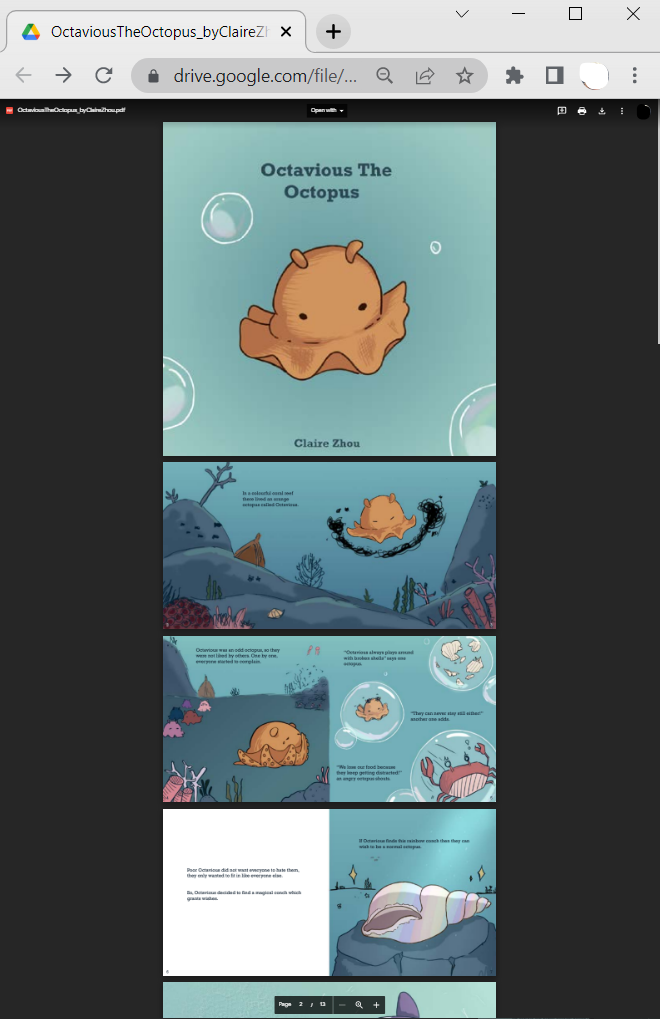

*** Click the image below to view the web comic ***


*** Click the image below to view the flower in action ***


NCEA Level 3 Digital Technologies - Software Engineering and Computer Science
13DTPStudents are able to take more than one Digital Technology course. Each course counts as a unique domain for University Entrance. For example students taking Software Engineering and Computer Science and Product Design Technologies would count as 2 separate University Entrance Domains.
This is an AI integrated course where students will learn to leverage generative technologies to assist them in learning and developing web application software.
This is a Digital Technologies Course for students who wish to specialise in Software Engineering and Computer Science programming, database and web technologies. During the course of the year, students will learn foundational programming concepts and use AI to design and develop a full-stack web application.
Student learning will generally revolve around advanced skills in the following areas:
- Functional programming in Python
- Web application development
- Database design and implementation
- Software Engineering skills including version control and testing
- Leveraging Generative AI to support development
This course combines Digital Technologies disciplines and prepares students for an increasingly wide range of tertiary or employment pathways.
Students will be encouraged to compete in the range of programming competitions available throughout the year.
This course has a NZQA Scholarship option:
Students undertaking the NZQA Scholarship option will extend their Level 3 learning by applying computational thinking to analyse challenging programming problems, develop algorithmic solutions, and critically reflect on the quality and efficiency of their digital technology solutions. Scholarship Information Link
When people think of Computer Science they often just think of programming, but there are many more aspects to the field including interaction design, communications and networks, software design, computer security, information systems, big data, machine learning, graphics, operating systems, educational systems, artificial intelligence, and embedded systems (processors that are embedded in everything from mobile phones to cars). All of these areas are experiencing rapid growth both in Aotearoa New Zealand and internationally, and there is a strong demand for Computer Science.
NCEA Level 3 Drama
13DRANCEA Level 3 Drama
This course offers students their first opportunity to explore the influential playwrights of the 20th Century and examine the evolution of modern drama. Focusing on the artistic areas of Europe and America, students will study the acclaimed works of playwrights such as Samuel Beckett, Harold Pinter, and Arthur Miller, developing an understanding of how theatre reflects and challenges society.
Throughout the course, students will devise, develop, and structure original performances designed to provoke thought, spark discussion, and create emotional connection with audiences. They will learn to integrate theatrical technologies and design elements - including costume, set, lighting, sound, and stage makeup - alongside advanced performance techniques to create compelling and impactful theatre.
A major highlight of the year is the opportunity to participate in a full-scale class production in Aurora. Students will gain hands-on experience in all aspects of professional theatre-making, from rehearsal and technical preparation through to live performance and pack-out, providing an authentic insight into the demands and rewards of staging a professional-level production.


NCEA Level 3 Early Childhood Studies
13ECS
Did You Know?
- ...that the first 1000 days of a child’s life shape their entire future? Level 3 Early Childhood Studies dives into the latest cutting-edge neuroscience to show exactly how those critical early years build the human brain.
- ...that our classroom occasionally gets taken over by mini-humans? This course is incredibly hands-on. You won’t just be reading textbooks—you’ll be designing real play resources, visiting local Early Childhood Centres, and welcoming preschoolers and their parents/kaiako into our school for visits.
- ...that you will get a massive head start on university-level concepts? You will unpack Te Whāriki (Aotearoa’s world-renowned early childhood curriculum) and explore the different learning philosophies that shape how Kiwi kids learn.
- ...that this course is the ultimate launchpad for a dream career? If you are eyeing up a future in Primary School Teaching, Early Childhood Education, or Nannying, this class gives you the exact foundational knowledge you need. In fact, many of our past students have gone straight into successful teaching careers!
- ...that you will tackle the real, important issues? Beyond the fun of play, you’ll look at the serious side of childcare, including child protection, safety standards, and the current hot topics facing the ECE sector today.
- ...that while this is a non-UE-approved subject, it is highly valued by employers? It focuses on practical, real-world Vocational ECE standards that give you invaluable life skills and background knowledge that stand out on a CV, whether you're heading into tertiary training or straight into the workforce.
See this link for one of our ex-students ' stories
NCEA Level 3 Economics
13ECO13ECO - Economics
The Level 3 course enables students to attain economic literacy and to develop a continuing interest in contemporary economic issues. The skill of reasoning clearly using analytical techniques allows students to present and interpret economic data in a clear, coherent manner. The course is divided into three sections: Whenever possible, specific examples are drawn from the New Zealand economy.
Microeconomics.
This is an analytical study of how consumers behave and how producers decide to use resources and sell their output. The ‘theory of the firm’ goes into detail of costs and output decisions in a range of market situations, ranging from perfect competition to monopoly. Microeconomics also looks at individual markets in relation to trade, taxes and government regulation.
Resource allocation modifications.
The free market does not always provide effective or equitable outcomes, and this section examines the case for government intervention. Areas of study include public goods, externalities, natural monopolies and equity issues.
Macroeconomics.
Macroeconomics looks at broad strands across the economy, and topics include national income, money and prices, trade and foreign exchange. These form part of the Aggregate Supply and Demand Model which is used to show the effect of government monetary and fiscal policy.
Careers
Economics can be studied right through university towards a bachelor degree, masters degree and doctorate. There are several areas to specialise in in later study. Macroeconomics which is relevant to careers with the Reserve Bank, Treasury, various economic institutes, domestic and international banking and finance companies. Econometrics leads to opportunities in Statistics NZ, actuary firms, insurance and polling firms. Microeconomics and Management science are branches of economics of interest to industry, health, airlines and freight logistics firms.
NCEA Level 3 Electronics and Mechatronics
13DTENCEA Level 3 Electronics and Mechatronics
Electronics and Mechatronics is an advanced, project-based STEM course for students who want to specialise in electronics, robotics, automation, embedded systems, and engineering. Students design, build, program, test, and refine sophisticated electronic and mechatronic systems while developing the technical knowledge and engineering skills required for tertiary study and careers in engineering and technology.
Students undertake an independent engineering project based on their own interests, applying advanced techniques in electronics, embedded programming, communication systems, PCB design, CAD, digital fabrication, and mechanical design. Projects may include robotics, automation, IoT devices, intelligent control systems, networked devices, or other complex electronic systems.
Throughout the course, students investigate, prototype, test, evaluate, and refine their solutions using an engineering design process. They develop a deeper understanding of electronic systems by analysing performance, improving reliability, selecting appropriate technologies, and justifying engineering decisions using evidence gathered through testing and stakeholder feedback.
Students also develop advanced project management, communication, and problem-solving skills while working independently to produce authentic engineering outcomes. Assessment is based on the development of complex electronic and mechatronic systems, allowing students to specialise in areas that match their interests and career aspirations. Projects may also be entered into Science Fair and other engineering or technology competitions.
Students have access to a dedicated Electronics Laboratory equipped with professional electronics equipment, laser cutters, 3D printers, CNC machinery, and other digital fabrication tools.
Students have access to Laser cutters, 3D Printers, Vacuum Formers and CNC machining.
NCEA Level 3 Employment Skills
13EMPThis course develops employability skills and offers the opportunity to develop students' career pathways and the skills needed to succeed in the workplace.
This course will allow students to engage in a self-directed learning plan with emphasis on job-seeking skills, the responsibilities and expectations of both a good employee and a good employer, and employment trends. Other topics include income, taxation, budgeting, communication skills, and working in a team.
Students in this course will be enrolled in up to 20 credits of unit standard assessments
Students who take this subject also have the opportunity to complete a work experience placement or short training course, which will offer up to an additional 20 credits.
This course requires Dean approval.
NCEA Level 3 Engineering
13TENLevel 3 Engineering builds on the skills and knowledge developed in Levels 1 and 2, offering students a pathway into the mechanical engineering and manufacturing industries. Using the Competenz ITO Unit Standards framework, the course focuses on advanced, hands-on learning in a workshop environment that reflects real industry expectations.
Students will refine their abilities in technical drawing interpretation, precision measurement, tool handling, and the use of engineering materials and machinery. Emphasis is placed on accuracy, efficiency, safe working practices, and independent problem-solving.
Depending on individual experience and ability, students may undertake the construction of a complex, negotiated project. This outcome is developed in consultation with the teacher and may involve more advanced techniques, tight tolerances, or multiple components. The project fosters self-management, planning, and quality control, while reinforcing the principles of sound engineering practice.
Assessment is based on selected Level 3 Competenz Unit Standards.
This course is ideal for students interested in pursuing careers in engineering, fabrication, manufacturing, or related trades. It supports entry into pre-trade training, apprenticeships, or tertiary engineering programs, and is suited to students who are confident in the workshop and ready for greater independence and technical challenge.
NCEA Level 3 English - Contemporary
13ENC13ENC: Contemporary English
To deal with the demands of an increasingly complex world, 13ENC prepares students by focusing on the skill of thinking critically. Contemporary texts, including film and written texts, form the basis of the course. Students will respond critically to the texts, while making links to the wider world and contemporary society. They will develop their ability to express ideas in a variety of written and spoken forms.
(Note : English is strongly recommended for all Year 13 students who intend going on to university study. Level 3 English can be most useful in fulfilling certain course requirements. Those students intending to study any of the Health Sciences, in particular, are encouraged to examine the possible benefits of studying English at Year 13 level. Students intending to apply for Australian universities need to check their entry requirements carefully because some are demanding L3 English.)
NCEA Level 3 English- Visual
13ENV13ENV: Visual English
In 13ENV, students study a wide range of contemporary visual texts, particularly films. Viewing and critically analysing visual texts is a key component of the course. Students will continue to develop and build on their writing and communication skills. They will study how to make connections across visual texts, as well as how to produce visual and oral texts. Students will also study a range of short written texts.
(Note : although not compulsory, English is strongly recommended for all Year 13 students who intend going on to university study. Level 3 English can be most useful in fulfilling certain course requirements. Those students intending to study any of the Health Sciences, in particular, are encouraged to examine the possible benefits of studying English at Year 13 level. Students intending to apply for Australian universities need to check their entry requirements carefully because some are demanding Level 3 English.)
NCEA Level 3 Extension English
13ENX13 ENX - Extension English
In this extension English course, students will respond critically to a range of exciting and thought-provoking literature, including a Shakespearean play, film and other written texts. Students with a flair for writing are challenged with the production of a Writing Folio and looking at literature from a different perspective or lens also forms a key part of the course.
(Note : although not compulsory, English is strongly recommended for all Year 13 students who intend going on to university study. Level 3 English can be most useful in fulfilling certain course requirements. Those students intending to study any of the Health Sciences, in particular, are encouraged to examine the possible benefits of studying English at Year 13 level. Students intending to apply for Australian universities need to check their entry requirements carefully because some are demanding Level 3 English.)
NCEA Level 3 Fashion & Textile Design Technology
13TTT
NCEA Level 3 Textiles & Fashion Design: Innovation and Technical Mastery
This advanced course offers students a comprehensive exploration of contemporary design, advanced technical construction, and sustainable fashion practices. Far beyond basic garment construction, NCEA Level 3 Fashion & Textiles Design prepares students for higher education and industry pathways by developing both their creative vision and a professional design portfolio.
Course Overview
Designed for innovative and self-motivated students, this course requires individuals to develop an independent design proposal and a unique body of work. Students cultivate the critical thinking, problem-solving, and holistic design skills necessary to thrive in the modern creative and technological sectors.
Key Highlights
- Industry-Informed Instruction: The program is delivered by an educator with international experience at both New Zealand Fashion Week and London Fashion Week, bringing authentic industry standards directly into the classroom.
- Advanced Technology Integration: Students bridge the gap between traditional craft and modern technology, utilizing laser cutters, computer-guided embroidery machines, and precision digital cutting tools alongside industrial-quality sewing and screen-printing equipment.
- Specialised Techniques: Participants master complex processes, including photosensitive screen printing and advanced fabric manipulation.
- Extracurricular Opportunities: Students are supported and encouraged to showcase their work in national runway shows and high-profile youth design competitions.
Academic Pathways and Future Skills
- Qualification and Endorsements: Students can select up to 20 credits from NCEA Achievement Standards, with comprehensive support provided to achieve Merit or Excellence endorsements. An NZQA Scholarship pathway is also available for high-achieving students looking to extend their learning.
- Transferable Career Skills: In addition to garment technology, the curriculum emphasizes project management, commercial awareness, and digital literacy—highly valued skills that open doors to the wider creative technology and design industries.
Students will confidently translate concepts into physical reality, master the professional tools of the trade, and build a resilient skill set for a dynamic global industry.
*Prior experience desired but not essential
NCEA Level 3 Food and Nutrition
13FDN
Fuel Your Future: Food & Nutrition (Level 3)
Think you know food? Between viral TikTok recipes, aggressive marketing, and the looming reality of moving out of home, navigating what we eat has never been more chaotic—or more important.
Level 3 Food & Nutrition isn't just about cooking; it’s about power. It’s the ultimate life skill that teaches you how to look after yourself, your whānau, and your community, while giving you the critical thinking skills to see through the noise of the food industry.
? What You’ll Be Doing
We blend hands-on kitchen skills with real-world sociology and science.
- Weekly Practical Labs: You won't just study food; you'll make it.
- ‘Fending for Yourself’: Master a repertoire of budget-friendly, delicious, and healthy meals designed for life after high school (hello, flatting survival guide!).
- ‘TikTok Trending’: Put those viral internet food hacks to the test to see if they’re actually worth the hype.
- Media & Marketing Deconstruction: Learn how multinational food corporations manipulate advertising to influence your cravings and eating habits.
- Myth-Busting: Become a certified BS-detector. You'll evaluate conflicting nutrition claims and internet fitness trends to figure out what is actually credible.
- The Big Picture: Analyse major nutritional issues hitting Aotearoa right now—like the under-consumption of vegetables, over-consumption of highly processed foods and how societal factors impact our health.
? What the Students Say
"Every year I decide I don’t have enough space in my course selection to take Food and Nutrition, yet every year I manage to make the room because I enjoy taking it so much.
I am able to take what I learn and apply it frequently to enhance my life. Food is such a significant part of any culture, and this subject is a fascinating way to learn about why people make the choices they do. Often, we make judgments without knowing the circumstances; taking this course is an eye-opening experience that makes you think deeper than what’s on the surface. Learning about nutritional needs at both an individual and a societal level is a privilege."
— Emma, Recent Past Student & Head Girl
? Why This Matters For Your Future
Whether you are heading to university, starting a trade, or taking a gap year, you have to eat. This course gives you a unique edge by combining practical adulting skills with advanced critical analysis—a skill highly valued by universities and employers alike.
Don't just consume. Understand what you're consuming.
Add Level 3 Food & Nutrition to your course selection today. 
NB: To ensure you feel confident and fully supported in this course, a strong foundation in writing is required as a prerequisite. You will require a minimum of Level 1 English and/or credits in a Level 2 literacy-rich subject.
NCEA Level 3 Food Technology
13FDT
Year 13 Food Technology
This UE-approved Achievement Standard course focuses on developing specialised knowledge and techniques associated with complex food technology processing and production. It also investigates ingredient selection, multiple methods of cookery and food preservation, and their applications to prototype food product design. Food testing and evaluation techniques are also explored throughout the course, which will enable students to apply their sensory perceptions to designing their own Culinary products.
During the course, students will develop an in-depth understanding and application of the skills used within the creative realm of the Food Technology/Culinary Arts Pathways.
NB: To ensure you feel confident and fully supported in this course, a strong foundation in writing is required as a prerequisite. You will require a minimum of Level 1 English and/or credits in a Level 2 literacy-rich subject.
Students will have two practical lessons per week.
The programme utilises Achievement Standards which support the achievement of University Entrance NCEA subject endorsement at Excellence or Merit. Up to 16 credits will be offered.
There is also the option, in consultation with Miss Damian, of completing an individualised programme aimed at entering Technology Scholarship. Students interested in participating in Technology Scholarship are encouraged to begin consultations regarding the project from Term 4, 2026.
Topics covered include:
- Advanced processing procedures and culinary skills
- Complex savoury and sweet baked products
- Food trends and sustainability
- Food product prototype design (individual inquiry topic)

The programme targets Achievement Standards and enables students to gain potential NCEA Excellence endorsement.
NOTE: Students are expected to provide some perishable foods for practical lessons. Details of this will be on Schoology to help assist the organisation of this.
NB See also: Hospitality: Food Studies and Hospitality: Cookery Studies and Food and Nutrition for other foods based course options
NCEA Level 3 French
13FRE
13FRE - French
At this level, oral and written confidence and accuracy, cultural awareness and depth of thinking become evident in students’ work. Students are capable of discussing more complex issues in thematic studies and literature.
The language skills practised include developing an argument, communicating certainty and doubt, and responding to selected literary texts.
The students can sit a French International qualification - DELF- which is globally recognised and valid for their lifetime.
We travel to Onuku marae with the senoir Te Reo Maori classes, to study the French and Maori history and culture of the area in the 1840s. The students stay on the marae, take part in masterchef cuisine competition and an amazing race around Akaroa.
Topics studied:
- Youth
- Immigration
- Environment
- Politics
- History
- Your future
- le Petit Prince
- Amelie (film)
N.B. You can choose either the interaction or the spoken presentation standards

NCEA Level 3 Geography
13GEO"The study of geography is about more than just memorizing places on a map. It's about understanding the complexity of our world, appreciating the diversity of cultures that exists across continents. And in the end, it's about using all that knowledge to help bridge divides and bring people together". Barack Obama
"What is where, why there, and why care?"
The statement above incorporates all essential elements recognised as being fundamental to geography.
Geography is the science of place and space, and studying this subject helps us to understand the connections between people and the environment. In a geographic context, "space" is defined as a portion of Earth's surface. Location, place, area, region, territory, distribution, and pattern are all closely related spatial concepts.
Geography is a future-focused subject. The discipline is not static, geography is about change. As the study of the earth's landscapes, people, places, and environments; geography is unique in linking the social sciences (human geography) with the natural sciences (physical geography).
Geography will equip students with transferable skills such as report writing, critical evaluation, decision-making, problem-solving, and wide-ranging analytical skills, including statistical and geospatial analysis. Opportunities to widen your learning in authentic contexts through field work and other experiences also exist and can deepen your skills set. The cross-disciplinary nature of Geography leads to a range of exciting opportunities at University level and beyond. The interchangeable skills attained in Geography are well respected by employers from many sectors in today's workforce. For example, graduates emerging with GIS (Geographic Information Systems) experience are highly sought after.
The essence of geography is all about a sustainable future, and therefore much of the course outlined below is underpinned by the United Nations sustainable development goals.
Topics include:
• Back to the future - explore Geography in the real world - make Geography career connections. Apply a range of geographic skills and concepts in the local area. This introductory topic will set solid foundations for the year in geography literacy, thinking and analysis. This is very helpful for students who have not studied geography before.
• Taken - study modern day human trafficking and the associated issues. You will learn about parts of the world that have a higher incidence of trafficked victims and where they end up and why. Find out who is most vulnerable and reasons for this. Students will then consider ways in which this complex issue can be dealt with. Develop skills in justifying the best solutions.
• Drastic Plastic - an environmental study on the global patterns of plastic pollution in the ocean. Enhance your ability to synthesize differing perspectives, spatial patterns and types of information. You will discover the natural and cultural factors that cause the pollution problem and where the biggest concentration of ocean pollution is located and why. The classic economic versus environmental impacts and perspectives will be assessed against each other. A multi-faceted range of solutions will be considered in working towards mitigating this complex problem.
• Wanderlust - unlock the natural processes that shape the natural environment of premier tourist destinations in New Zealand. Learn about the cultural process of tourism development and its key elements and interactions. Discover the environmental, economic and social impacts of tourism development.
• 100% Pure - Conduct a tourism sustainability inquiry; experience a five-day field trip to Queenstown. Apply practical methods to collect field data, practice design and research methodology. Develop teamwork and independent thinking. Investigate related geographic issues such as the impacts of Covid-19, sustainable transport, freedom camping, carbon footprints, increased housing costs, worker shortages, crime and regenerative tourism.
• ICT Geography - use subject specific geo-spatial applications such as GIS (Geographic Information Systems), GPS technology, Google Earth Pro, drone UAV technology, Google My Maps, Satellite images and data recording in fieldwork.
You may also decide to sit the Geography Scholarship end-of-year examination. Your teacher will be able to advise you about this.
 Year 13 Geography students on the Skyline luge in Queentown 2025
Please email or see a member of the Geography team with any further questions:
Ms Lee (LOD) - Mr Gibson (GBB) - Miss McCoy (MCE) - Mr Green (GRC)
NCEA Level 3 German
13GER13 German
In this course the skills practised and tested, as in the past, are listening, speaking, reading and writing.
Emphasis is on expanding vocabulary and grammar so that students are able to use more fluent German and to discuss topical issues relevant to German society today. World topics such as environment issues, human rights and immigration are covered.
Also culture is incorporated into the programme, and at this level authentic and up-to-date sources such as news from the internet are used.
To gain further insight into German history and culture, some literacy texts are studied, as well as German films and contemporary songs.
Students are encouraged to sit the European Framework examinations (B1, B2) which are subsidised by the Goethe-Institut and take place at the end of Term 3.
NCEA Level 3 Health Education
13HEA
Why study health education?
Health education supports the curriculum’s vision for our young people, by enabling students to develop the values, knowledge, and competencies to live full and satisfying lives.
Through their engagement with health education, students develop the competencies to become confident, connected, actively involved, lifelong learners, ready to contribute to the future well-being of New Zealand.
Through learning and by accepting challenges in health-related and movement contexts, students reflect on the nature of well-being and how to promote it. As they develop resilience and a sense of personal and social responsibility, they are increasingly able to take responsibility for themselves and contribute to the well-being of those around them, of their communities, of their environments (including natural environments), and of the wider society.
This learning area makes a significant contribution to the well-being of students beyond the classroom, particularly when it is supported by school policies and procedures and by the actions of all people in the school community.
Health Education is based around these four interdependent Key Health Concepts which underpin learning at all levels of the Health Curriculum.

Learning in health education
Supports personal growth
Health education encourages students to:
- manage their own well-being; make health-enhancing choices, and plan, and action goals
- support the well being of others; learn how to communicate effectively and see issues from different perspectives
- be resilient learn to identify and minimise risks, develop strategies for coping with adversity, and access and use support, for themselves and others
- understand the attitudes and values that impact on well-being, such as respect, care and concern for others, and social justice
- contribute meaningfully and responsibly to the well-being of communities; look critically at well-being issues affecting communities, and plan and take collective action
Challenges thinking about what is fair and just
Students learn to analyse, evaluate, and, where appropriate, take action to enhance the well-being of individuals, communities, and society. Students are challenged to think critically about a range of personal and societal health-related perceptions and practices.
Builds resilience and explores issues
Health education explores current issues relevant to adolescents, such as sexuality and relationships, drug and alcohol use, and how to build resilience in order to manage change and stressful situations.
Creates learning pathways
Learning in senior health education provides the foundation for pathways to the social and health sciences (education, psychology, sociology, philosophy, politics, law, economics, medicine, health, justice, and social services).
Develops skills for health promotion
By looking critically at issues that affect individual and community well-being, students learn to process information and develop skills that can be used to take health-promoting action.
What is covered in Year 13 Health?
Level 3 Health Education is a holistic approach to health and wellbeing. The learning in this course aims to develop students' critical thinking and research skills to explore attitudes and values, and knowledge of rights and responsibilities of self, others and society across a range of health issues. Emphasis is placed on looking at ‘real world’ and current societal health issues. The course gives students the opportunity to investigate and analyse a variety of national and international health issues.
Health Practices (AS 3.3): This unit focuses on the three different Health practices Conventional Medicine (CM), Complementary and Integrative Medicine (CIM) and Traditional Medicine (TM). It explores each Health Practice, their underlying philosophy and how they are used in the treatment of various medical conditions.
New Zealand Health Issue (AS 3.1): This unit requires students to perceptively analyse a current health issue affecting young people in New Zealand. Students will research and investigate the influencing factors on the issue in New Zealand and think critically about the implications on personal, interpersonal and societal wellbeing. Strategies and recommendations to enhance wellbeing and reduce harm will be discussed and analysed.
International Health Issue (AS 3.2): In this unit, students will be asked to investigate and research an international health issue of concern. Students will draw on learning from across the year to identify the major influencing factors on the issue and the implications for wellbeing that are a result of these complex issues. Recent topics have included, Poverty, Reproductive and Sexual health issues, Culture and Gender.
Ethical Issues (AS 3.4): In this unit, students will investigate a contemporary ethical issue of their choice in order to write a report which analyses the opposing perspectives of the issue and the implications for well-being of these differing perspectives.
NCEA Level 3 History
13HIS
"The Nazis entered this war under the rather childish delusion that they were going to bomb everyone else, and nobody was going to bomb them … They sowed the wind, and now they are going to reap the whirlwind"
Arthur "Bomber" Harris - commander of the Royal Air Force, Bomber Command during W.W.II (1939 - 45).
Level 3 History offers students the opportunity to explore thought-provoking historic events that have had significant impacts on society and it is a subject that teaches people to gather, process, interpret and present information. By studying the topics that are taught, students will gain a deeper understanding of their own society, their place in the world, and develop important skills that are applicable to tertiary education and various careers.
Should a student have taken Year 11 and or 12 History and what are the prerequisites (or precondition) in taking Year 13 History? You do not need to take Year 11 or 12 History to take it in Year 13! If you did not take in Year 11 and or Year 12 then the first topic in Term 1 is spent learning the terms and skills that occur in History (for those who took it in Year 12 it will be a recap).
There are prerequisites in taking Year 13 History and this are:
- If you took Year 12 History then you needed to have gained at least twelve Year 12 credits from that subject.
OR
- If you did not take it in Year 12 History (or missed out on getting 12 credits in that subject) then a student would need at least 12 credits in a literacy rich subject, like Year 12 English.
Skills: Studying History provides a student with skills which are not confined to just the study of the past. While we learn topics that are significantly important and interesting to us the aim in Level 3 History is to improve upon the skills learnt at Level 1 and 2. However, do not worry if you did not take History prior to Year 13 as the first four weeks of Term 1 will include the recapping of skills and concepts learned in Year 11 and 12 as well as acquainting students with the expectations of Year 13 History.
These skills include:
• ‘Fact v Fake’: More than ever before, ours is an information-based society. People must adapt to it and handle a wide variety of information. Therefore, having the skills to know what information is 'fact' or 'fake' is very important in today's world. The ability to interpret pieces of information such as written articles, photographs, cartoons and websites in terms of why these were created and how to make judgments of it being reliable and trustworthy, will be learnt.
• ‘Communication’: The ability to formally write a structured analytical and evaluative essay that is clear and concise. The essay will provide a logical argument based on a significant event you have learnt this year.
• ‘Perspectives’: Sometimes referred to as “point of view’. This is the ability to understand how an individual or groups position / stance has been influenced by things such as religion, country of origin, level of education, or ethnic background.
• ‘Historiography’: This is the study of how historical recording and interpretations of the same events shift with time as a result of many different factors. Historiography helps us understand that societal, political, economic, and other issues may alter the recording of history over time.
• 'Analysis': The skill of analysis is invaluable in many jobs, and the ability to analyse and then prioritise information is vital to decision making.
Careers: Skills of analysis are invaluable in many jobs, and the ability to analysis and then prioritise information is vital to decision making. This not only provides a skill set for a student but has considerable value and application to a wide variety of careers and occupations.
For those planning after Year 13 to be involved in tertiary education, Level 3 History skills such as analytical essay writing and gathering research material will help you in a wide variety of future education endeavours. These skills have considerable value and application to tertiary study and a subsequent wide variety of careers and occupations. These can include the law, journalism, sociology, international relations, political science and aspects of private business such as in management as well as associated careers such as the police. If you are interested in studying History at the tertiary level then here is the link to the University of Canterbury History Department.
The three main topics:
• Introductory topic: 'The Takapuneke Massacre' (Akaroa, 1830); This topic focuses on a significant event in New Zealand's history, where Te Rauparaha, the ariki (leading chief) of the Ngāti Toa, led an attack that destroyed the Ngāi Tahu settlement of Takapuneke in present day Akaroa Harbour. This incident was part of the wider conflict known as 'The New Zealand Musket Wars.' An intriguing aspect of this event was the direct involvement, for the first time, in a intertribal (or iwi) conflict by Europeans who assisted Ngāti Toa in their attack. Their involvement set of a chain of events that eventually resulted in Britain gaining sovereignty of New Zealand through the 1840 Treaty of Waitangi (Te Tiriti o Waitangi). Students will not only learn about this event but also develop the necessary skills that will be used and assessed in Level 3 History. An overnight field trip to Akaroa will provide an opportunity for reinforcement of classroom teachings and will also enable students to visit one of the most significant historic sites in our country. The field trip to Akaroa occurs in Term 1 at the end of February / start of March.
• A historical controversy: The strategic bombing of German cities during World War Two; Students will explore the highly controversial topic of Allied strategic bombing campaigns against German cities during World War Two. They will analyse the impact of these bombings on the end of the war and the ethical implications of the significant loss of civilian lives. For instance, was it morally right for the Allies to destroy towns and cities that housed German families including children and the elderly in an attempt to when the war and bring to an end Hitler's' Nazi regime? Students will create a report that presents arguments for and against the effectiveness and moral justifiability of the bombings. They will also need to state their own opinion based on their findings.
• Rwanda Genocide of 1994: This topic delves into the genocide that occurred during the Rwandan Civil War (Central Africa), where over 800 000 predominantly Tutsi Rwandans were killed in a span of 100 days. Students will investigate the causes of the genocide, examine the experiences of the victims, and explore the long-term consequences for those involved. There will also be a study and analysis of the role that the United Nations took during this tragic event.
Assessments:
• Research a significant historical event (5 credits): Students will choose a significant event from any region of the world that occurred between c.1600 CE and c.1990 CE and conduct research, gather evidence, and create an annotated portfolio.
• Analyse an historical event (5 credits): Students will write a report on the 1830 Takapuneke Massacre, utilising provided sources and their own understanding of the event.
• Analyse different perspectives of a contested event (5 credits): WWII Allied strategic bombing against German cities (5 credits): Students will write a report that analyses the arguments for and against the strategic bombing campaigns during World War Two.
• Analyse the causes and or consequences of a significant historical event (6 credits): This external assessment will require students to write an extended analytical and factual essay on the causes and or consequences of a significant historical event. This will be practiced in class, in the August School Practice Examination, and finally in the NZQA November external examination.
The course will incorporate online learning components, and students are encouraged to bring their own devices (netbooks or laptops etc.) to access resources and participate in activities through the class Schoology page.
You may also decide to sit the History Scholarship end of year examination. In Term 1 your History teacher will be able to advise you about this.
If you have any questions regarding taking Year 13 History then please see or contact:
Mr. Coster (css), Mrs. Maguire (mrs) or Mr. Land (jll)
NCEA Level 3 Hospitality: Cuisine and Coffee
13HCT


Hospitality: Cuisine and Coffee
This is a specialised practical course which will run over double periods.
Designed to extend practical commercial cookery and food presentation skills, utilising a range of different ingredients and cookery methods, students will be required to produce industry-quality inspired dishes. This course will equip students with greater insight into the food and catering industry as a lead into tertiary study or hospitality career options.
A key requirement of this course will be the production of food on a regular basis. This will include batch food production and lunchtime pop-up shop sessions and evening restaurant assessments later in Term Two.
It will take up ONE subject option line (4 periods) but will go into lunchtimes.
Students will usually have two double period practical cookery or coffee sessions per week (this includes lunch times).
Topics include
- Comprehensive barista espresso coffee training
- Hot and cold desserts
- Ethnically inspired cookery and food presentation
- Innovation with rice and farinaceous dishes
- Finger food
A compulsory component of this course is the Restaurant Assessment run at the end of Term 2.
This course option is partially funded by the Government Secondary Tertiary Alignment Resource (STAR)
NOTE: Students are expected to provide some perishable foods for practical lessons. Details of this will be available on Schoology to assist with the organisation of this.
NB See also: Hospitality: Food Studies, Hospitality: Food Technology and Food and Nutrition for other foods based course options
NCEA Level 3 Hospitality: Food Studies
13HFS
Hospitality: Year 13 Food Studies
This course utilises Cookery Level 3 Unit Standards and will give you an insight into aspects of working in a commercial kitchen. It will provide further skills that build on any previous Food Studies classes completed prior to this, and give you an introduction to the skills and knowledge required for someone considering a career in the Hospitality industry.
The Year 13 Hospitality programme is assessed against four Unit Standards, which total 16 credits at level 3. All work is internally assessed through written tests and practical tasks.
Students will have three to four practical cookery or coffee periods each week.
Unit Standards have only one level of achievement – unit standards are either Competent or Not Yet Competent, with resit opportunities.
Topics Covered:
- Fresh pasta
- Baking
- Eggs and breakfast options
- Comprehensive espresso training
- Working in a team (optional)
NOTE: Students will be expected to provide some perishable foods for practical lessons. Details of this will be made available on a Practical Ingredients Planner each term to assist with the organisation of this.
NCEA Level 3 Japanese
13JAPAll NCEA Level 3 requirements are covered, including the study of kanji. Students learn to read, write and understand relatively complex Japanese sentences. Oral communication skills are also extended. Students who can use grammatical structures at this level have gained a very useful skill for work in New Zealand in tourism-related fields. They will also have an excellent base for tertiary studies in Japanese. Students who have their sights set on science studies often choose a language as their fifth subject and thoroughly enjoy it, retaining an interest in the humanities.
A variety of topics will be covered such as:
Japanese culture and lifestyle: past and present
Future Plans
Environment
Global society
Language training teaches problem-solving skills that are in demand by employers. Language-trained people can be found heading research units in Treasury, Trade and Commerce; in various sections of Internal and Foreign Affairs; in all fields of media, in teaching, commerce, medicine and law.
Note: 3.3 Interact is optional.
NCEA Level 3 Legal Studies
13LGLThe course aims to give students an in-depth knowledge, understanding and appreciation of New Zealand's Legal System so they can participate and contribute to society as informed and responsible citizens.
This course is valuable for students who wish to study Law or Criminal Justice at the tertiary level or have a career which is linked to the Legal System. E.g the Police or Ministry of Justice.
The course is all internally assessed, so there is no external exam at the end of the year. This is an advantage, as it allows you more time for your other subjects, when the pressure comes on at the end of the year.
Even though it is not one of the approved subjects for University Entrance, it can assist you in getting invaluable life skills and the necessary points to get scholarships. It could also help with getting overall excellence in Level 2.
Students do not need to have studied Level 2 Legal Studies (although it is an advantage) in order to study Level 3 Legal Studies. During the year the students will visit the courts and the men's prison, participate in a mock court as well as hearing visiting speakers involved within our justice system.
The Unit Standards offered are assessed offering Achieved, Merit and Excellence grades which can be counted towards an endorsed Level 3 NCEA qualification.
NCEA Level 3 Mathematics with Calculus
13MACMathematics with Calculus covers standards in Algebra, Trigonometry, Conic Sections, Differentiation and Integration. The Algebra, Differentiation and Integration standards are assessed externally. All standards in this course require a high level of algebra.
To be eligible for this course students must pass both the Level 2 Calculus Standard and the Level 2 Algebra Standard.
This course is fundamental background to tertiary study in Engineering, Architecture, Veterinary Science, Health Science and the Physical sciences.
NCEA Level 3 Media Studies
13MEDIf you're a creative student who enjoys watching and analysing films as well as engaging with other media then Media Studies will appeal to you. If you like writing, design, photography or making films and like to debate what you see in the media, you will also enjoy this subject.
Media Studies is a blend of theory and creative expression. During this course you will design and create your own media product (either a short film or a magazine feature article). You will also study a feature film from a variety of different perspectives and examined the science fiction film genre and its close relationship with society.
This course will develop both your critical thinking skills and media production skills.
NCEA Level 3 Multi Materials Technology
13MTTLevel 3 Multi-Materials Technology challenges students to apply design thinking and technical skills to develop a high-quality, functional outcome for a client or stakeholder. Using an inquiry-based approach and assessed through NCEA Level 3 Achievement Standards, the course focuses on student-led projects that respond to real-world needs (ideally beyond the learner's own). Projects may address local, national, or global issues, encouraging students to consider the impact of their design decisions and demonstrate responsible innovation.
Using a wide range of materials—such as wood, metal, plastics, textiles, and composites—students research and define a design brief in consultation with a stakeholder. They engage in iterative modelling and prototyping, critically evaluate materials and processes, and apply sound planning and production strategies in the construction of a final outcome that meets the client’s needs and expectations. Under supervision, fabrication may include the use of CNC router, plasma and laser cutters, 3D printers and a wide range of hand tools, power tools and machinery.
This course, which is UE approved, prepares students for tertiary study or industry pathways in design, engineering, or technology-based disciplines. It is ideal for learners who are creative, self-motivated, and passionate about using design to make a meaningful difference.
NCEA Level 3 Music Project
13MUPThe 13MUP course allows students to build a music course that meets their individual interests and needs within a traditional/classical focus, selecting from all available NCEA Level 3 standards, including those previously offered in the 13CON conducting course. This course can also be taken alongside 13MUO by students wishing to maximise their focus on Music in Year 13, and wishing to accumulate NCEA internal and external credits alongside their Cambridge A Level work. Students taking the 13MUP course may not take the 13MUC course as well. Options include:
Internal:
Solo Performance
Group Performance
Second Instrument Performance
Conducting
Composition
Arrangement
Research
Music Works
External
Context (Study of Music Works)
Aural
Harmony
NCEA Level 3 Music Technology
13MUTThe 13MUT course is aimed at students who would like to move into the field of Music Technology, Sound and Audio Engineering, Live sound, Sequencing and/or MIDI programming.
This course is open to all year 13 students. It can be taken in conjunction with other Level 3 Music Courses. There are no entry requirements to enter into this course although completion of 12MUT would be an advantage.
In this course the supplied DAW (Digital Audio Workstation) is Logic but if you have your own DAW you are able to use that for the computer based standards.
Students who are enrolled in this course may be having instrumental lessons, but this is not a compulsory part of the course. If you are interested in starting lessons, please talk to your teacher about an appropriate instrumental tutor.
Students not also enrolled in 13MUO, 13MUP or 13MUC may choose to enter Solo Performance.
NCEA Level 3 Outdoor Education
13OEDLevel 3 Outdoor Education is a Unit Standards course that offers students a wide range of hands-on experiences in nature. Students split their time between the classroom—learning the theory behind essential outdoor skills—and the natural environment, where they put those skills into practice. Field trips are a mandatory core component, providing the perfect opportunity for students to test their knowledge and complete their practical assessments. Students with a strong interest in the outdoors are able to continue their studies and work towards a Certificate, Diploma or Bachelors Degree in Outdoor Recreation/Education at a range of institutions after the completion of this course. Or alternatively move directly into the outdoor education industry, working with youth through different organisations both here in NZ and abroad.
Students will gain skills and participate in the following Units;
Whitewater Kayaking & Kayak rolling,
Navigation, Weather Interpretation & Survival Skills through Tramping,
Outdoor Facilitation & Leadership,
Group Processes & Rock Climbing during an Outdoor Ed Camp


This course uses Te Ao Māori concepts; Kotahitanga, Kaitiakitanga, Manaakitanga and Turangawaewae throughout to emphasise key areas of learning such as co-operation, sustainability, supporting others and a sense of belonging.
NCEA Level 3 Physical Education
13PEDLevel 3 Physical Education
Term 1- Climbing and Disc Golf
- You will learn to climb or refresh your skills on our school climbing wall in the Hunter Gym
- Skill Development in Climbing Technique, Bouldering, Risk Management and Partner Belaying.
- We travel to Castle Hill and climb under supervision from qualified YMCA Instructors.
- The climbing Assessment takes place at the YMCA in the city with a huge range of available climbs under expert supervision and instruction.
- The second half of term is spent playing disc golf at Jellie Park. You will be analysing and applying the Biomechanical Principles involved in the sport and using them to evaluate your own technique.
- You will undertake a programme to train to improve your disc golf.
- You will be assessed on your Disc Golf in Both Term 1 and Term 4 using the Disc you receive as part of the course.

Term 2- Leadership

- You will analyse and practice the different styles of contemporary leadership
- With your peers you will have the chance to lead and find the style that best suits your personality and the chosen audience and environment
- Our Junior classes will then put these leadership styles to the test as you run lessons and fun physical activities for them to enjoy and offer their often honest feedback.
- You will attend a 3 day camp at Wainui Park to experience and lead using 4 different styles of contemporary leadership, to gain a greater understanding of different styles working in different situations.
Term 3 and 4 - Physical Activity and it's affect on Wellbeing

- You will develop a deeper understanding of what Physical Activity is and how it influence our Wellbeing.
- Through a variety of practical activities you will explore Play, Recreation, Leisure and Sport, considering when and where these are most dominant in a person life cycle and why.
- You will reflect on your experiences with Physical Activity, the influences on you ranging from Relationships, Society, Economic, Cultural and the Media. Through this you will develop strategies to remain Physically Active whilst challenging the assumptions made around the benefits and negatives of being involved with them.
- Its your chance to get creative with Assessment. You can choose from a range of options to present your information and research from a fully edited article style to an exciting you tube video.
NCEA Level 3 Physics
13PHYThis Physics course builds on the knowledge gained in Physics at Level 2, so a good level of knowledge is required from Level 2 Physics in order to gain the most from the Level 3 course.
The content of this course aims to give students the understanding in order to successfully go on to study at a tertiary level. Level 3 Physics is required or recommended for many areas of further study such as medicine, engineering, aviation and architecture.
Students selecting Level 3 Physics will be given the choice of being in a course doing more internal credits or more external credits - each course offers 19 Credits in total. Students will be given more information about these options in Term 4 and we will endeavour to place students into their preferred option.
You may also decide to sit the Scholarship paper. Your teacher will be able to advise you about this.
NCEA Level 3 Samoan
SA3000Samoan Level 3
This course is run online through Te Kura and follows Learning Languages in the New Zealand Curriculum up to Level 6 and has an emphasis on
communicating in Samoan. The course prepares you to gain 25 credits towards NCEA Level 3. There are three
internal standards worth 15 credits and two external standards worth 10 credits.
NCEA Level 3 Science General
13SCIWhy study Science in Level 3?
This is a general Level 3 Science course that includes a range of topics from Chemistry, Biology and Planet Earth (Geology and Astronomy) including understanding and implementing scientific processes, advancements and events in Astronomy and how to carry out scientific investigations.
The course will teach practical science investigation techniques along with research techniques that will get students thinking critically about knowledge presented to them. It will also allow students to get involved with the world around us, analysing current practices and how to improve them in a positive way. As Technology and Science move us forward into the 21st century, the skills learned in this subject will enable students to participate and contribute to our future society in a confident and knowledgeable manner. This course follows on from our Level 2 General Science course. However, students who have done Level 2 Biology, Chemistry or Physics could also pick up this course. This course follows the requirements of Level 8 Science in the New Zealand Curriculum and is a fully internally assessed programme with standards that may change depending on student interest. There are many courses and careers that require some Level 3 Science credits but do not specify the discipline.
NCEA Level 3 Spanish
13SPNThe Year 13 Spanish course is designed to follow and expand upon Year 12. The skills Listening, Speaking, Reading and Writing will continue to be developed and assessed through a theme-based approach as set out in the New Zealand Spanish Curriculum.
At this level, oral and written confidence and accuracy, cultural awareness and depth of thinking become evident in students’ work. Students are capable of discussing more complex issues in thematic studies such as immigration and racism, Spanish fiestas and technology and they will, for the first time, be exposed to Hispanic literature and film as part of the course.
There is a strong emphasis on expanding vocabulary and grammar so that students are able to use more fluent Spanish and to discuss topical issues relevant to the world today.
The students can also sit an international Spanish qualification - DELE - which is recognised globally and valid for their lifetime.
NCEA Level 3 Sports Leadership and Performance
13SLPLead. Coach. Inspire.
If you are passionate about sport, coaching and making a real impact then this is the course for you. This course offers a unique opportunity to step out of the classroom and into the world of sport, coaching, leadership and adventure. You will gain nationally recognised Unit Standards that can count towards tertiary qualifications in the Sport, Fitness and Recreation industries.
What to Expect:
Lead by Doing
Get hands-on through team-building challenges and an off-site, high-energy adventure-based learning and high ropes experience. This is where you grow your confidence, problem-solving and leadership style.
Growing Coaches
Take part in engaging coach workshops, develop your craft through practical specialist sessions and put it all into action coaching in real-life environments—on-site and at local primary/intermediate schools.
Why Choose Sports Leadership and Performance?
- Learn in the real world and not just the classroom
- Build practical skills in coaching, communication and teamwork
- Grow leadership abilities you will use for life
- Contribute meaningfully to your school and community
- Explore pathways into sport, fitness, health, teaching and recreation industries
Whether you are dreaming of coaching, teaching or leading others through sport, this course will equip you with the tools and confidence to succeed.
Learn by leading. Lead by doing. Grow through sport. Join the Level 3 Sports Leadership Performance course and step into your future.
Where Can Sports Leadership Take You?
Completing the Level 3 Sports Leadership Performance course opens doors to a wide range of career pathways, study options and life experiences in the sport, fitness and recreation industries.
Tertiary Study Options
Explore qualifications in sport and recreation at top institutes like the Ara Institute of Canterbury and beyond:
- Bachelor of Sport Coaching – Develop skills in coaching, performance analysis and athlete development.
- Bachelor of Sport and Exercise – Study human movement, performance, health and fitness.
- Bachelor of Recreation Management – Learn how to plan and lead recreation programmes and events.
- Diploma in Outdoor Recreation and Instruction – Train in adventure-based learning, guiding and outdoor leadership.
Career Opportunities
These are some of the roles this course can help set you up for:
Sport and Fitness Industry
- Personal Trainer
- Strength & Conditioning Coach
- Fitness Instructor
- Sports Scientist
- Athlete Development Coach
Coaching and Management
- Sports Coach (school, community, elite level)
- Sport Development Officer
- Event Manager (sport and recreation events)
- Sport Management Professional
Outdoor and Adventure
- Outdoor Recreation Guide / Instructor
- Adventure Tourism Staff
- Camp America Counsellor
- Outdoor Education Specialist
Life Experiences and Gap Year
- Camp America – Work overseas as a camp leader, coach or instructor.
- Gap Year Experience – Travel while gaining leadership and coaching experience in a range of countries.
Elite Pathways
- Professional Sportsperson
- Performance Analyst
- Rehab and Recovery Support Roles
This Course is Your Gateway
With practical coaching, adventure learning and real-world leadership experience, this course is more than just a subject, it is your launchpad into the world of sport, leadership, teaching and recreation.

NCEA Level 3 Statistics
13MASThe 13MAS course covers standards in Inference, Bivariate Data, Time Series, Probability and Probability Distributions. All topics require a reasonable level of algebraic skills.
To be eligible to study this course students from 12MAT will need to pass the Probability Standard and 8 other credits.
Students from 12MAS must pass the Probability Standard and the Inference Report at Level 2
NCEA Level 3 Te Reo Māori
13MAOThis is a literacy approved course.
The Level 3 Te Reo Māori course is designed to advance the student in the areas studied at NCEA Level 2. It comprises written Māori, spoken Māori and Māori culture. The course will be assessed by means of the following assessments: reading, writing, listening, speaking (and creative writing is optional). The learning of more advanced grammar and vocabulary will ensure that the student has the necessary knowledge to start Te Reo Māori at Level 2 at the University of Canterbury (and other Polytechnics and Universities). Subjects covered are thought provoking and are both traditional and contemporary issues in today's society. Additional credits may be available for some students, due to the school policy of 18-22 credits are to be studied per subject.
Language training teaches problem solving skills that are in demand. Language-trained people can be found heading research units in Treasury, Tourism, Trade and Commerce, in various sections of Internal and Foreign Affairs, in all fields of the media, in teaching, commerce, medicine and law. Experience of Taha Māori can enhance the likelihood of employment in a government department. Māori language adds to the versatility of a job seeker.
NCEA Level 3 Tourism
13TOU"We are focused on purposefully creating a resilient and sustainable industry that delivers for the country, our people, our environment and the visitor."
Rebecca Ingram, Chief Executive, Tourism Industry Aotearoa.
About one in nine people currently work across tourism and hospitality. The government is aiming to have 4.78 million tourists by 2034, but questions remain over who will cater for them. Minister of Tourism and Hospitality Louise Upston recently said, “We need to grow tourism businesses. We need to grow the value from the tourism visitors we have.” She’s right. But without a viable workforce, none of this is possible.
Both domestically and internationally, the tourism industry will increasingly demand confident, skilled people with a passion for providing great services and experiences to visitors from all over the world. The qualifications gained from this course provides students with specialist understanding of this diverse and exciting sector.

Tourism students will be learning what the airline, travel and tourism industry wants them to know:
• Attain in-depth knowledge of New Zealand, Australia and Europe as tourist destinations.
• Gain insight on the economic significance of tourism to local, regional and global economies.
• Delve into the tourism industry and how it operates at different levels.
Throughout the year students will be exposed to a range of career pathways in the Tourism and Travel industries. This includes meeting a number of guest speakers who currently work and train people in the industry. There are also further opportunities for students to experience 'taster days' from some of the local Tourism and Travel providers such as The New Zealand School of Tourism (NZST), the International College of Tourism (ITC) and Ara. Examples of short courses include:
- Walt Disney World Florida taster. (NZST)
- Hotel Management taster. (NZST)
- Adventure short course (Adrenaline Forest). (ITC)
- Flight Attending short course. (ITC)
- Tourism sales short course (International Antarctic Centre). (ITC)
- Communication and Customer Service short course. (ITC)
- Aviation short course (ITC)
- Employment Skills short course (ITC)
Other skills attained include; good presentation and communication, statistical analysis, making calculations, recognising people's needs, developing digital literacy, research skills, experience teamwork and develop leadership skills.
Upon completion, students may progress to a tertiary provider for subsequent study in Travel and Tourism Levels 3 and 4. Alternatively, specialist industry knowledge attained also provides a solid foundation for University level study in this field.
The World is waiting. Make your career, travel!!

Please email a member of the Tourism team with any further questions:
Ms Lee (LOD) - Miss McCoy (MCE) - Mr Green (GRC)
NCEA Level 3 Visual Arts Design
13APDHave a creative passion you want to take further? Level 3 Visual Art Design is a highly personalised course where you develop a major body of work based on your own interests, ideas, and future goals.
Whether you're interested in branding, illustration, character design, building worlds for a graphic novel, digital collage, typographic outcomes, communicating a message, creating and marketing a product, different styles of advertising, social media or visual storytelling, you'll create a design proposal that allows you to specialise in an area you are genuinely passionate about. This course gives you the freedom to work independently while developing the skills, processes, and visual language used by professional designers.
Possible pathways include:
- Logo and Brand Identity design
- Character design and animation
- Game design and world building
- Posters, advertising and promotional campaigns
- Book illustration and comic art
- Typography and graphic communication
- Infographics and visual storytelling
- Website and digital media design
- You're own original projects unique and specific to your individual project
You'll investigate how designers develop ideas, solve problems, and communicate visually through a sustained design project. Digital art and design skills play a major role in the course, with students using Adobe Illustrator and other digital tools to generate, develop, and refine their work.
As your portfolio develops, you'll build advanced skills in visual communication, creative thinking, and design practice while creating a body of work that reflects your individual strengths and interests.
The skills developed in this course are highly transferable and can lead to pathways in graphic design, illustration, animation, game development, advertising, branding, architecture, fashion, interior design, web design, and many other creative industries.
Students considering tertiary study in art and design will find this course excellent preparation for university, design school, and creative industry pathways. Students producing exceptional work may also have the opportunity to enter the NZQA Scholarship Design examination.
Students may take more than one Visual Arts subject at Level 3. Each Visual Arts course counts as a separate University Entrance approved subject, meaning students can gain multiple University Entrance domains through the Arts.


NCEA Level 3 Visual Arts Painting
13APAThe aim of this Painting course is to provide students with the confidence and technical skill to explore a wide range of traditional and contemporary painting processes, materials and approaches. This course provides preparation for further study at Tertiary level. Students will learn to experiment, refine and develop their work in drawing, water colour and acrylic painting. Students will pursue an individual line of inquiry that reflects their interests, experiences and ideas and produce a body of related work in the form of a portfolio.
Workbook practice
Maintain a workbook that documents, ideas, investigates established artist models, experimentation and critical reflection. This forms the foundation of successful painting practice.
This course has a NZQA Scholarship option.
Students are encouraged to enter Scholarship and can take more than one Visual Arts course. Each course counts as a unique domain for University Entrance. For example students taking Visual Arts Painting and Visual Arts Photography would count as 2 separate University Entrance Domains.
Learn from Traditional and Contemporary artists
Investigate the work of both historical and contemporary artists. Learn how different painting techniques can be used to communicate ideas and create meaning in your work. Use artist models to inform your own art-making and gain an understanding of the conventions and ideas that have shaped painting in Art history.
• Generate, refine and extend ideas using these drawing and painting techniques
• Observational drawing and painting
• Tonal modelling
• Colour mixing and colour theory
• Gestural mark-making
• Layering
• Wet on wet blending
• Dry brush scumbling
• Stencilling
• Students will explore a range of textural mediums and contemporary painting techniques to develop their work.
Note: Students may take up to three of the NCEA Level 2 Visual Art Courses offered: Design, Painting, Photography, Printmaking and Sculpture, however those students wishing to take more than two of these subjects may only do so with the approval of the HOD and their Divisional Principal.
SENIOR ART SLIDESHOW- click here
NCEA Level 3


NCEA Level 3 Visual Arts Photography
13APHStudents are able to take more than one Visual Arts course. Each course counts as a unique domain for University Entrance. For example students taking Visual Arts Photography and Visual Arts Design would count as 2 separate University Entrance Domains.
This course has a NZQA Scholarship option. Many Photography students have successfully gained scholarships in recent years, including outstanding scholarships.
Visual Arts Photography is a course for students who wish to work on an individually chosen proposal.
This course prepares students for a wide range of careers in Photography and Creative Industries. Students will extend their knowledge of photographic practice within an art context. The main focus of this course is the production of a three panel folio submission. Students select an individual theme for study, based on their strengths. They will develop their ability to think critically about photography as picture-making and explore reasons why photographs are made and valued.
The space is well resourced with a computer suite and purpose built photography studio. Students will extend their skills in a range of processes and techniques including studio workshops, with an emphasis on digital photography and the use of Adobe Creative Suite software including Photoshop. Students will be encouraged to enter the scholarship examination based on their internal assessment grades.
Visual Art in Year 13 covers a group of single subjects. Five single subjects are offered and students can enter up to two of these, or three at the discretion of the HOD. The subjects offered are: Design, Painting, Photography, Printmaking and Sculpture.
SENIOR ART SLIDESHOW- click here
NCEA Level 3
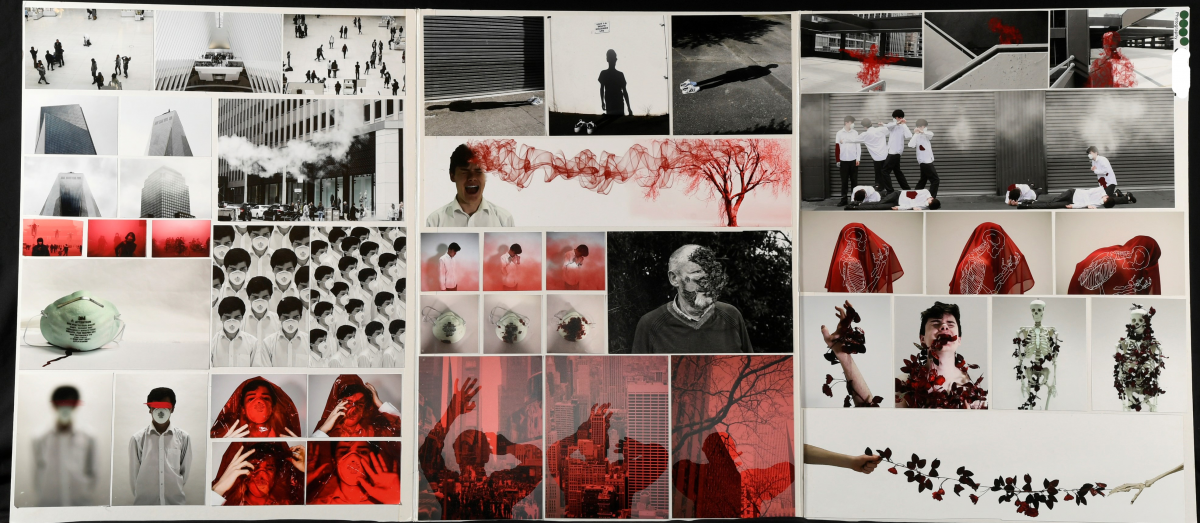

NCEA Level 3 Visual Arts Printmaking
13APRHave a creative passion you want to take further? Level 3 Visual Art Printmaking is a highly personalised course where you develop a major body of work based on your own interests, ideas, and future goals.
Whether you're interested in contemporary art, storytelling, identity, culture, nature, social issues, pattern and surface design, illustration, symbolism, portraiture, abstraction, or experimental image-making, you'll create a printmaking proposal that allows you to specialise in an area you are genuinely passionate about. This course gives you the freedom to work independently while developing the skills, processes, and visual language used by professional artists.
Possible techniques and approaches include:
- Etching and Drypoint
- Relief printing (linocut and woodcut)
- Monoprint and mixed-media printmaking
- Illustrated and narrative print series
- Contemporary fine art practice
- Surface pattern and textile-inspired design
- Environmental and cultural themes
- Experimental and layered print processes
- Your own original projects unique and specific to your individual inquiry
You'll investigate how artists develop ideas, explore concepts, and communicate meaning through a sustained printmaking project. Students will generate, develop, and refine visual ideas through drawing, photography, digital processes, and a range of printmaking techniques. As your portfolio develops, you'll build advanced skills in visual communication, creative thinking, technical printmaking processes, and artistic practice while creating a body of work that reflects your individual strengths and interests.
The skills developed in this course are highly transferable and can lead to pathways in fine arts, illustration, graphic design, textile design, education, museum and gallery practice, creative industries, and many other arts-related fields.
Students considering tertiary study in art and design will find this course excellent preparation for university, art school, and creative industry pathways. Students producing exceptional work may also have the opportunity to enter the NZQA Scholarship Printmaking examination.
Students may take more than one Visual Arts subject at Level 3. Each Visual Arts course counts as a separate University Entrance approved subject, meaning students can gain multiple University Entrance domains through the Arts.
SENIOR ART SLIDESHOW- click here


NCEA Level 3 Visual Arts Sculpture
13APSStudents are able to take more than one Visual Arts course. Each course counts as a unique domain for University Entrance. For example students taking Visual Arts Photography and Visual Arts Sculpture would count as 2 separate University Entrance Domains.
This course has a NZQA Scholarship option.
Visual Arts Sculpture is a course for students who wish to work on an individually chosen proposal.
Students will develop and extend their practical and conceptual knowledge of sculptural 3-dimensional practices through the process of research, drawing, production of maquettes (models), and finished sculptural works. Which may include object-based, installation-based, and performance-based approaches. Students will be required to explore an individual programme of their choosing, with the aim of producing an external 3-panel folio of original related work.
Throughout the year students will be introduced to a number of different sculptural techniques such as mold making, casting, and other sculptural production modes such as 3D printing and laser cutting. Students new to the subject will be taught the principles of sculpture and how to apply these to the production of original work.
Students wishing to pursue a career in fine arts, industrial design, architecture, animation or the film industry (model making), will find that this course provides the process and procedures necessary for any career working within 3-dimensions.
Visual Art in Year 13 covers a group of single subjects. Five single subjects are offered and students can enter up to two of these, or three at the discretion of the HOD Art. The subjects offered are Design, Painting, Photography, Printmaking and Sculpture.
NCEA Level 3


Numeracy in Action
NUMNumeracy in Action is a course which embeds Numeracy within a range of engaging Geography, Commerce and Mathematics contexts. This course offers a pathway to achieve essential numeracy skills and to meet the NCEA co-requisite requirements. Student who do not have Numeracy at Year 12 or above are encouraged to take this course. Students will have the opportunity to gain numeracy credits through the alternative pathway as well as being prepared to sit the Common Assessment Activities.
NZ Certificate in Foundation Skills
CFSThe New Zealand Certificate in Foundation Skills is a course that aims to develop and extend a student’s own subject interests and critical thinking. Students learn to develop focus, meet deadlines and direct their own learning projects. The course content focuses on citizenship, goal setting and work preparation, and the interest modules provide great scope for cross curricular work, research and communication. Numeracy components within some of these modules develop the skills needed for making good financial decisions in life.
Students will begin the New Zealand Certificate in Foundation Skills qualification in Year 10 or Year 11 with the aim to complete this Certificate the following year (600 notional hours in total).
Senior Literacy
12/13LITThis course is for Year 12 and 13 students who do not yet have NCEA Level 1 Literacy. Students require Level 1 Literacy for NCEA Levels 1, 2 and 3. This course will provide students with targeted preparation for the Literacy Co-requisites, and also the opportunity to work on Level 1/2 internal assessments that will provide them with literacy credits via the alternative pathway.
Skills For Living
SFLThis course runs over two or three years and aims to develop the skills needed for vocational pathways and life-long learning. It does this by focusing on key competency development which contributes to a substantive portfolio of student work.
Skills for Living students follow an individualised programme of learning around interest modules that encourage student agency and the application of authentic and transferable life-skills. Students will demonstrate personal growth, self management, strategies in personal safety, be able to relate well to others, be involved in the setting of learning goals, use thinking skills and demonstrate a range of literacy and numeracy for everyday living to successfully achieve the New Zealand Certificate in Skills for Living for Supported Learners. This is a NZQA and employer recognised qualification.
Te Ao Haka
13tahTe Ao Haka
This advanced course focuses on leading, analysing, and contributing to the composition and delivery of Māori performing arts. Students will engage critically with te ao Māori concepts and be expected to demonstrate initiative and leadership in group performance.
What Will I Learn?
At Level 8, students refine their analysis of Te Ao Haka and their skills in performance. They are able to effectively express narrative and embody their performance.
- Concepts of whakapapa and taiao, and of place space and time.
- To communicate narratives.
- To engage with tikanga, reo, and Māori culture and identity.
- Performance as an intrinsic component of Te Ao Haka.
Te Ao Haka
10hkaTe Ao Haka
This course introduces students to the rich world of Māori performing arts. Students will take part in the same programme as senior students, engaging in haka, waiata-ā-ringa, mōteatea, poi, and whakawātea, as well as exploring the tikanga and pūrākau that underpin these disciplines.
Note: Year 10 students will not complete NCEA assessments but will build foundational knowledge and skills to prepare for future study in NCEA Te Ao Haka.
What Will I Learn?
- Concepts of whakapapa and taiao, and of place space and time
- To communicate narratives.
- To engage with tikanga, reo, and Māori culture and identity.
- Performance as an intrinsic component of Te Ao Haka.
Year 13 English as a Second Language
13ESL13 English as a Second Language
This course covers NCEA reading and writing for University Entrance Literacy, along with academic listening and presentation skills in preparation for tertiary level studies. It is expected that students will have Level 1 Literacy and have built a sound foundation in terms of writing and reading skills in earlier years, especially in 12ESL where they should have gained 15credits. Students will need to ensure they supplement classwork with significant grammar revision and vocabulary extension activities to cope with the high standard of academic reading and writing required. All the Standards are internally assessed.
Year 13 Study
13STYYear 13 study option.
If you want to pick a 6th subject, please request an exemption on that course.
Subjects for Year 13 Students
NCEA Level 2 Legal Studies
12LGLThe course aims to give students knowledge, understanding and appreciation of the New Zealand legal system so they can operate as informed, confident and responsible citizens.
During the year students will visit the courts , a prison (TBA), participate in a mock court and listen to speakers from the legal profession, police and community law service.
The course is assessed through Unit Standards. The criteria the Unit Standards are assessed against are Excellence, Merit and Achieved which are counted towards an endorsed Level 2 NCEA.
The course is all internally assessed, so there is no external exam at the end of the year. This is an advantage, as it allows you more time for your other subjects, when the pressure comes on at the end of the year.
Even though it is not one of the approved subjects for University Entrance, it can assist you in getting invaluable life skills and the necessary points to get scholarships. It could also help with getting overall excellence in Level 2.
Although there is no requirement to have completed Level 2 Legal Studies to study Level 3 Legal Studies this course provides an excellent background and preparation for Level 3 Legal Studies
Level 2 Legal Studies is also a valuable course for students who are interested in studying Law, Criminal Justice, pursuing a career in the Police Force or working for the Justice Department.
If you are considering taking Law or Criminal Justice at University this course would help you be that one step above the other students in a very competitve environment.
NCEA Level 2 Outdoor Pursuits
12ODPOutdoor Pursuits is a Unit Standard course that offers a wide range of hands-on experiences in nature. Students split their time between the classroom—learning the theory behind essential outdoor skills—and the natural environment, where they put those skills into practice. Field trips are a mandatory core component, providing the perfect opportunity for students to test their knowledge and complete their practical assessments.
Students will gain skills and participate in the following Units;
Preparation for the Outdoors through Sea Kayaking.
Map Reading, Weather Interpretation & Survival Skills through Tramping.
Rock climbing, bouldering & Abseiling
Gear maintenance and upkeep through Mountain Biking.
This course uses Te Ao Māori concepts; Kotahitanga, Kaitiakitanga, Manaakitanga and Turangawaewae throughout to emphasise key areas of learning such as co-operation, sustainability, supporting others and a sense of belonging.
NCEA Level 3 Digital Technologies - Interactive Game Design
13DTGStudents are able to take more than one Digital Technology course. Each course counts as a unique domain for University Entrance. For example students taking Interactive Game Design and Product Design Technologies would count as 2 separate University Entrance Domains.
This course has a NZQA Scholarship option
This is a Digital Technologies Course for students who wish to specialise in Game Design.
This is an AI integrated course where students will learn to leverage generative technologies to assist them in developing video games using Godot, an industry standard game engine.
Students will be required to work collaboratively on game development projects throughout the year incorporating a small team of;
- Artist
- Programmer
- Level designer
This course will be a University Entrance Accredited course.
As well as preparing you for further study within this growing industry, the course provides a useful stepping stone into computer science or software engineering.
“ The New Zealand game industry topped one billion dollars of revenue for the first time in history during 2026. Many Universities have realised this opportunity and are now offering courses that prepare students for work within the industry including the brand new Bachelors of Digital Screen majoring in Game Design at the University of Canterbury.”
Students should have an interest in computing, programming or 3d modelling.
It is recommended that you are able to work well in a team, enjoy solving problems and are highly motivated.
Click the links below for examples of previous student projects.
NCEA Level 3 Legal Studies
13LGLThe course aims to give students an in-depth knowledge, understanding and appreciation of New Zealand's Legal System so they can participate and contribute to society as informed and responsible citizens.
This course is valuable for students who wish to study Law or Criminal Justice at the tertiary level or have a career which is linked to the Legal System. E.g the Police or Ministry of Justice.
The course is all internally assessed, so there is no external exam at the end of the year. This is an advantage, as it allows you more time for your other subjects, when the pressure comes on at the end of the year.
Even though it is not one of the approved subjects for University Entrance, it can assist you in getting invaluable life skills and the necessary points to get scholarships. It could also help with getting overall excellence in Level 2.
Students do not need to have studied Level 2 Legal Studies (although it is an advantage) in order to study Level 3 Legal Studies. During the year the students will visit the courts and the men's prison, participate in a mock court as well as hearing visiting speakers involved within our justice system.
The Unit Standards offered are assessed offering Achieved, Merit and Excellence grades which can be counted towards an endorsed Level 3 NCEA qualification.
NCEA Level 3 Te Reo Māori
13MAOThis is a literacy approved course.
The Level 3 Te Reo Māori course is designed to advance the student in the areas studied at NCEA Level 2. It comprises written Māori, spoken Māori and Māori culture. The course will be assessed by means of the following assessments: reading, writing, listening, speaking (and creative writing is optional). The learning of more advanced grammar and vocabulary will ensure that the student has the necessary knowledge to start Te Reo Māori at Level 2 at the University of Canterbury (and other Polytechnics and Universities). Subjects covered are thought provoking and are both traditional and contemporary issues in today's society. Additional credits may be available for some students, due to the school policy of 18-22 credits are to be studied per subject.
Language training teaches problem solving skills that are in demand. Language-trained people can be found heading research units in Treasury, Tourism, Trade and Commerce, in various sections of Internal and Foreign Affairs, in all fields of the media, in teaching, commerce, medicine and law. Experience of Taha Māori can enhance the likelihood of employment in a government department. Māori language adds to the versatility of a job seeker.
Numeracy in Action
NUMNumeracy in Action is a course which embeds Numeracy within a range of engaging Geography, Commerce and Mathematics contexts. This course offers a pathway to achieve essential numeracy skills and to meet the NCEA co-requisite requirements. Student who do not have Numeracy at Year 12 or above are encouraged to take this course. Students will have the opportunity to gain numeracy credits through the alternative pathway as well as being prepared to sit the Common Assessment Activities.
Senior Literacy
12/13LITThis course is for Year 12 and 13 students who do not yet have NCEA Level 1 Literacy. Students require Level 1 Literacy for NCEA Levels 1, 2 and 3. This course will provide students with targeted preparation for the Literacy Co-requisites, and also the opportunity to work on Level 1/2 internal assessments that will provide them with literacy credits via the alternative pathway.