
Riccarton High School
Canterbury
Riccarton High School Curriculum
160 subjects available for 2026/2027.
Subjects for Year 8 Students
Year 9 Dance
9DAN
Junior Dance focuses on building confidence and collaboration skills within the class.
We also focus on:
- how we create dance using dance elements
- basics of a range of different dance styles
- how to work in a group
- broadening our knowledge of different dance styles around the world
- viewing physical activity as a positive experience
- learning how to perform and support those performing
- learn a whole class dance to be performed in front of an audience


Year 9 Drama
9DRAYear 9 Drama is a experiential course. It delves into the use of improvisation and spontaneity in the development of performance. We also perform a short class performance to a small invited audience negotiated by the Kaiako and ākonga.
Year 9 English
9ENG
Year Nine English introduces you to the foundation skills required for further success in secondary school. Year 9 English is an opportunity to develop the skills required to create and make meaning from visual, oral, and written texts. This course also covers the reading and writing basics. There are 4 common assessments: creative writing, essays, speeches, and film.
Year 9 English as an Additional Language
9EALYear 9 English as an Additional Language (9EAL) develops learners' academic language and critical literacy for the New Zealand curriculum. There is an emphasis on building grammar and vocabulary in the context of reading, writing and speaking/listening texts.
Learners will build their thinking skills, explore their bilingualism/multilingualism and celebrate their cultural heritages.
Please note: this coursse runs at the same time as the other Year 9 language courses (French, Japanese and Te Reo Māori).
Year 9 French
9FRE
French is spoken by more than 220 million people across all five continents!
This full-year program provides students with the foundations of how to learn a new language. This beautiful language is fun to learn, and through a range of engaging activities, students are given an introduction to French within familiar contexts. Students will develop their reading, writing, listening and speaking skills. They will focus on building intercultural communication skills that will benefit them across all learning areas.
Learning a language is a fun way to expand your understanding of the world!
Year 9 Japanese
9JPNJapanese is useful language for travel and tourism within the Pacific. The language is fun to learn and the culture is fascinating.
The full-year programme provides students with the foundations of how to learn a new language. This beautiful language and culture are quite different to English, and through a range of engaging activities, students are given an introduction for Japanese within familiar contexts. Students will develop their reading, writing, listening, speaking and presenting skills, and focus on building intercultural communication skills that will benefit them across all learning areas.
Learning a language is a fun way to expand your understanding of the world!
Year 9 Literacy
9LITThe skills in this subject underpin literacy in every subject and prepare students to feel confident achieving the Literacy Common Assessment Activities, in the future. It provides practice and revision in spelling patterns, reading comprehension, inquiry skills, proofreading skills, paragraph and essay writing.
Year 9 Mathematics
9MATIn Year 9 Mathematics, students will develop their knowledge, skills, and mathematical thinking across the five interrelated areas of the refreshed New Zealand Curriculum: Number, Algebra, Geometry, Measurement, and Statistics. Learning experiences will encourage students to reason, solve problems, make connections, and communicate their mathematical thinking in a variety of contexts.
Teaching and learning will take place through a balanced course that includes collaborative group work, teacher-led instruction, practical investigations, and self-directed online learning. Students will be encouraged to build confidence, resilience, and independence as learners while developing a deeper understanding of mathematical concepts.
Throughout the year, students will work within and towards the expectations of Phase 4 of the Mathematics and Statistics Curriculum, with opportunities to extend their learning where appropriate. Progress will be carefully monitored to ensure students are supported and challenged according to their individual learning needs.
During the first two weeks of the course, students will complete a diagnostic assessment. This assessment will provide valuable baseline information about each student's current mathematical understanding and will be used to inform teaching, set learning goals, and track progress throughout the two years of Junior Mathematics.
Stationery Requirements
- Two pens (blue and red)
- Two pencils
- One eraser
- One glue stick
- One pair of scissors
- One 30 cm ruler
- Two 1E8 Quad Exercise Books
- One scientific calculator
Year 9 Music
9MUSYear 9 Music gets taught to everyone for 1 term.
The programme of work will vary slightly but in general you will be taught basic skills on keyboards and guitar. This course provides you with a taster of what it means to be a musician. You will be encouraged to listen to lots of musical genres to discover what bands and singers you like. We learn a little bit of theory to help with instrument playing and we also sing a range of songs and waiata together as a class.
Year 9 Physical Education & Health
9PEDThrough learning in health and physical education, students will develop the knowledge, skills, attitudes and motivation to make informed decisions and to act in ways that contribute to their personal well-being, the well-being of other people, and that of society as a whole.
Year 9 Science
9SCIThis is the first year of a two year course at Level 5 of the New Zealand Curriculum. Students will explore the 'Nature of Science' strand of the New Zealand Curriculum by continuing to develop their science capabilities including:
1. Gathering and interpreting information.
2. Using evidence to support ideas.
3. Critiquing evidence.
4. Making meaning of scientific representations.
5. Engaging with science.
The contexts used include aspects of the 'Living World', 'Material World', 'Physical World' and 'Planet Earth & Beyond' from Level 5 of the New Zealand Curriculum.
Year 9 Social Studies
9SOCSocial Studies is the study of an integrated body of content drawn from the social sciences and the humanities. It enables students to develop the skills to understand, participate in, and contribute to their local, national, and global communities as informed, confident and responsible citizens. Students will investigate society, explore issues, make decisions, and work cooperatively with others.
Themes covered, but not limited to are:
Migration and the movements of people
Sustainability and the environment
The influences of the past on the present and future

Year 9 Te Reo Māori
9TRM
Learn Te Reo Māori so that your knowledge of the world flourishes.
Year 9 Te Reo Māori is an exciting full-year programme that uses a fun range activities to learn Aotearoa's official language. Students will develop pānui (reading), tuhituhi (writing), whakarongo (listening), kōrero (speaking) and cultural awareness skills. This course is for all students, whether Māori, Pākehā or Tauiwi.
Kaupapa included in the programme include:
- karakia and waiata
- place names around Aotearoa New Zealand
- days, months, seasons, maramataka (Māori calendar)
- describing the weather
- describing members of whānau
- using language in familiar contexts to share simple ideas and opinions
Ko te reo te taikura o te whakaao mārama - Language is the key to understanding.
Te Wharehuia Milroy
Year 9 Technology
9TECThis course is a progression of the Technology Curriculum from Years 7 and 8. It provides the learning for vocational and academic pathways and begins the development of knowledge that is required for specific subjects that make up the Technology Learning Area. Year 9 Technology (9TEC) is divided into four intensive ten-week taaster courses covering four of the five Technology learning areas:
- Materials Technology (TEM) develops basic design workshop skills to design, model and construct a small workshop construction project.
- Foods (TEF/TEH) covers basic skills and knowlegde, to ensure quality food products are produced, with the emphasis of cooking for their family. We specifically focus on scaffolding skills and knowledge required for the next level.
- Design and Communication (DVC) works to develop and equip students with the basic visual design skills required for communicating design ideas and applying these to a design problem.
- Digital (DGT) covers basic digital skills using google suite that are useful through out school and life. Computational thinking continues to be developed through the use of coding in 'Minecraft' which helps to develop skills in problem solving and critical thinking.
The fifth subject branch of Technology is Textiles (Soft Materials) - However, Textiles is not introduced until Year 10, as an option subject. It does not require any prerequisite, but interest and passion for fashion and design makes it a logical reason to choose it in year 10. Year 10 Textiles (TXT) introduces the basic technological skills using soft materials (fabrics) to design, plan, test and follow the plan to create a workable, successful outcome.
Year 9 Visual Arts
9ART

At Year 9 students will engage in a term of Art. They will be introduced to a range of art-making media, materials, processes and techniques. This will include a range of drawing, painting, print-making and photography exercises to teach the students the required skills to produce a final, large scale mixed media artwork. Students will be introduced to relevant art vocabulary, artist models and art world concepts as well as being encouraged to discuss their own and other's artworks.
Subjects for Year 9 Students
Junior Intensive English
JINEThis class is for English Language Learners who are learning at Foundation or Stage 1 of the English Language Learning Progressions.
Intensive English (INE) develops learners' reading, writing, speaking and listening skills. This class builds students' English so that they are able to access the New Zealand Curriculum. In Junior INE, learners will study all subjects (Maths, Science, Technology, Arts, Health and PE as well as English and Social Studies) with the same class.
Year 10 Build A Business
10BABIn 10BAB you will be challenged to set up and run your own small-scale business. Teamwork and the ability to work well with other people are critical skills to have in business (and life!) so it will be a strong focus in this course. You'll think creatively, develop product ideas, talk and write in formal business situations, learn how to record income and expenses, develop your organisational skills, manage the stress of deadlines, push yourself outside your comfort zone, and get a taste of what it’s like to run a business.
[Note: You will be expected to work in randomly selected teams for many of the tasks we do - so you should only choose this course if you are willing to work with a wide range of people.]
Year 10 Business and Personal Finance
10BUS10 Business & Personal Financial Skills


In Year 10 Business & Personal Financial Skills, students get to understand the consequences of decisions they might make about their everyday finances. Content includes careers, income & taxes, budgeting, spending & borrowing, saving & investment, insurance, and an introduction to Accounting. Members of this class may also get a subscription to Banqer High software, which enables them to use and reinforce the financial skills they learn in class. Financial literacy is being prioritized in schools globally. This course also begins to lay a foundation for senior school courses such as Level 1 Commerce, Accounting and Economics.
Year 10 Dance
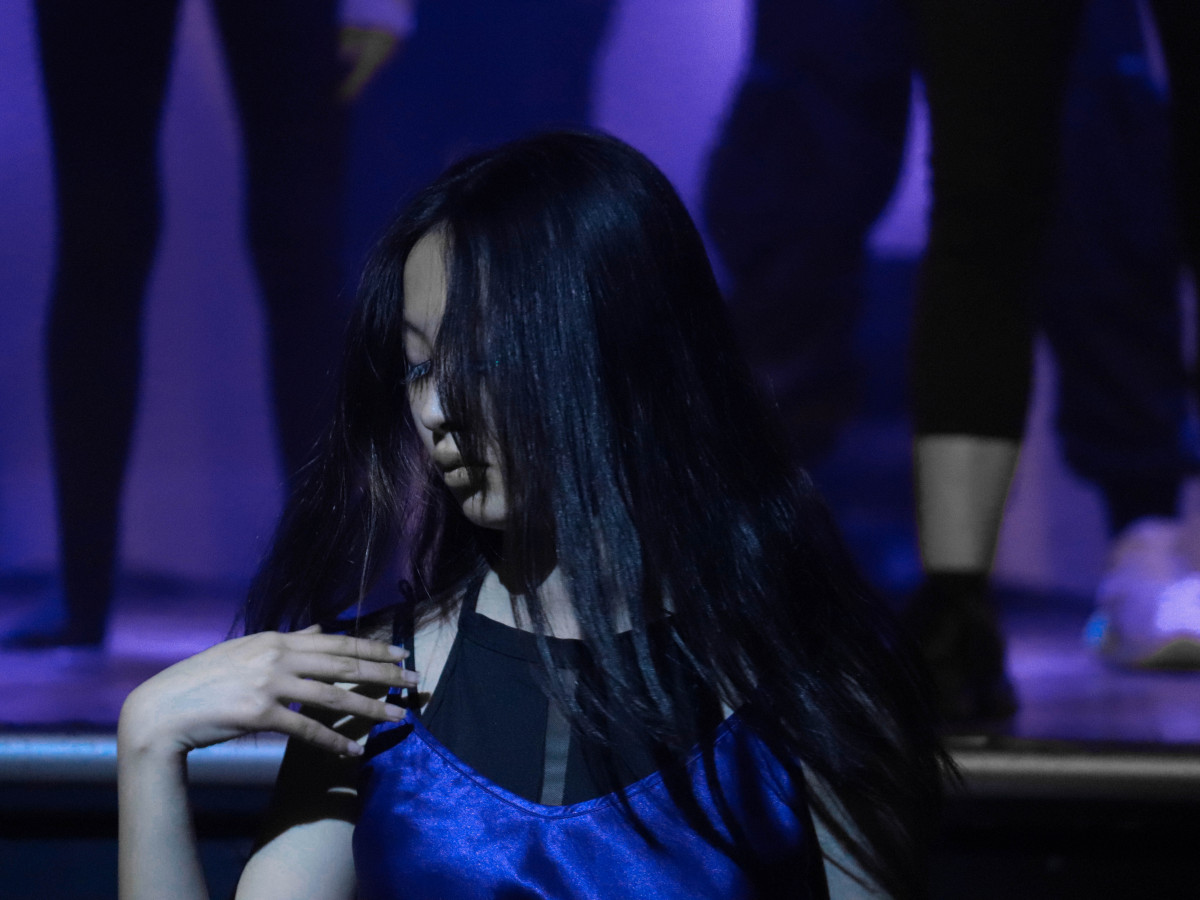
10DANThis course will develop your technical skills in movement and performance, as well as develop your dance vocabulary. You will focus on specific elements of dance and choreographic devices to enrich your kete of knowledge.
Year 10 dance also involves a cultural dance unit and teaching opportunities to younger students in our community.
Dance is a performing art, and therefore your creativity will be challenged as you learn to grow your confidence, fitness and self-expression.
Performance opportunities will be given and attendance may be required for assessment.
Come and learn new skills as part of a supportive class environment!
Check out the 2023 dance recital: https://www.youtube.com/watch?v=meeNXwQxgbM


Year 10 Design and Visual Communication
10DVCYear 10 Design and Visual Communication students develop a range of skills over the course of the semester through a range of Product and Spatial design, using Visual Communication to address how design ideas and outcomes are appropriately presented to a viewer. Product design focuses on the development of tangible items that have a specific function within people's everyday lives. Spatial design is about the designing of three-dimensional spaces in terms of how they are experienced, occupied, or used by people.
Skills covered in this course:
- Design Thinking (creative and critical thinking)
- Problem Solving
- Sketching
- CAD modeling
- Rendering
- Photo rendering
- Presentation
- Drawing Board skills
- Design Heritage
This DVC is also complementary to Design Technology in year 10.
Any inquiries contact Mrs Johnston
Year 10 Design Technology
10DTCYear 10 Design Technology is a hands-on course that develops creativity, problem-solving, and practical skills. Students complete design challenges to safely use tools and machinery, produce sketches and prototypes, and refine ideas through testing and feedback.
Working in a workshop environment, learners move between designing and making, applying a step-by-step design process to meet user needs. The course concludes with a student-led final project, allowing creativity and design thinking to shape a unique outcome.
Throughout the year, students gain confidence in planning, experimenting, and making decisions about materials and construction methods. They also develop critical thinking, organisation, and problem-solving skills that are valuable both in the workshop and beyond the classroom.
This programme provides a strong foundation course for senior Design Technology pathways.
Year 10 Digital Technologies
10DGTComputers are used everywhere nowadays, and no matter what you end up doing in life you will need to be able to solve problems using computers. This course will give you a better understanding of how computers work and grow your skills in using digital technologies. This subject isn't just for geeks who want to sit in front of a computer all day - if you want to be able to work with others and help people, using computer technology, this course is for you!
Amongst other things, you will become an expert in some common computer applications, learn how to create a website, and program a robot to perform simple tasks.
Year 10 Drama
10DRAThis is a practical course which will explore many aspects of drama. It is set up so that anyone can achieve success in a supportive atmosphere. Drama helps you to express yourself, to be more confident, to relate to and understand others. You will develop your ability to speak clearly and move naturally. These skills will be very valuable to you in your working life. The course explores story drama, movement and rhythm, improvisation, mime, play building and script work. Written work in the subject is mainly through Google classroom, however you will learn to annotate a script in pen or pencil as a way to secure and improve your performances.
Year 10 English
10ENG
Year 10 English is an opportunity to develop the skills required for Year Eleven English through visual, oral, and written texts. This course also covers the reading and writing basics students will need to achieve the NCEA literacy standards. There are 4 common assessments: personal responses, speeches, close viewing analysis, and a response to text essay.
Year 10 English as an Additional Language
10EALThis class is for English Language Learners who are learning at Stage 3 of the English Language Learning Progressions. This is a dynamic course which builds the language and literacy skills required for NCEA Level 1. There is a strong focus on reading and writing fluency. This course focuses on academic skills required for senior courses.
Please note: this course runs in the "option" subject line, for both Semester A and B.
Year 10 English for Practical Purposes
10ELPThis class is for English Language Learners who are learning at Stage 1-2 of the English Language Learning Progressions. This course is for 8 hours per week. Half of the course is based on Social Studies learning outcomes, incorporating extra English language scaffolding. In the other four hours, reading, writing, speaking and listening are all in focus as students develop the skills require to access the New Zealand Curriculum.
Year 10 Food
10TEFIn this course, we explore the fascinating world of health and nutrition with a fun food twist. We'll build on the cooking and organisational skills you started developing in Year 9. Throughout the course, we'll help you become a pro at trying, planning and creating tasty, healthy meals that are just right for growing teens like you, all while understanding how it affects your well-being (we know it as Hauora).
And here's the best part: You'll get to roll up your sleeves and cook in two hands-on sessions each week for the first term. Then we link our theory to the practical in the second half.
These practical lessons will give you the skills you need to cook up a storm on your own. The extra theory in the second term of the semester will be linked to the nutritional knowledge of your meals you cook and increase your knowledge, ready for Level 1 Nutrition and Food.
By the end of the course, you'll be well on your way to becoming a star in the world of Food and Nutrition and Hospitality. You'll have a solid foundation of knowledge and skills to shine in these exciting areas.
Year 10 French
10FRELearning another language includes music, culture, food, films and fun!
In Year 10, languages are a full-year course, where students can continue learning about the language and cultures of the French-speaking world in an interactive and exciting way. You will develop your speaking, listening, reading, writing and presenting skills in French, as well as building your cultural understanding.
Students will learn vocabulary and grammar within useful and relevant contexts that will equip them to be able to communicate in real-life situations. In Year 10, this includes:
- asking for directions
- ordering food from a restaurant, cafe or bakery
- expressing opinions
- talking about sports, music, hobbies
- talking about daily routine
- comparing school life in New Zealand to the French-speaking world
Please note: if you did not take French in Year 9, you will need to meet with Madame Mills to see if you meet the criteria to take it as a subject for Year 10.
Year 10 Japanese
10JPNThe rich Japanese culture provides a wonderful context to study the Japanese language.
A full-year course is available to those of you who are interested in the language and culture of Japan. You will learn communication skills in speaking, listening, reading, writing, viewing and presenting to extend your knowledge of the Japanese culture and writing characters.
Leaning a language is a fun way to expand your understanding of the world!
Year 10 Literacy
10LITThe skills in this subject underpin every literate subject and prepares students to feel confident achieving the Literacy CAAs. It provides practice and revision in spelling patterns, reading comprehension, proofreading skills, paragraph and essay writing.
Year 10 Mathematics
10MATIn Year 10 Mathematics and Statistics, students will engage with all strands of the New Zealand Curriculum: Number, Algebra, Measurement, Geometry, Statistics, and Probability. Learning experiences will include collaborative group activities, self-directed online learning, problem-solving tasks, and teacher-led instruction, enabling students to develop both independence and confidence as mathematical learners.
The primary goal of the course is to support students in progressing towards and achieving the expectations of Phase 4 of the refreshed New Zealand Curriculum for Mathematics and Statistics. Students will further develop their mathematical reasoning, problem-solving skills, and ability to apply mathematical and statistical concepts in a range of real-world contexts.
Students will have two potential opportunities to attempt the Numeracy Common Assessment Activity (CAA) during:
- Term 2 (first opportunity)
- Term 3 (second opportunity)
During Term 3, students will complete Mid-Year Assessments in:
- Number
- Algebra
- Measurement
- Probability
These assessments provide valuable information about student progress throughout their junior mathematics pathway and assist teachers in making informed recommendations regarding appropriate Year 11 Mathematics courses.
Students demonstrating exceptional achievement and advanced mathematical understanding may be invited to participate in an extended course of study. Successful completion of this course may provide an opportunity to undertake NCEA Level 2 Mathematics in the following year.
Stationery Requirements
- Two pens (blue and red)
- Two pencils
- One eraser
- One glue stick
- One pair of scissors
- One 30 cm ruler
- Two 1E8 Quad Exercise Books
- One scientific calculator
Year 10 Mini-MAD: Direct and Produce Digital Media on a Device
10MADIf you are interested in the technical and creative side of digital media making this is the course for you!
If you have any interest in making: photos, videos, graphic designs, audio productions (like podcasts), websites, animations, digital illustrations (like graphic novels/manga), live streams, journalism, social media content, or something new I haven’t heard of yet, this class will give you the time and resources to give it a go.
All students will cover the basics of photography, graphic design and videography creating a basic Digital Media Portfolio. These are the essential skills upon which most other media products are built.
Once you have the basics covered you will be able to propose and complete a media project of your choice. You will be encouraged to complete something that fits the M.A.D. mission of ‘promoting pride and positivity in Riccarton High School’ and you will be given support to learn any new skills needed to bring your vision to fruition.
The crucial 21st Century literacies covered in this course will give you the opportunity to make a difference for the groups, communities or businesses you are passionate about. Digital communications is a billion dollar industry; be a part of creating inspiring and positive content for this globally connected world.
The skills in this course compliment: Senior M.A.D., Media Studies, Digital Technologies, Visual Art, English and Drama.
Year 10 Music
10MUSMusic is the course to take if you have enjoyed the practical aspects of Music in Year 9 such as performing, composing and working in groups playing instruments. By continuing to study music most students will naturally extend their instrumental/vocal skills through regular participation, practise and performance. In addition, the course at Year 10 aims to provide a supportive and nurturing environment in which beginners can learn new skills on an instrument and excel.

Watch the Year 10 Junior Jazz Ensemble perform Wade in the Water
Here is a performance of the mixed combo featuring Year 10 and Year 11 students, playing a piece called Cold Duck Time
The music course caters for all musical interests and tastes. Units of work will focus on 20th century genres from blues to hip hop, film music, dance music, musicals and cultural music.
Students are encouraged to investigate a musical genre or performer of their choice and create a mini research project. This will also provide an insight into the recording industry for any would be composers / songwriters out there.
Music theory is also important and will be taught through an interactive and practical programme. We recognise that 1 term of music in year 9 doesn't allow enough time for students to develop significant theory or practical skills, so we don't expect students to enter year 10 equipped with a high level of knowledge and ability. However, we encourage the more seasoned musicians to take this course as we cater for their needs through an effective differentiated programme of work. Many students in the year 10 course become highly gifted musicians that continue to study Music as a subject all the way through to Level 3 and as a result, music becomes an integral part of their lives, giving joy and pleasure to themselves and their friends and whānau.
Music is also a subject which is great for wellbeing. It is a subject where students collaborate with each other. This is often where students find their niche. Many long-lasting friendships are made in the Year 10 music class as students tend to form a close bond with each other through the risks they take while performing and making music together.
We can offer free tuition to students who are taking a music course if there are places available. This would normally start mid-way through Term 4 of year 9 if not before.
Unfortunately, lessons may not be available in school for students who do not choose a music course.
Year 10 Numeracy
10NUMYear 10 Numeracy
Students who enrol in this semester course will be aiming to build up their skills to support their attainment in the Common Assessment Activity (CAA) examinations in Y10. It is an ideal course for students who are working below the recommended level. This course will identify areas of need, and provide tuition to consolidate learning. This course will build their ability and confidence in Mathematics.
The course will cover numeration, number, number skills, measurement, and calculator skills. Students will need to have a recommended calculator (any with "Natural Textbook Display" such as Tech.Inc 991ES or Casio FX82AU PLUS II).
There will also be a focus on literacy which will cover vocabulary, grammar, punctuation, and sentence structures.
Year 10 Physical Education & Health
10PEDThrough learning in health and physical education, students will develop the knowledge, skills, attitudes, and motivation needed to make informed decisions about their participation in physical activity. They will learn to act in ways that support their own well-being, contribute positively to the well-being of others, and enhance the well-being of society as a whole.
Year 10 Science
10SCIThis course is the second year of a two year course at Level 5 of the new Zealand Curriculum. Students will explore the 'Nature of Science' strand of the New Zealand Curriculum by continuing to develop their science capabilities of:
1. Gathering and interpreting information.
2. Using evidence to support ideas.
3. Critiquing evidence.
4. Making meaning of scientific representations.
5. Engaging with science.
The contexts used include aspects of the 'Living World', 'Material World', 'Physical World' and 'Planet Earth & Beyond' from Level 5 of the New Zealand Curriculum.
Year 10 Social Studies
10SOCYear 10 Te Reo Māori
10TRMThis full-year option is an extension of the Year 9 Te Reo and Tikanga Māori course. There is a greater emphasis on language skills including speaking, writing, reading, viewing, listening, and presenting. Students will increase their knowledge of language structures and conventions to prepare them for NCEA level 1 Te Reo Māori.
Year 10 Textiles
10TXTYear 10 Textiles is a semester-long course
Textiles follows a design and technology approach, developing your creativity, imagination, a sense of accomplishment, and personal satisfaction. Throughout the course, you will work on design briefs you've developed, allowing you to design and craft items of your choice.
This journey will equip you with the necessary skills to work with a wide range of materials, techniques and incorporate embellishments, which you may draw inspiration from your own cultural backgrounds, including techniques like printing, dyeing, screen printing, embroidery, weaving and appliqué.
Your initial task will focus on familiarising yourself with the machinery, equipment, and techniques essential for producing successful, personally satisfying creations. You'll also be introduced to some "tricks of the trade" that can simplify the processes you learn, enhancing your chances of achieving remarkable results.
It is a great initiation for Level 1 Textiles (Materials and Processing Technology) and onwards.
Year 10 Visual Art
10ART


Through engaging in the Visual Arts students discern, participate in, and celebrate imagery from our visual world. Year 10 Art builds on the skills and knowledge introduced in Year 9, giving students a more in-depth experience of art making in preparation for NCEA Level 1. Students create, problem solve and reflect on their own artwork and artworks made by artists. The course covers art theory, drawing, painting (water colour and acrylic), stencil making, photography, Sculpture and printmaking.
Subjects for Year 10 Students
English - NCEA Readiness
1ENR
This is a very special course which has been created for those students who are not yet ready for a full NCEA Level 1 English programme. Its aim will be to increase students' skill levels in both reading and writing. Assessed across a range of possible standards and modes, this course will seek to meet the specific needs of each student. Once in possession of a new found confidence to express their ideas, students should begin to see clear gains in their other studies too.
Please note, while the assessments listed below will make up the core of this course, students may be offered additional Achievement Standards where appropriate.
Level 1 Building and Construction
1BCNLevel 1 Building and Construction introduces students to essential trade skills and safe workshop practices through practical experience designed to prepare them for a career in the construction trades. The course is accessible to all students, including those with limited prior experience. Throughout the course, students complete two primary construction projects, gaining valuable experience with a variety of tools and materials. To emphasise fundamental craftsmanship and tool safety, Year 11 projects adhere to defined size and budget parameters. These guidelines ensure students develop technical competence, safety awareness, and confidence within the workshop environment. Additionally, the curriculum aligns with the established BCITO framework. Through successful completion of both the practical and theoretical components, students earn recognised Skill Standard credits that establish a clear pathway towards future opportunities in the building industry.
Topics covered include:
- working drawing interpretation
- BCITO, BCATS framework
- safe hand tool and power tool use (carpentry and engineering)
- material and hardware composition and selection
- knowledge of trades and career pathways
Currently this course lists 21 credits. Not all standards will be covered as each year standards offered may change depending on student preference and ability.
Level 1 Commerce
1COM Are you thinking about a career in business, marketing, or politics? If you are, taking Commerce is a great first step! You’ll learn the basics of Business Studies, Accounting and Economics, which branch into separate subjects from Level 2 and will give you what you need to enter the business world. You’ll learn how to prepare financial statements, interpret them, and use them to give business advice. You’ll learn how buyers and sellers negotiate a ‘fair’ price, and what difference the government makes. Throughout it all, decision-making is key. There are so many career possibilities for people with Commerce backgrounds - and here’s where it all starts!
If you have enjoyed Business Studies in Year 10, you'll find Level 1 Commerce a good next step! See you there!
Level 1 Dance
1DAN- Te toi whakairo, ka ihiihi, ka wehiwehi, ka aweawe te ao katoa.
Students will learn a diverse range of styles and choreographic tools and students will have input into the styles learnt. Students will participate in a set programme of achievement standards which will compromise of up to a maximum total of 20 credits. Below are the achievement standards that will be covered:
- 1.1 Compose a Dance Sequences in response to a Given Brief - 5 Credits (Internal)
- 1.2 Perform Dance Sequences - 6 Credits (Internal)
- 1.4 Demonstrate Understanding of the Application of Elements of Dance in a Performance - 5 Credits (External)
Internal and External: 16 Credits
Dance Recital and Hip Hop Showcase
Dance Showcase and Choreography Showcase are highly anticipated events that happen each year. It is a chance to display a lot of the dances we do in class for assessment and to share your work with whānau and friends. Extra-curricular groups also perform the wonderful dances they have been practicing at dance showcase.
Dance Recital 2023: https://www.youtube.com/watch?v=meeNXwQxgbM


Level 1 Design and Visual Communication
1DVCLevel One Design and Visual Communication students develop a range of skills over the course of the year through a range of Product and Spatial design, using Visual Communication to address how design ideas and outcomes are appropriately presented to a viewer. Product design focuses on the development of tangible items that have a specific function within people's everyday lives. Spatial design is about the designing of three-dimensional spaces in terms of how they are experienced, occupied, or used by people.
Skills covered in this course:
- Design Thinking (creative and critical thinking)
- Problem Solving
- Sketching
- CAD modelling
- Rendering with markers
- Photo rendering
- Presentation
- Drawing Board skills
- Design Heritage
Students work is assessed in one internal standard, and an external portfolio at the end of the year, which cover two assessments.
Joining CAD Club along side DVC is a great way to advance skills for a range of standards. This course is also complementary to Design Technology.
Any inquiries contact Mrs Johnston
Level 1 Design Technology
1DTCDesign Technology is a subject for students who are inquisitive about the world around them and the opportunities to produce design projects that address real world problems. Design projects are student led which means students decide on a context and eventually a design that satisfies the issues and needs of the end user. The course is run in a workshop where students can fluidly move between design and making tasks as they develop their projects. At year 11, design outcomes are restricted by cost and size as the focus is on learning the design workflow that underpins design thinking. Skills and knowledge learnt include:
- sketching
- computer aided design (CAD)
- safe power tool and machinery use
- material composition and selection
- component integration and assembly
- creative and critical thinking
- report writing
This course contains 16 compulsory credits and a further 4 optional credits that are negotiable and dependent on student preference and ability.
NB: Level 1 Materials and Processing Technology Achievement Standards, are used in two Technology courses: Design Technology and Textiles. If you want to do both courses at Level 1, then you will have a reduced number of credits available to you.
Level 1 Digital Technologies
1DGTAre you interested in working in sports? medicine? music? agriculture? law? education?
No matter your career pathway you are going to have to solve problems using computers, and that's what this course is all about - developing skills in using digital devices to solve real world problems. This subject isn't just for geeks who want to sit in front of a computer all day - if you want to be able to work with others and help people by using computer technology this course is for you!
There are three main areas covered:
· developing digital technologies outcomes (using databases to manage information, and creating an attractive, well laid out website)
· computer programming (writng code to get the computer to perform a particular task)
· computer science (understanding how digital devices work and how we use them)
Level 1 Drama
1DRALevel 1 Drama is a 3 standard course. It offers 15 credits at level 1 NCEA, 10 internally assessed and 5 externally assessed. Two of the standards are directly performance based and one can have a performance element to it, but is research based.
Students will learn about New Zealand theatre and its development and relevance in the New Zealand theatre scene. They will also learn about the process and production of putting on a theatre piece that has real world applications. Students will also learn about the theory of naturalism, developed by Konstantin Stanislavski. We also build a sense of team and togetherness, working together to support and enhance everyone's performance abilities.
Look here to see the skills that employers are after. Drama caters to the improvement and development of all these skills
Flick through and scan these 79 reasons to study Drama.
Level 1 English
1ENG
Ko te reo te tuakiri
Ko te reo tōku ahurei
Ko te reo te ora
Language is my identity
Language is my uniqueness
Language is life
English is the study, use, and enjoyment of the English language, communicated orally, visually, and in writing, for a range of purposes and audiences and in a variety of forms. It is creative and critical, receptive and productive. In Aotearoa New Zealand, the study of English incorporates mātauranga Māori and considers our place in the Pacific. Student choice and voice are well established aspects of our programme, with ākonga selecting from three to four standards, dependent on their strengths and interests.
Level 1 English for Academic Purposes
1EAPThis class is for English Language Learners who are learning at Stage 3 of the English Language Learning Progressions. This course will help students develop their English language skills through completing units of work which focus on formal writing and reading literacy skills, assessed through three English Language (EL) Level 3 Unit Standards, providing them with the opportunity to gain a total of 15 credits. Students in this course will also be developing skills that are required for the NCEA L1 Reading and Writing Literacy standards (CAA).
Level 1 English Language for Practical Purposes
1ELP***This subject is only for those learning English as an additional language***
This class is for English Language Learners who are learning at Stage 1- 2 of the English Language Learning Progressions. This course is complementary to 1ELITi. It is recommended that students who need extra English language support take both 1ELP and 1ELITi, especially if they have just graduated from the Intensive English course (JINE). Students will have the opportunity to gain a total of 15 credits at either Level 1 or Level 2 of the English Language standards.
Level 1 English Language Literacy Internal
1ELITIThis class is for English Language Learners who want to improve their English. Students will also be assessed through three English Language (EL) Level 2 Unit Standards, offering them a total of 15 credits. Students in this course will also be working towards the literacy skills required for the Literacy Common Assessment Activities (CAA)
Level 1 Food and Nutrition
1TEFThis course combines health and wellbeing with NUTRITION and practical hands on cooking that reflects learning.
We begin with a Unit Standard on fruit and vegetables and a further three Achievement Standards that flow onto teenage nutritional needs which leads to long term well-being for life. The Achievement Standards involves one External for those who value endorsements. This course suits students wanting to study Sport and Nutrition, or any Medical/Health sciences, or who just want to improve their own Well Being and performance in life.
This is a fantastic course for our ACTIVE TEENAGERS.
NB: Level 1 Food and Nutrition and Level 1 Health cover the same Achievement Standards. If you want to do both courses then you must consider that you will only be able to gain a maximum of 20 credits across the two courses (Achievement Standard Credits). No matter what course you choose, you will have entry into both Level 2 Food and Nutrition and Health.
Level 1 French
1FRE
Learning another language should always involve music, culture, food, films and fun! Students will learn vocabulary and grammar within useful and relevant contexts that will equip them to be able to communicate in real-life situations.
In Level 1, the skills of listening, speaking, reading, writing and presenting in French are further developed. Students will gain confidence to communicate about their own world and develop intercultural communication skills. Topics may include:
- School and Routine
- Holidays and Travel
- Illness and Injury
- Celebrations and Festivals
Students will be assessed through three or four standards, worth 5 credits each. The listening and reading examinations will take place during the external examination period at the end of the year. A written and/or spoken presentation will be completed during Term 2 and 3, and students may choose to also complete a portfolio of interactions (conversations) during Term 3.
Prerequisite: Students should be working at or towards Level 4 of the Junior Language Learning Progressions.
This course progresses on to Level 2 French.
Level 1 Geography
1GEO


Geography gives you the skills to interpret the world in which you live. Learn about how both people and nature shape the environment.
TopicsContentEnvironmentsDeveloping an understanding of natural and cultural environments and the connections between them using resources and data. This includes a field trip to a river environment to obtain data.Patterns and HazardsHow both natural and human activity leave patterns on the surface of the earth. How do these patterns occur and what is the impact on the land, people and the economy? Involves a study of tropical cyclones, also known as typhoons or hurricanes.
Decision Making and Problem SolvingHow to find the best way forward to solve a problem or issue. Consider a range options and how these impact people and the environment.
Geography Skills and ConceptsClassic geography! Maps and graphs, location, places and people, infographics, learning about the seven geographic concepts and geographic ideas. This is integrated into the above three topics as well as a skills based field trip.
This course assists students in both Level One Literacy and Numeracy. Level 1 Geography offers 15 credits from Three Achievement Standards. Two of there are internal, one is an external exam.
Level 1 Health
1HEAĀkonga who choose Level 1 Health Studies will learn through a range of contexts including; drugs and alcohol, mental health, resilience, and relationships and sexuality.
Through these contexts, students will understand how to build and maintain relationships, how to cope with change and use strategies to make health-enhancing decisions for themselves and others.
Ākonga will explore Māori and Pacific knowledge bases, values, and principles, with a key focus on the concept of Hauora to understand their own and others’ well-being. Students will develop personal and interpersonal skills and knowledge that will enable them to explore diverse perspectives, attitudes, and values in relation to current adolescent health issues.
Why take Level 1 Health Studies?
- A fun and interactive course with lots of opportunities for discussion and debate.
- Learn about how to keep yourself and others safe in high-pressure situations.
- Have an opportunity to take action to improve aspects of your own well-being.
- Understand how mana and identity are connected to self-worth and confidence.
- Explore influences on and consequences of a range of current health issues.
Please note: Level 1 Health and Level 1 Food and Nutrition cover the same Achievement Standards. If you want to do both courses, then you must consider the fact that you will only be able to gain a maximum of 20 credits across the two courses. No matter which course you choose you will have entry to both Level 2 Health and Level 2 Food and Nutrition
Level 1 History
1HISWinston Churchill said: "Those that fail to learn from history, are doomed to repeat it." This course will introduce you to the study of History. This will be done by studying the past in two set topics. There will also be an opportunity to explore an area of interest to you after completion of assessment because there is no exam.
TopicExplanationThe fight for equality: The oppression of African Americans and the status of Māori in New Zealand.The dramatic struggle for freedom and equality by people of colour in the United States will be explored. Alongside this, you will learn about the changing circumstances confronting Māori in their own land following European settlement.New Zealand in the Second World WarOur participation in the most devastating war in history will be examined. This will include the war at home and overseas. The experiences of women and Māori will also be investigated.

Level 1 Hospitality
1TEHThis course provides students with a broad overview of cooking skills in certain areas of food preparation and presentation. Content/Skills include Food safety and terminology (including French terms), hot finger foods, sauces and soups, meat and egg and cheese dishes and a comprehensive baking unit. We start to enter the world of catering and learn many soft skills that transfer to all areas of employment.
A foundation course that begins the development of the above cookery skills required to begin a student's vocational journey towards a career in the Hospitality industry.
Level 1 Japanese
1JPN
In level 1 Japanese students will
• communicate in Japanese in everyday contexts
• engage with, and make meaning of, short text types
• explore language used to express personal information, ideas, and opinions
• develop communicative skills to share simple information, ideas, and opinions in a range of predictable situations
Students will choose three or four skills to be assessed in, from the following choices: reading (external), listening (external), spoken interaction (internal) and written/spoken communication (internal). Each standard is worth 5 credits, so students may choose to pursue 15 or 20 credits from this course.
Prerequisites: Students should be working at or towards Level 4 of the Junior Languages Learning Progressions to select Japanese as a subject for Level 1 NCEA.
Level 1 Mathematics
1MATStudents who achieve Curriculum Level 4A or above in Year 10 Mathematics will be approved to enter this course. Students may also gain entry through the recommendation of their Year 10 Mathematics teacher.
This course is designed for students who wish to continue their studies in Mathematics and/or Statistics, either as a subject in its own right or to support other subjects that require mathematical and statistical thinking. The course develops the foundation skills needed for Level 2 Mathematics, Calculus, and Statistics.
Students will work towards the new NCEA Level 1 Achievement Standards. Up to four Achievement Standards will be offered, although it is recommended that students complete three standards over the full year course.
All students will study Curriculum Level 6 Mathematics and Statistics content that supports the:
- 1.1 Statistics Internal Standard
- 1.2 Mathematics Internal Standard
For the remainder of the year, students will choose to complete one or both of the following external standards:
- 1.3 External Standard
- 1.4 External Standard
Students can gain up to 20 Achievement Standard credits, with 15 credits being the recommended total.
Students who have not yet achieved the Numeracy Co-requisite will have opportunities to work towards and sit this assessment throughout the year.
Successful completion of this course provides a pathway to Level 2 Mathematics with Flexibility.
Level 1 Music
1MUSChoosing Music is a great option if you already play an instrument or sing well and enjoy performing music with other students to an audience. It significantly builds skills in both solo and group performance, allowing you to gain credits for doing something you love. Voice is also an instrument and we particularly encourage singers to take music, as all 3 components can be achieved at excellence level with using just your voice. Music will also satisfy your creative streak. So if you consider yourself a bit of a song writer, you are in the right place.We study composition techniques to assist you with the basics and you then develop your own ideas and explore your own musical tastes to create your own music. Most students will do this using computer software or recording live. Compositions can also be done collaboratively. It is recommended but not essential, that students should have at least 1 year of learning an instrument or voice either through the school's itinerant lessons, or privately with an outside teacher. This is because you will have to be able to perform with confidence in front of an audience such as a small group of friends, the whole class or for a wider audience like a school concert. This performance gets filmed. We also do some theory skills to assist with composition and some aural skills to assist with learning new repertoire. You do not need to be able to read music to take this subject but you will need a positive attitude and be able to work collaboratively. Thers is also a large music tech component to assist with aural skills, musical analysis and composition / theory. It would be an advantage to have either a guitar, keyboard, piano and music software at home
LEARNING OBJECTIVES:
Music skills:
Identify and apply music skills, consistent with a music style. This is essentially focussing on listening - (aural skills). You hear music and either recreate it using music technology or play it back on your instrument.
Performance:
Incorporate stage presentation skills in a performance and use technical and musicianship skills appropriate to the instrument that enable the music to be presented.
Music Inquiry:
Describing music concepts that are significant to two pieces of music and the context in which they are written.
Composition & Songwriting:
Explore a range of musical elements and features to create your own original music. This can be in any style. Students work individually or collaboratively.
Int/Ext
Standard
Level
Title
Assessment Mode
Credits
L1 Lit
L1 Num
UE Read
UE Write
Int
91948
1
1.1 Use music skills in a music style
Practical and/or written
5
Int
91949
1
1.2 Demonstrate performance skills
Practical
5
Ext
91950
1
1.3 Demonstrate understanding of music in relation to contexts
Written
5
Ext
91951
1
1.4 Shape music ideas to create an original composition
Practical and/or written
5
SOLO performance is where you perform a short piece of music on your instrument. This can have a backing track playing in the background, or someone else might be required to accompany, usually on the guitar or piano. There are plenty of chances to practise in front of the class or a smaller audience if you prefer. The level of performance required for L1 is in the region of Grade 3. Some of you that have been playing since year 9 or before will be at that level or higher. It is important to note that every individual performance is marked on musicality and technical ability. Although there is a benchmark, we assess this component holistically.
Listen to "A change is gonna come" performed by Samuela 2016
Here is another solo performance by Cailin, to give you an idea what is involved.
It's not all about performing. We study songs form a range of genres to assist you with your own creative work. You can use music technology to create and record your ideas. Composition occurs throughout the year and we submit your best work as a portfolio which goes off for external moderation.
Theory and Aural skills are assessed as a practical performance of a playback (listen and catch) or as a beats recreation exercise.
Level 1 Pasifika Studies
1PASMālō e lelei, Talofa lava, Taloha ni, Kia orana, Kam n bane n Mauri, Fakaalofa lahi atu, Namaste, Ni sa bula and warm Pacific greetings!
Pasifika Studies aims to develop students' understanding of different Pacific cultures. Anyone can join this course, whether they have Pasifika heritage or not. The first topic of the year is Dance, and all students will be expected to participate in the dances prepared for Polyfest. In Terms Two and Three, students will study different aspects of indigenous, traditional knowledge. Within this theme they will develop research skills and make a presentation about a topic of their choice. Additionally, all students will learn about Pacific languages and cultures through taking part in activities during the Pacific Language Weeks, hosting visitors, and attending SPACPAC events and other local Pacific activities.
The base assessments for everyone are:
- a dance standard
- a research process standard
- a presentation standard
Students who understand Samoan, Cook Island Māori, Vagahau Niue or Lea Faka-Tonga can also be assessed through Listening and Reading External Achievement Standards.
Level 1 Physical Education
1PEDThis Physical Education course explores the influence of movement on Hauora (well-being) while incorporating concepts from te ao Māori and tikanga.
Students will develop movement skills and strategies, recognise the tapu (sacredness) of the body, and understand a range of biophysical principles such as anatomy and exercise physiology.
They will also learn about personal, interpersonal and societal factors affecting movement. Leadership and kotahitanga (unity) will be emphasised, promoting self-management in challenging movement contexts.
Through reflection, students will connect movement and Hauora and learn to protect and nurture their bodies to enhance their overall well-being.
Why should you choose 1PED:
-To learn in a fun and enjoyable environment alongside like-minded others while gaining self-confidence.
-Develop movement and teamwork skills,
-Instill healthy habits and values that can last a lifetime
Level 1 Science
1SCIThis course has been designed for students who wish to do Chemistry, Physics and/or Biology at level 2 and beyond (should the entry requirements for those courses be met). The assessment choices are dependent on experiences and successes throughout the year but would cover the content of Living World, Physical World, Material World and the Panet Earth and Beyond. There will be 2 Externals and 1 Internal attempted which focus on the Nature of Science. Please check with your Science teacher to see if this course is suitable for you. It is expected that you would have already gained Literacy and Numeracy in Year 10.
Level 1 Science Readiness
1SCRThis is an achievable course for students and has been designed to provide opportunities to students to develop hands-on, practical skills in a real-world context. The skills developed could then be applied to life outside of the classroom. This course provides support for those students without Literacy or Numeracy on a pathway to Level 1 Science the following year.
The course includes a study of life processes, growing and maintaining seeds, and Demonstrating understanding of a Science Issue.
Level 1 Te Reo Māori
1TRMThis course builds and develops the skills of listening, speaking, reading, writing, viewing and presenting in Te Reo within a familiar context. A range of topics will permit students to communicate about their own world. It will also deepen students' knowledge of Te Ao Māori, and Te Ao Māori unit standards will be offered when they are available and relevant to the kaupapa.
Learning will be assessed through three Level 1 Te Reo Māori achievement standards (out of the four available), worth 5 credits each. There will also be an opportunity to gain further Level 2 credits through Te Ao Māori unit standards.
Prerequisites: Students should be working at or towards Level 4 of the Junior Languages Learning Progressions to select Te Reo Māori as a subject for Level 1 NCEA.
Level 1 Textiles Technology
1TXTTextiles at Level One is a subject for students interested in Fashion, Design and a love of fabrics. The course provides opportunities to produce garments that reflect individuality. There is time for two design projects; one which reflects the teenage identity and the second a student led design outcome with sustainability in mind. The course is run in a specialist room using a range of machines necessary for producing textile outcomes.
The student focus during this course is:
To understand and follow a design process.
To develop an understanding for the processes of manipulation, transformation, forming or combining materials to create an outcome
To use feedback (korero) to refine an outcome and inform the 'fitness for purpose' for the outcome
To gain confidence in reflecting and evaluating the application of sustainable practices in the development of materials and processing technology design
To apply sustainable practices and making relevant refinements to enhance the sustainable practices to a technology design
This course contain 16 compulsory credits. 12 credit are internally assessed and 4 credits are gained externally.
NB: Level 1 Materials and processing Technology Achievement Standards, are covered in two Technology courses; Textiles(TXT) and Design Technology(DTC). If you want to do both courses at Level 1, then you must consider that you will only be able to gain a maximum of 20 credits across the two courses. No matter what course you choose, you will have entry into both Level 2 Textiles and Design Technology.
Level 1 Visual Art
1ARTKo wai au? Who am I? The themes for the year's work is based on students' identity and personal interests.
The themes and subject matter explored in this course, will consist of drawing in from subject matter and developing and generating ideas from Tūrangawaewae, the landscape, figures, the environment, Whakapapa, personal identity, personal and cultural images, still life, personal and cultural images or symbols or icons, Whatatuiki, storytelling. Works should show that ideas, techniques or conventions from artists' works have been used.
This is explored visually, through a range of wet and dry media and different art-making techniques, and processes. This course encompasses the following fields of Art practice during the course of the year - Painting - Photography - Sculpture - Digital Art making.
This course is intended to give students a model for the development and production of visual images and ideas, which they can build on in the future. Much of the year is spent improving practical techniques, developing ideas and creating final artworks for the external folio. (12 credits.)
Students will work in consultation with their teacher to devise an individualised, personal learning and assessment programme which will compromise of up to a maximum total of 20 credits.
Students will document their ako/learning and studies of chosen subject matter in their A3 workbooks.
Art works should be linked to each other in the way that you develop your ideas, techniques, methods and artist works studied.
Internals are assessed from the learning evidence gathered in student's workbooks.
Senior Intensive English
SINESenior Intensive English is a course for students whose English is at Foundation or Stage 1. Students study reading, writing, listening and speaking for 8 hours a week. Students will learn English intensively, so they have the skills and knowledge required to access the New Zealand Curriculum.
Senior Intensive English Mathematics
SINEMATSenior Intensive English Mathematics is a course for students whose English is at Foundation or Stage 1. Students learn and improve their Maths knowledge and skills from Phase 1 to 3 of the Curriculum and work towards Phase 4.
Senior Intensive English Science
SINESCISenior Intensive English Science
Science course for SINE students
This is an achievable course for students and has been designed to provide opportunities to students to develop hands-on, practical skills in a real-world context. The skills developed could then be applied to life outside of the classroom. This course provides support for those students without Literacy or Numeracy on a pathway to Level 1 Science the following year.
The course includes a study of life processes, growing and maintaining seeds, and Demonstrating understanding of a Science Issue.
Year 11 Maths Readiness
1MTRThis course is aimed at students in Year 10 who, based on their performance in Maths thus far, need one more academic year to reach Upper curriculum level 5 which is the level required to pass the Level 1 Achievement Standards being offered in the 1MAT course. It is also a possibility for senior students who would focus on passing Numeracy using the CAA pathway.
This course will focus on the following
- 2x Numerical skills based Unit Standards (5 credits each not Numeracy approved)
- Numeracy co-requisite Common Assessment Activity (10 Numeracy only Credits)
The ideal outcome for students is that they are able to work at curriculum level 4/5 or higher, attain numeracy and be ready to tackle a full achievement standards course (1MAT) the following year.
Subjects for Year 11 Students
Level 1 Commerce
1COMAre you thinking about a career in business, marketing, or politics? If you are, taking Commerce is a great first step! You’ll learn the basics of Business Studies, Accounting and Economics, which branch into separate subjects from Level 2 and will give you what you need to enter the business world. You’ll learn how to prepare financial statements, interpret them, and use them to give business advice. You’ll learn how buyers and sellers negotiate a ‘fair’ price, and what difference the government makes. Throughout it all, decision-making is key. There are so many career possibilities for people with Commerce backgrounds - and here’s where it all starts!
If you have enjoyed Business Studies in Year 10, you'll find Level 1 Commerce a good next step! See you there!
Level 1 English Language for Practical Purposes
1ELP***This subject is only for those learning English as an additional language***
This class is for English Language Learners who are learning at Stage 1- 2 of the English Language Learning Progressions. This course is complementary to 1ELITi. It is recommended that students who need extra English language support take both 1ELP and 1ELITi, especially if they have just graduated from the Intensive English course (JINE). Students will have the opportunity to gain a total of 15 credits at either Level 1 or Level 2 of the English Language standards.
Level 1 English Language Literacy Internal
1ELITIThis class is for English Language Learners who want to improve their English. Students will also be assessed through three English Language (EL) Level 2 Unit Standards, offering them a total of 15 credits. Students in this course will also be working towards the literacy skills required for the Literacy Common Assessment Activities (CAA)
Level 1 Mathematics
1MATStudents who achieve Curriculum Level 4A or above in Year 10 Mathematics will be approved to enter this course. Students may also gain entry through the recommendation of their Year 10 Mathematics teacher.
This course is designed for students who wish to continue their studies in Mathematics and/or Statistics, either as a subject in its own right or to support other subjects that require mathematical and statistical thinking. The course develops the foundation skills needed for Level 2 Mathematics, Calculus, and Statistics.
Students will work towards the new NCEA Level 1 Achievement Standards. Up to four Achievement Standards will be offered, although it is recommended that students complete three standards over the full year course.
All students will study Curriculum Level 6 Mathematics and Statistics content that supports the:
- 1.1 Statistics Internal Standard
- 1.2 Mathematics Internal Standard
For the remainder of the year, students will choose to complete one or both of the following external standards:
- 1.3 External Standard
- 1.4 External Standard
Students can gain up to 20 Achievement Standard credits, with 15 credits being the recommended total.
Students who have not yet achieved the Numeracy Co-requisite will have opportunities to work towards and sit this assessment throughout the year.
Successful completion of this course provides a pathway to Level 2 Mathematics with Flexibility.
Level 1 Science
1SCIThis course has been designed for students who wish to do Chemistry, Physics and/or Biology at level 2 and beyond (should the entry requirements for those courses be met). The assessment choices are dependent on experiences and successes throughout the year but would cover the content of Living World, Physical World, Material World and the Panet Earth and Beyond. There will be 2 Externals and 1 Internal attempted which focus on the Nature of Science. Please check with your Science teacher to see if this course is suitable for you. It is expected that you would have already gained Literacy and Numeracy in Year 10.
Level 1 Science Readiness
1SCRThis is an achievable course for students and has been designed to provide opportunities to students to develop hands-on, practical skills in a real-world context. The skills developed could then be applied to life outside of the classroom. This course provides support for those students without Literacy or Numeracy on a pathway to Level 1 Science the following year.
The course includes a study of life processes, growing and maintaining seeds, and Demonstrating understanding of a Science Issue.
Level 2 Accounting
2ACCYou’ve got a head for numbers? – tick. 
You can explain your thinking? – tick.
Then 2 Accounting is where you should be! Focusing on sole traders, we’ll turn you into a Xero hero, we’ll get you processing and interpreting financial information and speaking the international language of business quicker than you can say SHOW ME THE MONEY!
Whether you’re planning a future that is running the show, launching a business, tracking millions, or providing financial advice… Accounting will give you the edge you need. AND you’ll be gaining real-world skills that’ll help you be your own financial wizard. What's not to love about that?!
See you there!
Level 2 Biology / Mātauranga Koiora
2BIOBiology is the study of living things, how they function, and how they are connected. Many of the big issues facing society today have a biological component; for example: antibiotic resistance, climate change, pandemics, extinction, management of both endangered species and invasive pests/weeds, food production, individual and population health, etc. In this course, you will refine the biological skills and knowledge you developed in Year 11 and build a foundation for further study in this subject.
Level 2 Building and Construction
2BCNIn Year 12 Building and Construction, students further their knowledge and techniques using a wide variety of trade skills, processes, and materials. The curriculum is structured around three key projects: a specified workshop-based furniture project, a student-designed project, and a final skills-based project. At this level, students are expected to show a degree of independence when using fundamental hand and power tools. The course follows a logical progression, starting with a prescribed project that introduces applied design thinking and concluding in a comprehensive skills based project.
Topics covered include:
- Design thinking
- Reading and interpreting plans
- Researching the Construction process
- Power tool and machinery use (carpentry and engineering)
- Safe work practice
- Knowledge of trades and career pathways
Currently this course contains 21 credits. Not all standards will be covered as each year standards offered may change depending on student preference and ability.
Level 2 Chemistry
2CHEThis course is for those students who want to build on their interest and knowledge gained from the Level 1 Science courses. It focuses on the structure and bonding within substances, energy changes in reactions, the chemistry of organic substances, chemical reactivity and develops skills in identifying reduction and oxidation reactions. This course provides a foundation for further study at tertiary level in fields such as Health Science (including Physiotherapy & Dentistry), Engineering and Biochemistry.
Entry is dependent on passing the digital Chemistry Collector exam provided through your Level 1 Science teacher. To pass this entry exam, you must have completed the activities within the 3 Collector pieces and had the work checked by your teacher.
There is a maximum of 16 credits available in this course. The number achieved will be dependent on your progress through this mastery course.
Level 2 Childcare
2CHCWe are pleased to be offering Level 2 Childcare as a full academic program in 2025.
Students in this class have the opportunity to earn up to 19 Level 2 credits in Childcare.
Some of the themes/topics we will cover are:
- Protecting the Health and Wellbeing of Young Children
- Identifying Patterns of Learning and Development in Young Children
- The Benefits of Play Based Learning
- Building Positive Relationships with Young People
During this course we will also connect with local preschools and kura to have real life experiences teaching the littlest learners in our Riccarton Community.
Level 2 Classical Studies
2CLSThis subject examines aspects of the ‘Classical World,’ that is Greece and the Roman Empire, from about 10,000 BC to the fall of Rome in 475 AD. Such study is important because most of the traditions, languages and culture of the so-called ‘Western World’ (and therefore of New Zealand) are based on the traditions, languages and culture of Classical Greece and Rome. This course will include learning about the social life of Athenians in the 5th century BC, such as slavery, entertainment, the role of women and their education system. The rebellion by the warrior Queen, Boudicca, against Imperial Roman rule in Britannia will be explored in detail. One of the greatest stories ever written, The Odyssey by Homer, will be read and studied. You may also learn about the development of Greek art, sculpture and temple architecture. Learning about the gods and mythology are integral to Classical Studies and this is present throughout the course. NOTE: Taking the Level 2 Classical Studies --> Level 3 Classical Studies or Level 3 History pathway will ensure you fulfil the Literacy requirements for University Entrance.


Level 2 Dance
2DAN- Te toi whakairo, ka ihiihi, ka wehiwehi, ka aweawe te ao katoa.
Students will learn a diverse range of styles and choreographic tools and students will have input into the styles learnt. Students will participate in a set programme of achievement standards with a couple of choice options which will compromise of up to a maximum total of 18 credits. Below are the achievement standards that will be covered:
- 2.1 Choreograph a Group Dance to Communicate an Intention - 4 Credits
- 2.4 Perform a Theatre Dance to Communicate Understanding of the Dance - 4 Credits
- 2.5 Perform a Repertoire of Dance - 6 Credits
And choose 1 more from the options below:
- 2.2 Choreograph a Solo to Communicate an Intention - 4 Credits
- 2.3 Perform an Ethnic or Social Dance to Communicate Understanding of the Style - 4 Credits
- 2.7 Provide an Interpretation of a Dance Performance with Supporting Evidence - 4 Credits (External)
To be eligible for a course endorsement you need to do the external
Internal and External: 18 Credits
Dance Showcase and Choreography Showcase
Dance Showcase and Choreography Showcase are highly anticipated events that happen each year. It is a chance to display a lot of the dances we do in class for assessment and to share your work with whānau and friends. Extra-curricular groups also perform the wonderful dances they have been practicing at dance showcase.
Dance Recital 2023: https://www.youtube.com/watch?v=meeNXwQxgbM


Level 2 Design and Visual Communication
2DVCLevel Two Design and Visual Communication students develop a range of skills over the course of the year through a range of Product and/or Spatial design, using Visual Communication to address how design ideas and outcomes are appropriately presented to a viewer. Product design focuses on the development of tangible items that have a specific function within people's everyday lives. Spatial design is about the designing of three-dimensional spaces in terms of how they are experienced, occupied, or used by people.
Skills covered in this course:
- Design Thinking (creative and critical thinking)
- Problem Solving
- Sketching
- CAD modeling
- Rendering with markers
- Photo rendering
- Presentation
- Drawing Board skills
- Design Heritage
Students work is assessed in several internal standards and an external portfolio at the end of the year. NB: As a class, Internal Achievement Standards are chosen for what they would like to focus on for the year.
Joining CAD Club along side DVC is a great way to advance skills for a range of standards. This course is also complementary to Design Technology.
Any inquiries contact Mrs Johnston
Level 2 Design Technology
2DTCYear 12 Design Technology continues to develop student inquiry towards the production of design projects that address real world problems. Design projects are student led which means students decide on a context and eventually a design that satisfies the issues and needs of the end user. The course is run in a workshop where students can fluidly move between design and making tasks as they develop their projects. At Year 12, design outcomes are only restricted by cost. Students are encouraged to explore their design context to discover a wide range of design solutions they may not have considered. Skills and knowledge learnt are student directed and may include:
- sketching
- computer aided design and manufacture (CAD and CAM)
- safe power tool and machinery use
- material composition and selection
- component integration and assembly
- creative and critical thinking
- report writing
This course contains 18 compulsory credits, with alternative credits on offer that are negotiable and dependent on student preference and ability.
Level 2 Digital Game Design
2DGDThis course is your ticket to letting your creativity soar and turning your ideas for games into reality. Whether you want to be a game maker, an artist who loves making things look cool, or just someone who enjoys playing games and wonders how they're created, you're in the right place.
Throughout the year, you'll go on an exciting adventure to learn all about making games using Godot, a super-helpful and free game-making tool that's great for beginners and experts. We'll explore how to tell stories, design game levels, create characters, and more, all while thinking about the cool and creative ideas that come from New Zealand, a lively center for making games.
Level 2 Digital Technologies
2DGTStudents will build on their learning from Level 1 to develop a web application. Web applications are everywhere from Amazon to Zoom. And Web applications run on data.
In this course you'll become a Full Stack Developer! Don't worry, we'll be keeping it really simple and there will be plenty of time to learn these technologies and get things wrong. But you'll need to persevere and stick with. It will be worth it.
You will use Python for server code, SQL to interface with a database and HTML/CSS for the User Interface. You'll also be using github to keep track of your code, as you develop, test and enhance your application.
You will develop skills in:
· digital information (setting up and using a relational database to manage more complex information)
· programming and computer science (writing code including functions, dictionaries and graphical user interfaces)
· digital media (creating a website using advanced layouts, formatting, and image galleries)
Level 2 Drama
2DRAThe level 2 Drama course extends students’ performance and creative abilities. Introducing them to more advanced concepts and styles.
Performance assessments are in groups including a public performance. There are options for students to select directing, writing or theoretical external standards.
Students will be required to select a maximum of four assessments.
Level 2 Economics
2ECO Ever imagined yourself in business? Going global? Investing, trading in currencies, making millions? Then 2 Economics is the course for you!
We look at the what, why, and how of major economic issues facing New Zealand: inflation, unemployment, trade, growth, government policies, and how they affect us all.
By the end of this course you’ll understand what our political parties are arguing - oops, talking - about, and maybe even see it in action during our Commerce trip to Wellington. Better yet, you’ll be able to make informed decisions about your own political views as you reach voting age.
[Bonus extra: our annual Commerce trip to Wellington! Start saving now!]
Level 2 Electronics
2TELThis course is for those students who are interested in the world of electricity, robotics, automation and electronics.
There is a mixture of hands on making things glow, buzz, display, move and detect.
There is some familiarisation with the different components and how they work, how to identify them, test, and assemble them.
Several types of circuit boards are made while learning to solder.
Working with LEDs, Motors (servo, stepper, DC), LDRs, thermistors, joysticks, transistors...
Basic electricity theory
Using a programmable chip (Arduino or other) in projects.
Completing open-ended projects.
This course can provide a foundation for further study at tertiary level in fields such as computer science, electronics and engineering, as well as supporting students who are interested in the electrical trades or similar.
Level 2 English
2ENG Image Caption
This course is designed for students wishing to develop a sophisticated range of written, visual, and oral skills. Its aim is to create analytical, independent thinkers who are ready for tertiary study and life beyond. Student choice and voice are vital elements of this course’s important point of difference. Every student will have the opportunity to create their own programme of 18 credits from the internally and externally assessed Achievement Standard credits offered. Being able to select the standards best suited to their individual interests, strengths and needs means it is possible for some students to choose internally assessed standards, while others may opt for one or two external assessments and fewer internal.
Level 2 English for Academic Purposes
2EAPLevel 2 English for Academic Purposes is a course for Year 12 students who want to improve their academic English skills for university or tertiary study. They will develop academic presenting, academic writing and reading skills required to university entrance.
Students will be assessed through three English for Academic Purposes unit standards (15 Level 3 NCEA credits in total).
Eligible English Language Learners and International Fee-Paying students can obtain Level 1 Literacy in 2025 from the reading and writing standards as an alternative to the Literacy Common Assessment Tasks. In this case, the 11 credits would count towards Level 1 Literacy instead of Level 3 NCEA.
The course is designed for English language learners, but entry can be negotiable for other students who wish to pursue academic English for future studies.
Level 2 English Language for Practical Purposes
2ELPThis class is for English Language Learners who are learning at Stage 2-3 of the English Language Learning Progressions. It has a strong focus on the skills required for the reading and writing level 1 reading and writing standards (CAA). The skills need for the CAAs are delivered through a dynamic practical English skills course for students in Year 12 or 13 . In addition to the CAAs, students will be able to gain 15 credits at Level 3.
Level 2 Food and Nutrition
2TEFThis course enables students to further develop the skill and knowledge gain at Level 1.
The main student focus is community based.
To achieve this the students will:
- Evaluate sustainable food related practices - focusing on 3 sustainable practices - buying local, buying in season and preservation all linked to the 3 pillars of sustainability (Internal)
- Analysing food for people with specific food needs in particular teenage athletes (Internal)
- Analyse beliefs, attitudes and practices related nutritional issues for families in New Zealand. Focusing on 'Food Security' - 'Healthy Food is Expensive in New Zealand' (Internal) and finally,
- Evaluate health promoting strategies designed to address a nutritional need (External). For those interested in subject endorsement,
Level 2 French
2FRE"He who knows no foreign languages knows nothing of his own." (Johann Wolfgang von Goethe)
Level 2 French allows students to develop their listening, speaking, reading and writing skills as we explore the language and culture of the French-speaking world. Students will learn to communicate about a wide range of fascinating topics, and they will gain confidence in giving and justifying their opinions.
Students will choose up to four of the standards offered. There are two external standards (reading and listening) and three internals (writing portfolio, interaction portfolio, speech) to choose from.
Level 2 Geography
2GEO


By studying geography, students are able to recognise the responsibilities they have in relation to other people, the environment, and the long-term sustainability of the planet. Learn about how both people and nature shape the environments in which we live.
TopicsContentSustainability and EnvironmentsLooking at the interaction between people and environment within Ōtautahi/Chrustchurch. Looks and consequences and actions required to be sustainable with a water focus. Includes a Christchurch urban field trip.
Interactions in the Natural Environment
How the connections between relief, climate, vegetation and soils shape our natural world. Includes a field trip to the Craigieburn Ranges where data is collected for research.
Patterns of Human Geography
How the activities of humans create patterns on the surface of the earth. Includes a health focus on malaria and the factors and processes that cause it.
Geographic Skills and Concepts
Classic geography! Maps and graphs, location, place and people, infographics, learning about the seven geographic concepts and geographic ideas. This is integrated into the above three topics.
Level 2 Geography offers 16 Credits, from 4 Achievement standards which offers 4 credits towards your U.E. Literacy.
Investigate and interpret geographic patterns, features and processes including how these change over time. Key areas of study include; sustainability of the Christchurch Biophysical Environment, Craigieburn Ranges field trip based research, the spread of malaria on a global scale, geographic skills and concepts, as well as landscapes of mountainous environments.
A high interest course that helps interpret the world in which we live. Note: By completing both Level Two and Level Three Geography students can meet all their U.E. Literacy requirements.
Students are to complete four offered below. It is important to consider your U.E. Literacy requirements in your selection. Students gain gain their full U.E Literacy by doing L2 and L3 Geography.
Level 2 Geography offers 16 Credits, from 4 Achievement standards which offers 4 credits towards your U.E. Literacy.
Level 2 Health
2HEAIn this Year 12 Health Education course, students will delve into a range of health situations specific to adolescents in New Zealand. The course will emphasise the exploration of attitudes and values related to health issues through the lens of hauora/well-being, encouraging critical thinking and reflection. Students will develop health promotion strategies to address the determinants of health at personal, interpersonal, and societal levels, examining the inter-relationship between these factors.
Level 2 History
2HISThe Chinese philosopher Confucius said, “Study the past if you would define the future.” This course explores some significant events that shaped the 20th century. A specific study of a key Cold War conflict, the Vietnam War, will be examined. Also studied will be Apartheid in South Africa, which established a system of control to govern a state along racial lines. The impact of this in South Africa will be looked at, as well as its relationship to the 1981 Springbok rugby tour of New Zealand, a key event in our nation's history. NOTE: Taking the Level 2 History --> Level 3 History or Level 3 Classical Studies pathway will ensure you fulfil the Literacy requirements for University Entrance.

Level 2 Hospitality
2TEHThis course provides a broad overview of the hospitality industry and skills in certain areas of food preparation and cooking. Content/Skills include the very important Food Safety unit, knife skills, creating restaurant quality salads, sandwiches, grilled, fried, poached and baked goods.
There is an expectation that in Level 2 we start the journey towards catering for others and learning valuable life skills to help in any flatting situation. We prepare food for our whanau, our teachers, and other students within the school. This course involved catering so a willingness to serve is a must.
Level 2 Japanese
2JPNThe skills of listening, speaking, reading, writing, viewing and presenting in Japanese are further developed within a familiar context. A range of topics will permit students to communicate about their own world. Topics may include Eating and Drinking, Family Life, School System and Leisure Activities.
Student will choose four standards to be assessed in, from the following choices; reading (external), listening (external), writing (internal portfolio), interaction (internal portfolio) and presentation (internal).
Prerequisite: Students should have achieved at least one external Level 1 standard in Japanese (either Reading or Listening).
Level 2 Law and Civics
2LSTThis course is an introduction to the law in New Zealand as it relates to students' lives and society. It also explores civics, the study of rights and duties of citizens, and how government in New Zealand works. We strive to empower students to be active, engaged citizens by equipping them with the knowledge of the laws and government of New Zealand. Additionally, students will build skills to successfully participate in and create change in their communities. During the year, there will be field trips, guest speakers, research of current and historical legal cases, assignments, and booklet work.
As this course is fully internally assessed, an attendance rate of 80% or more is required to enter the course.
Law and Civics is NOT A UE SUBJECT.
However, Law and Civics can complement a UE programme if you are planning on studying Law at University.
Level 2 Mathematics with Flexibility
2MFLXThis is a NCEA Level 2/3 Mathematics and Statistics course designed to give students complete flexibility over which standards they study. At the start of the year, students will work with their teacher to decide what they want to study, depending on their own individual pathways and abilities. They can then follow that program at their own pace with guidance from the teacher and will sit assessments only when they and their teacher think they are ready.
A Flipped Learning model is followed where students will learn from a combination of videos, teacher support, workbooks, group activities ... whichever best suits their strongest learning style. A specialist teacher will always be available, to provide one on one help and advice.
Students are required to reflect on their learning through a digital learning journal which is checked by their teacher once per week and will have not only a year planner available to them to track their time, they will also be provided with checkpoint tracking for each standard to record their progress and support their time management. Student's reflection and progress will be sent home every week to provide transparency to whānau and improve student accountability.
This model affords students more than just Mathematics learning with the purpose being to teach and cultivate self-management skills that will benefit them in whichever life pathway they choose.
This course is an approved pathway through Mathematics and/or Statistics leading to Level 3 standards and UE. A maximum of 18 credits is recommended. This course is intended for any student who is ready to study Mathematics and/or Statistics at NCEA Level 2.
Level 2 Media Studies
2MSTIf you're interested in the Media, any media: episodic shows, marketing, journalism, films, YouTube, social media, books, magazines, radio, television, newspapers, blogs, vlogs, websites, podcasts, music... Media Studies is the subject where you will be able to chase your interests and be supported to develop expertise in whichever area interests you most (or become a generalist!). You might prefer to make media, learn about how media is made or learn about the effects the media has on us all, in this course you get that opportunity!
Students will work in consultation with their teacher to devise a personalised learning and assessment programme which will compromise of up to a maximum total of 18 credits.
Media Studies is a mix of media making (film, social media content or other by negotiation) and the investigation of how we relate to the media around us. You will learn the core aspects of media creation, and how genre influences what we see on screen. This course can be redesigned and tweaked to suit students' needs, experience and interests.
Most students will produce a range of social media content for a brand, business or account of their creation or choosing. Students in the past have created content for: school committees or groups, sports teams, gaming channels, local businesses, online businesses, film reviews, fashion and music promotion. As part of this students cover skills in photography, design, copywriting and videography.
This course can contain UE literacy reading and writing credits.
Media Studies and English are completely separate subjects, but they are intertwined and offer students who do both the opportunity to double dip. Technical skills are an advantage, but we cover everything you need to know.
Examples of Student Work
Cold Opens
Social Media Content


Level 2 Music
2MUSStudents that enjoyed the practical elements at level 1 should definitely choose this course. There are plenty of practical opportunities available such as the Solo and Group Performance standards which are collectively worth 10 credits. A further 3 Credits are also available for performing on a second instrument. Acoustic guitar and electric guitar count as 2 instruments.
We spend time doing song analysis both for the lyric content of songs and to assist with theory. There is more emphasis on individual creativity at L2. Many students choose to do composition (6 credits and pieces) or Instrumentation (4 credits and1piece). Instrumentation requires a proficient level of music reading. This is where we take an existing piece of music which is already transcribed, and then re-arrange it for a quintet of instruments of your choice. This is scored using the software Sibelius or Musescore . Musescore is an excellent free music notator programme which is amazingly easy to use. I recommend you download it as soon as possible and start to see how it works. Compositions can be done collaboratively, like you can see in this video below from the L2 boys of 2020.
Feeling Free Recorded in 2020
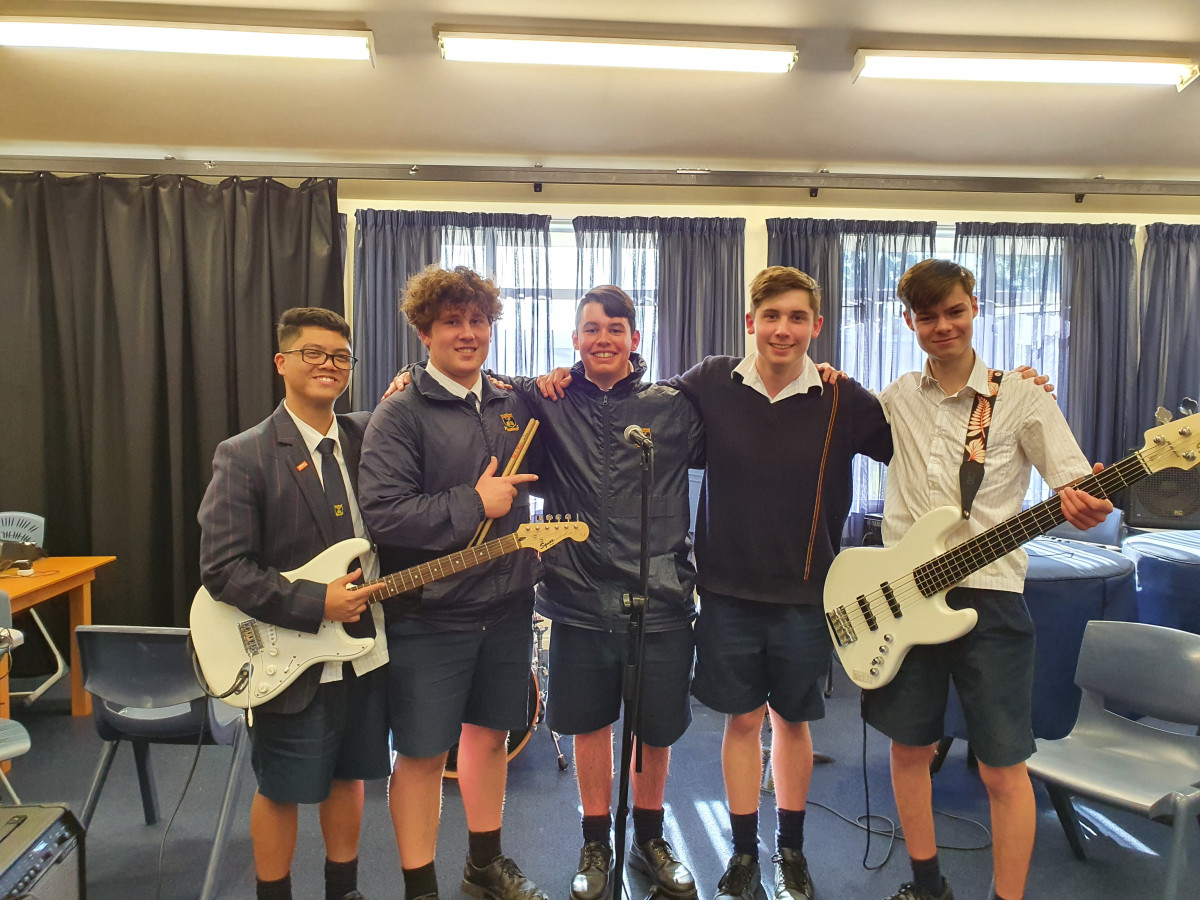
INTERNALS - Solo Performance (2 pieces) = 6 credits. Group performance (1 piece) = 4 . 2nd instrument ( 1 piece ) = 3. Composition (2 pieces) = 6 . Instrumentation (48 bars ) = 4 . Investigation = 4.
EXTERNALS - Music Works = 6 (and has UE accredited reading credits attached to it. Aural = 4 and Score Reading = 4.
So, as you can see, there are lots of standards to choose from!
For the Music Works External, we focus on 1950s Jazz, delving into the magnificent album Time Out by Dave Brubeck. The context of this covers a range of social issues such as the Civil Rights Movement and the Cold War. We also look at the development of Progressive Rock focusing on Pink Floyd's concept album Dark Side of the Moon and it's crazy use of state of the art recording techniques and psychedelic stage shows.
For those that excel in theory, there are 2 other external exams. An accurate understanding of music reading, and theory are essential if you wish to do either the Aural or the Score Reading External.
Your Group Performance will be presented in the Musical Extravaganza which will be on Thursday May 29th 2025 - a bit earlier than 2024 due to 2025 being a School Musical Year.
Ziad performing his Group Piece "Live High" at the musical extravaganza 2019
Level 2 Pasifika Studies
2PASMālō e lelei, Talofa lava, Taloha ni, Kia orana, Kam n bane n Mauri, Fakaalofa lahi atu, Namaste, Ni sa bula and warm Pacific greetings!
Pasifika Studies aims to develop students' understanding of different Pacific cultures. Anyone can join this course, whether they have Pasifika heritage or not. The first topic of the year is Dance, and all students will be expected to participate in the dances prepared for Polyfest. In Terms Two and Three, students will study different aspects of indigenous, traditional knowledge. Within this theme they will develop research skills and make a presentation about a topic of their choice. Additionally, all students will learn about Pacific languages and cultures through taking part in activities during the Pacific Language Weeks, hosting visitors, and attending SPACPAC events and other local Pacific activities.
The base assessments for everyone are:
- a dance standard
- a research process standard
- a presentation standard
Students who understand Samoan, Cook Island Māori, Vagahau Niue or Lea Faka-Tonga can also be assessed through Listening and Reading External Achievement Standards.
Level 2 Physical Education
2PEDStudents will explore the biophysical sciences and deepen their understanding of how the body responds to training through exercise physiology. They will apply and evaluate leadership strategies, with a focus on developing social responsibility in both leading and following roles. Through practical tasks, students will demonstrate these skills in action. They will also examine how people learn to participate in sport and physical activity, and critically analyse the role sport plays in the socialisation process.
Level 2 Physics
2PHYThis course is for those students who want to build on their interest and knowledge gained from Physics content in Level 1 Science. It focuses on Mechanics (including forces, projectile and circular motion), Electricity (static, dc circuits and electromagnetism), Waves, Atoms and the practical skills needed to carry out a Physics investigation.
(It is suggested that the student should also take a level 2 Mathematics course to support their learning in physics.)
This course provides a foundation for further study at tertiary level in fields such as Physics, Health Science, Architecture and Engineering.
Students should complete 10 credits in Level 1 science as part of the 1SCI course. Success in the numeracy co-requisite is also required. Entry from 1SCR is possible with the approval of Ms Burton.
Level 2 Science and Sustainability
2SUSThis is a course for students wanting to do a Level 2 science course for a career or interest without specialising in one or more of biology, chemistry, and physics. You will develop an understanding of some ‘big ideas’ of Science as well as learning more about how your knowledge and actions affect the sustainability of your lifestyle. As part of this course, you may also contribute to the school and the wider community through several service projects during your learning. Students wishing to pursue a course endorsement will choose to sit the externally assessed Achievement Standard 91193 as an exam, while the rest of the class will complete the internally assessed Achievement Standard 91187 by completing a science investigation. It is recommended you have completed Science 1.1 - Science perspectives in level 1.
Level 2 Sculpture
2SCULevel 2 Sculpture is a course designed to develop students' ownership of their creative output, with a foundation in the principles and skills of working in a 3D context. They will develop knowledge of current processes, procedures, materials, techniques, and conventions of sculpture practice whilst looking at the work of contemporary artists.
Students will gain experience in creating work using construction (build/model/cast) and deconstruction methods to produce work in a context that can include performance, environmental, installation, found object and assemblage. This course is driven by the student's own creative practice, whilst giving them the structure and guidance to support their success. An exciting and incredibly diverse course, Sculpture will fill the cup of those wanting to explore all that it means to be an artist!
Students will complete 2 Internals and the External Portfolio throughout the duration of year.
Maturity, manawanui, enthusiasm and ability to work independently are required.
Level 2 Skills for Your Future
2SYFThis course offers the opportunity to develop a range of life and work skills that will be useful
while at school and as you transition into further study or work.
In this course we learn the following
1.Taxation, and how it applies to personal income.
2.Renting; Rights and Responsibilities
3. Banking services, and how they apply to personal income.
4. Conflict Resolution; how to communicate assertively
5. How to recognise and respond to discrimination
6. Balancing a Budget
Level 2 Te Reo Māori
2TRMThis course builds and further develops the skills of listening, speaking, reading, writing, viewing and presenting in Te Reo within a less familiar context. These are developed through numerous activities and will be assessed through student choice of four standards.
Ākonga can choose from 3 internal portfolios (whakarongo, kōrero, tuhituhi) and 2 external exams (tuhituhi, pānui). A range of topics will permit students to communicate about the wider world, and to give and justify their opinions.
Level 2 and 3 Te Ao Māori unit standards will be offered where these fit the kaupapa.
Level 2 Textiles Technology
2TXTThe student focus during this course is to further develop the skills and knowledge gained at Level 1 and;
- To develop and refine a Brief to produce a 'fit for purpose' outcome.
- Leading to the process of developing conceptual designs ideas for the outcome.
- To undertake effective development procedures (trialling, testing and researching) and ideas to make and trail a prototype.
- To use advanced procedures using textile materials to make a specific product (additional Achievement Standard).
Each student will complete a 16 credit programme, with the option to select an additional achievement standard worth 6 additional credits, depending on their ability and/or preference.
Level 2 Tourism Studies | Ahumahi tāpoi
2TOU


Tourism is a subject that offers a world of opportunity. Across the globe one in every 10 jobs are linked to the tourism industry. Currently there are over 300,000 jobs in New Zealand, approximately 11% of all the jobs in New Zealand.
Tourism is Unit Standard workbook based course that makes learning structured, well organised and achievable. It includes field trips to local attractions, guest speakers from tertiary providers and workplace organisations.
Topics include New Zealand and World based tourism, as well as work based roles and the characteristics and needs of tourists.
Level 2 Tourism offers you the opportunity to learn about the tourism industry through various skills, knowledge and experiences. This leads to a growing area of employment in New Zealand and further study at many tertiary courses beyond Riccarton High School.
All assessments are unit standards, and as such may be credited towards NCEA Level 2.
This course offers 16 credits and students are expected to complete 4 units of work and obtain between 14-16 credits.
Course Components
• Examine work roles in the tourism industry
• Consider the characteristics and needs of tourists
• Explore Aotearoa | New Zealand as a tourist destination
• Discover popular international tourist destinations & World Geography
• Investigate environmental and social impacts of tourism
Upon completion, students may progress to a tertiary provider for subsequent study in Travel and Tourism Levels 3 and 4 or continue with Level 3 Tourism Studies | Ahumahi tāpoi here at Riccarton High School.
The World is waiting. Make your career travel.
Level 2 Visual Art Design
2ARD

In Design, Students learn how to develop and communicate ideas for a specific audience, using design conventions such as typography, composition, imagery, colour and layout. Through hands-on and digital processes, students develop skills in illustration, photography, collage and graphic design that are transferable across the arts and wider curriculum.
Students can pursue one of two design pathways: Campaign Design or Character Design. In Campaign Design, students develop a visual identity to communicate a message or issue, creating outcomes such as posters, logos and double-page spreads. In Character Design, students develop original characters and their visual worlds for contexts such as graphic novels, video games and other narrative media. Students build a portfolio of their research, experimentation, development and resolved design work.
Students will learn how to generate and develop independent creativity, building lateral and in-depth thinking skills, which are transferable to other disciplines across the arts and other subject disciplines. Students will learn to use industry standard cloud Adobe software such as Illustrator, InDesign and Photoshop. Some students may extend themselves and use Premier Pro or After Effects to create digital moving image graphic designs.
Students work is driven by their interests and strengths.
Students work on their external folio work throughout the year which is handed in at the start of Term 4.
Does this course provide a pathway to University Entrance? Yes
ART DESIGN IS A (UE) UNIVERSITY APPROVED SUBJECT
The maximum number of credits available to students is 20.
Level 2 Visual Art Painting
2PTGMake meaning of the visual world with Level 2 Painting. Develop your understanding of the reasons why and how artists make paintings; alongside techniques and processes particular to painting. In this course, we look at, explore and learn about established painting practices. We also generate, develop, clarify and extend ideas in our own paintings. All internal assessment is designed to support the production the folio, which is a two A1 folio panels which are externally assessed. The folio is an individual body of work, which you will work on throughout the year.
Level 2 Visual Art Photography
2PHO Fiona Pardington - is a NZ photographer of Māori (Ngāi Tahu, Kati Mamoe and Ngāti Kahungunu) and Scottish (Clan Cameron of Erracht) descent."My Mother's Roses, Pomegranates and Silver Platter of Ihumoana", Ripiro Beach 2013 courtesy of the artist and Starkwhite, Auckland
Vicky Thomas - is a NZ Photographer. She is of Ngati Kahu and Ngati Pakeha (Irish and Welsh) descent.
Students are introduced to photographic practice within a visual art context. Students will learn how to use the manual (DSLR) camera. They will also learn to use a range of digital and analogue photographic processes. Students will learn about the history of photography, established photography practice and photographers' work. Students will use this knowledge to inform the creation of their own photographic work to explore and visually communicate ideas. Students will look at range of established photography genres, conventions and approaches by New Zealand and International photographers. Students will chose a topic of interest and explore a range of ideas driven by this concept.
Students will create and produce a body of work in the form of an external folio submission at the end of the year. Students will learn how to organise their time well, how to manage their digital workflow and they will learn how use the following Adobe computer software programs: Adobe Lightroom, Photoshop and InDesign.
Students will work in consultation with their teacher to devise a personalised learning and assessment programme, which will compromise of up to a maximum total of 20 credits.
Students document their ako/learning - in an A3 workbook provided.
 Amy Elkins - American Photographer.
  Jerry Takigawa - Jerry is a Japanese Artist who lives in California.
 Level 3 Mathematics with Flexibility
3MFLXThis is a Level 3 Mathematics, Statistics, and/or Calculus course designed to give students complete flexibility over which standards they study. At the start of the year, students will work with their teacher to decide what they want to study, depending on their own individual pathways and abilities. They can then follow that program at their own pace with guidance from the teacher and will sit assessments only when they and their teacher think they are ready.
A Flipped Learning model is followed where students will learn from a combination of videos, teacher support, workbooks, group activities ... whichever best suits their strongest learning style. A specialist teacher will always be available, to provide one on one help and advice.
Students are required to reflect on their learning through a digital learning journal which is checked by their teacher once per week and will have not only a year planner available to them to track their time, they will also be provided with checkpoint tracking for each standard to record their progress and support their time management. Student's reflection and progress will be sent home every week to provide transparency to whānau and improve student accountability.
This model affords students more than just Mathematics learning with the purpose being to teach and cultivate self-management skills that will benefit them in whichever life pathway they choose. Hybrid level courses are also able to be developed for each personal circumstance (some Level 2 and some Level 3 standards).
This course is an approved pathway through Calculus, Mathematics and/or Statistics allowing for the attainment of up to 3 UE subject. A maximum of 18 credits is recommended - students following a Calculus pathway will need to have more.
Students wanting/needing multiple Mathematics pathways will need to pick this subject twice which is possible by speaking to the Leader of Learning for Mathematics. This course is intended for any student who is ready to study Mathematics, Statistics, and/or Calculus at NCEALevel 3.
Mathematics with Numeracy
2MANThis course is designed to be a mixture of NCEA Level 1 and Level 2 Numeracy tagged credits. It is for any Yr12 or Yr13 student who is yet to gain Numeracy, but for which Academic Maths is unlikely to be part of their pathway. This course is available as a 1 or 2 year course to gain Numeracy credits.
The following standards will be part of the course.
US 32406 Numeracy CAA (10 credits) to be held in May & September
1.2 Mathematical Methods (5 credits)
2.14 Systems of equations (2 credits) combined with 2.1 Coordinate Geometry (2 credits)
2.3 Sequences and Series (2 credits)
2.2 Graphing (4 credits)
Optional exam: 1.3 Mathematical & Statistical Interpretations (5 credits)
NOTE: If students pass both 1.2 and 1.3 this will grant them entry into 2MFLX the following year.
RHS Media and Advertising Division (M.A.D.)
MADMAD creates media to promote, inform and celebrate our school. If you are looking for a space in which to give service to the school through celebrating and promoting our school culture this is the opportunity you've been looking for.
Student led, MAD uses digital technology to design and create video, posters, billboards,social media posts, school publications, articles and more for our school community. As a team, MAD provides an important service for our school. You do not need any design or production experience. Ideas and a willingness to learn and work in a team are valuable.
MAD offers assessments from Media Studies and individual assessment plans will be constructed for students at the start of the year. Assessment will seek to credit students for the authentic learning they do in aid of the MAD mission of 'promoting pride and positivity in Riccarton High School'. Many students leave MAD able to move comfortably into creative agencies, tertiary creative arts training and/or professional freelance media creation.
This course is open to both Years 12 and 13. It may be offered to select Year 11 students after consultation with the MAD adult in charge, the student, their parents and their Kaitiaki.
Secondary Tertiary Partnership
STPSECONDARY TERTIARY PARTNERSHIP (STP)
SECONDARY TERTIARY PARTNERSHIP
This course is to support students enrolled in a Secondary Tertiary Partnership (STP) - a two day a week course with Ara Institute of Canterbury, Southern Institute of Technology, Vision College, or the National Trades Academy (NTA). It is a one-year programme combined with school; 2 days at school, one day Work Experience and 2 days at the tertiary provider. All courses offer either Level 2 or Level 3 credits.
Courses Offered by Tertiary Providers 2023:
- Business Administration
- Hospitality, Cookery and Beverage
- Bakery
- Cookery
- Salon Skills
- Introduction to Electrical Engineering Trades
- Introduction to Automotive Engineering Trades
- Introduction to Construction Trades
- Carpentry
- Agriculture
- Primary Industries
- Animal Care
- Horticulture
- Equine
- Plumbing
- Transport and Logistics
The in school component is based around three key themes:
- The Global Workplace, cultural responsiveness, interpersonal skills and team work.
- Financial Literacy, tax, insurance, renting/flatting, banking, credit options and budgeting.
- Successful Employment, admin, interviews, conflict resolution and confidence.
STP students in 2026 will also be offered the opportunity to do a day's work experience, each week, in a work placement linked to their vocational training. This opportunity is given to students on a case by case basis, depending on their levels of engagement and attendance.
Senior Intensive English
SINESenior Intensive English is a course for students whose English is at Foundation or Stage 1. Students study reading, writing, listening and speaking for 8 hours a week. Students will learn English intensively, so they have the skills and knowledge required to access the New Zealand Curriculum.
Senior Intensive English Mathematics
SINEMATSenior Intensive English Mathematics is a course for students whose English is at Foundation or Stage 1. Students learn and improve their Maths knowledge and skills from Phase 1 to 3 of the Curriculum and work towards Phase 4.
Senior Intensive English Science
SINESCISenior Intensive English Science
Science course for SINE students
This is an achievable course for students and has been designed to provide opportunities to students to develop hands-on, practical skills in a real-world context. The skills developed could then be applied to life outside of the classroom. This course provides support for those students without Literacy or Numeracy on a pathway to Level 1 Science the following year.
The course includes a study of life processes, growing and maintaining seeds, and Demonstrating understanding of a Science Issue.
Te Kura Senior Language
2TEKURATe Kura Senior Language:
If you would like to study a language that Riccarton High School does not currently offer, enrol in Te Kura as one of your subjects.
Te Kura involves individual, online learning for the following languages at NCEA levels 1-3:
Chinese
German
Samoan
Spanish
All classwork is set and submitted through the Te Kura Online Learnning Platform. Learning Support acts as an onsite supervisor for the Te Kura language teachers.
You will need a signed whānau permission form, collected from K2, to enrol in this course. A latop or chromebook is esssential. You also need to be able to work independently and have the ability to meet deadlines, without teacher supervision.
If you require any further information, come to K2 and have a chat with Mrs Hemmingsen.
Year 11 Maths Readiness
1MTRThis course is aimed at students in Year 10 who, based on their performance in Maths thus far, need one more academic year to reach Upper curriculum level 5 which is the level required to pass the Level 1 Achievement Standards being offered in the 1MAT course. It is also a possibility for senior students who would focus on passing Numeracy using the CAA pathway.
This course will focus on the following
- 2x Numerical skills based Unit Standards (5 credits each not Numeracy approved)
- Numeracy co-requisite Common Assessment Activity (10 Numeracy only Credits)
The ideal outcome for students is that they are able to work at curriculum level 4/5 or higher, attain numeracy and be ready to tackle a full achievement standards course (1MAT) the following year.
Year 12 Gateway
2GWAYGateway aims to build students’ skills for employment, working in real workplaces on real tasks. It is a course for students who are wanting to explore opportunities in the workplace and try out potential careers in order to make informed decisions about their future pathway. Students taking this course will be able to build links to Industry Training Organisations, NZ Apprenticeships, and workplaces.
It is a ‘hands on’ practical course and students will need to be prepared to complete a minimum of 10 days in a workplace. Students will be equipped with whatever tools or equipment they need for their work placement and will attend a "pre placement" interview with the Gateway Co-ordinator before they begin their placement.
Students will complete the compulsory units of Workplace Safety, First Aid, experience ‘taster days’, and then will work on their own personalised Gateway programme. The number of credits available to students will vary depending on their work placement, but 20 credits is the minimum required by TEC who fund this programme. Please note these credits may be at Level 2 or 3 and may be achieved through courses, classroom work and out in the workplace.
Applications and interviews with students, parents and employers are an important part of the Gateway programme.
Subjects for Year 12 Students
Level 1 Commerce
1COMAre you thinking about a career in business, marketing, or politics? If you are, taking Commerce is a great first step! You’ll learn the basics of Business Studies, Accounting and Economics, which branch into separate subjects from Level 2 and will give you what you need to enter the business world. You’ll learn how to prepare financial statements, interpret them, and use them to give business advice. You’ll learn how buyers and sellers negotiate a ‘fair’ price, and what difference the government makes. Throughout it all, decision-making is key. There are so many career possibilities for people with Commerce backgrounds - and here’s where it all starts!
If you have enjoyed Business Studies in Year 10, you'll find Level 1 Commerce a good next step! See you there!
Level 1 English Language for Practical Purposes
1ELP***This subject is only for those learning English as an additional language***
This class is for English Language Learners who are learning at Stage 1- 2 of the English Language Learning Progressions. This course is complementary to 1ELITi. It is recommended that students who need extra English language support take both 1ELP and 1ELITi, especially if they have just graduated from the Intensive English course (JINE). Students will have the opportunity to gain a total of 15 credits at either Level 1 or Level 2 of the English Language standards.
Level 1 English Language Literacy Internal
1ELITIThis class is for English Language Learners who want to improve their English. Students will also be assessed through three English Language (EL) Level 2 Unit Standards, offering them a total of 15 credits. Students in this course will also be working towards the literacy skills required for the Literacy Common Assessment Activities (CAA)
Level 1 Mathematics
1MATStudents who achieve Curriculum Level 4A or above in Year 10 Mathematics will be approved to enter this course. Students may also gain entry through the recommendation of their Year 10 Mathematics teacher.
This course is designed for students who wish to continue their studies in Mathematics and/or Statistics, either as a subject in its own right or to support other subjects that require mathematical and statistical thinking. The course develops the foundation skills needed for Level 2 Mathematics, Calculus, and Statistics.
Students will work towards the new NCEA Level 1 Achievement Standards. Up to four Achievement Standards will be offered, although it is recommended that students complete three standards over the full year course.
All students will study Curriculum Level 6 Mathematics and Statistics content that supports the:
- 1.1 Statistics Internal Standard
- 1.2 Mathematics Internal Standard
For the remainder of the year, students will choose to complete one or both of the following external standards:
- 1.3 External Standard
- 1.4 External Standard
Students can gain up to 20 Achievement Standard credits, with 15 credits being the recommended total.
Students who have not yet achieved the Numeracy Co-requisite will have opportunities to work towards and sit this assessment throughout the year.
Successful completion of this course provides a pathway to Level 2 Mathematics with Flexibility.
Level 1 Science
1SCIThis course has been designed for students who wish to do Chemistry, Physics and/or Biology at level 2 and beyond (should the entry requirements for those courses be met). The assessment choices are dependent on experiences and successes throughout the year but would cover the content of Living World, Physical World, Material World and the Panet Earth and Beyond. There will be 2 Externals and 1 Internal attempted which focus on the Nature of Science. Please check with your Science teacher to see if this course is suitable for you. It is expected that you would have already gained Literacy and Numeracy in Year 10.
Level 1 Science Readiness
1SCRThis is an achievable course for students and has been designed to provide opportunities to students to develop hands-on, practical skills in a real-world context. The skills developed could then be applied to life outside of the classroom. This course provides support for those students without Literacy or Numeracy on a pathway to Level 1 Science the following year.
The course includes a study of life processes, growing and maintaining seeds, and Demonstrating understanding of a Science Issue.
Level 2 Accounting
2ACCYou’ve got a head for numbers? – tick.
You can explain your thinking? – tick.
Then 2 Accounting is where you should be! Focusing on sole traders, we’ll turn you into a Xero hero, we’ll get you processing and interpreting financial information and speaking the international language of business quicker than you can say SHOW ME THE MONEY!
Whether you’re planning a future that is running the show, launching a business, tracking millions, or providing financial advice… Accounting will give you the edge you need. AND you’ll be gaining real-world skills that’ll help you be your own financial wizard. What's not to love about that?!
See you there!
Level 2 Biology / Mātauranga Koiora
2BIOBiology is the study of living things, how they function, and how they are connected. Many of the big issues facing society today have a biological component; for example: antibiotic resistance, climate change, pandemics, extinction, management of both endangered species and invasive pests/weeds, food production, individual and population health, etc. In this course, you will refine the biological skills and knowledge you developed in Year 11 and build a foundation for further study in this subject.
Level 2 Childcare
2CHCWe are pleased to be offering Level 2 Childcare as a full academic program in 2025.
Students in this class have the opportunity to earn up to 19 Level 2 credits in Childcare.
Some of the themes/topics we will cover are:
- Protecting the Health and Wellbeing of Young Children
- Identifying Patterns of Learning and Development in Young Children
- The Benefits of Play Based Learning
- Building Positive Relationships with Young People
During this course we will also connect with local preschools and kura to have real life experiences teaching the littlest learners in our Riccarton Community.
Level 2 Economics
2ECOEver imagined yourself in business? Going global? Investing, trading in currencies, making millions? Then 2 Economics is the course for you!
We look at the what, why, and how of major economic issues facing New Zealand: inflation, unemployment, trade, growth, government policies, and how they affect us all.
By the end of this course you’ll understand what our political parties are arguing - oops, talking - about, and maybe even see it in action during our Commerce trip to Wellington. Better yet, you’ll be able to make informed decisions about your own political views as you reach voting age.
[Bonus extra: our annual Commerce trip to Wellington! Start saving now!]
Level 2 Electronics
2TELThis course is for those students who are interested in the world of electricity, robotics, automation and electronics.
There is a mixture of hands on making things glow, buzz, display, move and detect.
There is some familiarisation with the different components and how they work, how to identify them, test, and assemble them.
Several types of circuit boards are made while learning to solder.
Working with LEDs, Motors (servo, stepper, DC), LDRs, thermistors, joysticks, transistors...
Basic electricity theory
Using a programmable chip (Arduino or other) in projects.
Completing open-ended projects.
This course can provide a foundation for further study at tertiary level in fields such as computer science, electronics and engineering, as well as supporting students who are interested in the electrical trades or similar.
Level 2 English for Academic Purposes
2EAPLevel 2 English for Academic Purposes is a course for Year 12 students who want to improve their academic English skills for university or tertiary study. They will develop academic presenting, academic writing and reading skills required to university entrance.
Students will be assessed through three English for Academic Purposes unit standards (15 Level 3 NCEA credits in total).
Eligible English Language Learners and International Fee-Paying students can obtain Level 1 Literacy in 2025 from the reading and writing standards as an alternative to the Literacy Common Assessment Tasks. In this case, the 11 credits would count towards Level 1 Literacy instead of Level 3 NCEA.
The course is designed for English language learners, but entry can be negotiable for other students who wish to pursue academic English for future studies.
Level 2 English Language for Practical Purposes
2ELPThis class is for English Language Learners who are learning at Stage 2-3 of the English Language Learning Progressions. It has a strong focus on the skills required for the reading and writing level 1 reading and writing standards (CAA). The skills need for the CAAs are delivered through a dynamic practical English skills course for students in Year 12 or 13 . In addition to the CAAs, students will be able to gain 15 credits at Level 3.
Level 2 Geography
2GEOBy studying geography, students are able to recognise the responsibilities they have in relation to other people, the environment, and the long-term sustainability of the planet. Learn about how both people and nature shape the environments in which we live.
TopicsContentSustainability and EnvironmentsLooking at the interaction between people and environment within Ōtautahi/Chrustchurch. Looks and consequences and actions required to be sustainable with a water focus. Includes a Christchurch urban field trip.
Interactions in the Natural Environment
How the connections between relief, climate, vegetation and soils shape our natural world. Includes a field trip to the Craigieburn Ranges where data is collected for research.
Patterns of Human Geography
How the activities of humans create patterns on the surface of the earth. Includes a health focus on malaria and the factors and processes that cause it.
Geographic Skills and Concepts
Classic geography! Maps and graphs, location, place and people, infographics, learning about the seven geographic concepts and geographic ideas. This is integrated into the above three topics.
Level 2 Geography offers 16 Credits, from 4 Achievement standards which offers 4 credits towards your U.E. Literacy.
Investigate and interpret geographic patterns, features and processes including how these change over time. Key areas of study include; sustainability of the Christchurch Biophysical Environment, Craigieburn Ranges field trip based research, the spread of malaria on a global scale, geographic skills and concepts, as well as landscapes of mountainous environments.
A high interest course that helps interpret the world in which we live. Note: By completing both Level Two and Level Three Geography students can meet all their U.E. Literacy requirements.
Students are to complete four offered below. It is important to consider your U.E. Literacy requirements in your selection. Students gain gain their full U.E Literacy by doing L2 and L3 Geography.
Level 2 Geography offers 16 Credits, from 4 Achievement standards which offers 4 credits towards your U.E. Literacy.
Level 2 Law and Civics
2LSTThis course is an introduction to the law in New Zealand as it relates to students' lives and society. It also explores civics, the study of rights and duties of citizens, and how government in New Zealand works. We strive to empower students to be active, engaged citizens by equipping them with the knowledge of the laws and government of New Zealand. Additionally, students will build skills to successfully participate in and create change in their communities. During the year, there will be field trips, guest speakers, research of current and historical legal cases, assignments, and booklet work.
As this course is fully internally assessed, an attendance rate of 80% or more is required to enter the course.
Law and Civics is NOT A UE SUBJECT.
However, Law and Civics can complement a UE programme if you are planning on studying Law at University.
Level 2 Mathematics with Flexibility
2MFLXThis is a NCEA Level 2/3 Mathematics and Statistics course designed to give students complete flexibility over which standards they study. At the start of the year, students will work with their teacher to decide what they want to study, depending on their own individual pathways and abilities. They can then follow that program at their own pace with guidance from the teacher and will sit assessments only when they and their teacher think they are ready.
A Flipped Learning model is followed where students will learn from a combination of videos, teacher support, workbooks, group activities ... whichever best suits their strongest learning style. A specialist teacher will always be available, to provide one on one help and advice.
Students are required to reflect on their learning through a digital learning journal which is checked by their teacher once per week and will have not only a year planner available to them to track their time, they will also be provided with checkpoint tracking for each standard to record their progress and support their time management. Student's reflection and progress will be sent home every week to provide transparency to whānau and improve student accountability.
This model affords students more than just Mathematics learning with the purpose being to teach and cultivate self-management skills that will benefit them in whichever life pathway they choose.
This course is an approved pathway through Mathematics and/or Statistics leading to Level 3 standards and UE. A maximum of 18 credits is recommended. This course is intended for any student who is ready to study Mathematics and/or Statistics at NCEA Level 2.
Level 2 Physics
2PHYThis course is for those students who want to build on their interest and knowledge gained from Physics content in Level 1 Science. It focuses on Mechanics (including forces, projectile and circular motion), Electricity (static, dc circuits and electromagnetism), Waves, Atoms and the practical skills needed to carry out a Physics investigation.
(It is suggested that the student should also take a level 2 Mathematics course to support their learning in physics.)
This course provides a foundation for further study at tertiary level in fields such as Physics, Health Science, Architecture and Engineering.
Students should complete 10 credits in Level 1 science as part of the 1SCI course. Success in the numeracy co-requisite is also required. Entry from 1SCR is possible with the approval of Ms Burton.
Level 2 Science and Sustainability
2SUSThis is a course for students wanting to do a Level 2 science course for a career or interest without specialising in one or more of biology, chemistry, and physics. You will develop an understanding of some ‘big ideas’ of Science as well as learning more about how your knowledge and actions affect the sustainability of your lifestyle. As part of this course, you may also contribute to the school and the wider community through several service projects during your learning. Students wishing to pursue a course endorsement will choose to sit the externally assessed Achievement Standard 91193 as an exam, while the rest of the class will complete the internally assessed Achievement Standard 91187 by completing a science investigation. It is recommended you have completed Science 1.1 - Science perspectives in level 1.
Level 2 Sculpture
2SCULevel 2 Sculpture is a course designed to develop students' ownership of their creative output, with a foundation in the principles and skills of working in a 3D context. They will develop knowledge of current processes, procedures, materials, techniques, and conventions of sculpture practice whilst looking at the work of contemporary artists.
Students will gain experience in creating work using construction (build/model/cast) and deconstruction methods to produce work in a context that can include performance, environmental, installation, found object and assemblage. This course is driven by the student's own creative practice, whilst giving them the structure and guidance to support their success. An exciting and incredibly diverse course, Sculpture will fill the cup of those wanting to explore all that it means to be an artist!
Students will complete 2 Internals and the External Portfolio throughout the duration of year.
Maturity, manawanui, enthusiasm and ability to work independently are required.
Level 3 Accounting
3ACC Are you eyeing up a career in Corporate, Finance, or Management? Considering a Commerce degree/diploma, maybe even Chartered Accountancy? Then 3 Accounting is your key to success! We’ll be diving deep into Partnerships and NZ Companies, dissecting annual reports, critiquing business decisions, and generally preparing you to be the next big CEO or CFO! This course is very similar to Stage 1 University Accounting, so it really will reduce your tertiary stress levels (trust us – past students tell us this every year!)
Yes, this course gives you 5 reading/writing credits towards University Entrance. Woohoo!
Level 3 Biology / Mātauranga Koiora
3BIOBiology is the study of living things, how they function, how they are connected, and how they change over time in response to environmental change. An understanding of how evolution works using the concept of “adaptive advantage” creates a good foundation on which to build further understanding.
Level 3 Building and Construction
3BCNYear 13 Building and Construction students continue to use the Building, Construction and Allied Trades Skills (BCATS) training organisation's assessment materials. The Level 3 Unit Standards do not specify particular projects, instead a project’s suitability is determined by its complexity and the ability to meet the Unit Standards’ outcomes at Level 3. A higher level of complexity will need to be included in the project to meet the Level 3 Standard, which is very achievable for most students with prior construction knowledge. This provides flexibility for students to choose projects according to their interests and circumstances. The student project will be negotiated with the teacher prior to commencing the building phase.
Students who complete the course will be prepared for future study or training in a trade setting.
Currently this course contains 32 credits. Not all standards will be covered as each year standards offered may change depending on student preference and ability.
Level 3 Chemistry
3CHEThis course is for those students who want to build on their interest and knowledge gained from 2CHE course. It focuses on the structure of particles and thermochemistry, the chemistry of organic substances, aqueous systems and provides a choice between developing skills in interpreting data from spectrometry and exploring redox reactions. Students will complete 3 compulsory standards and select between 2 others for a total of 18 credits. This course provides a foundation for further study at tertiary level in fields such as Health Science (including Physiotherapy & Dentistry), Engineering and Biochemistry.
There is a maximum of 18 credits available in this course. The number achieved will be dependent on your progress through this mastery course.
Level 3 Childcare
3CHCLevel 3 Childcare is a natural progression on from our Level 2 Childcare course.
In this subject we look at the theory behind child development, and best practices in working with young people. We also learn about how to nourish growing minds and bodies, and how to create safe and respectful relatioships with children.
We also have a 45 minute playgroup once a week with the Nest Church Corner learners.
This course creates a meaningful learning stepping stone for those students who wish to work with children as a vocational or career pathway once they leave school.
This is NOT a UE approved subject.
Level 3 Classical Studies
3CLSThis subject explores elements of the ‘Classical World’, that is Greece and the Roman Empire, from about 10,000 BC to the fall of Rome in 475 AD. Such study is important because most of the traditions, languages and culture of the so-called ‘Western World’ (and therefore of New Zealand) are based on the traditions, languages and culture of Classical Greece and Rome. In this course you will study the life and career of one of the greatest figures from the ancient world, Alexander the Great. You will learn about his successes, failures and his remarkable character and frightening ambition. The story of Rome’s mythical beginnings, The Aeneid by Virgil, will also be studied, with a particular focus on the nature of heroism from classical times to the modern era. Learning about the gods and mythology are integral to the study of Classical Studies and this is present throughout the course.
Three or four standards are offered in this course. Pupils are expected to attempt both of the internal standards and at least one of the external standards.


Level 3 Dance
3DAN- Te toi whakairo, ka ihiihi, ka wehiwehi, ka aweawe te ao katoa.
Students will learn a diverse range of styles and choreographic tools and students will have input into the styles learnt. Students will participate in a set programme of achievement standards with a couple of choice options which will compromise of up to a maximum total of 18 credits. Below are the achievement standards that will be covered:
- 3.2 Choreograph a Dance to Develop and Resolve Ideas - 4 Credits
- 3.4 Perform a Group Dance - 4 Credits
- 3.5 Perform a Repertoire of Contrasting Dance - 6 Credits
And choose 1 more from the options below:
- 3.3 Perform a Solo or Duet Dance - 4 Credits
- 3.7 Analyze a Dance Performance - 4 Credits (External)
To be eligible for a course endorsement you need to do the external
Internal and External: 18 Credits
Dance Showcase and Choreography Showcase
Dance Showcase and Choreography Showcase are highly anticipated events that happen each year. It is a chance to display a lot of the dances we do in class for assessment and to share your work with whānau and friends. Extra-curricular groups also perform the wonderful dances they have been practicing at dance showcase.
Dance Recital 2023: https://www.youtube.com/watch?v=meeNXwQxgbM


Level 3 Design and Visual Communication
3DVCLevel Three Design and Visual Communication students facilitated in applying their range of skills over the course of the year through Product and/or Spatial design of their choice. Using Visual Communication to address how design ideas and outcomes are appropriately presented to a viewer. Product design focuses on the development of tangible items that have a specific function within people's everyday lives. Spatial design is about the designing of three-dimensional spaces in terms of how they are experienced, occupied, or used by people.
Skills students should be able to demonstrate in this course are:
- Design Thinking (creative and critical thinking)
- Problem Solving
- Sketching
- CAD modelling
- Rendering with markers
- Photo rendering
- Presentation
- Drawing Board skills
- Design Heritage
Students work is assessed in several internal standards, and an external portfolio at the end of the year. NB: Students choose which Internal Achievement Standards they want to include as their focus for the year.
Joining CAD Club or Art Design along side DVC is a great way to advance skills for a range of standards. This course is also complementary to Design Technology.
Any inquiries contact Mrs Johnston
Level 3 Design Technology
3DTCThe emphasis in Year 13 Design Technology is for students to fully lead the design inquiry process towards the production of design projects that address real world problems. This course is considered good preparation for students who are considering further tertiary study in the field of technology.
The course is run in a workshop where students can fluidly move between design and making tasks as they develop their projects. At Year 13 design outcomes are only restricted by cost and the constraints identified within the inquiry process. Students are encouraged to explore their design context to discover a wide range of design solutions they may not have considered. Skills and knowledge learnt are a continuation of the Level 2 program but with a higher degree of independence. Fabrication of student outcomes is not constrained to the Riccarton workshops as designs may require specialist processes to complete. Engagement with the wider "maker" community is encouraged. Skills and knowledge used are student directed and may include:
- sketching
- computer aided design and manufacture (CAD and CAM)
- safe power tool and machinery use
- material composition and selection
- component integration and assembly
- creative and critical thinking
- report writing
This course contains 18 compulsory credits and alternative credits on offer that are negotiable and dependent on student preference and ability. Motivated students have the opportunity to gain a scholarship. **3DTC is a University Entrance approved subject**
Level 3 Digital Game Design
3DGDThis course is your chance to take your game development skills to the next level, building on the solid foundation you’ve already developed. You’re no longer just learning the basics—you’re now honing your craft and exploring the depths of what it means to create truly innovative and engaging games.
As experienced creators, you’ll dive deeper into the art, design, and technical mastery needed to bring your unique vision to life. You might be able to make a game already, but what make a game fun? How do the game mechanics contrubute to the experience that your players will have?
Together, we’ll look to the global stage and continue drawing inspiration from New Zealand’s vibrant gaming industry, showing how your ideas can resonate in Aotearoa and beyond. Whether you aim to become a game developer, a digital artist, or a creative problem-solver, this course will help you refine your skills and take bold steps toward your future in game design.
Level 3 Digital Technologies
3DGTStudents will build on their learning from Level 2 to independently investigate and develop comprehensive solutions for complex real world problems in areas such as:
· digital information (use of relational databases to manage complex information using custom forms, reports and dashboards)
· programming and computer science (writing code including files, libraries, and object-oriented programming)
· digital media (applying user experience principles to communicate effectively through dynamic and interactive websites)
NB: All internal Achievement Standards covered in this course are UE approved.
Level 3 Drama
3DRAThis course teaches advanced acting and narrative development techniques through a variety of performance opportunities. Performance group sizes vary from a full class production to pair and individual performances. There are between 14 and 19 credits available at Level 3 depending on which units of work each student opts into.
There are opportunities for students to direct, write and complete an external exam.
Level 3 Economics
3ECOLooking ahead to a career in business, finance, or government policy? Aiming for a degree/diploma in Commerce? Then 3 Economics will give you the advantage you need! In this course we look at market forces, consumer choice, and the decision-making of firms. We also look at market failure and the role of government in our economy. If that all sounds like a foreign language to you, don’t worry: by the end of the course it won’t. You’ll be able to analyse government policy, interpret economic events, explain your thinking logically and clearly, slay Stage 1 Economics, and maybe even run for Prime Minister ;)
[Yes, this course gives you both reading and writing credits towards University Entrance. Woohoo!]
Level 3 Electronics
3TELThis course is for those students who are interested in the world of electricity, robotics, automation and electronics and would like to take it further from the L2 course. Students will get the most value from this course after doing the L2 course.
Much of the activity is hands on. Build things that move, glow, display, measure, communicate...
The first assessment makes a controller for a glasshouse.
After some training a self directed project is worked on where you can explore a wide range of devices to create something of your choice.
Other topics include semiconductors, Digital to analog conductors, Logic gates...
Some electricity theory is covered with an emphasis on logic and semiconductors.
Using a programmable chip (Arduino or other) in projects.
Students are encouraged to work with a range of sensors (LEDs, LDRs, specialist sensors, actuators (servos, steppers, DC) MOSFETS, logic gates....
This course can provide a foundation for further study at tertiary level in fields such as computer science, electronics and engineering, as well as supporting students who are interested in the electrical trades.
Not a UE approved subject.
Level 3 English
3ENG
Viking sagas to the latest literature and everything in between.
Student choice and voice are vital elements of this course’s important point of difference: the opportunity for students to create their own programme of 18 credits from the internally and externally assessed Achievement Standard credits offered. Being able to select the standards best suited to their individual interests, strengths and needs means it is possible for some students to choose entirely internally assessed standards while, others may opt for one or two external assessments and fewer internal. The text possibilities are near endless.
Level 3 English for Academic Purposes
3EAPThe course is available to students who wish to obtain UE literacy through an alternative pathway.
English for Academic Purposes is a course for Year 13 students who want to go on to university or another tertiary course that requires academic English. The course is aimed at students who have not yet gained University Entrance Literacy in Reading and/or Writing. The skills developed are academic essay writing, oral presentation skills and critical reading analysis.
Students will be assessed through three English for Academic Purposes unit standards (17 credits total), two of which provide UE Literacy. This course is not a UE approved subject.
Level 3 English Language for Practical Purposes
3ELPThis class is for English Language Learners who are learning at Stage 2-3. The main focus of this course is to help students gain Level 1 Literacy either through the Common Literacy Assessment (CAA), or additional credits. The additional credits offered will depend on the needs of the class. The course focuses on the elements of good writing, including paragraph structure, sentence types and the logical linking of ideas. At the same time the course helps students develop reading, speaking and listening skills.
While this is not a UE approved subject, students can gain credits from Level three standards that contribute to an NCEA Level 3 Certificate.
Level 3 Food and Nutrition
3TEFThis course enables students to further develop understanding and knowledge about food related issues gained at Level 2.
The main students focus is societal based. The students will:
- Identify a nutritional issue that families in New Zealand face - the over consumption of sugar (Internal).
- Identify the influences Multinational food companies have on our eating patterns in New Zealand - McDonalds or KFC (Internal)
- Analyse an ethical dilemma faced by the New Zealand society today - The Marketing of 'Energy Dense, Nutrient Poor Foods and Drinks' directed at children (Internal) and,
- Analyse the influence Food Advertising has on the well being of our society (External).
This is a University Entrance (UE) approved course. It offers 4 credit for both Reading and Writing, which is gained through the External Achievement Standard.
Level 3 French
3FRE"Learning another language is not only learning different words for the same things, but learning another way to think about things." (Flora Lewis)
The skills of listening, speaking, reading, writing, viewing and presenting in French are further developed within less familiar contexts. A range of topics will permit students to communicate on social and global topics, to give and justify their opinions and to persuade and advise others. Students are developing transferable communication and linguistic skills that can be applied to any future work or study.
Students will choose up to four of the standards offered. They can choose from two external standards (Listening and Reading) and three internal standards (Writing Portfolio, Interaction Portfolio or Speech).
Prerequisite: Students will have achieved at least one external standard and one internal standard in Level 2 French.
Level 3 Geography
3GEO

 L3 Geography is a University Entrance approved course and offers the opportunity for students to gain the 5 Reading and 5 Writing credits for U.E. Literacy. Geography equips students with the skills to interpret the world in which they live. Learn about how both people and nature shape the environments in which we live. TopicContentCoastal ProcessesHow many interacting natural processes shape coastlines and a variety of coastal features. 75% of New Zealanders live within 10km of the coast.
 Geographic ResearchUsing your knowledge of the coastal environment to research a spatial coastal pattern. Involves a day trip to the Rakaia coast.
Patterns in Human GeographyHow International Tourist Arrivals have grown significantly over time. Look at the social, economic and environmental impacts linked to tourism. How such growth can be changed by economic and health crises.
Evaluate a contemporary geographic issueLooking at an issue, the different groups involved and the perspectives they hold. Consider a range of courses of action to find the best way forward. This may include PFNZ2050 or mining in conservation areas.
Geographic skills and conceptsClassic geography! Maps and graphs, location, place and people, infographics, learning about the seven geographic concepts and geographic ideas. This is integrated into the above topics.
Key areas of study include; natural features and processes of a coastal environment, field trip based research, understanding global tourism, geographic issues including predator control and urban development, as well as geographic skills and concepts. Includes Rakaia Coastal Field trip and Skills Based trip.
Geography students are better able to make sense of the complicated and changing world in which they will live and work. In Geography, students have the opportunity to think spatially, look at the processes that shape our world, develop an awareness of the connections between people and places, evaluate alternatives to provide the best solution for people and the environment..
Level Three Geography offers students a range of ways to gain their 14 Academic Credits. Students can gain all the necessary credits for U.E. Literacy by completing one internal and two externals. Refer to table below. It is expected that students will complete four of the standards below.
Level 3 Health
3HEAThe Level 3 Health Education course develops critical inquiry skills, empowering students to evaluate complex health issues and practices. Through a socio-ecological framework, students analyse significant New Zealand and international health topics, exploring the factors influencing community well-being.
Students will also examine diverse health practices including conventional or scientised, complementary, and traditional medicine. They will also investigate contemporary ethical dilemmas in public health.
By connecting these issues to core concepts like hauora, health promotion, and attitudes and values, students gain the ability to recommend equitable, evidence-based strategies for improving well-being in diverse social contexts.
This is a UE approved subject and offers both reading and writing credits.
Level 3 History
3HISThis course is highly recommended to any students interested in studying History, Law or Criminal Justice at university.
The 2027 course will focus on either Topic A, Topic B or Topic C.
TOPIC A: “I believe we were all glad to leave New Zealand. It is not a pleasant place. Amongst the natives there is absent that charming simplicity which is found at Tahiti; and the greater part of the English are the very refuse [rubbish] of society. Neither is the country itself attractive.” So wrote the naturalist Charles Darwin in 1835 of New Zealand. However, over the next 185 years this land was to be the setting of dramatic and transformative confrontation as the rival worlds of Māori and Pākehā clashed and, out of this conflict, there would emerge a new and unique nation – New Zealand. The story of the beginnings of this history, and the legacies that are still being lived with today, will be explored. The course has a particular focus on the period from pre-European times up to the end of the 1840s as armed conflict emerged, setting the scene for New Zealand's future race-relations. Never has it been so important to learn about our own national past. This course is for anyone who is interested in learning about New Zealand’s forgotten or misunderstood history.
TOPIC B: King Henry VIII of England is one of the most infamous figures in history. He ruled England at a time of tremendous change, especially in religion. A deeply complex figure, he had six wives and changed the course of English history. The story of Henry and his break from the Roman Catholic Church will be explored. His daughter by his second wife, Queen Elizabeth I, will also be studied. Very much her father's daughter, she was an even more impressive monarch, especially in the context of her time, which was a society dominated by men. Her reign, and how she has been viewed by historians over time, will be examined.
TOPIC C: Study the causes, course, and consequences of the Russian Revolution (c. 1905-1921). Revolutionary change in Russia, with an emphasis on the 1917 February and October revolutions will be examined. Topics include the nature of Tsarist rule, the 1905 Revolution, the impact of World War I, the fall of the Tsar, the role of the Bolsheviks and key leaders, the October seizure of power, the Civil War, War Communism, the NEP, and the revolution’s political, social, and international significance. You will analyse primary and secondary sources, explain cause and consequence, continuity and change, and evaluate differing historical interpretations. 

Level 3 Hospitality
3TEHThis course is a comprehensive culinary journey. Cooking knowledge and skills are developed by the wide range of recipes created and the catering opportunities offered. Manaakitanga is continually modelled and is the backbone of this course. Visits to industry sites are essential to expand students knowledge and to experience real-life working environments.
Content/Skills include nutrition in commercial kitchens, understanding and mastering pickles/chutney and preserves and then integrating them into nutritious meal prep ideas for catering. Complex sandwiches allows us to enjoy using the preserved food items in delicious creative sandwiches and culinary product knowledge allows us to create meal options to suit all our customer needs. We dive into areas such as vegetarian, vegan, gluten free to allow for menu planning. Budgets are discussed and time management is fine tuned.
It is expected that you are will be available for catering opportunities that are outside of school hours - Student Achievement days, Speech competitions, Colab dinner, charity events etc. This is a huge component of this course and one where you will gain a great deal of experience in the Hospitality sector.
Not a UE approved subject.
Level 3 Japanese
3JPNThe skills of listening, speaking, reading, writing, viewing and presenting in Japanese are further developed within a familiar context. A range of topics we may explore: Social Issues, City vs Country Life, Travel, Festivals and Celebrations.
Student will choose up to four standards to be assessed in, from the following choices; reading (external), listening (external), writing (internal portfolio), interaction (internal portfolio) and speech (internal).
Prerequisite: Students should have achieved at least one Level 2 Japanese external (either Reading or Listening) in order to take Level 3 Japanese.
Level 3 Law & Civics
3LSTStudents will gain a broad understanding of how law develops in our society so that they can take their full place within it, as confident, informed and responsible young adults. It helps students understand their rights, roles and responsibilities as participants in a legal system within a democratic society. Students will also gain an understanding of how New Zealand government works and compare this to other governments in the world. There will be field trips that include the Justice Precinct to observe New Zealand law in action.
As this course is fully internally assessed, an attendance rate of 80% or more is required to enter the course.
Students are expected to complete the four units offered below.
LEGAL STUDIES IS NOT A UE APPROVED SUBJECT.
Level 3 Mathematics with Flexibility
3MFLXThis is a Level 3 Mathematics, Statistics, and/or Calculus course designed to give students complete flexibility over which standards they study. At the start of the year, students will work with their teacher to decide what they want to study, depending on their own individual pathways and abilities. They can then follow that program at their own pace with guidance from the teacher and will sit assessments only when they and their teacher think they are ready.
A Flipped Learning model is followed where students will learn from a combination of videos, teacher support, workbooks, group activities ... whichever best suits their strongest learning style. A specialist teacher will always be available, to provide one on one help and advice.
Students are required to reflect on their learning through a digital learning journal which is checked by their teacher once per week and will have not only a year planner available to them to track their time, they will also be provided with checkpoint tracking for each standard to record their progress and support their time management. Student's reflection and progress will be sent home every week to provide transparency to whānau and improve student accountability.
This model affords students more than just Mathematics learning with the purpose being to teach and cultivate self-management skills that will benefit them in whichever life pathway they choose. Hybrid level courses are also able to be developed for each personal circumstance (some Level 2 and some Level 3 standards).
This course is an approved pathway through Calculus, Mathematics and/or Statistics allowing for the attainment of up to 3 UE subject. A maximum of 18 credits is recommended - students following a Calculus pathway will need to have more.
Students wanting/needing multiple Mathematics pathways will need to pick this subject twice which is possible by speaking to the Leader of Learning for Mathematics. This course is intended for any student who is ready to study Mathematics, Statistics, and/or Calculus at NCEALevel 3.
Level 3 Media Studies
3MSTIf you're interested in all or anything media related: film, television, magazines, books, music, YouTube and other social media this is the subject that will allow you to develop your knowledge and understanding of that area. You might be interested in making media (any type of media) or understanding how it's made or the effects it has on us all, these are all areas that can be covered in the Level Three Media Studies Course.
Students will work in consultation with their teacher to devise a personalised learning and assessment programme which will compromise of up to a maximum total of 18 credits.
Most students will work through the process of creating a short film, study how media representation shapes societies understanding of people or groups and/or how the societal zeitgeist shapes the media industry. Students will analyse, evaluate and create products across a range of media. By designing their own course, students are able to pursue their own areas of interest and passion within the wider context of mass media.
Media studies is a mix of media production and the examination of the relationship between the media and society. Film is our focus but you could also create a comic, magazine spread, or website etc.
This course can contain UE literacy reading and writing credits.
Media Studies and English are completely separate subjects, but they are intertwined and offer students who do both the opportunity to double dip. Technical skills are an advantage, but we cover everything you need to know.
Examples of past students work
Level 3 Music
3MUSLEVEL 3 MUSIC is likely to include students from Level 2 who excelled in either Performance, Composition / Song Writing, or both. The course caters for students who want to develop expertise mainly in these areas. For students who read music well, we can also offer musical arrangement and musical analysis - (both require a reasonable understanding of theory). Solo and Group Performance recitals, alongside a Composition/Song Writing or Arrangement portfolio will form most of your work. We also offer a music research standard for students who are not keen on the creative standards such as composition and song writing and also not very confident with music theory. Research projects can be on absolutely any aspect of MUSIC that students find interesting.
Students may choose to do a Composition (8 credits) AND a Song Writing (8 credits) portfolio. This will take up the entire course and is worth 16 credits - (6 pieces of music in total).
Like Level 2, you can get credits for a 2nd instrument performance. Essentially the Solo (8 credits) , Group (4 credits) and 2nd Instrument (4 credits) will provide 16 credits in total.
Students are advised to have regular tuition on their instrument/voice to help them achieve the required level for the performance elements.
Students are expected to perform at musical events in or out of school.
Watch the L3 band of 2019 perform at the Musical Extravaganza
Level 3 Pasifika Studies
3PASMālō e lelei, Talofa lava, Taloha ni, Kia orana, Kam n bane n Mauri, Fakaalofa lahi atu, Namaste, Ni sa bula and warm Pacific greetings!
Pasifika Studies aims to develop students' understanding of different Pacific cultures. Anyone can join this course, whether they have Pasifika heritage or not. The first topic of the year is Dance, and all students will be expected to participate in the dances prepared for Polyfest. In Terms Two and Three, students will study different aspects of indigenous, traditional knowledge. Within this theme they will develop research skills and make a presentation about a topic of their choice. Additionally, all students will learn about Pacific languages and cultures through taking part in activities during the Pacific Language Weeks, hosting visitors, and attending SPACPAC events and other local Pacific activities.
The base assessments for everyone are:
- a dance standard
- a research process standard
- a presentation standard
Students who understand Samoan, Cook Island Māori, Vagahau Niue or Lea Faka-Tonga can also be assessed through Listening and Reading External Achievement Standards.
Level 3 Physical Education
3PEDThe aim is for students to develop their motor skills through movement, build knowledge of the biophysical aspects that shape how we move, and foster positive attitudes toward physical activity. They will deepen their understanding of the factors that influence their own activity choices and think critically about the wider themes that shape how physical activity and sport are perceived within Aotearoa New Zealand society.
This is a UE approved subject with 4 reading credits available.
Level 3 Physics
3PHYThis course is for those students who want to build on their interest and knowledge gained from 2PHY course. It focuses on Mechanics (translational, rotational and simple harmonic motion), Electricity (DC, AC and electromagnetism), Waves (including the physics of music and the doppler effect) and Modern Physics. This course provides a foundation for further study at tertiary level in fields such as Physics, Health Science Architecture and Engineering.
At the end of the year, the students can take P3.2 and 2 external examinations, or 3 external examinations.
Level 3 Science and Sustainability
3SUSThis is a course for students wanting to do a Level 3 science course for career or interest without specialising in one or more of biology, chemistry and physics. Students will explore different aspects of climate change during the year. Assessment will be largely internal, with one external assessment (that will be completed in class time) so students can pursue a course endorsement if they wish. In addition to science ideas, climate and social justice will be explored, along with different options for responses to the climate crisis.
Developing academic research and writing skills is a major focus for this course, so an ability (and willingness) to carry out independent research and writing is essential.
Level 3 Sculpture
3SCULevel 3 Sculpture builds upon the Level 2 Sculpture course. It is a course where students learn about Sculptural conventions, they develop and produce a body of sculptural work exploring ideas. It involves researching contemporary artists, developing individual ideas, and experimenting with various sculptural techniques and materials. Students will work with diverse materials and explore themes relevant to their chosen concepts. The external folio is worked on throughout the year and requires students to think critically and regenerate a range of ideas in a body of work.
Key aspects of the course:- Individualized approach:Students choose their own themes and sculptural focus, working on an individually chosen proposal.
- Practical skills development:Students learn and apply Sculptural techniques and conventions like mold making, casting, construction, installation.
- Conceptual understanding:The course emphasizes understanding the relationships between sculptural ideas, methods, materials, and processes.
- Assessment:The course typically includes two internally assessed standards (workbook based) and one externally assessed 3 x A1 panel portfolio.
- Potential for endorsement:The course can be endorsed with Merit or Excellence if students achieve high grades in both internal and external
- Potential for endorsement:The course can be endorsed with Merit or Excellence if students achieve high grades in both internal and external
- Sculpture is a UE - University Approved Entrance Subject
RHS Level 3 Sculpture 2025 Folio examples.
Madeline Hann - Scholarship and Level 3 Excellence 2023
- Jenny Wang - Scholarship and Level 3 Excellence 2023

Level 3 Skills for Your Future
3SYFThis course offers the opportunity to develop a range of life and work skills that will be useful
while at school and as you transition into further study or work.
1.Making Smart Consumer Choices when Buying Goods or Services
2.Employment Rights and Responsibilities
3. Buying a House
4. Being of Service in our Community
5. Protecting Our Income from External Risk Factors and the role of Personal Insurance
Not a UE approved subject.
Level 3 Sport Leadership
3SPLStudents who have a strong interest in sport, physical activity, or recreation will enjoy this course. They’ll explore areas such as sport coaching, personal training, and event management, gaining practical experience and a taster of what each involves. Alongside this, the course focuses on developing leadership and management skills, so students need to be willing to step up, work with a range of people, and lead confidently in different contexts.
Assessment will be through a combination of unit and achievement standards.
Not a UE approved subject.
Level 3 Te Reo Māori
3TRMThis course builds and further develops the skills of listening, speaking, reading, writing, viewing and presenting in Te Reo within a less familiar context. These are developed through numerous activities and ākonga will select four standards from their choice of three internal portfolios (tuhituhi, whakarongo, kōrero) and two external exams (tuhituhi, pānui). A range of topics will permit students to communicate on global topics, to give and justify their opinions and to persuade and advise others.
Level 2 and 3 Te Ao Māori unit standards may be offered where these fit the kaupapa.
Level 3 Textiles Technology
3TXTThe emphasis in Year 13 Textiles is for the students to fully lead the design inquiry process towards the production of design outcome that address real world or an individual issue. This course is considered good preparation for students who are considering further tertiary study in the field of technology; Product Design, Fashion design and Textiles. The student focus during this course is:
- The development and refinement of a brief, leading to the creation of conceptual designs to fit a purpose in the broadest sense for an identified issue or client.
- To experiment through trailing and refinement, to discover the best way forward in the design process for a successful outcome for the end user.
- To construct a prototype using the conceptual design to fit a purpose (in the broadest sense) and /or a client.
- To experience and include a number of complex procedures.
Engagement with the WIDER COMMUNITY is necessary to gain valuable feedback for informed development of the design process and overall outcome.
This is a UE approved Subject.
Level 3 Tourism Studies | Ahumahi tāpoi
3TOU

 Tourism is a subject that offers a world of opportunity. Across the globe one in every 10 jobs are linked to the tourism industry. Currently there are over 300,000 jobs in New Zealand, approximately 11% of all the jobs in New Zealand.
 Tourism is Unit Standard workbook based course that makes learning structured, well organised and achievable. It includes day field trips to local Canterbury attractions, guest speakers from tertiary providers and workplace organisations.
TopicContentWorldCountries of the World, IATA Traffic Conference Areas, Gateway Cities, Airport Codes, Hemispheres, Continents, International Date line. Time zones and flight times. Location and seasonality.AsiaA focus on China, Hong Kong, Japan and Singapore. Airport and City Codes, Attractions and events. Transfers and transportation, accommodation, travel products and time differences. Entry requirements, Health and safety and climate.
New ZealandGeographical location and features. Attractions and activities. Airport codes and carriers. Travel time between towns and cities. Types of transportation. Daylight saving times and seasonality.
Level 3 Tourism offers you the opportunity to learn about the tourism industry through various skills, knowledge and experiences. This leads to a growing area of employment in New Zealand and many tertiary courses beyond Riccarton High School.
Throughout the year students will be exposed to a range of career pathways in the Tourism and Travel industries. This includes meeting several guest speakers who currently work and train people in the industry. There are also further opportunities for students to experience 'taster days' from some of the local Tourism and Travel providers such as The New Zealand School of Tourism (NZST), the International College of Tourism (ITC), ARA and even University of Canterbury and Lincoln University.
Other skills attained include good presentation and communication, statistical analysis, making calculations, recognising people's needs, developing digital literacy, research skills, experience teamwork and developing leadership skills.
All assessments are unit standards, and as such may be credited towards NCEA Level 3. Not a UE approved subject.
This course offers up to 21 credits and students are expected to complete 3 units of work to obtain at least 16-19 credits.
Course Components (student choice in which units are taught and delivered at the start of the year)
• Attain in-depth knowledge of World Geography, Destinations Aotearoa | New Zealand, Australia, Pacific Islands Asia and Europe as tourist destinations.
• Gain insight on the economic significance of tourism to local, regional, and global economies.
• Delve into the tourism industry and how it operates at various levels.
Upon completion, students may progress to a tertiary provider for subsequent study in Travel and Tourism Levels 3 and 4. Alternatively, specialist industry knowledge attained also provides a solid foundation for university level study in this field.
The World is waiting. Make your career, travel!!
Level 3 Visual Art Design
3ARDLevel 3 Design builds on the student's understanding of the relevant methods, ideas, and conventions introduced to students in the Level 2 Art Design course. They are required to develop and resolve final outcomes for a design brief of their choosing (in consultation with the teacher). Students will research and be inspired by established artists and designers, while creating their own individual aesthetic in the design field of their choosing.
Students will learn more and advance their knowledge in how to develop and communicate ideas for a specific audience, using design conventions such as typography, composition, imagery, colour and layout. Students create work using their strengths and interests. This can be through hands-on collage making and digital processes. Students will further develop and refine their skills in illustration and graphic design learning skills that are connected and transferable across the arts and wider curriculum.
Students can pursue one of two design pathways: Campaign Design or Character Design. In Campaign Design, students develop a visual identity to communicate a message or issue, creating outcomes such as posters, logos and double-page spreads. In Character Design, students develop original characters and their visual worlds for contexts such as graphic novels, video games and other narrative media. Students build a portfolio of their research, experimentation, development and resolved design work.
The maximum number of credits available to students is 22.
This course is a University Entrance approved subject.
Level 3 Visual Art Painting
3PTGLevel 3 Painting deepens your understanding of all things painting and you are in the driving seat! This is an individualized course for people who enjoy self-directed learning, critical decision making and investigating ideas. You will choose your own genre, theme, artistic influences, methods, and processes.
Don't worry! You will still get guided tuition, from the teacher and plenty of support from your peers.
You will complete work for two internal assessments and an externally assessed three- panel folio.
Level 3 Painting is a UE approved subject.
_______________________________________________________________________________________________
Level 3 Painting Student work by Emma Patmore - The Creators Room Top Scholar - Overall Scholarship Winner 2019
“I wanted to explore the Japanese culture that I wasn’t brought up with. And I wanted to explore ideas and express my personality through my Japanese culture as well as my Kiwi culture."
“There are people who do that through writing or speaking, but I personally like to do it by painting.”


Level 3 Visual Art Photography
3PHOIn Level 3 Photography students will continue studying Digital Photography. The course builds on the student’s understanding of the relevant methods, ideas, and conventions introduced in the previous year but requires a greater depth of analysis and justification of photographic methods. Students will develop their own ideas and themes over the year in consultation with the teacher. Students will explore, research, and be inspired by established photographers photographically. Students are required to communicate both in verbal and written form and to think critically. For the 14 credit external exam, students need to produce a systematic body of work created in and out of class time throughout the year. Students will continue to use Adobe Lightroom, Photoshop and Adobe Indesign to create a cohesive body of work that cumulates the display of the best work that students have created over the course of the year. Students will work in consultation with their teacher to devise a personalised learning and assessment programme which will compromise of a maximum total of 18 credits.
Does this course provide a pathway to University Entrance? Yes
Level 3 Photography is a (UE) University Entrance approved subject.

Mathematics with Numeracy
2MANThis course is designed to be a mixture of NCEA Level 1 and Level 2 Numeracy tagged credits. It is for any Yr12 or Yr13 student who is yet to gain Numeracy, but for which Academic Maths is unlikely to be part of their pathway. This course is available as a 1 or 2 year course to gain Numeracy credits.
The following standards will be part of the course.
US 32406 Numeracy CAA (10 credits) to be held in May & September
1.2 Mathematical Methods (5 credits)
2.14 Systems of equations (2 credits) combined with 2.1 Coordinate Geometry (2 credits)
2.3 Sequences and Series (2 credits)
2.2 Graphing (4 credits)
Optional exam: 1.3 Mathematical & Statistical Interpretations (5 credits)
NOTE: If students pass both 1.2 and 1.3 this will grant them entry into 2MFLX the following year.
RHS Media and Advertising Division (M.A.D.)
MADMAD creates media to promote, inform and celebrate our school. If you are looking for a space in which to give service to the school through celebrating and promoting our school culture this is the opportunity you've been looking for.
Student led, MAD uses digital technology to design and create video, posters, billboards,social media posts, school publications, articles and more for our school community. As a team, MAD provides an important service for our school. You do not need any design or production experience. Ideas and a willingness to learn and work in a team are valuable.
MAD offers assessments from Media Studies and individual assessment plans will be constructed for students at the start of the year. Assessment will seek to credit students for the authentic learning they do in aid of the MAD mission of 'promoting pride and positivity in Riccarton High School'. Many students leave MAD able to move comfortably into creative agencies, tertiary creative arts training and/or professional freelance media creation.
This course is open to both Years 12 and 13. It may be offered to select Year 11 students after consultation with the MAD adult in charge, the student, their parents and their Kaitiaki.
Secondary Tertiary Partnership
STPSECONDARY TERTIARY PARTNERSHIP (STP)
SECONDARY TERTIARY PARTNERSHIP
This course is to support students enrolled in a Secondary Tertiary Partnership (STP) - a two day a week course with Ara Institute of Canterbury, Southern Institute of Technology, Vision College, or the National Trades Academy (NTA). It is a one-year programme combined with school; 2 days at school, one day Work Experience and 2 days at the tertiary provider. All courses offer either Level 2 or Level 3 credits.
Courses Offered by Tertiary Providers 2023:
- Business Administration
- Hospitality, Cookery and Beverage
- Bakery
- Cookery
- Salon Skills
- Introduction to Electrical Engineering Trades
- Introduction to Automotive Engineering Trades
- Introduction to Construction Trades
- Carpentry
- Agriculture
- Primary Industries
- Animal Care
- Horticulture
- Equine
- Plumbing
- Transport and Logistics
The in school component is based around three key themes:
- The Global Workplace, cultural responsiveness, interpersonal skills and team work.
- Financial Literacy, tax, insurance, renting/flatting, banking, credit options and budgeting.
- Successful Employment, admin, interviews, conflict resolution and confidence.
STP students in 2026 will also be offered the opportunity to do a day's work experience, each week, in a work placement linked to their vocational training. This opportunity is given to students on a case by case basis, depending on their levels of engagement and attendance.
Senior Intensive English
SINESenior Intensive English is a course for students whose English is at Foundation or Stage 1. Students study reading, writing, listening and speaking for 8 hours a week. Students will learn English intensively, so they have the skills and knowledge required to access the New Zealand Curriculum.
Senior Intensive English Mathematics
SINEMATSenior Intensive English Mathematics is a course for students whose English is at Foundation or Stage 1. Students learn and improve their Maths knowledge and skills from Phase 1 to 3 of the Curriculum and work towards Phase 4.
Senior Intensive English Science
SINESCISenior Intensive English Science
Science course for SINE students
This is an achievable course for students and has been designed to provide opportunities to students to develop hands-on, practical skills in a real-world context. The skills developed could then be applied to life outside of the classroom. This course provides support for those students without Literacy or Numeracy on a pathway to Level 1 Science the following year.
The course includes a study of life processes, growing and maintaining seeds, and Demonstrating understanding of a Science Issue.
Te Kura Senior Language
3TEKURATe Kura Senior Language
If you would like to study a language that Riccarton High School does not currently offer, enrol in Te Kura as one of your subjects.
Te Kura involves individual, online learning for the following languages at NCEA levels 1-3:
Chinese
German
Samoan
Spanish
All classwork is set and submitted through the Te Kura Online Learnning Platform. Learning Support acts as an onsite supervisor for the Te Kura language teachers.
You will need a signed whānau permission form, collected from K2, to enrol in this course. A latop or chromebook is esssential. You also need to be able to work independently and have the ability to meet deadlines, without teacher supervision.
If you require any further information, come to K2 and have a chat with Mrs Hemmingsen.
Year 11 Maths Readiness
1MTRThis course is aimed at students in Year 10 who, based on their performance in Maths thus far, need one more academic year to reach Upper curriculum level 5 which is the level required to pass the Level 1 Achievement Standards being offered in the 1MAT course. It is also a possibility for senior students who would focus on passing Numeracy using the CAA pathway.
This course will focus on the following
- 2x Numerical skills based Unit Standards (5 credits each not Numeracy approved)
- Numeracy co-requisite Common Assessment Activity (10 Numeracy only Credits)
The ideal outcome for students is that they are able to work at curriculum level 4/5 or higher, attain numeracy and be ready to tackle a full achievement standards course (1MAT) the following year.
Year 12 Gateway
2GWAYGateway aims to build students’ skills for employment, working in real workplaces on real tasks. It is a course for students who are wanting to explore opportunities in the workplace and try out potential careers in order to make informed decisions about their future pathway. Students taking this course will be able to build links to Industry Training Organisations, NZ Apprenticeships, and workplaces.
It is a ‘hands on’ practical course and students will need to be prepared to complete a minimum of 10 days in a workplace. Students will be equipped with whatever tools or equipment they need for their work placement and will attend a "pre placement" interview with the Gateway Co-ordinator before they begin their placement.
Students will complete the compulsory units of Workplace Safety, First Aid, experience ‘taster days’, and then will work on their own personalised Gateway programme. The number of credits available to students will vary depending on their work placement, but 20 credits is the minimum required by TEC who fund this programme. Please note these credits may be at Level 2 or 3 and may be achieved through courses, classroom work and out in the workplace.
Applications and interviews with students, parents and employers are an important part of the Gateway programme.
Year 13 Gateway
3GWAYGateway aims to build students’ skills for employment, working in real workplaces on real tasks. It is a course for students who are wanting to explore opportunities in the workplace and try out potential careers in order to make informed decisions about their future pathway. Students taking this course will be able to build links to Industry Training Organisations, NZ Apprenticeships, and workplaces.
It is a ‘hands on’ practical course and students will need to be prepared to complete a minimum of 10 days in a workplace. Students will be equipped with whatever tools or equipment they need for their work placement and will attend a "pre placement" interview with the Gateway Co-ordinator before they begin their placement.
Students will complete the compulsory units of Workplace Safety, First Aid, experience ‘taster days’, and then will work on their own personalised Gateway programme. The number of credits available to students will vary depending on their work placement, but 20 credits is the minimum required by TEC who fund this programme. Please note these credits may be at Level 2 or 3 and may be achieved through courses, classroom work and out in the workplace.
Applications and interviews with students, parents and employers are an important part of the Gateway programme.
Subjects for Year 13 Students
Level 1 Science
1SCIThis course has been designed for students who wish to do Chemistry, Physics and/or Biology at level 2 and beyond (should the entry requirements for those courses be met). The assessment choices are dependent on experiences and successes throughout the year but would cover the content of Living World, Physical World, Material World and the Panet Earth and Beyond. There will be 2 Externals and 1 Internal attempted which focus on the Nature of Science. Please check with your Science teacher to see if this course is suitable for you. It is expected that you would have already gained Literacy and Numeracy in Year 10.
Level 1 Science Readiness
1SCRThis is an achievable course for students and has been designed to provide opportunities to students to develop hands-on, practical skills in a real-world context. The skills developed could then be applied to life outside of the classroom. This course provides support for those students without Literacy or Numeracy on a pathway to Level 1 Science the following year.
The course includes a study of life processes, growing and maintaining seeds, and Demonstrating understanding of a Science Issue.
Level 2 English for Academic Purposes
2EAPLevel 2 English for Academic Purposes is a course for Year 12 students who want to improve their academic English skills for university or tertiary study. They will develop academic presenting, academic writing and reading skills required to university entrance.
Students will be assessed through three English for Academic Purposes unit standards (15 Level 3 NCEA credits in total).
Eligible English Language Learners and International Fee-Paying students can obtain Level 1 Literacy in 2025 from the reading and writing standards as an alternative to the Literacy Common Assessment Tasks. In this case, the 11 credits would count towards Level 1 Literacy instead of Level 3 NCEA.
The course is designed for English language learners, but entry can be negotiable for other students who wish to pursue academic English for future studies.
Level 2 English Language for Practical Purposes
2ELPThis class is for English Language Learners who are learning at Stage 2-3 of the English Language Learning Progressions. It has a strong focus on the skills required for the reading and writing level 1 reading and writing standards (CAA). The skills need for the CAAs are delivered through a dynamic practical English skills course for students in Year 12 or 13 . In addition to the CAAs, students will be able to gain 15 credits at Level 3.
Level 2 Mathematics with Flexibility
2MFLXThis is a NCEA Level 2/3 Mathematics and Statistics course designed to give students complete flexibility over which standards they study. At the start of the year, students will work with their teacher to decide what they want to study, depending on their own individual pathways and abilities. They can then follow that program at their own pace with guidance from the teacher and will sit assessments only when they and their teacher think they are ready.
A Flipped Learning model is followed where students will learn from a combination of videos, teacher support, workbooks, group activities ... whichever best suits their strongest learning style. A specialist teacher will always be available, to provide one on one help and advice.
Students are required to reflect on their learning through a digital learning journal which is checked by their teacher once per week and will have not only a year planner available to them to track their time, they will also be provided with checkpoint tracking for each standard to record their progress and support their time management. Student's reflection and progress will be sent home every week to provide transparency to whānau and improve student accountability.
This model affords students more than just Mathematics learning with the purpose being to teach and cultivate self-management skills that will benefit them in whichever life pathway they choose.
This course is an approved pathway through Mathematics and/or Statistics leading to Level 3 standards and UE. A maximum of 18 credits is recommended. This course is intended for any student who is ready to study Mathematics and/or Statistics at NCEA Level 2.
Level 2 Science and Sustainability
2SUSThis is a course for students wanting to do a Level 2 science course for a career or interest without specialising in one or more of biology, chemistry, and physics. You will develop an understanding of some ‘big ideas’ of Science as well as learning more about how your knowledge and actions affect the sustainability of your lifestyle. As part of this course, you may also contribute to the school and the wider community through several service projects during your learning. Students wishing to pursue a course endorsement will choose to sit the externally assessed Achievement Standard 91193 as an exam, while the rest of the class will complete the internally assessed Achievement Standard 91187 by completing a science investigation. It is recommended you have completed Science 1.1 - Science perspectives in level 1.
Level 3 Childcare
3CHCLevel 3 Childcare is a natural progression on from our Level 2 Childcare course.
In this subject we look at the theory behind child development, and best practices in working with young people. We also learn about how to nourish growing minds and bodies, and how to create safe and respectful relatioships with children.
We also have a 45 minute playgroup once a week with the Nest Church Corner learners.
This course creates a meaningful learning stepping stone for those students who wish to work with children as a vocational or career pathway once they leave school.
This is NOT a UE approved subject.
Level 3 English Language for Practical Purposes
3ELPThis class is for English Language Learners who are learning at Stage 2-3. The main focus of this course is to help students gain Level 1 Literacy either through the Common Literacy Assessment (CAA), or additional credits. The additional credits offered will depend on the needs of the class. The course focuses on the elements of good writing, including paragraph structure, sentence types and the logical linking of ideas. At the same time the course helps students develop reading, speaking and listening skills.
While this is not a UE approved subject, students can gain credits from Level three standards that contribute to an NCEA Level 3 Certificate.
Level 3 Mathematics with Flexibility
3MFLXThis is a Level 3 Mathematics, Statistics, and/or Calculus course designed to give students complete flexibility over which standards they study. At the start of the year, students will work with their teacher to decide what they want to study, depending on their own individual pathways and abilities. They can then follow that program at their own pace with guidance from the teacher and will sit assessments only when they and their teacher think they are ready.
A Flipped Learning model is followed where students will learn from a combination of videos, teacher support, workbooks, group activities ... whichever best suits their strongest learning style. A specialist teacher will always be available, to provide one on one help and advice.
Students are required to reflect on their learning through a digital learning journal which is checked by their teacher once per week and will have not only a year planner available to them to track their time, they will also be provided with checkpoint tracking for each standard to record their progress and support their time management. Student's reflection and progress will be sent home every week to provide transparency to whānau and improve student accountability.
This model affords students more than just Mathematics learning with the purpose being to teach and cultivate self-management skills that will benefit them in whichever life pathway they choose. Hybrid level courses are also able to be developed for each personal circumstance (some Level 2 and some Level 3 standards).
This course is an approved pathway through Calculus, Mathematics and/or Statistics allowing for the attainment of up to 3 UE subject. A maximum of 18 credits is recommended - students following a Calculus pathway will need to have more.
Students wanting/needing multiple Mathematics pathways will need to pick this subject twice which is possible by speaking to the Leader of Learning for Mathematics. This course is intended for any student who is ready to study Mathematics, Statistics, and/or Calculus at NCEALevel 3.
Level 3 Science and Sustainability
3SUSThis is a course for students wanting to do a Level 3 science course for career or interest without specialising in one or more of biology, chemistry and physics. Students will explore different aspects of climate change during the year. Assessment will be largely internal, with one external assessment (that will be completed in class time) so students can pursue a course endorsement if they wish. In addition to science ideas, climate and social justice will be explored, along with different options for responses to the climate crisis.
Developing academic research and writing skills is a major focus for this course, so an ability (and willingness) to carry out independent research and writing is essential.
Level 3 Skills for Your Future
3SYFThis course offers the opportunity to develop a range of life and work skills that will be useful
while at school and as you transition into further study or work.
1.Making Smart Consumer Choices when Buying Goods or Services
2.Employment Rights and Responsibilities
3. Buying a House
4. Being of Service in our Community
5. Protecting Our Income from External Risk Factors and the role of Personal Insurance
Not a UE approved subject.
Senior Intensive English
SINESenior Intensive English is a course for students whose English is at Foundation or Stage 1. Students study reading, writing, listening and speaking for 8 hours a week. Students will learn English intensively, so they have the skills and knowledge required to access the New Zealand Curriculum.
Year 11 Maths Readiness
1MTRThis course is aimed at students in Year 10 who, based on their performance in Maths thus far, need one more academic year to reach Upper curriculum level 5 which is the level required to pass the Level 1 Achievement Standards being offered in the 1MAT course. It is also a possibility for senior students who would focus on passing Numeracy using the CAA pathway.
This course will focus on the following
- 2x Numerical skills based Unit Standards (5 credits each not Numeracy approved)
- Numeracy co-requisite Common Assessment Activity (10 Numeracy only Credits)
The ideal outcome for students is that they are able to work at curriculum level 4/5 or higher, attain numeracy and be ready to tackle a full achievement standards course (1MAT) the following year.