
Hornby High School
Canterbury
Hornby High School Curriculum
142 subjects available for 2026/2027.
Subjects for Year 8 Students
ESOL - MELIP1
MELIP1This course is for Year 9 and Year 10 students who are learning at Foundation, Stage 1 and Low Stage 2 of the English Language Learning Progressions. The course is designed specifically for English Language Learners who speak other languages at home. It aims to support and develop their multilingual language competency and to build the academic language and critical literacy needed for accessing the New Zealand curriculum. Emphasis is on reading, writing, speaking, listening and vocabulary development.


ESOL - MELIP2
MELIP2This course is for Year 9 and Year10 students who are learning at High Stage 2 and Stage 3 of the English Language Learning Progressions. The course is designed specifically for English Language Learners who speak other languages at home. This course aims to support and develop the learners' multilingual language competency and to build the academic language and critical literacy needed for accessing the New Zealand curriculum. This course will support students to obtain the NCEA co-requisite Literacy Standards.
Year 9 Art - Painting & Printmaking
9PAIFrom sustainable printmaking to symbolic painting, this course gives you the tools to bring your ideas to life. You’ll transform everyday Tetra Pak packaging into detailed prints modelled after Ben Reid's iconic style, before diving into brushwork and composition to paint striking Vanitas and Memento Mori still lifes.
it is fun, and inspiring, because we learn to use whatever we have to make Art from, with meaning. 


Art making is another way to train your brain that is not reliant on reading and writing to express and develop intelligence. Humans gravitate towards creative expression because it is universal across cultures. Year 9 Painting/printmaking is a great course to take to explore and develop your creativity and unlock the potential to turn that into a career, or to just aid your thinking in another way.


Year 9 Art - Photography
9PHOThis course is designed to give you a range of projects to develop skills in digital art as well as formal photography. Students will develop digital photoshop skills as well as using a variety of similar programmes that function on a chromebook. They will need a device every lesson. Students will also learn basic skills on a DSLR camera about shutter speed, aperture and exposure. A range of digital and photography artists are studied. Student will end the semester with a folder of final digital and photographic works printed on photo paper.

Year 9 Business Studies - Business Smart
9BUS2Business is all about managing money. You will learn how to manage your money, and make smart financial decisions. You will learn about saving, investing, banking, and the basics of economics and accounting. You will also have the opportunity to set up your own business.
Year 9 Business Studies - Money Smart
9BUS1How money smart are you - become a little smarter every week. Learn knowledge and skills you need to manage money effectively by understanding the financial decisions and the actions you take—or don't take—to be confident with your money choices. Start thinking about product development. Got a great business idea? we would like to help you develop your business idea(s)
Year 9 Creative Manufacturing (Engineering)
9CMM1Semester 1 - Manufacture a balancing toy.
“Manufacturing is more than just putting parts together. It's coming up with ideas, testing principles and perfecting the engineering, as well as final assembly.”
Do you have an interest in making products that have value and a purpose? Do you get excited about genius hour and want to come up with creative solutions to unique problems? Learn how to use hand tools, powered machinery and fabrication processes to produce quality items in this exciting subject area.
Learn how to weld, use powered machinery, select the correct speed and size drill to drill holes in metal using a pillar drill. Polish your work to a high finish and apply spray paints. Design your own logo to put on the metal.


No sitting at desks, very little writing, lots of practical workshop time plus skills for life and future employment.
Year 9 Dance
9DAN1This half year course will give you the opportunity to extend and expand your dance performance and creation skills. Increasing fitness, exploring creativity in groups and trying new styles, this course provides a solid foundation for continuing on to do Dance through to Year 10 and NCEA.
 The course may include but is not limited to:
- Digital dance - a lot of the dance we are exposed to now is either digital through social media, YouTube or online concerts. Exploring the use of body angle and architecture this topic will explore site specific dance work that is designed for the camera. This piece will be filmed and shared in Term 1
- Musical Theatre - you will explore some of the components of musical theatre dance and learn a performance for Arts Evening 2
- 3 styles - You will choose three different styles of dance (eg: hip-hop, salsa, ballet, contemporary, tutting, poi, sasa) to research and perform from
The first semester of this course will be themed around Showquest. You will get the opportunity to create and perform a dance working with other dance classes.


Year 9 Design and Visual Communication
9DVCEnjoy all things design? Want to design, create, and make? Then choose DVC.
DVC is about drawing, designing and creating things such as architecture, product design, landscape design, logos and then being able to use the amazing technology we have to offer such as the 3D printers and the laser cutter.
Hands on learning, drawing, designing, creating, making!

Year 9 Digital Technologies
9DTE1Digital Technologies is a computer based course where you gain valuable computing skills. In this course students will learn the basics of a number of commonly used computer programs to create, edit and solve problems, for example, word processing, spreadsheets, desktop publishing, databases and photo editing. Students will engage in digital technology projects as they get more confident with these digital tools. Students will learn basic knowledge of computer science, which include gaining an understanding of how computers work and begin to develop, code and create their own computer programs and games.
Development of these computing skills is important in supporting further study and education as well as being a valuable employment skill.
Year 9 Drama - Our Stories, Our Way
9DRA2Students will create their own comedy routines, short scripts and devised pieces. Students will need to enjoy making up stories, sharing ideas and using language. They will be find effective ways to communicate through theatre and multimedia [film/sound/slideshows]. They will work with ideas, researching, selecting and creating original pieces to communicate with others. They will challenge themselves to make theatre which makes a difference. By the end of the semester you will know how to communicate ideas to an audience using the skills of theatre and multimedia. This is a literacy rich course.
Year 9 Drama - Taking the Stage
9DRA1Actively learn how to perform on stage for an audience. This will involve learning acting skills and theatre styles. Pieces will be created and performed for an audience, for example at Showquest, Shakespeare Festival and Arts Showcases for invited audiences. A range of theatre forms will be covered such as Elizabethan Theatre, contemporary Musical Theatre, Pantomimes and Children’s Theatre, Physical Theatre and Slapstick Comedy. Students will also be involved in designing and creating sets, costumes, props and makeup as needed for each performance.
Year 9 English
9ENGYear 9 English is designed to develop skills in reading, writing, listening, speaking, presenting and viewing. Students will be introduced to the study of a range of texts such as novels, short stories, poetry, films, speeches and advertisements. They will have fun with literature: looking at fantasy, cultural narratives, fables, myths and other thematic texts as both a reader and a writer. Students will develop their language skills through structured literacy; discover how language helps us to express ourselves; and understand how language builds connections with others.
Year 9 Hard Materials (Woodwork)
9HMT1Semester 1 Hard Materials
Interested in hands-on practical technology? Ever wanted to design and make your own personal item? Hard Materials Technology is the course for you. If you want to learn to develop your skills in designing and producing a range of different projects using a range of hard materials, then this is the subject for you. We have a well-equipped workshop and set a high standard for students to strive for. You will learn how to use hand tools and power tools and begin to learn the key skills in creative construction.
Projects: Phone Stand and Treat Dispenser


Year 9 Health
9HEAY9 Health
Year 9 Health helps students develop the knowledge and skills to navigate life confidently, build positive relationships and make informed decisions. They explore relationships, resilience, identity and wellbeing while developing healthy, balanced lifestyles and habits that support long-term health. This provides a foundation for living well, thinking critically and contributing positively to their communities.
Topics:
? Bodies & Minds
? Adolescent physical, emotional and social change
? Nutrition, body image and healthy choices
? Self-care, stress, emotions and resilience
? Managing change and developing confidence
? Alcohol, drugs, peer pressure and decision-making
?️ Communication, problem-solving and seeking support
? Relationships
? Culture, identity and diversity
⚖️ Inclusion, equity and discrimination
? Empathy, conflict and respectful communication
? Peer pressure, values and decision-making
? Building positive and supportive relationships
? Consent & Sexual Health
?️ Consent, boundaries and communication
? Healthy and respectful relationships
? New Zealand's legal age of consent
? Sexual development and accessing support
? Digital Life
? Social media and body image
? Cyberbullying and online safety
? Influencers, advertising and media literacy
? SKILLS FOR LIFE
? Critical thinking ?️ Communication ? Resilience ? Relationships ?️ Safety ⚖️ Decision-making


Year 9 Home Economics - Kiwi Baker
9FDSThis course is based around the Art of Baking, using a range of ingredients from savoury to sweet. Students will investigate the Science of Baking and how this is linked to creating successful Baked products. Students will look at three different areas: pastry, cakes and batters. By the end of the semester students will have the knowledge to create their own product.

Year 9 Japanese
9JPN
「好きこそものの上手なれ」“Nothing is impossible to a willing mind” -Japanese Proverb
Welcome to the fun, immersive world of Japanese language and cultural studies! In this full-year course, you will be able to build upon what you have learned about Japanese language and culture in Year 8 through a variety of both classroom and practical activities.
Increase your understanding of your own language and culture, as you will be able to look at things from a different perspective.
Sharpen your thinking skills and boost your abilities in other areas like Maths and English, and even make your brain bigger!
Year 9 Mandarin
9MANMandarin Chinese is the most spoken language in the world. Learning Chinese enables you to communicate with a vast number of people across the globe, fostering connections and friendships. Learning Chinese is intellectually stimulating and satisfying. The course of Year 9 Mandarin is designed to introduce students to the exciting world of Mandarin Chinese, providing a strong foundation in both language skills and cultural understanding. Are you interested in taking a trip to China in the future? Only if you keep your Chinese learning. 一寸光阴一寸金. Let’s explore a new journey together!

Year 9 Music
9MUS1Why study music? Music stimulates creativity, imagination and intuition. Music can help you express ideas and feelings and Music is a universal language. This is a full year performance course and will include Instrumental study ( Guitar, Voice, Piano, Percussion) Performing and Researching.
Year 9 Te Reo me ōna Tikanga (Māori)
9MAO1

Year 9 Textiles - Reduce, Reuse, Recycle! The Sewing Version
9TEX2Start sewing with the planet in mind!
Create a range of various projects such as fabric baskets, sleep shorts, beanies, haki saks, personalised tote bags through to more advanced pieces, all with sustainability in mind.
We waste billions of dollars in clothing each year by sending it to landfill.
Embark on a creative journey into the world of sewing while focusing on sustainability.
Introduction to Sustainable Sewing: Understand sustainability in fashion and how your sewing can contribute to a greener world.
Repurposing and Upcycling: Discover the art of upcycling old into new, to extend the lifespan of textiles.


Look at ways in which we can reduce this waste by recycling, upcycling to recreate and/or repurpose garments or accessories through research, modeling, and discussion.
Increase your practical skill and knowledge in the Textiles area and use your creative flair.
Year 9 Textiles - Simple Sewing
9TEX1Get ready to embark on a sewing adventure that will teach you the art of turning fabrics into fantastic creations
Sleep shorts/boxers, Personalized bag to put them in, CrossBody bag, Beanies and more
We'll start from the basics, revisiting skills and teaching you to sew like a pro, choose the perfect fabrics for your projects and give you the chance to practice your sewing skills through various projects, craft and activities teacher direct and own choice.
With a mix of hands-on sewing adventures and discoveries, refining your skills in hand sewing and machine stitching and learning a new thing or two, you'll become a confident creator by the end of the semester!

- Conquer the basics of sewing with ease and confidence
- Stitch your way to creating exciting projects and personalized items
- Dive into the colourful fabric world and choose the perfect materials for your projects
- Blend hand-sewing and machine-sewing techniques to bring your ideas to life
No prior experience is necessary – just bring your enthusiasm and get ready to sew your imagination into reality!
Creativity galore!
Subjects for Year 9 Students
ESOL - MELIP1
MELIP1This course is for Year 9 and Year 10 students who are learning at Foundation, Stage 1 and Low Stage 2 of the English Language Learning Progressions. The course is designed specifically for English Language Learners who speak other languages at home. It aims to support and develop their multilingual language competency and to build the academic language and critical literacy needed for accessing the New Zealand curriculum. Emphasis is on reading, writing, speaking, listening and vocabulary development.
ESOL - MELIP2
MELIP2This course is for Year 9 and Year10 students who are learning at High Stage 2 and Stage 3 of the English Language Learning Progressions. The course is designed specifically for English Language Learners who speak other languages at home. This course aims to support and develop the learners' multilingual language competency and to build the academic language and critical literacy needed for accessing the New Zealand curriculum. This course will support students to obtain the NCEA co-requisite Literacy Standards.
Year 10 Business Studies - How Business works.
10BUS2Business is all about learning how to make money. You will have the opportunity to run your own business and sell products at a school market day. You will learn about getting the most out of your money and make smart financial decisions. You will learn about the basics of business, economics and accounting.
Year 10 Business Studies - Making sense of Business
10BUS Business is all about learning how to make money. You will have the opportunity to run your own business and sell products at a school market day. You will learn about getting the most out of your money and make smart financial decisions. You will learn about the basics of business, economics and accounting.
Year 10 Creative Manufacturing (Engineering)
10CMM“Manufacturing is more than just putting parts together. It's coming up with ideas, testing principles and perfecting the engineering, as well as final assembly.”
In Year 10 you can learn more about manufacturing processes and the skills required to make a range of products. Learn how to use hand tools, powered machinery and fabrication processes to produce a quality item in this exciting subject area. Create your ideas with computer aided design packages and operate computer aided manufacturing machines. Work with 3D printers to make amazing shapes No sitting at desks, very little writing, lots of practical workshop time plus skills for life and future employment.


Year 10 Dance
10DANDo you like to Dance? Nail that TikTok trend? Learn about different styles of dance? This course will give you a chance to put your moves to the test, have fun and stay fit. We will cover many types of dance from Hip-Hop to Musical Theatre. Build your confidence and step out of your comfort zone! The first semester of this course will be themed around Showquest. You will get the opportunity to create and perform a dance working with other dance classes.


Year 10 Design and Visual Communication
10DVCEnjoy all things design? Want to design, create, and make? Then choose DVC.
DVC is about technical drawing, designing and creating things such as architecture, product design, logos and then being able to use the amazing technology we have to offer such as the 3D printers and the laser cutter. You will be designing, using industry programs such as ArchiCAD and Sketch up and will be able to build models of your designs!

Year 10 Digital Technologies
10DTE1Digital Technologies is a computer based course where you gain valuable computing skills. In this course students will learn the basics of a number of commonly used computer programs to create, edit and solve problems, for example, word processing, spreadsheets, desktop publishing, databases and photo editing. Students will engage in digital technology projects as they get more confident with these digital tools. Students will learn basic knowledge of computer science, which include gaining an understanding of how computers work and begin to develop, code and create their own computer programs and games.
Development of these computing skills is important in supporting further study and education as well as being a valuable employment skill.
Year 10 Drama - All the World's a Stage
10DRA1In this course, you will create theatre, learn acting skills and theatre styles. Pieces will be created and performed for an audience, for example at Showquest, Shakespeare Festival and Arts Evenings for community audiences. A range of theatre forms will be covered such as New Zealand Theatre, Shakespeare’s work, contemporary Musicals and Theatre Sports improvisation. Students will also be involved in designing and creating sets, lighting, multimedia, costumes, props and makeup for each performance form.
Skills learned from theatre include:
Self-Confidence: Taking risks in class and performing for an audience teach students to trust their ideas and abilities. The confidence gained in drama applies to school, career, and life.
Imagination: Making creative choices, thinking of new ideas, and interpreting familiar material in new ways are essential to drama. Einstein said, “Imagination is more important than knowledge.”
Empathy: Acting roles from different situations, time periods, and cultures promotes compassion and tolerance for others’ feelings and viewpoints.
Cooperation / Collaboration: Theatre combines the creative ideas and abilities of its participants. This cooperative process includes discussing, negotiating, rehearsing, and performing.
Concentration: Playing, practicing, and performing develop a sustained focus of mind, body, and voice, which also helps in other school subjects and life.
Communication Skills: Drama enhances verbal and nonverbal expression of ideas. It improves voice projection, articulation of words, fluency with language, and persuasive speech. Listening and observation skills develop by playing drama games, being an audience, rehearsing, and performing.
Problem Solving: Students learn how to communicate the who, what, where, and why to the audience. Improvisation fosters quick-thinking solutions, which leads to greater adaptability in life.
Fun: Drama brings play, humor, and laughter to learning; this improves motivation and reduces stress.
Social Awareness: Legends, myths, poems, stories, and plays used in drama teach students about social issues and conflicts from cultures, past and present, all over the world.
Year 10 Drama - Our Stories, Our Way
10DRA2Creative zeal, passionate ideas and brave risk-taking are required. Student's will look at political and social issues expressed in NZ Theatre's cultural diversity. Students will create and film their own scripted and devised scenes using a variety of styles such as clowning and mime. They will find effective ways to communicate through theatre and multimedia. They will challenge themselves to create theatre which makes a difference.
Self-Confidence: Taking risks in class and performing for an audience teach students to trust their ideas and abilities. The confidence gained in drama applies to school, career, and life.
Imagination: Making creative choices, thinking of new ideas, and interpreting familiar material in new ways are essential to drama. Einstein said, “Imagination is more important than knowledge.”
Empathy: Acting roles from different situations, time periods, and cultures promotes compassion and tolerance for others’ feelings and viewpoints.
Cooperation / Collaboration: Theatre combines the creative ideas and abilities of its participants. This cooperative process includes discussing, negotiating, rehearsing, and performing.
Concentration: Playing, practicing, and performing develop a sustained focus of mind, body, and voice, which also helps in other school subjects and life.
Communication Skills: Drama enhances verbal and nonverbal expression of ideas. It improves voice projection, articulation of words, fluency with language, and persuasive speech. Listening and observation skills develop by playing drama games, being an audience, rehearsing, and performing.
Problem Solving: Students learn how to communicate the who, what, where, and why to the audience. Improvisation fosters quick-thinking solutions, which leads to greater adaptability in life.
Fun: Drama brings play, humor, and laughter to learning; this improves motivation and reduces stress.
Social Awareness: Legends, myths, poems, stories, and plays used in drama teach students about social issues and conflicts from cultures, past and present, all over the world.
Year 10 English
10ENGYear 10 English is a literacy-based programme which will help students to develop skills in reading, writing, speaking, listening, viewing and presenting. Students will engage with a range of written, visual and oral texts. They will examine, evaluate, enjoy and be enriched by texts as they position themselves as readers and writers. Students will also explore aspects such as the context, content and conventions of language as they prepare for the NCEA Level 1 literacy common assessment activities (CAA) in reading and writing.
Year 10 Food Technology - Masterchef
10FDSThis course has three parts to it:
- The first is looking at Food Health and Safety, making sure you know the steps and processes to ensure both you and your customer are safe when eating your dish.
- The second component is looking at the Design where students identify and reflect on key factors that influence peoples food choices such as colour, flavour and texture. We will look at products such as 4 way wraps, ice cream and cupcakes. With the annual Burger competition allowing you to demonstrate your learnings to produce the best burger in Year 10.
- The third component is looking at how different cultures influence and affect the food choices that are available in New Zealand and look at it from the angle of the food trucks. Students will research popular cultures - key facts and dishes - learn to budget and safely prepare their dish for others to try.

Year 10 Hard Materials (Woodwork)
10HMTSemester 1 Hard Materials
Interested in the trades construction industry? If you want to learn to develop your skills in designing and producing a range of different projects using a range of hard materials, then this is the subject for you. We have a well equipped workshop and set a high standard for students to strive for. You will learn how to use hand tools and power tools and begin to extend on the key skills needed to thrive in the construction industry.


Year 10 Health
10HEAYear 10 Health
Year 10 Health supports students to navigate modern life as confident, connected and informed individuals. Students develop an understanding of relationships, resilience, identity, decision-making and personal and collective wellbeing. They learn to make informed choices, develop healthy habits and contribute positively to their communities and the wider world.
Topics:
?? Bodies & Minds - Understanding Yourself & Your Wellbeing
? Adolescent changes, puberty and period poverty
? Nutrition and factors that influence food choices
? Self-care, stress and resilience
? Sexual health, contraception and STIs
? Mental and emotional wellbeing
? Resilience and coping with challenges
? Alcohol, drugs and their impact on the developing brain
? Decision-making, problem-solving and goal setting
? Relationships - Respect & Connection
? Identity, inclusion and discrimination
?️ Consent, boundaries and healthy relationships
?️ Recognising pressure, coercion and unsafe situations
? Knowing when and where to seek support
? Digital Life - Staying Safe Online
? Social media, body image and self-image
? Privacy, digital footprints and online safety
? Cyberbullying and online relationships
? Critically analysing media, pornography and messages about sex, relationships and consent
? Think Critically
Students will learn to question assumptions, recognise stereotypes and analyse how media, peers, culture, social norms and wider society influence health and wellbeing.
? Skills for Life
Throughout the course, students will develop:? Critical thinking ?️ Communication ? Relationship skills ?️ Safety strategies ? Resilience ⚖️ Decision-making ? Problem-solving

Year 10 Japanese
10JPN
「好きこそものの上手なれ」“Nothing is impossible to a willing mind” -Japanese Proverb
Welcome back to the fun, immersive world of Japanese language and cultural studies! In this full-year course, you will be able to further build upon what you have learned about Japanese language and culture in Year 9 through a variety of both classroom and practical activities.
Through choosing to continue your Japanese studies, you can continue to increase your understanding of your own language and culture using the new perspectives you have acquired.
You will be able to sharpen your thinking skills even more, further boosting your abilities in other areas like Maths and English, and even further enlarging your brain!
As you are no doubt aware, once every two years we take Hornby High School students studying Japanese on an exchange trip to our sister school in Japan.
Year 10 Music
10MUSMusic Arts is a great place to learn about and perform a variety of different music styles, including Blues, Reggae, Hip-Hop, R’n’B, Rock, Pop and Musical Theatre. During this course you will study Contemporary Music, you will receive regular tuition on your chosen instrument, as well as getting the chance to form bands, rehearse and perform. You will also get the opportunity to write your own Music. This is a full year course.
Year 10 Te Reo me ōna Tikanga (Māori)
10MAOThis course extends the use of everyday language and looks more closely at some aspects of Te Ao Māori. Visiting a local marae and/or significant landmarks will be part of the learning process.

Year 10 Textiles - Pattern Perfect
10TEXJust Sew It!
Are you ready to dive into the captivating world of sewing? Refine your skills in textiles? Learn a new thing or two!
A semester to practice your sewing skills through various projects, craft and activities, explore the vast realm that is Textiles in an innovative and creative way.
Introducing commercial patterns - sewing pj pants and/or a simple garment. Tackle the intricate pattern symbols, what they mean and how to use them.
Creativity galore!
Discover Sewing Secrets: Uncover the hidden gems of sewing, from terminology to tools.
Fabric Finesse: Explore the colourful area of fabric selection and discover the perfect match for your projects.
Pattern Power: Gain the magical ability to read, interpret, and bring to life commercial sewing patterns with ease.
Cutting-Edge Creativity: Master the art of precise fabric cutting, preparing the canvas for your masterpieces.
Machine Marvel: Command your sewing machine like a pro, crafting your visions with every stitch
Seams of Success: Sew both straight and curvaceous seams aand tackle the overlocker with ease.
Zip it up, Button it Down: Conquer zippers and create enchanting buttonholes for your unique designs.
Flawless Finishes: Add a dash of perfection to your creations with impeccable seam finishes and hems.
Creative Problem-Solving: Learn the art of troubleshooting common sewing conundrums like a seasoned pro.
Your Adventure starts here!


Year 10 Textiles- A Journey in Sewing and Creating
10TEX2Come explore the realm of Textiles
Create with various projects encorporating the concept introduced last year of REDUCE, REUSE, RECYCLE
From skills learnt, research and create various activities such as personalized bags, pj pants, bucket hats to projects of your choice....
Your imagination, your way. (within reason :) )
This hands-on course is designed to introduce you to the broader world of textiles and inspire your creativity in developing various projects.
Find time to learn to merge traditional textile techniques with non traditional to create your own projects using your imagination!
Check out a general discription of what you will be tackling throughout this course:
Sewing Techniques: Acquire essential sewing and fabric manipulation skills for embedding electronic components seamlessly into textiles.
Understanding Textiles: Gain an understanding of textiles
Problem Solving: Develop the ability to troubleshoot and solve common issues encountered when working with the sewing machine
Creativity and Design: Think creatively to express your unique ideas and concepts.
Proposed Course Outline
Exploring Textiles
What is Textiles?
Overview of materials and tools
Basics
Introduction to the basics of the sewing machine, how it works and how we work it
Sewing Techniques
Essential sewing skills
Seams, hems, notions (buttons etc)
Fancy stitches
Creating
Sharing/Reflection/Feedback
Prerequisites: No previous experience with textiles or sewing is required, but basic familiarity with the sewing machine can be beneficial.
Year 10 Visual Art - Painting & Printmaking
10ARTThis year 10 option course has a 'turangawaewae' focus in connection with Aotearoa whenua. A field trip to the Halswell quarry (or similar depending on the class) is a highlight of the course which will develop skills to flow nicely into Level One Art or Photography. Students will focus on the formal painting process with Aotearoa artist studies as inspiration. Students will learn traditional painting techniques and experiment with printmaking using the laser cutter to our advantage. Students will also document their art making process through visual research pages. Students should finish the course with a sellable piece of art work.


Year 10 Visual Art - Photo & Design
10PHDThis course is based on learning about a range of international and Aotearoa artists. It is a follow on from year 9 Photography, and if you didn't get to take Photography in year 9, another chance to experience it as a Middle School student.
This is a fun course, and it is a way of helping you learn differently to just writing and reading. The Arts help you really process ideas and thinking. You are exposed to other Artists ways of working and ideas and then challenged to consider your own, as image making.
You will:
- Get to use a good quality DSLR camera - this means you have complete control over the style of your photos. A phone camera is working with presets that the company decided was good. You are the artist here.
- Create digital drawings and photomontages - This is almost addictive in making! Once you realise you can express interesting and meaningful ideas in your images like this, you might never turn back!
- Make mixed media paper collage - where is the fun if you don't get to make a bit of a messy piece once in a while? Right here.


Subjects for Year 10 Students
ESOL - SELIP 1
SELIP1This course is for Year 11, 12 and 13 students who are learning at Foundation/Stage 1/Low Stage 2 of the English Language Learning Progressions. It aims to support English Language Learners to develop basic interpersonal communication skills (BICS) and to introduce cognitive academic language proficiency (CALP) skills. It offers scaffolding for foundation level English tasks and the texts needed to develop basic reading, writing, speaking and listening skills for NCEA Level 1 English Language Unit Standards. The course will begin to prepare students for the NCEA co-requisite Level 1 Literacy Standards and begin to support students’ learning in other subject areas. Students in this course will be developing skills that are required for the NCEA Common Assessment Tasks in Literacy.

ESOL - SELIP 2
SELIP2This course is for Year 11, 12 and 13 students who are learning at High Stage 2 of the English Language Learning Progressions. It aims to support English Language Learners to develop basic interpersonal communication skills (BICS) and to accelerate their cognitive academic language proficiency (CALP) skills. It offers scaffolding for intermediate level English tasks and the texts needed to develop reading, writing, speaking and listening skills for NCEA Level 2 English Language Unit Standards. The course will prepare students for the NCEA co-requisite Level 1 Literacy Standards and support students’ learning in other subject areas.
ESOL - SELIP 3
SELIP3This course is for Yr 11, 12 and 13 students who are learning at High Stage 2 and Stage 3 of the English Language Learning Progressions. It aims to support English Language Learners to refine their academic English language skills. It offers scaffolding for advanced level English tasks and texts needed to achieve Level 3 English Language Unit Standards. This course will also support the development of Cognitive Academic Language Proficiency (CALP) which focuses on proficiency in academic language or language used in the classroom in the various content areas.
Students must have gained the NCEA co-requisite Literacy Standards to enroll in this course.
Level 1 Commerce
L1COM Throughout the year in Level 1 Commerce we will be broadening your understanding of different business practices, skills and knowledge, so as to be able to apply these to a variety of business situations. It will build on your existing knowledge, increase your business vocabulary and give you opportunities to demonstrate your level of understanding through the NCEA Level 1 credits being offered. In Level 1 Commerce our focus will be on small to medium business enterprises (SME), looking at some of the challenges they face and offering suggested solutions using business best practice.
Level 1 Dance
L1DANLevel 1 Dance will be a largely practical subject discovering and refining modern dance styles, an exploration of dance in culture and history, and preparation of dance and performance skills. We will be looking at a variety of Dance styles, its techniques and its performance and expression.
We will build dance up your dance fitness, conditioning, teamwork and performance.
This is a performance course and you are required to perform in front of an audience.
Level 1 Design & Visual Communication
L1DVCDVC creates so many different pathways.
Thinking of architecture, engineering, graphic design, or fashion design as a career? Then DVC is the subject for you.
The year 11 programme is broken up into projects where you will work on a portfolio that will gain you credits. You will learn the fundamental skills of design.
The best thing about DVC is you will be scaffolded through every task step by step with each task directly linking to your portfolios.

Level 1 Digital Technology
L1DTEA practical course covering many different aspects of computing. Students develop skills using the commonly used software programs (Word, Excel, Access, Publisher, Photoshop, Powerpoint), some programming knowledge, introductory computer science and the ability to use digital technologies to problem solve.
Students will find the computing skills learned will help with all types of employment and further education.

Level 1 Drama
L1DRAIntroductory Statement:
Drama has four Achievement Standards 10 internal and 10 external credits.
Term 1: our focus is on acting skills, creating a role from a written text , a student's best performance piece is selected and sent for external marking [ 5 external credits].
Term 2: we will study and perform a Aotearoa New Zealand play [5 internal credits] from this we will explore dramataic stratagies and develop our own play pieces. [ 5 internal credits]
Term 3: We will complete internals from term 2; selecting best piece of acting for external and responding to live theatre [external 5 credits]
Term 4: exam preparation- this will be incorporated into the work of Terms 1-3 including viewing live performances but watching filmed live shows if necessary. There are two external exams available.
Drama is a performance subject, we do 2 internal standards and 2 external standards [this is work that is sent away for marking, not a written exam] We will organise an assessment event with an audience as an audience is an essential part of a performance. All performances must be filmed for assessment purposes and will be viewed by other teachers as part of internal and external NZQA processes. All tasks are done as a group but assessment is individual.
Level 1 Engineering
L1ETMEngineering is a practical subject where students complete a series of industry approved projects. These projects provide students with an opportunity to learn a wide range of practical engineering skills and techniques. Each engineering project encompasses the tools, material requirements, and competency and knowledge outcomes listed in the unit standards, providing a practical and stimulating experience for students. Students may also be offered additional tuition at SIT or ARA.
This course provides a set of foundation skills for mechanical engineering and related trades.
They may be used towards the first stages of an apprenticeship or as the basis for a pre-trade course. It is particularly relevant for people wishing to pursue careers in general engineering, machining, toolmaking, fitting, engineering maintenance, fabrication, and marine engineering.
This is an exciting and evolving sector that will continue to grow.


Level 1 English
L1ENGThe Level 1 English course comprises a combination of four internal and external (assessed by exams) Achievement Standards, totalling 20 credits. The course will include the opportunity to gain the NCEA Literacy Co-requisite Unit Standards (10 credits) through the CAA (Common Assessment Activities) for those students who still need Level 1 Literacy. The English department aims to implement a personalised, self-directed, culturally responsive curriculum in which students will be given some agency in exploring visual, oral and written language; the selection of texts; and methods of demonstrating their learning; within the framework of the new NCEA Achievement Standards. Students will explore various aspects of English and develop critical literacy skills: reading a range of texts for a variety of purposes; writing in various genres; speaking and presenting in several contexts; and viewing or listening to texts to make and create meaning. This course will be a pre-requisite for English at Level 2.
Level 1 Geography
L1GEO
 The importance of land / sustainability
Whatungarongaro te tangata, toitū te whenua
As people disappear from sight, the land remains
This whakatauki speaks to the importance and permanence of land. While people come and go, the land remains. As humans we rely on the land. We must think long-term and see the big picture to ensure the sustainability of the land.
Geography is the study of places and the relationships between people and their environments. Geographers explore both the physical properties of the Earth’s surface and human societies spread across it. This interaction between Te Taiao and humans is a major theme to the year. Geography helps you understand people's perspective on various issue and pathways for solving issues. It looks at what is happening now in the world and how we could influence decision making in the future. Level 1 Geography will cover a range of topics including volcanic processes, climate, levels of human development and sustainable use of the land.
Level 1 Hard Materials
L1HMTStudents will apply the foundational knowledge and skills from their junior years to design and construct several pieces of furniture over the course of the year. There will be opportunities to learn new skills, techniques and use new technology and machines to create your furniture pieces.


Level 1 Health Studies
L1HEELevel 1 Health
Level 1 Health will help you develop the knowledge, skills and confidence to make health-enhancing decisions in our ever-evolving world. You’ll explore real-life issues and learn how to problem-solve, think critically and make informed decisions that can positively influence your own wellbeing, your whānau and society.
? Through the lens of hauora, we will explore topics including:
- ? Relationships and sexuality
- ? Mental health and wellbeing
- ? Drug education
- ? Hauora and wellbeing
? We will also explore Māori and Pacific knowledge, values and practices connected to hauora and wellbeing. This is valuable knowledge that can be applied across a wide range of career pathways and everyday life.
? Learning in Level 1 Health goes beyond the classroom! The 1.1 Achievement Standard includes opportunities to get out and about. In the past, we have done activities such as going to the movies, visiting Mega Air, exploring the city, participating in interclass competitions, and taking part in many other engaging experiences.
? This is a fun, practical, and captivating foundation course that will give you skills and knowledge you can use throughout your life, no matter what career pathway you choose.
? If you want a course that combines real-world learning, fun experiences, and valuable life skills, Level 1 Health is a great choice!
This course is open to all students who have an interest in Health.


Whāia te mātauranga hei oranga mō koutou
Seek after learning for the sake of your wellbeing
Level 1 History
L1HISAn in depth look at the nuclear free New Zealand movement as a part of the cold war and a cooling of relationships with America during this time. The rainbow warrior and testing in the Pacific are areas that we will look at more in depth. A focus on the cold war and the role the Vietnam war had in it is taught and what New Zealand had to do with all of it.
Level 1 Home Economics
L1HECL1 Foods works on further developing skills and knowledge learnt in the Junior School. We look at a variety of topics in relation to the hauora of individuals, whānau, and communities and the different things that influence the choices we make. We also look at how we can prepare health snacks for a charity organisation called Full Bellies as one of our assessments

Level 1 Japanese
L1JPN
YEAR 11 JAPANESE COURSE OUTLINE
Welcome to NCEA Level 1 Japanese.
The aim this year is to extend your skills in the Japanese language in a wider range of social situations, against a backdrop of Japanese culture.
Course content
The language studied this year will be based on our Obento Supreme Workbooks and as well as out online resource library.
Total credits = 20 (depending on choices)
Externals are assessed during the year and in the school exams. These are formative assessments because the final results come from the external NCEA exams in November.
Internals All work must be your own in order to achieve and you must sign an authenticity statement. You must be present on the day(s) of the assessment. You must inform your teacher of any complication e.g. curriculum, sport, cultural activities etc in advance so alternative arrangements can be made. In the case of absence due to a family emergency or you are ill or hurt in an accident, documentation e.g. medical certificate is required.
Resubmission
Resubmission is a way to improve your grade if the teacher judges that you have made a mistake or omission in a part of your assignment or test that you should be able to find yourself. You will be given a set amount of time to correct your work and resubmit it. Your teacher can only give you general guidance and cannot tell you exactly what the problem is. You can only have one resubmission opportunity. A resubmission can only be judged to Achieved level. Resubmission is different from Reassessment (properly known as a further assessment opportunity) when you have one chance to re-do the whole assignment – usually later in the year.
Portfolios
The purpose of continuing a portfolio this year is to monitor your progress. It could include
- goal setting and action plan
- self reflection and review
- teacher feedback/feed forward
- formative assessments
- samples of writing for 1.5 (signed and dated)
Parents will be brought into the loop both informally (phone calls) and formally (reports and interviews)
Homework
A regular homework habit is essential to progress mastery of vocab, grammar and kanji. A little and often is most effective. I strongly recommend that you subscribe to the Language Perfect computer program to aid your acquisition of vocab. Homework will also include completing unfinished class work, preparation for assessments and extra reading and writing practice.
- It is very important to develop good organisational and time management skills to ensure success. (Use your student planner)
- Your study in Year 11 Japanese starts today.
- Set goals for your achievement and make every effort to make the small steps towards success every day.
がんばってね!
Level 1 Mathematics (MATHS and STATS)
L1MACMathematics is a mix of problem-solving, logical, and critical thinking. It is a key subject in today’s curriculum. The skills you learn can help you in your daily life and many career opportunities, including business, finance, medicine, engineering, and basic sciences. At the same time, mathematics is a self-contained subject that is worth studying simply for its beauty. This course is a mix of internal and external achievement standards leading to careers in the IT industry, engineering economics, and the sciences that require more theoretical Mathematics, and also for those who enjoy the challenge that Mathematics offers. The minimum Numeracy requirement for all levels of NCEA and UE is 10 credits at level 1. However, some courses at university or polytechnic may require more.
This course is designed to prepare students for success in Calculus by strengthening their understanding of foundational mathematical concepts. Topics include functions and their graphs, polynomial and rational expressions, exponential and logarithmic functions, trigonometry, measurement and geometry, and systems of equations. Emphasis is placed on problem-solving, mathematical reasoning, and the development of algebraic and graphical skills. By the end of the course, students will be well-equipped to enter a Calculus course with confidence.
Level 1 Mathematics (Numeracy and Statistics)
L1MATThis course is designed to meet the needs of students who wish to maintain their Mathematics skills with particular emphasis on numerical skills for everyday life and to meet the Numeracy requirement. To complete a successful year requires good work habits and a positive work attitude. In this course, there is one Unit Standard worth 10 credits, being an externally assessed, internally assessed standard (Level 1 Statistics Maths 1.1), and an option to take a Statistics external exam (Maths 1.3)
This course is designed to strengthen your Numeracy skills and build confidence in using Mathematics and Statistics in everyday and practical or workplace Maths contexts. You will develop your ability to apply number, measurement, and statistical reasoning to practical situations, preparing you for success in Level 2 Vocational Mathematics or Statistics.
Level 1 Mathematics (STATISTICS)
L1MASMathematics is a mix of problem-solving, logical, and critical thinking. It is a key subject in today’s curriculum. The skills you learn can help you in your daily life and many career opportunities, including business, finance, medicine, engineering, and basic sciences. At the same time, mathematics is a self-contained subject that is worth studying simply for its beauty. This course is a mix of internal and external achievement standards leading to careers in the IT industry, engineering economics, and the sciences that require more theoretical Mathematics, and also for those who enjoy the challenge that Mathematics offers. The minimum Numeracy requirement for all levels of NCEA and UE is 10 credits at Level 1. However, some courses at university or polytechnic may require more.
This course is designed to provide a strong foundation for students planning to progress into Level 2 Statistics or a Statistics-focused academic program. The course focuses on developing key mathematical skills essential for statistical thinking, including algebra, number operations, data handling, graph interpretation, and introductory probability. You will learn to interpret and analyze data, understand mathematical relationships, and apply logical reasoning to solve real-world problems. Emphasis is placed on accuracy, clarity of mathematical communication, and the ability to conclude data. By the end of the course, you will be equipped with the core mathematical tools and confidence needed to succeed in higher-level Statistics courses.
Level 1 Music
L1MUSLevel 1 Music
At Level 1 Music you will learn the elements of Performing Music, Understanding Music and Creating Music. You will choose your focus instrument and have the opportunity to work as a soloist and as member of a group. You will work in a supportive and creative environment where you will be allowed to grow as a musician and develop your skill level.
This is a performance course and you are required to perform in front of an audience!
Level 1 Outdoor Education
L1OEDLevel 1 introduces you to basic tramping, camping, navigation, sailing and rock climbing skills.
Pre-requisites – None: but you should be reasonably active and show a positive attitude to theory and practical work.
To get into Level 1: Open entry to anyone. However priority will be given to those who have successsfully completed the Year 10 option course. It would be an advantage if you have already passed your CAA's. Students must be able to work self directed as the class teacher will sometimes be away on practical trips with other O.Ed. classes.
Level 1 Pacific Studies
L1PACStudents will have four hours per week dedicated to engaging with various NCEA assessments related to their cultural heritage. The course includes options for assessments in Samoan, Tongan, Pasifika Studies, and Cook Island cultures, encompassing tasks such as speeches in native languages and reports on indigenous knowledge.
The class is structured to allow students to actively participate in SPACPAC events, gaining a deeper understanding of their cultural activities and responsibilities.
Through this course, students will have the opportunity to build a strong sense of belonging and develop their Pacific identity by fostering new expectations and reinforcing their connection to their cultural heritage.


Level 1 Photo & Design
L1PHDWhy Take This Course?
This is a dedicated course for photography and design/digital art. Students will focus on these subjects alone, with some drawing required in the first assessment. If you are truly interested in focussing on Photography, Digital art and/or Design this is the course for you. Photography will be DSLR camera based (not with a cell phone) and Design will be based on digital collage and poster style graphic design. If you have an inkling that maybe you want to run a photography business, or be a graphic designer, this is a fantastic option. But ALSO if you just love taking photos and want to learn how to do it well, and make a company brand for fun, while earning NCEA achievement standard credits, this is also a fantastic choice.
Ākonga/Learners will develop a body of work over the year. This is able to be self-guided by the learner, or it can be directed by the teacher. We aim to offer as much choice as possible so that creativity is at the centre of the learning.
This course offers students an interactive learning experience in Visual Art Design & Photography. Students will learn the fundamentals of Adobe software, encouraging them to manipulate and create digital artworks. A mixed media approach to learning in photography and design through drawings and task based activities throughout the course.
This is the introductory foundational course that will support students in Level Two Design and Level Two Photography. This course can not be taken in conjunction with Level One Visual Art Painting, so it is recommended for those with a specific interest in Design and Photography.


Level 1 Physical Education
L1PEDLevel 1 Physical Education introduces students to the relationship between physical activity, well-being, and personal and social development. Students explore a variety of physical activities and develop skills in leadership, teamwork, and self-management. They begin to understand how the body functions during exercise and how physical activity contributes to a healthy lifestyle. The course encourages reflection on personal performance and the application of strategies for improvement.
Key Focus Areas:
- Participating in and reflecting on various physical activities
- Understanding body movement and functions
- Developing interpersonal and self-management skills
- Investigating the impact of physical activity on well-being
- Key Matauranga Māori concepts

Level 1 Science
L1SCIThe Level 1 Science course provides an engaging overview of the three core scientific strands: Biology, Physics, and Chemistry. Students will explore the basics of genetics, chemical reactions, and the physics ideas of forces, motion, and energy. Through hands-on activities, experiments, and real-world applications, students will build important scientific knowledge and skills, preparing students for all three level 2 science courses.


It is a course that will be compulsory for the 2027 school year.
Level 1 Science is a prerequisite to take in order for students to advance onto senior Biology, Chemistry, and/or Physics.
Level 1 Te Reo Māori
L1MAOPoipoia te kākano kia puawai
The aim of the course is to extend and develop students' ability to communicate in Te Reo Māori.
You will explore aspects of Te Ao Māori, gaining a deeper understanding of and respect for ngā tikanga Māori. You will learn to read, write and speak about yourself, your family, and a range of everyday topics.
Level 1 Textiles
L1TEXTextile Technology provides an opportunity for students to sew through exploring Textiles activities that use a creative and ‘hands on’ approach to learning using fabrics, commercial patterns and resources.
Learn/re-learn basic sewing techniques, and develop understandings of patterns, fabrics and garment construction. Design and sew a variety of projects and garments to develop your skill and creativity.
We start off with creating a Hoodie for an authentic environment and then work our way through testing and trialing choosing activities as we go.
This course will involve research, brief development, concept design, construction and evaluating outcomes. Students will focus on producing textiles based garments/outcomes fit for purpose over the course of the year.
Mahi is collated as a Portfolio of techniques and processes used with a small digital component, alongside the finished project.


Level 1 Visual Art - Painting & Printmaking
L1ARTWhy Take Art?
Art speaks visually. Drawing, painting, photography and design are all ways of expressing ideas without words. A base understanding in Level One Visual Arts helps train the eye and engage the brain differently from other academic subjects. Hand-to-eye coordination in this manner is fine motor-skill based and is shown to develop a part of our brain no other field would achieve. Visual Arts are not only supporting courses for many other aspects of society but a stand-alone aspect of careers and pathways in tertiary training; visual communication, design, spatial design, fashion design, product design, photography, fine arts, visual arts, ceramics, jewelry design, for instance.
Ākonga/Learners will develop a body of work over the year. This is able to be self-guided by the learner, or it can be directed by the teacher. We aim to offer as much choice as possible so that creativity is at the centre of the learning.
Students in this course will explore art making within a New Zealand context, with a culturally based starting point that leads into their own exploration of a theme. This course offers students a broad range of art making media to experiment with. They will be using photo collage, drawing, painting, and printmaking to explore their own ideas and develop technical skills that will lead them into Level Two Visual Arts courses. Students are encouraged to develop their own personal art making style that expresses their unique viewpoint and creative voice.
This is the introductory foundational course that will support you in Level Two Visual Art Painting.
This course can not be taken in conjunction with Level One Visual Art Design & Photography, so it is recommended for those with a specific interest in Painting and practical based art making.


ā
SKills for Living
SLSFL
The Supported Learning Resources course is an alternative course for supported learning students who are not wanting to complete a full NCEA senior courses because of specific needs or for students with special education needs that prevents them from completing NCEA level 1 courses.
Most students who take this subject will work towards gaining the Certificate in Skills for Living as well as focusing on gaining their literacy and numeracy NCEA Level 1 requirements (when appropriate) through small one on one groups based in the Learning Supported Classes. Students are also able to complete Supported Learning Unit Standards and some mainstream Unit Standards which count towards NCEA Level 1.
SLR is an alternative NZQA programme that allows students to work on special interest modules leading to a nationally recognised qualification. The programme, whilst not an NCEA course, can complement many NCEA areas of study. In 2023 the New Zealand Certificate in Skills for Living is available and offers a pathway forward to Employment or Vocational Training/Apprenticeships or the New Zealand Certificate in Foundation Skills Level 1 for supported learners.
If a student completes the Skills for Living certificate they can then move onto the Ready for Work opportunity at a Tertiary provider such as ARA. The Ready for Work course provides a framework to prepare young people for work. This programme is aimed at Level 1 and 2 students who have not yet achieved L1 NCEA and need support with learning.

Supported Learning English
SLENSupported Learning English is a course for supported learners needing an alternative English programme. Most students who enter into this course combine this with the Supported Learning Resources programme and will be given the opportunity to complete a Supported Learning Literacy Unit Standard (5 credits) and work towards the Skills for Living Certificate which is an NZQA recognised equivalent to NZCEA Level 1. There is a focus on developing basic English skills, improving reading, handwriting, spelling etc. There is also a focus on developing key competencies such as self management, participating and contributing, using text/language, relating to others and thinking.
Most of these students will endeavour to complete the Supported Learning Resources programme which is a course designed to give high needs students an academic pathway into tertiary study (ARA etc). The SLR programme is an NZQA recognised qualification and is an alternative pathway for students NOT capable of NCEA.

Supported Learning Health/Transition
SLHE-SLTRSupported Learning Health
Supported Learning provides a safe, supportive, and positive environment where every student can experience success. We focus on building confidence, celebrating progress, and developing skills that students can use in everyday life.
Supported Learning Health aims to equip students with the knowledge and skills to understand their own and others' wellbeing, know what helps and harms wellbeing, and be able to implement strategies to enhance the wellbeing of themselves and those around them.
? Through this course, students will work towards their Supported Learning qualification while taking part in fun, practical, and interactive learning experiences.
? What will we learn?
Students will develop practical skills that help them feel confident and prepared for life, including:
- ? Understanding and looking after their own wellbeing
- ? Creating and maintaining healthy relationships
- ?️ Learning how to keep themselves and others safe
- ? Building communication and social skills
- ? Developing practical skills for everyday life
- ? Preparing for life after school
? Learning beyond the classroom!
Health is not just about learning in the classroom! Students will have opportunities to take part in class trips, practical activities and fun experiences that make learning meaningful and memorable. ???
We want students to feel successful, included and supported while developing the confidence and independence they need for life beyond school.
This course is open to all students in the Senior School who require extra support with their learning.


We Succeed Together
Ki te kāpuia e kore e whati
Supported Learning Transition helps students to identify their skills, qualities, values, and attitudes in a relaxed environment. We go on outings to access facilities and services in the community. This class helps with the transition from school to a course or employment in a supported environment.
Supported Learning Mathematics
SLMASupported Learning Maths is a course for supported learners needing an alternative Maths programme. Most students who enter into this course combine this with the Supported Learning Resources programme and will be given the opportunity to complete a Supported Learning Numeracy Unit Standard (5 credits). Students will work in small groups or on individual programmes with support to achieve within this class. There is a focus on developing and improving students' knowledge of basic facts and using numeracy in everyday situations. This course is not suitable for students aiming to complete NCEA Level 1. The course is based in the Learning Centre and admittance to this course is at the discretion of Mrs Instone and the Supported Learning team.

Supported Learning Performing Arts
SLPERFSupported Learning Performing Arts
The class is focused on social communication and language development. Students will participate in a range of performance and creative arts activities. We will use Drama, Dance and Music to create story-telling performances enhanced by theatre technologies. Activities such as puppetry, musical theatre, speeches and costume creation.
Subjects for Year 11 Students
Dual Enrolment
DUADual Enrolment: Helps students to learn specific skills of a trade of their choice. It enhances their knowledge preparing them for an ongoing pathway and career in that trade. It is vocational and aims for students to be able to apply for a job or an apprenticeship either during or when they finish the programme.
Pre-requisites: You must be Year 12 onwards to participate in this programme.
How are these subjects assessed? All credits will be held by the tertiary provider and then recorded through NZQA.


ESOL - SELIP 1
SELIP1This course is for Year 11, 12 and 13 students who are learning at Foundation/Stage 1/Low Stage 2 of the English Language Learning Progressions. It aims to support English Language Learners to develop basic interpersonal communication skills (BICS) and to introduce cognitive academic language proficiency (CALP) skills. It offers scaffolding for foundation level English tasks and the texts needed to develop basic reading, writing, speaking and listening skills for NCEA Level 1 English Language Unit Standards. The course will begin to prepare students for the NCEA co-requisite Level 1 Literacy Standards and begin to support students’ learning in other subject areas. Students in this course will be developing skills that are required for the NCEA Common Assessment Tasks in Literacy.
ESOL - SELIP 2
SELIP2This course is for Year 11, 12 and 13 students who are learning at High Stage 2 of the English Language Learning Progressions. It aims to support English Language Learners to develop basic interpersonal communication skills (BICS) and to accelerate their cognitive academic language proficiency (CALP) skills. It offers scaffolding for intermediate level English tasks and the texts needed to develop reading, writing, speaking and listening skills for NCEA Level 2 English Language Unit Standards. The course will prepare students for the NCEA co-requisite Level 1 Literacy Standards and support students’ learning in other subject areas.
ESOL - SELIP 3
SELIP3This course is for Yr 11, 12 and 13 students who are learning at High Stage 2 and Stage 3 of the English Language Learning Progressions. It aims to support English Language Learners to refine their academic English language skills. It offers scaffolding for advanced level English tasks and texts needed to achieve Level 3 English Language Unit Standards. This course will also support the development of Cognitive Academic Language Proficiency (CALP) which focuses on proficiency in academic language or language used in the classroom in the various content areas.
Students must have gained the NCEA co-requisite Literacy Standards to enroll in this course.
Level 2 Biology
L2BIOLevel 2 Biology explores the world of living organisms, spanning from broad ecological concepts to microscopic processes. Students will explore ecosystems through hands-on experiences like the Rocky Shore field trip (watch this video of highlights from the rocky shore field trip), investigate organ functions through dissections, and dive into the microscopic realm of cells, DNA, and genetics.
This course builds on the foundational knowledge from the Level 1 Genetic Variation External and is required for Level 3 Biology.


Level 2 Business Studies
L2BST Throughout the year in Level 2 Business Studies we will be broadening your understanding of different business practices, skills and knowledge, so as to be able to apply these to a variety of business situations. It will build on your existing knowledge, increase your business vocabulary and give you opportunities to demonstrate your level of understanding through the NCEA Level 2 credits being offered. In Level 2 Business Studies on larger business operations, looking at some of the challenges they face and offering suggested solutions using business best practice.
Level 2 Chemistry
L2CHEIn Level 2 chemistry we look at building on your chemistry knowledge from the acids and bases topic in Level 1. We go into more details on atomic structure, how electrons interact and acids and bases. But we also look at completely new topics such as Organic chemistry and titrations. The internals are all experiment based and require precision and accuracy which will need to be improved on from Level 1. If you have a passion for understanding why the world works on a molecular level then this is the course for you. This course will give you the platform you need for any pathway into engineering, health sciences, biochemistry and any other science career.



Level 2 Childcare
L2CHC
This is an introductory course for those interested in the Early Childcare or Child minding pathway. Students study the patterns of children’s development and learning from birth to school age. Students will be able to prepare nutritional meals for infants through to young children. They will also be able to describe attachment behaviours, transition situations and come up with strategies that may be used to support both children and whānau/families.
Level 2 Classical Studies
L2CLA
Classical Studies is the study of the ancient civilizations of Classical Greece and Rome. This subject looks at mythologies, battles, artworks and the continuing impact these ancient societies have on our modern day world. Students have the opportunties to research Alexander the Great. The students also get to compare Myths and how they have influenced us now.
Level 2 Dance
L2DANLevel 2 Dance will be a largely practical subject discovering and refining modern dance styles, an exploration of dance in culture and history, and preparation of dance and performance skills. We will be looking at a variety of Dance styles, its techniques and its performance and expression.
We will build dance up your dance fitness and conditioning, teamwork and performance.
We will also look at Choreography optionally for those who are interested in expanding and challenging their current skill set.
Dance is a performance course and you will be required to perform in front of an audience.
Level 2 Design
L2DESWhy take Art Design?

Art Design is the exact method you would work in if you chose to be a graphic designer as a career. It is the design process and based on the real world of being a graphic designer. If you want to study graphic design at university or polytechnic, this is a required course. It is a preferred course for the future study of Architecture also.
If you want to take this course to build on your understanding of a creative system of making, this is also a really good choice. It supports DVC, building and engineering really well also, as well as providing you with a really solid base in researching visually, not just with words. This is a useful skill for any range of tertiary study.
Arts help train the eye and engage the brain differently from other academic subjects. Hand-to-eye coordination in this manner is fine motor-skill based and is shown to develop a part of our brain no other field would achieve. Visual Arts are not only supporting courses for many other aspects of society but a stand-alone aspect of careers and pathways in tertiary training; visual communication, design, spatial design, fashion design, product design, photography, fine arts, visual arts, ceramics, jewelry design, for instance.


Level 2 Design & Visual Communication
L2DVCGrowing on the skills you have learnt in Year 11. Year 12 is split up into two main projects. Product design and Spatial design.
You will work through a design progress in designing a speaker and a year 13 common room, which will finish in using the laser cutter in making an amazing 3D model of your work.
For the second half of the year you will design your own sound system. Again, working through a design process to generate an original idea.

Level 2 Digital Technology
L2DTEA practical course covering many different aspects of computing. Students develop skills using commonly used software programs (Word, Excel, Access, Publisher, Photoshop, Powerpoint), html website development, Python programming and the ability to use digital technologies to problem solve.
Students work on individual programmes and have some input regarding which programs and skills they wish to learn.
Please note that students do not complete all the standards that are listed. This list is merely indicative and shows the range of assessments that are available.
Level 2 Drama
L2DRAThis is a performance course .We will discuss and develop individual learning plans. They will typically have 12-13 internal credits and 4 or 8 external credits [16 credits for a full course]
Term 1: our focus is on acting skills, creating a role from a written text , this may be linked to the Shakespeare Festival.
Term 2: we will study scripted theatre from a genre or historical context, eg : Theatre Aotearoa, musical theatre
Term 3: we will create our own pieces using devising and/or playwriting standards and exploring political theatre
Term 4: exam preparation- this will be incorporated into the work of Terms 1-3 including viewing live performances but watching filmed live shows if necessary. There are two external exams available.
Drama is a performance subject, we will select 3 internal standards. Students who demonstrate the appropriate academic skills in their written work may opt to, do one or two external standards. We will organise an assessment event with an audience as an audience is an essential part of a performance. All performances must be filmed for assessment purposes and will be viewed by other teachers as part of internal and external NZQA processes. All tasks are done as a group but assessment is individual.
Level 2 Engineering
L2ETMEngineering is a practical subject where students complete a series of industry approved projects. These projects provide students with an opportunity to learn a wide range of practical engineering skills and techniques. Each engineering project encompasses the tools, material requirements, and competency and knowledge outcomes listed in the unit standards, providing a practical and stimulating experience for students.


Level 2 English
L2ENGThis Level 2 English programme is an academic course that comprises a combination of internal and external Achievement Standards. The course grants some university entrance literacy credits, and students will be able to attain at least 24 Achievement Standard credits at Level 2. Students will learn to articulate an appreciation of the world around them, and be able to demonstrate critical thinking and perceptive analysis in their study of a range of written, visual and oral texts. They will be expected to write convincingly in various formats and for a range of purposes. This course is a prerequisite to Level 3 English, a purely literature-based academic programme.
Level 2 English - Literacy
L2LITLevel 2 Literacy is an internally assessed programme offering a range of Unit Standards, some Level 2 Achievement Standards and includes the Level 1 Co-requisite Literacy Unit Standards (CAA). The course caters to students wishing to develop their literacy skills in order to follow a practical pathway, and it leads to the Level 3 Literacy programme. It also provides for those students who still require Level 1 Literacy. This programme has practical work-place applications, and will support students in terms of job seeking with writing business correspondence, formal interviews, meeting protocol and producing a CV. It will also include the opportunity for relevant students to gain the NCEA Literacy Co-requisite Level 1 Unit Standards (10 credits). The course does not offer entry to the academic Level 3 English course but it does offer some University Entrance literacy credits. However, in consultation with the teacher and HOD, students may be offered selected internally assessed Achievement Standards to this end.
Level 2 Gateway
L2GATGateway is a TEC funded programme that provides students with structured workplace learning across a range of industries and businesses around New Zealand, while they continue to study at school Students are given the opportunity to explore a vocational pathway that they are interested in. They do both theory and practical unit standards that contribute to NCEA and the NZ Vocational Pathways Award.
You need to be 16 years of age and a student in Year 12 or 13. Acceptance into this course will be confirmed after an interview with the Gateway Co-Ordinator. Acceptance is also dependent on NCEA results, attendance, independent learner and acceptance by your Dean. Hornby High School currently has 25 Gateway placements available to students studying in either Year 12 or 13.

Level 2 Geography
L2GEO The importance of land / sustainability
Whatungarongaro te tangata,toitū te whenua
As people disappear from sight, the land remains
This whakatauki speaks to the importance and permanence of land. While people come and go, the land remains. As humans we rely on the land. We must think long-term and see the big picture to ensure the sustainability of the land.
Geography is the study of places and the relationships between people and their environments. Geographers explore both the physical properties of the Earth’s surface and human societies spread across it. Geography helps you understand people's perspective on various issue and pathways for solving issues. It looks at what is happening now in the world and how we could influence decision making in the future. Level 2 Geography covers both human and physical geography including beach processes, urban patterns, tropical rainforests, differences in development and the use of 1080 and possums.
Level 2 Hard Materials
L2HMTStudents will build on their knowledge of tools and materials from previous years to create a range of projects for both the indoors and outdoors. Students will get the opportunity to learn skills and knowledge that are required to go into a range of trade careers.


Level 2 Health
L2HEELevel 2 Health
This course will teach you life skills that you can apply to any career path and in your day-to-day interactions with others. We will look at ways to manage a variety of real-life situations. Looking through a critical lens, we will explore sexuality through music videos, comedy shows, history, and different cultural perspectives. We will make change and help others - this is a fun, practical unit where you get a choice over what your focus will be. In this unit, you can make positive changes at Hornby High School. We will also explore a variety of engaging contemporary health issues and topics.
The Level 2 Health students were the students who were successful in making positive changes to the HHS jewellery policy!
Here are other amazing activities that the L2 Health students have run as part of a 5-credit Achievement Standard:
- ? Sexual health awareness for the senior school
- ? Free period products
- ? Vaping awareness
- ? Uniform policy changes
- ? Hygiene kits for students
- ? Classroom cleaning kits


Manaaki whenua, Manaaki tangata, Haere whakamua
Care for the land, care for the people, Go forward
Level 2 History
L2HISThis course will explore two pivotal historical events that shaped the 20th century: Adolf Hitler's rise to power as Chancellor of Germany in 1933 and the Vietnam War from 1963-75. Students will examine the causes and consequences of Hitler's appointment, including the impact on German society, the subsequent rise of the Nazi regime, and the lead-up to World War II. In studying the Vietnam, students will analyse the rise and spread of communisim, key figures like Ho Chi Min and General Giap, and significant events such as the Tet offensive and the Fall of Saigon. Through these topics, students will develop critical thinking skills, engage with primary and secondary sources, and learn to assess the significance of historical events within a global context. The course will culminate in an internal assessment focusing on historical significance and an external examination.
Level 2 Hospitality
L2HOSStudents will be looking at Foods from an industry point of view. This qualification covers the skills and knowledge relating to Health and Safety Guidelines, Food Presentation, providing high quality food to customers and working with others.
The course is designed for people who wish to enter the Hospitality Industry and gain an overview of the possible career choices available to them. Students taking this course could be required to help with school catering for functions or camps.

Level 2 Japanese
L2JPN
YEAR 12 JAPANESE COURSE OUTLINE
Welcome to NCEA Level 2 Japanese.
The aim this year is to further extend your skills in the Japanese language in a wider range of social situations, against a backdrop of Japanese culture.
Course content
The language studied this year will be based on our 5 NCEA Level 2 Japanese Workbooks, which are aligned to Levels 6 and 7 of the New Zealand Japanese Curriculum.
- Term 1 Homestay in Japan / 日本でのホームステイ
- Term 2 Japanese Food / 日本の 食べ物
- Term 3 Shopping in Japan / 日本の かいもの
- Term 4 Sports and Hobbies / スポーツと しゅみ
- Extra for Experts - Revision / ふくしゅう しましょう
Total credits = 24 (depending on choices)
Externals are assessed during the year and in the school exams. These are formative assessments because the final results come from the external NCEA exams in November.
Internals All work must be your own in order to achieve and you must sign an authenticity statement. You must be present on the day(s) of the assessment. You must inform your teacher of any complication e.g. curriculum, sport, cultural activities etc in advance so alternative arrangements can be made. In the case of absence due to a family emergency or you are ill or hurt in an accident, documentation e.g. medical certificate is required.
Resubmission
Resubmission is a way to improve your grade if the teacher judges that you have made a mistake or omission in a part of your assignment or test that you should be able to find yourself. You will be given a set amount of time to correct your work and resubmit it. Your teacher can only give you general guidance and cannot tell you exactly what the problem is. You can only have one resubmission opportunity. A resubmission can only be judged to Achieved level. Resubmission is different from Reassessment (properly known as a further assessment opportunity) when you have one chance to re-do the whole assignment – usually later in the year.
Portfolios
The purpose of continuing a portfolio this year is to monitor your progress. It could include
- goal setting and action plan
- self reflection and review
- teacher feedback/feed forward
- formative assessments
- samples of writing for 2.5 (signed and dated)
Parents will be brought into the loop both informally (phone calls) and formally (reports and interviews)
Homework
A regular homework habit is essential to progress mastery of vocab, grammar and kanji. A little and often is most effective. I strongly recommend that you subscribe to the Language Perfect computer program to aid your acquisition of vocab. Homework will also include completing unfinished class work, preparation for assessments and extra reading and writing practice.
- It is very important to develop good organisational and time management skills to ensure success. (Use your student planner)
- Your study in Year 12 Japanese starts today.
- Set goals for your achievement and make every effort to make the small steps towards success every day.
がんばってね!
Level 2 Mathematics with Calculus
L2MACThis course is designed for students leading up to Level 3 Calculus or higher. Mathematics is the best subject to develop your analytical and abstract thinking, and problem-solving skills. The study of mathematics will help you develop logic and knowledge to be equipped in technical, scientific and mechanical problems. It’s the beauty of learning mathematics that you develop your ability to be creative, precise and strategic.
Level 2 Mathematics with Numeracy
L2MATThis course is for students who want to gain Mathematics achievement standards through internal assessment and for those who have not gained CAA Numeracy. This is designed if you were interested in technical courses, or those students who are looking at degrees in trades, management, and tourism, to name a few. By studying Mathematics and Statistics, you will develop your ability to think analytically, logically, creatively and strategically. While challenging at times, the study of mathematics and statistics can bring a great sense of accomplishment. Mathematics is an ideal subject for people who enjoy abstract thinking.
Level 2 Mathematics with Statistics
L2MASStatistics are everywhere. You can get them on social media, newspapers, journals. The list goes on. This course aims to give some insight into what these statistics actually mean; how relevant are they; and can they be trusted? This course is designed to cater for the students from either Level 1 Mathematics or the Level 1 Vocational Mathematics. It has a focus on analysing data that is useful in many different areas from the sciences to changes in economic markets, climate change and business trends.
Level 2 Music
L2MUSLevel 2 Music
Level 2 Music is where you start developing as a musician. During this year you will have a choice of options which include, Performing, Composing, Group Performance, Music Research and Analysis.
You will create a course which suits you as a musician. You will continue work on developing your skill on your instrument.
You will have the opportunity to plan and perform in a musical event.
You must have taken Level 1 Music previously.
Level 2 Outdoor Education
L2OEDLevel 2 teaches you basic tramping, camping, navigation, sailing and rock climbing skills.
Pre-requisites – None: but you should be reasonably active and show a positive attitude to theory and practical work.
To get into Level 2: Open entry to anyone, However priority will be given to those who have successsfully completed the Level 1 O.Ed course. You should also have Level 1 NCEA which shows that you will be able to cope with Level 2 work. Students must be able to work self directed as the class teacher will sometimes be away on practical trips with other O.Ed. classes.
Level 2 Pacific Studies
L2PACLevel 2 Pasifika Studies
Students will have four hours per week dedicated to engaging with various NCEA assessments related to their cultural heritage. The course includes options for assessments in Samoan, Tongan, Pasifika Studies, and Cook Island cultures, encompassing tasks such as speeches in native languages and reports on indigenous knowledge.
The class is structured to allow students to actively participate in SPACPAC events, gaining a deeper understanding of their cultural activities and responsibilities.
Through this course, students will have the opportunity to build a strong sense of belonging and develop their Pacific identity by fostering new expectations and reinforcing their connection to their cultural heritage.


Level 2 Painting
L2PAIWhy Study Painting?
Level two painting is a chance to explore your ideas in the medium of painting alone. However, you can work in a number of ways in this field; traditional (acrylic, watercolours, oils or a mixture) or digital painting. Drawing is a starting point, but you can achieve that in a number of ways too - photocopier methods, frottage, monoprinting, along with pencil or charcoal.
Drawing, painting and art making in general train the eye through the hand. It is a completely different part of the brain that is activated and developed when you apply yourself to making art, and it unlocks potential we didn't know existed as a creative maker.
Who can study painting?
Anyone. It is a fairly open entry. It is useful to have Level One Art, but not necessary. You must want to make art to do this course.


Level 2 Photography
L2PHOWhy Study Photography?
Level two photography is a chance to explore your ideas in the medium of photography alone. However, you can work in a number of ways in this field; film photography, digital photography, using the photocopier, digital manipulation, hand cut and digital photomontage.
Art-making trains the eye through the hand. Photography trains the brain to view your surroundings through the lens and frame moments, movements, colours, and shapes to express your point of view. It is a completely different part of the brain that is activated and developed when you apply yourself to making art, and it unlocks potential we didn't know existed as a creative maker.
Who can study Photography?
Anyone. It is a fairly open entry. It is useful to have level one Art, but not necessary. You must want to make art to do this course and be committed to at least 3 major photoshoots over the year to support assessment work and developing ideas.


Level 2 Physical Education
L2PEDLevel 2 Physical Education builds on the foundational knowledge from Level 1, with an increased focus on understanding biophysical and sociocultural influences on performance. Students critically examine how these factors affect participation and improvement in physical activity. They are encouraged to plan and evaluate strategies to enhance performance and apply knowledge in real-life physical contexts. Leadership, analysis, and decision-making skills are further developed through individual and group activities.
Key Focus Areas:
- Exploring biophysical principles (anatomy, biomechanics, skill learning)
- Investigating the impact of cultural and social factors on participation
- Applying strategies to improve performance
- Leading and supporting others in physical activity contexts

Level 2 Physics
L2PHYPhysics tries to explain how nature behaves. It aims to ask every question that can be asked about how absolutely everything works, and then search for the answer to these questions. It looks at the unimaginably big universe and the tiniest particles in an atom. This is what makes Physics so exciting.
This course forms the foundation for any future study in Physics. It relates aspects of Motion, Electricity, Magnetism and Atomic Physics to everyday experiences both inside and outside the classroom. Studying Physics in real life situations is the focus of this course and we will discuss many different ideas, big and small, such as:
- What are the principles behind airbags and crumple zones in cars, and how do they help to protect the passengers in the event of a crash?
- Why did the astronauts of Apollo 15 take a hammer and a feather with them to the moon?
- In what ways are Einstein’s theories from a hundred years ago used in modern nuclear power plant design?
- How can magnets be used to make electric motors and electric generators?


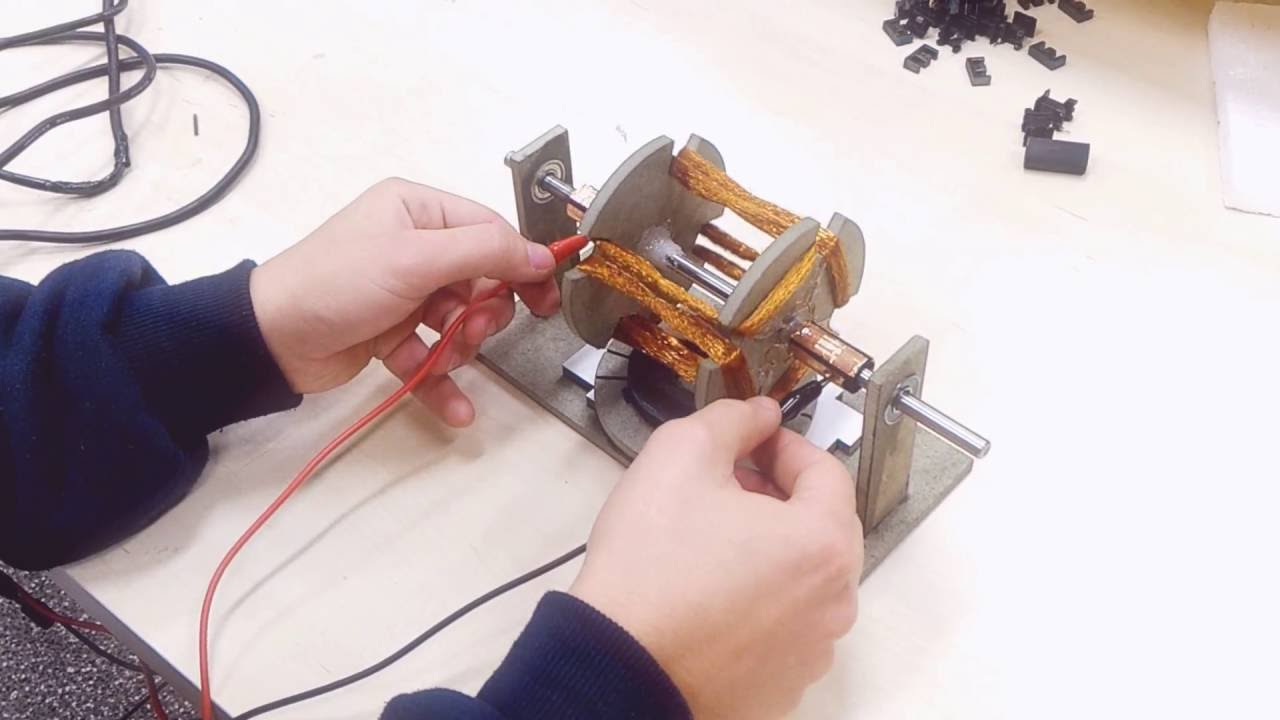
Level 2 Social Studies Contemporary Journalism
L2SSCJThis Media Studies course is about society, the systems that shape it, and how those systems create issues in the world. We will examine how these issues are represented in and shaped by media, including music, film, news, and social media. There are no exams in this course - the final assessment will be to plan and create a documentary about an issue of your choice.
Level 2 Te Reo Māori
L2MAOThe aim of this course is to achieve social competence in Te Reo Māori.
You will explore and gain a deeper understanding of and respect for aspects of Te Reo and Te Ao Māori, . You will learn to read, write and speak about topics, situations in the exploratory world i.e, both familiar and less familiar contexts.
Level 2 Textiles
L2TEXTextiles Technology opens up an exciting opportunity to be creative, hands-on, and innovative while using the sewing machine. Together, we’ll explore textiles, experiment with patterns and design, and use different resources to bring our ideas to life. Along the way, we’ll also discover how sustainability and even e-textiles can make our projects more meaningful and forward-thinking.
The course will involve creating and sewing, construction of garments and projects research, brief development, concept design, and evaluating outcomes. Focusing on producing textiles based outcomes fit for purpose over the course of the year.
To begin with, we will be following the international programme "Dress A Girl (Boy) building on our skill base within the Textiles area. From here there is the opportunity to choose what to create to align with the standards offered.
Note that this programme is based mainly on UNIT standards but ACHIEVEMENT standards can also be undertaken.
Mahi of garment and projects will be collated in a portfolio style and presented for assessment. This course also requires some digital presentation.


Level 2 Tourism
L2TOU The tourism sector offers you the opportunity to drive change and innovation, while focusing on sustainable practices and mutual benefit for local communities. It is as dynamic as it is diverse. Tourism is a critical element of the New Zealand economy and has been earmarked by the Prime Minister as a key sector of the economy that continues to play a leading role in New Zealand’s economic development. It is about unlocking the potential of tourism places, managing natural and built resources, understanding heritage and cultural issues, developing events and co-creating experiences that leave a lasting impression on locals and visitors alike.
SKills for Living
SLSFLThe Supported Learning Resources course is an alternative course for supported learning students who are not wanting to complete a full NCEA senior courses because of specific needs or for students with special education needs that prevents them from completing NCEA level 1 courses.
Most students who take this subject will work towards gaining the Certificate in Skills for Living as well as focusing on gaining their literacy and numeracy NCEA Level 1 requirements (when appropriate) through small one on one groups based in the Learning Supported Classes. Students are also able to complete Supported Learning Unit Standards and some mainstream Unit Standards which count towards NCEA Level 1.
SLR is an alternative NZQA programme that allows students to work on special interest modules leading to a nationally recognised qualification. The programme, whilst not an NCEA course, can complement many NCEA areas of study. In 2023 the New Zealand Certificate in Skills for Living is available and offers a pathway forward to Employment or Vocational Training/Apprenticeships or the New Zealand Certificate in Foundation Skills Level 1 for supported learners.
If a student completes the Skills for Living certificate they can then move onto the Ready for Work opportunity at a Tertiary provider such as ARA. The Ready for Work course provides a framework to prepare young people for work. This programme is aimed at Level 1 and 2 students who have not yet achieved L1 NCEA and need support with learning.
Supported Learning English
SLENSupported Learning English is a course for supported learners needing an alternative English programme. Most students who enter into this course combine this with the Supported Learning Resources programme and will be given the opportunity to complete a Supported Learning Literacy Unit Standard (5 credits) and work towards the Skills for Living Certificate which is an NZQA recognised equivalent to NZCEA Level 1. There is a focus on developing basic English skills, improving reading, handwriting, spelling etc. There is also a focus on developing key competencies such as self management, participating and contributing, using text/language, relating to others and thinking.
Most of these students will endeavour to complete the Supported Learning Resources programme which is a course designed to give high needs students an academic pathway into tertiary study (ARA etc). The SLR programme is an NZQA recognised qualification and is an alternative pathway for students NOT capable of NCEA.
Supported Learning Health/Transition
SLHE-SLTRSupported Learning Health
Supported Learning provides a safe, supportive, and positive environment where every student can experience success. We focus on building confidence, celebrating progress, and developing skills that students can use in everyday life.
Supported Learning Health aims to equip students with the knowledge and skills to understand their own and others' wellbeing, know what helps and harms wellbeing, and be able to implement strategies to enhance the wellbeing of themselves and those around them.
? Through this course, students will work towards their Supported Learning qualification while taking part in fun, practical, and interactive learning experiences.
? What will we learn?
Students will develop practical skills that help them feel confident and prepared for life, including:
- ? Understanding and looking after their own wellbeing
- ? Creating and maintaining healthy relationships
- ?️ Learning how to keep themselves and others safe
- ? Building communication and social skills
- ? Developing practical skills for everyday life
- ? Preparing for life after school
? Learning beyond the classroom!
Health is not just about learning in the classroom! Students will have opportunities to take part in class trips, practical activities and fun experiences that make learning meaningful and memorable. ???
We want students to feel successful, included and supported while developing the confidence and independence they need for life beyond school.
This course is open to all students in the Senior School who require extra support with their learning.
We Succeed Together
Ki te kāpuia e kore e whati
Supported Learning Transition helps students to identify their skills, qualities, values, and attitudes in a relaxed environment. We go on outings to access facilities and services in the community. This class helps with the transition from school to a course or employment in a supported environment.
Supported Learning Mathematics
SLMASupported Learning Maths is a course for supported learners needing an alternative Maths programme. Most students who enter into this course combine this with the Supported Learning Resources programme and will be given the opportunity to complete a Supported Learning Numeracy Unit Standard (5 credits). Students will work in small groups or on individual programmes with support to achieve within this class. There is a focus on developing and improving students' knowledge of basic facts and using numeracy in everyday situations. This course is not suitable for students aiming to complete NCEA Level 1. The course is based in the Learning Centre and admittance to this course is at the discretion of Mrs Instone and the Supported Learning team.
Supported Learning Performing Arts
SLPERFSupported Learning Performing Arts
The class is focused on social communication and language development. Students will participate in a range of performance and creative arts activities. We will use Drama, Dance and Music to create story-telling performances enhanced by theatre technologies. Activities such as puppetry, musical theatre, speeches and costume creation.
Subjects for Year 12 Students
Dual Enrolment
DUADual Enrolment: Helps students to learn specific skills of a trade of their choice. It enhances their knowledge preparing them for an ongoing pathway and career in that trade. It is vocational and aims for students to be able to apply for a job or an apprenticeship either during or when they finish the programme.
Pre-requisites: You must be Year 12 onwards to participate in this programme.
How are these subjects assessed? All credits will be held by the tertiary provider and then recorded through NZQA.
ESOL - SELIP 1
SELIP1This course is for Year 11, 12 and 13 students who are learning at Foundation/Stage 1/Low Stage 2 of the English Language Learning Progressions. It aims to support English Language Learners to develop basic interpersonal communication skills (BICS) and to introduce cognitive academic language proficiency (CALP) skills. It offers scaffolding for foundation level English tasks and the texts needed to develop basic reading, writing, speaking and listening skills for NCEA Level 1 English Language Unit Standards. The course will begin to prepare students for the NCEA co-requisite Level 1 Literacy Standards and begin to support students’ learning in other subject areas. Students in this course will be developing skills that are required for the NCEA Common Assessment Tasks in Literacy.
ESOL - SELIP 2
SELIP2This course is for Year 11, 12 and 13 students who are learning at High Stage 2 of the English Language Learning Progressions. It aims to support English Language Learners to develop basic interpersonal communication skills (BICS) and to accelerate their cognitive academic language proficiency (CALP) skills. It offers scaffolding for intermediate level English tasks and the texts needed to develop reading, writing, speaking and listening skills for NCEA Level 2 English Language Unit Standards. The course will prepare students for the NCEA co-requisite Level 1 Literacy Standards and support students’ learning in other subject areas.
ESOL - SELIP 3
SELIP3This course is for Yr 11, 12 and 13 students who are learning at High Stage 2 and Stage 3 of the English Language Learning Progressions. It aims to support English Language Learners to refine their academic English language skills. It offers scaffolding for advanced level English tasks and texts needed to achieve Level 3 English Language Unit Standards. This course will also support the development of Cognitive Academic Language Proficiency (CALP) which focuses on proficiency in academic language or language used in the classroom in the various content areas.
Students must have gained the NCEA co-requisite Literacy Standards to enroll in this course.
Level 3 Biology
L3BIOWhy do plants and animals behave how they do? Want to know why this Riflebird is doing a dance?
Ever wondered how Humans ended up the way they are? and how our bodies help us to survive?
These are all questions we will explore in Level 3 Biology, including a trip to Orana Park and a chance to design your own experiments around plant and animal responses.


Level 3 Business Studies
L3BSTThroughout the year in Level 3 Business Studies we will be broadening your understanding of different business practices, skills and knowledge, so as to be able to apply these to a variety of business situations. A key element to this course will be running your own business. It suits students who are "Entrepreneurially" minded. This is not a sit back and take notes course.
It will build on your existing knowledge, increase your business vocabulary and give you opportunities to demonstrate your level of understanding through the NCEA Level 3 credits being offered. In Level 3 Business Studies our focus will be on business enterprises and making operational and strategic decisions in response to interacting with internal and external factors and the challenges they face in doing so.
Level 3 Chemistry
L3CHEIn Level 3 chemistry we look at building on your chemistry knowledge from Level 2 Chemistry. We go into more depth on atomic structure, organics, titrations and redox. But we also look at completely new topics such as spectroscopy, aqueous systems and topics which link in with university level work. The internals are all experiment based and require precision and accuracy which will need to be improved on from Level 2. We also go on a field trip to the University of Canterbury where we get a tour of their million dollar chemistry equipment and then we spend the afternoon doing experiments in their fancy labs- a highlight of the year! This course will give you the platform you need for any pathway into engineering, health sciences, biochemistry and any other science career.
Level 3 Childcare
L3CHCLearners will learn about the education and care of children in an Early Childhood Education service (from birth to school entry age). They will also describe the value of play to the development and learning of children and create, use and evaluate play resources for children in Early Childhood centres.
Level 3 Classical Studies
L3CLAClassical Studies is the study of the ancient civilization of Rome. This subject looks at mythologies, battles, artworks and the continuing impact these ancient societies have on our modern day world.
Level 3 Dance
L3DANLevel 3 Dance will be a largely practical subject discovering and refining modern dance styles, an exploration of dance in culture and history, and preparation of dance and performance skills.
We will build dance up your dance fitness and conditioning, teamwork and performance.
We will also look at Choreography optionally for those who are interested in expanding and challenging their current skill set.
Dance is a performance course and you will be required to perform in front of an audience.
Level 3 Design
L3DESWhy study Art Design at Level Three?
Art Design is the exact method you would work in if you chose to be a graphic designer as a career. It is the design process and based on the real world of being a graphic designer. If you want to study graphic design at university of polytechnic, this is a required course. It is a preferred course for the future study of Architecture also.
Art Design is a University Entrance course. That means 14 credits earned here will be one-third of your main university course credit requirements covered. If you are good at it, then it is sensible to use it to help you gain that extra qualification layer.
Arts help train the eye and engage the brain differently from other academic subjects. Hand-to-eye coordination in this manner is fine motor-skill based and is shown to develop a part of our brain no other field would achieve. Visual Arts are not only supporting courses for many other aspects of society but a stand-alone aspect of careers and pathways in tertiary training; visual communication, design, spatial design, fashion design, product design, photography, fine arts, visual arts, ceramics, jewelry design, for instance.


Level 3 Design & Visual Communication
L3DVCGrowing on the skills you have learnt in year 12. Year 13 is split up into two main projects. Product design and Spatial design.
You will work through a design process in designing a desk lamp and a cafe for Taylors Mistake, which will finish in using the laser cutter in making an amazing 3D model of your work. You will do a site trip and be able to produce an exhibition of your design. This course aligns with interior design, drafting and if you want to become an architect.
Your Product Design will be designing a desk lamp. You will again work through a design process to produce a lamp of your choice.

Level 3 Digital Technology
L3DTEA practical course covering many different aspects of computing. Students develop skills using commonly used software programs (Word, Excel, Access, Publisher, Photoshop, Powerpoint), html website development, python programming and the ability to use digital technologies to problem solve.
Students work on individual programmes and have some input regarding which programs and skills they wish to learn.
Please note that students do not complete all the standards that are listed. This list is merely indicative and shows the range of assessments that are available.
Level 3 Drama
L3DRADrama is a performance subject, we will select 3 internal standards. We will discuss and develop individual learning plans. They will typically have 12-13 internal credits and 4 or 8 external credits ]
Term 1: our focus is on acting techniques, creating a role from a written text , this may be linked to the Shakespeare Festival.
Term 2: we will study theatre forms, musical theatre or Elizabethan Theatre
Term 3: we will create our own pieces using devising and/or playwriting standards and exploring political theatre
Term 4: exam preparation- this will be incorporated into the work of Terms 1-3 including viewing live performances but watching filmed live shows if necessary. There are two external exams available.
Students who demonstrate the appropriate academic skills in their written work may opt to, do one or two external standards. All performances must be filmed for assessment purposes and will be viewed by other teachers as part of internal and external NZQA processes. All tasks are done as a group but assessment is individual.
Level 3 Engineering
L3ETMLevel 3 Engineering is a full time 4 hr a week course which has a practical and computer aided design focus split into two parts.
Part A is purely practical based with no theory assessment. Students are required to manufacture a product from a set of drawings using a range of powered machinery and hand tools. The focus here is on accurate measuring and marking out, working to a high level of tolerance on the lathe and milling machine, using tools in a safe and productive manner.
Part B uses Computer aided design software to produce 3d models and 2d drawings as an introduction to industry standard practice
The course material and assessment tasks are generated by the Industry Training Organisation Competenz and there is a full range of support materials available through their website. It has been designed to meet the demand for Manufacturing Pathways for Schools (MaPS)
This vocational course can lead into further study at ARA and SIT as well as setting up students for entry into the workforce
Level 3 English
L3ENGLevel 3 English is an academic course comprising a combination of internal and external (assessed by exams) Achievement Standards that will enable students to demonstrate their critical literacy skills while personalising their learning. The course offers university entrance (UE) literacy. The English department aims to implement a self-directed, culturally responsive curriculum in which students will be given agency in exploring visual, oral and written language. Students will be allowed choices across a range of texts through which they will gain proficiency in critical thinking and articulate their interpretation of world views and perspectives different to their own. They will respond critically to a range of concepts, reading a range of texts perceptively for a variety of purposes; writing proficiently in various genres; speaking and presenting eruditely in several contexts and viewing or listening astutely to texts to make insightful and original evaluations and judgements. Success at Level 2 English is a pre-requisite to this course.
Level 3 English - Literacy
L3LITThe Level 3 Literacy course comprises both Achievement Standards and Unit Standards and is entirely internally assessed. The course offers students the opportunity to advance their language and literacy skills through making meaning of texts in order to create meaning of the world around us. It incorporates strategies and approaches designed to strengthen the development of literacy skills, and provides students with an understanding of different writing styles, and how creators of texts position their readers. L3 LIT has practical work-place applications, and will support students in terms of job seeking with writing business correspondence, participating in formal interviews, understanding meeting protocols and writing reports.
- Two specifically designated opportunities to attempt the Literacy Reading and/or Writing Common Assessment Activities (CAAs) will be offered to those students who have not yet obtained Level 1 Literacy.
- L3 Lit follows the Unit Standard pathway begun at Level 2 (L2 LIT) and all standards are internally assessed.
- Although L3 LIT is not designed as a UE-approved course, students will complete two internally assessed Achievement Standards, one of which grants 4 UE literacy reading credits.
- L3 LIT also offers students the potential to complete other Level 2 Achievement Standards, determined on a case-by-case basis.
Level 3 Gateway
L3GATGateway is a TEC funded programme that provides students with structured workplace learning across a range of industries and businesses around New Zealand, while they continue to study at school Students are given the opportunity to explore a vocational pathway that they are interested in. They do both theory and practical unit standards that contribute to NCEA and the NZ Vocational Pathways Award.
You also need to be 16 years of age and a student in Year 12 and Year 13. Acceptance into this course will be confirmed after an interview with the Gateway Co-Ordinator. Acceptance is also dependent on NCEA results and attendance. Hornby High School currently has 25 Gateway placements available to students studying in either Year 12 or 13.

Level 3 Geography
L3GEO The importance of land / sustainability
Whatungarongaro te tangata, toitū te whenua
As people disappear from sight, the land remains
This whakatauki speaks to the importance and permanence of land. While people come and go, the land remains. As humans we rely on the land. We must think long-term and see the big picture to ensure the sustainability of the land.
Geography is the study of places and the relationships between people and their environments. Geographers explore both the physical properties of the Earth’s surface and human societies spread across it. Geography helps you understand people's perspective on various issue and pathways for solving issues. It looks at what is happening now in the world and how we could influence decision making in the future, We take a fieldtrip to Queenstown to investigate tourism. L3 Geography covers many aspects including both physical and human geography. We investigate plastics in the ocean which includes both the global pattern and the contemporary issue. They also analyse beach processes at Kaikoura and then a contemporary event (Rhythm and Vines). Lastly they looking into the cultural process of tourism in Bali.
Level 3 Hard Materials
L3HMTUsing the Technology Design Process, students will use the skills they have learned at Level 1 & 2 Hard Materials to design, project manage and construct their own project. They will have the freedom to create anything from a Pool Table to simple furniture projects. Students will use a range of tools and machines to create their projects under the supervision of the teacher.


Level 3 Health
L3HEELevel 3 Health
Level 3 Health is all about exploring the health issues that matter to you. You will investigate contemporary ethical, medical and health issues, as well as laws, social justice and the factors that influence health in Aotearoa New Zealand and around the world.
? Choose Your Own Health Journey
One of the best things about Level 3 Health is the flexibility. You have the opportunity to choose topics based on your own interests, passions and curiosities.
In 2026, our Level 3 Health students chose to investigate topics including:
- ?️ Cancers
- ? ACL tears and sporting injuries
- ? Respiratory issues
- ? Mental health
- ? Birthing pain
- ? Sleep paralysis
- ⚖️ Abortion and euthanasia
- ? Legalisation of marijuana
- ? Drug use
- ? Poverty
- ? Diseases
There are so many possibilities; if there is a health issue you are passionate about or curious about, this course gives you the opportunity to explore it in depth.
? Think Critically. See the Bigger Picture.
You will develop your ability to think critically and look beyond the individual. Using a socio-ecological perspective, you’ll investigate how individuals, relationships, communities, society, policies, culture and the environment can all influence health and wellbeing.
These are valuable skills for almost any career pathway and will help you understand the complex health issues facing our world today.
? Health Scholarship
Students achieving at a High Excellence level will have the opportunity to be considered to sit the Health Scholarship paper.
? Who is this course for?
This course is open to all students who have their Literacy CAA and/or Level 2 NCEA.
Preferably, students will have completed Level 1 Health Studies or Level 2 Health, but this is not compulsory.
If you are new to New Zealand and have a genuine passion or interest in Health, you can also be considered for the course.
? If you are curious about the world, enjoy asking questions, want the freedom to explore topics that interest you, and want to develop your critical thinking skills, Level 3 Health could be the perfect course for you!


I orea te tuatara ka patu ki waho
A problem is solved by continuing to find solutions
Level 3 History
L3HISIn History students will get the opportunity to study not only what happened in the past, but how these stories continue to be relevant and important. The main themes studied at Year 13 include Change and Human Rights. Skills from Year 11 and 12 History are consolidated and developed to a higher level.
Level 3 Hospitality
L3HOSThis is a Unit Standard Course Only
Students will be looking at foods from a more professional/ industry view.
This qualification covers the skills and knowledge relating to knowing how to prepare, cook and present good quality food to customers. It is designed for people who wish to enter the hospitality industry and gain an overview of a possible career choice.
Students taking this course could be expected to help with school functions or camps.
Level 3 Japanese
L3JPN
YEAR 13 JAPANESE COURSE OUTLINE
Welcome to NCEA Level 3 Japanese.
The aim this year is to further extend your skills in the Japanese language in a wider range of social situations, against a backdrop of Japanese culture.
Course content
The language studied this year will be based on our 4 NCEA Level 3 Japanese Workbooks, which are aligned to Levels 7 and 8 of the New Zealand Japanese Curriculum.
- Term 1 Geography / ちり
- Term 2 Travel and Tourism / 旅行と観光
- Term 3 Japan at Work / しごと
- Term 4 Revision / 復習しましょう
Total credits = 24 (depending on choices)
Externals are assessed during the year and in the school exams. These are formative assessments because the final results come from the external NCEA exams in November.
Internals All work must be your own in order to achieve and you must sign an authenticity statement. You must be present on the day(s) of the assessment. You must inform your teacher of any complication e.g. curriculum, sport, cultural activities etc in advance so alternative arrangements can be made. In the case of absence due to a family emergency or you are ill or hurt in an accident, documentation e.g. medical certificate is required.
Resubmission
Resubmission is a way to improve your grade if the teacher judges that you have made a mistake or omission in a part of your assignment or test that you should be able to find yourself. You will be given a set amount of time to correct your work and resubmit it. Your teacher can only give you general guidance and cannot tell you exactly what the problem is. You can only have one resubmission opportunity. A resubmission can only be judged to Achieved level. Resubmission is different from Reassessment (properly known as a further assessment opportunity) when you have one chance to re-do the whole assignment – usually later in the year.
Portfolios
The purpose of continuing a portfolio this year is to monitor your progress. It could include
- goal setting and action plan
- self reflection and review
- teacher feedback/feed forward
- formative assessments
- samples of writing for 3.5 (signed and dated)
Parents will be brought into the loop both informally (phone calls) and formally (reports and interviews)
Homework
A regular homework habit is essential to progress mastery of vocab, grammar and kanji. A little and often is most effective. I strongly recommend that you subscribe to the Language Perfect computer program to aid your acquisition of vocab. Homework will also include completing unfinished class work, preparation for assessments and extra reading and writing practice.
- It is very important to develop good organisational and time management skills to ensure success. (Use your student planner)
- Your study in Year 13 Japanese starts today.
- Set goals for your achievement and make every effort to make the small steps towards success every day.
がんばってね!
Level 3 Mathematics with Calculus
L3MACThis course will integrate all the topics covered in previous mathematics courses leading up to calculus, but can be differentiated from the previous courses with its more rigorous study of Calculus. This course will develop a way of thinking that can help us to play, explore and conjecture to make generalisations that can be used in the future, to open up the potential when working on other problems in different situations. The calculus course is designed primarily for those who want to go into careers in the IT industry, engineering, economics and the sciences and those that are mathematically curious. It is also a prerequisite for many university courses as well as other tertiary institutions.
Level 3 Mathematics with Statisitics
L3MASThis course is designed to cater for the students from either Level 2 Mathematics with Statistics and/or Level 2 Vocational Mathematics. It has a focus on analysing data that is useful in many different areas from the sciences to changes in economic markets, climate change and business trends. Statistics is a useful subject to learn as it is useful to many different aspects of any career path. In fact it is a prerequisite to many courses in university and other tertiary institutions.
Level 3 Music
L3MUSLevel 3 Music
Level 3 Music will include developing and researching a course pathway based on your interests and skills as a musician. This could include planning and performing a Musical Theatre Showcase, Writing and producing en E.P, Creating and performing in a Musical Festival etc. We will tailor the Level 3 credits to your ideas, creativity and your interests in the music business.
You will still have opportunities to work as a soloist or as a member of a group. You will also create a programme of Music to be performed at the Senior Prize giving.
You must have taken Level 2 Music to be eligible for this course.
Level 3 Outdoor Education
L3OEDOutdoor Education teaches you basic tramping, camping, navigation, sailing and rock climbing skills. Level 3 takes these skills further and higher. This could also potentially include some basic mountaineering skills, or how to lead rock climb, or how to plan to take others on a short daytramp.
Pre-requisites – None: but you should be reasonably active and show a positive attitude to theory and practical work.
To get into Level 3: Open entry to anyone, However priority will be given to those who have successsfully completed the Level 1 and/or 2 O.Ed . courses. You should also have Level 1 and 2 NCEA as this will show that you will be able to cope with Level 3 work. Students must be able to work self directed as the class teacher will sometimes be away on practical trips with other O.Ed. classes.
Level 3 Pacific Studies
L3PACLevel 3 Pacific Studies
Students will have four hours per week dedicated to engaging with various NCEA assessments related to their cultural heritage. The course includes options for assessments in Samoan, Tongan, Pasifika Studies, and Cook Island cultures, encompassing tasks such as speeches in native languages and reports on indigenous knowledge.
The class is structured to allow students to actively participate in SPACPAC events, gaining a deeper understanding of their cultural activities and responsibilities.
Through this course, students will have the opportunity to build a strong sense of belonging and develop their Pacific identity by fostering new expectations and reinforcing their connection to their cultural heritage.


Level 3 Painting
L3PAIWhy Study Painting?
Level three painting is a chance to explore your ideas in the medium of painting alone. However, you can work in a number of ways in this field; traditional (acrylic, watercolours, oils or a mixture) or digital painting. Drawing is a starting point, but you can achieve that in a number of ways too - photocopier methods, frottage, monoprinting, along with pencil or charcoal.
Art Painting is a University Entrance course. That means 14 credits earned here will be one-third of your main university course credit requirements covered. If you are good at it, then it is sensible to use it to help you gain that extra qualification layer.
Drawing, painting and art making in general train the eye through the hand. It is a completely different part of the brain that is activated and developed when you apply yourself to making art, and it unlocks potential we didn't know existed as a creative maker.
Who can study painting?
Anyone. It is a fairly open entry. It is useful to have level one Art, but not necessary. You must want to make art to do this course.


Level 3 Photography
L3PHOWhy study Art Photography at Level Three?
Ka mau ka muri - walk forwards looking backward; know where you have come from to know where you can go.
Art photography is exactly as you would work if you were a professional photographer making work to exhibit and sell. Just at a High School level.
Art Photography is a University Entrance course. That means 14 credits earned here will be one-third of your main university course credit requirements covered. If you are good at it, then it is sensible to use it to help you gain that extra qualification layer.
Arts help train the eye and engage the brain differently from other academic subjects. Hand-to-eye coordination in this manner is fine motor-skill based and is shown to develop a part of our brain no other field would achieve. Visual Arts are not only supporting courses for many other aspects of society but a stand-alone aspect of careers and pathways in tertiary training; visual communication, design, spatial design, fashion design, product design, photography, fine arts, visual arts, ceramics, jewellery design, for instance.
You must want to make art to do this course and be committed to at least 3 major photoshoots over the year to support assessment work and developing ideas.
Sample from Mya Newton-Whare 2020 NCEA Level 3
Board one from Steph Perez 2026 NCEA Level 3
Level 3 Physical Education
L3PEDLevel 3 Physical Education enables students to critically analyse, plan, and evaluate physical activity in complex and dynamic settings. Students engage in in-depth exploration of biophysical and socio-cultural issues related to physical activity, health, and performance. They take increasing responsibility for their learning, using evidence-based approaches to improve outcomes for themselves and others. The course prepares students for further study or careers in sport, health, fitness, and education-related fields.
Key Focus Areas:
- Critically examining influences on participation and performance
- Designing and implementing strategies for improvement
- Evaluating physical activity programs or experiences
- Analysing movement and performance in depth

Level 3 Physics
L3PHYIn Level 3 Physics, students will continue to develop their understanding of physical world concepts and laws to solve quantitative, real-world, problems. This will prepare them for further study in Physics as they build knowledge on how physics laws have evolved over the past. Students will develop their understanding of modern atomic physics, mechanical systems, and wave systems.


They will learn applications of the concepts listed above in the real world via a range of practical activities, experiments and demonstrations.
This course is suitable for students who wish to pursue further study in Physics, such as through Engineering or Biomedical Science.
Level 3 Te Reo Māori
L3MAOThe aim of the course is to extend students' personal independence and ability to communicate in Te Reo Māori.
You will explore aspects of Te Ao Māori, gaining a deeper understanding of and respect for ngā tikanga Māori. You will learn to read, write and speak about yourself, your family, and a range of everyday topics.
Level 3 Textiles
L3TEXTextiles Technology focuses on enhancing creativity and critical thinking in a project-based learning environment.
It is a practical course relating to aspects of textiles, design, fashion and the design process (critical thinking).
The course encourages students not only to engage in practical projects but to push boundaries, develop skills and think innovatively.
Students will have the opportunity to develop textiles skill, pattern making, design, construction as well as create garments and textiles products.
The course will follow all aspects of the Design Process and is designed to be flexible to allow students to follow an area of interest selecting achievement/unit standards to match.
Progress and mahi over the year will be collated in a portfolio which will be provided for each student.
Achieve UP TO 18 credits depending on your skill level and motivation


Level 3 Tourism
L3TOUThe tourism sector offers you the opportunity to drive change and innovation, while focusing on sustainable practices and mutual benefit for local communities. It is as dynamic as it is diverse. Tourism is a critical element of the New Zealand economy and has been earmarked by the Prime Minister as a key sector of the economy that continues to play a leading role in New Zealand’s economic development. It is about unlocking the potential of tourism places, managing natural and built resources, understanding heritage and cultural issues, developing events and co-creating experiences that leave a lasting impression on locals and visitors alike.
Senior Study
L3STUSenior study runs as a line, for 4 hours of the week.
Students need to apply for this course by way of exemption, which will be reviewed by the Year level Dean.
Students who have already passed NCEA Level 2 are entitled a study line ; other students are all allowed one in consultation with the Dean.
SKills for Living
SLSFLThe Supported Learning Resources course is an alternative course for supported learning students who are not wanting to complete a full NCEA senior courses because of specific needs or for students with special education needs that prevents them from completing NCEA level 1 courses.
Most students who take this subject will work towards gaining the Certificate in Skills for Living as well as focusing on gaining their literacy and numeracy NCEA Level 1 requirements (when appropriate) through small one on one groups based in the Learning Supported Classes. Students are also able to complete Supported Learning Unit Standards and some mainstream Unit Standards which count towards NCEA Level 1.
SLR is an alternative NZQA programme that allows students to work on special interest modules leading to a nationally recognised qualification. The programme, whilst not an NCEA course, can complement many NCEA areas of study. In 2023 the New Zealand Certificate in Skills for Living is available and offers a pathway forward to Employment or Vocational Training/Apprenticeships or the New Zealand Certificate in Foundation Skills Level 1 for supported learners.
If a student completes the Skills for Living certificate they can then move onto the Ready for Work opportunity at a Tertiary provider such as ARA. The Ready for Work course provides a framework to prepare young people for work. This programme is aimed at Level 1 and 2 students who have not yet achieved L1 NCEA and need support with learning.
Supported Learning English
SLENSupported Learning English is a course for supported learners needing an alternative English programme. Most students who enter into this course combine this with the Supported Learning Resources programme and will be given the opportunity to complete a Supported Learning Literacy Unit Standard (5 credits) and work towards the Skills for Living Certificate which is an NZQA recognised equivalent to NZCEA Level 1. There is a focus on developing basic English skills, improving reading, handwriting, spelling etc. There is also a focus on developing key competencies such as self management, participating and contributing, using text/language, relating to others and thinking.
Most of these students will endeavour to complete the Supported Learning Resources programme which is a course designed to give high needs students an academic pathway into tertiary study (ARA etc). The SLR programme is an NZQA recognised qualification and is an alternative pathway for students NOT capable of NCEA.
Supported Learning Health/Transition
SLHE-SLTRSupported Learning Health
Supported Learning provides a safe, supportive, and positive environment where every student can experience success. We focus on building confidence, celebrating progress, and developing skills that students can use in everyday life.
Supported Learning Health aims to equip students with the knowledge and skills to understand their own and others' wellbeing, know what helps and harms wellbeing, and be able to implement strategies to enhance the wellbeing of themselves and those around them.
? Through this course, students will work towards their Supported Learning qualification while taking part in fun, practical, and interactive learning experiences.
? What will we learn?
Students will develop practical skills that help them feel confident and prepared for life, including:
- ? Understanding and looking after their own wellbeing
- ? Creating and maintaining healthy relationships
- ?️ Learning how to keep themselves and others safe
- ? Building communication and social skills
- ? Developing practical skills for everyday life
- ? Preparing for life after school
? Learning beyond the classroom!
Health is not just about learning in the classroom! Students will have opportunities to take part in class trips, practical activities and fun experiences that make learning meaningful and memorable. ???
We want students to feel successful, included and supported while developing the confidence and independence they need for life beyond school.
This course is open to all students in the Senior School who require extra support with their learning.
We Succeed Together
Ki te kāpuia e kore e whati
Supported Learning Transition helps students to identify their skills, qualities, values, and attitudes in a relaxed environment. We go on outings to access facilities and services in the community. This class helps with the transition from school to a course or employment in a supported environment.
Supported Learning Mathematics
SLMASupported Learning Maths is a course for supported learners needing an alternative Maths programme. Most students who enter into this course combine this with the Supported Learning Resources programme and will be given the opportunity to complete a Supported Learning Numeracy Unit Standard (5 credits). Students will work in small groups or on individual programmes with support to achieve within this class. There is a focus on developing and improving students' knowledge of basic facts and using numeracy in everyday situations. This course is not suitable for students aiming to complete NCEA Level 1. The course is based in the Learning Centre and admittance to this course is at the discretion of Mrs Instone and the Supported Learning team.
Supported Learning Performing Arts
SLPERFSupported Learning Performing Arts
The class is focused on social communication and language development. Students will participate in a range of performance and creative arts activities. We will use Drama, Dance and Music to create story-telling performances enhanced by theatre technologies. Activities such as puppetry, musical theatre, speeches and costume creation.
Subjects for Year 13 Students
Level 3 Biology
L3BIOWhy do plants and animals behave how they do? Want to know why this Riflebird is doing a dance?
Ever wondered how Humans ended up the way they are? and how our bodies help us to survive?
These are all questions we will explore in Level 3 Biology, including a trip to Orana Park and a chance to design your own experiments around plant and animal responses.
Level 3 Business Studies
L3BSTThroughout the year in Level 3 Business Studies we will be broadening your understanding of different business practices, skills and knowledge, so as to be able to apply these to a variety of business situations. A key element to this course will be running your own business. It suits students who are "Entrepreneurially" minded. This is not a sit back and take notes course.
It will build on your existing knowledge, increase your business vocabulary and give you opportunities to demonstrate your level of understanding through the NCEA Level 3 credits being offered. In Level 3 Business Studies our focus will be on business enterprises and making operational and strategic decisions in response to interacting with internal and external factors and the challenges they face in doing so.
Level 3 Chemistry
L3CHEIn Level 3 chemistry we look at building on your chemistry knowledge from Level 2 Chemistry. We go into more depth on atomic structure, organics, titrations and redox. But we also look at completely new topics such as spectroscopy, aqueous systems and topics which link in with university level work. The internals are all experiment based and require precision and accuracy which will need to be improved on from Level 2. We also go on a field trip to the University of Canterbury where we get a tour of their million dollar chemistry equipment and then we spend the afternoon doing experiments in their fancy labs- a highlight of the year! This course will give you the platform you need for any pathway into engineering, health sciences, biochemistry and any other science career.
Level 3 Childcare
L3CHCLearners will learn about the education and care of children in an Early Childhood Education service (from birth to school entry age). They will also describe the value of play to the development and learning of children and create, use and evaluate play resources for children in Early Childhood centres.
Level 3 Classical Studies
L3CLAClassical Studies is the study of the ancient civilization of Rome. This subject looks at mythologies, battles, artworks and the continuing impact these ancient societies have on our modern day world.
Level 3 Dance
L3DANLevel 3 Dance will be a largely practical subject discovering and refining modern dance styles, an exploration of dance in culture and history, and preparation of dance and performance skills.
We will build dance up your dance fitness and conditioning, teamwork and performance.
We will also look at Choreography optionally for those who are interested in expanding and challenging their current skill set.
Dance is a performance course and you will be required to perform in front of an audience.
Level 3 Design
L3DESWhy study Art Design at Level Three?
Art Design is the exact method you would work in if you chose to be a graphic designer as a career. It is the design process and based on the real world of being a graphic designer. If you want to study graphic design at university of polytechnic, this is a required course. It is a preferred course for the future study of Architecture also.
Art Design is a University Entrance course. That means 14 credits earned here will be one-third of your main university course credit requirements covered. If you are good at it, then it is sensible to use it to help you gain that extra qualification layer.
Arts help train the eye and engage the brain differently from other academic subjects. Hand-to-eye coordination in this manner is fine motor-skill based and is shown to develop a part of our brain no other field would achieve. Visual Arts are not only supporting courses for many other aspects of society but a stand-alone aspect of careers and pathways in tertiary training; visual communication, design, spatial design, fashion design, product design, photography, fine arts, visual arts, ceramics, jewelry design, for instance.
Level 3 Design & Visual Communication
L3DVCGrowing on the skills you have learnt in year 12. Year 13 is split up into two main projects. Product design and Spatial design.
You will work through a design process in designing a desk lamp and a cafe for Taylors Mistake, which will finish in using the laser cutter in making an amazing 3D model of your work. You will do a site trip and be able to produce an exhibition of your design. This course aligns with interior design, drafting and if you want to become an architect.
Your Product Design will be designing a desk lamp. You will again work through a design process to produce a lamp of your choice.
Level 3 Digital Technology
L3DTEA practical course covering many different aspects of computing. Students develop skills using commonly used software programs (Word, Excel, Access, Publisher, Photoshop, Powerpoint), html website development, python programming and the ability to use digital technologies to problem solve.
Students work on individual programmes and have some input regarding which programs and skills they wish to learn.
Please note that students do not complete all the standards that are listed. This list is merely indicative and shows the range of assessments that are available.
Level 3 Drama
L3DRADrama is a performance subject, we will select 3 internal standards. We will discuss and develop individual learning plans. They will typically have 12-13 internal credits and 4 or 8 external credits ]
Term 1: our focus is on acting techniques, creating a role from a written text , this may be linked to the Shakespeare Festival.
Term 2: we will study theatre forms, musical theatre or Elizabethan Theatre
Term 3: we will create our own pieces using devising and/or playwriting standards and exploring political theatre
Term 4: exam preparation- this will be incorporated into the work of Terms 1-3 including viewing live performances but watching filmed live shows if necessary. There are two external exams available.
Students who demonstrate the appropriate academic skills in their written work may opt to, do one or two external standards. All performances must be filmed for assessment purposes and will be viewed by other teachers as part of internal and external NZQA processes. All tasks are done as a group but assessment is individual.
Level 3 Engineering
L3ETMLevel 3 Engineering is a full time 4 hr a week course which has a practical and computer aided design focus split into two parts.
Part A is purely practical based with no theory assessment. Students are required to manufacture a product from a set of drawings using a range of powered machinery and hand tools. The focus here is on accurate measuring and marking out, working to a high level of tolerance on the lathe and milling machine, using tools in a safe and productive manner.
Part B uses Computer aided design software to produce 3d models and 2d drawings as an introduction to industry standard practice
The course material and assessment tasks are generated by the Industry Training Organisation Competenz and there is a full range of support materials available through their website. It has been designed to meet the demand for Manufacturing Pathways for Schools (MaPS)
This vocational course can lead into further study at ARA and SIT as well as setting up students for entry into the workforce
Level 3 English
L3ENGLevel 3 English is an academic course comprising a combination of internal and external (assessed by exams) Achievement Standards that will enable students to demonstrate their critical literacy skills while personalising their learning. The course offers university entrance (UE) literacy. The English department aims to implement a self-directed, culturally responsive curriculum in which students will be given agency in exploring visual, oral and written language. Students will be allowed choices across a range of texts through which they will gain proficiency in critical thinking and articulate their interpretation of world views and perspectives different to their own. They will respond critically to a range of concepts, reading a range of texts perceptively for a variety of purposes; writing proficiently in various genres; speaking and presenting eruditely in several contexts and viewing or listening astutely to texts to make insightful and original evaluations and judgements. Success at Level 2 English is a pre-requisite to this course.
Level 3 English - Literacy
L3LITThe Level 3 Literacy course comprises both Achievement Standards and Unit Standards and is entirely internally assessed. The course offers students the opportunity to advance their language and literacy skills through making meaning of texts in order to create meaning of the world around us. It incorporates strategies and approaches designed to strengthen the development of literacy skills, and provides students with an understanding of different writing styles, and how creators of texts position their readers. L3 LIT has practical work-place applications, and will support students in terms of job seeking with writing business correspondence, participating in formal interviews, understanding meeting protocols and writing reports.
- Two specifically designated opportunities to attempt the Literacy Reading and/or Writing Common Assessment Activities (CAAs) will be offered to those students who have not yet obtained Level 1 Literacy.
- L3 Lit follows the Unit Standard pathway begun at Level 2 (L2 LIT) and all standards are internally assessed.
- Although L3 LIT is not designed as a UE-approved course, students will complete two internally assessed Achievement Standards, one of which grants 4 UE literacy reading credits.
- L3 LIT also offers students the potential to complete other Level 2 Achievement Standards, determined on a case-by-case basis.
Level 3 Gateway
L3GATGateway is a TEC funded programme that provides students with structured workplace learning across a range of industries and businesses around New Zealand, while they continue to study at school Students are given the opportunity to explore a vocational pathway that they are interested in. They do both theory and practical unit standards that contribute to NCEA and the NZ Vocational Pathways Award.
You also need to be 16 years of age and a student in Year 12 and Year 13. Acceptance into this course will be confirmed after an interview with the Gateway Co-Ordinator. Acceptance is also dependent on NCEA results and attendance. Hornby High School currently has 25 Gateway placements available to students studying in either Year 12 or 13.
Level 3 Geography
L3GEOThe importance of land / sustainability
Whatungarongaro te tangata, toitū te whenua
As people disappear from sight, the land remains
This whakatauki speaks to the importance and permanence of land. While people come and go, the land remains. As humans we rely on the land. We must think long-term and see the big picture to ensure the sustainability of the land.
Geography is the study of places and the relationships between people and their environments. Geographers explore both the physical properties of the Earth’s surface and human societies spread across it. Geography helps you understand people's perspective on various issue and pathways for solving issues. It looks at what is happening now in the world and how we could influence decision making in the future, We take a fieldtrip to Queenstown to investigate tourism. L3 Geography covers many aspects including both physical and human geography. We investigate plastics in the ocean which includes both the global pattern and the contemporary issue. They also analyse beach processes at Kaikoura and then a contemporary event (Rhythm and Vines). Lastly they looking into the cultural process of tourism in Bali.
Level 3 Hard Materials
L3HMTUsing the Technology Design Process, students will use the skills they have learned at Level 1 & 2 Hard Materials to design, project manage and construct their own project. They will have the freedom to create anything from a Pool Table to simple furniture projects. Students will use a range of tools and machines to create their projects under the supervision of the teacher.
Level 3 Health
L3HEELevel 3 Health
Level 3 Health is all about exploring the health issues that matter to you. You will investigate contemporary ethical, medical and health issues, as well as laws, social justice and the factors that influence health in Aotearoa New Zealand and around the world.
? Choose Your Own Health Journey
One of the best things about Level 3 Health is the flexibility. You have the opportunity to choose topics based on your own interests, passions and curiosities.
In 2026, our Level 3 Health students chose to investigate topics including:
- ?️ Cancers
- ? ACL tears and sporting injuries
- ? Respiratory issues
- ? Mental health
- ? Birthing pain
- ? Sleep paralysis
- ⚖️ Abortion and euthanasia
- ? Legalisation of marijuana
- ? Drug use
- ? Poverty
- ? Diseases
There are so many possibilities; if there is a health issue you are passionate about or curious about, this course gives you the opportunity to explore it in depth.
? Think Critically. See the Bigger Picture.
You will develop your ability to think critically and look beyond the individual. Using a socio-ecological perspective, you’ll investigate how individuals, relationships, communities, society, policies, culture and the environment can all influence health and wellbeing.
These are valuable skills for almost any career pathway and will help you understand the complex health issues facing our world today.
? Health Scholarship
Students achieving at a High Excellence level will have the opportunity to be considered to sit the Health Scholarship paper.
? Who is this course for?
This course is open to all students who have their Literacy CAA and/or Level 2 NCEA.
Preferably, students will have completed Level 1 Health Studies or Level 2 Health, but this is not compulsory.
If you are new to New Zealand and have a genuine passion or interest in Health, you can also be considered for the course.
? If you are curious about the world, enjoy asking questions, want the freedom to explore topics that interest you, and want to develop your critical thinking skills, Level 3 Health could be the perfect course for you!
I orea te tuatara ka patu ki waho
A problem is solved by continuing to find solutions
Level 3 History
L3HISIn History students will get the opportunity to study not only what happened in the past, but how these stories continue to be relevant and important. The main themes studied at Year 13 include Change and Human Rights. Skills from Year 11 and 12 History are consolidated and developed to a higher level.
Level 3 Hospitality
L3HOSThis is a Unit Standard Course Only
Students will be looking at foods from a more professional/ industry view.
This qualification covers the skills and knowledge relating to knowing how to prepare, cook and present good quality food to customers. It is designed for people who wish to enter the hospitality industry and gain an overview of a possible career choice.
Students taking this course could be expected to help with school functions or camps.
Level 3 Japanese
L3JPNYEAR 13 JAPANESE COURSE OUTLINE
Welcome to NCEA Level 3 Japanese.
The aim this year is to further extend your skills in the Japanese language in a wider range of social situations, against a backdrop of Japanese culture.
Course content
The language studied this year will be based on our 4 NCEA Level 3 Japanese Workbooks, which are aligned to Levels 7 and 8 of the New Zealand Japanese Curriculum.
- Term 1 Geography / ちり
- Term 2 Travel and Tourism / 旅行と観光
- Term 3 Japan at Work / しごと
- Term 4 Revision / 復習しましょう
Total credits = 24 (depending on choices)
Externals are assessed during the year and in the school exams. These are formative assessments because the final results come from the external NCEA exams in November.
Internals All work must be your own in order to achieve and you must sign an authenticity statement. You must be present on the day(s) of the assessment. You must inform your teacher of any complication e.g. curriculum, sport, cultural activities etc in advance so alternative arrangements can be made. In the case of absence due to a family emergency or you are ill or hurt in an accident, documentation e.g. medical certificate is required.
Resubmission
Resubmission is a way to improve your grade if the teacher judges that you have made a mistake or omission in a part of your assignment or test that you should be able to find yourself. You will be given a set amount of time to correct your work and resubmit it. Your teacher can only give you general guidance and cannot tell you exactly what the problem is. You can only have one resubmission opportunity. A resubmission can only be judged to Achieved level. Resubmission is different from Reassessment (properly known as a further assessment opportunity) when you have one chance to re-do the whole assignment – usually later in the year.
Portfolios
The purpose of continuing a portfolio this year is to monitor your progress. It could include
- goal setting and action plan
- self reflection and review
- teacher feedback/feed forward
- formative assessments
- samples of writing for 3.5 (signed and dated)
Parents will be brought into the loop both informally (phone calls) and formally (reports and interviews)
Homework
A regular homework habit is essential to progress mastery of vocab, grammar and kanji. A little and often is most effective. I strongly recommend that you subscribe to the Language Perfect computer program to aid your acquisition of vocab. Homework will also include completing unfinished class work, preparation for assessments and extra reading and writing practice.
- It is very important to develop good organisational and time management skills to ensure success. (Use your student planner)
- Your study in Year 13 Japanese starts today.
- Set goals for your achievement and make every effort to make the small steps towards success every day.
がんばってね!
Level 3 Mathematics with Calculus
L3MACThis course will integrate all the topics covered in previous mathematics courses leading up to calculus, but can be differentiated from the previous courses with its more rigorous study of Calculus. This course will develop a way of thinking that can help us to play, explore and conjecture to make generalisations that can be used in the future, to open up the potential when working on other problems in different situations. The calculus course is designed primarily for those who want to go into careers in the IT industry, engineering, economics and the sciences and those that are mathematically curious. It is also a prerequisite for many university courses as well as other tertiary institutions.
Level 3 Mathematics with Statisitics
L3MASThis course is designed to cater for the students from either Level 2 Mathematics with Statistics and/or Level 2 Vocational Mathematics. It has a focus on analysing data that is useful in many different areas from the sciences to changes in economic markets, climate change and business trends. Statistics is a useful subject to learn as it is useful to many different aspects of any career path. In fact it is a prerequisite to many courses in university and other tertiary institutions.
Level 3 Music
L3MUSLevel 3 Music
Level 3 Music will include developing and researching a course pathway based on your interests and skills as a musician. This could include planning and performing a Musical Theatre Showcase, Writing and producing en E.P, Creating and performing in a Musical Festival etc. We will tailor the Level 3 credits to your ideas, creativity and your interests in the music business.
You will still have opportunities to work as a soloist or as a member of a group. You will also create a programme of Music to be performed at the Senior Prize giving.
You must have taken Level 2 Music to be eligible for this course.
Level 3 Outdoor Education
L3OEDOutdoor Education teaches you basic tramping, camping, navigation, sailing and rock climbing skills. Level 3 takes these skills further and higher. This could also potentially include some basic mountaineering skills, or how to lead rock climb, or how to plan to take others on a short daytramp.
Pre-requisites – None: but you should be reasonably active and show a positive attitude to theory and practical work.
To get into Level 3: Open entry to anyone, However priority will be given to those who have successsfully completed the Level 1 and/or 2 O.Ed . courses. You should also have Level 1 and 2 NCEA as this will show that you will be able to cope with Level 3 work. Students must be able to work self directed as the class teacher will sometimes be away on practical trips with other O.Ed. classes.
Level 3 Pacific Studies
L3PACLevel 3 Pacific Studies
Students will have four hours per week dedicated to engaging with various NCEA assessments related to their cultural heritage. The course includes options for assessments in Samoan, Tongan, Pasifika Studies, and Cook Island cultures, encompassing tasks such as speeches in native languages and reports on indigenous knowledge.
The class is structured to allow students to actively participate in SPACPAC events, gaining a deeper understanding of their cultural activities and responsibilities.
Through this course, students will have the opportunity to build a strong sense of belonging and develop their Pacific identity by fostering new expectations and reinforcing their connection to their cultural heritage.
Level 3 Painting
L3PAIWhy Study Painting?
Level three painting is a chance to explore your ideas in the medium of painting alone. However, you can work in a number of ways in this field; traditional (acrylic, watercolours, oils or a mixture) or digital painting. Drawing is a starting point, but you can achieve that in a number of ways too - photocopier methods, frottage, monoprinting, along with pencil or charcoal.
Art Painting is a University Entrance course. That means 14 credits earned here will be one-third of your main university course credit requirements covered. If you are good at it, then it is sensible to use it to help you gain that extra qualification layer.
Drawing, painting and art making in general train the eye through the hand. It is a completely different part of the brain that is activated and developed when you apply yourself to making art, and it unlocks potential we didn't know existed as a creative maker.
Who can study painting?
Anyone. It is a fairly open entry. It is useful to have level one Art, but not necessary. You must want to make art to do this course.
Level 3 Photography
L3PHOWhy study Art Photography at Level Three?
Ka mau ka muri - walk forwards looking backward; know where you have come from to know where you can go.
Art photography is exactly as you would work if you were a professional photographer making work to exhibit and sell. Just at a High School level.
Art Photography is a University Entrance course. That means 14 credits earned here will be one-third of your main university course credit requirements covered. If you are good at it, then it is sensible to use it to help you gain that extra qualification layer.
Arts help train the eye and engage the brain differently from other academic subjects. Hand-to-eye coordination in this manner is fine motor-skill based and is shown to develop a part of our brain no other field would achieve. Visual Arts are not only supporting courses for many other aspects of society but a stand-alone aspect of careers and pathways in tertiary training; visual communication, design, spatial design, fashion design, product design, photography, fine arts, visual arts, ceramics, jewellery design, for instance.
You must want to make art to do this course and be committed to at least 3 major photoshoots over the year to support assessment work and developing ideas.
Sample from Mya Newton-Whare 2020 NCEA Level 3
Board one from Steph Perez 2026 NCEA Level 3
Level 3 Physical Education
L3PEDLevel 3 Physical Education enables students to critically analyse, plan, and evaluate physical activity in complex and dynamic settings. Students engage in in-depth exploration of biophysical and socio-cultural issues related to physical activity, health, and performance. They take increasing responsibility for their learning, using evidence-based approaches to improve outcomes for themselves and others. The course prepares students for further study or careers in sport, health, fitness, and education-related fields.
Key Focus Areas:
- Critically examining influences on participation and performance
- Designing and implementing strategies for improvement
- Evaluating physical activity programs or experiences
- Analysing movement and performance in depth
Level 3 Physics
L3PHYIn Level 3 Physics, students will continue to develop their understanding of physical world concepts and laws to solve quantitative, real-world, problems. This will prepare them for further study in Physics as they build knowledge on how physics laws have evolved over the past. Students will develop their understanding of modern atomic physics, mechanical systems, and wave systems.
They will learn applications of the concepts listed above in the real world via a range of practical activities, experiments and demonstrations.
This course is suitable for students who wish to pursue further study in Physics, such as through Engineering or Biomedical Science.
Level 3 Te Reo Māori
L3MAOThe aim of the course is to extend students' personal independence and ability to communicate in Te Reo Māori.
You will explore aspects of Te Ao Māori, gaining a deeper understanding of and respect for ngā tikanga Māori. You will learn to read, write and speak about yourself, your family, and a range of everyday topics.
Level 3 Textiles
L3TEXTextiles Technology focuses on enhancing creativity and critical thinking in a project-based learning environment.
It is a practical course relating to aspects of textiles, design, fashion and the design process (critical thinking).
The course encourages students not only to engage in practical projects but to push boundaries, develop skills and think innovatively.
Students will have the opportunity to develop textiles skill, pattern making, design, construction as well as create garments and textiles products.
The course will follow all aspects of the Design Process and is designed to be flexible to allow students to follow an area of interest selecting achievement/unit standards to match.
Progress and mahi over the year will be collated in a portfolio which will be provided for each student.
Achieve UP TO 18 credits depending on your skill level and motivation
Level 3 Tourism
L3TOUThe tourism sector offers you the opportunity to drive change and innovation, while focusing on sustainable practices and mutual benefit for local communities. It is as dynamic as it is diverse. Tourism is a critical element of the New Zealand economy and has been earmarked by the Prime Minister as a key sector of the economy that continues to play a leading role in New Zealand’s economic development. It is about unlocking the potential of tourism places, managing natural and built resources, understanding heritage and cultural issues, developing events and co-creating experiences that leave a lasting impression on locals and visitors alike.
Senior Study
L3STUSenior study runs as a line, for 4 hours of the week.
Students need to apply for this course by way of exemption, which will be reviewed by the Year level Dean.
Students who have already passed NCEA Level 2 are entitled a study line ; other students are all allowed one in consultation with the Dean.
SKills for Living
SLSFLThe Supported Learning Resources course is an alternative course for supported learning students who are not wanting to complete a full NCEA senior courses because of specific needs or for students with special education needs that prevents them from completing NCEA level 1 courses.
Most students who take this subject will work towards gaining the Certificate in Skills for Living as well as focusing on gaining their literacy and numeracy NCEA Level 1 requirements (when appropriate) through small one on one groups based in the Learning Supported Classes. Students are also able to complete Supported Learning Unit Standards and some mainstream Unit Standards which count towards NCEA Level 1.
SLR is an alternative NZQA programme that allows students to work on special interest modules leading to a nationally recognised qualification. The programme, whilst not an NCEA course, can complement many NCEA areas of study. In 2023 the New Zealand Certificate in Skills for Living is available and offers a pathway forward to Employment or Vocational Training/Apprenticeships or the New Zealand Certificate in Foundation Skills Level 1 for supported learners.
If a student completes the Skills for Living certificate they can then move onto the Ready for Work opportunity at a Tertiary provider such as ARA. The Ready for Work course provides a framework to prepare young people for work. This programme is aimed at Level 1 and 2 students who have not yet achieved L1 NCEA and need support with learning.
Supported Learning English
SLENSupported Learning English is a course for supported learners needing an alternative English programme. Most students who enter into this course combine this with the Supported Learning Resources programme and will be given the opportunity to complete a Supported Learning Literacy Unit Standard (5 credits) and work towards the Skills for Living Certificate which is an NZQA recognised equivalent to NZCEA Level 1. There is a focus on developing basic English skills, improving reading, handwriting, spelling etc. There is also a focus on developing key competencies such as self management, participating and contributing, using text/language, relating to others and thinking.
Most of these students will endeavour to complete the Supported Learning Resources programme which is a course designed to give high needs students an academic pathway into tertiary study (ARA etc). The SLR programme is an NZQA recognised qualification and is an alternative pathway for students NOT capable of NCEA.
Supported Learning Health/Transition
SLHE-SLTRSupported Learning Health
Supported Learning provides a safe, supportive, and positive environment where every student can experience success. We focus on building confidence, celebrating progress, and developing skills that students can use in everyday life.
Supported Learning Health aims to equip students with the knowledge and skills to understand their own and others' wellbeing, know what helps and harms wellbeing, and be able to implement strategies to enhance the wellbeing of themselves and those around them.
? Through this course, students will work towards their Supported Learning qualification while taking part in fun, practical, and interactive learning experiences.
? What will we learn?
Students will develop practical skills that help them feel confident and prepared for life, including:
- ? Understanding and looking after their own wellbeing
- ? Creating and maintaining healthy relationships
- ?️ Learning how to keep themselves and others safe
- ? Building communication and social skills
- ? Developing practical skills for everyday life
- ? Preparing for life after school
? Learning beyond the classroom!
Health is not just about learning in the classroom! Students will have opportunities to take part in class trips, practical activities and fun experiences that make learning meaningful and memorable. ???
We want students to feel successful, included and supported while developing the confidence and independence they need for life beyond school.
This course is open to all students in the Senior School who require extra support with their learning.
We Succeed Together
Ki te kāpuia e kore e whati
Supported Learning Transition helps students to identify their skills, qualities, values, and attitudes in a relaxed environment. We go on outings to access facilities and services in the community. This class helps with the transition from school to a course or employment in a supported environment.
Supported Learning Mathematics
SLMASupported Learning Maths is a course for supported learners needing an alternative Maths programme. Most students who enter into this course combine this with the Supported Learning Resources programme and will be given the opportunity to complete a Supported Learning Numeracy Unit Standard (5 credits). Students will work in small groups or on individual programmes with support to achieve within this class. There is a focus on developing and improving students' knowledge of basic facts and using numeracy in everyday situations. This course is not suitable for students aiming to complete NCEA Level 1. The course is based in the Learning Centre and admittance to this course is at the discretion of Mrs Instone and the Supported Learning team.
Supported Learning Performing Arts
SLPERFSupported Learning Performing Arts
The class is focused on social communication and language development. Students will participate in a range of performance and creative arts activities. We will use Drama, Dance and Music to create story-telling performances enhanced by theatre technologies. Activities such as puppetry, musical theatre, speeches and costume creation.