
Ashburton College
Canterbury
Ashburton College Curriculum
187 subjects available for 2026/2027.
Subjects for Year 8 Students
Year 9 Agriculture
9AGRWHAT THE COURSE WILL COVER:
The role of Agriculture in New Zealand.
Topics studied will include:
- Agriculture in New Zealand
- Water and farming
- The importance of soil
- Plant biology
- Animal husbandry
METHODS OF LEARNING:
Knowledge and skills are taught and assessed through a combination of bookwork, presentations and practical work both in and out of the classroom.
WHERE DOES THE SUBJECT LEAD?
Year 10 Agriculture (which is an introduction to Agriculture and Horticulture)
Senior subjects of Agriculture and Horticulture to Year 13 and Primary Industry Academy Years 11 and 12.

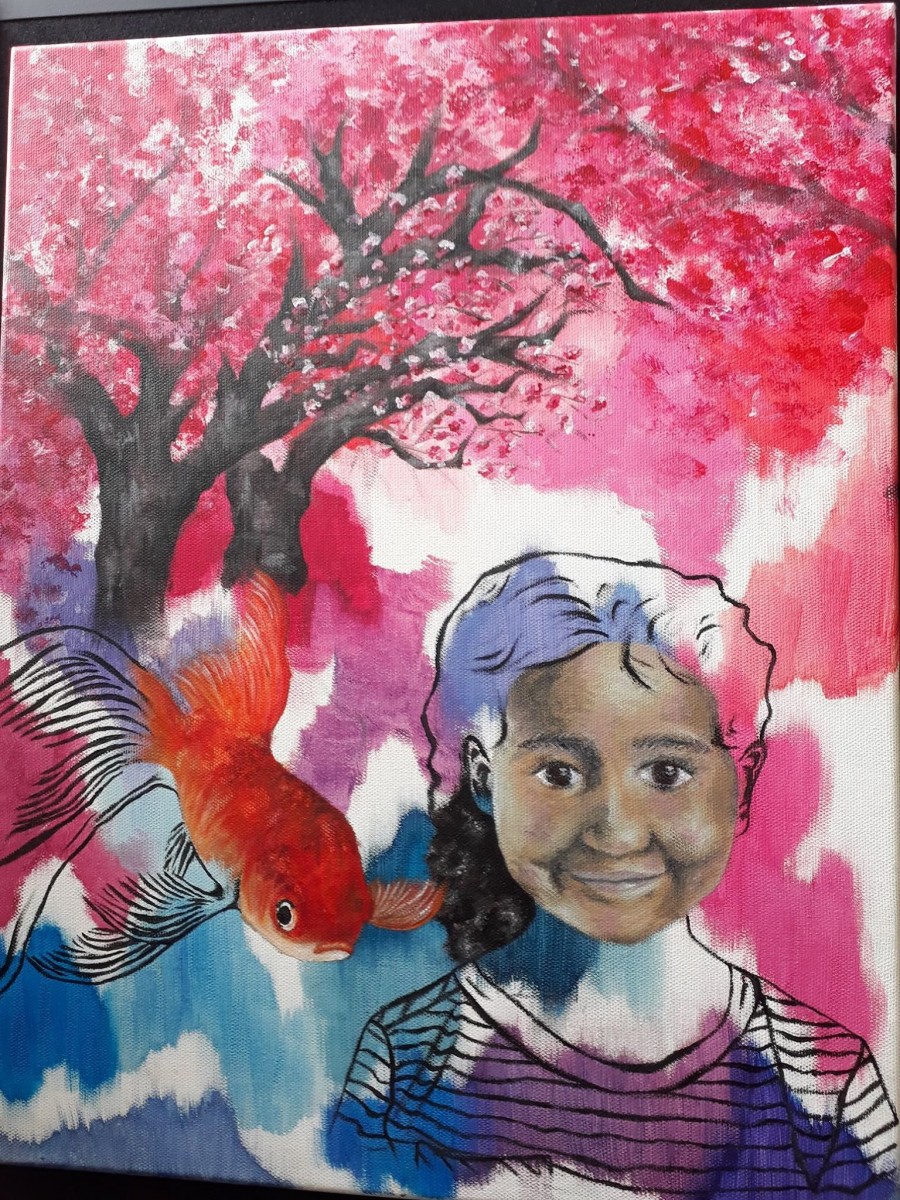
Year 9 Art
9ARTWHAT THE COURSE WILL COVER:
Art students will produce 5-6 top quality pieces of artwork during the term. Each artwork will explore different art ideas important to making and understanding art. Students will experiment with a variety of materials and techniques, developing their practical artmaking skills as well as gaining confidence in their creativity.
Throughout the course students will study the work of famous artists and will develop the skills to evaluate their own work, and the work of others.
METHODS OF LEARNING:
Learning is largely based around practical work, but research and some theory is included in the course. In Visual Arts students will study drawing, painting, photography and digital painting.
As the students learn about art they will develop very important work habits and skills such as self-management, time management and perseverance. Our AshColl Values are very important in the Art Department! Achieve Quality, Have Pride, Show Respect.
WHERE DOES THE SUBJECT LEAD?
Visual Arts subjects are all NCEA achievement standards and University Entrance approved for NCEA Level 1-3 and Scholarship. At senior level students can produce portfolios based on Painting, Photography or Design. They can also take more general art courses made up of ‘modules’, Art History is an option too. There are many tertiary study options and creative industry career pathways if creativity is something enjoyed. For example, Graphic Design, Concept Design, Architecture, Illustration and Animation, Professional Photography, Fashion Design, Fine Arts...many possibilities!
OTHER DETAILS:
All Year 9 Art students will visit the Ashburton Art Gallery as part of the course. There are always plenty of community events and competitions to be part of if students are keen to do extra art activities.
Year 9 Chinese Mandarin
9CHMWHAT THE COURSE WILL COVER:
- An introduction to Chinese Language and Culture
- Learning starter language
- Getting to know the culture
- Chinese can then be taken to Year 13 (NCEA Level 3) via online
You will learn:
- about aspects of Chinese culture
- how to recognise basic Chinese characters
- how to pronounce Chinese words and how to read pinyin
- simple greetings and how to give information about yourself such as your name, age, food/drink you like and dislike, and colours
METHODS OF LEARNING:
Oral introduction and learning how to recognise the characters of the Chinese alphabet are major parts of this course. Stories, pictures and songs are used to help students remember these. Language patterns are taught using a variety of games, songs, chants and quizzes. S will have access to online activities to learn, memorise, play games and test new vocabulary and greetings.
WHERE DOES THE SUBJECT LEAD?
Chinese language can be studied from Year 9 to Year 13. From Year 13 students can progress to University to continue their Chinese language study. There are many opportunities to travel to China both while at school and after leaving school through various Chinese/New Zealand Government scholarships, AFS Scholarships and self-funding exchange programmes.
Year 9 Dance
9DANWHAT THE COURSE WILL COVER:
Unleash your creativity. The Year 9 Dance course is designed to give students a taste of what the subject has to offer. Dance is a skills based subject where students learn to work independently as well as part of a group whilst developing creativity through performance.
Students will experience:
- Introduction to Dance. Learning a variety of dance styles.
- Trying your hand at choreography, the art of creating dances.
- Learning and performing group numbers and developing ensemble skills in performance.
- Exploring Māori performing arts styles and techniques and experiencing a range of dance styles from around the world.
- Ways to warm up, cool down, and stretch to keep your body injury-free.
METHODS OF LEARNING
The Dance course is entirely practical and learning happens on-your-feet through group work, discussions and performance opportunities.
WHERE DOES THE SUBJECT LEAD
You can take Dance through to NCEA Level 3 and beyond. Many exciting tertiary options are available for students wanting to study Dance and career opportunities are varied. Examples of these are: professional dancer, choreographer, dance teacher, fitness instructor, dance therapist, event organiser or producer.


Year 9 Design & Visual Communication
9DESWHAT THE COURSE WILL COVER:
This is a trimester long taster course and gives students an introduction to design and visual communication in our well-resourced facilities.
Students will develop skills in sketching, rendering and presentation. In addition, some basic instrumental drawing and CAD programs will be introduced and if time allows students will produce a laser cut product.
A number of small design briefs will allow students to practice the skills developed over the course. All resources are provided free of charge.
WHERE DOES THE SUBJECT LEAD?
You can take this subject through to Level 3 and Scholarship NCEA. As well as preparing students for University it also provides students with relevant skills for many other opportunities which require visual communication. Careers including the trades, engineering, graphic design, architecture and product design all benefit from a background in DVC.
Many of the skills and knowledge that is developed will be directly applicable to life in general, irrespective of the career that you finally choose.

Year 9 Digital Information Technology
9DITThe new curriculum recognises that it is not enough that young people be users of digital technology. To have any value in the future workforce they must also be creators of digital technology.
Digital Technologies is all about creativity and problem solving. Students learn how to make a variety of apps and programs, as well as how to design websites. They learn to express a task sequentially in such a way that a computer might be programmed to complete it. Students work individually and in groups to solve problems and understand what the end-user wants. They produce things that are going to be useful. Importantly, as their first year at High School, they also learn how to stay safe online, including what to do about bullying.
WHAT WILL STUDENTS KNOW BY THE END OF YEAR 9?
- How to stay safe online.
- How to use tools such as slides and documents to support other subjects.
- Coding Scratch.
- Creating websites.
By the end of Year 9 students will see digital technologies as a toolbox and be adept at both choosing and using the right tool/tools for the problem to be solved.
COMPUTATIONAL THINKING - PROGRAMMING
The future of work is uncertain but we can best provide our young people with resilience and adaptability through competence in problem solving and digital technology.

Year 9 Drama
9DRAWHAT THE COURSE WILL COVER:
The exciting Year 9 Drama course is designed to give students a taste of what the subject has to offer. Drama is a skills based subject where students learn to work independently as well as part of a group whilst developing creativity through performance and the use of technologies.
You will learn:
- Confidence and team building skills through Drama games;
- Different ways to tell stories in Drama;
- Improvising;
- Basic acting techniques;
- Theatre technologies such as costume, lighting and special effects makeup.
METHODS OF LEARNING
The Drama course is entirely practical and learning happens through group work, group discussions and performance opportunities.
WHERE DOES THE SUBJECT LEAD
You can take Drama through to NCEA Level 3 and beyond. The skills and knowledge within Drama lead to a huge variety of career opportunities. Employers value students who are able to work as part of a team, have confidence in oral language, flexibility in their thinking and those who can reflect critically on the performance of others. All of these life skills are included in Drama.

Year 9 English as an Additional Language
9EALCourse Aims:
To provide extra written and spoken language support for students whose English language still needs development.
Course Outline:
- Reading;
- Writing;
- Grammar;
- Speaking;
- Listening; and
- Assistance is also given with other subjects when required.
If students develop a good standard of English during the year they can move to another option if they wish.
Year 9 Food & Nutrition
9FNTWHAT THE COURSE WILL COVER:
This course uses content both from the Health and Physical Well-being and Technology Curricula.
In year 9 we will cover and include lessons that focus on safe and hygienic food preparation, measuring accurately to complete successful recipes, a technology focus on developing a bliss ball recipe, developing a healthy breakfast and making wise food choices as a hungry, growing adolescent using diet models like the four food groups, the healthy heart, and Dietary Guildlines for Healthy Adolescents.
We include practical food preparation once a week to help students have confidence to make and cook their own food. This builds food preparation skills and promotes cooperation and self management.
THIS COURSE WILL OFFER LEARNING EXPERIENCES IN THE FOLLOWING AREAS:
- Food safety and hygiene
- Measuring ingredients
- The four food groups / basic nutrition
- Develop and cook a healthy breakfast
- Develop and make a nutritious bliss ball
- Weekly food practical sessions are included to develop food preparation skills and confidence.
METHODS OF LEARNING:
Year 9 students have three periods of Food and Nutrition a week, one of which is a practical session. A variety of teaching methods are used. Some include:
- Group discussions
- Research
- Practical food preparation
- Planning their own practical work or completing a same class recipe
- Watching demonstrations on video or in person
- Written work using a technological device or booklet
- Evaluating outcomes to develop suitable products
- Matching activities and appropriate games
Year 9 German
9GERWHAT THE COURSE WILL COVER:
- An introduction to German Language and Culture
- German can then be taken to Year 13 (NCEA Level 3)
METHODS OF LEARNING:
The course follows the European A1 Beginner’s German Curriculum. By the end of Year 10 students should be able to pass the A1 German Test and gain an internationally benchmarked qualification. It is excellent preparation for NCEA in Year 11
WHERE DOES THE SUBJECT LEAD?
Hopefully to Germany! As well as being a University Approved course most of our senior students have been to Germany during their time at school. For those with a real interest in foreign language and culture, there are lots of opportunities to use their language skills in later life. Stihl and Claas, for example, are two German companies with a real presence in Ashburton. Germany remains in the top five of New Zealand’s trading partners and as New Zealand has a free trade deal with the European Union, the country will remain an important friend.
HOW DO STUDENTS GET TO GERMANY?
- School German Tours – 1989, 1998, 2001, 2004, 2007, 2010, 2013, 2016, 2019, 2024.
- Two Month Sister School Exchanges – with our sister school Pascal Gymnasium over December/January.
- Two Month Partner Exchanges over December/January with the German States of Bayern and Niedersachsen.
- Hosting – students can host or be in hosted in Germany.
- PASCH Scholarships – 1 guaranteed scholarship for Senior students for language school study in Germany in January (2023 Caitlin McSorley, 2024 Gabby Rodgers, 2025 Isabella Burns, 2026 Laura Hyde).

Year 9 Japanese
9JPNWHAT THE COURSE WILL COVER:
- An introduction to Japanese Language and Culture
- Learning starter language
- Getting to know the culture
- Japanese can then be taken to Year 13 (NCEA Level 3 and Scholarship)
You will learn:
- about aspects of Japanese culture
- how to recognise Hiragana, one of three Japanese alphabets
- how to pronounce Japanese words
- simple language used when meeting someone for the first time and how to give information about yourself such as your name, age, nationality, sports you play, phone number, where you live and food/drink you like and dislike. Body Parts, colours, animals
METHODS OF LEARNING:
Oral introduction and learning how to recognise the characters of the Hiragana alphabet are major parts of this course. Stories and pictures are used to help students remember these. Language patterns are taught using a variety of games, songs, chants and quizzes. Also, students access online programmes to learn, memorise, play games and test new vocabulary, hiragana and greetings.
There is also the opportunity to host Japanese students every year.
WHERE DOES THE SUBJECT LEAD?
Japanese language can be studied at every level from Year 9 to Year 13. From Year 13 students can progress to University to continue their Japanese language study. For those with a real interest in Japanese language and culture, there are many opportunities to travel to Japan both while at school and after leaving school. Every two years there is a tour to Japan organised by the school. Senior students can also apply for AFS, JTC or other organisation Scholarships and self-funding exchange programmes.
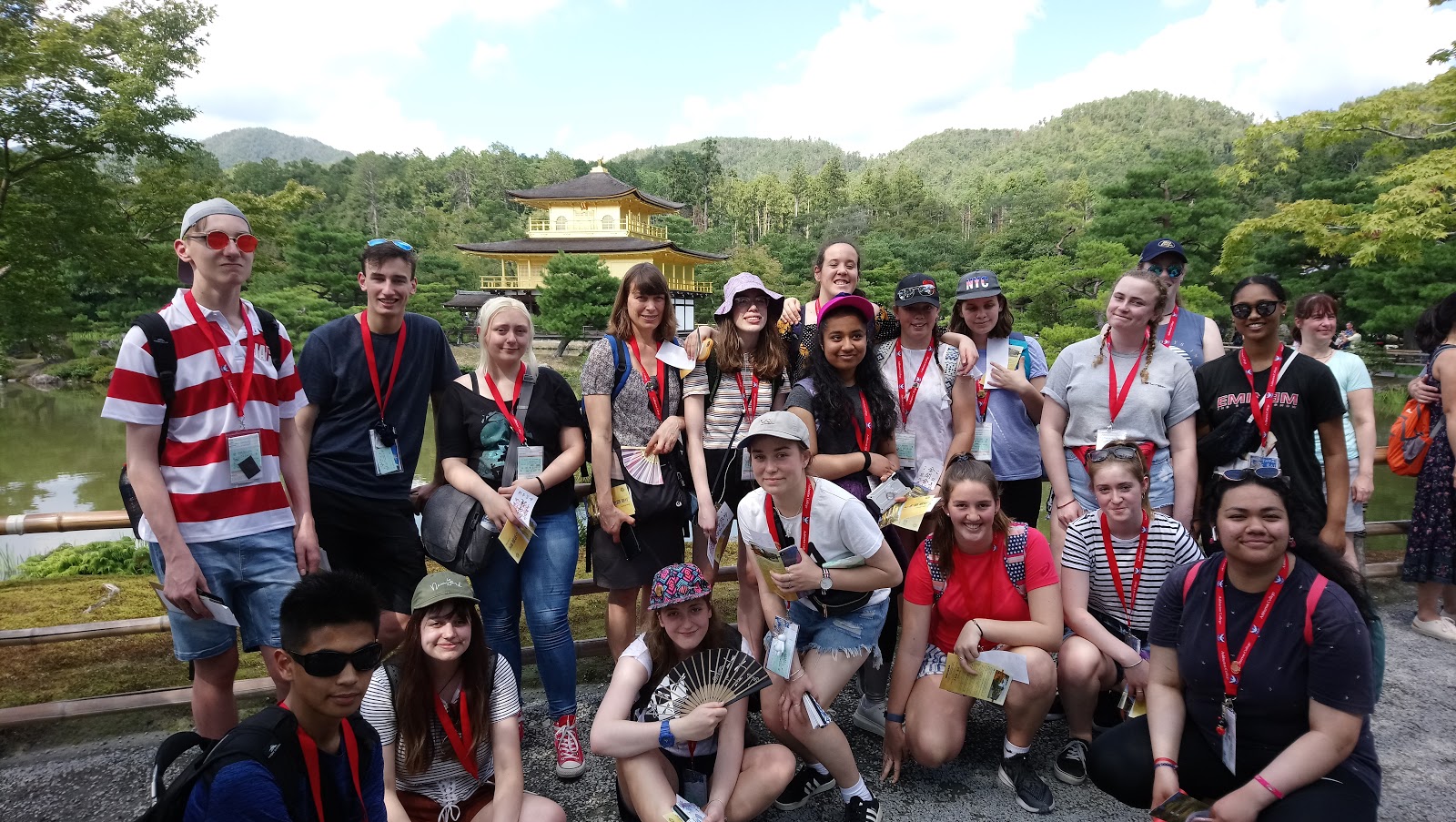
2019 Group in front of Kinkaku-ji in Kyoto
Year 9 Learning Extension and Enrichment Programme (Full Year)
9LEPPLEASE BE AWARE THIS COURSE HAS LIMITED NUMBERS AND SELECTION IS NOT GUARANTEED.
Mā te huruhuru, ka rere te manu / Feathers enable the bird to fly
This is a full year course that is offered to students showing particular strengths or passion for aspects of the school curriculum and/or the world around us.
WHAT THE COURSE WILL COVER:
The LEEP programme offers students the chance to explore their interests and leverage their strengths to enhance their academic performance. It fosters an understanding of individual thinking patterns and learning preferences, nurturing problem-solving, thinking critically, abstractly and creative abilities. In addition students experience collaborative learning within a supportive group environment while promoting the refinement of interpersonal skills.
METHODS OF LEARNING:
The course is designed around the Autonomous Learner Model (Betts, 1985) to meet the cognitive, emotional and social needs of gifted and talented students. By developing student’s autonomy for lifelong learning, LEEP fosters growth of their awareness of the world around us through inquiry-based learning and reflection, debate and discussion. Students are encouraged to master concepts by evidencing their thinking and learning, completing individual and group research projects
WHERE DOES THE SUBJECT LEAD?
The course seamlessly transitions into our Year 10 LEEP program, building upon the foundations laid in Year 9. It's crucial to note that at the NCEA level, across various subjects, the ability to think critically and abstractly is a fundamental skill necessary for achieving Merit and Excellence grades. Moreover, there are numerous avenues available at senior levels, such as Scholarship programs, UC courses, and participation in national and international academic competitions, which provide opportunities for extending and enriching students' learning experiences. By practising critical thinking, you can develop your abstract thinking ability by learning to analyse information, identify patterns and connections, draw logical conclusions and help make good life decisions.
OTHER DETAILS:
Each year the experience will vary depending on guest speakers, access to competitions and trips.
Year 9 Māori Studies
9MSTTe Reo Māori introduces students to the Māori language and Māori tikanga (culture and customs). It facilitates their learning through the values of manaaki and ako. The objective of the course is to provide students with some beginning language skills and provide students experiences and exposure to Māori culture.
WHAT THE COURSE WILL COVER:
As well as an introduction to Te Reo Māori the course will include:
- Greetings and mihi
- Karakia (Prayers)
- Whakatauki (Proverbs)
- Waiata (Songs)
- Tikanga (Protocols and customs)
METHODS OF LEARNING:
Learning includes individual and group learning and activities. Students will develop communication skills, collaboration skills and will learn through participation in activities; Games, songs and physical activities are used to engage students in learning. Students are also often involved in community events or school events to provide a ‘real’ context for their learning.
WHERE DOES THE SUBJECT LEAD?
Knowledge of Te Reo and Tikanga is a highly valued skill that can be applied in many different contexts. Te Reo is an NCEA subject from level 1-3. It is a University Entrance subject.
As well as providing an understanding of Aotearoa, it’s unique langauge and culture, Te Reo is also a valued asset in the following career paths; Government and politics, Health services, Television and radio, Social work, Education, Police, Tourism, Law, Environmental planning...the list goes on!
OTHER DETAILS: The Māori department regularly participates in local and regional activities such as:
- Manu kōrero – speech competitions
- Kapa haka festivals and competitions
- Local pōwhiri Wānanga at Hakatere Marae and other marae – Taiaha and rāranga/weaving

Year 9 Māori Studies (full year)
9MAOPLEASE BE AWARE THIS COURSE HAS LIMITED NUMBERS AND SELECTION IS NOT GUARANTEED.
The intent of the full year option is to better acknowledge the whakapapa, the skills and the knowledge of our tamariki and rangatahi as they enter secondary education.
This is an opportunity to increase the exposure of the pupils to the tikanga and reo in preparation for senior work. A full year course allows us to better address the amount of material that needs to be learnt for successful completion of NCEA requirements. It is also an opportunity to immerse the pupils deeper into te Ao Māori.
The course intentions and outline are similar to the semester option but just provides time for more exposure, time to develop better reo and knowledge around tikanga/kawa.
Te Reo Māori introduces students to the Māori language and Māori tikanga (culture and customs). It facilitates their learning through the values of manaaki and ako. The objective of the course is to provide students with some beginning language skills and provide students experiences and exposure to Māori culture.
WHAT THE COURSE WILL COVER:
As well as an introduction to Te Reo Māori the course will include:
- Greetings and mihi
- Karakia (Prayers)
- Whakatauki (Proverbs)
- Waiata (Songs)
- Tikanga (Protocols and customs)
METHODS OF LEARNING:
Learning includes individual and group learning and activities. Students will develop communication skills, collaboration skills and will learn through participation in activities; Games, songs and physical activities are used to engage students in learning. Students are also often involved in community events or school events to provide a ‘real’ context for their learning.
WHERE DOES THE SUBJECT LEAD?
Knowledge of Te Reo and Tikanga is a highly valued skill that can be applied in many different contexts. Te Reo is an NCEA subject from level 1-3. It is a University Entrance subject.
As well as providing an understanding of Aotearoa, it’s unique language and culture, Te Reo is also a valued asset in the following career paths; Government and politics, Health services, Television and radio, Social work, Education, Police, Tourism, Law, Environmental planning...the list goes on!
OTHER DETAILS:
The Māori department regularly participates in local and regional activities such as:
- Manu kōrero – speech competitions
- Kapa haka festivals and competitions
- Local pōwhiri Wānanga at Hakatere Marae and other marae – Taiaha and rāranga/weaving
This course is applied for through an exemption process as there are limited spaces available.
Year 9 Materials Technology: Fabrics
9MTFWHAT THE COURSE WILL COVER:
You will develop a passion for problem solving, develop your creative skills and be innovative when working with textiles. You will learn to express ideas in practical terms, apply skills of craftsmanship, correctly use a range of tools and equipment as well as learn the capabilities of a computerised domestic sewing machine. You will demonstrate an understanding of the design process and basic concepts used to make textile items by designing, producing and evaluating a quality duffel/overnight/tote bag. You may also learn about the basic functions of a CNC embroidery machine.
METHODS OF LEARNING:
Year 9 students have three periods of Textiles a week. A variety of teaching methods are used. Some include: group discussions, research, watching demonstrations, written work using a technological device that includes answering questions and presenting information, completing practical skills activities, completing puzzles, missing word activities and analysing data, planning their own practical work and completing a personalised duffel/overnight/tote bag including zips and/or pockets.
WHERE DOES THE SUBJECT LEAD?
You can take this subject through to Level 3 NCEA. Textiles in Year 9 is one of the 9 choice subjects that students select to study for part of the year. Information and topics are built on in Year 10 for a whole year with more detail covered to include preparation work and knowledge for NCEA in year 11, 12 and 13. In years 11, 12 and 13 students have the opportunity to study for NCEA levels 1, 2 and 3. In these a range of Achievement and Unit Standards are offered to students.

Year 9 Materials Technology: Product Design
9MTHWHAT THE COURSE WILL COVER:
Students will use a shortened form of the design process to design and make a practical project. Many will undertake a second self-selected project on completion of the first. Through this they will develop skills in:
- Producing and developing ideas
- Problem solving and independence
- Working with hand tools and machines
- Self-management and basic planning of their own project
Traditional and new technologies (CAD and CAM) will be used and students will have access to our well-equipped and resourced workshops.
METHODS OF LEARNING:
A wide variety of activities allow students to develop knowledge in this subject area. Some written work and basic presentation work is covered as well as various forms of modelling. These all allow students to communicate and develop their own ideas and then manufacture them in our workshops. The focus is very much on allowing students to follow themes and develop their own ideas based on these.
WHERE DOES THE SUBJECT LEAD?
The subject prepares students for Year 10 MTM and 10 MTW courses and beyond. At senior level students will have a choice of following Achievement Standard based courses or Industry Standards based courses. At Year 12 we also offer an innovative and successful Trades Experience course that is designed to give students an understanding of what is involved in a huge range of trades. They are placed in a range of businesses throughout the year with many being offered an apprenticeship as a result of these placements.

Year 9 Media & Journalism
9MDJEver wondered about the influence that media has on you? The way films and social media can impact the way that you think, that you feel, and even the way that you act? Understanding the media around you is vital to living in the 21st century, but this is also something that you can learn to harness!
WHAT THE COURSE WILL COVER:
This new option course looks at media studies and journalism as important skills for being connected and creative members of the 21st century world. These skills include:
- The history and impact of various forms of media
- Digital citizenship and safety online
- Topics such as, Fake News, Reality TV, Body Image and Stereotyping
- Researching, reporting, and critiquing skills
- Interacting with school journalism - sporting, cultural and academic points of interest.
Year 9 Money Management
9MMTWHAT THE COURSE WILL COVER:
This course will enable students to gain knowledge and understanding to become financially capable. The course teaches skills, knowledge and dispositions that enable a person to make "well informed financial decisions through their lives" (Ministry of Education, 2007).
Course Outline:
- Topics include: managing money and income, setting financial goals and consumer rights and responsibilities.
- Supports financial capability as well as digital technology, literacy and numeracy skill development.
METHODS OF LEARNING:
Focus on student centered investigations into real life financial situations.
WHERE DOES THE SUBJECT LEAD?
This course provides an introduction and background for Year 10 Money Management as well as Senior Commerce Courses later on.
Year 9 Music
9MUSWHAT THE COURSE WILL COVER:
Students will learn about Music in all its different forms.
Students will be introduced to different aspects of Music. They will learn to perform, create, read, listen to and appreciate music covering a wide variety of genres and styles. Students will also learn about the contexts in which music was created and performed. Students will be encouraged to learn an instrument.
METHODS OF LEARNING:
Knowledge, skills and interests are developed by studying a wide range of music written for various social and cultural situations.
Music encompasses both practical performance and academic study. At Ashburton College we are fortunate to offer a wide variety of musical experiences in our junior school which helps students to choose their path.
Those students wanting to continue learning instruments have access to itinerant music teachers. These students are encouraged to enter competitions and festivals and join in music making opportunities within the college community.
WHERE DOES THE SUBJECT LEAD?
Several tertiary options are available for students wanting to study music. The career opportunities are many and varied. Examples of these are: broadcasting, performing, sound engineering and teaching amongst others.
OTHER DETAILS:
We offer a wide variety of extra-curricular activities. These include: choirs, rock bands, instrumental and vocal groups, chamber music groups and orchestra. Students are encouraged to perform at competitions and festivals in Mid–Canterbury and further afield. Within the College we have Music Evening and various performance opportunities for junior and NCEA students.

Year 9 Pasifika Voices: Celebrating Our Stories Through Word, Image & Sound
9PASThis course is ideal for anyone interested in literature, art, culture, and identity in the Moana. No prior experience required—just an open heart and a willingness to explore.
WHAT THE COURSE WILL COVER:
Pasifika Voices is a vibrant exploration of the rich and diverse storytelling traditions of the Pacific, including those of Aotearoa. This course celebrates the power of written, visual, and verbal literature from across Pasifika cultures—past and present. Students will engage with poetry, short stories, spoken word, performance, visual art, and film that reflect the complexities, histories, and beauty of the Pacific region.
METHODS OF LEARNING:
Through creative practice, students will develop their own voices while honoring ancestral knowledge and contemporary expression. Whether you're a writer, artist, performer, or simply passionate about the power of story, this course offers a dynamic space to learn, create, and celebrate what it means to speak from—and to—the Pacific.
WHERE DOES THE SUBJECT LEAD?
This course leads to Pacific Studies in senior school.
Subjects for Year 9 Students
Year 10 Agriculture
10AGRCourse Aims:
This course has a heavy emphasis on practical work and is an introduction to Agriculture and Horticulture for Level 1.
Course outline:
- Topics studied include: rural safety, farming systems, primary industry careers, plant propagation, soil management and agri-innovations.
- The students will be expected to work outside, design and plant a garden, grow a range of plants, investigate the care of animals and a range of farm systems and manage the soil.
Year 10 Art
10ARTCourse Aims:
This course covers a wide variety of art-making techniques that will help students to develop their skills and understanding of the art-making process and their ability to express themselves visually.
Course Outline:
- Learn about art movements, different art genres and artists;
- Develop a range of techniques to enhance drawing, painting, printmaking, photography skills, digital painting, and design;
- Learn what makes good art, good! And how you can make your own art better; and
- Learn how to develop ideas and produce excellent results.
This course is essential for students considering studying Art at Level 1 and senior Art courses such as Photography and Design in the future.
Year 10 Chinese Mandarin
10CHMCOURSE AIMS:
- To prepare students for NCEA and to give them an insight into Chinese culture beyond the year 9 course.
- HSK 1 Exam
COURSE OUTLINE:
- The course covers all four language skills of listening, speaking, reading and writing.
- Topics covered include:
- weather and holidays
- countries and nationalities
- places
- house and rooms
- clothes and colours
- daily routine
- shopping
- fruit and vegetables
- Chinese cities
- Chinese festivals and culture
SPECIAL NOTES?
The Chinese classes are well supported at Ashburton College through various institutions in NZ with links to China. The ultimate goal would be for students to one day find their way to China, either privately or through a possible school trip in the near future!
Year 10 Dance
10DANCourse Aims:
This course aims to develop confidence, improve coordination through rhythmic movement, and learn to work individually and collaboratively within the area of Dance.
This course provides a supportive learning environment for personal growth and is a safe space for exploration.
Course Outline:
- Introduction to the terminology of Dance such as elements - learn dance sequences
- Introduction to choreographic devices - choreograph dance sequences
- Learn and perform a social or ethnic dance
- Learn a variety of dance combinations from a range of different dance styles, genres and cultures
Year 10 Design & Visual Communication
10DESThis is a year long program which builds on the basic skills and techniques taught in Year 9. Students will tackle a number of exciting design briefs which will be 3D computer modeled and then 3D printed and laser cut. A range of graphic communication techniques will be taught that may include virtual reality, computer modeling as well as more traditional methods including sketching and rendering.
Year 10 Digital Information Technology
10DITCOURSE AIMS:
To offer opportunities for students to further develop knowledge and skills in digital technologies to assist them to participate safely, confidently and competently in a digital society and to transfer these skills and knowledge to other fields of learning. Also to provide the skills required for Level 1 Assessment Standards.
A year-long course of 3 lessons per week
STUDENTS WILL LEARN:
- Programming (python)
- Design (python, html, css, database)
- Trialing and testing (website, python, database)
Content may vary depending on cohort. Course may be tailored to group interests.
Year 10 Drama
10DRACourse Aims:
This course aims to develop confidence in expressing ideas and working creatively within Drama, learning through practical experience.
Course Outline:
- Develop Drama skills as well as the key skills of group work, creativity, respect, co-operation, communication and expanding comfort zones
- Take part in improvised and scripted acting
- Explore technical theatre short scenes and theatrical genre
- Learn about devising an original piece of Drama
- Develop performance skills
- Develop ability to analyse live performance
Year 10 English as an Additional Language
10EALCourse Aims:
To provide extra written and spoken language support for ESOL students whose English language still needs development.
Course Outline:
- Reading
- Writing
- Grammar
- Speaking
- Listening
- Vocabulary
- Assistance is also given with other subjects when required
Year 10 Exercise and Sports Science
10EXPThis course is designed for students who are actively involved in sport at College, Regional or NZ level and are looking to further develop their sporting performance.
It is ideal for students who wish to continue into Senior Physical Education courses, challenge themselves physically, improve their fitness and extend the knowledge of anatomy, physiology and sports performance.
Exercise and Sports Science includes two practical lessons and one theory lesson each week.
Year 10 Food & Nutrition
10FNTThis course offers a wide variety of work that will provide students with the knowledge and skills so they can make informed judgements about the food they eat as growing adolescents, look at different international food as well as traditional Maori cooking. It also incorporates developing their own food products to meet a stakeholders needs. Throughout the year students are able to design and make food items from scratch in safe and hygienic conditions.
This course will offer learning experiences in the following:
- Health and safety/Basic food hygiene-safety
- Power up your plate, focus on teenage nutrition
- Pizza Pro - Develop a pizza for a stakeholder
- Matariki - connection between 9 stars and a guide for understanding natural world food resources and communal wellbeing
- Noodles- balancing flavours and design development
- Taste the world - become food innovators, explore how food connects people culture and technology.
Other details:
Most ingredients are supplied by the department; however, students will be asked to bring ingredients if individualising recipes.
Year 10 German
10GERCOURSE AIMS:
- To prepare students for NCEA and to give them an insight into the German culture. Students will also begin planning their possible exchange options.
- Fit in Deutsch A1 exam.
COURSE OUTLINE:
- The course covers all four language skills of listening, speaking, reading and writing.
- Topics covered include: introductions, my class, pets, the school day, hobbies, family and shopping. All of these are taught within the framework of cultural studies.
- Contemporary German Music and Film are also used during the course.
SPECIAL NOTES:
It is advised to complete this course in preparation for NCEA Level 1.
The College, as a PASCH school, offers many exchange options available to German students only. We have established exchange programmes with our sister schools, and it is hoped that many students will have a Germany experience during their study of the language. The 11th Ashburton College German tour will be in 2027.
Year 10 Japanese
10JPNCOURSE AIMS:
- To prepare students for NCEA and to give them an insight into the Japanese culture.
COURSE OUTLINE:
- The course covers all four language skills of listening, speaking, reading and writing.
- A feature of this course is the wide variety of activities employed to help students learn and practice their new skills.
- As well as book work for script acquisition, students will be involved in role-plays, games, quizzes and competitions.
- Topics covered include: introductions, my house, my family, the school day, hobbies, my town, routine and weather.
SPECIAL NOTES:
It is advised to complete this course in preparation for NCEA Level 1.
The College offers a trip to Japan every 2 years for students of Japanese.
Year 10 Learning Extension and Enrichment Programme (LEEP)
10LEPMā te huruhuru, ka rere te manu / Feathers enable the bird to fly
WHAT THE COURSE WILL COVER:
The course builds upon the foundations laid in the Year 9 LEEP program but is not an entry requirement. The LEEP programme offers students the chance to explore their interests and leverage their strengths to enhance their academic performance. It fosters an understanding of individual thinking patterns and learning preferences, nurturing problem-solving, thinking critically, abstractly and creative abilities. In addition students experience collaborative learning within a supportive group environment while promoting the refinement of interpersonal skills.
METHODS OF LEARNING:
The course is designed around the Autonomous Learner Model (Betts, 1985) to meet the cognitive, emotional and social needs of gifted and talented students. By developing student’s autonomy for lifelong learning, LEEP fosters growth of their awareness of the world around us through inquiry-based learning and reflection, debate and discussion. Students are encouraged to master concepts by evidencing their thinking and learning, completing individual and group research projects
WHERE DOES THE SUBJECT LEAD?
The course assists students to synthesise, evaluate, analyse and apply at a broad and in depth level. It's crucial to note that at the NCEA level, across various subjects, the ability to think critically and abstractly is a fundamental skill necessary for achieving Merit and Excellence grades. Moreover, there are numerous avenues available at senior levels, such as Scholarship programs, UC courses, and participation in national and international academic competitions, which provide opportunities for extending and enriching students' learning experiences. By practising critical thinking, you can develop your abstract thinking ability by learning to analyse information, identify patterns and connections, draw logical conclusions and help make good life decisions.
OTHER DETAILS:
Each year the experience will vary depending on guest speakers, access to competitions and trips.
This course is invitation only and runs for the entire year. Please request an exemption to be considered for selection into this course.
Year 10 Māori Studies
10MSTCOURSE AIMS:
- To help students gain a better understanding of the language, tikanga and traditions of the iwi Māori of Aotearoa.
- To enable pupils to stand and say who they are, where they are from.
- To build a foundation for future study.
COURSE OUTLINE:
- A foundation course in karakia, waiata and Te Reo Māori. This includes: panui (reading skills), whakarongo (listening skills), tuhituhi (written skills) and kōrero (oral skills).
Year 10 Materials Technology: Fabrics
10MTFContent/Skills:
You will develop a passion for problem solving, develop your creative skills and be innovated when working with textiles. You will learn to express ideas in practical terms, apply skills of craftmanship, correctly use a range of tools and equipment as well as further development of your skills when using a computerised domestic sewing machine.
This course will offer learning experiences in the following:
- Learn basic sewing skills before exploring the creative techniques possible on the sewing machine
- Undertake basic fabric research and learn how to prepare and use a commercial pattern
- Learn how to carry out simple techniques and processes using the tools of the trade
- Students will be introduced to simple design features and construct basic garments
- You will demonstrate an understanding of the design process and basic concepts used to make textile items by design, producing and evaluating pyjama pants, hoodie or sweatshirt, and another item of your choice
- You may also learn about the basic functions of a CNC embroidery machine and include these embellishments in your designs
This course leads to a University Entrance approved subject.
Year 10 Materials Technology: Metal
10MTMThis course will have at least 4 projects, some of which are designed by the student, while others are teacher directed for developing skills. Projects may include a toolbox, artistic wall hanging from sheet metal, a BBQ from recycled materials. Skills being taught will be, machining, sheet metal fabrication, welding and thermal cutting as well as product research, developing a brief, designing a product and evaluation.
Year 10 Materials Technology: Product Design - Electronics & Robotics
10MECCourse Overview:
The Electronics and Robotics course is designed to provide students with an understanding of the integration of mechanical, electrical, and computer engineering. This hands-on course will cover the fundamentals of basic electronics, microprocessors, and programming. Students will engage in the research, creation, design, and evaluation of projects within a given theme, developing their problem-solving abilities both independently and in group settings.
Key Learning Areas:
- Basic Electronics:
- Understanding electrical components and circuits
- Analysing and designing simple electronic circuits
- Microprocessors and Programming:
- Introduction to microprocessors and their applications
- Programming fundamentals with a focus on embedded systems
- Developing and debugging programs using microcontroller platforms such as Arduino
- Project Research, Creation, Design, and Evaluation:
- Conducting research to support project development
- Evaluating based on feedback and testing
- Problem Solving:
- Collaborating with peers to develop innovative solutions
- Using analytical skills to troubleshoot and refine designs
- CAD (Computer-Aided Design) and CAM (Computer-Aided Manufacturing) Systems:
- Hands-on experience with 3D printing, and laser cutting.
Course Outcomes:
Upon successful completion of the Mechatronics course, students will be able to:
- Understand and apply the fundamentals of basic electronics and microprocessors
- Develop and program embedded systems using microcontroller platforms
- Solve real would problems independently and collaboratively
- Utilise CAD and CAM systems to design and manufacture components
This course is ideal for students interested in pursuing careers in physis, engineering, robotics, automation, and related fields, providing a solid foundation and practical skills essential for success in the rapidly evolving field of Electronics and Robotics.
Year 10 Materials Technology: Wood
10MTBWhat the course will cover:
Students will produce a variety of self directed practical projects over the year which continuously build on the skills and knowledge developed previously. These include:
1. Using research as part of developing an outcome or product
2. Developing ideas based on a given theme
3. Learn and use a variety of software programs to design and manufacture parts on both laser cutter, 3D printer and CNC router.
4. Problem solving and independence
5. Use of fixed machinery and hand tools
6. Self management in a practical environment
Methods of Learning:
As this is a year long course a wide variety of opportunities are provided. Students will learn to communicate their ideas visually and through CAD models, sketching and functional modeling. They will develop basic skills in research including some written work.
Year 10 Media & Journalism
10MDJWant to know how algorithms control your feed, why "rage baiting" keeps you scrolling, or how AI is actually changing the future? Are you ready to go behind the scenes of the media you consume every day? In Media and Journalism, you won't just analyse influencer culture, media bias, and global advertising; you'll become the creator. Get ready to pitch and storyboard your own television show, design a unique brand, and collaborate with your classmates to film and edit your own video projects.
WHAT THE COURSE WILL COVER:
This new option course looks at media studies and journalism as important skills for being connected and creative members of the 21st century world. These skills include:
- Digital Literacy & Ethics: Investigating influencer culture, social media algorithms, media bias, and the ethical use of AI.
- Media Analysis: Exploring audience, purpose, and how meaning is created through both written and visual elements in local and global settings.
- Genre & Narrative Studies: Unpack story structures in film and examine the evolution of television consumption.
- Practical Production: Designing original brands, storyboarding television show concepts, and filming collaborative media projects.
Year 10 Money Management
10MMTCourse Aims:
This course will enable students to gain knowledge and understanding to become financially capable. The course teaches skills, knowledge and dispositions that enable a person to make "well informed financial decisions through their lives" (Ministry of Education, 2007).
Course Outline:
- Topics include: Economics, income and taxation, spending and wise buying, saving, budgeting, use of credit, student loans, KiwiSaver, investment and enterprise
- Focus on how to use money most effectively using Banqer High
This course provides an introduction and background for Level 1 Commerce later on.
Year 10 Music
10MUSCourse Aims:
The course serves as an introduction to the Music programme examined for NCEA.
Course Outline:
- Heavy emphasis on practical work;
- The content not only includes performance but also involves creative and historical studies in Music; and
- Students will be encouraged to write for their own instruments in any style of music (popular, rock, jazz or classical), and to experiment with sound in general.
Successful completion of this course is a prerequisite for Level 1.
Year 10 Outdoor Education
10OUEThis course is aimed at students who enjoy the outdoors and have a willingness to take part in physically demanding outdoor activities.
Using a range of outdoor activities (to be co-constructed with class) students will develop a range of life skills such as teamwork, problem solving, self-confidence, safety management, risk evaluation and mitigation. This course also supports learning and development into Senior PE and Outdoor programmes.
The course to be co-constructed with the class, but could include: ABL, bush survival, tramping and camping, navigation, skiing/snowboarding, rock climbing, rafting, sailing or mountain biking.
Year 10 Pasifika Voices: Voyagers of the Past and Future
10PASThis course is ideal for anyone interested in looking at history, literature, and current social action through a cultural identity lens. No prior experience required - just an open heart and a willingness to explore.
WHAT THE COURSE WILL COVER:
Pacific Voyagers shifts from cultural introduction to critical exploration. This course focuses on the twin themes of Navigation (Wayfinding) and Resistance (Social Justice).
Students will examine how Pacific peoples have historically been, and continue to be, active navigators, whether charting vast oceans using the stars, migrating to new lands in the 20th century, or fighting for political, cultural, and environmental rights in Aotearoa New Zealand and the wider Pacific.
METHODS OF LEARNING:
Students will engage with Pasifika and Māori writers, playwrights, and poets that use language to express identity, historical effects, and cultural pride. They will investigate the causes, perspectives and consequences of major New Zealand events; explain concepts around traditional celestial navigation, and put language into practice through performance and spoken word.
Students will develop important skills, including close reading and analysis, inquiry, project-based learning, and collaborative and interactive learning skills.
WHERE DOES THE SUBJECT LEAD?
This course leads to Pacific Studies and Māori English in senior school.
Year 10 Te Reo Māori
10MAOCOURSE AIMS:
- To prepare students for NCEA and to give them an insight into Te Ao Māori and te reo Māori culture beyond the year 9 course.
- Three modes of assessments talking - kōrero, listening - whakarongo and writing - tuhituhi.
- Potential collaborations with other subjects such as Marae visits, Tuakana - Teina with ESOL, Taonga Puoro - Music and Taiao - Agriculture. This does not limit to these subjects specifically but what has been established for 2026.
- To be able to have a novice kōrero in te reo Māori.
COURSE OUTLINE:
- The course covers all four language skills of listening, speaking, reading and writing.
- Topics covered include:
- Ko wai au? Who am I?
- Cultural Projects throughout the year eg. Te Tiriti o Waitangi, Māori Battalion, and Matariki
- School
- Tikanga/Kawa
- Karakia
- Waiata
- Home life
- Aotearoa town/cities in te reo Māori
- Pūrākau and Pakiwaitara
- Grammar and Language progression
SPECIAL NOTES:
The Māori classes are well supported at Ashburton College through our whanaungatanga (relationships) with our local marae (Hakatere), our mana whenua (Arowhenua) and our whānau community. The ultimate goal would be for students to explore their own whakapapa and become confident in their own identity.
Subjects for Year 10 Students
NCEA Level 1 Agriculture Science
AGR101Agricultural and Horticultural industries are key drivers of New Zealand’s economic, social, and environmental development. The products of primary production are a source of well-being for the present generation and will be so for future generations, generating billions in export earnings every year. The future of this industry is bright with international demand and available jobs predicted to grow rapidly.
This year we will explore the following big ideas:
- Agriculture and horticulture connect people to locations of purposeful production
- Primary producers manage life processes and the growing environment
- Primary producers make informed decisions about sustainability
Our aims are:
- To encourage students to cherish learning in Agricultural Science
- To promote science as an activity that is part of everyday life
- To help students to develop knowledge and a coherent understanding of the living, physical, material and technological components of their environment
- To help students to develop skills for investigating the living, physical, material and technological components of their environment
- To develop students' interests in and understanding of the knowledge and processes of science which form the basis of many of their future careers
This subject will lead to a UE approved subject.
NCEA Level 1 Art
ART101Are you ready to explore your artistic abilities and take your creativity to the next level? Discover the world of visual arts through a holistic integration of skills and processes.
Course description:
- Comprehensive Curriculum: Dive into a wide range of artistic techniques and mediums, including painting, photography, 3D sculpture, and designing.
- Holistic Approach: Develop your skills through the holistic integration of creating, critical examination, and understanding of visual arts in society.
- Expert Instruction: Learn from experienced and passionate art teachers who are dedicated to helping you develop your unique artistic voice.
- Hands-On Learning: Engage in practical research projects and hands-on activities that encourage creativity and self-expression.
- Personal and Cultural Exploration: Explore personal and cultural themes in your artwork, linking opportunities to express your individual perspective.
- Technical Conventions: Master the technical conventions of various artistic mediums to enhance your creative capabilities.
- Portfolio Development: Build a strong portfolio of your work for exhibition and assessment.
Who Should Enrol?
This course is designed for students who have a passion for art and a desire to improve their skills. Whether you are a beginner or have some experience, our NCEA Level 1 Art course will provide you with the knowledge and confidence to excel in your artistic endeavours.
NCEA Level 1 Biology & Chemistry
SCI102Content/Skills:
- Students will apply the Scientific Method to a range of Investigations.
- Students will undertake a combination of Achievement Standards that consist of Biology and Chemistry, with a small amount of Physics.
- This course is ideal if you want to take Level 2 Chemistry or Biology.
This course leads to a University Entrance approved subject.
NCEA Level 1 Commerce
COM101In Level 1 Commerce students will use and explore accounting, economic and business concepts and models to make sense of society and solve problems.
They will build the knowledge, skills and values they need to navigate, and participate in, the economic world. They will learn how participants in the economy make decisions and the impact of these decisions on sustainability.
Content/Skills:
- Consumer perspectives, values and choices
- Organisations pūtake and goals
- Decision making - financial and non-financial
- Analysing the impact of decisions on the environment and various stakeholders
- Profit and price determination
- Inter-dependence of the sectors of the economy
- Introduction to Accounting
This subject leads to approved UE subjects - Accounting, Business Studies and Economics.
NCEA Level 1 Dance
DAN101Content/Skills:
- Dance performance;
- Cultural/social dance;
- Dance choreography;
- Dance perspectives.
Dance is a University Entrance approved subject.
Field trips: There will be an opportunity to view live dance performance.
NCEA Level 1 Design & Visual Communication
DVC101This course builds on the skills and techniques developed in Year 10 including the development of design ideas through several assignments. The prior learning needed for this course includes several CAD software programs and the key building blocks of 2D and 3D sketching as well as a design knowledge.
Over the year we will cover a number of design briefs which will provide evidence for the External and Internal Achievement Standards offered. Product design briefs can lead to a laser cut or 3D printed functional model or outcome. An additional Spatial design brief will be covered and is a means for preparing for L2.
NCEA Level 1 Digital Information Practical
DIT102Course Overview:
The NCEA Level 1 Digital Information Practical course equips students with essential digital skills through hands-on experience with key software applications. The course covers Microsoft Office Suite, keyboarding, presentation software, word processing, spreadsheets, and desktop publishing. Students will develop practical skills to efficiently use these tools for personal, academic, and professional purposes.
Key Learning Areas:
Microsoft Content:
- Introduction to Microsoft Office Suite (Word, Excel, PowerPoint)
- Integrating applications for enhanced productivity
Presentation Software:
- Creating engaging presentations using Microsoft PowerPoint
- Utilising design elements like text and images
Word Processing:
- Mastering Microsoft Word for creating and formatting documents.
Spreadsheets:
- Understanding Microsoft Excel for data organisation and analysis
- Creating and formatting spreadsheets, using formulas and charts
Course Outcomes:
- By the end of the course, students will be able to:
- Use Microsoft Office Suite applications proficiently.
- Create professional presentations in Microsoft PowerPoint
- Produce high-quality documents in Microsoft Word
- Organise and analyse data in Microsoft Excel
Content will vary depending on abilities and interests. This NCEA Level 1 course prepares students with vital digital skills, laying a strong foundation for future academic and career success.
NCEA Level 1 Digital Information Technology
DIT101It is important that we produce those who both use and understand technology. To that end this course blends Programing, and the use, understanding and development of common workplace tools such as:
- Programing - coding with Python
- Website development – skills in HTML
- Planning and designing digital solutions that are fit for purpose.
- Understanding how to make user centered interfaces for humans
This course implements the new curriculum refresh, the course consists of two internal and two external Achievement Standard (AS) papers
Content will vary depending on cohort. Course will be tailored to group interests.
NCEA Level 1 Drama
DRA101Content/Skills:
- Drama techniques
- Devising Drama
- Reviewing live theatre
- Drama performance
Learning through practical application of skills, Drama at Level 1 focuses on group collaboration, co-operation and confidence building in a supportive context. You will perform scripted work and devise your own work. You will view live drama and create a portfolio in response.
This course leads to a University Entrance approved subject.
Field Trips: Up to 3 Theatre trips during the year.
NCEA Level 1 English
ENG101The course covers similar material to what students have studied in Years 9 and 10: creative and formal writing, the study of literature (such as novels, poetry, short story, film) and unfamiliar texts and speeches. We offer up to three Achievement Standards - one of which students gain from work they do in class (internally assessed) and one standard which is assessed externally. (While all standards will be covered in the syllabus, students choice in consultation with the teacher will determine their learning pathway).
The goals for this course are to gain 15 credits towards achieving Level 1 NCEA. Students will develop the knowledge and skills needed to communicate effectively through creating visual, verbal and written texts. They will also develop the knowledge and skills needed to understand and interpret visual, verbal and oral texts.
This course leads to a University Entrance approved subject.
NCEA Level 1 English as an Additional Language
EAL101Content/Skills:
- Reading
- Writing
- Speaking
- Listening
Please note additional assessments (other than those specified below) could be offered if required (US 27997, US 31001, US 31005, US 31013, US 31036).
NCEA Level 1 English Language Studies
ENG104This English course contains Achievement Standards. Students will have the opportunity to complete the standards offered in ENG101 and to progress to Year 12 courses that offer university entrance. Students will work alongside the teacher to design an individual study plan which caters for their individual needs and strengths. This course includes an explicit focus on grammar and punctuation.
NCEA Level 1 Foundation Studies
FST101On completion of all three courses, students may be eligible for the New Zealand Certificate in Foundation Skills Level One. The 60 credits gained in this course will also contribute towards NCEA Level 1.
Content and skills
- Identify self-management strategies (Course 1) 20 credits
- Interact appropriately with all people (Course 2) 20 credits
- Apply basic numeracy and literacy skills (Across all three courses)
- Identify leadership skills (Course 3) 20 credits
Students will work on their numeracy and literacy skills across all three courses and may be eligible to sit the co-reqs in either Year 11 or Year 12. Students in this course are not required to take Science, Maths and English as they are an integral part of the course. Students who wish to further their Mathematical Skills may be eligible to do MAT102 - this will be decided in consultation with the HOF Maths.
This subject does not lead to a University Entrance approved subject
NCEA Level 1 General Science
SCI103Content/Skills:
- Students will apply the Scientific Method to a range of Investigations.
- Students will study scientific claims and a science informed response to a local issue.
- Students will investigate human induced changes to our Earth Systems.
- All areas of the Science curriculum will be covered.
This course leads to a University Entrance approved subject.
NCEA Level 1 Geography
GEO101Te taiao consists of all things that make up the surrounding environment. This includes features such as rivers, mountains, people, buildings, and infrastructure. Te taiao can exist at different scales and can be located wherever we place ourselves. Students will demonstrate understanding of spatial distribution and natural processes in the te taiao. They will explore the te taiao using data and demonstrate an understanding of decision making in Aotearoa New Zealand.
In Geography, we attempt to consider geographic issues holistically.
Contents and Skills:
- asking questions about te taiao (the environment)
- collecting data using relevant methods
- visualising and analysing data using technology
- thinking critically and conceptually to make meaning about te taiao
- sharing understandings about te taiao (the environment)
- This subject leads to an approved University Entrance subject in Geography
Please note AS 91934 is an optional Standard and students will be entered in consultation with the teacher.
NCEA Level 1 German
GER101Content/Skills:
- Interact in spoken German to share and respond to information, ideas and opinions (AS 1.1)
- Communicate in German for a chosen purpose (AS 1.2)
- Demonstrate understanding of written German related to everyday contexts (AS 1.3)
- Demonstrate understanding of spoken German related to everyday contexts (AS 1.4)
Field Trips/Tours
- Tour to Germany every 2 years
- University of Canterbury German Day
This course leads to a University Entrance approved subject.
NCEA Level 1 Health
HED101Level 1 Health Education gives students the knowledge and skills to develop and clarify their own attitudes and values around a range of topics particularly relevant to young people. It will develop the students’ ability to make informed decisions and take action to enhance their own well-being and the well-being of those around them. Learning is through a range of key topics such as Mental Health, Resiliency, Interpersonal Skills, Sexuality Education, Drug Education and Decision Making.
This course leads to a University Entrance approved subject.
NCEA Level 1 History
HIS101History is the study of past events connected with particular places and people. History helps students to understand people and societies, to investigate their own moral standing on issues and gives perspectives on what it means to be a responsible citizen.
In History students develop skills in assessing evidence and conflicting interpretations of events and people, critical thinking and the ability to gather, analyse and communicate information.
At Level 1 there is an emphasis on major events of the 20th and 21st Centuries with a focus on their significance to New Zealand. There is an emphasis on perspectives and an acknowledgement of the importance of Aotearoa New Zealand History.
Content/Skills:
- Racism and injustice in multiple contexts, both at home and abroad
- Engaging with primary sources
- Understanding historical concepts
- Using survivor testimonies to develop historical empathy
This subject leads to a University Entrance approved subject.
NCEA Level 1 Hospitality
HSP101This course is a level 1 course, of unit standards, for students interested in food. It offers practical application of food preparation, presentation and hospitality. It is of particular interest to students thinking of a career in the food and hospitality industry.
This course will offer learning experiences in the following:
- Handling food safely
- Handling equipment safely
- How to prepare, cook and present a range of foods eg.meats, baked goods, finger foods, fruits, vegetables, eggs and cheese
- Attractive presentation of food for service
- Basic Terminology used throughout the industry
NCEA Level 1 Intensive English
ELL101This is a Foundational English Course only available by staff selection.
NCEA Level 1 Japanese
JPN101Content/Skills:
- 2 presentation(s) of interaction
- Presentation of speech/writing or both
- Show understanding of familiar written Japanese
- Show understanding of familiar spoken Japanese
Field trip: NCEA Japanese Workshop at University of Canterbury.
Tour to Japan every 2 years (optional).
This course leads to a University Entrance approved subject.
NCEA Level 1 Māori
MAO101Concept:
Whatungarongaro te tangata, toitū te whenua
As people disappear from sight, the land remains
Content/Skills:
- Mātauranga Māori and it's application to our world
- Mihi, introduction
- Karakia, waiata
- Te Reo Māori language skills
This course is now Achievement Standard based. Some Unit Standards may be offered to selected students if they need.
This course leads to a University Entrance approved subject.
NCEA Level 1 Māori English
ENG102This course will have a Te Ao Māori focus with course work and assessments undertaken in class.
The course covers similar material to what students have studied in Years 9 and 10: creative and formal writing, the study of literature (such as novels, poetry, short story, film) and unfamiliar texts and speeches. We offer up to three Achievement Standards - one of which students gain from work they do in class (internally assessed) and 2 Standards which are assessed externally. (While all standards will be covered in the syllabus, students choice in consultation with the teacher will determine their learning pathway).
The goals for this course are to gain 15 credits towards achieving Level 1 NCEA. Students will develop the knowledge and skills needed to communicate effectively through creating visual, verbal and written texts. They will also develop the knowledge and skills needed to understand and interpret visual, verbal and oral texts.
This course leads to a University Entrance approved subject.
NCEA Level 1 Materials Technology: Building
MTB101Students will undertake more challenging projects from the previous year. All projects will align with the assessment offered, which will be against ITO Unit Standards.
There will be some design input and develop outcomes using our very well equipped workshops. Access to laser cutting and CNC routering means you can really develop relevant industry skills.
This course builds on the skills introduced in 10MTW.
NCEA Level 1 Materials Technology: Fabrics
MTF101Content/Skills:
- Fibres to Fabrics - a look at history of wool fibres in New Zealand and how they are transformed into fabric. Learn about the growing awareness of sustainability and the importance of upcycling.
- Weathering the Elements - use the design process to develop a prototype. Carry out testing and research to plan and produce a prototype. Evaluate the outcome.
- Sew Basic - demonstrate understanding of the techniques and procedures used to construct garments and implement these basic procedures to construct a garment or product.
NCEA Level 1 Materials Technology: Metal
MTM101Students will work on 2 major projects. The first project will be a set project that aligns with the assessment offered, which will be against ITO Unit Standards. The second project will be the choice of the student, with some limitations.
Students will learn basic fabrication and machining techniques, such as MIG welding, brazing, lathe and mill work and the use of a variety of hand and power tools.
This course builds on the skills introduced in 10MTM.
NCEA Level 1 Materials Technology: Product Design
MTD101Course Overview:
The Mixed Materials course is a natural progression for students who have completed Year 10 Electronics and Robotics, 10 MTH or 10 MTM, but are not necessary. The object of this course is to give the option for students to design and create authentic client driven outcomes with whatever material they would like to use. This course may require students to upskill in various areas to tackle projects consisting of both hard and soft materials, as well as electronics. The course is more challenging than MTB 101 and MTM 101, demanding a higher level of commitment and creativity. Students will develop client ideas by following the design process, experimentation, planning, and manufacturing their outcomes.
Key Learning Areas:
Integration of Hard and Soft Materials:
- Option of a variety of materials, including metals, plastics, textiles, and electronics
- Learning the properties of chosen materials to create functional products
Electronics:
- Applying principles of electronics to integrate into projects.
- Building and programming microcontroller-based systems
Design Process:
- Experimentation of materials to develop a design idea
- Conducting research to inform project development.
- Iterating designs based on feedback and testing
Manufacturing Techniques:
- Using hand tools and machinery safely and effectively
- Employing advanced manufacturing techniques, including CAD/CAM, 3D printing, and CNC routing
- Combining traditional craftsmanship with modern technology
Course Outcomes:
By the end of the course, students will be able to:
- Develop innovative ideas and solutions by following the design process
- Demonstrate skills in using tools, machinery, and digital technologies
- Apply theoretical knowledge and practical skills in a real-world context
This course provides an excellent opportunity for students to advance their skills in materials technology and Electronics and Robotics, preparing them for further study and careers in engineering, design, and related fields.
Other standards may be offered after consultation with the Head of Department, Mr Isaacs
NCEA Level 1 Mathematics
MAT101This is an academic course that focuses on skills required to follow the pathway to all NCEA Level 3 Mathematics courses. It covers number, algebra, trigonometry, measurement, statistics and probability. Standards are assessed both internally and externally.
Students in this course will be entered into the Numeracy Co-Requisite.
This course can lead to University Entrance approved subject in Year 13.
NCEA Level 1 Mathematics General
MAT102This course covers a range of topics and focuses on the key skills required to follow the pathway to NCEA Level 3 General Mathematics. It covers number, algebra, geometry, measurement, statistics and probability. Standards are assessed both internally and externally and students will also have the opportunity to sit the numeracy co-requisite assessment.
This course can lead to a University Entrance approved subject in Year 13.
NCEA Level 1 Music
MUS101Music encompasses both practical performance and academic study. Students at Year 11 level can choose which stream is appropriate for them. At Ashburton College we are fortunate to offer a wide variety of musical experiences which help students to choose their path. Those students wanting to continue learning instruments have access to itinerant music teachers. These students are encouraged to enter competitions and festivals and join in music making opportunities within the college community. Several tertiary options are available for student wanting to study music. The career opportunities are many and varied. Examples of these are: broadcasting, performing, sound engineering, teaching, recording artist, studio musician, amongst others. We offer a wide variety of extra-curricular activities. These include choirs, rock bands, instrumental and vocal groups, chamber music groups and orchestra. Students are encouraged to perform at competitions and festivals in Mid–Canterbury and further afield.
Content/Skills:
- Solo/Group performance;
- Composition;
- Aural skills;
- Theory and analysis; and
- Research.
This course leads to a University Entrance approved subject.
NCEA Level 1 Music Performance
MUS102Music encompasses both practical performance and academic study. Students at Year 11 level can choose which stream is appropriate for them. At Ashburton College we are fortunate to offer a wide variety of musical experiences which help students to choose their path. Those students wanting to continue learning instruments have access to itinerant music teachers. These students are encouraged to enter competitions and festivals and join in music making opportunities within the college community. Several tertiary options are available for student wanting to study music. The career opportunities are many and varied. Examples of these are: broadcasting, performing, sound engineering, teaching, recording artist, studio musician, amongst others. We offer a wide variety of extra-curricular activities. These include choirs, rock bands, instrumental and vocal groups, chamber music groups and orchestra. Students are encouraged to perform at competitions and festivals in Mid–Canterbury and further afield.
Content/Skills:
- Solo/Group performance;
- Composition;
- Aural skills;
- Music theory; and
- Music technology.
This course leads to a University Entrance approved subject.
In addition to the standards listed below, optional Entertainment and Event Technology assessments (US 26686, US 26687, US 26691) may be available in consultation with the teacher.
NCEA Level 1 Online Learning
ONL101Content/Skills:
Ashburton College is part of NetNZ (netnz.org), a community of secondary and area schools who specialise in enabling online, networked learning across schools, and the provision of high quality online programmes of learning for secondary age students throughout New Zealand. This allows our students to enrol in online courses and be supported by their eTeachers using Google Hangouts or Zoom and a variety of web-based learning environments.
Students might choose an online subject if they: want to take a subject Ashburton College does not offer, have a column clash, need to be more flexible with their learning or they enjoy learning online. Each year approximately fifty Ashburton College students successfully complete an online subject through NetNZ (netnz.org).
Level 1 subjects offered online in 2027 include:
- Chinese
- Commerce
- Computer Programming
- Digital Technology
- Drama
- DVC
- French
- Geography
- German
- Heritage Languages & Culture
- History
- Japanese - Beginner’s
- Japanese
- Korean - Intermediate
- Samoan
- Spanish - Beginners
- Spanish
- Te Reo Māori - Beginners
- Te Reo Maori
- Visual Art
To apply to do an Online Learning course please make a copy of this application form and either share it with Mr Smith, [email protected]. A follow up interview may be needed.
Field trips: Dependent on subject studied.
NCEA Level 1 Outdoor Education
OUE101This course is designed for students who have a passion for outdoor activities. There are no entry requirements other than a willingness to take part in physically demanding outdoor activities which are a compulsory part of this course.
Using a range of local resources this course would allow students to gain 17 credits in a range of outdoor settings. Students would learn a range of life skills such as teamwork, leadership, self-management, self-responsibility etc.
The course will involve some co-construction with students and therefore activities and standards cannot be predetermined.
Possible activities include tramping, camping, navigation, ABL, rafting, mountain biking, sailing, rock climbing and skiing/snowboarding.
This course does not lead to a University Entrance approved subject.
Field trips: to be confirmed.
NCEA Level 1 Pacific Studies
PAS101In the Pacific Studies course, students will investigate the different issues that affect our Pacific nations. The course has three specific units of learning which are Pacific Indigenous Knowledge, Pacific Change and Development and Pacific Societies. The Pacific Studies Course is open for all students to learn about the history, culture, language, protocols and traditions of the Pacific.
Pacific Studies may also be able to draw on and support learning in Pacific dance and Pacific languages offered for our students via various teaching and learning approaches.
Content/skills:
- Pacific perspectives, values and decision making
- History, language, culture, protocols and traditions of the Pacific
- Current and past challenges that Pacific Islanders have faced and how they have overcome them.
- Pacific island cultures include but are not limited to – Samoan, Tongan, Cook Islands, Tokelauan, Niuean, Fijian, Tuvaluan
NCEA Level 1 Physical Education
PED101The level 1 Physical Education program is a 15 credit Level 1 Achievement Standard course. The course will cover a broad range of topics that affect an individual’s participation and performance in sport. These topics include: Accessibility in Sport, Gender issues in Sport, Anatomy, Biomechanics, Sport Psychology, Sport Nutrition and Sport injuries. The class will participate in a range of practical activities and will be assessed both on how well they apply strategies to enhance Kotahitanga as well as their practical application of attacking and defensive strategy in a chosen sport.
Students will need to demonstrate a greater level of critical thinking and analytical writing skills in comparison to the PED 102 course.
This course leads to a University Entrance approved subject
NCEA Level 1 Physics & Chemistry
SCI101Content/Skills:
- Students will apply the Scientific Method to a range of Investigations.
- Students will undertake a combination of Achievement Standards that consist mainly of Physics and Chemistry, however, all strands of Science will be included.
- This course is ideal if you want to take Level Physics or Chemistry.
This course leads to a University Entrance approved subject.
NCEA Level 1 Primary ITO Trades Academy & Management
AGR102Content/Skills:
- Agriculture
- Horticulture
- Tractor Theory
- Practical Skills
- Environmental Impact
Students will develop a comprehensive understanding of practical agricultural skills, establishing a foundational competency that seamlessly transitions into the compulsory second-year work experience placement
Field Trips - 4 per Term:
Five days per term on practical skills and five days a term on industry based trips.
If you select this course you will be required to complete and submit an application form. An electronic copy will be forwarded to you upon selection of this course, alternatively you can contact the Teacher in Charge of PIA.
NCEA Level 1 Sport & Exercise Performance
PED102The Level 1 programme is a course with 10 Achievement Standard credits and 8 credits from Unit Standards. The programme is completely internally assessed with no external standards.
Students will be challenged to participate in a variety of physical contexts and will be assessed on their ability to demonstrate inter-personal skills, leadership skills and teamwork skills. Students will be asked to demonstrate their skills by running a coaching session for their peers or junior students.
This course does not lead to a University Entrance approved subject. Students requiring University Entrance in Year 13 will need to be in the PED pathway.
Field trips: to be confirmed.
Subjects for Year 11 Students
Correspondence
CORIn some cases, courses may be unavailable to students at College, but they could be accessed online through Te Kura, The Correspondence School. This style of learning will suit students who are independent, well-organised learners. Enquiries can be made to Mr Smith.
NCEA Level 2 Accounting
12ACCThe aim of Level 2 NCEA Accounting is to build on the content covered at Level 1. Students will learn the process of preparing and communicating financial information to a wide range of users. Students will use Xero to set up an entity’s accounts, inventory, debtors/creditors and to record a range of financial transactions for a month. An entity’s inventory and accounts receivable subsystem will be analysed. A report will be prepared identifying the procedures in place and how they help the company meet its goals.
Content/Skills:
- Processing financial information (Xero);
- Preparing financial statements;
- Internal controls; and
- Inventory and Accounts Receivable subsystems.
This course leads to a University Entrance approved subject.
NCEA Level 2 Agriculture Science
12AGRAgricultural and Horticultural industries are key drivers of New Zealand’s economic, social, and environmental development. The products of primary production are a source of well-being for the present generation and will be so for future generations, generating billions in export earnings every year. The future of this industry is bright with international demand and available jobs predicted to grow rapidly.
This year we will dig into every aspect of agriculture including pastures, crops, animal and soil sciences. We will learn about future and present issues in the industry and gain skills in the use of technology in agriculture.
Our aims are:
- To encourage students to cherish learning in Agricultural Science
- To promote science as an activity that is part of everyday life.
- To help students to develop knowledge and a coherent understanding of the living, physical, material and technological components of their environment
- To help students to develop skills for investigating the living, physical, material and technological components of their environment
- To develop students' interests in and understanding of the knowledge and processes of science which form the basis of many of their future careers.
Potential Field Trips: Lincoln University and industry based visits to illustrate learning as appropriate.
This subject leads to a UE approved subject.
NCEA Level 2 Art - Creative Design
12ARPIn the NCEA Level 2 Creative Design course, students will produce a design package based on stakeholder requirements. This process involves the generation, development, clarification, and regeneration of ideas within the art-making process. Through this course, students will develop a deeper understanding of the creative process and refine their skills in producing visually compelling and conceptually rich works.
Key Learning Outcomes:
- Generation of Ideas: Develop innovative and original ideas to create a series of promotionally orientated artworks.
- Development and Clarification: Refine and clarify ideas through critical selection and evaluation.
- Application of Conventions: Understand and apply design conventions relevant to the field of design.
- Critical Selection: Form a cohesive body of work through the critical selection of individual pieces.
- Artistic Skills: Enhance technical skills and conceptual thinking within the art-making process.
Course Outcome:
By the course's conclusion, students will have developed a refined design brief and portfolio that reflects their growth as designers.
NCEA Level 2 Art - Painting
12APAStudents will produce a systematic body of work that synthesizes artistic conventions and regenerates a depth of ideas in either painting or printmaking. This involves critically selecting and integrating methods of established artists and sources to refine and extend their artistic concepts. Emphasizing developement within the art-making process, students will engage in editing, selecting, and ordering works to demonstrate progression and evolution.
Key Learning Outcomes:
- Systematic Body of Work: Develop related works forming a series or sequence that illustrates progression and development.
- Synthesis of Conventions: Integrate characteristics and constraints appropriate to painting, adapting them to fit creative contexts.
- In-depth Knowledge Application: Critically select and utilize processes, materials, techniques, and pictorial conventions to achieve intended artistic outcomes.
- Drawing Methods: Utilize various media, techniques, and processes to arrange elements and principles such as line, shape, space, colour, tone, texture, balance, harmony, rhythm, tension, and contrast.
Course Outcome:
By the course's conclusion, students will have developed a refined portfolio that reflects their growth as painters.
NCEA Level 2 Art - Photography
12APHStudents will learn to use specific photography processes and techniques to produce a fluent body of work involving making individual, related works that are critically selected to form a series or sequence in the generation, development, clarification and regeneration of ideas within the art making process.
Key Learning Outcomes:
- Critical Selection and Use of Photography Processes: Students will master specific photography techniques and conventions to achieve artistic objectives, utilizing digital tools like Photoshop.
- Artistic Composition: Explore elements such as line, shape, space, colour, tone, texture, form, and mass, applying principles like balance, harmony, rhythm, tension, and contrast to demonstrate artistic proficiency.
- Photography Drawing Methods: Experiment with various methods including sketches, compositional notes, proof sheets, working prints, photograms, collage, montage, and traditional photographs.
- Understanding Conventions: Gain insight into the characteristics and constraints specific to photography as an art form.
- Contextual Exploration: Explore diverse environments including galleries, museums, natural landscapes, studios, publications, and digital platforms to broaden artistic perspectives.
Course Outcome:
By the course's conclusion, students will have developed a refined portfolio that reflects their growth as photographers.
NCEA Level 2 Art - Printmaking
12APRStudents will learn to use specific printmaking processes and techniques to produce a fluent body of work involving making individual, related works that are critically selected to form a series or sequence in the generation, development, clarification and regeneration of ideas within the art making process.
Students will experiment with printmaking processes and materials to explore lots of different effects and ways of making works. Students in this course can learn to make high level art works without needing to be good at drawing. Students will also be introduced to technologies that extend printmaking options, inlcuding 3D work, installation, sculptural objects, scanography and using Photoshop.
Key Learning Outcomes:
- Learn new techniques that advance your skills in a range of media.
- Learn new drawing techniques, mono-printing, gelli-plate printing, dry point etching, screen printing, lino cuts and woodcuts, pronto plate, silk-mezzo tint, and collographs.
- Develop skills in composition by using Adobe Photoshop to design art works and to make digital prints.
Course Outcome:
By the course's conclusion, students will have developed a refined portfolio that reflects their growth as printmakers.
NCEA Level 2 Automotive: Ignition
12AUTThis level 2 course includes both practical and e-Learning work and assessments provided by MITO.
Students will work on a class project vehicle as well as gain experience of general vehicle servicing.
Students are advised to have a chromebook or laptop to undertake the eLearning coursework.
This course is recommended for those who are keen to work in the automotive industry, such as automotive technician, heavy automotive technician, motorcycle technician, collision repair and refinishing technician, automotive parts or automotive electricians.
NCEA Level 2 Biology
12BIOContent/Skills:
- Understanding of diversity, structure, function and interrelationships of living organisms, and their interactions with the abiotic environment;
- Understanding the function of cell components;
- Understanding of genetics and gene expression;
- Developing microscope skills; and
- Scientific investigative skills and attitudes.
Please note AS 91156 is optional.
This course leads to a University Entrance approved subject.
NCEA Level 2 Business Studies
12BUSThe aim of Level 2 NCEA Business Studies is for students to develop their understanding of business theory and practices in a range of relevant contexts, through experiential as well as theoretical approaches to learning. Students will learn how individuals and groups of people use market research to organise, plan, create and develop goods and services to satisfy customers needs. At this level, students will experience how their own business is influenced by the cultural, ethical, environmental, political, and economic conditions of the day by taking a product to market for 2 separate selling cycles. They will be able to produce cash flow forecasts, as well as identify and make the necessary changes to expenditure to maintain a cash surplus. The knowledge and skills gained in business studies, and exposure to enterprise culture, will help shape “creative, energetic, and enterprising” young people who will contribute to New Zealand’s economic future.
Content/Skills:
- Market research;
- Cash flow forecasting;
- Business operation; and
- Problem solving.
This course leads to a University Entrance approved subject.
NCEA Level 2 Chemistry
12CHEContent/Skills:
- Practical skills are assessed in two internals and require accuracy, equation writing and some calculation work;
- Structure, bonding and properties of chemicals and energy changes in reactions;
- Rates of reaction, equilibrium and acids and bases;
- Reactions that involve electrons being gained or lost; and
- Organic chemistry - the chemistry of carbon (plastics, fuels, alcohols etc).
All 3 Internal Standards are practically based and will have only one assessment opportunity.
This course leads to a University Entrance approved subject.
NCEA Level 2 Child Development
12CDVLevel 2 Child Development focuses on learning about infants, toddlers and/or young children, and how caregivers can support young children. The primary focus is learning about how carers can meet the basic needs of young children, enabling all children to reach their full potential. Topics include basic needs, learning and development of young children, how to encourage good health, and the importance of attachments to adults. Part of the course involves practical experience working with children. (Police vetting is required as part of this process).
This course does not lead to a University Entrance approved subject.
Field trips: Regular visits during class time to a local preschool.
NCEA Level 2 Classical Studies
12CLSClassics is the study of the Ancient Greeks and Romans. Both cultures have greatly influenced the development of Western civilisation. It is a multidisciplinary subject that covers history, art, literature and philosophy.
In Classics we delve into the ancient world, learning about how the ancient cultures lived and comparing that to our own society. Students will develop essential skills such as the ability to gather, analyse and communicate information, to think laterally and creatively, to articulate unique points of view.
At Level 2 there is an emphasis on the messages of Greek mythology, the idea of heroism in the ancient world and investigating how the ancient Romans lived.
Content/Skills:
- Classical mythology;
- The Greek hero Odysseus;
- The destruction of the city of Pompeii; and
- Greek and Roman Art and Architecture.
This course leads to a University Entrance approved subject.
NCEA Level 2 Dance
12DANContent/Skills:
- Dance performance;
- Cultural/social dance;
- Dance choreography; and
- Dance perspectives.
Dance is a University Entrance approved subject.
Field Trips: There will be an opportunity to view live dance performance.
NCEA Level 2 Design & Visual Communication
12DESStudents will continue to develop the skills they have learnt in L1. These include the use of CAD programs such as solidworks/fusion 360, sketching and rendering and the development of more in depth technical knowledge applied in design. These would include ergonomics and materials selection and parts integration.
As this is often a multi level class, students will have to exercise a large degree of independence and ability to self teach on occasion.
Briefs covered over the year are both product and spatial based and will also include research into design movements and eras.
NCEA Level 2 Digital Information Practical
12DIPCourse Overview:
The Digital Information Practical course is designed to equip students with essential digital literacy skills, focusing on the practical application of Microsoft Office Suite and other key software tools. This course provides training in presentation software, word processing, spreadsheets, and desktop publishing. Students will gain hands-on experience and develop the skills necessary to effectively utilise digital tools for personal, academic, and professional purposes.
Key Learning Areas:
- Microsoft Content:
- Overview of Microsoft Office Suite and its components
- Navigation and utilisation of Microsoft Word, Excel and PowerPoint.
- Presentation Software:
- Creating engaging and professional presentations using Microsoft PowerPoint
- Utilising design principles to create visually appealing media
- Practicing effective presentation delivery techniques
- Word Processing:
- Mastering the features of Microsoft Word for creating and formatting documents
- Editing and proofreading techniques to produce error-free documents.
- Spreadsheets:
- Understanding the basics of Microsoft Excel for data organisation and analysis
- Creating and formatting spreadsheets, including the use of formulas and functions
Course Outcomes:
Upon successful completion of the Digital Information Practical course, students will be able to:
- Proficiently navigate and utilise Microsoft Office Suite applications
- Create professional presentations using Microsoft PowerPoint
- Produce high-quality documents using Microsoft Word,
- Apply digital literacy skills in a variety of personal, academic, and professional contexts
This course is ideal for students seeking to enhance their digital literacy and practical skills in using Microsoft Office Suite and related software tools, providing a strong foundation for success in various academic and career endeavours.
NCEA Level 2 Digital Information Technology
12DITThis course is based on Achievement Standards and highly recommended that you have completed 11 DIT
This Level 2 course offers ākonga the opportunity to further explore programming, web design and other topics studied in Digital Technology NCEA Level 1.
Skills include:
- Digital Information - word processing, spreadsheets, database development
- Digital Media - digital image manipulation, desktop publishing
- Programing - website development and coding with Python
- Planning and designing digital solutions that are fit for purpose
- Problem-solving
Standards assessed will vary depending on cohort and tailored to group interests.
This course leads to a University Entrance approved subject.
Goals:
Preparation for Level 3 DIT.
NCEA Level 2 Drama
12DRAContent/Skills:
- Drama techniques and elements in performance
- Devising Drama
- Reviewing live theatre
- Drama performance
Level 2 builds on Level 1 with a focus on practical application of skills, group devised and scripted tasks and an opportunity to explore a range of practitioners of drama. Viewing live drama is an essential part of the course to prepare for the external examination.
This course leads to a University Entrance approved subject.
Field Trips: Up to 3 Theatre trips during the year.
NCEA Level 2 Economics
12ECOLevel 2 Economics introduces current macroeconomic issues that are of importance to all New Zealanders. These include how to grow the economy, how to create jobs and reduce unemployment, how to keep prices stable, how to build trading relationships with other countries and how to reduce inequality. Students will gain the skills to recognise various perspectives and values as well as understand how government policies may be used to support these goals.
Content/Skills:
- Economic growth;
- Employment;
- Inflation;
- Special interest topic - child poverty in NZ; and
- Government policies to achieve economic goals.
This course leads to a University Entrance approved subject.
NCEA Level 2 English
12ENGThis course is made up of teaching and learning that supports assessment against a mix of internal and external achievement standards offered in English at NCEA Level 2. In consultation with their teacher, students design the assessment plan that best meets their achievement and learning needs.
The goals of this course are to obtain University Entrance Literacy and to gain at least 14 credits towards achieving Level 2 NCEA. Students are also encouraged to aim for Merit or Excellence subject endorsement in English. Key learning foci are for students to develop the knowledge and skills needed to communicate effectively through creating fluent and coherent visual, verbal and written texts. They will also be developing the knowledge and skills needed to understand and critically analyse and evaluate visual, verbal and oral texts.
This course leads to a University Entrance approved subject.
Note: Not all Standards offered at Level 2 count towards University Entrance Literacy. Check with your teacher.
NCEA Level 2 English as an Additional Language
EAL201Content/Skills:
- Reading
- Writing
- Speaking
- Listening
Please note additional assessments (other than those specified below) could be offered if required (US 30985, US 30988, US 31020).
NCEA Level 2 English Foundation
12ENFThis course is primarily focused on developing the reading, writing, information literacy and verbal skills necessary to function effectively in the workforce, as a participating member of the community beyond school and/or in the pursuit of vocational study. We offer a wide range of both achievement and unit standards which are all internally assessed. The goals for this course are to gain literacy at Level 1 if needed and gain at least 14 credits towards achieving Level 2 NCEA. Students will also have an opportunity to complete New Zealand Certificate in Foundation Skills Level 2.
This course leads to a University Entrance approved subject.
NCEA Level 2 English Language Studies
12ELSThis English course contains both unit and achievement standards. Students will have the opportunity to complete the standards offered in 12ENM/ENG except for unfamiliar text. This course includes standards which lead to university entrance as well as unit standards. This course includes an explicit focus on grammar and punctuation. Students will work alongside the teacher to develop a study plan which caters for their individual needs and strengths.
NCEA Level 2 English Vocational
12ENVThis course is primarily focused on developing the reading, writing, research and verbal skills necessary to function effectively in the workforce, as a participating member of the community beyond school and/or in the pursuit of vocational study. We offer a range of Unit Standards which are all internally assessed. The goals for this course are to gain literacy at Level 1, if needed, and gain at least 14 credits towards achieving Level 2 NCEA by preparing for Literacy Co-Requisites.
This course can lead to a University Entrance approved subject.
NCEA Level 2 Foundation Studies
12FSTLevel 2 Foundation Studies further develops students' life and work skills. Skills standards will look at communication, the financial world, and how to find work. Through this, the students will gain the necessary skills to join the workforce or to go on to further study. Students who complete all 60 credits are eligible for the New Zealand Certificate in Foundation Skills Level 2. If they have passed their co-reqs, they are also eligible for NCEA Level 2
Content and skills
- Identify self-management strategies (FST)
- Interact appropriately with all people (FST)
- Apply basic numeracy and literacy skills (MAN and ENF)
- Identify leadership skills (ENF)
Students will work on their numeracy and literacy skills across all three options and may be eligible to sit the co-reqs in Year 12 if they have not already passed them. Students will choose three further options to complete their timetable.
This course does not lead to a University Entrance approved subject.
NCEA Level 2 Geography
12GEOWhat is Geography?
Geography is all about the world we live in – its people, places, landscapes, and environments. It helps us understand how the world works, how it changes over time, and how people and the environment are connected. Geography brings together both human geography (how people live and interact) and physical geography (natural features like mountains, rivers, and climate). This course includes both types.
What you’ll learn and be assessed on:
- Doing your own geographic research during a field trip to Aoraki/Mt Cook National Park
- Looking at the issue of coastal erosion – what causes it, how it affects people, and the environment
- Using digital mapping tools (GIS) to work out the best location for a new ski field
- Analysing aspects of a geographic topic at a global scale
- Showing your understanding of a particular place by using geographic ideas, maps, graphs, and key concepts.
This subject counts towards University Entrance.
Field trip:
You’ll spend 2 days in Aoraki/Mt Cook National Park carrying out geographic research in a real-world setting.
NCEA Level 2 German
12GERContent/Skills:
- Show understanding of less familiar spoken German (AS 2.1);
- Show understanding of less familiar written German (AS 2.4);
- Produce written German with resources (AS 2.5); and
- Present a 2 minute (minimum) speech in German (AS 2.2).
This course leads to a University Entrance approved subject.
Field trip:
- German tour every 2 years
- University of Canterbury German Day
NCEA Level 2 Health
12HEDLevel 2 Health Education builds on the knowledge and skills developed in Junior Health and Level 1 Health. It will develop the students’ ability to make informed decisions by analysing the influences, consequences and strategies associated with a range of topics relevant to young people. Learning is through a variety of key studies such as Mental Health, Resiliency, Health Promotion in the community, issues related to Sexuality and Gender and Personal Safety issues such as discrimination, abuse and harassment.
This course leads to a University Entrance approved subject.
NCEA Level 2 History
12HISHistory is the study of past events connected with particular places and people. History helps students to understand people and societies, to investigate their own moral standing on issues and gives perspectives on what it means to be a responsible citizen.
In History students develop skills in assessing evidence and conflicting interpretations of events and people, critical thinking and the ability to gather, analyse and communicate information.
At Level 2 there is an emphasis on the theme of protest, conflict and atrocity.
Content/Skills may include:
- Massacre & Misdeeds in the Horomaka: Banks Peninsula
- Taking a Stand: The Rainbow Warrior
- "Leave None to Tell the Story": Genocide in Rwanda
Day trip to Akaroa.
NCEA Level 2 Hospitality
12HSPThis course is a Level 2 course, of Unit Standards, for students interested in food and hospitality. It develops safe food handling practices, knowledge of coffee and espresso beverages through practical application of barista skills. Also practical application of food preparation and presentation, table service and customer interaction.
This course will offer learning experiences in the following:
- Handling food safely
- Sharpening and handling knives
- Food preparation and presentation
- Barista
- Table service
- Customer interaction
- Practicals of preparing salads, frying, baking, grilling and steaming
NCEA Level 2 Japanese
12JPNContent/Skills:
- Show understanding of less familiar spoken Japanese (AS 2.1);
- Show understanding of less familiar written Japanese (AS 2.4);
- Produce 2 pieces of written Japanese with resources (AS 2.5);
- Present a 2 minute (minimum) speech in Japanese (AS 2.2); and
- Present 2 pieces of interaction in Japanese (AS 2.3).
This course leads to a University Entrance approved subject.
Field trip:
- NCEA Japanese Workshop at University of Canterbury
- Japan tour every 2 years (optional)
NCEA Level 2 Law and Society
12LASThe course aims to give students knowledge, understanding and appreciation of the New Zealand legal system so they can operate as informed, confident and responsible citizens. Level 2 Law allows students the opportunity to get a holistic insight into the different parts of the Legal System both in New Zealand and around the world.
The course is internally assessed through Unit Standards. The criteria the Unit Standards are assessed against are Excellence, Merit and Achieved which are able to be counted towards an endorsed Level 2 NCEA. There is no end of year examination.
Level 2 Law is also a valuable course for students who are interested in studying Law, Criminal Justice, pursuing a career in the Police Force or working for the Justice Department.
Content/Skills:
- Concepts of law;
- Concepts of justice;
- Concepts of democracy and government in a New Zealand context;
- Litigation and dispute resolution processes;
- Law making process; and
- Legal rights and personal responsibility of secondary students.
There is an opportunity to complete a Senior Social Studies course comprised of Achievement Standards which will run alongside the Law Unit Standards offered. These will cover the following topics:
- Understanding Conflict
- Social Actions in Communities which enables rights
- Social Inquiry
- Personal involvement in Social action campaign
There is an end of year external examination for the Achievement Standards offered.
Students will have the opportunity to construct the structure of their own course alongside the teacher. This would consist of Unit Standards, Achievement Standards or a combination of both.
Please note, not all credits shown will be offered.
This course has the potential to lead to a University Entrance approved subject depending on the pathway you select in Level 3 Law and Society.
NCEA Level 2 Māori
12MAOContent/Skills:
- Mihi, introduction;
- Karakia, waiata; and
- Te Reo Māori language skills.
This course is a combination of Achievement and Unit Standards. The pupils' course will be co-designed between whānau/pupil/teacher to suit individual learning needs.
This course leads to a University Entrance approved subject.
NCEA Level 2 Māori English
12MEGThis course is made up of teaching and learning that supports assessment against a mix of internal and external achievement standards offered in English at NCEA Level 2 from Te Ao Māori. In consultation with their teacher, students design the assessment plan that best meets their achievement and learning needs.
The goals of this course are to obtain University Entrance Literacy and to gain at least 14 credits towards achieving Level 2 NCEA. Students are also encouraged to aim for Merit or Excellence subject endorsement in English. Key learning foci are for students to develop the knowledge and skills needed to communicate effectively through creating fluent and coherent visual, verbal and written texts. They will also be developing the knowledge and skills needed to understand and critically analyse and evaluate visual, verbal and oral texts.
This course leads to a University Entrance approved subject.
Note: Not all Standards offered at Level 2 count towards University Entrance Literacy. Check with your teacher.
NCEA Level 2 Materials Technology: Building
12MTBThis is largely a practical based class and Unit Standard based. Written work as part of assessments is also required and would account for 25% of the course.
Students will undertake a range of practical projects over the year. These will develop skills in working with a range of power tools as well as building on the hand skills learnt in Years 10 and 11. Students will learn to read working drawings and develop cutting lists and basic planning skills in order to develop independence and self management.
NCEA Level 2 Materials Technology: Fabrics
12MTFThe aim of Technology – Fabrics course is to present a course of study, which requires candidates to express ideas in practical terms using selected materials and the processes of workshop technology, and applying principles of craftsmanship.
This course will offer learning experiences in the following:
- Machine Basics. Demonstrate understanding of the basics of the sewing machine including setting up, operating, lubricating, cleaning and adjusting.
- Clothing the Family. Use a commercial pattern of your choice to make a leisure garment with a minimum of four processes involved. Analyse the relationship between the pattern chosen and the fabric and notions required to make the garment.
- Construct the garment to a wearable finish that meets the requirements of end use.
- Stepping Out in Style. Using a commercial pattern supplied, make a tailored shirt that includes at least two special features. Establish specifications for each feature and trial and test a variety of methods to ensure the best technique is selected.
- Pattern Drafting for Fashion. Selecting a suitable pattern and undertake advanced adaptations. Refine the pattern using ongoing testing to ensure correct style and fit. Correctly labelling with all necessary markings. Constructing a final toile or mock-up of the adapted pattern to ensure the final pattern correctly interprets the design.
This course leads to a University Entrance approved subject.
NCEA Level 2 Materials Technology: Metal
12MTMEach Student will make a Drift Trike powered by a 4 stroke engine. They will learn to use a variety of hand, power and machine tools in the production of this project. Students will also use Computer Aided Design software to model aspects of their project. Assessment will be against Mechanical Engineering ITO Unit Standards.
For the drift trikes to be fully functional, engines, wheels and other parts are required. Students can source parts independently if they wish, or place an order with the school for a kit of parts. This kit will cost approximately $420 each. Students who do not have an engine and wheel kit will not be penalized in NCEA credits, however their project will not be fully functional.
NCEA Level 2 Materials Technology: Product Design
12MTHCourse Overview:
This Materials course is a natural progression for students who have completed Level 1 Materials Technology: Product Design or those wanting to undertake authentic client driven outcomes with whatever material they would like to use. It is highly recommended a level 1 achievement standards course has been completed to ensure students have the academic skills to succeed. The course is more challenging than 12MTB and 12MTM, demanding a higher level of commitment and creativity. Students will develop client ideas by following the design process, experimentation, planning, and manufacturing their outcomes.
Key Learning Areas:
Integration of Hard Materials:
- Option of a variety of materials, including metals, plastics, textiles, and electronics
- Learning the properties of chosen materials to create functional products.
Design Process:
- Conducting research to inform project development.
- Iterating designs based on feedback and testing.
- Creating prototypes
Manufacturing Techniques:
- Using hand tools and machinery safely and effectively
- Employing advanced manufacturing techniques, including CAD/CAM, 3D printing, and CNC routing
- Combining traditional craftsmanship with modern technology
Course Outcomes:
By the end of the course, students will be able to:
- Demonstrate skills in using tools, machinery, and digital technologies
- Apply theoretical knowledge and practical skills in a real-world context
This course provides an excellent opportunity for students to advance their skills in materials technology preparing them for further study and careers in engineering, design, and related fields.
Please note, other standards may be offered after consultation with the Head of Department, Mr Stephen.
NCEA Level 2 Mathematics
12MATThis is an academic Mathematics course that leads to Calculus, Statistics and Level 3 Mathematics. It covers a range of topics including Algebra, Calculus, Trigonometry, Statistics and Probability.
This course leads to a University Entrance approved subject.
NCEA Level 2 Mathematics for Numeracy
12MANThis course is a combination of Level 1 Achievement Standards and possibly Level 2 Achievement Standards.
The focus of this course is to enable students to gain their Numeracy qualification through the Numeracy Co-Requisite or Achievement Standards.
This course does not lead to a University approved subject.
NCEA Level 2 Mathematics General
12MAGThis course covers a range of topics and leads to Level 3 Mathematics. It includes algebra, trigonometry, geometry, networks, statistics and probability.
In addition to the standards offered below there may be the option of doing either external AS 91267 or internal AS 91268, both covering Statistics and Probability.
This course can lead to a University Entrance approved subject in Year 13.
NCEA Level 2 Music
12MUSAt Ashburton College we are fortunate to offer a wide variety of musical experiences which help students to choose their path. Those students wanting to continue learning instruments have access to itinerant music teachers. These students are encouraged to enter competitions and festivals and join in music making opportunities within the college community. Several tertiary options are available for student wanting to study music. The career opportunities are many and varied. Examples of these are: broadcasting, performing, sound engineering, teaching, recording artist, studio musician, amongst others. We offer a wide variety of extra-curricular activities. These include choirs, rock bands, instrumental and vocal groups, chamber music groups and orchestra. Students are encouraged to perform at competitions and festivals in Mid–Canterbury and further afield.
Content/Skills:
- Solo/Group music;
- Composition;
- Aural skills;
- Music Technology;
- Music theory/analysis; and
- Research.
This course leads to a University Entrance approved subject.
NCEA Level 2 Music Performance
12MUPAt Ashburton College we are fortunate to offer a wide variety of musical experiences which help students to choose their path. Those students wanting to continue learning instruments have access to itinerant music teachers. These students are encouraged to enter competitions and festivals and join in music making opportunities within the college community. Several tertiary options are available for student wanting to study music. The career opportunities are many and varied. Examples of these are: broadcasting, performing, sound engineering, teaching, recording artist, studio musician, amongst others. We offer a wide variety of extra-curricular activities. These include choirs, rock bands, instrumental and vocal groups, chamber music groups and orchestra. Students are encouraged to perform at competitions and festivals in Mid–Canterbury and further afield.
Content/Skills:
- Solo performance;
- Group performance;
- Composition;
- Theory aural skills; and
- Music technology.
This course leads to a University Entrance approved subject.
NCEA Level 2 Online Learning
12ONLContent/Skills:
Ashburton College is part of NetNZ (netnz.org), a community of secondary and area schools who specialise in enabling online, networked learning across schools, and the provision of high quality online programmes of learning for secondary age students throughout New Zealand. This allows our students to enrol in online courses and be supported by their eTeachers using Google Hangouts or Zoom and a variety of web-based learning environments.
Students might choose an online subject if they: want to take a subject Ashburton College does not offer, have a column clash, need to be more flexible with their learning or they enjoy learning online. Each year approximately fifty Ashburton College students successfully complete an online subject through NetNZ (netnz.org).
Level 2 subjects offered online in 2027 include
- Accounting
- Agricultural & Horticultural Science
- Art History
- Biology
- Business Studies
- Chemistry
- Chinese
- Classical Studies
- Computer Programming
- Creative Writing - Senior
- Criminal Minds - Senior
- Digital Technology
- Drama
- DVC
- Economics
- French
- Geography
- German
- Health
- Heritage Languages & Cultures
- History - Senior
- Japanese
- Korean / Korean Studies
- Maths
- Media Studies
- Music - Senior
- Nailing Numeracy
- Philosophy - Senior
- Physics
- Psychology
- Spanish
- Te Reo Maori
- Tongan
- Visual Art
- Young Enterprise
To apply to do an Online Learning course please make a copy of this application form and either share it with Mr Smith, [email protected]. A follow up interview may be needed.
Field trips: Dependent on subject studied.
NCEA Level 2 Outdoor Education
12OUEOutdoor Education is a Level 2 course designed for students who have a passion for outdoor activities. There is no entry requirements other than a willingness to take part in physically demanding outdoor activities which are a compulsory part of the course.
Using a range of local resources this course would allow students to gain 14 credits in a range of outdoor settings. Students would learn a range of life skills such as teamwork, leadership, self-management, self-responsibility etc.
The course will involve some co-construction with students and therefore activities and standards cannot be predetermined.
Possible activities are tramping, camping, navigation, ABL, rafting, kayaking, mountain biking, sailing and rock climbing.
This course does not lead to a University Entrance approved subject.
Field trips: To be confirmed.
NCEA Level 2 Pacific Studies
12PASIn the Pacific Studies course, students will investigate the different issues that affect our Pacific nations. The course has three specific units of learning which are Pacific Indigenous Knowledge, Pacific Change and Development and Pacific Societies. The Pacific Studies Course is open for all students to learn about the history, culture, language, protocols and traditions of the Pacific.
Pacific Studies may also be able to draw on and support learning in Pacific dance and Pacific languages offered for our students via various teaching and learning approaches.
Content/skills:
- Pacific perspectives, values and decision making
- History, language, culture, protocols and traditions of the Pacific
- Current and past challenges that Pacific Islanders have faced and how they have overcome them.
- Pacific island cultures include but are not limited to – Samoan, Tongan, Cook Islands, Tokelauan, Niuean, Fijian, Tuvaluan
NCEA Level 2 Physical Education
12PEDThe level 2 Physical Education program is a 16 credit Level 2 Achievement Standard course.
This programme is completely internally assessed with no external standards. Students will experience and participate in a range of physical activities in a variety of contexts. Developing learning and key concepts from 11PED, students will cover topics such as:
- Developing and evaluating an exercise training program
- Sport Physiology
- Anatomy and Biomechanics
- Applying skill learning theory through the development of a skill learning program
- Skill acquisition
- Teamwork skills through a variety of practical contexts
Students in this course will need to demonstrate a greater level of critical thinking and analytical writing skills in comparison to the 12 SEP course. Students taking this course cannot enroll in the SEP course.
This course is a University Entrance approved subject.
NCEA Level 2 Physics
12PHYContent/Skills:
- Practical skills and physical relationships;
- Light and waves;
- Mechanics (motion, forces, momentum, energy);
- Electricity and magnetism; and
- Atomic physics.
There is a heavy Algebraic and Trigonometric component to this course.
This course leads to a University Entrance approved subject.
Field trip: One day trip to University of Canterbury.
A course of 16 credits will be selected from the standards listed below.
NCEA Level 2 Primary ITO Trades Academy & Management
12AHAContent/Skills:
- Animals and animal handling skills, plants and horticulture skills;
- Farm safety;
- Crop production; and
- One day per week work experience in an agricultural sector of the student's choice.
This course does not lead to a University Entrance approved subject.
If you select this course you will be required to complete and submit an application form. An electronic copy will be forwarded to you upon selection of this course, alternatively you can contact the Teacher in Charge of PIA.
Note: Unit Standards are customized to align with each student's career pathway within the Primary Industries sector; consequently, specific units may be adjusted to best support individual learning objectives.
NCEA Level 2 Science
12SCIContent/Skills:
This course will offer an opportunity to experience a wider range of Science-based Achievement Standards. Students may gain skills in Science related to Chemistry, Astronomy, Geology and Education for Sustainability.
A course of 16-20 credits will be selected from the below stated standards.
This course does lead to a University Entrance approved subject.
NCEA Level 2 Sport & Exercise Performance
12SEPThe Level 2 Sport and Exercise Performance programme consists of 7 credits from Level 2 Achievement Standards and 8 credits from Unit Standards. The programme is completely internally assessed with not external Standards.
Students will be challenged to participate in a variety of physical contexts and will be assessed on their ability to demonstrate inter-personal skills, leadership skills and teamwork skills. Students will also learn basic anatomy and physiology through their participation in exercise prescription.
This course does not lead to a University Entrance approved subject. Students requiring University Entrance in Year 13 will need to be in the PED pathway.
Students cannot be enrolled in both SEP and PED courses.
Field trips: To be confirmed.
NCEA Level 2 Tourism
12TOUYear 12 Tourism introduces students to a variety of tourism concepts and terminology as well as learning about popular tourist areas around the World. They will focus on useful skills in the Tourism Industry including calculations and how to comprehend a variety of tourist publications. Students look at the impact tourism is having around the world and investigate where a career in Tourism can take you. It is a fast paced course which requires full participation and a high level of research ability.
Content/Skills:
- Tourist characteristics;
- Work roles;
- Social & cultural impacts;
- World tourism;
- Perform calculations for a tourism workplace; and
- Tourism documents.
This course does not lead to a University Entrance approved subject.
NCEA Level 3 Materials Technology: Building Construction
13BCOThis course is designed for Year 13 students who are interested in pursuing a career in the building industry and are looking to gain an apprenticeship in a trade related to construction.
The primary goal of the course is for students to collaboratively build a transportable house over the course of the year.
Students will be timetabled across three subject columns, allowing for approximately 12 hours per week of hands-on and theoretical learning focused on essential building trade skills.
Students will work in small groups under the guidance of a qualified builder, gaining valuable, real-world experience on-site. They will also be exposed to a wide range of building industry trades, including scaffolding, plastering, electrical work, joinery, and more—offering a comprehensive introduction to the broader construction sector.
As part of the programme, students will complete a BCITO Micro-Credential valued at 39 credits, providing a significant head start toward a future in the trades.
NCEA Level 3 Materials Technology: Mechanical Engineering Academy
13MEADiscover advanced hands-on learning with our new MEA program, which replaces the Year 12 Trades course. Running across two subject columns, this course offers up to 34 Unit Standard credits. It is designed for Year 13 students, but motivated Year 12 students can also apply via a selection process. Students will gain high-level, practical skills in modern fabrication and machining techniques in line with industry needs.
Polytech Course
12PLYDual Enrolment programmes are a great way to earn NCEA credits and get a feel for tertiary study, while you’re still at school.
By gaining industry-based skills at Ara, you can move ahead faster into higher-level study, an apprenticeship or employment.
As a dual enrolment student, you'll be enrolled at secondary school and Ara at the same time. For the duration of the school year, you’ll spend one to two days per week at Ara, and the rest of the week at school with your friends doing your normal school activities. You’ll have access to both school and tertiary support services, which helps with a smoother transition into the workplace or education beyond school.
There is a free bus that will take you down to Timaru
https://www.ara.ac.nz/study/youth-pathways/dual-enrolment-programmes/
TO APPLY: An application form must be completed for selection to an Ara Dual Enrolment course for 2027. Please pick up an information booklet and application form from the Student Office. The completed form is to be handed back into the Office by 21 August 2026.
Courses available in Timaru:
Cookery and Restaurant Service Skills Level 3
Introduction to Beauty Therapy Level 2
Hairdressing and Beauty Therapy Level 3
Introduction to Agricultural Automotive and Engineering Trades Level 2
Introduction to Automotive One Day 2 Level 2
Introduction to Construction Trades One Day Level 2
To be successful in this course your attendance must be above 85%
Year 12 Gateway
12GTYContent/Skills:
- Provide students with the opportunity to "test drive" any career choice in a real workplace, gaining valuable "real" experiences and learning; and
- Gateway placement one day or part day per week for a sustained period of time - usually one school term.
Students study an individualised learning plan with Industry-based Unit Standards that contribute towards their NZQA Record of Learning. Tertiary Education Commission (TEC) has an expectation that students will achieve a minimum of 20 credits.
Places on the Gateway programme are limited.
This course does not lead to a University Entrance approved subject.
Subjects for Year 12 Students
Correspondence
CORIn some cases, courses may be unavailable to students at College, but they could be accessed online through Te Kura, The Correspondence School. This style of learning will suit students who are independent, well-organised learners. Enquiries can be made to Mr Smith.
NCEA Level 3 Accounting
13ACCThe aim of Level 3 NCEA Accounting is to consolidate learning from Level 2 which will enable students to process financial information for Partnerships and Companies. The conceptual basis of accounting will be assessed alongside the practical processing of transactions. Students will apply the elements of job costing to calculate a selling price for a unique product and present a report justifying their calculations and choice of cost driver.
This course teaches students to critically evaluate the financial and non-financial information of a publicly listed company and present their findings in a report that meets an end users needs.
Content/Skills:
- Processing financial information;
- Preparing financial statements;
- Business analysis; and
- Financial decision making.
This course is a University Entrance approved subject.
NCEA Level 3 Agriculture Horticulture
13AGHAgricultural and Horticultural industries are key drivers of New Zealand’s economic, social, and environmental development. The products of primary production are a source of well-being for the present generation and will be so for future generations, generating billions in export earnings every year. The future of this industry is bright with international demand and available jobs predicted to grow rapidly.
This year we will dig into every aspect of agriculture including pastures, crops, animal and soil sciences. We will learn about future and present issues in the industry and gain skills in the use of technology in agriculture.
Our aims are:
- To encourage students to cherish learning in Agricultural Science
- To promote science as an activity that is part of everyday life.
- To help students to develop knowledge and a coherent understanding of the living, physical, material and technological components of their environment
- To help students to develop skills for investigating the living, physical, material and technological components of their environment
- To develop students' interests in and understanding of the knowledge and processes of science which form the basis of many of their future careers.
Field Trip: One or two as required.
This is a UE approved course for those students undertaking Achievement Standards.
Unit standard pathway:
In addition to the Achievement Standards listed below, Telford STAR programme offers an opportunity for students to align with tertiary programmes and achieve various vocational credits alongside their school qualifications. Telford STAR/Gateway offers NZQA unit standards by distance with no travel/ timetable problems.
Students can achieved up to 14 Unit Standard credits by selecting papers on the following topics: Agriculture General, Dairy, Cattle, Sheep, Apiculture, Equine, Horticulture, Farm Dogs, Ag-chem & Pest control.
The unit standard pathway is not a UE approved pathway.
NCEA Level 3 Art - Creative Design
13ARPIn the NCEA Level 3 Design course, students will produce a systematic body of work that synthesizes conventions and regenerates a depth of ideas. This involves critically selecting ideas and methods from established designers and sources, integrating conventions, and revisiting and refining ideas from previous work. This process provides options for extending ideas into new work and achieving an intended outcome.
- Systematic Body of Work: Create related works that form a series or sequence, showing the generation and development of ideas within the art-making process.
- Development Process: Focus on the editing, selection, and ordering of work to enhance an overall artistic design package.
- Understanding Conventions: Apply the characteristics and constraints relevant to the field of creative design.
- Stakeholder Consideration: Develop a project brief focused on meeting the needs and expectations of stakeholders.
Join us to refine your artistic skills, produce a compelling design brief and portfolio, and prepare for future creative endeavours.
NCEA Level 3 Art - Painting
13APAIn this course, students will explore, refine, and communicate their own artistic ideas by responding to how art expresses identity, culture, ethnicity, ideas, feelings, moods, beliefs, political viewpoints, and personal persepectives. You will produce a portfolio of work and further develop your skills in painting complex ideas. The course will guide you to produce a systematic body of work that integrates conventions and regenerates ideas within painting practice.
NCEA Level 3 Art - Photography
13APHEmbark on an artistic journey with our NCEA Level 3 Photography course, where you'll produce a systematic body of work that synthesizes conventions and regenerates a depth of ideas. This course challenges you to critically select and integrate methods from established artists, revisiting and refining your previous work. You'll transform and extend your ideas into new, innovative pieces to achieve your intended outcomes.
A systematic body of work involves creating a series or sequence of related pieces, demonstrating the generation and development of your art. This development includes the crucial processes of editing, selecting, and ordering your work. You'll explore and apply conventions specific to the photography field, mastering the characteristics and constraints that define it.
Join us and push the boundaries of your creativity, refining your skills and expanding your artistic horizons in NCEA Level 3 Photography.
NCEA Level 3 Art - Printmaking
13APRThis course is aimed at current senior art students as well as new art students with some personal interest in art with a willingness to take risks and learn new skills. Level 3 Printmaking is an active class of making works using hand-made print techniques like woodcut and dry-point etching, as well as creating digital prints in Photoshop.
Level 3 Printmaking enables students to evolve their individual art-making style in a way that supports and empowers personal creative expression. Using a study of artists' works, students will be able to extend ideas and produce new work using conventions appropriate to the printmaking media being used.
This course will develop skills such as:
- communication;
- critical and creative thinking;
- problem-solving;
- the ability to research and analyse;
- adaptability;
- dexterity;
- patience;
- attention to detail;
- independence; and
- innovation.
The course structure is designed to promote independent work habits and develop knowledge and skills chosen by our students.
Key Learning Outcomes:
- Understanding and Applying Printmaking Conventions:
- Explore and develop ideas, and to understand how conventions within printmaking can be used to express specific ideas.
- Integrate different printmaking processes and conventions to create a cohesive body of work that effectively communiccates their ideas.
- Developing a Systematic Body of Work:
- Conduct research and planning to develop a proposal and a sequence of ideas for their work.
- Refine ideas and techniques through experimentation, reflection, and feedback.
- Document art-making processes, showing understanding of techniques and development of ideas.
- Demonstrating Artistic Intent and Technical Skill:
- Purposefully select and use printmaking techniques and conventions to achieve a specific thematic or communicative outcome.
- Show increasing control over their chosen printmaking techniques.
- Explore innovative approaches to printmaking, pushing the boundaries of traditional techniques and conventions to express their unique artistic vision.
Course Outcome:
Students will have developed a refind portfolio that reflects their growth as printmakers.
NCEA Level 3 Automotive: Accelerate
13AUTThis level 3 course includes both practical and eLearning work and assessments provided by MITO.
Students will work on a class project vehicle as well as gain experience of general vehicle servicing.
Students are advised to have a chromebook or laptop to undertake the eLearning coursework.
This course is recommended for those who are keen to work in the automotive industry, such as automotive technician, heavy automotive technician, motorcycle technician, collision repair and refinishing technician, automotive parts or automotive electricians.
NCEA Level 3 Biology
13BIOContent/Skills:
- Understanding of diversity, structure, function and interrelationships of living organisms, and their interactions with the abiotic environment;
- Understanding of genetics, evolution and human evolution;
- Understanding of interactions between humans and their environment, and how these are influenced by developments in biological knowledge and technology; and
- Scientific investigative skills and attitudes.
This course is a University Entrance approved subject.
Field trips: Orana Park
A course of 18 credits will be selected form the standards listed below.
NCEA Level 3 Business Studies
13BUSThe general aim of Level 3 NCEA Business Studies is for students to further develop their understanding of business theory and practices in a range of relevant contexts, through experiential as well as theoretical approaches to learning. At this level, students will produce and take to market an innovative product. Throughout the business life cycle, on-going consultation with business mentors will be undertaken and documented. Students will also apply marketing tools to write a comprehensive marketing plan for a new or existing product/service. A marketing budget, timeline and monitoring process will be identified and contingency plans available if needed.
Content/Skills:
- Market research;
- Marketing strategies;
- Business operation; and
- Problem solving.
This course is a University Entrance approved subject.
This course offers internal credits only.
NCEA Level 3 Chemistry
13CHEContent/Skills:
- Redox chemistry and understanding processes in electrochemistry;
- Properties of particles and thermochemistry;
- Organic chemistry; and
- Carry out a research investigation.
This course is a University Entrance approved subject.
Field trips: Ravensdown and Lincoln University.
NCEA Level 3 Child Development
13CDVLevel 3 Child Development builds on the knowledge and skills developed in Level 2 Child Development. The focus is learning about infants, toddlers and/or young children, and how caregivers and Early Childhood Education (ECE) centres can support young children and their families. There is a focus on learning and development, safety, the value of play and learning, and the importance of building relationships. It also offers an introduction to education and care of children in an ECE service. These unit standards can prepare students who might want to advance to a higher level of study in ECE. Part of the course involves practical experience working with children. (Police vetting is required as part of this process).
This course is not a University Entrance approved subject.
Field trips: Regular visits during class time to a local preschool.
NCEA Level 3 Classical Studies
13CLSClassics is the study of the Ancient Greeks and Romans. Both cultures have greatly influenced the development of Western civilisation. It is a multidisciplinary subject that covers history, art, literature and philosophy.
In Classics we delve into the ancient world, learning about how the ancient cultures lived and comparing that to our own society. Students will develop essential skills such as the ability to gather, analyse and communicate information, to think laterally and creatively, to articulate unique points of view.
At Level 3 there is an emphasis on the messages of Roman propaganda delivered through the great artworks and architecture present in the empire, and the life and legacy of Alexander the Great and the success of his policies.
Content/Skills:
- Heroes of the ancient world
- Alexander the Great
- Propaganda in Roman art and architecture
- Roman epic
This course is a University Entrance approved subject.
NCEA Level 3 Dance
13DANContent/Skills:
- Group Dance performance;
- Cultural/social Dance;
- Dance choreography; and
- Repertoire of contrasting Dance styles.
Dance is a University Entrance approved subject.
Field Trips: There will be an opportunity to view a live dance performance.
NCEA Level 3 Design & Visual Communication
13DESIf offered at the College, then this is very likely to be part of a three year level class. Whether online or in class students, will have to work with a very high level of independence, be highly motivated and have excellent skills including: sketching and rendering, CAD and a thorough understanding of the design process. Aspects of the course will require students to self teach as the other year groups will require more support.
The course will cover both product and spatial design and involve students identifying their own contexts as well as developing their own briefs and requirements.
NCEA Level 3 Digital Information Practical
13DIPA course which leads to more in-depth knowledge of the previous two years of DIP giving a more broad taste of Digital Technologies. This course is based on Unit Standards.
Content/Skills:
- Integration of databases, spreadsheets into word processing and desktop publishing
- Spreadsheets
- Programming
- Network design
- Spreadsheets
Content will vary depending on cohort abilities and interests. Other skills can be catered for
This course is not a University Entrance approved subject.
NCEA Level 3 Digital Information Technology
13DITThis course is based on Achievement Standards and highly recommended that you have completed 12DIT
This Level 3 course offers ākonga the opportunity to further explore programming, web design and other topics studied in Digital Technology NCEA Level 2.
Skills include:
- Digital Information - word processing, spreadsheets, database development
- Digital Media - digital image manipulation, desktop publishing
- Programing - website development and coding with Python
- Planning and designing digital solutions that are fit for purpose
- Problem-solving
Standards assessed will vary depending on cohort and tailored to group interests.
This course leads to a University Entrance approved subject.
Goals:
Preparation for University Level 1.
NCEA Level 3 Drama
13DRAContent/Skills:
- Drama techniques and elements in extended performance opportunities;
- Theatre practitioners;
- Devising Drama; and
- Reviewing live theatre.
Level 3 is an opportunity for students to work more independently in small groups, pairs and also solo practical tasks. It develops advanced skills in acting, devising and critical thinking. Students interpret texts, perform significant roles in live productions and explore theatre practitioners.
The course builds strong collaborative communication and presentational skills. It develops creative thinking and problem solving.
Scholarship drama is also offered to Level 3 students where appropriate.
This course is a University Entrance approved subject.
Field Trips: Up to 3 Theatre trips during the year.
NCEA Level 3 Earth and Space Science
13SCIContent/Skills:
The course will offer a wide range of Science-based Achievement Standards linked to the Earth Systems and Space. Other subject Standards from Chemistry and Education for Sustainability may also be included in the course. The content and skills covered may include:
- Investigation skills - carry out an investigation related to an Earth and Space Science idea
- Research skills - investigate a socio-scientific issue
- Astronomy - any aspect of space
- Geology dating - how can scientists date previous major earthquakes along the Alpine Fault?
A course of 16 credits will be completed using the standards below.
This course is a University Entrance approved subject.
NCEA Level 3 Economics
13ECOLevel 3 Economics involves the study of both micro and macro-economics. Students gain skills to analyse markets in detail to explain their efficiency. They will also understand that markets may not always provide an efficient and equitable (fair) outcome so the government may need to intervene. Students will learn to evaluate the options available to the government and justify which is the best solution. Macroeconomics at this level allows students to use key economic indicators to understand the current state of the economy and predict the outcome of internal or external influences. This course prepares students for first year tertiary study in commerce, business, agribusiness and many other degrees. It also prepares students to take an active role in politics, business and many other real world situations.
Content/Skills:
- Micro-economic concepts and market equilibrium;
- The efficiency of different markets using marginal analysis;
- Government interventions to correct market failures; and
- Macro-economic influences on the NZ economy.
This course is a University Entrance approved subject.
NZ Economics Competition - Auckland University.
NCEA Level 3 English
13ENGThis course is made up of teaching and learning that supports assessment against a mix of internal and external achievement standards offered in English at NCEA Level 3. In consultation with their teacher, students design the assessment plan that best meets their achievement and learning needs.
The goals of this course are to obtain University Entrance Literacy (if not already achieved) and to gain at least 14 credits towards achieving Level 3 NCEA. Students are also encouraged to aim for Merit or Excellence subject endorsement in English. Key learning foci are for students to develop the knowledge and skills needed to communicate effectively through creating fluent and coherent visual, verbal and written texts. They will also be developing the knowledge and skills needed to understand and critically analyse and evaluate visual, verbal and oral texts.
This course is a University Entrance approved subject.
NCEA Level 3 English as an Additional Language
EAL301Content/Skills:
- Reading
- Writing
- Speaking
- Listening
Please note additional assessments (other than those specified below) could be offered if required (US 28062, US 30990, US 31004).
NCEA Level 3 English Language Studies
13ELSYear 13 English Language Studies develops students’ academic English proficiency for tertiary success. The course refines advanced reading, writing, listening, and speaking skills through Level 3 and 4 EAP (English for Academic Purposes) standards, ensuring students can effectively analyze complex texts, structure research essays, and deliver academic presentations.
EAP Standards and Literacy Requirements
The course utilises targeted NZQA unit standards to fulfill both NCEA Co-requisite (Level 1) and University Entrance (UE) Literacy requirements.
1. Level One Literacy (NCEA Co-requisite)
Achieving the following Level 3 EAP standards satisfies the 10-credit NCEA Level 1 Literacy co-requisite:
- US 30511 (Read and understand straightforward written texts in English for academic purposes - Level 3, 5 credits
- US 30508 (Write straightforward texts in English for academic purposes - Level 3, 5 credits)
2. University Entrance (UE) Literacy
Achieving Level 4 EAP unit standards satisfies the 10-credit UE Literacy requirement (broken down into 5 reading and 5 writing credits):
- US 22751 (Read and process information in English for academic purposes - Level 4, 6 credits) — Counts for 5 Reading credits
- US 22750 (Write a crafted text using researched material in English for academic purposes - Level 4, 6 credits) — Counts for 5 Writing credits
- US 22749 (Write a text under test conditions in English for academic purposes - Level 4, 5 credits) — Counts for 5 Writing credits
Other Level 3 unit standards are also offered on this course to help students develop their own learning pathway.
NCEA Level 3 Geography
13GEOGeography is the study of Earth's landscapes, peoples, places and environments. It is, quite simply, about the world in which we live. It seeks to interpret the world and how it changes over time and explain relationships and connections between people and the environment. Essentially geography is unique in bridging the social sciences (human geography) with the natural sciences (physical geography). This course covers aspects of physical and human geography.
Study and assessments include:
- Demonstrating understanding of a given environment(s) through selection and application of geographic concepts and skills;
- Demonstrating understanding of how a cultural process shapes geographic environment(s) through the concept of Tourism (Queenstown);
- Analyse aspects of a geographic topic at a global scale;
- Analysing aspects of a contemporary geographic issue; and
- Conducting geographic research in Queenstown with Teacher Consultation.
If a student achieves 14 Level 3 credits in this course it will be counted as an approved subject for University Entrance.
3 day field trip to Queenstown.
Please note, AS 91429 is an optional standard and students will be entered in consultation with the teacher.
NCEA Level 3 German
13GERContent/Skills:
- Show understanding of spoken German (AS 3.1);
- Show understanding of written German (AS 3.4);
- Produce written German with resources (AS 3.5); and
- Present a 3 minute (minimum) speech in German (AS 3.2).
This course is a University Entrance approved subject.
Field trips:
- German tour every 2 years
- University of Canterbury German Day
NCEA Level 3 Health
13HEDLevel 3 Health Education builds on the knowledge and skills developed in Level 1 and 2 Health. It will develop the students’ ability to make informed decisions by analysing the influences, consequences and strategies associated with a range of topics relevant to the health of individuals and people in our communities. Students are able to choose the contexts for study relating to New Zealand health issues and practices, international health issues, ethical issues relating to wellbeing and health promotion models.
This course is a University Entrance approved subject.
NCEA Level 3 History
13HISHistory is the study of past events connected with particular places and people. History helps students to understand people and societies, to investigate their own moral standing on issues and gives perspectives on what it means to be a responsible citizen.
In History students develop skills in assessing evidence and conflicting interpretations of events and people, critical thinking and the ability to gather, analyse and communicate information.
At Level 3 students will focus on aspects of NZ History and contentious historical events.
Content/Skills may include:
- Digging into Division: Chinese Gold Miners (NZ contentious events)
- Questionable Thinking: Analysing Sources
- Uncertain Actions: The Bombing of Hiroshima
This course is a University Entrance approved subject.
NCEA Level 3 Hospitality
13HSPThis course is a Level 3 course, of Unit Standards, for students interested in food and hospitality. It develops safe food handling practices, practical knowledge in baking, pasta, pickles and preserves. Knowledge of coffee origins and espresso beverages through practical application of barista skills and the running of the Coffee Lab at regular intervals and lunchtimes during the school year to gain 30 hours of experience needed to achieve the Level 3 Barista Achievement Standard. There are practical opportunities to prepare food and develop food preparation and presentation skills.
This course will offer learning experiences in the following:
- Food Safety
- Coffee origin, production and the making of a range of beverages for sale
- Demonstrating knowledge of, and becoming familiar with, a wide range of foods: what they are, where they come from, and how they may be used
- Practical baking, pasta, pickles and preserves
- Practical Espresso based beverages experience
NCEA Level 3 Japanese
13JPNContent/Skills:
- Show understanding of spoken Japanese (AS 3.1);
- Show understanding of written Japanese (AS 3.4);
- Produce 2 pieces of written Japanese with resources (AS 3.5);
- Present a 3 minute (minimum) speech in Japanese (AS 3.2); and
- Present 2 pieces of interaction (AS 3.3).
This course is a University Entrance approved subject.
Field trips:
- NCEA Japanese Workshop at University of Canterbury
- Japan tour every 2 years (optional)
NCEA Level 3 Law and Society
13LASThe course aims to give students an in-depth knowledge, understanding and appreciation of New Zealand's Legal System so they can participate and contribute to society as informed and responsible citizens.
This course is valuable for students who wish to study Law or Criminal Justice at the tertiary level or have a career which is linked to the Legal System. E.g. the Police or Ministry of Justice. Students do not need to have studied Level 2 Law (although it is an advantage) in order to study Level 3 Law.
The Unit Standards offered are assessed offering Achieved, Merit and Excellence grades which can be counted towards an endorsed Level 3 NCEA qualification. If a student selects the Law Unit Standards they will follow a mostly self-led course.
Content/Skills:
- Evaluate a concept of democracy;
- Evaluate a concept of justice;
- Evaluate a concept of law (negligence);
- Evaluate litigation and dispute resolution; and
- Evaluate a law making process.
There is no end of year external examination for the Unit Standards offered.
There is an opportunity to complete a Senior Social Studies course comprised of Achievement Standards which will run alongside the Law Unit Standards offered. These will cover the following topics:
- How Ideologies Shape Society
- Social Actions which influence policy change
- Social Inquiry
- Social action campaign
There is an end of year external examination for the Achievement Standards offered.
Students will have the opportunity to construct the structure of their own course alongside the teacher. Should the student select to take all of the Social Studies Achievement standards they will qualify for University Entrance and a subject endorsement. The student can choose to complete Unit Standards, Achievement Standards or a combination of both.
This course is not a University Entrance approved subject if you select the Unit Standards.
Please note, not all 44 credits will be offered.
NCEA Level 3 Māori
13MAOContent/Skills:
- Mihi, introduction;
- Karakia, waiata; and
- Te Reo Māori language skills.
This course is a combination of Achievement and Unit Standards. The pupils' course will be co-designed between whānau/pupil/teacher to suit individual learning needs.
This course is a University Entrance approved subject.
NCEA Level 3 Māori English
13MEGThis course is made up of teaching and learning that supports assessment against a mix of internal and external achievement standards offered in English at NCEA Level 3 from Te Ao Māori. In consultation with their teacher, students design the assessment plan that best meets their achievement and learning needs.
The goals of this course are to obtain University Entrance Literacy (if not already achieved) and to gain at least 14 credits towards achieving Level 3 NCEA. Students are also encouraged to aim for Merit or Excellence subject endorsement in English. Key learning foci are for students to develop the knowledge and skills needed to communicate effectively through creating fluent and coherent visual, verbal and written texts. They will also be developing the knowledge and skills needed to understand and critically analyse and evaluate visual, verbal and oral texts.
This course is a University Entrance approved subject.
NCEA Level 3 Materials Technology: Building
13MTBThis class is a substantial step up from 12 MTB. Students will have to develop their own design, plan and action the plan to produce a major practical project. This is a student directed project and so there is a large component of design required as well as ongoing reflection of their practice. Students will also learn how to operate fixed machinery including the table saw and drop saw.
NCEA Level 3 Materials Technology: Building Construction
13BCOThis course is designed for Year 13 students who are interested in pursuing a career in the building industry and are looking to gain an apprenticeship in a trade related to construction.
The primary goal of the course is for students to collaboratively build a transportable house over the course of the year.
Students will be timetabled across three subject columns, allowing for approximately 12 hours per week of hands-on and theoretical learning focused on essential building trade skills.
Students will work in small groups under the guidance of a qualified builder, gaining valuable, real-world experience on-site. They will also be exposed to a wide range of building industry trades, including scaffolding, plastering, electrical work, joinery, and more—offering a comprehensive introduction to the broader construction sector.
As part of the programme, students will complete a BCITO Micro-Credential valued at 39 credits, providing a significant head start toward a future in the trades.
NCEA Level 3 Materials Technology: Fabrics
13MTFThis scheme is based on a variety of Achievement Standards. Students are able to select the Standards they wish to complete. This enables students to choose the Standards that best suit their needs. At least 3 units of work should be completed during the year.
Students new to this subject may also choose to complete Achievement or Units standards from the Level 1 and Level 2 courses.
If a student achieves 14 Level 3 Achievement Standard Credits in this course it will be counted as an approved subject for University Entrance.
NCEA Level 3 Materials Technology: Mechanical Engineering Academy
13MEADiscover advanced hands-on learning with our new MEA program, which replaces the Year 12 Trades course. Running across two subject columns, this course offers up to 34 Unit Standard credits. It is designed for Year 13 students, but motivated Year 12 students can also apply via a selection process. Students will gain high-level, practical skills in modern fabrication and machining techniques in line with industry needs.
NCEA Level 3 Materials Technology: Metal
13MTMLevel 3 students are expected to be more independent than level 2 and as such have greater freedom of what they can make. Students can focus on the set project, an engine powered mini motorbike. They will learn to use a variety of hand, power and machine tools in the production of this project. Students will also use Computer Aided Design software to model aspects of their project, then profile cut these on our CNC Plasma cutter.
Assessment will be against a combination of ITO Unit Standards and Achievement Standards.
NCEA Level 3 Mathematics
13MATThis is an academic mathematics course that covers a range of topics including algebra, statistics and probability.
Content/Skills:
- Time series;
- Bivariate data;
- Linear programming; and
- Simultaneous equations.
This course is a University Entrance approved subject.
NCEA Level 3 Mathematics for Numeracy
13MANThe focus of this course is to enable students to gain the Numeracy Co-Requisite.
This course also focuses on Mathematic and Financial Capability skills essential for life after school.
Content/Skills:
- Income and tax
- Debt management
- Financial goals and planning
This course is not a University Entrance approved subject.
NCEA Level 3 Mathematics with Calculus
13MACThis is an academic mathematics course focusing on advanced algebra, calculus and trigonometry.
Content/Skills:
- Algebra;
- Calculus;
- Trigonometry; and
- Conic sections.
This course is a University Entrance approved subject.
NCEA Level 3 Mathematics with Statistics
13MASThis is an academic mathematics course focusing on statistics and probability.
Content/Skills:
- Probability concepts;
- Probability distributions;
- Time series;
- Bivariate data; and
- Linear programming.
This course is a University Entrance approved subject.
NCEA Level 3 Music
13MUSAt Ashburton College we are fortunate to offer a wide variety of musical experiences which help students to choose their path. Those students wanting to continue learning instruments have access to itinerant music teachers. These students are encouraged to enter competitions and festivals and join in music making opportunities within the college community. Several tertiary options are available for student wanting to study music. The career opportunities are many and varied. Examples of these are: broadcasting, performing, sound engineering, teaching, recording artist, studio musician, amongst others. We offer a wide variety of extra-curricular activities. These include choirs, rock bands, instrumental and vocal groups, chamber music groups and orchestra. Students are encouraged to perform at competitions and festivals in Mid–Canterbury and further afield.
Content/Skills:
- Solo/Group performance;
- Composition;
- Arrangement;
- Theory/aural skills;
- Music Technology;
- Analysis; and
- Research.
This course is a University Entrance approved subject.
NCEA Level 3 Music Performance
13MUPAt Ashburton College we are fortunate to offer a wide variety of musical experiences which help students to choose their path. Those students wanting to continue learning instruments have access to itinerant music teachers. These students are encouraged to enter competitions and festivals and join in music making opportunities within the college community. Several tertiary options are available for student wanting to study music. The career opportunities are many and varied. Examples of these are: broadcasting, performing, sound engineering, teaching, recording artist, studio musician, amongst others. We offer a wide variety of extra-curricular activities. These include choirs, rock bands, instrumental and vocal groups, chamber music groups and orchestra. Students are encouraged to perform at competitions and festivals in Mid–Canterbury and further afield.
Content/Skills:
- Solo/Group performance;
- Composition;
- Arrangement;
- Theory/aural skills; and
- Music technology.
This course is a University Entrance approved subject.
NCEA Level 3 Online Learning
13ONLContent/Skills:
Ashburton College is part of NetNZ (netnz.org), a community of secondary and area schools who specialise in enabling online, networked learning across schools, and the provision of high quality online programmes of learning for secondary age students throughout New Zealand. This allows our students to enrol in online courses and be supported by their eTeachers using Google Hangouts or Zoom and a variety of web-based learning environments.
Students might choose an online subject if they: want to take a subject Ashburton College does not offer, have a column clash, need to be more flexible with their learning or they enjoy learning online. Each year approximately fifty Ashburton College students successfully complete an online subject through NetNZ (netnz.org).
Subjects offered online in 2027 include:
- Accounting
- Agricultural & Horticultural Science
- Art History
- Biology
- Business Studies
- Calculus
- Chemistry
- Chinese
- Classical Studies
- Computer Science & Programming
- Creative Writing - Senior
- Criminal Minds - Senior
- Digital Technology Web Design
- Drama
- DVC
- Economics
- French
- Geography
- German
- Health
- Heritage Languages & Cultures
- History - Senior
- Japanese
- Korean
- Media Studies
- Music - Senior
- Nailing Numeracy
- Physics
- Psychology
- Spanish
- Statistics
- Te Reo Maori
- Young Enterprise
To apply to do an Online Learning course please make a copy of this application form and either share it with Mr Smith, [email protected]. A follow up interview may be needed.
Field trips: Dependent on subject studied.
NCEA Level 3 Outdoor Education
13OUEOutdoor Education at Level 3 is a course designed for students who have a passion for outdoor activities. A willingness to take part in physically demanding outdoor activities is a must as they are a compulsory part of the course.
Using a range of local resources this course would allow students to gain 15 credits in a range of outdoor settings. Students would learn a range of life skills such as teamwork, leadership, self-management, self-responsibility etc.
The course will involve some co-construction with students and therefore activities cannot be predetermined.
Possible activities are tramping, camping, navigation, ABL, rafting, kayaking, mountain biking, sailing and rock climbing.
This is not a UE approved subject.
NCEA Level 3 Physical Education
13PEDThe Level 3 Physical Education’s programme is a 18 credit Level 3 Achievement Standard course. All standards within the Physical Education program are Level 3 Achievement Standards. The program is completely internally assessed with no external standards.
Using the major concepts from Level 1 and 2 PED courses you will look at content such as: breaking down, analysing and improving sporting skills, developing and evaluating the effectiveness of fitness or skill development programmes and developing strategies to ensure lifelong physical activity and well-being.
Students taking this course cannot enrol in the SEP course.
This is a University Entrance approved subject.
Field trips: To be confirmed.
NCEA Level 3 Physics
13PHYContent/Skills:
- Research into real world Physics;
- Modern Physics;
- Waves and interference;
- Mechanics; and
- Electricity.
This course is a University Entrance approved subject.
NCEA Level 3 Sport & Exercise Performance
13SEPThe Level 3 Sport and Exercise Performance programme consists of 4 credits from Level 3 Achievement Standards and 13 credits form Unit Standards. The programme is completely internally assessed with no external standards.
Students will be challenged to participate in a variety of physical contexts and will be assessed on their ability to demonstrate leadership and teamwork skills. Students will also learn about exercise and resistance training and will be assessed on their ability to construct and follow an exercise plan. Students will be expected to complete a number of physical aspects of the programme to the best of their ability, as they are key to assessments.
This course is not a University Entrance approved subject.
Students cannot be enrolled in both SEP and PED courses.
Field trips: to be confirmed.
NCEA Level 3 Tourism
13TOUYear 13 Tourism builds on Year 12 but the course is more in depth and requires challenging individual projects as well as class presentations. Students start by building on their knowledge of Tourism terminology and concepts before looking at the economic and social cultural importance of tourism. They take a virtual trip around Europe, understanding more about this popular destination before settling into creating a dramatic presentation about Queenstown and finishing off the year learning about cultural attractions in our local area.
Content/Skills:
- Tourism: Destination Europe;
- Describe and promote a NZ destination (Queenstown);
- Tourism industry;
- Socio-cultural, economic & environmental impacts on tourism;
This course is not a University Entrance approved subject.
Polytech Course
12PLYDual Enrolment programmes are a great way to earn NCEA credits and get a feel for tertiary study, while you’re still at school.
By gaining industry-based skills at Ara, you can move ahead faster into higher-level study, an apprenticeship or employment.
As a dual enrolment student, you'll be enrolled at secondary school and Ara at the same time. For the duration of the school year, you’ll spend one to two days per week at Ara, and the rest of the week at school with your friends doing your normal school activities. You’ll have access to both school and tertiary support services, which helps with a smoother transition into the workplace or education beyond school.
There is a free bus that will take you down to Timaru
https://www.ara.ac.nz/study/youth-pathways/dual-enrolment-programmes/
TO APPLY: An application form must be completed for selection to an Ara Dual Enrolment course for 2027. Please pick up an information booklet and application form from the Student Office. The completed form is to be handed back into the Office by 21 August 2026.
Courses available in Timaru:
Cookery and Restaurant Service Skills Level 3
Introduction to Beauty Therapy Level 2
Hairdressing and Beauty Therapy Level 3
Introduction to Agricultural Automotive and Engineering Trades Level 2
Introduction to Automotive One Day 2 Level 2
Introduction to Construction Trades One Day Level 2
To be successful in this course your attendance must be above 85%
Polytech Course
13PLYDual Enrolment programmes are a great way to earn NCEA credits and get a feel for tertiary study, while you’re still at school.
By gaining industry-based skills at Ara, you can move ahead faster into higher-level study, an apprenticeship or employment.
As a dual enrolment student, you'll be enrolled at secondary school and Ara at the same time. For the duration of the school year, you’ll spend one to two days per week at Ara, and the rest of the week at school with your friends doing your normal school activities. You’ll have access to both school and tertiary support services, which helps with a smoother transition into the workplace or education beyond school.
There is a free bus that will take you down to Timaru
https://www.ara.ac.nz/study/youth-pathways/dual-enrolment-programmes/
Courses available in Timaru:
Cookery and Restaurant Service Skills Level 3
Introduction to Beauty Therapy Level 2
Hairdressing and Beauty Therapy Level 3
Introduction to Agricultural Automotive and Engineering Trades Level 2
Introduction to Automotive One Day 2 Level 2
Introduction to Construction Trades One Day Level 2
To be successful in this course your attendance must be above 85%
STUDY
13STDYThere is no actual course work associated, it is to allow students time during the week to catch up on missed work or focus on assessments.
Year 13 Gateway
13GTYContent/Skills:
- Provide students with the opportunity to "test drive" any career choice in a real workplace, gaining valuable "real" experiences and learning; and
- Gateway placement one day or part day per week for a sustained period of time - usually one school term.
Students study an individualised learning plan with Industry-based Unit Standards that contribute towards their NZQA Record of Learning. Tertiary Education Commission (TEC) has an expectation that students will achieve a minimum of 20 credits.
Places on the Gateway programme are limited.
This course is not a University Entrance approved subject.
Subjects for Year 13 Students
Correspondence
CORIn some cases, courses may be unavailable to students at College, but they could be accessed online through Te Kura, The Correspondence School. This style of learning will suit students who are independent, well-organised learners. Enquiries can be made to Mr Smith.