
Dilworth School
Auckland
Dilworth School Curriculum
155 subjects available for 2026/2027.
Subjects for Year 7 Students
7ART - Visual Art
7ARTAims of the Course:
Te ao toi/The arts offer diverse forms for ākonga to generate and express ideas, exploring identity, culture, and personal perspectives. The Year 7 Visual Arts course focuses on introducing students to the fundamentals of Visual Art, the four processes explored include acrylic painting, reduction printmaking, sculpture, and photography.
Topics:
Painting – Painting: A Local Landscape
Plan your composition with underpainting techniques, mixing colours for form and effects. Exercise control over marks and application, building up layers for detail and texture.
Printmaking – Reduction Woodblock Print: Self Portrait Playing My Musical Instrument.
Design a reduction woodblock print of myself playing my musical instrument. Explore the printmaking of Picasso and E.M. Taylor. Cut with safety and control to make a range of marks, and print three prints.
Sculpture – Construction: Creating an Imaginary City
Design an imaginary city in the style of Peter Madden. Create a sculpture that is balanced with high, medium and low areas. Include densely patterned areas, curved, and straight-edged shapes.
Photography – Photography Using a Camera Safely: Lego In The Landscape
Use a camera and images safely. Focus the camera for clear photos. Download images and put them in a folder. Name images using the formula. Consider the negative space, points of view and audience.
Other, eg. Field trips, Curriculum Enrichment
Possible visit to local Mountain Ōhinerau/Mt Hobson and/or Auckland City Art Gallery
Assessment:
Topic
Result
W/A/M/E
Painting - A Local Landscape.
Printmaking – Reduction Woodblock Print: Self Portrait Playing My Musical Instrument.
Sculpture – Construction: Creating an Imaginary City.
Photography – Using a Camera Safely: Lego in The Landscape.
Subject and Career Pathways:
This course leads into Year 8 Visual Art. Careers leading from Visual Art include, artist, product designer, teacher, architect, animator, illustrator, gallery manager, journalist, presenter, fashion designer.
7EDS - Education for Sustainability (Module)
7EDSAims of the Course:
In this introductory course ( a Module for one term) on Education for Sustainability for Year 7, students will explore the critical issue of climate change and its impact on our planet. They will learn about the importance of biodiversity in maintaining a healthy ecosystem, the role of soil in supporting plant life, the significance of trees in providing oxygen and habitat, the communication link between fungi and trees, the essential role of water in sustaining life, the process of photosynthesis in producing oxygen, and the composition of the atmosphere in regulating Earth's temperature.
We will relate all learning back to an initial provocation - the reading of Dr Suess’ book ‘The Lorax’ and the whakatauki:
Ko au ko te taiao, ko te taiao ko au
I am the environment and the environment is me.
Ahakoa he iti, he pounamu
Although small, it is precious
The students will view a number of short videos outlining the challenges we face in stopping climate change and restoring the planet’s diversity. They will conduct various experiments to determine soil health, analyze how we are dealing with waste at school and home and will be involved in planting out native tree seedlings as part of the Trees for Survival programme.
By understanding these key concepts, students will develop a deeper appreciation for the interconnectedness of all living things (Te Taiao) and the importance of preserving our environment for future generations.
Assessment:
Assessment is based on in-class discussions, summaries and mini research investigations that come out of the in-class learning.
Subject and Career Pathways:
This course leads into year 8 Education for Sustainability and ties into the Year 7 Social Science curriculum.
7ENG - English
7ENGAims of the Course:
English at Year 7 aims to cover all six strands of the English Curriculum, with four areas - Reading, Writing, Listening and Presenting - being formally assessed, and two areas - Speaking and Viewing - being explored in an informal way.
A programme of prep will reinforce the basic rules and structures of the English language, and this will supplement the students’ learning in class.
Topics:
- Stories of Auckland, Stories of Us: A look into a range of storytelling methods found in our local area. Students will complete this unit by telling a story of their own.
- Exploring Others’ Perspectives: A focus on listening for information and bias in podcasts and speeches. Students will test their knowledge in this unit with a listening test.
- The World of Poetry: An introduction to poetic form and techniques. Students conclude this unit by teaching a poem to the class in an individual presentation.
- Empathy through Extended Text: A window into the lives of others through narrative fiction. Students will show their understanding by responding to a range of ideas in the chosen text.
Other, eg. field trips:
Students in Year 7 are invited to extend their learning in the Term 2 Listening unit by creating and delivering one of the following: a formal speech, flash talk, spoken word poetry or rap, that will contribute to the Junior Campus Speech Competition. Year 7 students will also have the opportunity to engage with extension activities in the world of writing.
Assessment:
Topic
Result
W/A/M/E
Term 1: Writing: Narrative Fiction
Term 2: Listening Test
Term 3: Presenting Poetry
Term 4: Reading: Response to Text
Subject and Career Pathways:
English is taught in Years 7 - 13 and is fundamental to the life skills of literacy and communication. English leads to careers in the media, education, health, law, technology, the defence forces and government.
7FLT - Financial Literacy (Module)
7FLTAims of the Course:
This course aims to answer the following questions:
- What forms of money were created to facilitate exchange?
- How do personal goals and values impact the decisions we make about spending and saving our income?
- What are the factors we consider when we make a decision as to whether a purchase is “value for money”?
Topics:
- Budgeting and financial management
- The purpose of Money
- Spending Money
- Saving Money
- Careers & Pathways
Subject and Career Pathways: This subject continues on to further financial literacy courses from Year 8 to 13
7HEA - Health (Module)
7HEA7HEA - Health (Module)
7MAO - Te Reo Māori (Semester)
7MAOAims of the Course:
This semester course is closely linked to curriculum levels 1-2 of Te Aho Arataki Marau mō te Ako i Te Reo Māori - Kura Auraki for learning Te Reo Māori in English medium schools and aims to give students tools to begin to build competency in conversational language using te reo Māori in everyday contexts.
The programme focuses on aspects of grammar and language features and topic related vocabulary. Although there is an emphasis on spoken language ability (kōrero) there are a range of summative and formative assessment modes used throughout the course including pānui (reading), tuhituhi (writing), mihimihi (acknowledgments), waiata (song).
Topics:
Tōku Tuakiri - My Identity: Communicate about identity, who you are and where you come from.
Tōku Whānau - My Family: Communicate about relationships, whakapapa and pets.
Assessment:
Topic
Result
W/A/M/E
Tuhinga/ Written Assessment: Tōku Tuakiri - My Identity
Pānui/ Reading Assessment: Tōku Whānau - My Family
NB: Refer to the Student Assessment Handbook for assessment rules.
Subject and Career Pathways:
This semester course will build toward the Year 8, 9 and 10 courses, and Senior Māori courses. They provide ākonga with a foundation of communicative skills and cultural knowledge to develop confidence through strong self-identity that will enable them to engage in quality bilingual/bicultural relationships with others. Careers include, broadcasting, journalism, education, arts, business, tourism, hospitality, health, law, sports administration, commerce, corrections, politics, primary industries, Treaty settlements, translating services.
7MAT - Mathematics
7MATAims of the Course:
Mathematics is the exploration and use of patterns and relationships in quantities, space, and time. Statistics is the exploration and use of patterns and relationships in data. These two disciplines are related but involve different ways of thinking and solving problems. Both equip ākonga with effective means for modelling, analysing, and interpreting the world in which they live.
Mathematicians and statisticians use symbols, graphs, displays, and diagrams to help them find and communicate patterns and relationships. They evaluate information to make informed decisions and create models to represent both real-life and hypothetical situations.
Topics:
Topics will cover the full breadth of the Mathematics and Statistics curriculum. The topics are: Number, Geometry, Measurement, Statistics, Probability, Algebra and Graphs.
Other, eg. field trips:
Students will have the opportunity to take part in the Otago Problem Challenge, the ICAS competition, and be selected for the Auckland Mathex competition.
Assessment:
Topic
Result
W/A/M/E
Statistics
Number
Algebra
Geometry
Measurement
NB: Refer to the Student Assessment Handbook for assessment rules.
Subject and Career Pathways:
Year 7 Mathematics is the foundation for Mathematics in Year 8.
Mathematics and Statistics careers are diverse and extensive. They include engineering, data analyst, researcher, health, trades, retailing, actuary, teaching, banking and finance, science fields, computer and technology fields.
7NZL - New Zealand Languages (Module)
7NZLAims of the Course:
Welcome to the Year 7NZL/Samoan module. This year, you will learn the language, explore Samoan culture, history and grow personally. Through engaging activities, you will develop language skills, cultural appreciation, and a deeper understanding of their own identity. We look forward to a year of discovery, enhancing knowledge and confidence in Samoan language
Topics:
- Language Development and communication in Samoan
- Cultural Knowledge and wellbeing of Samoa
- Exploring the connection to community and cultural identity through language
- Selecting a “ Samoan hero” an inspired person of significance that has an impact on the people of Samoa on a global scale.
Assessment:
Topic
Result
W/A/M/E
Demonstrate knowledge of Samoan language through an introduction - Students will present a short introduction to class
Demonstrate knowledge of your selected Samoan hero assessment, in a presentation format to the class.
NB: As this is a module course therefore results will not appear on Student Reports.
Subject and Career Pathways:
This semester course will build toward future language courses, providing students with a foundation of communicative skills and cultural knowledge to develop confidence through strong self-identity that will enable them to engage in quality bilingual/bicultural relationships with others.
7PAR - Performing Arts
7PARAims of the Course:
In Year 7 Performing Arts, ākonga are introduced to fundamental concepts in both Music and Drama through four main learning strands - Performance, Composition/Devising, Analysis and Context. Exploring a range of learning strands encourages ākonga to realise areas of strength and developing interest as well as examining more closely those that require focus and further attention.
The Music component of this course utilises the Kodály system of music education pedagogy - classroom singing, engagement through exploration and games, and folk music are all key elements of teaching and learning. Musical language and understandings are intended to create a “toolbox” of solutions that can be implemented by ākonga all the way through to their future years at the Senior Campus.
The Drama component of this course offers ākonga the opportunity to experience short-form Drama exercises and games. These help to build confidence and a critical eye for best practice in the individual, and also provide a pathway to introduce dramatic concepts and language at an early age.
Topics:
Topics covered in Year 7 Performing Arts include:
- Basic music literacy explored through singing, tuned percussion, and differentiated instrumental practice via the compulsory band programme.
- Understanding who we are and where we stand in the wider world, and how our musical background and learning helps to inform identity and build personal profile and confidence.
- Using Drama techniques to devise short pieces of drama and connecting learning in the Drama space to draw on culture, family and lived experience.
- Pursue personal excellence as demonstrated through learning an instrument, managing practice time and self-management skills in a wider ensemble (band or orchestra) context and contributing to performances.
Other, eg. field trips:
Ākonga are offered a wide variety of critical experiences to broaden their understanding and experience of the Performing Arts. By participating in trips outside of the school or viewing the work of visiting groups and artists, ākonga find value in perceiving live music, drama and dance from a range of sources and perspectives.
Assessment:
Topic
Result
W/A/M/E
Demonstrate understanding of basic music literacy
Demonstrate understanding of basic Drama techniques
Demonstrate personal excellence in instrumental music performance
Subject and Career Pathways:
Year 7 Performing Arts leads on to Year 8 Performing Arts.
Careers in performing arts are wide and varied, including Music Director, professional musician, actor, director, dancer, choreographer, journalist, event coordinator, sound technician, teacher, composer, lighting director.
7PED - Physical Education
7PEDAims of the Course:
Physical Education at Year 7 covers a diverse range of topics that contribute to overall wellbeing and development. Benefits include improving physical fitness, motor skill development, promoting healthy lifestyle choices, developing social skills and learning valuable life skills.
Physical Education is much more about staying fit; it encompasses a holistic approach to wellbeing, combining physical, mental and social aspects for a healthier and more fulfilling life.
Topics:
- Aquatic Education
- Fundamental Sports Skills
- Healthy Heart
- Play with Purpose (non-traditional sports)
Other, eg. Field trips, Curriculum Enrichment:
Aquatic Education is supplemented by external swimming lessons in Terms 1 and 4, delivered by a local swimming club. The development of water skills and confidence is an essential life-skill and will also benefit the learners' experience during the various LiTO water-based experiences whilst at Dilworth School.
Assessment:
Physical Education
Results
W/A/M/E
Term 1: Aquatic Education
Term 2: Fundamental Sports Skills
Term 3: Healthy Heart
Term 4: Play with Purpose
Subject and Career Pathways:
Year 7 Physical Education ensures foundation skills and knowledge for Year 8 Physical Education. Careers from Physical Education include health sector, sport and fitness industry, tourism, retailing, and sports or gym management.
7SST - Social Studies
7SSTAims of the Course:
The aim of the Year 7 Social Science course is to instill an understanding of the interplay between societies, cultures, and the environment. The focus is on empowering students with the knowledge and skills needed to analyse social issues critically.
Topics:
Term 1-Transforming Te Taiao- Maori connection to the Natural world
Term 2- Chaos: Understanding New Zealand's Past Disasters"
Term 3- Navigating Change: Pacific Peoples' Cultural Sustenance in Aotearoa
Term 4- Broken Planet- "Harmony with Nature: Nurturing a Sustainable Future"
Other, eg. Field trips, Curriculum Enrichment:
- Possible use of Te Papa Museum online education- https://www.tepapa.govt.nz/learn/for-educators/education-visits/custom-education-visit
- Possible visit to Auckland Museum
- https://learn.aucklandmuseum.com/resources?_gl=1*1lhj3sd*_ga*NzIxMzEzMzkwLjE3MDEzODg3NDQ.*_ga_Q1608KR6QQ*MTcwMTM4ODc0NC4xLjEuMTcwMTM4ODc0Ni41OC4wLjA.
Assessment:
Topic
Result
W/A/M/E
Term 1-Transforming Te Taiao- Maori connection to the Natural world
Assessment- Oral retelling of Maori Myths and Legends
Term 2- Chaos: Understanding New Zealand's Past Disasters"-
Assessment- Google slides
Term 3- Navigating Change: Immigrant Peoples' Cultural Sustenance in Aotearoa-
Assessment- Cultural Tapa making
Term 4- Broken Planet- "Harmony with Nature: Nurturing a Sustainable Future"-
Assessment- Video advertisement
NB: Refer to the Student Assessment Handbook for assessment rules.
Subject and Career Pathways:
This course leads into Year 8 Social Studies. Careers using social sciences include geographer, map maker, travel agent, town planner, historian, museum worker, retailer, tourism jobs, researcher, data analyst, journalist, teacher.
7TCH - Technology
7TCHAims of the Course:
In Year 7 Technology, students are learning to become designers while developing their technological and digital literacy. They will cultivate creativity by employing design thinking to address briefs, aiming for outcomes that are fit for purpose. Students have the opportunity to explore a variety of technology pathways through hands-on learning experiences.
Topics:
All About Me - Students will use various presentation software to create a presentation “All about me!”
Solar Power - Solar oven - Students will investigate Solar power and create a solar oven to cook Smores.
Solar Night Light - In this unit skills and activities will involve computational thinking, CAD, laser cutting, circuit construction and a project that will incorporate the above to meet a design. Solar power and sustainable energy creation will also be key themes.
Taonga - Pewter Jewellery Making - Students will develop a personalised pewter-based jewellery item for an identified client. Activities will include carving, casting pewter, handling workshop equipment and jewellery making techniques.
Assessment:
Topic
Result
W/A/M/E
All About Me
Solar oven
Solar lamp
Jewellery making
Subject and Career Pathways:
This course leads into Year 8 Technology. Careers in technology include game developer, IT manager, builder, chef, a wide range of trades, project manager, architect, product designer, engineer, chef, business owner.
7TWT - Te Whare Tapare (Module)
7TWTAims of the Course:
For generations Te Whare Tapere has been the house of entertainment on our marae. The winter months, signaled by the arrival of Matariki in the night sky, our tūpuna Māori would gather to entertain, and share the stories and histories of our ancestors. This was done through games, story telling, puppetry, theater, and of course haka and waiata.
As a society dependent on oral communication Te Whare Tapere was an important vehicle for passing on knowledge, whakapapa, and history. Performance was important to capture the imaginations of the audience while portraying the epic stories of the natural and spiritual worlds.
This course serves as an introduction to Kapa Haka as an arm of Te Whare Tapere and how Kapa Haka has become a part of Aotearoa society and culture, exploring its representation in schools, communities and Nation wide through competitions like Polyfest and Te Matatini.
Topics:
Te Whare Tapere - The House of Entertainment: Explore what Te Whare Tapere is, it’s whakapapa and the stories of its origins.
Toi Haka - The Art of Haka: What is haka and waiata? How are they portrayed in traditional and contemporary society?
Ngā Āhuatanga o te Waiata - Haka & Waiata Characteristics: Explore the different items performed in a competitive haka competition, their characteristics and some of the features used to tell a story or embellish a performance.
Assessment:
Topic
Result
W/A/M/E
Ngā Āhuatanga o te Waiata - Haka & Waiata Characteristics: Demonstrate knowledge of haka features in a performance of a waiata.
Āhuatanga o te Waiata - Haka & Waiata Characteristics: Demonstrate knowledge of haka features in a performance of a haka.
NB: As this is a module course therefore results will not appear on Student Reports.
Subject and Career Pathways:
Te Whare Tapere is another pathway to acquiring Mātauranga Māori primarily through the art forms of Kapa Haka - Māori Performing Arts and Mau Rākau - Māori Martial Arts and Weaponry. Te Whare Tapere will help to develop understanding of the Māori World while strengthening personal identity, connection to environment, and over all hauora - health and wellbeing.
Te Whare Tapere will develop skills in performance and skill acquisition for sports and physical activity, while building on knowledge of basic reo Māori and tikanga - protocols and processes to complement other subjects and career pathways in broadcasting, journalism, education, arts, entertainment, business, tourism, hospitality, local and central government, health, languages, sports sports and sports administration, marketing, tourism, management, law, corrections, public speaking, iwi development, volunteering, community services, farming and agriculture, primary industries, Treaty settlements, translating and interpreting services.
Subjects for Year 8 Students
8ART- Visual Art
8ARTAims of the Course:
Te ao toi/The arts offer diverse forms for ākonga to generate and express ideas, exploring identity, culture, and personal perspectives. The Year 8 Visual Arts course focuses on introducing students to the fundamentals of Visual Art, the four processes explored include acrylic painting, reduction printmaking, sculpture, and photography.
Topics:
Painting – Painting: Personal Poupou
Use traditional Māori carving conventions to design a personal poupou for oneself, a family member, or an ancestor. Include clues to a significant location and two objects in the background.
Printmaking – Intaglio Print: New Zealand Flora and Fauna
Produce an etching with native fauna, ensuring it fills the picture plane. Transfer the design to the plate using an etching needle. Explore intentional mark-making techniques , and print using etching conventions and an etching press.
Sculpture – Construction: Recycling to Create a Robot Sculpture
Design a robot sculpture from found and upcycled parts. Annotate your design and name your robot appropriately. Construct an armature with wire. Join parts securely and safely to form a robot sculpture.
Photography – Photography Using a Camera Safely: Portrait of a friend
Use a camera and images safely. Focus the camera for clear photos.
Other, eg. Field trips, Curriculum Enrichment:
Possible visit to Auckland City Art Gallery
Assessment:
Topic
Result
W/A/M/E
Painting – Personal Poupou
Printmaking – Intaglio Etching: New Zealand Flora and Fauna
Sculpture – Construction: Creating a Robot Sculpture
Photography – Using a Camera Safely: Portrait of a friend
Subject and Career Pathways:
This course leads into Year 9 Visual Art. Careers leading from Visual Art include, artist, product designer, teacher, architect, animator, illustrator.
8EDS - Education for Sustainability (Module)
8EDSAims of the Course:
In this Year 8 Education for Sustainability course (a Module for one term), students will build upon the foundational knowledge gained from the introductory course in Year 7 to focus on taking action to improve sustainability. The course will emphasize practical ways to enhance sustainability at school, home, and within the community. Students will learn about the importance of reducing or eliminating waste, conserving resources, and promoting eco-friendly habits. Through hands-on activities and projects, they will be encouraged to implement sustainable practices in their daily lives and advocate for positive environmental change. By applying their knowledge and skills to identifying a specific environmental need and developing an action plan to provide a solution, students will play a vital role in creating a more sustainable future for themselves and their communities.
The students will develop Action Competence - defined as:
- creating new value,
- reconciling tensions and dilemmas,
- taking responsibility.
The learning will be based on the concepts with Te Taiao - the interconnectedness of all living things. Foundation whakatauki include:
Ko au ko te taiao, ko te taiao ko au
I am the environment and the environment is me.
Ahakoa he iti, he pounamu
Although small, it is precious
By understanding these key concepts, students will develop a deeper appreciation for the interconnectedness of all living things (Te Taiao) and the importance of preserving our environment for future generations.
Assessment:
Assessment is based on their understanding of the issues as demonstrated through the action competence plans , for example, what new value was created, how were tensions resolved and dilemmas reconciled, how did they take responsibility?
Subject and Career Pathways:
This course develops further the concepts discovered in the Year 7 Education for Sustainability and Social Science curriculum. It develops in a practical way the school values of Service, Respect, Integrity, Compassion and Excellence.
8ENG - English
8ENGAims of the Course:
At Year 8, English aims to cover all six strands of the English Curriculum, with four areas - Reading, Writing, Viewing and Speaking - being formally assessed, and two areas - Listening and Presenting - being explored in an informal way.
A programme of prep will support the learning in class with further practice in the basics of English grammar and punctuation, as well as plenty of practice in reading and writing.
Topics:
- New Zealand’s Past, Present and Future: An exploration of short and extended texts from local contexts. Students will read for understanding and pleasure, and will show their learning through a formal reading response.
- The World of Persuasion: A focus on the tools required to build a persuasive argument. Students will conclude this unit with the delivery of a formal persuasive speech.
- Moving Communication: A study of film and how it is able to affect the emotions of the audience. Students will demonstrate learning through a formal viewing test and the development and creation of a visual text.
- Learning Lessons through Writing: A focus on writing for the service of others. Students will reflect on their two year journey through the Junior Campus and offer advice to future students through writing.
Other, eg. field trips:
Students in Year 8 will extend their Term 2 learning through participation in the Junior Campus Speech Competition, the winner of which will be advanced to Remuera Lions Speech Competition. Some students may be invited to compete in the ICAS Reading and ICAS Writing examinations.
Assessment:
Topic
Result
W/A/M/E
Term 1: Reading: Response to Text
Term 2: Speaking: Formal Argumentative Speech
Term 3: Viewing Test
Term 4: Writing: Service Writing
Subject and Career Pathways:
English is taught in Years 7 - 13 and is fundamental to the life skills of literacy and communication. English leads to careers in the media, education, health, law, technology, the defence forces and government.
8FLT - Financial Literacy (Module)
8FLT8FLT - Financial Literacy (Module)
This course has a theme of learning to make wise financial decisions relating to spending. The Module covers the following topics:
FCP - Spending
- Different spending priorities
- Investigate different ways to get value for money when spending
- Compare individual spending choices and priorities at different stages of life
- Discuss external factors that can affect peoples’ financial choices
CP - Saving
- Investigate and evaluate the role of banks
- Explain and calculate Simple Interest
- Compare differences in saving choices and outcomes
FCP - Managing Risk
- Explain ways of keeping money safe
FCP - Spending
- Different spending priorities
- Ways to get value for money when spending
8HEA - Health (Module)
8HEA8HEA - Health (Module)
8MAO - Te Reo Māori (Semester)
8MAOAims of the Course:
This semester course is closely linked to curriculum levels 1-2 of Te Aho Arataki Marau mō te Ako i Te Reo Māori - Kura Auraki for learning Te Reo Māori in English medium schools and aims to give students tools to begin to build competency in conversational language using te reo Māori in everyday contexts.
The programme focuses on aspects of grammar and language features and topic related vocabulary. Although there is an emphasis on spoken language ability (kōrero) there are a range of summative and formative assessment modes used throughout the course including pānui (reading), tuhituhi (writing), mihimihi (acknowledgments), waiata (song).
Topics:
Tōku Taiao - My Environment: Learn to communicate about the physical environment, weather, telling the time, etc.
Tōku Hapori - My Community: Learn how to acknowledge and interact with others in the community; people of different ages, cultures, backgrounds, and social status.
Assessment:
Topic
Result
W/A/M/E
Whakarongo/ Listening Assessment: Tōku Taiao - My Environment
Kōrero/ Spoken Assessment: Tōku Hapori - My Community
NB: Refer to the Student Assessment Handbook for assessment rules.
Subject and Career Pathways:
This semester course will build toward the Year 9 and 10 courses, and Senior Māori courses. They provide ākonga with a foundation of communicative skills and cultural knowledge to develop confidence through strong self-identity that will enable them to engage in quality bilingual/bicultural relationships with others. Careers include, broadcasting, journalism, education, arts, business, tourism, hospitality, health, law, sports administration, commerce, corrections, politics, primary industries, Treaty settlements, translating services.
8MAT - Mathematics
8MATAims of the Course:
Mathematics is the exploration and use of patterns and relationships in quantities, space, and time. Statistics is the exploration and use of patterns and relationships in data. These two disciplines are related but involve different ways of thinking and solving problems. Both equip ākonga with effective means for modelling, analysing, and interpreting the world in which they live.
Mathematicians and statisticians use symbols, graphs, displays, and diagrams to help them find and communicate patterns and relationships. They evaluate information to make informed decisions and create models to represent both real-life and hypothetical situations.
Topics:
Topics will cover the full breadth of the Mathematics and Statistics curriculum. The topics are: Number, Geometry, Measurement, Statistics, Probability, Algebra and Graphs.
Other:
Students will have the opportunity to take part in the Otago Problem Challenge, the ICAS competition, and be selected for the Auckland Mathex competition.
Assessment:
Topic
Result
W/A/M/E
Measurement
Statistics and Probability
Number
Algebra
Geometry
NB: Refer to the Student Assessment Handbook for assessment rules.
Subject and Career Pathways:
Year 8 Mathematics is the foundation for Mathematics in Year 9.
Mathematics and Statistics careers are diverse and extensive. They include engineering, data analyst, researcher, health, trades, retailing, actuary, teaching, banking and finance, science fields, computer and technology fields.
8NZL - Aotearoa NZ Languages (Module)
8NZL8NZL - Aotearoa NZ Languages (Module) - FRENCH
8PAR - Performing Arts
8PARAims of the Course:
In Year 8 Performing Arts, ākonga continue to explore concepts in both Music and Drama through four main learning strands - Performance, Composition/Devising, Analysis and Context.
The Music component of this course utilises the Kodály system of music education pedagogy - classroom singing, engagement through exploration and games, and folk music are all key elements of teaching and learning. Musical language and understandings are intended to create a “toolbox” of solutions that can be implemented by ākonga all the way through to their future years at the Senior Campus.
The Drama component of this course offers ākonga the opportunity to experience short-form Drama exercises and games. These help to build confidence and a critical eye for best practice in the individual, and also provide a pathway to introduce dramatic concepts and language at an early age.
Topics:
- “Intermediate” music literacy explored through singing, tuned percussion, and differentiated instrumental practice via the compulsory band programme.
- More advanced music concepts are introduced including rhythmic syncopation and finer details of musical scores.
- Building music identity and confidence by working with others in a range of contexts with performance-based outcomes.
- Using Drama techniques to devise pieces of drama and connecting learning in the Drama space to draw on culture, family and lived experience.
- Pursue personal excellence as demonstrated through learning an instrument, managing practice time and self-management skills in a wider ensemble (band or orchestra) context and contributing to performances.
Other, eg. Field trips, Curriculum Enrichment:
Ākonga are offered a wide variety of critical experiences to broaden their understanding and experience of the Performing Arts across music, drama and dance. Ākonga also contribute to a range of ensemble performance opportunities including participation in primary school tours and the KBB Music Festival.
Assessment:
Topic
Result
W/A/M/E
Demonstrate comprehensive understanding of basic music literacy
Demonstrate understanding of basic Drama techniques and conventions
Demonstrate personal excellence in instrumental music performance
Subject and Career Pathways:
Year 8 Performing Arts leads on to Year 9 Music and Drama.
Careers in performing arts are wide and varied, including Music Director, professional musician, actor, director, dancer, choreographer, journalist, event coordinator, sound technician, teacher, composer, lighting director.
8PED - Physical Education
8PEDAims of the Course:
Physical Education at Year 8 covers a diverse range of topics that contribute to overall wellbeing and development. Benefits include improving physical fitness, motor skill development, promoting healthy lifestyle choices, developing social skills and learning valuable life skills.
Physical Education is much more about staying fit; it encompasses a holistic approach to wellbeing, combining physical, mental and social aspects for a healthier and more fulfilling life. Year 8 content builds on from the previous year, expanding knowledge and development with an enhanced personal focus.
Topics:
- Aquatic Education
- Play with Purpose (traditional and non-traditional sports)
- Healthy Heart
- Te Ao Kori - the world of movement
Other:
Aquatic Education is supplemented by external swimming lessons in Terms 1 and 4, delivered by a local swimming club. The development of water skills and confidence is an essential life-skill and will also benefit the learners' experience during the various LiTO water-based experiences whilst at Dilworth School.
Assessment:
Physical Education
Result
W/A/M/E
Term 1: Aquatic Education
Term 2: Play with Purpose
Term 3: Healthy Heart
Term 4: Te Ao Kori - the world of movement
Subject and Career Pathways:
Physical Education and Health at Year 8 continues to develop knowledge and capacity for future study, through Years 9-13, as well as encouraging positive choices to enhance wellbeing. Future careers in Physical Education include health sector, sport and fitness industry, tourism, retailing, and sports or gym management.
8SST - Social Studies
8SSTAims of the Course:
The aim of the Y8 Social Science course endeavors to mold informed and culturally aware young men and to cultivate deep appreciation for the interconnectedness of societies, both locally and globally.
Topics:
Term 1-"Mana and Society: Maori Cultural Significance"- Te Tiriti o Waitangi - The Treaty of Waitangi.
Term 2- "From Home Front to Battlefields: New Zealand's Journey through World War Two"
Term 3- "Feasts of Remembrance: Unveiling the Cultural Tapestry of the Remuera Hākari"
Term 4- "Beyond the Hobbit Holes: Y8 Journey Through New Zealand's History and Geography"
Other, eg. field trips:
- Possible use of Te Papa Museum online education- https://www.tepapa.govt.nz/learn/for-educators/education-visits/te-tiriti-o-waitangi-our-treaty
- Possible use of Waitangi Treaty grounds- https://www.waitangi.org.nz/learn/school-visits
- Possible visit to local Mountains
- Possible visit to Auckland Museum
Assessment:
Topic
Result
W/A/M/E
Term 1-"Mana and Society: Maori Cultural Significance"- Information report
Term 2- "From Home Front to Battlefields: New Zealand's Journey through World War Two"- Slide presentation
Term 3- "Feasts of Remembrance: Unveiling the Cultural Tapestry of the Remuera Hākari"-
Term 4- "Beyond the Hobbit Holes: Y8 Journey Through New Zealand's History and Geography"- Google booklet
NB: Refer to the Student Assessment Handbook for assessment rules.
Subject and Career Pathways:
This course leads into Year 9 Social Studies. Careers using social sciences include geographer, map maker, travel agent, town planner, historian, museum worker, retailer, tourism jobs, researcher, data analyst, journalist, teacher.
8TCH - Technology
8TCHAims of the Course:
Students engage with technology to understand its societal and environmental impact, exploring design, development, and ethical implications while honing problem-solving and innovation skills. They take part in various disciplines, fostering a holistic understanding of technology's applications and implications.
Topics:
Digital Technology - Pepeha Game
Students will learn how to code their pepeha using a program like Gamefroot. After refining their coding skills, they will apply them to design and test their own game inspired by their pepeha.
Hard Technology - Waka Huia
Students will undertake the design process to create a waka huia. They will explore existing designs for inspiration, visually articulate their thought processes in developing and refining design concepts, and perform appropriate tests. Techniques such as measuring, marking out, sizing, shaping, forming, joining, assembling, finishing, and detailing will be utilised, ensuring compliance with relevant health and safety practices.
Food Technology - Rollin
Students will learn to read and follow a recipe accurately, with correct measurements and techniques. Working in groups, they will design a bliss ball recipe while demonstrating an understanding of food safety principles. Additionally, students will gain insight into creating a packaged product, considering aspects such as branding, labelling, and presentation.
Assessment:
Topic
Result
W/A/M/E
Digital Technology - pepeha game
Hard Materials Waka Huia - conceptual
Hard Materials Waka Hui - prototype
Food Technology - Rollin
Subject and Career Pathways:
This course leads into Year 9 Design Technology and Year 9 Digital Technology. Careers in technology include game developer, IT manager, builder, chef, wide range of trades, project manager, architect, product designer.
8TWT - Te Whare Tapere (Module)
8TWTAims of the Course:
The Ancient Art of Māori Weaponry and Warfare can be traced to the separation of Ranginui and Papatūānuku and the ensuing war between their children. Due to his fierceness in battle Tūmatauenga (Tū) received many of his names and so became the atua of War.
Many ancient learning schools were formed dedicated to Tū and the art of war and protection. It was in these Whare Wānanga that knowledge was preserved and taught throughout all Iwi and Hapū for thousands of years.
This module serves as an introduction to mau rākau and Te Whare Tū Taua the School of Māori weaponry, starting with the exploration of Tūmatauenga the atua of War.
Topics:
Ngā Kawa o Tū - Protocols of Tū: Learn about the different values and belief systems of Māori and in particular relating to Tūmatauenga the Atua of war.
Ngā Āhuatanga o te Taiaha - Characteristics of the Taiaha: Learn about the whakapapa, origins and history of the taiaha, the most prominent weapon used in Māori warfare.
Ngā Aroaroa Atua - Atua Games: Learn the games our tūpuna Māori used to develop skills for close quarter combat.
Ngā Takahi Rangatū o te Taua - War Party Marchs: Learn to march in unison as a ope taua - war party.
Assessment:
Topic
Result
W/A/M/E
Aroaroa Atua - Atua Games: Demonstrate and teach on of the Atua games.
Ngā Takahi Rangatū o te Taua - War Party Marchs: Recite the karakia to Tūmatauenga and demonstrate the different marchs.
NB: As this is a module course therefore results will not appear on Student Reports.
Subject and Career Pathways:
Te Whare Tapere is another pathway to acquiring Mātauranga Māori primarily through the art forms of Kapa Haka - Māori Performing Arts and Mau Rākau - Māori Martial Arts and Weaponry. Te Whare Tapere will help to develop understanding of the Māori World while strengthening personal identity, connection to environment, and over all hauora - health and wellbeing.
Te Whare Tapere will develop skills in performance and skill acquisition for sports and physical activity, while building on knowledge of basic reo Māori and tikanga - protocols and processes to complement other subjects and career pathways in broadcasting, journalism, education, arts, entertainment, business, tourism, hospitality, local and central government, health, languages, sports sports and sports administration, marketing, tourism, management, law, corrections, public speaking, iwi development, volunteering, community services, farming and agriculture, primary industries, Treaty settlements, translating and interpreting services.
Subjects for Year 9 Students
9DRA - Drama (Module)
9DRAAims of the Course:
Year 9 Drama is a module course that offers ākonga the opportunity for personal development and building the capacity for presence, self-management. This is a highly physical foundation course that prepares ākonga for performance and introduces the purpose and principles of theatre. Through games and creative group tasks, students are given the ability to bring their learning to the stage and create drama within a group context. Students begin to be trained to speak, move and create with freedom, focus and confidence. In this course they will develop core capacities and lay the foundation through four main learning strands - Performance, Devising, Analysis and Drama Context.
Topics:
- Singular focus and presence
- Analyse and apply the techniques of Drama
- Physical articulation through “larval” mask work
- Analyse abstract vs realistic images, create installations
- Physical commitment and articulation through choral movement
Assessment:
Topic
Result
W/A/M/E
Demonstrate Drama Capacities
Subject and Career Pathways:
Personal Development, Acting, Writing, Directing, Presenting, Journalism, Law, Teaching, Broadcasting, Psychology,Therapy, Film, Event Management/team Building/TV Presenting/Public Relations/Marketing/Leadership.
9ENG - English
9ENG9ENG - English
At Year 9, English aims to cover all six strands of the English Curriculum, with four areas - Reading, Writing, Viewing and Presenting - being formally assessed, and two areas - Listening and Speaking - being explored in an informal way.
A programme of prep will support the learning in class with further practice in the basics of English grammar, punctuation and sentence construction.
Topics:
Myths and Legends: Students will read for understanding and pleasure, including short text and a New Zealand based novel. They will show their learning through a formal reading response toward the end of their novel study.
Worlds of Protest: A study of a range of writing styles, viewed through the lens of historic New Zealand protest. Students will conclude this by self selecting a style of writing for assessment.
New Zealand on Film: A study of the techniques used to connect a New Zealand audience with the moving image. Students will demonstrate their learning in a viewing test based on their choice from a range of NZ advertisements.
Now Presenting: Poetry: A look at poetry across cultures around the Pacific. This unit will culminate in each student presenting a poem of their choice to the class.
Intro to Shakespeare: A non-threatening dive into the world of English’s most famous writer. Students will learn about the context and medium of Shakespearean drama, including the study of parts of a chosen play.
Other, eg. field trips:
Year 9 students will also have the opportunity to engage with extension activities through the Dilworth Writing Academy. Where possible, Year 9 students will also engage with a live production of Shakespeare.
Assessment:
Topic
Result
W/A/M/E
Term 1: Reading: Comprehension Test
Term 2: Writing: Self-Selected Writing Task
Term 3: Viewing Test
Term 4: Presenting: Poetry Presentation
Subject and Career Pathways:
English is taught in Years 7 - 13 and is fundamental to the life skills of literacy and communication. English leads to careers in the media, education, health, law, technology, the defence forces and government.
9FLT - Financial Literacy (Module)
9FLT9FLT - Financial Literacy (Module)
Aims of the Course:
This course aims to answer the following questions:
How do I earn the income I want?
Why did Albert Einstein describe compound interest as the 8th wonder of the world?
Karl Marx is attributed as saying: “From each according to their means to each according to their needs” - Why do we pay tax?
Topics:
- Earned and unearned income
- Simple and compound interest
- Government income and expenditure
- Budgeting for a class event
- Careers & pathways (future Me)
Other, eg. field trips:
Class Event at end of module
Subject and Career Pathways:
This course continues on to Year 10-13 financial literacy.
9HEA - Health (Module)
9HEA9HEA - Health (Module)
9MAO - Te Reo Maori (Semester)
9MAO9MAO - Te Reo Maori (Semester)
Aims of the Course:
This semester course is closely linked to curriculum levels 3-4 of Te Aho Arataki Marau mō te Ako i Te Reo Māori - Kura Auraki for learning Te Reo Māori in English medium schools and aims to give students tools to begin to build competency in conversational language using te reo Māori in everyday contexts.
The programme focuses on aspects of grammar and language features and topic related vocabulary. Although there is an emphasis on spoken language ability (kōrero) there are a range of summative and formative assessment modes used throughout the course including pānui (reading), tuhituhi (writing), mihimihi (acknowledgments), waiata (song).
Topics:
Tōku Rā Whānau - My Birthday: Communicate about days of the week, months and seasons, and identifying age.
Taku Hoa - My Friend: Communicate about a friends physical and characteristics, likes and dislikes, and where they are from.
Assessment:
Topic
Result
W/A/M/E
Tuhinga/ Written Assessment: Tōku Rā Whānau - My Birthday
Kōrero/ Speaking Assessment: Taku hoa - My Friend
Subject and Career Pathways:
This semester course will build toward the Year 10 courses (compulsory and option semesters) and Senior Māori courses. They provide ākonga with a foundation of communicative skills and cultural knowledge to develop confidence through strong self-identity that will enable them to engage in quality bilingual/bicultural relationships with others.
Careers include, broadcasting, journalism, education, arts, business, tourism, hospitality, health, law, sports administration, commerce, corrections, politics, primary industries, Treaty settlements, translating services.
9MAT - Mathematics
9MAT9MAT - Mathematics
Aims of the Course:
Mathematics is the exploration and use of patterns and relationships in quantities, space, and time. Statistics is the exploration and use of patterns and relationships in data. These two disciplines are related but involve different ways of thinking and solving problems. Both equip ākonga with effective means for modelling, analysing, and interpreting the world in which they live. Mathematicians and statisticians use symbols, graphs, displays, and diagrams to help them find and communicate patterns and relationships. They evaluate information to make informed decisions and create models to represent both real-life and hypothetical situations.
Topics:
Topics cover the full breadth of the Mathematics and Statistics curriculum. The topics are: Number, Geometry (including Pythagoras’ Theorem), Measurement, Statistics, Probability, Algebra and Graphs.
Students will have the opportunity to be selected for the Auckland Mathex competition.
Assessment:
Students will have their first opportunity to sit the NCEA Numeracy Co-requisite assessment.
Topic
Result
W/A/M/E
Statistics and Probability
Number
Algebra
Geometry (including Pythagoras’ Theorem)
Measurement
NB: Refer to the Student Assessment Handbook for assessment rules.
Subject and Career Pathways:
Year 9 Mathematics is the foundation for Mathematics in Year 10.
Mathematics and Statistics careers are diverse and extensive. They include engineering, data analyst, researcher, health, trades, retailing, actuary, teaching, banking and finance, science fields, computer and technology fields.
9MUS - Music (Semester)
9MUSAims of the Course:
Year 9 Music is a semester course that offers ākonga the opportunity to broaden and deepen their understanding and capabilities in Music through four main learning strands - Performance, Composition, Analysis and Musical Context. These strands are explored through two units of learning - Rhythm and Beat, and Writing a Rap.
This course utilises the Kodály system of music education pedagogy - classroom singing, engagement through exploration and games, and folk music are all key elements of teaching and learning. Musical language and understandings are intended to create a “toolbox” of solutions that build on learning in Year 7 and 8, and remain relevant for the remainder of the ākonga's Dilworth journey in the area of Music.
Topics:
Topics covered in Year 9 Music include:
- Developing language and strategies to rapidly analyse, read, re-create, perform and compose rhythm-based musical products and performances.
- Learning how to best work with other students in a musical context by focusing on self-efficacy, identifying evidence of excellent self-leadership behaviours, building purpose, and defining expectations and outcomes in a team.
- Workshopping performance practice engaging in frequent performance opportunities.
- Engaging in an historical study on a specific genre of music and appreciating cultural, economic, social, and generational connections through directed research.
- Utilising musical, non-music specific, and digital literacies to create a drumbeat, structure and write lyrics for a short rap to a given topic, and produce and record this for listening and analysis.
Other, eg. Field trips, Curriculum Enrichment
All ākonga in the Music space should give due consideration to involvement in co-curricular music activities, opportunities for leadership and mentoring within the Performing Arts Faculty, participation in the itinerant music programme, and engagement in external events and competitions.
Assessment:
Topic
Result
W/A/M/E
Rhythm and Beat
Writing a Rap
Year 9 Music leads on to Year 10 Music.
Careers include Music Director, professional musician, booking agent, journalist, event coordinator, sound technician, broadcaster, teacher, composer, DJ, audio engineer, conductor, arranger, therapist, analyst, retailer.
9NZL - Aotearoa NZ Languages (Module)
9NZL9NZL - Aotearoa NZ Languages (Module)
Aims of the Course:
Listening Eyes and Speaking Hands aims to build an awareness and competency in New Zealand Sign Language (NZSL).
As Aotearoa New Zealand’s third official language, the learning of NZSL opens a window into the lives and culture of those who are deaf or hard of hearing and who use sign language to communicate.
This allows us to be more inclusive and compassionate to others as well as enhances our communication skills.
Listening Eyes and Speaking Hands is a module and each Year 9 class will study it for a Term.
Topics:
The Story of Deaf Education in Aotearoa New Zealand
Meeting and Greetings
Finger Spelling and Introductions
Deaf Culture, kaupapa and behaviours
Days of the Week, Numbers, School
My Whānau, Reaction and Emotions
Māori Concepts and signing.
Singing in NZSL
Self and Peer Assessment:
Topic
Result
W/A/M/E
Signing Vocabulary - Introductions and Greetings
Signing Vocabulary - The School Environment
Conversations in NZSL - My Whānau/Family
Te Reo Māori and NZSL - Signing Te Reo
Signing and singing
Subject and Career Pathways:
The skills learned in NZSL are foundational for all language learning and communications pathways.
9PED - Physical Education
9PED9PED - Physical Education
Aims of the Course:
Physical Education at Year 9 covers a diverse range of topics that contribute to overall wellbeing and development. Benefits include improving physical fitness, motor skill development, promoting healthy lifestyle choices, developing social skills and learning valuable life skills.
Physical Education is much more about staying fit; it encompasses a holistic approach to wellbeing, combining physical, mental and social aspects for a healthier and more fulfilling life. Year 9 content builds on from the previous years, expanding knowledge and development with the introduction of current societal issues.
Topics:
- Fitness and Performance
- Aquatic Education
- Aerobic Conditioning
- Strength and Movement (gym-based)
- Interpersonal Skills
- Te Ao Kori - the world of movement
- Summer Sports
Other, eg. field trips:
The development of water skills and confidence is an essential life-skill and will also benefit the learners' experience during the various LiTO water-based experiences whilst at Dilworth School.
Assessment:
Physical Education
Results
W/A/M/E
Term 1: Fitness and Performance / Aquatic Education
Term 2: Aerobic Conditioning / Strength and Movement
Term 3: Interpersonal Skills / Te Ao Kori - the world of movement
Term 4: Invasion Games / Summer Sports
Subject and Career Pathways:
Physical Education at Year 9 continues to develop knowledge and capacity for future study, through Years 10-13, as well as encouraging positive choices to enhance wellbeing.
Future careers in Physical Education and Health can lead to various rewarding pathways, encompassing education, fitness, sports and healthcare.
9SCI - Science
9SCI9SCI - Science
Aims of the Course:
Science aims to explain phenomena that occur in the world around us. Science involves generating and testing ideas and gathering evidence to understand, explain, and develop knowledge about the natural world. Scientists do this by making observations, carrying out investigations and modelling, and by communicating and debating with others.
Topics:
Students will cover a wide range of topics from the core areas of Biology, Chemistry, Physics and Earth and Space Science. These include:
- Energy & its Transfer
- Life & the Taiao
- Fundamental Chemistry
- The Plant World
- Importance of Waves
- Astronomy
Assessment
Life and the Taiao
Fundamental Chemistry
The Plant World
Importance of Waves
Astronomy
9SST - Social Studies
9SSTAims of the Course:
Social Studies explores people, places and events. In Year 9, we focus on the people, places and the stories that reveal how New Zealand developed into the society we live in today, and NZ’s place in the world. Students explore aspects of Aotearoa NZ Histories, geography and how economic resources are used to understand different perspectives and contexts that influence the way people live together. Students investigate and inquire into areas of interest, using the skills of literacy, research, speaking and presenting to demonstrate their understanding.
Topics:
Aotearoa - Land of Opportunity
In this topic we look at migration and the settlement of NZ as a multicultural society. Students will explore how immigration policies discriminated against and marginalised groups, using NZ case studies.
Our Place in the World Through Conflict
We explore international conflicts and how NZ’s involvement has shaped our ideas around national identity.
Invasion of the Waikato
We look into the colonial government’s decision to invade the Waikato and attempt to defeat the Kingitanga movement in 1863. The resulting land confiscation will also be examined.
No Nukes Here
Explore New Zealand’s nuclear free stance and protest action in NZ and in the Pacific Islands leading to the bombing of the Rainbow Warrior. We also consider international relations.
Assessment:
Topic
Result
W/A/M/E
Term 1; Aotearoa - Land of Opportunity. Colonial migration pair work newspaper presentation
Term 2; Aotearoa - Land of Opportunity. Dawn Raids individual essay
Term 3; Our Place in the World Through Conflict. Perspectives pro/anti war individual diary entries
Term 4; Invasion of the Waikato. Group performance task on a Battle of the War
NB: Refer to the Student Assessment Handbook for assessment rules.
Subject and Career Pathways:
This course leads into Year 10 Social Studies. Careers using social studies include geographer, map maker, travel agent, town planner, historian, museum worker, retailer, tourism jobs, researcher, data analyst, journalist, teacher.
9TCH - Technology (Semester)
9TCH9TCH - Technology (Semester)
Aims of the Course:
The Year 9 Design Technology half-year semester course is structured to introduce students to the core concepts of design thinking, the design process, and hands-on prototyping. With a strong emphasis on practical skills development, creative problem-solving, and effective communication of design ideas, students delve into the fundamentals of design.
This course aims to equip students with essential skills in working with hard materials to create specified products. They will learn to meticulously follow a set of techniques, ensuring their products meet precise specifications. This process involves conducting various tests to demonstrate compliance with specifications while maintaining adherence to relevant health and safety regulations.
Topics:
Foldable Beach Chair Project
- Undertake the design process of creating a foldable chair design
- Perform a range of appropriate tests
- Utilise techniques such as measuring, marking out, sizing, shaping, forming, joining, assembling, finishing, and detailing
- Apply techniques in compliance with relevant health and safety documents
- Document the process and understand the relevant steps
Other, eg. Field trips, Curriculum Enrichment:
Assessment:
Topic
Result
W/A/M/E
Final Outcome
Follow a set of techniques to make the foldable beach that meets specifications
Undertaking a range of appropriate tests to demonstrate the product meets specifications
Documentation
Document the production process with explanations and images
Subject and Career Pathways:
Year 9 Design Technology leads on to Year 10 Design Technology
Architecture, Urban planning, Civil Engineering, Product Design, Spatial Design, Construction, Manufacturing, Industrial Design.
9 DTC Digital Technology (Semester)
Aims of the Course:
This course aims to demystify advanced digital technologies and AI tools, making them accessible and engaging for Year 9 students. Through hands-on projects, students will learn to navigate, master, and creatively apply a range of digital tools to produce dynamic multimedia content. The course is designed to:
- Inspire awe and excitement about the potential of AI and digital technologies.
- Empower students with the skills to produce a digital storybook, showcasing their creativity and mastery of various AI tools.
- Encourage exploration and experimentation with AI technologies in a supportive, guided environment.
- Develop digital literacy, including understanding the ethical use of AI tools and content creation.
Topics:
Exploration of AI Tools: Journey of discovering and trailing with AI tools such as ChatGPT, ElevenLabs, Dall-E, Play.ht etc.
- Production and Compilation Techniques: Learning to generate engaging and dynamic digital outcomes using Canva. Assembling, editing images, compiling video, adjusting audio, and exporting the final product.
- Digital Ethics and Responsibility: Understanding copyright, privacy, and the ethical use of AI technologies.
Assessment:
Topic
Result
W/A/M/E
Presentation of mini projects on AI
Portfolio of Research / Planning / Testing
Digital Storybook Outcome
Subject and Career Pathways:
Subject Pathways - Digital Technologies: Year 10-13, and Digital Design: Year 12-13
Careers in STEM Fields, Digital Creative Industries, digital art, animation, game design, media production, Entrepreneurship and Project management.
9TWT - Te Whare Tapere (Module)
9TWT9TWT - Te Whare Tapere (Module)
Aims of the Course:
The Ancient Art of Māori Weaponry and Warfare can be traced to the separation of Ranginui and Papatūānuku and the ensuing war between their children. Due to his fierceness in battle Tūmatauenga (Tū) received many of his names and so became the atua of War.
Many ancient learning schools were formed and dedicated to Tū and the art of war and protection. In these whare of learning warriors didn’t just learn how to use rākau, but how to live a life dedicated to serving and protecting their whānau and hāpū.
In this course you will learn about the principles and values of the warrior used to develop humility, self-restraint, and a high standard of discipline and behaviour all required in order to become a master in weaponry and protection.
Topics:
Te Whare Tū Taua o Aotearoa - The Inter-National School of Māori Weaponry: Find out what Te Whare Tu Taua o Aotearoa is, its origins and history.
Ngā Mātāpono o te Toa - Principles of the Warrior: Take a look into the values and principles of those chosen to become warriors and protectors of the whānau and whenua.
Te Tūāpapa o te Toa - The foundation of a Warrior: Learn some of the basic foot movements that make up the foundation of movements and skills in M Rākau.
Ngā Āhei Poutahi - Basic Stances: Learn some of the basic stances that make up the foundation of movements and skills in Mau Rākau.
Assessment:
Topic
Result
W/A/M/E
Te Tūāpapa o te Toa - The foundation of a Warrior: Create and demonstrate a sequence of waewae nuku - foot movements.
Ngā Āhei Poutahi - Basic Stances: Create and demonstrate a sequence of stances.
NB: As this is a module course therefore results will not appear on Student Reports.
Subject and Career Pathways:
Te Whare Tapere is another pathway to acquiring Mātauranga Māori primarily through the art forms of Kapa Haka - Māori Performing Arts and Mau Rākau - Māori Martial Arts and Weaponry. Te Whare Tapere will help to develop understanding of the Māori World while strengthening personal identity, connection to environment, and over all hauora - health and wellbeing.
Te Whare Tapere will develop skills in performance and skill acquisition for sports and physical activity, while building on knowledge of basic reo Māori and tikanga - protocols and processes to complement other subjects and career pathways in broadcasting, journalism, education, arts, entertainment, business, tourism, hospitality, local and central government, health, languages, sports sports and sports administration, marketing, tourism, management, law, corrections, public speaking, iwi development, volunteering, community services, farming and agriculture, primary industries, Treaty settlements, translating and interpreting services.
Subjects for Year 10 Students
10BST - Business Studies (Semester 2)
10BST10BST - Business Studies (Semester 2)
Aims of the Course:
This course is designed to help shape “creative, energetic, and enterprising” young people who impact Dilworth and the world around them. The focus in the second half of the year will be on business skills and collaborative group work, which follows through an entire business project – including developing, marketing and selling a product. It culminates in the Market Day in Term 4. Assessment is completed throughout the semester, by way of dragon den pitching, a business plan, and Market Day.
In Business Studies it is about ‘Making it Happen!’: Applying the skills we have learnt in semester one to sell a product at Market Day. For the majority of this semester students will be in their groups planning to sell the product they have created.
Topics:
Unit One: Creating Demand for our Product
Unit Two: Starting Our Business
Unit Three: Financial Planning for Success
Unit Four: Marketing our Product
Unit Five: Business Plan and Market Day
Other, eg. field trips:
Market Day
Business Challenge with Diocesan School for Girls
Assessment:
The following topics will be assessed using the grades: W (Working Towards), A (Achieved), M (Merit), E (Excellence)
Topics
Entrepreneurship: The Beating Heart of the NZ Economy
The Business World: Accounting
Economics: Applied Commerce skills
Enterprise: Market Day
Subject and Career Pathways:
Year 10 Business Studies leads into three pathways in Year 11: Accounting, Economics, and Entrepreneurship. Careers include business, banking, marketing, communication, office management, CEO's, finance, economist, trades and teaching


10DRA - Drama (Semester)
10DRAAims of the Course:
Year 10 Drama is a semester course that offers ākonga the opportunity to bring their learning “to their feet", providing a vehicle for personal development and practical skill building. Ākonga are provided with opportunities to strengthen their capacity for presence and self-management, and are trained to speak, move and create with confidence, clarity, focus and freedom.
The theme of the year is New Zealand Physical Theatre. Ākonga will build on the basic understanding of Drama Techniques, Elements and Conventions that were introduced in Year 9 Drama. Ãkonga broaden and deepen their skill in using Voice, Body, Movement and Space and develop understanding of the purpose of theatre, along with awareness of how it is shaped by the Elements - Focus, Action, Role, Time and Setting. These skills will be integrated into two pieces of performance and explored through two units of work. Over this semester students will also be introduced to Physical Theatre tools and learn to integrate these into their self-devised performance work. In this course they will build on core capacities and lay the foundation through four main learning strands - Performance, Devising, Analysis and Drama Context.
Topics:
Drama techniques - Using Drama techniques from the play Niu Sila
- Devised performance - Creating devised pieces of work
- Physical foundations - Developing foundation skills in physical theatre
Other, eg. field trips:
Students will attend one theatre trip this year to experience live theatre and watch professionals at work.
Assessment:
Topic
Result
W/A/M/E
Perform a New Zealand scripted play
Create and perform a self-devised piece integrating the tools of physical drama
Subject and Career Pathways:
10 Drama leads on to 11 Drama.
Careers include actor, script writer, director, film maker, journalist, event coordinator, broadcaster, TV presenter, teacher, public relations, advertising, law, therapy, leadership.
10ENG - English
10ENGAims of the Course:
At Year 10, English aims to cover all areas of the New Zealand curriculum required to see success in the foundational certificate students will face at Year 11. This course has a particular focus on Literacy skills.
A programme of prep will support the learning in class with further practice in the basics of English grammar, punctuation and sentence construction.
Topics:
- Writing: A study of a range of writing styles for a variety of purposes and audience. Students will study different writing styles, such as creative, discursive and persuasive, with the end goal of crafting a range of writing independently.
- Listening: An exploration of this often overlooked and increasingly important method of communication. Students will learn to listen with focus to gather information and identify bias.
- Gathering and Communicating Information: A study of research and persuasion. Students will research and present an argument to a class through a formal speech.
- Novel Study: An in depth study of story, technique and context through an extended text. Students will show their understanding through a formal response to text essay.
- Unfamiliar Texts: An investigation into the tools writers use to connect with audiences and show purpose. This unit will be assessed through a formal examination toward the end of Term 4.
Other, eg. field trips:
Year 10 students will participate in the Dilworth Speech Competition, with the in-class presentation serving as the first round of this competition. They are also encouraged to join the Dilworth Writing Academy extension group.
Assessment:
Topic
Result
W/A/M/E
Term 1 (Timing is LITO dependent): Descriptive Writing and Discursive Writing
Term 2: Speaking: Formal Argumentative Speech
Term 3: Reading: Formal Response to Text Essay
Term 4: End of Year Examination, including Response to Unfamiliar Text and Writing
Subject and Career Pathways:
English is taught in Years 7 - 13 and is fundamental to the life skills of literacy and communication. English leads to careers in the media, education, health, law, technology, the defence forces and government.
10FLT - Financial Literacy (Module)
10FLT10FLT - Financial Literacy (Module)
Aims of the Course:
This course aims to answer the following questions:
What truth is there to the Shakespearean quote: “Neither a borrower nor a lender be.”
What are the key principles to investing?
Is there such a thing as good or bad debt?
How do we exercise our rights and responsibilities as consumers?
Topics:
- Earning money
- Budgeting
- Investing
- Debt
- Consumer law
Subject and Career Pathways:
This course continues on to year 11-13 Financial literacy content.
10HEA - Health (Semester)
10HEAAims of the Course:
Year 10 Health aims to provide learners with a comprehensive understanding of various aspects of health and well-being, preparing them for challenges they may face as adolescents and young adults. Students explore a range of diverse topics including the dangers associated with social media, the importance of maintaining a balanced and healthy diet, the risks associated with substance abuse and the importance of respect and responsibility in relationships.
Throughout the course, students engage in a variety of activities, including class discussions, group projects, research assignments, case studies, and interactive presentations. Assessment methods may include quizzes, exams, presentations, research papers, and reflective journals. The aim is to empower students with the knowledge, skills, and attitudes necessary to make informed decisions, promote their own health, and contribute to the well-being of others.
Topics:
- Digital Safety Online
- Sports Nutrition
- Drug Education
- Relationship and Sexual Education (RSE)
Assessment:
Health (half-year course)
Results
W/A/M/E
Sports Nutrition
Drug Education
Relationship and Sexual Education (RSE)
Subject and Career Pathways:
Year 10 Health leads on to Year 11 Fitness which explores Health issues and encourages positive choices to enhance personal wellbeing. Future careers in Health and PE include in the broad health sector, sport and fitness industry, counselling and sports or gym management.
10MAO - Te Reo Maori (Semester 2)
10MAO10MAO - Te Reo Māori (Semester 2)
Aims of the Course:
This semester course is closely linked to curriculum levels 3-4 of Te Aho Arataki Marau mō te Ako i Te Reo Māori - Kura Auraki for learning Te Reo Māori in English - medium schools. It aims to give students tools to begin to build competency in conversational language using te reo Māori in everyday contexts.
The programme focuses on aspects of grammar and language features and topic related vocabulary. Although there is an emphasis on spoken language ability (kōrero), there are a range of summative and formative assessment modes used throughout the course, including pānui (reading), tuhituhi (writing), mihimihi (acknowledgments), waiata (song).
Topics:
Tōku Kura - My School
- Communicate about the school and classroom, different subjects, where something is and what someone is doing
Te Marae - The Marae
- Communicate about different buildings on a marae, parts of the wharenui, different tikanga, roles and responsibilities
Assessment:
The following topics will be assessed using the grades: W (Working Towards), A (Achieved), M (Merit), E (Excellence)
Topics
Whakarongo/ Listening Assessment: Tōku Kura - My School
Pānui/ Reading Assessment: Te Marae - The Marae
Subject and Career Pathways:
This semester course will build toward the Year 11 option and Senior Māori courses, providing ākonga with a foundation of communicative skills and cultural knowledge to develop confidence through strong self-identity. This will enable them to engage in quality bilingual/bicultural relationships with others. Careers include, broadcasting, journalism, education, arts, business, tourism, hospitality, health, law, sports administration, commerce, corrections, politics, primary industries, Treaty settlements, translating services.
10MAT - Mathematics
10MATAims of the Course:
Mathematics is the exploration and use of patterns and relationships in quantities, space, and time. Statistics is the exploration and use of patterns and relationships in data. These two disciplines are related but involve different ways of thinking and solving problems. Both equip ākonga with effective means for modelling, analysing, and interpreting the world in which they live.
Mathematicians and statisticians use symbols, graphs, displays, and diagrams to help them find and communicate patterns and relationships. They evaluate information to make informed decisions and create models to represent both real-life and hypothetical situations. These situations are drawn from a wide range of social, cultural, scientific, technological, environmental, and economic contexts.
Topics:
Topics will cover the full breadth of the Mathematics and Statistics curriculum. The topics are: Number, Geometry and Trigonometry, Measurement, Statistics, Probability, Algebra and Graphs.
Other:
Students will have the opportunity to take part in the Otago Junior Mathematics competition and be selected for the Auckland Mathex competition.
Assessment:
Students will have the opportunity to sit the NCEA numeracy Co-requisite assessment in September 2024
Topic
Result
W/A/M/E
Number
Algebra and Graphs
Geometry (including Trigonometry)
Measurement
Statistics and probability
Subject and Career Pathways:
Year 10 Mathematics is the foundation for Mathematics courses in Years 11, 12 & 13.
Mathematics and Statistics careers are diverse and extensive. They include engineering, data analyst, researcher, health, trades, retailing, actuary, teaching, banking and finance, science fields, computer and technology fields.
10NZL - Aotearoa NZ Languages (Module)
10NZLAims of the Course:
Course Outline for Year 10 Module: Exploring Lea Faka-Tonga and Cultural Connections
Welcome to the Year 10 module focused on Lea Faka-Tonga and its cultural significance. Throughout this academic year, your child will embark on a journey of language development, cultural exploration, and personal growth. This module aims to provide your child with a holistic understanding of Lea Faka-Tonga, fostering language proficiency, cultural appreciation, and personal development. Through engaging activities and meaningful connections, students will explore the richness of Tongan culture and its impact on their own identities. We look forward to a year of discovery and growth!
Topics:
Language Development and communication
- And introduction to Lea Faka-Tonga
Cultural Knowledge and wellbeing
- Geography of Tonga
- Pillars that uphold Tongan Values
- The Tongan faiva
Exploring the connection to community and cultural identity through language
- Exploring role of family in the Tongan culture
- Connections to one's Identity - There’s a meaning behind every name
Making connections to the rich histories, customs, and cultures of Lea Faka-Tonga-speaking communities
- History of the Royal family and the
- Roles at different ceremonies -Kava ceremony
Assessment:
Topic
Result
W/A/M/E
Demonstrate knowledge of Tongan language through an introduction - Students will present a short introduction to class
Demonstrate knowledge of a Tongan dance by performing a Tongan faiva - Students will perform in a group a Tongan faiva ( dance )
Subject and Career Pathways:
Lea Faka-Tonga in this Year 10 module holds immense significance as it not only enhances language skills but also plays a pivotal role in shaping personal, community, and global identities. The exploration of Tongan culture fosters culturally-informed interactions and strengthens relationships. This course empowers students to reflect on their own identities, offering a unique perspective on their culture.
Beyond personal growth, proficiency in Lea Faka-Tonga opens pathways to diverse career opportunities. The ability to communicate in additional languages showcases commitment to learning and a keen interest in global perspectives, paving the way for careers in cultural diplomacy, language interpretation, international business, or community development. The skills acquired in this module not only contribute to personal enrichment but also prepare students for a world where linguistic and cultural versatility are highly valued.
10PED - Physical Education
10PEDAims of the Course:
Physical Education at Year 10 covers a diverse range of topics that contribute to overall wellbeing and development. Benefits include improving physical fitness, motor skill development, promoting healthy lifestyle choices, developing social skills and learning valuable life skills.
Physical Education is much more about staying fit; it encompasses a holistic approach to wellbeing, combining physical, mental and social aspects for a healthier and more fulfilling life. Year 10 content aims to further develop knowledge with an increased emphasis on communication, confidence and written literacy skills.
Topics:
- Personal Fitness and Performance
- Aquatic Education
- Aerobic Conditioning
- Sports Leadership and Coaching
- Strength and Movement (gym-based)
- Sports Science
Other:
Key content is explored further, discussing current societal issues to nurture well-informed, responsible individuals who are equipped to make healthy choices and contribute positively to society.
Assessment:
Physical Education (full year)
Results
W/A/M/E
Personal Fitness and Performance / Aquatic Education
Aerobic Conditioning / Sports Leadership and Coaching
Strength and Movement
Sports Science
Subject and Career Pathways:
Physical Education at Year 10 continues to encourage positive choices to enhance wellbeing. Explored content provides a solid foundation of knowledge to prepare learners for Physical Education at L1-L3. Future careers in Physical Education and Health can lead to various rewarding pathways, encompassing education, fitness, sports and healthcare.
10SCI - Science
10SCI10SCI - Science
Aims of the Course:
Science aims to explain phenomena that occur in the world around us. Science involves generating and testing ideas and gathering evidence to understand, explain, and develop knowledge about the natural world. Scientists do this by making observations, carrying out investigations and modelling, and by communicating and debating with others.
Topics:
Students will cover a wide range of topics from the core areas of Biology, Chemistry, Physics and Earth and Space Science. These include:
- Forces & Motion
- Cells & Microscopes
- Nature of the Atom
- Electricity & Magnetism
- Acids & Bases
- Genetics
Cells and Microscopes (Portfolio)
Nature of the Atom
Electricity and Magnetism
Acids and Bases
Genetics
10SST - Social Studies
10SSTAims of the Course:
Social Studies explores people, places and events. In Year 10, we explore how people and societies have influenced our physical environment and will influence the future for our world. Understanding the issues, pressures and resources available in society allows students to fully engage with the perspectives and problems of today. Students investigate and inquire into areas of interest, using the skills of literacy, research, speaking and presenting to demonstrate their understanding.
Topics:
- Transforming Environments: Students will look at the New Zealand environment and how the actions of people - both Maori and European - have caused irreparable damage.
- Building the Future: Students will explore how the uneven distribution of resources creates problems in society and for the planet. We will look at how our history shaped our current economy and how world economies influence NZ.
- Olympics of Controversy: We will use the 2024 Paris Olympics as an opportunity to explore NZ in the world, how the Olympics have developed from their original intention, and how the Olympics have been used as an occasion to protest.
Assessment:
Topic
Result
W/A/M/E
Transforming Environments - Causes and consequences of an environmental change
Building The Future - Google Slides Presentation
Olympics of Controversy - Report on causes and consequences of a controversy at an Olympics
Year 10 Social Studies Examination - essay writing & resource interpretation
NB: Refer to the Student Assessment Handbook for assessment rules.
Subject and Career Pathways:
Year 10 Social Studies leads into the study of Year 11 History, Geography, and Economics. Careers using social studies include geographer, map maker, travel agent, town planner, historian, museum worker, retailer, tourism jobs, researcher, data analyst, economist, anthropologist, journalist, teacher.
10TCH -Technology (Semester)
10TCH10TCH -Technology (Semester)
Aims of the Course:
The Year 10 Design Technology course focuses on introducing students to the fundamentals of design thinking, the design process, and hands-on prototyping. The course emphasises practical skills development, creative problem-solving, and effective communication of design ideas. Additionally, students will delve into the realm of advanced technology by utilising 3D CAD (Computer-Aided Design) to test and model their ideas digitally. Furthermore, the course integrates the use of a laser cutter, providing students with hands-on experience for precision prototyping and fabrication. Through the exploration of various materials, tools, and techniques, students will create both physical and digital prototypes, gaining a comprehensive understanding of user needs and the principles of good design.
Topics:
Chaos to Order: Desk Organiser
- Undertake the design process of creating a desk organiser focusing on the theme of chaos to order.
- Explore existing designs as part of the design inspiration phase.
- Foster the generation of both 2D and 3D design ideas for the desk organiser.
- Visually articulate thought processes in developing and refining design concepts.
- Incorporate 3D CAD for digital testing and modeling, alongside hands-on laser cutter experience for precision prototyping and fabrication.
- Facilitate the production of a final desk organiser design that is thoughtful, informed by prototypes, and caters to user needs.
Assessment:
Topic
Result
W/A/M/E
Chaos to Order Part 1:
Investigate and explore design ideas to produce a conceptual outcome to address a brief.
Chaos to Order Part 2:
Use functional modelling to refine and test design ideas to produce a justified outcome.
NB: Refer to the Student Assessment Handbook for assessment rules.
Subject and Career Pathways:
Year 10 Design Technology leads on to Year 11 Design & Visual Communication and Year 11 Hard Materials Technology Careers include architecture, Urban planning, Civil Engineering, Product Design, Spatial Design, Construction, Manufacturing, Industrial Design.
10TWT - Te Whare Tapere (Module)
10TWTAims of the Course:
For generations Te Whare Tapere has been the house of entertainment on our marae. During the winter months, signaled by the arrival of Matariki in the night sky, our tūpuna Māori would gather to entertain, and share the stories and histories of our ancestors. This was done through games, story telling, puppetry, theater, and of course haka and waiata.
As a society dependent on oral communication Te Whare Tapere was an important vehicle for passing on knowledge and history. Performance was important to capture the imaginations of the audience while portraying the epic stories of the natural and spiritual worlds.
In this course students will explore the creative process used in creating waiata and haka, and mastering the features used to tell their stories.
Topics:
Te Titonga o te Waiata - Song Composition: Explore the process of creating waiata and haka.
Tukanga Tito Nekehanga - Choreographic Process: Use a creative process to create actions and formations for different waiata/haka.
Te Ao Haka - The World of Haka: Explore the preparation process when preparing for a performance in Kapa Haka.
Assessment:
Topic
Result
W/A/M/E
Tukanga Tito Nekehanga - Choreographic Process: Create and perform actions for a Waiata ā-ringa.
Tukanga Tito Nekehanga - Choreographic Process: Create and perform choreography for a haka..
NB: As this is a module course therefore results will not appear on Student Reports.
Subject and Career Pathways:
Te Whare Tapere is another pathway to acquiring Mātauranga Māori primarily through the art forms of Kapa Haka - Māori Performing Arts and Mau Rākau - Māori Martial Arts and Weaponry. Te Whare Tapere will help to develop understanding of the Māori World while strengthening personal identity, connection to environment, and over all hauora - health and wellbeing.
Te Whare Tapere will develop skills in performance and skill acquisition for sports and physical activity, while building on knowledge of basic reo Māori and tikanga - protocols and processes to complement other subjects and career pathways in broadcasting, journalism, education, arts, entertainment, business, tourism, hospitality, local and central government, health, languages, sports sports and sports administration, marketing, tourism, management, law, corrections, public speaking, iwi development, volunteering, community services, farming and agriculture, primary industries, Treaty settlements, translating and interpreting services.
11ACC - Accounting Dilworth Diploma
11ACC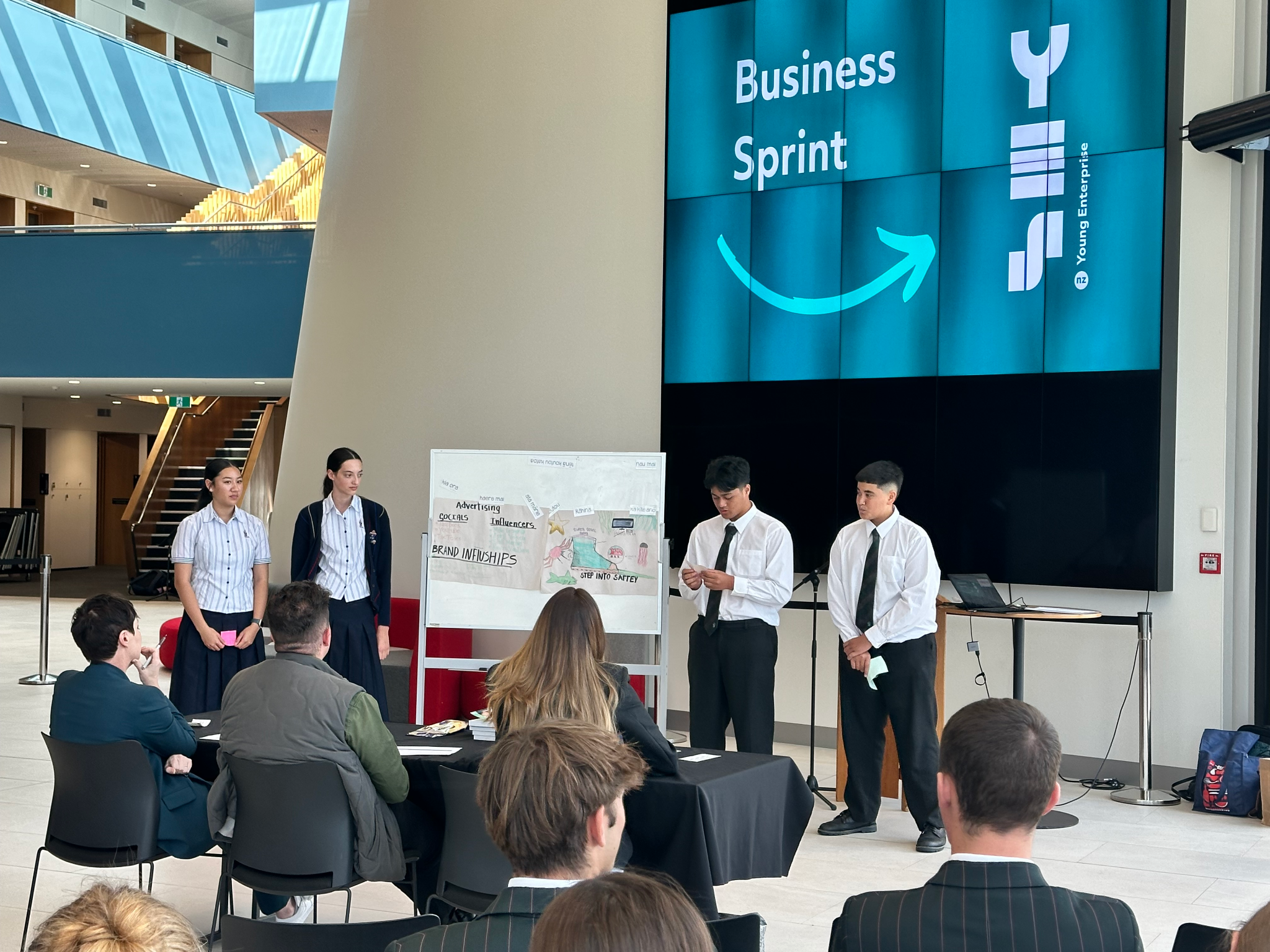
11ACC - Accounting Dilworth Diploma
Aims of the Course:
Many students today do not have the financial capability or understanding to help them make better decisions in both their personal life and businesses they will be a part of, or even own. In this course students will learn the skills to prepare financial information, understand the information, and how decision-making can influence the financial sustainability of a business.
Students will learn that financial resources, like all resources, affect various groups of people and require careful stewardship to ensure the best outcomes for people and communities. Learning will examine Māori, Pacific, and other approaches to recording resources, and different accounting approaches for enterprises of different sizes.
In this course we will also aim to take field trips to various businesses and have old boys who own businesses come into class to share their experiences of managing finances.
Topics:
- Building Blocks
Financial viability is necessary for organisations to continue to operate into the future
Explore different types of business and the financial knowledge associated with them
Understand accounting elements and apply the accounting equation for small entities
Use journals and ledgers to process financial information
- Communicating Financial Information
Prepare financial statements incorporating simple balance day adjustments for small entities. Income Statement, Balance Sheet and Cashflow Statement
- Decision Making
How pūtake informs financial and non-financial decision-making
External factors impact on organisation
Use financial and non-financial information to aid in decision-making
Assessment:
Dilworth Diploma PointsMode of AssessmentInternal or ExamThe Accounting Cycle5Assignment - PortfolioIFinancial Decision making5Assignment - PresentationIFinancial Statements5Assessment - ExaminationE
11ART - Visual Art Dilworth Diploma
11ART11ART - Visual Arts Dilworth Diploma
Aims of the Course:
In a world that's constantly evolving with uncertain futures, there's a growing demand for creative and diverse thinkers capable of devising unique solutions for both existing and emerging challenges. The Visual Arts programme strives to equip students with the skills and self-assurance to think beyond conventional boundaries and explore their creativity.
Students will learn how to explore and express ideas visually on a topic shared with the class. Students will study and create different types of art and gain practical skills by trying out various materials and techniques in drawing, printmaking, design, photography and sculpture. Using these skills, students will create a collection of artworks that show how your ideas have developed, inspired by different artists. The course teaches students to understand and communicate the meaning behind your art, expressing your thoughts and feelings and becoming a reflective thinker in the process. Students will also learn about why art is made, how people see it, and why it's valuable and discover new ways to understand yourself, your community, and the world.
Topics:
- Drawing
- Printmaking: Drypoint etching, Relief print (woodcut, lino), Screen printing
- Design: Adobe Illustrator
- Photography: Adobe Photoshop
- Sculpture
Assessment:
Dilworth Diploma Points
Mode of Assessment
Internal or Exam
11.1 Visual Research
5
Assignment - PortfolioI
11.2 Processes and Conventions
5
Assignment - PortfolioI
11.3 Resolved Artwork
5
Assignment - PortfolioE
TOTAL
15
NB: Refer to the Student Assessment Handbook for assessment rules


11DRA - Drama Dilworth Diploma
11DRA11DRA - Drama Dilworth Diploma
Aims of the Course:
Year 11 Drama offers ākonga the opportunity to broaden and deepen their understanding and capabilities in Drama through four main learning strands - Performance, Devising, Analysis and Drama Context. Through Drama, ākonga develop greater presence, self-management and the courage to create in the world. They experience themselves more deeply and develop a richer understanding of who they are. Through walking in the shoes of others they develop greater empathy, understanding of the human condition, appreciation of themselves, and what kind of world they want to live in.
Topics:
The theme is Comedy and Tragedy. Students gain experiential understanding of the role of Comedy and Tragedy through history, and its role in the human condition. The sequence of activities is broad, enlivening and rigorous and provides scope for bold self-expression, and opportunity for reflection about self and society.
- Physical Comedy - Slapstick, Silent Film, Clowning and Mask, Commedia dell’arte
- Exploration of Greek Tragedy - Drama reflecting the social context of the era
- Portfolio of scripted Comedy and Drama/Tragedy
- Analyse Theatre - understanding and analysing the Elements, Conventions and Technologies and Features used to enhance and shape performance
- Live Theatre / Theatre Form - understanding and knowledge
Other:
Students will need to see one live theatre performance to best understand and discuss how actors, theatre and the technologies work.
Assessment:
Dilworth Diploma PointsMode of AssessmentInternal or Exam
11.1 - Present physical comedy
5
Assignment - Performance
I
11.2 - Perform a scripted tragedy
5
Assignment - Performance
I
11.3 - Analyse a piece of theatre and identify components and features
5
Assignment - Examination
E
TOTAL Points:
15
11DTC - Digital Technologies Dilworth Diploma
11DTC11DTC - Digital Design Technology Dilworth Diploma
Aims of the Course:
Digital Technologies is a comprehensive exploration of the ever-evolving digital landscape. This course is designed to equip ākonga with the skills and knowledge to thrive in the dynamic field of technology, focusing on software programming, digital information systems, and digital media.
Topics:
- Programming
Learn the basics of Python. Sequence, Selection, Iteration and Storage through tutorials and challenges with a 5-point programming assessment of your ability at the end of the 6 weeks.
- Game Design
Research and use the principles of manaakitanga and kaitiakitanga to develop the design considering the target audience, the wider audience, and the purpose of the game. You will develop refined artwork, colour palettes, and level mockups to clearly meet your requirements and the needs of others.
- Develop a Digital technologies outcome (Project Management)
A sprint comprises four steps: planning, execution, review, and retrospective. This is what makes up the sprint cycle. You will participate in three sprint cycles to create your game.
Assessment:
Dilworth Diploma PointsMode of Assessment
Internal or Exam
11.1 Programming assignment
5
Assessment - Written
I
11.2 Game design assignment
5
Assignment - Portfolio
I
11.3 Develop a Digital technologies outcome assessment
5
Assessment - Examination (Report)
E
TOTAL Points:
15

11DVC - Design and Visual Communication Dilworth Diploma
11DVC11DVC - Design and Visual Communication Dilworth Diploma


Aims of the Course:
This course is designed to provide students with a comprehensive understanding of Design and Visual Communication, leading to career pathways in fields such as Architecture, Engineering, and Industrial Design. Students will explore spatial and product design concepts, drawing on cultural influences and personal perspectives to create meaningful and innovative design solutions. The course will emphasise the development of visual communication skills to effectively convey design ideas and outcomes.
Topics:
Spatial design inspired by design influences: Our space (Spatial Design)
- Generate spatial design ideas using visual communication techniques in response to design influences
- Develop EV charging station design ideas informed by the consideration of people
- Visually communicate design outcomes: Show me the mahi (Presentation Board & Model)
Assessment:
Dilworth Diploma PointsMode of AssessmentInternal or Exam11.1 Spatial Design inspired by design influences5Assignment - portfolioI11.2 Develop product design ideas5Assignment - portfolio
I11.3 Visually communicate design outcomes5Assignment - portfolio
E
Field trips:
Possible field trip to look at architectural design around Auckland
11ECO - Economics Dilworth Diploma
11ECO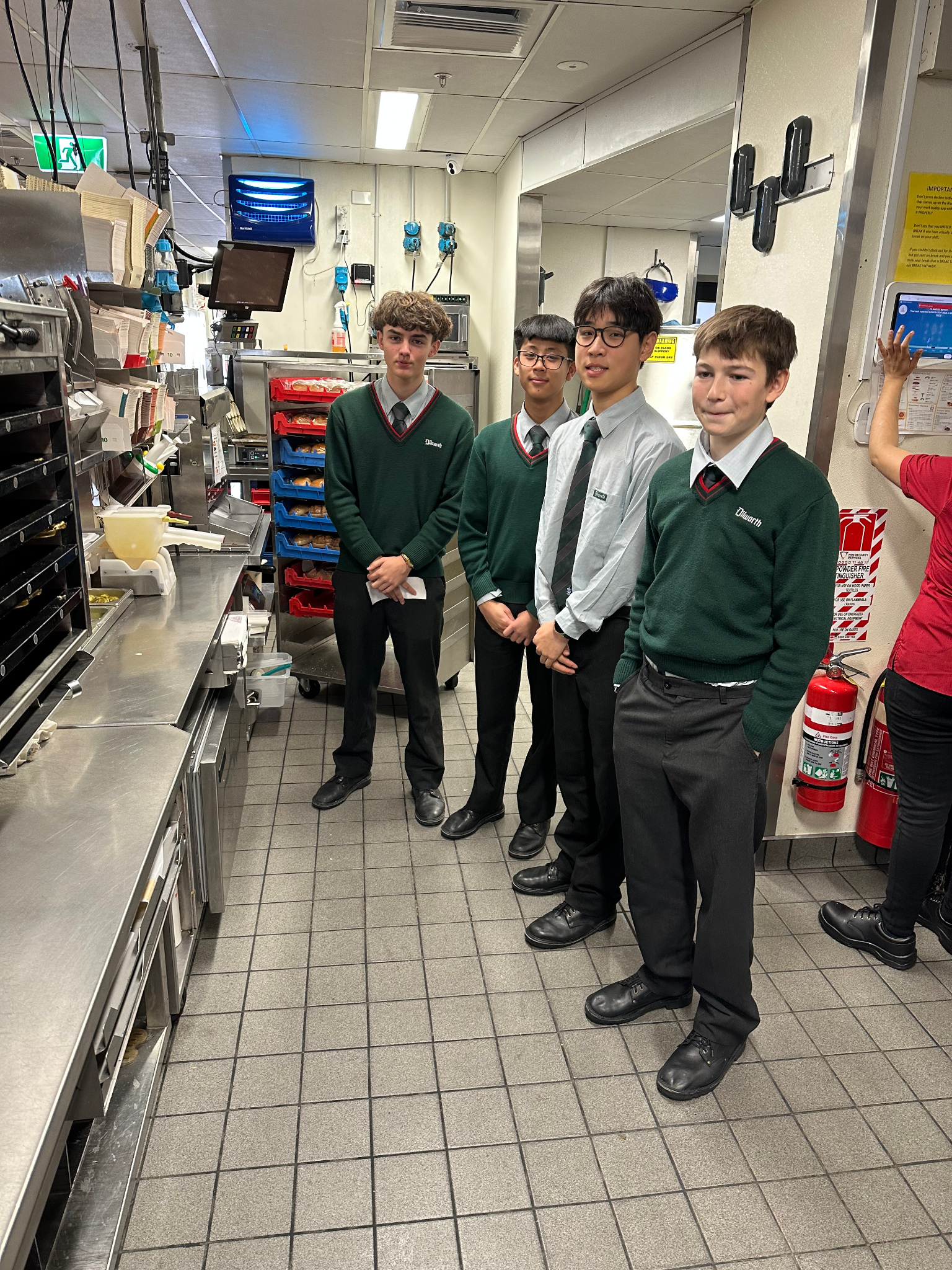
11ECO - Economics Dilworth Diploma
Aims of the Course:
This subject aims to develop an understanding of why and how people make economic decisions, the impact those decisions have on society, and how these impacts are viewed. This should enable students to be aware of the changing nature of the economic environment and to take an effective part in economic activity, and to contribute to economic well-being.
Economics will equip students with the tools to make informed decisions and to make better use of their own and society’s resources. These tools will be contextualised in a variety of field trips and speakers. For example:
1. McDonald’s trip to investigate their production processes
2. Ferrari
Topics:
- Students will learn about Macroeconomics in big business entities
- They will learn about how markets work and calculating equilibriums for Microeconomics
Assessments:
Dilworth Diploma PointsMode of AssessmentInternal or ExamCircular flow - Continental Cars5Assignment - reportIProducers - McDonalds5Assignment - reportIWelcome to the market5Assessment - ExaminationE
11ENG - English NCEA Level 1
11ENG11ENG - English NCEA Level 1
Aims of the Course:
Year 11 English gives you the ability to study the 'Art of Communication' through a range of written, visual and oral texts. You will then use your understanding of how these work to communicate more expertly. Students will be offered a range of opportunities to reflect on themselves, others and the wider world through an exploration of a range of texts. They will also learn to serve others through the strengthening of communication skills, both written and oral.
Year 11 English is the only NCEA Level 1 course at Dilworth, and offers students the chance to learn more about the NCEA systems and processes as you study.
11GEO - Geography Dilworth Diploma
11GEO11GEO - Geography Dilworth Diploma
Aims of the Course:
The main focus of Geography is to develop an understanding of the relationship between people and their environment. All topics in 11GEO consider both the natural and built environment; how it impacts people and how it is impacted by people. Geography equips students with analytical skills, research tools and the ability to think critically about a variety of topics. The first topic, that of population, considers where people live and why, with consideration to the impacts this has on our natural environment. To understand an environment, we must be able to conduct our own research, carrying out some good old fashioned field work. This allows us to explore our local suburb of Epsom, whilst also utilising the support of GIS software. We continue to consider our local environment through our last topic, that focuses on the volcanic landscape of Tāmaki Makaurau/Auckland. The 11GEO class considers processes that have formed and shaped the landscape of the city we live in today.
Topics:
- Spatial Distribution of Phenomenon: Population Distribution
- Research and Data Collection: Exploring Epsom
- Natural Processes Shaping an Environment: The Geography of Tāmaki Makaurau
Other:
There is a one day field trip exploring the Geography of Auckland. This will include exploring local volcanic landscapes such as Rangitoto Island and the Auckland Domain.
Assessment:
Dilworth Diploma Points
Mode of assessment
Internal or Exam
Spatial Distribution of Phenomenon: Population Distribution assignment
5
Assignment - Written Task
IResearch and Data Collection: Exploring Epsom
5
Assignment - Report
INatural Processes Shaping an Environment: The Geography of Tāmaki Makaurau
5
Assessment - Examination
ETOTAL1511HIS - History Dilworth Diploma
11HIS11HIS - History Dilworth Diploma
Aims of the Course:
The main theme that underpins all topics in the Year 11 History Dilworth Diploma course is protest and the misuse of power. All topics in 11HIS will look at how power relationships often drive history. The first topic studied will be the black civil rights movement in the USA that championed non-violent protest. This unit will also look in-depth at the methods of oppression used by predominantly southern states in America to keep blacks oppressed. In a NZ context the Dawn Raids of the 1970's will be the focus. This topic will include an examination of differing perspectives on the raids and their legacy for Pacific Island communities in NZ. To enhance student understanding of this significant event, members of the Polynesian Panthers will be invited to Dilworth to share their personal experiences of the Dawn Raids with the 11HIS class. Lastly, 11HIS will learn about the impact of colonisation upon indigenous peoples in Australia with a focus on the plight of the Stolen Generations and the indigenous rights movement that sought recognition for the government's historical misuse of power.
11HIS is a literacy heavy course with a strong emphasis on writing, discussion, research, and resource interpretation. Fifteen points towards the Dilworth Diploma via 2 internal assignments and 1 external assessment will be offered to all students.
Topics:
- Oppression and the black civil rights movement in the United States
- Dawn Raids in NZ
- Genocide and the Stolen Generations in Australia
Assessment:
Dilworth Diploma PointsMode of AssessmentInternal or ExamExamining Primary Sources5Assignment - Resource AnalysisIExamining different perspectives5Assignment - ReportIExamining a significant event5Assessment - ExaminationETOTAL15
11HTC - Hard Materials Technology Dilworth Diploma
11HTC11HTC - Hard Materials Technology Dilworth Diploma
Aims of the Course:
Hard Materials Technology is an immersive exploration of the technology curriculum, guiding ākonga through the creative journey of designing and crafting purpose-driven outcomes. This hands-on course emphasises the three strands of technology, providing students with opportunities to apply design principles, develop technical skills, and comprehend technological practices cultural and ethical dimensions.
Topics:
By my side - Make a specified product
- Introduction for students to the workshop environment and health & safety
- Making a functional Jig that will introduce students to workshop equipment. Teach students the benefits of jig making and how they assist in the manufacturing process
- Manufacture a bedside table that is fit for purpose and meets the brief and specifications
Light it up - Conceptual design & Implementation
- Critically analyse their own and others’ design outcomes to inform the development of ideas for feasible outcomes
- Undertake a critical evaluation that is informed by ongoing experimentation and functional modelling, stakeholder feedback, and trialling in the physical and social environments
- Evaluate this outcome’s fitness for purpose against the brief
- Design and manufacture a bedside lamp that is fit for purpose both physically and socially
Understanding the advantages of Technological modelling to help make informed decisions
- Using functional modelling to write a report, showing evidence of how modelling informed their decisions
Assessment:
Dilworth Diploma Points
Mode of Assessment
Internal or Exam
11.1 Make a specified product: By my side
5
Assignment - PortfolioI
11.2 Conceptual design & implementation: Light it up
5
Assignment - PortfolioI
11.3 Technological modelling
5
Assignment - Examination (Report)E
TOTAL Points:
15
NB: Refer to the Student Assessment Handbook for assessment rules


11MAO - Te Reo Maori Dilworth Diploma
11MAO11MAO - Te Reo Māori Dilworth Diploma
Aims of the Course:
This full year course is part of the Dilworth Diploma and is closely linked to Curriculum levels 5-6 of Te Aho Arataki Marau mō te Ako i Te Reo Māori - Kura Auraki for learning Te Reo Māori in English-medium Schools. It aims to build on tools acquired in the Junior Māori Curriculum strengthening competency in conversational language using te reo Māori in everyday contexts. The programme focuses on aspects of grammar and language features and topic related vocabulary. Language modes are primarily spoken language (kōrero), both conversational and speech making, and tuhinga (written).
Learning is centred around three Big Ideas: Te Tika o te Reo - Language Accuracy, Te Rere o te Reo - Language Fluency, and Te Māori o te Reo - Cultural Integrity of the Language.
Topics:
- Ngā Hākinakina - Sports and Games
- Manaakitanga - Hospitality
- Te Hararei - The Holiday
- Mihi Mai, Mihi Atu - Speech making: formal and informal speech making, acknowledgements and whaikōrero
Annual Marae Trip: A Journey into Te Ao Māori
Each year, our senior students are given the unique opportunity to step beyond the classroom and into the living heart of Te Ao Māori through our annual noho, 2 night stay, at a chosen marae in Aotearoa outside of Auckland — a powerful and unforgettable experience tied to Te Reo Māori and Tikanga Māori.
From the moment we step onto the marae grounds, students are immersed in the depth of tikanga marae – the customs, protocols, and values that guide life on the marae. Students are introduced to whaikōrero – the art of formal oratory – and witness firsthand the mana and meaning carried in every word. Through this experience, they gain not just cultural understanding, but a deeper appreciation of identity, place, and the power of language.
This trip is more than a field visit — it’s a door into another worldview. For many, it becomes a turning point in their personal journey, influencing their course choices, career paths, and values for life.
Whether you're curious about Māori language and customs, passionate about Indigenous knowledge systems, or simply open to growing in new ways, this experience is for you.
"Tamaiti ako ana i te kainga, tū ana ki te marae tau ana." A child taught at home will stand on the marae with dignity.
Assessment:
Dilworth Diploma Points
Mode of AssessmentInternal OR Exam
11.1 Te Rere o te Reo - Language Fluency: Portfolio requiring 2 submissions; kōrerorero (conversation)
5
Assignment - PortfolioI
11.2 Te Tika o te Reo - Cultural Integrity of the Language: Formal Speech Presentations (mihi mai/atu)
5
Assessment - PresentationI
11.3 Te Māori o te Reo - Language Accuracy: End of Year Exam
5
Assessment - ExaminationE
TOTAL
15
11MAT - Mathematics Dilworth Diploma
11MAT11MAT - Mathematics Dilworth Diploma
Aims of the Course:
Mathematics is the exploration and use of patterns and relationships in quantities, space, and time. Statistics is the exploration and use of patterns and relationships in data. These two disciplines are related but involve different ways of thinking and solving problems. Both equip ākonga with effective means for modelling, analysing, and interpreting the world in which they live.
Mathematicians and statisticians use symbols, graphs, displays, and diagrams to help them find and communicate patterns and relationships. They evaluate information to make informed decisions and create models to represent both real-life and hypothetical situations.
Topics:
Students will learn about:
- Number
- Geometry and Trigonometry
- Measurement
- Statistics
- Probability
- Algebra
- Graphs
Assessment:
Dilworth Diploma PointsMode of AssessmentInternal or Exam
Number, Measurement and Geometry
5
Assessment - Written Test
IStatistics and Probability
5
Assignment - Report
IApply algebraic and graphical procedures in solving problems
5
Assessment - Examination
ETOTAL Points:
15
Other:
Students will have the opportunity to take part in the Mathex competition. A group of students will be selected to accelerate to year 12 Calculus based on their needs for extension.
11MUS - Music Dilworth Diploma
11MUS11MUS - Music Dilworth Diploma
Aims of the Course:
Year 11 Music offers ākonga the opportunity to broaden and deepen their understanding and capabilities in Music through four main learning strands - Performance, Composition, Analysis and Musical Context. Exploring a range of learning strands encourages ākonga to realise areas of strength and interest as well as examining more closely those that require focus and further attention.
Topics:
Topics covered in Year 11 Music include:
- Theoretical knowledge and concepts as they apply to real-world outcomes, such as composing new music and presenting great performances
- An overview of classical and popular music history through listening, and developing understanding of how active listening analysis helps to identify and inspire style and compositional features
- Live workshopping of performance practice and psychology, and deep discussion on rehearsal methodology, time efficacy, personal accountability and planning
- Live performance for a range of audiences
- The creation of original music
Other:
All ākonga in the Music space should give due consideration to involvement in co-curricular music activities, opportunities for leadership and mentoring within the Performing Arts Faculty, participation in the itinerant music programme, and engagement in external events and competitions.
Assessment:
Dilworth Diploma PointsMode of AssessmentInternal or Exam
11.1 - Compose original pieces of music
5
Assessment - Written
I11.2 - Present two pieces of music as a featured soloist
5
Assignment - Portfolio
I11.3 - Demonstrate theoretical and aural understanding
5
Assessment - Examination
ETOTAL Points:
15
11PED - Physical Education Dilworth Diploma
11PED11PED - Physical Education Dilworth Diploma
Aims of the Course:
Year 11 Physical Education incorporates both theoretical and practical aspects designed to develop a well-rounded understanding of physical activity and health.
Learners will delve deeper into key concepts associated with the human body and are encouraged to think critically and problem solve.
Practical application of knowledge, skill development, team-work, collaboration and learning to take personal responsibility are key requirements of the course.
Topics:
- Skill Acquisition through circus skills
- Safety in Sport through planning an activity
- Functions of the Body - anatomy and physiology
- Practical Component (x3) - Integrated within the above three units
Assessment:
Dilworth Diploma Points
Mode of AssessmentInternal or Exam
Skill Acquisition
5
Assignment - PortfolioI
Safety in sport
5
Assignment - ReportI
Functions of the Human Body
5
Assessment - ExaminationE
TOTAL Points:
15
11SCI - Science Dilworth Diploma
11SCI11SCI - Science Dilworth Diploma
Aims of the Course:
To introduce students to the three main content areas in Science - Biology, Chemistry and Physics. This will prepare them for specialist Sciences in Year 12.
Topics:
Students will cover the core areas of:
- Biology
- Micro-organisms
- Genetics
- Chemistry
- Properties of metals
- Carbon chemistry
- Physics
- Mechanics
- Energy
Assessment:
Dilworth Diploma PointsMode of AssessmentInternal or Exam
Biology Investigation and Report
5
Assignment - Report
IChemistry Investigation and Report
5
Assignment - Report
IScience examination - Biology, Chemistry, Physics
5
Assessment - Examination
ETOTAL Points:
15
Subjects for Year 11 Students
*12HOS - Hospitality NCEA Level 2* (Unit Standards)
12HOS12HOS - Hospitality NCEA Level 2* (This is a Unit Standard course)
Aims of the Course:
The course will offer a range of practical activities based on food preparation and service. It will enable students to gain industry-recognised qualifications while at school and would be particularly useful for any student considering a career in Hospitality.
A limited number of students will have the opportunity to continue studying Level 3 Hospitality. Level 3 Hospitality will only be available to boys who wish to pursue a hospitality-related pathway after leaving Dilworth.
Please note that this course is a Unit Standard course where there are no Merit or Excellence grades, or course endorsements available.
Topics:
- Foundational Understanding of Health & Safety in the Food Business - Students learn food handling, sanitation, and regulations.
- Knife Skills - Students gain an understanding of various cut vegetables for commercial kitchens.
- Best in Show - Students compete in a lemon tart contest to refine pastry skills.
- Basic Barista Skills and Customer Service - Students learn to make various coffee beverages and improve customer service.
This subject is Unit Standards based course which is competency-based and credits are graded at ‘Achieved’. It is important to note that there are no Merit or Excellence grades, or course endorsements available for this course. This course is NOT classified as an Approved Subject for University Entrance. Students who are intending to go to University to study a degree programme, are advised to take 5 Approved Subjects to give them the best chance to meet any rank score requirements for entry. However, they are advised to talk to their Year Level Advisor and the Careers and Pathways Learning Area to discuss this.
Other, eg. Field trips, Curriculum Enrichment
MIT visit for food safety standard assessment, Coffee roaster/Café TBC


*12PAT - Pathways NCEA Level 2 * (Unit Standards)
12PAT12PAT - Pathways NCEA Level 2 (Unit Standards)
You can only take ONE Unit Standard course (either Pathways or Hospitality) in Year 12, to keep options open for Year 13.
Applications for this course are by requesting an 'Exemption,' detailing why you wish to be considered for this programme.
Aims of the Course:
This course is based around one semester of Pathways, delivered by the Careers and Pathways Learning Area, and one semester of Trade Skills delivered by the Technology Learning Area. It will focus on work-ready skills and pathway exploration, complimented by a practical trades project to enable students to gain practical and transferable trades skills.
Pathways: This part of the course is geared towards students who would benefit most from exploring options for further study, work or training post-Dilworth. Learning experiences are designed to help students understand career pathways and develop work-ready skills. Students will benefit from off-site industry visits and educational opportunities with selected training providers.
Trade Skills: This part of the course focuses on developing practical skills in basic construction techniques, using and maintaining tools, reading and interpreting technical drawings, and understanding workplace health and safety practices. Students also learn to prepare cutting lists for timber projects, mark out, cut, and machine components, assemble and finish timber projects, and complete and check their work operations. Access to industry standards gives students a taste of the trades.
There are 19 core credits, plus the opportunity to earn industry-related credits. All standards are Unit Standards. This means they are all competency-based, and credits are graded at ‘Achieved’. Please note that no Merit or Excellence grades or course endorsements are available for this course.
This course will provide a solid foundation for students wishing to pursue a trade as a career or further trades training, potentially leaving at the end of Year 12.

12ACC - Accounting NCEA Level 2
12ACC
12ACC - Accounting NCEA Level 2
Aims of the Course:
This subject aims to develop students’ understanding of the role of accounting in society as a financial language for individuals, community organisations and businesses.
The course builds upon students knowledge of the principles, processes and systems of accounting and enables students to apply financial knowledge and skills to practical situations.
Topics:
- Conceptual basis of accounting
- Financial Statements
- Xero accounting software
- Accounts receivable subsystem
- A contemporary accounting issue
12ART - Visual Art NCEA Level 2
12ART12ART - Visual Art NCEA Level 2
Aims of the Course:
Choosing Visual Art provides an opportunity for students to cultivate their knowledge and skills in art creation. The course explores the themes of Protest Art and Landscape/Architecture (Exterior/Interior), allowing students to further develop a theme of their own choice. Throughout the programme, students will delve into various techniques, styles, and ideas drawn from established artistic practices, selecting models that resonate with their preferences.
Topics:
Students will gain the knowledge and ability to develop skills in their chosen field of practice from Painting, Printmaking or Sculpture. This involves not only practical skill development but also an emphasis on research, analysis, critique, and interpretation of various artists' works. The course also guides you in the process of generating, developing, refining, and extending your ideas, ultimately transforming them into polished and completed artworks. Additionally, the course ensures that you gain confidence in utilising a spectrum of techniques, encompassing both traditional and digital methods of art making.


12BIO - Biology NCEA Level 2
12BIO12BIO - Biology NCEA Level 2
Aims of the Course:
Biology is the study of the variety, structure, functions, continuity and interrelationships of living things in nature. It provides a wide range of learning experiences which will be of value to all students throughout their lives, and provides a sound foundation to the study of biological and health sciences in the future. The internal assessment component of the course allows students to develop practical skills to analyse scientific data. Research skills will also be developed to demonstrate an understanding of adaptations in plants and animals.
Topics:
- Cell biology
- Researching adaptations in animals that enable them to carry out living processes
- Deepening students understanding of genetics
12BUS - Business Studies NCEA Level 2
12BUS12BUS - Business Studies NCEA Level 2
Aims of the Course:
Business Studies is an exciting course that gives students the opportunity to begin creating and validating a new product that they can sell in the real world. We will also be contributing to the life of Dilworth by planning a Business Alumni Dinner that connects Old Boys with current students and inspires them to succeed in life.
The knowledge and skills gained in Business Studies, and exposure to enterprise culture, can help shape creative, energetic and enterprising people who will contribute to New Zealand’s economic future. In Business Studies, we will be exploring the following:
- Creating and validating an idea that solves a problem in our world.
- Executing a Business Plan through selling and reviewing.
- Exploring how we can motivate people in our businesses to improve productivity.
Topics:
- Ideation Process
- Market Research
- Business Planning
Other, eg. Field trips, Curriculum Enrichment
Young Enterprise Competition.
Guest speakers and field trips to meet successful entrepreneurs.
12CHE - Chemistry NCEA Level 2
12CHE12CHE - Chemistry NCEA Level 2
Aims of the Course:
Understanding the World: Chemistry explains the properties of everyday substances, the changes they undergo, and the principles behind various natural phenomena. Students learn to analyse information, draw conclusions, and apply logical reasoning.
Real-World Applications: Understanding chemical concepts helps students make informed decisions about health, nutrition, environmental issues, and the use of household products. It also provides a basis for understanding issues such as pollution, climate change, and sustainable energy.
Topics:
- Investigations and titrations to determine presence of substances in a sample
- Organic chemistry
- Structure of substances to explain their uses in the modern world
12DRA - Drama NCEA Level 2
12DRA12DRA - Drama NCEA Level 2
Aims of the Course:
Drama is a performance-based subject that provides confidence building, training in a craft and the opportunity for ākonga to discover themselves and explore creativity, theatre history and philosophy through performance. Drama is a high energy subject, suited to students who like to be physical, engage with big ideas, collaborate and be challenged. Strengthening of focus, will, self-expression and oratory are central to this subject. Year 12 Drama offers ākonga the opportunity to develop capacities and understanding through the following strands.
Strands: Performance, Devising, Analysis and Drama Context.
Other, eg. Field trips, Curriculum Enrichment:
Students will attend two live theatre performances over the course of the year and will also attend a 3–4-day Drama Production Camp at Mangatawhiri Campus.
12DSN - Design Art NCEA Level 2
12DSN12DSN - Design Art NCEA Level 2
Aims of the Course:
Design enables students to develop knowledge and understanding of design processes, and to learn to solve design problems in a variety of areas of design of their choice. Some of these areas may include digital drawing, image manipulation, packaging, magazine layout, typography, illustration, anime and web design.
Topics:
Students will learn the basics of design and how designers work. The course covers the design process, including graphic design, package design, typographic layout, and using Photoshop, Illustrator, and InDesign. The goal is to give students a solid foundation in Design, teaching them to understand design briefs, conduct research, generate ideas, and systematically develop those ideas into finished design solutions.


12DTC - Digital Technologies NCEA Level 2
12DTC12DTC - Digital Design Technology NCEA Level 2
Aims of the Course:
Digital Technologies allow students to investigate new and emerging digital practices and trends. The nature of this subject is very fluid and is continually being revised. Digital Technologies is not just for computer nerds, hackers and geeks, but for those with an interest in how to be better equipped for an ever-changing digital world. Every industry is being disrupted and redefined by digital technology.
Topics:
- Website Design - In website design, the essence of whanaungatanga, or interconnectedness, is deeply embedded. Here, the focus is on creating outcomes that resonate with people. Websites are platforms crafted within cultural, social, and environmental contexts. Every design decision needs to consider the impact on people. The aim is to develop websites that not only function but also resonate with the users.
- Programming - In programming, class activities are designed to help students learn to decompose problems into discrete parts, and to design algorithms using different methods of representation such as flowcharts or pseudocode. Class activities are used to help students design and develop a series of increasingly complex programs to solve given scenarios. Students document their programs with comments and follow programming ‘best practice’ which may be specific to their chosen language. Activities are designed to help students follow an organised testing process and document that they have tested their program works on a range of inputs and conditions relevant to their program.


12ECO - Economics NCEA Level 2
12ECO12ECO - Economics NCEA Level 2
Aims of the Course:
This course aims to give students an understanding of how macroeconomic variables relate to each other. It builds upon students' knowledge of the principles and core skills of Economics, such as graphing & flow on effects. It also develops a student's ability to make real life decisions based on macroeconomic variables.
Topics:
- Unemployment
- Government policy
- Inflation
- International trade
12ENG - English NCEA Level 2
12ENG12ENG - English NCEA Level 2
Aims of the Course:
Year 12 English is designed to build the communication skills of all students, while exposing them to a range of literature that will help open new worlds of empathy and understanding. This course is also designed to prepare students for the literacy rich components of tertiary study, with all of our standards counting toward University Entrance Literacy.
Topics:
- Research asks students to select a topic of interest to them, and to read a range of credible sources to gain information about that topic. This unit results in a written report about the issue.
- The Writing Portfolio spans three terms, and allows students to investigate a range of writing styles. At the conclusion of this unit, students will draft and edit their writing to a publishable standard.
- A Novel Study is included in this course as an in depth study of literature. Students will engage with the story itself, as well as the tools the author has used to create the text.
- A Film Study will complement the study of literature in this course, where students will focus on how directors are able to combine visual and aural elements to create effect in film.
12ENL - English NCEA Level 2: Literacy Focus
12ENL12ENL - English Literacy NCEA Level 2
Aims of the Course:
Year 12 English is designed to build the communication skills of all students, while exposing them to a range of literature that will help open new worlds of empathy and understanding. This course is also designed to prepare students for the literacy rich components of tertiary study, with all of our standards counting toward University Entrance Literacy.
Topics:
- Research asks students to select a topic of interest to them, and to read a range of credible sources to gain information about that topic. This unit results in a written report about the issue.
- The Writing Portfolio spans three terms, and allows students to investigate a range of writing styles. At the conclusion of this unit, students will draft and edit their writing to a publishable standard.
- Students in this course will also create and deliver a Formal Speech, which will build confidence and focus students on the writing and delivery skills required to be a strong oral communicator.
- A Novel Study is included in this course as an in depth study of literature. Students will engage with the story itself, as well as the tools the author has used to create the text. This will be the only External standard examined in this course, allowing students to focus on this one paper, which offers UE Reading and/or Writing credits for UE Literacy.
12GEO - Geography NCEA Level 2
12GEO12GEO - Geography NCEA Level 2
Aims of the Course:
The overall aim of Geography is to develop an understanding of the relationship between people and their environment. NCEA Level 2 Geography traverses all scales, from our local environment through to a global scale. The first topic centres on applying our understanding of spatial patterns in an urban context, with consideration of murder rates in Chicago, USA. Spatial patterns are also considered at a global scale, applied through a focus on tropical rainforests. We have a significant focus on the natural environment of Te Ika-a-Māui/the North Island, supported by a 3 day field trip to the volcanic centre of the island. This trip supports our Geographic Research internal assessment and develops understanding of the area as our large natural landscape for the external examination. Geographic skills of mapping, graphing and analysing geographic resources will be integrated throughout the course, and also be externally examined.
Topics:
- Large Natural Landscape: Tongariro Volcanic Zone
- Urban Pattern: Homicide in Chicago
- Conduct Research: Vegetation Patterns in Tongariro National Park
- Global Study: Tropical Rainforests
Other, eg. Field trips, Curriculum Enrichment:
Three day field trip to Tongariro National Park.
12HIS - History NCEA Level 2
12HIS12HIS - History NCEA Level 2
Aims of the Course:
The main theme that underpins all topics in NCEA Level 2 History is 'global forces that shaped the modern world'. This involves a study of the most important historical forces that influenced several significant 20th Century events. The first topic centres on causation, and introduces students to the myriad of factors, such as imperialism, nationalism, colonialism, and militarism (as well as others) that caused the outbreak of the First World War in 1914. Students will undertake a historical research project on the causes of the First world War which which help develop their research and critical thinking skills. Knowledge of colonialism and nationalism will be further enhanced by an in - depth study of the Vietnam War and the Vietnamese population's decades long struggle for autonomy. The impact of the Vietnam War domestically in the United States will form a key part of this unit. A study of Zionism as a movement and the part it played in the creation of Israel in 1948 will also feature in this course. Students will develop an understanding of the complexity of modern Israeli / Palestinian crisis in the Middle East.
Year 12 History is a literacy heavy course, where wider reading and proactive use of the Dilworth School Library is encouraged. Literacy skills, resource interpretations skills, and research skills will be taught and assessed in all topics of work.
This course will offer students 18 credits in total, via 9 internal credits and 9 external credits. All standards offer UE reading credits and both external examinations offer UE writing credits.
The 12 HIS course includes a 1 day field trip to the North Shore and inner city of Auckland (likely in Term 1) to teach students how to interpret various forms of historical evidence.
12HTC - Hard Materials Technology NCEA Level 2
12HTC12HTC - Hard Materials Technology NCEA Level 2
Aims of the Course:
The course is made up of a variety of practical and theoretical assessments, constructed in such a way as to give them the maximum number of learning experiences of common industry practices. Students begin by undertaking set projects to learn new skills and techniques, as well as further develop previous learning. Students will then be challenged to design and create their own piece of cabinetry/furniture by adding their own flair to a flexible brief.
Topics:
- Implement advanced procedures using resistant materials to make a specified product with special features - Manufacture a step stool that is fit for purpose and meets specifications, ensuring that both structural and aesthetics requirements are met.
- Develop a conceptual design for an outcome - Critically analyse their own and others’ design outcomes to inform the development of ideas for feasible outcomes; Undertake critical evaluation that is informed by ongoing experimentation and functional modelling, stakeholder feedback, and trialing in the physical and social environments; Evaluate an outcome’s fitness for purpose against the brief & specifications.
- Undertake effective development to make and trial and prototype - Manufacture their conceptual design to meet the brief and specifications, justifying that their project is fit for purpose.


12MAC - Calculus NCEA Level 2
12MAC12MAC - Calculus NCEA Level 2
Aims of the Course:
Calculus is the exploration and use of patterns and relationships in functions, quantities, space and time. This course is designed for students who are confident mathematicians, wishing to develop their algebraic, manipulation and analytic skills. Calculus is either a requirement or recommended for any students wanting to go into fields of Engineering, Mathematics, Science, Economics or Computing.
"The essence of mathematics is not to make simple things complicated but to make complicated things simple".
- S. Gudder
Topics:
As a preparatory course for Level 3 Calculus, this course focusses on developing the analytical skills required in Algebra and Calculus. The topics include:
- Trigonometry
- Graphs
- Algebra
- Co-ordinate geometry
- Introductory calculus
12MAO - Te Reo Maori NCEA Level 2
12MAO12MAO - Te Reo Māori NCEA Level 2
Aims of the Course:
This full year course is closely linked to curriculum levels 6 -7 of Te Aho Arataki Marau mō te Ako i Te Reo Māori - Kura Auraki for learning Te Reo Māori in English medium Schools. It aims to build on tools acquired in the Junior and Year 11 Māori Curriculum, strengthening competency in language using te reo Māori in everyday contexts.
The programme focuses on aspects of grammar and language features and topic related vocabulary. Assessed language modes are tuhinga (written), whakarongo (listening) and pānui (reading), however the course will be heavily centred around kōrero (speaking).
By the completion of this course you should be able to:
- Communicate about problems and solutions
- Communicate about immediate plans, hopes, wishes, and intentions
- Communicate in formal situations
- Offer and respond to advice, warnings, and suggestions
- Offer and respond to information and opinions, giving reasons
- Read about and recount actual events imagined in the past
Topics:
Me Ako Tātou i te Reo Māori - We should all learn the Māori Language: Ākonga will learn general and topic specific vocabulary as well as language features needed to express opinions, judgements, and arguments surrounding topics through a range of text types.
Āe, Kāhore Rānei - Yes, or No?: Ākonga will learn general and topic specific vocabulary as well as language features used to express opinions, judgements, and arguments surrounding topics used in a range of text types.
Annual Marae Trip: A Journey into Te Ao Māori
Each year, our senior students are given the unique opportunity to step beyond the classroom and into the living heart of Te Ao Māori through our annual noho, 2 night stay, at a chosen marae in Aotearoa outside of Auckland — a powerful and unforgettable experience tied to Te Reo Māori and Tikanga Māori.
From the moment we step onto the marae grounds, students are immersed in the depth of tikanga marae – the customs, protocols, and values that guide life on the marae. Students are introduced to whaikōrero – the art of formal oratory – and witness firsthand the mana and meaning carried in every word. Through this experience, they gain not just cultural understanding, but a deeper appreciation of identity, place, and the power of language.
This trip is more than a field visit — it’s a door into another worldview. For many, it becomes a turning point in their personal journey, influencing their course choices, career paths, and values for life.
Whether you're curious about Māori language and customs, passionate about Indigenous knowledge systems, or simply open to growing in new ways, this experience is for you.
"Tamaiti ako ana i te kainga, tū ana ki te marae tau ana." A child taught at home will stand on the marae with dignity.
12MAS - Statistics NCEA Level 2
12MAS12MAS - Statistics NCEA Level 2
Aims of the Course:
Statistics is the exploration and use of patterns and relationships in data. This course is designed for students who are interested in data, how it is collected and how it can be correctly interpreted. Statistics in Stage 1 at University is one of the most popular courses and is a requirement for some degrees.
"Statistical thinking will one day be as necessary for efficient citizenship as the ability to read and write."
- H. G. Wells
Topics:
As a preparatory course for Level 3 Statistics, the topics covered focus on statistical insight through the PPDAC cycle. The topics include:
- Experimental design
- Statistical reports
- Simulations
- Probability
- Informal inference
12MAT - Mathematics NCEA Level 2
12MAT12MAT - Mathematics NCEA Level 2
Aims of the Course:
Mathematics is the exploration and use of patterns and relationships in quantities, space, and time. Statistics is the exploration and use of patterns and relationships in data. These two disciplines are related but involve different ways of thinking and solving problems. Both equip ākonga with effective means for modelling, analysing, and interpreting the world in which they live.
Mathematicians and statisticians use symbols, graphs, displays, and diagrams to help them find and communicate patterns and relationships. They evaluate information to make informed decisions.
This course is designed for students wishing to continue learning mathematics and statistics, but who do not plan to take Calculus or Statistics at Level 3.
Topics:
The topics for this course are drawn from both of the Calculus and Statistics programmes:
- Sequences and series
- Graphs
- Simulations
- Probability
- Inference
- Co-ordinate geometry
12MED - Media Studies NCEA Level 2
12MED12MED - Media Studies NCEA Level 2
Aims of the Course:
Media Studies is an important subject that encourages students to engage critically with the world of media by interrogating everything they see, hear, and listen to. Students will analyse a chosen genre and the way it has evolved and developed over time to attract audiences and box office success. They will also plan, write, and produce their own short films in small groups - always an exciting part of the course and combining 3 internal assessments into one unit of work.
This course is suited for learners who are excited about asking questions and thinking critically and/or have an interest in the media in all its forms. Media Studies allows students to develop media savvy skills that will be an advantage for any career pathway in our increasingly technologically advanced world.
Whilst this subject has a strong practical component, it is also academic and requires students to write their analysis in essay format. Literacy writing credits come from one internal assessment and the external exam where students are expected to write coherently and perceptively to form an argument and express their ideas.
Topics:
- The Superhero film genre and the business of Hollywood.
- Short film production using Celtx scriptwriting software, DSLR cameras, and Adobe Premiere Pro editing software.
- Narrative and the different ways in which stories are told in the media.
12MUS - Music NCEA Level 2
12MUS12MUS - Music NCEA Level 2
Aims of the Course:
Year 12 Music offers ākonga the opportunity to broaden and deepen their understanding and capabilities in Music through four main learning strands - Performance, Composition, Analysis and Musical Context. Tasks, activities and assessments directly build upon knowledge and experiences gained in the Year 11 Music (Dilworth Diploma) course and are designed to advantage ākonga who wish to pursue Year 13 Music in the following year.
Topics:
- Complex harmony and application through composition - modulation and extended jazz harmony; Roman numeral and jazz/rock notation.
- Writing original music for small ensembles - textural treatment, voice-leading, chord voicing for ensembles, two-handed open chord voicing for piano, walking bass lines.
- Exploration of compositional devices and techniques - sequences and imitation, fragmentation, augmentation and diminution.
- Advanced workshops focusing on performance practice and positive psychology/mindsetting with visiting itinerant teachers and lecturers.
- Analysis of a range of scores to enrich and expand general knowledge of musical conventions.
Other, eg. Field trips, Curriculum Enrichment:
All ākonga in the Music space should give due consideration to involvement in co-curricular music activities, opportunities for leadership and mentoring within the Performing Arts Faculty, participation in the itinerant music programme, and engagement in external events and competitions.
12PED - Physical Education NCEA Level 2
12PED12PED - Physical Education NCEA Level 2
Aims of the Course:
NCEA Physical Education is an exciting course which incorporates both theoretical and practical aspects designed to develop a well-rounded understanding of physical activity and health. Through exciting content, learners are encouraged to problem solve and think critically. Practical application of knowledge, skill development, team-work, collaboration and learning to take personal responsibility are key requirements of the course.
NCEA Physical Education offers assessment flexibility and allows for various assessment methods including written examinations, practical assessments and presentations. This flexibility accommodates different learning styles and allows students to showcase their strengths in various ways.
Topics:
- Demonstrate understanding of how and why biophysical principles relate to the learning of physical skills
- Perform a physical activity in an applied setting (x3)
- Examine the significance of a sporting event, physical activity or festival
- Analyse the application of risk management strategies to a challenging outdoor activity
- Consistently demonstrate social responsibility through applying a social responsibility model in physical activity
NCEA Physical Education is largely a literacy-based subject and requires a solid foundation associated with written comprehension.
Other, eg. Field trips, Curriculum Enrichment:
Course content is supplemented via various external trips such as rock climbing, adventure high ropes and mountain biking.
12PHO - Photography NCEA Level 2
12PHO12PHO - Photography NCEA Level 2
Aims of the Course:
Photography strongly influences our perception of cultures, people and relationships, and continues to inform,shape and challenge established world-views. This course will cover all aspects of the photographic process – from pre-production (conception and research), to production, and post-production (editing, processing, manipulating, printing).
Topics:
Students will gain insights into effectively utilizing and managing digital camera settings, including shutter speed, aperture, ISO, depth of field, composition, framing, and more. Students will work with practical applications in real-world scenarios, integral to authentic learning experience that provide valuable hands-on photography skills. Emphasis will be placed on recording, investigating, and developing art-making skills in response to established photographic practices utilizing a variety of photographic processes. Additionally, students will be instructed in the use of Adobe Photoshop and Lightroom to enhance and manipulate imagery, thereby fostering a comprehensive skill set in digital photographic techniques.


Field trip:
Possible field trip to exhibitions around Auckland.
12PHY - Physics NCEA Level 2
12PHY12PHY - Physics NCEA Level 2
Aims of the Course:
This course prepares students for Year 13 Physics.
Topics:
Topics covered in this subject include a wide range of physics contexts to get students prepared for Year 13 Physics. These include:
- Mechanics
- Electromagnetism
- Modern/Nuclear Physics
Applications of physics also include a field trip to Rainbows End to study the physics of high-thrill motion rides.
Trips:
Rainbows End trip (Term 2 - TBC)
12SCI - Science NCEA Level 2
12SCI12SCI - Science NCEA Level 2
Aims of the Course:
This course prepares students for Year 13 Science. Science explores the interconnections between the land, ocean, atmosphere, and life of our planet.
Topics:
Topics covered in this subject include a wide range of Earth and Space science contexts to get students prepared for Year 12 Earth and Space Science - these include Microscopes, Extreme environments, Climate change, Geological processes and Astronomy.
Other, eg. Field trips, Curriculum Enrichment
Field trip to Kelly Tarltons.
Field trip to Mt Eden.
13MAC - Calculus NCEA Level 3
13MAC13MAC - Calculus NCEA Level 3
Aims of the Course:
This course is designed for students who are confident mathematicians and who want to keep their options open for study beyond school. It is particularly useful for students who wish to go into fields of Engineering, Mathematics, Science, Economics and Computing.
Topics:
- Trigonometric models
- Systems of Equations
- Algebra of Complex Numbers
- Differentiation
- Integration
NB: Calculus (and Physics) is usually a required subject for tertiary level Engineering degrees. Always check the latest university/degree entry requirements.
13PHY - Physics NCEA Level 3
13PHY13PHY - Physics NCEA Level 3
Aims of the Course:
This course prepares students for Scholarship Physics and for future pathways in Physics/Engineering.
Topics:
Topics covered in this subject include a wide range of physics contexts including:
- Mechanics
- Electromagnetism
- Modern/Nuclear Physics
Applications of physics also include the study of satellites, gravity and orbital motion.
? 12DVC - Design and Visual Communication NCEA Level 2
12DVC12DVC - Design and Visual Communication NCEA Level 2
Aims of the Course:
In Design and Visual Communication Level 2, students will develop their ability to communicate visually while solving design issues through product and spatial design projects. Students will extend their knowledge of aesthetic and functional design principles by investigating historical design movements and integrating elements from these into their work. Students will learn how to promote their ideas and produce a presentation of their design briefs as a final display. The course allows students to gain an appreciation of the importance of design in improving the quality of people’s lives.
Topics:
- Product Design - Incorporate design movement or era to inform design ideas for product design
- Spatial Design - Develop design ideas for a spatial design
- Presentation - Use visual communication techniques to present a final design


Subjects for Year 12 Students
*13HOS - Hospitality NCEA Level 3* (Unit Standards)
13HOS13HOS - Hospitality NCEA Level 3
Aims of the Course:
The course will offer a range of practical activities based on food preparation and service. The course will enable students to gain industry-recognised qualifications while at school and would be particularly useful to any student considering pursuing a career in hospitality.
Credits gained will count towards NCEA Level 3, but will not count towards University Entrance or subject endorsement.
Topics:
- From Batter to Brilliance - Students master cakes, sponges, scones, and explore baked goods
- Italian Night at the Year 13 Boarding House - Students learn the techniques from pasta dough to cooking, and present their designed dishes to the boarding house
- Egglicious - Students prepare various egg dishes for their stakeholders
- Showcase Canapés - Students create flavourful bite-size delicacies for the end of year Art & Technology Exhibition
Mastering Vegetable Preparation: Students learn a variety of cooking techniques baking, roasting, sauteing and steaming to gain maximum flavour from vegetables.
You can only take 1 unit standard course (either HOS or PAT) in Year 13 to give you the best chance to meet any rank score requirements for university entrance.
Other, eg. Field trips, Curriculum Enrichment:
Manukau Institute of Technology visit for the baking assessment.


*13PAT - Pathways NCEA Level 3* (Unit Standards)
13PAT


13PAT - Pathways NCEA Level 3 (Unit Standards)
Please note that you only take 1 Unit Standard course (either Pathways or Hospitality) in Year 13.
This course is geared towards students who would benefit from exploring options for further study, work or training post-Dilworth, whilst developing practical trade skills.
The first semester will consist of a 12 credit Unit Standard project that aims to develop trade skills through an applied BCATS project. This will be a valuable addition to a student’s CV and students seeking an apprenticeship in trades.
In the second semester, students will engage in learning experiences that will enable them to explore their career pathway interests and develop employability skills. There is the opportunity to gain an industry ‘Site Safe’ certificate for the Building and Construction trades. Students may also be assisted in arranging work experience on a case-by-case basis.
The Unit Standards in this course are competency-based and credits are graded at ‘Achieved’. It is important to note that there are no Merit or Excellence grades, or course endorsements available for this course. This course is NOT classified as an Approved Subject for University Entrance. Students who are intending to go to University to study a degree programme, are advised to take 5 Approved Subjects to give them the best chance to meet any rank score requirements for entry. However, they are advised to talk to their Year Level Advisor and the Careers and Pathways Learning Area to discuss this.
If you have not taken 12 Pathways, applications for this course are via 'Exemption' request. Please make sure you explain why you wish to be considered for this programme in your request.
Credits other than those listed below in the credit information will be determined by student interest. Students will be given the opportunity to gain a minimum of 21 Unit Standard credits.
13ACC - Accounting NCEA Level 3
13ACC13ACC - Accounting NCEA Level 3
Aims of the Course:
This course applies accounting to partnerships, companies and manufacturing businesses. It aims to prepare students for study at tertiary level. It requires students to think about the underlying accounting issues in today’s society and the need to interpret financial information to make decisions.
Topics:
- Financial Statements
- Management Decision Making
- Partnerships
- Job Costing
- Interpretation of an Annual Report
13ART - Visual Art NCEA Level 3
13ART13ART - Visual Art NCEA Level 3
Aims of the Course:
This course extends upon the technical and conceptual skills acquired in Level 2 Visual Art.
Topics:
Students in this course will further expand on, learn and apply various methods of art making in their chosen field of Painting, Printmaking or Sculpture. Students will independently choose a theme and work autonomously to develop, expand, and finalise their art-making ideas. Throughout their work, they will demonstrate an appreciation for both traditional and contemporary art, drawing inspiration, facing challenges, and being influenced by these artistic forms in their own creative practice. Additionally, the course encourages students to take ownership of their creative process, setting personal goals, and evaluating their academic achievements independently.


13BIO - Biology NCEA Level 3
13BIO13BIO - Biology NCEA Level 3
Aims of the Course:
Biology is the study of the variety, structure, functions, continuity and interrelationships of living things in nature. It provides a wide range of learning experiences which will be of value to all students throughout their lives, and provides a sound foundation to the study of biological and health sciences in the future.
Topics:
Level 3 Biology students will be asked to design and carry out an individual plant investigation using growth factors. In addition students are introduced to the behaviors and responses of both plants and animals which allow species continuation and change. Human Biology (Homeostasis) returns with the study of system responses to the changes in an external environment focusing on blood glucose control which leads to developing an informed response to the obesity epidemic.
Other, eg. Field trips, Curriculum Enrichment:
Zoo trip focusing on human evolution and primate behaviour.
13CHE - Chemistry NCEA Level 3
13CHE13CHE - Chemistry NCEA Level 3
Aims of the Course:
Understanding the World: Chemistry explains the properties of everyday substances, the changes they undergo, and the principles behind various natural phenomena. You learn to analyse information, draw conclusions, and apply logical reasoning.
Topics:
Student study topics including -
- Spectroscopy
- Oxidation and reduction processes of compounds
- Organic chemistry and applications to the world around us
13DRA - Drama NCEA Level 3
13DRA13DRA - Drama NCEA Level 3
Aims of the Course:
Drama provides confidence building and skills to think on the feet. Students are given the opportunity to discover themselves through their bodies and experience creativity, theatre history and new contexts through performance. Year 13 Drama offers ākonga the opportunity to broaden and deepen their understanding and capabilities in Drama through four main learning strands - Performance, Devising, Analysis and Drama Context.
The Overriding theme of the year's work is Shakespeare and the Art of Language. The course is focused on depth rather than breadth and students will be challenged to deepen their relationship and skill with language. The intention is to provide opportunities for deep learning and for students to complete the year with significant skill in oratory.
Topics:
- Elizabethan Theatre
- Romeo and Juliet /Midsummer Night's Dream
- Devised Theatre
Other, eg. Field trips, Curriculum Enrichment:
Students will attend three live theatre performances over the course of the year to give them a solid grounding in analysing performance.
13DSN - Design Art NCEA Level 3
13DSN13DSN - Design Art NCEA Level 3
Aims of the Course:
This course extends upon the technical and conceptual skills acquired in Level 2 Design. In Design, there isn't a single correct solution. Our students generate authentic briefs and generate distinctive solutions. This form of creative problem-solving is a valuable skill applicable to various academic areas and future endeavours.
Topics:
The course includes an independent project centred on a design scenario chosen by the students influenced by making a positive social change. This project spans the entire year and involves breaking it down into individual tasks, following a creative cycle process. Students can explore and develop a wide range of creative solutions using various skills, media and processes in 2D and 3D informed by established artist models. As part of their learning process, students will learn and become confident with Adobe Photoshop, Illustrator, Indesign and other appropriate software to present their ideas such as After Effects and Blender.


13DTC - Digital Technologies NCEA Level 3
13DTC13DTC - Digital Design Technology NCEA Level 3
Aims of the Course:
Digital Technologies allow students to investigate new and emerging digital practices and trends. This course aims to immerse students in the rapidly evolving field of digital technologies, bridging the gap between theoretical knowledge and practical application. Students will be undertaking a 3 term long “passion project”. This includes taking an idea from conception to production. The teacher takes the role of project facilitator at this level as students research, design and prototype their project outcome. At the end of this course, students would have completed a portfolio of skills and the ability to take a project from conception to completion.
Topics:
- Design Thinking and Human-Computer Interaction - Principles of design thinking, user experience (UX) design, and user interface (UI) design.
- Project Management and Development Methodologies - Agile, Scrum, and Waterfall methodologies for managing digital projects.
- Ethics and Digital Citizenship - Understanding the ethical considerations and responsibilities in the digital realm.
- Passion Project Workshops - Regular sessions dedicated to the planning, development, and troubleshooting of passion projects.
NOTE: If you select 13DTC you CANNOT select 13ETC.

13DVC - Design and Visual Communication NCEA Level 3
13DVC13DVC - Design and Visual Communication NCEA Level 3
Aims of the Course:
In Design and Visual Communication (DVC) Level 3, students will continue to develop their ability to communicate visually and resolve design issues using a wide range of media including freehand sketching, instrumental drawing, 3D modelling, and CAD. This course involves a portfolio submission of externally and internally assessed achievement standards based on work completed during the year. All project-based work undertaken during the year occurs within the context of spatial or product design.
The course aims to promote a higher level of inquiry and foster creativity through continual questioning and critiquing of the ‘status quo’ to real-world design scenarios. Students will learn what it means to resolve a design including using specific design strategies, technical knowledge and visual communication techniques. The course will enable students to be discerning consumers and creative thinkers.
Topics:
- Initiate design ideas
- Spatial or Product design
- Exhibition
Other, eg. Field trips, Curriculum Enrichment:
- Site visit for spatial design
- NCEA Scholarship opportunities


13ECO - Economics NCEA Level 3
13ECO13ECO - Economics NCEA Level 3
Aims of the Course:
This course focuses on how the three groups in the economy (firms, households and government) interact in the marketplace. Their interactions result in economic decisions being made about what, how and for whom goods and services will be produced. The market is the central component of New Zealand’s mixed economy; by studying the mechanism that allocates scarce resources and determines price, students should understand the impact of their own participation. Study at Level 3 will provide a framework for tertiary study of the discipline.
Topics:
- Market Equilibrium
- Market Structure
- Market intervention
13ENG - English NCEA Level 3
13ENG13ENG - English NCEA Level 3
Aims of the Course:
This course aims to strongly support the development of reading and writing skills required for a study of the Arts at Tertiary level. This is a University Entrance Approved course, with two externally assessed standards and a total of 21 credits offered. The range and sophistication of literature makes this the ideal course to pair with the study of Scholarship English at Year 13.
Topics:
- A Connections Report asks students to engage with a range of related texts to critically respond to the similarities and differences between them.
- A Writing Portfolio is developed throughout the year, comprising a range of writing forms and styles. Students will self-select the two pieces and draft these to a publishable standard.
- A Formal Oral Presentation asks students to use presentation skills to communicate a depth of ideas to an audience of their choice.
- A Novel Study will offer an in depth study of an extended text, its creator and the context in which it was written. Students will show their analysis and evaluation of this text through a formal critical response essay.
- A Film Study will also allow students to examine text, creator and context through the world of visual and aural devices. Students will critically respond to ideas in their studied film through a formal critical essay.
Other, eg. Field trips, Curriculum Enrichment
Where possible, this course will be supplemented with a visit to a relevant theatrical experience. We may also look to include guest speakers to enrich the learning of the class.
13HTC - Hard Materials Technology NCEA Level 3
13HTC13HTC - Hard Materials Technology NCEA Level 3
Aims of the Course:
This course is designed to develop students’ design thinking, creativity, and practical skills through hands-on technological practice. Students will explore real-world problems, generate innovative solutions, and produce high-quality outcomes using a range of hard materials and tools.
They will:
- Use design thinking to develop, test, and refine ideas through functional modelling and prototyping.
- Apply creative and critical thinking to solve practical problems.
- Build confidence and independence in using tools, machinery, and materials.
- Learn to manage projects from concept through to completion, with attention to detail, safety, and quality.
- Reflect on social, cultural, and environmental factors that influence technological outcomes.


13MAC - Calculus NCEA Level 3
13MAC13MAC - Calculus NCEA Level 3
Aims of the Course:
This course is designed for students who are confident mathematicians and who want to keep their options open for study beyond school. It is particularly useful for students who wish to go into fields of Engineering, Mathematics, Science, Economics and Computing.
Topics:
- Trigonometric models
- Systems of Equations
- Algebra of Complex Numbers
- Differentiation
- Integration
NB: Calculus (and Physics) is usually a required subject for tertiary level Engineering degrees. Always check the latest university/degree entry requirements.
13MAO - Te Reo Māori NCEA Level 3
13MAO13MAO - Te Reo Māori NCEA Level 3
Aims of the Course:
This full year course is closely linked to curriculum levels 7 - 8 of Te Aho Arataki Marau mō te Ako i Te Reo Māori - Kura Auraki for learning Te Reo Māori in English medium Schools and aims to build on tools acquired in the Junior and Year 11 and 12 Māori Curriculum, strengthening competency in language using te reo Māori in everyday contexts.
The programme focuses on aspects of grammar and language features and topic related vocabulary. Assessed language modes are tuhinga (written), whakarongo (listening) and pānui (reading), however the course will be heavily centred around kōrero (speaking).
Topics:
- He Toka Tū Moana - A Rock in the Sea: Ākonga will learn general and topic specific vocabulary as well as language features needed to express opinions, judgements, and arguments surrounding historical events through a range of text types.
- Ngā Kura o Nehe Rā - The Schools of Old: Ākonga will learn general and topic specific vocabulary as well as language features used to express opinions, judgements, and arguments surrounding different topics using a range of text types.
Annual Marae Trip: A Journey into Te Ao Māori
Each year, our senior students are given the unique opportunity to step beyond the classroom and into the living heart of Te Ao Māori through our annual noho, 2 night stay, at a chosen marae in Aotearoa outside of Auckland — a powerful and unforgettable experience tied to Te Reo Māori and Tikanga Māori.
From the moment we step onto the marae grounds, students are immersed in the depth of tikanga marae – the customs, protocols, and values that guide life on the marae. Students are introduced to whaikōrero – the art of formal oratory – and witness firsthand the mana and meaning carried in every word. Through this experience, they gain not just cultural understanding, but a deeper appreciation of identity, place, and the power of language.
This trip is more than a field visit — it’s a door into another worldview. For many, it becomes a turning point in their personal journey, influencing their course choices, career paths, and values for life.
Whether you're curious about Māori language and customs, passionate about Indigenous knowledge systems, or simply open to growing in new ways, this experience is for you.
"Tamaiti ako ana i te kainga, tū ana ki te marae tau ana." A child taught at home will stand on the marae with dignity.
13MAS - Statistics NCEA Level 3
13MAS13MAS - Statistics NCEA Level 3
Aims of the Course:
This course is designed for students who enjoy collecting and analysing data and linking this analysis to real-life situations. Students will use actual data sets to investigate problems and suggest solutions.
Studying Statistics is beneficial for university, as it is a useful or recommended subject for various degree programmes. (Check university degree subject recommendations.)
Topics:
- Analysis of Time Series and Bivariate data
- Using Critical path analysis for project management
- Applying probability concepts and distributions
13MAX - Further Mathematics - NCEA Level 3/Scholarship (Full Year)
13MAX13MAX - Further Mathematics
Aims of the Course:
This course is designed for accelerated students who have completed year 13 Calculus. The couse extends calculus knowledge in preperation for scholarship calculus while allowing students to add key statistics concepts to their mathematical knowledge
Topics:
- Conic Sections
- Further trigonometric proofs
- Further algebra of Complex Numbers
- Further differentiation
- Further integration
- Probability concepts
- Probability distributions
- Formal inference
13MUS - Music NCEA Level 3
13MUS13MUS - Music NCEA Level 3
Aims of the Course:
Year 13 Music offers ākonga to select a specialist pathway of study that will occupy the majority of their class time - either music composition or music performance. All ākonga will undertake classes in harmony and tonal analysis and enter a common external standard of assessment. Due to the bespoke nature of this course, individual ākonga are required to be highly motivated, visionary learners who can implement short and medium-term learning strategies effectively in order to achieve long-term outcomes.
Topics:
- Complex harmonic analysis using Roman numeral and jazz/rock notation, extended harmonies identifying unusual chords, 4-part writing in a range of music styles, and identification and evidencing of modulations in music scores.
- Bespoke analysis, research, workshopping, tutorials and visiting teacher support for individualised performance programmes and performer/composer-specific repertoire.
- Performing music as a soloist in front of a live audience on first and second instruments.
- Leadership and personal (self) management strategies in order to form foundations of success at a tertiary level of post-Dilworth study.
- Application and extra-curricular investment towards Scholarship Music recitals.
Other, eg. Field trips, Curriculum Enrichment:
All ākonga in the Music space should give due consideration to involvement in co-curricular music activities, opportunities for leadership and mentoring within the Performing Arts Faculty, participation in the itinerant music programme, and engagement in external events and competitions.
13PHO - Photography NCEA Level 3
13PHO13PHO - Photography NCEA Level 3
Aims of the Course:
This course extends upon the technical and conceptual skills acquired in Level 2 Photography.
Students are encouraged to produce exceptional images at an industry-standard level and further develop the aesthetic, technical, and conceptual competencies essential for establishing a professional practice, and fostering an increased capability to articulate their own work and critically discuss the creations of others.
Students will research established art practices, learning and applying various methods of technical and pictorial photographic conventions in their own photographic creations. Through research, drawing, and skill-based applications, students will develop, generate, and refine their ideas. Additionally, the program encourages students to take ownership of their creative process, setting personal goals, and evaluating their academic achievements independently.


13PHY - Physics NCEA Level 3
13PHY13PHY - Physics NCEA Level 3
Aims of the Course:
This course prepares students for Scholarship Physics and for future pathways in Physics/Engineering.
Topics:
Topics covered in this subject include a wide range of physics contexts including:
- Mechanics
- Electromagnetism
- Modern/Nuclear Physics
Applications of physics also include the study of satellites, gravity and orbital motion.
Scholarship Accounting
SCACCScholarship Accounting
Scholarship Art
SCARTScholarship Art
Scholarship Calculus
SCMACScholarship Calculus
Scholarship Design
SCDSNScholarship Design
Scholarship Drama
SCDRAScholarship Drama - Y13 ONLY unless by prior approval from Ms Wilson.
Format of Assessment
The candidate will present three solo drama performances, with supporting commentary.
Part One: Text-based performance
The candidate will perform an extract or speech by an established playwright that they have selected and prepared before the examination. (An ‘established’ playwright is one who is widely published or critically acclaimed – see, for example, the list of playwrights prescribed for AS91514.)
The candidate will preface the performance with an introductory analysis presented to camera, in which they should:
- include reference to the genre and significance of the chosen extract
- comment on interpretive choices and performative intentions, supported by relevant drama theory.
No written prompt may be used for the introductory analysis.
The time allowed for Part One is 5 minutes. The candidate is recommended to spend no more than 90 seconds presenting the introductory analysis.
The candidate must also submit an annotated script of the extract.
Part Two: Self-Devised performance
The candidate will perform a self-devised piece that they have prepared before the examination, based on their individual exploration of something of relevance to them. The devising process should be supported by research into the work of at least one established drama theorist, practitioner, or company. The self-devised piece must be significantly different to the selection made in Part 1.
The candidate will preface the performance with an introductory analysis presented to camera, in which they should:
- describe the purpose of the performance, what has been explored, and connections to the candidate and the wider world
- explain how research into the methods of their chosen theorist, practitioner, or theatre company has influenced or informed the development of the performance
- detail key moments in the devising process where dramatic material was selected or rejected to refine the performance.
No written prompt may be used for the introductory analysis.
The time allowed for Part Two is 6 minutes. The candidate is recommended to spend no more than 2 minutes presenting the introductory analysis.
The candidate must also submit an annotated script of the extract.
Part Three: Impromptu Performance
The candidate will use elements of drama to create and perform a short sequence, within a restricted time, in response to a dramatic prompt. The prompt will be handed to the candidate and retained by them until the conclusion of Part Three.
After the impromptu performance, the candidate will present a concluding reflection to camera, in which they should:
- describe their intentions, and reflect on how these were realised in the performance
- comment on how drama elements were integrated into the performance to create dramatic interest.
They may also reflect on:
- challenges they identified and solutions they found
- the overall structure of their performance, and specific techniques they used to create and shift between characters or to establish place and action effectively.
The time allowed for Part Three is 6 minutes. The candidate will be given 2 minutes to prepare, 2 minutes to perform, and 2 minutes to reflect on the performance.
Scholarship DVC
SCDVCScholarship DVC
Scholarship Economics
SCECOScholarship Economics
Scholarship English
SCENGScholarship English
Format of the assessment
The assessment is in three sections.
Candidates will be required to write three essays, each in response to a question from each section.
A physical copy of the texts will be provided to candidates completing the assessment online.
Section A: Close Reading of Unfamiliar Texts will provide two texts – one prose and one poetry – and a question requiring a comparison of the texts with emphasis on aspects of content and crafting.
Section B: Responding to Literature and Language will provide a range of questions on genres including poetry, non-fiction, film, Shakespeare, drama, novel, short story, TV series, and interactive text. Candidates will select ONE question to answer.
Section C: Exploring Issues in Literature and Language will provide a range of issues-based questions. Candidates will select ONE question to answer.
Special notes
In Sections B and C:
- candidates should demonstrate wide knowledge and wide reading, and an appreciation of aspects of genre and intertextuality
- candidates should not include the same content or quotations in their responses to the two questions.
Scholarship Geography
SCGEOScholarship Geography
In 2026, the examination questions and resource booklet will focus on emerging global geographic challenges and potential solutions.
Format of the assessment
Resource materials (such as maps, text, photographs, models, graphs, tables, and cartoons) related to this year’s theme will be provided in the examination. Candidates will be required to incorporate a wide range of case studies, using information and ideas BOTH from the examination resource materials and from their studies in geography. Candidates will be required to respond to questions that involve critically thinking, processing, selecting, extracting, justifying, predicting, integrating, and presenting information.
Candidates will be required to include relevant original visuals that will enhance their answers.
Candidates will be expected to demonstrate understanding of a range of geographic perspectives and to use their geographic knowledge, skills, and understanding to support their answers.
Scholarship History
SCHISScholarship History
Format of the assessment
Candidates will be required to answer three questions in an exam booklet, using an extended response format.
Candidates will be expected to respond to each question by constructing a substantiated argument that synthesises the source material, as well as their own understanding and knowledge, to evaluate the theme.
Candidates must demonstrate their ability to:
- use highly developed knowledge to analyse and think critically about key ideas relevant to the historical context and theme
- synthesise a highly developed understanding of the theme, with ideas drawn from both the resource booklet provided and their own knowledge of complex historical contexts
- evaluate historical relationships such as cause and effect, continuity and change, past and present, specific and general, patterns and trends, and differing perspectives
- judge the reliability and usefulness of historical evidence and evaluate the strengths and limitations of historians’ narratives connected to the theme
- evaluate a specific event / period / idea connected to the theme within an Aotearoa New Zealand context.
Further information about digital external assessment can be found on the NZQA website.
Special Notes
The theme will be relationships between workers, employers, and the state, and this will shape the questions and sources.
Question One will focus on historical narratives.
Question Two will focus on historical relationships.
Question Three will focus on Aotearoa New Zealand from the beginning of the 1870s to the end of the 1940s.
Scholarship Media
SCMEDScholarship Media
Current Year 12 and 13 Media Studies students who demonstrate a strong interest in the subject and the ability to convey their ideas in a convincing and insightful manner in their written work are encouraged to extend themselves by sitting the Media Studies scholarship examination.
The examination consists of three essays:
Question One focuses on the relationship between media and society (industry, developments).
Question Two focuses on a candidate’s own media production experience.
Question Three focuses on reading media texts (in which the students can write about a genre they’ve studied in class).
Scholarship tutorials will provide students with context and content ideas for their examination, looking at ideas for topics, examining past examination papers and questions, looking at past exemplars, and strategising how best to approach each question in the exam.
In addition, students are encouraged to continue researching ideas outside of class so that they can demonstrate their wide and varied knowledge of the topics, and stand out amongst other Media Studies students. Tutorials will provide students with vital information and options for providing evidence and making connections to the thoughts and opinions of media scholars and writers in their essays. The scholarship sessions are different from students’ day-to-day classes, in that they are more collaborative, and students are able to voice their ideas and opinions in a close-knit group setting that is more relaxed than their school classes.
Disclaimer
Tutorials will only run based on minimum entries.
Selecting a course does not guarantee entry into this course.
Scholarship Music
SCMUSScholarship Music
Scholarship Physical Education and Health
SCPEDScholarship: Physical Education and Health HPE Scholarship (online link)
Format of the assessment: Candidates produce a report that critically evaluates a significant well-being challenge or issue facing young people in New Zealand today.
To critically evaluate means to:
• identify the nature of the health or physical activity challenge or issue (supported by relevant data)
• provide two or more perspectives on the challenge (bodies of thought, as supported by evidence)
• propose future solutions and / or health promotion actions to address the challenge and enhance young people’s well-being.
The report should integrate the following:
• hauora, attitudes and values, the socio-ecological perspective, and health promotion concepts
• bio-physical principles and / or sociocultural factors as relevant
• primary data / own evidence, reflections and / or personal learning experiences
Evidence from at least one of the following documents:
1. Overview of Youth Health NZ 2024
2. The Child and Youth Strategy 2024-27 NZ
3. Active NZ Participation Trends 2024/25
4. Sport NZ Strategic Plan 2024-2028
The report must:
• not exceed the equivalent of 26 double-spaced single-sided A4 pages
• have numbered pages • use a font the approximate equivalent of 12 point Arial
• provide references in one consistent format, preferably footnotes
The report may contain relevant and meaningful images, sketches, diagrams, illustrations, and other forms of graphic representation. Material obviously in excess of the maximum limit will not be marked. Repeated or extraneous material may be seen as evidence of flawed communication. Appendices to the report must contain only selected relevant information that is directly referred to in the report, e.g. a questionnaire or brief video. Appendices are included in the 26-page limit.
Scholarship Religion
SCRSTScholarship Religious Studies
The examination will have one section.
Candidates will be presented with a choice of two questions that draw from a previously advised context, with reference to Religious Studies. Candidates will respond to their choice of question. Candidates are expected to answer in essay format.
For 2026, the context is religious or spiritual traditions and war.
Although this course largely involves self-study, Rev. Worboys will hold fortnightly forum-based discussions on what you are reading.
Scholarship Statistics
SCMASScholarship Statistics
? 13BUS - Business Studies NCEA Level 3
13BUS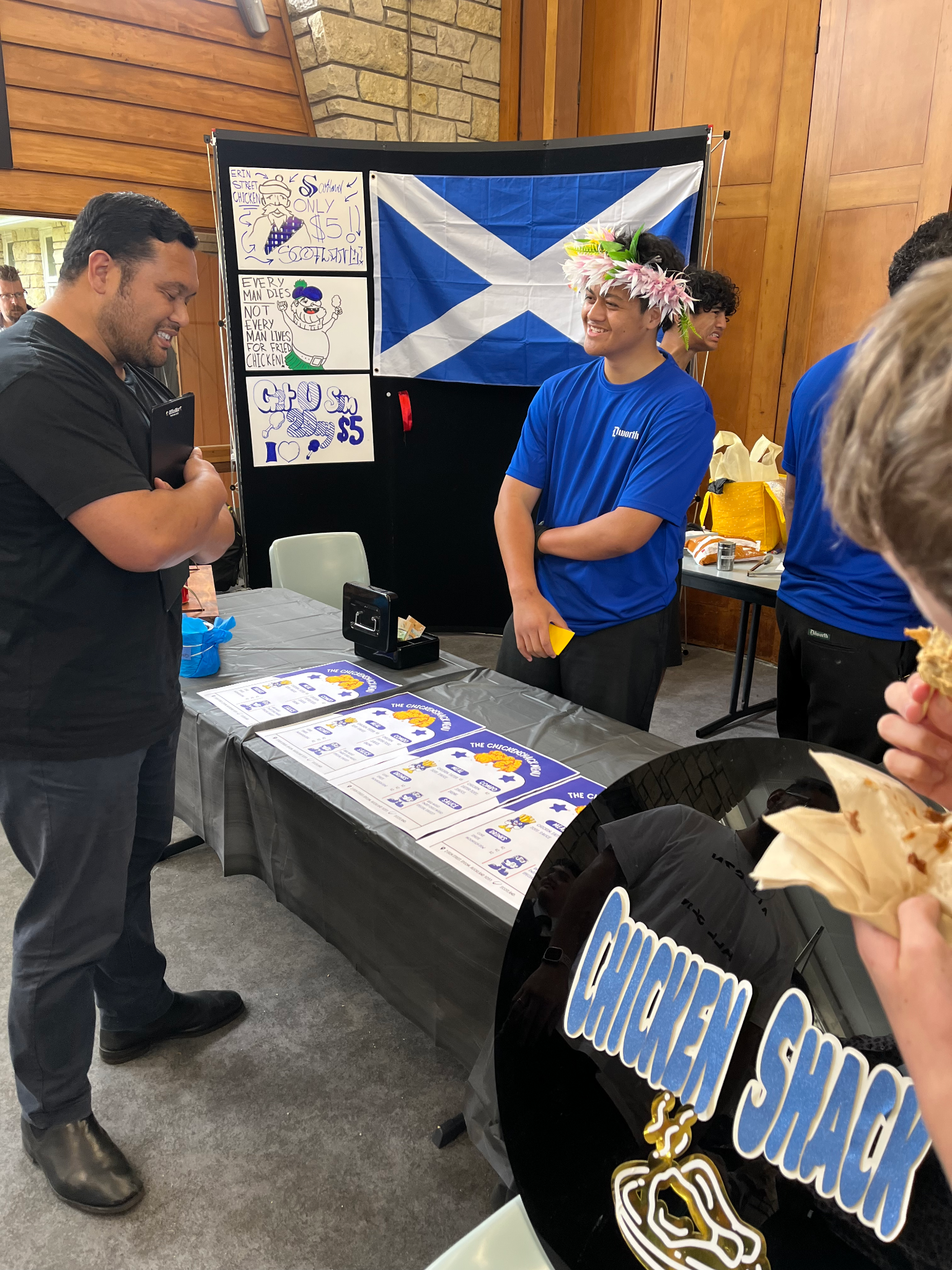
Aims of the Course:
This course follows on from the Level 2 Business Studies course. It encourages students to think and be creative. Open-mindedness and an enterprising spirit is essential.
Students will gain knowledge, skills and experience to:
- Analyse how and why New Zealand businesses operating in global markets make operational and strategic decisions in response to interacting internal and external factors.
- Plan, take to market, review and then refine an innovative, sustainable business activity; analyse the activity and its success in the marketplace.
Essentially, you will learn about how businesses compete in a crowded global marketplace.
The nature of this year’s class encourages cooperative learning and a willingness to seek assistance as required. Lunchtime or after school help is always available.
Topics:
There are THREE units of work.
- Sustainable & Innovative Business Activity - In this unit, students will carry out an innovative and sustainable business activity, with specialist advice from a mentor. Students will then evaluate the performance of their business activity in terms of economic, social, cultural, and environmental outcomes.
- Marketing Plan - In this unit, students will develop a marketing plan for a new or existing product. This involves setting marketing aims, explaining the market situation, and creating a marketing strategy.
- Strategic Response to External Factors - This unit involves explaining the business-wide reaction to a factor outside of their control. External factors can affect a business’s functions, people, management and environment.
? 13ENV - Visual English NCEA Level 3
13ENV13ENV - Visual English NCEA Level 3
Aims of the Course:
This course aims to build on the skills learned in English from Years 7 to 12, but to offer something different to students who are interested in the content of English, but do not intend to study the Arts in tertiary education.
Visual English has a focus on graphic novels in the first two terms, investigating how this communication form has risen in popularity, reputation and effectiveness in recent years. It also asks students to demonstrate their learning about visual communication through a visual language standard.
Despite offering a point of difference to the traditional study of English, this remains a University Entrance Approved course, with one externally assessed standard and a total of 17 credits offered.
Topics:
- An Investigation of Graphic Novels in the first term asks students to identify, analyse and critique visual and language techniques used by graphic novelists to develop complex ideas. There are two standards associated with these skills, worth a total of seven credits.
- Presenting takes centre stage in Term 2, where students have the option to build on the learning of visual techniques in Term 1 in order to create their own visual representations of a critical response to the societies in which they live and an oral presentation that develops ideas in a fluent, coherent way..
- A Novel Study or Film Study will be the focus of the external examination. For this, students will need to engage with a challenging Level 3 text on a critical level, responding in a formal critical essay. The choice between Visual and Written text will depend on the University Entrance Literacy needs of the students in the course.
Other, e.g. Field trips, Curriculum Enrichment
Where possible, this course will be supplemented with a range of speakers from the communications realm, including a local graphic novelist and/or communications lecturer from a local university.
? 13ETC - Digital Electronics Technology NCEA Level 3
13ETC13ETC - Digital Electronics Technology NCEA Level 3
Aims of the Course:
This year we are offering 19 credits through internal assessments in a year of interesting, exciting and informative Electronics. All the standards provide credits towards University Entrance.
Electronics leads to areas such as engineering, physics, computer science, mechatronics and robotics.
Topics:
- 3D Printing
- Microcontrollers and Programming
- Components and Interfacing
- Printed Circuit Boards PCBs and Complex Electronics
- Circuit Integration and Projects
NOTE: If you select 13ETC you CANNOT select 13DTC
? 13GEO - Geography NCEA Level 3
13GEO13GEO - Geography NCEA Level 3
Aims of the Course:
The overall aim of the NCEA Level 3 Geography course is to develop an understanding of the relationship between people and their environment. This course covers a variety of local, national and global topics, including the future of energy in Aotearoa New Zealand, research of an urban and rural stream in the Tāmaki Makaurau Auckland area, and a global study on the distribution of coral reefs. Finally, an external examination on tourism development in Rotorua and a resource based skills examination finish the year. This course actively encourages students to consider and discuss their own perspectives, and make educated judgements in evaluating the various issues within these topics.
13 GEO is a literacy heavy course, where wider reading and proactive use of the Dilworth School Library is encouraged. Literacy skills, resource interpretation skills, and research skills will be taught and assessed in all topics of work.
There is opportunity for students to gain University Entrance in this course, with 11 internal credits and 8 external credits.
Topics:
- Contemporary Issue: Future of energy in NZ
- Global Study: Coral Reefs
- Geographic Research: Rural vs Urban Water Quality
- Cultural Process: Tourism Development in Rotorua
Other, eg. Field trips, Curriculum Enrichment
Students have two field trip opportunities in Year 13 Geography. There is a Research field trip to Oakley Creek and Mangatāwhiri River and an overnight trip to Rotorua to gain firsthand experience of the tourism industry in the region.
? 13HIS - History NCEA Level 3
13HIS13HIS - History NCEA Level 3
Aims of the Course:
The main theme that underpins all topics in NCEA Level 3 History is 'challenging historical narratives'. This involves in - depth analysis and debate about differing versions of history. The topics studied in 13HIS include an analysis of the United States decision to drop atomic bombs on Japan in 1945 at the end of the Second World War, as well as an in - depth study of the decades before and decade after the signing of the Treaty of Waitangi in 1840. Finally, 13HIS will study the Russian Revolution of 1917 as a significant historical event in preparation for the external examination.
13HIS is a literacy heavy course, where wider reading and proactive use of the Dilworth School Library is encouraged. Literacy skills, resource interpretations skills, and research skills will be taught and assessed in all topics of work.
13HIS is a university entrance course that will offer students 20 credits in total, via 10 internal credits and 10 external credits. All standards offer UE reading credits and both external examinations offer UE writing credits.
? 13MAT - Mathematics NCEA Level 3
13MAT13MAT - Mathematics NCEA Level 3
Aims of the Course:
This course is designed for students who enjoy being challenged to think logically and systematically to solve problems. The content of this course includes the collection and analysis of statistical data to solve real world problems. Students will also develop their algebraic manipulation skills through solving real world problems. There is some flexibility in this course to choose contexts for problems being investigated, so students are encouraged to independently research areas of interest.
Topics:
Topics are drawn for the Statistics and Mathematics programmes and cover:
- From Statistics - Time series, bivariate data and inference.
- From Mathematics - Simultaneous equations, linear programming and critical path analysis.
Endorsement:
For students to gain a course endorcement they must choose to complete the optional External Assessment.
? 13MED - Media Studies NCEA Level 3
13MED13MED - Media Studies NCEA Level 3
Aims of the Course:
This course will focus primarily on the relationship between Media and Sport (this can be negotiable for those students who wish to take an alternative approach). Students will analyse how sports broadcasting has developed as an industry here in Aotearoa and/or internationally and how NZ culture is represented in sports media. Students will also get a chance to produce their own sports-related media (either a “broadcast” of a school sport, a sports news show or even podcasts and commentary). This course will suit students who are interested in what goes on behind-the-scenes of sporting media and/or have an interest in a potential career working in sports broadcasting (sports journalism, production or even in the commentary booth).
The course is UE approved so will be ideal for those considering further tertiary or vocational fields.
Whilst there is a large practical component to the course, this is still an academic course that requires students to write coherently and perceptively to form an argument and express their ideas clearly.
Topics:
- Creating a narrated visual essay or written report on the representation of New Zealand culture in the media.
- Analysing a significant development in the sports media industry.
- Producing a sports-related media product that meets the requirements of a given brief.
- Writing a sports review for a magazine or broadcast.
- Studying the sports media industry or a chosen media genre.
? 13PED - Physical Education NCEA Level 3
13PED13PED - Physical Education NCEA Level 3
Aims of the Course:
NCEA Physical Education is an exciting course which incorporates both theoretical and practical aspects designed to develop a well-rounded understanding of physical activity and health. Expanding on from NCEA level 2 Physical Education, learners are further encouraged to think critically and problem solve. Practical application of knowledge, skill development, team-work, collaboration and learning to take personal responsibility are key requirements of the course. NCEA Physical Education offers assessment flexibility and allows for various assessment methods including written examinations, practical assessments and presentations.
Topics:
- Evaluate physical activity experiences and devise strategies for lifelong wellbeing
- Analyse a physical skill performed by self and others
- Evaluate the effectiveness of a performance programme
- Perform a physical activity in an applied setting (x3)
- Examine a current physical activity event, trend or issue and its impact on NZ society
NCEA Physical Education is largely a literacy-based subject. It requires a solid foundation associated with written comprehension and helps to prepare learners for university.
Other, eg. Field trips, Curriculum Enrichment:
Practical assessment involves a fun, exciting and challenging external trip to compete in the famous Tough Guy event.
? 13SCI - Science NCEA Level 3
13SCI13SCI - Science NCEA Level 3
Aims of the Course:
Students will gain an understanding of the relationships within the Earth systems, as well as further afield in space. Students will also study geological events and the methods that Scientists use to date them. Students will investigate issues affecting our world and make considered conclusions about those issues.
Topics:
Topics include:
- Fuels and Climate Change
- Exoplanets and Astronomy
- Geological Events and Volcanoes
- Sea-level Rise
Other, eg. Field trips, Curriculum Enrichment:
Rangitoto Field Trip.
Subjects for Year 13 Students
13FLT - Financial Literacy (Module)
13FLT13FLT - Financial Literacy (Module)
This course aims to answer the following questions:
What are my rights and responsibilities?
Should I join a union?
Is it important to exercise my democratic right?
Investment - Can I invest ethically and with integrity?
What is my risk profile?
Real Me and Study Link unpacked
Recap Pathways
Topics:
- Careers
- Budgeting
- Investment
- Contracts
- Civics
13MAX - Further Mathematics - NCEA Level 3/Scholarship (Full Year)
13MAX13MAX - Further Mathematics
Aims of the Course:
This course is designed for accelerated students who have completed year 13 Calculus. The couse extends calculus knowledge in preperation for scholarship calculus while allowing students to add key statistics concepts to their mathematical knowledge
Topics:
- Conic Sections
- Further trigonometric proofs
- Further algebra of Complex Numbers
- Further differentiation
- Further integration
- Probability concepts
- Probability distributions
- Formal inference
Scholarship Accounting
SCACCScholarship Accounting
Scholarship Art
SCARTScholarship Art
Scholarship Biology
SCBIOScholarship Biology
Scholarship Calculus
SCMACScholarship Calculus
Scholarship Chemistry
SCCHEScholarship Chemistry
Scholarship Design
SCDSNScholarship Design
Scholarship Drama
SCDRAScholarship Drama - Y13 ONLY unless by prior approval from Ms Wilson.
Format of Assessment
The candidate will present three solo drama performances, with supporting commentary.
Part One: Text-based performance
The candidate will perform an extract or speech by an established playwright that they have selected and prepared before the examination. (An ‘established’ playwright is one who is widely published or critically acclaimed – see, for example, the list of playwrights prescribed for AS91514.)
The candidate will preface the performance with an introductory analysis presented to camera, in which they should:
- include reference to the genre and significance of the chosen extract
- comment on interpretive choices and performative intentions, supported by relevant drama theory.
No written prompt may be used for the introductory analysis.
The time allowed for Part One is 5 minutes. The candidate is recommended to spend no more than 90 seconds presenting the introductory analysis.
The candidate must also submit an annotated script of the extract.
Part Two: Self-Devised performance
The candidate will perform a self-devised piece that they have prepared before the examination, based on their individual exploration of something of relevance to them. The devising process should be supported by research into the work of at least one established drama theorist, practitioner, or company. The self-devised piece must be significantly different to the selection made in Part 1.
The candidate will preface the performance with an introductory analysis presented to camera, in which they should:
- describe the purpose of the performance, what has been explored, and connections to the candidate and the wider world
- explain how research into the methods of their chosen theorist, practitioner, or theatre company has influenced or informed the development of the performance
- detail key moments in the devising process where dramatic material was selected or rejected to refine the performance.
No written prompt may be used for the introductory analysis.
The time allowed for Part Two is 6 minutes. The candidate is recommended to spend no more than 2 minutes presenting the introductory analysis.
The candidate must also submit an annotated script of the extract.
Part Three: Impromptu Performance
The candidate will use elements of drama to create and perform a short sequence, within a restricted time, in response to a dramatic prompt. The prompt will be handed to the candidate and retained by them until the conclusion of Part Three.
After the impromptu performance, the candidate will present a concluding reflection to camera, in which they should:
- describe their intentions, and reflect on how these were realised in the performance
- comment on how drama elements were integrated into the performance to create dramatic interest.
They may also reflect on:
- challenges they identified and solutions they found
- the overall structure of their performance, and specific techniques they used to create and shift between characters or to establish place and action effectively.
The time allowed for Part Three is 6 minutes. The candidate will be given 2 minutes to prepare, 2 minutes to perform, and 2 minutes to reflect on the performance.
Scholarship DVC
SCDVCScholarship DVC
Scholarship Earth Space and Science
SCESSScholarship Earth Space and Science
Scholarship Economics
SCECOScholarship Economics
Scholarship English
SCENGScholarship English
Format of the assessment
The assessment is in three sections.
Candidates will be required to write three essays, each in response to a question from each section.
A physical copy of the texts will be provided to candidates completing the assessment online.
Section A: Close Reading of Unfamiliar Texts will provide two texts – one prose and one poetry – and a question requiring a comparison of the texts with emphasis on aspects of content and crafting.
Section B: Responding to Literature and Language will provide a range of questions on genres including poetry, non-fiction, film, Shakespeare, drama, novel, short story, TV series, and interactive text. Candidates will select ONE question to answer.
Section C: Exploring Issues in Literature and Language will provide a range of issues-based questions. Candidates will select ONE question to answer.
Special notes
In Sections B and C:
- candidates should demonstrate wide knowledge and wide reading, and an appreciation of aspects of genre and intertextuality
- candidates should not include the same content or quotations in their responses to the two questions.
Scholarship Geography
SCGEOScholarship Geography
In 2026, the examination questions and resource booklet will focus on emerging global geographic challenges and potential solutions.
Format of the assessment
Resource materials (such as maps, text, photographs, models, graphs, tables, and cartoons) related to this year’s theme will be provided in the examination. Candidates will be required to incorporate a wide range of case studies, using information and ideas BOTH from the examination resource materials and from their studies in geography. Candidates will be required to respond to questions that involve critically thinking, processing, selecting, extracting, justifying, predicting, integrating, and presenting information.
Candidates will be required to include relevant original visuals that will enhance their answers.
Candidates will be expected to demonstrate understanding of a range of geographic perspectives and to use their geographic knowledge, skills, and understanding to support their answers.
Scholarship History
SCHISScholarship History
Format of the assessment
Candidates will be required to answer three questions in an exam booklet, using an extended response format.
Candidates will be expected to respond to each question by constructing a substantiated argument that synthesises the source material, as well as their own understanding and knowledge, to evaluate the theme.
Candidates must demonstrate their ability to:
- use highly developed knowledge to analyse and think critically about key ideas relevant to the historical context and theme
- synthesise a highly developed understanding of the theme, with ideas drawn from both the resource booklet provided and their own knowledge of complex historical contexts
- evaluate historical relationships such as cause and effect, continuity and change, past and present, specific and general, patterns and trends, and differing perspectives
- judge the reliability and usefulness of historical evidence and evaluate the strengths and limitations of historians’ narratives connected to the theme
- evaluate a specific event / period / idea connected to the theme within an Aotearoa New Zealand context.
Further information about digital external assessment can be found on the NZQA website.
Special Notes
The theme will be relationships between workers, employers, and the state, and this will shape the questions and sources.
Question One will focus on historical narratives.
Question Two will focus on historical relationships.
Question Three will focus on Aotearoa New Zealand from the beginning of the 1870s to the end of the 1940s.
Scholarship Media
SCMEDScholarship Media
Current Year 12 and 13 Media Studies students who demonstrate a strong interest in the subject and the ability to convey their ideas in a convincing and insightful manner in their written work are encouraged to extend themselves by sitting the Media Studies scholarship examination.
The examination consists of three essays:
Question One focuses on the relationship between media and society (industry, developments).
Question Two focuses on a candidate’s own media production experience.
Question Three focuses on reading media texts (in which the students can write about a genre they’ve studied in class).
Scholarship tutorials will provide students with context and content ideas for their examination, looking at ideas for topics, examining past examination papers and questions, looking at past exemplars, and strategising how best to approach each question in the exam.
In addition, students are encouraged to continue researching ideas outside of class so that they can demonstrate their wide and varied knowledge of the topics, and stand out amongst other Media Studies students. Tutorials will provide students with vital information and options for providing evidence and making connections to the thoughts and opinions of media scholars and writers in their essays. The scholarship sessions are different from students’ day-to-day classes, in that they are more collaborative, and students are able to voice their ideas and opinions in a close-knit group setting that is more relaxed than their school classes.
Disclaimer
Tutorials will only run based on minimum entries.
Selecting a course does not guarantee entry into this course.
Scholarship Music
SCMUSScholarship Music
Scholarship Physical Education and Health
SCPEDScholarship: Physical Education and Health HPE Scholarship (online link)
Format of the assessment: Candidates produce a report that critically evaluates a significant well-being challenge or issue facing young people in New Zealand today.
To critically evaluate means to:
• identify the nature of the health or physical activity challenge or issue (supported by relevant data)
• provide two or more perspectives on the challenge (bodies of thought, as supported by evidence)
• propose future solutions and / or health promotion actions to address the challenge and enhance young people’s well-being.
The report should integrate the following:
• hauora, attitudes and values, the socio-ecological perspective, and health promotion concepts
• bio-physical principles and / or sociocultural factors as relevant
• primary data / own evidence, reflections and / or personal learning experiences
Evidence from at least one of the following documents:
1. Overview of Youth Health NZ 2024
2. The Child and Youth Strategy 2024-27 NZ
3. Active NZ Participation Trends 2024/25
4. Sport NZ Strategic Plan 2024-2028
The report must:
• not exceed the equivalent of 26 double-spaced single-sided A4 pages
• have numbered pages • use a font the approximate equivalent of 12 point Arial
• provide references in one consistent format, preferably footnotes
The report may contain relevant and meaningful images, sketches, diagrams, illustrations, and other forms of graphic representation. Material obviously in excess of the maximum limit will not be marked. Repeated or extraneous material may be seen as evidence of flawed communication. Appendices to the report must contain only selected relevant information that is directly referred to in the report, e.g. a questionnaire or brief video. Appendices are included in the 26-page limit.
Scholarship Physics
SCPHYScholarship Physics
Format of the assessment
There are 4 questions in the examination. Individual questions may cover the content of more than one achievement objective in the New Zealand Curriculum up to Level 8.
Content / context details
Questions may be asked within a variety of appropriate contexts, some of which may be unfamiliar to the candidates. Some questions may involve extended discussion, where the candidate needs to judge what is required.
Questions relating to practical work may include discussions of sources of error, reliability of data collected, and validity of conclusions drawn.
Assessment will be limited to a selection of the content given in the Level 3 physics achievement standards. In relation to P3.5 Demonstrate understanding of Modern Physics – the following content knowledge will be required:
- the Bohr model of the hydrogen atom: the photon; the quantisation of energy; discrete atomic energy levels; electron transition between energy levels; ionisation; atomic line spectra; the electron volt
- the photoelectric effect
- wave / particle duality
- qualitative description of the effects of the strong interaction and Coulombic repulsion
- binding energy and mass deficit; conservation of mass-energy for nuclear reactions.
Content knowledge from curriculum Levels 6 and 7, relevant to the above standards, will be assumed.
Scholarship Religion
SCRSTScholarship Religious Studies
The examination will have one section.
Candidates will be presented with a choice of two questions that draw from a previously advised context, with reference to Religious Studies. Candidates will respond to their choice of question. Candidates are expected to answer in essay format.
For 2026, the context is religious or spiritual traditions and war.
Although this course largely involves self-study, Rev. Worboys will hold fortnightly forum-based discussions on what you are reading.
Scholarship Statistics
SCMASScholarship Statistics