
Whangaparaoa College
Auckland
Whangaparaoa College Curriculum
185 subjects available for 2026/2027.
Subjects for Year 7 Students
Junior School English Language ( ESOL)
JUNELThis English for Speakers of Other Languages (ESOL) class supports Year 7 and 8 migrant learners in developing everyday and academic English proficiency. Aligned with New Zealand Ministry of Education guidelines and the English Language Learning Progressions (ELLP), the programme integrates listening, speaking, reading, and writing skills to facilitate access to the core curriculum. Learners acquire foundational vocabulary and work on developing the necessary communication strategies for classroom participation and collaborative work. The curriculum emphasises reading comprehension of academic texts, structural paragraph writing, and cross-cultural understanding within the New Zealand context. Assessment occurs through ongoing teacher observations, regular writing reviews, and official Ministry benchmarking matrices to monitor language acquisition without formal test anxiety.
Year 7 Māori
7MAOROur Year 7 Te Reo Māori programme provides learners with an engaging introduction to te reo Māori, tikanga Māori, and mātauranga Māori. Through interactive, culturally responsive learning experiences, students begin to build confidence in speaking and understanding te reo while developing an appreciation of Māori values, traditions, stories, and perspectives. This programme creates a strong foundation for learners to grow their language skills, deepen their understanding of Māori culture, and continue their learning journey with confidence in the years ahead.
Year 8 Drama
8DRAMIn Year 8 Drama we begin with team-building games and establishing a safe and supportive environment - and we have lots of fun!
Learners explore a wide range of topics and learn to structure imagined worlds using drama conventions, techniques and technologies.
They work on creating, devising and performing.
Year 8 English
8ENGLIn Y8 English learners will develop key knowledge in reading, writing, and communication. Throughout the course, learners will build essential skills in verbal reasoning, reflective communication, and active listening. They will also refine their writing techniques through structured planning, drafting, and exploring sentence structure, grammar, and composition.
Knowledge:
Reading -
- Communicating and Presenting: verbal reasoning, presenting to others, listening and responding
- Communication for Learning: reflective and strategic communication.
Writing -
- Transcription: handwriting, keyboarding, spelling
- Writing Process: Planning, ,drafting, revising and editing
- Composition: Audience, purpose & language choice, Sentence structure, grammar, punctuation
Oral Language -
- Communicating and Presenting: verbal reasoning, presenting to others, listening and responding.
- Communication for Learning: reflective and strategic communication.
Practices:
Reading -
- Reading Enrichment: pronunciation, pace, understanding, expression, engaged, sustained independent reading.
- Comprehension: range of strategies to ascertain meaning, identify text forms and purposes, monitoring, inferencing, summarising, drawing conclusions.
- Critical Analysis: examine content, structure and form, explaining ideas in texts.
Writing -
- Writing to Inform
- Writing to Persuade
- Writing to Entertain
Oral Language -
- Communicating and Presenting: asking and answering open questions, use spoken language to infer, conclude and interpret, language & structural devices, culturally responsive and conventions of structured presentations, clarifying and extending on others ideas.
- Communication for Learning: reflecting on influences, feedback and oral strategies to contribute respectfully.
Curriculum Design Criteria
Learning will reflect mana ōrite mo te mātauranga Māori by:
- Include Māori authors and perspectives.
- Integrate te reo Māori vocabulary where appropriate.
- Promote ako through discussion and shared learning.
Learning will build on prior knowledge and skills:
- Visible Learning Intentions & Success Criteria
- SEEL paragraphs
- CRAFT/CLOSA
- Weekly Teaching structure of reading and writing.
- Develop paragraph structure (topic sentence, evidence, explanation).
- Extend from paragraphs to full essays.
- Strengthen note-taking and summarising skills.
- Build vocabulary and reading comprehension strategies.
- Extension
Learning will be equitable for all by:
- Model reading and writing strategies explicitly.
- Provide writing templates and exemplars.
- Differentiate reading texts by level.
- Allow oral, visual, and written responses.
Learning will be culturally affirming by including:
- Varied discursive practice including jigsaw activities, pairs, groups, independent.
- Opportunities for formative assessment and feedback.
- Use texts reflecting diverse cultures and identities.
- Choose research topics relevant to learners’ lives.
- Value different perspectives and voices.
- Encourage collaborative discussion and sharing.
Learning will be connected to our local environment by:
- Use local contexts and pūrākau as research topics.
Learning pathways include:
- Providing scaffolded writing frameworks.
- Offering extension through deeper analysis and synthesis.
- Building independence in research and editing.
- Preparing learners for more formal essay writing in Year 9.
Year 8 English-medium Pathway
8MMMMOur English-medium pathway delivers the New Zealand Curriculum shaped by our curriculum philosophy and design criteria. In our learning environments we aim to inspire every learner to flourish | Whakapuāwaitia. We plan learning built on our school values, Together, Believe, Achieve | Ngātahi, Whakapono, Tutuki, and a belief that our curriculum will be broad, and nurture learners by knowing and growing them for success.
Learners will engage with a broad range of courses, and learning environments that centre Āhuatanga Whangaparāoa and teaching practice so learners can belong, strive and succeed.
Learning is designed to build on each learner's knowledge and skills, be equitable and affirming, place equal value on mātauranga Māori, and ensure clear pathways within communities and for work.
Year 8 Health Education
8HEEDIn Year 8 Health Education learners will be introduced to current health issues faced by adolescents in today’s society. Learners will develop tools and strategies to deal with these issues and make informed health-enhancing decisions by participating in activities involving class discussion, group tasks and individual work.
Knowledge
Bodies & Minds:
- Self Care: Stress and resilience, seeking support
- Adolescent Change: Puberty is a biological change and does not follow a set pattern, physical change, body image, peer acceptance, hormonal changes, feelings around it.
- Nutrition: Nutritional needs, food choices, impacts and risks, food marketing
- Alcohol & other drugs: Substances can interfere with brain development, peer pressure, setting boundaries, making safe decisions.
Relationships
- Self & Others: setting boundaries, respecting diversity and differences, inclusive environments, assertive communication.
- Consent: reading consent cues, rules around consent, pressures.
- Stereotypes: challenging stereotypes, calling out unfair behaviour, norms
- Staying Safe Online: pressures, wellbeing, media and advertising, impacts of sexualised content
Sex Education
- In New Zealand, the legal age of consent for sexual activity is 16 years. Engaging in sexual activity with people below this age is considered unlawful under statutory provisions designed to protect young people from harm and exploitation.
- Communication and respect create safe and positive experiences within intimate and sexual relationships.
- There are a range of sexual activities in which consenting adults experience and express their sexuality. These activities include different forms of physical contact and interaction for sexual pleasure, reproduction, or both.
- Conception usually occurs through sexual intercourse when sperm fertilises an egg, which is how human reproduction begins.
- Harmful sexual behaviours (e.g. sharing intimate images without consent, giving unsolicited sexual attention) have serious consequences.
Practices:
Bodies and Minds:
- Practising respectful communication strategies
- Explaining the roles of key nutrients
- Analysing food packaging and advertisements
- Exploring how hygiene needs change during puberty
- Recognising physical and emotional signs of stress
- Examining how the brain and body respond to stress and applying strategies that support regulation, recovery, and wellbeing across different situations
- Examining the health risks of vaping and why it is not recommended for young people
Relationships:
- Assertive language and boundary setting techniques
- Reflecting on personal values and biases
- Analysing strategies for repairing trust
- Developing advocacy skills
- Developing strategies that promote emotional safety
- Exploring strategies for handling uncertainty
- Online safety and pressures
- Identifying emotional triggers in online advertising and content
- Using collaborative activities to build confidence
Curriculum Design Criteria
Learning will reflect mana ōrite mo te mātauranga Māori by:
- Āko is at the heart of the Year 8 Health programme, learners share their own knowledge and learn from each other’s experiences
- Hauora is a central concept across the Year 8 course. Students learn about the four dimensions of Hauora (taha tinana, hinengaro, whānau, wairua) and reflect on how these influence wellbeing. Māori models of health are woven throughout units, especially in Hauora and Nutrition, where holistic approaches to health are discussed.
- Teachers are encouraged to invite learner knowledge, ask questions, and connect with local iwi or community voices where possible to support learning.
- Celebrating different cultures within our classroom
- Focusing on Waiora (wellbeing)
- Teaching inclusion and fostering whanaungatanga in the classroom
- Showing manaakitanga and uphold mana of their peers
- Establish classroom tikanga, empathy and active listening to each other
- Validate cultural and family-based knowledge
Learning will build on prior knowledge and skills:
- Building digital literacy
- Understanding the connections between identity, relationships, resilience, and how they are tested or developed in the online environment
- Using critical thinking and reflection to question the content presented by algorithms, recognise bias, and make informed choices
Learning will be equitable for all by:
- Support multiple ways to perceive information
- Foster collaboration, independence, and collective learning
- Varied working experiences: group, pair, individual work, and whole class work.
- Learner agency with discovering information and sharing back to class
- Role modelling as teacher
- Lots of scenarios so that learning is relevant
- Activities for visual learners
- Plenaries to recap learning
- Hei Mahi’s and visible Learning Intentions & Success Criteria
- Opportunities for differentiation, especially if teachers know their learners well and understand some of the challenges/changes that they are experiencing
Learning will be affirming by including:
- Reflect on how learners' own whānau and cultural practices support wellbeing
- Create a safe, inclusive space where learners can learn from each other and recognise diversity in health and wellbeing
- Recognise that relationships, identity, and decision-making online are influenced by cultural background
Learning will be connected:
- The Year 8 programme connects learning to real-life situations and community issues. Discussions about fast food, sugar consumption, or digital safety link to the learners' lived experiences. Learners are encouraged to consider their roles in promoting positive health choices, whether that’s within their whānau, at school, or in their local area
- Events like Pink Shirt Day provide further links to community wellbeing, fostering an understanding of positive relationships and standing against bullying
Learning pathways include:
- Personal goal setting and aspiration
- Careers in Health & PE
- Role models to aspire to in terms of personal growth, maturity and development
Year 8 Māori
8MAORBuilding on the foundations established in Year 7, our Year 8 Te Reo Māori programme further develops learners' confidence and capability in te reo Māori while deepening their understanding of tikanga Māori and mātauranga Māori. Students expand their language skills through meaningful communication, explore Māori history, traditions, and worldviews in greater depth, and strengthen their connection to te ao Māori. With a growing emphasis on using te reo in authentic contexts, this programme prepares learners for continued success in the junior years and provides a strong pathway into senior Māori language and cultural studies.
Year 8 Mathematics
8MATHYear 8 Mathematics expands on core concepts to deepen students' mathematical reasoning and problem-solving abilities. The curriculum covers advanced topics in number operations, measurement, algebra, statistics, probability, and geometry. By linking these topics to practical contexts—such as financial planning and statistical investigation—students develop essential skills for daily life and future learning.
Measurement
- Read and interpret timetables, schedules & charts
- Angles, area, perimeter, volume, weight, temperature, time
Number Structure and Operations
- Prime and composite numbers, square numbers, cube numbers and prime factors
- Rounding whole and decimal numbers
- Powers and exponents
- Negative numbers
- Fractions, decimals & percentages - converting between
- Add and subtract fractions
- Add, subtract, and multiply decimals
- Recognise percentage equivalence
- Divide an amount into parts using ratio
Financial Mathematics
- Create and compare financial plans
Equations and Relationships
- Write and solve equations with variables
- Simplify algebraic expressions
- Collect like terms
- Factorise simple algebraic expressions
- Patterns
Statistics
- The PPDAC cycle
Theoretical probability
- Design and conduct chance-based experiments
- Calculate experimental probabilities and compare them to theoretical probability
- Compare the likelihood of different things happening or not happening
Geometry
- Name and describe basic parts of a circle
- Translations, reflections, rotations and enlargement
- Sum of angles in a triangle, sum of angles inside a polygon, and exterior angles in a polygon
- Use map scales to convert distances
Curriculum Design Criteria
Learning will reflect mana ōrite mo te mātauranga Māori by:
- Using authentic local contexts.
- Including te reo Māori maths vocabulary.
- Promoting āko and manaakitanga.
- Ensure principles of Āhuatanga underpin teaching
- Supporting learners who are out of the class for kapa haka
Learning will be equitable for all:
- Use visual models and tools.
- Provide low-floor, high-ceiling tasks.
- Allow multiple ways to show thinking.
- Break down multi-step problems.
- Differentiated learning opportunities
- Connections between prior knowledge and learning.
- Supporting learners to have access to equipment.
- Creating a growth mindset culture in the maths classroom.
- Identifying learners who need intervention (acceleration/extension)
Learning will be culturally affirming:
- Use real-life Aotearoa contexts.
- Reflect learners’ cultures and experiences.
- Value different problem-solving strategies.
- Encourage collaborative learning.
- Be accepting and supportive of different cultural practices and how they impact students’ learning (e.g. fasting during Ramadan).
- History of maths from different cultures.
- Being open-minded about teaching mathematics in different ways.
Learning will be connected:
- Use local and global contexts to show learners how embedded maths is in their lives.
- Statistics - collect data across sister schools.
- Encourage international competitions.
Learning will build on prior knowledge and skills:
- Strengthen understanding
- Build confidence and capability to attempt complex problems
- Identify gaps or misconceptions
- Use COSMDBRC’s
- Formative assessments to check prior learning.
- Use Hei Mahi to refresh prior learning.
- Focus on concepts that will carry through year levels.
Learning pathways include:
- Providing extension challenges.
- Promoting independence and reasoning.
- Connecting learning to future courses, careers and future goals.
Year 8 Physical Education
8PHEDYear 8 Physical Education is planned around the four curriculum strands: Personal Health and Physical Development, Movement Concepts and Motor Skills, Relationships with Other People and Healthy Communities and Environment. These strands are teamed up with the important themes of Self Management, Active Participation and Leadership.
The Year 8 program has been specially designed to give learners a wide range of opportunities and experiences. Teaching and learning will take part within the college and out in our beautiful local environment.
Units include:
- Adventure Based Learning
- Skill development
- Sports Education
- Design a game
- Beach Safety & Aquatics
- Outdoor Education
Curriculum Design Criteria
Learning will reflect mana ōrite mo te mātauranga Māori by:
- Provide opportunities for leadership
- Seek prior knowledge of learners who are experienced or skilled
- Awareness of cultures of your learners and their tikanga/ practices (eg head touching, showing bottom of your foot, pointing)
- Incorporate cultural games.
Learning will build on prior knowledge and skills:
- Warm-up routines: Show students how to safely raise their heart rate, improve mobility, and prepare mentally for activity.
- Techniques: Demonstrate and scaffold safe, accurate movements (e.g., passing, tackling, stopping) with guided practice and feedback.
- Decision-making: Use small-sided games and scenarios to develop choices about passing, shooting, or positioning.
- Rule awareness: Teach rules explicitly and reinforce them during practice to ensure safety and fairness.
- Observation and reflection: Encourage students to track performance, use simple statistics or peer feedback, and set goals for improvement.
Learning will be equitable for all by:
- Scaffolding teaching skills for understanding.
- Modelling skills and strategies
- Teachers know their learners' physical abilities.
- Scaffolding equipment to suit developmental stages
- Breaking down steps or lessons to learn new games
Learning will be affirming by including:
- Self, peer and whole class reflection on lessons, skill development.
- Talking, debating, sharing reflections.
- Knowledge of the origins of games
- Examples of athletes from diverse backgrounds
Learning will be connected by:
- Skills can be applied to participate in a range of physical activities within their local community and environment.
- Participating at school, community, zone, club, representative, international levels.
Learning pathways include:
- Developing self-management skills.
- Improving skills to work towards personal involvement & success (zone day/ fitness/ strength/trying new sports).
- Look at professionals, their dedication, sportsmanship, commitment, sacrifice, mental and physical fitness.
Year 8 Science
8SCIEThis is the introductory course for Science at Whangaparāoa College. Learners are taught in Science classrooms with access to the laboratory spaces for experimental work.
Due to the changes to the New Zealand Curriculum, the Year 8 Science course work is subject to change. At the time of publication, the final content for Science Phase 3 2027 has not been released. The topics listed below represent the content taught in the 2026 Y8 Science course based upon the draft 2027 curriculum.
● An introduction to the Sciences including Health and Safety and basic laboratory practice
● Mammalian Digestive Systems
● Physical properties of Matter
● Electricity
● Gas Exchange systems in Plants and Animals
● Forensic Science including separating mixtures
● Animal and Plant Reproductive systems
Year 8 Social Sciences
8SOCSIn Year 8 Social Science, learners embark on an engaging journey to explore how people interact with each other, their history, and their surrounding environments. Grounded in bicultural foundations and our local community context, this course empowers students to become informed, active, and curious global citizens.
Knowledge and Practices:
HISTORY
New Zealand History: The Significance of Women’s Suffrage and the Liberal Era
Global History: European Imperial Expansion
CIVICS AND SOCIETY
Government structures and systems
GEOGRAPHY
Population growth
Hazard management
ECONOMIC ACTIVITY
Financial Education: Personal Finance
New Zealand’s Economy
Curriculum Design Criteria
Learning will reflect mana ōrite mo te mātauranga Māori by:
Connection to āhuatanga
Aotearoa Histories
Te Ao Māori perspective on teaching practices
Learning will build on prior knowledge and skills:
Building on foundational prior understanding of Te Tiriti concepts, and Māori history
Building on understanding of population, population growth, migration and natural hazards.
Experiencing classroom voting, school rules, and concepts of leadership
Building on understanding of finances on a national level
Learning will be equitable for all by:
Balance of individual, pair and small group work to support each other.
Different level texts
Differentiated activities
Digital and hard copies available
Learning will be affirming by including:
Collaborative wall displays in each classroom
Discursive pedagogies include, research and share back, learner led presentations, collaborating with other classes and celebrating as a cohort
Build on learner curiosity and wonderings
Learning will be connected by:
Local context - How people interact with each other and environments (purpose statement)
National context - how politics affect our country
Learning pathways include:
Preparing learners for specialized senior secondary subjects like History, Geography, and Commerce/Economics.
Year 8 Spatial and Product Design
8SPDTSpatial and Product Design – (One Term Course)
In this course, you will explore how to communicate your ideas visually using drawings and models. You will learn the basics of design thinking, drawing techniques, and how to bring your creative ideas to life.
Whether you're interested in architecture, product design, or just love being creative, this is the place to start!
What Will You Learn?
You will:
- Develop design thinking skills – planning and improving your own ideas
- Learn technical drawing techniques like 2D and 3D sketching
- Use modelling skills to create and test your designs
- Present your ideas clearly using drawing and simple design tools
- Build confidence in showing and sharing your creative thinking
What Will You Do?
Create a range of freehand and technical drawings
Use tools to draw designs accurately and professionally
Make simple 3D models to bring your ideas to life
Work on a fun design project, like a product or space you create from scratch
Why Take This Course?
- A great introduction to the world of design and architecture
- Develop creative and visual communication skills
- Learn how to show ideas clearly using drawing and modelling
- A great starting point for senior DVC or other creative subjects like technology, or digital design
Year 8 Textiles Technology
8CLTXYear 8 Textiles – (One Term Course)
In this fun practical course, you will learn the basics of textile design and construction. You will use both hand stitching and sewing machines to create unique items you can take home and be proud of.
What Will I Learn?
You will:
- Learn how to read and use a sewing pattern
- Gain confidence using a sewing machine to sew straight, strong seams
- Develop hand stitching skills through creative projects
- Build fine motor skills and enjoy the process of making something by hand
What Will I Make?
Pēke taura (Drawstring Bag)
- Use a pattern to create your own personalised fabric bag
- Sew using a sewing machine and learn basic construction techniques
Hand Stitched Craft Item
- Make a small, creative piece using hand embroidery or stitching
- Learn decorative techniques and enjoy the process of slow, mindful making
Why Take This Course?
- Learn practical sewing skills you will use for life
- Enjoy the satisfaction of creating something with your own hands
- Explore your creativity through fabric and design
- A great foundation for future Textiles or Design courses


Year 8 Visual Art
8ARTCYear 8 art is focused on giving learners the opportunity to develop drawing, painting and mixed media art knowledge. Learners will learn to create artworks using a range techniques in both wet and dry media. Observational drawing techniques will underpin this programme. Research into established artist models from New Zealand New Zealand and abroad forms part of the study.

Year 8 Wānanga Pathway
8WANANGAOur Māori Medium Pathway refers to our bilingual unit, He Kupenga Rua a Tāne. This journey can begin as early as Year 8 through our junior wānanga class. From 2027 onwards, we will offer a wānanga class for every year level from Year 8 through to Year 13.
Our Year 8 wānanga class operates much like a mainstream classroom, with learners engaging in all curriculum areas while also having access to a range of option subjects. The key difference lies in how the curriculum is delivered, and in the topics and themes we choose to centre our learning around.
This class is grounded in tikanga Māori and delivered through a kaupapa Māori approach. Te Reo Māori is used extensively in the classroom to support its normalisation and everyday use.
Mātauranga Māori sits at the heart of our learning. We intentionally shape our curriculum to include explicit Māori content, knowledge systems, and ways of understanding the world. This sits alongside the mainstream curriculum, allowing us to draw strong connections between both worlds so that learners receive a rich, balanced, and culturally grounded education.
All junior wānanga classes are application-based, with limited spaces available. Learners enter this space with the intention of continuing into our senior Māori Medium Pathway.
Subjects for Year 8 Students
Middle School English Language (ESOL)
MIDEL01This course caters for migrant, Pasifika and international 2nd language learners (ELLs) in Years 8-10. The aim of the course is to develop academic vocabulary and competency in English skills across listening, speaking, reading and writing.
The course targets the learning needs of individual learners and helps prepare them for L1 Literacy. It also supports learners to be successful in mainstream subjects.
The EL classroom is a positive, nurturing environment which values and embraces the languages and cultures of the learners. Learners are encouraged to share their cultures and support each other in their learning. Their cultures are an integral focus in the course for discussions, writing and presentation topics.
Year 9 Dance
9DANCYear 9 Dance builds on the performance and choreography skills of dance. Level 4 of the NZ Dance Curriculum is the focus for the work completed at this year level.
Over the semester the learners will learn how to combine and contrast the dance elements to express images, ideas and feelings in dance, using a variety of choreographic processes. They will prepare and present dance, with an awareness of the performance context. Alongside this the learners will explore and describe how dance is used for different purposes in a variety of cultures and contexts.
Year 9 Digital Technology, Systems and Control
9DTSCYear 9 Digital Technology and Systems and Control
This is a practical course where you will learn how computers solve problems and how technology interacts with the physical world. You will develop programming skills, build electronic circuits, and create mechatronic systems that respond to real-world inputs.
By the end of the course, you'll have written your own computer programs, built electronic projects, and programmed microcontrollers to control sensors and devices.
What Will I Learn?
You will gain practical experience with a range of essential computer science and engineering concepts:
- Algorithms – creating step-by-step solutions using sequence, selection, and iteration
- Programming – writing, testing, and debugging programs to solve problems
- Variables and Lists – storing and organising information within your programs
- Binary Numbers – understanding how computers represent numbers and text
- How Computers Work – learning how the processor, memory, and input/output devices work together to execute programs
- Digital Media – work through a design process to create a multipage website.
- Responsible practice - understand how technology can have a positive or negative impact on people and how to create technological outcomes responsibly.
- Systems Thinking – understanding how different parts of a system work together to achieve a purpose
- Electronics – building and testing simple electronic circuits safely using components and measuring equipment
- Mechatronics – using sensors, actuators, and microcontrollers to create automated systems that respond to their environment

Possible Projects
Throughout the course you will design, build, test, and refine a variety of computer programs and electronic systems.
Projects may include:
- Interactive programs and games that solve problems using algorithms
- Electronic circuits using LEDs, switches, sensors, and motors
- Programming a microcontroller to control electronic devices
- Designing and building an automated mechatronic system using inputs, outputs, and feedback
- Investigating how complex systems are made from smaller subsystems working together
- Programs that use lists to organise and process data
- Creating a multipage website.
- Problem-solving challenges where you design your own algorithms before coding them


You'll also learn to plan solutions using flowcharts or pseudocode, test your algorithms using trace tables, and improve your designs through testing and debugging.
Extension challenges are available if you finish early, allowing you to create more advanced automated systems and explore additional programming and engineering concepts.
Why Take This Course?
- Learn the foundations of computer programming and electronics
- Develop logical thinking, creativity, and engineering problem-solving skills
- Discover how computers and automated systems work together
- Gain practical experience building and programming real electronic devices
- Excellent preparation for senior Computer Science and Mechatronics courses
- Perfect for anyone interested in coding, robotics, electronics, engineering, automation, or technology
Year 9 Drama
9DRAMLearners explore drama as an art form and learn to structure imagined worlds using drama conventions, techniques and technologies.
They work on creating, devising and performing.
Learners will use drama techniques of voice, body, movement and space and drama elements of role, time, space, place, mood and symbol.
Learners will learn about melodrama and create their very own silent movie!
They will also learn a short script and perform an acting role in a dramatic context.

Year 9 English
9ENGLYear 9 English focuses on building a strong foundation for future learning in literacy. The course focuses on developing learners’ ability to read, write, speak, and listen with increasing confidence, clarity, and critical awareness.
Learners will explore a wide range of texts, including novels, short stories, poetry, film, and digital media. Through these, they will learn to identify ideas, themes, and language features, and begin to think critically about how texts are constructed and how they influence audiences. There is a strong emphasis on making connections between texts and students’ own experiences, cultures, and the wider world.
Writing tasks will cover a variety of forms, such as creative writing, formal essays, and personal responses. Learners will learn how to structure their ideas clearly, use appropriate language features, and adapt their writing for different purposes and audiences. Oral language skills are also developed through presentations, group discussions, and collaborative activities, helping students build confidence in sharing their ideas.
The course encourages curiosity, creativity, and independent thinking while supporting the development of core literacy skills. Learners are guided to set goals, reflect on their progress, and take increasing ownership of their learning. By the end of Year 9, learners will be better equipped to communicate effectively and engage critically with texts in preparation for the challenges of senior English and NCEA.
Year 9 English-medium Pathway
9ENGPTHOur English-medium pathway delivers the New Zealand Curriculum shaped by our curriculum philosophy and design criteria. In our learning environments we aim to inspire every learner to flourish | Whakapuāwaitia. We plan learning built on our school values, Together, Believe, Achieve | Ngātahi, Whakapono, Tutuki, and a belief that our curriculum will be broad, and nurture learners by knowing and growing them for success.
Learners will engage with a broad range of courses, and learning environments that centre Āhuatanga Whangaparāoa and teaching practice so learners can belong, strive and succeed.
Learning is designed to build on each learner's knowledge and skills, be equitable and affirming, place equal value on mātauranga Māori, and ensure clear pathways within communities and for work.
Year 9 French
9FRENThis course follows on from Year 8 French and will build on the four language skills of reading, writing, speaking and listening.
• Topic 1 Introductions
• Topic 2 Introducing others and saying where you’re from
• Topic 3 Numbers and descriptions
• Topic 4 Giving personal details
• Topic 5 Family
• Topic 6 Animals and Pets
Topics Covered:
- Create and record a variety of French conversations over the length of the course.
- Complete 3 assessments which test listening, reading and writing skills.
Year 9 Health Education
9HEEDIn Year 9 Health Education learners will explore current health issues faced by teenagers in today’s society. They will develop tools and strategies to be able to face these issues and make informed health-enhancing decisions through a variety of different activities.
The units that will be covered are:
- Health & Well-Being
- Mental Health & Bullying
- Sexuality Education
- Alcohol & Drug Education
Year 9 Māori
9MAORYear 9
Year 9 option Māori is for some, an introductory course into Te Reo Māori but for most, an extension into conversational Te Reo Māori. Learners are expected to learn the following content;
Recap all of year 8 curriculum Māori with an emphasis on:
- Kupu Hou (new words)
- Extension of descriptive sentence structures
- Extensions of locational & counting sentence structures
- Combo structures (mixing the two above).
The main themes for this course are:
Tōku Kainga – My Home
Tōku Whānau - My Family
Tōku Hāpori – My community
Year 9 option Māori is directed at level 3 & 4 of the curriculum and is specifically focused on Te Reo Māori & Tikanga (Māori language & processes) with follow on aspects of Matauranga Māori (Māori knowledge).
Year 9 Mathematics
9MATHThis is the course that further develops the skills studied in Year 8. Learners are taught by specialist Mathematics teachers and learners are introduced to new concepts and more challenging word problems using calculators. The focus of this year's work is the Year 9 part of Phase 4 of the NZ Mathematics Curriculum. Coursework will include:
- Number: Fractions, decimals, ratios, and percentages in real-life settings that include money-related matters like GST, interest, salaries and commission cost- and selling price.
- Measurement: Perimeter of compound shapes, area of composite shapes, surface area of 3D shapes and volume.
- Algebra: Write expressions and equations, simplify, expand and factorise expressions, and solve multi-step equations and patterns.
- Probability: Use the Statistical enquiry cycle to investigate chance-based scenarios and express chance as a probability, Venn diagrams and probability trees.
- Space: Angle rules, angles, bearings, constructions and transformations
- Statistics: Statistical enquiry cycle(PPDAC) - Evaluate a problem, Create a plan to investigate, collect data to calculate central tendencies and create visual presentations, analyse the data to make informed conclusions.
Year 9 Music
9MUSP
Year 9 Music is a half-year course that covers a wide range of musical skills. It is a practical and theory-based course where students will have opportunities to play instruments, although not every lesson will involve instrumental performance. Students will also develop their composition and music theory skills alongside performance work.
This course leads into Year 10 Music and introduces students to performance, composition, music theory, and the exploration of different musical styles and their historical and cultural contexts.
Course Objectives
By the end of the course, students will:
- Develop the ability to perform a piece of music as a soloist, in a duet, or as part of a small group.
- Gain an understanding of Grade 1 music theory concepts.
- Explore musical ideas through composition and songwriting activities.
- Develop an understanding of music in context by investigating a range of musical styles, genres, and cultural influences.
Year 9 Physical Education
9PHEDYear 9 Physical Education is planned around the four curriculum strands: Personal Health and Physical Development, Movement Concepts and Motor Skills, Relationships with Other People and Healthy Communities and Environment. These strands are teamed up with the important themes of Self Management, Active Participation and Leadership. This is delivered through a variety of fun and engaging practical units. Using both the college facilities and our amazing local environment. The units include:
- Adventure Based Learning
- Modified and Māori Games
- Passing & Kicking
- Throwing & Catching
- Sport Education
- Beach Safety & Aquatic
Year 9 Resistant Material, Spatial and Product Design
9RMSPMaterials Tech + Design and Visual Communication
This is a fun, practical course where you will design, create, and build using both traditional and digital tools. You’ll spend one term in Materials Technology and one term in Design and Visual Communication (DVC) — a great way to try out both areas before senior school.
Materials Technology
You will explore a design process and use it to plan, develop, and build a practical product.
You will:
- Work with different materials (wood, plastic, and metal)
- Learn to use tools and equipment safely
- Develop a product from idea to finished outcome
- Think creatively to solve design problems
- Gain confidence in planning and making
Example Project: Design and make a custom product (jewelry and display container)

Design & Visual Communication (DVC)
DVC is all about designing and communicating your ideas visually. You’ll explore how products and spaces are designed, and learn to bring your ideas to life through drawing, digital modelling, and prototyping.
Possible learning:
- Learn sketching and presentation techniques
- 3D modelling using software
- Understanding and creating construction drawings
- Techniques for drawing in 3D
Example Project: Create a display box design and produce a model using digital tools and basic graphic techniques


Why Choose This Course?
- It’s perfect if you enjoy making, designing, and problem-solving
- A great mix of practical workshop time and creative design thinking
- Builds skills for senior Materials Technology, DVC, or Building and Construction
- You will develop time management skills
- You will get to work on cool projects that you can take home
Year 9 Science
9SCIEThis is the first stage of the Middle school Science course at Whangaparāoa College. Learners are taught in Science classrooms for FOUR lessons per week with access to the laboratory spaces for experimental work.
Due to the changes to the New Zealand Curriculum, the Year 9 Science course work is subject to change. At the time of the option selection process, the 2027 final curriculum has not been released. The topics of study from the draft version of the Science Phase 4 content are shown below:
- Ecological systems
- Photosynthesis (transport systems)
- Circulatory systems of plants and animals
- Atomic Structure (elements, compounds, mixtures and structure of the periodic table)
- Geology
- Forces and Motion
- Fluids and Pressure
- Determining organism traits (Genetics and Inheritance)
Year 9 Social Sciences
9SOCSJunior Social Sciences at Whangaparāoa College develops learners' understanding of people, places, cultures, and environments through equitable, inclusive, and culturally responsive learning. The knowledge explored includes New Zealand history, Te Tiriti o Waitangi, human rights, migration, sustainability, crime and justice, and global citizenship, with Mana Ōrite mō te Mātauranga Māori embedded throughout. Learners develop practices such as inquiry, research, analysing evidence, critical thinking, collaboration, and communication. Building on prior learning, students investigate increasingly complex social issues through local and global contexts. The course provides strong pathways into senior Social Sciences while preparing learners to become informed, active citizens.
Year 9 Textile, Food and Processing Technology
9TXFPFood (Processing) & Fabrics (Materials)
This is a fun, practical course where you will spend one term in the Food Technology and one term in Textile Technology. You will learn life skills while being creative with food and fabric. Each term is packed with exciting projects.
Food
You will:
- Learn the basics of nutrition and why food fuels our bodies
- Develop and cook a creative and healthy pie
- Test, trial, and improve your ideas just like a real food technologist
- Learn essential Kitchen safety skills
- Explore biological methods like fermentation, enzyme action in food processing
- Investigate how to reduce food waste with smart shopping, storing, and using leftovers
Possible Project:
Design and make your own original pie, using healthy ingredients and flavour combinations that reflect your taste and creativity!
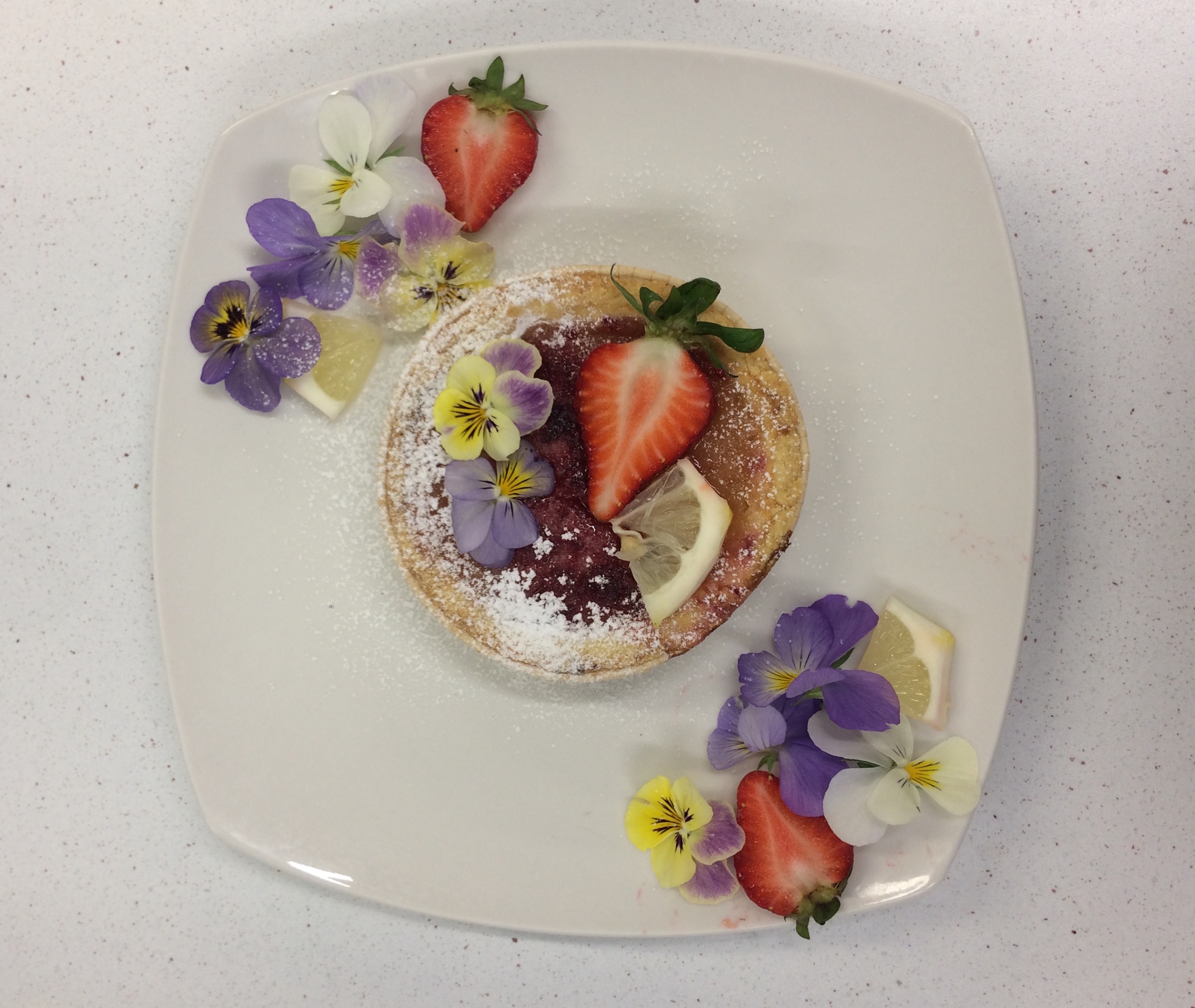
Bio Technology - make and create ginger beer


Fabrics
You will:
- Learn to read and follow pattern instructions
- Use a sewing machine and overlocker confidently
- Create a pair of boxer shorts that fit YOU
- Make a matching sleep mask to complete the look
Project Highlight: Sew your own comfy boxer shorts and sleep mask set — designed and made by you!

Why Choose This Course?
- A great way to try both Food and Textiles in one semester
- Learn real-life skills like cooking and sewing
- Get creative with design thinking and problem-solving
- Take home something you have made
Year 9 Visual Art
9ARTCYear 9 Visual Art is focused on giving learners the opportunity to develop drawing, painting, mixed media and sculpture art knowledge. Learners will learn to create artworks using a range techniques in both wet, dry and three dimensional media. Observational drawing techniques will underpin this programme. Research into established artist models from New Zealand New Zealand and abroad forms part of the study.
Topics Covered and assessed:
- Apply knowledge of selected drawing conventions from established practice, using appropriate materials and processes.
- Apply knowledge of selected painting/mixed media/sculptural conventions from established practice, using appropriate materials and processes.

Year 9 Wānanga Pathway
9WANANGAOur Māori Medium Pathway refers to our bilingual unit, He Kupenga Rua a Tāne. This journey can begin as early as Year 8 through our junior wānanga class. From 2027 onwards, we will offer a wānanga class for every year level from Year 8 through to Year 13.
Our Year 9 wānanga class will run for the first time in 2027 and will operate much like a mainstream classroom, with learners engaging in all curriculum areas while also having access to a range of option subjects. The key difference lies in how the curriculum is delivered, and in the topics and themes we choose to centre our learning around.
Our classes are grounded in tikanga Māori and delivered through a kaupapa Māori approach. Te Reo Māori is used extensively in the classroom to support its normalisation and everyday use. Learners also participate in specialised Te Reo Māori lessons each week to ensure their language progression remains strong and on track for the years ahead.
Mātauranga Māori sits at the heart of our learning. We intentionally shape our curriculum to include explicit Māori content, knowledge systems, and ways of understanding the world. This sits alongside the mainstream curriculum, allowing us to draw strong connections between both worlds so that learners receive a rich, balanced, and culturally grounded education.
All junior wānanga classes are application-based, with limited spaces available. Learners enter this space with the intention of continuing into our senior Māori Medium Pathway.
Subjects for Year 9 Students
10 Wānanga English
10ENGLWAFull-Year Course | English through a Kaupapa Māori Lens
Junior Wānanga English is a core subject developed specifically for ākonga in the Junior Wānanga pathway. Grounded in kaupapa Māori, the course supports learners to grow confidence and capability in English while engaging with texts, films, and stories that reflect Aotearoa’s unique histories and perspectives.
Working alongside junior wānanga social sciences, this course uses historic events, texts and Māori-centred narratives to build literacy skills — from reading, writing, and comprehension through to interpreting meaning and expressing ideas clearly. Learning is scaffolded to prepare ākonga for the mainstream NCEA Literacy co-requisite assessments that can be completed as early as year 10, with a focus on making English relevant, meaningful, and culturally grounded.
This course supports ākonga to see their own stories reflected in what they read and write, while strengthening the skills needed for future success in English and beyond.
Middle School English Language (ESOL)
MIDEL01This course caters for migrant, Pasifika and international 2nd language learners (ELLs) in Years 8-10. The aim of the course is to develop academic vocabulary and competency in English skills across listening, speaking, reading and writing.
The course targets the learning needs of individual learners and helps prepare them for L1 Literacy. It also supports learners to be successful in mainstream subjects.
The EL classroom is a positive, nurturing environment which values and embraces the languages and cultures of the learners. Learners are encouraged to share their cultures and support each other in their learning. Their cultures are an integral focus in the course for discussions, writing and presentation topics.
Year 10 Dance
10DANCYear 10 Dance develops the learners dance skills, techniques, vocabularies and movement practices. Level 5 of the NZ Dance Curriculum is the focus for the work completed at this year level.
Over the semester the learners will compare and contrast dances from a variety of past and present cultures and contexts. They will manipulate the dance elements and explore the use of choreographic devices and structures to organise dance movement. This will lead to the preparation, rehearsal and performance of dance, showing an awareness of production technologies.
Year 10 Digital Technology, Systems and Control
10DTSCYear 10 Digital Technology and Systems and Control
Computer Science
This is a practical course where you will develop programming, electronics, and engineering skills by designing and building software. You will learn how computers solve problems, how automated systems make decisions, and how sensors, electronics, and programmed control work together to respond to the real world. By the end of the course, you'll have created your own computer programs, designed automated electronic systems, and gained practical skills used in computer science, engineering, and technology.

What Will I Learn?
You will gain practical experience with a range of computer science and engineering concepts:
- Programming – writing well-structured programs using functions, procedures, and reusable code
- Algorithms and Data – using collections to search, sort, and organise information efficiently
- Boolean Logic – creating complex decisions using logical operators and truth tables
- Digital Media – work through a design process to create a web page based digital outcome.
- Responsible practice - understand how technology can have a positive or negative impact on people and how to create technological outcomes responsibly.
- Program Testing – testing, debugging, and refining programs to improve reliability
- Systems Thinking – understanding how subsystems, inputs, outputs, and feedback work together to create reliable technological systems
Possible Projects
Throughout the course you will design, build, test, and evaluate a variety of software and mechatronic systems.
Projects may include:
- Developing software using functions, variables, and collections
- Creating programs that save and retrieve information from files
- Implementing search and sorting algorithms to organise data
- Create a single page web based digital outcome.
- Designing automated systems that use logic and feedback to respond to changing conditions
- Testing and refining systems to improve performance, reliability, and safety
- Producing system diagrams to communicate how components and subsystems interact
Systems and Control
Dive into the future of engineering by combining electronics, mechanics, and smart programming. In this hands-on section, you will learn how to design, wire, and code intelligent systems that can interact with the physical world, bridging the gap between hardware and software.
What Will I Learn? You will learn how to use hardware and code to bring machines to life:
- Microcontrollers: How to program the "brains" of a system (such as Arduino or micro:bit)
- Electronics & Circuits: Wiring sensors, motors, displays, and LEDs safely
- Automation: Reading inputs from the environment (like light, distance, or temperature) to trigger physical actions
- Prototyping: Designing and building physical structures to house your mechanical components
Possible Projects:

Year 10 Drama
10DRAMIn Year 10 Drama learners will learn to work in a safe and supportive environment.
The focus will be group collaboration, performance skills and developing their confidence - and having lots of fun!!
They will develop their use of drama techniques, elements and conventions to create character and to devise and perform a play in a group.
They will also perform a major role from a script and perform on the school auditorium stage.

Year 10 English
10ENGLYear 10 English builds on the literacy knowledge and skills developed in Year 9 and prepares learners for NCEA Level 1. The course aligns with Phase 4 of the New Zealand Curriculum and supports learners to become confident readers, writers, speakers, listeners, and critical thinkers.
Learning will include a range of texts such as novels, short stories, poetry, film, visual texts, and digital media. Through these texts, learners will explore ideas, themes, perspectives, and the ways creators use language and visual features to communicate meaning. Learners will make connections between texts, their own experiences, cultures, communities, and the wider world.
The knowledge in this course will cover:
- How texts are created and how they communicate ideas.
- How language and visual features influence audiences.
- How themes, characters, settings, and perspectives are developed.
- Different forms of writing, including creative, personal, analytical, and formal writing.
- How to structure ideas, use evidence, and communicate effectively for different purposes and audiences.
Practices in this course include:
- Reading, viewing, and analysing a range of texts.
- Explaining ideas and supporting responses with evidence.
- Creating texts for different audiences and purposes.
- Planning, drafting, editing, and reflecting on writing.
- Sharing and developing ideas through discussion, presentations, and collaboration.
In this course, learners will build on their Year 9 knowledge and practices by moving from identifying ideas in texts to explaining how texts create meaning. They will develop stronger skills in analysing texts, writing structured responses, selecting evidence, and communicating their ideas clearly.
The course is designed to be equitable by providing a range of texts, learning activities, and support strategies so all learners can participate and experience success. Students will have opportunities to demonstrate their learning in different ways and develop confidence in their own abilities.
The course reflects mana ōrite mō te mātauranga Māori by valuing Māori knowledge, perspectives, and storytelling. Learners will engage with texts that reflect Aotearoa New Zealand’s diverse communities and explore ideas such as identity, whānau, belonging, and connection to place. Te Ao Māori perspectives and te reo Māori will be included authentically throughout learning.
Learning is affirming because learners are encouraged to bring their own experiences, cultures, and viewpoints into classroom discussions and responses. Students will explore a range of voices and perspectives while developing confidence in sharing their own ideas.
The course connects learning to learners’ environments and communities by exploring texts and issues that reflect their lives and the world around them. Learners will consider how texts represent people, places, and experiences and how communication can influence communities.
This course prepares learners for future pathways by developing the literacy, communication, critical thinking, and creative skills needed for NCEA, further study, employment, and participation in their communities. By the end of Year 10, learners will have developed the confidence and skills needed to engage successfully with senior English.
Year 10 English-medium Pathway
10ENGPTHOur English-medium pathway delivers the New Zealand Curriculum shaped by our curriculum philosophy and design criteria. In our learning environments we aim to inspire every learner to flourish | Whakapuāwaitia. We plan learning built on our school values, Together, Believe, Achieve | Ngātahi, Whakapono, Tutuki, and a belief that our curriculum will be broad, and nurture learners by knowing and growing them for success.
Learners will engage with a broad range of courses, and learning environments that centre Āhuatanga Whangaparāoa and teaching practice so learners can belong, strive and succeed.
Learning is designed to build on each learner's knowledge and skills, be equitable and affirming, place equal value on mātauranga Māori, and ensure clear pathways within communities and for work.
Year 10 French
10FRENYear 10 French builds on the skills developed in Year 9 and introduces new topics as well as the past and future tenses.
• Topic 1 Hobbies
• Topic 2 Paris
• Topic 3 My Identity
• Topic 4 At home
• Topic 5 Talents and Skills
• Topic 6 Discovery and Travel
Topics Covered:
- Create and record a variety of French conversations over the length of the course.
- Complete 3 assessments which test listening, reading and writing skills.
Year 10 Health Education
10HEEDIn Year 10 Health Education learners will explore current health issues faced by teenagers in today’s society and explore the impact these issues have on themselves, others, and the wider community. They will develop tools and strategies to be able to face these issues and make informed health enhancing decisions. Parts of this course are learner-directed and they will have a choice in their learning and assessment options.
The units that will be covered are:
- Well-Being & Mental Health
- Drug Education
- Sexuality Education
- Health Promotion
Year 10 Māori
10MAORYear 10 Te Reo Māori
Learners in the Wānanga can not choose this option as they will have their Māori lessons in the Wānanga.
Year 10 option Māori a further extension into conversational Te Reo Māori. Learners are expected to learn the following content:
- All of year 9 optional Māori with an emphasis on Kupu Hou (new words) & sentence structures previously learnt.
- Korero whānau – Family connections.
- Instructions – Giving and taking.
- Tenses – Future, present, past.
- Nga Āhuatanga – Describing appearance.
- Negatives for each sentence structure
Year 10 option Māori is specifically focused on Te Reo Māori & Tikanga (knowledge & processes) with aspects of Matauranga Māori (Māori knowledge).
Year 10 option Māori has a 40% speaking/presenting component.
Year 10 Mathematics
10MATHThis is the course that further develops the skills studied at Year 9. Learners are taught by specialist Mathematics teachers and learners are introduced to new concepts and more challenging word problems. The focus for this course is the Year 10 part of Phase 4 of the NZ Mathematics Curriculum.
Course work for 2027
● Number skills including fractions, decimals, percentages in real life settings, plus GST, interest, salaries and commission
● Measurement skills including surface area and volume of curved shapes and cones, and real world applications
● Algebra skills introducing quadratic equations and an introduction to parabolas
● Linear relationships including drawing graphs and interpreting real life graphs
● Pythagoras and Trigonometry skills including application/word problems
Year 10 Music
10MUSPYear 10 Music Course Description

This half-year course is designed for students with a general interest in music who wish to build on the skills and knowledge gained in Year 9 Music and prepare for their future music pathway.
Students who have not taken Year 9 Music are also welcome to enrol.
It is recommended that students taking Year 10 Music receive private or itinerant lessons on their chosen instrument or voice. These lessons will help prepare students for Year 11 Music.
Students are also encouraged to participate in the school's extra-curricular music programme and be involved in a music group or ensemble.
Course Objectives
Students will:
- perform music as a soloist and/or as a member of a group
- develop musical ideas through composition using a variety of music software
- develop an understanding of Grade 2 music theory and music reading
- explore music in context through a music research project.
Year 10 Physical Education
10PHEDYear 10 Physical Education builds on the learning experiences of the year 9 course with the continued emphasis on participation in a range of physical activities. Learners will have the opportunity to refine their skills and further develop their competence, key capabilities and character aligned with Āhuatanga Whangaparāoa. Through physical activity learners will be challenged to discover the impact self-management, relating to others, participation and leadership has on an individual and team’s ability to be effective.
The units covered are:
- Adventure Base Learning
- International, Māori and Pacific Island Games
- Passing & Kicking
- Throwing, Catching & Striking
- Game Design and Leadership
- Beach Safety & Aquatics
Year 10 Resistant Material, Spatial and Product Design
10RMSPSpatial (Design & Visual Communication)
This course is your chance to think like a designer! Whether you're into buildings, products, or creative thinking, Spatial Design helps you explore how to bring ideas to life through drawing, modelling, and design thinking.
You’ll learn how to use visual skills to generate ideas, show your thinking, and explore how design works through both function and aesthetics (how things look and feel).
What Will I Learn?
You will:
- Learn to sketch and draw your ideas clearly
- Explore design principles – like balance, shape, colour, and purpose
- Develop your creativity and problem-solving skills
- Use 3D software to model your design
- Potentially create and present design ideas in Product Design
Projects You Might Do
- Design your own everyday product (like a chair, pen, or drink bottle)
- Create a concept for a tiny house or dream room
- Explore how form and function work together in good design
- Present your design ideas using visual techniques (drawing, modelling, and rendering)
Why Take This Course?
- A great choice if you enjoy drawing, design, architecture, or 3D work
- Helps grow your creative thinking and visual communication
- Prepares you for Senior DVC and design pathways
- A fun way to learn how the things around you are designed
- A gateway into architecture, industrial design, engineering and game design.
Materials Design Technology
In this course, you will gain practical experience working with a range of materials and tools. You will complete two exciting projects that help you build skills in design, construction, and problem-solving.
What Will I Learn?
You will:
- Use workshop tools and equipment safely
- Learn how to follow a design process
- Explore different materials (wood, plastic, and metal)
- Develop practical construction and building skills
- Gain confidence in making your ideas come to life
What Projects Will I Do?
Automata
- Learn construction techniques using tools and materials
- Follow a design process to make an automata
- Focus on workshop safety, teamwork, and finishing techniques.

Year 10 Science
10SCIEThis is the third year of Junior Science at Whangaparāoa College. Learners are taught in Science classrooms with access to the laboratory spaces for experimental work. The course work is a direct continuation of the year 8 and year 9 Science courses.
Due to the changes to the New Zealand Curriculum, the Year 10 Science course work is subject to change. By continuing to teach the topics listed, and any topics in the new curriculum that were not taught in Y7-9, the year 10 learners in 2027 will have the best preparation for the Phase 5 content in the Year 11 General Science course.
Course work for 2027 will include teaching and learning regarding:
- Microbes and the Human Immune system
- Genetics including inheritance and changes in populations over time
- Forces and Motion
- Electricity and Magnetism
- Musculoskeletal and Respiratory systems
- Chemical Reactions including Ion formation, Balancing Equations and reactions of Acids and Bases
- Carbon Chemistry including ,combustion and it's impacts on the environment
Year 10 Social Sciences
10SOCSJunior Social Sciences at Whangaparāoa College develops learners' understanding of people, places, cultures, and environments through equitable, inclusive, and culturally responsive learning. The knowledge explored includes New Zealand history, Te Tiriti o Waitangi, human rights, migration, sustainability, crime and justice, and global citizenship, with Mana Ōrite mō te Mātauranga Māori embedded throughout. Learners develop practices such as inquiry, research, analysing evidence, critical thinking, collaboration, and communication. Building on prior learning, students investigate increasingly complex social issues through local and global contexts. The course provides strong pathways into senior Social Sciences while preparing learners to become informed, active citizens.
Year 10 Textile, Food and Processing Technology
10TXFPMaterials (Textiles) and Processing (Food and Bio)
Textiles (Materials) – Print & Sew
This practical course is all about designing, printing, and sewing using the Technology Design Process. You’ll learn how to make your own garments and accessories using textile fabrics and fabric printing techniques.
Learners will:
- Learn how to read and use patterns
- Sew a garment using stretch fabric
- Explore fabric printing methods like sublimation and direct-to-fabric printing
- Create your own unique print design
- Finish the course with garment/items that you’ve designed and made yourself
Possible Projects:
Pēke (Bag) with personal print using a sublimation printer, or
Tīhāte (Tee-shirt) with unique design print using direct to fabric printer or
Other possible small projects could include: sweatpants, toilet bag

Food ( Processing ) – Create, Cook and Innovate
Are you ready to take your culinary skills to the next level and design the future of food?
Year 10 Processing/Food Technology is an exciting, hands-on course where the kitchen becomes your design studio. This course goes far beyond basic cooking—it’s about understanding the science of ingredients, exploring global food trends, and designing delicious solutions to real-world culinary challenges.
Learners will:
- Learn essential culinary techniques and kitchen safety
- Understand the science and functions of different ingredients
- Explore modern food trends
- Investigate how to reduce food waste with smart shopping, storing, and using leftovers
- Develop, test, and adapt your own unique recipes
- Explore biological processing methods like fermentation, enzyme action in food processing
- Finish the course with food products and dishes that you’ve designed and styled yourself
Possible Projects:
Love Food Hate Waste - create dishes using innovative ingredients through testing and trialing
Bio Technology - make and create a yogurt product
Year 10 Visual Art
10ARTCYear 10 Visual Art is focused on enhancing learners drawing, painting and mixed media skills and art knowledge and introducing them to the processes and techniques of printmaking.
Learners will learn to use a range techniques in both wet and dry media to produce a resolved painting and lino or dry point etching print Observational drawing techniques will underpin this programme. Research into established artist models from New Zealand and abroad forms part of the study in order to prepare them for either Level 1 Visual Art or Level 1 Design / Photography.
Topics Covered:
- Apply knowledge of selected drawing conventions from established practice, using appropriate materials and processes.
- Apply knowledge of selected painting conventions from
established practice, using appropriate materials and processes.
- Apply knowledge of selected printmaking conventions from established practice, using appropriate materials and processes.
Year 10 Wānanga
10WAOur middle school wānanga includes a year 10 cohort. Māori Medium Pathway refers to our bilingual unit – He Kupenga Rua a Tāne.
This class is application based with limited spaces available and runs very much like a standard year 10 rōpū whānau. What makes it unique is the classroom environment, the content taught in lessons and the extra-curricular expectations on the learners in this space (pōhiri, school tikanga & Kaupapa Māori leadership etc).
This class spends a year together being immersed in a mixed learning space that incorporates Te Ao Māori & mainstream education. Our curriculum is delivered using a Kaupapa Māori approach where tikanga, matauranga & Māori teaching and learning methods are prioritised.
Learners in this space apply with the intention of taking our senior Māori medium pathway (senior wānanga).
Year 10 Wānanga Pathway
10WANANGAOur Māori-medium Pathway refers to our bilingual unit, He Kupenga Rua a Tāne. This journey can begin as early as Year 8 through our junior wānanga class. From 2027 onwards, we will offer a wānanga class for every year level from Year 8 through to Year 13.
Our Year 10 wānanga class has been operational since 2023 and we have seen great success. This class operates much like a mainstream classroom, with learners engaging in all curriculum areas while also having access to a range of option subjects. The key difference lies in how the curriculum is delivered, and in the topics and themes we choose to centre our learning around.
Our classes are grounded in tikanga Māori and delivered through a kaupapa Māori approach. Te Reo Māori is used extensively in the classroom to support its normalisation and everyday use. Learners also participate in specialised Te Reo Māori lessons each week to ensure their language progression remains strong and on track for the years ahead.
Mātauranga Māori sits at the heart of our learning. We intentionally shape our curriculum to include explicit Māori content, knowledge systems, and ways of understanding the world. This sits alongside the mainstream curriculum, allowing us to draw strong connections between both worlds so that learners receive a rich, balanced, and culturally grounded education.
All junior wānanga classes are application-based, with limited spaces available. Learners enter this space with the intention of continuing into our senior Māori Medium Pathway.
Year 10 Wānanga Reo
10WAREOFull-Year Course | Te Reo Māori
This specialised, full-year course is designed exclusively for Middle Wānanga learners who are passionate about deepening their knowledge of te reo Māori. Through immersive, Māori-medium instruction and a focus on cultural integrity, ākonga will develop their language skills across Levels 3 to 6 of the national curriculum.
Junior Wānanga Te Reo offers a unique opportunity to engage in te reo Māori through full immersion learning experiences, with a strong emphasis on both oral and written language. As part of the programme, students will also be able to attempt and potentially complete one of the Te Reo Matatini Level 1 NCEA co-requisite assessments, supporting Māori-medium literacy development and preparing ākonga for future success in NCEA Māori pathways.
This course replaces the half-year language option typically available at Year 10 and is tailored to support learners on their reo journey in a culturally grounded and academically rigorous environment.
Subjects for Year 10 Students
Level 1 Building and Construction
L1BCON01Level 1 Building and Construction – Get Trade Ready (Full Year Course – Unit Standards, NCEA Recognised)
This course offers a highly practical, hands-on introduction to the world of building and construction trades. You will work mainly in the workshop, gaining essential trade skills and safety knowledge while using real tools and materials to complete several building projects.
You will follow the BCITO learning programme (Building and Construction Industry Training Organisation), which helps prepare you for future apprenticeships or entry into the building industry.
Please note: This course is Unit Standard-based, so it is not university-approved, but it does contribute to NCEA.
What Will You Do?
Projects and Practical Skills
- Complete 3–4 major workshop projects (e.g. toolbox, planter box, sawhorse)
- Learn to safely and effectively use hand tools and power tools
- Work with a range of construction materials like timber and plywood
- Develop the confidence to follow plans and build to a high standard
Core Topics Covered
- Safe working practices in a construction environment
- Knowledge and selection of construction materials
- Workshop procedures and processes
- Use of measurement, layout, and construction techniques
Transferable Skills You Will Develop:
- Literacy and numeracy in a trade setting
- Communication and teamwork
- Following instructions and interpreting job specs
- Sketching and design thinking
- Understanding quality and accuracy in all builds
Note:
- All assessments are Unit Standards
- Each task will be marked as Achieved or Not Achieved
- Credits earned contribute to your NCEA Level 1
Why Take This Course?
- Ideal for students interested in trades, carpentry, or hands-on work
- Supports pathways into BCATS Level 2, pre-trade courses, or apprenticeships
- Gain real, usable skills in a supportive and practical workshop setting
- Learn the fundamentals of the construction industry
Level 1 Business Studies
L1BUST01Level I Business Studies (Commerce).
Level I Business Studies is also known as Level 1 Commerce. Commerce combines aspects of economic activity, including accounting and business practices. In Level 1 Commerce, learners will mainly learn about financial decision making, price determination, and interdependent financial relationships. The Achievement Standards in Level 1 Commerce are as follows:
AS92028 Demonstrate understanding of an organisation's financial decision-making (5 credits)- Learners will learn about financial decision-making and the impact of financial decisions on organisations and stakeholders. Learners will learn to analyse financial data using financial tools to make decisions for an organisation.
AS92029 Demonstrate understanding of price determination for an organisation (5 credits)- The learners will learn about the processes involved in price determination and will determine a price for a product based on market research, analysing financial data, and using financial models such as Projected Income Statements and breakeven analysis.
AS92030 Demonstrate understanding of how entities with interdependent financial relationships are affected by an event (5 credits) -This is an external examination conducted towards the end of the academic year. The teaching and learning for this topic focuses on financial interdependence in the economy and understanding the real and money flows across different sectors of the economy. Learners will also learn about the interdependence of several factors that come together in the real economy.
Level 1 Chemistry Biology (Specialist)
L1CMBL01This is a full year (4x per week) specialist course for learners who want to complete Level 2/3 courses in Chemistry, Biology or Earth and Space Science.
This course CAN be taken along with the L1 Physics Earth/Space course for learners who want to learn specialist content knowledge for future Science careers such as Biomedical Sciences and/or Engineering. (Yes you can do both L1CMBL and L1PESS)
This course CANNOT be taken with L1 General Science (L1SCIE). (You cannot do L1CMBL and L1SCIE).
Topics of study in this course include Genetics, Ecology, Chemical Properties and Types of Reactions. It is taught by teachers who are specialists in both Chemistry and Biology.
Level 1 Criminology
L1CRIME0The course studies the impact of crime on society both locally and internationally. Learners get to discover the role that punishment has had in society from Roman Times to today and how this has evolved over time. Learners will learn what the role of the court system is in New Zealand and the different roles people have in this space. We also examine factors contributing to and consequences of crime.
Topics covered:
- The Evolution of Punishment
- Causes and Consequences of crime
- Law and Order
- Fake news
Level 1 Dance
L1DANC01The Level 1 dance course has a balanced focus on creativity, performance, and analysis. Learners will explore their own movement ideas, share them with others, and use choreographic devices and processes to develop and give form to their own dance sequences. They will prepare, rehearse and perform a range of dances and demonstrate understanding of the performance requirements of the genres and contexts. Learners will practically explore the elements of dance and record and reflect on what they discover. We will view dance works and analyse them using the dance elements and terms we have learnt throughout the year.
Topics Covered:
- Dance Elements
- Dance Performance
- Dance Choreography
- Dance Perspectives
Level 1 Design and Photography
L1DSPH01Year 11 Design and Photography is a full year course which develop learners’ understanding and knowledge of digital photography and graphic design methods and ideas. The course will blend both analogue and digital photography and design techniques, allowing learners to develop a well-rounded skill set. From mastering the art of composition to understanding the principles of both photography and design, students will learn how to visually communicate ideas effectively throughout their work. Learners will use local history and subject matter to develop themes and subject matter. Learners will use ideas and techniques from established practice (photography and design models) to assist in the development of their work.
Learners’ will produce the following for assessment:
- 8 x A3 Workbook Pages
- A significant resolved work
- A systematic body of work on an A1 portfolio board
This course is a highly recommended pre-requisite for study if
learners intend to take one Level 2 Graphic Design, Photography or
Painting/Printmaking.
A DSLR camera is not required for this course, as learners can either use
their mobile ph0one camera or the Visual Art department DSLR cameras. However, it
is highly recommended that all Learners have a suitable laptop to run the Adobe
Creative Suit software as there is a limited number of Visual Art department
desktops.
See below the link for further details on laptop requirements: https://helpx.adobe.com/nz/download-install/apps/system-requirements/creative-cloud-requirements.html
Please note learners cannot take this course as well as Level Visual Arts (Painting / Printmaking) as both courses have the same assessments.
Participation in the Year 10 Visual Art or DVC (Design and Visual Communication) course is a strong advantage, however not a requirement for this course. 
Level 1 Design and Visual Communication
L1DVC01Level 1 Design and Visual Communication (DVC) – (Full Year Course – Achievement Standards, NCEA Level 1)
Design and Visual Communication is all about solving real-life problems through design thinking and visual communication. You’ll explore how to express your creative ideas using sketching, drawing, digital tools, and presentation techniques.
This course introduces the core design skills used in Architecture, Product Design, and Engineering. You will develop your ability to think both creatively and critically, working on exciting design briefs that respond to people, place, and purpose.
This course leads to a university-approved pathway. It builds a strong foundation for Level 2 and 3 DVC.
What Will You Learn?
Visual Communication Skills
- Freehand sketching and rendering
- Technical drawing and instrumental layout
- Computer-aided design (CAD) and 3D digital modelling
- Annotation and design language
Design Thinking
- Apply divergent and convergent thinking (exploring and refining ideas)
- Use the Design Process to solve problems for real people and situations
- Understand design through Te Ao Māori and global design heritages
Major Projects
Shaded Outdoor Structure Project - Spatial
- Explore a range of design ideas for a shaded structure on school grounds
- Respond to Te Ao Māori values and other design influences
- Present your final concept with clear drawings and annotation
Seating System - Product
- Create a product for a specific person or user group
- Refine and communicate your ideas using various presentation skills
- Include both functional and aesthetic design elements
Presentation & Exhibition
At the end of the course, you will present one of your final designs to an audience, showcasing your visual communication and storytelling skills.
Skills You Will Develop
- Creative idea generation and development
- Technical drawing and rendering
- Visual storytelling through sketches, models, and digital tools
- Problem-solving through design
- Confidence in presenting your ideas clearly and professionally
Why Take This Course?
- Ideal for students interested in architecture, engineering, product design, or visual arts
- Builds creative and technical skills that support many career pathways
- Provides excellent preparation for Level 2 and 3 DVC
- Encourages you to think deeply and communicate clearly through design


Level 1 Digital Technology
L1DTEC01Level 1 Digital Technology – (Full Year Course – Achievement Standards, NCEA Level 1)
In this course, you will explore the exciting world of digital technology and computing. You will learn how to design websites, code programs, and understand how humans interact with computers. This course is a great mix of creativity and technical skill.
You will complete three Digital Technologies Achievement Standards, building a strong foundation for senior Digital Technology courses and future tech pathways.
What Will You Learn?
Programming (JavaScript)
- Learn how to write and understand code
- Create interactive programs using JavaScript
- Develop logic and problem-solving skills
Website Development
- Design and build your own multi-page website
- Use HTML, CSS, and JavaScript
- Focus on layout, function, and user experience
Human Computer Interfaces (HCI)
- Explore how users interact with devices and software
- Analyse the design of digital tools from a user’s point of view
- Improve your own digital products based on usability and feedback
Skills You Will Develop
- Website coding (HTML/CSS)
- JavaScript programming
- UX/UI design principles
- Problem-solving and debugging
- Planning and managing digital projects
- Presenting your work to an audience
Why Take This Course?
- Great introduction to web and software development
- Useful skills for careers in tech, design, and engineering
- Strong foundation for Level 2 and 3 Digital Technologies
- Encourages creativity, logic, and innovation

Level 1 Drama
L1DRAM01L1 Drama - Studying Drama equips individuals with a diverse range of valuable skills applicable to various aspects of life. These skills include communication, confidence, teamwork, critical thinking, and creativity, all of which are highly valued in diverse professional careers and jobs.
We will perform scripts, participate in lively discussions, devise scenes and pieces of theatre, watch live theatrical performances – all of which show and explore how we can communicate through the powerful tool of performance.
Key Areas of Learning
- Creative Innovation: Devising and scripting original theatrical works.
- Cultural Performance: Bringing authentic Aotearoa New Zealand scripts to life before a live audience.
- Critical Analysis: Exploring the core functions of theatre—examining its power to entertain, educate, and drive societal change.
This course focuses on learners becoming increasingly literate in Drama. Our focus for the year will be developing communication skills through drama practice.
This course develops skills, knowledge and confidence which are applicable to learners in their other school subjects and their lives beyond school.
It is a great course to take for those who are interested in increasing confidence and creativity, as well as having some fun!

Level 1 English
L1ENGL01Level 1 (Year 11) English is an NCEA Level 1 course that builds on the literacy knowledge and practices developed in Years 9 and 10. Learners will develop their ability to read, view, write, speak, and listen with increasing confidence, independence, and critical awareness. The course includes:
AS91924: Demonstrate understanding of how context shapes verbal language use,
AS91925: Demonstrate understanding of specific aspects of studied text, and
AS91926: Develop ideas in writing using stylistic and written conventions.
Through the study of a range of texts, including novels, film, poetry, short stories, and digital media, learners will explore how creators use language, structure, and techniques to communicate ideas and influence audiences. Learners will develop practices in analysing texts, understanding context, creating crafted writing, and communicating ideas clearly for different purposes and audiences. The course values learners’ identities, cultures, and experiences by incorporating diverse perspectives, including texts that reflect Aotearoa New Zealand and Māori contexts. Through explicit teaching, feedback, and reflection, learners will strengthen their literacy, critical thinking, creativity, and communication skills, preparing them for further NCEA study, future pathways, and active participation in their communities.
Level 1 English Language
L1ENLU01Level 1 English Language caters for migrant, Pasifika and International 2nd language learners (ELLs) in Year 11. The aim of the course is to develop academic vocabulary and competency in English skills across listening, speaking, reading and writing. The course is multi-level with assessments that provide credits towards NCEA Level 1, and supports learners for L1 Literacy, recognizing the learning needs of individual learners.
The EL classroom is a caring, nurturing and positive learning environment, in which learners' languages and cultures are valued. Learners are encouraged to share their cultures and support each other in their learning.
Level 1 Food Technology
L1FOTE01Level 1 Food Technology – (Full Year Course – Achievement Standards)
This course is perfect for students who are passionate about food, nutrition, and creative design. It combines academic knowledge with practical kitchen skills to help you understand the science and purpose behind food product development.
This course uses Achievement Standards, contributing to NCEA Level 1 and forming a university-approved academic pathway.
What Will You Learn?
- How to design food products using the Technology Design Process
- Food safety and hygiene best practices
- Understanding nutrition and dietary needs
- Exploring cultural influences on food
- Designing for sustainability and ethical impact
Practical Application
- Develop and test food products
- Work independently and in teams to solve real-world food issues
- Reflect and refine your work based on feedback and results
Major Projects
Love Soup Meal Project
- Design and make a freezable, nutritious meal
- Donate your meal to our local food bank, Love Soup
- Show empathy and care for our community
Cultural Bread Product
- Design and create a bread-based product
- Reflect a cultural influence and gift it to one of your teachers
- A project that shows manaakitanga – care and respect for others
Sustainability in Food Design
- Incorporate eco-friendly choices in ingredients, packaging, upcycling and waste
- Learn how food technology can support a healthier planet
Skills You Will Develop
- Creative thinking and food product innovation
- Understanding of nutrition and cultural influences
- Safe food handling and hygiene
- Designing for clients, purpose, and values
- Reflective thinking and continuous improvement
- Time management and independence
Important Notes
- This is an academic pathway course with Achievement Standard
- You must participate in both theory and practical sessions
- If you have food allergies, you must discuss an action plan with the HOD before starting


Level 1 French ( via Correspondence )
L1FREN01THIS COURSE WILL BE VIA CORRESPONDENCE, not FACE TO FACE TEACHING.
Mr. Moss (HOD Foreign Languages) will be available for support but not in class teaching.
This course follows on from Year 10 French and will build on the four language skills of reading, writing, speaking and listening.
Level 1 General Science
L1SCIE01Learners preparing for L2/3 specialist science courses and future careers in Science especially in Biomedical science or Engineering are recommended to choose either the Chemistry Biology (L1CMBL01) and/or the Physics ESS (L1PESS01) course.
L1SCIE01 is a full year (4x per week) course for learners that are interested in building understanding of key skills and content in the Sciences for careers where Science is not fundamental to success. Please note that learners taking General Science (L1SCIE01) CANNOT also take the specialist Chemistry/Biology OR the specialist Physics/ESS courses due to cross over of standards offered.
Note that in the list of Achievement Standards offered below, the core standards are compulsory, while learners should choose between the two optional standards to make up at least 15 credits at Level 1.
Level 1 Geography
L1GEOG01Geography studies how humans interact with the Earth – it provides an understanding of people and places. Geography helps us understand our own lives in a global world and the vital issues we face such as natural disasters, climatic change, resource dependency, human rights and poverty eradication, and sustainability.
Topics Covered:
Understanding natural or cultural processes around the world.
Research methods and data collection to understand the geographic environment (Wetlands fieldtrip)
Understanding geographic decision-making in Aotearoa New Zealand or the Pacific
Level 1 Health Education
L1HEED01The Level 1 Health course focuses on the learning and understanding of the underlying health concepts, including hauora. Learners will investigate how these underlying concepts influence and are relevant to everyday life. Learning is collaborative and encourages critical thinking, with learners working in groups and individually to explore relevant health issues, reflect on personal values, and consider the impact of social and interpersonal influences on decision making and hauora.
Teachers of the course provide ongoing support through clear guidance and ensure learning is relevant, inclusive, and connected to real-life contexts. Learners will complete meaningful NCEA assessments that explores hauora and key health concepts through collaborative, critical thinking activities by examining factors influencing well-being, health models, decision-making, influences on hauora, and strategies to enhance well-being.
Learners will complete both Internal Assessments, and undertake at least ONE of the External Assessments. This will give learners a minimum of 15 credits. There is also opportunity to complete some Unit Standards as part of this course, these will be added throughout the year to ensure the right fit between the standard and learner.
Topics Covered (but not limited to):
Mental health, decision making, well being and hauora, sexuality and relationships
Level 1 Assessments
- Demonstrate understanding of wellbeing through the application of a model of health.
- Demonstrate understanding of a decision-making process in a health-related situation.
- Demonstrate understanding of personal, interpersonal, and societal factors that influence Hauora.
- Demonstrate understanding of strategies that enhance Hauora.
Level 1 History
L1HIST01Level 1 History focuses on the human past - events that have happened across time that involve people. History helps us to understand how the events of the past link to each other, and how they connect to today.
Level 1 History will give you an understanding of how events today have their beginnings in the events of the past. You will be equipped with the concepts of historical significance, perspective, and cause and consequences as well as research skills you can bring with you into the future.
Topics that may be covered:
-New Zealand and World War I
-Palestine-Israel conflict
-Protest Movements
-What makes an event significant?
-Source analysis
Level 1 Hospitality
L1HOSP01Level 1 Hospitality – (Full Year Course – Unit Standards)
This practical and engaging course gives you a taste of the hospitality industry. You will learn essential hands-on cooking and food preparation skills in a supportive environment, perfect for anyone considering a future in cafés, restaurants, hotels, or catering.
This course focuses on practical learning, helping you build confidence in the kitchen while developing valuable teamwork, communication, and problem-solving skills.
Please note: This is a Unit Standard course, with assessments based on practical performance- do you have the skills? Results are recorded as Achieved or Not Achieved and contribute to NCEA Level 1 (but do not follow a university-approved pathway).
What Will You Learn?
Core Hospitality Skills
- Basic knife handling and food safety
- Preparing and presenting hot finger foods
- Practicing baking techniques
- Working cleanly and efficiently in a kitchen team
- Developing plating and presentation techniques
Important to Know
- You will be assessed through Unit Standards
- You must attend regularly, as practical assessments are done weekly
- Teamwork and good hygiene are essential in every lesson
- If you have any food allergies, please speak to the HOD before starting practical work
Why Take This Course?
- Great for students interested in food, people, and working in busy environments
- Builds real-world skills used in cafés, restaurants, and hotels (compliments your part-time job)
- Provides a stepping stone into Level 2 Hospitality or Food Technology
- Helps develop your confidence, independence, and professional kitchen habits


Level 1 Literacy
L1LIT01This Level 1 Literacy course is a supportive, inclusive, and skills-focused programme designed for learners who are working towards achieving NCEA Level 1 Literacy requirements and may not yet have met the Common Assessment Activities (CAA) standards. It provides a structured bridge between Year 10 English and Level 1 NCEA, with a strong emphasis on building confidence, capability, and independence in literacy.
The course focuses on strengthening essential skills in reading, writing, speaking, and understanding texts, using engaging, relevant, and accessible learning contexts. Learners will work with a variety of everyday and real-world texts, such as articles, media, short stories, and digital content, to develop practical literacy skills they can apply both in school and in life.
Learners will also sit the level 1 Internal standards as part of this course.
Level 1 Māori
L1MAOR01This is a full-year course (four periods per week) that focuses on the Māori language and culture. Learners work towards achieving standards in tuhituhi (writing) and kōrero (speaking), with a strong emphasis on whakaputa reo (spoken language).
Ākonga will explore a range of topics including:
- Tikanga o te akomanga (classroom practices and values)
- Whakapapa and pepeha
- Karakia and whakataukī
- Tōku ao (my world)
- Ngā rā o mua (past events, both personal and national)
This course is the beginning of the senior Te Reo Māori pathway, leading towards University Entrance approved study in Year 13.
Please note that this class is often combined with senior wānanga, meaning it is taught in a larger, mixed-level learning space with multiple year levels working together.
Level 1 Māori Performing Arts
L1MAPA01Māori Performing Arts is a full-year course (four periods per week) that explores Te Ao Haka — the world of haka and Māori performance.
This course develops both practical and theoretical understanding of kapa haka as a performing art, with a strong focus on the core performance elements that underpin kapa haka. Learners will be expected to learn and perform a competitive-level kapa haka bracket, while also exploring different kapa haka groups and significant people who have shaped Māori performing arts both past and present.
Key learning includes:
- Core performance elements of kapa haka and Te Ao Haka
- Learning and performing a competitive-level kapa haka bracket
- Exploring key features of Te Ao Haka and performance practice
- Comparing different kapa haka items and styles
- Investigating influential kapa haka groups and key figures in Māori performing arts
This course includes both practical and theory-based learning and is a University Entrance (UE) approved subject pathway, leading into Level 3 Māori Performing Arts (MAPA).
Level 1 Mathematics with Algebra
L1MATH01This course focuses on relational and abstract thinking in order to solve problems in various contexts. It is suitable for all learners who intend to continue taking academic Mathematics and/or Physics courses in Year 12 and Year 13. Learners may be able to progress from this course to L2MATH01 Mathematics and/or L2MATS01 Statistics in Year 12.
Topics Covered:
Measurement
Algebra
Geometry
Graphing
Statistics
Level 1 Mathematics with Statistics
L1MATS01This course focuses on statistical and relational thinking in order to solve problems in various contexts. It is suitable for learners who have shown sufficient knowledge of basic numeracy skills and strategies in Year 10 Mathematics. Learners may be able to progress from this course to L2 Statistics and L3 Statistics.
Topics Covered:
Internal
(1.1) Explore data using a statistical enquiry process. (5 credits)
(1.2) Use mathematical methods to explore problems that relate to life in Aotearoa New Zealand or the Pacific. (5 credits)
External:
(1.3) Interpret and apply mathematical and statistical information in context (5 credits)
Level 1 Music
L1MUSP01NCEA Level 1 Music
Prerequisites and Co-requisites:
- Either Year 10 Option Music and/or
- At least 2 years previous experience and lessons on an instrument or voice, it is also an advantage to be able to read music but not necessary.
- Upon joining senior music, students will have the opportunity to take itinerant or private instrumental/vocal lessons to support them with their performance assessments so they can be at the required 3rd year of performance by the end of the year.
NCEA Level 1 Music Course Information: 


This is a full year course, which continues to develop music skills. Learners will complete three assessments in the NCEA Level 1 course during the year.
It is possible for learner to take this course if they did not take Year 10 music after they have had a discussion with the HOD Music.
Our focus will be developing music skills through composing an original piece of music, performing a piece of music either as a soloist or in a group. We will also focus on demonstrating music skills by identifying and describing music from a range of musical styles, such as rock, indie, pop, jazz, etc. and learning/performing a song by ear.
NCEA Level 1 music students must have itinerant or private instrumental or singing lessons to support them to develop their performance skills and will be expected to join and participate in an extracurricular music group where you can also gain credits in ensemble skills.
In NCEA Level 1 Music you will focus on:
Music 1.1 Use music skills in a music style 91948 5 credits Internal
Music 1.2 Demonstrate performance skills 91949 5 credits Internal
Music 1.4 Shape music ideas to create an original composition 91951 5 credits External
You will study all three standards, totaling 15 credits
Level 1 Numeracy
L1MATN01This course is suitable for learners who have struggled with knowledge of basic numeracy skills and strategies in Year 10 Mathematics.
The main focus of this course will be to gain the 10 Numeracy credits required for NCEA.
This will be an external exam where learners have the opportunity to have two attempts throughout the year.
Once learners have achieved numeracy, they will start internal standards 1.1 and 1.2, then sit the external 1.3.
Level 1 Personalised Learning Pod
L1PPOD01The Personalised Learning Pod is a future focused learner-centred environment. The Pod provides flexibility for Year 11 learners at Whangaparāoa College to personalise their learning by choosing what they would like to learn about and produce. Each learner in the Pod spends 4 hours per week working on one year-long or two semester-long projects that require critical thinking, planning, innovation, and determination.
Learners can select 3 assessments that offer credits for NCEA Level 1 that align with their project
‘The Pod is a classroom where learners choose a project that they are interested in, can learn from, or believe would benefit the world. You then work with the teachers to manage your own learning and learn something you really care about while completing NCEA standards' - Past Pod learner
Level 1 Physical Education
L1PHED01Level 1 Physical Education is an introduction to the concepts of Senior Physical Education. The course emcompasses both theoritical and practical elements in order to develop the skills and knowledge learners will need to be successful in the course. Learners will be exposed to a range of different and relevant areas over the course of the year:
- A range of different movement contexts - developing skills across different sports
- Understanding of how the human body creates movement and responds to exercise
- Understanding sporting culture within New Zealand and the Pacific
The concepts we will cover throughout the course will improve learners sporting skills, encourage learners to strive for personal excellence in both the classroom and sporting context and give learners a wider view of Physical Education at a Senior level in a supportive environment. This course leads onto Level 2 and 3 Physical Education which is a university entrance approved subject.
Level 1 Physics Earth/Space (Specialist)
L1PESS01This is a full year (4x per week) specialist course for learners who want to complete Level 2/3 courses in Physics, or Earth and Space Science.
This course can be taken along with the L1 Chemistry Biology course for learners who want to learn specialist content knowledge for future Science careers such as Biomedical Sciences and/or Engineering. (Yes you can do both L1CMBL and L1PESS)
This course CANNOT be taken with L1 General Science (L1SCIE). (You cannot do L1PESS and L1SCIE).
Topics of study in this course include Human Impacts on Earth's Spheres, Mechanics, Physics Phenomenon Investigation, Energy, and Earth cycles. It is taught by teachers who are specialists in both Physics and Earth and Space Science.
Level 1 Practical Physical Education
L1PRPE01This course is designed for learners who are looking for a hands-on, activity-based Physical Education experience. It is 100% practical, with a strong focus on participation and developing a wide range of motor skills through engaging and varied physical activities.
Learners will spend the year in practical environments, working on improving their movement skills and overall physical performance. Assessment is based on a selection of practical Achievement Standards, which recognise consistent, high-quality performance across a range of physical activities, as well as the ability to work effectively as part of a team.
Important Note:
This course is ideal for learners who enjoy being active and learning through movement. However, it is not recommended for those who intend to take the full academic Physical Education course in future years, as it does not cover the theoretical components required for progression.
Level 1 Resistant Materials Technology
L1MTEC01Level 1 Resistant Materials Technology – Design, Build, Innovate (Full Year Course – Achievement Standards, University Pathway)
This course blends academic learning with practical skills, offering a pathway toward university study or senior design-based technology courses. It is different from Building and Construction, which focuses more on trade and vocational outcomes.
You will take on design challenges that let you explore a range of materials like wood, plastic, and metal. You will use a structured design process to research, plan, design, and create a one-off product that meets a real need.
This course encourages creative problem-solving, independent thinking, and safe, efficient use of tools and materials.
What Will I learn?
Design Thinking & Research
- Investigate existing products and identify opportunities for improvement
- Develop your own concepts and design ideas
- Produce detailed design drawings and working plans
- Use modelling techniques to test and communicate your designs
Construction & Practical Work
- Learn how to safely use a wide range of workshop tools and machines
- Work with wood, metal, and plastic
- Apply practical construction skills to build your product to a high-quality finish
- Reflect on your process and evaluate your final outcome
Possible Projects
Storage System Project
- Design and build a storage solution for a real client or context
- Your outcome will reflect the value of Manaakitanga – showing care, respect, and meeting someone’s needs
- Use a combination of materials and construction methods
Upcycling & Sustainable Innovation
- Explore how to reduce, reuse, and repurpose discarded materials
- Experiment with techniques like melting plastics or combining found objects
- Create a unique and innovative product using sustainable design thinking

Skills You Will Develop
- Design process: research, ideation, modelling, and reflection
- Safe and skilled use of tools and machines
- Working with multiple materials: wood, metal, plastic
- Project planning and time management
- Communication through sketches, drawings, and modelling
- Understanding sustainability and ethical design
Why Take This Course?
- University-approved pathway
- Develops creative, academic, and hands-on skills
- Great foundation for Level 2–3 Technology, Engineering, or Product Design
- Encourages innovation and values-based thinking
- Helps build an early design portfolio for future pathways


Level 1 Sociology
L1SOCI01Sociology is the study of how society works: issues that matter in the world today and what people are doing about them. We focus on human rights and social justice, and encourage learners to explore the issues in society that they are passionate about.
Level 1 Sociology will give you an understanding of issues that are important today, why are they important, and how to research and analyse these issues.
Topics may include:
-Immigration
-Child Poverty in Aotearoa
-Toitū Te Tiriti movement
- Climate change
-Social Action (making a difference)
Level 1 Textiles Technology
L1CLTX01Textiles – Create with Purpose (Full Year Course – Achievement Standards)
This course is perfect for learners who want to combine their creativity, academic thinking, and practical skills through hands-on textile design. You will take part in a mix of theory and workshop sessions, learning how to take an idea from concept to final outcome.
You will explore textile design through meaningful projects that promote manaakitanga (care and respect for others) and develop products that have a real purpose for real people.
What Will You Learn?
Textile Design Skills
- Learn how to read and interpret pattern instructions
- Choose and adapt a simple pattern to suit your ideas
- Develop confidence using a sewing machine and overlocker
- Use materials in new ways to create innovative outcomes
Project 1: Dress a Girl/Boy Around the World
- Learn about this global initiative and how it reflects manaakitanga
- Research the needs of young girls/boys in less fortunate countries
- Design and construct a garment for a child, using your skills to make a positive difference
- Reflect on your choices and how your design meets the needs of the brief
Project 2: Innovation Through Experimentation
- Experiment with different fabrics, textures, and techniques
- Test and trial your design ideas to improve your final outcome
- Design and construct a unique product such from a teacher given brief
- Create for a client or purpose, showing creativity and problem-solving
Skills You Will Develop
- Pattern reading and garment construction
- Creative thinking and innovation
- Practical sewing and finishing techniques
- Research and analysis
- Testing and trialing design ideas
- Reflective thinking and working to a design brief
Why Take This Course?
- Achievement Standards provide a strong academic and creative base
- Great preparation for Level 2 Textiles, Design, or Fashion pathways
- Use your design skills to help others and make a difference


Level 1 Visual Arts - Painting and Printmaking
L1ARTC01Year 11 Visual Arts is a full year course which develop learners’ understanding and knowledge of practical art-making methods and ideas. Learners will create works in a range of drawing, painting and printmaking media. They will use local history and subject matter to develop themes and subject matter. Learners will use ideas and techniques from established practice (artist models) to assist in the development of their work.
Learners’ will produce the following for assessment:
- 8 x A3 Workbook Pages
- A significant resolved work
- A sustained body of work on an A1 portfolio board
This course is a highly recommended pre-requisite for study if learners intend to take one Level 2 Painting/ Printmaking, Graphic Design or Photography.
Please note learners cannot take this course as well as
Level 1 Design/Photography as both courses have the same assessments.
Participation in the Year 10 Visual Art course is a strong advantage, however not a requirement for this course.

Level 1 Wānanga English
WA1EWĀ1E: Senior Wānanga | English through a Kaupapa Māori Lens
Level 1 Wānanga English is a kaupapa Māori-aligned English course designed specifically for year 11’s in Senior Wānanga ākonga. Delivered in parallel with Wānanga History, this course integrates historic texts, Māori narratives, and kaupapa Māori-based films to build both foundational and advanced English skills.
Ākonga will develop confidence across the full spectrum of literacy, from basic reading and writing to higher-level skills such as analysis, interpretation, and critical thinking. Learning is scaffolded carefully to support success in the mainstream NCEA Literacy co-requisite assessments, while also affirming Māori worldviews and voice within the study of English.
This course empowers learners to see themselves in the texts they engage with, while building the literacy capabilities needed for academic achievement and beyond.
New Zealand Experience
NZEXPNew Zealand Experience is a course for International Learners visiting Whangaparāoa College only. Learners will be enrolled by the International Department.
Te Kura
TeKuraTe Kura is an online school. You could choose to study through Te Kura for subjects that we do not offer in our school.
You will need your Deans, & Whanau approval to be accepted into a Te Kura course.
If you are going to apply to do a Te Kura course you will need to tell us what subject you are wanting to study.
You can study at any level.
Year 11 English-medium Pathway
MMMM1Our Year 11-13 English-medium pathway delivers learning in courses that are assessed for the National Certificate of Educational Achievement (NCEA). In our learning environments we aim to inspire every learner to flourish | Whakapuāwaitia. We plan learning built on our school values, Together, Believe, Achieve | Ngātahi, Whakapono, Tutuki, and a belief that our curriculum will be broad, and nurture learners by knowing and growing them for success.
Learners will engage with a broad range of courses, and learning environments that centre Āhuatanga Whangaparāoa and teaching practice so learners can belong, strive and succeed.
Learning is designed to build on each learner's knowledge and skills, be equitable and affirming, place equal value on mātauranga Māori, and ensure clear pathways within communities and for work.
Year 11 Wānanga
WA1This course is part of He Kupenga Rua a Tāne – the bilingual unit at Whangaparāoa College. While the details of this course is for learners in year 11 (level 1 NCEA) please note that this is part of a combined senior class (includes year 12 & 13 learners) that takes up half of a learners timetable as it covers 3 subject areas (Te Reo Māori, English & History).
Picking this course means learners automatically choose the 3 subjects we offer. They are left to fill their timetable with 3 mainstream subjects.
This class is block taught (wānanga | workshops) where learners are together for up to 3 hours a day covering a range of learning from our 3 subject areas. This is done bilingually (Te Reo Māori & English) and with a keen focus on Aotearoa and Māori based content. This is open to all learners and all levels of Te Reo Māori.
Year 11 wānanga provides an alternative, strong literacy program to mainstream.
Year 11 Wānanga Pathway
Wananga1He Kupenga Rua a Tāne is our Māori-medium Pathway, offering a bilingual learning journey from Year 8 through to Year 13. Our junior & middle wānanga classes (Years 8–10) provide all mainstream curriculum areas and option subjects, but are delivered through a kaupapa Māori approach grounded in tikanga Māori and centred on mātauranga Māori. Te Reo Māori is used extensively in the classroom and supported through specialised weekly lessons, helping to strengthen language development while connecting learners to Māori knowledge, identity, and ways of learning. Following our junior and middle wānanga course is senior wānanga which is run differently.
In Years 11, 12, and 13, learners can apply to join our senior wānanga. This class is a mixed year-level rōpū whānau (home room), where learners stay together for the equivalent of three subjects (half of their timetable). During this time, they cover learning across Te Reo Māori, English, and History.
Because of the wānanga structure — one classroom for up to three hours each day — learners are able to work for longer periods on their classwork and assessments. This creates space for deeper focus and allows them to dedicate more time to one subject when needed. Our teaching team works to create strong connections across all three curriculum areas, ensuring the learning is relevant and transferable across assessments and year levels. We often teach through integrated topics, linking multiple NCEA standards to one body of learning.
The senior wānanga is taught by a team of four kaiako and delivered bilingually through both English and Te Reo Māori. All learners are welcome to apply, and all levels of Te Reo Māori are accepted.
Whānau involvement is a central part of this space. Parents and caregivers play an active and important role in supporting the learning journey. Learners in our senior wānanga also take responsibility for leading and supporting numerous kaupapa Māori initiatives across both the school and wider community.
We are proud to be one of the few bilingual spaces in New Zealand secondary education working to bring greater parity through honouring Treaty of Waitangi and offering a genuine dual pathway toward secondary school success.
Subjects for Year 11 Students
Level 2 Materials Technology
L2MTEC01Materials Technology – Design It, Build It - (Full Year Course – Achievement Standards)
This course explores how conceptual designs become real products. You will use a design process to research, develop, justify, and evaluate ideas. Working with materials like wood, plastic, and metal, you will learn both creative thinking and practical construction skills.
You will be encouraged to take ownership of your projects, develop independent working habits, and produce high-quality outcomes.
What Will You Do?
Workshop Skills & Trialling
- You will carry out testing and trialling in the workshop
- You will demonstrate a range of practical techniques
- You will develop confidence in using computer aided design software, a 3D printer, and a laser cutter
- You will show your ability to work safely and independently
Design & Modelling
- You will respond to a teacher-provided design brief
- You will explore and develop your own design ideas
- You will create functional models and a scale model of your chosen design
- You will explain how modelling supports successful product development
Prototype Construction
- You will construct a final prototype to a high-quality finish
- You will use a range of materials and select the best tools and techniques
- You will create working drawings to help guide your construction
- You will justify your design decisions and reflect on the final outcome
What Will I Learn?
- Design thinking and project planning
- Research and analysis of existing products
- Safe and effective use of workshop tools and machinery
- Modelling and prototyping
- Evaluation and reflection
- Material selection and construction techniques
Why Take This Course?
- Great preparation for Level 3 Technology, Building, or Trades pathways
- Learn real skills for both creative and practical problem solving
- Build confidence in designing and making your own projects
- Suitable for students interested in engineering, construction, or design.


Level 2 Biology
L2BIOL01This course is for those learners who wish to continue on from Level 1 Biology or Level 1 General Science with a view to studying Biology at tertiary level e.g. BSc Biology, Biomedical science, Veterinary study or Medicine.
This is an academic course focusing on cell processes, genetics and evolution, and ecology of the local rocky shore community. The content and skills covered are foundational knowledge for Level 3 Biology, which is why Level 2 Biology is a prerequisite for learners intending on carrying on to Level 3 Biology.
Good literacy is essential to succeed in Level 2 Biology due to the research and report writing expected and in the extended written response format in the NCEA examinations. All 4 compulsory standards are expected to be completed by every learner. There is opportunity for extra learning and credits in the form of 2 optional standards. Level 2 learners who are passionate about Biology are also encouraged to attend weekly Scholarship Biology tutorials that will extend them. However, it is not advisable to enroll in this exam until completion of Level 3 Biology next year.
Level 2 Building and Construction
L2BCON01Building and Construction – BCATS Trade Skills - (Full Year Course – Unit Standards)
This course follows the Building and Construction Industry Training Organisation (BCITO) learning programme, giving you the chance to build real-world trade skills while working in a practical, workshop-based environment.
You will complete up to three Unit Standards, gaining a solid foundation in both theory and hands-on experience to support pathways into apprenticeships or other building-related careers.
This is a Unit Standard course, which means assessments are graded as Achieved or Not Achieved. It does not count toward university entrance, but does count toward NCEA Level 2.
What Will I Learn?
Practical Skills
- Safely use a wide range of hand tools, portable power tools, and fixed machinery
- Learn correct workshop procedures and techniques
- Apply construction skills to real projects like frames, boxes, or small structures
- Follow and interpret plans and job specifications
Theory & Trade Knowledge
- Understand safe working practices in a BCATS environment
- Learn about the materials used in construction
- Explore measuring, marking, layout, and construction processes
- Apply maths and communication skills to trade-related tasks
Key Standards You Will Complete
- Safe Workplace Practice
- Hand Tools
- Portable Power Tools
What Skills Will You Develop?
- Health & safety knowledge in a workshop environment
- Confidence in using a wide range of tools and equipment
- Problem-solving and accuracy when building to specifications
- Communication, teamwork, and freehand sketching
- Literacy and numeracy in a practical context
- Meeting quality standards and client expectations
Why Take This Course?
- Get prepared for pre-trade courses or apprenticeships
- Learn in a practical, workshop-based setting
- Build valuable trade and life skills
- Ideal for students looking at carpentry, building, or other construction trades
Possible Projects:
- Chopping Board
- Jewellery Box
- Nightstand
- Coffee Table
Level 2 Business Studies
L2BUST01Business Studies is all about how businesses work in theory and practice. Level 2 Business Studies focuses on learning to conduct effective market research, carrying out a planned and guided business activity, and learning about motivational practices at the workplace to enhance productivity. Learners will learn to gather relevant data to support their market research and ensure the financial viability of their businesses. They will also learn to write business plans and use financial tools such as Income Statements, Breakeven analysis, etc, to plan and run a sustainable, community-focused business.
Topics Covered:
- AS90846 - Conduct market research for a new or existing product (3 credits)
- AS90848 - Carry out, refine, and review a business activity within a community context with guidance (9 credits)
- AS90847 - Investigate the application of motivation theory in a business (3 credits)
- AS90843 - Demonstrate understanding of the internal operations of a large business (4 credits)
AS90843 is the external assessment and the rest are internals.
Business Studies offers Pathways Unit Standards. These are work-related unit standards that are individually selected for learners in consultation with the teacher. If a learner is doing Gateway, they are not able to do Pathways. Pathways can add up to 15 unit standard credits. These unit standard credits do not count for University Entrance. These credits are offered across all Social Sciences at Level 2.
Level 2 Chemistry
L2CHEM01This course consists of three theoretical units covering Atomic Structure, Organic Chemistry and Physical Chemistry. However, learners will spend about half of the class time doing practical work from a laboratory workbook to become familiar with advanced equipment used at the senior level. During internal assessments a considerable amount of time is focused on developing analytical skills.
Level 2 Dance
L2DANC01The Level 2 dance course has a balanced focus on choreography, dance performance and analysis. During this course the learners will extend their skills in the vocabulary, practices, and technologies of selected dance genres and styles. They will choreograph solo and group dance works of about one minute in length using choreographic processes and devices to communicate choreographic intentions. Learners will apply rehearsal and performance skills to a range of dances, developing their technique and expression to communicate specific intentions.
Topics Covered:
- Perform a theatre or ethnic dance to communicate understanding of the dance.
- Choreograph a group dance to communicate an intention.
- Perform a repertoire of dance.
Optional AS?US
- Choreograph a solo dance to communicate an intention.
Level 2 Design and Visual Communication
L2DVC01Design and Visual Communication (DVC) - (Full Year Course)
Design with Purpose | Communicate with Impact
Design and Visual Communication is a creative visual language that helps you solve real-life design problems. You will develop your own Spatial or Product Design project and learn how to communicate your ideas clearly and professionally using sketches, drawings, annotations, digital tools, and 3D models.
This course is perfect for students interested in architecture, product design, engineering, advertising, game design or visual communication pathways.
What Will You Learn?
Visual Communication Skills
- Sketching and drawing techniques
- Rapid visualisation to quickly explore and present ideas
- Advanced presentation skills using different media (manual and digital - Adobe software)
Design Thinking & Analysis
- Explore real-life design problems and how to solve them
- Use research and design history to inform your ideas
- Learn to think critically and evaluate your own and others' designs
Design Focus Options
- Choose between a Spatial Design project (e.g. buildings, interiors) or a Product Design project (e.g. packaging, everyday items)
- Explore topics like advertising, marketing, branding, and user-centred design
- Understand how environmental and human factors shape design
Digital Tools
- Use Blender and other software to create accurate 3D models
- Apply typography and layout skills to present your ideas visually
- Explore 3D modelling and rendering techniques to enhance your presentations
Main Topics
- Sketching & drawing for communication
- Visual presentation and layout
- Design history and research
- Blender and 3D modelling
- Typography and advertising
- Architecture and spatial planning
- Critical thinking and evaluation
Why Take This Course?
- Supports University Approved Level 3 – supports entry into design, architecture, engineering, and creative degrees
- Great for developing your design portfolio for tertiary study
- Builds real-world creative and communication skills
- Ideal for careers in architecture, product design, digital media, advertising, and more


Level 2 Digital Technology
L2DTEC01Digital Technologies – Web & Programming Solutions - (Full Year Course – Achievement Standards)
In this course, you will take your coding and digital development skills to the next level. You will design and build advanced, responsive websites, connect them to databases, and create complex programs using JavaScript. This course is perfect for students interested in web development, software design, and computer science.
You will use industry-relevant tools such as HTML, CSS, JavaScript, PHP, MySQL, and more, and learn how these technologies work together to produce functional, interactive, and professional digital outcomes.
What Will You Learn?
Website Development
- Create advanced, responsive websites
- Use HTML, CSS, JavaScript, and PHP
- Ensure your sites work across different screen sizes and devices
Database Development
- Design and build a MySQL database
- Connect your website to the database using PHP
- Learn how to display, update, and manage information on your site
Programming with JavaScript
- Plan and develop advanced JavaScript programs
- Create interactive user experiences using a graphical interface
- Solve problems using logic, functions, and algorithms
Main Topics Covered
- Programming – using JavaScript to create advanced, interactive applications
- Website Development – build dynamic, multi-page, mobile-friendly websites
- Database Development – design and connect databases for storing and managing information
Why Take This Course?
- Gain skills used in the tech and software development industries
- Great preparation for university courses in computer science, IT, or digital design
- Build a digital portfolio to showcase your coding and development work
- Learn real-world coding skills through practical, engaging projects

Level 2 Drama
L2DRAM01Studying drama equips individuals with a diverse range of valuable skills applicable to various aspects of life. These skills include communication, confidence, teamwork, critical thinking, and creativity, all of which are highly valued in diverse professional careers and jobs - and many aspects of life!
This course also allows for learners to get UNIVERSITY APPROVED LITERACY credits!!! You will have the opportunity to gain 13 UE Reading credits and 4 UE Writing credits!
In this course students will:
- Learn acting techniques, focusing on different theatre practitioners and theatre forms
- Participate in a class production on the Auditorium stage with lights, props and costumes
- Write their own scene of a script and have peers perform it
- Have lots of fun and gain skills and experience that will be of life long importance!
Year 12 Drama requires commitment from students to be present at least 90% of the time. This is to ensure we can complete the content of the course, as well as give time to adequately prepare with other for performance assessments.
Level 2 English
L2ENGL01NCEA Level 2 English builds on the knowledge and practices developed in Level 1, supporting learners to become more confident, independent, and critical readers, writers, speakers, and thinkers. Learners will study a range of written, visual, and oral texts, including novels, films, poetry, short stories, and non-fiction, exploring how creators use language, structure, and techniques to communicate ideas and influence audiences.
Learners will develop practices in analysing texts, researching effectively, creating purposeful writing, and communicating ideas with clarity and confidence. The course values learners’ identities, cultures, and perspectives by engaging with diverse texts, including those that reflect Aotearoa New Zealand and Māori contexts.
Through explicit teaching, feedback, and reflection, learners will strengthen the literacy, critical thinking, and communication skills needed for success in NCEA Level 3, further study, employment, and participation in their communities.
Level 2 English Language
L2ENLU01This course caters for migrant and Pasifika 2nd language learners (ELLs) in Year 12. International Learners with a CEFR score of A1 and A2 may be considered with HOD approval.
The aim of the course is to develop competency in English skills across listening, speaking, reading and writing. The course is multi-level with assessments that provide credits towards NCEA Level 2, and targets the learning needs of individual learners. It also supports learners to be successful in mainstream subjects and helps prepare them for L1 Literacy. UE Literacy Unit Standards are offered to able learners in 2026, subject to HOD approval.
The EL classroom is a positive, nurturing environment which values and embraces the languages and cultures of the learners. Learners are encouraged to share their cultures and support each other in their learning. Their cultures are an integral focus in the course for discussions, writing and presentation topics.
Level 2 Food Technology
L2FOTE01Food Technology – (Full Year Course – Leads to a University Approved pathway)
This course is for students interested in the innovation and science behind food. Unlike Hospitality, which focuses on practical culinary skills, Food Technology blends academic knowledge with creative design to explore how food products are developed, improved, and presented for real-world use.
You will follow the universal Design Process – a structured method of problem-solving that includes research, stakeholder feedback, product development, testing, and evaluation. This process is used across industries and will prepare you for careers or further study in food science, nutrition, or product development.
What Will You Do?
Project 1: Community Recipe Card Development
- Design and develop a recipe card that meets the needs of the Whangaparāoa community
- Incorporate principles of nutrition, food styling, photography, and clear communication
- Present your work with creativity and professionalism
Project 2: Lemon Meringue Pie Processing
- Learn to process and present a perfect, traditional Lemon Meringue Pie
- Understand how to repeat and refine the outcome for consistency and quality
- Explore the scientific principles that affect texture, taste, and structure
Key Learning Areas
- Nutrition and food design
- Recipe development and presentation
- Food photography and styling
- Advanced food processing techniques
- HACCP- food safety
- Design thinking and product innovation
Why Take This Course?
- Supports future study in food science, design, or health fields
- Combines academic knowledge with hands-on design projects
- A great pathway into food innovation, nutrition, and product development careers
- Encourages creativity, critical thinking, and independent learning
Important Notes
- This course is not focused on learning basic cooking skills
- If you have any known food allergies, you must speak with the HOD to develop a safety plan before starting practical work
Is This Course for You?
Do you enjoy design, innovation, and food science?
Are you interested in solving real-world problems through food?
Are you ready for a course that blends creativity with academic challenge?
If yes – Food Technology will inspire you to create food with meaning and purpose.


Level 2 French ( Via Correspondence )
L2FREN01THIS COURSE WILL BE VIA CORRESPONDENCE, not FACE TO FACE TEACHING.
Mr. Moss (HOD Foreign Languages) will be available for support but not in class teaching.
This course follows on from Year 11 French and will build on the four language skills of reading, writing, speaking and listening.
Level 2 Gateway
L2GATE01Why choose Gateway?
Kickstart your career while finishing school. Gateway is a practical, hands-on programme designed to get you workplace-ready.
⚠️ Please Note: Spaces are limited. There is an application and interview process before your place on the course can be confirmed.
Please fill in the Note section when you select Gateway and make sure that you choose your backup courses in case you do not get into Gateway.
What you will do:
- Work Experience: Spend one day a week in a real workplace (typically 5–10 weeks in Term 2).
- Earn Qualifications: Complete practical, work-related unit standards, including essential industry certificates in Customer Service and Health & Safety.
- Get Job-Ready: Learn how to build a standout CV and master your interview skills to impress future employers.
- Supported Study: Use class time to keep on top of your other school subjects while balancing your placement.
Important Details:
- Placements are subject to meeting readiness criteria.
- Gateway is a normally a one-year-only programme, available in either Year 12 or Year 13.
Level 2 Geography
L2GEOG01Geography studies the Earth’s features and related human activity – it gives an understanding of people and places. Geography helps us understand our own lives in a global world and the vital issues we face such as natural disasters, climatic change, resource dependency, diminishing food supply, human rights and poverty eradication, and environmental protection and sustainability. Field trips will embed the skills and foundational knowledge of some of the topics studied.
Topics covered may include:
- Geographic patterns of crime in Chicago
- Perspectives on gold mining in the Coromandel
- Geographic research on Urban Design (with a fieldtrip)
- The global HIV epidemic
- The inequalities of development in Tanzania (External)
Geography offers Pathways unit Standards. These are work-related unit standards that are individually selected for learners in consultation with the teacher. If a learner is doing Gateway, they are not able to do Pathways. Pathways can add up to 15 unit standard credits. These credits are offered across all Social Sciences at Level 2.
Level 2 Graphic Design
L2DES01Year 12 Graphic Design is a full year course which extends learners’ understanding and knowledge of graphic design methods and ideas. Learners will select a personalised brief and develop a campaign or event and create a logo, poster and two additional sub-briefs such as a web page, magazine layout, brochure, app or billboard. Learners will produce hand drawn and digital illustration and graphic design using the Adobe Create suite (Photoshop / Illustrator). Learners will use ideas and techniques from established practice (design and illustrator models) to assist in the development of a systematic body of their work.
The work from the internal assessment contributes to the end of year external portfolio board.
Learners’ will produce the following for assessment:
- Generate and develop ideas in a selected form of design and apply knowledge of conventions from illustration and design models through work booking and design outcomes.
- Produce a systematic body of work within design to show understanding of art-making methods and ideas presented on 2 x A1 Portfolio boards.
This course is a highly recommended pre-requisite for study if learners intend to take Level 3 Graphic Design or Photography.
Please note it is recommended that learners only take a maximum of two visual art subjects at level 2 or 3.
Participation in either Year 11 Photography / Design, Visual Arts - Painting/Printmaking, or DVC (Design and Visual Communication) course is a strong advantage. If learners wish to take this course without previously taking the above courses, a discussion with the Head of Visual Art Department must occur.
It is highly recommended that all Learners have a suitable laptop to run the Adobe Creative Suit software as there is a limited number of Visual Art department desktops.
See below the link for further details on laptop requirements: https://helpx.adobe.com/nz/download-install/apps/system-requirements/creative-cloud-requirements.html
Level 2 Health Education
L2HEED01The Level 2 Health course builds on key ideas from Level 1, with a strong focus on developing learners' critical thinking, collaboration, and information literacy skills. Learners will explore relevant health issues affecting individuals, communities, and society, using a socio-ecological lens to analyse personal, interpersonal, and societal influences as well as looking into how people manage change and health promotion within our community.
Throughout the course, learners will work collaboratively to examine diverse perspectives, challenge assumptions, and make informed decisions based on evidence. The underlying health concepts including hauora, attitudes and values, health promotion, and the socio-ecological perspective are woven through all learning and assessments to deepen understanding.
Teacher support is a key part of this course and learners will be guided with tailored feedback, scaffolding, and access to resources that meet their individual learning needs. This inclusive and responsive learning environment ensures all learners are empowered to succeed and confidently apply their health knowledge to real-world contexts.
Topics Covered (but not limited to): Mental Health, Health Promotion, Discrimination, Media Influences, Social Justice, Resilience.
Level 2 Achievement Standards:
- Evaluate factors that influence people's ability to manage change.
- Take action to enhance an aspect of people's well-being within the school or wider community.
- Analyse issues related to sexuality and gender to develop strategies for addressing the issues.
- Analyse an interpersonal issue that places personal safety at risk (external)
Level 2 History
L2HIST01In the Level 2 History course learners will explore the historical themes of resistance and revolution by gathering information from historical sources such as artefacts, films, guest speakers, and historical sites. Learners will gain an understanding of the causes, consequences, differing perspectives, and the significance of three different events.
History is an open-entry subject which means you do not have to have done it at Level 1. The skills is History are very useful is all Social Sciences. History is a subject that can assess University Entrance writing credits ( English 2.4)
The study of History develops a range of valuable skills, including:
- Effective research processes – selecting appropriate sources of information etc
- Written communication - paragraph, and essay writing
- Verbal communication – expressing ideas and opinions
- Critical thinking – thinking deeper about events and different perspectives on these
- Connecting past with present – how past events have influenced social and political situations today
- Separating fact from fiction
Topics that may be covered:
- The struggle for Vietnamese Independence (The Vietnam War)
- The Warsaw Ghetto Uprising (The Holocaust)
- Cuban Missile Crisis (Cold War)
- The Dawn Raids in 1970s New Zealand
History offers Pathways unit Standards. These are work-related unit standards that are individually selected for learners in consultation with the teacher. If a learner is doing Gateway, they are not able to do Pathways. Pathways can add up to 15 unit standard credits
Level 2 Hospitality
L2HOSP01Hospitality – (Practical Course – Industry Unit Standards)
This is a practical-based course designed for learners who want to build real culinary skills and knowledge for the hospitality and catering industries.
You will work in pairs, just like in a professional kitchen, learning how to prepare and present food to industry standards. This course uses unit standards, so it’s not university-approved, but it is recognised by NCEA and helps prepare you for careers in cafés, restaurants, hotels, and catering services.
Note: Hospitality is different from Food Technology. Hospitality is practical and vocational, while Food Technology is academic and focused on food product development and innovation.
What Will You Learn?
Essential Culinary Skills
- Learn knife handling techniques safely and confidently
- Prepare and present salads to professional standards of the industry
- Understand food safety and hygiene requirements in a commercial kitchen
Barista Skills
- Use a commercial espresso machine to make a range of coffees and hot drinks
- Serve and sell beverages suitable for a café environment
International Cuisine
- Explore flavours and food traditions from around the world
- Create dishes inspired by international menus
Why Take This Course?
- NCEA credits through Hospitality Industry Unit Standards
- Practical experience for careers in the food service and hospitality industry
- Great for learners who prefer hands-on learning
- Can be taken alongside Food Technology – both offer different learning paths
Important Notes
- Food allergies? Please speak with the Head of Department (HOD) to create a management plan before starting practical work
- You will work in groups of two and are expected to show responsibility, teamwork, and professionalism
- High attendance is crucial as there are weekly cooking assessments
Is This Course for You?
Do you enjoy cooking and working in a kitchen setting?
Are you interested in a career in hospitality, catering, or food service?
If yes – Hospitality is a great step toward real industry experience and confidence in the kitchen!


Level 2 Literacy
L2LIT01NCEA Level 2 Literacy English is designed to support learners who need to strengthen their literacy skills and gain the credits required for further pathways. The course is suitable for learners who have not achieved the required Level 1 English credits and provides targeted support to build confidence in reading, writing, viewing, and communicating ideas. Year 13 learners may also take this course to gain Level 2 credits needed for future study. Learners will develop practical literacy skills through creating purposeful writing, analysing visual and oral texts, responding to independently read texts, and developing conclusions using information literacy skills.
Learning will focus on developing confidence, independence, and effective communication through explicit teaching, guided practice, and meaningful texts connected to learners’ experiences and communities. The course provides an inclusive and supportive pathway for learners to achieve literacy goals needed for NCEA, UE, further education, employment, and active participation in society.
Level 2 Māori
L2MAOR01This is a full-year course (four periods per week) that focuses on the Māori language and culture. Learners work towards achieving standards in tuhituhi (writing), pānui (reading), whakarongo (listening), and kōrero (speaking). Students can also gain University Literacy credits through reading and writing standards.
Ākonga will explore a range of topics including:
- Tikanga o te akomanga (classroom practices and values)
- Whakapapa, pepeha, and mihi
- Ngā tikanga o te marae (marae protocols)
- Tōku ao hurihuri (my changing world)
- I ngā wā o mua (Māori history)
This course is step two in the senior Te Reo Māori pathway, leading towards University Entrance approved study in Year 13.
Please note that this class is often combined with senior wānanga, meaning it is taught in a larger, mixed-level learning space with multiple year levels working together.
Level 2 Māori Performing Arts
L2MAPA01Māori Performing Arts is a full-year course (four periods per week) that explores Te Ao Haka — the world of haka and Māori performance.
This course develops both practical and theoretical understanding of kapa haka as a performing art and a powerful expression of identity, culture, and storytelling. Learners build performance skills while also engaging with the wider history and context of Māori performing arts.
Key learning features include:
- Learning and performing a competitive-level kapa haka bracket
- Developing performance skills across a range of kapa haka disciplines
- Exploring significant kapa haka groups and influential people (past and present) in Māori performing arts
- Building understanding of the cultural, historical, and contemporary contexts of Te Ao Haka
- Understanding the key features of a Kapa Haka bracket & performance
This course is also a pathway into Year 13 Māori Performing Arts (MAPA), which is a University Entrance (UE) approved subject.
Level 2 Mathematics with Algebra
L2MATH01This course is for learners who can confidently apply mathematical concepts when solving theoretical and real world problems. A thorough knowledge of algebraic manipulation is essential for success in this course.
Learners may be able to progress from this course to L3MATC01 Mathematics with Calculus and/or L3MATS01 Statistics.
Topics Covered:
- Apply trigonometric relationships in solving problems.
- Apply graphical methods in solving problems.
- Apply systems of equations in solving problems.
Optional Achievement Standards
- Apply the algebra of complex numbers in solving problems ( NCEA Level 3)
- Use critical path analysis in solving problems (NCEA Level 3)
External Achievement Standards (Required for L3MATC):
- Apply algebraic methods in solving problems.
- Apply calculus methods in solving problems.
Level 2 Mathematics with Statistics
L2MATS01This course is for learners who can confidently apply statistical concepts when solving theoretical and real world problems. Learners can progress from this course to L3MATS which offers University Entrance in either Mathematics or Statistics.
Topics Covered:
- Investigate a situation involving elements of chance using a simulation.
- Use statistical methods to make an inference.
- Apply network methods in solving problems.
- Design a questionnaire.
- Conduct an experiment to investigate a situation using statistical methods.
-Evaluate statistical reports
External AS offered: This is a recommended prerequisite for L3MATS
- Apply probability methods in solving problems
Level 2 Media Studies
L2MEST01Level 2 Media Studies builds on foundational skills taught in level 1 Media and English, by exploring how media texts are deliberately constructed to create meaning and engage audiences, in line with the Level 2 NCEA Media Studies curriculum. Students will develop both critical and creative skills as they analyse and produce media across a variety of forms.
Throughout the course, students will examine how narratives are developed and sustained across longer texts, such as television series, considering how character, structure, and storytelling techniques maintain audience interest. They will also investigate the ways media represents individuals and groups in society, critically analysing how stereotypes are created, challenged, or reinforced through media texts.
Alongside analytical work, students will engage in practical production tasks. These include planning and producing a music video, developing a screenplay, and exploring the conventions of specific film genres. Students will learn how to apply media codes and conventions effectively in their own work, using industry-relevant processes such as planning, scripting, storyboarding, and editing.
This course encourages creativity, critical thinking, and collaboration, while providing opportunities to gain credits through a range of Level 2 achievement standards. By the end of the course, students will have a deeper understanding of how media shapes meaning and culture, as well as practical experience in creating their own media products.
Level 2 Music
L2MUSP01L2 Music Course Description
Prerequisites and Corequisites:
- At least 3 years previous experience and lessons on an instrument or voice.
- All students must have either itinerant or private instrumental or vocal lessons to support them with their performance assessments so they can be at the required 4th year of performance by the end of the year
- All students must be involved in an extracurricular music group to support learning and gain credits for ensemble skills.
This course is designed for musicians with previous experience in performance music and are at a fourth year level on an instrument or voice.
It is an advantage if you can read music but not necessary as you can gain credits from solo and group performance and songwriting.


- There are both solo and group performance standards – those taking these standards need to choose two solo pieces and one piece to perform as a group.
- It is essential that those enrolled in these performance standards have one-on-one instrumental/singing lessons, either privately or through the school itinerant system.
- It is also expected that students participate in one or more of the college's extra-curricular music groups, and for some of the music competition groups, students can obtain four credits for the Level 2 Group performance Achievement standard.
Endorsement Certificates
Merit Endorsement: 14 credits at Merit or Excellence level with at least 3 external credits.
Excellence Endorsement:14 credits at Merit or Excellence level with at least 3 external credits.
Level 2 Outdoor Education
L2OUED01This course offers learners an introductory experience into the world of Outdoor Education. Learners will develop new skills in a range of experiences. Areas of learning include:
- Outdoor pursuits, including sea kayaking, rock climbing, tramping, camping, high ropes and archery.
- Planning, running and leading junior learners within the school.
- Experiencing and developing practical leadership skills through a range of outdoor pursuits & experiences.
- Developing practical based personal and interpersonal skills in a range of experiences.
Through these experiences, learners will develop valuable life-long skills such as communication skills, team work, confidence building, trust, and personal and social responsibility. This course leads on to Year 13 Outdoor Education.
Units we cover:
- Adventure Based Learning
- Camping
- Tramping
- Navigation
- Leadership
- Rock Climbing
- High Ropes
- Archery Performance
- Sea Kayaking
Level 2 Photography
L2PHOT01Year 12 Photography is a full year course which extends learners’ understanding and knowledge of digital photography methods and ideas. Learners will develop practical knowledge of the Digital SLR camera, professional lighting studio and the Adobe Creative Suite (Lightroom, Photoshop and InDesign). They will also have the opportunity to experiment with camera less photography techniques. Learners will investigate a personally selected theme and subject matter to photograph and develop a range of photoshoots, resolved series of images and a systematic body of work. They will use methods and techniques from established practice (artist models) to develop their understanding of photographic conventions assist in the extension of ideas within their work.
Learners’ will produce the following for assessment:
- Generate and develop ideas in a selected form of photography and apply knowledge of conventions from photography models through work booking and photographic outcomes.
- Produce a systematic body of work within photography to show understanding of art-making methods and ideas presented on 2 x A1 Portfolio boards.
This course is a highly recommended pre-requisite for study if learners intend to take Level 3 Visual Graphic Design or Photography.
Please note it is recommended that learners only take a maximum of two visual art subjects at level 2 or 3.
Participation in either Year 11 Visual Arts -
Painting/Printmaking, Photography / Design or DVC (Design and Visual
Communication) course is a strong advantage. If learners wish to take this
course without previously taking the above courses, a discussion with the Head
of Visual Art Department must occur.
A DSLR camera is not required for this course, as the Visual Art department
has a collection available for loan. However, owning your own is an advantage
for easier accessibility. It is highly recommended that all Learners have a
suitable laptop to run the Adobe Creative Suit software as there is a limited number
of Visual Art department desktops.
See below the link for further details on laptop requirements: https://helpx.adobe.com/nz/download-install/apps/system-requirements/creative-cloud-requirements.html
Level 2 Physical Education
L2PHED01This course introduces new concepts and builds on knowledge introduced in the Level One Physical Education programme. Throughout this course you will be engaged in a range of practical and theoretical components that will allow you to further develop your knowledge and apply it to practical situations.
Learning areas include:
• L2PE Camp - Learners develop skills around social responsibility, leadership and working as part of a group on a 3-day camp. Learners will participate in a range of outdoor activities run like the TV show Survivor/Amazing Race.
• Improvement - Learners will further develop their knowledge of functional anatomy, biomechanics, and skill acquisition and apply these principles to develop new motor skills.
• Enhancing Personal Fitness – Learners will develop knowledge of training principles and participate in current training methods which are used to enhance a person’s level of fitness.
• Sports Performance – Learners will participate in a range of sports and be assessed against the Level 2 performance criteria.
Level 2 Physics
L2PHYS01This is an academic course to best prepare learners for the L3 Physics course. Physics is the science that has an impact on all our lives ranging from the mobile phones we use daily to nuclear power stations that generate electricity. It's the science that explains how the world works, from the motion of objects to the behavior of light and electricity. Physics uses mathematics as an important tool and it is therefore recommended that learners have good mathematical skills.
Level 2 Practical Physical Education
L2PRPE01This course is designed for learners who are looking for a hands-on, activity-based Physical Education experience. It is 100% practical, with a strong focus on participation and developing a wide range of motor skills through engaging and varied physical activities.
Learners will spend the year in practical environments, working on improving their movement skills and overall physical performance. Assessment is based on a selection of practical Achievement Standards, which recognise consistent, high-quality performance across a range of physical activities, as well as the ability to work effectively as part of a team.
Important Note:
This course is ideal for learners who enjoy being active and learning through movement. However, it is not recommended for those who intend to take the full academic Physical Education course in future years, as it does not cover the theoretical components required for progression.
Level 2 Psychology
L2PSYC01Level 2 Psychology
Psychology is the scientific study of human cognition, emotion, and behaviour. Through this course learners will get a better understanding of the world in which they live and the reasons why people think the way they think and behave the way they behave. Learners will look into different psychological theories, explore issues around mental health, conduct research, and get the opportunity to test out hypotheses through experiments.
Topics include
- An exploration of the different psychological approaches such as Behavioural Psychology, Cognitive Psychology and Biological Psychology
- Addiction and mental health
- Psychology and crime (Forensic Psychology)
- Educational Psychology
- Memory and cognition
- Nature versus Nurture
- Ethics in psychological research such as the Milgram Shock Experiment and Stanford Prison Experiment.
Level 2 Sociology
L2SOCI01Level 2 Sociology focuses on how communities have sought change and fought for human rights across cultures. It also provides you the opportunity to effect change in your own community.
The study of Sociology develops research skills, formal academic writing, seeking to understand different perspectives, evaluation, and an understanding of different identities and cultural norms.
Topics covered may include:
-The protest at Ihumātao
-Cultural conflict- Malala vs the Taliban in Pakistan
-Social action (doing something to benefit your community). In previous years these included working in setting up and running a Blood Service Blood Drive, Hauora activities for learners, Write for Rights, volunteering at an op shop and Peer support reading with year 7.
-The external topic changes from year to year but will be based on a current cultural conflict.
Sociology offers Pathways Unit Standards. These are work-related unit standards that are individually selected for learners in consultation with the teacher if they can't manage to pass the achievement standards.
Level 2 Space Science
L2SPSC01This course is for those learners that are interested in Earth and Space Science, especially how humans can explore our solar system and investigate the rest of the universe. The overarching focus of the course is to learn about the formation of our solar system and how scientists go about detecting whether the conditions for life exist on other planets, and if so, what that life may be. This course can help develop understanding of the Level 3 Earth and Space Science course which is a good 3rd subject choice for university entrance.
Level 2 Textiles Technology
L2CLTX01Level 2 Textiles – Sustainable Fashion with Purpose - (Full Year Course)
Design | Construct | Make a Difference
This course is all about creating fashion with a conscience. If you care about the environment and love expressing yourself through design, this is the course for you.
You will explore the impact of fashion on the planet and develop your own ethical design brief. Through research, planning, testing, and construction, you will create garments that are not only stylish but also sustainable and meaningful.
What Will You Do?
Project 1 – Design & Make a Linen Shirt
- Construct a button-down shirt using natural linen
- Express your style through design details, colour matching, and fabric choice
- Learn advanced construction techniques that focus on quality and finish
Project 2 – Ethical Fashion Challenge
- Investigate the impact of fashion on people and the planet
- Research sustainable practices and conduct interviews or stakeholder investigations
- Design a garment that reflects your findings (e.g. a dress, jacket, or trousers)
- Wear your finished piece to a visit at Two Spoons Café, our local ethical café
- Use advanced construction techniques to complete high-quality garments
- Present your thinking and progress in a clear and creative way
- Take pride in your final outcomes, demonstrating both personal expression and environmental responsibility
Why Take This Course?
- Leads to University Approved subject in Level 3 – supports entry into creative or design-based tertiary study
- Combines creativity with real-world sustainability issues
- Develops advanced textile, construction, and design planning skills
- Prepares you for further study or a career in fashion, product design, or ethical business
Is This Course for You?
Are you passionate about fashion and the environment?
Do you enjoy expressing yourself through design and textiles?
Are you ready to make a statement through sustainable fashion?
If yes – this course gives you the tools to design for change and create with purpose.

Level 2 Visual Arts - Painting
L2ARTC01Year 12 Visual Arts – Painting is a full year course which extends learners’ understanding and knowledge of practical art-making methods and ideas. Learners will create works in a range of drawing and painting media. They will use develop a personally selected theme and subject matter to produce a systematic body of work. Learners will use ideas and techniques from established practice (artist models) to assist in the development of their work.
Learners’ will produce the following for assessment:
- Generate and develop ideas in a selected form of painting and apply knowledge of conventions from artist models through work booking and painted outcomes.
- Produce a systematic body of work within painting to show understanding of art-making methods and ideas presented on 2 x A1 Portfolio boards.
This course is a highly recommended pre-requisite for study if learners intend to take Level 3 Visual Arts - Painting, Graphic Design or Photography.
Please note it is recommended that learners only take a maximum of two visual art subjects at level 2 or 3
Participation in either Year 11 Visual Arts - Painting/Printmaking, Photography / Design or DVC (Design and Visual Communication) course is a strong advantage. If learners wish to take this course without previously taking the above courses, a discussion with the Head of Visual Art Department must occur. 
Level 2 Wānanga English
WA2EWĀ2E: Senior Wānanga | English through a Kaupapa Māori Lens
Level 2 Wānanga English is a kaupapa Māori-aligned English course designed specifically for year 12’s in Senior Wānanga ākonga. Delivered in parallel with Wānanga History, this course integrates historic texts, Māori narratives, and kaupapa Māori-based films to build both foundational and advanced English skills.
Ākonga will develop confidence across the full spectrum of literacy, from basic reading and writing to higher-level skills such as analysis, interpretation, and critical thinking. This course empowers learners to see themselves in the texts they engage with, while building the literacy capabilities needed for academic achievement and beyond.
Level 3 Mathematics with Calculus
L3MATC01This is an academically challenging course.
Internally assessed standards cover Trigonometry, Linear Programming and Systems of Equations.
Externally assessed standards cover Differentiation, Integration and Complex Numbers.
Within the course there are two different pathways that learners can choose.
Option 1 : Is a demanding course that requires strong algebra skills and the focus is on the external achievement standards. This option is compulsory for anyone who wishes to study Engineering.
Option 2: Is a slightly easier option, focusing more on Internal Mathematics standards.
Both options give an lead to Subject endorsements and University Entrance.
New Zealand Experience
NZEXPNew Zealand Experience is a course for International Learners visiting Whangaparāoa College only. Learners will be enrolled by the International Department.
Senior Online Learning Course
SNROLCPlease include in your exemption request which of the courses in the link below you would like to do as an Online Learning Course
If there is an option that is not offered by our school then it may be possible for you to take it through the Online Learning Community, please see the link below for the possibilities:
https://docs.google.com/document/d/1_Hqplvfz5IeZ9HoWrEb731a5JULm-KQBW2e4pXezvYw/edit?usp=sharing
The Online Learning Community (OLC) is highly successful community of New Zealand Secondary Schools, from across New Zealand, who reciprocate to provide quality teaching and learning opportunities for their students in the an online environment.
Affiliated schools can offer their students a wide range of curriculum areas, courses and subjects, all based on the New Zealand Curriulum and NCEA qualifications.
The OLC belongs to a larger New Zealand online learning community - the Virtual Learning Network (VLN) - which gives schools access to over 100 courses, enabling them to more successfully meet the learning needs of their students.
Prerequisities
For learners to be considered they must:
- have an outstanding work ethic and demonstrate a high level of personal responsibility.
- must demonstrate excellent self-management skills
- must be disciplined and committed to all online learning requirements, including having a high attendance to school
- must have a suitable device to enable them to engage with learning
https://olc.school.nz/
Te Kura
TeKuraTe Kura is an online school. You could choose to study through Te Kura for subjects that we do not offer in our school.
You will need your Deans, & Whanau approval to be accepted into a Te Kura course.
If you are going to apply to do a Te Kura course you will need to tell us what subject you are wanting to study.
You can study at any level.
Year 12 English-medium Pathway
MMMM2Our Year 11-13 English-medium pathway delivers learning in courses that are assessed for the National Certificate of Educational Achievement (NCEA). In our learning environments we aim to inspire every learner to flourish | Whakapuāwaitia. We plan learning built on our school values, Together, Believe, Achieve | Ngātahi, Whakapono, Tutuki, and a belief that our curriculum will be broad, and nurture learners by knowing and growing them for success.
Learners will engage with a broad range of courses, and learning environments that centre Āhuatanga Whangaparāoa and teaching practice so learners can belong, strive and succeed.
Learning is designed to build on each learner's knowledge and skills, be equitable and affirming, place equal value on mātauranga Māori, and ensure clear pathways within communities and for work.
Year 12 Wānanga
WA2This course is part of He Kupenga Rua a Tāne – the bilingual unit at Whangaparāoa College. While the details of this course is for learners in year 12 (level 2 NCEA) please note that this is part of a combined senior class (includes year 11 & 13 learners) that takes up half of a learners timetable as it covers 3 subject areas (Te Reo Māori, English & History).
Picking this course means learners automatically choose the 3 subjects we offer. They are left to fill their timetable with 3 mainstream subjects.
This class is block taught (wānanga | workshops) where learners are together for up to 3 hours a day covering a range of learning from our 3 subject areas. This is done bilingually (Te Reo Māori & English) and with a keen focus on Aotearoa and Māori based content.
Year 12 wānanga is a strong literacy course - all learners will be offered the full University Entrance Literacy credits (5 reading & 5 writing).
Year 12 Wānanga Pathway
Wananga2He Kupenga Rua a Tāne is our Māori-medium Pathway, offering a bilingual learning journey from Year 8 through to Year 13. Our junior & middle wānanga classes (Years 8–10) provide all mainstream curriculum areas and option subjects, but are delivered through a kaupapa Māori approach grounded in tikanga Māori and centred on mātauranga Māori. Te Reo Māori is used extensively in the classroom and supported through specialised weekly lessons, helping to strengthen language development while connecting learners to Māori knowledge, identity, and ways of learning. Following our junior and middle wānanga course is senior wānanga which is run differently.
In Years 11, 12, and 13, learners can apply to join our senior wānanga. This class is a mixed year-level rōpū whānau (home room), where learners stay together for the equivalent of three subjects (half of their timetable). During this time, they cover learning across Te Reo Māori, English, and History.
Because of the wānanga structure — one classroom for up to three hours each day — learners are able to work for longer periods on their classwork and assessments. This creates space for deeper focus and allows them to dedicate more time to one subject when needed. Our teaching team works to create strong connections across all three curriculum areas, ensuring the learning is relevant and transferable across assessments and year levels. We often teach through integrated topics, linking multiple NCEA standards to one body of learning.
The senior wānanga is taught by a team of four kaiako and delivered bilingually through both English and Te Reo Māori. All learners are welcome to apply, and all levels of Te Reo Māori are accepted.
Whānau involvement is a central part of this space. Parents and caregivers play an active and important role in supporting the learning journey. Learners in our senior wānanga also take responsibility for leading and supporting numerous kaupapa Māori initiatives across both the school and wider community.
We are proud to be one of the few bilingual spaces in New Zealand secondary education working to bring greater parity through honouring Treaty of Waitangi and offering a genuine dual pathway toward secondary school success.
Subjects for Year 12 Students
Level 2 English
L2ENGL01NCEA Level 2 English builds on the knowledge and practices developed in Level 1, supporting learners to become more confident, independent, and critical readers, writers, speakers, and thinkers. Learners will study a range of written, visual, and oral texts, including novels, films, poetry, short stories, and non-fiction, exploring how creators use language, structure, and techniques to communicate ideas and influence audiences.
Learners will develop practices in analysing texts, researching effectively, creating purposeful writing, and communicating ideas with clarity and confidence. The course values learners’ identities, cultures, and perspectives by engaging with diverse texts, including those that reflect Aotearoa New Zealand and Māori contexts.
Through explicit teaching, feedback, and reflection, learners will strengthen the literacy, critical thinking, and communication skills needed for success in NCEA Level 3, further study, employment, and participation in their communities.
Level 2 Literacy
L2LIT01NCEA Level 2 Literacy English is designed to support learners who need to strengthen their literacy skills and gain the credits required for further pathways. The course is suitable for learners who have not achieved the required Level 1 English credits and provides targeted support to build confidence in reading, writing, viewing, and communicating ideas. Year 13 learners may also take this course to gain Level 2 credits needed for future study. Learners will develop practical literacy skills through creating purposeful writing, analysing visual and oral texts, responding to independently read texts, and developing conclusions using information literacy skills.
Learning will focus on developing confidence, independence, and effective communication through explicit teaching, guided practice, and meaningful texts connected to learners’ experiences and communities. The course provides an inclusive and supportive pathway for learners to achieve literacy goals needed for NCEA, UE, further education, employment, and active participation in society.
Level 3 Gateway
L3GATE01Why choose Gateway?
Kickstart your career while finishing school. Gateway is a practical, hands-on programme designed to get you workplace-ready.
⚠️ Please Note: Spaces are limited. There is an application and interview process before your place on the course can be confirmed.
Please fill in the Note section when you select Gateway and make sure that you choose your backup courses in case you do not get into Gateway.
What you will do:
- Work Experience: Spend one day a week in a real workplace (typically 5–10 weeks in Term 2).
- Earn Qualifications: Complete practical, work-related unit standards, including essential industry certificates in Customer Service and Health & Safety.
- Get Job-Ready: Learn how to build a standout CV and master your interview skills to impress future employers.
- Supported Study: Use class time to keep on top of your other school subjects while balancing your placement.
Important Details:
- Placements are subject to meeting readiness criteria.
- Gateway is a normally a one-year-only programme, available in either Year 12 or Year 13 - please speak with Mrs Mulvaney if you already took Gateway in Year 12.
Level 3 Biology
L3BIOL01This course is for those learners who wish to continue on from Level 2 Biology, with a view to studying Biology at tertiary level e.g. ecology, botany, zoology, genetics, vet or human health science. This is an academic course (full course) focusing on responses of animals and plants, human evolution, a socio-scientific issue and genetic manipulations, with an optional external standard on speciation.
Note: Level 3 Biology is NOT a human biology course, so is not necessarily a direct pathway into the human Health Sciences.
Completion of Level 2 Biology AND good literacy are ESSENTIAL to succeed in Level 3 Biology due to the research, extended answers and report writing involved. Learners who have not done Level 2 Biology will most likely be refused entry into Level 3 Biology due to the foundational knowledge they have missed.
Level 3 Building and Construction
L3BCONBuilding & Construction
(Full Year Course)
This full-year course is perfect for learners who are passionate about woodworking, craftsmanship — and want to take their practical skills to the next level.
You will work on a series of hands-on, high-quality projects throughout the year, developing advanced woodworking techniques while using a broad range of industry-standard tools, equipment, and machinery. You will take on the role of builder, producing durable, functional, and beautifully crafted furniture pieces.
Possible Projects:
- Chopping Board: Master foundational timber prep, edge jointing, laminating, and fine finishing.
- Jewellery Box: Develop precision joinery techniques, delicate assembly skills, and custom detailing.
- Nightstand: Learn carcase construction, drawer fitting, and structural furniture assembly.
- Coffee Table: Execute large-scale timber construction, leg joinery, table top alignment, and protective surface finishing.
Apply Advanced Industry Skills
- Manage and operate shop tools, equipment, and machinery safely in a BCATS Stage 3 workshop environment.
- Read, interpret, and work accurately from technical job specifications and freehand sketches.
- Perform accurate measurements, material calculations, and quality control checks across all builds.
Level 3 Business Studies
L3BUST01Business Studies explores both the theory and practice of how businesses operate. At Level 3 Business Studies, learners focus on devising effective marketing strategies and launching innovative, sustainable businesses.
Learners will learn to:
- Collect and analyse data for effective market research
- Develop a marketing action plan to achieve business objectives
- Write business plans
- Apply financial tools such as Income Statements, Cash Flow Statements and Breakeven Analysis to ensure financial sustainability and community impact
Through a partnership with the Young Enterprise Scheme, Level 3 Business Studies offers real-world exposure. Learners could receive mentorship from business professionals, pitch ideas to expert panels, and seek funding to bring their business to life. Level 3 Business Studies provides a platform for learners to develop future focused skills such as problem solving and critical thinking by providing an opportunity to set up and run a business in a real-world context.
Achievement Standards covered:
-AS91382: Develop a marketing plan for a new or existing business (3 credits, Internal)
-AS91384: Carry out with consultation an innovative, and sustainable business activity (9 credits, Internal)
-AS91379 Demonstrate understanding of how internal factors interact within a business that operates on a global context. (4 Credits. External)
Business Studies also offers Pathways unit Standards. These are work-related unit standards that are individually selected for learners in consultation with the teacher. If a learner is doing Gateway, they are not able to do Pathways. Pathways can add up to 15 unit standard credits. These unit standard credits do not count for University Entrance. These credits are offered across all Social Sciences at Level 3.
Level 3 Chemistry
L3CHEM01This course is designed for learners wishing to continue on with a Chemistry related course at university. It consists of two theoretical units covering Particles & Thermochemistry and Organic Chemistry. The internal standards covered in the course include Spectroscopy, REDOX reactions and report on Chemical processes. High achieving learners will be encouraged to enrol for the Scholarship Chemistry examination.
Level 3 Dance
L3DANC01The Level 3 dance course has a balanced focus on performance, choreography, dance styles, and analysis. Learners will explore their own movement ideas, share them with others, and apply techniques and form to choreograph dances. They will learn movement vocabularies from different dance styles, times and cultures. In particular, investigating key dance companies and choreographers that have had significant influence on dance in Aotearoa/New Zealand.
Learners will practically explore a range of performance approaches and record and reflect on their work. This will conclude with a showcase of dance, where learners will select and apply rehearsal processes, performance skills and production technologies to enhance the communication and expression of
their dance works.
Topics Covered:
Compulsory Internal AS
- Perform a group dance.
- Choreograph a dance to develop and resolve ideas.
- Perform a repertoire of contrasting dances.
Optional Internal AS:
- Perform a solo or duet dance.
Optional External AS:
- Analyse a dance performance.
or
- Demonstrate understanding of the development of dance in Aotearoa/ New Zealand.
Level 3 Design and Visual Communication
L3DVC01Level 3 Design and Visual Communication (DVC) - (Full Year Course – University Approved)
Course Overview Design | Think | Communicate | Create
Level 3 DVC is all about using visual thinking and creativity to solve real-world design problems. You’ll explore and develop your ideas for either Spatial Design (like architecture or interiors) or Product Design (like furniture or everyday objects).
Through sketches, drawings, 3D modelling, and digital tools, you will bring your ideas to life and clearly communicate your design thinking. You’ll consider human and environmental factors, and present your final design in a professional exhibition.
This course is ideal for students thinking about further study in architecture, industrial design, engineering, or creative industries.
What Will You Do?
Solve Real Design Problems
- Choose to work on either a Spatial Design (e.g. a building or room layout) or a Product Design (e.g. a functional item)
- Respond to a brief and explore ideas through design research and creative thinking
- Understand your design context, including cultural, environmental, and user needs
Use Visual Communication Tools
- Communicate your thinking with:
- Freehand sketches and design drawings
- Annotations to explain your ideas
- 3D modelling techniques (manual or digital)
- Computer-generated images using design software
Exhibit Your Work
- Develop a final presentation of your design to a high standard
- Share your work in a peer exhibition to show your creativity and thinking
- Build a portfolio that can support entry into tertiary design and architecture courses
Why Take This Course?
- A University Approved subject that supports creative and technical pathways
- Develops visual communication, creative thinking, and problem-solving
- Work can be used in design or architecture school portfolios
- Great preparation for careers in architecture, interior design, product design, engineering, game design and other creative fields


Level 3 Digital Technology
L3DTEC01Level 3 Digital Technologies – (Full Year Course – University approved)
This course is designed for students who have completed Level 2 Digital Technologies and are ready to take their digital skills to the next level. You will work with advanced tools to design and build websites, programs, and databases.
You’ll complete a range of Achievement Standards focused on developing real-world, complex digital outcomes — preparing you for further study or careers in software development, web design, digital media, or IT systems.
What Will You Learn?
Complex Website Development
- Build dynamic, multi-page websites
- Use HTML, CSS, JavaScript, PHP, and jQuery to create interactive and responsive features
- Learn how to connect a website to a database to display and manage stored content
Advanced Programming in JavaScript
- Plan, design, and code complex programs using JavaScript
- Include graphical interfaces and user interaction
- Solve problems using logic, coding structures, and real-world examples
Database Integration
- Learn to manage and display information stored in databases
- Use SQL and PHP to connect your website with your data
- Develop outcomes that can store, update, and retrieve data effectively
How Will You Learn?
- Work on real projects that combine coding, design, and problem-solving
- Complete internal and external Achievement Standards
- Use project planning techniques to manage timelines and development stages
- Build a portfolio of digital work that can support future study or job applications
Why Take This Course?
- Builds on Level 2 Digital Technologies and extends your skills
- Offers a balance of technical, creative, and logical thinking
- Prepares you for careers or study in IT, software engineering, data science, or web development
- Gives you real coding and web development experience with industry-relevant tools

Level 3 Drama
L3DRAM01Studying drama equips individuals with a diverse range of valuable skills applicable to various aspects of life. These skills include communication, confidence, teamwork, critical thinking, and creativity, all of which are highly valued in diverse professional fields.
This course increases learners' confidence and builds skills that will assist them with all future endeavours.
Level 3 Drama is a University Approved course, and learners can gain UNIVERSITY ENTRANCE LITERACY credits!
This course prepares students for NCEA Level 3. Students will:
- Develop their knowledge of acting technique by selecting and preparing a performance from one of two critically acclaimed NZ plays
- Write their own script and have peers perform it on stage
- Research, write and devise their own piece of drama in response to a person, event or topic
- Some learners will sit a written external examination in which students demonstrate their understanding of drama within live performances they have seen
Year 13 Drama requires commitment from learners and they are required to be in class at least 90% of the time. This is to ensure they can adequately prepare for group performance assessments and keep up to date.
Students will be offered the opportunity to attend a range of performances in preparation for writing critical responses required in their external examination.

Level 3 Earth and Space Science
L3ESSC01This course is for learners interested in understanding Oceanography, Meteorology, Space exploration in the search for life within the solar system, Planetary bombardment and impact craters, and challenges facing humans regarding Climate change. There is a teaching and learning focus on Earth systems but learners can adapt their topics of study for internal assessment to focus on Space related themes.
Learners can attain University Entrance from this course by completing all four internal assessments (4cr each). Learners entering this course need to have good time management skills and be able to work independently on research and media production tasks (writing articles and making video presentations). The maximum number of credits learners should be attaining in this course is 16. The minimum to ensure that the learner obtains NCEA L3 is 12 credits (3 standards). It is relatively easy to obtain endorsement in this course by completing one external standard, usually Ocean Systems (AS91413), in addition to three internal assessments.
Level 3 English
L3ENGL01Level 3 NCEA English is an advanced course that builds students’ critical thinking, analytical reading, and sophisticated writing skills. Students engage with a wide range of complex texts, including novels, films, poetry, and non-fiction to explore themes, ideas, and language techniques in depth.
Throughout the year, students develop the ability to interpret and evaluate how meaning is shaped by language, structure, and context. They will construct well-supported arguments and refine their ability to communicate clearly and persuasively for a variety of purposes and audiences.
The course includes both internal and external assessments, allowing students to:
- Produce formal and creative writing using developed ideas and precise language
- Deliver crafted and controlled oral and visual presentations
- Analyse unfamiliar texts with insight and independence
- Respond critically to studied texts, making connections to wider contexts and perspectives
Level 3 English prepares students for tertiary study and future pathways requiring strong literacy, communication, and analytical skills. It encourages independent thinking, creativity, and engagement with the world through language.
Level 3 English Language
L3ENLU01This course caters for migrant and Pasifika 2nd language learners (ELLs) in Year 13. International learners in Y 13 with a CEFR score between A1 and mid B1 will be considered with HOD approval. The aim of the course is to develop academic vocabulary and competency in English skills, focusing on oral confidence, reading, writing and listening. The course is multi-level with assessments that provide credits towards NCEA Level 3 and NCEA Level 2.
Able learners can achieve UE Literacy reading and writing with HOD approval needed to enrol in the required Unit Standards.
The course targets the learning needs of individual learners and supports their success in mainstream subjects.
Learners who have not yet gained their Level 1 co-requisite English credits will be able to study towards the Reading and Writing assessments.
Level 3 Food Technology
L3FOTE01Level 3 Food Technology – (Full Year Course – University Approved)
If you're interested in food science, innovation, and the design behind food products, this university-approved course is for you. Unlike Hospitality, which focuses on culinary and service skills, Food Technology explores the science, ethics, and design processes involved in creating food products that solve real-world problems.
This course combines academic learning with practical application and is a great choice for learners considering future study or careers in food science, nutrition, product development, or technology-based industries.
What Will You Learn?
Mastering Consistency in Food Production
- Process and produce a Mille-Feuille (layered custard-fillled pastry dessert)
- Focus on consistency, precision, and repeatable quality over three production runs
- Apply scientific and technological thinking to control outcomes
Food Solutions to Global Issues
- Investigate an ethical or global food issue (e.g., sustainability, food security, waste)
- Use the Design Process to create a meaningful food-based solution
- Present your findings and final product with stakeholder input
How You Will Learn
- Use the Universal Design Process: Brief → Research → Design → Develop → Test → Evaluate
- Incorporate stakeholder feedback to refine your product
- Apply scientific principles to understand food behaviour and production
- Balance theory and practical work to solve complex food problems
Important Notes
- This course does not teach basic cooking skills – it’s about applying science and design to food
- Ideal for students who enjoy problem-solving, innovation, and food science
- If you have any known food allergies, you must speak with the HOD to create a safety plan before participating in practical sessions
Why Take This Course?
- University Approved – supports entry into tertiary study pathways
- Academic and practical – develop both knowledge and real-world application
- Great preparation for careers in food science, nutrition, health, and product development
- Encourages critical thinking, creativity, and ethical decision-making


Level 3 French (via Correspondence)
L3FREN01THIS COURSE WILL BE VIA CORRESPONDENCE, not FACE TO FACE TEACHING.
Mr. Moss (HOD Foreign Languages) will be available for support but not in class teaching.
This course follows on from L2 French and will build on the four language skills of reading, writing, speaking and listening.
Level 3 Geography
L3GEOG01Geography studies the Earth’s features and related human activity – it explains people and places. Geography helps us understand our own lives in a global world and the vital issues we face such as natural disasters, climatic change, resource dependency, diminishing food supply, human rights and poverty eradication, environmental protection and sustainability. A field trip will embed foundational knowledge and support the learning of some topics.
Level 3 Geography standards have UE literacy credits in reading. Getting UE Entry (14 credits) through internal assessments is possible. If a learner is doing BioMed at Auckland University, the External is mandatory
Topics Covered in Level 3 Geography include:
- Issues of Human Trafficking
- The Global Pattern of Coral Reefs
- Sustainability of Tourism in Rotorua (with Field Trip)
- Event Planning- Rhythm and Vines Festival
- Geographic problem-solving
Geography offers Pathways unit Standards. These are work-related unit standards that are individually selected for learners in consultation with the teacher. If a learner is doing Gateway, they are not able to do Pathways. Pathways can add up to 15 unit standard credits. These unit standard credits do not count for University Entrance. These credits are offered across all Social Sciences at Level 3.
Level 3 Graphic Design
L3DES01Year 13 Graphic Design is a full year course which extends learners’
understanding and knowledge of graphic design methods and ideas learned in
Level 2 Graphic Design. Learners will expand their practical knowledge of graphic
design, illustration conventions and the Adobe Creative Suite. Learners will investigate
a personally selected brief and develop designs for their an event, business,
campaign or graphic novel. Sub-Briefs could include a logo, poster, web-page,
magazine layout, brochure, app, billboard, character design, book cover etc..
Learners will produce hand drawn and digital illustration and graphic design using the Adobe Create suite (Photoshop / Illustrator).
Learners will conduct written and practical research on established design and illustration models to demonstrate in depth understanding of design conventions. Learners will use their workbook to record ideas, illustrations and present design concepts, developments, refinement and final designs for each sub-brief. work. assist in the extension of ideas within their work
The work from the internal assessment contributes to the end of year external portfolio where their investigation will develop a systematic body of work for a three-panel portfolio.
The course is time intensive and requires learners to be working hard in all classes and making time for home learning.
Learners’ will produce the following for assessment:
- Generate, develop and extend and clarify ideas in a selected form of design genre and demonstrate in-depth knowledge of conventions from illustration and design models through work booking and design outcomes.
- Produce a systematic body of work within design that integrates art-making conventions, methods and ideas presented on 3 x A1 Portfolio boards.
Please note it is recommended that learners only take a maximum of two visual art subjects at level 2 or 3
Participation in Year 12 Graphic Design or the Year 12 Photography
course is a pre-requite for this course. If learners wish to take this course
without previously taking the above courses, a discussion with the Head of
Visual Art Department must occur.
It is highly recommended that all Learners have a suitable laptop to run the
Adobe Creative Suit software as there is a limited number of Visual Art
department desktops.
See below the link for further details on laptop requirements: https://helpx.adobe.com/nz/download-install/apps/system-requirements/creative-cloud-requirements.html

Level 3 Health Education
L3HEED01The Level 3 Health course deepens and builds on leaners understanding of the underlying health concepts to explore and understand health issues and factors relevant to our community and culture locally and beyond. Learners have the opportunity to both collaboratively and individually investigate relevant topics within the course where they will analyse how different issues and factors affect hauora and guide critical thinking in learning and assessments.
Emphasis is placed on health literacy, including interpreting health models and navigating diverse texts and data to foster critical thinking and communication skills.
Ongoing teacher support in the course ensures learners have the opportunity to be effective in their learning. This course equips learners with the analytical, collaborative, and literate skills needed for further learning.
Individuals will engage with school and community organisations and be given the opportunity to be involved in a range of experiences and be exposed to a flexible curriculum while having the opportunity to work at an NCEA level suitable to their learning needs in Year 13 and potentially beyond.
Topics Covered (but not limited to):
- Ethical issues such as abortion and euthanasia
- Health issues at a local and global level such as addiction and mental health
- Health practices including conventional medicine, contemporary and inclusive medicine and traditional medicine
Level 3 Achievement Standards:
-Analyse a contemporary ethical issue in relation to well-being.
- Evaluate health practices currently used in New Zealand.
- Analyse a New Zealand health issue.
- Analyse an international health issue.
Optional Achievement Standards (Physical Education):
- Evaluate physical activity experiences to devise strategies for lifelong well-being.
- Examine a current physical activity event, trend or issues and its impact on New Zealand society.
Level 3 History
L3HIST01In the Level 3 History course, learners have the opportunity to analyse contested historical events from New Zealand and international contexts. They will gather information from historical sources such as artefacts, films, guest speakers, and historical sites to gain an understanding of the causes, consequences, and significance of important historical events.
History is an open-entry subject ( which means there are no prerequisites, but good literacy skills are recommended).
To select History at Level 3, you do not have to have done it at Level 2.
The study of History develops a range of valuable skills that prepare learners for tertiary study, including:
- Effective research processes – selecting appropriate sources of information, referencing etc
- Written communication - paragraph and essay writing
- Verbal communication – expressing ideas and opinions
- Critical and analytical thinking – thinking deeper about events and different perspectives on these
- Connecting past with present – how past events have influenced social and political situations today
- Separating fact from fiction
Topics that may be covered:
- Researching a significant historical event of each learner's choice
- The Invasion of the Waikato
- The French Revolution
History offers Pathways unit Standards. These are work-related unit standards that are individually selected for learners in consultation with the teacher. If a learner is doing Gateway, they are not able to do Pathways. Pathways can add up to 15 unit standard credits. These unit standard credits do not count for University Entrance
Level 3 Hospitality
L3HOSP01Level 3 Hospitality – (Full Year Course – Vocational Pathway)
If you are serious about a future in the food and hospitality industry, this course is for you! Level 3 Hospitality is a practical, hands-on course designed to prepare you for real-world food service roles in places like restaurants, cafes, hotels, and hospitals.
This is a vocational pathway, not a university-approved course. It focuses on industry-based unit standards, giving you the skills, knowledge, and experience to go straight into the workforce or continue training in the hospitality field.
What Will You Learn and Do?
Get Real Industry Experience
- Prepare and serve food to real paying customers
- Work under tight timeframes that reflect real kitchen environments
- Learn to manage your time, follow instructions, and meet hospitality standards
Cook and Bake Independently
- Develop your skills in advanced baking and food preparation
- Learn how to make complex sandwiches, sweet and savoury baked goods
- Prepare and present a range of dishes to a professional standard
Hot Beverages and Customer Service
- Train on a commercial espresso machine
- Learn how to make barista-quality coffee and other hot drinks
- Sell your hot beverages to real paying customers
- Practice good customer service and presentation skills
What Makes This Course Different?
- Highly practical – perfect for learners who prefer hands-on work
- Vocational focus – ideal if you’re heading straight into the workforce or trades
- Real experience – serve real customers and learn what it’s like to work in a real kitchen
- Covers unit standards – assessments are based on NZQA hospitality standards, not academic exams
- A great alternative to academic Food Technology, which focuses on product development and research


Level 3 Māori
L3MAOR01This is a full-year course (four periods per week) focused on developing learners’ proficiency, knowledge, and understanding of the Māori language and culture. Learners work towards achieving standards in tuhituhi (writing), pānui (reading), whakarongo (listening), and kōrero (speaking). This course provides opportunities to gain University Literacy credits.
Ākonga will explore a range of topics including:
- Tikanga o te akomanga (classroom practices and values)
- Whakapapa, pepeha, and mihi
- Ngā tikanga o te marae (marae protocols)
- Tōku ao hurihuri (my changing world)
- I ngā wā o mua (Māori history)
This course is a University Entrance approved subject.
Please note that this class is often combined with senior wānanga, meaning it is taught in a larger, mixed-level learning space with multiple year levels working together.
Level 3 Māori Performing Arts
L3MAPA01Māori Performing Arts is a full-year course (four periods per week) that explores Te Ao Haka — the world of haka and Māori performance.
Alongside developing practical performance skills in kapa haka, learners will be expected to learn and perform a competitive-level kapa haka bracket, explore a range of kapa haka groups, and study significant people who have shaped and continue to influence Māori performing arts.
This course also includes theory-based learning and is a University Entrance (UE) approved subject.
Topics covered include:
- Reflecting on a personal learning journey within a discipline of Te Ao Haka
- Performing three categories within a discipline of Te Ao Haka
- Performing across two different Te Ao Haka disciplines
Level 3 Materials Technology
L3MTEC01Materials Technology - (Full Year Course – University Approved)
This University Approved subject is a practical, project-based course designed for students who are ready to take their design and construction skills to the next level.
You will take on the role of a designer, researcher, and maker, working from real-world issues and design briefs. You will research, test, plan, and construct a fully functional product for a client or stakeholder — using creative thinking and practical skills to produce a high-quality outcome.
You will be expected to manage your time independently and document your full design journey from concept to completion.
What Will You Do?
Work from a Given Brief
- Start with a real problem or issue
- Develop a solution by researching, interviewing stakeholders, and exploring ideas
- Use design thinking to guide your process
Plan and Construct Your Product
- Test and trial materials and construction techniques
- Create working drawings to guide your build
- Build a final product with a high-quality finish using appropriate tools and materials
Think Creatively and Independently
- Show initiative by taking ownership of your project
- Communicate with your client or stakeholder to get feedback and improve your work
- Keep track of your journey with a portfolio that tells the full design story
Topics You Will Explore
Topic 1: Independent Practical Skills
- Complete a workshop challenge to show your practical ability
- Construct a product to meet a teacher-given brief
- Take your idea through the full design process — from concept to final build
Topic 2: Design for a Client or Stakeholder
- Develop scale models to communicate your design ideas
- Use feedback from clients/stakeholders to improve your concept
- Work within a budget and timeline, selecting the best materials
- Construct a final outcome that is fit for purpose and visually appealing
- Present your design journey through a portfolio using photos, sketches, video, or slides
Topic 3: Prototype Development
- Build a working prototype
- Test your design and make improvements based on function and feedback
- Ensure your prototype meets the brief in a practical and meaningful way
Why Take This Course?
- It is a University Approved subject, great for academic pathways
- Ideal for students who enjoy practical work, problem-solving, and design thinking
- Builds real-world skills in planning, making, and presenting design outcomes
- Excellent preparation for further study or careers in engineering, architecture, building and construction, or product design
- Helps you develop independence, creativity, and a professional design portfolio.


Level 3 Mathematics with Calculus
L3MATC01This is an academically challenging course.
Internally assessed standards cover Trigonometry, Linear Programming and Systems of Equations.
Externally assessed standards cover Differentiation, Integration and Complex Numbers.
Within the course there are two different pathways that learners can choose.
Option 1 : Is a demanding course that requires strong algebra skills and the focus is on the external achievement standards. This option is compulsory for anyone who wishes to study Engineering.
Option 2: Is a slightly easier option, focusing more on Internal Mathematics standards.
Both options give an lead to Subject endorsements and University Entrance.
Level 3 Mathematics with Statistics
L3MATS01This academic course is designed for students who enjoy exploring data, making informed decisions, and interpreting real-world information. NCEA Level 3 Statistics focuses on developing skills in data and report analysis, statistical inference, investigating relationships and probability concepts. Students will learn to critically evaluate information and communicate findings using statistical language and tools.
Who Should Take This Course?
This course is ideal for students interested in fields such as business, psychology, health sciences, economics, social sciences, or any area that values data-driven decision-making. It suits learners who are logical, analytical, and keen to add data analysis to their research and written communication skills.
Where Can It Lead?
Level 3 Statistics provides a solid foundation for tertiary study and careers in data science, marketing, finance, education, medicine, environmental science, and research. It develops critical thinking and analytical skills that are highly valued in a data-rich world.
Level 3 Media Studies
L3MEST01Level 3 Media Studies focuses on the advanced exploration of the relationship between media, particularly film and society. Through an in-depth study of New Zealand film and contemporary social issues, students will develop a sophisticated understanding of how media both reflects and influences cultural values, identities, and perspectives.
Learners will critically analyse media texts by examining how meaning is constructed and interpreted in different ways by audiences. A key area of study includes investigating how aspects of New Zealand culture and society are represented in media, and how these representations shape and respond to social attitudes and issues. Students will also explore the dynamic relationship between media genres and society, considering how genres evolve over time in response to social, historical, and cultural influences.
Alongside analytical work, students will apply their understanding through practical production. They will plan, develop, and produce their own short film to meet the requirements of a set brief, using industry conventions and production processes. This includes skills in idea development, scripting, filming, and editing, allowing students to demonstrate both technical proficiency and creative vision.
This course promotes critical thinking, creativity, and independent inquiry while offering opportunities to gain credits across a range of Level 3 achievement standards. By the end of the course, students will have a deeper understanding of the complex relationship between media and society, as well as the skills to create purposeful and meaningful media texts.
Level 3 Music
L3MUSP01Level 3 Music
The Level 3 Music course can be highly individualised, allowing students to select from six available standards to create a programme that suits their skills, interests, and level of musical experience.
Prerequisites and Corequisites
Students are expected to have:
- at least four years of previous musical experience with lessons on an instrument or voice; or
- completed Year 12 Music and/or NCEA Level 2 Music.
It is compulsory for all students to have either itinerant or private instrumental or vocal lessons and to participate in a school extra-curricular music group or ensemble. This supports students with their performance assessments and helps them work towards achieving the equivalent of a fifth year of performance experience by the end of the year.
The ability to read music is an advantage; however, it is not essential, as there are a range of music standards available that do not require a strong focus on music theory.
This full-year course offers a wide range of musical learning opportunities through an individualised programme. Students select achievement standards that match their musical interests, skills, and future pathways, in consultation with their teacher and the HOD Music. Students must complete a minimum of 14 credits.
Students completing Level 3 performance standards are required to have ongoing private or itinerant one-to-one music lessons to support their performance assessments. Students must demonstrate approximately a fifth-year performance level or above on their chosen instrument or voice.
Year 13 learners are required to participate in at least one school extra-curricular music group or ensemble to support their performance internal assessment, musical development, and performance experience.
Performance Standards
Students may select from solo and group performance options:
- Solo Performance: Two solo recital programmes (compulsory)
- Group Performance: Two substantial ensemble performances (optional)
- Students may also perform on a second instrument or voice.
Composition and Arrangement Standards
Students can develop their creative skills through:
- Composition/Songwriting: Create three original pieces or songs (compulsory)
- Arrangement: Arrange two pieces based on lead sheets using Sibelius software (optional)
External Assessment (Compulsory)
Students must complete one external assessment. Options include:
- Music Theory
- Music Essay Writing
The external assessment will be completed during the end-of-year examination period.
Course Endorsements
Merit Endorsement: 14 credits at Merit or Excellence level, including at least 3 external credits.
Excellence Endorsement: 14 credits at Excellence level, including at least 3 external credits.
Music Scholarship
Students may apply for a Music Scholarship to support further study at tertiary level. Students interested should discuss preparation options with the HOD Music, including:
- Performance recital portfolio
- Composition portfolio
- Musicology portfolio
Level 3 Outdoor Education
L3OUED01Level 3 Outdoor Education offers a practical based programme that allows the learner to build on skills learnt in the Level 2 Outdoor Education programme. It also introduces new skills that will challenge all learners. Areas of learning include:
1. Outdoor pursuits, including sea kayaking and archery
2. Planning, running, and leading outdoor experiences
3. Developing practical leadership skills through a range of outdoor pursuits & experiences
4. Developing practical based personal and interpersonal skills that will allow learners to push themselves past their comfort zones
Units we cover:
- Sea Kayaking
- Bush Survival
- Adventure Based Learning - Leadership
- Coaching Archery
- Planning and running an outdoor activity
- Archery Performance
Level 3 Photography
L3PHOT01Year 13 Photography is a full year course which extends learners’ understanding and knowledge of digital photography methods and ideas learned in Level 2 Photography. Learners will expand their practical knowledge of the Digital SLR camera, professional lighting studio and the Adobe Creative Suite (Lightroom, Photoshop and InDesign). They will also have the opportunity to experiment with camera less photography techniques. Learners will investigate a personally selected theme and subject matter to photograph and develop a range of photoshoots, resolved series of images and a systematic body of work. They will conduct written and practical research on established photography models to demonstrate in depth understanding of photographic conventions and assist in the extension of ideas within their work. Learners will use their workbook to record ideas, shoot plans, present photoshoots and edited imagery to support in the arrangement of resolved photographic series. The work from the internal assessment can contribute to the external portfolio where their investigation will develop a systematic body of work for a three-panel portfolio.
The course is time intensive and requires learners to be working hard in all classes and making time for home learning.
Learners’ will produce the following for assessment:
- Generate, develop and extend and clarify ideas in a selected form of photography genre and demonstrate in-depth knowledge of conventions from photography models through work booking and photographic outcomes.
- Produce a systematic body of work within photography that integrates art-making conventions, methods and ideas presented on 3 x A1 Portfolio boards.
Please note it is recommended that learners only take a maximum of two visual art subjects at level 2 or 3
Participation in Year 12 Photography or Year 12 Graphic Design
course is a pre-requite for this course. If learners wish to take this course
without previously taking the above courses, a discussion with the Head of
Visual Art Department must occur.
A DSLR camera is not required for this course, as the Visual Art department has a collection available for loan. However, owning your own is an advantage for easier accessibility. It is highly recommended that all Learners have a suitable laptop to run the Adobe Creative Suit software as there is a limited number of Visual Art department desktops.
See below the link for further details on laptop requirements: https://helpx.adobe.com/nz/download-install/apps/system-requirements/creative-cloud-requirements.html

Level 3 Physical Education
L3PHED01Level 3 Physical Education is designed for learners who want to build on their previous experience in PE and take their understanding to the next level. This course encourages greater independence, with opportunities for learners to help shape parts of their own learning program.
Throughout the year, learners will explore a range of engaging topics through selected Achievement Standards. These may include methods and principles of training, skill acquisition, performance improvement, and contemporary research topics in physical activity.
A strong focus is placed on critical thinking, challenging assumptions, and applying theoretical knowledge to real-life physical activity contexts. Learners will develop deeper insights into how and why people move, train, and perform—preparing them for further study or careers in sport, health, or education.
This course is ideal for motivated learners who enjoy being active, thinking critically, and taking ownership of their learning.
Level 3 Physics
L3PHYS01Physics is the science that has an impact on all our lives ranging from the mobile phones we use daily to nuclear power stations that generate electricity. Physics uses mathematics as an important tool and it is therefore recommended that learners have good mathematical skills. Learners will build their skills in problem solving and communicating ideas. Those learners wishing to complete L3 Physics for Engineering or Medical Sciences entry should preferably be in the L3 Mathematics with Calculus class. They should be ensuring that they have met or will meet their tertiary providers UE Literacy or English requirements (UofA = 17 or 18 credits from L2/3 English).
Level 3 Practical Physical Education
L3PRPE01This course is designed for learners who are looking for a hands-on, activity-based Physical Education experience. It is 100% practical, with a strong focus on participation and developing a wide range of motor skills through engaging and varied physical activities.
Learners will spend the year in practical environments, working on improving their movement skills and overall physical performance. Assessment is based on a selection of practical Achievement Standards, which recognise consistent, high-quality performance across a range of physical activities, as well as the ability to work effectively as part of a team.
Important Note:
This course is ideal for learners who enjoy being active and learning through movement. However, it has limited credits attached to it. Please make sure you understand what Achievements Standards are taught this year as you may have already achieved these in previous years.
Level 3 Psychology
L3PSYC01Level 3 Psychology
Psychology is the scientific study of human cognition, emotion, and behaviour. Through this course learners will get a better understanding of the world in which they live and the reasons why people think the way they think and behave the way they behave. Learners will look into different psychological theories, explore issues around mental health, conduct their own psychological experiment, and look at some of the more controversial experiments conducted over the years.
Topics include
- An exploration of the different psychological approaches such as Behavioural Psychology, Sociocultural Psychology and Biological Psychology
- Psychological fields such as Clinical Psychology and Forensic Psychology.
- Mental Health conditions such as Schizophrenia, OCD, and PTSD
- Famous Psychological studies such as Rosenhan
- Ethics in psychological research
Level 3 Sociology
L3SOCI01The course continues the study of society and social action within society. It gives the learners the opportunity to study social issues, take part in a practical social action and, understand how social action can influence change in society. It looks at what is going on in the world today and the impacts on society.
This course is open entry, meaning you do not have to study it at Level 1 or 2. This is a University approved course and some standards have UE literacy credits. It is possible to gain UE Entry in this subject through internal assessments only.
Topics covered:
-Researching an important issue that impacts society (US Gun Debate).
-Examining campaigns of social action that sought to change policies (Pro and anti-euthanasia campaigns)
-Undertaking a social action that aims to improve society by changing policies (rules, laws, systems)
-The external is resource based and the topic changes from year to year. Last year it was the debate over animal rights.
Sociology also offers Pathways Unit Standards. These are work-related unit standards that are individually selected for learners in consultation with the teacher if they are struggling to pass the Achievement Standards. These unit standard credits do not count for University Entrance.
Level 3 Textiles
L3CLTX01Textiles – Design It, Make It Yours - (Full Year Course – University Approved)
This full-year, University Approved course is perfect for students who are passionate about textiles and design — and want to take their skills to the next level.
You will work from a self-chosen design brief, develop your ideas, explore textile techniques, and create your own unique high-quality, personalised garment. You will take on the role of both designer and maker, producing a piece that is meaningful, functional, and beautifully constructed.
What Will You Do?
Design and Construct a Garment
- Create a garment that is fit for purpose using complex construction skills
- Design for yourself or a chosen client
- Focus on quality finishes and advanced sewing techniques
- Plan, test, and refine your design using professional processes
Design Your Own Unique Garment - "Love Fashion Hate Waste"
- Learn about ethical fashion means - how to create great fashion from past garments
- Experiment with new and innovative ideas, explore new techniques
- Test and refine fabric samples to suit your final design
- Produce a one-of-a-kind textile that reflects your creative vision - Love Fashion Hate Waste
Construct a your unique Garment
- Construct a final garment using the context - Love Fashion Hate Waste - repurpose outdated Whangaparaoa College uniforms for the Technology Showcase
- Your garment could be a formal coat, delicate dress, or another personalised item
- Use advanced construction techniques to achieve a polished, professional result
Why Take This Course?
- University Approved – ideal for learners planning to continue with design or creative studies
- Builds independent learning, creativity, and technical skill
- Excellent preparation for pathways in fashion design, textile arts, costume design, or sustainable fashion
- Produces work you can include in a portfolio for university or industry applications
Is This Course for You?
- ✔ Are you passionate about fashion, fabric, or design?
- ✔ Do you want to create something truly original and meaningful?
- ✔ Are you ready to challenge yourself creatively and practically?
If yes — this course is for you. Let your ideas lead the way.


Level 3 Tourism
L3TRSM01Level 3 Tourism
Selection into this course is by application only. Please see Head of Learning Social Science, Shona McRae in C8.
This is a Unit Standard-only course so is not a University Approved subject, however, the L3 credits offered and achieved will count towards the Level 3 NCEA certificate.
This is an exciting new course for those who are interested in learning more about the tourism industry in Aotearoa New Zealand and/or those who love to travel and learn about new places. According to Tourism New Zealand 1 in 9 New Zealanders are directly or indirectly employed in tourism. Additionally, tourism is New Zealand’s second largest export earner. There are many rewarding career opportunities in the travel and tourism industry, including entry level and more advanced roles.
We will be learning how about different tourism attractions/sites here in New Zealand and Australia. Those who wish to do the optional unit standards also have the opportunity to learn about attractions/sites in the South Pacific and/or Asia. We will learn how to write itineraries and other important skills associated with travel and tourism.
Level 3 Trades Academy
L3TRAD01Level 3 Trades Academy – Building and Construction (BCATS) (Full Year Course – Unit Standards)
Get Industry Ready | Build Real Projects
This Level 3 Trades Academy course is designed for learners who are serious about entering a trade career after school. You will take on real-world projects using advanced construction skills, including working on an on-site dwelling and managing your own building project across the year.
The course focuses on practical, hands-on learning in a supportive workshop setting and follows the BCITO (Building and Construction Industry Training Organisation) learning programme. You will build confidence and capability using a wide range of tools, materials, and processes—getting you ready for apprenticeships or further trade training.
Note: This course is Unit Standard-based, so assessment results are Achieved or Not Achieved, and it is not university-approved. However, it contributes to your NCEA Level 3 and leads directly into the trades.
What Will You Do?
Work on Real Projects
- Help renovate and build a real dwelling on-site at school
- Help turn an old home into a modern, energy efficient and healthy space
- Take charge of your own Stage 3 BCATS project, planned and managed independently
- Use a wide range of tools, materials, and equipment
- Work alongside skilled trades men and women and learn the basics of different trades opportunities
Build Key Trade Skills
- Work safely and professionally in a construction environment
- Apply accurate measuring, calculating, and technical drawing skills
- Develop a high level of worksite practice, quality control, and finishing
- Learn to meet real client needs with high-quality outcomes
- Understand energy modelling and how to build to above code standards
You will work toward the following key Unit Standards:
- Health and Safety on a Construction Site
- Tools, Equipment & Machinery – Learn how to select, use, and maintain them correctly
- Measure & Calculate – Apply accurate measurements and calculations in your builds
- Undertake a Stage 3 BCATS Project – Plan and build a project independently, with limited supervision
Skills You Will Gain
- Workshop safety and advanced tool use
- Independent project management
- Construction theory and practical application
- Communication, numeracy, and literacy in a trade setting
- Job specifications and interpreting building plans
- Confidence working to beyond code industry-level quality standards
Why Take This Course?
- Prepares you for apprenticeships or pre-trade study
- Real projects that reflect what happens on a job site
- Gain experience with minimal supervision – just like in industry
- Builds valuable workplace habits and professional expectations
Level 3 Visual Arts - Painting
L3ARPA01Year 13 Visual Arts – Painting is a full year course which extends learners’ understanding and knowledge of practical art-making methods and ideas learned in Level 2 Painting. Learners will create works in a range of drawing and painting media. Learners will investigate a personally selected theme and subject matter and are expected to produce their own resource (photographic) imagery to produce work from. They will conduct written and practical research on established artist models for the development of their own ideas and techniques. Learners will use their visual diary to record ideas, compositional plans and media experiments to support the production of resolved paintings. The work from the internal assessment will contribute to the external portfolio where their investigation will continue to develop a systematic body of work for a three-panel portfolio.
The course is time intensive and requires learners to be working hard in all classes and making time for home learning.
Learners’ will produce the following for assessment:
- Generate, develop and extend and clarify ideas in a selected form of painting and demonstrate in-depth knowledge of conventions from artist models through work booking and painted outcomes.
- Produce a systematic body of work within painting that integrates art-making conventions, methods and ideas presented on 3 x A1 Portfolio boards.
Please note it is recommended that learners only take a maximum of two visual art subjects at level 2 or 3
Participation in Year 12 Visual Arts - Painting/Printmaking course
is a pre-requite for this course. If learners wish to take this course without
previously taking the above courses, a discussion with the Head of Visual Art
Department must occur.

New Zealand Experience
NZEXPNew Zealand Experience is a course for International Learners visiting Whangaparāoa College only. Learners will be enrolled by the International Department.
Senior Online Learning Course
SNROLCPlease include in your exemption request which of the courses in the link below you would like to do as an Online Learning Course
If there is an option that is not offered by our school then it may be possible for you to take it through the Online Learning Community, please see the link below for the possibilities:
https://docs.google.com/document/d/1_Hqplvfz5IeZ9HoWrEb731a5JULm-KQBW2e4pXezvYw/edit?usp=sharing
The Online Learning Community (OLC) is highly successful community of New Zealand Secondary Schools, from across New Zealand, who reciprocate to provide quality teaching and learning opportunities for their students in the an online environment.
Affiliated schools can offer their students a wide range of curriculum areas, courses and subjects, all based on the New Zealand Curriulum and NCEA qualifications.
The OLC belongs to a larger New Zealand online learning community - the Virtual Learning Network (VLN) - which gives schools access to over 100 courses, enabling them to more successfully meet the learning needs of their students.
Prerequisities
For learners to be considered they must:
- have an outstanding work ethic and demonstrate a high level of personal responsibility.
- must demonstrate excellent self-management skills
- must be disciplined and committed to all online learning requirements, including having a high attendance to school
- must have a suitable device to enable them to engage with learning
https://olc.school.nz/
Te Kura
TeKuraTe Kura is an online school. You could choose to study through Te Kura for subjects that we do not offer in our school.
You will need your Deans, & Whanau approval to be accepted into a Te Kura course.
If you are going to apply to do a Te Kura course you will need to tell us what subject you are wanting to study.
You can study at any level.
Year 13 English-medium Pathway
MMMM3Our Year 11-13 English-medium pathway delivers learning in courses that are assessed for the National Certificate of Educational Achievement (NCEA). In our learning environments we aim to inspire every learner to flourish | Whakapuāwaitia. We plan learning built on our school values, Together, Believe, Achieve | Ngātahi, Whakapono, Tutuki, and a belief that our curriculum will be broad, and nurture learners by knowing and growing them for success.
Learners will engage with a broad range of courses, and learning environments that centre Āhuatanga Whangaparāoa and teaching practice so learners can belong, strive and succeed.
Learning is designed to build on each learner's knowledge and skills, be equitable and affirming, place equal value on mātauranga Māori, and ensure clear pathways within communities and for work.
Year 13 Wānanga
WA3This course is part of He Kupenga Rua a Tāne – the bilingual unit at Whangaparāoa College. While the details of this course is for learners in year 13 (level 3 NCEA) please note that this is part of a combined senior class (includes year 11 & 12 learners) that takes up half of a learners timetable as it covers 3 subject areas (Te Reo Māori, English & History).
Picking this course means learners automatically choose the 3 subjects we offer. They are left to fill their timetable with 2 mainstream subjects.
This class is block taught (wānanga | workshops) where learners are together for up to 3 hours a day covering a range of learning from our 3 subject areas. This is done bilingually (Te Reo Māori & English) and with a keen focus on Aotearoa and Māori based content.
Year 13 wānanga is a strong literacy course. University Entrance literacy is offered in full (5 reading & 5 writing credits) and our standards allow learners to collect 14 credits in 2 UE approved subjects internally.
Year 13 Wānanga Pathway
Wananga3He Kupenga Rua a Tāne is our Māori-medium Pathway, offering a bilingual learning journey from Year 8 through to Year 13. Our junior and middle wānanga classes (Years 8–10) provide all mainstream curriculum areas and option subjects, but are delivered through a kaupapa Māori approach grounded in tikanga Māori and centred on mātauranga Māori. Te Reo Māori is used extensively in the classroom and supported through specialised weekly lessons, strengthening language development while connecting learners to Māori knowledge, identity, and ways of learning. From this foundation, learners can progress into our senior wānanga pathway.
In Years 11, 12, and 13, learners can apply to join our senior wānanga — a mixed year-level rōpū whānau (home room) where learners stay together for the equivalent of three subjects (half their timetable). During this time, they study Te Reo Māori, English, and History — all University Entrance (UE) approved subjects, with strong opportunities to build UE literacy through rich reading, writing, discussion, and critical thinking.
The wānanga structure allows learners to work in one classroom for up to three hours a day, creating space for deeper focus, integrated learning, and stronger connections across subjects. Our teaching team often links multiple NCEA standards through one body of learning, making the learning relevant and transferable across year levels.
The senior wānanga is taught bilingually by a team of four kaiako, and all learners are welcome to apply regardless of their level of Te Reo Māori. Whānau involvement is central to this space, with parents and caregivers playing an active role in the learning journey. Learners also take leadership in kaupapa Māori initiatives across the school and wider community.
We are proud to be one of the few bilingual spaces in New Zealand secondary education working to bring greater parity by honouring Treaty of Waitangi and offering a genuine dual pathway toward secondary school success.
Subjects for Year 13 Students
Level 2 Literacy
L2LIT01NCEA Level 2 Literacy English is designed to support learners who need to strengthen their literacy skills and gain the credits required for further pathways. The course is suitable for learners who have not achieved the required Level 1 English credits and provides targeted support to build confidence in reading, writing, viewing, and communicating ideas. Year 13 learners may also take this course to gain Level 2 credits needed for future study. Learners will develop practical literacy skills through creating purposeful writing, analysing visual and oral texts, responding to independently read texts, and developing conclusions using information literacy skills.
Learning will focus on developing confidence, independence, and effective communication through explicit teaching, guided practice, and meaningful texts connected to learners’ experiences and communities. The course provides an inclusive and supportive pathway for learners to achieve literacy goals needed for NCEA, UE, further education, employment, and active participation in society.
Level 3 English
L3ENGL01Level 3 NCEA English is an advanced course that builds students’ critical thinking, analytical reading, and sophisticated writing skills. Students engage with a wide range of complex texts, including novels, films, poetry, and non-fiction to explore themes, ideas, and language techniques in depth.
Throughout the year, students develop the ability to interpret and evaluate how meaning is shaped by language, structure, and context. They will construct well-supported arguments and refine their ability to communicate clearly and persuasively for a variety of purposes and audiences.
The course includes both internal and external assessments, allowing students to:
- Produce formal and creative writing using developed ideas and precise language
- Deliver crafted and controlled oral and visual presentations
- Analyse unfamiliar texts with insight and independence
- Respond critically to studied texts, making connections to wider contexts and perspectives
Level 3 English prepares students for tertiary study and future pathways requiring strong literacy, communication, and analytical skills. It encourages independent thinking, creativity, and engagement with the world through language.