
Lynfield College
Auckland
Lynfield College Curriculum
241 subjects available for 2026/2027.
Subjects for Year 8 Students
Foundation 1 Mathematics
FMAX1This course is based on the Year 9 curriculum, but also provides extension for more able students into the Year 10 curriculum. The course is for ELLs with ELIP scores of 0-4. It focuses on basic skills, the terminology of maths and the language of maths problems. The latter two skills are very important for these students who will encounter a great deal of language in mainstream maths later. Students acquire the requisite skills and language.
This course is one of seven courses which make up the Foundation 1 Programme and which are all corequisites:
FENG1, FEST1, FLST1, FRDG1, FSST1, FSCI1 and FMAX1
Pacific Hui mai class
PCF


Pacific form class (PCF) assists students in navigating the Vā that is unique to Lynfield College. Being a mixture of year groups from Y9 – Y13, we aim to build a sense of fāmili by encouraging senior students to lead, role model and support Pacific excellence alongside our junior learners. Our overall goal is to inspire pupils to represent their culture and honour their family in the best ways possible while at Lynfield College. In establishing a Kāinga or supportive nest, we promote high expectations through honest talanoa and interactive tasks which challenge students to consistently uphold Pacific values in all areas of school life. Our space is open to all and any who wish to strive and succeed.
Pounamu Hui mai class
PNUPounamu is a unique Hui mai class. It is managed and co-ordinated by Kaiako Maori.
Akonga of Maori and non-Maori descent from year 9-13 are encouraged to apply with the expectation of:
-Upholding our Korowai of values at all times: Manaakitanga (kindness, care, respect) Wairua Kaha (Resilience), Whanaungatanga Tika (Fostering positive relationships) and Hinengaro Wawata (Aspirational thinking).
-Being an active member of our Roopu Kapa haka (participating in haka powhiri, whakatau, kura and hapori performances)
-Studying Te Reo Maori as a subject
-Attendance and punctuality to all classes
-Wear correct school uniform
-Behave in a way that brings mana to yourself and your whanau
The following concepts are fostered in a Maori learning environment:
Tuakana-Teina -Senior leadership and the guidance of juniors.
Awhina: Help and support
Whanau: A whānau learning environment based on reciprocity and accountability (Aroha mai, Aroha atu)
In Pounamu we build leaders and promote raising Maori achievement, we instil mana and promote cultural identity.
Pounamu teaching yr 9 akonga our school haka

Pounamu 2022
Year 9 Chinese
9CHIChinese (9CHI): All Year 9 students have an opportunity to study a language. The aim of the course - Modern Standard Chinese (Mandarin), is to give students confidence in communicating in basic Chinese through intercultural learning. Students will be working at Curriculum Levels 1 & 2. The Hanyu Pinyin (Romanised) writing system will be used in conjunction with Chinese characters. Cultural aspects will be integrated with the teaching of the language. By the end of this course students will be able to converse, read and type in Chinese about themselves, their family, numbers and colors.
The course runs for half the school year with three lessons per week. The learning material we use are called Getting Started with Chinese . The topics will be covered are: China, The language & The culture, Greeting & fare welling, Exchanging personal information, such as name, age, nationality, family, house & pets, numbers and colors.
There are various fun activities. Learning traditional Chinese painting, paper cutting, dumpling making, participating in Cultural Day, Chinese Language Week. We will be learning more of Chinese eating etiquettes and customs. We also have lunch party held by International Languages Department for the Gold winners of Education Perfect World Championships.
Upcoming China exchange is in 2026.You will be eligible to apply for next China trip which will be in 2027. We look forward to see you in year 10 Chinese class!
Year 9 Dance
9DAN


In this half year course students will develop practical skills in dance performance and choreography and learn to respond to performed dance works using dance vocabulary. The focus of the course is tailored to the specific interests and prior learning of students.
Students will work in groups to:
- research various dance styles
- perform several dance works
- present a power point and peer teach a sequence from a self-selected dance style
- choreograph an original dance with a group
- respond to a dance work using specific language related to dance
Students may also be invited to perform at the senior dance showcase evening.
Year 9 Dance and Drama
9DAD


This is a half year performing arts course that offers learning in both Drama and Dance. One term will be spent on each discipline, with the learning focus being on creativity and collaboration within groups.
In Drama students will :
- explore acting techniques through improvisation, games and creative playmaking.
- develop original devised performances through exploration of the elements and conventions of drama that are used to tell stories for theatre.
- perform their plays to the class.
In Dance students will:
- experience a range of dance styles through research and practical exploration.
- learn a set dance to perform in small groups.
- explore a range of choreographic devices and use them to create an original dance for group performance.
Year 9 Digital Technologies
9DTG
This one Term course aims to help students to progress their computer skills and knowledge through a hands-on approach to image manipulation, programming, desktop publishing, spreadsheets and cybersafety.
This course leads to Digital technologies in Year 10 and 11 through to NCEA Levels 2 - 3.
Year 9 Drama
9DRA
This half year course is both a theoretical and performance-based course that explores;
- Drama Techniques - Acting
- Drama Elements and Conventions - Story structure for theatre
- Theatre Technologies - costume, lighting, sound and use of props
- Research and presentation based on a selected theatre form such as Greek Theatre
Much of the work undertaken will be assessed based on a final performance for each unit. However, written records of the process undertaken towards performance will be necessary to show understanding of the concepts and subject specific terminology used.
Year 9 English Language Support
9ELSThis course provides intensive language development, especially in reading and writing skills. It also promotes the use of collaboration to develop speaking and listening skills and confidence. Students may also receive assistance with understanding the language of their mainstream subjects.
Extra support is provided to cater for students who are speakers of other languages. Students develop their writing, reading, speaking and listening skills and accuracy. The ELS teacher also helps students with language problems that they may encounter in their mainstream classes. The ESOL Department will advise which students will be placed in 9ELS. Some students may require only Terms 1 and 2, but for most students the course is for the whole year.
Year 9 German
9GERSo you already have some perfectly good reasons for learning German ... Maybe you want to be able to communicate with relatives, or to travel to Germany during your summer break, or prepare yourself for study in a German-speaking country. Maybe a German exchange student sparked your interest, or you have a friend who recommended it, or you just like the way the language sounds. Whether you are an absolute beginner or have some prior German language experience - this course is for you! Contrary to preconceptions, German is actually similar to English and consequently easier to learn than you may think. Some English words and expressions we have used for centuries are actually German. Examples of these words are angst, kindergarten and doppelganger. Yes, these words are originally German.
In Year 9 we will develop your reading, writing, listening and speaking skills in ways which are fun and in which you can monitor your own progress. We aim to develop your ability to use German confidently and effectively in situations related to your daily life. German is offered right through to Year 13 which means it can lead to exciting opportunities like student exchanges and gaining scholarships. Students in Year 9 will get the opportunity to participate in the Auckland Goethe Society Speaking Competition. Continuing with German will provide the opportunity to students to visit GERMANY. The next trip will be in 2027 , followed by trips every second year. Students at senior level are eligible to take part in the three week exchange, but exemptions are possible. Furthermore two months exchange opportunities are available through outside agencies from Year 10-12, to visit Germany for 2 months at the end of the school year, staying in a host family. Applications always open up February/ March before.
Course Outline:
Tag! Wie heißt du? Wie geht’s?
Saying hello and goodbye Saying how you are
Asking someone’s name and telling your own Talking about the meaning of words
Saying where you live Spelling out words
Exchanging telephone numbers Talking about your age
Expressing thanks, apologies, likes and hates Counting and using numbers up to 100
Exchanging e-mail addresses
Hast du Geschwister?
Talking about the members of your family
Talking about where people come from
Talking about colours
Lynfield College is part of the worldwide network of PASCH schools. PASCH stands for the “Schools: Partners for the Future” initiative. The aim of PASCH is to create and strengthen a global network of some 1,800 schools that place a high value on German, have special links to Germany and are dedicated to offering their students the best possible education. Being a PASCH school means that every year senior students of German can apply for scholarships to attend a youth course in Germany.
Because foreign language is not narrowly focused on specific career paths, you have a wide array of professional options.
Use the interpersonal skills that you will gain from speaking another language to develop your career as a doctor, counsellor, pilot, lawyer, diplomat, actor, teacher, journalist, or technology designer.
Whatever plans you may have for the future, knowledge of German will increase your options. When you learn German you acquire a range of skills which can improve the quality of both your work and personal life.
Year 9 Hui mai class
9REGHui mai is the name given to the tradition "Form Class" and it's meaning is Meeting Together with an intention and purpose.
All students at Lynfield College are in a Hui mai class for their time from Year 9 - 13. These Hui mai classes are horizontal, meaning just students from one year level in each class. Each teacher at the school has a Hui mai class including the Deans and Principal.
The average number of students in each Hui mai class is about 18. Each week students and their Hui mai teacher work together on their journey through the school. This includes setting and working towards academic and pastoral goals, learning study habits, having a careers focus, and wellbeing just to name a few.
As a parent/caregiver you will meet with your child's Hui mai teacher to focus on goal setting and their academic achievement. Students will stay in the same Hui mai class for their time at Lynfield College so will have the opportunity to build some strong relationships with their peers and Hui mai teacher.

Year 9 Innovative Learning Class
9ILThe Innovative Learning Programme replaces the core subjects in your timetable: English, Science, Technology, Social Studies, Maths, Health and Physical Education. Students will be able to choose Arts and Languages courses.

In 9IL, students learn in an integrated programme. Teams of teachers will work together to design learning which crosses boundaries. It could be using the knowledge of science, maths, and technology to design better bridges, or learning how to code a web-based Choose Your Own Adventure story.

As part of the learning, students will develop their abilities to be creative, to think critically, to communicate, and to collaborate. In short, to have the skills to be successful after leaving school and as a valued member of society.

Depending on numbers, the programme will be run as a large class of approximately 50 students with two teachers at any one time or as single classes where teachers plan together. The class moves between flexible learning spaces including breakout rooms for group and independent learning.

.
You can read more about what the learning looks like in Innovative Learning in this newsletter.
Year 9 Japanese
9JPNこんにちは!KONNICHI WA. Welcome to your first year of Japanese at Lynfield College.
We will develop your reading, writing, listening and speaking skills in ways which are fun and in which you can monitor your own progress. Japanese is offered right through to Year 13. We offer opportunities for students to visit Japan while they are studying Japanese. Japanese Language offers an array of skills which are highly valued by employers from all sectors. Because foreign language is not narrowly focused on specific career paths, you have a wide array of professional options!
What is the point of learning a language?
Multilingual people are able to communicate and interact within multiple communities. Potential employers consider this a valuable asset in an employee’s skill set, as they’re able to connect with a broader range of people. You up your personal and professional value if you’re able to negotiate with manufacturers in another country or communicate with customers who don’t speak your native language.
Not to mention, your ability to speak a second language conveys that you’re motivated and driven to learn new skills, and this also gives you a competitive edge over those who haven’t yet become bilingual.
Many would argue that bilingualism is becoming a progressively necessary and essential skill for anyone who wants to keep up with today’s rapidly increasing global economy. As more and more people recognize the importance of learning an additional language, those who only speak one language will begin to get left behind in our shift towards a more integrated and connected global society.
Course Outline:
Give a full self-introduction in Japanese
Write sentences in hiragana
Type in Japanese
Talk about your family
Describe your house in Japanese
Calligraphy/Origami/Anime
Describe sports and food, both in NZ and Japan
Describe yourself (physical characteristics)
Talk about likes/dislikes
Talk and write about various cultural topics
Year 9 Learning Class
9LearnThis follows a more traditional learning programme as opposed to the Innovative Learning class. Students will be in this "core learning class"
Students move from room to room covering their curriculum learning. Each learning area is covered in these classes which includes English, Science, Social Studies, Health & Physical Education, Mathematics.
When students move into their Technology, Te reo Maori, International Languages and Creative Arts subjects they will be mixed with other Year 9 students.

Year 9 Moana Art
9MOA


Students will learn how to visually communicate ideas related to a theme. During the two term course, students will produce artworks related to the theme of the ancient Polynesian navigators who sailed across the Pacific Ocean to settle in Aotearoa.
Students will research various aspects that aided the ancient navigators, including;
- use of the star compass as a navigation tool
- development of the ocean going canoes to cover vast distances
- knowledge of migratory seabirds and marine animals
- natural elements such as sea swells and wind patterns that guided their journeys.
Processes and techniques include pencil, water colour, acrylic paint, print, research, concept drawing, artist models and image analysis.
- How contemporary Pacific Artists incorporate/translate traditional motifs into their work - will be a key focus along with the intention of self expression.
Year 9 Music
9MUS

The Half Year course for Year 9 Music is designed to give students a foundation from which to build their musical skills. Students will spend time learning some fundamental instrumental skills, as well as skills aimed towards performing as a member of a group. They will also explore using digital music technology to create original pieces of music.
Skills and knowledge covered:
- Guitar and Piano skills (classical and rock)
- Ensemble Skills
- Basic music theory
- Music technology
Year 9 Music Academy
9MUA
Music Academy
This course is for students who already have experience on an instrument (including voice). During the course, students will rehearse and present performances of music in small groups as well as learn basic music theory and develop skills on relevant music technologies.
Students who select this course will need to present a brief audition to check they have suitable instrumental skills. These will be scheduled in November of the preceding year.
Students who are not successful will be placed into a Year 9 Music (Half year option) course.
Year 9 Science
9SCIYear 9 Science starts a two year learning programme, covering topics from across the Science Curriculum. Students learn about Lab Procedures, Mixtures and Separation, Botany, Waves and Energy, Food and Digestion, Matter, Ecology, and Astronomy to give them a broad understanding of Science, and also to develop scientific skills in investigating, research, carrying out practicals, and communication.
Year 9 Social Studies
9SST
Welcome to Year 9 Social Sciences!
Get ready to explore the world — starting right here in Aotearoa New Zealand — in this dynamic and newly expanded Year 9 Social Sciences course! This comprehensive course integrates the New Zealand Social Sciences Curriculum. Moving beyond traditional social studies, you will dive into four exciting areas of study to understand how our past, our environment, our government, and global markets shape the world we live in today.
What You'll Explore:
● History: Uncover the stories of Aotearoa New Zealand from 1840 onward—exploring early settlement, conflict, WWI, and the modern protest movements that define us.
● Civics and Society: Look behind the scenes of Kiwi democracy to see how parliament makes laws, how governments form, and how citizens drive local and national change.
● Geography: Map out our changing world by investigating global migration, coastal environments, and the challenges of creating sustainable cities.
● Economics & Finance: Discover how international trade networks operate while mastering personal finance skills like budgeting, goal setting, and scam awareness.
Throughout the year, you will learn to think like a true social scientist. You will practice analysing raw data and population pyramids, interpreting historical sources and perspectives, mapping geographic trends, and building reasoned, evidence-based arguments.
Nau mai — join us on this ultimate learning journey to connect with the past, navigate the present, and discover how you can make a difference in our global future!
Year 9 Te Reo Maori
9MAOTe Reo Maori
This course covers curriculum level 1 and 2, topics covered include:
Nga mihimihi-Karakia, pronunciation, greetings, whakatauki, mihi/ pepeha.
Taku whanau-My family, where akonga learn to communicate about relationships between people in their family. Explore their own whakapapa.
Exploring school values in Maori and the connection to akonga, whānau and kaiako.
Ko au-Me, my kura.
Waiata for days of the week our school song, basic waiata tautoko.
School Haka
Taku hapori- my community.
Te Marae-Protocols of a powhiri, Te wharenui.
Kai- Food-Momo kai (types of kai), te hangi.
Nga kemu Games- Including Whai (Maori string games)
Student led learning Wero Wednesday
Waiata/kanikani-Maori Shorts/songs/dances.
Year 9 Technology - Food
9FOT
The emphasis of this one Term course is on food safety, practical skills, meal planning and basic nutrition. Students will develop the knowledge and skills to prepare a variety of nutritious and appealing dishes to maintain a healthy lifestyle.
The course also provides a basis for Year 10 Food Technology which leads to Food and Nutrition (11TFNF) and Hospitality (11THOF) leading on to NCEA Levels 2 and 3 Food and Nutrition and Hospitality. Level 3 FAN leads to UE and Scholarship.
Future career pathways - Dietitian, nutritionist in various areas such as sports nutrition and private practice, early childhood education, public health, health promotion, catering and hospitality, food marketing, tourism, teaching, food companies, food technologist, midwife, occupational therapist, physiotherapist, personal trainer, general practitioner and registered nurse.
Year 9 Technology - Hard Materials
9TMH
This course runs for one term where students will develop and construct projects incorporating wood, metals and plastics.
Students will learn correct methods of construction, operation of tools and equipment and processes. Students will also investigate the production process and material properties which they have used in each project and will be required to complete associated theory.
Year 9 Technology - Soft Materials
9TMS
This one term course will provide students with basic knowledge and skills to competently operate specialised equipment used for the development of a hoodie. They will learn construction techniques, pattern work, fabric layout and applied design techniques. These techniques could include – tie dying, screen printing, applique, beading and fabric manipulations.
The course also provides a basis for Year 10 Soft Materials Technology which leads to Year 11 Technology Creative Textiles (11TCTF), NCEA Levels 2 and 3 Fashion and Textiles Design. Level 3 TFD leads to UE and Scholarship.
Year 9 Visual Arts
9ART


While studying Visual Arts at Year 9, students will experience a wider range of art practices during the 20 week course (2 Terms). Students will work on several projects during the half year program. Students will get to explore a variety of different approaches to art making such Painting, Printmaking and Mixed media, 3D construction. Students will develop a good understanding of the Visual Art elements and learn how to analyse artworks made by NZ Artists. All materials are supplied to the students free of charge.


Subjects for Year 9 Students
Foundation 1 English
FENG1Some writing and reading aspects of the Year 9 English Curriculum taught at a very basic level, for ELL students with ELLP scores of 0-4. Early vocabulary and grammar. Development of speaking and listening skills.
This course is one of seven courses which make up the Foundation 1 Programme and which are all corequisites:
FENG1, FEST1, FLST1, FRDG1, FSST1, FSCI1 and FMAX1
Foundation 1 Mathematics
FMAX1This course is based on the Year 9 curriculum, but also provides extension for more able students into the Year 10 curriculum. The course is for ELLs with ELIP scores of 0-4. It focuses on basic skills, the terminology of maths and the language of maths problems. The latter two skills are very important for these students who will encounter a great deal of language in mainstream maths later. Students acquire the requisite skills and language.
This course is one of seven courses which make up the Foundation 1 Programme and which are all corequisites:
FENG1, FEST1, FLST1, FRDG1, FSST1, FSCI1 and FMAX1
Foundation 1 Reading
FRDG1A reading programme for ELL students with ELLP scores of 0-4 developing fundamental reading skills.
The aims of the reading course are to enable students to apply phonological knowledge when reading and writing, develop independence in “growing” their vocabulary, retrieve specific information from texts and develop independence in predicting and posing questions when they overview a text, enjoy reading independently, use the library more effectively.
The skills learned in Reading combine with those in rest of the ELIP Programme, to provide students with the language to move into the mainstream.
This course is one of seven courses which make up the Foundation 1 Programme and which are all corequisites:
FENG1, FEST1, FLST1, FRDG1, FSST1, FSCI1 and FMAX1
Foundation 1 Science
FSCI1This course is for ELLs who have ELIP scores of 0-4. It is based on the year 9 curriculum, but also provide extension for more able students into the Year 10 curriculum. The course focuses on basic skills, the terminology of science and the language of science problems. The latter two skills are very important for these students who will encounter a great deal of language in mainstream science later. Students acquire the requisite skills and language.
This course is one of seven courses which make up the Foundation 1 Programme and which are all corequisites:
FENG1, FEST1, FLST1, FRDG1, FSST1, FSCI1 and FMAX1
Foundation 1 Social Studies
FSST1ELIP Technology
Foundation 2 English
FENG2Some writing and reading aspects of the Year 10 English Curriculum taught at an elementary level, for ELL students with ELLP scores of 4-6. It develops elementary literacy skills, vocabulary and grammar, writing and reading genres, speaking and listening skills.
This course is one of courses which make up the Foundation 2 Programme and which are all corequisites:
FENG2, FFAR2, FRDG12, FSST2, FSCI2 and FMAX2
Foundation 2 Language and Visual Arts
FLVA2A course which combines aspects of year 9 and 10 Art with Language Study for elementary learners of English.
This course is one of courses which make up the Foundation 2 Programme and which are all corequisites:
FENG2, FLVA2, FRDG12, FSST2, FSCI2 and FMAX2
Foundation 2 Mathematics
FMAX2This course is based on the Year 9 curriculum, but also provides extension for more able students into the Year 10 curriculum. The course is for ELLs with ELIP scores of 3-5. It focuses on basic year 9 and 10 skills, the terminology of maths and the language of maths problems. The latter two skills are very important for these students who will encounter a great deal of language in mainstream maths later. Students acquire the requisite skills and language.
This course is one of courses which make up the Foundation 2 Programme and which are all corequisites:
FENG2, FVAR2, FRDG12, FSST2, FSCI2 and FMAX2
Foundation 2 Reading
FRDG2A reading programme for ELL students with ELLP scores of 3-5 developing fundamental reading skills.
FENG2, FVAR2, FRDG12, FSST2, FSCI2 and FMAX2
Foundation 2 Science
FSCI2ESOL and Science skills and themes, combinign aspects of the year 9 and 10 curriculum, taught in a way accessible to students with ELLP scores of 3-5.
Foundation 2 Social Studies
FSST2ESOL and Social Studies: themes and skills. Some basic ( year 4-5) literacy focus.
This course is one of courses which make up the Foundation 2 Programme and which are all corequisites:
FENG2, FLVA2, FRDG12, FSST2, FSCI2 and FMAX2
Foundation 3 Reading
FRDG3The aims of the reading course are to enable students to apply phonological knowledge when reading and writing, develop independence in “growing” their vocabulary, retrieve specific information from texts and develop independence in predicting and posing questions when they overview a text, enjoy reading independently, use the library more effectively.
The skills learned in Reading combine with those in rest of the Foundation Programme, to provide students with the language to move into the mainstream.
This course is a corequisite with FENG3.
Students also take core subjects except 9/10 English, as well as options.
Foundation 4 English
FENG4English Language course for Foundation level students with ELLP scores of 6-8 focusing on writing development in particulat, but whic also incorporates other literacy skills, listening, speaking, vocabulary and grammar.
Foundation English Studies
FEST1Early literacy development for ELL students with ELLP scores of 0-4. Study of short texts within a variety of themes. Development of basic writing genres.
This course is one of seven courses which make up the Foundation 1 Programme and which are all corequisites:
FENG1, FEST1, FLST1, FRDG1, FSST1, FSCI1 and FMAX1
Foundation Language Study Level 4
FLST4Level 4 Foundation reading and language skills. This course strengthens basic literacy skills for ELLs, which include post-elementary grammar, reading and vocabulary extension and also develops basic speaking fluency and listening comprehension. Students at this level require at least 3 years including the year in FLST to gain Level 1 Literacy.
Year 10 Art Digital Media
10ADMThis course emphasises development of practical visual art skills across a range of activities which include traditional drawing, scanning, digital drawing, digital painting and frame by frame animation. Students are also introduced to art theory as well as New Zealand and international artists. Students will maintain a digital workbook. They will also be required to purchase an Adobe license at a minimal cost for the duration of the course.


Year 10 Chinese
10CHIY10 Chinese course aims to develop students’ ability to use Chinese as a second language confidently and effectively in situations related to their daily life. It develops students’ reading, writing, listening and speaking skills in ways which are interesting and in which students can monitor their own progress. During the course, students are introduced to both Pinyin and Chinese characters. At the end of the course students will be able to hold conversations in Chinese on certain common topics, such as family and friends, sports and hobby, time and weather, school life and job, transport and travel etc., and will be able to read and write entirely in Chinese characters.
There are various fun activities. Learning traditional Chinese painting, paper cutting, dumpling making, participating in Cultural Day, Chinese Language Week, learning more of Chinese eating etiquettes and customs. We also have lunch party held by International Languages Department for the Gold winners of Education Perfect World Championships.
Upcoming China exchange is in 2025.You will be eligible to apply for next China trip which will be in 2027. We look forward to see you in year 10 Chinese class!
The course provides a foundation for NCEA Level 1, 2 and 3 Chinese.
Year 10 Commerce
10COMGet ready to step into the real world of business, money, law, and enterprise! Year 10 Commerce is a hands-on, practical course where students don’t just learn — they do.
This course is a fun mix of economics, accounting, law, and business enterprise. Students will actually create and run their own business, sell real products at Market Day, and manage the whole process — from planning and budgeting to marketing and making a profit.
It’s the perfect foundation for future pathways in business, finance, marketing, law, management, and government, and leads into Accounting, Economics, and Business Studies in Years 11–13.
Practical, hands-on, and future-focused — Commerce sets students up for success in life and any career.
Year 10 Dance
10DAN


This course builds on the creativity and skills introduced in Year 9 Dance, while laying a strong foundation for NCEA Dance in Years 11–13. (Don’t worry—no prior dance experience is needed to join!)
You’ll dive into the elements of dance through exciting choreography and performance projects, and get the chance to research a dance style that inspires you. Collaborating in pairs and small groups, you’ll create original dance works that showcase your imagination, creativity, and teamwork. The course will culminate in a live performance where you’ll share your work with an invited audience.
Year 10 Design and Visual Communication
10DVC
Get ready to bring your ideas to life! In this course, you’ll learn how real designers and architects create amazing products, buildings, and spaces — from the first sketch to the final design.
You’ll develop awesome creative skills through freehand sketching, digital design, CAD modelling, physical model making, and hand rendering techniques. Whether you love drawing, creating, inventing, or building things, this course will challenge your imagination and help you think like a designer.
Through exciting projects and hands-on activities, you’ll build confidence, develop practical skills, and create designs you can be proud of.
Design and Visual Communication can open the door to exciting future careers such as architecture, product design, game development, animation, interior design, engineering, and more.
Year 10 Digital Technologies
10DTG
Students will gain transferable computer skills and develop their design techniques. A range of professional standard print design documents will be created and skills in spreadsheeting, image manipulation, database usage, programming and web design will be further developed.
The aim of the course is to equip students with skills and knowledge essential for Tertiary studies and a wide range of careers that expect competent use of today’s information technology tools. This course provides an excellent foundation for Year 11 Digital Technologies.
Year 10 Drama
10DRA
This course is ideal for students who wish to apply their creativity and imagination to develop skills and confidence in performing live theatre.
Students will participate in small groups to create and present short theatre works to their peers. The course focuses on the practical application of drama skills including improvisation, devising drama, working with scripts, and characterisation using vocal and physical acting techniques.
The processes involved in theatre production will be explored, as well as the practical application of theatre technologies such as sound and lighting, plus use of props and costume.
Students will maintain an individual digital learning journal for reflection on performance.
Year 10 English Language Support
10ELSThis course aims to support students with English language learning and to help them to cope with the language requirements of mainstream classes. The four skills of listening, speaking, reading and writing will be covered using a range of communicative activities. Students will also be assisted with the language skills required in some mainstream subjects.
The students joining this class will usually have taken English Language Support in Year 9 or the English Language Intensive Programme (ELIP).
Entry into this course requires the recommendation of the 9ELS teacher or the HOD ESOL Mr Bangs.
Year 10 German
10GEROver one hundred Nobel Prizes have gone to brilliant Germans for accomplishments in physics, medicine, chemistry, literature, and other areas. So, if you are looking to add a Nobel Prize to your resume, learning German might not be a bad place to start. Perhaps you have slightly lower goals and would like to start by revising how to introduce yourself and your family, and to talk about your daily life, school, and your town? Then this is the right course for you!
As you learn how to understand, speak, read and write more German, you will also develop your intercultural skills, which make us better adapted to living in a diverse society, more internationally minded and better at resolving cross-cultural conflict.
In this course we will explore our immediate environment and focus on areas of personal interest. You will learn how to understand and construct simple texts using your knowledge of German to describe aspects of your own background and immediate environment.
The emphasis is on communicating using everyday German in authentic contexts. You will get the opportunity to participate in the Language Perfect World Championships and the Auckland Goethe Society Speaking Competition. Continuing with German will provide the opportunity to students to visit GERMANY. The next trip will be in 2027 , followed by trips every second year. Students at senior level are eligible to take part in the three week exchange. Furthermore two months exchange opportunities are available through outside agencies from Year 10-12, to visit Germany for 2 months at the end of the school year, staying in a host family. Applications always open up February/ March before.
This course prepares you for NCEA German Level 1 to NCEA Level 3 where you will be able to apply for different exchange programs and scholarships to go to Germany.
The topics we will cover are: Pets and Animals / Hobbies, Sports and Free time / Food and Drink / School / Parts of the Body and Ailments/ Getting around Town / People’s Appearance / Weather
Lynfield College is part of the worldwide network of PASCH schools. PASCH stands for the “Schools: Partners for the Future” initiative. The aim of PASCH is to create and strengthen a global network of some 1,800 schools that place a high value on German, have special links to Germany and are dedicated to offering their students the best possible education. Being a PASCH school means that every year senior students can apply for scholarships to attend a youth course in Germany.
Use the interpersonal skills that you will gain from speaking another language to develop your career as a doctor, counsellor, pilot, lawyer, diplomat, actor, teacher, journalist, or technology designer.
Whatever plans you may have for the future, knowledge of German will increase your options. When you learn German you acquire a range of skills which can improve the quality of both your work and personal life.
Year 10 Health Education
10HTHA key focus in this course is to examine health issues within our school and wider community. Units of work within the junior Health Education programme are dynamic and relevant and aim to ensure that our students are able to make informed choices in relation to their own wellbeing and that of others. Topics include identity, self esteem, mental wellbeing, drugs and society, resilience, managing change and descrimination.
Our sexuality unit will prioritise identifying the rights and responsibilities of individuals whilst promoting decision making and strategies to build and maintain safe relationships
Year 10 Innovative Learning
10IL10IL carries on from 9IL. Students are welcome to join from other Year 9 classes too.
This programme focuses on working collaboratively to solve real-world problems. Rather than learning things separately, students integrate subjects and strengthen transferable skills.
The rapid changes in our world mean people who are problem-solvers, are willing to learn new skills, and who can manage themselves are highly sought after.
This programme covers English, Maths, Social Studies, Science, Health & PE, and Technology. In addition, students will choose two options (a maximum of one Technology option).
Students will have input into the course design, identifying topics or skills they would be interested in exploring as well as opportunities for self-directed learning or passion projects.
Year 10 Japanese
10JPNみなさん!こんにちは!Welcome to Year 10 Japanese class!
This year’s course will focus around the kitto dekiru text book that some of you used last year. We offer some opportunities for students to visit Japan while they are studying Japanese. We will be developing the fundamental elements in Language ( communication skills, writing, reading ) more in depth. Also, there will be various cultural activities to explore the Japanese culture! Japanese Language offer various skills which are highly valued by employers from all sectors. It also gives a wide array of professional options!
Benefits of learning Japanese?
Speaking a foreign language improves the functionality of your brain by challenging it to recognise, negotiate meaning, and communicate in different language systems. As a result of higher cognitive skills, studies show that the benefits of learning a new language includes higher scores on standardized exams in math, reading comprehension and vocabulary by multilingual students compared to the scores of monolingual students.
According to Eton Institute’s Language Development in the Workforce survey, 89% of clients stated that multilingual employees add value to the workforce and 88% stated that recruiting team members with language skills is important to their organization. A multilingual ability is definitely a competitive edge in today’s world.
The focus for Year 9 Japanese will be a quick revision of Year 9, then topics on Holidays, Daily life, Jobs, Describing People, Houses, Hiragana & Katakana, Various grammar and Japanese Culture.
Year 10 Mathematics
10MAXPhase 4 of the new NZC is now live for Year 10 Mathematics (2026). This course is organised into eight topics (two per term) and has a heavy emphasis on extended Number skills, Measurement and Statistical Representation in context, which are key areas of focus in the L1 Numeracy standard. This course includes applications of Fractions, Decimals & Percentages, Algebraic Equations & Expressions, Graphs and Linear Equations, Measurement, Geometry and Trigonometry, Statistics and Probability. Proficiency in the Y10 knowledge and practices of the NZC is the goal for this year, along with becoming eligible for entry into the L1 Numeracy CAA. This assessment is offered near the end of Term 2 to those students whose progress is at least "Consolidating" at Y10 level of NZC.
Year 10 Music
10MUS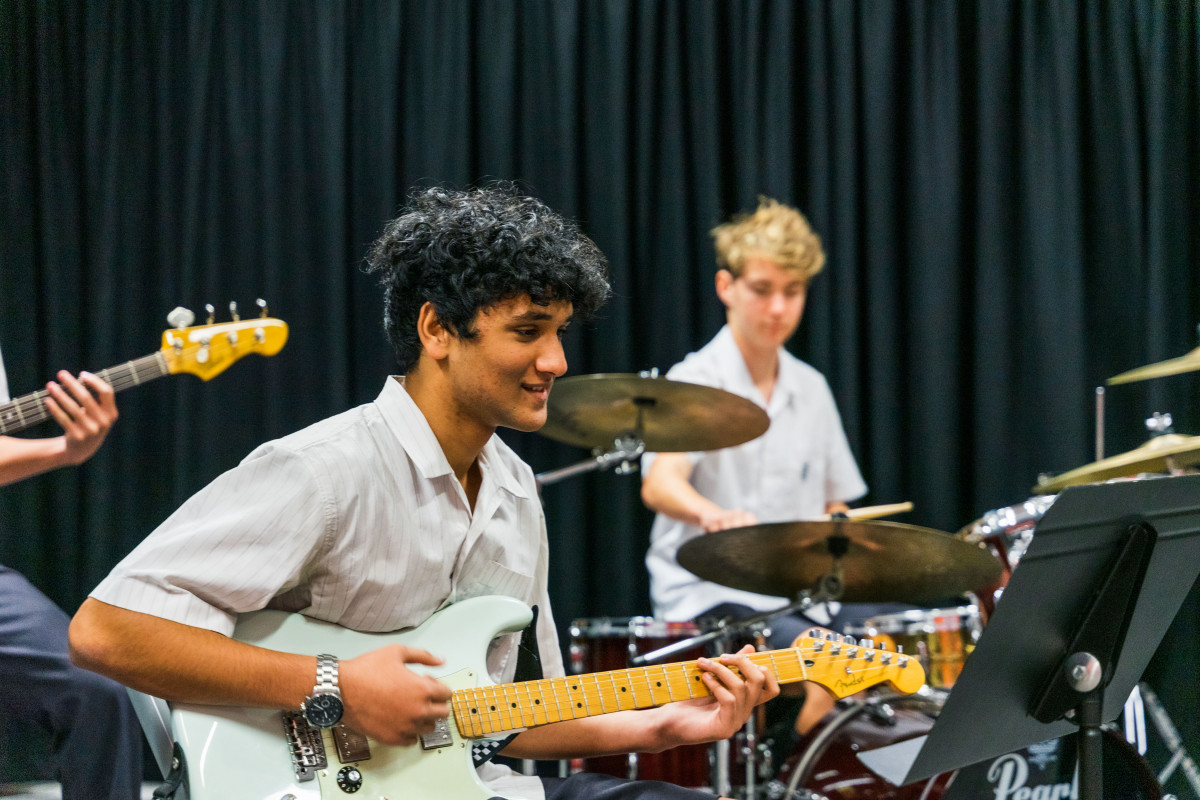

This course is for students who enjoy playing instruments (or singing) and wish to develop their overall musicianship.
The course is structured into group and individual tasks. These include developing skills on an instrument, playing music in a group, music theory knowledge, listening skills, using music technology (sequencing and notation software), creating original music, songwriting and film music.
Year 10 Music Academy
10MUAThis course is for students who have prior experience on an instrument or voice (usually 2+ years).
You may be required to demonstrate your skills in a short audition if the music department is not familiar with your level.
Topics and activities include:
- Rehearsing and performing music in small groups
- Song Writing
- Film Music
- Music Theory
- Music Technology
Year 10 Outdoor Education
10OEDYear 10 Outdoor Education aims to introduce students to some of the fundamental skills of outdoor education and to the values that underpin this subject. The course plans to help students form strong links with matarangua maori and local environment.
Students will learn about types of leadership, risk and managing risk, group dynamics, safety and wellbeing in the outdoors, conservation and endemic fauna and flora.
Year 10 Physical Education
10PHEThis course further develops students’ knowledge, skills, and understanding in Physical Education through a variety of practical learning experiences. Students will participate in a range of traditional and non-traditional games and physical activities while developing movement skills, tactical awareness, teamwork, communication, and confidence.
Students will explore strategies and decision-making in different physical activity contexts and apply these skills in both individual and team environments. They will be encouraged to challenge themselves, work effectively with others, and demonstrate positive attitudes towards participation and improvement.
Students will be assessed across a variety of areas related to physical activity, including skill performance, application of strategies, teamwork, communication, effort, and personal development. Learning experiences will support students to become active, reflective, and responsible participants in physical activity.
Students are required to participate in practical lessons wearing the correct Lynfield College PE gear.
Year 10 Social Studies
10SST
Welcome to Year 10 Social Sciences!
Step into the wider world and become a critical, active, and responsible citizen of Aotearoa New Zealand in this newly expanded Year 10 Social Sciences course!
This course is covered by the New Zealand Social Sciences Curriculum. Moving beyond general social studies, you will dive into four distinct academic pillars designed to challenge your thinking, sharpen your global awareness, and prepare you for senior school success.
What You'll Explore:
History: Investigate the rise and fall of 20th-century powers—from the rise of Nazi Germany and the impacts of WWII to decolonisation in the Pacific and New Zealand's role in the Cold War.
Civics and Society: Explore the political ideologies that shape governments, human rights protections, and the ongoing constitutional significance and debates surrounding Te Tiriti o Waitangi.
Geography: Map how cultural identities shape local places, track the global spread and management of diseases, and evaluate strategies for future climate change planning.
Economics & Finance: Analyze global trade and international aid inequalities while mastering crucial life skills like budgeting, understanding employment contracts, and managing KiwiSaver.
By analysing diverse historical sources, interpreting geographic data, and debating current events, this course provides the ultimate foundation for Year 11 Humanities pathways—including History, Geography, and Classics (as well as senior disciplines like Psychology and Tourism).
Nau mai — join us as we investigate the past, confront the challenges of the present, and plan for a sustainable future!
Year 10 South Pacific Course
10SPCThe 10SPC course is a cross-curricular personalised programme that helps to identify your strengths and in particular, provide opportunities for you to demonstrate the Key Competencies: Managing self, Relating to others, Participating and contributing, Thinking and Using language, symbols and texts to communicate effectively.
This course (Shooting Star Award, Entry Level) gives you the chance to manage yourself, set targets, work with others, problem solve and self-reflect which are skills for ‘life-long learning’ whether you go to higher education or out into the work place. It will lead to opportunities to achieve Unit Standards at Level 2 in their senior years.
This course is suitable for students needing extra support to engage with learning as barriers to learning are minimised and students are supported to set their own personalised goals and work towards achieving them.
Year 10 Te Reo Maori
10MAOThis course teaches whakarongo-listening, panui- reading, korero-speaking and tuhituhi- writing skills. There is strong emphasis on students being able to use Te Reo Māori for everyday communication.
Topics include; Myself Ko Ahau, The family Te Whānau, School Te Kura, My home Taku Kāinga, Parts of the body Ngā Wahanga o te Tinana, Trip to town Te Haere Ki te Tāone, Food Te Kai, Ngā Kākahu Clothes, Tangata rongonui, Ngā tikanga o te marae The marae and customs on the marae.
Students will be able to recite a speech about their family, perform a waiata and haka, greet and farewell someone using Te Reo Māori along with gaining basic language conventions. A whakapapa research project helps akonga speak about who they are and korero about their whanau.
The course provides a foundation for NCEA Te Reo Māori.
Year 10 Technology - Food
10FOT
The emphasis of this course is on food, nutrition and health, meal planning, food safety, food and culture and burger development.
Students will develop the knowledge and skills to prepare a wide variety of nutritious and appealing dishes. Students with hair longer than shoulder length are required to tie it up during practical lessons. School approved, black leather lace up shoes must be worn at all times.
The course also provides a basis for Food and Nutrition (11TFNF) and Hospitality (11THOF) leading on to NCEA Levels 2 and 3 Food and Nutrition and Hospitality. Level 3 FAN leads to UE and Scholarship.
Future career pathways - Dietitian, nutritionist in various areas such as sports nutrition and private practice, early childhood education, public health, health promotion, catering and hospitality, food marketing, tourism, teaching, food companies, midwife, occupational therapist, physiotherapist, personal trainer and registered nurse.
Year 10 Technology - Hard Materials
10TMH
Students will develop and construct projects incorporating wood, metals and plastics. Students will learn correct methods of construction, operation of tools and equipment and processes. Students will also investigate the production process and material properties which they have used in each project and will be required to complete associated theory.
Technology can lead to a wide range of career pathways including: Design, construction, building industry, manufacturing and engineering.
It is essential that students wear the correct school approved footwear in the workshop at all times for health and safety.
Year 10 Technology - Mechatronics
10TEL
Students will learn to design, construct and programme robots using Picaxe software, as well as assembling electronic components, using motors and programming their robots to perform a variety of tasks. They will also be studying mechanics and how to combine these skills as mechatronics.
Mechatronics can lead to a wide range of career pathways including, CNC manufacturing, engineering, surgery and automation.
Year 10 Technology - Soft Materials
10TMS
Love fashion, creativity, and making your own unique style? This course is your chance to design and create real fashion garments and textile products while learning the skills used by professional designers.
You’ll work with a range of fabrics and exciting design techniques to create your own casual wear garment using commercial patterns — and even customise them to make your designs stand out. Along the way, you’ll explore fashion illustration, natural dyeing, upcycling, sustainable fashion, and how different materials behave and feel.
This is a hands-on, creative course where you’ll experiment, design, sew, and bring your ideas to life. Whether you dream of creating your own clothing brand, designing costumes, styling outfits, or simply love being creative, this course gives you the chance to express yourself through fashion.
The course also sets you up for future learning in Creative Textiles Technology and NCEA Levels 2–3, including university-approved Fashion and Textiles Design courses and Scholarship opportunities.
Possible future careers include fashion designer, product designer, textile designer, fashion stylist, interior designer, fashion journalist/blogger, and CAD pattern maker.
Year 10 Visual Arts
10ART

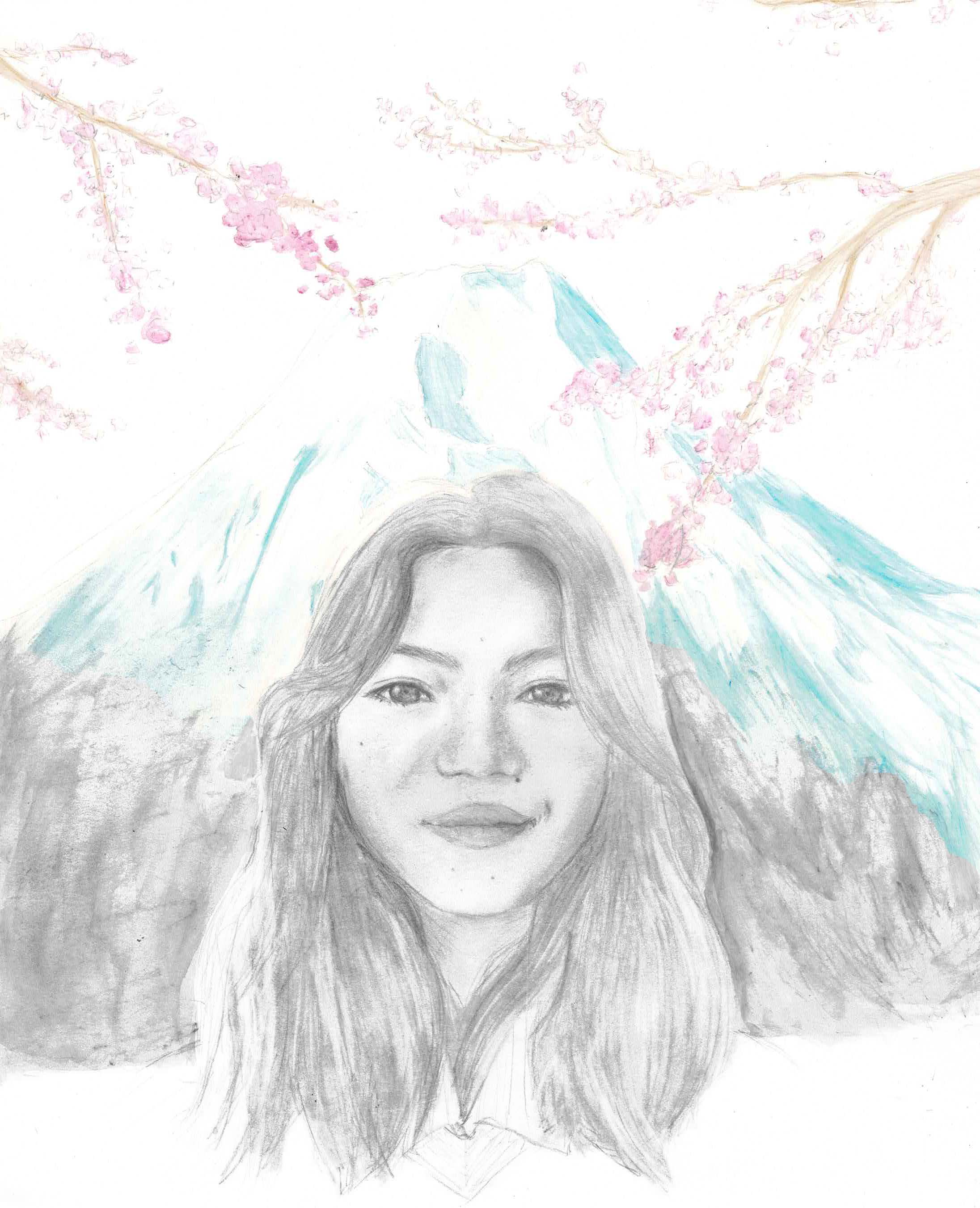
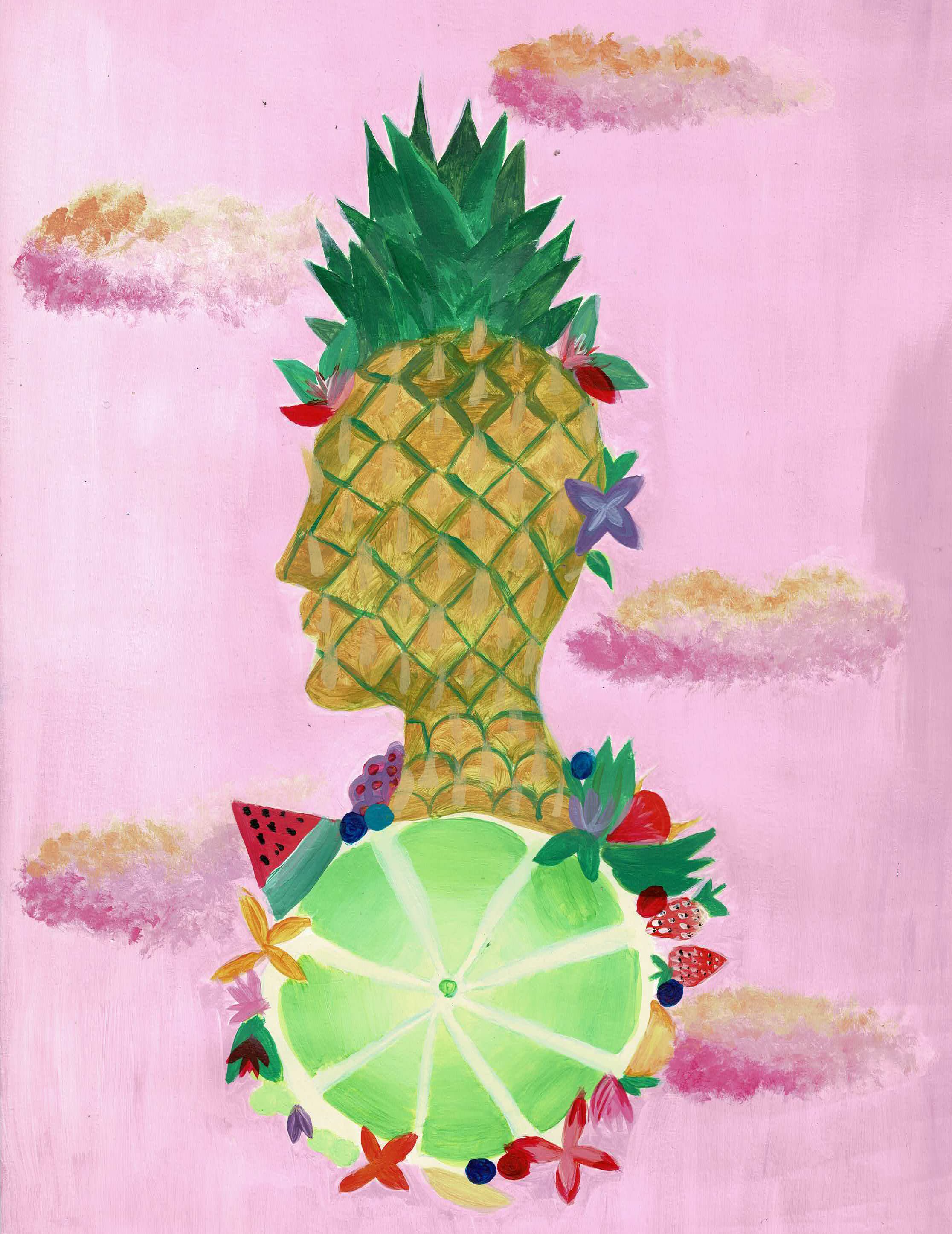
This course emphasises development of practical visual art skills across a range of activities which include drawing, painting and printmaking. Students learn how to generate and develop visual ideas through mind mapping and concept drawing. Media covered include pencil drawing, acrylic painting, water colour painting and print making. Students are also introduced to art theory as well as New Zealand and international artists. Students will maintain a workbook for the duration of this course.
The course provides a foundation for NCEA Level 1 Visual Art, Level 1 Digital Media and Level 1 Photography.

Subjects for Year 10 Students
11PCLF - Physical Education, Leadership and Coaching
11PLCFThis course is designed for students who have a passion for participating in sport and physical activity. Students choosing this course should be active participants in sport, and (or) be up for the challenge of developing their leadership and interpersonal skills in sporting contexts. Themes covered include leadership of peers, group processes, practical performance, and exploration of the significance of physical activity for self, others and society. Students in this course must willing to participate in multiple practical lessons each week.
Full change of clothes must be worn for lessons that are practical.
This is a full year course and counts as both of your Health & PE course selections.
11PESF - Physical Education and Exercise Science
11PESFIn this course you will look at key components of the Health and Physical Education Curriculum through a mixture of theory and practical work. You will study how the body moves and responds to physical activity. It will offer you the opportunity to experience and participate in a range of physical activities, in a variety of contexts. The focus of this course is to equip you with the necessary skills to progress to Level 2 and Level 3 Physical Education.
This is a great course for students who plan to continue with Physical Education in Level 2PES and 3PES (sports science).
This is a full year course and counts as both of your Health & PE course selections.
11PFLF - Year 11 Physical Education - Flexi
11PFLFThis is a great course option for students who want to take an additional subject in Year 11 but don’t have enough space on their timetable and must have approval from the Year 11 Dean.
The Physical Education Flexi classes are held twice each week before school (7.45am start) and look at key components of the Health and Physical Education Curriculum through practical work. You will study how the body moves and responds to physical activity. It will offer you the opportunity to experience and participate in a range of physical activities, in a variety of contexts.
This is a full year course and counts as both of your Health & PE course selections.
Please contact your Dean for approval
When you select Flexi you will need to add a note explaining why you want to take this course instead of one of the other Health and PE options, and what additional course in a different curriculum area you would like to study during the school day instead. You will need to arrange a meeting with the Year 11 Dean to discuss this option choice, and they will approve the additional course if appropriate.
Once Flexi is approved please choose a back up option(s) - this will count as your 7th subject. Either select one Full year course or 2 semester courses. Full change of clothes must be worn for lessons that are practical.
11PHRF - Health and Physical Recreation
11PHRFThis course will draw on aspects of Health and Physical Education that are relevant to teenagers growing up in today’s busy and often challenging environment. The Health component will focus on skills for positive mental health and wellbeing including identity, self-awareness and interpersonal skills. The practical component will focus on participating in and enjoying physical activity and outdoor challenges, along with taking part in mental and physical health activities which will help develop interpersonal skills for life. There will be one practical lesson per week throughout this course.
This is a full year course and counts as both of your Health & PE course selections.
Foundation 1 English
FENG1Some writing and reading aspects of the Year 9 English Curriculum taught at a very basic level, for ELL students with ELLP scores of 0-4. Early vocabulary and grammar. Development of speaking and listening skills.
This course is one of seven courses which make up the Foundation 1 Programme and which are all corequisites:
FENG1, FEST1, FLST1, FRDG1, FSST1, FSCI1 and FMAX1
Foundation 1 Mathematics
FMAX1This course is based on the Year 9 curriculum, but also provides extension for more able students into the Year 10 curriculum. The course is for ELLs with ELIP scores of 0-4. It focuses on basic skills, the terminology of maths and the language of maths problems. The latter two skills are very important for these students who will encounter a great deal of language in mainstream maths later. Students acquire the requisite skills and language.
This course is one of seven courses which make up the Foundation 1 Programme and which are all corequisites:
FENG1, FEST1, FLST1, FRDG1, FSST1, FSCI1 and FMAX1
Foundation 1 Reading
FRDG1A reading programme for ELL students with ELLP scores of 0-4 developing fundamental reading skills.
The aims of the reading course are to enable students to apply phonological knowledge when reading and writing, develop independence in “growing” their vocabulary, retrieve specific information from texts and develop independence in predicting and posing questions when they overview a text, enjoy reading independently, use the library more effectively.
The skills learned in Reading combine with those in rest of the ELIP Programme, to provide students with the language to move into the mainstream.
This course is one of seven courses which make up the Foundation 1 Programme and which are all corequisites:
FENG1, FEST1, FLST1, FRDG1, FSST1, FSCI1 and FMAX1
Foundation 1 Science
FSCI1This course is for ELLs who have ELIP scores of 0-4. It is based on the year 9 curriculum, but also provide extension for more able students into the Year 10 curriculum. The course focuses on basic skills, the terminology of science and the language of science problems. The latter two skills are very important for these students who will encounter a great deal of language in mainstream science later. Students acquire the requisite skills and language.
This course is one of seven courses which make up the Foundation 1 Programme and which are all corequisites:
FENG1, FEST1, FLST1, FRDG1, FSST1, FSCI1 and FMAX1
Foundation 1 Social Studies
FSST1ELIP Technology
Foundation 2 English
FENG2Some writing and reading aspects of the Year 10 English Curriculum taught at an elementary level, for ELL students with ELLP scores of 4-6. It develops elementary literacy skills, vocabulary and grammar, writing and reading genres, speaking and listening skills.
This course is one of courses which make up the Foundation 2 Programme and which are all corequisites:
FENG2, FFAR2, FRDG12, FSST2, FSCI2 and FMAX2
Foundation 2 Language and Visual Arts
FLVA2A course which combines aspects of year 9 and 10 Art with Language Study for elementary learners of English.
This course is one of courses which make up the Foundation 2 Programme and which are all corequisites:
FENG2, FLVA2, FRDG12, FSST2, FSCI2 and FMAX2
Foundation 2 Mathematics
FMAX2This course is based on the Year 9 curriculum, but also provides extension for more able students into the Year 10 curriculum. The course is for ELLs with ELIP scores of 3-5. It focuses on basic year 9 and 10 skills, the terminology of maths and the language of maths problems. The latter two skills are very important for these students who will encounter a great deal of language in mainstream maths later. Students acquire the requisite skills and language.
This course is one of courses which make up the Foundation 2 Programme and which are all corequisites:
FENG2, FVAR2, FRDG12, FSST2, FSCI2 and FMAX2
Foundation 2 Reading
FRDG2A reading programme for ELL students with ELLP scores of 3-5 developing fundamental reading skills.
FENG2, FVAR2, FRDG12, FSST2, FSCI2 and FMAX2
Foundation 2 Science
FSCI2ESOL and Science skills and themes, combinign aspects of the year 9 and 10 curriculum, taught in a way accessible to students with ELLP scores of 3-5.
Foundation 2 Social Studies
FSST2ESOL and Social Studies: themes and skills. Some basic ( year 4-5) literacy focus.
This course is one of courses which make up the Foundation 2 Programme and which are all corequisites:
FENG2, FLVA2, FRDG12, FSST2, FSCI2 and FMAX2
Foundation 3 Reading
FRDG3The aims of the reading course are to enable students to apply phonological knowledge when reading and writing, develop independence in “growing” their vocabulary, retrieve specific information from texts and develop independence in predicting and posing questions when they overview a text, enjoy reading independently, use the library more effectively.
The skills learned in Reading combine with those in rest of the Foundation Programme, to provide students with the language to move into the mainstream.
This course is a corequisite with FENG3.
Students also take core subjects except 9/10 English, as well as options.
Foundation 4 English
FENG4English Language course for Foundation level students with ELLP scores of 6-8 focusing on writing development in particulat, but whic also incorporates other literacy skills, listening, speaking, vocabulary and grammar.
Foundation English Studies
FEST1Early literacy development for ELL students with ELLP scores of 0-4. Study of short texts within a variety of themes. Development of basic writing genres.
This course is one of seven courses which make up the Foundation 1 Programme and which are all corequisites:
FENG1, FEST1, FLST1, FRDG1, FSST1, FSCI1 and FMAX1
Foundation Language Study Level 4
FLST4Level 4 Foundation reading and language skills. This course strengthens basic literacy skills for ELLs, which include post-elementary grammar, reading and vocabulary extension and also develops basic speaking fluency and listening comprehension. Students at this level require at least 3 years including the year in FLST to gain Level 1 Literacy.
Level 2 EFS - English for Further Studies
2EFSAlthough this is a year 12 course, it is part of a two-year programme 1EFS/ELS and 2EFS/ELS, and does not provide Level 2 Literacy credits. Students prepare for the Litearcy corequisite standards ( second test October/November). They will develop reading, writing, listening and speaking skills at the post intermediate level. They will also focus on learning and using some academic vocabulary and associated grammar and language structures.
Students must also study 2ELS.
Entry into this course is on recommendation from the 11EFSF and 11ELSF teachers.
Year 11 - English Language Study
11ELSFThis is a co-requisite course with 11EFSF. Students must take both courses.
FOR ESOL STUDENTS ONLY
Using a variety of interactive strategies, students will develop grammar and vocabulary and writing, improve reading and listening comprehension and be assisted in coping with the language demands of their other subjects.
Year 11 Art - Digital Media
11ADMFThe theme for the year is Ko Wai Tatu - Who are we?. All students will research established Maori, NZ and International artists and develop their digital illustration skills. Art mediums include drawing, painting, digital painting (wacom tablets), Adobe Photoshop, Adobe Illustrator and Adobe Animate to create artworks. Students will complete workbooks for the various Adobe programs and prepare and generate work for a Level 2 Internal Achievement Standard.


Learning tasks include:
- Workbook developing technical Adobe Photoshop skills (presented as evidence on how to work with painterly techniques).
- Workbook developing technical Adobe Illustrator skills (presented as evidence on how to work with vector techniques).
- Workbook developing technical Adobe Animate skills (presented as evidence on how to work with frame by frame and basic tweens).
- Artist image analysis (digital workbook / compare and contrast assessment).
- Developing ideas and creating a series of work in preparation for an animation in response to Ko Wai Tatu - who are we?’ theme.
- Creating an animation (gif) (To support evidence for the Level 2 internal AS 2.5 Produce a resolved work that demonstrates control of skills appropriate to cultural conventions).
This is a full year course and counts as two option course selections.

Year 11 Art - Painting
11APTFOver the course of the year, students will explore the theme of Turangawaewae - ‘a place to stand’. Students will engage in a range of practical drawing, painting processes and procedures. Topics covered include; concept drawings to work through visual ideas, colour theory, mixing and blending colours, painting techniques to create atmospheric perspective in a landscape painting, use of acrylic paint mediums and how to work with artist models to generate and develop pictorial ideas.


Other learning activities could include:
- Design skills, through concept drawings submitted in visual diary for assessment.
- Exploration of a range of art media in pencil, watercolour and acrylic paint.
- Artist image analysis, tasks completed in visual diary or on worksheet.
- Developing ideas, creating a personal pattern mural panel painting in response to Turangawaewae - ‘a place to stand’ theme
- Produce evidence for the Level 2 Internal Achievement Standard 2.5 Produce a resolved work that demonstrates control of skills appropriate to cultural conventions.
This is a full year course and counts as two option course selections.
Year 11 Art - Photography
11APHFAll students will research established New Zealand, Maori, and International artists. The theme for the year is Turangawaewae - ‘a place to stand’. Students will develop basic photographic skills related to studio practice. They will learn Photoshop tools to edit work. Students will explore Photographic genres of still life, portraiture and landscape.
Students will generate and complete task in preparation for a Level 2 Internal Achievement Standard. Their learning will be supported by checkpoints throughout the year.


Learning tasks could include:
- Assessed workbook (camera skills) with completed tasks to show how to change camera settings and how to edit in Photoshop.
- Assessed Photo shoots, working with props and sets, on how to create a good composition.
- Image analysis (digital workbook format),
- Assessment of Technical Photoshop skills (workbook format). Present evidence of technical ability using Photoshop (selecting / editing / compositing).
- Developing ideas within photography, thematic research based on identity and producing a small body of work presented onto a single folio panel.
- A final outcome for AS 2.5 Produce a resolved work that demonstrates control of skills appropriate to cultural conventions.
This is a full year course and counts as two option course selections.


Year 11 Dance - Stepping Out
11ADAF


This course builds on the learning activities in Year 10. However, it is not necessary to have taken junior dance at Lynfield to gain entry to this course.
In this course, students will;
- Explore a range of dance styles
- Create original dance sequences
- Perform to an invited audience
- Attend at least one Master Class from a professional dance company
- Attend a live dance show
Students will work collaboratively in small groups to create an original dance based on a selected idea or theme. This will form the basis of the Level 2 Achievement Standard assessed in Term 2: 2.1 Choreograph a Group Dance to Communicate an intention, 4 Credits
This is a full-year course.
Year 11 Drama - Acting Up
11ADRF
This is a full year course and counts as two option course selections.
Students will develop skills in;
- acting
- devising for theatre
- stage craft
- use of theatre technologies such as costume, lighting, props and set design
- performing in a class production
The theatre form of Melodrama will be explored in some depth. This will be assessed through a group performance involving stock characters belonging to the theatre form.
The course builds on skills developed through the exploration of Commedia del Arte in Year 10. However, students do not have to have taken Drama at Year 10 to gain entry to this course.
- Well-developed collaborative skills are required as there is significant teamwork involved in this course.
- Students will need to be able to perform in front of an audience.
- Due to the focus on group work, a good attendance record is recommended as a prerequisite for entry.
If you are unsure about your suitability for this course please see Miss Nicholson.
Year 11 EAPF - English for Academic Purposes
11EAPF11EAP caters for the needs of English Language Learners (ELLs) who have the potential to achieve Level 1 Literacy by the end of 2EAP and 2ELT in 2028. The course provides them with the opportunities to develop relevant reading, writing, speaking and listening skills. It is intended that students in 11EAPF will continue into 12EAP and then 13EAP to gain the English Language requirement for entry to university.
Typically students will have an ELLP total of 10 or more.
This is a full year course.
Year 11 EFSF - English for Further Studies
11EFSF11EFSF and 11ELSF
FOR ESOL STUDENTS ONLY
These are corequisite courses.
They are designed to meet the language learning needs of English Language Learners who have total scores of between 6 and 9 on the ELLP (English Language Learning Progressions). Students learn vocabulary in context, grammar, sentence structure, writing and understanding basic text types ( recount, description, explanation), focused listening, conversation and basic oral presentation.
These students require two years to complete Level 1 Literacy, which they endeavour to complete in 12EFS in the following year or in 3ELS in 2029
This is a full year course
Year 11 English - A Reader's World
11ERWSReader’s World is a course for students who love reading—or who want to find their way back to it. This course focuses on personal response and reader connection, exploring a wide variety of texts including novels, short stories, film, and poetry. You’ll learn how to express your ideas clearly, explore different viewpoints, and respond with insight to the texts that speak to you.
Rather than focusing on creative writing, this course centres on developing strong analytical and reflective responses—helping you to think critically, read widely, and write with purpose.
In this course, students will:
- Read a range of texts with a focus on depth, variety, and meaning
- Make personal and critical connections with the ideas, themes, and characters
- Develop skills in analytical writing, reflection, and text discussion
- Learn how language and structure shape meaning and audience impact
- Meet the demands of the new English curriculum at Level 6, while preparing for the more complex thinking and writing required at Level 7—and earning at least 10 Level 2 English credits to support the NCEA Level 1 Literacy requirement
Reader’s World is ideal for students who want to grow as readers and thinkers—who enjoy connecting with texts on a personal level, while building the skills to respond with clarity, confidence, and insight.
Year 11 English - English and Performance
11ENPSThis course will encourage students to develop their performance, speaking, and presenting skills. A central part of this course is crafting, sharing, and performing stories, monologues, and speeches. It will suit students who have strong personal views on contemporary topics. There will be a focus on exploring dramatic plays, musicals, or other texts selected in combination with the teacher and students.
This course should not be considered as a substitute for Year 11 Drama. These courses would work well together.
Year 11 English - Enrichment
11ENESDo you love English? Do you find yourself wanting to dig a little deeper, ask more questions, read more widely—or try out creative ideas that don’t always fit inside the standard assessments?
English Enrichment is a course designed for students who are passionate about stories, language, and ideas. It’s not about working faster or further ahead than your classmates—it’s about working differently. This course runs alongside your main English class and gives you time and space to explore parts of English that might not be covered in your core programme.
You might explore topics such as:
- Unusual or banned books and the politics of reading
- Experimental or multimedia storytelling
- Spoken word, memoir, or personal narrative
- Critical theory in everyday life (What would a feminist say about a superhero film?)
- Deep-dive workshops in writing, editing, and text creation
You’ll be part of a small class where curiosity, creativity, and independent thinking are valued. You’ll be expected to participate actively, but there are no NCEA assessments in this course.
This is a course for readers, writers, and thinkers—for students who love English not just as a subject, but as a way of seeing the world.
Important: Students selecting this course must also be enrolled in another Year 11 English course. This is not a replacement for English—it’s an opportunity to extend and enrich your experience through new content and challenges.
We are looking to offer this course in 2027, but it will only run depending on numbers and staffing availability.
Year 11 English - Genre Quest
11EGQSWhat makes a horror story different from a mystery, or a romance from a tragedy?
Genre Quest is a deep dive into the worlds of genre fiction and film. In this course, you’ll explore how different genres work—their conventions, expectations, character types, and narrative structures. You’ll learn to analyse how writers and directors use language, style, and structure to shape meaning and manipulate audience response.
You’ll have the chance to focus on genres that interest you—whether that’s fantasy, crime, historical fiction, satire, romance, sci-fi, or something in between—and examine how they evolve across cultures and time.
In this course, students will:
- Study a wide range of genre-based texts, including film, fiction, and short stories
- Analyse how genre conventions are used, subverted, and reimagined
- Write structured, analytical responses that engage deeply with texts
- Develop confidence in comparing and evaluating how meaning is shaped through form and style
- Meet the demands of the new English curriculum at Level 6, while preparing for the more complex thinking and writing required at Level 7—and earning at least 10 Level 2 English credits to support the NCEA Level 1 Literacy requirement
Year 11 English - Power and Ethics
11EPESHow do we decide what’s right or wrong—and who gets to decide? What happens when the law, society, and mental health don’t agree?
This course explores the big ethical questions behind the systems that shape our world. You’ll look at how ideas about justice, mental health, behaviour, and identity have changed over time—and how those ideas are reflected in stories, films, and real-world case studies.
This course is less about arguing and more about thinking. You’ll read widely, respond to big questions, and explore different perspectives on controversial and complex issues. Topics may include criminal justice, psychological disorders, the treatment of youth, the ethics of diagnosis, and how “madness” has been portrayed in literature and society.
In this course, students will:
- Analyse how language and structure shape meaning in texts with ethical and psychological themes
- Respond to real-world ideas and systems using critical thinking
- Explore representations of mental health, justice, and morality across a range of texts
- Write and discuss with clarity, insight, and purpose
- Meet the demands of the new English curriculum at Level 6, while preparing for the more complex thinking and writing required at Level 7—and earning at least 10 Level 2 English credits to support the NCEA Level 1 Literacy requirement
Debates in Psychology is a great choice for students who enjoy English, Psychology, Social Studies, Law, or just thinking about how the world works—and how it could work better.
Year 11 English - Voices of Aotearoa
11EVASYear 11 English - Voices of Aotearoa
Voices of Aotearoa is a course that explores powerful writing and film from Aotearoa New Zealand and the Pacific. You’ll read, watch, and discuss a wide range of texts that reflect our histories, cultures, languages, and identities. From poetry and prose to film and short stories, you’ll explore how authors and directors use language to express connection, resistance, and belonging.
This course focuses on building both your critical thinking and your confidence as a communicator. You’ll learn to analyse how ideas are developed through language and structure—and to respond with clarity, insight, and your own perspective.
In this course, students will:
- Study texts written by Māori, Pasifika, and New Zealand authors and filmmakers
- Explore how culture, place, and identity shape language and storytelling
- Develop analytical writing and discussion skills
- Reflect on their own voice and reading identity in response to the texts
- Meet the demands of the new English curriculum at Level 6, while preparing for the more complex thinking and writing required at Level 7—and earning at least 10 Level 2 English credits to support the NCEA Level 1 Literacy requirement
Voices of Aotearoa is for students who want to see the world through the lens of local stories—and who are ready to read, listen, and respond to the diverse voices that shape our place in the world.
Year 11 English - Worlds Unveiled
11EWUSThis course is all about world building.
Worlds Unveiled is a course for students who love stories, settings, and the power of imagination. From fantasy realms and dystopian futures to alternative histories and hidden cities, this course explores how writers create believable, immersive worlds—and how you can too.
You’ll read and analyse great world-building texts across genres and forms, learning how authors use language, structure, character, and setting to make the impossible feel real. You’ll also write your own stories, developing the craft of creative writing through guided workshops, challenges, and feedback.
In this course, students will:
- Read and analyse a range of imaginative and richly built texts
- Explore the building blocks of compelling storytelling, including setting, tone, and symbolism
- Write original stories that demonstrate control, creativity, and purpose
- Develop confidence in both critical and creative communication
- Meet the demands of the new English curriculum at Level 6, while preparing for the more complex thinking and writing required at Level 7—and earning at least 10 Level 2 English credits to support the NCEA Level 1 Literacy requirement
Year 11 Humanities - Accounting
11HACSStudents study Accounting specifically as it affects individuals, households, community organisations and sole proprietor's businesses. It equips students with the ability to cope with the essential skills of modern money management regardless of the career path they choose in their future.
Accounting enables the students to understand, process and communicate financial information for both an individual and a wide variety of business entities. It promotes self-management of personal financial and spreadsheets skills that are essential in daily life. Students also develop the ability to apply financial knowledge and skills to practical situations. It provides the basis for the accurate processing of data into meaningful information which in turn is analysed and interpreted to assist many users of financial reports to make wise decisions.
This is a half year course and counts as one option course selection.
Year 11 Humanities - Business Studies
11HBSSThis course gives students a behind-the-scenes look at how businesses in New Zealand really work, including local, owner-operated businesses. Students will develop real-world skills as they dive into entrepreneurship, marketing, advertising, communication, and how businesses manage their people and money.
They’ll learn how businesses make decisions, how to attract customers, how to manage staff, and how to fund a business. It’s hands-on, practical, and full of knowledge that’s useful whether they want to start their own business one day or work for one.
This is a half year course and counts as one option course selection.
Year 11 Humanities - Classics: Ancient Stories
11HCASStep into a world of gods, monsters, and epic beginnings in this captivating Year 11 Classical Studies course!
In this half-year option, you’ll embark on an adventure across time and cultures, investigating the creation myths of early civilisations. From the frost giants of the Vikings to the cosmic chaos of the Sumerians, the underworlds of the Maya to the mighty gods of Egypt, Babylon and Persia — you’ll explore how ancient peoples made sense of the world’s origins, the role of humans, and the powerful beings who shaped their destinies.
Then, journey deeper into the legendary tales of Greece and Aotearoa, analysing Greek and Māori creation stories to uncover the rich themes and ideas that link these two distant cultures. Along the way, you’ll discover what these myths reveal about humanity itself — our fears, our hopes, and our endless curiosity about where we come from.
If you love stories, big questions, and unlocking the secrets of the past, this course is for you. Nau mai, haere mai — come explore the myths that built the world!
This is a half year course and counts as one option course selection.
Year 11 Humanities - Commerce
11HCOFA Taste of Commerce — Accounting, Economics & Business
This course gives you a real-world taste of everything Commerce has to offer. You’ll explore how money flows through the economy (Economics), how to prepare financial statements for a small business (Accounting), and how businesses are built through entrepreneurship, marketing, and smart decision-making (Business Studies).
Whether it’s understanding supply and demand, managing money, or launching a business idea, this course gives you the essential skills and knowledge from all three Commerce subjects — and sets you up for future success in life, study, and work.
This is a full year course and counts as two option course selections.
Year 11 Humanities - Economics
11HECSIntroduction
Economics is the study of us. As economists, we study who we are, how we have created societies and the incentives that drive our actions. Each individual, group or nation is faced with a scarcity of resources. In economics, as an applied social science, students will gather information in order to outline possible solutions to this problem of scarcity.
Course Outline
Year 11 Economics aims to create an understanding of the relationships between consumers and producers as they interact in the marketplace. Students will learn the underpinnings of the Demand and Supply model and use this tool to examine consumer, producer and government actions.
Students will be introduced to the key economic concepts of scarcity, opportunity cost, interdependence and equilibrium. These concepts provide the foundation for study in Level 2, Level 3 and University Economics. It is also an excellent one year course that provides general educational skills for everyday living.
This is a half year course and counts as one option course selection.
Year 11 Humanities - History: Fight for your Rights - Protest Movements
11HFRS


This course will look at a range of protest movements that have divided and shaped our nation. The Dawn Raids in the 1970s, the 1981 Springbok Tour, Anti-Vietnam War protests, Nuclear Free New Zealand movement and the 1986 Homosexual Law reform are just a few of the events that could be covered to allow you to understand how New Zealand has changed over time and how as a nation we have always fought for what is right and fair. Students will have the ability to look at topics within the scope of protest from New Zealand that they best connect with and compare those to both historic and current movements from around the world.
Historians are like detectives. We arrive on the scene after the event has taken place and have to look for evidence. Skills developed in History include research, processing and analysing information from a range of sources including photos, documents, video, cartoons and communicating information through arguing your case using the evidence you have collated.
There maybe an opportunity to sit ONE internal assessment.
This is a half year course and counts as one option course selection.
Year 11 Humanities - History: History through Film
11HHFS


Oppenheimer, Schindler's List, The Impossible, Lincoln, Hidden Figures, The Kings Speech, Thatcher, Midway, Mississippi Burning, Uproar. All films based (if not somewhat loosely) on actual historic events, but how much creative license do the film makers take? From who's perspective is the film told and does that change the way the story is told? What can we read into the adaptations of these "historical" films?
In this course students will look at history through the lens of films and then use the historical skills we will develop to find out how wrong the movies really got it... or how much truth is actually in these films. Students will be given the opportunity to find films about historic events that interest them and then will develop a historic knowledge of the events that the film is based on. We will investigate and analyse the accuracy of the film and understand the causes, consequences and perspectives of the event and look at how they translate into the film.
Historians are like detectives. We arrive on the scene after the event has taken place and have to look for evidence. Skills developed in History include research, processing and analysing information from a range of sources including photos, documents, video, cartoons and communicating information through arguing your case using the evidence you have collated.
There maybe an opportunity to sit ONE internal assessment.
This is a half year course and counts as one option course selection.
Year 11 Humanities - History: War and Peace
11HWPS


A look into the causes of WWI in particular with a focus on the experience and perceptions of war and whether or not it was justified.
Students will engage with a range of perspectives around WWI to understand the enthusiasm most New Zealanders initially had for WWI through to the pacifists who opposed the war like Archibald Baxter, opposition from Iwi, particularly in the Waikato. Student will journey through events of WWI, like Gallipoli (the myth and the reality of war) and how it was perceived both overseas and on the homefront.
Historians are like detectives. We arrive on the scene after the event has taken place and have to look for evidence. Skills developed in History include research, processing and analysing information from a range of sources including photos, documents, video, cartoons and communicating information through arguing your case using the evidence you have collated.
There maybe the opportunity to sit ONE internal assessment at Level 1 or 2
This is a half year course and counts as one option course selection.
Year 11 Humanities: Geography
11HGES


Embark on an exhilarating Year 11 Geography adventure that will open your eyes to the dynamic world we live in!
In this innovative course, you’ll dive deep into the power of place and environment, uncovering how people and landscapes shape — and are shaped by — each other. From the glittering yet grim realities of the global diamond trade (exploring the dark truth of “blood diamonds”) to the raw force of extreme natural events like earthquakes and cyclones, you’ll examine patterns and processes that impact communities across Aotearoa and the wider world.
Get hands-on with cutting-edge tools like ArcGIS, mastering the art of digital mapping to reveal hidden stories within our world. Along the way, you’ll develop vital geographical skills — reading complex graphs, interpreting spatial data, and crafting sharp, insightful evaluations of pressing global issues.
Whether you dream of tackling climate change, supporting sustainable development, or just want to understand why disasters devastate some places more than others, this course will empower you to think critically, challenge assumptions, and see the world through a fresh geographic lens.
Join us, and discover how geography isn’t just about places on a map — it’s about understanding the beating heart of our planet and the people who call it home. Haere mai, and get ready to explore!
This is a half year course and counts as one option course selection.
Year 11 Languages - Chinese
11LCHFLEARNING ACTIVITIES: This course covers the national curriculum at Levels 5 and 6. A variety of tasks to develop the four key language skills: listening, reading writing and speaking in the following areas: Family and pets, countries and languages, sports and recreation, school and friends, eating and drinking, daily routines and occasions, home and location, clothes and shopping. Students can understand and produce more complex language and can communicate beyond the immediate context.
This is a full year course and counts as two option course selections.
There are various fun activities. Learning traditional Chinese painting, paper cutting, dumpling making, participating in Cultural Day, Chinese Language Week, learning more of Chinese eating etiquettes and customs. We also have lunch party held by International Languages Department for the Gold winners of Education Perfect World Championships.
Upcoming China exchange is in 2026. You will be eligible to apply for next China trip which will be in 2027. We look forward to see you in year 11 Chinese class!
Year 11 Languages - Gagana Sāmoa
11LSAFOver the next year you will continue to develop your Sāmoan skills in reading, writing, listening and speaking. This course covers the national curriculum at Levels 5 and 6.
All of our language courses offers an array of skills which are highly valued by employers from all sectors. Because language is not narrowly focused on specific career paths, you have a wide array of professional options!
What is the point of learning a language?
Multilingual people are able to communicate and interact within multiple communities. Potential employers consider this a valuable asset in an employee’s skill set, as they’re able to connect with a broader range of people. You up your personal and professional value if you’re able to negotiate with manufacturers in another country or communicate with customers who don’t speak your native language.
Not to mention, your ability to speak a second language conveys that you’re motivated and driven to learn new skills, and this also gives you a competitive edge over those who haven’t yet become bilingual.
Many would argue that bilingualism is becoming a progressively necessary and essential skill for anyone who wants to keep up with today’s rapidly increasing global economy. As more and more people recognize the importance of learning an additional language, those who only speak one language will begin to get left behind in our shift towards a more integrated and connected global society.
This is a full year course and counts as two option course selections. This course will be supported by learning and assessment resources from Te Kura https://www.tekura.school.nz/.
Year 11 Languages - German
11LGEFGermany’s economic growth, innovation, and career opportunities are just some of the endless reasons to learn German. Whatever plans you may have for the future, knowledge of German will increase your options, in particular in the fields of: Tourism and Hospitality & Science and Research. Germany awards a generous number of scholarships and other support to study in Germany. From food, events, to globally recognized brands, German culture is widely adopted around the world. By learning the language, you’ll start to become part of this culture as well.
In this course we will explore our immediate environment focusing on teenage life. The Year 11 German course covers the New Zealand curriculum at Levels 5 and 6. Students can understand and produce more complex language. They can communicate beyond the immediate context, for example, past and future events. Students can understand and produce a variety of text types. The activities involve listening, speaking, reading and writing. Main areas of study: Home, school and community routines, enjoying time with family and friends, hometown, region, country holidays and travel, geography and weather, people and things - their appearance and qualities, making social arrangements - entertainment. Students get the opportunity to participate in the Education Perfect World Championships and the Auckland Goethe Society Speaking Competition. Lynfield College together with the Goethe Institut offers students to take part in and receive the Goethe-Zertifikat A1. An internationally recognized proof of German language skills corresponding to the scale of the Common European Framework of Reference for Languages (CEFR).
Continuing with German will provide the opportunity to students to visit GERMANY. The next trip will be in 2027 , followed by trips every second year. Students at senior level are eligible to take part in the three week exchange. Furthermore two months exchange opportunities are available through outside agencies from Year 10-12, to visit Germany for 2 months at the end of the school year, staying in a host family. Applications always open up February/ March before.
Lynfield College is part of the worldwide network of PASCH schools. PASCH stands for the “Schools: Partners for the Future” initiative. The aim of PASCH is to create and strengthen a global network of some 1,800 schools that place a high value on German, have special links to Germany and are dedicated to offering their students the best possible education. Being a PASCH school means that every year senior students can apply for scholarships to attend a youth course in Germany. You have opportunities to win language courses and trips to Germany through PASCH.
Because foreign language is not narrowly focused on specific career paths, you have a wide array of professional options.
Whatever plans you may have for the future, knowledge of German will increase your options. When you learn German you acquire a range of skills which can improve the quality of both your work and personal life.
This is a full year course and counts as two option course selections.
Year 11 Languages - Japanese
11LJPFみなさん!ようこそ! Welcome to your first NCEA year of studying Japanese!
Over the next year you will continue to develop your Japanese skills in reading, writing, listening and
speaking. This course covers the national curriculum at Levels 5 and 6. We offer some opportunities for students to visit Japan while they are studying Japanese. You will be eligible to apply for Japan Shinagawa delegation trip. Japanese Language offers an array of skills which are highly valued by employers from all sectors. Because foreign language is not narrowly focused on specific career paths, you have a wide array of professional options! You name it! Any work that is in Japan, Services for Japanese living in New Zealand (doctor, accountant, lawyer, real estate, banking etc.), Interpreter, translator, teacher, JET programme (english teacher in Japan, sports co-ordinator) etc
What is the point of continuously learn the language?
Multilingual people are able to communicate and interact within multiple communities. Potential employers consider this a valuable asset in an employee’s skill set, as they’re able to connect with a broader range of people. You up your personal and professional value if you’re able to negotiate with manufacturers in another country or communicate with customers who don’t speak your native language.
Not to mention, your ability to speak a second language conveys that you’re motivated and driven to learn new skills, and this also gives you a competitive edge over those who haven’t yet become bilingual.
Many would argue that bilingualism is becoming a progressively necessary and essential skill for anyone who wants to keep up with today’s rapidly increasing global economy. As more and more people recognize the importance of learning an additional language, those who only speak one language will begin to get left behind in our shift towards a more integrated and connected global society.
This is a full year course and counts as two option course selections.
Year 11 Languages - Te Reo Maori
11LRMFLEARNING ACTIVITIES: This course contains practical and theory-based activities and will have ākonga preparing and serving kai to manuhiri at the school marae. Assessments will be both practical and theory based. A haerenga (trip) to a marae eg Unitec/Rotorua/Waitangi/Rarotonga is planned for seniors.
Māori media, land law, education, tertiary teaching, whānau/hapu management. Language specialisation can be integral for all the above careers, and knowledge of tikanga Māori will improve employment prospects.
This is a full year course and counts as two option course selections. This course will be supported by learning and assessment resources from Te Kura https://www.tekura.school.nz/.
Year 11 Life Skills
11LSKFThe Life Skills programme is part of the Lynfield College curriculum Year 11- 13 students. In year 11 it is an opportunity to gain Level 2 credits in a range of topics. You will also have special guest speakers and events throughout the year.


Year 11 Mathematics - Data Exploration
11MDXFThis course is intended for those students who are interested in number crunching with spreadsheets, data analysis and interpretation, data mining, accounting, experimental research in Commerce, Computer Science, Science, Sport, Health and the Humanities. The learning will focus on exploring, analysing and presenting data in all its forms, both physical and digital. Students will learn how to manipulate data with spreadsheets and other on-line statistical tools, to collect and analyse their data with sampling techniques, look for patterns and put forward interpretations, graphs and conclusions. Analyses will include bivariate data (scatterplots), comparative multivariate data (box plots) and time series data. This course will also spend some time on Numeracy revision, for those students who are sitting the Numeracy digital assessment.
Students who succeed in this course will be well placed to enter 2MAS Level 2 Statistics, however, may also enter 2MAT Level 2 General Maths in their Year 12. This course does not prepare students for 2MAC Level 2 Algebra and Calculus.
This is a full year course and counts as both of your Mathematics course selections.
Year 11 Mathematics - Maths in Three Dimensions
11MTDFThis course is intended for those students who are interested in a Trades career in areas such as manufacturing, heavy industry, building/construction, architectural drawing, product design and development, surveying and mapping. The learning will focus on the practical applications of number, finance, measurement, location and space, area, volume and geometry, including right angled triangles, polygons, circles and their prisms in 3 dimensions. This course will also spend some time on Numeracy revision, for those students who are sitting the Numeracy digital assessment.
Success in this course will prepare students well for entry into 2MAT Level 2 General Mathematics. This course does not prepare students for 2MAC Level 2 Algebra and Calculus, however, entry into 2MAS Level 2 Statistics is still possible.
This is a full year course and counts as both of your Mathematics course selections.
Year 11 Mathematics - Numeracy Booster
11MNUFYear 11 Mathematics - Numeracy Booster is specifically designed for those Year 11 students who struggled with Mathematics in Year 10 and who may not yet have achieved their Numeracy, to attain it by preparing for, and sitting the Numeracy digital external. The learning will be initially skills based, then will focus heavily on your ability to understand and interpret problems that are presented in context. Once obtained, these 10 credits will enable you to receive your NCEA certificates at all levels. Entry into the Numeracy assessment will be determined by your readiness, based on topic tests. The May Numeracy results will not be known until late June, and if you pass, we may move you to a different course.
Learning will cover the seven Content Ideas of operations on numbers, mathematical relationships (graphs), spatial properties and representations (2D & 3D), location and navigation, measurement, statistics and data, elements of chance. The three Process Ideas will also be covered in order to formulate an approach to a problem, use Mathematics to solve a problem and explain the reasonableness of a given approach to a problem. This course also offers the Level 2 Coordinate Geometry standard in Term 4.
Resources include a purchased workbook and Maths learning software. This is a full year course and counts as both of your Mathematics course selections.
Year 11 Mathematics - Theory and Reasoning
11MTRFThis course is intended for students who have a passion for, and are interested in further study in Mathematics as a pure science, leading to tertiary studies in Engineering, Computer Science or Biomedical Sciences. The learning will focus on the language and representation of theoretical Mathematics, and its applications. Focus will be on problem solving using numerical, measurement, algebraic, graphical and geometric reasoning skills and techniques. There will be one practice exam at CL6 as well as one L2 internal assessment, AS91258 Sequences & Series. If you are performing at either Emerging or Developing levels in Y10, we recommend that you do not take this course, rather, your skills might be better suited to either 11MDXF Data Exploration or 11MTDF Maths for Tradies.
This is a full year course and counts as both of your Mathematics course selections.
Year 11 Music - Projects
11AMPF
Music Projects focuses on collaborative music making, with a large emphasis on group performance and songwriting. Students will perform regularly throughout the year, both in class and in wider community competitions such as RockQuest and Play It Strange. They will continue to develop their instrumental capability, as well as their ensemble skills.
This is a full year course and counts as two option course selections.

Year 11 Music - Studies
11AMSF
Music Studies is designed to give students the practical skill and theoretical knowledge to progress as musicians and composers. Students will complete both performance and compositional tasks throughout the year, as well as explore the wider impact of context on the music they interact with.
This is a full year course and counts as two option course selections.

Year 11 Science
11SCIFThis course ensures students experience all five strands of the Science Curriculum at Curriculum Level 6:
Biology: Genetic Variation
Chemistry: Acids and Bases
Physics: Mechanics
Earth and Space Science: Examine an Earth and Space Science issue and the validity of the information communicated to the public (4 credits)
Nature of Science: Investigating in Science
Success in this course enables you to continue future pathways in any of: Biology, Earth and Space Science, Chemistry and Physics at NCEA Level 2 and beyond.
Year 11 South Pacific Course
11SPCFThis cross-curricular course requires students to complete tasks and present an organised portfolio with evidence of tasks and key competency development for internal verification. The focus is on being able to manage yourself, set goals, work with others and problem solve. These are the skills for ‘lifelong learning’ whether one goes on to higher education or out into the workplace. Students are given the choice of selecting their own tasks.
Students will engage in self-directed learning under the guidance of a tutor, with all records kept in the course book and portfolio.
Students gain improved social confidence, motivation and self-esteem in setting learning goals and achieving them. The SPEC courses target key competencies necessary for the workforce, i.e. managing self, thinking, relating to others, using language symbols and texts, and participating and contributing.
This is a full year course
Year 11 Technology - Cabinetry
11TCBF
In this course students will learn how to use correct industry construction methods. They will learn how safely operate power and hand tools to gain an understanding of wood properties.
Students will complete a range of skills standards that link practical workmanship with elementary theory, and is an excellent pathway to Carpentry at Level 2 and 3.
This is a year long course and counts as two option selections.
It is essential that students wear the correct school approved footwear in the workshop at all times for health and safety.
Year 11 Technology - Creative Textiles
11TCTF
Throughout this course, you will explore various aspects of textile design and other materials, including the design process, problem solving techniques, sustainable design principles, and meticulous construction methods. By integrating theory with hands-on experience, you will develop practical skills that foster creativity and innovation.
As a designer you will learn to cultivate your own design voice, enabling you to create textiles that reflect your personal style, cultural influences, and artistic expression. This will be done through exploration of different applied design techniques and mixed materials.
Recognising the importance of sustainable practices in the textile industry, this course emphasises the principles of environmentally conscious design. You will explore sustainable materials and techniques for minimising waste to support the innovation and development of sustainable and responsible textile design outcomes.
You will learn about various fabrics, their characteristics, and appropriate construction methods. You will gain hands-on experience with sewing, weaving, dyeing, printing, and finishing techniques, ensuring the production of textiles that are durable, aesthetically pleasing and functional.
This is a full year course and counts as two option course selections.
Year 11 Technology - Design and Visual Communication
11TDVF
Unlock your creativity and bring your ideas to life in this exciting, hands-on Design and Visual Communication course! Through a mix of practical projects and creative thinking, you’ll learn how designers communicate ideas visually in powerful and engaging ways.
Across two major projects, you’ll explore the elements and principles of design while developing skills in sketching, visual communication, brainstorming, modelling, and prototyping. You’ll learn how to turn rough ideas into refined concepts using the same creative processes used by real designers, architects, and innovators.
This course encourages you to think creatively, solve problems visually, and push your imagination further. You’ll experiment with different techniques to spark new ideas, develop confidence in your creative decisions, and learn how feedback and collaboration can strengthen your work.
If you’re interested in graphic design, architecture, product design, engineering, game design, or simply enjoy being creative, this course is a great opportunity to build valuable skills for the future while creating work you can be proud of.
This is a full-year course and counts as two option selections.
Year 11 Technology - Digital Technologies
11TDTF
This course leads to further study in digital technologies and a greater understanding of the digital technologies used in our daily lives. The 11TDTF course provides vocational pathways into the creative industries, manufacturing and technology, and service industries.
Students will complete investigative practical projects to develop a comprehensive understanding of societal, organisational and consumer factors involved in digital technology. They will use a variety of industry standard software applications to produce a range of digital solutions to problems. In addition, students will learn about and experience a variety of skills in a DTG context including research, design, Database, HTML web authoring, programming using Python and digital security.
This is a full year course and counts as two option course selections.
Year 11 Technology - Food & Nutrition
11TFNF
Students will learn how to critically analyse concepts of nutrition and health within different contexts. Students will learn about nutrients and their functions, health promotion and issues related to the provision of food.
Students will experience a variety of practical cooking lessons designed to develop their skills and to reinforce their theoretical knowledge and understanding.
The full school uniform is required for practical lessons and must include leather covered toe school shoes. It is mandatory to have hair shoulder length pulled back off the face and tied up. Acrylic or false nails and nail polish will not be allowed at any time.
This is a full year course and counts as two option course selections.
Year 11 Technology - Hospitality
11THOF
Students will learn how to apply various skills to create contexts that inspire fit-for-purpose outcomes.
Students will experience a variety of practical cooking lessons designed to develop their skills and to reinforce their theoretical knowledge and understanding on various topics.
Students will plan various events to demonstrate the knowledge and application of soft skills.
Students will plan, prepare and deliver events to showcase front-of-house skills whilst dealing with customers.
This is a full year course and counts as two option course selections.
Year 11 Technology - Mechatronics
11TELF
This course introduces electronic concepts, components and micro-processor interfacing. Students will learn how to use machinery, hand tools and assemble techniques that reflect industry codes of practice. Students will design a solution within a given context and then create their design.
This course links to the manufacturing and technology sector and the creative industries sector. It encompasses these sector related careers: Electronics engineer, electrician, mechanical engineer technician, electronics trades, production manager, technical writer, sound technician or lead to further study for a degree in electronics engineering, technology, robotics or mechatronics.
Year 11 Technology - Metal Fabrication
11TMFF
This course links to the Manufacturing and Technology, and Construction and Infrastructure Sector Pathway. Students will learn through a series of units that cover machining, welding and assembly These pathways encompass careers in Steel fabrication, Welding, Apprenticeship, Engineer, Construction, Fitter/Turners, Machinist, Roofer, Steel Worker, Aluminum fabricators and Fencing. Students build the foundation skills needed all trade career paths.
This is a full year course and counts as two option course selections. It is essential that students wear the correct school approved footwear in the workshop at all times for health and safety.
Year 11 Technology Materials Hard
11TMHF
In this course students will learn through a combination of theory and hands-on projects, to develop the skills and knowledge in a range of materials.
Students will design a solution within a given context using the design process. They will also create a product using hard materials. Students will learn how to use machinery and hand tools and learn assemble techniques that reflect industry codes of practice.
This is a full year course and counts as two option course selections. It is essential that students wear the correct school approved footwear in the workshop at all times for health and safety.
Subjects for Year 11 Students
2HTH - Level 2 Health Studies
2HTHLevel 2 Health includes elements of sociology and psychology within health related contexts. Students will investigate a range of adolescent health issues, such as resilience, discrimination, gender and sexuality and take part in a large scale health promotion project. Activities include co-operative projects, research assignments and discussion groups. Students will be able to choose a personalised learning pathway, and either be assessed in all four standards or their choice of three.
Pathway into Level 3 Health Studies. Health develops interpersonal skills and personal and social
responsibility for any career. It can directly lead on to a wide range of careers including medicine, nursing, politics, public health, community health work, social work, psychology, sociology, alcohol and drug counselling, health promotion, sport and exercise science, physiotherapy, occupational therapy.
2OED - Level 2 Outdoor Education
2OEDIn this course, students will apply classroom-based learning activities to an outdoor environment. They will gain an appreciation for the outdoors while participating in a range of outdoor activities. The activities will include tramping, camping, navigation, and appropriate gear and food in the outdoors. The focus will be on developing their own skills in these activities as well as learning about risk management and leadership.
This course can lead to certificates, diplomas, and degrees in sport, recreation, physical education, outdoor education and sustainability. The purpose and design of this course is to give students an opportunity to learn in, through, and about a variety of outdoor activities. Some potential career pathways could be in adventure tourism, secondary and tertiary teaching, outdoor education centres, working as a fitness instructor or as a personal trainer in centres or for corporate groups, environmental and conservation groups (including the Department of Conservation and others).
Full change of clothes must be worn for lessons that are practical.
2PEL - Level 2 Physical Education and Leadership
2PELIn Physical Education Leadership, students have a unique opportunity to learn about and demonstrate leadership skills outside of the traditional classroom environment. Whether it is organising an event, planning activities or coaching the techniques, tactics and rules of an activity. Level 2 PE Leadership enables you to develop these skills in a practical context.
Level 2 PE Leadership is an academic course with a focus on practical learning. Students in this course will focus on practical skill performance in two contexts, develop leadership skills in groups, explore the significance of physical activity for young people and society and examine event planning and outcomes. Students in this course must be willing to participate in multiple practical lessons each week.
Full change of clothes must be worn for lessons that are practical.
2PES - Level 2 Physical Education Sports Science
2PESLevel 2 PES enables students to look in greater depth at some of the impacts on physical activity and sport. This is a very popular branch of physical education that has grown rapidly in the last 20 years and encourages students to make links between some of the traditional sciences and how they impact on physical activity and movement.
This is an academic course with an emphasis on applying practical and theoretical knowledge in Physical Education. Students in this course will focus on practical skill performance in two contexts, examine anatomy and exercise physiology, examine the implementation and outcomes of camp, motor skill learning and biomechanics analysis, skill teaching and training principles. Students must be willing to participate in multiple practical lessons per week.
Full change of clothes must be worn for lessons that are practical.
2SPS - Level 2 Sports Studies
2SPSThis Sports Studies course focuses on key aspects of sport, including performance, skill development, coaching, and sport organisation. Students will develop their understanding of how athletes improve performance, how skills are taught and developed, and the important role coaching and organisation play within sporting environments.
Learning experiences will include a mixture of classroom and practical lessons, allowing students to apply concepts in sport and physical activity settings. This course provides a pathway into Year 13 Sports Studies. Students must be willing to actively participate in multiple practical lessons each week.
Full change of clothes must be worn for lessons that are practical.
English Language Literacy
2ELTLiteracy 1 via CAA exams and 30511 and 30507
Essential Numeracy for Y12 and Y13
3NUMThis mixed year level course is designed for those Year 12 and 13 students who are yet to achieve their L1 Numeracy. The aim is to attain Numeracy in a learning setting where you feel socially comfortable. In this course you will prepare for sitting the Numeracy digital external that is offered to Y12 students who are deemed ready and ALL Y13 students in both May and September. Once obtained, these 10 credits will enable you to receive your NCEA certificates at both L2 and L3. These credits sit alongside the 60 required for each NCEA certificate.
We will cover the seven Content Ideas of operations on numbers, mathematical relationships (graphs), spatial properties and representations (2D & 3D), location and navigation, measurement, statistics and data, elements of chance. The three Process Ideas will also be covered in order to formulate an approach to a problem, use Mathematics to solve a problem and explain the reasonableness of a given approach to a problem. This course also offers the Level 2 Coordinate Geometry standard in Term 4.
This is a full year course and counts as both of your Mathematics course selections.
Foundation 1 English
FENG1Some writing and reading aspects of the Year 9 English Curriculum taught at a very basic level, for ELL students with ELLP scores of 0-4. Early vocabulary and grammar. Development of speaking and listening skills.
This course is one of seven courses which make up the Foundation 1 Programme and which are all corequisites:
FENG1, FEST1, FLST1, FRDG1, FSST1, FSCI1 and FMAX1
Foundation 1 Mathematics
FMAX1This course is based on the Year 9 curriculum, but also provides extension for more able students into the Year 10 curriculum. The course is for ELLs with ELIP scores of 0-4. It focuses on basic skills, the terminology of maths and the language of maths problems. The latter two skills are very important for these students who will encounter a great deal of language in mainstream maths later. Students acquire the requisite skills and language.
This course is one of seven courses which make up the Foundation 1 Programme and which are all corequisites:
FENG1, FEST1, FLST1, FRDG1, FSST1, FSCI1 and FMAX1
Foundation 1 Reading
FRDG1A reading programme for ELL students with ELLP scores of 0-4 developing fundamental reading skills.
The aims of the reading course are to enable students to apply phonological knowledge when reading and writing, develop independence in “growing” their vocabulary, retrieve specific information from texts and develop independence in predicting and posing questions when they overview a text, enjoy reading independently, use the library more effectively.
The skills learned in Reading combine with those in rest of the ELIP Programme, to provide students with the language to move into the mainstream.
This course is one of seven courses which make up the Foundation 1 Programme and which are all corequisites:
FENG1, FEST1, FLST1, FRDG1, FSST1, FSCI1 and FMAX1
Foundation 1 Science
FSCI1This course is for ELLs who have ELIP scores of 0-4. It is based on the year 9 curriculum, but also provide extension for more able students into the Year 10 curriculum. The course focuses on basic skills, the terminology of science and the language of science problems. The latter two skills are very important for these students who will encounter a great deal of language in mainstream science later. Students acquire the requisite skills and language.
This course is one of seven courses which make up the Foundation 1 Programme and which are all corequisites:
FENG1, FEST1, FLST1, FRDG1, FSST1, FSCI1 and FMAX1
Foundation 1 Social Studies
FSST1ELIP Technology
Foundation 2 English
FENG2Some writing and reading aspects of the Year 10 English Curriculum taught at an elementary level, for ELL students with ELLP scores of 4-6. It develops elementary literacy skills, vocabulary and grammar, writing and reading genres, speaking and listening skills.
This course is one of courses which make up the Foundation 2 Programme and which are all corequisites:
FENG2, FFAR2, FRDG12, FSST2, FSCI2 and FMAX2
Foundation 2 Language and Visual Arts
FLVA2A course which combines aspects of year 9 and 10 Art with Language Study for elementary learners of English.
This course is one of courses which make up the Foundation 2 Programme and which are all corequisites:
FENG2, FLVA2, FRDG12, FSST2, FSCI2 and FMAX2
Foundation 2 Mathematics
FMAX2This course is based on the Year 9 curriculum, but also provides extension for more able students into the Year 10 curriculum. The course is for ELLs with ELIP scores of 3-5. It focuses on basic year 9 and 10 skills, the terminology of maths and the language of maths problems. The latter two skills are very important for these students who will encounter a great deal of language in mainstream maths later. Students acquire the requisite skills and language.
This course is one of courses which make up the Foundation 2 Programme and which are all corequisites:
FENG2, FVAR2, FRDG12, FSST2, FSCI2 and FMAX2
Foundation 2 Reading
FRDG2A reading programme for ELL students with ELLP scores of 3-5 developing fundamental reading skills.
FENG2, FVAR2, FRDG12, FSST2, FSCI2 and FMAX2
Foundation 2 Science
FSCI2ESOL and Science skills and themes, combinign aspects of the year 9 and 10 curriculum, taught in a way accessible to students with ELLP scores of 3-5.
Foundation 2 Social Studies
FSST2ESOL and Social Studies: themes and skills. Some basic ( year 4-5) literacy focus.
This course is one of courses which make up the Foundation 2 Programme and which are all corequisites:
FENG2, FLVA2, FRDG12, FSST2, FSCI2 and FMAX2
Foundation 3 Reading
FRDG3The aims of the reading course are to enable students to apply phonological knowledge when reading and writing, develop independence in “growing” their vocabulary, retrieve specific information from texts and develop independence in predicting and posing questions when they overview a text, enjoy reading independently, use the library more effectively.
The skills learned in Reading combine with those in rest of the Foundation Programme, to provide students with the language to move into the mainstream.
This course is a corequisite with FENG3.
Students also take core subjects except 9/10 English, as well as options.
Foundation English Studies
FEST1Early literacy development for ELL students with ELLP scores of 0-4. Study of short texts within a variety of themes. Development of basic writing genres.
This course is one of seven courses which make up the Foundation 1 Programme and which are all corequisites:
FENG1, FEST1, FLST1, FRDG1, FSST1, FSCI1 and FMAX1
Foundation Language Study Level 4
FLST4Level 4 Foundation reading and language skills. This course strengthens basic literacy skills for ELLs, which include post-elementary grammar, reading and vocabulary extension and also develops basic speaking fluency and listening comprehension. Students at this level require at least 3 years including the year in FLST to gain Level 1 Literacy.
Level 2 Accounting
2ACCCourse Outline
Year 12 Accounting offers students the opportunity to develop logical thinking skills as well as providing a conceptual understanding of the workings of small organisations. Students continue to build upon the knowledge from Year 11.
The development of skills in the use of spreadsheets and accounting software will be used to appreciate the place of ICT in Accounting. Additional development also continues on the preparation and detailed interpretation of financial statements for sole proprietors.
This course provides a foundation for further study at tertiary institutions and prepares students to work as an accountant, auditor, financial advisor, finance manager, policy analyst, financial dealer and statistician.
Level 2 Algebra and Calculus
2MACThis Mathematics Course is designed for students who have succeeded in the practice Level 1 external exam that is taught as part of the 11MTRF Mathematical Theory & Reasoning course. There are two externally assessed standards in this Level 2 course; Algebra and Calculus. It leads on to Level 3 Calculus (3MAC or 3MAE) or Level 3 Statistics (3MAS). Students develop skills in solving problems with an analytical focus and presenting logical arguments. This course may be taken in conjunction with Level 2 Statistics (2MAS).
Level 2 Automotive Engineering
2AUT
This is a UNITEC Partnership course being offered at Lynfield College. It will enable students to complete NZQA Motor Industry Training Organisation Units. Students will learn how to disassemble and assemble a 4 cylinder engine. As well as learn how to tune an engine to increase engine power and learn how to service their own vehicles. Students will also learn about specialised tools and equipment.
It is essential that students wear the correct school approved footwear in the workshop at all times for health and safety.
Level 2 Barista Foundation
2HOB
This course lays the foundation for the Level 3 Barista course. Students are introduced to the art of making espresso coffees and specialty drinks and how to safely operate the barista machine under supervision. Practical food preparation will include Cafe style items. There is a strong focus on customer service and front of house skills to prepare students for a diverse range of careers found in the hospitality and tourism sector.
Health and safety practices forms and integral part of this course and will provide them with the confidence to apply for part-time work and prepare them for work in cafés and restaurants.
Students will practice their customer service and front of house skills by serving in Kōwhai Kai and at school functions and are able to be involved in competition work at this level, if interested.
Level 2 Biology
2BIOThis course provides a pathway to Level Three, scholarship and tertiary studies in courses with an aspect of Biology.
Devices will be essential for every lesson. A variety of teaching methods will be used as appropriate to the content. Laboratory skills are essential in cell biology; problem solving in genetic variation and gene expression. A variety of textbooks are used in conjunction with a workbook. Material will be presented in a variety of ways including presentations, videos and computer animations.
Possible future career opportunities include: all fields of health science; medicine, sports science, animal studies, horticulture, forestry, biotechnology, ecology, wildlife management, agriculture and forensics.
Level 2 Business Studies
2BUSCourse Outline
Level 2 Business Studies enables students to learn about New Zealand's enterprising culture and encourages them to develop their business knowledge and decision making skills in order to be active participants in New Zealand's economic future. Our students are given opportunities to study large New Zealand businesses with a regional or national significance.
They will gain knowledge and skills by:
- Comparing different business structures and leadership styles
- Consulting with community groups to identify a range of community needs
- Planning and carrying out their own social enterprise group project
- Understanding the value of ethics and corporate social responsibility for business success
- Collaborating, problem-solving and making informed business decisions in a team
- Taking on leadership roles and responsibilities in a market research activity
- Seeking mentoring guidance and accepting constructive feedback/feedforward
- Recognizing New Zealand's bicultural heritage and how Maori business concepts align in a business context
Level 2 Carpentry
2CRP
LEARNING ACTIVITIES: This course covers the elementary Skills Standards for apprentices as required by the Building Construction Industry Training Organisation. Units cover safety, hand tools, timber and hardware, portable machines, practical projects (fence construction, equipment and outdoor furniture).
This course links to the construction and infrastructure, manufacturing and technology sector pathway and encompasses these sector related careers: Builder, construction worker, commercial and domestic trade construction careers, truss manufacture, roofing, architectural technician, boatbuilder, cabinetmaker, material engineer, machinery operator, joiner, furniture maker. Y12 Carpentry introduces students to foundation building and construction skills.
It is essential that students wear the correct school approved footwear in the workshop at all times for health and safety.
Preferred entry is given to student's who have completed Level 1 Cabinetry, or Level 1 Technology Hard Materials. Otherwise entry is by HOD approval.
Level 2 Chemistry
2CHEThis course is designed to cater for students with an interest in Chemistry.
Chemistry is an important prerequisite for technology, engineering, health science, biochemistry, food science, marine science, microbiology, pharmacology and toxicology, neuroscience, clothing and textiles science. Also useful in the following careers; forensic science, water treatment, teaching, medical testing, fertilizer manufacture, pollution monitoring, brewing, plastic manufacture etc.
LEARNING ACTIVITIES: A range of learning experiences is designed to cater to different learning styles, including extensive practical work and modelling. There is a focus on problem-solving and analytical techniques.
Level 2 Chinese
2CHILEARNING ACTIVITIES: This course covers the national curriculum at Level 7. Students are able to express and justify their ideas and opinions in genuine contexts, and demonstrate understanding of a variety of written and spoken Chinese in the areas of school life in both New Zealand and China, hobbies and leisure time, travel and transport, festivals and customs. Basic Chinese-English translation skills is one of the key components of this course.
With the strong ties being developed between New Zealand and Chinese-speaking countries, career opportunities are increasing in trade, tourism, education (teaching), diplomacy, and technology amongst many others.
There are various fun activities. Learning traditional Chinese painting, paper cutting, dumpling making, participating in Cultural Day, Chinese Language Week, learning more of Chinese eating etiquettes and customs. We also have lunch party held by International Languages Department for the Gold winners of Education Perfect World Championships.
Upcoming China exchange is in 2027. We look forward to seeing you in year 12 Chinese class!
Level 2 Classical Studies
2CLA
LEARNING ACTIVITIES: Lv 2 Classical Studies is the study of the civilisation of ancient Greece.
Classics is unique. As a multi-disciplinary subject students gain insight into the classical world by studying Literature, Society, Values, Art, Architecture and History all rolled into one course, as well as enriching their knowledge of the wider world.
Classics is useful for a wide range of careers from law or psychology to careers in the creative industries such as media, film and architecture.
The course consists of two internals and two externals.
Before Marvel and DC: the Superheroes of the Ancient World. In their study of Greek Mythology, students examine a range of myths, with particular emphasis on Homer’s epic heroic tale, the ‘Odyssey’. This is a story about the hero Odysseus and his journey home after the Trojan War. To study the Odyssey is to learn about the important ideas and values of the ancient Greeks. This story laid the foundation upon which modern superhero stories are based.
Epic Poem vs Epic Film. This is assessed as an internal standard. Students compare Homer’s Odyssey to any hero film of their choosing to understand the relationship and relevance of superheroes stories to both the ancient Greek culture and our own culture today. Popular choices for this internal include:
The Odyssey (1997 film version),The Hunger Games, Lord of the Rings, Harry Potter, Red Dead Redemption video game and Oh Brother Where Art Thou (a spoof on the Odyssey starring George Clooney!)
The Significance of the Persian Wars: The Greek victory over the mighty Persians was a David vs Goliath story. As an internal, students study how the Greeks achieved this and how the victories have left a legacy that still survives today. The period that followed is known as the Golden Age of Greece – where the foundations of western civilisation were laid.
5th C BC Athenian Art and Architecture: A study of some of the most iconic pieces of artwork in the world today. We examine Athens’ most famous temples such as the Parthenon, built after the Persian Wars to reflect the glory and pride in their culture. Students also examine Greek sculpture and the relationship between Greek ideas and their continual quest for the ideal representation of the human body.
Employers value highly the transferable skills that Classical Studies teaches, such as shaping a logical argument, resolving problems creatively and critically, and writing, thinking and communicating clearly.
It is recommended that students have achieved their literacy co-requisite assessments to support in accessing the materials and content covered in class.
Level 2 Customer Service Award
2CSAThis is a full year course which is part of the Gateway programme and is designed to provide students with essential work skills. Students will gain knowledge and practical experience in customer service. Assessment is completed across approximately 10 days in a work place. Successful students will achieve the Customer Service Award. Career planning and essential job searching skills will also be covered.
- * Gain credits towards a nationally recognised qualification.
- * Get real experience in a real workplace.
- * Enjoy the camaraderie from working as part of a team.
- * Get the opportunity to be considered for a role within the business.
- * Learn great industry skills and knowledge essential for a retail career.
- * Learn in a fully supportive environment.
Students will gain employability skills that are relevant to all jobs. Credits can be used towards the New Zealand Certificate in Retail (Level 2). Possibilities of part time work are also available.
DISCLAIMER: As CSA course work and placement are provided and organised by ServiceIQ, standards may vary in accordance with workplace requirements.
Level 2 Dance
2DAN


This is a largely practical course with the focus on exploring the elements of dance, choreographic devices, and developing performance technique. Choreographic processes will be explored as will the movement vocabulary and conventions associated with specified dance styles. The dance style selected for the repertoire standard will be negotiated with the class based on interest and prior knowledge.
Students will have at least one opportunity to attend a Master Class with a professional dance company as well as view at least one live dance show.
Students will:
- Choreograph a group dance
- Learn and perform a repertoire of three dances
- Perform a theatre dance
- Analyse a dance work
SKILLS: The development of performance ability is relevant to situations that require presentation skills. The ability to communicate clear intentions to an audience is desirable in a number of professions. Self-discipline, focus, confidence and good group co-operative skills are personal attributes valued by employers and tertiary study providers.
Level 2 Design and Visual Communication
2DVC
This course is perfect for students who enjoy designing, creating, problem-solving, and thinking about how ideas can shape the world around us.
You’ll explore both spatial and product design while developing industry-style skills used by architects, engineers, product designers, and creative professionals. Through an exciting design project, you’ll learn advanced sketching techniques, digital design tools, and computer-aided design (CAD) skills to communicate your ideas with confidence and professionalism.
You’ll also discover how great design has evolved over time by exploring influential design styles and eras, helping you develop your own creative style and understanding of modern design trends. As your projects progress, you’ll produce professional production drawings and presentations that reflect real-world industry practice.
This course combines creativity with practical and technical skills, making it an excellent pathway into careers in architecture, engineering, construction, product design, media, advertising, and the creative industries. The Level 2 DVC Achievement Standards also provide valuable sector-related credits connected to construction and infrastructure, manufacturing and technology, and creative industries pathways.
If you enjoy designing, visualising ideas, and creating innovative solutions, this course will challenge you to think bigger, design smarter, and prepare for exciting future opportunities.
Level 2 Digital Technologies
2DTG
The course guides the students through the process of designing a brief for a client, using project planning tools, and producing a final outcome.
This course opens the way to a wide variety of careers and interests. The 2DTG achievement standards provide sector-related credits for creative industries and manufacturing and technology industries. Careers in these industries include graphic designer, programmer, system analyst, advertising and sales manager, travel consultant, personal assistant engineer, and researcher.
Level 2 Drama
2DRA
Students will
- Develop drama performance techniques through interpreting a scripted role.
- Devise original works for performance.
- Gain expertise with theatre technologies: lighting, sound, costume and props.
- Perform in a class production which will be staged for an invited audience.
- View a live professional production and write about this in the external exam.
SKILLS: The development of performance ability is relevant to situations that require presentation skills. The ability to communicate clear intentions to an audience is desirable in a number of professions. Self-discipline, focus, confidence and good group co-operative skills are personal attributes valued by employers and tertiary study providers. Learning in Drama supports and compliments learning in: Languages, English, Visual Arts, Social Sciences, Health and Physical Education, Technology and Media Studies.
Level 2 EAP - English for Academic Purposes
2EAPStudents will develop reading, writing, listening and speaking skills at the pre-advanced level. They will also focus on learning and using academic vocabulary and associated grammar and language structures, and on developing academic writing. Opportunities to gain Literacy 1 will also be given.
Entry into the 2EAP course is by recommendation from the 11EAP teacher or HOD ESOL Mr Bangs.
Level 2 Early Childhood Education
2ECE
Discover the rewarding world of Early Childhood Education and learn the skills needed to support and inspire young children during the most important stages of their development. This engaging and practical course is ideal for students who enjoy working with people, caring for others, and making a positive difference in their community.
You’ll explore how children grow, learn, and develop, while gaining knowledge about health, hygiene, nutrition, and the importance of creating safe and supportive environments for young children. The course also focuses on building positive relationships and communication skills with children and their families — valuable skills that can be applied in both everyday life and future careers.
Through interactive learning and real-world connections, you’ll develop confidence, responsibility, teamwork, and leadership skills that are highly valued across many industries. This course is an excellent pathway for students interested in careers involving people, care, and education.
Early Childhood Education links directly to the Social and Community Services sector pathway and can lead to careers such as early childhood teaching, primary teaching, nursing, nannying, babysitting, flight attending, social services, and parenting support roles. Students also have the opportunity to gain credits towards the Level 2 Certificate in Early Childhood Education.
If you enjoy helping others, working with children, and want to develop practical life and career skills, this course is a fantastic opportunity to learn, grow, and make a real impact.
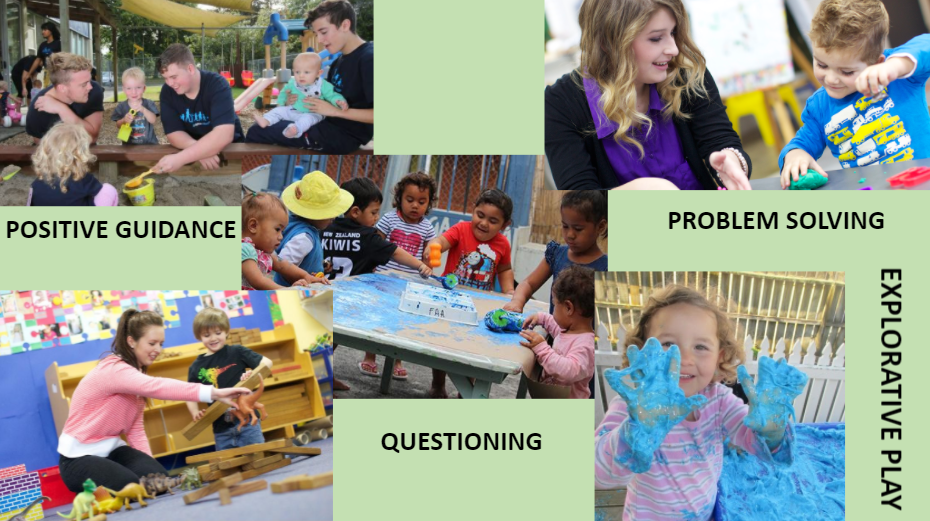
Level 2 Earth and Space Science
2ESSThis course is designed for students with an interest in Earth and Space Science. Assessments will allow students to demonstrate their understanding in a range of formats. Students will study aspects of geology, astronomy, planetary science, extreme earth events and how environments impact life, through a wide variety of activities, including research, group work, and modeling.
By the end of the year, successful students will have the necessary background to progress to the Level 3 Earth and Space Science course. To be prepared for 2ESS, students would benefit from experiencing success in a range of assessments at Year 11, particularly written reports and exam style assessments. Students who have enjoyed Solar Cycles, Physical Processes of Planet Earth or Nature of Science will likely enjoy and be successful in Level Two Earth and Space Science.
Success in Earth and Space Science can lead to further study and careers in geology, astronomy, planetary science, environmental science, climate change, environmental planning, geography, fisheries research, land management and others.
Level 2 Economics
2ECOEconomics teaches you how the world works — how people, businesses, and governments make decisions about money and resources.
Introduction
Level 2 Economics sees students examine the operation of the New Zealand economy through a Macro-economic perspective. Major issues covered will include Inflation, Economic Growth, Trade and Unemployment.
Course Outline
Students will learn how to define and measure changes in these issues and to create models to understand relevant causes and possible effects. For each economic issue, students will be asked to examine the effectiveness of possible government actions, including Fiscal and Monetary policies.
This course gives you a strong foundation for further study at university and opens doors to a wide range of careers.
- Policy Advisors
- Financial Analysts
- Business Consultants
- Market Researchers
- Bankers and Investment Advisors
It’s also a great subject for everyday life, helping you understand how interest rates, inflation, house prices, wages, and taxes affect you — and helping you make smarter decisions about saving, spending, and investing.
Level 2 EFS - English for Further Studies
2EFSAlthough this is a year 12 course, it is part of a two-year programme 1EFS/ELS and 2EFS/ELS, and does not provide Level 2 Literacy credits. Students prepare for the Litearcy corequisite standards ( second test October/November). They will develop reading, writing, listening and speaking skills at the post intermediate level. They will also focus on learning and using some academic vocabulary and associated grammar and language structures.
Students must also study 2ELS.
Entry into this course is on recommendation from the 11EFSF and 11ELSF teachers.
Level 2 ELS - English Language Study
2ELSUsing a variety of interactive strategies, students will develop grammar and vocabulary and writing, improve reading and listening comprehension and be assisted in coping with the language demands of their other subjects. The work done in this class will contribute towards the achievement of the Literacy Unit Standards in 2EFS.
An interim course designed to help students understand English skills required in mainstream courses and make a smooth transition to a full programme.
This is a corequisite with 2ELS. Both courses develop literacy skills and the skills to sit the CAA Literacy exams. However student must reach the rquired level in the diagnostic test to be permitted to sit CAA.
Level 2 Engineering - Engineering Design
2TED
This course is designed for students wishing to take engineering as a career. Areas of focus are structures, mechanisms, engineering drawing, and practical workshop engineering skills.
This course links to the Manufacturing and Technology sector and creative Industries sector. It encompasses these related careers: Construction worker, Civil Engineer, Carpenter, Environmental Engineer, Furniture Designer and Project Manager.
It is essential that students wear the correct school approved footwear in the workshop at all times for health and safety.
Preferred entry is given to student's who have completed Level 1 Technology Hard Materials, or Level 1 Cabinetry. Otherwise entry is by HOD approval.
Level 2 Engineering - Metal Fabrication
2TMF
This course is designed to give students basic to intermediate practical engineering skills. Students will have the opportunity to construct a go-cart frame. Units cover machining, fabrication, welding and assembly.
This course links to the manufacturing and technology, and construction and infrastructure sectors pathway. These pathways encompass careers in steel fabrication, welding, apprenticeship, engineer, construction, fitter and turner, machinist, roofer, steel worker, building, aluminum fabrication, fencing, and many more. Students build the foundation skills need for all trade career paths.
It is essential that students wear the correct school shoes in the workshop at all times for health and safety.
Preferred entry is given to student's who have completed Level One Metal Fabrication, or Level One Technology Hard Materials. Otherwise entry is by HOD approval.
Level 2 English - English and Performance
2ENPThis course will suit students who are interested in using drama and performance to explore English. Students will have the opportunity to apply the practical skills of drama and "learning through action" to develop their understanding of characterisation, conflict and other literary aspects. This focus will also support students to develop their reading and writing skills.
Students who select this course do not have to be confident performers. This course is open to any interested student. There is no requirement for students to have taken 1ENP.
This course has nine credits from internal standards on offer. A further eight credits are offered in the external examinations.
Level 2 English - English World Perspectives
2ENWWhy do we connect with some characters more than others? Why do the same stories appear again and again—across cultures, countries, and centuries?
World Perspectives is a challenging and exciting English course that invites you to look at literature and film through new eyes. Drawing on basic Psychology—including Freud’s personality and dream theories, and Jung’s ideas of archetypes and the collective unconscious—you’ll explore what drives characters, shapes relationships, and fuels the stories we keep telling.
You’ll learn to apply these ideas to a wide range of novels, short stories, poetry, and films from around the world, with a special focus on stories that challenge dominant perspectives or come from voices often unheard in mainstream literature. You’ll also look at how these global narratives influence audiences—and how they reflect shared fears, hopes, and desires.
Students will:
- Analyse how language and structure shape meaning and emotion
- Explore archetypes, character motivation, and symbolism using Freudian and Jungian frameworks
- Examine how worldviews are embedded in texts—and how they shape the stories we believe
- Create their own crafted and original texts in response to the ideas explored
- Learn skills that support university-level thinking, writing, and discussion
Past texts have included The Book Thief, Ex Machina, The Handmaid’s Tale, Vox, The Grand Budapest Hotel, The Imitation Game, and a range of global poetry and short fiction.
This course is for students who enjoy reading, writing, and thinking deeply. It will suit those with an interest in English, Psychology, Literature, or Media—and those who are ready to explore stories in new and unexpected ways.
Level 2 English - Genre Focus
2EGFLevel 2 English - Genre Focus
From gritty cyberpunk to whimsical magical realism, from tense political thrillers to gothic horror—every genre has its own rules, rhythms, and surprises. In this course, you’ll take a deep dive into two genres chosen as a class, with teacher guidance, and explore how each creates meaning, shapes audience expectations, and evolves across cultures and time.
You’ll study how language, style, and structure are used to shape meaning and manipulate audience response, and you’ll also consider how genres can be subverted or reimagined.
In this course, students will:
- Study a range of genre-based texts, including film, fiction, and short stories
- Analyse how genre conventions are used, challenged, and reinvented
- Write structured, analytical responses that engage deeply with texts
- Compare and evaluate how meaning is shaped through form and style
- Meet the demands of the English curriculum at Level 7, earning Level 2 English credits
This course builds on the learning from Genre Quest, but you can dive right into this course without having take 11EGQ. This course is for students who enjoy immersing themselves in stories, thinking critically about how they work, and working collaboratively to choose the directions their learning will take.
Level 2 English - Power and Ethics
2EPEWhat do we consider ethical—and who decides? How has our understanding of the human mind changed over time? What happens when mental health, morality, and the law collide?
In this course, you’ll explore complex and often controversial issues through literature, film, and non-fiction. From evolving definitions of madness to ethical dilemmas in legal, medical, and social systems, this course challenges you to think critically, discuss confidently, and write with purpose.
You’ll examine how these topics are represented in texts—and how they’re handled in real-world contexts. Class discussions are a key part of this course, and students will have some voice in shaping the specific areas we explore. These may include:
- Representations of mental health and neurodiversity
- Ethics in criminal justice, law, or medicine
- The psychology of conformity, obedience, and responsibility
- The shifting boundaries of identity, behaviour, and morality
You will:
- Analyse how authors use language and structure to explore complex ideas
- Compare perspectives across time and text types
- Explore ethical issues through literary, psychological, and cultural lenses
- Craft thoughtful responses that demonstrate insight and clarity
All work is assessed through Level 7 of the English Curriculum. All credits earned count as English credits. If you enjoyed Year 11 Debates in Psychology, Year 11 Reader's World, or you’re interested in Psychology, Ethics, Law, English, or Social Studies—this course will keep you thinking long after class ends.
Level 2 Fashion and Design
2TFD
Students will experiment with a wide range of fabric manipulation techniques, exploring how texture, structure, and design can transform textiles into high-quality fashion and creative outcomes with unique special features.
Using both domestic and industrial sewing machines, students will build practical skills and confidence while developing their own creative style. This hands-on, project-based course encourages students to test ideas, problem-solve, and bring their designs to life through a professional portfolio of work. The portfolio can also provide valuable evidence for university and tertiary applications, helping students showcase their creativity, technical skills, and design thinking.
Whether you dream of working in fashion, costume, interiors, product design, or the creative industries, this course provides an excellent foundation for future pathways. Students gain industry-relevant skills in design, construction, project management, and critical analysis while exploring the exciting possibilities of creative careers.
Level 2 Food and Nutrition
2FAN

Students will learn how to apply concepts of nutrition and health within different contexts. They will experience a variety of practical cooking lessons designed to develop their skills and to reinforce their theoretical knowledge and understanding.
A range of topics such as sustainability, veganism, the under consumption of fruit and vegetables and health promotion are covered through out the year.
This course links to the social and community services sector pathway and encompasses these sector related careers: Dietitian, nutritionist in various areas such as sports nutrition, personal training and private practice, early childhood education, public health, health promotion, catering and hospitality, food marketing, tourism, teaching, food companies, midwife, occupational therapist, physiotherapist, podiatrist and registered nurse.
The full school uniform is required for practical lessons and must include leather covered toe school shoes. It is mandatory to have hair shoulder length pulled back off the face and tied up. Acrylic or false nails and nail polish will not be allowed at any time.
Level 2 General Mathematics
2MATLevel 2 Mathematics - General includes units of work from within the Number, Algebra, Measurement, Geometry, Statistics, and Probability strands using written methods of study. This mostly internal course, is designed for students who are interested in continuing their study in Mathematics and Statistics, however, it does not lead to Calculus (3MAC) at Level 3, due to the omission of the two Level 2 externals of Algebra and Calculus. There is one external; Probability Methods in order to enable course endorsement, and to allow possible entry into Level 3 Statistics (3MAS). Successful completion leads to Level 3 Mathematics (3MAT). Entry into 3MAS will require a discussion with the Head of Faculty.
Level 2 Geography
2GEO
Embark on a hands-on, eye-opening adventure in this exciting Year 12 Geography course!
You’ll get out of the classroom and into the heart of Rangitoto Maunga on a one-day field trip, where you’ll investigate how the explosive volcanic activity of the past has affected how the vegetation and surfaces have grown today. You’ll also dive into a contemporary geographic issue tied to climate change, exploring how this global challenge plays out in local contexts.
Get tech-savvy with ArcGIS, learning to manipulate digital maps to identify (with scientific precision!) the perfect selfie spot on Mt Tongariro for one of your internals.
Throughout, you’ll sharpen essential geography skills — from interpreting complex data to constructing powerful arguments — preparing you for success in your external assessments.
If you’re keen to understand the world, think critically about big issues, and learn how geography connects people, places, and planet, nau mai — this is the course for you!
It is recommended that students have achieved their literacy co-requisite assessments to support in accessing the materials and content covered in class.
Level 2 German
2GERGermany’s economic growth, innovation, and career opportunities are just some of the endless reasons to learn German. Whatever plans you may have for the future, knowledge of German will increase your options, in particular in the fields of: Tourism and Hospitality & Science and Research. Germany awards a generous number of scholarships and other support to study in Germany. German tourists are the second largest European tourist market in Aotearoa New Zealand, with over 100,000+ visiting each year. Improve your German to connect with them.
Through this course you will further develop the core skills for learning languages: listening, reading, communicating through writing and speaking, and presenting.
You will increase your cultural knowledge and develop empathy by discussing other people’s points of view.
The Year 12 German course covers the national curriculum at Level 7. Students can use language variably and effectively to express and justify their own ideas and opinions, and support or challenge the ideas of others. They are able to use and identify the linguistic and cultural forms that guide interpretation and enable them to respond critically to texts. The activities involve listening, speaking, reading and writing. Students get the opportunity to participate in the Auckland Goethe Society Speaking Competition. They can apply for PASCH scholarships to travel to Germany. Main areas of study: Music, films and TV, personal relationships, future plans, travelling to Berlin, housing and lifestyles.
Lynfield College is part of the worldwide network of PASCH schools. PASCH stands for the “Schools: Partners for the Future” initiative. The aim of PASCH is to create and strengthen a global network of some 1,800 schools that place a high value on German, have special links to Germany and are dedicated to offering their students the best possible education. Being a PASCH school means that every year senior students can apply for scholarships to attend a youth course in Germany. You have opportunities to win language trips to Germany through PASCH. Lynfield College together with the Goethe Institut offers students to take part in and receive the Goethe-Zertifikat A2. An internationally recognized proof of German language skills corresponding to the scale of the Common European Framework of Reference for Languages (CEFR).
Continuing with German will provide the opportunity to students to visit GERMANY. The next trip will be in 2026 , followed by trips every second year. Students at senior level are eligible to take part in the three week exchange.
Use the interpersonal skills that you will gain from speaking another language to develop your career as a doctor, counsellor, pilot, lawyer, diplomat, actor, teacher, journalist, or technology designer.
Whatever plans you may have for the future, knowledge of German will increase your options. When you learn German you acquire a range of skills which can improve the quality of both your work and personal life.
Level 2 History
2HIS
LEARNING ACTIVITIES:
Historians are like detectives. We arrive on the scene after the event has taken place and have to look for evidence. Skills developed in History include research, processing and analysing information from a range of sources including old photos, documents, video, cartoons, and communicating information through arguing your case using the evidence you have collated.
Level 2 History focuses on the conflict of ideas and beliefs in the Twentieth century. This course is co-constructed with the students. There is one compulsory aspect of the course which will be either The Vietnam War or Terrorism & 9/11. Both topics take you on a journey to understand why the events took place and the actions of different people and groups in the lead up to the events, what happened during the events and how each event affected people and places in both the short and the long-term.
The rest of the topics that are taught are decided on with the students. In the past topics have included the Russian Revolution and the introduction of communism in 1917, the Middle Ages, History and Popular Culture which includes how history is portrayed in video games, movies and books, the 1947 Partition of India and a Family History topic in which the students research their ancestry.
Internal assessments are designed so students can choose to research topics they are interested in. This could include anything from the Dawn Raids and the Nuclear Free Campaign of the 1980's to the Erebus Disaster and 1918 Influenza Pandemic.
Students will complete four assessments in this course, two internally and two externally assessed standards. The context used for each student is individualised.
History develops the skills of research, analysis, communication and report writing useful in a wide variety of careers, which includes law, journalism, advertising, teaching, diplomacy, government, engineering, tourism, communications, and medicine.
It is recommended that students have achieved their literacy co-requisite assessments to support in accessing the materials and content covered in class.
Level 2 Hospitality
2HOS
The main focus of this course is to consistently provide industry standard dishes to an end user using various skills and techniques. This hands on approach in the commercial kitchen will provide them with the confidence to apply for part-time work and prepare them for work in hotels, cafés and restaurants.
Health and safety practices forms an integral part of this course which include practical and theory components.
Students will also learn about different cuisines and present a portfolio to support their learning.
This course leads into Level 3 Hospitality and Level 3 Barista. Students are able to be involved in competition work at this level.
Level 2 Information Technology - Web
2ITH
LEARNING ACTIVITIES: Practical skill-based course covering a variety of software applications designed to give students the basic knowledge and skills to carry out common computing tasks. There will be extensions in web page design (two standards), including using dedicated web-authoring software (Dreamweaver). The written demands of this course are not as great as in some others. There is a practical emphasis.
This course opens the way to a wide variety of careers and interests. The 2ITH unit standards provide sector-related credits for creative industries, manufacturing, and technology and services industries. Careers in these industries include Graphic designer, web page developer, advertising and sales manager, travel consultant, personal assistant, information manager, and copywriter.
Level 2 Japanese
2JPNみなさん!ようこそ! Welcome to your second NCEA year of studying Japanese!
Over the next year you will continue to develop your Japanese skills in reading, writing, listening and speaking while working towards gaining Level Two credits for the National Certificate of Educational Achievement. Students will be producing crafted text and learning to speak about complex situations which are beyond their personal experiences. They will cover areas such as home staying in Japan, Japanese cuisine and the Japanese education system and more. This course covers the national curriculum at Levels 6 and 7. We offer some opportunities for students to visit Japan while they are studying Japanese. Your next trip will be in 2028. Japanese Language offer an array of skills which are highly valued by employers from all sectors. Because foreign language is not narrowly focused on specific career paths, you have a wide array of professional options! You name it! Any work that is in Japan, Services for Japanese living in New Zealand (doctor, accountant, lawyer, real estate, banking etc.), Interpreter, translator, teacher, JET programme (english teacher in Japan, sports coordinator) etc
What is the point of continuously learn the language?
Multilingual people are able to communicate and interact within multiple communities. Potential employers consider this a valuable asset in an employee’s skill set, as they’re able to connect with a broader range of people. You up your personal and professional value if you’re able to negotiate with manufacturers in another country or communicate with customers who don’t speak your native language.
Not to mention, your ability to speak a second language conveys that you’re motivated and driven to learn new skills, and this also gives you a competitive edge over those who haven’t yet become bilingual.
Many would argue that bilingualism is becoming a progressively necessary and essential skill for anyone who wants to keep up with today’s rapidly increasing global economy. As more and more people recognise the importance of learning an additional language, those who only speak one language will begin to get left behind in our shift towards a more integrated and connected global society.
Level 2 Media Studies
2MEDMedia Studies is for students interested in film, television and social media. Students watch a range of movies and television, consider media in society, and create a media product to tell their own stories.
Throughout the year, students will explore how stories are constructed in television, study a genre in depth, create their own production plan and then shoot, edit and produce their own short film. Assessments are both internal and external, as well as practical and written.
Media Studies can lead to careers in television and film, social media and content creation, advertising, marketing, publishing, writing, journalism, academia and public relations.
*Footage in the video is from past and present Media Studies students of Lynfield College.
For more information about where Media Studies can take you, check out the links to tertiary providers below.
AUT
Massey University
Media Design School
NZ Broadcasting School
Otago University
South Seas
Te Auaha
Toi Whakaari
University of Auckland
University of Canterbury
Victoria University
Waikato University
Wintec
Level 2 Music Projects
2MPJThis course is for students who are interested in:
- furthering their skills on an instrument
- playing music in a group
- using technology to create original music
- Investigating aspects of Aotearoa/NZ Music
Students will spend a lot of time writing songs and creating/performing music. A strong collaborative mindset and ability to work in a self directed manner will be an advantage.
Level 2 Music Studies
2MSTThis course is for students who are interested in furthering their skills in:
- Instrumental performance
- playing music in a group
- composing music
- using music technology
- music theory
Level 2 Personal and Community Care
2PCC
 Students will work on a variety of practical and theoretical areas. The units include; customer service, communication, beauty product design and prototyping, makeup design and application and hair styling.Students will participate in workshops held by outside practitioners with a focus on hair and makeup.
Future career pathways - Nursing (which can lead to cosmetic nursing), pharmacy assistant, health worker, care provider, physiotherapist, occupational therapist, beautician, beauty therapist, hairdressing, makeup artistry, retail etc.
Level 2 Physics
2PHYThrough demonstrations and experiments, students will experience physical events in the real world and describe mathematical relationships between different variables. The entire course is supported by PowerPoint presentations and computer animations aid understanding by allowing complex concepts to be visualised. Course workbooks are used to improve problem solving skills and test the application of theory to real life contexts. Videos, research and class discussions further enhance the students understanding and enjoyment of the course.
Important pre-requisite for most science, engineering, technology, medicine, electrical, aviation, applied geology, energy management, oceanography, etc.
Level 2 Preparing for L2 Mathematics in Y12
2MPRThis course is for students who have been in a Numeracy course in Year 11 (11MNUF) and who have now passed the L1 Numeracy digital assessment. This course will be very similar to the existing 11MTDF “Maths for Tradies” course, however will have 8 credits available at Level 2 via three standards. We cover revision of Number and basic Algebra skills, before learning the content needed for Coordinate Geometry, Trigonometry and Sequences & Series standards. The course is very well resourced with a purchased workbook for each of the three standards, which are taught and assessed over a longer timeframe of 7-8 weeks each. The aim of this course is to provide a transitional year towards attainment of Level 2 Mathematics (3MPR) in Year 13 with quality grades. If you are currently in the 11MNUF course and think you may not pass the Numeracy digital exam this year (or have not been selected for it) then your best way forwards is to choose 3NUM instead of this course.
Level 2 Programming and Design
2PAD
Students doing this course will learn to program in Python which is the language of choice of most New Zealand universities. You will also learn animation and image manipulation. These modern skills are becoming increasingly desirable in the workplace.
This course should be taken by students wishing to gain an understanding of computer programming and image manipulation as well as students wanting to continue on to further studies in Computer Science. This course links to the Creative Industries and the Technology Sectors and encompasses these sector-related careers: Computer programmer, website developer, database administrator, software engineer, computer technician, network manager, computer scientist, and electronics engineer.
Level 2 Psychology
2PSYGet ready to unlock the secrets of the human mind in this dynamic Level 2 Psychology course!
You’ll journey into the fascinating world of thoughts, feelings, and behaviour, exploring why people make the choices they do — from the impact of groups on decision-making to what drives aggression and altruism. Along the way, you’ll dive into famous studies that have shaken up how we see ourselves and society, examining their causes, consequences, and significance.
But this course is all about you making meaning: you’ll have the chance to explore psychological topics that spark your own curiosity, in consultation with your teacher, shaping a learning path that fits your interests.
Build powerful skills in analysis, research, and critical thinking as you look at real-world perspectives on human behaviour. If you want to understand what makes people tick — and how psychology can help tackle issues in our communities here in Aotearoa and beyond — nau mai, haere mai! This is where your exploration of the human mind truly begins.
Psychology is the scientific study of human thoughts, emotions and actions and helps us to understand human behaviour. Psychology looks to understand and find the answer to questions like:
- What makes us, us?
- Why do we do the things that we do?
- Why do people take risks?
- How does culture influence our behaviour?

To be successful in this course it is recommended that students have achieved/completed some or all of the following:
- Level 1 Literacy credits
- English: Power and Ethics
Level 2 Sāmoan
2SAMOver the next year you will continue to develop your Sāmoan skills in reading, writing, listening and speaking. This course covers the national curriculum at Levels 6 and 7.
All of our language courses offers an array of skills which are highly valued by employers from all sectors. Because language is not narrowly focused on specific career paths, you have a wide array of professional options!
What is the point of learning a language?
Multilingual people are able to communicate and interact within multiple communities. Potential employers consider this a valuable asset in an employee’s skill set, as they’re able to connect with a broader range of people. You up your personal and professional value if you’re able to negotiate with manufacturers in another country or communicate with customers who don’t speak your native language.
Not to mention, your ability to speak a second language conveys that you’re motivated and driven to learn new skills, and this also gives you a competitive edge over those who haven’t yet become bilingual.
Many would argue that bilingualism is becoming a progressively necessary and essential skill for anyone who wants to keep up with today’s rapidly increasing global economy. As more and more people recognize the importance of learning an additional language, those who only speak one language will begin to get left behind in our shift towards a more integrated and connected global society.
This course will be supported by learning and assessment resources from Te Kura https://www.tekura.school.nz/.
Level 2 South Pacific Course
2SPCStudents enrolled in this course are required to complete tasks and present an organised portfolio with evidence of tasks and Key Competency development. The students have the option of working through the course book and attaining credits. Students are given the choice of selecting their own tasks.
Students gain improved social confidence, motivation and self-esteem in setting targets and achieving them. The SPEC courses target Key Competencies necessary for the workforce, i.e. managing self, thinking, relating to others, using language symbols and texts, participating and contributing.
Level 2 Statistical Analysis
2MASThis course is designed for students who are already experiencing success in the 11MDXF - Data Exploration course and who wish to follow a Statistics pathway. It is also open to students who have been enrolled in 11MTRF - Mathematical Theory & Reasoning or 11MTDF - Mathematics in Three Dimensions in Year 11. There is one externally assessed standard in this course; Probability Methods, which introduces Probability Theory and The Normal Distribution and leads on to Level 3 Statistics (3MAS). Students will also study interpretation of Statistical Reports, developing and performing Statistical Experiments as well as making Informal Statistical Inferences on populations. This course may be taken in conjunction with Level 2 Mathematics - Algebra and Calculus (2MAC).
Level 2 Te Reo Maori
2MAOLEARNING ACTIVITIES: Level 2 Māori develops further language skills within the main pūkenga: Whakarongo, tuhituhi, kōrero, pānui and whakaaturanga. Students will also learn more about ahurea/culture and have opportunities to speak in te reo to boost confidence. This subject requires hard work and focus.
Māori media and journalism, iwi management, tertiary education, teaching, linguistics, medical profession, legal work. Te Reo Māori and understanding of tikanga and kawa are a benefit to have in any profession in Aotearoa and abroad.
This course will be supported by learning and assessment resources from Te Kura https://www.tekura.school.nz/.
Level 2 Technology Mechatronics
2TEL
This course prepares students to study for a Degree in Electronics or Mechatronics Engineering, a National Diploma in Electronic Engineering, or an apprenticeship in electrical or electronics fields. Students will learn about electronic theory and construct electro- mechanical products and robots.
This course links to the manufacturing and technology sector and the creative industries sector and encompasses these sector related careers: Electronics engineer, electrician, mechanical engineering technician, electronics trades, production manager, technical writer, sound technician. Also, further study for a degree in electronics engineering, technology, robotics or mechatronics.
Preferred entry is given to student's who have completed the Level One Mechatronics, or Level One Technology Hard Materials course. Otherwise entry is by HOD approval.
Level 2 Tourism
2TOU
Tourism is New Zealand’s most valuable industry. It contributes significantly to our national economy and provides an increasing range of job opportunities.
This is an introductory course designed for students who would like to study or work in the tourism industry once they have completed their secondary education. It covers a range of knowledge and skills including – Tourism related geography and history, tourist attractions activities and events, effects on people and places and work roles.
Students will engage in a range of learning activities including computing; communication activities; development of tourism brochures/itineraries, maps, research and role-playing.
Level 2 Visual Arts - Design
2ARD


LEARNING ACTIVITIES: Design related research, e-learning, drawing, scanning, illustration, designing, digital photography, digital painting, Adobe Photoshop and Illustrator, folio presentation, exhibition of artwork.
This course leads to Level 3 Visual Arts Design / Photography / Painting and tertiary study for a wide range of careers: graphic design, product design, display design, interior design, concept art, game design, spatial design, architecture, packaging, magazine and book design, animation, illustration, computer graphics, fashion design, textile design, photography, creative industries, and education.

Level 2 Visual Arts - Painting
2ARP


LEARNING ACTIVITIES: Students engage in practical work including drawing and painting. Students choose to work with acrylic, water-colour, oil paint OR digitally paint on a Wacom tablet. Students develop a theme of their choice and work with the teacher to extend their ideas visually. Idea generation and development underpin the production of artwork and presentation of a body of work for a portfolio. Students engage in cycles of research and investigation of pictorial ideas related to a thematic focus for the duration of the course.
The development of practical, investigative, creative and critical thinking skills this course leads to are; the creative industries, the study of fine arts, graphic art, photography, architecture, design, spatial design, education, game and animation art and design, film industry, art director for film or television, museum and gallery curator, textile design, jewellery design, magazine and book design, illustrator, advertising, visual effects artist.
Level 2 Visual Arts - Photography
2PHO
LEARNING ACTIVITIES: Creative photography based on established practice including; portrait, still life, landscape and collage.
DEVELOPMENT OF SKILLS: image analysis, visual literacy, camera techniques, lighting techniques, digital skills-Photoshop, journal documentation and folio presentation.
OPPORTUNITIES INCLUDE: exhibition of photography and entry to national competitions.
This course leads to Level 3 Photography Level 3 Design.
Tertiary study and careers in photography include; photographic editing, museum and gallery curating, and education, commercial, forensics, industrial, medical, fashion, documentary, visual arts photography and allied fields such as visual arts, design, publishing, photo journalism, and online social media.

Level 3 Calculus
3MACThis Mathematics Course is for students who have succeeded in Level 2 Mathematics - Algebra and Calculus (2MAC) and who wish to attain Level 3 Calculus but who do not plan to do an Engineering degree at University of Auckland. There are two externally assessed standards in this course; Differentiation and Integration. It is applicable to a wide range of University courses including Commerce, Engineering, Science and Information Technology. If you wish to apply for Engineering School at University of Auckland, you should not select this course. You should instead take the 3MAE course. This course may be taken in conjunction with Level 3 Statistics (3MAS). A Casio FX-9860 GII or GIII graphics calculator is required for this course. These are no longer provided by the Maths Faculty. This course is the correct one to take for Engineering courses at OTHER universities such as AUT, Waikato and Canterbury.
Level 3 Calculus for UoA Engineering
3MAEThis Mathematics Course is for students who have succeeded in Level 2 Mathematics - Algebra and Calculus (2MAC) and who wish to apply for Engineering School at University of Auckland. There are three externally assessed standards in this course; Complex Numbers, Differentiation and Integration. This course may be taken in conjunction with Level 3 Statistics (3MAS). Teaching will focus on achieving the three externals, which is a requirement of UoA for their Engineering degree. If you wish to go to another university to study Engineering, such as AUT, Waikato or Canterbury, then you should choose 3MAC instead. A Casio FX-9860 GII or GIII graphics calculator is required for this course. These are no longer provided by the Maths Faculty.
Year 11 - English Language Study
11ELSFThis is a co-requisite course with 11EFSF. Students must take both courses.
FOR ESOL STUDENTS ONLY
Using a variety of interactive strategies, students will develop grammar and vocabulary and writing, improve reading and listening comprehension and be assisted in coping with the language demands of their other subjects.
Year 11 Art - Digital Media
11ADMFThe theme for the year is Ko Wai Tatu - Who are we?. All students will research established Maori, NZ and International artists and develop their digital illustration skills. Art mediums include drawing, painting, digital painting (wacom tablets), Adobe Photoshop, Adobe Illustrator and Adobe Animate to create artworks. Students will complete workbooks for the various Adobe programs and prepare and generate work for a Level 2 Internal Achievement Standard.
Learning tasks include:
- Workbook developing technical Adobe Photoshop skills (presented as evidence on how to work with painterly techniques).
- Workbook developing technical Adobe Illustrator skills (presented as evidence on how to work with vector techniques).
- Workbook developing technical Adobe Animate skills (presented as evidence on how to work with frame by frame and basic tweens).
- Artist image analysis (digital workbook / compare and contrast assessment).
- Developing ideas and creating a series of work in preparation for an animation in response to Ko Wai Tatu - who are we?’ theme.
- Creating an animation (gif) (To support evidence for the Level 2 internal AS 2.5 Produce a resolved work that demonstrates control of skills appropriate to cultural conventions).
This is a full year course and counts as two option course selections.
Year 11 Art - Painting
11APTFOver the course of the year, students will explore the theme of Turangawaewae - ‘a place to stand’. Students will engage in a range of practical drawing, painting processes and procedures. Topics covered include; concept drawings to work through visual ideas, colour theory, mixing and blending colours, painting techniques to create atmospheric perspective in a landscape painting, use of acrylic paint mediums and how to work with artist models to generate and develop pictorial ideas.
Other learning activities could include:
- Design skills, through concept drawings submitted in visual diary for assessment.
- Exploration of a range of art media in pencil, watercolour and acrylic paint.
- Artist image analysis, tasks completed in visual diary or on worksheet.
- Developing ideas, creating a personal pattern mural panel painting in response to Turangawaewae - ‘a place to stand’ theme
- Produce evidence for the Level 2 Internal Achievement Standard 2.5 Produce a resolved work that demonstrates control of skills appropriate to cultural conventions.
This is a full year course and counts as two option course selections.
Year 11 Art - Photography
11APHFAll students will research established New Zealand, Maori, and International artists. The theme for the year is Turangawaewae - ‘a place to stand’. Students will develop basic photographic skills related to studio practice. They will learn Photoshop tools to edit work. Students will explore Photographic genres of still life, portraiture and landscape.
Students will generate and complete task in preparation for a Level 2 Internal Achievement Standard. Their learning will be supported by checkpoints throughout the year.
Learning tasks could include:
- Assessed workbook (camera skills) with completed tasks to show how to change camera settings and how to edit in Photoshop.
- Assessed Photo shoots, working with props and sets, on how to create a good composition.
- Image analysis (digital workbook format),
- Assessment of Technical Photoshop skills (workbook format). Present evidence of technical ability using Photoshop (selecting / editing / compositing).
- Developing ideas within photography, thematic research based on identity and producing a small body of work presented onto a single folio panel.
- A final outcome for AS 2.5 Produce a resolved work that demonstrates control of skills appropriate to cultural conventions.
This is a full year course and counts as two option course selections.
Year 11 EFSF - English for Further Studies
11EFSF11EFSF and 11ELSF
FOR ESOL STUDENTS ONLY
These are corequisite courses.
They are designed to meet the language learning needs of English Language Learners who have total scores of between 6 and 9 on the ELLP (English Language Learning Progressions). Students learn vocabulary in context, grammar, sentence structure, writing and understanding basic text types ( recount, description, explanation), focused listening, conversation and basic oral presentation.
These students require two years to complete Level 1 Literacy, which they endeavour to complete in 12EFS in the following year or in 3ELS in 2029
This is a full year course
Year 11 English - A Reader's World
11ERWSReader’s World is a course for students who love reading—or who want to find their way back to it. This course focuses on personal response and reader connection, exploring a wide variety of texts including novels, short stories, film, and poetry. You’ll learn how to express your ideas clearly, explore different viewpoints, and respond with insight to the texts that speak to you.
Rather than focusing on creative writing, this course centres on developing strong analytical and reflective responses—helping you to think critically, read widely, and write with purpose.
In this course, students will:
- Read a range of texts with a focus on depth, variety, and meaning
- Make personal and critical connections with the ideas, themes, and characters
- Develop skills in analytical writing, reflection, and text discussion
- Learn how language and structure shape meaning and audience impact
- Meet the demands of the new English curriculum at Level 6, while preparing for the more complex thinking and writing required at Level 7—and earning at least 10 Level 2 English credits to support the NCEA Level 1 Literacy requirement
Reader’s World is ideal for students who want to grow as readers and thinkers—who enjoy connecting with texts on a personal level, while building the skills to respond with clarity, confidence, and insight.
Year 11 English - English and Performance
11ENPSThis course will encourage students to develop their performance, speaking, and presenting skills. A central part of this course is crafting, sharing, and performing stories, monologues, and speeches. It will suit students who have strong personal views on contemporary topics. There will be a focus on exploring dramatic plays, musicals, or other texts selected in combination with the teacher and students.
This course should not be considered as a substitute for Year 11 Drama. These courses would work well together.
Year 11 English - Genre Quest
11EGQSWhat makes a horror story different from a mystery, or a romance from a tragedy?
Genre Quest is a deep dive into the worlds of genre fiction and film. In this course, you’ll explore how different genres work—their conventions, expectations, character types, and narrative structures. You’ll learn to analyse how writers and directors use language, style, and structure to shape meaning and manipulate audience response.
You’ll have the chance to focus on genres that interest you—whether that’s fantasy, crime, historical fiction, satire, romance, sci-fi, or something in between—and examine how they evolve across cultures and time.
In this course, students will:
- Study a wide range of genre-based texts, including film, fiction, and short stories
- Analyse how genre conventions are used, subverted, and reimagined
- Write structured, analytical responses that engage deeply with texts
- Develop confidence in comparing and evaluating how meaning is shaped through form and style
- Meet the demands of the new English curriculum at Level 6, while preparing for the more complex thinking and writing required at Level 7—and earning at least 10 Level 2 English credits to support the NCEA Level 1 Literacy requirement
Year 11 English - Power and Ethics
11EPESHow do we decide what’s right or wrong—and who gets to decide? What happens when the law, society, and mental health don’t agree?
This course explores the big ethical questions behind the systems that shape our world. You’ll look at how ideas about justice, mental health, behaviour, and identity have changed over time—and how those ideas are reflected in stories, films, and real-world case studies.
This course is less about arguing and more about thinking. You’ll read widely, respond to big questions, and explore different perspectives on controversial and complex issues. Topics may include criminal justice, psychological disorders, the treatment of youth, the ethics of diagnosis, and how “madness” has been portrayed in literature and society.
In this course, students will:
- Analyse how language and structure shape meaning in texts with ethical and psychological themes
- Respond to real-world ideas and systems using critical thinking
- Explore representations of mental health, justice, and morality across a range of texts
- Write and discuss with clarity, insight, and purpose
- Meet the demands of the new English curriculum at Level 6, while preparing for the more complex thinking and writing required at Level 7—and earning at least 10 Level 2 English credits to support the NCEA Level 1 Literacy requirement
Debates in Psychology is a great choice for students who enjoy English, Psychology, Social Studies, Law, or just thinking about how the world works—and how it could work better.
Year 11 English - Voices of Aotearoa
11EVASYear 11 English - Voices of Aotearoa
Voices of Aotearoa is a course that explores powerful writing and film from Aotearoa New Zealand and the Pacific. You’ll read, watch, and discuss a wide range of texts that reflect our histories, cultures, languages, and identities. From poetry and prose to film and short stories, you’ll explore how authors and directors use language to express connection, resistance, and belonging.
This course focuses on building both your critical thinking and your confidence as a communicator. You’ll learn to analyse how ideas are developed through language and structure—and to respond with clarity, insight, and your own perspective.
In this course, students will:
- Study texts written by Māori, Pasifika, and New Zealand authors and filmmakers
- Explore how culture, place, and identity shape language and storytelling
- Develop analytical writing and discussion skills
- Reflect on their own voice and reading identity in response to the texts
- Meet the demands of the new English curriculum at Level 6, while preparing for the more complex thinking and writing required at Level 7—and earning at least 10 Level 2 English credits to support the NCEA Level 1 Literacy requirement
Voices of Aotearoa is for students who want to see the world through the lens of local stories—and who are ready to read, listen, and respond to the diverse voices that shape our place in the world.
Year 11 English - Worlds Unveiled
11EWUSThis course is all about world building.
Worlds Unveiled is a course for students who love stories, settings, and the power of imagination. From fantasy realms and dystopian futures to alternative histories and hidden cities, this course explores how writers create believable, immersive worlds—and how you can too.
You’ll read and analyse great world-building texts across genres and forms, learning how authors use language, structure, character, and setting to make the impossible feel real. You’ll also write your own stories, developing the craft of creative writing through guided workshops, challenges, and feedback.
In this course, students will:
- Read and analyse a range of imaginative and richly built texts
- Explore the building blocks of compelling storytelling, including setting, tone, and symbolism
- Write original stories that demonstrate control, creativity, and purpose
- Develop confidence in both critical and creative communication
- Meet the demands of the new English curriculum at Level 6, while preparing for the more complex thinking and writing required at Level 7—and earning at least 10 Level 2 English credits to support the NCEA Level 1 Literacy requirement
Year 11 Humanities - Accounting
11HACSStudents study Accounting specifically as it affects individuals, households, community organisations and sole proprietor's businesses. It equips students with the ability to cope with the essential skills of modern money management regardless of the career path they choose in their future.
Accounting enables the students to understand, process and communicate financial information for both an individual and a wide variety of business entities. It promotes self-management of personal financial and spreadsheets skills that are essential in daily life. Students also develop the ability to apply financial knowledge and skills to practical situations. It provides the basis for the accurate processing of data into meaningful information which in turn is analysed and interpreted to assist many users of financial reports to make wise decisions.
This is a half year course and counts as one option course selection.
Year 11 Humanities - Business Studies
11HBSSThis course gives students a behind-the-scenes look at how businesses in New Zealand really work, including local, owner-operated businesses. Students will develop real-world skills as they dive into entrepreneurship, marketing, advertising, communication, and how businesses manage their people and money.
They’ll learn how businesses make decisions, how to attract customers, how to manage staff, and how to fund a business. It’s hands-on, practical, and full of knowledge that’s useful whether they want to start their own business one day or work for one.
This is a half year course and counts as one option course selection.
Year 11 Humanities - Classics: Ancient Stories
11HCASStep into a world of gods, monsters, and epic beginnings in this captivating Year 11 Classical Studies course!
In this half-year option, you’ll embark on an adventure across time and cultures, investigating the creation myths of early civilisations. From the frost giants of the Vikings to the cosmic chaos of the Sumerians, the underworlds of the Maya to the mighty gods of Egypt, Babylon and Persia — you’ll explore how ancient peoples made sense of the world’s origins, the role of humans, and the powerful beings who shaped their destinies.
Then, journey deeper into the legendary tales of Greece and Aotearoa, analysing Greek and Māori creation stories to uncover the rich themes and ideas that link these two distant cultures. Along the way, you’ll discover what these myths reveal about humanity itself — our fears, our hopes, and our endless curiosity about where we come from.
If you love stories, big questions, and unlocking the secrets of the past, this course is for you. Nau mai, haere mai — come explore the myths that built the world!
This is a half year course and counts as one option course selection.
Year 11 Humanities - Commerce
11HCOFA Taste of Commerce — Accounting, Economics & Business
This course gives you a real-world taste of everything Commerce has to offer. You’ll explore how money flows through the economy (Economics), how to prepare financial statements for a small business (Accounting), and how businesses are built through entrepreneurship, marketing, and smart decision-making (Business Studies).
Whether it’s understanding supply and demand, managing money, or launching a business idea, this course gives you the essential skills and knowledge from all three Commerce subjects — and sets you up for future success in life, study, and work.
This is a full year course and counts as two option course selections.
Year 11 Humanities - Economics
11HECSIntroduction
Economics is the study of us. As economists, we study who we are, how we have created societies and the incentives that drive our actions. Each individual, group or nation is faced with a scarcity of resources. In economics, as an applied social science, students will gather information in order to outline possible solutions to this problem of scarcity.
Course Outline
Year 11 Economics aims to create an understanding of the relationships between consumers and producers as they interact in the marketplace. Students will learn the underpinnings of the Demand and Supply model and use this tool to examine consumer, producer and government actions.
Students will be introduced to the key economic concepts of scarcity, opportunity cost, interdependence and equilibrium. These concepts provide the foundation for study in Level 2, Level 3 and University Economics. It is also an excellent one year course that provides general educational skills for everyday living.
This is a half year course and counts as one option course selection.
Year 11 Humanities - History: Fight for your Rights - Protest Movements
11HFRSThis course will look at a range of protest movements that have divided and shaped our nation. The Dawn Raids in the 1970s, the 1981 Springbok Tour, Anti-Vietnam War protests, Nuclear Free New Zealand movement and the 1986 Homosexual Law reform are just a few of the events that could be covered to allow you to understand how New Zealand has changed over time and how as a nation we have always fought for what is right and fair. Students will have the ability to look at topics within the scope of protest from New Zealand that they best connect with and compare those to both historic and current movements from around the world.
Historians are like detectives. We arrive on the scene after the event has taken place and have to look for evidence. Skills developed in History include research, processing and analysing information from a range of sources including photos, documents, video, cartoons and communicating information through arguing your case using the evidence you have collated.
There maybe an opportunity to sit ONE internal assessment.
This is a half year course and counts as one option course selection.
Year 11 Humanities - History: History through Film
11HHFSOppenheimer, Schindler's List, The Impossible, Lincoln, Hidden Figures, The Kings Speech, Thatcher, Midway, Mississippi Burning, Uproar. All films based (if not somewhat loosely) on actual historic events, but how much creative license do the film makers take? From who's perspective is the film told and does that change the way the story is told? What can we read into the adaptations of these "historical" films?
In this course students will look at history through the lens of films and then use the historical skills we will develop to find out how wrong the movies really got it... or how much truth is actually in these films. Students will be given the opportunity to find films about historic events that interest them and then will develop a historic knowledge of the events that the film is based on. We will investigate and analyse the accuracy of the film and understand the causes, consequences and perspectives of the event and look at how they translate into the film.
Historians are like detectives. We arrive on the scene after the event has taken place and have to look for evidence. Skills developed in History include research, processing and analysing information from a range of sources including photos, documents, video, cartoons and communicating information through arguing your case using the evidence you have collated.
There maybe an opportunity to sit ONE internal assessment.
This is a half year course and counts as one option course selection.
Year 11 Humanities - History: War and Peace
11HWPSA look into the causes of WWI in particular with a focus on the experience and perceptions of war and whether or not it was justified.
Students will engage with a range of perspectives around WWI to understand the enthusiasm most New Zealanders initially had for WWI through to the pacifists who opposed the war like Archibald Baxter, opposition from Iwi, particularly in the Waikato. Student will journey through events of WWI, like Gallipoli (the myth and the reality of war) and how it was perceived both overseas and on the homefront.
Historians are like detectives. We arrive on the scene after the event has taken place and have to look for evidence. Skills developed in History include research, processing and analysing information from a range of sources including photos, documents, video, cartoons and communicating information through arguing your case using the evidence you have collated.
There maybe the opportunity to sit ONE internal assessment at Level 1 or 2
This is a half year course and counts as one option course selection.
Year 11 Humanities: Geography
11HGESEmbark on an exhilarating Year 11 Geography adventure that will open your eyes to the dynamic world we live in!
In this innovative course, you’ll dive deep into the power of place and environment, uncovering how people and landscapes shape — and are shaped by — each other. From the glittering yet grim realities of the global diamond trade (exploring the dark truth of “blood diamonds”) to the raw force of extreme natural events like earthquakes and cyclones, you’ll examine patterns and processes that impact communities across Aotearoa and the wider world.
Get hands-on with cutting-edge tools like ArcGIS, mastering the art of digital mapping to reveal hidden stories within our world. Along the way, you’ll develop vital geographical skills — reading complex graphs, interpreting spatial data, and crafting sharp, insightful evaluations of pressing global issues.
Whether you dream of tackling climate change, supporting sustainable development, or just want to understand why disasters devastate some places more than others, this course will empower you to think critically, challenge assumptions, and see the world through a fresh geographic lens.
Join us, and discover how geography isn’t just about places on a map — it’s about understanding the beating heart of our planet and the people who call it home. Haere mai, and get ready to explore!
This is a half year course and counts as one option course selection.
Year 11 Languages - Chinese
11LCHFLEARNING ACTIVITIES: This course covers the national curriculum at Levels 5 and 6. A variety of tasks to develop the four key language skills: listening, reading writing and speaking in the following areas: Family and pets, countries and languages, sports and recreation, school and friends, eating and drinking, daily routines and occasions, home and location, clothes and shopping. Students can understand and produce more complex language and can communicate beyond the immediate context.
This is a full year course and counts as two option course selections.
There are various fun activities. Learning traditional Chinese painting, paper cutting, dumpling making, participating in Cultural Day, Chinese Language Week, learning more of Chinese eating etiquettes and customs. We also have lunch party held by International Languages Department for the Gold winners of Education Perfect World Championships.
Upcoming China exchange is in 2026. You will be eligible to apply for next China trip which will be in 2027. We look forward to see you in year 11 Chinese class!
Year 11 Languages - Gagana Sāmoa
11LSAFOver the next year you will continue to develop your Sāmoan skills in reading, writing, listening and speaking. This course covers the national curriculum at Levels 5 and 6.
All of our language courses offers an array of skills which are highly valued by employers from all sectors. Because language is not narrowly focused on specific career paths, you have a wide array of professional options!
What is the point of learning a language?
Multilingual people are able to communicate and interact within multiple communities. Potential employers consider this a valuable asset in an employee’s skill set, as they’re able to connect with a broader range of people. You up your personal and professional value if you’re able to negotiate with manufacturers in another country or communicate with customers who don’t speak your native language.
Not to mention, your ability to speak a second language conveys that you’re motivated and driven to learn new skills, and this also gives you a competitive edge over those who haven’t yet become bilingual.
Many would argue that bilingualism is becoming a progressively necessary and essential skill for anyone who wants to keep up with today’s rapidly increasing global economy. As more and more people recognize the importance of learning an additional language, those who only speak one language will begin to get left behind in our shift towards a more integrated and connected global society.
This is a full year course and counts as two option course selections. This course will be supported by learning and assessment resources from Te Kura https://www.tekura.school.nz/.
Year 11 Languages - German
11LGEFGermany’s economic growth, innovation, and career opportunities are just some of the endless reasons to learn German. Whatever plans you may have for the future, knowledge of German will increase your options, in particular in the fields of: Tourism and Hospitality & Science and Research. Germany awards a generous number of scholarships and other support to study in Germany. From food, events, to globally recognized brands, German culture is widely adopted around the world. By learning the language, you’ll start to become part of this culture as well.
In this course we will explore our immediate environment focusing on teenage life. The Year 11 German course covers the New Zealand curriculum at Levels 5 and 6. Students can understand and produce more complex language. They can communicate beyond the immediate context, for example, past and future events. Students can understand and produce a variety of text types. The activities involve listening, speaking, reading and writing. Main areas of study: Home, school and community routines, enjoying time with family and friends, hometown, region, country holidays and travel, geography and weather, people and things - their appearance and qualities, making social arrangements - entertainment. Students get the opportunity to participate in the Education Perfect World Championships and the Auckland Goethe Society Speaking Competition. Lynfield College together with the Goethe Institut offers students to take part in and receive the Goethe-Zertifikat A1. An internationally recognized proof of German language skills corresponding to the scale of the Common European Framework of Reference for Languages (CEFR).
Continuing with German will provide the opportunity to students to visit GERMANY. The next trip will be in 2027 , followed by trips every second year. Students at senior level are eligible to take part in the three week exchange. Furthermore two months exchange opportunities are available through outside agencies from Year 10-12, to visit Germany for 2 months at the end of the school year, staying in a host family. Applications always open up February/ March before.
Lynfield College is part of the worldwide network of PASCH schools. PASCH stands for the “Schools: Partners for the Future” initiative. The aim of PASCH is to create and strengthen a global network of some 1,800 schools that place a high value on German, have special links to Germany and are dedicated to offering their students the best possible education. Being a PASCH school means that every year senior students can apply for scholarships to attend a youth course in Germany. You have opportunities to win language courses and trips to Germany through PASCH.
Because foreign language is not narrowly focused on specific career paths, you have a wide array of professional options.
Whatever plans you may have for the future, knowledge of German will increase your options. When you learn German you acquire a range of skills which can improve the quality of both your work and personal life.
This is a full year course and counts as two option course selections.
Year 11 Languages - Japanese
11LJPFみなさん!ようこそ! Welcome to your first NCEA year of studying Japanese!
Over the next year you will continue to develop your Japanese skills in reading, writing, listening and
speaking. This course covers the national curriculum at Levels 5 and 6. We offer some opportunities for students to visit Japan while they are studying Japanese. You will be eligible to apply for Japan Shinagawa delegation trip. Japanese Language offers an array of skills which are highly valued by employers from all sectors. Because foreign language is not narrowly focused on specific career paths, you have a wide array of professional options! You name it! Any work that is in Japan, Services for Japanese living in New Zealand (doctor, accountant, lawyer, real estate, banking etc.), Interpreter, translator, teacher, JET programme (english teacher in Japan, sports co-ordinator) etc
What is the point of continuously learn the language?
Multilingual people are able to communicate and interact within multiple communities. Potential employers consider this a valuable asset in an employee’s skill set, as they’re able to connect with a broader range of people. You up your personal and professional value if you’re able to negotiate with manufacturers in another country or communicate with customers who don’t speak your native language.
Not to mention, your ability to speak a second language conveys that you’re motivated and driven to learn new skills, and this also gives you a competitive edge over those who haven’t yet become bilingual.
Many would argue that bilingualism is becoming a progressively necessary and essential skill for anyone who wants to keep up with today’s rapidly increasing global economy. As more and more people recognize the importance of learning an additional language, those who only speak one language will begin to get left behind in our shift towards a more integrated and connected global society.
This is a full year course and counts as two option course selections.
Year 11 Languages - Te Reo Maori
11LRMFLEARNING ACTIVITIES: This course contains practical and theory-based activities and will have ākonga preparing and serving kai to manuhiri at the school marae. Assessments will be both practical and theory based. A haerenga (trip) to a marae eg Unitec/Rotorua/Waitangi/Rarotonga is planned for seniors.
Māori media, land law, education, tertiary teaching, whānau/hapu management. Language specialisation can be integral for all the above careers, and knowledge of tikanga Māori will improve employment prospects.
This is a full year course and counts as two option course selections. This course will be supported by learning and assessment resources from Te Kura https://www.tekura.school.nz/.
Year 11 Mathematics - Data Exploration
11MDXFThis course is intended for those students who are interested in number crunching with spreadsheets, data analysis and interpretation, data mining, accounting, experimental research in Commerce, Computer Science, Science, Sport, Health and the Humanities. The learning will focus on exploring, analysing and presenting data in all its forms, both physical and digital. Students will learn how to manipulate data with spreadsheets and other on-line statistical tools, to collect and analyse their data with sampling techniques, look for patterns and put forward interpretations, graphs and conclusions. Analyses will include bivariate data (scatterplots), comparative multivariate data (box plots) and time series data. This course will also spend some time on Numeracy revision, for those students who are sitting the Numeracy digital assessment.
Students who succeed in this course will be well placed to enter 2MAS Level 2 Statistics, however, may also enter 2MAT Level 2 General Maths in their Year 12. This course does not prepare students for 2MAC Level 2 Algebra and Calculus.
This is a full year course and counts as both of your Mathematics course selections.
Year 11 Mathematics - Maths in Three Dimensions
11MTDFThis course is intended for those students who are interested in a Trades career in areas such as manufacturing, heavy industry, building/construction, architectural drawing, product design and development, surveying and mapping. The learning will focus on the practical applications of number, finance, measurement, location and space, area, volume and geometry, including right angled triangles, polygons, circles and their prisms in 3 dimensions. This course will also spend some time on Numeracy revision, for those students who are sitting the Numeracy digital assessment.
Success in this course will prepare students well for entry into 2MAT Level 2 General Mathematics. This course does not prepare students for 2MAC Level 2 Algebra and Calculus, however, entry into 2MAS Level 2 Statistics is still possible.
This is a full year course and counts as both of your Mathematics course selections.
Year 11 Mathematics - Theory and Reasoning
11MTRFThis course is intended for students who have a passion for, and are interested in further study in Mathematics as a pure science, leading to tertiary studies in Engineering, Computer Science or Biomedical Sciences. The learning will focus on the language and representation of theoretical Mathematics, and its applications. Focus will be on problem solving using numerical, measurement, algebraic, graphical and geometric reasoning skills and techniques. There will be one practice exam at CL6 as well as one L2 internal assessment, AS91258 Sequences & Series. If you are performing at either Emerging or Developing levels in Y10, we recommend that you do not take this course, rather, your skills might be better suited to either 11MDXF Data Exploration or 11MTDF Maths for Tradies.
This is a full year course and counts as both of your Mathematics course selections.
Year 11 Science
11SCIFThis course ensures students experience all five strands of the Science Curriculum at Curriculum Level 6:
Biology: Genetic Variation
Chemistry: Acids and Bases
Physics: Mechanics
Earth and Space Science: Examine an Earth and Space Science issue and the validity of the information communicated to the public (4 credits)
Nature of Science: Investigating in Science
Success in this course enables you to continue future pathways in any of: Biology, Earth and Space Science, Chemistry and Physics at NCEA Level 2 and beyond.
Year 11 South Pacific Course
11SPCFThis cross-curricular course requires students to complete tasks and present an organised portfolio with evidence of tasks and key competency development for internal verification. The focus is on being able to manage yourself, set goals, work with others and problem solve. These are the skills for ‘lifelong learning’ whether one goes on to higher education or out into the workplace. Students are given the choice of selecting their own tasks.
Students will engage in self-directed learning under the guidance of a tutor, with all records kept in the course book and portfolio.
Students gain improved social confidence, motivation and self-esteem in setting learning goals and achieving them. The SPEC courses target key competencies necessary for the workforce, i.e. managing self, thinking, relating to others, using language symbols and texts, and participating and contributing.
This is a full year course
Year 11 Technology - Cabinetry
11TCBFIn this course students will learn how to use correct industry construction methods. They will learn how safely operate power and hand tools to gain an understanding of wood properties.
Students will complete a range of skills standards that link practical workmanship with elementary theory, and is an excellent pathway to Carpentry at Level 2 and 3.
This is a year long course and counts as two option selections.
It is essential that students wear the correct school approved footwear in the workshop at all times for health and safety.
Year 11 Technology - Creative Textiles
11TCTFThroughout this course, you will explore various aspects of textile design and other materials, including the design process, problem solving techniques, sustainable design principles, and meticulous construction methods. By integrating theory with hands-on experience, you will develop practical skills that foster creativity and innovation.
As a designer you will learn to cultivate your own design voice, enabling you to create textiles that reflect your personal style, cultural influences, and artistic expression. This will be done through exploration of different applied design techniques and mixed materials.
Recognising the importance of sustainable practices in the textile industry, this course emphasises the principles of environmentally conscious design. You will explore sustainable materials and techniques for minimising waste to support the innovation and development of sustainable and responsible textile design outcomes.
You will learn about various fabrics, their characteristics, and appropriate construction methods. You will gain hands-on experience with sewing, weaving, dyeing, printing, and finishing techniques, ensuring the production of textiles that are durable, aesthetically pleasing and functional.
This is a full year course and counts as two option course selections.
Year 11 Technology - Design and Visual Communication
11TDVFUnlock your creativity and bring your ideas to life in this exciting, hands-on Design and Visual Communication course! Through a mix of practical projects and creative thinking, you’ll learn how designers communicate ideas visually in powerful and engaging ways.
Across two major projects, you’ll explore the elements and principles of design while developing skills in sketching, visual communication, brainstorming, modelling, and prototyping. You’ll learn how to turn rough ideas into refined concepts using the same creative processes used by real designers, architects, and innovators.
This course encourages you to think creatively, solve problems visually, and push your imagination further. You’ll experiment with different techniques to spark new ideas, develop confidence in your creative decisions, and learn how feedback and collaboration can strengthen your work.
If you’re interested in graphic design, architecture, product design, engineering, game design, or simply enjoy being creative, this course is a great opportunity to build valuable skills for the future while creating work you can be proud of.
This is a full-year course and counts as two option selections.
Year 11 Technology - Digital Technologies
11TDTF
This course leads to further study in digital technologies and a greater understanding of the digital technologies used in our daily lives. The 11TDTF course provides vocational pathways into the creative industries, manufacturing and technology, and service industries.
Students will complete investigative practical projects to develop a comprehensive understanding of societal, organisational and consumer factors involved in digital technology. They will use a variety of industry standard software applications to produce a range of digital solutions to problems. In addition, students will learn about and experience a variety of skills in a DTG context including research, design, Database, HTML web authoring, programming using Python and digital security.
This is a full year course and counts as two option course selections.
Year 11 Technology - Food & Nutrition
11TFNFStudents will learn how to critically analyse concepts of nutrition and health within different contexts. Students will learn about nutrients and their functions, health promotion and issues related to the provision of food.
Students will experience a variety of practical cooking lessons designed to develop their skills and to reinforce their theoretical knowledge and understanding.
The full school uniform is required for practical lessons and must include leather covered toe school shoes. It is mandatory to have hair shoulder length pulled back off the face and tied up. Acrylic or false nails and nail polish will not be allowed at any time.
This is a full year course and counts as two option course selections.
Year 11 Technology - Hospitality
11THOFStudents will learn how to apply various skills to create contexts that inspire fit-for-purpose outcomes.
Students will experience a variety of practical cooking lessons designed to develop their skills and to reinforce their theoretical knowledge and understanding on various topics.
Students will plan various events to demonstrate the knowledge and application of soft skills.
Students will plan, prepare and deliver events to showcase front-of-house skills whilst dealing with customers.
This is a full year course and counts as two option course selections.
Year 11 Technology - Mechatronics
11TELFThis course introduces electronic concepts, components and micro-processor interfacing. Students will learn how to use machinery, hand tools and assemble techniques that reflect industry codes of practice. Students will design a solution within a given context and then create their design.
This course links to the manufacturing and technology sector and the creative industries sector. It encompasses these sector related careers: Electronics engineer, electrician, mechanical engineer technician, electronics trades, production manager, technical writer, sound technician or lead to further study for a degree in electronics engineering, technology, robotics or mechatronics.
Year 11 Technology - Metal Fabrication
11TMFFThis course links to the Manufacturing and Technology, and Construction and Infrastructure Sector Pathway. Students will learn through a series of units that cover machining, welding and assembly These pathways encompass careers in Steel fabrication, Welding, Apprenticeship, Engineer, Construction, Fitter/Turners, Machinist, Roofer, Steel Worker, Aluminum fabricators and Fencing. Students build the foundation skills needed all trade career paths.
This is a full year course and counts as two option course selections. It is essential that students wear the correct school approved footwear in the workshop at all times for health and safety.
Year 11 Technology Materials Hard
11TMHFIn this course students will learn through a combination of theory and hands-on projects, to develop the skills and knowledge in a range of materials.
Students will design a solution within a given context using the design process. They will also create a product using hard materials. Students will learn how to use machinery and hand tools and learn assemble techniques that reflect industry codes of practice.
This is a full year course and counts as two option course selections. It is essential that students wear the correct school approved footwear in the workshop at all times for health and safety.
Year 12 Life Skills
2LSKThe Life Skills programme is part of the Lynfield College curriculum for Year 11- 13 students. The goal of the programme is to prepare students with the practical knowledge, confidence, and real-world skills they need to successfully transition from school into adulthood, Through a rotation of fun, engaging and practical activities, the students will learn and practice these skills.
Topics include things such as first aid, cooking, financial literacy, drivers licences, self-defence, careers, practical skills, team building and much more.
Subjects for Year 12 Students
2HTH - Level 2 Health Studies
2HTHLevel 2 Health includes elements of sociology and psychology within health related contexts. Students will investigate a range of adolescent health issues, such as resilience, discrimination, gender and sexuality and take part in a large scale health promotion project. Activities include co-operative projects, research assignments and discussion groups. Students will be able to choose a personalised learning pathway, and either be assessed in all four standards or their choice of three.
Pathway into Level 3 Health Studies. Health develops interpersonal skills and personal and social
responsibility for any career. It can directly lead on to a wide range of careers including medicine, nursing, politics, public health, community health work, social work, psychology, sociology, alcohol and drug counselling, health promotion, sport and exercise science, physiotherapy, occupational therapy.
2OED - Level 2 Outdoor Education
2OEDIn this course, students will apply classroom-based learning activities to an outdoor environment. They will gain an appreciation for the outdoors while participating in a range of outdoor activities. The activities will include tramping, camping, navigation, and appropriate gear and food in the outdoors. The focus will be on developing their own skills in these activities as well as learning about risk management and leadership.
This course can lead to certificates, diplomas, and degrees in sport, recreation, physical education, outdoor education and sustainability. The purpose and design of this course is to give students an opportunity to learn in, through, and about a variety of outdoor activities. Some potential career pathways could be in adventure tourism, secondary and tertiary teaching, outdoor education centres, working as a fitness instructor or as a personal trainer in centres or for corporate groups, environmental and conservation groups (including the Department of Conservation and others).
Full change of clothes must be worn for lessons that are practical.
2PEL - Level 2 Physical Education and Leadership
2PELIn Physical Education Leadership, students have a unique opportunity to learn about and demonstrate leadership skills outside of the traditional classroom environment. Whether it is organising an event, planning activities or coaching the techniques, tactics and rules of an activity. Level 2 PE Leadership enables you to develop these skills in a practical context.
Level 2 PE Leadership is an academic course with a focus on practical learning. Students in this course will focus on practical skill performance in two contexts, develop leadership skills in groups, explore the significance of physical activity for young people and society and examine event planning and outcomes. Students in this course must be willing to participate in multiple practical lessons each week.
Full change of clothes must be worn for lessons that are practical.
2PES - Level 2 Physical Education Sports Science
2PESLevel 2 PES enables students to look in greater depth at some of the impacts on physical activity and sport. This is a very popular branch of physical education that has grown rapidly in the last 20 years and encourages students to make links between some of the traditional sciences and how they impact on physical activity and movement.
This is an academic course with an emphasis on applying practical and theoretical knowledge in Physical Education. Students in this course will focus on practical skill performance in two contexts, examine anatomy and exercise physiology, examine the implementation and outcomes of camp, motor skill learning and biomechanics analysis, skill teaching and training principles. Students must be willing to participate in multiple practical lessons per week.
Full change of clothes must be worn for lessons that are practical.
2SPS - Level 2 Sports Studies
2SPSThis Sports Studies course focuses on key aspects of sport, including performance, skill development, coaching, and sport organisation. Students will develop their understanding of how athletes improve performance, how skills are taught and developed, and the important role coaching and organisation play within sporting environments.
Learning experiences will include a mixture of classroom and practical lessons, allowing students to apply concepts in sport and physical activity settings. This course provides a pathway into Year 13 Sports Studies. Students must be willing to actively participate in multiple practical lessons each week.
Full change of clothes must be worn for lessons that are practical.
3HTH - Level 3 Health Studies
3HTHWork at Level 3 focuses on investigating significant health and socio-ecological issues in New Zealand and applying the concepts of ethics, health promotion and social justice to design strategies that will lead to more equitable health outcomes for New Zealanders. Activities will include individual and group research, group discussion, gathering data, case studies, assignments, and learning journals. Students will be able to choose a personalised learning pathway, and either be assessed in all four standards or their choice of three.
Health develops interpersonal skills and personal and social responsibility for any career. It can directly lead on to a wide range of careers including medicine, nursing, politics, public health, community health work, social work, psychology, sociology, alcohol and drug counselling, health promotion, sport and exercise science, physiotherapy, occupational therapy.
3OED - Level 3 Outdoor Education
3OEDIn this course, students get the opportunity to apply classroom-based learning to an outdoor environment. There are a number of trips and camps that are part of the course. Topics covered will be risk management with a focus of river safety, leadership in the outdoors, lifelong wellbeing and a research assignment. One contexts that we will be using to learn about these topics will be a leadership camp where the students will be leading outdoor activities. There will also be another trip or camp to put in to practice risk management strategies and river safety.
This course can lead on to certificates, diplomas and degrees in sport, recreation, physical education, outdoor education and sustainability. The purpose and design of this course is to give students an opportunity to learn in, through and about a variety of outdoor activities. Some potential career pathways could be in adventure tourism, secondary and tertiary teaching, outdoor education centres, working as a fitness instructor or as a personal trainer in centres or for corporate groups, environmental and conservation groups (including Department of Conservation and others).
This course maybe limited in number depending on staffing availability. If this is the case first priority would be given to students who have taken 2OED and have achieved at least 10 credits
Full change of clothes must be worn for lessons that are practical.
3PEL - Level 3 Physical Education Leadership
3PELThis course develops leadership and self-leadership skills through a range of practical and classroom learning experiences. Students will explore leadership styles and strategies while building confidence, communication, teamwork, initiative, and personal responsibility.
Students will apply leadership in physical activity settings, plan and lead activities, evaluate factors that contribute to effective leadership and group success, and reflect on their own experiences in physical activity and leadership contexts. They will also examine the significance of sport, physical activity, and events for individuals, communities, and society, while analysing and evaluating experiences through NCEA assessments.
Students must be willing to actively participate in multiple practical lessons each week and contribute positively to the learning and development of others.
Full change of clothes must be worn for lessons that are practical.
3PES - Level 3 Physical Education Sports Science
3PESThis Year 13 Sports Science course provides students with an advanced understanding of how the body responds and adapts to movement, exercise, and sport. Students will explore topics such as biomechanics, methods of training, performance improvement, and the factors that influence physical activity and sporting success. Students will critically analyse and evaluate the impact of sport on individuals, communities, and society while applying scientific and socio-cultural concepts to physical activity experiences. Learning will involve deeper reflection, evaluation, and application through NCEA assessment tasks.
The course includes a balance of classroom and practical lessons, allowing students to apply concepts in authentic physical activity settings. Students must be willing to actively participate in multiple practical lessons each week alongside classroom learning.
Full change of clothes must be worn for lessons that are practical.
3SPS - Level 3 Sports Studies
3SPSFor students considering a future in sport, the Level 3 Sports Studies course enables students to apply their subject knowledge to a practical context. The course draws on a number of different aspects of physical activity encouraging students to develop a greater understanding of sport and physical activity.
This course follows on from Level 2 Sports Studies and has a focus on learning about and through sport and physical activity. The course involves learning about fundamentals of personal training, fitness, injury prevention, sports performance and coaching. Whilst this is not a university approved course, successful students will gain knowledge through unit standards offered through M.I.T. Students who select this course must be willing to participate in multiple practical lessons each week.
Full change of clothes must be worn for lessons that are practical.
English Language Literacy
2ELTLiteracy 1 via CAA exams and 30511 and 30507
Essential Numeracy for Y12 and Y13
3NUMThis mixed year level course is designed for those Year 12 and 13 students who are yet to achieve their L1 Numeracy. The aim is to attain Numeracy in a learning setting where you feel socially comfortable. In this course you will prepare for sitting the Numeracy digital external that is offered to Y12 students who are deemed ready and ALL Y13 students in both May and September. Once obtained, these 10 credits will enable you to receive your NCEA certificates at both L2 and L3. These credits sit alongside the 60 required for each NCEA certificate.
We will cover the seven Content Ideas of operations on numbers, mathematical relationships (graphs), spatial properties and representations (2D & 3D), location and navigation, measurement, statistics and data, elements of chance. The three Process Ideas will also be covered in order to formulate an approach to a problem, use Mathematics to solve a problem and explain the reasonableness of a given approach to a problem. This course also offers the Level 2 Coordinate Geometry standard in Term 4.
This is a full year course and counts as both of your Mathematics course selections.
Foundation 1 English
FENG1Some writing and reading aspects of the Year 9 English Curriculum taught at a very basic level, for ELL students with ELLP scores of 0-4. Early vocabulary and grammar. Development of speaking and listening skills.
This course is one of seven courses which make up the Foundation 1 Programme and which are all corequisites:
FENG1, FEST1, FLST1, FRDG1, FSST1, FSCI1 and FMAX1
Foundation 1 Mathematics
FMAX1This course is based on the Year 9 curriculum, but also provides extension for more able students into the Year 10 curriculum. The course is for ELLs with ELIP scores of 0-4. It focuses on basic skills, the terminology of maths and the language of maths problems. The latter two skills are very important for these students who will encounter a great deal of language in mainstream maths later. Students acquire the requisite skills and language.
This course is one of seven courses which make up the Foundation 1 Programme and which are all corequisites:
FENG1, FEST1, FLST1, FRDG1, FSST1, FSCI1 and FMAX1
Foundation 1 Reading
FRDG1A reading programme for ELL students with ELLP scores of 0-4 developing fundamental reading skills.
The aims of the reading course are to enable students to apply phonological knowledge when reading and writing, develop independence in “growing” their vocabulary, retrieve specific information from texts and develop independence in predicting and posing questions when they overview a text, enjoy reading independently, use the library more effectively.
The skills learned in Reading combine with those in rest of the ELIP Programme, to provide students with the language to move into the mainstream.
This course is one of seven courses which make up the Foundation 1 Programme and which are all corequisites:
FENG1, FEST1, FLST1, FRDG1, FSST1, FSCI1 and FMAX1
Foundation 1 Science
FSCI1This course is for ELLs who have ELIP scores of 0-4. It is based on the year 9 curriculum, but also provide extension for more able students into the Year 10 curriculum. The course focuses on basic skills, the terminology of science and the language of science problems. The latter two skills are very important for these students who will encounter a great deal of language in mainstream science later. Students acquire the requisite skills and language.
This course is one of seven courses which make up the Foundation 1 Programme and which are all corequisites:
FENG1, FEST1, FLST1, FRDG1, FSST1, FSCI1 and FMAX1
Foundation 1 Social Studies
FSST1ELIP Technology
Foundation 2 English
FENG2Some writing and reading aspects of the Year 10 English Curriculum taught at an elementary level, for ELL students with ELLP scores of 4-6. It develops elementary literacy skills, vocabulary and grammar, writing and reading genres, speaking and listening skills.
This course is one of courses which make up the Foundation 2 Programme and which are all corequisites:
FENG2, FFAR2, FRDG12, FSST2, FSCI2 and FMAX2
Foundation 2 Language and Visual Arts
FLVA2A course which combines aspects of year 9 and 10 Art with Language Study for elementary learners of English.
This course is one of courses which make up the Foundation 2 Programme and which are all corequisites:
FENG2, FLVA2, FRDG12, FSST2, FSCI2 and FMAX2
Foundation 2 Mathematics
FMAX2This course is based on the Year 9 curriculum, but also provides extension for more able students into the Year 10 curriculum. The course is for ELLs with ELIP scores of 3-5. It focuses on basic year 9 and 10 skills, the terminology of maths and the language of maths problems. The latter two skills are very important for these students who will encounter a great deal of language in mainstream maths later. Students acquire the requisite skills and language.
This course is one of courses which make up the Foundation 2 Programme and which are all corequisites:
FENG2, FVAR2, FRDG12, FSST2, FSCI2 and FMAX2
Foundation 2 Reading
FRDG2A reading programme for ELL students with ELLP scores of 3-5 developing fundamental reading skills.
FENG2, FVAR2, FRDG12, FSST2, FSCI2 and FMAX2
Foundation 2 Science
FSCI2ESOL and Science skills and themes, combinign aspects of the year 9 and 10 curriculum, taught in a way accessible to students with ELLP scores of 3-5.
Foundation 2 Social Studies
FSST2ESOL and Social Studies: themes and skills. Some basic ( year 4-5) literacy focus.
This course is one of courses which make up the Foundation 2 Programme and which are all corequisites:
FENG2, FLVA2, FRDG12, FSST2, FSCI2 and FMAX2
Foundation 3 Reading
FRDG3The aims of the reading course are to enable students to apply phonological knowledge when reading and writing, develop independence in “growing” their vocabulary, retrieve specific information from texts and develop independence in predicting and posing questions when they overview a text, enjoy reading independently, use the library more effectively.
The skills learned in Reading combine with those in rest of the Foundation Programme, to provide students with the language to move into the mainstream.
This course is a corequisite with FENG3.
Students also take core subjects except 9/10 English, as well as options.
Foundation English Studies
FEST1Early literacy development for ELL students with ELLP scores of 0-4. Study of short texts within a variety of themes. Development of basic writing genres.
This course is one of seven courses which make up the Foundation 1 Programme and which are all corequisites:
FENG1, FEST1, FLST1, FRDG1, FSST1, FSCI1 and FMAX1
Foundation Language Study Level 4
FLST4Level 4 Foundation reading and language skills. This course strengthens basic literacy skills for ELLs, which include post-elementary grammar, reading and vocabulary extension and also develops basic speaking fluency and listening comprehension. Students at this level require at least 3 years including the year in FLST to gain Level 1 Literacy.
Gateway Programme
GATEWHAT IS THE GATEWAY PROGRAMME? Gateway is a flexible, individualised learning and work placement programme designed to work together with in-school learning in order to assist students' career goals. Acceptance onto the programme is through an application process which includes an interview with the Gateway Coordinator.
There are two compulsory parts to the Gateway Programme:
Learning: Standards gained by in-school learning, external short courses and/or individualised self-directed learning packages with support from tertiary providers, industry specialists and the Gateway Coordinator. Standards listed below are an EXAMPLE ONLY.
Work Experience: Students will attend a work experience, in an industry of their choice, for one day per week during school term times, for between 2 to 10 weeks.
Students gain school/work/life balance skills with a focus on employability skills. This can include CV skills, interview skills, work-ready qualifications such as a Site Safe Passport (as necessary) and/or Workplace First Aid Certificate. The Gateway Programme assists students to make decisions about future careers and tertiary study options. There are possibilities of part-time and fulltime work as well as apprenticeship opportunities.
Process:
1. Email the Gateway Coordinator: [email protected] indicating the industry you would like to explore whilst on the Gateway Programme.
2. Collect, complete and return a Gateway Application Form (from the Gateway Coordinator, situated in the Careers Centre).
3. Attend an "employment" interview with the Gateway Coordinator.
4. Once accepted, comply with all requirements of the programme.
DISCLAIMER: As the Gateway Programme is a flexible, individualised student learning and work placement programme, standards offered and work placements may vary.
Level 2 Accounting
2ACCCourse Outline
Year 12 Accounting offers students the opportunity to develop logical thinking skills as well as providing a conceptual understanding of the workings of small organisations. Students continue to build upon the knowledge from Year 11.
The development of skills in the use of spreadsheets and accounting software will be used to appreciate the place of ICT in Accounting. Additional development also continues on the preparation and detailed interpretation of financial statements for sole proprietors.
This course provides a foundation for further study at tertiary institutions and prepares students to work as an accountant, auditor, financial advisor, finance manager, policy analyst, financial dealer and statistician.
Level 2 Algebra and Calculus
2MACThis Mathematics Course is designed for students who have succeeded in the practice Level 1 external exam that is taught as part of the 11MTRF Mathematical Theory & Reasoning course. There are two externally assessed standards in this Level 2 course; Algebra and Calculus. It leads on to Level 3 Calculus (3MAC or 3MAE) or Level 3 Statistics (3MAS). Students develop skills in solving problems with an analytical focus and presenting logical arguments. This course may be taken in conjunction with Level 2 Statistics (2MAS).
Level 2 Automotive Engineering
2AUTThis is a UNITEC Partnership course being offered at Lynfield College. It will enable students to complete NZQA Motor Industry Training Organisation Units. Students will learn how to disassemble and assemble a 4 cylinder engine. As well as learn how to tune an engine to increase engine power and learn how to service their own vehicles. Students will also learn about specialised tools and equipment.
It is essential that students wear the correct school approved footwear in the workshop at all times for health and safety.
Level 2 Barista Foundation
2HOBThis course lays the foundation for the Level 3 Barista course. Students are introduced to the art of making espresso coffees and specialty drinks and how to safely operate the barista machine under supervision. Practical food preparation will include Cafe style items. There is a strong focus on customer service and front of house skills to prepare students for a diverse range of careers found in the hospitality and tourism sector.
Health and safety practices forms and integral part of this course and will provide them with the confidence to apply for part-time work and prepare them for work in cafés and restaurants.
Students will practice their customer service and front of house skills by serving in Kōwhai Kai and at school functions and are able to be involved in competition work at this level, if interested.
Level 2 Biology
2BIOThis course provides a pathway to Level Three, scholarship and tertiary studies in courses with an aspect of Biology.
Devices will be essential for every lesson. A variety of teaching methods will be used as appropriate to the content. Laboratory skills are essential in cell biology; problem solving in genetic variation and gene expression. A variety of textbooks are used in conjunction with a workbook. Material will be presented in a variety of ways including presentations, videos and computer animations.
Possible future career opportunities include: all fields of health science; medicine, sports science, animal studies, horticulture, forestry, biotechnology, ecology, wildlife management, agriculture and forensics.
Level 2 Business Studies
2BUSCourse Outline
Level 2 Business Studies enables students to learn about New Zealand's enterprising culture and encourages them to develop their business knowledge and decision making skills in order to be active participants in New Zealand's economic future. Our students are given opportunities to study large New Zealand businesses with a regional or national significance.
They will gain knowledge and skills by:
- Comparing different business structures and leadership styles
- Consulting with community groups to identify a range of community needs
- Planning and carrying out their own social enterprise group project
- Understanding the value of ethics and corporate social responsibility for business success
- Collaborating, problem-solving and making informed business decisions in a team
- Taking on leadership roles and responsibilities in a market research activity
- Seeking mentoring guidance and accepting constructive feedback/feedforward
- Recognizing New Zealand's bicultural heritage and how Maori business concepts align in a business context
Level 2 Carpentry
2CRPLEARNING ACTIVITIES: This course covers the elementary Skills Standards for apprentices as required by the Building Construction Industry Training Organisation. Units cover safety, hand tools, timber and hardware, portable machines, practical projects (fence construction, equipment and outdoor furniture).
This course links to the construction and infrastructure, manufacturing and technology sector pathway and encompasses these sector related careers: Builder, construction worker, commercial and domestic trade construction careers, truss manufacture, roofing, architectural technician, boatbuilder, cabinetmaker, material engineer, machinery operator, joiner, furniture maker. Y12 Carpentry introduces students to foundation building and construction skills.
It is essential that students wear the correct school approved footwear in the workshop at all times for health and safety.
Preferred entry is given to student's who have completed Level 1 Cabinetry, or Level 1 Technology Hard Materials. Otherwise entry is by HOD approval.
Level 2 Chemistry
2CHEThis course is designed to cater for students with an interest in Chemistry.
Chemistry is an important prerequisite for technology, engineering, health science, biochemistry, food science, marine science, microbiology, pharmacology and toxicology, neuroscience, clothing and textiles science. Also useful in the following careers; forensic science, water treatment, teaching, medical testing, fertilizer manufacture, pollution monitoring, brewing, plastic manufacture etc.
LEARNING ACTIVITIES: A range of learning experiences is designed to cater to different learning styles, including extensive practical work and modelling. There is a focus on problem-solving and analytical techniques.
Level 2 Chinese
2CHILEARNING ACTIVITIES: This course covers the national curriculum at Level 7. Students are able to express and justify their ideas and opinions in genuine contexts, and demonstrate understanding of a variety of written and spoken Chinese in the areas of school life in both New Zealand and China, hobbies and leisure time, travel and transport, festivals and customs. Basic Chinese-English translation skills is one of the key components of this course.
With the strong ties being developed between New Zealand and Chinese-speaking countries, career opportunities are increasing in trade, tourism, education (teaching), diplomacy, and technology amongst many others.
There are various fun activities. Learning traditional Chinese painting, paper cutting, dumpling making, participating in Cultural Day, Chinese Language Week, learning more of Chinese eating etiquettes and customs. We also have lunch party held by International Languages Department for the Gold winners of Education Perfect World Championships.
Upcoming China exchange is in 2027. We look forward to seeing you in year 12 Chinese class!
Level 2 Classical Studies
2CLALEARNING ACTIVITIES: Lv 2 Classical Studies is the study of the civilisation of ancient Greece.
Classics is unique. As a multi-disciplinary subject students gain insight into the classical world by studying Literature, Society, Values, Art, Architecture and History all rolled into one course, as well as enriching their knowledge of the wider world.
Classics is useful for a wide range of careers from law or psychology to careers in the creative industries such as media, film and architecture.
The course consists of two internals and two externals.
Before Marvel and DC: the Superheroes of the Ancient World. In their study of Greek Mythology, students examine a range of myths, with particular emphasis on Homer’s epic heroic tale, the ‘Odyssey’. This is a story about the hero Odysseus and his journey home after the Trojan War. To study the Odyssey is to learn about the important ideas and values of the ancient Greeks. This story laid the foundation upon which modern superhero stories are based.
Epic Poem vs Epic Film. This is assessed as an internal standard. Students compare Homer’s Odyssey to any hero film of their choosing to understand the relationship and relevance of superheroes stories to both the ancient Greek culture and our own culture today. Popular choices for this internal include:
The Odyssey (1997 film version),The Hunger Games, Lord of the Rings, Harry Potter, Red Dead Redemption video game and Oh Brother Where Art Thou (a spoof on the Odyssey starring George Clooney!)
The Significance of the Persian Wars: The Greek victory over the mighty Persians was a David vs Goliath story. As an internal, students study how the Greeks achieved this and how the victories have left a legacy that still survives today. The period that followed is known as the Golden Age of Greece – where the foundations of western civilisation were laid.
5th C BC Athenian Art and Architecture: A study of some of the most iconic pieces of artwork in the world today. We examine Athens’ most famous temples such as the Parthenon, built after the Persian Wars to reflect the glory and pride in their culture. Students also examine Greek sculpture and the relationship between Greek ideas and their continual quest for the ideal representation of the human body.
Employers value highly the transferable skills that Classical Studies teaches, such as shaping a logical argument, resolving problems creatively and critically, and writing, thinking and communicating clearly.
It is recommended that students have achieved their literacy co-requisite assessments to support in accessing the materials and content covered in class.
Level 2 Completion of L2 Mathematics in Y13
3MPRThis course is for students who have either successfully completed 2MPR in Year 12 or who struggled with 2MAT and would like to repeat some of those standards in Year 13. This course will be have 10 credits available at Level 2 via four standards. These are Networks, Simulations, Systems of Equations and the Probability Methods external. The course is very well resourced with a purchased workbook for each of the four standards, which are taught and assessed over a longer timeframe of 7-8 weeks each. The aim of this course is to provide the completion year towards attainment of Level 2 Mathematics at the end of Year 13 with quality grades.
Level 2 Customer Service Award
2CSAThis is a full year course which is part of the Gateway programme and is designed to provide students with essential work skills. Students will gain knowledge and practical experience in customer service. Assessment is completed across approximately 10 days in a work place. Successful students will achieve the Customer Service Award. Career planning and essential job searching skills will also be covered.
- * Gain credits towards a nationally recognised qualification.
- * Get real experience in a real workplace.
- * Enjoy the camaraderie from working as part of a team.
- * Get the opportunity to be considered for a role within the business.
- * Learn great industry skills and knowledge essential for a retail career.
- * Learn in a fully supportive environment.
Students will gain employability skills that are relevant to all jobs. Credits can be used towards the New Zealand Certificate in Retail (Level 2). Possibilities of part time work are also available.
DISCLAIMER: As CSA course work and placement are provided and organised by ServiceIQ, standards may vary in accordance with workplace requirements.
Level 2 Design and Visual Communication
2DVCThis course is perfect for students who enjoy designing, creating, problem-solving, and thinking about how ideas can shape the world around us.
You’ll explore both spatial and product design while developing industry-style skills used by architects, engineers, product designers, and creative professionals. Through an exciting design project, you’ll learn advanced sketching techniques, digital design tools, and computer-aided design (CAD) skills to communicate your ideas with confidence and professionalism.
You’ll also discover how great design has evolved over time by exploring influential design styles and eras, helping you develop your own creative style and understanding of modern design trends. As your projects progress, you’ll produce professional production drawings and presentations that reflect real-world industry practice.
This course combines creativity with practical and technical skills, making it an excellent pathway into careers in architecture, engineering, construction, product design, media, advertising, and the creative industries. The Level 2 DVC Achievement Standards also provide valuable sector-related credits connected to construction and infrastructure, manufacturing and technology, and creative industries pathways.
If you enjoy designing, visualising ideas, and creating innovative solutions, this course will challenge you to think bigger, design smarter, and prepare for exciting future opportunities.
Level 2 Digital Technologies
2DTGThe course guides the students through the process of designing a brief for a client, using project planning tools, and producing a final outcome.
This course opens the way to a wide variety of careers and interests. The 2DTG achievement standards provide sector-related credits for creative industries and manufacturing and technology industries. Careers in these industries include graphic designer, programmer, system analyst, advertising and sales manager, travel consultant, personal assistant engineer, and researcher.
Level 2 EAP - English for Academic Purposes
2EAPStudents will develop reading, writing, listening and speaking skills at the pre-advanced level. They will also focus on learning and using academic vocabulary and associated grammar and language structures, and on developing academic writing. Opportunities to gain Literacy 1 will also be given.
Entry into the 2EAP course is by recommendation from the 11EAP teacher or HOD ESOL Mr Bangs.
Level 2 Early Childhood Education
2ECEDiscover the rewarding world of Early Childhood Education and learn the skills needed to support and inspire young children during the most important stages of their development. This engaging and practical course is ideal for students who enjoy working with people, caring for others, and making a positive difference in their community.
You’ll explore how children grow, learn, and develop, while gaining knowledge about health, hygiene, nutrition, and the importance of creating safe and supportive environments for young children. The course also focuses on building positive relationships and communication skills with children and their families — valuable skills that can be applied in both everyday life and future careers.
Through interactive learning and real-world connections, you’ll develop confidence, responsibility, teamwork, and leadership skills that are highly valued across many industries. This course is an excellent pathway for students interested in careers involving people, care, and education.
Early Childhood Education links directly to the Social and Community Services sector pathway and can lead to careers such as early childhood teaching, primary teaching, nursing, nannying, babysitting, flight attending, social services, and parenting support roles. Students also have the opportunity to gain credits towards the Level 2 Certificate in Early Childhood Education.
If you enjoy helping others, working with children, and want to develop practical life and career skills, this course is a fantastic opportunity to learn, grow, and make a real impact.
Level 2 Earth and Space Science
2ESSThis course is designed for students with an interest in Earth and Space Science. Assessments will allow students to demonstrate their understanding in a range of formats. Students will study aspects of geology, astronomy, planetary science, extreme earth events and how environments impact life, through a wide variety of activities, including research, group work, and modeling.
By the end of the year, successful students will have the necessary background to progress to the Level 3 Earth and Space Science course. To be prepared for 2ESS, students would benefit from experiencing success in a range of assessments at Year 11, particularly written reports and exam style assessments. Students who have enjoyed Solar Cycles, Physical Processes of Planet Earth or Nature of Science will likely enjoy and be successful in Level Two Earth and Space Science.
Success in Earth and Space Science can lead to further study and careers in geology, astronomy, planetary science, environmental science, climate change, environmental planning, geography, fisheries research, land management and others.
Level 2 Economics
2ECOEconomics teaches you how the world works — how people, businesses, and governments make decisions about money and resources.
Introduction
Level 2 Economics sees students examine the operation of the New Zealand economy through a Macro-economic perspective. Major issues covered will include Inflation, Economic Growth, Trade and Unemployment.
Course Outline
Students will learn how to define and measure changes in these issues and to create models to understand relevant causes and possible effects. For each economic issue, students will be asked to examine the effectiveness of possible government actions, including Fiscal and Monetary policies.
This course gives you a strong foundation for further study at university and opens doors to a wide range of careers.
- Policy Advisors
- Financial Analysts
- Business Consultants
- Market Researchers
- Bankers and Investment Advisors
It’s also a great subject for everyday life, helping you understand how interest rates, inflation, house prices, wages, and taxes affect you — and helping you make smarter decisions about saving, spending, and investing.
Level 2 EFS - English for Further Studies
2EFSAlthough this is a year 12 course, it is part of a two-year programme 1EFS/ELS and 2EFS/ELS, and does not provide Level 2 Literacy credits. Students prepare for the Litearcy corequisite standards ( second test October/November). They will develop reading, writing, listening and speaking skills at the post intermediate level. They will also focus on learning and using some academic vocabulary and associated grammar and language structures.
Students must also study 2ELS.
Entry into this course is on recommendation from the 11EFSF and 11ELSF teachers.
Level 2 ELS - English Language Study
2ELSUsing a variety of interactive strategies, students will develop grammar and vocabulary and writing, improve reading and listening comprehension and be assisted in coping with the language demands of their other subjects. The work done in this class will contribute towards the achievement of the Literacy Unit Standards in 2EFS.
An interim course designed to help students understand English skills required in mainstream courses and make a smooth transition to a full programme.
This is a corequisite with 2ELS. Both courses develop literacy skills and the skills to sit the CAA Literacy exams. However student must reach the rquired level in the diagnostic test to be permitted to sit CAA.
Level 2 Engineering - Engineering Design
2TEDThis course is designed for students wishing to take engineering as a career. Areas of focus are structures, mechanisms, engineering drawing, and practical workshop engineering skills.
This course links to the Manufacturing and Technology sector and creative Industries sector. It encompasses these related careers: Construction worker, Civil Engineer, Carpenter, Environmental Engineer, Furniture Designer and Project Manager.
It is essential that students wear the correct school approved footwear in the workshop at all times for health and safety.
Preferred entry is given to student's who have completed Level 1 Technology Hard Materials, or Level 1 Cabinetry. Otherwise entry is by HOD approval.
Level 2 Engineering - Metal Fabrication
2TMFThis course is designed to give students basic to intermediate practical engineering skills. Students will have the opportunity to construct a go-cart frame. Units cover machining, fabrication, welding and assembly.
This course links to the manufacturing and technology, and construction and infrastructure sectors pathway. These pathways encompass careers in steel fabrication, welding, apprenticeship, engineer, construction, fitter and turner, machinist, roofer, steel worker, building, aluminum fabrication, fencing, and many more. Students build the foundation skills need for all trade career paths.
It is essential that students wear the correct school shoes in the workshop at all times for health and safety.
Preferred entry is given to student's who have completed Level One Metal Fabrication, or Level One Technology Hard Materials. Otherwise entry is by HOD approval.
Level 2 English - English and Performance
2ENPThis course will suit students who are interested in using drama and performance to explore English. Students will have the opportunity to apply the practical skills of drama and "learning through action" to develop their understanding of characterisation, conflict and other literary aspects. This focus will also support students to develop their reading and writing skills.
Students who select this course do not have to be confident performers. This course is open to any interested student. There is no requirement for students to have taken 1ENP.
This course has nine credits from internal standards on offer. A further eight credits are offered in the external examinations.
Level 2 English - English World Perspectives
2ENWWhy do we connect with some characters more than others? Why do the same stories appear again and again—across cultures, countries, and centuries?
World Perspectives is a challenging and exciting English course that invites you to look at literature and film through new eyes. Drawing on basic Psychology—including Freud’s personality and dream theories, and Jung’s ideas of archetypes and the collective unconscious—you’ll explore what drives characters, shapes relationships, and fuels the stories we keep telling.
You’ll learn to apply these ideas to a wide range of novels, short stories, poetry, and films from around the world, with a special focus on stories that challenge dominant perspectives or come from voices often unheard in mainstream literature. You’ll also look at how these global narratives influence audiences—and how they reflect shared fears, hopes, and desires.
Students will:
- Analyse how language and structure shape meaning and emotion
- Explore archetypes, character motivation, and symbolism using Freudian and Jungian frameworks
- Examine how worldviews are embedded in texts—and how they shape the stories we believe
- Create their own crafted and original texts in response to the ideas explored
- Learn skills that support university-level thinking, writing, and discussion
Past texts have included The Book Thief, Ex Machina, The Handmaid’s Tale, Vox, The Grand Budapest Hotel, The Imitation Game, and a range of global poetry and short fiction.
This course is for students who enjoy reading, writing, and thinking deeply. It will suit those with an interest in English, Psychology, Literature, or Media—and those who are ready to explore stories in new and unexpected ways.
Level 2 English - Genre Focus
2EGFLevel 2 English - Genre Focus
From gritty cyberpunk to whimsical magical realism, from tense political thrillers to gothic horror—every genre has its own rules, rhythms, and surprises. In this course, you’ll take a deep dive into two genres chosen as a class, with teacher guidance, and explore how each creates meaning, shapes audience expectations, and evolves across cultures and time.
You’ll study how language, style, and structure are used to shape meaning and manipulate audience response, and you’ll also consider how genres can be subverted or reimagined.
In this course, students will:
- Study a range of genre-based texts, including film, fiction, and short stories
- Analyse how genre conventions are used, challenged, and reinvented
- Write structured, analytical responses that engage deeply with texts
- Compare and evaluate how meaning is shaped through form and style
- Meet the demands of the English curriculum at Level 7, earning Level 2 English credits
This course builds on the learning from Genre Quest, but you can dive right into this course without having take 11EGQ. This course is for students who enjoy immersing themselves in stories, thinking critically about how they work, and working collaboratively to choose the directions their learning will take.
Level 2 English - Power and Ethics
2EPEWhat do we consider ethical—and who decides? How has our understanding of the human mind changed over time? What happens when mental health, morality, and the law collide?
In this course, you’ll explore complex and often controversial issues through literature, film, and non-fiction. From evolving definitions of madness to ethical dilemmas in legal, medical, and social systems, this course challenges you to think critically, discuss confidently, and write with purpose.
You’ll examine how these topics are represented in texts—and how they’re handled in real-world contexts. Class discussions are a key part of this course, and students will have some voice in shaping the specific areas we explore. These may include:
- Representations of mental health and neurodiversity
- Ethics in criminal justice, law, or medicine
- The psychology of conformity, obedience, and responsibility
- The shifting boundaries of identity, behaviour, and morality
You will:
- Analyse how authors use language and structure to explore complex ideas
- Compare perspectives across time and text types
- Explore ethical issues through literary, psychological, and cultural lenses
- Craft thoughtful responses that demonstrate insight and clarity
All work is assessed through Level 7 of the English Curriculum. All credits earned count as English credits. If you enjoyed Year 11 Debates in Psychology, Year 11 Reader's World, or you’re interested in Psychology, Ethics, Law, English, or Social Studies—this course will keep you thinking long after class ends.
Level 2 Fashion and Design
2TFDStudents will experiment with a wide range of fabric manipulation techniques, exploring how texture, structure, and design can transform textiles into high-quality fashion and creative outcomes with unique special features.
Using both domestic and industrial sewing machines, students will build practical skills and confidence while developing their own creative style. This hands-on, project-based course encourages students to test ideas, problem-solve, and bring their designs to life through a professional portfolio of work. The portfolio can also provide valuable evidence for university and tertiary applications, helping students showcase their creativity, technical skills, and design thinking.
Whether you dream of working in fashion, costume, interiors, product design, or the creative industries, this course provides an excellent foundation for future pathways. Students gain industry-relevant skills in design, construction, project management, and critical analysis while exploring the exciting possibilities of creative careers.
Level 2 Food and Nutrition
2FAN
Students will learn how to apply concepts of nutrition and health within different contexts. They will experience a variety of practical cooking lessons designed to develop their skills and to reinforce their theoretical knowledge and understanding.
A range of topics such as sustainability, veganism, the under consumption of fruit and vegetables and health promotion are covered through out the year.
This course links to the social and community services sector pathway and encompasses these sector related careers: Dietitian, nutritionist in various areas such as sports nutrition, personal training and private practice, early childhood education, public health, health promotion, catering and hospitality, food marketing, tourism, teaching, food companies, midwife, occupational therapist, physiotherapist, podiatrist and registered nurse.
The full school uniform is required for practical lessons and must include leather covered toe school shoes. It is mandatory to have hair shoulder length pulled back off the face and tied up. Acrylic or false nails and nail polish will not be allowed at any time.
Level 2 General Mathematics
2MATLevel 2 Mathematics - General includes units of work from within the Number, Algebra, Measurement, Geometry, Statistics, and Probability strands using written methods of study. This mostly internal course, is designed for students who are interested in continuing their study in Mathematics and Statistics, however, it does not lead to Calculus (3MAC) at Level 3, due to the omission of the two Level 2 externals of Algebra and Calculus. There is one external; Probability Methods in order to enable course endorsement, and to allow possible entry into Level 3 Statistics (3MAS). Successful completion leads to Level 3 Mathematics (3MAT). Entry into 3MAS will require a discussion with the Head of Faculty.
Level 2 Geography
2GEOEmbark on a hands-on, eye-opening adventure in this exciting Year 12 Geography course!
You’ll get out of the classroom and into the heart of Rangitoto Maunga on a one-day field trip, where you’ll investigate how the explosive volcanic activity of the past has affected how the vegetation and surfaces have grown today. You’ll also dive into a contemporary geographic issue tied to climate change, exploring how this global challenge plays out in local contexts.
Get tech-savvy with ArcGIS, learning to manipulate digital maps to identify (with scientific precision!) the perfect selfie spot on Mt Tongariro for one of your internals.
Throughout, you’ll sharpen essential geography skills — from interpreting complex data to constructing powerful arguments — preparing you for success in your external assessments.
If you’re keen to understand the world, think critically about big issues, and learn how geography connects people, places, and planet, nau mai — this is the course for you!
It is recommended that students have achieved their literacy co-requisite assessments to support in accessing the materials and content covered in class.
Level 2 German
2GERGermany’s economic growth, innovation, and career opportunities are just some of the endless reasons to learn German. Whatever plans you may have for the future, knowledge of German will increase your options, in particular in the fields of: Tourism and Hospitality & Science and Research. Germany awards a generous number of scholarships and other support to study in Germany. German tourists are the second largest European tourist market in Aotearoa New Zealand, with over 100,000+ visiting each year. Improve your German to connect with them.
Through this course you will further develop the core skills for learning languages: listening, reading, communicating through writing and speaking, and presenting.
You will increase your cultural knowledge and develop empathy by discussing other people’s points of view.
The Year 12 German course covers the national curriculum at Level 7. Students can use language variably and effectively to express and justify their own ideas and opinions, and support or challenge the ideas of others. They are able to use and identify the linguistic and cultural forms that guide interpretation and enable them to respond critically to texts. The activities involve listening, speaking, reading and writing. Students get the opportunity to participate in the Auckland Goethe Society Speaking Competition. They can apply for PASCH scholarships to travel to Germany. Main areas of study: Music, films and TV, personal relationships, future plans, travelling to Berlin, housing and lifestyles.
Lynfield College is part of the worldwide network of PASCH schools. PASCH stands for the “Schools: Partners for the Future” initiative. The aim of PASCH is to create and strengthen a global network of some 1,800 schools that place a high value on German, have special links to Germany and are dedicated to offering their students the best possible education. Being a PASCH school means that every year senior students can apply for scholarships to attend a youth course in Germany. You have opportunities to win language trips to Germany through PASCH. Lynfield College together with the Goethe Institut offers students to take part in and receive the Goethe-Zertifikat A2. An internationally recognized proof of German language skills corresponding to the scale of the Common European Framework of Reference for Languages (CEFR).
Continuing with German will provide the opportunity to students to visit GERMANY. The next trip will be in 2026 , followed by trips every second year. Students at senior level are eligible to take part in the three week exchange.
Use the interpersonal skills that you will gain from speaking another language to develop your career as a doctor, counsellor, pilot, lawyer, diplomat, actor, teacher, journalist, or technology designer.
Whatever plans you may have for the future, knowledge of German will increase your options. When you learn German you acquire a range of skills which can improve the quality of both your work and personal life.
Level 2 History
2HISLEARNING ACTIVITIES:
Historians are like detectives. We arrive on the scene after the event has taken place and have to look for evidence. Skills developed in History include research, processing and analysing information from a range of sources including old photos, documents, video, cartoons, and communicating information through arguing your case using the evidence you have collated.
Level 2 History focuses on the conflict of ideas and beliefs in the Twentieth century. This course is co-constructed with the students. There is one compulsory aspect of the course which will be either The Vietnam War or Terrorism & 9/11. Both topics take you on a journey to understand why the events took place and the actions of different people and groups in the lead up to the events, what happened during the events and how each event affected people and places in both the short and the long-term.
The rest of the topics that are taught are decided on with the students. In the past topics have included the Russian Revolution and the introduction of communism in 1917, the Middle Ages, History and Popular Culture which includes how history is portrayed in video games, movies and books, the 1947 Partition of India and a Family History topic in which the students research their ancestry.
Internal assessments are designed so students can choose to research topics they are interested in. This could include anything from the Dawn Raids and the Nuclear Free Campaign of the 1980's to the Erebus Disaster and 1918 Influenza Pandemic.
Students will complete four assessments in this course, two internally and two externally assessed standards. The context used for each student is individualised.
History develops the skills of research, analysis, communication and report writing useful in a wide variety of careers, which includes law, journalism, advertising, teaching, diplomacy, government, engineering, tourism, communications, and medicine.
It is recommended that students have achieved their literacy co-requisite assessments to support in accessing the materials and content covered in class.
Level 2 Hospitality
2HOSThe main focus of this course is to consistently provide industry standard dishes to an end user using various skills and techniques. This hands on approach in the commercial kitchen will provide them with the confidence to apply for part-time work and prepare them for work in hotels, cafés and restaurants.
Health and safety practices forms an integral part of this course which include practical and theory components.
Students will also learn about different cuisines and present a portfolio to support their learning.
This course leads into Level 3 Hospitality and Level 3 Barista. Students are able to be involved in competition work at this level.
Level 2 Information Technology - Web
2ITHLEARNING ACTIVITIES: Practical skill-based course covering a variety of software applications designed to give students the basic knowledge and skills to carry out common computing tasks. There will be extensions in web page design (two standards), including using dedicated web-authoring software (Dreamweaver). The written demands of this course are not as great as in some others. There is a practical emphasis.
This course opens the way to a wide variety of careers and interests. The 2ITH unit standards provide sector-related credits for creative industries, manufacturing, and technology and services industries. Careers in these industries include Graphic designer, web page developer, advertising and sales manager, travel consultant, personal assistant, information manager, and copywriter.
Level 2 Japanese
2JPNみなさん!ようこそ! Welcome to your second NCEA year of studying Japanese!
Over the next year you will continue to develop your Japanese skills in reading, writing, listening and speaking while working towards gaining Level Two credits for the National Certificate of Educational Achievement. Students will be producing crafted text and learning to speak about complex situations which are beyond their personal experiences. They will cover areas such as home staying in Japan, Japanese cuisine and the Japanese education system and more. This course covers the national curriculum at Levels 6 and 7. We offer some opportunities for students to visit Japan while they are studying Japanese. Your next trip will be in 2028. Japanese Language offer an array of skills which are highly valued by employers from all sectors. Because foreign language is not narrowly focused on specific career paths, you have a wide array of professional options! You name it! Any work that is in Japan, Services for Japanese living in New Zealand (doctor, accountant, lawyer, real estate, banking etc.), Interpreter, translator, teacher, JET programme (english teacher in Japan, sports coordinator) etc
What is the point of continuously learn the language?
Multilingual people are able to communicate and interact within multiple communities. Potential employers consider this a valuable asset in an employee’s skill set, as they’re able to connect with a broader range of people. You up your personal and professional value if you’re able to negotiate with manufacturers in another country or communicate with customers who don’t speak your native language.
Not to mention, your ability to speak a second language conveys that you’re motivated and driven to learn new skills, and this also gives you a competitive edge over those who haven’t yet become bilingual.
Many would argue that bilingualism is becoming a progressively necessary and essential skill for anyone who wants to keep up with today’s rapidly increasing global economy. As more and more people recognise the importance of learning an additional language, those who only speak one language will begin to get left behind in our shift towards a more integrated and connected global society.
Level 2 Media Studies
2MEDMedia Studies is for students interested in film, television and social media. Students watch a range of movies and television, consider media in society, and create a media product to tell their own stories.
Throughout the year, students will explore how stories are constructed in television, study a genre in depth, create their own production plan and then shoot, edit and produce their own short film. Assessments are both internal and external, as well as practical and written.
Media Studies can lead to careers in television and film, social media and content creation, advertising, marketing, publishing, writing, journalism, academia and public relations.
*Footage in the video is from past and present Media Studies students of Lynfield College.
For more information about where Media Studies can take you, check out the links to tertiary providers below.
AUT
Massey University
Media Design School
NZ Broadcasting School
Otago University
South Seas
Te Auaha
Toi Whakaari
University of Auckland
University of Canterbury
Victoria University
Waikato University
Wintec
Level 2 Personal and Community Care
2PCC
Students will work on a variety of practical and theoretical areas. The units include; customer service, communication, beauty product design and prototyping, makeup design and application and hair styling.Students will participate in workshops held by outside practitioners with a focus on hair and makeup.
Future career pathways - Nursing (which can lead to cosmetic nursing), pharmacy assistant, health worker, care provider, physiotherapist, occupational therapist, beautician, beauty therapist, hairdressing, makeup artistry, retail etc.
Level 2 Physics
2PHYThrough demonstrations and experiments, students will experience physical events in the real world and describe mathematical relationships between different variables. The entire course is supported by PowerPoint presentations and computer animations aid understanding by allowing complex concepts to be visualised. Course workbooks are used to improve problem solving skills and test the application of theory to real life contexts. Videos, research and class discussions further enhance the students understanding and enjoyment of the course.
Important pre-requisite for most science, engineering, technology, medicine, electrical, aviation, applied geology, energy management, oceanography, etc.
Level 2 Preparing for L2 Mathematics in Y12
2MPRThis course is for students who have been in a Numeracy course in Year 11 (11MNUF) and who have now passed the L1 Numeracy digital assessment. This course will be very similar to the existing 11MTDF “Maths for Tradies” course, however will have 8 credits available at Level 2 via three standards. We cover revision of Number and basic Algebra skills, before learning the content needed for Coordinate Geometry, Trigonometry and Sequences & Series standards. The course is very well resourced with a purchased workbook for each of the three standards, which are taught and assessed over a longer timeframe of 7-8 weeks each. The aim of this course is to provide a transitional year towards attainment of Level 2 Mathematics (3MPR) in Year 13 with quality grades. If you are currently in the 11MNUF course and think you may not pass the Numeracy digital exam this year (or have not been selected for it) then your best way forwards is to choose 3NUM instead of this course.
Level 2 Programming and Design
2PADStudents doing this course will learn to program in Python which is the language of choice of most New Zealand universities. You will also learn animation and image manipulation. These modern skills are becoming increasingly desirable in the workplace.
This course should be taken by students wishing to gain an understanding of computer programming and image manipulation as well as students wanting to continue on to further studies in Computer Science. This course links to the Creative Industries and the Technology Sectors and encompasses these sector-related careers: Computer programmer, website developer, database administrator, software engineer, computer technician, network manager, computer scientist, and electronics engineer.
Level 2 Psychology
2PSYGet ready to unlock the secrets of the human mind in this dynamic Level 2 Psychology course!
You’ll journey into the fascinating world of thoughts, feelings, and behaviour, exploring why people make the choices they do — from the impact of groups on decision-making to what drives aggression and altruism. Along the way, you’ll dive into famous studies that have shaken up how we see ourselves and society, examining their causes, consequences, and significance.
But this course is all about you making meaning: you’ll have the chance to explore psychological topics that spark your own curiosity, in consultation with your teacher, shaping a learning path that fits your interests.
Build powerful skills in analysis, research, and critical thinking as you look at real-world perspectives on human behaviour. If you want to understand what makes people tick — and how psychology can help tackle issues in our communities here in Aotearoa and beyond — nau mai, haere mai! This is where your exploration of the human mind truly begins.
Psychology is the scientific study of human thoughts, emotions and actions and helps us to understand human behaviour. Psychology looks to understand and find the answer to questions like:
- What makes us, us?
- Why do we do the things that we do?
- Why do people take risks?
- How does culture influence our behaviour?
To be successful in this course it is recommended that students have achieved/completed some or all of the following:
- Level 1 Literacy credits
- English: Power and Ethics
Level 2 Sāmoan
2SAMOver the next year you will continue to develop your Sāmoan skills in reading, writing, listening and speaking. This course covers the national curriculum at Levels 6 and 7.
All of our language courses offers an array of skills which are highly valued by employers from all sectors. Because language is not narrowly focused on specific career paths, you have a wide array of professional options!
What is the point of learning a language?
Multilingual people are able to communicate and interact within multiple communities. Potential employers consider this a valuable asset in an employee’s skill set, as they’re able to connect with a broader range of people. You up your personal and professional value if you’re able to negotiate with manufacturers in another country or communicate with customers who don’t speak your native language.
Not to mention, your ability to speak a second language conveys that you’re motivated and driven to learn new skills, and this also gives you a competitive edge over those who haven’t yet become bilingual.
Many would argue that bilingualism is becoming a progressively necessary and essential skill for anyone who wants to keep up with today’s rapidly increasing global economy. As more and more people recognize the importance of learning an additional language, those who only speak one language will begin to get left behind in our shift towards a more integrated and connected global society.
This course will be supported by learning and assessment resources from Te Kura https://www.tekura.school.nz/.
Level 2 South Pacific Course
2SPCStudents enrolled in this course are required to complete tasks and present an organised portfolio with evidence of tasks and Key Competency development. The students have the option of working through the course book and attaining credits. Students are given the choice of selecting their own tasks.
Students gain improved social confidence, motivation and self-esteem in setting targets and achieving them. The SPEC courses target Key Competencies necessary for the workforce, i.e. managing self, thinking, relating to others, using language symbols and texts, participating and contributing.
Level 2 Statistical Analysis
2MASThis course is designed for students who are already experiencing success in the 11MDXF - Data Exploration course and who wish to follow a Statistics pathway. It is also open to students who have been enrolled in 11MTRF - Mathematical Theory & Reasoning or 11MTDF - Mathematics in Three Dimensions in Year 11. There is one externally assessed standard in this course; Probability Methods, which introduces Probability Theory and The Normal Distribution and leads on to Level 3 Statistics (3MAS). Students will also study interpretation of Statistical Reports, developing and performing Statistical Experiments as well as making Informal Statistical Inferences on populations. This course may be taken in conjunction with Level 2 Mathematics - Algebra and Calculus (2MAC).
Level 2 Te Reo Maori
2MAOLEARNING ACTIVITIES: Level 2 Māori develops further language skills within the main pūkenga: Whakarongo, tuhituhi, kōrero, pānui and whakaaturanga. Students will also learn more about ahurea/culture and have opportunities to speak in te reo to boost confidence. This subject requires hard work and focus.
Māori media and journalism, iwi management, tertiary education, teaching, linguistics, medical profession, legal work. Te Reo Māori and understanding of tikanga and kawa are a benefit to have in any profession in Aotearoa and abroad.
This course will be supported by learning and assessment resources from Te Kura https://www.tekura.school.nz/.
Level 2 Technology Mechatronics
2TELThis course prepares students to study for a Degree in Electronics or Mechatronics Engineering, a National Diploma in Electronic Engineering, or an apprenticeship in electrical or electronics fields. Students will learn about electronic theory and construct electro- mechanical products and robots.
This course links to the manufacturing and technology sector and the creative industries sector and encompasses these sector related careers: Electronics engineer, electrician, mechanical engineering technician, electronics trades, production manager, technical writer, sound technician. Also, further study for a degree in electronics engineering, technology, robotics or mechatronics.
Preferred entry is given to student's who have completed the Level One Mechatronics, or Level One Technology Hard Materials course. Otherwise entry is by HOD approval.
Level 2 Tourism
2TOUTourism is New Zealand’s most valuable industry. It contributes significantly to our national economy and provides an increasing range of job opportunities.
This is an introductory course designed for students who would like to study or work in the tourism industry once they have completed their secondary education. It covers a range of knowledge and skills including – Tourism related geography and history, tourist attractions activities and events, effects on people and places and work roles.
Students will engage in a range of learning activities including computing; communication activities; development of tourism brochures/itineraries, maps, research and role-playing.
Level 2 Visual Arts - Design
2ARDLEARNING ACTIVITIES: Design related research, e-learning, drawing, scanning, illustration, designing, digital photography, digital painting, Adobe Photoshop and Illustrator, folio presentation, exhibition of artwork.
This course leads to Level 3 Visual Arts Design / Photography / Painting and tertiary study for a wide range of careers: graphic design, product design, display design, interior design, concept art, game design, spatial design, architecture, packaging, magazine and book design, animation, illustration, computer graphics, fashion design, textile design, photography, creative industries, and education.
Level 2 Visual Arts - Painting
2ARPLEARNING ACTIVITIES: Students engage in practical work including drawing and painting. Students choose to work with acrylic, water-colour, oil paint OR digitally paint on a Wacom tablet. Students develop a theme of their choice and work with the teacher to extend their ideas visually. Idea generation and development underpin the production of artwork and presentation of a body of work for a portfolio. Students engage in cycles of research and investigation of pictorial ideas related to a thematic focus for the duration of the course.
The development of practical, investigative, creative and critical thinking skills this course leads to are; the creative industries, the study of fine arts, graphic art, photography, architecture, design, spatial design, education, game and animation art and design, film industry, art director for film or television, museum and gallery curator, textile design, jewellery design, magazine and book design, illustrator, advertising, visual effects artist.
Level 2 Visual Arts - Photography
2PHOLEARNING ACTIVITIES: Creative photography based on established practice including; portrait, still life, landscape and collage.
DEVELOPMENT OF SKILLS: image analysis, visual literacy, camera techniques, lighting techniques, digital skills-Photoshop, journal documentation and folio presentation.
OPPORTUNITIES INCLUDE: exhibition of photography and entry to national competitions.
This course leads to Level 3 Photography Level 3 Design.
Tertiary study and careers in photography include; photographic editing, museum and gallery curating, and education, commercial, forensics, industrial, medical, fashion, documentary, visual arts photography and allied fields such as visual arts, design, publishing, photo journalism, and online social media.
Level 3 Accounting
3ACCCourse Outline
The defined course of study for Level 3 Accounting is focused on Partnerships, Companies, Job Costing and Management Decision Making. The skills mastered include problem solving, development of written communication skills, presentation of Financial Reports and analytical skills for effective management and success in the competitive structure of business entities.
This course provides a foundation for further study at tertiary institutions and prepares students to work as an accountant, auditor, financial advisor, finance manager, policy analyst, financial dealer and statistician.
Level 3 Automotive Engineering
3AUT
This is a UNITEC Partnership course being offered at Lynfield College. It will enable students to complete NZQA Motor Industry Training Organisation. Students will learn how manual and automatic transmissions operate, will investigate new automotive developments and will learn cooling system operation and vehicle lighting systems and basic automotive electrical applications. It is essential that students wear the correct school shoes in the workshop at all times for health and safety.
This course links to the manufacturing and technology, service, and construction and infrastructure sector pathway. These pathways encompass careers/apprenticeships in vehicle fabrication, automotive mechanic, automotive electrician, welding, mechanical engineering, marine engineering, fitter/turner and small engine mechanic. Students advance their knowledge of vehicle servicing and build the foundation skills need for all automotive trade career paths.
Preferred entry is given to students who have completed Level 2 Automotive Engineering. Otherwise entry is by HOD approval.
Level 3 Biology
3BIOLEARNING ACTIVITIES: This course has an expectation of excellent time management and learner agency as they use biological knowledge to come to an informed decision about a socio-scientific issue and investigate case studies in genetic engineering and the human manipulation of organisms. Critical thinking is required to be successful in explaining the trends in human evolution, the patterns and processes that lead to speciation and the responses of plants and animals to their environments. This course compliments Scholarship Biology. Scholarship tutorials are run in addition to this course. Devices will be essential for every lesson. Use of text books and course workbooks; videos; presentations and class discussions. Trip to Auckland Zoo. Knowledge of the Level 2 curriculum is a distinct advantage.
Future career opportunities: Medicine, nursing, physiotherapy, radiology, sports coaching and administration, optometry, veterinarian, agriculture, horticulture, environmental management, forestry, parks and recreation, education.
Level 3 Business Studies
3BUSCourse Outline
Studying Level 3 Business Studies enables students to appreciate the issues that challenge global businesses and stakeholders. In a rapidly changing world, it is important that students are able to make informed and rational decisions about business matters.
This course allows students to analyze how and why New Zealand businesses make operational and strategic decisions. The context is mainly New Zealand registered businesses (exporters, importers, New Zealand owned multinationals). The businesses are small, medium or large that operate in the global market.
Students will gain knowledge and skills by:
- Researching and analysing New Zealand businesses as case studies to develop a group marketing plan as a tool for business growth and success
- Developing competence in their own qualities of initiative, resilience, and resourcefulness and the skills of problem solving, co-operation, decision making, negotiation and communication
- Working collaboratively in teams with delegated roles and responsibilities
- Building their awareness of the enterprising spirit in New Zealand’s bicultural heritage as an aspect of our multicultural national and global identity
The course prepares students for tertiary study in Business, Marketing and/or Management, entering the workforce in related industry areas or becoming a self-employed entrepreneur.
Level 3 Calculus
3MACThis Mathematics Course is for students who have succeeded in Level 2 Mathematics - Algebra and Calculus (2MAC) and who wish to attain Level 3 Calculus but who do not plan to do an Engineering degree at University of Auckland. There are two externally assessed standards in this course; Differentiation and Integration. It is applicable to a wide range of University courses including Commerce, Engineering, Science and Information Technology. If you wish to apply for Engineering School at University of Auckland, you should not select this course. You should instead take the 3MAE course. This course may be taken in conjunction with Level 3 Statistics (3MAS). A Casio FX-9860 GII or GIII graphics calculator is required for this course. These are no longer provided by the Maths Faculty. This course is the correct one to take for Engineering courses at OTHER universities such as AUT, Waikato and Canterbury.
Level 3 Calculus for UoA Engineering
3MAEThis Mathematics Course is for students who have succeeded in Level 2 Mathematics - Algebra and Calculus (2MAC) and who wish to apply for Engineering School at University of Auckland. There are three externally assessed standards in this course; Complex Numbers, Differentiation and Integration. This course may be taken in conjunction with Level 3 Statistics (3MAS). Teaching will focus on achieving the three externals, which is a requirement of UoA for their Engineering degree. If you wish to go to another university to study Engineering, such as AUT, Waikato or Canterbury, then you should choose 3MAC instead. A Casio FX-9860 GII or GIII graphics calculator is required for this course. These are no longer provided by the Maths Faculty.
Level 3 Carpentry
3CRP
Students will learn to select and use the appropriate tools for construction. Students will learn to read plans and construct an external structure to industry standard.
It is essential that students wear the correct school shoes in the workshop at all times for health and safety.
This course links to the construction and infrastructure, manufacturing and technology sector pathway and encompasses these sector related careers: Builder, construction worker, commercial and domestic trade construction careers, truss manufacture, roofing, architectural technician, boatbuilder, cabinetmaker, material engineer, machinery operator, joiner, furniture maker. This Level 3 Carpentry course develops and advances students building and construction skills leading to industry and tertiary construction careers.
Preferred entry is given to students who have completed the Level Two Carpentry course. Otherwise entry is by HOD approval.
Level 3 Chemistry (Aqueous)
3CHAThis course is designed for students who have a passion for Physical &/or Biological and Environmental Sciences. It is structured to provide a strong foundation in aqueous chemistry and a greater number of achievement standards, making it easier to secure more credits. You will study how substances interact in water, including acidity, solubility, and ionic equilibrium. Practical laboratory work develops critical thinking and problem solving skills, and supports understanding of chemical principles and data interpretation. This course suits students who need a solid set of credits for NCEA Level 3 and University Entrance, without the same emphasis on advanced electrochemistry. This pathway is ideal for students considering tertiary study in general science, medicine (through the Health Sciences or BioMed pathways), environmental studies or simply needs chemistry as a complementary subject.
Why choose this course?
✔ Offers a well-rounded chemistry background
✔ Provides more credits for UE and pathways
✔ Ideal if your goal is securing plenty of credits
✔ You are interested in Scholarship, and would prefer all the key background ideas taught in class
Level 3 Chemistry (REDOX)
3CHEThis course is designed for students who have a passion for Physical &/or Biological and Environmental Sciences, and are aiming for high grades in Level 3 Chemistry. It focuses on developing deep conceptual understanding and applying complex problem-solving skills, particularly in oxidation-reduction processes and electrochemistry. Students will explore how chemical principles apply to real-world contexts. This pathway is ideal for students considering tertiary study in chemistry, engineering, medicine (through the UoA BioMed pathway), or other science-related fields.
Why choose this course?
✔ Focus on mastery and critical thinking
✔ Prepares you for university-level chemistry
✔ Ideal if your goal is Excellence endorsements
✔ You are interested in Scholarship, and are able to do some self-study towards it
Level 3 Chinese
3CHILEARNING ACTIVITIES: The course covers the national curriculum at Level 8. A communicative approach is adopted which is activity based, interactive and learner-centered. Learners are encouraged to use the language for real, purposeful communication in a range of contexts. The development of the four language skills and Chinese-English translation skills is the key component of this course.
Chinese is a significant language for NZ because of the strong ties being developed with Chinese speaking countries. Career opportunities exist in trade, tourism, education (teaching), diplomacy and technology amongst many others.
There are various fun activities. Learning traditional Chinese painting, paper cutting, dumpling making, participating in Cultural Day, Chinese Language Week, learning more of Chinese eating etiquettes and customs. We also have lunch party held by International Languages Department for the Gold winners of Education Perfect World Championships.
Upcoming China exchange is in 2027. We look forward to seeing you in year 13 Chinese class!
Level 3 Classical Studies
3CLA
LEARNING ACTIVITIES:
We have much to learn from the Greeks and Romans! As a multi-disciplinary subject, students study the Philosophy, Art and History of ancient Greece and Rome to gain insight into the social, cultural, religious and political worlds and their lasting influence on other cultures. The civilisations of Byzantium, Renaissance Europe and Western Democratic societies were all based on Greek and Roman ideals. At Level 3, students study:
Alexander the Great: A controversial figure in his own lifetime, and still today, Alexander is one of the most fascinating individuals to students of history. In the space of 12 short years, aged only 32, he conquered the mighty Persian empire. He had no shortage of writers to commemorate his achievements and few question his military genius. However, historians differ widely on his character and intentions. In this course students develop critical analysis skills in examining a wide range of sources on the life and legacy of Alexander. The topic covers both an internal and external standard.
Classical Art: The Art of the Storyteller. Students examine Greek Mythology through the art of Vase Painting. While mythological stories are exciting and entertaining, there is always a meaningful content – an intellectually stimulating element about human character and the complexities of life. Additionally, Greek art had a great appreciation of aesthetic beauty, including the ideal representation of the human form.
Myth Perennial, Herakles through the Ages: The relationship between Greek culture, Renaissance and today. This internal standard analyses the influences of Greek culture on two other cultures through the depiction of Herakles in art. Students examine art from the Renaissance Period and that produced by Marian Maguire – a NZ artist who uses Herakles to symbolise her interpretation of the European colonisation of New Zealand.
Underpinning the whole course is the understanding of Greek and Roman ideas and values and the philosophical reasons for their lasting impact.
Classics is useful for a wide range of careers from law or psychology to careers in the creative industries, such as media, film and architecture. Employers value highly the transferable skills that Classical Studies teaches, such as the skills of critical analysis, shaping a logical argument, resolving problems creatively, and writing, thinking and communicating clearly.
It is recommended that students have achieved their literacy co-requisite assessments and/or had success in English rich subjects to support in accessing the materials and content covered in class.
Level 3 Dance
3DAN


Students will extend their ability to choreograph and perform original and set dance works. They will work both individually and collaboratively on solo, and group dances. This is a largely practical course with the focus on exploring the elements of dance, choreographic devices, and developing performance technique. Choreographic processes will be explored as will the movement vocabulary and conventions of a range of styles.
Students will have at least one opportunity to participate in a Master Class with a professional dance company as well as view at least one live professional dance show.
Students will perform their choreography and repertoire numbers in the annual Dance Showcase.
Students will have the option to do Scholarship Dance.
Students will:
- Choreograph a group dance
- Learn and perform a solo dance or duet
- Perform a repertoire of dance in contrasting styles
- Analyse a dance work
The development of physical skill and performance ability is relevant to situations that require presentation skills. Self-discipline, focus, creativity, confidence, communication, plus good group and collaborative skills are personal attributes highly valued by employers and tertiary study providers.
Level 3 Design and Visual Communication
3DVC
This comprehensive design course will expose students to both architectural and product design practice. The course is designed to progress students in their creative industries career pathways, but will also benefit students interested in other pathways such as manufacturing and technology and construction and infrastructure. At the end of Term 3, students will exhibit their design work.
This course provides the opportunity for students to work towards scholarship. In addition, students will also have the opportunity to create a set of working drawings of their design in line with industry practice.
A study of Design and Visual Communication at Level 3 will contribute to awards in creative industries, construction and infrastructure and manufacturing and technology vocational pathways. Careers in these sectors include: Architect, carpenter, quantity surveyor, engineer, artist, media designer and advertising manager among many others. In this course students will be assisted in producing their portfolios for tertiary design courses.
Level 3 Digital Technologies
3DTG
This course further develops the students’ ability to design a brief for a client, use project management tools successfully, and produce a final digital outcome.
This course opens the way to a wide variety of careers and interests. The Level 3 DTG achievement standards contribute to awards in creative industries, manufacturing and technology, and services industries vocational pathways. Careers in these industries include animator, illustrator, graphic designer, programmer, system analyst, advertising and sales manager, travel consultant, personal assistant, engineer, and personal assistant.
Level 3 Drama
3DRA


LEARNING ACTIVITIES: Practical work in an extended range of theatre skills; voice, movement, character development, script writing, plus group and paired performance. Script interpretation and live theatre analysis.
Development of performance ability is relevant to situations that require presentation skills. The ability to communicate clear intentions to an audience is advantageous, in a range of professions. Self-discipline, focus, confidence, collaboration and team work are qualities valued by both employers and tertiary providers. Learning in Drama compliments learning in: languages, visual arts, social sciences, health and physical education, technology and media studies.
Careers associated with the skills developed through creating theatre and performance work include; film and theatre acting, television and radio broadcasting, script writing, directing, film making, teaching, law, event management, journalism, community and youth social work.
Level 3 EAP - English for Academic Purposes
3EAPFor most students 3EAP is the second year of a two year course which prepares students for the Level 2 literacy standards required for entrance into university. Students develop research, academic writing and reading skills, and improve their listening skills at an advanced level. They expand their knowledge of academic vocabulary and word forms, and use these in written and spoken forms. Students also learn presenting and seminar skills.
Fulfillment of literacy requirements for university entrance. This course provides the opportunity to English Language Learners to gain the literacy requirements for university, to learn how to research effectively and present findings clearly in written and spoken forms.
Students currently in 2EFS and 2ELS, will be required to also select 3ELS. This will be made clear to students in 2EFS/ELS.
Entry into 3EAP is by recommendation from the teachers of these courses: 2EFS, 2ELS, 2EAP or 2ELT teachers or the HOD ESOL Mr Bangs.
Level 3 Early Childhood Education
3ECE
Building on the skills and knowledge gained in Level 2 ECE, students will deepen their understanding of child development, communication strategies, and the range of Early Childhood Education services available throughout New Zealand.
Students will explore the New Zealand Early Childhood Curriculum and learn how to design meaningful, play-based learning experiences that support young children’s learning, wellbeing, and development. Through practical and theory-based learning, students will gain valuable insights into how children learn, communicate, and interact with the world around them.
This course is ideal for students considering future pathways in the Social and Community Services sector. It develops important real-world skills such as communication, empathy, leadership, organisation, and teamwork — all highly valued in a wide range of careers.
Level 3 Earth and Space Science
3ESSThis course is designed for students with an interest in Earth and Space Science and the processes that shape our planet and the wider universe. Students will have opportunities to demonstrate their understanding through a variety of assessment formats and learning experiences. Topics studied include geology, astronomy, oceanic and atmospheric processes, and contemporary issues affecting Earth and society. Learning activities will include research, practical investigations, modelling, collaborative group work, and field-based learning where appropriate.
By the end of the year, successful students will gain Level 3 credits that contribute towards NCEA Level 3 and University Entrance. The course also provides opportunities to gain credits towards the University Entrance Literacy requirements for Reading and Writing. In addition, many tertiary programmes require “16 credits in Level 3 Science,” making this course a valuable pathway into a wide range of university studies.
Students who demonstrate strong achievement and a sustained interest in the subject may be offered additional preparation for the Earth and Space Science Scholarship examination. Success in this course can lead to further study and careers in areas such as geology, astronomy, planetary science, environmental science, climate change research, environmental planning, geography, fisheries research, land management, and related fields.
Level 3 Economics
3ECOIf you’re someone who’s curious about how the world works — like why prices go up, why some countries are rich and others are poor, or how businesses and governments make big decisions — Economics is for you.
Course Outline
Level 3 Economics aims to build on Micro-economic and Macro-economic content developed in Level 1 and 2 Economics. Technical skills necessary for University Economics will be introduced and applied to contemporary issues in the New Zealand economy. This course is structured into three sections; students will examine resource allocation via private sector - determining the success of the market system. Secondly, students will examine market failure and look at resource allocation via public sector. Finally, students will revisit the aggregate economy and look at the effect of government decisions on the economy as a whole.
This course gives you a strong foundation for further study at university and opens doors to a wide range of careers. People who study economics go on to work as:
- Policy Advisors
- Financial Analysts
- Business Consultants
- Market Researchers
- Bankers and Investment Advisors
- Account Managers
Level 3 ELS - English Language Study
3ELSThis course must be selected if a student is currently in 2EFS/ELS or 2EAP and the 2EFS or 2EAP teachers have recommended 13ELS. This course provides support for the learning in 3EAP and to achieve Literacy 1. The course develops skills to sit 30511 and 30507 as well as the CAA exams.
It also develops students' academic vocabulary, higher order thinking and analysis, formal writing and reading and helps students who still need to improve their basic grasp of grammar.
Level 3 Engineering - Engineering Design
3TED
Learning Activities: Students will design and construct an engineering product or a material product based on structures, materials and mechanisms in a given context. Students will also develop an understanding of professional codes of practice. This course provides the opportunity for students to work towards scholarship.
Key skills students will develop are the ability to think critically, analyse existing outcomes for fitness for purpose, critique design ideas, and communicate their designs verbally and visually.
It is essential that students wear the correct school shoes in the workshop at all times for health and safety.
Preferred entry is given to student's who have completed the Level 2 Engineering Design class, Level 2 Carpentry, or Level 2 Mechanical Engineering. Otherwise entry is by HOD approval
Level 3 English - English and Performance
3ENPLevel 3 English - Performance
This course leads on from the performance focus in Year 12. Students who have not previously taken 2 English Performance (2ENP) are welcome to take this course. This course builds on the Reading, Writing, Presenting and Speaking strands of the English Curriculum.
There will be an opportunity for students to create and perform monologues, engage in pair and group scene work, analyse a dramatic performance and engage in active learning opportunities.
Level 3 English - Marginalised and Indigenous Voices
3ENVWhose stories get told—and who decides how they’re told?
In this course, you’ll explore powerful and important stories from Aotearoa, the Pacific, and beyond—voices that are often indigenous, marginalised, or resistant. These texts challenge dominant narratives, celebrate identity, and ask big questions about culture, justice, belonging, and power. From historical accounts to contemporary spoken word, from postcolonial fiction to experimental poetry, you’ll encounter stories that disrupt, provoke, and inspire.
You’ll read and respond to a wide range of texts—poetry, film, essays, short fiction, longer works, and multi-modal forms. You’ll look closely at how language, structure, and style express complex ideas, and how texts connect to their cultural, historical, and political contexts. Alongside this, you’ll craft your own purposeful, original texts, with opportunities to experiment with voice, form, and genre.
This course builds the knowledge and practices at Level 8 of the English Curriculum. Students will:
- Analyse and evaluate how meaning is shaped through structure and language features
- Respond critically and perceptively to a wide range of complex texts
- Explore the relationships between texts, worldviews, and cultural contexts
- Create purposeful, well-structured, and original texts, including unconventional or experimental forms
- Develop and express a personal voice through reading, writing, speaking, and presenting
Marginalised Voices is for students who want to be challenged, who are willing to listen carefully and think critically, and who are ready to explore the power of stories to resist, reflect, and reimagine the world.
Level 3 English - Power, Politics, and Psychology
3EPPWho holds power—and how is it maintained? What drives people to resist, obey, or manipulate? How do politics, persuasion, and human psychology shape the world we live in?
In this course, you’ll explore the forces that influence individuals, societies, and systems through literature, film, and non-fiction. From the psychology of leadership and propaganda to the human cost of political decisions, this course invites you to question, debate, and write with insight and conviction.
You’ll examine how these ideas are represented in texts—and how they play out in historical and contemporary contexts. Class discussions are central, and students will help shape the topics we tackle. These may include:
- Power structures in political and social systems
- Persuasion, propaganda, and mass influence
- The psychology of resistance, compliance, and collective behaviour
- How identity, morality, and justice intersect in times of conflict
You will:
- Analyse how authors and filmmakers craft narratives that shape opinion
- Compare perspectives across cultures, time periods, and genres
- Apply psychological, political, and literary lenses to deepen understanding
- Develop nuanced, well-supported arguments in both written and oral forms
All work is assessed through Level 8 of the English Curriculum. All credits earned count as English credits. If you enjoyed Level 2 Debates in Psychology, Level 2 World Perspectives, or have interests in Politics, History, Psychology, Law, or Literature—this course is for you.
Level 3 English University Entrance
3ENUThis is a course which is designed for students who need the following:
1) One* UE Literacy Reading or Writing credit, or
2) Additional Level 2 English credits to meet the University of Auckland English Language Requirement** (AELR) or
3) Level 1 Literacy.
This course is not intended for students who need a UE approved subject.
Please see Ms Moss if you have questions about this course. This course only included internals and will be selected in consultation with your previous English teacher.
* Students who need more than 1 Reading or Writing credit should be enrolled in a full year course.
** The AELR requires 17 credits of Level 2 English. The requirement for the AELR only applies if you are planning to attend the University of Auckland.
Level 3 Fashion and Design
3TFD
Take your creativity and technical skills to the next level in this exciting Year 13 Textiles and Fashion Design course. Designed for students with a passion for fashion, innovation, and creative problem-solving, this course provides the opportunity to explore advanced textile pattern design and fabric application techniques while developing original, personalised designs.
Students will learn advanced pattern drafting skills and use professional design processes to create and construct a custom garment for themselves or a client. From concept development through to the finished outcome, students will build industry-style skills in design, garment construction, fabric manipulation, and client-focused solutions. This course also provides an excellent opportunity for students interested in working towards Scholarship by developing sophisticated and creative design outcomes.
Through practical and project-based learning, students will strengthen their ability to think critically, solve design challenges, and present innovative ideas in a professional way. They will also gain valuable experience in project management, creative communication, and working to a design brief — skills highly valued across many industries.
A study of fashion and design can lead to a wide variety of exciting careers and future pathways within the creative industries, manufacturing, and technology sectors. Career opportunities include:
- Fashion and clothing designer
- Textile or product designer
- Film and television costume designer
- Patternmaker or seamstress
- Fashion stylist or illustrator
- Interior decorator
- Fashion marketer, buyer, or merchandiser
- Production manager or retail specialist
This course is perfect for students who enjoy creativity, independent thinking, and hands-on learning, and who are considering tertiary study or future careers in fashion, design, and other creative industries.
Level 3 Food and Nutrition
3FAN
Students will learn how to critically analyse concepts of nutrition and health within different contexts such as multinational food corporations, nutritional issues, and ethical food related issues.
They will experience a variety of practical cooking lessons designed to develop their skills and to reinforce their theoretical knowledge and understanding.
The full school uniform is required for practical lessons and must include leather covered toe school shoes. It is mandatory to have hair shoulder length pulled back off the face and tied up. Acrylic or false nails and nail polish will not be allowed at any time.
This course links to the Social and Community Services Sector pathway and encompasses these sector related careers: dietitian, nutritionist in various areas such as sports nutrition, personal training and private practice, early childhood education, public health, health promotion, catering and hospitality, food marketing, tourism, teaching, food technologist, midwife, occupational therapist and registered nurse.
Level 3 Food and Nutrition leads to University Entrance and tertiary study.
Scholarship is available in Level 3 Food and Nutrition.
Level 3 General Mathematics
3MATThis Mathematics Course is for students who have succeeded in Level 2 Mathematics - General (2MAT). There is one external standard, Probability Concepts (4 credits), in order to enable course endorsements and the rest are internals. It is designed to enable students who have not specialised in Calculus nor Statistics, but who still wish to gain their 14 approved UE credits in Mathematics across a variety of Level 3 Mathematical and Statistical standards.
Level 3 Geography
3GEO Get set for an epic Year 13 Geography adventure where the real world is your classroom!
In this course, you drive the learning. Choose a contemporary geographic issue that fires you up — from climate impacts to urban inequality — and explore it for your first internal. Then unleash your inner pirate as you look at the global pattern of modern day piracy and why it is happening!
You’ll also head out to Muriwai Beach to investigate coastal processes first-hand, conducting your own geographic research to understand how waves, wind and human activity shape our stunning coastlines.
For your externals, you’ll dive into the cultural process of tourism development in Rotorua — maybe even on an overnight trip to experience it for yourself — and hone your geographic skills to apply powerful concepts to real-world patterns and issues.
Along the way, you’ll debate, create, problem-solve and see just how much geography connects to our lives here in Aotearoa and beyond. Nau mai — come join us, and make your final year of geography your best yet!
It is recommended that students have achieved their literacy co-requisite assessments and/or had success in English rich subjects to support in accessing the materials and content covered in class.
Level 3 German
3GERWhatever plans you may have for the future, knowledge of German will increase your options. When you learn German you acquire a range of skills which can improve the quality of both your work and personal life.
German is the native language of more than 100 million people and 15.4 million people are currently learning German worldwide. It is the most widely spoken in the European Union and official language in 6 countries. Studying German can be a great way to introduce yourself to the rich culture of Germany, as well as discovering its influence in film and literature and its connections with New Zealand.
The Year 13 German course covers the New Zealand curriculum at Level 8. The communicative approach is used encouraging learners to engage in meaningful communication in German. German is used as much as possible in the learning environment and interactive, learner-centered activities are central to the program. The activities involve listening, watching, speaking, reading and writing. Students get the opportunity to participate in the Education Perfect World Championships and the Auckland Goethe Speaking Competition. Lynfield College together with the Goethe Institut offers students to take part in and receive the Goethe-Zertifikat B1. An internationally recognized proof of German language skills corresponding to the scale of the Common European Framework of Reference for Languages (CEFR).
Continuing with German will provide the opportunity to students to visit GERMANY. The next trip will be in 2026 , followed by trips every second year. Students at senior level are eligible to take part in the three week exchange.
Main areas of study: Traditional stories, our changing world, environmental issues, sports, festivals.
Use the interpersonal skills that you will gain from speaking another language to develop your career as a doctor, counsellor, pilot, lawyer, diplomat, actor, teacher, journalist, or technology designer.
Level 3 History
3HIS
Dive deep into defining moments in world history in this challenging and eye-opening Year 13 History course.
You’ll explore 19th century Aotearoa, investigating the forces that led to the signing of Te Tiriti o Waitangi, its contested meanings, and its profound impacts on Māori and Pākehā relationships. Then you’ll turn to the closing days of World War Two, critically examining the bombings of Hiroshima and Nagasaki — decisions that changed the course of global history and continue to spark moral and political debates today.
Students will create their own pathway through this with guidance from their teacher. They will complete 2 internals and 2 externals. The context used for each standard is individualised for each student based on their interests and strengths.
History develops skills such as research, analysis and writing that are useful for most careers including law, advertising, journalism, medicine, publicity and engineering. It also provides a broad general education and is now a requirement for entry into some university courses.
This course will push you to grapple with complex sources, perspectives and ethical questions, developing high-level skills in analysis and argument. If you’re ready to understand the past in all its messy, powerful reality — and how it still shapes us in Aotearoa and beyond — nau mai, haere mai!
It is recommended that students have achieved their literacy co-requisite assessments and/or had success in English rich subjects to support in accessing the materials and content covered in class.
Level 3 Hospitality - Barista
3HOB
This course is a practical based course where students will learn a variety of barista and cookery skills and run and manage the school café on a day to day basis. The expectation is that students are available for running the café and catering for events which may or may not be held during school time. Assessments will be both practical and theory based.
This prepares students to work in the hospitality and tourism industry, hotel management, food and beverage service, café work, barista and apprenticeships, in New Zealand and overseas. Cruise ships, flight attendants and event operators.
Students are able to be involved in competition work at this level.
Level 3 Hospitality - Culinary
3HOC
This course is a practical based course where students will learn a variety of cookery skills. The expectation is that students are available to take part in numerous catering events which may or may not be held during school time. Assessments will be both practical and theory based.
This course links to the service industry sector pathway and encompasses these sector related careers. This prepares students to work in the hospitality and tourism industry with a focus on cookery and preparing students to become an industry trained chef, or for roles in hotel management, café work, event management, event catering, super yachts, cruise liners, celebrity chef, international food writer, food critic, a food magazine contributor, restaurateur and cookery apprenticeships.
Students are able to be involved in competition work at this level.
Level 3 Japanese
3JPNみなさん!ようこそ! Welcome to your last NCEA year of studying Japanese!
Over the next year you will continue to develop your Japanese skills in reading, writing, listening and speaking while working towards gaining Level Three credits for the National Certificate of Educational Achievement. Students will learn practical skills for use in Japan. For example, creating a Japanese CV and having a mock interview in Japanese. Other topics include Japanese etiquette, traditions and festivals, city and country life and social and environmental issues. This course covers the national curriculum at Levels 7 and 8. We offer some opportunities for students to visit Japan while they are studying Japanese. Japanese Language offer an array of skills which are highly valued by employers from all sectors. Because foreign language is not narrowly focused on specific career paths, you have a wide array of professional options! You name it! Any work that is in Japan, Services for Japanese living in New Zealand (doctor, accountant, lawyer, real estate, banking etc.), Interpreter, translator, teacher, JET programme (english teacher in Japan, sports coordinator) etc
What is the point of continuously learn the language?
Multilingual people are able to communicate and interact within multiple communities. Potential employers consider this a valuable asset in an employee’s skill set, as they’re able to connect with a broader range of people. You up your personal and professional value if you’re able to negotiate with manufacturers in another country or communicate with customers who don’t speak your native language.
Not to mention, your ability to speak a second language conveys that you’re motivated and driven to learn new skills, and this also gives you a competitive edge over those who haven’t yet become bilingual.
Many would argue that bilingualism is becoming a progressively necessary and essential skill for anyone who wants to keep up with today’s rapidly increasing global economy. As more and more people recognize the importance of learning an additional language, those who only speak one language will begin to get left behind in our shift towards a more integrated and connected global society.
Areas studied:
We will be spending much time using Japanese in a real context as illustrated by the topics above. All
learning will have some connection with the umbrella topic, “Student Exchange to Japan.”
Level 3 Media Studies
3MEDWe live in a media saturated world. Taking Media Studies will help students to read media critically, interpret sub-textual messages, research media issues, produce crafted feature writing and create a media product of their choice.
We apply film theories to studied texts, usually of the same genre which allows an exploration of how film and society work together. The main part of the year is spent writing, planning, filming and editing a short film.
Previous submissions of this 10 credit internal, have gone on to win at national and international film festivals.
It is not necessary to have previous experience in any of the Media Studies courses. However, students should have solid writing skills and an interest in current events, the media and how these shape the world around us.
Creative abilities combined with a critical understanding of the visual media can lead to careers in advertising, academia, communications, publishing, marketing and promotional work, television and film, journalism, public relations.
Check out this video where past students talk about their experience in Media Studies: https://drive.google.com/file/d/1jW53kkeEUOsQsOQ3TExs1sdCWhJy_0Gu/view?usp=drive_link
For more information about where Media Studies can take you, check out the links to tertiary providers below.
AUT
Auckland University
Canterbury
Massey University
Media Design School
NZ Broadcasting School
Otago
South Seas
Te Auaha
Toi Whakaari
Unitec
Level 3 Music Projects
3MPJ
This course is for students who are interested in furthering their skills in:
- Rehearsing and performing music in a group
- Composing music and/or song writing
- Using music technology
Level 3 Music Studies
3MST
This course is for students who are interested in furthering their skills in:
- Instrumental performance
- Rehearsing/performing in a group
- Composing music
- Arranging music
- Using music technology
- Music theory
Level 3 Personal and Community Care
3PCC
Students will work on a variety of practical and theoretical areas. The units include; customer service, communication, anatomy and physiology, makeup design and application and hair styling.
Students will participate in workshops held by outside practitioners with a focus on hair and makeup.
Future career pathways - Nursing (which can lead to cosmetic nursing), pharmacy assistant, health worker, care provider, physiotherapist, occupational therapist, beautician, beauty therapist, hairdressing, makeup artistry, retail etc.
Level 3 Photography
3PHO

LEARNING ACTIVITIES: Creative photography, image analysis, visual literacy, camera techniques, lighting techniques, digital skills (Photoshop), journal documentation, folio presentation, exhibition of photography. editing, visual arts, design.
DEVELOPMENT OF SKILLS: image analysis, visual literacy, camera techniques, lighting techniques, digital skills-Photoshop, journal documentation and folio presentation.
OPPORTUNITIES INCLUDE: exhibition of photography and entry to national competitions.
THIS COURSE LEADS TO: Tertiary study and careers in photography include; photographic editing, museum and gallery curating, and education, commercial, forensics, industrial, medical, fashion, documentary, visual arts photography and allied fields such as visual arts, design, publishing, photo journalism, and online social media.
Level 3 Physics for Engineers
3PHXThis course is designed to cater for students whose chosen career pathway leads to tertiary study at the University of Auckland School of Engineering and continues straight on from the end of Level Two Physics. It includes the three external exams (Mechanics, Electricity and Waves) that are required pre-requisites for entry to the Bachelor of Engineering. Students who aren't planning on studying Engineering at the UoA are welcome to select this course if they wish because it aligns with their future learning pathways and careers, but may wish to consider the "Physics for Everyone" course that doesn't include the Waves external and has an additional Internal assessment instead.
The course is supported by PowerPoint presentations and computer animations aid understanding by allowing complex concepts to be visualised. Through demonstrations and experiments students experience physical events in the real world and are able to determine mathematical relationships. Course workbooks are used to improve problem solving skills and test the application of theory to real life contexts. Research and class discussions further enhance the students understanding and enjoyment of the course. The course builds upon the L2 Physics Extended course and expands the students’ knowledge of physics and its applications. It is recommended that students at least study 3MAE or 3MAC.
Physics is an important pre-requisite for most science, engineering, technology, medical, electrical, aviation, geology, energy management and oceanography courses.
Level 3 Physics for Everyone
3PHYThis course is designed to cater for students whose chosen career pathway involves tertiary study at degree level at any University, or a Trades course in the Sciences, and continues straight on from the end of Level Two Physics. Students who may be considering going to Auckland University to study the Bachelor of Engineering should choose the "Physics for Engineers" option instead as that has the three externals required to enter that course.
This course will prepare students for any other further study in Sciences, including medical pathways, Bachelor of Sciences, trades courses in electricity or building, and wide range of other specialisms.
The course is supported by PowerPoint presentations and computer animations aid understanding by allowing complex concepts to be visualised. Through demonstrations and experiments students experience physical events in the real world and are able to determine mathematical relationships. Course workbooks are used to improve problem solving skills and test the application of theory to real life contexts. Videos, research and class discussions further enhance the students understanding and enjoyment of the course. The course builds upon the L2 Physics course and expands the students’ knowledge of physics and its applications. For the best learning opportunities, it is recommended that students also study 3MAC as the skills taught in that course are directly relevant to the equations used in physics.
Physics is an important pre-requisite for most science, engineering, technology, medical, electrical, aviation, geology, energy management, oceanography qualifications at tertiary level.
Level 3 Programming and Design
3PAD
Students doing this course will learn to program in Python which is the language of choice of most New Zealand universities.
This course should be taken by students wishing to gain an understanding of computer programming and animation as well as students wanting to continue on to further studies in Computer Science. This course links to the Creative Industries and the Technology Sectors and encompasses these sector-related careers: Computer programmer, website developer, database administrator, software engineer, computer technician, network manager, computer scientist, and electronics engineer.
Level 3 Psychology
3PSYStep into the fascinating world of human thought and behaviour in this stimulating Year 13 Psychology course.
You’ll delve into major psychological research and uncover how it has shaped — and sometimes challenged — society’s understanding of the mind. Explore different fields of psychology, from forensics to sports psychology, and tackle significant ethical and cultural issues that influence psychological practice here in Aotearoa and around the world.
Most exciting of all, you’ll design and carry out your own independent psychological research, honing skills in investigation, analysis, and critical thinking that will set you up for study beyond school.
If you’re curious about why people think, feel, and act the way they do, and want to explore how psychology can make a difference in communities and lives, this course is for you. Nau mai — come and discover what makes us tick!
To be successful in this course it is recommeneded that you have achieved/completed some or all of the following:
- Level 1 Literacy credits
- Level 2 Psychology
- Level 2 English
Level 3 Sāmoan
3SAMLevel 3 Sāmoan
Over the next year you will continue to develop your Sāmoan skills in reading, writing, listening and speaking. This course covers the national curriculum at Levels 7 and 8.
All of our language courses offers an array of skills which are highly valued by employers from all sectors. Because language is not narrowly focused on specific career paths, you have a wide array of professional options!
What is the point of learning a language?
Multilingual people are able to communicate and interact within multiple communities. Potential employers consider this a valuable asset in an employee’s skill set, as they’re able to connect with a broader range of people. You up your personal and professional value if you’re able to negotiate with manufacturers in another country or communicate with customers who don’t speak your native language.
Not to mention, your ability to speak a second language conveys that you’re motivated and driven to learn new skills, and this also gives you a competitive edge over those who haven’t yet become bilingual.
Many would argue that bilingualism is becoming a progressively necessary and essential skill for anyone who wants to keep up with today’s rapidly increasing global economy. As more and more people recognize the importance of learning an additional language, those who only speak one language will begin to get left behind in our shift towards a more integrated and connected global society.
Level 3 Statistics
3MASThis Statistics course is the study of interpreting data and understanding probabilities. It is designed for students who have succeeded in either Level 2 Statistics (2MAS) or Level 2 Algebra and Calculus (2MAC). There are two externally assessed standards in this course; Probability Concepts and Probability Distributions. This course may be taken in conjunction with Level 3 Calculus (3MAC). It is applicable to a wide range of university courses including Commerce, Data Science, Meteorology, Biological Sciences, Health Sciences and Psychology. A Casio FX-9860 GII or GIII graphics calculator is required for this course. These are no longer provided by the Maths Faculty.
Level 3 Te Reo Maori
3MAOLEARNING ACTIVITIES: This course contains further development of Mātauranga Māori, as it enters into more complex grammar features, alternative vocabulary including whakatauki and dialectal variance. Students will speak/present/ listen to and write in Te reo Māori with confidence and flair. They will be offered a variety of Māori experiences to develop their reo including kōrero and Kapa Haka for hui eg Powhiri visiting roopu, Whānau, kaiako and the community.
Māori media and journalism, iwi management, tertiary education, education, linguistics, medical, professional and legal work. Speakers of Te Reo Māori are in high demand, similarly the ability to speak and understand kawa and advise are all seen as benefits in many career pathways.
This course will be supported by learning and assessment resources from Te Kura https://www.tekura.school.nz/.
Level 3 Technology - Metal Fabrication
3TMF
This course is designed to give students intermediate practical engineering skills. Students will have the opportunity to construct an outcome in this course. Units cover machining, fabrication, welding and assembly.
This course links to the manufacturing and technology, and construction and infrastructure sectors pathway. These pathways encompass careers in steel fabrication, welding, apprenticeship, engineering, construction, fitter and turner, machinist, roofer, steel worker, building, aluminum fabrication, fencing, and many more. Students build the foundation skills needed for all trade career paths.
It is essential that students wear correct school shoes in the workshops at al times for health and safety.
Preferred entry is given to student's who have completed the Level 2 Metal Fabrication, or Level 2 Engineering Design course. Otherwise entry is by HOD approval.
Level 3 Technology Mechatronics
3TEL
This course prepares students to study for a Degree in Electronics or Mechatronics Engineering, a National Diploma in Electronic Engineering, or an apprenticeship in electrical or electronics fields. Students will learn about electronic theory and construct electro-mechanical products and robots. This course provides the opportunity for students to work towards scholarship.
This course links to the manufacturing and technology sector and the creative industries sector and encompasses these sector related careers: Electronics engineer, electrician, mechanical engineering technician, electronics trades, production manager, technical writer, sound technician. Study for a degree in electronics engineering, technology, robotics or mechatronics.
Preferred entry is given to student's who have completed the Level Two Mechatronics, or Level Two Engineering Design course. Otherwise entry is by HOD approval.
Level 3 Tourism
3TOU
Tourism is New Zealand’s most valuable industry. It contributes significantly to our national economy and provides an increasing range of job opportunities.
This is an introductory course designed for students who would like to study or work in the tourism industry once they have completed their secondary education. It covers a range of knowledge and skills including – tourism related geography and history, promoting a tourist destination, researching general World, Pacific Island, New Zealand and Australian tourism.
Students will engage in a range of learning activities including computing; communication activities; development of tourism brochures/itineraries, maps, research and role-playing.
Level 3 Visual Arts - Design
3ARD


LEARNING ACTIVITIES: Design related research, e-learning, drawing, scanning, illustration, designing, digital photography, digital painting, computer graphics, Adobe Photoshop and Illustrator, collage, mixed media, construction, typography, moving image, folio presentation, scholarship research, exhibition of artwork.
This course leads to tertiary study for a very wide range of careers: graphic design, product design, concept art, interior design, spatial design, architecture, magazine and book design, animation, illustration, computer graphics, fashion design, textile design, photography, creative industries and education.


Level 3 Visual Arts - Painting
3ARP


LEARNING ACTIVITIES: Students engage in practical work including drawing and painting. Students choose to work with acrylic, water-colour, oil paint OR digitally paint on a wacom tablet. Idea generation and development underpin the production of artwork and presentation of a body of work for a portfolio. Students develop a theme of their choice and work with the teacher to extend their ideas visually. Students engage in cycles of research and investigation of pictorial ideas related to a thematic focus for the duration of the course.
The development of practical, investigative, creative and critical thinking skills this course leads to are; the creative industries, the study of fine arts, graphic art, photography, architecture, design, spatial design, education, game and animation art design, film industry, art director for film or television, museum and gallery curator, textile design, jewellery design, magazine and book design, illustrator, advertising, visual effects artist.


Year 11 - English Language Study
11ELSFThis is a co-requisite course with 11EFSF. Students must take both courses.
FOR ESOL STUDENTS ONLY
Using a variety of interactive strategies, students will develop grammar and vocabulary and writing, improve reading and listening comprehension and be assisted in coping with the language demands of their other subjects.
Year 11 EFSF - English for Further Studies
11EFSF11EFSF and 11ELSF
FOR ESOL STUDENTS ONLY
These are corequisite courses.
They are designed to meet the language learning needs of English Language Learners who have total scores of between 6 and 9 on the ELLP (English Language Learning Progressions). Students learn vocabulary in context, grammar, sentence structure, writing and understanding basic text types ( recount, description, explanation), focused listening, conversation and basic oral presentation.
These students require two years to complete Level 1 Literacy, which they endeavour to complete in 12EFS in the following year or in 3ELS in 2029
This is a full year course
Year 13 Life Skills
3LSKThe Life Skills programme is part of the Lynfield College curriculum for Year 11- 13 students. The goal of the programme is to prepare students with the practical knowledge, confidence, and real-world skills they need to successfully transition from school into adulthood, Through a rotation of fun, engaging and practical activities, the students will learn and practice these skills.
Topics include things such as car maintenance, cooking, flatting, financial literacy, careers, practical skills, team building, rights and responsibilities and much more.
Year 13 Study
3STYThis study period is for students to work independently on their Level 3 learning.
Students should sign into the library or other learning space and make use of the time as they see fit.
Students are only allowed to leave the school grounds during study if it occurs in the last timetable block of the day. They cannot leave during the day to get lunch etc without signing out at reception with caregiver permission.
Subjects for Year 13 Students
3HTH - Level 3 Health Studies
3HTHWork at Level 3 focuses on investigating significant health and socio-ecological issues in New Zealand and applying the concepts of ethics, health promotion and social justice to design strategies that will lead to more equitable health outcomes for New Zealanders. Activities will include individual and group research, group discussion, gathering data, case studies, assignments, and learning journals. Students will be able to choose a personalised learning pathway, and either be assessed in all four standards or their choice of three.
Health develops interpersonal skills and personal and social responsibility for any career. It can directly lead on to a wide range of careers including medicine, nursing, politics, public health, community health work, social work, psychology, sociology, alcohol and drug counselling, health promotion, sport and exercise science, physiotherapy, occupational therapy.
3OED - Level 3 Outdoor Education
3OEDIn this course, students get the opportunity to apply classroom-based learning to an outdoor environment. There are a number of trips and camps that are part of the course. Topics covered will be risk management with a focus of river safety, leadership in the outdoors, lifelong wellbeing and a research assignment. One contexts that we will be using to learn about these topics will be a leadership camp where the students will be leading outdoor activities. There will also be another trip or camp to put in to practice risk management strategies and river safety.
This course can lead on to certificates, diplomas and degrees in sport, recreation, physical education, outdoor education and sustainability. The purpose and design of this course is to give students an opportunity to learn in, through and about a variety of outdoor activities. Some potential career pathways could be in adventure tourism, secondary and tertiary teaching, outdoor education centres, working as a fitness instructor or as a personal trainer in centres or for corporate groups, environmental and conservation groups (including Department of Conservation and others).
This course maybe limited in number depending on staffing availability. If this is the case first priority would be given to students who have taken 2OED and have achieved at least 10 credits
Full change of clothes must be worn for lessons that are practical.
3PEL - Level 3 Physical Education Leadership
3PELThis course develops leadership and self-leadership skills through a range of practical and classroom learning experiences. Students will explore leadership styles and strategies while building confidence, communication, teamwork, initiative, and personal responsibility.
Students will apply leadership in physical activity settings, plan and lead activities, evaluate factors that contribute to effective leadership and group success, and reflect on their own experiences in physical activity and leadership contexts. They will also examine the significance of sport, physical activity, and events for individuals, communities, and society, while analysing and evaluating experiences through NCEA assessments.
Students must be willing to actively participate in multiple practical lessons each week and contribute positively to the learning and development of others.
Full change of clothes must be worn for lessons that are practical.
3PES - Level 3 Physical Education Sports Science
3PESThis Year 13 Sports Science course provides students with an advanced understanding of how the body responds and adapts to movement, exercise, and sport. Students will explore topics such as biomechanics, methods of training, performance improvement, and the factors that influence physical activity and sporting success. Students will critically analyse and evaluate the impact of sport on individuals, communities, and society while applying scientific and socio-cultural concepts to physical activity experiences. Learning will involve deeper reflection, evaluation, and application through NCEA assessment tasks.
The course includes a balance of classroom and practical lessons, allowing students to apply concepts in authentic physical activity settings. Students must be willing to actively participate in multiple practical lessons each week alongside classroom learning.
Full change of clothes must be worn for lessons that are practical.
3SPS - Level 3 Sports Studies
3SPSFor students considering a future in sport, the Level 3 Sports Studies course enables students to apply their subject knowledge to a practical context. The course draws on a number of different aspects of physical activity encouraging students to develop a greater understanding of sport and physical activity.
This course follows on from Level 2 Sports Studies and has a focus on learning about and through sport and physical activity. The course involves learning about fundamentals of personal training, fitness, injury prevention, sports performance and coaching. Whilst this is not a university approved course, successful students will gain knowledge through unit standards offered through M.I.T. Students who select this course must be willing to participate in multiple practical lessons each week.
Full change of clothes must be worn for lessons that are practical.
English Language Literacy
2ELTLiteracy 1 via CAA exams and 30511 and 30507
Essential Numeracy for Y12 and Y13
3NUMThis mixed year level course is designed for those Year 12 and 13 students who are yet to achieve their L1 Numeracy. The aim is to attain Numeracy in a learning setting where you feel socially comfortable. In this course you will prepare for sitting the Numeracy digital external that is offered to Y12 students who are deemed ready and ALL Y13 students in both May and September. Once obtained, these 10 credits will enable you to receive your NCEA certificates at both L2 and L3. These credits sit alongside the 60 required for each NCEA certificate.
We will cover the seven Content Ideas of operations on numbers, mathematical relationships (graphs), spatial properties and representations (2D & 3D), location and navigation, measurement, statistics and data, elements of chance. The three Process Ideas will also be covered in order to formulate an approach to a problem, use Mathematics to solve a problem and explain the reasonableness of a given approach to a problem. This course also offers the Level 2 Coordinate Geometry standard in Term 4.
This is a full year course and counts as both of your Mathematics course selections.
Foundation 1 English
FENG1Some writing and reading aspects of the Year 9 English Curriculum taught at a very basic level, for ELL students with ELLP scores of 0-4. Early vocabulary and grammar. Development of speaking and listening skills.
This course is one of seven courses which make up the Foundation 1 Programme and which are all corequisites:
FENG1, FEST1, FLST1, FRDG1, FSST1, FSCI1 and FMAX1
Foundation Language Study Level 4
FLST4Level 4 Foundation reading and language skills. This course strengthens basic literacy skills for ELLs, which include post-elementary grammar, reading and vocabulary extension and also develops basic speaking fluency and listening comprehension. Students at this level require at least 3 years including the year in FLST to gain Level 1 Literacy.
Gateway Programme
GATEWHAT IS THE GATEWAY PROGRAMME? Gateway is a flexible, individualised learning and work placement programme designed to work together with in-school learning in order to assist students' career goals. Acceptance onto the programme is through an application process which includes an interview with the Gateway Coordinator.
There are two compulsory parts to the Gateway Programme:
Learning: Standards gained by in-school learning, external short courses and/or individualised self-directed learning packages with support from tertiary providers, industry specialists and the Gateway Coordinator. Standards listed below are an EXAMPLE ONLY.
Work Experience: Students will attend a work experience, in an industry of their choice, for one day per week during school term times, for between 2 to 10 weeks.
Students gain school/work/life balance skills with a focus on employability skills. This can include CV skills, interview skills, work-ready qualifications such as a Site Safe Passport (as necessary) and/or Workplace First Aid Certificate. The Gateway Programme assists students to make decisions about future careers and tertiary study options. There are possibilities of part-time and fulltime work as well as apprenticeship opportunities.
Process:
1. Email the Gateway Coordinator: [email protected] indicating the industry you would like to explore whilst on the Gateway Programme.
2. Collect, complete and return a Gateway Application Form (from the Gateway Coordinator, situated in the Careers Centre).
3. Attend an "employment" interview with the Gateway Coordinator.
4. Once accepted, comply with all requirements of the programme.
DISCLAIMER: As the Gateway Programme is a flexible, individualised student learning and work placement programme, standards offered and work placements may vary.
Level 2 Completion of L2 Mathematics in Y13
3MPRThis course is for students who have either successfully completed 2MPR in Year 12 or who struggled with 2MAT and would like to repeat some of those standards in Year 13. This course will be have 10 credits available at Level 2 via four standards. These are Networks, Simulations, Systems of Equations and the Probability Methods external. The course is very well resourced with a purchased workbook for each of the four standards, which are taught and assessed over a longer timeframe of 7-8 weeks each. The aim of this course is to provide the completion year towards attainment of Level 2 Mathematics at the end of Year 13 with quality grades.
Level 2 EAP - English for Academic Purposes
2EAPStudents will develop reading, writing, listening and speaking skills at the pre-advanced level. They will also focus on learning and using academic vocabulary and associated grammar and language structures, and on developing academic writing. Opportunities to gain Literacy 1 will also be given.
Entry into the 2EAP course is by recommendation from the 11EAP teacher or HOD ESOL Mr Bangs.
Level 2 ELS - English Language Study
2ELSUsing a variety of interactive strategies, students will develop grammar and vocabulary and writing, improve reading and listening comprehension and be assisted in coping with the language demands of their other subjects. The work done in this class will contribute towards the achievement of the Literacy Unit Standards in 2EFS.
An interim course designed to help students understand English skills required in mainstream courses and make a smooth transition to a full programme.
This is a corequisite with 2ELS. Both courses develop literacy skills and the skills to sit the CAA Literacy exams. However student must reach the rquired level in the diagnostic test to be permitted to sit CAA.
Level 2 Information Technology - Web
2ITHLEARNING ACTIVITIES: Practical skill-based course covering a variety of software applications designed to give students the basic knowledge and skills to carry out common computing tasks. There will be extensions in web page design (two standards), including using dedicated web-authoring software (Dreamweaver). The written demands of this course are not as great as in some others. There is a practical emphasis.
This course opens the way to a wide variety of careers and interests. The 2ITH unit standards provide sector-related credits for creative industries, manufacturing, and technology and services industries. Careers in these industries include Graphic designer, web page developer, advertising and sales manager, travel consultant, personal assistant, information manager, and copywriter.
Level 2 Sāmoan
2SAMOver the next year you will continue to develop your Sāmoan skills in reading, writing, listening and speaking. This course covers the national curriculum at Levels 6 and 7.
All of our language courses offers an array of skills which are highly valued by employers from all sectors. Because language is not narrowly focused on specific career paths, you have a wide array of professional options!
What is the point of learning a language?
Multilingual people are able to communicate and interact within multiple communities. Potential employers consider this a valuable asset in an employee’s skill set, as they’re able to connect with a broader range of people. You up your personal and professional value if you’re able to negotiate with manufacturers in another country or communicate with customers who don’t speak your native language.
Not to mention, your ability to speak a second language conveys that you’re motivated and driven to learn new skills, and this also gives you a competitive edge over those who haven’t yet become bilingual.
Many would argue that bilingualism is becoming a progressively necessary and essential skill for anyone who wants to keep up with today’s rapidly increasing global economy. As more and more people recognize the importance of learning an additional language, those who only speak one language will begin to get left behind in our shift towards a more integrated and connected global society.
This course will be supported by learning and assessment resources from Te Kura https://www.tekura.school.nz/.
Level 3 Accounting
3ACCCourse Outline
The defined course of study for Level 3 Accounting is focused on Partnerships, Companies, Job Costing and Management Decision Making. The skills mastered include problem solving, development of written communication skills, presentation of Financial Reports and analytical skills for effective management and success in the competitive structure of business entities.
This course provides a foundation for further study at tertiary institutions and prepares students to work as an accountant, auditor, financial advisor, finance manager, policy analyst, financial dealer and statistician.
Level 3 Automotive Engineering
3AUTThis is a UNITEC Partnership course being offered at Lynfield College. It will enable students to complete NZQA Motor Industry Training Organisation. Students will learn how manual and automatic transmissions operate, will investigate new automotive developments and will learn cooling system operation and vehicle lighting systems and basic automotive electrical applications. It is essential that students wear the correct school shoes in the workshop at all times for health and safety.
This course links to the manufacturing and technology, service, and construction and infrastructure sector pathway. These pathways encompass careers/apprenticeships in vehicle fabrication, automotive mechanic, automotive electrician, welding, mechanical engineering, marine engineering, fitter/turner and small engine mechanic. Students advance their knowledge of vehicle servicing and build the foundation skills need for all automotive trade career paths.
Preferred entry is given to students who have completed Level 2 Automotive Engineering. Otherwise entry is by HOD approval.
Level 3 Biology
3BIOLEARNING ACTIVITIES: This course has an expectation of excellent time management and learner agency as they use biological knowledge to come to an informed decision about a socio-scientific issue and investigate case studies in genetic engineering and the human manipulation of organisms. Critical thinking is required to be successful in explaining the trends in human evolution, the patterns and processes that lead to speciation and the responses of plants and animals to their environments. This course compliments Scholarship Biology. Scholarship tutorials are run in addition to this course. Devices will be essential for every lesson. Use of text books and course workbooks; videos; presentations and class discussions. Trip to Auckland Zoo. Knowledge of the Level 2 curriculum is a distinct advantage.
Future career opportunities: Medicine, nursing, physiotherapy, radiology, sports coaching and administration, optometry, veterinarian, agriculture, horticulture, environmental management, forestry, parks and recreation, education.
Level 3 Business Studies
3BUSCourse Outline
Studying Level 3 Business Studies enables students to appreciate the issues that challenge global businesses and stakeholders. In a rapidly changing world, it is important that students are able to make informed and rational decisions about business matters.
This course allows students to analyze how and why New Zealand businesses make operational and strategic decisions. The context is mainly New Zealand registered businesses (exporters, importers, New Zealand owned multinationals). The businesses are small, medium or large that operate in the global market.
Students will gain knowledge and skills by:
- Researching and analysing New Zealand businesses as case studies to develop a group marketing plan as a tool for business growth and success
- Developing competence in their own qualities of initiative, resilience, and resourcefulness and the skills of problem solving, co-operation, decision making, negotiation and communication
- Working collaboratively in teams with delegated roles and responsibilities
- Building their awareness of the enterprising spirit in New Zealand’s bicultural heritage as an aspect of our multicultural national and global identity
The course prepares students for tertiary study in Business, Marketing and/or Management, entering the workforce in related industry areas or becoming a self-employed entrepreneur.
Level 3 Calculus
3MACThis Mathematics Course is for students who have succeeded in Level 2 Mathematics - Algebra and Calculus (2MAC) and who wish to attain Level 3 Calculus but who do not plan to do an Engineering degree at University of Auckland. There are two externally assessed standards in this course; Differentiation and Integration. It is applicable to a wide range of University courses including Commerce, Engineering, Science and Information Technology. If you wish to apply for Engineering School at University of Auckland, you should not select this course. You should instead take the 3MAE course. This course may be taken in conjunction with Level 3 Statistics (3MAS). A Casio FX-9860 GII or GIII graphics calculator is required for this course. These are no longer provided by the Maths Faculty. This course is the correct one to take for Engineering courses at OTHER universities such as AUT, Waikato and Canterbury.
Level 3 Calculus for UoA Engineering
3MAEThis Mathematics Course is for students who have succeeded in Level 2 Mathematics - Algebra and Calculus (2MAC) and who wish to apply for Engineering School at University of Auckland. There are three externally assessed standards in this course; Complex Numbers, Differentiation and Integration. This course may be taken in conjunction with Level 3 Statistics (3MAS). Teaching will focus on achieving the three externals, which is a requirement of UoA for their Engineering degree. If you wish to go to another university to study Engineering, such as AUT, Waikato or Canterbury, then you should choose 3MAC instead. A Casio FX-9860 GII or GIII graphics calculator is required for this course. These are no longer provided by the Maths Faculty.
Level 3 Carpentry
3CRPStudents will learn to select and use the appropriate tools for construction. Students will learn to read plans and construct an external structure to industry standard.
It is essential that students wear the correct school shoes in the workshop at all times for health and safety.
This course links to the construction and infrastructure, manufacturing and technology sector pathway and encompasses these sector related careers: Builder, construction worker, commercial and domestic trade construction careers, truss manufacture, roofing, architectural technician, boatbuilder, cabinetmaker, material engineer, machinery operator, joiner, furniture maker. This Level 3 Carpentry course develops and advances students building and construction skills leading to industry and tertiary construction careers.
Preferred entry is given to students who have completed the Level Two Carpentry course. Otherwise entry is by HOD approval.
Level 3 Chemistry (Aqueous)
3CHAThis course is designed for students who have a passion for Physical &/or Biological and Environmental Sciences. It is structured to provide a strong foundation in aqueous chemistry and a greater number of achievement standards, making it easier to secure more credits. You will study how substances interact in water, including acidity, solubility, and ionic equilibrium. Practical laboratory work develops critical thinking and problem solving skills, and supports understanding of chemical principles and data interpretation. This course suits students who need a solid set of credits for NCEA Level 3 and University Entrance, without the same emphasis on advanced electrochemistry. This pathway is ideal for students considering tertiary study in general science, medicine (through the Health Sciences or BioMed pathways), environmental studies or simply needs chemistry as a complementary subject.
Why choose this course?
✔ Offers a well-rounded chemistry background
✔ Provides more credits for UE and pathways
✔ Ideal if your goal is securing plenty of credits
✔ You are interested in Scholarship, and would prefer all the key background ideas taught in class
Level 3 Chemistry (REDOX)
3CHEThis course is designed for students who have a passion for Physical &/or Biological and Environmental Sciences, and are aiming for high grades in Level 3 Chemistry. It focuses on developing deep conceptual understanding and applying complex problem-solving skills, particularly in oxidation-reduction processes and electrochemistry. Students will explore how chemical principles apply to real-world contexts. This pathway is ideal for students considering tertiary study in chemistry, engineering, medicine (through the UoA BioMed pathway), or other science-related fields.
Why choose this course?
✔ Focus on mastery and critical thinking
✔ Prepares you for university-level chemistry
✔ Ideal if your goal is Excellence endorsements
✔ You are interested in Scholarship, and are able to do some self-study towards it
Level 3 Chinese
3CHILEARNING ACTIVITIES: The course covers the national curriculum at Level 8. A communicative approach is adopted which is activity based, interactive and learner-centered. Learners are encouraged to use the language for real, purposeful communication in a range of contexts. The development of the four language skills and Chinese-English translation skills is the key component of this course.
Chinese is a significant language for NZ because of the strong ties being developed with Chinese speaking countries. Career opportunities exist in trade, tourism, education (teaching), diplomacy and technology amongst many others.
There are various fun activities. Learning traditional Chinese painting, paper cutting, dumpling making, participating in Cultural Day, Chinese Language Week, learning more of Chinese eating etiquettes and customs. We also have lunch party held by International Languages Department for the Gold winners of Education Perfect World Championships.
Upcoming China exchange is in 2027. We look forward to seeing you in year 13 Chinese class!
Level 3 Classical Studies
3CLALEARNING ACTIVITIES:
We have much to learn from the Greeks and Romans! As a multi-disciplinary subject, students study the Philosophy, Art and History of ancient Greece and Rome to gain insight into the social, cultural, religious and political worlds and their lasting influence on other cultures. The civilisations of Byzantium, Renaissance Europe and Western Democratic societies were all based on Greek and Roman ideals. At Level 3, students study:
Alexander the Great: A controversial figure in his own lifetime, and still today, Alexander is one of the most fascinating individuals to students of history. In the space of 12 short years, aged only 32, he conquered the mighty Persian empire. He had no shortage of writers to commemorate his achievements and few question his military genius. However, historians differ widely on his character and intentions. In this course students develop critical analysis skills in examining a wide range of sources on the life and legacy of Alexander. The topic covers both an internal and external standard.
Classical Art: The Art of the Storyteller. Students examine Greek Mythology through the art of Vase Painting. While mythological stories are exciting and entertaining, there is always a meaningful content – an intellectually stimulating element about human character and the complexities of life. Additionally, Greek art had a great appreciation of aesthetic beauty, including the ideal representation of the human form.
Myth Perennial, Herakles through the Ages: The relationship between Greek culture, Renaissance and today. This internal standard analyses the influences of Greek culture on two other cultures through the depiction of Herakles in art. Students examine art from the Renaissance Period and that produced by Marian Maguire – a NZ artist who uses Herakles to symbolise her interpretation of the European colonisation of New Zealand.
Underpinning the whole course is the understanding of Greek and Roman ideas and values and the philosophical reasons for their lasting impact.
Classics is useful for a wide range of careers from law or psychology to careers in the creative industries, such as media, film and architecture. Employers value highly the transferable skills that Classical Studies teaches, such as the skills of critical analysis, shaping a logical argument, resolving problems creatively, and writing, thinking and communicating clearly.
It is recommended that students have achieved their literacy co-requisite assessments and/or had success in English rich subjects to support in accessing the materials and content covered in class.
Level 3 Dance
3DANStudents will extend their ability to choreograph and perform original and set dance works. They will work both individually and collaboratively on solo, and group dances. This is a largely practical course with the focus on exploring the elements of dance, choreographic devices, and developing performance technique. Choreographic processes will be explored as will the movement vocabulary and conventions of a range of styles.
Students will have at least one opportunity to participate in a Master Class with a professional dance company as well as view at least one live professional dance show.
Students will perform their choreography and repertoire numbers in the annual Dance Showcase.
Students will have the option to do Scholarship Dance.
Students will:
- Choreograph a group dance
- Learn and perform a solo dance or duet
- Perform a repertoire of dance in contrasting styles
- Analyse a dance work
The development of physical skill and performance ability is relevant to situations that require presentation skills. Self-discipline, focus, creativity, confidence, communication, plus good group and collaborative skills are personal attributes highly valued by employers and tertiary study providers.
Level 3 Design and Visual Communication
3DVCThis comprehensive design course will expose students to both architectural and product design practice. The course is designed to progress students in their creative industries career pathways, but will also benefit students interested in other pathways such as manufacturing and technology and construction and infrastructure. At the end of Term 3, students will exhibit their design work.
This course provides the opportunity for students to work towards scholarship. In addition, students will also have the opportunity to create a set of working drawings of their design in line with industry practice.
A study of Design and Visual Communication at Level 3 will contribute to awards in creative industries, construction and infrastructure and manufacturing and technology vocational pathways. Careers in these sectors include: Architect, carpenter, quantity surveyor, engineer, artist, media designer and advertising manager among many others. In this course students will be assisted in producing their portfolios for tertiary design courses.
Level 3 Digital Technologies
3DTGThis course further develops the students’ ability to design a brief for a client, use project management tools successfully, and produce a final digital outcome.
This course opens the way to a wide variety of careers and interests. The Level 3 DTG achievement standards contribute to awards in creative industries, manufacturing and technology, and services industries vocational pathways. Careers in these industries include animator, illustrator, graphic designer, programmer, system analyst, advertising and sales manager, travel consultant, personal assistant, engineer, and personal assistant.
Level 3 EAP - English for Academic Purposes
3EAPFor most students 3EAP is the second year of a two year course which prepares students for the Level 2 literacy standards required for entrance into university. Students develop research, academic writing and reading skills, and improve their listening skills at an advanced level. They expand their knowledge of academic vocabulary and word forms, and use these in written and spoken forms. Students also learn presenting and seminar skills.
Fulfillment of literacy requirements for university entrance. This course provides the opportunity to English Language Learners to gain the literacy requirements for university, to learn how to research effectively and present findings clearly in written and spoken forms.
Students currently in 2EFS and 2ELS, will be required to also select 3ELS. This will be made clear to students in 2EFS/ELS.
Entry into 3EAP is by recommendation from the teachers of these courses: 2EFS, 2ELS, 2EAP or 2ELT teachers or the HOD ESOL Mr Bangs.
Level 3 Early Childhood Education
3ECEBuilding on the skills and knowledge gained in Level 2 ECE, students will deepen their understanding of child development, communication strategies, and the range of Early Childhood Education services available throughout New Zealand.
Students will explore the New Zealand Early Childhood Curriculum and learn how to design meaningful, play-based learning experiences that support young children’s learning, wellbeing, and development. Through practical and theory-based learning, students will gain valuable insights into how children learn, communicate, and interact with the world around them.
This course is ideal for students considering future pathways in the Social and Community Services sector. It develops important real-world skills such as communication, empathy, leadership, organisation, and teamwork — all highly valued in a wide range of careers.
Level 3 Earth and Space Science
3ESSThis course is designed for students with an interest in Earth and Space Science and the processes that shape our planet and the wider universe. Students will have opportunities to demonstrate their understanding through a variety of assessment formats and learning experiences. Topics studied include geology, astronomy, oceanic and atmospheric processes, and contemporary issues affecting Earth and society. Learning activities will include research, practical investigations, modelling, collaborative group work, and field-based learning where appropriate.
By the end of the year, successful students will gain Level 3 credits that contribute towards NCEA Level 3 and University Entrance. The course also provides opportunities to gain credits towards the University Entrance Literacy requirements for Reading and Writing. In addition, many tertiary programmes require “16 credits in Level 3 Science,” making this course a valuable pathway into a wide range of university studies.
Students who demonstrate strong achievement and a sustained interest in the subject may be offered additional preparation for the Earth and Space Science Scholarship examination. Success in this course can lead to further study and careers in areas such as geology, astronomy, planetary science, environmental science, climate change research, environmental planning, geography, fisheries research, land management, and related fields.
Level 3 Economics
3ECOIf you’re someone who’s curious about how the world works — like why prices go up, why some countries are rich and others are poor, or how businesses and governments make big decisions — Economics is for you.
Course Outline
Level 3 Economics aims to build on Micro-economic and Macro-economic content developed in Level 1 and 2 Economics. Technical skills necessary for University Economics will be introduced and applied to contemporary issues in the New Zealand economy. This course is structured into three sections; students will examine resource allocation via private sector - determining the success of the market system. Secondly, students will examine market failure and look at resource allocation via public sector. Finally, students will revisit the aggregate economy and look at the effect of government decisions on the economy as a whole.
This course gives you a strong foundation for further study at university and opens doors to a wide range of careers. People who study economics go on to work as:
- Policy Advisors
- Financial Analysts
- Business Consultants
- Market Researchers
- Bankers and Investment Advisors
- Account Managers
Level 3 ELS - English Language Study
3ELSThis course must be selected if a student is currently in 2EFS/ELS or 2EAP and the 2EFS or 2EAP teachers have recommended 13ELS. This course provides support for the learning in 3EAP and to achieve Literacy 1. The course develops skills to sit 30511 and 30507 as well as the CAA exams.
It also develops students' academic vocabulary, higher order thinking and analysis, formal writing and reading and helps students who still need to improve their basic grasp of grammar.
Level 3 Engineering - Engineering Design
3TEDLearning Activities: Students will design and construct an engineering product or a material product based on structures, materials and mechanisms in a given context. Students will also develop an understanding of professional codes of practice. This course provides the opportunity for students to work towards scholarship.
Key skills students will develop are the ability to think critically, analyse existing outcomes for fitness for purpose, critique design ideas, and communicate their designs verbally and visually.
It is essential that students wear the correct school shoes in the workshop at all times for health and safety.
Preferred entry is given to student's who have completed the Level 2 Engineering Design class, Level 2 Carpentry, or Level 2 Mechanical Engineering. Otherwise entry is by HOD approval
Level 3 English - Marginalised and Indigenous Voices
3ENVWhose stories get told—and who decides how they’re told?
In this course, you’ll explore powerful and important stories from Aotearoa, the Pacific, and beyond—voices that are often indigenous, marginalised, or resistant. These texts challenge dominant narratives, celebrate identity, and ask big questions about culture, justice, belonging, and power. From historical accounts to contemporary spoken word, from postcolonial fiction to experimental poetry, you’ll encounter stories that disrupt, provoke, and inspire.
You’ll read and respond to a wide range of texts—poetry, film, essays, short fiction, longer works, and multi-modal forms. You’ll look closely at how language, structure, and style express complex ideas, and how texts connect to their cultural, historical, and political contexts. Alongside this, you’ll craft your own purposeful, original texts, with opportunities to experiment with voice, form, and genre.
This course builds the knowledge and practices at Level 8 of the English Curriculum. Students will:
- Analyse and evaluate how meaning is shaped through structure and language features
- Respond critically and perceptively to a wide range of complex texts
- Explore the relationships between texts, worldviews, and cultural contexts
- Create purposeful, well-structured, and original texts, including unconventional or experimental forms
- Develop and express a personal voice through reading, writing, speaking, and presenting
Marginalised Voices is for students who want to be challenged, who are willing to listen carefully and think critically, and who are ready to explore the power of stories to resist, reflect, and reimagine the world.
Level 3 English - Power, Politics, and Psychology
3EPPWho holds power—and how is it maintained? What drives people to resist, obey, or manipulate? How do politics, persuasion, and human psychology shape the world we live in?
In this course, you’ll explore the forces that influence individuals, societies, and systems through literature, film, and non-fiction. From the psychology of leadership and propaganda to the human cost of political decisions, this course invites you to question, debate, and write with insight and conviction.
You’ll examine how these ideas are represented in texts—and how they play out in historical and contemporary contexts. Class discussions are central, and students will help shape the topics we tackle. These may include:
- Power structures in political and social systems
- Persuasion, propaganda, and mass influence
- The psychology of resistance, compliance, and collective behaviour
- How identity, morality, and justice intersect in times of conflict
You will:
- Analyse how authors and filmmakers craft narratives that shape opinion
- Compare perspectives across cultures, time periods, and genres
- Apply psychological, political, and literary lenses to deepen understanding
- Develop nuanced, well-supported arguments in both written and oral forms
All work is assessed through Level 8 of the English Curriculum. All credits earned count as English credits. If you enjoyed Level 2 Debates in Psychology, Level 2 World Perspectives, or have interests in Politics, History, Psychology, Law, or Literature—this course is for you.
Level 3 English University Entrance
3ENUThis is a course which is designed for students who need the following:
1) One* UE Literacy Reading or Writing credit, or
2) Additional Level 2 English credits to meet the University of Auckland English Language Requirement** (AELR) or
3) Level 1 Literacy.
This course is not intended for students who need a UE approved subject.
Please see Ms Moss if you have questions about this course. This course only included internals and will be selected in consultation with your previous English teacher.
* Students who need more than 1 Reading or Writing credit should be enrolled in a full year course.
** The AELR requires 17 credits of Level 2 English. The requirement for the AELR only applies if you are planning to attend the University of Auckland.
Level 3 Fashion and Design
3TFDTake your creativity and technical skills to the next level in this exciting Year 13 Textiles and Fashion Design course. Designed for students with a passion for fashion, innovation, and creative problem-solving, this course provides the opportunity to explore advanced textile pattern design and fabric application techniques while developing original, personalised designs.
Students will learn advanced pattern drafting skills and use professional design processes to create and construct a custom garment for themselves or a client. From concept development through to the finished outcome, students will build industry-style skills in design, garment construction, fabric manipulation, and client-focused solutions. This course also provides an excellent opportunity for students interested in working towards Scholarship by developing sophisticated and creative design outcomes.
Through practical and project-based learning, students will strengthen their ability to think critically, solve design challenges, and present innovative ideas in a professional way. They will also gain valuable experience in project management, creative communication, and working to a design brief — skills highly valued across many industries.
A study of fashion and design can lead to a wide variety of exciting careers and future pathways within the creative industries, manufacturing, and technology sectors. Career opportunities include:
- Fashion and clothing designer
- Textile or product designer
- Film and television costume designer
- Patternmaker or seamstress
- Fashion stylist or illustrator
- Interior decorator
- Fashion marketer, buyer, or merchandiser
- Production manager or retail specialist
This course is perfect for students who enjoy creativity, independent thinking, and hands-on learning, and who are considering tertiary study or future careers in fashion, design, and other creative industries.
Level 3 Food and Nutrition
3FANStudents will learn how to critically analyse concepts of nutrition and health within different contexts such as multinational food corporations, nutritional issues, and ethical food related issues.
They will experience a variety of practical cooking lessons designed to develop their skills and to reinforce their theoretical knowledge and understanding.
The full school uniform is required for practical lessons and must include leather covered toe school shoes. It is mandatory to have hair shoulder length pulled back off the face and tied up. Acrylic or false nails and nail polish will not be allowed at any time.
This course links to the Social and Community Services Sector pathway and encompasses these sector related careers: dietitian, nutritionist in various areas such as sports nutrition, personal training and private practice, early childhood education, public health, health promotion, catering and hospitality, food marketing, tourism, teaching, food technologist, midwife, occupational therapist and registered nurse.
Level 3 Food and Nutrition leads to University Entrance and tertiary study.
Scholarship is available in Level 3 Food and Nutrition.
Level 3 General Mathematics
3MATThis Mathematics Course is for students who have succeeded in Level 2 Mathematics - General (2MAT). There is one external standard, Probability Concepts (4 credits), in order to enable course endorsements and the rest are internals. It is designed to enable students who have not specialised in Calculus nor Statistics, but who still wish to gain their 14 approved UE credits in Mathematics across a variety of Level 3 Mathematical and Statistical standards.
Level 3 Geography
3GEOGet set for an epic Year 13 Geography adventure where the real world is your classroom!
In this course, you drive the learning. Choose a contemporary geographic issue that fires you up — from climate impacts to urban inequality — and explore it for your first internal. Then unleash your inner pirate as you look at the global pattern of modern day piracy and why it is happening!
You’ll also head out to Muriwai Beach to investigate coastal processes first-hand, conducting your own geographic research to understand how waves, wind and human activity shape our stunning coastlines.
For your externals, you’ll dive into the cultural process of tourism development in Rotorua — maybe even on an overnight trip to experience it for yourself — and hone your geographic skills to apply powerful concepts to real-world patterns and issues.
Along the way, you’ll debate, create, problem-solve and see just how much geography connects to our lives here in Aotearoa and beyond. Nau mai — come join us, and make your final year of geography your best yet!
It is recommended that students have achieved their literacy co-requisite assessments and/or had success in English rich subjects to support in accessing the materials and content covered in class.
Level 3 German
3GERWhatever plans you may have for the future, knowledge of German will increase your options. When you learn German you acquire a range of skills which can improve the quality of both your work and personal life.
German is the native language of more than 100 million people and 15.4 million people are currently learning German worldwide. It is the most widely spoken in the European Union and official language in 6 countries. Studying German can be a great way to introduce yourself to the rich culture of Germany, as well as discovering its influence in film and literature and its connections with New Zealand.
The Year 13 German course covers the New Zealand curriculum at Level 8. The communicative approach is used encouraging learners to engage in meaningful communication in German. German is used as much as possible in the learning environment and interactive, learner-centered activities are central to the program. The activities involve listening, watching, speaking, reading and writing. Students get the opportunity to participate in the Education Perfect World Championships and the Auckland Goethe Speaking Competition. Lynfield College together with the Goethe Institut offers students to take part in and receive the Goethe-Zertifikat B1. An internationally recognized proof of German language skills corresponding to the scale of the Common European Framework of Reference for Languages (CEFR).
Continuing with German will provide the opportunity to students to visit GERMANY. The next trip will be in 2026 , followed by trips every second year. Students at senior level are eligible to take part in the three week exchange.
Main areas of study: Traditional stories, our changing world, environmental issues, sports, festivals.
Use the interpersonal skills that you will gain from speaking another language to develop your career as a doctor, counsellor, pilot, lawyer, diplomat, actor, teacher, journalist, or technology designer.
Level 3 History
3HISDive deep into defining moments in world history in this challenging and eye-opening Year 13 History course.
You’ll explore 19th century Aotearoa, investigating the forces that led to the signing of Te Tiriti o Waitangi, its contested meanings, and its profound impacts on Māori and Pākehā relationships. Then you’ll turn to the closing days of World War Two, critically examining the bombings of Hiroshima and Nagasaki — decisions that changed the course of global history and continue to spark moral and political debates today.
Students will create their own pathway through this with guidance from their teacher. They will complete 2 internals and 2 externals. The context used for each standard is individualised for each student based on their interests and strengths.
History develops skills such as research, analysis and writing that are useful for most careers including law, advertising, journalism, medicine, publicity and engineering. It also provides a broad general education and is now a requirement for entry into some university courses.
This course will push you to grapple with complex sources, perspectives and ethical questions, developing high-level skills in analysis and argument. If you’re ready to understand the past in all its messy, powerful reality — and how it still shapes us in Aotearoa and beyond — nau mai, haere mai!
It is recommended that students have achieved their literacy co-requisite assessments and/or had success in English rich subjects to support in accessing the materials and content covered in class.
Level 3 Hospitality - Barista
3HOBThis course is a practical based course where students will learn a variety of barista and cookery skills and run and manage the school café on a day to day basis. The expectation is that students are available for running the café and catering for events which may or may not be held during school time. Assessments will be both practical and theory based.
This prepares students to work in the hospitality and tourism industry, hotel management, food and beverage service, café work, barista and apprenticeships, in New Zealand and overseas. Cruise ships, flight attendants and event operators.
Students are able to be involved in competition work at this level.
Level 3 Hospitality - Culinary
3HOCThis course is a practical based course where students will learn a variety of cookery skills. The expectation is that students are available to take part in numerous catering events which may or may not be held during school time. Assessments will be both practical and theory based.
This course links to the service industry sector pathway and encompasses these sector related careers. This prepares students to work in the hospitality and tourism industry with a focus on cookery and preparing students to become an industry trained chef, or for roles in hotel management, café work, event management, event catering, super yachts, cruise liners, celebrity chef, international food writer, food critic, a food magazine contributor, restaurateur and cookery apprenticeships.
Students are able to be involved in competition work at this level.
Level 3 Japanese
3JPNみなさん!ようこそ! Welcome to your last NCEA year of studying Japanese!
Over the next year you will continue to develop your Japanese skills in reading, writing, listening and speaking while working towards gaining Level Three credits for the National Certificate of Educational Achievement. Students will learn practical skills for use in Japan. For example, creating a Japanese CV and having a mock interview in Japanese. Other topics include Japanese etiquette, traditions and festivals, city and country life and social and environmental issues. This course covers the national curriculum at Levels 7 and 8. We offer some opportunities for students to visit Japan while they are studying Japanese. Japanese Language offer an array of skills which are highly valued by employers from all sectors. Because foreign language is not narrowly focused on specific career paths, you have a wide array of professional options! You name it! Any work that is in Japan, Services for Japanese living in New Zealand (doctor, accountant, lawyer, real estate, banking etc.), Interpreter, translator, teacher, JET programme (english teacher in Japan, sports coordinator) etc
What is the point of continuously learn the language?
Multilingual people are able to communicate and interact within multiple communities. Potential employers consider this a valuable asset in an employee’s skill set, as they’re able to connect with a broader range of people. You up your personal and professional value if you’re able to negotiate with manufacturers in another country or communicate with customers who don’t speak your native language.
Not to mention, your ability to speak a second language conveys that you’re motivated and driven to learn new skills, and this also gives you a competitive edge over those who haven’t yet become bilingual.
Many would argue that bilingualism is becoming a progressively necessary and essential skill for anyone who wants to keep up with today’s rapidly increasing global economy. As more and more people recognize the importance of learning an additional language, those who only speak one language will begin to get left behind in our shift towards a more integrated and connected global society.
Areas studied:
We will be spending much time using Japanese in a real context as illustrated by the topics above. All
learning will have some connection with the umbrella topic, “Student Exchange to Japan.”
Level 3 Media Studies
3MEDWe live in a media saturated world. Taking Media Studies will help students to read media critically, interpret sub-textual messages, research media issues, produce crafted feature writing and create a media product of their choice.
We apply film theories to studied texts, usually of the same genre which allows an exploration of how film and society work together. The main part of the year is spent writing, planning, filming and editing a short film.
Previous submissions of this 10 credit internal, have gone on to win at national and international film festivals.
It is not necessary to have previous experience in any of the Media Studies courses. However, students should have solid writing skills and an interest in current events, the media and how these shape the world around us.
Creative abilities combined with a critical understanding of the visual media can lead to careers in advertising, academia, communications, publishing, marketing and promotional work, television and film, journalism, public relations.
Check out this video where past students talk about their experience in Media Studies: https://drive.google.com/file/d/1jW53kkeEUOsQsOQ3TExs1sdCWhJy_0Gu/view?usp=drive_link
For more information about where Media Studies can take you, check out the links to tertiary providers below.
AUT
Auckland University
Canterbury
Massey University
Media Design School
NZ Broadcasting School
Otago
South Seas
Te Auaha
Toi Whakaari
Unitec
Level 3 Music Studies
3MSTThis course is for students who are interested in furthering their skills in:
- Instrumental performance
- Rehearsing/performing in a group
- Composing music
- Arranging music
- Using music technology
- Music theory
Level 3 Personal and Community Care
3PCCStudents will work on a variety of practical and theoretical areas. The units include; customer service, communication, anatomy and physiology, makeup design and application and hair styling.
Students will participate in workshops held by outside practitioners with a focus on hair and makeup.
Future career pathways - Nursing (which can lead to cosmetic nursing), pharmacy assistant, health worker, care provider, physiotherapist, occupational therapist, beautician, beauty therapist, hairdressing, makeup artistry, retail etc.
Level 3 Physics for Engineers
3PHXThis course is designed to cater for students whose chosen career pathway leads to tertiary study at the University of Auckland School of Engineering and continues straight on from the end of Level Two Physics. It includes the three external exams (Mechanics, Electricity and Waves) that are required pre-requisites for entry to the Bachelor of Engineering. Students who aren't planning on studying Engineering at the UoA are welcome to select this course if they wish because it aligns with their future learning pathways and careers, but may wish to consider the "Physics for Everyone" course that doesn't include the Waves external and has an additional Internal assessment instead.
The course is supported by PowerPoint presentations and computer animations aid understanding by allowing complex concepts to be visualised. Through demonstrations and experiments students experience physical events in the real world and are able to determine mathematical relationships. Course workbooks are used to improve problem solving skills and test the application of theory to real life contexts. Research and class discussions further enhance the students understanding and enjoyment of the course. The course builds upon the L2 Physics Extended course and expands the students’ knowledge of physics and its applications. It is recommended that students at least study 3MAE or 3MAC.
Physics is an important pre-requisite for most science, engineering, technology, medical, electrical, aviation, geology, energy management and oceanography courses.
Level 3 Physics for Everyone
3PHYThis course is designed to cater for students whose chosen career pathway involves tertiary study at degree level at any University, or a Trades course in the Sciences, and continues straight on from the end of Level Two Physics. Students who may be considering going to Auckland University to study the Bachelor of Engineering should choose the "Physics for Engineers" option instead as that has the three externals required to enter that course.
This course will prepare students for any other further study in Sciences, including medical pathways, Bachelor of Sciences, trades courses in electricity or building, and wide range of other specialisms.
The course is supported by PowerPoint presentations and computer animations aid understanding by allowing complex concepts to be visualised. Through demonstrations and experiments students experience physical events in the real world and are able to determine mathematical relationships. Course workbooks are used to improve problem solving skills and test the application of theory to real life contexts. Videos, research and class discussions further enhance the students understanding and enjoyment of the course. The course builds upon the L2 Physics course and expands the students’ knowledge of physics and its applications. For the best learning opportunities, it is recommended that students also study 3MAC as the skills taught in that course are directly relevant to the equations used in physics.
Physics is an important pre-requisite for most science, engineering, technology, medical, electrical, aviation, geology, energy management, oceanography qualifications at tertiary level.
Level 3 Programming and Design
3PADStudents doing this course will learn to program in Python which is the language of choice of most New Zealand universities.
This course should be taken by students wishing to gain an understanding of computer programming and animation as well as students wanting to continue on to further studies in Computer Science. This course links to the Creative Industries and the Technology Sectors and encompasses these sector-related careers: Computer programmer, website developer, database administrator, software engineer, computer technician, network manager, computer scientist, and electronics engineer.
Level 3 Psychology
3PSYStep into the fascinating world of human thought and behaviour in this stimulating Year 13 Psychology course.
You’ll delve into major psychological research and uncover how it has shaped — and sometimes challenged — society’s understanding of the mind. Explore different fields of psychology, from forensics to sports psychology, and tackle significant ethical and cultural issues that influence psychological practice here in Aotearoa and around the world.
Most exciting of all, you’ll design and carry out your own independent psychological research, honing skills in investigation, analysis, and critical thinking that will set you up for study beyond school.
If you’re curious about why people think, feel, and act the way they do, and want to explore how psychology can make a difference in communities and lives, this course is for you. Nau mai — come and discover what makes us tick!
To be successful in this course it is recommeneded that you have achieved/completed some or all of the following:
- Level 1 Literacy credits
- Level 2 Psychology
- Level 2 English
Level 3 Sāmoan
3SAMLevel 3 Sāmoan
Over the next year you will continue to develop your Sāmoan skills in reading, writing, listening and speaking. This course covers the national curriculum at Levels 7 and 8.
All of our language courses offers an array of skills which are highly valued by employers from all sectors. Because language is not narrowly focused on specific career paths, you have a wide array of professional options!
What is the point of learning a language?
Multilingual people are able to communicate and interact within multiple communities. Potential employers consider this a valuable asset in an employee’s skill set, as they’re able to connect with a broader range of people. You up your personal and professional value if you’re able to negotiate with manufacturers in another country or communicate with customers who don’t speak your native language.
Not to mention, your ability to speak a second language conveys that you’re motivated and driven to learn new skills, and this also gives you a competitive edge over those who haven’t yet become bilingual.
Many would argue that bilingualism is becoming a progressively necessary and essential skill for anyone who wants to keep up with today’s rapidly increasing global economy. As more and more people recognize the importance of learning an additional language, those who only speak one language will begin to get left behind in our shift towards a more integrated and connected global society.
Level 3 Statistics
3MASThis Statistics course is the study of interpreting data and understanding probabilities. It is designed for students who have succeeded in either Level 2 Statistics (2MAS) or Level 2 Algebra and Calculus (2MAC). There are two externally assessed standards in this course; Probability Concepts and Probability Distributions. This course may be taken in conjunction with Level 3 Calculus (3MAC). It is applicable to a wide range of university courses including Commerce, Data Science, Meteorology, Biological Sciences, Health Sciences and Psychology. A Casio FX-9860 GII or GIII graphics calculator is required for this course. These are no longer provided by the Maths Faculty.
Level 3 Te Reo Maori
3MAOLEARNING ACTIVITIES: This course contains further development of Mātauranga Māori, as it enters into more complex grammar features, alternative vocabulary including whakatauki and dialectal variance. Students will speak/present/ listen to and write in Te reo Māori with confidence and flair. They will be offered a variety of Māori experiences to develop their reo including kōrero and Kapa Haka for hui eg Powhiri visiting roopu, Whānau, kaiako and the community.
Māori media and journalism, iwi management, tertiary education, education, linguistics, medical, professional and legal work. Speakers of Te Reo Māori are in high demand, similarly the ability to speak and understand kawa and advise are all seen as benefits in many career pathways.
This course will be supported by learning and assessment resources from Te Kura https://www.tekura.school.nz/.
Level 3 Technology - Metal Fabrication
3TMFThis course is designed to give students intermediate practical engineering skills. Students will have the opportunity to construct an outcome in this course. Units cover machining, fabrication, welding and assembly.
This course links to the manufacturing and technology, and construction and infrastructure sectors pathway. These pathways encompass careers in steel fabrication, welding, apprenticeship, engineering, construction, fitter and turner, machinist, roofer, steel worker, building, aluminum fabrication, fencing, and many more. Students build the foundation skills needed for all trade career paths.
It is essential that students wear correct school shoes in the workshops at al times for health and safety.
Preferred entry is given to student's who have completed the Level 2 Metal Fabrication, or Level 2 Engineering Design course. Otherwise entry is by HOD approval.
Level 3 Technology Mechatronics
3TELThis course prepares students to study for a Degree in Electronics or Mechatronics Engineering, a National Diploma in Electronic Engineering, or an apprenticeship in electrical or electronics fields. Students will learn about electronic theory and construct electro-mechanical products and robots. This course provides the opportunity for students to work towards scholarship.
This course links to the manufacturing and technology sector and the creative industries sector and encompasses these sector related careers: Electronics engineer, electrician, mechanical engineering technician, electronics trades, production manager, technical writer, sound technician. Study for a degree in electronics engineering, technology, robotics or mechatronics.
Preferred entry is given to student's who have completed the Level Two Mechatronics, or Level Two Engineering Design course. Otherwise entry is by HOD approval.
Level 3 Tourism
3TOUTourism is New Zealand’s most valuable industry. It contributes significantly to our national economy and provides an increasing range of job opportunities.
This is an introductory course designed for students who would like to study or work in the tourism industry once they have completed their secondary education. It covers a range of knowledge and skills including – tourism related geography and history, promoting a tourist destination, researching general World, Pacific Island, New Zealand and Australian tourism.
Students will engage in a range of learning activities including computing; communication activities; development of tourism brochures/itineraries, maps, research and role-playing.
Level 3 Visual Arts - Design
3ARD
LEARNING ACTIVITIES: Design related research, e-learning, drawing, scanning, illustration, designing, digital photography, digital painting, computer graphics, Adobe Photoshop and Illustrator, collage, mixed media, construction, typography, moving image, folio presentation, scholarship research, exhibition of artwork.
This course leads to tertiary study for a very wide range of careers: graphic design, product design, concept art, interior design, spatial design, architecture, magazine and book design, animation, illustration, computer graphics, fashion design, textile design, photography, creative industries and education.
Level 3 Visual Arts - Painting
3ARPLEARNING ACTIVITIES: Students engage in practical work including drawing and painting. Students choose to work with acrylic, water-colour, oil paint OR digitally paint on a wacom tablet. Idea generation and development underpin the production of artwork and presentation of a body of work for a portfolio. Students develop a theme of their choice and work with the teacher to extend their ideas visually. Students engage in cycles of research and investigation of pictorial ideas related to a thematic focus for the duration of the course.
The development of practical, investigative, creative and critical thinking skills this course leads to are; the creative industries, the study of fine arts, graphic art, photography, architecture, design, spatial design, education, game and animation art design, film industry, art director for film or television, museum and gallery curator, textile design, jewellery design, magazine and book design, illustrator, advertising, visual effects artist.
Year 11 - English Language Study
11ELSFThis is a co-requisite course with 11EFSF. Students must take both courses.
FOR ESOL STUDENTS ONLY
Using a variety of interactive strategies, students will develop grammar and vocabulary and writing, improve reading and listening comprehension and be assisted in coping with the language demands of their other subjects.
Year 11 EFSF - English for Further Studies
11EFSF11EFSF and 11ELSF
FOR ESOL STUDENTS ONLY
These are corequisite courses.
They are designed to meet the language learning needs of English Language Learners who have total scores of between 6 and 9 on the ELLP (English Language Learning Progressions). Students learn vocabulary in context, grammar, sentence structure, writing and understanding basic text types ( recount, description, explanation), focused listening, conversation and basic oral presentation.
These students require two years to complete Level 1 Literacy, which they endeavour to complete in 12EFS in the following year or in 3ELS in 2029
This is a full year course
Year 13 Life Skills
3LSKThe Life Skills programme is part of the Lynfield College curriculum for Year 11- 13 students. The goal of the programme is to prepare students with the practical knowledge, confidence, and real-world skills they need to successfully transition from school into adulthood, Through a rotation of fun, engaging and practical activities, the students will learn and practice these skills.
Topics include things such as car maintenance, cooking, flatting, financial literacy, careers, practical skills, team building, rights and responsibilities and much more.
Year 13 Study
3STYThis study period is for students to work independently on their Level 3 learning.
Students should sign into the library or other learning space and make use of the time as they see fit.
Students are only allowed to leave the school grounds during study if it occurs in the last timetable block of the day. They cannot leave during the day to get lunch etc without signing out at reception with caregiver permission.