
Edgewater College
Auckland
Edgewater College Curriculum
140 subjects available for 2026/2027.
Subjects for Year 8 Students
Year 9 Spanish
9SPANThis course is a fun, engaging introduction to Spanish and the benefits of learning additional languages. In this course, students learn how to communicate basic information about themselves in Spanish. They will also learn how to talk confidently, ask and answer questions about aspects of their lives such as describing themselves, their family and their likes and dislikes. There is a strong emphasis on pronunciation at this year level. The skills in listening, reading and writing are also developed through the learning process. Also integrated in this course are particular features of Hispanic culture.
COURSE LENGTH: Five weeks
Year 9 Technology
9TECHDrama offers you a space to develop confidence in performance skills, teamwork, creative and critical thinking skills, self- management and communication. This course introduces techniques and processes of creating characters and theatre, through both original play building and scripted performance. The emphasis is on practical, experiential tasks through which theory will be learnt.
COURSE LENGTH: Half Year (One Semester)

Subjects for Year 9 Students
Y10 Business Studies
10BUSIThis course is an exciting Social Science with relevance to all aspects of everyday life, personal affairs, business activities, and national and international economic events. The course includes topics related to:
Business - entrepreneurs, marketing and market days.
Economics - supply & demand graphs, circular flow models.
Accounting - financial statements, accounting processing.
Financial Literacy - Income, budgets, savings, credit/ borrowing, insurance, contracts, consumer law of the Fair Trading Act and the Consumer Guarantees Act.

Y10 Dance
10DANCYear 10 Dance builds and supports learning of basic techniques and skills to perform, choreograph and understand dance. During the semester students will view, discuss and experiment with different genres and styles. Thematic creations and performance of their own dances are important aspects of this course along with a research project to demonstrate understanding of styles. Appropriate dance clothing is required.
Y10 Digital Art
10ARTDIn this course you will learn how to use the Adobe Software (Photoshop and Illustrator), basic Photography skills and how to use the makerspace equipment (laser cutter, 3D printing). You will be learning how to create original graphics, digitally paint and manipulate photos. We will create a mixture of 2D and 3D artworks throughout the year. This course is a great pathway to Senior Photography and Design as well as Digital Painting.


Y10 Drama
10DRAMDrama offers you a space to develop confidence in performance skills, teamwork, creative and critical thinking skills, self- management and communication. This course introduces techniques and processes of creating characters and theatre, through both original play building and scripted performance. The emphasis is on practical, experiential tasks through which theory will be learnt.
Y10 English as a Second Language
10ESOLThis course provides students with an opportunity to study the following within the context of a woodworking environment: designing, planning, safe working practices, and materials and processes used in construction.
Y10 Food Tech
10TECFFood Technology develops confidence and competence in understanding and producing safe food products. Students are encouraged to develop their creative ability when working with food. Students will learn a variety of cooking skills in weekly cooking practical lessons.
Y10 Foundation English
10FNELThis course is designed for students who speak English as a second language. It offers basic language competency in speaking, listening, reading and writing in English.

Y10 Futures and Finance
10FUFIThis course is an exciting Social Science with relevance to all aspects of everyday life, personal affairs, business activities, and national and international economic events. The course includes topics related to:
Business - entrepreneurs, marketing and market days.
Economics - supply & demand graphs, circular flow models.
Accounting - financial statements, accounting processing.
Financial Literacy - Income, budgets, savings, credit/ borrowing, insurance, contracts, consumer law of the Fair Trading Act and the Consumer Guarantees Act.
Y10 Music
10MUSCYear 10 Music is the pathway for you to become the musician you want to be. Alongside developing your understanding of music notation in the classroom, you will receive free Instrumental lessons from an expert specialist. You will develop your creative and critical thinking skills within the context of many musical genres. You will also learn to use Music Technology to create original music using our Industry Standard software programmes.
Y10 Product Design
10TDESWelcome to the exciting world of Technology Design! This is a highly creative, hands-on portfolio course where you step into the shoes of a modern designer. Over two terms, you will learn how to transform raw ideas into professional physical products of outstanding quality that you can take home and display proudly.
This course is the ultimate springboard for your creative future. It builds the foundational "kete of knowledge" (basket of knowledge) you will need for NCEA Level 1, 2, and 3 study in Spatial and Product Design (Hangarau Hoahoa), Resistant Materials Technology, and Electronics/Mechatronics
Current Projects for year 10:
Project TopoMap (3D map): Turn a meaningful place into a 3D masterpiece. You will capture geographic contour data, refine the design digitally, and use the laser cutter to layer materials into a stunning topographic map. 
The Wood-Turned Pen & Laser-Cut Box Master the wood lathe to turn a beautiful custom pen, and design a custom interlocking timber box to house it.


The Acrylic Light-Up Sign Combine materials and basic mechatronics to manipulate polymers and integrate glowing LED circuitry into a custom-designed sign


Y10 Resistant Materials Technology
10MATKWelcome to Year 10 Resistant Materials! If you love working with your hands and using real tools, this workshop course is for you.
Step out of the classroom and into the workshop to transform raw wood, metal, and plastic into real, high-quality projects. You will learn to safely master machinery, traditional hand tools, and modern laser cutting. You will be in the driver’s seat cutting, shaping, and finishing projects you can proudly take home and use.
This practical subject fills your kete with essential making skills, setting you up for NCEA Level 1, 2, and 3 pathways in Resistant Materials Technology, Product Design, and Trades.
Current Projects for year 10:
The Passive Phone Speaker: Create a phone stand that amplifies sound naturally using resistant materials

The Wood-Turned Pen & Laser-Cut Box Master the wood lathe to turn a beautiful custom pen, and design a custom interlocking timber box to house it.

The Acrylic Light-Up Sign Combine materials and basic mechatronics to manipulate polymers and integrate glowing LED circuitry into a custom-designed sign


Y10 Spanish
10SPANAt Year 10, students will learn to describe more aspects of their own lives and background in spoken and written Spanish. Practice in the comprehension of texts through listening and reading will further develop language and analytical thinking skills. The course is designed to build confidence in communication.
The content and vocabulary learnt will provide a valuable knowledge base for NCEA Level 1 Spanish. Key areas covered are Personal Information, Family and Home, Interests, Hobbies and Sport, Food and School life.
With each topic, various aspects of the diverse cultures of Spain and Latin America are interwoven so that the student gains an appreciation and greater understanding of the Spanish-speaking world.
COURSE LENGTH: Half Year (One Semester)
Y10 Sport and Nutrition
10SPNT10SPNT – Sport and Nutrition Course Overview 2027
The Year 10 Sport and Nutrition (10SPNT) course is a two-term programme that combines practical physical activity, sport, leadership, nutrition and fitness training. Students develop their physical skills and knowledge while learning how to work effectively with others, take on leadership roles, and make informed decisions about nutrition and training.
Term 1/Term 3
PE in Action – Skills, Tactics and Leadership (Weeks 2–6)
Focus: Developing core physical skills, understanding game tactics and applying leadership skills within a selected sporting context. Students participate in practical activities that develop their ability to perform skills, make tactical decisions and work effectively as part of a team.
Next Gen Leaders (Weeks 7–10)
Focus: Developing leadership, communication and teamwork skills across a range of physical activity and leadership contexts. Students have opportunities to take responsibility, work collaboratively and develop confidence in leading others.
Term 2/Term 4
Sport Nutrition (Weeks 1–5)
Focus: Developing students’ understanding of nutrition and its impact on health, wellbeing and sporting performance. Students explore the role of different nutrients, hydration and food choices in supporting an active and healthy lifestyle.
Training for Performance (Weeks 6–11)
Focus: Understanding how training can be used to improve fitness and sporting performance. Students explore different components of fitness, participate in fitness testing and develop, implement and evaluate a training programme designed to meet their individual performance goals.
Y10 Te Ao Māori
10TEAOStudents will learn about various elements of Te Ao Māori based on interest and engagement.
This course provides foundation learning in a variety of areas with emphasis on Mātauranga Māori and Manaakitanga.
All students assessed will be expected to demonstrate on-going commitment to their learning and a willingness to support kaupapa Māori, such as pōwhiri.
Assessment will occur once students present a readiness to be assessed.
Y10 Te Reo Māori
10MAORMatariki: he ahunga nui
Bringing people, families and communities together

Students in this course will develop the ability to communicate in Te Reo Māori through the communication modes highlighted in the New Zealand Curriculum - through whakarongo (listening), kōrero (speaking & interacting, as in dialogue), mātakitaki (viewing), and exams including pānui (reading) and tuhituhi (writing).
Y10 Visual Art
10ARTVThis course focuses on the basics in drawing, sculpture, painting and printmaking skills and techniques. You will build upon personal ideas and learn to develop and extend your creative imagination. For this class you will be painting a skateboard.


Subjects for Year 10 Students
L1 & L2 Māori and Pacific Arts **
2ARTAThis is a unit standard course where all work created will be inspired by Māori and/or Pacific Arts . You will be completing a project of your choice for 3 different standards. Possible projects students can complete in this course include:
- Designing and making a lavalava
- Making a range of jewellery pieces to sell and exhibit
- Harakeke weaving, laser cutting and 3D printing
- Wearable art
Please note this is not a university pathway, however this course can be selected at the same time as other Level 1 or 2 Art subjects (which are university pathways).


L1 Commerce
1BUSIUnlock the Code to Your Future!
Stop watching the world and start running it. Level 1 Commerce transforms you from a consumer into a creator, teaching you how the modern world works—and how to make your mark on it.
This active, practical course gives you the ultimate leadership edge. You will:
- Decode the Price Tag: Master supply and demand to understand market power and how businesses maximize profits.
- Build Your Business Plan: Learn strategic financial decision-making to weigh options, analyze consequences, and choose the path to success.
Gain a strategic, profitable mindset and empower your future. Choose Commerce!
This course is made up of Level 1 Commerce standards.

L1 Community Problem Solving
1CMPMCommunity Problem Solving is a course focussed on investigating real world mathematical applications. It focussed on Edge capabilities such as critical thinking and collaboration. Throughout this course students will select contexts that are relevant to their interests to develop statistical and algebraic thinking and skills. This course prepares students for both Level 2 Calculus and Level 2 Statistics by offering a minimum of 14 credits and the choice to opt into relevant external assessments.


L1 Construction Technology **
1TECCThis Year 11 course offers students a great mix of hands-on workshop projects and important theory. Students will learn how to use tools and machines safely and will work with a range of construction materials, including metals and wood.
Most classes are spent in the workshop, where students make their own projects and practise creative problem solving. The theory part of the course teaches how to work safely, understand different materials, follow workshop rules, sketch by hand, and meet quality and safety standards.
Students will also build skills in communication, reading, writing, maths, and teamwork. These skills are important for future study or jobs in technology, construction, or engineering. This course is perfect for anyone interested in how things are made and for those wanting practical skills for everyday life and possible careers.


L1 Creative Futures
1CFTEThis course is part of the three courses in the EDGE programme at Year 11. Students in Creative Futures will focus on developing their creative thinking skills to understand and create effective communication through source interpretation, performance and writing, with a focus on Aotearoa New Zealand. Students will be assessed across a range of learning areas including English, History and Drama. Students will be supported to be assessed when ready and will have the opportunity to be assessed by internal Achievement Standards and Unit Standards. There will be an opportunity for students to gain literacy through English Achievement Standards or the literacy common assessment tasks for reading and or writing.
L1 CSI (Legal Studies) **
1SSCSIn the course "CSI," you'll dive into the world of crime by examining notorious criminals and landmark cases while exploring the intersection of social justice and the law. We'll analyze high-profile crimes, the investigative techniques used to solve them, and the broader implications for society. Through case studies and discussions, you'll gain insights into the criminal justice system, the challenges of ensuring justice, and the ongoing debates surrounding fairness and accountability.
This course is made up of a mix of Level 1 Social Studies and Level 2 Legal Studies standards.

L1 Dance
1DANCDo you enjoy grooving to your favourite songs, dancing with your friends, performing cultural dances, being creative or expressing yourself? Then Level 1 Dance is the place for you!
Dance is a creative and energetic subject where you will learn to communicate ideas, stories and emotions through movement. In Level 1 Dance, you will explore a range of exciting dance styles, including contemporary, hip hop, musical theatre and cultural dance, discovering what makes each style unique.
You will work both independently and collaboratively to create your own dances, developing your understanding of the elements of dance. You will build your performance skills through a range of performance opportunities to understand the key features of different dance styles. You will watch and respond to dances from Aotearoa, developing your ability to analyse and critically respond to dance performances.
No previous dance experience is needed! You do not need to be a “dancer” to take this course. Imagine receiving NCEA credits for dancing- this could be you!


L1 Digital Art
1ARTDIn Level 1 Design you will learn how to use the Adobe Software (Photoshop and Illustrator), basic Photography skills and how to use the makerspace equipment (laser cutter, 3D printing). You will be learning how to create original graphics, digitally paint and manipulate photos. You will be making digital artworks, t-shirts/bags and learning how to take photos in the studio. This course is a great pathway to Senior Photography and Design as well as Digital Painting.


L1 Drama
1DRAMDrama is all about building confidence, finding your voice, working with others, being creative and stepping outside your comfort zone. Through performance, you will learn to communicate ideas, stories and emotions while developing skills that you can use both on and off the stage.
In Level 1 Drama, you will explore scripted plays, learning how to select and apply drama techniques including voice, body, space and movement in performance. You will work both independently and as part of an ensemble to create and perform drama, developing your understanding of how the elements of drama can bring stories and characters to life. You will also explore the role and purpose of theatre in Aotearoa and develop your ability to respond to and analyse live drama performances.
No previous drama experience is needed! You do not need to be a “performer” or feel confident on stage to take Level 1 Drama. This course will help you build confidence, creativity, communication and practical performance skills while preparing you for further study in Drama.


L1 EDGE
1EDGEThe EDGE programme at Year 11 is co-constructed with students based on their pathways and interests. This programme continues from Year 10 EDGE. Students will develop the capabilities of critical thinking, creative thinking, communication, collaboration, character and citizenship through authentic learning opportunities.
L1 English
1ENGLThis Level 1 English course follows the new NCEA Level One English Curriculum and provides students with opportunities to develop their skills in reading, writing, critical thinking, an d communication.
Students will complete two internally assessed Achievement Standards, while also developing the skills and confidence needed to succeed in English and beyond.
Throughout the year, students will explore a range of texts, including novels, short stories, films, and poetry. They will develop their ability to respond critically to texts by exploring themes, ideas, characters, language, and structure. Students will also learn how to construct clear, well-supported responses and communicate their ideas with increasing confidence.
A key focus of the course is crafted and structured writing. Students will develop their ability to plan, organise, and refine their writing for different purposes and audiences. They will have opportunities to create imaginative, formal, and critical pieces while learning how to make deliberate choices about language, structure, and style.
The course also strengthens foundational literacy skills, including sentence construction, vocabulary development, reading comprehension, and strategies for understanding unfamiliar texts. Through regular reading, writing, discussion, and reflection, students will build their confidence as communicators and develop the critical thinking skills needed to engage thoughtfully with texts and the world around them.
Throughout the year, students will work towards their internal assessments and, where required, prepare for external CAA examinations. The course is designed to support students in becoming confident, capable, and thoughtful readers and writers.
L1 Finance **
1FINCMY MONEY PLAN (Personal finance skills): This is the ultimate life-hack. While others are guessing, you will master personal financial decision-making. Learn how to manage debt, save strategically, and grow your own personal wealth, starting now!
This course is designed to give students the opportunity to develop a relationship with money they may receive, earn and inherit. Students will gain hands on money tips to make informed decisions that will equip them to meet their personal financial goals, and to enhance studying or job opportunities.
This is done through establishing what their money personality is, Needs v Wants , development of a budget and cash flow forecast, information of services that banks and finance companies offer, money traps, how to avoid debt, loan sharks, taxation and other deductions relating to personal income and Investing.
This is a unit standard based course which aims to give students an introduction to financial literacy.

L1 Future Problem Solving
1FTPSFuture Problem Solving involves involves investigating, researching and taking action to solve problems at a personal and societal level. This involves the continued development of Edge capabilities including character, citizenship, critical thinking and communication. Throughout this course students will build their understanding and skills in biology, chemistry and physics. Students will sit a personalised combination of assessments depending on their interests totalling a minimum of 14 credits. Any students wishing to take a Level 2 science course will be supported to sit the relevant external assessment.
L1 Health
1HLTEIn Year 11 Health, learning will include:
- How to make positive choices & decisions in life.
- Practicing different life skills needed in healthy relationships & friendships.
- Exploring mental health & how to help yourself and others when feelings stressed or low.
- How to prepare & cook a meal at Te Tahawai marae for a group of people using Māori Tikanga.
- Topics the class choose to focus on e.g. safe sex practices, consent, drugs & alcohol, social media, body image, peer pressure, managing & expressing feelings, how to make nutritious food.
- Taking action on a well-being project you are passionate about within our school or community e.g. teaching some junior classes or running an event.
In this class you will get the best possible support from your teacher to help with your learning, and achieving your academic and well-being goals. The classroom environment is safe, supportive and lots of fun. We’d love to have you in our class!

L1 Hospitality **
1HOSPThis course is designed for those students looking to follow a career path in the hospitality industry. Students will gain practical skills and certification that directly prepares them for part-time job as well as a career.
You will learn to:
Develop skills and knowledge of practices appropriate for the workplace and when working with others
Gain knowledge and skills to work safely with food in the hospitality industry
Understand and practice skills when serving with and interacting with a range of nationalities in the hospitality industry
Develop food preparation and presentation skills
Develop skills required to work in a range of kitchen environments
L1 Industry Pathways **
1INDPThis course offers a range of industry essential skills to support students into future careers. Financial literacy, communication skills, health and safety qualifications and first aid are some of the areas that may be covered. The course will be personalised to meet the needs of the students taking this course.
Students selecting Industry Pathways at Year 11 must be willing to participate in Gateway (work experience) placement. This requires students to attend a minimum of 10 days in a workplace, which will be completed throughout the year. Gateway placement also includes completing learning and assessments toward an NCEA Level 1 qualification.
This course also offers students a Gateway placement with Mcdonald's OASIS. The placement is assessed entirely through practical work, and there are no written answers required by students in the assessment of the standards.
Industry Pathways is a Unit Standard based course and is not a University Entrance approved subject.

L1 Mathematics & Statistics
1MATHBuild your foundation. Open your future.
This course gives you the essential maths skills you need for life, study, and work. You’ll cover a mix of general mathematics and statistics, building confidence with numbers, problem solving, and data.
It’s designed to help you achieve NCEA Numeracy – a qualification that’s required for most jobs and all future study – while also preparing you for higher-level maths in Year 12 and beyond.
This course sets you up with a strong foundation and gives you the flexibility to choose your maths direction next year – whether it’s Year 12 Statistics, Year 12 Calculus, or both.
Maths is everywhere. This course gives you the tools to understand it, use it, and succeed with it.
L1 Music
1MUSCStudents will:
- Learn how to use music technology equipment (used in music studios around the world).
- Build your musical theory knowledge.
- Create original songs/compositions in groups or individually.
- Prepare and present performances of music individually and collaboratively.
- Analyse a range of music in relation to historical, social, and cultural contexts.
Each student will be required to create a course that contains a minimum of 16 credits. This will be in consultation with the class teacher.
L1 Physical Education
1PESH1PESH – Level 1 Physical Education (Academic Course)
Achievement Standards
Course Summary:
Do you enjoy PE, running around, learning new sports, working with others, and reflecting on your experiences?
If you can also structure your ideas into paragraphs and answer questions clearly, then 1PESH is the course for you!
This course focuses on practical learning through a range of sports and activities, while also helping you reflect on your personal experiences and how they affect your well-being. You’ll explore key concepts like kotahitanga (unity and togetherness) and learn how to apply movement strategies in real-life settings.
What you’ll learn:
- How to apply effective movement strategies in games and sport
- How kotahitanga is promoted through teamwork and shared strategies in physical activity
- How your personal movement experiences influence your overall hauora (well-being)
Standards Offered:
- AS90962 (1.1) – Apply movement strategies in an applied setting (5 credits, internal)
- AS90963 (1.2) – Demonstrate understanding of how kotahitanga is promoted in movement through application of strategies (5 credits, internal)
- AS90964 (1.3) – Demonstrate understanding of the influence of personal movement experiences on hauora (5 credits, internal)
Total Credits Available: 10 (Internal) 5 (External)
Who should take this course?
This course is ideal for students who:
- Enjoy playing sport, being active, and learning through doing
- Want to understand the deeper purpose of physical activity
- Are developing their thinking, writing, and reflection skills
- Are looking for a course that connects physical learning with personal growth
L1 Product Design
1TDESBuilding on your Year 10 Technology projects (classes 10TDES and 10MATK), this Level 1 course takes your design and making skills to the next level. You will build on the CAD, woodworking, metalwork, and laser-cutting techniques you learned while crafting your maps, phone speakers, and pens to make innovative products.
Designed for students who love turning ideas into reality, this practical, portfolio-based subject puts you in the shoes of a real product designer. You will combine creative design thinking with hands-on manufacturing, working with materials like timber, metal, and plastics alongside modern Computer-Aided Design (CAD) software.
Why Take This Course?
- Hands-on Learning: Spend your time designing, prototyping, and building real-world projects. We use the workshop and makerspace.
- Industry-Standard Tools: Gain practical experience with both traditional machinery and modern digital tech like CAD and laser cutting.
- Portfolio Development: Create a showcase of your own original design work for future study or trade pathways.


 YEAR 11


L1 Resist, Revolt, Reform (History)
1SSRRIn this course, you'll learn about key moments when people stood up, protested, and brought about meaningful change. From the Black Civil Rights Movement to anti-colonial struggles globally, the class explores how ordinary people have challenged injustice throughout history. By studying these powerful examples, you'll gain insight into the impact of collective action and the ways it has shaped societies across the world.
This course is made up of Level 1 History standards and optional unit standards.


L1 Science
1SCIEThis course focusses on gaining an understanding of science and scientific issues through investigation. The course is made up of two semesters: Semester A - Making a difference in our local environment and Semester B - Food Science. If there is time at the end of the year there may also be a personal project in the area of sports science.


L1 Science Academy
1SACAThe Science Academy course is designed for students who are aiming for science careers in Medicine and/or Engineering. It is recommended students take both Practical Science or Pūhoro Science in addition to Science Academy to ensure they have the broad science base needed to be successful at level 2 and beyond. The course is made up of two semesters: Semester A - Medical Science and Semester B - Engineering Science


L1 Senior Literacy Support (EL) **
1INLSLevel 1 English for Speakers of Other Languages
This course is designed for students who speak English as a second language. There are no prerequisites. The aims of this course are:
- preparation for Level 1 literacy
- improved speaking and listening skills
- increased knowledge of New Zealand idiomatic usage
- development of formal reading and writing skills
L1 Spanish
1SPANL1 Sport Coaching **
1SPCOCourse Summary:
1SPCO is a practical, hands-on course focused on sport coaching, personal development, teamwork, and well-being. It is designed for students who enjoy being active, working with others, and want to grow their leadership, communication, and self-management skills through sport and physical activity.
This course is Unit Standards based, meaning it focuses on practical skills and real-world applications with no external exams.
What You’ll Learn:
- How to apply movement strategies in sport and games
- How to manage and improve your personal fitness with guidance
- Strategies for managing your emotions in different situations
- How to plan, implement, and reflect on ways to improve your own well-being (hauora)
- How to communicate and work effectively in a team to complete tasks successfully
Standards Offered May Include:
- AS92016 (1.1) – Apply movement strategies in an applied setting (4 credits, internal)
- US505 – Manage personal physical fitness with guidance (3 credits)
- US12348 – Demonstrate knowledge of strategies for managing own emotions (3 credits)
- US496 – Produce, implement, and reflect on a plan to improve own personal well-being/hauora (3 credits)
- US3503 – Communicate in a team or group to complete a routine task (2 credits)
Total Credits Available: Up to 15 (All Internal)
Note: Standards may vary slightly based on student needs and programme design.
Who Should Take This Course?
This course is ideal for students who:
- Enjoy being active and learning through sport and teamwork
- Want to build confidence, resilience, and strong communication skills
- Are interested in coaching, leadership, fitness, or personal development
- Prefer practical, project-based learning over traditional written assessments
L1 Te Ao Māori **
1TEAOStudents will learn about various elements of Te Ao Māori based on interest and engagement.
This course provides foundation learning in a variety of areas with emphasis on Mātauranga Māori and Manaakitanga.
Unit Standards are available specific to L1 NCEA.
All students assessed will be expected to demonstrate on-going commitment to their learning and a willingness to support kaupapa Māori, such as pōwhiri.
Assessment will occur once students present a readiness to be assessed.
L1 Te Reo Māori
1MAORHe waka eke noa
We’re all in this together

This course is a continuation of the work students have been doing from the Te Reo Māori syllabus in Year 10, but extends into NCEA level 1 learning. Students continue the study of Tikanga Māori this year and also undertake internal assessments in whakarongo (listening), korero (speaking), and waihanga (creative writing), and exams in pānui (reading) and tuhinga (writing).
L1 Visual Art
1ARTVLevel 1 Visual Art is a practical art subject. Students will learn a variety of drawing, painting (acrylic and water colour) and printmaking techniques with a range of media. This course is a great pathway into Senior Painting and Printmaking. Students will be making a tapa cloth and exploring their interests through painting and printmaking.


L1 We Can Be Heroes (Social Studies)
1SSWH
In the course "We Can Be Heroes," you'll explore the inspiring stories of influential individuals and figures who have shaped history and driven significant change. From legendary leaders to transformative thinkers, we will examine their motivations, challenges, and the impact of their actions on society. Through engaging discussions and case studies, you’ll uncover the qualities that define heroism and how these remarkable figures have and will leave a lasting legacy.
This course is made up of Level 1 Social Studies, Tikanga Māori Studies, and Environment Studies.

Subjects for Year 11 Students
L1 & L2 Māori and Pacific Arts **
2ARTAThis is a unit standard course where all work created will be inspired by Māori and/or Pacific Arts . You will be completing a project of your choice for 3 different standards. Possible projects students can complete in this course include:
- Designing and making a lavalava
- Making a range of jewellery pieces to sell and exhibit
- Harakeke weaving, laser cutting and 3D printing
- Wearable art
Please note this is not a university pathway, however this course can be selected at the same time as other Level 1 or 2 Art subjects (which are university pathways).
L2 & L3 Practical Mathematics **
2PMATThis course helps students build strong maths skills for real life. The main aim is to boost numeracy and show how maths can be used in everyday situations. Lessons include lots of practical activities and examples so students see the value of maths outside the classroom.
There is a special focus on financial literacy—students will learn about budgeting, saving, spending, and making smart financial decisions. The course also covers other important numeracy skills, such as measurement, percentages, and problem solving.
Practical Mathematics is designed for anyone who wants to grow their confidence in maths and learn useful skills that can help in daily life, study, or work.
L2 Biology
2BIOLThis Biology course builds on learning from the Level 1 Science and gets into more specific detail. The course is made up of two semesters. Semester A: Microbiology - investigating cells and cellular processes and Semester B: Genetics - predicting inheritance, natural selection, genetic issues


L2 Business Studies
2BUSIUnlock the Potential of the Business World!
Take your business understanding to the next level with Level 2 Business Studies. You will gain deep insights into real-world operations while building essential critical thinking, problem-solving, and analytical skills.
Key topics covered:
- Motivation in Action: Apply theories to boost employee performance and productivity.
- Future-Proofing for Success: Adapt to technology, sustainability, and shifting market trends.
- Cash Flow Forecasting: Master financial predictions to manage business health effectively.
- Large Business Operations: Examine organizational structures and strategic decision-making in major corporations.
Perfect for aspiring entrepreneurs, future managers, and anyone passionate about how modern organizations function!
This course is made up of Level 2 Business Studies standards.

L2 Changemakers (Social Studies)
2SSCMIn "Changemakers," you'll explore how individuals and groups create social change by addressing issues like inequality, human rights, and environmental sustainability. The course gives you the chance to study real-world examples of activism and leadership, while developing practical skills to make a positive impact in your own community and beyond. It’s about understanding the world and shaping it for the better, and figuring out how individuals, groups and society can take action on issues that matter to them.
You will complete Level 2 Social Studies Standards.

L2 Chemistry
2CHEMThis chemistry course builds on learning from Level 1 Science. The course is made up of two semesters: Semester A - Practical Chemistry and Semester B - Chemical structures and reactions.


L2 Communities in Conflict (History)
2SSCCIn "Communities in Conflict," you'll study important historical struggles like the Vietnam War, Conspiracy Theories and Blackbirding in the Pacific. This course examines how communities facing oppression and injustice have fought for change, exploring the causes, events, and outcomes of these conflicts. Through these examples, you'll gain a deeper understanding of resistance, leadership, and the lasting impact of these movements on society.
You will complete Level 2 History standards.

L2 Construction Technology **
2TECCThis Year 12 course gives students the chance to learn and build with a range of materials in a real workshop setting. Students will practise safe ways to work, learn how to plan and build different products, and find out more about the materials and methods used in construction.
Over the year, each student will make at least two projects using materials such as metal, plastics, or composites, which they can take home when finished. Students will use different tools and equipment and gain new skills by bringing their ideas to life. The course is hands-on, but also teaches planning and problem-solving skills. It is a great choice for anyone interested in practical making, learning about materials technology, or considering a future in construction, design, or engineering.

L2 Criminology (Legal Studies) **
2SSCYIn "Criminology," you'll explore the fascinating world of crime, law, and human behavior. The course dives into how the legal system works, the psychology behind criminal actions, and how society responds to crime. Through real-life case studies and discussions, you'll gain insight into criminal justice, law enforcement, and the complex factors that influence criminal behavior, offering a deeper understanding of the world of law and justice.
You will complete a mix of Psychology and Legal Studies standards.
L2 Design
2ARTDIn this course students will be designing logos, posters, website, merchandise for a festival or for their own brand OR they are designing their own characters for a game, animation or netflix series. They will be introduced to industry level software such as Illustrator and Photoshop. Students will be introduced to the design process and how to manage and organise a project. There will be the opportunity to use the vinyl cutter, laser cutter and 3D printers to make finished products.


L2 Design and Materials Technology
2TDESDesign and Materials is where students learn about design, develop their practice of designing, and develop their design thinking in the context of spatial and product design. Design thinking is explored and expressed through visual communication and is informed by design heritage. Students conceptualise and develop potential design ideas in response to a brief. Sketching, digital modes, and other modelling techniques are used to effectively communicate and present design ideas.

L2 Drama
2DRAMDrama is all about building confidence, finding your voice, working with others, being creative and stepping outside your comfort zone. Through performance, you will learn to communicate ideas, stories and emotions while developing skills that you can use both on and off the stage.
In Level 2 Drama, you will explore scripted plays, learning how to select and apply drama techniques including voice, body, space and movement in performance. You will work both independently and as part of an ensemble to create and perform drama, developing your understanding of how the elements of drama can bring stories and characters to life. You will also explore the role and purpose of theatre in Aotearoa and develop your ability to respond to and analyse live drama performances.
No previous drama experience is needed! You do not need to be a “performer” or feel confident on stage to take Level 2 Drama. This course will help you build confidence, creativity, communication and practical performance skills while preparing you for further study in Drama.
L2 EDGE Innovation
2EDGEThe EDGE programme at Year 12 is co-constructed with students based on their pathways and interests. This programme continues from Year 11 EDGE. Students will develop the capabilities of critical thinking, creative thinking, communication, collaboration, character and citizenship through authentic learning opportunities.
L2 Electronics **
2ELECDo you like pulling things apart, trying to figure how they work and them put them back together? This course is the electrical version of that.
The course is a mixture of practical and theoretical learning. The practical learning includes constructing (and reconstructing) electrical and electronic circuits, modifying circuits to meet a purpose and designing and printing and building circuit boards with the option programming arduino circuits. The theory is focussed on helping you understand how the circuits work so you can problem solve to fix and improve circuits and electronic appliances while working safely. The course is Unit Standard based but there are options for Achievement Standards if that is something you are interested in.
Electronic devices are all around us and electronic technology is advancing quickly so there are good job prospects in this industry. The course will provide a strong foundation if you want to pursue electrical and electronic based careers.
If there is sufficient interest this course will be followed by a level 3 course in 2027.


L2 Employment Skills **
2EMPLThis course takes up all 6 options
The Employment Skills course is an alternative way to achieve NCEA and is designed to assist Year 12 and Year 13 students to achieve NCEA L1, L2 and L3.
The programme involves a mixture of learning at school and work experience. There are also opportunities to do one day a week at MIT studying Level 2 courses and gaining credits in subjects such as Automotive Engineering, Building, Hairdressing and Logistics. You can also do Gateway courses both on and off-site such as Event Management, Scaffolding, Aged Care, Plumbing, Health and Safety and First Aid.
In summary, you can achieve NCEA credits with a combination of learning at school, work experience, Gateway and MIT courses throughout the year.
At the end of your Year 13 year, we can also assist you to transition into MIT (and AUT, Unitec etc.), getting a job or applying for apprenticeships.
You must have written permission from your Parents/Caregivers to take part in this course. Please feel free to drop into C12 and have a chat to Ms Lui-Webster if you want to know more about this programme.
L2 English
2ENGL English is more than just reading and writing – it’s how we connect with the world. This course explores how language shapes our understanding of ourselves and others, and how stories, speeches, media, and film help us make sense of the human experience.
You’ll read, watch, write, speak, create, and question. Whether you’re drawn to spine-tingling horror, powerful personal voices, or deep social issues, this course offers pathways to help you build critical literacy, personal expression, and achieve your Level 2 Literacy requirements/UE Requirement.
Achieving Level 2 Literacy
This course is designed to support students in achieving the Reading and Writing Literacy Requirements for NCEA Level 2.
You will:
- Engage with rich, complex texts to meet reading literacy
- Produce crafted, purposeful writing to meet writing literacy
You’ll be supported through internal and external assessments that provide multiple opportunities to meet the co-requisite literacy standards required for your NCEA qualification.
Course Themes: Choose Your Path
You will study English through one of two engaging themes:
English with Horror
- Delve into horror fiction and film to explore how fear, suspense, and the unknown reflect human psychology and society.
- Craft your own spine-chilling short stories.
- Analyse how writers and directors manipulate mood and tone to affect audiences.
English with Diverse Voices
- Explore voices from Māori, Pasifika, and global communities.
- Analyse how texts that speak to identity, culture, and social justice.
- Craft writing and responses that reflect your world and challenge dominant narratives.
Each pathway covers the same core skills and literacy goals, while offering content tailored to student interests.
L2 Finance **
2FINCThis course will enable you to confidently manage your finances and the world of money. This course will enable you to gain over 14 credits at Level 2, with a mix of different styles of assessment being used. The course will cover the following topics::
- Bank accounts and services, budgeting
- Borrowing, credit and debt
- Savings and investment including kiwi saver
- Insurance, income and tax and aspects that you will come across when you leave school.

L2 Health
2HLTEIn year 12 Health you would be:
- Unpacking issues that affect teenagers and looking at strategies we can use to help ourselves & others
- Interviewing a resilient role model & sharing their story
- Delving further into relationships, sexuality & gender and how groups of people are portrayed in movies, tv shows, music & other societal influences
- Taking action on a well-being project you are passionate about within our school or community
- Connecting with Te Tahawai Marae to learn more about Te Ao Māori and how well-being is related
In this class you will get the best possible support from your teacher to help with your learning, and achieving your academic and well-being goals. The classroom environment is safe, supportive and lots of fun. We’d love to have you in our class!

L2 Home Economics
2HMECThis Level 2 Home Economics course helps students understand how food, nutrition, and lifestyle choices affect the well-being of individuals and families. Students will explore current issues such as nutrition, food choices, and how these are shaped by social and cultural factors. The course combines academic learning with practical food and nutrition skills.
Through a mix of research, discussion, and hands-on activities, students will learn how to plan and prepare balanced meals, evaluate health-promoting strategies, and make informed decisions about food for themselves and those around them. Topics include how nutrition impacts health, exploring beliefs and practices around food, and learning about sustainable food-related choices.
This course is ideal for anyone interested in food, health, family well-being, or careers related to nutrition, hospitality, or health sciences. Students will gain valuable knowledge and practical skills they can use in everyday life and future pathways.
L2 Hospitality **
2HOSPThis course is designed for those students looking to follow a career path in the hospitality industry.
Akonga will learn how to prepare and serve hot beverages including espresso coffee, pressed coffee and tea. They will learn about food safety and how to avoid contamination. Akonga will develop other practical hospitality skills including sandwich preparation and service, baking bread, cakes and pastries. This course is an excellent way to learn some hospitality skills and see if a career in hospitality is for you.

.
L2 Industry Pathways **
2INDPThis course offers a range of industry essential skills to support students into future careers. Financial literacy, communication skills, health and safety qualifications and first aid are some of the areas that may be covered. The course will be personalised to meet the needs of the students taking this course.
Students selecting Industry Pathways at Year 12 must be willing to participate in Gateway (work experience) placement. This requires students to attend a minimum of 10 days in a workplace, which will be completed throughout the year. Gateway placement also includes completing learning and assessments toward an NCEA Level 2 qualification.
Gateway programmes are available across a range of industries, such as retail, hospitality and cafes, early childhood education, distribution and sales, customer service, transport and logistics, scaffolding, forklift training, health and safety or any other to suit the needs of the learner.
Industry Pathways is a Unit Standard based course and is not a University Entrance approved subject.

L2 Mathematics w/Calculus
2MATCChallenge yourself. Build real problem-solving power.
This course is for students who enjoy working with numbers, patterns, and logic – and want to dig deeper into the maths behind how the world works.
Calculus helps you develop strong thinking and problem-solving skills that are useful in heaps of areas like science, tech, business, architecture, design, and engineering.
You’ll learn how to break down tough problems step by step and explain your reasoning – essential skills in many careers and in university study.
This course leads into Year 13 Calculus and can also be taken alongside Year 12 Statistics if you want to keep your options wide open.
Calculus is about logic, patterns, and powerful thinking. If you like a challenge – this is your course.
L2 Mathematics w/Statistics
2MATSExplore the world through data.
This course is for students who want to understand how to make good decisions using numbers, patterns, and real-life information.
You’ll learn how to design experiments, run simulations, and analyse data in a way that helps you tell the real story behind the numbers. Whether you’re interested in sport, health, business, psychology, or just want to sharpen your thinking – Statistics gives you skills that matter.
This course builds your confidence with data and helps you think critically about the numbers you see in everyday life – from social media trends to survey results and news reports.
It’s a great pathway into Year 13 Statistics and can also be taken alongside Year 12 Calculus if you're keen to keep your maths options wide open.
Statistics is about asking questions, testing ideas, and seeing the bigger picture. Let’s start exploring.
L2 MIT Trades Academy (MITTA)
2MIT

What is MITTA?
Manukau Institute of Technology Trades Academy “MITTA” is a Trades Academy training provider that works in partnership with Edgewater College by offering vocational courses that prepare students for higher education or employment. Our courses embed NCEA level 2 and level 3 unit standards so students can work towards achieving their NCEA whilst at MIT.
Who can join?
Any Years 11-13 student who is enrolled and attending Edgewater College.
Be aged 18 or under at the start of the calendar year.
Students need to be 16 and over to attend TechPark Courses.
How many weeks are the courses?
32 weeks, courses start Monday 10 February 2025 and finish Friday 31 October 2025.
Level 2 courses = 1 day per week at MIT/ 4 days at school
Travel to MIT Trades Academy
Transport is provided for students to travel to and from MIT and arrangements are made through Ms R. Wee in Futures.
L2 Music
2MUSCStudents will:
- Develop your Music Theory knowledge.
- Create original songs/compositions.
- Research and analyse music from a range of genres.
- Develop more advanced skills with music notation software.
- Prepare, rehearse, performances of music, individually and collaboratively.
- Investigate aspects of the NZ Music Industry through research and analysis
Each student will be required to create a course that contains a minimum of 16 credits. This will be in consultation with the class teacher.

L2 Painting
2ARTVStudents will learn a combination of traditional painting and digital painting techniques, processes and procedures. They will learn about pictorial and thematic ideas and art-making technologies to create a portfolio of work. Students must have painting skills to enter this course (i.e. Level 1 Art or a portfolio of paintings from home that have been recently completed).


L2 Photography
2ARTPStudents will be introduced to basic photography techniques and conventions including using an SLR camera, lighting setups and how to work in a studio. Learners will explore and develop personal, cultural, and social identities through investigations of art works and their social cultural contexts. Students will be inspired by practicing artists and will learn basic Photoshop manipulation techniques.


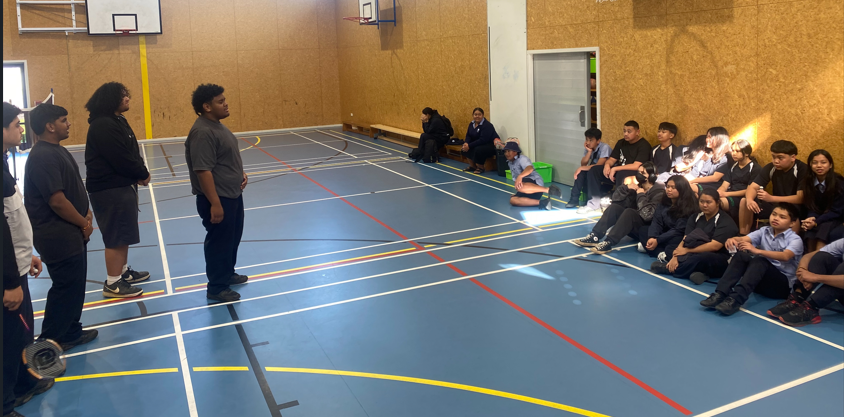
L2 Physical Education
2PESH2PESH – Level 2 Physical Education (Academic Course)
Step into Level 2 Physical Education and embark on an exciting journey of personal growth, teamwork, leadership, and challenge! This is an academic course which offers a unique blend of athletic skill development, leadership training, and community engagement. You'll explore how physical activity contributes to both individual and group success—through performance, risk management, event planning, and social responsibility.
You’ll master new and culturally rich sports like Ki o Rahi and Turbo Touch, apply leadership strategies in real group settings, and take on challenging outdoor activities where you'll learn to manage risk and support others. This course is about far more than playing sport—it’s about making a difference, leading by example, and understanding the power of physical activity to build stronger communities.
What you'll learn:
- Leadership & Teamwork – Evaluate and apply leadership strategies that help your group succeed
- Performance in Action – Demonstrate consistent, high-quality performance in a chosen sport or activity
- Outdoor Challenges – Analyse how to manage risk in a challenging outdoor environment
- Social Responsibility – Show you can act with empathy, inclusion, and responsibility in physical activity settings
- Event Planning – Plan, implement, and evaluate a physical activity event or opportunity that makes a real impact
Standards Offered:
- AS91330 (2.4) – Perform a physical activity in an applied setting (4 credits, internal)
- AS91332 (2.6) – Evaluate leadership strategies that contribute to the effective functioning of a group (4 credits, internal)
- AS91333 (2.7) – Analyse the application of risk management strategies to a challenging outdoor activity (3 credits, internal)
- AS91334 (2.8) – Consistently demonstrate social responsibility through applying a social responsibility model in physical activity (3 credits, internal)
- AS91335 (2.9) – Examine the implementation and outcomes of a physical activity event or opportunity (3 credits, internal)
Total Credits Available: 17 (All Internal)
Why choose level 2 PE?
This course is perfect for students who:
- Enjoy physical activity and want to build deeper thinking, reflection, and leadership skills
- Are interested in health, sport, recreation, education, or outdoor leadership pathways
- Thrive in hands-on learning environments with real-world applications
- Want to challenge themselves through outdoor education and make a difference in their community

L2 Physics
2PHYSThis course explores essential aspects of Physics for students aspiring to physics related careers (engineering, architecture, medicine, trades, etc). The course is made up of two semesters: Semester A - Electrical Engineering and Semester B - Mechanics and Motion
This course is a strongly recommend for Level 3 Physics.


L2 Printmaking
2ARTMStudents will be introduced to a variety of printmaking techniques such as etching, wood cutting, drawing, photography, pronto printing, screen printing spray painting and stencils. Learners will explore and develop personal, cultural, and social identities through investigations of art works and their social cultural contexts. This subject is best for students who enjoy drawing.


L2 Senior Literacy Support (EL) **
2SNLSThis course is designed for students who speak English as a second language. There are no prerequisites. The aims of this course are:
- preparation for Level 2 literacy required in Year 13 Senior Literacy Support
- improved speaking and listening skills
- increased knowledge of New Zealand idiomatic usage
- development of formal reading and writing skills
Students will not be entered for courses that qualify for NCEA Literacy Level 2 but will start preparing for them this year.

L2 Sport Leadership **
2SPLDSports Leadership and Performance
Non-Academic Course – Unit and Achievement Standards Based
Course Focus:
Throughout 2SPLD, students develop confidence, leadership, communication, teamwork and responsibility through practical experiences. The course provides opportunities for students to learn by doing, reflect on their performance and apply their knowledge to authentic sporting, coaching and outdoor situations.
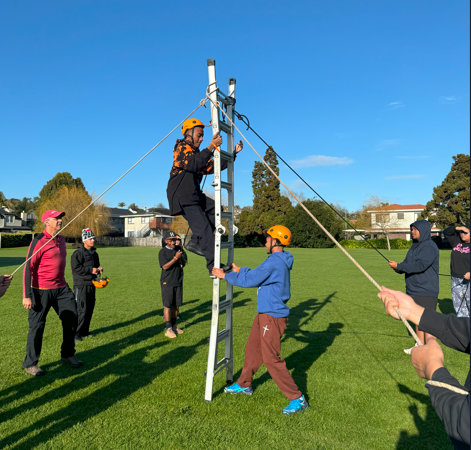
The course is particularly suited to students who enjoy practical learning, sport, leadership and working with others, while also providing a pathway to develop skills that can be applied beyond school in coaching, recreation, sport and community settings.
2SPLD is a practical, leadership-focused Physical Education course designed to develop students’ physical skills, teamwork, leadership, communication and social responsibility. Students participate in a range of practical sporting and outdoor activities while developing the knowledge and skills needed to work effectively with others, coach beginner participants and participate safely in challenging outdoor environments.
The course provides students with opportunities to gain NCEA Level 2 credits through authentic, practical learning experiences. Students are encouraged to apply their learning in real sporting and outdoor contexts rather than focusing solely on classroom-based theory.
Course Standards and Learning
- AS91330 – Perform a physical activity in an applied setting (4 credits)
This is a 100% practical assessment where students select a sport in which they feel confident and demonstrate their skills in an applied setting. This provides students with the opportunity to gain credits through an activity in which they may already have experience and strength. - US32843 – Demonstrate knowledge of how personal contribution influences group functioning in an outdoor activity (3 credits)
Students explore how their individual contribution affects the success of a group during an outdoor activity. They participate constructively, demonstrate positive group behaviours and evaluate both their own and the group's performance. - AS91334 – Consistently demonstrate social responsibility through applying a social responsibility model in physical activity (3 credits)
Students develop and demonstrate social responsibility through participation in physical activities. They learn to take responsibility for their behaviour, support others, make positive choices and contribute to an inclusive and respectful environment. - US22768 – Conduct and review a beginner-level coaching session (4 credits)
Students prepare and deliver a coaching session for beginner participants in a selected sport. They are required to prepare themselves, equipment and resources, conduct the session according to a plan and review the effectiveness of their coaching. - US9677 – Communicate in a team or group which has an objective (3 credits)
Students develop their ability to communicate effectively when working towards a shared goal. They practise listening, contributing ideas, giving feedback and working collaboratively within a team or group. - US20673 – Demonstrate knowledge of injuries, injury prevention and risks and hazards associated with sport or recreation (5 credits)
Students develop knowledge of common sports and recreation injuries, their causes and methods of prevention. They also learn how to respond to common injuries and identify potential risks and hazards associated with participation in sport and physical recreation.
Total Credits Available: Up to 18 (All Internal)
Exact standards offered may vary depending on class needs and opportunities.
Who should take this course?
This course is ideal for ākonga who:
- Enjoy hands-on learning and participating in physical activity
- Are confident in leading and coaching others
- Are interested in careers in sport, health, fitness, teaching, or recreation
- Want to develop real-life leadership, communication, and teamwork skills
Note: Students enrolled in this course cannot take the 12PE Academic course, as there is overlap in the standards.
L2 Te Ao Māori **
2TEAOStudents will undergo learning of various elements of Te Ao Māori based on interest and engagement.
This course provides foundation learning in a variety of areas with emphasis on tikanga, mātauranga, and manaakitanga.
Unit Standards are available specific to L2 NCEA. All students assessed will be expected to demonstrate on-going commitment, to their learning and mahi for the duration of the activity. Assessment will occur once students present a readiness to be assessed.
L2 Te Reo Māori
2MAORYear 12 Nau te rourou, naku te rourou, ka ora te iwi
With your contribution, with my contribution, we will sustain the people

This course aims to further develop the skills of speaking/listening and reading/writing Māori learnt in Year 11. Students will continue to expand their knowledge of Tikanga Māori.
L2 Tourism **
2TOURThe Tourism course is designed to develop students knowledge and understanding of introductory skills for the tourism industry. Students will gain an understanding of the way that the tourism industry operates, understanding of the history of tourism, knowledge of the most desirable world and New Zealand tourism destinations, and an understanding the impacts that tourism has on particular environments.
The course will be assessed to the L2 Tourism Unit Standards. All standards are internally assessed using the “open book” method.
L2 UE Literacy **
2UELIThis course is for students who have yet to gain University Entrance Literacy and is internally assessed. This course is not University approved subject but is designed to gain student the required 5 reading and 5 writing credits required for university entrance.
Subjects for Year 12 Students
L2 & L3 Practical Mathematics **
2PMATThis course helps students build strong maths skills for real life. The main aim is to boost numeracy and show how maths can be used in everyday situations. Lessons include lots of practical activities and examples so students see the value of maths outside the classroom.
There is a special focus on financial literacy—students will learn about budgeting, saving, spending, and making smart financial decisions. The course also covers other important numeracy skills, such as measurement, percentages, and problem solving.
Practical Mathematics is designed for anyone who wants to grow their confidence in maths and learn useful skills that can help in daily life, study, or work.
L2 Drama
2DRAMDrama is all about building confidence, finding your voice, working with others, being creative and stepping outside your comfort zone. Through performance, you will learn to communicate ideas, stories and emotions while developing skills that you can use both on and off the stage.
In Level 2 Drama, you will explore scripted plays, learning how to select and apply drama techniques including voice, body, space and movement in performance. You will work both independently and as part of an ensemble to create and perform drama, developing your understanding of how the elements of drama can bring stories and characters to life. You will also explore the role and purpose of theatre in Aotearoa and develop your ability to respond to and analyse live drama performances.
No previous drama experience is needed! You do not need to be a “performer” or feel confident on stage to take Level 2 Drama. This course will help you build confidence, creativity, communication and practical performance skills while preparing you for further study in Drama.
L2 Electronics **
2ELECDo you like pulling things apart, trying to figure how they work and them put them back together? This course is the electrical version of that.
The course is a mixture of practical and theoretical learning. The practical learning includes constructing (and reconstructing) electrical and electronic circuits, modifying circuits to meet a purpose and designing and printing and building circuit boards with the option programming arduino circuits. The theory is focussed on helping you understand how the circuits work so you can problem solve to fix and improve circuits and electronic appliances while working safely. The course is Unit Standard based but there are options for Achievement Standards if that is something you are interested in.
Electronic devices are all around us and electronic technology is advancing quickly so there are good job prospects in this industry. The course will provide a strong foundation if you want to pursue electrical and electronic based careers.
If there is sufficient interest this course will be followed by a level 3 course in 2027.
L2 UE Literacy **
2UELIThis course is for students who have yet to gain University Entrance Literacy and is internally assessed. This course is not University approved subject but is designed to gain student the required 5 reading and 5 writing credits required for university entrance.
L3 Biology
3BIOLLevel 3 Biology is the study of the things around us in the living world. How different species have become successful in their environment and how all livings things interact together to make the earth on which live. The course is made up of two semesters: Semester A - Plants and Animals and Semester B - Genetics and Evolution. The course includes practical investigations and a zoo trip.


L3 Business Studies
3BUSILead with Impact!
Level 3 Business Studies empowers you to innovate, lead, and think like a CEO. Blending advanced theory with real-world practice, this course builds the strategic mindset, financial acumen, and global perspective needed for career leadership.
Key focus areas:
- Strategic Leadership: Analyze internal and external factors impacting major organizations.
- Agri-Enterprise Innovation: Research, market, and operate to supply a niche market with a value-added primary product.
- Global Market Dynamics: Explore international trade, global trends, and export challenges.
- Financial Viability: Master tools to evaluate investments, interpret financial statements, and drive data-backed decisions.
Prepare for higher education and careers in management, agribusiness, finance, and entrepreneurship!
This course is made up of Level 3 Business Studies standards.

L3 Calculus
3MATCL3 Calculus is for students who enjoy a challenge and want to develop advanced mathematical thinking and problem-solving skills.
You’ll explore algebra and calculus, learning how to break down complex problems, recognise mathematical relationships, and apply logic and reasoning to a range of contexts. This course provides a strong foundation for university-level mathematics and pathways such as engineering, computing, physical sciences, technology, economics, architecture and other analytical careers.
The course offers 19 credits: 7 internal and 12 external. L3 Calculus is University Entrance approved and provides the opportunity to gain a subject endorsement.
Students will require a scientific or graphics calculator.
Calculus is about change, motion and mastering the mathematical tools that drive innovation.
L3 Chemistry
3CHEMThis course continues to explore and investigate the chemical world and is an entrance pathway for tertiary education courses. The course is made up of two semesters: Semester A - Applications of Chemistry and Semester B - Chemical Reactions


L3 Criminal Minds (Legal Studies) **
3SSCRIn "Criminal Minds," you'll dive into the minds of famous criminals and develop understanding of what drives people to commit extreme acts. The course also examines how society defines justice and responds to these crimes. We also look at the justice system and how cases are heard in court rooms.
You will complete a mix of Psychology, Legal Studies and Sociology standards.

L3 Death and Destruction (History)
3SSDDIn "Death and Destruction," you'll explore major historical events that have deeply affected people and communities, like the bombing of Hiroshima and Nagasaki, the study of genocides and a significant New Zealand historical event. This course looks at the causes, consequences, and human impact of these devastating moments, offering insights into how such events have shaped societies, challenged humanity, and reshaped the world we live in.
You will complete Level 3 History standards.

L3 Design
3ARTDStudents will build on previous skills learnt in Level 2 Design. Students select their own theme and project for the year from a range of possible projects including Graphic design, Illustration, Gaming and Animation projects. They will be given real world contexts and problems to solve. Through practical investigations, students transform knowledge and understanding into creative, critical, and innovative outcomes. Students can design their own brand, game or book characters, create a moving image and use tools like our laser cutter and 3D printers to create products.


L3 Design and Materials Technology (not offered 2027)
3TDESDesign and Materials is where students learn about design, develop their practice of designing, and develop their design thinking in the context of spatial and product design. Design thinking is explored and expressed through visual communication and is informed by design heritage. Students conceptualise and develop potential design ideas in response to a brief. Sketching, digital modes, and other modelling techniques are used to effectively communicate and present design ideas.
L3 Drama (not offered 2027)
3DRAMStudents will perform with intention and purpose and investigate a range of drama styles, purposes, and points of view. They will explore, experience, evaluate, and question how drama has been and can be used to express cultural identity, tell stories, and reinforce or challenge social and political ideas. In this course students will write and develop their own script suitable for performance and interpret texts. They will study a range of live performances analysing, critiquing, interpreting and studying the overall production to establish performance intention and explore context.

L3 EDGE Innovation
3EDGEThe EDGE programme at Year 13 continues from Year 12 EDGE. The course provides personalised learning and assessment based on students interests and pathways. Students will continue to develop the capabilities of critical thinking, creative thinking, communication, collaboration, character and citizenship through authentic learning opportunities.
L3 Employment Skills **
3EMPLThis course takes up all 5 options
The Employment Skills course is an alternative way to achieve NCEA and is designed to assist Year 12 and Year 13 students to achieve NCEA L1, L2 and L3.
The programme involves a mixture of learning at school and work experience. There are also opportunities to do one day a week at MIT studying Level 2 courses and gaining credits in subjects such as Automotive Engineering, Building, Hairdressing and Logistics. You can also do Gateway courses both on and off-site such as Event Management, Scaffolding, Aged Care, Plumbing, Health and Safety and First Aid.
In summary, you can achieve NCEA credits with a combination of learning at school, work experience, Gateway and MIT courses throughout the year.
At the end of your Year 13 year, we can also assist you to transition into MIT (and AUT, Unitec etc.), getting a job or applying for apprenticeships.
You must have written permission from your Parents/Caregivers to take part in this course. Please feel free to drop into C12 and have a chat to Ms Lui-Webster if you want to know more about this programme.
L3 English
3ENGLUnlock the Mind Behind the Text - Step into the world of stories, speeches, and visuals—then crack them open.
In this course, you’ll explore how texts are crafted not just to entertain, but to influence how we think, feel, and see the world. Using a psychological lens, you’ll examine the deeper motivations behind characters, creators, and even your own responses. Why do certain words move us? How are we positioned to believe one perspective over another?
You'll develop your own powerful texts—oral, visual, and written—by combining creative flair with critical thinking. Along the way, you’ll question the voices we hear (and don’t hear), recognise how language shapes perception, and make connections between texts, yourself, and the wider world. This course is for those who love to dig deeper and are curious about the hidden forces that shape meaning.
L3 Finance **
3FINCThis course will enable you to confidently manage your finances and the world of money. The course can cover these topics:
- Bank accounts and services, budgeting
- Borrowing, credit and debt
- Savings and investment including kiwi saver
- Insurance, income and tax and aspects that you will come across when you leave school.

L3 Health
3HLTEIn year 13 Health, learning will include:
- Picking a health condition/illness of your choice and exploring various western, contemporary & traditional medicines that help manage/heal it
- Exploring ethics and ethical issues in NZ
- Exploring health/well-being issues both within NZ and internationally e.g.) Child Poverty, Stress, Meth & Alcohol abuse, HIV, Domestic Violence etc (the class chooses which ones we want to focus on)
- Continuing to practice different life skills needed in healthy relationships & how to make positive decisions in life
You will also get the best possible support from your teacher to help with your learning, and achieving your academic and well-being goals. While there is a large self-management component to Level 3, you will be empowered to research, analyse and evaluate both health and ethical issues you find interesting and relate to. There will be numerous opportunities to share, discuss and debate ideas around a range of well-being issues. You will also be provided with time and resources to review your personal well-being as you discover possible future career choices. We’d love to have you in our class!

L3 Home Economics (not offered 2027)
3HMECThis Level 2 Home Economics course helps students understand how food, nutrition, and lifestyle choices affect the well-being of individuals and families. Students will explore current issues such as nutrition, food choices, and how these are shaped by social and cultural factors. The course combines academic learning with practical food and nutrition skills.
Through a mix of research, discussion, and hands-on activities, students will learn how to plan and prepare balanced meals, evaluate health-promoting strategies, and make informed decisions about food for themselves and those around them. Topics include how nutrition impacts health, exploring beliefs and practices around food, and learning about sustainable food-related choices.
This course is ideal for anyone interested in food, health, family well-being, or careers related to nutrition, hospitality, or health sciences. Students will gain valuable knowledge and practical skills they can use in everyday life and future pathways.
L3 Hospitality **
3HOSPThis course is designed for those students looking to follow a career path in the hospitality industry. Students will gain skills that would be an advantage when seeking a part-time job as well as a career.
You will learn to:
Gain useful certifications and skills that will support you in gaining part time work in a variety of hospitality industries as well as a pathway into the Hospitality and Travel & Tourism industry. The essential basic standards are US 167 Food and Safety standard which is compulsory for working in any hospitality/food workplace. A barista course which covers making a variety of types of coffees
A trip is normally undertaken to either NZMA Hospitality Centre, Ignite College or Chelsea Sugar Factory.


L3 Industry Pathways **
3INDPThis course offers a range of industry essential skills to support students into future careers. Financial literacy, communication skills, health and safety qualifications and first aid are some of the areas that may be covered. The course will be personalised to meet the needs of the students taking this course.
Students selecting Industry Pathways at Year 13 must be willing to participate in Gateway (work experience) placement. This requires students to attend a minimum of 10 days in a workplace, which will be completed throughout the year. Gateway placement also includes completing learning and assessments toward an NCEA Level 3 qualification.
Gateway programmes are available across a range of industries, such as retail, hospitality and cafes, early childhood education, distribution and sales, customer service, transport and logistics, scaffolding, forklift training, health and safety or any other to suit the needs of the learner.
Industry Pathways is a Unit Standard based course and is not a University Entrance approved subject.

L3 Law and Order (Social Studies)
3SSLOIn "Law and Order," you'll explore the structure of modern legal systems, how laws and policies are made, and how society responds to crime and conflict. This course dives into contemporary issues like punishment, justice, and the role of law in maintaining order. Through real-world examples, you'll gain a deeper understanding of the legal frameworks that shape our world and the challenges they face today.
We will complete Level 3 Social Studies standards.

L3 Māori and Pacific Arts **
3ARTAThis is an achievement standard course using Art and Technology standards. Students will be using knowledge and skills gained in Level 2 Māori and Pacific Art and will be choosing a project to work on for the year. Students will be researching, designing and making the project of their choosing. Some project ideas could include:
- Wearable art
- Costume or set design
- Jewellery making
- Product design (lasercutting or 3D printing)
- Making a sculpture
- Harakeke projects
Students are encouraged to explore a project within Māori and Pacific Art cultures. Please note this is not a university pathway, however this course can be selected at the same time as other Level 3 Art subjects (which are university pathways).
L3 MIT Trades Academy (MITTA)
3MITWhat is MITTA?
Manukau Institute of Technology Trades Academy “MITTA” is a Trades Academy training provider that works in partnership with Edgewater College by offering vocational courses that prepare students for higher education or employment. Our courses embed NCEA level 2 and level 3 unit standards so students can work towards achieving their NCEA whilst at MIT.
Who can join?
Any Years 11-13 student who is enrolled and attending Edgewater College.
Be aged 18 or under at the start of the calendar year.
Students need to be 16 and over to attend TechPark Courses.
How many weeks are the courses?
32 weeks, courses start Monday 10 February 2025 and finish Friday 31 October 2025.
Level 3 courses = 2 days per week at MIT/ 3 days at school (Unless stipulated)
Travel to MIT Trades Academy
Transport is provided for students to travel to and from MIT and arrangements are made through Ms R. Wee in Futures.
L3 Music
3MUSC
Students will:
- Research, analyse a selection of music works from historical, social, and cultural contexts.
- Develop advanced theoretical skills.
- Create and represent compositions and musical arrangements, using secure technical and musical skills and technologies.
- Plan, rehearse, present, and refine performances of music, individually and collaboratively.
Each student will be required to create a course that contains a minimum of 14 credits. This will be in consultation with the class teacher.

L3 Painting
3ARTVStudents will build on their skills from the Level 2 painting course and explore different genres and contexts within art painting practices. They will generate, develop and refine their ideas in more detail and depth. Through studying and making artworks, students respond to and make sense of themselves and their community, their society, and the world in new and different ways.
Students must have sound painting skills to complete this course (i.e. 12 credits or more at Level 2 Painting or a portfolio of paintings from home that have been recently completed).


L3 Photography
3ARTPStudents will build on skills learnt in Level 2 Photography to develop their own series of work around a relevant issue, theme or topic which is important to them. They will give visual expression to their own and others’ identities through the production of a body of work. Students will be inspired by artist and learn Photoshop techniques to manipulate their images.


L3 Physical Education
3PESHThe Level 3 Academic Physical Education programme is a 16 credit course that offers Level 3 Achievement Standards, with no external exams. All assessments are completed internally.
This course is designed for students who are passionate about physical activity and enjoy exploring deeper issues in sport, such as leadership, well-being, and the impact of sport on society. It provides both practical and theoretical learning opportunities to help students grow their understanding of how physical activity contributes to lifelong well-being.
What you'll learn:
You will have opportunities to:
- Perform a physical activity in a real-world setting, showcasing consistency, skill, and control
- Examine a current trend, issue, or event in physical activity and its impact on New Zealand society
- Reflect on your personal experiences in physical activity to develop strategies for lifelong well-being
- Explore and apply leadership principles within physical activity contexts such as coaching, team management, or event leadership
Standards Offered:
- AS91499 (3.4) – Demonstrate quality performance of a physical activity in an applied setting (4 credits, internal)
- AS91500 (3.5) – Examine a current physical activity event, trend, or issue and its impact on New Zealand society (4 credits, internal)
- AS91498 (3.1) – Evaluate physical activity experiences to devise strategies for lifelong well-being (4 credits, internal)
- AS91505 (3.8) – Examine contemporary leadership principles applied in physical activity contexts (4 credits, internal)
Total Credits Available: 16 (All Internal)
Who should take this course?
This course is ideal for students who:
- Enjoy both the practical and theoretical aspects of Physical Education
- Have an interest in topics such as athletic performance, social and cultural influences in sport, leadership, and health
- Are considering careers in sport science, health, teaching, coaching, fitness, recreation, or public health
To gain course endorsement or entry to a tertiary institution, students must complete at least 14 credits in Physical Education.
L3 Physics
3PHYSThis course builds on knowledge gained in Level 2 Physics and is designed help students reach the University entry requirements for Physics, Engineering, Health Sciences, etc. The course is made up of two semesters: Semester A - Electrical and Electronic Systems and Semester B - Choice of Mechanical Systems OR Modern and Nuclear Physics.

L3 Printmaking
3ARTMStudents will build on skills and techniques learnt in Level 2 Printmaking to develop their own series of work around a relevant issue, theme or topic which is important to them. They will give visual expression to their own and others’ identities through the production of a portfolio of work. This course is best for students who enjoy drawing.


L3 Senior Literacy Support (EL) **
3SNLSThis course is designed for students who speak English as a second language. There are no prerequisites. The aims of this course are:
- preparation for Level 2 literacy required for university entrance
- improved speaking and listening skills
- development of writing skills for academic purposes
- development of good strategies for academic students
Students will be entered for courses that qualify for NCEA Literacy Level 2

L3 Sport Leadership **
3SPLDSPLD is a practical, leadership and performance-focused Physical Education course designed to develop students’ sporting performance, coaching, teamwork, leadership and event management skills. Students have opportunities to apply their learning in authentic sporting and outdoor settings, working both independently and collaboratively to plan, deliver and evaluate physical activity experiences.
The course provides students with opportunities to gain NCEA Level 3 credits through practical and applied learning experiences. Students are encouraged to take responsibility for their own learning, demonstrate leadership and apply their skills in real-world sporting and recreational contexts.
Course Standards and Learning
- AS91501 – Demonstrate quality performance in an applied setting (4 credits)
This is a 100% practical assessment where students select a sport or physical activity in which they can demonstrate their strengths. Students are assessed on the quality of their performance in an applied setting, providing an opportunity to gain credits in an activity in which they have developed confidence and expertise. - US9681 – Contribute within a team or group which has an objective (3 credits)
Students develop their ability to contribute effectively within a team or group working towards a shared objective. They demonstrate positive communication, cooperation, responsibility and commitment to achieving the group's goal. - US32844 – Apply knowledge of group processes and evaluate personal contribution to group performance in an outdoor activity (3 credits)
Students explore the factors that contribute to effective group performance in an outdoor setting. They apply knowledge of group processes during an outdoor activity and evaluate how their own contribution influenced the performance and success of the group. - US22771 – Plan beginner-level coaching sessions for sport participants (6 credits)
Students develop and plan coaching sessions for beginner participants. This includes identifying appropriate skills and activities, organising equipment and resources, and developing structured sessions that meet the needs and abilities of beginner athletes. - US31677 – Coach beginner-level participants through skill development activities for a selected sport (4 credits)
Students put their coaching plans into practice by delivering skill development activities to beginner participants. This provides an authentic opportunity to develop communication, leadership, organisation and coaching skills while supporting participants to improve their sporting abilities. - US31678 – Review coaching of beginning-level participants through skill development activities for a selected sport (4 credits)
Students reflect on and review their coaching practice. They evaluate the effectiveness of their sessions, consider participant learning and identify areas for improvement in their future coaching. - US21414 – Plan and lead a recreational activity (4 credits)
Students plan, implement and evaluate a recreational activity. They take responsibility for organising and leading an activity, considering participant needs, safety, organisation and engagement, before evaluating how effectively the activity was delivered.
Course Focus
Throughout 3SPLD, students are given increasing responsibility for their own performance and for the experiences of others. The course moves beyond simply participating in physical activity and provides students with opportunities to lead, coach, organise, communicate, evaluate and problem-solve in authentic sporting and recreational environments.
The course is particularly suited to students who have an interest in sport, coaching, leadership, event management and working with others. The practical nature of the course allows students to develop transferable skills such as communication, organisation, confidence, responsibility and teamwork, which can be applied to future study, employment, coaching and community sport.
Note: Students taking this course cannot enrol in the 3PESH (Academic PE) course. Also if you took 2SPLD last year, It is recommended you do this course in 2027.
L3 Statistics
3MATSMake sense of the world with data.
L3 Statistics is for students who want to explore, analyse and make smart decisions using real-world data.
You’ll investigate patterns and trends across areas such as social issues, health, business and sport, while learning to support conclusions with statistical evidence. You’ll also develop valuable critical-thinking, problem-solving and communication skills using statistical technology and software. This course provides a strong foundation for university-level statistics and research and is useful for pathways including psychology, business, health sciences, marketing, social sciences and sport.
The course offers 16 credits: 12 internal and 4 external. L3 Statistics is University Entrance approved and provides the opportunity to gain a subject endorsement.
Statistics is about people, patterns and powerful thinking.
L3 Study
3STUDL3 Te Ao Māori **
3TEAOStudents will undergo learning of various elements of Te Ao Māori based on interest and engagement.
This course provides foundation learning in a variety of areas with emphasis on mātauranga, tikanga, and manaakitanga. These courses will be provided in either a timetabled course or as additional block courses throughout the year.
Unit Standards are available specific to NCEA Level 2 and possibly some Level 3. All students assessed will be expected to demonstrate ongoing commitment to their learning and mahi for the duration of the activity. Assessment will occur once students present a readiness to be assessed.
L3 Te Reo Māori
3MAOR
“Huakina mai te tatau o too whare
Kia kitea mai ngaa taonga a oo tuupuna”
Open wide the doors of your home
So that I may see the treasures of your ancestors
At this level, students can understand written and spoken Te Reo Māori at a high level. During the course, students study a variety of topics in the language through viewing and writing Māori films, plays, songs, poetry, and more complex literature. They learn to express opinions on a variety of common topics that affect Māori, as well as to read extensively with comprehension in the language.
L3 Tourism **
3TOURIn Level 3 Tourism, students will develop an indepth knowledge many aspects of New Zealand as a tourist destination. The course will develop students understanding of tourism in the Pacific Islands and Australia as important tourist destinations. Students will also gain an understanding of the significance of tourism to the New Zealand economy.
This course will be assessed to the L3 Tourism Unit Standards. All standards are internally assessed using the “open book” method. The course will enable students to earn up to 18 L3 NCEA credits. Students do not have to have studied L2 Tourism to gain entry into this course.
L3 UE Literacy **
3UELIThis course is for students who have yet to gain University Entrance Literacy and is internally assessed. This course is not an University approved subject and is a unit standard course.
Subjects for Year 13 Students
L2 Drama
2DRAMDrama is all about building confidence, finding your voice, working with others, being creative and stepping outside your comfort zone. Through performance, you will learn to communicate ideas, stories and emotions while developing skills that you can use both on and off the stage.
In Level 2 Drama, you will explore scripted plays, learning how to select and apply drama techniques including voice, body, space and movement in performance. You will work both independently and as part of an ensemble to create and perform drama, developing your understanding of how the elements of drama can bring stories and characters to life. You will also explore the role and purpose of theatre in Aotearoa and develop your ability to respond to and analyse live drama performances.
No previous drama experience is needed! You do not need to be a “performer” or feel confident on stage to take Level 2 Drama. This course will help you build confidence, creativity, communication and practical performance skills while preparing you for further study in Drama.
L2 Electronics **
2ELECDo you like pulling things apart, trying to figure how they work and them put them back together? This course is the electrical version of that.
The course is a mixture of practical and theoretical learning. The practical learning includes constructing (and reconstructing) electrical and electronic circuits, modifying circuits to meet a purpose and designing and printing and building circuit boards with the option programming arduino circuits. The theory is focussed on helping you understand how the circuits work so you can problem solve to fix and improve circuits and electronic appliances while working safely. The course is Unit Standard based but there are options for Achievement Standards if that is something you are interested in.
Electronic devices are all around us and electronic technology is advancing quickly so there are good job prospects in this industry. The course will provide a strong foundation if you want to pursue electrical and electronic based careers.
If there is sufficient interest this course will be followed by a level 3 course in 2027.
L2 UE Literacy **
2UELIThis course is for students who have yet to gain University Entrance Literacy and is internally assessed. This course is not University approved subject but is designed to gain student the required 5 reading and 5 writing credits required for university entrance.
L3 Calculus
3MATCL3 Calculus is for students who enjoy a challenge and want to develop advanced mathematical thinking and problem-solving skills.
You’ll explore algebra and calculus, learning how to break down complex problems, recognise mathematical relationships, and apply logic and reasoning to a range of contexts. This course provides a strong foundation for university-level mathematics and pathways such as engineering, computing, physical sciences, technology, economics, architecture and other analytical careers.
The course offers 19 credits: 7 internal and 12 external. L3 Calculus is University Entrance approved and provides the opportunity to gain a subject endorsement.
Students will require a scientific or graphics calculator.
Calculus is about change, motion and mastering the mathematical tools that drive innovation.
L3 Chemistry
3CHEMThis course continues to explore and investigate the chemical world and is an entrance pathway for tertiary education courses. The course is made up of two semesters: Semester A - Applications of Chemistry and Semester B - Chemical Reactions
L3 Death and Destruction (History)
3SSDDIn "Death and Destruction," you'll explore major historical events that have deeply affected people and communities, like the bombing of Hiroshima and Nagasaki, the study of genocides and a significant New Zealand historical event. This course looks at the causes, consequences, and human impact of these devastating moments, offering insights into how such events have shaped societies, challenged humanity, and reshaped the world we live in.
You will complete Level 3 History standards.
L3 Design
3ARTDStudents will build on previous skills learnt in Level 2 Design. Students select their own theme and project for the year from a range of possible projects including Graphic design, Illustration, Gaming and Animation projects. They will be given real world contexts and problems to solve. Through practical investigations, students transform knowledge and understanding into creative, critical, and innovative outcomes. Students can design their own brand, game or book characters, create a moving image and use tools like our laser cutter and 3D printers to create products.
L3 Design and Materials Technology (not offered 2027)
3TDESDesign and Materials is where students learn about design, develop their practice of designing, and develop their design thinking in the context of spatial and product design. Design thinking is explored and expressed through visual communication and is informed by design heritage. Students conceptualise and develop potential design ideas in response to a brief. Sketching, digital modes, and other modelling techniques are used to effectively communicate and present design ideas.
L3 EDGE Innovation
3EDGEThe EDGE programme at Year 13 continues from Year 12 EDGE. The course provides personalised learning and assessment based on students interests and pathways. Students will continue to develop the capabilities of critical thinking, creative thinking, communication, collaboration, character and citizenship through authentic learning opportunities.
L3 Employment Skills **
3EMPLThis course takes up all 5 options
The Employment Skills course is an alternative way to achieve NCEA and is designed to assist Year 12 and Year 13 students to achieve NCEA L1, L2 and L3.
The programme involves a mixture of learning at school and work experience. There are also opportunities to do one day a week at MIT studying Level 2 courses and gaining credits in subjects such as Automotive Engineering, Building, Hairdressing and Logistics. You can also do Gateway courses both on and off-site such as Event Management, Scaffolding, Aged Care, Plumbing, Health and Safety and First Aid.
In summary, you can achieve NCEA credits with a combination of learning at school, work experience, Gateway and MIT courses throughout the year.
At the end of your Year 13 year, we can also assist you to transition into MIT (and AUT, Unitec etc.), getting a job or applying for apprenticeships.
You must have written permission from your Parents/Caregivers to take part in this course. Please feel free to drop into C12 and have a chat to Ms Lui-Webster if you want to know more about this programme.
L3 Health
3HLTEIn year 13 Health, learning will include:
- Picking a health condition/illness of your choice and exploring various western, contemporary & traditional medicines that help manage/heal it
- Exploring ethics and ethical issues in NZ
- Exploring health/well-being issues both within NZ and internationally e.g.) Child Poverty, Stress, Meth & Alcohol abuse, HIV, Domestic Violence etc (the class chooses which ones we want to focus on)
- Continuing to practice different life skills needed in healthy relationships & how to make positive decisions in life
You will also get the best possible support from your teacher to help with your learning, and achieving your academic and well-being goals. While there is a large self-management component to Level 3, you will be empowered to research, analyse and evaluate both health and ethical issues you find interesting and relate to. There will be numerous opportunities to share, discuss and debate ideas around a range of well-being issues. You will also be provided with time and resources to review your personal well-being as you discover possible future career choices. We’d love to have you in our class!
L3 Home Economics (not offered 2027)
3HMECThis Level 2 Home Economics course helps students understand how food, nutrition, and lifestyle choices affect the well-being of individuals and families. Students will explore current issues such as nutrition, food choices, and how these are shaped by social and cultural factors. The course combines academic learning with practical food and nutrition skills.
Through a mix of research, discussion, and hands-on activities, students will learn how to plan and prepare balanced meals, evaluate health-promoting strategies, and make informed decisions about food for themselves and those around them. Topics include how nutrition impacts health, exploring beliefs and practices around food, and learning about sustainable food-related choices.
This course is ideal for anyone interested in food, health, family well-being, or careers related to nutrition, hospitality, or health sciences. Students will gain valuable knowledge and practical skills they can use in everyday life and future pathways.
L3 Industry Pathways **
3INDPThis course offers a range of industry essential skills to support students into future careers. Financial literacy, communication skills, health and safety qualifications and first aid are some of the areas that may be covered. The course will be personalised to meet the needs of the students taking this course.
Students selecting Industry Pathways at Year 13 must be willing to participate in Gateway (work experience) placement. This requires students to attend a minimum of 10 days in a workplace, which will be completed throughout the year. Gateway placement also includes completing learning and assessments toward an NCEA Level 3 qualification.
Gateway programmes are available across a range of industries, such as retail, hospitality and cafes, early childhood education, distribution and sales, customer service, transport and logistics, scaffolding, forklift training, health and safety or any other to suit the needs of the learner.
Industry Pathways is a Unit Standard based course and is not a University Entrance approved subject.
L3 Law and Order (Social Studies)
3SSLOIn "Law and Order," you'll explore the structure of modern legal systems, how laws and policies are made, and how society responds to crime and conflict. This course dives into contemporary issues like punishment, justice, and the role of law in maintaining order. Through real-world examples, you'll gain a deeper understanding of the legal frameworks that shape our world and the challenges they face today.
We will complete Level 3 Social Studies standards.
L3 Painting
3ARTVStudents will build on their skills from the Level 2 painting course and explore different genres and contexts within art painting practices. They will generate, develop and refine their ideas in more detail and depth. Through studying and making artworks, students respond to and make sense of themselves and their community, their society, and the world in new and different ways.
Students must have sound painting skills to complete this course (i.e. 12 credits or more at Level 2 Painting or a portfolio of paintings from home that have been recently completed).
L3 Photography
3ARTPStudents will build on skills learnt in Level 2 Photography to develop their own series of work around a relevant issue, theme or topic which is important to them. They will give visual expression to their own and others’ identities through the production of a body of work. Students will be inspired by artist and learn Photoshop techniques to manipulate their images.
L3 Physical Education
3PESHThe Level 3 Academic Physical Education programme is a 16 credit course that offers Level 3 Achievement Standards, with no external exams. All assessments are completed internally.
This course is designed for students who are passionate about physical activity and enjoy exploring deeper issues in sport, such as leadership, well-being, and the impact of sport on society. It provides both practical and theoretical learning opportunities to help students grow their understanding of how physical activity contributes to lifelong well-being.
What you'll learn:
You will have opportunities to:
- Perform a physical activity in a real-world setting, showcasing consistency, skill, and control
- Examine a current trend, issue, or event in physical activity and its impact on New Zealand society
- Reflect on your personal experiences in physical activity to develop strategies for lifelong well-being
- Explore and apply leadership principles within physical activity contexts such as coaching, team management, or event leadership
Standards Offered:
- AS91499 (3.4) – Demonstrate quality performance of a physical activity in an applied setting (4 credits, internal)
- AS91500 (3.5) – Examine a current physical activity event, trend, or issue and its impact on New Zealand society (4 credits, internal)
- AS91498 (3.1) – Evaluate physical activity experiences to devise strategies for lifelong well-being (4 credits, internal)
- AS91505 (3.8) – Examine contemporary leadership principles applied in physical activity contexts (4 credits, internal)
Total Credits Available: 16 (All Internal)
Who should take this course?
This course is ideal for students who:
- Enjoy both the practical and theoretical aspects of Physical Education
- Have an interest in topics such as athletic performance, social and cultural influences in sport, leadership, and health
- Are considering careers in sport science, health, teaching, coaching, fitness, recreation, or public health
To gain course endorsement or entry to a tertiary institution, students must complete at least 14 credits in Physical Education.
L3 Physics
3PHYSThis course builds on knowledge gained in Level 2 Physics and is designed help students reach the University entry requirements for Physics, Engineering, Health Sciences, etc. The course is made up of two semesters: Semester A - Electrical and Electronic Systems and Semester B - Choice of Mechanical Systems OR Modern and Nuclear Physics.
L3 Printmaking
3ARTMStudents will build on skills and techniques learnt in Level 2 Printmaking to develop their own series of work around a relevant issue, theme or topic which is important to them. They will give visual expression to their own and others’ identities through the production of a portfolio of work. This course is best for students who enjoy drawing.
L3 Senior Literacy Support (EL) **
3SNLSThis course is designed for students who speak English as a second language. There are no prerequisites. The aims of this course are:
- preparation for Level 2 literacy required for university entrance
- improved speaking and listening skills
- development of writing skills for academic purposes
- development of good strategies for academic students
Students will be entered for courses that qualify for NCEA Literacy Level 2
L3 Sport Leadership **
3SPLDSPLD is a practical, leadership and performance-focused Physical Education course designed to develop students’ sporting performance, coaching, teamwork, leadership and event management skills. Students have opportunities to apply their learning in authentic sporting and outdoor settings, working both independently and collaboratively to plan, deliver and evaluate physical activity experiences.
The course provides students with opportunities to gain NCEA Level 3 credits through practical and applied learning experiences. Students are encouraged to take responsibility for their own learning, demonstrate leadership and apply their skills in real-world sporting and recreational contexts.
Course Standards and Learning
- AS91501 – Demonstrate quality performance in an applied setting (4 credits)
This is a 100% practical assessment where students select a sport or physical activity in which they can demonstrate their strengths. Students are assessed on the quality of their performance in an applied setting, providing an opportunity to gain credits in an activity in which they have developed confidence and expertise. - US9681 – Contribute within a team or group which has an objective (3 credits)
Students develop their ability to contribute effectively within a team or group working towards a shared objective. They demonstrate positive communication, cooperation, responsibility and commitment to achieving the group's goal. - US32844 – Apply knowledge of group processes and evaluate personal contribution to group performance in an outdoor activity (3 credits)
Students explore the factors that contribute to effective group performance in an outdoor setting. They apply knowledge of group processes during an outdoor activity and evaluate how their own contribution influenced the performance and success of the group. - US22771 – Plan beginner-level coaching sessions for sport participants (6 credits)
Students develop and plan coaching sessions for beginner participants. This includes identifying appropriate skills and activities, organising equipment and resources, and developing structured sessions that meet the needs and abilities of beginner athletes. - US31677 – Coach beginner-level participants through skill development activities for a selected sport (4 credits)
Students put their coaching plans into practice by delivering skill development activities to beginner participants. This provides an authentic opportunity to develop communication, leadership, organisation and coaching skills while supporting participants to improve their sporting abilities. - US31678 – Review coaching of beginning-level participants through skill development activities for a selected sport (4 credits)
Students reflect on and review their coaching practice. They evaluate the effectiveness of their sessions, consider participant learning and identify areas for improvement in their future coaching. - US21414 – Plan and lead a recreational activity (4 credits)
Students plan, implement and evaluate a recreational activity. They take responsibility for organising and leading an activity, considering participant needs, safety, organisation and engagement, before evaluating how effectively the activity was delivered.
Course Focus
Throughout 3SPLD, students are given increasing responsibility for their own performance and for the experiences of others. The course moves beyond simply participating in physical activity and provides students with opportunities to lead, coach, organise, communicate, evaluate and problem-solve in authentic sporting and recreational environments.
The course is particularly suited to students who have an interest in sport, coaching, leadership, event management and working with others. The practical nature of the course allows students to develop transferable skills such as communication, organisation, confidence, responsibility and teamwork, which can be applied to future study, employment, coaching and community sport.
Note: Students taking this course cannot enrol in the 3PESH (Academic PE) course. Also if you took 2SPLD last year, It is recommended you do this course in 2027.
L3 Statistics
3MATSMake sense of the world with data.
L3 Statistics is for students who want to explore, analyse and make smart decisions using real-world data.
You’ll investigate patterns and trends across areas such as social issues, health, business and sport, while learning to support conclusions with statistical evidence. You’ll also develop valuable critical-thinking, problem-solving and communication skills using statistical technology and software. This course provides a strong foundation for university-level statistics and research and is useful for pathways including psychology, business, health sciences, marketing, social sciences and sport.
The course offers 16 credits: 12 internal and 4 external. L3 Statistics is University Entrance approved and provides the opportunity to gain a subject endorsement.
Statistics is about people, patterns and powerful thinking.
L3 Te Ao Māori **
3TEAOStudents will undergo learning of various elements of Te Ao Māori based on interest and engagement.
This course provides foundation learning in a variety of areas with emphasis on mātauranga, tikanga, and manaakitanga. These courses will be provided in either a timetabled course or as additional block courses throughout the year.
Unit Standards are available specific to NCEA Level 2 and possibly some Level 3. All students assessed will be expected to demonstrate ongoing commitment to their learning and mahi for the duration of the activity. Assessment will occur once students present a readiness to be assessed.
L3 Te Reo Māori
3MAOR“Huakina mai te tatau o too whare
Kia kitea mai ngaa taonga a oo tuupuna”
Open wide the doors of your home
So that I may see the treasures of your ancestors
At this level, students can understand written and spoken Te Reo Māori at a high level. During the course, students study a variety of topics in the language through viewing and writing Māori films, plays, songs, poetry, and more complex literature. They learn to express opinions on a variety of common topics that affect Māori, as well as to read extensively with comprehension in the language.
L3 Tourism **
3TOURIn Level 3 Tourism, students will develop an indepth knowledge many aspects of New Zealand as a tourist destination. The course will develop students understanding of tourism in the Pacific Islands and Australia as important tourist destinations. Students will also gain an understanding of the significance of tourism to the New Zealand economy.
This course will be assessed to the L3 Tourism Unit Standards. All standards are internally assessed using the “open book” method. The course will enable students to earn up to 18 L3 NCEA credits. Students do not have to have studied L2 Tourism to gain entry into this course.
L3 UE Literacy **
3UELIThis course is for students who have yet to gain University Entrance Literacy and is internally assessed. This course is not an University approved subject and is a unit standard course.