
Pakuranga College
Auckland
Pakuranga College Curriculum
179 subjects available for 2026/2027.
Subjects for Year 8 Students
Year 9 Dance
9DANYear 9 Dance is a one-term, practical, and engaging performing arts course where students are introduced to a wide variety of dance genres, choreography, and performance skills. In this course, students build connections with their peers through collaborative dance tasks and develop confidence and leadership through performance opportunities.
In Year 9 Dance, students will:
- Have the opportunity to develop their current dance interests and discover new passions for dance by choosing a wide range of dance styles to explore with their peers.
- Learn and perform cultural and social dances including a wide range of dance genres for example: Hop Hop, Breaking, Jazz, Contemporary, Musical Theatre, Ballet, Samoan Sasa,
Rakau, Poi, Haka, African gumboot dance, Chinese Fan dance, Tinikling. - Form connections with their peers and movement ideas through interactive dance activities.
- Develop performance skills and techniques in their chosen dance styles of interest.
- Work with their peers to share ideas and create dance sequences.
- Use the elements of dance to choreograph a dance with their peers.
- Learn how to express ideas through dance.
- Watch and respond to dance performances.
- Learn and apply dance vocabulary.
- Develop confidence and leadership skills by leading, creating and presenting dance.
Watch the video attached below to see snippets from Year 9 Dance classes and performances.
Year 9 Te Ao Haka
9TAHYear 9 Te Ao Haka is a new one-term, performance-based course that introduces ākonga to Māori culture, language, and traditional practice through the art of haka. Ākonga will explore their whakapapa, history, and reo Māori while engaging with both traditional and contemporary elements of Te Ao Haka.
In the Year 9 Te Ao Haka course students will:
- Learn about the key features, elements and disciplines of Te Ao Haka.
- Develop an understanding of the key features of Te Ao Haka such as Wiri, Pūkana, Takahi, Stance, Reo and formations.
- Form new connections and learn to perform as part of a group.
- Develop your performance skills and be introduced to vocal and movement skills through Te Ao Haka.
- Use key features and elements to unpack and develop an understanding of the whakapapa (historical contexts) of Te Ao Haka.
- Learn and present Waiata.
- Develop their confidence and creativity.
Yr 9 Art
9VRTYear 9 Art is a one term course.
In Year 9 Art, you will learn to:
- Explore and develop practical skills by applying knowledge of art and design elements and principles.
- Develop appropriate control of a range of materials, techniques and technologies across 2D and 3D art forms like printmaking and sculpture.
- Use a range of media and processes to communicate ideas in art supported by artmaking conventions or established practice.
Yr 9 Chinese
9CHIYou will learn to:
- understand and use familiar expressions and everyday vocabulary at levels 1 & 2 of the curriculum
- interact in supported situations, e.g. have a conversation, or write short sentences
- Receive and produce information, e.g. communicate about yourself: give personal details, talk about yourself in terms of likes and dislikes, hobbies etc.
- demonstrate knowledge of Chinese culture
- produce and respond to questions and requests
- express opinions using familiar language and use fixed expressions about time, date, seasons, and weather
Yr 9 Computer Studies
9COMYou will learn to:
• create a web page using HTML and CSS
• develop a 2D platform game
• follow a technology process to create a high-quality outcome
• test, trial and evaluate outcomes
Yr 9 Design & Visual Communication
9DVCYou will learn to:
- Learn to draw in 3D (perspective, Isometric, Oblique) and design your own tiny home
- Learn how to render (colour in) your 3D designs professionally, and go on the design process journey to realise your creative side
- Learn to think like a designer and what you need to consider when designing for a space and other humans
- Learn to problem solve and respond to the needs and wants of a space
- Follow the design process
- You will use both freehand sketching and digital modelling (CAD) for you work
Yr 9 Drama
9DRAIn Year 9 Drama you will learn to:
- Develop team building skills.
- Use drama techniques of a-waha (voice), a-tinana (body), nekeneke (movement) and te papa whakaari (space) within a performance.
- Spontaneously Improvise a scene. For example: Acting a scene on the spot.
- Perform a Prepared Improvisation For example: Rehearsing a scene and then performing it.
- Perform a mime/Silent acting scene For example: Acting without words
- Performing scripted drama scenes.
Yr 9 German
9GERYou will learn to:
- understand and use familiar expressions and everyday vocabulary
- interact in supported situations, e.g. have a conversation in German or introduce yourself in an email
- receive and produce information
- produce and respond to questions and requests
- show social awareness when interacting with others
- communicate about yourself, your family, hobbies and interests, pets, and school, likes and dislikes
- express opinions using familiar language and use fixed expressions about time, date, seasons, and weather
- understand German culture, festivals, food and music
Yr 9 Japanese
9JPNYou will learn to:
- understand and use familiar expressions and everyday vocabulary
- interact in supported situations, e.g. have a conversation or write short sentences using hiragana and some kanji
- receive and produce information e.g. give personal details, talk about yourself, school likes and dislikes, demonstrate knowledge of everyday life in Japanese schools
- produce and respond to questions and requests
- show social awareness when interacting with other
Yr 9 Mathematics
9MTAYou will learn to:
- develop accuracy, efficiency, and confidence in calculating — mentally, on paper, and with a calculator
- develop knowledge and understanding of systems of measurement and their use and interpretation
- develop spatial awareness and the ability to recognise and make use of the geometrical properties and symmetries of everyday objects
- develop the ability to think abstractly and to use symbols, notation, and graphs and diagrams to represent and communicate mathematical relationships, concepts, and generalisations
- recognise appropriate statistical data for collection, and develop the skills of collecting, organising, and analysing data, and presenting reports and summaries
- develop the ability to estimate probabilities and to use probabilities for prediction
Yr 9 Music
9MUSYou will learn to:
- understand the elements and theory of music, particularly rhythm and pitch
- prepare and perform simple musical items as an individual
- investigate a style of music
- write your own music using computer notation software
- perform music within a group
Through these tasks you will learn to collaborate effectively with others, develop your self confidence through performances and presentation, and enhance your strategies for developing new skills.
Yr 9 Product Design
9PDTYou will learn to:
• create and evaluate design ideas through modelling and feedback
• develop a conceptual design and use problem solving skills to make your outcome
• practice safe and correct techniques when using various hand tools and power tools
• trial and evaluate how well your completed outcome serves its purpose
Yr 9 Science
9SCIThis course offers an exciting and hands-on learning experience where you will discover how the natural and physical world works. You will explore a range of scientific topics, from investigating how matter behaves and understanding how forces work, to discovering the inner workings of your own body through the digestive, respiratory, and circulatory systems. This course will develop the fundamental analytical and practical skills you need for science and will prepare you for Year 10.
You will learn to:
- Safely use laboratory equipment to carry out experiments and investigations
- Investigate the properties of matter and how it behaves
- Explore human biology by learning about the digestive, respiratory, and circulatory systems
- Understand the physical world by exploring how forces work and interact
Yr 9 Social Studies
9SOSThe focus of Social Studies in Year 9 is to introduce students to a variety of different aspects that affect them either currently or which are likely to in the future.
Students will learn about:
- The causes and effects of climate change
How immigration practices and laws have shaped Aotearoa
Leadership, governments, and power in a New Zealand and overseas setting.
Basic business, economic and accounting concepts - Current events issues and use news literacy skills to be critical of the sources of news read.
Yr 9 Spanish
9SPAYou will learn to:
- understand and use familiar expressions and everyday vocabulary
- interact in supported situations e.g. have a conversation write short sentences
- receive and produce information, e.g. communicate about yourself, give personal details, talk about yourself in terms of likes and dislikes, hobbies
- demonstrate knowledge of Hispanic culture
- produce and respond to questions and requests
- express opinions using familiar language and use fixed expressions about time, date, seasons and weather
Subjects for Year 9 Students
(1EL) English Language Learners
1EL1EL is a multi-level ESOL class for students from Year 9 to Year 13 who are beginner learners of English. It focuses on helping learners build everyday survival English and develop their skills in listening, reading, writing, speaking, grammar, and vocabulary.
The course is divided into three parts:
1ELA — Topic-based learning
1ELB — Grammar and writing skills
1ELC — Pronunciation and vocabulary development
Students enrolled in 1EL will take all three classes and receive ESOL instruction 12 times per week. Students have the opportunity to move up a level at the end of Terms 1, 2, and 3, based on their progress and achievement. To progress to the next level, 2EL, students must consistently achieve at least 80% in listening, reading, writing, speaking, grammar, and vocabulary assessments in 1ELA.
(2EL) English Language Learners
2EL2EL is a multi-level ESOL class designed for Year 9 to Year 13 students who have a basic understanding of English. This course helps learners strengthen their everyday survival English and further develop their listening, reading, writing, speaking, grammar, and vocabulary skills. Students will also begin to learn some subject-specific vocabulary used in mainstream classes.
The course is divided into two parts:
2ELA - Topic based learning
2ELB - Grammar and writing skills
Students enrolled in 2EL will take all two classes and receive ESOL instruction 8 times per week. Students have the opportunity to move up a level at the end of Terms 1, 2, and 3, based on their progress and achievement. To progress to the next level, 3EL, students must consistently achieve at least 80% in listening, reading, writing, speaking, grammar, and vocabulary assessments in 2ELA.
(3EL) English Language Learners
3EL3EL is a multi-level ESOL class designed for Year 9 to Year 13 students who have a basic understanding of English. This course helps learners strengthen Academic English and further develop their listening, reading, writing, speaking, grammar, and vocabulary skills.
3EL provides ESOL instruction four lessons per week. Students have the opportunity to move up a level at the end of Terms 1, 2, and 3, depending on their progress and achievement.
There are three possible pathways for students after 3EL:
a) Mainstream English (with approval from the ESOL teacher, Head of ESOL, and Head of Faculty for English)
b) 4EL
c) 4EAP
To advance to the next level, students must consistently score at least 80% on the End-of-Term Summative Tests. Near the end of Term 3, students will also sit a skills-based assessment to evaluate their overall English proficiency. This assessment helps determine whether they will enrol in 4EL, 4EAP, or transition fully to mainstream English in the following year.
Year 10 Te Ao Haka
10TAHYear 10 Te Ao Haka is a two-term, performance-based course that deepens ākonga’s knowledge and skills in Te Ao Haka and Māori performing arts. Through exploring whakapapa, reo, and history, ākonga connect with traditional and contemporary Māori culture. The course focuses on key elements and disciplines of Te Ao Haka, including composition, choreography, and group performance. Ākonga will grow in confidence as they develop vocal and movement skills, learn to perform collaboratively, and bring the richness of Māori performance to life on stage.
In this course students will:
- Learn about the key features, elements and disciplines of Te Ao Haka.
- Learn how an item is composed and choreographed, as well as the performance of Te Ao Haka disciplines or items.
- Develop their confidence in performance skills.
- Develop their vocal and movement skills through Te Ao Haka.
- Form new connections and learn to perform as part of a group.
- Use key features and elements to unpack and develop an understanding of the whakapapa (historical contexts) of Te Ao Haka.
- Learn the foundations of how to make Māori performing arts on stage come to life.
Year 10 Visual Art
10VRTYear 10 Visual Arts is a creative and hands-on course where you will explore different ways of making and communicating ideas through art. You will experiment with a variety of 2D and 3D art forms, developing both your practical skills and creative thinking.
Throughout the year, you will learn how to:
- Use the elements and principles of art and design to create effective artworks.
- Develop skills using a range of materials, techniques, and technologies.
- Explore drawing, painting, and digital processes.
- Generate, develop, and refine ideas to solve creative and visual problems.
- Create finished artworks inspired by artists, cultures, and the world around you.
- Build confidence in expressing your own ideas and artistic style.
This course encourages curiosity, experimentation, and imagination while helping you develop the technical skills needed to bring your creative ideas to life.
Yr 10 Chinese (Full Year)
10CHIYou will learn to:
- understand and construct simple texts using your knowledge of the target language at level 3 & 4 of the curriculum
- understand and produce information and ideas
- describe aspects of other people, your own background and immediate environment
- express and respond to personal needs and interests
- use cultural knowledge to communicate appropriately
- develop some survival skills as a tourist
- communicate in different contexts e.g. talking about family and occupations, discussing your favourite hobbies and schedule, buying food and shopping in China, ordering food and drink from a Chinese menu, discussing what foods you like and why, describing people and feelings.
Yr 10 Computer Studies Technology
10COMYou will learn to:
• create web pages, using HTML, CSS and Bootstrap
• manipulate images, using Photoshop
• learn scripting basic concepts, using the Python programming language
• create 3D games, using the Godot game engine
• use an iterative process to create high quality, robust outcomes
• use computational thinking skills
• solve problems independently
Yr 10 Dance
10DANYear 10 Dance is a fun, practical, and engaging two-term performing arts course that builds confidence, leadership, and strong peer connections. Ākonga explore a variety of dance styles chosen by the class, developing their technique, choreography, and performance skills. They learn to communicate ideas through dance, create group works using the elements of dance, and use digital platforms to inspire change. Participation in the annual dance showcase strengthens production knowledge and performance experience, while opportunities to lead and collaborate help build confidence and creativity both on and off the stage.
In Year 10 Dance students will:
- Develop their current dance interests and discover new passions for dance by having the opportunity to choose dance styles to explore with their peers.
- Develop their dance skills, techniques and vocabularies through exploring a range of dance genres chosen by the class.
- Develop performance skills, knowledge on using production technologies and confidence by being involved in the annual dance showcase.
- Develop choreography skills through using the elements of dance to create a range of group dances that communicate a chosen idea.
- Learn how to use dance to inspire change through digital platforms and dance film.
- Learn and apply dance vocabulary.
- Develop the ability to fulfil a chosen role within a group and effectively collaborate and connect with others.
- Develop leadership skills through sharing ideas and leading others in dance.
- Watch and respond to dance performances.
- Learn to use dance choreography and production technologies to communicate ideas and experiences.
Watch the video attached below to see snippets from Year 10 Dance classes and performances.
Yr 10 Design and Visual Communication
10DVCThis course is designed to extend the students' technological competence and confidence and provide a useful foundation for entry into Level 1 Design and Visual Communication.
You will learn to:
- Draw freehand in 3D
- Consolidate knowledge from year 9
- Use needs and opportunities to problem solve
- Use human factors to find solution for Product and Spatial design
- Learn how to render and annotate your work to show different materials and functionalities
- Use the design process to explore different possibilities for design
Yr 10 Drama
10DRAYou will learn to:
- Develop team building skills.
- Spontaneously Improvise a scene. i.e. (Acting a scene on the spot.)
- Perform a Prepared Improvisation i.e. (Rehearse a scene and then perform it.)
- Use special effects character make-up.
- Perform a choreographed stage fight scene.
- Build a Stage Set design model.
Yr 10 English
10ENGThis course offers a rich learning experience where you will learn to make meaning from texts and create meaning by designing our own texts. You will study a wide range of literature, including short texts, novels, non fiction, poetry, and film. This course will develop on the analytical skills that you have learned in year 9, and will prepare you for the demands of NCEA. You will also be prepared for the literacy corequisite tests in reading and writing, which are a critical component of your NCEA journey.
You will learn to:
- explore a range of stories, language and other text types
- make meaning from a range of texts and develop critical thinking skills
- create texts in a range of formats
- create media products
Yr 10 Food Technology
10TFOThis course is designed to extend the students' technological competence and confidence and provide a useful foundation for the Level 1 Food Technology or Catering & Hospitality courses.
You will learn to:
- Apply safe food handling, hygiene, and kitchen safety practices.
- Understand food spoilage and appropriate food storage methods.
- Develop knife skills and use kitchen equipment safely.
- Use a range of cooking techniques to prepare a variety of dishes.
- Apply the skills learned in class to cooking at home.
- Work collaboratively with classmates to create food products that meet the needs of a client.
- Develop an understanding of basic technological processes and techniques used in food technology.
*Please note numbers in this subject are strictly limited due to limited classroom availability.
Yr 10 German (Full Year)
10GERYou will learn to:
- understand and construct simple texts using your knowledge of the target language
- understand and produce information and ideas
- describe aspects of your own background and immediate environment
- express and respond to personal needs and interests
- use cultural knowledge to communicate appropriate
- develop survival skills as a tourist in Germany, Switzerland, Austria and Europe
- communicate in different contexts - e.g. going shopping, ordering something to eat or drink, asking for directions, making bookings, finding accommodation, and using public transport
- express your opinions, giving reasons and use conditional sentences
This 10GER course allows for the assessment of A1 language proficiency testing.
Yr 10 Health & Physical Education
10HPEYou will learn to:
- The focus of this compulsory course is to develop resilience, positive attitudes, positive relationships and health choices towards physical activity.
- Use interpersonal skills to enhance relationships
- Understand the importance of social responsibility
- Investigate strategies to cope with change
- Further develop your understanding of health issues
- Participate in a variety of physical activities
- Contexts include a series of games, invasion games, striking and fielding games, net games, adventure based learning, cultural games, swimming and fitness related activities.
Yr 10 Japanese (Full Year)
10JPNYou will learn to:
- understand and construct simple texts using your knowledge of the target language
- understand and produce information and ideas, e.g. create short passages in hiragana, katakana, and some kanji, as appropriate
- describe aspects of own background and immediate environment
- express and respond to personal needs and interests
- use cultural knowledge to communicate appropriately
- communicate about your family, friends and pets, clothing and occupations, plans for the future and the weather
- express your opinions, giving reasons and use conditional sentences
Yr 10 Mathematics
10MTAYou will learn to:
- develop accuracy, efficiency, and confidence in calculating — mentally, on paper, and with a calculator
- develop knowledge and understanding of systems of measurement and their use and interpretation
- explore both 2D and 3D situations that involves the use of pythagoras and trigonometry
- develop the ability to think abstractly and to use symbols, notation, and graphs and diagrams to represent and communicate mathematical relationships, concepts, and generalisations
- recognise appropriate statistical data for collection, and develop the skills of collecting, organising, and analysing data, and presenting reports and summaries
- develop the ability to estimate probabilities and to use probabilities for prediction
Yr 10 Music
10MUSYear 10 Music is a two term course.
Through this course you will learn basic skills on a range of instruments and develop your ensemble awareness by playing together in groups. Those intending to continue into Year 11 Music will be encouraged to select an instrument of choice and may begin taking lessons prior to Year 11 if there are spaces available.
In Year 10 Music, you will learn to:
- use DAW music software (Garageband, Soundtrap) and sit an NCEA level one-unit standard that assess your skills with these programs
- perform music within a group and as an individual
- compose (write) your own music extending your DAW skills
- analyse music and develop a deeper understanding of musical elements and theoretical concepts
Yr 10 Product Design Technology
10PDTThis course is designed to extend the students' technological competence and confidence and provide a useful foundation for entry into Level 1 Product Design Technology.
You will learn to:
• create and evaluate possible solution(s) to a given context through research, modeling, and feedback
• develop and use your conceptual design, project planning, and problem-solving skills to make your outcome
• practice safe and correct techniques when using various hand tools and power tools
• trial and evaluate the fitness for purpose of your completed outcome
Yr 10 Robotics Digital Technologies
10DTEThis course is designed to develop the students' technological competence and confidence and provide a useful foundation for entry into Level 1 Robotics: Digital Technology Electronics.
You will learn to:
• design and build from scratch, a robot that behaves like an autonomous driverless car
• take responsibility for your own learning
• solve tricky problems in electronics, construction, design, and computer programming
• work effectively with other students
It is recommended that students have a device that is capable of running the software that is used in this course.
Most Windows computers will work, but Chromebooks will not.
Yr 10 Science
10SCIThis course includes building on foundational knowledge and skills in different strands of the science curriculum; Chemistry, physics, Earth and space and biological concepts. In Year 10 students will develop their skills in explaining scientific ideas, researching and evaluating validity of sources, carrying out practicals safely and working in groups and individually to carry out scientific investigations.
You will learn to:
- Develop an understanding of foundational chemistry and chemical reactions
- Investigate ideas related to energy and waves
- Explore and explain astronomical cycles and earth events
- Research Mātauranga Māori and links to scientific knowledge
- Investigate a range of forensic techniques used in problem solving
Yr 10 Social Studies
10SOSIn this compulsory semester course, you will explore:
- Concepts that connect to our senior subject areas of geography, history and commerce
- The causes, effects and significance of the Battle of Ruapekapeka and World War One
- An environmental issue and how different groups respond locally and internationally
- How environmental problems can be solved through business innovation
- Be open to current events issues and use news literacy skills to be critical of the sources of news that you read
Yr 10 Spanish (Full Year)
10SPAThis is a full-year course designed for students at beginner level. While some students may have taken Spanish in Year 9, it is not essential—the course begins with the basics and is suitable for anyone who is motivated to learn a new language.
Throughout the year, students will:
- Master the most important rules of Spanish sentences, including gender, agreement, word order, and question formation.
- Take time to understand how verbs work, with a strong focus on using the most important ones confidently and accurately.
- Learn to sustain conversations about the present, the near past or future, and potential plans or scenarios.
- Practice speaking, listening, reading, and writing through real-life situations and interactive activities
The focus is on practical communication and applying what they learn in meaningful, everyday situations. By the end of the year, students will be able to express themselves clearly in simple Spanish and will be well prepared for NCEA Level 1 Spanish in Year 11.
Yr 10 Te Reo Maori (Full Year)
10MAFYou will learn:
- Students intending to study Māori in more depth in the future should choose this course.
- Students will research their family history in depth, speak about members of their whānau and what they do, communicate about home, school and its environment and their likes and dislikes at school.
- They will learn to follow directions.
- Students will become more familiar with the marae and marae protocol.
- The course covers a range of sentence structures that can be used in every day contexts.
- Other topics include, cooking, describing role models and looking deeper into Māori mythology.
Yr 10 Te Reo Maori (Half Year)
10MAOYou will learn:
- Students will research their family history,
- speak about members of their whānau and what they do,
- communicate about home, school and its environment and their likes and dislikes at school.
- They will also learn to follow directions.
- Students will learn numerous sentence structures that can be used in every day contexts.
- Other topics include , cooking, describing role models and looking deeper into Maori mythology.
Yr 9 Technology Fabric
9TFAYou will learn to:
• experiment with an introductory range of printing and sewing textile skills and techniques
• design a practical textile outcome using new knowledge and skills
• create a final product from your own design
• critically evaluate a final product against the intended design outcome
Subjects for Year 10 Students
(1EL) English Language Learners
1EL1EL is a multi-level ESOL class for students from Year 9 to Year 13 who are beginner learners of English. It focuses on helping learners build everyday survival English and develop their skills in listening, reading, writing, speaking, grammar, and vocabulary.
The course is divided into three parts:
1ELA — Topic-based learning
1ELB — Grammar and writing skills
1ELC — Pronunciation and vocabulary development
Students enrolled in 1EL will take all three classes and receive ESOL instruction 12 times per week. Students have the opportunity to move up a level at the end of Terms 1, 2, and 3, based on their progress and achievement. To progress to the next level, 2EL, students must consistently achieve at least 80% in listening, reading, writing, speaking, grammar, and vocabulary assessments in 1ELA.
(2EL) English Language Learners
2EL2EL is a multi-level ESOL class designed for Year 9 to Year 13 students who have a basic understanding of English. This course helps learners strengthen their everyday survival English and further develop their listening, reading, writing, speaking, grammar, and vocabulary skills. Students will also begin to learn some subject-specific vocabulary used in mainstream classes.
The course is divided into two parts:
2ELA - Topic based learning
2ELB - Grammar and writing skills
Students enrolled in 2EL will take all two classes and receive ESOL instruction 8 times per week. Students have the opportunity to move up a level at the end of Terms 1, 2, and 3, based on their progress and achievement. To progress to the next level, 3EL, students must consistently achieve at least 80% in listening, reading, writing, speaking, grammar, and vocabulary assessments in 2ELA.
(3EL) English Language Learners
3EL3EL is a multi-level ESOL class designed for Year 9 to Year 13 students who have a basic understanding of English. This course helps learners strengthen Academic English and further develop their listening, reading, writing, speaking, grammar, and vocabulary skills.
3EL provides ESOL instruction four lessons per week. Students have the opportunity to move up a level at the end of Terms 1, 2, and 3, depending on their progress and achievement.
There are three possible pathways for students after 3EL:
a) Mainstream English (with approval from the ESOL teacher, Head of ESOL, and Head of Faculty for English)
b) 4EL
c) 4EAP
To advance to the next level, students must consistently score at least 80% on the End-of-Term Summative Tests. Near the end of Term 3, students will also sit a skills-based assessment to evaluate their overall English proficiency. This assessment helps determine whether they will enrol in 4EL, 4EAP, or transition fully to mainstream English in the following year.
(4EAP) English for Academic Purposes
4EAP(4EAP) English for Academic Purposes will prepare students for Level 1 Literacy.
(4EL) English Language Learners
4EL4EL is a multi-level ESOL class for Year 10 to Year 13 students who already have a basic command of English. This course focuses on developing students’ Academic English while further building their skills in listening, reading, writing, speaking, grammar, and vocabulary.
Please note that while this class offers opportunities to complete some NCEA Level 2 and Level 3 standards, the Literacy (LIT) standard is not included in this course.
The total credits gained from this course are 20 credits.
Please see below for a thorough breakdown.
=> NCEA Level 2 credits -> 15 credits
=> NCEA Level 3 credits -> 5 credits
4EL provides ESOL instruction four times per week. Students have the opportunity to move up a level at the end of Term 1 if they achieve a grade of Merit or Excellence in the US31004 Reading Assessment.
There are two possible pathways for students after 4EL:
a) 4EAP
b) 5EL
To advance to the next level, 4EAP, students must consistently score at least a Merit or Excellence in all the internals offered in this course, especially in the writing task.
Please note, in Term 4, the HoD of ESOL will identify Year 11 and 12 students to complete the US30511 and US30507 outside of classtime as a chance to gain LIT. If a student has successfully gained LIT with the HoD, the student will be able to enter the 5EAP class in the following year.
Level 1 Applied Science (11SCA)
11SCAYear 11 Science provides students with the opportunity to explore and better understand the world around them through scientific thinking, investigation, and problem-solving. Students will develop skills in observing, questioning, analysing evidence, and communicating ideas while building knowledge across the three main areas of Science: Biology, Chemistry, Physics and Earth and Space Science. The course encourages curiosity about how natural systems work and helps students develop scientific literacy that is valuable for everyday life, future study, and a wide range of career pathways.
You will learn to:
• develop understanding of microorganisms and associated diseases
• identify and explain different types of chemical reactions
• investigate the Physics related to everyday events
• conduct research to create a presentation about socio-scientific issue
Level 1 Art
11VRTYou will learn to:
- Develop practical knowledge in the visual arts using a range of drawing methods, procedures, and techniques.
- Understand Visual Arts context by analyzing, evaluating, and responding to the work of others and applying knowledge of a range of conventions.
- Use creative thinking processes to purposefully explore and actively participate in artmaking experiences.
- Produce a mini A2 folio in response to a selected theme using a range of media, thereby gaining the practical experience of engaging in inquiry-based learning.
- Gain 5 NCEA Level1 credits through the submission of10 A3 workbook pages exploring media and processes.
Level 1 Chinese
11CHIYear 11 Chinese builds on students’ learning from Year 10 and marks the beginning of using Chinese in more structured and meaningful ways. After gaining basic vocabulary and sentence patterns in previous years, students begin to combine language into full sentences and short texts for practical communication. At Pakuranga College, this course does not follow the full NCEA Level 1 programme. Instead, students complete one internal assessment worth 5 credits, with the main focus on strengthening their foundation in listening, speaking, reading, and writing. The course prepares students for the demands of Level 2 Chinese by helping them develop greater confidence with sentence structure, high-frequency vocabulary, and character recognition, while also introducing them to the NCEA assessment format in a manageable way.
Level 1 Commerce
11CMRCommerce is your gateway into the world of Accounting, Business and Economics. You will learn about concepts, tools, and models which are used in the real world by businesses and organisations to help them make informed decisions. You will get a chance to use some of this knowledge through running your market day business, of which is done in groups.
Level 1 Computer Studies
11COMYou will learn to:
• create a high-quality website using HTML, CSS and Bootstrap
• make a 2D game using Python, using computational thinking skills
• create a simple solution to a database problem
• understand how computers store and process images and other types of data
• understand how to make outcomes that meet the needs of all potential users
Level 1 Construction & Allied Trades
11CATYou will learn to:
- Understand and follow workshop safety rules and procedures
- use and handle a range of hand and power tools correctly
- Identify and use different types of materials and timber
- Develop and construct basic woodworking joints that fit accurately
- Safely operate woodworking machinery under supervision
- Plan and build simple woodwork projects using learned skills
Level 1 Dance
11DANIn the Level 1 Dance programme, students will explore, create, and perform a variety of dance styles, such as hip hop, jazz, contemporary, musical theatre and cultural dances. They’ll develop technique, expressive skills and confidence through group work and performance opportunities.
Students will choreograph original dances using movement, devices, and technology to tell stories, express ideas, and inspire change. Leadership is developed through creating and leading workshops at a local intermediate school.
The course also encourages reflection on dance elements, cultural contexts, and performance techniques, equipping students with strong choreographic, performance, and leadership skills.
Watch the video below to see snippets from Level 1 Dance classes and performances.
Level 1 Design and Visual Communication
11DVCYou will learn to:
- Freehand draw in 3D to create your finished work
- Use a problem solving to produce an appropriate solution to the given briefs
- Consolidate knowledge learnt in year 10 about the Design process and the skills needed for DVC
- Render your work to represent different materials and solutions for your work
- Use needs and opportunities to problem solve different solutions in relation to human factors
- Apply a range of technical and drawing skills for product design and Spatial design work
- Examine a range of ideas when using the Design process to create alternative solutions
- Annotation of work showing the Pro's and Con's as well as written judgements on the design choices
- Complete a written Assessment that critically evaluates 2 Architects and their work
- Learn how to use CAD (digital modelling) to realise your designs
Level 1 Drama
11DRAYou will learn to:
- Perform in the over the top acting style of Victorian Melodrama.
- Perform a Magic and Circus Skills routine.
- Build, create and perform a Puppet Theatre production.
- Perform an interactive Zombie Horror performance called ‘Day of the Dead’.
Level 1 Engineering
11ENRYou will learn to:
• work safely in an engineering workshop
• demonstrate basic knowledge of engineering workshop tools, processes, and fixed machine tools
• use engineering workshop tools, equipment and basic fixed machine tools
• design a simple metal project
*Please note numbers in this class are strictly limited due to space and number of classes available. Priority will be given to those who have previously expressed an interested in pursuing a related career.
Level 1 English (11ENG)
11ENG11ENG offers the opportunity to develop the skills you have been learning in years 9 and 10. As you study English, the texts become increasingly complex, and challenge your critical thinking skills. You will engage in a wide range of literary studies, including, short texts, poetry, non fiction, extended texts and film.
You will learn to:
- critically respond to ideas in texts, using relevant evidence to justify your ideas and make connections between and beyond texts
- appreciate, understand and explore a range of text types, including contemporary and older literature, films and other texts
- communicate ideas confidently and clearly in oral and written forms
Level 1 English (ENL) Key Literacy
11ENLIn 11ENL, students are guided through assessments that are designed to develop literacy skills. There are two different pathways to gain the literacy corequisite, including the external NCEA corequisite common assessment tests, or two level one English standards - one internal and one external.
You will learn to:
- respond to ideas in texts, using relevant evidence to justify your ideas and make connections between and beyond texts
- appreciate, understand and explore a range of text types, including contemporary and older literature, films and other texts
- communicate ideas more confidently and clearly in oral and written forms
Students are not offered all standards listed.
Level 1 ESOL Science
11SCLYear 11 ESOL Science develops science knowledge and skills by focusing on the language and practice of science. This course is most suitable for 2EL and 3EL students.
Learning will include:
- keywords related to Biology, Chemistry, Physics and Earth and Space science
- how to use keywords in explanations and conclusions
- how to follow and write a method for an investigation
- how to use chemistry symbols and formulas
- how to write chemical reaction equations
- how to calculate probability to inherit traits, with Punnett squares
- how to use and rearrange physics equations
- how to use models to explain Science ideas
Level 1 Fabric Technology
11TFAYou will learn to:
• produce designs related to soft materials, create/adapt patterns, develop textile products
• creatively work within 3 chosen themes or context, eg sustainable design, fashion design
• investigate textile performance and properties
• work safely in the textiles classroom
• experiment with sewing skills and textile techniques to develop products
• research, draw illustrations and plan your project to create textile products
• develop 3 projects, ie products and portfolios within the year’s course
Level 1 Food and Hospitality
11CAHYou will learn to:
- Gain knowledge and skills to work safely with food.
- Understand and demonstrate how best to use and care for knives in the kitchen.
- Develop a broad range of food preparation and presentation skills.
- Option to achieve New Zealand Certicate in Hospitality level 2 ( Students must achieve 40 credits over two years).
*Please note numbers in this class are strictly limited due to space and number of classes available. Priority will be given to those who have previously studied 10TFO or who have expressed an interested in pursuing a career related to Catering & Hospitality. This is suited for students who have English as their second language and limited ability in writing as the focus is on cooking skills.
Level 1 Food Technology
11TFOYou will learn to:
• Research and develop a solution for a food-based need or opportunity
• Work collaboratively and contribute in a group to achieve successful outcomes
• Test food products to meet stakeholders needs.
• Develop the skills required to research and write a report on specific ingredients and how they function within food products
*Please note- As a significant portion of the coursework involves technical writing, research, and presentations, a high level of English language proficiency is crucial. This course has strictly limited due to space and number of classes available. Priority will be given to those who have previously studied 10TFO or who have expressed an interested in pursuing a career related to Food Technology.
Level 1 General Mathematics
11MTGYou will learn to:
- Explore 3D situations that involves the use of Pythagoras, trigonometry and other geometrical reasoning skills
- Investigate a variety of datasets that require multivariable analysis following the PPDAC cycle
- Analyse a contextual situation using graphical analysis, supported by straight line equations
- Look at all things measurement, and how they relate to us in the real world
- Apply statistical thinking across a variety of different datasets and graphs across a range of contexts
- Engage with elements of chance and all things probability
Level 1 General Science (11SCI)
11SCIYear 11 Science provides students with the opportunity to explore and better understand the world around them through scientific thinking, investigation, and problem-solving. Students will develop skills in observing, questioning, analysing evidence, and communicating ideas while building knowledge across the four main areas of Science: Biology, Chemistry, Physics and Earth and Space Science. The course encourages curiosity about how natural systems work and helps students develop scientific literacy that is valuable for everyday life, future study, and a wide range of career pathways.
You will learn to:
- Use evidence to explain the sources and importance of variation between individual organisms
- Explain the relationships between energy, forces and motion in everyday situations, in words and equations
- Explore chemical reactions in the environment and write reaction equations
- Conduct research to present your findings about a socio-scientific issue
Level 1 Geography
11GEOEverywhere you look is Geography!
Geography aims to develop an understanding of the world, the natural processes that create and change the physical environment, the relationship between people and the environment, and the impacts of people on the environment.

The Year 11 course covers:
- Population: You will explore factors that impact population and how population impacts people.
- Exploring a contemporary geographic issue - gold mining in New Zealand: Looking at different perspectives of the issue and develop decision making and problem-solving skills.
- Developing skills using Geographic Information Systems (GIS) to look at where earthquakes occur and why.
- Developing an understanding of an extreme natural event - earthquakes: What are the processes that cause them and what are the consequences on the environment and people?
- Research Skills: You will work as a group and independently using an inquiry process to conduct geographic research.
You will apply a range of geographic skills and ideas such as mapping, photo interpretation and graph construction to different settings.
Geography is very useful as it supports and complements many different subjects and careers.
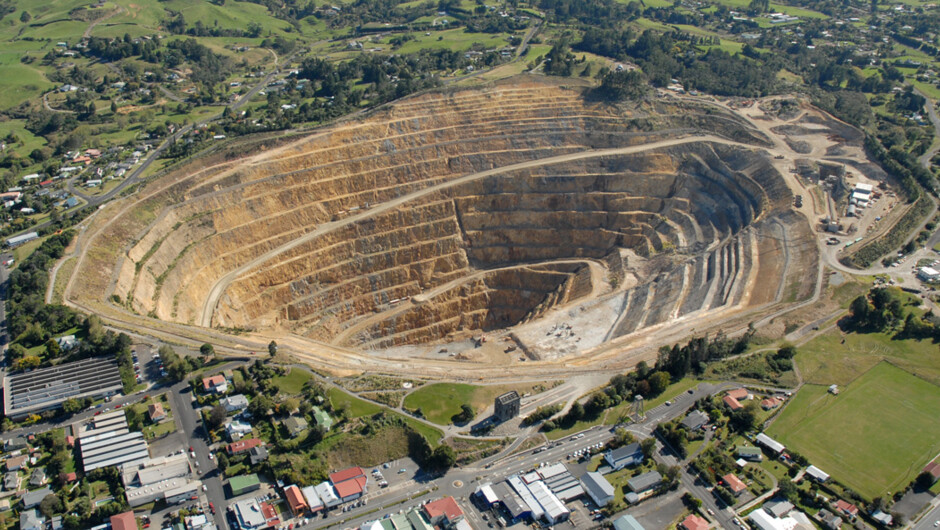
*Optional day trip to gold mine in Waihi
Level 1 German
11GERYear 11 German at Pakuranga College builds on the foundation students developed in Year 10. The course focuses on strengthening students’ confidence in using German to talk about their own lives, express opinions, and describe past and future experiences. Students will develop their understanding of key sentence structures, core vocabulary, and essential grammar in a supportive and engaging environment.
Prior study of German is not required, but it is strongly recommended. Students who have not taken German in Year 10 are expected to prepare in advance, as key beginner content will not be retaught. Without this foundation, students may find the course challenging.
To be ready for success in Year 11 German, students should review and be familiar with:
- Basic German sentence structure and word order
- Subject-verb agreement and gender of nouns
- Common verbs in the present tense, including haben, sein, gehen, machen, mögen, and wollen
- Core vocabulary related to family, school, daily routines, food, hobbies, and free time
- German question words (e.g. wer, was, wo, wann, wie, warum)
Course Themes and Topics - Topics may vary slightly each year but generally include:
- Personal introductions and descriptions
- Family relationships and friendships
- School subjects and daily routines
- Food, drink, and simple recommendations
- Hobbies and free time
- Local places and community activities
Level 1 Health Studies
11HSTYou will learn to:
- Develop understanding of Hauora as a well-being model, specifically te whare tapa wha
- Describe the impacts that life changes have on well-being and develop a range of strategies to manage well-being during these times.
- demonstrate an understanding of sexuality, how it is impacted and influenced by a range of factors and how to promote positive sexuality both personally and socially.
- demonstrate an understanding of relationships and the interpersonal skills needed to enhance them.
- demonstrate understanding of how to make healthy decisions in relation to mental health challenges and /or situations where there is pressure to us.
Level 1 History
11HISIn History you will unlock the stories of the past, helping you to go out into the world and make meaning from what you see. You can think of History as providing you with four keys. First, the key to understanding who you are by looking at different migration stories about arriving here in Aotearoa New Zealand. Second, the key to exploring how power has been used in the past, specifically to win civil rights in the USA and in Aotearoa New Zealand. Third, the key to connecting the stories of heroism in the Second World War to the possibilities for us to lead our best life. And, the last key to critically engage with evidence and with the lives of historical characters so that you are enriched as a reader, writer and citizen.
Level 1 Japanese
11JPNYear 11 Japanese builds on students’ learning from Year 10 and further develops your skills to use the language in a more structured and meaningful way.
This course is based around the topic of travelling through Japan where each term the development of your language skills is used to understand topics and texts that showcase the different areas of Japan and their cultural attractions.
After gaining a solid understanding of basic vocabulary and sentence patterns in year 10, students will continue to build on this with the development of their language with longer texts and for practical communication with others.
The Year 11 course prepares students for the demands of Level 2 Japanese by helping you develop greater confidence with grammar and sentence structures, high-frequency vocabulary, and Kanji use, while also introducing you to the NCEA assessment format in a manageable way.
Language learning at Year 11 will be an enriching experience that will allow you to access the language and culture of Japan, as well as developing your awareness and connections to others along the way. Learning a language will broaden your career horizons and allow you to work anywhere in the world with the skills you have developed through your language learning adventure at Pakūranga College.
Level 1 Mathematics focus on Numeracy
11MTNYou will learn to:
- Explore all things relating to Number (percentages, decimals, fractions, ratios, exchange rates)
- Investigate the geometry of Transformations, relating to reflection, rotation, translation, and symmetry
- Investigate a number of data-sets that requires a multivariate analysis following the PPDAC cycle
- Look at all things measurement, and how they relate to us in the real world
- Engage with elements of chance and all things probability
- Explore 3d situations that involves the use of Pythagoras, trigonometry and other geometrical reasoning skills
Level 1 Mathematics with Algebra
11MTAYou will learn to:
- Develop your algebraic skills that will now include generalisations across multiple contexts
- Investigate the relationships between tables, equations and graphs across linear, quadratic and exponential functions
- Explore 3D situations that involves the use of Pythagoras, trigonometry and other geometrical reasoning skills
- Investigate a variety of datasets that require multivariable analysis following the PPDAC cycle
- Apply statistical thinking across a variety of different datasets and graphs across a range of contexts
- Engage with elements of chance and all things probability
Level 1 Media Studies
11MDSYou will learn to:
- use film and video editing skills to make media projects
- discuss key media concepts like close reading, representation and genre
- apply media concepts and skills to your own projects
- produce media in small groups
Level 1 Music
11MUSYou will learn to:
- Perform music in groups
- Perform music as a featured soloist
- Develop music theory skills in relation to composition
- Compose and create original music through different methods
- Use recording equipment
Note: as part of this course you will be expected to attend weekly lessons (provided) for your chosen instrument, and practice regularly.
Level 1 Outdoor Education
11PEOYou will learn to:
- demonstrate responsible behaviors in outdoor activities such as indoor rock climbing, river crossing & rafting at WERO, snorkeling and mountain biking and explain how they ensure physical & emotional safety.
- apply interpersonal skills when working as a member of a group through various camp and outdoor education activities in order to promote Kotahitanga
- demonstrate understanding of anatomy & exercise physiology related to the performance of indoor rock climbing and mountain biking.
- participate and perform against national standards within kayaking and indoor rock climbing
*Please note numbers in this class are strictly limited due to staffing and trip number constraints. Priority will be based on the chronological order of submission.
Level 1 Photography & Design
11PHDYear 11 Design and Photography is a creative and practical course that introduces students to visual communication through photography and design. Students will develop technical skills while learning how artists and designers use images to communicate ideas, messages, and stories.
Throughout the year, students will explore a range of photographic and design techniques, processes, and digital tools. They will investigate the work of photographers and designers to understand how visual conventions can be used to create meaningful and effective outcomes.
Students will learn how to:
- Develop practical skills in photography and design using a range of techniques, processes, and technologies.
- Use creative thinking and problem-solving skills to generate and develop original ideas.
- Analyse and respond to the work of photographers, designers, and artists to inform their own practice.
- Explore and experiment with a variety of media and approaches to visual communication.
- Create a mini A2 portfolio based on a chosen theme, demonstrating the development and refinement of ideas through inquiry-based learning.
Students will also have the opportunity to gain 5 NCEA Level 1 credits by completing an internal assessment involving 10 A3 workbook pages that document their exploration of media, processes, and idea development.
This course is ideal for students who enjoy creativity, visual storytelling, design thinking, and developing practical skills in photography and design. It also provides a strong foundation for further study in senior Visual Arts subjects.
Level 1 Physical Education
11PEDYou will learn to:
- apply interpersonal skills when working as a member of a group in a physical activity context
- participate in a variety of physical activities and evaluate factors that influence your participation
- apply knowledge of anatomy, physiology and biomechanics through a variety of sports
- participate and improve performance against national standards within basketball, volleyball and touch rugby, or a school sports team
Level 1 Product Design
11PDTYou will learn to:
• create and evaluate possible solution(s) to a given context through research, trialing and feedback.
• develop and use your conceptual design, project planning, and problem-solving skills to make your outcome.
• practice safe and correct techniques when using various hand tools and power tools.
• trial and evaluate the fitness for purpose of your completed prototype.
Level 1 Robotics: Digital Technologies Electronics
11DTEYou will learn to:
- solve technological problems
- learn about and use basic electrical and electronics theory, programming and controlling embedded systems, which are machines with small computers in them to make them smart
- use computer software to design and build electronic circuits
- use sophisticated 3D modelling software to design your robot
- recognise and use electronic components to build circuits for digital control applications
- design, construct and test a tracked vehicle which perfoms a number of tasks
- design, construct and test an automated barrier arm that responds to operator input
Level 1 Spanish
11SPAYear 11 Spanish at Pakuranga College builds on what students learned in Year 10. It helps students consolidate their mastery of key verbs and a variety of essential tenses.The course supports students to grow their vocabulary and their confidence using Spanish to talk about their experiences, future goals, and personal interests, while developing clear and effective communication from the beginning.
Prior study of Spanish is not required but is strongly recommended. Students who have not taken Spanish in Year 10 are expected to prepare in advance, as key introductory topics will not be retaught during the course. Without this foundation, students may find the course challenging.
To be ready for success, students should review and have a good grasp of:
- Basic grammar: word order, personal pronouns, and how verbs behave in Spanish.
- The idea of "gender" and article-adjective-noun Agreement
- Verbs used to express likes and dislikes
- The use of the most 50 common verbs in the Present and Near Future tenses.
- Core vocabulary around basic themes such as family, school, places in town, food, and hobbies.
- Question words
Level 1 Sport and Exercise Studies
11PESYou will learn to:
- Communicate well and work effectively with others during physical activities.
- Think about how your words and actions affect the people around you.
- Use your physical skills in many different sports.
- Create and manage your own fitness plan to reach your personal goals.
- Recognise basic body anatomy and how oxygen gets to your muscles.
- Help and encourage others to get involved in physical activity.
- Improve your skills in leading, coaching, communicating, and teamwork.
- Look back at your work to see what you do well and what you could do better.
- Build your confidence and learn how to manage yourself through both classroom and practical work.
Level 1 Te Reo Maori
11MAOThis is a full year course for students who want to develop their Māori language understanding. It covers all four skills of the language (reading, writing, listening, speaking) and tikanga Māori.
There will be summative and formative assessments throughout the year.
Topics covered in the course include - family life in and around the home; the Marae; events, activities and places; favourite sports and hobbies; and recreating a news broadcast.
Te Ao Haka (Year 11 - 13)
TAHThe senior Te Ao Haka programme is a performance course that immerses ākonga in Māori culture, language, and traditions both historical and contemporary through haka.
In this course, ākonga explore selected Te Ao Haka disciplines such as mōteatea, waiata ā ringa, poi, haka, haka wahine, whakaeke, and whakawātea.
During each discipline ākonga will develop the skills to communicate the narrative behind their chosen composition. Students will learn to apply the relevant techniques such as wiri, rere of poi, takahi, stance, reo hāngū, pūkana, whakakai, tūwaewae, mahinga rākau, and group formations.
Through composing, choreographing, rehearsing, and presenting haka items, ākonga gain confidence in their vocal and movement abilities, deepen their understanding of whakapapa and historical context, build strong teamwork and stage presence, and bring Māori performing arts to life on stage.
You will learn to:
- Share identiy and culture through the creation and performance of waiata, dance and movement
- Explore how to perform moteatea, waiata-a-ringa, hake, poi and contemporary Maori dance
Yr 10 Technology Fabric
10TFAThis course is designed to extend the students' technological competence and confidence and provide a useful foundation for entry into Level 1 Fabric Technology.
You will learn to:
• work creatively on 2 project-based topics
• experiment with textile skills and techniques to develop a product
• develop your thinking, design and practical skills while making a product in a textiles classroom
• use equipment safely in a technology classroom setting
• research, draw and plan to thereafter produce a final outcome
• apply the technology process to create a practical outcome
Subjects for Year 11 Students
(1EL) English Language Learners
1EL1EL is a multi-level ESOL class for students from Year 9 to Year 13 who are beginner learners of English. It focuses on helping learners build everyday survival English and develop their skills in listening, reading, writing, speaking, grammar, and vocabulary.
The course is divided into three parts:
1ELA — Topic-based learning
1ELB — Grammar and writing skills
1ELC — Pronunciation and vocabulary development
Students enrolled in 1EL will take all three classes and receive ESOL instruction 12 times per week. Students have the opportunity to move up a level at the end of Terms 1, 2, and 3, based on their progress and achievement. To progress to the next level, 2EL, students must consistently achieve at least 80% in listening, reading, writing, speaking, grammar, and vocabulary assessments in 1ELA.
(2EL) English Language Learners
2EL2EL is a multi-level ESOL class designed for Year 9 to Year 13 students who have a basic understanding of English. This course helps learners strengthen their everyday survival English and further develop their listening, reading, writing, speaking, grammar, and vocabulary skills. Students will also begin to learn some subject-specific vocabulary used in mainstream classes.
The course is divided into two parts:
2ELA - Topic based learning
2ELB - Grammar and writing skills
Students enrolled in 2EL will take all two classes and receive ESOL instruction 8 times per week. Students have the opportunity to move up a level at the end of Terms 1, 2, and 3, based on their progress and achievement. To progress to the next level, 3EL, students must consistently achieve at least 80% in listening, reading, writing, speaking, grammar, and vocabulary assessments in 2ELA.
(3EL) English Language Learners
3EL3EL is a multi-level ESOL class designed for Year 9 to Year 13 students who have a basic understanding of English. This course helps learners strengthen Academic English and further develop their listening, reading, writing, speaking, grammar, and vocabulary skills.
3EL provides ESOL instruction four lessons per week. Students have the opportunity to move up a level at the end of Terms 1, 2, and 3, depending on their progress and achievement.
There are three possible pathways for students after 3EL:
a) Mainstream English (with approval from the ESOL teacher, Head of ESOL, and Head of Faculty for English)
b) 4EL
c) 4EAP
To advance to the next level, students must consistently score at least 80% on the End-of-Term Summative Tests. Near the end of Term 3, students will also sit a skills-based assessment to evaluate their overall English proficiency. This assessment helps determine whether they will enrol in 4EL, 4EAP, or transition fully to mainstream English in the following year.
(4EAP) English for Academic Purposes
4EAP(4EAP) English for Academic Purposes will prepare students for Level 1 Literacy.
(4EL) English Language Learners
4EL4EL is a multi-level ESOL class for Year 10 to Year 13 students who already have a basic command of English. This course focuses on developing students’ Academic English while further building their skills in listening, reading, writing, speaking, grammar, and vocabulary.
Please note that while this class offers opportunities to complete some NCEA Level 2 and Level 3 standards, the Literacy (LIT) standard is not included in this course.
The total credits gained from this course are 20 credits.
Please see below for a thorough breakdown.
=> NCEA Level 2 credits -> 15 credits
=> NCEA Level 3 credits -> 5 credits
4EL provides ESOL instruction four times per week. Students have the opportunity to move up a level at the end of Term 1 if they achieve a grade of Merit or Excellence in the US31004 Reading Assessment.
There are two possible pathways for students after 4EL:
a) 4EAP
b) 5EL
To advance to the next level, 4EAP, students must consistently score at least a Merit or Excellence in all the internals offered in this course, especially in the writing task.
Please note, in Term 4, the HoD of ESOL will identify Year 11 and 12 students to complete the US30511 and US30507 outside of classtime as a chance to gain LIT. If a student has successfully gained LIT with the HoD, the student will be able to enter the 5EAP class in the following year.
(5EAP) English for Academic Purposes
5EAP5EAP is a multi-level ESOL class that provides ESOL instruction four times per week for Year 12 and Year 13 students whose English is still developing. This course focuses on developing students’ Academic English while further building their skills in listening, reading, writing, speaking, grammar, and vocabulary.
Please note that this class offers opportunities to complete some NCEA Level 2 and Level 3 standards and a chance to gain University Entrance (UE) credits.
The total credits gained from this course are 16 credits
Please see below for a thorough breakdown.
=> Literacy (LIT) -> 11 credits
=> University Entrance (UE) -> 8 (4 Reading and 4 Writing)
=> NCEA Level 2 credits -> 11 credits
=> NCEA Level 3 credits -> 5 credits
(5EL) English Language Learners
5EL5EL is a multi-level ESOL class for Year 12 and Year 13 students whose English is still developing. This course focuses on developing students’ Academic English while further building their skills in listening, reading, writing, speaking, grammar, and vocabulary.
Please note that whilst this class offers opportunities to complete some NCEA Level 2 and Level 3 standards and a chance to gain University Entrance (UE), 10 LIT credits will not be gained from this course.
The total credits gained from this course are 14 credits
Please see below for a thorough breakdown.
=> Literacy (LIT) -> 4 credits
=> University Entrance (UE) -> 4
=> NCEA Level 2 credits -> 5 credits
=> NCEA Level 3 credits -> 5 credit
5EL provides ESOL instruction four times per week.
To advance to the next level, 5EAP, students must consistently score at least a Merit or Excellence in all the internals offered in this course.
12 Numeracy
12MTNThis course is designed to provide students with Numeracy requirements for NCEA via achievement standards and/or co-requisites.
This course is not suitable for students who have already gained NCEA Numeracy.
Level 2 Accounting
12ACCHow do businesses forecast their cash flow? How do they process financial transactions? How do they keep track of money owed by their customers? And how do they prepare and communicate information for users? You will find out the answers to these questions through learning how to use tools such as Google Sheets and Xero which are used by businesses all around the world.

Level 2 Art
12VRTYou will learn to:
- Develop practical knowledge in the visual arts using a range of drawing methods, processes, procedures, and techniques.
- Understand the visual arts in context by analyzing, evaluating, and responding to the art world.
- Apply knowledge of a range of conventions through established practice to your own artwork.
- Work independently, with teacher guidance, to produce a systematic body of work in response to a selected theme, using a range of media.
- Students will complete 2 workbook assessments for the two internals and 2x A1 folio board for the external submission.
Level 2 Art History
12ARHYou will learn to:
• Study European 19th Century art including the Realists, Impressionists and Post Impressionists.
• Discuss meaning in art works.
• Learn how to analyse artworks.
• Understand how artists transmit ideas through imagery.
• Gain knowledge about how contexts of the time impacted artists and their work.
* Please note this is primarily a written subject.
Level 2 Automotive Technology
12ARMYou will learn to:
• terminology used in the motor industry
• perform general servicing checks on a motor vehicle.
• demonstrate good work habits and safe work practices in the automotive industry.
• remove and refit road wheels on a vehicle & balance wheels off a vehicle in the motor industry
• demonstrate knowledge of automotive batteries
• demonstrate knowledge of automotive cooling systems and engine coolant
*Please note numbers in this class are strictly limited due to space and number of classes available. Priority will be given to those who have previously indicated that they wish to pursue a career related to 12ARM.
Level 2 Biology
12BIOLevel 2 Biology course prepares students to take Level 3 Biology. This course equips the students to develop their investigation skills in the context of a Biological process, analyse the Biological validity of different Scientific articles and prepare a report of their analysis, develop an understanding of Genetics Variation & change, as well as exploring life processes at the cellular level. Writing and Literacy skills will be beneficial in this course.
You will learn to:
• study organisms at the cellular level and at the organ system level
* Study life processes at the cellular level
• study the mechanisms involved in genetic variations and change
• investigate the transport of materials across the cell membrane
• research and report on the validity of information presented to the public
Level 2 Business Studies
12BUSYear 12 Business Studies will equip you with the practical skills and techniques to conduct market research to make informed business decisions. This will then allow you to develop, carry out and review a business plan/activity. Group work is a large component of the first half of this course and you will need to contribute start-up capital (funds) to carry out your group’s business activity. This course also explores the practical/theoretical ways businesses motivate their employees in addition to how and why large businesses react to external factors and the decisions made as a result of those factors.
Level 2 Chemistry
12CHEIn 12 Chemistry, you will develop an appreciation of chemistry of the modern world. Our world has challenges that can be faced and opportunities that can be grasped using a chemical focus. This course will teach the fundamentals that will be further developed in 13 Chemistry.
In this course you will:
• develop an appreciation of the chemistry of the modern world
• work logically through problem solving situations
• gain an appreciation of chemical concepts and processes
• recognise and discuss different types of chemical reactions
• carry out practical work, make observations, take and record measurements and evaluate techniques and processes
Level 2 Chinese
12CHIYear 12 Chinese continues the development of language skills built in previous years and aligns with Level 7 of the New Zealand Curriculum. Students extend their ability to understand and produce more detailed spoken and written Chinese across topics such as school life, travel, daily routines, and cultural events. There is a stronger emphasis on expressing personal opinions, giving reasons, and communicating information in a variety of contexts. The course includes three internal assessments (interaction, writing, and spoken presentation) and two external assessments (listening and reading comprehension), offering up to 24 Level 2 NCEA credits. Students are expected to use a wider range of vocabulary and sentence patterns, and begin to work with longer and more complex texts.
Level 2 Classical Studies
12CLAIn Classical Studies you will unlock the timeless lessons of the distant past, helping you to go out into the world and make meaning from what you see. You can think of Classical Studies as providing you with four keys. First, the key to exploring materials and buildings deep in the ground and what they can tell us about life over 2000 years ago, specifically by focusing on Pompeii. Second, the key to exploring key themes such as slavery and the role of women that are vital to understanding what it was like to live in ancient Rome. Third, the key to doing your own investigations by learning how to make sense of Roman art and architecture. And, the last key to critically engage with the lives of historical and mythological characters, such as Heracles (Hercules), so that you are enriched as a reader, writer and citizen.
Level 2 Computer Studies
12COMYou will learn to:
• Develop a complex 2D game, using the Python programming language
• Develop a refined, responsive website based on HTML, CSS and Bootstrap
• develop databases including related tables and complex queries
• understand a complex topic in digital technologies, such as Artificial Intelligence or Encryption
• develop independent problem-solving skills
Level 2 Construction & Allied Trades
12CATYou will learn to:
- Work safely and follow workshop safety procedures at all times
- Identify and select appropriate hand tools and power tools for different woodworking tasks
- Use and handle hand tools and power tools correctly and safely
- Understand different types of timber and materials used in woodworking
- Construct more advanced woodworking pieces and accurate joints
- Explore career opportunities in six different trades related to woodworking and construction
Level 2 Dance
12DANThe Level 2 Dance course offers students the opportunity to perform a range of dance styles including musical theatre, cultural dance, and repertoire pieces, while also creating original choreography inspired by local natural events. Students will explore the historical and cultural contexts that shape dance and deepen their understanding of how social, individual, and technological influences impact dance genres.
Learners will extend their technical skills and expressive abilities through group performances, both in class and at the annual dance showcase. They will develop choreography using a range of processes, devices, structures, and technologies to clearly communicate ideas and themes.
Throughout the course, students will generate and document choreographic ideas, apply rehearsal techniques, and critically analyse performance and choreography. This course fosters creativity, collaboration, and reflective thinking, preparing students to perform, create, and respond with confidence and insight.
Watch the video below to see snippets from Level 2 Dance classes and performances.
Level 2 Design
12DESYear 12 Design is a creative, hands-on course where students develop real-world design skills used in fields such as graphic design, advertising, fashion, product design, and digital media.
Students will learn how to research, experiment, and develop original design ideas using both traditional sketching and digital tools. A strong focus is placed on creative problem-solving and building ideas from concept through to finished design work.
Throughout the course, students will:
- Research and explore different design styles, materials, and techniques used by professional designers.
- Develop and refine their own creative ideas using both hand-drawn and digital methods.
- Build confidence using Adobe Creative Cloud applications to create and improve design work.
- Work independently on design projects, with teacher support and guidance when needed.
- Learn how to manage a full design process from initial idea to final presentation.
Students will complete a combination of workbook-based research and practical design outcomes, including:
- 2X internal workbook submissions
- 2X A1 folio boards for external assessment
This course is ideal for students who enjoy creativity, visual communication, and working on projects that allow them to express their own ideas in a professional and industry-relevant way.
Level 2 Design and Visual Communication
12DVCYou will learn to:
- Freehand draw in 3D to create your finished work
- Use a problem solving to produce an appropriate solution to the given briefs
- Consolidate knowledge learnt in year 11 about the Design process and the skills needed for DVC
- Render your work to represent different materials and solutions for your work
- Use needs and opportunities to problem solve different solutions in relation to human factors
- Apply a range of technical and drawing skills to 2 main internals (product design and Spatial design) that are also used in the External
- Examine a range of ideas when using the Design process to create alternative solutions
- Annotation of work showing the Pro's and Con's as well as written judgements on the design choices
- Complete a written Assessment that critically evaluates a Design Era or Movement in relation to your Spatial Design
- Design for an exhibition space and layout for Graphic Design
- Use CAD (digital modelling) to realise your designs
Level 2 Drama
12DRAYou will learn to:
- Use the drama techniques of voice, body movement and space to perform a character in a whole class production.
- Use drama conventions to dramatise ‘Dreams and Nightmares’.
- Direct a scene extract from a stage play.
- *N.B Drama is largely a group based subject. Your group's success is dependent on your attendance and commitment to the class.
Level 2 Early Childhood Education
12ECEThis course is offered in partnership with Manukau Institute of Technology (MIT). Students who earn a minimum of 21 credits will receive a ‘Certificate of Achievement in Early Childhood Education (Level 2)'. You will learn about a range of topics to help you to understand how infants, toddlers and young children grow, learn and develop.
You will:
• develop an understanding of how to care for young children and learn about their needs and development
• develop a greater understanding and experience of early childhood education
• gain skills useful to employment and/or life experience involving interaction with children
• begin your preparation for advancement into tertiary education
• see early childhood education as a possible career pathway
Level 2 Earth & Space Science
12ESSThe Level 2 Earth and Space Science course will prepare you for Level 3 ESS. Learning focuses on developing knowledge and skills related to completing research tasks, using evidence to present an argument, completing an independent investigation and explaining physics that drive processes in the environment, eg. atmosphere, geosphere and oceans. Good writing and literacy skills will be beneficial in this course.
You will learn to:
• explore and explain how stars, planets and moons are formed
• collect and use evidence to identify and explain processes that created the local Auckland landscape
• carry out an investigation in an Earth and Space Science context
• discuss how heat and light are produced and cycled within the physical and biological systems of the Earth
• investigate the mechanisms for survival in extreme environments on Earth, eg. deep ocean, space, thermal vents.
*Students need to be aware that some internal standards in this course are also assessed in 12SCI and should refrain from taking both subjects
Level 2 Economics
12ECOThis course will be of particular interest to students who have an interest in how the business and financial worlds work, as we learn about markets and the wider NZ and global economy. This includes investigating topics such as:
- minimum wage and its potential impacts on employment and economic growth
- positive and negative impacts of economic growth
- how important current economic issues (for example high house prices) can be impacted by government policies
- international trade and its positive and negative impacts
- loans, mortgages, Kiwisaver, exchanges rates, trade deficits
Key skills students develop in this course include the ability to analyse and evaluate the impact of changes in the economic environment on key indicators such as inflation, economic growth and employment. Students will also develop their oral and written skills for making logical, well reasoned arguments.
Level 2 Engineering
12ENRYou will learn to:
- Work safely in a workshop environment
- Use and handle engineering workshop tools in the correct manner
- Make pieces of simple machinery that must fit and work together
- Use engineering machinery safely and in the correct manner
- Use electric welding and plasma cutting equipment.
*Please note numbers in this class are strictly limited due to space and number of classes available. Priority will be given to those who have previously studied 11ENR or who have expressed an interested in pursuing a career related to 12ENR.
Level 2 English (ENA)
12ENA12ENA and 12ENB are academic English courses. They offer the same standards, but teach different genres (types) of literature. Choose the genre of literature that you are most interested in studying.
12ENA offers an exciting opportunity to study speculative fiction (science fiction, fantasy, horror). You will study texts that prompt you to question "what if?..." Speculative fiction includes science fiction, dystopian texts and texts that explore human responses to situations that are an amplification of our current world.
You will learn to:
- students in this course will study a theme of speculative and science fiction
- critically respond to ideas in texts, using relevant evidence to justify your ideas and make connections between and beyond texts
- appreciate, understand and explore a range of text types, including contemporary and older literature, films and other texts
- create texts with increasing confidence and flair
- communicate ideas confidently and clearly in oral and written forms
- a combination of standards will allow students to achieve the University Entrance Literacy requirement
Please refer to the course video for further information about thematic choices.
Level 2 English (ENB)
12ENB12ENA and 12ENB are academic English courses. They offer the same standards, but teach different genres (types) of literature. Choose the genre of literature that you are most interested in studying.
12ENB offers the exciting opportunity to study texts that focus on the human psyche. What makes us tick as humans? What drives our behaviour and dictates our societal norms and expectations? You will study a range of realistic texts, that prompt you to question the way our society works and the ways that humans interact with each other.
You will learn to:
- students will study the theme of Literature through a Psychological Lens
- critically respond to ideas in texts, using relevant evidence to justify your ideas and make connections between and beyond texts
- appreciate, understand and explore a range of text types, including contemporary and older literature, films and other texts
- create texts with increasing confidence and flair
- communicate ideas confidently and clearly in oral and written forms
- a combination of standards will allow students to achieve the University Entrance Literacy requirement
Please refer to the course video for further information about thematic choices.
Level 2 English (ENL) Key Literacy Skills
12ENLThe 12ENL course is designed for students who achieve better outcomes in an internally assessed course. You will complete a range of achievement standards that will develop your skills in research, personal response, close viewing, and making connections between texts.
You will learn to:
- respond to ideas in texts, using relevant evidence to justify your ideas and make connections between and beyond texts
- appreciate, understand and explore a range of text types
- communicate ideas confidently and clearly in oral and written forms
Level 2 Food and Hospitality
12CAHThis course is designed for those students looking to follow a career path in the hospitality industry.
You will learn to:
- Develop advanced food preparation and cooking skills, including cooking techniques and safe food hygiene practices.
- Prepare a variety of dishes applying appropriate cooking methods and techniques.
- Learn food and beverage service skills, including table service and the preparation of coffee and cold espresso-based beverages.
- Develop effective customer service skills and confidence in interacting with customers.
- Work collaboratively as part of a team in a front-of-house hospitality environment.
- Understand the professional standards and practices expected in the hospitality industry.
- *Please note: Numbers in this class are strictly limited due to space and number of classes available. Priority will be given to those who have previously studied 11CAH or who have expressed an interested in pursuing a career related to Catering & Hospitality. This is suited for students who have English as their second language and limited ability in writing as the focus is on cooking skills.
- Students who want to achieve New Zealand Certificate in Hospitality level 2 must achieve all credits in year 11 and 12 to gain certification.
Level 2 Food Technology
12TFOYou will learn to:
- Implement culinary processes and techniques to perfect a food product. development techniques and apply quality control procedures and processes.
- Develop skills in problem solving and working with others to produce a prototype.
- Design food products to meet the needs of stakeholders and also improve their cultural competence.
- Write an report based on material evaluation in development of a product.
- Practice basic barista skills and know how to operate a commercial coffee machine
*Please note; As a significant portion of the coursework involves technical writing, research, and presentations, a high level of English language proficiency is crucial. This course has strictly limited due to space and number of classes available. Priority will be given to those who have previously studied 11TFO or who have expressed an interested in pursuing a career related to Food Technology.
Level 2 General Mathematics
12MTGIn 12MTG you will experience and learn a variety of mathematical and statistical concepts such as:
- Networks - Understanding network diagrams to find a shortest path and building connections
- Sequence and Series- Understanding patterns and sequences using Arithmetic and Geometric concepts.
- Trigonometry - Apply Trigonometry concepts to find length, angles and area.
- Informal Inference - Using the statistical enquiry cycle to make an inference given a multivariate data set.
- Co-ordinate Geometry - Forming cross-sectional areas using co-ordinates and finding length or areas.
- Simulation - Using the Statistical Enquiry cycle to simulate a real life situation to estimate the chance of an event occurring.
Level 2 Geography
12GEOGeography is about getting to know and having a deeper understanding of the world around you. We focus on analysing the intersection between the natural world and cultural processes and the effects this interaction has on both. There is a 3 day field trip to the Tongariro Volcanic environment where you will walk the Tongariro Crossing to support the work for Achievement Standards 2.1 and 2.5.
You will learn about:
- A large natural environment - Tongariro. You will look at volcanic processes and explain how the Tongariro Volcanic Centre, a world-renowned geographic environment was created and has changed over time.
- Research skills - Conduct and present a geographic research investigation into the relationship between different elements of the environment, based in the Tongariro Volcanic Centre.
- A current geographic issue like overfishing in the Hauraki Gulf and evaluate the differing perspectives on the issue as well as ways in which it can be managed in the future.
- The global pattern of chocolate, the processes that lead to these patterns and how the issue is significant to different groups of people.
- Crime in Chicago: Explaining why patterns of crime exist in urban areas and what impact they have on the local community.
- Appling a range of geographic skills and ideas, such as mapping, photo interpretation and graph construction to different settings

*Optional overnight trip to Tongariro
Level 2 German
12GERYear 12 German is an engaging and more linguistically advanced course that builds on two years of prior German study. It is designed for students who already have a strong understanding of basic German grammar and vocabulary and are ready to justify opinions, describe events in more detail, and engage in more natural, real-life communication in German.
The course focuses on language features that are key to effective communication with native speakers—many of which can be challenging due to their differences from English, such as case usage, separable verbs, reflexive forms, and word order in complex sentences.
Language Level Expectations - To be ready for success at Level 2, students should revise and have a solid understanding of:
- Grammatical agreement, word order in main and subordinate clauses, and the difference between sein and haben
- Core indicative tenses: present, perfect, simple past, and future
- The 100 most frequently used German verbs in different tenses
- Vocabulary on everyday topics including relationships, school life, leisure, and health
- The ability to take part in simple conversations and exchange opinions
- The ability to write clear, well-structured texts about familiar topics
- The ability to understand spoken and written German in accessible formats such as messages, videos, and dialogues
Course Themes and Topics - Themes and topics may vary slightly each year but typically include:
- Relationships and family dynamics
- Education in New Zealand and in German-speaking countries
- Holidays, travel, and cultural celebrations
- German identity and everyday life
- Food, health, and wellbeing
- Media, technology, and communication
Level 2 Health Studies
12HSTYou will learn to:
• analyse an adolescent health issue and how it affects self, others and society
• evaluate factors that influence people's ability to manage change
• take action to enhance an aspect of people's wellbeing within the school or wider community
• analyse issues related to sexuality and gender to develop strategies for addressing the issues
Level 2 History
12HISIn History you will unlock the stories of the past, helping you to go out into the world and make meaning from what you see. You can think of History as providing you with four keys. First, the key to exploring how the use of power has shaped the past, specifically focusing on the failure of Weimar democracy and rise of Nazism in Germany. Second, the key to making connections between people by understanding the significance of the Waikato wars. Third, the key to bridging boundaries by connecting to the stories of conflict in Vietnam. And, the last key to critically engage with evidence and with the lives of historical characters so that you are enriched as a reader, writer and citizen.
Level 2 Japanese
12JPNYear 12 Japanese will continue to develop and build on students' language skills from previous years to use Japanese in a more structured and meaningful way. Students will extend their ability to understand and produce more detailed spoken and written Japanese across topics such as family life, school life, food and drink, leisure activities, and daily life in Japan. There is a stronger emphasis on being able to more effectively express personal opinions, give reasons for your opinions, and being able to explore and respond to the ideas and opinions of others.
The Year 12 course is designed to continue expanding students' knowledge of both the Japanese language and culture, and to develop their confidence to express themselves on a wider variety of topics in more natural Japanese.
The course includes two internal assessments (writing and spoken presentation) and two external assessments (listening and reading comprehension), offering up to 19 Level 2 NCEA credits. Students are expected to use a wider range of vocabulary and sentence patterns, and begin to work with longer and more complex texts.
Language learning at Year 12 will be an enriching experience that will allow you to further access the language and culture of Japan, as well as developing your awareness and connections to others along the way. Learning a language will broaden your career horizons and allow you to work anywhere in the world with the skills you have developed through your language learning adventure at Pakūranga College.
Level 2 Mathematics with Algebra
12MTAThis course is designed for students who are ready to take their algebraic thinking to the next level. You'll explore algebra in a range of contexts — from solving equations to analysing graphs. Algebra is at the heart of this course, so be prepared to dive deep!
You’ll also get your first taste of calculus — the mathematics of change and motion — gaining insight into how it’s used to model and solve real-world problems.
Additionally, you’ll build your understanding of trigonometry beyond the restraints of a right angled triangle, learning to work with any triangle and apply this in meaningful, real-life contexts.
This course provides a strong foundation for further study in mathematics engineering and the sciences, while sharpening your analytical skills and problem-solving abilities.
Level 2 Mathematics with Statistics
12MTSDo you want to make sense of real-world data? Do you enjoy solving problems and using evidence to back your thinking? Are you curious about how statistics connects to health, sports, media, and the world around you? Then this is the course for you!
In 12MTS (Year 12 Mathematics with Statistics), you will explore the power of data and chance through a range of real-world contexts. You'll learn how to:
- Apply statistical thinking to real scenarios like experiments, social issues, and everyday decision-making.
- Use statistical methods to draw conclusions from samples and make predictions about larger populations.
- Work with probability models to explore chance and risk, including simulations.
- Dive into the world of the Normal Distribution and learn how it’s used in everything from exams to insurance.
- Apply statistical thinking to real scenarios like experiments, social issues, and everyday decision-making.
This course is perfect for students who enjoy practical maths and want to build strong skills for careers in health, business, psychology, sport science, and beyond.
Level 2 Media Studies
12MDSYou will learn to:
- work in small groups
- build on your knowledge of film and editing equipment to make short films
- develop your understanding of media concepts including narrative, representation and genre
- develop your understanding and ability in narrative analysis and design planning
- produce media in small groups
Level 2 Music
12MUSYou will learn to:
- Perform as a member of a group on an instrument
- Work with music notation applications to arrange music for different instruments
- Perform as a featured soloist on your chosen instrument
- Compose music
- Read and analyse musical scores (optional)
Note: as part of this course you will be expected to attend weekly lessons (provided) for your chosen instrument, and practice regularly.
Level 2 Outdoor Education
12PEOBuild on the foundational knowledge and skills developed in 11PEO through both practical and theory-based learning experiences. You will learn to:
- Examine the different stages of group processing and explain how each affects the functioning of a group.
- Participate in indoor rock climbing and scuba diving to meet performance standards for level 2
- Apply and examine how different leadership styles contribute to the success, cohesion, and overall functioning of groups in physical activities such as tramping and scuba diving.
- Apply and examine how risk management strategies contribute to safe and meaningful participation in outdoor pursuits by application and analysis during your performance in tramping and scuba diving
- Demonstrate social responsibility, using Hellison’s model of social responsibility through participating in white water rafting, tramping and scuba diving.
*Please note numbers in this class are strictly limited due to staffing and trip number constrictions. Priority will be given to those who have previously taken 11PEO and then based on the chronological order of submission.
Level 2 Photography
12PHOIn Year 12 Photography, you will explore creative ideas and learn how photographers use images to communicate stories, messages, and perspectives about the world around us.
You will:
- Learn how to confidently use a DSLR camera and a range of photographic equipment.
- Develop your photography skills through practical, hands-on projects.
- Explore artists, cultures, and contemporary issues to inspire your own creative ideas.
- Use Adobe Creative Cloud to edit, enhance, and present your photographs professionally.
- Build a personal portfolio that reflects your interests, creativity, and unique visual style.
- Work independently on projects while receiving guidance and feedback from your teacher.
Assessment:
Students complete two workbook-based internal assessments and produce two A1 folio boards for external assessment. These showcase the development of ideas, technical skills, and final photographic work throughout the year.
Why choose Photography?
Photography is a creative and practical subject that helps you develop visual communication, problem-solving, and digital technology skills. It is an excellent pathway into photography, design, film, advertising, marketing, media, architecture, and many other creative industries.
Level 2 Physical Education
12PEDYou will learn to:
- Analyse group processes in physical activity
- Apply biophysical principles (anatomy, exercise physiology, biomechanics & training methods) to training programmes
- Demonstrate leadership strategies in team settings
- Show social responsibility through physical activity
- Perform physical activities in applied settings
- Reflect on personal and group performance and improvement
Level 2 Physics
12PHY
Physics is the study of matter, energy, and the interactions between them. This course introduces the core ideas physicists use to understand how the world works. Students will develop investigation skills and learn to analyse and explain physics concepts in the areas of mechanics, electricity, and electromagnetism. A solid foundation in Mathematics(Algebra) is strongly recommended.
You will learn to:
- Carry out and evaluate practical physics investigations.
- Explain physics concepts using calculations and words in the context of mechanics and electricity.
- Explain ideas related to atomic physics to build foundational knowledge of nuclear physics.
Level 2 Product Design
12PDTYou will learn to:
• create and evaluate possible solution(s) to a given context through research, trialing and feedback.
• manage risks through trialing design ideas, 3D modeling, and costing.
• develop and use your conceptual design, project planning, and problem-solving skills to make your outcome.
• enhance your practical skills safely and correctly using various hand and power tools.
• trial and evaluate the fitness for purpose of your completed prototype.
Level 2 Robotics, Digital Technologies
12DTEYou will learn to:
• solve technological problems relating to complex embedded computer systems
• use sophisticated software to design and manufacture printed circuit boards
• recognise and use electronic components and systems
• produce a complex 3-D virtual of your own design for a robot suitable for manufacturing using a 3-D printer
• design and construct complex, autonomous electro-mechanical systems
• program embedded computer systems
• take responsibility for acquiring the knowledge and skills you need to achieve your goals.
• organise and manage your own workflow to ensure that you achieve the goals you set yourself
• work effectively with other other students.
It is highly recommended that students have completed the Y11 Robotics course
Students will need to have a device that is capable of running the software required for this course.
Level 2 Science
12SCIThe Level 2 Science course develops content and skills knowledge related to different strands of the Science curriculum. The course is entirely internally assessed against NCEA Achievement standards. Learning will focus on developing skills related to science investigations, chemical analyses, science explanations, scientific drawing and research skills.
You will learn to:
• test water to identify whether it is safe to drink
• explore how organisms are adapted to extreme environments
• carry out an investigation in an Earth & space science context
• carry out a microscopic investigation in a Biology context
Some standards in this course are also assessed as part of 12ESS, so you should not select both of these courses
Level 2 Spanish
12SPAYear 12 Spanish is a stimulating and more linguistically advanced course that builds on the knowledge of the previous two years. It is intended for students who already have a solid command of basic Spanish grammar and vocabulary, and who are ready to justify their opinions, describe events in detail, and engage in more natural, real-life interactions in Spanish.
The programme focuses on elements that are essential for clear and effective communication with native speakers, but which can be challenging as they do not resemble English or other languages—such as verb moods, pronominal forms, and levels of formality.
Language Level Expectations
To be ready for success, students should revise and have a good command of,
- Key elements like Agreement, ser/estar, and word order.
- Familiarity with the main indicative tenses.
- Knowledge of the 100 most frequently used verbs and their forms in different tenses.
- General vocabulary for common topics
- The ability to take part in simple conversations
- The ability to write clear, structured texts about familiar topics
- Comprehension of spoken and written Spanish in accessible formats, such as letters, videos, or everyday dialogues
Level 2 Sport and Exercise Studies
12PESYou will learn to:
- Develop knowledge of anatomy and how the body moves during physical activity
- Apply exercise and stretching techniques safely and effectively
- Perform and improve practical skills in a variety of physical activities and sports
- Develop teamwork, leadership, and coaching skills
- Demonstrate social responsibility and positive group behaviours in physical activity settings
Level 2 Te Reo Maori
12MAOThis course offers intermediate stage Māori language oral, listening, reading and written, ideally suited for students who have already studied and completed Māori at year 11. It is the study of language in greater depth with an emphasis on oral and written Māori. The learning is focussed around pōhiri, students dreams and aspirations for the years to come and giving their thoughts on te reo Māori in the classroom.
There will be summative and formative assessments throughout the year.
Topics covered in the course include - Pōhiri, dreams and aspirations, arguments for and against te reo Māori being compulsory in the classroom, whakataukī, waiata and mōteatea
Level 2 Technology Fabric
12TFAYou will learn to:
• investigate textile properties, experiment with sewing skills
• use the design process to create 2 functional garments and 2 portfolios
• select, create and/or adapt patterns to create textile products
• encouraged to "challenge the norm", think innovatively and analyse creative design ideas.
• develop skills such as fashion design, textile design, garment construction, pattern drafting and adaptation and fashion illustration
• explore sustainable design solutions
• Design, develop and test your final product against the intended theme/event
Level 2 Tourism Studies
12TRSThroughout the year, students will explore New Zealand’s unique appeal as a tourist destination while building a strong understanding of both domestic and international tourism. They will develop global geographic knowledge, examine key tourist markets and destinations, and investigate what attracts visitors worldwide. Students will also analyse the environmental, social, and cultural impacts of tourism, evaluating its effects on people and places. Additionally, they will explore the characteristics of different tourist types, the roles and expectations within the tourism industry, and reflect on their own strengths and interests in relation to potential tourism careers.
Te Ao Haka (Year 11 - 13)
TAHThe senior Te Ao Haka programme is a performance course that immerses ākonga in Māori culture, language, and traditions both historical and contemporary through haka.
In this course, ākonga explore selected Te Ao Haka disciplines such as mōteatea, waiata ā ringa, poi, haka, haka wahine, whakaeke, and whakawātea.
During each discipline ākonga will develop the skills to communicate the narrative behind their chosen composition. Students will learn to apply the relevant techniques such as wiri, rere of poi, takahi, stance, reo hāngū, pūkana, whakakai, tūwaewae, mahinga rākau, and group formations.
Through composing, choreographing, rehearsing, and presenting haka items, ākonga gain confidence in their vocal and movement abilities, deepen their understanding of whakapapa and historical context, build strong teamwork and stage presence, and bring Māori performing arts to life on stage.
You will learn to:
- Share identiy and culture through the creation and performance of waiata, dance and movement
- Explore how to perform moteatea, waiata-a-ringa, hake, poi and contemporary Maori dance
Subjects for Year 12 Students
(1EL) English Language Learners
1EL1EL is a multi-level ESOL class for students from Year 9 to Year 13 who are beginner learners of English. It focuses on helping learners build everyday survival English and develop their skills in listening, reading, writing, speaking, grammar, and vocabulary.
The course is divided into three parts:
1ELA — Topic-based learning
1ELB — Grammar and writing skills
1ELC — Pronunciation and vocabulary development
Students enrolled in 1EL will take all three classes and receive ESOL instruction 12 times per week. Students have the opportunity to move up a level at the end of Terms 1, 2, and 3, based on their progress and achievement. To progress to the next level, 2EL, students must consistently achieve at least 80% in listening, reading, writing, speaking, grammar, and vocabulary assessments in 1ELA.
(2EL) English Language Learners
2EL2EL is a multi-level ESOL class designed for Year 9 to Year 13 students who have a basic understanding of English. This course helps learners strengthen their everyday survival English and further develop their listening, reading, writing, speaking, grammar, and vocabulary skills. Students will also begin to learn some subject-specific vocabulary used in mainstream classes.
The course is divided into two parts:
2ELA - Topic based learning
2ELB - Grammar and writing skills
Students enrolled in 2EL will take all two classes and receive ESOL instruction 8 times per week. Students have the opportunity to move up a level at the end of Terms 1, 2, and 3, based on their progress and achievement. To progress to the next level, 3EL, students must consistently achieve at least 80% in listening, reading, writing, speaking, grammar, and vocabulary assessments in 2ELA.
(3EL) English Language Learners
3EL3EL is a multi-level ESOL class designed for Year 9 to Year 13 students who have a basic understanding of English. This course helps learners strengthen Academic English and further develop their listening, reading, writing, speaking, grammar, and vocabulary skills.
3EL provides ESOL instruction four lessons per week. Students have the opportunity to move up a level at the end of Terms 1, 2, and 3, depending on their progress and achievement.
There are three possible pathways for students after 3EL:
a) Mainstream English (with approval from the ESOL teacher, Head of ESOL, and Head of Faculty for English)
b) 4EL
c) 4EAP
To advance to the next level, students must consistently score at least 80% on the End-of-Term Summative Tests. Near the end of Term 3, students will also sit a skills-based assessment to evaluate their overall English proficiency. This assessment helps determine whether they will enrol in 4EL, 4EAP, or transition fully to mainstream English in the following year.
(4EAP) English for Academic Purposes
4EAP(4EAP) English for Academic Purposes will prepare students for Level 1 Literacy.
(4EL) English Language Learners
4EL4EL is a multi-level ESOL class for Year 10 to Year 13 students who already have a basic command of English. This course focuses on developing students’ Academic English while further building their skills in listening, reading, writing, speaking, grammar, and vocabulary.
Please note that while this class offers opportunities to complete some NCEA Level 2 and Level 3 standards, the Literacy (LIT) standard is not included in this course.
The total credits gained from this course are 20 credits.
Please see below for a thorough breakdown.
=> NCEA Level 2 credits -> 15 credits
=> NCEA Level 3 credits -> 5 credits
4EL provides ESOL instruction four times per week. Students have the opportunity to move up a level at the end of Term 1 if they achieve a grade of Merit or Excellence in the US31004 Reading Assessment.
There are two possible pathways for students after 4EL:
a) 4EAP
b) 5EL
To advance to the next level, 4EAP, students must consistently score at least a Merit or Excellence in all the internals offered in this course, especially in the writing task.
Please note, in Term 4, the HoD of ESOL will identify Year 11 and 12 students to complete the US30511 and US30507 outside of classtime as a chance to gain LIT. If a student has successfully gained LIT with the HoD, the student will be able to enter the 5EAP class in the following year.
(5EAP) English for Academic Purposes
5EAP5EAP is a multi-level ESOL class that provides ESOL instruction four times per week for Year 12 and Year 13 students whose English is still developing. This course focuses on developing students’ Academic English while further building their skills in listening, reading, writing, speaking, grammar, and vocabulary.
Please note that this class offers opportunities to complete some NCEA Level 2 and Level 3 standards and a chance to gain University Entrance (UE) credits.
The total credits gained from this course are 16 credits
Please see below for a thorough breakdown.
=> Literacy (LIT) -> 11 credits
=> University Entrance (UE) -> 8 (4 Reading and 4 Writing)
=> NCEA Level 2 credits -> 11 credits
=> NCEA Level 3 credits -> 5 credits
(5EAU) English for Academic Purposes
5EAU5EAU is an ESOL class that provides ESOL instruction four times per week for Year 13 students who have completed the 5EAP course. This course focuses on developing students’ Academic English while further building their skills primarily in reading, writing, speaking, grammar, and vocabulary.
Please note that this class offers opportunities to complete some NCEA Level 2, Level 3 and Level 4 standards and a chance to gain University Entrance (UE) credits.
The total credits gained from this course are 17 credits.
Please see below for a thorough breakdown.
=> Literacy (LIT) -> 6 credits
=> University Entrance (UE) -> 12 (6 Reading and 6 Writing)
=> NCEA Level 3 -> 11 credits (The level 4 standard counts as Level 3 NCEA credits)
=> NCEA Level 2 -> 6 credits
(5EL) English Language Learners
5EL5EL is a multi-level ESOL class for Year 12 and Year 13 students whose English is still developing. This course focuses on developing students’ Academic English while further building their skills in listening, reading, writing, speaking, grammar, and vocabulary.
Please note that whilst this class offers opportunities to complete some NCEA Level 2 and Level 3 standards and a chance to gain University Entrance (UE), 10 LIT credits will not be gained from this course.
The total credits gained from this course are 14 credits
Please see below for a thorough breakdown.
=> Literacy (LIT) -> 4 credits
=> University Entrance (UE) -> 4
=> NCEA Level 2 credits -> 5 credits
=> NCEA Level 3 credits -> 5 credit
5EL provides ESOL instruction four times per week.
To advance to the next level, 5EAP, students must consistently score at least a Merit or Excellence in all the internals offered in this course.
Level 3 Accounting
13ACCIn 13ACC you will learn how partnerships operate, including how profits are distributed and financial records are maintained. You will also interpret the annual report of a NewZealand based reporting entity to prepare a report for an external user analysing financial statements and evaluating business performance. Job costing is also explored where you will calculate and apply costs to specific jobs. This leads into management decision making where you will learn how to prepare and analyse detailed financial information to help businesses make informed decisions.
Level 3 Applied Physics
13PHALevel 3 Applied Physics is designed to develop knowledge and understanding of more advanced concepts in waves and equip the students with research skills focused on real world contexts. This course may prepare students for entry into selected tertiary institutions or other pathways. It is recommended to have completed some Physics courses. This course includes three internals and one external assessment.
You will learn to
- Carry out guided practical investigations by planning procedures, taking measurements, processing data, and analysing results.
- Research and report on a physics application within a given context.
- Research and report on a socio-scientific issue related to physics.
- Identify, describe, and explain physics concepts and principles in waves.
Level 3 Art History
13ARHYou will learn to:
- Analyse and critically evaluate artworks through supporting contexts of the time.
- Understand how meaning is conveyed in an artwork.
- Recognize and understand art movements from twentieth century including Fauvism, Expressionism and Surrealism as well as modern American art styles.
- Discuss Value in art, understand the role of Media and Processes, and investigate Theories evident in artworks.
- Gain knowledge on how events during the time impacted on art.
Level 3 Biology
13BIOLevel 3 Biology course builds on Level 2 Biology, hence, having completed Level 2 Biology is highly recommended. This course equips the students to develop their opinion and a personal/societal action about a socio-scientific issue. The students will have the opportunity to learn about how the human body responds to fluctuating environmental conditions, develop an understanding of how plants and animals respond to their environment , as well as develop an understanding of trends in human evolution. Writing and Literacy skills will be beneficial in this course.
You will learn to:
• study aspects of animal behaviour and plant responses to the environment
• study trends of human evolution
• study control systems in humans that maintain stable internal environment
• research and report on a socio-scientific issue in New Zealand
Level 3 Business Enterprise Studies
13BESIn Year 13 Business Enterprise Studies you will go beyond running a school market day business by running an innovative and sustainable for the entire year and competing in the Young Enterprise Scheme, a nationwide business competition.
This course requires you to meet many deadlines related to assessments, the competition and those specific to your business. A strong communication skills and a willingness to work in a group are essential to both the success of your business and in assessments.
You will need to contribute start-up capital (funds) to run your business and/or exercise initiative by fundraising, crowdfunding or applying for seed funding.
Level 3 Business Studies
13BUSIn Year 13 Business Studies, you will be learning and researching about how New Zealand businesses meet market needs through innovation in the value chain, develop future proofing strategies to ensure long-term viability, and how internal factors (such as change and quality management) affect global businesses. This course is ideal for students who are interested in learning about business but not wanting to run a business during the year.
Level 3 Chemistry
13CHEIn 13 Chemistry, you will develop a deeper appreciation of chemistry of the modern world. Our world has chemical challenges, for example identifying pharmaceuticals and opportunities for example alternative batteries that require a chemical focus. This course will build the skills and knowledge that are required.
You will learn to:
• work logically through problem solving situations
• gain an appreciation of chemical concepts and processes
• interpret spectroscopic data • recognise and discuss different types of chemical reactions
• carry out practical work, make observations, take and record measurements and evaluate techniques and processes
Level 3 Chinese
13CHIYear 13 Chinese is an advanced language course that builds on students’ prior learning to further develop their ability to communicate confidently and effectively in Chinese. Through a range of topics related to modern and traditional Chinese society, students explore personal and global themes, express and justify ideas, and interact in increasingly complex spoken and written contexts. The course offers 24 NCEA Level 3 credits, including three internal assessments (speaking, writing, and interaction) and two external assessments (listening and reading). As a University Entrance–approved subject, Year 13 Chinese supports students in gaining language proficiency for future academic and career pathways, while deepening their understanding of Chinese culture and global perspectives.
Level 3 Classical Studies
13CLAIn Classical Studies you will unlock the timeless lessons of the distant past, helping you to go out into the world and make meaning from what you see. You can think of Classical Studies as providing you with four keys. First, the key to exploring how to live your best life by focusing on the philosophy of Socrates in ancient Athens. Second, the key to exploring how power has been used in the past, specifically by investigating how the Roman emperor Augustus came to power and then managed to persuade everyone that he should hold on to it. Third, the key to learning about how to appreciate artworks, by exploring and making sense of Roman art and architecture. And the last key to critically engage with the lives of hugely influential historical characters so that you are enriched as a reader, writer and citizen.
Level 3 Computer Studies Technology
13COMYou will learn to:
- Develop dynamic web applications using Python and the Flask framework, where server-side code generates web pages in response to user input
- Design and build relational databases using SQLite to store, manage, and retrieve data that powers the backend of the web application
- Apply user experience (UX) principles to design and refine high-quality, user-focused solutions
- Explore an advanced area of computer science, such as intractability, networking protocols, or other specialist topics
Level 3 Dance
13DANIn Level 3 Dance, students learn to perform group dances and contrasting dance repertoire through collaboration with their teacher, peers, and guest instructors. They will co-construct and lead dance activities, developing confidence, leadership, and teamwork.
Students will choreograph original dance works in response to written texts, using a range of choreographic devices and production technologies to communicate meaning. They will refine technical and expressive skills across dance genres and styles, and apply rehearsal strategies to enhance performance.
Critical thinking is developed through analysing and writing about dance works, with a focus on interpreting artistic features and evaluating how ideas are communicated through movement.
Discover more about Year 13 Dance in the video below.
See where Level 3 Dance can take you for tertiary study and beyond in the video below.
Level 3 Design
13DESYear 13 Design is an advanced, portfolio-focused course that builds on the skills developed in Year 12. Students work more independently and are expected to produce highly refined, professional-level design outcomes.
This course is ideal for students who are interested in careers in design, architecture, fashion, digital media, or other creative industries, and want to develop a strong portfolio for further study or employment.
Students will learn how to:
- Conduct in-depth research into design ideas, materials, techniques, and professional practices.
- Develop, refine, and rework ideas using both hand-drawn and digital design methods.
- Apply drawing conventions and design processes used in real-world creative industries.
- Use Adobe Creative Cloud confidently to develop, refine, and present high-quality design work.
- Manage their own independent design projects from concept through to final outcome, with teacher guidance.
Students will complete a combination of written and practical assessments, including:
- 2X internal workbook assessments
- 3X A1 folio boards for external assessment
This course develops independence, creativity, and professional-level design skills, preparing students for tertiary study and creative careers.
Level 3 Design and Visual Communication
13DVCYou will learn to:
- Freehand draw in 3D to create your finished work
- Use a problem solving to produce an appropriate solution to the given briefs
- Consolidate knowledge learnt in year 11 about the Design process and the skills needed for DVC
- Render your work to represent different materials and solutions for your work
- Use needs and opportunities to problem solve different solutions in relation to human factors
- Apply a range of technical and drawing skills to 2 possible internals (product design and Spatial design) that are also used in the External
- Examine a range of ideas when using the Design process to create alternative solutions
- Annotation of work showing the Pro's and Con's as well as written judgements on the design choices
- Design for an exhibition space and layout for Graphic Design
- Use CAD (digital modelling) to realise your designs
Level 3 Drama
13DRAYou will learn to:
- Perform a villain character from the Batman DC Comics Rogues Gallery.
- Perform a masked character from the Italian performance style known as Commedia Dell'arte.
- Use the drama techniques of voice, body movement and space to perform a character in a whole class production ‘The Strange Case of Doctor Jekyll and Mr Hyde.
- Design, construct and build a Stage Set Design model.
- *N.B. Drama is largely a group based subject. Your group’s success is dependent on your attendance and commitment to the class.
Level 3 Early Childhood Education
13ECEThis course is offered in partnership with Manukau Institute of Technology (MIT). Students who earn a minimum of 20 credits will receive a ‘Certificate of Achievement in Early Childhood Education (Level 3)'. You will learn about Reciprocal Relationships with children, health and wellbeing, the value of play (and a kindergarten visit), Te Whariki: The Early Childhood Curriculum and the services and philosophies of New Zealand early childhood education.
You will:
• develop your understanding of education and care of young children in an early childhood setting
• develop an understanding of the early childhood curriculum
• gain valuable knowledge about early childhood relationships and play-based learning and development
• this course prepares students to advance into higher level early childhood education care
• see early childhood education as a possible career pathway
Level 3 Earth & Space Science
13ESSThe Level 3 Earth and Space Science course develops skills related to investigating, explaining, using evidence and writing in Science. This course includes external and internal NCEA assessments. The course includes content knowledge related to astronomical principles, geological processes, atmospheric processes and systems, ocean systems and chemistry. Prior knowledge from Level 2 Earth and Space Science will be beneficial, as will good literacy and writing skills.
You will learn to:
• investigate an astronomical event, discovery or phenomena and explain the space science and other science behind it
• use a range of evidence to suggest the age of a geological formation
• complete an independent Earth and Space Science investigation
• evaluate and explain the socio-scientific impacts of earth and space science issues
• explain atmosphere structure and processes with physical principles and link to weather and climate events
Some standards in this course are also assessed as part of 13SCI, so you should not select both these subjects
Level 3 Economics
13ECOThis course will be of particular interest to students who have an interest in how the business and financial worlds work, as we learn about markets and the wider NZ and global economy. This includes investigating topics such as:
- Efficiency of markets and the impacts of government interventions on efficiency
- Elasticity of demand, which has important implications for businesses in terms of the impact of price changes on revenue
- Market structures, for example those dominated by a few powerful businesses, which we analyse to model the impacts on consumers, business and society / Government
- Market failures, in which we examine what factors may cause markets to deliver inefficient, or unfair outcomes and what can be done to improve these outcomes
- Macro economic concepts in which we examine factors that impact important outcomes for NZ, such as economic growth, the inflation rate and the unemployment rate
Key skills students develop in this course include the ability to analyse and evaluate the impact of changes in the economic environment on key indicators such as inflation, economic growth and employment. Students will also develop their oral and written skills for making logical, well reasoned arguments.
Level 3 English (13ENG)
13ENG13ENG offers an exciting opportunity to study interesting texts that prompt us to question the nature of humanity and the societies that we create. You will learn how to think critically about the wider world beyond the texts and how to explore an author or director's intention and their execution when communicating their messages.
You will learn to:
- think critically
- Explore a range of contemporary and traditional texts
- Examine links between texts, society and human nature
- compare literature from different genres
- present ideas in written and oral formats
- prepare for the rigors of working with language and writing in tertiary instructions
Level 3 English (ENL) Literacy
13ENL13ENL is a course that leads on from 12ENL. Students who do not already have their UE literacy qualification will focus on this aspect initially. Students will then focus on level 3 standards; these standards will be largely centred around the analysis of film and the connections between texts. Students who have already achieved the level 2 writing portfolio will then focus on the level 3 writing portfolio.
You will learn to:
- communicate ideas clearly in oral, written and visual formats
- identify and comment upon ideas in a variety of texts
- listen to and make comment on oral presentations
Level 3 Food and Hospitality
13CAHThis course is designed for those students looking to follow a career path in the hospitality industry.
You will learn to:
Prepare and present rice and farinaceous dishes.
Prepare and present a range of egg preparation and serve to paying customers.
Apply food preparation and presentation skills.
Develop skills required to work in a cafe environments under supervision.
Prepare a range of espresso based drinks.
Prepare finger foods and canapes.
The terminology behind cookery, the products and methods used to create food products.
• All students must complete US167 Food Safety as a prerequisite for all other standards in this course.
*Please note numbers in this class are strictly limited due to space and number of classes available. Priority will be given to those who have previously studied 12CAH or who have expressed an interested in pursuing a career related to Catering & Hospitality. This is suited for students who have English as their second language and limited ability in writing as the focus is on cooking skills.
Level 3 Food Technology
13TFOThis course is for students who are interested in food science and food technology and are seeking a pathway to a career that is university based, e.g. food- research, technologist and developers.
You will learn to:
- Develop food prototypes with an understanding of food chemistry, including the roles of carbohydrates, proteins, fats, vitamins, and other nutrients in ingredients.
- Understand the impact of micro-organisms on food, including food spoilage, food safety, and food production processes.
- Learn how food is processed and preserved to extend shelf life and maintain quality.
- Apply quality control measures to help ensure food safety and reduce the risk of food-borne illness.
- Understand the role of food packaging in preserving food quality, preventing contamination, and supporting ethical and sustainable practices.
*Please note: As a significant portion of the coursework involves report writing, research, and presentations, a high level of English language proficiency is crucial. This course has strictly limited due to space and number of classes available. Priority will be given to those who have previously studied 12TFO or who have expressed an interested in pursuing a career related to Food Technology.
Level 3 General Mathematics
13MTGAre you confident with everyday maths but find algebra a bit tricky? Do you prefer practical applications over long written reports? Do you need maths skills for work, study, or life? Then this is the course for you!
In 13MTG (Year 13 Mathematics – General), you’ll build on your existing maths skills by exploring real-world problems and practical mathematics. You will learn to:
- Apply key skills in project management and scheduling using networks and critical paths.
- Investigate correlation and data relationships to understand patterns and trends.
- Use sampling and resampling techniques to make informed conclusions about populations without needing long statistical write-ups.
- Explore 3D coordinate systems and how they model real-world structures using planar surfaces.
- Investigate how cones and planes interact to form interesting curves known as conic sections.
- Solve problems using linear graphs, and learn how systems of equations can help find the best solutions in real-life situations.
This course is ideal for students who want useful mathematical skills without the heavy focus on algebra or extended statistical reports — perfect preparation for many trades, technical careers, and tertiary study pathways.
Level 3 Geography
13GEOGeography aims to develop an understanding of the relationship between people and the environment. It looks at the natural and cultural processes that shape an environment and the way people interact with it. The Year 13 course covers:
- The geographic nature of a global topic: You will explore coral reefs, describing the global pattern, the factors and processes that cause the pattern and the significance of coral reefs to people.
- Analysing a contemporary geographic issue: You will look at Mt Everest and the issue of overcrowding (and pollution). You will examine different perceptions of the issue and engage in and develop decision making and problem-solving skills.
- Interacting natural processes of Muriwai: You will be looking at how processes such as wave erosion and longshore drift operate and interact in coastal environments, with a focus on sand dunes and the headland at Muriwai Beach.*
- Conducting geographic research: You will collect, analyse and present scientific research using the inquiry process.
- Significant contemporary event: You will look at the planning and decision making involved in the Pasifika Festival and the social, economic and environmental impacts of the event from a geographic lens.*
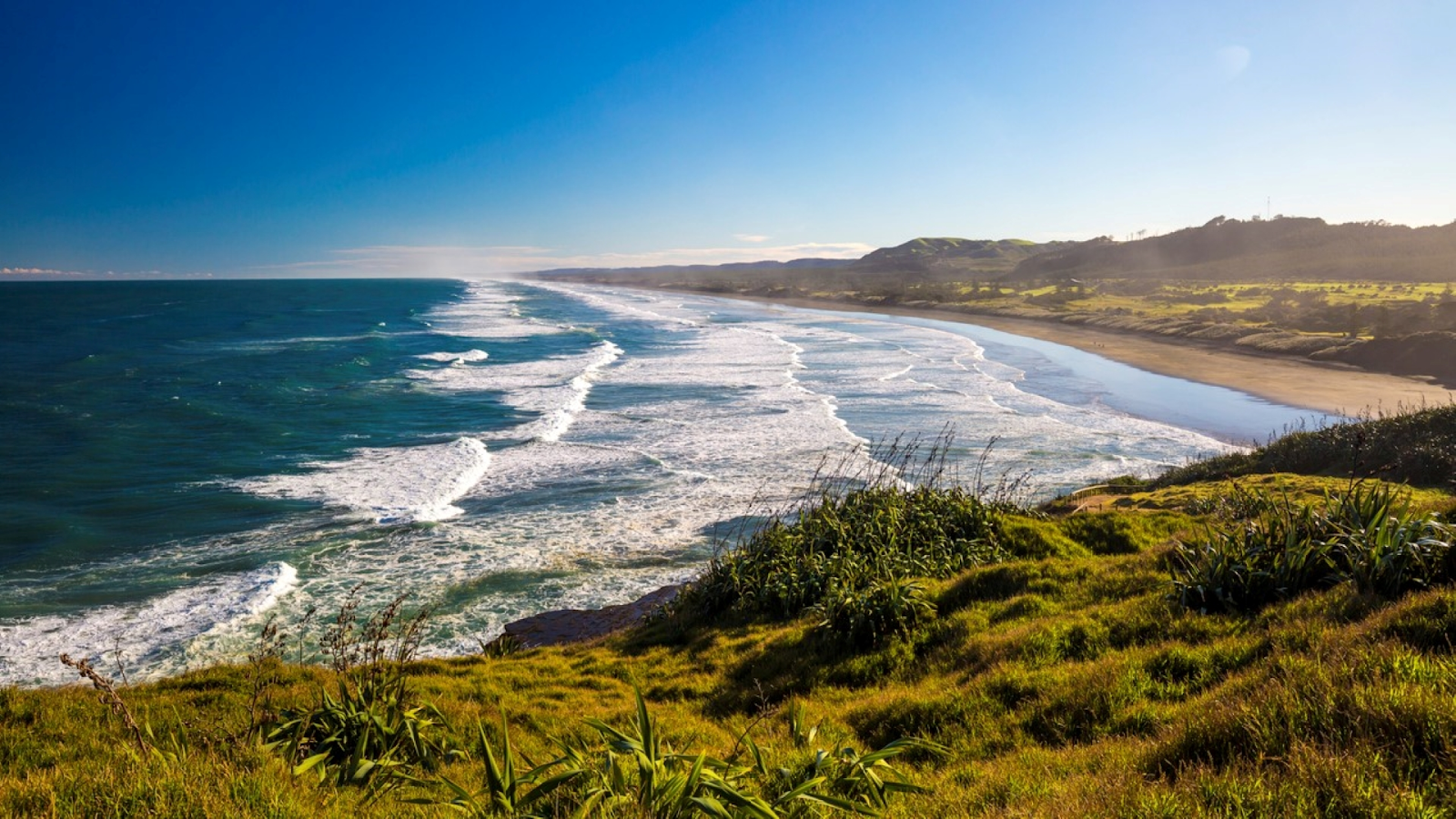
*Optional Field Trips to Muriwai Coastal Environment and Pasifika Festival
Level 3 German
13GERYear 13 German is the final stage of language learning at Pakuranga College and is intended for students who have typically studied German from Year 10 through to Year 12. This advanced course builds on prior knowledge and prepares students to communicate with greater fluency, accuracy, and independence across a wide range of real-world and abstract topics.
It encourages students to express and justify their opinions, engage critically with different perspectives, and interact confidently in spoken and written German. The course also strengthens cultural understanding and global awareness.
Language Level Expectations - To succeed in this course, students are expected to demonstrate:
- A solid command of German grammar and sentence structure, including correct word order and case usage
- Mastery of all common tenses (present, perfect, simple past, future, pluperfect) and the most frequently used 150 verbs
- Familiarity with different moods: indicative, subjunctive (Konjunktiv II), imperative, and conditional
- A broad and flexible vocabulary base across a range of familiar and unfamiliar contexts
- The ability to write extended, opinion-based texts with minimal external support
- The ability to understand and respond to longer spoken and written texts, including news articles, podcasts, reviews, and opinion pieces
Course Themes and Topics - Themes may vary each year but often include personally meaningful and socially significant topics such as:
- Cultural identity and migration
- The impact of technology and social media
- Global environmental issues
- Youth culture, health, and wellbeing
- Education systems and future pathways
- Contemporary issues in German-speaking countries
This course not only supports students in gaining their NCEA Level 3 qualification, but also equips them with advanced communication skills, intercultural competence, and a global outlook. It provides a strong foundation for tertiary study and future careers in fields such as diplomacy, international business, tourism, teaching, and translation.
Level 3 Health Studies
13HSTYou will learn to:
- Analyse the impact Methamphetamine has on the youth in New Zealand
- Research a range of health practices used in New Zealand to treat particular health conditions
- Explore contemporary ethical dilemmas that influence health and wellbeing
- Analyse an international health issue through the lens of poverty
Level 3 History
13HISIn History you will unlock the stories of the past, helping you to go out into the world and make meaning from what you see. You can think of History as providing you with four keys. First, the key to exploring how past events can be argued about, specifically focusing on the debate about whether strategic bombing or the use of the atomic bomb was justified in the Second World War. Second, the key to doing your own historical research on a topic that interests you. Third, the key to exploring ideas such as personal freedom and trying to make society better that are at the heart of understanding the Prohibition of alcohol in 1920s America. And the last key to critically engage with evidence and with the lives of historical characters so that you are enriched as a reader, writer and citizen.
Level 3 Japanese
13JPNYear 13 Japanese is an advanced language course that gives students the opportunity to further develop their ability to communicate more confidently and effectively in Japanese. Students will learn through a range of topics that further develop their knowledge of modern and traditional Japanese culture and society as well as exploring more global themes present in everyday society, allowing them the opportunity to further develop their skills in expressing and justifying ideas and opinions and challenging those of others using more complex language.
The course offers 18 NCEA Level 3 credits, including two internal assessments (speaking and writing) and two external assessments (listening and reading). As a University Entrance–approved subject, Year 13 Japanese supports students in gaining language proficiency for future academic and career pathways, while deepening their understanding of Japanese culture and global perspectives.
Language learning at Year 13 will be an enriching experience that will allow you to access the language and culture of Japan, as well as developing your awareness and connections to a more global perspective along the way. Learning a language will broaden your career horizons and allow you to work anywhere in the world with the skills you have developed through your language learning journey.
Level 3 Mathematics with Calculus
13MTCIf you enjoy a good maths challenge and want to know how it connects to the real world, this is the course for you.
You’ll dive deeper into trigonometry, using it to model real-life situations and tackle some tricky identity proofs. You’ll also meet the mysterious ‘i’, the square root of -1, and use it to solve equations that just aren’t possible with regular numbers.
We’ll build on your understanding of differentiation, applying it to more than just polynomials — now including logarithmic, exponential, and trigonometric functions. You’ll learn how to optimise functions to find maximums and minimums (like profits or speeds), and how to model situations where things are changing, like speeding cars, chemical reactions, or population growth.
You’ll also discover integration, the reverse of differentiation, and how it helps explain things like how far something has travelled, how fast something is decaying, or even how quickly a coffee is cooling down.
This course sets you up well for university maths, physics, or engineering — or if you’re just someone who wants to get to the bottom of how the world really works through maths.
Level 3 Mathematics with Statistics
13MTSIf you enjoy analysing graphs and data then this course is for you. This course will look at interpreting data and making conclusions or predictions based on the models you have used.
In 13MTS, students will be expected to learn and apply skills in the following areas:
- Statistical Inference - Using the statistical enquiry cycle to make a formal inference given a multivariate data set.
- Time Series - Using the statistical enquiry cycle to investigate time series data and produce a report.
- Probability Concepts - Comparison of true and experimental probabilities, conditional probabilities, probability distribution tables and graphs, two-way tables, probability trees and Venn diagrams.
- Probability Distributions - Applying Poisson, binomial, triangular, rectangular and normal distributions, comparison of true probabilities versus distribution of model estimates.
- Bivariate Data - Use of statistical enquiry cycle to investigate the relationship between two numerical variables.
Level 3 Media Studies
13MDSYou will learn to:
- produce a film in small groups
- develop practical filmmaking skills
- analyse new media developments
- examine media representation in New Zealand
- learn to interpret media through critical lenses
- understand genre and its relationship to society
Level 3 Music
13MUSYou will learn to:
- Perform as a member of a group on an instrument
- Analyse a substantial music work or research a topic of your choice
- Perform as a featured soloist on your chosen instrument
- Compose music or write songs
- Read and analyse musical scores (optional)
This course includes design flexibility in that students have some agency over which standards they select.
Note: as part of this course you will be expected to attend weekly lessons (provided) for your chosen instrument, and practice regularly.
Level 3 Outdoor Education
13PEOYou will learn to:
- Examine contemporary leadership principles applied while teaching junior students an outdoor skill and while tramping or kayaking.
- Participate in a Mountain Biking time trial to meet performance standards for level 3
- Apply understanding of biophysical principles such as Methods of Training & Principles of Training as well as sociocultural factors to design and evaluate the effectiveness of training programmes to improve Mountain biking performance.
- Analyse issues in safety management for outdoor survival skills in a bush setting or kayaking to devise safety management strategies.
*Please note numbers in this class are strictly limited due to staffing and trip number constrictions. Priority will be given to those who have previously taken 12PEO and then based on the chronological order of submission.
Level 3 Painting
13PAIYou will learn to:
- Develop and extend ideas, in a systematic way, through painting and drawing media.
- Apply the processes and techniques of painting.
- Explore your own ideas and theme in original artwork.
- Research artists and understand their work and ideas.
- Work independently with teacher guidance to produce a systematic body of work in response to their own proposal, thereby gaining the practical experience of engaging in project-based learning.
- Students will complete two workbook submissions for the two internals and a 3 x A1 folio board for the external submission.
Level 3 Photography
13PHOYear 13 Photography is an advanced, creative course where students develop both technical camera skills and strong conceptual ideas. Students explore how photography can be used to communicate meaning, tell stories, and respond to real-world issues and contexts.
This course is ideal for students who enjoy being creative, working independently, and developing a professional photography portfolio.
Students will learn how to:
- Research and explore cultural and social contexts, and understand how these influence photography and visual storytelling.
- Confidently use DSLR cameras and a range of photographic equipment.
- Extend and refine photographic techniques, including composition, lighting, and image-making processes.
- Use Adobe Creative Cloud (such as Photoshop and Lightroom) to edit, develop, and refine photographic work.
- Work independently on self-directed projects, with teacher guidance and feedback.
Students will complete a combination of written and practical assessments, including:
- 2X internal workbook assessments
- 3X A1 folio boards for external assessment
This course builds strong creative thinking, technical skill, and independence, preparing students for further study in photography, media, design, and creative industries.
Level 3 Physical Education
13PEDYou will learn to:
- develop your understanding and application of biophysical and biomechanical principles through both practical and theoretical learning experiences.
- utilize biophysical principles such as Methods of Training & Principles of Training as well as sociocultural factors to carry out training programmes for a specific event, then evaluating their effectiveness.
- apply contemporary leadership principles through practical leadership experiences at Farm Cove Intermediate and then examine their effectiveness.
- analyse and perform a front somersault by applying biomechanical principles to improve technique and performance.
- participate in a wide range of sports and physical activities, developing the skills, strategies, and techniques required for successful participation & performance.
Level 3 Physics
13PHYLevel 3 Physics is designed to prepare students for university study in engineering and other STEM-related fields. Building on the foundations of Level 2 Physics, this course explores more advanced concepts in mechanical systems, waves, and electrical systems. Students are expected to have completed level 2 Physics to enrol for this course.
You will learn to:
• Carry out a guided practical investigation where you plan, take measurements, process data and analyse the results
• Identify, describe and explain physics concepts and apply them to solve problems in mechanics, waves and electricity
Level 3 Product Design
13PDTYou will learn to:
• develop a brief for an outcome to solve an issue in a given context (optional)
• create and evaluate possible solution(s) and manage risks through research, trialing, costing, and feedback.
• develop and use your conceptual design, project planning, and problem-solving skills to make your outcome.
• enhance your practical skills safely and correctly using various hand and power tools.
• trial and evaluate the fitness for purpose of your completed prototype.
Level 3 Robotics, Digital Technologies
13DTEYou will learn to:
• solve complex electrical, mechanical and computing problems
• use advanced electrical theory
• recognise and use electronic components and systems
• design and construct advanced electronic circuits using sophisticated design and manufacturing software
• use 3-D modelling software to design and construct advanced electro-mechanical systems
• write advanced programming for embedded electronic systems
• teach yourself by using the resources provided and and working collaboratively with other members of the class to ensure that you achieve the goals you have set for yourself.
It is highly recommended that students have passed the Y12 Robotics course before undertaking Y13 Robotics.
Students will need to have a device that is capable of running the software that is essential for this course.
Level 3 Science
13SCIThe Level 3 Science course aims to develop science and literacy skills to prepare for future careers or study. Learning includes developing knowledge and skills related to chemistry in a context, biological systems, socio-scientific issues and investigations.
You will learn to:
• research how chemical processes are impacting the environment
• carry out an independent investigation in an Earth and Space Science context
• research a socio-scientific issue for a biological and ESS context.
• study control systems that help humans to maintain a constant internal environment.
Some standards in this course are also assessed as part of 13ESS and 13BIO, so do NOT select these if you select 13SCI.
Level 3 Spanish
13SPAYear 13 Spanish is the final stage of language learning at Pakūranga College and is designed for students who have typically studied Spanish from Year 10 through to Year 12. This course builds upon prior knowledge and prepares students to communicate with increased confidence, fluency, and independence in a range of real-world and abstract topics.
Language Level expectations:
When joining this course, you will need to demonstrate:
- A solid command of general Spanish grammar and sentence structure
- Mastery of all common tenses and the most frequently used 150 verbs.
- Familiarity with indicative, subjunctive, imperative, and conditional moods and their use.
- A broad vocabulary base, covering general topics.
- The ability to write opinion texts without too much external support
- Comprehension of longer spoken and written texts, including news reports, reviews, and opinion articles
This course not only supports students in gaining NCEA Level 3 qualifications but also equips them with valuable communication skills, cultural insights, and a global perspective. It provides a strong foundation for tertiary study and career pathways in international fields such as diplomacy, tourism, teaching, translation, and global business.
Level 3 Sports Leadership
13PSLYou will learn to:
- Develop knowledge of how to develop an exercise plan to improve personal fitness
- Perform and improve practical skills in a variety of physical activities and sports
- Develop knowledge around the roles and responsibilities of a coach
- Learn how to plan coaching sessions in a chosen sport which will be used practically when coaching our junior students.
Level 3 Te Reo Maori
13MAOThis is a full year course that offers intermediate stage Māori language oral and written, for students who have already studied and completed Māori at Level 2. It is the study of language in greater depth with an emphasis on oral and written Māori. The learning is focussed around the history of te reo Māori in Aotearoa and involves researching policies and factors that have contributed to the decline of te reo Māori as well as revitalisation strategies.
There will be summative and formative assessments throughout the year.
Topics covered in the course include - Pūrākau (traditional Māori stories), Māori education in the 19th century, an overview of the decline and revitalisation of te reo Māori since the 1800’s.
Level 3 Technology Fabric
13TFAThis course focuses on refining the creative and technical skills required to pursue a career in the design industries .
You will learn to:
• research, illustrate, plan and develop 2 garments that aligns with your portfolios
• testing and understanding fabric performance and properties
• develop mock-ups and prototypes to test against your intended theme
• creative freedom to choose own design theme for product development
• learn complex sewing skills and textile techniques
• develop products and portfolios that could focus on a variety of design related subjects, eg costume design, fashion design, sustainable fashion, interior design
• scaffold and translate into different areas of tertiary study and is a UE approved Level 3 course.
Level 3 Tourism Studies
13TRSOver the year, students will build a strong foundation in travel and tourism, focusing on New Zealand, Australia, and the Pacific Islands. They will learn to identify key destinations, attractions, transport options, and travel information relevant to each region. Students will also explore how the New Zealand travel industry works with suppliers to book travel products. Through this, they will develop practical skills in presenting travel information to customers. For those who complete the core standards, an extension unit will deepen their knowledge of global travel geography, including IATA regions, time zones, and seasons, and how these affect international travel.
Te Ao Haka (Year 11 - 13)
TAHThe senior Te Ao Haka programme is a performance course that immerses ākonga in Māori culture, language, and traditions both historical and contemporary through haka.
In this course, ākonga explore selected Te Ao Haka disciplines such as mōteatea, waiata ā ringa, poi, haka, haka wahine, whakaeke, and whakawātea.
During each discipline ākonga will develop the skills to communicate the narrative behind their chosen composition. Students will learn to apply the relevant techniques such as wiri, rere of poi, takahi, stance, reo hāngū, pūkana, whakakai, tūwaewae, mahinga rākau, and group formations.
Through composing, choreographing, rehearsing, and presenting haka items, ākonga gain confidence in their vocal and movement abilities, deepen their understanding of whakapapa and historical context, build strong teamwork and stage presence, and bring Māori performing arts to life on stage.
You will learn to:
- Share identiy and culture through the creation and performance of waiata, dance and movement
- Explore how to perform moteatea, waiata-a-ringa, hake, poi and contemporary Maori dance
Subjects for Year 13 Students
(3EL) English Language Learners
3EL3EL is a multi-level ESOL class designed for Year 9 to Year 13 students who have a basic understanding of English. This course helps learners strengthen Academic English and further develop their listening, reading, writing, speaking, grammar, and vocabulary skills.
3EL provides ESOL instruction four lessons per week. Students have the opportunity to move up a level at the end of Terms 1, 2, and 3, depending on their progress and achievement.
There are three possible pathways for students after 3EL:
a) Mainstream English (with approval from the ESOL teacher, Head of ESOL, and Head of Faculty for English)
b) 4EL
c) 4EAP
To advance to the next level, students must consistently score at least 80% on the End-of-Term Summative Tests. Near the end of Term 3, students will also sit a skills-based assessment to evaluate their overall English proficiency. This assessment helps determine whether they will enrol in 4EL, 4EAP, or transition fully to mainstream English in the following year.
(4EL) English Language Learners
4EL4EL is a multi-level ESOL class for Year 10 to Year 13 students who already have a basic command of English. This course focuses on developing students’ Academic English while further building their skills in listening, reading, writing, speaking, grammar, and vocabulary.
Please note that while this class offers opportunities to complete some NCEA Level 2 and Level 3 standards, the Literacy (LIT) standard is not included in this course.
The total credits gained from this course are 20 credits.
Please see below for a thorough breakdown.
=> NCEA Level 2 credits -> 15 credits
=> NCEA Level 3 credits -> 5 credits
4EL provides ESOL instruction four times per week. Students have the opportunity to move up a level at the end of Term 1 if they achieve a grade of Merit or Excellence in the US31004 Reading Assessment.
There are two possible pathways for students after 4EL:
a) 4EAP
b) 5EL
To advance to the next level, 4EAP, students must consistently score at least a Merit or Excellence in all the internals offered in this course, especially in the writing task.
Please note, in Term 4, the HoD of ESOL will identify Year 11 and 12 students to complete the US30511 and US30507 outside of classtime as a chance to gain LIT. If a student has successfully gained LIT with the HoD, the student will be able to enter the 5EAP class in the following year.
(5EAU) English for Academic Purposes
5EAU5EAU is an ESOL class that provides ESOL instruction four times per week for Year 13 students who have completed the 5EAP course. This course focuses on developing students’ Academic English while further building their skills primarily in reading, writing, speaking, grammar, and vocabulary.
Please note that this class offers opportunities to complete some NCEA Level 2, Level 3 and Level 4 standards and a chance to gain University Entrance (UE) credits.
The total credits gained from this course are 17 credits.
Please see below for a thorough breakdown.
=> Literacy (LIT) -> 6 credits
=> University Entrance (UE) -> 12 (6 Reading and 6 Writing)
=> NCEA Level 3 -> 11 credits (The level 4 standard counts as Level 3 NCEA credits)
=> NCEA Level 2 -> 6 credits
13 Numeracy
13MTNThis course is designed to provide students with Numeracy requirements for NCEA, via achievement standards and/or co-requisites.
This course is not suitable for students who have already gained NCEA Numeracy.