
Thames High School
Waikato
Thames High School Curriculum
126 subjects available for 2026/2027.
Subjects for Year 8 Students
Year 9 English
9ENGStudents learn to use and respond to English language and literature through personal reading, writing, speaking, listening, viewing and presenting This is done throughout the year using novels, non-fiction, poetry, film and short stories.
Year 9 Mathematics
9MATMathematics and Statistics
Main Topics: Whole Number, Fraction, Decimals, Integers, Measurement, Probability, Algebra, Statistics and Geometry.
Year 9 Science
9SCIYear 9 Science involves studying four strands of science which including Biology Chemistry, Physics and Space Systems.
Biology includes studying life and the taiao and the life of plants and animals.
Chemistry includes studying the nature of science, the nature of mixtures and matter.
Physics includes studying the importance of waves and energy and its transfer.
Space systems includes studying astronomy, the soalr system, eclipses and Matariki.
Year 9 Social Studies
9SSTYear 9 Social Studies
Explore and find out about Aotearoa/New Zealand Histories, influential people and how we fit into the world.
Year 9 Te Reo Māori
9MAOTe Reo Māori
Subjects for Year 9 Students
Creative Materials (Y10)
10CREMATCome and work with fabric and other soft materials to create items you have helped to design. This course is largely driven by you, so you can develop your own ideas and passions whilst learning skills to last a lifetime. Garment/ clothing construction using commercial patterns, tie-dyeing, plushies (toys), sports bags and gifts and a look at local New Zealand fashion trends are just some ideas. We will have the chance to look at up-cycling and repurposing fabrics. If you enjoy being creative, this is the course for you. This course builds on the knowledge you started to gain in Year 7 and 8.
Projects are yours to keep.
Materials Processing - Design and build a solution/outcome/project (Y10)
10MATPRDo you enjoy designing and building things? Do you want to know more about how things work and how to fix them? Do you enjoy solving problems? Do you want to learn how to use tools and machines and build your confidence in using them? Are you interested in exploring or taking a path into the trades or design careers. If so then this is the course for you.
You will be given several challenges to solve which will teach you about a range of materials, construction methods and procedures. You will learn how to work safely in a workshop environment and follow the necessary health and safety procedures when using tools and machines.
You will then design and make a bluetooth speaker
This will involve researching information, creating possible solutions, selecting the most appropriate one, developing your idea into a final design and then making it. This project can be for yourself or others.
Materials are not just limited to wood or metal; a range of plastics, composite and electrical materials can also be used.
You will also learn about drawing communication methods and use Digital Technology to communicate your ideas.
This is a two term course.
Te Reo Māori Level 1
MAO1Te Reo Māori Level 1
Students who take Te Reo Maaori at Level 1 will learn and explore:
- the impact of events before 1970 on the vitality of the Te Reo Maaori and draw some understanding about their responsibility for the vitality and sustainability of the language.
- some of the Māori principles embedded in the language and try to make connections between language and Maaori Tikanga.
Student will also learn about:
- features of oral language fluency and fluidity.
- to identify key language features that help with communication in Te Reo Maaori.
These key ideas will be explored in conjunction with units of learning through out the year.
Te Reo Māori Level 2
MAO2Te Reo Māori Level 2
Students who take Te Reo Māori at Level 2 will learn and explore:
- the impact of events before 1970 on the vitality of the Te Reo Maaori and draw some understanding about their collective responsibility for the vitality and sustainability of the language.
- communicative ideas using Māori principles in the language.
- understanding of the connections between the language and cultural practices to relevant contexts. some of the Māori principles embedded in the language
Student will also learn about:
- relate features of oral language fluency and fluidity to relevant contexts.
- a variety of language features to communicate.
- correct language patterns to the relevant contexts.
- how to select the correct use of words and structures for context.
These key ideas will be explored in conjunction with units of learning through out the year. Assessment dates will be entered in at the beginning of the school year.
Te Reo Māori Level 3
MAO3Te Reo Māori Level 3
The aim of this course is to extend skills and knowledge acquired to a level of proficiency that will enable students to interact nearly fluently with native speakers.
As a learner of Te Reo Māori at level 3, you will:
• apply correct language patterns and skillfully select and use a variety of words and structures for context.
• exemplify oral language fluency, fluidity and select a variety of communication strategies.
• communicate ideas using a variety of Māori principles in the language.
• exemplify understanding of the connections between the language and cultural practices.
• critique a language revitalisation strategy.
• exemplify their commitment to the vitality and sustainability of the language.
Year 10 Art
10ARTWe live in a world defined by images. The art that we produce is inspired by our knowledge and understanding, experience, culture and our willingness to explore new ideas and concepts. Art involves critical thinking and practical creativity, making connections to established practice and interpreting experiences, feelings and ideas. Through combining elements of these things you will be able to become more confident in your ability to create, communicate and collaborate.
Year 10 Being Enterprising
10ENTLove Business? Do you want to organise a small business? If the answer is yes, then this is the course for you.
Taiohi in this class work together in groups to create a small business with the assistance of a local business mentor. They will look at what a business is, different types of businesses and why someone might go into business. They will then complete market research, using a survey, looking at potential customers, competition, the external environment and the potential product. Taiohi then look at the financial side of the business, identifying resources and costing out their products. They will then design a manufacturing plan, using the different skills of the Taiohi in their groups. Once the Taiohi have been to the market, they will then complete a financial report, including GST, net profit or loss before completing a statement of Financial Performance.
The benefits of this class not only includes a sound knowledge of how a business operates, but also involves the community in our school by way of having mentors work with the Taiohi. Both the mentors and Taiohi enjoy this contact and find it rewarding.
Year 10 Digital Financial Literacy
10DFLThis course is a required one-term course for all Year 10 students.
In this class, we will combine skills of digital literacy and financial literacy.
Get to know how to understand and plan for earning, saving, budgeting and spending your hard earned money. Gain an understanding of Kiwisaver, payslips, tax, debt and investing.
Focus on Personal Budgeting and Spreadsheet use and understanding.
Hints and tips to enable you to use digital technologies to help completing the tasks in a more efficient manner.
Year 10 Drama
10DRAThe Year 10 Drama course is built on practical experimentation with a wide range of activities. Students will work in Group Devised, Paired and whole class exercises. They will learn to manipulate voice, movement, physical character and space through mask, improvisation, game playing and simple script exercises. There are extension opportunities to begin working with Lighting and Set Design as well as extending their interest into public performances at events and festivals with the Thames High Troupe.
Year 10 English
10ENGThis course looks at developing the skills of reading, writing, speaking and presenting. These will be integrated throughout the year using (novels, short stories, poetry, speeches and film), as well as completing an end of year project.
Students will also participate in the Digital Exams offered twice a year, which are compulsory for NCEA Level One.
Achievement Standard 32403 - Read written texts to understand ideas and information - 5 credits
Achievement Standard 32405 - Write texts to communicate ideas and information - 5 credits
Year 10 Food Technology
10KAIThis is an interesting and fun course where you will learn to select, prepare and creatively present a variety of food and beverage products to suit different occasions. To be successful with Food Technology over two terms you will work together in your kitchen groups to prepare and serve creative and tasty food and beverage products that others will love! You will learn about food and nutrition and reflect on ways that food contributes to an overall sense of wellbeing and hauora.
Year 10 Food Technology, semester course (2 Terms) Hot Topics include:
- Working Safely with Kai
- Working together as a 'team' in your kitchen group
- Making your own food choices that enhance personal hauora and wellbeing
- Culinary Arts celebration kai themes
The Culinary Arts themes are selected on student interest and whole class negotiation and include: class competition, party drinks, cake decorating, garnishing and knife skills, jelly making, ice cream making, food fusion, gingerbread house, Matariki kai.
Year 10kai leads to Food and Hospitality at NCEA Level 1.
There is an expectation that students will work safely with the equipment and are willing to work respectfully together in groups, following our school Tikanga/Values.
Year 10 Health & PE
10HPEHealth / PE
Year 10 Kapahaka
10KAPTe Ao Haka Year 10
Te Ao Haka explores the many cultural aspects of Kapahaka through performance, tikanga and Te Reo Māori. It encourages creativity through song writing, music, choreography and story telling.
Students who choose this course have an interest or are keen to learn about Kapahaka, Te Reo Māori and Tikanga Māori. If you choose this option, you will be a part of the School's Kapahaka Rōpū.
Te Ao Haka will offer "Te Ao Haka" Achievement Standards.
This option may be taken for one or two semesters, so it can be selected twice It is preferable to complete a full year.
Year 10 Languages
10LANGYear 10 Language Courses are studied online. As this is an online course, prior approval will be needed before enrolling. Students need to be aware that this course will be done entirely online and they will not have one-on-one teacher support, other than their online tutor.
Students can choose between French, Spanish, Japanese, German and Chinese, and should note their choice in the required NOTES section.
Other languages can also be chosen, but these will require a conversation with Ms. Sawyer.
Students will complete a full year of study at an introductory level. Time will be provided in their timetables for them to work on their language-based studies.
Students will attend a zoom lesson with their eTeacher. This one hour per week lesson may clash with another subject, which will mean students will miss an hour per week of that subject's class time.
NOTE THAT IF YOU SELECT AN ONLINE LANGUAGE, YOU WILL ONLY SELECT TWO OTHER OPTIONS. AS A FULL YEAR COURSE, AN ONLINE LANGUAGE STUDY TAKES UP TWO SEMESTERS OF OPTIONS.
Year 10 Mathematics
10MATMathematics
Main topics studied: Trigonometry, Measurement, Geometry, Probability, Ratio, Algebra, and Statistics
Extra preparation also done to sit the Numeracy CAA, which is sat usually in Term 2 and again in Term 3.
Year 10 Music
10MUSLearning the conventions of music through hands-on music-making together. We will develop theory and aural skills, and gain practical knowledge leading to performance and composition. Music Technology will be taught to support the direction of each student, and there will a focus of building skills in the first term to support an own-project in the second term.
Year 10 Opportunities
10OPPThis course offers students a range of different physical activity and sporting opportunities that are traditional and also outside of the standard year 10 core Physical Education programme. Activities may include; Squash, Lawn Bowls, Cycling, Fitness Sessions. Students will be assessed on the effort and participation during these activities and their completion of a leadership project that requires them to plan and instruct a recreation lesson to the class.
Year 10 Project Based Learning
10PBLProject-Based Learning (Year 10)**
This course offers students the opportunity to take control of their learning through project-based experiences. Students will select or negotiate a topic of personal interest, which will become the focus of their independent or group study. With guidance from teachers, students will explore their chosen topic deeply, developing research, collaboration, and problem-solving skills along the way. Emphasis is placed on creativity, critical thinking, and practical application of knowledge. By the end of the course, students will present their findings or project outcomes to their peers, gaining valuable presentation and communication experience.
This course encourages student ownership of learning, fosters self-motivation, and helps develop skills essential for success in higher education and future careers.
Year 10 Science
10SCIYear 10 Science covers four strands which include Biology, Chemistry, Physics and Earth Systems.
Biology studies the basis of heredity and the life of microbes.
Chemistry studies the nature of the atom, the basis of reactions, fuels and climate change.
Physics studies electricity, magnetism, forces and motion.
Earth Systems studies volcanoes, earthquakes, tsunamis and rocks.
Year 10 Social Studies
10SSTYear 10 Social Studies
Exploring Aotearoa/New Zealand Histories and Contemporary Issues.
Year 10 Sport Studies
10SPTSports Studies is aimed at students interested in furthering the interest and knowledge of what makes a successful sports person and team. Students will have two practical lessons and one theory lesson a week. Practical lessons will be aimed at improving fitness levels and sporting skills as well as competing in weekly sports challenges. Theory lessons will be aimed at preparing students for NCEA Physical Education with key topics like, Methods and Principles of Training, Exercise Physiology and Sports Psychology being covered.
Year 10 Te Ao Haka (compulsory)
10TAHThis is a compulsory course for Year 10, for one term.
Through this class, students will learn, practice and perform waiata, poi, haka, moteatea.
Through Tikanga and Te Reo Māori, students will understand the importance of our local histories and present concepts through movement.
There may be an opportunity for taiohi to gain NCEA Level 1 credits.
Subjects for Year 10 Students
Design and Visual Communication Level 1
DVC1Design and Visual Communication Level 1
Design and Visual Communication is all about design. The 2 main areas that can be explored are spatial and product design.
Spatial design is about spaces, this could include: buildings, houses, landscaping set design and more.
Product design is all about design products such as the objects we use every day.
Visual communication techniques are used to communicate designs. This will start with simple sketches, hand or instrument drawings or the use of computer software and then developed into a final outcome.
The way this course will work is that students will have the opportunity to use a design process and design either a spatial or product design. They will generate drawings using a variety of methods to communicate the design and its details.
All of the work is done in class during the year and some of the work is marked by the teacher internally and some is then put in a portfolio and sent away at the end of the year for external marking.
All of the standards offered and NCEA achievement standards giving the opportunity to gain achieved, Merit or Excellence credits and a Merit or Excellence subject endorsement. If Design and Visual Communication is taken at Level 3 then this is a university approved subject and can be used a one of the subjects required. Excellence endorsements can mean that automatic entry is achieved to many of the design schools in the country
The use of computer aided design is taught and encouraged as a method of communication
Students will work on a formative design brief in the first term, developing skills in freehand sketching, isometric drawing, orthographic drawing and the use of a computer aided design program: On-shape . This is a cloud based program which can be easily access from home. Sketch-up may also be used
An investigation into a well-known designer will help to influence ideas for the project.
In terms two and three, another brief will build on the skills acquired in term one. Students will work with more accuracy and precision as well as showing a fuller understanding of the design process. The final term should be tidying up the required drawings for a portfolio which is externally assessed standards.
Design briefs used successfully in the past have included ‘Tiny home design’ and ‘design a homework station, kitchen or BBQ space’
Digital Applications Level 1
DAP1Digital Applications Level 1
Practical computing for school and the workplace, based on Unit Standards:
This course provides students with basic practical skills over a range of essential computer applications. These practical skills provide foundational knowledge that students can use to build up a Digital Capability portfolio. Students will have the opportunity to enhance learning across their other school subjects. Our programme can be adapted to individual student interests and needs.
Skills covered: Word Processing, Spreadsheets, Electronic Presentations, Website Creation, Image Manipulation/Creation and Personal Budgeting.
Optional assessments may be offered where necessary.
Digital Technologies Level 1
DTC1Digital Technology Level 1
This course is based on Achievement Standards and can receive an NCEA Endorsement.
Digital Programming & Computer Science - Learn to write a program that collects data from sensors and provides information, testing and debugging.
Digital Media – Developing an understanding of digital imaging and web design. Create a website using HMTL/CSS. Images resampled to be fast loading and appropriate size using Photoshop/Canva.
Digital Information – Understanding the basic concepts of word processing, spread sheets, databases, electronic presentations and the integration of applications. Ensuring the document is of a high standard including text formatting, page formatting, merge documents, accuracy, and consistency.
Usability - What does a website or computer application do to make it easy for the user? Describing and explaining the Human Computer Usability characteristics to allow users to feel comfortable to use a program or application.
Drama Level 1
DRA1Level 1 Drama is a supportive, playful environment for students who want to celebrate/develop their confidence, their creativity and communication skills. Students have the opportunity to choose between Drama Achievement Standards and Performing Arts Technology Unit Standards.
By physically engaging with form and content, our akonga build confidence in themselves, improve their performance skills and learn personal and interpersonal skills such as cooperation, communication, self-discipline and creative problem-solving. This mahi gives them the tools to represent their ideas, to engage with new ideas and explore their cultures and their histories.
The programme offers first hand experiences of Drama related professions and encourages students to form professional relationships with industry professionals and potential employers. Wherever possible, students will have opportunities to perform in and out of school and to attend professional theatrical productions as a part of their coursework.
Alternative units in Performing Arts Technologies are available for students with an interest in this aspect of Theatre. These include units in Props and Scenic Elements, Lighting, Sound, Costuming, Makeup, and Working at Heights.
Fabric and Design Technology Level 1
FAB1Fabric and Design Level 1 Materials and Processing Technology
If you love anything to do with creating textile items , coming up with great ideas, designing, sewing, crafting in general or you are a beginner wishing to start this journey, this is a course for you.
Materials and Processing Technology is a hands-on, creative subject that encourages you to explore through the design and creation of fit-for-purpose outcomes using textiles and associated products .
You may be interested in creating clothing, accessories, bags, pet garments, pet beds, soft furnishings, toys... the choices are infinite.
You will develop knowledge about materials, techniques, and processes which are built in to their application and use. You will learn to plan projects and develop specifications through design concepts and the use of briefs, creating outcomes that address a need or opportunity.
You will cultivate life-long practical skills and learn to incorporate collaboration into your technological practice and develop an understanding of sustainable practices through research and application.
As you study, you will also explore the importance of tikanga Māori and traditional Pacific practices to understand how technology outcomes impact on people, hapū, and iwi.
Health and safety, which is integral to the practice of this subject, will also be covered.
Finally, you will learn to use your knowledge, skills, and understanding to determine and evaluate the fitness for purpose of their outcomes.(product)
-------------------------------------------------------------------------------------------------
Materials and Processing Technology allows ākonga to develop ways of thinking through experience alongside soft skills that can lead to a wide range of pathways. It allows ākonga the freedom to bring their entire, authentic selves to the outcomes they develop. They will explore their creativity, follow their passions, and flourish as technological designers, creators, and innovators, as they take these skills with them into their future.
Materials and Processing Technology is an exciting, innovative, and creative subject where skills and knowledge are woven together to provide ākonga with transferable skills that can be applied to every aspect of their lives. Ākonga will engage meaningfully in the subject to help them become who they want to be, providing space to explore their interests and aspirations, and discover new ones.
Credits available :16
Food and Hospitality, Level 1
HOS1Food and Hospitality Level 1
This course is aimed at akonga students, whose goal is to one day enter the food industry or simply develop life skills that will enhance personal hauora and wellbeing. You will learn a variety of skills and knowledge related to the food and beverage sectors of the food industry.
Food and Hospitality, is internally assessed, and evidence for each topic is collected over a period of time and will include practical and knowledge assessment. There will be checkpoints throughout the year to monitor akonga student progress and give feedback, there is an expectation that akonga students complete up to date written assignment and practical skills to be ready for each checkpoint. There are several internally assessed practical tasks for each Unit Standard and these will be introduced ongoing throughout each Term as we work through the knowledge components.
There is an expectation that students will work safely and respectfully following our school Tikanga/Values.
French Level 1 OLN
FRE01In Level 1 French there we focus on both written and spoken French. It builds on the basic reading, speaking, writing and listening skills acquired in the Beginners’ French course. The focus is put on familiar daily situations. By the end of this year, learners can interact in familiar and social situations and cope with some less familiar ones.
Furniture Making/ Materials Processing Level 1
FUR1Furniture Making Level 1
This is a multi level course using Building and Construction Industry Training Organisation Unit Standards, and New Zealand Qualifications Authority Technology Achievement standards.
Students develop practical making skills and make a project mainly out of wood. Credits are gained by complete theory and practical standards.
This Course will use the new New Zealand Qualifications Authority Technology standards and a Building and Construction Industry Training Organisation Safety Unit Standard
The years course is based around a design and build project. There will be several initial starting projects which will be modified and personalised. Some areas include:, storage, leisure and pieces of furniture.
If a student wishes to design and build their own project they can negotiate this with the teacher.
If the 2 internal Achievement standards and the external are achieved then an Achieved, Merit or Excellence subject endorsement can be gained.
Students will learn a wide range of skills and techniques in the area of using materials to design and build a materials and processing project.
Safety is of high importance and students who take this class must be able to work independently and safely in a workshop environment.
If you have not taken this course in Y9 or 10 please have a chat with Mr Slaney about choosing this course.
Geography Level 1
GEO1The study of humans interacting with their taiao/environments including the physical and the cultural environment.
The plan for this programme is to start with the local area, exploring the natural and cultural features of the landscape past and present, and how people have interacted with that landscape. This is expanded to a national scale through the study of settlement patterns in Aotearoa New Zealand.
Physical landscapes and the forces that shape them are viewed through both a mātauranga Māori and scientific lens, with human interaction now and in the future illustrating consequences and challenges.
The course concludes with a more outward-facing perspective looking at how relationships with other countries have shaped Aotearoa New Zealand’s cultural diversity and the country’s position in the global sphere.
Main topics:
Introduction to Geography:
- How can maps represent natural (physical) and cultural (human) features of the world?
- Explore the natural and cultural features in the local area.
Settlement patterns:
- Current population distribution of Aotearoa New Zealand.
Geographies of Rivers:
- Awa and Rio: Why are rivers significant to flourishing societies?
Life’s a Beach:
- How are coastal environments formed?
Volcanic Landscapes:
- Global distribution of volcanoes.
Aotearoa New Zealand’s global connections:
- Relationships and links with other countries.
Hauora Level 1
ORA1Hauora Level 1
Hauora (well-being) encompasses the 4 different dimensions of health: Taha Tinana (Physical), Taha Wairua (Spiritual), Taha Hinengaro (Mental/Emotional) and Taha Whānau (Social). This course offers a wide range of content covering all of these aspects of Hauora, and an assessment to complement the learning within the course. All content will have a central focus on well-being and how we can focus on our own health, as well as the health of those around us.
Health Education Level 1
HED1Health Education Level 1
Health Studies is about engaging in three key areas of learning — Food and Nutrition, Mental Health, and Relationships and Sexuality in relation to the hauora of individuals, whānau, and communities. It is about the complex interconnections between the physical, mental, emotional, social, and spiritual dimensions of people’s lives. Ākonga can explore Māori and Pacific knowledge bases, values, and practices related to hauora. They can learn about hauora as a body of knowledge, and about models of health such as Te Whare Tapa Whā and Fonofale. Through Health Studies, ākonga can learn about how tiakitanga, manaakitanga, and whanaungatanga contribute to the hauora of individuals, whānau, and communities. By engaging in this subject, ākonga develop further understanding of diverse cultural perspectives and experiences of hauora. They can learn about how actions can enhance hauora, as well as exploring ways to manage change situations that impact it. They learn that hauora is more than a matter of personal choice and individual responsibility. In this subject, ākonga develop understanding of current issues related to food, nutrition, and health, and learn how a range of factors influence hauora. This learning helps ākonga develop strategies to strengthen their sense of identity and self-worth, and foster healthy relationships.
History Level 1
HIS1History Level 1
This subject gives the student the necessary skills and knowledge to continue in Level 2 History. The main focuses of this subject are Black Civil Rights in the U.S.A, 20th Century History Research and the Treaty of Waitangi.
Black Civil Rights in the United States: we will look at this movement from its origins of slavery, its popular non-violent protest method and the successes and difficulties faced by African Americans. We also examine leaders and their motives, such as Martin Luther King Jnr.
Te Tiriti o Waitangi - Learn about the most important document in NZ History. How did our ancestors arrive in NZ and why did there need to be a treaty? We will learn about how the treaty has affected the lives of all New Zealanders over the past 180 years.
All throughout the year we will practice source analysis for the external examination.
This course has 4 standards attached however students will only complete 3. The 3 standards will be confirmed at the beginning of Term 1, 2024
Horticulture Level 1
HTC1Horticulture Level 1
In this course, which has a strong practical component, we cover the appropriate tools, techniques and materials used in the planting and maintenance of plants grown in an outside area and in a greenhouse. The design of landscapes is also covered.
Topics and Key Concepts
Topic
Key Concepts
- Practical investigation
- good experimental design
- accurate experimental work
- appropriate reporting of experimental work
- Growing plants from seed in outdoor plots
- plot preparation
- appropriate planting techniques
- care for young plants and maintenance of plots
- maintenance of logbooks to record work
- Identifying containers, etc. used in propagating plants
- Growing plants from seed in containers
- familiarity with equipment used in plant propagation
- familiarity with materials used in plant propagation
- familiarity with common plants used in plant propagation
- appropriate planting techniques
- care for young plants and maintenance of growing areas in the greenhouse
- maintenance of logbooks to record work
- Design a landscape plan
- Understanding of user requirements
- use of appropriate symbols
- appropriate design of a stated landscape plan
Japanese Level 1
JAP01L1 Japanese
Students will learn the required content for Level 1 Japanese through creating a promotional video for their school.
Topics include:
- Location and make-up of the school (buildings, garden, description, student/teacher numbers, services offered, uniform) Where students live and how they get to school.
- An event on the calendar e.g. Sports day - What events you entered, how it was, what you/others wore
- Subjects offered, teachers, what you learn, comparisons with Japan
- School day - timetable, sequencing
- Lunchtime activities, food (school lunch vs bringing your own)
- What you’re allowed to and not allowed to do (cf with Japan)
Mathematics with Algebra L1
MTA1This course involves the study of a range of topics in Mathematics from Number and Measurement to Graphing and Algebra. Overall, Algebra will be infused into all topics to improve Algebra skills and to expand application ability. This course is recommended for students who would like to pursue study in Science, especially Chemistry and Physics, as well as more technically orientated or computer orientated careers like electrician or programmer.
As part of the course, students will be entered into 3 assessments.
There are 2 internal assessments
1. A.S. 91945 v2 Mathematics and Statistics 1.2 - Use mathematical methods to explore problems that relate to life in Aotearoa New Zealand or the Pacific
2. A.S. 91256 v3 Mathematics and Statistics 2.1 - Apply co-ordinate geometry methods in solving problems
There is 1 external assessment
A.S. 91947 v2 Mathematics and Statistics 1.4 - Demonstrate mathematical reasoning
Mathematics with Statistics L1
MTS1This course involves the study of a range of topics in Mathematics from Number and Measurement to Probability and Statistics. Overall, Statistics will be infused into all topics to improve statistical analysis skills for a range of situations. This course is recommended for students who would like to pursue further study in Social Science, especially History and Economics, as well as more community orientated careers like lawyer or care provider.
Students will be entered for 3 assessments
There are 2 internal assessments
1. A.S. 91945 v2 Mathematics and Statistics 1.2 - Use mathematical methods to explore problems that relate to life in Aotearoa New Zealand or the Pacific
2. A.S. 91944 v2 Mathematics and Statistics 1.1 - Explore data using a statistical enquiry process
There is 1 external Common Assessment Task
A.S. 91946 v2 Mathematics and Statistics 1.3 - Interpret and apply mathematical and statistical information in context
Mechanical Engineering Level 1
MEC1Mechanical Engineering Level 1
This is a workshop course with the emphasis on practical skills leading to greater knowledge and understanding of Mechanical Engineering systems and implementations. Credits are obtained by a combination of theory and practical based assessment provided through Competenz, as well as NCEA achievement standards. Successful projects in the past have include a skateboard, which when completed, students have a choice to make a project of their choice.
Music Studies Level 1
MUS1Music Studies Level 1
Students will study:
- Use music skills in a music style
- Demonstrate performance skills
- Demonstrate understanding of music in relation to contexts
- Shape music ideas to form an original composition
Students can choose from the list of topics and assessments, and can expect to complete a 15-20 credit course. Three out of four papers will be chosen by each student, and Music Technology will be incorporated into the course in order to acquire the skills needed to support their chosen papers.
Online Study Years 11 - 13
OLNOnline Study Years 11 - 13
If you would like to study an online course that is not listed here, please discuss this with Ms. Sawyer. By enrolling in this course, with approval, you may be able to take the online course you want.
Physical Education Level 1
PED1Physical Education Level 1
Movement is integral to the human experience. It facilitates a lifelong understanding of our bodies, contributes to our hauora, and allows us to live physically active lives. Movement is affected by and affects who we are, how we experience and interact with others, and our relationship to and place in society. Physical Education develops the social, emotional, intellectual, and cultural capabilities of ākonga. These capabilities inform the ways in which ākonga understand tikanga in movement contexts, provide diverse ways of participating in physical activities, and contribute to movement's wider benefits to hauora. Physical Education invites ākonga to engage with how movement affects them, those around them, and their wider communities. Ākonga recognise and understand the challenges which affect participation in movement, and respond to any movement barriers with full and active participation. Through their learning journey in Physical Education, ākonga will develop and refine their understanding of what it means to be physically educated and promote physical education throughout their lives.
Science Level 1
SCI1Science Level 1
This course involves study from the specialist areas of Chemistry, Biology, and Physics to provide students with a Science background to understand everyday Science, prepare for the workforce or to choose further study pathways (secondary and tertiary) in all specialist areas.
Science study includes demonstrating understanding of a physical phenomenon through investigation, chemical reactions and genetic variation in relation to an identified characteristic.
Science courses will be assessed to a selection of Achievement Standards, composed of 2 internal standards (11 credits) and 1 external standard (5 credits).
Spanish Level 1
SPA01L1 Spanish
As this is an online course, prior approval will be needed before enrolling. Students need to be aware that this course will be done entirely online and they will not have one-on-one teacher support, other than their online tutor.
Students will complete Spanish NCEA Level 1, credits will be offered internally through the Speech and Writing internal assessments and externally in Reading and Listening. This course deals with Spanish as used in familiar contexts. This course will deal mainly with New Zealand curriculum Levels 5 and 6 and will refer briefly to aspects at Level 7. We will cover cultural, historical and geographical elements as they arise.
Topics covered include:
- Daily Routines
- Travel
- Environment
- Healthy Lifestyles
- Future Hopes and Dreams
- The World Around Us
Te Ao Haka Level 1
TAH1Te Ao Haka Level 1
Te Ao Haka explores the many cultural aspects of Kapahaka through performance, tikanga and Te Reo Māori. It encourages creativity through song writing, music, choreography and story telling.
Students who choose this course have an interest or are keen to learn about Kapahaka, Te Reo Māori and Tikanga Māori. If you choose this option, you will be a part of the School's Kapahaka Rōpū.
Te Ao Haka will offer "Te Ao Haka" Achievement Standards.
Students doing this course will be enrolled for all standards and will be completing external standards.
Te Reo Māori Level 1
MAO1Te Reo Māori Level 1
Students who take Te Reo Maaori at Level 1 will learn and explore:
- the impact of events before 1970 on the vitality of the Te Reo Maaori and draw some understanding about their responsibility for the vitality and sustainability of the language.
- some of the Māori principles embedded in the language and try to make connections between language and Maaori Tikanga.
Student will also learn about:
- features of oral language fluency and fluidity.
- to identify key language features that help with communication in Te Reo Maaori.
These key ideas will be explored in conjunction with units of learning through out the year.
Te Reo Māori Level 2
MAO2Te Reo Māori Level 2
Students who take Te Reo Māori at Level 2 will learn and explore:
- the impact of events before 1970 on the vitality of the Te Reo Maaori and draw some understanding about their collective responsibility for the vitality and sustainability of the language.
- communicative ideas using Māori principles in the language.
- understanding of the connections between the language and cultural practices to relevant contexts. some of the Māori principles embedded in the language
Student will also learn about:
- relate features of oral language fluency and fluidity to relevant contexts.
- a variety of language features to communicate.
- correct language patterns to the relevant contexts.
- how to select the correct use of words and structures for context.
These key ideas will be explored in conjunction with units of learning through out the year. Assessment dates will be entered in at the beginning of the school year.
Te Reo Māori Level 3
MAO3Te Reo Māori Level 3
The aim of this course is to extend skills and knowledge acquired to a level of proficiency that will enable students to interact nearly fluently with native speakers.
As a learner of Te Reo Māori at level 3, you will:
• apply correct language patterns and skillfully select and use a variety of words and structures for context.
• exemplify oral language fluency, fluidity and select a variety of communication strategies.
• communicate ideas using a variety of Māori principles in the language.
• exemplify understanding of the connections between the language and cultural practices.
• critique a language revitalisation strategy.
• exemplify their commitment to the vitality and sustainability of the language.
Visual Art Design Level 1
VAD1Visual Art Design Level 1
This course has a strong digital focus and explores integration and experimentation using mixed media photography and illustration in an art design context. Students will explore and artistically respond to concepts around whakapapa, whakawhanaungatanga, Turangawaewae and what it means to be a kaitiakaitanga. Students will learn how to use a SLR camera, Photo Shop skills, and study Contemporary and historic New Zealand artists and ideas. This course lays a solid foundation to level 2 and 3 design and photography and supports pathways outside of school in marketing, internet design, teaching, communication and management.
You can only take either Visual Art or Visual Art Design, you cannot take both.
Visual Art Level 1
ART1Visual Art Level 1
You will develop practical skills in using a range of materials and processes. You will develop your understanding of art and artists within an Aotearoa context and use this knowledge to create increasingly complex images of your own. You will also be challenged and encouraged to make images that reflect the way that you feel, think and experience the world as you see it.
To see examples of work go to this link: https://thameshighart.weebly.com
Students who choose this course will not be able to take Visual Art Design Level 1. Students who choose Visual Art Design Level 1 will not be able to take this course.
Subjects for Year 11 Students
Biology Level 2
BIO2Biology Level 2
This course involves study of the key concepts of Biology to enable students to choose further study pathways in this specialist area.
Biology study includes Ecology, Genetics, Cell Processes, Bio Validity and Adaptations. The course is a prerequisite for L3 Biology and required for entry into University and Polytechnic Course pathways.
This course will be assessed to a selection of Achievement Standards, both internal and external, with students having the opportunity to gain up to 18 credits at L2.
Business Studies Level 2 OLN
BUS02L2 Business Studies
As this is an online course, prior approval will be needed before enrolling. Students need to be aware that this course will be done entirely online and they will not have one-on-one teacher support, other than their online tutor.
NCEA Level 2 Business Studies programme is taught in a thematic approach. This means that you will learn about aspects of Business Studies in a way that allows you to make connections between topics. It means that some content within one unit could then be assessed as part of an internal assessment but other aspects will be assessed later within an external examination paper. You will be given clear guidance about the content and requirements of all assessments but should ask your teacher if you require any further clarification.
This course provides students with a more detailed look at Business. Students will explore concepts relating to the internal operations of a large business, such as business management, human resources, business formation and functions of business. They will also investigate how businesses respond to external factors, such as political, social and legal influences
Chemistry Level 2
CHM2Chemistry Level 2
This course involves study of the key concepts of Chemistry to enable students to choose further study pathways in this specialist area.
Chemistry study includes atomic structure, analysis of solutions, types of reactions, energy changes in reactions and organic chemistry.
The course is a prerequisite for L3 Chemistry and required for entry into many University and Polytechnic Course pathways.
This course will be assessed to a selection of Achievement Standards, both internal and external, with students having the opportunity to gain up to 19 credits at Level 2.
Communication Skills Level 2
COM2English Communication Skills Level 2
This course creates a pathway for students who are interested in strengthening their English and Communication skills in practical and work-based situations.
Unit Standards include but are not limited to:
US 8824 Research a topic using oral, visual and written sources, and evaluate the research process.
US 2989 Select and Read texts for Practical Purposes
US 3492 Write a Short Report
US 3488 Write Business Correspondence for a Workplace
US 24871 Complete complex forms
Computer Programming/Game Development Level 2
CPG02Computer Programming L2
This course will start with a look at what an algorithm is and different methods we can use to search for something and sort lists of things. Then we will start on Python programming from the very basic concepts at Level 1, so don’t worry if you haven’t done any programming before.
At Level 2, we store data in lists and look at creating a GUI to control the program.
At Level 3 we look at Object Oriented Programming techniques.
This course is aimed at year 11 students with little or no programming experience but an interest in the field. Older students can develop their programming skills but need to be aware of the limited number of credits at higher levels.
We’ll use Python as our programming platform because it is free to download and use:
Level 1: Searching and sorting algorithms. Problem solving and planning how to tackle problems. Basic programming concepts: Input/Output, For and While loops, If, Data types and getting the computer to do maths. Defining methods.
Level 2: Extending programming skills with more functions, lists and GUIs
Level 3: Object Oriented Programming concepts, objects and instances
L2 Arcade Game Development
This is a level 2 Arcade Game Development course with a large programming element. This is a technically challenging course designed for students who have completed a programming course at level 1 and who enjoy coding.
Students will spend most of the year developing an arcade style game. They will write the code that drives the game. They will design and create the graphical and sound assets used in the game.
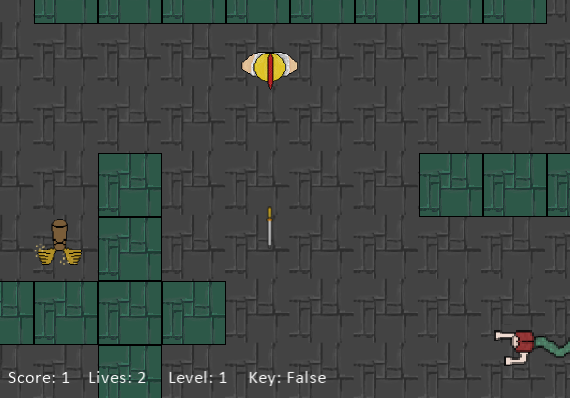
Students will create a unique arcade game that they can use to demonstrate design and coding skills during job interviews or other situations.
Students will learn to design for people and use user experience methodologies to improve their designs.
In this course we focus on fewer credits done well. We will be creating a project that we are proud of, learn resilience, learn to plan a large project and develop our problem solving skills.
Design and Visual Communication Level 2
DVC2Design and Visual Communication Level 2
This course builds on the skills learnt in level 1 or though it could be picked up at this level also
The tiny home or Product which was designed in Level 1 is taken and modified or added to using the influence of a design era. If students decide to pick this subject up at this level they will be given a house or other product design to work on.
Free hand drawing , Computer aided design, Visual communication, Presentation and use of the Design process will be developed this year.
A free computer aided design program called On-shape will be the main software used. This is a cloud based program which can be easily access from home on most devices.
Again some of the work is marked by the teacher and the rest is send away at the end of the year for external marking in a portfolio.
All of the standards offered and NCEA achievement standards giving the opportunity to gain achieved, Merit or Excellence credits and a Merit or Excellence subject endorsement. If Design and Visual Communication is taken at Level 3 then this is a university approved subject and can be used a one of the subject required. Excellence endorsements can mean that automatic entry is achieved to many of the design schools in the country
Digital Applications Level 2
DAP2Digital Applications Level 2
Practical computing for the workplace based on Unit Standards:
This course will provide an opportunity for students who wish to develop computing skills, to transition into employment or follow a vocational pathway. (Suitable for Yr 12/13 students). Assessments include Level 2 and 3 Standards. Students will be required to produce a number of documents to a ‘publication ready’ standard that integrate a number of different applications. Applications used are Microsoft Office (Word, Excel, PowerPoint), Photoshop, HTML/CSS and online applications.
Optional assessment will be given where necessary.
Digital Technologies Level 2
DTC2Digital Technology Level 2 (Via Online Learning)
Investigate the world of Computer Science and what goes on behind the scenes in digital devices.
The course covers three major areas – Programming, the concepts of Computer Science and Databases. Students will study relational databases and their relevance in today’s e-Commerce and IT environment and continue the Java programming begun in Level 1. Students will look at advanced concepts of Computer Science; including the different ways data is used, the importance of encrypting and protecting data in today’s electronic world and will investigate computer human interfaces.
Own laptop is highly recommended.
Drama Level 2
DRA2Level 2 Drama is a supportive, playful environment for students who want to celebrate/develop their confidence, their creativity and communication skills.
By physically engaging with form and content, our akonga build confidence in themselves, improve their performance skills and learn personal and interpersonal skills such as cooperation, communication, self-discipline and creative problem-solving. This mahi gives them the tools to represent their ideas, to engage with new ideas and explore their cultures and their histories.
The programme offers first hand experiences of Drama related professions and encourages students to form professional relationships with industry professionals and potential employers. Wherever possible, students will have opportunities to perform in and out of school and to attend professional theatrical productions as a part of their coursework.
Early Childhood Level 2
ECE02L2 Early Childhood Education
Students will learn about children's development, wellbeing and their needs. Also how children develop language skills and which appropriate play resources to use at the different ages and developmental stages. It will be optional for students to do work experience at an Early Childhood Centre.
Studying Early Childhood Education can lead to a pathway into the Early Childhood Education sector, eg Kindergarten Teacher, or Daycare Teacher or Nanny.
Economics Level 2
ECO02L2 Economics
The course covers at least 4 of the issues which face the NZ Economy. This extends out to all western market/mixed economy models. The concepts covered are: Inflation, International Trade, Economic Growth, Employment, and students are encouraged and required to seek issues related to the economy as enquiry based learning. The course also looks at potential solutions to the problems we face and the dilemmas facing the Government when they adopt policy. As budding economists we use economics modelling and statistical analysis as tools.
Topics covered include:
- Inflation
- International Trade
- Economic Growth
- Unemployment
- Government Policies
- Contemporary economics issues
English Level 2
ENG2English Level 2
This course covers a variety of English skills and texts. Students are expected to enter for the two external standards and then a selection of at least three internal standards in negotiation with their class teacher. This course will provide an opportunity to gain literacy for University Entrance.
Core Standards
AS 91101 Produce a selection of crafted and controlled writing.
AS 91105 Use Information literacy skills to form developed conclusions.
AS 91107 Analyse aspects of visual and/or oral text(s) through close viewing and/or listening, supported by evidence
The optional internally-assessed standards are:
AS 91102 Construct and deliver a crafted and controlled oral text
AS 91103 Create a crafted and controlled visual and verbal text
AS 91104 Analyse significant connections across texts, supported by evidence
AS 91106 Form developed personal responses to independently read texts supported by evidence.
Fabric and Design Technology Level 2
FAB2Fabric and Design Level 2
This course is rich in ‘hands on’ practical work that is planned and supported by theory, investigation and design work. It may include advanced adaptations to a pattern, construction of textile items using advanced techniques, brief development, planning and development of a prototype. Choices for items created in this course are largely student driven. The course encourage creatives thinking and the creation of quality products and problem solving. It also allows for extension of gifted learners.
Credits offered 16
Because this course can be co-constructed to meet the needs of individual learners, the number of credits offered may vary between students.
Optional external standard 91359 Demonstrate understanding of the role of material evaluation in product design can also be offered and allow an enforcement from this class.
Food and Hospitality, Level 2
HOS2Food and Hospitality Level 2
This course aims to assist young people to further develop the foundation skills required to enter the food industry. You will learn a variety of skills and knowledge related to the food and beverage sectors of the food industry. This is an exciting course aimed at students whose goal is to enter the food industry or simply develop life skills that will enhance personal well-being beyond school.
There will be checkpoints throughout the year to monitor student progress and give feedback, students are expected to complete up to date assignment and practical skills to be ready for each checkpoint. Food and Hospitality, is internally assessed and evidence for each Unit Standard is collected over a period of time and will include practical and knowledge assessment.
There is an expectation that students will work safely and respectfully following our school Tikanga/Values.
Furniture Making Level 2
FUR2Furniture Making Level 2
This is a multi level course using BCATS, Competenz and NZQA Technology Achievement standards. Students develop practical making skills and make a project mainly out of wood. Credits are gained by complete at least one major projects and knowledge assessments. There are a range of class projects which can be made or the student can negotiate with the teacher to make a design of their own. These include a cape cod chair, folding stepladder or the students own design.
Unit Standards can be replaced or mixed with Achievement standards (allowing Achieved/Merit/Excellence and endorsements) if a different career pathway is required.
The following Achievement standards can be offered instead of the Unit standards
91354 Brief development 4 Credits
91335 Planning 4 Credits
91356 Develop a product 6 Credits
This will allow for the ability to gain an endorsement in Technology.
This course leads on to Furniture Making Level 3 and then can be a starting point for entry into an apprenticeship in the building and construction industry.
Gateway
GATEGateway (available for both Year 12 and Year 13 students)
The Gateway programme provides students an opportunity to participate in structured workplace learning integrated within their school programme. Students likely to join Gateway include those interested in a particular vocational pathway or who wish to collect a wide array of work related skills. With excellent relationships with the employers in Thames and the surrounds, students are placed, and must be committed to up to 10 days work placement. Students do a selection of credits (listed below) plus an individual programme of study. Because the course is funded by TEC, students must gain 20 credits and must be committed to the work based learning component.
Examples of programmes include:
Building and Construction, Customer Services, Hair
and Beauty, Barbering, Hospitality, Early Childcare,
Aged Care, Automotive Sector, Tourism,
Horticulture, Agriculture.
The programme is designed to provide a pathway from school to:
1. Apprenticeships
2. Tertiary study
3. Employment
Geography Level 2
GEO2Geography Level 2
Study human interactions with the natural and cultural environment.
Concept 1: Natural Environments - a study of the Tongariro
Concept 2: Urban Patterns – a study of Auckland’s facilities
Concept 3: Global Distribution – human trafficking.
Concept 4: Putaruru’s Blue Spring – should water bottling companies have access to this resource.
Health Education Level 2
HED2Health Education Level 2
Would you like to ‘take action’ in our community to help promote a healthy lifestyle? Investigate a resilient person and identify what makes them great? Learn about sexuality and gender to stop discrimination? Health Education is the place to do this, leaning about how and why different actions can enhance and promote healthy lifestyles. Students will be required to think critically and creatively to develop constructive solutions that support and enhance well-being as well as evaluating different actions taken in the community.
History Level 2
HIS2History Level 2
This subject gives the student the necessary skills and knowledge to continue in Level 3 History. The main focuses of this subject are World War One, and 9/11. Prerequisites are 12 credits in HIS 101 or Level 1 Merit credits in English.
World War One- We have a large focus around Gallipoli. What caused New Zealand to enter the war and what did they experience during their involvement. We look at the legacy this has left for us and our connection to Australia. You will complete a research report analysing primary and secondary sources and write a report around History's key concepts: Cause, Consequences and Significance.
9/11- We look at the event that changed American forever. We look at causes that led to America being a target and what has happened in the world since. We look at how different people have different perspectives around this event .
All throughout the year we will practice source analysis for the external examination.
Horticulture Level 2
HTC2Horticulture Level 2
In this course there is a strong practical component with the production and care of cuttings, the planting and maintenance of larger plants, the design, carrying out and reporting of a practical investigation and the detailed design of landscapes.
Topics and Key Concepts
Topic
Key Concepts
Practical investigation
good experimental design- accurate experimental work
- appropriate reporting of experimental work
Growing plants from cuttings- caring for trees and shrubs
familiarity with equipment used in making cuttings- familiarity with materials used in making cuttings
- appropriate cuttings techniques
- care for young plants, trees, shrubs and maintenance of growing areas in the greenhouse
- maintenance of logbooks to record work
Scientific naming of plants
recognising the rules used when naming plants- understanding why names may change
- using keys to identify unknown plants
- application of the rules used in naming plants
Landscape design
Understanding of user requirements- use of appropriate symbols and plants/materials
- appropriate design of a stated landscape plan
Japanese Level 2
JAP02L2 Japanese
As this is an online course, prior approval will be needed before enrolling. Students need to be aware that this course will be done entirely online and they will not have one-on-one teacher support, other than their online tutor.
This course continues to build on the language and communication functions covered in NCEA Level one with the aim of developing more confidence in oral and written communication in Japanese.
In this course students will look at family and school life in Japan, make comparisons with life in NZ and share their opinions with justification.
Topics will include: Family Life, Food, Education, Free-Time
Students will look at both language and cultural aspects.
Mathematics Level 2
MAT2Mathematics Level 2
In this course you will take your next big steps in Mathematics. You are someone who enjoys a challenge and enjoys Mathematics. The course focuses on algebraic understanding and this way of thinking is inherent in almost everything we do. We will start solving some interesting real-world problems and then generalise these to a more abstract level.
There are also Statistics and Probability elements to the course which will make use of your sense of curiosity about the world around you and promote a high level of analysis and thinking.
As part of this course, students will be entered into 4 assessments.
There are 2 internal assessments.
A.S. 91257 v3 Mathematics and Statistics 2.2 - Apply graphical methods in solving problems
A.S. 91264 v3 Mathematics and Statistics 2.9 - Use statistical methods to make an inference
There are 2 external assessments.
A.S. 91261 v3 Mathematics and Statistics 2.6 - Apply algebraic methods in solving problems
A.S. 91262 v3 Mathematics and Statistics 2.7 - Apply calculus methods in solving problems
Mechanical Engineering Level 2
MEC2Mechanical Engineering Level 2
A workshop course with the emphasis on practical skills leading to greater knowledge and understanding of Mechanical Engineering systems and implementations. Credits are obtained by a combination of theory and practical based assessment provided through Competenz, as well as NCEA achievement standards.
Not all standards will be assessed for every student. A selection will be chosen to suit chosen projects.
Once all standards are achieved, there is the opportunity to be involved in an automotive project, or another project of their own design.
Music Studies Level 2
MUS2Music Studies 201
Students will study:
- Instrumental Performance (Solo, Second Instrument and Group)
- Composition
- Music Theory, Musical Concepts and Musical Analysis
- Music Research
- Music Technology
Students can choose from the list of topics and assessments. Students can expect to complete a 16-20 credit course.
Online Study Years 11 - 13
OLNOnline Study Years 11 - 13
If you would like to study an online course that is not listed here, please discuss this with Ms. Sawyer. By enrolling in this course, with approval, you may be able to take the online course you want.
Outdoor Education Level 2
OED2Outdoor Education Level 2
Students work towards gaining skills and knowledge at school and are required to sit a series of practical performance assessments. This subject provides students with multiple opportunities to participate in an outdoor experience. Through participation students will develop personal resilience, communication skills and the ability to work as a team / in a group setting. Students will be expected to behave safely and appropriately at all times during this course and failure to do so may result in the student being removed from this course. The Outdoor Education staff reserve the right to not include students on trips if their attendance is inadequate or for reasons that students cannot meet and satisfy the health and safety requirements of the activities.
Photography Level 2
PHO2Photography Level 2
This course encourages you to express yourself through ideas and images. You will be introduced to a range of digital processes. As the course progresses you will choose which processes and techniques are best suited to your needs and interests.
To see examples of work go to this link: https://thameshighart.weebly.com
Physical Education Level 2
PED2Physical Education Level 2
Physical Education helps students to develop the skills, knowledge, and competencies to live healthy and physically active lives at school and for the rest of their life. They learn ‘in, through and about’ movement, gaining an understanding that movement is integral to human expression and can contribute to people’s pleasure and enhance their lives. Physical Education engages and energizes students. It provides authentic contexts in which to learn. Students challenge themselves to develop their physical and interpersonal skills. They experience movement and understand the role that it plays in their lives.
Physics Level 2
PHY2Physics Level 2
This course involves study of the key concepts of Physics to enable students to choose further study pathways in this specialist area.
Physics study includes waves, mechanics, electricity and nuclear physics. This course is a prerequisite for L3 Physics and required for entry into many University and Polytechnic Course pathways.
This course will be assessed to a selection of Achievement Standards, both internal and external, with students having the opportunity to gain up to 23 credits at L2.
Psychology Level 2
PSY02L2 Psychology
Psychological approaches and theories are relevant for understanding all aspects of behaviour.
- Making ourselves better people throughout our life journey, as a child, sibling, friend, student, athlete, mentor, partner, parent, employee, entrepreneur, social commentator, makerketer, artist, musician, film maker, designer, counsellor, economist, lawyer, physician, policy analyst, engineer, teacher, and yes if we want as a psychologist
Psychology expands our worldview.
- We understand ourselves better, we can understand others, and understanding others we understand ourselves.
Psychology as a gateway to science literacy.
- Arts students stay engaged in the sciences
Creating a pathway to a career in psychological practice and science.
- As one of many career pathways
This course of study is for students who are curious about people, why we do what we do - our mind and behaviours. To enjoy success in this program as a VC student demands that:
- You are highly self-managed, meaning you commit to tasks and submit on due dates.
- You are deliberate with the classroom protocols, meaning you have read and studied them, you know what they are, you double check against these all the time in how you manage your processes.
- You are also a growth-mindset student, meaning you accept academic challenges, you take academic risks, and are not afraid of failure - you view failure as another learning step.
- Finally, you take the initiative to make contact with me without hesitation whenever you have questions.
If this sounds like you, then welcome to psychology.
In psychology you will learn how to question, and in the process learn new things about yourself and others. I’d like to introduce you to psychology in real contexts so it is meaningful, in particular social psychology and clinical psychology.
Rangatahi Kaha Elevate
EVT2Rangatahi Kaha Elevate
This program aims to provide emerging and established athletes with a controlled weekly training environment to sup8port their physical ,mental preperation as athletes at Thames High school. Rangatahi Kaha Elevate programme will be designed specifically for our students who are aspiring to progress within their sport pathway (playing , coaching, managing, referee , medic )to help extend their skills and prepare them for their future endevours. It will also have a focus for on nutrition, mental preparation, planning and implementing coaching sessions, overcoming and dealing with injuries, creating a postive sporting environment via communication pracitces. Our main goals are 1. Fostering stronger connections throughout our school community 2. Delivering quality experiences 3. Allowing All sports participant's to have a pathway within their chosen field.
Spanish Level 2
SPA02L2 Spanish
As this is an online course, prior approval will be needed before enrolling. Students need to be aware that this course will be done entirely online and they will not have one-on-one teacher support, other than their online tutor.
Students will complete Spanish NCEA Level 2, credits will be offered internally through the Speech and Writing internal assessments and externally in Reading and Listening. This course deals with Spanish as used in familiar contexts. This course will deal mainly with New Zealand curriculum Levels 6 and 7 and will refer briefly to aspects at Level 8. We will also cover cultural, historical and geographical elements as they apply to the topics
Topics covered include:
- Future plans
- Family and relationships
- Healthy living
- Festivals and celebrations
- Technology and Social Networks
Statistics Level 2
STA2Statistics Level 2
This course takes the statistics learned in Level One to the next level and also introduces new statistically based topics, which then continue into Level Three statistics and beyond.
To be able to enter STA2, students MUST achieve at least 7 Mathematics Level 1 credits from either MTS1 or MTA1.
Statistics, applicable to all areas of everything that humans do, is an essential form of Mathematics, which is needed in all fields of employment and academics. Combining Mathematics with social context, writing and making sense of the real world, this course is a stepping stone towards incredible career opportunities in understanding and working with data.
A tablet or laptop is highly recommended for this course.
As part of this course, students will be entered into 5 assessments.
There are 4 internal assessments.
A.S. 91265 v3 Mathematics and Statistics 2.10 - Conduct an experiment to investigate a situation using statistical methods
A.S. 91260 v3 Mathematics and Statistics 2.5 - Apply network methods in solving problems
A.S. 91264 v3 Mathematics and Statistics 2.9 - Use statistical methods to make an inference
A.S. 91268 v3 Mathematics and Statistics 2.13 - Investigate a situation involving elements of chance using a simulation
There is one external assessment.
A.S. 91267 v3 Mathematics and Statistics 2.12 - Apply probability methods in solving problems
Te Ao Haka Level 2
TAH2Te Ao Haka Level 2
Te Ao Haka explores the many cultural aspects of Kapahaka through performance, tikanga and Te Reo Māori. It encourages creativity through song writing, music, choreography and story telling.
At this level, students are encouraged to delve deeper into the different genres of waiata and to begin to make sense of the world around them. This understanding will then lead to learning about composition of original waiata and performed in part by the student. Students will be encouraged to discuss and express their ideas and keep a diary of their thoughts to current events or issues affecting them and the world around them.
Te Ao Haka will offer "Te Ao Haka" Achievement Standards, or, Māori Performing Arts Unit Standards at this Level.
Where students have completed Level 1 Te Reo Māori, they may choose to complete one or two standards at Te Reo Māori Level 2 during this course where applicable.
Te Reo Māori Level 1
MAO1Te Reo Māori Level 1
Students who take Te Reo Maaori at Level 1 will learn and explore:
- the impact of events before 1970 on the vitality of the Te Reo Maaori and draw some understanding about their responsibility for the vitality and sustainability of the language.
- some of the Māori principles embedded in the language and try to make connections between language and Maaori Tikanga.
Student will also learn about:
- features of oral language fluency and fluidity.
- to identify key language features that help with communication in Te Reo Maaori.
These key ideas will be explored in conjunction with units of learning through out the year.
Te Reo Māori Level 2
MAO2Te Reo Māori Level 2
Students who take Te Reo Māori at Level 2 will learn and explore:
- the impact of events before 1970 on the vitality of the Te Reo Maaori and draw some understanding about their collective responsibility for the vitality and sustainability of the language.
- communicative ideas using Māori principles in the language.
- understanding of the connections between the language and cultural practices to relevant contexts. some of the Māori principles embedded in the language
Student will also learn about:
- relate features of oral language fluency and fluidity to relevant contexts.
- a variety of language features to communicate.
- correct language patterns to the relevant contexts.
- how to select the correct use of words and structures for context.
These key ideas will be explored in conjunction with units of learning through out the year. Assessment dates will be entered in at the beginning of the school year.
Te Reo Māori Level 3
MAO3Te Reo Māori Level 3
The aim of this course is to extend skills and knowledge acquired to a level of proficiency that will enable students to interact nearly fluently with native speakers.
As a learner of Te Reo Māori at level 3, you will:
• apply correct language patterns and skillfully select and use a variety of words and structures for context.
• exemplify oral language fluency, fluidity and select a variety of communication strategies.
• communicate ideas using a variety of Māori principles in the language.
• exemplify understanding of the connections between the language and cultural practices.
• critique a language revitalisation strategy.
• exemplify their commitment to the vitality and sustainability of the language.
Tourism Level 2
TRM02L2 Tourism
Students will gain skills, knowledge and an introduction to the Tourism Industry. The course will cover work roles in tourism, world destinations, business of tourism, destination New Zealand, tourist characteristics and needs. With possible career pathways that include: Flight Attendants, Hotel Management, Adventure Tourism, Event Management and more.
Visual Art Design Level 1
VAD1Visual Art Design Level 1
This course has a strong digital focus and explores integration and experimentation using mixed media photography and illustration in an art design context. Students will explore and artistically respond to concepts around whakapapa, whakawhanaungatanga, Turangawaewae and what it means to be a kaitiakaitanga. Students will learn how to use a SLR camera, Photo Shop skills, and study Contemporary and historic New Zealand artists and ideas. This course lays a solid foundation to level 2 and 3 design and photography and supports pathways outside of school in marketing, internet design, teaching, communication and management.
You can only take either Visual Art or Visual Art Design, you cannot take both.
Visual Art Design Level 2
VAD2Visual Art Design
Level 2 Visual Art Design explores a range of personalised themes. The assessments are aimed at youth related subject matter exploring contemporary advertisement and marketing design. As the course progresses you will generate your own resources by using photographs or illustrated-based works. Design formats may include; character development, page layout, DVD inserts, pop-ups, display stands, book covers and brochures. At this level you are also taught critical understanding of such things as negative space, design composition and typography. This process is learnt through both hand and computer generated techniques using Adobe Photoshop.
To see examples of work go to this link: https://thameshighart.weebly.com
Students may not take this course concurrently with Visual Art 2.
Visual Art Design Level 3
VAD3Visual Art Design
Level 3 Visual Art Design explores personalised themes-based work. The assessments are aimed towards youth related subject matter using contemporary advertising and marketing design. Students can generate their own resources by using photographs or illustrated-based works. Design formats may include; character development, page layout, DVD inserts, pop- ups, display stands, book covers and brochures. At this level the students are also taught critical understanding of such things as negative space, design composition and typography. This process is learnt through both hand and computer generated techniques using Adobe Photoshop, InDesign and Illustrator.
To see examples of work go to this link: https://thameshighart.weebly.com
Students may not take this course concurrently with Visual Art 3.
Visual Art Level 2
ART2Visual Art Level 2
By Year 12 you should be producing work that already displays a good understanding of practical skills and the work of other artists. The course encourages you to use this understanding to express yourself more creatively in relation to a series of given themes.
To see examples of work go to this link: https://thameshighart.weebly.com
Students may not take this course concurrently with Visual Art Design 2.
Waikato Trades Academy Level 2
TRA2Trades Level 2
This course is designed to prepare students who wish to pursue a career in any of the trades. These include Automotive, Engineering, Building, Plumbing, Electrician etc.
Students CAN ONLY select this course if they have pre-approval from Ms Watts or Ms Donovan. If you have not discussed a Trades class with one of them, this course will be removed from your selection.
Students will be at Wintec for 1 day a week and this course runs in the other two days in the students time table.
Students will complete Unit standards on line with the program. They have the opportunity to work with the teacher during this time
There are practical tasks to complete which will be done during the time at school.
A range of unassessed skills will also be covered.
IF YOU HAVE NO PRIOR APPROVAL FROM MS. WATTS OR MS. DONOVAN, YOU CANNOT SIGN UP FOR THIS COURSE.
Subjects for Year 12 Students
Biology Level 3
BIO3Biology Level 3
This course involves study of the key concepts of Biology to enable students to choose further study pathways in this specialist area.
Biology study includes contemporary issues in Biology, human evolution, animal behaviour and plant responses to the environment and homeostasis. This course is a prerequisite for entry into many University and Polytechnic Course pathways.
This course will be assessed to a selection of Achievement Standards, both internal and external, with students having the opportunity to gain up to 19 credits at L3.
Business Studies Level 3
BUS03L3 Business Studies
As this is an online course, prior approval will be needed before enrolling. Students need to be aware that this course will be done entirely online and they will not have one-on-one teacher support, other than their online tutor.
This course provides students with a more detailed look at Business. Students will explore concepts relating to the internal operations of a large business, such as business management, human resources, business formation and functions of business. They will also investigate how businesses respond to external factors, such as political, social and legal influences
Calculus Level 3
MTC3Calculus Level 3
This is the course for people who want to take a high level of Mathematics to their tertiary study. The course is designed to meet the Engineering degree requirements of all universities in New Zealand.
Students will formalise their understanding of Calculus and, combining this with their skills in Algebra, solve some complex and often abstract problems. They will also learn how to use the something that does not exist (the square root of -1) to solve problems in the Complex Numbers Achievement Standard.
Student will be working in the real world by using trigonometric equations to model practical situations.
Students will be enrolled in 4 assessments.
There is 1 internal assessment.
A.S. 91575 v2 Mathematics and Statistics 3.3 - Apply trigonometric methods in solving problems
There are 3 external assessments.
A.S. 91577 v2 Mathematics and Statistics 3.5 - Apply the algebra of complex numbers in solving problems
A.S. 91578 v2 Mathematics and Statistics 3.6 - Apply differentiation methods in solving problems
A.S. 91579 v2 Mathematics and Statistics 3.7 - Apply integration methods in solving problems
Chemistry Level 3
CHM3Chemistry Level 3
This course involves study of the key concepts of Chemistry to enable students to choose further study pathways in this specialist area.
Chemistry study includes atomic structure, analysis of spectroscopic data, types of reactions, energy changes in reactions and organic chemistry.
This course will be assessed to a selection of Achievement Standards, both internal and external, with students having the opportunity to gain up to 20 credits at Level 3.
This course is a prerequisite for entry into many University and Polytechnic Course pathways.
Communication Skills Level 3
COM3English Communication Skills Level 3
This course creates a pathway for students who are interested in strengthening their English and Communication skills in practical and work-based situations.
Unit standards include but are not limited to:
Core standards
US 3491 Write a Report
US 1279 Write in Plain English
Optional extras
US 2990 Read texts to research information for a specific purpose
US 1296 Conduct informal interviews
US 11095 Write business correspondence to convey complex ideas and/or information
Computer Programming/Game Development Level 3
CPG03L3 Computer Programming
This course will start with a look at what an algorithm is and different methods we can use to search for something and sort lists of things. Then we will start on Python programming from the very basic concepts at Level 1, so don’t worry if you haven’t done any programming before.
At Level 2, we store data in lists and look at creating a GUI to control the program.
At Level 3 we look at Object Oriented Programming techniques.
This course is aimed at year 11 students with little or no programming experience but an interest in the field. Older students can develop their programming skills but need to be aware of the limited number of credits at higher levels.
We’ll use Python as our programming platform because it is free to download and use:
Level 1: Searching and sorting algorithms. Problem solving and planning how to tackle problems. Basic programming concepts: Input/Output, For and While loops, If, Data types and getting the computer to do maths. Defining methods.
Level 2: Extending programming skills with more functions, lists and GUIs
Level 3: Object Oriented Programming concepts, objects and instances
L3 Arcade Game Development
Students will spend most of the year developing an arcade style game. They will write the code that drives the game. They will design and create the graphical and sound assets used in the game.
Students will create a unique arcade game that they can use to demonstrate design and coding skills during job interviews or other situations.
Students will learn to design for people and use user experience methodologies to improve their designs.
In this course we focus on fewer credits done well. We will be creating a project that we are proud of, learn resilience, learn to plan a large project and develop our problem solving skills.
Design and Visual Communication Level 3
DVC3Design and Visual Communication Level 3
Students will again modify their tiny home design from level 1 and 2 to incorporate a Eco/sustainable feature to the house. They will be influenced by a exploration topic which is done in the first term. This is where they take an idea or experience and use this to influence their design. If they wich to take this course up in LV3 they will be given a tiny home to work on.
Students will have the opportunity to use computer aided design software which is cloud based and can be accessed at home.
If a student has not taken DVC in level 1 or 2 then they will design a tiny home using the influence of there exploration topic.
Again internal standards are marked by the teacher and some of the work produced from assessments completed in the year are sent away for external marking in a portfolio.
All of the standards offered and NCEA achievement standards giving the opportunity to gain achieved, Merit or Excellence credits and a Merit or Excellence subject endorsement. If Design nd visual Communication is taken at Level 3 then this is a university approved subject and can be used a one of the subject required. Excellence endorsements can mean that automatic entry is achieved to many of the design schools in the country
Drama Level 3
DRA3Level 3 Drama is a supportive, playful environment for students who want to celebrate/develop their confidence, their creativity and communication skills.
By physically engaging with form and content, our akonga build confidence in themselves, improve their performance skills and learn personal and interpersonal skills such as cooperation, communication, self-discipline and creative problem-solving. This mahi gives them the tools to represent their ideas, to engage with new ideas and explore their cultures and their histories.
The programme offers first hand experiences of Drama related professions and encourages students to form professional relationships with industry professionals and potential employers. Wherever possible, students will have opportunities to perform in and out of school and to attend professional theatrical productions as a part of their coursework (N.B. Covid settings may influence these opportunities).
Early Childhood Level 3
ECE03L3 Early Childhood Education
Students will learn about children's development, wellbeing and their needs. Also how children develop language skills and which appropriate play resources to use at the different ages and developmental stages. It will be optional for students to do work experience at an Early Childhood Centre.
Studying Early Childhood Education can lead to a pathway into the Early Childhood Education sector, eg Kindergarten Teacher, or Daycare Teacher or Nanny.
English Level 3
ENG3English Level 3
This course covers a variety of English skills and texts. Students are expected to enter for the two external standards and three internal standards.
In addition, some optional internal standards may be negotiated with the teacher.
This course will provide an opportunity to gain literacy for University Entry.
Core standards:
AS 91479 Critical Texts
AS 91475 Writing Portfolio
AS 91478 Connections Across texts
External Standards:
AS 91474 Written texts
AS 91474 Unfamiliar Texts
Optional internally-assessed topics include:
AS 91476 Speech
AS 91477 Visual Essay
Fabric and Design Technology Level 3
FAB3Fabric and Design Level 3
Technology: If you have a passion for Fabric and Design, this course is for you! Fabric and Design, is rich in ‘hands on’ practical work that is planned and supported by theory and design work. This course has a focus on construction of garments using complex procedures, drafting a pattern from a block, development and application of applied design. eg embroidery. Items created in this course are largely initiated through student design ideas and students work at their own pace depending on their chosen assignments. Supporting portfolio work is required.
Credits :16
This course can be co-constructed to meet the needs of individual learners; therefore the number of credits available may vary between individuals.
Optional external standard 91613 Demonstrate an understanding of material development can be offered and allow an endorsement from this class.
Food and Hospitality, Level 3
HOS3Food and Hospitality Level 3
This is an exciting course that encourages students to build on knowledge and skills gained in Food and Hospitality at Level 2. This course aims to provide students with transferable knowledge and skills suitable to enter the food industry or further training.
Produce a variety of hot and cold complex sandwiches suitable for catering and create a series of preserves including pickles and chutneys. This topic will include practising safe food procedures. Investigate the origins of coffee production. We will roast coffee beans, and run a small café serving coffee to real customers through part of the year, growing your confidence and skills to be work ready. Learn to cook delicious pasta dishes that are served with quality garnish techniques. Bake and decorate café style cakes, scones, muffins, biscuits, slices and decorative sponge cake.
There will be checkpoints throughout the year to monitor student progress and give feedback. There will be an expectation that students complete up to date assignment work and practical skills, so as to be ready for each checkpoint. There is one assessment opportunity and one resubmission opportunity will be offered where there are minor areas for improvement.
There is an expectation that students will work safely and respectfully following our school Tikanga/Values.
Please note: If the course pre-requisite has not yet been met. If a student has equivalent experience then there can be the option of blending a selection of Food and Hospitality Level 2 and Level 3 standards. For example, if a student works part time in a café, restaurant or has catering experience - then at the discretion of the Teacher in Charge, there could be a case to negotiate an individualized study plan to combine pre-requisite standards with a selection of the Level 3 standards.
Pre-requisites:
Level 2
US 167 - Practise food safety methods in a food business under supervision (4 credits)
or
Unit 27955 - Apply food safety practices in a food related establishment (5 credits);
US 17285 - Demonstrate knowledge of commercial espresso coffee equipment and prepare espresso beverages under supervision (4 credits)
Optional Standard:
Level 3
Optional standards can be used in negotiation with the Teacher in Charge to develop an individualized learning plan. For example, a student has already attained standards listed in the course content or a student is needing to attain a combination of standards to support a future direction.
168 - Demonstrate knowledge of food contamination hazards, and control methods used in a food establishment (4 credits)
18497 - Demonstrate knowledge of culinary products, terms, and food preparation methods (8 credits)
13343 - Demonstrate knowledge of nutrition in commercial catering (5 credits)
Furniture Making Level 3
FUR3Furniture Making Level 3
This is a multi-level course consisting of Technology Achievement standards based around making a product using maily wood materials. (Other materials can be used)
Students have the opportunity to design and make their own project design. Some of the past students have made pet house, computer boxes, chairs and storage units.
If achieved 14 credits or more they can us this as a university approved subject and gain a subject endorsement in Technology.
If a students is in the Mechanics class and completing achievement standards then they must choose which subject they wish to receive the credits in. This can be in negotiation with the teachers.
The emphasis is on practical skills leading to quality products.
Credits are obtained by completing project/s and knowledge assessments.
Students will create a design brief and portfolio which will be used to create a prodotype design.
Gateway
GATEGateway (available for both Year 12 and Year 13 students)
The Gateway programme provides students an opportunity to participate in structured workplace learning integrated within their school programme. Students likely to join Gateway include those interested in a particular vocational pathway or who wish to collect a wide array of work related skills. With excellent relationships with the employers in Thames and the surrounds, students are placed, and must be committed to up to 10 days work placement. Students do a selection of credits (listed below) plus an individual programme of study. Because the course is funded by TEC, students must gain 20 credits and must be committed to the work based learning component.
Examples of programmes include:
Building and Construction, Customer Services, Hair
and Beauty, Barbering, Hospitality, Early Childcare,
Aged Care, Automotive Sector, Tourism,
Horticulture, Agriculture.
The programme is designed to provide a pathway from school to:
1. Apprenticeships
2. Tertiary study
3. Employment
Geography Level 3
GEO3Geography Level 3
Study human interactions with the natural and cultural environment.
Concept 1: Tongariro National Park - the study of interacting natural processes
Concept 2: Planning and Decision Making - a study of the contribution of geography to the planning and decision making process behind a significant event
Concept 3: Tongariro: pressure on an ecosystem – a study of people’s viewpoint & perspectives
Concept 4: Water, Water Everywhere! – a global study of access to safe water
Health Education Level 3
HED3Health Education Level 3
Challenge assumptions, identify your values and beliefs and investigate health issues to promote positive well-being for self, others and society. Critically discuss and analyse concepts like ethics, health practices and health issues in New Zealand and consider the impact of these on self, others and society. Build knowledge and challenge yourself to consider view points for hot topics in society such as the legalisation of marijuana, is yoga the best treatment for asthma and is anxiety in young people growing in New Zealand?
History Level 3
HIS3History Level 3
The year will be split into two parts. In Terms One and Two you will do an in-depth study on an aspect of the Second World War. Then we look at how Strategic Bombing was used where you will argue was it military effective and morally indefensible?
Term three you will focus around Salem Witch Hunts and how Women were treated during this time- focusing on what legacy this has left in the world.
This subject gives the student the necessary skills and knowledge to continue into a University or Polytechnic Pathway. The main focuses of this subject are World War Two and Salem Witch Hunts. Prerequisites are 12 credits in HIS 201 or Level 2 Merit credits in English.
Japanese Level 3
JAP03L3 Japanese
As this is an online course, prior approval will be needed before enrolling. Students need to be aware that this course will be done entirely online and they will not have one-on-one teacher support, other than their online tutor.
Level three Japanese will extend your ability to understand and communicate in Japanese beyond the comfort of familiar contexts. You will be challenged with a range of more complex tasks and “real life” language. You will be encouraged to question, compare and contrast, give advice and recommendations, express your personal point of view and evaluate the views of others on a variety of topics by stating your opinions and providing supporting evidence/examples.
This course covers level three NCEA Japanese and leads to entry to tertiary study, and travel or work opportunities in Japan.
Topics covered include:
- Prepared spoken presentation
- Interaction and writing portfolios
- Listening and reading comprehension tasks
Mechanical Engineering Level 3
MEC3Mechanical Engineering Level 3
A workshop course with the emphasis on practical skills leading to greater knowledge and understanding of Mechanical Engineering systems and implementations. Credits are obtained by a combination of theory and practical based assessment provided through Competenz, as well as NCEA achievement standards. The achievement standards add up to create an university entrance bucket.
Not all standards will be assessed for every student. A selection will be chosen to suit chosen projects. Likely credits will be around 14-20 in total for the year.
Music Studies Level 2
MUS2Music Studies 201
Students will study:
- Instrumental Performance (Solo, Second Instrument and Group)
- Composition
- Music Theory, Musical Concepts and Musical Analysis
- Music Research
- Music Technology
Students can choose from the list of topics and assessments. Students can expect to complete a 16-20 credit course.
Music Studies Level 3
MUS3Music Studies Level 3
Students will study:
Instrumental Performance (Solo, Second Instrument and Group)
Composition and/or Songwriting
Harmonic and Tonal Analysis
Musical Analysis
Musical Research
Music Technology
Students can choose from the list of topics and assessments. Students can expect to complete a 16-20 credit course.
NCEA Level 3 Classical Studies L3
CLA03Classical Studies looks at the civilisations of Classical Greece and Rome from a multidisciplinary perspective. Through the study of history, literature, mythology and art - we seek to understand the enduring legacy of the ancient world.
Topics covered include:
Ancient Rome
Rome of the Republic and Empire
Roman myths and religion
The foundation story of Rome
Art and architecture of Empire
Online Study Years 11 - 13
OLNOnline Study Years 11 - 13
If you would like to study an online course that is not listed here, please discuss this with Ms. Sawyer. By enrolling in this course, with approval, you may be able to take the online course you want.
Outdoor Education Level 3
OED3Outdoor Education Level 3
Students gain skills and knowledge at school and in the outdoors. The performance assessments are practical tests of skill and knowledge being applied. This subject provides students with opportunities to participate in outdoor activities. Through participation the students can expect to develop personal resilience, communication skills and the ability to work as a team / in a group setting. Students will be expected to behave safely and appropriately at all times during this course. There is some risk involved in the Outdoor activities and failure to behave appropriately may result in the student being removed from this course. The Outdoor Education staff reserve the right to not include students on trips if their attendance is inadequate and if the students are not in good health or do not meet the safety requirements for the activity.
Photography Level 2
PHO2Photography Level 2
This course encourages you to express yourself through ideas and images. You will be introduced to a range of digital processes. As the course progresses you will choose which processes and techniques are best suited to your needs and interests.
To see examples of work go to this link: https://thameshighart.weebly.com
Photography Level 3
PHO3Photography Level 3
You will further develop your understanding of the art of Photography and in doing so will expand your own practical skills in order to creatively respond to the world as you experience it.
To see examples of work go to this link: https://thameshighart.weebly.com
Physical Education Level 3
PED3Physical Education Level 3
Physical Education helps students to develop the skills, knowledge and competencies to live healthy and physically active lives at school and for the rest of their life. They learn ‘in, through and about’ movement, gaining an understanding that movement is integral to human expression and can contribute to people’s pleasure and enhance their lives. Physical Education engages and energizes students. It provides authentic contexts in which to learn. Students challenge themselves to develop their physical and interpersonal skills. They experience movement and understand the role that it plays in their lives.
Physics Level 3
PHY3Physics Level 3
This course involves study of the key concepts of Physics to enable students to choose further study pathways in this specialist area.
Physics study includes waves, mechanics, relativity, particle physics, electricity and introduction to quantum physics and nuclear physics.
This course is a prerequisite for entry into many University and Polytechnic Course pathways.
This course will be assessed to a selection of Achievement Standards, both internal and external, with students having the opportunity to gain up to 25 credits at L3.
Psychology Level 3
PSY03L3 Psychology
Psychological approaches and theories are relevant for understanding all aspects of behaviour.
- Making ourselves better people throughout our life journey, as a child, sibling, friend, student, athlete, mentor, partner, parent, employee, entrepreneur, social commentator, makerketer, artist, musician, film maker, designer, counsellor, economist, lawyer, physician, policy analyst, engineer, teacher, and yes if we want as a psychologist
Psychology expands our worldview.
- We understand ourselves better, we can understand others, and understanding others we understand ourselves.
Psychology as a gateway to science literacy.
- Arts students stay engaged in the sciences
Creating a pathway to a career in psychological practice and science.
- As one of many career pathways
A program of study that will develop critical thinking and analysis skills, whilst exploring the psychology of human behaviour and the mind. You will learn new language and constructs, and you will develop yourself as a confident academic writer.
To enjoy success in this program as a VC student demands that:
- You are highly self-managed, meaning you commit to tasks and submit on due dates.
- You are deliberate with the classroom protocols, meaning you have read and studied them, you know what they are, you double check against these all the time in how you manage your processes.
- You are also a growth-mindset student, meaning you accept academic challenges, you take academic risks, and are not afraid of failure - you view failure as another learning step.
- Finally, you take the initiative to make contact with me without hesitation whenever you have questions.
In psychology you will learn how to question, and in the process learn new things about yourself and others. I’d like to introduce you to psychology in real contexts so it is meaningful, in particular social psychology and clinical psychology.
Rangatahi Kaha Elevate
EVT3Rangatahi Kaha Elevate
This program aims to provide emerging and established athletes with a controlled weekly training environment to support their physical ,mental preperation as athletes at Thames High school. Rangatahi Kaha Elevate programme will be designed specifically for our students who are aspiring to progress within their sport pathway (playing , coaching, managing, referee , medic )to help extend their skills and prepare them for their future endevours. It will also have a focus for on nutrition, mental preparation, planing and implementing coaching sessions, overcoming and dealing with injuries, creating a postive sporting environment via communication pracitces. Our main goals are 1. Fostering stronger connections throughout our school community 2. Delivering quality experiences 3. Allowing All sports participants to have a pathway within their chosen field.
Science Level 3
SCI3Science Level 3
This Science course focuses on Earth and Space Science. You will investigate an Earth and Space Science aspect of your choosing, the impact of mining, and also study the social impact of mining. There is an opportunity to examine Sustainability actions. You will look at geological events in the Coromandel and discover if aliens really do exist. This course is all internally assessed.
Statistics Level 3
STA3Statistics Level 3
This course is a very useful course at Level Three. You will gain a completely different view of the statistics you hear in the media and will be well informed not just for further study but life in general. A good grounding in statistics is rapidly becoming one of the most sought after skills in many career options and this course prepares you for that.
You will learn to use your own sense of curiosity to answer questions of data, learn to use your writing skills to convince others of your results and then learn how to use statistics to critically evaluate the statistics you see in everyday life.
Students without access to a tablet or laptop may be disadvantaged when school devices are unavailable.
As part of this course, students will be entered into 5 assessments.
There are 3 internal assessments.
A.S. 91581 v2 Mathematics and Statistics 3.9 - Investigate bivariate measurement data
A.S. 91583 v2 Mathematics and Statistics 3.11 - Conduct an experiment to investigate a situation using experimental design principles
A.S. 91580 v2 Mathematics and Statistics 3.8 - Investigate time series data
There are 2 external assessments.
A.S. 91584 v2 Mathematics and Statistics 3.12 - Evaluate statistically based reports
A.S. 91586 v2 Mathematics and Statistics 3.14 - Apply probability distributions in solving problems
Te Ao Haka Level 3
TAH3Te Ao Haka Level 3
Te Ao Haka explores the many cultural aspects of Kapahaka through performance, tikanga and Te Reo Māori. It encourages creativity through song writing, music, choreography and story telling.
At this level, students are encouraged to delve deeper into the different genres of waiata and to begin to make sense of the world around them. This understanding will then lead to learning about composition of original waiata and performed in part by the student. Students will keep a diary of their thoughts and trials around learning different genre and to also critically analyse and compare different groups to one another. They will also learn about a specific skill of their choosing and develop their understanding and competency in how to apply and implement this skill in their performance.
Te Ao Haka will offer "Te Ao Haka" Achievement Standards, or, Māori Performing Arts Unit Standards at this Level.
Te Reo Māori standards will be offered where applicable and at the chosen Level.
Te Reo Māori Level 2
MAO2Te Reo Māori Level 2
Students who take Te Reo Māori at Level 2 will learn and explore:
- the impact of events before 1970 on the vitality of the Te Reo Maaori and draw some understanding about their collective responsibility for the vitality and sustainability of the language.
- communicative ideas using Māori principles in the language.
- understanding of the connections between the language and cultural practices to relevant contexts. some of the Māori principles embedded in the language
Student will also learn about:
- relate features of oral language fluency and fluidity to relevant contexts.
- a variety of language features to communicate.
- correct language patterns to the relevant contexts.
- how to select the correct use of words and structures for context.
These key ideas will be explored in conjunction with units of learning through out the year. Assessment dates will be entered in at the beginning of the school year.
Te Reo Māori Level 3
MAO3Te Reo Māori Level 3
The aim of this course is to extend skills and knowledge acquired to a level of proficiency that will enable students to interact nearly fluently with native speakers.
As a learner of Te Reo Māori at level 3, you will:
• apply correct language patterns and skillfully select and use a variety of words and structures for context.
• exemplify oral language fluency, fluidity and select a variety of communication strategies.
• communicate ideas using a variety of Māori principles in the language.
• exemplify understanding of the connections between the language and cultural practices.
• critique a language revitalisation strategy.
• exemplify their commitment to the vitality and sustainability of the language.
Tourism Level 3
TRM03L3 Tourism
Students will gain skills, knowledge and an introduction to the Tourism Industry. They will become experts in New Zealand, Australia and Pacific Islands as tourist destinations. With pathways leading into the Tourism Industry with jobs such as Flight Attendants, Hotel Management, Adventure Tourism and much more.
Course Topics:
Accommodation, Transportation, Attractions and Activities in the following Destinations:
New Zealand
Australian
Asian Countries
Pacific Island
Visual Art Design Level 2
VAD2Visual Art Design
Level 2 Visual Art Design explores a range of personalised themes. The assessments are aimed at youth related subject matter exploring contemporary advertisement and marketing design. As the course progresses you will generate your own resources by using photographs or illustrated-based works. Design formats may include; character development, page layout, DVD inserts, pop-ups, display stands, book covers and brochures. At this level you are also taught critical understanding of such things as negative space, design composition and typography. This process is learnt through both hand and computer generated techniques using Adobe Photoshop.
To see examples of work go to this link: https://thameshighart.weebly.com
Students may not take this course concurrently with Visual Art 2.
Visual Art Design Level 3
VAD3Visual Art Design
Level 3 Visual Art Design explores personalised themes-based work. The assessments are aimed towards youth related subject matter using contemporary advertising and marketing design. Students can generate their own resources by using photographs or illustrated-based works. Design formats may include; character development, page layout, DVD inserts, pop- ups, display stands, book covers and brochures. At this level the students are also taught critical understanding of such things as negative space, design composition and typography. This process is learnt through both hand and computer generated techniques using Adobe Photoshop, InDesign and Illustrator.
To see examples of work go to this link: https://thameshighart.weebly.com
Students may not take this course concurrently with Visual Art 3.
Visual Art Level 2
ART2Visual Art Level 2
By Year 12 you should be producing work that already displays a good understanding of practical skills and the work of other artists. The course encourages you to use this understanding to express yourself more creatively in relation to a series of given themes.
To see examples of work go to this link: https://thameshighart.weebly.com
Students may not take this course concurrently with Visual Art Design 2.
Visual Art Level 3
ART3Visual Art Level 3
On this course you will further develop your understanding of contemporary art ideas and styles. You will also further develop and refine your own practical art making skills in order to creatively respond to the world as you experience it.
To see examples of work go to this link:https://thameshighart.weebly.com
Students may not take this course concurrently with Visual Art Design 3.
Waikato Trades Academy Level 3
TRA3This course is designed to prepare students who wish to pursue a career in any of the trades. These include Automotive, Engineering, Building, Plumbing, Electrician etc.
Students CAN ONLY select this course if they have pre-approval from Ms Watts or Ms Donovan. If you have not discussed a Trades class with one of them, this course will be removed from your selection.
Students will be at Wintec for 1 day a week and this course runs in the other two days in the students time table.
Students will complete Unit standards on line with the program. They have the opportunity to work with the teacher during this time
There are practical tasks to complete which will be done during the time at school.
A range of unassessed skills will also be covered.
IF YOU HAVE NO PRIOR APPROVAL FROM MS. WATTS OR MS. DONOVAN, YOU CANNOT SIGN UP FOR THIS COURSE.
Subjects for Year 13 Students
Photography Level 3
PHO3Photography Level 3
You will further develop your understanding of the art of Photography and in doing so will expand your own practical skills in order to creatively respond to the world as you experience it.
To see examples of work go to this link: https://thameshighart.weebly.com
Visual Art Level 3
ART3Visual Art Level 3
On this course you will further develop your understanding of contemporary art ideas and styles. You will also further develop and refine your own practical art making skills in order to creatively respond to the world as you experience it.
To see examples of work go to this link:https://thameshighart.weebly.com
Students may not take this course concurrently with Visual Art Design 3.