
Taupo-nui-a-Tia College
Waikato
Taupo-nui-a-Tia College Curriculum
145 subjects available for 2026/2027.
Subjects for Year 8 Students
Year 9 Fashion & Textiles Technology
9TMMaterials Processing – Textiles (Year 9)
Step into the world of contemporary design, sustainable fashion, and material innovation! In Year 9 Materials Processing – Textiles, students transition from simple craft to authentic technological practice. Centred on the Designing and Developing Materials Outcomes strand of the New Zealand Technology Curriculum, this course empowers students to solve real-world problems by turning raw fibers into a fit-for-purpose textile products.
Key Learning Foundations
1. Facts, Concepts, Principles & Theories
- Material Properties & Performance: How physical and structural composition (natural vs. synthetic fibers, woven, knitted, and non-woven structures) influences durability, drape, stretch, thermal resistance, and environmental impact.
- Transformation Principles: The mechanics behind forming, manipulating, and transforming flexible materials—from grainlines and seam strength to surface embellishment techniques.
- Technological Modelling & Evaluation: Testing concepts using mock-ups, toile building, and trial stitching to justify design decisions before final production.
- Sustainability & Lifecycle: Concepts of circular design, upcycling, fabric waste reduction, and ethical product lifecycles in Aotearoa.
2. Skills, Strategies & Practical Applications
- Safe Tool & Equipment Operation: Safe, accurate use of sewing machines, overlockers, pressing equipment, and cutting tools.
- Pattern & Construction Techniques: Reading commercial patterns, measuring, seam allowance management, structural assembly, and zipper/fastener installation.
- Problem-Solving & Iterative Design: Applying the technological practice cycle—researching end-user needs, creating briefs, prototyping solutions, and evaluating fitness for purpose against stakeholder feedback.
- Creative Synthesis: Combining technical precision with personal and cultural aesthetic choices to produce original, high-quality textile outcomes.
Year 9 Wood Metal Technology
9WMYear 9 Technology: Materials Processing (Wood & Metal)
Step into the workshop and transform raw ideas into real, functional products! Fully aligned with the updated New Zealand Technology Curriculum, this hands-on course introduces students to the exciting world of Materials and Processing Technology, combining traditional craft with modern innovation. Students explore the unique physical properties of timber and metals, learning how material selection and transformation shape everyday objects.
Core Learning & Concepts
- Facts & Concepts:
Understand the physical and structural properties of native/imported hardwoods, softwoods, ferrous metals, and non-ferrous metals. Learn workshop terminology, tool classification, and health and safety standards. - Principles & Theories:
Explore the core principle of "Fit for Purpose"—how structural integrity, mechanical joinery, and material performance determine design success. Investigate sustainability, material lifespan, and cultural contexts such as traditional Tikanga Māori timber practices and local resource stewardship. - Skills & Strategies:
Master essential hand tools, portable power equipment, and machinery. Develop precision measuring, marking out, cutting, jointing, soldering, and surface finishing techniques. Learn design strategies including rapid 2D/3D sketching, CAD (Computer-Aided Design) modeling, and iterative trialling. - Practical Applications:
Solve authentic design challenges by testing, refining, and fabricating high-quality take-home projects—such as custom timber furniture pieces, metal hand tools, or hybrid storage solutions.
Year 9 Dance
9DANThe Year 9 option dance program is available to all Year 9 students regardless of ability or level of dance.
The course covers:
- Introduction to dance terminology
- Dance history
- Introduction to choreography
- A range of styles and genres
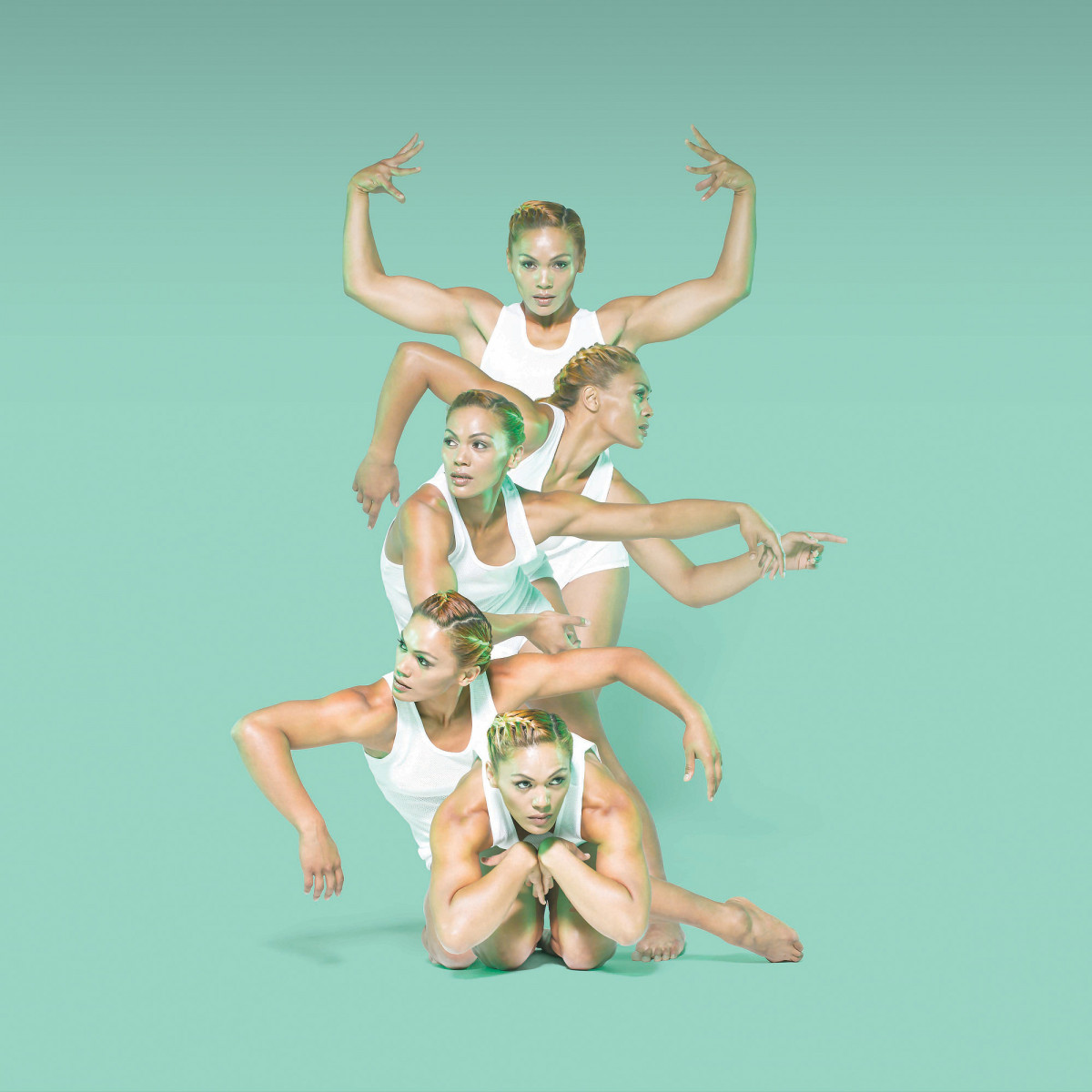
Students who take this course will spend the semester learning a range of dance styles including contemporary, jazz and hip hop. They will have a number of opportunities to work in groups to develop their own choreography and perform in front of their peers. Public performance is a key part of this course - in Semester 1 students will participate in our school dance showcase, Momentum, and Semester 2 students will perform at Huihui//Collide. This course promises to be a fun, practical class in which students can be creative and express themselves.


Year 9 Design & Visual Communication Technology
9DVCDesign and Visual Communication (DVC) (Year 9)
Design and Visual Comunication (DVC) is where big ideas take physical shape! In this dynamic semester course, you’ll step into the shoes of an innovator, designer, and maker, learning how to transform creative concepts into real-world solutions for today and tomorrow.
What You’ll Explore
- Spatial Design: Discover how to craft compelling 3D environments—from interior rooms and architectural structures to outdoor landscapes and public spaces. You'll explore how people move through, occupy, and experience the world around them.
- Product Design: Bring tangible everyday items to life! Learn how to combine functional form, aesthetics, ergonomics, and anthropometrics (human body measurements) to create user-centered products that solve genuine problems.
- Bicultural & Regional Influences: Ground your work in New Zealand’s rich cultural landscape. You will draw inspiration from traditional and regional styles while respectfully integrating te ao Māori design principles, such as manaakitanga (hospitality and care) and spatial flow.
What You’ll Master
To bring your ideas to life, you’ll build a comprehensive toolkit of manual and digital design techniques:
- Visual Communication: Express your vision through 2D and 3D freehand sketching, instrumental drawing, physical mock-ups, and animated visual presentations.
- Digital Modeling & Rapid Prototyping: Dive into Computer-Aided Design (CAD) and 3D modeling using programs like Fusion, Sketchup or TinkerCAD.
- Modern Manufacturing: Turn your digital models into tangible prototypes using cutting-edge technologies like 3D printing, laser cutting, and Computer Numerical Control (CNC) routing.
Is This Course for You?
If you are a creative thinker who loves hands-on problem-solving, sketching, building, and using digital tech to build the future, Spatial and Product Design is your launchpad!
Year 9 Digital Technology
9DTDigital Technologies (DT) (Year 9)
Year 9 Digital Technologies is where you will step beyond being just a consumer of technology and become an innovative creator. Aligned with the New Zealand Technology Curriculum, this dynamic course gives you the knowledge, practical skills, and creative strategies to build real-world digital solutions that make a positive impact on people, communities, and the environment.
What You Will Learn
- Facts & Concepts: Unpack the inner workings of digital systems, computer networks, data security, and hardware components. Explore how binary code and data representation allow computers to process complex information.
- Principles & Theories: Master key principles of Computational Thinking. Learn how to decompose complex problems, analyze algorithm efficiency (such as searching and sorting routines), and apply software design principles like user-centered design and digital citizenship.
- Cultural Context: Integrate local contexts and core values like Kaitiakitanga (guardianship), Auahatanga (creativity), and Manaakitanga (respectful end-user considerations) to ensure digital outcomes are ethical, sustainable, and inclusive.
Skills, Strategies & Applications
- Programming & Logic: Write and debug code using fundamental programming concepts (sequence, selection, iteration, and variables) to build interactive games, apps, or smart control systems.
- Digital Outcome Design: Design, test, and refine digital media and web-based solutions using file management conventions and digital tools. Apply functional modelling and end-user testing to evaluate whether your solution is fit for purpose.
- Collaborative Problem-Solving: Work independently and collaboratively using agile project planning strategies, taking projects from initial brief to finished product.
Year 9 Drama
9DRAStudents build confidence, teamwork and leadership skills within the framework of creative play.
Learning and assessment activities are based around the strands of the new Arts Curriculum.
Students explore the following while developing their knowledge of dramatic conventions, elements, techniques and technologies, in the context of storytelling using Pūrākau Māori and 19th Century Melodrama:
- Knowledge and Practices of Making and Creating, also Observing and Responding to Dramatic Contexts through:
- improvisation, story creation, performing in role and exploring theatre styles and technologies
Year 9 Electronics
9ELEYear 9 Systems and Control (Mechatronics)
Course Overview
Step into the world of smart automation, robotics, and integrated technology! Systems and Control introduces Year 9 students to how modern technological systems function, communicate, and solve real-world problems. Grounded in the updated New Zealand Curriculum Technology learning area, this hands-on course explores the intersections of Technological Knowledge, Computational Thinking, and Designing and Developing Outcomes. Students transition from passive consumers of technology into innovative creators—learning how inputs, processing, and outputs come together to build smart devices, environmental sensors, and automated solutions.
Core Learning & Concepts
- Facts & Core Concepts: Students investigate Technological Systems through the fundamental model of Inputs, Transformation/Processing, and Outputs. They learn key concepts including signal types (analog vs. digital), sensor operation (temperature, light, proximity), microcontrollers, integrated circuits, and dynamic logic structures (sequence, selection, and iteration).
- Principles & Theories: Learning is guided by Systems Thinking—understanding how individual components interact within a larger context, and how Feedback Loops regulate physical and digital environments. Students examine foundational electronics theories (voltage, current, resistance) alongside computational logic principles, algorithmic flow, and control theory. They also evaluate human-centered design principles (usability, accessibility, and ergonomics) and the ethical, cultural, and environmental impacts of technology.
Key Skills, Strategies & Applications
- Computational & Algorithmic Thinking: Deconstructing complex challenges into manageable steps using flowcharts, pseudocode, and algorithmic logic.
- Hardware Integration & Programming: Wiring sensors, actuators, and microcontrollers (e.g., micro:bit, Arduino), writing functional code to control hardware outputs based on environmental triggers.
- Functional Modelling & Rapid Prototyping: Utilizing computer-aided design (CAD), circuit simulation software, and rapid prototyping tools (e.g., 3D printing or physical fabrication) to test, debug, and evaluate working prototypes before final assembly.
- Authentic Technological Practice: Developing fitness-for-purpose solutions following a structured design brief—such as automated green-house climate controls, smart security alarms, or mini-robotics.
Year 9 English
9ENThis is a full-year course.
In Years 9–10, the teaching sequence is organised into two strands:
• Text Studies focuses on teaching students to expand their knowledge of a broader range of literary and non-fiction
text forms. It develops students’ understanding of textual features, literary techniques, and the impact of historical,
cultural, and social contexts on texts.
• Language Studies focuses on teaching students how to craft written, visual, and oral texts for a variety of
purposes and audiences.
In Phase 4 of the NZ Curriculum (Years 9–10), teaching advances students’ English disciplinary knowledge through integrated study of texts and language. Drawing on the above strands, teachers support students to engage with complex ideas across a wide range of literary and non-fiction texts.
Teachers introduce literary traditions showing how authors use recurring features to shape meaning and guide audience
expectations. Texts from New Zealand’s literary tradition, including bicultural and multicultural voices, are used to explore
national and global conversations. Students also learn to critically evaluate how digital and media texts are constructed
and position audiences. This prepares them for deeper literary analysis, more complex text creation, and the broader
demands of senior secondary English.
Year 9 Food Technology
9FNYear 9 Food & Nutrition
This course sits within the Design, Make, and Innovate and Materials and Processing Technology strands of the New Zealand Curriculum. It transitions food learning from basic preparation into a design-led, problem-solving discipline where students examine the science, sustainability, and cultural identity behind what we eat.
Core Knowledge & Skills
Facts, Concepts, Principles & Theories
- Nutritional Science & Well-being: Principles of macronutrients, micronutrients, and functional foods, analyzed alongside holistic health frameworks such as Te Whare Tapa Whā.
- Ingredient Functionality: The physical and chemical behavior of food components during processing (e.g., starch gelatinization, protein denaturation, emulsion, and aeration).
- Technological Practice & Design Systems: The complete technological design process—identifying real-world opportunities, developing briefs, testing prototypes, gathering stakeholder feedback, and evaluating outcomes for fitness for purpose.
- Food Systems & Sustainability: Concepts of food security, seasonal sourcing, food waste minimization (preserving, fermenting), and the environmental impacts of processing choices.
Skills, Strategies & Applications
- Kitchen Operations & Precision Skills: Safe, efficient knife handling, precise measurement, hygienic food safety protocols, and temperature control.
- Product Development & Trialling: Designing original recipes or altering formulations to meet specific user constraints, such as dietary needs, budget limits, or cultural celebrations.
- Sensory & Data Analysis: Conducting structured sensory evaluations (texture, profile, taste) and using testing data to refine and document outcomes.
Year 9 French
9FREAn introduction to the French language and culture, where students will gain an appreciation of customs, festivals and lifestyles of the people of the French-speaking world. Topics covered in the course are:
- Basic introductions and greetings
- How to exchange basic information about yourself (name, age, feelings, birthdays, physical characteristics and personalities).
- Family, colours, animals, weather, school, telling time, free time, teenage life in France
- Connections between Tahiti, Polynesian culture and Māori
- Cultural activities (cooking French food…)
Year 9 Half Year Te Reo Māori
9HMAOHalf Year Te Reo Māori – Year 9
This one-semester course introduces students to Te Reo Māori and Tikanga Māori through everyday language, culture and practical activities.
Students will learn how to:
- Introduce themselves and others using mihimihi and pepeha.
- Talk about their whānau and family.
- Describe their kāinga (home).
- Learn about tikanga and kawa of the marae.
- Develop an understanding of Māori culture, traditions and values.
- Use basic Te Reo Māori in everyday situations.
- Build confidence in speaking Te Reo Māori and communicating with others.
The course provides a foundation for students to continue developing their Te Reo Māori language skills, cultural knowledge and understanding of Māori traditions in future years.
Year 9 Health & Physical Education
9HPEHealth & Physical Education contributes to personal and social development through classroom and practical learning. Students are involved in activities that require individual endeavour and interaction with others, while learning and developing life long skills and strategies for resilience, social interaction and physical activity.
The course involves participation in:
Movement Skills:
- Invasion Games
- Net and Wall Games
- Ki o rahi
- Physical Activity/Sport
- Personal Exercise Plan
- Outdoor Education
Health units in this course will be a combination of the following topics under the heading of Bodies and Minds:
- Relationships
- Self care
- Alcohol & Drugs
- Consent
- Staying safe online
- Sex Education
- Nutrition
- Stereotypes
Year 9 Mathematics
9MAThe course is based on Mathematics in the New Zealand Curriculum (Phase 4). The strands of Number, Algebra, Geometry, Measurement, Statistics and Probability are covered, as well as the mathematical processes of problem solving, developing logic and reasoning, and communicating mathematical ideas.
Emphasis will be given to the development of numeracy, measurement and algebraic skills.
Students will be given opportunities to:
- Gain confidence and competence in the use of numbers.
- Participate in real mathematical situations so as to see the use of mathematics in everyday life.
- Develop the skills of measurement.
- Develop geometrical knowledge and skills associated with shape and space.
- Generalise from patterns and relationships.
- Manipulate data.
- Using Digital Technologies for Problem Solving, Coding and Data Displays.
Teaching and learning in the classroom, and assessment, will reflect the needs and abilities of the students.
Year 9 Music
9MUSMusic: through a vibrant blend of live performance, creative composition, and music technology. In Year 9 Music, students explore how music is built across diverse global styles, learning to decode rhythms, texture, and musical structures. Central to the course are weekly performance lessons with a specialist teacher—including opportunities in brass and orchestral strings—alongside a collaborative Rock Band module where students develop live ensemble skills. Creativity takes centre stage in our Mac Suite, where students use GarageBand and Soundtrap to learn the basics of digital notation, audio looping, and composition. Throughout the year, students build a confident foundation in ear training, basic theory, and expressive performance, making it the perfect entry point for any aspiring musician.
Year 9 Science
9SCYear 9 Science builds on the knowledge and skills developed in Year 8, with students exploring Biology, Chemistry, Physics, and Earth and Space Science in greater depth. Students carry out practical investigations, analyse and evaluate data, use models to explain scientific ideas, and develop evidence-based explanations.
This year long course provides a strong foundation for year 10 Science and beyond.
Year 9 Social Science
9SSThe Social Studies programme is constantly evolving in order to develop the knowledge and skills that students will need in the 21st century. The revised Social Science curriculum involves an indepth study through the subject disciplines of Geography, History, Civics and Economics. Through these studies students will be able to:
- Develop understanding of ideas about changing global societies as we enter a new technological age.
- Continue to develop understandings of Aotearoa New Zealand histories.
- Appropriately contribute in local, national and global communities.
- Evaluate the sustainability of alternative social, economic, political and environmental practices.
- Explore and analyse people’s values and perspectives.
- Engage critically with societal happenings through an ongoing current events programme.
Year 9 Spanish
9SPAAn introduction to the Spanish language and culture, where students will gain an appreciation of customs, festivals and lifestyles of the people of the Spanish-speaking world.
Topics covered in the course are:
- Basic introductions and greetings.
- How to exchange basic information about yourself (name, age, feelings, birthdays, physical characteristics and personalities).
- Family, colours, animals, weather, telling time, free time, teenage life in Spain
- Cultural activities.
- Make connections between indigenous population in Latin America and Māori
Year 9 Te Reo Māori
9MAOTe Reo Māori & Te Ao Haka – Year 9
This two-semester course introduces students to Te Reo Māori, Tikanga Māori and Te Ao Haka through everyday language, culture, performance and practical activities.
Students will learn how to:
- Introduce themselves and others using mihimihi and pepeha.
- Talk about their whānau and family.
- Describe their kāinga (home).
- Learn about tikanga and kawa of the marae.
- Explore Te Ao Haka through waiata, haka, movement and performance.
- Learn about the stories, meanings and cultural significance behind Māori performing arts.
- Develop confidence in performing and working collaboratively.
- Use basic Te Reo Māori in everyday situations.
The course provides a foundation for students to continue developing their Te Reo Māori language, cultural knowledge and Te Ao Haka skills in future years.
Year 9 Visual Arts
9ARTDuring this course, students will work in a variety of areas and media. Students can expect to undertake drawing, painting, print making and multi media.
- Students will develop and extend practical skills with a range of media - Creating and making.
- Students will investigate the culture of art and refer to artist models - Observing and responding.
Subjects for Year 9 Students
Year 10 Art
10ARTStudents will cover the two stands of the Visual arts curriculum - Making and creating and Observing and responding. These including drawing and painting skills, with a focus on using a range of media to develop their own techniques and ideas in the creation of art projects projects. They will also look at existing artworks from artist to understand how techniques and themes can shape meaning.
A range of the following activities are included: Research into creative ideas for original concepts, painting and drawing from artist models, developing the design concepts to produce an original skateboard design, and a lino print project that incorporates the principles and elements of art.
Year 10 Dance
10DANThe Year 10 option dance program is available to all Year 9 students regardless of ability or level of dance.
The course covers:
- Introduction to dance terminology
- Dance history
- Introduction to dance composition, working in groups to create and choreograph dance pieces
- A range of styles and genres
Through this course, students will be exposed to choreographers that have defied expectations and left an infallible mark on the dance world such as Neil Iremira, Parris Goebel, Bob Fosse, and Alvin Ailey. Students will learn new techniques, examine stimuli used by choreographers and investigate how choreographers communicate ideas through movement. A range of dance styles will be explored through this class including contemporary, hip hop, and Samoan sasa.
This course will require students to be creative. They will have the opportunity to develop their own choreographic, performance and analytic skills. Public performance is a key part of this course - in Semester 1 students will participate in our school dance showcase, Momentum, and Semester 2 students will perform at Huihui//Collide.


Year 10 Design & Visual Communication - Technology
10DVCDesign and Visual Communication (DVC) (Year 10)
Step into Year 10 Design and Visual Communiction, where creative imagination meets real-world problem solving. This course bridges architecture, interior environments, and industrial product design, challenging you to redesign the spaces we inhabit and the items we use every day.
What You Learn
Facts, Concepts & Principles
- Design Fundamentals:
Explore visual communication conventions, including two-point perspective, isometric drawing, orthographic projection, and architectural scale. - Ergonomics & Human Factors:
Understand anthropometric data—how objects and spatial layouts must conform to human measurements, movement, and comfort. - Material Properties & Sustainability:
Learn how timber, polymers, metals, and composite materials behave, alongside life-cycle analysis and eco-friendly design principles. - Design Theory:
Study "form follows function," human-centered design (HCD), spatial flow, and how environmental factors like natural lighting and ventilation shape user experiences.
What You Do
Skills, Strategies & Applications
- Idea Generation & Ideation:
Master rapid ideation sketching, mind mapping, SCAMPER strategies, and mood boards to turn abstract ideas into viable concepts. - Prototyping & Scale Modeling:
Bring 2D drawings to life using physical card modeling, 3D printing, laser cutting, and digital 3D modeling tools (e.g., CAD software). - Technical Presentation:
Develop professional design portfolios showcasing your iterative process from initial brief to final refined solution. - Real-World Applications:
Design functional products (like ergonomic seating or lighting) and mini spatial environments (like pop-up cafes, tiny homes, or outdoor interactive zones).
Year 10 Digital Technology
10DTDigital Technologies (DT) (Year 10)
In Year 10 Digital Technologies, students transition from passive users of technology into innovative creators. Grounded in both Computational Thinking and Designing and Developing Digital Outcomes, this course empowers students to solve real-world problems using digital tools.
Guided by te ao Māori principles—such as manaakitanga (caring for users) and kaitiakitanga (guardianship of data and digital systems)—students learn to design ethical, accessible, and user-centered digital solutions.
Key Learning & Concepts
- Facts & Knowledge:
- Data Representation: How computers store, process, and transmit complex information using binary digits, bits, and bytes.
- Digital Systems & Networks: Fundamental structures of computer networks, security protocols, file management conventions, and hardware/software interactions.
- Concepts & Theories:
- Algorithmic Thinking: Breaking complex problems into logical sequence, selection, and iteration structures.
- Human-Computer Interaction (HCI): Core usability heuristics, interface design principles, and accessibility requirements.
- Fitness for Purpose: Evaluating how well a digital outcome satisfies specific end-user requirements and social contexts.
- Principles:
- Ethical & Cultural Design: Applying manaakitanga to user privacy and data security, and whanaungatanga to inclusive team design.
- Iterative Development: Refining algorithms and designs based on user feedback, systematic testing, and debugging.
Skills, Strategies & Applications
- Programming & Automation: Decomposing computational problems to write, test, and debug code incorporating inputs, outputs, variables, conditional statements, and loops.
- Digital Design & Development: Creating web pages, interactive media, or software applications using standard development tools and techniques.
- Project Management & Testing: Applying iterative design methodologies, gathering stakeholder feedback, and conducting systematic usability testing.
Year 10 Drama
10DRAThis is a practical and theory-based course in both classroom and stage drama where students build confidence, teamwork and leadership skills within the framework of creative play. No experience is necessary, but courage to try something new is essential and full participation is obligatory.
Students explore the following while developing their knowledge of: The history of theatre, in-role improvisation, stage craft, Greek theatre form, New Zealand theatre form, scene devising, script work, movement, voice and role.
- Making and Creating – Knowledge and Practices
- Observing and Responding – improvisation, drama creation
- Performing in role
- Theatre styles
Year 10 Electronics
10ELEYear 10 Systems and Control (Mechatronics)
This course dives into the automated world around us—exploring how technology senses, thinks, and acts. Grounded in the updated New Zealand Technology Curriculum, Systems and Control bridges physical engineering and digital innovation. Students explore how inputs, processing, feedback loops, and outputs work together in everyday technology, from smart home devices to industrial robotics. Through hands-on design and prototyping, students transform from technology consumers into innovators who solve real-world problems.
What You Will Learn
- Facts & Concepts: Understand inputs, transformations, and outputs within electronic, mechanical, and micro-controller systems. Explore sensors, actuators, circuit logic, conditional control statements, and feedback mechanisms.
- Principles & Theories: Apply Systems Thinking to map out complex networks. Learn control theory, algorithmic logic (sequence, selection, iteration), and core design principles like usability, human factors, and sustainability.
- Skills & Strategies: Master circuit prototyping, schematic reading, block/text-based programming, fault-finding, and iterative testing. Practice structured problem decomposition using pseudocode and flowcharts before building functional prototypes.
- Applications: Design, build, and evaluate functional control outcomes—such as automated plant-watering systems, smart security devices, or line-following robots—tailored for real users and authentic needs.
Year 10 English
10ENThis is a full-year course building on the students' prior learning in Year 9.
In Years 9–10, the teaching sequence is organised into two strands:
• Text Studies focuses on teaching students to expand their knowledge of a broader range of literary and non-fiction
text forms. It develops students’ understanding of textual features, literary techniques, and the impact of historical,
cultural, and social contexts on texts.
• Language Studies focuses on teaching students how to craft written, visual, and oral texts for a variety of
purposes and audiences.
In Phase 4 of the NZ Curriculum (Years 9–10), teaching advances students’ English disciplinary knowledge through integrated study of texts and language. Drawing on the above strands, teachers support students to engage with complex ideas across a wide range of literary and non-fiction texts.
Teachers introduce literary tradition, showing how authors use recurring features to shape meaning and guide audience
expectations. Texts from New Zealand’s literary tradition, including bicultural and multicultural voices, are used to explore
national and global conversations. Students also learn to critically evaluate how digital and media texts are constructed
and position audiences. This prepares them for deeper literary analysis, more complex text creation, and the broader
demands of senior secondary English.
Year 10 Fashion and Textiles Technology
10TMMaterials Processing - Textiles (MPT) (Year 10)
Unleash your creativity and learn how to transform raw textiles into innovative, functional products. Grounded in the updated New Zealand Curriculum (Te Mātaiaho), this hands-on course explores the journey of soft materials from raw fibers to finished technological outcomes. You will apply key design principles, sustainability concepts, and modern construction techniques to solve real-world problems and bring your own textile concepts to life.
Core Learning & Principles
- Facts & Concepts: Understand natural vs. synthetic fibre structures, fabric performance characteristics, and the physical properties that dictate material selection.
- Theories & Nature of Technology: Explore sustainable textile practices (upcycling, circular economy, and waste reduction), design empathy (manaakitanga), and how societal/environmental needs influence product design.
- Technological Knowledge: Master functional modeling—using mock-ups, toile creation, and iterative testing to evaluate concepts before final prototyping.
Practical Skills & Applications
- Operate domestic sewing machines, overlockers, and garment construction tools safely.
- Execute pattern manipulation, layout, cutting, joining, and advanced finishing techniques.
- Apply surface decoration methods such as screen printing, embroidery, dyeing, and vinyl printing.
Year 10 Food Technology
10FNYear 10 Food & Nutrition (Design & Processed Outcomes)
Course Overview
Fuel your creativity and culinary curiosity! Year 10 Food & Nutrition explores the science, culture, and practical application of food through the lens of Aotearoa New Zealand’s refreshed Technology Curriculum (Te Mātaiaho). In this course, ākonga move beyond basic recipe following to become food innovators—understanding how raw ingredients transform into functional, nutritious, and sustainable products.
Core Facts, Concepts & Theories
- Food Science & Material Properties: Learn the "why" behind cooking. Explore ingredient performance, functional properties (such as coagulation, emulsification, aeration, and gelatinisation), and how physical/chemical changes affect texture, flavor, and shelf life.
- Nutrition & Human Performance: Dive into macronutrients, micronutrients, dietary guidelines, and energy needs (such as sports nutrition or daily wellbeing), understanding how key food choices fuel both body and mind.
- Technological Practice & Design Thinking: Apply design models to address authentic human needs, constraint planning, and real-world briefs—from developing healthy snack alternatives to exploring local food sustainability.
- Culture & Sustainability (Tikanga & Kai): Discover how socio-cultural practices, seasonal availability, local food systems, and environmental impacts shape our relationship with food.
Key Skills, Strategies & Applications
- Culinary & Process Engineering: Master precise practical skills, including knives handling, temperature control, specialized equipment usage, and safety/hygiene protocols.
- Prototyping & Functional Modelling: Formulate, test, and adapt recipes using controlled trial-and-error techniques, sensory evaluation, and peer feedback loops to refine outcomes.
- Product Development: Design, manufacture, and package food products tailored to targeted stakeholder briefs (e.g., dietary restrictions, performance energy, or cultural celebrations like Matariki).
Year 10 French
10FREStudents are encouraged to increase their ability to communicate both in oral and written everyday French situations. Students learn the differences and similarities between their own language(s) and French. They learn to give and receive information in French in a variety of topics, for example:
- Shopping, asking and giving direction, talking about meals, buying drinks and food, talking about holiday, free time, home, clothes, music, TV
- The cultural emphasis at this level focuses on food, sports, celebrations and Paris.
- Students will make connections between the Polynesian culture in Tahiti and the Māori culture.
- Students will learn differences and similarities between their own culture and French-speaking cultures
Year 10 Half Year Te Reo Māori
10HMAOTe Reo Māori – Year 10
This Half-year course is designed for students who want to build their confidence and skills in Te Reo Māori and Tikanga Māori.
Students will develop their ability to speak, listen, read and write in Te Reo Māori while exploring Māori culture, traditions and everyday contexts.
Students will learn about:
- Hākinakina – sports and physical activities.
- Whaikōrero – Māori oratory and formal speaking.
- Mihimihi – introductions and greetings.
- Manu Kōrero – preparing and presenting speeches.
- Ngā mahi whakangahau – leisure and recreational activities.
- Kura – school life and learning.
- Kāinga – home and family.
- Whakawhiti kōrero – developing everyday conversations in Te Reo Māori.
Students will develop their language skills, cultural knowledge and confidence through practical, engaging and collaborative learning experiences.
This course provides a strong foundation for students who wish to continue studying Te Reo Māori in Year 11 and beyond.
Year 10 Health & Physical Education
10HPEHealth & Physical Education contributes to personal and social development through classroom and practical learning. Students are involved in activities that require individual endeavour and interaction with others, while learning and developing life long skills and strategies for resilience, social interaction and physical activity.
The course involves participation in:
Movement Skills:
- Invasion Games
- Net and Wall Games
- Ki o rahi
- Physical Activity/Sport
- Personal Exercise Plan
- Outdoor Education
Health units in this course will be a combination of the following topics under the heading of Bodies and Minds:
- Relationships
- Self care
- Alcohol & Drugs
- Consent
- Staying safe online
- Sex Education
- Nutrition
- Stereotypes
Year 10 Mathematics
10MAThe course is based on Mathematics in the New Zealand Curriculum (Phase 4). The strands of Number and Algebra, Geometry and Measurement and Statistics and Probability are covered as well as the mathematical processes of Problem Solving, Developing Logic and Reasoning, and Communicating Mathematical Ideas.
Emphasis will be given to the development of numeracy and algebraic skills.
Students will be given opportunities to:
- Gain confidence and competence in the use of numbers.
- Participate in real mathematical situations so as to see the use of mathematics in everyday life.
- Develop the skills of measurement and algebra.
- Develop geometrical knowledge and skills associated with shape and space.
- Generalise from patterns and relationships.
- Manipulate data.
- Using Digital Technologies for Problem Solving, Coding and Data Displays.
- Gain the Numeracy requirement for NCEA Level 1
Teaching and learning in the classroom, and assessment, will reflect the needs and abilities of the students.
Year 10 Music
10MUSMusic: diving deeper into the worlds of performance, composition, and industry-standard production. Year 10 Music challenges students to explore how music is integrated into culture and media, exploring complex contexts like film, gaming, and historical genres. Alongside continuing weekly specialist instrumental lessons, students expand their performance skills. In the Mac Suite, students transition from basic tracking to more advanced digital arranging—using GarageBand to compose original multi-part scores, manipulate chord progressions, and experiment with sophisticated harmonic textures. This course sharpens critical listening, musical literacy, and ear training to prepare students for further music study and enjoyment.
Year 10 Resistant Materials Technology
10TRMYear 10 Materials Processing – Wood & Metal
Step into the workshop and turn creative concepts into functional, real-world objects. Aligned with The New Zealand Curriculum (Technology Learning Area)—specifically Designing and Developing Materials Outcomes—this dynamic course blends practical hand-crafting with modern production techniques.
Students investigate timber and metallic materials, exploring how physical and functional properties dictate real-world product performance. Moving beyond basic construction, ākonga learn to navigate the design process: researching stakeholder requirements, generating conceptual iterations through functional modeling, and refining designs prior to final manufacture.
Key Learning Focus Areas
1. Core Concepts, Principles, & Theories
- Technological Knowledge: Exploring material properties (hardness, malleability, grain structure, and tensile strength) to select fit-for-purpose materials for wood and metal outcomes.
- Technological Practice: Applying design thinking principles—from client brief analysis and initial ideation to testing prototypes and final outcome evaluation.
- Technological Systems & Sustainability: Understanding material origins, waste reduction strategies, joinery logic, structural integrity, and sustainable workshop practices.
2. Practical Skills, Strategies, & Applications
- Hand & Power Tool Mastery: Developing safe operating techniques for specialized woodworking and metalworking hand tools, bench drills, saws, and finishing machinery.
- Digital Design & Fabrication (CAD/CAM): Utilizing 3D modeling tools alongside computer-controlled equipment (such as CNC routers or plasma cutters) to execute precise component cuts.
- Fabrication & Assembly Techniques: Executing precise timber joinery (e.g., housing, mortise-and-tenon joints) and metal joining methods.
- Safety & Project Management: Demonstrating workshop health and safety protocols (PPE, risk identification) while managing production schedules to meet project milestones.
Year 10 Science
10SCYear 10 Science builds on the knowledge and skills developed in Year 9, with students exploring Biology, Chemistry, Physics, and Earth and Space Science in greater depth. Students carry out practical investigations, analyse and evaluate data, use models to explain scientific ideas, and develop evidence-based explanations.
This year long course provides a strong foundation for studying Science subjects at Year 11 and beyond.
Year 10 Social Studies
10SSSocial Sciences creates a curiosity about and a respect for places, people, cultures and systems. The junior Social Science programme is constantly evolving in order to develop the knowledge and skills that students will need in the 21st century. The revised Social Science curriculum involves an indepth study through the subject disciplines of Geography, History, Civics and Economics.
The knowledge and skills students will embrace in year 10 will further enable them to:
- Develop understanding of ideas about changing global societies.
- Appropriately contribute in local, national and global communities.
- Evaluate the sustainability of alternative social, economic, political and environmental practices.
- Explore and analyse people’s values and perspectives.
- Engage critically with societal happenings through an ongoing current events programme.
- Build understandings of how people have shaped Aotearoa New Zealand’s past to help them make sense of the present and inform future decisions and actions.
Year 10 Spanish
10SPAStudents are encouraged to increase their ability to communicate both in oral and written everyday Spanish situations. Students learn the differences and similarities between their own language(s) and Spanish. They learn to give and receive information in Spanish in a variety of topics, for example:
- Shopping, asking and giving direction, talking about meals, buying drinks and food, talking about holiday, free time, home, clothes, music, TV,
- The cultural emphasis at this level focuses on food, sports and Spanish dances in Spain and Latin America.
- Students will make connections between the indigenous culture in Latin America and the Māori culture.
- Students will learn differences and similarities between their own culture and Spanish-speaking cultures
Year 10 Te Reo Māori
10MAOTe Reo Māori & Te Ao Haka – Year 10
This full-year course is designed for students who want to build their confidence and skills in Te Reo Māori, Tikanga Māori and Te Ao Haka.
Students will develop their ability to speak, listen, read and write in Te Reo Māori, while exploring Māori culture, performance and everyday contexts.
Students will learn about:
- Hākinakina – sports and physical activities.
- Whaikōrero – Māori oratory and formal speaking.
- Mihimihi – introductions and greetings.
- Manu Kōrero – preparing and presenting speeches.
- Ngā mahi whakangahau – leisure and recreational activities.
- Kura – school life and learning.
- Kāinga – home and family.
- Waiata and haka – Māori performing arts.
- Te Ao Haka – exploring Māori performance, creativity, identity and cultural expression.
- Whakawhiti kōrero – developing everyday conversations in Te Reo Māori.
Students will develop their language, cultural knowledge, confidence, creativity and performance skills through practical and collaborative learning.
This course provides a strong foundation for students who wish to continue Te Reo Māori and/or Te Ao Haka into Year 11 and beyond.
Subjects for Year 10 Students
NCEA Level 1 - Food Technology (Materials and Processing)
11MPFMaterials and Processing provides a broad introduction and foundational knowledge of the technological process. This allows for specialisation into each area at level 2 & 3. Each of the mediums (different areas of materials eg textiles, engineering, wood or food) will be theme based and offer the same assessments throughout the year. Three out of the 4 Achievment standards will be offered. This will consist of 2 Internals and 1 external achievement standard.
Choose the medium/material you would most prefer to work with. You have the choice between fashion textiles, food, wood and engineering.
Food technology - focuses on the technological process on developing food-based outcomes There will be one major project/outcome for each semester designed around a theme. This course leads to a University Entrance approved course in y13.
Optionly an extension opportunity may be offered for some unit standards.
NCEA Level 1 Wood Technology (materials and processing)
11MPWMaterials and Processing provides a broad introduction and foundational knowledge of the technological process. This allows for specialisation into each area at level 2 & 3. Each of the mediums (different areas of materials eg textiles, engineering, wood or food) will be theme based and offer the same assessments throughout the year. Three out of the 4 Achievment standards will be offered. This will consist of 2 Internals and 1 external achievement standard.
Choose the medium/material you would most prefer to work with. You have the choice between fashion textiles, food, wood and engineering.
Wood
In this course, students will be given a brief, a scenario and or theme. This will give them the opportunity to design and manufacture a project that interests them or fits the needs and opportunities of a potential client. They will also get the opportunity to explore the many and varied materials that are on offer in today’s society and our Taupō community. These could be native and or exotic timbers and or wood based products, the many and varied metals used nowadays, selecting suitable plastic's, leather, bone or other available materials.
The course will provide opportunities for students to develop and improve many skills like their practical abilities, creative design, negotiation, research, testing & trialing techniques and other areas required for success in today’s technological society.
This course can lead the students onto pathways in a number of the trade based or design industries on offer, or into leading edge experimental industrial environments that have always been a part of Aotearoa's number eight wire mentality.
This subject can also assist the student on to their chosen pathway into tertiary institutions like: polytechnic, university or apprenticeship system.
It is worth knowing that the student may be withdrawn from a standard if the teacher is not confident that the achievement of the standard is within the reach of the student or there is no evidence of the student attempting the assessment.
NCEA Level 1 Agricultural and Horticultural Science
11AHSAgricultural and horticultural science - a selection from
Primary production in Aotearoa - agricultural and horticultural industries that are carried out in New Zealand, including a local focus where possible.
Plant and animal production - life processes and management practices.
Management of the farm environment - looking after soils, and the impacts on the environment of agriculture and horticulture.
NCEA Level 1 Biochemistry
11BIOCBIOCHEMISTRY
BIOLOGY: Exploring genetic variation relating to an identified characteristic. Evaluate findings when genetic variation has been identified and tracked. Learn about what affects micro-organisms, and how this makes them useful for making food.
CHEMISTRY: Investigating reactions and what affects them in a wide range of contexts. Experimenting and linking observations to how chemistry is used in life, particularly around the home. Reactions could include combustion, neutralisation, and precipitation.
NCEA Level 1 Commerce
11COMCommerce is all about understanding how the business world works. In this course, you'll explore economics, accounting, business studies, and finance through real-life case studies. You'll also develop critical thinking, problem-solving, and financial literacy skills that are useful in both everyday life and future careers by examining many different types of businesses.
As part of the course, students will take on an entrepreneurial journey. Working in teams, you'll plan and run a sustainable, financially viable business that makes a positive impact.
Level 1 NCEA Commerce provides a solid foundation in business and sets you up for success in future studies, and leads into Accounting and Economics and Enterprise Studies in Years 12 and 13.
NCEA Level 1 Dance
11DANThe Year 11 dance programme is optional and is available to all Year 11 students who express an interest in dance. The course includes:
- Dance elements – in conjunction with Choreographic Devices (both are key components of NCEA dance).
- Dance composition and choreography – developing group, solo and duet work.
- Performance skills
- Dance analysis – Examining how choreographers create dance works that communicate ideas.
- Students who are already participating in dance, whether private/extra-curricular, Kapa Haka or Pasifika group, will have an individual learning plan to enhance their prior learning and experience. There is no audition process to enter this course.
In taking this class, students will develop their understanding of choreographic and performance practices and will be able to articulate how practitioners create movement to communicate ideas. There will be numerous performance opportunities including in-school showcases, Dance NZ Made, and other dance festivals.
This course will examine how to develop movement around the concepts of whanaungatanga, culture, and local landscapes. Additionally, students will have the opportunity to choreograph and perform in a variety of genres, including hip hop, kapa haka, and contemporary. There will be chances for students in this course to explore themes that relate to their own interests and experiences.
This course will include written and reflective components.
A student will be withdrawn from a standard if the teacher is not confident that the achievement of the standard is within the reach of the student or there is no evidence of the student attempting the assessment.
NCEA Level 1 Design and Visual Communication - Technology
11DVCWith the 2024 Curriculum Refresh, some changes have been made to our traditional technology courses. In 2026, there are 3 distinct areas of technology - Materials & Processing (traditionally these were textiles, engineering, wood and food), Digital Technologies and Design and Visual Communication. You are able to choose two out of the three technologies.
Design and Visual Communication is a course that focuses on learners developing skills that support a pathway into either Product Design or Architectural design. The year will be will be split into two semesters enabling students to keep their options open in terms of future pathways.
Opportunities will exist to enable you to cover both of these areas over the course of two semesters.
Three out of the 4 available achievement standards will be offered consisting of 2 Internals and 1 external achievement standard. (15 credits)
This course leads to Year 12 DVC and then Year 13 DVC which is a University Entrance approved course.
DVC is a course intended for students interested in design as a means to develop their own visual communication skills or as an intended career pathway. The course is a progression from Year 10 and extends student learning through the introduction of different media, design and communication skills. Students will further develop their skill in 3D modelling, computer aided design (CAD), image enhancement technologies and digital fabrication.
A student will be withdrawn from a standard if the teacher is not confident that the achievement of the standard is within the reach of the student or there is no evidence of the student attempting the assessment.
NCEA Level 1 Digital Technology
11DTWelcome to Year 11 Digital Technologies! This year, you will dive deep into the fascinating world of computational thinking and digital design, where you will master the fundamentals of Python programming and create your own digital outcomes.
In this course, you will learn to apply computational thinking skills and basic programming structures to develop your own video game, app or website. You will make use of a wide range of tools and techniques, making smart development choices based on testing and feedback from your peers.
We will also explore the exciting design processes in digital technologies. You will research real-world issues, brainstorm innovative design ideas, and create solutions that meet the needs of end users. Throughout this journey, you will engage in talanoa (open dialogue), mahi tahi (collaboration), and whakawhiti kōrero (feedback) to refine your designs and make them even better.
Your final project will showcase a completed design that incorporates your best ideas, demonstrating a clear link from initial concepts to the finished product. You will also incorporate the values of manaakitanga (hospitality) and kaitiakitanga (guardianship) as you create your design, drawing on significant learning experiences.
Completing this course will aid you in developing the essential skills required in industry and if pursuing a career in digital technologies.
NCEA Level 1 Drama
11DRAThe Year 11 course enhances individual confidence, communication and organisational skills, time management and people management skills, through exploring aspects of drama including:
- The study of devised drama in a Taupō context, New Zealand theatre and the practical application of drama skills in live performance
- The study and application of dramatic techniques, elements and conventions
- Public performance in the Year 11 assessment evening
- Drama Camp (prior to the public performance)
A student will be withdrawn from a standard if the teacher is not confident that the achievement of the standard is within the reach of the student, or there is no evidence of the student attempting the assessment.
NCEA Level 1 English
11ENKo te reo te tuakiri, ko te reo tōku ahurei, ko te reo te ora
Language is my identity; language is my uniqueness; language is life
This course develops students' confidence as readers, writers, speakers and critical thinkers. Through the exploration of a wide range of texts, students will discover how language shapes identity, culture and the world around us. Learning is grounded in an Aotearoa New Zealand context while also drawing on diverse voices and perspectives from around the world.
Students will strengthen the literacy, communication and analytical skills needed for success in senior school and beyond. They will complete NCEA Level 1 English Achievement Standards while developing the confidence to express their own ideas, think critically and engage meaningfully with literature and language.
NCEA Level 1 Fashion & Textiles technology (Materials and Processing)
11MPTMaterials and Processing provides a broad introduction and foundational knowledge of the technological process. This allows for specialisation into each area at level 2 & 3. Each of the mediums (different areas of materials eg textiles, engineering, wood or food) will be theme based and offer the same assessments throughout the year. Three out of the 4 Achievement standards will be offered. This will consist of 2 Internals and 1 external achievement standard.
Fashion and textiles technology - This course is aimed at those learners wishing to embrace their creative, academic and practical abilities in textiles. This course will enable students to access state-of-the-art equipment including innovative design software, laser cutter, vinyl cutting, embroidery machine and high quality sewing machines and overlockers.
This course focuses on the technological process alongside learning new and refining technical sewing skills. There will be two major project/outcomes designed around student choice and based on a theme.
This course leads to a University Entrance approved course in y13.
A student will be withdrawn from a standard if the teacher is not confident that the achievement of the standard is within the reach of the student or there is no evidence of the student attempting the assessment.
NCEA Level 1 French
11FREYear 11 French is a continuation from Year 10 work. Students build on the vocabulary and grammar they have already studied, based on Levels 4, 5 and 6 of the French Curriculum. Students continue to develop their confidence in the four language skills of speaking, listening, reading and writing as well as French cultural aspects of France and French speaking countries. Students keep making connection between the Polynesian culture in Tahiti and the Māori culture.
French is connected to subjects outside of the Learning Languages Learning Area. This includes the Learning Areas and subjects of:
- Social Sciences: Geography, Social Studies, History, Tourism, Media Studies, English, Classical Studies Religious Studies
- Art: Visual Arts, Dance ,Music, Art History
- Health and Physical Education: Food and Nutrition, Heath, Physical Education
NCEA Level 1 Geography
11GEOGeography is the study of the earth as the home of people, it is about what is around us.
- It looks at the natural and cultural features of our environments (te Taiao)
- It looks at the ways in which these features are arranged on the earth's surface
- It investigates the natural processes, such as glaciation or volcanic eruptions, that have formed these features
- It explores the relationships between people and the environment, how each influences the other.
We will be covering a range of different topics, settings and geographic skills.
This course provides an interesting and broad base for any future studies in the Social Sciences or Earth Sciences.
NCEA Level 1 Health
11HEAHealth Studies engages the three Key Areas of Learning (Food and Nutrition, Mental Health, and Relationships and Sexuality) to help ākonga develop an understanding of holistic health models, and the interconnections between the physical, mental, emotional, social, and spiritual dimensions of people’s lives.
Through Health Studies, ākonga can learn about how kaitiakitanga, manaakitanga, and whanaungatanga contribute to the hauora of individuals, whānau, and communities.
By engaging in this subject, ākonga can:
- learn how actions can enhance hauora, and explore ways to manage change situations that impact health and wellbeing,
- develop understanding of current issues related to food, nutrition, and health, and learn how a range of factors influence wellbeing,
- grow an understanding what contributes to healthy relationships, and develop strategies to strengthen their sense of identity and self-worth.
Ākonga can learn foundational knowledge and skills that can lead to diverse future pathways, including becoming a teacher, and working or studying in the health, community services, government, hospitality, and science sectors.
NCEA Level 1 History
11HISYear 11 History concentrates on 20th Century history as a means of helping students better understand their world and their place in it. A variety of topics will be chosen from the selection below.
1. Black Civil Rights in the USA 1950-1970: A topic which has relevant comparisons to NZ case studies such as the Dawn Raids and Polynesian Panthers.
2. The Rise of Hitler: Students will examine him as a historical figure who had a significant impact. Comparisons can be made to other significant figures in the history of Aotearoa.
3. Various NZ contexts: such as The Land March of 1975; Racism in Pukekohe in the 1950-60s; Protests through the 1970s and 80s eg Springbok Tour, Nuclear Free, Anti-Vietnam, Bastion Point.
Important History Concepts such as Perspectives, Impact, Turangawaewae, Whakapapa, Tuakiri, Mana, Power, Identity, are examined throughout the topics.
NCEA Level 1 Literacy
11LITNCEA Level 1 English Literacy
This course is designed for students who will benefit from smaller class sizes and additional support to build the literacy skills needed for success in NCEA and beyond. Students are selected for this course based on their learning needs and previous achievement.
During Term 1, the focus is on developing the reading and writing skills required for the Literacy Common Assessment Activities (CAAs), giving students the best opportunity to gain the NCEA Literacy co-requisite early in the year. Students move on to complete the same Level 1 English Achievement Standards as other Year 11 English classes, with continued support and targeted teaching.
The aim of this course is to build confidence, strengthen literacy skills, and ensure students have the qualifications and opportunities they need to access a full range of pathways in Year 12 and beyond.
NCEA Level 1 Mathematics (with Algebra)
11MATAKei hopu tōu ringa ki te aka tāepa, engari kia mau ki te aka matua.
Cling to the main vine, not the loose one.
Akōnga will engage in learning across all areas of mathematics and statistics - number, algebra, space, measurement, statistics, and probability - and apply their skills to model, analyse, and interpret the world around them. They will learn to make sense of observations and patterns, interpret and use mathematical symbols and displays, and communicate their findings appropriately. Through a range of contexts relevant to rangatahi in Aotearoa, students will learn to investigate, critically evaluate information, and make informed decisions. They will be encouraged and enabled to move beyond a compartmentalised understanding of mathematics and approach problems from different perspectives, with multiple methods. This course will also extend students' Algebra skills.
NCEA Level 1 Mathematics (with Statistics)
11MATSKei hopu tōu ringa ki te aka tāepa, engari kia mau ki te aka matua.
Cling to the main vine, not the loose one.
Akōnga will engage in learning across all areas of mathematics and statistics - number, algebra, space, measurement, statistics, and probability - and apply their skills to model, analyse, and interpret the world around them. They will learn to make sense of observations and patterns, interpret and use mathematical symbols and displays, and communicate their findings appropriately. Through a range of contexts relevant to rangatahi in Aotearoa, students will learn to investigate, critically evaluate information, and make informed decisions. They will be encouraged and enabled to move beyond a compartmentalised understanding of mathematics and approach problems from different perspectives, with multiple methods. This course will extend students' Statistical skills.
NCEA Level 1 Metal technology (materials and processing)
11MPMMaterials and Processing provides a broad introduction and foundational knowledge of the technological process. This allows for specialisation into each area at level 2 & 3. Each of the mediums (different areas of materials eg textiles, engineering, wood or food) will be theme based and offer the same assessments throughout the year. Three out of the 4 Achievment standards will be offered. This will consist of 2 Internals and 1 external achievement standard.
Choose the medium/material you would most prefer to work with. You have the choice between fashion textiles, food, wood and engineering.
Metal
Students who take this course will complete a full year in the workshop environment. Within the year they will undertake a minimum of 1 Engineering Project, which will contribute to the student's folio of work.
The manufacture of engineering products, working from specific plans to within given tolerances requires the students to display competent practical skills. Design and making techniques are taught and developed to manufacture materials in the production of the students' folio of work, which might be items such as a gardening tool or similar.
A student will be withdrawn from a standard if the teacher is not confident that the achievement of the standard is within the reach of the student or there is no evidence of the student attempting the assessment.
Health and Safety and understanding of working in a risk rich environment is a large part of this course and those students that cannot demonstrate good practice in this area, may be removed from the course.
NCEA Level 1 Music
11MUSMusic study at Year 11 consists of a comprehensive course, which expands upon the skills built through study in Year 9 and Year 10.
Students will explore use of computer software to create original compositions, re-create existing hits, and produce notation ready for publication.
Students will continue to learn more about reading and writing music for their performance instrument where appropriate. They will learn through group performance and by looking at a variety of music styles which will provide the skills for individuals to read and write music according to their level of experience and knowledge. Students will enjoy the e-learning focus to assist both learning and assessment.
As part of the performance requirements, students will be given tuition from itinerant teachers in their chosen instrument, throughout the year (either privately or via the college). Students must be prepared to take part in performance opportunities and be working with a tutor as they learn about music performance.
Special Conditions:
- Students must be prepared to take part in performance opportunities
- It is expected that students will attend scheduled lessons with their tutor and non-attendance for unjustified reasons may result in the student losing this opportunity
- Students who have lessons with an outside tutor may continue with their current teacher
NCEA Level 1 Outdoor Education
11ODEProgrammes in outdoor education are important for reconnecting increasingly urbanized and digitally focused ākonga with nature and their local environment. Through learning in outdoor education, ākonga can explore concepts such as manaakitanga (care and responsibility), kaitiakitanga (guardianship), whakawhanaungatanga (social connections), ārahitanga (leadership), and kotahitanga (unity and cooperation).
Outdoor education includes learning skills in specific outdoor activities, such as mountain biking and tramping. It also includes developing an appreciation of the local area, learning the stories, and how the environment is connected to where they live. Outdoor activities foster the personal and social development of ākonga through experiences involving:
- Applying understanding of Hauora to personal experiences.
- Exploring challenging experiences for personal & social development.
- Tikanga, Tia Katanga & Manaakitanga
- Biophysical Skills
- Developing a sense of Risk analysis & management
- An Understanding of Sociocultural factors
- Goal Setting
Students who choose Outdoor education will do so knowing that there is a requirement to attend Education outside of the classroom in our local environment. This will be a combination of day trips and overnight experiences.
NCEA Level 1 Physical Education
11PEDPhysical Education invites ākonga to engage with how movement affects them, those around them, and their wider communities. Ākonga recognise and understand the challenges which affect participation in movement, and respond to any movement barriers with full and active participation. Through their learning journey in Physical Education, ākonga will develop and refine their understanding of what it means to be physically educated and promote physical education throughout their lives.
Ākonga selecting Level 1 Physical Education will be working at Curriculum level 6 and will participate in the following:
- Develop movement skills and strategies that are responsive to external cues
- Develop capabilities and explore strategies to promote kohtahitanga
- Understand te ao Maori influences on the moving body
- Understand a range of biophysical principles
- Reflect on how places and spaces influence movement with reference to te taiao
- Recognise that the body holds unique significance and tapu, must be protected and nurtured through movement.
- Make meaning from how movement may influence hauora
- Manage self in challenging movement contexts
- Understand that sociocultural factors influence the moving body
- Apply an understanding of tikanga
NCEA Level 1 Physics and Earth Space Science
11PHYSPHYSICAL SCIENCE: Analysing mechanical (gravitational potential and kinetic energy), thermal (heat energy) and electrical energy through scientific knowledge and practical investigations.
EARTH SCIENCE: How have humans impacted the environment through the use of resources - in Aotearoa and the Pacific Region - since the industrial revolution to present day?
SPACE SCIENCE: How do the Sun, Earth and Moon interact resulting in day/night, seasons, tides and eclipses?
NCEA Level 1 Science
11SCISCIENCE
Everything is Science, and Science is everything - this course covers a very broad range of topics, and is primarily based on the development of scientific skills.
Possible contexts could include:
- how science shapes the future of Aotearoa locally and globally
- is everything scientific on the internet “real” - protecting the taiao and using resources responsibly
- Science influences our everyday life; we would not exist without science.
- How scientists investigate Biology, Chemistry, Physics, and Earth and Space Science to find out how things work or why things happen.
- Critical thinking and investigative skills allow us to engage and participate in problem-solving around local socio-scientific issues
NCEA Level 1 Spanish
11SPAYear 11 Spanish is a continuation from Year 10 work. Students build on the vocabulary and grammar they have already studied, based on Levels 4, 5 and 6 of the Spanish Curriculum. Students continue to develop their confidence in the four language skills of speaking, listening, reading and writing as well as Spanish cultural aspects of Spain and Spanish speaking countries. Students keep making connection between the indigenous cultures in South America and the Māori culture.
Spanish is connected to subjects outside of the Learning Languages Learning Area. This includes the Learning Areas and subjects of:
- Social Sciences: Geography, Social Studies, History, Tourism, Media Studies, English, Classical Studies Religious Studies
- Art: Visual Arts, Dance ,Music, Art History
- Health and Physical Education: Food and Nutrition, Heath, Physical Education
NCEA Level 1 Te Ao Haka
11HAKThe 11 Te Ao Haka course is a modified version of the previous Maori Performing Arts course. It is a more "localised" version meaning it links to the things that are more personal and local to Ngati Tuwharetoa in regard to Maori performance. Composition and choreography feature highly and it is important that students are clear that this is a "performance-based" course. Most assessments are a combination of both theory and practical; therefore, it is recommended that school kapa haka members participate in this course and that students who wish to succeed in this course have a reasonable level of kapa haka knowledge and/or experience.
NCEA Level 1 Te Reo Māori me ngā Tikanga Māori
11MAOThis course is designed for multilingual learners of Te Reo Māori. It covers Te Reo Māori and tikanga Māori in familiar contexts. Students are assessed through language achievement standards, where they will develop their knowledge of Te Reo Māori and Te Ao Māori.
Students will apply a range of communication skills in a variety of contexts, enabling them to express their thoughts in Te Reo Māori with accuracy, fluency, and cultural integrity, while gaining an understanding of Māori language revitalisation.
Students will develop self-management skills and strategies that enable them to know when to lead or follow, and when and how to act independently or collectively for the benefit of te ao Māori.
Students will apply creative and critical thinking, as well as metacognitive processes, to make sense of information, experiences, and ideas, inspiring them to become lifelong learners of Te Reo Māori.
Through learning tikanga Māori alongside Te Reo Māori, students will strengthen their own identity, providing a strong foundation to build and nurture meaningful relationships with others and the environment.
The ideas, values, and attitudes developed through a Māori worldview, expressed in Te Reo Māori, will enable students to become culturally confident and competent individuals who can actively participate in and contribute to the revitalisation of Māori language and culture within their communities.
NCEA Level 1 Visual Arts
11VARStudents will be required to engage in practice-based visual inquiry to explore Aotearoa New Zealand's Māori foundational context and another cultural context. A practice-based visual inquiry is practical and for the purpose of recording, not 'art making'. This includes annotations, diagrams and drawing strategies to explore properties such as shape, texture, mass, and colour.
Students will then be required to produce resolved artwork appropriate to established art making conventions.
Finally, students will produce work, presented in a digital portfolio exploring Visual Arts processes and conventions to inform own art making involves: experimenting with processes, materials, and techniques in response to an art making intention.
Subjects for Year 11 Students
NCEA Level 1 French
11FREYear 11 French is a continuation from Year 10 work. Students build on the vocabulary and grammar they have already studied, based on Levels 4, 5 and 6 of the French Curriculum. Students continue to develop their confidence in the four language skills of speaking, listening, reading and writing as well as French cultural aspects of France and French speaking countries. Students keep making connection between the Polynesian culture in Tahiti and the Māori culture.
French is connected to subjects outside of the Learning Languages Learning Area. This includes the Learning Areas and subjects of:
- Social Sciences: Geography, Social Studies, History, Tourism, Media Studies, English, Classical Studies Religious Studies
- Art: Visual Arts, Dance ,Music, Art History
- Health and Physical Education: Food and Nutrition, Heath, Physical Education
NCEA Level 2 Accounting
12ACCLevel 2 Accounting is about understanding how businesses record, prepare and use financial information to understand how well they are performing. You will learn about financial statements, process accounting information using software, and interpret financial information to make informed decisions about a business. The course develops practical skills in areas such as accounting concepts, inventory, accounts receivable, financial performance and decision-making. Accounting is a strong choice if you are interested in business, finance, economics, entrepreneurship or management, and want a subject that develops useful skills for both further study and the workplace.
NCEA Level 2 Biology
12BIOThe Level 2 NCEA biology course is aimed at students who wish to study biology in greater depth and develop the skills which will be used in further study. This course covers pure biology topics of plants and ecology, cell processes, adaptations across several groups of living organisms, and genetics and evolution.
A student will be withdrawn from a standard if the teacher is not confident that the achievement of the standard is within the reach of the student or there is no evidence of the student attempting the assessment.
NCEA Level 2 Chemistry
12CHEA chemist’s answer to the question “What is Chemistry?” could easily be, “What in the world isn’t Chemistry?”. Chemistry involves a study of everything about us; from the air we breathe and the food we eat, to the chemistry of a comet, the planets, and beyond. Chemistry involves the study of the structure and nature of substances, how they behave chemically, and the synthesis of new substances; in short, taking things apart and putting them together.
Knowledge of chemistry is an essential prerequisite for many science-based careers, e.g. engineering, medicine, pharmacy, physiotherapy, dentistry, consumer science and other scientific university courses. It may also be useful for some polytechnic courses. Chemistry is a subject that helps students to develop their own powers of scientific reasoning and understanding, whatever career they decide upon.
A student will be withdrawn from a standard if the teacher is not confident that the achievement of the standard is within the reach of the student or there is no evidence of the student attempting the assessment.
NCEA Level 2 Classical Studies
12CLAIn 2026, Level 2 Classical Studies focuses on topics within three areas of the classical Greek world; literature, art and history. Topics will be:
- Greek Mythology and Religion
- Greek ideas and values and their influence on modern society
- Greek art and architecture
There will also be a research component (2 papers) where we will look at a significant ancient event (The Eruption of Mt Vesuvius and the destruction/preservation of Pompeii) as well as comparing Greek Mythology to modern representations of the stories (e.g. Homer's Odyssey). This component is internally assessed and is worth 10 credits.
A student will be withdrawn from a standard if the teacher is not confident that the achievement of the standard is within the reach of the student or there is no evidence of the student attempting the assessment.
A personal device is required for this subject.
NCEA Level 2 Dance
12DANThe Year 12 dance programme is optional and is available to Year 12 students who express an interest in dance. The course includes:
- Dance elements – in conjunction with Choreographic Devices (both are key components of NCEA dance)
- Dance composition and choreography – developing group, solo and duet work
- Performance skills
- Dance analysis – Examining how choreographers create dance works that communicate ideas
- Students who are already participating in dance, whether private/extra-curricular, Kapa Haka or Pasifika group, will have an individual learning plan to enhance their prior learning and experience. There is no audition process to enter this course.
Dance in 2025 will focus on developing the student's creative, critical and collaborative abilities. They will work closely with their peers to develop dance works that communicate ideas that are important to them and perform these in both large and intimate settings. This class will also allow them to work on their leadership skills.
In taking this class, students will develop their understanding of choreographic and performance practices and will be able to articulate how practitioners create movement to communicate ideas. There will be numerous performance opportunities including in-school showcases, Dance NZ Made, and other dance festivals. Students will have the opportunity to work with Ōkāreka Dance Company and The University of Auckland.
This is a mostly physical class but it will also require you to analyse, critique, and write about your own and other's choreography. This subject has the ability to be flexible in terms of assessment and, if needed, you will be provided with an individualized learning plan.
A student will be withdrawn from a standard if the teacher is not confident that the achievement of the standard is within the reach of the student or there is no evidence of the student attempting the assessment.

NCEA Level 2 Design and Visual Communication - Technology
12DVCThis course is intended for students interested in design as a means to develop their own visual communication skills or as an intended career pathway. The course is a progression from Level 1 and extends student learning through the introduction of different media design and communication skills. Students will further develop their skill in computer aided design (CAD) and image enhancement technologies. Learning will be directed at three main areas throughout the year:
- Visual Communication and Design
- Spatial Design (Environmental/Architectural)
- Product Design
The course is a full achievement standards course with students assessed using four achievement standards one of which will be chosen depending on student interest. (Architecture or Product Design). Additionally one unit standard is available for students with a specific interest in computer aided design.
A student will be withdrawn from a standard if the teacher is not confident that the achievement of the standard is within the reach of the student or there is no evidence of the student attempting the assessment.
NCEA Level 2 Digital Technology
12DTStudents choosing digital technologies pathways for NCEA Level 2 will develop the more specialised skills that industry partners say are in high demand.
This course requires students to make a Digital Outcome to fulfil a need or opportunity - students are guided through an inquiry process to design and develop a digital outcome to meet the needs of a local or regional opportunity. The outcomes can range from apps, video games, 3D augmented reality, web sites, movies, comic strips or wherever the student's interest lies.
They are required to conduct an Inquiry leading to writing a proposal, researching and applying relevant conventions to design the outcome. They will then proceed to use advanced processes to develop the outcome. Students experience project management as they participate in the course and have fun along the way!

NCEA Level 2 Drama
12DRAThe Level 2 course builds on the skills learned in Year 11 and deepens students' understanding and experience of drama. They continue with the study and application of dramatic techniques, elements and conventions including New Zealand Theatre features and take part in the public Level 2 performance assessment evening.
This course enhances individual confidence, communication and organisational skills, time management and people management skills.
Field Trips:
- At least one theatre visit (calendar allowing)
- Professional workshops
- Drama Camp (prior to the public performance)
A student will be withdrawn from a standard if the teacher is not confident that the achievement of the standard is within the reach of the student or there is no evidence of the student attempting the assessment.
NCEA Level 2 Driving
12DRIThe course consists of a number of unit standards that students will work through in the classroom situation. On a regular rotation each student will participate in some practical driving lessons with a qualified driving instructor. On occasions there may be group driving skill events. As part of the course students will have the opportunity to participate in the RYDA program (a free practical day) during Term 2.
It is recommended that every student either already has or is willing to sit their learner's licence in order to take advantage of all opportunities that this course offers.
A student will be withdrawn from a standard if the teacher is not confident that the achievement of the standard is within the reach of the student or there is no evidence of the student attempting the assessment.
NCEA Level 2 Economics
12ECOThis course covers major economic issues that affect all of us, inflation, international trade, and economic growth. You will be able to understand and measure these issues as well as understand their cause and possible effects. You will also become aware of Government policies designed to address these issues.
It is a very informative and topical course, which provides you the opportunity to better understand the nature of the New Zealand economy. Economics complements learning in other subjects and this course provides a good background of understanding for study at a higher level.
A student will be withdrawn from a standard if the teacher is not confident that the achievement of the standard is within the reach of the student or there is no evidence of the student attempting the assessment.
NCEA Level 2 Engineering Technology
12EGStudents who take this course will complete a full year in the metal and engineering workshop environment. Within the year they will undertake a minimum of 2 engineering projects, one of which is classed as their major project. Undertaking the major project requires the students to research and design a product (BBQ or similar) and to then plan and produce their design as a working prototype/product. Students participating in this course will gain credits in Unit Standards through Competenz (New Zealand Engineering Food & Manufacturing Industry Training Organization).
This course aims to teach students key theoretical and practical skills in the following: design and planning in metal fabrication, materials study of common engineering materials, measurement and precision marking out, safe working procedures for working with tools and machinery in the workshop environment, and theory and practical experience in welding.
This course caters for students interested in a future in the engineering and automotive industry. Students will earn nationally recognized engineering and automotive unit standards, while developing a range of creative and practical skills.
A student will be withdrawn from a standard if the teacher is not confident that the achievement of the standard is within the reach of the student or there is no evidence of the student attempting the assessment.
NCEA Level 2 English 1 - Academic course
12EN1This course is intended for capable and passionate students who have strong literacy skills in English, wishing to continue their studies in Level 2. The purpose of the learning is to continue to build their critical thinking skills and their ability to analyse rich and challenging texts. Students will become creative and effective communicators. This is suitable for students who need to fulfill the University Entrance literacy requirements of 5 reading and 5 writing credits.
For students who achieved at least 15 English credits at Level 1 with a Merit or Excellence Endorsement.
A student will be withdrawn from a standard if the teacher is not confident that the achievement of the standard is within the reach of the student or there is no evidence of the student attempting the assessment.
NCEA Level 2 English 2
12EN2This course is intended for students who may have a focus towards mathematics, science or other subjects, but are required to fulfil the literacy criteria of 5 reading and 5 writing credits for entry to university. The course is designed for students to develop their ability to make relevance of their contexts for learning.
For students who achieved at least 15 English credits at Level 1, as well as the L1 literacy requirement.
A student will be withdrawn from a standard if the teacher is not confident that the achievement of the standard is within the reach of the student or there is no evidence of the student attempting the assessment.
NCEA Level 2 English for the Workplace
12EN3This is a course that provides an opportunity for students to further develop their reading, writing and communication skills that will be required in the workplace. The purpose of the learning is to allow students the access to appropriate skills required for the workplace. This is a unit standards based course but achievement standards can be offered, based upon teacher discretion.
For Year 12 students who already have Level 1 Literacy but less than 10 credits in Level 1 English or in consultation with the Head of Faculty, English.
Note: This course leads to Level 3 Communication English. (13-3)
A student will be withdrawn from a standard if the teacher is not confident that the achievement of the standard is within the reach of the student or there is no evidence of the student attempting the assessment.
NCEA Level 2 Enterprise Studies
12ESTEnterprise studies is an opportunity for students to unleash their inner entrepreneur and experience the start-up world first hand. It is an experiential programme where students set up and run a real business. Each student will form a company, conduct market research, create their own product or service and bring this to market and sell.
Students will:
- Start and run your own company
- Explore real-world problems and design meaningful solutions
- Learn how to make smart business and financial decisions
- Build confidence, teamwork, and communication skills
- Connect with business mentors and your community
- Have an opportunity to compete in the national Young Enterprise Scheme
A student will be withdrawn from a standard if the teacher is not confident that the achievement of the standard is within the reach of the student or there is no evidence of the student attempting the assessment.
NCEA Level 2 Farming Skills
12FSKThis hands-on course introduces students to the essential skills required for a career in farming and agriculture. Learn practical tasks like livestock handling, fencing, and crutching while gaining valuable knowledge about animal welfare and farm safety. Trips to a variety of working farms give students the chance to apply their learning in real world settings. A great starting point for anyone interested in the primary industries. There will also be a written component.
NCEA Level 2 Fashion & Textiles Technology
12TMStudents are given the opportunity to follow their own passion projects in order to create a textiles based outfit using Capsule Wardrobe as their design inspiration. Achievement Standards are offered (pathway for University entrance). Students are encouraged to work towards a minimum of 12 credits with the opportunity to gain another 4 credits for dedicated and passionate learners.
This course applies the technological design process and will be helpful to prepare students for a future in the field of fashion, and is part of a pathway to university approved credits at Year 13.
A student will be withdrawn from a standard if the teacher is not confident that the achievement of the standard is within the reach of the student or there is no evidence of the student attempting the assessment.
NCEA Level 2 Food Technology
12FNUnleash Your Inner Food Scientist: Level 2 Food Technology!
Ready to go beyond the kitchen and truly understand the world of food? In Level 2 Food Technology, you'll explore fascinating topics that connect directly to your life and the future of food.
Get ready to dive into the science behind how food is made, transformed, and delivered to us with our deep dive into food processing technologies (AS91351). You'll then explore the intricate world of nutritional issues (AS91299), examining specific dietary needs and how food choices impact our overall well-being and health. Finally, you'll master essential preservation techniques (AS91353) that have kept food safe and delicious for centuries, and learn how they've evolved!
While we can tailor some projects to your passions, potential topics include understanding gluten intolerance, fuelling for high-performance sport, crafting delicious pasta meals, and even developing your own food prototype.
The best part? Almost every standard we cover combines hands-on practical work with essential theory, giving you a complete and engaging learning experience. This means you'll be cooking, experimenting, and critically thinking your way through the course!
A student will be withdrawn from a standard if the teacher is not confident that the achievement of the standard is within the reach of the student or there is no evidence of the student attempting the assessment.
This is great thank you, could you rearrange the order of the AS? Starting with AS91351, then AS91299 and finally AS91353. Thank you.
NCEA Level 2 French
12FREIn accordance with the languages curriculum, the content for the senior school (Year 12) is based on a thematic approach. Through the study of a number of themes the students will be encouraged to extend and develop their ability to communicate in the four language skills. The vocabulary and structures are those of level 7 of the curriculum.
NCEA Level 2 Gateway
12GATThis course is all about helping young people gain the insight, confidence and skills to get work, keep work, create careers and be set for life. The course is aimed at those students who want to leave school at the end of the year and progress into employment or further tertiary training or alternatively students can pathway into the Year 13 Trades Academy.
The Gateway programme includes career planning, workplace visits, voluntary work, health & safety course and work experience. The programme incorporates an explicit and intentional sequence of learning activities to build competencies that employers want to see in young people. It's all about setting you up to succeed in the workplace by learning the employability skills that all employers look for. We also get set for life by covering topics such as pathway planning; job search skills; CV preparation; job interviews; budgeting; banking; tax; Kiwisaver; going flatting; hauora; apprenticeships etc. These topics are sometimes covered by guest speakers.
Gateway (work experience) will be a compulsory part of the course. Students will be expected to attend at least one 10 week placement at a work place of their choosing. PPE will be provided by the school if needed.
NCEA Level 2 Geography
12GEOGeography is about what is around us. It looks at people and places and the interactions between them.
Our course covers a range of physical and human geography topics. It is designed to increase students’ geographic knowledge, ideas and develop more complex skills. However, the course is sufficiently flexible to enable students to study geography for the first time at this level.
It provides an interesting broad base for any future studies in the Social Sciences, Environmental Studies and Earth Sciences.
This course includes up to two external standards and at least three internal standards. The topics may include investigating the natural and cultural aspects of the Amazon Rainforest, researching a geographic topic such as tourism sustainability within the Taupo Region; investigating a current NZ issue such as the landslide on Maoao and the perspectives about whether the campground should be reopened; and studying a global pattern such as coral reefs or tropical rainforests.
A student will be withdrawn from a standard if the teacher is not confident that the achievement of the standard is within the reach of the student or there is no evidence of the student attempting the assessment.
NCEA Level 2 Health
12HEAThis Year 12 course is a full achievement standard course which offers three internal achievement standards and one external achievement standard.
This course caters for students who have a genuine interest in caring for their wellbeing and the wellbeing of others. The programme will allow students to examine and think critically about health issues at a personal, interpersonal and societal level. Students will be able to explore stereotypes and media images relating to health issues and develop critical thinking and social action to minimise harm to self and others.
A student will be withdrawn from a standard if the teacher is not confident that the achievement of the standard is within the reach of the student or there is no evidence of the student attempting the assessment.
NCEA Level 2 History
12HISLevel 2 History focuses on some of the major forces and events of the 19th century which have shaped the 20th century and which will continue to influence the 21st century. There are three main sections to the course, two of which will be chosen as the focus for 2027:
1. International Relations
A study of the origins and causes of the World War, from military alliances to the arms race, and international crises to assassinations. The impact of this event is still being felt today and has influenced the geopolitical decisions on every continent.
2. Government and Political Change
The Russian Revolution which saw the bloody overthrow of the royal family and its replacement by a radical group of communist revolutionaries. A revolution that has influenced and inspired those wanting greater equality and which helped reshape the political landscape of the world.
3. Imperialism and the Emergence of New Nations
Vietnam and the conflict in Indo-China 1945 – 1975 which saw the determined effort of the people of Vietnam to overthrow the imperialistic super powers of France and the United States and gain their freedom and independence – an issue that still faces many countries today.
4. Research topics
This component is internally assessed and comprises 9 credits. Different topics are chosen from year to year depending on the interests and strengths of the students, availability of resources and the requirements of the standards.
A student will be withdrawn from a standard if the teacher is not confident that the achievement of the standard is within the reach of the student or there is no evidence of the student attempting the assessment.
NCEA Level 2 Hospitality
12HOSThis course is intended for students who wish to pursue a career in the food industry. The course consists of industry based unit standards from Service IQ.
Students will learn basic cooking techniques that will provide them with experience to enter a Polytechnic and gain further qualifications or skills to gain entry level jobs in the local hospitality industry.
This is a creative and interesting course that allows students of all abilities to learn useful skills that are in high demand in the work force. Students will be able to trial these skills through work experience in the local community.
A student will be withdrawn from a standard if the teacher is not confident that the achievement of the standard is within the reach of the student or there is no evidence of the student attempting the assessment.
NCEA Level 2 Mathematics
12MATThis course is designed for students who wish to continue mathematics at Level 2. The topics in this course are of a more practical and applicable nature and less literacy based. There are no Statistics standards.
A student will be withdrawn from a standard if the teacher is not confident that the achievement of the standard is within the reach of the student or there is no evidence of the student attempting the assessment.
NCEA Level 2 Mathematics for Engineering
12MAEThis course is intended for able students who wish to pursue a degree course which includes mathematics. As the course covers an introduction to calculus, a strong interest and previous success in algebra assessments is a requirement.
The course includes Algebra, Calculus, Graphs, Non-right angled Trigonometry, Coordinate Geometry and Simultaneous Equations.
A student will be withdrawn from a standard if the teacher is not confident that the achievement of the standard is within the reach of the student or there is no evidence of the student attempting the assessment.
NCEA Level 2 Mathematics for Social and Health Sciences
12MASThis course provides a pathway towards Statistics and is designed to give students a grounding in statistics, while also containing the more accessible numerical work at Level 2. It is ideal for those students studying other Level 2 courses which contain an element of mathematics and those heading for Level 3 Statistics.
A student will be withdrawn from a standard if the teacher is not confident that the achievement of the standard is within the reach of the student or there is no evidence of the student attempting the assessment.
NCEA Level 2 Maths with Numeracy
12MANNCEA Level 2 Music
12MUSThis course builds on the skills of performance and composition developed to a competent level in Level 1.
This comprehensive course is designed to set students up with the skills required for future study and success as a performer. They will present performances both as a soloist and a member of a group. They will learn how to notate complex sheet music fit for publication. They will also study a musical topic (of their choice) relevant to the NZ context, and will compose multiple original pieces of music.
CompositionLearning and assessment activities are based around the four strands from the Arts Curriculum document:
- Developing practical knowledge in music (theory, score reading)
- Developing ideas in music (composing music)
- Communicating and interpreting in music (listen to, read and play music)
- Understand music in context (developing knowledge and understanding of a variety of music styles both past and present)
Special Conditions:
- As part of the performance requirements for assessment, students need to continue with their course of instrumental tuition on their performance instrument throughout the year (either privately or via the college). It is recommended that lessons be on an individual basis for at least ½ hour per week. Extra charges may apply in some cases.
- Students must be prepared to take part in all performance opportunities
- It is expected that students will attend scheduled lessons with their tutor and non-attendance for unjustified reasons may result in the student losing this opportunity.
NCEA Level 2 Outdoor Education
12ODEThe outdoor education programme caters for students with a genuine interest in the outdoors. The programme will introduce students to leadership, as well as outdoor recreational activities. A range of sporting activities and outdoor pursuits will include rock climbing, kayaking, mountain biking, tramping and Mountain craft.
Students will complete a variety of the standards listed, dependent on their placement into an outdoor education programme. Students are expected to go on all field trips throughout the year which are designed to incorporate relevant unit standards. This will involve day and overnight trips.
This is not an approved UE subject.
A student will be withdrawn from a standard if the teacher is not confident that the achievement of the standard is within the reach of the student or there is no evidence of the student attempting the assessment.
NCEA Level 2 Physical Education
12PEDThis course is 100% internally assessed through Achievement Standards and made up of both theory and practical components. The course builds on the basic concepts covered in Level 1 such as functional anatomy, motor skills, bio-mechanics and principles and methods of training.
It also include turbo touch and European Handball as part of the performance standard.
Leadership strategies are also developed through working with a younger group of students here at school and/or camp in term one.
A student will be withdrawn from a standard if the teacher is not confident that the achievement of the standard is within the reach of the student or there is no evidence of the student attempting the assessment.
Please be aware that student can only choose 2 courses from Health and Physical Education. These include: Health, Physical Education, Sport and Recreation and Outdoor Education.
NCEA Level 2 Physics
12PHYThis Level 2 NCEA physics course for students intending to work or study in a physics-related field such as engineering, architecture, games design, radiotherapy, medicine, military training.
Students who are taking this course will need to be continuing with Maths and have a good knowledge of Trigonometry and Algebra.
The level 2 physics course could include:
- mechanics – linear and circular motion, forces, energy, torque.
- waves – lenses and mirrors, sound and light, the electromagnetic spectrum, reflection, refraction.
- modern Physics - Atomic and Nuclear Physics.
- physics in context.
- practical investigation .
All achievement standards are based on student interest and may change with general classroom consensus.
All students will be expected to complete an external exam and purchase a course manual.
A student will be withdrawn from a standard if the teacher is not confident that the achievement of the standard is within the reach of the student or there is no evidence of the student attempting the assessment.
NCEA Level 2 Resistant Materials Wood Technology
12MPWIn this course, students will design and manufacture a variety of projects that relate to all areas of hard materials such as wood, metal, plastic and other hard materials.
The course will provide opportunities for students to develop practical and creative design and hands-on skills whilst dealing with clients.
A student will be withdrawn from a standard if the teacher is not confident that the achievement of the standard is within the reach of the student or there is no evidence of the student attempting the assessment.
NCEA Level 2 Science
12GSCGeneral science is for students who wish to continue the study of science without the specialization into Biology, Chemistry or Physics. It covers many strands of the science curriculum through a range of topics. Each topic will be assessed using a variety of tasks. Links to projects in the local community will be developed so students can be doing science in the local environment.
A student will be withdrawn from a standard if the teacher is not confident that the achievement of the standard is within the reach of the student or there is no evidence of the student attempting the assessment.
NCEA Level 2 Sport and Recreation
12SARThis course is 100% internally assessed and works alongside The Waikato Institute of Leadership and Sport Science (WILSS).
This course invites students who are enthusiastic about sports and sport leadership
The course builds on the basic concepts covered in Level 1 PE and begins to develop leadership and communication skills within the practical setting of sport and active recreation. However, these is still an element of classroom work that is needed to be completed to be successful.
It also include a practical assessment as part of the performance standard - The sport/activity will be decided based on the experience and knowledge of the student group.
A student will be withdrawn from a standard if the teacher is not confident that the achievement of the standard is within the reach of the student or there is no evidence of the student attempting the assessment.
Please note that students can only choose 2 courses from Physical Education. These include: Health, Physical Education, Sport and Recreation and Outdoor Education.
NCEA Level 2 Te Ao Haka
12HAKThe Year 12 course expands and extends the knowledge and ability of Te Ao Haka Level 1 and delves into the theory and practical elements of Mooteatea, Waiata-ā-ringa, Haka and Whakaraka (hand games). Students will be required to perform in most of these assessments. It is strongly recommended that students are current members of the college kapa haka group to enhance their performance ability.
A student will be withdrawn from a standard if the teacher is not confident that the achievement of the standard is within the reach of the student or there is no evidence of the student attempting the assessment.
NCEA Level 2 Te Reo Māori me ngā Tikanga Māori
12MAONCEA Level 2 Te Reo Māori
This course is designed for students who wish to further develop their proficiency in Te Reo Māori while deepening their understanding of Te Ao Māori and tikanga Māori. It aims to cultivate Wairua Māori, strengthen cultural identity, and increase students' confidence and enjoyment in using Te Reo Māori in a wide range of authentic contexts.
Students will extend their language skills by communicating with increasing accuracy, fluency, and cultural integrity through speaking, listening, reading, writing, and presenting. They will research, analyse, and critically engage with a range of kaupapa relevant to Te Ao Māori, expressing, explaining, and justifying their ideas using Te Reo Māori.
Throughout the course, students will develop a deeper appreciation of Māori values, perspectives, and practices, fostering sensitivity, respect, and understanding of tikanga Māori. They will also strengthen their ability to think critically, work collaboratively, and communicate effectively as confident speakers of Te Reo Māori.
Assessment is primarily through NCEA Level 2 Achievement Standards, with opportunities to complete selected kaupapa Māori Unit Standards where appropriate. Assessments are integrated into teaching and learning, allowing students to demonstrate their knowledge and skills in authentic and progressive ways.
NCEA Level 2 Tourism
12TOUThere are many pathways in Travel and Tourism in Aotearoa and internationally. 12 Tourism will give you the knowledge and skills to access these pathways whether it be moving into Year 13 Tourism the following year, tertiary study or directly into the workforce.
Students will study an introductory approach to tourism in this course as prepared by the New Zealand School of Tourism (NZST).
Standards will include:
- History of Tourism in New Zealand
- New Zealand as a Tourist Destination..
- Characteristics of different types of tourists
- World tourist destinations.
- The sorts of work roles there are in the tourist industry.
Optional field trips may include; Hobbiton, Waitomo Caves, and other local destinations and the student will be expected to pay a contribution towards each.
A student will be withdrawn from a standard if the teacher is not confident that the achievement of the standard is within the reach of the student or there is no evidence of the student attempting the relevant prior learning and classwork.
A list of all potential Unit Standards is listed below, the course will include some but not all of these.
NCEA Level 2 Visual Arts Design
12DESDesign students will learn to solve clearly defined design problems. They will develop an awareness of existing Art and Design practice and apply it to solutions shown in drawings, notes, models and finished work.
Students will produce work, presented in a folio, and assignments on a range of themes. The course is assessed through achievement standards that cover the curriculum with a total credits of 20.
A student will be withdrawn from a standard if the teacher is not confident that the achievement of the standard is within the reach of the student or there is no evidence of the student attempting the assessment.
NCEA Level 2 Visual Arts Painting
12PAIStudents will develop drawing and painting skills in a variety of media using established artist practices and procedures.
Students will produce work, completing two internals and an thematic external portfolio.
A student will be withdrawn from a standard if the teacher is not confident that the achievement of the standard is within the reach of the student or there is no evidence of the student attempting the assessment.
NCEA Level 2 Visual Arts Photography
12PHOPhotography students will gain good knowledge of digital photographic and Photoshop procedures. They will develop knowledge and understanding of existing photographic practice. Students will produce work, presented in a portfolio and assignments on a number of themes.
A student will be withdrawn from a standard if the teacher is not confident that the achievement of the standard is within the reach of the student or there is no evidence of the student attempting the assessment.
Subjects for Year 12 Students
NCEA Level 2 Maths with Numeracy
12MANNCEA Level 3 Accounting
13ACCStudents wishing to study business, commerce or law at tertiary level will benefit from Level 3 Accounting, as will those wishing to take up employment in an accounting type job. The content of the course includes:
- Formation of partnerships and companies
- Reporting financial information and the study of financial reporting standards
- Management accounting for decision making
- Analysis and interpretation of company annual reports
- Job costing for decision making
While this course builds upon the knowledge and skills taught in NCEA Levels 1 and 2, this course has been successfully picked up by competent students willing to make a substantial effort.
A student will be withdrawn from a standard if the teacher is not confident that the achievement of the standard is within the reach of the student or there is no evidence of the student attempting the assessment.
NCEA Level 3 Biology
13BIOThis academic course is aimed at students who wish to study biology in greater depth, and also wish to develop skills which will be important in studying biology at tertiary level.
The course could include:
- Animal and plant behaviour
- Human evolution
- Patterns of speciation
- Biological investigation
- Maintaining a constant internal environment
- Socio-scientific research report
A student will be withdrawn from a standard if the teacher is not confident that the achievement of the standard is within the reach of the student or there is no evidence of the student attempting the assessment.
NCEA Level 3 Chemistry
13CHEThe content of the chemistry course at Year 13 is based on the NCEA Level 3 Chemistry achievement standards. This course expands on the knowledge you covered in Level 2 and focuses on the composition and properties of matter, the energy involved as it undergoes change and understanding the nature of particles to predict the properties and reactions of materials.
Chemistry has been described as the “central science” because there are few sciences where at least some knowledge of chemistry is not a requirement. It may be advisable for those considering a career based in the sciences to check what level of chemistry is required, since many university and some polytechnic courses require chemistry equivalent to, or beyond Year 13 level.
A student will be withdrawn from a standard if the teacher is not confident that the achievement of the standard is within the reach of the student or there is no evidence of the student attempting the assessment.
NCEA Level 3 Classical Studies
13CLAThe classical studies course looks at a range of disciplines: ancient literature, philosophy, politics, history and art history. The focus for Level 3 is on ancient Rome, in particular the period around 1 A.D . The study of the Roman values, mythology, politics and religion is an integral part of the course.
Topics include:
- Roman Life and Philosophies
- Roman art and its influence
- The Leadership and Power of Augustus
A student will be withdrawn from a standard if the teacher is not confident that the achievement of the standard is within the reach of the student or there is no evidence of the student attempting the assessment.
A personal device is required for this subject.
NCEA Level 3 Dance
13DANThe Year 13 dance programme is optional and is available to Year 13 students who express an interest in dance. The course includes:
- Dance elements – in conjunction with Choreographic Devices (both are key components of NCEA dance)
- Dance composition and choreography – developing group, solo and duet work.
- Performance skills
- Dance analysis – Examining how choreographers create dance works that communicate ideas
- Students who are already participating in dance, whether private/extra-curricular, Kapa Haka or Pasifika group, will have an individual learning plan to enhance their prior learning and experience. There is no audition process to enter this course.
Dance in 2026 will focus on developing the student's creative, critical and collaborative abilities. They will work closely with their peers to develop dance works that communicate ideas that are important to them and perform these in both large and intimate settings. This class will also allow them to work on their leadership skills.
In taking this class, students will develop their understanding of choreographic and performance practices and will be able to articulate how practitioners create movement to communicate ideas. There will be numerous performance opportunities including in-school showcases, Dance NZ Made, and other dance festivals. Students will have the opportunity to work with a range of professional dancers and The University of Auckland.
This is a mostly physical class but it will also require you to analyse, critique, and write about your own and other's choreography. This subject has the ability to be flexible in terms of assessment and, if needed, you will be provided with an individualized learning plan.
A student will be withdrawn from a standard if the teacher is not confident that the achievement of the standard is within the reach of the student or there is no evidence of the student attempting the assessment.
NCEA Level 3 Design
13DESStudents need to learn to solve clearly defined design problems. Solutions need to be communicated through drawings, notes, models and finished work. Students will develop knowledge and understanding of existing design practices, and apply this to their own ideas.
Students will produce work, presented in a portfolio and assignments on a number of themes. The course is assessed through achievement standards that cover the curriculum with total credits of 22.
A student will be withdrawn from a standard if the teacher is not confident that the achievement of the standard is within the reach of the student or there is no evidence of the student attempting the assessment.
NCEA Level 3 Design and Visual Communication - Technology
13DVCThe course is designed to provide a variety of realistic design and drawing experiences that are challenging, creative and enjoyable. Experiences draw on students’ interests and cultural backgrounds. Students have extensive access to computer aided design (CAD) and are encouraged to use this throughout their projects.
This course is intended for students interested in design as a means to develop their own visual communication skills and particularly as an intended pathway towards further tertiary study and careers in engineering, product design, interior design and architecture.
The course is a full achievement standard course and is a combination of internal and external achievement standards. Generally two internal standards (Spatial and Product Design) are offered in conjunction with 1 External standard - AS91627 although for more capable students the Exploration of design ideas standard (AS 91627) is available.
A student will be withdrawn from a standard if the teacher is not confident that the achievement of the standard is within the reach of the student or there is no evidence of the student attempting the assessment.
NCEA Level 3 Digital Technologies
13DTStep up your Digital Technology skills with NCEA Level 3! This course builds on the foundation you’ve developed in Level 2, giving you the freedom to dive into your own innovative projects. You’ll explore and develop sophisticated media solutions using a range of advanced digital technologies.
Get hands-on with complex programming techniques and high-level languages to design and build cutting-edge solutions. You’ll delve into industry practices and apply your skills to enhance your projects, learning to create solutions that are both effective and impactful.
Throughout the year, you'll engage in a comprehensive process of investigation (ngā rangahau), design (te hoahoa), development (te whakawhanake), and reflection (te arotake), with regular checkpoints to keep you on track. With guidance and support, you’ll have the opportunity to push the boundaries of your creativity and technical skills, preparing you for the future in the digital world. Let’s turn your ideas into reality and shape the future of technology together. Kia kaha, kia māia, kia manawanui!
NCEA Level 3 Drama
13DRAThe Year 13 course expands and extends students’ knowledge of drama and prepares them for tertiary study in many disciplines. For example, the course prepares them for any performing arts course, broadcasting school, public relations course, film or literary study, communications courses, etc. It enhances individual confidence, communication and organisational skills, time management and people management skills.
Students will also take part in the public Year 13 performance assessment evening.
Field trips:
- Theatre visit (calendar allowing).
- Professional workshops.
- Drama Camp (prior to the public performance).
A student will be withdrawn from a standard if the teacher is not confident that the achievement of the standard is within the reach of the student or there is no evidence of the student attempting the assessment.
NCEA Level 3 Economics
13ECOEconomics at this level provides very good preparation for study at university and also provides an interesting overview of the economic issues facing a modern economy. The course would provide a good background for students studying not just economics at university but also areas as diverse as law, environmental science, politics, and other areas of business and commerce.
The course is divided into four main areas of study and a selection will be made from:
• Microeconomic concepts: This is an overview of the concepts related to consumer demand and to producer supply.
• Markets and efficiency of different market structures: This is how firms are organised to use scarce resources to provide us with the goods and services we consume. Some forms of market structures are more desirable than others.
• Market failure: This explores ways in which the government needs to intervene into some markets in order to correct issues facing modern economies.
• Aggregate economic activity: This looks at the New Zealand economy and the internal and external factors that influence the economic activity within the economy. The impacts on all of us from changes in economic activity are covered in this section of the course.
A student will be withdrawn from a standard if the teacher is not confident that the achievement of the standard is within the reach of the student or there is no evidence of the student attempting the assessment.
NCEA Level 3 Engineering and Automotive
13EGAThis course caters for students interested in a future career in the engineering and/or the automotive industry. Students are able to earn Level 3 achievement standards, while completing projects that involve a range of different practical skills. Students will have the opportunity to design and build a motor bike (or a similarly complex project) .
Achievement Standards within this course are university accredited. The major objectives of learning for this course are centered around: planning and production of a metal fabricated product with automotive mechanical aspect, theory and practical experience in metal fabrication and welding, a study of complex procedures (how machinery is set up to assist the manufacture of a product), and largely around the production of the product, workshop fabrication.
A student will be withdrawn from a standard if the teacher is not confident that the achievement of the standard is within the reach of the student or there is no evidence of the student attempting the assessment.
NCEA Level 3 English 1 - Academic course
13EN1This course is designed for students who plan to attend university. It targets students who are passionate about literature and wish to extend their ability to critically examine and critique challenging texts. The purpose of the learning is to respond critically to written, visual and unfamiliar texts and have the confidence to communicate their ideas creatively and fluently.
Students must achieve at least 14 credits at Level 2 English and include one externally assessed standard with Merit or Excellence Endorsement.
A student will be withdrawn from a standard if the teacher is not confident that the achievement of the standard is within the reach of the student or there is no evidence of the student attempting the assessment.
NCEA Level 3 English 2 - Voices & Viewpoints
13EN2This is an academic course focused on literary critique of challenging texts and students developing their own voice and skill as a writer. Standards will be tailored to meet the students' interests and needs. This course will offer the students the 14 credits required for a UE approved subject.
A student will be withdrawn from a standard if the teacher is not confident that the achievement of the standard is within the reach of the student or there is no evidence of the student attempting the assessment.
NCEA Level 3 English 3 - CLC - Communications and Literacy Course
13EN3This course is tailored for students to meet their individual needs. This is ideally targeted for students that did not meet the prerequisite for the Level 3 English course. Within this course, there are two pathways; students can either follow a programme of Level 2 University Entrance Literacy achievement standards or Level 3 communication unit standards. This course offers a range of standards and is designed to be flexible and responsive to students' needs and interests.
Students must achieve at least 8 credits at Level 2 English. Students who have not reached this prerequisite must repeat a Level 2 course this year.
A student will be withdrawn from a standard if the teacher is not confident that the achievement of the standard is within the reach of the student or there is no evidence of the student attempting the assessment.
NCEA Level 3 Enterprise Studies
13ESTEnterprise studies is an opportunity for students to unleash their inner entrepreneur and experience the start-up world first hand. It is an experiential programme where students set up and run a real business. Each student will form a company, conduct market research, create their own product or service and bring this to market and sell.
Students will:
- Start and run your own company
- Explore real-world problems and design meaningful solutions
- Learn how to make smart business and financial decisions
- Build confidence, teamwork, and communication skills
- Connect with business mentors and your community
- Have an opportunity to compete in the national Young Enterprise Scheme
A student will be withdrawn from a standard if the teacher is not confident that the achievement of the standard is within the reach of the student or there is no evidence of the student attempting the assessment.
NCEA Level 3 Food and Nutrition Technology
13FNThis course covers food nutrition and processing as well as general technology using the medium of food. It is a useful choice for a wide range of subject areas at tertiary level including food nutrition, food science and technology. Students need to demonstrate independence and efficiency in both practical and theory work at this level, so a good level of self-managing skills and practical competence is expected. The standards often allow students to have creativity and make choices about their practical work, while still working in a methodical and systematic way. Some of the standards involve both theory
Students should be engaged in ALL the standards. An extention might be added for sstudents who would be able to do more. This will be indicated in the course.
NCEA Level 3 French
13FREIn line with the National French Curriculum, the content for the senior school (Year 13) is based on a thematic approach. Through the study of a number of themes the students will be encouraged to extend and develop their ability to communicate in the four language skills. This leads to tertiary study.
NCEA Level 3 Geography
13GEOGeography is about what is around us. It looks at people and places and the interactions between them.
Students will develop a large range of geographic skills and learn how to apply these in various contexts. This subject is an accepted prerequisite for a broad range of tertiary courses, such as earth sciences, environmental studies, planning.
This course is designed to increase students' geographic knowledge, ideas and develop more complex skills. However, the course is sufficiently flexible to enable students to study geography for the first time at this level. There are up to two external achievement standards to choose from and a selection of internal achievement standards. Internal achievement standards may include investigating a global current issue such as human trafficking or pollution in the Pacific Islands, looking at the global pattern of tropical coral reefs and the research of a local issue or pattern.
A student will be withdrawn from a standard if the teacher is not confident that the achievement of the standard is within the reach of the student or there is no evidence of the student attempting the assessment.
NCEA Level 3 Health
13HEAThis UE approved Level 3 course builds on key health underlying concepts developed at Level 1 and Level 2. It is a full achievement standard course offering three internal achievement standards and one external achievement standard, offering a total of 19 credits.
This course will develop an understanding of the factors which influence the health of individuals, groups and society. Topics covered could include a selection of: teenage binge drinking, methamphetamine use in NZ, depression, euthanasia, poverty, abortion and medical marijuana use. We study the consequences for personal, interpersonal and societal well-being related to these issues and the strategies needed to bring about health-enhancing change. A high level of independent research is necessary, as well as the ability to think critically about big picture issues. This course will encourage students to develop empathy and other skills related to the health and social service sector.
A student will be withdrawn from a standard if the teacher is not confident that the achievement of the standard is within the reach of the student or there is no evidence of the student attempting the assessment.
NCEA Level 3 History
13HISYear 13 History will cover various topics of interest including:
1. Maori Pakeha relations in the 19th Century
Meet remarkable figures like Hone Heke; famed flag pole destroyer, General Duncan Cameron; British soldier who led his troops to defeat in the Waikato, George Grey; Governor of New Zealand, who swung between favouring Maori and attempting to take away their land, as well as missionaries, sealers, whalers and traders who lived in the bawdy, bustling brothel town of Kororareka, the first capital of New Zealand. Why did Britain decide to annex New Zealand? Why was the Treaty of Waitangi signed? Was it an "act of love or an act of deception"? Why did the New Zealand wars break out? What were the various assertions of Maori rangatiratanga and kingitanga?
2. Research topics
This component is internally assessed and comprises up to15 credits. Different topics are chosen from year to year depending on the interests and strengths of the students, availability of resources and the requirements of the standards.
A student will be withdrawn from a standard if the teacher is not confident that the achievement of the standard is within the reach of the student or there is no evidence of the student attempting the assessment.
NCEA Level 3 Mathematics
13MATThis course is based off Level 8 Mathematics in the New Zealand Curriculum with a focus on how Mathematics can be applied to all areas of the ‘Science, Technology, Engineering, Mathematics’ (STEM) framework. It is a University Approved course that offers 16 Internal credits.
A student will be withdrawn from a Standard if the teacher is not confident that the achievement of the Standard is within the reach of the student or there is no evidence of the student attempting the assessment.
NCEA Level 3 Mathematics With Calculus
13MWCThis course is based on Level 8 of mathematics in the New Zealand Curriculum. It is designed for students who have coped comfortably with Level 2 mathematics achievement standards. Topics covered are algebra, trigonometry, differentiation, integration, complex numbers. A knowledge of mathematics with calculus is required for tertiary level courses in science, engineering, architecture, economics, finance, psychology and medicine.
A student will be withdrawn from a standard if the teacher is not confident that the achievement of the standard is within the reach of the student or there is no evidence of the student attempting the assessment.
NCEA Level 3 Mathematics With Statistics
13MWSThe course covers an introduction to probability theory and to the analysis of data, in preparation for University level statistics papers. Analysis of data will require students to complete research and write analytical reports. These reports are generally 3-5 pages long and require a good level of literacy. The course is assessed through Level 3 Achievement Standards. Entry for the External Exams are dependent on passing the appropriate formative assessment.
A student will be withdrawn from a standard if the teacher is not confident that the achievement of the Standard is within the reach of the student or there is no evidence of the student attempting the assessment.
NCEA Level 3 Media Studies - Academic
13MEDMedia Studies is a literature rich course that sees students explore and analyse significant media texts (both written and visual) that exposes students to the critical thinking and workload expected in tertiary education. Through critically viewing the horror genre, students will develop an understanding of society's attitudes and relationship to the themes the genre presents. Writing a pair of in-depth and sophisticated essays on a horror text will lead into a production standards that will see students plan out and execute a short horror film. Second semester brings a deeper dive into a society's relationship with the genre of horror, working towards the end of year exam where students will write a perceptive essay on the subject matter. Considering the long history of horror texts, students will look at the representation of women, mental health, and other cultural influences on horror and its many subgenres.
This course is appropriate for those looking at attending university to study a media, English, or communications course.
Students must achieve at least 14 credits from a 12EN1 or 12EN2 course to be able to meet the requirements of this subject.
A student will be withdrawn from a standard if the teacher is not confident that the achievement of the standard is within the reach of the student or there is no evidence of the student attempting the assessment.
NCEA Level 3 Music
13MUSMusic study at Year 13 consists of a broad course, which builds upon the skills covered in Level 1 and Level 2. Performance (Solo and Group) and Research form the main course, and are high-stakes and credit-rich standards. There are opportunities for extension in areas of exceptional strength, ability or interest. These can include Composition, Songwriting, Music Technology, Harmonic/Tonal Analysis, Aural Skills, Notation, Second Instrument etc.
Students must be committed to a course of study from the classroom teacher as well as separate weekly tuition from their instrumental music teacher and will often have to work independently to achieve the set tasks. Learning and assessment activities are based around the four strands from the Arts Curriculum document:
- Developing practical knowledge in music (theory, aural, score reading)
- Developing ideas in music (composing music)
- Communicating and interpreting in music (listen to, read and play music)
- Understand music in context (developing knowledge and understanding of a variety of music styles both past and present).
Please Note – While students have the opportunity to further their own interests in music this course has a set programme of teaching and learning based on the curriculum and NCEA assessment standards.
Special Conditions:
- As part of the performance requirements for assessment, students need to continue with their course of instrumental tuition on their performance instrument throughout the year (either privately or via the college). It is recommended that lessons be on an individual basis for at least ½ hour per week. Extra charges may apply in some cases.
- Students must recognise that participating in performance opportunities is an essential part of this course.
- Music technology is offered to students who have completed levels 1 & 2 tech standards.
- It is expected that students will attend scheduled lessons with their tutor and non-attendance for unjustified reasons may result in the student losing this opportunity. Students who have lessons with an outside tutor may continue with their current teacher.
NCEA Level 3 Outdoor Education
13ODEThis course provides life-long lessons for students by increasing self-esteem, resilience, organisational and communication skills. Year 13 Outdoor Education offers a wide range of opportunities that take advantage of the world class outdoor environment that Taupo has to offer. The main pursuits that will be taught are bush, tramping, survival skills and sea kayaking. After our students have had time to learn how to manage themselves, they will have opportunity to take a junior outdoor education group for an outdoor education experience with our students as the instructors.
This course is a platform for preparing students who are interested in developing themselves and who want a stepping stone to further education in the adventure tourism industry.
This is a practical course that involves one weekend away on a trip and various school days throughout the year. It is compulsory that students attend all field trips.
A student will be withdrawn from a standard if the teacher is not confident that the achievement of the standard is within the reach of the student or there is no evidence of the student attempting the assessment.
NCEA Level 3 Painting
13PAIStudents need to have good drawing skills, must be able to handle a variety of painting and drawing media as well as be capable of developing new ideas. Through their work, they should gain understanding of methods and procedures used by artists and apply this to a selected subject matter.
Students will produce work for two internals and present a a portfolio in an external assessment. The course is assessed through achievement standards that cover the curriculum with total credits of 22.
A student will be withdrawn from a standard if the teacher is not confident that the achievement of the standard is within the reach of the student or there is no evidence of the student attempting the assessment.
NCEA Level 3 Photography
13PHOStudents need to gain good knowledge of black and white photographic procedures. The course deals with camera handling, taking of photographs and developing techniques for films and prints. Through the image making process students should gain understanding of methods and procedures used by artists, and apply this to a thematic study.
Students will produce work, presented in a portfolio and assignments on a number of themes. The course is assessed through achievement standards that cover the curriculum with total credits of 22.
A student will be withdrawn from a standard if the teacher is not confident that the achievement of the standard is within the reach of the student or there is no evidence of the student attempting the assessment.
NCEA Level 3 Physical Education
13PEDThis course is based on level 8 of HPE in the New Zealand curriculum and is aimed at students who wish to study Physical Education in greater detail.
There is a camp in term 1 where students are assessed on their performance of a skill (paddle boarding). We also use the Tough Guy and Gal challenge as our event in term 3 for our training programme.
Students are required participate in all practical lessons as well as theory. We encourage leadership at Level 3 and a display of our core values in all areas.
NCEA Level 3 Physics
13PHYThis Level 3 NCEA physics course for students intending to work or study in physics-related fields such as engineering, architecture, games design, radiotherapy, medicine, military training. It allows students to understand content knowledge and develop skills needed for tertiary study.
Students can study
- mechanics – translational motion, circular motion and gravity, rotating systems, oscillating systems
- electricity – resisters in DC circuits, capacitors in DC circuits, inductors in DC circuits, AC circuits
- waves – standing waves, the Doppler effect, interference patterns
- modern physics - nuclear physics and it's applications
All achievement standards are based on student interest and may change with general classroom consensus.
A student will be withdrawn from a standard if the teacher is not confident that the achievement of the standard is within the reach of the student or there is no evidence of the student attempting the assessment.
NCEA Level 3 Sport and Recreation
13SARThis course caters for students with a genuine interest leadership in sport and active recreation.
The course will introduce students to sport injury and risk management, personal well-being and basic use of gym equipment. A range of sporting and recreational activities will be included in this course in support of these, including basic personal training, where students will develop and implement an exercise plan, demonstrating both exercise and stretching techniques.
It is recommended the students complete the Empower fitness 6 week training program and attend the Tough Guy & Gal challenge.
A student will be withdrawn from a standard if the teacher is not confident that the achievement of the standard is within the reach of the student or there is no evidence of the student attempting the assessment.
Please note that students can only study 2 courses from Physical Education. These include: Health, Physical Education, Sport and Recreation and Outdoor Education.
NCEA Level 3 Te Ao Haka
13HAKYear 13 Māori Performing Arts is also referred to as Level 3 Te Ao Haka. Te Ao Haka is a culturally responsive art form providing opportunities for all ākonga to engage in Māori culture, language and traditional practice. Te Ao Haka is founded on traditional knowledge, but is progressive in the development and evolution of the art form.
Intrinsic to Te Ao Haka are culture, language and identity. Te Ao Haka is a vehicle used to wānanga and communicate culture, tikanga, knowledge systems and iwi traditions. Te Ao Haka is enabling and centres around the importance of family, marae, iwi, hapū and waka through connection with the past, present and future. This belonging gives ākonga a purpose to strive towards and achieve to their full potential, including empowering them to have fun and enjoy the performing arts.
Ākonga who engage with Te Ao Haka recognise that pride in their culture also comes with a responsibility to create a positive space for others to continue expressing themselves in developing their craft. Therefore, ākonga are able to understand their contributions to the art form.
NCEA Level 3 Te Reo Māori me ngā Tikanga Māori
13MAOThe course aims to cultivate Tikanga Māori, Wairua Māori and increase student enjoyment in using te reo Māori. Students will develop a sensitivity and respect for Te Ao Māori and Tikanga Māori. Students are expected to research and be able to express, expand and justify their thoughts on Te Ao Māori and Tikanga Māori kaupapa.
Te Reo Māori fulfils the literacy requirement for University Entrance.
Literacy must be in either Te Reo Māori or English, it cannot be a combination of both.
NCEA Level 3 Technology - Carpentry and Joinery
13CJThis course caters for students who are interested in a future career in carpentry, building industries and can further lead onto a career in quantity surveying, project management or contract management.
Students are able to earn nationally recognized unit standards at level 3 while completing a range of different practical tasks.
Students will have the opportunity to be involved in the construction of two small buildings which are built to all the relevant council codes of practice.
The course is delivered in conjunction with the Building and Construction Industrial Training Organisations of New Zealand.
A student will be withdrawn from a standard if the teacher is not confident that the achievement of the standard is within the reach of the student or there is no evidence of the student attempting the assessment.
NCEA Level 3 Technology - Hospitality
13HOSStudents will complete a range of level 3 standards in hospitality that will provide a pathway to tertiary study in the hospitality sector or the skills to gain entry level jobs in the food industry. This course offers both practical and theoretical application of knowledge and skills required in the hospitality industry. Level 3 Hospitality recognises the competence, knowledge and skills required to successfully prepare and present food and beverage in a commercial kitchen. Students will demonstrate their ability to comply with health and safety legislation. As part of this course, students will complete barista training at level 3 and run a cafe during the school day. These are excellent skills to have for entry level into the hospitality industry or looking at part-time employment. The course is creative and interesting, and allows students to learn useful skills that are in high demand in the workforce.
A student will be withdrawn from a standard if the teacher is not confident that the achievement of the standard is within the reach of the student or there is no evidence of the student attempting the assessment.
NCEA Level 3 Textiles Technology
13TMStudents will have the opportunity to design their own outfit with slow fashion as their design inspiration. Students will do the following: Research and develop designs for their garments, create specialised products using advanced procedures, sourcing materials sustainably all while they think about the harmful effects of fast fashion companies have on people and the environment.
This course is a University approved course, offering a minimum of 16 UE credits
A student will be withdrawn from a standard if the teacher is not confident that the achievement of the standard is within the reach of the student or there is no evidence of the student attempting the assessment.
NCEA Level 3 Tourism
13TOUThere are many pathways in Travel and Tourism in Aotearoa and internationally. Year 13 Tourism will give you the knowledge and skills to access these pathways whether it be tertiary study or directly into the workforce.
In 2027 we will focus on Tourist Destinations such as Australia, Asia and the Pacific Islands. There are extension units available looking at Rotorua and promoting it as a destination and also How the Tourist Industry Works,
There are also two off-site courses available for some students who intend their pathway to be in adventure tourism or flight attending. These are two day courses held by ITC and are funded by our Star Tourism funding.
Field trips may include local Taupo Tourism destinations, Rotorua, Waitomo Caves and other relevant destinations. These are optional and as such the student would be expected to contribute towards the cost of each subsidised trip.
A student will be withdrawn from a standard if the teacher is not confident that the achievement of the standard is within the reach of the student or there is no evidence of the student attempting the relevant prior learning and classwork.
All potential Unit Standards are listed below.
Year 13 Trades Academy
13TRAThe Year 13 Trades Academy is intended for students who have identified a clear career pathway and are committed to pursuing a vocation in the trades. This structured three-part programme provides hands-on experience in their chosen trade while fostering a deeper understanding of real-world work environments. It comprises a Level 3 Trades course delivered by Toi Ohomai in Rotorua, a Gateway placement within a local business aligned to the student's chosen trade, and a classroom-based theoretical component.
Trades Course at Toi Ohomai: Students participate in a Level 3 Trades course aimed at preparing them for apprenticeships in their chosen trade. This course provides practical experience that helps confirm and reinforce their career choices. Available credits vary by trade, with most programmes offering at least 25 credits.
Gateway Workplace Experience: The Gateway component provides students with practical workplace experience in a local business aligned with their chosen trade. This hands-on exposure offers valuable insights into daily operations and workplace culture in their chosen trade. As part of the Gateway experience, students complete unit standards that contribute to their Level 3 qualification. Students will be required to actively find their own Gateway placement. We can support but will not do this for you. The Health & Safety in the Workplace and First Aid courses are compulsory, and together they allow students to learn 14 Level 3 credits and 3 Level 2 credits.
Classroom Theory Component: This section of the programme focuses on unit standards covering topics such as career planning, employment relations, personal financial management, and workplace knowledge. Students are required to achieve a minimum of 20 Level 3 credits from this component to be successful in the overall course.