
St Catherines College (Kilbirnie)
Wellington
St Catherines College (Kilbirnie) Curriculum
91 subjects available for 2026/2027.
Subjects for Year 8 Students
Year 9 Creative Technology
9CTOBJECTIVES:
To develop life skills, creating an interest in the many aspects of working with fabric, an understanding of terminology and the importance of evaluation. Encouraging development of creative ideas. Ensuring students set achievable personal standards.
On completing this course students should be able to:
•Use textiles in creative applications
•Use a sewing machine confidently
•Design, make and evaluate a variety of projects
COURSE CONTENT:
The students will focus on developing and making a product for the focus "What do you Love?" Students can choose to make their products from a variety of materials and techniques.
Year 9 English
9ENOn completing this course students should be able to:
•Read, understand and respond to a variety of literature and visual media
•Write with accuracy (with ability to self-correct) in a range of formal and informal modes
•Speak with confidence before small groups, and communicate an effective and clear message
•Create and respond to both the surface and deeper meanings of a range of spoken language
•Present a role in dramatic work
•Understand and put into effect basic rules of visual language
•Work independently and in co-operative groups
COURSE CONTENT:
This course follows the National Curriculum in English.
This course is adapted to the needs and talents of the particular student. As far as possible students are given extension, or particular assistance, as individual needs dictate. A literacy support programme operates, and students may opt to take Extra English in place of a second language option;
•Students read a variety of literature and study elementary literary techniques in the novel, drama and poetry
• Students undertake close reading exercises
•Students write in a variety of genres: paragraphs, short story, poetry, an introduction to formal essay
• Students study the conventions of English language
• Students give a formal speech and take part in a debate
• Students investigate and respond to the ideas and underlying messages of speeches and other oral
communications
• Students investigate means of effective visual communication and practise effective visual
communication, (e.g. in posters) (this may possibly include video production, and should include
some word processing)
Year 9 Food Technology
9FTObjectives:
On completing the course students should be able to:
• Understand the Design Process. This year this has been done around making a gingerbread house.
• Use stakeholder feedback to improve their work
- Use design development to produce work.
- Developing practical cooking skills.
Year 9 French
9FROBJECTIVES:
On completing this course students should be able to:
•Use French to carry out everyday language functions, such as asking for information, expressing likes and dislikes, or describing things, people and places
•Understand that there are differences between cultures which should be valued
COURSE CONTENT:
•Meeting and greeting people
•At school
•At home
•Describing self and family
Year 9 Health and Physical Education
9HPEOBJECTIVES:
On completing this course students should be able to:
•Develop positive attitudes towards physical activities
•Enjoy a range of recreational activities that may lead to leisure pursuits out of school
•Develop attitudes and practices for safe participation
•Encourage students to challenge themselves and to enjoy controlled competitive and
non-competitive activities
•Develop co-ordination, social interaction, games and knowledge skills which draw from
and reflect the various cultures in the school community
Year 9 Mathematics
9MAMathematics is a coherent, consistent, and growing body of concepts which makes use of specific language and skills to model, analyse, and interpret the world. Mathematics, and Algebra in particular, provide a means of communication which is powerful, concise, and unambiguous. As a human endeavour, mathematics involves creativity and imagination in the discovery of patterns, the perceiving of relationships, the development and use of models, the interpretation of data, and the communication of emerging ideas and concepts. The main aims of mathematics instruction at St Catherine’s College are the development of problem solving abilities and understanding. We believe that these are at the heart of mathematics, and that they not only transfer to other academic areas but are also integral skills used later in life. We encourage students to take ownership of their learning as we help our girls to develop leadership skills by giving them the opportunity to act as tutor group captains. Our teaching emphasises creative and the exploration of different methods of viewing and solving problems as we stress the why of mathematics instead of facilitating a mechanical, formula–oriented style of learning. Classroom instruction and homework assignments are structured not only to include but to emphasise problem solving. This enables students to experience the satisfaction and joy of doing mathematics and, more importantly, achieve a sense of mathematical self-reliance. It is intended that the experience of this course will lay the foundation for conceptual understanding which learners can build on subsequently.
Year 9 Music
9MUAll Year 9 students get to participate in a ten week taster of Music. In that time they get to learn new skills on keyboards, guitar and drums. They also learn some music history, including Nga Taonga Pūoro. Students undertake personal interest studies and compose music using a looping programme. The year 9 programme gives students the chance to see if they would like to continue studying Music.Students can choose to take extra-curricular itinerant music lessons while in Year 9 with a specialist instrumental teacher. Options include voice, violin, cello, piano, guitar, flute, saxophone, clarinet, bass guitar and drums.
OBJECTIVES:
On completing this course students should be able to:
•Identify and categorise orchestral instruments visually and aurally
•Perform as a soloist and in a group
•Compose individually and in groups
•Recognise and use basic theory techniques
•Understand musical style
•Write down simple rhythms, melodies and chord progressions
COURSE CONTENT:
Standards Achievement
• Performance-as a soloist and in a group
•Composition -rhythmic composition and melodic composition
•Theory -Read and write simple music
•Aural-listening skills
•Musical Knowledge - various topics
ASSESSMENT:
•Performances
•Compositions
•Written Assignments
Year 9 Te Reo Māori
9MICOURSE CONTENT: Year 9 Māori incorporates aspects of Tikanga Māori such as karakia, waiata, powhiri and kapa haka in order to enhance the learning of the Māori language. This is a fun and interactive course where students will learn how to speak, write, sing and read Te Reo Māori to a competent level.
Subjects for Year 9 Students
Year 10 Art
10ARThis course is a full year Visual Arts course that will focus on a range of different art making disciplines. Each student will complete a variety of Units that consist of Drawing, Painting, Printmaking, Photography and Digital media. This course is a great way to explore your creative talents and prepare you for Level 1 Art.
Objectives:
On completing this course students should be able to:
•Investigate and identify a range of new art terminology.
•Explore and use art-making conventions.
•Develop their ideas effectively through to a final artwork.
•Think creatively and come up with good out of the box ideas.
Core Skills:
Students who take Art will develop skills in a range of different areas:
•Drawing and Painting techniques.
•Creative thinking.
•Printmaking and Stencilling techniques.
•Photography and Digital Media.
•Problem Solving and Collaborative learning.
Year 10 Creative Technology
10CTIf you can dream it you can create it.
In Creative Technology products can be made from a wide range of materials and techniques. There will be an emphasis on Digital Technologies within the year.
This year we designed and made a garment to enter into a fashion competition. The design incorporated the use of Digital technologies such as using Illustrator, laser cutting, and 3 D printing.
Year 10 Digital Technology
10DTCourse Overview:
The Year 10 Digital Information Technology course is designed to provide students with a solid foundation in both Computer Science and Digital Media, preparing them for more advanced studies in the senior Digital Technology curriculum. Throughout the year, students will extend their digital skills using a wide range of software tools and programming languages, giving them the ability to tackle complex technological challenges.
Key Learning Areas:
- Software Proficiency: Students will gain hands-on experience with industry-standard software, including Microsoft Access for database management, SculptGL and Tinkercad for 3D modelling and printing, and Adobe InDesign, Photoshop, and Illustrator for digital media creation.
- Programming Skills: The course introduces students to JavaScript and HTML/CSS, equipping them with the coding skills necessary to design and develop websites.
- Database Management: Students will learn how to plan, create, and query flat file databases using Microsoft Access, an essential skill for organising and managing data.
- 3D Modeling: In Term 1, students will engage with 3D modelling and printing using SculptGL and Tinkercad, exploring the principles of digital design in a tangible way.
Major Projects and Assessment:
Students will undertake 2 major projects, each assessed both practically and theoretically. In alignment with the Technology Curriculum, students will be assessed on their ability to critically analyse existing outcomes, evaluate components for their suitability, and conceptualise design ideas through detailed sketches.
Assessment Structure:
- Digital Technologies Progress Outcomes: Assessments will be based on students' progress in Designing and Developing Digital Outcomes and Computational Thinking.
- Pre-Assessment: A pre-assessment will determine each student's existing skills and knowledge.
- Self and Peer Assessment: Students will engage in self-assessment and peer assessment to reflect on their learning.
Pathways and Future Learning:
This course lays the groundwork for further studies in Digital Technology in Level 1 NCEA. Students will develop a broad range of digital skills and knowledge, which will support their learning across other areas of the curriculum.
Upon completion of 10DIT, students will be well-prepared to select from the following Year 11 courses:
- 11Digital Technology: Focuses on further developing digital media skills, particularly in designing and developing digital media outcomes and on advancing computational thinking and computer science skills.
Year 10 Food Technology
10FTStudents in Year 10 Food technology create, prepare, cook and serve menus designed to a theme. Cultural, Special Occasions or any given context negotiated by the student.
Year 10 French
10FROn completion of this course students should be able to:
•use French in a wider range of language functions
•distinguish basic tense differences – past, present and immediate future
•have a broad understanding of the cultures of French speaking people
COURSE CONTENT:
Around town
School and leisure
Detailed study of Paris
Shopping for food
Eating and drinking in restaurants and at home
Typical day at home
Year 10 Music
10MUMusic in Year 10 is a full year option subject.
Students that choose to take Music in year 10 take an itinerant music lessons once a week. We also do lots of group performance, understanding the Elements of Music and group song-writing and recording. Students continue to work with computer compositions and to learn to read music. They also learn some music history, including Nga Taonga Pūoro.
AIM:
To foster musical achievement through the analysis, description, transcription, creation, and performance of music, providing students with a balanced and fulfilling course that will prepare them for tertiary studies and a life-long love of music.
On completion of this course students should be able to:
•Read and perform music (both in solo and ensemble situations)
•Compose simple pieces of music
•Describe and transcribe simple rhythms, melodies and chord progressions
•Identify, describe and analyse simple musical scores
COURSE CONTENT:
This course is modelled on NCEA Level 1 Music and uses similar assessment formats to NCEA in order to prepare students for NCEA Music.
Year 10 Samoan
10SAThis class is offered at St Patrick's College
Year 10 Te Reo Māori
10MICOURSE CONTENT:
Year 10 Māori incorporates aspects of Tikanga Māori such as karakia, waiata, powhiri and kapa haka in order to enhance the learning of the Māori language. This is a fun and interactive course where students will learn how to speak, write, sing and read Te Reo Māori to a competent level. This course prepares students for NCEA Level 1 Te Reo Māori.
Ms Chez O'Donnell will join St Catherine's College as Kaiako for 2022.
Subjects for Year 10 Students
Level 1 Art
AR100This course is a combination of traditional Visual Arts and contemporary Digital Media. Depending on each student's skills, interests and future pathways they will complete a range of Achievement Standards from the Visual Arts curriculum. The course is an introduction to the skills and knowledge needed to continue with a range of level 2 and 3 NCEA subjects.
Objectives:
- Use drawing methods to apply in-depth knowledge of conventions appropriate to visual arts.
- Develop work in more than one field of practice including: Painting, Printmaking, Design, Photography and Digital Media.
- Implement basic procedures to produce a specified digital media outcome, Website Development and Image Manipulation.
- Produce a body of work informed by established practice, which develops ideas, using a range of media.
Level 1 Creative Technology
CT100"In Creative Technology, the possibilities are as limitless as your imagination. Using a diverse range of materials and techniques you can transform your dreams into creations.
Creative Technologies encompass a rich array of disciplines, including but not limited to Fashion Design, Digital Design, Textiles Design, Product Design, Interior Decoration, and Visual Communication.
Throughout this course, you will engage in two projects:
- Technology Project (2 Terms): A [project over two terms, where you are given a real-world issue to address through innovative product design. Sustainability will be at the core of this project, encouraging you to explore and craft with a mindful approach.
- Materials technology, by exploring different materials you will create a piece of jewellery. This includes using the #d printer and laser cutter. The material choices are unlimited.
The course will be worth 16 credits internal and external.
We will do Achievement Standards :
92012 Develop a Materials and Processing Outcome for an Authentic Context
92014 Demonstrate understanding of sustainable practices in the development of a Materials and Processing Technology design
92013 Experiment with different materials to develop a Materials and Processing Technology outcome. (Please note that Yr11 Food Technology does the same standard)
Level 1 Digital Technology
DT100Course Description
Product & Digital Design is a course for students who wish to work on a project that is driven by their own interests. The range of contexts, project options and technical skills are wide and primarily driven by the students previous experiences with software and machinery. This is an exciting course as it brings together a range of learning areas such as creative design, science, engineering, business studies, digital media, computing, electronics, materials technologies and entrepreneurship in a project-based learning environment.
Outcomes designed and developed vary and can include but are not limited to:
- Web development
- Software development
- Animation
- 3D modelling
- Film / Video Production
- Graphic Design
- Virtual / Augmented Reality
- 3D Design for Manufacture
- Game Design
This course provides grounding in key knowledge and skills for Level 2 Digital Technology.
Level 1 Financial Literacy
FC100Ākonga will learn how participants in the economic world make decisions, and they will analyse how these decisions impact on sustainability. They will learn that decision making is necessitated by scarcity, and that decisions are informed by a variety of cultural perspectives and lenses. Learning and assessment will examine Māori, Pacific, and other approaches to commerce, and business models from whānau and organisation contexts.
Level 1 Food Technology
FT100Level 1 French
FR100On completing this course students should be able to:
•Understand and make written and oral responses to oral French;
•Communicate orally in French;
•Understand written French;
•Show their knowledge and understanding of the French way of life.
There is an opportunity to apply for a student exchange with a school in France.
Level 1 History
HI100History is more than the study of the past; it is a living creative act. History explores past events in order to inform us about who we are and what is happening today. History gives us our cultural roots. It helps us understand ourselves, our neighbours, our nation, other cultures, and the world, enabling us to become truly global citizens. We learn a lot from history, and this knowledge helps us to avoid the mistakes of the past and make better decisions for the future, just as we learn from our own experiences.
Possible topics to be covered at Level 1 History:
- Local Histories
- Conscientious Objectors
- Samoan history
- Polynesian Panthers
- 1981 Springbok Tour
Besides learning about important events, people and places, students will be given the opportunity to develop a broad range of skills including: interpreting primary sources, recognising specific points of view, bias and propaganda, understanding and interpreting different perspectives, making judgements about historical significance and presenting an argument and supporting it with well-chosen evidence and reasoned conclusions. History is not just about “them;” it is also about “us.”
Our Big Ideas in History that we want all ākonga to engage with are the following:
- historical narratives are constructed
- historical narratives are contested
- identity is interwoven with history and is shaped by whakapapa, whanaungatanga, and tūrangawaewae
- place is central to the histories of peoples
- power relationships often drive history
Level 1 Music
MU100AIM
To foster musical achievement through the analysis, description, transcription, creation, and performance of music, providing students with a balanced and fulfilling course that will prepare them for tertiary studies and a life-long love of music.
OBJECTIVES:
On completing this course students will be able to:
•analyse and describe set works using specific musical terminology;
•perform and interpret contrasting pieces of music using presentation skills;
•compose and record music using computer programmes;
•describe and transcribe rhythms, melodies and chord progressions;
•identify, describe and analyse musical scores.
Level 1 Samoan
SA100This class is offered at St Patrick's College
Level 1 Sociology
SO100Sociology is about people - who they are, what they do, and how they change. In this course you will explore a variety of contemporary social issues both within and beyond Aotearoa, and how the issues impact on people and places. Focus will be placed on the concepts of human rights and social justice, as well as exploring how we use animals in our society. You will also plan and participate in social action. This course will help you develop your ability to construct an argument and support your position, to research and investigate, engage in meaningful social action and to identify different views, values and perspectives. Pre-requisites: Nil leads to: Year 12 Sociology, History, Geography and Tourism
Level 1 Te Reo Māori
MI100Course Objectives:
1. To write clearly in Māori in a variety of forms, to convey your thoughts accurately on a number of topics
2. To use sentence patterns and vocabulary accurately up to level 6 of the curriculum.
3. To speak Māori with accurate pronunciation and intonation.
4. To read Māori for meaning and understanding.
5. To listen and understand spoken Māori.
You will also continue to learn and develop your knowledge in Tikanga Māori and participate in cultural practices to enhance your learning in Te Reo Māori.
Level 2 French
FR200OBJECTIVES:
On completing this course students should be able to:
•communicate in a wide range of situations
•understand spoken and written French at a level appropriate to 4th year students.
•write in a wide range of contexts using an expanded range of vocabulary and structures
Level 3 French
FR300OBJECTIVES: On completing this course students should be able to:
•read material including works of French literature, French newspaper and magazine articles
•listen to and understand authentic French speech
•present arguments for and against an issue in French
•select and summarise relevant information in French
Level 3 Te Reo Māori
MI300This course aims at developing listening, reading, writing, and speaking skills in Te Reo Māori. It also aims to extend the student's understanding of, and sensitivity to, Ngā Tikanga Māori (Māori culture) and Te Ao Māori (the Maori world). You will be able to participate in a variety of aspects of Te Ao Māori such as Whaikorero, Waiata, Kapa Haka and Manu Kōrero.
Ms Chez O'Donnell will join St Catherine's College as Kaiako for 2022.
Subjects for Year 11 Students
Level 1 Digital Technology
DT100Course Description
Product & Digital Design is a course for students who wish to work on a project that is driven by their own interests. The range of contexts, project options and technical skills are wide and primarily driven by the students previous experiences with software and machinery. This is an exciting course as it brings together a range of learning areas such as creative design, science, engineering, business studies, digital media, computing, electronics, materials technologies and entrepreneurship in a project-based learning environment.
Outcomes designed and developed vary and can include but are not limited to:
- Web development
- Software development
- Animation
- 3D modelling
- Film / Video Production
- Graphic Design
- Virtual / Augmented Reality
- 3D Design for Manufacture
- Game Design
This course provides grounding in key knowledge and skills for Level 2 Digital Technology.
Level 2 Accounting
AC203This course is available at St Patrick's College.
OBJECTIVES:
On completing this course students should be able to:
• Learn how to use accounting software such as MYOB and Xero to process transactions.
• Report: prepare financial statements.
• Interpret and make decisions: interpret the financial statements for a variety of users to enable decisions to be made
• Learn about how businesses can be run more efficiently
• Visit an accounting firm and learn about what accountants do.
Level 2 Art - Design/Photography
AD200This course is a year-long teaching programme of approximately 3-4 hours per week. The learning focus is on students developing a range of skills specialising in either Design or Photography. The purpose of the course is to model creative idea generation and provide students with a range of approaches to support this way of problem-solving and diverse thinking within the Design and Photography Curriculum.
On completing the course students will be able to:
- Generate and develop ideas in a portfolio of work for Photography or Design.
- Think Creatively and Problem Solve.
- Understand the particular requirements in preparation for Level 3 Art - Photography/Design.
- Manage their time well and produce work required at the appropriate level.
Level 2 Art - Painting/Printmaking
AR200This course is a year-long teaching programme of approximately 3-4 hours per week. The learning focus is on students developing a range of skills specialising in either Painting or Printmaking. The purpose of the course is to model creative idea generation and provide students with a range of approaches to support this way of problem-solving and diverse thinking within the Painting or Printmaking Curriculum.
On completing the course students will be able to:
- Generate and develop ideas in a portfolio of work for Painting or Printmaking.
- Think Creatively and Problem Solve.
- Understand the particular requirements in preparation for Level 3 Art - Painting/Printmaking.
- Manage their time well and produce work required at the appropriate level.
Level 2 Biology
BI200AIMS OF THE COURSE:
- To increase the knowledge and understanding, and foster the enjoyment of Biology.
- To promote the relevance of Biology for informed decision-making in today’s increasingly technological society.
- To further develop students understanding and application of the scientific method in the study of living organisms by developing observational and experimental skills in the field and in the laboratory.
- To equip students with the skills and knowledge to attain at their highest potential in NCEA Level 2 Biology.
- To prepare students for Biology 300 course.
COURSE DESCRIPTION
Content stems from the Level 7 Achievement objectives in the Science learning are of the New Zealand Curriculum ( and L8 if doing AS3.2) and a maxim of 18 credits can be gained through assessment of NCEA level 2 achievement standards ( which may include NCEA L3 credits if doing AS3.2). This maximum may be exceeded at the Principals' discretion if you provide a good argument.
We will construct this course together in class in the first week of Term 1, based on your needs and interests. It will then be added to this document and accessed through Google Classroom. You can print it off if you want your own hard copy.
Level 2 Chemistry
CH200AIM:
•To provide a basic foundation of knowledge and understanding about Chemistry, useful to an educated citizen.
•To promote the recognition of Chemistry as a distinct scientific discipline.
•To foster an awareness and appreciation of the scientific method and to encourage curiosity about Chemistry.
ENTRY LEVEL: Year 12
PREREQUISITES: 12 credits from SC102 including 90947 Selected Chemical reactions internal. Entry without these prerequisites is at the discretion
of the Head of Science.
OBJECTIVES:
On completing this course students should be able to:
•describe the preparation and properties of some common substances and be able to recognise patterns of chemical behaviour
•perform simple quantitative chemical calculations
•understand theories and concepts which account for selected chemical and physical properties of substances
•handle substances and equipment safely and understand the potential hazards of common chemicals
•apply the scientific method competently and confidently.
COURSE CONTENT is chosen from:
•Quantitative Chemistry -- an in-depth approach to chemical formulae, equations and calculations.
•Atomic Structure and Bonding.
•Organic Substances -- alkanes, alkenes, alkynes, alcohols and carboxylic acids.
•Principles of Physical Chemistry -- exothermic and endothermic reactions, rates of reaction and factors affecting the rate of a chemical reaction.
•Oxidation -– Reduction reactions.
•Recent chemistry discoveries and developments.
Level 2 Creative Technology
CT200If you can dream it you can create it.
In Creative Technology products can be made from a wide range of materials and techniques.
The standards are project-based. Students will be given an overall topic for a project. From this, we will design our course. We can respond to the students' needs by having an emphasis on practical standards/ design standards or both.
There will be an emphasis on designing and making our products.
Creative Technologies includes but is not limited to Fashion Design, Textiles Design, Product Design, Interior Decoration and Design and Visual Communication.
As a class we will negotiate which standards to do and the topics of the projects for the year. We are not limited to the standards listed here.
Students can achieve 18 credits.
There may be the opportunity for some students to do practically based Unit Standards.
Students who have not taken technology before are welcome to pick up this course, by negotiation with Ms Graham
We will use a combination or all of these standards for the course:
91345TechnologyImplement advanced procedures using textile materials to make a specified product with special features6 creditsInternal91356TechnologyDevelop a conceptual design for an outcome6 creditsInternal91357TechnologyUndertake effective development to make and trial a prototype6 creditsInternal91340Design and Visual Communication (DVC)Use the characteristics of a design movement or era to inform own design ideas3 creditsInternal
Level 2 Digital Technology
DT200The Level 2 Digital Technology course is designed to expand students' skills in digital media, programming, and technology development. This course builds on foundational knowledge, guiding students through more complex and industry-relevant digital technologies. Students will engage in practical projects, theoretical analysis, and problem-solving activities that prepare them for further studies or careers in the tech industry.
Key Learning Objectives:
Students will work towards mastering the following areas:
- Design Conventions: Understanding and applying established design principles and conventions that are widely accepted in the field of digital media. This includes layout, typography, colour theory, user interface (UI) design, and user experience (UX) best practices.
- Programming and Development: The course includes programming units that strengthen students' coding skills and understanding of software development processes.
- Data Management and System Design: Students will explore the principles of data management, including designing and implementing systems that meet specific user needs.
- Critical Analysis and Innovation: Emphasis will be placed on analysing existing digital outcomes, identifying areas for improvement, and innovating new solutions.
NCEA Assessments:
Throughout the course, students will be assessed against the following NCEA Level 2 Achievement Standards:
- AS 91891 (6 credits): Apply conventions to develop a design for a digital technologies outcome. Students will plan, design, and create a comprehensive digital media project, demonstrating their ability to use advanced tools and techniques.
- AS 91897 (6 credits): Use advanced programming techniques to develop a computer program. This standard focuses on applying advanced coding skills to develop functional software that meets specific user requirements.
- AS 91890 (3 credits): Conduct a critical inquiry to propose a digital technologies outcome. Students will critically analyze current digital technologies and propose innovative outcomes, demonstrating their understanding of design and development processes.
- AS 91899 (3 credits): Present a summary of developing a digital outcome. This standard assesses students' ability to reflect on and document their development process, highlighting the steps taken and the decisions made.
Assessment Structure:
- Internal Assessments: Students will complete practical projects and assessments in a classroom environment, allowing them to apply their skills in real-world scenarios.
- External Assessments: Written reports and reflections will be submitted for external grading, ensuring a thorough understanding of both practical and theoretical aspects of the course.
Future Pathways:
Upon successful completion of this course, students will be well-prepared for Level 3 Digital Technology, which delves deeper into digital innovation, software development, and advanced media design. This course also equips students with the skills necessary for tertiary studies or entry-level positions in the digital technology sector.
Level 2 Drama
DR203This course may be selected. However, placement will depend on number of places available and whether it fits in the timetable schedule.
Level: 2
Code: DR203
Course
Information:
This course builds on skills gained in NCEA Level 1 Drama. It requires in and out
of class time work and further develops students’ skills in devising, acting,
responding and reflecting on theatre practice, effective communication and group
responsibility. All senior students who take this course will be expected to perform
a practical role in a major class performance. This course also gives students the
chance to learn about different theatre forms and explore the work of a range of
theatre practitioners. In addition, there are some charges for travelling to see public
performances. Students can gain 14 NCEA Level 2 reading and 8 writing credits
from this course.
Prerequisites: At least 14 credits in a Year 11 English course.
Students who do not meet these prerequisites and wish to enrol for this course
must see the teacher-in-charge to discuss their suitability.
Credits: 22 (18 internal, 2 external)
Cost: Approximately $40 for two theatre trips (optional).
This course is taught at St Patrick's College.
Level 2 Economics
EC203This course will be offered at St Patrick's College.
On completing this course students should be able to:
•Understand the topics of Employment, Economic Growth and Inflation.
Use software to process statistical information.
Understand how decisions made by the rest of the world impact on NZ.
•Understand how government policies impact on the economy.
COURSE CONTENT:
This is a very topical course that looks at everyday events and how they impact on the economy. By doing this course you can understand how economics influences your daily life. We will visit the Reserve Bank, Parliament and Treasury.
Level 2 Food Technology
FT200Welcome to an exciting year in Food Technology The course will look at food creation and preparation. Food Technology is all about understanding how food is made, from the ingredients we choose to the final product on the plate.
This year, you'll work on two hands-on projects. First, you’ll get to create and develop your very own food product. You’ll have the freedom to come up with something unique, and the class will discuss and agree on what the final product will be. In the second project, you’ll put your skills to the test by preparing lunch for the staff on Mercy Day at the end of Term 3.
Students can achieve 16 credits. there will be 2 internal standards and 1 external.
The standards will be:
91356TechnologyDevelop a conceptual design for an outcome6 creditsInternal91357TechnologyUndertake effective development to make and trial a prototype6 creditsInternal91363TechnologyDemonstrate understanding of sustainability in design4 creditsExternalLevel 2 French
FR200OBJECTIVES:
On completing this course students should be able to:
•communicate in a wide range of situations
•understand spoken and written French at a level appropriate to 4th year students.
•write in a wide range of contexts using an expanded range of vocabulary and structures
Level 2 Gateway
GY200Background and purposes
Gateway supports students to undertake learning and assessment in the workplace. The programme provides broader educational options and strengthens pathways to further education and training or employment. While students complete a work placement, they have their learning assessed against unit standards. Gateway may lead to employment opportunities. Each student has their own individual learning plan which is integrated into their school-based learning to ensure coherence in the school year. We endeavour to align the learning plan with one of the six Vocational Pathways
Creative Industries
Construction and Infrastructure
Manufacturing and Technology
Social and Community Services
Service Industries
Primary Industries
Students most suited for Gateway are:
Motivated to learn in the workplace
Able to manage individualised learning and assessment
Able to display a strong interest in a particular industry or career direction
Capable of undertaking a structured work placement and achieving credits in the workplace
Reliable with good attendance and
Work ready
Year 12 and 13
Previous students have had success in the following placements/ programmes
Red Shirts in Schools Programme
Blue Shirts in Schools Programme
Get Training
Wellington Rugby Union; Sport Management and Organisation
HITO- Hairdressing Industry Training Organisation
BCITO- Building and Construction Training Organisation
Careerforce- Health Care Assistant Course, Youthline Support Services
Early Childhood Education- Kidzone Centre
St Patrick’s Primary School; sports coaching, music sessions
Health and Beauty; Nail Care, Pharmacy Retail
Salvation Army Retail Services
Pak n Save Bakery
Cafe and Barista experiences
Office Administration
Level 2 History
HI200History is more than the study of the past; it is a living creative act. History explores past events in order to inform us about who we are and what is happening today. History gives us our cultural roots. It helps us understand ourselves, our neighbours, our nation, other cultures, and the world, enabling us to become truly global citizens. We learn a lot from history, and this knowledge helps us to avoid the mistakes of the past and make better decisions for the future, just as we learn from our own experiences.
Studying History supplies students with the skills to analyse complex evidence, present evidence-based arguments, and put things in perspective. Such skills developed from studying History can be applied in many careers, as well as to all walks of life.
Besides learning about important events, people and places, students will be given the opportunity to develop a broad range of skills including: gathering and selecting information from a variety of sources, recognising specific points of view, bias and propaganda, comprehending and using historical relationships, presenting an argument and supporting it with well-chosen evidence and reasoned conclusions. History is not just about “them;” it is also about “us.”
Possible topics to be covered at Level 2 History:
- War for Wellington
- Historical case studies around achieving social justice
- Women's Histories
- Self-determination in the Pacific
- Israel and Palestine
- Taranaki conflict
- Colonial Uprisings
- Walking Through Wellington
- Spread of Empire
Level 2 Mathematics
MA200There is no doubt the Year 12 course takes everyday Mathematics to a higher and more abstract level. Students are encouraged to develop their algebraic skills to ensure they can produce general solutions that can be applied in all sorts of disciplines such as Science, Accounting, Statistical Analysis and Social Sciences.
Course Requirements
In order to be able to take the course a MA102 student must have passed
AS91027 Apply Algebraic Procedures in Solving Problems with at least Achieved preferably Merit
AS91028 Investigate Relationships Between Tables and Graphs with Achieved
Exemptions can be granted by the HoD Dr Muck.
Level 2 Music
MU200Students in Year 12 Music continue with solo and group performance. They also get to make decisions of the make-up of their course and can choose standards that suit their strengths and future career paths (performance music, music studies, music technology). There is a focus on participation in extra-curricular activities and performing in the community. Literacy Credits are available for many internal and external assessments.
AIM:
To foster musical achievement through the analysis, description, transcription, creation, and performance of music, providing students with a balanced and fulfilling course that will prepare them for tertiary studies and a life-long love of music.
OBJECTIVES/COURSE CONTENT:
On completing this course students should be able to:
•analyse and describe set works using specific musical terminology;
•perform and interpret contrasting pieces of music using appropriate presentation skills;
•compose more sophisticated pieces of music;
•create an instrumentation from a piano score;
•describe and transcribe more complex rhythms, melodies and chord progressions;
•identify, describe and analyse musical scores.
Level 2 Physical Education
PE200
PE200
What we learn about in PE200 is based on the interests of the students taking the class. Each year the students will be asked, what they would like to learn and what they are interested in and the course will be designed to meet the needs of the students as much as possible. In all cases the course will have as much practical work in as possible and theoretical concepts will be learnt, wherever possible, by doing instead or just sitting writing.
This means that each year will be different to the year before.
Possible topics to be studied are:
Planning, managing and leading events
Leadership and coaching
How to develop training programmes
Understanding group and team dynamics
Current sports events and their affect on society
Practical sports performance
Sports psychology and skill learning

Why take PE in Year 12?
- PE is the only subject where you get to play sports and get credits for it.
- PE does not have any externals or exams.
- PE teaches skills that are valued by employers such as leadership, people management, event management, interpersonal skills.
- PE teaches skills such as analysis and evaluation which benefit many other subjects.
- 80% of students who take PE in Year 12 continue on to Y13 PE so it can't be that bad.
Level 2 Physics
PH200OBJECTIVES/COURSE CONTENT:
On completing this course students should be able to:
•Show some of the skills and attitudes required for scientific investigation, problem solving and communication.
•Appreciate some of the applications of physics in the everyday world.
•Understand concepts and principles of physics and their use in familiar and simple unfamiliar situations.
•Carry out experimental procedures and have developed laboratory skills associated with physics.
This course covers topics of movement and energy, electricity and simple electronics, light and waves, electromagnetism, and atomic physics. Most teaching and learning is based on practical activities, problem solving, collecting data and learning to interpret this.
Level 2 Religious Education
RE200On completing this course students should be able to:
•Develop knowledge and understanding of the mystery of God and of Jesus Christ, of the Church and of the central beliefs which Catholics hold.
•Develop awareness and appreciation of Catholic belief and the relationship between faith and life.
•Foster appropriate attitudes, for example, respect for truth, the views of others; awareness of the spiritual, of moral responsibility and the challenge of living in a multicultural, multi-faith society.
Level 2 Samoan
SA203Level 2 Sociology
SO200Sociology is focused on studying social behaviours and societies. Year 12 Sociology continues to engage you with controversial and contested issues. We will examine societal constructs and conflicts surrounding tradition and social media as well as investigate topical current events centered around indigenous rights and struggles. We will analyse a variety of human relationships and examine societal responses to events and issues. This course will develop your ability to construct an argument and support your position, to research, investigate and to examine social action. This is a fully internally assessed course. This course will be fully internally assessed. Pre-requisites: nil. Leads to: Year 13 Sociology, History
Level 2 Statistics
MS200The main objective of this course is for the students to gain a good understanding of mathematics at Levels 7 of the New Zealand Curriculum and to master the Statistics and Probability Achievement Standards during the year. This course is intended for students who may require mathematics as part of their course work at University or students who require a sound Level 2 mathematics course for entry into trade training. The course also gives students an opportunity to study Mathematics with Statistics at Year 13, which gives students an alternative pathway to attain further Mathematical skills and knowledge in order to fulfill on going course requirements at tertiary level or provide a sound mathematical basis to enter trade training.
Level 2 Te Reo Māori
MI200This course extends written, spoken, listening and reading skills acquired from NCEA Level 1 Te Reo Maori, and aims to extend knowledge and understanding of the Māori world. You will continue to develop your knowledge in Te Reo Māori by participating and practising a number of Tikanga to enhance your learning. The course covers topics such as Hui Māori, Hakinakina Purakau and Ngā Kaupapa Rangatahi.
Ms Chez O'Donnell will join St Catherine's College as Kaiako for 2022.
Level 2 Tourism
TO200
AIM:
This course offers students an introduction to the travel and tourism industry. Students will study the different work roles in this important sector of the New Zealand economy and gain an understanding of employment opportunities in this growing industry.
OBJECTIVES:
On completion of this course students will have:
•Improved communication and information skills suitable for customer service roles
•Tourism knowledge – trips to hotels and tourism providers are planned
•Increased geographic knowledge
•Awareness of training providers for further tourism studies.
Students will be expected to undertake some work experience in authentic learning situations relevant to Tourism which is funded by the Gateway Programme. This will involve 1 day a week for up to 10 weeks.
Level 3 Calculus
MC300This course is the most academic of all Mathematics courses offered at the college, it is primarily concerned with developing the students’ understanding of the concepts of calculus and providing experience with its methods and applications. The course emphasizes a multi-representational approach to calculus, with concepts, results, and problems being expressed geometrically, numerically, analytically, and verbally. The connections among these representations also are important.
Broad concepts and widely applicable methods are emphasized. The focus of the course is neither manipulation nor memorization of an extensive taxonomy of functions, curves, theorems, or problem types. Thus, although facility with manipulation and computational competence are important outcomes, they are not the core of the course.
Course Requirements
In order to be able to take the course a MA200/MA102 student must have passed
AS91261 Apply Algebraic Methods in Solving Problems with Merit
AS91262 Apply Calculus Methods in Solving Problems with Merit
Level 3 French
FR300OBJECTIVES: On completing this course students should be able to:
•read material including works of French literature, French newspaper and magazine articles
•listen to and understand authentic French speech
•present arguments for and against an issue in French
•select and summarise relevant information in French
Level 3 Statistics
MS300Every person in today's society needs to have a basic understanding of data analysis and statistical concepts, in order to be able to think critically about the quantitative information we encounter every day, from opinion polls to headline news reports based on scientific studies.
This course aims to provide a path of mathematical study appropriate for students interested in quantitative aspects of the biological and social sciences, medicine, commerce and administration. In general the study of Statistics is useful in any field where the collection, analysis and interpretation of quantitative data is important.
Last year’s assessment report states that candidates who performed well across the standards were able to demonstrate understanding of statistical and probability concepts, integrating these understandings with contextual knowledge when required. Successful candidates demonstrated both calculation-based and analytical-based approaches.
When using contextual knowledge as part of a response, candidates needed to link this knowledge to an aspect of statistical knowledge. Contextual knowledge or speculation alone was not sufficient.
Course Requirements
In order to be able to take the course a MS200 student must have passed
AS91267 Apply Probability Methods in Solving Problems with Merit
AS91258 Apply Sequences and Series in Solving Problems with Achieved
AS91269 Apply Systems of Equations in Solving Problems with Achieved
In order to be able to take the course a MA200/MA102 student must have passed
AS91267 Apply Probability Methods in Solving Problems with Merit
AS91261 Apply Algebraic Methods in Solving Problems with Achieved
Exemptions can be granted by the HoD Dr Muck.
Subjects for Year 12 Students
Level 1 Digital Technology
DT100Course Description
Product & Digital Design is a course for students who wish to work on a project that is driven by their own interests. The range of contexts, project options and technical skills are wide and primarily driven by the students previous experiences with software and machinery. This is an exciting course as it brings together a range of learning areas such as creative design, science, engineering, business studies, digital media, computing, electronics, materials technologies and entrepreneurship in a project-based learning environment.
Outcomes designed and developed vary and can include but are not limited to:
- Web development
- Software development
- Animation
- 3D modelling
- Film / Video Production
- Graphic Design
- Virtual / Augmented Reality
- 3D Design for Manufacture
- Game Design
This course provides grounding in key knowledge and skills for Level 2 Digital Technology.
Level 3 Accounting
AC304This course is available at St Patrick's College.
OBJECTIVES:
On completing this course students should be able to:
• understand the principles of accounting and how they are used in business
• process financial information
• develop an understanding of the systems and controls required to ensure accurate accounting information
• prepare useful financial reports which meet legal and professional standards
• analyse and interpret financial reports
• make decisions based on financial and non-financial information
• develop the essential skills which include numeracy, problem solving, self management and communication.
Level 3 Art - Design/Photography
AD300This course is a year-long teaching programme of approximately 4 hours per week. The learning focus is on students developing a range of skills specialising in either Design and/or Photography. The purpose of the course is to model creative idea generation and provide students with a range of approaches to support this way of problem-solving and diverse thinking within the Design and Photography Curriculum.
On completing the course students will be able to:
- Generate and develop ideas in a portfolio of work for Photography or Design.
- Think Creatively and Problem Solve.
- Understand the particular requirements in preparation for further University Study.
- Manage their time well and produce work required at the appropriate level.
Level 3 Art - Painting/Printmaking
AR300This course is a year-long teaching programme of approximately 3-4 hours per week. The learning focus is on students developing a range of skills specialising in either Painting or Printmaking. The purpose of the course is to model creative idea generation and provide students with a range of approaches to support this way of problem-solving and diverse thinking within the Painting or Printmaking Curriculum.
On completing the course students will be able to:
- Generate and develop ideas in a portfolio of work for Painting or Printmaking.
- Think Creatively and Problem Solve.
- Understand the particular requirements in preparation for further University Study.
- Manage their time well and produce work required at the appropriate level.
Level 3 Biology
BI300AIMS OF THE COURSE:
- To increase the knowledge and understanding and foster the enjoyment of Biology.
- To promote the relevance of Biology for informed decision-making in today’s increasingly technological society.
- To further develop students understanding and application of the scientific method in the study of living organisms by developing observational and experimental skills in the field and in the laboratory.
- To equip students with the skills and knowledge to attain at their highest potential in NCEA Level 3 Biology.
Course Outline
Content stems from the Level 8 Achievement objectives in the Science learning area of the New Zealand Curriculum and a maximum of 18 credits can be gained through assessment of NCEA Level 3 achievement. This maximum may be exceeded at the Principals’ discretion if you provide a good argument.
We will construct this course together in class in the first week of Term 1, based on your needs and interests. It will then be added to this document and accessed through Google Classroom. You can print it off if you want your own hard copy.
Level 3 Calculus
MC300This course is the most academic of all Mathematics courses offered at the college, it is primarily concerned with developing the students’ understanding of the concepts of calculus and providing experience with its methods and applications. The course emphasizes a multi-representational approach to calculus, with concepts, results, and problems being expressed geometrically, numerically, analytically, and verbally. The connections among these representations also are important.
Broad concepts and widely applicable methods are emphasized. The focus of the course is neither manipulation nor memorization of an extensive taxonomy of functions, curves, theorems, or problem types. Thus, although facility with manipulation and computational competence are important outcomes, they are not the core of the course.
Course Requirements
In order to be able to take the course a MA200/MA102 student must have passed
AS91261 Apply Algebraic Methods in Solving Problems with Merit
AS91262 Apply Calculus Methods in Solving Problems with Merit
Level 3 Chemistry
CH300OBJECTIVES:
This is a course for students who have developed a passion for chemistry in Level 2, and those who are aiming at a career for which chemistry is a prerequisite, or who want to study the sciences at university and need to keep their options open. It builds on the topics taught in Level 2 Chemistry and incorporates plenty of practical work.
COURSE CONTENT:
Topics at Level 3 will be chosen from:
•Particles and Thermochemistry
•Organic Chemistry
•Redox Chemistry
•Aqueous Chemistry
to suit the group of students in the class.
Level 3 Creative Technology
CT300If you can dream it you can create it.
In Creative Technology products can be made from a wide range of materials and techniques.
There will be an emphasis on designing and making our products. The standards are project-based. Students will be given an overall topic for a project. From this, we will design our course. We can respond to the students' needs by having an emphasis on practical standards/ design standards or both.
Creative Technologies includes but is not limited to Fashion Design, Textiles Design, Product Design, Interior Decoration and Design and Visual Communication.
As a class, we will negotiate which standards to do and the topics of the projects for the year. The standards listed below are only an indication of what we can do.
Students can achieve 18 credits .
We will do these standards:
91610TechnologyDevelop a conceptual design considering fitness for purpose in the broadest sense6 creditsInternal91611TechnologyDevelop a prototype considering fitness for purpose in the broadest sense6 creditsInternal91621TechnologyImplement complex procedures using textile materials to make a specified product6 creditsInternalStudents who have not taken technology before are welcome to pick up this course by discussion with Ms Graham
Level 3 Drama
DR304This course is offered at St Patrick's College.
This course is designed to develop skills in improvisation, body language,
voice and use of space. Students will also work on script devising and
scrip interpretation. If there is a College production it is expected that
students are involved in some way. Students will also study two
playwrights. There are written as well as performance components to
the course. Regular attendance is essential and therefore students who
are also in Transition and /or Outdoor Education will have difficulty
completing the assignments. The majority of assessment is carried out
against Achievement Standards. There are no external assessments.
Level 3 Economics
EC304This course is available at St Patrick's College.
OBJECTIVES:
On completing this course students will:
•Gain a working knowledge of economic skills and techniques used to interpret economic information
•Present and interpret economic data
•Understand economic relationships
•Appreciate the reasons for and wisdom of government intervention.
•Understand relationships in the economy as a whole.
COURSE CONTENT
The course encompasses three sections:
•Section A: The economic problem relating to scarcity and allocation
•Section B: The framework for State intervention
•Section C: The aggregate economic activity and policy
Level 3 English
EN302OBJECTIVES/COURSE CONTENT:
On completing this course students should be able to:
•Show understanding of the messages and techniques of literary language;
•Show understanding of the messages and techniques of contemporary (non-literary) language;
•Demonstrate ability to write effectively, appropriately, logically and accurately;
•Communicate effectively orally or visually.
Written work carried out throughout the year is collected in a portfolio, from which two pieces are chosen and submitted for final assessment at the beginning of Term Four. Other internal assessments for this course are completed at the end of Term One and Term Three.
The goal in this course is to achieve University Entrance in English (at least 14 credits).
Level 3 Food Technology
FT300Welcome to our Food Technology course! In this class, you'll learn about food design and creation. Food Technology is all about understanding the science and art behind the food we eat, from how it's made to how it looks and tastes.
This course is hands-on and project-based, giving you the chance to bring your ideas to life. Throughout the year, we’ll tackle two main projects. For the first, we’ll brainstorm together as a class and decide on a topic. The second project you’ll get to prepare lunch for the teachers on Mercy Day at the end of Term 3.
We'll cover three important standards, including one external, all while focusing on designing and making delicious food products. Whether you’re interested in cooking, baking, or just learning more about food, this course will help you develop your skills in a practical way.
The standards will be:
91610TechnologyDevelop a conceptual design considering fitness for purpose in the broadest sense6 creditsInternal91611TechnologyDevelop a prototype considering fitness for purpose in the broadest sense6 creditsInternal91612TechnologyDemonstrate understanding of how technological modelling supports technological development and implementation4 creditsExternalStudents who have not taken technology before are welcome to pick up this course, by negotiation with Ms Graham
Level 3 French
FR300OBJECTIVES: On completing this course students should be able to:
•read material including works of French literature, French newspaper and magazine articles
•listen to and understand authentic French speech
•present arguments for and against an issue in French
•select and summarise relevant information in French
Level 3 Gateway
GY300Background and purposes
Gateway supports students to undertake learning and assessment in the workplace. The programme provides broader educational options and strengthens pathways to further education and training or employment. While students complete a work placement, they have their learning assessed against unit standards. Gateway may lead to employment opportunities. Each student has their own individual learning plan which is integrated into their school-based learning to ensure coherence in the school year. We endeavour to align the learning plan with one of the six Vocational Pathways
Creative Industries
Construction and Infrastructure
Manufacturing and Technology
Social and Community Services
Service Industries
Primary Industries
Students most suited for Gateway are:
Motivated to learn in the workplace
Able to manage individualised learning and assessment
Able to display a strong interest in a particular industry or career direction
Capable of undertaking a structured work placement and achieving credits in the workplace
Reliable with good attendance and
Work ready
Year 12 and 13
In preparation for work placement all students complete First Aid and Health and Safety Courses.
Previous students have had success in the following placements/ programmes
Red Shirts in Schools Programme
Blue Shirts in Schools Programme
Get Training
Wellington Rugby Union; Sport Management and Organisation
NZIS - new Zealand Instiute of Sport
HITO- Hairdressing Industry Training Organisation
BCITO- Building and Construction Training Organisation
Youthline Support Services
Early Childhood Education- Kidzone Centre
St Patrick’s Primary School; sports coaching, music sessions
Salvation Army Retail Services
Red Cross Retail
Vinnies Retail
Pak n Save Bakery
Cafe and Barista experiences
Level 3 History
HI300History is more than the study of the past; it is a living creative act. History explores past events in order to inform us about who we are and what is happening today. History gives us our cultural roots. It helps us understand ourselves, our neighbours, our nation, other cultures, and the world, enabling us to become truly global citizens. We learn a lot from history, and this knowledge helps us to avoid the mistakes of the past and make better decisions for the future, just as we learn from our own experiences.
Possible topics to be covered at Level 3 History:
- War for Wellington
- Historical case studies around achieving social justice
- Self-determination in the Pacific
- Israel and Palestine
- Taranaki conflict
- Colonial Uprisings
- Walking Through Wellington
- Spread of Empire
Level 3 builds on the significant learning of Level 1 and 2 history. By the end of Level 3 our ākonga should be able to:
- examine colonisation as a historical force
- critique how histories are constructed and reconstructed from a wide range of sources
- critique historical sources and their relationship to each other in a historical research process
- construct a historical argument, using selected evidence, which demonstrates that histories are not neutral
- critically examine different perspectives on histories
- examine the ethical dimensions of historical interpretations
- examine how historical concepts such as vā, mana, whakapapa, tūrangawaewae, cause and effect, change and continuity have shaped and continue to shape historical identities
Level 3 Music
MU300Music is a university-approved course which offers credits for UE literacy. Students continue can with solo and group performance, but can also make decisions of the make-up of their course and can choose standards that suit their strengths and future career paths (performance music, music studies, music technology). There is a focus on participation in extra-curricular activities and performing in the community.
AIM:
To foster musical achievement through the analysis, description, transcription, creation, and performance of music, providing students with a balanced and fulfilling course that will prepare them for tertiary studies and a life-long love of music.
OBJECTIVES:
The outcome of this course will be dependent on the standards the student selects. Outcomes could include:
•analyse and describe set works using specific musical terminology
•perform and interpret contrasting pieces of music using appropriate presentation skills
•compose a portfolio of sophisticated pieces of music
•create arrangements from a piano score or fake book
•describe and transcribe more complex rhythms, melodies and chord progressions
•identify, describe and analyse musical scores in depth
Level 3 Physical Education
PE300
PE300
This course will be different every year and the topics studied will depend on the interests of the students. This is a co-designed course which means the assessments and contexts are planned together, students and teacher.
This course can be taken as a half year option.
This means you would complete 3 internals in Term 1-2 (one of which is purely practical) and then have a study option for Terms 3-4.
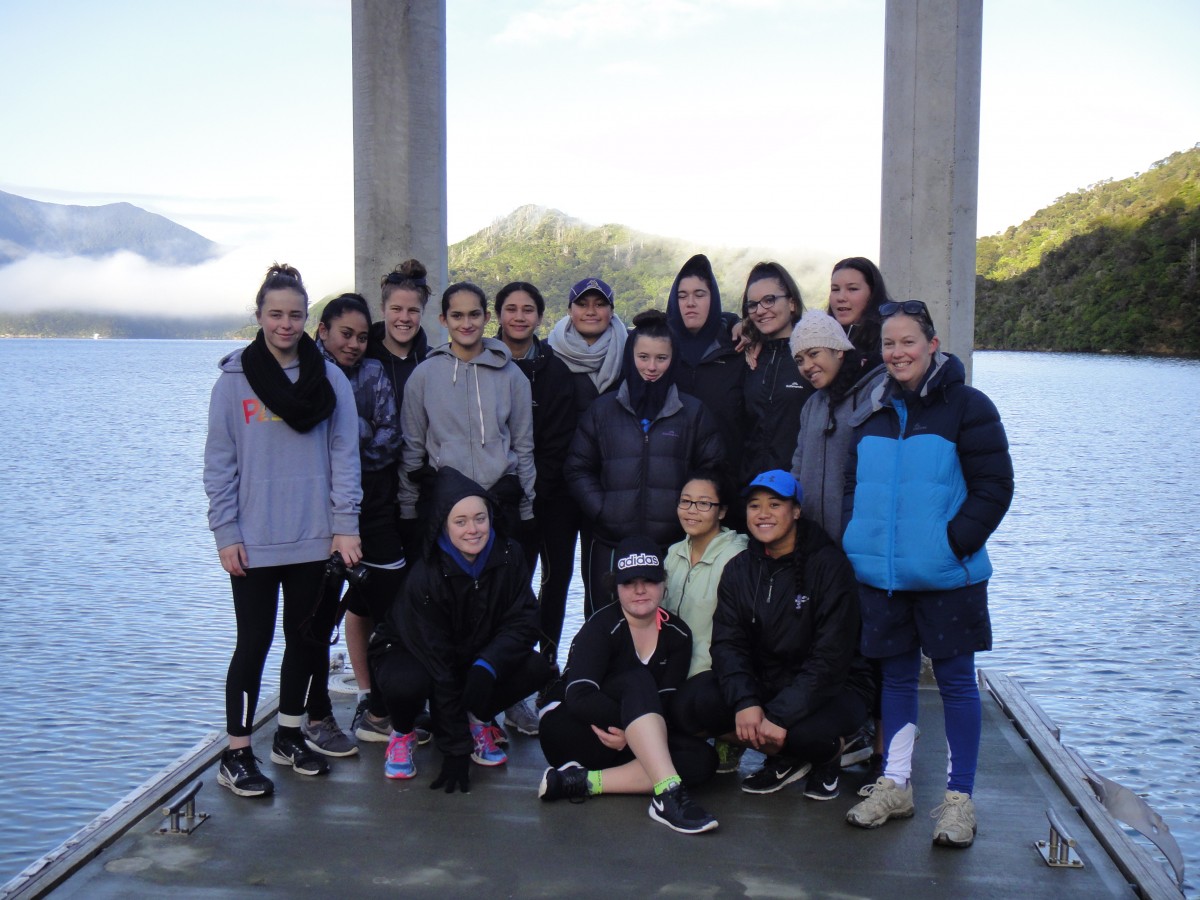
 The Tough Gal Challenge
You do not have to be a great sportswoman to get Excellences in this course.
Overall the course aims to:
•To provide students with a critical understanding of some of the theoretical principles that relate to physical activity
•To provide students with the knowledge and skills they require to study Physical Education in a Tertiary Education Institution.
•To provide opportunities for students to develop personal and social skills and attributes that contribute to a healthy lifestyle.

Level 3 Physics
PH300AIM:
Year 13 Physics builds on the concepts of Year 12 Physics and equips students for the NCEA
Level 3 Achievement Standards. It also provides an interesting course of study of the physical
world for general educational interest and career advancement.
OBJECTIVES/COURSE CONTENT:
On completing this course students should be able to:
•understand the concepts and principles of Physics and their use in familiar and unfamiliar situations.
•demonstrate the skills of investigation, problem solving, experimentation and communication.
•link the Physics learned with applications, technologies and the lives of people.
COURSE CONTENT:
The Year 13 course concentrates more on practical work and the understanding of ideas rather than solving problems mathematically. The course covers motion (including rotational and simple Harmonic motion) waves, electromagnetism (complex circuit analysis and alternating current theory) and atomic Physics.
Level 3 Religious Education
RE300AIM:
To understand the sacredness, uniqueness and developing nature of the human person, to understand the person and Gospel of Jesus Christ and to value the College community of people searching together to integrate culture and faith with every day living.
OBJECTIVES/COURSE CONTENT:
•Develop knowledge and understanding of the mystery of God and of Jesus, of the
Church and of the central beliefs which Catholics hold.
•Encourage study, investigation and reflection by the students.
•Develop the ability to think critically, spiritually, ethically and theologically.
•Develop awareness and appreciation of Catholic belief and the relationship between faith and life.
•Foster appropriate attitudes: for example, respect for truth; the views of others; awareness of the many ways Christianity is practised in Aotearoa.
Level 3 Samoan
SA304Level 3 Sociology
SO300Sociology is about people - who they are, what they do, and how they change. In this Level 3 course, you will engage with controversial and contested issues. We will begin by examining a campaign in detail, learning how people worked together to bring about change and fight injustice. You will also be able to research a current social issue that you feel passionate about to become informed, and then plan, develop and carrying out your own social action. This course will help you develop your ability to construct an argument and support your position, to research and investigate, engage in meaningful social action and to identify different views, values and perspectives. Pre-requisites: Nil. This course is fully internally assessed and offers enough credits to gain a UE basket.
Level 3 Statistics
MS300Every person in today's society needs to have a basic understanding of data analysis and statistical concepts, in order to be able to think critically about the quantitative information we encounter every day, from opinion polls to headline news reports based on scientific studies.
This course aims to provide a path of mathematical study appropriate for students interested in quantitative aspects of the biological and social sciences, medicine, commerce and administration. In general the study of Statistics is useful in any field where the collection, analysis and interpretation of quantitative data is important.
Last year’s assessment report states that candidates who performed well across the standards were able to demonstrate understanding of statistical and probability concepts, integrating these understandings with contextual knowledge when required. Successful candidates demonstrated both calculation-based and analytical-based approaches.
When using contextual knowledge as part of a response, candidates needed to link this knowledge to an aspect of statistical knowledge. Contextual knowledge or speculation alone was not sufficient.
Course Requirements
In order to be able to take the course a MS200 student must have passed
AS91267 Apply Probability Methods in Solving Problems with Merit
AS91258 Apply Sequences and Series in Solving Problems with Achieved
AS91269 Apply Systems of Equations in Solving Problems with Achieved
In order to be able to take the course a MA200/MA102 student must have passed
AS91267 Apply Probability Methods in Solving Problems with Merit
AS91261 Apply Algebraic Methods in Solving Problems with Achieved
Exemptions can be granted by the HoD Dr Muck.
Level 3 Te Reo Māori
MI300This course aims at developing listening, reading, writing, and speaking skills in Te Reo Māori. It also aims to extend the student's understanding of, and sensitivity to, Ngā Tikanga Māori (Māori culture) and Te Ao Māori (the Maori world). You will be able to participate in a variety of aspects of Te Ao Māori such as Whaikorero, Waiata, Kapa Haka and Manu Kōrero.
Ms Chez O'Donnell will join St Catherine's College as Kaiako for 2022.
Level 3 Tourism
TO300AIM:
This course offers students an introduction to the travel and tourism industry. Students will study the different work roles in this important sector of the New Zealand economy and gain an understanding of employment opportunities in this growing industry.
OBJECTIVES:
On completion of this course students will have:
• Improved communication and information skills suitable for customer service roles
• Tourism knowledge – trips to hotels and tourism providers are planned
• Increased geographic knowledge
• Awareness of training providers for further tourism studies.