
Epsom Girls Grammar School
Auckland
Epsom Girls Grammar School Curriculum
205 subjects available for 2026/2027.
Subjects for Year 7 Students
Level 2 French Cambridge
12FCAS
Year 12 French Cambridge (AS French)

Cambridge AS French is based on the B1 French DELF exams with elements of B2. The DELF B1 exam and AS exams are slightly different, but they do complement each other.
The AS curriculum covers 6 main topics, which are then broken down into smaller topics:
- A. Culture (Entertainment, identity and culture, the arts)
- B. Health and wellbeing (health and fitness, nutrition, managing well-being)
- C. Education and future plans (life at school, further/high education, career/work choices)
- D. Community and society (equality and diversity, lifestyle, society)
- E. Our responsibility for the planet (the environment, sustainable living, protecting our world)
- F. Science and technology (scientific and technological innovation, social media, technology)
There is no set vocabulary list for AS French, however we will revise the IGCSE vocabulary, learn the NCEA vocabulary and learn vocabulary related to the topics.
There is a set grammar list that we will learn alongside the topics.

Why should I keep studying French?
Year 12 French is when you start to become fluent.
Your depth of knowledge will enable you to write discuss topics you are deeply interested in as well as deeper topics.
It helps you to stand out in your applications compared to other students because you will have a different subject to the majority of students.Year 12 really strengthens what you already know and makes it a part of you.
You learn more about yourself and your own culture(s).
French is an official language in many international organisations. .
Learning a language helps you to understand English/your other language(s).
You can stretch your brain in new ways. .
You start to really see your French knowledge deepen in Year 12.
It brings you new experiences.
Not many people who grow up in New Zealand speak French and not many English speakers learn another language, so it will mean you stand out in applications.
You improve your general memory and memorisation skills and develop new connections (new synapses) in your brain.
This is your best opportunity to become fluent in another language. Unfortunately, once you drop a language, it is highly unlikely that you will ever become fluent in it, because you will never have regular classes like this again. Starting a language at university does not give you long enough to become fluent. However, studying a language at university (as a major, minor, elective, certificate or diploma) after studying it at high school strengthens your language knowledge incredibly.
Emotional and Cultural Intelligence/Quotient: In an ever-increasingly multicultural world, it is important to be able to bridge across different cultures and communicate well with a wide range of people. Learning another language is the best way to grow your cultural quotient. Skills learnt can be applied to any aspect of your life.
With languages, you learn about other people's perspectives and ways of thinking. A new language opens up new ways of seeing the world and of expressing oneself. This develops essential skills, such as empathy, open-mindedness, thinking skills, courage, conversation skills, argument development, stronger general knowledge, confidence and adaptivity.
You become a much more interesting person - with more general knowledge, experiences and interests.
Your French becomes more innate in Year 12.
Languages are extremely relevant if you are thinking of entering politics, doing law, business, medicine or sport or any other field even!
Who knows where life will take you! You may end up in a job working with French clients or moving to a French-speaking country.
Politics: you are likely to need to talk to people from other countries to achieve what you want to achieve or to learn about what other countries do.
Business: Our closest neighbour is New Caledonia, which is French-speaking. French Polynesia is also close by. Many NZ businesses wanting to expand look at these places as we are their closest big neighbour, which means they want our products and businesses. It's much easier to expand to those countries if you speak their language.
Medicine: People from New Caledonia and French Polynesia are regularly transported to NZ for medical care. Refugees also need medical care. Can you imagine how scary it would be if you don't understand the doctor or the nurse? Having a French-speaking doctor or nurse will make their experience better, but it can also save lives so that there can be accurate communication between them and the hospital staff.
Law: French-speaking refugees come to NZ. They may need your help.
Sport: Many training camps, clubs or competitions run out of Europe and in particular around France, Switzerland, Andorra and Belgium, where French is spoken. It makes it a lot easier to contracts and to work with teammates if you speak French.

AS French Assessments
PaperTitleWeightingType of AssessmentDurationDetailsPaper 1Listening25%Exam1 hour40 multiple-choice and matching questions.Questions in French.
Hear each text twice. Audio played by the examiner.Paper 2Reading25%Exam1 hour 3040 multiple-choice and matching questions.
Questions in French.Paper 3Writing25%Exam1 hour 30Closed book.
Questions in French.
Write 2 texts:
1. Letter or email (100-150 words).
2. Choose one topic out of a choice of two. Argumentative or discursive text (200-250 words).Paper 4Speaking25%Exam before the exam period.16 minsClosed book exam.
Out of 65 points.
Completed during set dates before the Cambridge exam period.
Completed with a French teacher at the school.
Two parts:
1. A 2-min pre-prepared presentation. Then answer the examiner's questions about it. (4-5 mins). 50%
2. 5 mins preparation time for a 4-min conversation based on provided topic. (4 mins) 50%
Sitting the DELF B1 exam in August will be very good preparation for the AS exams. This is not compulsory, but highly recommended.
In Year 12, you will also...
- become “fluent” by the end of the year (as long as we complete our homework): we are able to say anything we want to say in French. You might not know the best way of saying it or the correct word, but we know enough French to be able to find a way to communicate what we want to.
- have the opportunity to take the B1 DELF exam.
- lead a group during French Day.
- have the opportunity to participate in the French Senior Interschool Quiz night.
- be able to participate in the Pétanque tournament.
- have the chance to help out at the Year 11 Tour de Quiz.
- be able to participate in the Joutes Oratoires (French Debating Tournament) with the Alliance Française.
- and so much more.
Year 12 Joutes Oratoires (French Debating Tournament)
Level 2 Physics Cambridge
12PCASLevel 2 Physics Cambridge
Course description/aims: Physics is the fundamental science that enables us to explain the how and why of the increasingly technological world we live in. The Epsom Girls School syllabus teaches the main concepts of the study of matter, force, energy, electricity, space physics and the structure of atoms found in all rigorous Physics courses. These concepts are illustrated with current applications and reinforced with relevant practical work. Students learn to communicate effectively, collaborate, and become aware of the ethical, environmental, economic, cultural, and social impacts of Physics in their lives. This course ensures students gain skills which are transferable to most future career paths and allows them to be better equipped to engage with a range of scientific issues.
Course outline: The subject content of the Cambridge course is divided into two segments (AS and A2). This AS course is the first year of the Cambridge syllabus. The topics studied during the AS Physics course are listed below:
- Physical quantities and units
- Kinematics
- Dynamics
- Forces, density, and pressure
- Work, energy and power.
- Deformation of solids
- Waves
- Superposition
- Electricity
- D. C. circuits
- Particle/nuclear physics
AS Level candidates also study practical skills.
Methods of assessment:
Internal Assessment: Students will sit two School examinations. Approximately 20 experiments are performed, written up and marked during each year. Practical examinations are undertaken each term and contribute towards the examination mark awarded each term. Formative assessments are sat in each part of the course.
External Assessment: Students are prepared for the Cambridge Advanced Subsidiary (AS) examination (Syllabus 9702 AS). The Cambridge AS format is:
- Paper 1 [1 hour, 15 mins] – 40 multiple choice questions, 31% of Cambridge AS course mark
- Paper 2 [1 hour, 15 mins] – structured questions, 46% of Cambridge AS course mark
- Paper 3 [2 hours] – advanced practical skills, 23% of Cambridge AS course mark
Special equipment: Theory, practical and question workbooks are commended.
Continuation of subject: Physics AS Level continues onto Cambridge A Level Physics, which is a prerequisite for courses at universities, technical institutes, and other careers.
Prerequisites: A strong ability in Mathematics is an advantage, and all students should be taking Cambridge AS or A Level Mathematics.
Recommended achievement levels: Students who wish to study Cambridge Assessment AS Physics should have scored more than 55% in School examinations each term and gained 55% or higher in the final Pre-Q examinations.
Subjects for Year 8 Students
9 Chinese Mandarin (Second Language)
9CHMYear 9 Chinese Mandarin (Second Language)
Note: This is a course for second language learners ONLY.
Chinese, with its rich cultural background and unique writing, is a most intriguing language. It is the most spoken language in the world and also the first language for many members in our community. Learning Chinese will give you access to many opportunities regardless of the career path you choose.
The themes of the Year 9 beginners’ course are China, Chinese Characters, Introducing Yourself, and Making Friends.
The topics are:
- Talking about yourself and your family
- Asking people about their personal details and their families
- Describing animals and talking about your pets
- Talking with your friends about the sports you are interested in
- Telling people about things you are good at.
You will also learn to write Chinese characters, explore Chinese calligraphy and experience a range of Chinese culture activities, such as paper cutting, Chinese dumplings and rice ball making and Chinese festival cards. You will learn Chinese through pair and group work, role plays, games, songs, competitions, interactive technologies and our textbook.
An example of our Year 9 students introducing themselves
9 Core Art
9ARCYear 9 Core Art
Through this course students will continue to develop their understanding of the ever growing visual world around them. Students will be introduced to the art fields of Photography, Sculpture, Printmaking, Painting and Design and have the opportunity to develop ideas in response to personal investigation and the study of artworks.

There are 3 units of work at Year 9 - produced during 13 weeks (4 classes per week)
These are assessed individually as part of a whole.
Theme: Ko au te whenua, te whenua ko au: I am the land and the land is me
Place, Person, the Natural World: Foundation Skills


The theme for the term is based on elements of the students pepeha or mihi, particularly a maunga or mountain they may identify with. We also under-take taster-units in both woodblock printmaking and clay-sculpture so that students are exposed to multiple artistic diciplines.


9 Core Drama
9DRCYear 9 Core Drama
The Year 9 Drama course is designed to introduce students to drama activities and routines. It aims to build confidence and develop presentation and interpersonal skills with students.
Class work focuses on introductory games and exercises, short improvisations, public speaking, role play and developing devised stories from current events, historical figures, literature, music, art or objects. Students are introduced to script work which they combine with puppetry.


9 Core Music
9MUCYear 9 Core Music

All students in Year 9 will take Core Music as part of the Arts rotation. The course will be 13 weeks.
This course follows on to Year 10 Music (Full Year) and 10 Core Music (Half year course). Some identified/advanced music students might be able to progress to 11 Music Academy.
This course introduces students to the language of music through performance, composition, music literacy (reading, using and understanding notation) and exploring cultural and historical contexts of music.
Course Objectives include:
- Perform as individuals or in small groups.
- To develop musical ideas through collaborative music composition.
- Understanding music in context, through investigation of a range of music styles, contexts, music theory.
Course Content includes:
- Introducing students to practical music making by gaining some keyboard and ukulele/guitar skills.
- Students work in groups to create and represent music composition.
- Introduction to Music technology.
- Understanding music in context through listening, the language of music (theory), and research work.
Notes:
- Students are able to sign up to group Music lessons on a range of instruments through the itinerant music programme.
- Students are encouraged to get involved in co-curricular Music groups. We have a large range of bands, orchestras and choirs to suit every level.
Where Next:
Over the next few years, you will be able to progress to some or all of the following:
- Year 10 Core Music (Half Year), Year 10 MUS (Full Year)
- Year 11 Music or Year 11 Music Academy
- Level 2 Music (NCEA) or Level 2 Modern Music (NCEA)
- Level 3 Music (NCEA) or Level 3 Modern Music (NCEA)
- Scholarship Music
9 Design and Visual Communication
9DVCYear 9 Design and Visual Communication
Course Objectives:
Design & Visual Communication teaches students the drawing and design skills used in fields such as Architecture, Engineering and Industrial Design. The course includes learning to use 3D sketching techniques, instrumental drawing skills and computer graphics software to create and express ideas. Students are taught creative thinking and problem solving skills that enable them to generate and develop design ideas.


Course Content:
Product design - Cupcake Box: Students will design a easy to carry package for a cupcake. They will learn sketching and technical drawing techniques to explore and present ideas.
Architecture - Studio Design: Students will design a small studio building to suit their own needs and wishes. They will learn to use architectural sketching techniques and CAD to develop and present their ideas.
9 Design Technology
9TEDYear 9 Design Technology

Course Objectives:
Design Technology aims to develop students' technological literacy and critical thinking skills, fostering innovation and problem-solving through design thinking.
Akonga develop design skills in designing, technological modelling, and making, safety, and quality control in the school workshop.
Akonga design and make a Waka Huia Treasure Box. Akonga develop design thinking, designing and making skills using Drawing and Sketching, Workshop tools and Computer-Aided Design and Manufacture using CAD software and the school’s laser cutter.
Akonga work in pairs to design a Flat Pack Stool for a teenager that can be CNC cut on the school's CNC machine. Akonga work to design their stools, using design sketches, modelling in card, using Computer-Aided Design, and the school's laser cutter to test their designs.
Course Overview:
This course is for two terms
9 Digital Technology
9DITYear 9 Digital Technology
This course is designed to introduce students to Digital Technologies, using the computer facilities provided in the computer labs. Students will be working in two distinct curriculum areas during their two terms.
FIRST TERM: DESIGNING AND DEVELOPING DIGITAL OUTCOME [DDDO]
- Design your own fantasy-themed collage using Photoshop and Illustrator — inspired by EGGS values and your imagination! (Examples below)
- Use Google Drive and cloud tools to save, organise, and back up your schoolwork like a pro.
- Learn smart file management and explore other Adobe apps to bring your artwork to life.
- Earn your Interland Certificate by completing fun, interactive cyber safety challenges that teach you how to be smart, alert, strong, kind, and brave online!
Photoshop Student Examples


SECOND TERM: COMPUTATIONAL THINKING [CT]
Make Your Own Games in Year 9 Digital Technology! (9DIT)
Ever wanted to build your own video game? In this course, you’ll:
Create a Cookie Clicker game and retro-style 2D arcade games (like the ones from the 1980s!) using Scratch — a fun drag-and-drop coding tool.
Level up with Gamefroot if you’re ready for more advanced programming.
Design your own characters (called sprites) and bring them to life in your games.
Learn the basics of coding with block-based programming, and even explore other coding languages if you’re ready for a challenge.
Year 9 Creations - Cookie Clickers using Scratch:
Drone Technology
In Year 9 Digital Technologies, students explore the mechanics and capabilities of modern drones through hands-on experimentation and flight.
Programming to Create Art


Love tech, robots, or coding?
In this fun and hands-on subject, you’ll get to:
Program real robots using MBlock to follow lines, avoid obstacles, and respond to light and sound.
Create cool projects with Micro:bits — tiny computers that can count steps, show messages, play games, and even send signals to your friends!
If you enjoy solving problems and building things then give this subject a try.
Programming your Robot use mbot:
9 English
9ENGYear 9 English

The Year 9 English programme is designed to foster a love of reading and engagement with literature. Students will study the elements of literary texts and develop responses, both formally and creatively, using written, oral and visual skills. Students are assessed on their ability to understand ideas in texts, and to express ideas with accuracy in writing, speaking and visual presentations.
Content includes:
- Language and Grammar Skills
- Close Reading
- Oral & Visual Presentations
- Active Listening and Critical Literacy
- Writing
- Discursive
- Creative
- Essays
- Literature studies
- Poetry
- Non fiction
- Novel
- Shakespearean drama
9 English for Speakers of Other Languages
9ESLYear 9 English for Speakers of Other Languages
Students who have come to New Zealand within the last five years (approximately) and whose language tests indicate a need for extra support with language acquisition will be required to take this course (9ESL). Students may also be placed in the Reception class (9ESR) or Immersion class (9ESI) for more intensive English study if testing shows a need for greater support.
The programme is a topics-based language course which focuses on listening, speaking, reading and writing skills with an emphasis on grammar and vocabulary.
Students in this course will be able to use basic English across all areas but may need this extra support with their academic work.
9 Food Technology
9TEFYear 9 Food Technology
Course Objectives:
Food Technology teaches students the base nutrition knowledge needed to create an outcome. The skills needed to create a meal/food product and the important health and safety steps that must be followed. Researching, designing, testing, trialing and prototyping a food product. This subject progresses onto Food Technology and Hospitality in senior levels.
Course Content:
The topics covered in this course include:
- Health and Safety + Skills - Learn health and safety practices and develop culinary skills.
- Nutrition- Develop nutrition knowledge of food groups, nutrients and energy requirements over a day.
- Kai te Whanau/Family Meal - Design and produce a family meal based on nutrition and stakeholders.
- Crumbl Cookie - Research, plan, test, trial and evaluate an innovative cookie product.


9 French
9FREYear 9 French

French is...
...the official language of the closest country to New Zealand (New Caledonia - only 2.5 hours away!)...spoken by over 55,000 people in NZ, making it the 6th most widely spoken language in NZ
...the official language in 59 nations around the world
...the 4th most used language on the internet...the 2nd most-used language in diplomacy...spoken by Tahitians, who come to New Zealand for medical care. They usually can't speak English though.
...the 3rd most used language in business
...the 5th most spoken language in the world...spoken by 300 million people worldwide
...one of two languages that is on every continent...
Information taken from https://www.diplomatie.gouv.fr/en/french-foreign-policy/francophony-and-the-french-language/the-french-language-in-figures/ and the 2018 NZ Census data

In Year 9 French at EGGS, we learn a lot, grow our brain, establish the foundations to become fluent by Year 13, try French food, listen to French music, try out authentic French games, learn about the culture, have a lot of fun and much more.
Our team of French teachers have a breadth of experience with the French language, with all of them having lived in France. Every year, we have a French language assistant who speaks French with the students and helps them practise having a conversation in French at the appropriate level.


In Year 9 French, students have the opportunity to participate in many different activities, including but not limited to:
Regular two/three-on-one time with our French language assistant
French Day with French students from all year levels
French breakfast with French pastries and hot chocolate (in France, we have hot chocolate in a bowl at breakfast time!)
Buying a crêpe in French from an authentic crêperie
French at EGGS from the perspective of French students
Year 9 French Topics
Me, my family, my classroom
My likes and my dislikes
Describing myself and other people
My school life
Food (we have a French breakfast too!)
My hobbies and when I do them
My town - what's in it and what you can do
This course caters for students who have never learnt French before and for students who started French in Intermediate. If you have studied French for longer than 2 years, we have various options available. Please contact Miss T. Clarke to help find the best option for you.


What opportunities are there after Year 9 in French?
- French Day - an annual day full of fun activities and food with all the students at EGGS studying French.
- Exchange to Tahiti - every year, two students in Years 11 or 12 can go on a 4-week exchange to our partner school in Tahiti, French Polynesia.
- Tour de Quiz - Year 11 Blooket / Kahoot / Quizlet Live and more competition with other schools.
- Les Joutes Oratoires - run by the Alliance Française. A debating tournament for Year 11s, 12s and 13s.
- Senior Quiz Competition - Years 12 and 13 can participate in a Quiz Night against other Auckland schools.
- Experience the tradition of eating a Galette des Rois.
- A 3-week trip to Japan, Spain and France - students must be studying one of the three languages when they are in Year 11, 12 or 13 (depending on the year of the trip). This trip goes every three years.
- Visit to Atelier du Fromage (a French Café in Newmarket).
- DELF exam - students can choose to sit the DELF exams. These are exams organised by the French Government for people around the world to gain a qualification in the French language. This qualification can go on CVs and it is recognised worldwide. Students who choose to sit this exam receive tutorials to prepare for them. These exams can enable students to study at a French university or gain French citizenship if they are living in France.


Example of an end of Year 9 Speaking
(have a look at the other French pages to see this student's progress over the years and see what you will be able to do in 5 years!)
9 Health and Physical Education
9HPEYear 9 Health and Physical Education

The Physical Education programme at Year 9 includes learning around five concepts central to te ao Māori. These are Whanaungatanga (making connections), Manaakitanga (accepting others), Kaitiakitanga (caring for the environment), Rangatiratanga (showing leadership) and Kotahitanga (working together).
Throughout the year, students participate in a wide variety of physical contexts in our PE spaces. These experiences are designed to provide a broad foundation of movement knowledge, skill development, and positive attitudes toward lifelong participation in physical activity. Each unit contributes to students’ personal growth, physical literacy, and understanding of the role physical education plays in supporting both individual and collective wellbeing.
Movement Performance
In this area, students focus on the development of gymnastics skills. They work on learning and refining movement patterns, improving balance, flexibility, coordination, and body control. Students are also encouraged to collaborate with their peers in choreographing and presenting performances, building not only technical skill but also teamwork and communication. Active involvement in these performances allows students to grow in confidence and express themselves creatively through movement.
Aquatics
Aquatic learning involves the progressive development of all four swim strokes: freestyle, backstroke, breaststroke, and butterfly. Alongside stroke technique, students participate in water-based games that help build confidence, comfort, and enjoyment in the aquatic environment. A key focus is also placed on developing essential water safety skills, such as safe entries, flotation, treading water, and survival strokes, which are crucial for ensuring students can keep themselves and others safe in and around water.
Tactical Awareness
In this component, students enhance their understanding of game strategies and decision-making—what is often referred to as game or sport IQ. Through participation in a range of games and sports, they develop both fundamental and sport-specific skills. Emphasis is placed on reading the play, anticipating actions, and making effective decisions under pressure. Students also explore teamwork, communication, and leadership within game situations, building their ability to work successfully with others in competitive and cooperative environments.
Fitness
Students explore various components of fitness such as cardiovascular endurance, strength, flexibility, speed, and agility. They are guided to understand how to improve these components through targeted exercises and fitness testing. Emphasis is placed on setting personal goals and tracking improvements over time. Students also reflect on their individual fitness levels and how these relate to their personal wellbeing and Hauora, developing a more holistic understanding of how physical activity contributes to their overall health.
There is also a free swimming programme offered, for those students who need help improving their swimming technique or learning to swim.
In Year 9, students have 2 periods of PE a week for the year.
The Health programme at Year 9 focuses on 2 main areas: Mental Health and Relationships & Sexuality. Students will gain knowledge, skills, attitudes and values to enjoy a healthy lifestyle. They will develop knowledge to make informed decisions and to act in ways that contribute to their personal well-being, the well-being of other people and that of society as a whole. Central to learning are the te ao Māori concepts of Whanaungatanga (making connections), Manaakitanga (accepting others), as well as models of well-being including Te Whare Tapa Wha and Fonofale.
The Mental Health unit begins by exploring personal identity and the things that influence this. Students will be introduced to the concept of gratitude journalling and practice this over a series of lessons. The learning will look at models of wellbeing and how aspects of wellbeing can be affected positively and negatively throughout our lives. Students will focus on mental and emotional wellbeing and what can influence and support positive mental and emotional wellbeing. They will explore positive communication and mindfulness as part of these strategies. Healthy friendship behaviours are discussed and this leads into learning around bullying and discrimination and how students can play their part in preventing bullying.
The Relationships and Sexuality unit covers language around relationships and sexuality and explores gender identity as part of learning about diversity. Students will recap their prior knowledge around puberty and how this affects their wellbeing. They will consolidate their knowledge on the menstrual cycle and conception. Students will build on their knowledge of consent and explore different methods of contraception.
In Year 9 students have one lesson of Health a week for the year.
9 Japanese
9JPNYear 9 Japanese

Welcome to year 9 Japanese at EGGS!
Japan is known for its cultural influence on the world. From food, to anime and manga, to traditional clothing and decoration, Japan’s culture is unique and beautiful. Speaking Japanese opens the door to experiencing this new world of culture, history and tradition.
As NZ’s 4th largest trading partner, there are many opportunities for Kiwis to use Japanese both in Japan and at home.
In this full-year course you will study the basics of communication in Japanese. The course will have a personal focus, where we develop skills to talk about ourselves. You will learn the 2 Japanese alphabets completely as well as beginning study of kanji (Japanese pictogram characters). You will learn Japanese through pair and group work, role plays, games, songs, and competitions. The big idea is Introductions and you will discover language that is immediately useful.
We will cover topics such as:
- Introducing and describing yourself and your family
- Life in Japan
- Leisure time
- Going places
- Daily activities
- Japanese cultural festivals.
You will also experience a range of Japanese cultural activities, like Origami and Onigiri Making.
In year 9 Japanese you will be assessed via tests and project assessments. Assessments will cover the skills of reading, writing, speaking and listening on the topics we have covered in class.

Why study Japanese? Watch and find out:
9 Mathematics
9MTHYear 9 Mathematics
In Year 9 Mathematics, students will learn to solve problems in a range of mathematical contexts, including Number, Algebra, Geometry, Measurement and Statistics. We aim for students to achieve both procedural fluency and relational understanding of mathematical concepts, to become flexible mathematical thinkers and problem solvers.
In Junior Mathematics (Years 9 and 10), students are placed in classes aligned with their current stage of mathematical development to ensure they learn alongside peers with similar learning needs. During these years, students study a broad range of topics including Number, Algebra, Measurement, Geometry, Graphs, Probability, and Statistics.
9 Music Academy
9MUAYear 9 Music Academy
If you wish to take this course please add it to your options selection and complete this form
9 Music Academy is an extension course designed to challenge and engage musically advanced Year 9 students. Entry to this course is by application and audition. Students will have a minimum Grade 2 ABRSM/Trinity Level of music theory to be offered a place in this course. As part of the application process, students will be invited to provide a video of themselves performing a piece that best showcases their skill and progress on their chosen instrument/s.
Students in 9 Music Academy will develop advanced and comprehensive skills in music, including solo/group performance, music theory, composition, and analysis that will extend beyond the Year 9 curriculum level. Groundwork will be laid so students are able to succeed in Year 11 Music Academy/Music the following year and have a solid foundation for future senior courses - including potential Cambridge courses.
This course caters to advanced music students who are entering Year 9 above curriculum level 4. Like-minded students will connect in a focused music environment and create opportunities for talented students to be challenged in all areas of this subject. It will prepare these students to be extended and have the ability to take Year 11 Music the following year.
The course is suitable for students who are already demonstrate a level of proficiency on their instrument to be extended. The course will include:
- Songwriting and composition (creating original music)
- Performances (solo and group settings)
- Music/Set Works analysis
- Music Theory
This course will also build key competencies:
- Thinking
- Relating to others
- Using languages, symbols and texts
- Managing self
- Participating and contributing
Components of the course in more detail:
Solo Performance: Demonstrating performance skills that will be developed throughout the year.
Group Performance: Chamber Music, Rock band, Class Choir, Class Orchestra. Ability to rehearse these as all students have skills in playing an instrument.
Elements of Music: Learning and using these devices to analyse music.
Set Works: Analysing music in depth using scores and applying knowledge of the elements of music to write essay responses.
Musical Knowledge: Understanding features that identify the periods of music and how this has developed over time and how these have influenced music we know today.
Music Theory: Students will be working at a Grade 3 ABRSM level + which will be differentiated for each student.
Composition: Using Sibelius notation software to write their own compositions.
Songwriting: Developing skills and writing their own songs.
Aural: Students will develop aural skills through solfège and Curwen hand signs building on basic scale and rhythm reading. They will develop their sight singing, harmonisation and be introduced to basic rhythm and melodic dictation.
Conducting: Students will learn simple time signatures and recognise time signatures aurally in music. They will use these skills to conduct a small class ensemble.
Co-curricular Music: All students will be expected to be involved in the co-curricular programme to continue developing their musicianship outside of the classroom.


9 Science
9SCIYear 9 Science
Year 9 Science starts to build the knowledge and skills that students will need to develop in order to understand and participate in a world that increasingly uses Science and Technology. These skills will provide opportunities to work towards a variety of career choices in a large range of interesting fields.
Topics Studied:
- BIOLOGY: Cells and Microscopes; Genetics
- CHEMISTRY: Nature of Matter; The Periodic Table and chemical reactions
- PHYSICS: Forces, Fluids and pressure
- PLANET EARTH AND BEYOND: The stars of Matariki; The Spheres of the Earth
Course Objectives:
Students in Year 9 will:
- gain confidence and a sense of belonging in Science
- begin to develop self-management skills
- start to build a base of science knowledge and skills
- begin to develop research, investigative and thinking skills using scientific and evidence based approaches
- develop ways of working collaboratively with others by adopting different roles
- explore different ways of communicating.
9 Social Studies
9SOSYear 9 Social Studies
He Tangata, He Tangata, He Tangata! – It’s people, it’s people, it’s people!
Welcome to Year 9 Te ao tangata |Social Studies. This course is allows students to deepen their understanding of the changing nature of places, and how societies function and change, with a focus on New Zealand's place in a globalised world. Students will explore complex contexts related to political ideologies, governance systems, and human rights frameworks, including the constitutional significance of te Tiriti o Waitangi | the Treaty of Waitangi. Teaching supports students to engage with higher-order concepts, such as sovereignty, inequality, ethics, and power, and develop strong social sciences practices related to analysing data and sources, making decisions, and evaluating significant events and challenges.
Student learn they can participate as thinking, active, informed, and responsible citizens. The aim of the course is to help you to understand the culture, traditions, lifestyle, and environment of New Zealand, as well as countries and societies that have significance for Aotearoa New Zealand. Social Studies is a compulsory subject in Year 9 and 10 and you will be taught by specialist Social Scientists. In this subject you will have the opportunity to practice your Literacy and Numeracy skills as Social Studies synthesises these skills into the case studies we study throughout the year.
The new Social Science Curriculum will be implemented from 2027 and has four main strands at Phase 4; History, Civics and Society, Geography, and Economic Activity. This will build upon previous content knowledge and skills students have mastered in earlier Phases.
- History focuses on interpreting the past through significant events, cultures, and changes over time. It develops student understanding of how historians use evidence and concepts such as causation, significance, and change to explain how societies have developed.
- Civics and Society focuses on how democratic systems work and how people participate in civic life. It develops student understanding of rights, responsibilities, laws, the role of te Tiriti o Waitangi | the Treaty of Waitangi, and how to engage respectfully with diverse perspectives and public issues.
- Geography focuses on how people interact with physical and human environments. It develops student understanding of the nature and distribution of places, and the concept of sustainability. It teaches students how to use spatial tools, graphic organisers, and data to interpret environments, patterns, and perspectives.
- Economic Activity focuses on how financial and economic systems operate. It develops student understanding of personal finance, business and government roles, and New Zealand’s economy in a global context
Each unit will have a formative and summative assessment that is designed to demonstrate the understanding of the key content covered, as well as a range of Social Studies skills. There is also the opportunity to participate in weekly Current Event quizzes. In addition, there is an end of year exam that will cover the key content and concepts covered throughout the year. This provides ample opportunities for students to learn how to revise and organise their notes and learning from the year.
Social Studies has continued to be as relevant and important as ever for our Year 9 and 10 students as national and international current events capture the interest and help our students to understand more about different societies and cultures. This helps students to make connections between what they learn in the classroom to what is currently evolving and happening in real life. This two year course aims at developing students' Literacy, Numeracy, critical thinking, and research skills. The course will include, where appropriate, the school values of compassion, community, curiosity, and courage. These skills are crucial in the empowerment of young people to participate responsibly in our local, national, and international communities.
9 Spanish
9SPAYear 9 Spanish
This course is for absolute beginners as well as those who may have done some Spanish before. In Spanish we learn about Hispanic cultures and traditions. Some of the activities involve crafts, sampling Spanish and Latin American food and learning about customs. Spanish is a full year course and can be taken all the way up to year 13.
In year 9, you will be able to greet, introduce yourself, read, speak, listen and write in Spanish about a range of topics, such as:
- Introducing yourself, you siblings and other people
- Describing animals and pets
- Talking about hobbies, sports, and likes and dislikes
- Talking about your school and school subjects
- Describing your family and friends
- Describing your house
- Talking about where you live
- Organising weekend plans and ordering food
You will learn Spanish through pair and group work, conversation, games, songs, competitions, cultural projects, interactive apps, conversations with our language assistant from Spain and your textbook, Viva 1.
There are a lot of similarities between Spanish and English. Both languages have thousands of cognates, which are words that sound very similar in both languages. In many cases, the words are the same and you will recognise them instantly, such as animal or actor. These words can give you a head start on your Spanish learning journey, as you will add them quickly to your vocabulary.
Also, Te reo Māori and Spanish are incredibly phonetically similar, they share the exact same five core vowel sounds, and use rolled R's which will help you with pronounciation.
Come on, join us to learn Spanish!

9 Te Reo Māori
9TRMYear 9 Te Reo Māori

Tōku reo, tōku ohooho
Tōku reo, tōku mapihi maurea
Tōku reo, tōku whakakai marihi
Ko Te Reo Māori te reo tuatahi, te reo taketake o ngā moutere kai te kiia nei ko Aotearoa ināianei, arā, ko Te Ika a Māui, ko Te Waka a Māui, ko Te Punga o Te Waka hoki. Koia te reo i kōrerotia e ngā mātua tūpuna, ā, i tukuna iho mai hai taonga mō tatou. Kāore i tukuna kia rite ki te moa ka ngaro, engari, ka kōrero tonu mō ngā āhuatanga o te ao. Nō reira rā, ākona, puritia, kōrerotia, hai oranga mōu, mō tō whānau, hapū, iwi anō hoki.
E maha ngā mahi ka mahia mā Te Reo Māori, arā, ko ngā mahi katoa o Aotearoa whānui! Ki te hiahia te tangata ka āheitia te kōrero Māori i ngā wā katoa, i ngā wāhi katoa, nō reira rā, karawhiua e hine mā!
My language is my awakening
My language is my object of affection
My language is my most precious adornment
Te Reo Māori was the first language and is therefore the indigenous language of the islands known as Aotearoa, being The Great Fish of Māui (the North Island), The Canoe of Māui (the South Island), and The Anchor of The Canoe (Stewart Island). It’s the language that was spoken by our ancestors and bequeathed to us as a precious treasure. It wasn’t handed down to us so that it would become extinct like the moa, but so that we would continue to use it to describe every aspect of the world around us. So, learn it, hold on to it, and speak it as a source of wellbeing for you and your whānau, hapū, and iwi.
There are lots of career paths for Māori speakers, in fact, every career path that exists in Aotearoa! If you want, you’re able to always speak Māori and in all places, so do it kōhine mā!
Year 9 Te Reo Māori at Epsom Girls' Grammar School:
Year 9 Māori is an absolute beginner’s course but will also be suitable for those who have learnt before but may need revising.
Please let us know if you come from a Te Reo Māori speaking whānau and/or have come through Kōhanga Reo and/or Kura Kaupapa or Rumaki/Reorua etc., as we may be able to advance you to another year level.
By taking this course, you will be able to talk about the following topics in Te Reo Māori:
- Yourself and your whānau (family)
- Daily activities
- Tikanga Māori or Māori culture
- Food
- School
- Home
Aroha and manaakitanga ki te tangata (love and support for people) inform our teaching and classroom practice. There will also be opportunities for you to learn tikanga marae (marae protocol) and visit marae etc.
9 Textiles Technology
9TEXYear 9 Textiles Technology
Course Objective:
In Year 9, Textiles and Design students will learn how to use the specialist tools and equipment in the Textiles room. They will create an applied design for a drawstring bag which will be used to hold their materials for the following project which will be an apparel item made to fit them - the Pyjamarama project. They will gain knowledge in design, cutting and machine skills, taking personal measurements and the characteristics of fabrics and materials used in Textiles at Year 9 level. The focus is on building hands-on foundation skills in this subject and communicating their design ideas following a technological process.
This is a half year course
Year 9 English (literacy)
9ENLYear 9 English (Literacy)

This is a Year 9 English programme for identified learners who will benefit from more support with language and literacy skills, reading and writing. As in mainstream English, students will study the elements of literary texts and develop responses, both formally and creatively, using written, oral and visual skills. Students will be assessed on their ability to understand ideas in texts, and to express ideas with accuracy in writing, speaking and visual presentations.
Content includes:
- Vocabulary, grammar and language skills
- Reading and decoding strategies
- Creative writing
- Oral & visual presentations
- Novel study
- Short text study
- Close reading written and visual texts
- Essay writing
Subjects for Year 9 Students
10 Art
10ARTYear 10 Art
The full year course provides opportunity for in-depth investigation and exploration using a range of different Art making mediums. These include Mixed-media, Drawing, Painting, Printmaking, Design, Sculpture and Time-based Art. Students will develop ideas and explore visual communication within a variety of contexts. Scroll down for a course preview.


10 Business Studies
10BUSYear 10 Business Studies


Discover the Power of Business!
Step into the dynamic world of Business Studies in Year 10 and unlock the secrets behind successful companies, innovative entrepreneurs, and global trade. Whether you're dreaming of launching your own brand or just curious about how the world works, this course gives you real-world skills in marketing, finance, and decision-making. It's hands-on, future-focused, and packed with opportunities to think creatively and critically.
The world of business is a rapidly developing area of study and focus for New Zealand. This course aims to encourage students to be entrepreneurial, innovative, and aware of sustainability practices in business.
In the first half of the year, students will develop skills and understanding in Financial Literacy, Economics and Accounting which will allow them to comprehend how and why businesses make decisions. In Term 3 these skills will be transferred into developing a business enterprise where they will create and sell a product and then reflect on the process of forming and managing a business.
In Term 4 students will gain a basic understanding of New Zealand’s Legal System, for example, roles and responsibilities of employers and the rights of young people. Students will also learn about the role tourism plays in the New Zealand economy.
Course Content:
- Financial Literacy
- Business Economics
- Business Accounting
- Enterprise Studies/ Innovation/ Market Day
- Legal Studies
- Business of Tourism
This course leads to Business Studies, Economics, Accounting and Legal Studies as options at various school levels.

10 Chinese Mandarin (Second Language)
10CHM
10 Chinese Mandarin (Second Language)
Note: This is a course for second language learners ONLY.
Year 10 Chinese builds on the foundation established in Year 9 and provides students with opportunities to further develop their listening, speaking, reading, and writing skills in authentic and engaging contexts.
Through a variety of topics, including Chinese festivals, food, art and crafts, and connections between Chinese culture and New Zealand, students gain a deeper understanding of the language and the people who speak it.
Learning takes place through interactive activities, technology, cultural experiences, group work, games, and creative projects, making language learning both enjoyable and meaningful. Students are encouraged to make connections between their own lives, their communities, and the wider world while developing confidence in communicating in Chinese.
Learning Year 10 Chinese will help you:
- develop your ability to speak, listen, read and write in Chinese
- develop an appreciation of Chinese culture
- extend your communication and interaction skills
- foster cultural and linguistic understanding in general.
An example of our Year 10 student talking about her house and what her daily routine is.
You will learn spoken and written Chinese to use in a variety of everyday situations including daily routines, fashion, shopping, making phone calls, eating out and weather. Cultural topics will include food, festivals, Chinese brush painting, etc. You will watch Chinese movies and enjoy singing Chinese songs. Language games are played to enhance your learning. You will have access to Education Perfect or Quizlet and other online Chinese resources to support your learning both inside and outside of our Chinese classroom.

10 Core Art (Half year course)
10ARC
Year 10 Core Art
Year 10 Core Art includes learning using wet and dry media, collage, sculpture, printmaking, painting and installation. Research themes in this year include global and local issues, art and the body, adornment and wearable art, and myths and legends to inform artworks.
The half year course will provide the foundation needed for Year 11 Visual Art AND/OR Art Photography/Design
From Year 11 Art students can continue with NCEA Level 2 & 3 Painting, Sculpture, Printmaking and Design and Photography.


10 Core Drama (Half year course)
10DRC
Year 10 Core Drama
Course Objectives:
- To develop students' personal confidence and the ability to work co-operatively and creatively in groups
- To introduce students to the origins of theatre through Greek Theatre form and Shakespeare
- To increase literacy by using and understanding different scripts and their intention
- To gain knowledge of and experience in the theatre, and develop performance skills
- To view performances in a variety of venues and begin to understand the impact of theatre on an audience
Course Content:
Includes movement and story telling, improvisation, role play, Shakespearean or Greek scene study and devised drama drawn from historical sources relevant to Aotearoa/New Zealand. Students will also learn basic stagecraft.
Learners will write reflections and will attend theatre productions either at the Raye Freedman Arts Centre or out of school for the purpose of review.


10 Core Music (Half year course)
10MUCYear 10 Core Music (Half year course)
This half-year course is for students with an interest in Music who want to develop skills and knowledge taught in Year 9 Core Music. This course follows on to Year 11 Music or potentially Year 11 Music Academy. It prepares the way by building knowledge and competencies through performance, composition, music literacy and exploring cultural and historical contexts of music.
Students will be encouraged to be having lessons on an instrument or in voice, either provided through group lessons at school (subsidised) or privately. If students are considering taking Music beyond Year 10 then lessons will be an essential part of their preparation for Year 11 Music. Students may also take this course as a useful way of keeping up their practical involvement in school music.
Course Objectives:
- To be involved with practical music making through solo and group performances.
- To develop musical ideas through music composition and song writing.
- Understanding music in context, through investigation of a range of music styles and contexts.
- Music theory: Building on musical literacies including reading, writing and understanding music theory.
Course Content:
- Students prepare and perform brief performances using appropriate performance skills and techniques on an instrument/voice of their choice.
- Students work individually and in groups to create and represent music composition/songs.
- Introduction to and using Music technology.
- Understanding music in context through listening and research work.
- Building music literacies/theory and using these skills to analyse different styles/genre of music.
Notes:
- Students need to be prepared to work on improving their performance skills and are encouraged to have regular lessons on their chosen instrument (includes voice).
- You may offer any instrument or voice for performance work.
- This course allows more advanced students to extend themselves into chamber music or other group performances (eg rock or jazz groups).
- Students will have the opportunity to participate in a class trip to experience professional music performances (voluntary).


10 Design & Visual Communication
10DVC
Year 10 Design & Visual Communication
Course Objectives:
Design & Visual Communication teaches students the drawing and design skills used in fields such as Architecture, Engineering and Industrial Design. The course includes learning to use 3D sketching techniques, instrumental drawing skills and computer graphics software to create and express ideas. Students are taught creative thinking and problem solving skills that enable them to generate and develop design ideas.


Course Content:
The topics covered in this course include:
- Architecture 1: Paradise kiosk Design
- Product design 1: Outdoor Seating design
- Architecture 2: Presenting Architecture
- Product design 2: Trinket Box: Computer aided design and 3D printing
10 Design & Visual Communication (Half year course)
10DVH
Year 10 Design & Visual Communication (Half year course)
Course Objectives:
Design & Visual Communication teaches students the drawing and design skills used in fields such as Architecture, Engineering and Industrial Design. The course includes learning to use 3D sketching techniques, instrumental drawing skills and computer graphics software to create and express ideas. Students are taught creative thinking and problem solving skills that enable them to generate and develop design ideas.


Course Content:
The topics covered in this course include:
- Architecture - Paradise Kiosk: Students design a snack kiosk for the Paradise area of school. They will learn to use sketches and CAD to develop and present ideas.
- Product design - Outdoor Seating: Students design some outdoor seating for an area of school. They will use sketches, CAD and models to explore and present ideas.
10 Design Technology (Half year course)
10DEHYear 10 Design Technology

Design Technology aims to develop students' technological literacy and critical thinking skills, fostering innovation and problem-solving through design thinking.
In Design Technology students develop skills by designing and making products.
Students are expected to design and make a high-quality products that they can take home with them.
Students will develop skills in how to investigate and analyse existing products, materials, and tools, and how they can use this towards their own creative designing and making.
Students will learn practical skills in the use of workshop and design tools, including using Computer Aided Design and Manufacture, such as Laser Cutting and 3D printing.
Students will apply their research and practical knowledge to a design and make project, developing their design skills by producing a range of design ideas, which they refine and develop, through drawing, computer and physical modelling, into a final made prototypes.
10 Digital Technology
10DIT
Year 10 Digital Technology (Full year course)
This course will focus on learning skills, theory and concepts in Digital Media, Information Management, Programming and Technological Process. This will help prepare students for NCEA for Year 11. The course will be theme based, focussing on raising awareness around a topic in business study that will be selected from a teacher-provided menu of choices at the beginning of the year. The skills and concepts offered through the year - but not limited to are:
- Python Programming - students build a foundation in programming using Python. They’ll learn to work with variables, data types, lists, loops, conditional logic, and functions, all while building a passion for programming through our engaging project-based lessons.
- Illustration - design and create a logo for your business using Adobe Photoshop, Illustrator and associated tools.
- Animations – create an animation profiling/promoting your business topic using Adobe Animates.
- Website Design – design and create a website to promote a business, using HTML5 and CSS.
- Game Design – further develop coding skills by designing a game using Scratch v2, Gamefroot, Construct 2 and many other platforms
- Robotics / Electronic solutions - using microbits and or mBots.
- The Google Suite and InDesign - using documents to record milestones and track iterative technological processes (using Google Docs, Slides and Sheets), and desktop publishing for print design (business card creation using InDesign). Students will follow the Technological process to plan and develop original designs and documents.
Curious About Artificial Intelligence and Drones?
In Year 10 Digital Technologies, you’ll get the chance to explore the world of AI and Drones through fun and hands-on AI and Drone workshops! Learn how machines think, train your own mini AIs, and discover how AI is used in games, apps, and real life.
Adobe Illustrator
Student Work:


Animation
Student Work:
Year 10 Game Programming/Game Development
Software applications include:
Python
Arduino
AdobeCC (Animate, Indesign and Illustrator)
Assessments: Project Work will be assessed during each term.
Programming
Student work:
Students having fun with the Drones
10 Digital Technology (Half year course)
10DIH10 Digital Technology (10DIH Half year course)
Year 10 Technology is about solving real problems for real people. You'll learn to imagine, design, test, build, and improve your ideas.
Using Adobe Animate, you can create your own animations, moving graphics, and short cartoons. You might make an explainer video, a simple story, or an Animate project of their choosing that moves. There may also be chances to design characters or make objects move smoothly on screen.
ANIMATE STUDENT SAMPLE WORK
By Yujeong LeeBy Jasmine RuslimBy Amelia KomenBy Monica NguyenPART TWO: Programming (Computational Thinking)
Students will learn how to use Python, a powerful and beginner-friendly programming language. Python is an excellent starting point into the world of code and is widely used in fields like data science, game development, and automation. You'll learn Python step by step, building from beginner skills to more advanced programs.
Learning goals:
- Build your first Python program
- Understand and use variables, data types, and user input
- Write conditional statements (if/else) to make decisions in code
- Create a temperature clothing advisor (e.g., "wear a jacket if it's below 15°C")
- Build interactive quiz games using loops and score tracking
- Design and code a text‑based adventure game where your choices change the story
- Use functions to organise and reuse your code
- Debug and test your own Python program
10 Drama
10DRA
Year 10 Drama
Course Objectives:
- To develop students' personal confidence and the ability to work co-operatively and creatively in groups
- To introduce students to the origins of theatre through Greek Theatre form and Shakespeare
- To increase literacy by using and understanding different scripts and their intention
- To gain knowledge of and experience in the theatre and develop performance skills
- To view performances in a variety of venues and begin to understand the impact of theatre on an audience
Course Content:
Students will develop skills in use of space, movement and their voices. They will explore aspects of theatre history such as Greek Theatre and Shakespeare. Students will devise around dramatic ideas drawn from historical sources relevant to Aotearoa / New Zealand and also wider world contexts. They will perform a role in a class production performed to their peers.
Students will work on deepening drama skills, learning drama elements and conventions, using theatre technology and working as an ensemble.
They will keep a written record of their ideas and processes about drama.


10 English
10ENGYear 10 English

The Year 10 English programme builds on the reading, writing and speaking skills fostered in Year 9. Students will reinforce their knowledge of the elements in texts and apply their understanding to more sophisticated texts and ideas. The assessments in Year 10 English are focused on close reading of unfamiliar texts, essay writing, speech, and formal writing.
Content includes:
- Language and Grammar Skills
- Close Reading
- Oral Presentations
- Active Listening and Critical Literacy
- Writing
- Discursive
- Formal
- Essays
- Literature studies
- Poetry
- Non-fiction
- Novel
- Shakespearean drama
- Media and digital texts
10 English for Speakers of Other Languages
10ESL
Year 10 English for Speakers of Other Languages
Course Objectives:
To improve and support students’ English so they can:
- understand and use English across the school curriculum
- understand and use English in the community
- develop confidence in using English
Course Content:
This course offers three lessons per week and is designed to support students whose first language is not English. It is a cross-curricular programme and gives support and instruction in the four basic strands of language – reading, writing, listening and speaking.
Students will increase their confidence and understanding of word meaning and usage; language needed in curriculum areas; and English grammar. Reading and writing activities reflect the requirements of a range of mainstream subjects in order to support students in their other subjects.
Students in this course will be able to use basic English across all areas but may need support with their academic work.
If testing shows a need for greater support, students may be placed in the ESI or ESR courses.
The course also contributes towards preparing students for the English Language programme in Year 11.
10 Food Technology
10FTE
Year 10 Food Technology
Course Objectives:
Food Technology teaches students the skills needed in all areas of food such as Food Processing and Production, Nutrition, Dietetics, Food Science, and Hospitality. The course provides a thorough preparation for students considering taking Food Technology or Hospitality in the senior school. The course has four main areas of learning:
Health and Safety: students are taught the basics in health and safety in all aspects when preparing food
Processing: students begin to process their food products to produce the best possible outcome
Nutrition: students explore a range of nutrition concepts ranging from nutrition to substitutions to big picture meal planning
Brief and Prototyping: students explore contexts, form briefs, test and trial a products and prototype a product in its intended setting
Course Content:
The topics covered in this course include:
- Celebration - Processing, Conceptual and Marketing
- Master Chef - Materials and Innovation
- Just Desserts - Food Science, Brief and Prototype
- I'm Just Letting it Soak - Nutrition and Budgeting

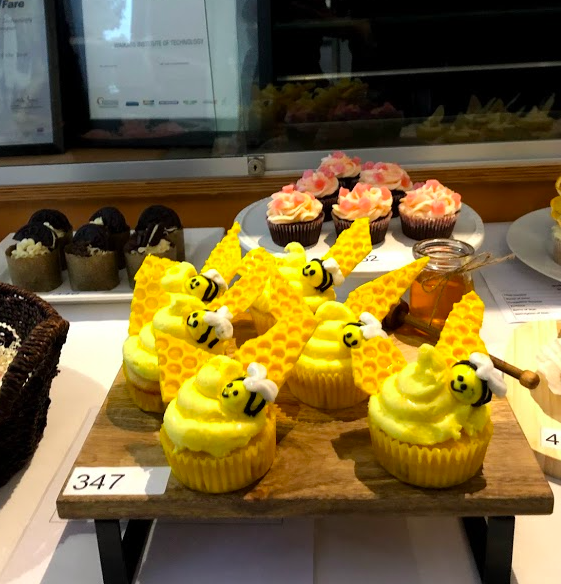


10 Food Technology (Half year course)
10FTH
Year 10 Food Technology (Half year course)
Course Objectives:
Food Technology teaches students the skills needed in all areas of food such as Food Processing, Nutrition, Dietetics, Food Science, and Hospitality. The course has three main areas of learning:
Health and Safety: students are taught the basics in health and safety in all aspects when preparing food
Processing: students begin to process their food products to produce the best possible outcome
Nutrition: students begin to explore a range of nutrition concepts ranging from nutrition to community groups
Course Content:
The topics covered in this course include:
- Master Chef - Materials and Innovation
- Just Desserts - Food Science, Brief and Prototype


10 French
10FRE
Year 10 French
What do we do in Year 10 French?
We...- learn about Paris and create an 3-day itinerary of Paris,
- learn to have conversations in French,
- broaden our knowledge of the language,
- use French in a variety of situations,
- learn how to talk about our past experiences (where we went on holiday...),
- and about our future plans (what we are going to do),
- experience some French celebrations (e.g. eating a galette des rois),
- set up our own café or restaurant and try French food,
- watch the most recent The Voice Kids France ,
- listen to French music,
- attend the full French Day,
- can choose to sit the DELF A1 exam (official French government qualification - also good preparation if you are thinking of doing Cambridge French),
- and a lot more too.


 .....
......Year 10 French topics:
We cover a range of new topics and we also go deeper into topics that we looked at in Year 9. We loosely follow the Studio 2 Rouge textbook by Pearson Education.- Screen and reading habits - what do I watch? What do I read? How do I use technology? How often? Why?
- Holidays – when did I go there? With whom? How? What did I do there? How was it?
- Paris – tourist activities and attractions. Designing an ideal itinerary.
- My home life – where do I live? What is it like? What is its layout? Comparing objects. Meal times.
- Who am I and who are the people around me? – how would I describe myself? Who do I get along with? What is my clothing style? What is my talent? Giving advice. Giving excuses. Saying what or who is the best and the worst.
- French café culture – creating a menu. Making a cooking video. Selling food. Ordering food.

Why should I keep studying a language/French?
It's fun!
You can try new food.
It brings you new experiences.
You can stretch your brain in new ways.
You become close friends with your classmates.
You start to really see your French knowledge grow.
You learn more about yourself and your own culture(s).
French is an official language in many international organisations.
Learning a language helps you to understand English/your other language(s).
Not many people who grow up in NZ speak French, so it will mean you stand out.
Emotional and Cultural Intelligence: You learn about other people's perspectives and ways of thinking. This develops essential skills, such as empathy, open-mindedness, thinking skills, conversation skills, argument development, stronger general knowledge and adaptivity.
Unfortunately, once you drop a language, it is highly unlikely that you will ever become fluent in it, because you will never have regular classes like this again. Starting a language at university doesn't give you long enough to become fluent. However, studying a language at university (as a major, minor, elective, certificate or diploma) after studying it at high school strengthens your language knowledge incredibly.

Languages are extremely relevant if you are thinking of entering politics, doing law, business, medicine or sport or any other field in fact.
Who knows where life will take you! You may end up in a job working with French clients or moving to a French-speaking country. But no matter what, the skills you learn from studying French will be useful in any field and will be a bonus on your CV.
Politics: you are likely to need to talk to people from other countries to achieve what you want to achieve or to learn about what other countries do.
Business: Our closest neighbour is New Caledonia, which is French-speaking. French Polynesia is also close by. Many NZ businesses wanting to expand look at these places as we are their closest big neighbour, which means they want our products and businesses. It's much easier to expand to those countries if you speak their language.
Medicine: People from New Caledonia and French Polynesia are regularly transported to NZ for medical care. Refugees also need medical care. Can you imagine how scary it would be if you don't understand the doctor or the nurse? Having a French-speaking doctor or nurse will make their experience better, but it can also save lives so that there can be accurate communication between them and the hospital staff.
Law: French-speaking refugees come to NZ. They may need your help.
Sport: Many training camps, clubs or competitions run out of Europe and in particular around France, Switzerland, Andorra and Belgium, where French is spoken. It makes it a lot easier to obtain contracts and to work with teammates if you speak French.
A Term 1, Year 10 Speaking Interaction Example:
What opportunities are there after Year 10 in French?
- French Day - an annual day full of fun activities and food with all the students at EGGS studying French.
- Exchange to Tahiti - every year, two students in Years 11 or 12 can go on a 4-week exchange to our partner school (Lycée Paul Gauguin) in Tahiti, French Polynesia.
- Tour de Quiz - Year 11 Blooket / Kahoot / Quizlet Live and more competition with other schools.
- Les Joutes Oratoires - run by the Alliance Française. A debating tournament for Year 11s, 12s and 13s.
- Senior Quiz Competition - Years 12 and 13 can participate in a Quiz Night against other Auckland schools.
- Experience Galette des Rois again.
- A 3-week trip to Japan, Spain and France - students must be studying one of the three languages when they are in Year 11, 12 or 13 (depending on the year of the trip). This trip goes every three years.
- Visit to Atelier du Fromage (a French Café in Newmarket) in Year 13.
- DELF exam - students can choose to sit the DELF exams. These are exams organised by the French Government for people around the world to gain a qualification in the French language. This qualification can go on CVs and it is recognised worldwide. Students who choose to sit this exam receive tutorials to prepare them for the exam. These exams can enable students to study at a French university or gain French citizenship if they are living in France.
Over the years, you can sit:
- DELF A1 (Year 10).
- DELF A2 (Year 11 or Year 12).
- DELF B1 (Year 12 or Year 13).
- DELF B2 (Year 13).


10 Health and Physical Education
10HPEYear 10 Physical Education

The Health and Physical Education programme at Year 10 includes learning around five concepts central to te ao Māori. These are Whanaungatanga (making connections), Manaakitanga (accepting others), Kaitiakitanga (caring for the environment), Rangatiratanga (showing leadership) and Kotahitanga (working together).
Through the Health Programme students will explore Mental Health, Keeping Ourselves Safe, Relationships and Sexuality Education and Drugs.
Mental Health
In the Managing your Mind Unit, students will explore how the brain works and the role that sleep, nutrition and exercise play in keeping our minds and bodies healthy. The will develop strategies for healthy habits in these 3 areas. They will also learning about the role that hormones play in the body, and how these in turn affect food, mood and exercise.
Keeping Ourselves Safe
This unit focuses on personal safety in a variety of contexts. Students examine risk-taking behaviours and analyse different scenarios where personal safety could be compromised. They explore the effects and impact of bullying—both in-person and online—and learn strategies to support themselves and others. Online safety is also addressed, with students learning how to identify risks in digital environments, protect personal information, and respond to unsafe or inappropriate online interactions.
Relationships and Sexuality
The unit focuses on developing knowledge and tools to build healthy relationships. Students will discuss real-life relationship scenarios, helping students to understand healthy versus unhealthy relationship behaviours. This includes learning tools for navigating consent, boundaries and personal values. Students learn about sexually transmitted infections (STIs), methods of contraception, and how to access support services. The curriculum assessment for this unit involves a health promotion project where students apply their learning to raise awareness or create positive change within their peer group or wider school community.
Drugs and Alcohol
In this unit, students explore the impact that alcohol and vaping can have on personal wellbeing, including physical health, mental and emotional states, social relationships, and overall Hauora. A particular focus is placed on understanding how vaping is marketed and the influence of media and peer pressure on young people’s choices. Students critically analyse the tactics used in advertising and social media to glamorize vaping, and they discuss how to make informed, responsible decisions. As part of their curriculum assessment, students develop and present strategies to resist vaping and support others in making healthy choices.
Physical Education Programme
Across the year, students participate in a variety of physical education contexts that are designed to support their holistic development. The Year 10 PE programme builds on the foundations developed in Year 9, offering new challenges, greater depth of understanding, and more student-led learning opportunities. Each unit is crafted to engage students physically, mentally, and socially, with a strong focus on developing skills and knowledge that support lifelong participation in physical activity.
Movement Performance
In this unit, students focus on the progressive development of movement skills within dance. They build on foundational techniques and work towards more complex sequences that require coordination, control, and creativity. A key component for dance includes exploring Māori legends and understanding how these can be represented through movement and performance. This cultural lens allows students to deepen their appreciation of te ao Māori and express narratives in meaningful ways. Throughout this unit, students are encouraged to participate in group work, collaborating to plan, rehearse, and perform routines. This process fosters not only individual skill growth but also teamwork, communication, and confidence in performing for an audience.
Aquatics
The aquatics unit supports students in developing proficiency across all swim strokes, including freestyle, backstroke, breaststroke, and butterfly. Students work on improving their technique and overall fitness in the water through structured swimming activities. In addition to stroke development, students engage in water-based games that promote confidence, agility, and enjoyment in aquatic environments. A significant focus is placed on water safety, where students learn to apply essential safety skills—such as survival strokes, safe rescues, and floating techniques—in practical, scenario-based situations. This knowledge equips students with the ability to respond responsibly and safely in real-life water environments.
Tactical Awareness
This area of learning helps students build and apply tactical knowledge and strategies across a variety of games and sports. Students learn to demonstrate game awareness by making effective decisions, positioning themselves intelligently, and anticipating opponents’ moves. These concepts are reinforced through practical skill application in game situations, allowing students to refine their technical abilities while playing. A strong emphasis is also placed on teamwork, including communication, cooperation, and understanding different roles within a team. Students reflect on what it means to be a supportive and responsible team member, developing both leadership and interpersonal skills.
Fitness
In the fitness component, students gain a deeper understanding of the key components of fitness—such as muscular strength, cardiovascular endurance, flexibility, and agility—and how these contribute to physical performance and wellbeing. Students take part in a range of fitness activities and learn how to monitor and improve their own fitness over time through goal setting and reflection. They also explore the connection between physical activity and Hauora, recognising how movement positively influences their mental, emotional, social, and spiritual wellbeing. Building a positive class environment is a key part of this unit, with students learning how support, encouragement, and effort contribute to collective success and personal growth.
Year 10 Camp Preparation
As part of preparing for the Year 10 camp, students are involved in a range of practical activities. They learn how to plan balanced, realistic meals for outdoor environments, operate camp cookers safely, and set up and maintain tents. The unit also includes group problem-solving through ‘camp dilemmas’—scenarios designed to develop teamwork, communication, and resilience. After the camp, students participate in a debrief session to reflect on their experiences, challenges faced, and personal growth. Camp will take place in Term 4.
10 Japanese
10JPNYear 10 Japanese

Welcome to year 10 Japanese at EGGS!
Japan is known for its cultural influence on the world. From food, to anime and manga, to traditional clothing and decoration, Japan’s culture is unique and beautiful. Speaking Japanese opens the door to experiencing this new world of culture, history and tradition.
As NZ’s 4th largest trading partner, there are many opportunities for Kiwis to use Japanese both in Japan and at home.

In this course, you will study further basics of Japanese language. You will expand what you can say through learning new vocabulary and grammar, and develop your ability in listening, speaking, reading and writing. The course will have a personal focus, where we develop skills to talk about ourselves. You will learn to communicate information, ideas, and opinions, covering topics such as:
- Introducing and describing yourself
- Houses and homes
- Food
- School in Japan
- Leisure time
Here is an example of a new year 10 language structure:

We will also experience a range of Japanese cultural activities, like Matsuri, Hanami and Shaved ice.
In year 10 Japanese you will be assessed via tests and project assessments. Assessments will cover the skills of reading, writing, speaking and listening on the topics we have covered in class.


10 Learning Skills Programme
10LSPYear 10 Learning Skills Programme

This is a small class designed to help students who need additional learning support. If you feel this class would be helpful for you, please talk with the Special Education Needs Coordinator (SENCO) or your dean.
Students will be directed to this class if they need targeted learning support.
This class also provides support for students who need additional opportunities to consolidate their learning across other subjects due to their individual learning or health needs.
Topics of Inquiry
These are created and adjusted to meet the needs of the individual students and may be linked to the student’s IEPs. They may include:
- Managing Self - Learn how to stay organised and manage your workload.
- Taking Risks and Trying New Things - Find out about all of the opportunities available at EGGS and get involved with the wider life of the school.
- Thinking - Understand how our self-talk affects our performance. Practice 'growth mindset' skills for success. Learn how to study effectively.
- Relating to Others - Practice your communication and teamwork skills in a safe and supportive environment.
- Use Symbols and Texts - Receive numeracy and literacy support to prepare you to achieve success in the Year 11 CAA Literacy and Numeracy exams.
10 Mathematics
10MTHYear 10 Mathematics
In Year 10 Mathematics, students deepen their understanding of key concepts across the strands of Number, Algebra, Geometry, Measurement, and Statistics. The course focuses on developing both conceptual understanding and procedural fluency, while placing increasing emphasis on mathematical reasoning, problem-solving, and the application of knowledge in unfamiliar contexts.
Our aim is to equip students with the confidence and skills to become independent learners who can recognise mathematical relationships, think critically, and communicate their reasoning effectively. The knowledge and skills developed during Year 10 provide a strong foundation for future study, irrespective of whether students choose to follow the NCEA or Cambridge pathway in Year 11.
In Year 10, students are placed in classes that align with their current stage of mathematical development, allowing them to learn alongside peers with similar learning needs.
10 Music
10MUSYear 10 Music
This full year Music course is for students with an interest in Music who want to develop skills and knowledge taught in Year 9 Core Music. This course follows on to Year 11 Music or 11 Music Academy. It prepares the way by building knowledge and competencies through performance, composition, music literacy and exploring cultural and historical contexts of music.
Students will be required to be having lessons on an instrument or in voice, either provided through group lessons at school (funded) or privately. Students may also take this course as a useful way of keeping up their practical involvement in school music.
Course Objectives:
- To be involved with practical music making through solo and group performances.
- To develop musical ideas through music composition and song writing.
- Understanding music in context, through investigation of a range of music styles and contexts.
- Music theory: Building on musical literacies including reading, writing and understanding music theory.
Course Content:
- Students prepare and perform brief performances using appropriate performance skills and techniques on an instrument/voice of their choice.
- Students work individually and in groups to create and represent music composition/songs.
- Introduction to and using Music technology.
- Understanding music in context through listening and research work.
- Building music literacies/theory and using these skills to analyse different styles/genre of music.
Notes:
- Students must be prepared to work on improving their performance skills and are expected to have regular lessons on their chosen instrument (includes voice).
- You may offer any instrument or voice for performance work.
- This course allows more advanced students to extend themselves into chamber music or other group performances (eg rock or jazz groups).
- Students will have the opportunity to participate in a class trip to experience professional music performances (voluntary).
Lessons and Music Groups:
- Students are able to sign up to group Music lessons on a range of instruments through the itinerant music programme.
- Students are encouraged to get involved in co-curricular Music groups. We have a large range of bands, orchestras and choirs to suit every level.
Where Next:
Over the next few years, you will be able to progress to some or all of the following:
- Year 11 Music or Year 11 Music Academy
- Level 2 Music (NCEA) or Level 2 Modern Music (NCEA)
- Level 3 Music (NCEA) or Level 3 Modern Music (NCEA)
- Scholarship Music


10 Philosophy
10PHLYear 10 Philosophy


Welcome to Year 10 Philosophy. This class grows change makers- young people who have the communication and argumentation skills and the Philosophy and Psychology content knowledge to ensure they claim space and are heard in a noisy world. You will be introduced to some of the major Philosophers of the Western World and will learn the impact their theories have had on all aspects of society - from our thoughts around art and human nature to the ethical beliefs that underpin our laws. More importantly, you will learn the skills to ‘do’ philosophy well; how to challenge your own beliefs, think critically and creatively, construct logical arguments and express your ideas clearly, both verbally and in writing.
Philosophy is offered from Year 10 to Year 13. This subject provides valuable practice in oracy and thinking skills that are integral to University success in areas such as Psychology, Education, Law and Medicine.
10 Science
10SCI
Year 10 Science

The Year 10 Science course continues to develop the knowledge and skills needed to understand and participate in a world that is becoming increasingly reliant on the advances of Science and Technology. This course will provide a good foundation for students continuing with Sciences from Year 11 onwards.
Topics Studied:
- BIOLOGY: Plant reproduction; Genetics
- CHEMISTRY: Chemistry Essentials; Chemical reactions
- PHYSICS: Forces, Fluids and pressure
- PLANET EARTH AND BEYOND: Carbon cycle and the environment; Earth and space
Course Objectives:
Students will find that they enjoy the variety of learning contexts and experiences as they come to make sense of Science, what it can do, and what it enables us to do in our world.
Students will:
- apply self management skills to identify strengths and set targets
- extend the base of science knowledge and skills
- be able to apply research, investigative and thinking skills using scientific and evidence based approaches
- be able to work collaboratively with others by adopting different roles
- exhibit different ways of communicating and relating to others
- develop an understanding of different scientific perspectives, including an awareness of New Zealand’s position within the scientific world.
10 Social Studies
10SOSYear 10 Social Studies
He Tangata, He Tangata, He Tangata! – It’s people, it’s people, it’s people!
Welcome to Year 9 Te ao tangata |Social Studies. This course is allows students to deepen their understanding of the changing nature of places, and how societies function and change, with a focus on New Zealand's place in a globalised world. Students will explore complex contexts related to political ideologies, governance systems, and human rights frameworks, including the constitutional significance of te Tiriti o Waitangi | the Treaty of Waitangi. Teaching supports students to engage with higher-order concepts, such as sovereignty, inequality, ethics, and power, and develop strong social sciences practices related to analysing data and sources, making decisions, and evaluating significant events and challenges.
Student learn they can participate as thinking, active, informed, and responsible citizens. The aim of the course is to help you to understand the culture, traditions, lifestyle, and environment of New Zealand, as well as countries and societies that have significance for Aotearoa New Zealand. Social Studies is a compulsory subject in Year 9 and 10 and you will be taught by specialist Social Scientists. In this subject you will have the opportunity to practice your Literacy and Numeracy skills as Social Studies synthesises these skills into the case studies we study throughout the year.
The new Social Science Curriculum will be implemented from 2027 and has four main strands at Phase 4; History, Civics and Society, Geography, and Economic Activity. This will build upon previous content knowledge and skills students have mastered in earlier Phases.
- History focuses on interpreting the past through significant events, cultures, and changes over time. It develops student understanding of how historians use evidence and concepts such as causation, significance, and change to explain how societies have developed.
- Civics and Society focuses on how democratic systems work and how people participate in civic life. It develops student understanding of rights, responsibilities, laws, the role of te Tiriti o Waitangi | the Treaty of Waitangi, and how to engage respectfully with diverse perspectives and public issues.
- Geography focuses on how people interact with physical and human environments. It develops student understanding of the nature and distribution of places, and the concept of sustainability. It teaches students how to use spatial tools, graphic organisers, and data to interpret environments, patterns, and perspectives.
- Economic Activity focuses on how financial and economic systems operate. It develops student understanding of personal finance, business and government roles, and New Zealand’s economy in a global context
Each unit will have a formative and summative assessment that is designed to demonstrate the understanding of the key content covered, as well as a range of Social Studies skills. There is also the opportunity to participate in weekly Current Event quizzes. In addition, there is an end of year exam that will cover the key content and concepts covered throughout the year. This provides ample opportunities for students to learn how to revise and organise their notes and learning from the year.
Social Studies has continued to be as relevant and important as ever for our Year 9 and 10 students as national and international current events capture the interest and help our students to understand more about different societies and cultures. This helps students to make connections between what they learn in the classroom to what is currently evolving and happening in real life. This two year course aims at developing students' Literacy, Numeracy, critical thinking, and research skills. The course will include, where appropriate, the school values of compassion, community, curiosity, and courage. These skills are crucial in the empowerment of young people to participate responsibly in our local, national, and international communities. The Year 10 course enables students to continue in the Social Sciences with confidence and success.
10 Spanish
10SPAYear 10 Spanish

This course has a strong communicative and culture focus. By the end of the year 10 course, students will be able to write, present, read, listen and interact in different contexts. Students will be able to express ideas on the topics below using a wider range of vocabulary and tenses such as the present, past, near future and the conditional.
Year 10 Spanish builds on the year 9 course and deepens understanding of the Spanish language and culture. Students will engage in speaking activities, games, songs, cultural projects, the use of online tools, access to real-life materials, conversations with our language assistant from Spain, learning about customs and traditions and the textbook Viva 2.
Highlights of the course include sampling some Spanish food, cooking a meal for Immersion Day and planning a trip to a Latin American/Spanish destination.
Topics:
- Describing a past holiday
- Music and television preferences, likes and dislikes
- Food preferences, mealtimes
- Ordering food at a restaurant
- Invitations, arranging to go out and making excuses
- Daily routine
- Describing clothes you are going to wear, a dress up party
- Describing houses, comparing
- Asking and saying where things and people are and giving directions

10 Sports Academy
10ACDYear 10 Sports Academy

This course is for any student that wants to improve their knowledge and skills in sport. Students are expected to be playing for one or more of our school sports teams. This can be any team/code.
Topics that will be covered are:
Strength and Conditioning: This is a mix of practical and theory lessons that help students learn how to build and improve physical performance in a safe and effective way. Students will explore key ideas like active recovery, using techniques such as stretching, light movement, and rest to help the body recover and avoid injury. In gym or field sessions, students will get hands-on experience planning and adjusting training to suit different goals. They will learn about different types of training, including circuit training, interval training, resistance training, and continuous training, and how each method helps improve different parts of fitness like strength, endurance, speed, and power.
Sports Nutrition: This unit provides students with a foundational understanding of how food fuels exercise and supports high performance. They will investigate how different macronutrients (carbohydrates, fats, proteins) and micronutrients contribute to energy, recovery, and muscle repair. Students will also explore hydration strategies, timing of food intake around training or competition, and how nutrition needs may vary between sports or athletes. This knowledge will empower students to make informed choices that support their physical and mental well-being, whether for general fitness or athletic competition.
The Journey of an Athlete: This unit focuses on supporting students' mental health, self-awareness, and personal growth. Topics include goal setting strategies, developing a strong sports identity, and understanding the mental skills needed to thrive in both competitive and recreational environments. Students will learn about techniques to manage stress, maintain motivation, and build resilience, especially in the face of setbacks or high-pressure situations. This unit encourages self-reflection and equips students with tools to maintain a healthy balance between physical performance and emotional wellbeing.
Women’s Health in Sport: This unit explores issues and topics relevant to female athletes, with a particular focus on body literacy, including understanding the menstrual cycle, hormone fluctuations, and their impact on training, performance, and recovery. This unit empowers students with the knowledge to understand their bodies, advocate for appropriate training support, and reduce stigma around health conversations in sport.
Sports Education: Students will participate in a Sports Education module designed to develop leadership, teamwork, and a deeper understanding of sport beyond participation. Throughout the unit, students will take on a variety of roles including coach, referee, manager, and player, gaining valuable insight into the organisation and delivery of sporting events. Through practical and classroom-based learning, students explore fair play, communication, decision-making, and the responsibilities required to create positive sporting experiences. The unit encourages students to build confidence, develop leadership skills, and foster a lifelong appreciation for sport and physical activity.
Sports Psychology: This unit explores the fascinating world of sports psychology, developing an understanding of the mental skills that support sporting performance and overall well-being. Students will learn about motivation, confidence, goal setting, concentration, resilience, and managing pressure. We explore how elite athletes use psychological strategies to perform at their best and how to best link these techniques to their own sporting and everyday experiences. The unit encourages students to recognise the powerful connection between mindset and performance, helping them build skills that extend beyond sport and into all areas of life.
10 Te Reo Māori
10TRMYear 10 Te Reo Māori
This course is an extension of the Year 9 Te Reo Māori course. In Year 10 Te Reo Māori there is a strong communicative focus. The students will learn about Māori culture, grammar and language, and will have the opportunity to develop their skills in the following:
- Tikanga - values, customs, and beliefs
- Waiata – songs and singing
- Karakia - ritual chants, prayers, and incantations
- Whanaungatanga - building relationships
- Whakapapa - Genealogy
Course Content:
By the end of the year students will be able to speak, listen, read and write in Te Reo Māori in the following areas:
- Ko Wai Ahau? Who Am I?
- Ngā Maunga Tapu o Tāmaki (Sacred Mountains of Auckland).
- Ngā Manu Taketake (Native Birds) creating a 3D model of your bird.
- Matariki Te Tauhou Māori - Celebrating the Māori New Year.
- Ngā Atua Māori (Māori Gods) - Discovering more knowledge of the Māori gods.
- Ngā Takutaku (Ancient Māori karakia) - deciphering the different parts of karkia.
- Mau Rākau - (Māori Weaponry) - creating your own mau rākau and learning movements.
Please let us know if you come from a Te Reo Māori speaking whānau and/or have come through Kōhanga Reo and/or Kura Kaupapa or Rumaki/Reorua etc., as we may be able to advance you to another year level.
10 Textiles & Design
10TEXYear 10 Textiles & Design
This course encourages students to gain an appreciation of Technology while developing the creativity and skills to design and manufacture a variety of textile products used in fashion, costume and interior design. In Year 10 you will really expand your horizons with what is possible in the world of Textiles and Design. The foundation skills learnt in Year 9 are a springboard for developing your design ideas and making these a reality! As well as design illustration skills, you will gain the necessary skills to use and adapt commercial patterns, fit and adjust apparel, create applied designs for fabric using a variety of techniques, as well as accurately use a plain sewer and overlocking sewing machine to sew woven and knit fabrics. The course is intended to provide you with with a sound background for senior NCEA Textiles and Design Technology. You will need to purchase fabric for some of the projects and a commercial pattern for one project which will be discussed at the start of the course.
Course Objectives:
- To give students the opportunity to work with a range of fabrics and techniques through the production of a variety of products.
- To give students an understanding of the fundamentals of fashion design.
- To give students an understanding of the fundamentals of Textiles and surface design
- To give students a broad understanding of societal aspects of the fashion industry.
- To help prepare students for Year 11 Textiles and Design.
Techniques covered:
- Fashion illustration skills to communicate clearly textile and apparel design ideas
- Colour and design elements re clothing/designing.
- Surface design- free embroidery, applique, screen- printing, textiles techniques
- Fabrics - their performance, suitable use and care.
- Patternmaking and construction in Textiles garments
- The fashion industry – the good and the bad.
Year 10 English (literacy)
10ENL
Year 10 English (Literacy)

This is a Year 10 English programme for identified learners who will benefit from more support with language and literacy skills, reading and writing. As in mainstream English, students will reflect critically on a wide range of literature and language. This course aims to engage students and support them to become increasingly literate, articulate, creative and confident users of language.
Students will:
- Continue to build their literacy and reading skills
- Be encouraged to form and support personal response to texts
- Develop formal and creative writing skills
- Experience in-depth literature studies
- Learn to write well-structured essays
- Build oral and visual skills in order to become confident and articulate communicators
Course Content
The course follows the New Zealand curriculum and offers instruction in the four basic strands of language – reading, writing, listening and speaking.
Literature
Students experience, enjoy and respond to an extensive range of literature including film, novel, non-fiction, short stories and poetry.
Writing
Students learn the language skills required for creative, formal and analytical writing and have the opportunity to complete a range of writing in different styles. Some pieces will be crafted and used for assessment.
Presenting
Students present visual material and oral presentations using a variety of different forms and media.
Wide Reading
Students read regularly and widely throughout the year both in class and for homework.
Subjects for Year 10 Students
11 Visual Art
11ARTYear 11 Visual Art

During this course students will develop their ability to generate, develop and refine visual ideas within a thematically based and teacher directed programme. Students will have the opportunity to extend their perceptual and creative skills using a variety of stimulating senior art materials, tools, processes and procedures such as printmaking processes, conceptual sculpture and painting as well as mixed media and collage.
- A workbook based study utilising a range of drawing processes and procedures in both wet and dry media.
- Finished works in the disciplines of Painting, Printmaking and Sculpture.
Assessment
- 1.4 Ko wai Au: Who are you? (5 x L1 credits external),
- 2.5 Collaborative panels (4 x L2 credits external)
Students create a large sustained body of work over the year on two A1 folio panels. They are assessed against the curriculum levels in Terms 1 and 2 for sections of this work.
At the end of term 2, students hand in a selection of work from their folio panels for external assessment against NCEA standard 1.4 worth a total of 5 credits. Another collaborative work completed in Term, 3 can be assessed against L2 credits which can be carried over into Y12.


11 Accounting
11ACCYear 11 Accounting

To provide students with skills that will prepare them for personal financial management and for accounting procedures encountered in everyday life as well as a basic knowledge for business and club applications.
Course content includes the following:
- Demonstrate an understanding of the conceptual basis of Accounting
- Describe a method of processing financial information
- Process financial information for a sole proprietor
- Demonstrate an understanding of accounting systems for entities
- Prepare, analyse, interpret and present financial information for sole proprietors
- Use a range of financial literacy tools to assist in decision making
11 Biology
11BIOYear 11 Biology
This course is designed to give you a sample of what Biology has to offer. We develop your understanding of the essentials of Biology in an informative, conversational and fun way. Students study many areas of science that have intensive research and practical applications in New Zealand. We will examine microbiology and immunity including the latest research with the gut microbiome. After which we will delve into the study of genetics and biotecnology examining some amazing research done here in Aotearoa. By Term 3 we will be looking at the ecosystem followed by human nutrition before we examine human biology the whole of Term 4.
This course will set you up for either Year 12 Biology, or if you are not doing Year 12 Sciences, it is great knowledge to help you in any future path.
11 Biology Cambridge
11BCAIYear 11 Biology Cambridge
This introductory year to the Cambridge system offers many opportunities to learn about the biology that surrounds us and the biology we need going forward. Students learn many practical skills which are assessed in a written paper.
Students have enjoyed the diverse array of topics covered, these are shown in the outline below.
11 Cambridge Tutorial
11CTUTAll students enrolling in the Cambridge IGCSE programme for Year 11 will have a line of tutorial.
The tutorial programme gives students access to subject specific guidance during a study period. Each week students will have 1 period of tutorial directed towards each of the subjects they are studying.
If you are taking part in the IGCSE programme for next year, please add this tutorial into your options selection.
11 Chemistry
11CHEYear 11 Chemistry
Chemistry is about understanding the properties of different substances and materials in the world around us and the ways these substances can change.
Objectives:
- To gain a basic understanding of chemistry and be aware of the role of chemistry in our society.
- To be able to interpret and use chemical information.
- To understand theories and concepts to account for some chemical and physical properties of substances.
- To gain practical skills in handling substances and manipulating equipment safely.
This course will prepare the students for NCEA Level 2 Chemistry course.
The topics are:
- Atomic Structure
- Acids and Bases
- Types of Chemical Reactions – precipitation, displacement, decomposition
- Carbon chemistry and combustion reactions
- Environmental Chemistry
- Identifying Ions in Solutions Experimental work
- Properties of Substances
- Titrations
The course will also look at increasing the chemical literacy of the students. For example, is calcium metal really in milk? Alkaline water, what is it and why is it being marketed?
11 Chemistry Cambridge
11CCAIYear 11 Chemistry Cambridge
The IGCSE Chemistry syllabus covers the foundational principles of chemical science, focusing on how matter behaves, how atoms interact, and how chemistry impacts the environment and industry.
The aims are to enable students to:
• acquire scientific knowledge and understanding of scientific theories and practice
• develop a range of experimental skills, including handling variables and working safely
• use scientific data and evidence to solve problems and discuss the limitations of scientific methods
• communicate effectively and clearly, using scientific terminology, notation and conventions
• understand that the application of scientific knowledge can benefit people and the environment
• enjoy science and develop an informed interest in scientific matters which support further study.
Candidates study the following topics:
1 States of matter
2 Atoms, elements and compounds
3 Stoichiometry
4 Electrochemistry
5 Chemical energetics
6 Chemical reactions
7 Acids, bases and salts
8 The Periodic Table
9 Metals
10 Chemistry of the environment
11 Chemical energetics
12 Experimental techniques and chemical analysis
11 Chinese Mandarin (Second Language)
11CHMYear 11 Chinese Second Language
Note: This is a course for second language learners ONLY.
The Year 11 Chinese course builds on your practical skills with content including: transport, sports, leisure activities, holiday, Chinese cuisine, celebrations, and future plans. This course provides you with realistic opportunities to use your Chinese language, such as by entering Chinese Writing competitions for secondary schools, watching some classic Chinese Films directed by some well-known directors, and/or by learning some beautiful Chinese songs and poems.
An example of our Year 11 students talking about their school, their studies and their Chinese learning
You will also have the opportunity to use your Chinese language while experiencing authentic Chinese cuisine where possible.
You will have access to Education Perfect or Quizlet and other online Chinese resources to support your learning both inside and outside of our Chinese classroom.
11 Design and Technology Cambridge
11DTCAIYear 11 Design and Technology Cambridge
Course Objectives:
Design & Technology teaches students the drawing and design skills used in fields such as Architecture, Engineering and Industrial Design. The course includes learning to use 3D sketching techniques, instrumental drawing skills and computer graphics software to create and express ideas. Students are taught creative thinking and problem solving skills that enable them to generate and develop design ideas.


Course Content:
Students taking this course will:
- gain sketching and drawing skills for communicating design ideas
- gain knowledge about designing a range of products
- learn about materials and sustainability
- complete an Architecture Design project
- learn to research, generate and develop ideas
- plan and produce an architectural model
- learn technical drawing techniques related to Graphic Products.
More information about Design and Technology Cambridge
11 Design and Visual Communication
11DVCYear 11 Design and Visual Communication
Course Objectives:
Design & Visual Communication teaches students the drawing and design skills used in fields such as Architecture, Engineering and Industrial Design. The course includes learning to use 3D sketching techniques, instrumental drawing skills and computer graphics software to create and express ideas. Students are taught creative thinking and problem solving skills that enable them to generate and develop design ideas.


Course Content:
Students will complete four projects during the year including:
MANGAWHAI CABIN DESIGN: students will use inspiration from influential architects to assist their own design ideas for a cabin.
ARCHITECTURE EXHIBIT: students will learn to create final images and models of their architectural design.
WATER BOTTLE DESIGN : students will design an elegant water bottle for a particular context.
DESIGN PRESENTATION: students will use CAD and Graphics software to prepare a presentation of their water bottle.
11 Design Technology
11DETYear 11 Design Technology

In Design Technology students develop skills by designing and making Products.
Students are expected to take their high-quality Prototype Products home with them on completion of their course.
Over the year students will develop their skills in the Design Technology practical area, further developing their skills in how to research, analsye, design, and make products, using a range of tools and equipment including Computer Aided Design and Manufacture, laser cutting and 3D Printing.
Students will work on Design and Make projects within a Context / Theme and will research, design, develop, manufacture, and test their own Concepts and Prototype Products for specific purposes.
Throughout the course Students will complete a Design Portfolio using Google slides which will document their research, designing, making and testing.
11 Digital Technology
11DITYear 11 Digital Technology
Digital Technologies helps ākonga to acquire the skills, project management and design thinking skills used in fields such as Software Engineering, Website Development, Creative Technologies, Database Development and Computer Science.
Course Content:
This course has four main projects:
- CREATE A COMPUTER PROGRAM - PROGRAMMING / ELECTRONICS: In term one, will learn the basics of programming in Python. Ākonga will also learn iterative procedures to refine their outcome when designing and
developing the program, through user feedback, and reflection. Ākonga will create an electronics outcome using relevant techniques and resources that consist of a working combination of hardware and software components that perform a specific function. NOTE: Although ākonga are not formally assessed in NCEA, this unit of learning is modelled/aligned to DT 1.1 (92004). - DESIGN A DIGITAL TECHNOLOGIES OUTCOME: In term two, ākonga will design a digital 3D outcome using Blender. The process of learning focuses on understanding the purpose, the potential user/s, design elements, and 3D modelling conventions, to meet industry standards guided through the process of manaakitanga / kaitiakitanga (implications and end user needs). Ākonga will iteratively develop their design through ongoing user feedback and user experience methodologies to create a refined outcome. NOTE: Although ākonga are not formally assessed in NCEA, this unit of learning is modelled/aligned to DT 1.4 (92007).
- DEMONSTRATE UNDERSTANDING OF USABILITY IN HUMAN COMPUTER INTERFACES: In term three, ākonga will conduct a theory course that explores the usability heuristic principles of design. Ākonga will also consider mātāpono Māori (i.e. the clear use of te reo Māori, orthography, tikanga Māori, whanaungatanga, and wairuatanga) in the contextual setting that they are given. NOTE: This will be an Externally Assessed exam (DT 1.3; 92006) conducted at the end of Term 3 or beginning of Term 4.
- DEVELOP A DIGITAL OUTCOME: In term four, a digital outcome is developed. The options for this in order of priority are:
- Learn the basics of HTML5 and CSS3 to build a website
- Create an electronics outcome i.e. environmental monitoring system, wearable tech, or robot.
- A digital information outcome such as a database.
Student Blender Animations
Students Coding:


Robotic student examples:
11 Drama
11DRAYear 11 Drama


In this course students will:
- Develop effective use of drama techniques (voice, body, movement and use of space)
- Study a range of plays from Aotearoa NZ and consider their history and purpose; understand how plays can impact an audience
- Devise and perform a site-based drama at the historic home, Highwic House, using elements and conventions of drama for impact and meaning
- Perform an acting role in a production of a published play to an invited audience
- Explore historical theatre forms and their theoretical and physical performance features
Students will do written and oral work reflections on their own and others' performances. This written / oral reflection is part of the assessment in Drama and provides a record of work participated in and viewed.
Students will be offered the opportunity to view a range of performances to influence their understanding of theatre. They will practice writing critical responses required for external examinations at Level 2 and 3.
11 Earth and Space Science
11ESSYear 11 Earth and Space Science
This course covers the fourth strand of the New Zealand science curriculum - Planet Earth and Beyond - exploring aspects of Earth Science and Astronomy.
Course content:
This is a full year course with three main topics:
- Plate tectonics and the formation of surface features in New Zealand
- Astronomy and the effects of astronomical cycles on the Earth.
- Climate change and the Carbon Cycle
For the first part of the course we will be looking at: earth’s internal structure, plate tectonics and moving continents, how New Zealand formed from Gondwana and how the landscape of New Zealand, and in particular Auckland, has been affected by geological and other events. We will also take a trip up Maungawhau, Mt Eden during our investigation into the origin of Auckland’s volcanoes and how they have changed over time.
The Astronomy part of the course explores: stars and planets, astronomical discoveries, space exploration and astronomical cycles. Earth is affected by many different astronomical cycles including the rotation of the earth on its axis, our orbit around the sun and the moon’s orbit around the earth. These cycles result in: day and night, the seasons, the phases of the moon, eclipses and the tides.
The Climate Change topic looks at where carbon dioxide is produced in the modern world and the effects of this on rising sea levels, ocean life and Earth's Climate. We also look at how carbon dioxide is removed from the atmosphere by plants and the oceans.


11 Economics
11ECO
Year 11 Economics
This course is designed to develop a broad understanding of how individuals and groups:
- choose to satisfy their wants by the allocation and management of resources in the context of the New Zealand economy
- interact as consumers and producers in the market and the New Zealand economy.
The course of study consists of:
- the role of producers in the economy and the effects on their output decisions (with the possibility of a trip to a factory to observe their production process)
- the role of consumers in the economy and the influences on their demand (consumer choices, using scarcity and/or demand)
- the interaction which occurs between producers and consumers in the markets and the New Zealand economy, including the role of the government
- how a significant cultural or sporting event affects the New Zealand economy
- the effect of current events on the New Zealand economy.
- topical issues affecting NZ as well as the global economy.
11 English
11ENGYear 11 English
The course is designed to foster the enjoyment of literature, develop critical thinking, build literacy skills, and promote confident self-expression.
The course is structured around at least 3 of the 5 guiding topics:
- Price of Power
- Weaving Words: Literature of Aotearoa
- Threads of Humanity
- Voices of Defiance
- Framing the World
Each topic provides the opportunity for students to engage with a range of literary texts (both class studied and own choice), research and explore non-fiction resources, experiment with and develop writing in a range of styles for specific purposes, build confidence with oral and visual language, and respond to topics and ideas with from their own point of view.
Students also complete an external NCEA assessment in English.
11 English Cambridge
11ECAIYear 11 English Cambridge

This is a programme which dives deep into literary texts and language and will suit students who enjoy reading, independent learning and exam type assessments. The programme follows the Cambridge English Literature syllabus (0475).
In this course, you will study:
- 15 poems
- a novel
- a Shakespearean play
- unseen (unfamiliar) texts
The texts are chosen by Cambridge and cover both historic and modern periods, and a range of cultural perspectives.
11 English for Speakers of Other Languages
11ESLYear 11 English for Speakers of Other Languages
Listening, speaking, reading and writing with confidence are the foundations of language acquisition and development. These four modes are the core of communication in all languages.
This English Language course aims to develop the competence and confidence of each student in using English appropriately and accurately through a topic-based approach, that integrates a carefully designed range of tasks in all four language modes.
This course will support students’ broader learning in their other curriculum areas and provides support for ESOL students working towards the NCEA Literacy Common Assessment Activities (CAAs).
11 Food Technology
11FTEYear 11 Food Technology
Food Technology helps students to acquire the skills and knowledge used in the field of Nutrition, Dietetics, Food Technology, Food Science, Product Design and Hospitality.
The course has three main areas of learning:
PROCESSING: Students learn a range of processing techniques to process a food product. These include base testing and trialling, ingredient experimentation and health and safety.
BRIEF: Students explore a teacher directed context and issue. A need or opportunity is chosen from carrying out indepth research within the context. Students will seek feedback from stakeholders to develop a product.
MATERIALS AND PROTOTYPING: Students will transform and combine materials to design, develop and make an outcome.
Course content: Students will complete 3 projects during the year including:
- Lettuce Meat Patty - Student will process and prototype a new innovative burger product for a culinary competition.
- Miso Happy - Students will experiment with materials to make a ramen product to meet a need or opportunity.
- Boost the Blues - Students will develop nutrition and processing knowledge to make a high protein or carbohydrate snack for rugby players.
Students with known food allergies will need to discuss with the HOD an action plan for managing this in class before taking part in any practical lessons.
NCEA Standard assessed: Students will compile a portfolio of work which will be assessed against the 92013 standard.


11 French
11FREYear 11 French
.........................................................................................................................

What do we do in Year 11 French?
We…
- take time to review and revise what we have learnt in Years 9 and 10,
- learn how to talk about what we used to do, but no longer do,
- learn to talk about what we will do in the future,
- get closer to our French flowing like a native French speaker’s,
- become more confident with our French,
- listen to iconic French songs and adverts and watch short videos from French children's TV shows,
- have 25 weekly vocabulary lists that revise Year 9 and Year 10 vocabulary as well as contain new Year 11 vocabulary. This vocabulary is based on the NCEA official Level 1 List. By the end of the year, we will know over 900 French words really well. (Some of these are words you learnt in Years 9 and 10.)
- regularly have conversations in French that will naturally flow and end up lasting for at least 5 minutes,
- continue to mix fun with learning,
- have our own, 8 course, French gastronomic meal – a meal that was added to UNESCO’s world heritage list in 2010,
- participate in NaNoWriMo in November (if Year 11s are at school during November) and write our own short story in French,
- have the opportunity to sit the A2 DELF exam (official qualification awarded by the French Ministry of Education),
- grow closer to our classmates,
- have lessons where both students and teachers only speak in French,
- have the opportunity to participate in les Joutes Oratoires (French debating tournament),
- and so much more.
Year 11 French is when you change from being a French learner to someone who can speak French.

Year 11 Repas Gastronomique (French meal with 8 courses)
The topics we look at in Year 11:
- About Me: Who am I? – Revision and Introducing myself to penpals.
- Free-time activities – What do I like to do in my free-time? What did I not like to do? What shopping do I do? What do I wear?
- Technology - What do you do on your devices? What do you like and not like doing?
- Me, my family, friends and relationships – Who do I get along with? Why? Who do I not get along with? What is my daily routine like? How would I describe myself and other people?
- Home and New Zealand –Your town, your house, houses in France, transport, furniture, comparisons.
- Chores - Which chores do I do? Which did I used do? Which am I going to do?
- Healthy living – Healthy habits, food, body parts, injuries.
- My future - my future studies, travelling, professions.
- NaNoWriMo - writing your own story.

Galette des Rois
In Year 11 French, we complete one NCEA standard, which is the Interaction:
- Students record 3 conversations in French with someone in their class and about topics learnt in class.
- Across the interactions, students only have to speak for 2 to 3 minutes, however most students will have spoken for at least 6 minutes.
- Students choose their best interaction and they then gain 5 NCEA credits.
We also develop our reading, listening and writing skills. We use readings and listenings from our textbooks as well as past NCEA exams since they use the vocabulary that we are learning throughout the year. This also helps to familiarise students with the NCEA Reading and Listening style for NCEA Level 2. Students will regularly write in French in class as well as for school assessments. They will receive feedback in different forms: sometimes direct corrections and other times, they will be shown where their errors are and they will be given opportunities to correct them.

At La Grande Arche de La Défense on the Tri-Nations Trip
Why should I keep studying a language/French?
Year 11 French is when you change from being a French learner to someone who can speak French.
You can try new food.
It helps you to stand out in your applications compared to other students because you will have a different subject to the majority of students.
Year 11 really consolidates everything you have learnt already.
You learn more about yourself and your own culture(s).
French is an official language in many international organisations.
You become close friends with your classmates.
It's very different to other subjects..
Learning a language helps you to understand English/your other language(s).
You can stretch your brain in new ways. .
You start to really see your French knowledge grow in Year 11.
It brings you new experiences.
Not many people who grow up in New Zealand speak French and not many English speakers learn another language, so it will mean you stand out in applications.
You improve your general memory and memorisation skills and develop new connections (new synapses) in your brain.
This is your best opportunity to become fluent in another language. Unfortunately, once you drop a language, it is highly unlikely that you will ever become fluent in it, because you will never have regular classes like this again. Starting a language at university does not give you long enough to become fluent. However, studying a language at university (as a major, minor, elective, certificate or diploma) after studying it at high school strengthens your language knowledge incredibly.
Emotional and Cultural Intelligence/Quotient: In an ever-increasingly multicultural world, it is important to be able to bridge across different cultures and communicate well with a wide range of people. Learning another language is the best way to grow your cultural quotient. Skills learnt can be applied to any aspect of your life.
With languages, you learn about other people's perspectives and ways of thinking. A new language opens up new ways of seeing the world and of expressing oneself. This develops essential skills, such as empathy, open-mindedness, thinking skills, courage, conversation skills, argument development, stronger general knowledge, confidence and adaptivity.
You become a much more interesting person - with more general knowledge, experiences and interests.
Your French becomes more natural and automatic in Year 11.

Y11 Tour de Quiz Tournament
Languages are extremely relevant if you are thinking of entering politics, doing law, business, medicine or sport or any other field in fact.
Who knows where life will take you! You may end up in a job working with French clients or moving to a French-speaking country. But no matter what, the skills you learn from studying French will be useful in any field and will be a bonus on your CV.
Politics: you are likely to need to talk to people from other countries to achieve what you want to achieve or to learn about what other countries do.
Business: Our closest neighbour is New Caledonia, which is French-speaking. French Polynesia is also close by. Many NZ businesses wanting to expand look at these places as we are their closest big neighbour, which means they want our products and businesses. It's much easier to expand to those countries if you speak their language.
Medicine: People from New Caledonia and French Polynesia are regularly transported to NZ for medical care. Refugees also need medical care. Can you imagine how scary it would be if you don't understand the doctor or the nurse? Having a French-speaking doctor or nurse will make their experience better, but it can also save lives so that there can be accurate communication between them and the hospital staff.
Law: French-speaking refugees come to NZ. They may need your help.
Sport: Many training camps, clubs or competitions run out of Europe and in particular around France, Switzerland, Andorra and Belgium, where French is spoken. It makes it a lot easier to contracts and to work with teammates if you speak French.
A Year 11 Interaction Example:
What opportunities are there after Year 11 in French?
- French Day
- Exchange to Tahiti - every year, two students in Years 11 or 12 can go on a 4-week exchange to our partner school (Lycée Paul Gauguin) in Tahiti, French Polynesia.
- Les Joutes Oratoires - run by the Alliance Française. A debating tournament for Year 11s, 12s and 13s.
- Senior Quiz Competition - Years 12 and 13 can participate in a Quiz Night against other Auckland schools.
- A 3-week trip to Japan, Spain and France - students must be studying one of the three languages when they are in Year 11, 12 or 13 (depending on the year of the trip). This trip goes every three years.
- Visit to Atelier du Fromage (a French Café in Newmarket) in Year 13.
- DELF exam - students can choose to sit the DELF exams even if you haven't sat them before. These are exams organised by the French Government for people around the world to gain a qualification in the French language. This qualification can go on CVs and it is recognised worldwide. Students who choose to sit this exam receive tutorials to prepare them for the exam. These exams can enable students to study at a French university or gain French citizenship if they are living in France.
You can sit:
- DELF A2 (Year 11).
- DELF B1 (Year 12 or Year 13). Level required for some jobs.
- DELF B2 (Year 13). Level needed for university in France or for citizenship.

Year 11 students in the Quarter-Final of the Joutes Oratoires (French Debate Tournament)
11 French Cambridge
11FCAIYear 11 French Cambridge (IGCSE French)

Cambridge IGCSE French is based on the A2 French DELF exams. The structure of the exams is very similar and the level is similar too. IGCSE French starts to cover some DELF B1 content too.
The Cambridge IGCSE curriculum covers 5 main topics, which are then broken down into smaller topics. These are not taught in a mandated order, but we do cover them all across the year. The five main IGCSE topics are:
- A. Everyday activities (time expressions, food and drink, the human body, health, travel and transport)
- B. Personal and social life (self, family, friends, house, colours, clothes, hobbies)
- C. The world around us (countries, nationalities, the environment, weather, technology, town, measurements, materials)
- D. The world of work (education, work)
- E. The international world (languages, culture, faiths and celebrations).
Our IGCSE course is structured in the following way, covering all of the IGCSE sub-topics (colour-coded):
About Me: Revision, Introducing myself to penpals, time expressions, colours, clothes, accessories, people and places, countries, nationalities, languages.
Free-time activities – Leisure time, the weather, the environment.
Technology - Communications and technology.
Me, my family, friends and relationships – Self, family and friends, culture, customs, faiths, celebrations.
Housing – In the home, the natural world, the built environment, measurements, materials.
Chores - In the home, leisure time.
Healthy living – Food and drink, the human body and health.
Studies - Education.
Profession - Work.
Travel - Travel and transport.

Galette des Rois in Year 11
Why should I keep studying French?
Year 11 French is when you change from being a French learner to someone who can speak French.
Year 11 really consolidates everything you have learnt already.
You learn more about yourself and your own culture(s).
French is an official language in many international organisations. .
Learning a language helps you to understand English/your other language(s).
You can stretch your brain in new ways. .
You start to really see your French knowledge grow in Year 11.
It brings you new experiences.
Not many people who grow up in New Zealand speak French and not many English speakers learn another language, so it will mean you stand out in applications.
You improve your general memory and memorisation skills and develop new connections (new synapses) in your brain.
This is your best opportunity to become fluent in another language. Unfortunately, once you drop a language, it is highly unlikely that you will ever become fluent in it, because you will never have regular classes like this again. Starting a language at university does not give you long enough to become fluent. However, studying a language at university (as a major, minor, elective, certificate or diploma) after studying it at high school strengthens your language knowledge incredibly.
Emotional and Cultural Intelligence/Quotient: In an ever-increasingly multicultural world, it is important to be able to bridge across different cultures and communicate well with a wide range of people. Learning another language is the best way to grow your cultural quotient. Skills learnt can be applied to any aspect of your life.
With languages, you learn about other people's perspectives and ways of thinking. A new language opens up new ways of seeing the world and of expressing oneself. This develops essential skills, such as empathy, open-mindedness, thinking skills, courage, conversation skills, argument development, stronger general knowledge, confidence and adaptivity.
You become a much more interesting person - with more general knowledge, experiences and interests.
Your French becomes more natural and automatic in Year 11.

In front of the Louvre on the Tri-Nations Trip
Languages are extremely relevant if you are thinking of entering politics, doing law, business, medicine or sport or any other field in fact.
Who knows where life will take you! You may end up in a job working with French clients or moving to a French-speaking country. But no matter what, the skills you learn from studying French will be useful in any field and will be a bonus on your CV.
Politics: you are likely to need to talk to people from other countries to achieve what you want to achieve or to learn about what other countries do.
Business: Our closest neighbour is New Caledonia, which is French-speaking. French Polynesia is also close by. Many NZ businesses wanting to expand look at these places as we are their closest big neighbour, which means they want our products and businesses. It's much easier to expand to those countries if you speak their language.
Medicine: People from New Caledonia and French Polynesia are regularly transported to NZ for medical care. Refugees also need medical care. Can you imagine how scary it would be if you don't understand the doctor or the nurse? Having a French-speaking doctor or nurse will make their experience better, but it can also save lives so that there can be accurate communication between them and the hospital staff.
Law: French-speaking refugees come to NZ. They may need your help.
Sport: Many training camps, clubs or competitions run out of Europe and in particular around France, Switzerland, Andorra and Belgium, where French is spoken. It makes it a lot easier to contracts and to work with teammates if you speak French.
At La Grande Arche de La Défense on the Tri-Nations Trip
What do we do in Year 11 IGCSE French?
We…
- review and revise what we have learnt in Years 9 and 10,
- learn how to talk about what we used to do, but no longer do,
- learn to talk about what we will do, would do and had done,
- have 25 weekly vocabulary lists that revise Year 9 and Year 10 vocabulary as well as contain new IGCSE vocabulary. This vocabulary is from the official IGCSE Cambridge vocabulary list. By the end of the year, we will know over 1,500 French words really well. (Some of these are words you learnt in Years 9 and 10.)
- have the opportunity to sit the A2 DELF exam in August (official qualification awarded by the French Ministry of Education) and good preparation towards the IGCSE exam,
- grow closer with our classmates,
- celebrate the Fête des rois again and continue with poisson d'avril.
- have lessons where both students and teachers only speak in French,
- have the opportunity to participate in les Joutes Oratoires (French debating tournament) and/or in the Tour de Quiz tournament,
- and so much more.

Y11 Tour de Quiz Tournament
IGCSE Assessments
PaperTitleWeightingType of AssessmentDurationDetailsPaper 1Listening25%Exam50 minsMultiple-choice.Questions in French.
Hear each text twice. Audio played by the examiner.Paper 2Reading25%Exam1 hourMultiple-choice with some short answer questions (copying from the text).
Questions in French.Paper 3Speaking25%Exam before the exam period.20 minsClosed book exam.
Out of 40 points.
Completed during set dates before the Cambridge exam period.
Completed with a French teacher at the school.
Three parts:
1. Role play (10 minutes preparation time based on the topic, answer 5 questions - 2 points per question).
2. Answer a minimum of 5 questions about a topic. (4 mins)
3. Answer a minimum of 5 questions about another topic. (4 mins) Paper 4Writing25%Exam1 hourClosed book.
Questions in French.
Write 3 texts:
1. Fill in a form in French.
2. Write one text 80-90 words.
3. Writing one text 130-140 words.
These are based on the DELF A2 exam. They are not exactly the same, but sitting the DELF A2 exam in August will be very good preparation for the IGCSE exams. This is not compulsory, but highly recommended.

Year 11 Tour de Quiz Tournament
What opportunities are there after Year 11 in French?
- French Day
- Exchange to Tahiti - every year, two students in Years 11 or 12 can go on a 4-week exchange to our partner school (Lycée Paul Gauguin) in Tahiti, French Polynesia.
- Les Joutes Oratoires - run by the Alliance Française. A debating tournament for Year 11s, 12s and 13s.
- Senior Quiz Competition - Years 12 and 13 can participate in a Quiz Night against other Auckland schools.
- A 3-week trip to Japan, Spain and France - students must be studying one of the three languages when they are in Year 11, 12 or 13 (depending on the year of the trip). This trip goes every three years.
- Visit to Atelier du Fromage (a French Café in Newmarket) in Year 13.
- DELF exam - students can choose to sit the DELF exams even if you haven't sat them before. These are exams organised by the French Government for people around the world to gain a qualification in the French language. This qualification can go on CVs and it is recognised worldwide. Students who choose to sit this exam receive tutorials to prepare them for the exam. These exams can enable students to study at a French university or gain French citizenship if they are living in France.
You can sit:
- DELF A2 (Year 11).
- DELF B1 (Year 12 or Year 13). This is the level required for some jobs.
- DELF B2 (Year 13). Level needed for university in France or for citizenship.
Year 11 students in the Quarter-Final of the Joutes Oratoires (French Debate Tournament)
11 Geography
11GEOYear 11 Geography


Geography is all about people and their environment.
This course aims to:
- Develop a knowledge and understanding of the world's people and places
- Allow students to consider and form opinions about current issues facing New Zealand and communities across the world
- Use information and communication technology to enhance learning
- Encourage spatial thinking and an understanding of the significance of place
- Develop understanding of statistical techniques and resource interpretation
- Develop the use of spatial techniques using google earth and/or ARCGIS.
This course will cover:
- An overview of global geography and biomes
- Population issues and conflicting views on resource use in our environment
- Extreme Natural Events and their impact within New Zealand and globally. Such as earthquakes, tsunamis and tropical cyclones
- Current geographic issues affecting people and places
- Human use of natural environments and the outcomes (sustainable or not?)
- Geographical skills including topographic mapping, graphing and interpretation of visual resources such as satellite photographs
Field trips:
Local trips within Auckland and/or surrounding regions to consolidate geographic understanding in a specific context.
11 Geography Cambridge
11GCAIYear 11 Geography Cambridge
This course contains a wide range of topics covering both Physical and Human Geography, the topics include:
- Changing river environments
- Changing coastal environments
- Changing ecosystems
- Tectonic hazards
- Climate change
- Changing populations
- Changing towns and cities
- Development
- Changing economies
- Resource provision
Geography provides a deep subject knowledge along with conceptual understanding and higher-level thinking skills. Students learn to present ordered and coherent arguments as well as engage in independent learning and research. Field work is a key component also.
The aims are to enable students to:
- build a core understanding of geographical concepts and processes and apply this to understand and interpret our changing world
- develop a sense of place, space and location, and understand the importance of scale
- develop the ability to interpret and evaluate different types of geographical information
- develop an understanding of the need for accuracy and objectivity in collecting, recording, processing, presenting, analysing and interpreting geographical information
- develop into an informed and responsible global citizen, who recognises the challenges of our changing world and feels empowered to influence change.
Geography offers students the opportunity to apply their learning in real-life contexts and practise their skills in and out of the classroom. The topics covered offered a great breadth of learning that students can confidently build on as they move into AS and A level Geography.
11 Health
11HEAYear 11 Health


This course will give students a solid understanding of some of the key concepts of Health, to help build a better understanding of topics in Level 2 and 3 Health courses.
- In the Nutrition unit, students will gain an understanding of what influences teenagers in their choice of foods. This helps students understand why they eat the food they do and how this affects their well being. This topic includes some practical activities around food. The assessment for this topic involves investigating a cultural celebration, exploring the food that is part of that celebration and what it symbolises, as well as how this celebration can impact on people's wellbeing.
- In the Drugs unit, students will have the opportunity to gain 5 NCEA credits. Students will explore what influences people to take drugs, the effects taking drugs has on your wellbeing and how this can impact people. The assessment is based around decision making in a situation involving drugs or alcohol.
- Mental Health unit learning will look at change situations common to teens, the feelings and responses that can accompany change and strategies to help young people manage change. The assessment for this unit is a scenario based test.
- In the Relationships and Sexuality unit, students will explore characteristics of healthy and unhealthy relationships. They will explore strategies including knowledge acquisition, communication and assertiveness skills, to navigate relationships, in friend and romantic relationship situations. The assessment for this unit will involve students creating a website aimed at young people with advice on working towards healthy relationships.
11 Health and Physical Education
11HPEYear 11 Health and Physical Education

This course is designed for any student who values developing and maintaining their health and wellbeing. The learning and practical activities in this course will set students up for leaving Epsom Girls as a well rounded person, with life skills, knowledge and good habits to set them up for success beyond school life. Being physically active during the school day has proven benefits that will support student's academic achievement, cognition, engagement, attendance and mental health.
The units of work students will take part in are:
- Body in Motion - In this unit of work, students will take part in practical activities based around a movement context ( eg badminton, basketball etc ) and reflect on how these influence their wellbeing, using a recognised model of wellbeing such as Te Whare Tapa Wha, Fonofale, Te Wheke etc. Students will sit a 5 credit written external assessment for this unit of work.
- Active and Awesome - Students will have the opportunity to take part in a variety of physical activities.They will further develop skills and knowledge and understanding of strategies and rules for various physical activities including games, dance, aquatics and fitness. Through physical activity students will develop fitness, interpersonal skills and collaboration with others.
- Smart Choices, Strong Bodies - The learning in this unit of work will focus on good nutrition for teenagers. Students will learn nutritional knowledge that they can apply to their everyday life. The project for this unit will focus on takeaways, where students will learn the nutritional values of takeaways and explore healthier alternatives.
- Feeling Good - This unit focuses exploring mental health, including talking about and understanding the events and stressors that can impact on how young people feel. Students will work on a group project based around relaxation strategies that young people could use to help maintain good mental health.
- Myself and Others - This learning focuses on navigating relationships. Learning will focus around aspects of healthy and unhealthy relationships, including skills to navigate these. The learning will also build on the student's prior knowledge around contraception.
- Keeping Myself Safe - Students will develop their knowledge on drugs and alcohol. This will include health effects of drug use, laws around drugs and strategies to stay safe in drug and alcohol situations. Students will develop critical thinking and decision making skills to maintain their values around drugs and alcohol, as well as stay safe.
11 History
11HISYear 11 History


This course aims to:
- gain understanding of the significance of key events in twentieth century world history and NZ’s place in these events
- develop research and communication skills
- weigh evidence and to form judgements on a basis of information rather than prejudice
- appreciate differing views on past events and actions
- enable students to value History as a means to understand the present and anticipate the future
The course will focus on Conflict in the Twentieth Century as a theme:
- Global Conflict: New Zealanders experiences in WW1; Rise of Fascism and WW2 - Holocaust
- Racial Conflict: Slavery and Black Civil Rights in the USA
- Social Conflict: Protest and activism in New Zealand eg. 1981 Springbok Tour in NZ, Bastion Point and Anti-Nuclear Campaign
11 Japanese
11JPNYear 11 Japanese

Welcome to Year 11 Japanese at EGGS!
Japan is known for its cultural influence on the world. From food, to anime and manga, to traditional clothing and decoration, Japan’s culture is unique and beautiful. Speaking Japanese opens the door to experiencing this new world of culture, history and tradition.
As NZ’s 4th largest trading partner, there are many opportunities for Kiwis to use Japanese both in Japan and at home.

In this course, you will study towards 5 credits at NCEA L1. The course will have a personal focus, where we develop skills to talk about ourselves. You will learn to communicate information, ideas, and opinions, covering topics such as:
- Introducing and describing yourself
- Travel
- Food
- Clothing
- Daily life
- Leisure time
In Year 11 Japanese you will be assessed via tests and project assessments. Assessments will cover the skills of reading, writing, speaking and listening on the topics we have covered in class. You will also be entered into one NCEA standard: 1.1 Interaction (internal).
Here is an example of what we will study in year 11:
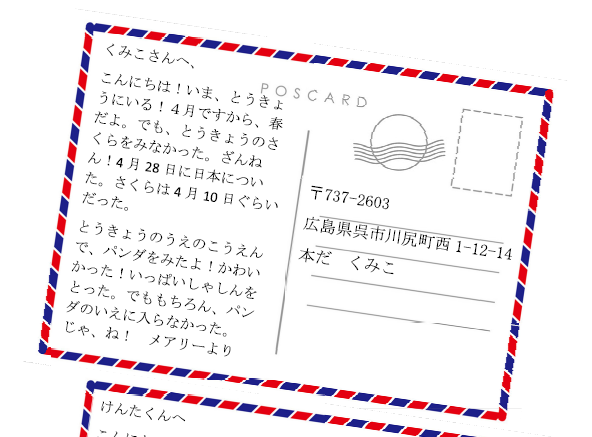
11 Learning Skills Programme
11LSP
Year 11 Learning Skills Programme
This course is designed to support students to develop the skills and habits needed to reach success—both in school and beyond. If you feel this class would be helpful for you, please talk with the Special Education Needs Coordinator (SENCO) or your dean.
Students will be directed to this class if they need targeted support to achieve the Literacy and Numeracy CAA co-requisites.
This class also provides support for students who need additional opportunities to consolidate their learning across other subjects due to their individual learning or health needs.
Topics of Inquiry
These are created and adjusted to meet the needs of the individual students and may be linked to the student’s IEPs. They may include:
- Managing Self—Identifying and managing stress
- Taking Risks and Trying New Things - Leadership and resilience
- Thinking - Time management techniques and goal setting
- Relating to Others - Communication and teamwork skills
- Use Symbols and Texts—Numeracy and literacy support, including targeted support to achieve the Literacy and Numeracy CAA exams. A level 1 English writing internal will be offered to grow accuracy in writing skills.
11 Mathematics
11MTHYear 11 Mathematics
Mathematics is a compulsory subject in Year 11.
The skills developed in Years 9 and 10 are consolidated and extended. Students will learn to interpret data, communicate clearly, think logically, look for patterns and solve problems. The aim of mathematics at this level is to help students understand society and play a responsible part in it. The course is designed to provide a sound foundation for further study of mathematics.
Each student will be allocated a mathematics class based on the recommendation of her teacher in Year 10 and performance in the end–of–year 10 common assessment tasks, in consultation with the Learning Area Director of Mathematics. Students placed in 11MTA classes will have very good grades in Year 10 assessments.
Students whose mathematical achievement indicates they would benefit from accelerating their learning by moving directly into a Level 2 Mathematics course in Year 11 may be invited to do so. Entry into this pathway is by invitation only and is based on a range of evidence, including assessment results, examination performance, and teacher recommendations.
Students who are still working towards NCEA Numeracy will be placed in 11MTN or 11MTF, where they will receive additional support to develop their mathematical skills while working towards the Numeracy co-requisite.
Most students will complete an NCEA level one external standard.
And all students will sit the NCEA Numeracy common assessment task.
11 Mathematics Cambridge
11MCAIYear 11 Mathematics Cambridge
Students develop confidence and fluency in mathematical techniques while strengthening their problem-solving, reasoning, and analytical skills. The course emphasises the application of mathematics in both real-life and abstract contexts and provides a strong foundation for further study in AS Mathematics.
Candidates study the following topics:
- Number
- Algebra and Graphs
- Coordinate Geometry
- Geometry and Constructions
- Mensuration [Measurement]
- Trigonometry
- Transformations and Vectors
- Probability and Statistics
- Introductory Calculus
11 Music
11MUSYear 11 Music
11 Music is designed as a pathway for students who have taken Year 10 Music/Core Music or demonstrate skills and knowledge at the appropriate level to take this course. The various strands of this course work towards building a range of skills and understanding. It builds on the foundations of previous Music courses in Years 9 and 10.
All Music courses are UE approved.
Students need to be prepared to perform as part of this programme. They will also further their understanding of the language of music (theory and aural skills) and the cultural/historical context that informs and motivates change in music. Students will apply these skills and knowledge to new musical situations through the study of several pieces of music in a range of styles, eras, and composers. This will also impact your own composition and music-making.
This course will connect like-minded students in a focused music environment and create opportunities for students to be challenged in all areas of this subject.
Groundwork will be laid so students to ensure students can be successful in Level 2 Music/Modern Music
Prerequisites:
- Either Year 10 Option Music or Year 10 Core Music, and/or
- At least 2 years experience and lessons on an instrument or voice, and the ability to read music (students will apply for an exemption from HOD Music))
Course Information:
In Year 11 Music you will experience:
- Performances (both solo and group)
- Composition (writing your own music)
- Musical knowledge (learning about musical styles, music analysis, social/historical context)
- Listening skills
- Score studies including Music theory to support this work
Music 1.3 91950 Demonstrate understanding of music in relation to contexts 5 credits External
Students will choose two pieces of music to engage with from a Māori and an additional context. They will describe music concepts (elements and conventions) that are significant to each piece of music and that are connected to the contexts of each piece.


11 Music Academy
11MUAYear 11 Music Academy
11 Music Academy is designed as a pathway to challenge and engage students from the 9 Music Academy and advanced year 10 students. Students will have a minimum Grade 3 ABRSM level of music theory to be offered a place in this course.
This course will include year 10 and year 11 students.
Students will develop an advanced and comprehensive skill set in music, including solo/group performance, music theory, composition, and analysis. Groundwork will be laid so students can succeed in Year 12 NCEA Music or Cambridge AS Level Music the following year.
This course will connect like-minded students in a focused music environment and create opportunities for talented students to be challenged in all areas of this subject.
This course caters to advanced music students who have moved from the 9 Music Academy course and advanced students from the 10MUS course. This course allows students to continue progressing at an advanced level throughout their schooling and allows like-minded students of similar abilities to be challenged and engaged. It will prepare these students to be extended and have the ability to take year 12 NCEA Music or Cambridge courses the following year.
The course reflects the need for talented music students to be extended in:
- Performances (solo and group settings)
- Songwriting and composition (creating original music)
- Set works analysis
- Music Theory
This course will also build key competencies:
- Thinking
- Relating to others
- Using languages, symbols, and texts
- Managing self
- Participating and contributing


11 Philosophy
11PHLYear 11 Philosophy

This class grows changemakers—young people who have the communication and argumentation skills and the Psychology and Philosophy content knowledge to ensure they claim space and are heard in a noisy world.
In Year 11 Philosophy you will be empowered to have a voice and learn how to respectfully engage with the ideas and arguments of others. Lessons have interactive and discussion-based activities, providing a high-interest way to gain valuable communication and argumentation skills. It will give you tools to help navigate our swiftly changing world through exploring current ethical and psychology topics.
Philosophy content knowledge and skills are relevant to other subjects and university studies such as Medicine, Law, Psychology, Education and any profession where working with others is required, thinking critically and creatively is needed, strong oracy skills are valued and academic writing is essential.
A Level 2 Religious Studies standard worth 6 credits is completed in term 3, examining the ethical principles of a chosen religion and how they apply to a current social action.
11 Photography-Design
11APDYear 11 Photography-Design

11 PHOTOGRAPHY & DESIGN
Capture - Create - Communicate.
Step behind the lens and explore your creative potential in Year 11 Photography & Design!
This course is perfect for students passionate about expressing ideas through digital media. Whether you're thinking about a future in creative industries or simply love expressing yourself visually, this course is your chance to build real skills, a stunning portfolio, and a strong creative voice.
No prior experience needed — just curiosity and imagination!
Photography: You’ll learn how to confidently use a camera, master editing and printing techniques in Adobe Bridge and Photoshop, and take visually powerful photographs that communicate meaning.
- Cyanotype - Students will learn about and use this traditional process to generate a portrait.
- Still Life Photography - Students will print a folio submission of work that uses visual elements to explore ordinary objects and transform them into the extraordinary images using photographic pictorial and technical skills.
- NCEA Level 2 Assessment - 4 credits, internal standard. Students will incorporate photographed elements of their 'Turangawaewae' into a tableau format using advanced photoshop editing skills.
Design: A photographic field trip will become the foundation for an exciting design project where you'll bring your ideas to life. You will learn how to develop, refine, and produce your work as design formats.
- Typography - students will learn how to select and design with letter forms.
- Image making - use their photography skills to create imagery for use in design formats.
- Zine Production - students will use their original photography, typography and design skills to produce a Zine.
11 Physics
11PHYYear 11 Physics
Physics is a subject that helps us understand and think about how things happen. This course will help you to understand about electricity, magnetism, motion, force and energy as they apply in everyday life. There is practical work involved, with minimal mathematics. This course is suited to all students who like to ask…. WHY?
Course Content
The course will cover the following content so as to prepare the students to be ready for Year 12 Physics. Year 11 Physics is a pre-requisite for entry to Y12 Physics.
- Mechanics - Motion, Force, Energy
- Electricity - Static and DC Electricity, Electromagnetism
- Practical Investigation related to Mechanics and Electricity
- Atomic and Nuclear Physics
- Electromagnetic Spectrum, Light and Waves
11 Physics Cambridge
11PCAIYear 11 Physics Cambridge
Achievement Objectives
In their study of physics students will use their developing scientific knowledge, skills and attitudes to achieve the following aims.
1. Students will develop:
● an understanding of concepts, principles and models in physics.
● the ability to use concepts, principles and models to explain physical phenomena.
Contents
Motion, Forces and Energy
Measurements, Motion, Mass, Weight, Density, Forces, Momentum, Energy, Work, Power, Pressure.
Thermal Physics
Kinetic particle model of matter, Thermal properties, Temperature, Transfer of thermal energy.
Waves
Properties of waves, Light, Electromagnetic spectrum, Sound.
Electricity and Magnetism
Magnetism, Electrical quantities, Electric Circuits, Electrical safety, Electromagnetism.
Nuclear Physics
Nuclear model of an atom, Radioactivity.
Space Physics
Earth and the solar system, Stars and Universe.
Practical Investigation
Investigation of Practical Linear and Non- Linear Relationships.
11 Spanish
11SPAYear 11 Spanish
Are you continuing your Spanish journey? ¡Fantástico!
This course has a strong communication focus, and it also covers Spanish language, grammar and Hispanic culture. Topics will include a more in-depth look at people, lifestyle and healthy living; education and work; free time activities, customs, festivals and celebrations; travel and tourism, media and technology and the environment.

By the end of the course, students will be able to converse, respond, read, listen and write beyond their more immediate environment, for example, past and future events. They will be able to produce language about their own interests and give opinions.
Students will have the opportunity to learn more in-depth about cultural aspects of Spain and Latin America through research and engaging projects, they will take part in the Spanish Immersion Day and participate in exciting competitions such as the Stanza debate and speech.
In Year 11, students start to prepare for NCEA. For internal assessments, we offer the Interaction standard (A.S. 91972 v2 Spanish 1.1 - Interact in spoken Spanish and respond to information, ideas, and opinions). NOTE: There is an option to do a written Spanish task (A.S. 91973 v2 Spanish 1.2 - Communicate in Spanish for a chosen purpose).

11 Sports Science
11PSSYear 11 Sports Science

The Year 11 Sports Science course will set you up for success in your future study of sports science.
The course content will include:
Anatomy and Biomechanics: This unit is designed to help students develop and apply an understanding of how the human body moves and functions during physical activity. Students explore key biomechanical principles, including Newton’s Laws of Motion, balance and stability, and force summation. Through the context of boxing, they analyse how these concepts impact performance, improve movement efficiency, and enhance technique. Assessment for this unit includes both a verbal test, where students articulate their understanding, and a written assessment that demonstrates their ability to apply theoretical knowledge to practical movement scenarios.
3-day Surf Camp: Students are offered an optional 3-day Surf Camp, where they will participate in a number of surf sessions. This experience provides an opportunity for students to learn and develop their surfing skills, whilst applying their knowledge of biomechanical principles in a surfing context. This experience provides an opportunity for students to step outside of their comfort zones, build resilience, and develop social responsibility through shared and individual challenges. While not formally assessed, the camp promotes personal growth, leadership, and strengthened peer relationships that support learning throughout the year.
Circus: In this unit, students focus on acquiring new physical skills and movement strategies to enhance their performance in a group setting. They engage in a variety of circus-based activities that challenge coordination, timing, flexibility, and balance. This unit emphasises teamwork, creativity, and persistence, as students work collaboratively to choreograph and perform a group routine. Assessment is based on the quality of their group performance as well as a written reflection that evaluates their learning journey, development of specific skills, and contribution to the team.
Physiology: This unit introduces students to the body’s physiological responses and adaptations to exercise. Students learn about key systems such as the cardiovascular, respiratory, and muscular systems, and investigate how these systems respond during physical activity and improve with training. The physical context for this unit is fitness-based training, where students engage in various workouts to observe these changes in real time. This unit builds a foundation for understanding personal health and physical performance, and it prepares students to make informed decisions about training and recovery.
Kotahitanga in Handball (AS 1.2): This unit focuses on strategy and teamwork within a fast-paced game environment. Students explore how to apply individual and group strategies effectively in game situations, including offensive and defensive tactics, communication, and spatial awareness. Through participation in handball, students reflect on how these strategies contribute to overall team performance. Students will have the opportunity to gain 5 NCEA credits, based on their ability to demonstrate understanding of strategic application through both participation and analysis.
Responsible Behaviours: This unit emphasises the importance of personal and group responsibility in outdoor and potentially challenging environments. Students develop an understanding of risk management, leadership, and ethical behaviour through participation in outdoor activities, culminating in an excursion to Wero White Water Rafting. This authentic learning experience challenges students to demonstrate safe and responsible behaviour, support their peers, and reflect on how their actions impact others. Assessment is completed through a written task where students analyse and evaluate their behaviour and learning during the activity.
11 Te Reo Māori
11TRMYear 11 Te Reo Māori
This course builds on practical skills with content relating to Te Ao Māori, Tikanga Māori and Māori culture. This Year 11 course has a strong communication focus. Students will learn a variety of karakia, whakataukī and kīwaha etc., as well as how to communicate about personal opinions, daily events and future plans. The topics that will be covered include sports, a childhood event, hospitality and home.
- Haerenga ki te Marae (Journey to the Marae) - decipher and retell a story of going to a marae learning over 20 new sentence structures.
- Whakatau & Karakia - You will be immersed in tikanga Māori and how to informally welcome visitors.
During the year, you will record Kōrerorero (conversations) with someone else in the class. These Kōrerorero will be based on topics that we are learning in class. These will be your NCEA internal assessment for 11 Te Reo Māori.
To support your learning, you may also want to attend iwi and hapū wānanga reo or noho marae, and/or night classes or online Te Reo Māori classes, as well as access Education Perfect and various Te Reo Māori apps etc.
Please let us know if you come from a Te Reo Māori speaking whānau and/or have come through Kōhanga Reo and/or Kura Kaupapa or Rumaki/Reorua etc., as we may be able to advance you to another year level.
11 Textiles & Design
11TEXYear 11 Textiles & Design
Over the course of the Year students will continue building on the skills and knowledge they have developed in Year 10 with: Fashion illustration and communication, fabric manipulation and textiles design using print and applied design techniques, pattern adaptations and constructions skills to manufacture own designs, further knowledge in sustainability and contemporary trends in fashion and apparel in a local and global context.
Subjects for Year 11 Students
12 Cambridge Study
12CSDYY12 Cambridge Students have the choice of either taking 4 subjects and keeping a subject space for unsupervised study, or taking 5 subjects.
If you are planning to take 4 subjects at AS level please add this option to your selections to indicate 'Unsupervised Study'
12 Cambridge Tutorial
12CTUTAll students enrolling in the Cambridge AS Level programme for Year 12 will have a line of tutorial.
The tutorial programme gives students access to subject specific guidance during a study period. Each week students will have 1 period of tutorial directed towards each of the subjects they are studying.
If you are taking part in the AS programme for next year, please add this tutorial into your options selection.
Level 2 Accounting
12ACCLevel 2 Accounting

The aims of this course are to:
- Examine, understand and apply the assumptions on which accounting is based
- Develop knowledge and understanding of the subsystems and controls to prevent fraud
- Use Professional Computer packages to process accounting information
- Prepare Financial Reports which meet user needs and professional and legal requirements
What this really means to you:
Build accounting systems that will allow for effective processing of transactions and minimise the possibility of fraud. This will involve an investigation into various scenarios business.
Level 2 Art Design
12ADELevel 2 Art Design

Digital and graphic design skills are highly visible and important in today's society. Design, illustration and typography are everywhere around us and they make up much of our digital environment. Level 2 Art Design is a fun, creative course which will develop practical and conceptual design skills including:
- Adobe software skills (Photoshop, Illustrator)
- Creative problem solving and critical thinking
- Typography, logo and layout design skills
- Illustration/Image making skills
- Layout design skills e.g. magazine, poster, website.
At the start of the year the class works through a range of intro tasks together. Students then decide on their folio board focus for the year (within a certain brief). Students are guided to investigate design and illustration styles that suit their strengths and use these to inform the development of a logo design, image making, and poster design throughout the rest of the year. All of their design work, builds towards a folio board submission in Term Four. There are regular check in dates to help students to manage their time and progress throughout the year.
Students are encouraged to use visual diaries to develop their ideas, skills and creative experimentation throughout the year. Practice with computer software and regular visual research are important to help students to extend their ideas and skills.
Level 2 Art History
12AHHLevel 2 Art History

Art History is an interesting and fun way to investigate the impact and effect of historical and cultural change through art. Students will look at, read about and discuss art works, ideas and history in class, engaging with the philosophical, economic, political, religious and social contexts that have shaped culture.
The course covers the development of modern art in Europe starting in 1780, with Neoclassical and Romantic art through to Realist, Impressionist and Post Impressionist art in 1900. We start the year looking at the art which conveys the ideas and events of the French Revolution, the rise of Napoleon and the beginnings of the Industrial Revolution. Then we investigate how art styles and movements through the 19th Century show the influence of a changing world in Europe, as modern, industrialized society and big urban cities such as Paris developed. We will be looking at the changing place of women in society and in art in Europe through the year. We will finish the year by considering how Van Gogh expresses his mental states and perceptions through paint, while Gauguin's paintings, made in Tahiti, convey late 19th Century colonial attitudes. We will regularly consider how past art styles, history and ideas relate to our contemporary world today. Art History is an good subject for learning about psychology, philosophy and history in conjunction with art and style.
Art History is an great way for students to improve their visual, spoken and written literacy skills, as well as their thinking skills. Students will pick up new ideas and vocabulary - both visual and written. Writing is the key method of assessment in this course. Students will work to develop their sentence, paragraph and essay writing skills through the class tasks, assessments and external essay practices.
Art History will support any future career, by developing analysis and critical thinking skills, writing, literacy and discussion skills in students.
There will be two internal assessments and two external examination papers.
Level 2 Art Painting
12APALevel 2 Art Painting

Painting is an ever-changing exploration of media, techniques and concepts. This course builds on processes, and techniques initiated in Year 11 Art. Students’ ability to communicate visually is enhanced by a personalised programme of study.
Students will select and structure visual elements, communicate ideas and solve problems through making drawings and paintings.
Students will be required to complete two major practical assignments. The assignments will include research on aspects of painting practice, journal documentation of related explorations in drawing and a final folio submission. Students will investigate a specific theme, identifying and generating their own individual ideas.
This course offers two achievement standards worth a total of 16 credits. One achievement standard is internally assessed and one is external. Work will be assessed in two different ways:
Internal assessment – Assignments carried out in the first two terms.
External assessment – A two board folio submission.
Please note that work begins on folios at the start of the year by completing the internal standard. This internal standard is designed to prepare students with the necessary skills to complete the folio which can be used the following year to gain entrance to a University visual arts course.

Level 2 Art Photography
12APHLevel 2 Art Photography

2.2 AUTO FOCUS (4 credits - internal)
During this course students will extend knowledge of photographic skills, processes and procedures initiated in Year 11. Using a visual diary and our extensive photography and art book collection, students will research, explore, generate and clarify ideas. Students will identify, select and structure visual elements, communicating ideas and solving problems in the making of art.
- External Folio Submission - Students will generate an individually conceived theme based on a Site Investigation.
- Self Portrait Internal submission - Students will be introduced to a specific range of photographic techniques including studio lighting and photoshop effects using established artist models.
2.4 EXTERNAL FOLIO SUBMISSION - (12 credits - external)

Level 2 Art Printmaking
12APRLevel 2 Art Printmaking
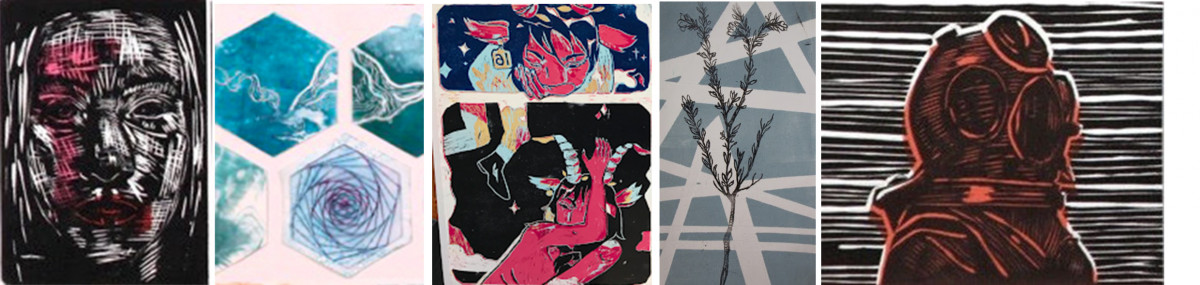

Printmaking has an exciting rich history and a thriving and diverse contemporary practice globally.
Students will learn about and extend their control of a wide range of interesting traditional and contemporary printmaking techniques, including tetra pak, pronto-plate, woodblock, embossing, monoprint and screen-printing techniques.
Students’ ability to communicate visually is enhanced by a personalised program of study. They will be encouraged to integrate techniques and develop their own experimental approaches in accordance with contemporary print practice. Students will learn how to develop their ideas in series of artworks, supported by research into contemporary printmaking artists.
Students will be required to complete two major practical assignments. The assignments will include research on aspects of printmaking practice, journal documentation of related explorations in drawing and a final folio submission. Students will investigate a specific theme, identifying and generating their own individual ideas.
NB: Students who didn't take Art or Photography at level 1 are welcome to choose this subject, however, in the case of the class being full, priority will be made to those students who did take 11 Visual Arts course.
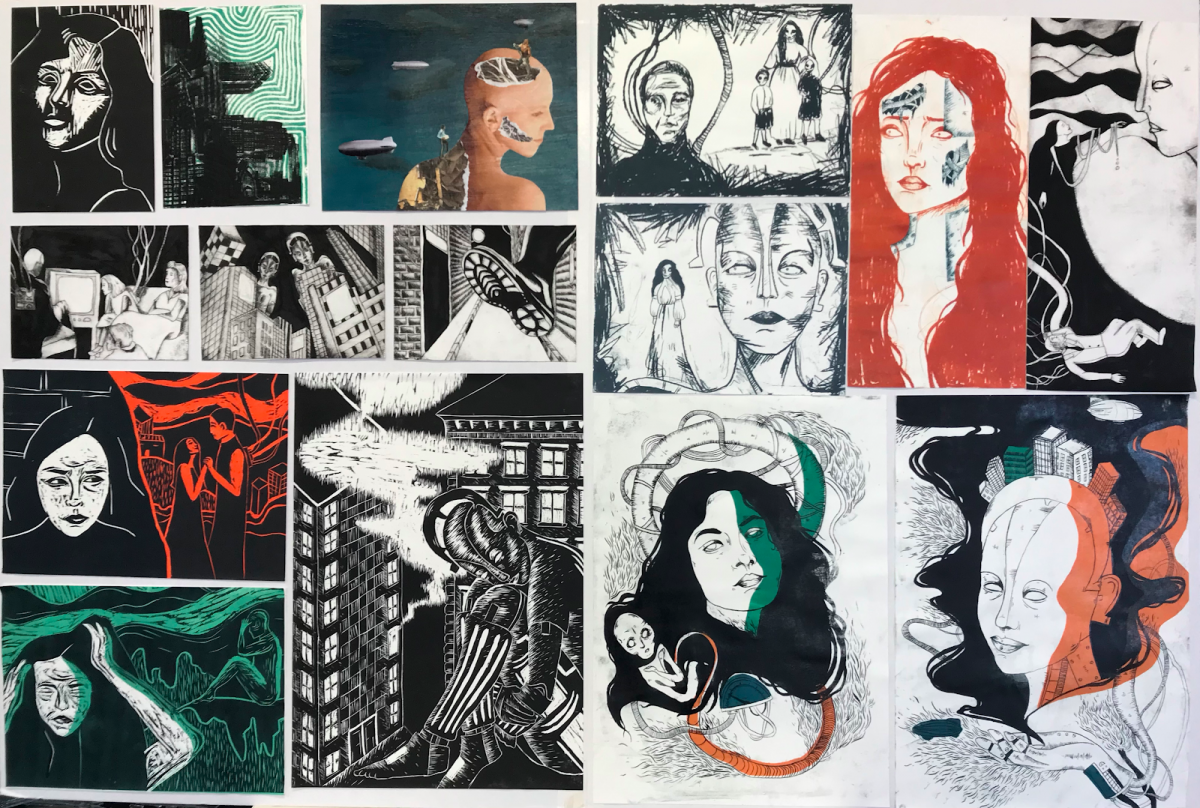

Level 2 Art Sculpture
12ASCLevel 2 Art Sculpture
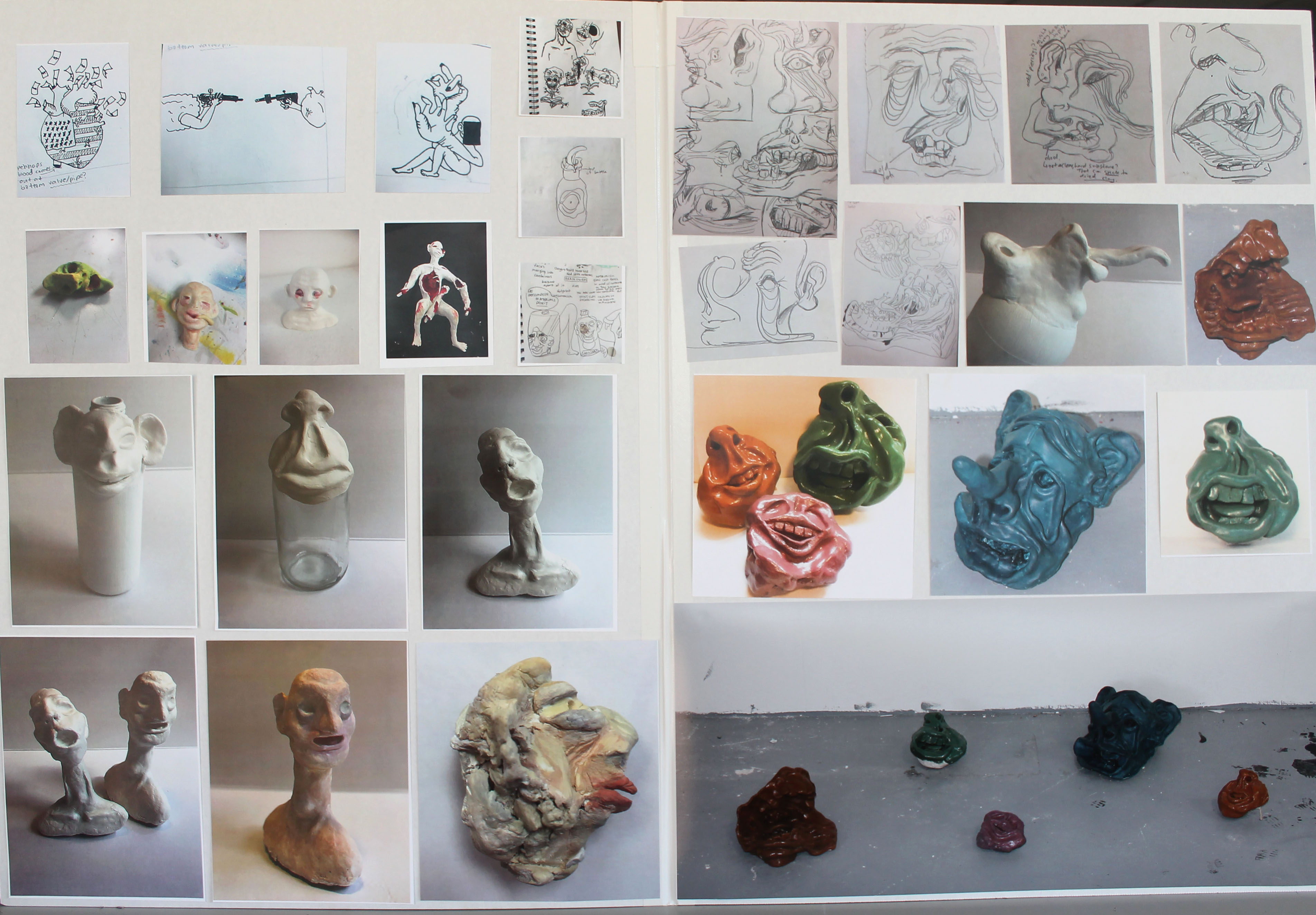


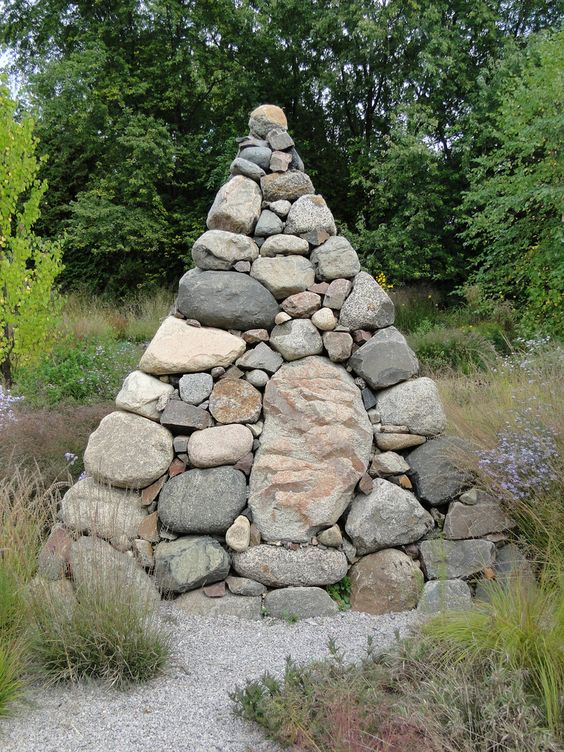


Sculpture is an exciting and diverse Visual Arts course, highly reflective of current contemporary art practice. We place a high emphasis on contemporary and experimental modes of engaging with three-dimensional form and communicating ideas in a three-dimensional way.
Sculpture students will work with diverse and unique materials. Sculptural ideas can often be expressed through relevant sub-disciplines such as ceramic and clay art, performance art, sound art, social-practice art, and installation art. In using a visual diary and referring to an extensive and exciting range of contemporary sculptors, students will research, explore, generate and clarify their ideas. Students will learn how to select and use a wide range of sculpture materials in ways that best explore thematic questions and communicate ideas.
Adaptive, innovative and creative problem solving are key attributes that students who take this course tend to adopt quickly. These skills are highly relevant to a diverse range of tertiary and career pathways that are project and/or research based.


Level 2 Biology
12BIOLevel 2 Biology
The course covers areas relevant to a wide number of students and professions. We have some great discussions, learn a lot, and prepare for a healthy and well informed life.
For our 2027 course we are offering the topics of animal diversity, cellular processes, gene expression and genetic variation and change.
You will learn about how and why we see diversity in the animal kingdom. You will learn a lot about human biology here.
After we learn about human biology, you will take the learning into three other species of your choice and present a report.
The second topic is cellular processes: respiration, the cell cycle and respiration. This is important key information for moving on in the subject.
Gene expression covers how the DNA encodes the information for proteins and we learn a lot about metabolic conditions here too.
The final topic is about meiosis, inheritance and natural selection, you will learn a lot about these key ideas that underpin all of biology.
Level 2 Biology Cambridge
12BCASIn this year of biology students learn about topics a lot more deeply that in the year 11 program. We develop sound and transferable skills alongside areas of content knowledge that will be useful for the students going forward in biology and transferrable to other domains.
See below for the term outlines.
Level 2 Business Studies
12BUSLevel 2 Business Studies

This course is designed to give students experience in running their own business. They will learn how both internal and external factors impact a businesses decision making and actions.
The course content touches on many aspects of business organisation including;
- Organisation structure, spans of control and supply chain
- Sustainability, corporate social responsibility and ethical decisions
- Understanding and interpreting financial information to make decisions
- The role and skills of successful managers
A large part of the course requires students to work effectively in teams. Students are encouraged to apply good communication and planning skills to ensure the successful completion of the community business plan.
The objectives of the course are to:
- Undertake a business activity which has a community focus
- Complete a market research activity individually
- Understand internal factors which affect the running of a business
- Understand how motivational theories can impact the success of a business
- Apply real life case studies and experience to business theories and concepts
Supports future study in:
Business, marketing, commerce and communication degrees, careers in business, marketing and human relations, international business and agribusiness.

Level 2 Chemistry
12CHELevel 2 Chemistry
The Year 12 Chemistry course relates to Level 7 of The Material World strand of the New Zealand Curriculum. This course is designed to follow on from the Year 11 Chemistry course.
Chemistry is about understanding the properties of different substances and how these substances can change. Chemistry allows us to predict how substances may alter when the surrounding conditions change, or how they may react to form new substances, and to explain why this happens. Chemists are continually changing matter into new and more useful forms.
Chemistry goes on continuously, all around us; in plants that make food and in animals that digest this food, in the burning of fuels and corrosion of metals, in the formation of snow and ice, in industries that supply us with all our household products, and in the many biological processes that maintain the living world.
Chemists use their understanding of atoms, molecules and ions to explain and predict the properties and behaviour of different materials.
Course Achievement Objectives
The objectives of the Year 12 chemistry course are to enable students to:
- investigate and describe production, properties and uses of substances
- understand and use chemistry concepts and patterns to explain properties of matter
- obtain, interpret and use a range of chemical information
- gain practical skills in handling substances and manipulating equipment safely.
Content
Quantitative Chemistry, Organic Substances, Chemical Reactivity (Reaction Rates, Equilibrium, Acids and Bases), Bonding, Structure, Properties and Energy Changes of Substances, Oxidation and Reduction Reactions.
Level 2 Chemistry Cambridge
12CCASLevel 2 Chemistry Cambridge
The AS Level Chemistry course is the first year of the full A-Level program. It builds upon IGCSE concepts by exploring the fundamental principles of Physical, Inorganic, and Organic Chemistry in greater depth, with a strong focus on practical laboratory skills.
The aims are to enable students to:
- acquire knowledge and understanding and develop practical skills, including efficient, accurate and safe scientific practices
- learn to apply the scientific method, while developing an awareness of the limitations of scientific theories and models
- develop skills in data analysis, evaluation and drawing conclusions, cultivating attitudes relevant to science such as objectivity, integrity, enquiry, initiative and inventiveness
- develop effective scientific communication skills, using appropriate terminology and scientific conventions
- understand their responsibility to others/society and to care for the environment
- enjoy science and develop an informed interest in the subject that may lead to further study.
The topics studied are:
- Physical chemistry
- Inorganic chemistry
- Analysis
- Practical Skills
Level 2 Child Development
12CHCLevel 2 Child Development

This course will assist students to recognise and develop the necessary learning skills, practical techniques and processes which are essential to early childhood development.
This course covers key areas essential to supporting the growth and wellbeing of young children. It begins with an understanding of basic needs and nutrition, focusing on how a balanced diet, adequate rest, and emotional care are vital for healthy development. Learners will also explore personal and environmental hygiene and safety, gaining knowledge about maintaining clean, safe spaces and teaching children healthy habits to prevent illness and injury.
The course also examines the values and beliefs around young children’s learning, recognising the importance of respecting cultural diversity and individual learning styles. This helps ensure that all children feel supported and included in their learning environments. In addition, participants will learn about health issues, practices, and available services that play a role in enhancing child wellbeing, including preventative care and how to access support when needed.
Lastly, the course looks into attachment behaviours and strategies to support transitions, highlighting the importance of secure relationships and how to help children manage changes such as starting school or moving environments. These combined topics provide a strong foundation for anyone working with or caring for young children.
It is a self-paced course using Vision College Academy unit standards.
Level 2 Chinese Heritage Language
12CHHLevel 2 Chinese Heritage Language
This course is for students who are fluent or close to fluent in Chinese.
In Year 12 Chinese Heritage Language, you consolidate your abilities using practical, transactional language to communicate information and ideas and further develop your skills using the more abstract language to express and justify your opinions. The main idea at this level is Youth Matters. We will use a variety of texts and online resources. Topics include:
- Study & Career Plans
- Festivals & Customs
- Leisure activities & Healthy living
- Part-time work & Social network
- The world of youth
- Helping with the Literacy CAA
- Recording radio shows
** Please note that if you have limited Chinese reading and writing abilities, you should see Ms Zhang or Miss Hu to determine if this course is right for you.
Level 2 Chinese Second Language
12CHMLevel 2 Chinese Second Language
In Year 12 Chinese you learn more abstract and complex language in order to communicate information and ideas and justify your opinions. Topics include:
- Study & Career Plans
- Festivals & Customs
- Leisure activities & Healthy living
- Part-time work & Social network
- The world of youth
An example of our Year 12 students talking about their lives and their part-time work experiences
We approach these topics through a blended text and some online learning tools. We will also look at Chinese history, myths, films, and other authentic resources.
You will have the opportunity to use your Chinese language while experiencing authentic Chinese cuisine where possible.
You will also have access to Education Perfect or Quizlet and other online Chinese resources to support your learning both inside and outside of our Chinese classroom.
Level 2 Classical Studies
12CLSLevel 2 Classical Studies
Have you read the Percy Jackson books and loved them? Enjoyed the movie Hercules? Have you heard stories about the Greek gods and wanted to know more about them? If so, Classical Studies is the subject for you!
Classical Studies is the study of the people, places and events of ancient Greece and Rome through their history, literature, art and mythology. It teaches you to make links between past and present civilizations in order to better appreciate the influence of the Classical world on your own society. Classics also encourages the skills of critical thinking, attention to detail, and clear communication.
The Year 12 course introduces you to the world of ancient Greece.
In 2027 you will learn about the following topics:
Greek Mythology: We consider the nature and function of mythology, including the divinities of ancient Greece, focusing in particular on the Olympian gods. Then we will turn to the role of heroes, such as Heracles and Perseus, and the wonderful story of the Trojan War.
Athens in the 5th Century: We explore the history of Athens in the 5th Century BCE, when Athens was in its heyday; the Persian invasions and the Peloponnesian War against the Spartans, the development of democracy and the key figures from this period, like Pericles and Alcibiades.
Greek Tragedy OR Homer’s Odyssey: We will examine the ideas and values of ancient Greece through the exploration of a work of literature: Through studying the tragic play Antigone by Sophocles, you will examine why a young woman is condemned to death after she buries her brother OR the fantastic story of the Greek hero Odysseus and his 10 year journey home following the Trojan War.
Athenian Art and Architecture: We will look at famous Athenian temples on the Acropolis, such as the Parthenon. We then turn to the development of sculpture throughout this period.

You will also develop skills in:
Thinking critically about sources: Understand the relationships between social, political, artistic, and, technological aspects of the classical world and how these aspects influenced the lives of Greeks and Romans living in those times.
Examining values: Understand how and why ideas and values of the classical world have influenced other cultures, including New Zealand.
Level 2 Dance
12DCELevel 2 Dance
Dance helps students to acquire the skills and knowledge used in the fields of dance, the arts, performance, performing arts.
The course has two main areas of learning:
CHOREOGRAPHY: Students learn a range of choreography techniques to communicate an intention and resolve ideas. These include groupings, locomotion, pathways, spatial relationships, shapes, movement, transitions, impact, flow and unity.
PERFORMANCE: Students learn a range of dance skills and knowledge to perform a dance. These include shapes, movement, postural alignment, timing, focus, expression and energy.
Course content: Students will complete 3-5 achievement standards made up of approx. 16-20 credits during the year including:
12DCE
- Choreograph a group dance to communicate an intention.
- Perform an ethnic or social dance to communicate understanding if a style.
- Perform a theatre dance to communicate understanding of the dance.
- Provide an interpretation of a dance performance with supporting evidence.
Students with known injuries will need to discuss with the HOD an action plan for managing this in class before taking part in any practical lessons.


Level 2 Design & Visual Communication
12DVCLevel 2 Design & Visual Communication
Course Objectives:
Design & Visual Communication teaches students the drawing and design skills used in fields such as Architecture, Engineering and Industrial Design. The course includes learning to use 3D sketching techniques, instrumental drawing skills and computer graphics software to create and express ideas. Students are taught creative thinking and problem solving skills that enable them to generate and develop design ideas.


Course content: Students will complete 3 design projects during the year including:
- Architecture Project: Students will design a visitor pavilion for Maungawhau
- Product design: Students will use sketching and 3D CAD software to develop a design for a product.
- Presentation design: Students will design and produce a presentation of one of their solutions from above. Skills taught will include layout and composition techniques and use of computer applications.
Level 2 Design & Visual Communication for beginners
12DVALevel 2 Design & Visual Communication for beginners
This course is for students who have not completed year 11DVC. Students will complete a fast-track introduction to visual communication skills and then will complete two design projects. Students will complete 3 out of 4 the same Level 2 standards as 12DVC. The work produced will be useful for a portfolio for Architecture or Design degree applications.


Course Objectives:
Design & Visual Communication teaches students the drawing and design skills used in fields such as Architecture, Engineering and Industrial Design. The course includes learning to use 3D sketching techniques, instrumental drawing skills and computer graphics software to create and express ideas. Students are taught creative thinking and problem solving skills that enable them to generate and develop design ideas.
Course content: Students will complete 3 design projects during the year including:
- Architecture Project: Students will study the work of an Architect and then incorporate the main principles of this study into their own architectural design for a new cabin at Mangawhai Campground.
- Product design: Students will use sketching and 3D CAD software to develop a product for everyday use.
- Presentation: Students will prepare and present one of their final outcomes.
Level 2 Design Technology
12DETLevel 2 Design Technology

Design Technology aims to develop students' technological literacy and critical thinking skills, fostering innovation and problem-solving through design thinking.
In Design Technology, students develop skills by designing and making useful Products.
Students are expected to take their high-quality Prototype Products home with them on completion of their course.
Over the year, students will develop their skills in the Design Technology practical area, further developing their skills in how to research, analyse, design, and make products, using a range of tools and equipment including Computer Aided Design and Manufacture, laser cutting and 3D Printing.
Students will work on a Design and Make project within a Context / Theme.
Within the given Context / Theme, students will research, design, develop, manufacture, and test their own Prototype Product for a specific purpose and Customer / Stakeholders of their choosing.
Throughout the course Students will complete a Design Portfolio using Google Slides, which will document their research, designing, making, and testing.
This portfolio of work will be used to assess their project work against Technology Achievement Standards.
In Year 12, students should expect to learn, develop, and use complex skills and techniques with independence and creativity.
Advanced procedures using resistant materials
- Advanced joinery: including mortise and tenon, loose tenons, laminating
- Create products with specific features, which require planning, execution, and thorough testing.
- Precision Machining: Introduction to CNC
- Forming processes: Bending, shaping, vacuum forming
- Surface treatments: Introduction to advanced finishing techniques
- Assembly techniques: Introduction to complex fastening systems
Workshop Safety:
- Machine Tools
- Power Tools (including Routers and biscuit jointers)
- Increased independent Laser Cutter use
- Intro to CNC
Quality Assurance and Testing
- Implement testing protocols for strength, durability, and function
Level 2 Digital Technology
12DITLevel 2 Digital Technology
Digital Technology helps students to acquire the skills, project management and design thinking skills used in fields such as Software Engineering, Website Development, Creative Technologies, Database Development and Computer Science.
There are three main areas of learning:
PROJECT MANAGEMENT: We aim to help students be iterative in their planning and development of their outcomes, using modified Agile methodology and digital tools
SKILL DEVELOPMENT: Students will learn how to develop programs or websites using a language of their choice. If they are passionate about creating an electronics device or animation these can also be considered.
COMPUTER SCIENCE: Learn about a chosen area of computer science.
Course Content:
Students will complete one overall design and development project during the year, along with one external exam.
- Develop a conceptual digital solution to a problem of your choice
- Learn how to apply project management skills
- Design, plan and develop an authentic project based on an area that the student chooses, during Term 2 and 3
Students will complete the Computer Science external during half of Term 3 which will be assessed in Term 4:
- The Computer Science topic could be on Artificial Intelligence or Cyber Security.
Course Assessment: 16 credits minimum, 19 credits maximum
Student Examples below:
Student Websites

Students Quiz Program:

Trip to Rocket Lab:

Level 2 Drama
12DRALevel 2 Drama
This course prepares students for NCEA Level 2. Students will:
- Learn acting technique, focusing on the theories of Stanislavski and Laban
- Take on a role in a significant production to a public audience
- Study a theatre style e.g. - Brechtian theatre or Physical Theatre to contrast with naturalism
- Explore devised theatre, where students create their own, original drama around a topic or text
- Sit a written external examination in which students demonstrate their understanding of drama within live performances they have seen
The Year 12 production requires commitment from students outside of class time. They should be prepared to commit to a weekend rehearsal and 2 evenings for performance. The dates of the out-of-class rehearsals will be provided at the start of the year.
Students will be offered the opportunity to attend a range of performances in preparation for writing critical responses required in their external examination. They will also view performances that have been video recorded. Students complete written work to prepare for this examination and reflect on their performances. This makes up part of the assessement for each standard.


Level 2 Earth and Space Science
12ESSLevel 2 Earth and Space ScienceThis course covers a wide range of topics including:
- How Stars and Planetary Systems are formed and change through their life cycles - including a trip to the Stardome Observatory.
- The interactions between Earth’s four spheres - geosphere (including plate tectonics) , hydrosphere, biosphere and atmosphere
- Practical investigation into how craters form as a result of asteroid impacts.
- Looking at Extreme Environments on Earth, under the oceans and in Space and the adaptations or technologies which enable animals and humans to survive.
- An exploration of the geology of the Auckland Volcanic Field - including a field trip to look at the rocks formed by local volcanoes.
- How energy from the sun and the centre of the Earth drives important earth cycles and processes.


Level 2 Economics
12ECO Level 2 Economics
Economic theories are examined and looked at in relation to the New Zealand economy and the world. The opportunity is provided for stimulating discussion on a wide range of economic issues. Current events and issues that affect New Zealand are studied including how world events may impact on New Zealand. An optional overseas trip is held, where possible, to study the economic/business relationships between New Zealand and other countries. The course will be related to up to date and recent economic events.
An in-depth study is made of how the following occur and affect the New Zealand economy:
trade, unemployment, inflation, current economic issues, with connections to government and equality issues.
Skills taught include:
- the ability to understand and apply economic concepts
- how to use economic models and interpret statistics
- the understanding of the causes and effects of economic events and government policies.
Level 2 Education for Sustainability
12EFSLevel 2 Education for Sustainability
Mō tātou te taiao ko te atawhai,
mō tātou te taiao ko te oranga.
It is for us to care for and look after the environment to ensure its wellbeing,
in doing so we ensure our own wellbeing and that of future generations.
This course is for those students who are curious to learn about environmental issues and who have a desire to work with each other to develop solutions, act as kaitiaki, and contribute to a healthy environment and society. Students will explore and analyse current environmental issues from diverse perspectives. They will develop self-management, fieldwork, inquiry and social action skills. Students will make contact with community groups and undertake personal action to support the sustainability of current and future generations.
Level 2 English
12ENGLevel 2 English


The Year 12 English course is designed to strengthen the analytical and literary skills developed in previous years. The course includes the study of a range of literary texts: short, extended, and visual. Language and critical literacy skills are also a focus. In addition, students will work on developing their skills as writers and will have the opportunity to practise writing of different genres.
The University Entrance literacy and Auckland University literacy requirements can be met through success in this course. However, students should be aware that they will need to attempt and pass both external standards to meet the reading requirement through this course alone.
Level 2 English (Foundation)
12ENFLevel 2 English Foundation

This is an alternative course for identified students who will benefit from a reduced and supported English programme. In this course, students will engage with and think critically about a variety of texts, and will analyse how language is used to create meaning and influence others. Students will have the opportunity to research a social issue issue, read and respond to literature, deliver an oral presentation, and develop their writing skills. The course is predominantly internally assessed with one external standard included.
It is possible to gain the reading and writing credits for University Entrance Literacy through this course. As four achievement standards on offer in this course are internally assessed, it is important that students regularly attend classes to have continuity in their learning and experience success.
Depending on the interests and needs of the students in the course, a Level 1 English standard may also be offered to support students in gaining Level 1 literacy through the Achievement Standard pathway.
Placement of students into this course will be made by the English department based on results and teacher recommendation. Students who are currently proficient or higher in Year 11 English are not suitable for this course.
Level 2 English Cambridge
12ECASLevel 2 English Cambridge
This is a programme for students who have already begun their Cambridge qualification through IGCSE. This course similarly dives deep into literary texts and language and is focused around reading, independent learning and exam type assessments. The programme follows the Cambridge English Literature syllabus (9695). Two papers are studied in Year 12 to gain the AS level and a further two papers can be studied to achieve the A level in year 13.
In the AS course, you will study:
- 30 poems
- a novel or collection of short stories
- a play
- unseen (unfamiliar) texts
The texts are chosen by Cambridge and cover both historic and modern periods, and a range of cultural perspectives.
Level 2 English for Speakers of Other Languages
12ESLLevel 2 English for Speakers of Other Languages
This course will focus on the development of academic English language skills. Skills include reading a range of texts and applying reading strategies to show understanding of academic texts; planning, organising and writing essays or reports; delivering an oral presentation; and analysing a visual text and writing an essay in an exam situation. Academic vocabulary extension will be part of the course.
This is designed to be a two year course which will allow students to work towards completing the requirements of the literacy co-requisite and gaining the approved NZQA literacy requirements for entry to New Zealand universities.
Level 2 Food Technology
12FTELevel 2 Food Technology
Food Technology helps students to acquire the skills and knowledge used in the field of Nutrition, Dietetics, Food Technology, Food Science, Product Design and Hospitality.
The course has three main areas of learning:
PROCESSING and PROTOTYPE: Students learn a range of processing techniques to process an advanced food product. These include testing, trialling, skill development, ingredient manipulation and health and safety.
BRIEF and CONCEPTUAL: Students explore contexts to determine an issue, need or opportunity. Research, idea generation and development is carried out to decide a creative solution to the issue. Students will interact with a range of stakeholders.
Course content: Students will complete 3 projects during the year including:
- Stuff It: Students will design and produce a filled pasta product for a supermarket.
- Bellisimo: Students will test materials to create a purposeful and authentic product.
- Edible Art: Students will research, design, develop and produce a canape for an Art Gallery showing using current artist inspiration.
NOTE: AS 91356 and 91357 are also used in 12DET therefore it is not advisable to take 12FTE and 12DET
Students with known food allergies will need to discuss with the HOD an action plan for managing this in class before taking part in any practical lessons.


Level 2 French
12FRELevel 2 French

French Polynesia
In Year 12, we…
- read an authentic French book.
- have a fun in-class debate around French music.
- become “fluent” by the end of the year (as long as we complete our homework): we are able to say anything we want to say in French. We might not know the best way of saying it or the correct word, but we know enough French to be able to find a way to communicate what we want to.
- learn to talk about what we would or wouldn’t do and what we would have or wouldn’t have done.
- learn to describe what we had done a long time ago in the past.
- do a crash course on the history of France using an authentic French book.
- continue with French Fridays.
- listen to many of the French songs that all French people can sing along to.
- learn about French Polynesia through authentic books and a documentary.
- have 20 weekly vocabulary lists where we will learn approximately an extra 500 words, therefore growing our French vocabulary to over 1250 words. As usual, this is done through Education Perfect or Quizlet and weekly vocabulary tests
- be able to participate in the Pétanque tournament.
- have the opportunity to take the B1 DELF exam. We can take B1 in Year 12 or Year 13.
- watch a French film that French people cherish.
- lead a group during French Day.
- can participate in the French Senior Interschool Quiz night.
- can help out at the Year 11 Tour de Quiz.
- can participate in the Joutes Oratoires (French Debating Tournament) with the Alliance Française.
- and so much more.

We cover the following topics in Year 12:
- Le Petit Nicolas - a collection of short children's stories.
- Francophone Music - the iconic songs and famous singers of each decade from the 1920s until now.
- French Polynesia - short stories, its beauty, its culture, the connection between France and French Polynesia.
- French History - from 100,000 BC to now.

Why should I keep studying French?
Year 12 French is when you start to be able to speak more naturally and you may have even start to have dreams in French or at least think in French at times.
It's fun!You can try new food.
It helps you to stand out in your applications compared to other students because you will have a different subject to the majority of students.
Year 12 really strengthens what you already know and makes it a part of you.
You learn more about yourself and your own culture(s).
French is an official language in many international organisations.
You become close friends with your classmates.
It's very different to other subjects..
Learning a language helps you to understand English/your other language(s).
You can stretch your brain in new ways. .
You start to really see your French knowledge deepen in Year 12.
It brings you new experiences.
Not many people who grow up in New Zealand speak French and not many English speakers learn another language, so it will mean you stand out in applications.
You improve your general memory and memorisation skills and develop new connections (new synapses) in your brain.
This is your best opportunity to become fluent in another language. Unfortunately, once you drop a language, it is highly unlikely that you will ever become fluent in it, because you will never have regular classes like this again. Starting a language at university does not give you long enough to become fluent. However, studying a language at university (as a major, minor, elective, certificate or diploma) after studying it at high school strengthens your language knowledge incredibly.
Emotional and Cultural Intelligence/Quotient: In an ever-increasingly multicultural world, it is important to be able to bridge across different cultures and communicate well with a wide range of people. Learning another language is the best way to grow your cultural quotient. Skills learnt can be applied to any aspect of your life.
With languages, you learn about other people's perspectives and ways of thinking. A new language opens up new ways of seeing the world and of expressing oneself. This develops essential skills, such as empathy, open-mindedness, thinking skills, courage, conversation skills, argument development, stronger general knowledge, confidence and adaptivity.
You become a much more interesting person - with more general knowledge, experiences and interests.
Your French becomes more innate in Year 12.
Baking a cake from Ile de La Réunion
Languages are extremely relevant if you are thinking of entering politics, doing law, business, medicine or sport or any other field even!
Who knows where life will take you! You may end up in a job working with French clients or moving to a French-speaking country.
Politics: you are likely to need to talk to people from other countries to achieve what you want to achieve or to learn about what other countries do.
Business: Our closest neighbour is New Caledonia, which is French-speaking. French Polynesia is also close by. Many NZ businesses wanting to expand look at these places as we are their closest big neighbour, which means they want our products and businesses. It's much easier to expand to those countries if you speak their language.
Medicine: People from New Caledonia and French Polynesia are regularly transported to NZ for medical care. Refugees also need medical care. Can you imagine how scary it would be if you don't understand the doctor or the nurse? Having a French-speaking doctor or nurse will make their experience better, but it can also save lives so that there can be accurate communication between them and the hospital staff.
Law: French-speaking refugees come to NZ. They may need your help.
Sport: Many training camps, clubs or competitions run out of Europe and in particular around France, Switzerland, Andorra and Belgium, where French is spoken. It makes it a lot easier to contracts and to work with teammates if you speak French.
Example of a Year 12 Interaction:
Assessments
Writing: Students compile a portfolio throughout the year. They will write 3 texts under test conditions in class and over several periods. The teacher will complete a rubric giving students a general idea of what they are doing well and what they should work on. Students then have until mid-Term 3 to improve their writings. They choose their best 2 writings and they receive 5 credits in total for this assessment.
Speaking: Just like in Year 11, students will complete an interaction portfolio. They will carry out 3 to 4 interactions and choose their best two. Students are only expected to talk for four minutes across both interactions, but at Year 12 level, students' French ability and interest in the topics mean that their interactions generally end up lasting longer. This is however not a requirement of the assessment.
Listening: This is an external assessment, sat as an exam in November. Students hear 3 passages, three times each. They type their notes in any language they want and they answer questions in English based on what they hear. Students are expected to use as much of the passages as possible in their answers as well as make connections between the ideas in the passages. The listening passages can only include vocabulary from the official NZQA Level 1 and Level 2 vocabulary lists. We will have learnt these in great detail over Year 11 and Year 12.
Reading: This is an external assessment, sat as an exam in November. Students read 3 texts and answer questions in English based on these texts. Students are expected to include as much of the texts as possible in their answers as well as make connections between the ideas in each text. The reading texts can only include vocabulary from the official NZQA Level 1 and Level 2 vocabulary lists. We will have learnt these in great detail over Year 11 and Year 12.
Level 2 French Cambridge
12FCASYear 12 French Cambridge (AS French)
Cambridge AS French is based on the B1 French DELF exams with elements of B2. The DELF B1 exam and AS exams are slightly different, but they do complement each other.
The AS curriculum covers 6 main topics, which are then broken down into smaller topics:
- A. Culture (Entertainment, identity and culture, the arts)
- B. Health and wellbeing (health and fitness, nutrition, managing well-being)
- C. Education and future plans (life at school, further/high education, career/work choices)
- D. Community and society (equality and diversity, lifestyle, society)
- E. Our responsibility for the planet (the environment, sustainable living, protecting our world)
- F. Science and technology (scientific and technological innovation, social media, technology)
There is no set vocabulary list for AS French, however we will revise the IGCSE vocabulary, learn the NCEA vocabulary and learn vocabulary related to the topics.
There is a set grammar list that we will learn alongside the topics.
Why should I keep studying French?
Year 12 French is when you start to become fluent.
Your depth of knowledge will enable you to write discuss topics you are deeply interested in as well as deeper topics.
It helps you to stand out in your applications compared to other students because you will have a different subject to the majority of students.Year 12 really strengthens what you already know and makes it a part of you.
You learn more about yourself and your own culture(s).
French is an official language in many international organisations. .
Learning a language helps you to understand English/your other language(s).
You can stretch your brain in new ways. .
You start to really see your French knowledge deepen in Year 12.
It brings you new experiences.
Not many people who grow up in New Zealand speak French and not many English speakers learn another language, so it will mean you stand out in applications.
You improve your general memory and memorisation skills and develop new connections (new synapses) in your brain.
This is your best opportunity to become fluent in another language. Unfortunately, once you drop a language, it is highly unlikely that you will ever become fluent in it, because you will never have regular classes like this again. Starting a language at university does not give you long enough to become fluent. However, studying a language at university (as a major, minor, elective, certificate or diploma) after studying it at high school strengthens your language knowledge incredibly.
Emotional and Cultural Intelligence/Quotient: In an ever-increasingly multicultural world, it is important to be able to bridge across different cultures and communicate well with a wide range of people. Learning another language is the best way to grow your cultural quotient. Skills learnt can be applied to any aspect of your life.
With languages, you learn about other people's perspectives and ways of thinking. A new language opens up new ways of seeing the world and of expressing oneself. This develops essential skills, such as empathy, open-mindedness, thinking skills, courage, conversation skills, argument development, stronger general knowledge, confidence and adaptivity.
You become a much more interesting person - with more general knowledge, experiences and interests.
Your French becomes more innate in Year 12.
Languages are extremely relevant if you are thinking of entering politics, doing law, business, medicine or sport or any other field even!
Who knows where life will take you! You may end up in a job working with French clients or moving to a French-speaking country.
Politics: you are likely to need to talk to people from other countries to achieve what you want to achieve or to learn about what other countries do.
Business: Our closest neighbour is New Caledonia, which is French-speaking. French Polynesia is also close by. Many NZ businesses wanting to expand look at these places as we are their closest big neighbour, which means they want our products and businesses. It's much easier to expand to those countries if you speak their language.
Medicine: People from New Caledonia and French Polynesia are regularly transported to NZ for medical care. Refugees also need medical care. Can you imagine how scary it would be if you don't understand the doctor or the nurse? Having a French-speaking doctor or nurse will make their experience better, but it can also save lives so that there can be accurate communication between them and the hospital staff.
Law: French-speaking refugees come to NZ. They may need your help.
Sport: Many training camps, clubs or competitions run out of Europe and in particular around France, Switzerland, Andorra and Belgium, where French is spoken. It makes it a lot easier to contracts and to work with teammates if you speak French.
AS French Assessments
PaperTitleWeightingType of AssessmentDurationDetailsPaper 1Listening25%Exam1 hour40 multiple-choice and matching questions.Questions in French.
Hear each text twice. Audio played by the examiner.Paper 2Reading25%Exam1 hour 3040 multiple-choice and matching questions.
Questions in French.Paper 3Writing25%Exam1 hour 30Closed book.
Questions in French.
Write 2 texts:
1. Letter or email (100-150 words).
2. Choose one topic out of a choice of two. Argumentative or discursive text (200-250 words).Paper 4Speaking25%Exam before the exam period.16 minsClosed book exam.
Out of 65 points.
Completed during set dates before the Cambridge exam period.
Completed with a French teacher at the school.
Two parts:
1. A 2-min pre-prepared presentation. Then answer the examiner's questions about it. (4-5 mins). 50%
2. 5 mins preparation time for a 4-min conversation based on provided topic. (4 mins) 50%
Sitting the DELF B1 exam in August will be very good preparation for the AS exams. This is not compulsory, but highly recommended.
In Year 12, you will also...
- become “fluent” by the end of the year (as long as we complete our homework): we are able to say anything we want to say in French. You might not know the best way of saying it or the correct word, but we know enough French to be able to find a way to communicate what we want to.
- have the opportunity to take the B1 DELF exam.
- lead a group during French Day.
- have the opportunity to participate in the French Senior Interschool Quiz night.
- be able to participate in the Pétanque tournament.
- have the chance to help out at the Year 11 Tour de Quiz.
- be able to participate in the Joutes Oratoires (French Debating Tournament) with the Alliance Française.
- and so much more.
Year 12 Joutes Oratoires (French Debating Tournament)
Level 2 Geography
12GEO


Level 2 Geography
Geography is about people and their environment.
This course aims to:
- Develop a knowledge and understanding of the world's people and places and the differences that exist within it.
- Allow students to consider and form opinions about current issues facing us.
- Help students develop skills to carry out research.
- Use information and communication technology to enhance learning.
- Develop the use of spatial techniques using google earth and/or ARCGIS.
This course will cover:
- Explaining the unique natural characteristics of natural environments. We will focus on the Tongariro Volcanic Environment, its natural characteristics and interactions with people as a result.
- Looking at global inequalities of development. How and why are there huge differences around the world? We will look at different scales, local, national and global, as well as different aspects of development, economic, social and political. An understanding of how and why the developmental differences exist is key to our learning as well as an understanding of different perspectives towards development.
- An understanding of spatial patterns at different scales and how they have developed through natural, cultural and historical factors.
- The global pattern of coffee production and the significance of coffee production on people and communities.
- Studying large urban environments, such as mega cities around the world and identifying the residential patterns that form within them and why.
- Geographical skills such as topographic mapping and statistical techniques will be integrated into the course.
Field trip: Three days in Tongariro National Park in Term 1.
Level 2 Health
12HEALevel 2 Health

Level 2 Health covers 4 Achievement Standards made up of three internal and one external assessments.
- Managing Change: Students will learn about change situations and the risk and protective factors that support people to navigate change throughout their lives. In their assessment students will interview a person that has been through a change and explain the strategies they used to manage their change situation.
- Gender and Sexuality: In this unit, students will investigate influences on gender and sexuality. These might be things such as media, religion and expectations. Students will then explore strategies that can be put in place to address the influences.
- Take Action: Students will learn about health promotion and how this can impact on people's health behaviours. Students will then plan how they are going to inform the students about a health issue ( eg drugs, mental health, bullying ). They will implement their plan and evaluate its effectiveness.
- Interpersonal issue: Students will learn about situations where power imbalances exist in interactions with others, that put personal safety at risk. This could include situations involving acts of discrimination, intimidation, victimisation, harassment and bullying. Students will explain factors that can lead to these situations, consequences relating to personal safety and strategies that could be implemented to manage unsafe situations.
Level 2 Health and Physical Education
12HPELevel 2 Health and Physical Education

This course is designed for any student who values developing and maintaining their health and wellbeing. The learning and practical activities in this course will set students up for leaving Epsom Girls as a well rounded person, with life skills, knowledge and good habits to set them up for success beyond school life. Being physically active during the school day has proven benefits that will support student's academic achievement, cognition, engagement, attendance and mental health.
The units of work students will take part in are:
- Becoming a Leader - The learning in this unit focuses on developing student's own leadership skills. Students will learn communication and organisational skills, lesson planning and effective teaching skills. They will plan a physical activity based lesson to teach to others. There is a 4 credit internal assessment for this unit, where students will evaluate the effectiveness of the leadership skills they used while teaching their lesson. Learning in this unit will also support students develop skills for leadership opportunities in Year 13.
- Active and Awesome - Students will take part in a variety of physical activities to develop their own fitness as well as be involved in regular physical activities.They will take part in a variety of community based physical activities such as yoga, pilates, dance and fitness, so they are aware of community opportunities to continue being physically active once they have left school. There is a 4 credit internal assessment attached to this unit, which is based on practical performance in a physical activity.
- What's My Goal ? - The learning in this unit involves individual goal setting for students, for what they want to achieve during the year. Goals might relate to developing health lifestyle habits, academic goals or life outside of school such as gaining work experience. They will write an action plan for how they will achieve their goals and this will be supported by practical workshops on things such as organisational skills, study skills, training plans etc. There will be regular check ins and reflection around these.
- Keeping Myself Safe - Students will gain a variety of skills to keep themselves safe throughout their lives. They will complete a Basic First Aid course ( and qualification ), take part in a Self Defence course and complete the Love Me Not programme ( NZ Police run course about safety in relationships ). We will also cover staying safe while travelling in NZ and overseas. Relationship education is also part of this unit and this will include building on the student's knowledge of consent, contraception, STI's, healthy and unhealthy relationships as well as inter-personal problem resolution. Students will gain 3 Unit Standard credits when they complete the First Aid Course.
- Becoming an Adult - The learning in this unit covers money management ( budgeting, taxes, insurance, student loans ), Flatting ( practicalities, realities and troubleshooting ) and Nutrition.The nutrition learning will build on student's nutritional knowledge and they will complete a project where they design a budget friendly and nutritious meal for flatters. There is a 5 credit internal assessment attached to the nutrition project.
- Life after EGGS - Students will build on their career planning, making sure they are doing the subjects needed for further study or employment after they leave school. They will practice interview skills and write or update their CV. They will explore requirements for tertiary study such as rank score, scholarships, university application processes as well as GAP years and apprenticeships.
Level 2 History
12HISLevel 2 History


Year 12 History examines major events, forces and people who have helped shape our modern world. The major theme of the Year 12 course is Revolution. During the course you will be encouraged to evaluate evidence and draw conclusions supported by evidence. You will learn how to recognise change and continuity in history. You will use critical thinking to compare and contrast and establish the significance of historical events.
Course Content: The French Revolution; The Russian Revolution; the Cold War and NZ’s involvement in the Vietnam War.
Level 2 Hospitality
12HOSLevel 2 Hospitality
This Year 12 course is for students who wish to gain the foundation skills and knowledge for entering the hospitality industry. Outside providers will be used to deliver some components of the course.
Students with known food allergies will need to discuss with the HOD an action plan for managing this in class before taking part in any practical lessons.
Assessment: Assessments will be selected from a combination of unit standards studying food safety concepts, front of house, barista and chef skills. This course will offer up to 23 credits at Level 2 covering a range of skills.


Level 2 Japanese
12JPNLevel 2 Japanese

Welcome to Year 12 Japanese at EGGS
Japan is known for its cultural influence on the world. From food, to anime and manga, to traditional clothing and decoration, Japan’s culture is unique and beautiful. Speaking Japanese opens the door to experiencing this new world of culture, history and tradition.
As NZ’s 4th largest trading partner, there are many opportunities for Kiwis to use Japanese both in Japan and at home.


In this course, you will study towards 20 credits at NCEA L2. The course will have a ‘youth matters’ focus, where we develop our ability to communicate in depth. You will learn to express and justify ideas and opinions through giving detail and connecting your points. We will cover topics such as:
- Exchange trips
- Health and leisure
- Traditions

You will be entered into 4 standards:
2.1 Listening (external)
2.3 Interaction (internal)
2.4 Reading (external)
2.5 Writing (internal)
Here is an example of the language we study at year 12:


Level 2 Learning Skills Programme
12LSP
Level 2 Learning Skills Programme
This course is designed to support students to develop the skills and habits needed to reach success—both in school and beyond. If you feel this class would be helpful for you, please talk with the Special Education Needs Coordinator (SENCO) or your dean.
Students will be directed to this class if they need targeted support to achieve the Literacy and Numeracy CAA corequisites and/or Level 2 NCEA.
This class also provides support for students who need additional opportunities to consolidate their learning across other subjects due to their individual learning or health needs.
Topics of Inquiry
These are created and adjusted to meet the needs of the individual students and may be linked to the student’s IEPs. They may include:
- Managing Self - Identifying and managing stress
- Taking Risks and Trying New Things - Leadership and resilience
- Thinking - Time management techniques and goal setting
- Relating to Others - Communication and teamwork skills
- Use Symbols and Texts - Numeracy and literacy support, including targeted support for those who are yet to achieve the CAA exams
The course includes unit standards that contribute to the NZQA L2 Certificate.
Level 2 Legal Studies
12LSTLevel 2 Legal Studies

The Legal Studies course is designed to enable students to:
- Understand the role of law in society
- Understand the basic principles and processes of the NZ Legal System
- Understand how laws are made and amended in New Zealand
- Identify how law impacts on the lives of individuals and groups
- Develop an active understanding of consumer rights and responsibilities
The course content includes:
The Role of Law in Society, Law Making, Crime, Criminal Justice Systems, Youth Justice and Consumer Law.
Future Areas of interest and study: This course provides students with an introduction to the New Zealand legal system which can be continued on with at tertiary level.
Level 2 Mathematics Calculus
12MCLLevel 2 Mathematics Calculus
Choosing the Right Mathematics Course for You
At Level 2 and 3, Mathematics splits into more specialised courses. Your choice should reflect your learning strengths and future plans. Below is a guide to help you decide which pathway is best for you.
Statistics is the study of data, how it is collected, analysed, and interpreted to support decision-making. It enables us to identify patterns, assess reliability, and make informed predictions based on evidence. Students develop skills in evaluating real-world information and drawing conclusions using statistical techniques.
Statistics is widely applied in fields such as health sciences, psychology,
law, business, education, and environmental studies.
Calculus is the branch of mathematics concerned with change and motion. It focuses on rates of change and the accumulation of quantities, using algebraic and graphical methods to model real-world situations. Students learn to solve complex problems involving speed, growth,area under curves, and optimisation.
Calculus is essential for careers in engineering, physics, architecture,computer science, and any discipline requiring advanced mathematical modelling.
12 Mathematics with Calculus
Mathematics in Year 12 builds on the skills and understanding developed in previous years. This course focuses on the specialist branch of mathematics, calculus, which is introduced and applied to a range of situations. It can be taken in conjunction with 12MST [ Mathematics with statistics].
If you are unsure which course of Mathematics to study, speak to your current Maths teacher. They know your strengths and can help you decide which course best suits your goals.
Level 2 Mathematics Cambridge
12MCASLevel 2 Mathematics Cambridge
Students develop advanced mathematical knowledge and problem-solving skills through the study of Pure Mathematics and Probability & Statistics. The course extends algebraic, graphical and trigonometric techniques, introduces calculus, and develops statistical reasoning and probability modelling. It provides a strong foundation for further study in A Level Mathematics and a wide range of STEM-related pathways.
Students study the following topics:
Pure Mathematics [ Paper 1]
- Quadratics
- Functions
- Coordinate Geometry
- Circular Measure
- Trigonometry
- Series
- Differentiation
- Integration
Probability & Statistics [ Paper 5]
9. Representation of Data
10. Permutations and Combinations
11. Probability
12. Discrete Random Variables
13. The Normal Distribution
Level 2 Mathematics Combined
12MTHLevel 2 Mathematics Combined
Choosing the Right Mathematics Course for You
At Level 2 and 3, Mathematics splits into more specialised courses. Your choice should reflect your learning strengths and future plans. Below is a guide to help you decide which pathway is best for you.
Statistics is the study of data, how it is collected, analysed, and interpreted to support decision- making. It enables us to identify patterns, assess reliability, and to make informed predictions based on evidence. Students develop skills in evaluating real-world information and drawing conclusions using statistical techniques. Statistics is widely applied in fields such as health sciences, psychology, law, business, education, environmental studies, sport analytics, data science, artificial intelligence, economics, marketing, social media analysis, public policy, and scientific research.
Calculus is the branch of mathematics concerned with change and motion. It focuses on rates of change and the accumulation of quantities, using algebraic and graphical methods to model real-world situations. Students learn to solve complex problems involving speed, growth, area under curves, and optimisation.
Calculus is essential for careers in engineering, physics, architecture, computer science, and any discipline requiring advanced mathematical modelling.
12 Mathematics combined
This course is a combination of the Level 2 Calculus and Statistics courses. It cannot be taken in conjunction with any other Level 2 Mathematics course.
Students will be placed in either 12MTH or 12MTA so that they are in a class learning at the right pace for them.
If you are unsure which course of Mathematics to study, speak to your current Maths teacher. They know your strengths and can help you decide which course best suits your goals.
Level 2 Mathematics with Numeracy
12MTNLevel 2 Mathematics with Numeracy
As well as learning mathematics and statistics, this course will focus on learning content and skills required for NCEA Numeracy. Students will have the opportunity to sit for the Numeracy Common Assessment Activity and to complete two NCEA Achievement standards.
Level 2 Media Studies
12MEDLevel 2 Media Studies

This course focuses on the study of film and television. Students will also understand how ideas about narrative and genre are created in film and will gain understanding of media industries and audiences.
The course involves the planning and production of a short narrative film which is completed as part of a group assessment. Students will use digital technologies in the creation of these films. Students should complete the course having gained a greater understanding of the technical aspects of film and television production.
Half the course is practical (internal) and the other half is assessed via external examination essays.
Level 2 Modern Music
12MMULevel 2 Modern Music
This course is practical and industry-focused, aimed at students with a passion for modern / contemporary music. It builds on the foundations of Years 10 and 11 Music and prepares students for further study in Level 3, as well as careers in music and the performing arts at tertiary level.
The course reflects current industry demands and equips students with tools to navigate both the creative and commercial aspects of modern music.
You will experience:
- Performances (solo and group settings)
- Songwriting and composition (creating original music)
- Music production (using industry-standard software and equipment)
- Music technology (sound-system setup and operation)
- Music business (developing industry knowledge and communication skills)


Level 2 Music
12MUSLevel 2 Music
This Music course is underpinned by the four arts strands:
- Understanding the arts in context
- Developing practical knowledge in the arts
- Developing ideas in the arts
- Communicating and interpreting in the arts
These strands are intertwined and identify the skills, knowledge, and understanding that students develop through learning in the arts.
12 Music gives students an opportunity to build on the foundations of the 11Music Academy or 11Music (with approval) course. Students will work individually and collaboratively to create, interpret and represent music ideas. They will continue to develop literacies in music and communicate musically with increasing sophistication.
The objectives of the course are that students will:
- be empowered to develop theoretical and practical skills and knowledge and actively make connections between them.
- plan and perform their own music and the music of others, in an individual capacity or in groups.
- compose music.
- show understanding of music by identifying, describing, analysing and classifying music in different contexts.


Level 2 Philosophy
12PHLLevel 2 Philosophy

This class extends communication and argumentation skills, as well as the content knowledge required in psychological and philosophical contexts.
You will be encouraged to have a voice and learn how to respectfully engage with the ideas and arguments of others. This course will give you tools to help you navigate the world, by using current ethical and psychology topics.
You will learn about the history of psychological thought and how famous debates of key issues have changed over time. The course will teach you how psychologists use different types of approaches to understand behaviours, and you will conduct a psychology experiment yourself.
The content knowledge and skills gained in this course are useful across other subjects and in university studies such as: Medicine, Law, Psychology, Education and any profession where working with others is required and thinking critically and ethically is needed.
Level 2 Philosophy/Psychology is a content-rich subject that develops highly transferable capabilities. Skills that the course will develop include collaboration, problem-solving, decision-making, and ethical reasoning. These are important skills and knowledge for becoming a successful and confident contributor in today's challenging world.
Level 2 Physics
12PHYLevel 2 Physics
Objectives:
- To develop an understanding of concepts, principles and models in physics;
- To develop the ability to use concepts, principles and models to explain physical phenomena;
- To appreciate how physics and physics-based applications impact on society
- To determine relationships, patterns and trends;
- To identify and explain applications of concepts and principles in physics.
Content:
- Practical Physics – Investigation leading to a non-linear mathematical relationship.
- Atomic and Nuclear Physics
- Waves – Light and Waves
- Mechanics – Motion, Forces, Momentum and Energy.
- Electricity – Static and DC Electricity, Electromagnetism.
Future Areas of interest and study: Tertiary study in physics, medicine, radiography, veterinary science, sports science, engineering, architecture, electronics and other technological subjects.
Level 2 Physics Cambridge
12PCASLevel 2 Physics Cambridge
Course description/aims: Physics is the fundamental science that enables us to explain the how and why of the increasingly technological world we live in. The Epsom Girls School syllabus teaches the main concepts of the study of matter, force, energy, electricity, space physics and the structure of atoms found in all rigorous Physics courses. These concepts are illustrated with current applications and reinforced with relevant practical work. Students learn to communicate effectively, collaborate, and become aware of the ethical, environmental, economic, cultural, and social impacts of Physics in their lives. This course ensures students gain skills which are transferable to most future career paths and allows them to be better equipped to engage with a range of scientific issues.
Course outline: The subject content of the Cambridge course is divided into two segments (AS and A2). This AS course is the first year of the Cambridge syllabus. The topics studied during the AS Physics course are listed below:
- Physical quantities and units
- Kinematics
- Dynamics
- Forces, density, and pressure
- Work, energy and power.
- Deformation of solids
- Waves
- Superposition
- Electricity
- D. C. circuits
- Particle/nuclear physics
AS Level candidates also study practical skills.
Methods of assessment:
Internal Assessment: Students will sit two School examinations. Approximately 20 experiments are performed, written up and marked during each year. Practical examinations are undertaken each term and contribute towards the examination mark awarded each term. Formative assessments are sat in each part of the course.
External Assessment: Students are prepared for the Cambridge Advanced Subsidiary (AS) examination (Syllabus 9702 AS). The Cambridge AS format is:
- Paper 1 [1 hour, 15 mins] – 40 multiple choice questions, 31% of Cambridge AS course mark
- Paper 2 [1 hour, 15 mins] – structured questions, 46% of Cambridge AS course mark
- Paper 3 [2 hours] – advanced practical skills, 23% of Cambridge AS course mark
Special equipment: Theory, practical and question workbooks are commended.
Continuation of subject: Physics AS Level continues onto Cambridge A Level Physics, which is a prerequisite for courses at universities, technical institutes, and other careers.
Prerequisites: A strong ability in Mathematics is an advantage, and all students should be taking Cambridge AS or A Level Mathematics.
Recommended achievement levels: Students who wish to study Cambridge Assessment AS Physics should have scored more than 55% in School examinations each term and gained 55% or higher in the final Pre-Q examinations.
Level 2 Spanish
12SPALevel 2 Spanish
Well done, you have made it to Year 12 ¡Felicitaciones!
Continuing to learn Spanish will widen your options and possibilities in the future no matter the career you decide to follow.
I am sharing with you this video of a British journalist reporting in six languages, and amongst them is Spanish. I thought it would be interesting for you to see how helpful learning another language can be.
In Year 12, students will engage in more sustained interactions and produce extended texts as they explore the views of others and develop and share personal perspectives. Students will handle more complex language to discuss areas of interest of young people and express and justify ideas and opinions as well as supporting and challenging the ideas and opinions of others.
By the end of Year 12, students will be able to converse, respond, read, listen and write more confidently using increasingly complex and varied language and will have a greater understanding of the culture.
Some of the highlights will be the Spanish Immersion Day, national competitions such as the Quiz evening, Stanza Debate and Speech.
Topics:
- Modern and traditional family values
- Social media and the influence of new technologies
- The influence of idols and celebrities
- Traditions and costumes, food and language
- Cultural heritage, pre-hispanic civilizations
- The environment

Level 2 Sports Science
12PSSLevel 2 Sports Science

The Year 12 Sports Science course will continue to help support the success in your future study of sports science.
This course includes:
Anatomy, Biomechanics and Skill Learning: In this unit, students engage in practical activities while deepening their understanding of the body in motion through the context of Volleyball. They explore how anatomical knowledge, biomechanical principles (such as force summation and levers), and motor learning theories contribute to improved volleyball performance. Through this integrated approach, students connect theoretical knowledge to their own skill development. Assessment includes both practical demonstration and written analysis of movement.
Students are offered an optional 3-day experience at an Outdoor Pursuits Camp, where they will participate in a variety of outdoor activities and team challenges. This experience provides an opportunity for students to step outside of their comfort zones, build resilience, and develop social responsibility through shared challenges. While not formally assessed, the camp promotes personal growth, leadership, and strengthened peer relationships that support learning throughout the year
Training Programme: In this unit students will design and follow a personal fitness programme, applying biophysical principles to improve performance in a selected physical activity. Using Hyrox-style fitness training—which combines strength and cardio challenges—students will explore how training principles such as specificity, progression, and overload support the body’s adaptation to exercise. They will track their progress and reflect on the effectiveness of their training, developing a deeper understanding of how theory informs practice.
Physical Performance: As part of the curriculum, students will also perform a physical activity in relation to national performance standards, with Ultimate Frisbee being the primary context. Students get another opportunity to gain higher achievement in the Tough Girl Challenge.
Social Responsibility: During this unit students will explore the importance of positive behaviours in physical activity settings. Using Ultimate Frisbee—a sport based on fair play and self-refereeing—students will consistently demonstrate social responsibility through cooperation, empathy, inclusion, and leadership. They will reflect on their behaviour and its impact on the group, developing strong interpersonal and self-management skills.
Group Processes: This unit challenges students to work effectively within a team setting and then analyse the group processes involved. Through a range of team-based games and activities, students will explore key elements such as communication, leadership, decision-making, and conflict resolution. They will evaluate how these factors contribute to group success and reflect on their own role within the team, enhancing their understanding of teamwork and collaboration in physical activity contexts.
Level 2 Statistics
12MSTLevel 2 Statistics
Choosing the Right Mathematics Course for You
At Level 2 and 3, Mathematics splits into more specialised courses. Your choice should reflect your learning strengths and future plans. Below is a guide to help you decide which pathway is best for you.
Statistics is the study of data, how it is collected, analysed, and interpreted to support decision-making. It enables us to identify patterns, assess reliability, and make informed predictions based on evidence. Students develop skills in evaluating real-world information and drawing conclusions using statistical techniques.
Statistics is widely applied in fields such as health sciences, psychology, law, business, education, environmental studies, sport analytics, data science, artificial intelligence, economics, marketing, social media analysis, public policy, and scientific research.
Calculus is the branch of mathematics concerned with change and motion. It focuses on rates of change and the accumulation of quantities, using algebraic and graphical methods to model real-world situations. Students learn to solve complex problems involving speed, growth, area under curves, and optimisation.
Calculus is essential for careers in engineering, physics, architecture, computer science, and any discipline requiring advanced mathematical modelling.
12 Mathematics with Statistics
Statistics has become arguably one of the most important interdisciplinary sciences today with a number of different career paths. Demand for statisticians in the job market and across various industries has been increasing exponentially making it probably one of the coolest jobs you will hear about.
This course covers the process of carrying out investigations to provide answers for real world problems by using statistics to collect, organise, process, present and analyse data. Making use of technology and modern analytical software, students will learn to notice trends, evaluate reports, design surveys, investigate patterns in society, conduct experiments, make predictions and communicate findings in written reports. This course can be taken in conjunction with 12MCL [ Mathematics with Calculus].
If you are unsure which course of Mathematics to study, speak to your current Maths teacher. They know your strengths and can help you decide which course best suits your goals.
Level 2 Te Reo Māori
12TRMLevel 2 Te Reo Māori
This course will further develop students’ competence in:
- listening, speaking, reading, and writing Te Reo Māori
- understanding important and relevant issues in Aotearoa and abroad
- utilising everyday phrases and idioms
- researching and presenting information gathered on Te Ao Māori
- expressing personal opinions and thoughts on a given topic
The topics covered may include Te Ōrokohangatanga Rā Anō o Te Ao (creation stories), Ngā Atua Māori (the Māori Gods), Kōrero Tuku Iho mō Tāmaki Makaurau me Ngāti Whātua o Ōrākei, tae noa mai ki ētahi atu iwi (Histories about Auckland and Ngāti Whātua o Ōrākei, as well as other iwi), Māori leaders, news and current events, and language revitalisation.
To support your learning, you may want to attend iwi and hapū wānanga reo or noho marae, and/or night classes or online Te Reo Māori classes, as well as access Education Perfect and various Te Reo Māori apps etc.
Please let us know if you come from a Te Reo Māori speaking whānau and/or have come through Kōhanga Reo and/or Kura Kaupapa or Rumaki/Reorua etc., as we may be able to advance you to another year level.
Level 2 Textiles & Design
12TEXLevel 2 Textiles & Design
Year 12 Textiles and Design is a practical and creative course relating to many aspects of the Textiles and Fashion industry. Students will develop textiles design, pattern making and construction skills through garment design and production. We aim to develop students’ creative and critical thinking skills through prototype design.
Level 2 Travel & Tourism
12TRTLevel 2 Travel & Tourism
Tourism is once again a booming industry in New Zealand. The Travel and Tourism industry will need numerous workers again in the near future and there are tremendous opportunities available for young people.
Students will gain an insight into this industry both in New Zealand and around the world.
The 12 Travel and Tourism course is for students with an interest in world travel or are
considering working in the tourist industry sometime in the future. As an industry based subject, Travel and Tourism is ideal for those students who appreciate working at their own pace with one on one teacher guidance. It is a unit standard course, which means students have 3 opportunities to pass each standard.
The course provides 26 unit standard credits for NCEA Level Two.
This 12TRT course is open to all students but 12TRT students must be willing and able to work independently.
Level 2 Vocational Pathways
12VPTLevel 2 Vocational Pathways
The Vocational Pathways course is a Career Education programme designed to equip students with life and work skills which will help them both while still at school and when they leave school.
Students complete Core Skills Unit Standards in class and may apply for the Gateway Programme as well. The Unit Standard workbooks are self-paced and require a level of literacy appropriate to year 12 to successfully complete. This course is open to all students but 12VPT students must be willing and able to work independently.
Gateway work experience placements vary depending on the student’s interests and availability of places. Gateway provides opportunities in a range of sectors including (but not limited to) Sport, Computer Hardware, Computer Software, Retail, Hospitality, Banking, Hair and Makeup, Automotive, Electrical, Health, Childcare and Primary Teaching.
Assessment: Please note the specific Unit Standards covered in this course are subject to change depending on TIC/HOD discretion, external providers and student needs. Minimum of 20 credits at Level 2.
Level 2/3 Samoan
13SAMLevel 2/3 Samoan
Talofa lava!
This is a course designed for students with some previous knowledge of Gagana Sāmoa. In this course, students will be able to deepen their knowledge of Samoan language and culture while also preparing for and sitting internal and external assessments in Samoan. This is a combined level course, appropriate for level 2 or level 3 students.
For more information, please speak to Ms K Palmer ([email protected]) or Ms J Murphy ([email protected]), the Languages Learning Area Director.
Students may work towards these standards in level 2:
- 2.1 Listening external
- 2.2 Presentation internal
- 2.3 Interaction (conversation) internal
- 2.4 Reading external
- 2.5 Writing internal
Or these standards in level 3:
- 3.1 Listening external
- 3.2 Presentation internal
- 3.3 Interaction (conversation) internal
- 3.4 Reading external
- 3.5 Writing internal
Level 2/3 Tongan
13TONLevel 2/3 Tongan
Mālō e lelei!
This is a course designed for students with some previous knowledge of Lea-Faka Tonga. In this course, students will be able to deepen their knowledge of Tongan language and culture while also preparing for and sitting internal and external assessments in Tongan. This is a combined level course, appropriate for level 2 or level 3 students.
For more information, please speak to Ms E Papalii ([email protected]) or Ms J Murphy ([email protected]), the Languages Learning Area Director.
Students may work towards these standards in level 2:
- 2.1 Listening external
- 2.2 Presentation internal
- 2.3 Interaction (conversation) internal
- 2.4 Reading external
- 2.5 Writing internal
Or these standards in level 3:
- 3.1 Listening external
- 3.2 Presentation internal
- 3.3 Interaction (conversation) internal
- 3.4 Reading external
- 3.5 Writing internal
Level 3 Art Painting
13APALevel 3 Art Painting

Painting is UE approved. Students will complete 2 major submissions of work to develop and extend their conceptual and technical skills with processes and procedures in painting practice. The Internal components of this course will consist of work presented as an individual response to set research and practical tasks.
The external component is a three board folio submission, due early Term 4, and is assessed individually by a panel of external markers. This can be extended by the submission of a Scholarship workbook which is an option within the course.
Critical, reflective and creative thinking skills, independent approaches to problem solving and self-directed learning, essential for tertiary study, are promoted and developed.
Level 3 Calculus
13CALThis course builds on the algebra, differentiation, integration, and trigonometry studied in Level 2 Mathematics and is designed for students intending to continue their study of Mathematics beyond school. Calculus develops analytical thinking, problem-solving skills, and mathematical reasoning while providing powerful tools for modelling and solving real-world problems.
To ensure students are appropriately challenged and supported, those selecting Calculus will be placed in one of three courses: 13CAS (Mathematics with Calculus Scholarship), 13CAL (Mathematics with Calculus), or 13CAF (Calculus Fundamentals). Placement will be based on Level 2 assessment results, teacher recommendations, and each student's future pathway. This approach allows students to continue developing their mathematical potential while keeping a wide range of tertiary and career opportunities open.
Level 3 Dance
13DCELevel 3 Dance
Dance is a UE approved subject and helps students to acquire the skills and knowledge used in the field of dance, the arts, performance, performing arts.
The course has two main areas of learning:
CHOREOGRAPHY: Students learn a range of choreography techniques to communicate an intention and resolve ideas. These include groupings, locomotion, pathways, spatial relationships, shapes, movement, transitions, impact, flow and unity.
PERFORMANCE: Students learn a range of dance skills and knowledge to perform a dance. These include shapes, movement, postural alignment, timing, focus, expression and energy.
Course content: Students will complete 3-5 achievement standards made up of approx. 16-24 credits during the year including:
13DCE
- Produce a dance to realise a concept.
- Choreograph a dance to develop and resolve ideas.
- Perform a solo or duet.
- Perform a group dance.
- Analyse a dance performance.
Students with known injuries will need to discuss with the HOD an action plan for managing this in class before taking part in any practical lessons.


Level 3 Statistics
13STALevel 3 Statistics
Choosing the Right Mathematics Course for You
At Level 2 and 3, Mathematics splits into more specialised courses. Your choice should reflect your learning strengths and future plans. Below is a guide to help you decide which pathway is best for you.
Statistics is the study of data, how it is collected, analysed, and interpreted to support decision-making. It enables us to identify patterns, assess reliability, and make informed predictions based on evidence. Students develop skills in evaluating real-world information and drawing conclusions using statistical techniques.
Statistics is widely applied in fields such as health sciences, psychology, law, business, education, and environmental studies.
Calculus is the branch of mathematics concerned with change and motion. It focuses on rates of change and the accumulation of quantities, using algebraic and graphical methods to model real-world situations. Students learn to solve complex problems involving speed, growth, area under curves, and optimisation.
Calculus is essential for careers in engineering, physics, architecture, computer science, and any discipline requiring advanced mathematical modelling.
LEVEL 3 STATISTICS
Statistics is the study of data and how it can be used to solve problems, model situations, make predictions, and support decision-making. Students develop critical thinking skills through the collection, analysis, interpretation, and communication of statistical information. There is a strong emphasis on the use of technology and the application of statistics to real-world contexts. Statistics provides an excellent foundation for further study in areas such as health sciences, business, psychology, education, social sciences, and data analytics.
To ensure students are appropriately challenged and supported, those selecting Statistics will be placed in one of three courses: 13STS (Statistics Scholarship), 13STA (Mathematics with Statistics A), or 13STB (Mathematics with Statistics B). Placement will be based on Level 2 assessment results, teacher recommendations, and each student's future pathway. 13STS is designed for students seeking additional challenge and Scholarship preparation, while 13STA and 13STB offer pathways with differing balances of external and internal assessment. This approach allows students to continue developing their statistical understanding while keeping a wide range of tertiary and career opportunities open.
If you are unsure which course of Mathematics to study, speak to your current Maths teacher. They know your strengths and can help you decide which course best suits your goals.
Subjects for Year 12 Students
Level 2 Art Photography
12APHLevel 2 Art Photography
2.2 AUTO FOCUS (4 credits - internal)
During this course students will extend knowledge of photographic skills, processes and procedures initiated in Year 11. Using a visual diary and our extensive photography and art book collection, students will research, explore, generate and clarify ideas. Students will identify, select and structure visual elements, communicating ideas and solving problems in the making of art.
- External Folio Submission - Students will generate an individually conceived theme based on a Site Investigation.
- Self Portrait Internal submission - Students will be introduced to a specific range of photographic techniques including studio lighting and photoshop effects using established artist models.
2.4 EXTERNAL FOLIO SUBMISSION - (12 credits - external)
Level 2/3 Samoan
13SAMLevel 2/3 Samoan
Talofa lava!
This is a course designed for students with some previous knowledge of Gagana Sāmoa. In this course, students will be able to deepen their knowledge of Samoan language and culture while also preparing for and sitting internal and external assessments in Samoan. This is a combined level course, appropriate for level 2 or level 3 students.
For more information, please speak to Ms K Palmer ([email protected]) or Ms J Murphy ([email protected]), the Languages Learning Area Director.
Students may work towards these standards in level 2:
- 2.1 Listening external
- 2.2 Presentation internal
- 2.3 Interaction (conversation) internal
- 2.4 Reading external
- 2.5 Writing internal
Or these standards in level 3:
- 3.1 Listening external
- 3.2 Presentation internal
- 3.3 Interaction (conversation) internal
- 3.4 Reading external
- 3.5 Writing internal
Level 2/3 Tongan
13TONLevel 2/3 Tongan
Mālō e lelei!
This is a course designed for students with some previous knowledge of Lea-Faka Tonga. In this course, students will be able to deepen their knowledge of Tongan language and culture while also preparing for and sitting internal and external assessments in Tongan. This is a combined level course, appropriate for level 2 or level 3 students.
For more information, please speak to Ms E Papalii ([email protected]) or Ms J Murphy ([email protected]), the Languages Learning Area Director.
Students may work towards these standards in level 2:
- 2.1 Listening external
- 2.2 Presentation internal
- 2.3 Interaction (conversation) internal
- 2.4 Reading external
- 2.5 Writing internal
Or these standards in level 3:
- 3.1 Listening external
- 3.2 Presentation internal
- 3.3 Interaction (conversation) internal
- 3.4 Reading external
- 3.5 Writing internal
Level 3 Accounting
13ACCLevel 3 Accounting

Objectives: To promote knowledge and understanding of accounting as a financial language for partnerships and companies that may be service, trading or manufacturing businesses.
Course Content:
- Process financial information for partnerships and/or companies
- Process financial information for a manufacturing job-cost subsystem
- Report financial information for partnerships and/or companies
- Prepare a report which analyses and interprets a company’s financial report for external users
- Explain and prepare information for management decision making.
Future Areas of interest and study:
Commerce and Business degrees at Universities and Polytechnics, chartered accountants, auditing, data processing services, taxation services, management, general business/administration work, teaching, marketing, banking.
Level 3 Art Design
13ADELevel 3 Art Design

Design is UE approved. Level 3 Art Design is a creative, highly engaging course. Students work independently (with teacher guidance) to generate their own design proposal for a 14 credit - three board folio submission. Students proposal ideas can range from a children's story book, through to social, environmental campaigns, or corporate and brand design.
Students begin the year revising design fundamentals: logo design, compositional skills, Adobe software, and typography. From there, they can play to their strengths by tailoring their folio board work toward either graphic design (layout and typography) or illustration-based design (digital or traditional).
Creative thinking, critical thinking and independent work habits are important skills that students develop in Art Design.
Students are encouraged to use visual diaries to develop their ideas, skills and creative experimentation throughout the year. Practice with computer software and regular visual research are important to help students extend their ideas and skills.
There are two major NCEA assessments, one internal and one external.


Level 3 Art History Modern
13AHMLevel 3 Art History Modern

(A selection of art works that we study in relation to history: E.g. Matisse, Kathe Kollwitz, Hannah Hoch, Dali, Magritte, Jackson Pollock, Mark Rothko, Andy Warhol, Barbara Kruger, Jacqueline Fahey)
Art History is an engaging way to investigate history in relation to the visual culture, design and art that was produced during the time. Students will look, discuss, read and write about art works, ideas and history in class. They will learn about technological, economic, political and social contexts from the early 20th Century in Europe and analyse how these shaped modernist art, design and architecture.
Writing is a key method of assessment in the course. Students will work to develop their vocabulary, paragraph and essay writing skills through the class tasks and discussions, course readers and written assessments.
Art History will support any future career, by developing; analysis and critical thinking skills, writing, literacy and discussion skills in students. Art History helps people to develop interesting ideas in any career. Visual arts students are advised to take modern Art History as it supports their ideas.
In the Modern Art History Course we will be focusing on art in Early 20th Century Europe through to Modernist and Postmodern Art in the USA and Aotearoa between 1940-1990s. Alongside art, we look at how philosophical, political and economic contexts influenced artists to express new and sometimes radical ideas through their art. This is a key period in art history, when western art changed dramatically in response to the rising forces of modernity, war, political extremes. We will look at theory influences such as Freud, Existentialism and Feminist ideas and how they influence artists during the 20th Century.
Modern Art History places students in a very good position to sit Art History Scholarship as they are introduced to a wide range of art movements looking back from the 20th Century.
There are two internal assessments and three external standards in this course.

(A selection of images which show some of the historical contexts that we will look at alongside the art and design works: Freud, Modernity, WWI, Art Deco, The New Woman, Flappers, Design, Fashion, The Rise of Fascism, Communism and WWII in Europe)
Level 3 Art History Renaissance
13AHRLevel 3 Art History Renaissance


Art History is an interesting and fun way to investigate the impact and effect of historical and cultural change through art. Students will look at, read about and discuss art works, ideas and history in class, engaging with the philosophical, economic, political, religious and social contexts that have shaped culture.
Understanding the impact and effect of historical change through the study of art can provide a unique and interesting way to engage with philosophical, theoretical and contextual aspects of culture and society. Italian Renaissance and Mannerist paintings, sculpture and architecture from the fifteenth and sixteenth centuries are studied in this course, including art works by Sandro Botticelli, Leonardo da Vinci, Michelangelo, Raphael, Pontormo, Bronzino, Mantegna, Giovanni Bellini and Titian.
This is a stimulating way to study how meaning is conveyed in art. This course approaches the study of art through learning about related stylistic conventions, iconography, media and processes of the artists, issues, theories and contexts. Students will engage with aspects of philosophy, history, politics, society and belief systems and values that have shaped western culture, through visual images and discussion. Students will learn about and practise the art historical skills of stylistic analysis, interpretation of iconographical motifs, examination of media and processes and investigation of art issues, and study theoretical and contextual settings for art-making.
Writing is a key method of assessment in the course. Students will work to develop their vocabulary, paragraph and essay writing skills through the class tasks and discussions, course readers and written assessments.
Art History will support any future career, by developing analysis and critical thinking skills, writing, literacy and discussion skills in students.
There will be two internal assessments and three external examination papers.
Level 3 Art Painting
13APALevel 3 Art Painting
Painting is UE approved. Students will complete 2 major submissions of work to develop and extend their conceptual and technical skills with processes and procedures in painting practice. The Internal components of this course will consist of work presented as an individual response to set research and practical tasks.
The external component is a three board folio submission, due early Term 4, and is assessed individually by a panel of external markers. This can be extended by the submission of a Scholarship workbook which is an option within the course.
Critical, reflective and creative thinking skills, independent approaches to problem solving and self-directed learning, essential for tertiary study, are promoted and developed.
Level 3 Art Photography
13APHLevel 3 Art Photography
Photography is UE approved. During this course students will generate and develop an individually conceived and driven photographic investigation. The thematic study, approach, artist models and technical format will be entirely selected by the student as they work through the challenges and concepts of their investigation. Students will keep a visual diary to research, experiment and document the process of their work. The visual diary is used to assess work for the internal standard while running concurrently with practical investigations for the external folio submission. It also provides the foundation of work presented for the scholarship standard and can be used in portfolios that are required for entrance to the many tertiary art courses available.
The external component is a three board folio submission, due early Term 4.


Phot
Level 3 Art Printmaking
13APRLevel 3 Art Printmaking


Printmaking is UE approved. Printmaking has an exciting rich history and a thriving and diverse contemporary practice globally.
Students will learn about and extend their control of a wide range of interesting traditional and contemporary printmaking techniques, including drypoint and tetra pak etching, pronto-plate, woodblock, embossing, monoprint and screen-printing techniques.
Students’ ability to communicate visually is enhanced by a personalised program of study. They will be encouraged to integrate techniques and develop their own experimental approaches in accordance with contemporary print practice. Students will learn how to develop their ideas in series of artworks, supported by research into contemporary printmaking artists.
Students will be required to complete two major practical assignments. The assignments will include research on aspects of printmaking practice, journal documentation of related explorations in drawing and a final folio submission. Students will investigate a specific theme, identifying and generating their own individual ideas.
NB: Students who didn't take printmaking at level 2 are welcome to choose this subject however in the case if the class is full, priority will be made to those students who did take 12 Printmaking.
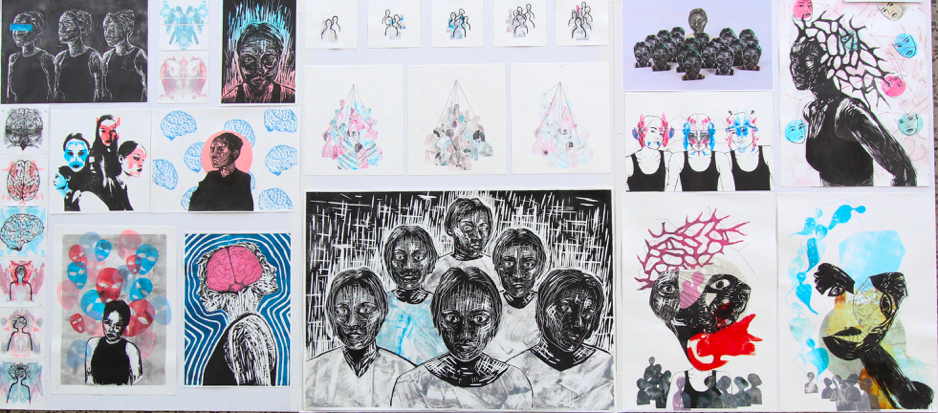

Level 3 Art Sculpture
13ASCLevel 3 Art Sculpture
. 

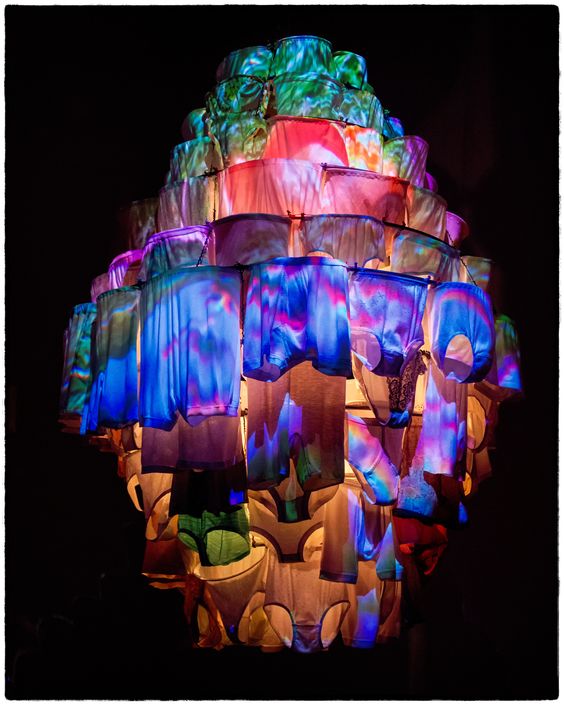

Sculpture is UE approved. Sculpture is an exciting and diverse Visual Arts course, highly reflective of current contemporary art practice. We place a high emphasis on contemporary and experimental modes of engaging with three-dimensional form and communicating ideas in a three-dimensional way.
Sculpture students will work with diverse and unique materials. Sculptural ideas can often be expressed through relevant sub-disciplines such as ceramic and clay art, performance art, sound art, social-practice art, and installation art. In using a visual diary and referring to an extensive and exciting range of contemporary sculptors, students will research, explore, generate and clarify their ideas. Students will learn how to select and use a wide range of sculpture materials in ways that best explore thematic questions and communicate ideas.
Adaptive, innovative and creative problem solving are key attributes that students who take this course tend to adopt quickly. These skills are highly relevant to a diverse range of tertiary and career pathways that are project and/or research based.


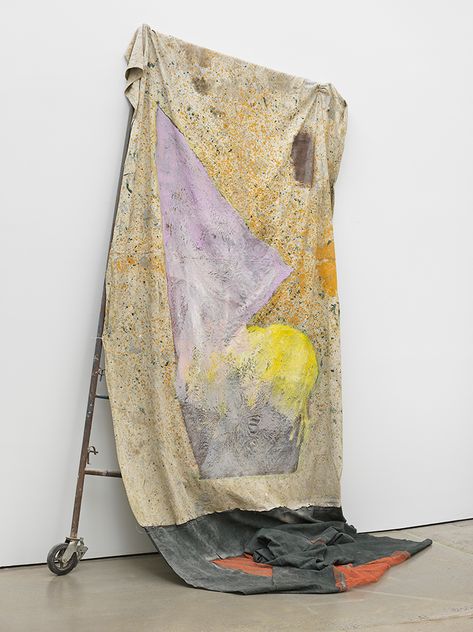


Level 3 Biology
13BIOLevel 3 Biology
Year 13 brings you a wealth of information on animal behaviour, plant responses, knowledge about contemporary issues such as new pandemics, gene editing, drugs and the teenage brain, vaccinations, climate change the use of ozempic or roaccatane and so much more. There is a unit on blood glucose control and diabetes in New Zealand and the Pacific. This topic everyone loves and learns a lot from. Evolution of NZ flora and fauna is also studied along with human evolution over the past 5 million years.
Students are also prepared for scholarship Biology should they wish to enter this exam.
Future Areas of interest and study:
Biology knowledge is rapidly expanding and is valuable to a wide array of occupations. We hope the students will take the experiences, knowledge and enthusiasm gained with them to any chosen career whether it be in biology or elsewhere. NZ is currently in need of biologists and there will always be demand for those with a science background.
Level 3 Business Studies
13BUSLevel 3 Business Studies
This course is designed to consider how businesses operate in a global environment. Students will develop their understanding of business theory and will apply that theory through investigations into human resource and marketing issues. Issues of sustainability, innovation, value-chain, enterprise, future-proofing and globalisation are important to businesses and are examined as part of the course along with a number of other internal and external factors relevant to business success and decision making.
This course relates business theory to real-world examples, which show how dynamic the world of business and commerce is and how successful many New Zealand businesses are in the global marketplace.
Content includes:
- Investigating how innovation is essential to the development and prosperity of New Zealand businesses.
- Developing a marketing plan involving SMART goals, SWOT analysis, and contingency plans
- Exploring the role of management and employees in businesses that operate in a global context
- Exploring how businesses respond to internal factors and factors outside of their control
- A look at the real business world through NZ business case studies
- Future-proofing strategies for a New Zealand business
- Value-chain and innovation case studies from primary sector businesses
Supports future study in the following areas:
Business, marketing, commerce and communication degrees, careers in business, marketing, and human relations, international business, and agribusiness.
Optional internal assessment:
The 3.5 Human Resource (3cr) internal is available as an optional extra internal to be completed by agreement.
Level 3 Calculus
13CALThis course builds on the algebra, differentiation, integration, and trigonometry studied in Level 2 Mathematics and is designed for students intending to continue their study of Mathematics beyond school. Calculus develops analytical thinking, problem-solving skills, and mathematical reasoning while providing powerful tools for modelling and solving real-world problems.
To ensure students are appropriately challenged and supported, those selecting Calculus will be placed in one of three courses: 13CAS (Mathematics with Calculus Scholarship), 13CAL (Mathematics with Calculus), or 13CAF (Calculus Fundamentals). Placement will be based on Level 2 assessment results, teacher recommendations, and each student's future pathway. This approach allows students to continue developing their mathematical potential while keeping a wide range of tertiary and career opportunities open.
Level 3 Chemistry
13CHELevel 3 Chemistry
This course builds on the content of the Level 2 chemistry course and includes all the chemistry concepts required for tertiary study.
Objectives:
- To investigate and consider chemical and physical properties of groups of substances.
- To relate properties of matter to structure and bonding.
- To understand and use fundamental concepts in chemistry.
- Apply knowledge of chemistry to explain aspects of the natural world and how chemistry is used in society
- To gain practical skills in handling substances and manipulating equipment safely.
Content:
Oxidation and Reduction Reactions, Organic Chemistry, Atomic structure, Bonding and Thermochemical Principles, Equilibrium in Aqueous Solutions.
Future Areas of interest and study:
Tertiary courses with study leading to a scientifically related field such as medical or health sciences, pharmacy, veterinary science, physiotherapy, food technology, etc.
Level 3 Chinese Heritage Language
13CHHLevel 3 Chinese Heritage Language
In Year 13 Chinese Heritage Language, you consolidate your abilities using practical, transactional language to communicate information and ideas and further develop your skills using more abstract language to express and justify your opinions and explore and challenge others’ perspectives. The main idea at this level is World Matters.
Topics include:
- Cultural awareness & integration
- Environment & eco-tourism
- Modern technology & cyber world
- Chinese traditional beliefs & living philosophies
We approach these topics through a blended text and some online learning tools. We will also look at Chinese history, myths, films, and other authentic resources.
You will have the opportunity to use your Chinese language while experiencing authentic Chinese cuisine where possible.
You will also have access to Education Perfect or Quizlet and other online Chinese resources to support your learning both inside and outside of our Chinese classroom.
Level 3 Chinese Second Language
13CHMLevel 3 Chinese Second Language
Note: This course does not suit fluent Chinese speakers.
In Year 13 Chinese you learn more abstract and complex language with stronger cultural awareness in order to communicate ideas, justify your opinions and challenge different perspectives. You are going to read some creative writing and a variety of authentic materials and write expressively for a range of purposes.
Topics include:
- Cultural awareness & integration
- Environment & eco-tourism
- Modern technology & cyber world
- Simple literary works
An example of our Year 13 students talking about their understanding of the lives in China and in NZ and the justifications for their preferences.
We approach these topics through a blended text and some online learning tools. We will also look at Chinese history, myths, films, and other authentic resources.
You will have the opportunity to use your Chinese language while experiencing authentic Chinese cuisine where possible.
You will also have access to Education Perfect or Quizlet and other online Chinese resources to support your learning both inside and outside of our Chinese classroom.
Level 3 Classical Studies
13CLSLevel 3 Classical Studies
How often do you think about the Roman Empire? Have you ever wondered who Julius Caesar actually was? Why Cleopatra, queen of Egypt, is so famous? Have you looked at pictures of buildings like the ones above and wanted to know more about them? If so, then Classical Studies is the subject for you!
Classical Studies is the study of the people, places and events of ancient Greece and Rome through their history, literature, art and mythology. It teaches you to make links between past and present civilizations in order to better appreciate the influence of the Classical world on your own society. Classics also encourages the skills of critical thinking, attention to detail and clear communication.
The Year 13 course introduces you to the world of ancient Rome.
In 2027 you will focus on the following topics:
The Age of Augustus: In this historical study you will learn about a fascinating period in ancient history. It sees the collapse of the Roman Republic and the rise of what is known today as the Empire. You will explore the social and political climate of the Late Republic and the rise to power of Octavian (Augustus) and the key figures around him: Julius Caesar, Mark Antony, and the Egyptian queen Cleopatra. You will then examine his administration of the Empire, his religious and moral reforms and his search for an heir to succeed him upon his death.
Roman Art and Architecture: This is an in-depth study of portrait sculpture, relief sculpture, public monuments and religious architecture which helps us gain an appreciation of the skill of the artists and architects who created the works we will study. Beginning with works commissioned during the period of Augustus we will survey the narrative, style and historical/artistic context of a range of works from the time of the Emperors.
The Aeneid by Virgil: When Augustus brought peace to Rome, Virgil was inspired to write an epic which glorified both Rome and the Emperor himself. The Aeneid traces the adventurous journey of the Trojan prince Aeneas after he escapes the city of Troy and fulfils his destiny to found a new people in Italy. We will explore the ideas and values of contemporary Rome using the text of the epic poem as our guide.

You will develop skills in:
Thinking critically about sources: Understand the complexity and diversity of social, political, artistic, and ideological aspects of the classical world and how these aspects influenced the lives of Greeks and Romans living in those times.
Examining values: Understand how and why ideas and values of the classical world have influenced other cultures, including New Zealand, over time.
Level 3 Dance
13DCELevel 3 Dance
Dance is a UE approved subject and helps students to acquire the skills and knowledge used in the field of dance, the arts, performance, performing arts.
The course has two main areas of learning:
CHOREOGRAPHY: Students learn a range of choreography techniques to communicate an intention and resolve ideas. These include groupings, locomotion, pathways, spatial relationships, shapes, movement, transitions, impact, flow and unity.
PERFORMANCE: Students learn a range of dance skills and knowledge to perform a dance. These include shapes, movement, postural alignment, timing, focus, expression and energy.
Course content: Students will complete 3-5 achievement standards made up of approx. 16-24 credits during the year including:
13DCE
- Produce a dance to realise a concept.
- Choreograph a dance to develop and resolve ideas.
- Perform a solo or duet.
- Perform a group dance.
- Analyse a dance performance.
Students with known injuries will need to discuss with the HOD an action plan for managing this in class before taking part in any practical lessons.
Level 3 Design & Visual Communication
13DVCLevel 3 Design & Visual Communication
Course Objectives:
Design & Visual Communication teaches students the drawing and design skills used in fields such as Architecture, Engineering and Industrial Design. The course includes learning to use 3D sketching techniques, instrumental drawing skills and computer graphics software to create and express ideas. Students are taught creative thinking and problem solving skills that enable them to generate and develop design ideas.


Course content: Students will complete design projects that require them to develop high quality solutions to real problems. Work from the projects completed during the year can be used in portfolios that are needed for entrance to tertiary courses such as Architecture and Design degrees.
Students will complete 3 projects during the year including:
- Product Design: Students will use inspiration from nature or a designer to explore and develop a lighting product.
- Architecture: Students will develop a design for accommodation to enhance the experience of visitors to the Wenderholm Regional Park.
- Exhibition: Students may prepare and exhibit one of their solutions from the two design projects.
Level 3 Design & Visual Communication for beginners
13DVALevel 3 Design & Visual Communication for beginners
This course is for students who have not completed either 11DVC or 12DVC. The course will begin with an accelerated skills development unit to prepare students for completing level 3 design projects. Students will complete 3 out of 4 the same Level 3 standards as 13DVC and the standards are University approved. The work produced will be useful for a portfolio for Architecture or Design degree applications.


Design and Visual Communication helps students to acquire the visual and design thinking skills used in fields of design such as Architecture, Engineering, Industrial Design and Spatial Design.
Students will complete design projects that require them to develop high quality solutions to real problems. Work from the projects completed during the year can be used in portfolios that are needed for entrance to tertiary courses such as Architecture and Design degrees.
Course content: Students will complete 3 projects during the year including:
- Product Design: Students will use inspiration from a designer to explore and develop a product for making coffee.
- Architecture: Students will develop a design for a cabin for Mangawhai Campground.
- Exhibition: Students will exhibit one of their final designs.
Level 3 Design Technology
13DETLevel 3 Design Technology

Design Technology aims to develop students' technological literacy and critical thinking skills, fostering innovation and problem-solving through design thinking.
In Design Technology, students develop skills by designing and making Products.
Students are expected to take their high-quality Prototype Products home with them on completion of their course.
Over the year, students will develop their skills in the Design Technology practical area, further developing their skills in how to research, analsye, design, and make products, using a range of tools and equipment including Computer Aided Design and Manufacture, laser cutting and 3D Printing.
Students will work on Design and Make projects within a Context / Theme.
Within the given Context / Theme students will research, design, develop, manufacture, and test their own Prototype Product for a specific purpose and Customer / Stakeholders of their choosing.
Throughout the course Students will complete a Design Portfolio using Google slides which will document their research, designing, making and testing.
This portfolio of work will be used to assess their project work against Technology Achievement Standards.
In Year 13, students should expect to learn, develop, and use advanced skills and techniques, demonstrating independence, creativity, efficiency, and optimization.
Complex procedures to integrate parts using resistant materials
- Integrating parts using resistant materials: Planning, preparing parts, and integrating them to create a product.
- Automated manufacturing: CNC designing and making, optimization, and efficiency
- Precision machining: CNC
- Reverse engineering: Analyzing existing products for improvement
- Advanced joinery: Mortise and tenon, loose tenons, and laminating
- Forming processes: Making own jigs and formers for bending, shaping, and forming
- Surface treatments: advanced finishing techniques
- Assembly techniques: Complex fastening systems
Workshop Safety:
- Machine Tools
- Power Tools (including Routers and biscuit jointers)
- Independent Laser cutter use
- CNC
Professional Practice
- Planning for quality assurance and efficiency
Level 3 Digital Technology
13DITLevel 3 Digital Technology
Digital Technologies helps students to develop the skills, project management and design thinking skills to a complex standard used in fields such as Software Engineering, Creative Technologies, Database Development and Computer Science. They will advance the skills learned in year 12 to learn to plan, design and create an authentic outcome using complex programming and/or web design techniques. They may have the opportunity to enter a Technology Scholarship.
WHY STUDY DIGITAL TECHNOLOGY?
- University Entrance: Year 13 Digital Technologies is on the list of 'Approved Subjects' that can be used to qualify for University Entrance.
- Learn to use image editing and multimedia tools: Develop an understanding of digital media and how to create a variety of media types. Learn to create websites and incorporate photos, animations, audio and video into digital media.
- Learn to create computer programs: Why just use computer programs that other people have written, when you can create your own? Learn fundamental programming and computer science skills, enabling you to use simple scripts to create computer games and create web pages.
- Manage your computer: Gain a basic understanding of what goes on ‘under the bonnet’ of a computer, allowing you to maintain your own PC and perform simple troubleshooting tasks on school computers.
- Be an ethical and responsible citizen of cyberspace: It is important that you develop an understanding of safety issues, privacy issues and other digital citizenship concepts so that you can be a safe user of current and emerging technologies.
- Learn about an area of computer science, this could include artificial intelligence, computer vision or video graphics.
- Sharpen up your design skills: Develop your design skills by learning what ‘works’ and how to justify your design decisions while creating a digital product aimed at a particular target audience
There are two main areas of learning:- PROJECT MANAGEMENT: we aim to help students be iterative in their planning and development of their outcomes, using modified Agile methodology and digital tools. Students will be encouraged to team up to develop their outcomes collaboratively.
- SKILL DEVELOPMENT: tying these all together is the chosen skill or skills that the student will develop, using python programming and learning about a chosen area of computer science.
Student Work: GODOT - Recycling Game Aimed at Teaching Children How to Care for their Environment
Eunomia Euphoria : Kiwi team makes Technovation final
Level 3 Drama
13DRALevel 3 Drama
This course prepares students for NCEA Level 3. Students will:
- Develop knowledge of acting technique by selecting and preparing a performance from one of two critically acclaimed NZ or international plays
- Take on a role in a major production to a public audience
- Research and analyse the social, historical and political world of several playwrights
- Compare the works of different playwrights and theorists
- Research, write and devise their own piece of drama in response to a person, event or topic
- Sit a written external examination in which students demonstrate their understanding of drama within live performances they have seen
The Year 13 production requires considerable work outside of class time from students. They should be prepared to commit to a weekend for a rehearsal and 3 evenings for performance. The dates of these out-of-class rehearsals will be provided at the start of the year.
Students will be offered the opportunity to attend a range of performances in preparation for writing critical responses required in their external examination. Students maintain an ongoing digital folder of written work in order to prepare for this examination and keep reflective records of their work.

Level 3 Early Childhood Education
13ECELevel 3 Early Childhood Education

This course continues from childcare studies at Year 12. It is a self-paced course using Vision College Academy unit standard tasks. It aims at giving students the basic skills and knowledge required for provision of Early Childhood Education in care settings.
Some Unit Standards will require a work placement in an Early Childhood Education in managed care settings. Placements will be organised by the subject teacher at a local Early Childhood Education facility during Terms 2 and / or 3.
This course includes a range of topics focused on supporting the growth, learning, and wellbeing of young children in early childhood education (ECE) settings. It begins with a focus on promoting health and wellbeing among children, exploring ways to support physical, emotional, and mental health through daily routines and responsive care. Learners will also examine different family structures and the importance of appropriate communication, gaining an understanding of how to work respectfully and effectively with diverse families and whānau.
Building positive relationships with children in an ECE setting is another key area of the course, with a focus on creating safe, nurturing, and respectful environments where children feel valued and secure. The course also covers safe practices in an ECE setting, including supervision, hygiene, and emergency procedures to protect children and support their development.
Students will explore the significance of play in child development, learning how play supports learning, creativity, problem-solving, and social skills. Finally, learners will gain practical experience in a day care setting, applying their knowledge in a real-world environment and developing the confidence and skills needed to work effectively with young children.
Level 3 Earth & Space Science
13ESSLevel 3 Earth and Space Science
This course covers a wide range of topics including:
- Exploring recent astronomical events and discoveries including the search for exoplanets - especially those most like Earth. There may be an opportunity to visit the Stardome.
- The interactions between Earth’s four spheres - geosphere, hydrosphere, biosphere and atmosphere with a focus on human impacts
- An investigation into geological dating and how this relates to the ages of Auckland Volcanoes with a field trip to volcanic sites around Auckland.
- The importance of our oceans to life and the cycling of heat around the planet. How oceans affect weather patterns and food supplies.
- Exploring contemporary Earth and Space Science issues and how they affect environments and peoples and are portrayed by the media.
- Investigating ocean acidification and its effect on marine life.
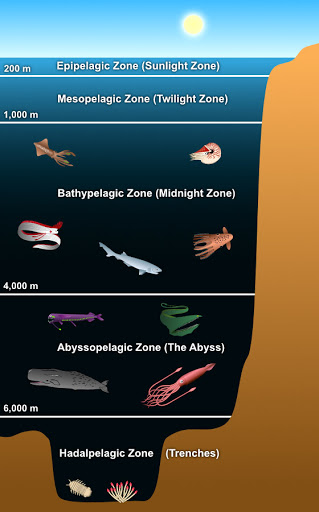

Level 3 Economics
13ECO Level 3 Economics
This course is to enable students to gain a level of economic literacy which will enable them to develop a continuing interest in current economic issues in New Zealand and the world. The many and varied influences on the New Zealand economy, their outcomes and successes are discussed as New Zealand competes to establish its place in the global economy.
Content involves:
- The allocation of resources within the market system through pricing and profit strategies that firms use, how supply and demand curves are derived, elasticities derived from supply and demand schedules
- How markets in New Zealand respond to change. The effects of the government on markets and how they try to achieve economic efficiency
- How markets fail: strategies that the government puts into place to compensate for market failure, subsidies, taxes, public goods, inequity of income distribution
- Aggregate economic activity and policy: how the economy works as a whole and what the major influences on it are, the effects of government policies on issues like unemployment, inflation and trade. Concepts covered include: monetary and fiscal policies, balance of payments, business cycle. The macro concepts greatly assist scholarship students.
- Discussion on a wide range of issues that are affecting the New Zealand economy at present, the effects on society, how society deals with the issues and the major influences of government on the economy
Future Areas of interest and study: BCom, BA University degrees. Careers in commerce, marketing, business administration, banking, research, town planning, policy making, teaching, financial services.
Level 3 Education for Sustainability
13EFSLevel 3 Education for Sustainability at Epsom Girls Grammar builds on knowledge of how human behaviours are negatively impacting the Earth's sustainability. Students will learn about biophysical environments and examine ways that people both threaten and enhance them. Students will evaluate sustainable strategies to help prevent environmental issues. and decide which ones to implement in their own lives, and within an organisation. They will gain an understanding of how to practice Kaitiakitanga and Manaakitanga, while growing a deeper appreciation for our local Whenua. The course prepares students for a future in which environmental, social, economic and cultural sustainability are vital in their daily lives and careers. These aspects of sustainability are increasingly integrated into tertiary education courses and jobs within the economic, social and political institutions of society. EFS is an enhancing subject to take alongside many other courses such as Biology, Geography, Technical courses, Visual Arts, Business, Economics, Drama, Design (to name a few), because the core concepts are highly applicable in them as well.


Level 3 English
13ENGLevel 3 English


This is one of two mainstream Level 3 English courses offered. The distinction is intended to give students choice and to reflect their strengths and interests. Both courses are equal in status and difficulty and are approved for the same pathways
In this course, students will read, view and critically respond to film, poetry, short stories, and a novel. Assessment will include a seminar and a written response to scenes from a self selected film, and an essay focused on connections between a selection of texts. Students have rich opportunities to work with complex, interesting stories. The course aims to help students become articulate, confident communicators and thinkers.
Level 3 English (Foundation)
13ENFLevel 3 English (Foundation)
This course is designed to support students who have participated in a Level 2 English or ESOL course but do not meet the prerequisites for 13 English or English with Shakespeare. The primary focus is that students gain University Entrance literacy (or Level 1 literacy if still required).
Level 3 English Foundation is designed to foster students' critical and creative thinking about language and literature. This course follows the new NZ curriculum and is literature-rich, but text choices will be made as accessible in content and length as possible. Students will study film, poetry, short stories and/or a novel, complete an oral presentation, and have the opportunity to complete the Level 2 Writing Portfolio.
While a variety of different standards are available, learning and assessment is tailored to students' needs and abilities. Most students will not gain enough Level 3 credits in this course to meet the requirements for it to be a University Entrance approved subject.
Level 3 English for Speakers of Other Languages
13ESLLevel 3 English for Speakers of Other Languages
This course forms the second part of a two year programme for those students who were in 12ESL in the previous year.
The course offers the opportunity for students to progress their skills in academic reading, writing, speaking and listening as well as study skills in the New Zealand school context. Students are given the opportunity to achieve Level 2 (University Entrance) literacy credits, and the standards in this course also contribute towards the University of Auckland English requirement. Students will sit both internal and external assessments.
Level 3 English with Shakespeare
13ENSLevel 3 English with Shakespeare


This is one of two mainstream Level 3 English courses offered. The distinction is intended to give students choice and to reflect their strengths and interests. Both courses are equal in status and difficulty and are approved for the same pathways.
In this course, students will read, view and critically respond to a wide range of literature, including Shakespeare, a film and a novel. Short and unfamiliar texts will also be woven throughout the year and used to help students refine their inference and close reading skills. The course will also include a writing portfolio and a literature research assessment where students access critical readings. They will progress further in their journey to becoming discerning readers and competent, confident users of language.
Please note: only one term is centred around the study of Shakespeare, and students can use either Shakespeare or their other written texts for their internal and external assessments.
Level 3 Food Technology
13FTEFood Technology is a UE approved subject and helps students to acquire the skills and knowledge used in the field of Nutrition, Dietetics, Food Technology, Food Science, Product Design and Hospitality.
The course has two main areas of learning:
PROCESSING and PROTOTYPE: Students learn a range of processing techniques to process a complex food product and experiment with a range of ingredients, equipment and techniques.These include testing, trialling, skill development, ingredient manipulation, yield and health and safety.
BRIEF and CONCEPTUAL: Students explore contexts to determine an issue, need or opportunity. Research, idea generation and development is carried out to decide an innovative solution to the issue. Students will work side by side with a range of stakeholders as well as consulting with a technology specialist.
Course content: Students will complete 2 projects during the year including:
- Street Food - Students will process and prototype a complex food product for Fia Fia night.
- NZ Food Problems - Students will research, design, develop and produce a food product to solve an issue ranging from food poverty to dietary requirement. *This project can be submitted for scholarship if it meets the standard
Note: AS 91610 and AS 91611 are also used in 13DET therefore it is advisable not to take 13FTE AND 13DET.
Students with known food allergies will need to discuss with the HOD an action plan for managing this in class before taking part in any practical lessons.


Level 3 French
13FRELevel 3 French

Year 13 is all about justifying and challenging ideas and opinions, and looking at world issues. You learn to discuss concepts that you haven't necessarily thought about in your mother tongue.
In Year 13, we…
- regularly learn common French expressions. e.g. « Se noyer dans un verre d'eau. »
- regularly read the news in French.
- continue with French Fridays.
- produce marketing videos about helping the environment.
- have a debate around the best form of renewable energy.
- read a famous French book.
- have a high enough level of French to write essays and formal letters in French.
- increase our knowledge of tenses from 10 to 26! (Don't worry, it's much easier than it sounds.)
- have the opportunity to either take B1 DELF or B2 DELF. B2 is the level required to gain French citizenship and to attend university in France.
- become more knowledgeable about the world.
- have 10 fortnightly vocabulary lists. By the end of the year, we will know over 1400 words.
- learn about issues in the French-speaking world and consider how we can help improve the world.
- have the opportunity to sit Scholarship French.
- read French poems and fables.
- research topics that may or may not challenge our opinions.
- take a trip to a French café in Newmarket.
- and tearfully say goodbye to each other in November after 5 years journeying together.
Se noyer dans un verre d'eau
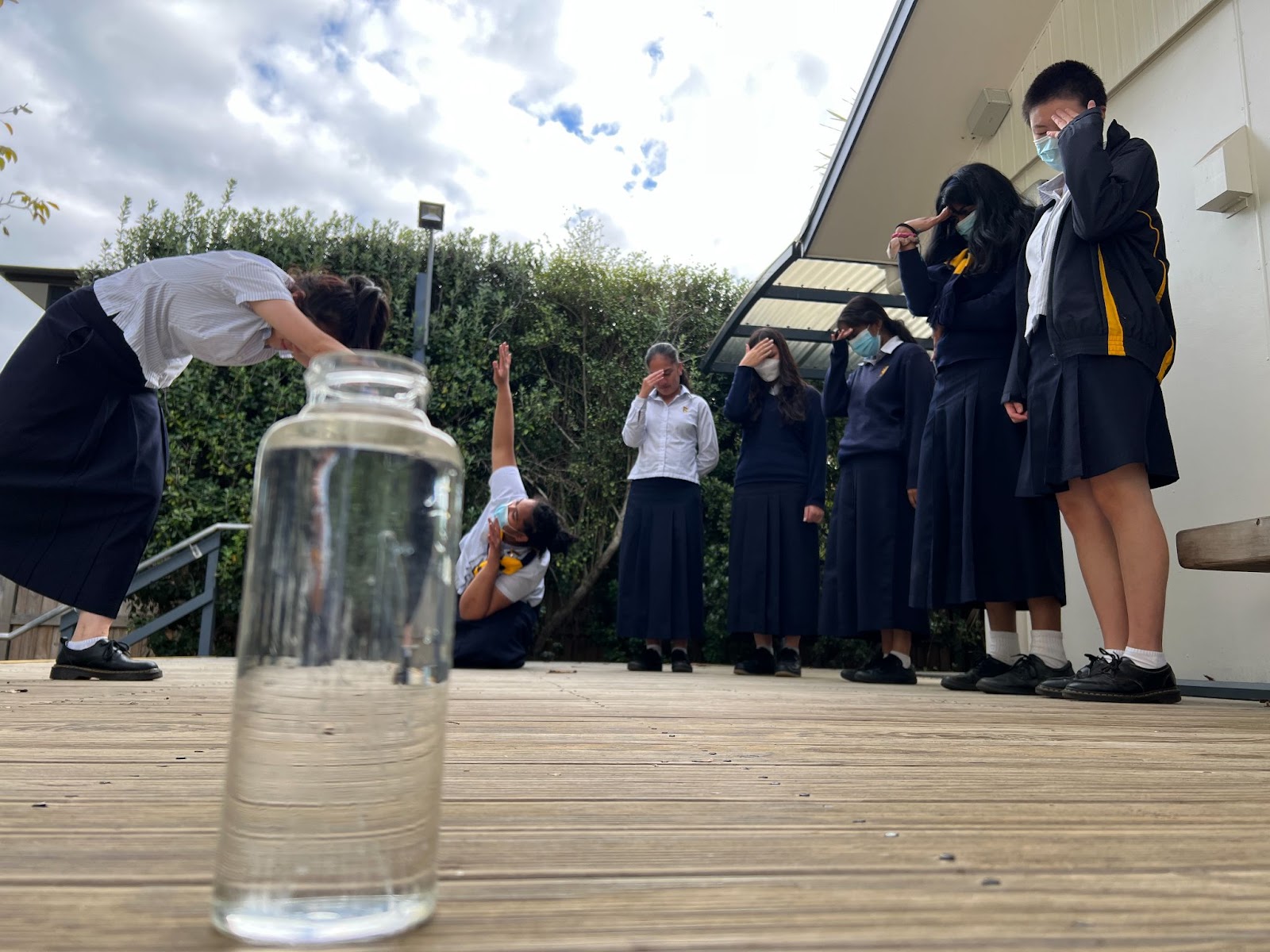
Our topics in Year 13 are:
- La Bretagne - learning about the region in France and finding similarities between Breton culture and Māori culture.
- Poems and Fables by Jacques Prévert and Jean de La Fontaine.
- The Environment - different types of pollution, small actions to improve it, renewable energy.
- Le Petit Prince by de Saint-Exupéry.
Why should I study French in Year 13?
Year 13 is the year when you really start to become fluent in French.
It's enriching and fun.
It's your second tutor group.
It brings you new experiences.
You can stretch your brain in new ways.
You grow even closer to your classmates.
You have made it this far, it would be a shame to stop.
You learn more about yourself and your own culture(s).
French is an official language in many international organisations.
It's the last step in being able to say everything you want to say in French.
Learning a language helps you to understand English/your other language(s) better.
You broaden your perceptions and challenge your preconceived ideas and become a more informed person.
Not many people who grow up in New Zealand speak French, so it will mean you stand out. This is particularly important if you are entering competitive industries. You need to be different to your peers so that they know why to choose you rather than someone else.
Having Year 13 French will make university a lot easier if you study French at university too (even if it's just a couple of courses).
You will be able to keep French on your CV for a long time by studying it at Year 13, whereas it will drop off your CV quite quickly if you only study it to Year 12.
Emotional and Cultural Intelligence/Quotient: In an ever-increasingly multicultural world, it is important to be able to bridge across different cultures and communicate well with a wide range of people. Learning another language is the best way to grow your cultural quotient. Skills learnt can be applied to any aspect of your life. With languages, you learn about other people's perspectives and ways of thinking. A new language opens up new ways of seeing the world and of expressing oneself. This develops essential skills, such as empathy, open-mindedness, thinking skills, courage, conversation skills, argument development, stronger general knowledge, confidence and adaptivity.

Languages are extremely relevant if you are thinking of entering politics, doing law, business, medicine or sport or any field even!
Who knows where life will take you! You may end up in a job working with French clients or moving to a French-speaking country.
Politics: you are likely to need to talk to people from other countries to achieve what you want to achieve or to learn about what other countries do.
Business: Our closest neighbour is New Caledonia, which is French-speaking. French Polynesia is also close by. Many NZ businesses wanting to expand look at these places as we are their closest big neighbour, which means they want our products and businesses. It's much easier to expand to those countries if you speak their language.
Medicine: People from New Caledonia and French Polynesia are regularly transported to NZ for medical care. Refugees also need medical care. Can you imagine how scary it would be if you don't understand the doctor or the nurse? Having a French-speaking doctor or nurse will make their experience better, but it can also save lives so that there can be accurate communication between them and the hospital staff.
Law: French-speaking refugees come to NZ. They may need your help.
Sport: Many training camps, clubs or competitions run out of Europe and in particular around France, Switzerland, Andorra and Belgium, where French is spoken. It makes it a lot easier to contracts and to work with teammates if you speak French.
An example of a Year 13 interaction:
Level 3 Geography
13GEO


Geography is about people and their environment.
This course aims to:
- Develop a knowledge and understanding of geographic environments. Enable students to analyse what happens in both natural and cultural environments.
- Allow students to develop their geographical skills, to carry out research and to analyse contemporary geographic issues facing us globally and within New Zealand.
- Encourage spatial thinking and an understanding of the significance of place and reasoning about our world.
This course will cover:
- Natural processes within a coastal environment
- Cultural process of tourism development in Hawaii
- Developing skills such as topographic mapping, statistical techniques, graphing and resource interpretation in a practical context within a research topic
- Current Global Geographic Issues such as HIV/AIDS pandemic
- Analysing the contemporary geographic issue of the deterioration of the Hauraki Gulf environment
- Completing a geographic research process within a coastal environment
Future Areas of interest and study:
Geography can be studied at university level as part of a science or arts degree and as a first year subject for law. It is considered a language rich subject for The University of Auckland, and is a popular choice of 'arts' subjects for gaining access to the Bachelor of Health Sciences pathway to medicine. Geography is very useful alongside a number of other subjects to build understanding of the world necessary in all disciplines. Geography offers skills and content useful in many disciplines of study and career pathways.
Level 3 Health
13HEAYear 13 Health

The Year 13 Health course involves 3 internal assessments and 1 external assessment.
- Ethical Issue: Students will investigate abortion as a contemporary dilemma or ethical issue. They will explore the implications ( consequences ) of abortion being legal in New Zealand. These could be positive or negative. Students will investigate four NZ based groups / organisations and explain their values, attitudes and beliefs that are behind their opposition or support of abortion.
- Health Practices: We will learn about the health condition of stress, including causes and responses to stress. Students will investigate health practices currently used in NZ that help treat stress. These could be Western Scientific Medicine ( eg Cognitive Behavioural Therapy ), Complimentary and Alternative Medicine ( eg Reiki ) and Traditional Medicine ( eg Acupuncture ). The assessment for this topic asks for students to weigh up the advantages and disadvantages of the health practices they have investigated.
- NZ Health Issue: Students will explore the health issue of vaping use by 15-24 years olds in NZ. They will learn about the factors that cause people to vape, the implications ( consequences ) of vaping use and suggest strategies that could reduce the amount of young people vaping in NZ.
- International Health Issue: Students will learn about a variety of international issues based around gender, culture and sexual reproductive health. The external exam will see students using some provided resources and their own knowledge to explain the factors that are causing the issue, the implications ( consequences ) of the issue and suggest strategies that could improve the health of people in relation to the issue.
Level 3 History
13HISLevel 3 History


This course offers students an opportunity to study the untold stories of history. Examples include the changing roles and rights of women in different times and places in History, such as the Tudor/Stuart period, witchcraft, and women in the USA. We will also focus on the untold stories of 19th century NZ history. This final year of History is a chance to hone vital skills in preparation for further study at tertiary level, including:
- An emphasis on developing clear, logical and structured essay writing
- The interpretation and critical analysis of a wide range of historical sources
- The appreciation of differing historical perspectives and the contestability of history
- The ability to present a substantiated argument
- The skills of historical research – asking perceptive questions, planning, selecting and evaluating the quality of evidence and the inquiry process as a whole.
Future Areas of interest and study: Law, journalism, business, media or any other job requiring skills such as critical thinking, problem solving, communication and effective presentation.
Level 3 Hospitality
13HOSLevel 3 Hospitality
Year 13 Hospitality is a course focussing on techniques and skills of food preparation, cooking, barista and presentation within a commercial context. The course offers range of credit options based on practical and theory units.
The course is made up of 4 main parts:
Health and Safety - A compulsory requirement of the course and essential for the industry
Barista - Coffee Origin and Espresso Beverage making
Culinary Arts - New Zealand Secondary Schools Culinary Challenge and Waikato Culinary Fare - Entrees and Patisserie
Culinary Terms and Skills - Complex Sandwiches, Baking, Pasta, Preserves, Desserts and Culinary terms
Year 12 Hospitality students will have already completed US 167. If you have not completed the Year 12 course you will be required to complete the health and safety standard at the start of the course. Hospitality is not a University approved subject.
Students with known food allergies will need to discuss with the HOD an action plan for managing this in class before taking part in any practical lessons.


Level 3 Japanese
13JPNLevel 3 Japanese
Year 13 Japanese

Welcome to Year 13 Japanese at EGGS!
Japan is known for its cultural influence on the world. From food, to anime and manga, to traditional clothing and decoration, Japan’s culture is unique and beautiful. Speaking Japanese opens the door to experiencing this new world of culture, history and tradition.
As NZ’s 4th largest trading partner, there are many opportunities for Kiwis to use Japanese both in Japan and at home.
In this course, you will study towards 21 credits at NCEA L3. The course will have a ‘world matters’ focus, where we further develop our ability to communicate clearly and in depth. You will learn to express and react to the ideas and opinions of others.
We will cover topics such as:
- Japanese history
- The environment
- Life after school and careers
You will be entered into 4 standards:
3.1 Listening (external)
3.3 Interaction (internal)
3.4 Reading (external)
3.5 Writing (internal)
Here is an example of language we study at Year 13:


Level 3 Learning Skills Programme
13LSP
Level 3 Learning Skills Programme
This course is designed to support students to develop the skills and habits needed to reach success—both in school and beyond. If you feel this class would be helpful for you, please talk with the Special Education Needs Coordinator (SENCO) or your dean.
Students will be directed to this class if they need targeted support to achieve the Literacy and Numeracy CAA corequisites and/or Level 2 or 3 NCEA.
This class also provides support for students who need additional opportunities to consolidate their learning across other subjects due to their individual learning or health needs.
Topics of Inquiry
These are created and adjusted to meet the needs of the individual students and may be linked to the student’s IEPs. They may include:
- Managing Self—Identifying and managing stress
- Taking Risks and Trying New Things - Leadership and resilience
- Thinking - Time management techniques and goal setting
- Relating to Others - Communication and teamwork skills
- Use Symbols and Texts—Numeracy and literacy support, including targeted support for those who are yet to achieve the CAA exams
The course includes L3 unit standards, which do not count to University Entrance (UE) but do contribute to a NZQA L3 Certificate.
Level 3 Mathematics
13MTHLevel 3 Mathematics Combined
Choosing the Right Mathematics Course for You
At Level 2 and 3, Mathematics splits into more specialised courses. Your choice should reflect your learning strengths and future plans. Below is a guide to help you decide which pathway is best for you.
Statistics is the study of data, how it is collected, analysed, and interpreted to support decision-making. It enables us to identify patterns, assess reliability, and make informed predictions based on evidence. Students develop skills in evaluating real-world information and drawing conclusions using statistical techniques.
Statistics is widely applied in fields such as health sciences, psychology, law, business, education, and environmental studies.
Calculus is the branch of mathematics concerned with change and motion. It focuses on rates of change and the accumulation of quantities, using algebraic and graphical methods to model real-world situations. Students learn to solve complex problems involving speed, growth, area under curves, and optimisation.
Calculus is essential for careers in engineering, physics, architecture, computer science, and any discipline requiring advanced mathematical modelling.
LEVEL 3 MATHEMATICS [ Combined Statistics and Calculus]
This course is a combination of Level 3 Calculus and Statistics. It cannot be taken in conjunction with any other Level 3 Mathematics or Statistics course. The course is for people who require a background in both Calculus and Statistics, but who wish to take only one Mathematics subject.
If you are unsure which course of Mathematics to study, speak to your current Maths teacher. They know your strengths and can help you decide which course best suits your goals.
Level 3 Media Studies
13MEDLevel 3 Media Studies

The course involves the study of a variety of film genres and a close investigation of the television and streaming industry. Students will view films independently and in class, and will research and investigate relevant issues and sources that inform their understanding of these topics. This aspect of the course is assessed by essays in the external examination.
In addition, there is a large practical component to the course. Students will plan a documentary film in response to a brief then, working in small groups, will use digital technologies to produce a short documentary.
Level 3 Modern Music
13MMULevel 3 Modern Music
This course is practical and industry-focused, aimed at students with a passion for modern / contemporary music. It builds on the foundations of Years 11 and 12 Music and prepares students for further study at tertiary level, as well as careers in music and the performing arts.
The course reflects current industry demands and equips students with tools to navigate both the creative and commercial aspects of modern music.
You will experience:
- Performances (solo and group settings)
- Songwriting and composition (creating original music)
- Music production (using industry-standard software and equipment)
- Music technology (sound-system setup and operation)
- Music business (developing industry knowledge and communication skills)


Level 3 Music
13MUSLevel 3 Music
This Music course is underpinned by the four arts strands:
- Understanding the arts in context
- Developing practical knowledge in the arts
- Developing ideas in the arts
- Communicating and interpreting in the arts
These strands are intertwined and identify the skills, knowledge, and understanding that students develop through learning in the arts.
13 Music gives students an opportunity to build on the knowledge and skills gained in the Year 12 Music course. Students will work individually and collaboratively to create, interpret and represent music ideas. They will continue to develop literacies in music and communicate musically with increasing sophistication.
The objectives of the course are that students will:
- be empowered to develop theoretical and practical skills and knowledge and actively make connections between them.
- plan and perform their own music and the music of others, in an individual capacity or in groups
- compose music
- show understanding of music by identifying, describing, analysing and classifying music in different contexts


Level 3 Philosophy
13PHLLevel 3 Philosophy

The psychology and philosophy content taught in this subject prepare students for university study in areas such as Medicine, Law, Psychology and Education. This academic course also develops highly transferable skills such as collaboration, problem-solving, decision-making, and ethical reasoning. These skills will empower Year 13 students to become confident contributors in today's challenging world.
Class content includes studying a range of famous psychology experiments and the different approaches branches of psychology use to understand behaviours and cognitive biases. In addition, students design and carry out their own psychology experiment.
This is an engaging course for anyone who is interested in understanding why people behave in the way they do and the implications of psychological approaches on individuals and society.
This subject counts towards university entrance (UE), and students can gain a subject endorsement.
Level 3 Physics
13PHYLevel 3 Physics
This course builds on the knowledge and concepts learnt in Year 12 Physics.
- To develop an understanding of concepts, principles and models in Physics.
- To develop an ability to use concepts, principles and models to explain physical phenomena
- To develop practical and investigative skills and attitudes to determine relationships, patterns and trends.
Content:
- Practical Physics – Investigation leading to a non-linear mathematical relationship that includes consideration of uncertainties.
- Modern Physics – Atomic and Nuclear Physics
- Waves – Interference, Standing Waves and Doppler Effect.
- Mechanics – Linear Motion, Rotational Motion and Simple Harmonic Motion.
- Electricity – Capacitors and DC Electricity, Electromagnetism, AC.
Future Areas of interest and study:
Tertiary study in physics, medicine, radiography, veterinary science, sports science, engineering, architecture, electronics and other technological subjects.
Physics also includes problem solving, so taking Mathematics especially Calculus will be most helpful.
Level 3 Spanish
13SPALevel 3 Spanish
Well done on your language learning journey. I am sharing this motivational video about why these people are learning Spanish.
Dale, ¡continuemos aprendiendo español en el año 13!
This course aims to extend students' knowledge and command in the skills of reading, listening, speaking and writing and to prepare students for NCEA Level 3. The overall theme of the course is “Global contexts” and will include coverage of relevant global topics e.g., immigration. The study of grammar will be an integral part of the programme and the study of cultural aspects will not be a separate section in the course.
By the end of the year, students will be able to express and justify their opinions on a number of topics such as global matters, current events, arts and culture in Spanish-speaking countries, history of Spain and Latin American countries. They will also be able to evaluate and challenge viewpoints and perspectives.
There will be opportunities to participate in a range of activities such as the Spanish Immersion Day and take part in exciting competitions such as the Stanza Debate and the Speech and Quiz evening.

Level 3 Sports Science
13PSSLevel 3 Sports Science

In this course, we will cover a range of topics:
Biomechanics: Students will appraise and analyse their performance in swimming, with a specific focus on the application of biomechanical principles through Breaststroke. This involves evaluating stroke efficiency, body position and timing, using video analysis and feedback tools. By integrating biomechanical knowledge such as Newton's Laws, types of drag and streamlining, students will gain a deeper understanding of how technique affects performance. This analysis helps identify strengths and areas for improvement, encouraging students to take a more scientific and reflective approach to their own development in the pool.
Training Programme: In this unit students will apply their knowledge of anatomy, physiology, exercise psychology, and motor learning to create a personalised training programme designed to improve their fitness and performance in a four Kilometre run. They will consider how the body responds and adapts to different types of training, how mental strategies can influence performance, and how movement patterns are developed and refined. The programme will reflect their individual goals and include principles such as overload, progression, and recovery, showing their ability to link theoretical knowledge with practical application.
Physical Performance: As part of the curriculum, students will also perform a physical activity in relation to national performance standards, with running being the primary context. Students get another opportunity to gain higher achievement in the Tough Girl Challenge.
Risk Management: In this unit, students will analyse the safety management systems involved in planning and participating in an overnight outdoor experience. This includes identifying and evaluating potential risks, understanding the policies and procedures in place to manage those risks, and reflecting on how effective safety planning contributes to a positive outdoor learning environment. Students may look at factors such as gear preparation, weather forecasting, group management, and emergency response planning. This analysis develops their awareness of personal responsibility and the importance of safe practices in outdoor settings.
Fitness Trends: During this unit, students will investigate a current physical activity event, trend, or issue and evaluate its impact on New Zealand society. This inquiry-based task encourages critical thinking and research skills as students explore topics such as the rise of fitness technology, participation trends in youth sport, professional sport controversies, or the social impact of major sporting events. They will consider how these issues influence health, identity, economy, and community across different groups within Aotearoa. Assessment focuses on their ability to form conclusions based on evidence and communicate the wider significance of the issue.
Additionally, an optional camp may be offered to provide a rich, practical extension of classroom learning. This experience allows students to engage in physical and social challenges in an outdoor environment, developing key competencies such as resilience, teamwork, leadership, and environmental awareness. While not compulsory, the camp offers valuable learning opportunities that reinforce many of the concepts covered throughout the year. This camp takes place in the first week of term 4.
Level 3 Sports Studies
13SSTLevel 3 Sports Studies

This is a highly practical course, focusing on enabling physical activity and developing student’s leadership skills. In this course you will cover:
Physical Performance: In this unit, students will perform a physical activity in relation to national standards. Students are given a range of activities to achieve this assessment, such as Lawn Bowls, Badminton and the Tough Gal Challenge. This performance task provides an opportunity for students to demonstrate their skill level, fitness, and understanding of game play or technique. They will be assessed against criteria aligned with national performance benchmarks, encouraging them to strive for personal excellence.
Coaching: This unit introduces students to the foundations of planning and delivering coaching sessions for beginner-level participants. Students will develop key coaching skills such as communication, giving feedback, safety awareness, and session structure. They will apply this learning in a practical context by planning and leading a physical education session for junior students (Years 9 & 10). This experience not only builds confidence and leadership but also provides an authentic opportunity for students to guide, instruct, and support the development of others while receiving real-time feedback on their own coaching style and effectiveness
Personal Exercise Plan: In this unit, students will develop and implement a personalised exercise plan aimed at improving their physical fitness. The programme is built around the New Zealand Police Physical Competency Test (PCT) as a context, giving students a clear and measurable training goal. Over six weeks, students will complete a structured gym-based training programme, track their progress, and reflect on the effectiveness of their plan. This unit promotes personal accountability and provides valuable life skills in fitness planning, goal setting, and self-assessment.
Managing Health and Wellbeing: This unit focuses on helping students describe, manage, and evaluate their personal health and wellbeing in relation to participating in a recreational activity. This unit combines physical activity with self-reflection and wellbeing education, encouraging students to explore the physical, mental, and emotional aspects of health. The learning culminates in an outdoor experience, such as a class hike, where students are required to apply their planning, preparation, and self-management skills. Students reflect on how this experience impacts their overall wellbeing and evaluate strategies for maintaining a healthy, active lifestyle.
Additionally, an optional camp may be offered to provide a rich, practical extension of classroom learning. While not compulsory, the camp offers valuable learning opportunities that reinforce many of the concepts covered throughout the year. This camp takes place in the first week of term 4.
Level 3 Statistics
13STALevel 3 Statistics
Choosing the Right Mathematics Course for You
At Level 2 and 3, Mathematics splits into more specialised courses. Your choice should reflect your learning strengths and future plans. Below is a guide to help you decide which pathway is best for you.
Statistics is the study of data, how it is collected, analysed, and interpreted to support decision-making. It enables us to identify patterns, assess reliability, and make informed predictions based on evidence. Students develop skills in evaluating real-world information and drawing conclusions using statistical techniques.
Statistics is widely applied in fields such as health sciences, psychology, law, business, education, and environmental studies.
Calculus is the branch of mathematics concerned with change and motion. It focuses on rates of change and the accumulation of quantities, using algebraic and graphical methods to model real-world situations. Students learn to solve complex problems involving speed, growth, area under curves, and optimisation.
Calculus is essential for careers in engineering, physics, architecture, computer science, and any discipline requiring advanced mathematical modelling.
LEVEL 3 STATISTICS
Statistics is the study of data and how it can be used to solve problems, model situations, make predictions, and support decision-making. Students develop critical thinking skills through the collection, analysis, interpretation, and communication of statistical information. There is a strong emphasis on the use of technology and the application of statistics to real-world contexts. Statistics provides an excellent foundation for further study in areas such as health sciences, business, psychology, education, social sciences, and data analytics.
To ensure students are appropriately challenged and supported, those selecting Statistics will be placed in one of three courses: 13STS (Statistics Scholarship), 13STA (Mathematics with Statistics A), or 13STB (Mathematics with Statistics B). Placement will be based on Level 2 assessment results, teacher recommendations, and each student's future pathway. 13STS is designed for students seeking additional challenge and Scholarship preparation, while 13STA and 13STB offer pathways with differing balances of external and internal assessment. This approach allows students to continue developing their statistical understanding while keeping a wide range of tertiary and career opportunities open.
If you are unsure which course of Mathematics to study, speak to your current Maths teacher. They know your strengths and can help you decide which course best suits your goals.
Level 3 Te Reo Māori
13TRMLevel 3 Te Reo Māori

This course will further develop students’ competence in:
- listening, speaking, reading, and writing Te Reo Māori
- understanding important and relevant issues in Aotearoa and abroad
- utilising everyday phrases and idioms
- researching and presenting information gathered on Te Ao Māori
- expressing personal opinions and thoughts on a given topic
The topics covered may include Te Ōrokohangatanga Rā Anō o Te Ao (creation stories), Ngā Atua Māori (the Māori Gods), Kōrero Tuku Iho mō Tāmaki Makaurau me Ngāti Whātua o Ōrākei, tae noa mai ki ētahi atu iwi (Histories about Auckland and Ngāti Whātua o Ōrākei, as well as other iwi), Māori prophets, news and current events, and language revitalisation.
- Noho Marae - There may also be an overnight trip to a Marae in New Zealand.
To support your learning, you may want to attend iwi and hapū wānanga reo or noho marae, and/or night classes or online Te Reo Māori classes, as well as access Education Perfect and various Te Reo Māori apps etc.
Level 3 Textiles & Design
13TEXLevel 3 Textiles & Design
Year 13 Textiles and design is a practical and creative course relating to many aspects of the fashion and textiles industry. Students will develop advanced textiles design, pattern making and construction skills through designing and constructing prototypes of garments and textiles products. Students will enhance design thinking through real life projects.
Level 3 Travel & Tourism
13TRTLevel 3 Travel & Tourism
Tourism is once again a booming industry in New Zealand. The Travel and Tourism industry needs numerous workers and there are tremendous opportunities available for young people. Students can opt into going straight into the workforce or to enroll in tertiary Tourism study the following year.
Students will gain an insight into this industry both in New Zealand and around the world.
The 13 Travel and Tourism course is for students with an interest in world travel or are considering working in the tourist industry sometime in the future. As an industry based subject, Travel and Tourism is ideal for those students who appreciate working at their own pace with one on one teacher guidance. It is a unit standards course.
Students are presented with 7 units options, of which they must complete any four to complete the course.
Students can complete more than four assessments if they wish. Most students gain a minimum of 26 credits from 13TRT.
This 13TRT course is open to all students but 13TRT students must be willing and able to work independently. Guest speakers are invited into school in Term Three to inform the students about how they can enter the tourism industry.
Tourism is a key industry in New Zealand and, consequently, it plays an important role in the economy.
Level 3 Vocational Pathways
13VPTLevel 3 Vocational Pathways
The 13VPT course is a Career Education programme designed to equip students with life and work skills which will help them both while at school and when they leave school. 13VPT has more of a focus on the transition process to tertiary study, work or training.
While the course builds upon the skills developed in 12VPT, there is no prerequisite for 13VPT. Students complete Core Skills Unit Standards in class and may apply for the Gateway Programme as well.
The Unit Standard workbooks are self-paced and require a level of literacy appropriate to year 13 to successfully complete. Students choosing Vocational Pathways must also be willing and able to work independently.
Gateway work experience placements vary depending on the student’s interests and availability of places. Gateway provides opportunities in a range of sectors including (but not limited to) Sport, Computer Hardware, Computer Software, Retail, Hospitality, Hair and Makeup, Automotive, Electrical, Health, Childcare and Primary Teaching.
Assessment: Please note the specific Unit Standards covered in this course are subject to change depending on TIC/HOD discretion, external providers and student needs. Minimum of 20 credits at Level 3.
Year 13 Tutorial
13TUTYear 13 Tutorial
Year 13 Tutorial is a course line designed to compliment the Core Y13 programme. Students will be scheduled for tutorial periods with experts in their five studied subjects who can support and extend their core learning experiences.
Subjects for Year 13 Students
Level 3 Art Photography
13APHLevel 3 Art Photography
Photography is UE approved. During this course students will generate and develop an individually conceived and driven photographic investigation. The thematic study, approach, artist models and technical format will be entirely selected by the student as they work through the challenges and concepts of their investigation. Students will keep a visual diary to research, experiment and document the process of their work. The visual diary is used to assess work for the internal standard while running concurrently with practical investigations for the external folio submission. It also provides the foundation of work presented for the scholarship standard and can be used in portfolios that are required for entrance to the many tertiary art courses available.
The external component is a three board folio submission, due early Term 4.
Phot